South Korea
Busan
Port, fish market, beaches and hillside neighborhoods
Days Start with the basic programme and choose extensions for the time you have.
How the guide reaches this number
On the first, I would choose Nampo and its markets according to the calendar; Gamcheon can come first, with transport and residential-area conditions checked, or form a shorter programme. Huinnyeoul in Yeongdo is an alternative, not a compulsory finish after all these places. With only one day, I would narrow the choice to Nampo or Gamcheon and keep the break. For the coast, I would choose Haeundae or Gwangalli as the walk’s base and add the other only after checking travel and energy. Swimming depends on the operating season, weather and local guidance; walking also needs suitable conditions. A third day can be for Beomeosa or Dongnae, without treating mountain, hot springs and stadium as compulsory additions; check access, opening arrangements and, for Sajik, the game calendar and tickets. If Silla heritage is your priority, consider Gyeongju on a separate day. Compare KTX and buses for your date, including price, availability, travel to the station or terminal, local travel and return; time on the train is not the duration of the whole outing. Arrival and departure call for a shorter programme, according to luggage, arrangements with your accommodation and rest.
2–3
When April, May and October for walking; adjust to forecasts, alerts and the calendar, without guaranteed clear skies or lower prices
How the guide reaches this number
Busan has four seasons influenced by the sea. Winter is usually drier, but the waterfront calls for protection from cold and wind: the Busan station’s January monthly mean was 3.6 °C in KMA’s 1991–2020 normals. This is a historical reference, not each day’s temperature. Spring cherry blossom timing varies by year and place; for Namcheon-dong, consult current KMA observations and distinguish first flowering from full bloom. Also check the forecast and air-quality notices before planning a long walk.
Per person/day Budget about 59,500 KRW; mid-range about 144,700 KRW; comfortable about 340,700 KRW per person, based on what travellers report to Budget Your Trip (checked October 2026).
How the guide reaches this number
Compare accommodation for your dates and confirm what the nightly rate includes.
Budget about 59,500 KRW; mid-range about 144,700 KRW; comfortable about 340,700 KRW per person, based on what travellers report to Budget Your Trip (checked October 2026). Compare accommodation for your dates and confirm what the nightly rate includes.
Per person per day: accommodation, meals, urban transport, visits and a small allowance for extras. Flights excluded; larger purchases vary. Editorial estimate, not a quote.
 What Nilo thinks
I would allow two full days for Busan, with one main area each day and time for lunch, rest and travel. On the first, I would choose Nampo and its markets according to the calendar; Gamcheon can come first, with transport and residential-area conditions checked, or form a shorter programme. Huinnyeoul in Yeongdo is an alternative, not a compulsory finish after all these places. With only one day, I would narrow the choice to Nampo or Gamcheon and keep the break. For the coast, I would choose Haeundae or Gwangalli as the walk’s base and add the other only after checking travel and energy. Swimming depends on the operating season, weather and local guidance; walking also needs suitable conditions. A third day can be for Beomeosa or Dongnae, without treating mountain, hot springs and stadium as compulsory additions; check access, opening arrangements and, for Sajik, the game calendar and tickets. If Silla heritage is your priority, consider Gyeongju on a separate day. Compare KTX and buses for your date, including price, availability, travel to the station or terminal, local travel and return; time on the train is not the duration of the whole outing. Arrival and departure call for a shorter programme, according to luggage, arrangements with your accommodation and rest.Jagalchi has fish stalls and restaurants where your selected fish can be prepared; agree on weight, price, cooking and extras rather than assuming soup is included. Much of the city took shape during the Korean War: Busan was the temporary capital from 1950 to 1953, and refugees built hillside neighborhoods of stairways such as Gamcheon. The same scarcity gave rise to dwaeji gukbap, a milky pork-bone broth, and Gukje Market, with stalls selling seed-filled ssiat hotteok; choose where to eat and take a seated break if you prefer. Across the bay, Haeundae and Gwangalli beaches face Gwangan Bridge, lit up at night, while in the mountains Beomeosa includes buildings rebuilt after the Imjin War; its foundation is traditionally attributed to 678. Visiting the temple and hiking Geumjeongsan are separate choices according to route and energy. The old port and the beaches lie at opposite ends of the city, so allow two days. Come from mid-September to early November, with temperatures of 18 to 25 °C and the film festival in October.
Quick facts
- Population
- about 3.28 mi in the city (Jan/2026); about 7.7 mi in Busan–Ulsan–Gyeongnam region
- Founding
- Neolithic settlement at Dongsam-dong (about 6000 BC); Japanese trade port in 1407; international port in 1876
- Country/region
- South Korea; Autonomous Metropolitan City, southeast coast, next to Gyeongsangnam-do
- Language
- Korean, with Gyeongsang dialect; reasonable English in Haeundae and hotels, scarce in markets
- Currency
- South Korean won (KRW); check a dated exchange rate for your currency and payment fees
- Time zone
- KST, UTC+9, no daylight saving time
- Best time
- April, May and October for walking; adjust to forecasts, alerts and the calendar, without guaranteed clear skies or lower prices
- Average daily cost
- Budget about 59,500 KRW; mid-range about 144,700 KRW; comfortable about 340,700 KRW per person, based on what travellers report to Budget Your Trip (checked October 2026). Compare accommodation for your dates and confirm what the nightly rate includes.
When to go
April, May and October for walking; adjust to forecasts, alerts and the calendar, without guaranteed clear skies or lower prices
January
0° to 8°C
35 mm of rain
February
2° to 10°C
50 mm of rain
March
5° to 14°C
90 mm of rain
June
18° to 25°C
188 mm of rain
July
22° to 28°C
327 mm of rain
August
24° to 30°C
267 mm of rain
September
20° to 26°C
161 mm of rain
November
8° to 17°C
50 mm of rain
December
2° to 10°C
34 mm of rain
How the year changes
Busan has four seasons influenced by the sea. Winter is usually drier, but the waterfront calls for protection from cold and wind: the Busan station’s January monthly mean was 3.6 °C in KMA’s 1991–2020 normals. This is a historical reference, not each day’s temperature. Spring cherry blossom timing varies by year and place; for Namcheon-dong, consult current KMA observations and distinguish first flowering from full bloom. Also check the forecast and air-quality notices before planning a long walk.
Summer is hot, humid and rainy. Jangma usually occurs from late June to late July, with varying start dates and duration; July’s mean monthly precipitation at Busan station was 326.8 mm in the 1991–2020 normals. This total does not mean continuous rain every day. Leave breaks and a sheltered option in the itinerary, checking access and opening conditions. Heavy-rain, wind, wave or typhoon alerts may require postponing an outing; typhoon impacts in Korea are not confined to August and September. The announced swimming period varies by beach and year: check the permitted area, supervision and local notices, without treating heat or an open season as a guarantee of safe water.
For walking, I would prioritise April, May and October, adjusting the day to the forecast. October’s monthly mean was 17.9 °C and November’s 11.9 °C in KMA’s normals; early November does not automatically share September’s weather. Spring and autumn guarantee neither clear skies nor lower prices or empty places. BIFF is announced for October 6–15, 2026 and the fireworks for November 7, 2026; check the programme, required tickets and each edition’s conditions before choosing dates. A screening or fireworks evening can be the main programme, with a meal, rest and return transport, without requiring a full day of visits beforehand.
The same numbers as a table
| Month | Temperature °C | Rain mm |
|---|---|---|
| January | 0 to 8 | 35 |
| February | 2 to 10 | 50 |
| March | 5 to 14 | 90 |
| April · | 10 to 18 | 141 |
| May · | 15 to 22 | 156 |
| June | 18 to 25 | 188 |
| July | 22 to 28 | 327 |
| August | 24 to 30 | 267 |
| September | 20 to 26 | 161 |
| October · | 15 to 23 | 80 |
| November | 8 to 17 | 50 |
| December | 2 to 10 | 34 |
Nilo's tips
Check service before taking an eomuk skewer
I would ask the price and how to order before taking a skewer. Each stall handles portions, payment and broth its own way: confirm what is included and how orders are counted. A break can be part of the walk without treating free refills or self-service as a citywide rule.
Check Jagalchi’s calendar and fish preparation
A morning visit may fit a harbour walk, but Jagalchi does not operate only before 10am. Municipal information lists 5am–10pm, closed on the first, third and fifth Tuesday; also check public holidays and the individual business’s hours. To eat your selected fish, agree on price, weight, preparation and fees before buying. Do not apply this calendar to all Busan markets.
Check the card and attractions before buying a pass
I would check for a card compatible with the journey and add credit before the first trip. For eligible transfers, use the same individual card and tap in and out; the general limit is two changes within 30 minutes after alighting, with exceptions and fare differences. Buying a card does not include its credit. Visit Busan Pass has timed and BIG3/BIG5 options: compare only the attractions you intend to visit, their calendars and reservation requirements. With the physical version, transport uses a separately topped-up balance; spending two days in the city does not guarantee the pass pays off.
Gwangalli: confirm the programme before setting out
The drones are free and have a regular Saturday schedule, at 8pm and 10pm from March to September and 7pm and 9pm from October to February. Check the calendar and notices on the day: rain, strong wind, typhoon or communications can cancel or delay the show. Allow time to reach the beach, find a permitted viewing place, eat and return; do not confuse the bridge marker with pedestrian access. An evening in Gwangalli can be the main programme, without adding Haeundae and Centum City.
Plan arrival to the address, with luggage and rest
I would compare access to the accommodation before choosing transport. Gimhae–Sasang by Light Rail, followed by Line 2, serves journeys towards Seomyeon or Haeundae, but those destinations do not take the same time. Add waiting, transfers and the final leg to the rail reference; with heavy luggage, check lifts and walking. Limousine buses have their own stops, schedules and routes, and do not accept cash; confirm a seat and ticket. For a taxi, confirm destination, category and payment when ordering. Arrange luggage storage and check-in time with the hotel; a late or tiring arrival may call for just a meal and rest, without forcing a full day of sightseeing.
Gamcheon: access, stairs and residential hours
Consider transport to Gamcheon’s access point to save the climb, checking route, direction, stop and final leg for your date. This does not remove the stairs or guarantee an entirely downhill route. Use the official map and signs to choose a walk suited to your energy and weather, with a break. In the marked residential area, the plan recommends 9am–6pm, scheduled to take effect in January 2027 after guidance in 2026; check current notices. Respect quiet and privacy. Groups of ten or more must buy an official map per person; do not assume a taxi or van can enter any street.
Explore the map
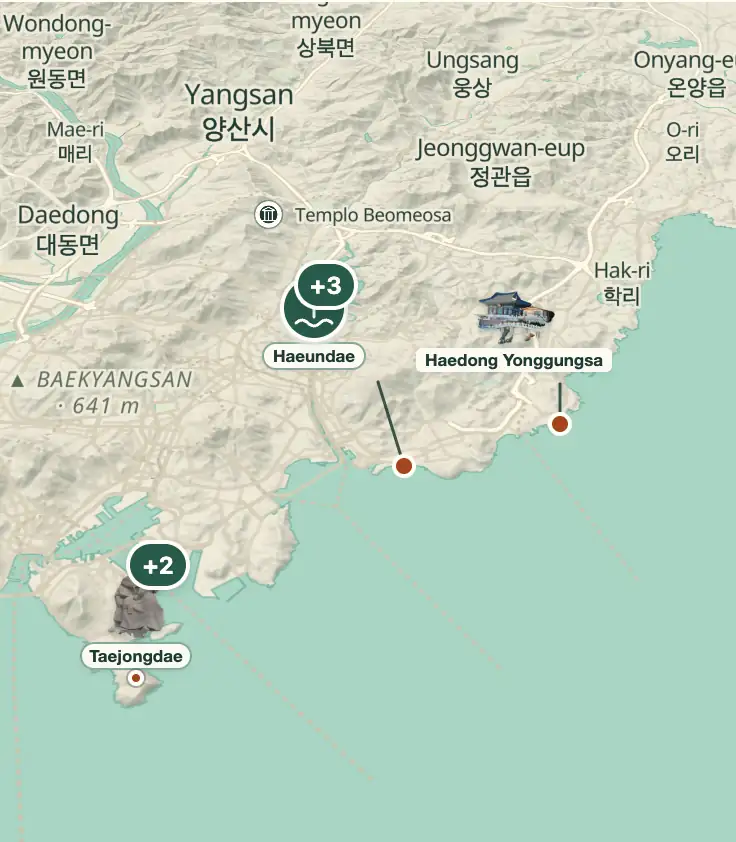
© OpenStreetMap · OpenFreeMap · © OpenMapTiles
Explore the map, read about the other places and plan your travel days in the app.
Open the appWhat to see
Busan: The peaks inside the city
Almost none of Busan's 770 km² is flat: the range that runs down from central Korea ends in peaks within the city, like Geumjeongsan, at 801m, and Hwangnyeongsan, at 427m, and the neighborhoods occupy the valleys and the strip of shoreline between them.
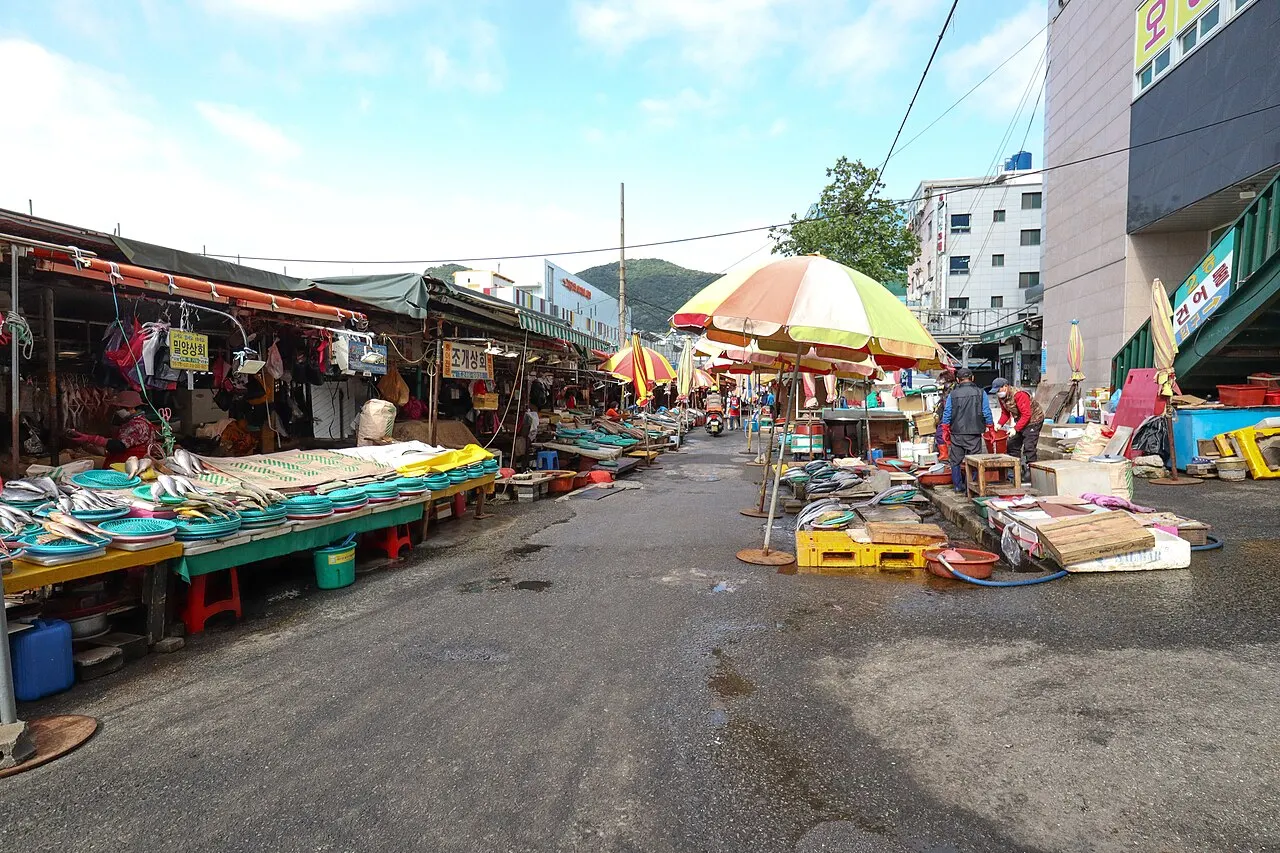
Jagalchi Market
Jagalchi includes the market building and fish stalls by Jung-gu’s harbour; it grew with traders and refugees from the Korean War. Municipal tourism lists hours of 5am–10pm and closure on the first, third and fifth Tuesday of the month. Individual businesses have their own hours and prices: confirm the date and, when choosing fish to be prepared, agree on weight, price, cooking and additional charges. Visits are not limited to the morning.
Jagalchi includes the market building and fish stalls by Jung-gu’s harbour; it grew with traders and refugees from the Korean War. Municipal tourism lists hours of 5am–10pm and closure on the first, third and fifth Tuesday of the month. Individual businesses have their own hours and prices: confirm the date and, when choosing fish to be prepared, agree on weight, price, cooking and additional charges. Visits are not limited to the morning.
Check access
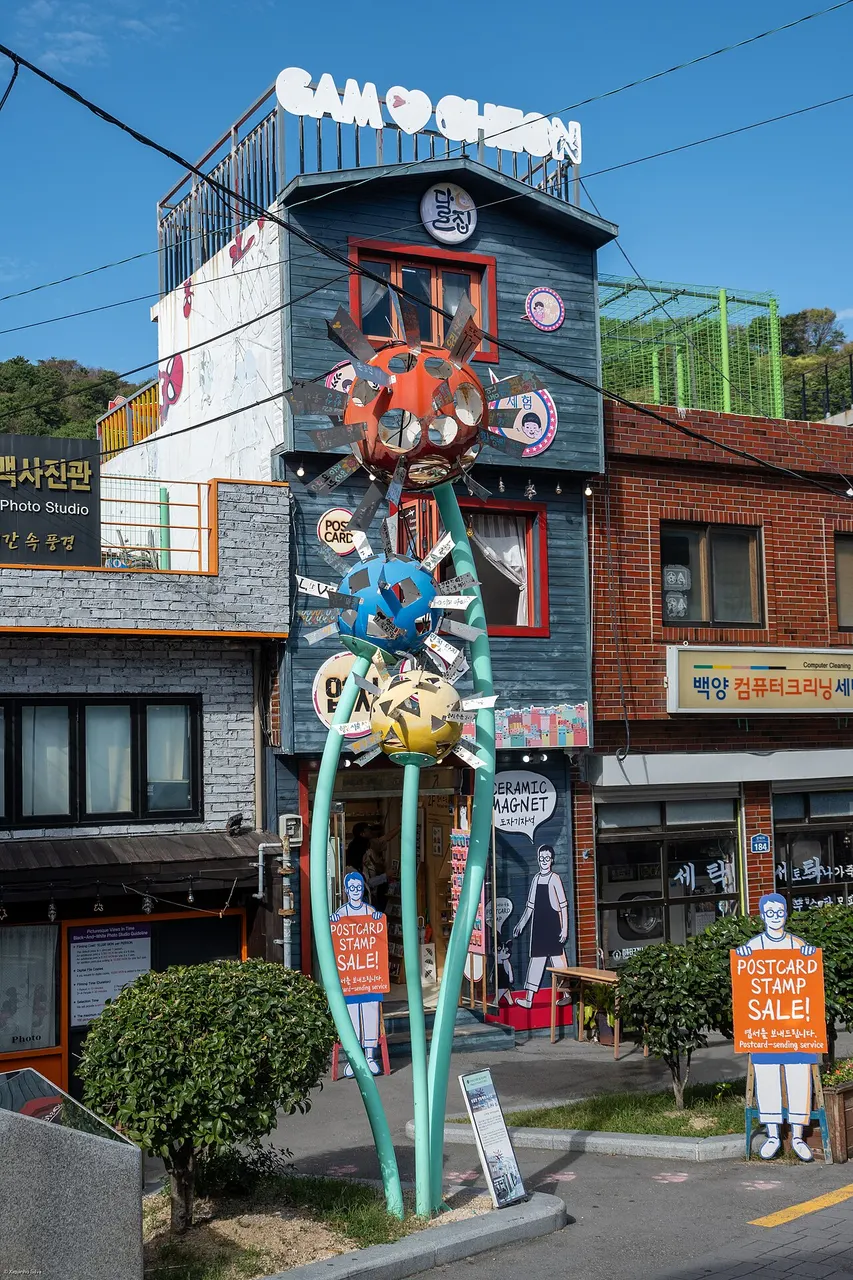
Gamcheon Culture Village
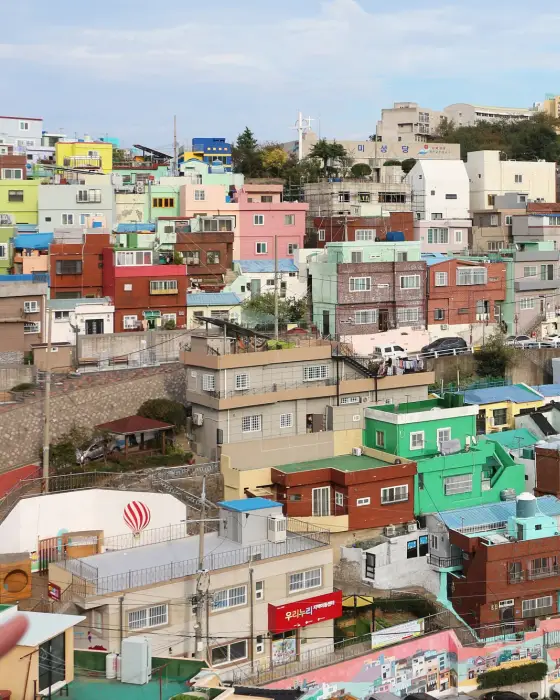
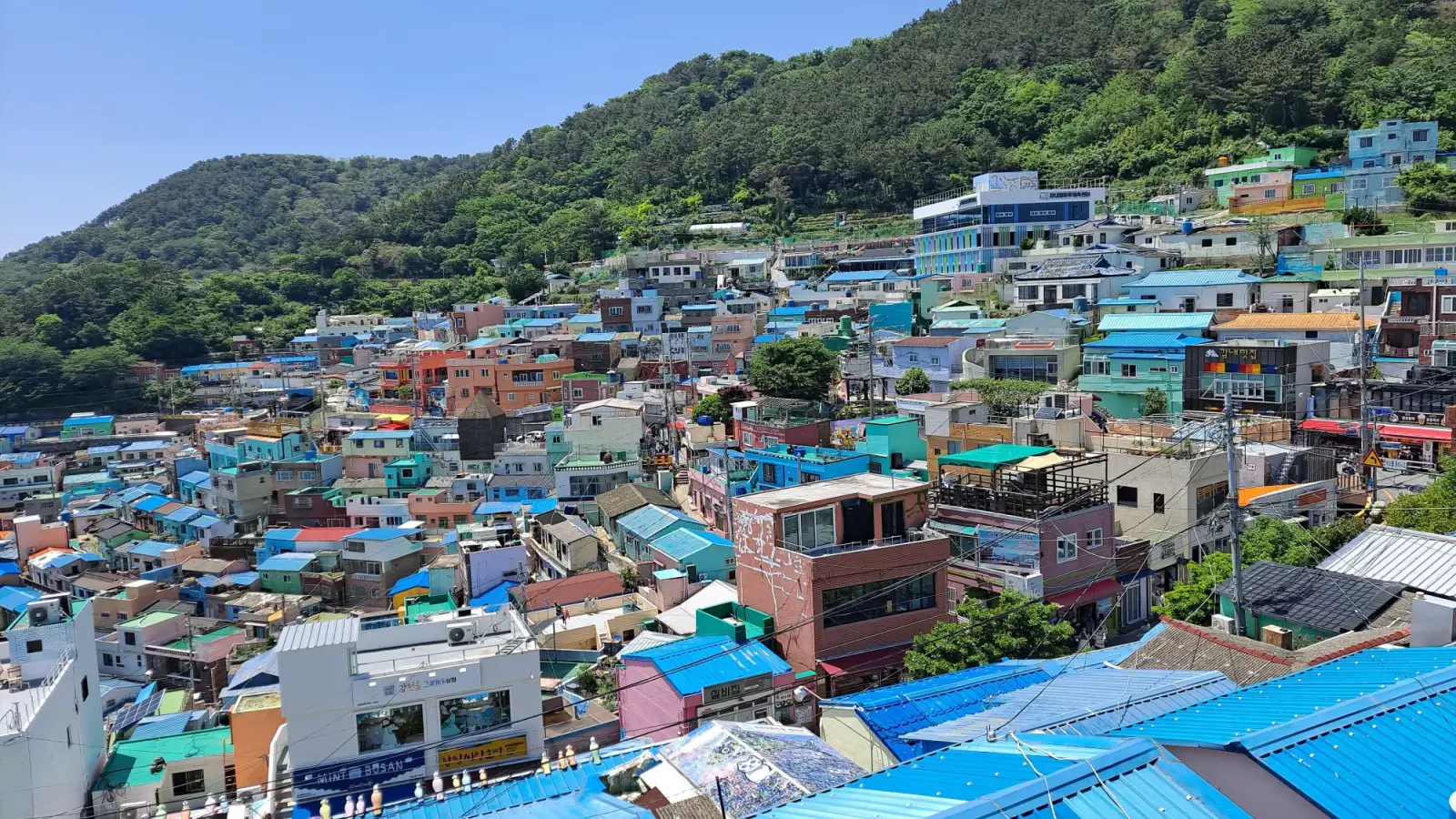
Gamcheon is an inhabited hillside neighbourhood in Saha-gu, shaped by Korean War refugees and the Taegeukdo community in the 1950s. The 2009 art project added murals and works to its alleys and stairs. For the residential area marked on the official map, the plan recommends visits between 9am and 6pm, with a guidance period through December 2026 and implementation scheduled for January 2027; this is not one timetable for the entire neighbourhood. Check the map, notices and facilities’ hours, respecting privacy and quiet. Groups of ten or more have been required to buy an official map per person since August 2026.
Gamcheon is an inhabited hillside neighbourhood in Saha-gu, shaped by Korean War refugees and the Taegeukdo community in the 1950s. The 2009 art project added murals and works to its alleys and stairs. For the residential area marked on the official map, the plan recommends visits between 9am and 6pm, with a guidance period through December 2026 and implementation scheduled for January 2027; this is not one timetable for the entire neighbourhood. Check the map, notices and facilities’ hours, respecting privacy and quiet. Groups of ten or more have been required to buy an official map per person since August 2026.
Check access
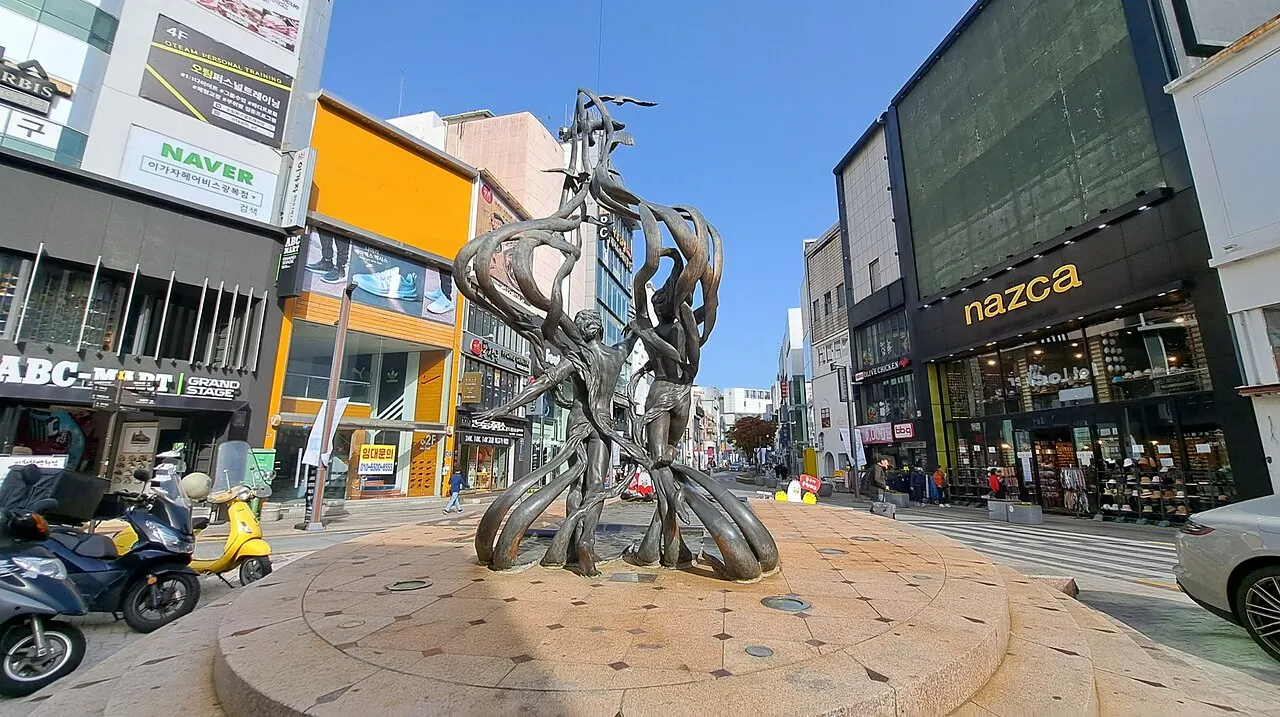
Gukje Market and BIFF Square
Market born in 1945 with war surplus goods and expanded by 1950 refugees, today a maze of alleys of fabric, tools and food. Beside it, BIFF Square holds bronze hands of filmmakers and stalls of ssiat hotteok, the sweet pancake filled with seeds that is a local invention.
The maze was born in 1945 from surplus war goods and was expanded by the refugees of 1950, and in BIFF Square there are bronze hands plus the sweet seed pancake called ssiat hotteok.
Check access
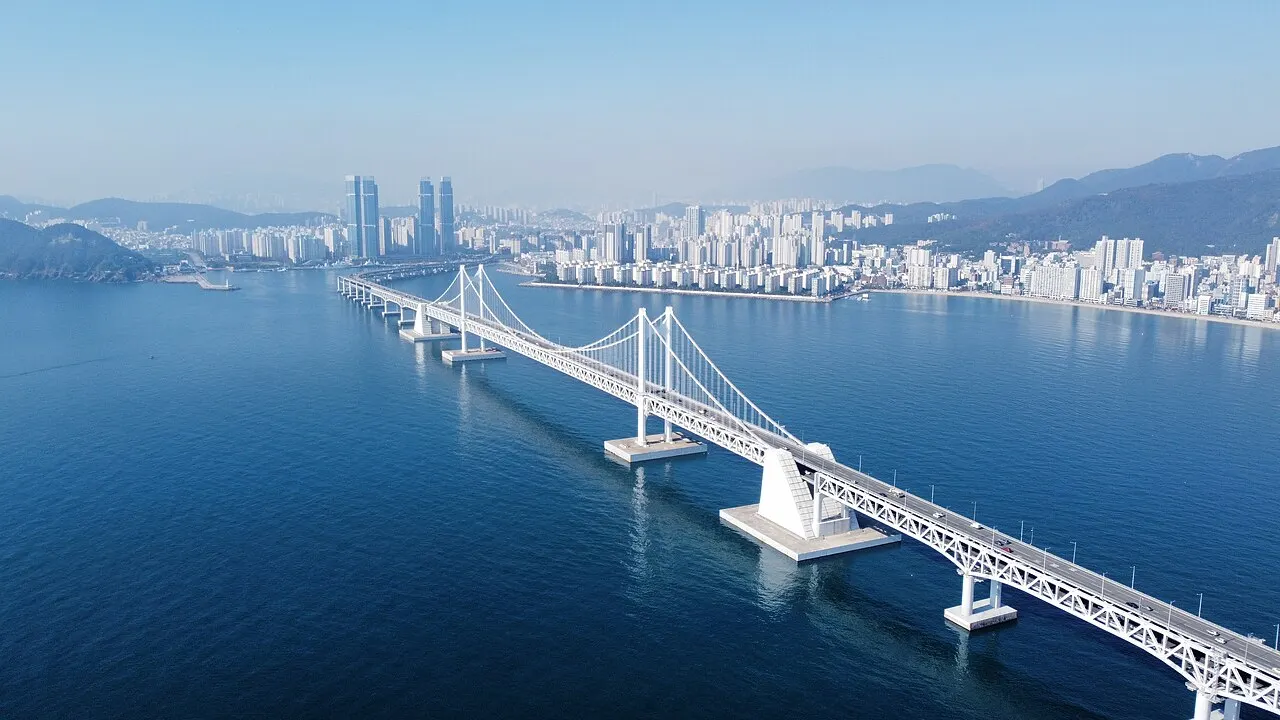
Gwangan Bridge and Gwangalli beach
Gwangalli Beach is the place to view Gwangan Bridge; the bridge marker on the map is not a pedestrian entrance. The Gwangalli M Drone Light Show is free and has a regular Saturday schedule: 8pm and 10pm from March to September, 7pm and 9pm from October to February. Check the programme and notices before setting out: weather and communication conditions can cancel or delay the show, including on the day.
I would choose Gwangalli to view the bridge from the beach. Drones can complement the evening if the calendar and notices confirm the programme; do not build the whole day around a show subject to cancellation.
Check access
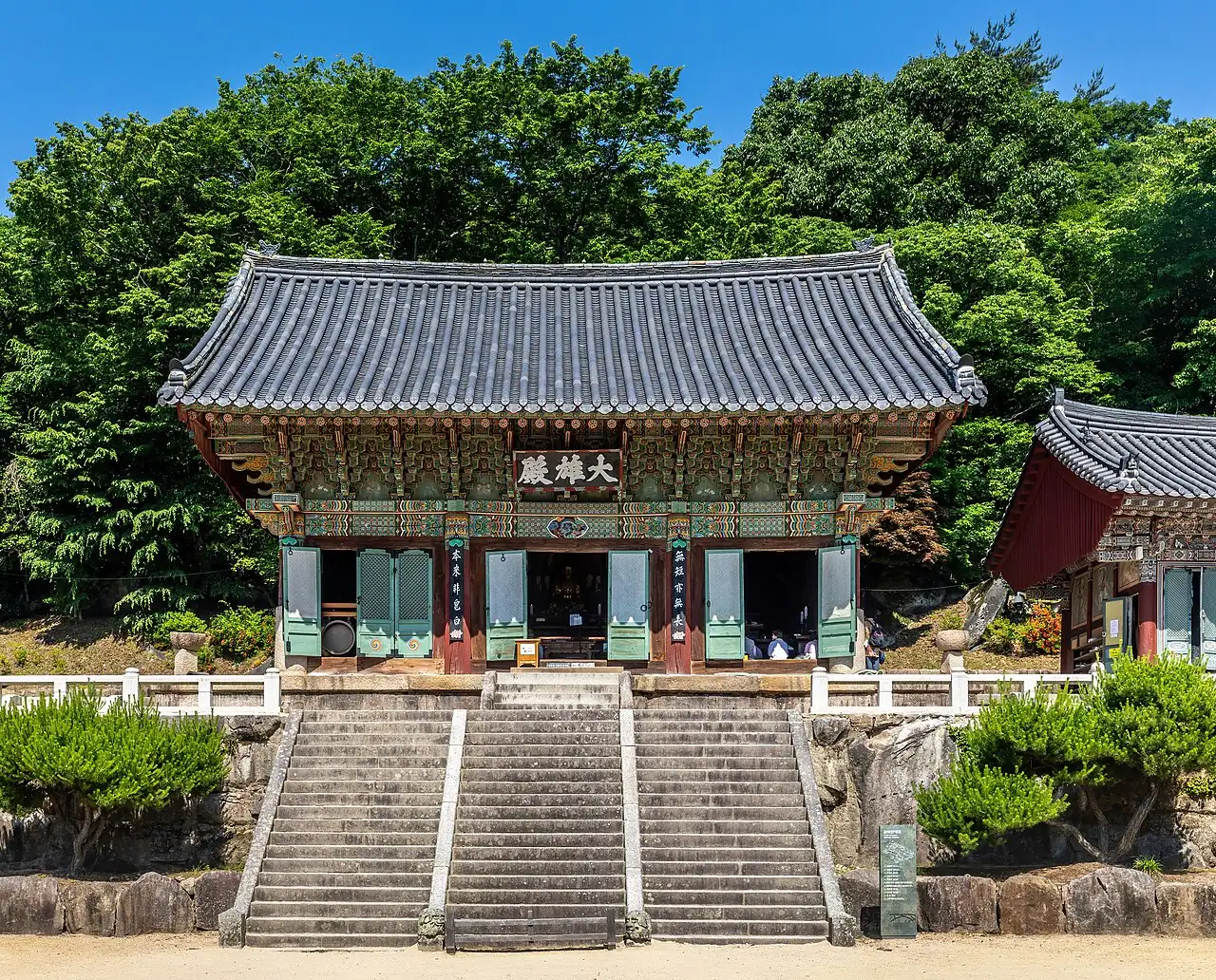
Beomeosa Temple
Beomeosa stands on the slopes of Geumjeongsan in Geumjeong-gu. Tradition credits Uisang with founding it in 678; the complex was rebuilt after the Imjin War. Daeungjeon hall dates from 1614, with later repairs, and the stone pillars of Iljumun gate were installed in 1718. Visiting the temple does not require hiking to the fortress: choose a route and check access, weather, energy and the return journey before adding the climb.
The temple includes buildings rebuilt after the Imjin War: Daeungjeon dates from 1614 and Iljumun’s stone pillars from 1718. The visit can end at the temple, with hiking chosen separately according to conditions and energy.
Check access
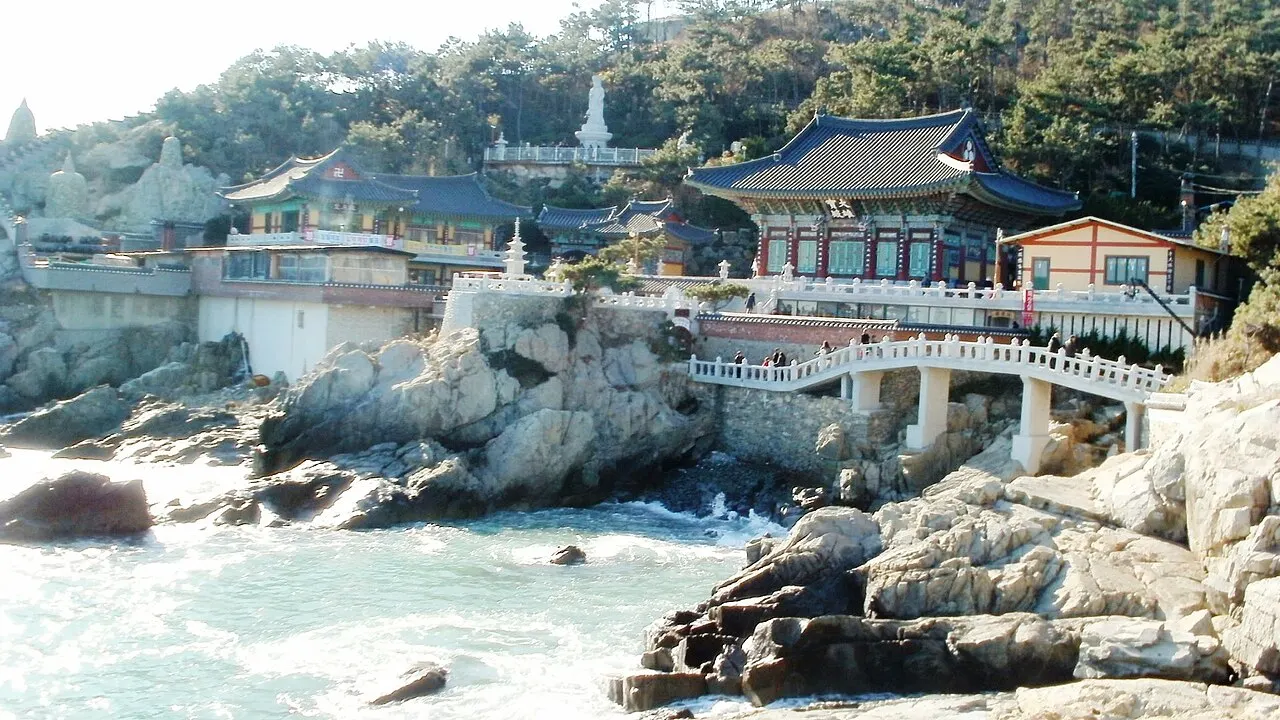
Haedong Yonggungsa
Haedong Yonggungsa is a Buddhist temple on Gijang’s rocky coast. The access described by tourism authorities passes along a staircase of 108 steps; account for the descent, climb back and walking sections rather than assuming a step-free route. KTO lists 04:30–19:20, with last admission at 18:50: confirm conditions for your date and do not confuse closing time with permitted arrival. Plan travel, the visit, a meal and the return as a separate outing; an early start does not guarantee no queues.
The temple offers a visit to Gijang’s rocky coast, with access by stairs. Choose it according to energy and conditions, allowing travel, a break and the return rather than automatically adding Haeundae and Centum City.
Check access
Taejongdae and Yeongdo
Taejongdae is a coastal park in southern Yeongdo, with forest, viewpoints and access to the lighthouse. Danubi runs along the park road, but you must reach its boarding area: the operator describes an uphill walk of about 200 m from the main entrance. Check tickets, hours, closures and notices; rain or bad weather may suspend service. Its stops do not eliminate walks to your chosen sites. Huinnyeoul is a separate outing in Yeongdo, not a required extension of the same circuit.
The coastal park can be your main outing in Yeongdo. Danubi depends on operation and weather and still requires walking access; allow Huinnyeoul its own travel and time rather than requiring both visits.
Check access
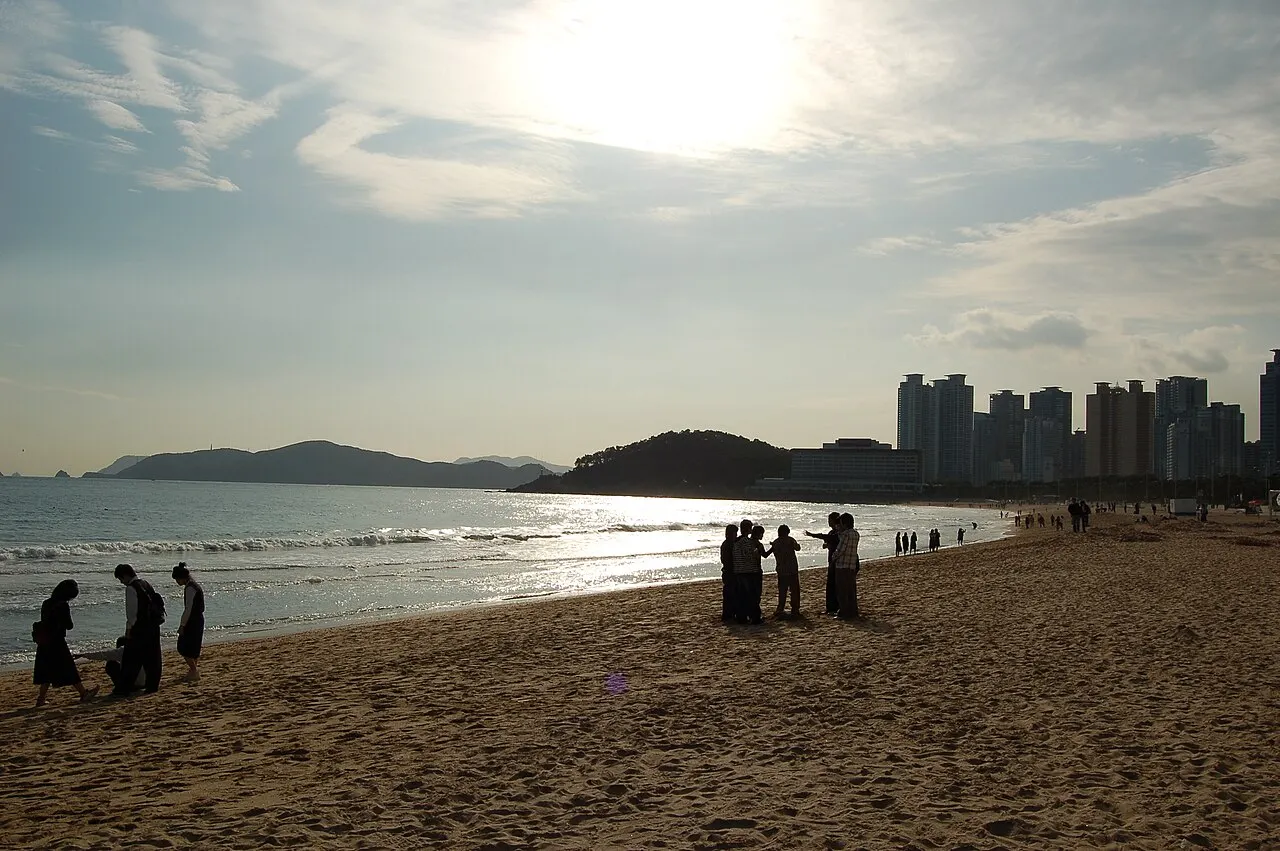
Haeundae and the Blue Line Park
Haeundae offers a waterfront walk and, if energy allows, an extension to Dongbaek. Blue Line Park has its own boarding points: the Sky Capsule carries up to four people between Mipo and Cheongsapo; the Beach Train runs between Mipo, Cheongsapo and Songjeong. Choose route, direction and ticket before buying. The capsule’s 30-minute slot is an entry window, not an exact departure or arrival; allow for station access, queues and return. The Haeundae map point represents the beach, not the Mipo platform.
I would choose Haeundae for a beach and walking programme. Add a capsule or train only if route, ticket and time for boarding and return make sense; you do not need to buy both or cover the whole waterfront.
Check access
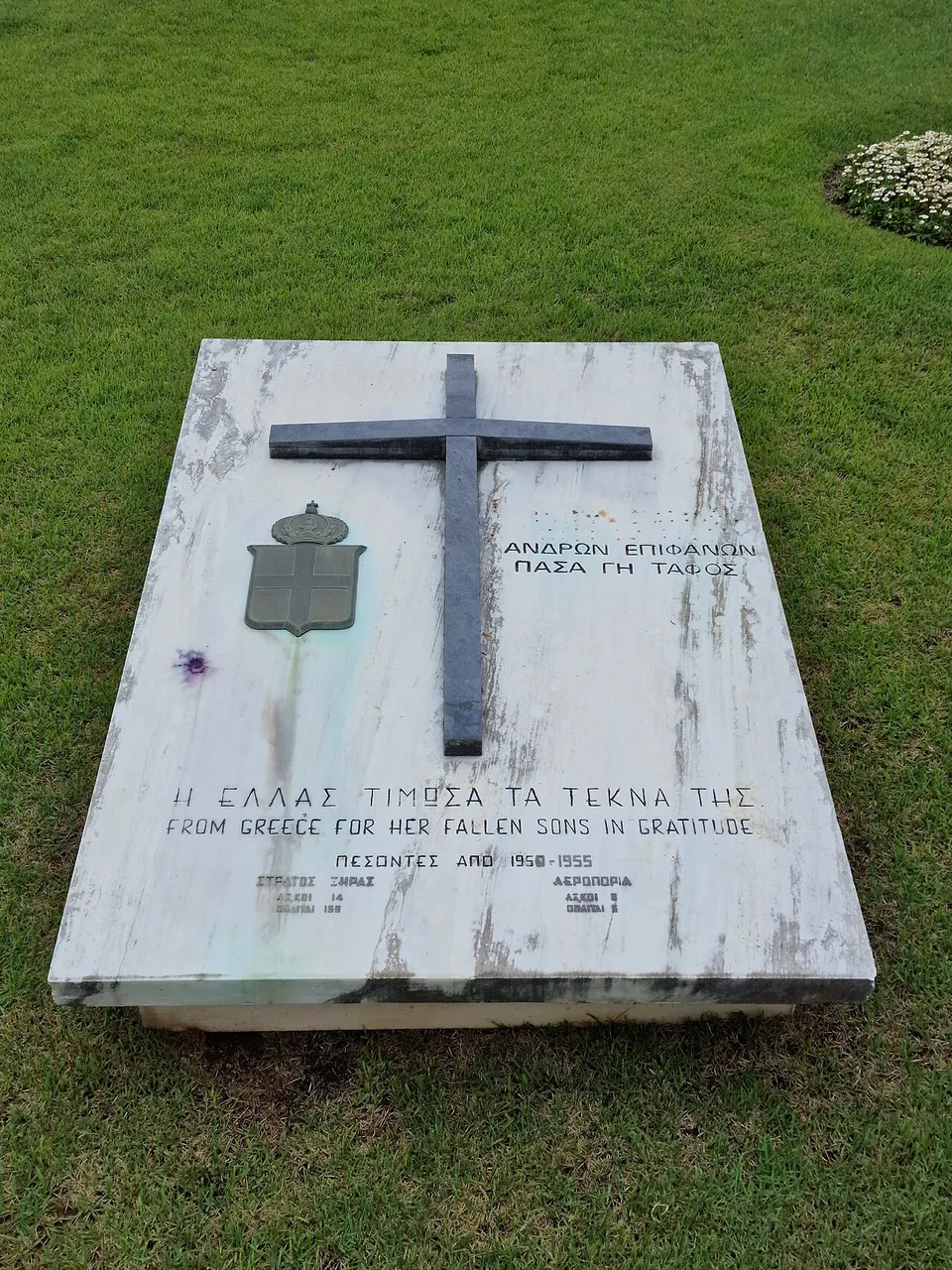
United Nations Memorial Cemetery
The United Nations Memorial Cemetery is in Daeyeon, Nam-gu. Established by UN Command in 1951 for those killed in the Korean War, it holds more than two thousand graves. This is a place of remembrance and tribute: respect the dress and conduct guidance. The operator publishes 9am–5pm from October to April and 9am–6pm from May to September; check notices and ceremonies for your date. Access via Line 2, Daeyeon station, includes a walk, with no single journey time from any downtown location.
An option for those who want to spend time remembering the Korean War, in Daeyeon. Check access and the calendar and allow a break; it is not an automatic replacement for a Sajik game or a visit with a guaranteed duration.
Check access
Nilo’s itinerary
Start with the basic programme and choose extensions for the time you have.
Plan my days in the app ↗Day 1 · Nampo with a break; Gamcheon as an alternative
Start at Jagalchi if it is open on your date: check the first, third and fifth Tuesdays, holidays and the stall or restaurant’s hours. If you want your selected fish prepared, agree on weight, price, cooking and fees before buying; not every visit requires arrival before 10am.
Walk through Nampo’s streets to Gukje and BIFF Square, checking the businesses you want to visit. Choose lunch and take a seated break; stall food does not require standing or imply free broth.
Bosu-dong and Yongdusan are extensions within the region, according to interest, energy and time. Check access and opening arrangements; the tower has its own ticket and operation. Shorten the walk if the climb or stairs do not suit you.
If Gamcheon is your priority, start there after 9am, rather than making it a compulsory climb at the end of the day. For the combined Gamcheon–Nampo option, take transport to Nampo; for Gamcheon only, stay in the neighbourhood and arrange the return. Check the official map: the plan recommends 9am–6pm in the residential area, with implementation scheduled for January 2027 after guidance in 2026. Respect privacy, quiet and group rules; allow for stairs, a break and return travel.
Finish in Nampo or near your accommodation. Huinnyeoul in Yeongdo can replace Gamcheon in another programme, with transport, slopes and coastal conditions checked; it need not fit as the final stop or promise sunset after all the markets.
If Jagalchi is closed, keep the walk through Nampo, Gukje and BIFF Square according to available businesses. Choose lunch and preserve the break; this does not guarantee another market is open.
For a day centred on Gamcheon, stay in the neighbourhood within the advised hours, choose a place open for lunch and rest, and arrange the return. In this option, leave Nampo and Yeongdo for another day; shorten the walk if stairs, weather or arrival call for a smaller programme.
Day 2 · One coastal area, with a break and return
Choose Haeundae as the main programme: check access from your accommodation and walk the stretch of waterfront that suits your energy and the weather. Dongbaek can be an extension, without a requirement to cross the whole beach. Preserve lunch, rest and return.
If you choose Blue Line Park, check boarding station and direction: Sky Capsule between Mipo and Cheongsapo, or Beach Train to Songjeong. The Haeundae map point is the beach, not the platform. Check ticket, availability, queues, last service and return; the capsule entry window is not an exact departure time. Do not treat capsule, train and every stop as compulsory.
For the Haeundae choice, have lunch and take a break in the area you are in. Cheongsapo only belongs if it is part of your chosen route. If arrival, check-in, luggage, weather or tiredness shorten the day, stay on the waterfront and return, without adding Centum City or Gwangalli.
Centum City is another choice for the day, instead of the beach and rail programme. Check the Cinema Center programme; Busan Museum of Art reopened in September 2026 and announces 10am–6pm, last admission at 5.30pm, Monday closure and a shifted closure when Monday is a public holiday. Check changes, exhibitions and tickets before setting out; include lunch, a break and the return journey.
Gwangalli can be a separate programme to view the bridge from the beach, with a meal and return. Use access to the shore, not the bridge marker in the water. On Saturdays, check the drone calendar and notices: the regular programme is 8pm/10pm from March to September and 7pm/9pm from October to February, subject to cancellation or delay due to weather and communications. Without a confirmed show, the beach remains a choice; you do not need to eat raw fish or add another area.
Gijang is an alternative to the Haeundae or Centum City programme: choose Haedong Yonggungsa as the main visit. Check the journey to its address and the final walk; Osiria on the Donghae Line requires its own connection or walk, not arrival at the temple door. The described access includes 108 steps and the climb back. KTO lists 04:30–19:20, last admission at 18:50; check notices before setting out. Keep a meal, rest and the return; with luggage, check-in, departure or limited time, shorten the choice rather than requiring the beach, capsule and another area.
If you stay longer
Day 3 · Choose one area: temple, remembrance or coast
For Beomeosa, check the journey from your accommodation. Municipal guidance combines Line 1 to Beomeosa with bus 90; confirm the stop, direction, operation and return for your date. Visit the permitted temple spaces respectfully, without making the hike compulsory.
If hiking Geumjeongsan is your priority, choose a route and check access, elevation, weather, daylight and the return journey. Calculate time from your chosen route, including breaks and the return. Allow water, food and rest; visiting only the temple is also a complete outing.
Daeyeon is an alternative to a mountain day: visit the UN Memorial Cemetery, respecting dress and conduct guidance. The operator indicates Line 2 to Daeyeon followed by a walk; check hours and notices. Busan Museum can be an extension according to its calendar rather than a guaranteed stop. Allow lunch, a break and the return, without a required detour through Dongnae or Sajik.
Dongnae and Oncheonjang can be a separate outing, with a meal and a bathhouse chosen according to comfort, rules, opening and price. Pajeon is a food option; you do not need to drink makgeolli or combine baths, a shrine and the mountain on one day. Check access to the place you decide to visit.
To see the Lotte Giants in Sajik, check the official calendar for your date, stadium, time, ticket and possible changes. Allow time for entry, a meal and the return; the game can be the main outing. Without a game or ticket, choose another area by interest rather than treating the cemetery as an automatic replacement.
With any choice, keep time for lunch, rest and returning to your accommodation. On an arrival, departure or check-out day, agree on luggage storage and times with the hotel and shorten the outing according to transport and energy; you do not need to complete every area.
Taejongdae is another choice, focused on the coastal park in Yeongdo instead of the temple or cemetery. Check access, available time and Danubi operation; bad weather may suspend service. Boarding requires walking uphill from the entrance, and viewpoints may need additional walks. Keep time for food, a break and the return; leave Huinnyeoul for a separate outing if it does not fit.
Food
 AI illustration
Dwaeji gukbap
Pork and rice soup, with clear or richer broth depending on the restaurant. Seomyeon has a street of gukbap restaurants; an order may contain meat, offal, sundae or combinations. Check the version and side dishes, and season gradually. Hours belong to the chosen restaurant, not the whole neighborhood: confirm before relying on a meal after a late arrival.
 AI illustration
Milmyeon
Wheat noodles served in cold broth (mulmilmyeon) or mixed with spicy sauce (bibimmilmyeon). The dish’s history is associated with Korean War refugees; one recipe does not represent every restaurant. Choose broth or sauce and check the ingredients before ordering rather than assuming all milmyeon contains broth, is vegetarian or available only in summer.
 AI illustration
Eomuk
A fish preparation found on skewers, in soups and in fried or filled versions at Busan stalls and shops. Choose the preparation you want and check portion, price and ordering arrangements; broth and refills do not have to be free at every stall. Do not help yourself without knowing how service works.
 AI illustration
Hoe and kkomjangeo
Hoe is sliced raw fish, found in Busan restaurants and markets, including the Millak area. Species, side dishes and service vary: fish stew may be offered, but confirm what your order includes. Kkomjangeo is hagfish prepared in grilled versions with salt or sauce; some businesses also cook it over charcoal or straw. Ask how it will be served before choosing, without assuming a single presentation or imposing raw fish on someone who prefers another preparation.
 AI illustration
Ssiat hotteok
A sweet pancake filled with seeds and nuts, found in markets around Nampo and BIFF Square. The mixture varies: it may include peanuts, pumpkin seeds or other nuts. Check the filling and stall price; let the hot center cool before eating. I would treat hotteok as a snack break without tying the next visit to a queue of unknown duration.
 AI illustration
Dongnae pajeon
A Dongnae specialty: a scallion and seafood pancake, thick in some versions and with egg depending on the recipe. Portion and side dishes depend on the restaurant; check before sharing. Makgeolli is a possible pairing for those who want alcohol, without an obligation to drink or a single time for this meal. Choose the restaurant and check its service before including it in a Dongnae visit day.
 AI illustration
Geumjeongsanseong makgeolli
A cloudy alcoholic fermented-rice drink associated with traditional production in Geumjeongsanseong village. It is an option with local food if you want to drink; neither tasting it nor using a particular vessel is compulsory. Agree on quantity and price with the business and preserve return and rest time in your plan rather than adding drinking and walking as required steps.
 AI illustration
Bibim dangmyeon and street food
Glass noodles mixed with spicy sauce, one option at stalls in Gukje and the Nampo area. Tteokbokki, sundae and other dishes are also available depending on the stall; some Gukje meals are served on small stools. Check portion, ingredients, seating and total before ordering. I would allow time to eat and rest without assuming a snack sustains everyone for an afternoon.
Day trips
Gyeongju
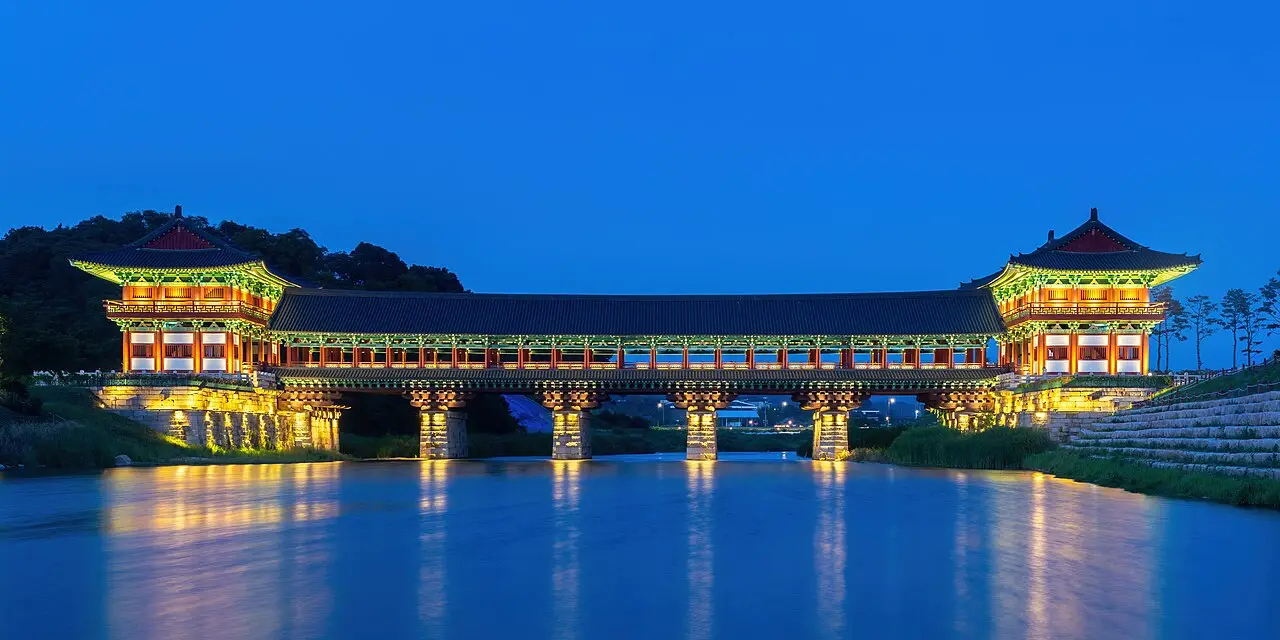
Gyeongju, a former capital of Silla, brings together tombs such as those at Daereungwon and the 7th-century Cheomseongdae Observatory in the central area; Bulguksa is in another area and needs its own journey. For a day trip, I would choose the tombs and observatory with lunch and a break, or give priority to Bulguksa, without treating everything as compulsory. Compare the KTX from Busan to Gyeongju, the current name of the former Singyeongju station, and buses from Nopo: check departure, price, availability, arrival point and transport to the first place. Time on the train or bus does not include access to the station, waiting, local travel or return. Check opening arrangements, last admission and tickets for each visit; entering Cheonmachong has its own conditions compared with the Daereungwon grounds. Allow a margin for returning and narrow the selection if arrival, weather or energy call for it.
Tongyeong
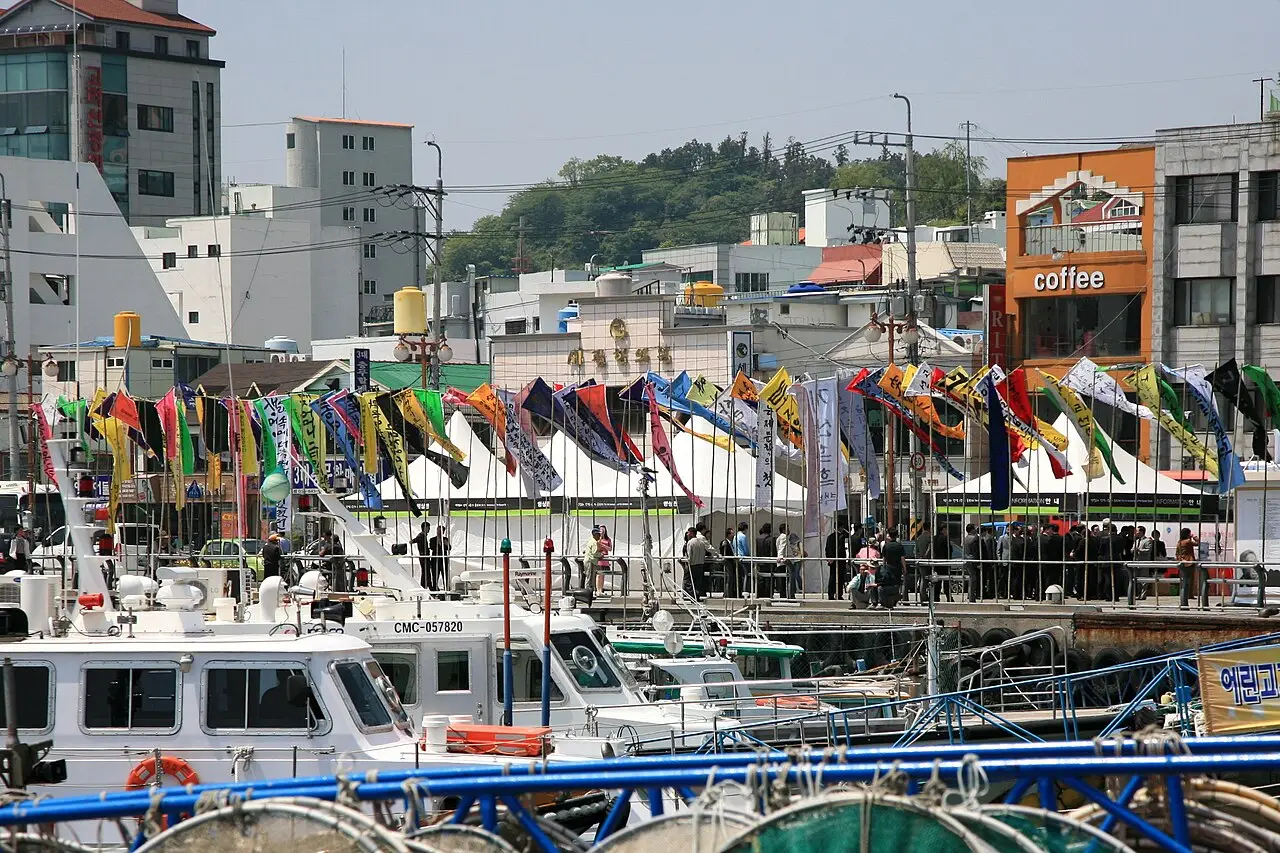
A harbor town of coves on the south coast, with the painted village of Dongpirang, a cable car up Mount Mireuk (461 m) and Chungmu kimbap, served with spicy squid. About 1 hour 40 minutes by bus from the Seobu terminal in Sasang.
Geoje
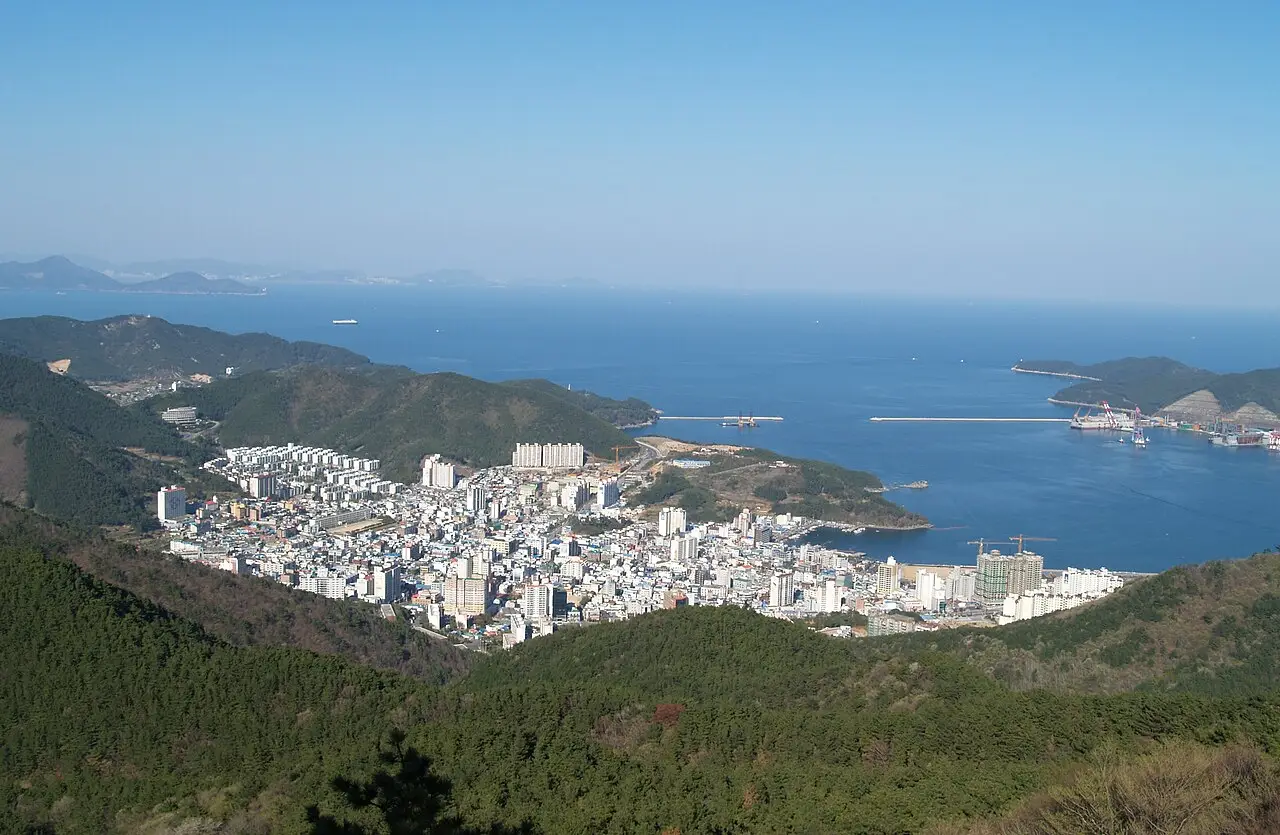
The country's second-largest island, linked to the mainland since 2010 by a bridge and an undersea tunnel: Windy Hill, the botanical garden on Oedo island, pebble beaches and the Korean War prisoner-of-war camp at Gohyeon. About 1 hour by bus from Sasang.
Where to begin
Nampo with a break; Gamcheon as an alternative
Start at Jagalchi if it is open on your date: check the first, third and fifth Tuesdays, holidays and the stall or restaurant’s hours. If you want your selected fish prepared, agree on weight, price, cooking and fees before buying; not every visit requires arrival before 10am.
One coastal area, with a break and return
Choose Haeundae as the main programme: check access from your accommodation and walk the stretch of waterfront that suits your energy and the weather. Dongbaek can be an extension, without a requirement to cross the whole beach. Preserve lunch, rest and return.
Choose one area: temple, remembrance or coast
For Beomeosa, check the journey from your accommodation. Municipal guidance combines Line 1 to Beomeosa with bus 90; confirm the stop, direction, operation and return for your date. Visit the permitted temple spaces respectfully, without making the hike compulsory.
Money
The currency is the South Korean won (KRW). Check a dated exchange rate for the currency you use and bank or card fees; an indicative rate is not the final payment amount. For a budget, compare accommodation per room or bed on your dates, chosen meals and portions, transport to the address and programme tickets. Check occupancy, taxes, cancellation and inclusions before booking; do not treat a generic range as a guaranteed daily average.
Cards are widely used, but confirm acceptance of your card by the business and purchase channel. Payment in a vehicle, in an app and topping up a transport card are different operations. Have another payment option and confirm compatible network, fee and limit before withdrawing cash; for exchange, use a bank or authorised service and check hours and conditions. Restaurant tipping is not required or expected; check the bill total and stated charges.
Tax Free and Tax Refund do not mean an automatic refund for every passport. KTO says entitlement depends on eligibility, residence and length of stay, as well as new, unused goods taken out of Korea within three months of purchase. The stated minimum is 15,000 won per receipt; immediate refund requires a participating store, a purchase under 1 million won and total purchases of up to 5 million during the trip. Confirm the method, present your passport when required and retain the appropriate receipts. If processing depends on an airport or port, check the counter, inspection and deadline before checking the goods into baggage or adding other departure-day activities.
Getting there and around
Choose the route from Gimhae by your accommodation address
Gimhae (PUS) has domestic and international terminals. By rail, the Busan–Gimhae Light Rail reaches Sasang, with a connection to subway Line 2. National tourism guidance estimates about 30 minutes by train to Seomyeon, 50 to Gwangalli and 70 to Haeundae; these are journey references, not the total time after landing. Add disembarkation, baggage, waiting, transfers and the walk to the address. The airport limousine buses reorganized in January 2026 have different routes: municipal information lists 6,000 won for Seomyeon/Bujeon and 9,500 for Haeundae/Gijang, payable by transit or credit card when a seat is available, or with an advance ticket. Check stop, direction, schedule and price for your date; cash is not accepted and free transfers do not apply. A taxi can reduce changes with luggage, but time and price depend on destination, traffic, category and time of day. Confirm payment when ordering: accepting a card in the car does not mean the app accepts the same card. Arrange check-in, luggage storage and any late arrival with the hotel before adding sightseeing. From Seoul, compare train and bus by date, station, price and final leg; for a ferry to Japan, check operation and formalities for the selected crossing.
Cards, transfers and passes have different conditions
The network includes four subway lines, the Busan–Gimhae Light Rail and the Donghae Line from Bujeon towards Ulsan. Hours and the last connection depend on station, direction and date; do not rely on one closing time. Cashbee or T-money with credit can work on compatible services: check where to buy and top up, card price and journey fare. For eligible municipal transfers, use the same individual card when boarding and alighting; the general rule allows up to two changes within 30 minutes after alighting, with possible fare differences. Paying cash, taking the same bus route again or leaving the subway paid area does not automatically qualify; limousine buses are excluded. Dongbaek Pass and K-Pass involve registration, eligibility and refunds: combining them requires joining both programmes, and the prepaid option for foreigners requires a foreign registration card. Do not treat this as a universal 45,000-won tourist pass. Visit Busan Pass offers 24-hour, 48-hour and BIG3/BIG5 options; compare the attractions actually included, access and reservations. With the physical version, the transit-card function needs a separate top-up: it does not make subway and bus travel free. Taxi charges depend on the journey and possible supplements; compare with the complete public-transport route. For walking, check slopes, steps, crossings and a return suited to your energy.
Safety
Plan the return before going out to Seomyeon, Gwangalli or a coastal stop: check the last service on your route and an alternative to your accommodation. Requesting a taxi through an app does not guarantee an available car or an accepted ride. Keep your phone and documents secure, confirm prices and charges before ordering and use marked crossings, checking vehicle movements.
For a beach, trail or viewpoint, check the Korea Meteorological Administration (KMA) forecast, local alerts and site restrictions on the day. During heavy rain or a typhoon alert, follow the authorities’ instructions and avoid exposed shores, flooded areas, slopes and valleys; switch to a sheltered activity only if access is safe. At Haeundae, Songjeong and other beaches, confirm whether swimming is permitted, the area and hours with supervision, and follow signs and lifeguards’ instructions. Rip currents and other dangerous conditions also require attention during the season. KMA publishes rip-current forecasts for selected beaches; check the date and location, without treating missing information as absence of risk. At Taejongdae and Igidae, remain on the permitted path, respect closures and do not step onto exposed rocks or edges for a photograph. Leave time for rest and the return instead of completing the route at any cost.
In Korea, call 112 for a police emergency and 119 for fire, rescue and ambulance. Give your location or an identifiable address and request interpretation if needed. KTO’s 1330 offers tourist information, interpretation and complaint referral; check its current channels, languages and hours before using it. To find an open pharmacy or medical service, consult the E-Gen portal and Busan city’s medical-service guidance; call before travelling there. An emergency requires an emergency call, without waiting for tourist assistance or crossing the city looking for a hospital by neighbourhood.
Etiquette tips
Check where to remove your shoes
In a home, restaurant with low tables or temple building, look at the entrance, shoe lockers and instructions from your host or the person in charge. Remove shoes before entering the indicated area; a temple does not require walking barefoot across the entire grounds. A step alone does not determine the rule for every restaurant or accommodation. If unsure, ask before crossing.
Serve respectfully, without an obligation to drink
At gatherings following traditional etiquette, it is customary to serve your companions and use both hands when offering or receiving a glass, especially with someone older. Some people also turn their face aside to drink in front of an older participant. Follow the group’s context without treating these gestures as compulsory at every meal; you can decline alcohol and choose another drink.
Agree on the bill before ordering
Check whether the restaurant takes orders at the counter, a machine or the table, and when payment is required. Some businesses use self-service and electronic ordering; payment works differently across gukbap, noodle and barbecue restaurants. Agree with your companions on who pays and whether to split the bill, and ask the business about separate payments before ordering. Someone’s age does not determine who must pay for everyone.
Restaurant tipping is not expected
KTO says tipping is not required or expected in restaurants. Check the total, taxes and charges stated by the business; a tipping custom does not replace the bill conditions.
Respect space and marked seats
On the subway, keep your phone silent or on vibrate, use headphones for music and videos, speak quietly and leave room for people exiting. Respect priority seats and those marked for pregnant passengers, following the carriage signs; offer a seat to someone who needs it without judging their need by appearance. If you need help using or boarding the train, contact station staff.
Check the chosen jjimjilbang’s rules
A jjimjilbang combines baths, heated rooms and communal spaces, with different rules in each area. Bathing usually takes place unclothed in separate areas; in communal spaces, wear the clothing specified by the venue. Check changing rooms, hygiene and access with staff before entering, and wash before using shared baths. Respect other people’s privacy in changing and bathing areas. Before paying, confirm minimum age, accompanying adults, tattoo rules, included time, extras and luggage storage; do not assume every venue accepts the same group or allows overnight stays. At Centum City’s Spa Land, the operator states a time limit per admission and excludes large suitcases from the changing-room lockers: check current conditions and external storage before fitting it between checkout and departure.
Mistakes to avoid
Choose a region and count the whole journey
Treating Gamcheon, Songjeong and Yeongdo as neighbouring stops compresses the day. Compare the whole journey, including walks to stops, waiting, transfers, slopes and return; a generic distance or duration does not resolve every combination. I would choose one main region and keep another as an alternative, with lunch and rest before deciding on an extension.
Test the route on the map, beyond searching for a place
Finding a place on Google Maps does not prove the app can calculate the route you need at that moment. Before relying on it, test the journey between accommodation and destination, including public transport. Have Naver Map or KakaoMap as options and save the Korean address to check the correct entrance. Compare direction, station exit, walking, slopes and last connection; a map pin or estimate does not replace these conditions.
Do not confuse a morning preference with closing time
Jagalchi is not only a morning market: municipal tourism lists 5am–10pm, with closure on the first, third and fifth Tuesday of the month. Stalls and restaurants have their own hours and may change during holidays. Check the place where you want to buy or eat; Jagalchi’s calendar does not automatically apply to Gukje or other markets.
Confirm seafood portion, preparation and total
Before selecting fish or ordering hoe, agree on species, quantity, charging unit and number of diners. Ask whether side dishes, table service, preparation and any maeuntang are included or charged separately; do not assume all leftovers become soup or that an order always serves one person. Price depends on your choice and the business, while time depends on service and preparation. I would allow a meal and rest break compatible with the next visit and return rather than fixing two hours or a per-person range for the whole city.
Treating every beach as a single season
The announced season varies by beach and year. In 2026, Haeundae opened from June 26 to September 15; Songjeong, from June 26 to August 31; Gwangalli, from July 1 to August 31. That does not confirm safe swimming on every day or at every hour. Check the permitted area, safety staffing and local notices, and respect restrictions and instructions on the day. A waterfront walk is another choice; do not assume swimming supervision outside the announced period.
Useful phrases
안녕하세요 (an-nióng-ha-sê-io)
Hello: works all day and for anyone
감사합니다 (kam-sa-ham-ni-dá)
Thank you: the safe form, said on the way out
이거 주세요 (i-gô dju-sê-io)
I want this one: pointing; that's how you order at a stall or market
얼마예요? (ol-má-ie-io)
How much is it?
계산해 주세요 (kie-san-hê dju-sê-io)
The bill, please: said at the register, on the way out
맞나? (man-ná)
“Really?” in the Gyeongsang dialect; in Busan it answers half of all conversations
Districts
Nampo-dong and Jung-gu
The old city, next to the port: Jagalchi Market, Gukje Market, BIFF Square, Yongdusan park with its 120 m tower and the used bookstore street of Bosu-dong. It is where you eat standing up and where the history of 1876 and 1950 is in the street layout.
Seomyeon
The geographic and commercial center, at the junction of metro lines 1 and 2: shops, cinemas, plastic surgery clinics and the alley of dwaeji gukbap houses. It concentrates weeknight entertainment and mid-range hotels.
Haeundae
The country's best-known beach, with 1.5 km of sand, the Marine City towers and the LCT complex (411 m, the city's tallest building). It's given over to tourism, conventions at BEXCO and pricey apartments.
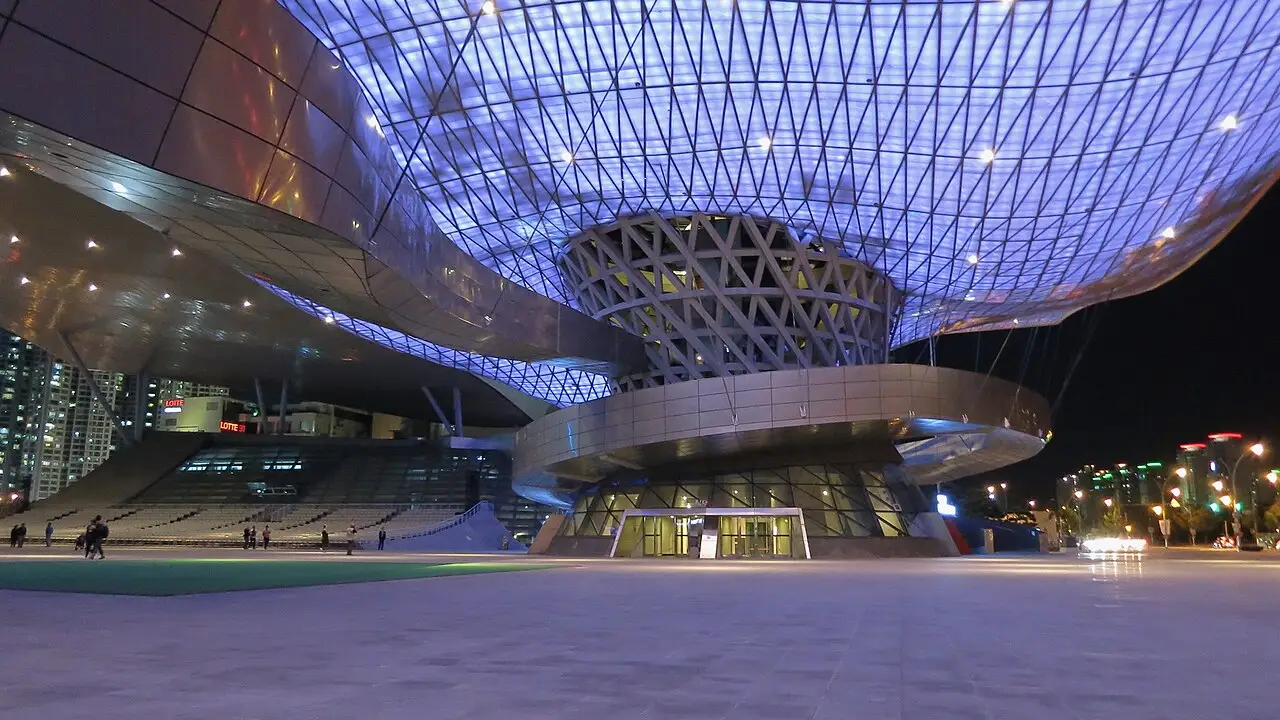
Centum City
Planned neighborhood on the old Suyeong airport: the Shinsegae department store registered as the world's largest, Busan Cinema Center, art museum and broadcasters. It's the neighborhood with the city's newest, most modern architecture.
Gwangalli and Suyeong
Beach facing the Gwangan Bridge, with cafes and bars on the promenade and Millak fish market. It concentrates young nightlife and the audience for Saturday's drone show.
Gamcheon and Saha-gu
A hillside village founded by refugees and followers of the Taegeukdo sect in the 1950s, painted in 2009 in an urban regeneration project. It's still a residential neighborhood with elderly residents, not a theme park. There are signs asking for silence in the alleys.
Yeongdo
Island linked by four bridges, with shipyards, the cliff of Taejongdae, the hamlet of Huinnyeoul overlooking the sea and the Kkangkkangi alley, where women beat rust off ship hulls. It has the air of a working port that the rest of the waterfront lost.
Dongnae and Oncheonjang
The pre-modern administrative center, with Chungnyeolsa shrine and hot springs used since the Silla period, plus Sajik Stadium, home of the Lotte Giants. It is the traditional middle-class neighborhood, far from the beach.
History
about 6000–3000 BC · Dongsam-dong Shell Midden
Neolithic settlement on Yeongdo island, excavated since 1929, with pottery, bone hooks and obsidian from Kyushu. The obsidian proves regular maritime crossings between the peninsula and Japan.
4th–5th century · Bokcheon-dong Tombs
Over one hundred elite burials excavated since 1969 on the Dongnae hill, with iron armor and harnesses. The area was a contact zone between the Gaya confederation and the Silla kingdom.
1407 · Port opened to the Japanese
The Joseon dynasty authorizes Japanese commerce in Busanpo, one of three granted ports. The waegwan is born, a walled and guarded Japanese enclave.
1592 · Japanese invasion (Imjin War)
Hideyoshi's troops land at Busan in May 1592 and take the fortresses of Busanjin and Dongnae in two days. Magistrate Song Sang-hyeon dies defending the city and becomes its civic hero, honored at the Chungnyeolsa shrine.
1678–1876 · Choryang Waegwan
Japanese enclave of about 33 hectares next to the port, with a few hundred men and no families. It served for nearly two hundred years as the only official channel of commerce between Joseon and Japan.
1876 · Country's first treaty port
The Treaty of Ganghwa forces Joseon to open Busan to Japan, before Incheon and Wonsan. Customs, banks and an orthogonal street grid appear on the waterfront and form the modern city.
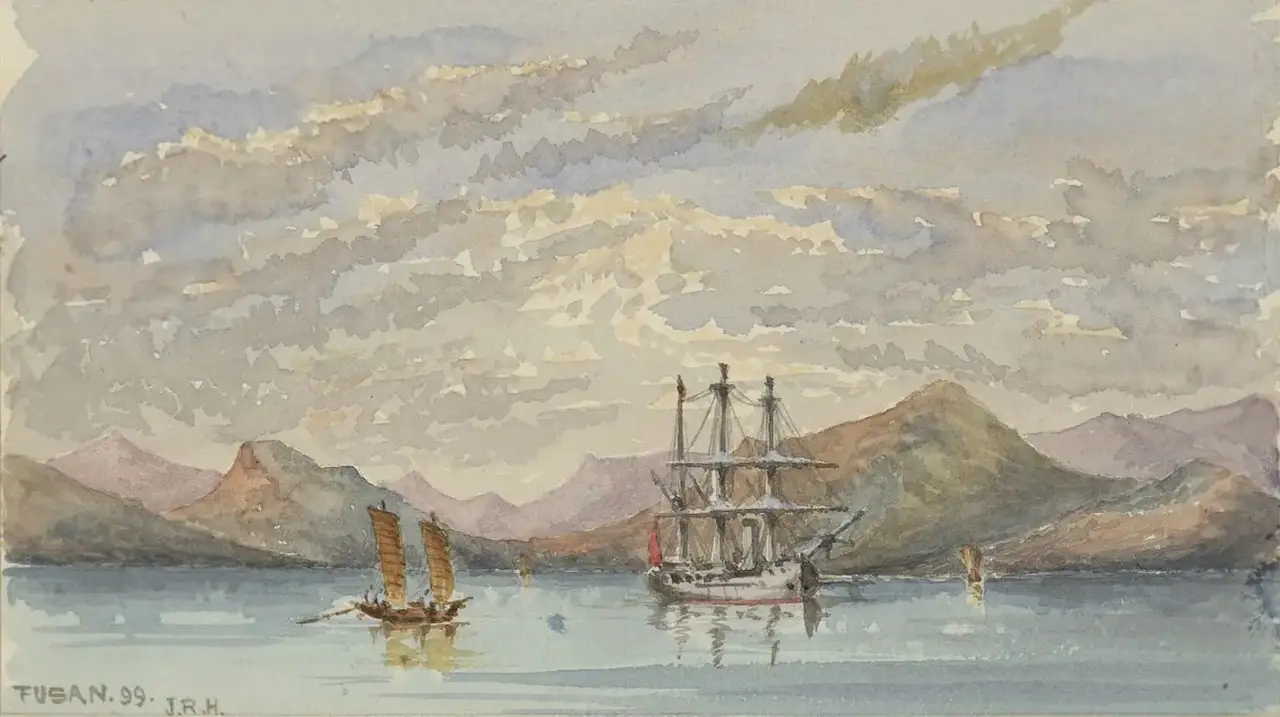
1905–1945 · Railway and colonial period
The Gyeongbu line, Seoul–Busan, opens on January 1, 1905, and connects to the ferry to Shimonoseki. Under Japanese rule (1910–1945), the port is the outlet for Korean rice and the gateway for emigration to Japan.
1950–1953 · Provisional capital of South Korea
With Seoul taken, the government settles in Busan and the city sits within the Nakdong perimeter, the only territory never occupied. The population jumps from about 400,000 to over one million and refugees occupy the hills that are now Gamcheon, Choryang and Ami-dong.
1963–1995 · Administrative autonomy
Busan is separated from Gyeongsangnam-do province in 1963 and begins reporting to central government; in 1995 it becomes a Metropolitan City, with an elected mayor. In between, the footwear, plywood and textile industries employ the children of refugees.
 AI illustration
1979 · Bu-Ma protests
In October, students and workers from Busan and Masan take to the streets against Park Chung-hee's regime. Martial law is declared in the city and the president is assassinated a few days later.
2005–2026 · International showcase and demographic brake
APEC summit in 2005 on Dongbaek island, defeat to Riyadh in the bid for Expo 2030 in November 2023 (29 votes against 119) and continuous population decline. The median age has risen to 48 years, the highest among major Korean cities, and the city bets on the reconversion of North Port and the Gadeokdo airport, now scheduled for 2035.
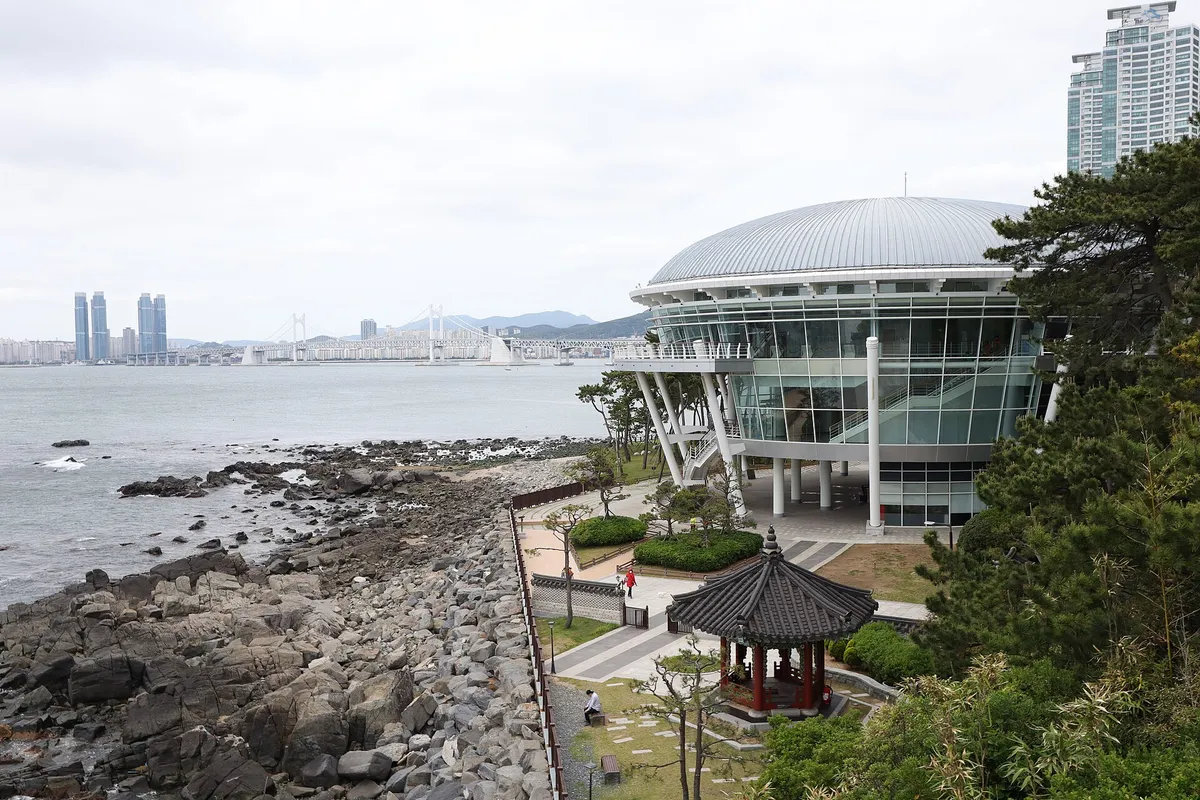
Complete history
Busan: the Dongsam-dong shell mound and the Bokcheon-dong tombs
The Dongsam-dong shell midden, on Yeongdo, occupied from about 6000 to 3000 BC, shows Neolithic fishermen trading obsidian with Kyushu; the Bokcheon-dong tombs, on Dongnae hill, show a 4th-century elite of horsemen between Gaya and Silla. The city, however, is recent: for almost the whole Joseon era, local power sat in Dongnae, a few kilometers inland, and the shoreline served a military and customs function. In 1407 the court authorized Japanese trade in Busanpo and created the waegwan, a walled quarter where foreign merchants could live, trade, and nothing else.
The Imjin War started here
The Imjin War began here. In May 1592, Hideyoshi's fleet landed in the bay, took the Busanjin fortress, and, the following day, that of Dongnae, whose magistrate Song Sang-hyeon refused passage and died on the wall. The phrase attributed to him, that dying was easy and yielding the path impossible, became a school text. After the war, the relationship was rebuilt through trade: in 1678 the waegwan moved to Choryang, occupying about 33 hectares where the streets behind the station stand today, and it functioned as the only official gateway between Korea and Japan until 1876.
The first treaty port
In 1876 the Treaty of Ganghwa forced Busan open as the country's first treaty port. Customs, Japanese banks, landfill and a grid of streets on the waterfront followed; in 1905 the Gyeongbu railway linked Seoul to Busan and connected with the ferry to Shimonoseki, making the port the hinge between the peninsula and the Japanese empire. Between 1910 and 1945, Korean rice left through here, along with more than a million workers who emigrated to Osaka and Fukuoka. That is the machinery the novel “Pachinko” tells from a boarding house on Yeongdo.
The Korean War made today's city
What made the city you see today was the Korean War. From August 1950 to the armistice in 1953, Busan was the provisional capital and the core of the Nakdong Perimeter, the only part of the south that never fell. The population doubled in months. With no flat land, refugees climbed the hills and built the rows of one-room houses now known as Gamcheon, Ami-dong and Choryang, linked by the sanbok doro, the mid-slope road opened in the 1960s to bring buses and water to this improvised city. From that same scarcity came dwaeji gukbap, milmyeon and Gukje Market, built from military surplus and American goods.
Industry, protest and cinema
Then came industry (shoes, plywood, textiles) in the 1970s, the Bu-Ma protests of October 1979 that foreshadowed the fall of Park Chung-hee, municipal autonomy in 1995 and a deliberate push to become a city of services and events: the film festival in 1996, the 2002 Asian Games, APEC in 2005, Centum City and the Haeundae towers. The counterweight is demographic: the city has been losing residents since the late 1990s, has the oldest population among Korea's big cities and saw Expo 2030 go to Riyadh in 2023. The answer to that shrinking is the projects underway in 2026: Snøhetta's Opera House at the North Port, the conversion of the old container docks and Gadeokdo airport, postponed to 2035.
They look like ancient tradition, but the hillside houses, dwaeji gukbap, milmyeon and Gukje Market came out of the scarcity of the Korean War.
Geography and shape of the city
Peaks inside the city
Busan covers 770 km² between mountains and sea, and almost none of it is flat. The range that runs down from central Korea ends here in urban peaks: Geumjeongsan, 801 m, topped by a 18.8 km stone wall; Hwangnyeongsan, 427 m, in the middle of the city; Jangsan, behind Haeundae.
The Nakdong River and Busan's six urban beaches
The Nakdong River forms a wide delta to the west, with sandbars and Eulsukdo Island, a migratory bird reserve on the route between Siberia and Australia, and that's where most of the highways and the Gangseo industrial zone run. To the east, the jagged coast gives six urban beaches (Haeundae, Gwangalli, Songjeong, Songdo, Dadaepo, Ilgwang) separated by rocky headlands, and Yeongdo Island closes off the mouth of the port.
A city that grew in strips
Because the terrain is valley and slope, the city grew in strips: the Nampo–Seomyeon–Dongnae axis follows an inland valley, metro Line 2 follows the coast, and where there was no land, Koreans made it; Marine City and Centum City sit on landfill and on the old Suyeong airport. What was left of the slopes became housing: stepped streets, rows of one-story houses and the sanbok doro cutting across the hill halfway up. From the center to the eastern tip is more than 40 km, and each strip looks different: the old port, the commercial valley and the beaches lined with towers.
Haedong Yonggungsa stands on Gijang’s rocky coast; access by stairs also matters when choosing the outing.
Culture
Korean cinema’s other home
BIFF began in 1996 and makes Busan a reference point for cinema outside Seoul. The 2026 edition is announced for October 6–15 at the Cinema Center and programme venues; Community BIFF has its own locations, including Nampo. Choose a screening and check venue, subtitles, rating and ticket: the festival’s existence guarantees neither a seat nor full occupancy throughout the city. I would allow time for the screening, food and return without squeezing Centum and Nampo into the same interval. For a connection between film and market, “Ode to My Father” brings a family’s story to Gukje; it is a narrative rather than a portrait of every resident.
Baseball: the Lotte Giants and the Sajik crowd
Sajik is a reference point for Busan baseball and Lotte Giants fans; the Giants’ first game in the stadium took place in 1986. Chants, coordinated cheers and events belong to that culture but are not identical at every game. “Busan Galmaegi” is part of the fans’ memory; newspapers and plastic bags in the stands recall an earlier period rather than compulsory accessories for a current visit. Check the chosen game’s schedule, stadium and ticket conditions before fitting it into your trip, without assuming a home game every day. I would leave room for entry, variable game duration, a meal and return transport rather than promising the loudest crowd or constant attendance.
Busan Biennale and hillside art
The Busan Biennale traces its antecedents to the 1981 Youth Biennale. In 2026, “Dissident Chorus” is announced for August 29–November 1 at MoCA on Eulsukdo, Space OneZ and the former Busan Nam High School on Yeongdo. MoCA opened in 2018 and is separate from Busan Museum of Art in Haeundae. Choose exhibition venues and check tickets, calendar, last admission and travel; the edition announces closing dates, including October 6, and connections between venues have their own conditions. Art also appears in neighborhoods such as Gamcheon and Huinnyeoul where visits coexist with homes. Gamcheon combines histories of Korean War refugees and the Taegeukdo community rather than a single founding story. I would choose one area at a time with a break, respecting homes, privacy and residential hours.
The orange bag on the fans' heads looks like a uniform, but it's the trash bag handed out at the entrance, and by the end the stands are clean.
Festivals and events

Busan International Film Festival (BIFF)
The 31st edition is announced for October 6–15, 2026, at the Cinema Center and other venues in the programme. Choose screening, venue, subtitles and age rating before buying. Standard seats are sold online; Ticket Boxes may sell remaining or cancelled seats, without guaranteeing last-minute admission. A specific on-site allocation for people with disabilities and those aged 65 and over follows festival rules. Allow time to arrive before the screening, eat and return; check accommodation for your dates without assuming prices or occupancy.
 AI illustration
Gwangalli M Drone Light Show
The Gwangalli M Drone Light Show is free and has a regular Saturday schedule: 8pm and 10pm from March to September, 7pm and 9pm from October to February. Check the programme and notices before setting out: weather and communication conditions can cancel or delay the show, including on the day.
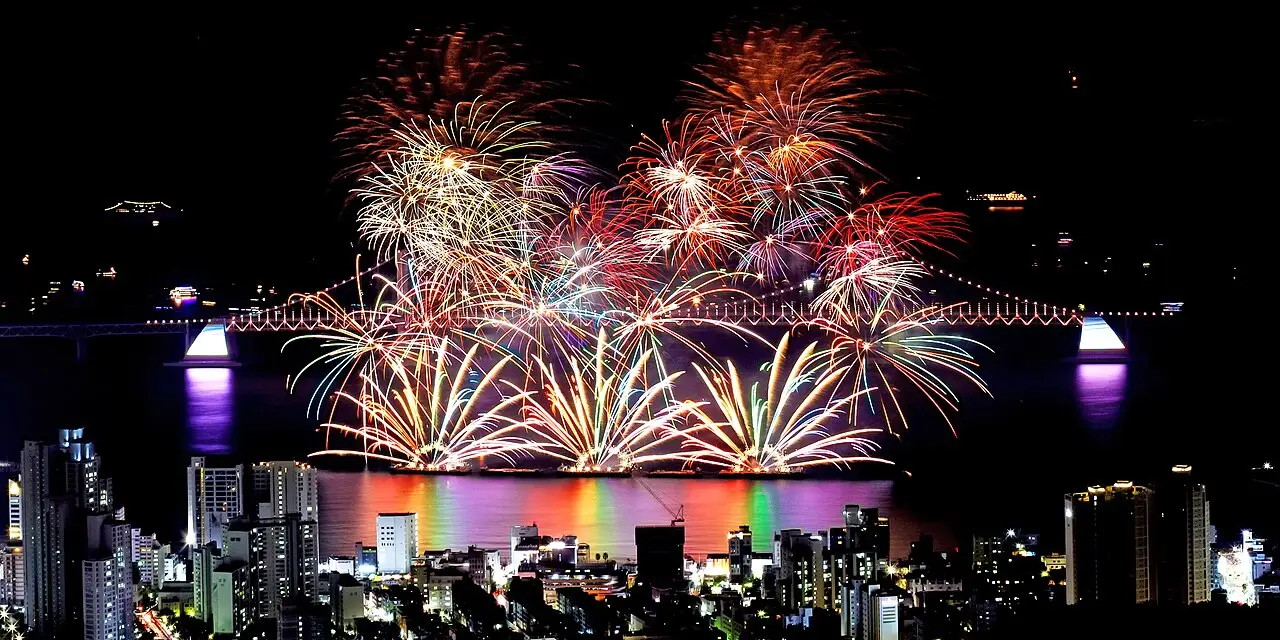
Busan Fireworks Festival
The 21st edition is scheduled for November 7, 2026, around Gwangalli, Igidae and Dongbaekseom. Gwangalli has paid seating sectors; check the sector map, tickets and edition conditions rather than treating the whole beach as paid admission. Choose a viewing place on land and check access, restrictions, weather and return transport. Do not assume extra services or one advance arrival time suitable for every place; keep a meal, waiting and return within the programme.
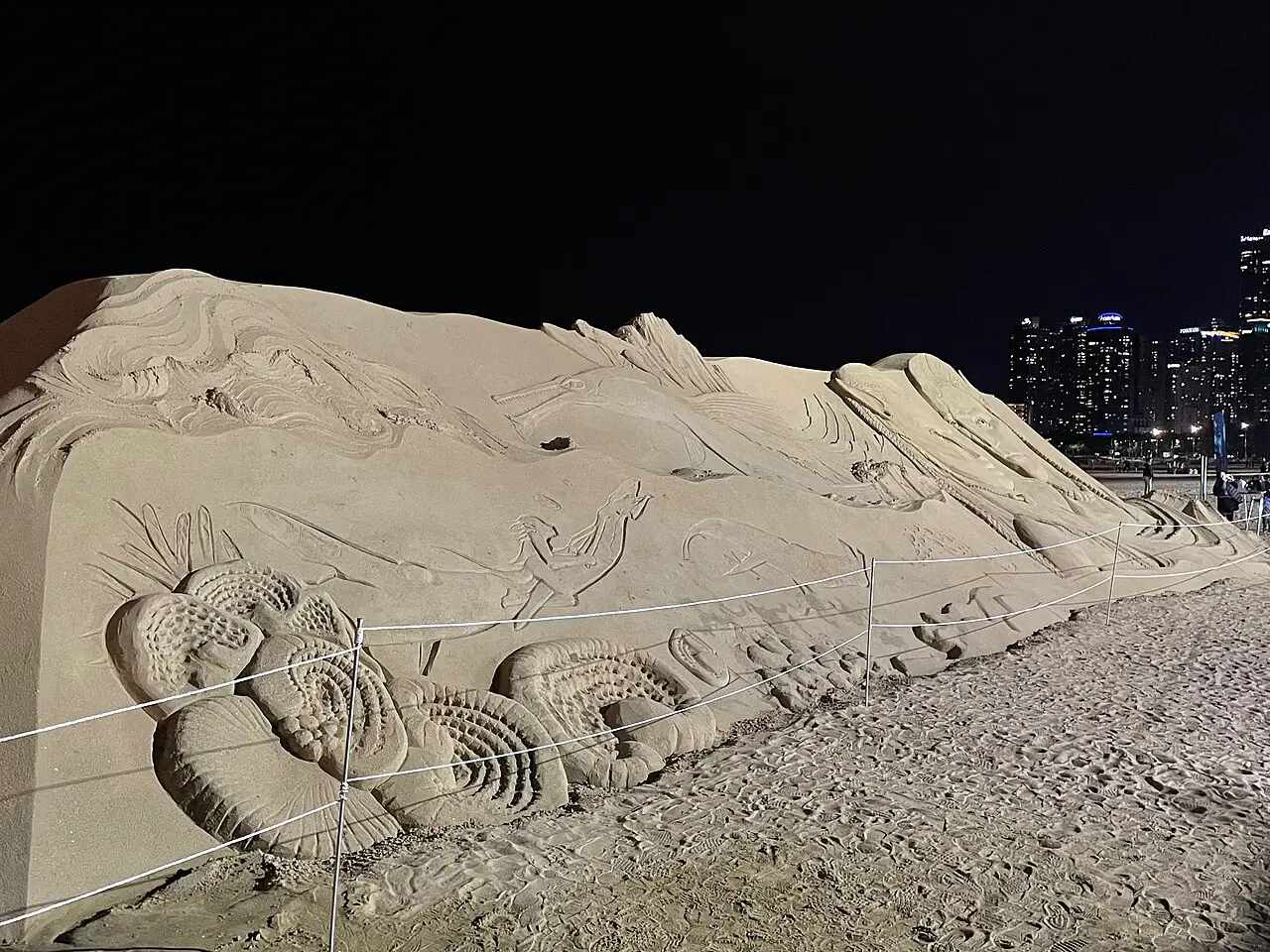
Haeundae Sand Festival
The 2026 municipal calendar announced the festival for May 15–18 on Haeundae Beach and Square, with sculptures displayed until June 14. The event and exhibition have different periods. For another edition, check dates and programme: workshops may require registration, an age range or payment and depend on available places. Choose activities that fit the day and keep a break and return. The festival does not define the authorised swimming season or confirm that entering the sea is safe.
 AI illustration
Gwangalli Eobang Festival
The 2026 calendar announced the edition for June 12–14 at Gwangalli Beach and Suyeong Historical Park. The announced programme includes fishing culture, a naval parade, a musical and participatory activities; the reenactment belongs to the festival. The venues are separate: choose activities, times and journeys, with a meal and return. Check conditions for the next edition, especially registration, age, payment and availability for workshops or hand fishing; do not assume every activity accepts every visitor.
Books and films
“Pachinko”, Min Jin Lee (2017)
The novel begins in a boardinghouse in Yeongdo in the 1910s and follows the family to Osaka; it explains why so many people left this port and what happened to those who went.
“Ode to My Father” (Gukje Sijang, 2014)
A film by Yun Je-kyoon that spans sixty years starting from the Hungnam evacuation, in 1950, and the family's stall at Gukje Market. The plot is the city's social history.
“Dolawayo Busanhang-e”, Cho Yong-pil (1976)
A 1976 song by Cho Yong-pil about the brother who never returns to the port of Busan, and still the city's signature song.
Frequently asked questions
Busan: does Google Maps work for getting around?
Test your intended journey: finding a place on Google Maps does not guarantee a complete public-transport route. Have Naver Map or KakaoMap as options, save the Korean address and check station exit, walking and last connection.
Busan: how do you get from Gimhae Airport to downtown?
One option is the Busan–Gimhae Light Rail to Sasang, followed by Line 2. Seomyeon and Haeundae involve different journeys; choose by your accommodation address and check connections, fare and schedule. Add disembarkation, baggage, waiting and the final leg to travel time; arrange check-in or luggage storage with the hotel. Also compare limousine bus stops and a taxi according to destination, luggage and payment.
Busan: what is there to see in Gyeongju?
Gyeongju was a capital of Silla and preserves the Daereungwon tombs, the 7th-century Cheomseongdae Observatory and Bulguksa Temple. The tombs and observatory offer a choice in the central area; Bulguksa requires another journey. For a day trip, choose your priority and include lunch, a break, access and return, checking hours and tickets.
Busan: what's the currency and how much is the won worth?
The currency is the South Korean won (KRW). Check a dated exchange rate for the currency you use and bank or card fees; an indicative rate does not guarantee the final payment amount.
Busan: where do you need to take off your shoes?
In a home, restaurant with low tables or temple building, look at the entrance, shoe lockers and instructions from your host or the person in charge. Remove shoes before entering the indicated area; a temple does not require walking barefoot across the entire grounds. A step alone does not determine the rule for every restaurant or accommodation. If unsure, ask before crossing.
Other cities in the country
South Korea ↗- Days
- 3–4
- When
- Apr–Jun · Sep–Nov
- Per person/day
- Average 160,000–260,000 KRWMid-range · per person/day
Cost scope
Per person per day: accommodation, meals, urban transport, visits and a small allowance for extras. Flights excluded; larger purchases vary. Editorial estimate, not a quote.