Japan
Hiroshima
Peace Memorial, Miyajima, okonomiyaki and streetcars
Days Start with the basic programme and choose extensions for the time you have.
How the guide reaches this number
On the first, leave room to take in the exhibition, walk through the memorial and have an unhurried lunch. With just one day, I would keep this group and choose a nearby visit rather than squeeze the island into the afternoon. A third day can combine Shukkei-en and the castle grounds; add Hijiyama or Yokogawa according to your interests and travel time. The castle keep has been closed since March 22, 2026, but its exterior and the reconstructed Ninomaru buildings remain accessible. At the museum, the 7:30–8:30am slot requires an online reservation; tickets are available through other channels during regular hours. Check the calendar before choosing a time, especially on August 6.
2–3
When Late March to early April (cherry blossoms) and October to November (fall foliage, oyster season)
How the guide reaches this number
The climate is humid subtropical, but softened by the inland sea: it rains less than the Japanese average and there are many clear days. The two good windows fall at the turn from winter to spring and at the turn of autumn: one side brings the cherry blossoms around the castle moat, Shukkei-en, and Hijiyama, the other the foliage in Miyajima's Momijidani valley along with the start of oyster season, and highs run between 18 and 23 °C in both cases; I prefer that second window for walking around the city. From mid-June to mid-July comes the tsuyu, the rainy season, with heavy downpours and a risk of landslides on the hillsides north of the city. July and August go past 33 °C with high humidity and nights that don't cool down, and it's also when typhoons arrive, mostly from August to September. Winter is mild, 3 to 10 °C, with rare snow downtown and frequent snow in the mountains north of the prefecture. The month that needs the most planning is August: extreme heat, the Obon holiday, and the week of the 6th, when the city fills up and hotels disappear; if the plan is to attend the ceremony, book months ahead; if not, pick another date.
Per person/day ¥9,000–13,000 in economy mode; ¥18,000–28,000 with chain hotel and sit-down dinner
How the guide reaches this number
Per person per day: accommodation, meals, urban transport, visits and a small allowance for extras. Flights excluded; larger purchases vary. Editorial estimate, not a quote.
 What Nilo thinks
I would set aside two full days: one for the Peace Park and Museum, the other for Miyajima. On the first, leave room to take in the exhibition, walk through the memorial and have an unhurried lunch. With just one day, I would keep this group and choose a nearby visit rather than squeeze the island into the afternoon. A third day can combine Shukkei-en and the castle grounds; add Hijiyama or Yokogawa according to your interests and travel time. The castle keep has been closed since March 22, 2026, but its exterior and the reconstructed Ninomaru buildings remain accessible. At the museum, the 7:30–8:30am slot requires an online reservation; tickets are available through other channels during regular hours. Check the calendar before choosing a time, especially on August 6.Hiroshima was the first city hit by an atomic bomb, on August 6, 1945, and people come here to understand that day in the place where it happened. Downtown, between the museum and the Atomic Bomb Dome, the skeleton of a building that survived about 160m from the point below the blast, stands the cenotaph with the names of more than 340,000 victims. Around it is a flat working city, with streetcars, Carp baseball, and the local okonomiyaki, built in layers and eaten with the spatula straight off the griddle. A short ferry ride goes to Miyajima, where the 16.6m torii stands over the water or over the sand, depending on the tide. From October to March, the bay's oysters go on the grill, into dotenabe, the hotpot with a rim of miso, and into the okonomiyaki itself. Come for the cherry blossoms or in autumn, the two seasons with highs between 18 and 23°C, and stay two full days.
Quick facts
- Population
- about 1.19M in the city; about 2.05M in the metropolitan area; about 2.7M in the prefecture
- Founded
- 1589, when Mōri Terumoto raises the castle in the delta; modern municipality since April 1, 1889
- Country and region
- Japan: Hiroshima Prefecture, Chūgoku region, Seto Inland Sea coast
- Language
- Japanese; the local dialect is Hiroshima-ben, with “buchi” instead of “very” and “jakee” closing sentences
- Currency
- Yen (¥, JPY); in 2026 it hovers around ¥150–160 per dollar
- Time zone
- JST, UTC+9, no daylight saving time
- Best time
- Late March to early April (cherry blossoms) and October to November (fall foliage, oyster season)
- Average cost per day
- ¥9,000–13,000 in economy mode; ¥18,000–28,000 with chain hotel and sit-down dinner
When to go
Late March to early April (cherry blossoms) and October to November (fall foliage, oyster season)
January
2° to 10°C
46 mm of rain
February
2° to 11°C
64 mm of rain
May
15° to 24°C
170 mm of rain
June
20° to 27°C
227 mm of rain
July
24° to 31°C
280 mm of rain
August
25° to 33°C
131 mm of rain
September
21° to 29°C
163 mm of rain
December
4° to 12°C
54 mm of rain
How the year changes
The climate is humid subtropical, but softened by the inland sea: it rains less than the Japanese average and there are many clear days. The two good windows fall at the turn from winter to spring and at the turn of autumn: one side brings the cherry blossoms around the castle moat, Shukkei-en, and Hijiyama, the other the foliage in Miyajima's Momijidani valley along with the start of oyster season, and highs run between 18 and 23 °C in both cases; I prefer that second window for walking around the city. From mid-June to mid-July comes the tsuyu, the rainy season, with heavy downpours and a risk of landslides on the hillsides north of the city. July and August go past 33 °C with high humidity and nights that don't cool down, and it's also when typhoons arrive, mostly from August to September. Winter is mild, 3 to 10 °C, with rare snow downtown and frequent snow in the mountains north of the prefecture. The month that needs the most planning is August: extreme heat, the Obon holiday, and the week of the 6th, when the city fills up and hotels disappear; if the plan is to attend the ceremony, book months ahead; if not, pick another date.
The same numbers as a table
| Month | Temperature °C | Rain mm |
|---|---|---|
| January | 2 to 10 | 46 |
| February | 2 to 11 | 64 |
| March · | 5 to 15 | 118 |
| April · | 10 to 20 | 141 |
| May | 15 to 24 | 170 |
| June | 20 to 27 | 227 |
| July | 24 to 31 | 280 |
| August | 25 to 33 | 131 |
| September | 21 to 29 | 163 |
| October · | 15 to 24 | 109 |
| November · | 9 to 18 | 69 |
| December | 4 to 12 | 54 |
Nilo's tips
Choose the museum entry slot
I would allow time for the Peace Memorial Museum and a break afterwards. The 7:30–8:30am slot requires an online reservation; regular hours also offer machines and a counter, and other reserved slots vary by season. Check the calendar and notices for your date, especially on August 6. Arriving early does not guarantee empty rooms.
Check Miyajima tides, access and return
Check the tide table to choose how to see Itsukushima’s torii, over water or sand, and the shrine’s admission hours. Plan the ferry and return before extending the visit. Staying near the pier may make departure easier; it guarantees neither an empty island nor access outside the calendar.
Check your route and pass coverage
For Miyajima, JR indicates about 28 minutes by train between Hiroshima and Miyajimaguchi, plus pier access and waiting for the ferry. The nationwide JAPAN RAIL PASS includes JR local trains and the JR West Miyajima Ferry, but the visitor tax is separate when applicable. Check the validity and rules of your pass and chosen operator; other passes and ferries have their own conditions.
Order Hiroshima okonomiyaki with soba
The cook only asks one thing, soba or udon, and to order soba you just answer “soba de.” Hiroshima's okonomiyaki comes built in layers, not mixed together, and it's eaten straight off the griddle with the hera, the metal spatula, no plate. It costs ¥900 to ¥1,500, or ¥1,500 to ¥1,800 with oysters between October and March. Small places prefer cash, so have bills ready before you sit down, and arrive before 9pm, when many of their kitchens have already closed.
Combine Shukkei-en with the castle exterior
I would begin at Shukkei-en, which opens at 9am and charges ¥350 for adults, checked in October 2026; check seasonal closing time. I would then continue to the castle grounds. The keep has been closed since March 2026, but you can see its exterior and visit the reconstructed Ninomaru buildings free, according to their own hours and calendar. Allow a break and choose your walking pace.
With no Carp game, take the train to Saijō, 40 minutes away
Saijō, to the east, has seven historic sake breweries a few blocks from each other, with tastings from ¥300 to ¥600 per brewery. The brick chimneys work as a map. On a Carp game day, at Mazda Zoom-Zoom Stadium, a walk from the station, the streetcar fills up hours in advance, and the same happens when Sanfrecce plays at the new soccer stadium downtown. It's worth going into one even without understanding the game.
Explore the map
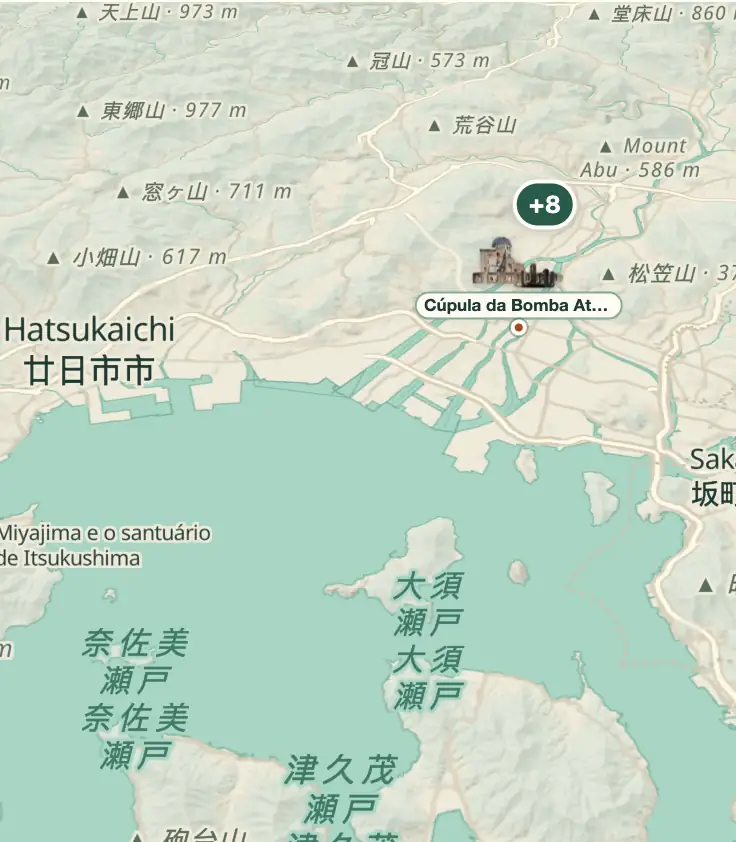
© OpenStreetMap · OpenFreeMap · © OpenMapTiles
Explore the map, read about the other places and plan your travel days in the app.
Open the appWhat to see
Hiroshima: The delta, the hills, and the sea
Downtown Hiroshima sits on a flat delta, laid out in regular blocks between canals and ringed by low hills that close off the horizon: Futabayama to the northeast, Hijiyama to the southeast (71m), and Ōgonzan to the west. In the background, across the bay, rises Mount Misen, at 535m, on the island of Miyajima.
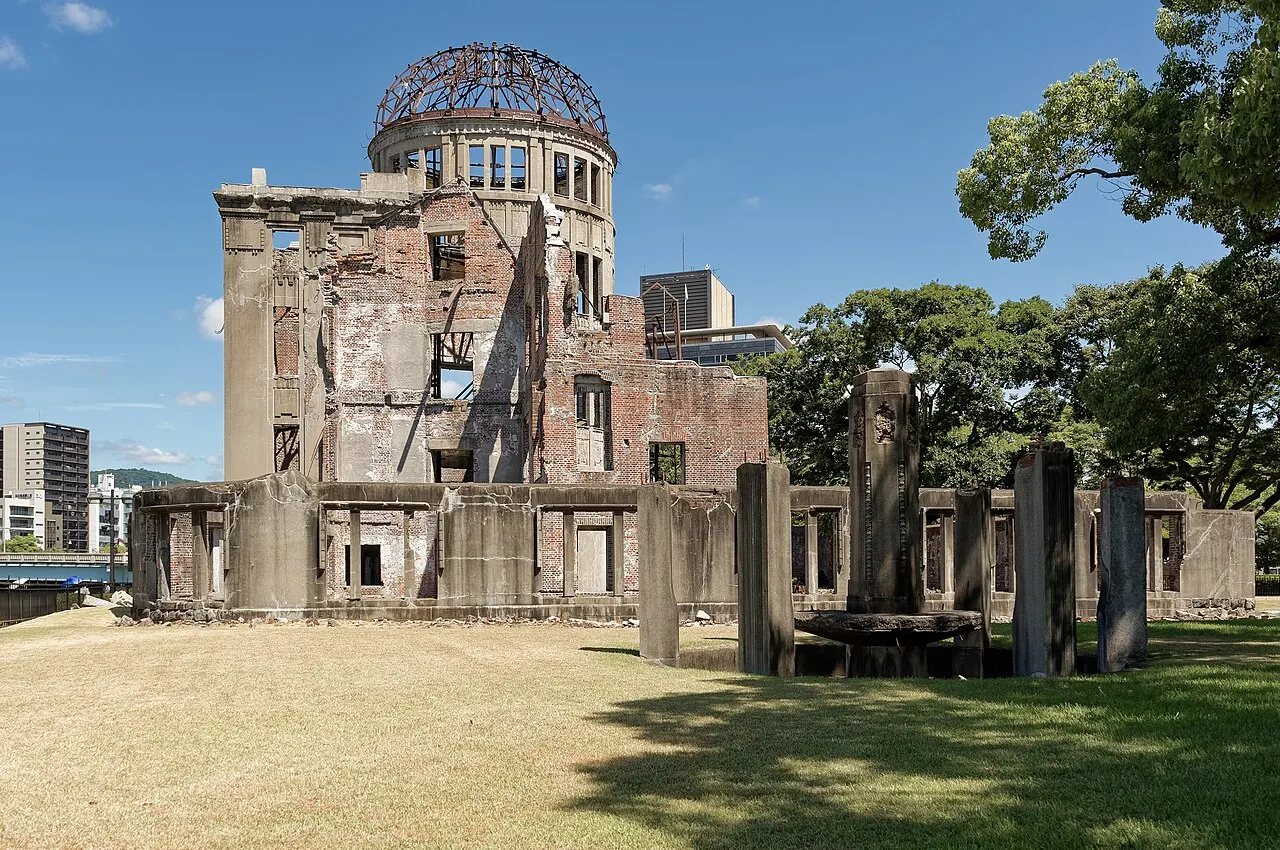
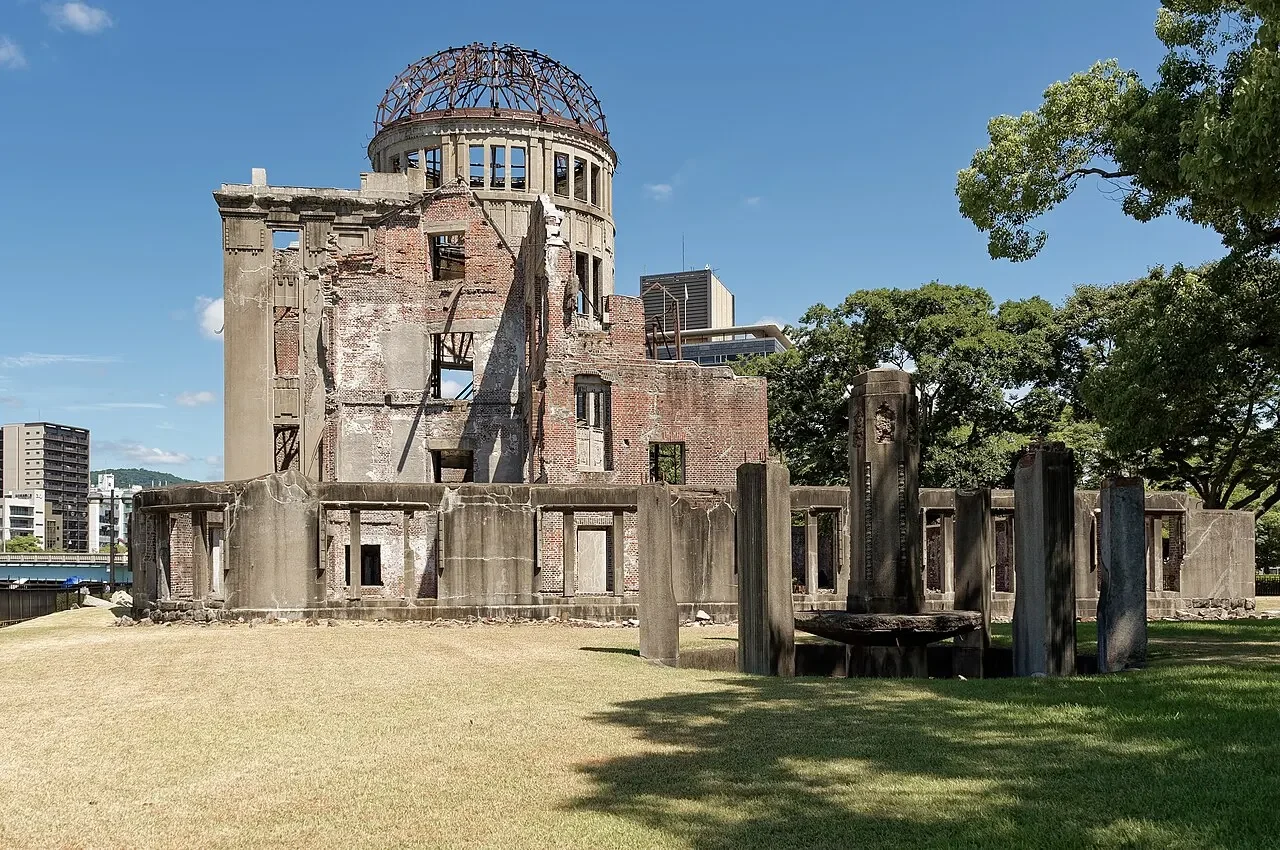
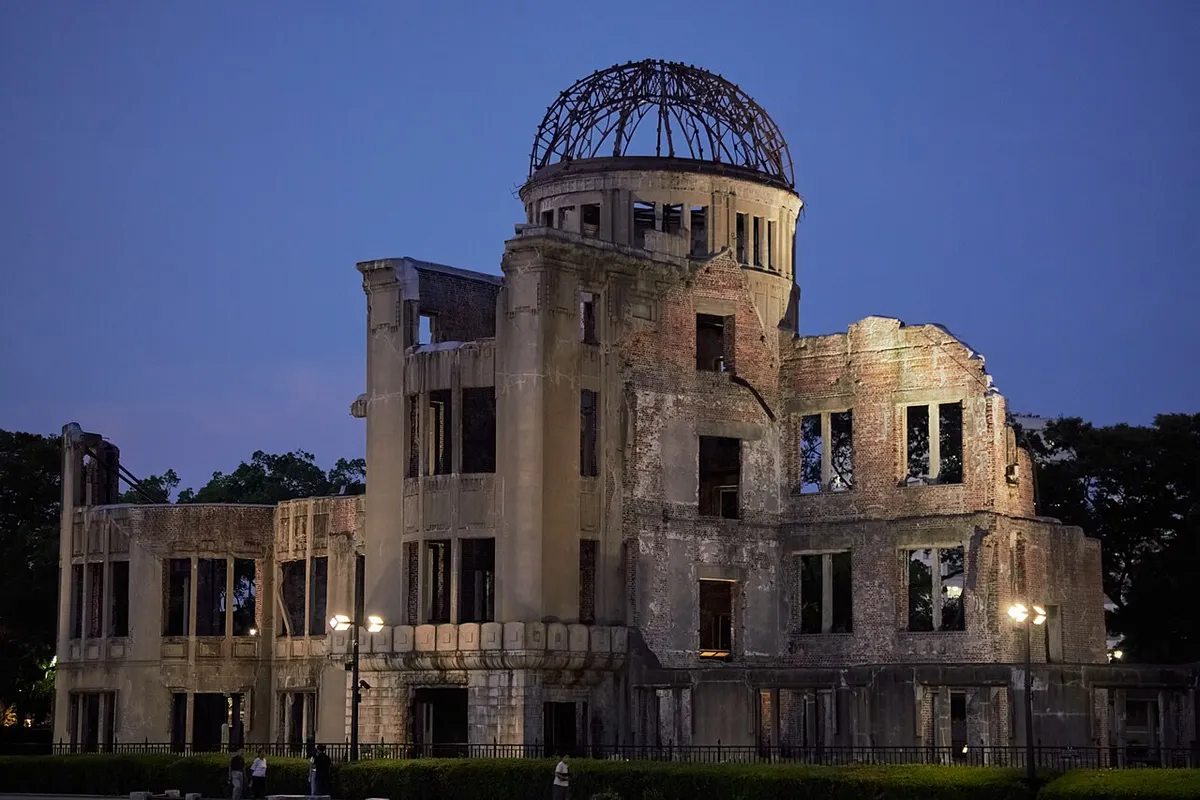
Atomic Bomb Dome (Genbaku Dome)
The shell of the Hiroshima Prefectural Industrial Promotion Hall, designed by the Czech architect Jan Letzel and opened in 1915. It stood about 160 m from the point beneath the explosion, so it took the blast almost vertically and stayed standing; it has been a World Heritage Site since December 1996 and has been braced with internal reinforcements since the 1960s.
The skeleton stayed standing because the blast wave hit almost vertically, and today it's a World Heritage Site with internal reinforcement; Jan Letzel, opened in 1915; about 160m away.
Check access
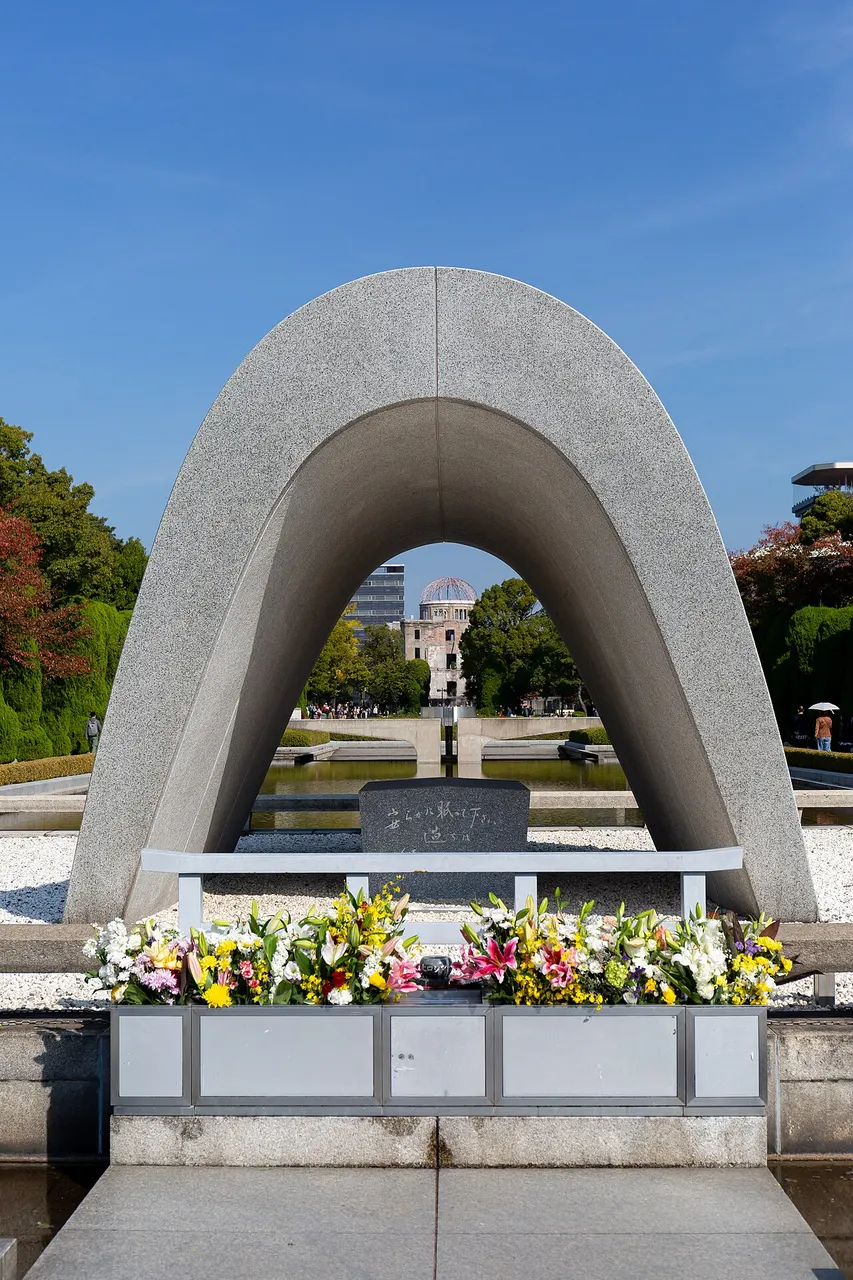
Peace Memorial Park
Kenzō Tange's winning design from the 1949 competition, built over the old commercial district of Nakajima. The arch-shaped cenotaph, from 1952, lines up with the Flame of Peace and the Dome and holds the register of victims' names, which now exceeds 340,000 and gains new names every August 6.
The 1952 monument was placed on the same axis as the Flame of Peace and the Dome, and the register of the dead, which already tops 340,000, gains new names every August 6.
Check access
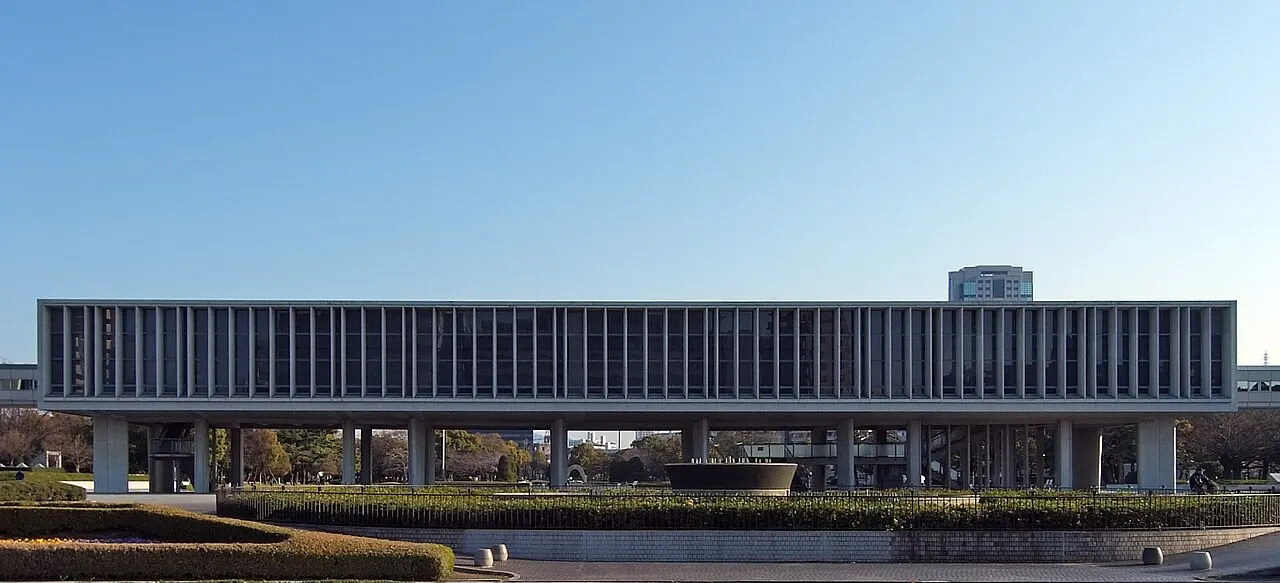
Peace Memorial Museum
Opened in 1955 in Tange’s building raised on pilotis, it reopened in April 2019 after seismic reinforcement and a complete overhaul of the exhibition. The 7:30–8:30am slot requires an online reservation; during regular hours from 8:30am, tickets are also available through machines or the counter. Other reserved slots run towards the end of the day, depending on the season. Check admission, closing time and notices for your date, especially on August 6; allow time for the exhibition and a break afterwards.
I would prioritise the museum together with the Peace Park, allowing time for the exhibition and a break. Admission from 7:30 to 8:30am requires an online reservation; regular hours offer other ticket channels. Check the calendar and exceptions for your date.
Check access
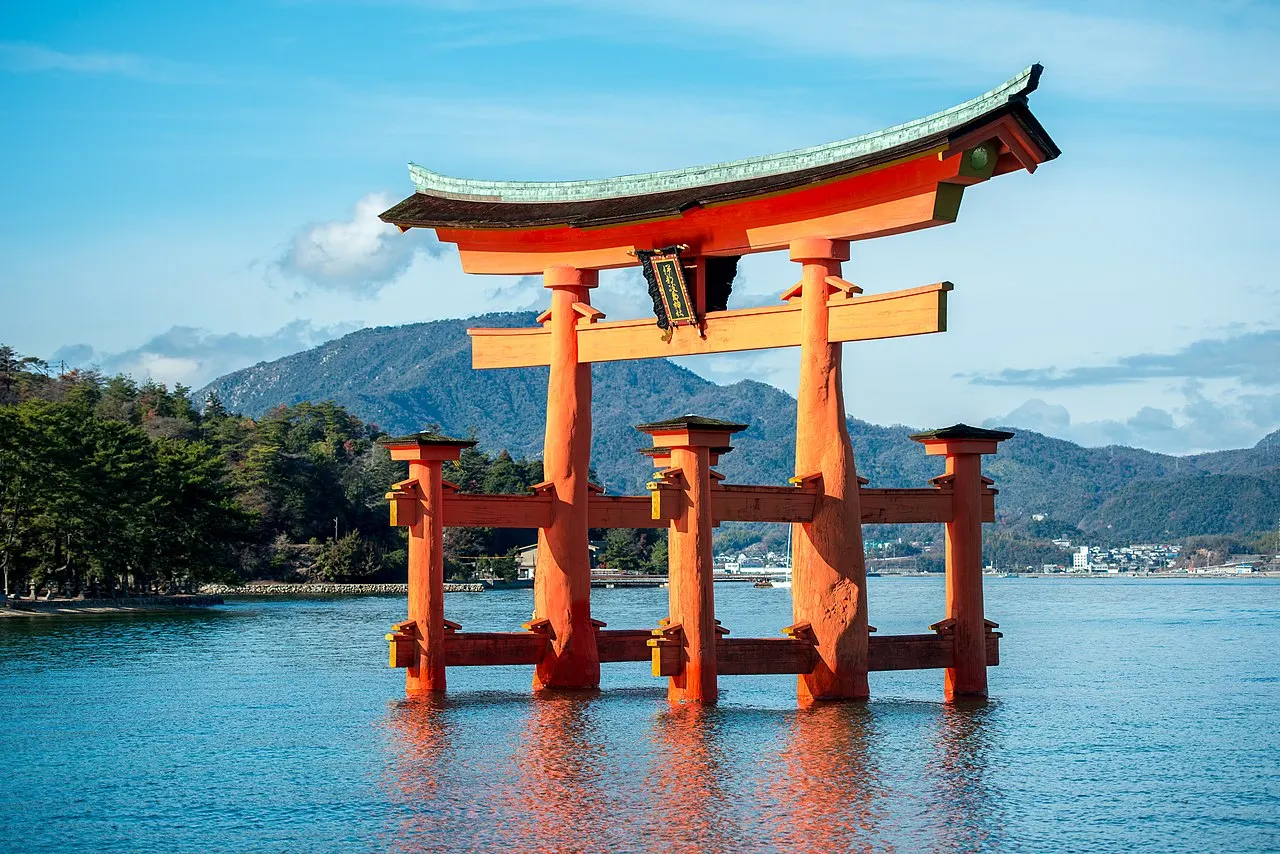
Miyajima and the Itsukushima Shrine
A shrine over the sea whose present form dates from 1168 under Taira no Kiyomori, with the 16.6m torii out front. The gate was restored between 2019 and late 2022. Check tides, admission and shrine hours, as well as the ferry and visitor tax. Misen is optional: the ropeway requires reservations on certain dates and a walk remains to the summit; check the weather and last return.
The shrine over the sea has had the form you see today since 1168, with the torii out front, and the visit calls for the tide table.
Check access
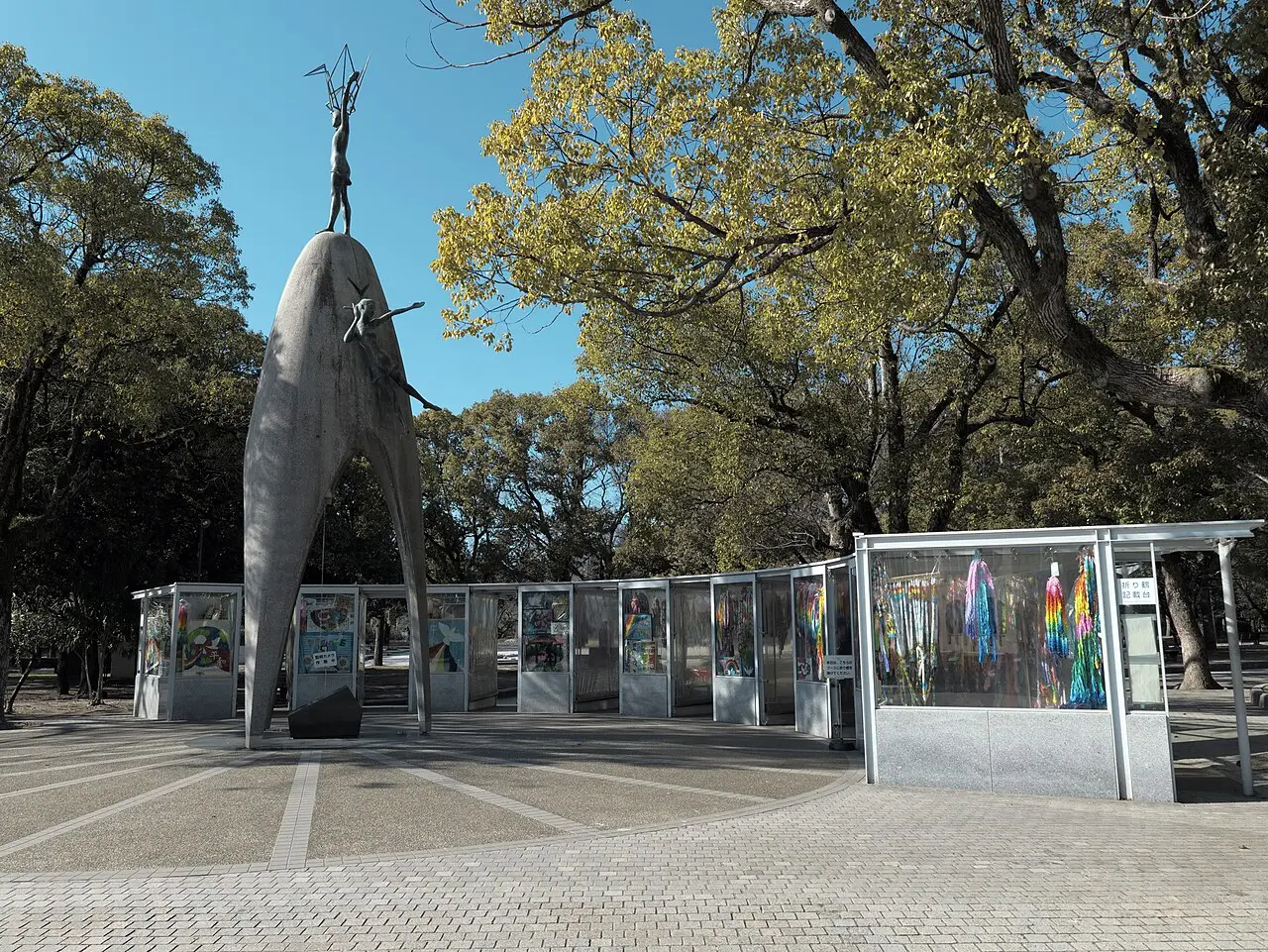
Monument to the Children for Peace
Built in 1958 with money raised by the classmates of Sadako Sasaki, who died of leukemia at 12 after folding paper cranes. The glass cases around it receive millions of origami garlands a year, sent by schools all over the world and changed out regularly.
The 1958 monument was paid for by Sadako Sasaki's classmates, and the display cases rotate millions of origami garlands sent in by schools.
Check access
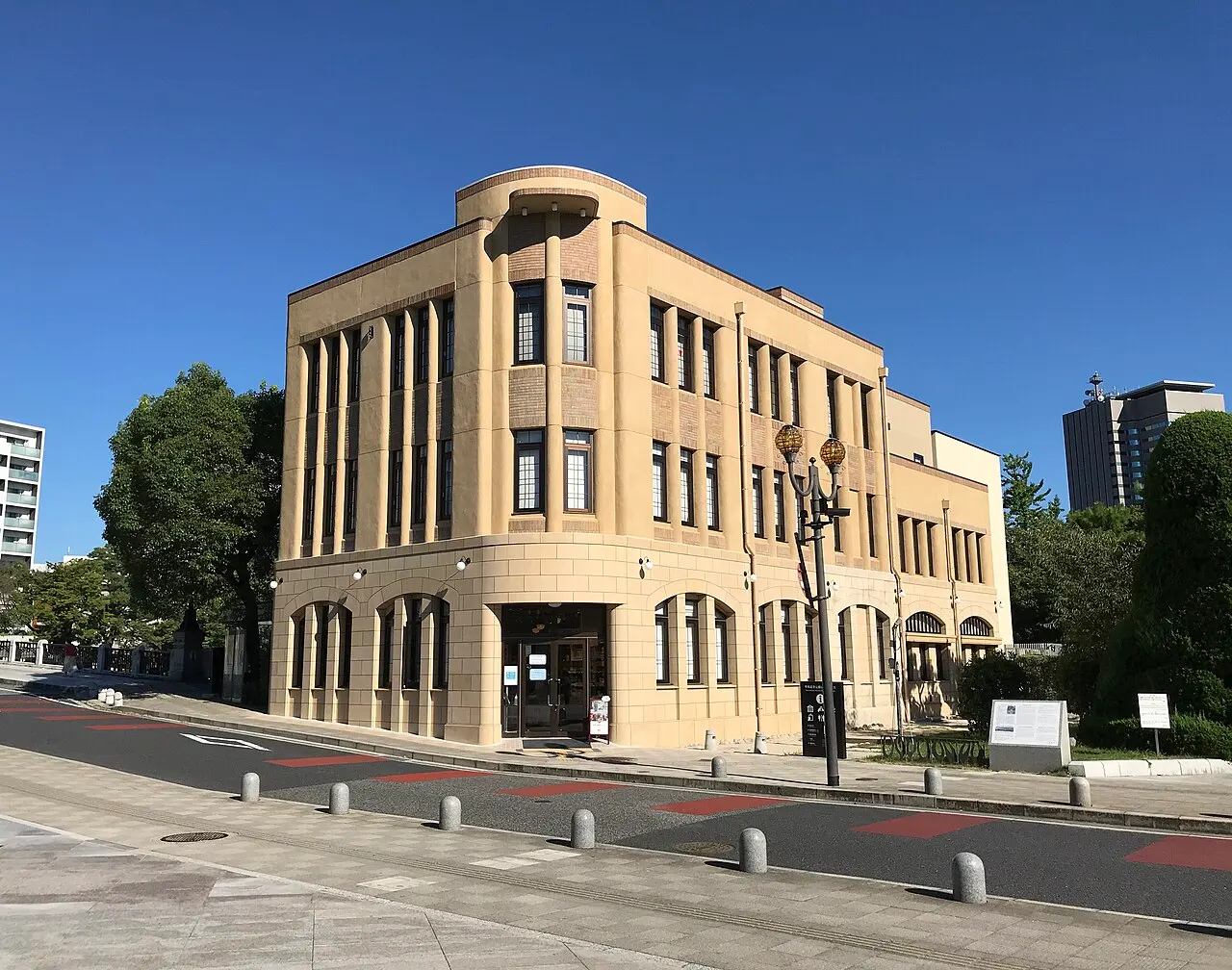
Rest House and the hypocenter
The park's Rest House is the former Taishōya kimono shop, built in 1929: one employee in the basement survived the explosion, and the basement is open to visitors. A few minutes' walk away, on a side street behind the park, a modest plaque marks the hypocenter, above the former Shima Hospital.
An employee in the basement survived the blast, the basement is open to visitors, and a discreet plaque marks the exact point a few minutes away; Taishōya, 1929; Shima Hospital.
Check access
Shukkei-en
A garden begun in 1620 by Ueda Sōko for Asano Nagaakira, with paths around Takuei Pond. Adult admission is ¥350, checked in October 2026. It opens at 9am; closing is at 6pm from March 16 to September 15 and 5pm from September 16 to March 15, with last admission half an hour earlier. Check closures and choose your own pace.
I would combine Shukkei-en’s paths and pond with the castle grounds, allowing room to stop in the garden. Check seasonal hours and admission; duration depends on the route you choose.
Check access
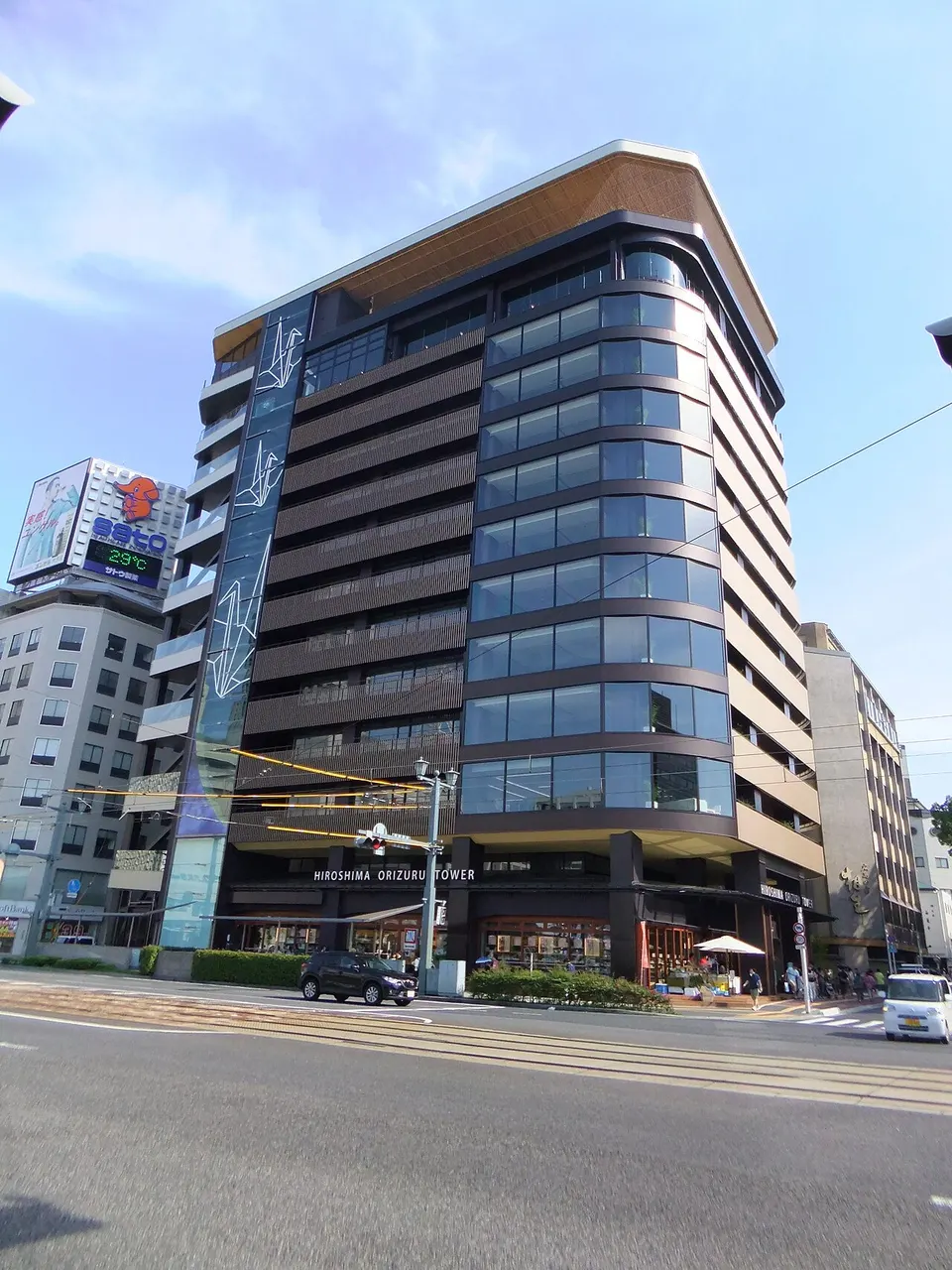
Orizuru Tower
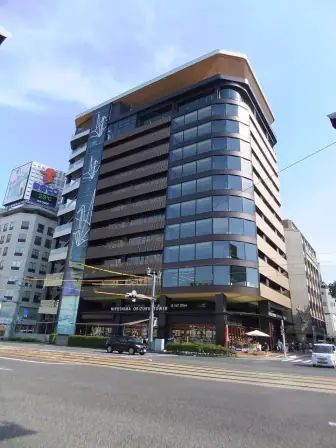
A 2016 office tower next to the Dome, with an open rooftop about 50 m up, a spiral ramp you can walk down and a station where you fold a paper crane and drop it into a glass wall. Rooftop tickets cost around ¥2,000, and it's the best place to take in the park's layout from above.
The open-air terrace, at about 50m, costs around ¥2,000 and is the spot from which the park's geometry makes sense from above, in the 2016 tower next to the Dome.
Check access
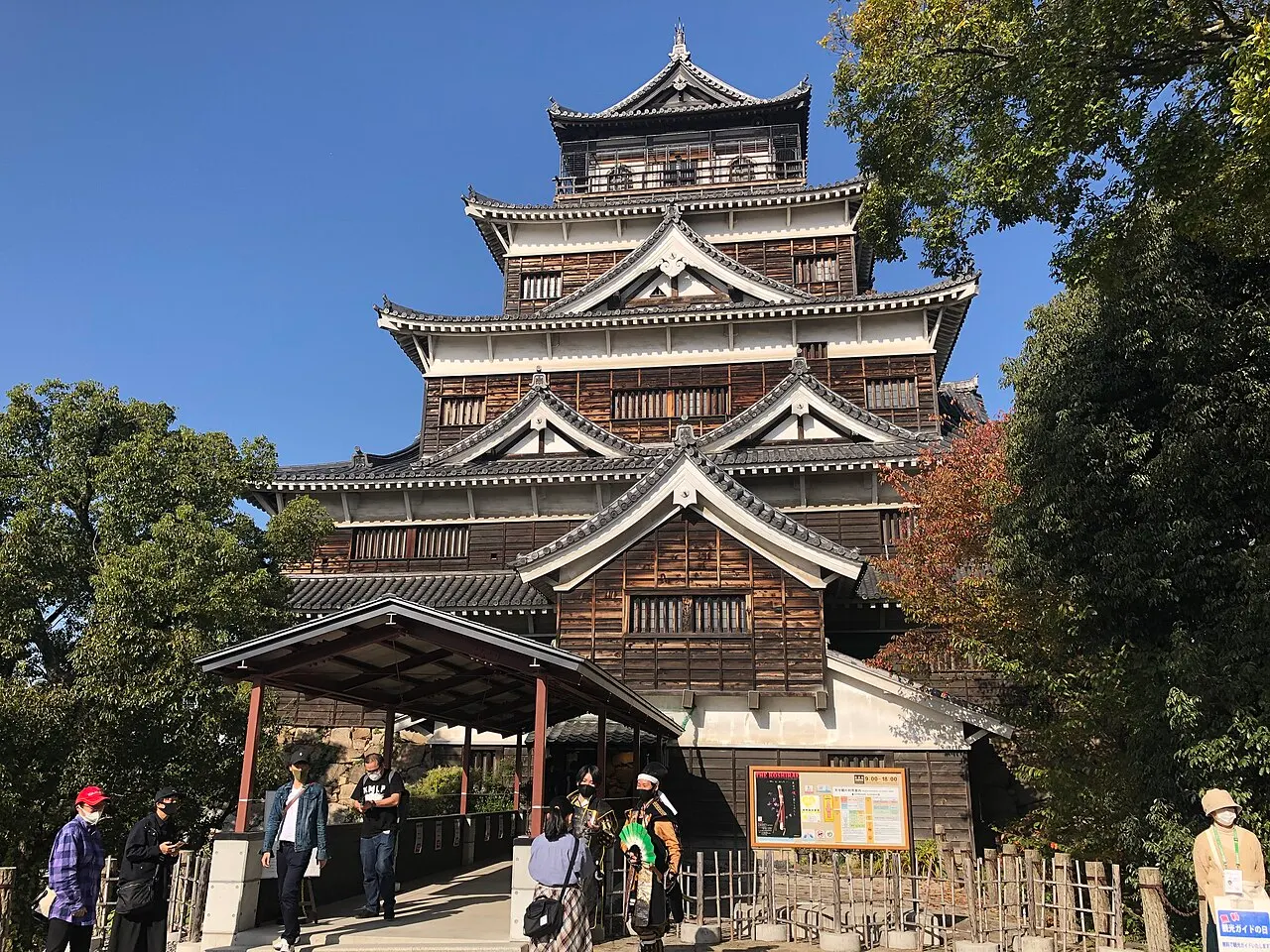
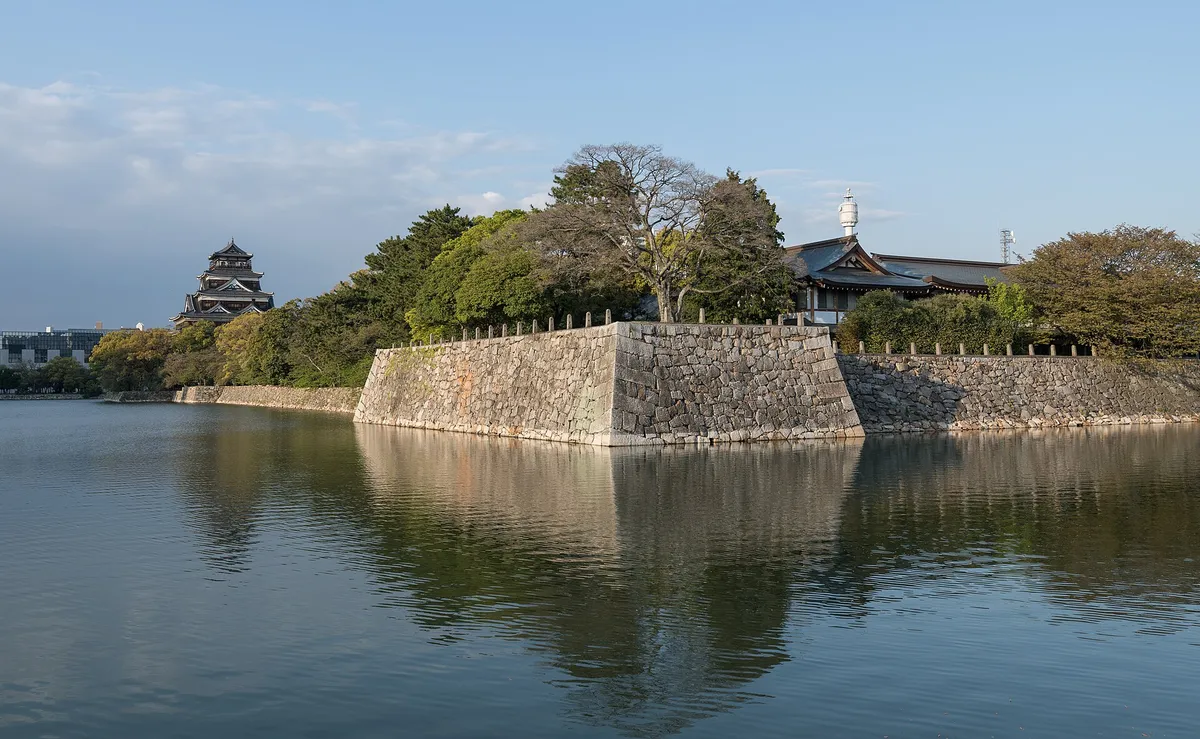
Hiroshima Castle
Founded in 1589 and destroyed in 1945, the keep was rebuilt in reinforced concrete in 1958 and closed to visitors on March 22, 2026. You can view its exterior and visit the reconstructed Ninomaru buildings, with free admission: April to September, 9am–5:30pm; October to March, 9am–4:30pm, with last entry half an hour before closing. Check the closure calendar; the buildings’ hours are separate from those of the open-air grounds.
I would include the grounds if there were time to combine them with Shukkei-en. The keep has been closed since March 22, 2026; its exterior and the reconstructed Ninomaru buildings remain accessible, the latter with free admission and their own hours.
Check access
Nilo’s itinerary
Start with the basic programme and choose extensions for the time you have.
Plan my days in the app ↗Day 1 · The park, the museum and the night downtown
Set aside the morning for the Peace Memorial Museum and park, allowing a break after the exhibition. If you choose the 7:30–8:30am slot, reserve online; from 8:30am, regular hours also offer tickets through machines or the counter. Check hours and notices for your date, especially on August 6.
Leave the museum along the axis of Tange's design: the cenotaph, the Flame of Peace, the Children's Peace Monument and the Dome, crossing the Aioi Bridge.
Go down to the basement of the Rest House, the former 1929 kimono shop, then walk to the hypocenter plaque on a side street behind the park.
Lunch on okonomiyaki at Okonomimura or at a counter joint in Fukuromachi; order it with soba and eat it straight off the griddle.
If time and interest allow, choose Orizuru Tower in the late afternoon to see the park from above; check admission and last entry. Afterwards, dine in the centre, for example in Nagarekawa or near the Hondōri arcade.
Day 2 · Miyajima from morning to evening
Allow for a train or tram to Miyajimaguchi and a ferry to Miyajima. JR indicates about 28 minutes from Hiroshima Station to Miyajimaguchi; the crossing takes about 10 minutes. These times exclude waiting and access to the pier. Check timetables, service and the visitor tax for your circumstances.
Visit Itsukushima shrine according to its opening hours and the tide table: the torii may stand over water or sand.
Take a lunch break for anago-meshi and try momiji manjū on Omotesandō before deciding how much further to walk.
Misen is an option depending on your energy and the weather. The ropeway does not reach the summit; walking remains. Check service, reservations required on specific dates and the last return. If time or conditions are unsuitable, keep the shrine and the lower part of the island.
Plan the return ferry and train or tram before extending the visit; allow for waiting and a break back in the city.
If you stay longer
Day 3 · Garden and castle, with a choice of afternoon
Start at Shukkei-en and continue to the castle grounds, whose keep has been closed since March 22, 2026. You can see the exterior and visit the reconstructed Ninomaru buildings: April to September, 9am–5:30pm; October to March, 9am–4:30pm, with last entry half an hour before closing. Check closure days.
Have lunch in the centre and take a break before choosing another area; tsukemen is an option, with the chilli level adjusted to your taste.
For art or manga, choose Hijiyama for the afternoon and plan transport to the hill. The Museum of Contemporary Art opens from 10am to 5pm, last entry at 4:30pm; it normally closes on Mondays; when it opens on a Monday that is a public holiday or August 6, it closes on the next weekday. Check the museum and manga library calendars; if they are closed, keep the city-centre walk.
A Carp or Sanfrecce game, or a visit to Mitaki-dera, can replace Hijiyama according to your interests. Check schedules, admission and transport before deciding; these are alternatives, not visits to add to the same afternoon.
Dine in the centre or, if you want to explore Yokogawa, choose a venue and plan the journey there and back. There is no need to cross the city just to end the day.
Food
 AI illustration
Hiroshima Okonomiyaki
Hiroshima-style okonomiyaki is built in layers rather than mixed, with soba or udon, and you eat it at the counter facing the hot griddle, straight off it with a spatula. It costs ¥900 to ¥1,500, or ¥1,500 to ¥1,800 with oysters from October to March.
 AI illustration
Oysters (kaki)
The prefecture produces most of Japan's farmed oysters, grown on rafts scattered across the bay. The season runs from October to March: order them grilled in the shell, breaded (kaki-fry), in a miso hot pot cooked in a dotenabe, or inside okonomiyaki.
 AI illustration
Hiroshima Tsukemen
Chilled noodles served with a separate cold dipping sauce of soy, sesame oil and chili, topped with cabbage and cucumber. It was created here in the 1950s and comes in numbered spice levels; order the mildest one the first time.
 AI illustration
Anago-meshi
Grilled conger eel sliced over rice cooked in its own broth, a specialty of Miyajima and Miyajimaguchi since the early 20th century, when it was first sold as a station lunch box. It costs ¥2,000 to ¥3,500, and there's usually a line at lunchtime.
 AI illustration
Momiji manjū
A maple-leaf-shaped cake filled with sweet bean paste, created on Miyajima around 1906 and now made on machines you can watch from the street. Eat it hot on the spot, or fried on a stick as age-momiji; ¥100 to ¥200 each.
 AI illustration
Setouchi Lemon
The prefecture, with its islands in the Inland Sea, is Japan's biggest lemon grower, and the fruit turns up in everything: lemon chū-hai in the bars, lemon ramen, a dipping sauce for fried food and lemon salt for okonomiyaki.
 AI illustration
Saijō Sake
The Saijō district, in Higashi-Hiroshima, has seven historic sake breweries within a few blocks, with brick chimneys and the soft, low-mineral water that defines the local style. Many open their shops for tastings at ¥300 to ¥600.
 AI illustration
Uni-hōren
Sea urchin on spinach sautéed in butter, invented at a bar in Nagarekawa and copied all over the city. It's a bar-counter snack, ¥900 to ¥1,500, and proof that the city eats everything the Seto Inland Sea has to offer.
Day trips
Kure
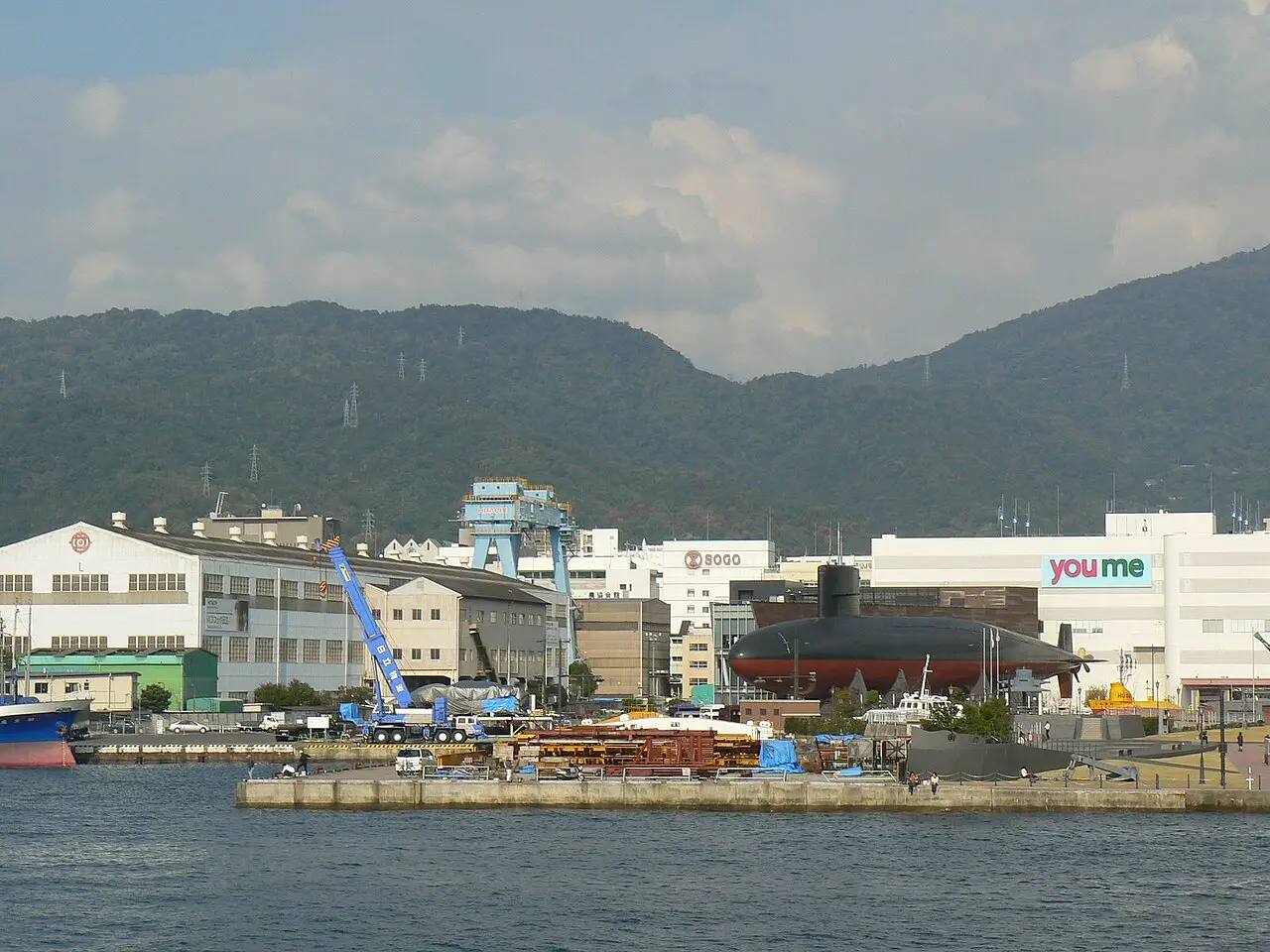
Kure is 35 minutes away by train, for about ¥510, and its shipyard built the battleship Yamato in 1941. Today the Yamato Museum displays a 26 m model of the ship, and across the street you can climb inside the submarine Akishio, set up on dry land.
Iwakuni
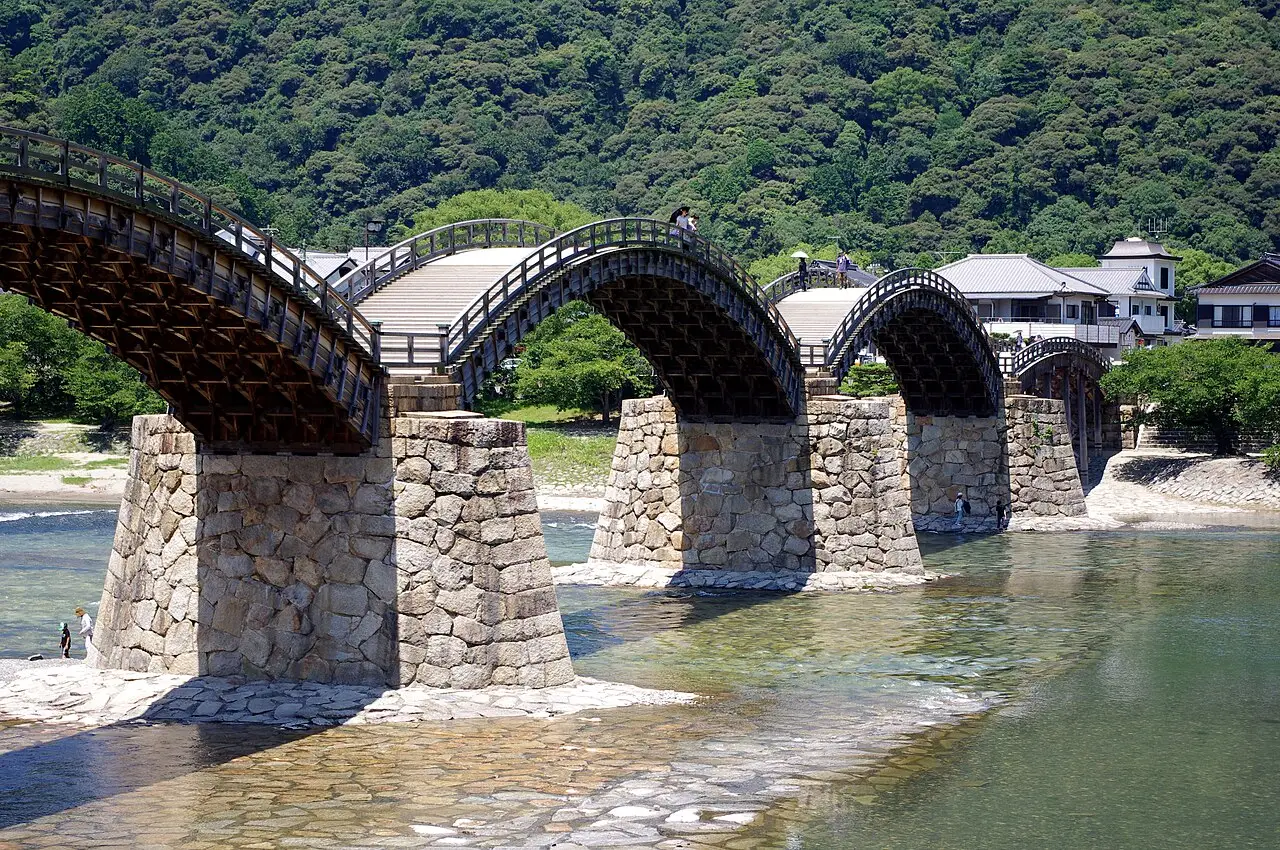
Iwakuni is 45 to 50 minutes away on the JR Sanyō line, about ¥600, just across the border in Yamaguchi prefecture. The Kintai-kyō Bridge, with its five wooden arches, was built in 1673, swept away by a typhoon in 1950 and rebuilt in 1953; a ropeway takes you up to the castle.
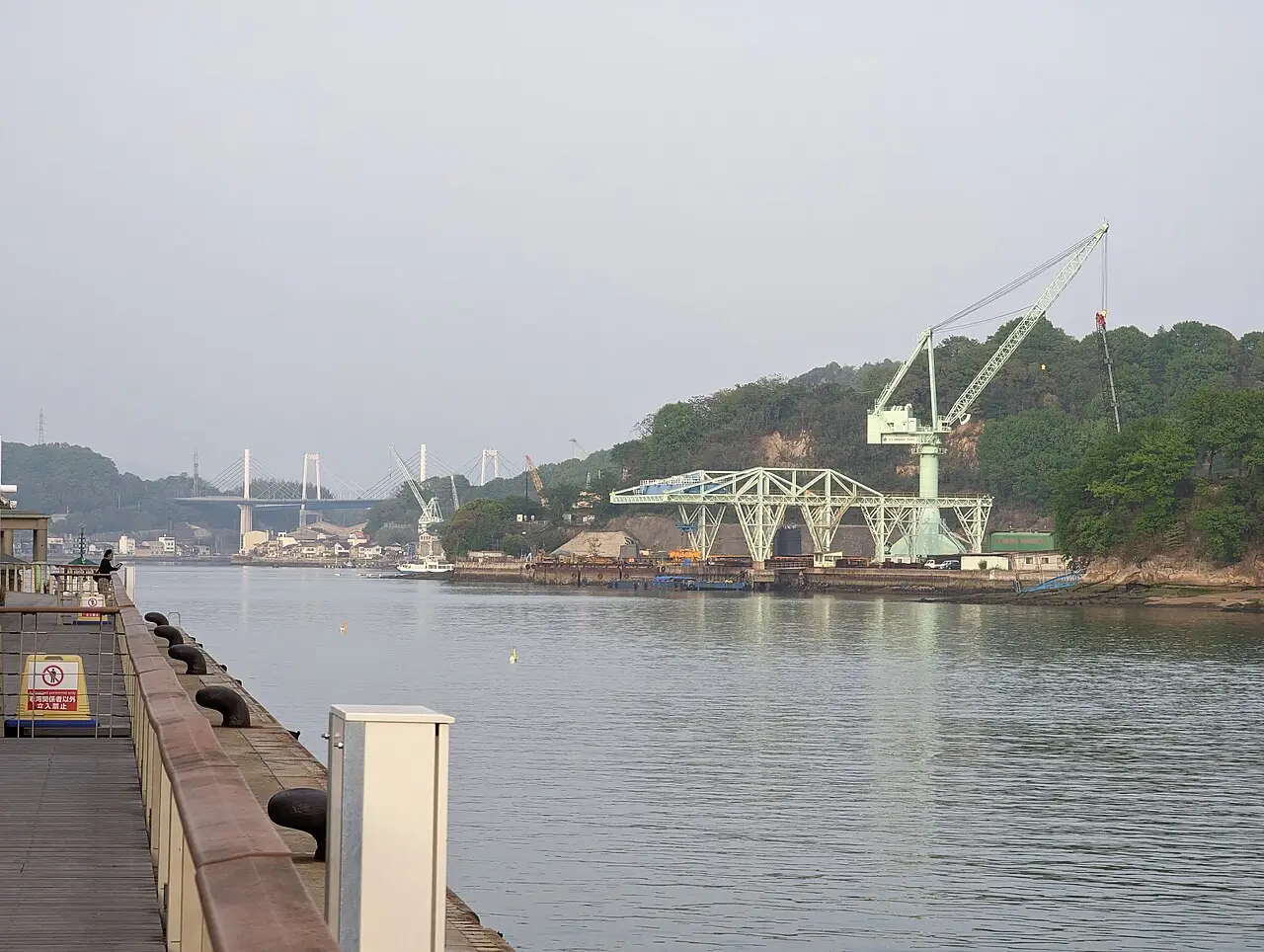
Onomichi and the Shimanami Kaidō
Onomichi is about 1 hour 30 minutes by local train or 1 hour by Shinkansen to Mihara, from ¥1,500. It's a town of steep lanes and temples that Yasujirō Ozu used as a film setting, and the starting point of the 70 km cycling route that crosses six islands to Imabari, with bikes you rent at one end and drop off at the other.
Where to begin
The park, the museum and the night downtown
Set aside the morning for the Peace Memorial Museum and park, allowing a break after the exhibition. If you choose the 7:30–8:30am slot, reserve online; from 8:30am, regular hours also offer tickets through machines or the counter. Check hours and notices for your date, especially on August 6.
Miyajima from morning to evening
Allow for a train or tram to Miyajimaguchi and a ferry to Miyajima. JR indicates about 28 minutes from Hiroshima Station to Miyajimaguchi; the crossing takes about 10 minutes. These times exclude waiting and access to the pier. Check timetables, service and the visitor tax for your circumstances.
Garden and castle, with a choice of afternoon
Start at Shukkei-en and continue to the castle grounds, whose keep has been closed since March 22, 2026. You can see the exterior and visit the reconstructed Ninomaru buildings: April to September, 9am–5:30pm; October to March, 9am–4:30pm, with last entry half an hour before closing. Check closure days.
Money
The currency is the yen, which in 2026 runs around ¥150–160 to the dollar. Typical prices: coffee ¥400–600; set lunch ¥900–1,300; okonomiyaki ¥900–1,500; izakaya dinner with a drink ¥3,000–5,000; draft beer or chū-hai ¥500–700; convenience store meal ¥500–800; streetcar ¥240; “business” hotel chain ¥9,000–15,000 a night, hostel ¥3,500–6,000, ryokan in Miyajima from ¥25,000 with dinner. Cards work at chains, hotels, department stores, and most restaurants, but carry cash for small okonomiyaki places, temples, buses, and markets. ATMs at 7-Eleven and post offices take foreign cards. Nobody tips anywhere: change left on the table is usually handed back. The 10% consumption tax is already built into the price shown (8% for food to go), there's an exemption on purchases over ¥5,000 with your passport, and it's worth confirming the procedure in effect, because Japan is moving to a system where the tax is charged in-store and refunded at the airport. Since April 1, 2026, there's a lodging tax of about ¥200 per person per night in Hatsukaichi, the municipality that covers Miyajima, charged at hotel checkout.
Getting there and around
Hiroshima Airport: 50 km east, no train
Hiroshima Airport (HIJ) is in Mihara, about 50 km east, and has no rail link: the limousine bus to Hiroshima Station takes about 50 minutes and costs around ¥1,500. Many people arrive by Shinkansen instead, about 4 hours from Tokyo, 1 hour 25 minutes from Shin-Osaka and 1 hour from Hakata (Fukuoka). From the station it's 10 to 15 minutes to downtown by streetcar, and since August 3, 2025 the streetcar pulls right into the second floor of the station building, level with the JR ticket gates, so you no longer have to cross the street with your luggage.
Japan's largest streetcar fleet
Inside the city, the system is the Hiroden streetcar, with eight lines and the largest streetcar fleet in Japan, including cars bought from Osaka, Kyoto, and Hanover, and two vehicles that were in service on August 6, 1945 and still run today. The fare is flat, about ¥240 per ride, paid on exit in coins, with the MOBIRY DAYS system, or by tapping a contactless credit card on the validator. The network is rounded out by the automated Astram metro (opened in 1994, distance-based fare starting at about ¥190), JR trains on the Sanyō, Kure, and Kabe lines, city buses, and the Ujina ferries. Downtown is flat and walkable end to end in 40 minutes, there are shared bikes from the Peacecle system with dozens of stations, and taxis start around ¥700.
Safety
Hiroshima is a very low-crime city, where walking alone at night downtown is routine and a lost item usually comes back through the police lost-and-found. The real risks are weather-related: besides the summer heat, typhoons and localized torrential rain arrive from August to September. On the hillsides of the northern valleys, landslides killed 77 people in Asaminami in 2014 and caused deaths across the prefecture in the 2018 floods. If there's a heavy-rain warning, follow municipal instructions and avoid hillside neighborhoods. Scams are rare, aside from the bar approach on the Nagarekawa sidewalk. Bicycle theft is the city's most common crime. A backpack left on a chair doesn't disappear, but an umbrella does, for a reason nobody can explain. In an emergency, 110 is police and 119 is fire and ambulance.
Etiquette tips
In the Peace Park, walk as in a cemetery
Under the Memorial to the Unidentified lie the ashes of tens of thousands of people, and the entire park is the old Nakajima district. You don't picnic, you don't sit on the cenotaph and you don't pose smiling in front of it.
Pay the streetcar when you exit
On Hiroden's newer streetcars, board through any door and pay when you get off, ¥240 per ride. Have your coins or card ready before you reach the exit, because the line of people getting off won't wait while you dig through your backpack for change.
Eat okonomiyaki straight off the griddle
At the counter, the cook slides the okonomiyaki over to you on the griddle and you eat it with the hera, the metal spatula, without a plate. You can ask for a plate and chopsticks, but at peak times it slows down the griddle and the line.
Don't feed the deer in Miyajima
They're wild animals, feeding them is banned on the island, and they eat paper: maps, tickets, shopping bags. Keep everything in your pocket or zipped inside your backpack.
Ask permission before photographing testimonies
Hibakusha testimony sessions take place in museum rooms and at schools, and the audience is usually students. Listen without taking photos until the organizer says it's fine, and don't ask speakers about their health or their family.
Take your trash with you
There are almost no trash cans on the street, and the few in the park and at stations are for what you buy there. A folded bag in your pocket takes care of the whole day, including the stick from your fried momiji.
Mistakes to avoid
Allow time for the museum and park
Treating Hiroshima as a quick stop between trains leaves little room for the exhibition and memorial. I would set aside a morning for both, including a break; visit times vary. Miyajima deserves another day, including train or tram and ferry travel, rather than becoming an obligation for the same afternoon.
Crossing the park at midday in July or August
Walking from the Peace Park to the Dome in the middle of the day, in July or August. With the humid heat and heat-index warnings of that season, heatstroke is the real risk in this city: walk the park early, right after the museum, carry water and salt, and save the middle of the day for indoor places.
Accepting a bar invitation on the sidewalk in Nagarekawa
Following someone who approaches you on the sidewalk in Nagarekawa with an invitation to a bar. It's the “catch” scam, where the bill comes inflated with seat charges, and the way out is to turn down any invitation made on the street and choose the bar yourself.
Looking for the PASPY card, retired in 2025
Looking for the PASPY card, which old guides still recommend for the streetcar. It was retired in 2025 and replaced by the MOBIRY DAYS system, and the validator also accepts a contactless credit card: confirm the payment method before you board.
Check last admissions and orders
Planning dinner or a visit solely around closing time can go wrong: last orders and admissions often come earlier. Check the restaurant and institution you choose. The Peace Memorial Museum has seasonal hours and reserved slots; do not assume every museum in the city closes at the same time.
Useful phrases
こんにちは: Konnichiwa (kon-nitchi-uá)
Hello, used from mid-morning to late afternoon
すみません: Sumimasen (sumi-massên)
Excuse me, sorry, and also “please attend to me”: used to call the waiter
お好み焼き一枚ください: Okonomiyaki ichimai kudasai (oconomiiáki itchimai cudassai)
One okonomiyaki, please
そばで: Soba de (sóba dê)
With soba noodles: the choice between soba and udon they always ask at the counter
いくらですか: Ikura desu ka (ikura dess ka)
How much does it cost?
ぶちうまいじゃけぇ: Buchi umai jakee (butchi umái jaquê)
“It's really tasty” in the local dialect: buchi means “very” and jakee closes the sentence
Districts
Kamiya-chō and Hatchōbori
The financial and shopping center, where almost all the streetcar lines cross and the department stores are. It's the city's busiest transfer point and the area with the most chain hotels.
Hondōri
A covered pedestrian arcade about 570 m long, between Kamiya-chō and Fukuromachi, with shops, pharmacies, cafés and the Astram line's terminus. It's handy when it rains and is the natural route between downtown and the Peace Park.
Nagarekawa and Yagenbori
The nightlife quarter of Naka-ku, with hundreds of izakayas, shot bars and live-music venues on narrow streets. It's busy from 7pm to 2am, and it's where uni-hōren, a counter dish of sea urchin on spinach, was invented.
Station surroundings (Minami-ku)
Home to the Shinkansen station, the new shopping complex that opened in 2025 and the row of okonomiyaki counters at Ekimae Hiroba. A good place to stay if you arrive late or leave early by train.
Hijiyama and Danbara
A 71-meter hill with a cherry-blossom park, a contemporary art museum, and the public manga library.
Yokogawa
A secondary hub to the north, around the JR station of the same name, where Japan's first city bus line started in 1905. It's full of small bars, independent cafés and mid-sized music venues.
Ujina and Motoujina
The waterfront to the south, with the passenger terminal where ferries leave for Miyajima, Etajima, Ninoshima and Matsuyama. It's an area of warehouses and a seaside park, plus the hotel that hosted the 2023 G7 summit.
Miyajimaguchi (Hatsukaichi)
A base beside the ferry pier for Miyajima, in Hatsukaichi. JR indicates about 28 minutes by train from Hiroshima, excluding waiting and pier access. It may make leaving for the island easier; weigh that benefit against travel to Hiroshima’s places and check ferries there and back.
History
1589 · Mōri Terumoto founds the city
Terumoto chooses one of the alluvial islands in the Ōta delta to build a castle and names the place Hiroshima, “wide island.” The city is born as both fortress and port.
1600–1619 · Fukushima and then the Asano
Defeated at Sekigahara, the Mōri clan loses the domain to Fukushima Masanori in 1600. From 1619 the Asano clan rules Hiroshima without interruption until the domains are abolished.
1871–1889 · From domain to modern city
The Meiji reforms dissolve the domain and create Hiroshima prefecture in 1871. On April 1, 1889 the city is officially incorporated, and Ujina port opens the same year.
1894–1895 · Provisional wartime capital
During the war with China, the imperial headquarters moves into Hiroshima Castle and the Diet even meets in the city. Ujina becomes the country's main troop embarkation port, a role it plays again in 1904 and in the decades that follow.
1912 · Streetcars arrive
Hiroshima Denki Kidō, now Hiroden, opens the first electric line in November 1912. The network survived everything and remains the backbone of urban transport.
August 6, 1945 · The atomic bomb
At 8:15am, a uranium bomb explodes about 600m above the city center, near the Aioi Bridge. Between 70,000 and 80,000 people die immediately, and about 140,000 by the end of December, from injuries, burns, and radiation.
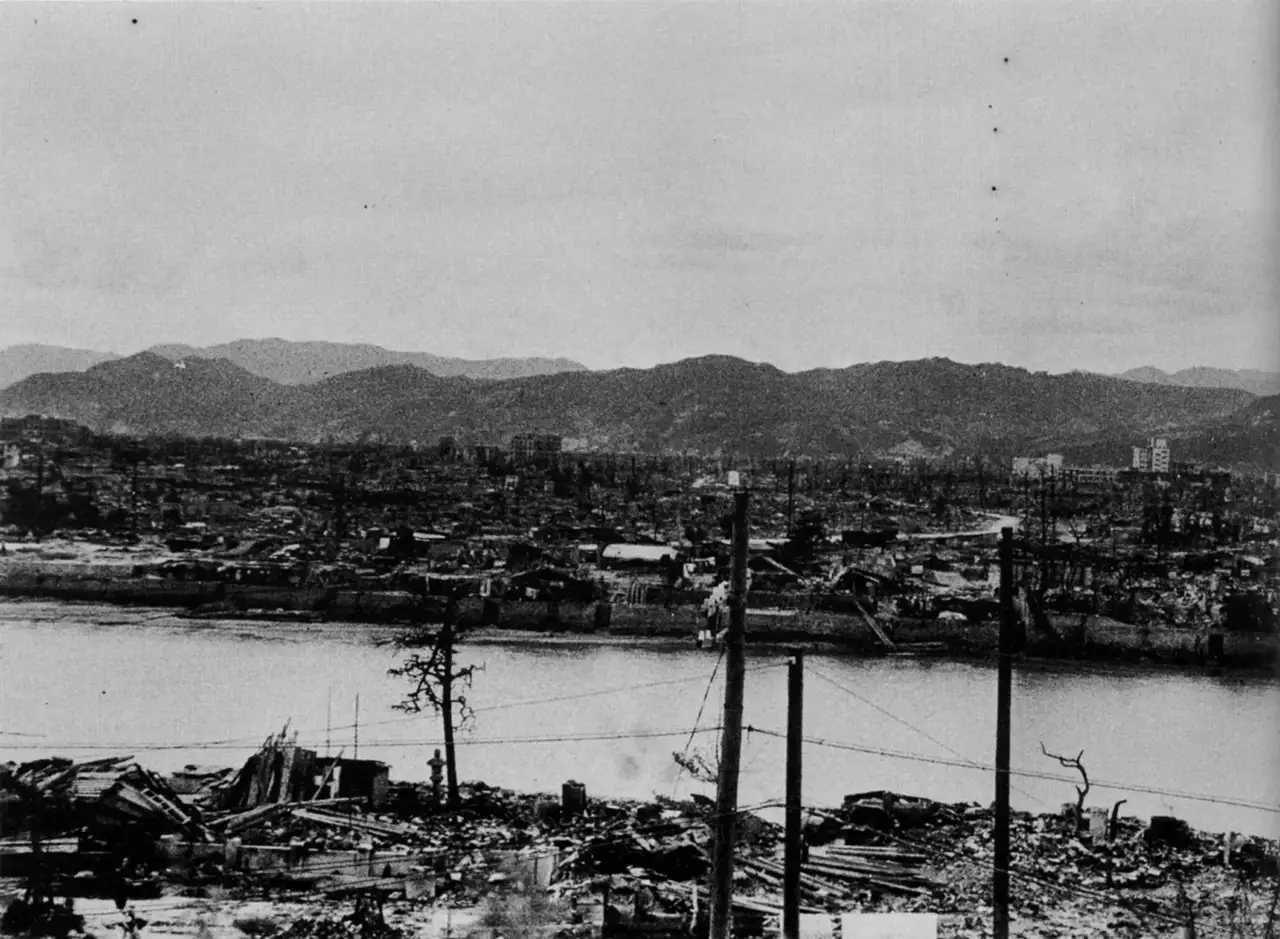
1949 · Peace Memorial City Law
A national law enacted on August 6, 1949 grants state land and funding to rebuild Hiroshima as a memorial city. That same year Kenzō Tange's design wins the competition for the park.
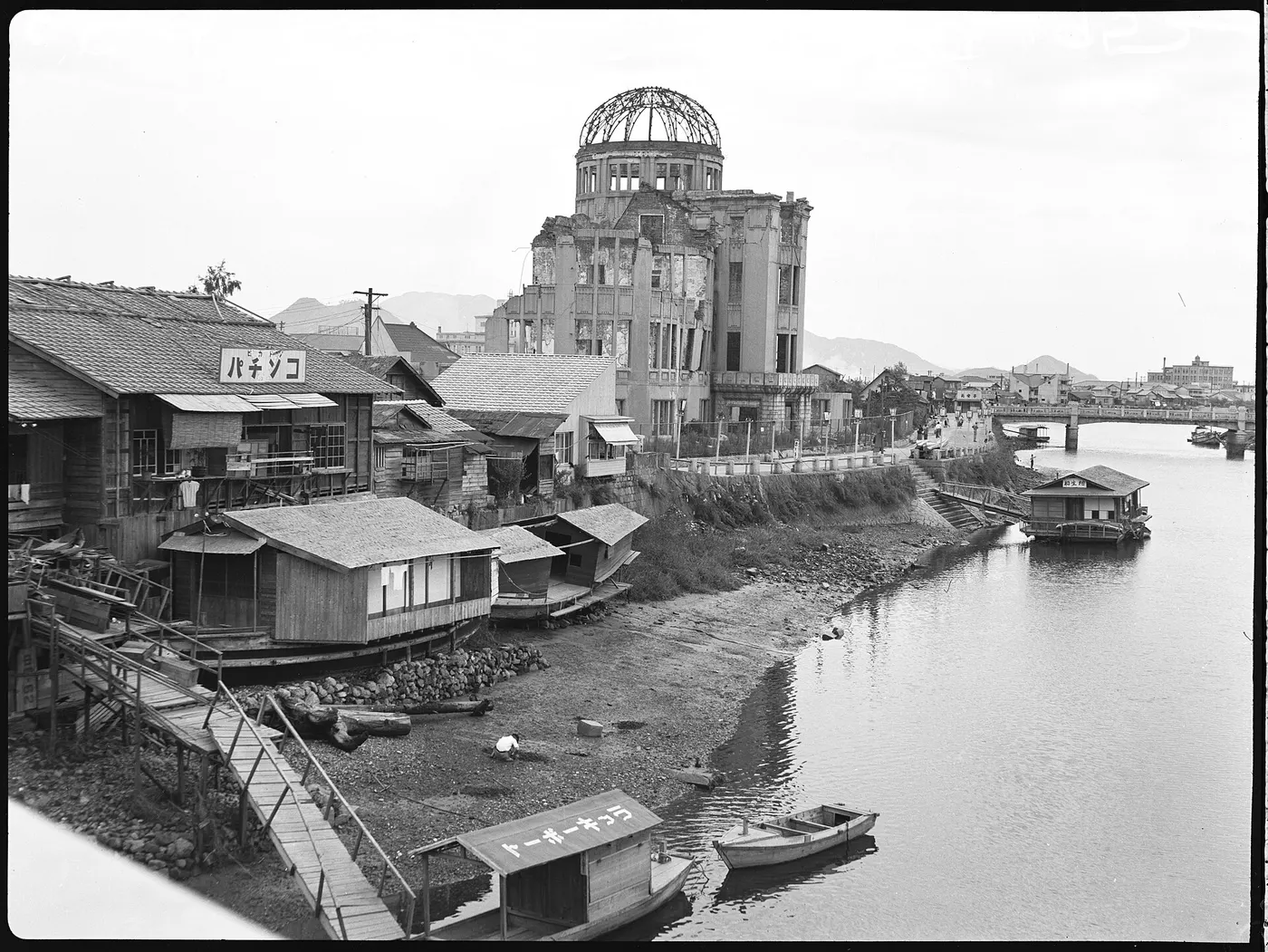
1950–1958 · Carp, museum and castle
The Hiroshima Carp baseball team is founded in 1950 with money residents dropped into barrels on the street, and becomes a civic symbol of the recovery. The Peace Memorial Museum opens in 1955, and the castle keep is rebuilt in reinforced concrete in 1958.
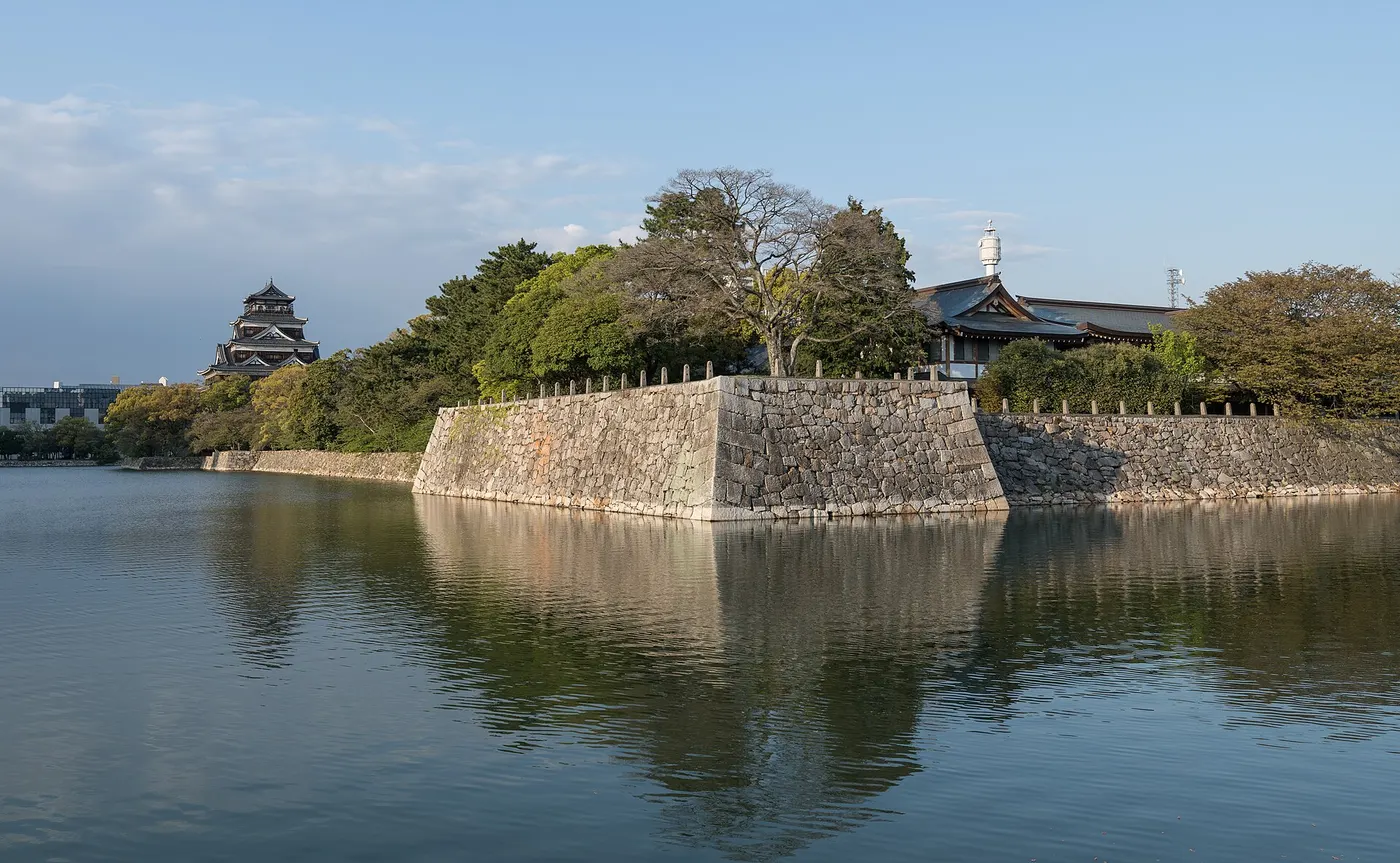
1996 · A-Bomb Dome and Itsukushima on the World Heritage list
The Atomic Bomb Dome and Itsukushima Shrine, on Miyajima, are added to UNESCO's World Heritage List at the same session, in December 1996. The United States and China objected to the Dome's inscription at the time.
2016 · Obama's visit
On May 27, 2016, Barack Obama becomes the first sitting US president to visit the memorial park. He stayed about 50 minutes, laid a wreath, embraced survivor Shigeaki Mori, and shook hands with Sunao Tsuboi.
 AI illustration
2023–2026 · G7, Nobel and new construction
The city hosted the G7 summit in May 2023, and in 2024 Nihon Hidankyo, the confederation of survivors' groups, received the Nobel Peace Prize. The new station building opened in March 2025, the streetcar began pulling into its second floor in August 2025, and on March 22, 2026 the castle keep closed to visitors.
Complete history
Mōri Terumoto designs the city on the Ōta delta in 1589
Hiroshima is a designed city. In 1589 Mōri Terumoto came down from the mountain castle of Yoshida-Kōriyama to the Ōta delta in search of navigable water and flat land, and founded a castle town laid out geometrically between the branches of the river. After Sekigahara, in 1600, the domain passed to Fukushima Masanori and, in 1619, to the Asano clan, who ruled for 250 years and left behind Shukkei-en garden and the canal network that still organizes the center. When the domains were abolished in 1871, Hiroshima was already the largest market in western Japan.
Hiroshima becomes Japan's military base
It was the military presence that transformed the city. In 1889 the city was incorporated and the military port of Ujina opened; five years later, during the war against China, Emperor Meiji moved the imperial headquarters inside the castle and the Diet convened there. Hiroshima became the logistical hub of Japan's wars: the Second General Army was headquartered in the city, and there were depots, arsenals, military hospitals, and the shipyard in Kure, 20 km away. It was this military concentration, combined with the flat terrain and the absence of known Allied prisoner-of-war camps, that put the city at the top of the American target list in 1945.
8:15am on August 6, 1945
At 8:15am on August 6, 1945, the bomb exploded about 600m up, over the commercial district of Nakajima. The entire district, with its thousands of residents, ceased to exist; the center was wiped out within a two-kilometer radius; between 70,000 and 80,000 people died that same day and about 140,000 by December, in a city of around 350,000 people counting the military. The following years brought radiation sickness, stigma against the survivors, the hibakusha, and the American occupation's censorship of images and accounts, which only eased in 1952.
The reconstruction was decided by law
The rebuilding was decided by law. The Peace Memorial City Construction Law of August 6, 1949, gave the city state land and funding, and Kenzō Tange's winning design laid out the Peace Memorial Park right over the old Nakajima, on an axis that lines up the museum, the cenotaph, and the ruin of the Dome. Peace Boulevard, 100 meters wide, was opened as a firebreak and became the city's east-west axis. At the same time, the economy got back on its feet with the bay's shipbuilding and steel industries and with Toyo Kogyo, the future Mazda, founded in Hiroshima in 1920 and based in neighboring Fuchū since 1931. After the bomb, it was in that company's building that the Hiroshima prefectural government operated on a provisional basis.
Memory and public works at once
From the 1990s onward the city has run two agendas at once. As a memorial city, it maintains the Mayors for Peace network, hosted the G7 summit in May 2023, and saw Nihon Hidankyo receive the Nobel Peace Prize in 2024, at a moment when the average age of survivors had already passed 85. As an ordinary city, it invests in construction: the new station building, opened in March 2025, the streetcar's entry onto its second floor in August 2025, the Edion Peace Wing stadium opened in February 2024 next to the castle, and the closing of the concrete keep in March 2026 while it's decided whether it will be rebuilt in wood or just reinforced.
Between 70,000 and 80,000 people died on the day of the bomb, and about 140,000 by December 1945, in a city of around 350,000 people.
Geography and shape of the city
The delta, the hills, and the sea
Hiroshima occupies the delta of the Ōta River, which splits into six branches before entering the bay: practically all of downtown sits on alluvium and landfill, which explains the name “wide island” and the number of bridges (more than 2,500 in the city). Downtown is flat and laid out in regular blocks between the channels, ringed by low hills that close off the horizon: Futabayama to the northeast, Hijiyama to the southeast (71 m), Ōgonzan to the west, and in the distance Misen, at 535 m, on Miyajima island. The Seto Inland Sea, sheltered by islands on almost every side, gives the region its Setouchi climate: little rain, many sunny days and muggy, windless summers.
The postwar grid and the hillsides
The current street grid is the result of the postwar reconstruction plan: Peace Boulevard, 100 m wide, cutting through the city east to west, the Peace Memorial Park occupying the point of land between the Motoyasu and Honkawa rivers, and the Hiroden streetcar lines stitching together Aioi-dōri and Rijō-dōri. Recent expansion has climbed up the tributary valleys, in Asaminami and Asakita, hillside terrain that has already produced severe landslides in 2014 and in the 2018 rains.
Peace Boulevard, 100 meters wide, was opened during reconstruction as a firebreak.
Culture
Baseball and soccer drive Hiroshima
Two institutions organize the city's shared life. The Hiroshima Carp, a baseball team founded in 1950 with donations dropped into barrels on the street, is owned by a local company and has played at Mazda Zoom-Zoom Stadium since 2009; on game days, red takes over the streetcars and the station. Sanfrecce Hiroshima, the soccer club, won three national titles in the 2010s and since February 2024 has played at the Edion Peace Wing, a new downtown stadium next to the castle. It was the first time in decades that the city had top-division soccer within walking distance of downtown.
The museum, the schools, and the jazz bars
The culture of memory is a serious, everyday industry: the Hiroshima Peace Culture Foundation keeps the museum and the archive of testimonies, schools from across the country make study trips to the city, and survivors still give testimony in the museum's rooms, though their average age has already passed 85. The Mayors for Peace network was founded here in 1982 and brings together thousands of municipalities. None of that keeps the city from having a scene of jazz bars and live music in Yokogawa and Nagarekawa, a symphony orchestra since 1963, and nighttime performances of kagura, the masked dance theater of the prefecture's north, with dragons and swords.
Books, manga, and film about the atomic bomb
Hiroshima is also the subject of works that explain it better than any pamphlet: the report “Hiroshima,” by John Hersey, published in full in The New Yorker in August 1946; the novel “Black Rain,” by Masuji Ibuse, from 1965, filmed by Shohei Imamura in 1989; the manga “Barefoot Gen,” which Keiji Nakazawa began in 1973 drawing on his own childhood; and the animated film “In This Corner of the World” (2016), about domestic life in Kure and Hiroshima before and after August 1945.
A streetcar full of people dressed in red is a sign of game day for the Carp, the city's baseball team.
Festivals and events
Peace Memorial Ceremony
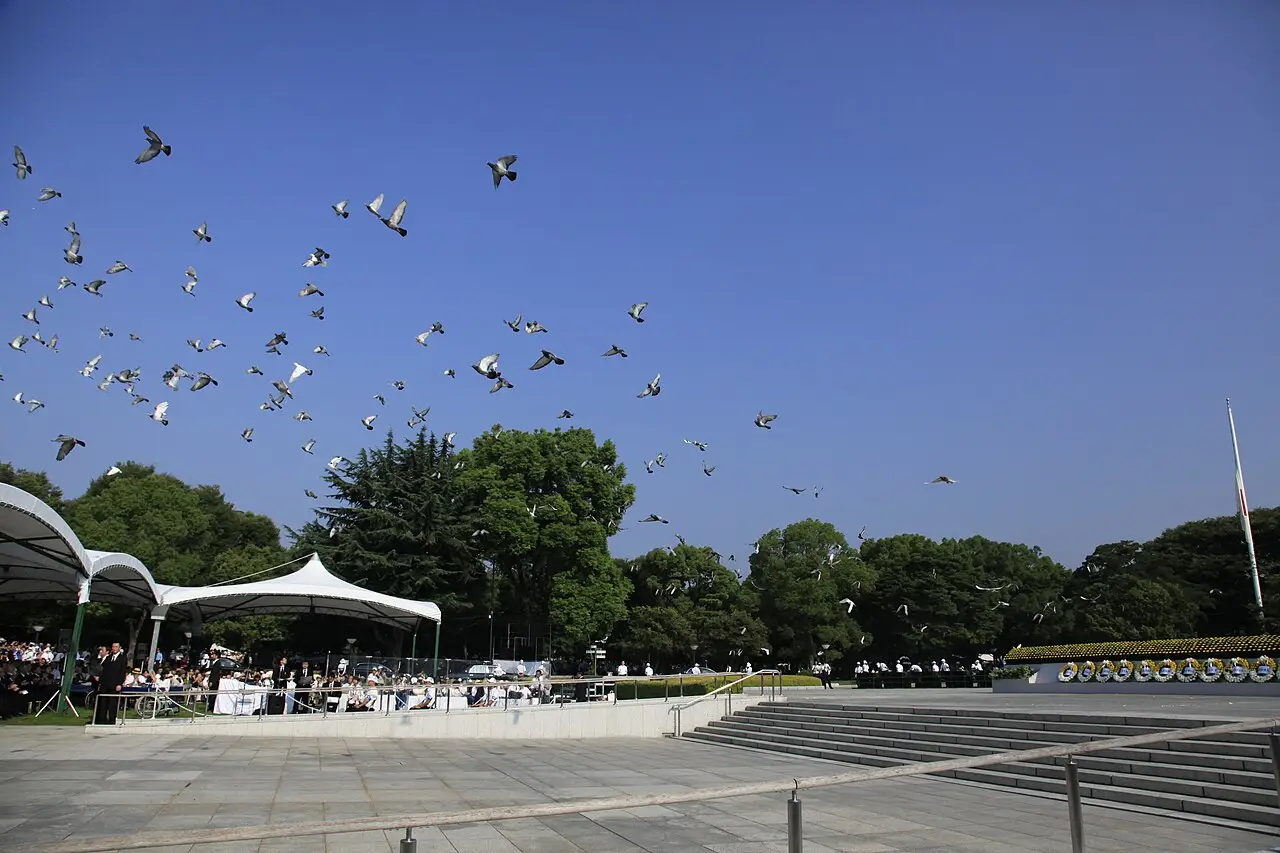
On August 6, from 8am to 8:45am in the Peace Park, the city holds a minute of silence at 8:15am and the mayor reads the peace declaration. At night, thousands of paper lanterns float down the Motoyasu River in front of the Dome; the city fills up, and hotels usually sell out months in advance.
Hiroshima Flower Festival
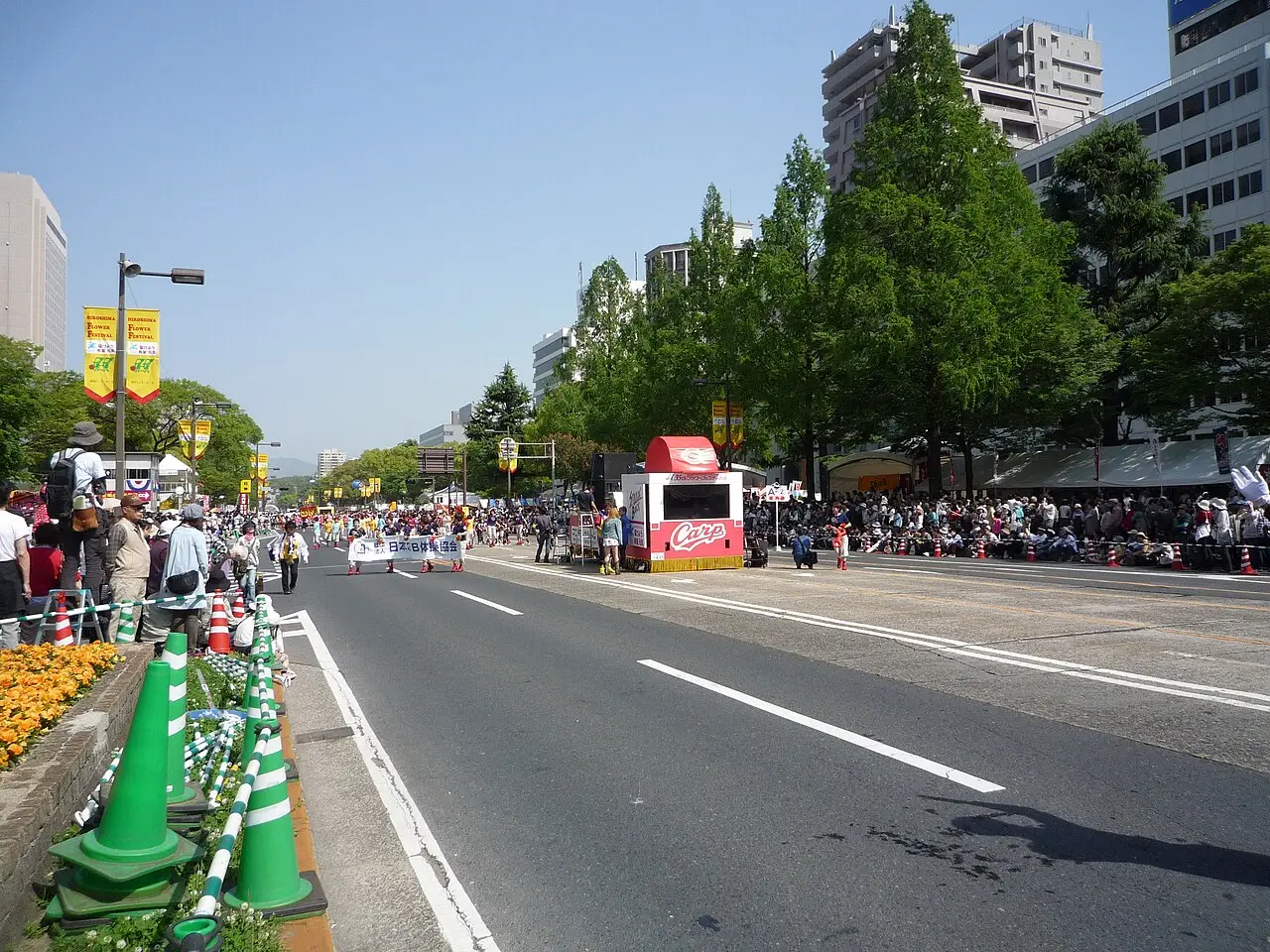
From May 3 to 5, Peace Boulevard fills with parades, school bands and stages stretching for more than a kilometer. It's the biggest street event of the year, drawing more than a million people over three days.
 AI illustration
Tōkasan
On the first weekend in June, around Enryū-ji temple near Hondōri, the city opens the yukata season: thousands of people stroll among the stalls in light cotton kimono, and many shops rent them to anyone who came without one.
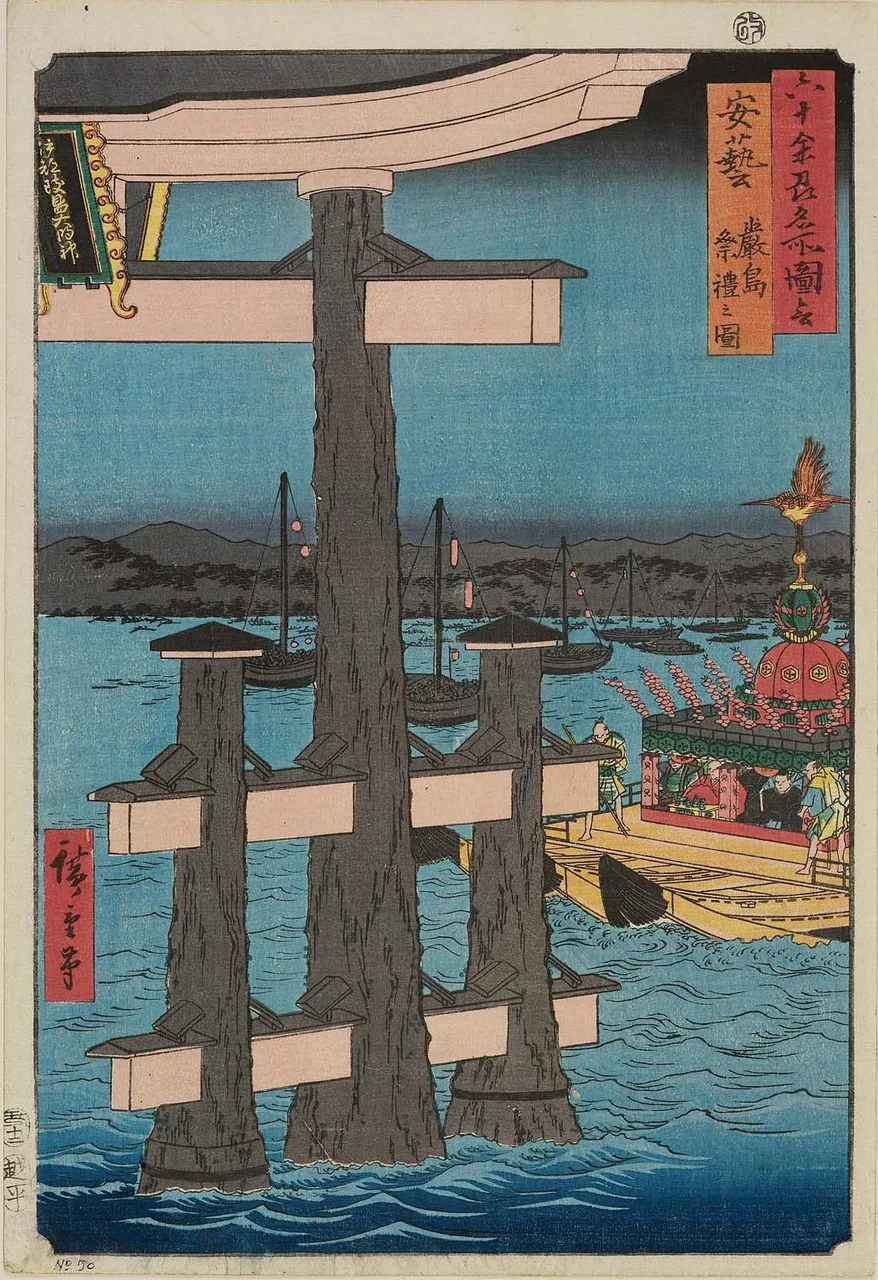
Kangensai of Miyajima
Between July and August, according to the lunar calendar (the 17th day of the 6th month); in 2026, it falls on July 30. Illuminated boats carry court musicians playing gagaku across the sea in front of the torii, in a rite that goes back to the 12th century.
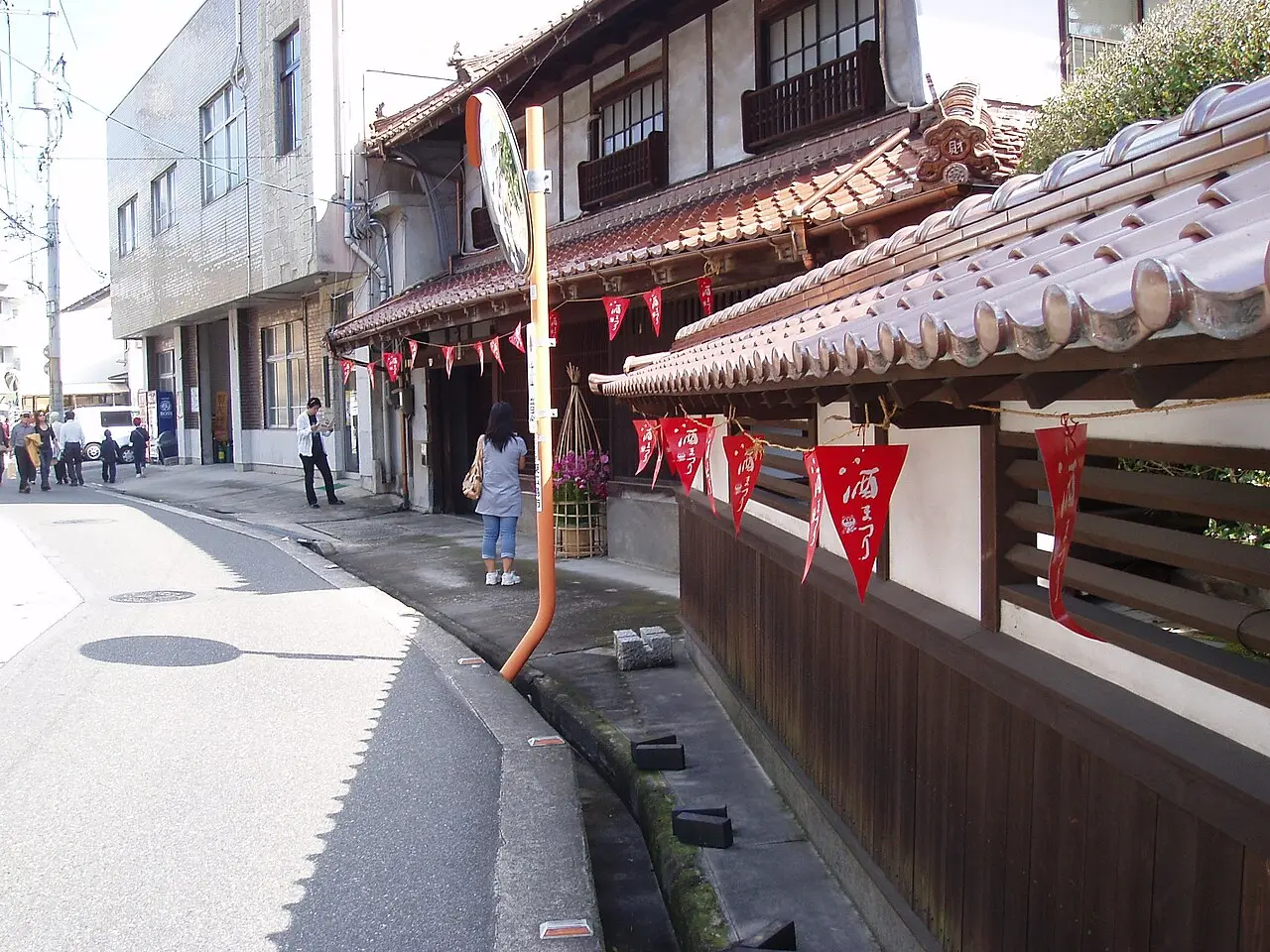
Saijō Sake Festival
One weekend in October in Higashi-Hiroshima, 40 minutes away by train, hundreds of sakes from all over the country are poured for tasting on a single ticket, and the district's seven breweries open their courtyards.
Books and films
“Hiroshima” by John Hersey (1946)
A report that took up an entire issue of The New Yorker in August 1946, following six survivors hour by hour. It's the text that made the world understand the bomb on a human scale rather than in tonnage.
“Barefoot Gen” by Keiji Nakazawa (1973)
An autobiographical manga by an artist who was 6 years old on August 6, 1945 and lost almost his whole family. It also covers the postwar years, the hunger, the black market and the stigma against survivors.
“In This Corner of the World” by Sunao Katabuchi (2016)
An animated film about a young woman who marries into a family in Kure and runs a household there in 1944 and 1945, with Hiroshima in the background. It recreates the streets, prices and recipes of the period and explains the region better than any documentary.
Frequently asked questions
Hiroshima: how much time should you set aside for the Peace Park and Museum?
I would set aside a morning for the Peace Museum and Park, including a break; duration varies with the exhibition and each person’s pace. Miyajima deserves another day, including train or tram and ferry travel.
Hiroshima: how long does the Shinkansen take from Tokyo and Osaka?
Many people arrive by Shinkansen: it's about 4 hours from Tokyo, 1 hour 25 minutes from Shin-Osaka, and 1 hour from Hakata (Fukuoka).
Hiroshima: how do you get to Kure and what's there?
Kure is 35 minutes away by train, for about ¥510, and was the shipyard that built the battleship Yamato in 1941. Today the Yamato Museum displays a 26m model of the ship, and across the street you can go inside the submarine Akishio, on display on land.
Hiroshima: what's the climate like?
The climate is humid subtropical, but softened by the inland sea: it rains less than the Japanese average and there are many clear days.
Hiroshima: why is the Peace Park treated as a cemetery?
Under the Memorial to the Unidentified lie the ashes of tens of thousands of people, and the whole park is the former Nakajima district.
Other cities in the country
Japan ↗- Days
- 3–5
- When
- Mar–Apr · Oct–Dec
- Per person/day
- Average 20,000–30,000 JPYMid-range · per person/day
Cost scope
Per person per day: accommodation, meals, urban transport, visits and a small allowance for extras. Flights excluded; larger purchases vary. The figures are the guide’s estimate.
- Days
- 3–4
- When
- Spring and autumn
- Per person/day
- Average 15,000–20,000 JPYMid-range · per person/day
Cost scope
Per person per day: accommodation, meals, urban transport, visits and a small allowance for extras. Flights excluded; larger purchases vary. Editorial estimate, not a quote.
- Days
- 2–3
- When
- Mar–Apr · Oct–Nov
- Per person/day
- Average 9,000–15,000 JPYMid-range · per person/day
Cost scope
Per person per day: accommodation, meals, urban transport, visits and a small allowance for extras. Flights excluded; larger purchases vary. Editorial estimate, not a quote.