South Korea
Seoul
Joseon palaces, markets, Bukchon and the Han River
Days Start with the basic programme and choose extensions for the time you have.
How the guide reaches this number
With only one day, I would choose a palace and nearby neighbourhoods, checking closures, admission and residential access, with a lunch break. Seochon, Euljiro and Seongsu offer options for bookshops, workshop streets, cafés or shops; Myeongdong and Gangnam may suit other interests. I would not try to cross all these areas in one day. A Demilitarized Zone excursion needs another day and checks on access conditions, documents and schedules with the operator before booking.
3–4
When Late April to early June, and mid-September to early November
How the guide reaches this number
The climate is continental monsoon, with four clearly separated seasons and about 1,400 mm of rain a year, more than half concentrated in July and August. Winter runs from December to February, dry and sunny, with lows between -8 °C and -2 °C and wind that cuts through the wide avenues; big snowstorms are rare, but ice on the slopes is frequent and the streets empty out. Spring runs from March to May, with 10 °C to 22 °C and the cherry blossoms opening in the first week of April; it's also the season of fine dust and yellow dust coming from the continent, which on some days closes off the sky. It's worth checking the air quality index and wearing a mask. Summer begins with the jangma, the monsoon that pours rain from late June to late July, and continues with August at 26 °C to 33 °C and humidity above 75%, plus the tail end of typhoons between August and September. Autumn, from mid-September to early November, is the best season: 15 °C to 25 °C, clear skies, and the leaves changing color on Bukhansan and Namsan in late October. July piles on rain and heat, and it's worth checking the moving dates of Seollal and Chuseok, when much of the commerce closes.
Per person/day Budget ₩70,000–110,000; mid-range ₩160,000–260,000; comfortable from ₩350,000
How the guide reaches this number
Per person per day: accommodation, meals, urban transport, visits and a small allowance for extras. Flights excluded; larger purchases vary. Editorial estimate, not a quote.
 What Nilo thinks
I would stay three days to combine the palaces and neighbourhoods of Jongno, a choice between the centre and Yongsan’s museums, and another area according to your interests. With only one day, I would choose a palace and nearby neighbourhoods, checking closures, admission and residential access, with a lunch break. Seochon, Euljiro and Seongsu offer options for bookshops, workshop streets, cafés or shops; Myeongdong and Gangnam may suit other interests. I would not try to cross all these areas in one day. A Demilitarized Zone excursion needs another day and checks on access conditions, documents and schedules with the operator before booking.In front of Gwanghwamun gate, the royal guard changes shift, and just behind it opens Gyeongbokgung, the 1395 palace around which Seoul was born. The Joseon dynasty left behind palaces, the Jongmyo shrine, and the 18.6 km wall that still climbs the hills, but the war of 1950 to 1953 destroyed almost everything else, which is why these wooden roofs appear isolated among towers. In Bukchon, between the two great palaces, the roughly 900 hanok houses are still lived in. At Gwangjang Market, open since 1905, people eat bindaetteok standing up, a pancake of stone-ground mung beans, and at night the table turns to barbecue, with pork belly grilled by the customers themselves and cut with scissors. Come from late April to early June or from mid-September to early November, and set aside three days, with a fourth for the Demilitarized Zone.
Quick facts
- Population
- about 9.4 million in the city (25 districts, 605 km²); about 26 million in the Capital Region, about half the country
- Founding
- Wiryeseong, capital of Baekje, around 18 BCE; capital of Joseon since 1394, under the name Hanyang
- Country and region
- South Korea: Seoul is a special city (특별시), doesn't belong to a province, and is the center of the Capital Region
- Language
- Korean, written in the hangul alphabet, created in 1443 and promulgated in 1446; functional English in the subway and museums
- Currency
- South Korean won (₩, KRW); in 2026, about ₩1,380 per dollar and ₩1,590 per euro
- Time zone
- KST, UTC+9, no daylight saving time
- Best time to visit
- Late April to early June, and mid-September to early November
- Average daily cost
- Budget ₩70,000–110,000; mid-range ₩160,000–260,000; comfortable from ₩350,000
When to go
Late April to early June, and mid-September to early November
January
-5° to 2°C
17 mm of rain
February
-3° to 5°C
28 mm of rain
March
2° to 11°C
37 mm of rain
July
22° to 29°C
414 mm of rain
August
23° to 30°C
348 mm of rain
December
-3° to 4°C
23 mm of rain
How the year changes
The climate is continental monsoon, with four clearly separated seasons and about 1,400 mm of rain a year, more than half concentrated in July and August. Winter runs from December to February, dry and sunny, with lows between -8 °C and -2 °C and wind that cuts through the wide avenues; big snowstorms are rare, but ice on the slopes is frequent and the streets empty out. Spring runs from March to May, with 10 °C to 22 °C and the cherry blossoms opening in the first week of April; it's also the season of fine dust and yellow dust coming from the continent, which on some days closes off the sky. It's worth checking the air quality index and wearing a mask. Summer begins with the jangma, the monsoon that pours rain from late June to late July, and continues with August at 26 °C to 33 °C and humidity above 75%, plus the tail end of typhoons between August and September. Autumn, from mid-September to early November, is the best season: 15 °C to 25 °C, clear skies, and the leaves changing color on Bukhansan and Namsan in late October. July piles on rain and heat, and it's worth checking the moving dates of Seollal and Chuseok, when much of the commerce closes.
The same numbers as a table
| Month | Temperature °C | Rain mm |
|---|---|---|
| January | -5 to 2 | 17 |
| February | -3 to 5 | 28 |
| March | 2 to 11 | 37 |
| April · | 8 to 18 | 73 |
| May · | 14 to 24 | 104 |
| June · | 19 to 28 | 130 |
| July | 22 to 29 | 414 |
| August | 23 to 30 | 348 |
| September · | 18 to 26 | 142 |
| October · | 11 to 20 | 52 |
| November · | 4 to 12 | 51 |
| December | -3 to 4 | 23 |
Nilo's tips
Choose AREX according to your terminal and accommodation
I would compare Express and All-Stop using the whole journey. The Express goes to Seoul Station; the All-Stop has stations that may reduce the final leg, such as Hongik University. Check the fare, timetable and destination station for your terminal and accommodation. The train journey begins after immigration, baggage collection and access to the platform: allow for these steps and possible transfers with luggage. If you arrive before check-in, arrange luggage storage.
Tap your card on entry and exit
For integrated fares on covered services, use the same card and tap when getting off too. The transfer normally needs to be within 30 minutes, or 60 minutes between 9pm and 7am; up to five boardings are allowed, with exceptions such as returning to the same bus route. The charge accounts for the highest service fare and accumulated distance, so an extra payment may apply. Do not count each boarding as a new full fare when comparing a pass.
Choose the day using the palace calendars
Gyeongbokgung and Jongmyo normally close on Tuesdays; Changdeokgung, Changgyeonggung and Deoksugung on Mondays. When a closure coincides with a public holiday, it can move to the next non-holiday; events also affect admission. Check before arranging your morning. The changing of the guard depends on the programme and weather. Wearing hanbok that meets the rules can qualify for free admission; renting clothing alone does not establish that right. For Huwon, check the session and availability of the separate ticket, as well as palace admission.
Bukchon: check the red zone and respect residents
In the red zone at Bukchon-ro 11-gil, tourist visits are limited to 10am–5pm, with fines provided for outside that window. Follow signs, keep your voice low and do not treat someone’s front door as a photo backdrop; the city asks for a rest day for the alleyways on Sundays. I would choose Bukchon after the palace or Seochon, west of Gyeongbokgung, for another walk. Both neighbourhoods need not be part of the same route, and local guidance still applies.
Alone, order gukbap, jjigae, or gimbap for ₩9,000–13,000
At samgyeopsal restaurants, where pork belly goes on the grill, each portion costs ₩15,000–22,000, but the table minimum is always two portions. On your own, order gukbap, jjigae or gimbap, or go to a single-seat counter, where a meal costs ₩9,000–13,000, with rice and banchan refilled for free. Gwangjang Market, open since 1905, also works standing up, with bindaetteok, mayak gimbap and a cup of makgeolli. Get there before 6pm, because after that the stools along the central aisles are already taken.
Compare the pass with covered journeys
Before buying a short-term Climate Card, check services, stations and direction. Under the rules checked in October 2026, it permits getting off at Incheon terminals after boarding at a covered AREX station, but not boarding at those terminals; the Express requires its own ticket. It does not cover airport buses, GTX, Sinbundang or the whole metropolitan network. Passes for 1, 2, 3, 5 and 7 days start on the charging date; compare their price, the physical card and any fees with the journeys actually charged, accounting for integrated fares. Designated machines accept foreign cards to buy and top up the short pass; check the machine’s fee and acceptance. Ttareungi is not included in these passes: for cycling, check its own ticket, time per rental, return and route conditions.
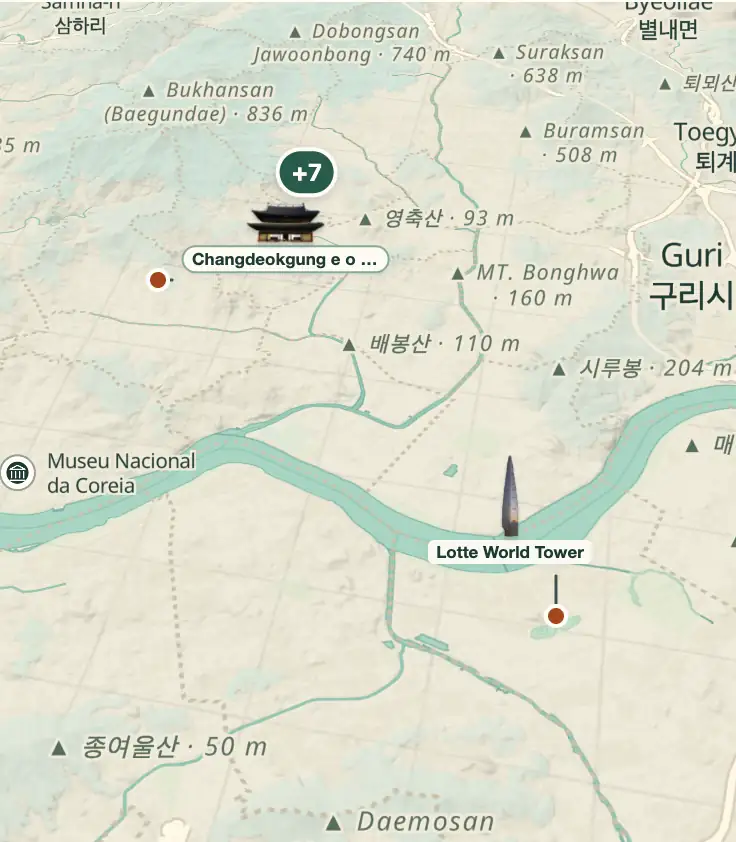
Explore the map
© OpenStreetMap · OpenFreeMap · © OpenMapTiles
Explore the map, read about the other places and plan your travel days in the app.
Open the appWhat to see
Seoul: The basin and the ring of hills
The ring of hills made the city: Bugaksan (342m), Inwangsan (338m), Naksan (125m), and Namsan (about 270m) are the four that the 1396 wall linked, and Bukhansan, at 836m at Baegundae peak, closes off the north within a national park that starts about 40 minutes by subway from downtown.
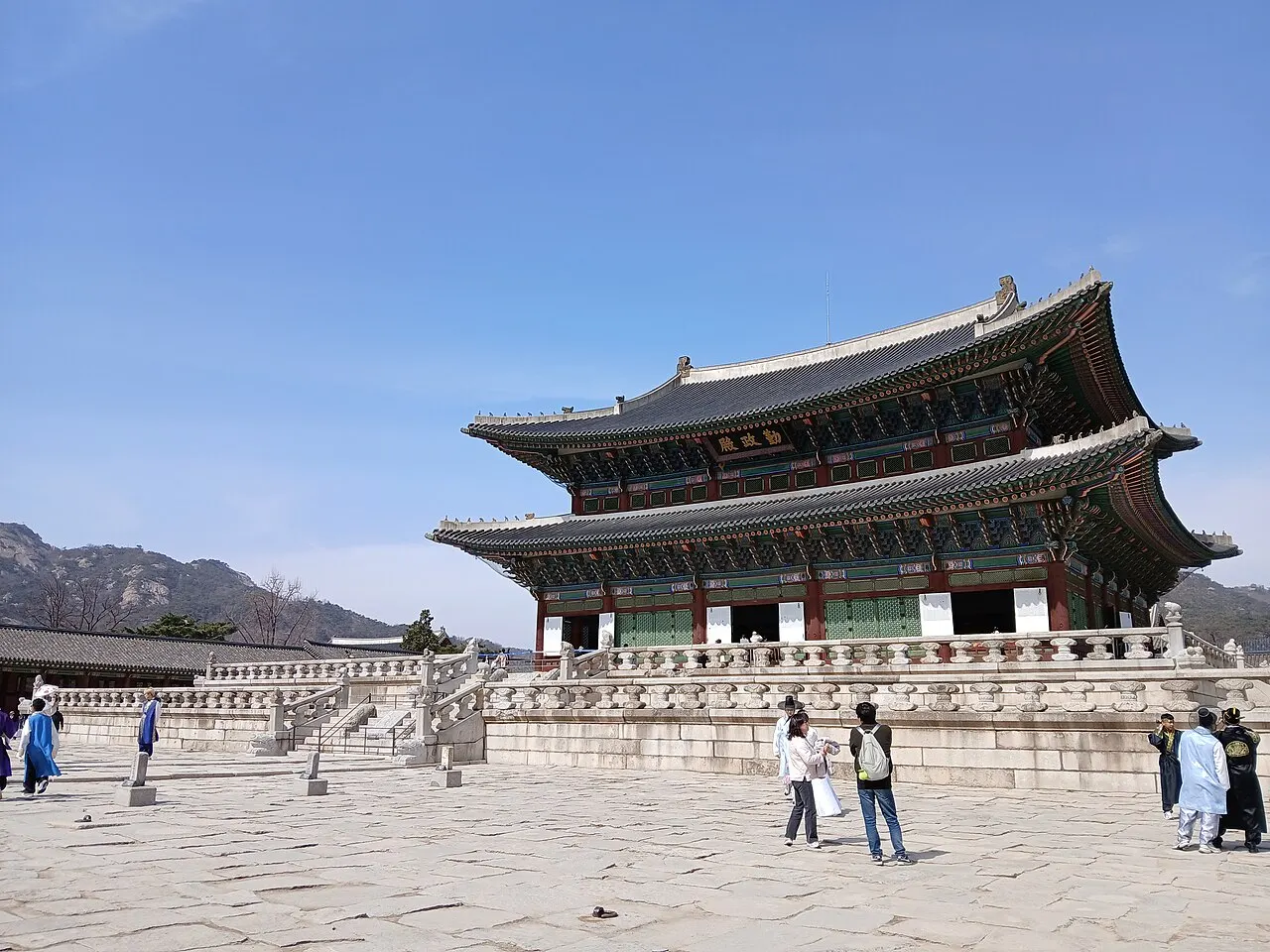
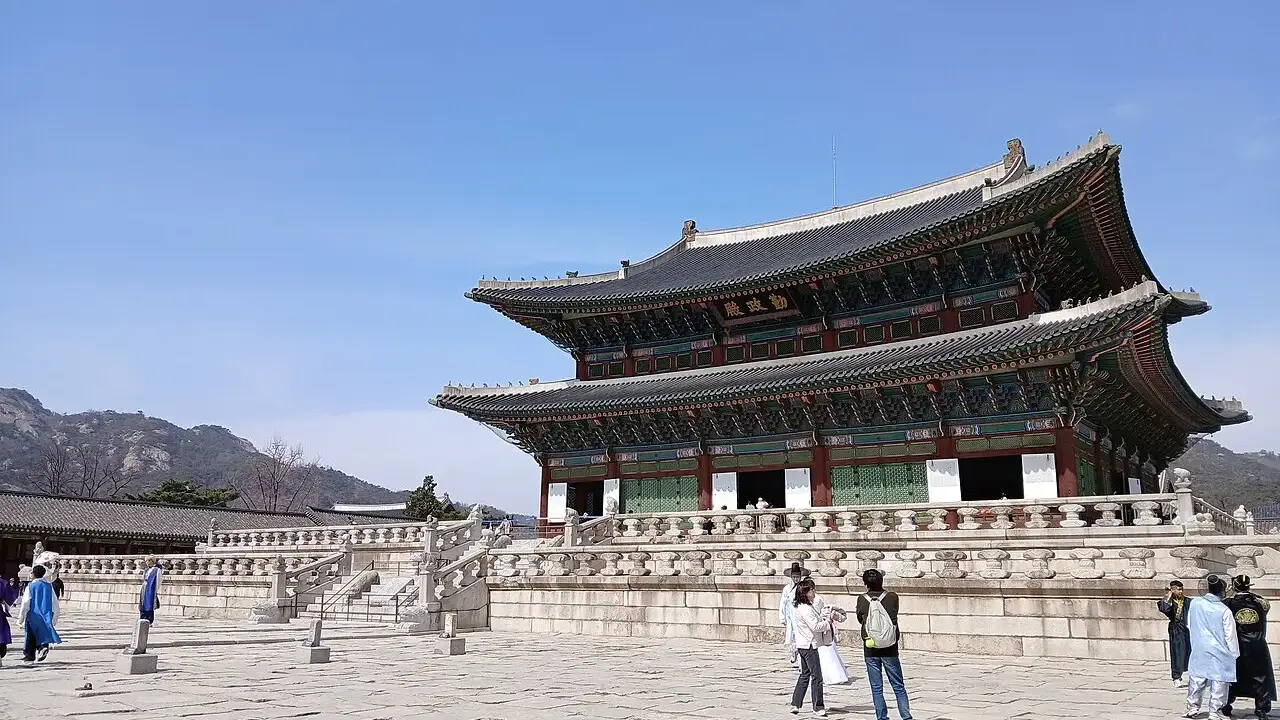
Gyeongbokgung
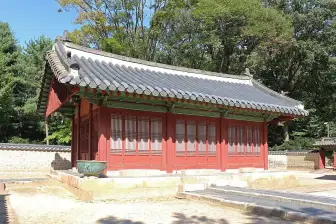
Joseon’s main palace, founded in 1395, destroyed during the 1592 invasion and rebuilt between 1865 and 1867, with further restoration since 1990. It opens at 9am and normally closes on Tuesdays; holidays can move the closure, and last admission varies by season. The changing of the guard usually has sessions at 10am and 2pm, subject to notices and weather cancellations. Check the calendar and admission conditions; free entry for hanbok wearers requires compliance with the palace’s dress rules.
Joseon’s main palace, founded in 1395, destroyed during the 1592 invasion and rebuilt between 1865 and 1867, with further restoration since 1990. It opens at 9am and normally closes on Tuesdays; holidays can move the closure, and last admission varies by season. The changing of the guard usually has sessions at 10am and 2pm, subject to notices and weather cancellations. Check the calendar and admission conditions; free entry for hanbok wearers requires compliance with the palace’s dress rules.
Check access
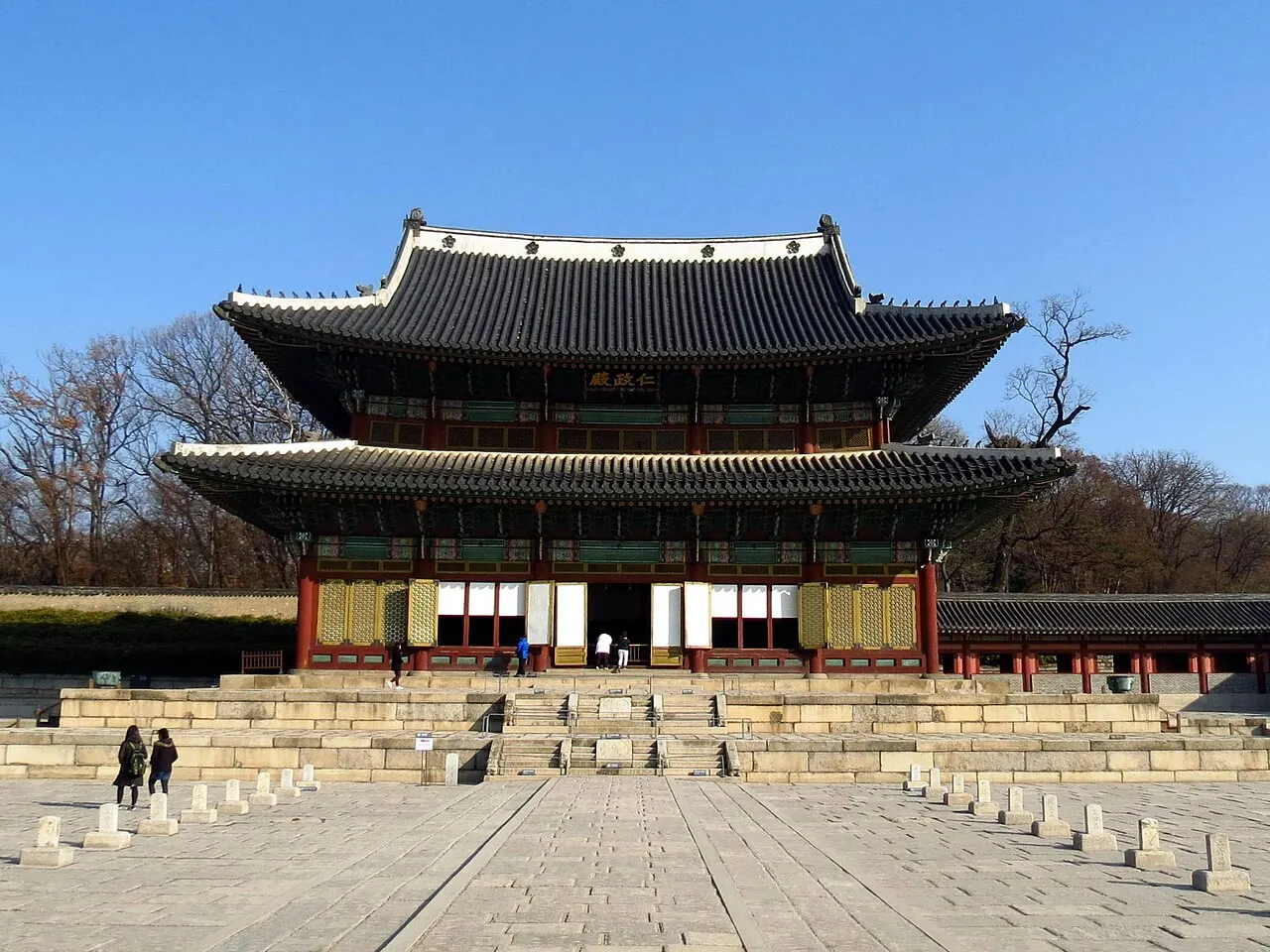
Changdeokgung and the Huwon garden
Founded in 1405, rebuilt in 1610 after the 1592 invasion and used as the court’s main residence until Gyeongbokgung was rebuilt. A UNESCO World Heritage Site since 1997, it integrates its buildings and Huwon garden with the terrain. The garden requires its own ticket as well as admission to the palace buildings, with fixed times and limited places; advance and on-site sales depend on availability. It normally closes on Mondays, with holiday changes; check the calendar before choosing a date.
Founded in 1405, rebuilt in 1610 after the 1592 invasion and used as the court’s main residence until Gyeongbokgung was rebuilt. A UNESCO World Heritage Site since 1997, it integrates its buildings and Huwon garden with the terrain. The garden requires its own ticket as well as admission to the palace buildings, with fixed times and limited places; advance and on-site sales depend on availability. It normally closes on Mondays, with holiday changes; check the calendar before choosing a date.
Check access
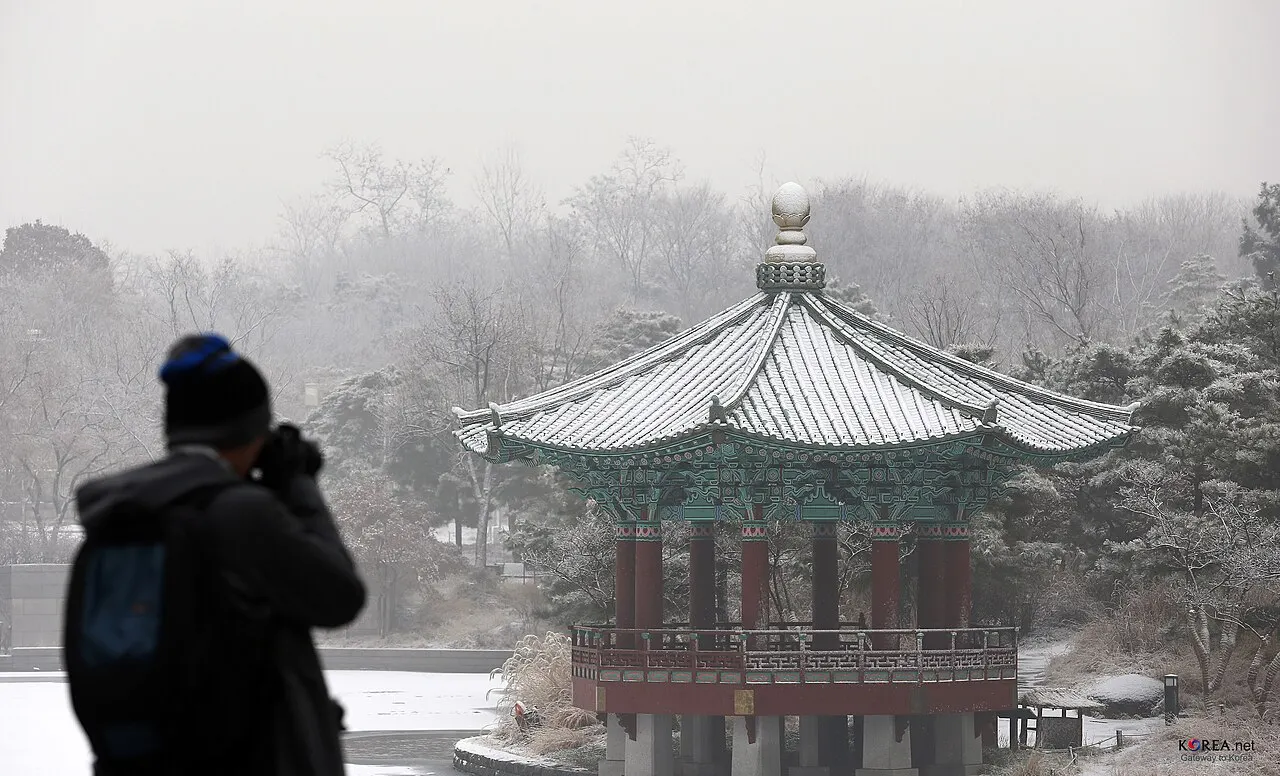
National Museum of Korea
Opened in 2005 in Yongsan, it's one of the largest museums in the world by floor area, with free admission to the permanent collection. The Room of Quiet Contemplation, opened in 2021, displays two gilt-bronze pensive bodhisattvas from the 6th and 7th centuries in a dark space designed just for them.
Check access
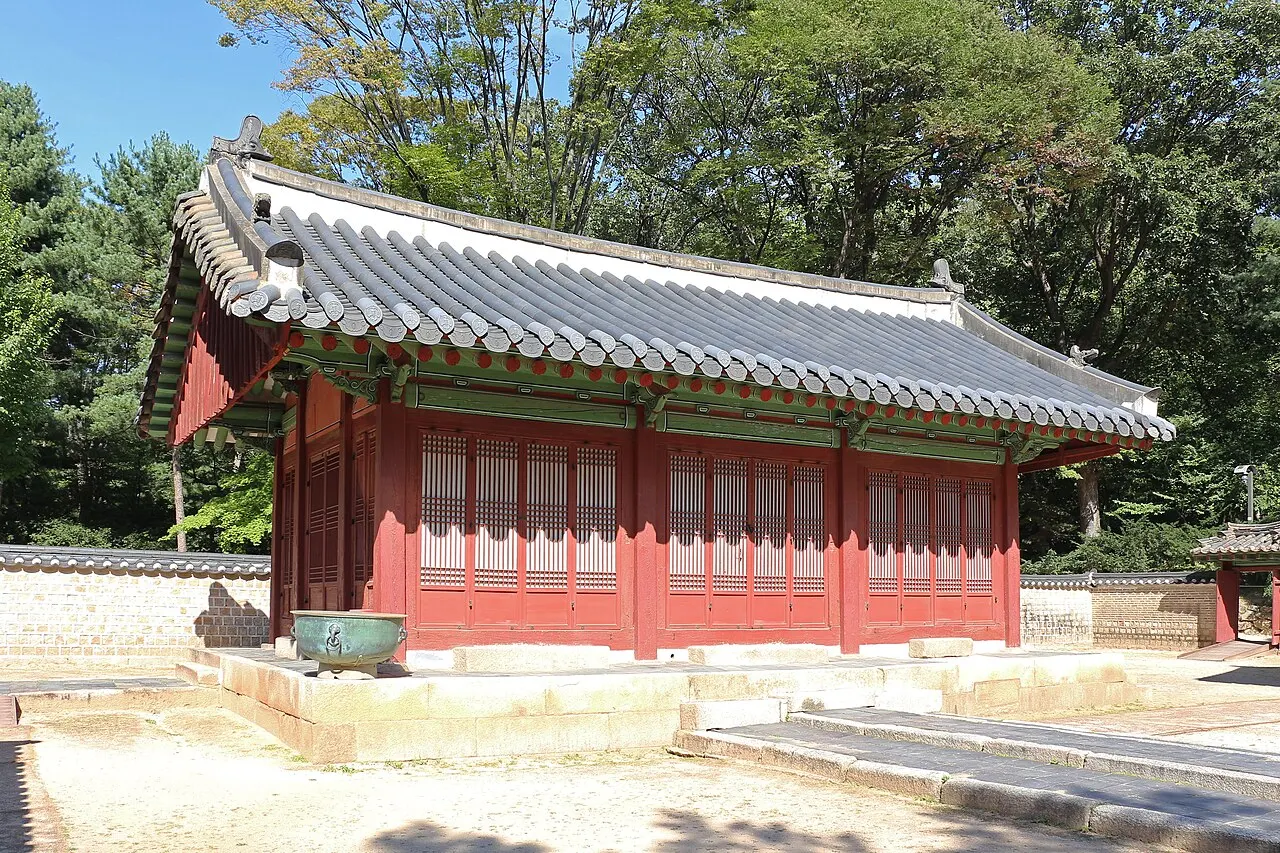
Jongmyo
A shrine holding the ancestral tablets of Joseon kings and queens, a UNESCO World Heritage Site since 1995. Jeongjeon hall reached 19 bays through successive extensions. Guided visits with timed admission normally run on Mondays, Thursdays and Fridays; independent visits are available on Wednesdays, weekends and public holidays. It normally closes on Tuesdays, but holidays and events can change the arrangements. Check the session in your preferred language, availability and seasonal last admission.
A shrine holding the ancestral tablets of Joseon kings and queens, a UNESCO World Heritage Site since 1995. Jeongjeon hall reached 19 bays through successive extensions. Guided visits with timed admission normally run on Mondays, Thursdays and Fridays; independent visits are available on Wednesdays, weekends and public holidays. It normally closes on Tuesdays, but holidays and events can change the arrangements. Check the session in your preferred language, availability and seasonal last admission.
Check access
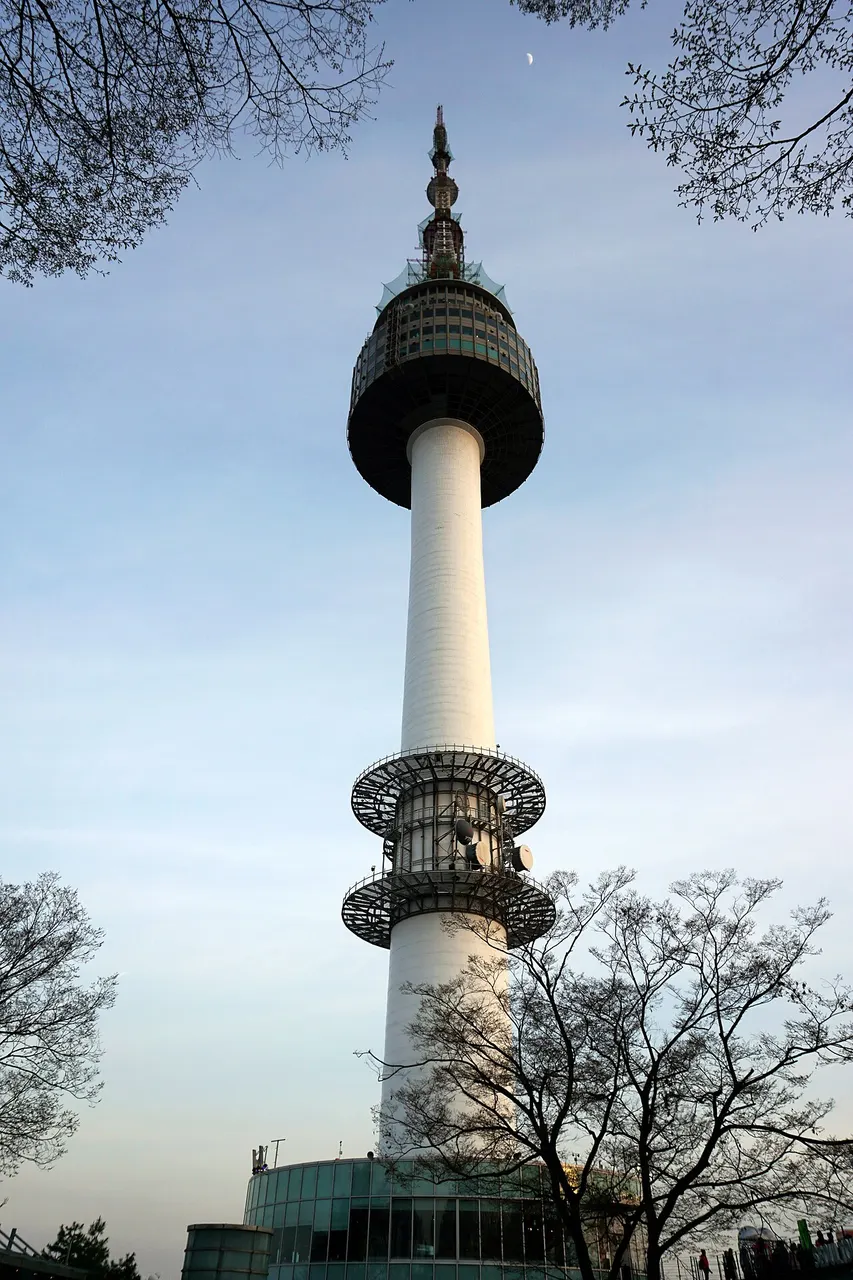
Namsan and N Seoul Tower
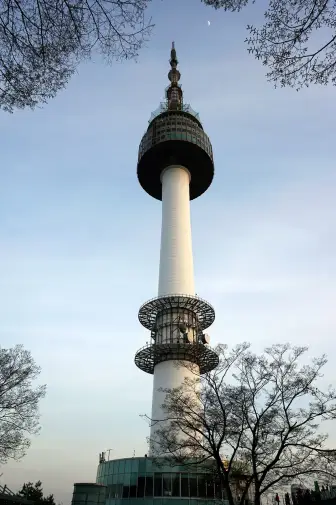
N Seoul Tower combines broadcasting and observation on Namsan, in central Seoul. Choose a bus, cable car or walk to the access point according to your energy and route conditions; there is no single duration for every ascent. The paid observation deck and cable car have their own tickets and service. Check opening hours, last entry, weather, visibility and return before arranging the visit.
N Seoul Tower combines broadcasting and observation on Namsan, in central Seoul. Choose a bus, cable car or walk to the access point according to your energy and route conditions; there is no single duration for every ascent. The paid observation deck and cable car have their own tickets and service. Check opening hours, last entry, weather, visibility and return before arranging the visit.
Check access
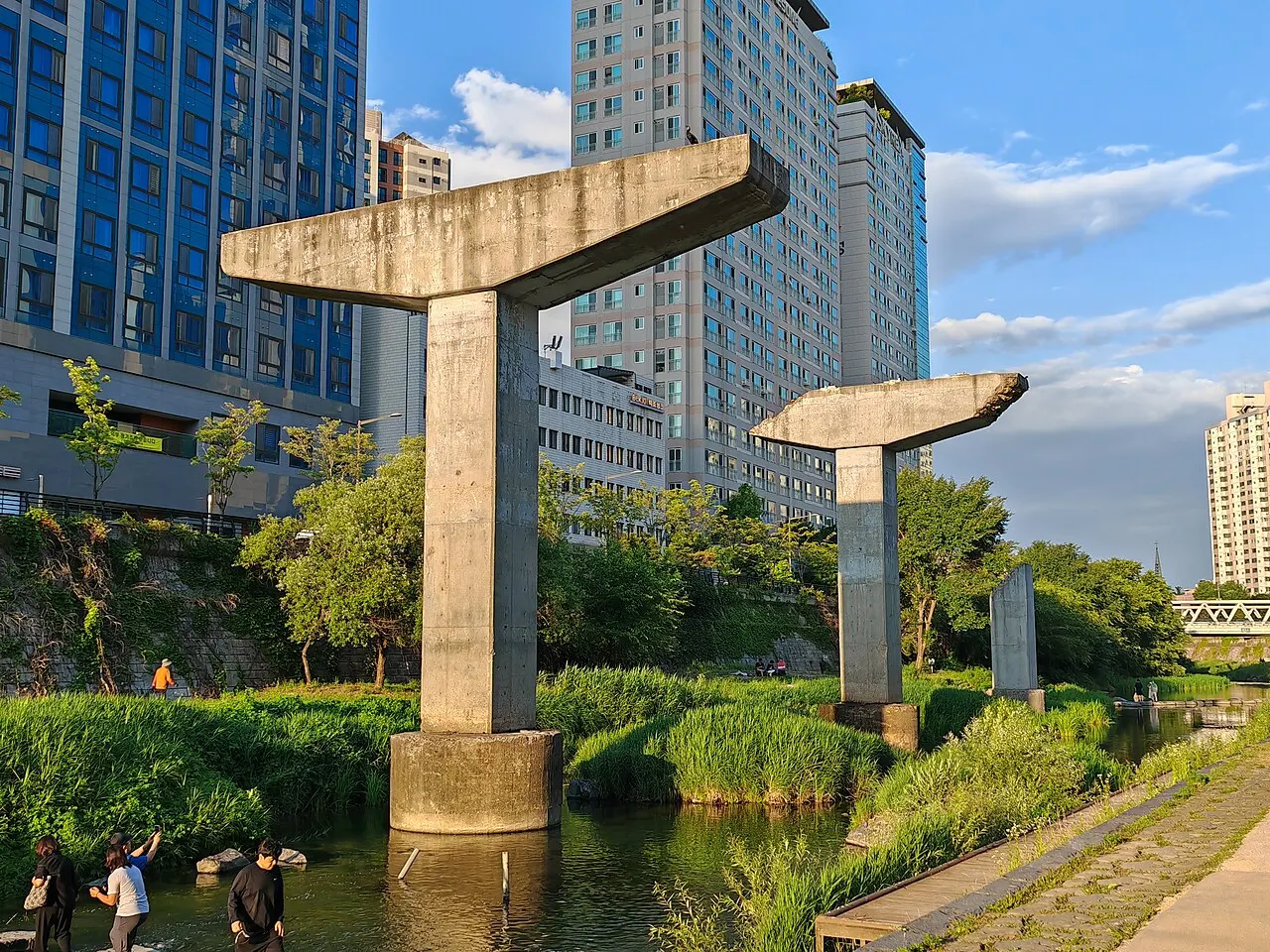
Cheonggyecheon
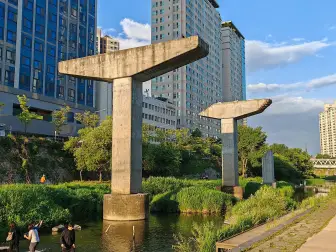
A 10.9 km stream restored between 2003 and 2005, when a six-lane elevated highway was torn down to reopen it. It runs 4 to 5 meters below street level, between Gwanghwamun and the eastern part of downtown, and serves as a walking route and a cool-air corridor in summer; the water is pumped in from the Han River.
A six-lane elevated highway was torn down from 2003 to 2005 to reopen the 10.9km stream, which runs 4 to 5m below street level, from Gwanghwamun to the east of downtown, cools the walk in summer, and receives water pumped from the Han.
Check access
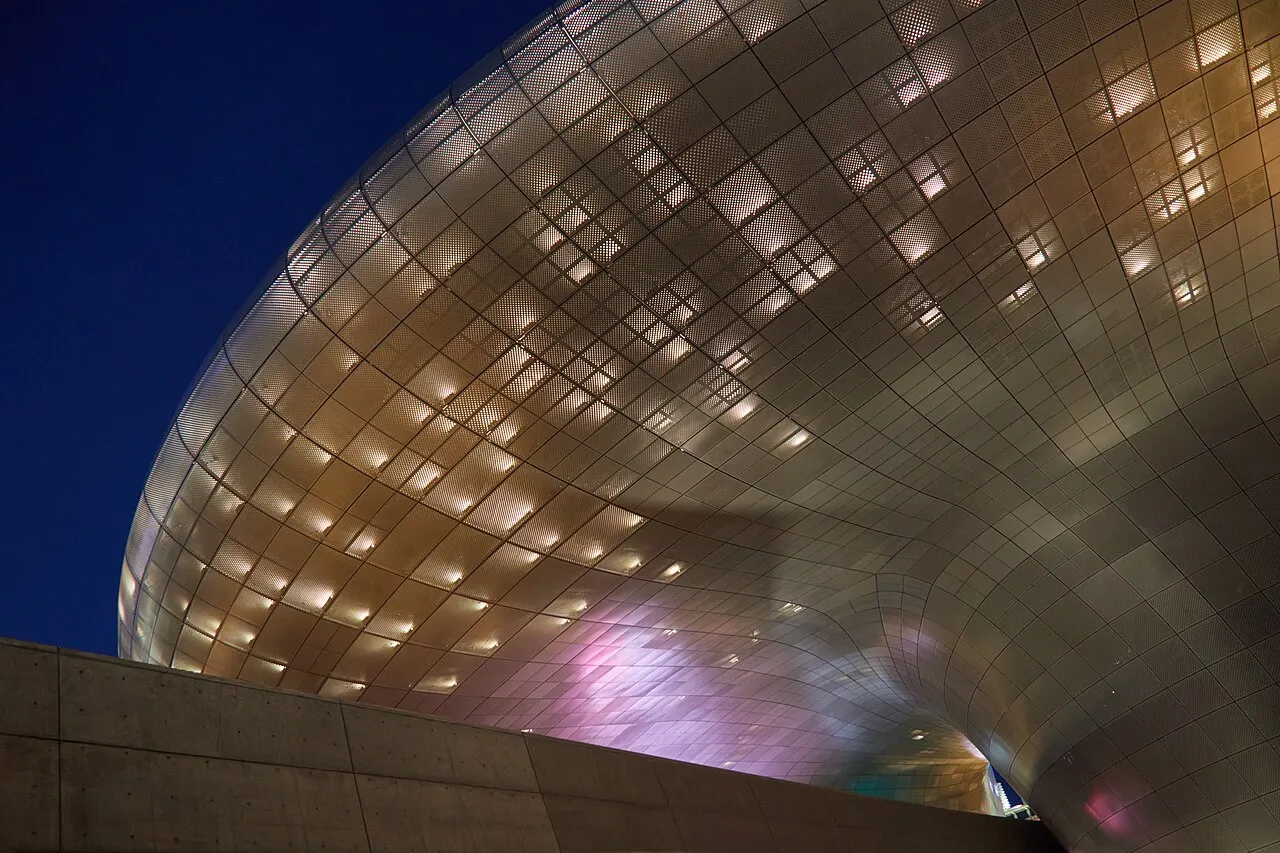
Dongdaemun Design Plaza
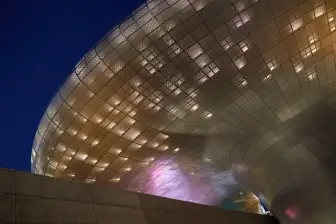
A Zaha Hadid building opened in March 2014, clad in more than 45,000 aluminum panels, no two alike. It hosts exhibitions and Seoul Fashion Week, and excavations during construction uncovered a stretch of the city wall and a 15th-century water gate, now preserved in the park next door.
Zaha Hadid's building, from March 2014, was clad in more than 45,000 aluminum panels, each one different, and it hosts exhibitions and Fashion Week, and the excavations turned up a stretch of the city wall and a 15th-century water gate, now kept in the park next door.
Check access
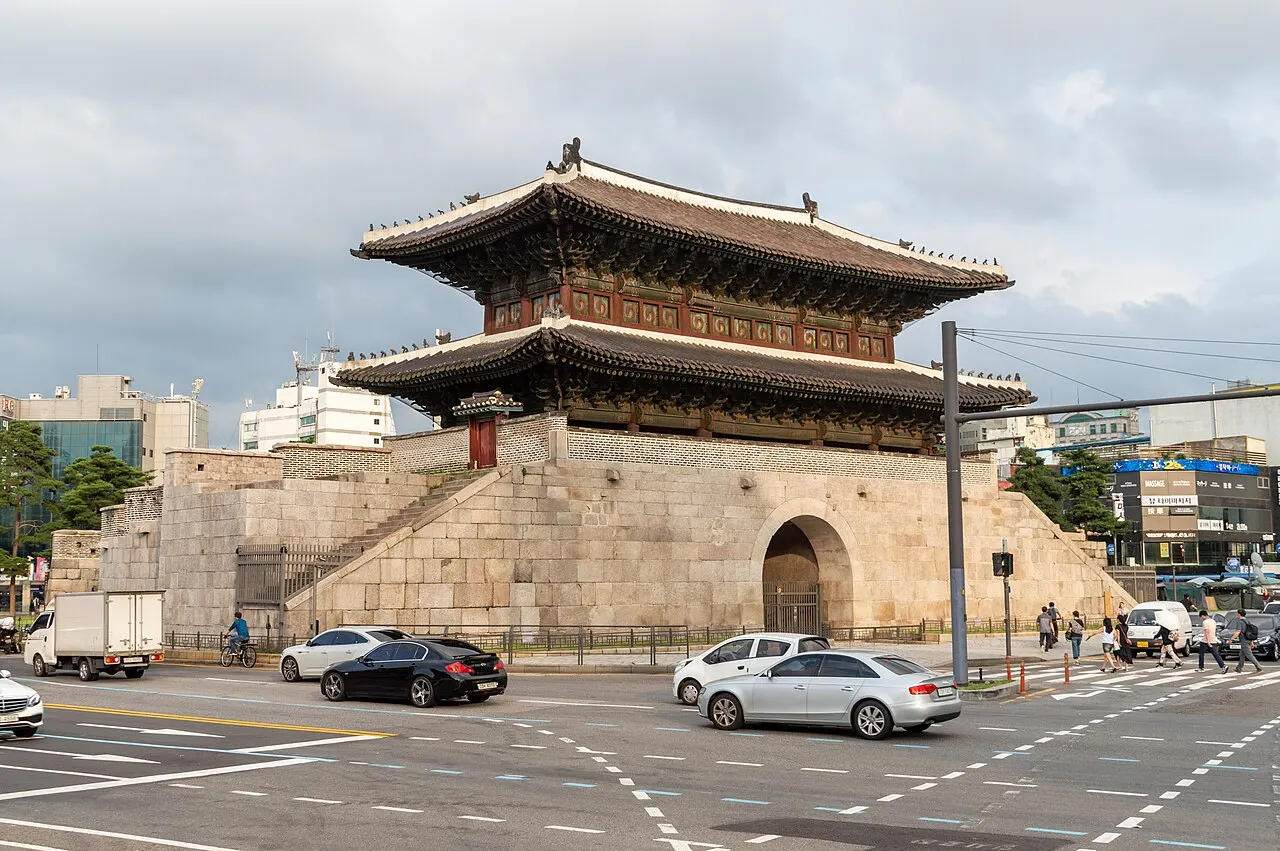
Hanyangdoseong wall
The 18.6 km of wall from 1396 still stands along about 70% of its route, split into six walkable sections. The Naksan stretch is short and easy; the Inwangsan stretch climbs along granite rocks and gives the best view of downtown, with some sections under military watch where photography is banned in certain directions.
Check access
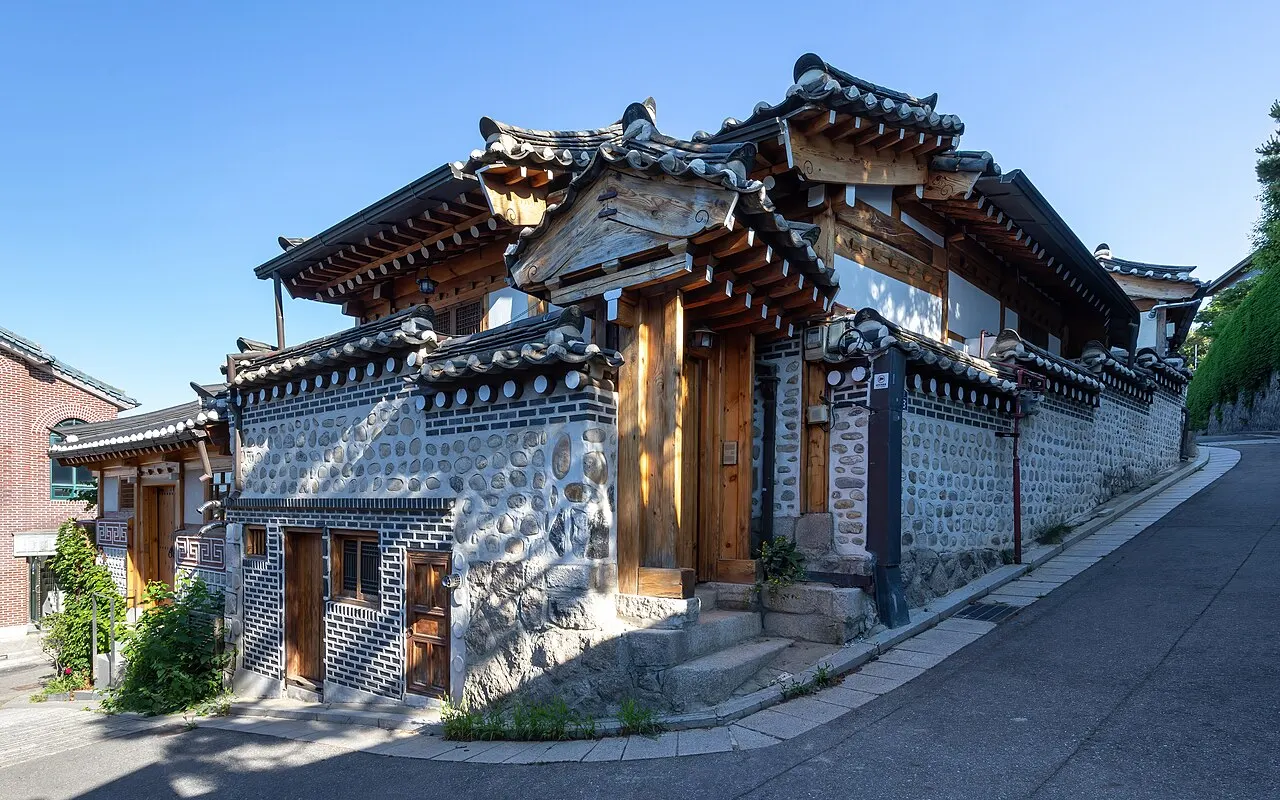
Bukchon Hanok Village
Hanok streets between Gyeongbokgung and Changdeokgung, with homes where residents live. The red zone at Bukchon-ro 11-gil restricts tourist visits to 10am–5pm and provides for fines outside those hours; this does not make all of Bukchon a single enclosure with one opening time. Follow signs and local notices, keep your voice low and respect homes and people. The city also asks for a rest day for the alleyways on Sundays.
Hanok streets between Gyeongbokgung and Changdeokgung, with homes where residents live. The red zone at Bukchon-ro 11-gil restricts tourist visits to 10am–5pm and provides for fines outside those hours; this does not make all of Bukchon a single enclosure with one opening time. Follow signs and local notices, keep your voice low and respect homes and people. The city also asks for a rest day for the alleyways on Sundays.
Check access
Nilo’s itinerary
Start with the basic programme and choose extensions for the time you have.
Plan my days in the app ↗Day 1 · One palace and the neighbourhoods of Jongno
Begin in the morning at Gyeongbokgung, which opens at 9am; check the calendar, since it normally closes on Tuesdays, with holiday exceptions. To see the changing of the guard, consult the programme and the day’s notices: arriving early does not guarantee the ceremony will take place. Also check admission and hanbok rules.
If you choose Bukchon after the palace, allow time for its streets and slopes. Tourist visits to the red zone at Bukchon-ro 11-gil are limited to 10am–5pm. Follow signs and the guidance asking for a rest day for the alleyways on Sundays; if access is unsuitable, keep to permitted areas or choose another neighbourhood.
Continue to Ikseon-dong for lunch and a break, choosing a restaurant or café according to opening hours and your interests. Adjust your pace to the walk and leave a margin before any timed session.
Jongmyo is a possible afternoon extension: guided visits with timed admission normally run on Mondays, Thursdays and Fridays, with independent visits on Wednesdays, weekends and public holidays. Check the session in your preferred language, availability, Tuesday closure and seasonal last admission. If the calendar does not work, finish in the city-centre neighbourhoods.
For dinner, choose Gwangjang Market or a city-centre restaurant, checking opening hours and seating; bindaetteok and gimbap are options. There is no need to cross back to another neighbourhood simply to finish the day.
If Gyeongbokgung is closed, Changdeokgung can replace the morning, according to its own calendar: it normally closes on Mondays, with holiday exceptions. For Huwon, check the separate ticket, palace admission, session time and availability. Allow more time for the garden and shorten the rest of the walk; the two palaces are not visits to add automatically.
To stay west of Gyeongbokgung, choose Seochon instead of Bukchon and Jongmyo. Walk according to your interests in bookshops, galleries and hanok streets, take your lunch break in the neighbourhood and respect signs and residents. This avoids crossing back through the centre during the afternoon.
Day 2 · The centre and Namsan, or a museum day
Choose the centre for the morning: walk a section of Cheonggyecheon towards Dongdaemun, according to your energy, the weather and access to the banks. There is no need to walk the entire stream.
Visit Dongdaemun Design Plaza and the adjacent park; check the programme and which exhibitions require tickets. Allow time to look at the architecture and sit before continuing.
Have lunch and take a break in the centre. The afternoon can stay in this area; choosing a museum in Yongsan is a change of programme, not a stop to fit automatically between DDP and Namsan.
If you choose Namsan for the afternoon, plan transport to the access point and the ascent according to your energy and conditions. The cable car has its own service, subject to the weather; check tickets, waiting and return. The tower’s paid observatory is another choice. Sunset time changes with the date, and visibility and clear skies are not guaranteed.
Dine near the area where you finish, for example in the centre if you keep that route. Check opening hours and your return to accommodation before extending the evening.
As an alternative to the centre and Namsan, set aside the morning and part of the afternoon for the National Museum of Korea in Yongsan. The permanent collection has free admission; exhibitions may have separate tickets. Check the calendar: there are holiday closures and gallery closures on the first Monday of March, June, September and December, with announced exceptions. Do not assume every Monday is either a closure or an opening day.
Leeum in Hannam can be an extension if time and interest remain, with transport between the two areas. It normally opens Tuesday–Sunday, 10am–6pm, closing on Mondays and its own festive dates. For individuals, booking is recommended, but on-site sales depend on availability; groups have different rules. Check the exhibition, ticket and session, and do not feel obliged to add two entire museums.
On the museum day, have lunch and take a break in Yongsan or Hannam according to your chosen programme. Finish in that area and plan your return, rather than crossing the city to add another viewpoint.
Day 3 · Jamsil and an afternoon in the south
Choose Jamsil for the morning and check the conditions of the Seoul Sky ticket at Lotte World Tower. The observatory occupies floors 117–123; check opening hours, admission type, last entry and visibility for your date. A purchase or selected time does not eliminate possible waiting.
Combine the visit with a walk beside Seokchon Lake, according to access and the weather, and take a lunch break in Jamsil. Keep the afternoon flexible before choosing another area.
If time and interest allow another area, travel to Samseong for Bongeunsa and COEX. Respect religious activities and check temple access and the programme of the spaces you want to visit. This is an afternoon extension, not a continuous walk from Jamsil.
Dine in Jamsil or Samseong according to where you finish. Chimaek is an option; choose a venue according to opening hours and your taste. Leave Hongdae for another route, without a compulsory crossing to finish this day.
If the viewpoint does not suit the weather or your interests, choose another programme: Seongsu and Seoul Forest can form their own walk, with lunch and rest in the same area. Check park access and do not add this alternative to Jamsil, COEX and a journey back across the city.
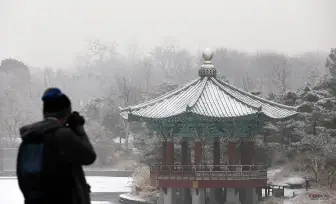
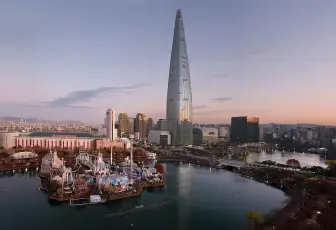
If you stay longer
Day 4 · Demilitarized Zone (DMZ)
Day trip
The Demilitarized Zone, the strip that separates the two Koreas, starts about 50 km from downtown. You can only enter on a tour with a certified guide, which leaves in the morning and returns in the afternoon; bring your passport and follow the requested dress code. The usual itinerary includes the Third Infiltration Tunnel, dug by the North and discovered in 1978, and the Dora Observatory. Visits to the JSA, at Panmunjom, are suspended and resumed depending on the political situation: confirm the week of your trip.
Food
 AI illustration
Samgyeopsal and the tabletop grill
Thick strips of pork belly grilled by the customer on the grill built into the table, cut with scissors and eaten wrapped in lettuce with garlic, ssamjang, and scallion. Almost every place requires a minimum order of two portions, ₩15,000–22,000 each.
 AI illustration
Banchan
The small bowls that arrive before the main dish (kimchi, bean sprouts, burdock root, boiled egg) aren't an appetizer or an optional courtesy: they're part of the meal and are refilled for free as many times as you ask. At gukbap places there are usually three; at banquet restaurants, more than ten.
 AI illustration
Jjigae and gukbap
The standard weekday lunch is a boiling stew (kimchi jjigae, doenjang jjigae made with soybean paste, sundubu jjigae made with soft tofu) or a broth with rice in it, like seolleongtang made from ox bone, served at places running since the 1930s. It costs ₩9,000–13,000 with rice and banchan.
 AI illustration
Naengmyeon
Thin buckwheat noodles in a cold broth (mul) or with spicy paste (bibim), served in a metal bowl with ice, pear, and half a boiled egg. It's a summer dish and also the traditional close to a grilled-meat meal; the milder Pyeongyang version comes from restaurants founded by refugees from the north after 1945.
 AI illustration
Gwangjang Market
A covered market running since 1905, the country's first permanent one, with rows of counters where you eat standing or on a stool. The house specialties are bindaetteok, a pancake of mung beans ground on a stone and fried in oil, mayak gimbap in tiny rolls with mustard, and yukhoe, seasoned raw beef.
 AI illustration
Tteokbokki
Cylinders of rice cake cooked in gochujang sauce with fish cake and egg, sold at street stalls for ₩4,000–6,000 a portion. Sindang-dong neighborhood has had an entire street devoted to the dish since the 1950s, with the tabletop-pot version.
 AI illustration
Chimaek
A blend of chicken and maekju (beer): twice-fried chicken, either plain and salty or coated in sweet-spicy yangnyeom sauce, paired with cold beer. It's the standard delivery order even late at night, and what people eat sitting on the grass by the Han River in summer; ₩20,000–28,000 for a whole chicken.
 AI illustration
Soju, makgeolli, and the iced americano
Soju is a light spirit, 16–20% ABV, sold for about ₩2,000 at a convenience store and ₩5,000–6,000 at a restaurant; makgeolli is the cloudy rice wine, served in a bowl and often paired with pancakes on a rainy day. Separately, iced coffee is a year-round national habit, even in January: an americano costs ₩4,500–6,000.
Day trips
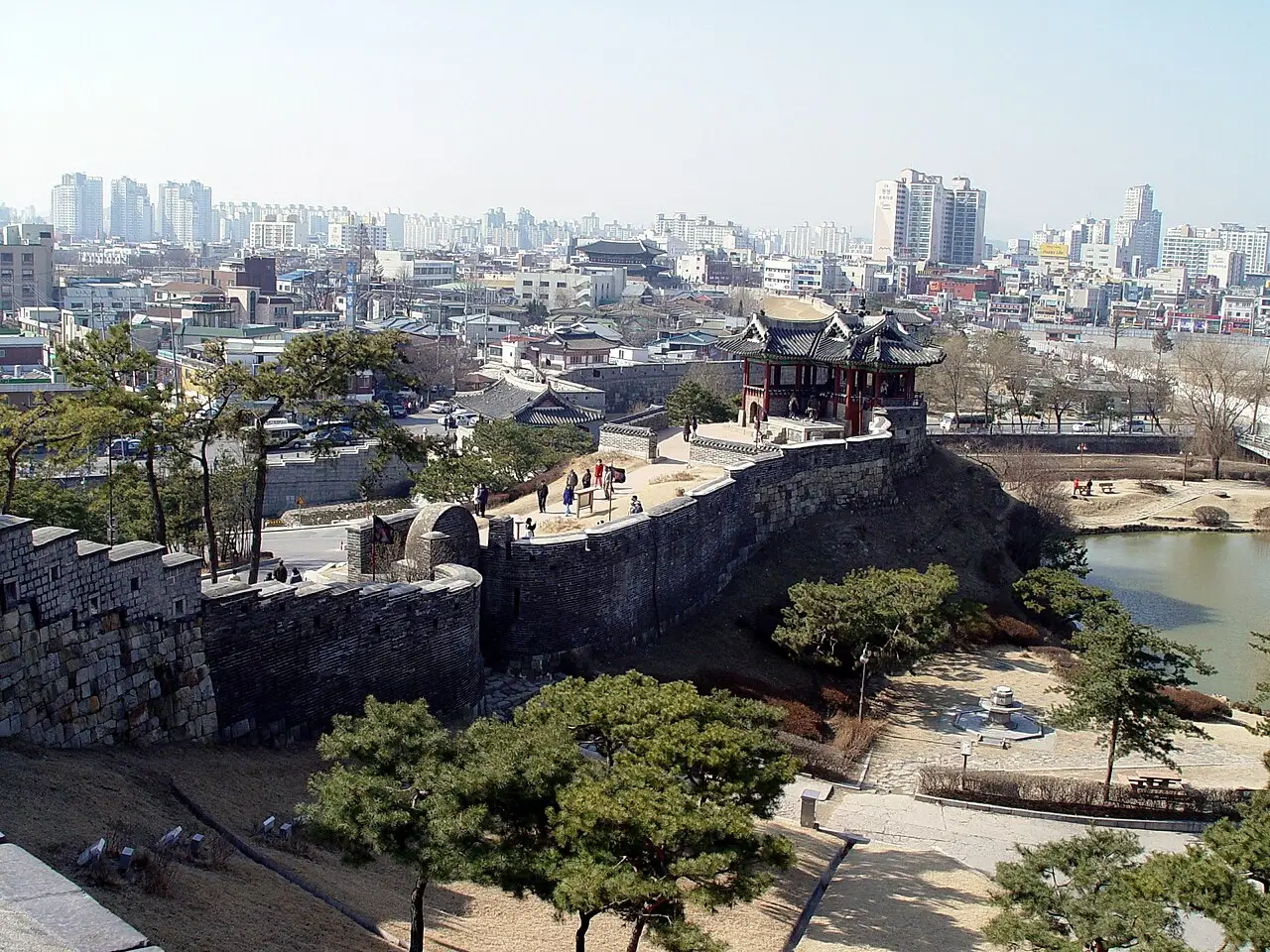
Suwon and Hwaseong Fortress
40 km south; about 1 hour on subway Line 1 to Suwon station, or about 35 minutes by express train. The 5.7 km wall was built between 1794 and 1796 under King Jeongjo, designed by scholar Jeong Yak-yong with pioneering use of cranes; it's been a UNESCO World Heritage Site since 1997, and the full loop takes about three hours on foot.
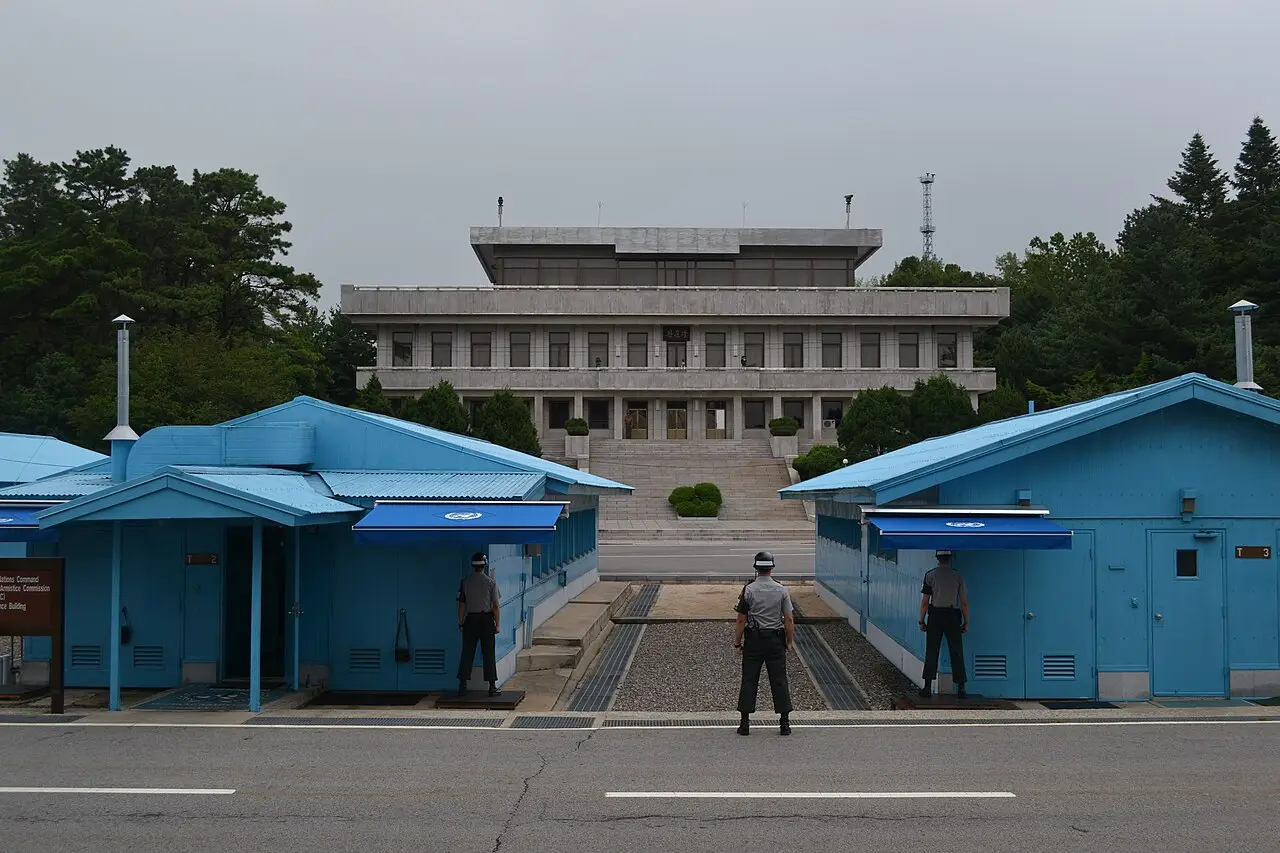
Demilitarized Zone (DMZ)
The Demilitarized Zone, the strip that separates the two Koreas, starts about 50 km from downtown. You can only enter on a tour with a certified guide, which leaves in the morning and returns in the afternoon; bring your passport and follow the requested dress code. The usual itinerary includes the Third Infiltration Tunnel, dug by the North and discovered in 1978, and the Dora Observatory. Visits to the JSA, at Panmunjom, are suspended and resumed depending on the political situation: confirm the week of your trip.
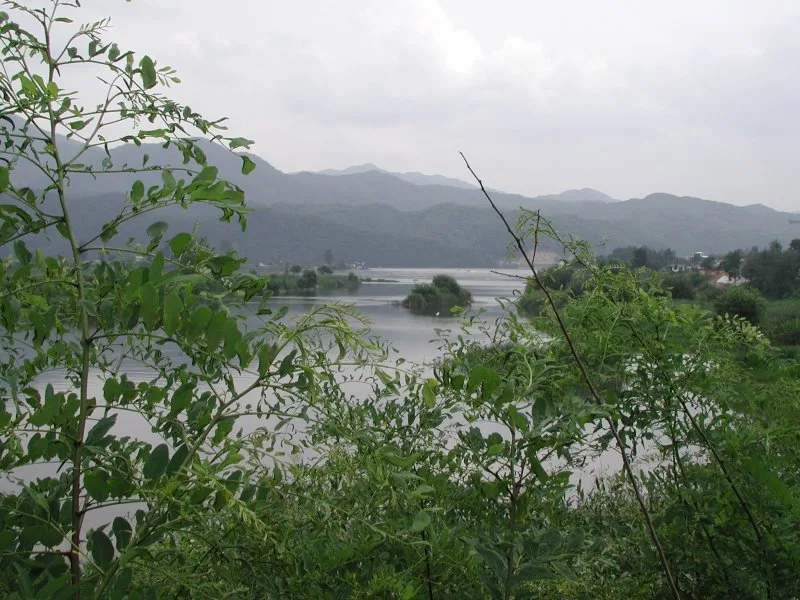
Gapyeong, Nami Island, and the Garden of Morning Calm
70 km east; the ITX-Cheongchun train leaves from Yongsan and reaches Gapyeong in about 1 hour. Nami Island, artificial since a dam was built in 1944, is reached by a five-minute ferry ride and has metasequoia tree-lined avenues that fill up in autumn. The neighboring garden opens at night in winter, with lighting installed from December to March.
Where to begin
One palace and the neighbourhoods of Jongno
Begin in the morning at Gyeongbokgung, which opens at 9am; check the calendar, since it normally closes on Tuesdays, with holiday exceptions. To see the changing of the guard, consult the programme and the day’s notices: arriving early does not guarantee the ceremony will take place. Also check admission and hanbok rules.
The centre and Namsan, or a museum day
Choose the centre for the morning: walk a section of Cheonggyecheon towards Dongdaemun, according to your energy, the weather and access to the banks. There is no need to walk the entire stream.
Jamsil and an afternoon in the south
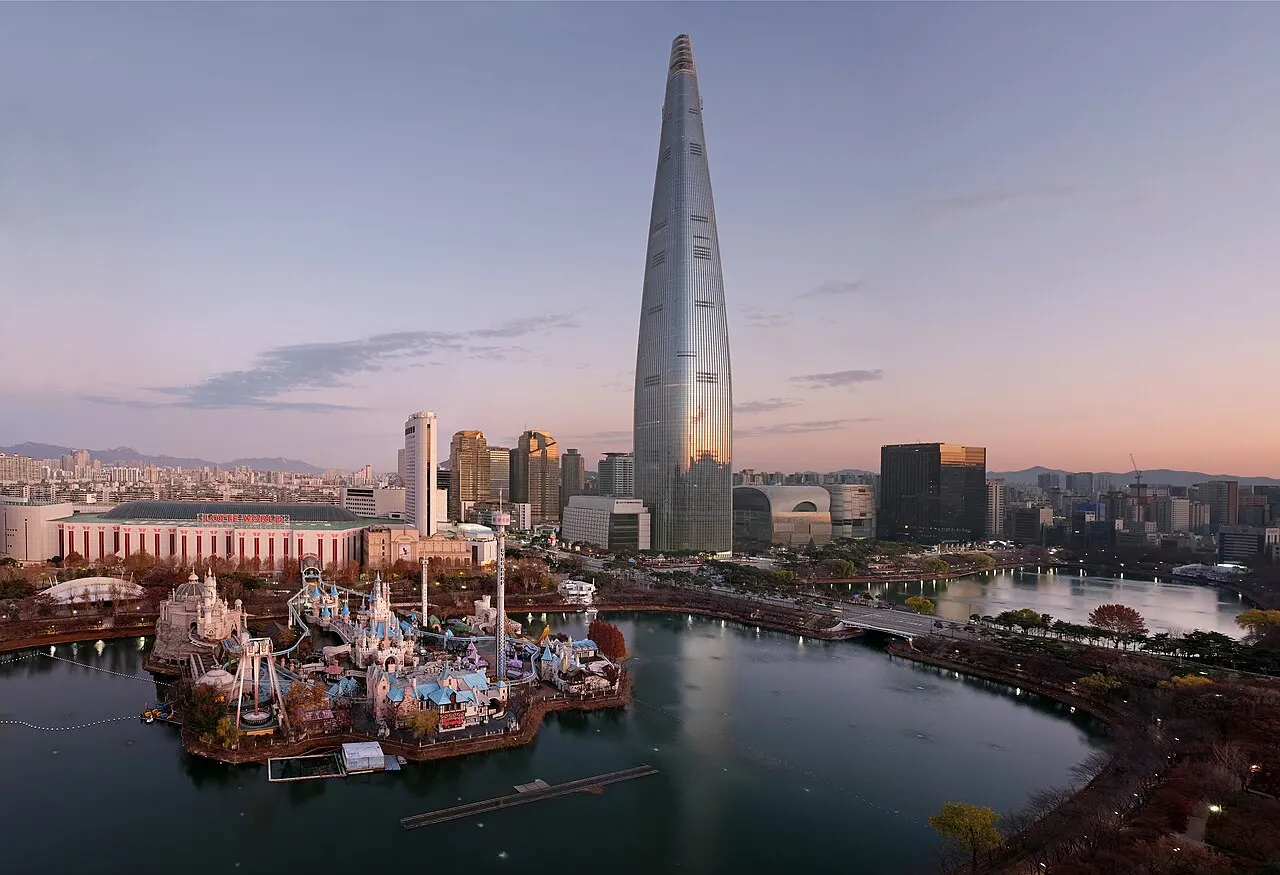
Choose Jamsil for the morning and check the conditions of the Seoul Sky ticket at Lotte World Tower. The observatory occupies floors 117–123; check opening hours, admission type, last entry and visibility for your date. A purchase or selected time does not eliminate possible waiting.
Money
The currency is the South Korean won (₩), with bills of 1,000, 5,000, 10,000 and 50,000; in 2026 the dollar is worth about ₩1,380 and the euro about ₩1,590, which puts ₩10,000 at close to 7 dollars. To stop converting in your head, memorize counter prices: an americano costs ₩4,500–6,000, a lunch of stew with rice and side dishes ₩9,000–13,000, a grilled-meat dinner ₩25,000–40,000 per person with drinks, convenience-store beer ₩2,500–3,500 and a bottle of soju at a restaurant ₩5,000–6,000. The metro starts at ₩1,550, a guesthouse dorm bed runs ₩30,000–45,000 and a three-star hotel in Myeongdong or Hongdae ₩120,000–200,000 a night. Cards are accepted almost everywhere, including at market stalls, but cards issued abroad often fail at self-service kiosks, top-up machines and some taxis. So carry ₩50,000–100,000 in cash and withdraw from the ATMs marked “Global” in convenience stores. Tipping doesn't exist, not in restaurants, taxis or hotels, and offering one usually causes embarrassment, with the money handed right back. Tourists with a foreign passport are entitled to a VAT refund at participating stores, with an instant discount at the register from about ₩15,000 per purchase or a refund at the airport kiosks.
Getting there and around
From the airport to your neighbourhood
At Incheon (ICN), check your terminal and choose transport according to your accommodation’s neighbourhood. The AREX Express runs directly to Seoul Station; the All-Stop also serves stations such as Hongik University, which may suit your destination better. Compare the final leg, transfers with luggage, fare and timetable for your arrival. An airport bus may avoid a transfer, but check the exact stop and the walk to your accommodation; do not assume a hotel-door drop-off. For a taxi, confirm its category and charging method, allowing for traffic and tolls. Gimpo (GMP) has AREX and subway connections, including Lines 5 and 9. Allow for immigration, baggage, waiting and access to the station; the advertised train time excludes those steps. If you arrive before check-in, confirm luggage storage with your accommodation before arranging visits.
Stations, integrated fares and pass coverage
Plan journeys by stations and access points, checking the line’s first and last service for your date. The adult subway base fare with a card is ₩1,550 for up to 10 km, checked in October 2026; distance supplements apply. Integrated fares require the same card to be tapped on entry and exit: normally within 30 minutes for a transfer, or 60 minutes between 9pm and 7am. The highest fare among the services used and the total distance can lead to extra charges; not every transfer is free. Buses include blue trunk routes, green feeders, red metropolitan express routes and yellow circulators; check the route and direction. Climate Card short passes remain available for 1, 2, 3, 5 and 7 days on covered services; the Climate Pass for residents has different conditions. Check coverage before buying. For a standard taxi, the daytime base is ₩4,800 for 1.6 km; the night supplement is 20% from 10–11pm and 2–4am, and 40% from 11pm–2am, according to the municipal table checked in October 2026. Other categories and travel outside the area have their own rules. Walking and cycling are choices according to distance, slopes, access and weather, with breaks when changing areas.
Safety
Seoul ranks among the world's safest big cities for violent crime and theft. Walking around at three in the morning is routine, phones and laptops stay on café tables while their owners step out, and cameras cover practically every public space. The real risks are traffic, crowding in narrow alleys and the weather. The first is traffic: delivery motorbikes ride on the sidewalk, cars turn right on red and crosswalks don't guarantee right of way. Always look, including behind you. The second is crowd density in narrow alleys: the Itaewon tragedy, on October 29, 2022, killed 159 people in a packed sloping alley on Halloween, and the practical rule is to get out of any crowd where you no longer choose where your own feet go. The third is the weather: summer floods swamp basements and underpasses in heavy rain, and spring fine dust calls for a mask if you have respiratory problems. Scams against foreigners are rare; the most common are inflated bills at bars with touts on the street, in parts of Itaewon and Gangnam, and polite approaches by religious groups near Myeongdong and Hongdae, which start with a compliment on your face and a request for just one minute. Being close to the North Korean border doesn't change daily life: there are occasional civil defense drill sirens, and residents carry on with what they're doing. Phone numbers: 112 for police, 119 for fire and ambulance and 1330 for the tourist hotline, which answers 24 hours a day in several languages and translates on three-way calls.
Etiquette tips
Giving and receiving with both hands
Money, cards, cups, gifts, and business cards are given and received with both hands, or with the right hand supported by the left forearm. Using just one hand is something you do only among friends the same age.
No one serves themselves
At the table, you fill other people's cups and wait for yours to be filled, and noticing your neighbor's empty cup is part of the dinner. In front of someone older, hold your cup with both hands when receiving a pour and turn your face aside to drink.
Age comes before name
Asking how old you are in the first minutes of conversation isn't nosiness: it decides the speech level of Korean and who serves, who pays, and who sits where. Answering with your birth year settles it quickly.
A wooden step is the sign to take off your shoes
Homes, hanok, restaurants with a raised floor, temples, and some store fitting rooms require taking your shoes off at the step or the wooden platform. Bathroom slippers are for the bathroom and don't leave it; a hole in your sock is a genuine source of embarrassment.
The Korean table has its own rules
The spoon is for rice and soup, the chopsticks for everything else, and the rice bowl stays resting on the table, not in your hand. Never stick chopsticks upright in rice: that's the offering made to the dead. Waiting for the oldest person to start is standard.
Volume and seats on the subway
The seats at the ends of the car are reserved for the elderly, pregnant women, and passengers with disabilities and stay empty even in a packed car: don't sit in them. Phone conversations are held in a low voice, and no one eats inside the car.
Mistakes to avoid
Korea restricts mapping data
Trusting Google Maps. It leaves whoever trusts it stranded on a corner waiting for a route that never comes: Korea restricts the export of detailed mapping data, and the app doesn't give walking or driving directions inside the country. Install Naver Map or Kakao Map before you fly, and save addresses in Korean too, because searching by Latin-alphabet name often fails.
Check travel authorisation and arrival declaration
Before travelling, check K-ETA requirements for your passport, age, purpose and entry date; exemptions and temporary rules apply. K-ETA and the e-Arrival Card are separate systems: travellers entering visa-free with a valid K-ETA normally do not need an arrival declaration, but those exempt from K-ETA may need one. Check your eligibility at e-arrivalcard.go.kr; when required, the electronic declaration is free and can be submitted starting three days before arrival, in Korean time.
Check how to pay and top up
Do not assume a foreign bank card works as a transportation card or is accepted by every machine. Designated machines on Lines 1–8 allow foreign cards to buy and top up the short-term Climate Card and buy single tickets, with a service fee; this does not confirm all other top-ups or terminals. Check payment methods for your chosen ticket and keep an alternative according to your spending.
Samgyeopsal only comes in orders of two or more
Walking into a Korean barbecue restaurant alone. Most samgyeopsal places only serve a minimum of two portions, and some turn away tables for one. On your own, go for stew restaurants and single-seat counters, which serve one person without any fuss.
Seollal and Chuseok shut down the city for three days
Booking the trip without checking the dates of Seollal and Chuseok, the two three-day lunar calendar holidays. On those days, family restaurants, markets, and shops pull down their shutters and the roads out of Seoul grind to a halt, so anyone arriving then needs to plan where to eat, even though palaces and museums usually open for free.
Useful phrases
안녕하세요 (an-niông-ras-seiô)
Hello: works all day and for anyone
감사합니다 (kam-sa-ham-ni-dá)
Thank you, in the standard polite form
저기요 (djô-gui-iô)
Excuse me: that's how you call the waiter, in a normal voice and without gesturing
이거 주세요 (i-gô djú-se-iô)
Give me this one, please: pointing at the item or the photo on the menu
얼마예요? (ôl-ma-iê-iô)
How much is it?
계산할게요 (kie-san-hal-ke-iô)
I'll pay the bill: said at the register, by the door, where you pay on the way out and not at the table
Districts
Jongno and Gwanghwamun
The 600-year-old core: the palaces, Jongmyo Shrine, Gwanghwamun Square, and Insadong Street, of stationery shops and teahouses. It's where the ministries, newspapers, and protests are.
Jung-gu: Myeongdong, Euljiro, and Namdaemun
Myeongdong is the street of cosmetics and food stalls aimed at newcomers; Namdaemun, the wholesale market open since 1414. Euljiro is the district of print shops, lighting fixtures, and hardware that picked up bars in 1970s office buildings, nicknamed Hipjiro.
Bukchon and Seochon
The two hanok neighborhoods, traditional courtyard houses, sit right against Gyeongbokgung palace. Bukchon, between Gyeongbokgung and Changdeokgung, is residential and has visiting hours, 10am to 5pm; Seochon, on the west side of Gyeongbokgung, is quieter and is full of bookstores, galleries, and small restaurants.
Hongdae and Yeonnam
The area around Hongik University, in Mapo-gu: live music venues, clubs, record shops, cheap food, and the highest concentration of under-30s in the city. Yeonnam, right next door, grew along the linear park built on the old Gyeongui railway, opened in 2016.
Itaewon, Hannam, and Yongsan
An international neighborhood formed around the U.S. military base, with embassies, the central mosque, foreign food, and nightlife. Hannam, on the hillside, has the Leeum museum and design shops; Yongsan Park, on the returned base land, is opening in phases through the end of the decade.
Gangnam, Apgujeong, and Sinsa
The south bank planned in the 1970s: corporate offices, Daechi-dong cram schools, plastic surgery clinics along Apgujeong-ro, and the COEX complex. Garosu-gil street, in Sinsa, is the walkable stretch of a neighborhood built for cars.
Seongsu-dong
A former shoe-factory district in Seongdong-gu, converted since about 2015 into cafés, studios, and concept stores set inside brick warehouses. It sits right next to Seoul Forest and the most-used stretch of bike path along the Han River.
Yeouido
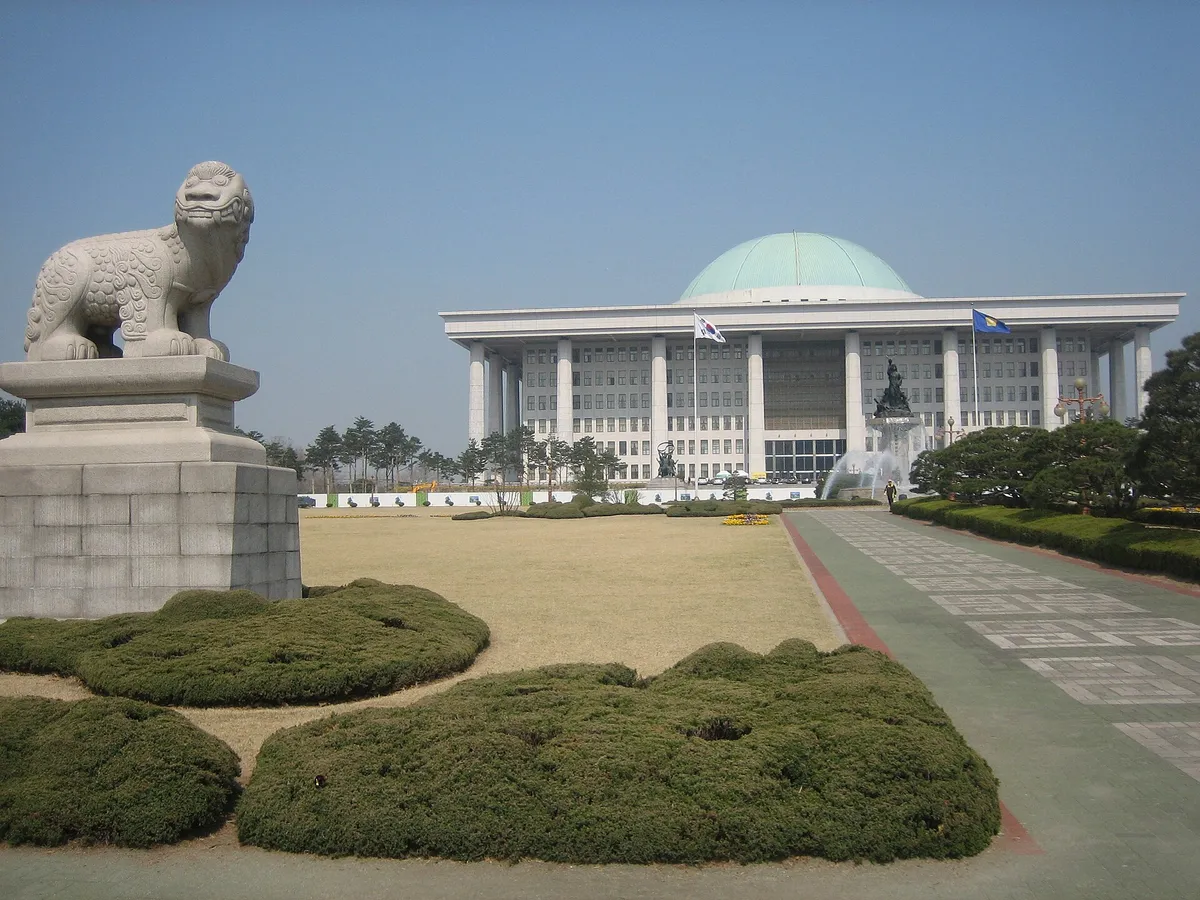
An island in the middle of the Han River that holds the National Assembly (1975), the stock exchange, banks, and TV networks. It empties out on weekends, except in the first half of April, when the cherry trees along Yunjungno draw crowds.
History
18 BCE · Wiryeseong, capital of Baekje
The Baekje kingdom sets its capital on the bank of the Han River. The earthen walls of Pungnaptoseong, in today's Songpa district, are the oldest trace of a city on the site.
475 · Goguryeo seizes the Han valley
Control of the valley changes hands three times among the Three Kingdoms in just over a century. Whoever holds the Han holds the route between China and the south of the peninsula.
1394 · Joseon moves the capital
King Taejo (Yi Seong-gye) moves the kingdom's seat from Kaesong to Hanyang, chosen through geomancy: mountain to the north, river to the south. Gyeongbokgung is finished in 1395, and the 18.6 km wall in 1396.
1446 · Hangul is promulgated
King Sejong publishes the Hunminjeongeum, an alphabet designed to be learned within days by people without access to Chinese characters. It is the root of the country's near-total literacy today.
1592–1598 · Imjin War
The Japanese invasions burn the capital's palaces. Gyeongbokgung lies in ruins for 273 years, and Changdeokgung becomes the main palace.
1865–1868 · Reconstruction of Gyeongbokgung
Regent Heungseon Daewongun rebuilds the palace with about 330 buildings, an effort that unbalances the royal treasury. It is the monarchy's last great undertaking.
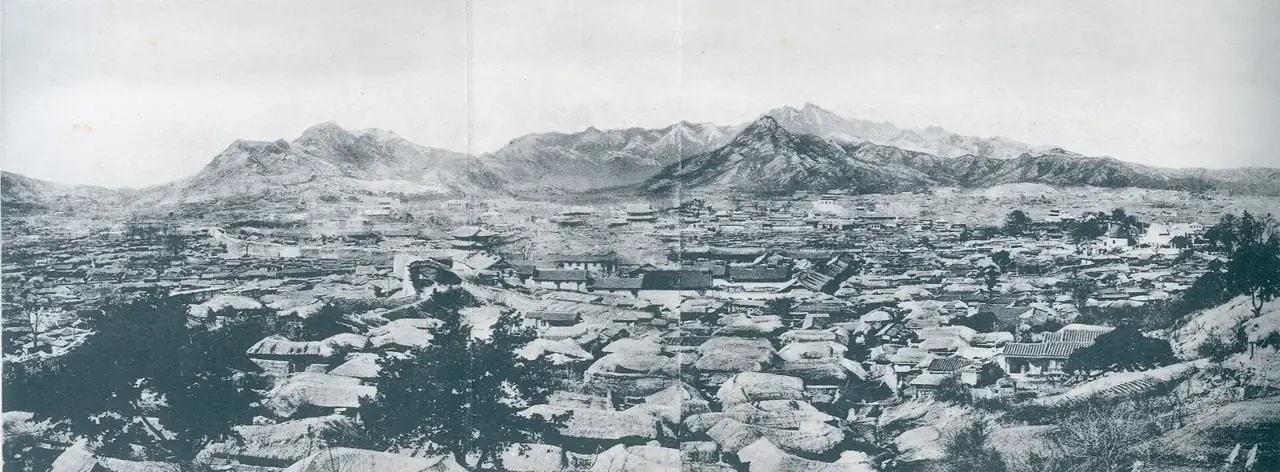
1910–1945 · Japanese occupation
Seoul becomes Gyeongseong (Keijō), a colonial capital. Part of Gyeongbokgung is demolished for the Government-General building, erected in 1926 facing the palace and torn down between 1995 and 1996.
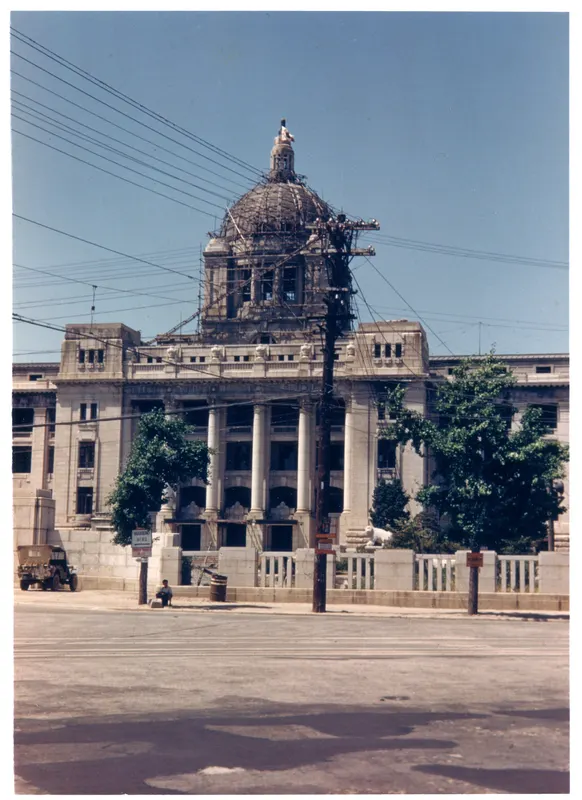
1950–1953 · Korean War
The city changes hands four times and comes out of the war with most of its buildings destroyed. The Hangang Bridge is blown up on June 28, 1950, with civilians still crossing it.
1962–1988 · Miracle on the Han River
Rapid industrialization, rural exodus, and the opening of Gangnam starting in 1970 multiply the city. Subway Line 1 opens on August 15, 1974, and the 1988 Olympics close the cycle.
2003–2005 · Cheonggyecheon reopened
City hall tears down 5.8 km of elevated highway and brings back to the surface the stream that had run under the asphalt since the 1950s. Reopened in October 2005, it became the model of urbanism the city now exports.
 AI illustration
2019–2025 · Hallyu and political crisis
“Parasite” wins the Palme d'Or in 2019 and four Oscars in 2020; Han Kang receives the Nobel Prize in Literature in 2024. In December 2024, the declaration of martial law brings hundreds of thousands into the streets of Yeouido and ends with the president's removal in April 2025.
Complete history
Hanyang, a capital chosen by geomancy in 1394
In 1394, when it moved the Joseon capital to Hanyang, the court applied Korean geomancy to the letter: a guardian mountain to the north (Bugaksan), a river to the south (the Han), hills closing off the east and west. Gyeongbokgung was built in 1395 at the foot of Bugaksan, the Jongmyo ancestral shrine and the Sajik altar were placed east and west of the palace, and in 1396 an 18.6 km wall with eight gates linked the four hills. Geography also defined class: court officials lived on the slopes of Bukchon and Seochon, around the palaces, while merchants and artisans took the plain along Jongno and the Cheonggyecheon stream, which served as both a social dividing line and an open sewer.
Five hundred years as a dynastic capital
It was five hundred years as a dynastic capital with two great ruptures. The first was the Japanese invasions of 1592–1598, which burned the palaces and pushed the court to Changdeokgung, whose Huwon garden is today the country's oldest preserved landscaped complex. The second was the forced opening: the Treaty of Ganghwa, in 1876, ended isolation, and within twenty years the city got electric light at Gyeongbokgung (1887), the Seoul–Incheon railway (1899), and the first electric tram (1899), the same year. In 1897 King Gojong proclaimed the Korean Empire and settled in Deoksugung, the only palace with Western-style buildings, a short-lived attempt to modernize before losing sovereignty.
The 1910 Japanese annexation: Hanyang becomes Gyeongseong
The 1910 Japanese annexation reorganized the city against its own history. Hanyang became Gyeongseong, a portion of Gyeongbokgung was demolished to make room for the immense Government-General building, inaugurated in 1926 exactly between the Gwanghwamun gate and the throne hall, and the commercial axis shifted south, to the Japanese area of Jung-gu, where the Mitsukoshi store opened in 1930 in the building that is now Shinsegae. The population went from about 250,000 in 1910 to about 1 million in 1942. With liberation, in 1945, the city received the name it has today: Seoul, a pure Korean word that simply means “capital” and which, because it doesn't come from Chinese, is the only major Korean city name with no spelling in ideograms.
The Korean War destroyed bridges and factories (1950–1951)
The Korean War leveled the city. Between June 1950 and March 1951 Seoul changed hands four times, lost most of its bridges, factories, and homes, and afterward received a wave of refugees from the north that doubled the population within a few years. Reconstruction was fast and vertical, financed by the developmental state and the chaebol: the Gyeongbu expressway linked Seoul to Busan in 1970, the Gangnam plan turned rice paddies on the south bank into 800-meter blocks, subway line 1 opened in 1974, and standardized apartments became the middle class's housing format. The cost of the rush showed up in 1994, when the Seongsu bridge collapsed and killed 32 people, and in 1995, when the Sampoong department store collapse killed 502. Democratization, won in the streets in June 1987, and the 1988 Olympics closed out the same decade.
Seoul has lost residents since the 1990s
The city has been losing residents since the 1990s, going from almost 11 million to about 9.4 million, pushed by housing prices and the world's lowest fertility rate, around 0.6 children per woman, while the Capital Region keeps growing and already holds half the country on 12% of its territory. The economy behind it runs on cultural and tech exports: music, series, webtoons, cosmetics, semiconductors. Recent years have been hard: the Itaewon tragedy, on October 29, 2022, killed 159 people in a packed alley on Halloween, and the declaration of martial law on December 3, 2024, brought crowds to Yeouido and ended with the president's removal in April 2025. Under construction, Yongsan Park, on the former American military base, is set to open in stages from 2027 on and tries to give open space back to a city that has almost none.
The 1396 city wall was 18.6 km long and had eight gates.
Geography and shape of the city
The basin and the ring of hills
Seoul occupies a 605 km² basin ringed by granite mountains and cut east to west by the Han River, which within the city runs about 1 km wide and is crossed by more than twenty bridges. The ring of hills made the city: Bugaksan (342 m), Inwangsan (338 m), Naksan (125 m), and Namsan (about 270 m) are the four the 1396 wall linked, and Bukhansan, at 836 m at Baegundae peak, closes off the north within a national park that starts about 40 minutes by subway from downtown.
The Han River divides Gangbuk and Gangnam
The river divides two cities with different histories: Gangbuk, to the north, is the six-century core, with irregular streets following the contour lines and small blocks; Gangnam, to the south, was rice paddies until 1970 and was laid out in superblocks with ten-lane avenues, which makes a single block a ten-minute walk.
Vertical density and the climate
Average density is about 15,500 people per km², and the Korean answer to it is vertical: about 60% of households in the city are in apartments, almost always in complexes with numbered towers. The climate is continental monsoon, with a dry winter below freezing and a summer with concentrated rain, and the city adapts with heated floors (ondol) in practically every home and with climate-controlled underground passages linked to the subway stations.
The Moonlight Rainbow Fountain, which sprays from the sides of Banpo Bridge over the Han River, earned it the Guinness World Record for the longest bridge fountain in the world.
Culture
Seo Taiji and Boys and the industry's start, in 1992
The music industry the city exports has an address and a schedule. The lineage begins in 1992, with the debut of Seo Taiji and Boys, and organizes itself from 1995 around companies that train artists for years before launch: SM, YG, JYP, and, since 2005, HYBE, which moved its headquarters to a tower in Yongsan in 2021. The weekly music shows are recorded in studios in Sangam and Yeouido, fan clubs take over cafés rented for idols' birthdays in Hongdae and Seongsu, and physical record stores keep operating because in Korea the album is a collector's object with a photo card inside.
Film and literature in twenty years
In twenty years, Korean film and literature have conquered the world. The wave began in the late 1990s, with liberalization after the dictatorship and the screen quota system, and peaked with Bong Joon-ho's “Parasite,” the first non-English-language film to win the Oscar for best picture. In 2021 “Squid Game” became Netflix's most-watched series, and in 2024 Han Kang won the Nobel Prize in Literature, the first person from Korea and the first Asian woman to win it. At the same time, the webtoon was born here: the Naver and Kakao platforms publish vertical-scrolling comics made for the phone, which now feed much of the country's TV series.
Spaces with their own name and long hours
Everyday culture happens in spaces with their own names and long hours. Noraebang are karaoke rooms rented by the hour, PC bang are gaming cafés where you play for ₩1,500 an hour, and jjimjilbang are Korean saunas with steam rooms, clay rooms and heated floors where you can sleep for ₩12,000–18,000. The city has more than 20,000 registered cafés, and they work as office, study hall and living room. In baseball, the LG Twins and the Doosan Bears share Jamsil stadium, and each batter has his own song, sung by the whole stand with inflatable thundersticks. The two most visible religions coexist on the same block: the Buddhist temple Jogyesa, in central Jongno, and large Protestant churches such as Yoido Full Gospel, founded in 1958 and one of the largest congregations in the world.
In Jamsil, every batter has his own song.
Festivals and events
Seollal and Chuseok
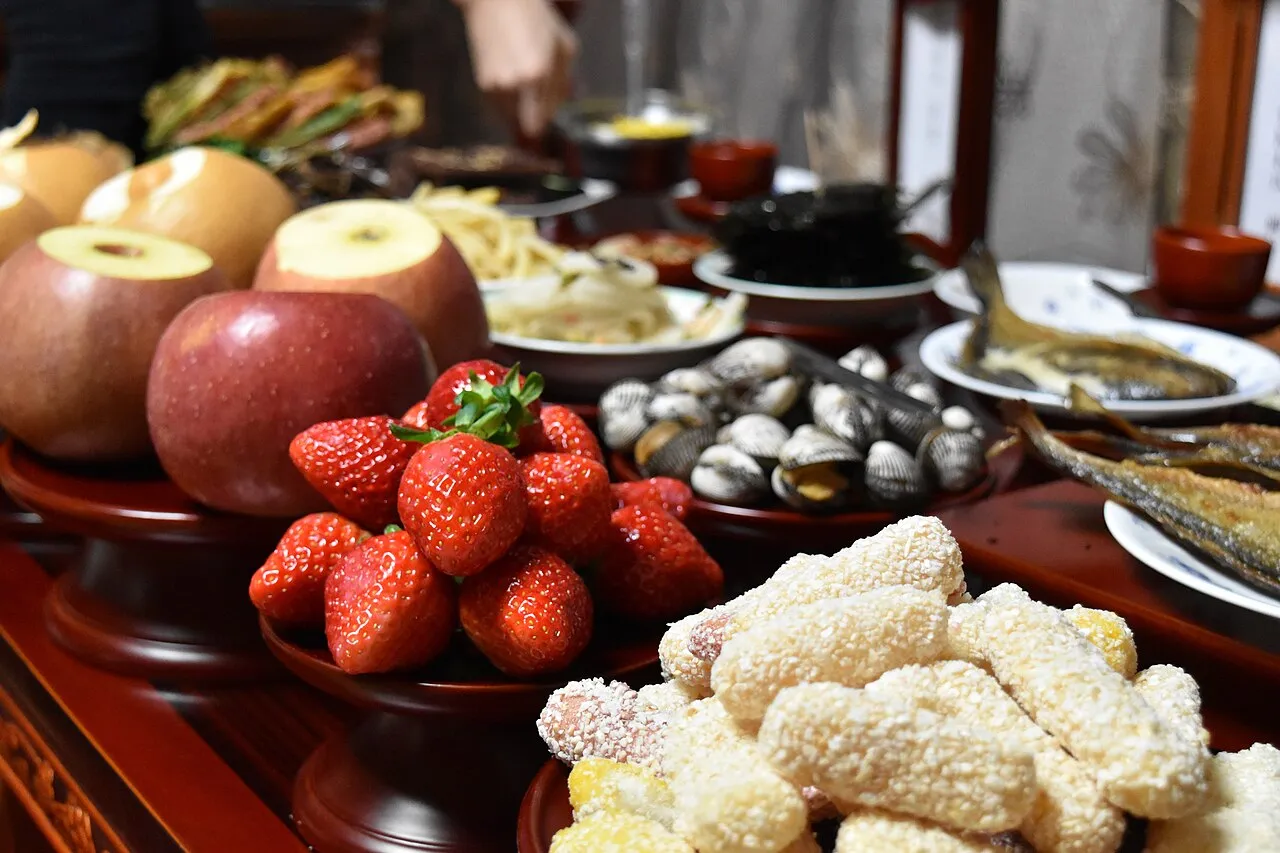
Lunar New Year (January or February) and the harvest festival (September or October), three days each. Half the city travels to the provinces, the highways jam for ten hours, and many family restaurants, markets, and shops close; museums and palaces often open for free.
Yeondeunghoe, the Lotus Lantern Festival
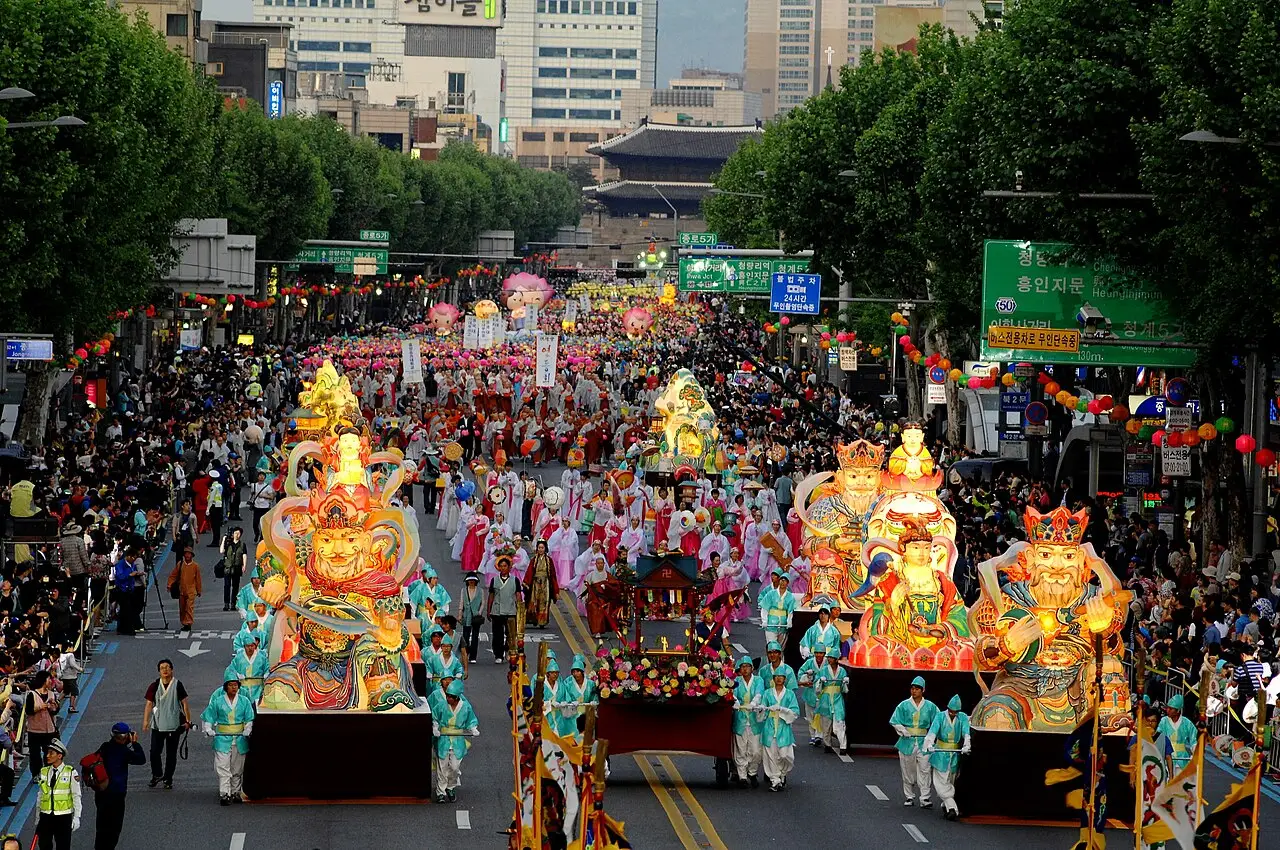
Late April or May, the weekend before Buddha's birthday, on the 8th day of the 4th lunar month. A night parade of paper lanterns down Jongno to Jogyesa temple, with free lantern-making workshops; UNESCO listed the festival as intangible heritage in 2020.
Jongmyo Jerye
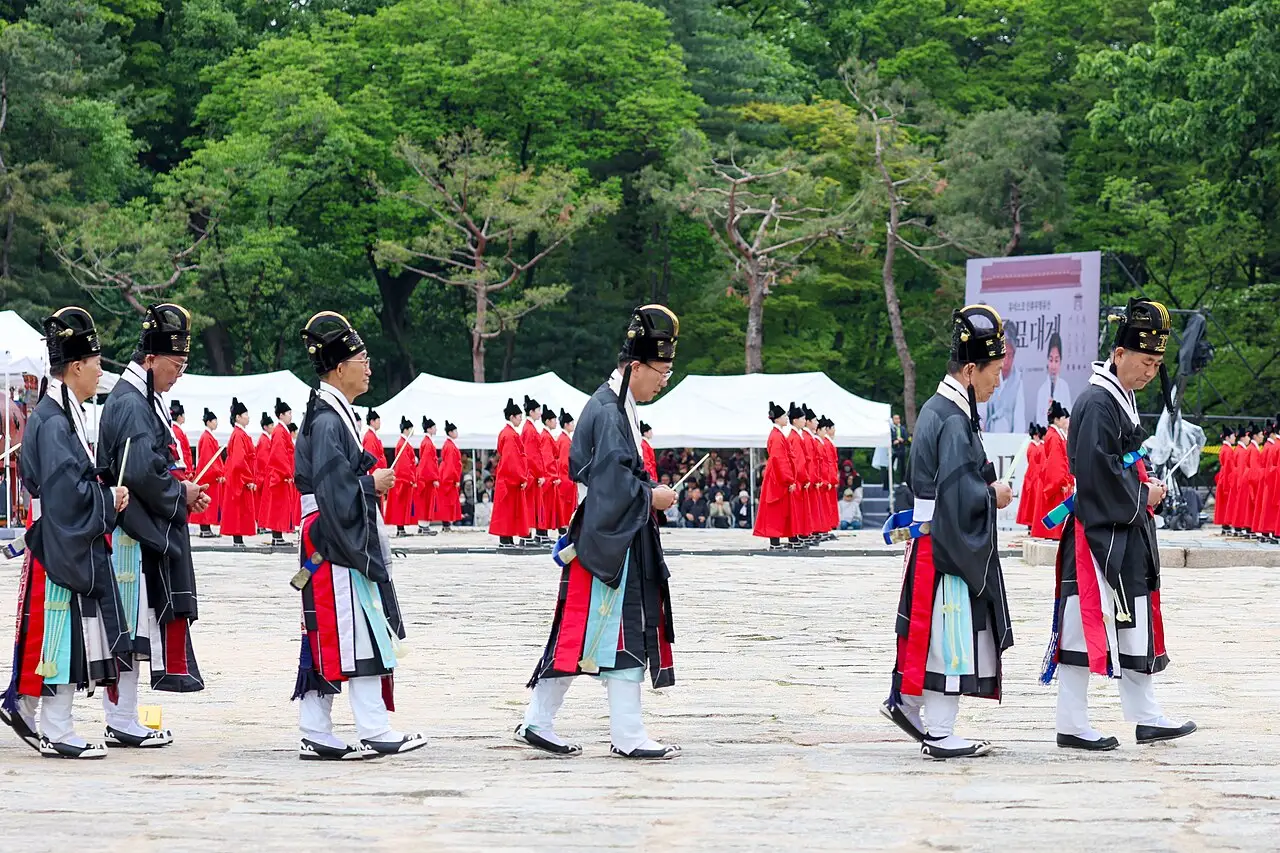
First Sunday of May, at the Jongmyo shrine. A Confucian rite honoring the kings of Joseon, performed with a procession, offerings, and the jongmyo jeryeak court music, whose score and choreography have been fixed since the 15th century.
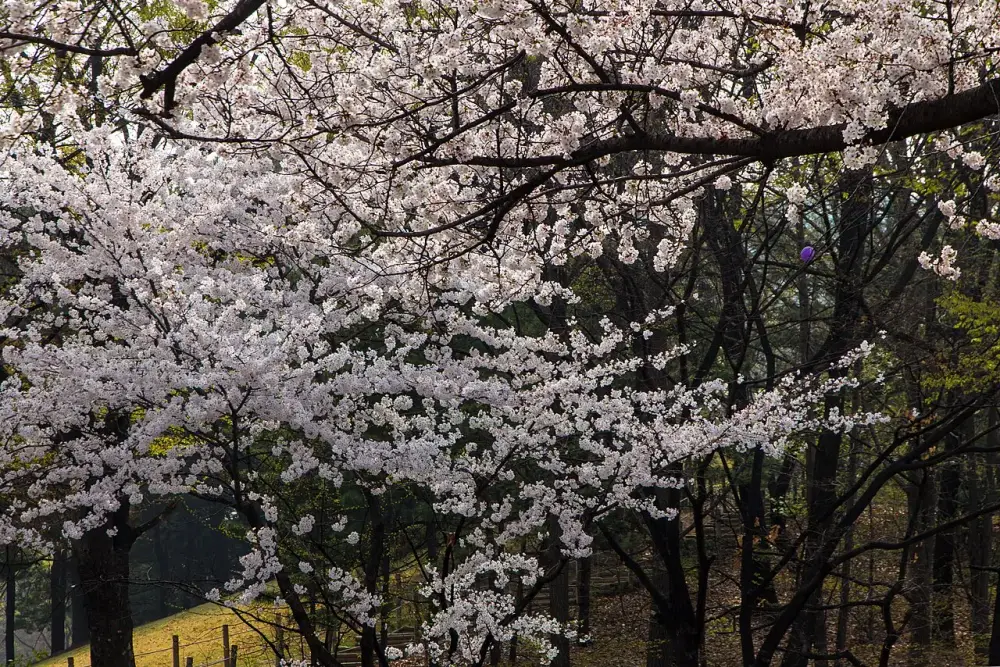
Yeouido Cherry Blossom Festival
First half of April, on Yunjungno, behind the National Assembly: about 1,600 cherry trees along 1.7 km, with the road closed to cars. Dates shift every year with the bloom, announced only a few weeks ahead.
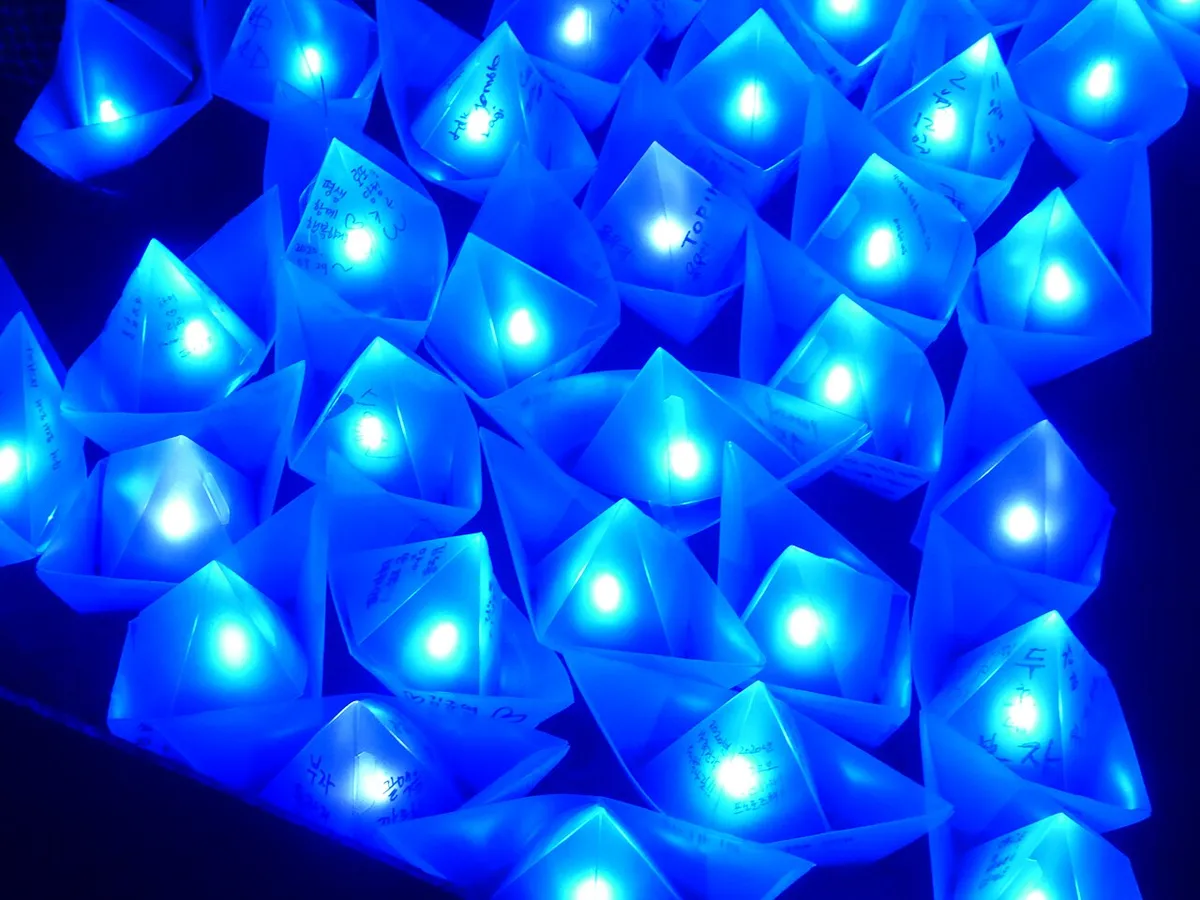
Winter lanterns and Han River night markets
Between November and December, lantern installations fill Cheonggyecheon and Gwanghwamun Square. From spring to fall, the Bamdokkaebi night markets run outdoors in Banpo and Yeouido on Friday and Saturday nights, with food trucks and craft vendors.
Books and films
“Parasite” (Bong Joon-ho, 2019)
Palme d'Or in 2019 and four Oscars in 2020, including Best Picture. It works like a floor plan of the city: the half-basement banjiha that floods in summer rain, the house up the hillside, and the staircase between the two.
“Kim Jiyoung, Born 1982” (Cho Nam-joo, 2016)
A short novel that sold more than a million copies in Korea and set off a national debate. It describes adult life in Seoul in an almost administrative way: rent, daycare, office, commute, transit, and the social cost of stepping outside that arrangement.
“Wings” (Yi Sang, 1936)
A modernist story written in colonial Gyeongseong, about a man who almost never leaves his room and ends up on the rooftop of the Mitsukoshi department store, today the old Shinsegae building, in Jung-gu. It's the first Korean text to look at the city from above.
Frequently asked questions
Seoul: how do you get from Incheon Airport to downtown?
At Incheon (ICN), check your terminal and choose transport according to your accommodation’s neighbourhood. The AREX Express runs directly to Seoul Station; the All-Stop also serves stations such as Hongik University, which may suit your destination better. Compare the final leg, transfers with luggage, fare and timetable for your arrival. An airport bus may avoid a transfer, but check the exact stop and the walk to your accommodation; do not assume a hotel-door drop-off. For a taxi, confirm its category and charging method, allowing for traffic and tolls. Gimpo (GMP) has AREX and subway connections, including Lines 5 and 9. Allow for immigration, baggage, waiting and access to the station; the advertised train time excludes those steps. If you arrive before check-in, confirm luggage storage with your accommodation before arranging visits.
Seoul: how do you get to Suwon and Hwaseong Fortress?
40km to the south; about 1 hour on subway line 1 to Suwon station, or about 35 minutes by express train.
Seoul: what's the currency and how much is the won worth?
The currency is the South Korean won (₩), with bills of 1,000, 5,000, 10,000, and 50,000; in 2026 the dollar is worth about ₩1,380 and the euro about ₩1,590, which puts ₩10,000 at around 7 dollars.
Seoul: what's the climate like throughout the year?
The climate is monsoon-influenced continental, with four clearly separate seasons and about 1,400mm of rain a year, more than half of it concentrated in July and August.
Seoul: what's the etiquette for handing over money or objects?
Money, cards, cups, gifts, and business cards are given and received with both hands, or with the right hand supported by the left forearm.
Other cities in the country
South Korea ↗- Days
- 2–3
- When
- Apr–May · Oct
- Per person/day
- Average 144,700 KRWMid-range · per person/day
Cost scope
Per person per day: accommodation, meals, urban transport, visits and a small allowance for extras. Flights excluded; larger purchases vary. Editorial estimate, not a quote.


Itineraries through here
 South Korea and Japan in 15 daysAcross the Korea StraitSeoul · Busan · Osaka · Tokyo10–15 days4 cities
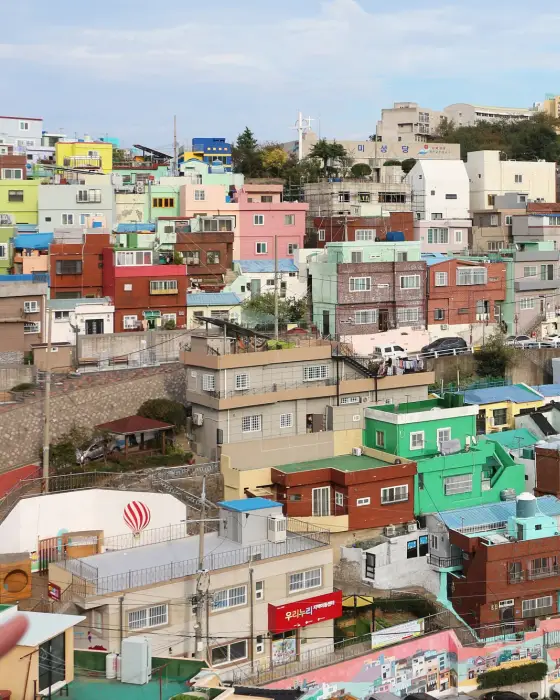 South Korea in 7 daysSeoul’s palaces and Busan’s harbourSeoul · Busan5–7 days2 cities
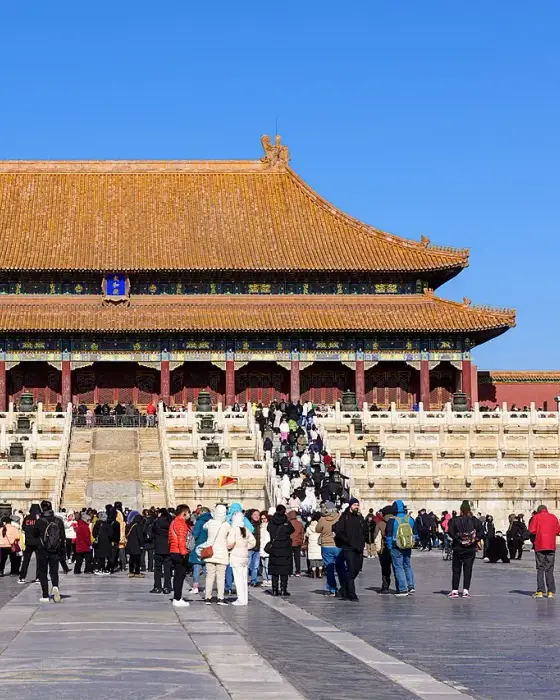 China, South Korea and Japan in 15 daysThe capitals of East AsiaBeijing · Shanghai · Seoul · Tokyo13–16 days4 cities