Finland
Helsinki
Suomenlinna, seaside saunas and Finnish design
Days Start with the basic programme and choose extensions for the time you have.
How the guide reaches this number
A third goes to Kallio, the new harbors, and a sauna, and a fourth covers Porvoo or the crossing to Tallinn. With just one day, start at 9am on Senate Square, catch the ferry to Suomenlinna with the AB ticket, and finish with a sauna and a dip in the sea. Anyone looking for busy streets will be disappointed, because daytime activity concentrates in Kluuvi and Kamppi, and the historic center is small and done in an afternoon. Dinner prices don't scale with the size of the plate either. In winter, plan the day around the light: on December 21, the sun sets at 3:13pm.
2–3
When Mid-May to mid-August for the light; September for the colors and lower prices; November is the month to avoid
How the guide reaches this number
From mid-May to mid-August the days run long, and the light is the reason to come: from mid-June to mid-August highs sit at 20–24 °C, the sea reaches 17–19 °C, and near the solstice the sun rises around 3:55am and sets at 10:50pm, without really getting dark. July is the warmest month and also the month most Finns take their summer vacation: many kitchens and neighborhood shops close for three to four weeks, and the Juhannus weekend empties the city. September brings the ruska colors, temperatures of 10–15 °C, and lower prices. From December to March highs run between −6 °C and 0 °C, with lows of −15 °C to −20 °C during cold snaps, snow on the ground most of the period, and the sea freezing along the coast. On December 21 there are fewer than 6 hours of daylight, with the sun setting around 3:13pm. April and early May bring thaw, mud, and lilacs, with Vappu on May 1. The month to avoid is November: dark, between 0 °C and 5 °C, rain or wet snow, no solid snow, and no light. Annual rainfall runs around 650 mm, concentrated between August and October.
Per person/day €120–190 per person at a mid-range standard; €70–90 with a hostel, a lounas lunch and public transport
How the guide reaches this number
Per person per day: accommodation, meals, urban transport, visits and a small allowance for extras. Flights excluded; larger purchases vary. Editorial estimate, not a quote.
 What Nilo thinks
Stay two days: one for the imperial center and the Suomenlinna fortress, another for design, museums, and Töölö Bay. A third goes to Kallio, the new harbors, and a sauna, and a fourth covers Porvoo or the crossing to Tallinn. With just one day, start at 9am on Senate Square, catch the ferry to Suomenlinna with the AB ticket, and finish with a sauna and a dip in the sea. Anyone looking for busy streets will be disappointed, because daytime activity concentrates in Kluuvi and Kamppi, and the historic center is small and done in an afternoon. Dinner prices don't scale with the size of the plate either. In winter, plan the day around the light: on December 21, the sun sets at 3:13pm.Helsinki sits on a granite peninsula in the Gulf of Finland, and its best side faces the water. The ferry, covered by the city's regular transit ticket, takes 15 to 20 minutes to Suomenlinna, the 1748 fortress spread across six islands, and at the public seaside saunas an iron ladder drops straight into the icy sea. Carl Ludwig Engel designed Senate Square to evoke St. Petersburg, because the city became the capital in 1812 by order of the tsar, and Finnish design fills the roughly 200 shops and studios of the Design District. Try lohikeitto, the salmon soup with dill, at the 1889 covered market hall, and fried muikku in a paper cone at Kauppatori. The street feels empty because life happens inside markets, cafés, libraries, and saunas. Come from mid-May to mid-August, when the sky barely darkens, skip November, dark and rainy with cold sleet, and plan on two days.
Quick facts
- Population
- about 700,000 in the municipality in 2026; about 1.62 million in the metropolitan area (Helsinki, Espoo, Vantaa, Kauniainen)
- Founded
- June 12, 1550, by charter of Gustav Vasa; moved to the current peninsula in 1640; capital since 1812
- Country and region
- Finland: Uusimaa, south coast, on the Gulf of Finland (Baltic Sea)
- Language
- Finnish and Swedish, both official and present on all signage; functional English at practically any counter
- Currency
- Euro (EUR, €), since 2002; card payment accepted almost everywhere, cash rarely needed
- Time zone
- EET (UTC+2) in winter, EEST (UTC+3) from late March to late October
- Best time to visit
- Mid-May to mid-August for the light; September for the colors and lower prices; November is the month to avoid
- Average daily cost
- €120–190 per person at a mid-range standard; €70–90 with a hostel, a lounas lunch and public transport
When to go
Mid-May to mid-August for the light; September for the colors and lower prices; November is the month to avoid
January
-6° to -1°C
53 mm of rain
February
-6° to -1°C
38 mm of rain
March
-4° to 2°C
34 mm of rain
April
1° to 8°C
34 mm of rain
September
9° to 15°C
56 mm of rain
October
4° to 9°C
73 mm of rain
November
0° to 4°C
69 mm of rain
AvoidDecember
-3° to 1°C
58 mm of rain
How the year changes
From mid-May to mid-August the days run long, and the light is the reason to come: from mid-June to mid-August highs sit at 20–24 °C, the sea reaches 17–19 °C, and near the solstice the sun rises around 3:55am and sets at 10:50pm, without really getting dark. July is the warmest month and also the month most Finns take their summer vacation: many kitchens and neighborhood shops close for three to four weeks, and the Juhannus weekend empties the city. September brings the ruska colors, temperatures of 10–15 °C, and lower prices. From December to March highs run between −6 °C and 0 °C, with lows of −15 °C to −20 °C during cold snaps, snow on the ground most of the period, and the sea freezing along the coast. On December 21 there are fewer than 6 hours of daylight, with the sun setting around 3:13pm. April and early May bring thaw, mud, and lilacs, with Vappu on May 1. The month to avoid is November: dark, between 0 °C and 5 °C, rain or wet snow, no solid snow, and no light. Annual rainfall runs around 650 mm, concentrated between August and October.
The same numbers as a table
| Month | Temperature °C | Rain mm |
|---|---|---|
| January | -6 to -1 | 53 |
| February | -6 to -1 | 38 |
| March | -4 to 2 | 34 |
| April | 1 to 8 | 34 |
| May · | 6 to 15 | 38 |
| June · | 11 to 19 | 60 |
| July · | 15 to 22 | 57 |
| August · | 14 to 21 | 81 |
| September | 9 to 15 | 56 |
| October | 4 to 9 | 73 |
| November | 0 to 4 | 69 |
| December | -3 to 1 | 58 |
Nilo's tips
Download the HSL app: the AB ticket costs €3.30
With it, the AB ticket covers 80 minutes within the city, including transfers and the Suomenlinna ferry, so skip the separate boat tour at Kauppatori. Install it before you fly in, because from the airport the Kehärata ring line's I and P trains leave from the station under Terminal 2 and reach Central Station in 30 to 35 minutes, with a zone ABC ticket costing about €4.50. Taxis run €40–55, and since the fare isn't fixed, confirm the price before you get in.
Spend on lunch, between 11am and 2pm
During those weekday hours, lounas, a buffet or set lunch, runs €12–16, often from the same kitchen that charges €35–55 per person without drinks at night. In the covered markets, lohikeitto runs €12–18 in the same time slot. On Saturday and Sunday there's no lounas, and the day's bill changes.
Save Monday for the cathedral and Oodi, which are free
The Ateneum and Kiasma close on Mondays, and on other days admission runs around €20–24. Use that day for what's free: the Lutheran cathedral on Senate Square and Oodi, which also offers restrooms and wifi. Amos Rex opens on Mondays, 11am to 8pm, and closes on Tuesdays. If you're adding Temppeliaukio, go in the mid-afternoon, because it closes during services.
Drinks above 8% only at Alko: buy on Friday
Alko closes earlier on weekends, and the supermarket, open 9am to 9pm, only sells beer and long drinks up to 8%. If your Saturday night plans involve spirits, buy them on Friday.
Choose the sauna: no clothes at Kallio, swimsuit at Löyly
At the Kallio wood-fired sauna, the traditional custom applies: separated by gender, no swimsuit. At Löyly, in Hernesaari, it's different: mixed setting, with swimwear. Shower first, bring a towel or seat liner, and leave your phone in the locker. Photos inside are banned in every one of them. Sompasauna, in Kalasatama, is free and run by volunteers.
In winter, buy shoe crampons for €10 to 15
In winter, the biggest risk is ice hidden on the sidewalk. Traction cleats cost €10–15 at any pharmacy and solve the whole trip. At the pharmacy, take a number from the machine by the door before looking for the shelf, because anyone waiting without a number loses their turn at the counter.
Explore the map
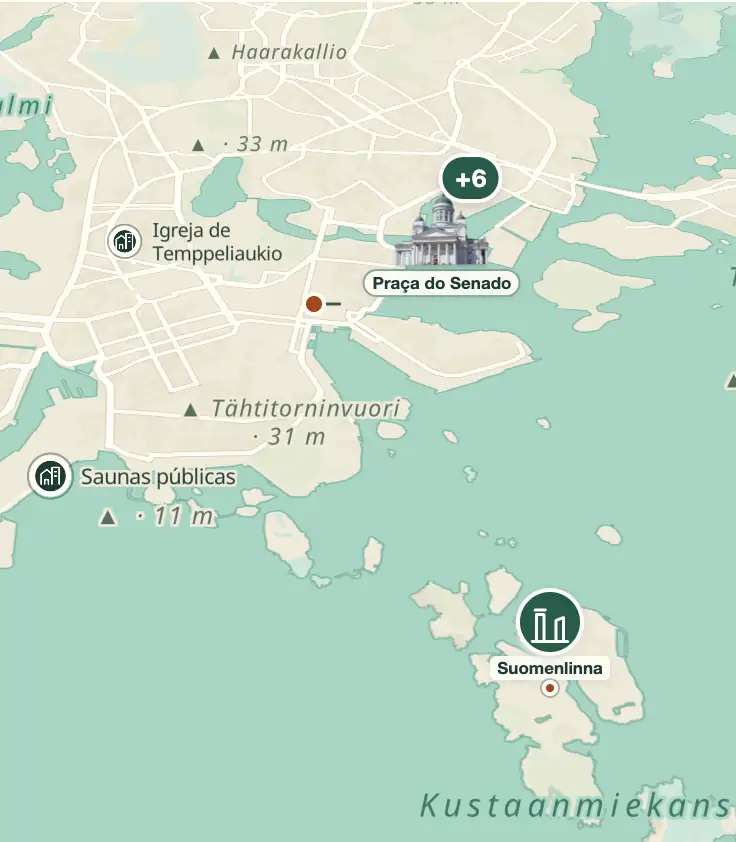
© OpenStreetMap · OpenFreeMap · © OpenMapTiles
Explore the map, read about the other places and plan your travel days in the app.
Open the appWhat to see
Helsinki: The peninsula, the granite and the islands
The ground is precambrian granite and gneiss, sanded down by the last glaciation: there are no real hills, the highest natural point barely tops 60 m, and rock outcrops show up in the middle of parks, backyards and flowerbeds, which also explains churches and parking garages carved straight into the stone. Kruununhaka, the neighborhood north of Senate Square, is where you walk to see the imperial city without souvenir shops.
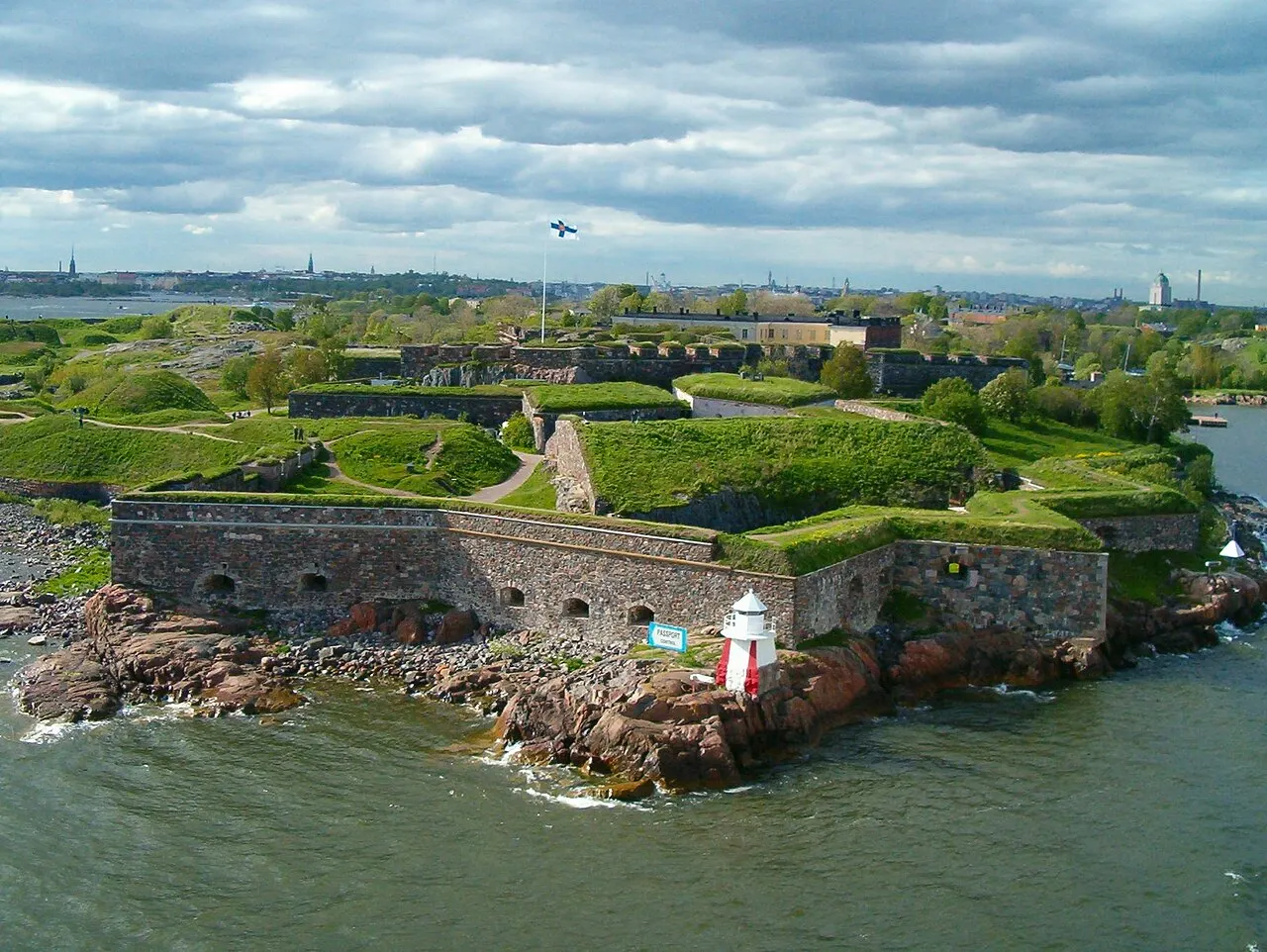
Suomenlinna
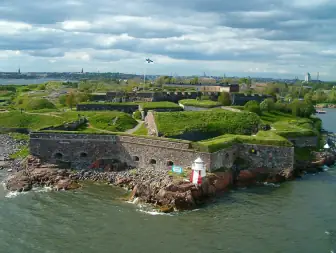
Sea fortress over six islands, begun in 1748 by Augustin Ehrensvärd and inscribed as a World Heritage Site in 1991. It has about 800 permanent residents, the King's Gate, the ramparts of Kustaanmiekka and the submarine Vesikko (open May to September). The ferry leaves from Kauppatori and is covered by the regular zone AB ticket.
Six fortified islands in the sea still have residents, a royal gate, cannons on the wall and a submarine open only in the warm season; ferry with a zone AB ticket; started in 1748.
Check access
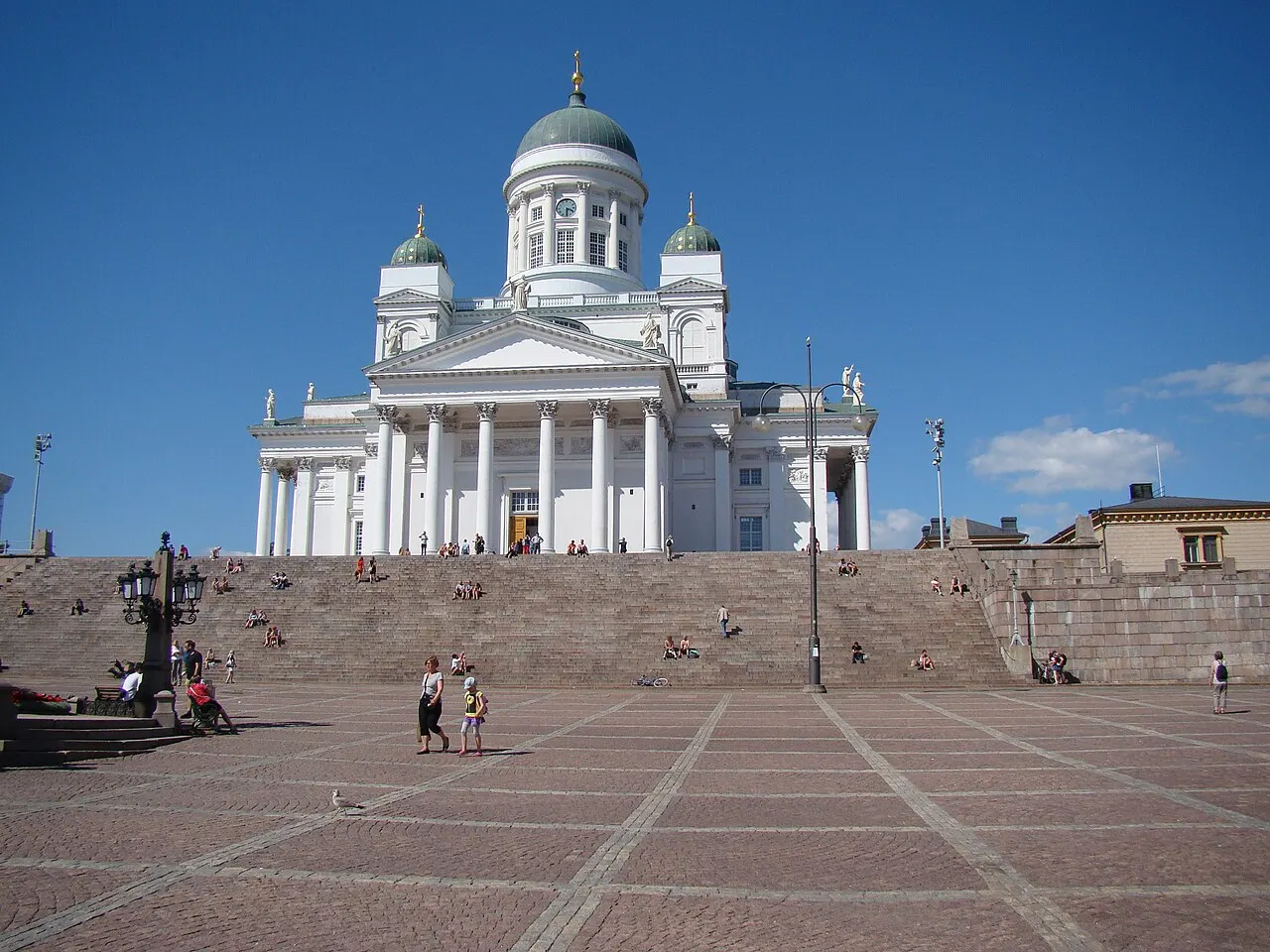
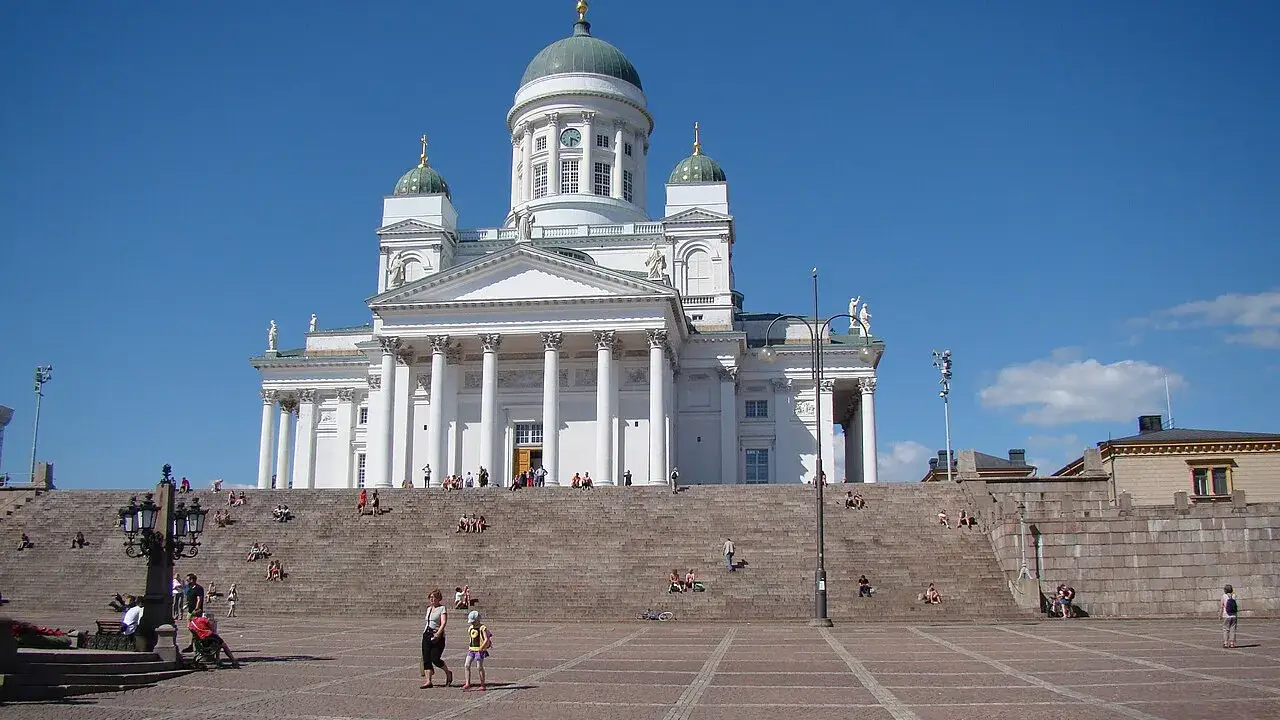
Senate Square and Cathedral
Carl Ludwig Engel's neoclassical ensemble, designed from 1818 on and deliberately made to resemble St. Petersburg. The white Lutheran cathedral was begun in 1830 and completed in 1852 by Ernst Lohrmann, who added the four smaller domes and the twelve zinc apostles on the roof. Admission is free; the statue at the center of the square is of Alexander II, from 1894.
Engel designed the ensemble from 1818 deliberately to resemble St. Petersburg, and Lohrmann finished the cathedral in 1852, adding the four smaller domes on the roof and the twelve apostles.
Check access
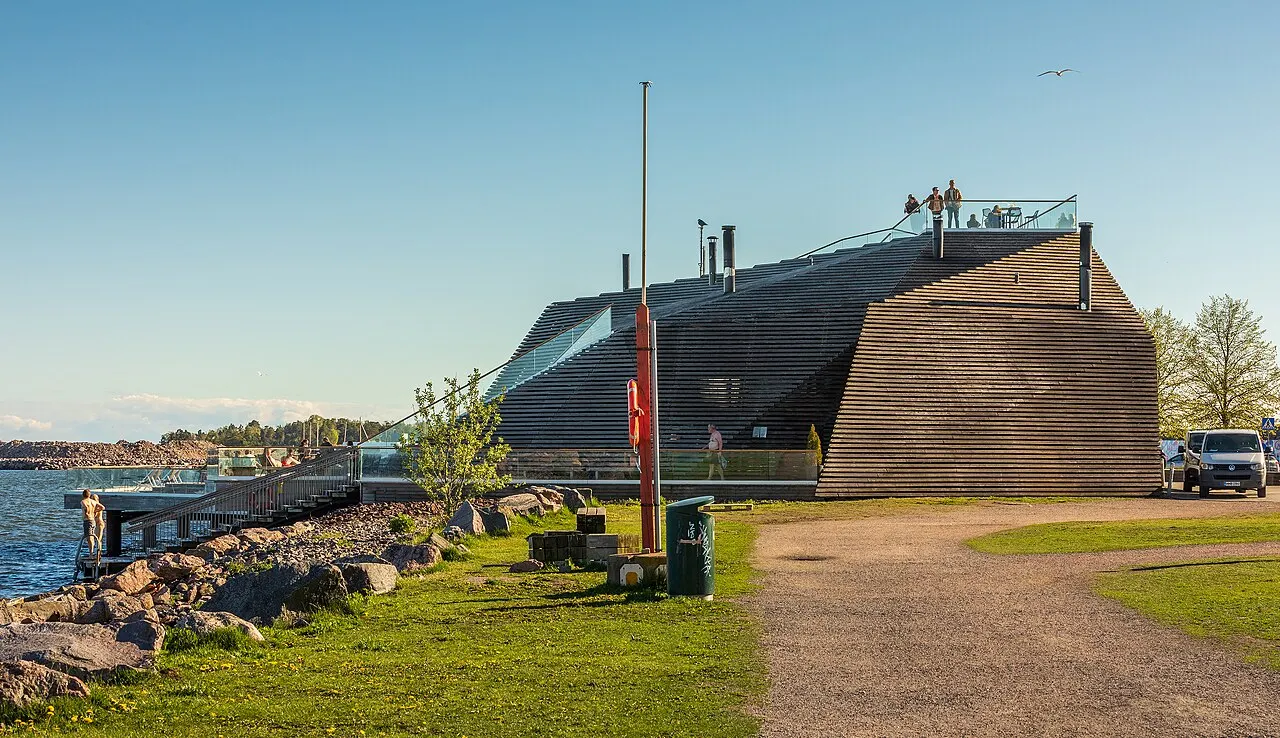
Public saunas
In Finland, the sauna is part of daily life: there are about 3.3 million of them for 5.6 million Finns. In Helsinki you can use Löyly, from 2016, with a deck for dipping into the sea in Hernesaari; the wood-fired Kotiharjun Sauna, running in Kallio since 1928; and Allas Sea Pool, next to the Kauppatori, with a seawater pool. Admission €18 to €25.
In a country with about 3.3 million saunas for 5.6 million Finns, the €18 to €25 admission applies to Löyly, which has a deck for a dip in the sea, to Kotiharjun, wood-fired in Kallio since 1928, and to Allas, which has a seawater pool.
Check access
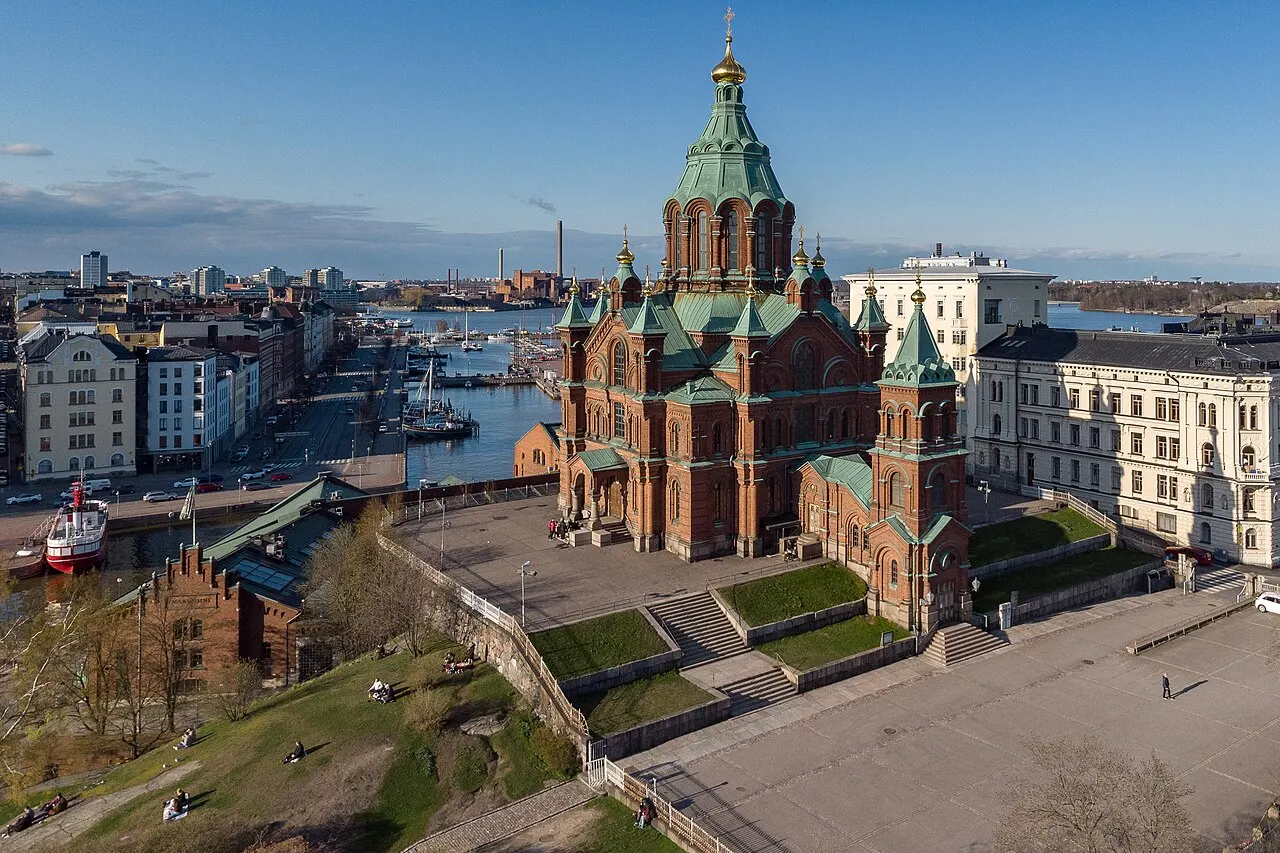
Uspenski Cathedral
The largest Orthodox church in western Europe, built between 1862 and 1868 on the Katajanokka rock, designed by Alexei Gornostaev. It's made of red brick brought from a demolished fortress in the Åland Islands and has thirteen golden domes, one for Christ and twelve for the apostles.
The 1868 Uspenski Cathedral is the largest Orthodox church in Western Europe, built in red brick with thirteen gilded domes atop the Katajanokka rock. The visit is short and fits into the Suomenlinna loop.
Check access

Temppeliaukio Church
A church carved into the rock in 1968–69 by brothers Timo and Tuomo Suomalainen, with raw granite walls and a dome made of 22 km of coiled copper wire. The acoustics are good enough for it to double as a concert hall; admission costs around €10 and it closes during services.
Architect brothers carved the temple into the rock and coiled kilometers of metal into the ceiling, and the result became a concert venue with an admission fee; concert-hall acoustics; carved into the rock in 1968-69.
Check access

Oodi Library
Opened on December 5, 2018, on the centennial of independence, designed by the firm ALA. It's 17,000 m² with a spruce-wood shell, a glass-fronted third floor facing Parliament, and drills, sewing machines and a recording studio to borrow, on top of books. Free admission, restrooms and wifi included.
It opened on the centennial of independence, with a glass floor looking onto the legislature, and the door charges nothing, not even for the bathroom; it lends out power drills and a recording studio; it's 17,000 m².
Check access

Amos Rex
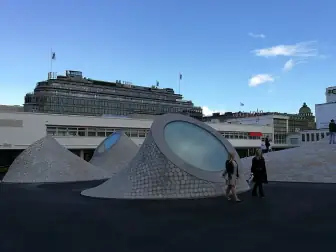
A museum buried under Lasipalatsi square, opened in 2018, designed by JKMM. The crater-shaped skylights form a surface relief that children climb on, and the program ranges from digital art to historical exhibitions. The Lasipalatsi building above is functionalist, from 1936.
Opened in 2018 under Lasipalatsi square, the museum with crater skylights that kids climb on top of runs a program ranging from digital art to historical exhibitions, and the functionalist Lasipalatsi building above dates from 1936.
Check access

Kauppatori and Vanha kauppahalli
The waterfront market square sells fried fish in a paper cone, seasonal wild berries and birch bundles for the sauna. The covered market hall next to it, from 1889, is the oldest in Finland and keeps counters of herring, cheese and salmon soup. In October the square hosts the Baltic herring fair, held since 1743.
The waterfront square sells birch bundles for the sauna and backs onto Finland's oldest covered market hall, which serves salmon soup. In October, the Baltic herring fair, held since 1743, takes place along the same waterfront.
Check access

Ateneum and Kiasma
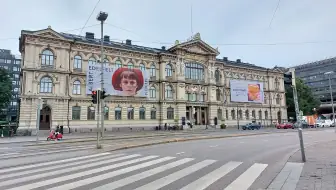
East of the station, the Ateneum (1887, Theodor Höijer) holds the largest collection of classic Finnish art: Akseli Gallen-Kallela, Albert Edelfelt, Helene Schjerfbeck. 300 m away, Steven Holl's Kiasma, opened in 1998, covers contemporary art. Tickets run around €22 each.
The Ateneum and Kiasma charge about €22 each and both close on Mondays, and Amos Rex, which closes on Tuesdays, is 400 m away, in the same museum block. If you're only going into one, pick the Ateneum, for Helene Schjerfbeck and Gallen-Kallela; the Kiasma, contemporary art, is the one to skip.
Check access
Nilo’s itinerary
Start with the basic programme and choose extensions for the time you have.
Plan my days in the app ↗Day 1 · The imperial center and the fortress
Start at 9am at Senate Square, climb the steps and go into Engel's cathedral (free admission), then walk 300 m down to Kauppatori.
Have coffee and karjalanpiirakka at Vanha kauppahalli, the 1889 covered market, and buy the HSL AB ticket on the app.
Take the ferry to Suomenlinna, 15 to 20 minutes, and spend three hours at the fortress: the King's Gate, the Kustaanmiekka ramparts and, between May and September, the submarine Vesikko.
On the way back, climb the Katajanokka rock to Uspenski Cathedral, from 1868, and walk along the shore to Allas Sea Pool.
Have dinner in Punavuori and walk back along the Esplanadi, about 1.5 km.
Day 2 · Design, art and Töölö bay
Start the day at 10am at the Ateneum, for Helene Schjerfbeck and Gallen-Kallela, then walk 400 m to Amos Rex, under Lasipalatsi square, which opens at 11am. The Ateneum closes on Mondays, and Amos Rex on Tuesdays.
Have lounas lunch between 11am and 2pm in Kamppi or Punavuori, for €12–16.
Walk the Design District along Korkeavuorenkatu, Uudenmaankatu and Fredrikinkatu, stopping at the Design Museum and Alvar Aalto's Academic Bookstore, from 1969.
Head up to Temppeliaukio church, carved into the rock in 1969, then walk 1.5 km to the Sibelius Monument, by Eila Hiltunen, 1967.
Come back along the Töölönlahti shore, step into Oodi to see the third floor, and finish with a concert at the Musiikkitalo.


If you stay longer
Day 3 · Kallio, new harbors and sauna
Spend the morning in Kallio, with coffee on Vaasankatu and a stroll through the Hakaniemi market, from 1914, reopened in 2023 after renovation.
Step into the wood-fired sauna at Kotiharju, running since 1928, or take a steam bath with a sea plunge at Löyly, in Hernesaari.
Take tram 6 or 8 to Arabianranta and Vallila to see the 1910s wooden houses and the former Arabia ceramics factory, from 1873.
Climb the 72 m tower of the 1938 Olympic Stadium, reopened in 2020, then head to the Teurastamo market in Kalasatama.
End the afternoon at Seurasaari, an open-air museum since 1909, with 87 wooden buildings brought from all over the country.
Food
 AI illustration
Ruisleipä
Whole-rye sourdough bread, dense, dark and sour, present at every meal and sold as a round loaf with a hole in the middle. It's the country's dietary base and the item Finns most often pack when they move abroad.
 AI illustration
Karjalanpiirakka
Karelian pie: a thin hand-rolled rye crust filled with rice porridge, served hot with munavoi, a paste of hard-boiled egg and butter. It costs about €1.50 to €3 and is in every bakery, market and supermarket.
 AI illustration
Lohikeitto
Salmon soup with potato, leek, cream and plenty of dill, served with rye bread. It's the country's most common lunch dish and runs €12–18 at the covered markets.
 AI illustration
Silakka and muikku
Baltic herring comes fried, marinated or pickled; muikku, a small freshwater fish, is breaded in rye flour, fried whole and eaten head, bones and all, in a paper cone with garlic sauce. It's sold at Kauppatori and at the markets.
 AI illustration
Poronkäristys
Frozen reindeer meat shaved into thin slices, sautéed in butter and served with mashed potato, pickled cucumber and lingonberry jam. It comes from Lapland and is on mid-range restaurant menus for €26–36.
 AI illustration
Leipäjuusto
Fresh cow's-milk cheese baked until the surface browns, with a texture that squeaks between your teeth. It's served warm, with cloudberry jam, and also dipped in coffee in parts of the north.
 AI illustration
Korvapuusti and coffee
A sweet cardamom pastry roll with cinnamon and pearl sugar, the fixed companion to coffee. Finland is the world's biggest coffee consumer per capita, between 10 and 12 kg per person a year, almost always light roast and filtered.
 AI illustration
Salmiakki and lonkero
Salmiakki is salty licorice with ammonium chloride, sold at any kiosk and unpleasant for almost every foreigner the first time. Lonkero, or long drink, is gin with grapefruit soda, created for the 1952 Olympics and sold in cans at the supermarket.
Day trips
Porvoo
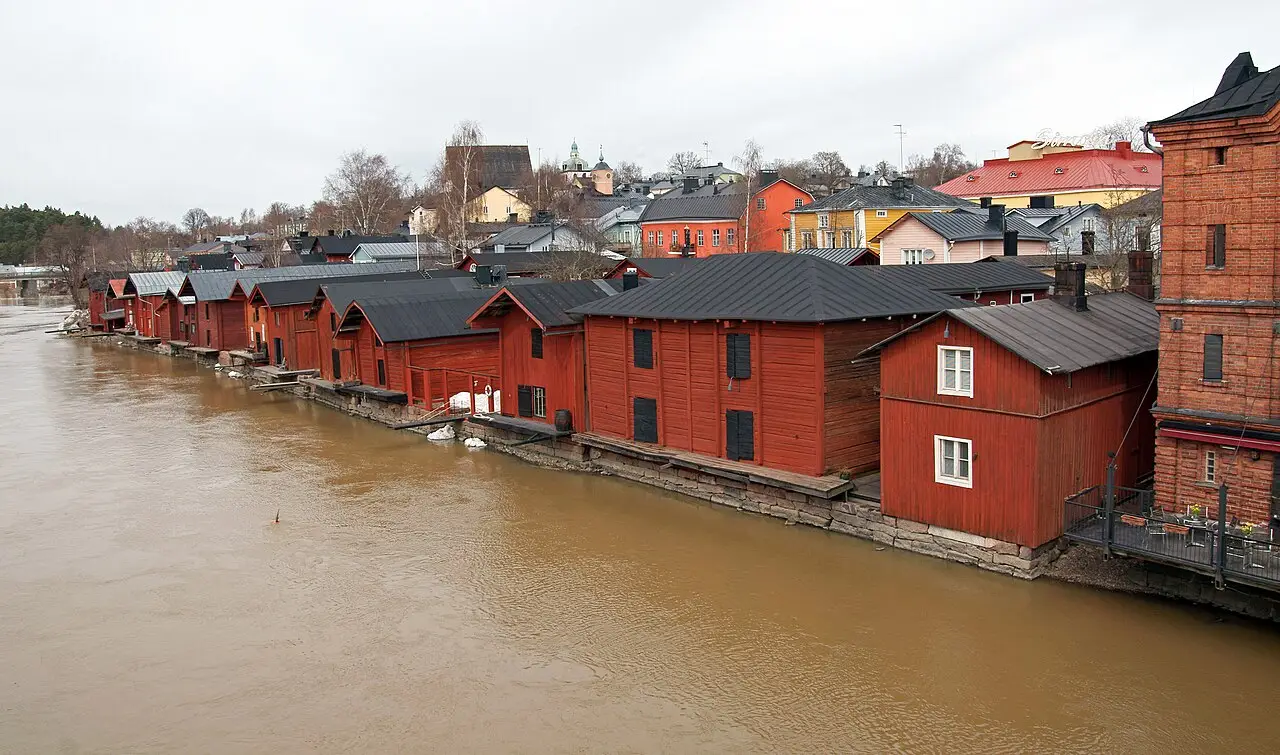
50 km east, 1 hour by bus from the Kamppi terminal (lines 841 and 842, about €12 one way). Finland's second-oldest town, with a court dating to 1380, wooden houses and the red warehouses along the river, painted for King Gustav III's visit in 1760.
Tallinn
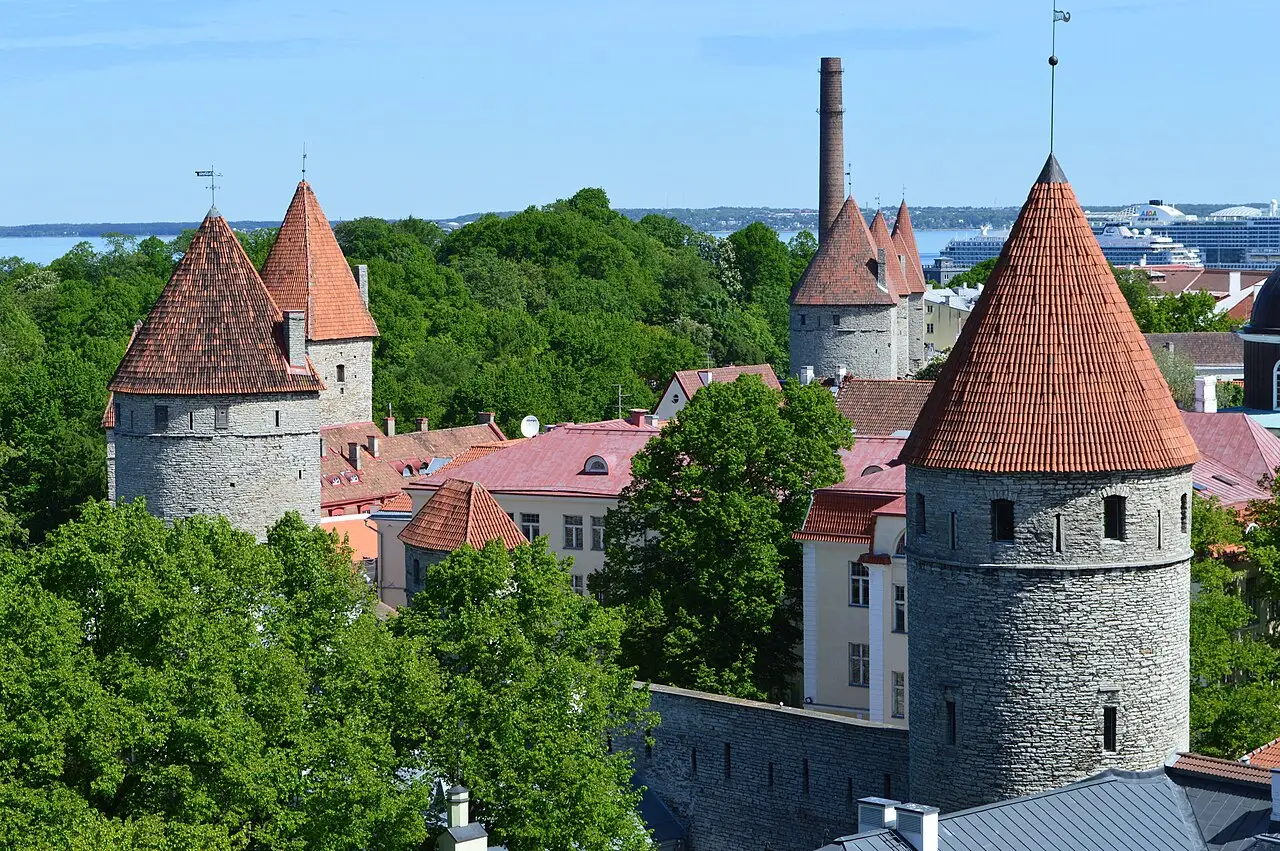
80 km to the south, crossing the gulf in 2 to 2 hours 30 minutes by ferry from the West Terminal, in Jätkäsaari (Tallink, Viking, and Eckerö; round trip €40–70). You can go and come back the same day and see the medieval old town, a World Heritage Site since 1997.
Nuuksio National Park
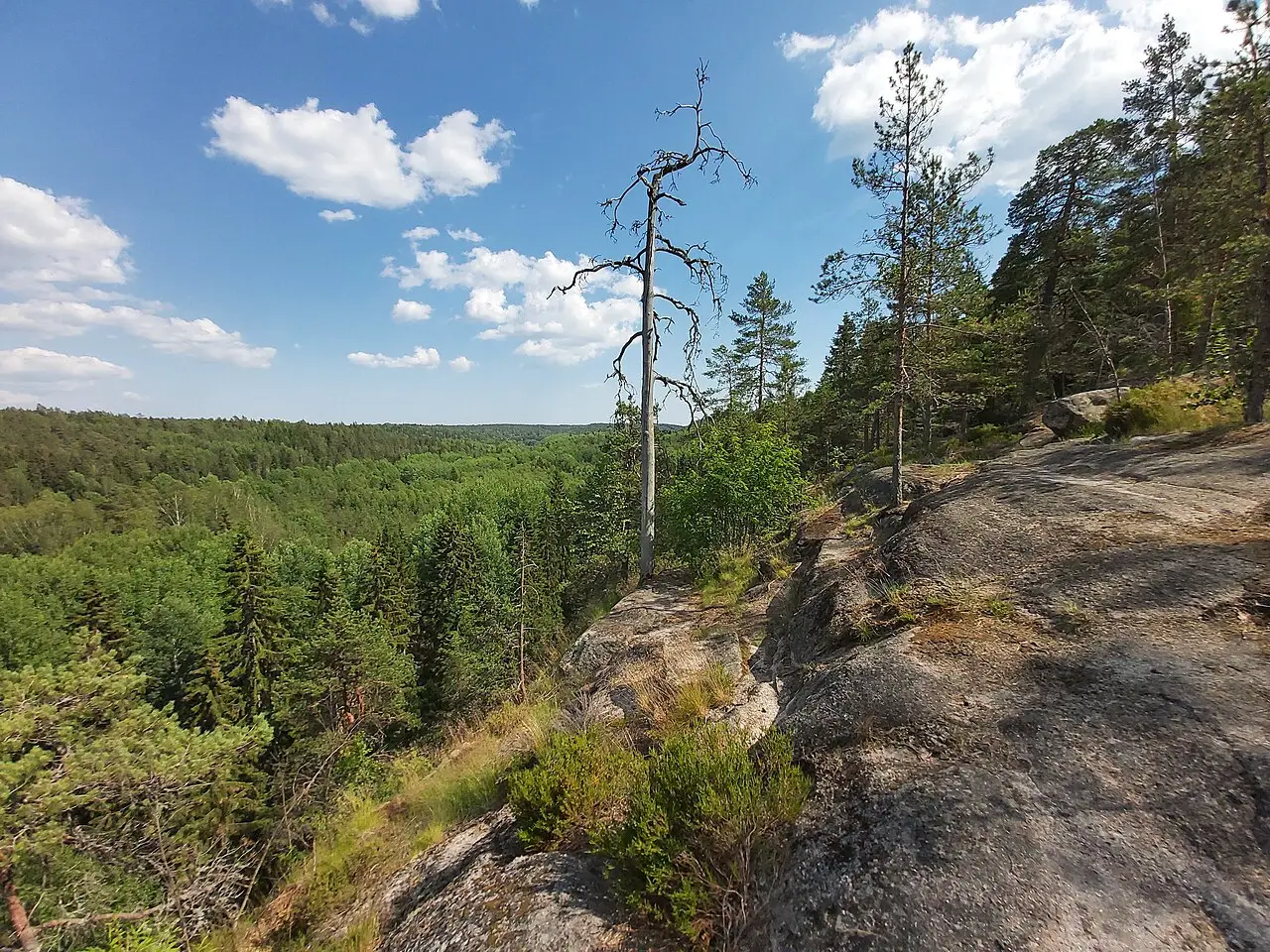
40 km west, in Espoo: train to Espoo (about 30 min) and bus 245 to Haukkalampi, about 1 hour 15 minutes total. Coniferous forest, glacial lakes, marked trails of 2 to 17 km and the Haltia nature center, opened in 2013.
Where to begin
The imperial center and the fortress
Start at 9am at Senate Square, climb the steps and go into Engel's cathedral (free admission), then walk 300 m down to Kauppatori.
Design, art and Töölö bay
Start the day at 10am at the Ateneum, for Helene Schjerfbeck and Gallen-Kallela, then walk 400 m to Amos Rex, under Lasipalatsi square, which opens at 11am. The Ateneum closes on Mondays, and Amos Rex on Tuesdays.
Money
The currency is the euro, and Finland is one of the closest economies to cashless in the world: contactless cards work on buses, at markets, saunas and street stalls, and many places no longer take cash at all. 2026 ranges, approximate: coffee €3.50–5; korvapuusti €3.50–4.50; lounas lunch, the buffet or dish of the day served on weekdays from 11am to 2pm, €12–16 and the best deal of the day; a mid-range restaurant dinner €35–55 per person without drinks; a 0.5 L draft beer €8–10.50 at a bar and €2.50–3.50 at the supermarket; a hostel bed €35–60; a mid-range hotel €140–220 a night, dropping on weekends because demand is corporate. Museums cost €20–24 and most close on Mondays; admission to the Lutheran cathedral and to Oodi is free. Drinks above 8% alcohol are only sold at the state-run Alko stores, which close at 9pm on weekdays, 6pm on Saturdays, and don't open on most Sundays. Supermarkets sell up to 8% from 9am to 9pm. Tipping isn't expected at restaurants, taxis or bars: service is already in the price, and rounding up is enough. Finland doesn't charge a tourist accommodation tax in 2026. General VAT is 25.5%, and non-EU travelers can claim a refund starting around €40 per purchase at the same store. Brazilians still enter visa-free for up to 90 days in any 180. The ETIAS system, a prior electronic authorization costing around €20, was slated for late 2026 but has a history of delays, so check before you buy your ticket. The EES biometric entry-exit system is already running at Schengen borders and can lengthen the line on arrival.
Getting there and around
From the airport to the center: the ring-line train in 30 minutes
Helsinki-Vantaa airport (HEL) is 20 km north of the center and is Finnair's hub. The I and P trains on the Kehärata ring line, opened in July 2015, leave from a station under Terminal 2 and reach Central Station in 30 to 35 minutes. You need a zone ABC ticket, about €4.50, bought on the HSL app or at the machines. Bus 600 covers the same route on the same ticket in 45 minutes. A taxi or ride-hailing app costs €40–55 and takes 25 to 40 minutes. Taxi fares have been deregulated since 2018, so check the estimated price before you get in, because nobody argues afterward. International ferries leave from three terminals: Länsiterminaali (West Terminal), in Jätkäsaari, has the Tallinn ferries, taking 2 to 2.5 hours, and Katajanokka and Olympia have the Stockholm ferries, an overnight crossing of about 16 hours.
HSL system: four zones, AB ticket lasts 80 minutes
Within the city everything is run by HSL, in zones A, B, C and D. In 2026 a single zone AB ticket costs €3.30 on the app or the HSL card and lasts 80 minutes with transfers. The AB day pass runs about €10, and there are 1- to 13-day passes. The metro, opened in 1982 and the only one in Finland, has two lines and 30 stations after the extension to Kivenlahti in December 2022. Trams cover the whole center (lines 2 and 3 run a loop that doubles as a cheap sightseeing ride) and line 15, the Raide-Jokeri, is a 25 km light rail between Itäkeskus and Keilaniemi, opened in October 2023. The ferry to Suomenlinna is covered by the same AB ticket and runs year-round, breaking ice in winter. The center is 2 km end to end and works on foot. The yellow city bikes run from April to October for about €5 a day. Worth knowing: the smooth asphalt strip next to the sidewalk is a bike lane, and cyclists don't swerve out of it.
Safety
Helsinki is one of Europe's safest capitals, and violent crime against visitors is rare. Walking alone at night downtown is local routine and no one thinks it worth mentioning. The real risks lie elsewhere, and the main one is ice: between December and March the sidewalk freezes and thaws repeatedly, falls are the most common accident among foreigners, and blocks of ice drop from roof edges during the thaw. The warning tape on sidewalks exists for that reason, and doesn't signal any construction work. Thefts cluster at predictable spots in summer: Kauppatori, trams 2 and 3, the Suomenlinna ferry line and the area around Central Station. On Friday and Saturday nights there are clusters of drunk people in Kallio and outside bars downtown, usually loud and not dangerous; the best move is not to get drawn into the argument. Don't walk on the frozen sea outside the routes marked with little flags. Taxis have had unregulated fares since 2018, so check the price posted on the window or book through the app. The single emergency number is 112, answered in English, and tap water is safe and of excellent quality across the whole city.
Etiquette tips
In the sauna, shower first and skip the swimsuit
Shower before going in and bring a towel or a seat liner: sitting straight on the wood isn't done. In a traditional public sauna, the changing rooms and the sauna rooms are separated by gender and nudity is the norm; in modern mixed saunas, like Löyly, swimwear is worn. Taking photos inside is banned in every one of them.
Take off your shoes when entering a home
Take off your shoes when entering a Finnish home, whether for a quick visit, a delivery or a work meeting at someone's house. The host won't ask, but will notice if you don't.
Take the ticket and sit down
Pharmacies, agencies, post offices, Alko stores and many counters use vuoronumero, a numbered slip that comes out of a little machine at the entrance. Standing in a physical line without taking the ticket means losing your turn.
Silence on transit isn't hostility
No one starts a conversation with a stranger on the tram, and no one sits next to you if there's an empty seat. Talking loudly on the phone inside the car is the only thing that draws looks.
Literal punctuality
An agreed time of 3pm means 3pm, not 3:10, and that applies to dinner at someone's home, a restaurant reservation and a boat trip. A ten-minute delay deserves a heads-up message.
Don't walk on the bike lane
The sidewalk is split: the strip of smooth asphalt, often with a bicycle symbol painted on it, is for vehicles. Cyclists move fast and don't swerve for a distracted pedestrian.
Mistakes to avoid
Mistaking an empty street for a closed city
Thinking the city is closed because the street is empty. Much of life happens indoors (cafés, covered markets, libraries, shopping arcades and the downtown tunnel network), and silence on the sidewalk says nothing about what's open.
Expecting a party during Juhannus
Traveling during the Juhannus weekend, between June 20 and 26, expecting an urban party. It's the date Finns leave the city: restaurants, shops and museums close, transit runs on a reduced schedule, and the capital is genuinely deserted.
Sauna without a shower first
Going into the sauna without showering first, in swimwear at a traditional venue, or with your phone in hand. All three are noticed immediately, and no one will correct you out loud, which is far worse than being corrected.
Looking for spirits at the supermarket
Looking for spirits at the supermarket. Above 8% alcohol is only sold at Alko, which closes early on Saturday and usually isn't open on Sunday: planning the purchase on Friday avoids the surprise.
Slipping on ice: the bigger risk than a cold
Underestimating winter footwear. Between December and March, sidewalks alternate between packed snow and black ice, and the real danger is slipping. Wear boots with soles that actually grip, or strap traction cleats over your shoes.
Useful phrases
Kiitos (KII-tos)
Thank you: also works as “please” at the end of a request
Moi / Hei (MOI / HAY)
Hi: “moi moi” is the most common goodbye
Anteeksi (AHN-teh-ksi)
Excuse me, sorry: used to ask for room to pass and to call the waiter
Puhutko englantia? (PU-hut-ko ENG-lan-tia)
Do you speak English? The answer is almost always yes
Yksi olut, kiitos (UK-si O-lut, KII-tos)
One beer, please
Lisää löylyä? (LI-sah LUH-lu-ah)
More steam? The question asked before throwing water on the sauna rocks
Districts
Kruununhaka
The oldest standing neighborhood, north of Senate Square, with Engel's blocks, embassies, secondhand bookshops and small cafés. It's where you walk to see the imperial city without souvenir shops.

Kluuvi and Kamppi
The commercial and transit center: Central Station, Oodi, Kamppi (bus terminal and mall), Mannerheimintie avenue and the Esplanadi with Marimekko, Iittala and Artek. It concentrates museums, hotels and most of the daytime bustle.
Punavuori and Kaartinkaupunki
The core of the Design District, about 200 addresses of shops, galleries, studios and the Design Museum, on streets like Korkeavuorenkatu, Uudenmaankatu and Fredrikinkatu. It's also where many of the best mid-range restaurants are.
Kallio
A former working-class district to the north, today the cheapest in the center and the one with the densest nightlife, with bars on Vaasankatu and Helsinginkatu, the Hakaniemi market and the Kotiharju wood-fired sauna, from 1928. Kallio's granite church sits at the high point and is visible from half the city.
Töölö
A middle-class residential district west of the bay, home to the Opera House, the Musiikkitalo, Finlandia Hall, the Olympic Stadium, the Sibelius Monument and Hesperia Park. It's a quiet neighborhood, good for walks along the water.
Ullanlinna and Eira
To the south, between the Art Nouveau of Eira and Kaivopuisto park, with embassy villas, waterfront and views of the archipelago. The Ullanlinnanmäki rise is the city's picnic spot on May 1st.
Kalasatama and Jätkäsaari
Former cargo ports converted into new neighborhoods since 2010, with residential towers, the Teurastamo market in former 1933 slaughterhouses and the Sompasauna community sauna, free and run by volunteers. Jätkäsaari is the neighborhood where the ferries to Estonia leave from.
Vallila and Arabianranta
Vallila has blocks of 1910s wooden houses preserved in the middle of the city; Arabianranta grew up around the former Arabia ceramics factory, from 1873, and the arts university. Trams 6 and 8 serve both.
History
1550 · Founded by Swedish decree
Gustav Vasa orders merchants from Porvoo, Ekenäs, Rauma and Ulvila to move to the mouth of the Vantaa River. The intent is to create a port able to compete with Reval, today's Tallinn, for Baltic trade.

1640 · The city moves
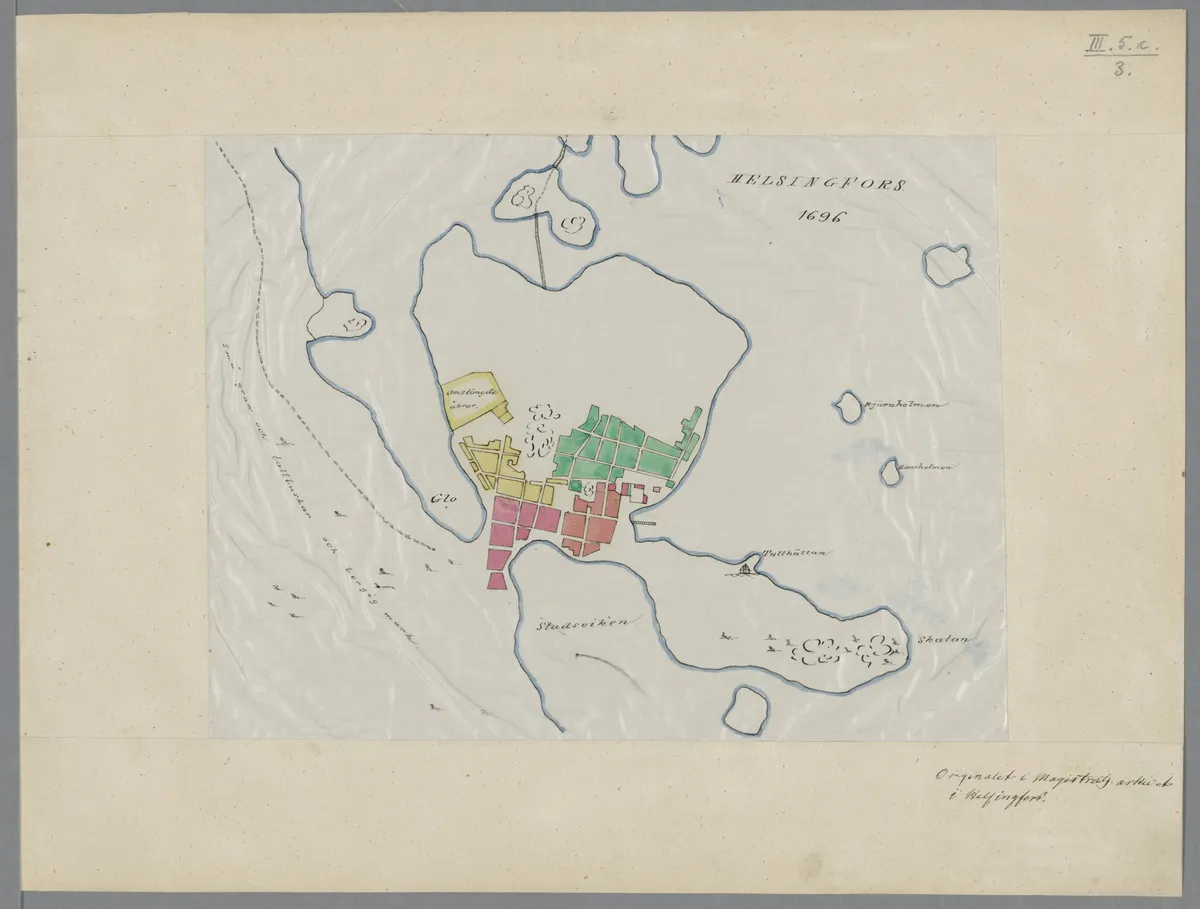
The Vantaa estuary is too shallow for large ships. Helsingfors is moved 5 km south, to the Vironniemi peninsula, where the center still stands today.
1748 · The Sveaborg fortress begins
Augustin Ehrensvärd starts building the sea fortress over six islands at the harbor mouth. The construction site multiplies the population and turns the town into a garrison city.

1808–1809 · Fire, invasion and the Grand Duchy
A fire destroys about a quarter of the city in 1808, the same year Russia invades and Sveaborg surrenders. Under the Treaty of Fredrikshamn, in 1809, Sweden cedes Finland, which becomes an autonomous Grand Duchy under the tsar.

1812 · Capital by order of the tsar
Alexander I moves the capital from Turku to Helsinki, closer to St. Petersburg and easier to control. The city then had about 4,000 residents.
1818–1852 · Carl Ludwig Engel's center
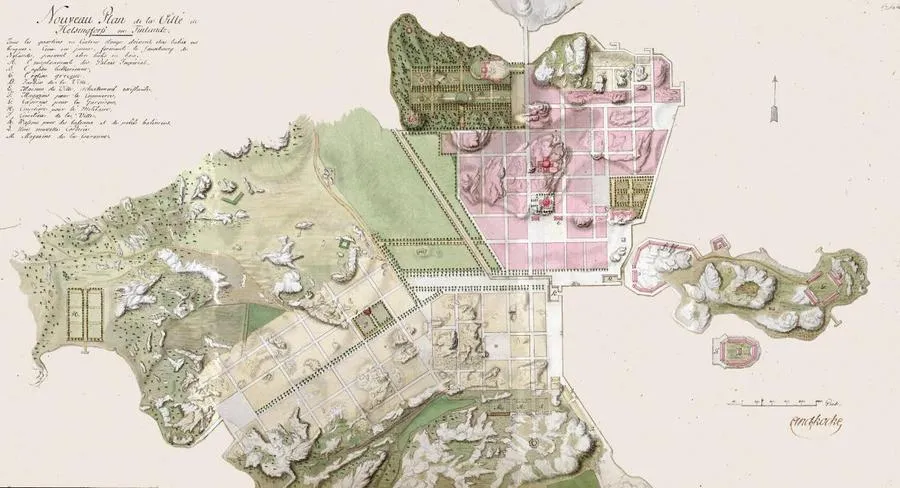
The German architect designs the neoclassical ensemble of Senate Square: the Government Palace (1822), the university (1832), the library (1840) and the Lutheran cathedral, completed in 1852. The stated model is St. Petersburg.

1862–1919 · Railway and national romanticism
The first railway line connects Helsinki to Hämeenlinna in 1862. At the turn of the century, the reaction to Russification produces the National Museum (1910) and Eliel Saarinen's Central Station, opened in 1919.

1917–1918 · Independence and civil war
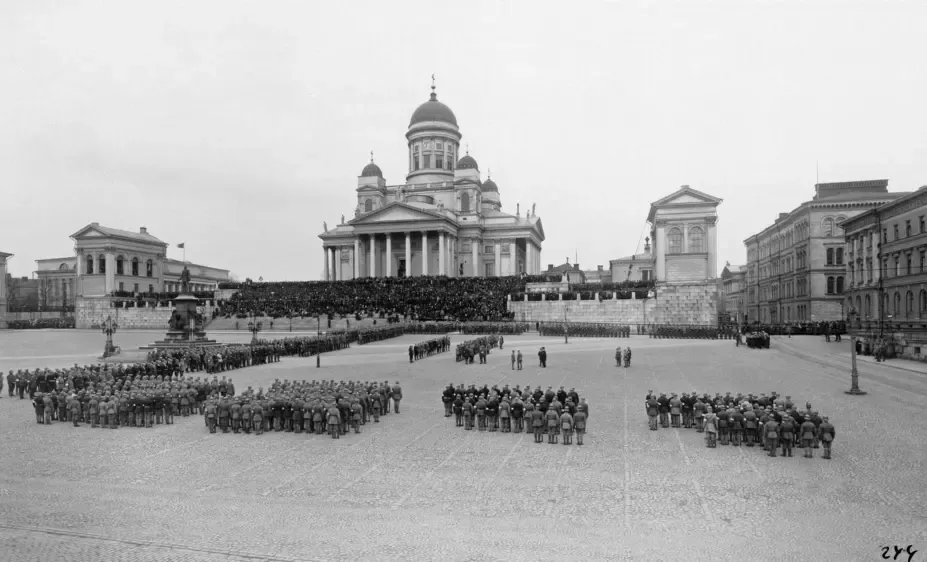
Finland declares independence on December 6, 1917. Helsinki stays in Red Guard hands until it's taken by German troops on April 12–13, 1918, at the end of a four-month civil war.
1939–1944 · Bombing and resettlement
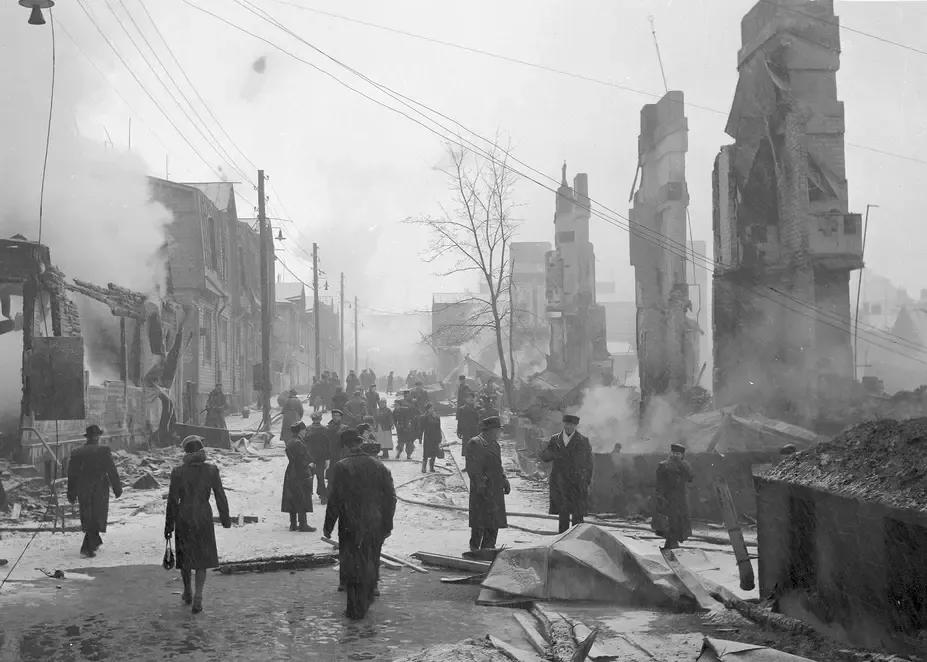
On the three great nights of February 1944, anti-aircraft defense diverts most of the Soviet bombs into the sea and the city survives almost intact. The armistice costs Karelia, and about 400,000 Karelians are resettled across the country.
1952 · Olympic Games
Helsinki hosts the Games it had lost in 1940, at the functionalist stadium by Yrjö Lindegren and Toivo Jäntti, ready since 1938. The event leaves behind the canned long drink and the country's self-image as modern.

1975–2023 · From neutrality to NATO
The Helsinki Final Act is signed by 35 countries at Alvar Aalto's Finlandia Hall on August 1, 1975. Finland joins the European Union in 1995, adopts the euro in 2002 and joins NATO on April 4, 2023.

Complete history
Gustav Vasa's 1550 charter and the port that failed
Helsinki was born from an administrative order. On June 12, 1550, Gustav Vasa ordered merchants from Porvoo, Ekenäs, Rauma and Ulvila to abandon their towns and settle at the mouth of the Vantaa River, to create a Swedish port to compete with Reval for Baltic trade. The plan failed for physical reasons (the estuary was shallow and large ships couldn't get in) and the city was moved in 1640 five kilometers south, to the Vironniemi peninsula. For nearly two centuries it was a wooden town of a few thousand people, wiped out by the plague of 1710 and occupied twice by Russian troops, with no sign it would become a capital.
The turn came from outside, with Sveaborg
In 1748 Sweden began building Sveaborg, a sea fortress over six islands at the harbor mouth, designed by Augustin Ehrensvärd: the construction site was the largest in Nordic Europe at the time and filled the city with workers, engineers and money. In 1808 Russia invaded, Sveaborg surrendered in May with almost no fighting, and a fire burned a quarter of the houses that same year. Under the Treaty of Fredrikshamn, in 1809, Sweden ceded all of Finland, which became an autonomous Grand Duchy of the Russian Empire. In 1812 Alexander I moved the capital from Turku to Helsinki: closer to St. Petersburg, easier to watch and without the accumulated Swedish memory. The city then had about 4,000 residents.
Carl Ludwig Engel's neoclassical center
The move of the capital to Helsinki in 1812 explains the neoclassical center. Carl Ludwig Engel, a German architect trained in Berlin, designed the neoclassical ensemble around Senate Square between 1818 and 1840: the Government Palace in 1822, the university in 1832, the library in 1840 and the white Lutheran cathedral, completed in 1852. After the Turku fire of 1827, the university moved here the following year, and the country's intellectual life came with it. The railway arrived in 1862. Toward the end of the century, when the Russification decrees of 1899 and 1908 tightened their grip, the response was aesthetic: National Romanticism produced the National Museum (1910) and Eliel Saarinen's Central Station, designed in 1904 and opened in 1919.
The 20th century began violently
The 20th century began violently. Independence was declared on December 6, 1917, and about seven weeks later, on January 27, 1918, the country entered a civil war that lasted until May 1918; Helsinki stayed in Red Guard hands until German troops took it on April 12–13. In the Winter War (1939–40) and the Continuation War (1941–44) the city was bombed, but on three big nights in February 1944 decoy searchlights and anti-aircraft fire diverted most of the bombs into the sea: unlike Tallinn, Helsinki survived almost intact, which is why the 19th-century center is still standing. The 1944 armistice cost Finland Karelia and forced the resettlement of about 400,000 Karelians, some of them in the capital, which explains everything from whole neighborhoods of standardized houses to karjalanpiirakka in every bakery.
The 1952 Olympics, the Helsinki Accords and joining NATO
The 1952 Olympics, inherited from the canceled 1940 Games, marked the country's entry into the postwar era: they left behind the stadium, the canned long drink, and an image of modernity that Finnish design exported over the following decades. On August 1, 1975, 35 countries signed the Helsinki Accords at Alvar Aalto's Finlandia Hall, a gesture that crowned Finland's postwar neutrality. That neutrality ended on April 4, 2023, when Finland joined NATO after Russia's invasion of Ukraine, with concrete effects such as the closure of the eastern border and the end of air routes over Russia, which lengthened Finnair's flights to Asia. Today the city grows almost entirely through immigration, has about 700,000 residents, and is expanding over the water: Jätkäsaari, Kalasatama, and Hernesaari are former port terminals turned residential neighborhoods, and the 1.2 km Kruunuvuorensilta bridge is due to carry the tram from downtown to Laajasalo island starting in 2027.
The Helsinki of 1550 wasn't where it is now: the original port, at the mouth of the Vantaa, was too shallow, and in 1640 the city moved to the Vironniemi peninsula, five kilometers south.
Geography and shape of the city
The peninsula, the granite and the islands
Helsinki sits on a low peninsula in the Gulf of Finland with about 130 km of coastline and more than 300 islands within the municipal limits: from Suomenlinna and Vallisaari, a few minutes away by ferry, to Seurasaari, connected by a footbridge. The ground is precambrian granite and gneiss sanded down by the last glaciation: there are no real hills, the highest natural point barely tops 60 m, and rock outcrops show up in the middle of parks, backyards and flowerbeds, which also explains churches and parking garages carved straight into the stone. The land still rises about 4 mm a year from post-glacial rebound, and new islands emerge on a scale of centuries.
The three layers of the grid and the bays
The urban fabric has three visible layers: Engel's neoclassical grid at the tip of the peninsula, the national-romantic and functionalist blocks that spread north between 1900 and 1950, and the modernist suburbs linked by metro and train from the 1960s on, separated by wedges of forest that reach into the city; about a third of the municipal area is green. The bays of Töölönlahti and Eläintarhanlahti cut through the center and force the detours that make the map look more complicated than it is on foot.
The sea that freezes
The climate is humid continental, moderated by the Baltic: the sea freezes along the coast in January and February, and the ferries to Suomenlinna go by breaking ice.
The city sits on granite, and part of it was built inside the rock: the Temppeliaukio church was carved into it in 1969.
Culture
Alvar Aalto and the addresses of design
Design is the city's leading cultural export and it has an address: Alvar Aalto designed Finlandia Hall (1971), the Academic Bookstore (1969) and his own house in Munkkiniemi (1936), all open to visitors; Artek was founded by him and Aino Aalto in 1935; Marimekko was born in 1951 and the Unikko pattern is from 1964, by Maija Isola; Iittala and Arabia come from 19th-century glass and ceramics. Helsinki was World Design Capital in 2012, and the Design District brings together about 200 addresses in Punavuori and around it. The Museum of Architecture and Design, a merger of the two current museums, is planned to open by the end of the decade, on the south shore.
Sibelius studied and debuted here
In music, Jean Sibelius (1865–1957) studied and premiered his work here, and the Helsinki Philharmonic Orchestra, founded in 1882, is the oldest in the Nordic countries; the Musiikkitalo, opened in 2011, became the main concert hall, next to the National Opera. At the other extreme, Finland has the world's highest density of metal bands, close to 50 per 100,000 residents, and the country won Eurovision in 2006 with Lordi, which brought the contest to Helsinki in 2007. Nightlife centers on Kallio and the Punavuori–Kamppi strip, and bars close between 2 and 4am. In summer the Flow Festival takes over the old Suvilahti power plant.
Tove Jansson's Moomins, the Kalevala and Linux
Tove Jansson was born in Helsinki in 1914 and published the first Moomin book in 1945, and the Moomins remain the country's most recognizable cultural export. The Kalevala, compiled by Elias Lönnrot in 1835, is the mythological foundation that appears in Gallen-Kallela's paintings and in the names of half the country's companies. The city also produces software: Linus Torvalds wrote the Linux kernel as a student at the University of Helsinki in 1991, Supercell is headquartered here, and the Slush startup conference fills the city in November. In sports, attention goes to ice hockey with HIFK, in the top league, and to soccer with HJK; HIFK's historic rival, Jokerit, has played in Mestis, the second division, since 2023. The Olympic Stadium reopened in 2020 after a four-year renovation.
Design has an exact address: the Design District brings together about 200 shops, galleries, and studios in Punavuori and the surrounding area.
Festivals and events

Vappu (April 30 and May 1)
At 6pm on April 30, the eve of Vappu, students place a white cap on the Havis Amanda statue at Kauppatori, and the whole city pours into the streets. On May 1, the plan is a mass picnic on Ullanlinnanmäki hill, with sima (a light mead) and tippaleipä (fried pastry).
Juhannus (Saturday between June 20 and 26)
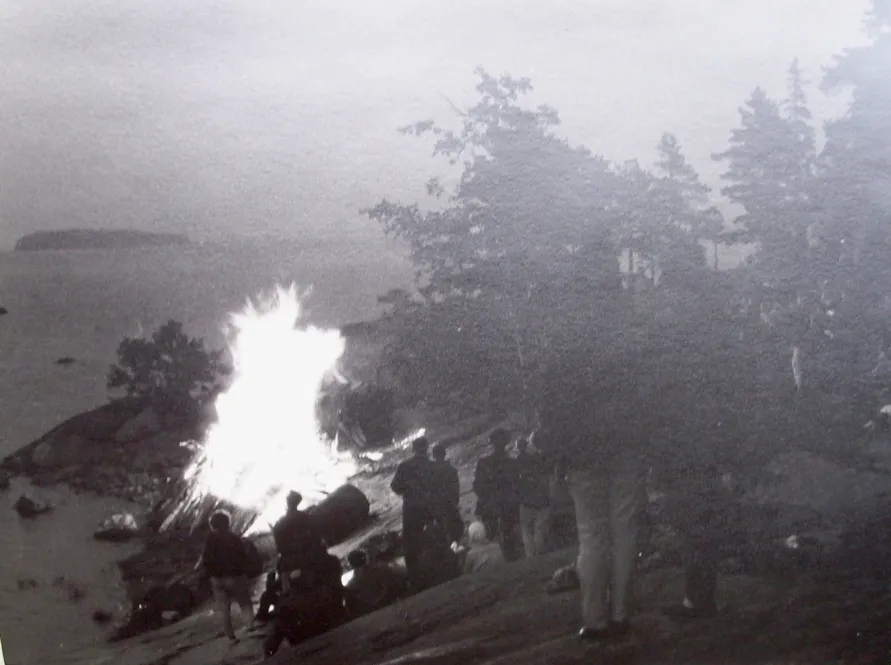
The summer solstice empties the capital: whoever can heads to their country cottage, and many restaurants and shops close for two days. Those who stay watch the bonfire on Seurasaari, the museum island to the west.
Helsingin juhlaviikot (mid-August to early September)
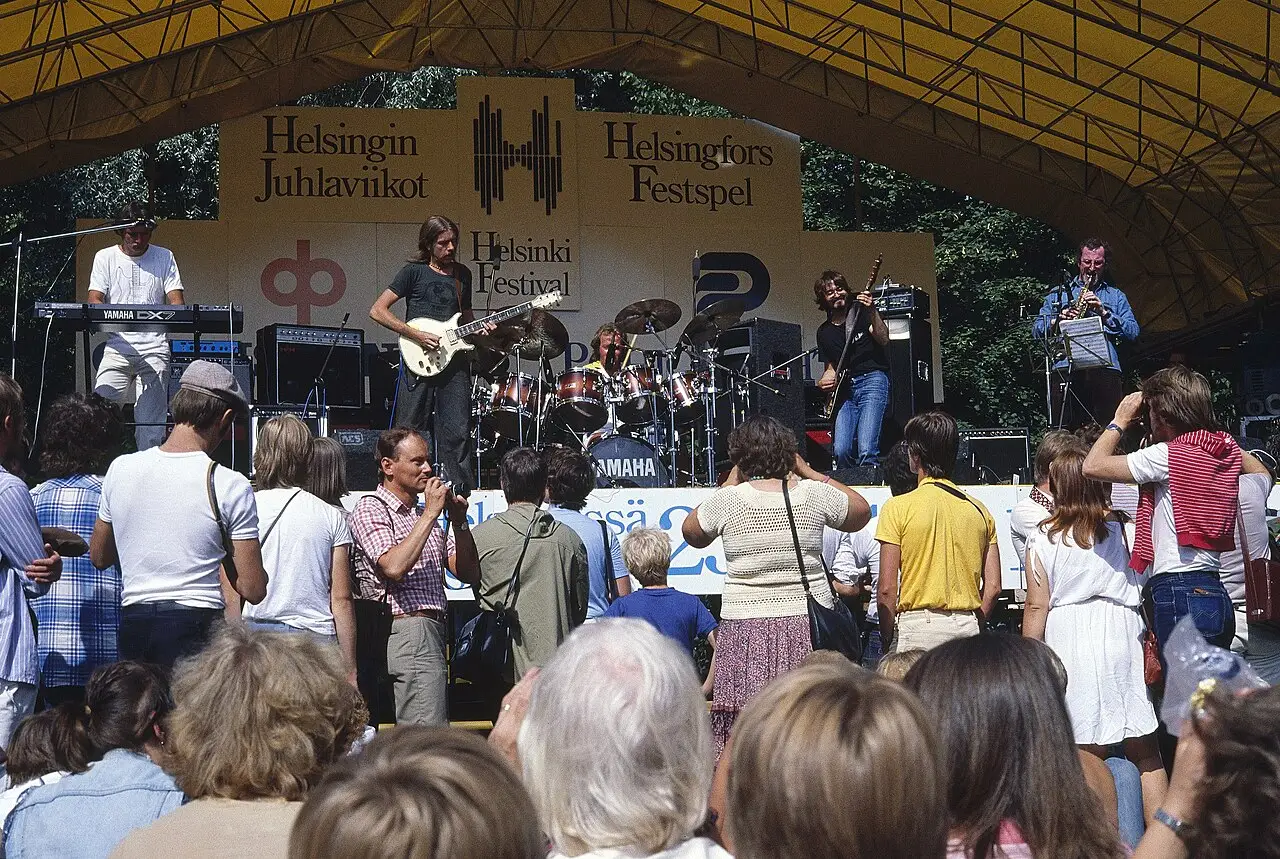
The Helsinki Festival has run since 1968 and is the country's biggest multi-arts event, with music, dance, theater and circus in halls and streets. It includes the Night of the Arts, when museums and galleries stay open late on a single night.
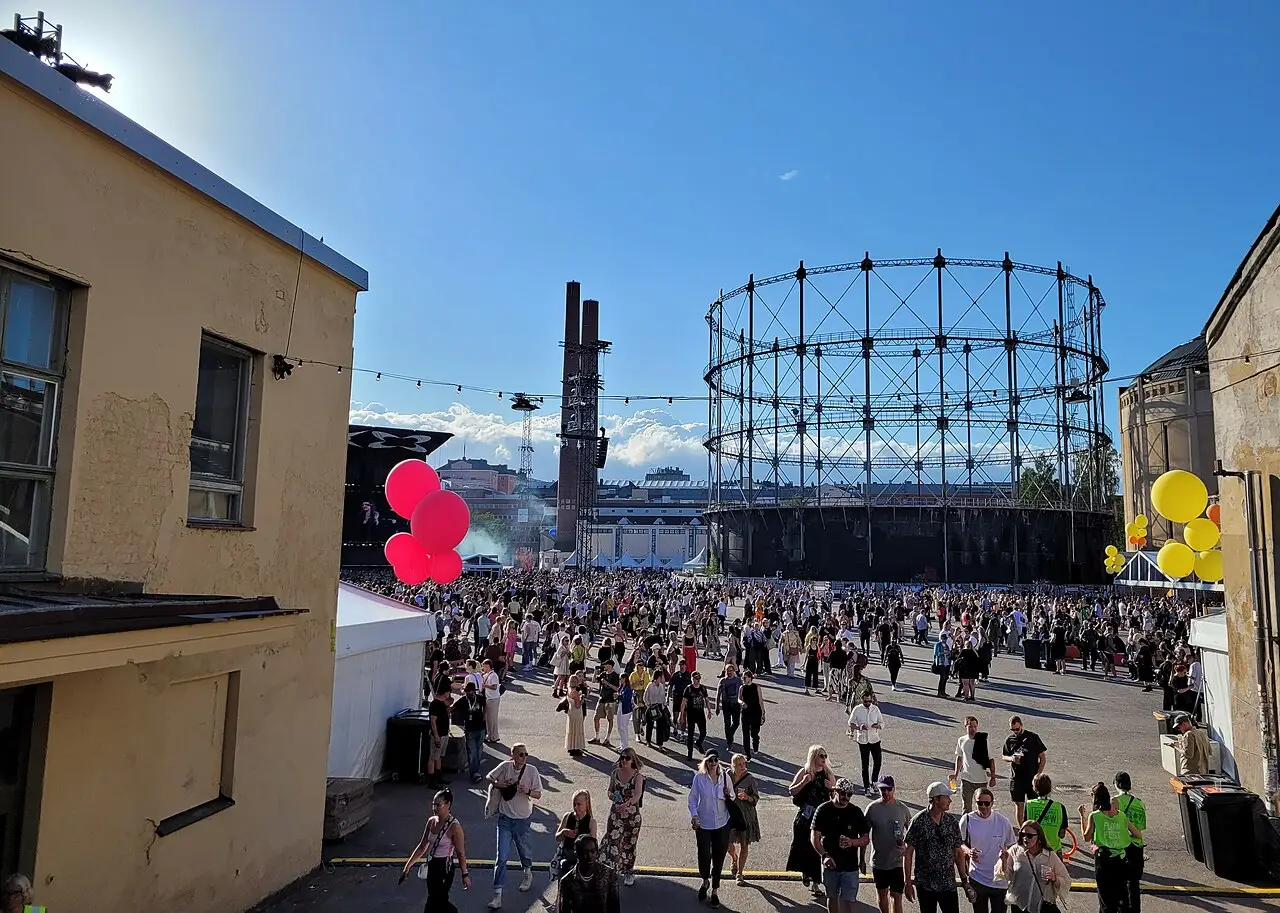
Flow Festival (August, three days)
A music festival at the old Suvilahti power plant, in Kalasatama, since 2004, mixing international pop, jazz and electronic music. A three-day ticket runs around €250.

Lux Helsinki (January, four nights)
A free walking route of light installations across squares and facades downtown, created in 2009 to get through the darkest month. On December 6, Independence Day, the city does the opposite: two blue and white candles in every house's window.
Books and films
Fallen Leaves (Kuolleet lehdet, 2023), by Aki Kaurismäki
Filmed in Helsinki, it shows the city of night shifts, supermarkets and empty bars, with the radio reporting the war in Ukraine in the background. It's the most precise picture of the local mood and silence that exists on film.
The Year of the Hare (Jäniksen vuosi, 1975), by Arto Paasilinna
A Helsinki journalist hits a hare with his car, quits his job, his marriage and the city, and disappears into the forest. The novel explains the Finnish relationship with the woods better than any essay, and sold millions of copies in dozens of languages.
Finlandia, op. 26 (1899), by Jean Sibelius
Composed as a protest against Russian censorship and performed for years under false titles to dodge the ban. Listening to it before arriving helps explain how a city built on a tsar's orders ended up as a national symbol.
Frequently asked questions
Helsinki: Does an empty street mean everything's closed?
No. Much of life happens indoors (cafés, covered markets, libraries, shopping arcades and the downtown tunnel network), and silence on the sidewalk says nothing about what's open.
Helsinki: How do you get from the airport to the center?
The I and P trains on the Kehärata ring line, opened in July 2015, leave from a station under Terminal 2 and reach Central Station in 30 to 35 minutes.
Helsinki: How do you get to Porvoo?
Porvoo is 50 km east, 1 hour by bus from the Kamppi terminal (lines 841 and 842, about €12 one way).
Helsinki: Do I need to bring cash?
No. Finland is one of the closest economies in the world to cashless: contactless cards work on buses, at markets, saunas and street stalls, and many places no longer take cash at all. The currency is the euro.
Helsinki: What's the best time to visit?
From mid-May to mid-August the days are long, and the light is why people come: from mid-June to mid-August highs run 20 to 24 °C, the sea reaches 17 to 19 °C, and near the solstice the sun rises around 3:55am and sets at 10:50pm, without really getting dark.


