Estonia
Tallinn
Tallinn still has 1.9 km of wall standing
Days Start with the basic programme and choose extensions for the time you have.
How the guide reaches this number
Choose one visit that interests you — Oleviste tower, Niguliste’s art or the bastion passages — according to opening, access and energy; lunch and rest are part of the day. With more time, Kalamaja and Telliskivi can make another outing, without becoming an obligation after the stairs. If you arrive late or leave early, shorten the walk and allow for luggage, check-in or checkout and the journey. I would not count on empty lookouts at a fixed time or plan the day around assumed ship schedules.
1–3
When June to August for the light; December for the Christmas market; November is the month to avoid
How the guide reaches this number
In Tallinn, daylight changes much more over the year than temperature does, and it's what decides what you can do. From June to August the average runs between 17 °C and 22 °C, the longest day has about 18 hours 40 minutes of sun, and twilight never fully closes in. This is high season, with cruise ships docked between 8am and 6pm and Raekoja plats packed in the middle of the day. May and September bring 10 °C to 16 °C, lower prices, and a center you can breathe in. October drops to 6–8 °C, and November is the month I'd avoid: 1 to 4 °C, constant drizzle, about 7 hours of daylight, and no snow to make up for it. December is dark, but the Christmas market and the artificial light act as a counterweight. January and February hover around −4 °C, with cold snaps that reach −20 °C and patchy snow cover, and in those months the cobblestone sidewalks turn to ice: wear shoes with firm soles. Rain totals 650 to 700 mm a year, mostly between July and October, and the sea reaches 17–19 °C in July, which is enough for locals to swim at Pirita.
Per person/day €70–130 per person with simple lodging
How the guide reaches this number
Per person per day: accommodation, meals, urban transport, visits and a small allowance for extras. Flights excluded; larger purchases vary. Editorial estimate, not a quote.
 What Nilo thinks
I would keep the first day for the Old Town, with the square and, if energy allows, Toompea. Choose one visit that interests you — Oleviste tower, Niguliste’s art or the bastion passages — according to opening, access and energy; lunch and rest are part of the day. With more time, Kalamaja and Telliskivi can make another outing, without becoming an obligation after the stairs. If you arrive late or leave early, shorten the walk and allow for luggage, check-in or checkout and the journey. I would not count on empty lookouts at a fixed time or plan the day around assumed ship schedules.Anyone arriving in Tallinn by ferry sees the wall first: 1.9 km still standing, with 20 of the original 46 towers, around one of northern Europe's most intact medieval centers. Inside, the Gothic 1404 town hall dominates Raekoja plats, Niguliste (Church of St. Nicholas) holds Bernt Notke's “Danse Macabre,” and the slope of Lühike jalg climbs to Toompea hill, overlooking the red roofs and the gulf. The city grew rich in the Hanseatic League on salt, herring, wax, and furs, and the walled center came through World War II standing. Outside the gates, Kalamaja has wooden houses from the industrial boom, and the station market sells smoked fish next to the old Telliskivi railway workshops. Come between June and August, when it never gets fully dark, and set aside a day for the Old Town, with a second for Kalamaja and the sea if you have one to spare.
Quick facts
- Population
- about 453,000 in the municipality; about 646,000 in the Harju metropolitan area (2026). Estonia as a whole has about 1.36 million
- Founded
- A fortress on Toompea before the 12th c.; first cartographic mention in 1154; Lübeck city rights in 1248
- Country and region
- Estonia: capital of the country and of Harju County (Harjumaa)
- Language
- Estonian (a Finnic language, 14 cases, no grammatical gender); Russian is the mother tongue of about a third of the city; English is common in commerce
- Currency
- Euro (€) since January 1, 2011; cards accepted practically everywhere
- Time zone
- EET (UTC+2), EEST (UTC+3) in summer
- Best time to visit
- June to August for the light; December for the Christmas market; November is the month to avoid
- Average daily cost
- €70–130 per person with simple lodging
When to go
June to August for the light; December for the Christmas market; November is the month to avoid
January
-5° to -1°C
56 mm of rain
February
-6° to -1°C
40 mm of rain
March
-4° to 3°C
37 mm of rain
April
1° to 10°C
35 mm of rain
May
5° to 15°C
37 mm of rain
September
8° to 16°C
58 mm of rain
October
4° to 10°C
78 mm of rain
November
0° to 4°C
66 mm of rain
AvoidDecember
-3° to 1°C
59 mm of rain
How the year changes
In Tallinn, daylight changes much more over the year than temperature does, and it's what decides what you can do. From June to August the average runs between 17 °C and 22 °C, the longest day has about 18 hours 40 minutes of sun, and twilight never fully closes in. This is high season, with cruise ships docked between 8am and 6pm and Raekoja plats packed in the middle of the day. May and September bring 10 °C to 16 °C, lower prices, and a center you can breathe in. October drops to 6–8 °C, and November is the month I'd avoid: 1 to 4 °C, constant drizzle, about 7 hours of daylight, and no snow to make up for it. December is dark, but the Christmas market and the artificial light act as a counterweight. January and February hover around −4 °C, with cold snaps that reach −20 °C and patchy snow cover, and in those months the cobblestone sidewalks turn to ice: wear shoes with firm soles. Rain totals 650 to 700 mm a year, mostly between July and October, and the sea reaches 17–19 °C in July, which is enough for locals to swim at Pirita.
The same numbers as a table
| Month | Temperature °C | Rain mm |
|---|---|---|
| January | -5 to -1 | 56 |
| February | -6 to -1 | 40 |
| March | -4 to 3 | 37 |
| April | 1 to 10 | 35 |
| May | 5 to 15 | 37 |
| June · | 10 to 19 | 68 |
| July · | 13 to 22 | 82 |
| August · | 12 to 21 | 85 |
| September | 8 to 16 | 58 |
| October | 4 to 10 | 78 |
| November | 0 to 4 | 66 |
| December | -3 to 1 | 59 |
Nilo's tips
From the airport, take tram 4: 15 minutes to downtown
Tram 4 runs from the airport to the center in about 15 minutes, for a fraction of the €8 to 15 a Bolt ride costs. Pay contactless or with the Ühiskaart, which has a €2 refundable deposit at a few outlets, and validate on every boarding, even when switching vehicles.
Get to the Old Town at 8am, before the cruise ships
On cruise days, ships dock starting at 8am, and groups start filling Raekoja plats by mid-morning. Arrive at 8am and head straight up to Toompea, because the Kohtuotsa and Patkuli lookouts are still empty at that hour. After ten, that same view disappears behind thirty heads.
Check tower access and choose how to visit the passages
I would check hours and conditions before adding both tower and passages to one day. The Kiek in de Kök bastion passages can be visited independently; for a guided tour, confirm language, time and booking with the museum. There are uneven steps and places that may be slippery. At Oleviste, the operator lists 258 steep steps to the outer gallery, 60 m up; the stated season is April to October. Check last entry and interruptions, allow a break and keep one climb as an alternative.
Have the päevapraad, the dish of the day, between 11am and 3pm
At night the same kitchen charges double for the main course, and after three the dish of the day disappears from the menu. Between 11am and 3pm, almost every Estonian restaurant serves päevapraad, and all it takes is spotting the word on the sidewalk chalkboard.
Drink away from Raekoja plats: draft beer costs a third less
Just walk three blocks from the square and the €7 draft beer drops to €4.50. Cross the historic center and eat at Balti Jaama Turg, the station market, or in Telliskivi, on the other side of the railway line. A menu with photos on the door is a sign you're still inside the walls.
On June 23 the city empties: go to Pirita or to Helsinki
On the night of June 23, the eve of Jaanipäev, the biggest holiday of the year, almost everyone heads to the countryside and some shops close. Treat the day as a beach outing, because the 8 km of waterfront to Pirita are all yours, or take the morning ferry to Helsinki and come back at night, with your passport in hand.
Explore the map

© OpenStreetMap · OpenFreeMap · © OpenMapTiles
Explore the map, read about the other places and plan your travel days in the app.
Open the appWhat to see
Tallinn: The Baltic klint and the flat strip
The walled center sits by the harbor, with Toompea hill rising above the merchants' lower town, and around it the city spreads along the coast, from Kalamaja in the west to Kadriorg and Pirita in the east.
Raekoja plats and the Raekoda
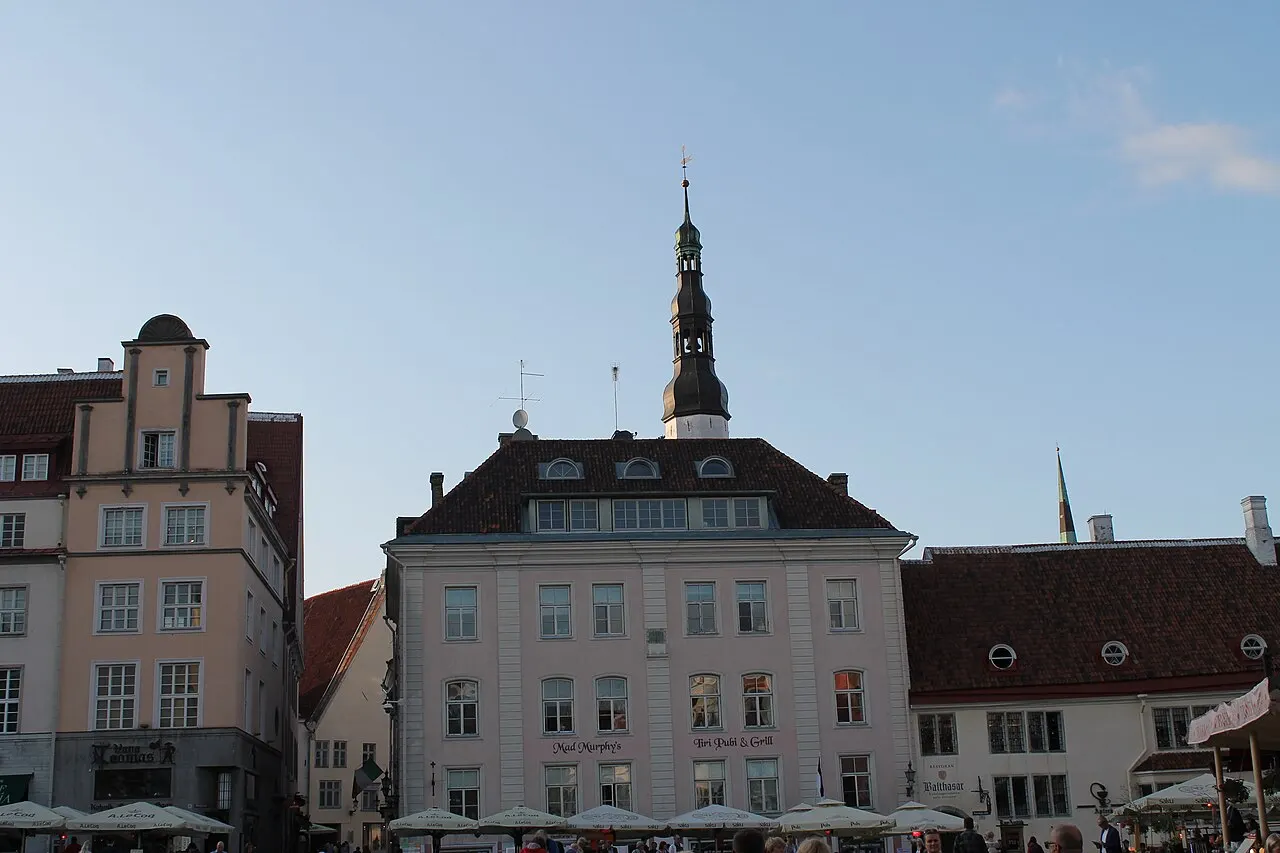
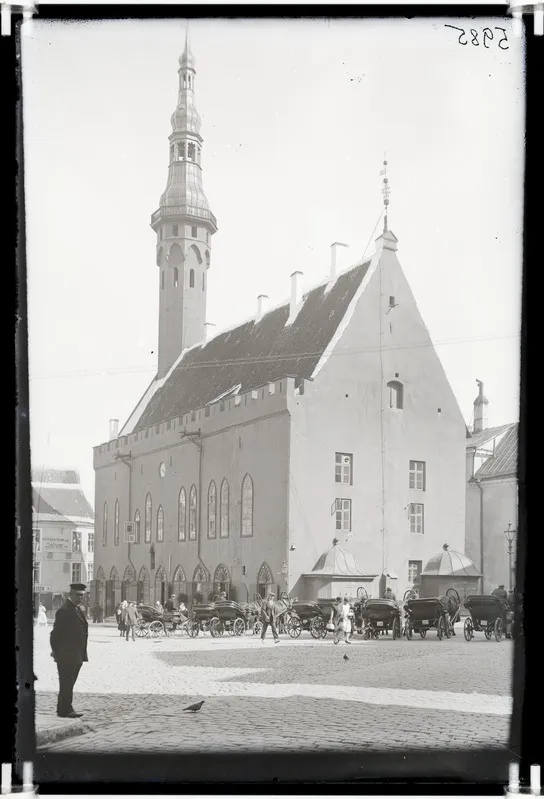
The Gothic town hall, completed between 1402 and 1404, is the only one of its kind preserved in northern Europe; atop its tower turns the Vana Toomas weathervane, installed in 1530. The original is in the museum and the copy went up in 1996. On the square's north corner stands the Raeapteek, a pharmacy documented since 1422 and still operating at the same address.
The Gothic town hall was completed between 1402 and 1404; it's the only one of its kind preserved in northern Europe.
Check access
Toompea
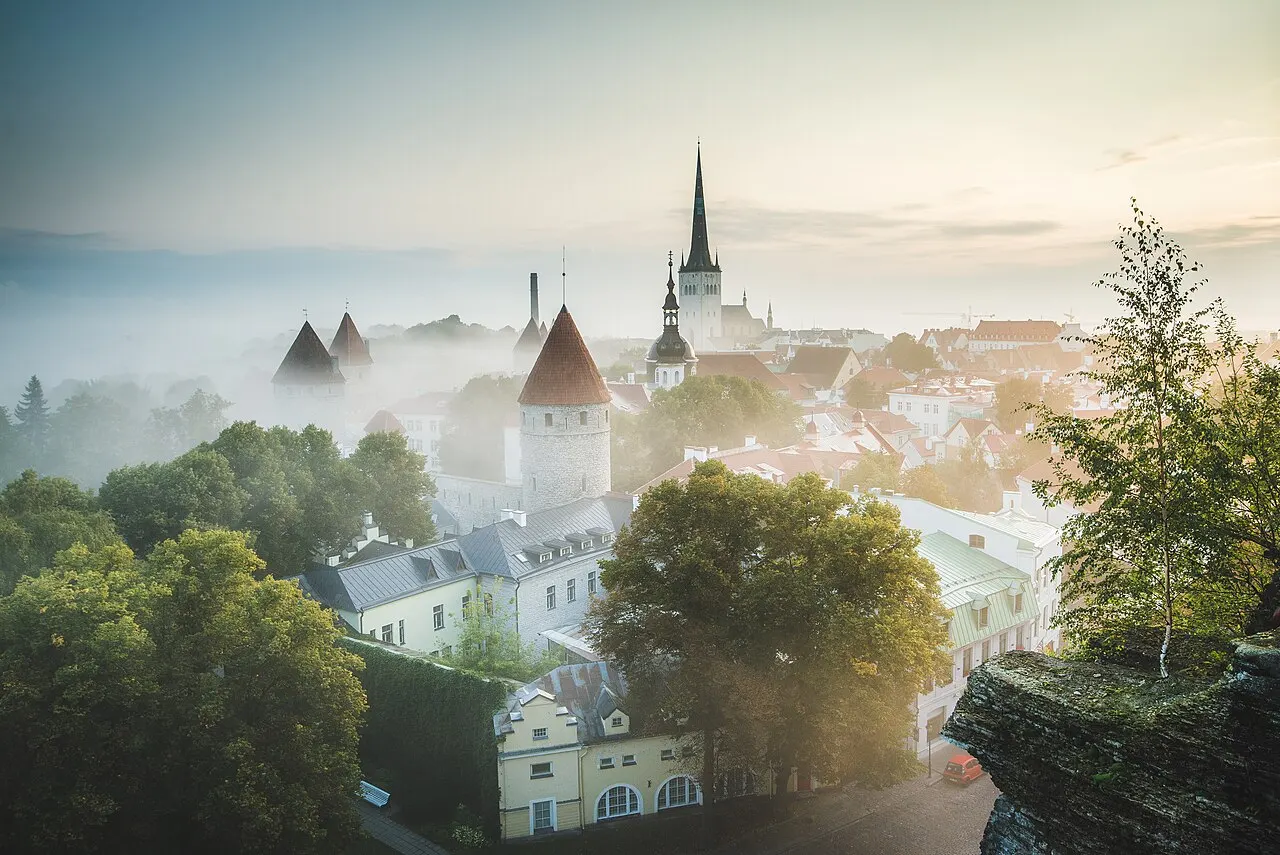
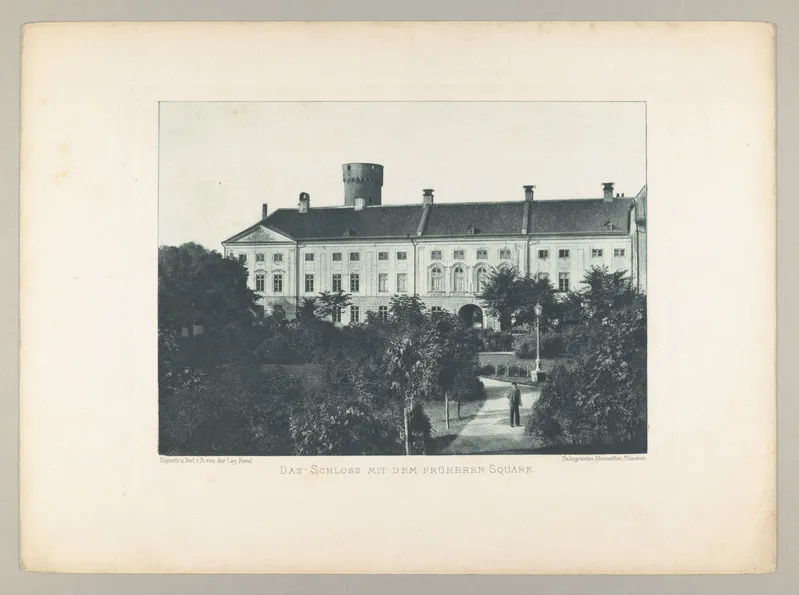
The hill of power: Toompea Castle, with its pink Baroque facade from 1767–1773, built under Catherine II, and, in the inner courtyard, the Expressionist wing from 1920–1922 that houses the Riigikogu; the Alexander Nevsky Orthodox cathedral (1900, designed by Mikhail Preobrazhensky, five onion domes); and Toomkirik, founded by the Danes in 1219, with wooden funeral coats of arms covering the walls. The Kohtuotsa and Patkuli lookouts, both free, are 300 m apart and empty at 8am.
It's the hill of power, with the pink-facade castle from 1767 to 1773, the Alexander Nevsky cathedral, and the 1219 Toomkirik, plus two free lookouts over the lower town's red roofs.
Check access

Niguliste
Niguliste, the Church of St. Nicholas, dates from the 1230s, was burned in the bombing of March 9, 1944, and rebuilt as a museum of sacred art. It holds the 7.5 m fragment of Bernt Notke's “Danse Macabre,” from around 1500, in which death invites the pope, the emperor, and the queen to dance.
The 7.5 m fragment of Bernt Notke's Danse Macabre, from around 1500, is in Niguliste, the Church of St Nicholas, burned on March 9, 1944, and reopened as a museum.
Check access
Telliskivi and the Balti Jaama Turg
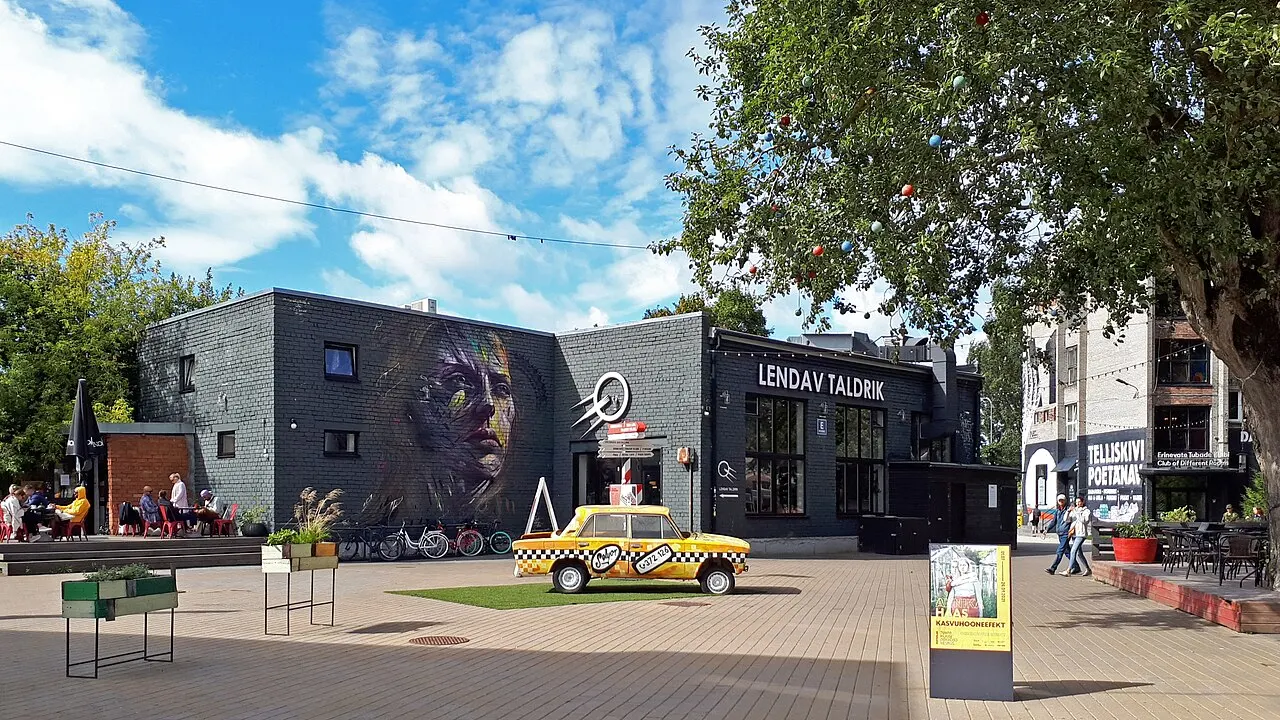
Former Baltic railway workshops occupied since 2009 by studios, restaurants, stages, and galleries, including a Fotografiska branch opened in 2019. Next door, the station market, rebuilt in 2017 across three levels, sells smoked fish, mushrooms in season, and secondhand clothes in the basement.
The Baltic railway workshops have hosted continuous occupancy since 2009, and among those spaces is the Fotografiska branch that opened in 2019, while the market next door sells smoked fish and secondhand clothes in the basement.
Check access
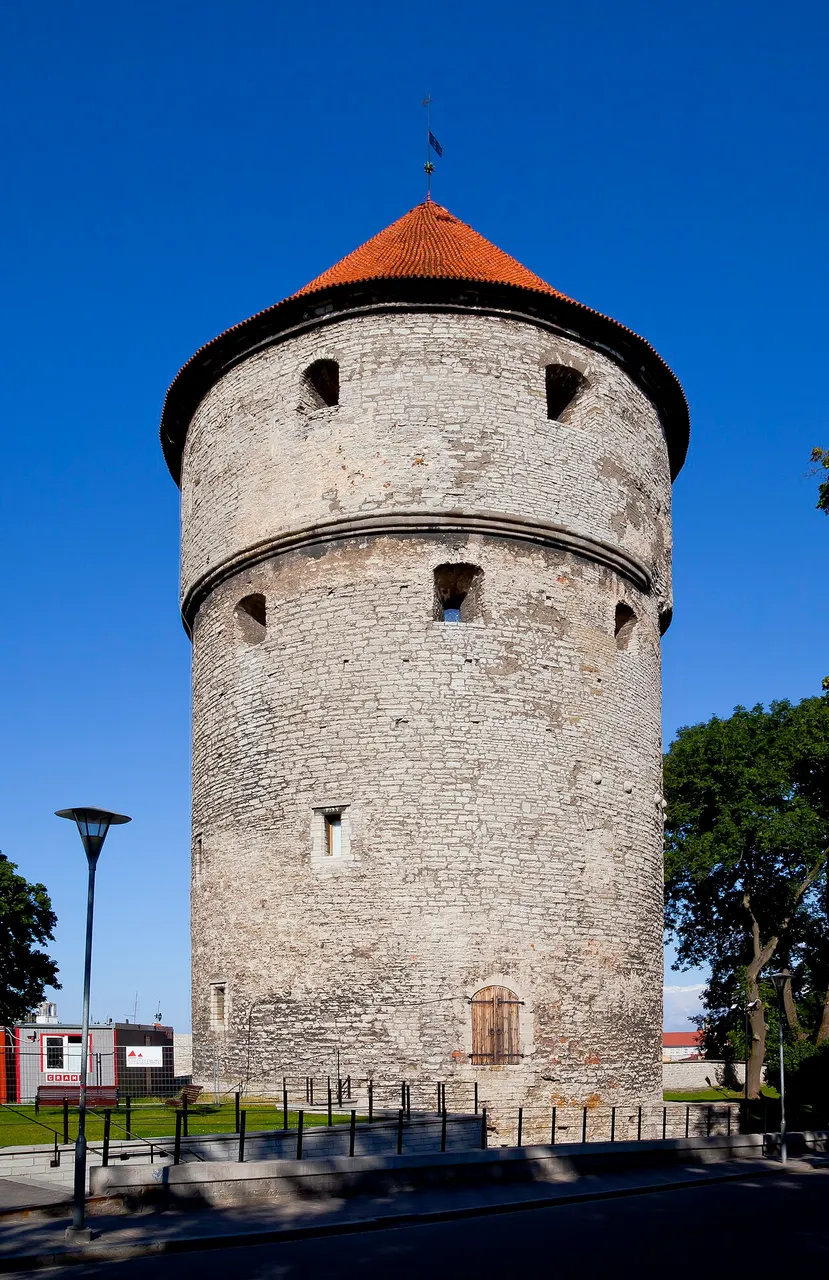
The wall, towers, and Kiek in de Kök
1.9 km of the roughly 2.4 km of wall and 20 of the 46 towers survive. The 1475 Kiek in de Kök artillery tower stands 38 m tall with walls up to 4 m thick, and from it you enter the tunnels of the 17th-century Swedish bastions, used as an air-raid shelter in the war and as a punk hideout in the 1980s; the guided tunnel tour tends to sell out.
The guided tour goes down into galleries the war used as a shelter and that punks later took over; Kiek in de Kök, 1475; walls up to 4 m thick.
Check access
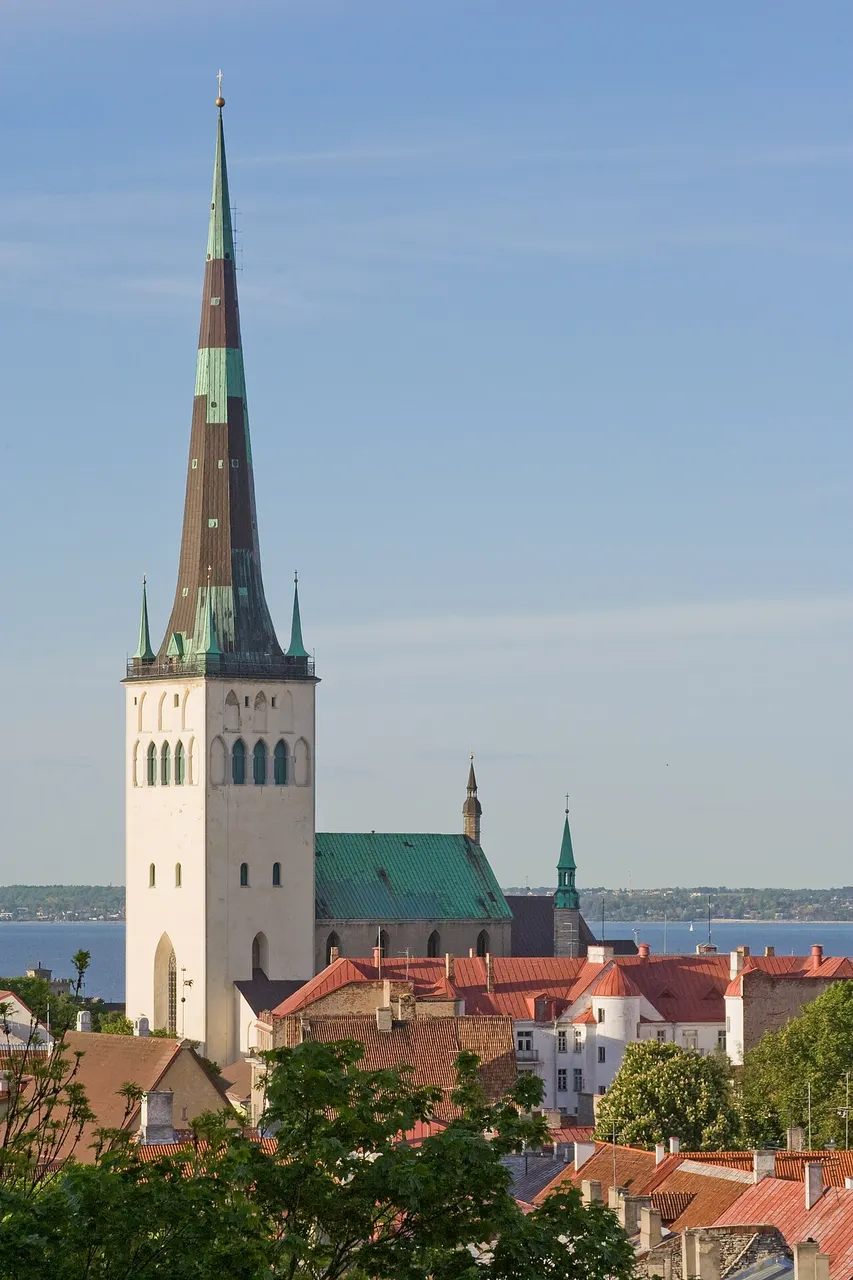
Oleviste kirik
Oleviste, St. Olaf’s Church, is 123.7 m high today. The historical height of 159 m is an estimate based on an old measurement whose unit is uncertain. The operator lists 258 spiral steps to the outer gallery, 60 m above ground. Tower visits are seasonal, from April to October; check opening times, last entry and interruptions for your date. The staircase is steep: choose the climb according to your energy and allow a break.
The outer gallery is 60 m up, reached by 258 steps according to the operator. The climb is steep and seasonal, from April to October: check access and hours for your date and choose according to your energy.
Check access

Kadriorg and the Kumu
A baroque palace commissioned by Peter I in 1718 from Italian architect Niccolò Michetti and named in honor of Catherine I. In the same park, the Kumu museum opened in 2006 in a limestone-and-copper building by Finnish architect Pekka Vapaavuori and holds the country's only permanent floor dedicated to art of the Soviet period, including what was banned.
The park's Baroque palace shares the visit with a museum that permanently houses Soviet-era art, including work that was once banned; Peter I, 1718; Kumu opened in 2006.
Check access
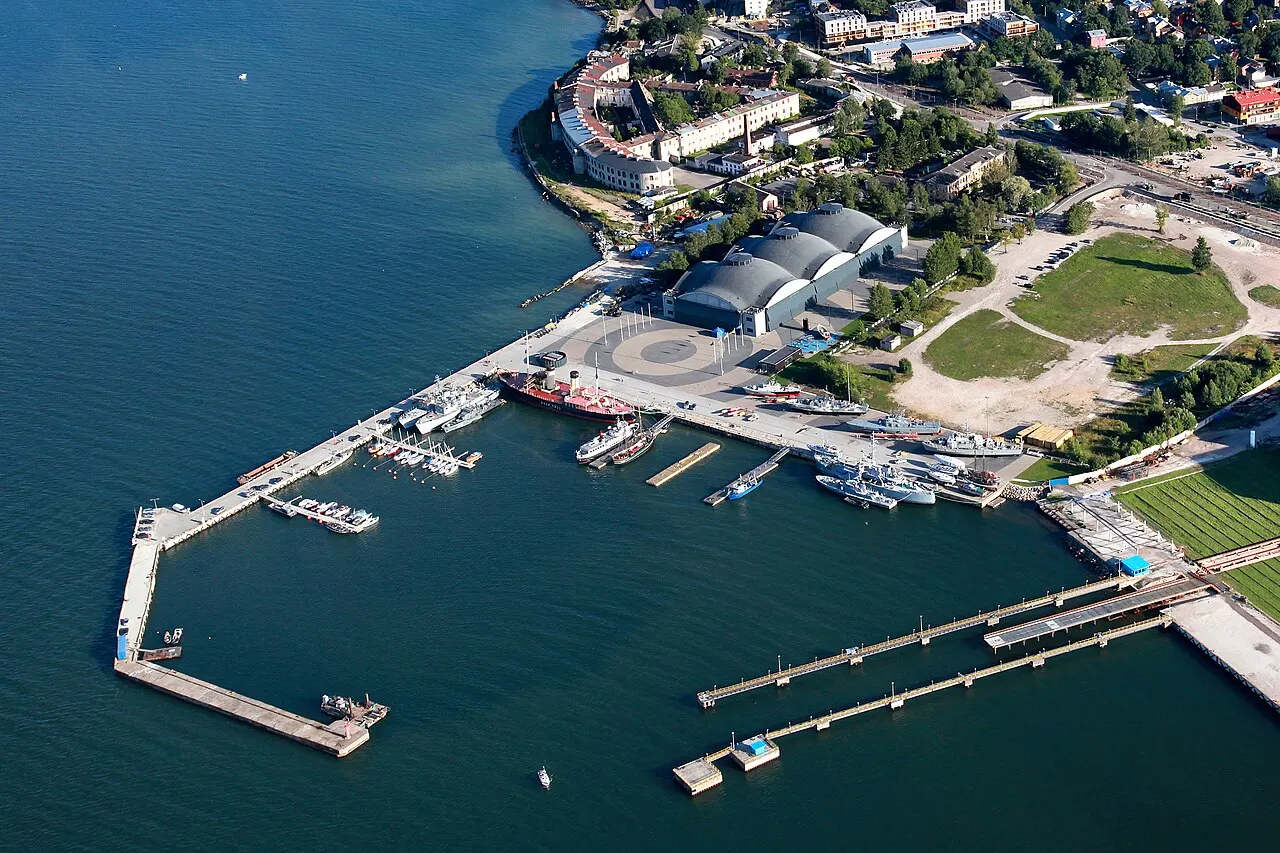
Lennusadam
Seaplane hangars built between 1916 and 1917, with the earliest thin reinforced-concrete domes built at this scale without internal supports. Since 2012 they have housed the maritime museum: inside floats the 1936 submarine Lembit, and at the pier sits the 1914 steam icebreaker Suur Tõll.
The first thin concrete domes without internal supports, at this scale, house a museum where a submarine floats; hangars from 1916 to 1917; the Lembit, 1936.
Check access

Maarjamäe
Memorial to the Victims of Communism, opened on August 23, 2018: a black concrete corridor with about 22,000 names engraved, one for every Estonian killed or missing between 1940 and 1991. On the same grounds stand the 1975 Soviet obelisk and a courtyard where the statues of Lenin and Kalinin removed from the city were placed.
The black concrete corridor, opened on August 23, 2018, engraves about 22,000 names, one for every Estonian killed or missing between 1940 and 1991.
Check access
Nilo’s itinerary
Start with the basic programme and choose extensions for the time you have.
Plan my days in the app ↗Day 1 · Old Town, with choices and breaks
Start at Raekoja plats at a time that fits your trip. On arrival day, allow for luggage, check-in and rest before setting out; the square can be the whole outing. Check access separately for any interiors you want to visit, without assuming they open early.
If you have the energy to climb to Toompea, choose one lookout, Kohtuotsa or Patkuli, and walk at your own pace. There is no guarantee that the lookouts will be empty before ten. If the climb or weather makes it unsuitable, stay in the lower town and keep the break.
Back in the lower town, consider the Oleviste tower if it is open and you have the energy to climb: the operator lists 258 steps to the gallery, 60 m up. Check hours and last entry during the April–October season. Allow a break and keep a lower-town walk as an alternative if stairs, weather or fatigue make the climb unsuitable.
Choose Niguliste as an art visit if it interests you: the museum houses the fragment of the “Dance of Death”, attributed to Bernt Notke. Check opening, tickets and access conditions for your date. It can be the main visit, instead of adding the tower and tunnels.
The Kiek in de Kök bastion passages are another choice. Check with the museum about an independent or guided visit; for the latter, confirm language, time and booking. There are uneven steps and sections that can be slippery. Check access and leave the tower or another museum for another occasion if the effort or time does not fit.
Include lunch and a break in the area you are in, without filling every gap with another attraction. Finish when your energy calls for it and consider the return to your accommodation. On departure day, preserve time for checkout, luggage and transport before adding a visit.


If you stay longer
Day 2 · Kalamaja and the harbour, with choices
Start with Balti Jaama Turg and Telliskivi when the businesses you want to visit are open. Choose the market, galleries or Fotografiska according to your interests; check the exhibition and ticket before planning an art visit. Breakfast need not come with every interior.
Walk through Kalamaja’s streets, looking at the wooden houses. Choose a route that fits your energy and the weather, with a meal break; the park can replace another indoor visit. You need not cross the whole neighbourhood to complete the day.
Lennusadam can be the main visit: the museum holds the Lembit submarine, and Suur Tõll is in the harbour area. The operator recommends at least two hours. Check the calendar and ticket: the regular October–April schedule closes on Mondays, and ticket sales end 30 minutes before closing. Large suitcases are not allowed in the exhibition; ask about lockers. The submarine and icebreaker have their own access conditions and cannot be entered in wheelchairs.
Noblessner is an optional waterfront extension rather than a required arrival after the museum. Check the route and return time before continuing; wind, rain or tiredness can end the outing at the harbour. Choose a meal or activity there that you have confirmed, without assuming a restaurant or sauna place.
If you want a sauna, treat Kalma as its own choice: confirm public or private sauna, hours, last entry and rules with the operator. Regular admission closes an hour before the sauna; the women’s sauna opens at 15:00 on the last Friday of the month. Do not require another sauna session after the waterfront.
Keep lunch, rest and the return to your accommodation. On arrival or departure days, arrange luggage storage, check-in or checkout with the hotel and shorten the programme according to journeys and energy. Choosing just the neighbourhood or just the museum is enough for this day.
Day 3 · Kadriorg and memory, with time to choose
Kadriorg can be a park walk or an art visit. Check the journey from your accommodation for the chosen date and time; the tram line depends on your starting point. Walk through the gardens according to your energy and allow a break to eat and sit down.
Choose Kadriorg Palace or Kumu according to the collection and exhibition you want to see. Park and museums have separate access arrangements: check address, calendar, ticket and last admission. Kumu closes on Mondays in its regular schedule and ends ticket sales 30 minutes before closing. An art visit can be your main programme without requiring both museums.
Lauluväljak is a choice for learning about song festival traditions and the memory of the Singing Revolution. Check event and access notices before going. The visitor centre requires a reservation; a walk through the grounds does not automatically include the exhibition. Keep time to sit down and return.
The Maarjamäe memorial remembers victims of the communist regime. Its route includes the Journey and the Home Garden, with a separate tribute to officers. The inscribed names correspond to victims whose deaths in the documented circumstances have been confirmed; they do not represent everyone persecuted. Choose an unhurried visit and check the entrance and journey before combining another place.
Pirita and the TV Tower are optional extensions with their own outward and return journeys. Choose one if time and energy allow rather than requiring coast, convent and tower. For the tower, check tickets, visibility and exceptional hours; large suitcases are not allowed inside. Arrange luggage storage with the operator or accommodation before setting out.
Choose park and art, Lauluväljak or Maarjamäe for the time available. If combining the two memory sites, check the route and conditions for walking or using transport. Keep meal, rest and return time. On arrival or departure days, fit visits around check-in, checkout and luggage storage agreed with your hotel.


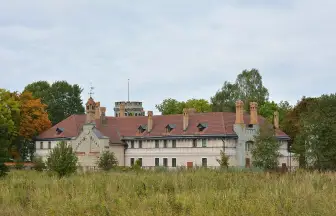
Food
 AI illustration
Must leib
Dark rye bread, naturally leavened, sour and dense, present at every table and often made with a decades-old starter. It becomes dessert as leivasupp, a sweet bread soup with cream.
 AI illustration
Kiluvõileib
Open-faced sandwich of Baltic sprat cured in salt and spices, on black bread with butter, hard-boiled egg, and chives. It's the standard bar snack and the classic accompaniment to vodka.
 AI illustration
Verivorst and mulgikapsad
Blood sausage with barley, roasted and served with lingonberry jam, and sauerkraut slow-cooked with pork and barley. Christmas and December food, but present year-round in Estonian restaurants.
 AI illustration
Kohuke
A sweet curd bar coated in chocolate, sold refrigerated at any kiosk and supermarket for less than €1, in dozens of flavors. It's the national snack and proof that dairy rules the local diet.
 AI illustration
Kama
A mix of roasted barley, rye, oat, and pea flours, blended with kefir or yogurt and sugar. Toasted-cereal flavor, light-porridge texture, served cold as dessert or breakfast.
 AI illustration
Martsipan
Marzipan molded and hand-painted, a tradition the city ties to the town hall pharmacy, where the almond paste is said to have been sold as medicine in the 15th century. The Maiasmokk confectionery, opened in 1864 on Pikk street, keeps a painting room and the Kalev factory showcase.
 AI illustration
Päevapraad
The dish of the day served at nearly every restaurant between 11am and 3pm, usually soup plus main course for €6 to 10. It's the cheapest way to eat a hot meal in the city, and it disappears after three in the afternoon.
 AI illustration
Craft beer and Vana Tallinn
The independent brewery scene (Põhjala, at the old Noblessner shipyard, Pühaste, Lehe) coexists with the industrial Saku and A. Le Coq. The liqueur Vana Tallinn, created in 1962 from rum, vanilla, and citrus, comes in 40% or 50% alcohol and also turns up inside coffee.
Day trips
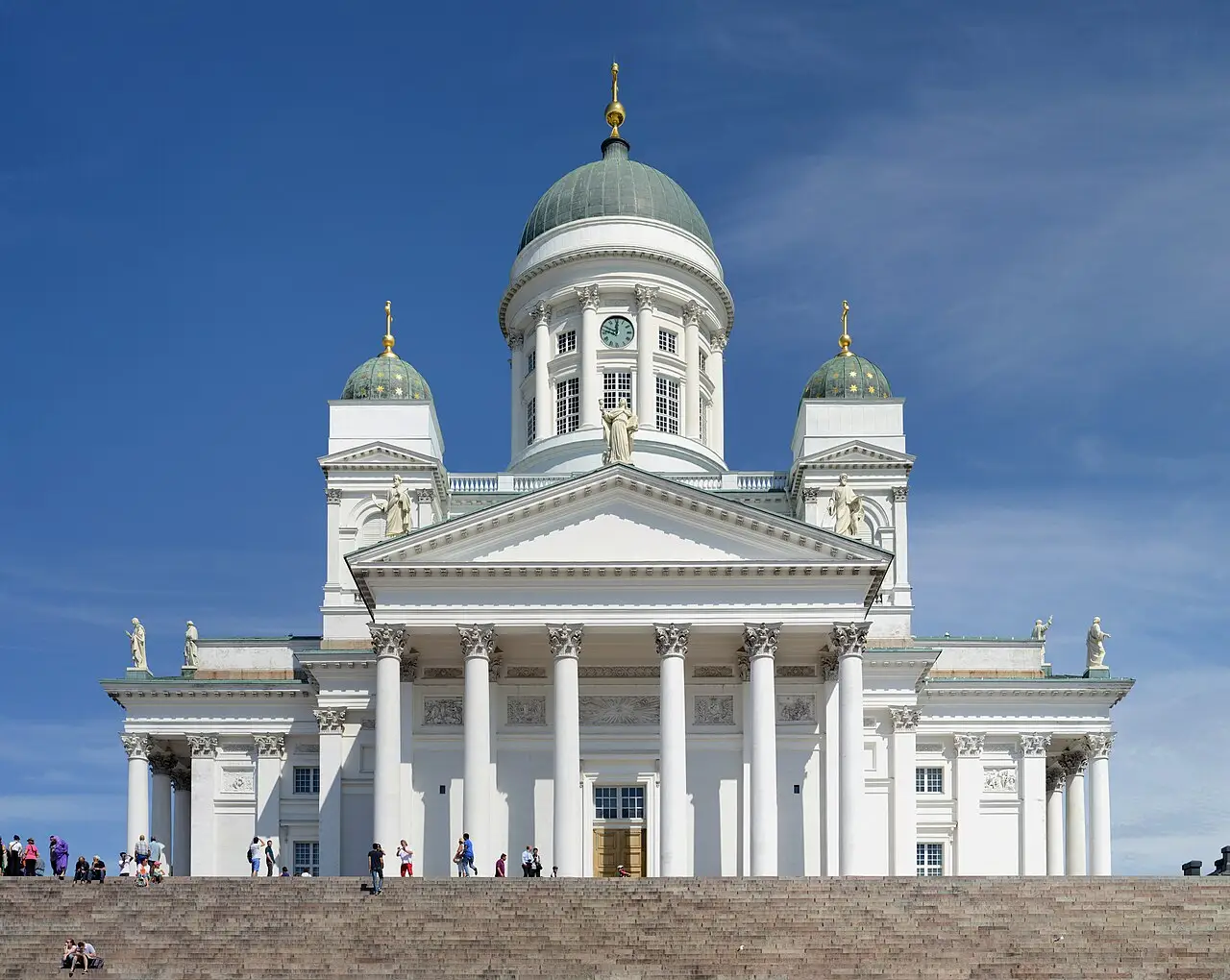
Helsinki, Finland
Helsinki is 80 km across the sea, 2 hours to 2 hours 30 minutes by ferry from the port of Tallinn, with dozens of daily departures and one-way tickets starting around €20. You can go and come back the same day with six hours ashore; bring your ID, because it's an external sea border of the European Union.
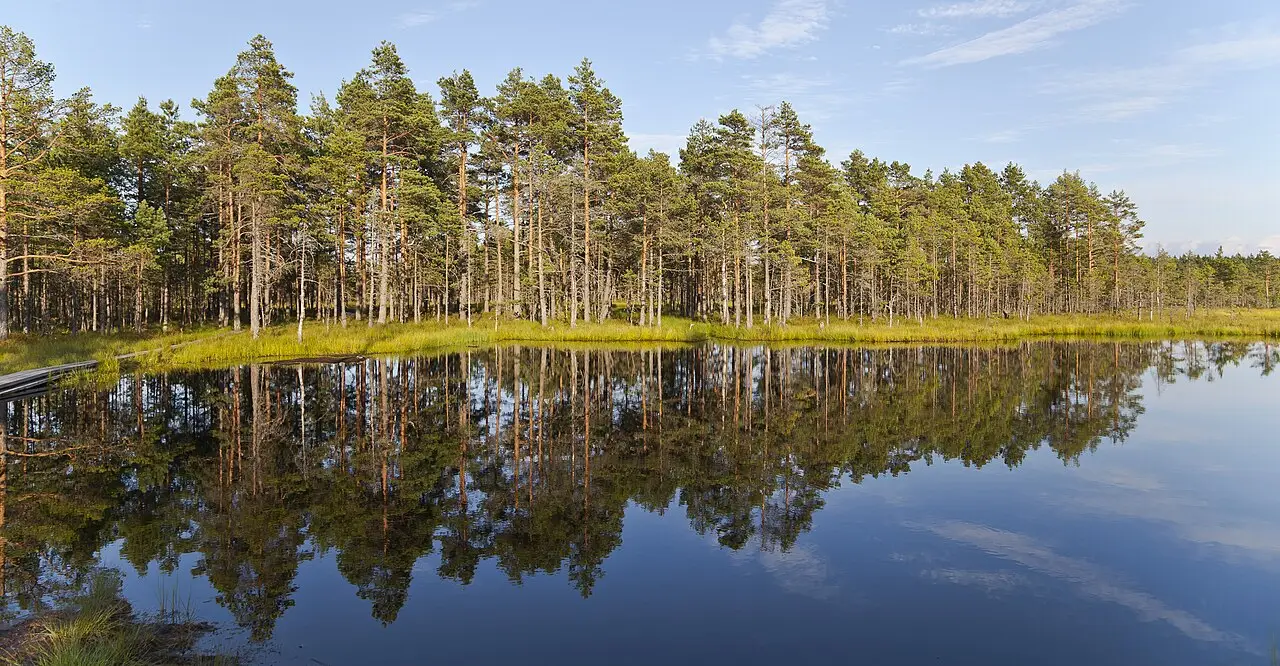
Lahemaa National Park
70 to 80 km east, about an hour by car along the Narva road. The first national park created in the Soviet Union, in 1971, with the Palmse and Sagadi manors, the fishing villages of Käsmu and Altja, and the 3.5 km boardwalk over the Viru bog.

Tartu
Tartu is 185 km south, 2 hours 15 minutes by direct train from Balti jaam, with several departures a day. It's home to the university founded in 1632, a small-scale student city, and was European Capital of Culture in 2024: the best way to see Estonia outside the capital in a single day.
Where to begin
Old Town, with choices and breaks
Start at Raekoja plats at a time that fits your trip. On arrival day, allow for luggage, check-in and rest before setting out; the square can be the whole outing. Check access separately for any interiors you want to visit, without assuming they open early.
Kalamaja and the harbour, with choices
Start with Balti Jaama Turg and Telliskivi when the businesses you want to visit are open. Choose the market, galleries or Fotografiska according to your interests; check the exhibition and ticket before planning an art visit. Breakfast need not come with every interior.
Kadriorg and memory, with time to choose
Kadriorg can be a park walk or an art visit. Check the journey from your accommodation for the chosen date and time; the tram line depends on your starting point. Walk through the gardens according to your energy and allow a break to eat and sit down.
Money
It's common to go days without touching a banknote, and nobody finds it odd. The currency is the euro, adopted on January 1, 2011, and contactless cards handle practically everything: many cafés, tourist buses, and even markets don't accept cash, and a card is more useful than cash. 2026 ranges: espresso €3–4.50; dish of the day €6–10; main course at a mid-range restaurant €15–25; dinner with wine €35–60 per person; draft beer €7 at Raekoja plats and €4.50 three blocks away; hostel bed €20–35; three-star double room €80–150; museum €8–15 (the Kumu at the high end); a 24-hour Tallinn Card from about €35, which pays off if you visit three museums the same day. VAT rose to 24% in July 2025, and the lodging rate stands at 13%. As of September 2026, Estonia doesn't charge a municipal tourist tax, though the matter is under discussion in parliament. Tipping isn't mandatory or expected: rounding up the bill or leaving 10% at a table-service restaurant is as far as anyone goes, and anyone who leaves more gets the difference back without comment.
Getting there and around
From the airport to your accommodation
Lennart Meri Airport is about 4 km from the city centre. Airport guidance checked in October 2026 lists trams T2 and T4; bus 2 uses a stop on Tartu highway, a short walk from the terminal. Choose according to your accommodation’s address and check direction, stop and timetable for your date. Allow for baggage, waiting, walking and any transfer; the vehicle’s journey time is not the time to your room. If you arrive before check-in, arrange luggage storage before sightseeing. For departure, preserve the time required by your airline and the airport.
The published standard fare is €2 for a one-hour ticket and €5.50 for a day ticket, checked in October 2026; confirm the fare table and ticket type before buying. Use an accepted contactless bank card, Ühiskaart or QR ticket as appropriate, and validate on every boarding. Do not rely on paying cash to the driver. The conversion of hourly tickets to the daily cap follows the transport day, from 4am until 4am the next day, rather than any 24-hour period after the first journey. Free travel depends on eligibility and a document or pass: Tallinn residence is not the only qualifying case, and being a visitor does not rule out every exception.
For a taxi or app-based ride, check the price, category and meeting point before accepting; there is no single guaranteed €8–15 fare for every arrival. Compare the whole journey with luggage, traffic and your accommodation’s location, without turning the first day into a compulsory sequence of attractions.
Tram, bus, Elron train, and the ferry to Helsinki
The network has four narrow-gauge tram lines of 1,067 mm (horse-drawn from 1888, electric from 1925, extended to the airport in 2017), a few trolleybus lines that have been shrinking for years, and about sixty bus lines, all concentrated at Vabaduse väljak, Viru, and Balti jaam. Elron trains leave from Balti jaam station, right against the wall, for Nõmme, Keila, Paldiski, Tartu (2 hours 15 minutes), and Narva. Rail Baltica, the future railway to the rest of Europe, will have its terminal at Ülemiste, near the airport, with service expected around 2030. The ferry port is 1.2 km from Raekoja plats, 15 minutes on foot, and sends dozens of daily crossings to Helsinki in 2 hours to 2 hours 30 minutes. You can cross the center on foot in twenty minutes, on cobblestones that punish your heels, so wear shoes with firm soles. There's no large municipal bike-share system, but Bolt and Tuul e-scooters are everywhere, and continuous bike lanes run along the coast to Pirita.
Safety
Tallinn is one of the safest capitals in Europe, and the realistic risk is to your wallet, rarely to your physical safety. Pickpockets work Raekoja plats, Viru Street, and the ferry terminals on cruise days, and nightclubs with touts at the door near Viru Gate run the classic inflated-bill scam. Ask the price before you sit down and be wary of any invitation made on the street. Unlicensed taxis at the airport and port exits charge three times the fare; use Bolt or the official counters. Alcohol is cheap and visible, and the only strict rule is behind the wheel: the tolerance for drunk driving is practically zero. In winter the bigger danger is physical: icy sidewalks and blocks of snow falling from roofs during the thaw, which is why there are tapes cordoning off stretches of sidewalk; it may look like construction, but it's a warning. Tap water, treated from Lake Ülemiste, is safe to drink. The Russian border is 210 km away, at Narva, and doesn't affect daily life in the capital. The only noticeable effect is the intermittent GPS interference recorded in the region since 2024, which sometimes disrupts navigation apps. Emergencies: 112.
Etiquette tips
Speak at the room's volume
Estonians talk quietly on public transport, in cafés, and in shops, and a loud voice is heard by everyone. Nobody will complain, but you'll be the only audible thing in the car.
Let silence exist
Long pauses in conversation are normal and don't signal discomfort or lack of interest. Filling every silence with a question comes across as intrusive; the answer usually arrives a few seconds later.
Take your shoes off at the door
In a family home, a rented apartment, and most small offices, shoes stay at the entrance. Don't wait to be invited to take them off: just take them off.
Wait for the green light
Pedestrians stop at the red light even with no car in sight, including at three in the morning, and crossing outside the crosswalk is a fineable offense. Wait for the green light, like they do.
Wear a helkur in the dark
The reflector clipped to a coat is required by law for pedestrians on unlit roads and worn by almost everyone between October and March. It costs €1 to 3 at any kiosk and clips on at knee height, on the traffic side.
Sauna with no swimsuit
In the traditional public sauna, you go in nude, shower first, use a towel to sit on, and rooms are separated by sex. Swim trunks or a swimsuit are seen as a hygiene lapse, not modesty.
Mistakes to avoid
Treating Estonia as a Slavic country
Treating Estonia as a Slavic country or as “ex-Soviet.” The language is Finno-Ugric, related to Finnish, the cultural frame of reference is Nordic, and the 1940-to-1991 occupation is read as occupation, not origin; striking up conversation in Russian with a stranger can be met with coldness. Start in English.
Staying only inside the wall
Thinking the city is the wall. The historic center is small, and the real Tallinn is outside it: Kalamaja, Kadriorg, Noblessner, the panel-block neighborhoods to the east. Anyone who stays only inside the gates spends three days in the same scenery, and it's easy to pass the same almond vendor twice in one day.
Beer price: €7 on the square, €4.50 three blocks away
Buying everything within the walls. A draft beer on Raekoja plats costs €7, against €4.50 three blocks away, and restaurants on tourist streets with photos on the menu charge double what you'd pay in Telliskivi or the station market.
The wet cobblestone freezes
Underestimating the wind and the ice. June can read 16 °C with a sea wind, and from December to March the wet cobblestone freezes: smooth soles are an accident waiting to happen. Under the eaves, during the thaw, the city cordons off the sidewalk because of falling icicles.
Assuming transport is free for everyone
Assuming transport is free for everyone. The free rides apply only to people with residence registration in Tallinn, and visitors pay €2 an hour or €5.50 for the day.
Useful phrases
Tere
Hello (TEH-reh)
Aitäh
Thank you (AI-tahh)
Palun
Please, you're welcome, and here you go: covers all three (PAH-lun)
Vabandust
Sorry / excuse me (VAH-bahn-dust)
Kas te räägite inglise keelt?
Do you speak English? (kahs teh RAH-gih-teh IN-glih-seh kehlt)
Arve, palun
The bill, please (AHR-veh, PAH-lun)
Districts
Vanalinn
The walled center, a World Heritage Site since 1997, divided between upper Toompea (parliament, cathedrals, lookouts) and the merchants' lower town around Raekoja plats. It measures 800 m from end to end, is cobbled throughout, and has the highest prices in the city.
Kesklinn and Maakri
The modern center just outside the walls: Freedom Square with its 2009 victory column, the Viru shopping center, the Bussijaam bus station, and on Maakri street, the handful of office towers that form the country's only skyline. It's where you handle banking, the pharmacy, and a weekday lunch.
Kalamaja and Telliskivi
The wooden neighborhood of fishermen and later workers, just northwest of the wall, with Tallinn houses on limestone ground floors and plank-board upper stories. Since 2009 the Telliskivi railway workshops have housed studios, galleries, bars, and the station market; it's the youngest neighborhood and the cheapest for eating near the center.
Noblessner and Kopli
A waterfront north of Kalamaja, at the submarine shipyard founded in 1913 by Nobel and Lessner, now converted into a maritime square with a brewery, public saunas, and the Proto museum. Kopli, further along the peninsula, still mixes derelict wooden houses with new buildings.
Kadriorg
A 70-hectare park around Peter I's baroque palace, with the Kumu museum, the president's residence, early-20th-century wooden villas, and much of the embassy district. A quiet neighborhood, good for walking between museums.
Pirita
Across the river of the same name, with the city's most-used beach, the marina built for the 1980 Olympic regatta, and the ruins of St. Bridget's Convent (1407–1436). An 8 km seaside walk connects it to the center.
Lasnamäe and Mustamäe
The large prefabricated panel-block neighborhoods from the Soviet period, built starting in 1962 and 1977. They house about a third of the population, have a Russian-speaking majority in Lasnamäe, and show the other Tallinn, the one that shows up in Estonian cinema and not on postcards.
Nõmme
A pine-and-wooden-house garden suburb 8 km from the center, annexed in 1940, with its own market, train station, and small-town feel. It serves as a counterpoint: twenty minutes by train and you leave the Hanseatic capital and enter a forest village.
History
11th–12th c. · The fortress on limestone
An Estonian settlement occupies Toompea, the limestone spur that dominates the bay. Geographer al-Idrisi records the port in 1154, under the name Qlwry, linked to the Kolyvan of Slavic chronicles.
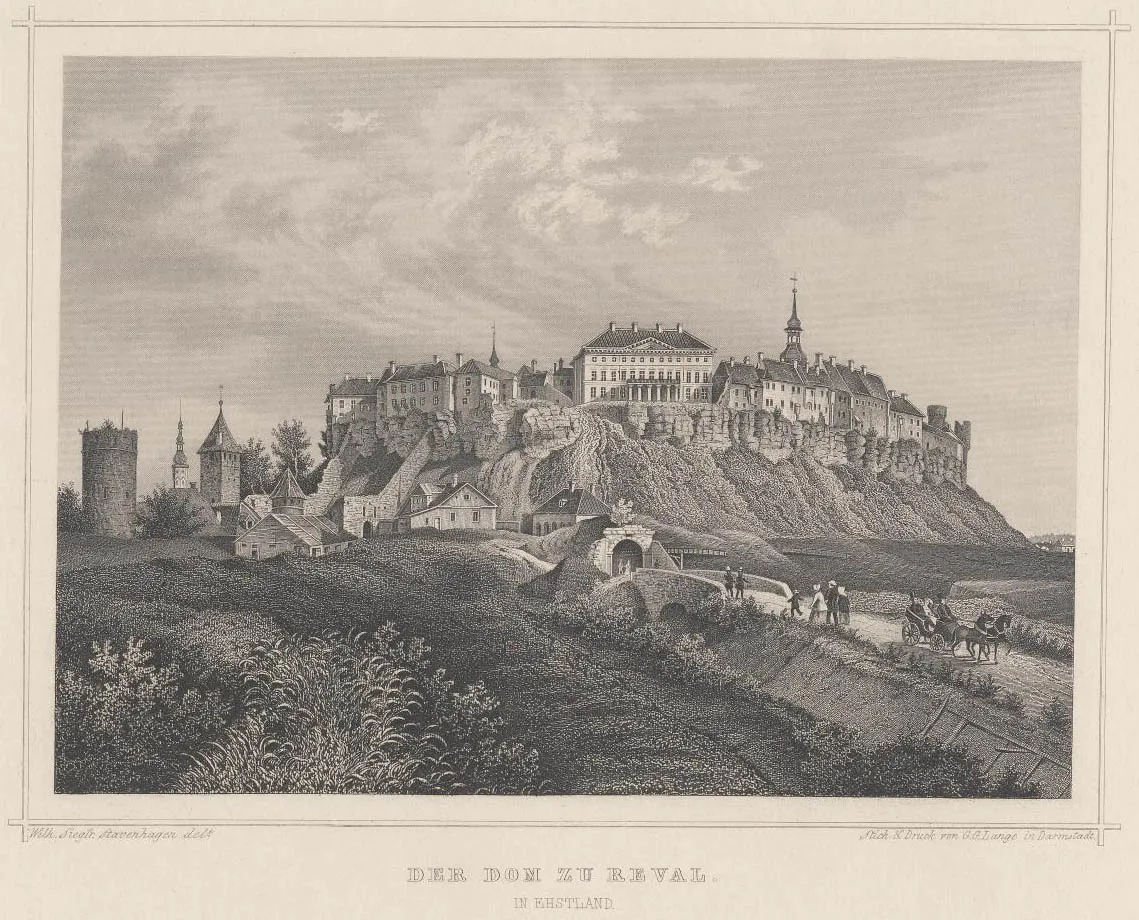
1219 · The Danish conquest
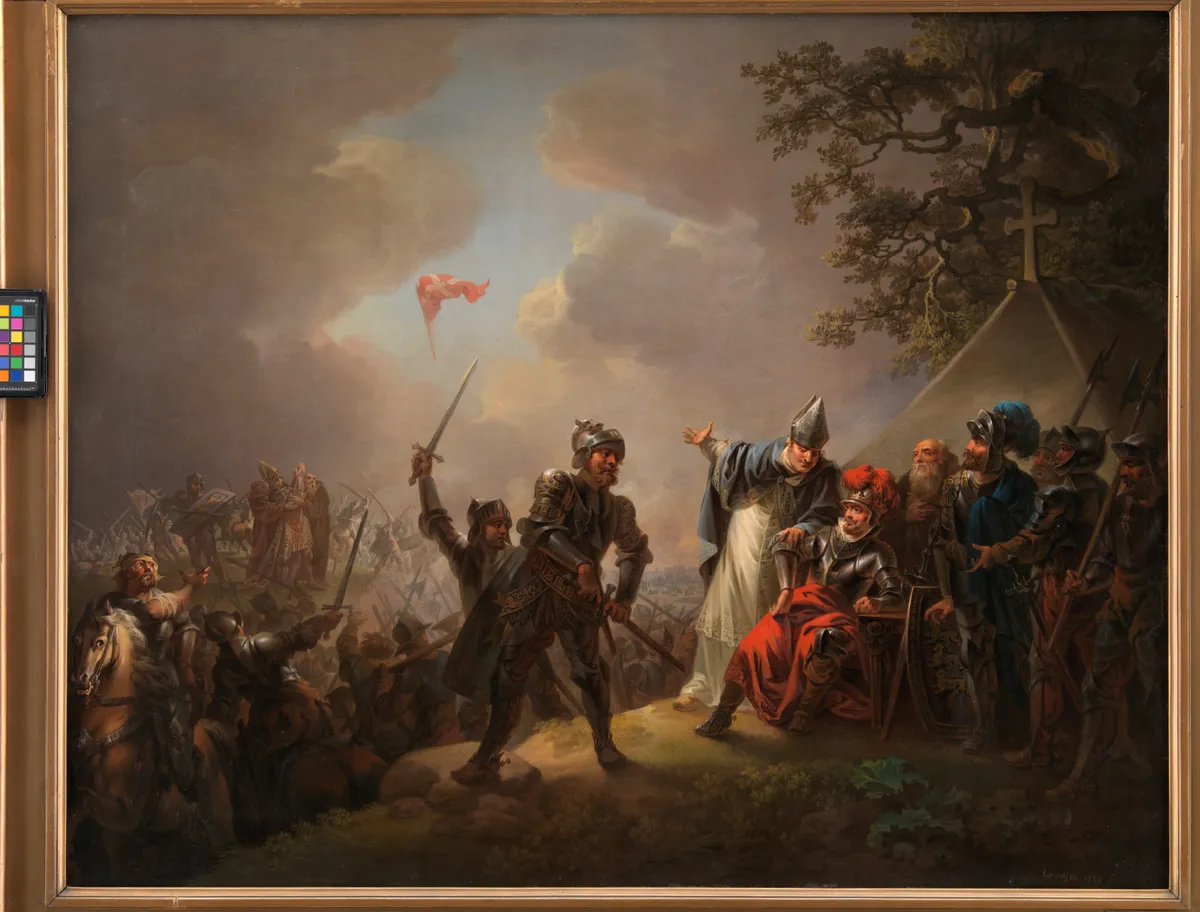
Valdemar II lands and defeats the Estonians at Lyndanisse; it's the legendary battle in which the Danish flag falls from the sky. The city's name comes from this: Taani linn, the Danes' stronghold.
1248 · Lübeck city rights
Reval receives Lübeck law and the lower town organizes itself as a commune of German merchants, with its own council and guilds. Toompea, above, remains under the bishop and the nobility, with separate jurisdiction.
1285 · Joining the Hansa
Reval joins the Hanseatic League and becomes one of the stops on the Novgorod–Lübeck–Bruges circuit. The warehouse-houses of Pikk and Lai gain a hoist beam in the attic and a vaulted cellar.
1346 · Sold for 19,000 marks
Denmark sells northern Estonia to the Teutonic Order for 19,000 silver marks. Administration passes to the Livonian Order, which governs until the mid-16th century.
1561–1710 · The century and a half under Sweden
With Livonia dissolved in the Livonian War, Reval swears loyalty to Erik XIV of Sweden in 1561. The 1631 grammar school arrives, along with the printing press and the earthen bastions that are parks today.
1710 · Surrender to Peter I
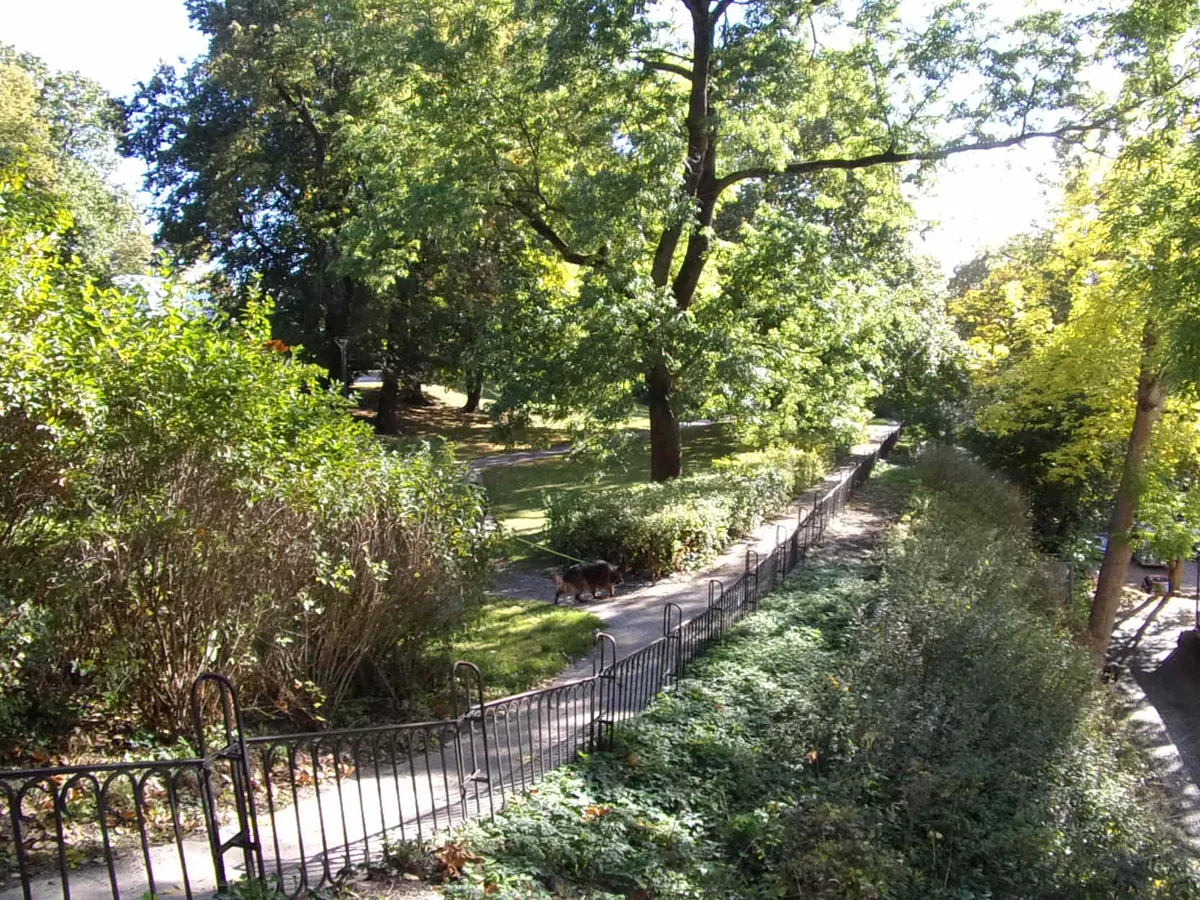
In the Great Northern War the city surrenders to Russia while plague kills most of the population. Peter I orders Kadriorg built starting in 1718 and preserves the privileges of the Baltic German nobility.

1870 · The railway and the factories
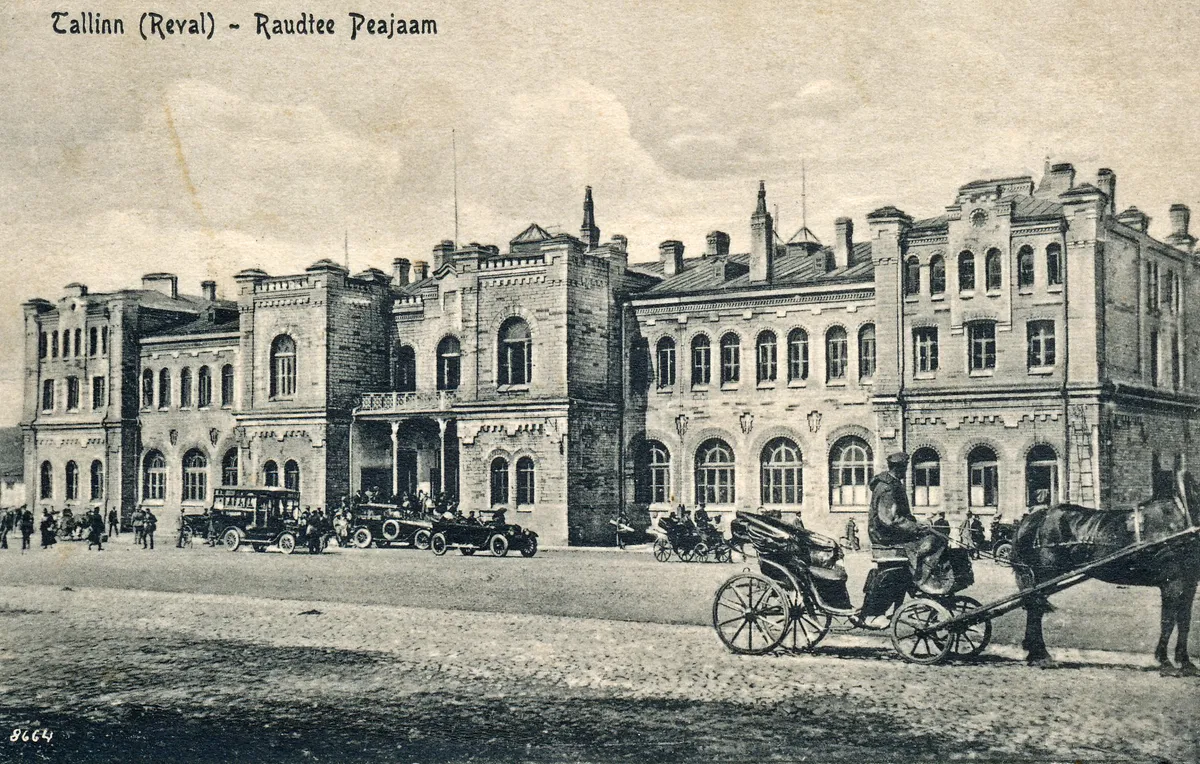
The line to St. Petersburg turns Reval into an industrial port of the empire: Volta, Krull, Dvigatel, the Bekker shipyard. The population jumps from about 30,000 in 1870 to about 160,000 in 1917, and the wooden suburbs rise to house the workers.
1918–1940 · The first republic
Independence declared on February 24, 1918, and confirmed by the Treaty of Tartu on February 2, 1920. Land reform dismantles the Baltic German estates, and in October 1939 the Baltic Germans leave the country after seven centuries.

1940–1991 · Occupations and panel blocks
Soviet annexation in 1940, German occupation from 1941 to 1944, deportations on June 14, 1941, and March 25, 1949. The Soviet bombing of March 9, 1944, destroys about a third of the housing; then come Mustamäe (1962), Väike-Õismäe and Lasnamäe (1977), and the 1980 Olympic sailing regatta in Pirita.

1988–2026 · The Singing Revolution and the digital state
On September 11, 1988, about 300,000 people sing at Lauluväljak; independence is restored on August 20, 1991, and Russian troops leave on August 31, 1994. NATO and the European Union follow in 2004, the euro in 2011, and a government that handles almost everything online.

Complete history
Toompea, the Danish conquest, and the 1248 charter
The city begins on a limestone cliff. The Baltic klint, the limestone escarpment that runs along Estonia's north coast, ends here in a spur 20 to 30 meters above a sheltered bay: this is Toompea, and there was an Estonian fortification here before any chronicle mentioned it. In 1154 geographer al-Idrisi, working in Sicily, already notes the port. In 1219 Valdemar II of Denmark lands, wins the battle of Lyndanisse, and unwittingly names the place: Taani linn, the Danes' stronghold, becomes Tallinn. In 1248 the lower town receives Lübeck law and the division is born that organizes everything that follows: above, Toompea, belonging to the bishop and the landed lords; below, the commune of German merchants, with its own council, its own guilds, and gates that closed at night. The two were separate administrations until the late 19th century.
Reval, a Hanseatic League stop from 1285 to 1500
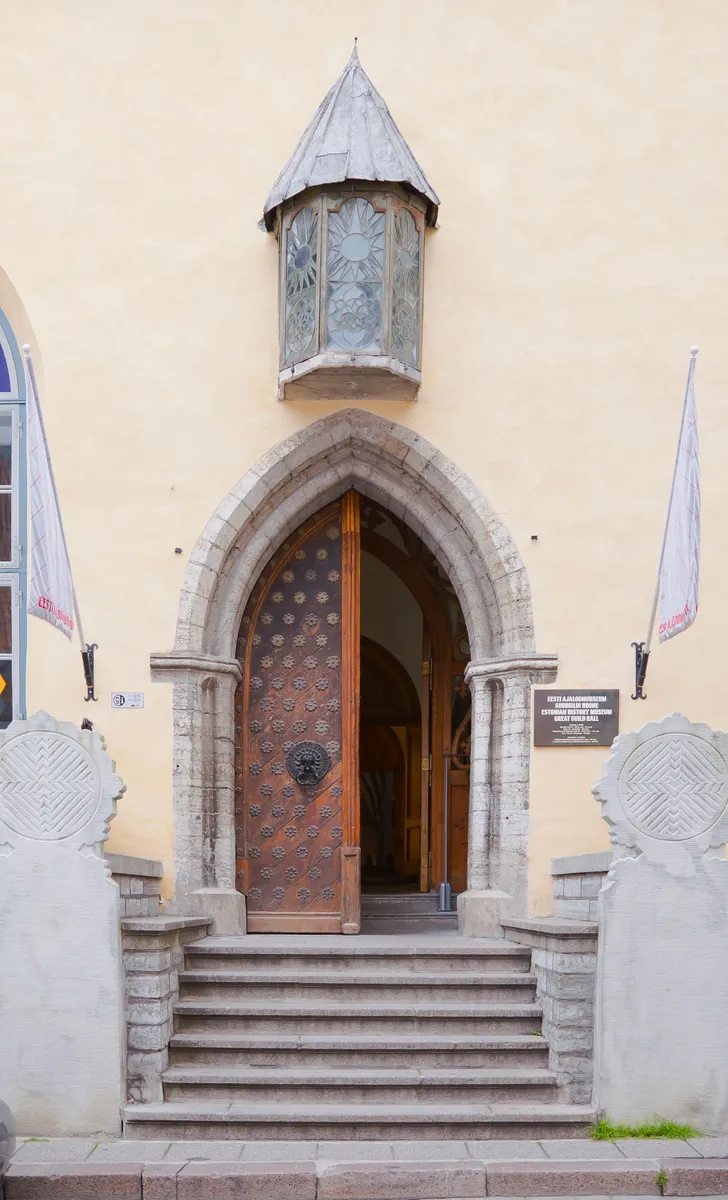
Between 1285 and 1500 Reval is a cog in the Hanseatic League, the point where wax, flax, and Russian furs change ships on their way to Bruges. The scale is modest (perhaps 7,000 residents at the medieval peak) but the architecture is that of a wealthy city: narrow warehouse-houses on Pikk and Lai, with a hoist beam on the gable; the Great Guild of 1410 for married merchants; the Brotherhood of Blackheads for unmarried ones; the spire of Oleviste serving as a landmark for those coming from the sea. The Reformation arrives in 1524 with iconoclasm in the churches, and the Livonian War (1558–1583) breaks down the old order: in 1561 the city swears loyalty to Sweden to avoid falling to Ivan IV's Russia.
The Swedish period left a school and a bastion
The Swedish period leaves a school, a printing press, and the 1680s earthen bastions, now turned into the parks that surround the center. It ends in 1710, when plague empties the city and it surrenders to Peter I in the Great Northern War. The tsar builds Kadriorg starting in 1718 and strikes the arrangement that would last two centuries: Russia rules, the Baltic German nobility administers, Estonian remains the language of those who work the land. That only changes with the 1870 railway to St. Petersburg. The port industrializes, Estonian peasants arrive at the factories, the population multiplies fivefold in fifty years, and the wooden neighborhoods of Kalamaja and Pelgulinn rise around the walls, with the so-called Tallinn house: a limestone ground floor, two plank-board stories, and a glazed central staircase.
Independence and the treaty that sealed it
Independence on February 24, 1918, and the Treaty of Tartu of 1920 turn a provincial port into a national capital within a generation: ministries, a central bank, civil service in white concrete, the land reform that expropriates the Baltic German nobility's estates. In October 1939, after the Molotov-Ribbentrop pact, almost the entire Baltic German community boards ships for Germany, and seven centuries of presence end within a few weeks. June 1940 brings Soviet annexation, with deportations on June 14, 1941, and March 25, 1949, and between 1941 and 1944 the German occupation. On the night of March 9, 1944, Soviet aviation burns about a third of the city's housing: the Estonia Theatre, the Niguliste church, and the entire Harju street, whose ruins were left as a square and remain there.
The Soviet neighborhoods, the Singing Revolution, and the digital state (1962–2026)
Soviet Tallinn grew outward and to the east. Mustamäe (1962), Väike-Õismäe, and Lasnamäe (from 1977) took in the industrial migration from the Soviet Union, and the share of Estonians in the country fell from about 88% to 61% by 1989; today these neighborhoods house close to a third of the city. The 1980 Olympic regatta paid for the Pirita marina, the Olümpia hotel, and the 314 m TV tower. Finnish television, picked up from across the gulf, worked as a window to the West for decades. In 1988 the singing rallies at the Lauluväljak drew up to 300,000 people; independence returned on August 20, 1991, and the last Russian soldier left on August 31, 1994. What came next was fast and uneven: its own kroon in 1992, a flat income tax, NATO and the European Union in 2004, Skype founded by local engineers in 2003, the euro in 2011, and e-residency from 2014. In April 2007 the removal of the Bronze Soldier from downtown to the military cemetery set off two nights of rioting and the first state-scale cyberattack against a country. After 2022, the city removed the remaining Soviet monuments, and in 2024 public schools began the transition to teaching entirely in Estonian. European Capital of Culture in 2011 and European Green Capital in 2023, the Tallinn of 2026 lives on digital services, port logistics, tourism, and the daily flow of ferries to and from Helsinki.
Geography and shape of the city
The Baltic klint and the flat strip
Tallinn covers 159 km² on the southern shore of the Gulf of Finland, at the edge of the Baltic Klint. This limestone escarpment reaches the sea here and forms a step 20 to 30 m high on which Toompea and, farther east, Lasnamäe sit. Between the escarpment and the water lies a flat strip of sand and clay, home to the medieval lower town, the port, and the old wooden suburbs.
The coast, the lake, and Nõmme
The coast is cut by two peninsulas, Kopli and Paljassaare, and closed off to the east by the Pirita river; to the south, Lake Ülemiste, about 9.6 km², supplies most of the drinking water and borders the airport runway, 4 km from the central square. Nõmme, to the southwest, grew on a pine-covered sand ridge and became a garden suburb before being annexed in 1940.
From the medieval center to Soviet blocks, in rings
The urban grid is radial and short: roads fan out from the medieval center, first crossing the ring of 19th-century wooden neighborhoods, then the ring of Soviet panel blocks, and only then reaching the countryside. The climate is humid continental with maritime influence: January around −4 °C, July around 18 °C, and 650 to 700 mm of rain a year, while the 59°N latitude produces the contrast that affects visitors most, with about 18 hours 40 minutes of daylight in late June versus just over 6 hours of light in December.
Culture
The Song Festival, Arvo Pärt, and the choirs
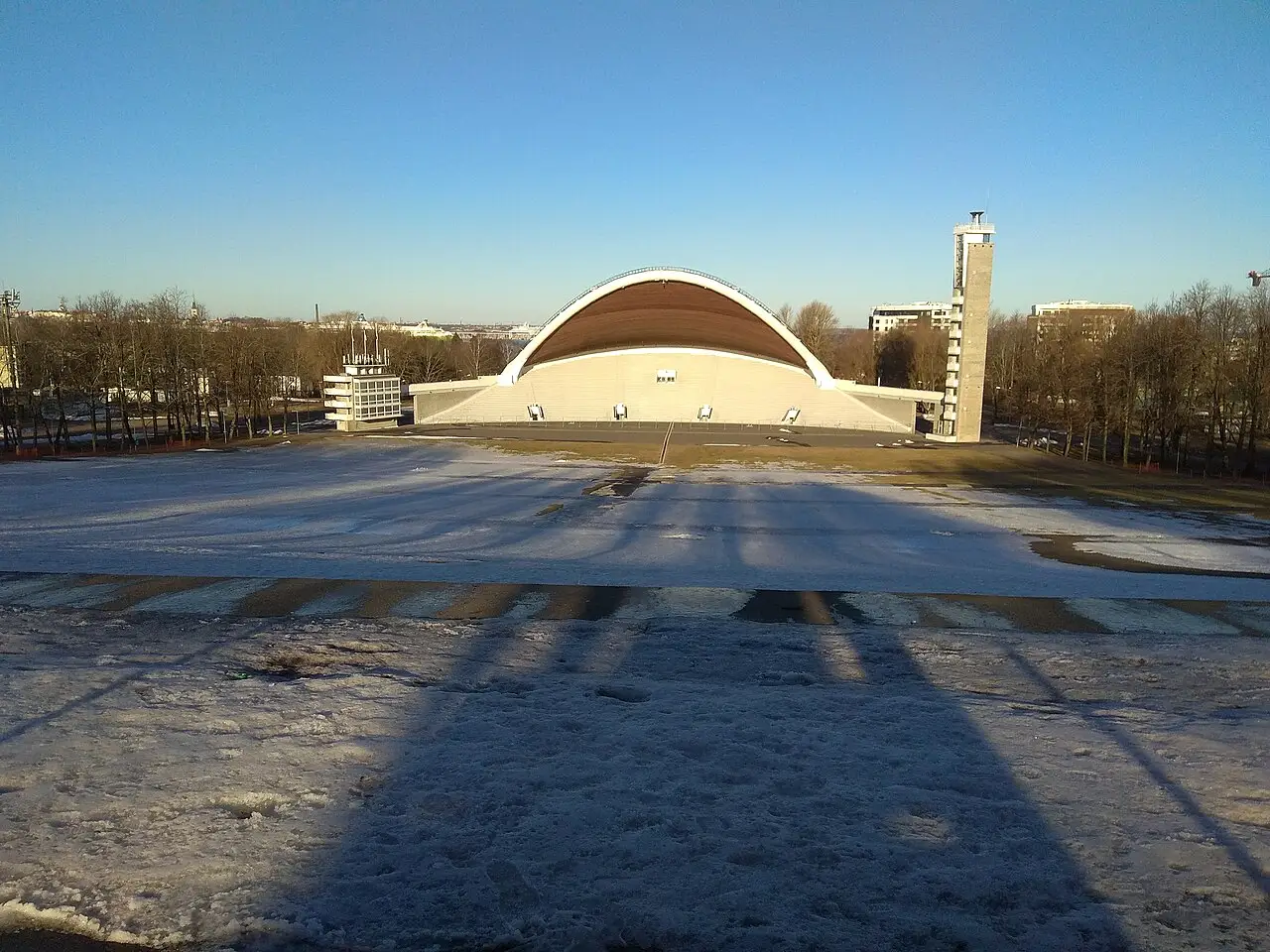
Estonian culture is organized around collective singing. The first song festival was in 1869, in Tartu, and since 1928 Tallinn's Lauluväljak has hosted the gathering every five years: about 30,000 singers and dancers rotate in shifts on the 15,000-seat stage, before a six-figure audience, a tradition inscribed by UNESCO in 2003. From this came a whole lineage of serious music: Arvo Pärt, who created tintinnabuli in 1976 and has a center dedicated to his work in Laulasmaa, 35 km to the west, opened in 2018; Veljo Tormis, who rewrote peasant runic song for choir; the Estonian Philharmonic Chamber Choir and the National Symphony Orchestra, with international awards disproportionate to the country's size; and conductors Neeme and Paavo Järvi.
Novels that explain the city: Tammsaare and Jaan Kross
In literature, two books explain the city: “Truth and Justice,” by A. H. Tammsaare, written between 1926 and 1933, which follows the exodus from the countryside to the capital and whose author has a house museum in Kadriorg, and the work of Jaan Kross, the historical novelist who reconstructed 16th-century Reval and the divide between the Germans above and the Estonians below. In cinema, PÖFF, the November festival founded in 1997, is one of northern Europe’s few A-category festivals. The Nukufilm and Joonisfilm studios have also built a strong tradition of puppet and hand-drawn animation. Estonia is also one of the least religious countries in the world: the Lutheran heritage lives on in the buildings and the calendar, but almost nobody attends church, and the Orthodox share, tied to the Russian-speaking population, underwent a legal reorganization starting in 2024 to cut ties with Moscow.
The digital layer is culture too
The most recent layer is digital, and it is culture as much as economy. Skype was written by Estonian engineers in 2003 and sold to eBay in 2005: Microsoft shut down the service in 2025, but the network of people and money it created produced Wise, Bolt, and Starship. Practically every public service is accessible with the digital ID, internet voting has existed since 2005, and the e-residency program, launched in 2014, has already issued more than 100,000 cards. In nightlife, the axis has moved from the walled center to Telliskivi, Kalamaja, and Noblessner; the public sauna is part of the social calendar, and Kalma saun, opened in 1928 on Vana-Kalamaja street, is the oldest still operating in the city.
Tallinn means “the Danes’ stronghold,” from Taani linn, a reminder of Valdemar II's conquest in 1219.
The tunnels of the Swedish bastions, under the Kiek in de Kök tower, served as an air-raid shelter during the war and as a hideout for punks in the 1980s.
Festivals and events

Laulu- ja tantsupidu (Song and Dance Festival)
Every five years, in July, at Lauluväljak and the Kalev stadium; the last edition was in July 2025 and the next is planned for 2030. It gathers about 30,000 singers and dancers and fills the city with regional costumes for three days.

Vanalinna päevad (Old Town Days)
During Old Town Days, in late May or early June, the walled center fills with stages, music, stalls, and medieval fairs, and artisans open their workshops to the public on the squares. Since the sun stays above the horizon for close to eighteen hours a day at this time of year, the squares stay full and bright until late at night.

Jaanipäev
The night of June 23 into 24, the year's biggest holiday: bonfires, beer, and barbecue. Tallinn empties out because almost everyone heads to the countryside or a summer cottage, and many shops close.
 AI illustration
PÖFF: Black Nights Film Festival
About two weeks in November, since 1997, with more than 200 features in theaters across the city and parallel sections for animation and children's cinema. It's the main reason to visit in the calendar's worst month.

Jõuluturg (Christmas Market)
From the second half of November to early January, on Raekoja plats, around a tree the city says it has put up since 1441. Stalls sell mulled wine, blood sausage, wool socks, and caramelized almonds served by people in medieval dress.
Books and films
“Between Three Plagues,” Jaan Kross (1970–1980)
A historical novel about Balthasar Russow, a chronicler of 16th-century Reval, the son of Estonian peasants who rises in the German city. It explains, better than any guide, why Toompea and the lower town were two different places.
“Autumn Ball” (Sügisball), Veiko Õunpuu, 2007
Six crossing solitudes in the panel blocks of Lasnamäe, an award winner at Venice's Horizons section. It's the portrait of the Tallinn that doesn't show up on the wall, and where a third of the city lives.
“Tabula Rasa,” Arvo Pärt (ECM, 1984)
The album that introduced tintinnabuli to the world, written by a composer who left Soviet Estonia in 1980 and returned after 1991. It's worth listening to it before a concert at Niguliste.
Frequently asked questions
Tallinn: Is Estonia a Slavic country?
No. Estonian is a Finno-Ugric language, related to Finnish, and the cultural frame of reference is Nordic. The 1940-to-1991 occupation is read as occupation, not origin, and striking up conversation in Russian with a stranger can be met with coldness.
Tallinn: How do you get from the airport to the center?
Tram 4 gets you downtown in about 15 minutes, and bus 2 links the airport and the ferry port.
Tallinn: How do you get to Helsinki by ferry?
Helsinki is 80 km across the sea, 2 hours to 2 hours 30 minutes by ferry from the port of Tallinn, with dozens of daily departures and one-way tickets starting around €20.
Tallinn: What's the best time to visit?
From June to August, for the light: the average runs between 17 °C and 22 °C and the longest day has about 18 hours 40 minutes of sun. May and September bring 10 °C to 16 °C, lower prices, and a breathable center; November is the month to avoid.
Tallinn: Do you need to speak quietly in public places?
It's not a rule, but it's the custom. Estonians talk quietly on public transport, in cafés, and in shops, and a loud voice is heard by everyone.