Poland
Kraków
A medieval square, a royal castle and the Jewish quarter
Days Start with the basic programme and choose extensions for the time you have.
How the guide reaches this number
A third day goes to Nowa Huta, the working-class district built by the communist regime from 1949 onward, or to Auschwitz or Wieliczka, which each take a full day. The city doesn't suit anyone looking for guaranteed sun, beaches or sophisticated nightlife, because the night splits between the cellar bars on the streets west of the Rynek and those on Kazimierz's squares. With just one day, climb Wawel at opening and walk down to the Rynek. Enter St. Mary's at 11:30am, through the visitors' door, to see the altarpiece open at 11:50am. In the afternoon, cross the river to the square with 70 chairs and Schindler's Factory, in Podgórze. In summer the Rynek is overrun by lines, the ground floor of the Sukiennice has become a souvenir market and the restaurants inside the ring charge more to serve worse food. Avoid January, when the cold air traps smog in the valley and the sky stays overcast.
2–3
When May, June and September; January is the month to avoid
How the guide reaches this number
The climate is continental, with four well-defined seasons. Winter runs from December to February, with averages between −4 °C and 2 °C, intermittent snow and episodes of smog trapped in the valley; January is the month I'd avoid. Spring is erratic: April swings between 5 °C and 18 °C in the same day, and May already delivers 20 °C afternoons with the Planty in bloom. July and August are the hottest months, with highs of 24 °C to 30 °C, and also the rainiest, with short thunderstorms in the late afternoon. They're also the months with the longest lines at Wawel, Schindler's Factory and Wieliczka. September is the best combination (18 °C to 22 °C, days still long, fewer people) and October brings color to the trees of the ring. November is gray and gets dark at 4pm, which changes the whole itinerary. High season runs from mid-June to mid-September, plus the November 1 holiday and New Year's. Low season is from mid-January to March, when lodging drops by about a third.
Per person/day 250–450 zł (about 60–105 €) per person, with simple lodging
How the guide reaches this number
Per person per day: accommodation, meals, urban transport, visits and a small allowance for extras. Flights excluded; larger purchases vary. Editorial estimate, not a quote.
 What Nilo thinks
Stay two days in Kraków: one for the medieval ring around the Rynek, another for Wawel, Kazimierz and Podgórze. A third day goes to Nowa Huta, the working-class district built by the communist regime from 1949 onward, or to Auschwitz or Wieliczka, which each take a full day. The city doesn't suit anyone looking for guaranteed sun, beaches or sophisticated nightlife, because the night splits between the cellar bars on the streets west of the Rynek and those on Kazimierz's squares. With just one day, climb Wawel at opening and walk down to the Rynek. Enter St. Mary's at 11:30am, through the visitors' door, to see the altarpiece open at 11:50am. In the afternoon, cross the river to the square with 70 chairs and Schindler's Factory, in Podgórze. In summer the Rynek is overrun by lines, the ground floor of the Sukiennice has become a souvenir market and the restaurants inside the ring charge more to serve worse food. Avoid January, when the cold air traps smog in the valley and the sky stays overcast.Kraków preserves a large historic ensemble around the Rynek, the square about 200 meters on each side organized under the charter of 1257. Churches predating the plan and façades altered in later periods show the city’s many layers; the survival of much of the center through World War II does not mean it escaped attacks or damage. From the top of St. Mary's, a trumpeter plays the hejnał every hour and always breaks off the melody on the same note. Inside sits the Veit Stoss altarpiece, carved between 1477 and 1489. The city reads in rings: Wawel hill, with the castle and the royal cathedral, the medieval grid, and Planty park where the walls once stood. Beyond it lie Kazimierz, the Jewish quarter, and Podgórze, with the former ghetto and Schindler's Factory. Eat at a bar mleczny, the no-frills canteen, with soup and pierogi for 20–35 zł, and buy an obwarzanek from the blue carts on the corners. Come in May, June or September, avoid January, and set aside two days, or three for Nowa Huta, Wieliczka or Auschwitz.
Quick facts
- Population
- about 804,000 in the municipality, about 1.5 million in the metro area
- Founded
- First written mention in 965; Magdeburg charter in 1257
- Country and region
- Poland: capital of the Lesser Poland Voivodeship (Małopolskie)
- Language
- Polish; English common in the center and among students
- Currency
- Złoty (PLN, zł): about 4.3 zł per euro in 2026; the euro isn't used
- Time zone
- CET (UTC+1) and CEST (UTC+2) in summer
- Best time to visit
- May, June and September; January is the month to avoid
- Average daily cost
- 250–450 zł (about 60–105 €) per person, with simple lodging
When to go
May, June and September; January is the month to avoid
January
-5° to 2°C
38 mm of rain
AvoidFebruary
-4° to 4°C
32 mm of rain
March
-1° to 8°C
38 mm of rain
April
4° to 15°C
46 mm of rain
July
14° to 25°C
98 mm of rain
August
13° to 25°C
73 mm of rain
October
5° to 14°C
51 mm of rain
November
1° to 8°C
41 mm of rain
December
-3° to 3°C
33 mm of rain
How the year changes
The climate is continental, with four well-defined seasons. Winter runs from December to February, with averages between −4 °C and 2 °C, intermittent snow and episodes of smog trapped in the valley; January is the month I'd avoid. Spring is erratic: April swings between 5 °C and 18 °C in the same day, and May already delivers 20 °C afternoons with the Planty in bloom. July and August are the hottest months, with highs of 24 °C to 30 °C, and also the rainiest, with short thunderstorms in the late afternoon. They're also the months with the longest lines at Wawel, Schindler's Factory and Wieliczka. September is the best combination (18 °C to 22 °C, days still long, fewer people) and October brings color to the trees of the ring. November is gray and gets dark at 4pm, which changes the whole itinerary. High season runs from mid-June to mid-September, plus the November 1 holiday and New Year's. Low season is from mid-January to March, when lodging drops by about a third.
The same numbers as a table
| Month | Temperature °C | Rain mm |
|---|---|---|
| January | -5 to 2 | 38 |
| February | -4 to 4 | 32 |
| March | -1 to 8 | 38 |
| April | 4 to 15 | 46 |
| May · | 9 to 20 | 79 |
| June · | 12 to 23 | 77 |
| July | 14 to 25 | 98 |
| August | 13 to 25 | 73 |
| September · | 9 to 19 | 66 |
| October | 5 to 14 | 51 |
| November | 1 to 8 | 41 |
| December | -3 to 3 | 33 |
Nilo's tips
Book Auschwitz online: no on-site sales since 2026
Anyone who arrives without a reservation leaves without getting in, because since March 1, 2026 no pass is sold on site. Book the visit as soon as you buy your plane ticket. The trip to Oświęcim takes about 1 hour 30 minutes, and backpacks are limited to about 30×20×10 cm. Set aside the whole day, because there's no time or energy left for anything else.
On the airport train, buy the ticket from the conductor
If there's a line at the machine, board anyway and pay on board, with no fine. The stairs to the platform are right after arrivals, next to the KRK terminal, and you don't need a ticket office. Choose the train over buses 208, 300 and 902, which are much slower, and over a taxi, which only pays off with three or more people.
Exchange money two blocks from the Rynek
At the exchange offices on Floriańska and around the edge of the Rynek, the “0% commission” sign leaves out the margin built into the rate. Walk a few blocks and change on a side street instead. At the ATM, pick a bank you recognize (PKO BP, Pekao, ING, Santander) and decline the automatic conversion the machine offers on screen.
For two or three days, buy the 24, 48, or 72 hour pass
They cost 20 to 60 zł and pay off from four rides a day. Since the fare increase at the start of 2026, a single ride costs 6 zł and the one-hour ticket, 8 zł. If you buy a paper ticket, validate it in the yellow machine as soon as you board, because the fine is more than 250 zł. For Nowa Huta, take tram 4 or 22, and on trams 8, 18 and 52, where pickpockets operate, carry your bag in front of you.
Be at the Rynek at 9am, before the tour groups
Until 9am the main square, 3.79 ha, is still empty, without the organized groups. To see the Veit Stoss altarpiece, return to St. Mary's Basilica through the side visitors' door, which opens at 11:30am Monday to Saturday, separate from the entrance for those attending Mass. The doors of the polyptych open at 11:50am, once a day. Wawel, the Czartoryski Museum and Schindler's Factory only admit visitors with a timed slot, so book those visits too.
Eat at a bar mleczny, for 20 to 35 zł
The bar mleczny is the no-frills canteen, a full meal falls in that range, and a “poproszę” is all it takes to order. There are locations on Grodzka, on Starowiślna and in Kleparz. The blue obwarzanek cart opens at six in the morning, disappears as soon as it sells out and takes contactless cards like any other stand. For the late-night sausage, go to the Hala Targowa, in Grzegórzki, where the blue van only parks after 8pm and serves into the small hours.
Explore the map

© OpenStreetMap · OpenFreeMap · © OpenMapTiles
Explore the map, read about the other places and plan your travel days in the app.
Open the appWhat to see
Kraków: The Vistula valley and the limestone
The Vistula runs west to east and bends at the foot of Wawel, a Jurassic limestone outcrop riddled with caves. Just north of the hill lies the Old Town, inside the Planty ring, which concentrates museums, hotels and most of the tourist restaurants, and is where prices climb first.
Rynek Główny and Podziemia Rynku
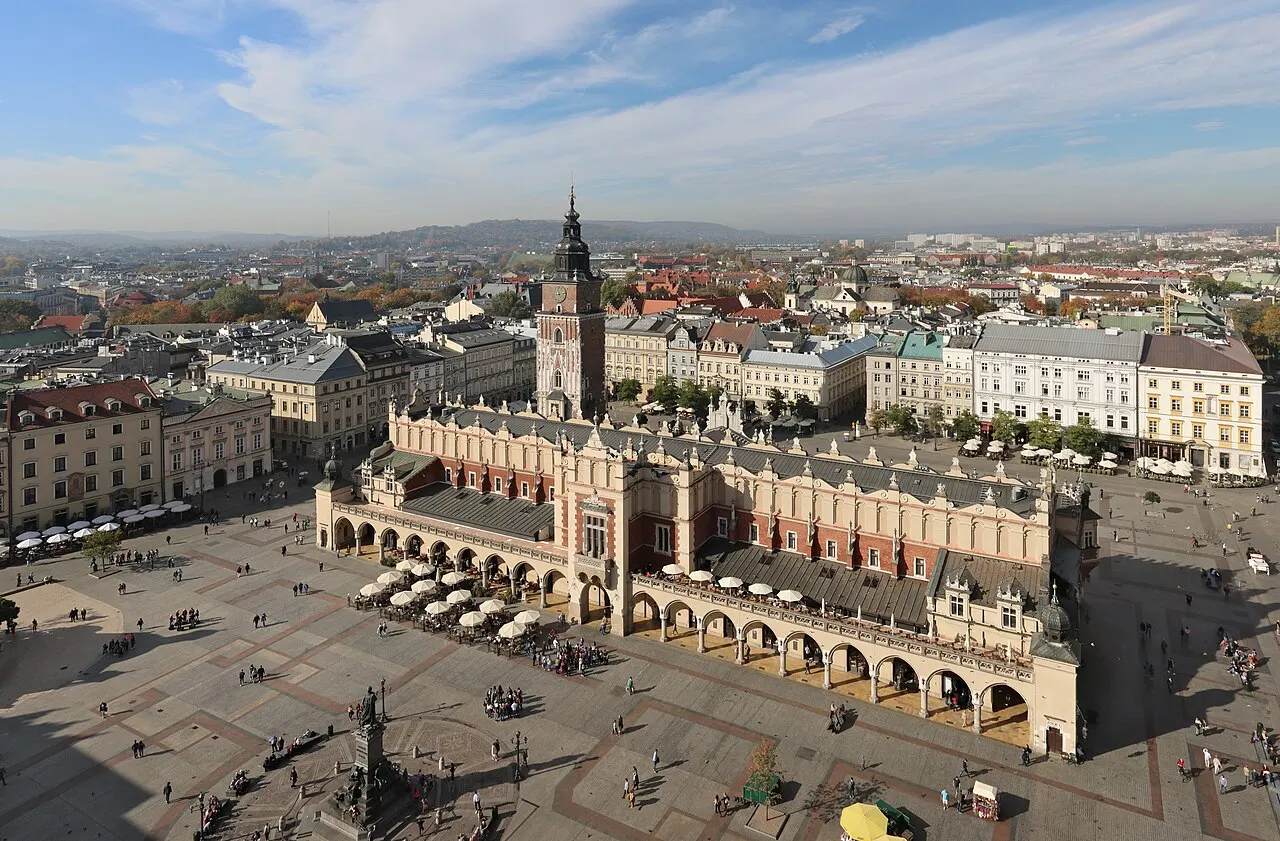
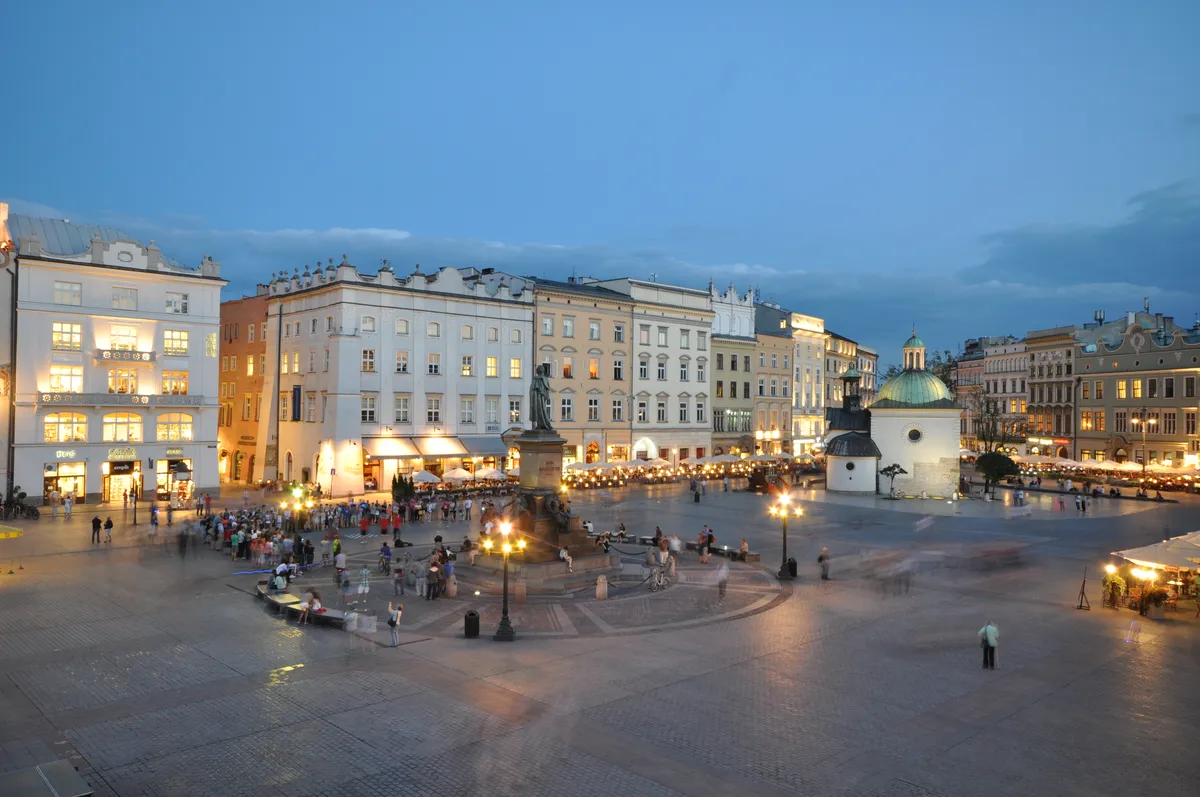
A square roughly 200 by 200 meters (3.79 ha) laid out under the 1257 charter, the largest medieval square in Europe. Under the paving, the Podziemia Rynku museum, opened in 2010, shows streets, coins and workshops from the 13th century, four meters down, excavated between 2005 and 2010.
Europe's largest medieval square, about 200 by 200 meters and 3.79 ha, was laid out under the 1257 city charter. Beneath the paving, four meters down, the Podziemia Rynku museum, opened in 2010, shows the excavated streets, coins and workshops.
Check access
St. Mary's Basilica (Bazylika Mariacka)
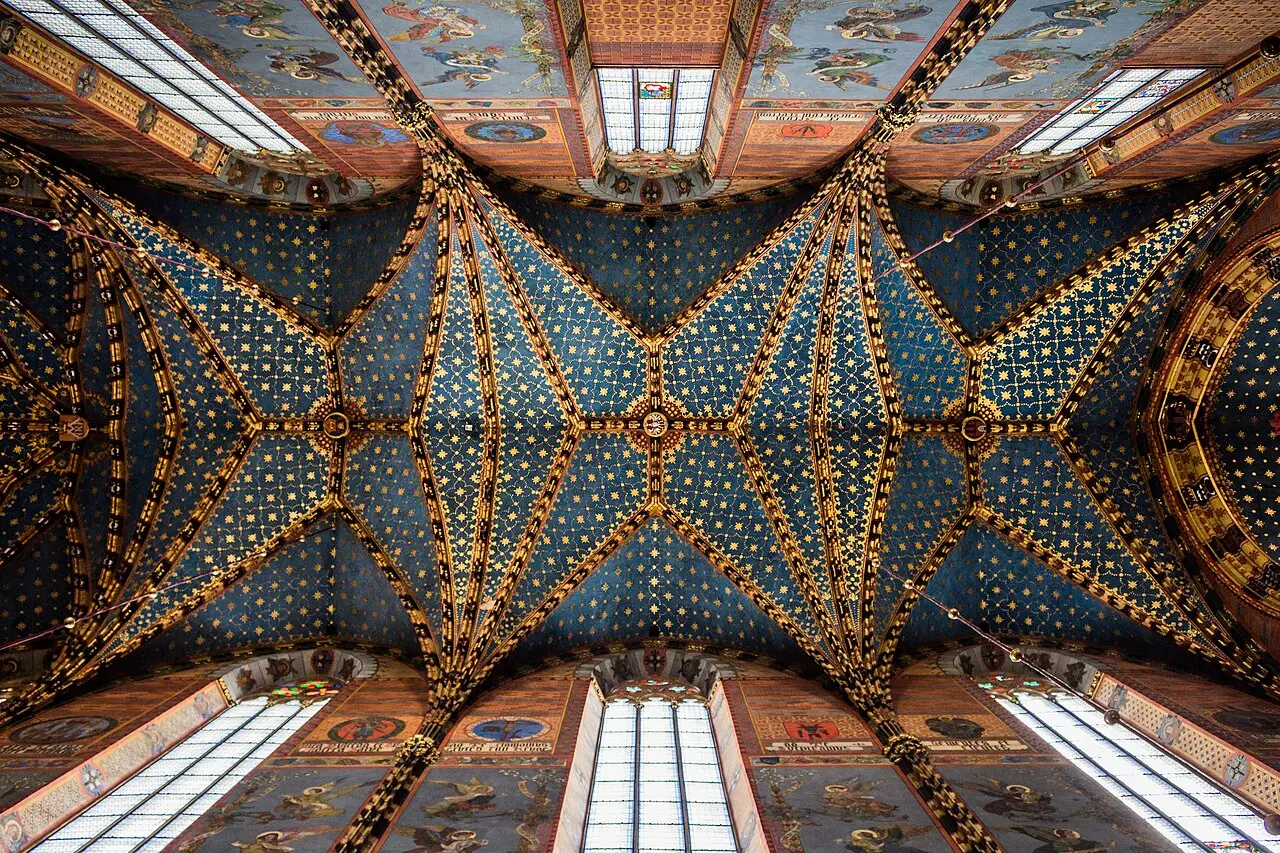
A brick Gothic church with two unequal towers, 81 m and 69 m. It holds the Veit Stoss altarpiece, carved between 1477 and 1489 and about 13 m tall; from the top of the taller tower a trumpeter plays the hejnał every hour, toward the four cardinal points, cutting the melody off midway. The noon call has been broadcast on national radio since 1927.
The church, with unequal towers of 81 m and 69 m, holds the Veit Stoss altarpiece, about 13 m from floor to top, while atop the taller tower a trumpeter plays every hour and breaks off the melody midway, and since 1927 the country's radio has broadcast the noon call.
Check access

Wawel
A limestone hill with the royal castle and cathedral, where Polish kings were crowned and buried. The Zygmunt bell, cast in 1520, weighs about 12.6 tonnes and only rings on national and religious dates; at the foot of the hill opens Smocza Jama, the dragon's cave from the founding legend.
The Zygmunt Bell weighs about 12.6 tonnes. Cast in 1520, it rings only on national and religious dates, on the limestone hill with the castle and cathedral where Polish kings were crowned and buried. Below opens the Smocza Jama, the dragon's den of the city's founding legend.
Check access
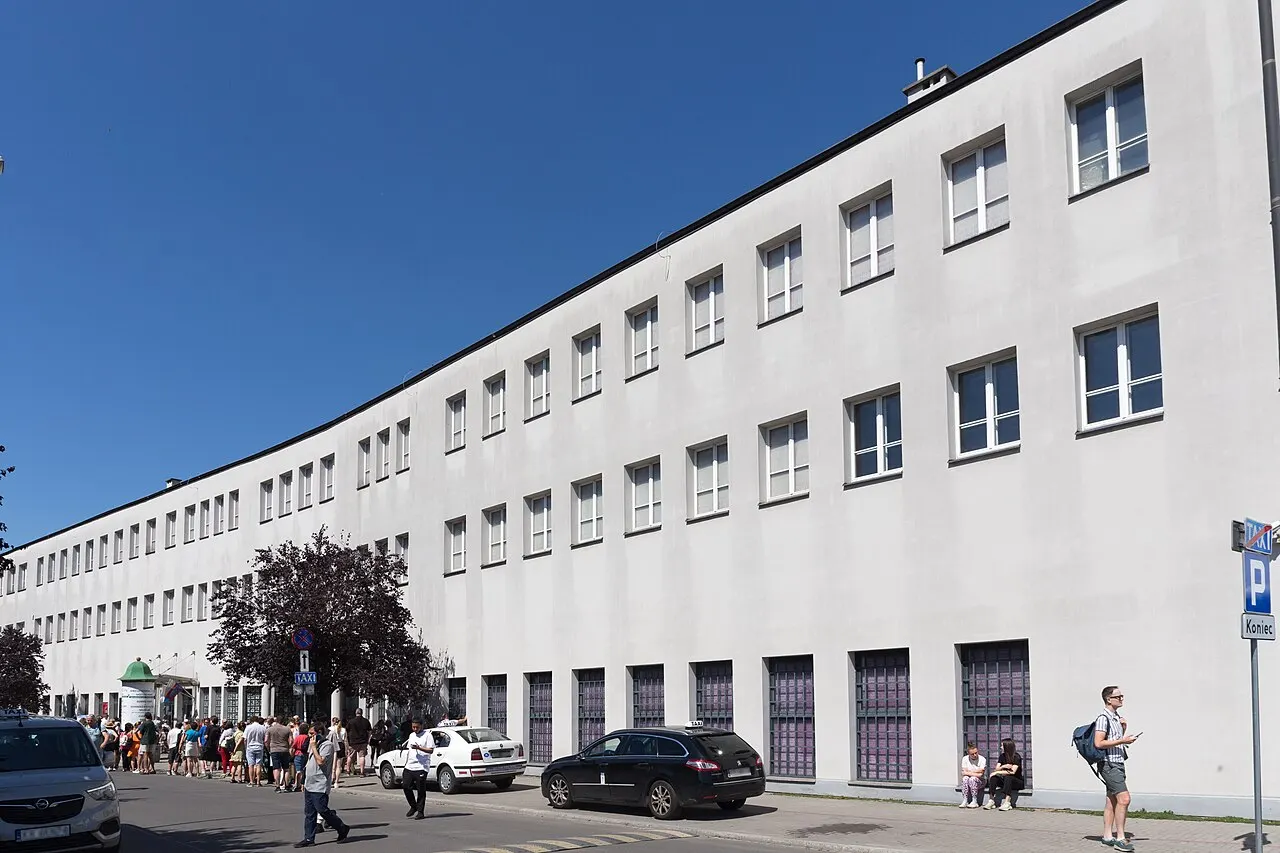
Schindler's Factory and MOCAK
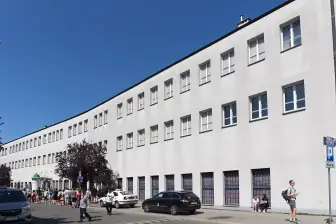
At 4 Lipowa street, the old enamelware factory became a museum in 2010 and tells the story of the German occupation of Kraków between 1939 and 1945 with reconstructed street scenery. On the same grounds runs MOCAK, a contemporary art museum opened in 2011.
At Lipowa 4, the enamelware factory, an exhibition venue since 2010, tells the story of the 1939–1945 occupation with reconstructed street scenery, and on the same lot MOCAK, opened in 2011, shows contemporary art.
Check access
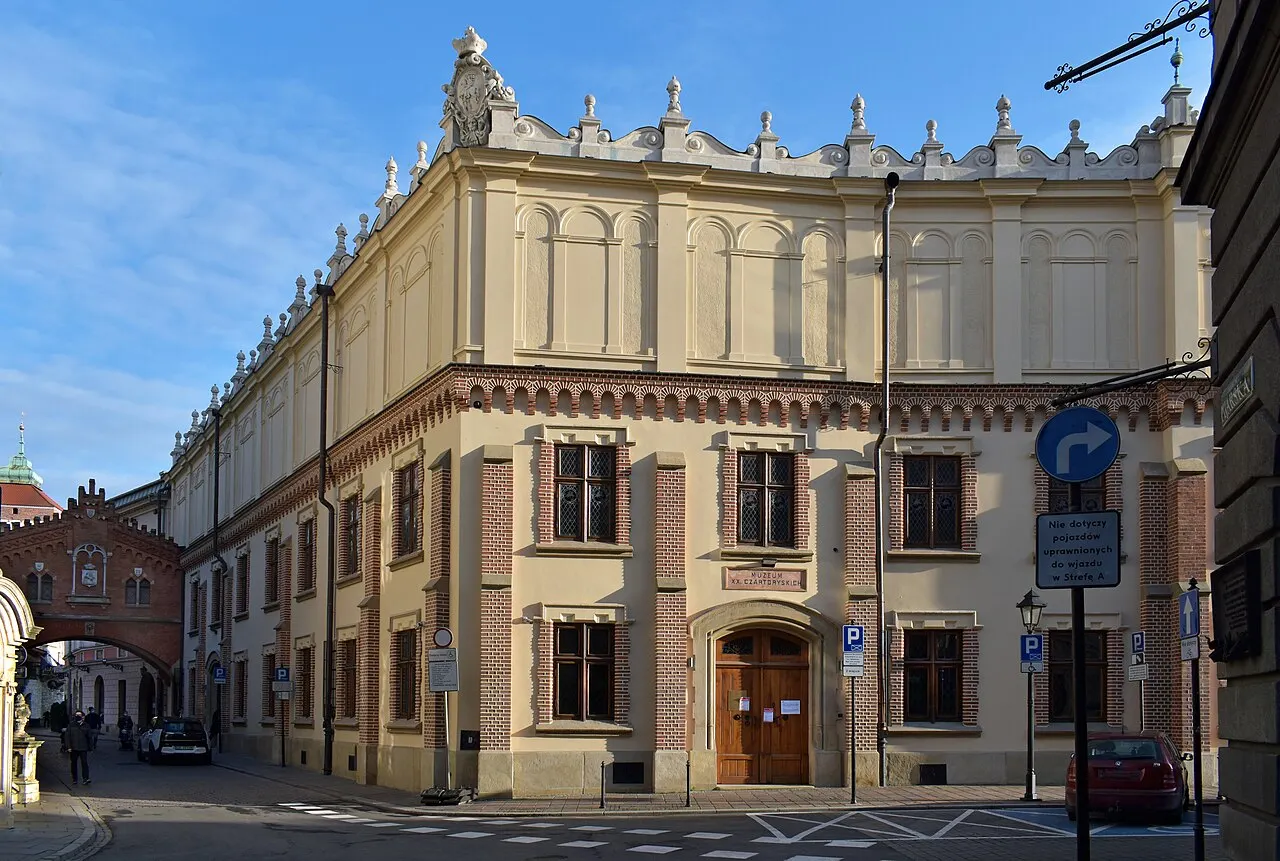
Czartoryski Museum
Reopened in December 2019 after eight years of work. It displays Leonardo da Vinci's Lady with an Ermine, painted around 1489–1490, bought by the Polish state along with the whole collection in 2016.
This is the museum of the Lady with an Ermine, by Leonardo da Vinci, painted around 1489–1490, which reopened in December 2019 after eight years of renovation. Admission requires a timed slot, and without a reservation you'll find the door closed.
Check access
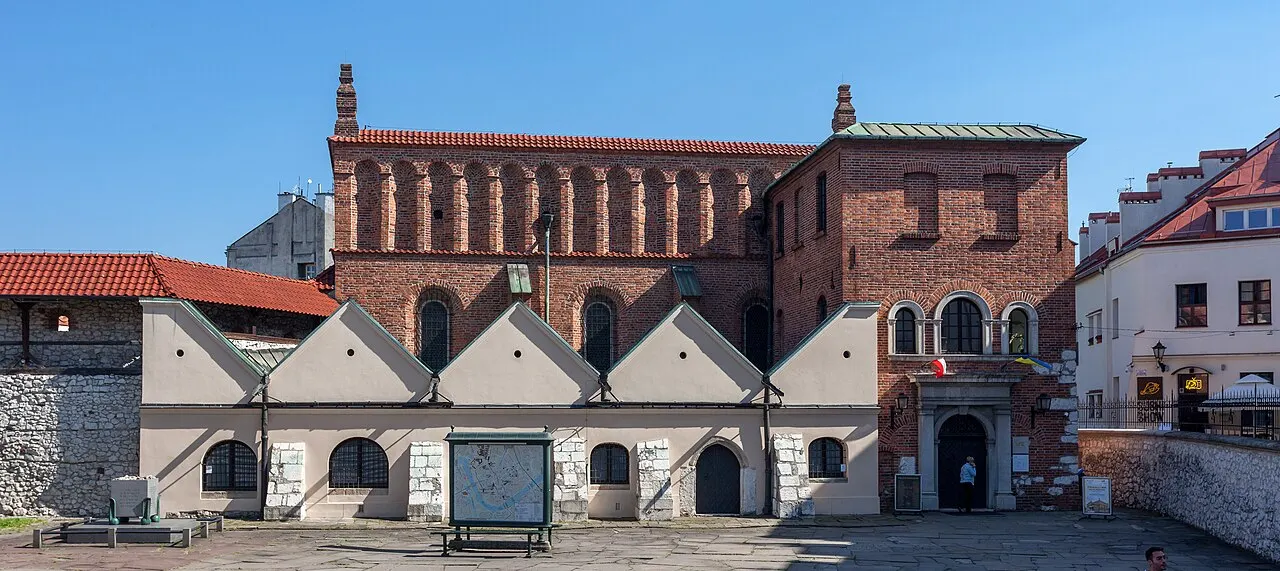
Kazimierz synagogues
The Stara Synagoga, from the late 15th century, is the oldest surviving synagogue building in Poland and now works as a museum. The Remuh, from 1553, is still in use, with a cemetery next to it whose gravestones, shattered in the war, were recovered after 1945 and set into a wall of fragments.
The Old Synagogue (Stara), from the end of the 15th century, is Poland's oldest and now works as a museum. The Remuh, from 1553, remains in use, and in the cemetery next to it the gravestones broken during the war were assembled after 1945 into a wall of fragments.
Check access

Ghetto Heroes Square
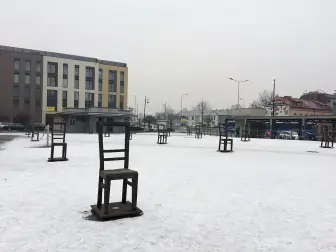
The point from which deportations from the Podgórze ghetto left. Since 2005 it has held 70 bronze chairs fixed to the ground, a project by Piotr Lewicki and Kazimierz Łatak; in one corner stands the Apteka pod Orłem, Tadeusz Pankiewicz's pharmacy, now a museum, and two blocks away stretches of the ghetto wall remain on Lwowska street.
Deportations from the Podgórze ghetto left from here, and since 2005 there have been 70 bronze chairs fixed to the ground, while Pankiewicz's pharmacy is now a museum and stretches of the wall still stand on Lwowska street.
Check access
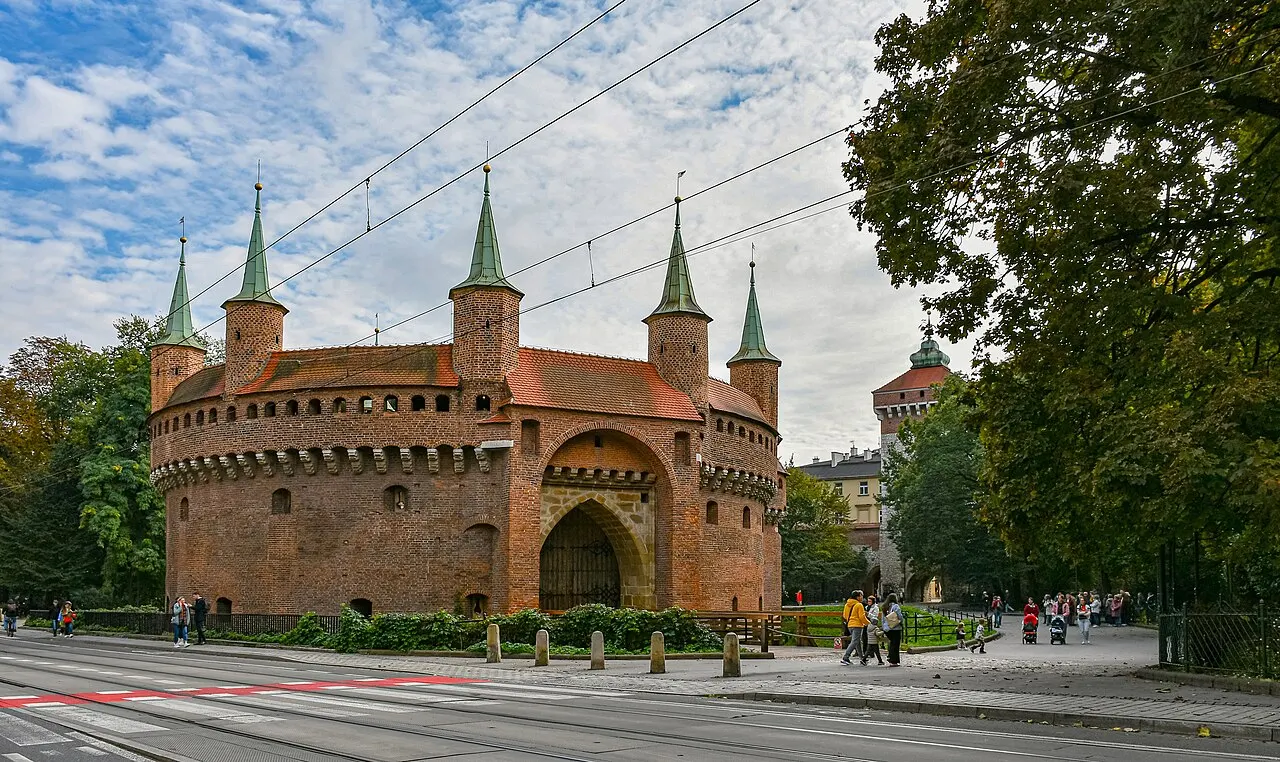
Barbican, St. Florian's Gate and the Planty
The only surviving stretch of the medieval walls: the Gothic gate and the circular barbican from 1498–1499, with walls about 3 m thick. The rest of the belt became the Planty, a ring of parkland about 4 km long, opened between 1822 and 1830, that runs the full circle around the Old Town.
St. Florian's Gate and the circular barbican, from 1498 to 1499, with walls about 3 m thick, are the only stretch left of the walls. In place of the rest of the belt, the Planty, opened between 1822 and 1830, forms a ring of parkland about 4 km around the Old Town.
Check access

Sukiennice (Cloth Hall)
A 14th-century cloth market rebuilt in Renaissance style between 1555 and 1560, with the mask-carved attic that became a symbol of the city. The ground floor has souvenir stalls; upstairs, the gallery of 19th-century Polish painting, with works by Jan Matejko and Henryk Siemiradzki.
Check access
Nilo’s itinerary
Start with the basic programme and choose extensions for the time you have.
Plan my days in the app ↗Day 1 · The medieval ring
Start at the Rynek Główny at 9am, before the tour groups, and go down into the Podziemia Rynku museum to see the 13th-century street under the paving.
At 11:30am, enter St. Mary's Basilica through the visitors' door and wait for the doors of the Veit Stoss altarpiece to open at 11:50am, once a day; then climb the tower and listen for the hejnał on the hour.
Have lunch at a bar mleczny on Grodzka or Starowiślna street, for 20–35 zł.
In the afternoon, visit the Collegium Maius and the Czartoryski Museum, home of the Lady with an Ermine, with tickets bought online for a timed slot.
Finish by walking the whole Planty, from the Barbican to Wawel, and go down to the Vistula boulevards in the late afternoon.
Day 2 · Wawel, Kazimierz and Podgórze
Head up to Wawel right at opening to see the cathedral, the royal tombs, Piłsudski's crypt and the Zygmunt bell of 1520; tickets are timed and have a daily quota, so book ahead.
Cross over to Kazimierz: the Remuh synagogue, the 1553 cemetery with its wall of recovered gravestones, the Stara Synagoga and Szeroka street.
Have a zapiekanka for lunch at the okrąglak in Plac Nowy, a circular building from 1900 that used to be a kosher poultry slaughterhouse.
Cross the Bernatka footbridge into Podgórze: Ghetto Heroes Square with the 70 chairs, Apteka pod Orłem and the stretch of ghetto wall on Lwowska street.
Finish at Schindler's Factory, at 4 Lipowa street, with a booked time slot, or at MOCAK next door.


If you stay longer
Day 3 · Nowa Huta and both banks
Take tram 4 or 22 to Plac Centralny, about 30 minutes, walk along Aleja Róż and step into the inner courtyards of the first blocks, built from 1949 onward.
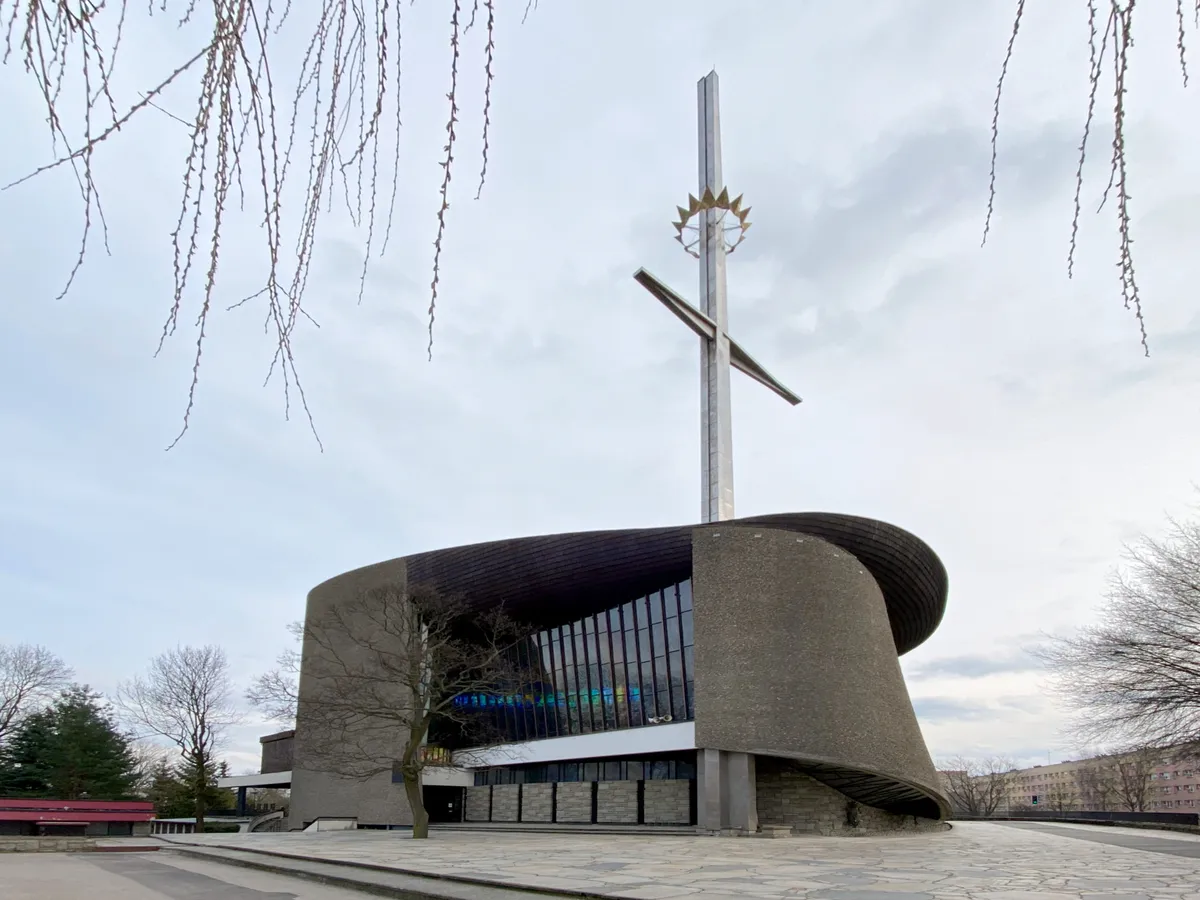
See the Arka Pana church, finished in 1977 after nearly twenty years of dispute with the regime, and the Cistercian monastery of Mogiła, founded in 1222, two kilometers from there.
Head back to the center and eat at the Hala Targowa in Grzegórzki; if you stay past 8pm, the line for the blue sausage van forms in the same spot.
Climb Kościuszko mound, built between 1820 and 1823 and 34 m tall, or Krakus mound in Podgórze, to see the whole city and the shape of the river.
End with a vodka in a Kazimierz basement bar, served cold, in a small glass, with food on the table.
Food
 AI illustration
Obwarzanek krakowski
A braided, boiled-then-baked ring of dough, topped with sesame, poppy seed or coarse salt. It's held a protected geographical indication in the European Union since 2010, costs 3.50 to 5 zł, and is sold from blue carts on street corners downtown from six in the morning until they run out.
 AI illustration
Zapiekanka
Half a baguette baked with mushrooms and cheese and topped with sauce, a legacy of the 1970s. The classic spot is the okrąglak on Plac Nowy, a round 1900 building that was once a kosher poultry slaughterhouse; it goes for 15 to 28 zł and the windows stay open until dawn.
 AI illustration
Pierogi
Filled dumplings, boiled or fried after boiling. The ruskie kind are filled with potato and twaróg white cheese with fried onion; there are also meat, cabbage-and-mushroom, and summer blueberry versions. A plate of eight to ten costs 28–45 zł.
 AI illustration
Maczanka krakowska
Roast pork neck with caraway and garlic, sliced and served inside a kajzerka roll soaked in its own gravy. It's market and street-cart food, recorded in the city since the 19th century.
 AI illustration
Kiełbasa z niebieskiej nyski
Grilled sausage over coals, served in bread with mustard, from a blue Nysa van parked by the Hala Targowa, in Grzegórzki. It only runs at night, from 8pm into the small hours, and costs around 22–28 zł.
 AI illustration
Żurek
A sour soup made from fermented rye flour, with white sausage, boiled egg and potato, sometimes served inside a round loaf. It's an Easter dish that became a permanent menu item; 22–35 zł.
 AI illustration
Oscypek
Smoked sheep's milk cheese, shaped like a spindle, made in the Podhale mountains and carrying a European geographical indication. Sold grilled with cranberry preserve at Rynek and Kazimierz stalls for 15–25 zł; the genuine version only exists from May to September.
 AI illustration
Bar mleczny
A subsidized canteen since the 1960s, with a line at the counter, the menu on the wall, and metal cutlery. It serves soup, pierogi, potato pancake, and fruit compote for 20 to 35 zł for a whole meal; several survive around Grodzka and Starowiślna streets and in Kleparz.
Day trips

Wieliczka
14 km southeast, by S1 train (25 min) or bus 304, direct from the center. A salt mine worked since the 13th century and inscribed on the first UNESCO list in 1978; the tourist route runs 3.5 km and descends 135 m, with about 2 hours 30 minutes of visiting and tickets around 150 zł. Book online and bring a coat: it's 14 °C down there year-round.

Auschwitz-Birkenau, in Oświęcim
66 km west; a bus from the MDA station or a train, about 1 hour 30 minutes either way. Individual entry is free and the guided tour, 3 hours 30 minutes long, costs around 150 zł, but since March 2026 everything must be booked online. Bring ID, a small bag (limit around 30×20×10 cm) and set aside the whole day.

Ojców National Park and Pieskowa Skała
25 km to the north, about 1 hour by bus. Poland's smallest national park, with the Maczuga Herkulesa limestone crag, about 25 m tall, Łokietek's cave and the Renaissance castle of Pieskowa Skała. Good for half a day walking through a limestone gorge.
Where to begin
The medieval ring
Start at the Rynek Główny at 9am, before the tour groups, and go down into the Podziemia Rynku museum to see the 13th-century street under the paving.
Wawel, Kazimierz and Podgórze
Head up to Wawel right at opening to see the cathedral, the royal tombs, Piłsudski's crypt and the Zygmunt bell of 1520; tickets are timed and have a daily quota, so book ahead.
Nowa Huta and both banks
Take tram 4 or 22 to Plac Centralny, about 30 minutes, walk along Aleja Róż and step into the inner courtyards of the first blocks, built from 1949 onward.
Money
The currency is the złoty (zł, PLN), trading at about 4.3 zł to the euro in 2026; the euro doesn't circulate, and paying with it in shops costs you. Contactless cards work almost everywhere, including at the obwarzanek stand and the tram ticket machine, and the local BLIK system dominates mobile payments. Withdraw from bank ATMs (PKO BP, Pekao, ING, Santander), not the convenience ATMs on tourist streets, and decline the “conversion to your currency” offered on screen: being charged in złoty is always cheaper. Price ranges in 2026: espresso 12–18 zł, a 0.5 l draft beer 15–25 zł in the center, a bar mleczny meal 20–35 zł. A main course at a mid-range restaurant runs 45–75 zł, dinner for two with drinks 160–260 zł, a hostel bed 70–130 zł and a three-star hotel 300–500 zł a night. Tipping isn't mandatory: 10% at restaurants with table service is customary, left in cash or stated before the card is run. Watch out for a language trap: saying thank you to the waiter just as you pay counts as telling him to keep the change. Kraków doesn't charge a tourist tax yet. Since 2023 city hall has been asking for the change in national law that would allow it, and it wasn't in force as of September 2026.
Getting there and around
John Paul II Airport: 11 km, with a train at the terminal
John Paul II Airport (KRK) is in Balice, 11 km west. The fastest way into the center is the train from the station attached to the terminal, which leaves every 30 minutes and takes about 20 minutes to Kraków Główny. The fare is around 20 zł, from the machine or from the conductor on board. Don't look for a ticket office; you don't need one. Bus routes 208 and 300 cover the same route more slowly, and the 902 runs overnight. A rideshare to the Rynek costs 80–120 zł. Kraków Główny central station is buried under the Galeria Krakowska mall, a five-minute walk from St. Florian's Gate, and handles the long-distance trains. Warsaw is about 2 hours 20 minutes away by Pendolino, Katowice 1 hour and Zakopane around 3 hours. The MDA bus station is on the same block and is where buses leave for Oświęcim, Wieliczka and the mountains.
Twenty-five tram lines around the Planty
Inside the city the system runs on MPK trams and buses, with about 25 tram lines circling the four sides of the Planty. The interior of the historic center is closed to cars. Fares went up on March 2, 2026: a 15-minute ticket is 4 zł, a 60-minute one 8 zł, a single ride 6 zł and a group ticket for up to 20 people 50 zł within the urban area. There are 24-, 48- and 72-hour passes and a 7-day one, in the range of roughly 20 to 60 zł after the increase. Buy from the stop machine or the one on board, both of which take cards, or through the jakdojade and mobiLET apps, and validate a paper ticket at the yellow machine as soon as you get on. The fine for riding without validation runs over 250 zł, and the inspector won't take an excuse. In practice, almost everything is done on foot: Wawel to the Barbican is 20 minutes, Kazimierz to the Rynek, 15. For Nowa Huta, trams 4 and 22 take about 30 minutes. There are app bikes and scooters and a bike lane on both sides of the Vistula. The uneven cobblestones downtown punish rolling luggage and heels.
Safety
Kraków is a safe city to walk in, including at night, and violent crime against visitors is rare. The real problems are small and predictable. There are pickpockets on trams 8, 18 and 52, in the line at St. Mary's and in the crush of the Rynek in December, and taxis waiting outside the station and the airport that charge three times the fare. Some bars in the Old Town and Kazimierz run up a tab with no clear prices, especially when someone approaches you on the street offering “a better place,” so ask for the menu before you sit down. On Friday and Saturday nights, the stretch between Szewska street and Plac Szczepański is full of bachelor parties and heavy drinking: it's noisy but not dangerous, and it's worth detouring along a side street. Unofficial guides approach visitors near the Rynek and the station selling tours to Auschwitz; buy only through official channels. Emergency: 112. There are 24-hour pharmacies in several neighborhoods and public emergency care works, but travel insurance is a formal requirement for entering the Schengen Area. Brazilians still enter visa-free for up to 90 days in any 180. The EES biometric border registration began rolling out at the end of 2025, and the ETIAS electronic authorization is scheduled to take effect during 2026. Confirm the requirement before buying your ticket.
Etiquette tips
Greet on the way in
Say “dzień dobry” on entering a shop, bakery, office or elevator, and “do widzenia” on the way out. Walking in silently reads as rude, not as discretion.
Take your shoes off at the door
Invited to an apartment, take your shoes off at the entrance without waiting to be asked. Many homes keep guest slippers on hand, and insisting on staying shod embarrasses the host.
Flowers in odd numbers
A bouquet for a host or birthday person always comes with an odd number of stems. Chrysanthemums are a cemetery flower, associated with November 1, and are never brought to a home.
How vodka is drunk in Poland
The small glass is drunk in one go, after the toast “na zdrowie”, and always with food on the table. Sipping vodka slowly through the meal isn't part of local custom.
At places of memory, cemetery silence
At Auschwitz-Birkenau, the Remuh cemetery and Ghetto Heroes Square, don't take selfies or talk loudly. Men cover their heads in the Jewish cemetery and the Remuh synagogue; there are kippahs at the entrance.
A working church isn't a museum
St. Mary's and most churches downtown hold mass several times a day, and tourists enter through a separate door at a separate time. Don't move around during a service, don't use flash, and cover shoulders and knees.
Mistakes to avoid
Oświęcim without a booking
Showing up at Oświęcim without a pass bought in advance. The physical ticket counter is gone, and anyone who tries to buy on the spot simply doesn't get in. In spring and summer the time slots vanish six to eight weeks ahead.
Poland uses the złoty
Counting on the euro. Poland uses the złoty, and any place that accepts euros applies a bad exchange rate. Withdraw from a bank ATM, decline the conversion-into-home-currency the machine offers, and pay in złoty.
The “0% commission” exchange booth
Changing money at the kantors advertising “0% commission” on Floriańska street or around the edge of the Rynek. The built-in margin eats 8% to 12%; the side-street exchange offices, two or three blocks from the square, quote the real rate.
A carriage without a fixed price
Getting into a horse carriage on the Rynek or a taxi parked outside the station without agreeing on a price first. Use Bolt, Uber or FreeNow: a ride within the center is rarely more than 40 zł.
The whole trip inside the Planty
Spending the whole trip inside the Planty ring. Kazimierz, Podgórze and Nowa Huta, outside it, hold the deepest marks of the 20th century, so set aside at least one day to cross the ring toward Kazimierz and, on the other side of the Vistula, Podgórze.
Useful phrases
Dzień dobry
Good morning / good afternoon (djen DOH-bri): the standard greeting on entering any establishment
Dziękuję
Thank you (jen-KOO-yeh): said when handing over the bill, it means “keep the change”
Poproszę…
I'd like… (po-PRO-sheh): the formula for ordering anything at the counter
Przepraszam
Sorry / excuse me (pshe-PRA-sham): used to get past someone and to call the waiter
Ile to kosztuje?
How much does it cost? (EE-leh to kosh-TOO-yeh)
Na zdrowie
Cheers / bless you (na ZDROH-vyeh). The vodka toast, and also what you say to someone who sneezes
Districts
Stare Miasto
The medieval center inside the Planty ring, with the Rynek Główny, St. Mary's Basilica and the old university core. It concentrates museums, hotels and most of the tourist-facing restaurants, and it's where prices climb first.
Kazimierz
An autonomous town founded in 1335 and a Jewish quarter between 1495 and 1941, emptied by the war and reoccupied starting in the 1990s. It gathers seven historic synagogues, the Remuh cemetery, secondhand bookshops, bars, and the zapiekanka stalls of Plac Nowy.
Podgórze
South bank of the Vistula, an Austrian town in its own right until 1915. It held the Nazi ghetto from 1941 to 1943 and holds Schindler's Factory, the MOCAK museum, Ghetto Heroes Square and Krakus mound.
Nowa Huta
A workers' district built from 1949 alongside the steelworks, 10 km east of the Rynek. Streets fan out from Plac Centralny, socialist-realist architecture, the Arka Pana church (1977) and rent well below the center's.
Zwierzyniec and Salwator
The west slope, right up against the Wolski forest. This is where the Lajkonik procession sets off, and it gives access to Kościuszko Mound, the zoo and the park's trails; a residential district, quiet at night.
Kleparz
A strip just north of the Old Town, with the Stary Kleparz market running since 1366 and the bus station next to the main train station. Everyday shopping, useful for seeing the price locals actually pay.
Dębniki and Zakrzówek
South bank, facing Wawel. Home to the Manggha museum of Japanese art (1994), the old Forum hotel turned cultural space, and the flooded Zakrzówek quarry, opened as a bathing spot in 2024.
Grzegórzki
East of the center, between the river and the station. Has the Hala Targowa, where the blue sausage van serves at night, and the Vistula boulevards used for running and cycling.
History
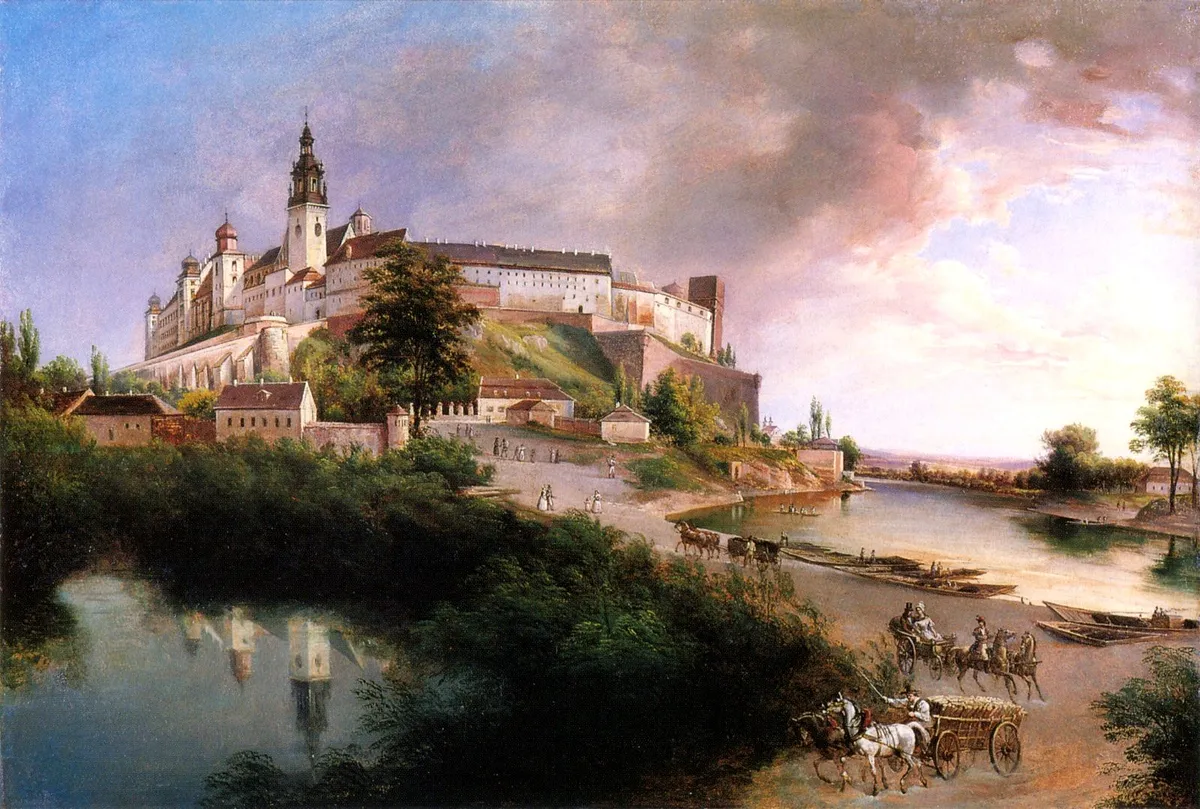
8th–10th centuries · Wawel and the early settlements
Wawel and the surrounding settlements form a Vistulan center before incorporation into the Piast state. The earliest written mention of Kraków’s name is attributed to Ibrahim ibn Yaqub’s account, around 965.
1000–1040 · Bishopric and Piast residence
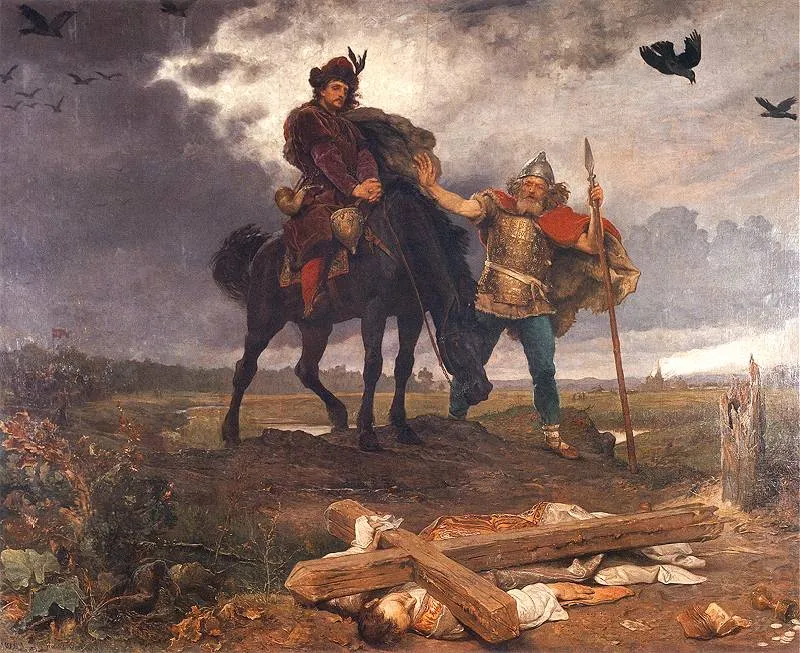
The bishopric of Kraków is founded in 1000. Around 1040, Casimir I the Restorer makes the city his main residence and a center of Piast power; founding the bishopric and choosing the residence are separate events.
1241 · Mongol invasion
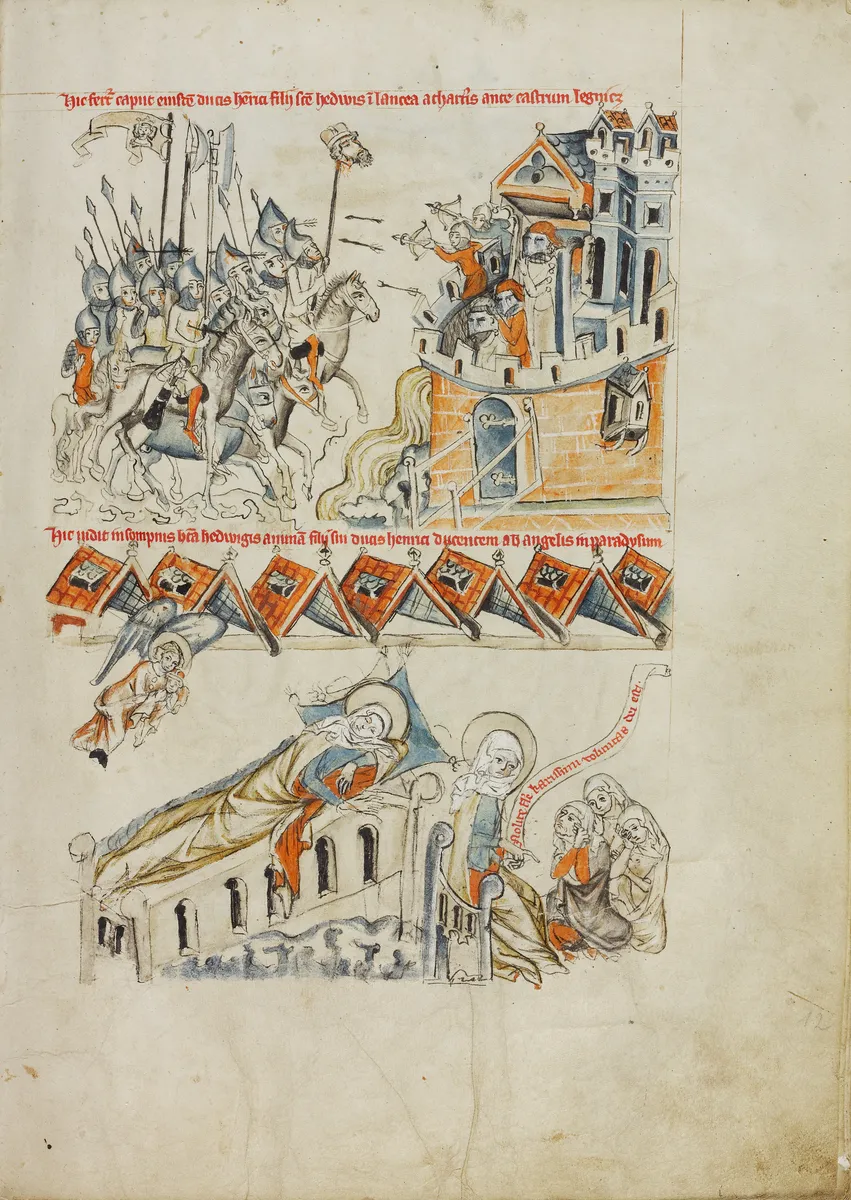
The Mongol invasion causes fires and destruction in Kraków. The charter of 1257 later organizes a new urban grid, but the plan incorporates earlier buildings and settled areas.
1257 · Magdeburg charter
Bolesław V the Chaste grants the Magdeburg charter. The plan organizes streets around the Rynek, about 200 meters on each side, accommodating earlier churches and the connection to Wawel. This structure remains legible, with buildings altered over the centuries.
1335 and 1364 · Kazimierz and the university
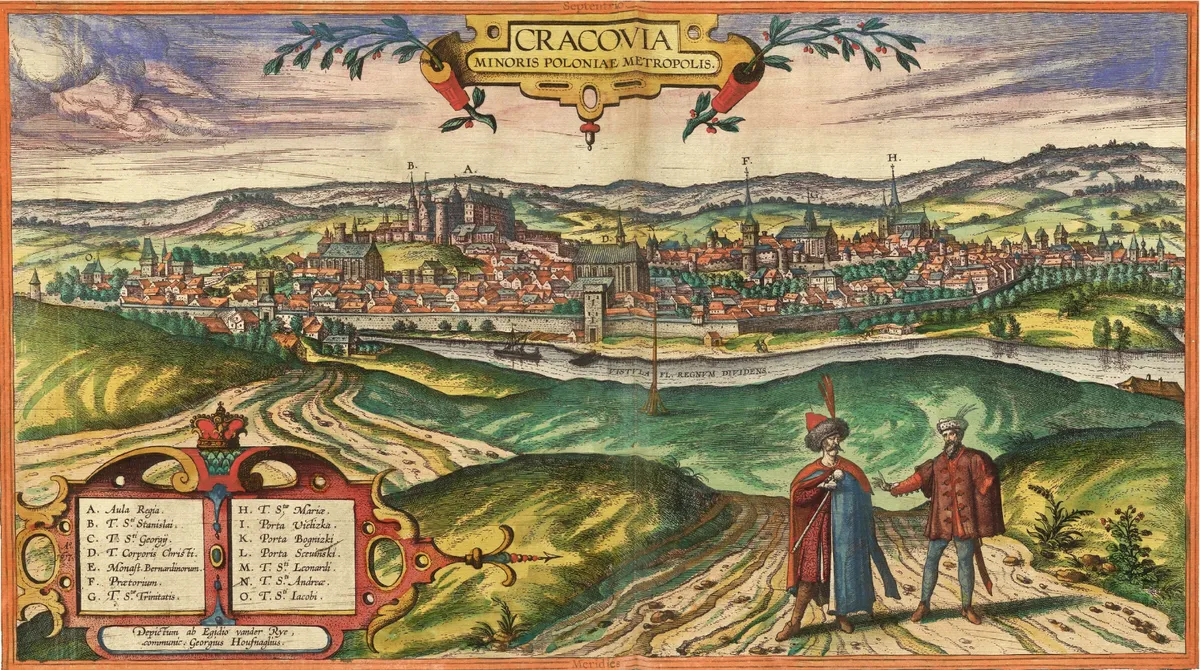
Casimir III the Great founds the self-governing town of Kazimierz on the island to the south and, in 1364, the Studium Generale. The university is refounded in 1400 with the bequest of Queen Jadwiga and counts Nicolaus Copernicus among its students between 1491 and 1495.
1495 · The Jews move to Kazimierz
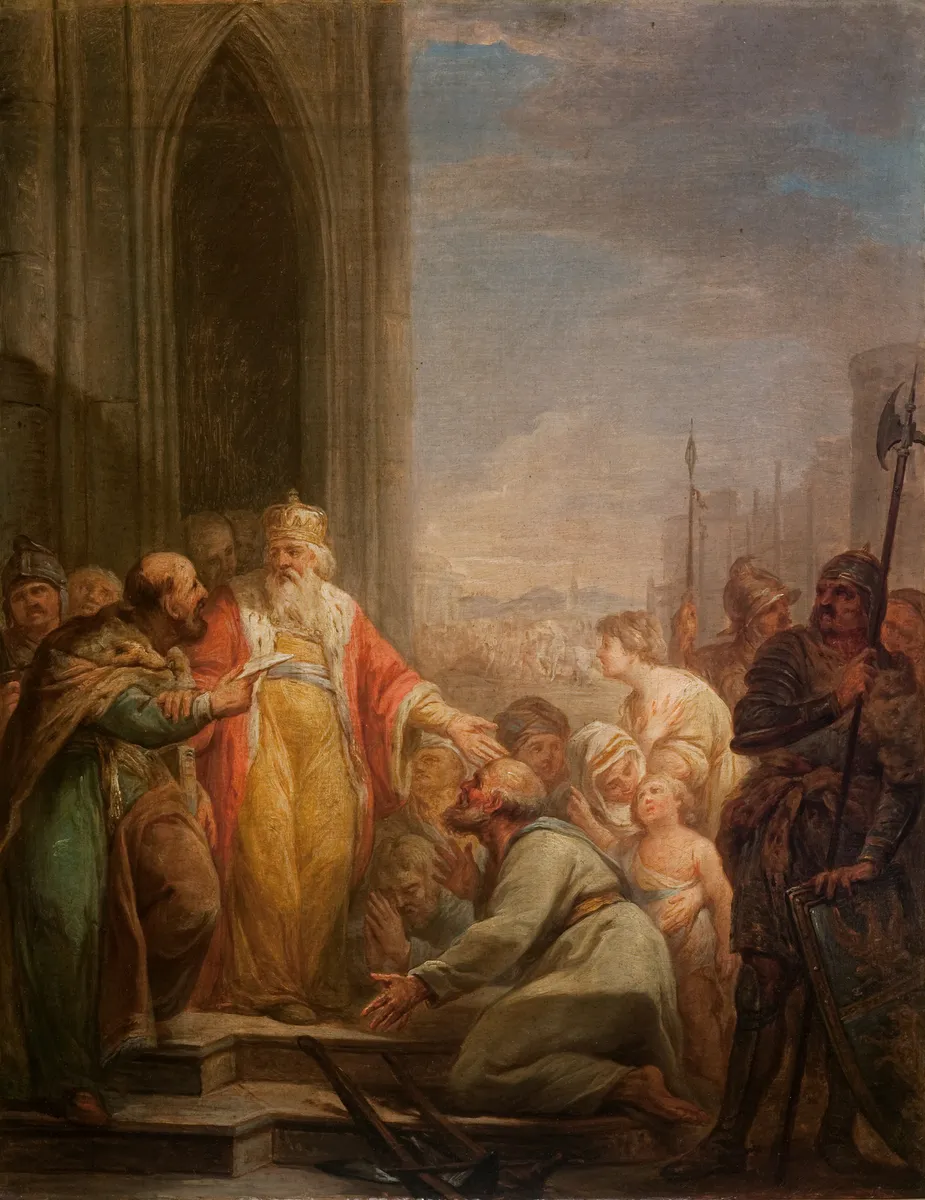
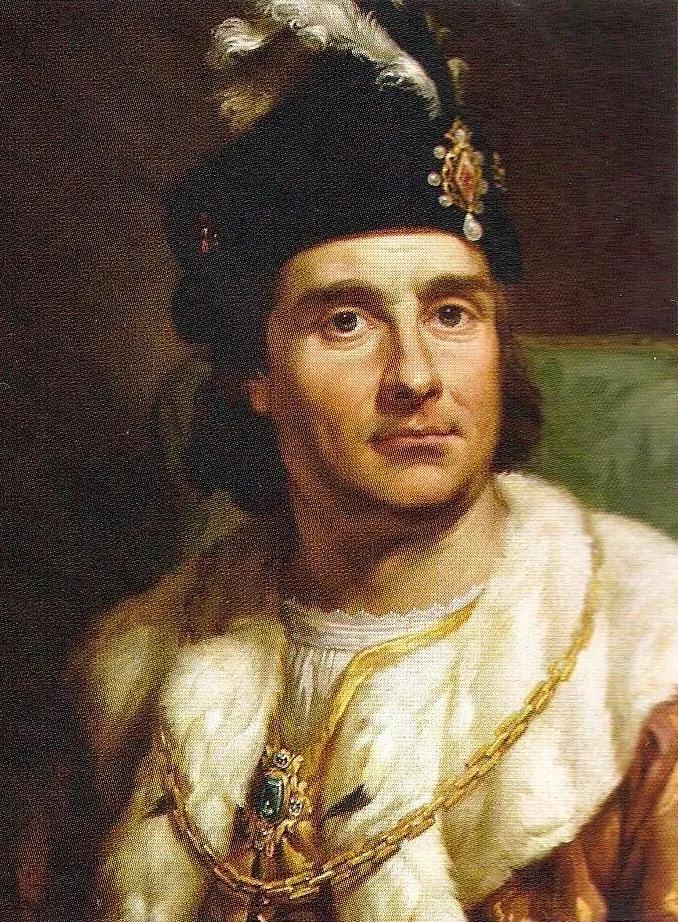
Jan Olbracht orders the Jewish population moved from the walled city to Kazimierz. Over the following two centuries the Stara, Remuh, Isaac, High and Popper synagogues rise there.
1596–1611 · The court moves to Warsaw
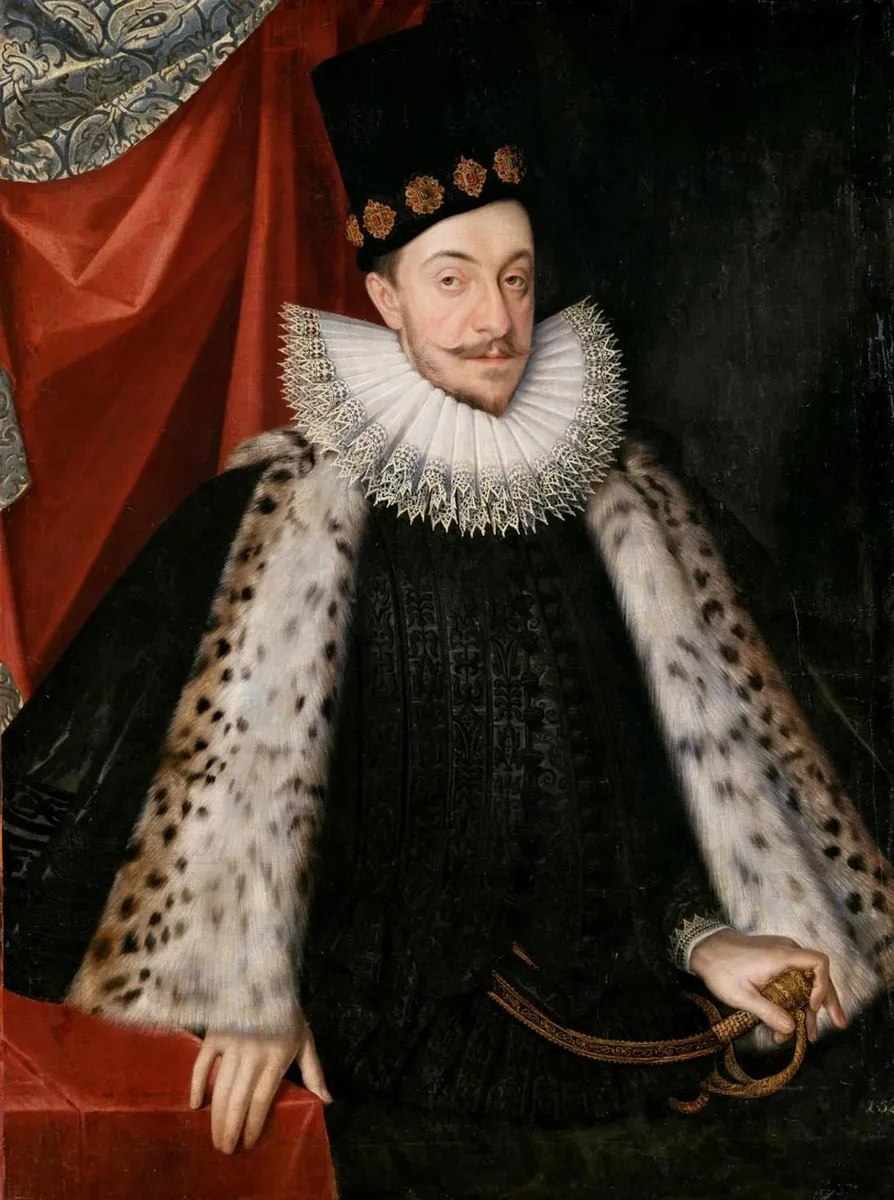
Sigismund III Vasa begins transferring the court to Warsaw in 1596; the move is completed in 1611. Kraków retains its ties to the monarchy, and Wawel Cathedral hosts coronations until 1734.
1795–1918 · Partitions and Galicia
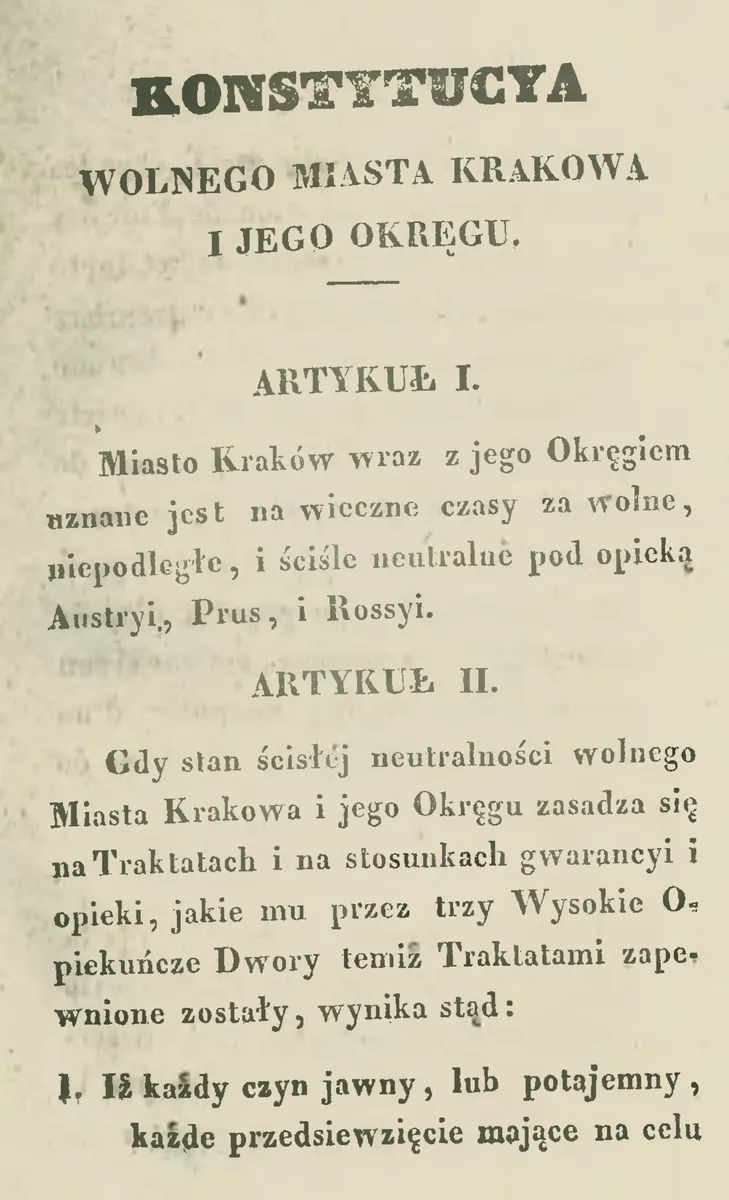
The city passes to Austria, is the Free City of Kraków between 1815 and 1846 and later the cultural capital of autonomous Galicia. Polish remains the language of school and press, unlike in the Russian and Prussian zones.
1939–1945 · Occupation and ghetto
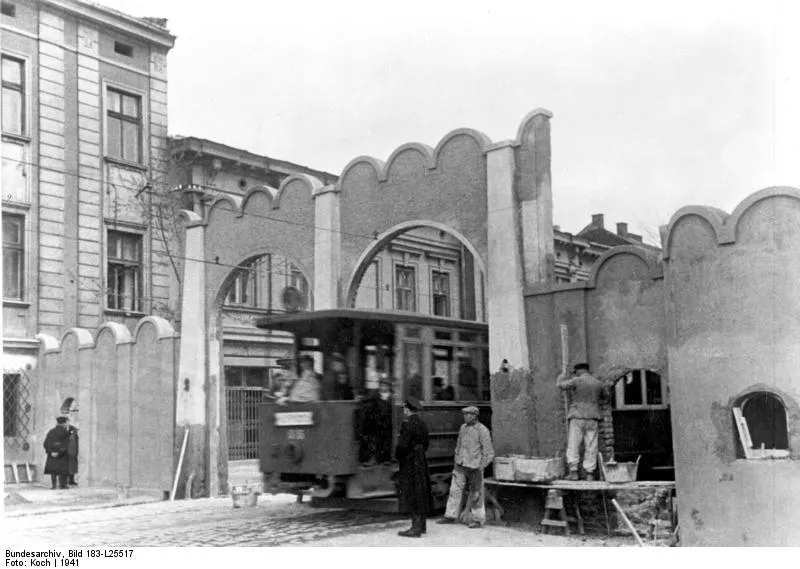
The German occupiers establish the General Government’s headquarters at Wawel. Sonderaktion Krakau arrests 183 academics in November 1939; the Podgórze ghetto operates from March 1941 to March 1943. Bombing strikes the city, including Wawel in January 1945, although much of the historic center survives.
1949–1989 · Nowa Huta and dissent
The regime builds the steelworks and a workers' district for 100,000 people to the east, meant as a counterweight to the Catholic, university city. The fight for the Arka Pana church, finished in 1977, and the 1988 strikes turn the plan into its opposite.
1978–today · UNESCO, the pope and tourism
The historic center enters the first World Heritage list in 1978, the same year Archbishop Karol Wojtyła is elected. Since 1990 the city has lived on tourism, the university and services, and in September 2019 it became the first city in Poland to ban coal and wood heating.
Complete history
Wawel, bishopric and Piast residence
Settlement on Wawel and in the surrounding area predates the city organized under its medieval charter. In the Early Middle Ages, Kraków was a Vistulan center; the earliest mention of its name is attributed to Ibrahim ibn Yaqub’s account, around 965. The bishopric of Kraków was founded in 1000. Around 1040, Casimir I the Restorer chose the city as his main residence while rebuilding the Piast state. The hill brings together religious and political buildings from different periods, enlarged and rebuilt over the centuries.
1241–1257: destruction and the organization of the Old Town
The Mongol invasion of 1241 caused fires and destruction. In 1257, Bolesław V the Chaste granted the Magdeburg charter, which organized the urban grid around the Rynek, about 200 meters on each side. The layout accommodated earlier churches; Kanonicza Street and the Okół area also preserve a history of settlement predating the charter. The square and streets help make this plan legible, while the buildings show later alterations.
Casimir III founded the independent town of Kazimierz in 1335 and the university in 1364. After a period of interruption, the institution was refounded in 1400 by Jagiełło with funds bequeathed by Queen Jadwiga; Copernicus enrolled in 1491. The transfer of Jewish residents to Kazimierz, ordered in 1495, contributed to the formation of the Jewish quarter.
1596–1611: the court’s move and the city that remained
Sigismund III Vasa began transferring the court in 1596 and completed the move in 1611. The move to Warsaw shifted the monarchy’s political life, but Kraków retained its ceremonial role: Wawel continued hosting coronations until 1734.
The wars of the 17th century brought destruction and hardship. Following the partitions, the city came under Austrian rule; between 1815 and 1846, the Free City of Kraków underwent modernization. Most of the walls were removed and the moat filled in, making way for Planty. In the late 19th century, Kraków was one of the centers of Young Poland, a movement whose architecture and art also belong to the city visitors see today.
Occupation, persecution and wartime damage
From September 1939 to January 1945, Kraków was occupied by Nazi Germany, which established the General Government’s headquarters at Wawel. The city suffered German bombing in 1939 and Soviet bombing in January 1945. An attack that January damaged Wawel Cathedral; other parts of the center were also hit. Much of the historic fabric survived, but that survival does not mean an absence of attacks or follow simply from the occupying government’s headquarters.
On November 6, 1939, Sonderaktion Krakau arrested 183 academics, mostly associated with the Jagiellonian University, and deported them to Sachsenhausen. Following expulsions of Jewish residents from the city, the occupiers created the Podgórze ghetto in March 1941. Deportations to the Bełżec extermination camp took place in 1942; the ghetto’s liquidation in March 1943 sent survivors to Płaszów. Survivors’ accounts also record later transfers to Auschwitz. The war destroyed much of the city’s Jewish community. These histories run through Kazimierz and Podgórze, beyond the buildings that survived.
The regime tried to balance the city with a steelworks
After 1945 the communist regime decided to balance the Catholic, university city with a working-class one: from 1949 it built Nowa Huta, a steelworks complex and a planned district for 100,000 people, ten kilometers east of the Rynek. The plan backfired, because Nowa Huta became a center of protest, starting with the battle over the Arka Pana church in the 1960s. In 1978 the historic center was on UNESCO's first World Heritage list and the archbishop of Kraków, Karol Wojtyła, was elected pope; in 1988, it was the workers of Nowa Huta who went on strike against the regime. Since 1990 the economy has lived off three sources: tourism, with more than 10 million visitors a year; the university, with about 130,000 students; and the service centers of foreign companies. The steelworks shrank, and winter smog led to a coal ban in 2019, the first in the country.
The center preserves much of its historic fabric, but suffered attacks during World War II. In January 1945, Soviet bombs also hit Wawel Cathedral, where the German occupiers had established the General Government’s headquarters.
Geography and shape of the city
The Vistula valley and the limestone
Kraków sits at about 220 m of altitude, in the upper Vistula valley, between the limestone plateau of the Kraków-Częstochowa Upland to the north, full of crags and caves, and the hills climbing toward the Carpathians to the south, with the Tatras about 100 km away. The river runs west to east and bends at the foot of Wawel, a Jurassic limestone outcrop riddled with caves. One of them, Smocza Jama, is open to visitors.
The Planty ring and the riverbanks
The whole medieval center sits on the north bank, inside a ring of about 4 km: the Planty traces exactly the line of the walls torn down between 1810 and 1830, which is why the center is an oval rather than a square. Kazimierz occupies a former island between two branches of the river; the southern branch was filled in around 1880 and became Dietla street, which explains its disproportionate width. South of the Vistula lie Podgórze and the limestone hills of Krzemionki, with Krakus and Piłsudski mounds; to the east opens the plain that made room for the steelworks and Nowa Huta, and to the west the Wolski forest and Balice airport.
The trapped winter air
The closed-in valley is also a breathing problem: in winter cold air gets trapped over the city, and Kraków posts some of Poland's worst particulate-matter readings between November and February, despite the coal ban since 2019.
Dietla street is wide because it fills in an arm of the Vistula that was landfilled around 1880.
Culture
Two Nobel laureates in literature living in the city
Kraków has been a UNESCO City of Literature since 2013 and had two Nobel laureates living in it at the same time: Czesław Miłosz, awarded in 1980, who returned from exile in 1993 and has been buried in the Skałka crypt since 2004, and Wisława Szymborska, awarded in 1996, who lived in an ordinary apartment until she died in 2012. Stanisław Lem wrote almost all of his science fiction here. The stage tradition is just as old: the Stary Teatr has run since 1781, the Piwnica pod Baranami cabaret has occupied the basement of a Rynek townhouse since 1956, and Tadeusz Kantor staged with Cricot 2 the plays that took Polish theater on international tours in the 1970s and 1980s.
Philharmonic, early music and basements
In music, the city supports the Kraków Philharmonic, an early-music season during Holy Week, and two avant-garde festivals in autumn: Sacrum Profanum, which tends to occupy Nowa Huta's industrial warehouses, and Unsound, dedicated to experimental electronic music, active since 2003. Krzysztof Penderecki trained at the local academy and conducted much of his career from here. In visual arts, the Manggha museum of Japanese art was built in 1994 at Andrzej Wajda's initiative with money from the Kyoto Prize, and MOCAK opened in 2011 on the grounds of Schindler's factory. There is also a circuit of jazz cellars around the Rynek, a legacy of the 1950s, when the genre was tolerated with suspicion by the regime.
University: 130,000 students in twenty institutions
The university organizes daily life: about 130,000 students across a little over twenty institutions, led by the Jagiellonian and the AGH polytechnic, which keeps bars cheap, secondhand bookshops in business and rentals hard to find from October to June. Religion is visible everywhere: Karol Wojtyła was archbishop here from 1964 to 1978, and the Łagiewniki sanctuary, consecrated in 2002, draws pilgrimages year-round. In soccer, the Wisła–Cracovia derby is called the “holy war” and splits the city by neighborhood; Cracovia, founded in 1906, is the oldest club in Poland still active. At night, life concentrates in two hubs: the block of streets west of the Rynek and the squares of Kazimierz.
Beneath the facades of the Rynek, three cellars host live jazz.
Festivals and events
 AI illustration
Jewish Culture Festival
Late June into early July, in Kazimierz, since 1988. Workshops, Hebrew and Yiddish classes, guided tours and the open-air Szalom na Szerokiej concert, which closes Szeroka street for seven hours.

Wianki
The night of June 23 into 24, on the Vistula at the foot of Wawel. A solstice festival with flower wreaths set afloat, a stage with shows and fireworks; free entry and crowds on the boulevards.
 AI illustration
Lajkonik
The first Thursday after Corpus Christi, in May or June. A man dressed as a Tatar horseman on a cloth horse leaves the Zwierzyniec convent and walks to the Rynek, touching people with a mace: tradition says the touch brings luck.

Szopki competition
First Thursday of December, at the foot of the Mickiewicz monument, on the Rynek. Craftsmen display nativity scenes shaped like colorful towers inspired by the city's monuments; the practice entered UNESCO's intangible heritage list in 2018.
 AI illustration
Unsound
A week in October, in venues downtown and sheds in Nowa Huta. Experimental electronic music festival running since 2003, with a pass for the full program and tickets that sell out ahead of time.
Books and films
Schindler's List (Steven Spielberg, 1993)
Filmed in Kazimierz and around Płaszów; it rebuilds the Lipowa street factory and the liquidation of the Podgórze ghetto in March 1943. Watching it before entering the factory museum changes what you see there.
Man of Marble (Andrzej Wajda, 1977)
It follows the making of a worker-hero during the construction of Nowa Huta in the 1950s and the unmaking of the myth two decades later. It explains why the district has the shape it has.
Poems, by Wisława Szymborska
An anthology by Wisława Szymborska, 1996 Nobel laureate and a poet Kraków claims as its own; the Brazilian edition came out in 2011, translated by Regina Przybycien. The poems take on big subjects in a conversational tone, with irony and a distrust of all grandiloquence.
Frequently asked questions
Kraków: Can you visit Auschwitz without a reservation?
No: the physical ticket counter at Auschwitz-Birkenau is gone, every pass is bought online, and anyone who tries to buy on the spot doesn't get in. In spring and summer the time slots vanish six to eight weeks ahead.
Kraków: How do you get from the airport to downtown?
The fastest way into the center is the train from the station attached to the terminal, which leaves every 30 minutes and takes about 20 minutes to Kraków Główny.
Kraków: Can you pay in euros?
Yes, in a few shops, but it's not worth it: the euro doesn't circulate in Poland, and anyone who accepts it applies a bad exchange rate. Pay in złoty (zł, PLN), trading at about 4.3 zł to the euro in 2026.
Kraków: Do you have to greet people on entering a shop?
Yes: say “dzień dobry” on entering a shop, bakery, office or elevator, and “do widzenia” on the way out, because walking in silently reads as rude, not as discretion.
Kraków: Is it safe for tourists?
Yes: Kraków is safe to walk, including at night, and violent crime against visitors is rare. The risks are pickpockets on trams 8, 18 and 52 and in the crush of the Rynek in December, and taxis parked outside the station and the airport that charge three times the fare.
Other cities in the country
Poland ↗- Days
- 2
- When
- May–Jun · Sep
- Per person/day
- Average 350–550 złMid-range · per person/day
Cost scope
Per person per day: accommodation, meals, urban transport, visits and a small allowance for extras. Flights excluded; larger purchases vary. Editorial estimate, not a quote.