
Austria
Vienna
Cafés, the Opera, Klimt and the wine of the hills
Days Start with the basic programme and choose extensions for the time you have.
How the guide reaches this number
Vienna pays off more for those who like sitting at a café than for those looking for spontaneity, because here nobody strikes up a conversation and the custom is to speak quietly. With just one day, climb the Stephansdom at 9am, before the line, and go into the Kunsthistorisches through the Bruegel room. Have the menu of the day for lunch at a Beisl, between 11:30am and 2:30pm, and in the evening try the Staatsoper, where standing-room admission costs €13 to €18. What disappoints is the block between the Kärntner Straße and the Stephansplatz, with a powdered-wig concert sold on the sidewalk, a Sachertorte more famous than good, and first-district prices on everything. Walk two streets away and prices drop.
3
When May–June and September–October; December for the Christmas markets; November is the month to avoid
How the guide reaches this number
The climate is continental with Pannonian influence: four distinct seasons and less rain than the latitude suggests, about 550–600 mm a year, concentrated in short downpours between May and August. In January, highs run between 2 and 5°C and lows hover around zero, with occasional snow that rarely lasts. In July, highs run between 26 and 30°C, with heatwaves above 35°C and old apartments with no air conditioning. The best windows are May–June and September–October, with 18 to 25°C, sidewalk tables and the concert season in full swing, and September and October also bring the Sturm and the Heurigen crowds. July and August are hot and empty, because the Staatsoper and the Musikverein close for vacation and much of Vienna leaves the city. December has about 8 hours of daylight, damp cold and the Christmas markets, which take over downtown. The month to avoid is November: gray, with drizzle, still without the markets and with the gardens closed.
Per person/day €90–150 per person at a mid-range standard; €55–75 on a tight budget; €250+ with a central hotel (approximate, 2026)
How the guide reaches this number
Per person per day: accommodation, meals, urban transport, visits and a small allowance for extras. Flights excluded; larger purchases vary. Editorial estimate, not a quote.
 What Nilo thinks
Set aside three days: the first for the imperial center inside the Ring, the second for the baroque of Schönbrunn and the Belvedere, with Klimt and hillside wine, and the third for the 20th century, the Naschmarkt and the Danube. Vienna pays off more for those who like sitting at a café than for those looking for spontaneity, because here nobody strikes up a conversation and the custom is to speak quietly. With just one day, climb the Stephansdom at 9am, before the line, and go into the Kunsthistorisches through the Bruegel room. Have the menu of the day for lunch at a Beisl, between 11:30am and 2:30pm, and in the evening try the Staatsoper, where standing-room admission costs €13 to €18. What disappoints is the block between the Kärntner Straße and the Stephansplatz, with a powdered-wig concert sold on the sidewalk, a Sachertorte more famous than good, and first-district prices on everything. Walk two streets away and prices drop.Vienna was the seat of an empire of about 52 million people, and the palaces, museums and cafés of that imperial capital remain open and in use. At the Hofburg is the crown of the Holy Roman Empire; at the Kunsthistorisches, the world's largest collection of Bruegels; at the Belvedere, Klimt's “The Kiss”; and at Schönbrunn, a garden that climbs up to the Gloriette. Between one palace and another, sit at a Kaffeehaus, where a Melange buys hours at the table, and have Wiener Schnitzel for lunch at a Beisl, the neighborhood tavern. The Staatsoper stages a different program almost every night of the season, with standing-room spots from €13, and on the slopes of Grinzing the Heurigen serve the wine of their own producer. Come in May and June or in September and October, with sidewalk tables and concerts in full swing, and allow three days.
Quick facts
- Population
- about 2.03 million in the city (2026); about 2.9 million in the Vienna–Lower Austria metro area
- Founded
- Roman camp of Vindobona, 1st c. AD; first written mention as “Wenia” in 881; city rights in 1221
- Country and region
- Austria; Vienna is a municipality and a federal state at once, 414.9 km² and 23 districts
- Language
- German, with a Viennese dialect; English is common in the center and in shops; about a third of residents were born outside Austria
- Currency
- Euro (€)
- Time zone
- CET (UTC+1); summer time CEST (UTC+2), from the last Sunday of March to the last of October
- Best time to visit
- May–June and September–October; December for the Christmas markets; November is the month to avoid
- Average daily cost
- €90–150 per person at a mid-range standard; €55–75 on a tight budget; €250+ with a central hotel (approximate, 2026)
When to go
May–June and September–October; December for the Christmas markets; November is the month to avoid
January
-1° to 4°C
42 mm of rain
February
0° to 7°C
38 mm of rain
March
3° to 11°C
52 mm of rain
April
7° to 17°C
42 mm of rain
July
16° to 26°C
78 mm of rain
August
16° to 26°C
69 mm of rain
November
4° to 9°C
46 mm of rain
AvoidDecember
0° to 4°C
47 mm of rain
How the year changes

The climate is continental with Pannonian influence: four distinct seasons and less rain than the latitude suggests, about 550–600 mm a year, concentrated in short downpours between May and August. In January, highs run between 2 and 5°C and lows hover around zero, with occasional snow that rarely lasts. In July, highs run between 26 and 30°C, with heatwaves above 35°C and old apartments with no air conditioning. The best windows are May–June and September–October, with 18 to 25°C, sidewalk tables and the concert season in full swing, and September and October also bring the Sturm and the Heurigen crowds. July and August are hot and empty, because the Staatsoper and the Musikverein close for vacation and much of Vienna leaves the city. December has about 8 hours of daylight, damp cold and the Christmas markets, which take over downtown. The month to avoid is November: gray, with drizzle, still without the markets and with the gardens closed.
The same numbers as a table
| Month | Temperature °C | Rain mm |
|---|---|---|
| January | -1 to 4 | 42 |
| February | 0 to 7 | 38 |
| March | 3 to 11 | 52 |
| April | 7 to 17 | 42 |
| May · | 11 to 21 | 79 |
| June · | 15 to 25 | 70 |
| July | 16 to 26 | 78 |
| August | 16 to 26 | 69 |
| September · | 12 to 21 | 64 |
| October · | 7 to 14 | 47 |
| November | 4 to 9 | 46 |
| December | 0 to 4 | 47 |
Nilo's tips
Buy the Opera's standing-room spot at 10am on the day of the show
That's when most of the Staatsoper's 435 standing-room spots go on sale. Sales run online and at the box offices, at €13, €15 or €18 depending on the section, except in July and August, when the house closes for vacation. The side box office on the Operngasse, separate from the main entrance on the Ringstrasse, holds a fixed quota and releases it 80 minutes before the start, which is why the line forms there well ahead of time. Once inside, tie a scarf to the railing in front of your spot, the accepted sign that it's taken, and you can step out to the lobby before the show starts.
From the airport, take the S7 for €4.40; the ticket also covers the metro
The CAT arrives in 16 minutes, but costs €14.90. The S7 takes about 25 minutes to Wien Mitte, and from there the same ticket continues on the metro without you buying another one. Between midnight and 4am only buses run, and the alternative is a taxi: decline the offers in the arrivals hall and go straight to the official line.
The 7-day pass counts from activation
Since 2026, the 7-day pass is valid for seven consecutive days counted from first use, whatever the day of the week. Buy it through the app, for €25.20 instead of €28.90 on paper, and start using it on a day with a lot of moving around.
On Sundays downtown, only stations, museums and cafés are open
Use Sunday for what doesn't close: the museums, a long sit at a Kaffeehaus and the Mass sung by the Wiener Sängerknaben in the Hofburg chapel. If you need to buy something, go to the shops at the big stations, like the Hauptbahnhof, which stay open even on Sunday.
The Wien Museum charges no entry to the permanent collection
With free admission, it's worth an hour even on a short trip, and it sits next to the Karlskirche, on the same morning as the Naschmarkt and the Secession. Free admission has applied since its reopening, in December 2023, after the renovation, and covers the permanent exhibition, dedicated to the city's history.
Cash in your pocket for the sausage and the wine
Würstelstand, Heurigen and market stalls only take cash, and €30 to €50 in cash cover the whole day. The Käsekrainer costs €5–7 wrapped in paper, with bread and mustard, and the busiest stalls stay open until the early hours. In autumn, order the Sturm: the cap comes loose on purpose, because it's still fermenting.
Explore the map

© OpenStreetMap · OpenFreeMap · © OpenMapTiles
Explore the map, read about the other places and plan your travel days in the app.
Open the appWhat to see
Vienna: Between the Alps and the Pannonian Plain
Vienna covers 414.9 km² between 151 m of altitude on the bank of the Danube and 542 m at the Hermannskogel, inside the Wienerwald.

Stephansdom
The Gothic cathedral at the exact point the city measures itself from; the south tower, 136.4 m tall, was completed in 1433, and the roof has about 230,000 glazed tiles in a colorful pattern. There are 343 steps up to the watchman's room; the north tower holds the Pummerin bell, recast in 1951 after the 1945 fire.
Go early, before the line, and climb the 343 steps of the south tower to the watchman's room: from there you see up close the roughly 230,000 glazed roof tiles and the whole grid of the first district.
Check access

Schönbrunn
The summer palace with 1,441 rooms, about 40 of which are open to visitors, and a garden that climbs up to the Gloriette, from 1775. The same park holds the Tiergarten, founded in 1752, the oldest zoo in the world still operating; book a timed slot, especially between June and August.
Of the summer palace's 1,441 rooms, about 40 are open to visitors. Buy the timed slot ahead, especially from June to August, and set aside time to climb the garden up to the 1775 Gloriette.
Check access

Kunsthistorisches Museum
A museum from 1891 on the Ringstrasse with the largest gathering of Bruegel paintings in existence (12 of them, including “Hunters in the Snow”), plus Vermeer, Raphael, Velázquez and the Habsburgs' Chamber of Wonders. The twin building across from it is the Natural History Museum, home to the roughly 29,500-year-old Venus of Willendorf.
It's the museum for a whole morning of painting: the largest gathering of Bruegel in existence, with 12 canvases, including “Hunters in the Snow,” plus Vermeer, Raphael and Velázquez, in an 1891 building on the Ringstrasse.
Check access
Staatsoper
Opened in 1869, destroyed in 1945 and reopened in 1955, the Staatsoper stages about 350 performances per season, with a different program almost every night. Besides the seats, the house has 435 standing-room spots, the cheapest ones, sold on the day of the performance itself.
With about 350 performances a season and a different program almost every night, the Staatsoper almost always has a show on your travel date, and the standing-room spot is the cheapest ticket in the house.
Check access

Hofburg
The Habsburgs' winter residence since the 13th century, today a complex of wings that still houses the presidency of the republic. It brings together the Imperial Treasury, with the crown of the Holy Roman Empire from the 10th century and the Holy Lance, the Imperial Apartments, the Sisi Museum, the Spanish Riding School, and the Prunksaal of the National Library, a baroque hall from 1726.
The complex is too big for one morning, so pick just one thing: the Treasury, with the 10th-century Holy Roman Empire crown, or the Prunksaal of the National Library, the 1726 baroque hall.
Check access
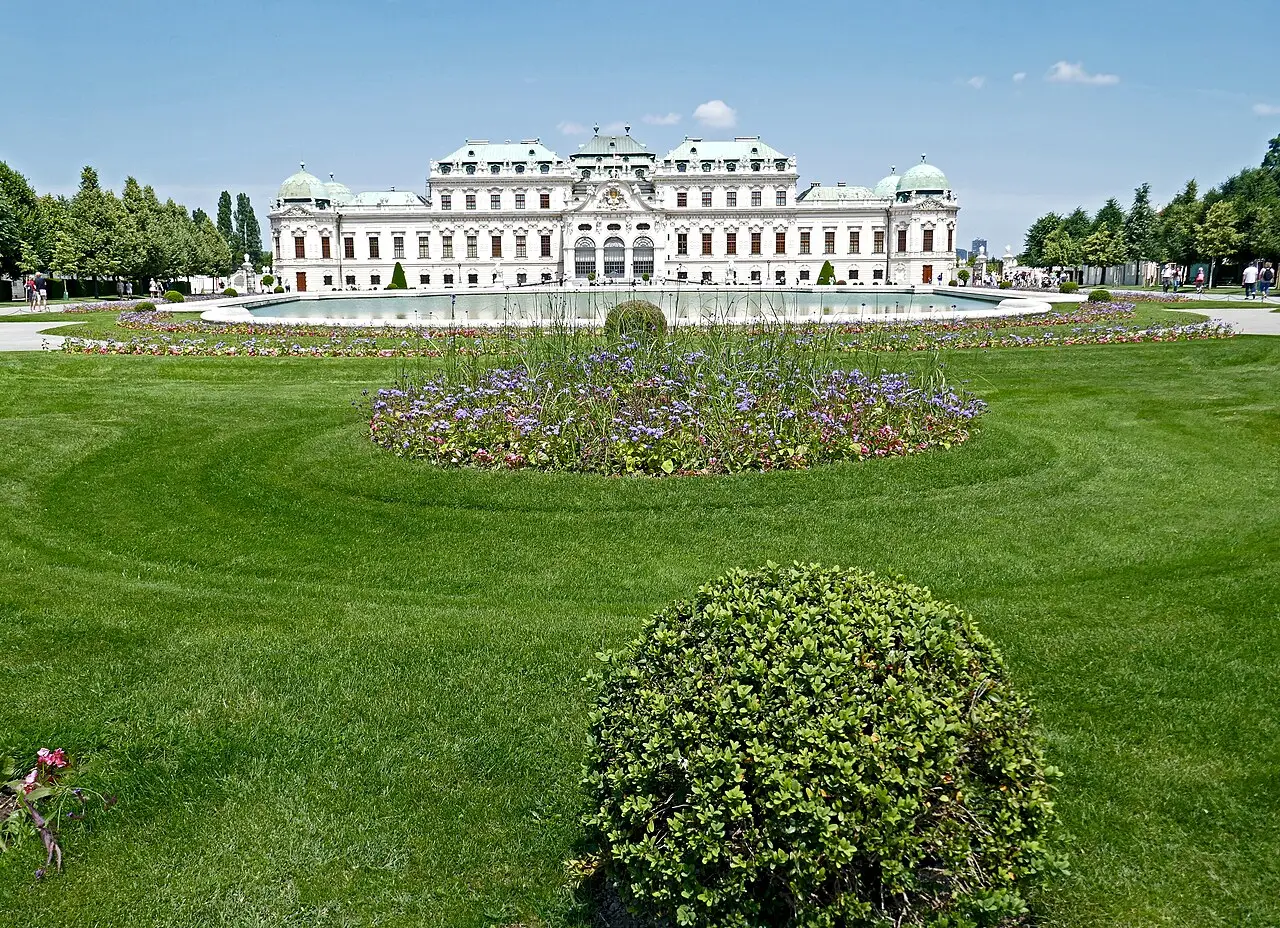
Upper Belvedere
The palace completed by Hildebrandt in 1723 for Prince Eugene of Savoy, and the room where the State Treaty was signed in 1955. It holds “The Kiss” (1908) and the world's largest Klimt collection, plus works by Schiele and Kokoschka; the Lower Belvedere, at the far end of the garden, hosts temporary shows.
Go for “The Kiss,” from 1908, and for the world's largest Klimt collection, with Schiele and Kokoschka in the neighboring rooms. The Lower Belvedere, at the end of the garden, hosts the temporary exhibitions.
Check access
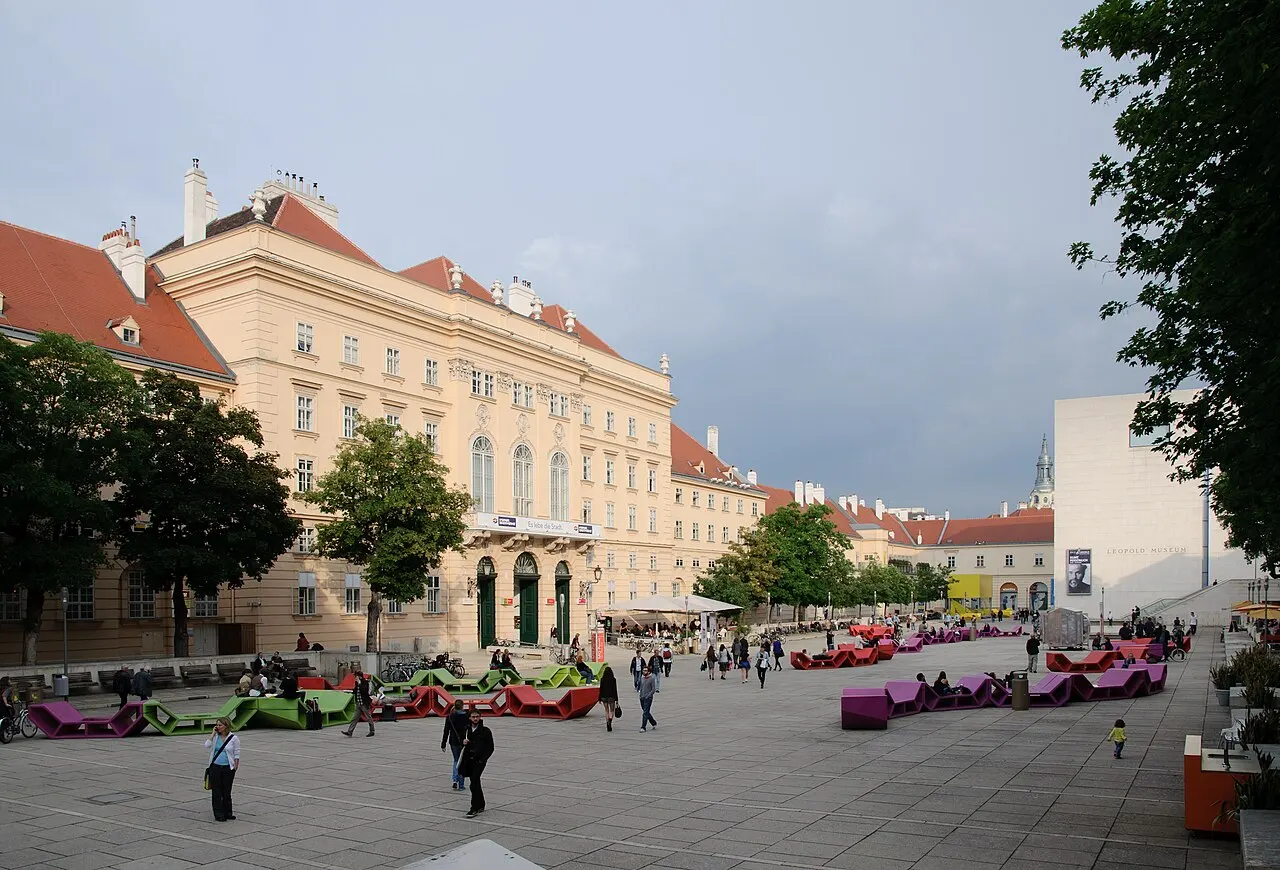
MuseumsQuartier and Leopold
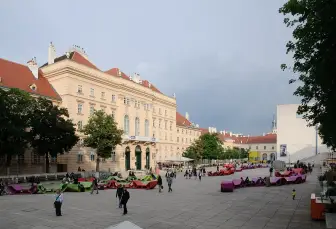
Former imperial stables converted in 2001 into a complex of about 90,000 m². The Leopold holds the world's largest Egon Schiele collection, the mumok shows 20th-century art in a gray basalt block, and the courtyard works as a public living room, with colorful benches, from April to October.
Go in through the Leopold, which has the world's largest Egon Schiele collection, and then stay in the courtyard of the old imperial stables, where the colorful benches serve as a public living room from April to October.
Check access

Naschmarkt, Secession, and Karlskirche
A stretch of about 1.5 km over the channeled Wien river: the market, with more than a hundred stalls and a flea market on Saturdays; the golden-domed Secession pavilion from 1898, with Klimt's Beethoven Frieze in the basement; and Fischer von Erlach's Karlskirche, finished in 1737, with two 33 m narrative columns.
Do the 1.5 km axis in one morning: coffee at the market, with more than a hundred stalls, Klimt's Beethoven Frieze in the Secession's basement, and the 1737 Karlskirche. On Saturdays, the flea market occupies the western end of the Naschmarkt.
Check access
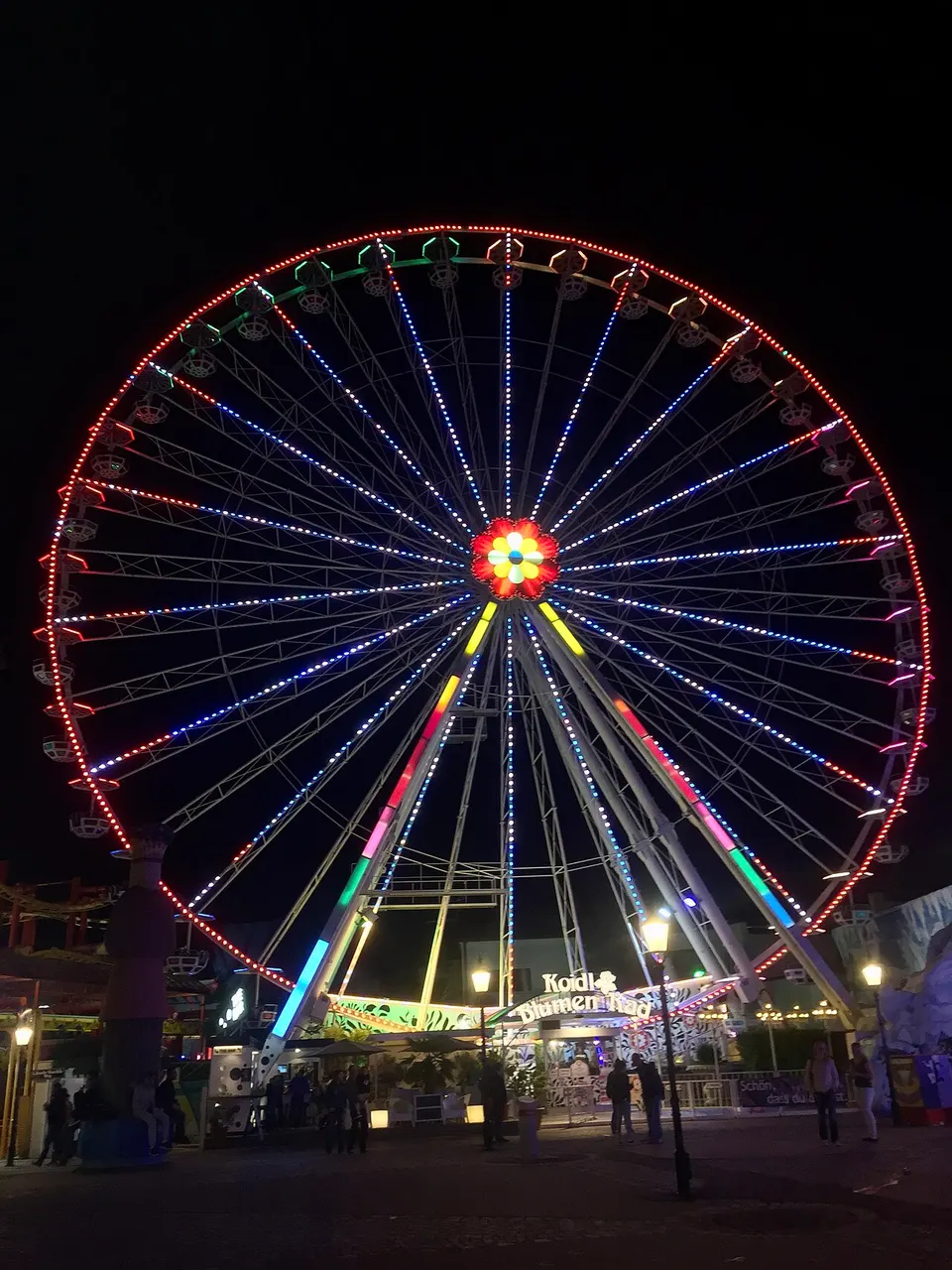
Prater and Riesenrad
An imperial hunting ground opened to the public in 1766, with 6 km² of greenery, the straight Hauptallee promenade, 4.4 km long, and an amusement park with no entrance fee: you pay per ride. The 1897 Ferris wheel is 64.75 m tall with 15 wooden cabins, what's left of the original 30.
The 1897 Ferris wheel is 64.75 m tall and has only 15 of its 30 original cabins, and the slow ride, charged separately, delivers the view from a sixty-meter viewpoint. What's worthwhile at the Prater is free: the 6 km² of the former hunting grounds and the Hauptallee, a 4.4 km straight stretch under chestnut trees, which is what the Viennese actually use.
Check access
Nilo’s itinerary
Start with the basic programme and choose extensions for the time you have.
Plan my days in the app ↗Day 1 · The imperial center inside the Ring
9am: Stephansdom before the line; climb the 343 steps of the south tower for a close look at the colorful tiled roof and the layout of the first district.
10:30am: walk down the Graben, past the 1693 plague column, then along the Kohlmarkt to the Hofburg; pick just one, the Imperial Treasury or the Prunksaal of the National Library.
At 1pm, have the menu of the day at a Beisl in Josefstadt, or eat a Käsekrainer standing at the Würstelstand on Albertinaplatz.
At 3pm, go into the Kunsthistorisches Museum, starting with the Bruegel room on the second floor and setting aside 20 minutes for the Chamber of Wonders.
At 10am, buy one of the Staatsoper's standing-room spots online, or join the line for the quota sold 80 minutes before the show, on the side of the Operngasse, and, once inside, tie a scarf to the railing to mark your spot.
Day 2 · Baroque, Klimt, and wine on the slope
9am: Schönbrunn with a timed slot; take the Grand Tour, about 40 rooms, then climb up to the Gloriette on foot through the garden.
Have lunch at noon in Hietzing, outside the palace, or visit the Tiergarten, in the same park, if you're with a child.
Arrive at 3pm at the Upper Belvedere to see “The Kiss” and the room where the State Treaty was signed in 1955.
Head back to the Ring at 5:30pm on tram D or 71 and spend an hour at a Kaffeehaus, with Apfelstrudel and the newspaper hanging from its rod.
8pm: tram 38 to Grinzing or 31 to Stammersdorf for a Heuriger; order Gemischter Satz and put together your plate at the cold buffet, charged by weight.
Day 3 · 20th century, market, and the Danube
Have breakfast at 9am at the Naschmarkt, with Liptauer and bread; on Saturdays, the flea market occupies the western end.
At 10:30am, head to the Secession pavilion, with the Beethoven Frieze in the basement, and cross the square to the Karlskirche and the Wien Museum, next to it.
At 1pm, go to the MuseumsQuartier to see Schiele at the Leopold Museum, and have lunch in the courtyard.
At 4pm, take the U1 to Praterstern, go up on the 1897 Ferris wheel, and walk along the Hauptallee, a 4.4 km straight stretch under chestnut trees.
Have dinner at 7pm in Leopoldstadt and walk back along the Donaukanal, which in summer turns into a string of open-air bars.




Food
 AI illustration
Wiener Schnitzel
A thin slice of veal, breaded and fried in clarified butter or lard, served with warm potato salad and lemon, no sauce. The name is only legally valid for veal; the pork version has to be labeled Schweinsschnitzel and costs about half: €12–16 against €22–28.
 AI illustration
Tafelspitz
A cut of rump boiled slowly in broth with vegetables and served in its own copper pot, with chive sauce, apple-horseradish, and pan-fried potato slices. It's the city's Sunday dish and takes two to three hours on the stove.
 AI illustration
Viennese goulash
An urban take on Hungarian goulash: beef cooked for hours with a lot of onion and paprika, no vegetables and no potato inside. The Fiakergulasch comes with sausage, a fried egg, and a pickle; it's eaten with a Semmel to wipe the plate clean.
 AI illustration
Käsekrainer
A pork sausage with bits of cheese inside, grilled and served in paper with bread, sweet or spicy mustard, and a pickle. Bought standing at the Würstelstand, which stays open until the early hours, for €5–7; the busiest ones are on the Albertinaplatz and the Hoher Markt.
 AI illustration
Coffee and the Kaffeehaus
Viennese coffeehouse culture has been a UNESCO intangible heritage since 2011 and always comes with a glass of water, served without being asked for and refilled for free. Order by name: Melange (with milk and foam), kleiner Brauner (short with cream on the side), Verlängerter (lengthened), Einspänner (with whipped cream in a glass), for €4.50–6.50.
 AI illustration
Sachertorte and the pastry shops
A chocolate cake with a layer of apricot jam, created by Franz Sacher in 1832 and fought over in court between the Hotel Sacher and Demel until a settlement in 1963. Alongside it: Apfelstrudel with pastry stretched until it's transparent, Kaiserschmarrn with plum compote, and, in summer, Marillenknödel filled with Wachau apricot.
 AI illustration
Heurigen and Wiener Gemischter Satz
In the wine taverns of Grinzing, Nussdorf, Stammersdorf, and Neustift, you drink the producer's own wine and choose your food by weight at the cold buffet. The Gemischter Satz (several grape varieties planted, picked, and pressed together) has held DAC status since 2013; in autumn there's Sturm, must still fermenting, sold in bottles with a loose cap.
 AI illustration
Beisl
The neighborhood tavern serves Backhendl (breaded fried chicken), Beuschel (lung and heart stew in a sour sauce), Liptauer (paprika cheese spread), and Krautfleckerl. The lunch menu, between 11:30am and 2:30pm, runs €11–16 with soup included.
Day trips
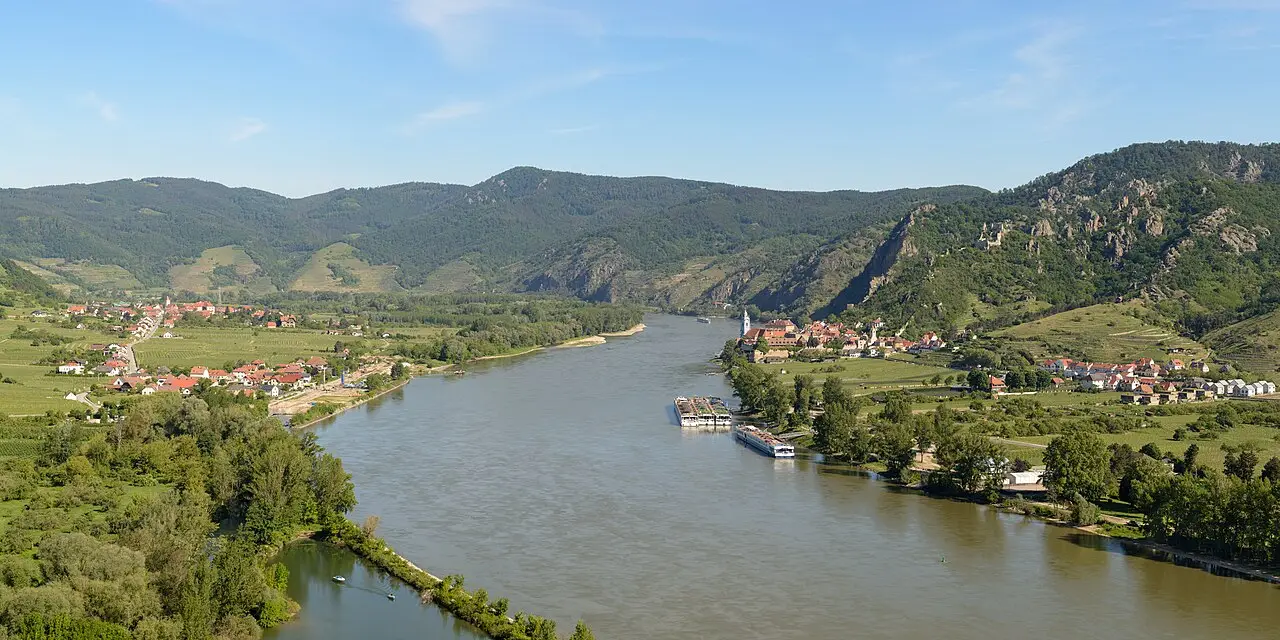
The Wachau and Melk Abbey
Melk is 80 km to the west, about 1 hour 10 minutes by direct train. The Benedictine abbey, rebuilt between 1702 and 1736 on a crag over the Danube, has a library of about 16,000 volumes, and between April and October there's a boat between Melk and Krems, about 1 hour 40 minutes, through the vineyard and apricot valley declared a UNESCO World Heritage Site in 2000.

Bratislava
Bratislava, the Slovak capital, is about 65 km to the east, 1 hour by train from the Hauptbahnhof or 1 hour 15 minutes on the Twin City Liner catamaran along the Danube. Vienna and Bratislava form Europe's closest pair of capitals, not counting Rome and the Vatican, so you can arrive in the morning, walk through the historic center and the castle, and be back by evening.
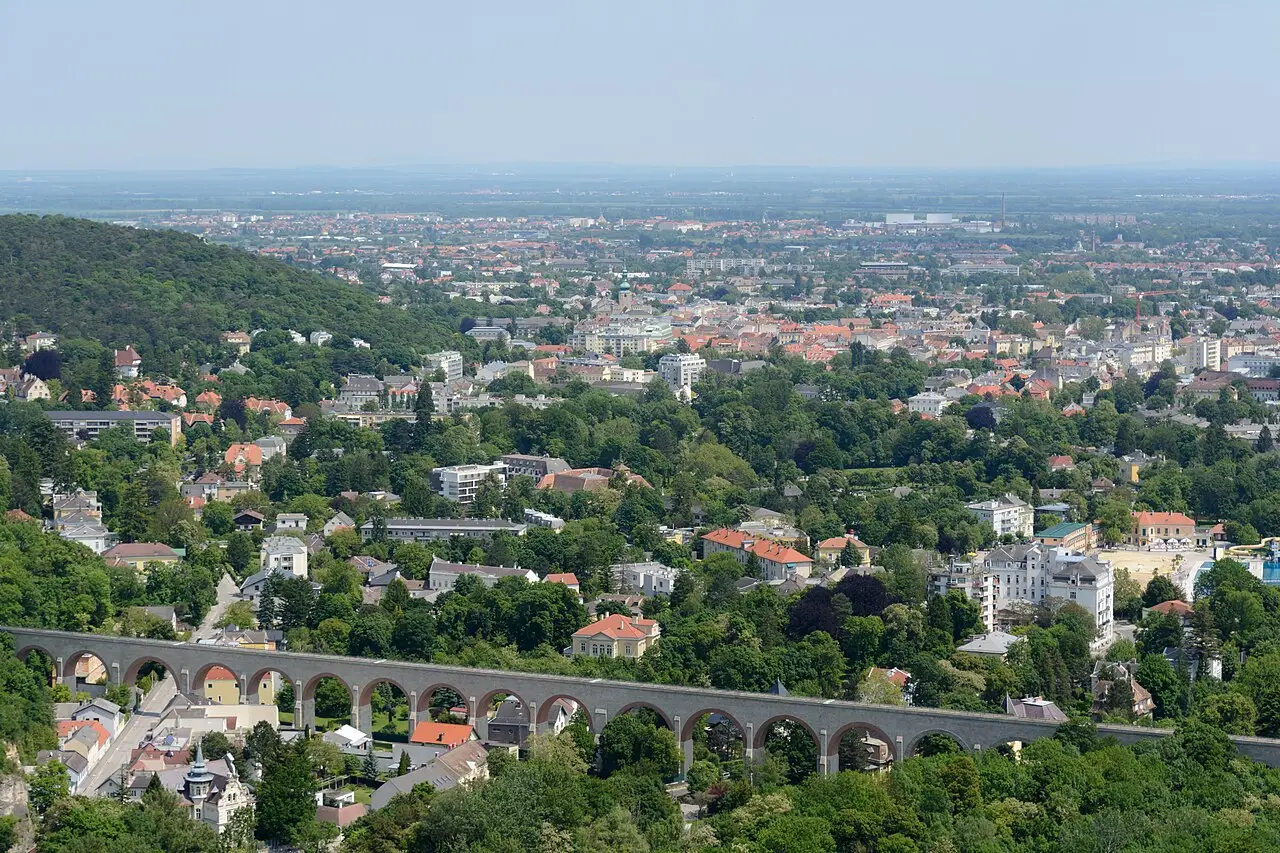
Baden bei Wien and the Wienerwald
Baden is 26 km to the south, about 1 hour on the Badner Bahn tram, which leaves from the Opera. It has sulfur baths exploited since Roman times, a 19th-century spa park and forest trails, and Beethoven spent several summers there and worked on the Ninth Symphony in a house now open to visitors.
Where to begin
The imperial center inside the Ring
9am: Stephansdom before the line; climb the 343 steps of the south tower for a close look at the colorful tiled roof and the layout of the first district.
Baroque, Klimt, and wine on the slope
9am: Schönbrunn with a timed slot; take the Grand Tour, about 40 rooms, then climb up to the Gloriette on foot through the garden.
20th century, market, and the Danube
Have breakfast at 9am at the Naschmarkt, with Liptauer and bread; on Saturdays, the flea market occupies the western end.
Money
The currency is the euro, and the city charges less than its facade would suggest. Common ranges in 2026: coffee at a Kaffeehaus €4.50–6.50; lunch menu €11–16; dinner at a Beisl €18–30 per person without drinks; half a liter of beer €4.50–6; a glass of wine €4.50–7; admission to a major museum €16–22, with Schönbrunn and the Belvedere between €22 and €27; a mid-range hotel room €120–190 a night; a hostel bed €30–45. The municipal lodging tax (Ortstaxe) rose from 3.2% to 5% of the nightly rate on July 1, 2026, and is either included or charged separately at checkout. Cards are accepted almost everywhere, but the Würstelstand, the Heurigen, market stalls, and some old-school Beisl still work cash only. Carry €30–50 in cash: it's common to end up holding the sausage with a useless card in these places. Tipping: 5 to 10%, said out loud as a total when you pay (“twenty-two, please”) and not left in coins on the table. The Vienna City Card and the Vienna Pass only pay off with three or more museums a day. Tap water comes from Alpine springs through two aqueducts, from 1873 and 1910, is drinkable everywhere in the city, and flows for free from public fountains.
From the airport to the center
Guide estimate
Scroll to compare all columns
| Route | Time | Price |
|---|---|---|
| VIE → Wien Mitte and Praterstern · S7 suburban train | about 25 min | about €4.40, onward travel in the city included |
| VIE → Hauptbahnhof · CJX and Railjet regional trains | 15–18 min | same type of ticket as the S7 |
| VIE → Wien Mitte · City Airport Train (CAT), non-stop | 16 min | €14.90 one way |
| VIE → center · Vienna Airport Lines bus | varies | about €11 |
| VIE → center · taxi or ride-hailing | 25–40 min | €36–45 |
Getting there and around
From the airport to downtown: the S7 for €4.40
Vienna-Schwechat Airport (VIE) sits 18 km southeast of downtown, and the best option is almost always the S7 suburban train, which takes about 25 minutes to Wien Mitte and Praterstern for around €4.40, with the continuation inside the city included in the ticket. The regional CJX and Railjet trains connect the airport to the Hauptbahnhof in 15 to 18 minutes, with the same type of ticket. The City Airport Train (CAT) runs nonstop to Wien Mitte in 16 minutes, for €14.90 one way, every 30 minutes from early morning to 11pm, and it's only worth it for those in a hurry. There are also the Vienna Airport Lines buses, for about €11, and taxi or app rides for €36–45, with 25 to 40 minutes in traffic. Between midnight and 4am, only buses run.
Metro: 5 lines, with the U5 still under construction
Within the city there are 5 metro lines (U1, U2, U3, U4 and U6; the U5 is still under construction), 28 tram lines with about 170 km of track, about 130 bus lines and the S-Bahn. In 2026, the single fare is €3.20 on paper and €3.00 on mobile, and the 24-hour pass costs €10.20 on paper and €9.70 on the app. The 48- and 72-hour passes stopped being sold on January 1, 2026, and the old weekly pass became the 7-consecutive-day pass from activation, for €28.90 on paper or €25.20 on the app; the annual one costs €467. There are no turnstiles, and the common first-day mistake is not validating the paper ticket at the blue machine before boarding. The fine for traveling without a valid ticket is €135 paid on the spot, plus the fare. The metro runs 24 hours on Friday, Saturday and the eve of a holiday; on other nights, NightLine buses take over. Downtown is short on foot (from the Stephansdom to the Karlsplatz is 15 minutes), and the cycling network exceeds 1,700 km, with WienMobil Rad public bikes billed by the minute.
Safety
Vienna regularly tops international quality-of-life rankings, violent crime is low, and the practical risk is almost entirely pickpocketing. The known spots are the U1 and U3 lines, Stephansplatz, Karlsplatz, Praterstern, Westbahnhof, and the exit from the Christmas markets in December, where crowds get thick and your bag should stay in front of your body, not behind. Praterstern and parts of the Gürtel see, at night, some drinking and drug use, with little violence directed at passersby, but it's not a place to linger. The scams repeat often enough to spot from a distance: vendors dressed as Mozart on the Kärntner Straße and Stephansplatz selling overpriced, mediocre tourist concerts; a clipboard with a fake “petition” near the cathedral, used as a distraction while another hand goes to work; the three-card game on the Mariahilfer Straße, which no one wins; and unofficial transport on arrival at the airport. Use the taxi line or the train. Emergencies: 112 general, 133 police, 144 ambulance, 122 fire. Tap water is drinkable throughout the city and there's no need at all to buy bottled water.
Etiquette tips
Greet on the way in and out
“Grüß Gott” or “Guten Tag” when entering a shop, bakery, elevator, or waiting room; leaving without an “Auf Wiederschauen” gets noticed. “Servus” is only used with people you already address informally.
Pay at the table and state the total
At a café or Beisl you don't pay at the counter: call the waiter with a look (“Herr Ober” is an old formula and sounds bad) and state the rounded total as you hand over the cash or card.
At the café, you can stay for hours on a single order
A single coffee earns you hours at the table and the newspapers hung on wooden rods, to be put back on the hook. In exchange, no one will push you to order more or bring the bill before you ask for it.
Street rule: right on the escalator, off the red lane
Stand on the right, leave the left clear for people walking up. Red pavement marks the bike lane, separate from the sidewalk, and Viennese cyclists ring the bell instead of swerving out of courtesy.
Respect the Ruhezeit
Quiet between 10pm and 6am, and all day on Sundays and holidays: no drilling, vacuuming, or loud music in apartments. The rule is taken seriously, and the complaint reaches your door first, then the building management.
Formality and titles
Address people you don't know with “Sie,” including older colleagues and neighbors, until they offer the “du.” Academic titles show up on doorbells, business cards, and in the way people address doctors, professors, and public officials.
Mistakes to avoid
The 48- and 72-hour passes were discontinued in 2026
Buying the 48- or 72-hour pass, which stopped being sold on January 1, 2026, and no longer shows up in the app. What's left is the 24-hour pass, for €10.20 on paper or €9.70 on mobile, the 7-consecutive-day pass from activation, and single tickets.
Assuming every “Schnitzel” is veal
Assuming any “Schnitzel” is veal. A genuine Wiener Schnitzel is veal and costs €22–28; if the price is €13, it's Schweinsschnitzel, made of pork, and that has to be stated on the menu.
State the total to the waiter on the spot
Leaving a tip in coins on the table and walking off. Here you state the total to the waiter right at the moment of payment. Coins left on the table read as carelessness, not generosity.
Only the station shops open
Planning shopping for a Sunday. Nearly all shops close on Sundays and holidays; only the shops in the Hauptbahnhof, Westbahnhof, and Praterstern stations stay open, along with museums, cafés, and restaurants.
There's no turnstile; the fine is €135
Riding the metro without validating the paper ticket. There's no turnstile at all, which makes the ride feel free. Checks are random and plainclothes, and the fine is €135 paid on the spot, or €145 by invoice, plus the fare.
Useful phrases
Grüß Gott
Hello / good day: the standard Austrian greeting, used when entering any establishment
Servus
Hi and bye at once, informal, only among people who know each other
Zahlen, bitte
The bill, please: said to the waiter, at the table
Einen kleinen Braunen, bitte
A short coffee with cream on the side, please
Passt schon
That's fine as is / keep the change
Auf Wiederschauen
See you later: the formal goodbye when leaving a shop or café
Districts
Innere Stadt (1st)
The medieval center inside the Ring, about 1.6 km², with the Stephansdom, the Hofburg, the expensive shops of the Kohlmarkt, and nearly all the luxury hotels. It has only about 16,000 residents and the highest concentration of visitors in the city.
Leopoldstadt (2nd)
Between the Donaukanal and the Danube, with the Prater, the Augarten, and the Economics University campus. It was the Jewish quarter until 1938 and today holds an Orthodox community, new cafés, and rents still below the center's.
Neubau and Josefstadt (7th and 8th)
Narrow streets behind the MuseumsQuartier: Neubaugasse, Burggasse, and the Spittelberg gather independent shops, secondhand stores, small bars, and pocket theaters. It's where you live if you want everything within walking distance.
Wieden and Margareten (4th and 5th)
South of the Naschmarkt, a mix of late-19th-century buildings, embassies, and the Freihausviertel. The Schleifmühlgasse concentrates contemporary art galleries and neighborhood cafés.
Landstraße (3rd)
The district of embassies, the Belvedere, and the Wien Mitte station, where airport trains arrive. The Hundertwasserhaus, finished in 1985, sits in the northern part, near the canal.
Favoriten (10th)
The most populous district, with more than 200,000 residents, strong Turkish and Balkan immigration, and the Viktor-Adler-Markt. Right next to it is the Hauptbahnhof, the central station opened in 2014, and the new Sonnwendviertel neighborhood.
Ottakring and Hernals (16th and 17th)
A working-class, immigrant west: the Brunnenmarkt has about 170 stalls and is the city's largest open-air street market. Climbing the slope, the vineyards start, along with the Heurigen and the Ottakringer brewery.
Döbling (19th)
Grinzing, Nussdorf, Heiligenstadt, and the Kahlenberg: wine houses, forest trails, and a view of the whole city from 484 m up. This same district holds the Karl-Marx-Hof, a symbol of Red Vienna.
History
1st–5th c. · Vindobona, Roman camp
Rome sets up a legionary camp on the south bank of the Danube, part of the fortified limes frontier. The camp's grid layout still shapes the streets around the Hoher Markt, where ruins are visible under the square.

881 · First written mention
The Salzburg annals record a battle “ad Weniam.” The name comes from the small Wien river, a tributary that today runs channeled under the Naschmarkt.

1156 · The Babenbergs bring the court
In 1156, the Privilegium Minus raises Austria to a duchy. Under Henry II Jasomirgott, the Babenbergs establish Vienna as their centre of power, bringing the court closer to the city.

1278 · The Habsburgs arrive
Rudolf I defeats Ottokar II of Bohemia on the Marchfeld plain in 1278. In 1282 he grants Austria and Styria to his sons, consolidating the Habsburgs’ territorial base. The monarchy ends in 1918.

1365 · University of Vienna
Rudolf IV founds the university, the oldest continuously operating one in the German-speaking world. It has about 90,000 students today.
1529 and 1683 · Ottoman sieges: 1529 and 1683
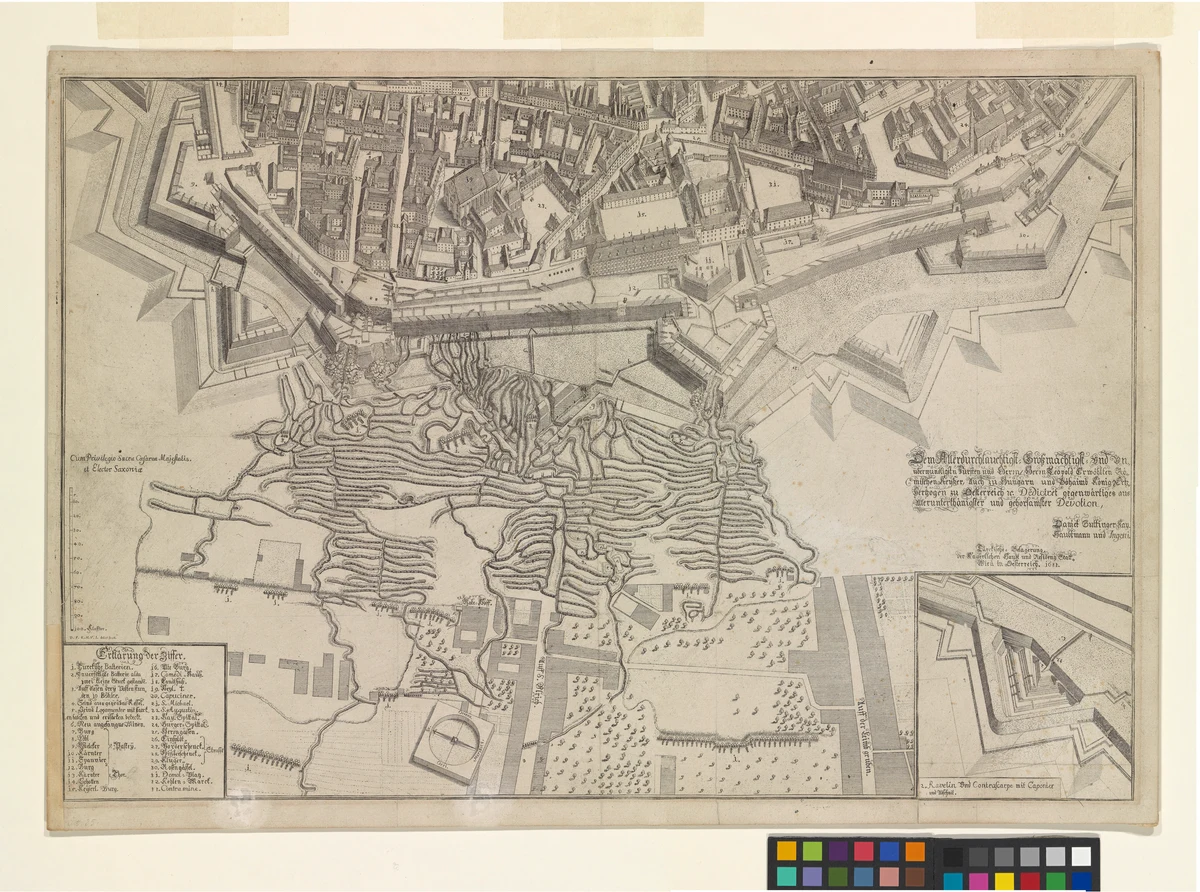
Suleiman besieges the city in 1529 and gives up as winter sets in; the second siege is broken on September 12, 1683, by Polish and imperial troops descending from the Kahlenberg. The victory frees up money and labor for the baroque palaces.
1683–1790 · Baroque and reforms
Fischer von Erlach and Hildebrandt build the Karlskirche, Belvedere and Schönbrunn, and the nobility fills the first district with mansions. Maria Theresa (1740–1780) promotes administrative and educational reforms. Joseph II is her co-regent from 1765 to 1780; as sole ruler, he intensifies the reforms and founds the General Hospital in 1784.

1814–1815 · Congress of Vienna
For nine months the great powers redraw post-Napoleonic Europe in the city. The phrase of the time, “the congress dances but doesn't move forward,” describes the method.

1857–1891 · The Ringstrasse
In 1857, Franz Joseph authorises demolition of the walls and construction of the Ringstrasse. The boulevard gains the Opera, Parliament, city hall, university and Burgtheater. The museums facing each other open on different dates: the Natural History Museum in 1889 and the Art History Museum in 1891.

1890–1918 · Vienna 1900 and the end of the empire
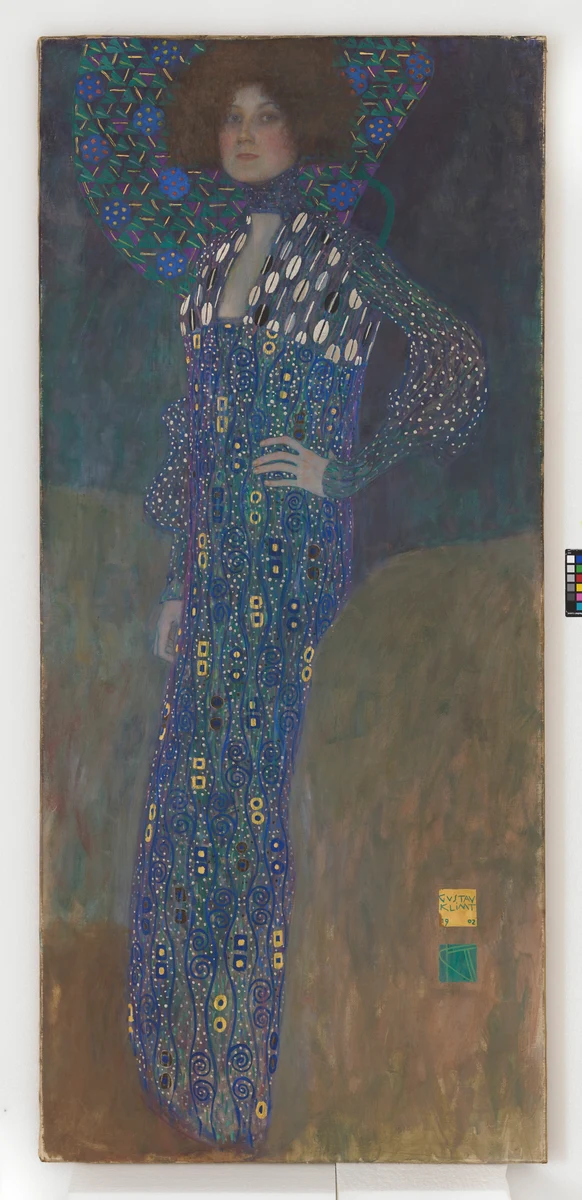
Freud, Klimt, Schiele, Loos, Otto Wagner, Schönberg, Wittgenstein, and Karl Kraus all work within a few blocks of each other. In 1918 an empire of 52 million becomes a republic of 6.5 million with a capital far too big for it.
1938–1955 · Annexation, war, and occupation
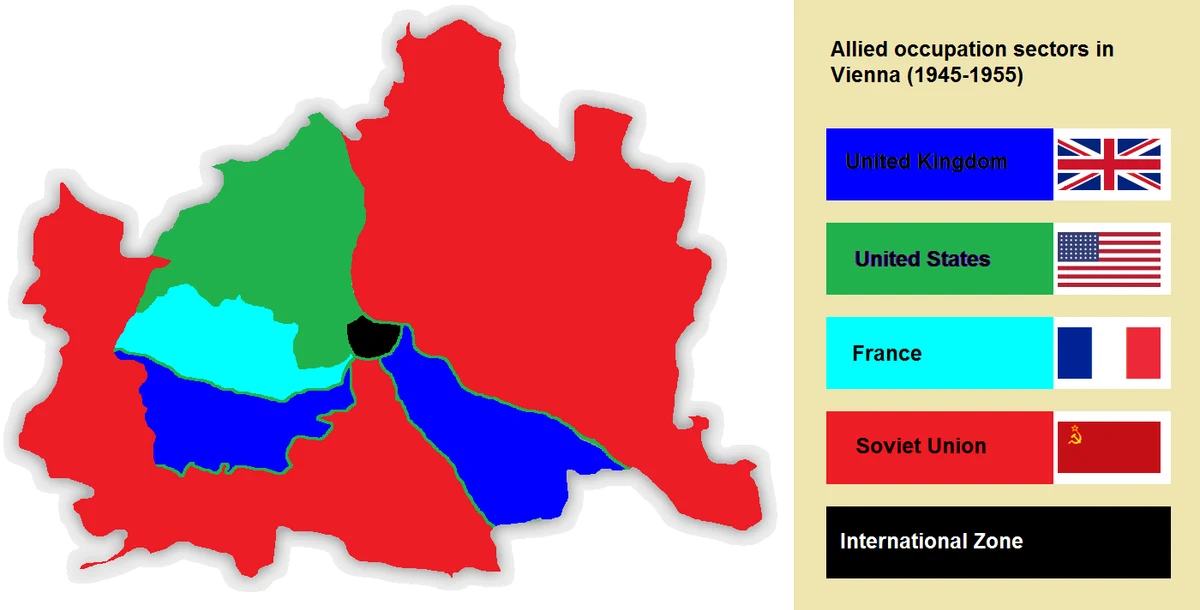
The annexation by Germany in March 1938 wipes out, within a few years, a Jewish community of about 180,000 people, through flight and extermination. From 1945 to 1955 the city is split into four Allied zones, until the State Treaty is signed at the Belvedere on May 15, 1955.
Complete history
Where the Alps meet the Danube and the plain
Vienna was born where the Danube meets the Alps. The Danube runs west to east, and at the point where the last hills of the Alps meet the river, the Pannonian plain begins, flat all the way to Hungary. Rome set up the legionary camp of Vindobona there in the 1st century, guarding the limes frontier. The camp was abandoned in the 5th century, but the grid layout stayed: the streets around the Hoher Markt and the Judenplatz still follow the Roman plan. The first written mention of the current name, “ad Weniam,” dates from 881 and comes from the Wien river.
The Babenbergs and the court at the Am Hof (1156)
Vienna gained a political role in 1156, when the Privilegium Minus turned Austria into a duchy and the Babenbergs moved the court to the Am Hof. In 1221, it was granted city rights and the staple right, which forced merchants passing through to offer their goods here before continuing their journey, and was the place's first major source of income. In 1278, Rudolf I of Habsburg defeated Ottokar II at Marchfeld and inaugurated the dynasty that would rule until 1918. The Habsburgs inherited, married into, and accumulated crowns (Bohemia, Hungary, Spain, Naples), and Vienna came to administer a composite of peoples, not a national state, which explains why the city is bigger than Austria would need.
The two sieges decided the layout
The two Ottoman sieges, in 1529 and 1683, decided the urban layout. After 1683 the money that would have gone to walls went to palaces instead: the Belvedere (1723), the Karlskirche (1737), Schönbrunn, and hundreds of Palais within the first district. The glacis, a strip kept empty for military reasons around the fortification, stayed unoccupied for two centuries, and it was exactly that empty space that Franz Joseph converted, starting with the 1857 decree, into the Ringstrasse. Each building on the ring got a historical style matching its function: Gothic for city hall, Greek for the Parliament, Renaissance for the university. Between 1850 and 1910, trainloads of migrants arrived from Bohemia, Moravia, Hungary, and Galicia, and the population grew fivefold.
Freud, Klimt and Loos: breaks between 1890 and 1918
The generation raised in that dense city produced, between 1890 and 1918, simultaneous breaks in different fields: Freud on Berggasse 19, Klimt's Secession in 1897, Schiele and Kokoschka, the ornament-free facade of the Looshaus in 1911, Otto Wagner's urban railway network, Schönberg's dissolution of tonality. The empire ended in 1918 and left behind a capital of 2 million inside a republic of 6.5 million. Between 1919 and 1934 the social-democratic administration built Red Vienna: a progressive tax on luxury consumption funded about 64,000 municipal apartments, among them the Karl-Marx-Hof, with roughly 1.1 km of facade, complete with a nursery, laundry, and clinic. The city still owns about 220,000 apartments, home to nearly a quarter of the population; add subsidized cooperatives and it's over half the residents. It's the main reason rent in Vienna is lower than in Munich or Paris.
The 1938 annexation destroyed the Jewish community
What followed were the Nazi annexation and the war years. The annexation of March 1938 destroyed the Jewish community of about 180,000 people: most fled, more than 65,000 were murdered, and the city never recovered that population or that intellectual life. Bombing and the battle of April 1945 hit the Opera, the roof of the Stephansdom, and about a fifth of the housing stock. From 1945 to 1955 Vienna was divided into four occupation zones, with the first district administered on a rotating basis by the four powers, the setting of “The Third Man.” The State Treaty of May 15, 1955, restored sovereignty in exchange for permanent neutrality, and neutrality became the city's line of business: OPEC headquarters since 1965, the UN's third headquarters since 1979 at the Vienna International Centre, plus the OSCE and the IAEA. The population, which had fallen to about 1.5 million in the 1980s, started growing again with the opening of the East in 1989 and Austria's entry into the European Union in 1995, and passed 2 million again in 2023.
The city's name comes from the Wien river, which today flows channeled beneath the Naschmarkt. The first written mention, “ad Weniam,” is from 881.
Geography and shape of the city
Between the Alps and the Pannonian plain
Vienna covers 414.9 km² between 151 m of altitude on the Danube's bank and 542 m at the Hermannskogel, inside the Wienerwald. The city sits where two landscapes meet: to the west, forested and vineyard hills that mark the end of the Alps; to the east, the Pannonian plain, which explains the constant west wind, the hot summer, and the rainfall that's scarce for the latitude.
The rerouted Danube and the canals
The Danube doesn't cut through the center: the riverbed was straightened between 1870 and 1875, and, between 1972 and 1988, a second parallel channel was dug, creating the Donauinsel, an artificial island 21 km long and about 200 m wide that works as flood defense and urban beach at once. Through the center run the Donaukanal, an old branch of the river lined with summer bars, and the Wienfluss, channeled under the Naschmarkt.
The rings, the 23 districts, and the vineyards
The layout is made of concentric rings: the medieval Innere Stadt; the 5.3 km Ringstrasse where the demolished wall used to stand, built starting in 1857; the Gürtel, a second traffic ring where the outer fortification, the Linienwall, stood until 1894; and, beyond it, the working-class and residential districts. The 23 districts were numbered in a spiral out from the center, and the number shows up in the postal code: 1010 is the first district, 1070 is Neubau, 1190 is Döbling. Within the city limits there are still about 580 hectares of working vineyard, a case that's practically unique among European capitals.
The roughly 580 hectares of vineyard lie within the city limits, and tram 38 takes you from downtown to them, in Grinzing.
Culture
Music: the Staatsoper, the Philharmonic and the Musikverein
The Staatsoper stages opera or ballet almost every night of the season, and the Musikverein, opened in 1870, has the Golden Hall, home of the Vienna Philharmonic's New Year's Concert, broadcast to dozens of countries since 1959. The Philharmonic is made up of musicians from the Opera's orchestra and has governed itself since 1842. The Konzerthaus, from 1913, and the Theater an der Wien, where “Fidelio” premiered in 1805, share the rest of the calendar, and the Wiener Sängerknaben, who have existed since 1498, sing Mass on Sundays in the Hofburg chapel. It was also a few blocks from these halls that the Second Viennese School (Schönberg, Berg and Webern) dismantled tonality, between 1908 and 1925.
Visual arts and literature revolve around 1897
Viennese visual art and literature revolve around one short period and its consequences. The 1897 Secession broke with official painting; Klimt, Schiele and Kokoschka are today split among the Belvedere, the Leopold and the Albertina, which holds Dürer's 1502 “Hare.” Adolf Loos published “Ornament and Crime” in 1908 and built the ornament-free Looshaus in 1911, facing the Hofburg; Otto Wagner designed the urban railway stations and the 1907 Kirche am Steinhof. Freud saw patients at Berggasse 19 until 1938, and the apartment is now a museum. In writing, the line runs from Schnitzler, Karl Kraus and his magazine “Die Fackel,” Musil, Joseph Roth and Stefan Zweig to Thomas Bernhard and Elfriede Jelinek, Nobel laureate in 2004.
Nearly 450 balls between January and Lent
The contemporary city is less solemn than the facade suggests. Between January and Ash Wednesday there are about 450 balls, from confectioners to hunters, and the Opernball turns the Opera into a ballroom for one night. Soccer splits between Rapid, in Hütteldorf, and Austria, in Favoriten, with the national team playing at the Ernst-Happel-Stadion, from 1931, inside the Prater. Nightlife concentrates under the Gürtel arches, beneath the elevated line designed by Otto Wagner, and along the Donaukanal in summer. The local pop scene runs from Falco, whose “Rock Me Amadeus” hit number one in America in 1986, to Wanda, Bilderbuch, and Voodoo Jürgens, who sings in Viennese dialect.
At the Opernball, on the Thursday before Ash Wednesday, about 150 debutante couples open the ball inside the Opera, in mandatory formal dress.
Festivals and events
 AI illustration
Ball season (January–February)
About 450 balls between New Year's and Ash Wednesday, organized by professional categories, schools, and associations. The Opernball takes over the Staatsoper on the Thursday before Ash Wednesday, with about 150 debutante couples and a mandatory dress code: tailcoat or tuxedo and a long gown.

Wiener Festwochen (May–June)
The Wiener Festwochen, created in 1951, occupy several stages across the city for five to six weeks of theater, opera and performance. The opening is free, in the square in front of city hall.
Donauinselfest (end of June)
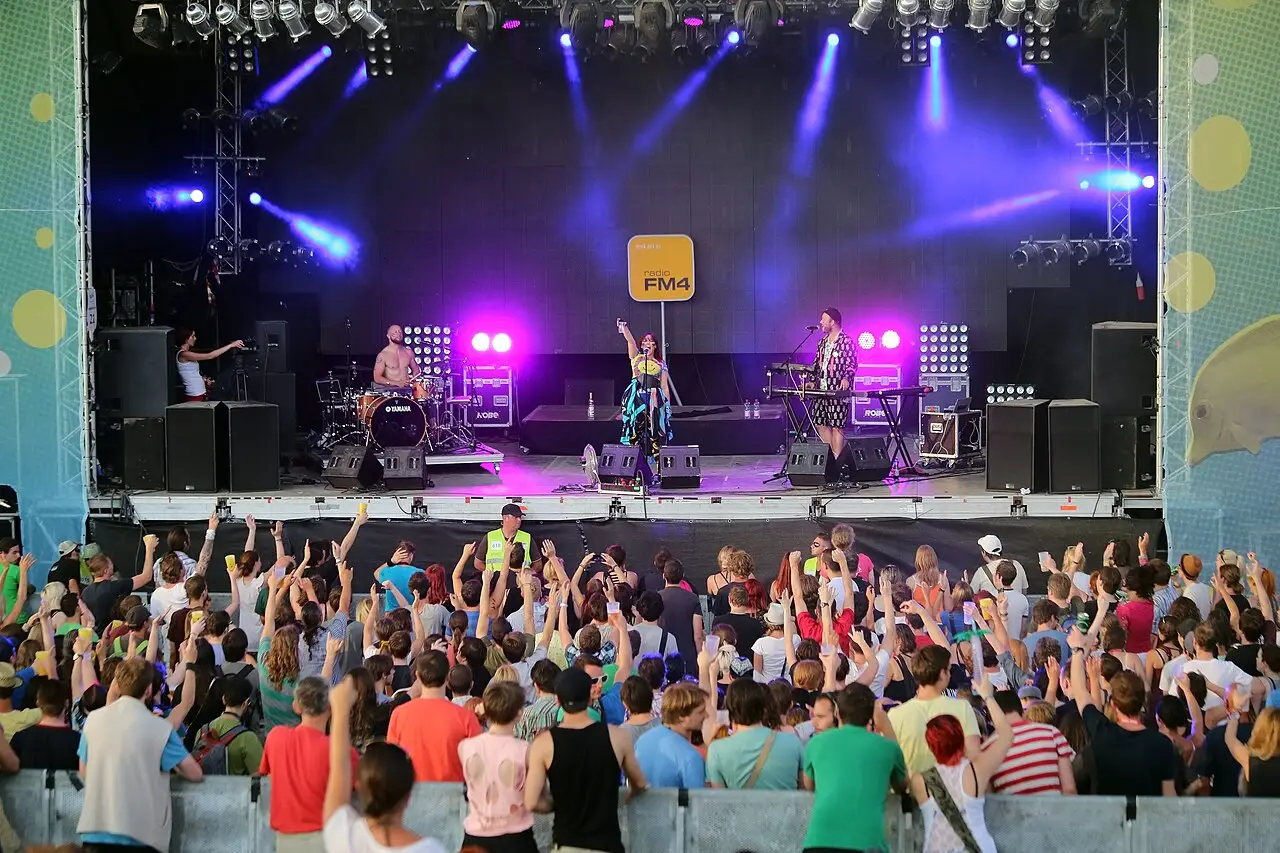
Three days of concerts on stages spread across the Danube island, with no entrance fee, funded by the city. Attendance runs into the millions over the weekend; go and come back by metro, since there's nowhere to park.

Rathausplatz Film Festival (July–August)
Every night, a free screening of opera, ballet, and filmed concerts on a big screen in front of city hall, surrounded by dozens of food stalls. It starts at dusk, with no booking or ticket needed.

Christkindlmärkte (mid-November to December 26)
Christmas markets at about 20 spots around the city; the biggest is at the Rathausplatz and the most compact at the Spittelberg. Punsch is served in a mug with a €3–5 deposit, returned at the counter when you hand the mug back.
Books and films
“The Third Man” (1949), by Carol Reed
Filmed in occupied, war-torn Vienna, with the Prater Ferris wheel, the sewers, and Anton Karas's zither score. It explains the ten years of four-power rule the city doesn't much like to mention.
“The World of Yesterday,” by Stefan Zweig (1942)
A memoir of the Vienna before 1914, written in exile, about a city convinced history had come to an end. The contrast with 1938 is the whole point of the book.
“Before Sunrise” (1995), by Richard Linklater
A couple spends an entire night walking through the city, from the train coming from Budapest until dawn, with stops at the Friedhof der Namenlosen, the cemetery of the nameless by the Danube, at the Prater and on the trams. The film gives the real scale of Vienna on foot, smaller than it seems.
Frequently asked questions
Vienna: Is the 48- or 72-hour pass still sold?
No: both stopped being sold on January 1, 2026, and what's left is the 24-hour pass, for €10.20 on paper or €9.70 on mobile, the 7-consecutive-day pass from activation, and single tickets.
Vienna: How do you get from the airport to downtown?
By S7 suburban train, almost always the best option: it takes about 25 minutes to Wien Mitte and Praterstern for around €4.40, and the ticket already includes the continuation inside the city. The regional CJX and Railjet trains reach the Hauptbahnhof in 15 to 18 minutes, with the same type of ticket.
Vienna: How much does a day in the city cost?
Count on €90 to 150 per person per day at a mid-range standard, €55 to 75 on a tight budget and more than €250 with a central hotel. In 2026, coffee at a Kaffeehaus costs €4.50 to 6.50, the lunch menu €11 to 16, dinner at a Beisl €18 to 30 per person without a drink, and half a liter of beer €4.50 to 6. Admission to a major museum runs €16 to 22, with Schönbrunn and the Belvedere between €22 and €27, and a mid-range hotel room €120 to 190 a night, against €30 to 45 for a hostel bed.
Vienna: What's the climate like and when does it rain?
The climate is continental with Pannonian influence: four distinct seasons and less rain than the latitude suggests, about 550 to 600 mm a year, concentrated in short downpours between May and August.
Vienna: Do you need to greet when entering a shop?
Yes: say “Grüß Gott” or “Guten Tag” when entering a shop, bakery, elevator or waiting room; leaving without an “Auf Wiederschauen” gets noticed.
Other cities in the country
Austria ↗- Days
- 2–4
- When
- May–Jun · Sep–Oct
- Per person/day
- Average 185 EURMid-range · per person/day
Cost scope
Per person per day: accommodation, meals, urban transport, visits and a small allowance for extras. Flights excluded; larger purchases vary. Editorial estimate, not a quote.


Itineraries through here
 Central Europe by train in 15 daysCentral Europe on railsBerlin · Prague · Vienna · Budapest · Kraków13–16 days5 cities
 Prague, Vienna and Budapest in 8 daysThe Habsburg citiesPrague · Vienna · Budapest8–9 days3 cities
 Germany, Czechia and Austria in 12 daysFrom the Berlin Wall to ViennaBerlin · Prague · Vienna · Munich11–13 days4 cities
 Germany and Austria in 10 daysBeer gardens, Mozart and SchönbrunnMunich · Salzburg · Vienna7–10 days3 cities