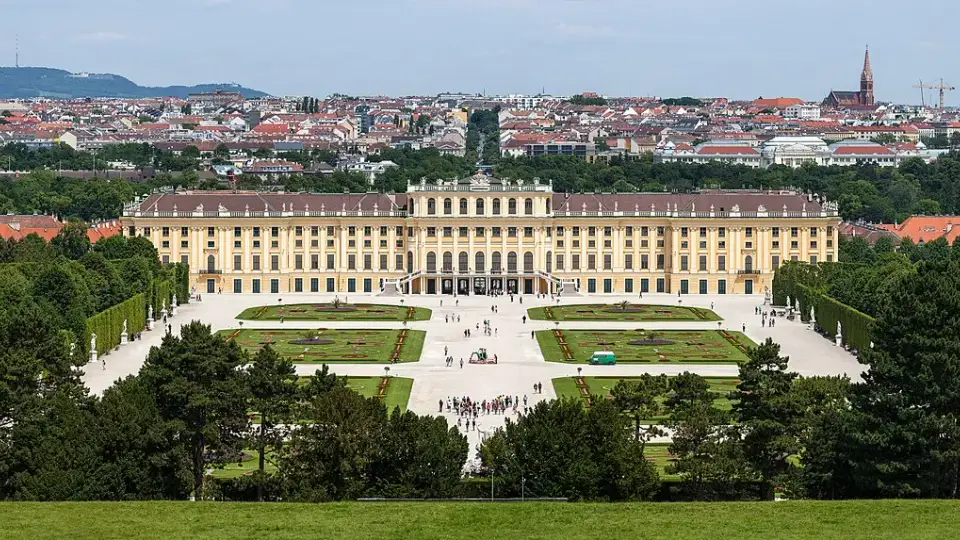
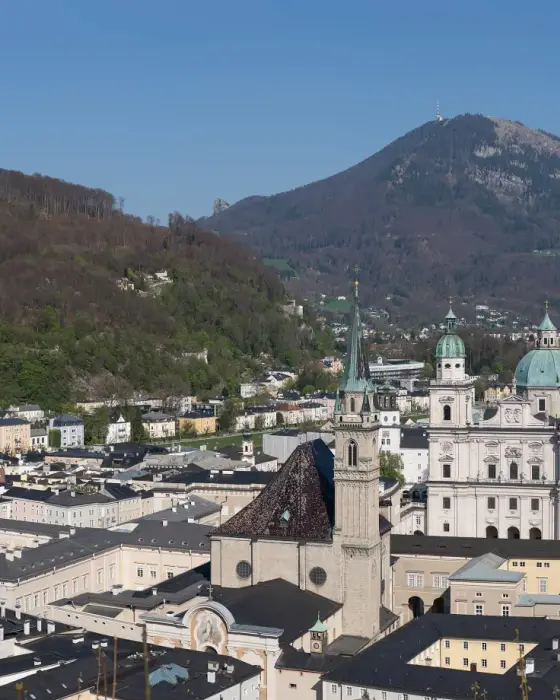
Austria
Salzburg
Fortress, Baroque churches and Mozart's birthplace between two hills on the Salzach River
Days Start with the basic programme and choose extensions for the time you have.
How the guide reaches this number
The first is for the left bank: the fortress at opening, the walk down by Nonnberg, the cathedral, St. Peter's cemetery, Mozart's birthplace and Getreidegasse in the afternoon, the Mönchsberg elevator in the late afternoon and dinner at the Augustiner, in Mülln. The second is for the right bank: the Mirabell garden early, the climb up the Kapuzinerberg from Linzergasse and, from late March to early November, the Hellbrunn water games in the afternoon. The third day I'd give to the Hallein salt mine, less than half an hour away by train, or, from May to November 1, to the Werfen ice cave. Hallstatt I'd leave for a fourth day, because the bus takes more than two hours each way and the village is always crowded. With just one day, I'd do the fortress, the cathedral, Getreidegasse and the Mönchsberg, and leave Mozart to the fans: the birthplace costs €18 for an hour of letters and objects. I'd skip the two Mozart museums together, unless there's a special interest in the music, because the Makartplatz apartment is largely reconstructed.
2–4
When May, June, September and October; July and August are the months of the Salzburg Festival, and from late November until Christmas the city sets up its Advent markets
How the guide reaches this number
Salzburg has four well-defined seasons and rain all year round, heaviest in summer. The 1981 to 2010 average was 9 °C, with July the warmest and rainiest month (about 160 mm) and January to March under 70 mm a month; the persistent drizzle, the Schnürlregen, is part of the summer, and a compact umbrella takes care of it. May, June, September and October are the best windows: long days, the Hellbrunn water games and the Eisriesenwelt open, and the city without the Festival. July and August are the months of the Salzburg Festival, July 16 to August 29 in 2027, when the fortress stays open until 8 p.m. In November several attractions stop: Hellbrunn and the Eisriesenwelt close at the start of the month, the Untersberg cable car is shut for servicing from November 2 to December 13, 2026 and the fortress funicular from November 9 to 13, when the fortress museums and interior rooms also close. From late November until Christmas the Advent markets fill the squares, and in January Mozart Week brings the concerts back. In winter it often snows, and the foehn can melt the snow in a day.
Per person/day Budget about 77 EUR; mid-range about 185 EUR; comfortable about 417 EUR per person, based on spending reported by travelers to Budget Your Trip (checked in October 2026).
How the guide reaches this number
Per person per day: accommodation, meals, urban transport, visits and a small allowance for extras. Flights excluded; larger purchases vary. Editorial estimate, not a quote.
 What Nilo thinks
Stay two days in the city and a third for the region. The first is for the left bank: the fortress at opening, the walk down by Nonnberg, the cathedral, St. Peter's cemetery, Mozart's birthplace and Getreidegasse in the afternoon, the Mönchsberg elevator in the late afternoon and dinner at the Augustiner, in Mülln. The second is for the right bank: the Mirabell garden early, the climb up the Kapuzinerberg from Linzergasse and, from late March to early November, the Hellbrunn water games in the afternoon. The third day I'd give to the Hallein salt mine, less than half an hour away by train, or, from May to November 1, to the Werfen ice cave. Hallstatt I'd leave for a fourth day, because the bus takes more than two hours each way and the village is always crowded. With just one day, I'd do the fortress, the cathedral, Getreidegasse and the Mönchsberg, and leave Mozart to the fans: the birthplace costs €18 for an hour of letters and objects. I'd skip the two Mozart museums together, unless there's a special interest in the music, because the Makartplatz apartment is largely reconstructed.Salzburg fits between a river and a row of hills. The prince-archbishops, who ruled the city as a state of its own until 1803 and grew rich on salt from the neighboring mines, left the fortress begun in 1077 high on the Festungsberg and, below it, a Baroque center of broad squares, domes and palaces designed by Italian architects. Mozart was born in a house on Getreidegasse, and every summer the Salzburg Festival stages Jedermann in front of the cathedral, as it has done since 1920. Daily life has other addresses: the Augustiner Bräu in Mülln has brewed beer since 1621 and serves it from the wooden barrel, and the Bosna, the sausage in a roll with onion and curry, is bought at a counter in a Getreidegasse passage. From the top of the Mönchsberg and the Kapuzinerberg you see at once the domes of the center, the fortress and, in the distance, the mountains. The Alps begin at the city limit, and less than an hour away by train are the Werfen ice cave and the Celts' salt mine in Hallein.
Quick facts
- Population
- 157,834 residents in the municipality on January 1, 2026 (Statistik Austria); Austria's fourth-largest city, after Vienna, Graz and Linz
- Founded
- Iuvavum, a Roman municipium from the mid-1st century AD; bishopric refounded by Rupert around 696; archbishopric since 798
- Country and region
- Austria; capital of the state of Salzburg, on the border with Bavaria (Germany), at 424 m above sea level
- Language
- German, in its Austrian variant
- Currency
- Euro (EUR, €)
- Time zone
- CET (UTC+1); during European daylight saving time, from the last Sunday in March to the last Sunday in October, CEST (UTC+2)
- Best time to go
- May, June, September and October; July and August are the months of the Salzburg Festival, and from late November until Christmas the city sets up its Advent markets
- Average cost per day
- Budget about 77 EUR; mid-range about 185 EUR; comfortable about 417 EUR per person, based on spending reported by travelers to Budget Your Trip (checked in October 2026).
When to go
May, June, September and October; July and August are the months of the Salzburg Festival, and from late November until Christmas the city sets up its Advent markets
How the year changes
Salzburg has four well-defined seasons and rain all year round, heaviest in summer. The 1981 to 2010 average was 9 °C, with July the warmest and rainiest month (about 160 mm) and January to March under 70 mm a month; the persistent drizzle, the Schnürlregen, is part of the summer, and a compact umbrella takes care of it. May, June, September and October are the best windows: long days, the Hellbrunn water games and the Eisriesenwelt open, and the city without the Festival. July and August are the months of the Salzburg Festival, July 16 to August 29 in 2027, when the fortress stays open until 8 p.m. In November several attractions stop: Hellbrunn and the Eisriesenwelt close at the start of the month, the Untersberg cable car is shut for servicing from November 2 to December 13, 2026 and the fortress funicular from November 9 to 13, when the fortress museums and interior rooms also close. From late November until Christmas the Advent markets fill the squares, and in January Mozart Week brings the concerts back. In winter it often snows, and the foehn can melt the snow in a day.
Nilo's tips
Ask for the Guest Mobility Ticket at check-in
Anyone staying in accommodation in the state of Salzburg already pays the mobility fee and is entitled to the ticket, which is valid for buses, trolleybuses and trains throughout the state, from Hallein to Werfen and St. Gilgen. Ask at check-in, or by email before arrival if you're coming by train, and keep it on your phone. With it, the Salzburg Card only pays off through admissions, so count how many attractions you'll visit in the card's period before buying it.
Ride the funicular up at opening and walk down by Nonnberg
It's the answer I'd give to anyone asking whether it's worth walking up: I'd buy the FestungsCard online, which avoids the ticket-office line, and ride the funicular up at opening (9:30 a.m. from October to April, 8:30 a.m. from May to September), to reach the lookout rested and with the day ahead. On the way back, I'd walk down the south-side path, which passes the Nonnberg convent and ends at Kaigasse, near the cathedral. Anyone who prefers to save does the opposite: walks up, pays €12 for the Basic instead of €15.50 and rides the funicular down, which is included in the ticket.
Combine the birthplace, Getreidegasse and the Mönchsberg at the end of the day
I'd go into Mozart's birthplace in mid-afternoon (last entry at 5 p.m.) and then walk Getreidegasse without hurrying, looking at the iron signs and stepping into the passage houses, like the Schatz-Durchhaus at number 3, up to the Mönchsberg elevator, on Gstättengasse, which runs until 9 p.m. (7 p.m. on Mondays). That way the street, the museum and the lookout fall in a single line, with no backtracking.
Listen to the Nonnberg nuns
The Gregorian chant of the Benedictine nuns is free: in the morning, at 6:45 a.m. on weekdays and 7 a.m. on Sundays and holidays, and at vespers, at 5 p.m. Monday to Saturday and 4:30 p.m. on Sundays and holidays (4 p.m. on the eve of a holiday). I'd go to vespers, which fit at the end of a day of sightseeing. From November to February, write to the convent by the previous day to attend.
Bring cash to the Augustiner and learn the ritual
The Bräustübl in Mülln takes cash only. The beer comes from the wooden barrel in stoneware mugs, and the food comes from the corridor stalls and goes to the table in the hall or the garden.
Check the calendar before setting your dates
Hellbrunn and the Eisriesenwelt close in early November, the Untersberg stops from November 2 to December 13, 2026, and the fortress funicular from November 9 to 13, when the fortress museums and interior rooms also close. Anyone arriving in late fall should swap outdoor outings for museums and concerts.
Explore the map
- Hohensalzburg Fortress (Festung Hohensalzburg)
- Salzburg Cathedral (Salzburger Dom)
- Mirabell Palace and Garden (Schloss Mirabell and Mirabellgarten)
- DomQuartier
- St. Peter's Monastery and cemetery (Stift St. Peter and Petersfriedhof)
- Getreidegasse
- Mozart's birthplace (Mozarts Geburtshaus)
- Mönchsberg and the Museum of Modern Art (Museum der Moderne Mönchsberg)
- Kapuzinerberg
Explore the map, read about the other places and plan your travel days in the app.
Open the appWhat to see
Salzburg: The hills and the river
In the 19th century the city grew beyond its walls, with the Neustadt and the Elisabeth-Vorstadt around the railway station and Riedenburg around 1900, and between the wars it absorbed villages such as Maxglan, Gnigl and Liefering. Almost all of it is a pedestrian zone. It holds most of what there is to visit.
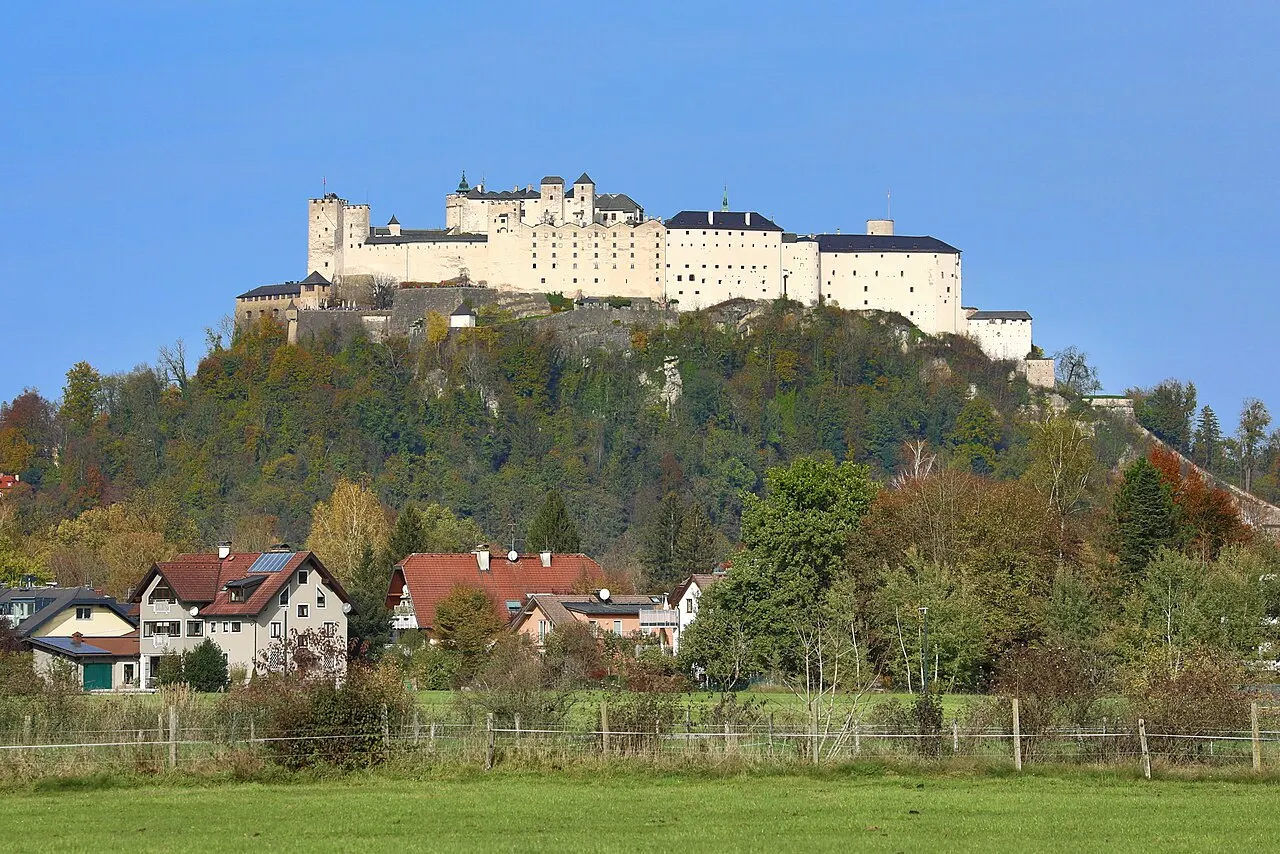
Hohensalzburg Fortress (Festung Hohensalzburg)
The fortress, begun in 1077, occupies the Festungsberg at 506 m, covering an area of 250 by 150 m, and dominates the view from anywhere in the city. Inside are the courtyards, the walls, the panoramic lookout, the fortress museum, the Rainer Regiment museum and the puppet museum, the armory and, only with the full ticket, the state apartments of Archbishop Leonhard von Keutschach, with the Golden Hall and the Golden Chamber, from around 1500. It is open every day, from 9:30 a.m. to 5 p.m. from October to April and from 8:30 a.m. to 8 p.m. from May to September. The FestungsCard Basic costs €15.50 with the funicular, which has run up from Festungsgasse since 1892, and €12 for those who walk up; the All Inclusive, which adds the state apartments and the Magic Theater, costs €19.20 or €14.50. Bought online, the ticket avoids the ticket-office line. From November 9 to 13, 2026 the funicular stops, and the museums and interior rooms close.
The city’s defining image and the reason to see Salzburg from above: the fortress begun in 1077 and expanded until the 16th century has courtyards, walls and a viewpoint over the Baroque center and the Alps. An online ticket avoids the ticket-office line, and walking up costs less.
Check access
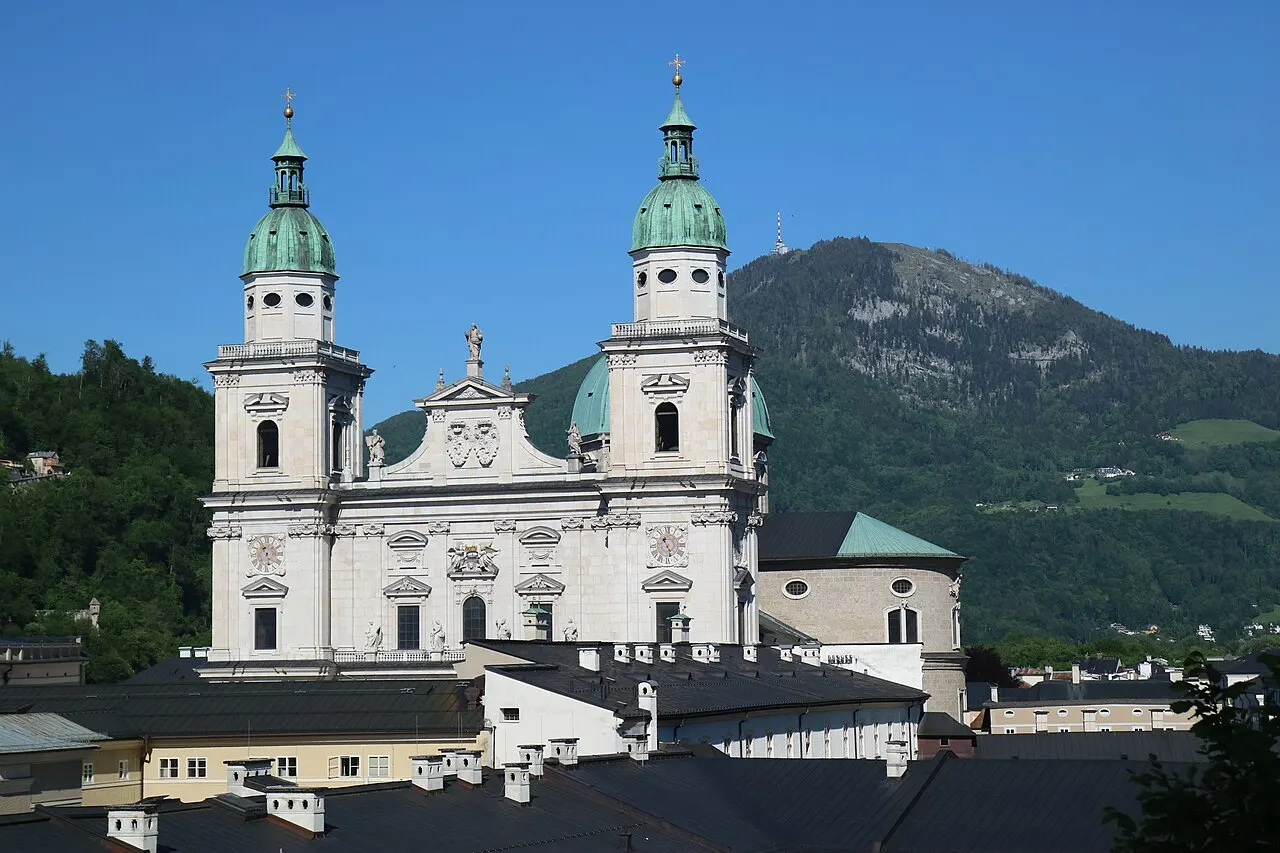
Salzburg Cathedral (Salzburger Dom)
The first Baroque church north of the Alps, by Santino Solari, consecrated in 1628, with a marble façade from the Untersberg and a dome rebuilt after the 1944 bomb. Mozart and Joseph Mohr, who wrote the lyrics of Silent Night, were baptized in the bronze font of 1311, and Mozart played the organs in the gallery. The crypt shows remains of the earlier cathedrals. A visit costs €7 per adult (2026 conservation fee) and the cathedral is open Monday to Saturday from 9 a.m., and on Sundays and holidays from 1 p.m., closing between 5 and 7 p.m. depending on the month. It cannot be visited during Mass, during the Midday Music or during the Jedermann performances on the square in July and August.
The first Baroque church north of the Alps, consecrated in 1628, holds the 1311 font where Mozart was baptized; the visit is quick and costs €7, but is unavailable during Mass or before 1 p.m. on Sundays and holidays.
Check access
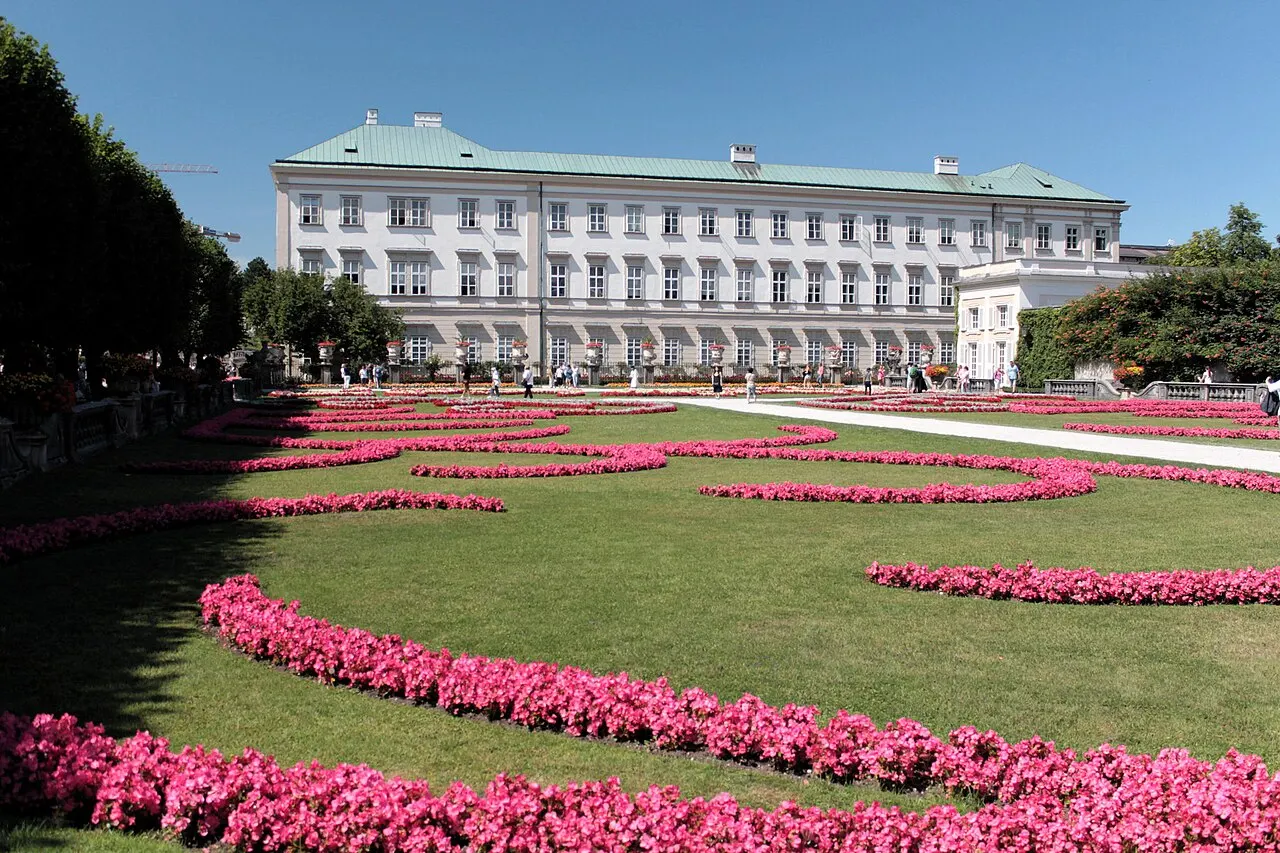
Mirabell Palace and Garden (Schloss Mirabell and Mirabellgarten)
Wolf Dietrich built the palace in 1606 for Salome Alt and their children, and his successor gave it the name Mirabell. The Baroque garden, redesigned around 1690 by Johann Bernhard Fischer von Erlach, is aligned with the cathedral and the fortress, which appear in the distance beyond the large central parterre. It has the Pegasus fountain, one of the oldest hedge theaters north of the Alps and the garden of marble dwarfs, the last two closed in winter. In the palace, which now houses the city hall, the Angel Staircase can be seen Monday to Saturday from 8 a.m. to 6 p.m., and the Marble Hall, where weddings and concerts are held, at limited times. Admission is free, and the garden opens from 6 a.m. until dusk. The Orangerie garden is closed for renovation until December 2026.
Fischer von Erlach’s Baroque garden, aligned with the cathedral and fortress, is free and opens around 6 a.m.; the palace’s Angel Staircase can be seen Monday to Saturday.
Check access

DomQuartier
A route that connects the Residenz, the cathedral and St. Peter's monastery from the inside: the Residenz state rooms, the organ gallery above the cathedral nave, the arcade terrace, the Cathedral Museum and the St. Peter Museum. Allow at least 1.5 hours. It opens from 10 a.m. to 5 p.m. and is closed on Tuesdays, except in July and August, when it opens every day from 10 a.m. to 6 p.m., and from December to January 6, when it opens every day from 10 a.m. to 5 p.m. (closed on December 24). The Residenzgalerie, the picture gallery, is closed until the fall of 2027, so the adult ticket is €12 instead of €15.
The route through the Residenz, the cathedral’s organ gallery and the cathedral and St. Peter’s museums shows the archbishops’ power from an angle the square cannot offer. Closed Tuesdays except in July, August and from December to January 6; also closed December 24, and the picture gallery is closed until 2027.
Check access
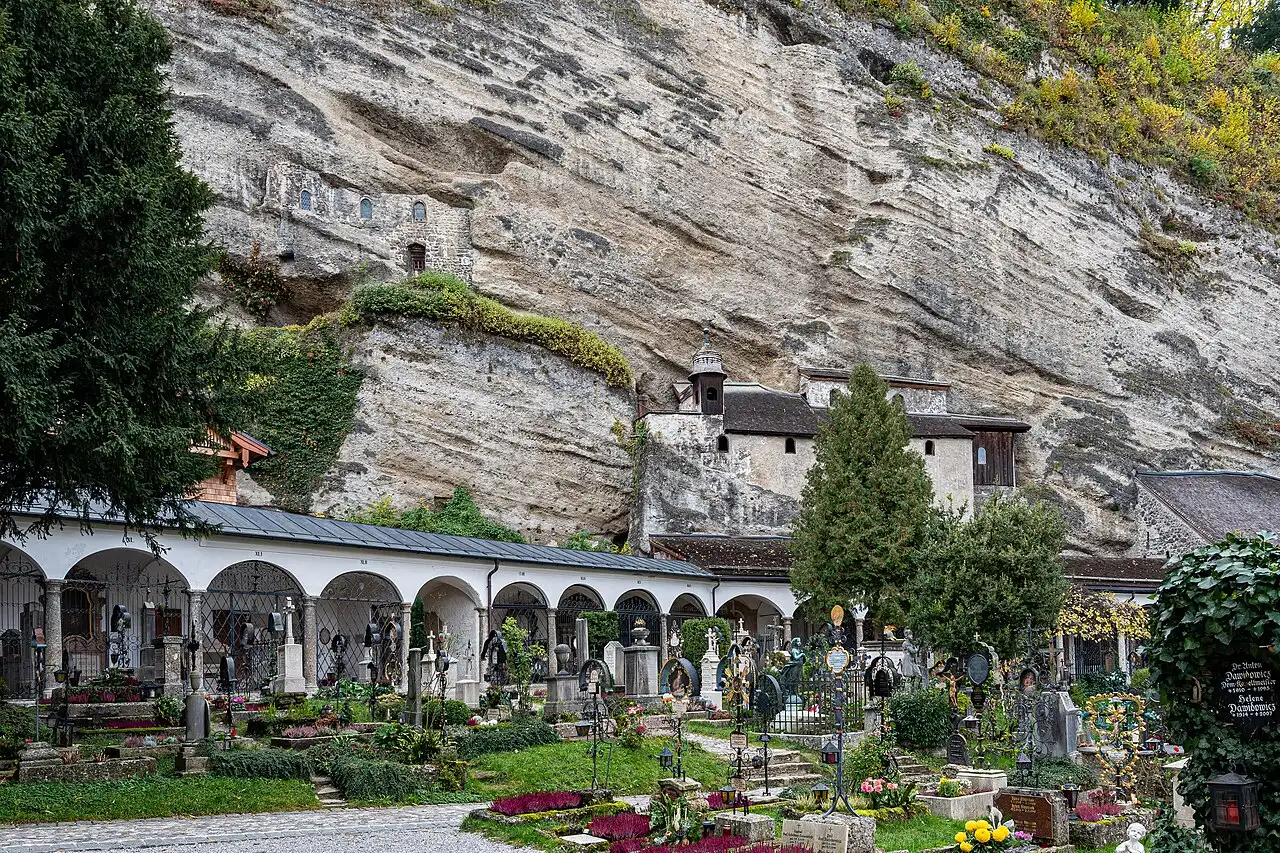
St. Peter's Monastery and cemetery (Stift St. Peter and Petersfriedhof)
The Benedictine monastery that Rupert founded around 696 is considered the oldest still in operation in the German-speaking world. The present church, from the 12th century, was remodeled several times and combines elements from Romanesque to Rococo; it is open from 8 a.m. to 8 p.m. Next to it, St. Peter's cemetery, set against the rock of the Festungsberg, holds tombs and crypts around the Gothic chapel of St. Margaret and charges no admission (6:30 a.m. to 6 p.m. from October to March and until 8 p.m. from April to September). The catacombs carved into the rock, probably Christian from late antiquity, cost €2 and are not accessible without steps.
The monastery founded around 696 is considered the oldest still operating in the German-speaking world; the cemetery against the rock is free to enter, and its catacombs carved into the Festungsberg cost €2.
Check access
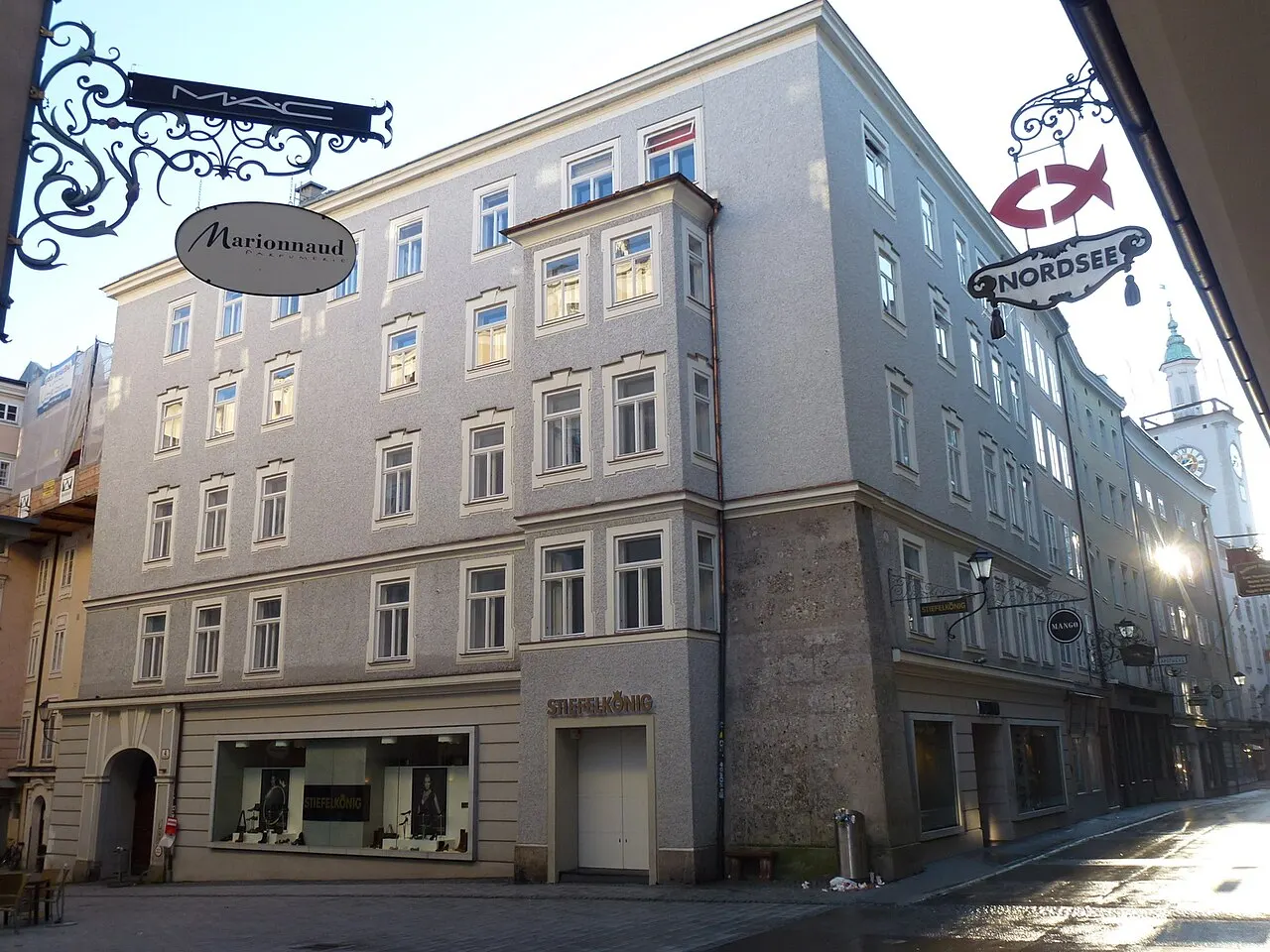
Getreidegasse
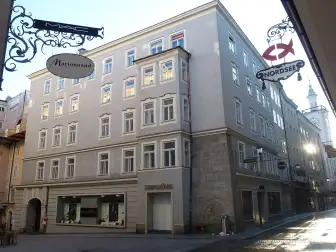
The busiest shopping street in the Altstadt, narrow, with houses whose windows shrink with each floor and wrought-iron signs hanging over the sidewalk, some made by hand by the Wieber metalworking shop, which still operates on the street. Today it mixes chain stores, traditional costumes and old houses. Look out for the passage houses: the Schatz-Durchhaus, at number 3, leads to the Universitätsplatz, where the Grünmarkt market is held Monday to Saturday.
Wrought-iron signs, windows that shrink with each floor and passage houses give the street the center’s most characteristic appearance; it lies between Mozart’s birthplace, visited in the afternoon, and the Mönchsberg elevator at the end of the street.
Check access
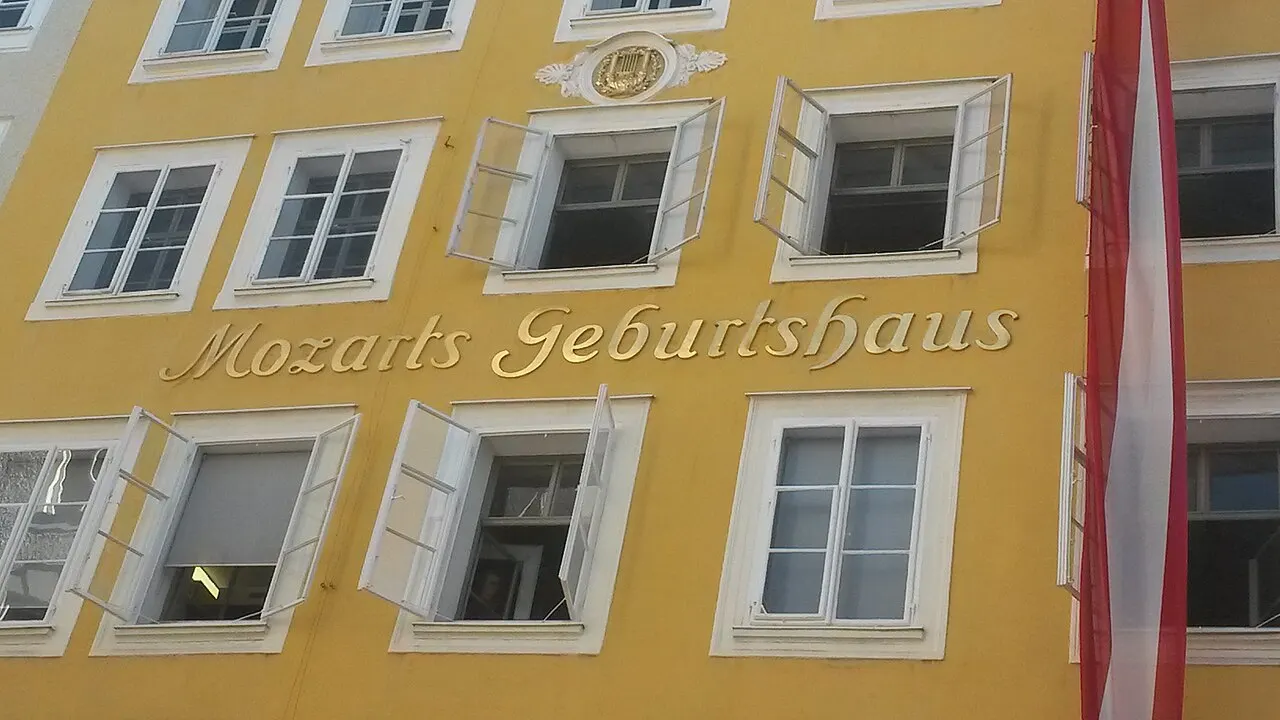
Mozart's birthplace (Mozarts Geburtshaus)
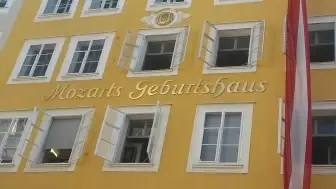
Mozart was born on January 27, 1756 on the third floor of Getreidegasse 9, where the family lived from 1747 to 1773. The museum, opened by the Mozarteum Foundation in 1880, displays letters, portraits, the composer's violin and clavichord, and a reconstructed middle-class apartment. The visit takes about an hour. It is open every day from 9 a.m. to 5:30 p.m. and costs €18; the combined ticket with the house on the Makartplatz is €25.
For Mozart enthusiasts, seeing the apartment where he was born and his violin and clavichord justifies the €18 and an hour’s visit; for others, the facade on Getreidegasse is enough.
Check access

Mönchsberg and the Museum of Modern Art (Museum der Moderne Mönchsberg)
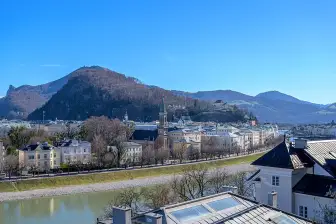
The Mönchsberg elevator, in operation since 1890, rises 60 m in 30 seconds from Gstättengasse 13 and costs €3.40 one way up or €4.80 round trip. At the top are the museum of 20th- and 21st-century art, open Tuesday to Sunday from 10 a.m. to 6 p.m., with admission of €15 (or €17 with the elevator), and the terrace with a view over the rooftops, the domes and the fortress. From the plateau, a path through the woods and along the old walls leads to the fortress in one direction and to Mülln in the other.
The elevator operating since 1890 rises 60 m in 30 seconds to the plateau, with a terrace over the rooftops and the modern art museum; the path along the top leads to Mülln, and late afternoon is the best time.
Check access

Kapuzinerberg
The right-bank hill, 636 m high, is a protected area with viewpoints from which you see the fortress and the center face on, across the river. You climb by the Imbergstiege stairway from Steingasse, or by the trail from Linzergasse, which passes chapels of an 18th-century Way of the Cross up to the Capuchin monastery, built from 1599 to 1605. Near the monastery stands the Paschinger Schlössl, where the writer Stefan Zweig lived between the wars. The climb is free and full of steps.
The free climb along the Way of the Cross or Imbergstiege leads to viewpoints facing the fortress; be ready for many steps.
Check access
Nilo’s itinerary
Start with the basic programme and choose extensions for the time you have.
Plan my days in the app ↗Day 1 · The city of the archbishops: fortress, cathedral and Getreidegasse
Be at the funicular on Festungsgasse at opening time (9:30 a.m. from October to April, 8:30 a.m. from May to September), with the FestungsCard bought online, and set aside about two hours for the courtyards, the lookout and the museums.
Walk down the south-side path to Nonnberg Abbey and see the Gothic church; continue along the Nonnbergstiege stairway to Kaigasse.
Go into the cathedral (from 9 a.m. Monday to Saturday; on Sundays, only after 1 p.m.) and look for Mozart's baptismal font; avoid noon, when visits stop for the organ music.
Cross the Domplatz to St. Peter's cemetery and the catacombs (open from 10 a.m. to 12:30 p.m. and from 1 to 5 p.m. from October to April, and until 6 p.m. from May to September).
If it isn't a Tuesday, do the DomQuartier, which needs at least 1.5 hours; in July, August and from December to January 6 it also opens on Tuesdays.
Have lunch near the Universitätsplatz and stop by the Grünmarkt market, Monday to Saturday.
In mid-afternoon, go into Mozart's birthplace, at Getreidegasse 9 (last entry at 5 p.m.), and then walk the street without hurrying, looking at the iron signs and the passages.
At the end of the street, take the Mönchsberg elevator at Gstättengasse 13 and see the city from above in the late afternoon, next to the Museum of Modern Art.
The elevator runs until 9 p.m. (until 7 p.m. on Mondays). Follow the path along the plateau to Mülln and have dinner at the Augustiner Bräu, which opens at 3 p.m. (2:30 p.m. on weekends), with cash.
Day 2 · The right bank, the Kapuzinerberg and Hellbrunn
Start early at the Mirabell garden, which opens around 6 a.m., when you can see the Pegasus fountain and the fortress in the background with nobody in front; if it's a Thursday, stop by the Schranne market on the Mirabellplatz.
Go into Mirabell Palace for the Angel Staircase (Monday to Saturday, 8 a.m. to 6 p.m.).
If you want more Mozart, the house on the Makartplatz is next door; if not, continue to Linzergasse.
On Linzergasse, go in through the St. Francis gate and climb the Kapuzinerberg along the Way of the Cross to the Capuchin monastery and the viewpoints over the center.
Come down the Imbergstiege stairway to Steingasse and have lunch on the right bank.
Cross the Makartsteg footbridge and take bus 25 at the Rathaus stop to Hellbrunn (about 13 minutes) for the water games, from late March to early November; the last entry is at 4:30 p.m. in October.
From November to March, swap Hellbrunn for the DomQuartier or the Museum of Modern Art, or hear the nuns' vespers at Nonnberg (registration by email by the day before in those months).
In the evening, a concert in the Marble Hall at Mirabell or a dinner with Salzburger Nockerl for dessert.


If you stay longer
Day 3 · Hallein and the salt mine, or Werfen
Take the S3 train or the R3 regional to Hallein (19 to 24 minutes, covered by the Guest Mobility Ticket) and, from the station, bus 41 to the Bad Dürrnberg Salzbergwerk stop, in about 10 minutes. There is the Salzwelten salt mine, where the visit includes the mine train, the wooden slides and the boat on the underground lake; check the schedule and buy a timed ticket on the Salzwelten website.
From May to November 1, the alternative is Werfen: the R3 gets there in 46 minutes, and the regular bus leaves Werfen station for the Eisriesenwelt at 8:26 a.m., 10:26 a.m., 12:26 p.m. and 2:26 p.m.; check the connection in the ÖBB planner, buy the ticket online with a set time and remember that the last visit starts at 3:45 p.m.
Return to Salzburg in the late afternoon and have dinner on Steingasse or Linzergasse.
Day 4 · Hallstatt and Lake Hallstätter See
Day trip
The salt village between the lake and the Dachstein massif, in Upper Austria, gave its name to the Iron Age Hallstatt culture and has been a World Heritage Site since 1997. Without a car there are two routes, both with a change in Bad Ischl. The most direct is bus 150 or 150X to Bad Ischl and, from there, buses 541 and 543, changing at Gosaumühle, to the Hallstatt Lahn stop, in the village: 2 to 2 hours 40 minutes from Salzburg. The other is bus 150X to Bad Ischl and the regional train to Hallstatt station, on the east shore of the lake, from where a boat crosses to the village all year round, payable in cash only; in searches for a weekday in October 2026, the stretch from Salzburg to Hallstatt station took about 1 hour 55 minutes, not counting the boat. In searches for a weekday in October 2026, to return the same day, the last practical connection left Hallstatt Lahn at 7:03 p.m. and reached Salzburg station at 9:09 p.m.; the next bus, at 7:55 p.m., only arrived after midnight. Check the day's schedules in the ÖBB planner before going. The village suffers from overtourism; arrive in the morning and respect the houses, which belong to residents.
Food
Salzburger Nockerl
A hot dessert similar to a soufflé: egg white whipped with sugar, yolk, vanilla sugar and a little flour, baked in three mounds that, according to tradition, imitate the city's snow-covered hills. It has to go to the table right away, before it deflates, and some cafés serve it with raspberry sauce. The attribution to Salome Alt is a legend with no proof. It is a dish to share.
Mozartkugel
A pistachio marzipan bonbon wrapped in hazelnut praline and dipped in dark chocolate, created by the confectioner Paul Fürst around 1890. The Fürst confectionery still makes it in its own workshop, to the original recipe; the industrial versions, from other makers, use the same name.
Bosna
Two grilled pork sausages in an opened white roll, with chopped onion, parsley and a curry-based spice mix. It was created by the Bulgarian Zanko Todoroff, who began selling it in 1949 at the Mülln brewery and later opened the Balkan Grill, in a passage between Getreidegasse and Universitätsplatz, where it is still sold. In Salzburg it is eaten without ketchup.
Salzburg beer
The city bills itself as the Austrian capital of beer, with eleven breweries in and around the city. Stiegl, mentioned in a document from 1492, is Austria's largest private brewery, and the Augustiner Bräu in Mülln has brewed beer since 1621 and serves it straight from the wooden barrel.
Kaffeehaus
The Viennese coffeehouse is an institution here too. Café Tomaselli descends from Salzburg's first coffee service, licensed in 1700 on Goldgasse, and has operated on the Alter Markt since 1764; it is considered the oldest café in Austria still in operation, and Mozart frequented the place when it was called Staiger.
Bread and market produce
St. Peter's monastery keeps a bakery, in the Benedictine tradition of having trades of its own. At the Grünmarkt markets on the Universitätsplatz, and the Schranne on Thursday mornings on the Mirabellplatz, you find breads, mountain cheeses and cured meats from the region.
Where to eat
- Augustiner Bräu Kloster Mülln · Mülln · $
Beer from the wooden barrel and food from the corridor stalls, in the hall or under the chestnut trees in the garden. Cash only.
Source · 2026-10-16
- Balkan Grill · Getreidegasse · $
The original Bosna, at the counter window in the courtyard of the Stockhamer Durchhaus passage, between Getreidegasse (number 33a) and the Universitätsplatz; open every day from 11 a.m. to 6:30 p.m.
Source · 2026-10-16
- Café Tomaselli · Alter Markt · $$
Coffee, cakes and breakfast on the Alter Markt, in the house that descends from the coffee service licensed in 1700 and has occupied the address since 1764, with a summer kiosk on the square.
Source · 2026-10-16
- St. Peter Stiftskulinarium · St. Peter's Monastery · $$$
High-end Austrian cooking and Mozart dinner concerts in the monastery's halls; the house says it has operated since 803. Book ahead.
Source · 2026-10-16
- Universitätsplatz and Mirabellplatz · $
Market snacks, bread, cheese and sausage at the stalls of the Grünmarkt (Monday to Saturday) and the Schranne (Thursday morning).
$: Counter Bosna, sausage from a stand or the food from the Augustiner stalls, paid in cash · $$: a meal at a Gasthaus (traditional inn) or traditional café in the center, with a main course and a drink · $$$: a fine-dining restaurant or a dinner concert with a multi-course menu · 2026-10-16
Day trips
Hallstatt and Lake Hallstätter See
The salt village between the lake and the Dachstein massif, in Upper Austria, gave its name to the Iron Age Hallstatt culture and has been a World Heritage Site since 1997. Without a car there are two routes, both with a change in Bad Ischl. The most direct is bus 150 or 150X to Bad Ischl and, from there, buses 541 and 543, changing at Gosaumühle, to the Hallstatt Lahn stop, in the village: 2 to 2 hours 40 minutes from Salzburg. The other is bus 150X to Bad Ischl and the regional train to Hallstatt station, on the east shore of the lake, from where a boat crosses to the village all year round, payable in cash only; in searches for a weekday in October 2026, the stretch from Salzburg to Hallstatt station took about 1 hour 55 minutes, not counting the boat. In searches for a weekday in October 2026, to return the same day, the last practical connection left Hallstatt Lahn at 7:03 p.m. and reached Salzburg station at 9:09 p.m.; the next bus, at 7:55 p.m., only arrived after midnight. Check the day's schedules in the ÖBB planner before going. The village suffers from overtourism; arrive in the morning and respect the houses, which belong to residents.
Eisriesenwelt and Hohenwerfen Fortress, in Werfen
About 40 km to the south, Werfen has the Eisriesenwelt ice cave, with more than 42 km of passages, of which the first kilometer is visited on a 75-minute guided tour, at 0 °C and with about 1,400 steps. It is open from May 1 to November 1; the ticket with the cable car costs €41 online and €45 at the ticket office, and the whole visit, from parking lot to parking lot, takes about 3 hours. From the train (R3, 46 minutes from Salzburg) you continue by bus. In the same valley, Hohenwerfen Fortress, from 1075 to 1078, gives falconry demonstrations from April to early November.
Salzwelten and Hallein
The Dürrnberg salt mine, above Hallein, has been worked since the Celts, around 400 BC. From Salzburg, the train takes you to Hallein in 19 to 24 minutes, and from the station bus 41 climbs to the Bad Dürrnberg Salzbergwerk stop in about 10 minutes. The guided visit goes down by mine train, uses the miners' slides and crosses an underground lake by boat, and suits children from age 4. Bring a warm layer and sturdy shoes. The Salzburg Card gives a 10% discount on the adult ticket, at the ticket office only.
Berchtesgaden and Lake Königssee (Germany)
Across the border, bus 840 takes you from Salzburg station to Berchtesgaden in about 55 minutes, and with bus 843 you reach Schönau am Königssee in about 1 hour 25 minutes. The 8 km lake, inside Berchtesgaden National Park, is covered by electric boats all year (except December 24): 35 minutes to the church of St. Bartholomew and another 20 to Salet. Bring photo ID, and remember that the Guest Mobility Ticket is not valid in Germany.
Untersberg cable car
Ten km to the south, the cable car rises from Grödig (456 m) to the Geiereck (1,776 m) in 8.5 minutes, with views of the city and the Berchtesgaden Alps. You get there by bus 25 or trolleybus 5 in about 25 minutes from the center. A round trip costs €34 in 2026. It is shut for servicing from November 2 to December 13, 2026 and from March 30 to April 16, 2027. It is only worth it under clear skies.
Where to begin
The city of the archbishops: fortress, cathedral and Getreidegasse
Be at the funicular on Festungsgasse at opening time (9:30 a.m. from October to April, 8:30 a.m. from May to September), with the FestungsCard bought online, and set aside about two hours for the courtyards, the lookout and the museums.
The right bank, the Kapuzinerberg and Hellbrunn
Start early at the Mirabell garden, which opens around 6 a.m., when you can see the Pegasus fountain and the fortress in the background with nobody in front; if it's a Thursday, stop by the Schranne market on the Mirabellplatz.
Hallein and the salt mine, or Werfen
Take the S3 train or the R3 regional to Hallein (19 to 24 minutes, covered by the Guest Mobility Ticket) and, from the station, bus 41 to the Bad Dürrnberg Salzbergwerk stop, in about 10 minutes. There is the Salzwelten salt mine, where the visit includes the mine train, the wooden slides and the boat on the underground lake; check the schedule and buy a timed ticket on the Salzwelten website.
Money
The currency is the euro, and cards work in hotels, museums and most shops and restaurants in the center, with one exception that catches visitors out: the Augustiner Bräu in Mülln takes cash only. The biggest expense is admission tickets. In 2026, the fortress costs €15.50 with the FestungsCard Basic including the funicular and €19.20 with the All Inclusive; Mozart's birthplace, €18 (€25 combined with the Makartplatz house); Hellbrunn, €16.50; the DomQuartier, €12 while the picture gallery is closed; the cathedral conservation fee, €7; and the Untersberg cable car, €34 round trip. Anyone doing three or four of these on the same day spends more than the €38 of the 24-hour Salzburg Card from April to October (€35 from November to March), which gives one free admission to each and urban transport. For getting around, if you stay in accommodation in the state, the Guest Mobility Ticket already covers bus and train, and the €0.50 per person per night fee comes on the bill along with the overnight tax. Tipping usually means rounding up the bill or adding about 10%, telling the server the total you want to pay when settling up, rather than leaving the change on the table.
Getting there and around
From W. A. Mozart Airport, 3 km from the center
Salzburg airport (SZG) is in Maxglan, about 3 km west of the center. Trolleybus (O-Bus) 10 takes you to the Rathaus stop in the Altstadt in about 20 minutes, and the 2 goes to the central station in about 21. The trolleybus does not sell tickets on board: buy beforehand, at the airport machine or in the Salzburg Verkehr app. For anyone arriving alone, the simplest option is the 24-hour ticket for the central zone, which costs €5.20 at the machine or on a phone in 2026; a single fare is €2.50 only in the block of five (€12.50). Tickets bought at the airport machine can be issued already validated for the immediate trip. If you have accommodation booked in the state of Salzburg, ask the hotel to email you the Guest Mobility Ticket before you arrive: with it, the airport trip is already paid for.
By train: Vienna, Munich and the region
The central station (Salzburg Hauptbahnhof) receives direct trains from Vienna, in about 2 hours 25 minutes on the Railjet Xpress, and from Munich, in about 1 hour 45 minutes. From the station, trolleybus 5 reaches the Rathaus stop in about 10 minutes. For the region, the S3 train takes you to Hallein in 24 minutes (the R3 regional does it in 19), and the R3 reaches Werfen in 46 minutes.
The guest ticket and the Salzburg Card
Since May 1, 2025, anyone who stays in accommodation in the state of Salzburg pays a mobility fee (€0.50 per person per night, from age 15) and receives the Guest Mobility Ticket at check-in, which gives free bus, trolleybus, S-Bahn and train travel throughout the state during the stay. It is not valid outside the state, such as in Hallstatt (Upper Austria) or Berchtesgaden (Germany), nor on the fortress funicular and the Mönchsberg elevator. The Salzburg Card, sold separately, gives one free admission to almost all the museums and attractions in the city, including the fortress with the funicular, Mozart's birthplace, the DomQuartier, Hellbrunn and the Untersberg cable car, plus urban transport (the S-Bahn is excluded). In 2026 it costs €38, €45 and €49 for 24, 48 and 72 hours from April to October, and €35, €41 and €44 from November to March.
On foot and by bicycle
The Altstadt is almost entirely a pedestrian zone, and the two banks are linked by short bridges, such as the Staatsbrücke and the Makartsteg footbridge. Bicycles account for 18% of trips, there are more than 170 km of bike lanes, and the banks of the Salzach let you cross the city without meeting cars. The Hellbrunner Allee takes you by bicycle to Hellbrunn in about 25 minutes.
Safety
Salzburg is a quiet city, and the most common risk for visitors is bag and wallet theft, which the British government describes as more frequent in the centers of large cities and in parks after dark; on crowded Getreidegasse, on the Domplatz during the Christmas market and on full buses, keep your bag closed and in front of you. In the surrounding mountains the risk is different: the weather changes quickly on the Untersberg and in the Alps, and snow brings avalanche risk off the pistes. Check the forecast before going up and leave your plan with someone. On the Salzach, paddling a canoe, kayak or rowboat is prohibited from the center to Lehen, because of the danger near the power plant. The emergency numbers are 112 (general European), 133 (police), 144 (ambulance), 122 (fire brigade) and 140 (mountain rescue).
Etiquette tips
Greet people with “Grüß Gott” when you walk in
In shops, bakeries and restaurants, whoever walks in says hello and whoever leaves says goodbye. “Grüß Gott” is the standard greeting in Austria; “Servus” is more informal, among acquaintances and young people.
Say the total when paying, instead of leaving the change
When paying, say the amount you want to pay with the tip included (for example, “Dreißig, bitte” on a €27 bill), or “Stimmt so” to keep the change. Rounding up or adding about 10% is usual.
Keep quiet in churches and cemeteries
The cathedral does not admit visitors during Mass and the Midday Music, and Nonnberg and St. Peter's ask the same. St. Peter's cemetery is still a cemetery in use: take photos without stepping on the graves and without noise.
Sunday means closed shops
Austrian law only allows trading Monday to Friday, from 6 a.m. to 9 p.m., and on Saturday until 6 p.m.; on Sunday only exceptions apply, such as some station supermarkets. Plan shopping and the pharmacy for Saturday.
Pay before boarding the trolleybus
The O-Bus driver does not sell tickets. Board with one already bought, at the machine or in the app, or with the Guest Mobility Ticket on your phone.
Mistakes to avoid
Counting on a card at the Augustiner
Arriving at the Augustiner Bräu in Mülln with only a card. The brewery accepts cash only.
Counting on Hellbrunn or the Eisriesenwelt out of season
Planning the Hellbrunn water games for November to March, or the Werfen ice cave for November to April. Hellbrunn is open from late March to early November (in 2027, March 25 to November 1), and the Eisriesenwelt from May 1 to November 1. In April, only Hellbrunn is open.
Leaving the cathedral for Sunday morning
Arriving at the cathedral on a Sunday before 1 p.m. or at noon on a weekday. On Sundays and holidays the visit only begins at 1 p.m., and during Mass and the Midday Music it cannot be visited.
Using the guest ticket outside the state
Assuming the Guest Mobility Ticket takes you to Hallstatt or Berchtesgaden. It is valid only in the state of Salzburg: Bad Ischl and Hallstatt are in Upper Austria, and Berchtesgaden is in Germany, so the part of the trip outside the state is paid separately.
Going up the Untersberg without checking the weather
Taking the cable car with the summit in cloud. The upper station is at 1,776 m, in high-mountain terrain, and in cloud there is no view. The operator asks for suitable clothing and footwear and gives the weather by phone at +43 6246 72477.
Useful phrases
Grüß Gott
Good morning, good afternoon: the standard greeting in Austria (grooss got)
Servus
Hi, bye, among acquaintances and young people (ZER-voos)
Danke schön
Thank you very much (DAHN-keh shurn)
Bitte
Please; also the reply to “thank you”
Zahlen, bitte
The check, please (TSAH-len BIT-teh)
Stimmt so
Keep the change (shtimt zoh)
Ein Bier, bitte
One beer, please (ine beer BIT-teh)
Wo ist die Haltestelle?
Where is the bus stop? (voh ist dee HAL-teh-shtel-eh)
Where to stay
- Altstadt (left bank) · A first short trip, to do everything on foot · $$$: The fortress, the cathedral and Getreidegasse are a few minutes away. The hotels are few, in old buildings, and the street is pedestrian, so taxis can't reach the door of many of them.
- Right bank: Linzergasse and Steingasse · Couples and those who want to dine away from the circuit · $$: Five minutes from the center across the bridges, with neighborhood restaurants and bars and the Kapuzinerberg climb at the door.
- Mirabell and Andräviertel · Anyone arriving by train who wants to be close to everything · $$: Flat, between the station and the bridges, with the Mirabell garden and the Mozart house on the Makartplatz in the district.
- Elisabeth-Vorstadt and Hauptbahnhof · Small budgets and those doing day trips · $: It concentrates the hostels and chain hotels, and the trains to Hallein, Werfen, Vienna and Munich leave from there. The center is about 10 minutes away by trolleybus.
- Nonntal and Riedenburg · Anyone who wants quiet and doesn't mind walking · $$: Residential and calm, at the foot of the fortress and the Mönchsberg, with guesthouses and apartments, and the center a short walk away.
$: a hostel or budget hotel near the station, from about €54 to €70 a night in the offers listed by momondo in October 2026 · $$: a three-star hotel, from about €74 to €98 a night in the offers listed by momondo in October 2026 · $$$: a four-star hotel in the center, from about €160 to €225 a night in the offers listed by momondo in October 2026; during the Festival and Advent, more · 2026-10-16
Districts
Altstadt (left bank)
The center of the archbishops, between the Salzach and the Mönchsberg: the cathedral, the Residenz, the Residenzplatz, Getreidegasse, St. Peter's monastery and, above all, the fortress. Almost all of it is a pedestrian zone. It holds most of what there is to visit.
Right bank: Linzergasse and Steingasse
Across the Staatsbrücke and Makartsteg bridges, Linzergasse is a shopping street, and Steingasse, narrow and pressed against the rock of the Kapuzinerberg, is the old Roman road south. From here you climb the Kapuzinerberg, and there are bars and restaurants along both streets.
Mirabell and Andräviertel
The district of Mirabell Palace, the Mozarteum and the house where the Mozart family lived from 1773, on the Makartplatz. It is the hotel area between the center and the station, flat and close to the bridges, with the Schranne market on Thursdays on the Mirabellplatz.
Mülln
A former suburb north of the Mönchsberg, inside the UNESCO-listed area, around the church and the brewery of the Augustiner Bräu. You get there by walking down the Mönchsberg, and it is the place for an early-evening beer.
Nonntal
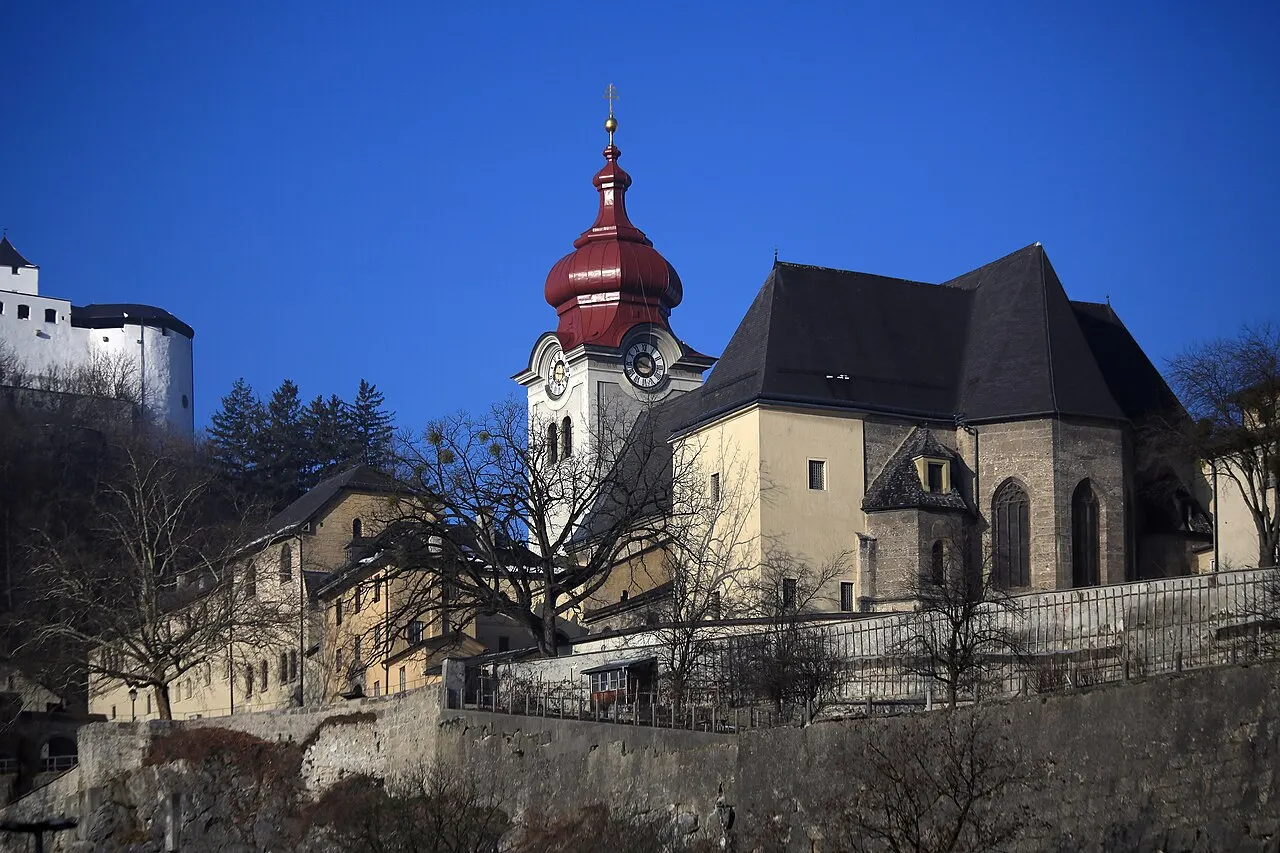
The neighborhood at the foot of the south side of the fortress, around the Nonnberg convent, also inside the UNESCO area. It is residential and quiet and serves as the exit for those walking down from the fortress.
Riedenburg and Leopoldskron
West and south of the Mönchsberg, residential districts that spread out around 1900. Leopoldskron Palace, built from 1736 to 1740, stands here on the shore of the Leopoldskroner Weiher lake, and the large Leopoldskroner Moos meadow begins.
Elisabeth-Vorstadt and Hauptbahnhof
The district around the central station, which grew after the railway, with chain hotels and hostels. It is practical for those arriving and leaving by train or doing day trips, and is about ten minutes from the center by trolleybus.
History
15 BC · The Romans arrive in the Salzach valley
After the Roman invasion, the Celtic settlements on the hills are abandoned and the new town grows where the historic center stands today. In the mid-1st century AD, Emperor Claudius grants Iuvavum the status of municipium, in the province of Noricum.
c. 696 · Rupert receives the ruins of Iuvavum
Duke Theodo II of Bavaria hands Bishop Rupert what remained of the Roman town. Rupert founds the church and monastery of St. Peter and the Nonnberg convent, the two religious houses that still operate on the same sites.
798 · Seat of an archbishopric
Salzburg becomes the seat of an archbishopric. The first cathedral, built under Bishop Virgil from 767, had been consecrated in 774.
1077 · Hohensalzburg Fortress is begun
Archbishop Gebhard has a fortification built on the Festungsberg, enlarged over the following centuries. It was besieged only once, in 1525, during the Peasants' War, and did not fall.
1495–1519 · Leonhard von Keutschach enlarges the fortress
The archbishop gives the fortress its present form, fits out the state apartments on the third floor and, in 1502, installs the mechanical organ known as the Salzburg Bull. The turnip on his coat of arms marks the works he commissioned.
1598 · The cathedral fire and the new center
A fire destroys much of the Romanesque cathedral. Archbishop Wolf Dietrich von Raitenau takes the chance to redesign the center: he opens squares such as the Residenzplatz, for which 55 medieval houses were demolished, and in 1606 builds the palace now called Mirabell for Salome Alt. Work on the cathedral only moves forward after Wolf Dietrich is captured, under his successor.
1628 · The Baroque cathedral is consecrated
Designed by Santino Solari at the commission of Markus Sittikus and consecrated by Paris Lodron, the new cathedral is the first Baroque church north of the Alps. Paris Lodron kept the principality neutral during the Thirty Years' War.
1731–1732 · The expulsion of the Protestants
Archbishop Leopold Anton von Firmian signs the expulsion edict on October 31, 1731. The 21,475 Protestants who refused to renounce their faith leave the territory, most of them for East Prussia.
1756 · Mozart is born
Wolfgang Amadeus Mozart is born on January 27 on the third floor of Getreidegasse 9. He works for the archbishops and, after falling out with Hieronymus Colloredo, moves to Vienna in 1781.
1803–1816 · End of the principality
Napoleon secularizes the archbishopric in 1803. Salzburg passes to Austria in 1805, to Bavaria after the Austrian defeat of 1809 and, under the Treaty of Munich, back to Austria in 1816, now governed from Linz.
1920 · The first Salzburg Festival
On August 22, Hugo von Hofmannsthal's play Jedermann, staged by Max Reinhardt, premieres on the cathedral square. It remains on the program every summer.
1944–1945 · Bombing and American occupation
Fifteen air raids destroy 46% of the buildings, mostly around the station, and a bomb damages the cathedral dome. American troops enter on May 5, 1945, and the city becomes the center of the American zone until 1955.
1996 · World Heritage Site
On December 5, UNESCO inscribes the historic center, with the old parts of Mülln and Nonntal and the Mönchsberg and Kapuzinerberg hills.
Complete history
Salt and the archbishops
The city's name comes from salt, Salz in German, which came down the Salzach River on barges and was already paying tolls in the 8th century. Salt also explains the city's size. The Dürrnberg mines in Hallein, already worked by the Celts around 400 BC, gave the archbishops the income that sustained their power; the archbishops ruled Salzburg as a state of its own within the Holy Roman Empire until 1803. The Church occupied the left bank of the river with the cathedral, the archbishop's residence and the monastery of St. Peter, and the merchants' town only began to spread along Getreidegasse in the 12th century.
The Baroque city
The center you visit today is the work of three prince-archbishops of the 16th and 17th centuries: Wolf Dietrich von Raitenau, Markus Sittikus and Paris Lodron. After the Romanesque cathedral burned in 1598, they brought in Italian architects such as Vincenzo Scamozzi and Santino Solari, opened up the squares around the cathedral and built the new cathedral, the Residenz and Mirabell Palace. Markus Sittikus built the summer palace of Hellbrunn to the south, with its trick fountains, and the Hellbrunner Allee, planted in 1615, still links the city to the palace. Paris Lodron fortified the hills and kept the principality neutral during the Thirty Years' War.
Mozart and the festival
Mozart was born on Getreidegasse in 1756 and spent his youth in the service of the court, until he broke with Archbishop Colloredo and left for Vienna in 1781. The city, which lost its independence in 1803 and became a provincial capital, discovered romantic tourism in the 19th century, and in 1892 opened the fortress funicular. In 1920, Max Reinhardt and Hugo von Hofmannsthal staged Jedermann on the cathedral square and created the Salzburg Festival, which made the city an address for opera, theater and classical music. Mozart Week in January and the Easter Festival, founded by Herbert von Karajan in 1967, completed the calendar.
The 20th century and tourism today
With Nazi Germany's annexation of Austria in March 1938, the synagogue was destroyed and opponents and Jews were arrested and deported. The Allied bombings of 1944 and 1945 destroyed almost half the buildings but spared most of the Baroque center. The city was the seat of the American occupation zone until 1955, and ten years later it became the setting of the film The Sound of Music, which still brings visitors to the Mirabell garden and to Nonnberg. Today tourism is one of the pillars of the economy: the fortress, the Mozart houses and Hellbrunn are among the most visited sights, and in 2017 the city ranked second among Austrian cities in overnight stays, behind Vienna.
Geography and shape of the city
The hills and the river
Salzburg occupies the mouth of the Salzach valley on the northern edge of the Alps: to the south are the mountains, and to the north the plain that continues into Bavaria. The river cuts through the city from south to north, and the historic center is wedged between it and a row of hills on the left bank, the Festungsberg, where the fortress stands, and the Mönchsberg, a conglomerate plateau about 1.7 km long that runs to Mülln. On the right bank, the 636 m Kapuzinerberg rises about 200 m above the city. The three hills are green space inside the city and natural viewpoints.
The two banks
The left bank holds the city of the archbishops: the cathedral, the Residenz, the squares and Getreidegasse, on a narrow strip between the river and the Mönchsberg that forces the streets to run parallel to the Salzach. The passage houses, with courtyards and galleries, link one street to the next. The right bank was the new town: Linzergasse, Steingasse hugging the rock of the Kapuzinerberg, and Mirabell Palace. In the 19th century the city grew beyond its walls, with the Neustadt and the Elisabeth-Vorstadt around the railway station and Riedenburg around 1900, and between the wars it absorbed villages such as Maxglan, Gnigl and Liefering.
The climate and the surrounding mountains
The city lies between an Atlantic and a continental climate, with cold winters and mild summers. Because it sits against the Alps, it gets more rain than the other Austrian cities: the 1981 to 2010 average was 1,184 mm a year and 9 °C. The rainiest month is July, with about 160 mm, and the persistent drizzle has a local name, Schnürlregen. The warm southern wind, the foehn, can melt the snow overnight in winter and spring. To the southwest rises the Untersberg, at 1,973 m, and to the east the Gaisberg is the highest point in the municipality.
The Mönchsberg is made of conglomerate, a rock of cemented gravel from an ancient delta, and the city cut vertical walls into it to defend itself.
Culture
The city of music
Classical music sustains much of the cultural life. The Salzburg Festival, founded in 1920 by Max Reinhardt and Hugo von Hofmannsthal, fills the city from mid-July to the end of August with opera, theater and concerts. The Mozarteum Foundation has organized Mozart Week since 1956, around the composer's birthday, on January 27. The Easter Festival was founded by the conductor Herbert von Karajan in 1967. Outside the festivals, the Marble Hall at Mirabell and the Baroque hall of the St. Peter's monastery restaurant host concerts throughout the year.
Church, tradition and costume
With 35 churches, the city keeps the rhythm of the Catholic calendar. The Nonnberg nuns sing Gregorian chant every morning, the Midday Music plays the cathedral organs, and the feast of St. Rupert, the patron saint, on September 24, turns into a five-day street fair in the center. The regional dress, the dirndl and the loden coat, still has shops of its own on Getreidegasse.
The Sound of Music and what the film leaves out
For many foreign visitors, the city is the setting of The Sound of Music (1965), based on Maria von Trapp's memoir: the Mirabell garden, St. Peter's cemetery and Nonnberg appear in the film, and local operators sell tours of the filming locations. Literature gives another picture of the city. Stefan Zweig lived on the Kapuzinerberg between the wars, and Thomas Bernhard wrote in An Indication of the Cause about the boarding school where he studied during the war, with a harsh critique of the city.
Beer, football and life outside the center
Everyday life also happens far from the Baroque squares: in the Augustiner beer gardens, in the bars along the Salzach embankment and in the outlying districts. FC Red Bull Salzburg, the name the old SV Austria Salzburg took when Red Bull bought it in 2005, plays at the Wals-Siezenheim stadium, on the outskirts; in protest, fans refounded SV Austria Salzburg, which plays in Maxglan.
The cathedral's bronze font, from 1311, baptized Mozart and Joseph Mohr, who wrote the lyrics of Silent Night.
Festivals and events
Mozart Week (Mozartwoche), late January
Ten days of concerts and opera around Mozart's birthday, organized by the Mozarteum Foundation. In 2027, January 21 to 31.
Easter Festival (Osterfestspiele), March or April
Opera and concerts around Easter, founded by Karajan in 1967. In 2027, March 20 to 29, with the Berlin Philharmonic; sales opened on October 1, 2026.
Pentecost Festival (Pfingstfestspiele), May or June
Four days of Salzburg Festival programming over the Pentecost weekend. In 2027, May 14 to 17.
Salzburg Festival (Salzburger Festspiele), July and August
The great festival of opera, theater and concerts, with Jedermann on the cathedral square since 1920. In 2027, July 16 to August 29. On Jedermann rehearsal and performance days, the cathedral changes its visiting hours.
St. Rupert's Fair (Rupertikirtag), September
The patron saint's festival, around September 24, sets up stalls, a carousel and traditional music on the Alter Markt, the Residenzplatz, the Domplatz and the Kapitelplatz. In 2027, September 22 to 26.
Christmas Market (Salzburger Christkindlmarkt), November to January
The Advent market takes over the Domplatz and the Residenzplatz from November 19, 2026 to January 1, 2027. During the same period, Hellbrunn holds a market in the palace courtyard, and the Salzburger Adventsingen, founded in 1950, presents Advent songs at the Large Festival Hall.
Books and films
The Sound of Music (1965), directed by Robert Wise
The musical with Julie Andrews and Christopher Plummer, based on Maria von Trapp's memoir, was filmed in and around Salzburg, and it is the reason many visitors know the Mirabell garden, Nonnberg and St. Peter's cemetery. It is fiction about a real family, with the city's geography easily recognizable.
Jedermann, by Hugo von Hofmannsthal
The play about the death of a rich man opened the first Salzburg Festival on the cathedral square on August 22, 1920, staged by Max Reinhardt, and remains on the program every summer. Reading it beforehand helps explain why the city gathers in front of the cathedral in July and August.
An Indication of the Cause (Die Ursache, 1975), by Thomas Bernhard
The first volume of Bernhard's autobiography recounts his boarding-school years in Salzburg during the Second World War, with the bombings and a fierce critique of the city and of Catholic and Nazi education. It is the counterpoint to the postcard image.
Frequently asked questions
Salzburg: How do you get from the airport to the center?
Trolleybus (O-Bus) 10 takes you to the Rathaus stop in the Altstadt in about 20 minutes, and the 2 goes to the central station in about 21. The trolleybus does not sell tickets on board: buy beforehand, at the airport machine or in the Salzburg Verkehr app.
Salzburg: How many days should you stay?
Stay two days in the city and a third for the region. Hallstatt I'd leave for a fourth day, because the bus takes more than two hours each way and the village is always crowded.
Salzburg: Is the Salzburg Card worth it?
Anyone doing three or four paid admissions on the same day, such as the fortress, Mozart's birthplace and Hellbrunn, spends more than the €38 of the 24-hour Salzburg Card from April to October (€35 from November to March), which gives one free admission to each and urban transport.
Salzburg: Can you get to Hallstatt and back in a day without a car?
The most direct route is bus 150 or 150X to Bad Ischl and, from there, buses 541 and 543, changing at Gosaumühle, to Hallstatt Lahn: 2 to 2 hours 40 minutes. In searches for a weekday in October 2026, to return the same day, the last practical connection left Hallstatt Lahn at 7:03 p.m. and reached Salzburg station at 9:09 p.m. Check your day’s timetable in the ÖBB planner before going.
Salzburg: What closes in November?
Hellbrunn and the Eisriesenwelt close in early November, the Untersberg stops from November 2 to December 13, 2026, and the fortress funicular from November 9 to 13, when the fortress museums and interior rooms also close. Anyone arriving in late fall should swap outdoor outings for museums and concerts.
Other cities in the country
Austria ↗- Days
- 3
- When
- May–Jun · Sep–Oct
- Per person/day
- Average 90–150 EURMid-range · per person/day
Cost scope
Per person per day: accommodation, meals, urban transport, visits and a small allowance for extras. Flights excluded; larger purchases vary. Editorial estimate, not a quote.