
Germany
Munich
Beer gardens, the Pinakotheken and the Englischer Garten
Days Start with the basic programme and choose extensions for the time you have.
How the guide reaches this number
If you have a third, go to Nymphenburg, the Olympiapark and the banks of the Isar. Anyone looking for bargains or nightlife until dawn will be frustrated, because shops close on Sundays, noise is banned between 10pm and 7am and the bill is the highest in Germany. With just one day, get to Marienplatz at 10:45am for the Glockenspiel and have lunch at the Viktualienmarkt before noon, right next door. Spend the afternoon at the Residenz and end the day in a beer garden. Leave Neuschwanstein for another trip, because the 120 km each way, with mandatory reservations, eat up the whole day. Anyone coming for old stone will also be disappointed: almost 90% of the historic center fell in the war, and what looks medieval was rebuilt after 1946. The Alps only show up from downtown when the Föhn blows, the warm wind that clears the sky.
2–3
When Mid-May to early July and September; the 2026 Oktoberfest runs September 19 to October 4 and fills the whole city
How the guide reaches this number
The climate is continental with an Alpine influence and changes fast, sometimes within a single afternoon. January averages around 0 °C, with lows below freezing and intermittent snow; July runs between 13 and 25 °C, with late-afternoon thunderstorms. It rains year-round, about 950 mm annually, peaking in June and July, in short downpours, and the Föhn can push temperatures up several degrees in a few hours in any season, making the Alps visible from downtown. The best window is from mid-May to early July, when the beer gardens are in full swing and the evenings let you sit outside, followed by September, with mild temperatures and long daylight. The absolute high season is Oktoberfest, from the second half of September to the first Sunday of October, when lodging, trains and restaurants are in demand even in outlying neighborhoods. December has Christmas markets and dry cold. November is the month I'd avoid, with overcast skies, cold rain and nothing on between the Wiesn and Advent.
Per person/day Budget €70–100; mid-range €130–200; comfortable from €280 (during Oktoberfest, lodging triples)
How the guide reaches this number
Per person per day: accommodation, meals, urban transport, visits and a small allowance for extras. Flights excluded; larger purchases vary. Editorial estimate, not a quote.
 What Nilo thinks
Give Munich two days: one for the rebuilt center, with Marienplatz, the Residenz and the Viktualienmarkt, and another for the Kunstareal museums, the Documentation Center for the History of National Socialism and the Englischer Garten. If you have a third, go to Nymphenburg, the Olympiapark and the banks of the Isar. Anyone looking for bargains or nightlife until dawn will be frustrated, because shops close on Sundays, noise is banned between 10pm and 7am and the bill is the highest in Germany. With just one day, get to Marienplatz at 10:45am for the Glockenspiel and have lunch at the Viktualienmarkt before noon, right next door. Spend the afternoon at the Residenz and end the day in a beer garden. Leave Neuschwanstein for another trip, because the 120 km each way, with mandatory reservations, eat up the whole day. Anyone coming for old stone will also be disappointed: almost 90% of the historic center fell in the war, and what looks medieval was rebuilt after 1946. The Alps only show up from downtown when the Föhn blows, the warm wind that clears the sky.In Munich, social life fits at one long beer-garden table. An 1812 decree still guarantees anyone who sits there the right to bring their own bread and cheese from home and pay only for the beer. Behind that informality lies a city of the court: the Wittelsbach ruled Bavaria for 738 years, until 1918, and left behind the Residenz, Nymphenburg Palace and the Pinakotheken's collections. The war flattened almost 90% of downtown, but the city rebuilt it over the medieval layout, which is why Marienplatz looks older than it is. At the Viktualienmarkt, Weißwurst is ordered in the morning, with sweet mustard and a Brezn. At the Englischer Garten, bigger than Central Park, surfers compete for the Eisbach's standing wave when it's open. Come between mid-May and early July or in September, when you can have dinner outdoors, and allow two days, plus one for Nymphenburg.
Quick facts
- Population
- about 1.6 million in the city (about 1.51 million counting only those with a registered primary residence), about 2.7 million in the contiguous urban area and about 6 million in the Munich Metropolitan Region
- Founded
- June 14, 1158: the Privilege of Augsburg recognizes a market, customs, and mint at Henry the Lion's settlement
- Country and region
- Germany; capital of the Free State of Bavaria, 310.7 km² divided into 25 administrative districts
- Language
- German, with Bavarian dialect in everyday life; English is common in the center, museums, and companies; about 29% of residents hold a foreign passport
- Currency
- Euro (€)
- Time zone
- CET (UTC+1); daylight saving CEST (UTC+2) from late March to late October
- Best time to visit
- Mid-May to early July and September; the 2026 Oktoberfest runs September 19 to October 4 and fills the whole city
- Average daily cost
- Budget €70–100; mid-range €130–200; comfortable from €280 (during Oktoberfest, lodging triples)
When to go
Mid-May to early July and September; the 2026 Oktoberfest runs September 19 to October 4 and fills the whole city
January
-2° to 4°C
52 mm of rain
February
-1° to 6°C
46 mm of rain
March
2° to 10°C
61 mm of rain
April
5° to 15°C
56 mm of rain
August
15° to 25°C
117 mm of rain
October
7° to 15°C
67 mm of rain
November
2° to 8°C
58 mm of rain
December
-1° to 5°C
59 mm of rain
How the year changes
The climate is continental with an Alpine influence and changes fast, sometimes within a single afternoon. January averages around 0 °C, with lows below freezing and intermittent snow; July runs between 13 and 25 °C, with late-afternoon thunderstorms. It rains year-round, about 950 mm annually, peaking in June and July, in short downpours, and the Föhn can push temperatures up several degrees in a few hours in any season, making the Alps visible from downtown. The best window is from mid-May to early July, when the beer gardens are in full swing and the evenings let you sit outside, followed by September, with mild temperatures and long daylight. The absolute high season is Oktoberfest, from the second half of September to the first Sunday of October, when lodging, trains and restaurants are in demand even in outlying neighborhoods. December has Christmas markets and dry cold. November is the month I'd avoid, with overcast skies, cold rain and nothing on between the Wiesn and Advent.
The same numbers as a table
| Month | Temperature °C | Rain mm |
|---|---|---|
| January | -2 to 4 | 52 |
| February | -1 to 6 | 46 |
| March | 2 to 10 | 61 |
| April | 5 to 15 | 56 |
| May · | 9 to 19 | 107 |
| June · | 13 to 23 | 121 |
| July · | 15 to 25 | 119 |
| August | 15 to 25 | 117 |
| September · | 10 to 20 | 78 |
| October | 7 to 15 | 67 |
| November | 2 to 8 | 58 |
| December | -1 to 5 | 59 |
Nilo's tips
With two or more people, buy the M–5 group pass (€32.60)
From the airport to downtown, the single ticket costs around €14, and the group pass covers up to five people and is still good for the return trip. With two people, it already pays off. The S1 and S8 lines leave every 20 minutes, from 4am to 1am, the S1 via Laim and the S8 via Ostbahnhof, so pick the line based on your lodging.
See the Glockenspiel at 11am, with half the noon crowd
The 11am show is the same as the noon one and draws half the crowd. The Neues Rathaus Glockenspiel plays at 11am and noon all year round, and also at 5pm from March to October, for about 12 minutes. Arrive at 10:45am, watch from the square, and then take the elevator up to the 85 m tower, once the crowd has already left.
Sunday costs €1 at the Kunstareal
On Sundays, the Alte Pinakothek and the neighboring museums of the Maxvorstadt charge €1 admission. Since shops close that day, set aside the whole Sunday for the Kunstareal and leave shopping for Saturday. The low price fills the galleries, so arrive at opening time. The Neue Pinakothek has been closed for renovation since 2019, and part of its collection is on display at the Alte.
At the beer garden, avoid tables with a cloth or Stammtisch
In a beer garden, tables with tablecloths belong to the waiter service (Bedienung), and home-brought food isn't allowed there. To open your own food and buy only drinks, look for the area marked Selbstbedienung, with bare tables that go to whoever gets there first. Also avoid tables with a metal sign reading Stammtisch, reserved for longtime regulars. Carry €50 to €80 in cash, because several beer gardens don't take cards.
Eat the Weißwurst before noon
The white veal sausage is a morning dish, and in the evening, when it shows up on a few menus, ordering it goes over badly. It arrives floating in hot water, below boiling, so the skin doesn't burst, and the skin isn't eaten: cut the sausage in half and pull the meat out with your fork. Order it at the Viktualienmarkt early on, with sweet mustard, a Brezn and a wheat beer, and bring along a €2–4 Radi for the table.
Staying a week or more? Compare the Deutschlandticket (€63 a month)
Anyone who'd buy the zone M day pass six or seven times spends less with the Deutschlandticket, valid on all regional transport in Germany. It even covers the train to Dachau and to Füssen, outside zone M, which would require an extra ticket. The zone M Tageskarte costs €10.10 and already comes out cheaper than the single ticket from the third trip of the same day on.
Explore the map

© OpenStreetMap · OpenFreeMap · © OpenMapTiles
Explore the map, read about the other places and plan your travel days in the app.
Open the appWhat to see
Munich: The gravel plain and the Isar
Munich sits at about 520 m altitude on the Münchner Schotterebene, a gravel plain laid down by Alpine glaciers and cut through by the Isar, a cold, turquoise-green river that flows down from the Karwendel and continues to the Danube.

Marienplatz and the Neues Rathaus
The central square since 1158 and the neo-Gothic city hall, built in three stages between 1867 and 1909 by Georg von Hauberrisser, with an 85 m tower and an elevator up to the lookout. The 1908 Glockenspiel has 43 bells and 32 life-size figures and plays at 11am and noon year-round, plus 5pm from March to October; the show lasts about 12 minutes and reenacts the 1568 wedding and the coopers' dance.
The 1908 Glockenspiel, with 43 bells and 32 life-size figures, reenacts the 1568 wedding and the Dance of the Coopers at 11am and 12pm, and also at 5pm from March to October. Arrive at 10:45am for the 11am show, which repeats the 12pm one with half the crowd.
Check access

Viktualienmarkt
An open-air market since 1807, when Maximilian I Joseph had the food stalls removed from Marienplatz. There are about 140 stalls across 22,000 m², with cheese, spices, honey, fish, and the spiral-cut radish; the beer garden at its center pours, in rotation, one of the city's six breweries every six weeks.
About 140 stalls fill this market's open grounds, and the beer garden in the middle rotates among six breweries, changing every six weeks.
Check access
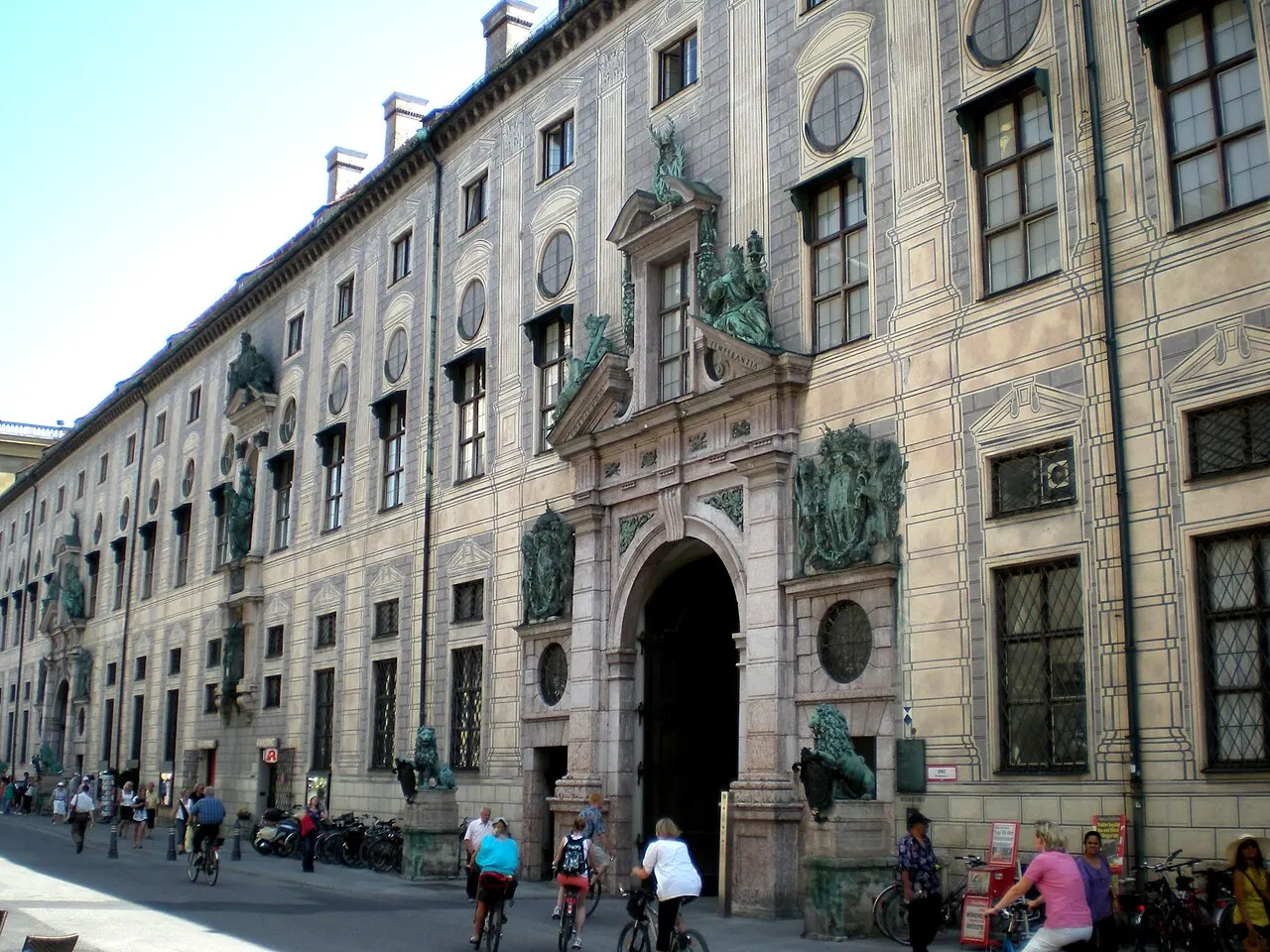
Residenz and Schatzkammer
The Wittelsbach palace from 1385 to 1918, expanded by almost every ruler: 130 rooms open to visitors and ten courtyards. The Antiquarium, from 1568–1571, is 66 m long and the largest Renaissance hall north of the Alps; the Treasury holds Kunigunde's crown (about 1280) and the gold-and-enamel St. George of 1586, and the 1751–1755 Cuvilliés-Theater is the city's best-preserved rococo interior.
The Wittelsbach lived here from 1385 to 1918 and expanded the palace with every generation: the Antiquarium, at 66 m, is the largest Renaissance hall north of the Alps, and the Treasury and the Cuvilliés-Theater round out a two-hour visit.
Check access

Kunstareal: the Pinakotheken, Brandhorst, and Lenbachhaus
Seven museums within a few blocks of Maxvorstadt. The Alte Pinakothek (1836, Klenze) holds Dürer's 1500 self-portrait and Altdorfer's “Battle of Alexander”; the Pinakothek der Moderne (2002) brings together art, design, and architecture; the Lenbachhaus holds the largest Blaue Reiter collection, thanks to the roughly 1,000 works Gabriele Münter donated in 1957. The Neue Pinakothek has been closed for a long renovation since 2019, with part of its collection shown at the Alte; on Sundays entry to the state collections usually costs €1.
The Neue has remained closed since 2019 and shows part of its collection at the Alte, alongside Dürer's 1500 self-portrait, and on Sundays admission usually drops to €1.
Check access

Frauenkirche
A brick cathedral built between 1468 and 1488 by Jörg von Halsbach, with standing room for 20,000 in a city that then had 13,000 residents. The two towers, nearly 99 m tall, got their onion-shaped domes in 1525 and shape the city center’s skyline; on the vestibule floor is the mark known as the Teufelstritt, the devil's footprint.
The two towers, at nearly 99 m, shape the downtown skyline, and in the vestibule is the Teufelstritt, the devil's footprint marked on the floor. It's the city's cathedral and fits into a short visit between Marienplatz and the rest of the old town.
Check access

Asamkirche
The Church of St. John Nepomuk, at Sendlinger Straße 32, built between 1733 and 1746 by the Asam brothers as a private chapel next to their own house. It's about 8 m wide by 22 m long and holds the whole of Bavarian rococo in a small space: from a shopping street you step straight into a dark interior covered in gold, marble and frescoes.
A private chapel of the Asam brothers, attached to their house and built between 1733 and 1746, concentrates Bavarian rococo into a dark interior about 8 m wide by 22 m long.
Check access
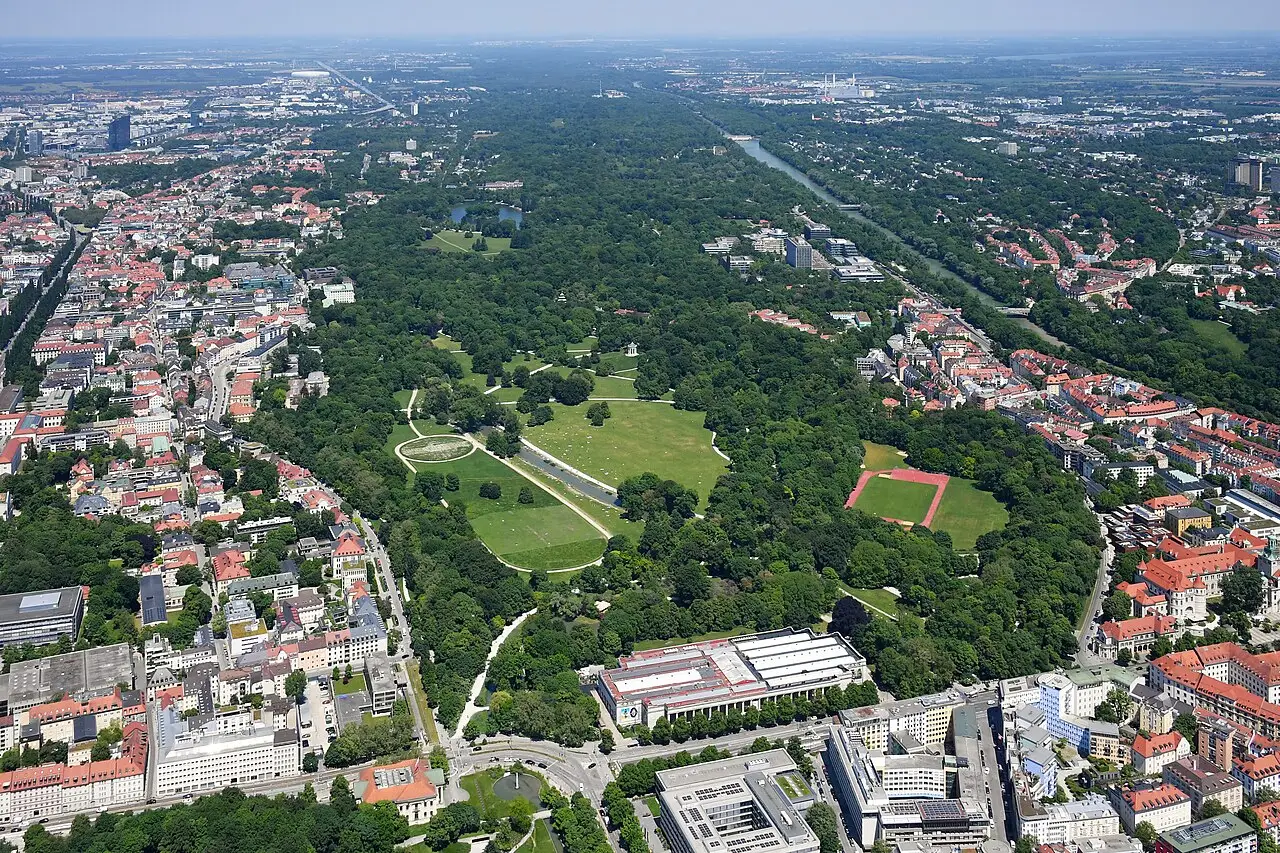
Englischer Garten and the Eisbach wave
A public park created by decree in 1789, designed by Benjamin Thompson, Count Rumford, covering 375 ha: more than Central Park. It has the 1790 Chinesischer Turm and its beer garden of about 7,000 seats, the 1836 Monopteros, and the Eisbach's standing wave, where surfers take turns by order of arrival; the wave was closed for long stretches after a fatal accident in April 2025, so check its status before counting on it.
At 375 ha, created by decree in 1789, the park is bigger than Central Park and has the Chinesischer Turm beer garden. Check beforehand whether the Eisbach wave is open, because it has been closed for long stretches since the fatal accident of April 2025.
Check access

Olympiapark and BMW Welt
The park of the 1972 Games, with Frei Otto and Günter Behnisch's acrylic-and-cable canopy, the stadium, the artificial lake, and the 291 m tower with a lookout at 190 m. Across the street stand BMW's 1972 headquarters (the four-cylinder building), the museum, and the 2007 BMW Welt, which is free to enter.
The park from the 1972 Games includes the acrylic-and-cable canopy and the 291 m tower with a viewpoint at 190 m, and the 2007 BMW Welt, across the street, offers free admission.
Check access
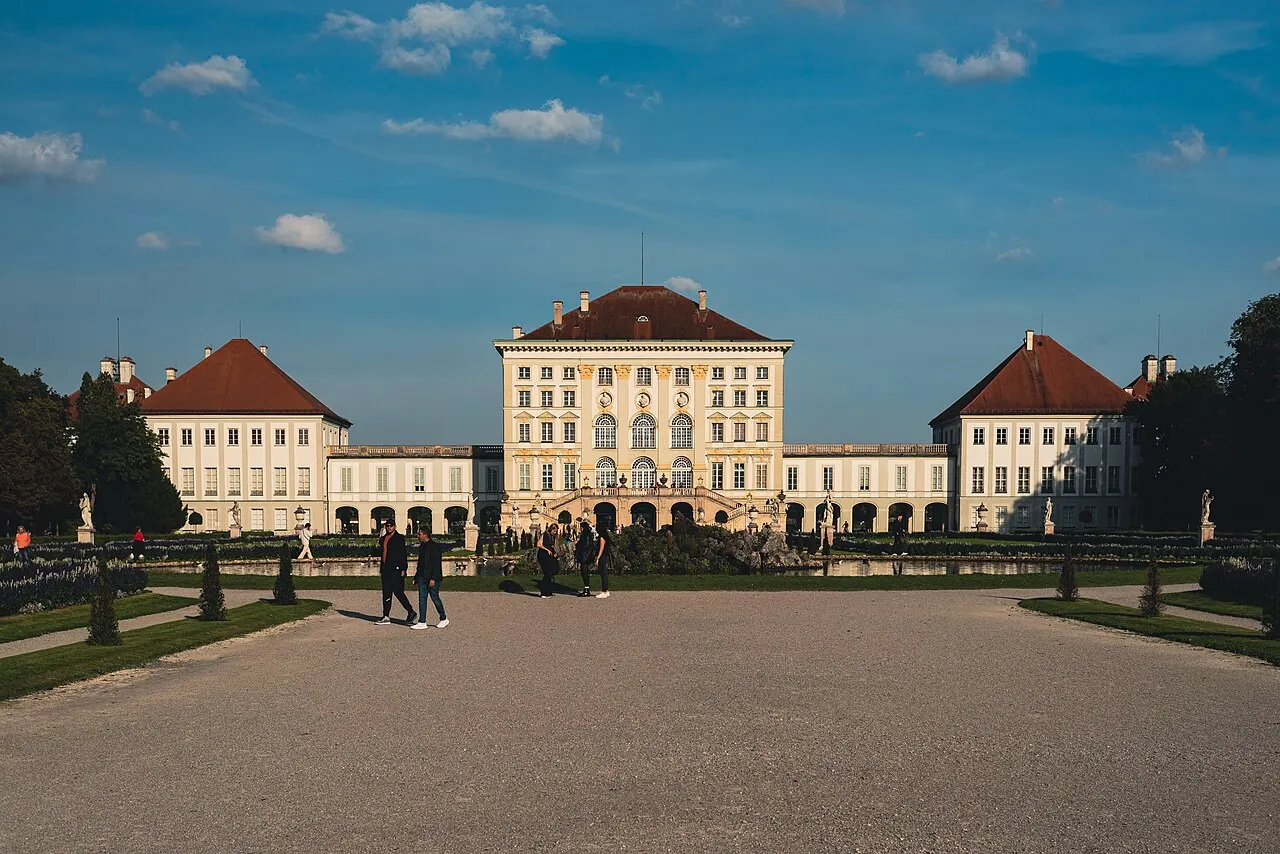
Schloss Nymphenburg
A summer palace begun in 1664 to mark the birth of heir Max Emanuel, with a facade about 700 m long and a 180 ha park. Inside is the Gallery of Beauties, with 36 portraits commissioned by Ludwig I, and in the park the Amalienburg (1734–1739), François de Cuvilliés's hunting lodge with its hall of mirrors, one of the high points of European rococo.
It's outside downtown, and the palatial interior is already at the Residenz, with 130 rooms and the 66 m Antiquarium. The reason to go all the way there is the 1734–1739 rococo hunting pavilion, tucked away at the back of a 180-hectare park.
Check access
Nilo’s itinerary
Start with the basic programme and choose extensions for the time you have.
Plan my days in the app ↗Day 1 · The rebuilt center and the market
Get to Marienplatz at 10:45am for the 11am Glockenspiel and take the elevator up the Neues Rathaus tower before the line grows.
Head down to the Viktualienmarkt, right nearby, and have a standing lunch of a Leberkässemmel, a salted Radi and a Helles at the beer garden in the middle of the market.
In the afternoon, step into the Frauenkirche to see the mark of the Teufelstritt in the vestibule, and walk five minutes to the Residenz, where the Antiquarium and the Treasury call for two hours.
Visit the Asamkirche on Sendlinger Straße and follow the street to the Sendlinger Tor, one of the three medieval gates still standing.
Spend the evening at the Hofbräuhaus, around since 1589, or, to escape the tour buses, at the Augustiner-Keller on Arnulfstraße.
Day 2 · Museums, memory, and the river
Walk into the Alte Pinakothek at opening time to see Dürer's 1500 self-portrait and Altdorfer's “Battle of Alexander”; on Sundays admission is usually €1.
Walk to the Lenbachhaus to see the Blaue Reiter collection donated by Gabriele Münter in 1957, and have a coffee in the villa's garden.
Cross Königsplatz to the Munich Documentation Center for the History of National Socialism, built in 2015 on the site of the party's former headquarters, and set aside two hours with the audio guide.
End the afternoon in the Englischer Garten: see the Eisbach wave at the southern entrance (if it's open), climb to the Monopteros and sit down in the beer garden at the Chinesischer Turm.
Have dinner in Schwabing, on Occamstraße or around Münchner Freiheit, one subway stop from the park.
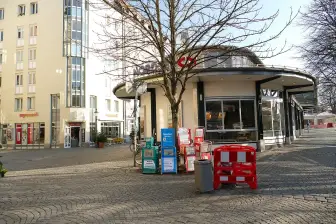


If you stay longer
Day 3 · Palace, the Games, and the Isar's banks
Take tram 17 early to Nymphenburg to see the palace, the Gallery of Beauties and the Amalienburg in the park, with a walk along the canals.
Continue by U-Bahn to the Olympiapark, go up the 291 m tower to see the Alps if the day is clear and come back along the lake.
Go into BMW Welt, which is free, and, if you have two hours, also visit the BMW Museum next door, which charges admission.
Spend the afternoon at the Deutsches Museum, on its island in the Isar, knowing that half the building will remain under renovation until around 2028.
Walk along the renaturalized bank of the Isar to the Reichenbachbrücke and end the night in the Glockenbachviertel.


Food
 AI illustration
Weißwurst
A white sausage of veal and pork fat with parsley and lemon, served in a bowl of hot water, never boiled. The local rule says to eat it before noon, and you don't eat the skin: either slit it open with a knife, or “zuzeln” it, sucking the meat out. It always comes with sweet mustard, a Brezn, and a wheat beer.
 AI illustration
Brezn
The Bavarian lye pretzel, crisp outside, soft at the knot, coarsely salted: €1.20–2 at a bakery, in sizes from 80 g to the Oktoberfest giant. It's the standard side to breakfast, to Obatzda, and to any beer.
 AI illustration
Leberkäs in a Semmel
It has no liver and no cheese: it's a baked meatloaf, cut in a thick slice and tucked into a bread roll with sweet mustard. It costs €3.50–5 at the butcher or the stall and is the most common Bavarian street snack, from breakfast through late afternoon.
 AI illustration
Obatzda
A spread of ripe camembert mashed with butter, onion, paprika, and a splash of beer, created around 1920 by Katharina Eisenreich in Weihenstephan. It's served cold with raw onion on top and a Brezn, and it's the dish you bring from home to the beer garden.
 AI illustration
Schweinshaxe and Knödel
Roast pork knuckle with crackling skin, 700 g to 1 kg, served with a potato or bread dumpling and cabbage salad; €18–26 at a Gaststätte. It's Sunday food and cold-night food, and almost always split between two when the plate arrives.
 AI illustration
Radi
A long white radish, cut into a single spiral with a hand-cranked cutter and salted until it starts to weep water. It costs €2–4 at the Viktualienmarkt and in beer gardens; the salt is there to make you thirsty, and nobody pretends otherwise.
 AI illustration
The beer: Helles, Weißbier, and the Maß
Six breweries have the right to the city's name and to the Oktoberfest tents: Augustiner (from 1328, the oldest), Hacker-Pschorr, Hofbräu, Löwenbräu, Paulaner, and Spaten. The everyday standard is Helles, pale and dry, served in a half-liter glass or in the one-liter Maß; wheat Weißbier is the morning choice, and a Radler mixes Helles with lemon soda.
 AI illustration
Dampfnudel and Kaiserschmarrn
Dough-based desserts: the Dampfnudel is a sweet bun steamed with a caramelized crust on the bottom, served in vanilla custard; the Kaiserschmarrn is a thick pancake torn into pieces, dusted with sugar and served with plum compote. Both appear on Gaststätte menus and at fair stalls, €8–12.
Day trips
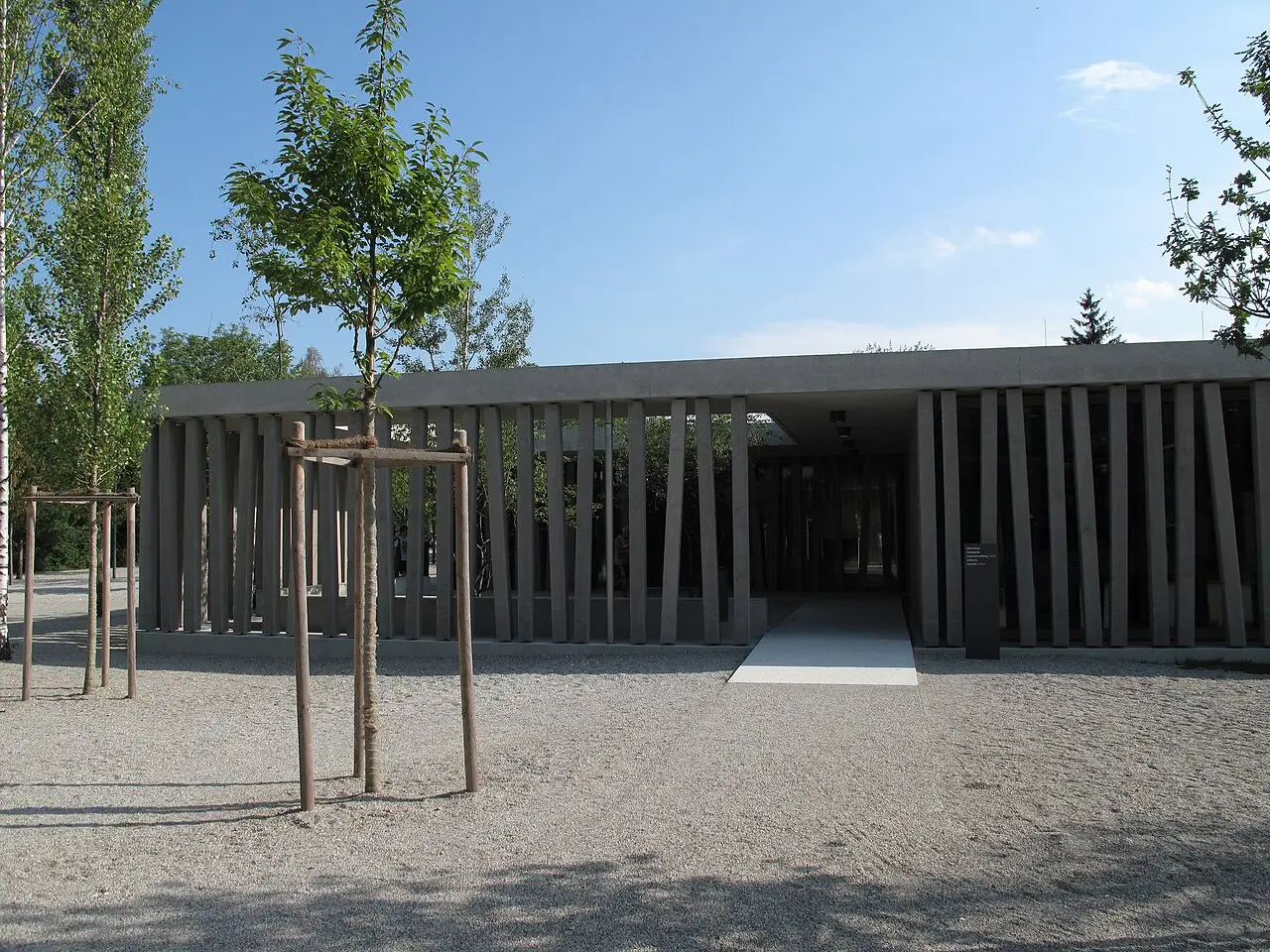
Dachau Memorial
16 km to the north; the S2 from the central station to Dachau (about 25 min) and bus 726 to the Gedenkstätte (about 10 min), on a ticket beyond zone M. It was the first concentration camp, opened March 22, 1933, and served as the model for the others; entry is free, guided tours run in English, and you should set aside half a day.

Neuschwanstein and Füssen
120 km to the southwest; a regional train to Füssen in about 2 hours and bus 73 or 78 to Hohenschwangau in 10 minutes. The castle was begun in 1869 by Ludwig II and never finished; the visit is guided, with a set time and mandatory online booking, around €21, and the king's group of palaces was added to the Unesco list in July 2025.
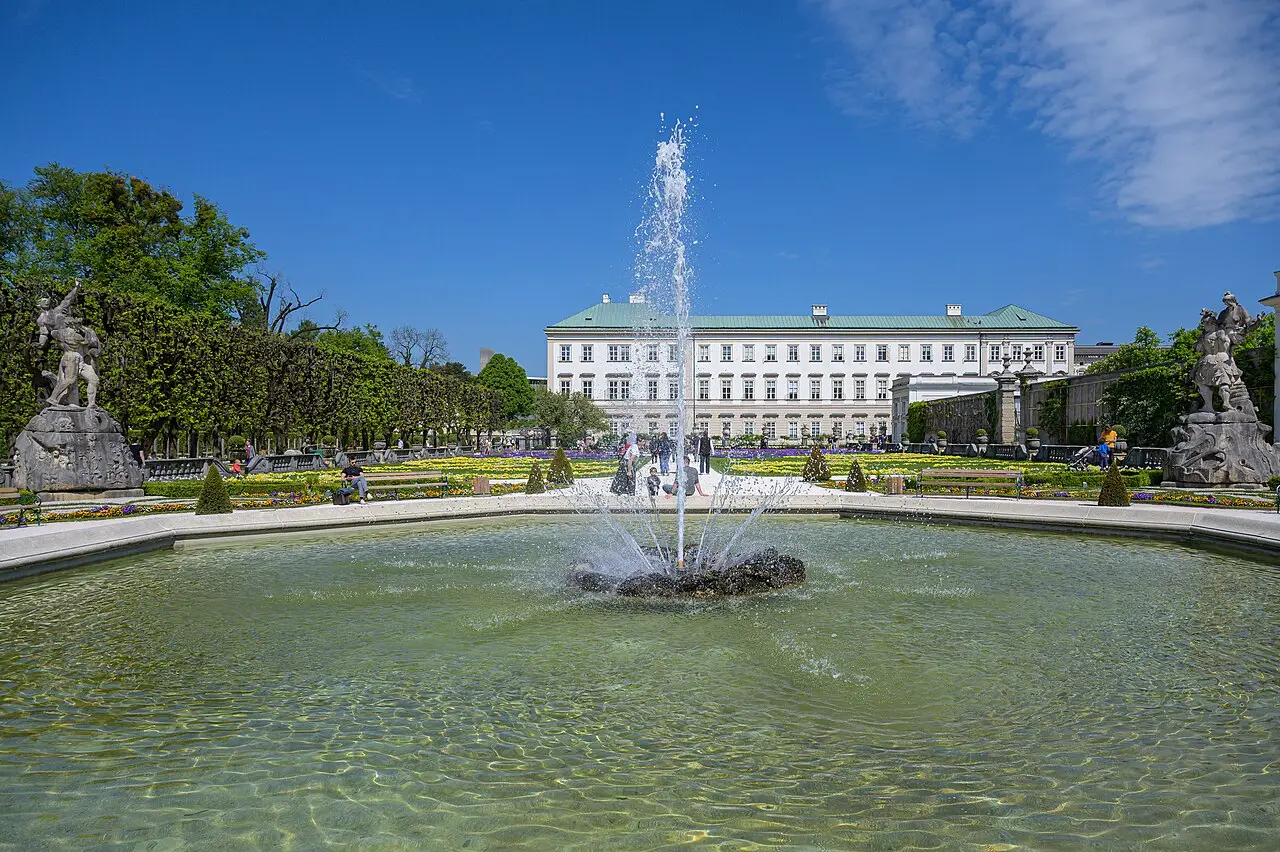
Salzburg
145 km east, 1 hour 30 minutes to 2 hours by direct train, with the regional Bayern-Ticket. You can see the Hohensalzburg fortress, Mozart's birthplace on the Getreidegasse and the Mirabell gardens in a day, returning at night.
Where to begin
The rebuilt center and the market
Get to Marienplatz at 10:45am for the 11am Glockenspiel and take the elevator up the Neues Rathaus tower before the line grows.
Museums, memory, and the river
Walk into the Alte Pinakothek at opening time to see Dürer's 1500 self-portrait and Altdorfer's “Battle of Alexander”; on Sundays admission is usually €1.
Palace, the Games, and the Isar's banks
Take tram 17 early to Nymphenburg to see the palace, the Gallery of Beauties and the Amalienburg in the park, with a walk along the canals.
Money
Munich is Germany's most expensive city, with asking rents above €22/m² and consumer prices well above the national average; you feel it from the first coffee. 2026 reference prices: coffee €3.50–5; Brezn €1.20–2; Leberkässemmel €3.50–5; a simple lunch at a Gaststätte €14–22; dinner with a beer €25–40; a Maß in a beer garden €10–12.50, against €14.80–15.90 at Oktoberfest. A mid-range hotel runs €140–220 a night and a hostel bed €35–60, and everything triples between September 19 and October 4, when it's worth booking six months ahead. The city doesn't charge a tourist tax on lodging: introducing an Übernachtungssteuer has been discussed and isn't in effect in 2026. Cards are accepted at most hotels, shops, and restaurants, but cash is still required at many Oktoberfest tents, market stalls, small bakeries, and some beer gardens: carry €50–80 in cash. Tips run 5% to 10% and are said out loud when paying (“twenty-three,” for a €21 bill), never left on the table after you leave. Cans and plastic bottles carry a €0.25 deposit, and the €3–5 mug deposit at the Christmas market comes back as cash when you return it; a public restroom costs €0.50–1.
Getting there and around
Franz Josef Strauss Airport (MUC), opened on May 17, 1992, sits about 28.5 km northeast of the center, between Freising and Erding. The S1 (via Laim) and S8 (via Ostbahnhof) link the terminal to downtown in 40–45 minutes; the trip crosses every fare zone, so you need an M–5 ticket, around €14 for a single. The Lufthansa Express bus reaches the central station in about 45 minutes for €14–16, with no airline boarding pass required. By taxi or ride-hailing app it's €70–95 and 40–60 minutes. The second airport used by low-cost carriers is Memmingen (FMM), 110 km away, with a bus of about 1 hour 45 minutes to the central station: add that time and cost when comparing fares.
The network is integrated under the MVV fare system and combines 8 U-Bahn lines, 8 S-Bahn lines, 13 tram lines and about 70 bus routes, organized since December 2019 into rings: zone M covers the whole city and zones 1 to 6 reach into the countryside. In 2026 a single ticket in zone M costs €4.20, the short-trip ticket is around €2.20, the individual Tageskarte for zone M costs €10.10, the M–5 group pass €32.60 and the Deutschlandticket, valid on all regional transport in Germany, €63 a month. Paper tickets must be stamped in the blue box before boarding; there are no turnstiles, inspectors are in plain clothes and the fine is €60. The U-Bahn runs from 4am to 1am or 2am, and there are night trams and buses; on Friday and Saturday nights and the night before public holidays, service runs later. You can cross the historic center on foot in 20 minutes, the city is flat, and there are more than 1,200 km of bike lanes plus shared bikes (MVG Rad) for about €1 per 15 minutes or €15 a day.
Safety
Munich is one of Germany's safest large cities, with the lowest crime rate per 100,000 residents among the country's metropolises, and walking downtown at night is routine. The real risks are pickpocket-sized: theft in crowds at Marienplatz, on Kaufingerstraße, on the U1, U2, and S-Bahn during rush hour, and above all at Oktoberfest, where thousands of phones and wallets go missing over two weeks; a backpack worn on the front and nothing in your back pocket solve most of it. The area around Hauptbahnhof, especially Schillerstraße and Arnulfstraße, is uncomfortable late at night because of drinking and verbal harassment, without being dangerous: it depends on the hour and the corner, not on the people who live there. At the Wiesn the problem is alcohol: a Maß equals about three regular beers, and the women's safety point (Sicherheitspunkt), behind the Bavaria statue, handles harassment cases and people who've lost their group. Bicycles are the preferred target for property crime, with thousands of thefts a year: use a U-lock through the frame, not just the wheel. Cycling drunk is a serious offense and can cost you your driver's license too. Emergencies: 112 for ambulance and fire, 110 for police.
Etiquette tips
Say “Grüß Gott” on the way in
Say “Grüß Gott” when you walk into any bakery, shop or doctor's office and say goodbye when you leave, because walking in silently comes across as rude, not discreet. “Servus” works for arriving and for leaving; “Tschüss” is from the north and is acceptable, but it gives you away as an outsider.
Ask before you sit
Shared tables are the rule in beer gardens and Gaststätten: point to the empty seat and ask “Ist hier noch frei?”. The exception is a table with a Stammtisch sign, reserved for long-standing regulars, and taking it without an invitation embarrasses everyone.
In the beer garden, your food, their drink
The Selbstbedienung area follows the 1812 decree: bread, cheese, and Obatzda can come from home, and only the drink is bought there. In the part with table service (Bedienung), you order everything at the table, and nothing outside comes in.
The toast has choreography
Say “Prost,” clink the base of the glass, not the rim, and look each person in the eye, one at a time. Drinking before toasting everyone at the table is considered careless, and not making eye contact earns you the local joke about seven years of bad luck.
Don't cross on red, don't walk in the bike lane
Pedestrians wait for the signal even on an empty street, especially with a child nearby; the fine is small, but the disapproval is immediate and out loud. The strip of reddish asphalt on the sidewalk is a bike lane, and cyclists in Munich don't swerve.
Sunday is a day of quiet
Shops close on Sundays (only bakeries with short hours, gas stations and station shops open) and quiet time is mandatory: no drills, lawnmowers or loud music, which also applies between 10pm and 7am on other days. Buy your food on Saturday.
Mistakes to avoid
A zone-M-only ticket to the airport
Buying a zone-M-only ticket to get to the airport. The route crosses into zone 5, the inspector works in plainclothes, and the fine is €60, no argument. The same goes for Dachau, Starnberg, and Freising, all outside zone M.
Showing up to Oktoberfest on Saturday night
Showing up at Oktoberfest at eight in the evening on a Saturday expecting to get into a tent. Tents close their doors once they're full, often by late morning on weekends, and the tables in the covered areas are booked months in advance. The realistic time to get in without a reservation is before 11am on a weekday.
Ordering Weißwurst at night, or trying to eat the skin. It's a morning dish; the casing isn't eaten, only the meat inside. Asking for ketchup with it has the same social effect as asking for ice in your wine.
Counting on cards and on Sunday shopping
Counting on cards everywhere and on shops being open Sunday. Many Wiesn tents, Viktualienmarkt stalls, bakeries, and beer gardens take only cash, and on Sunday supplies come down to the shops at Hauptbahnhof and Ostbahnhof stations.
Swimming in the Isar like a pool
Swimming in the Isar as if it were a river pool. The water comes from the mountains, runs 8 to 16 °C in summer, has a strong current and artificial steps. There are drownings every year, and the shallow stretches at Flaucher and Thalkirchen are the only ones where it's commonly done.
Useful phrases
Grüß Gott / Servus
Good day (grüs got). The standard greeting on entering anywhere; “Servus” (sérvus) works for both hello and goodbye
Ist hier noch frei?
Is this seat free? (ist rir nor frái). The required question before sitting at a communal table
Eine Maß, bitte
A liter of beer, please (áine máss, bíte): “Maß” rhymes with “mas,” and asking for “eine Halbe” gets you the half-liter glass
Zahlen, bitte. Getrennt.
The check, please. Separately. (tsá-len bíte, ge-trént): you pay the server at the table, and say the amount with the tip already added
Ein Radler, bitte
A beer with lemonade, please (áin rád-ler, bíte): half Helles, half lemon soda, the order of whoever's biking afterward
Passt scho
That's fine as is / keep the change (pásst chô). A Bavarian expression that closes any matter without argument
Districts
Altstadt-Lehel
The rebuilt center inside the ring: Marienplatz, the Residenz, Viktualienmarkt, and the pedestrian streets Kaufinger and Neuhauser, among the busiest in Europe. Lehel, to the east, is the district's residential, expensive side, between the Isar and Prinzregentenstraße, with the Bavarian National Museum and the Haus der Kunst.
Maxvorstadt
The student and museum district: LMU and the Technical University, the Kunstareal with its three Pinakotheken, the Brandhorst and the Lenbachhaus, plus Königsplatz and the Nazi Documentation Center. Cafés fill up on class days, and lunch prices run below the center's average.
Schwabing
This was the bohemia of 1900 (Kandinsky, Thomas Mann, Lenin passing through) and today it's one of the city's most expensive addresses, with Jugendstil facades on Leopoldstraße and quiet streets around Münchner Freiheit. Good for a proper dinner, a walk in the Englischer Garten, and a look at what the local upper middle class calls nightlife.
Haidhausen
Across the Isar, the old Franzosenviertel, with French street names, 19th-century townhouses, and Wiener Platz, a market square with a beer garden. It's home to neighborhood bars, the Muffatwerk, and most of the nightlife that isn't downtown.
Glockenbachviertel and Gärtnerplatz
The part of Isarvorstadt with the bars, independent shops, and the city's main LGBT hub, around the round Gärtnerplatz square and its 1865 theater. At night people drink sitting right in the square and along the Isar's banks, five minutes away.
Neuhausen-Nymphenburg
Residential, tree-lined, and less touristy, between Rotkreuzplatz and Nymphenburg Palace. Home to the Hirschgarten, the city's largest beer garden, with about 8,000 seats and a deer paddock that gives it its name.
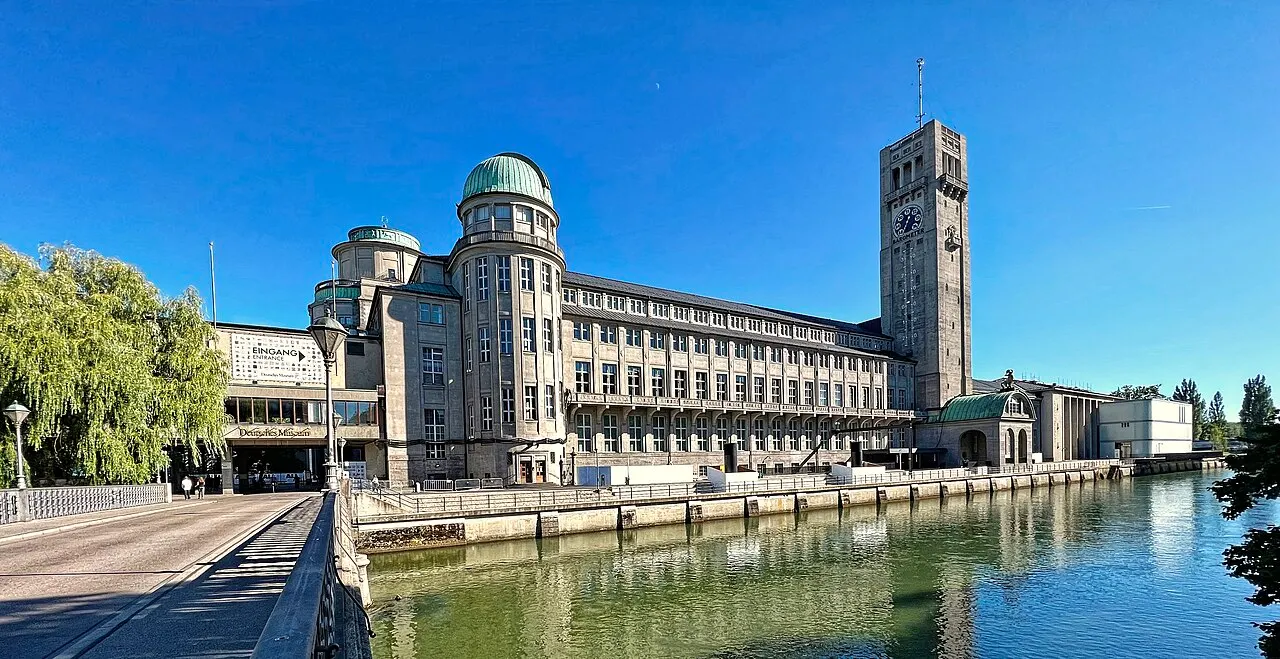
Westend and Schwanthalerhöhe
A 19th-century working-class neighborhood that has become a sought-after rental area, right next to the Theresienwiese, where Oktoberfest takes place. It has the city's greatest concentration of family-run Greek, Turkish and Italian restaurants, plus the Deutsches Museum's Verkehrszentrum in the old trade fair halls.
Giesing and Obergiesing
A hillside east of the Isar, a traditional working-class district, with TSV 1860's Grünwalder stadium and the Nockherberg, where the strong beer season opens in March. It's still where you find a cheaper beer and lunch just minutes from the center.
History
1158 · A bridge stolen from the bishop
Henry the Lion, duke of Bavaria and Saxony, destroys the bishop of Freising's salt bridge at Oberföhring and builds his own a few kilometers upriver, next to the settlement of monks that gives the place its name. On June 14, 1158, Emperor Frederick Barbarossa legalizes the act in the Privilege of Augsburg.

1180–1255 · The Wittelsbachs take over
Barbarossa deposes Henry the Lion in 1180 and hands Bavaria to Otto of Wittelsbach, a family that will rule until 1918. In 1255 Munich becomes the ducal residence of Upper Bavaria; the second city wall, from the late 13th century, leaves behind the Isartor, Sendlinger Tor, and Karlstor gates.
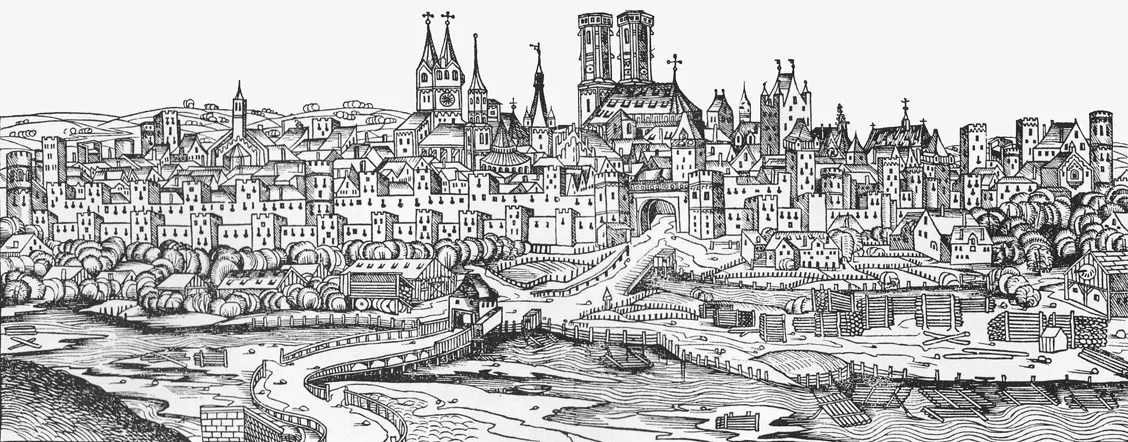
1327–1328 · Fire and imperial residence
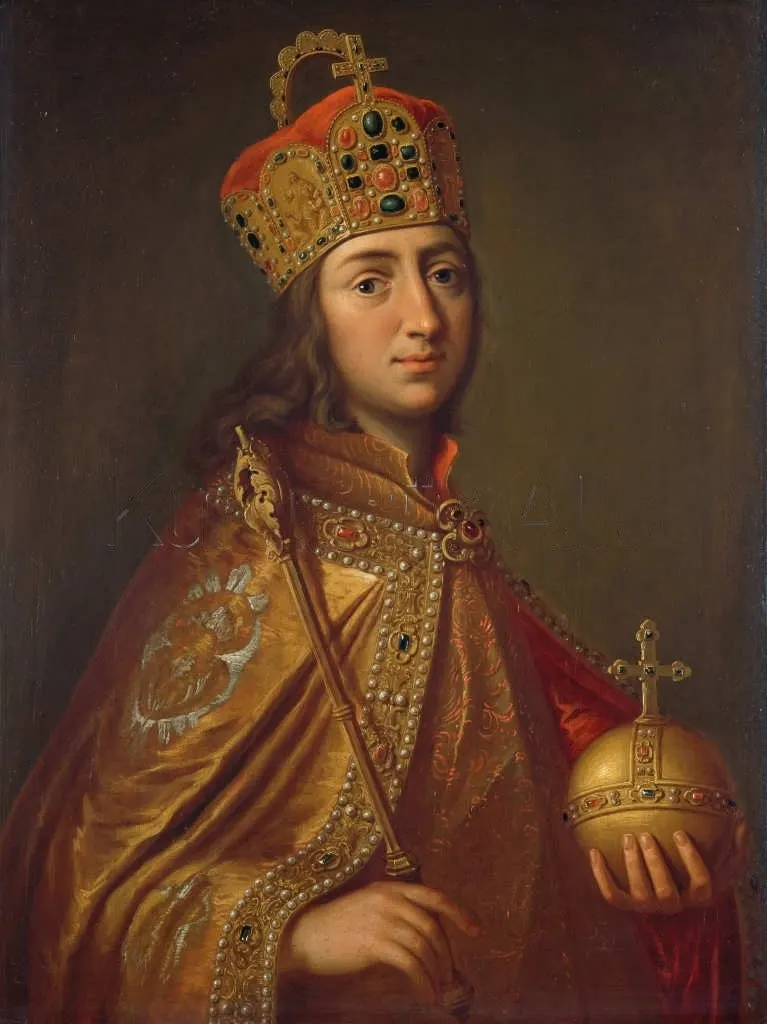
The fire of 1327 strikes Munich and damages St. Peter’s Church, rebuilt over the following decades. In 1328, Louis IV is crowned emperor in Rome. Alter Hof, an existing ducal residence, becomes one of his preferred seats of government.
1516 · The beer purity law
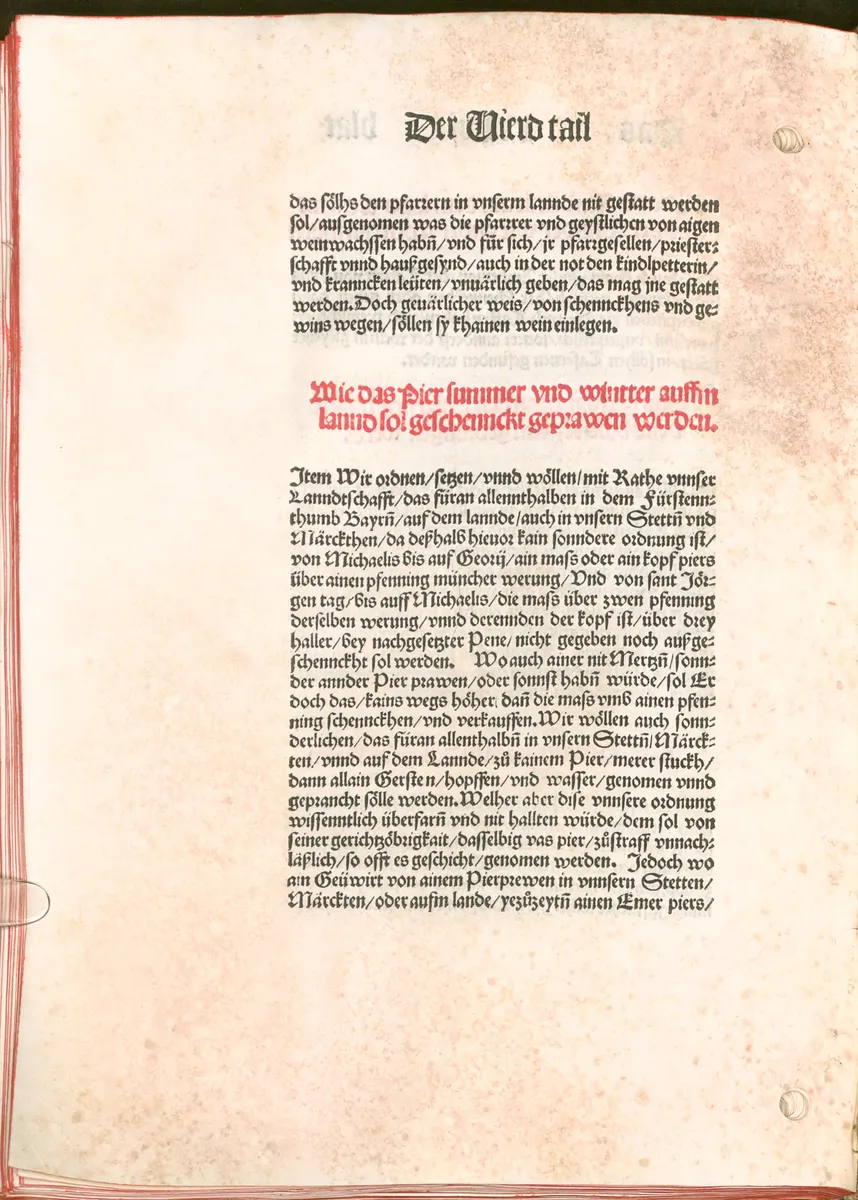
In 1516, Dukes William IV and Louis X included rules for brewing and selling beer in Bavaria’s territorial ordinance. The text set prices and limited ingredients to barley, hops and water. Munich already had a similar rule from 1487; the term Reinheitsgebot, or purity law, emerged in the early twentieth century.
1632–1638 · Swedish occupation and the Marian column
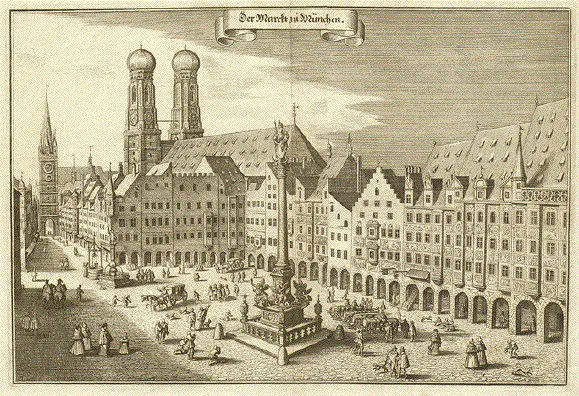
Swedish troops occupy Munich in 1632. In 1638, Maximilian I inaugurates the Mariensäule on Marienplatz, fulfilling a vow of thanks for the city being spared destruction. The column also serves as the reference point for distances to Munich shown on road signs.
1806–1810 · Kingdom, capital, and the first Oktoberfest
Napoleon raises Bavaria to a kingdom on January 1, 1806, and Maximilian I Joseph becomes king of a capital that doubles in size. On October 12, 1810, the wedding of Crown Prince Ludwig to Therese of Saxe-Hildburghausen is celebrated in a field outside the city, named the Theresienwiese, and the party becomes an annual event, suspended only during wars, epidemics and in 2020 and 2021.

1825–1848 · Ludwig I and the Athens on the Isar
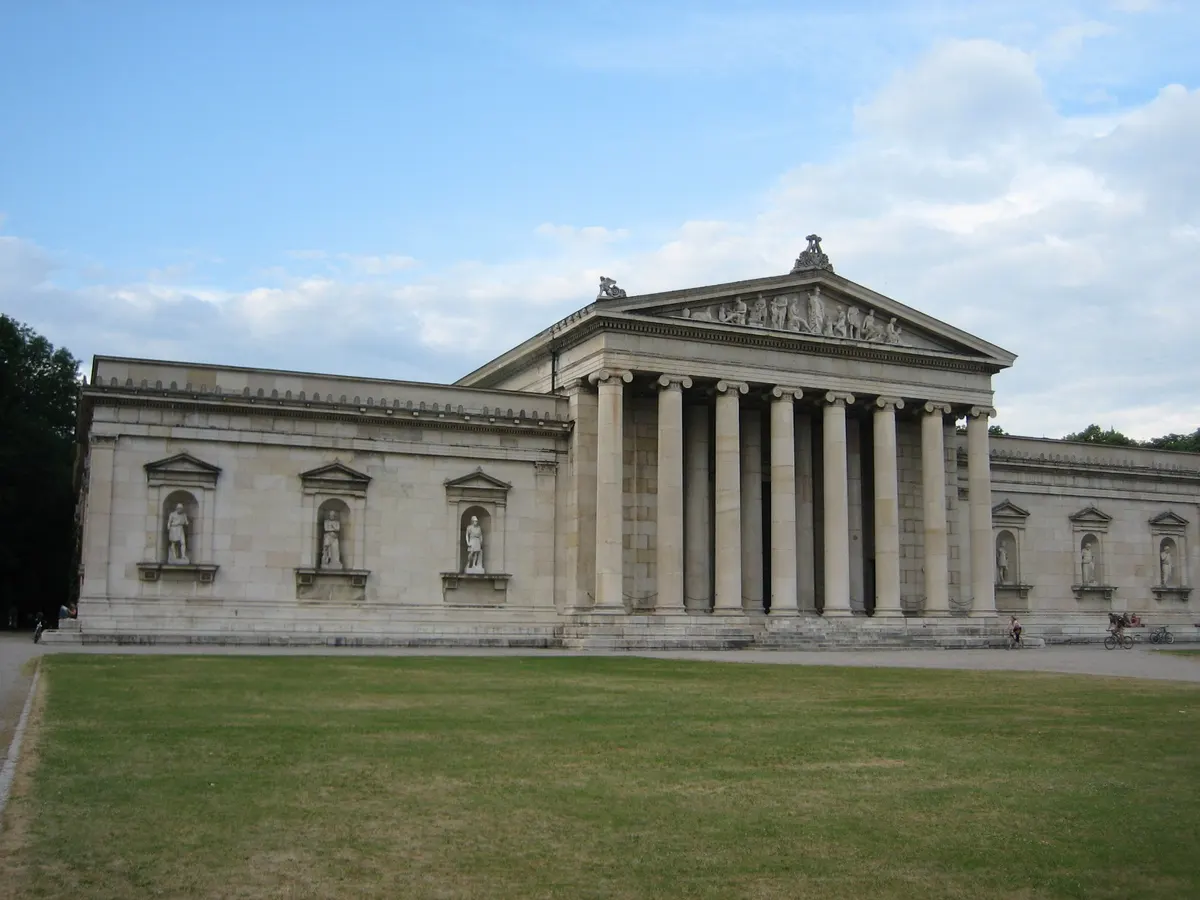
Ludwig I hires Leo von Klenze and Friedrich von Gärtner and has Ludwigstraße, Königsplatz, the Glyptothek (1830), and the Alte Pinakothek (1836) built; the university moves from Landshut to Munich in 1826. The king abdicates in 1848, after the scandal over dancer Lola Montez.
1864–1886 · Ludwig II, Wagner, and the castles
Ludwig II summons Richard Wagner to Munich and funds the premieres of “Tristan and Isolde” (1865) and “The Mastersingers” (1868) at the Nationaltheater. In debt over the castles of Neuschwanstein, Linderhof, and Herrenchiemsee, he is deposed and found dead in Lake Starnberg on June 13, 1886.

1918–1923 · Revolution and the beer hall putsch
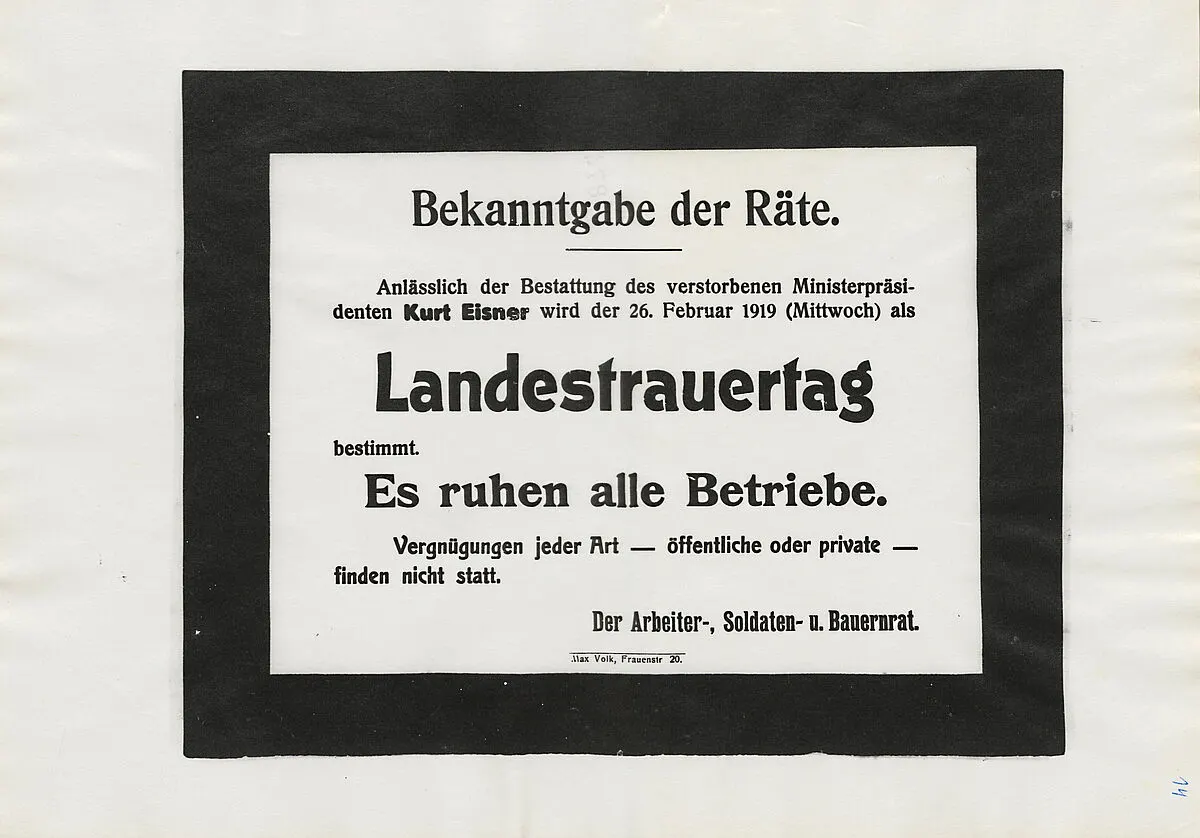
Kurt Eisner proclaims the Free State of Bavaria on November 7, 1918, is assassinated on February 21, 1919, and the Bavarian Soviet Republic is crushed that May. On November 8–9, 1923, Hitler attempts his coup from the Bürgerbräukeller beer hall; the march ends in gunfire on Odeonsplatz, with 20 dead.
1933–1945 · Capital of the movement, Dachau, and the White Rose
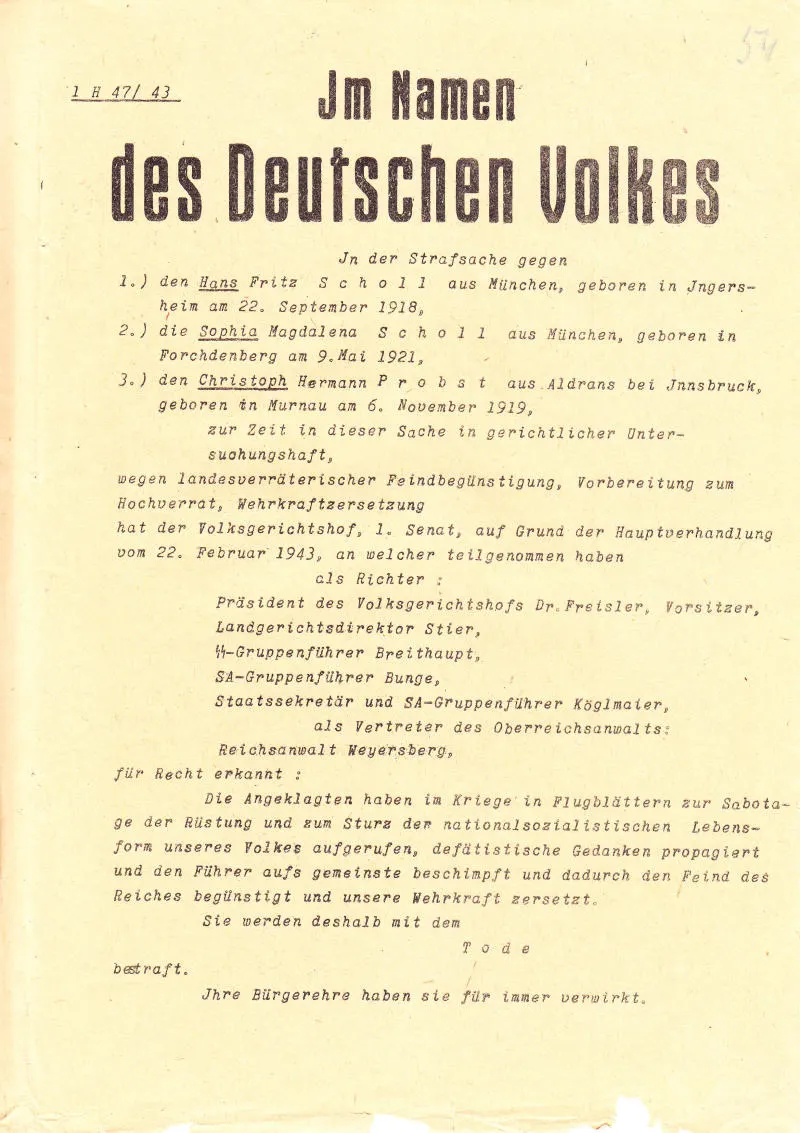
The regime declares Munich the “capital of the movement,” opens the Dachau camp on March 22, 1933, the first of them, and signs in Munich the agreement that hands over the Sudetenland, on September 30, 1938. Sophie and Hans Scholl are arrested at the university on February 18, 1943, and executed four days later; 71 bombing raids destroy about half the city and almost 90% of the historic center.
1957–1972 · The million mark and the Games
The city passes one million residents in 1957 and opens the U-Bahn and S-Bahn on the eve of the 1972 Olympics, with the park and tent-shaped canopy by Frei Otto and Günter Behnisch. On September 5, 1972, the attack on the Israeli delegation kills eleven athletes and one police officer, and marks the memory of the Games.

Complete history
Henry the Lion destroyed the bishop's salt bridge
Until the mid-12th century, salt from Reichenhall crossed the Isar on a bridge that belonged to the bishop of Freising, at Oberföhring, and earned the bishopric a toll. In 1158 Henry the Lion had that bridge burned and built his own upriver, next to a settlement of monks, collecting the toll for himself. Emperor Frederick Barbarossa arbitrated the dispute on June 14, 1158, and instead of undoing the crime, legalized it: a market, customs, and a mint for the new city, with a cut of the revenue for the bishop. Twenty-two years later Barbarossa deposed Henry and handed Bavaria to the Wittelsbachs, who would rule until 1918: 738 years, one of Europe's longest dynasties.
Munich as a Wittelsbach residence
The division of the duchy in 1255 made Munich a residence of the rulers of Upper Bavaria. The second city wall began under Louis II and was ready to defend the city by 1315; Isartor, the last of the major gates, was completed in 1337. Louis IV was crowned emperor in Rome in 1328 and kept Alter Hof as one of his preferred residences. In 1332, he confirmed salt-trade privileges that strengthened Munich’s position as a trading city.
Construction of the Frauenkirche began in 1468. The church and towers were complete in 1488, still without their domes; consecration followed in 1494, and the tower roofs were added in 1524–1525. The Bavarian ordinance of 1516 regulated beer ingredients and prices.
On Marienplatz, Maximilian I inaugurated the Mariensäule in 1638, fulfilling a vow of thanks for Munich being spared destruction during the Swedish occupation. Other court commissions had their own purposes: the Theatinerkirche, begun in 1663, and Nymphenburg Palace, begun in 1664, celebrated the birth of the heir Max Emanuel in 1662.
Munich became a kingdom's capital in 1806, with Napoleon
The leap to a true capital came with Napoleon. Bavaria became a kingdom in 1806, and Maximilian I Joseph and Ludwig I tore down the walls and reorganized the city outside them, with Ludwigstraße, Königsplatz, the Glyptothek, the Alte Pinakothek and the university, moved from Landshut in 1826. It was the project of an “Athens on the Isar” paid for by the royal budget, with Klenze and Gärtner copying Athens, Rome and Florence in limestone. Ludwig II took the spending in another direction, with Wagner, the Nationaltheater and the Alpine castles, died in Lake Starnberg in 1886 and left Bavaria the tourist brand it still sells today. In 1871 the kingdom joined the German Empire while keeping its own army, postal service and railroads.
From Schwabing bohemia to the capital of Nazism
At the start of the 20th century, Munich was the capital of German bohemia. In Schwabing, Kandinsky, Franz Marc and Gabriele Münter founded the Blaue Reiter in 1911, Thomas Mann and Rilke lived nearby, and Lenin printed the newspaper Iskra in the city between 1900 and 1902. Within a few years the picture turned to catastrophe: Kurt Eisner proclaimed the republic in November 1918 and was assassinated three months later, the Council Republic was crushed in May 1919, and from then on Munich became the center of the German far right. The 1923 putsch failed, but the regime that took power in 1933 called the city the “capital of the movement,” opened Dachau that same March and signed here the agreement that handed over the Sudetenland in 1938. What remains of the resistance is the name of the White Rose, whose leaflets were thrown into the university atrium on February 18, 1943. Allied bombing destroyed about 50% of the city and almost 90% of the historic core.
Rebuilding the medieval layout was a 1946 decision
In 1946 the city council decided to rebuild the medieval layout (same streets, same heights) instead of building a new city, and that decision explains the look of today's center, where much of what seems old is under 75 years old. Then came industry (BMW in the city since 1922, Siemens moved from Berlin in 1949, Allianz, MAN), the million-resident mark in 1957, the subway and the 1972 Olympics, interrupted by the attack on September 5. The international airport arrived in 1992, and the Allianz Arena in 2005. The result is Germany's most expensive city to live in, with asking rents above €22/m², heavy housing pressure, and structural works underway: the second S-Bahn trunk line, under construction since 2017 and now expected in the 2030s, and the full rebuild of the central station.
The 1516 rule listed barley, hops and water and also controlled prices. The name Reinheitsgebot came centuries later.
Geography and shape of the city
The gravel plain and the Isar
Munich sits at about 520 m elevation on the Münchner Schotterebene, a gravel plain laid down by Alpine glaciers and cut by the Isar, a turquoise-green, cold-water river that flows down from the Karwendel and continues to the Danube.
Flat terrain, laid out in concentric rings
The terrain is nearly flat (the difference between the city's lowest and highest points is a bit over 80 m) and the layout is radial-concentric: the medieval core inside the Altstadtring, which follows the line of the wall torn down in the 19th century; then the belt of 19th-century neighborhoods; then the Mittlerer Ring, 27 km long; and further out the A99 ring road.
Alps, green space, and the height cap
The Alps sit 60–80 km to the south and are only visible when the Föhn blows, a warm, dry wind that comes down the mountains, clears the air, leaves the landscape sharp and is locally blamed for headaches. Green space is structural: the Englischer Garten covers 375 ha and runs right along the river, Nymphenburg park covers about 180 ha, and the Isar was renaturalized between 2000 and 2011 along an 8 km stretch, with gravel banks where the city sunbathes in summer. A November 2004 referendum blocked buildings above 100 m within the Mittlerer Ring, close to the height of the Frauenkirche's towers, at nearly 99 m, which keeps the skyline low and free of skyscrapers downtown.
Downtown, no building rises above the towers of the Frauenkirche, nearly 99 m tall, which act as a height cap for the old town.
Culture
One of modern art's birthplaces
German modern art has one of its birthplaces here: in 1911 Wassily Kandinsky, Franz Marc, Gabriele Münter, and August Macke founded the Blaue Reiter group in Munich and in Murnau, 70 km away. When Münter donated about a thousand works to the Lenbachhaus in 1957, including pieces she hid in her cellar during Nazism, the city gained the largest collection of the group in the world. Before that, Ludwig I had built a museum district from scratch, and the Kunstareal still works as a concentrate: seven museums, two universities, and the Nazi Documentation Center, opened in 2015 on the site of the former Nazi party headquarters, on Königsplatz.
Opera and stage: the reference is the Bavarian State Opera
In music and on stage, the reference is the Bayerische Staatsoper, at the Nationaltheater on Max-Joseph-Platz, where “Tristan and Isolde” (1865), “The Mastersingers” (1868), “The Rhinegold” (1869), and “The Valkyrie” (1870) premiered under Ludwig II's patronage; in July the Opera Festival takes over the city. The Munich Philharmonic plays at the Gasteig HP8, an industrial shed in Sendling, while the original hall in Haidhausen undergoes a renovation that has dragged on since 2021. Munich is also a capital of recorded sound: in the basement of the Arabella-Haus, in Bogenhausen, Musicland Studios hosted Giorgio Moroder, Donna Summer, Queen, Led Zeppelin, and the Rolling Stones in the 1970s. The synth-driven “Munich Sound” spread from there to the world.
Beer and soccer: everyday culture
Day to day, the city's culture is made of beer, soccer, and clear rules. Bayern Munich, founded on February 27, 1900, plays at the 2005 Allianz Arena, with 75,000 seats and a facade of lit plastic panels, while TSV 1860 keeps its team and its neighborhood crowd at the Grünwalder Stadion, in Giesing. Beer gardens are a legal institution, not folklore: an 1812 decree let breweries serve drinks over their ice cellars and, in exchange, guaranteed the public the right to bring their own food, a right reaffirmed in 1995, when 25,000 people took to the streets to protest restricted garden hours.
The Kandinsky and Marc canvases now at the Lenbachhaus made it through the Nazi era hidden in the basement of Gabriele Münter's house.
Festivals and events

Oktoberfest
From September 19 to October 4, 2026, at the Theresienwiese: the 191st edition of the festival that began as a royal wedding on October 12, 1810. About 6 million visitors, 14 large tents, free entry, a Maß between €14.80 and €15.90 (average €15.61), and half a chicken between €16.90 and €17.50. Only Munich's six breweries may serve; opening is at noon on Saturday, with the mayor tapping the first keg in the Schottenhamel tent.
 AI illustration
Starkbierzeit at the Nockherberg
In March, the strong beer season: the Salvator doppelbock (about 7.9%), created by the monks of St. Francis of Paola as “liquid bread” for Lent. The opening at Paulaner am Nockherberg includes the Singspiel, a satirical play broadcast on TV where actors mimic Bavarian politicians in front of the politicians themselves.
Fasching
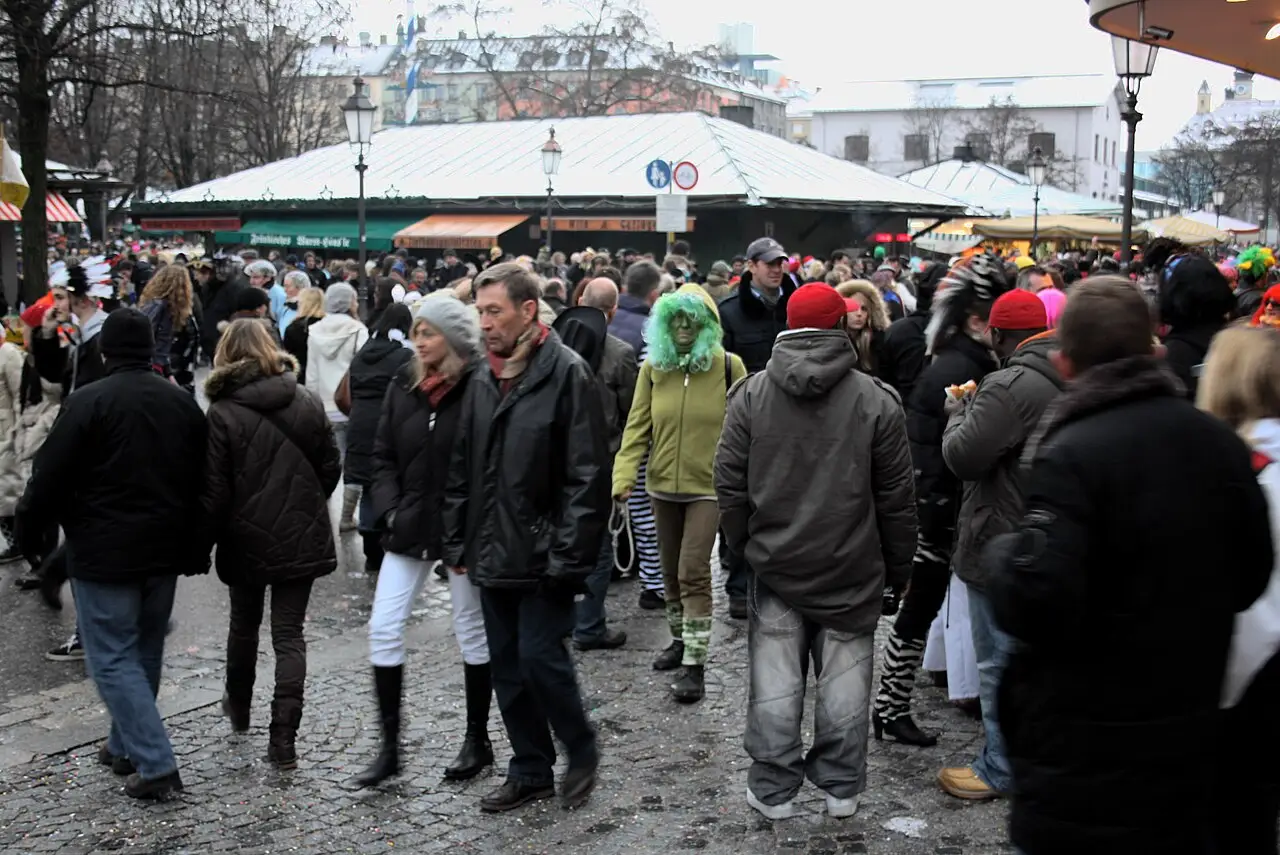
Bavarian carnival runs from January 7 to Shrove Tuesday, with balls and costumes at the office. The street highlight is the market women's dance at the Viktualienmarkt on Tuesday morning, a tradition since 1898, followed by the stalls closing at noon.

Tollwood
A double festival of music, theater, and market, free to enter in the open area: the summer edition takes over the Olympiapark from late June into early July, and the winter one moves to the Theresienwiese in December, with a declared organic and vegetarian program.

Christkindlmarkt
The Christmas market on Marienplatz from late November to December 24, heir to the Nikolausmarkt recorded in 1310. Glühwein runs €4.50–6 plus a refundable mug deposit; the medieval market at Wittelsbacherplatz and the one in Schwabing are the less crowded options.
Books and films
“Success,” Lion Feuchtwanger (1930)
A novel set in Munich between 1921 and 1924, built around a court case with the rise of the Bavarian far right in the background. Written before the outcome, it explains why it was this city, not another, where Nazism organized.
“Sophie Scholl: The Final Days,” Marc Rothemund (2005)
Reconstructs, from the interrogation records, the final days of Sophie Scholl, from the siblings' arrest in the university lobby, on February 18, 1943, to the execution, four days later. Filmed on the real locations, it's the entry point into the story of the White Rose.
“I Feel Love,” Donna Summer and Giorgio Moroder (1977)
The manifesto track of synth-pop, born in a Bogenhausen basement: the root of what the city exported to the dance floors of the 1970s.
Frequently asked questions
Munich: Does the zone M ticket work to get to the airport?
No: the trip crosses up through zone 5, and the inspector travels in plain clothes and charges €60 with no discussion.
Munich: How do you visit the Dachau Memorial?
The memorial is 16 km to the north: S2 from the central station to Dachau (about 25 min) and bus 726 to the Gedenkstätte (about 10 min), on a ticket beyond zone M. Admission is free, and the visit calls for a full half day.
Munich: Is the city expensive for a traveler?
Yes: Munich is Germany's most expensive city, and you feel it from the first coffee. In 2026, coffee costs €3.50 to 5, a Brezn €1.20 to 2, a Leberkässemmel €3.50 to 5, a simple lunch at a Gaststätte €14 to 22, dinner with a beer €25 to 40, and a Maß at the beer garden €10 to 12.50, against €14.80 to 15.90 at the Oktoberfest.
Munich: Does the weather change a lot over the course of a day?
Yes: the climate, continental with Alpine influence, sometimes changes within the same afternoon; in summer thunderstorms arrive at the end of the day, and the Föhn can raise the temperature several degrees in a few hours, in any season.
Munich: How do you say hi and bye without sounding like an outsider?
“Servus” works for arriving and for leaving; “Tschüss” is from the north and is acceptable, but it gives you away as an outsider.
Other cities in the country
Germany ↗- Days
- 3–4
- When
- May–Jun · Sep
- Per person/day
- Average 120–180 EURMid-range · per person/day
Cost scope
Per person per day: accommodation, meals, urban transport, visits and a small allowance for extras. Flights excluded; larger purchases vary. Editorial estimate, not a quote.


Itineraries through here
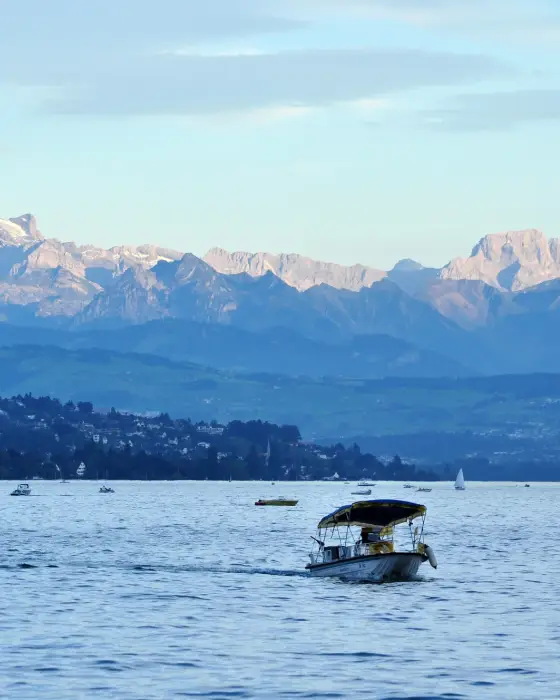 Switzerland, Germany and Italy in 7 daysCrossing the AlpsZurich · Munich · Milan4–7 days3 cities
 Germany, Czechia and Austria in 12 daysFrom the Berlin Wall to ViennaBerlin · Prague · Vienna · Munich11–13 days4 cities
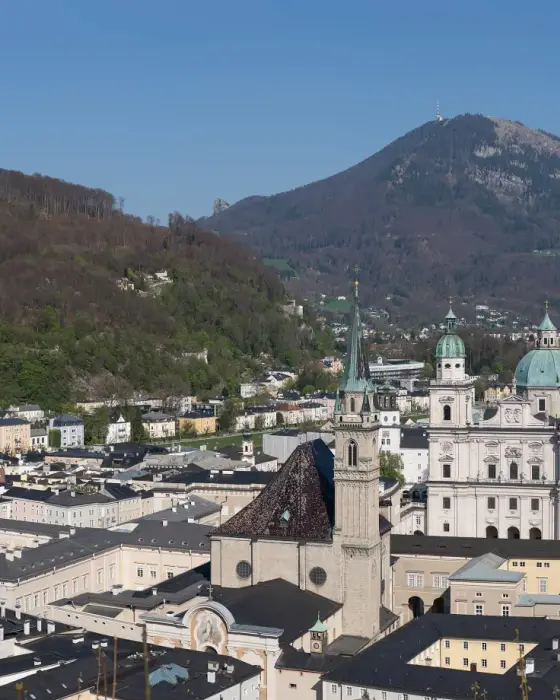 Germany and Austria in 10 daysBeer gardens, Mozart and SchönbrunnMunich · Salzburg · Vienna7–10 days3 cities