
Italy
Milan
Duomo, the Last Supper, Brera, aperitivo and the Navigli
Days Start with the basic programme and choose extensions for the time you have.
How the guide reaches this number
The second, if you have it, goes to the Castello Sforzesco, Sant'Ambrogio and the Navigli. If you're expecting a Venice or a Florence, the city will feel strange, because Milan is first and foremost a place of work, and Piazza del Duomo takes half a day. With just one day, start at 9am at the cathedral, with a climb to the roof, continue to the Museo del Novecento and have lunch standing at a bar counter. In the afternoon, go to the Last Supper at your reserved time; without a reservation, swap the visit for the Pinacoteca di Brera and finish with the 6:30pm aperitivo. What disappoints is the expensive food in the center, which isn't better than in the neighborhoods. The Navigli on weekends also wear you out, packed and targeted by pickpockets. What makes up for the high prices is following the schedule of the people who live here: coffee standing up, aperitivo at 6:30pm and dinner after 8:30pm.
1–2
When Late April to early June, and mid-September to late October
How the guide reaches this number
Come from late April to early June or from mid-September to late October, when highs sit between 18 and 25°C. In summer, from June to August, highs climb to 30 to 35°C, with high humidity and almost no wind, because the Po Plain doesn't ventilate. August still empties the city: many trattorias, bakeries, and neighborhood shops close for two or three weeks around Ferragosto, August 15, with the “chiuso per ferie” sign on the door. Winter runs from 0 to 7°C, with fog, rare snow, and pollution days when the city restricts older cars and fireplaces. October and November are the rainiest months, in an annual total around 900 to 1,000 mm, so bring an umbrella if you come in late October.
Per person/day Budget €75–110; mid-range €150–220; comfortable from €300, not counting the stay tax, which in 2026 runs from €4 to €12 per person per night
How the guide reaches this number
Per person per day: accommodation, meals, urban transport, visits and a small allowance for extras. Flights excluded; larger purchases vary. Editorial estimate, not a quote.
 What Nilo thinks
One well-planned day covers the essentials, with the Last Supper, the Duomo and Brera. The second, if you have it, goes to the Castello Sforzesco, Sant'Ambrogio and the Navigli. If you're expecting a Venice or a Florence, the city will feel strange, because Milan is first and foremost a place of work, and Piazza del Duomo takes half a day. With just one day, start at 9am at the cathedral, with a climb to the roof, continue to the Museo del Novecento and have lunch standing at a bar counter. In the afternoon, go to the Last Supper at your reserved time; without a reservation, swap the visit for the Pinacoteca di Brera and finish with the 6:30pm aperitivo. What disappoints is the expensive food in the center, which isn't better than in the neighborhoods. The Navigli on weekends also wear you out, packed and targeted by pickpockets. What makes up for the high prices is following the schedule of the people who live here: coffee standing up, aperitivo at 6:30pm and dinner after 8:30pm.Leonardo's Last Supper is reason enough to plan Milan months ahead: entry to the refectory is in groups, with a strict time limit. Around it, the main sights lie within a 2 km radius, between the Duomo's marble spires, the Galleria and the Pinacoteca di Brera. On a clear day, the cathedral terraces reveal the Alps; in Brera's galleries, expect Mantegna, Raphael and Caravaggio. The capital of fashion and design also houses the stock exchange and keeps the pace of a working city. Follow that schedule with coffee standing at the counter, yellow risotto for lunch and an aperitivo at dusk, when snacks come with the drink. For walking, choose late April to the first days of June or the second half of September to the end of October, avoiding trade-fair weeks. One planned day covers the essentials; two leave time to wander at ease.
Quick facts
- Population
- about 1.37 million in the municipality (Jan. 2026); about 3.25 million in the Città metropolitana; about 5 million in the continuous urban region. About 296,000 foreign residents, above 21% of the city
- Founded
- Celtic settlement of the Insubres around 590 BC; conquered by Rome in 222 BC and Latinized as Mediolanum
- Country and region
- Italy: Lombardy region, Città metropolitana di Milano
- Language
- Italian; Milanese, a Western Lombard dialect, survives in street names, signs, and food vocabulary
- Currency
- Euro (€)
- Time zone
- CET, UTC+1; UTC+2 during daylight saving time, from late March to late October
- Best time to visit
- Late April to early June, and mid-September to late October
- Average daily cost
- Budget €75–110; mid-range €150–220; comfortable from €300, not counting the stay tax, which in 2026 runs from €4 to €12 per person per night
When to go
Late April to early June, and mid-September to late October
January
0° to 7°C
37 mm of rain
February
1° to 10°C
38 mm of rain
March
4° to 16°C
42 mm of rain
July
19° to 31°C
44 mm of rain
August
19° to 30°C
59 mm of rain
November
5° to 12°C
104 mm of rain
December
1° to 8°C
46 mm of rain
How the year changes
Come from late April to early June or from mid-September to late October, when highs sit between 18 and 25°C. In summer, from June to August, highs climb to 30 to 35°C, with high humidity and almost no wind, because the Po Plain doesn't ventilate. August still empties the city: many trattorias, bakeries, and neighborhood shops close for two or three weeks around Ferragosto, August 15, with the “chiuso per ferie” sign on the door. Winter runs from 0 to 7°C, with fog, rare snow, and pollution days when the city restricts older cars and fireplaces. October and November are the rainiest months, in an annual total around 900 to 1,000 mm, so bring an umbrella if you come in late October.
The same numbers as a table
| Month | Temperature °C | Rain mm |
|---|---|---|
| January | 0 to 7 | 37 |
| February | 1 to 10 | 38 |
| March | 4 to 16 | 42 |
| April · | 8 to 19 | 58 |
| May · | 13 to 24 | 70 |
| June · | 17 to 28 | 67 |
| July | 19 to 31 | 44 |
| August | 19 to 30 | 59 |
| September · | 15 to 26 | 74 |
| October · | 10 to 19 | 82 |
| November | 5 to 12 | 104 |
| December | 1 to 8 | 46 |
Nilo's tips
On the metro, tap your card on the way out too
On the metro, the fare is only settled once you tap the same card or phone on the way out. Since January 1, 2026, the old magnetic ticket is no longer valid, and entry is also paid by tapping. If you'll ride four or more times in a day, buy the 24-hour day pass, for about €7.60; for a longer stay, the ten-ride carnet runs about €19.50.
Pick Linate while you're still buying the ticket
The M4 takes you from Linate to San Babila in a quarter of an hour for the price of a city ticket. The “Milan” of low-cost airlines is usually Bergamo, 50 km away, served only by bus and subject to traffic. Add that transfer to the fare before deciding.
Duomo at 9am: take the stairs
The line for the stairs, about 250 steps, moves faster than the one for the elevator. Arrive at 9am, when the Duomo opens, with the pass that includes the terraces already bought. With the same pass, go down afterward to the archaeological area under the square, the oldest part of the complex, which almost no one visits.
The Last Supper: book your time before planning the day
Groups enter the refectory of Santa Maria delle Grazie at a fixed time, for 15 minutes, and it's the time slot you get that shapes the rest of the day. Without a reservation you don't get in, and the main batches can sell out, so I'd book as soon as I knew my travel dates; if they sell out, the extras come out on Wednesdays, at 12pm Milan time, for the following week. The full-price ticket costs €15.
At the bar, pay at the register before ordering
Anyone who gets to the counter without the receipt in hand holds up the whole line. At many bars you pay at the register first and hand the slip to the barista. When ordering, cappuccino and coffee with milk only until around eleven in the morning, and espresso after that.
Avoid the weeks of the Salone del Mobile and the fashion shows: hotels up 100%
In those two weeks, the average €150–260 hotel doubles or triples, without anything changing in the city for anyone not going to the fairs. The Salone del Mobile takes up a week of April, and the women's fashion shows, the last week of September; check the year's dates before booking. Shift your trip by a week and the same room drops back to its normal price.
Explore the map

© OpenStreetMap · OpenFreeMap · © OpenMapTiles
Explore the map, read about the other places and plan your travel days in the app.
Open the appWhat to see
Milan: The Po plain: the rivers run channeled under the streets
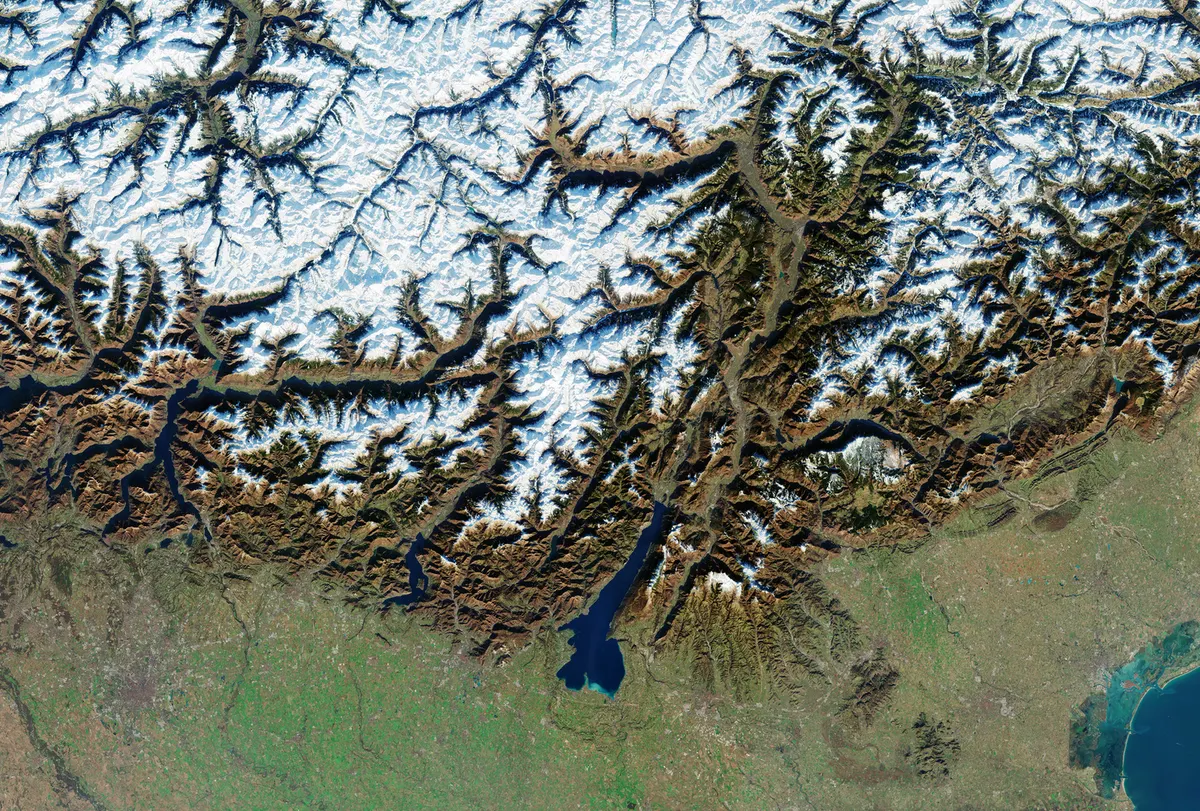
Milan lies in the middle of the Po plain, at about 120 m above sea level, some 40 km south of the first Alpine lakes and more than 100 km from the sea. Over this flat terrain the city grew in rings of wall and canal around Piazza del Duomo, toward which practically every major street converges.
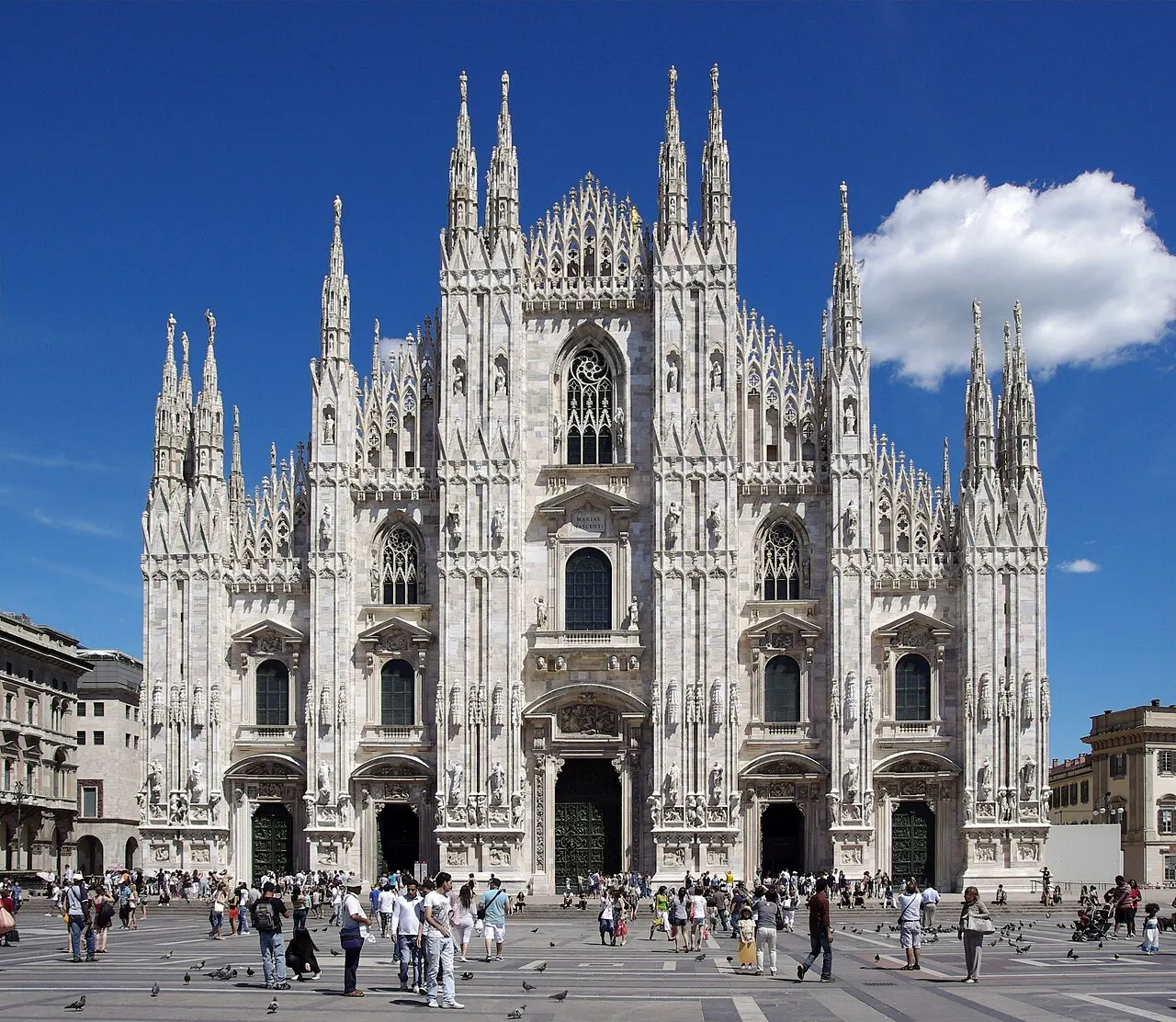
Duomo di Milano
Gothic cathedral begun in 1386 in Candoglia marble, with 135 spires and about 3,400 statues; the golden Madonnina, from 1774, stands at 108.5 m. The part that justifies the ticket is the terraces: you walk among the flying buttresses, on the roof, and see the Alps on a clear day. Beneath the square is the baptistery where Ambrose baptized Augustine in 387.
The Gothic cathedral begun in 1386 is worth it for the terraces, where you walk among the spires and flying buttresses and see the Alps on a clear day, and for the archaeological area under the square, with the baptistery where Ambrose baptized Augustine in 387.
Check access

Cenacolo Vinciano and Santa Maria delle Grazie
The Last Supper, painted by Leonardo between 1495 and 1498 on the refectory wall in tempera on dry plaster, a technique that began to deteriorate in his own lifetime and required a restoration from 1978 to 1999. Visits are in groups, last a strictly timed 15 minutes, and only people with a reservation get in; a full-price ticket runs around €15. The church next door has a tribune by Bramante.
The painting Leonardo made between 1495 and 1498, in tempera on dry plaster, was already deteriorating in the artist's own lifetime and required restoration from 1978 to 1999; the visit goes in by group for a timed 15 minutes and only with a reservation, the full-price ticket runs about €15, and the church next door has Bramante's tribune.
Check access

Pinacoteca di Brera
Opened in 1809 by Napoleonic decree with works confiscated from churches in the north. The 38 rooms hold Mantegna's “Dead Christ,” Piero della Francesca's Montefeltro altarpiece, Raphael's “Marriage of the Virgin” (1504), Caravaggio's “Supper at Emmaus,” and Hayez's “The Kiss” (1859). The Palazzo Citterio next door opened in December 2024 with the 20th-century collection.
The pinacoteca opened in 1809 with pieces confiscated from churches in the north, by order of Napoleon.
Check access
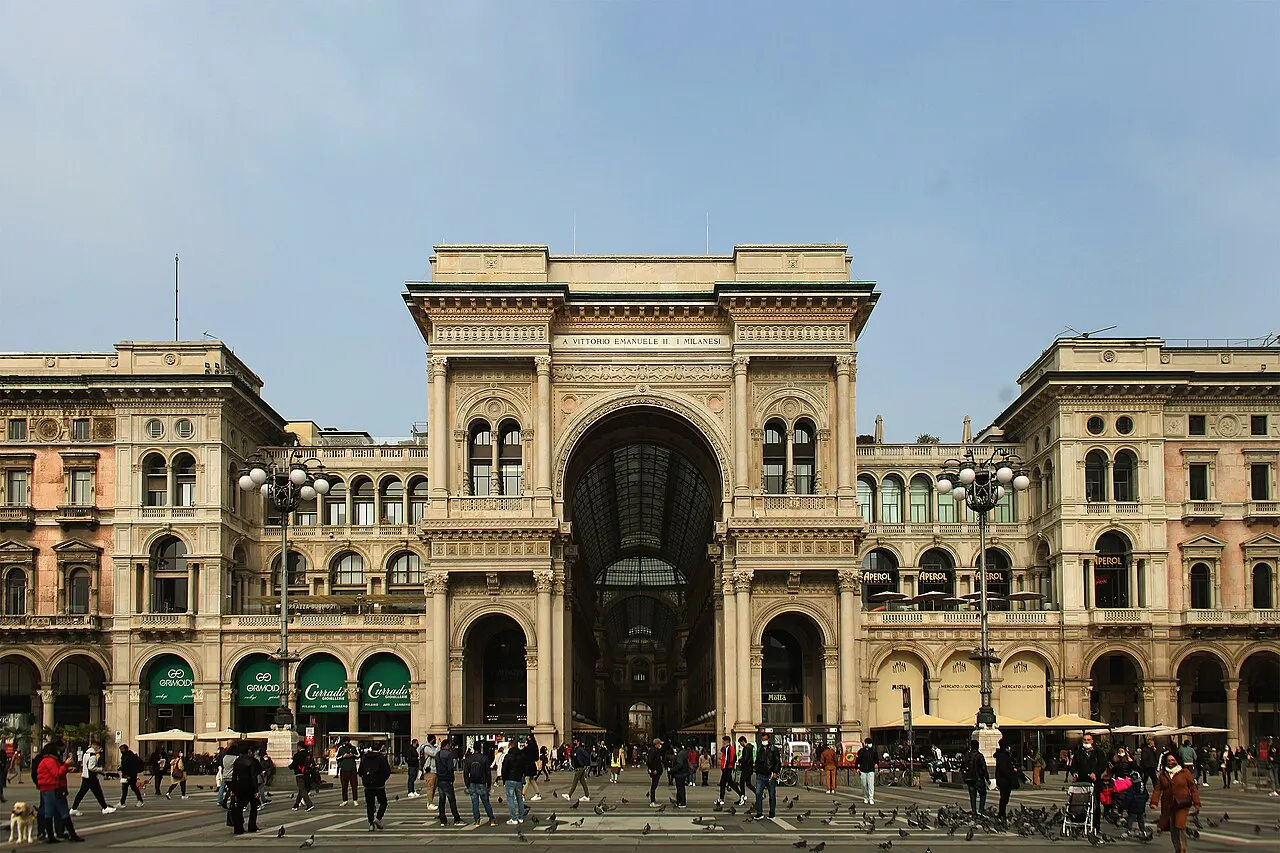
Galleria Vittorio Emanuele II
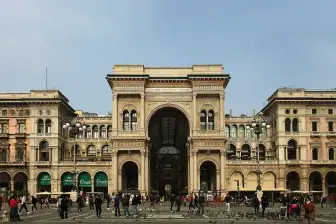
A covered iron-and-glass arcade designed by Giuseppe Mengoni, opened in 1867 and completed in 1877; the architect died in a fall from the scaffolding days before the inauguration. In the central octagon, the Turin bull mosaic is worn down by the heels of thousands of people who spin on it for luck.
Mengoni's gallery opened in 1867 and was completed in 1877, and he died falling from scaffolding on the eve of the inauguration.
Check access
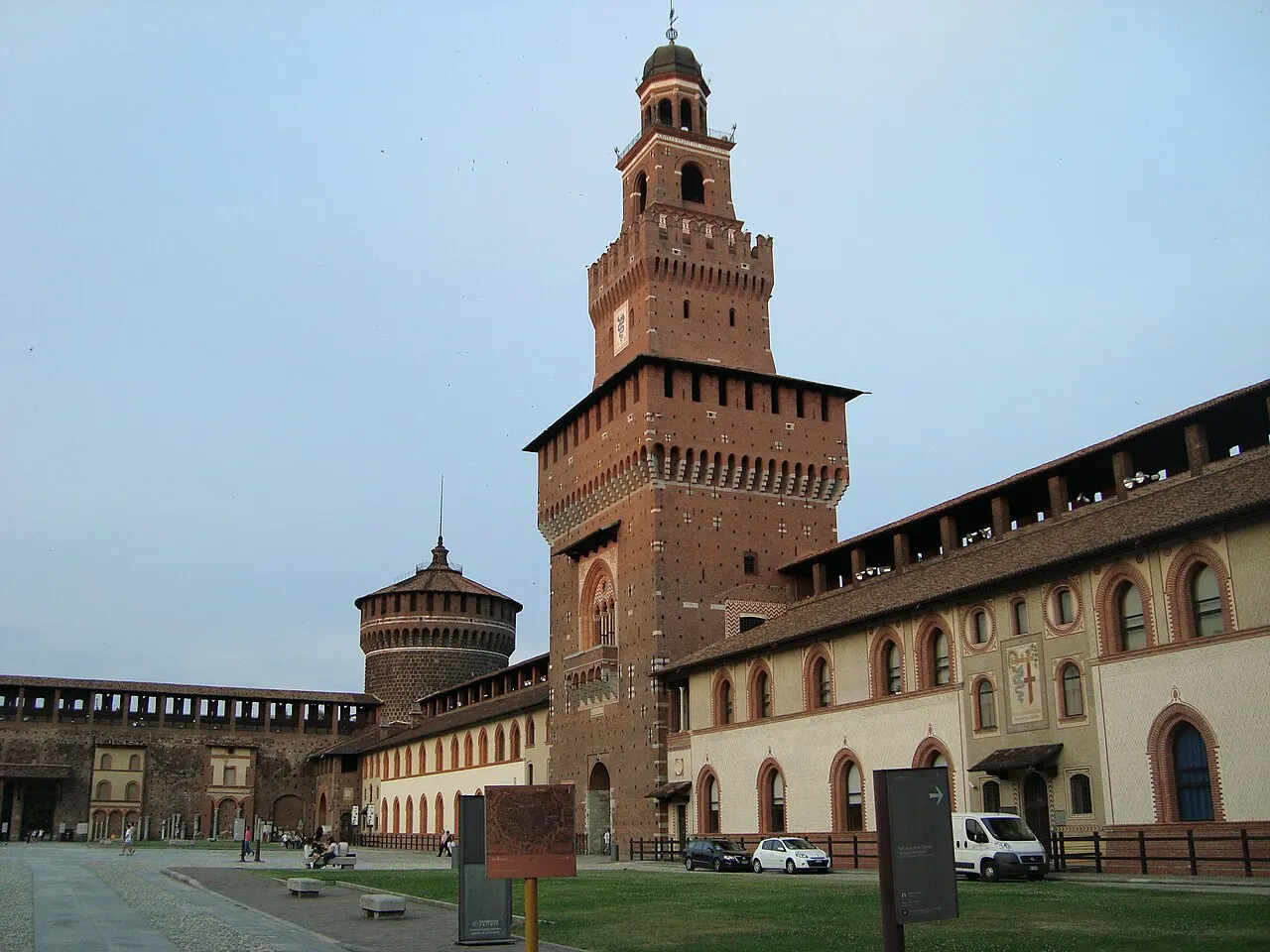
Castello Sforzesco and Parco Sempione
Visconti fortress rebuilt by Francesco Sforza from 1450, with the Filarete tower redone in 1905. The museums inside, cheap and rarely crowded, hold the “Pietà Rondanini,” which Michelangelo was carving days before he died in 1564, and the Sala delle Asse painted by Leonardo. Behind it, the 38-hectare park ends at the Arco della Pace.
Inside the fortress, the museums within, affordable and rarely crowded, hold the Pietà Rondanini, the piece Michelangelo was carving on the eve of his death, in 1564.
Check access

Basilica di Sant'Ambrogio
Founded by Ambrose himself between 379 and 386 and rebuilt in Lombard Romanesque style in the 11th and 12th centuries, with a columned atrium and two mismatched towers. In the crypt lies the bishop's body, between the martyrs Gervasius and Protasius; on the altar, Vuolvinio's 9th-century goldwork.
Ambrose founded it between 379 and 386; it was rebuilt in Lombard Romanesque style in the 11th and 12th centuries.
Check access
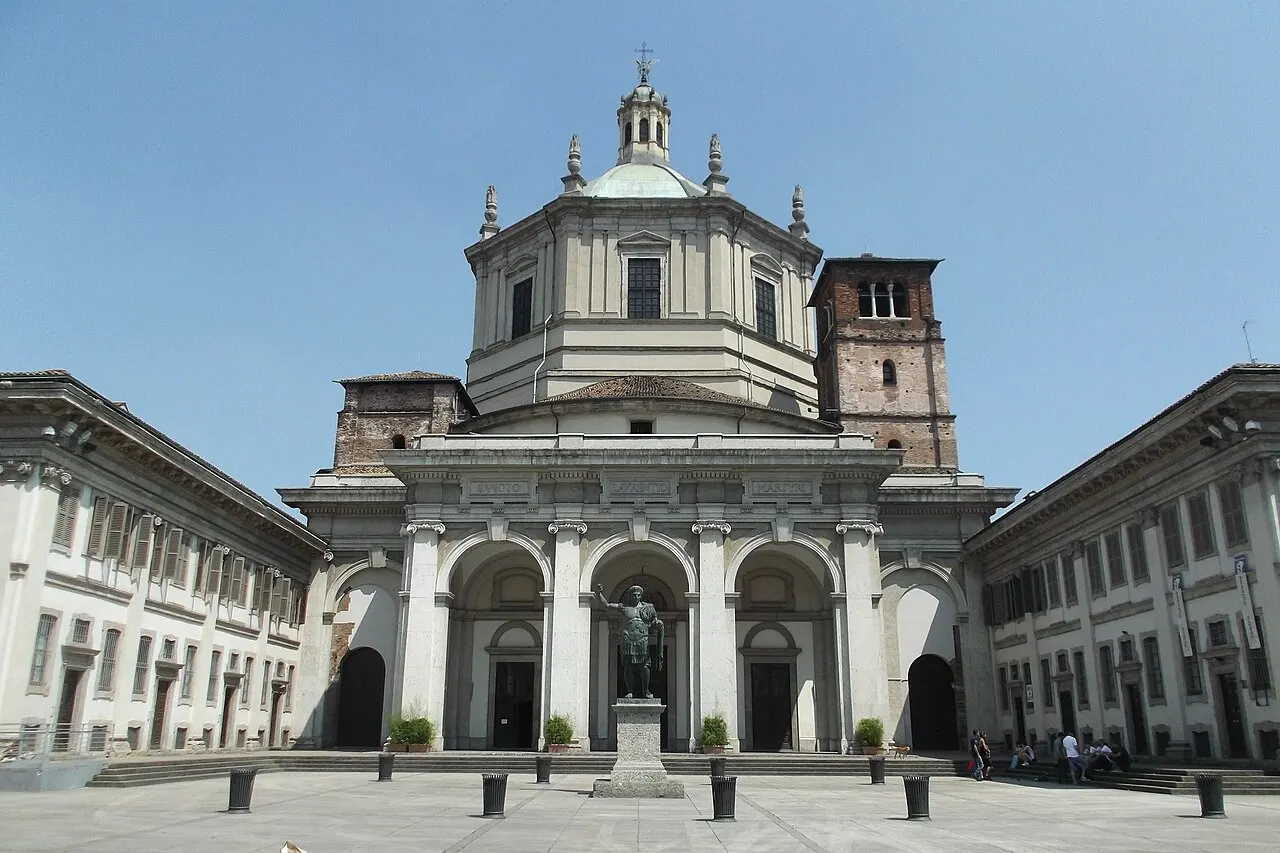
San Lorenzo Maggiore and the Colonne
A 4th-century central-plan basilica, one of the oldest in the West, preceded by sixteen 2nd-century Roman columns re-erected there in the Middle Ages. The Sant'Aquilino chapel preserves early Christian mosaics; the square in front is a nighttime gathering spot year-round.
The basilica has a 4th-century central plan; there are sixteen columns re-erected there in the Middle Ages.
Check access

Museo del Novecento
Opened in 2010 in the Palazzo dell'Arengario, with 20th-century Italian art: the Futurists, Morandi, De Chirico and Lucio Fontana's room with neon on the ceiling. The final window faces the Duomo's facade. Pellizza da Volpedo's The Fourth Estate (1901) has been at the GAM, a different museum, since 2022.
It's in the Palazzo dell'Arengario, opened in 2010; the final window looks out onto the Duomo's facade.
Check access

Teatro alla Scala
Inaugurated on August 3, 1778, designed by Piermarini, destroyed by the 1943 bombing and reopened on May 11, 1946 with Toscanini conducting. The season always opens on December 7. Without an opera ticket, you can still get in through the museum and peek into a box.
Without an opera ticket, you enter through the museum and peek into the hall from a box; the good nights of the season, which premieres on December 7, are bought months ahead. The facade, on Piazza della Scala, is on the way between the Galleria and Brera and costs nothing.
Check access
Nilo’s itinerary
Start with the basic programme and choose extensions for the time you have.
Plan my days in the app ↗Day 1 · Duomo, Last Supper, and Brera
Start at the Duomo at 9am, when it opens and the line is still short; buy the pass that includes the terraces.
Walk the terraces among the spires up to the base of the Madonnina, at 108.5 m, then go down to the archaeological area beneath the square, where the 4th-century baptistery is.
Cross to the Museo del Novecento in the Arengario for the Futurists and Lucio Fontana's room, then walk through the Galleria Vittorio Emanuele II and lunch standing at a bar counter.
In the afternoon, enter the Cenacolo at Santa Maria delle Grazie at your reserved time: admission is in groups, with a timed 15 minutes in front of The Last Supper. Without a reservation, go straight to Brera and give the Pinacoteca the whole afternoon.
Finish in Brera, at the Pinacoteca di Brera, which closes in the early evening and holds Mantegna, Piero della Francesca, Raphael, Caravaggio, and Hayez; afterward, an aperitivo in the neighborhood around 6:30pm and dinner only after 8:30pm, like everyone else.


If you stay longer
Day 2 · Leonardo, the Sforza and the west
Return to Santa Maria delle Grazie for Bramante's tribune, the Renaissance part of the church whose refectory holds the Last Supper.
Walk to the Basilica di Sant'Ambrogio, founded between 379 and 386 and rebuilt in Romanesque style in the 11th and 12th centuries.
Have yellow risotto or cotoletta for lunch around Sant'Ambrogio, then head to the Castello Sforzesco, home to Michelangelo's “Pietà Rondanini” and Leonardo's Sala delle Asse.
Cross Parco Sempione to the Arco della Pace and take the metro to CityLife, to see up close the three towers by Isozaki, Hadid and Libeskind on the site of the old fairgrounds.
In the evening, head down to the Navigli: the Naviglio Grande, dug between 1177 and 1272, is one of the canals that remain open in the city.


Food
 AI illustration
Cotoletta alla milanese
Bone-in veal chop, breaded and fried in clarified butter, served thick and pink inside. The thin variant, boneless and pounded to plate size, is called “orecchia d'elefante” and isn't the original recipe. Both names appear on the same menu for €25 to €35.
 AI illustration
Risotto alla milanese
Carnaroli rice with saffron, beef bone marrow, butter and grana, stirred until it goes “all'onda.” The color comes from saffron that, according to a legend dated 1574, a Duomo stained-glass apprentice used to tint glass and ended up tossing into a wedding's rice.
 AI illustration
Ossobuco con gremolada
A slice of veal shank with the bone and marrow, braised for hours in a stock of meat and wine, finished with raw lemon zest, garlic and parsley. The classic pairing is serving it over the yellow risotto, on the same plate.
 AI illustration
Cassoeula
Winter stew with the less noble cuts of pork (ribs, trotter, ear, verzini sausage) and Lombard cabbage. The local rule says it's only made after the first frost, which sweetens the vegetable; it shows up on menus from November to February.
 AI illustration
Mondeghili
Little balls of leftover cooked meat, with breadcrumb, egg and nutmeg, breaded and fried. They started as a way to use up leftovers in a city that didn't throw meat away, and today are the standard snack at the aperitivo counter.
 AI illustration
Michetta
Round five-lobed bread, hollow inside, descended from the Kaisersemmel brought by the Austrians: the plain's humidity kept the crumb from rising, and the emptiness became the trait. It costs a few cents, lasts half a day, and is the bar sandwich's bread.
 AI illustration
Panettone
Natural-leavened dough with raisins and candied fruit, proofed for about three days and baked in a tall paper mold. It's a Christmas sweet, was industrialized by Motta and Alemagna in the 1920s and 1930s, and artisan bakeries sell it from November to January for €25 to €45.
 AI illustration
Aperitivo, Campari and negroni sbagliato
Between 6:30pm and 9pm you pay for the drink, €10 to €15, and the counter food comes with it; the version with a big buffet is called apericena. Campari, created by Gaspare Campari in Novara in 1860, came to Milan with the café he opened in 1867, and the “sbagliato,” a negroni in which the gin was swapped for sparkling wine, is credited to Bar Basso in the 1960s.
Day trips
Lake Como and Varenna
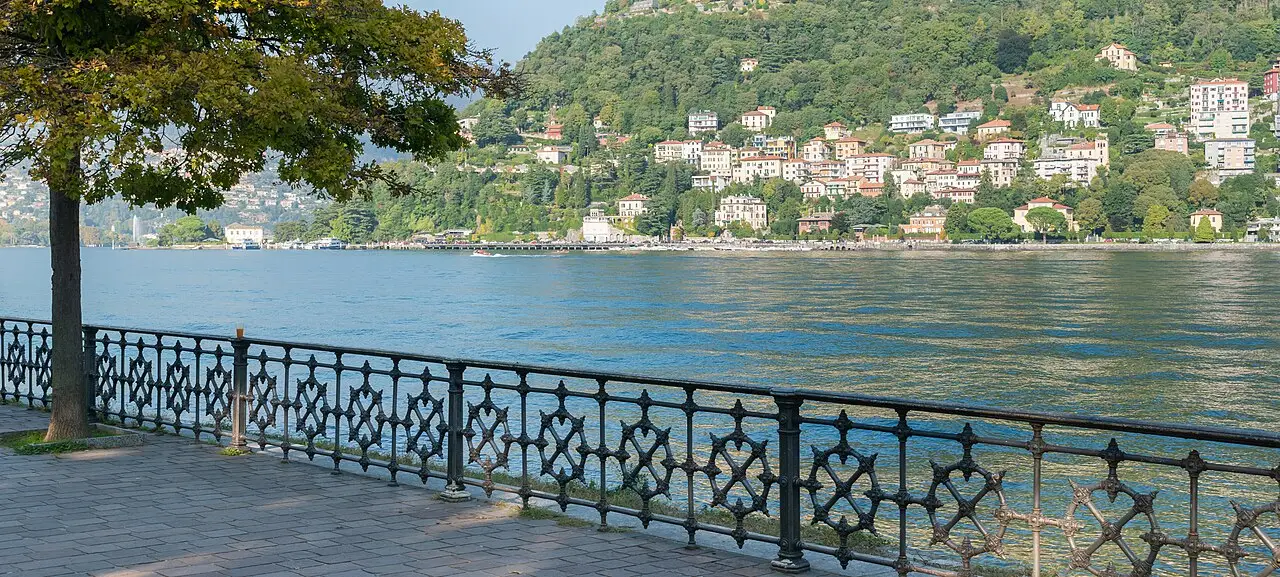
Take the Trenord train from Milano Centrale to Varenna-Esino, in about 1 hour 5 minutes; from there the ferry crosses to Bellagio and Menaggio in 15 to 25 minutes. For the town of Como, the fast train reaches Como San Giovanni station in about 40 minutes, which lets you go and come back the same day without rushing.
Bergamo Alta
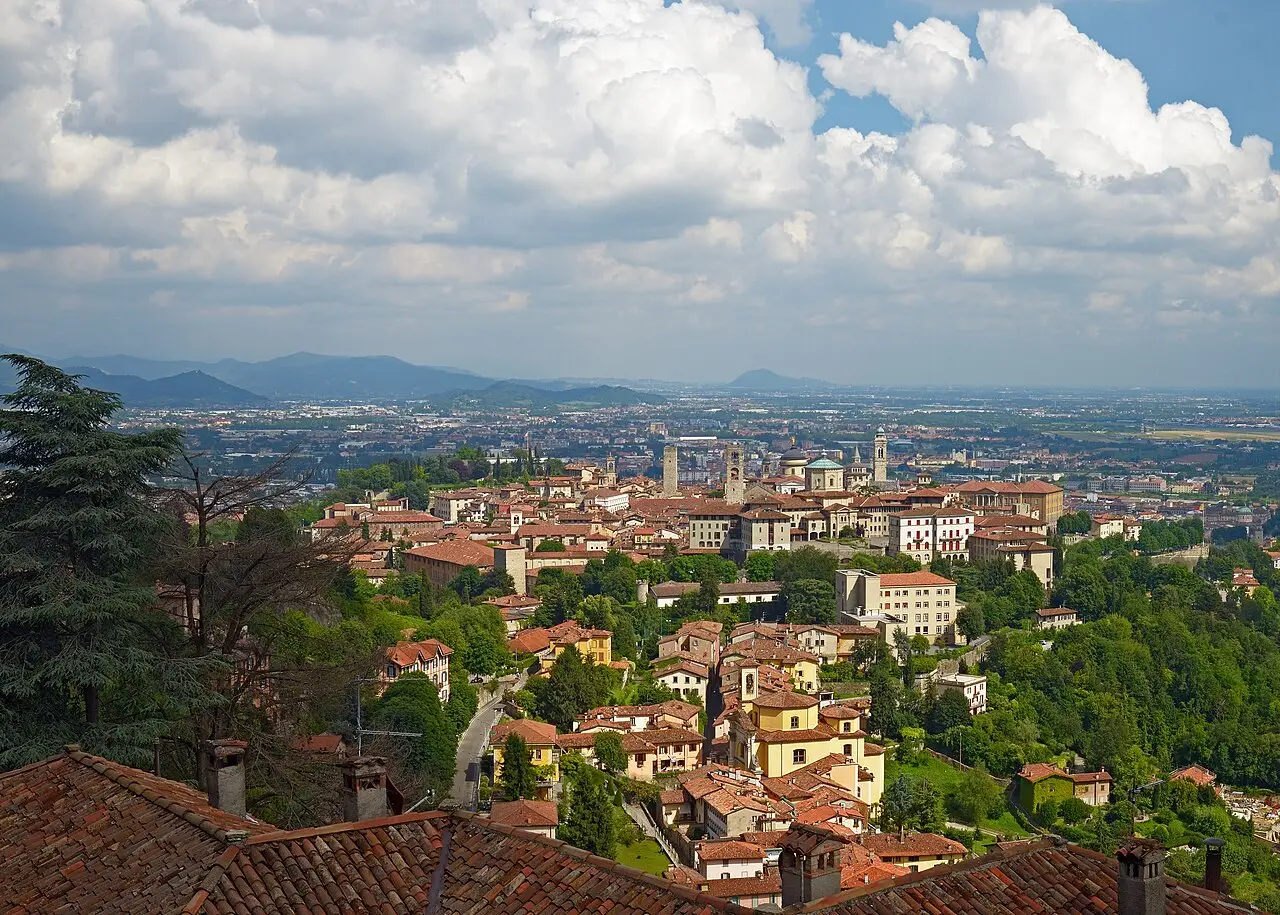
About 50 minutes by train from the Centrale, plus the 1887 funicular up to the upper town, ringed by the 16th-century Venetian walls declared a Unesco World Heritage Site in 2017. You can pair it with a flight out of Orio al Serio.
Certosa di Pavia and Pavia
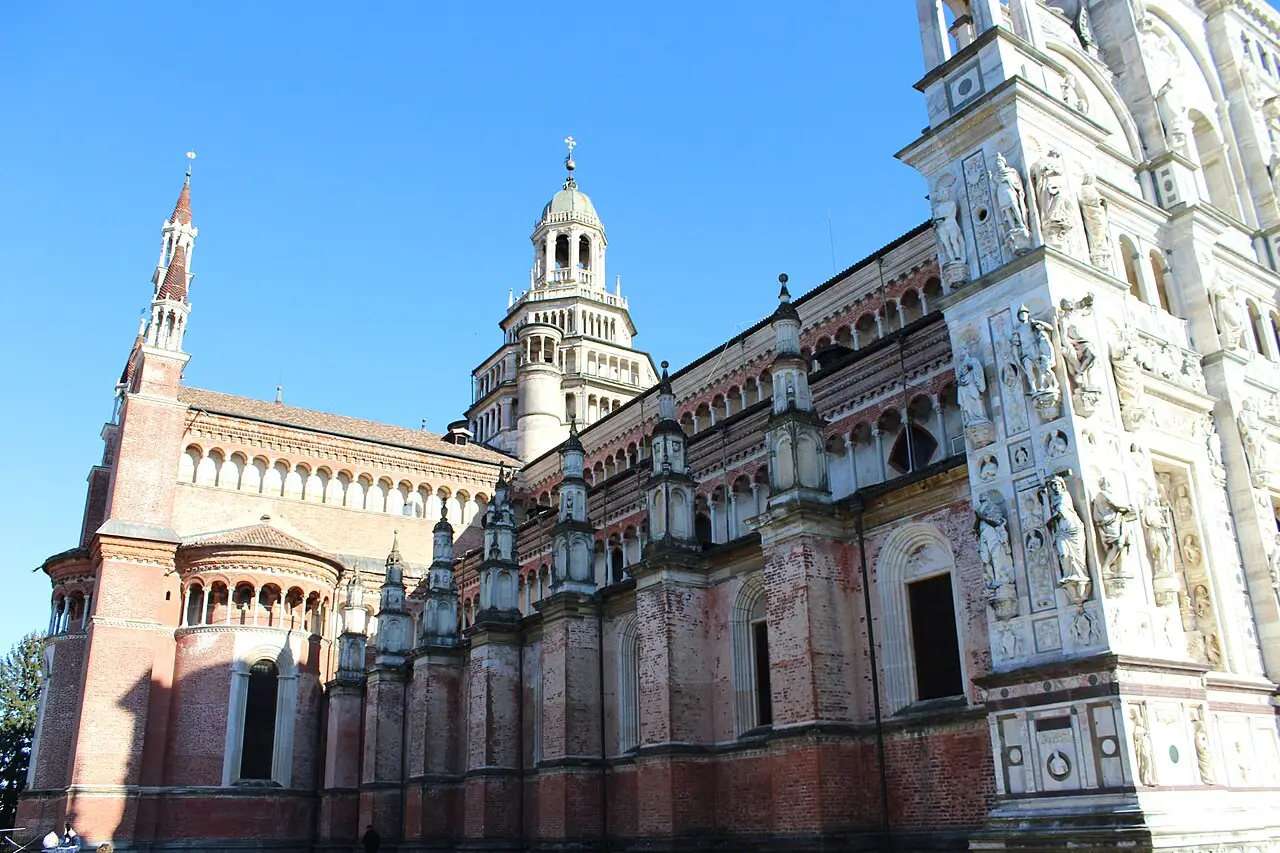
Regional train in about 30 minutes to the Certosa station; the monastery was founded by Gian Galeazzo Visconti in 1396 as the family mausoleum and has an inlaid marble facade. Ten more minutes by train reach Pavia, with its university from 1361 and the covered bridge over the Ticino.
Where to begin
Duomo, Last Supper, and Brera
Start at the Duomo at 9am, when it opens and the line is still short; buy the pass that includes the terraces.
Leonardo, the Sforza and the west
Return to Santa Maria delle Grazie for Bramante's tribune, the Renaissance part of the church whose refectory holds the Last Supper.
Converted factories and new neighborhoods
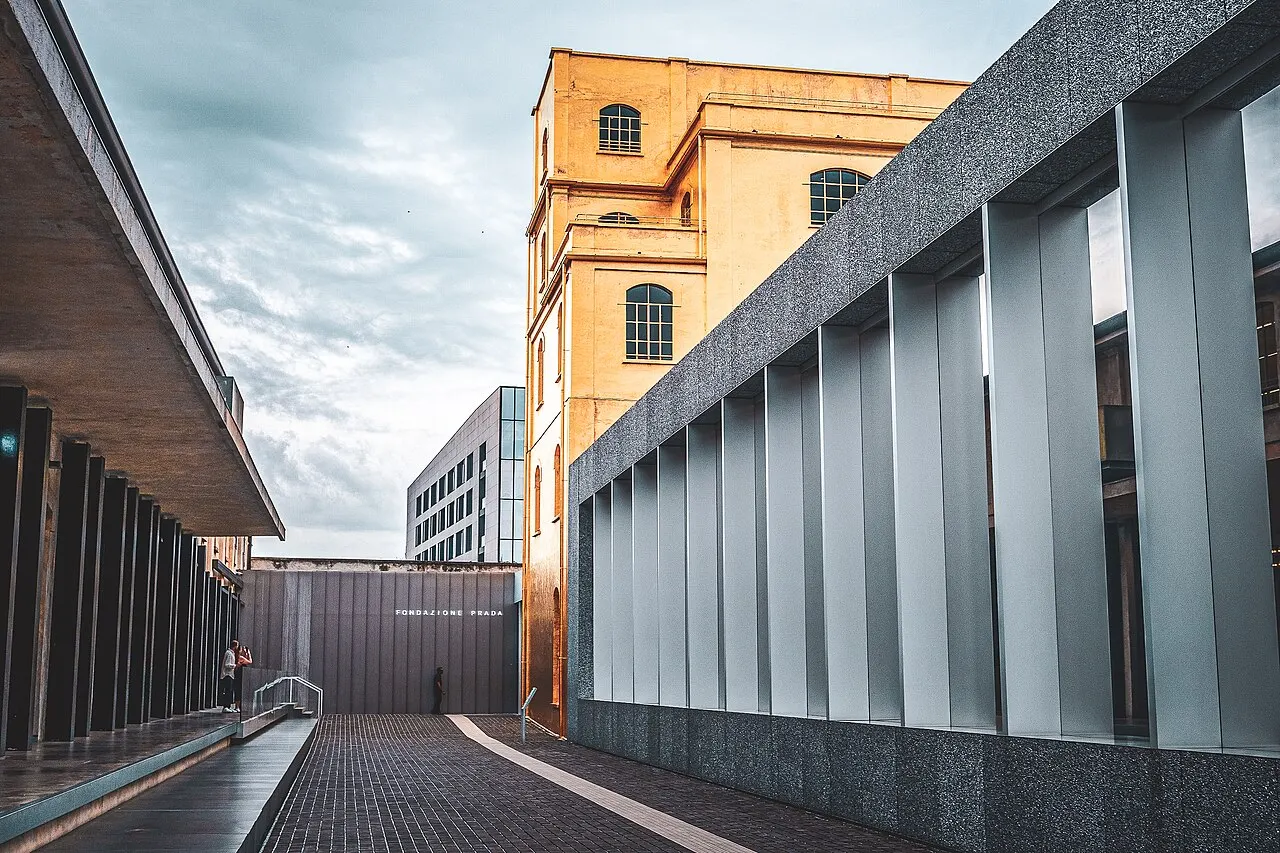
Start at the Fondazione Prada, a 1910 distillery converted by Rem Koolhaas in 2015, with the gold-leaf-clad Haunted House.
Money
The currency is the euro. An espresso at the counter costs €1.20–1.80, and the same coffee sitting at a table on Piazza del Duomo can run €5 to €7, because table service is charged separately and, by law, must be printed on the menu. A cappuccino costs €1.60–2.50; an aperitivo with a drink and counter food €10–15; a set lunch at a trattoria €12–20; a full dinner with wine €35–50 per person; cotoletta at a serious restaurant €25–35. The “coperto,” €2 to €3.50 per person, is a cover charge for the table and bread, not a tip: tipping isn't expected and rounding up €1 or €2 is enough. A midrange hotel costs €150–260 a night and doubles or triples during the week of the Salone del Mobile, in April, and fashion week, in September. The tourist tax went up twice in 2026 and is among the highest in Europe, limited to the first consecutive nights. Per night and per person, it's about €4 at a two-star, €9.50 at a B&B or short-term rental and €12 at a five-star. Cards and phones are accepted practically everywhere, even for the €1.20 coffee, and shopkeepers are required by law to accept electronic payment.
Getting there and around
Malpensa: 50 km away, a 37-minute train ride
Malpensa Airport (MXP) is about 50 km to the northwest, far enough to weigh on your first day. Trenord's Malpensa Express train runs every 15 to 30 minutes and takes about 37 minutes to Milano Cadorna and about 50 minutes to Centrale, for around €13 one way. Regular buses link the terminals to Centrale in 50 to 70 minutes for €10 to €12, and taxis have a flat fare of around €110. Linate (LIN) is 8 km from the center and since November 2022 has been linked by metro line M4: from Linate Aeroporto to San Babila takes 12 to 15 minutes for the price of a regular city ticket, which makes it the most convenient airport in Italy. Bergamo Orio al Serio (BGY), about 50 km away and sold by low-cost airlines as “Milan,” only has buses: 50 to 70 minutes to Centrale for €10 to €13, plus traffic. The Stazione Centrale, opened in 1931 to a design by Ulisse Stacchini, handles the high-speed trains: Turin in about 50 minutes, Florence in about 1 hour 50 minutes, Rome in about 3 hours, Venice in about 2 hours 25 minutes.
The ATM network: five lines, 120 stations
Within the city everything is run by ATM: five metro lines (M1 red, M2 green, M3 yellow, M4 blue, M5 lilac), about 120 stations, 17 tram lines, some still using the 1500-series cars from 1928, buses, trolleybuses and the Passante rail link with Trenord's S suburban lines. The Mi1–Mi3 city ticket costs €2.20 and is valid for 90 minutes with free transfers; a ten-ride carnet costs about €19.50, a 24-hour pass about €7.60, a three-day pass about €15.50 and a monthly pass about €39; children under 14 ride free. The turnstiles accept contactless bank cards, phones or the RicaricaMi card. The metro runs from about 5:40am to about 12:30am, with night buses after that. The city is flat, the historic center fits within a 2 km radius and there are BikeMi bikes and app-based scooters. If you rent a car, you'll face two zones: Area C, the center inside the Bastioni, charges €7.50 a day on weekdays from 7:30am to 7:30pm, and Area B, which covers almost the whole city during the same hours, bans the most polluting cars.
Safety
Milan is safe in terms of violent crime and bad for your pockets: it's the Italian city with the most reported thefts per resident, and the vast majority are pickpocketing. The classic spots are the M1 line between Duomo and Cadorna, the M3, the Stazione Centrale, the Galleria corridor and the crowded trams on the tourist routes. Theft happens where there's crowding and distraction, and almost never on a street with room to move. Three scams have run on Piazza del Duomo for decades: the “friendship” bracelet tied around your wrist and charged for afterward, the handful of pigeon corn handed over as a gift and the rose offered to the person next to you and charged to you. The response is the same for all three: don't stop, don't hold out your hand, keep walking; whoever holds out a hand pays afterward to get the knot undone. At night, the area around the Stazione Centrale and the Via Padova strip call for the usual big-city attention, and the Rogoredo area, linked to drug dealing, has no tourist reason at all. In the Navigli, on Friday and Saturday, the crowds are so thick that that's where wallets disappear. Single emergency number: 112.
Etiquette tips
Coffee has a schedule
Cappuccino, latte macchiato and anything with milk are drunk until about eleven in the morning; after a meal, order an espresso. Nobody will refuse you a cappuccino at three in the afternoon, but the barista will notice you're not from here.
Counter and table: different prices
Drinking and eating standing at the counter costs less than sitting at a table, and that's how much of the city has its morning coffee.
Aperitivo: one small plate, two at most
The price of the drink includes food at the counter, but it goes with the drink and is not an all-you-can-eat buffet. Filling your plate three times is read as a lack of restraint: one small plate, two at most.
Dinner after eight
The kitchen opens around 7:30pm and the dining room fills up between 8:30pm and 9:30pm. Arriving at 7pm means an empty restaurant, a bored waiter and the wrong impression of the place.
Milan is formal: no tank tops, flip-flops or bare chests
Milan is Italy's most formal city day to day; a tank top, flip-flops and a bare torso draw more attention here than in any other Italian capital, and there's a city ordinance against walking shirtless downtown. To enter the Duomo and the basilicas, shoulders and knees must be covered.
The tram has the right of way and doesn't swerve
The tram runs on a fixed track and has the right of way, and some are still the 1500-series cars from 1928. Cross at the crosswalk and look twice before stepping on the rails; on a bike, cross the groove at an angle, because the wheel catches on the rail.
Mistakes to avoid
Magnetic tickets stopped being valid in January 2026
Looking for the old magnetic paper ticket. It stopped being valid on January 1, 2026. You can tap a card or phone, buy through the app or load a RicaricaMi. On the subway, validate on exit too.
The Last Supper requires a reservation, even for extra ticket releases
Arriving at the Cenacolo without a reservation doesn't entitle you to enter. Look for tickets ahead of time; if the main batches sell out, check the additional Wednesday releases, at 12pm Milan time, for the following week. Availability changes daily, and none of these attempts guarantees a spot.
Renting a car without checking Area C
Renting a car without checking the toll and restricted zones in the center. The cameras of Areas B and C cover almost the whole city, and the fine arrives by mail, sometimes months after you've gone home.
Spending the whole day at the Duomo
Giving the whole day to Piazza del Duomo. It's the most photographed spot in Milan and also where the three classic scams concentrate: the bracelet, the pigeon corn and the rose. The life of the city is in Brera, Isola, Porta Romana, NoLo and at neighborhood tables after eight.
Traveling during trade fair week
Booking a trip without checking the trade fair calendar. During design week, in April, and women's fashion week, in late September, hotels fill up and charge double or triple.
Useful phrases
Buongiorno / Buonasera
Good morning / good afternoon and good evening: the obligatory greeting on entering any bar, shop or elevator
Un caffè al banco, per favore
A coffee at the counter, please: the cheapest and fastest way to order
Prendiamo un aperitivo?
Shall we have an aperitivo? The standard social invitation, made for six-thirty in the evening
Il conto, per favore
The check, please: it doesn't come on its own, you have to ask for it
Scusi, dov'è la fermata del tram?
Excuse me, where's the tram stop?
Milan l'è on gran Milan
“Milan is a great Milan,” in the Milanese dialect: the phrase the city uses to talk about itself without explaining anything
Districts
Duomo and Centro Storico
The square kilometer with the cathedral, the 1867 Galleria, the Teatro alla Scala and the Palazzo Reale. This is where you'll find the lines, the most expensive cafés in the city and most of the street scams; half a day covers the visit, and almost nobody sleeps here because of the prices.
Brera
Old artists' quarter between the Pinacoteca and the Castello, with cobbled streets, the Accademia di Belle Arti and the 1774 Orto Botanico. It concentrates galleries, expensive restaurants and, in April, half the Fuorisalone exhibitions.
Quadrilatero della Moda
The rectangle between Via Montenapoleone, Via della Spiga, Corso Venezia and Via Manzoni, with the big brands' storefronts and the Museo Poldi Pezzoli. It's for walking and looking; eating there costs double what it does two blocks away.
Ticinese and Colonne di San Lorenzo
Medieval axis of Corso di Porta Ticinese, between the sixteen Roman columns re-erected in front of San Lorenzo and the Basilica di Sant'Eustorgio. By day, independent shops and thrift stores; by night, people sitting on the columns' steps, drink in hand.
Navigli and Darsena
The two open canals that remain, and the Darsena basin, refurbished for Expo 2015. It's the city's biggest concentration of bars on Friday and Saturday, with an antiques fair on the last Sunday of the month along the Naviglio Grande.
Isola and Porta Nuova
A working-class neighborhood cut through by the railway that became, between 2009 and 2014, the city's cluster of skyscrapers: the 231 m UniCredit Tower and the Bosco Verticale. Behind Piazza Gae Aulenti, old Isola still has trattorias and neighborhood prices.
Porta Romana and Scalo Romana
Residential area of quiet upper-middle-class life that absorbed the former rail yard converted into the Olympic Village in 2026 and, after the Games, into university housing for about 1,700 beds. It's home to the Fondazione Prada.
NoLo and Via Padova
Short for “north of Loreto,” the area northeast of Piazzale Loreto has the city's youngest immigrant population, kitchens from Egypt, Peru, China and Sri Lanka, and rents that still fit a budget. It's the neighborhood that's changed the most in ten years.
History
c. 590–222 BC · From the Insubres to Mediolanum
A Celtic people founds the settlement in the middle of the plain, on a spot with no hill, no port and no navigable river. Rome conquers the city in 222 BC and turns it into a crossroads for the Alpine passes.

286–402 · Capital of the Western Empire
Diocletian installs the western court in Milan under Maximian. In 313 Constantine and Licinius proclaim the Edict of Milan there, legalizing Christianity, and between 374 and 397 Bishop Ambrose creates the diocese's own liturgy, still kept today.
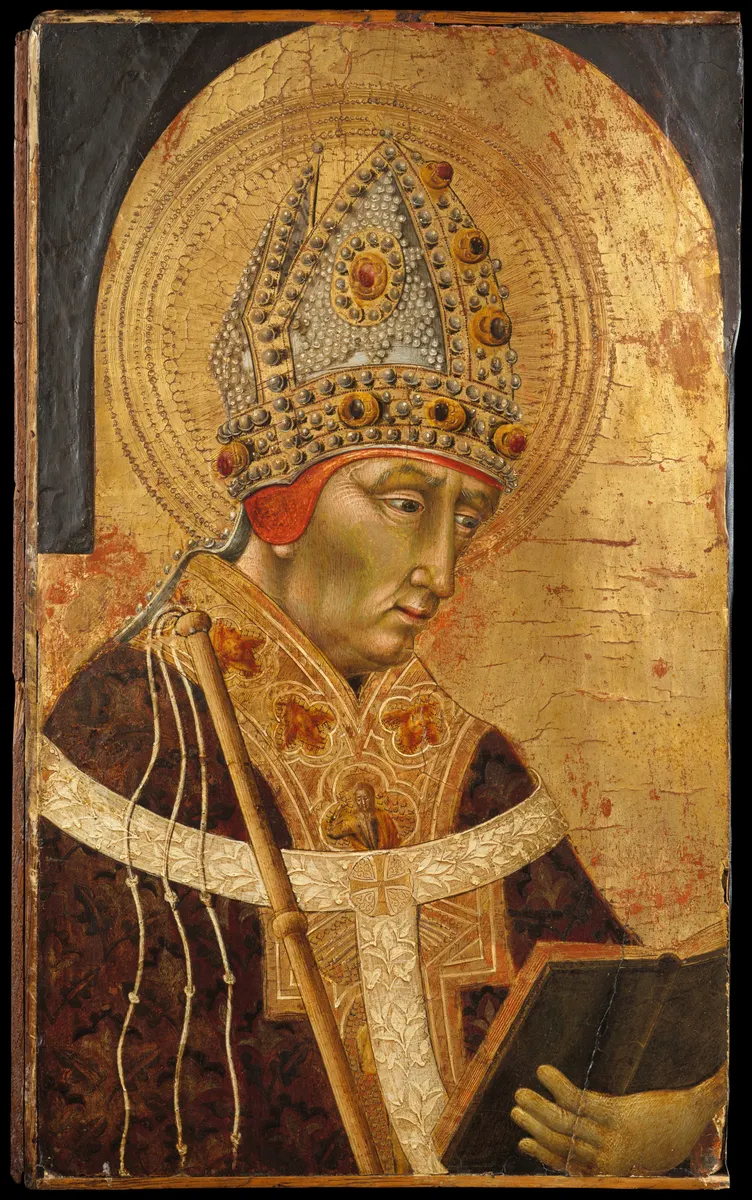
1162 · Barbarossa razes the city
Frederick I destroys Milan after a months-long siege. The rebuilding and the Lombard League lead to the emperor's defeat at Legnano in 1176.
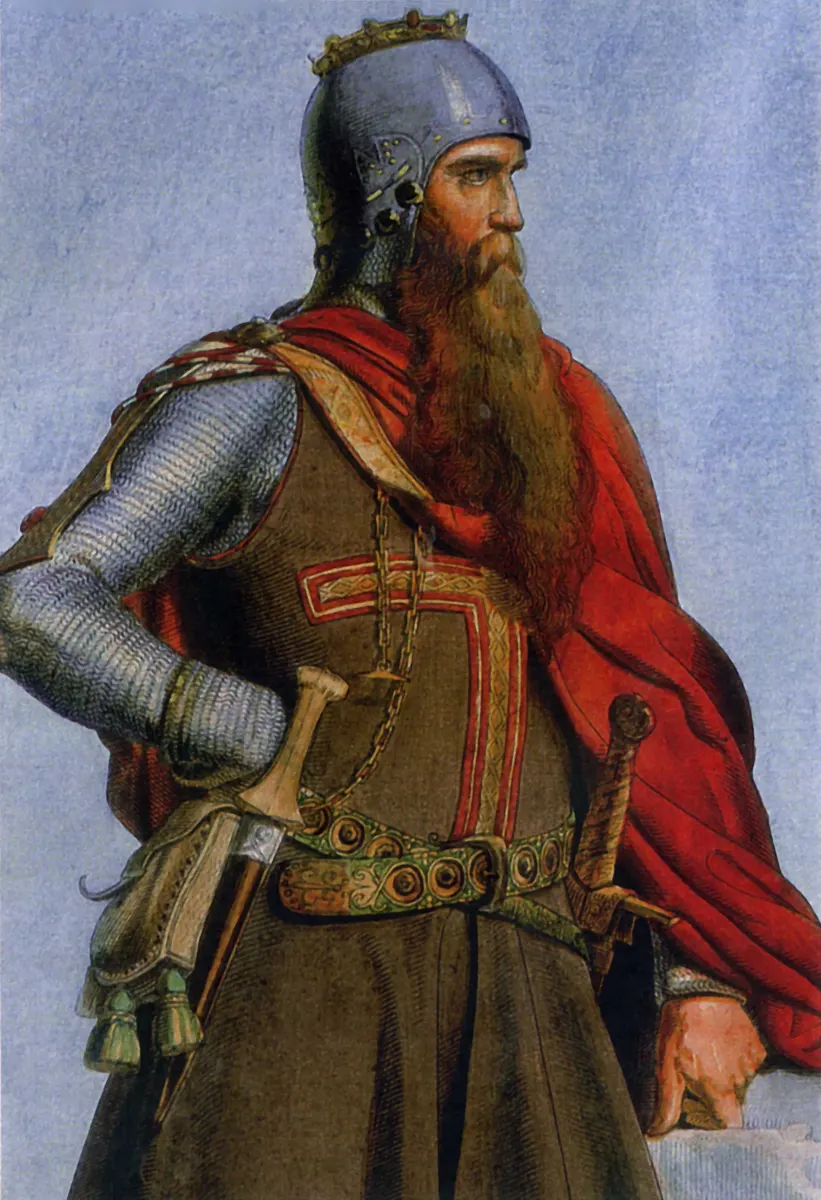
1386 · The Duomo begins
Gian Galeazzo Visconti launches the cathedral in pink marble from Candoglia, brought from Lake Maggiore by canal tax-free. The work spans five centuries and only gets its current facade between 1805 and 1813.
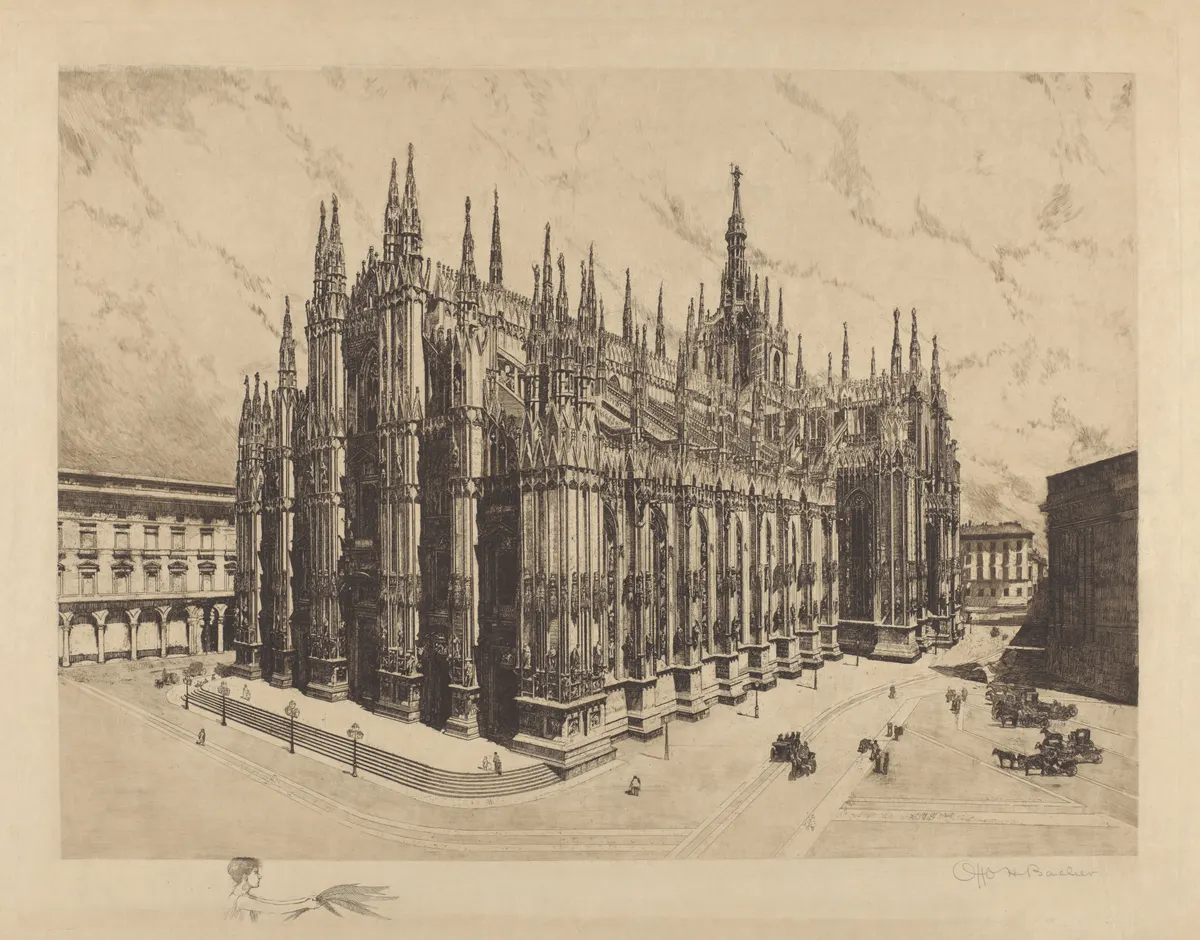
1450–1535 · The Sforza and Leonardo
Francesco Sforza takes power in 1450 and rebuilds the castle razed by the republic. Ludovico il Moro bankrolls Leonardo da Vinci, in Milan from 1482 to 1499, who paints the Last Supper between 1495 and 1498 and studies the canal locks.
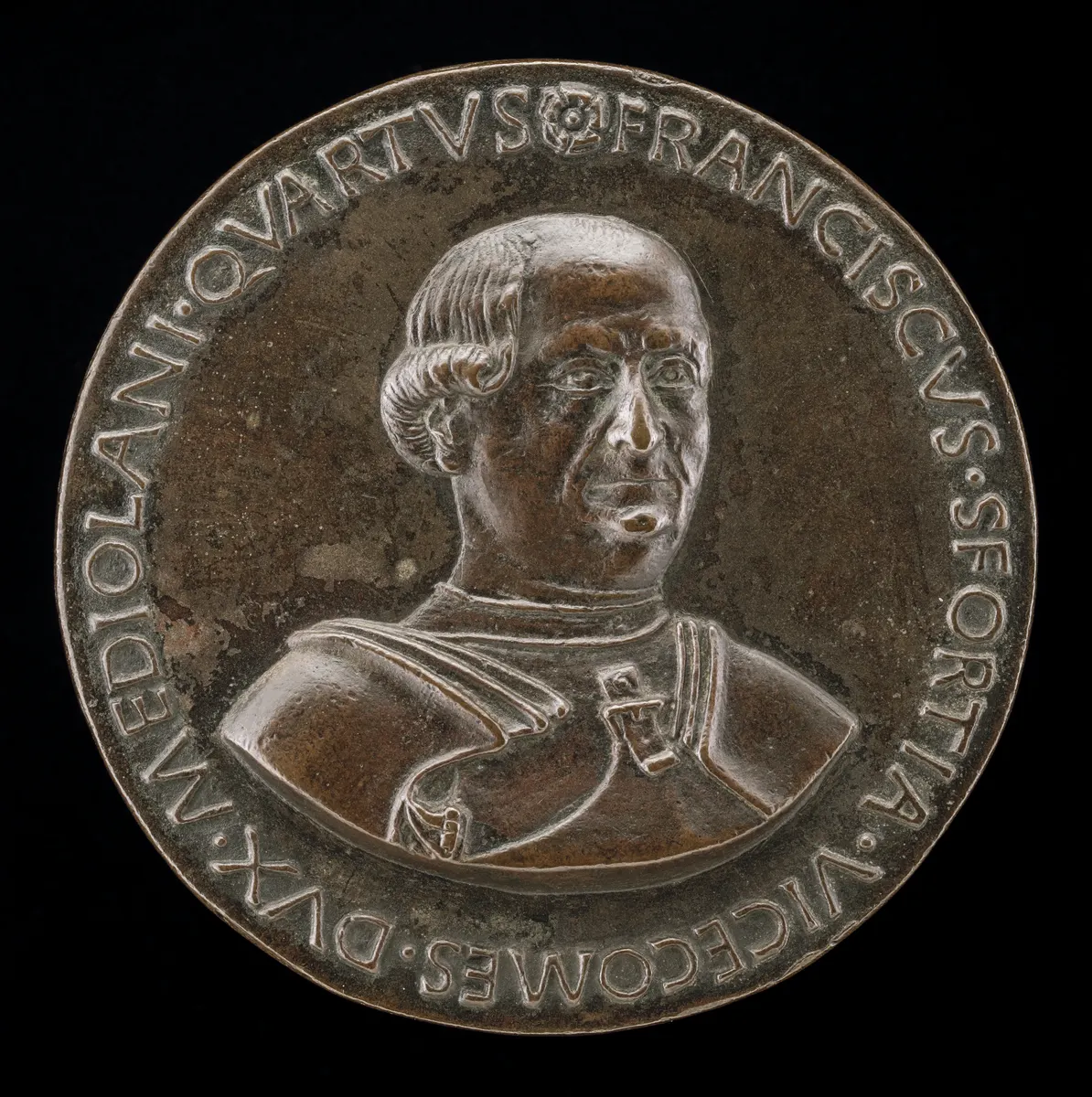
1535–1796 · Spaniards and Austrians
The duchy passes to the Spanish Habsburgs in 1535 and to the Austrians in 1706. The 1630 plague kills close to half the population; in 1778 the Teatro alla Scala opens, and the Lombard Enlightenment produces Beccaria's 1764 treatise against the death penalty.
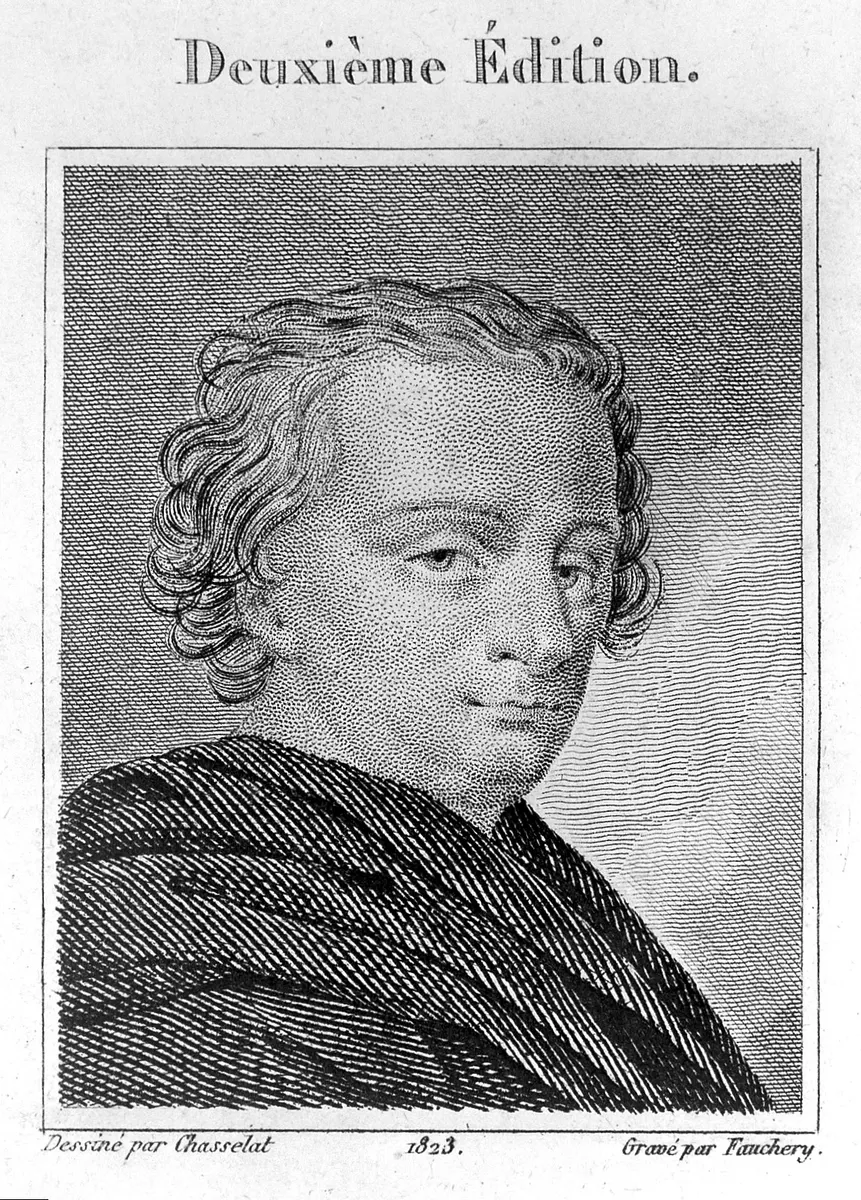
1848 · The Five Days
Between March 18 and 22 the population drives out Radetzky's Austrian garrison with barricades. Independence lasts only a few months, but it fixes Milan as the symbolic capital of the Risorgimento.
1861–1906 · Industrial and publishing capital
With unification, Milan takes on the role of Italy's manufacturing, banking and publishing center: the Corriere della Sera is born in 1876, Pirelli in 1872. The Galleria Vittorio Emanuele II, by Giuseppe Mengoni, opens in 1867, and the 1906 Expo celebrates the Simplon Tunnel.
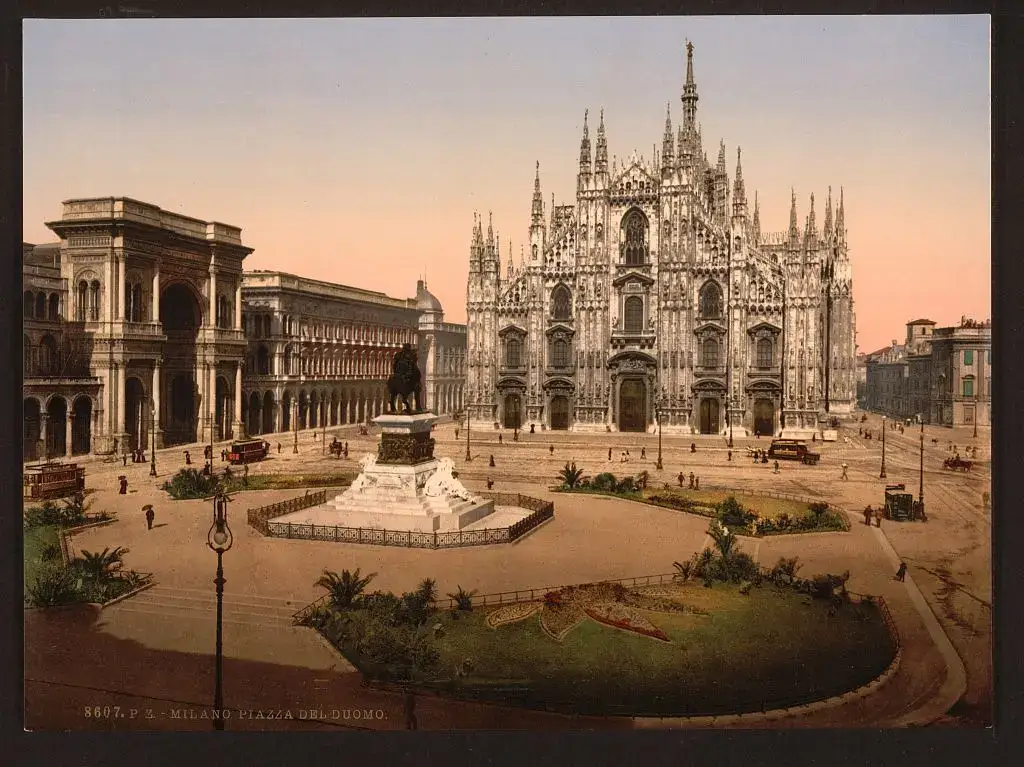
1943–1945 · Bombing and Liberation
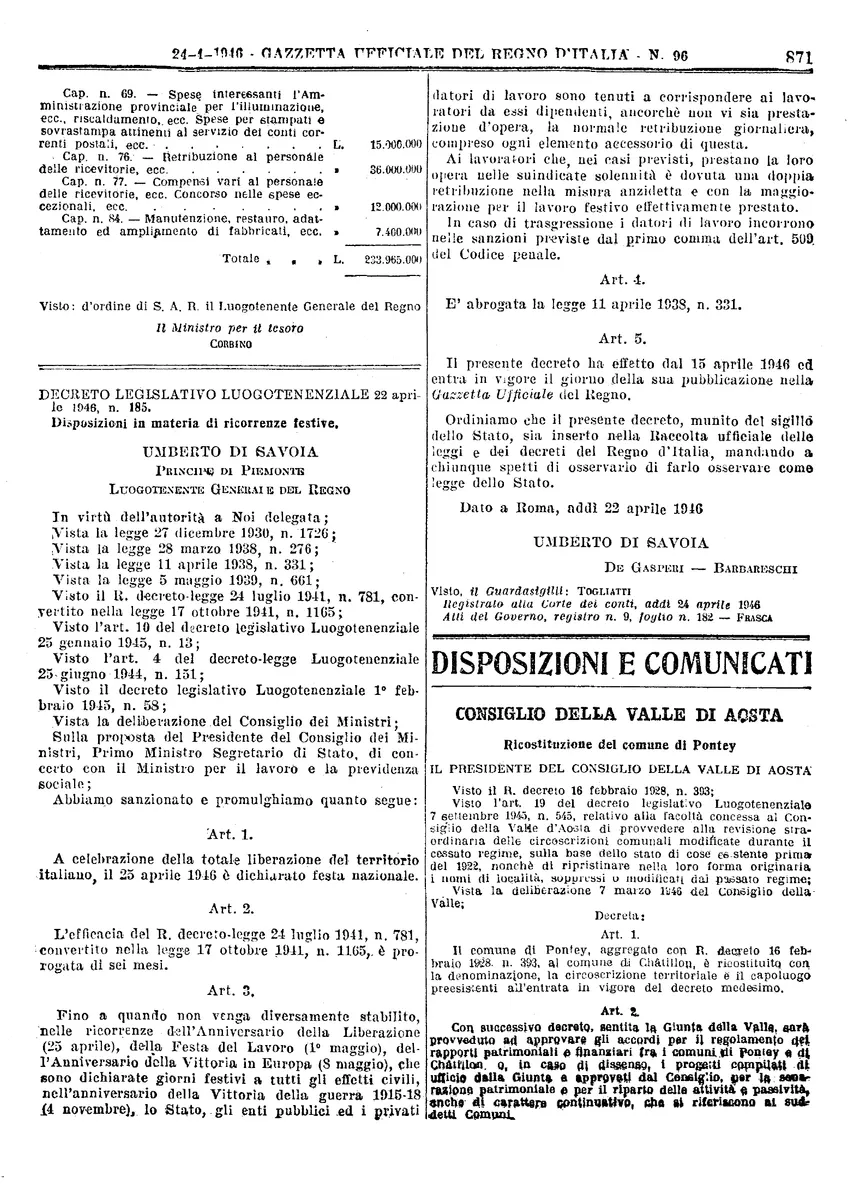
The Allied raids of August 1943 destroy much of the center and hit La Scala; the Last Supper refectory survives by a narrow margin. On April 25, 1945, the city is liberated, and four days later Mussolini's body is put on display in Piazzale Loreto.
1950–1973 · Economic miracle
Hundreds of thousands of migrants from the south arrive on the platforms of the Centrale, and the city's population reaches about 1.7 million. The Torre Velasca (1958) and Gio Ponti's Pirellone (1960) go up; on December 12, 1969, the Piazza Fontana bombing opens the Years of Lead.

2015–2026 · Expo, towers and the Olympics
Expo 2015 welcomed about 21.5 million visitors. Porta Nuova and CityLife already had construction predating the exhibition; the agreement for the seven disused rail yards followed in 2017. On 6 February 2026, San Siro took part in the opening of the Milano-Cortina Games. AC Milan and Inter acquired the stadium and its surroundings in November 2025, with a project for a new stadium and regeneration of the area.
Complete history
Celtic settlement of the Insubres
Milan begins as a Celtic settlement of the Insubres, around 590 BC, on a spot with no hill, no sea and no navigable river, and that defines it to this day: the city has no natural defense or port, so it always had to be rich, walled and connected. Rome conquers it in 222 BC and makes it a hub of roads to the Alpine passes. In 286 Diocletian moves the court of the West there, and Mediolanum spends over a century as imperial capital: it's where Constantine and Licinius proclaim, in 313, tolerance for Christianity, and where Ambrose, bishop from 374 to 397, creates his own liturgy, the Ambrosian rite, with a calendar different from the rest of Italy. Augustine was baptized by him in the baptistery now visited beneath the Duomo square, in 387.
A free commune in 1162: Barbarossa razes the city
In the Middle Ages Milan becomes a commune and pays dearly for it: Frederick Barbarossa razes the city in 1162 and it's rebuilt by the Lombard League, which defeats him at Legnano in 1176. From 1277 the Visconti rule as lords and, from 1395, as a duchy; it's Gian Galeazzo who launches the Duomo in 1386. The Sforza succeed them in 1450, rebuild the castle and, with Ludovico il Moro, fund Leonardo's stay between 1482 and 1499. In the same period the work that explains the city is completed: the Navigli. The Naviglio Grande, dug between 1177 and 1272 to bring water from the Ticino, and the Martesana, from 1457, linked to the Adda, turned a city with no river into Lombardy's busiest inland port. It was through them that the Duomo's marble came down.
Under foreign rule for three centuries, from 1535
In 1535 the duchy passes to the Spanish Habsburgs, and Milan stops deciding its own fate for three centuries. The 1630 plague, which Manzoni reconstructs in The Betrothed, kills close to half the inhabitants. Under the Austrians, starting in 1706, comes a top-down modernization: the Teatro alla Scala opens in 1778, designed by Giuseppe Piermarini, the magazine Il Caffè by the Verri brothers and Cesare Beccaria's 1764 treatise against the death penalty make the city a center of the Italian Enlightenment, and in 1809 Napoleon installs the Pinacoteca di Brera with works confiscated from churches in the north. The revolt of the Five Days, in March 1848, drives out the Austrians for a few months; in 1859 Lombardy is annexed to Piedmont and, in 1861, to the Kingdom of Italy.
Capital of money and industry after unification
Once the country is unified, Milan takes on the role it still holds today: capital of money, industry and what gets printed. The Corriere della Sera (1876) is born there, along with the major publishing houses, Pirelli, Falck and the banking network. The 20th century runs right over the city: fascism is founded on March 23, 1919 at Piazza San Sepolcro, the August 1943 bombings level the center, and on April 25, 1945, the city is liberated. Then comes the economic miracle: between 1950 and 1973 hundreds of thousands from the south arrive, the municipality nears 1.7 million residents, and the Torre Velasca and the Pirellone rise. The bill comes due on December 12, 1969, with the Piazza Fontana bombing, which opens the Years of Lead, and again on February 17, 1992, when the arrest of a Milanese public official triggers the Clean Hands operation and brings down Italy's party system.
The fair, the towers and the rail yards
The landscape of towers and parks was built in stages. CityLife grew from the transformation of the former fairgrounds: the competition ended in 2004, the first part of the park opened in 2013 and the three towers were completed between 2015 and 2020. Porta Nuova also had an initial phase before the Expo. The exhibition, held from May to October 2015, welcomed about 21.5 million visitors on a different site northwest of the centre.
In 2017, the municipality, region and railway partners signed the agreement to transform seven disused rail yards. It was a long-term plan with green areas, mixed uses and housing: signing did not mean that all construction had been delivered. To explore this Milan, choose neighbourhoods and spaces already open; CityLife is served by Tre Torri station on the M5 line.
San Siro took part in the opening of the Milano-Cortina Winter Games on 6 February 2026, in a ceremony spread across several locations. In November 2025, AC Milan and Inter had acquired the Meazza stadium and its surroundings through Stadio San Siro S.p.A. The announcement includes a new stadium and regeneration of the area; to visit, check the stadium programme and access arrangements for your travel date.
The Duomo's marble came down the Navigli.
The 1630 plague killed almost half the city.
Geography and shape of the city
The Po plain: the rivers run channeled under the streets
Milan lies in the middle of the Po plain, at about 120 m above sea level, some 40 km south of the first Alpine lakes and more than 100 km from the sea. There's no river in sight: the Olona and the Seveso have run channeled under the streets for more than a century and only reappear when they flood, which happens almost every fall. The water that made the city was dug by hand, in the canals of the Naviglio Grande, opened between 1177 and 1272, the Naviglio Pavese and the Naviglio della Martesana, from 1457, and the ring of canals that encircled the center was covered over between 1929 and 1930, becoming the avenue still called the Cerchia dei Navigli.
The city's rings: everything leads to the Duomo
The rings of walls and canals explain the city's radial, concentric layout: the Cerchia marks the medieval wall; the Bastioni, the Spanish wall of 1546–1560; the outer circonvallazione and the tangenziali close the rings beyond; and practically every major street converges on Piazza del Duomo. The land is flat (the highest natural point in the city is no more than about 147 m), which makes cycling and walking real options and makes the metro the fastest way to get almost anywhere.
The still air of the Po basin
The climate is humid continental with almost no wind: it's the lack of air circulation in the Po basin that explains both the historic fog and the pollution levels that bring traffic restrictions in December and January.
Culture
Fashion and design sold through show weeks and fairs
Milan's year revolves around fashion weeks and the Salone. Fashion has four weeks of runway shows a year and a permanent rectangle of shop windows in the Quadrilatero; design has the Salone del Mobile, held at the fairgrounds since 1961, and the Fuorisalone, which takes over the whole city the same week in April. This is home to Italy's big publishers (Mondadori, Rizzoli, Feltrinelli, Bompiani), the Corriere della Sera, since 1876, Il Sole 24 Ore and the Italian stock exchange, on Piazza Affari, in front of which Maurizio Cattelan installed in 2010 a marble hand with only one finger raised. It's also a city of long-standing immigration: the Chinese community on Via Paolo Sarpi has been there since the 1920s, originally from Wenzhou, and is the oldest in Italy.
La Scala: rebuilt after 1943, reopened in 1946
The Teatro alla Scala, Milan's home of classical music, premiered much of Verdi's work, was rebuilt after the bombing of 1943 and reopened in 1946 with Toscanini; the season always opens on December 7, the feast of the city's patron saint, and the whole country watches on TV. In spoken theater, Paolo Grassi and Giorgio Strehler's Piccolo Teatro, from 1947, was Italy's first permanent theater company. In the visual arts, Futurism came together in Milan around Marinetti and Boccioni from 1909 on, and in the 1950s and 1960s Lucio Fontana and Piero Manzoni turned the city into a laboratory. Italian rap and trap of the last two decades came out of Milan's outer neighborhoods, and the big concerts take place at San Siro and the Ippodromo.
Milan and Inter have shared San Siro since 1947
Soccer splits the city, and the two clubs share the stadium: AC Milan, founded in 1899, and Inter, in 1908, have played since 1947 at the Giuseppe Meazza in San Siro, opened in 1926, with about 75,000 seats; the derby between them is called the “derby della Madonnina,” after the statue on top of the Duomo. In church, too, the city follows its own rules: the Ambrosian rite has a calendar different from the Roman one, Lent begins four days later and Milan's Carnival ends on the Saturday after Ash Wednesday. Finally, Milan is a big university city: the Statale, the Politecnico (1863), Bocconi (1902) and the Cattolica (1921) add up to around 200,000 students, and they're the ones who fill the Colonne di San Lorenzo and the Navigli at night.
Milan against Inter is the derby della Madonnina.
Festivals and events
 AI illustration
Sant'Ambrogio and Oh Bej! Oh Bej!
December 7: a holiday only in Milan, a centuries-old street fair around the Castello Sforzesco with roasted chestnuts, toys and trinkets, and in the evening the Teatro alla Scala's season premiere, with protest and red carpet on the same sidewalk.

Salone del Mobile and Fuorisalone
One week in April: the design fair at Rho Fiera and, at the same time, hundreds of exhibitions spread across Brera, Tortona, Lambrate and Isola. It draws over 300,000 visitors and is the most expensive week of the year to sleep in the city.

Fashion weeks
Women's shows in late February and late September, men's in January and June. Access is by invitation, but the city changes rhythm: redone storefronts, parties, streets closed in the Quadrilatero and hotels fully booked.

Carnevale Ambrosiano
Because of its own rite, Milanese carnival ends the Saturday after Ash Wednesday, four days after the rest of Italy. The tell is Piazza del Duomo full of costumed kids on a Saturday when the rest of Italy is already in Lent.
 AI illustration
Festa del Naviglio
The first weekend in June, along the Naviglio Grande and the Darsena: music, crafts, food stalls and boats on the canals that still flow in the open air.
Books and films
“The Betrothed,” Alessandro Manzoni (1827/1840)
The novel that fixed modern Italian is set in Spanish-ruled Lombardy and reconstructs the 1630 plague, which killed close to half of all Milanese. It explains the Catholic, bureaucratic, resigned undertone that still shows up in the city.
“Rocco and His Brothers,” Luchino Visconti (1960)
A family from Basilicata gets off at Stazione Centrale at the height of the economic miracle and dissolves into the city. It's the most direct portrait of the southern migration that made Milan's population explode between 1950 and 1973.
“Il ragazzo della via Gluck,” Adriano Celentano (1966)
The song tells of a suburb turning into concrete, based on a real street near where the singer grew up. In three minutes it sums up what the industrial expansion did to the city's edges.
Frequently asked questions
Milan: Is the metro's magnetic ticket still valid?
No. Since January 1, 2026, the old paper magnetic ticket is no longer valid. You can tap a card or phone, buy through the app, or top up a RicaricaMi. On the metro, validate on the way out too.
Milan: How do you get from Malpensa to downtown?
Trenord's Malpensa Express train runs every 15 to 30 minutes and takes about 37 minutes to Milano Cadorna and about 50 minutes to Centrale, for around €13 one way.
Milan: How do you get to Lake Como and Varenna?
Take the Trenord train from Milano Centrale to Varenna-Esino, in about 1 hour 5 minutes; from there the ferry crosses to Bellagio and Menaggio in 15 to 25 minutes.
Milan: How much does a coffee cost?
An espresso at the counter costs €1.20 to 1.80, and the same coffee sitting at a table on Piazza del Duomo can run €5 to €7, because table service is charged separately and, by law, must be printed on the menu.
Milan: When's the best time to go?
Come from late April to early June or from mid-September to late October, when highs sit between 18 and 25°C.
Other cities in the country
Italy ↗- Days
- 3–5
- When
- Apr–May · Sep–Oct
- Per person/day
- Average 130–190 EURMid-range · per person/day
Cost scope
Per person per day: accommodation, meals, urban transport, visits and a small allowance for extras. Flights excluded; larger purchases vary. Editorial estimate, not a quote.
- Days
- 2–3
- When
- Apr–Jun · Sep–Oct
- Per person/day
- Average 180–330 EURMid-range · per person/day
Cost scope
Per person per day: accommodation, meals, urban transport, visits and a small allowance for extras. Flights excluded; larger purchases vary. Editorial estimate, not a quote.
- Days
- 2–3
- When
- Mar–May · Sep–Oct
- Per person/day
- Average 180–250 EURMid-range · per person/day
Cost scope
Per person per day: accommodation, meals, urban transport, visits and a small allowance for extras. Flights excluded; larger purchases vary. Editorial estimate, not a quote.
- Days
- 2–3
- When
- Apr–Jun · Sep–Oct
- Per person/day
- Average 130–200 EURMid-range · per person/day
Cost scope
Per person per day: accommodation, meals, urban transport, visits and a small allowance for extras. Flights excluded; larger purchases vary. Editorial estimate, not a quote.
- Days
- 3–4
- When
- May–Jun · Sep–Oct
- Per person/day
- Average 246 EURMid-range · per person/day
Cost scope
Per person per day: accommodation, meals, urban transport, visits and a small allowance for extras. Flights excluded; larger purchases vary. Editorial estimate, not a quote.
- Days
- 2–3
- When
- May–Jun · Sep
- Per person/day
- Average 170 EURMid-range · per person/day
Cost scope
Per person per day: accommodation, meals, urban transport, visits and a small allowance for extras. Flights excluded; larger purchases vary. Editorial estimate, not a quote.
- Days
- 3
- When
- May–Jun · Sep
- Per person/day
- Explore costsGuide estimate
Cost scope
Per person per day: accommodation, meals, urban transport, visits and a small allowance for extras. Flights excluded; larger purchases vary. Editorial estimate, not a quote.
- Days
- 6
- When
- Jun–Sep
- Per person/day
- Explore costsGuide estimate
Cost scope
Per person per day: accommodation, meals, urban transport, visits and a small allowance for extras. Flights excluded; larger purchases vary. Editorial estimate, not a quote.
- Days
- 3
- When
- Apr–Jun · Sep–Oct
- Per person/day
- Average 114 EURMid-range · per person/day
Cost scope
Per person per day: accommodation, meals, urban transport, visits and a small allowance for extras. Flights excluded; larger purchases vary. Editorial estimate, not a quote.
- Days
- 7
- When
- May–Jun · Sep
- Per person/day
- Explore costsGuide estimate
Cost scope
Per person per day: accommodation, meals, urban transport, visits and a small allowance for extras. Flights excluded; larger purchases vary. Editorial estimate, not a quote.


Itineraries through here
 Italy in 10 daysThe Italian Grand TourRome · Florence · Venice · Milan8–13 days4 cities
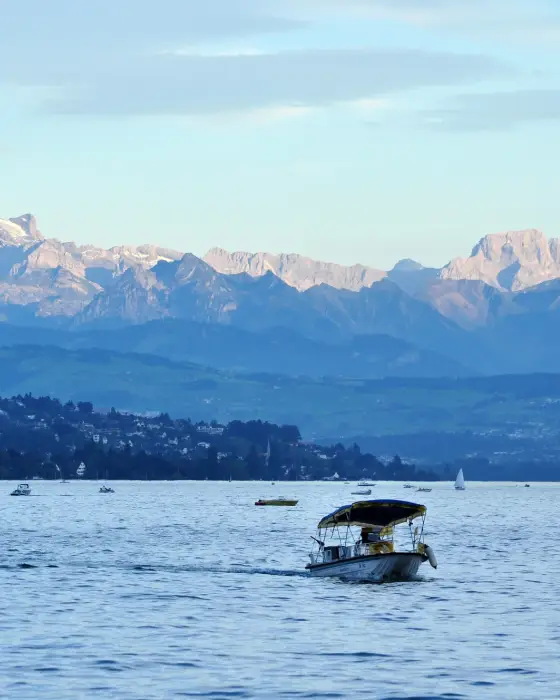 Switzerland, Germany and Italy in 7 daysCrossing the AlpsZurich · Munich · Milan4–7 days3 cities
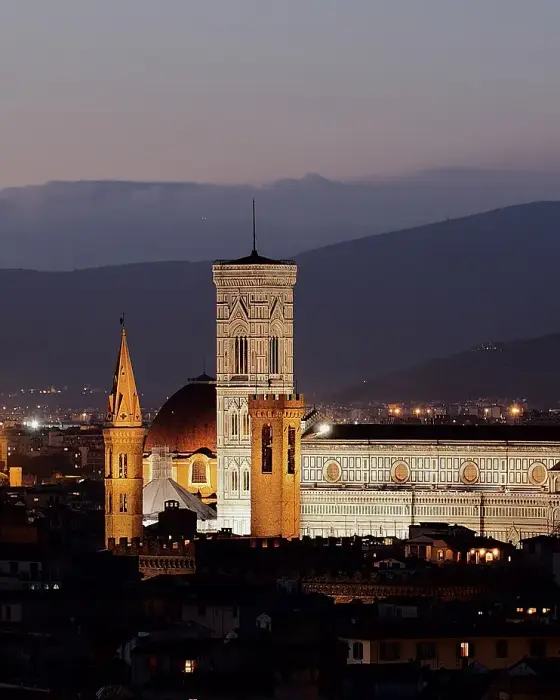 Italy and Switzerland in 10 daysFrom the Alps to Rome by trainZurich · Milan · Florence · Rome7–12 days4 cities
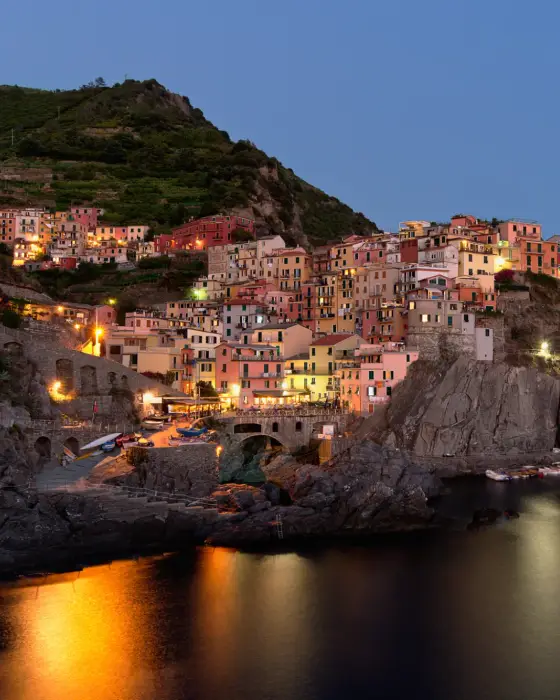 Italy in 15 daysFrom the Cinque Terre to the Amalfi CoastMilan · Cinque Terre · Florence · Rome · Amalfi Coast11–17 days5 cities
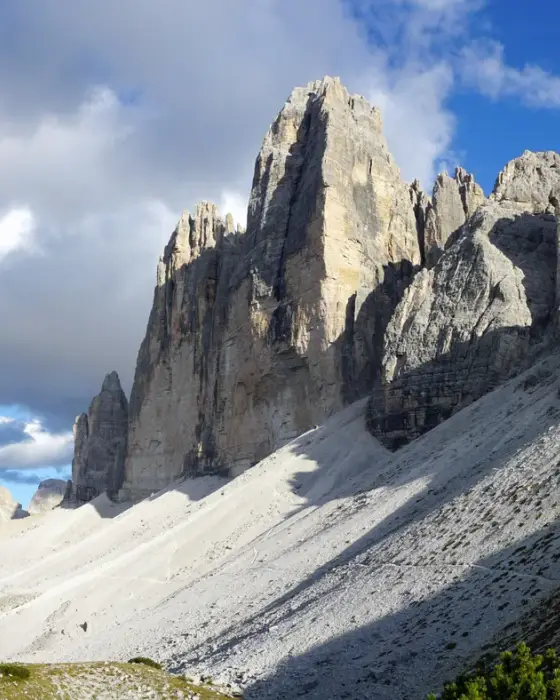 Northern Italy in 12 daysLake Como, the Dolomites and VeniceMilan · Lake Como · Dolomites · Venice12–14 days4 cities