Italy
Palermo
Three days of mosaics, markets and the Kalsa
Days Start with the basic programme and choose extensions for the time you have.
How the guide reaches this number
This duration allows you to choose interiors without spending three days in a sequence of ticket offices. Monreale deserves an extension with transport and access checked, beyond those three days. To prioritise the beach, swap an urban day for Mondello or add time; do not try to attach the other end of Sicily to the city's itinerary.
3
When April to June and September to October for walking and indoor visits, with attention to heat at the beginning and end of summer.
How the guide reaches this number
April to June and September to October favour a trip focused on walking and heritage, adjusted to the day's heat. July and August concentrate beach activities and call for breaks, water and interiors in the hottest hours. The Festino changes the experience of mid-July: it may be the reason for the trip or require more care with accommodation and movement. In winter, an urban visit remains possible, but rain and shorter opening hours call for flexibility; sea swimming should not be the premise of the itinerary.
Per person/day Budget around EUR 51; mid-range around EUR 114; comfortable around EUR 200 per person per day, according to spending travellers report to Budget Your Trip (checked October 2026).
How the guide reaches this number
Indicative amounts, excluding travel to the destination.
Budget around EUR 51; mid-range around EUR 114; comfortable around EUR 200 per person per day, according to spending travellers report to Budget Your Trip (checked October 2026). Indicative amounts, excluding travel to the destination.
Per person per day: accommodation, meals, urban transport, visits and a small allowance for extras. Flights excluded; larger purchases vary. Editorial estimate, not a quote.
 What Nilo thinks
I would set aside three full days for Palermo: one for the palace, cathedral and Ballarò; another for archaeology, Capo and the theatre; the third for the Martorana and art in the Kalsa. This duration allows you to choose interiors without spending three days in a sequence of ticket offices. Monreale deserves an extension with transport and access checked, beyond those three days. To prioritise the beach, swap an urban day for Mondello or add time; do not try to attach the other end of Sicily to the city's itinerary.I would go to Palermo for its combination of interiors that deserve attention and streets where a visit can be organised without a car. The Palatine Chapel brings artistic work from different traditions together in a small space; Ballarò offers a market meal in the same district. Across the centre, the Kalsa brings Sicilian painting, palace collections and the seafront walk close together. The choice works better when each experience gets its own time, with a break between them. Anyone wanting a beach should set aside another day for Mondello rather than looking for sand at the end of an afternoon on the Foro Italico.
Quick facts
- Population
- 628,693 inhabitants in the municipality on 31 December 2024, according to municipal statistics.
- Foundation
- Phoenician origins in antiquity; the city developed around its harbour.
- Country and region
- Italy, Sicilian Region, northern coast of the island of Sicily.
- Language
- Italian; Sicilian is also part of local life.
- Currency
- Euro (EUR).
- Time zone
- Europe/Rome: UTC+1 in standard time and UTC+2 during daylight saving time.
- Best time
- April to June and September to October for walking and indoor visits, with attention to heat at the beginning and end of summer.
- Average daily cost
- Budget around EUR 51; mid-range around EUR 114; comfortable around EUR 200 per person per day, according to spending travellers report to Budget Your Trip (checked October 2026). Indicative amounts, excluding travel to the destination.
When to go
April to June and September to October for walking and indoor visits, with attention to heat at the beginning and end of summer.
How the year changes
April to June and September to October favour a trip focused on walking and heritage, adjusted to the day's heat. July and August concentrate beach activities and call for breaks, water and interiors in the hottest hours. The Festino changes the experience of mid-July: it may be the reason for the trip or require more care with accommodation and movement. In winter, an urban visit remains possible, but rain and shorter opening hours call for flexibility; sea swimming should not be the premise of the itinerary.
Nilo's tips
Check the palace before fixing the day
I would start with the Palatine Chapel's conditions: restoration, ceremonies and the parliamentary agenda can change what is accessible. A booking elsewhere does not solve a closure here.
Choose the market to match the route
Capo pairs with Massimo and Salinas; Ballarò with the palace and cathedral. I would use that proximity to eat without crossing the centre for a snack.
Compare combined admission by actual use
Massimo and Butera can fit on different days within the combined ticket's validity. I would buy it only after confirming that both interest me and will be open.
Give the beach a day
I would swap a whole urban day for Mondello if the sea were a priority. That brings transport time and swimming conditions into the decision.
Explore the map
Explore the map, read about the other places and plan your travel days in the app.
Open the appWhat to see

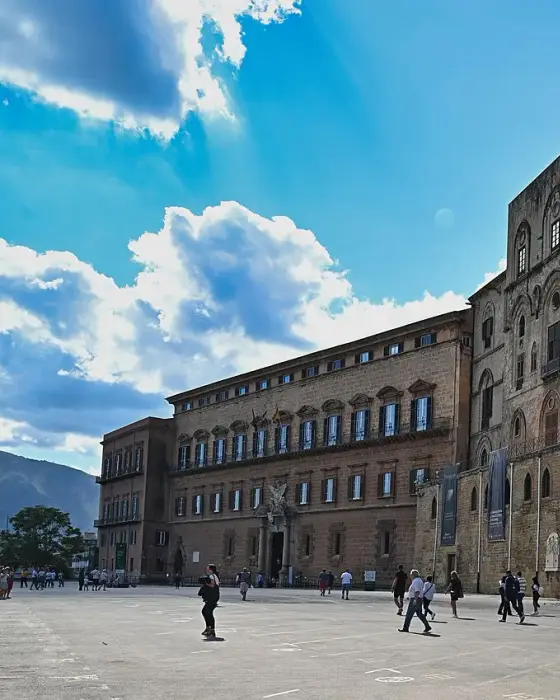
Palazzo dei Normanni and Cappella Palatina
The palace chapel combines Byzantine-style mosaics, a basilica plan and a wooden ceiling with muqarnas, geometric niches associated with Islamic art. It is a good introduction to Sicily's Norman kingdom, whose court combined different techniques and artistic vocabularies. A visit to the complex does not guarantee access to all the apartments: the palace houses the Sicilian Parliament. In October 2026, the operator also reports restoration of the chapel, with possible closures of some areas and exceptional changes. Check notices and ticket categories before choosing a day.
This interior best introduces the Norman court's artistic combination; the visit depends on the areas open.
Check access
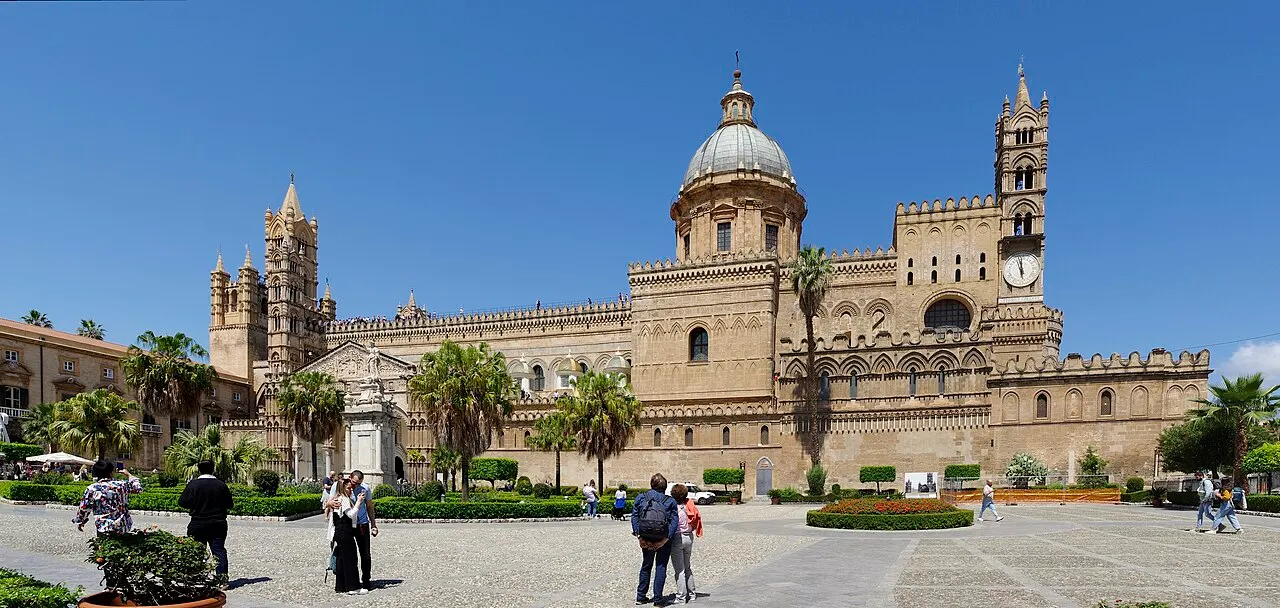
Cattedrale di Palermo
The façades preserve interventions from different periods, while the worship area and monumental route have separate entry arrangements. The visit makes more sense after looking at the building from outside and relating it to the former mosque and the Norman city. Roofs, tombs and treasury should not be assumed to be included in a single ticket; choose your route through the official channel. Roof stairs require consideration of exertion and mobility, and sightseeing arrangements may change for religious services.
The building reveals religious and architectural transformations; choose the monumental route separately.
Check access
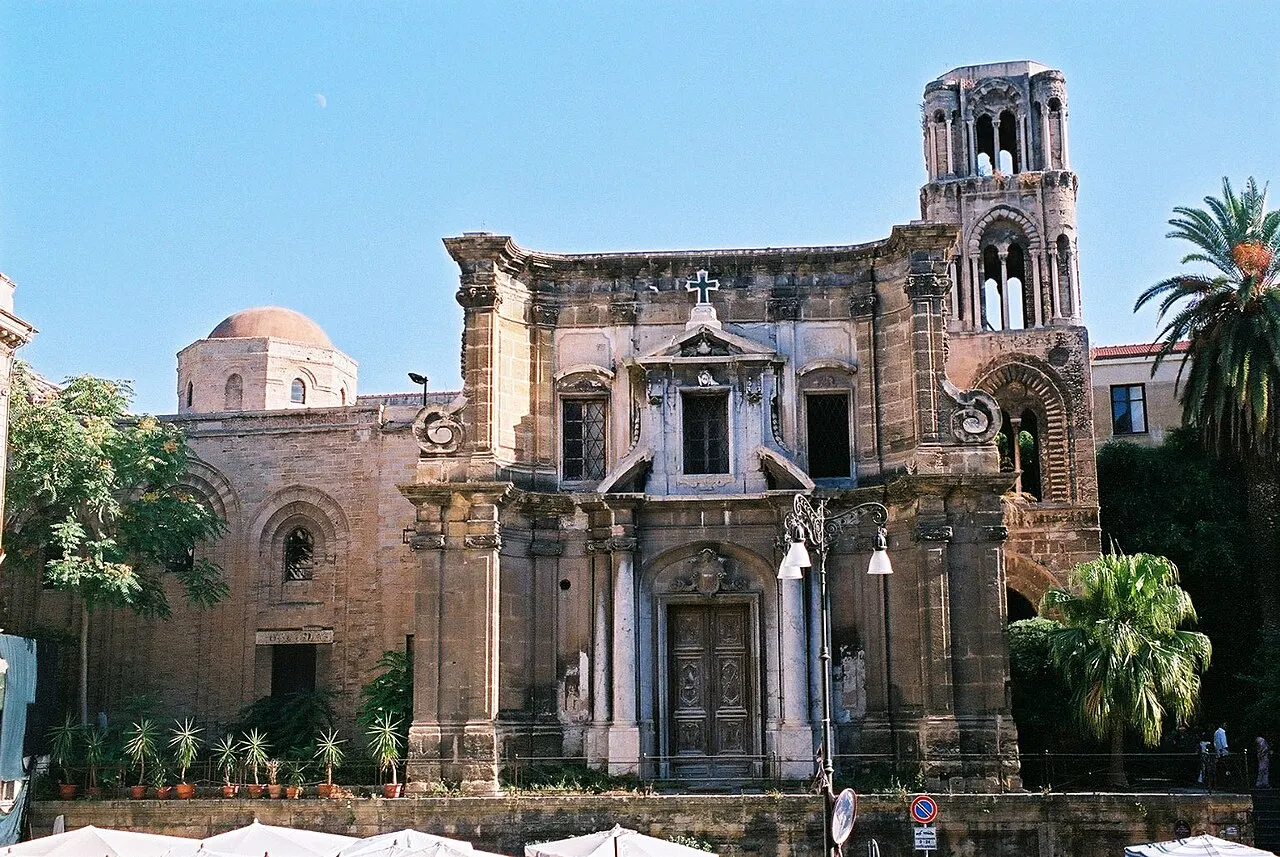
Chiesa di Santa Maria dell’Ammiraglio (Martorana)
The church's Byzantine mosaics and later alterations offer a comparison with another use of the same artistic language seen in the Palatine Chapel. The church has an active religious life and an Italo-Albanian liturgical tradition. Check sightseeing hours before fitting it between two reservations, and dress for an active place of worship. This is an interior visit, distinct from merely passing through Piazza Bellini.
The mosaics justify admission for those who want to understand the city's medieval art.
Check access
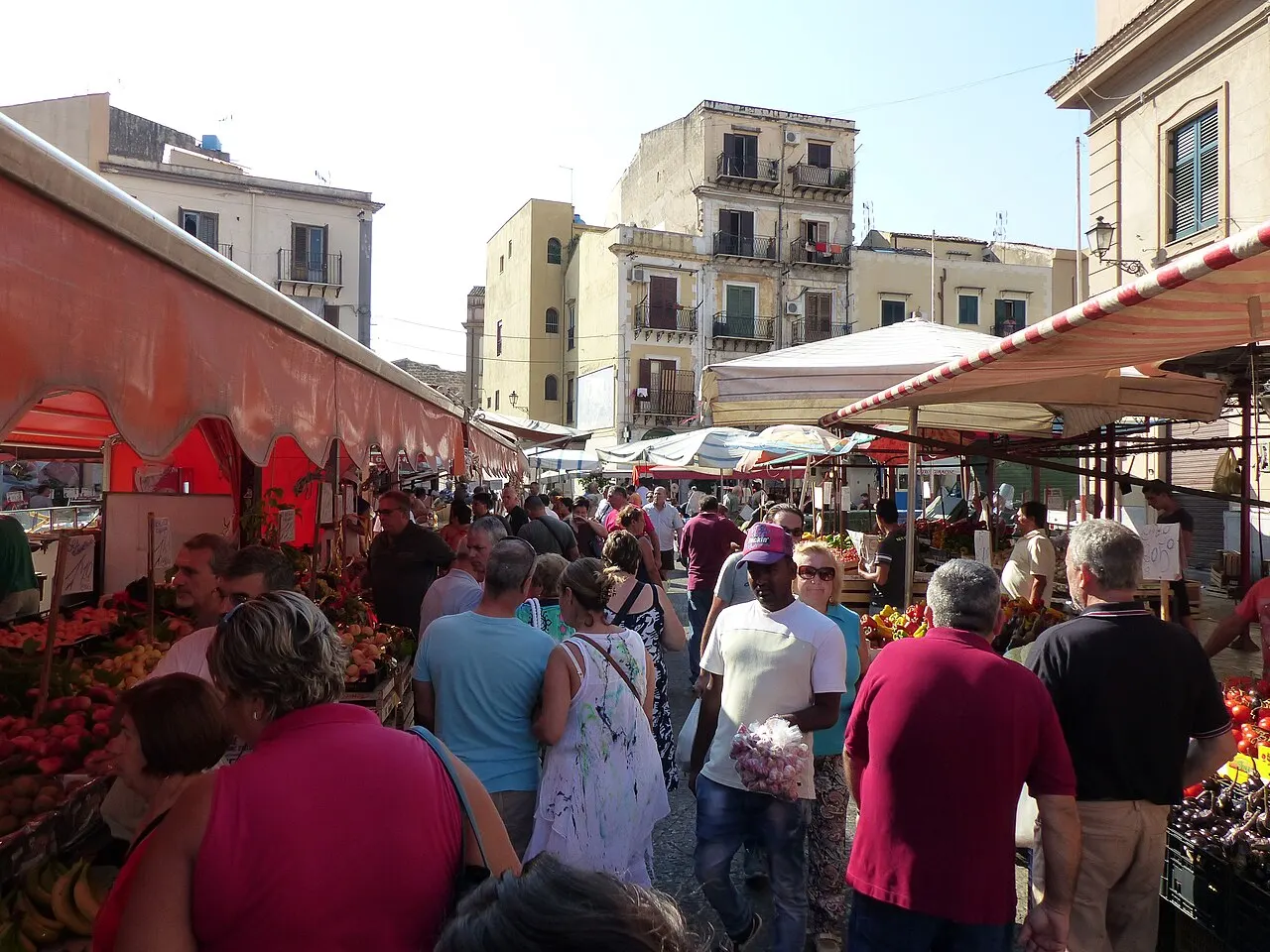
Mercato di Ballarò
The market occupies streets in Albergheria, with produce stalls and prepared food. The best reason to go is to watch everyday shopping and put together a meal from small choices, without treating every stall as a recommended restaurant. Go while the daytime stalls are operating, examine prices and ask for the total before accepting fish or portions sold by weight. Passageways are tight and the ground uneven.
It combines everyday trading and street food in the first day's area, while the stalls are operating.
Check access
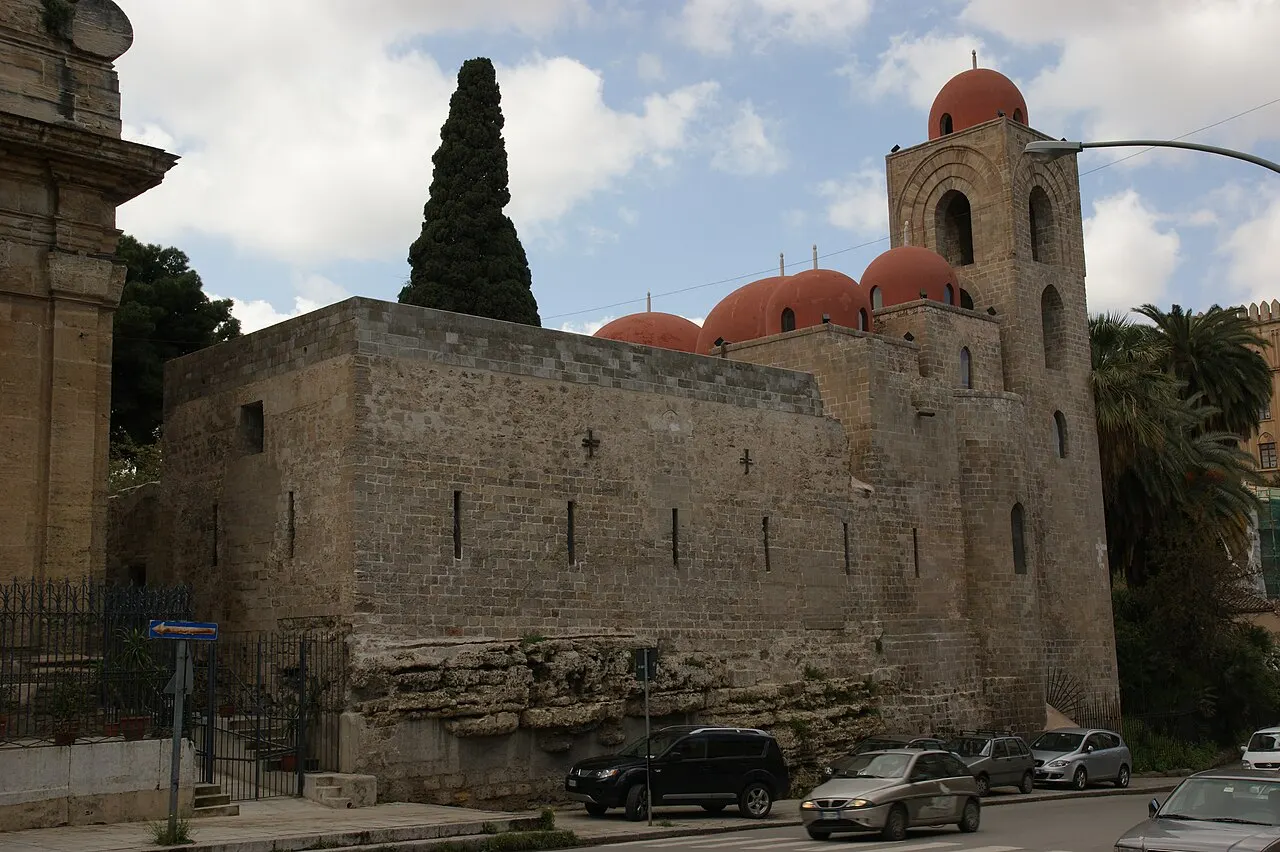
San Giovanni degli Eremiti
The five red domes, church and small cloister form one of Norman Palermo's most recognisable landmarks, near the Palazzo dei Normanni. The interest also lies in the relationship between volumes, garden and columns, unlike the Palatine Chapel's mosaics. To visit the complex, confirm opening and admission with the regional management before fixing the day; do not expect the cloister to be open simply because it is near the palace. Choose it as an alternative to another interior on the first day, preserving time for lunch and walking.
The domes, garden and cloister allow a comparison between another Norman architectural expression and the Palatine Chapel.
Check access
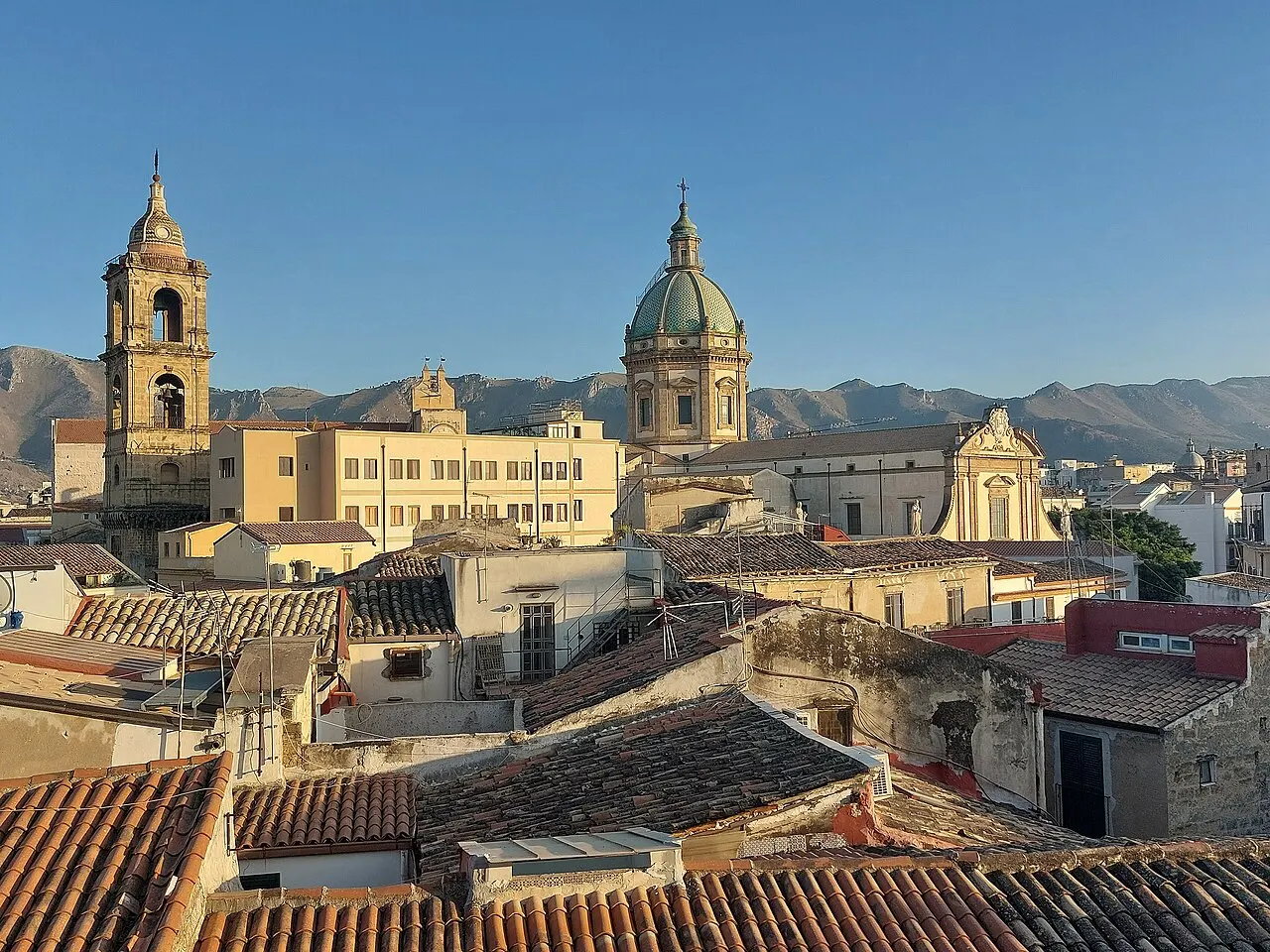
Chiesa del Gesù / Casa Professa
In the Ballarò area, the church presents a Baroque interior of worked marble, stucco and painting, contrasting with the Norman buildings of the first morning. The damage of 1943 and later restoration are part of the history of what is visible. A good choice for those who want to explore the Baroque period further without turning a market lunch into a rush between churches. Check visiting hours and any paid routes with the church; services and reserved areas take priority.
The Baroque decoration adds marble, stucco and painting to a visit around Ballarò.
Check access

Chiesa di San Cataldo
Three red domes identify this small church in Piazza Bellini, beside the Martorana. The stone structure and restrained interior offer a comparison with another expression of Norman architecture, without expecting the neighbouring church's mosaics. These are different buildings with separate access. First observe its relationship with the square; enter only with opening and conditions confirmed, choosing one of the interiors if time is short.
The restrained stonework and domes offer a comparison between San Cataldo and the Martorana mosaics in the same square.
Check access
Duomo and cloister of Monreale
Outside the municipality of Palermo, the cathedral adds a large ensemble of Byzantine-style mosaics, while the Benedictine cloister offers another experience of architecture and sculpture. Do not assume a single ticket or the same hours for cathedral, cloister, terraces and museum. Confirm your chosen spaces and the return before leaving Palermo, using the connection from Piazza Indipendenza or hired transport. Allow a morning or afternoon with a margin for travel and visiting; this is the Monreale extension beyond the three urban days, not an interior to attach to the end of the Palatine Chapel day.
The cathedral mosaics and cloister sculpture justify an art and architecture extension beyond the three urban days.
Check access
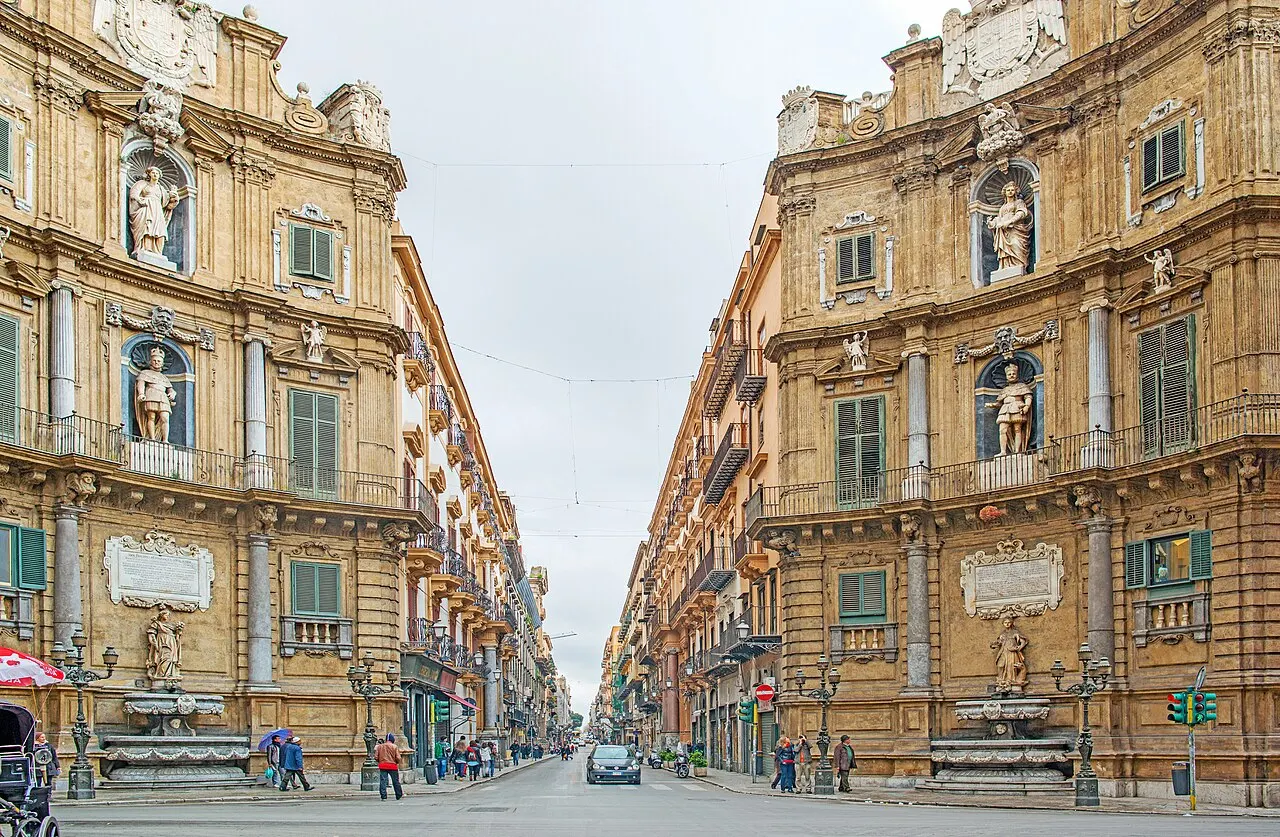
Quattro Canti
At the junction of Via Maqueda and the Cassaro, four curved façades visually organise the centre's historic quarters, or mandamenti. Fountains, seasons and figures of power reveal the square's Baroque planning. A brief stop during a walk is enough; there is no reason to cross the city simply to tick off a photograph. Watch for vehicle traffic on the approaches, even when the middle is full of pedestrians.
It helps organise a walk through the centre and calls for a brief stop, without a special detour.
Check access
Nilo’s itinerary
Start with the basic programme and choose extensions for the time you have.
Plan my days in the app ↗Day 1 · Palace, cathedral and Ballarò
Start at the Palazzo dei Normanni and Cappella Palatina after checking notices and the ticket that actually includes your intended areas. If there is a closure, use the morning for the cathedral and return to the palace on another confirmed day.
Continue on foot to the Cattedrale di Palermo. Separate the church visit from the paid monumental route; choose the roofs only if exertion and access conditions are suitable. Those prioritising Norman architecture can replace that monumental route with the San Giovanni degli Eremiti complex, with opening confirmed, without adding every interior to the palace morning.
Head down to Ballarò while the daytime stalls are operating. Pause for lunch and compare small portions before ordering several. To explore Casa Professa's Baroque interior, reduce another interior visit that day and confirm church access; do not take time away from the meal to fit it in.
Return to the Cassaro axis and finish at the Quattro Canti and Fontana Pretoria in the square of the same name. Observe the ensemble from public space without adding another interior simply to fill the afternoon. Stay overnight in Palermo.
Day 2 · Capo market, archaeology and theatre
Visit the Mercato del Capo during the morning and have a snack if breakfast was light.
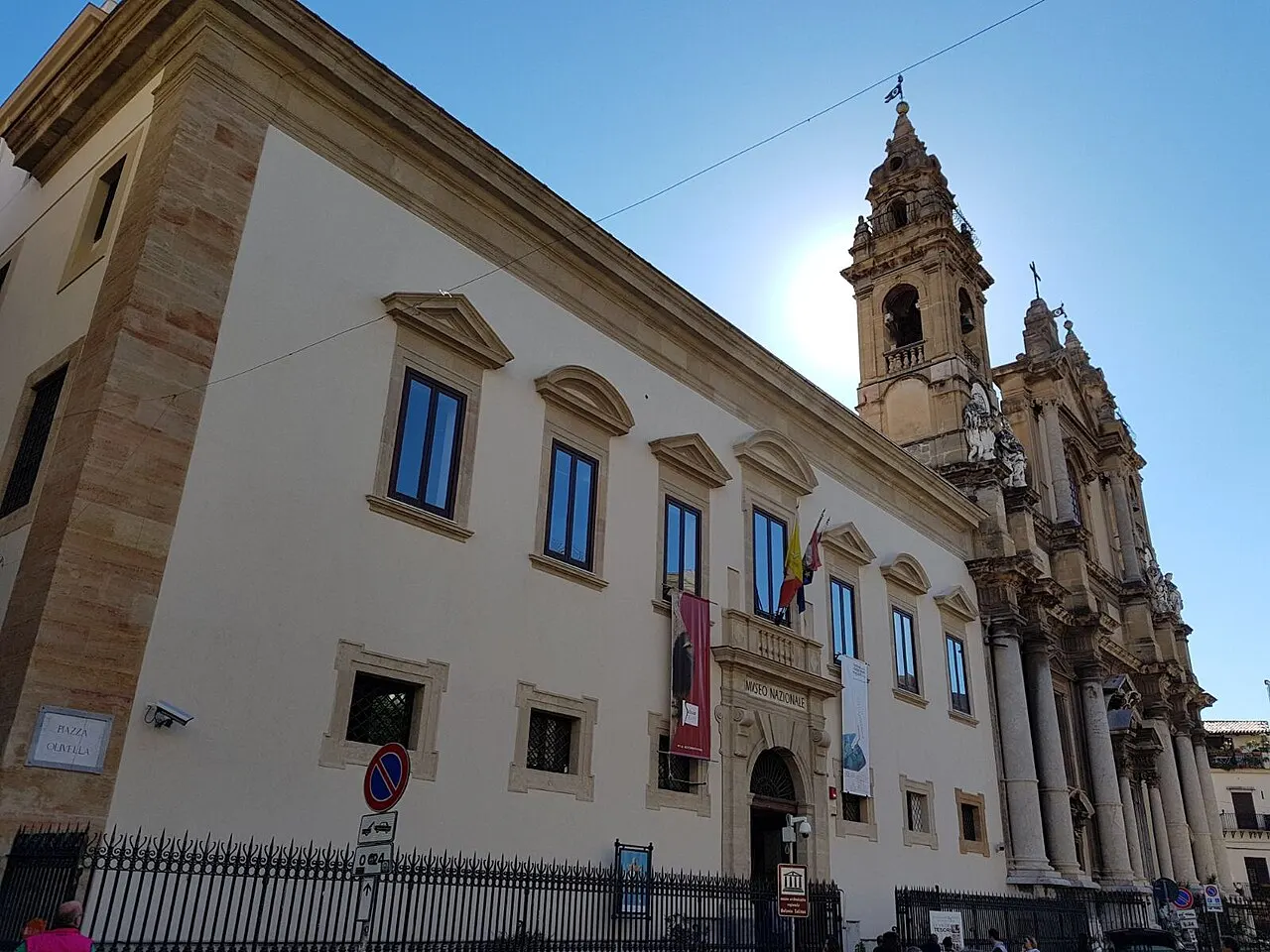
Visit the Museo Archeologico Regionale Antonino Salinas with time for its collections. Confirm that day's opening; if it is closed, swap this morning with the Kalsa morning.
Have lunch around Olivella and allow a break before the Teatro Massimo guided tour. Check the tour departure time and available language.
In the evening, choose a performance if the programme interests you and a ticket is confirmed. The guided tour does not include this admission. Stay another night in Palermo.
Civil architecture alternative: replace Salinas with the Zisa, confirming opening and outward and return transport. Reorganise lunch and keep only a Teatro Massimo session compatible with that journey; Monday is not an automatic alternative for the Zisa.
Day 3 · Martorana mosaics and art in the Kalsa
Begin at Piazza Bellini: observe the Martorana and San Cataldo as distinct buildings and choose the interior that interests you, with tourist hours confirmed. Follow the Cassaro towards Piazza Marina, without requiring two admissions before the Kalsa. Before reaching the square, those interested in markets can make a short detour through Piazza Caracciolo in the Vucciria, shortening another stretch of the walk and without relying on every stall being open. On reaching Piazza Marina, pause in Giardino Garibaldi if the gate is open, observing the ficus without crossing into protected areas.
Have lunch in the Kalsa area. Then choose Palazzo Abatellis for historical art or Palazzo Butera for the palace collection; there is no need to visit both. Butera regularly closes on Mondays according to the information consulted. The Pasqualino Museum or the Steri can replace that choice, depending on your interest in puppets or history and Guttuso; confirm the session and do not add all four interiors.
Finish with a stretch of the Foro Italico, adjusting the walk to heat and wind. If you prefer sea and sand, replace the whole day with Mondello: use AMAT route 806 from Piazza Crispi/Croci, with the beach stop and return checked. The reference of about 34 minutes covers the vehicle only; add access to boarding, waiting and traffic. Do not add the beach after the museums. If you choose the Spasimo's open architecture, confirm access and shorten part of the museum visit or this walk, without treating a concert ticket as an ordinary visit.
Keep the third night in Palermo if you leave through the airport the next day, checking the first transport compatible with your flight.


Food
Pane e panelle
Bread filled with chickpea-flour fritters, sometimes accompanied by potato crocchè. A practical choice for a market meal, but check the oil and accompaniments if you have dietary restrictions.
Arancina
A breaded, fried rice ball with fillings such as ragù or ham and white sauce. The feminine form is common in Palermo. Order by filling, since short names do not explain every ingredient.
Sfincione
A thick, soft dough with a topping that may combine tomato, onion, cheese and salted fish. Looking like a tomato pizza does not guarantee a vegetarian preparation.
Pasta con le sarde
Pasta with sardines and aromatic ingredients, an option for sitting down to a longer meal than a market snack. The composition can vary; check the preparation offered.
Cannolo and ricotta sweets
A cannolo combines a crisp shell with a ricotta filling; cassata and other preparations broaden the pastry-shop repertoire. Share choices if you want to taste more than one thing rather than building the entire day around sugar.
Where to eat
- Ballarò
Panelle, crocchè and other street preparations make an informal meal during a daytime market visit. Choose stalls by their preparation and displayed prices; confirm fillings and ingredients before ordering.
- Capo and Olivella
Combine a market snack with a seated meal near the theatre. For a pasta dish, look for Sicilian preparations described on the menu and ask about ingredients instead of choosing only by dining-room decoration.
- Kalsa and Piazza Marina
The area provides a setting for dinner after the palaces. Look for pasta con le sarde, fish dishes or seasonal vegetables, check prices per portion and by weight, and book when you have a firm departure time.
- Cassaro and historic centre
A pastry shop allows a taste of cannolo or other ricotta sweets between visits. Compare portions and check fillings and storage; a large display alone does not reveal what was made that day.
· 2026-10-16
Day trips
Monreale
The cathedral and cloister are in the municipality of Monreale, around 8 km from Palermo according to the metropolitan tourism authority. Leave Palermo on the bus specified by the operator for that day or hire a taxi; the complex's page directs visitors to the connection from Piazza Indipendenza. Allow a morning or afternoon with a margin for waiting and traffic, rather than treating a short distance as a journey of a few minutes. Check the planner for the actual service's journey time and verify separate cathedral and cloister access before leaving. This is an extension beyond the three urban days.
Where to begin
Palace, cathedral and Ballarò
Start at the Palazzo dei Normanni and Cappella Palatina after checking notices and the ticket that actually includes your intended areas. If there is a closure, use the morning for the cathedral and return to the palace on another confirmed day.
Capo market, archaeology and theatre
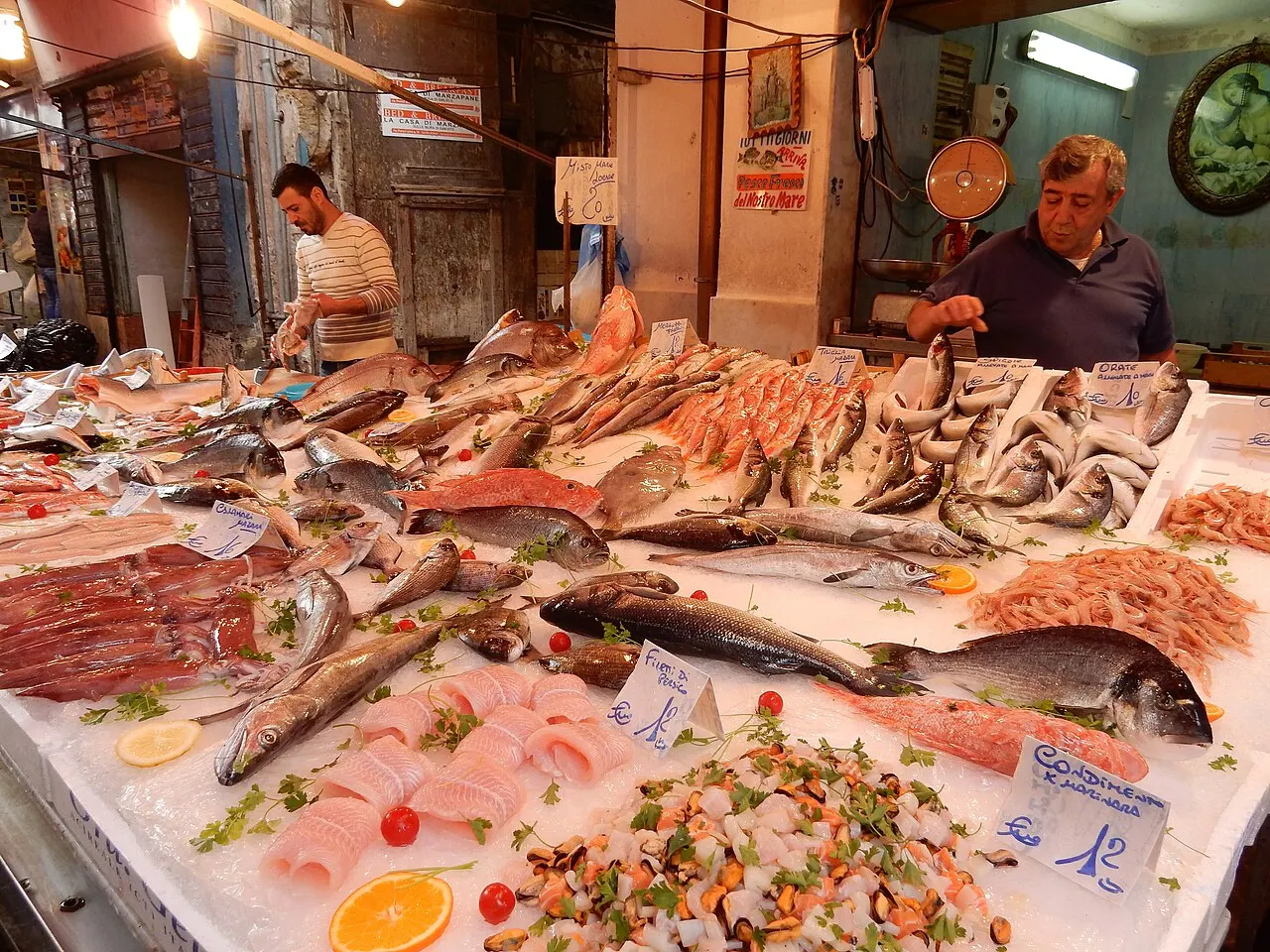
Visit the Mercato del Capo during the morning and have a snack if breakfast was light.
Martorana mosaics and art in the Kalsa
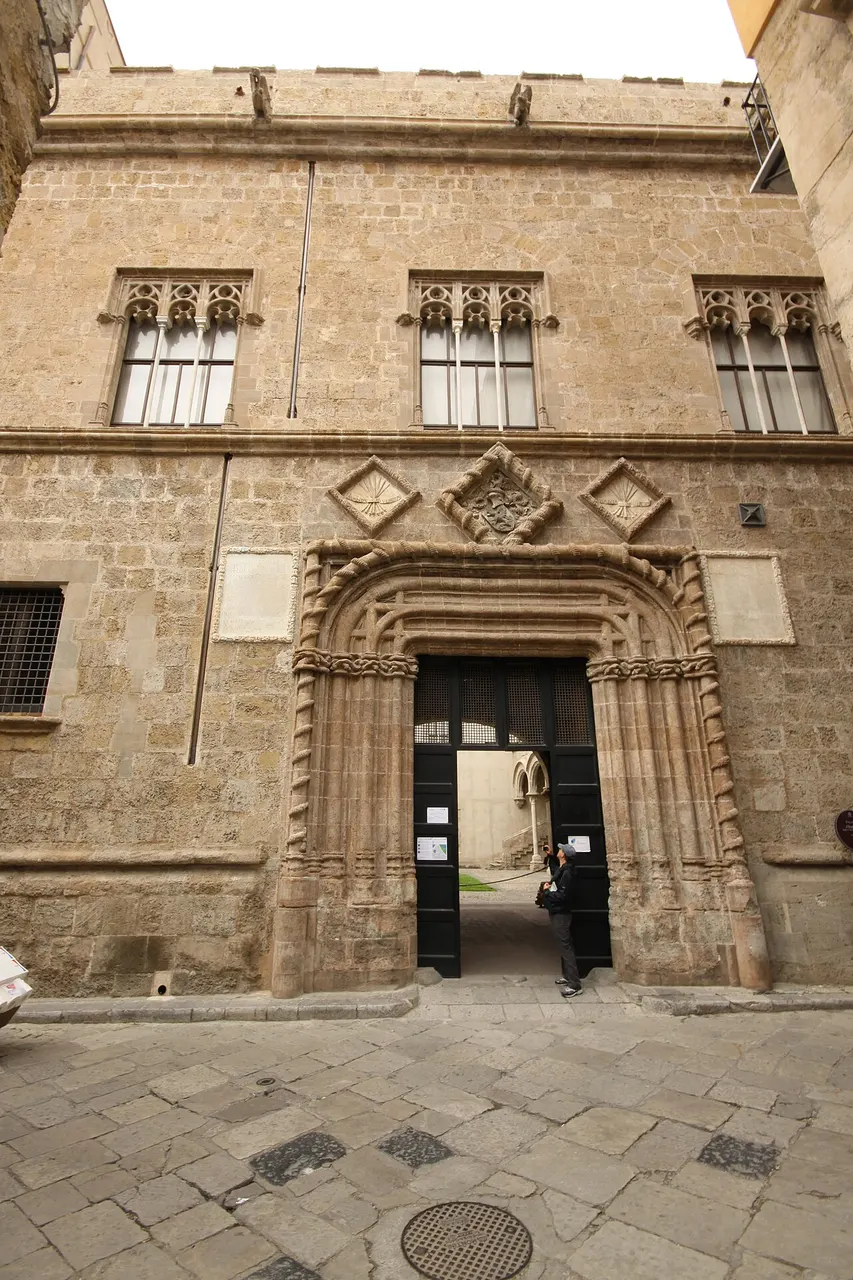
Begin at Piazza Bellini: observe the Martorana and San Cataldo as distinct buildings and choose the interior that interests you, with tourist hours confirmed. Follow the Cassaro towards Piazza Marina, without requiring two admissions before the Kalsa. Before reaching the square, those interested in markets can make a short detour through Piazza Caracciolo in the Vucciria, shortening another stretch of the walk and without relying on every stall being open. On reaching Piazza Marina, pause in Giardino Garibaldi if the gate is open, observing the ficus without crossing into protected areas.
Money

The currency is the euro. Compare prices per person and per service, without confusing a tour with a performance or a free exterior with a paid monumental area. On 16 October 2026, Teatro Massimo listed €14 per adult for the standard guided visit, a rate in force since 1 July 2026; Palazzo Butera listed €10 for full admission and the combined ticket cost €19. Its advantage depends on actually visiting both within the 72-hour validity stated on the ticket. At markets, confirm the unit and total before preparation; keep a little cash for small purchases and check menus for possible service charges.
Getting there and around
Falcone Borsellino airport uses the code PMO. Trains link the airport station to urban stations; select the station near your accommodation, since Notarbartolo and Centrale are not interchangeable. Trenitalia advertises just over half an hour only for the fastest service to Notarbartolo, not to every city-centre hotel. The advertised adult fare was €6.80 each way when checked on 16 October 2026; confirm the train and ticket selected before paying.
Prestia e Comandè buses provide another airport-to-centre connection, with their own urban stops. The operator states a frequency of 30 minutes and a reference journey time of 50 minutes, subject to traffic and the stop used. Booking is recommended and travel depends on seat availability. Compare the actual stop with the final leg to your accommodation, especially for a night arrival.
Walking connects the historic centre's main areas without a car. AMAT operates buses and trams. For Mondello, route 806 leaves Piazza Francesco Crispi, also known as Piazza Croci, on the Via della Libertà axis. The planner recommended by AMAT shows around 34 minutes on the vehicle to Torre Piano Gallo, excluding the walk to boarding, waiting and traffic delays; allow a larger margin on beach days and check your alighting stop. Confirm the terminus, diversions and last return for your date. For Monreale, check the connection from Piazza Indipendenza. Buy and validate the correct ticket: an airport ticket is not equivalent to an urban one.
Avoid collecting a car for days spent entirely in the city. The centre has a limited traffic zone, and accommodation accessible on foot may not permit direct vehicle access. Confirm rules and parking before driving. For reduced mobility, check each monument's entrance, lift and route; pedestrianisation does not mean even paving or no steps.
Safety
At stations, on buses and in crowded streets, protect your wallet and phone against opportunistic theft and do not leave visible possessions in a car. In nightlife areas, plan the return and keep watch over drinks. Heat and sun exposure require breaks and water, even on short city-centre walks. Crossings, motorcycles and uneven surfaces deserve attention. Consult weather and sea warnings before going to the beach; peaceful-looking sand and water do not guarantee safe swimming conditions.
Etiquette tips
Active churches
Cover shoulders and knees according to each church's guidance and pause sightseeing when a service requires it. Do not turn the area reserved for prayer into an extension of the queue.
Markets and photography
Ask permission before photographing a person or their stall close up. Buying a snack does not buy the right to block service.
Funerary heritage
In the catacombs, respect rules on photography and silence; the bodies belong to a religious and funerary context.
Mistakes to avoid
Booking all the monuments for the same day without considering the Palazzo Reale's institutional agenda and each church's own opening hours.
Reading the train journey time to Notarbartolo as the time to Palermo Centrale or the hotel.
Staying in Mondello while expecting to walk through the historic centre every day.
Treating Vucciria, Capo and Ballarò as three identical attractions to tick off in sequence. Choose by area and time of day.
Including Etna, Taormina and the other side of Sicily as though they were urban stops in Palermo.
Useful phrases
Buongiorno
Good morning.
Un pane e panelle, per favore
A pane e panelle, please.
Quanto costa in tutto?
How much is it altogether?
È aperto per le visite?
Is it open for visits?
Senza acciughe, per favore
Without anchovies, please. Check whether the preparation already contains them.
Where to stay
- Centre between Quattro Canti and Teatro Massimo · First visits without a car and travellers who want to spread the main sightseeing across walks.: The location connects the palace axis, theatre district and route down to the Kalsa. Prefer a side street if you need quiet: pedestrian traffic and bars may keep the evening going. Confirm taxi access with luggage, a lift and whether the window faces the street.
- Kalsa and Piazza Marina · Those prioritising art, palaces and walks beside the sea.: Abatellis, Butera and the Foro Italico are in this area. The Norman palace and theatre require longer walks; paving and old buildings can make luggage and mobility difficult. Check the exact street and entry conditions rather than choosing solely because an advert says Kalsa.
- Politeama · Those who value transport connections and prefer to stay north of the historic core.: The location can make airport connections easier if the booked service stops nearby. The Kalsa and palace visits are further away than from a central address. Check the walk to the actual stop and avenue noise.
- Mondello · A trip in which the beach occupies most days.: It allows beach use without repeating the journey from the centre. In return, the monuments cease to be outings you can start on foot; check night transport and do not keep this as the base for a predominantly urban itinerary.
· 2026-10-16
Districts
Albergheria
The palace and Ballarò district, with monuments and market trading close together. A good place to concentrate the first morning, bearing in mind that market life and museum visits follow different rhythms.
Capo and Monte di Pietà
Market streets west of Via Maqueda, near Teatro Massimo. They allow street food and visits to alternate without crossing the entire centre.
Kalsa
A neighbourhood of palaces, churches and art institutions near the waterfront. Piazza Marina, Abatellis and Butera form an area that deserves time of its own.

Castellammare and Vucciria
The area between Via Roma and the old harbour of La Cala. Vucciria appears in references both to the market and to nightlife; visiting at night does not mean finding daytime trading in full swing.
Politeama and Libertà
An area north of the old centre, useful for those who value transport connections and more open streets. Its position helps with logistics but means walking or taking transport to the Kalsa and the palace.
Mondello
A beach settlement separate from the monumental itinerary. It makes sense for a stay focused on the sea; returning to the centre every day adds journeys.
History
Antiquity · A Phoenician harbour
The city's origins as a port help explain the axis that still leads from the higher part of the centre to the sea.
831 · Islamic rule
Palermo became a political centre of Islamic Sicily. The later presence of Arab artistic forms in Norman architecture does not mean all these buildings are converted mosques.
1072 · Norman conquest
The capture of the city preceded the formation of the Norman kingdom, whose court employed Western, Islamic and Byzantine artistic traditions.
1130–1194 · The kingdom and its monuments
The Arab-Norman ensemble recognised by UNESCO comprises buildings from this period in Palermo, Monreale and Cefalù.
17th century · Baroque reorganisation
The Quattro Canti gave monumental form to the junction of the Cassaro and Via Maqueda, connecting the four historic quarters.
1943 · Bombing and reconstruction
The war damaged the centre and monuments such as the Chiesa del Gesù. The recovery visible today took place in stages, and restored buildings stand alongside others still in poor condition.
Since 2004 · Mobilisation against extortion
The Addiopizzo movement began supporting resistance to paying pizzo and educational projects, an important dimension of understanding the contemporary city.
Complete history
The city grew facing a harbour. Its centre retained a long axis, now recognisable in the Cassaro and Corso Vittorio Emanuele, leading from the palace to the seafront district. Later history added streets, churches and seats of power without entirely erasing this direction. This makes it possible to read the city on foot without turning every corner into a chronological lesson.
Under the Normans, the Sicilian court brought together artists and techniques from different traditions. The Palatine Chapel is the clearest example: the relationship between its mosaics, church architecture and wooden ceiling matters more than attributing the whole ensemble to a single influence. UNESCO recognition covers nine monuments also spread across Monreale and Cefalù, so these are not nine visits all within Palermo.
The Baroque period altered the centre's layout and interiors. Later, war and reconstruction left uneven marks. The history of the Mafia also needs context, including victims, investigations and civic mobilisation. Projects such as Addiopizzo help keep a trip from reducing Sicily to a repertoire of crime films.
Geography and shape of the city
The sea lies east of the historic centre, and the Palazzo dei Normanni district is at the inland end of the Cassaro. Via Maqueda crosses this axis at the Quattro Canti. Albergheria and Ballarò lie south of the palace; the Kalsa occupies the seaward side. Further north, Teatro Massimo and Politeama connect the old centre to later districts. Mondello requires a separate journey and is not the immediate continuation of the Foro Italico. The main streets may be walkable, but stretches of uneven paving, crossings and motorcycle traffic require attention.
This guide uses Palermo as a city base. A trip including the eastern coast needs a different arrangement of overnight stays and journeys.
Culture
Opera dei Pupi turns chivalric narratives into puppet theatre, with its own traditions of construction and manipulation. There are performances and puppet collections, but seeing an exhibition does not replace watching a performance. Consult the companies and the Museo Internazionale delle Marionette Antonio Pasqualino to choose a programme suited to your preferred language and duration.
Teatro Massimo's programme keeps opera, concerts and ballet in the city's everyday cultural life. It offers a different experience from the guided building tour: check the calendar before deciding which evening to stay. Markets, devotion to Saint Rosalia and cultural projects in the Kalsa complement the visit without requiring every encounter with the city to involve a ticket.
The puppet collection, a pupi performance and an evening at Teatro Massimo are distinct programmes. Choose what you want to watch before comparing tickets.
Festivals and events
Festino di Santa Rosalia
In mid-July, with the main evening celebration on 14 July and a religious programme around the patron saint. In 2026, the official programme ran from 10 to 15 July. For another edition, consult the municipal calendar, traffic restrictions and route before booking accommodation along the event's axis.
Opera dei Pupi and Festival di Morgana
The puppet museum promotes performances and exchanges between artists. Dates and formats vary; consult the programme for the edition you want rather than assuming a daily performance.
Books and films
Opera dei Pupi, UNESCO film
UNESCO's film introduces the puppets, chivalric narratives and work of the companies. It helps choose a performance for what it offers, without expecting sung opera.
Addiopizzo materials
The movement's documentation explains extortion, commercial resistance and education for legality. It is an introduction more directly connected to contemporary Palermo than using crime fiction as a description of the city.
Frequently asked questions
Palermo: how many days should I allow?
I would set aside three full days for Palermo: one for the palace, cathedral and Ballarò; another for archaeology, Capo and the theatre; the third for the Martorana and art in the Kalsa. This duration allows you to choose interiors without spending three days in a sequence of ticket offices. Monreale deserves an extension with transport and access checked, beyond those three days. To prioritise the beach, swap an urban day for Mondello or add time; do not try to attach the other end of Sicily to the city's itinerary.
Palermo: how do I arrive from the airport?
Falcone Borsellino airport uses the code PMO. Trains link the airport station to urban stations; select the station near your accommodation, since Notarbartolo and Centrale are not interchangeable. Trenitalia advertises just over half an hour only for the fastest service to Notarbartolo, not to every city-centre hotel. The advertised adult fare was €6.80 each way when checked on 16 October 2026; confirm the train and ticket selected before paying. Prestia e Comandè buses provide another airport-to-centre connection, with their own urban stops. The operator states a frequency of 30 minutes and a reference journey time of 50 minutes, subject to traffic and the stop used. Booking is recommended and travel depends on seat availability. Compare the actual stop with the final leg to your accommodation, especially for a night arrival.
Palermo: does a Palatine Chapel ticket guarantee every palace area?
The palace chapel combines Byzantine-style mosaics, a basilica plan and a wooden ceiling with muqarnas, geometric niches associated with Islamic art. It is a good introduction to Sicily's Norman kingdom, whose court combined different techniques and artistic vocabularies. A visit to the complex does not guarantee access to all the apartments: the palace houses the Sicilian Parliament. In October 2026, the operator also reports restoration of the chapel, with possible closures of some areas and exceptional changes. Check notices and ticket categories before choosing a day.
Palermo: how should I organise the Monreale extension?
The cathedral and cloister are in the municipality of Monreale, around 8 km from Palermo according to the metropolitan tourism authority. Leave Palermo on the bus specified by the operator for that day or hire a taxi; the complex's page directs visitors to the connection from Piazza Indipendenza. Allow a morning or afternoon with a margin for waiting and traffic, rather than treating a short distance as a journey of a few minutes. Check the planner for the actual service's journey time and verify separate cathedral and cloister access before leaving. This is an extension beyond the three urban days.
Palermo: can I go to Mondello after the Kalsa museums?
Replace a whole urban day with Mondello or add a day. The beach lies outside the historic centre's walkable circuit, and swimming depends on sea conditions; do not add it after the Kalsa museums. The access reference is AMAT bus 806 from Piazza Crispi/Croci. The planner indicates around 34 minutes for the full stretch to Torre Piano Gallo, on the vehicle only: add access to boarding, waiting and traffic, especially at peak times. Check the right stop for your part of the beach and the return journey before leaving. Summer brings high demand and paid equipped areas; compare public space and services before settling in.
Palermo: how should I compare prices and the Massimo and Butera combined ticket?
The currency is the euro. Compare prices per person and per service, without confusing a tour with a performance or a free exterior with a paid monumental area. On 16 October 2026, Teatro Massimo listed €14 per adult for the standard guided visit, a rate in force since 1 July 2026; Palazzo Butera listed €10 for full admission and the combined ticket cost €19. Its advantage depends on actually visiting both within the 72-hour validity stated on the ticket. At markets, confirm the unit and total before preparation; keep a little cash for small purchases and check menus for possible service charges.
Other cities in the country
Italy ↗- Days
- 3–5
- When
- Apr–May · Sep–Oct
- Per person/day
- Average 130–190 EURMid-range · per person/day
Cost scope
Per person per day: accommodation, meals, urban transport, visits and a small allowance for extras. Flights excluded; larger purchases vary. Editorial estimate, not a quote.
- Days
- 2–3
- When
- Apr–Jun · Sep–Oct
- Per person/day
- Average 180–330 EURMid-range · per person/day
Cost scope
Per person per day: accommodation, meals, urban transport, visits and a small allowance for extras. Flights excluded; larger purchases vary. Editorial estimate, not a quote.
- Days
- 2–3
- When
- Mar–May · Sep–Oct
- Per person/day
- Average 180–250 EURMid-range · per person/day
Cost scope
Per person per day: accommodation, meals, urban transport, visits and a small allowance for extras. Flights excluded; larger purchases vary. Editorial estimate, not a quote.
- Days
- 1–2
- When
- Apr–Jun · Sep–Oct
- Per person/day
- Average 150–220 EURMid-range · per person/day
Cost scope
Per person per day: accommodation, meals, urban transport, visits and a small allowance for extras. Flights excluded; larger purchases vary. Editorial estimate, not a quote.
- Days
- 2–3
- When
- Apr–Jun · Sep–Oct
- Per person/day
- Average 130–200 EURMid-range · per person/day
Cost scope
Per person per day: accommodation, meals, urban transport, visits and a small allowance for extras. Flights excluded; larger purchases vary. Editorial estimate, not a quote.
- Days
- 3–4
- When
- May–Jun · Sep–Oct
- Per person/day
- Average 246 EURMid-range · per person/day
Cost scope
Per person per day: accommodation, meals, urban transport, visits and a small allowance for extras. Flights excluded; larger purchases vary. Editorial estimate, not a quote.
- Days
- 2–3
- When
- May–Jun · Sep
- Per person/day
- Average 170 EURMid-range · per person/day
Cost scope
Per person per day: accommodation, meals, urban transport, visits and a small allowance for extras. Flights excluded; larger purchases vary. Editorial estimate, not a quote.
- Days
- 3
- When
- May–Jun · Sep
- Per person/day
- Explore costsGuide estimate
Cost scope
Per person per day: accommodation, meals, urban transport, visits and a small allowance for extras. Flights excluded; larger purchases vary. Editorial estimate, not a quote.
- Days
- 6
- When
- Jun–Sep
- Per person/day
- Explore costsGuide estimate
Cost scope
Per person per day: accommodation, meals, urban transport, visits and a small allowance for extras. Flights excluded; larger purchases vary. Editorial estimate, not a quote.
- Days
- 7
- When
- May–Jun · Sep
- Per person/day
- Explore costsGuide estimate
Cost scope
Per person per day: accommodation, meals, urban transport, visits and a small allowance for extras. Flights excluded; larger purchases vary. Editorial estimate, not a quote.