Italy
Venice
San Marco's mosaics, Tintoretto in churches, cicchetti
Days Start with the basic programme and choose extensions for the time you have.
How the guide reaches this number
Venice doesn't suit anyone traveling with a big suitcase or in a hurry, because the bridges have steps and no path is straight. In July and August, between 9am and 6pm, San Marco and Rialto fill up to the point of walking single file. With just one day, reach the Piazza at 8:30am and see the basilica and the Palazzo Ducale in the morning. Have a standing cicchetti lunch at a bacaro in Castello, a few calli from the Riva degli Schiavoni. In the afternoon, take vaporetto line 2 to San Giorgio Maggiore and then head to the Zattere, facing the sun. What disappoints most is the gondola, at about €90 for 30 minutes on the same canals you cross on foot, and the Bridge of Sighs, smaller than it looks in photos. If you can, go back to the Piazza after 9pm, when it's nearly empty.
2–3
When Mid-April to June and September to early October
How the guide reaches this number
Go between mid-April and June or between September and early October, when the temperature sits between 18 and 26°C, the days are long, and the chance of rain is moderate. July and August go past 30°C, with the lagoon's high humidity, mosquitoes at dusk, and a strong smell in the smaller canals at low tide; in the two middle weeks of August many neighborhood businesses close, which is why August is the month I'd avoid. Winter is cold and damp, between 2 and 8°C, with dense fog in December and January, but it's when the city goes back to being the residents', and hotel rates drop by half. From October to January comes the acqua alta: Piazza San Marco starts flooding with tides of about 80 cm, and the MOSE gates only rise when the forecast reaches 110 cm, which is why the square keeps flooding at intermediate tides. On those days the municipality sets up passerelle, raised walkways over the water; follow the tide through the Centro Previsioni app and bring rubber boots, or buy a pair on the street for about €15. Carnival packs the city for about two weeks and ends on Fat Tuesday, which shifts date with Easter and falls in February or early March.
Per person/day Budget €75–110; mid-range comfort €180–330, almost all decided by lodging
How the guide reaches this number
Per person per day: accommodation, meals, urban transport, visits and a small allowance for extras. Flights excluded; larger purchases vary. Editorial estimate, not a quote.
 What Nilo thinks
Stay two days: one for San Marco and the Palazzo Ducale, another for Rialto, the Frari, and Dorsoduro, and the third, if you have it, for the lagoon islands. Venice doesn't suit anyone traveling with a big suitcase or in a hurry, because the bridges have steps and no path is straight. In July and August, between 9am and 6pm, San Marco and Rialto fill up to the point of walking single file. With just one day, reach the Piazza at 8:30am and see the basilica and the Palazzo Ducale in the morning. Have a standing cicchetti lunch at a bacaro in Castello, a few calli from the Riva degli Schiavoni. In the afternoon, take vaporetto line 2 to San Giorgio Maggiore and then head to the Zattere, facing the sun. What disappoints most is the gondola, at about €90 for 30 minutes on the same canals you cross on foot, and the Bridge of Sighs, smaller than it looks in photos. If you can, go back to the Piazza after 9pm, when it's nearly empty.In Venice, the lagoon’s 118 islands are connected by roughly 435 bridges, and cars stop at the edge, at Piazzale Roma and Tronchetto. Beyond that, you get around on foot or by vaporetto. At St. Mark’s Basilica, built from 1063 onward, golden mosaics cover domes and walls beside the four bronze horses brought from Constantinople. Much of Venice’s great painting remains on the walls for which it was commissioned: Tintoretto’s Paradise at the Doge’s Palace, Titian’s Assumption at the Frari altar, and more than sixty Tintoretto canvases at the Scuola Grande di San Rocco. Between churches, stop at a bacaro for cicchetti, the Venetian small bites served with a spritz. Come from the second half of April through June, or in September and early October, before acqua alta, and set aside two days, plus one more for Murano, Burano, and Torcello.
Quick facts
- Population
- 47,652 in the historic center (Jan. 2026); about 250,000 in the whole municipality, including Mestre and Marghera; about 840,000 in the metropolitan city
- Founded
- Traditional date: March 25, 421, at the church of San Giacomo di Rialto; actual settlement of the lagoon between the 5th and 7th centuries
- Country and region
- Italy, Veneto region; capital of the Metropolitan City of Venice
- Language
- Italian; Venetian is spoken day to day and dominates place names (calle, campo, fondamenta)
- Currency
- Euro (€)
- Time zone
- CET, UTC+1 (UTC+2 during European summer time)
- Best time to visit
- Mid-April to June and September to early October
- Average daily cost
- Budget €75–110; mid-range comfort €180–330, almost all decided by lodging
When to go
Mid-April to June and September to early October
January
0° to 8°C
45 mm of rain
February
1° to 10°C
51 mm of rain
March
5° to 15°C
60 mm of rain
July
19° to 30°C
72 mm of rain
August
19° to 30°C
73 mm of rain
November
6° to 13°C
94 mm of rain
December
1° to 9°C
64 mm of rain
How the year changes
Go between mid-April and June or between September and early October, when the temperature sits between 18 and 26°C, the days are long, and the chance of rain is moderate. July and August go past 30°C, with the lagoon's high humidity, mosquitoes at dusk, and a strong smell in the smaller canals at low tide; in the two middle weeks of August many neighborhood businesses close, which is why August is the month I'd avoid. Winter is cold and damp, between 2 and 8°C, with dense fog in December and January, but it's when the city goes back to being the residents', and hotel rates drop by half. From October to January comes the acqua alta: Piazza San Marco starts flooding with tides of about 80 cm, and the MOSE gates only rise when the forecast reaches 110 cm, which is why the square keeps flooding at intermediate tides. On those days the municipality sets up passerelle, raised walkways over the water; follow the tide through the Centro Previsioni app and bring rubber boots, or buy a pair on the street for about €15. Carnival packs the city for about two weeks and ends on Fat Tuesday, which shifts date with Easter and falls in February or early March.
The same numbers as a table
| Month | Temperature °C | Rain mm |
|---|---|---|
| January | 0 to 8 | 45 |
| February | 1 to 10 | 51 |
| March | 5 to 15 | 60 |
| April · | 8 to 19 | 76 |
| May · | 13 to 24 | 99 |
| June · | 17 to 28 | 83 |
| July | 19 to 30 | 72 |
| August | 19 to 30 | 73 |
| September · | 15 to 25 | 98 |
| October · | 10 to 19 | 78 |
| November | 6 to 13 | 94 |
| December | 1 to 9 | 64 |
Nilo's tips
The 24-hour pass pays off from the third vaporetto ride
A single vaporetto ride costs €9.50, and three rides already cost more than the €25 24-hour pass, so do the math before you first board. For just one crossing of the Grand Canal, the traghetto does the job for about €2.
San Giorgio Maggiore bell tower, by elevator, for about €8
From there you see San Marco head-on, with the whole Piazza in the frame, something the square's own 98.6 m tower doesn't show. Cross over to San Giorgio Maggiore on vaporetto line 2, a trip of under five minutes. The climb up usually has little wait, while the Piazza tower's elevator draws long lines during the day.
Go to the Rialto Market Tue–Sat, between 7:30am and 11am
The Rialto fish stalls open only Tuesday to Saturday, in the morning, and on Sunday and Monday the bridge is still crowded with the fish market closed. Go between 7:30 and 11am to see what the lagoon has yielded that week, and eat afterward at the bacari around it, which stock up at the same market.
Ask the price per etto before saying yes
A fish-of-the-day dish advertised at €9 can come out well above that, because the bill adds up the etti of the whole fillet. The menu's unit is the etto, 100 g, and fish is charged by weight. Ask how many etti the portion has before ordering; it's a common question, and the waiter answers without fuss.
Stand at the counter
At the bacaro, the custom is to drink standing up, and sitting changes the price of the same drink. The giro d'ombre, the round of several bacari, happens from 11am to 1pm and again from 6pm to 8pm; outside those windows, the counter sits empty and the cicchetti go cold.
Sleep on the island to have San Marco empty before 9am
Sleeping on the island, you reach San Marco before 9am and come back after 9pm, when the Piazza is nearly empty. In Mestre the nightly rate comes out about 40% cheaper, but each trip adds 15 minutes of train. Anyone sleeping in any lodging within the municipality, whether in the historic center, Mestre, the Lido, or the islands, is exempt from the €5 or €10 access fee, charged on marked days to those who arrive and leave the same day; in 2026, the charge ended on July 26.
Explore the map

© OpenStreetMap · OpenFreeMap · © OpenMapTiles
Explore the map, read about the other places and plan your travel days in the app.
Open the appWhat to see
Venice: The lagoon, the 118 islands, and the piles
The historic center covers 7.8 km² and is built on millions of alder and oak piles driven down to the caranto, the layer of compact clay under the silt; the Salute church alone rests on about 1.1 million of them. Packed from 9am to 6pm, nearly empty at 8am and after 9pm; it's where everything costs more and almost nobody lives.

Basilica di San Marco
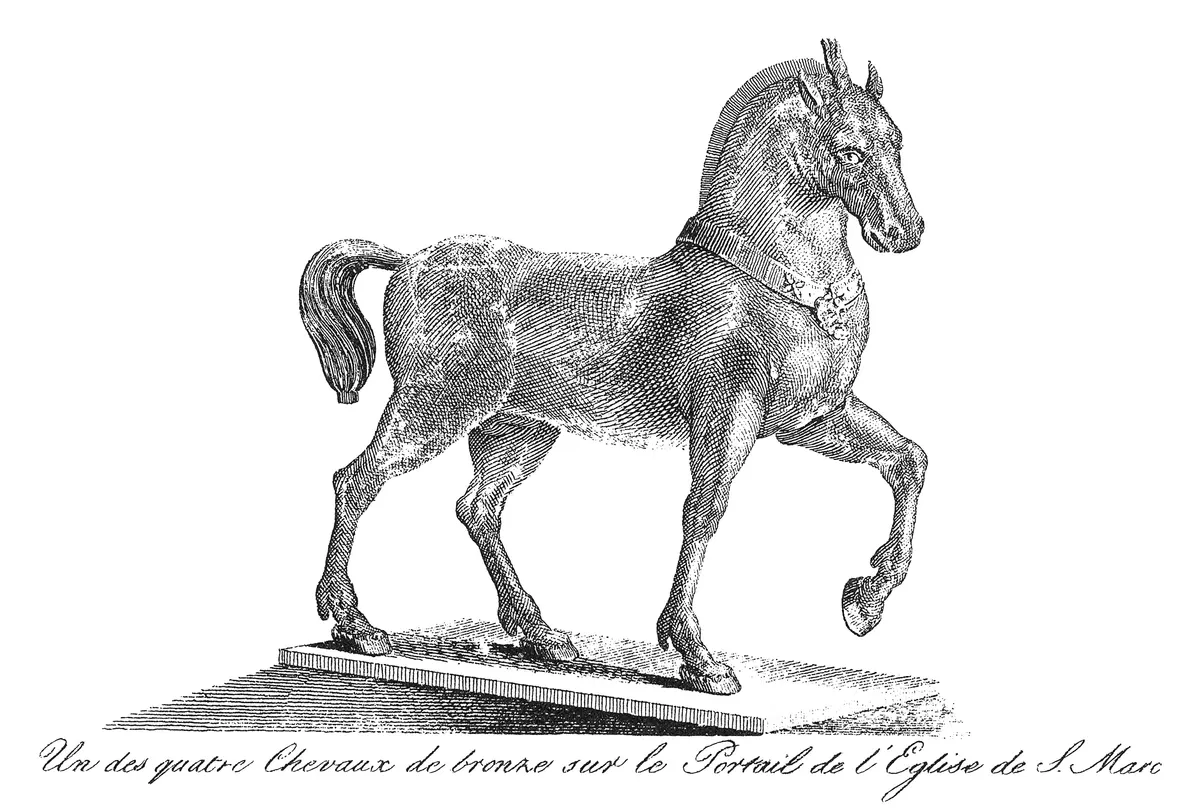
Ducal church begun in 1063 on a Byzantine Greek-cross plan, consecrated in 1094, with about 8,000 m² of gold-ground mosaics. The Pala d'Oro, a goldsmith's altarpiece set with about 1,900 gems, and the four bronze horses brought from Constantinople in 1204 (the ones on the façade are copies) charge separate admission. Book a time slot; shoulders and knees covered.
The ducal church begun in 1063 holds about 8,000 m² of gold-ground mosaics, and both the Pala d'Oro and the horses brought from Constantinople in 1204 charge separate admission.
Check access

Palazzo Ducale
Seat of the doge, the councils, and the courts in the same building, with a Gothic façade from 1340–1450 over arcades. In the Sala del Maggior Consiglio hangs Tintoretto's “Paradise,” about 22 m wide, one of the largest oil paintings in the world. The visit crosses the Bridge of Sighs (1600–1603) toward the new prisons, and the “Itinerari Segreti” route requires a separate booking.
In the same building is the seat of the doge, the councils, and the courts, with Tintoretto's Paradise, about 22 m wide, in the Sala del Maggior Consiglio, and the visit crosses the Bridge of Sighs toward the new prisons.
Check access

Rialto Bridge and market
The single-span stone bridge, 28 m long, was built by Antonio da Ponte between 1588 and 1591, replacing wooden bridges that kept collapsing. Beside it, the Pescheria and the Erberia have run since the 14th century: fish Tuesday to Saturday mornings, and it's the best place to understand what the lagoon produces each season.
The stone bridge replaced wooden bridges that kept collapsing, and the Pescheria along with the Erberia still show the fish and whatever the lagoon produces by season.
Check access
Santa Maria Gloriosa dei Frari
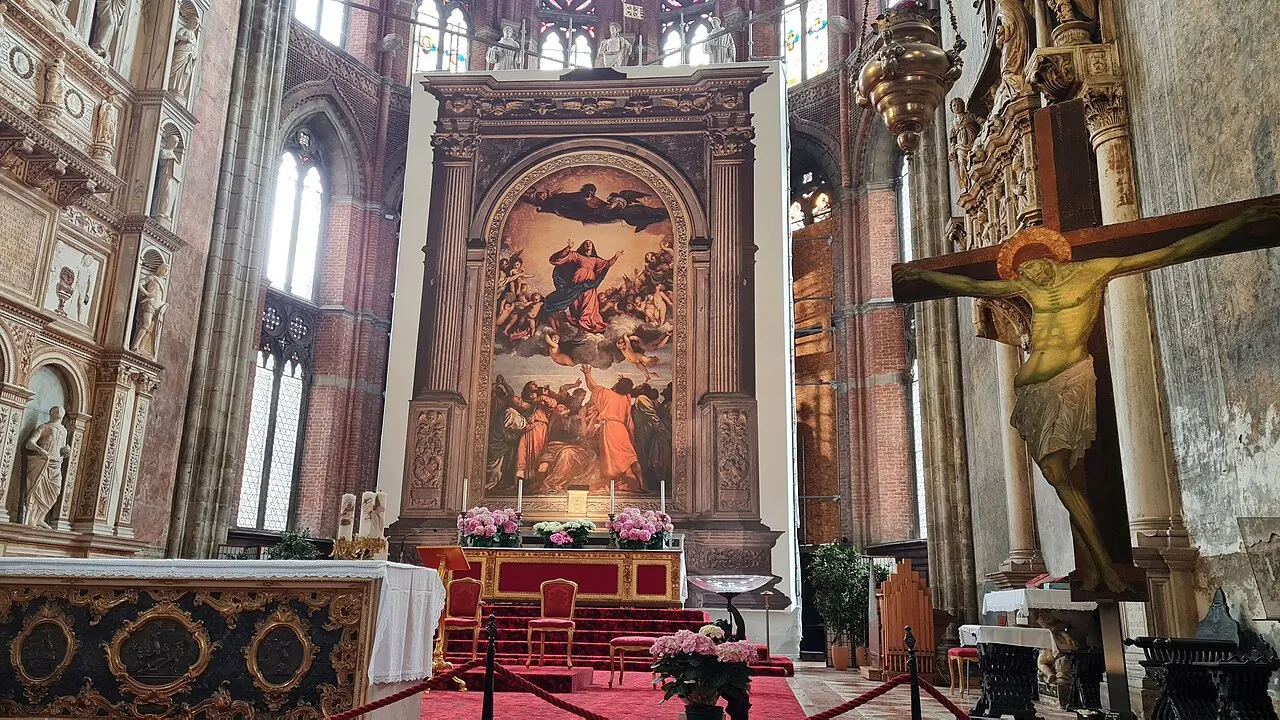
Gothic brick Franciscan church, completed in 1443, with the city's second-tallest bell tower. Over the high altar hangs Titian's “Assumption of the Virgin” (1516–1518), nearly 7 m tall; the painter is buried there, and Canova has a pyramid-shaped tomb from 1827.
Go in for Titian's “Assumption of the Virgin,” from 1516–1518, nearly 7 m tall over the main altar. The painter is buried in the same brick Franciscan church, which also holds Canova's pyramid tomb, from 1827.
Check access

San Giorgio Maggiore
Church by Andrea Palladio begun in 1566, with a classical temple façade completed in 1610, on the island facing the Piazzetta. The bell tower has an elevator and shows San Marco head-on, across the basin, with almost no line; vaporetto line 2 gets there in under five minutes.
Ride the elevator up the bell tower of Palladio's church: it shows San Marco head-on, across the basin, with almost no line. Vaporetto line 2 reaches the island in under five minutes.
Check access
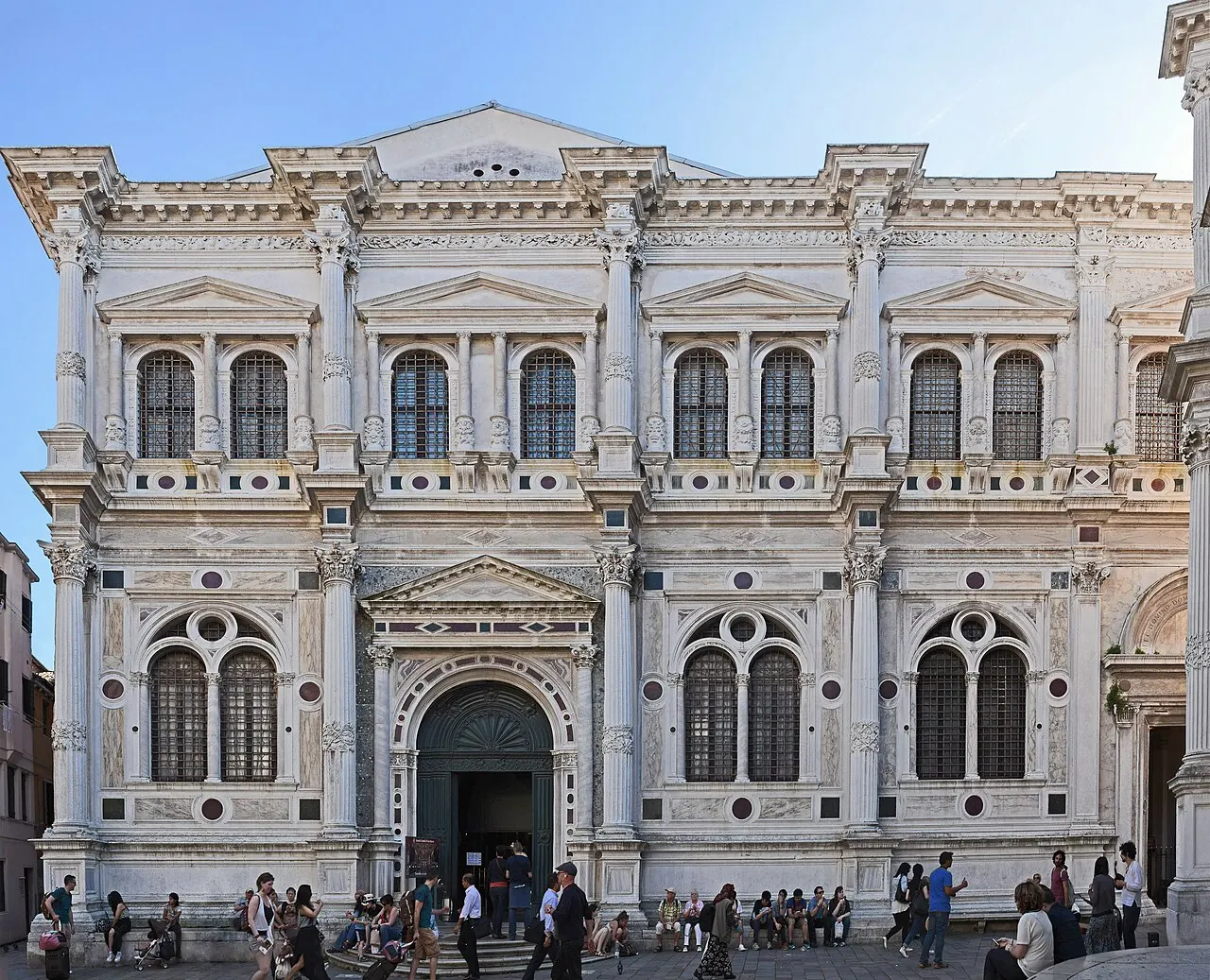
Scuola Grande di San Rocco
Seat of a lay confraternity where Tintoretto painted more than sixty canvases alone between 1564 and 1587, including a “Crucifixion” that covers an entire wall. Hand mirrors are lent at the entrance for looking at the ceilings without straining your neck.
At the confraternity's headquarters, Tintoretto painted more than sixty canvases alone between 1564 and 1587, and the “Crucifixion” fills an entire wall. Pick up one of the hand mirrors lent at the entrance to look at the ceilings without twisting your neck.
Check access
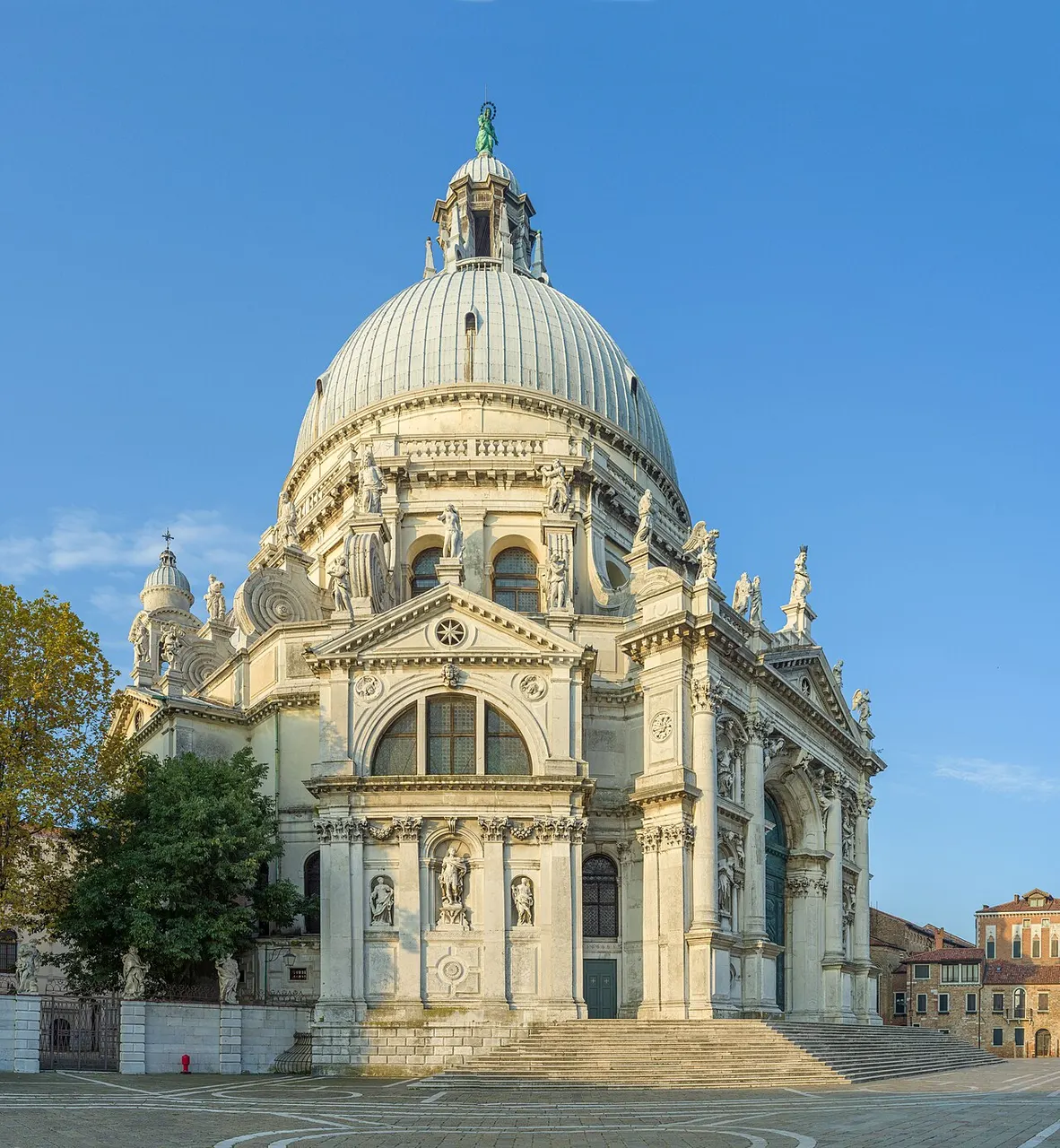
Santa Maria della Salute and Punta della Dogana
Octagonal votive church by Baldassare Longhena, begun in 1631 after the plague and consecrated in 1687, with a sacristy full of Titians and Tintorettos. Next door, the old maritime customs house became a contemporary art museum for the Pinault Collection in 2009, and the point is the best spot to see the Grand Canal and the Giudecca at once.
Longhena's octagonal church was built as a votive offering after the plague, starting in 1631, and the sacristy holds canvases by Titian and Tintoretto. Next door, the Punta della Dogana is the best spot to see the Grand Canal and the Giudecca at the same time, and it pays off most at the end of the day.
Check access

Cannaregio Ghetto
Established on March 29, 1516, it's the oldest ghetto in the world and the origin of the word. Since it couldn't grow outward, it grew upward: these are the tallest buildings in the historic center, up to nine low-ceilinged stories. Five 16th- and 17th-century synagogues can be visited with a guide through the Jewish Museum.
On March 29, 1516, the ghetto that gave the word its origin began, and the lack of room to expand sideways pushed construction upward, up to nine low-ceilinged floors, with five synagogues that can be visited with a guide.
Check access
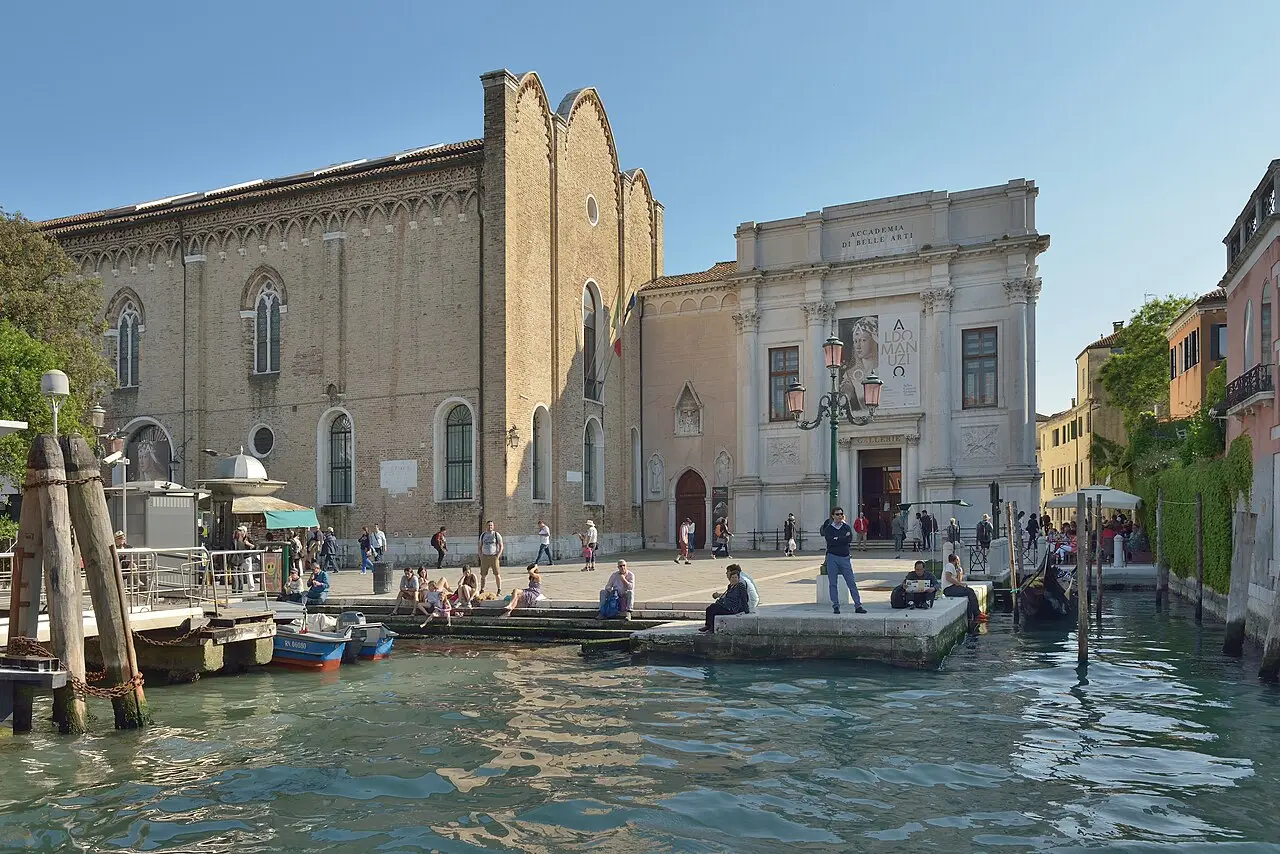
Gallerie dell'Accademia
The definitive collection of Venetian painting, from Bellini and Giorgione to Titian, Tintoretto, Veronese, and Tiepolo, in the former Scuola della Carità and the church of Santa Maria della Carità. Holds Leonardo's “Vitruvian Man,” rarely displayed for conservation reasons.
The Accademia holds the most complete collection of Venetian painting, but removed from the churches and scuole it was painted for, and Leonardo's “Vitruvian Man,” which draws a crowd, is almost never on display, for conservation reasons. On a short visit, the same painting pays off more where it still hangs in its original setting.
Check access
Nilo’s itinerary
Start with the basic programme and choose extensions for the time you have.
Plan my days in the app ↗Day 1 · San Marco and the State
Reach Piazza San Marco at 8:30am, before the groups. Book the basilica for 9:30am or later, Monday through Saturday; on Sundays and religious holidays, visits begin at 2pm, so reverse the day’s order. The Pala d’Oro and the museum with the horses require separate admission.
Visit the Palazzo Ducale with the combined Piazza museums ticket (about €30) and cross the Bridge of Sighs to the new prisons.
Have a standing cicchetti lunch at a bacaro in Castello, one or two calli behind the Riva degli Schiavoni, where the price drops by half.
Take vaporetto line 2 to San Giorgio Maggiore and ride the elevator up the bell tower to see San Marco from outside, with no line (about €8).
Walk the Zattere in the late afternoon, facing the sun, have an ombra at a bacaro in Dorsoduro, and have dinner after 7:30pm, on Venetian time.
Day 2 · Rialto, Frari, and Dorsoduro
Go to the Rialto market between 7:30 and 11am, Tuesday to Saturday, because the fish market is closed Sunday and Monday.
Visit the Scuola Grande di San Rocco in the morning, with the hand mirrors lent at the entrance, and walk 200 m to the Frari to see Titian's “Assunta.”
Cross the Grand Canal by traghetto, the standing-room gondola crossing for about €2, instead of walking to the nearest bridge.
In the afternoon, choose between the Gallerie dell'Accademia and Peggy Guggenheim; they're 400 m apart, on the same side.
Watch the sunset at Punta della Dogana and have dinner in San Polo or at Campo Santa Margherita, cheaper and younger.


If you stay longer
Day 3 · The lagoon and everyday life
Take vaporetto 12 at Fondamente Nove and get off first in Murano, for a glass furnace and the Museo del Vetro, before heading on to Burano (about 45 min total).
Continue from Burano to Torcello, 5 minutes by boat, to see the 12th-century Last Judgment mosaic in the cathedral of Santa Maria Assunta, from 639.
On the way back, if there is time before closing, continue to Fondamente Nove and change to Line 4.1 or 4.2 serving Cimitero, checking the direction when boarding. San Michele is the cemetery island where Stravinsky, Diaghilev, and Ezra Pound are buried; Line 12 does not stop there, and the cemetery closes in the late afternoon.
Spend the afternoon in Cannaregio, between the 1516 Ghetto, the guided visit to the synagogues of the Jewish Museum, and the Madonna dell'Orto, Tintoretto's church.
Have dinner at the Fondamenta della Misericordia, where Venetians drink at night, and walk back, because the whole center can be crossed in 40 minutes.
Food
 AI illustration
Cicchetti and the bacaro
Counter snacks (half a sardine, octopus, artichoke, salt cod on bread) served at bars called bacari, between €1.50 and 3.50 each. Eaten standing up, between 11am and 1pm and again from 6pm to 8pm; the circuit of several bacari is called giro d'ombre.
 AI illustration
Ombra and spritz
“Ombra” is the small glass of house wine, a name that comes from the shadow of the bell tower under which vendors used to move their stall through the day. It costs €1.50–3 at the counter. The Venetian spritz uses white wine or prosecco, sparkling water, and a bitter: Select is the local one, more than Aperol.
 AI illustration
Sarde in saor
Fried sardines marinated in sautéed onion, vinegar, raisins, and pine nuts, created as a way to preserve them on board ship. Served cold, the day after cooking, and mandatory at the Redentore festival.
 AI illustration
Baccalà mantecato
It is made with Norwegian stockfish, fish dried without salt, soaked and whipped with olive oil into a white cream. It is served on grilled polenta or bread and is the city’s bestselling cicchetto.
 AI illustration
Bigoli in salsa
Thick wholewheat pasta extruded through a bronze press, with a sauce of dissolved onion and anchovies or salted sardines. A lean-day dish on the Catholic calendar, cheese-free by definition.
 AI illustration
Seppie al nero con polenta
Cuttlefish cooked in its own ink, served with white polenta: Venetian polenta uses white corn, not yellow. It appears year-round and stains everything, including whoever eats it.
 AI illustration
Moeche and castraure
Moeche are crabs caught in the few weeks when they molt, in spring and fall, breaded and fried whole; they're expensive and exist only in the lagoon. Castraure are the first purple artichokes of the island of Sant'Erasmo, in April and May.
 AI illustration
Bussolai, baicoli, and frittelle
Bussolai are Burano butter cookies, shaped as rings or S's; baicoli are thin 18th-century biscuits, made to keep on sea voyages. Frittelle, fried balls with raisins or cream, appear in bakeries only between January and Carnival.
Day trips
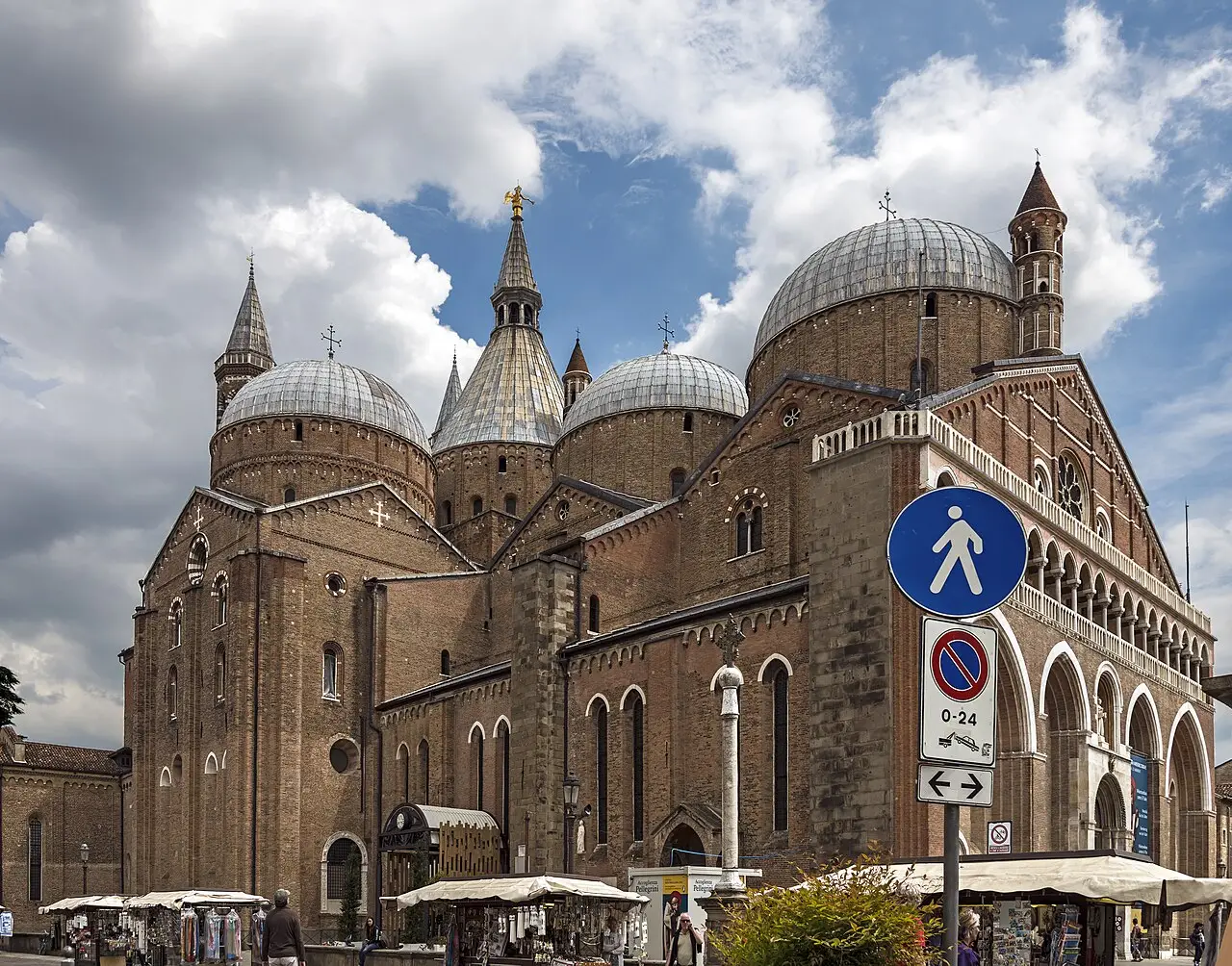
Padua
Padua is 37 km to the west, with regional trains every 15–20 minutes, a 25–50 min ride, and a ticket of about €5. The Scrovegni Chapel, with Giotto's 1303–1305 cycle, only admits visitors by booking and in 15-minute slots; the Basilica of St Anthony and the botanical garden from 1545, the oldest still operating in the world, are within walking distance of downtown.

Verona
Verona is 120 km away, 1 hour 10 minutes by fast train or about 2 hours 10 minutes by regional train. The Arena, a 1st-century Roman amphitheater, operates as an open-air opera house from June to September, with stone-tier tickets from about €30.
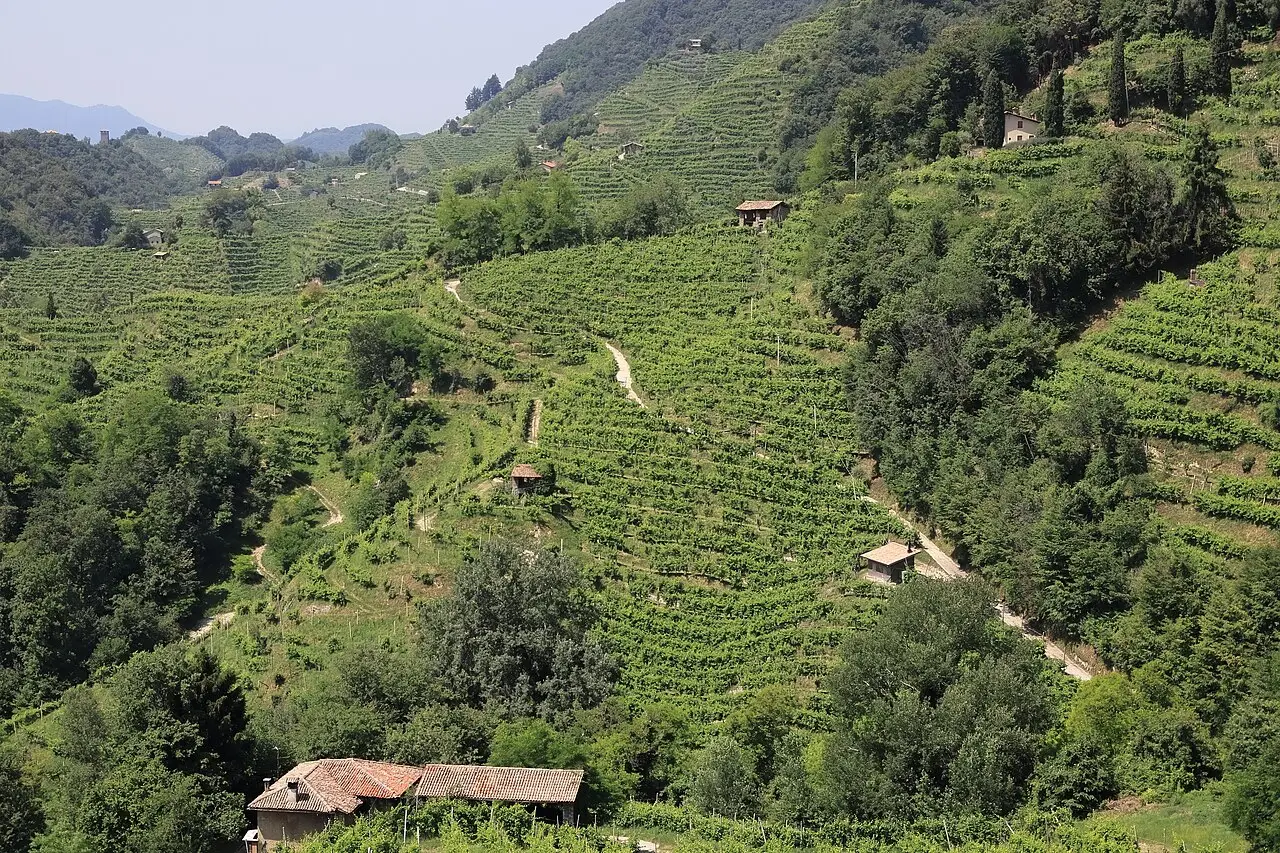
Prosecco Hills, Conegliano and Valdobbiadene
The Prosecco hills of Conegliano and Valdobbiadene are about 60 km to the north. Without a car, take the train to Conegliano (about an hour) and continue by local bus through the hills, a UNESCO-listed landscape since 2019, with Cartizze wineries that welcome visitors by appointment.
Where to begin
San Marco and the State
Reach Piazza San Marco at 8:30am, before the groups. Book the basilica for 9:30am or later, Monday through Saturday; on Sundays and religious holidays, visits begin at 2pm, so reverse the day’s order. The Pala d’Oro and the museum with the horses require separate admission.
Rialto, Frari, and Dorsoduro
Go to the Rialto market between 7:30 and 11am, Tuesday to Saturday, because the fish market is closed Sunday and Monday.
The lagoon and everyday life
Take vaporetto 12 at Fondamente Nove and get off first in Murano, for a glass furnace and the Museo del Vetro, before heading on to Burano (about 45 min total).
Money
The currency is the euro, and contactless cards work for almost everything, including the ACTV kiosks, but carry €20–30 in cash for small bacari, public restrooms (about €1.50), and the traghetto. Count on these ranges: an espresso at the counter €1.30–1.80, and double or triple that sitting down; cicchetto €1.50–3.50; ombra €1.50–3; spritz €3.50–5 at a bacaro and €10–15 at a table in Piazza San Marco, where service and the orchestra are charged separately; a simple lunch €15–25; a sit-down dinner with a starter and a main €35–60 without wine, plus the coperto of €2–4 per person. A three-star hotel downtown runs €130–230 off-season and €220–400 between May and October, and a hostel or shared room, €45–80. Sleeping in Mestre costs about 40% less and adds 15 minutes of train in each direction. On top of the nightly rate comes the tassa di soggiorno of €1–5 per person per night, depending on the category and season, charged for up to five nights, and, on marked days, the access fee of €5 or 10 for anyone not staying overnight. A tip isn't mandatory: rounding up the bill or leaving 5% is already generous. Approximate 2026 figures.
Getting there and around
From Marco Polo airport to downtown, by bus or boat
Marco Polo airport (VCE) is in Tessera, on the mainland, 8 km to the north, and there are three ways to reach the island. The ACTV bus line 5 and the ATVO express go to Piazzale Roma in 20–25 min, for about €10 one-way and €18 round-trip; the Alilaguna line boats (Blu, Arancio, and Rossa) run to San Marco, Rialto, or Fondamente Nove in 45–90 min, for about €15–18; and the private water taxi charges €130–160 for up to four or six people and drops off at the door of many hotels. Treviso (TSF), 40 km away, is served by ATVO buses in about 70 min, for about €12–14. By train, get off at Venezia Santa Lucia, which is already on the island; Venezia Mestre, the previous stop, is on the mainland. Cars only reach Piazzale Roma or Tronchetto, where the garage charges €25–35 a day. Approximate 2026 figures; check before you go.
Only boat and foot, no third option
Past the road terminals at Piazzale Roma, on the edge of the historic center, every trip is on foot or by boat. ACTV runs about twenty vaporetto lines: a 75-minute ride costs €9.50, and passes run €25 (24 h), €35 (48 h), €45 (72 h), and €65 (7 days). Buy through the app or at the Venezia Unica ticket offices and validate the ticket at the reader every time you board, even with a pass. Line 1 runs the length of the Grand Canal stopping at almost everything (about 45 min from Piazzale Roma to San Marco) and is worth it as a ride in itself; line 2 is faster, and line 12, from Fondamente Nove, goes to Murano, Burano, and Torcello. The traghetto, the standing-room gondola crossing, crosses the Grand Canal at a few points for about €2 and saves a walk. On foot, the whole center can be crossed in 35–40 minutes, but the roughly 435 bridges have steps: a big suitcase, a stroller, and a wheelchair all require a planned route, and the municipality publishes accessible routes with ramped bridges. Bicycles are banned in the historic center and allowed on the Lido. In 2026, the access fee applied on 60 dates between April 3 and July 26, from 8:30am to 4pm: anyone arriving and leaving the same day paid €5 by booking at least four days ahead and €10 after that, through the cda.ve.it portal. Guests staying in lodging within the municipality, including in Mestre, the Lido, and the islands, are exempt and must get proof through the portal or through their lodging. Residents of the municipality and those under 14 don't need a QR code but must show ID if checked. Check the portal for the dates and rules of the year you're traveling.
Safety
Venice is one of Italy's safest large cities: violent crime is rare, and walking the calli at night isn't a problem, though it's easy to get lost and some stretches are poorly lit. The real risk is pickpockets, and they work the crowded spots: vaporetto lines 1 and 2, the Rialto bridge and market, the exit from Santa Lucia station, Piazza San Marco during Carnival. Use a crossbody bag that closes and don't leave your phone on the table. There are four common scams: the fish bill charged by weight with no warning, the water taxi that only quotes “per person” pricing once you're getting off, the bracelet or rose “gift” that turns into a charge, and street sales of counterfeit bags; in that last case, the buyer is also fined, with amounts that can run into thousands of euros. The physical risks are more concrete than the others: the fondamente have no railing, and the green moss on wet stone really does slip; steps on bridges call for shoes with good grip in the rain; and, during acqua alta season, follow the raised walkways and don't try a shortcut through flooded ground, because there's no way to see the step that's disappeared.
Etiquette tips
Drink standing at the counter
At the bacaro, sitting changes the price: drinking standing costs less and is the custom. Order, pay on the spot, and return the glass to the counter instead of walking off with it.
Don't sit on bridges, steps, or embankments
A city ordinance in force since 2019 bans sitting anywhere but on benches and picnicking in monumental areas, with fines starting around €50. It applies mainly to Piazza San Marco and the Rialto area.
Walk on the right and step aside to stop
The calli are 1 to 2 m wide and are the street of people who work and deliver goods. Before taking a photo or pulling out the map, step out of the flow and against the wall.
Swimming and bicycles, banned in the historic center
Swimming in a canal is banned and fined, including in the Giudecca. Bicycles are banned across the whole historic center; rent one on the Lido, which is where Venetians cycle.
Shoulders and knees covered in churches
San Marco, the Frari, the Salute, and San Giorgio turn away tank tops, short shorts, and beachwear. In summer, a thin scarf in your bag solves the problem.
Don't feed the pigeons
Selling corn and feeding pigeons in Piazza San Marco has been banned since 2008, with a fine for feeding them too. The reason is conservation: the acidity of the droppings corrodes the Istrian stone of the façades.
Mistakes to avoid
Boarding the vaporetto without validating the ticket
Boarding without tapping the ticket on the reader: validation is required every time you board, even for those who already bought a pass.
Sitting in San Marco without reading the price list
Sitting at a table in Piazza San Marco without reading the price list first: the service and the live music go on the bill, and a coffee can pass €12.
“Fish of the day” without asking the price per etto
Accepting the “fish of the day” without asking the price per etto, the 100 g unit used on menus: it's the root of most inflated bills in the city.
The calli end at a canal with no warning
Trusting the estimated time on your phone's map: the calli end at a canal with no warning, the door number follows the sestiere and not the street, and the actual route usually takes twice as long.
Getting in a gondola without confirming the rate
Boarding a gondola without confirming the fare and duration: the official schedule sets €90 for 30 minutes from 9am to 7pm and €110 for 35 minutes from 7pm to 4am. The price covers the whole gondola, with up to five passengers; traffic, tides, and weather may change the duration by a few minutes.
Useful phrases
Buongiorno / Bondì
Good morning: “bondì” is the Venetian form, common among residents and in neighborhood bacari
Un'ombra, per favore
A glass of house wine, please: the standard order at the counter
Do cicheti, grazie
Two cicchetti, thanks: “do” is “two” in Venetian
Quanto costa all'etto?
How much per 100 grams? The required question in front of fish sold by weight
Dov'è l'imbarcadero del vaporetto 1?
Where's the landing stage for vaporetto 1?
Il conto, per favore. È compreso il coperto?
The bill, please. Is the cover charge included?
Districts
San Marco
The sestiere of power: the square, the basilica, the Ducal Palace, La Fenice, and the pricey shop windows of Calle Larga XXII Marzo. Packed from 9am to 6pm, nearly empty at 8am and after 9pm; it's where everything costs more and almost nobody lives.
San Polo and Rialto
The smallest sestiere and the oldest market: the fish market and produce stalls run in the morning, Tuesday to Saturday, with bacari around them. It also holds the Frari and the Scuola Grande di San Rocco, the two largest collections of painting in the city outside the museums.
Santa Croce
The land gateway: Piazzale Roma, parking garages, the bus terminal, and Calatrava's bridge. Beyond that it turns residential and quiet, with campi like San Giacomo dell'Orio, where kids still play ball in the afternoon.
Cannaregio
The most populous and the most everyday sestiere, cut by three long parallel fondamente. It holds the 1516 Ghetto, Tintoretto's Madonna dell'Orto, and the Fondamenta della Misericordia, where Venetians drink at night.
Castello
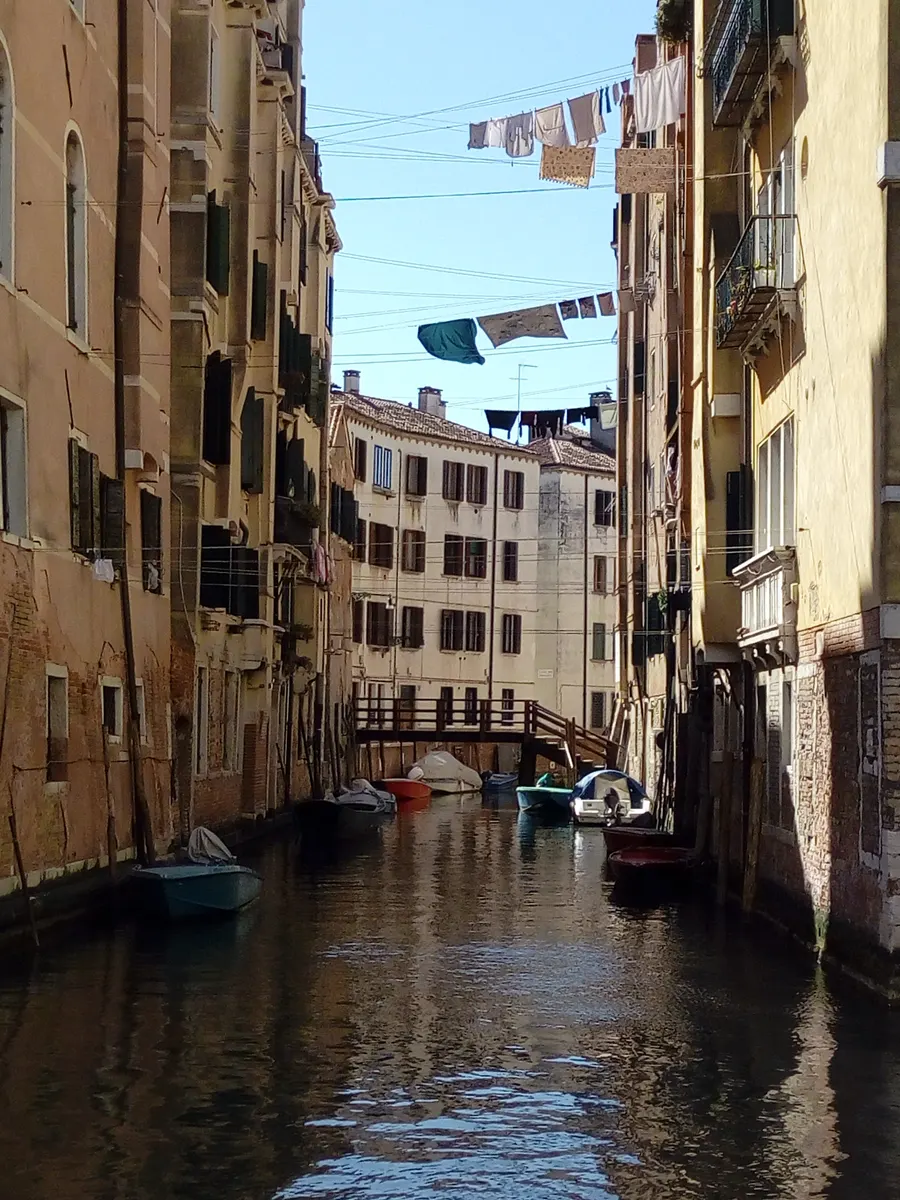
The largest and most uneven: touristy along the Riva degli Schiavoni, working-class in the streets behind the Arsenale, leafy in the Biennale's Giardini and in Sant'Elena, a neighborhood of 1920s houses. It's where you see laundry hanging over the canal.
Dorsoduro
Museums and university: the Accademia, Peggy Guggenheim, Ca' Rezzonico, Punta della Dogana, and the campi of Ca' Foscari and IUAV. The Zattere get afternoon sun and a view of the Giudecca; Campo Santa Margherita is the student meeting point.
Giudecca
A long island facing Dorsoduro, four minutes by vaporetto, with an industrial past (the Molino Stucky, from 1895, now a hotel) and public housing. It has Palladio's Redentore and the most reasonable waterfront restaurant prices.
The Lido and the lagoon islands
The Lido, a sandbar between the lagoon and the Adriatic, serves anyone who wants a beach in summer and anyone coming for the Film Festival, which occupies the festival palace; there, as in Pellestrina, cars circulate, and a bicycle is the most practical way to get around the island. To the north are Murano (glass since 1291), Burano (lace and painted houses), Torcello (the lagoon's oldest church), and San Michele, the cemetery island.
History
5th–7th c. · Refuge in the lagoon
People from Altino, Padua, and Aquileia flee Goths, Huns, and Lombards to the lagoon's sandy islands. Tradition sets the founding at March 25, 421, but stable settlement dates from the 6th and 7th centuries.
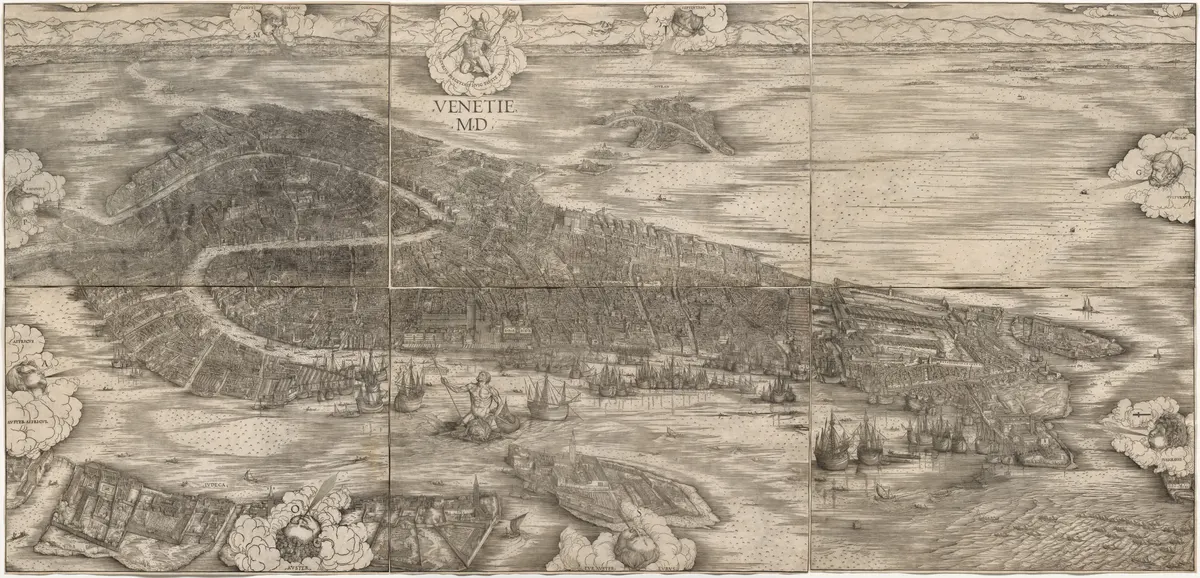
810–811 · The capital moves to Rialto
After a Frankish attack led by Pepin, the ducal seat moves from Malamocco to the more defensible Rialto archipelago. That's where the modern city takes shape, under Byzantium's nominal oversight.
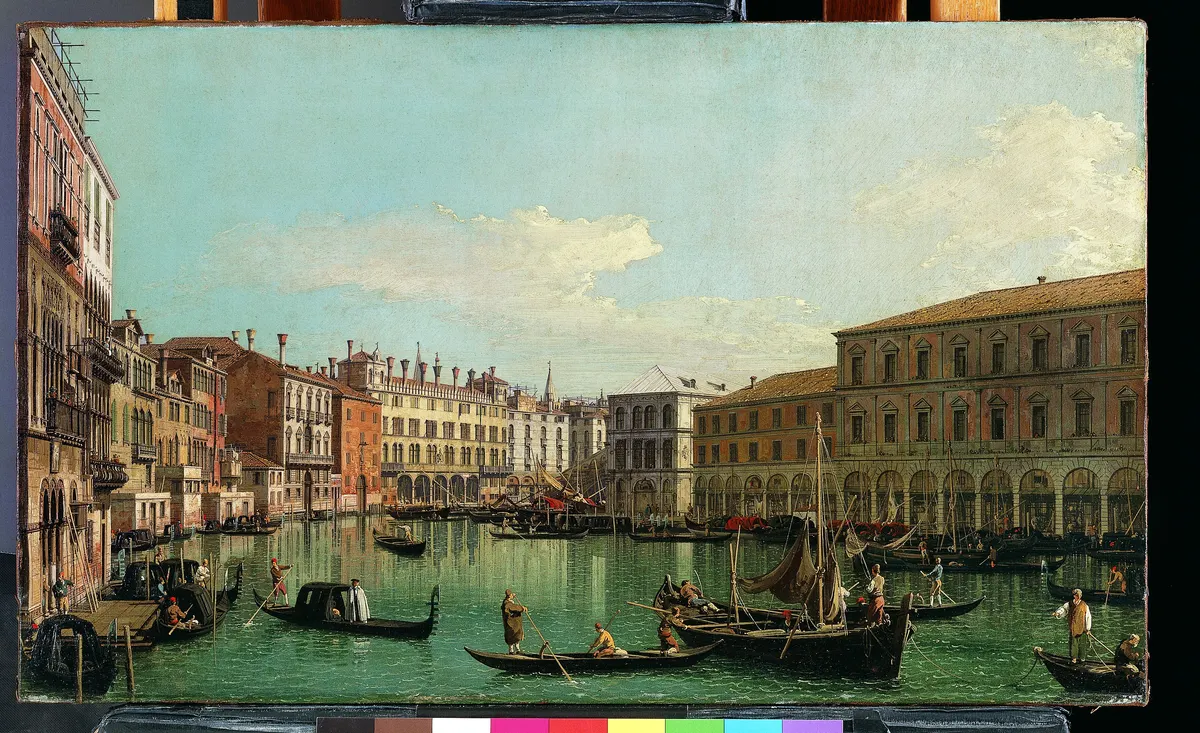
828 · The body of Saint Mark
Two merchants bring the relics attributed to the evangelist Mark from Alexandria. The city swaps the Greek patron Saint Theodore for Mark, gains an argument for religious independence, and begins the basilica that bears his name.
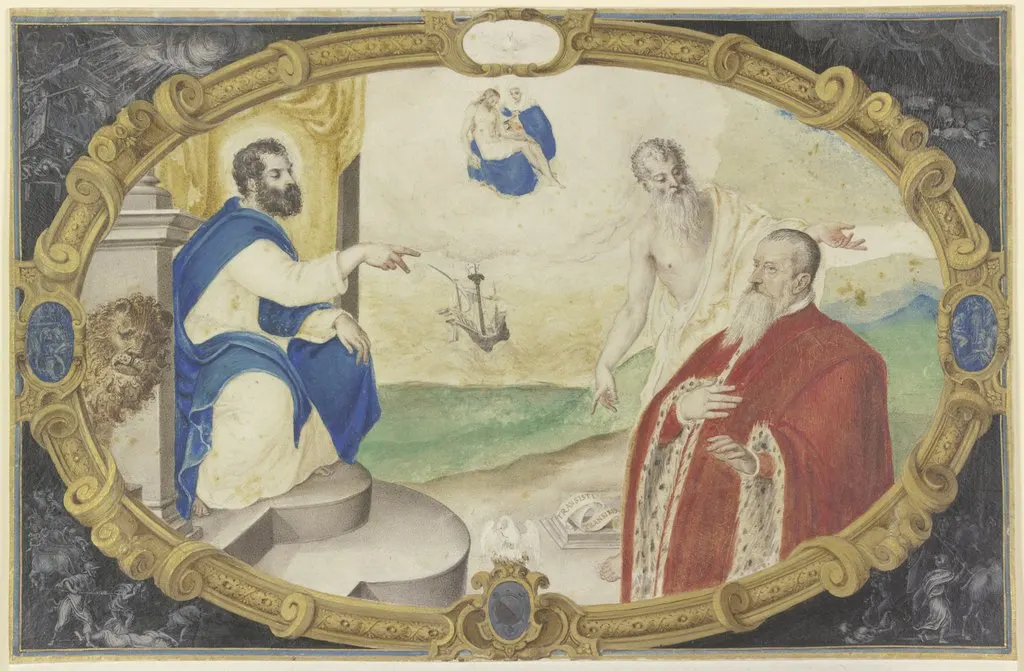
1204 · Sack of Constantinople
Doge Enrico Dandolo, in his eighties and nearly blind, diverts the Fourth Crusade to Constantinople. Venice comes away with three-eighths of the Byzantine empire, Crete, and the four bronze horses now kept at San Marco.
1297–1310 · Serrata and Council of Ten
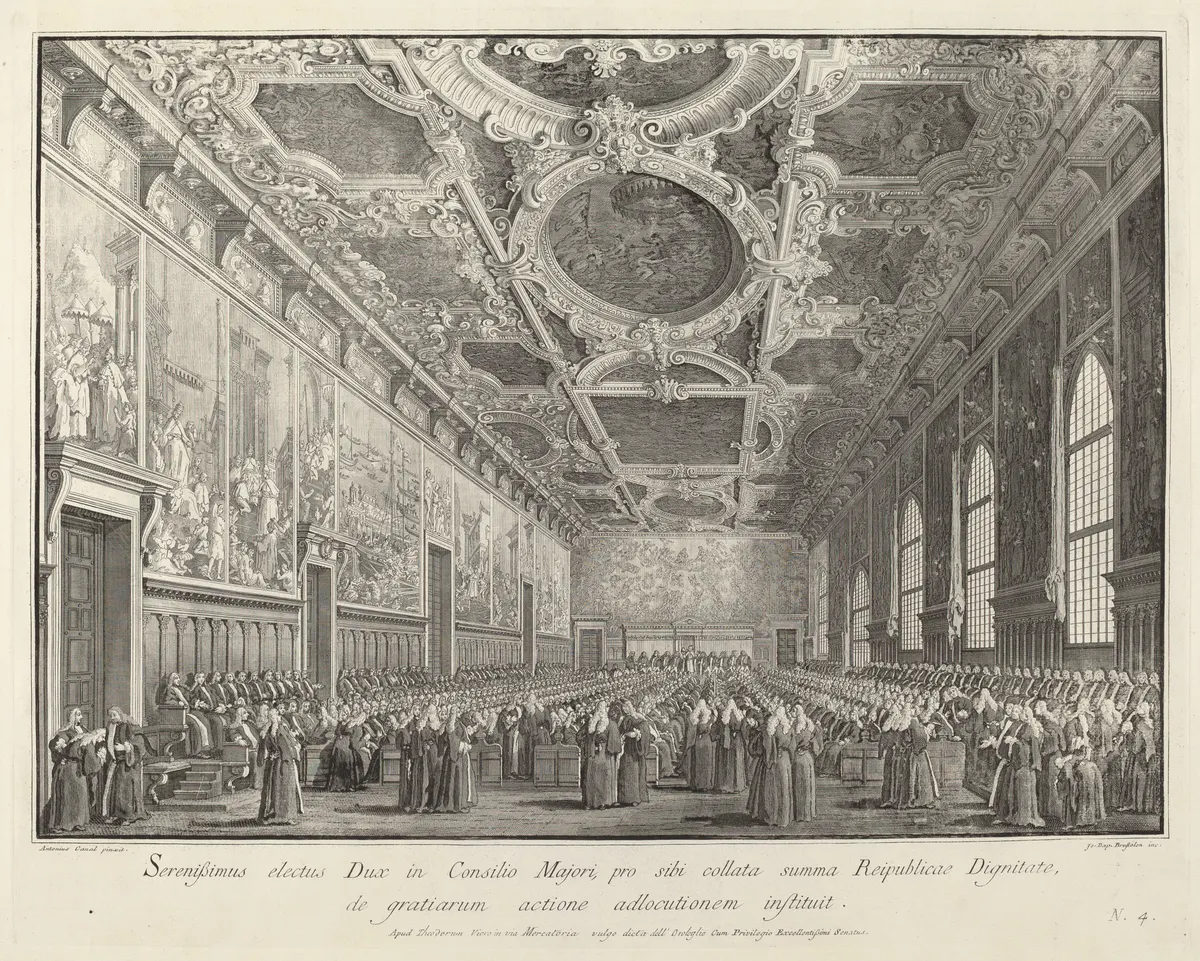
The Serrata del Maggior Consiglio, in 1297, closes government to families already listed in the Golden Book. After the Querini-Tiepolo conspiracy in 1310, the Council of Ten is created, a security body that survives until 1797.
1453–1571 · The end of the monopoly
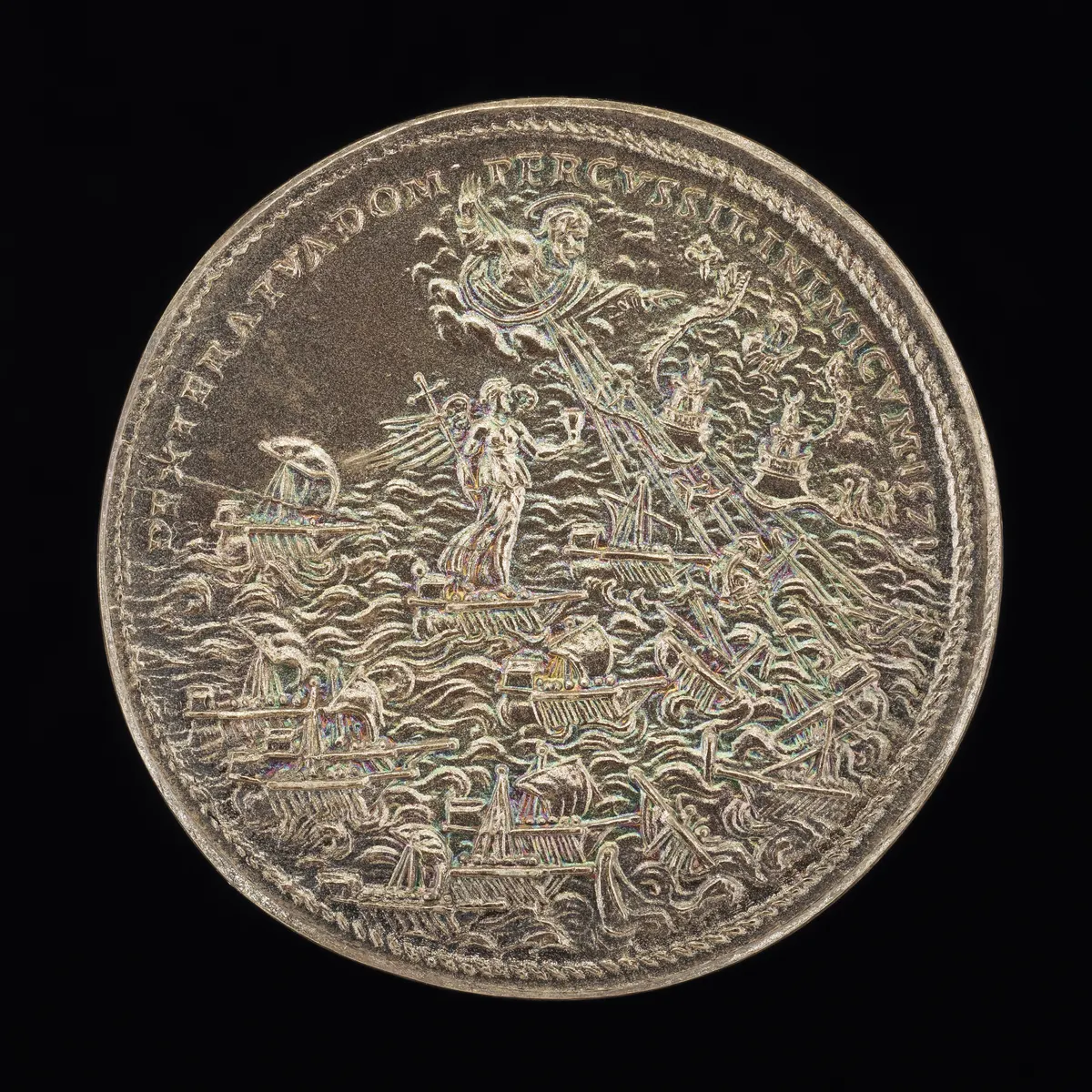
The fall of Constantinople in 1453 and Vasco da Gama's route to India in 1498 strip Venice of control over the spice trade. The naval victory at Lepanto in 1571 coincides with the loss of Cyprus; Crete falls in 1669.
1516 · The first ghetto
On March 29, 1516, the Senate confines Jews to Cannaregio's old foundry, with gates locked at night and guards paid by the confined themselves. The word “getto” spreads from there into every language.
1630–1631 · The plague and the Salute
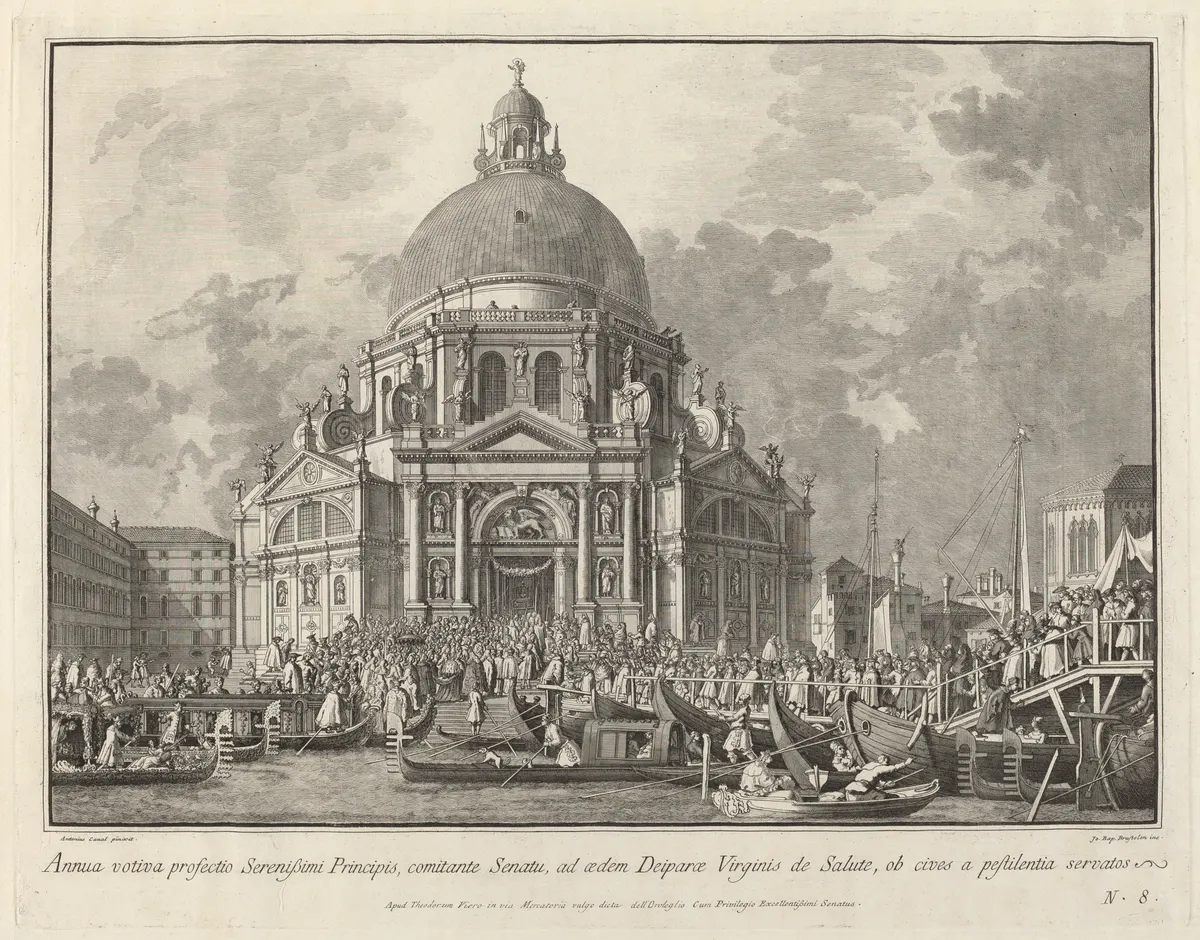
The epidemic kills about 46,000 of 140,000 residents in sixteen months. The Senate vows a votive church: Santa Maria della Salute, by Baldassare Longhena, begins in 1631 and is consecrated in 1687.
1797 · End of the Republic
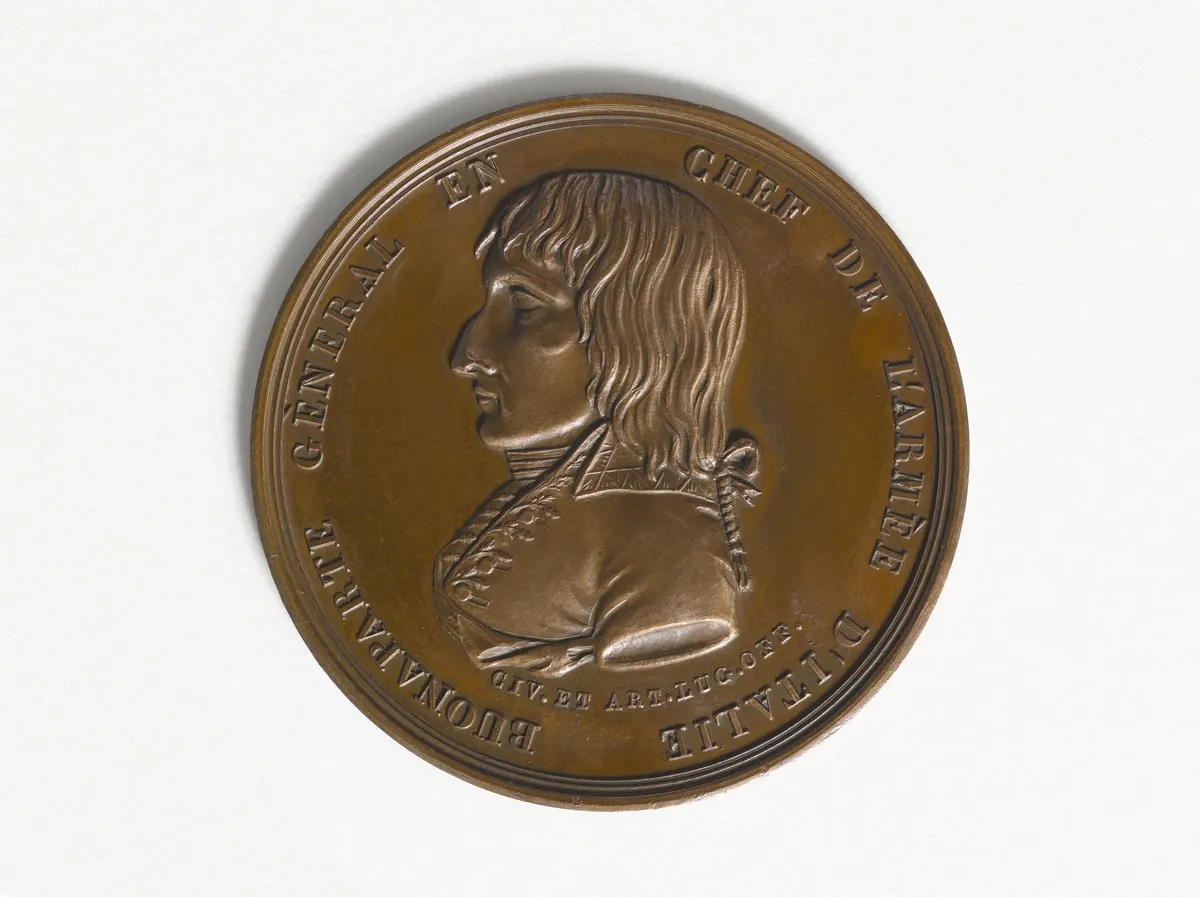
On May 12, 1797, the last doge, Ludovico Manin, abdicates before Napoleon's troops, and the Treaty of Campo Formio hands the city to Austria. From 1805 to 1814 Venice passes to Napoleon's Kingdom of Italy; it then returns to the Austrians, who hold it until 1866, with Daniele Manin's republican interlude in 1848–49.
1846–1966 · The bridge and the emptying out
The 1846 rail bridge and the 1933 road bridge end the city's isolation; Porto Marghera, from 1917, draws industry and later residents to the mainland. The 194 cm tide of November 4, 1966, speeds up the exodus.

2003–2026 · MOSE and the access fee
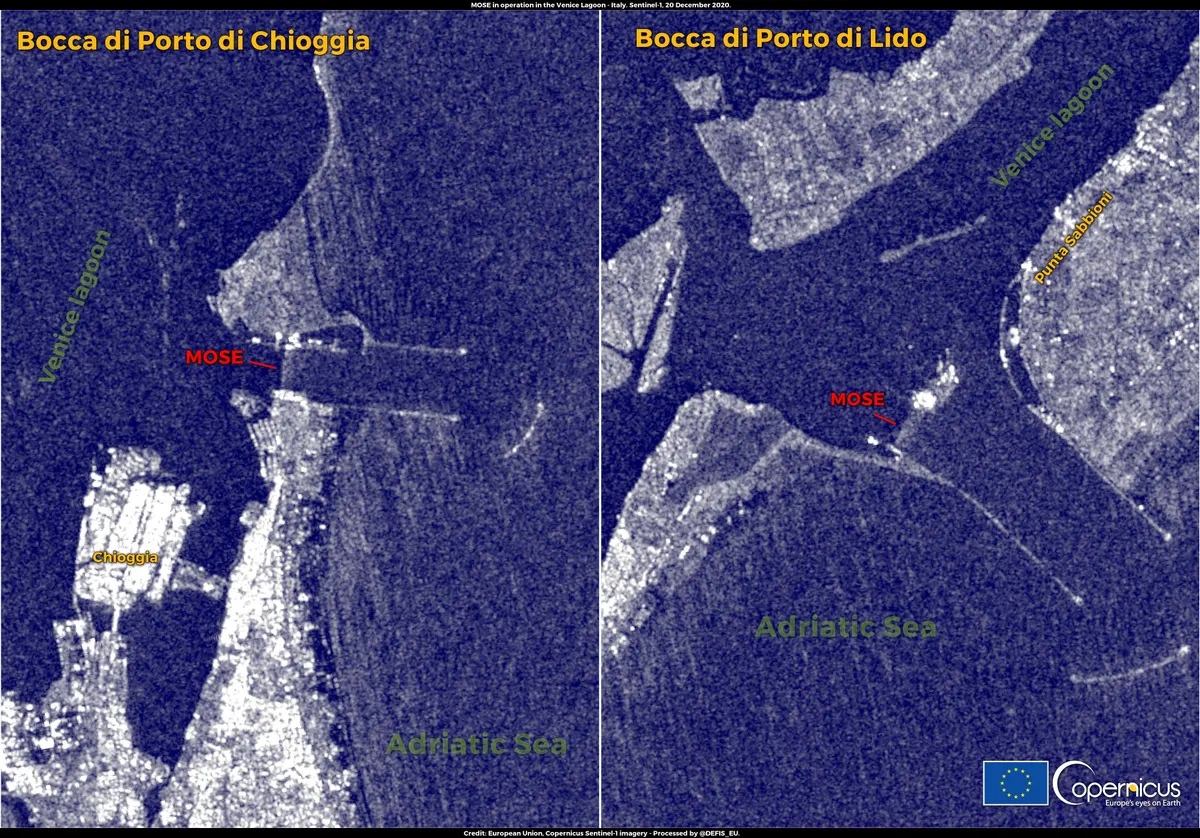
MOSE's 78 mobile gates begin construction in 2003 and rise for the first time against a real tide on October 3, 2020; in the following years the system remains under testing and finishing work. In April 2024 the city starts charging day-trippers an access fee, the first of its kind in the world; in 2026, the charge applied on 60 days, from April 3 to July 26.
Complete history
Origins: a retreat from Germanic invasions
Between the 5th and 7th centuries, families from Aquileia, Altino, and Padua settled on the lagoon's sandy islands to escape the Germanic invasions, and stayed because the place interested no one: there was no farmland, no stone, no fresh water. The first economy was salt, fish, and transport, and the first wealth came from selling what the lagoon produced and brokering what Byzantium bought. In 810–811, after a Frankish attack, the ducal seat moved from Malamocco to the higher islands of Rialto. The theft of St Mark's relics in Alexandria, in 828, gave the community its own patron saint and a pretext to declare itself autonomous from Constantinople without breaking with it.
A state built for trade
From the 11th to the 15th century, Venice built a state designed for trade. The Arsenale, from 1104, industrialized shipbuilding before the word industry existed. The diversion of the Fourth Crusade, in 1204, yielded three-eighths of the Byzantine empire and the start of the stato da mar, with Crete, Negroponte, and ports in the Peloponnese and the eastern Adriatic; Corfu would come in 1386, and Cyprus in 1489. The victory over Genoa in the War of Chioggia, in 1378–1381, eliminated the direct rival, and the expansion onto the mainland starting in 1405 annexed Padua, Verona, and Vicenza to secure food and trade routes. Inside, power closed ranks: the Serrata of 1297 restricted the Maggior Consiglio to enrolled families, the Council of Ten, from 1310, watched over the nobility, and the doge, elected through a ten-round process alternating drawing lots and voting, governed with the autonomy of a well-paid official.
Venice's decline is slow, with precise dates
Decline came slowly, with clear dates. In 1453 the Ottomans took Constantinople; in 1498 Vasco da Gama reached India by sea and carried the spice trade off to Lisbon; in 1509 the League of Cambrai defeated Venice at Agnadello and nearly wiped out its mainland domain. Cyprus was lost in 1571, the same year as the victory at Lepanto, and Crete in 1669, after twenty-four years of war. In the middle of this, the plague of 1630–31 killed a third of the city. In the 18th century, with no empire left, Venice turned to living off the leisure it sold to foreigners: the Ridotto, a public gambling house since 1638, a Carnival that could run six months, the world's first paid opera house, opened at San Cassiano in 1637, Vivaldi teaching the abandoned girls of the Ospedale della Pietà, Goldoni reforming comedy, and Canaletto selling views of the city to Englishmen on their Grand Tour. On May 12, 1797, Napoleon ended the Republic without a battle.
Under Austria, then in Italy, starting 1866
Under Austria, and then within the Kingdom of Italy from 1866, the city was reconnected to the mainland by the 1846 rail bridge and the 1933 road bridge, and lost, in that very connection, its reason for living on the island. The Lido became a seaside resort from the 1850s, with the grand hotels of 1900 and 1908. In 1917 Porto Marghera began, a petrochemical and port complex that drew jobs to the mainland and, by pumping groundwater, made the historic center sink about 12 cm over the course of the 20th century. In 1951, the center still had about 175,000 inhabitants. On November 4, 1966, the tide reached 194 cm and covered the whole city for more than fifteen hours, and from then on the exodus of residents turned into a hemorrhage.
The historic center's population shrinks every year
In January 2026, the historic center had 47,652 residents, 780 fewer than a year before, and at that rate it should fall below 47,000 before the end of 2026; a counter in a shop window on Campo San Bartolomio has published the number since 2008. While residents leave, tens of millions of visitors arrive each year, most on day trips, and properties converted into short-term rentals push housing prices up. The city responded with administrative measures: in August 2021 it banned ships over 25,000 tons from the Giudecca canal; MOSE, activated for the first time in October 2020, has already closed more than a hundred times; and since April 2024 it has charged day visitors an access fee, a measure unprecedented in the world. None of them has brought a resident back. Venice and its lagoon have been on the UNESCO World Heritage list since 1987, and UNESCO experts recommended adding them to the list of heritage in danger in July 2021 and again in 2023, for three reasons: tourist pressure, construction work, and the rising sea level.
In January 2026, the counter at San Bartolomio read 47,652 residents.
Geography and shape of the city
The lagoon, the 118 islands, and the piles
The city occupies 118 islands at the center of a lagoon of about 550 km², the largest in the Mediterranean, separated from the Adriatic by two sandbars, the Lido and Pellestrina, and linked to it by three inlets: Lido, Malamocco, and Chioggia; exactly where MOSE's 78 gates sit. The historic center covers 7.8 km² and is built on millions of alder and oak piles driven down to the caranto, the layer of compact clay under the silt; the Salute church alone rests on about 1.1 million of them.
The Grand Canal and the 435 bridges
The Grand Canal cuts through the city in an S shape 3.8 km long, 30 to 70 m wide and about 5 m deep, and is crossed by just four bridges: Rialto (1591), Accademia (1933, rebuilt in 1985), Scalzi (1934), and Calatrava's Costituzione (2008). Beyond it there are about 150 smaller canals and around 435 bridges, nearly all with steps.
Parish islands, local vocabulary, and the tide
The layout has no axis: it grew as parish islands, each organized around a campo with a well, a church, and a canal, later stitched to each other; which is why a Venetian address has no street name, only the sestiere and a number that can run up to 6,000. The urban vocabulary is its own: calle is a narrow street, fondamenta is a street along the water, rio terà is a filled-in canal, sotoportego is a passage under a building, salizada is a street paved before the others. The city sank about 12 cm in the 20th century from groundwater extraction, and the sea rose another 11; the result is that tides once rare are now on the calendar.
Culture
The painting stays where it was commissioned
Venice is one of the rare places where most paintings remain in the buildings for which they were commissioned. The Venetian school (Giovanni Bellini, Giorgione, Titian, Tintoretto, Veronese, and, in the eighteenth century, Tiepolo, Canaletto, and Guardi) developed an expressive use of color and light, particularly in oil painting on canvas. Humidity encouraged canvas for many commissions, but fresco was also part of the repertoire. The scuole, lay brotherhoods of trades and religious devotion, were the main patrons: that is why San Rocco has a whole Tintoretto cycle and the Scuola di San Giorgio degli Schiavoni has one by Carpaccio. The contemporary layer sits alongside the old: Peggy Guggenheim installed her collection at Palazzo Venier dei Leoni in 1949, the Pinault Collection opened Punta della Dogana in 2009, and Carlo Scarpa remodeled the Querini Stampalia and the Accademia entrance in the 1950s and 1960s, in direct dialogue with the water.
Opera, Vivaldi, Goldoni, and the Biennale
Much of modern paid spectacle was born in Venice. Monteverdi was choirmaster at San Marco from 1613 to 1643, and the first opera house open to the paying public opened at San Cassiano in 1637. Vivaldi, born in 1678, taught at the Ospedale della Pietà between 1703 and 1740, and Carlo Goldoni took commedia dell'arte out of improvisation and wrote its characters in Venetian in the 18th century. La Fenice, from 1792, burned down in 1836 and again on January 29, 1996, in an arson fire, and reopened on December 14, 2003, with the same decoration and a concert conducted by Riccardo Muti. The Biennale, created in 1895, occupies the Giardini and the Arsenale between spring and November (art in even years, architecture in odd ones), and the Film Festival, on the Lido since 1932, is the oldest film festival in the world.
The voga alla veneta sustains the city's daily life
The voga alla veneta, rowing standing up and facing forward, is practiced by dozens of neighborhood rowing clubs, not only by gondoliers. The gondola, 11 m long and about 350 kg, is asymmetrical on purpose (the left side is wider to balance the single oar) and is built with eight different kinds of wood in squeri like the 17th-century one at San Trovaso. Murano has blown glass since 1291, when the furnaces were expelled from the center over fire risk, and Burano has made needle lace since the 16th century. The roughly 20,000 students at Ca' Foscari (1868) and IUAV are today one of the few sources of a young population, and Venezia FC plays at the Penzo stadium, from 1913, in Sant'Elena, the only one in Italy where part of the crowd arrives by boat.
Vivaldi wrote much of his instrumental music for the girls' orchestra at the Ospedale della Pietà, a shelter for abandoned children where he taught between 1703 and 1740.
At the Penzo stadium, part of the crowd arrives by boat.
Festivals and events
Carnival
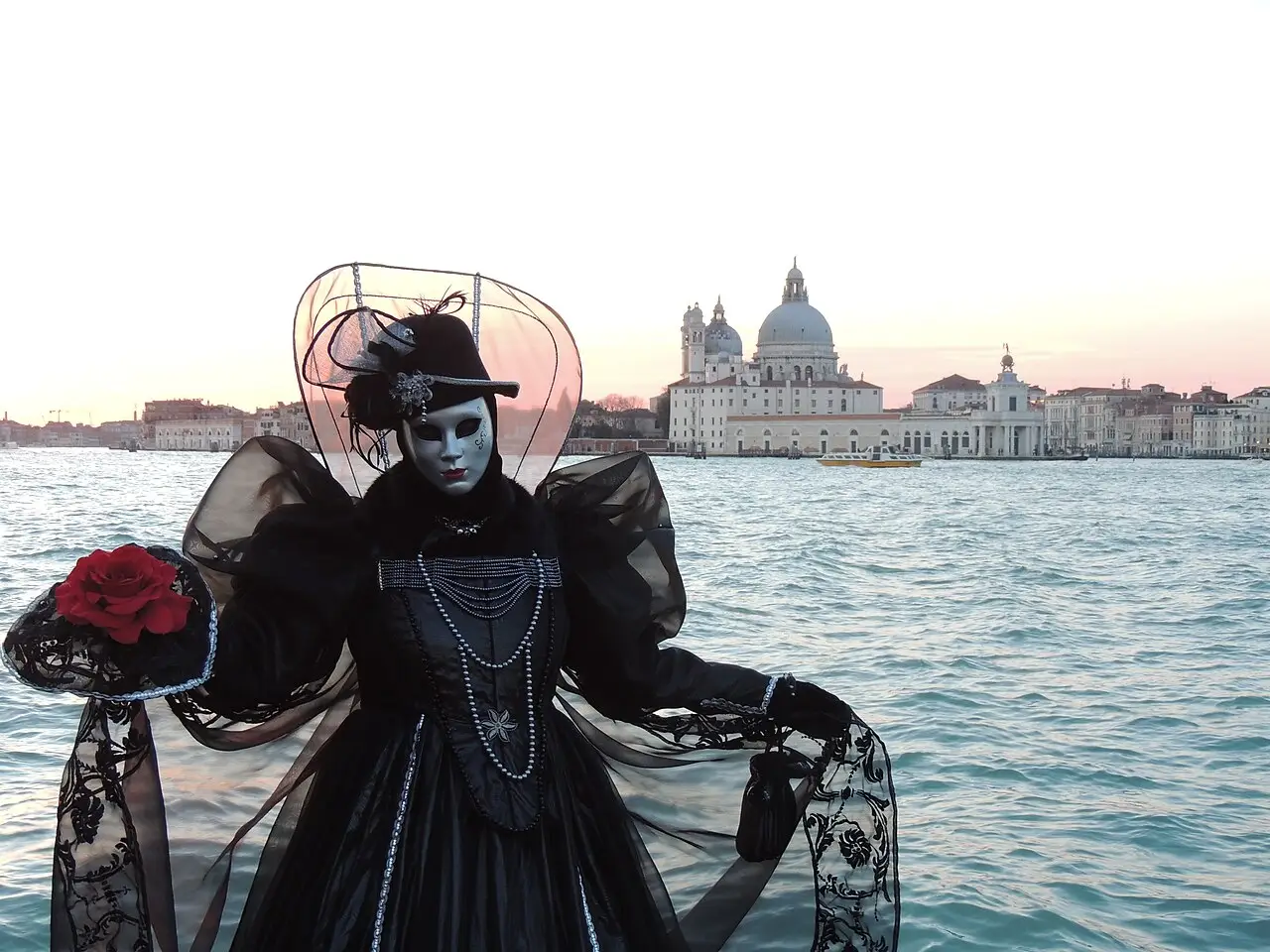
About two weeks between February and early March, ending on Fat Tuesday. Banned in 1797 and revived in 1979, it now mixes expensive private balls, the Volo dell'Angelo in Piazza San Marco, and thousands of amateur costumes; the peak of winter crowding.

Vogalonga
The Vogalonga takes place on Pentecost Sunday, between May and June: it's about 30 km of non-competitive rowing across the lagoon, from San Marco to Burano and back through Cannaregio, with more than a thousand rowboats. The Grand Canal is closed to motorboats in the morning.

Festa del Redentore
Third weekend of July, marking the end of the 1576 plague. A 330 m bridge of boats links the Zattere to the Giudecca, Venetians dine on decorated boats, and fireworks light up the San Marco basin on Saturday night, around 11:30pm.

Regata Storica
First Sunday of September. A procession of 16th-century vessels on the Grand Canal followed by four rowing races by category, contested seriously by local rowers; the most anticipated is the pairs' gondolini race.

Festa della Salute
November 21. A bridge of boats crosses the Grand Canal to the Salute church, and the whole city lights a candle for the 1630 plague; the most Venetian and least touristy feast on the calendar, with stalls selling sweets and castradina, the day's mutton stew.
Books and films
“Venice Is a Fish,” by Tiziano Scarpa (2000)
A guide written by a Venetian and organized by parts of the body: feet, eyes, mouth. It explains how the city is walked and heard, not what's photographed.
“Watermark,” by Joseph Brodsky (1992)
Seventeen Venetian winters in short prose, written by someone who only came off-season. The best record of the city with fog and no lines.
“Don't Look Now,” by Nicolas Roeg (1973)
Adaptation of Daphne du Maurier's story, filmed in the winter calli. Uses the city's real geography (dead-end alleys, repeated bridges, dark water) as the structure of the plot.
Frequently asked questions
Venice: How much does a coffee cost sitting down in Piazza San Marco?
A coffee at a table in Piazza San Marco can pass €12, because the service and live music go on the bill: read the price list before sitting down.
Venice: How do you get from Marco Polo airport to downtown?
Marco Polo airport (VCE) is in Tessera, on the mainland, 8 km to the north, and there are three ways to reach the island. The ACTV bus line 5 and the ATVO express go to Piazzale Roma in 20 to 25 min, for about €10 one-way and €18 round-trip; the Alilaguna line boats (Blu, Arancio, and Rossa) run to San Marco, Rialto, or Fondamente Nove in 45 to 90 min, for about €15 to 18; and the private water taxi charges €130 to 160 for up to four or six people and drops off at the door of many hotels.
Venice: How do you do a day trip to Padua?
Padua is 37 km to the west, with regional trains every 15 to 20 minutes, a 25 to 50 min ride, and a ticket of about €5.
Venice: Do I need to carry cash?
A little, yes: the contactless card works for almost everything, including the ACTV kiosks, but carry €20 to 30 in cash for small bacari, public restrooms (about €1.50), and the traghetto.
Venice: When's the best time to go?
Go between mid-April and June or between September and early October, when the temperature sits between 18 and 26°C, the days are long, and the chance of rain is moderate.
Other cities in the country
Italy ↗- Days
- 3–5
- When
- Apr–May · Sep–Oct
- Per person/day
- Average 130–190 EURMid-range · per person/day
Cost scope
Per person per day: accommodation, meals, urban transport, visits and a small allowance for extras. Flights excluded; larger purchases vary. Editorial estimate, not a quote.
- Days
- 2–3
- When
- Mar–May · Sep–Oct
- Per person/day
- Average 180–250 EURMid-range · per person/day
Cost scope
Per person per day: accommodation, meals, urban transport, visits and a small allowance for extras. Flights excluded; larger purchases vary. Editorial estimate, not a quote.
- Days
- 1–2
- When
- Apr–Jun · Sep–Oct
- Per person/day
- Average 150–220 EURMid-range · per person/day
Cost scope
Per person per day: accommodation, meals, urban transport, visits and a small allowance for extras. Flights excluded; larger purchases vary. Editorial estimate, not a quote.
- Days
- 2–3
- When
- Apr–Jun · Sep–Oct
- Per person/day
- Average 130–200 EURMid-range · per person/day
Cost scope
Per person per day: accommodation, meals, urban transport, visits and a small allowance for extras. Flights excluded; larger purchases vary. Editorial estimate, not a quote.
- Days
- 3–4
- When
- May–Jun · Sep–Oct
- Per person/day
- Average 246 EURMid-range · per person/day
Cost scope
Per person per day: accommodation, meals, urban transport, visits and a small allowance for extras. Flights excluded; larger purchases vary. Editorial estimate, not a quote.
- Days
- 2–3
- When
- May–Jun · Sep
- Per person/day
- Average 170 EURMid-range · per person/day
Cost scope
Per person per day: accommodation, meals, urban transport, visits and a small allowance for extras. Flights excluded; larger purchases vary. Editorial estimate, not a quote.
- Days
- 3
- When
- May–Jun · Sep
- Per person/day
- Explore costsGuide estimate
Cost scope
Per person per day: accommodation, meals, urban transport, visits and a small allowance for extras. Flights excluded; larger purchases vary. Editorial estimate, not a quote.
- Days
- 6
- When
- Jun–Sep
- Per person/day
- Explore costsGuide estimate
Cost scope
Per person per day: accommodation, meals, urban transport, visits and a small allowance for extras. Flights excluded; larger purchases vary. Editorial estimate, not a quote.
- Days
- 3
- When
- Apr–Jun · Sep–Oct
- Per person/day
- Average 114 EURMid-range · per person/day
Cost scope
Per person per day: accommodation, meals, urban transport, visits and a small allowance for extras. Flights excluded; larger purchases vary. Editorial estimate, not a quote.
- Days
- 7
- When
- May–Jun · Sep
- Per person/day
- Explore costsGuide estimate
Cost scope
Per person per day: accommodation, meals, urban transport, visits and a small allowance for extras. Flights excluded; larger purchases vary. Editorial estimate, not a quote.