Italy
Dolomites
Two bases for different mountains and valleys
Days Start with the basic programme and choose extensions for the time you have.
How the guide reaches this number
There is a day for arrival and valley culture, two for Seceda and Alpe di Siusi, one for changing base and two for Cinque Torri and the Tre Cime. The programme includes time for meals and access checks, without claiming to cover the whole region. With less time, I would choose only Val Gardena or only Cortina and remove the transfer; for Braies, Funes or other walks, I would add separate days.
6
When Late June to September; for this walking itinerary, always subject to snow, weather and access operations.
How the guide reaches this number
Late June to September is the recommended period for this walking itinerary, after checking snow and the opening of each access. July and August concentrate demand and require advance planning in the busiest bases. September can offer a good combination, but does not remove rain, cold or early closure due to mountain conditions. May and early June may have residual snow and lifts between seasons. October allows some programmes, without guaranteeing all refuges or lifts. In winter, it is a different trip: skiing, prepared paths and activities with suitable guidance replace the summer walking itinerary.
Per person/day Compare accommodation rates in Ortisei and Cortina and budget for lifts, mountain access or parking, and transport between bases.
How the guide reaches this number
A lift pass only pays off for the ascents actually chosen and does not automatically cover the whole region.
Compare accommodation rates in Ortisei and Cortina and budget for lifts, mountain access or parking, and transport between bases. A lift pass only pays off for the ascents actually chosen and does not automatically cover the whole region.
Per person per day: accommodation, meals, urban transport, visits and a small allowance for extras. Flights excluded; larger purchases vary. Editorial estimate, not a quote.
 What Nilo thinks
I would allow six days for this summer selection and preferably six nights: three in Ortisei and three in Cortina, leaving the morning after the last walk. There is a day for arrival and valley culture, two for Seceda and Alpe di Siusi, one for changing base and two for Cinque Torri and the Tre Cime. The programme includes time for meals and access checks, without claiming to cover the whole region. With less time, I would choose only Val Gardena or only Cortina and remove the transfer; for Braies, Funes or other walks, I would add separate days.In the Dolomites, terrain changes appearance with the valley: open pastures at Alpe di Siusi, jagged ridges near Seceda and great walls at the Tre Cime. Between areas lie villages, roads and passes that deserve planning time. The lift brings the landscape closer, but the experience still depends on the chosen path and mountain conditions.
Read more
I would start in Ortisei, with Ladin culture and woodcarving within reach of the centre, then move to Cortina. Wartime positions at Cinque Torri add a historical reading to the second sector. For those preferring one valley, it also makes sense to forgo part of this selection and walk closer to the base.
Quick facts
- Population
- A mountain region spanning several municipalities and provinces; there is no single municipal population corresponding to this guide.
- Foundation
- A geological formation without an urban foundation date; nine mountain systems were inscribed on the World Heritage List in 2009.
- Country and region
- Italy, northeastern Alps. The itinerary focuses on South Tyrol and the province of Belluno in Veneto.
- Language
- Italian, German and Ladin depending on the valley; many place names have more than one form.
- Currency
- Euro (EUR).
- Time zone
- Europe/Rome: UTC+1 in standard time and UTC+2 in daylight saving time.
- Best time
- Late June to September; for this walking itinerary, always subject to snow, weather and access operations.
- Average daily cost
- Compare accommodation rates in Ortisei and Cortina and budget for lifts, mountain access or parking, and transport between bases. A lift pass only pays off for the ascents actually chosen and does not automatically cover the whole region.
When to go
Late June to September; for this walking itinerary, always subject to snow, weather and access operations.
How the year changes
Late June to September is the recommended period for this walking itinerary, after checking snow and the opening of each access. July and August concentrate demand and require advance planning in the busiest bases. September can offer a good combination, but does not remove rain, cold or early closure due to mountain conditions. May and early June may have residual snow and lifts between seasons. October allows some programmes, without guaranteeing all refuges or lifts. In winter, it is a different trip: skiing, prepared paths and activities with suitable guidance replace the summer walking itinerary.
Nilo's tips
Choose the trail before the ticket
I would compare elevation gain, surface and exposure with the group’s fitness. Travelling up in a cabin does not turn every high path into an easy outing.
Check the pass lift by lift
I would list the intended ascents before buying a pass, including Seceda’s specific conditions.
Give the transfer room
I would leave the move from Ortisei to Cortina free of a scheduled long hike. Meals, luggage and possible roadworks take part of the day.
Prepare an alternative in the valley
Museums, exhibitions and urban walks can replace a day with unsuitable mountain conditions. I would not swap rain on a trail for an improvised via ferrata.
Explore the map
Explore the map, read about the other places and plan your travel days in the app.
Open the appWhat to see
Seceda
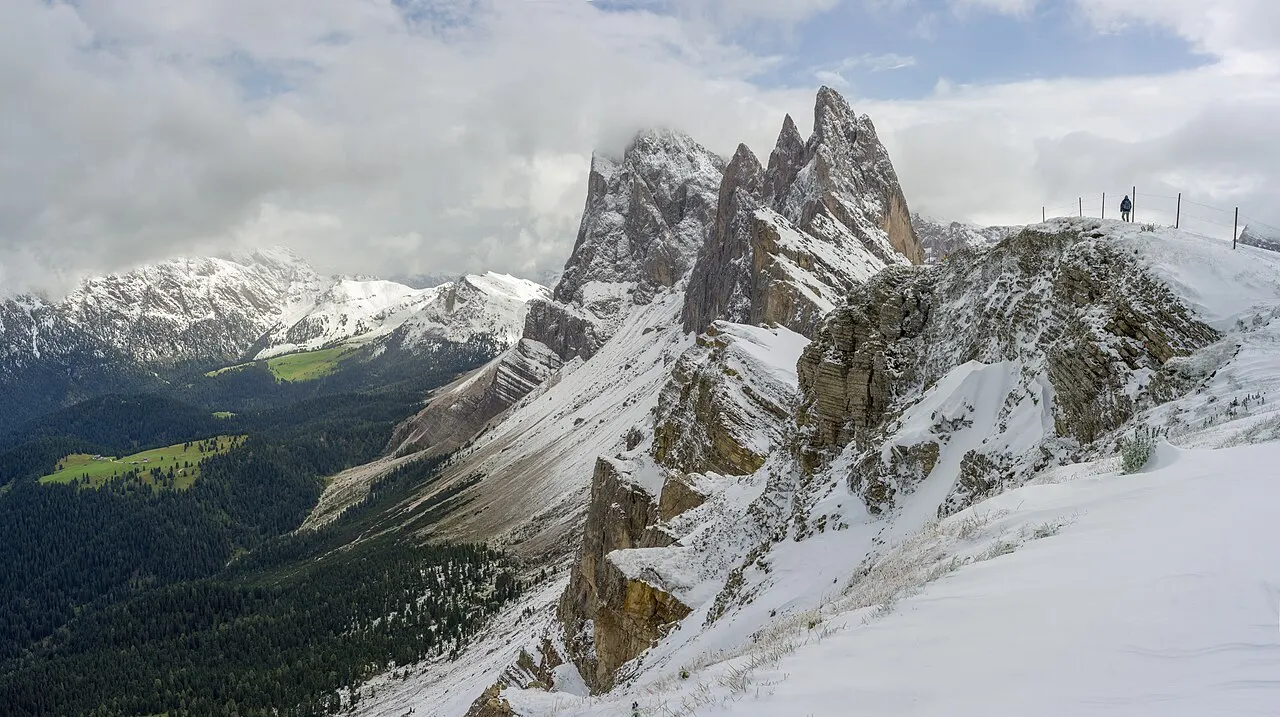
The high area offers views of the Odle and meadows above Val Gardena. The ascent from Ortisei involves the Ortisei-Furnes and Furnes-Seceda sections. Choose a walk suited to fitness and conditions, keeping away from edges. Check Seceda’s channel for tickets and ascent slots; reservations for Gardena Card users open three days ahead on the official platform consulted in October 2026.
The Odle landscape justifies a mountain day of its own, with a walk chosen according to conditions.
Check access
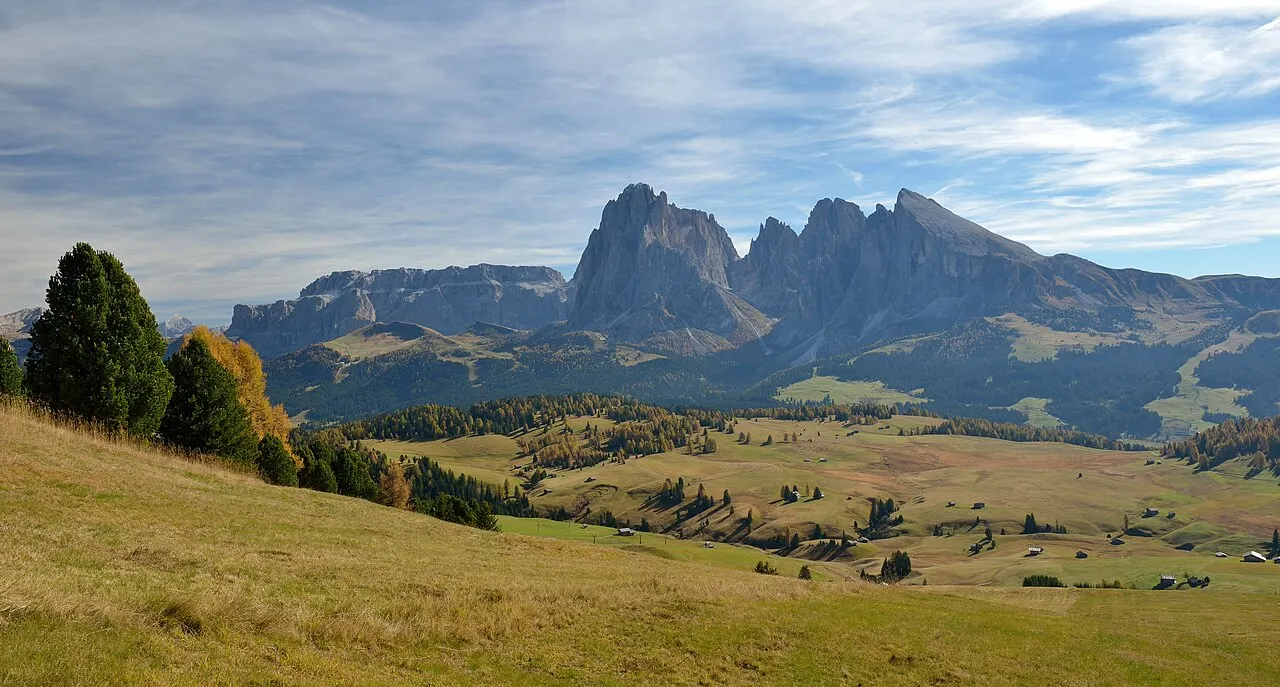
Alpe di Siusi
Pastures, huts and paths overlooking nearby massifs justify a day of their own. From Ortisei, use the lift indicated for Alpe di Siusi and plan the route from that top station. Road access to Compatsch has a separate rule: in 2026, a parking reservation does not remove the ban on driving a private car uphill between 9 am and 5 pm.
The pastures offer another reading of the terrain, with access and effort distinct from Seceda.
Check access

Cinque Torri
The rock towers combine with restored First World War positions. Lift access from Bai de Dones brings the open-air museum closer, but mountain walking remains. Select the museum’s marked routes according to the desired effort; climbing the towers is not necessary for a visit.
Wartime positions and the towers combine historical context and landscape without requiring climbing.
Check access
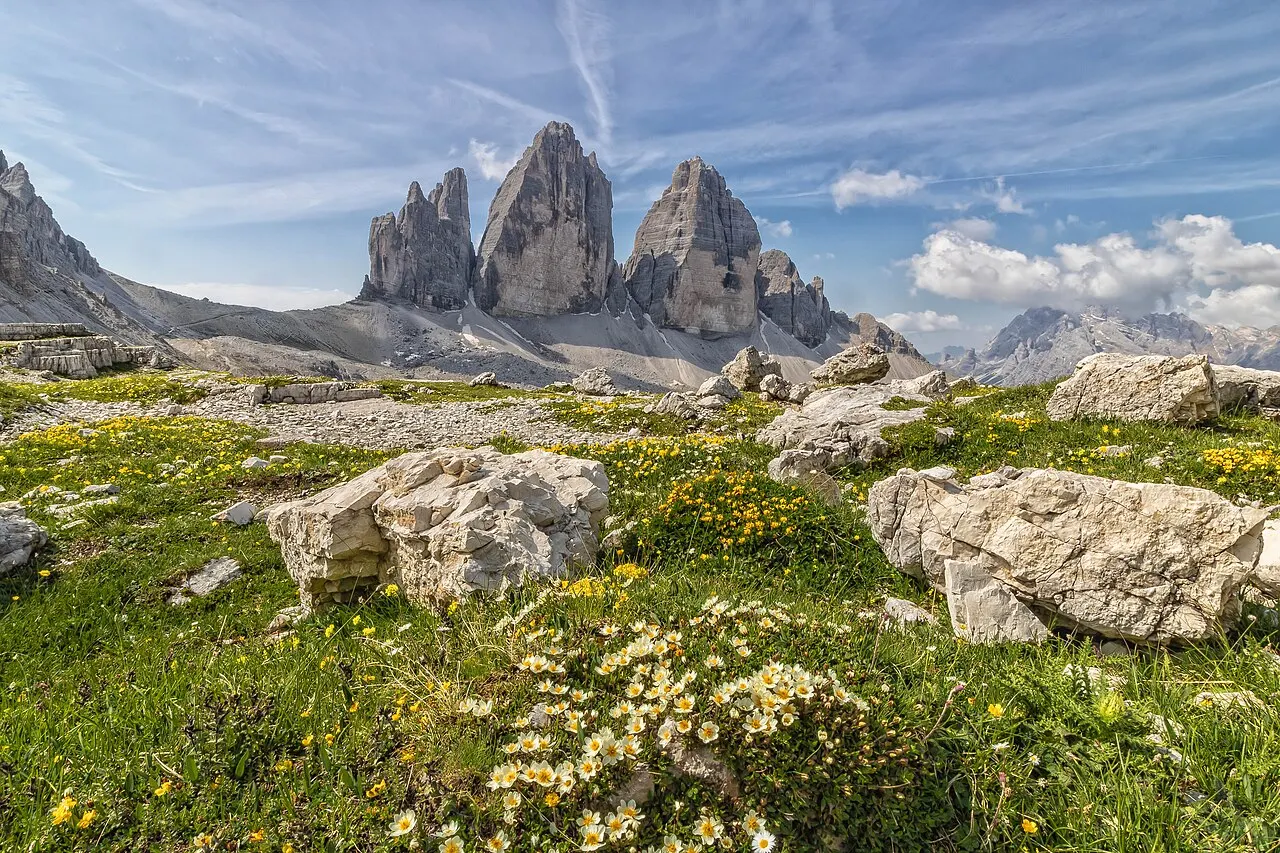
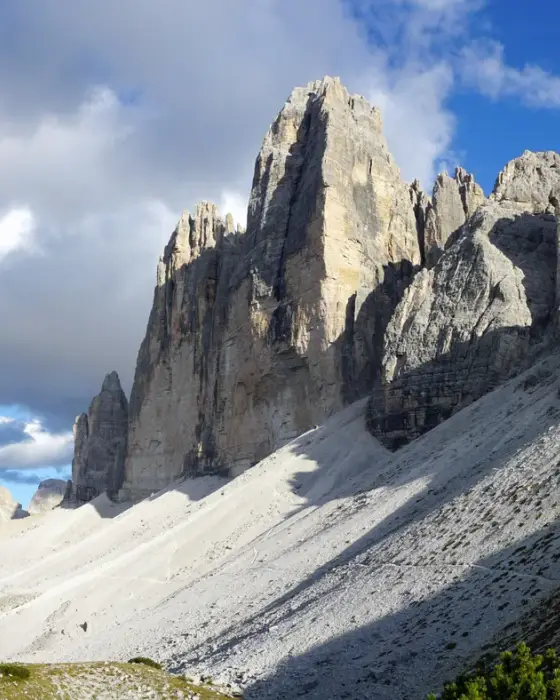
Tre Cime di Lavaredo
The group of three large walls can be viewed on walks from Rifugio Auronzo. The circuit on paths 101 and 105 takes about four to five hours of walking according to local tourism, besides transport, breaks and meals. Motor access on the road from Misurina requires a reservation with the vehicle registration; buses have separate tickets and availability.
It is the major walking outing in the eastern sector, subject to access and fitness.
Check access
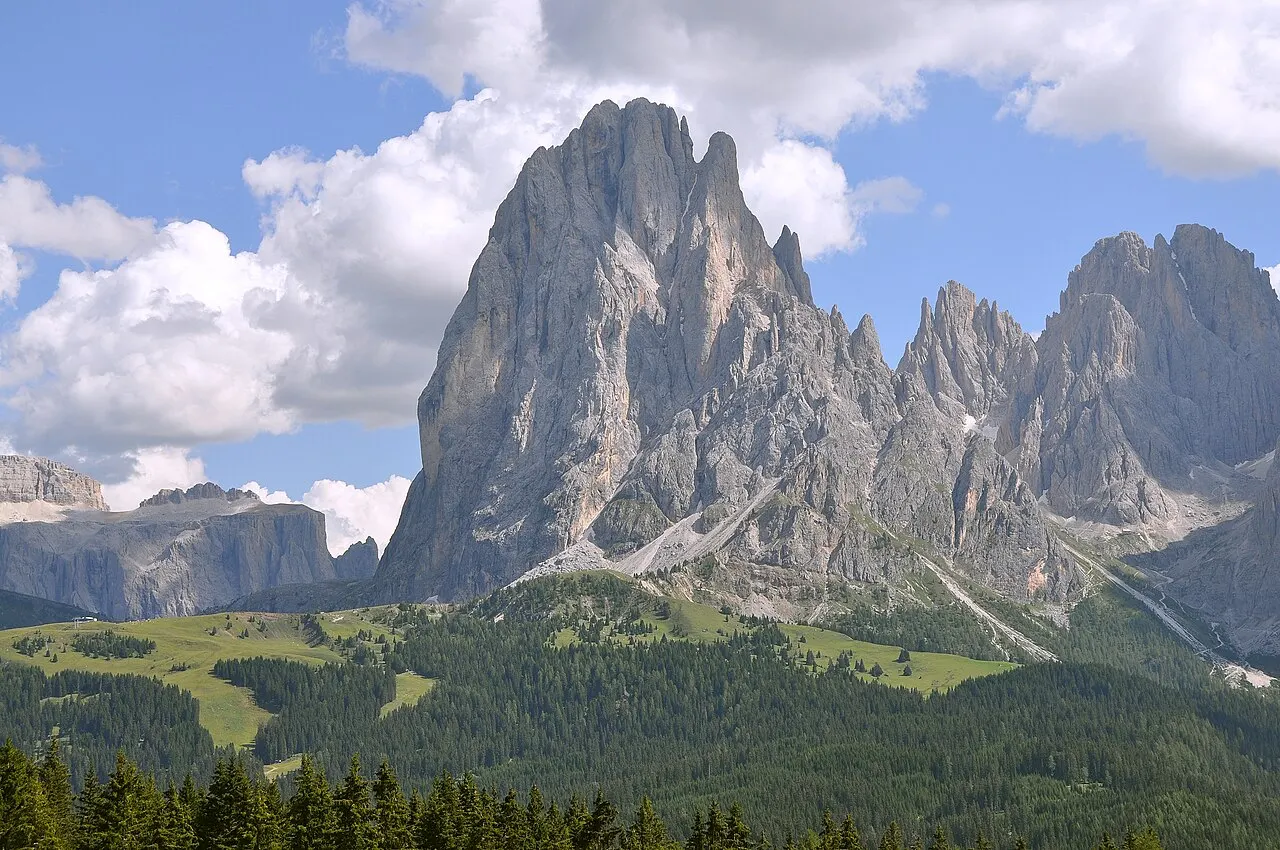
Sassolungo / Langkofel
The Sassolungo massif is one of the major landmarks of Val Gardena and Alpe di Siusi. On the pasture day, observe its rock walls from the plateau paths and notice the difference between the fields and the mass of stone. This proposal is contemplative: routes around the massif and the ascent to Forcella del Sassolungo require separate planning. Do not add a whole circuit because the mountain already appears in the panorama.
The massif’s walls help recognise and understand the terrain seen from Alpe di Siusi.
Check access
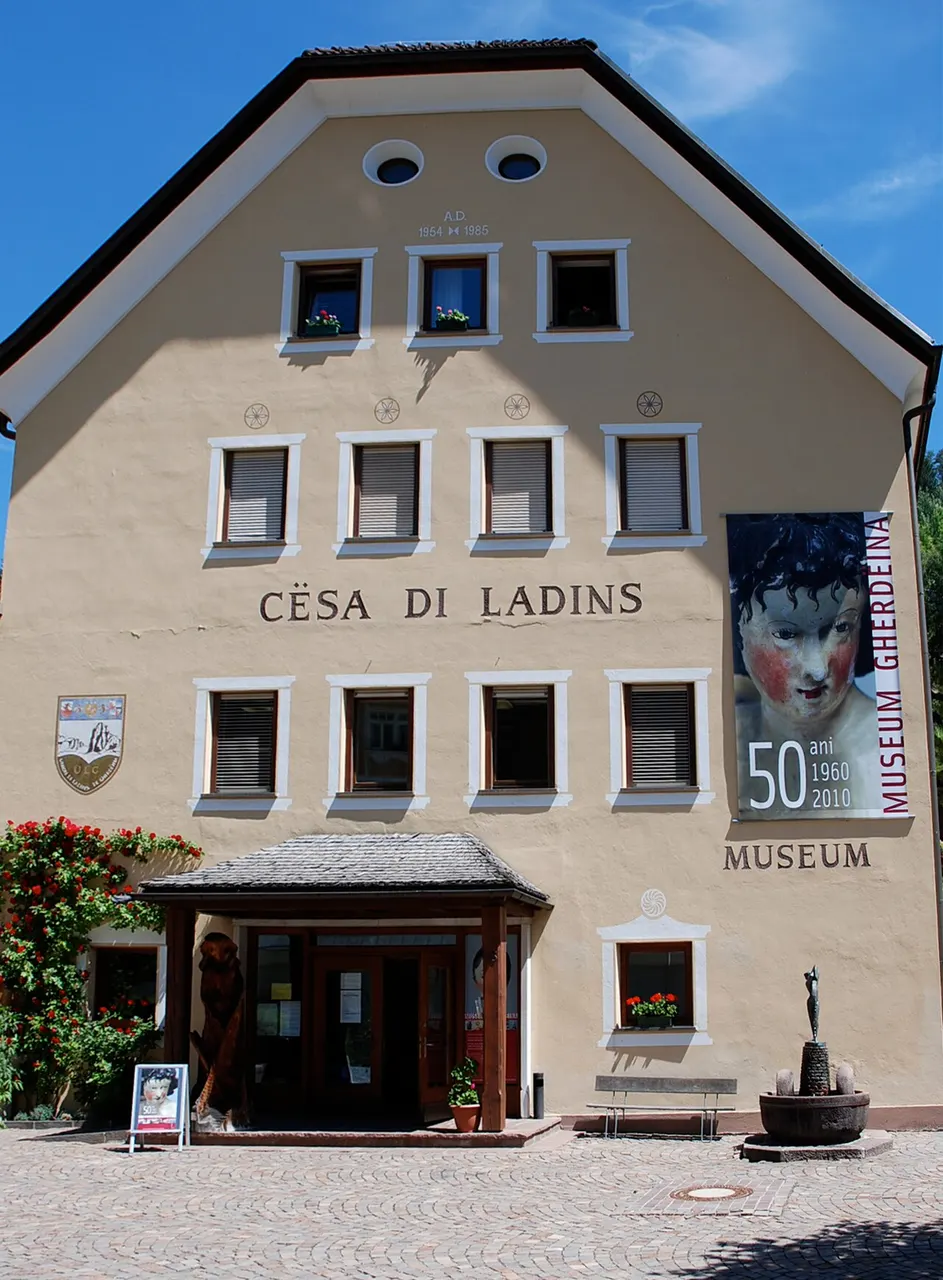
Museum Gherdëina
In Ortisei, it brings together geology, local history and woodcarving. It helps introduce the valley’s culture and provides an indoor programme when mountain conditions are unsuitable. Check visiting days and hours in the museum’s own calendar before choosing this alternative.
It connects geology and local culture and serves as an indoor alternative.
Check access
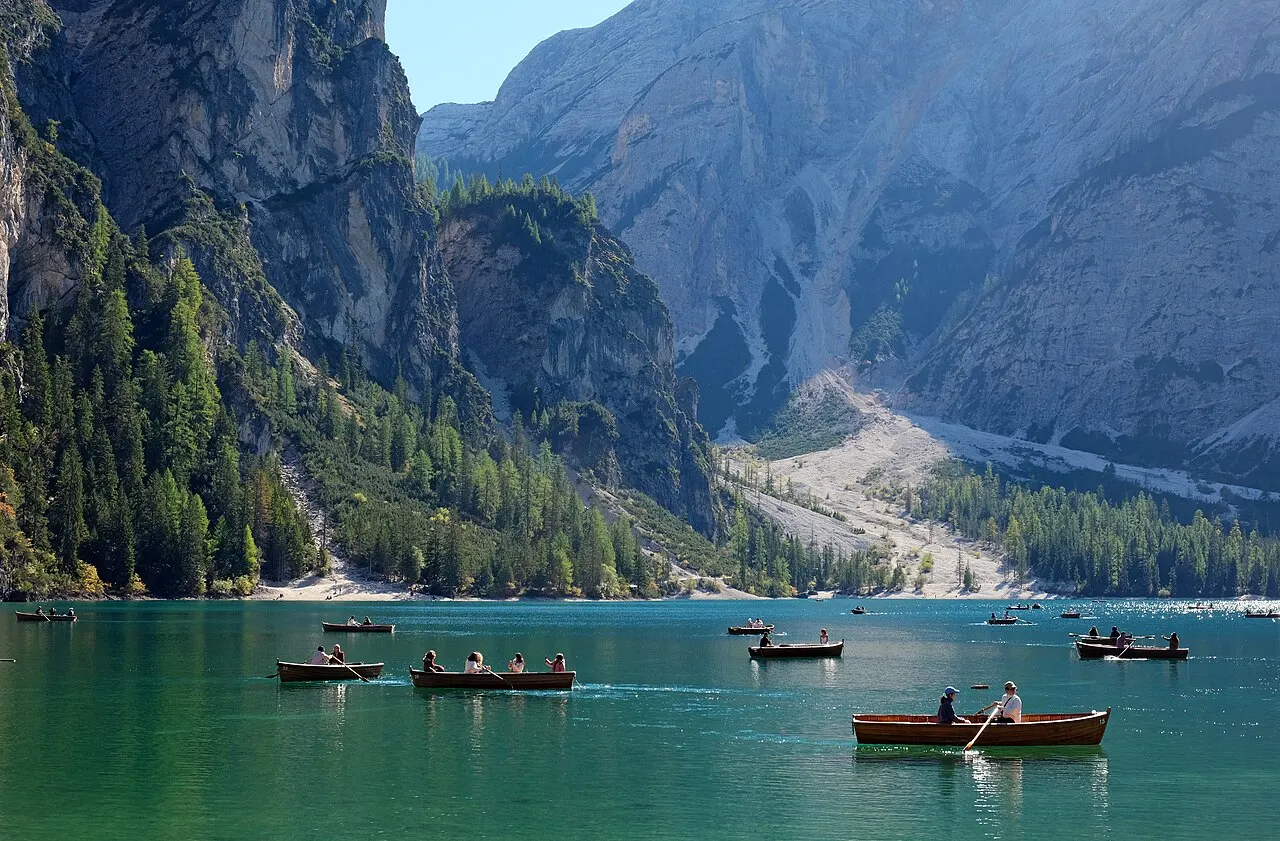
Lago di Braies / Pragser Wildsee
The lake surrounded by slopes interests those including the Braies valley in a longer stay. In 2026, traffic control operated from 1 July to 15 September, from 9 am to 4 pm; during that period, specific conditions applied to car reservations and buses 439 and 442. Check the regulations for your next trip without automatically repeating the 2026 dates.
The lake deserves its own extension, without adding a long transfer to the minimum itinerary.
Check access

Lagazuoi
The cable car leaves Passo Falzarego for an area of panoramas and war memory. It works as an alternative to Cinque Torri for those prioritising high-altitude views, when visibility is good. Visiting the station area is not the same as following tunnels, via ferratas or the Kaiserjäger trail; those activities need their own assessment.
An alternative of panoramas and war memory when visibility and access allow.
Check access
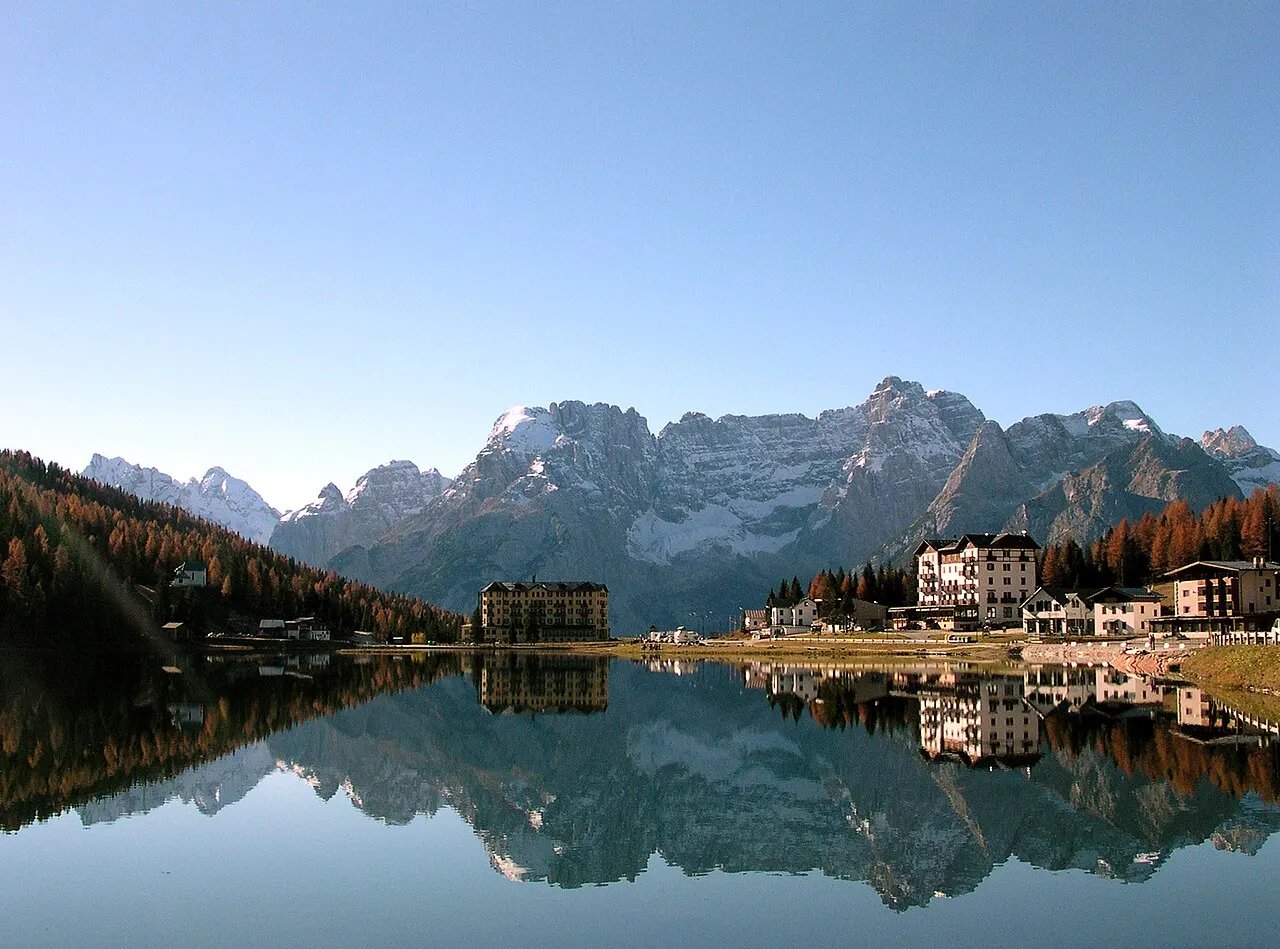
Lago di Misurina
The lake and waterfront buildings form a stop in the access sector for the Tre Cime. It is an option for a less strenuous outing when higher paths are unsuitable, provided the road and local conditions allow it. It does not replace the landscape seen from the north side of the Tre Cime.
It is a less strenuous stop in the Tre Cime sector, with a different experience from the high circuit.
Check access
Nilo’s itinerary
Start with the basic programme and choose extensions for the time you have.
Plan my days in the app ↗Day 1 · Arrival in Ortisei and valley culture
Arrive in Ortisei and settle in for three nights. Keep this day for arrival; do not buy a mountain ascent incompatible with your flight or train.
Walk around the pedestrian centre and visit Museum Gherdëina if open. On a closure day, consider the available craft exhibition and keep the museum for another time.
Buy water and food for the next day and check the forecast, Seceda ticket and last descent. Have dinner and sleep in Ortisei.
Day 2 · Seceda with time to walk
Ascend on the Ortisei-Furnes-Seceda system with the applicable ticket and slot reservation. In the high area, follow the marked path to the Seceda viewpoint and return by the same access, if open and suited to the group. Stay in permitted areas and keep away from edges. Observe the Odle ridges and, if visibility allows, identify Sella in the panorama; this is not a proposal to continue to those massifs.
Allow time for a break and lunch, carrying provisions if refuge service is not confirmed. Do not turn the return to the valley into a race for the last cabin.
Descend within operating hours. If mountain conditions are unsuitable, stay in the valley and swap this day with another feasible outing, without insisting on the ascent because of the ticket. Second night in Ortisei.
Day 3 · Alpe di Siusi pastures
Use the Ortisei-Alpe di Siusi lift. Plan the outward and return route from the top station of this access, without assuming you are in Compatsch.
In suitable conditions, follow the Giro dell’Alpe di Siusi indicated on the summer map: from the top station, path 6A via Malga Contrin, then 6 and 6B to Sanon, returning on 9 and via Malga Schgaguler to the station. The map gives 5 km, about 2 hours 30 minutes and 140 m of ascent and descent; add meals, rest and lift time. Along the walk, recognise Sassolungo and Sella on the horizon without adding a circuit around them.
Return to the valley before the last descent. If choosing another access or returning by bus, confirm the connection, ticket and pass exclusions beforehand. Third night in Ortisei.
Day 4 · Moving base to Cortina
Leave Ortisei after breakfast with the connection or transfer settled. By car, check pass and road conditions; without a car, follow the connections actually available.
Dedicate the day to travel, lunch and settling into Cortina. A brief stop on the way only fits if access and time allow, without a lift commitment.
Walk through central Cortina and organise transport to Cinque Torri and the Tre Cime. Stay overnight in Cortina.
Day 5 · Cinque Torri and wartime positions
Travel from Cortina to Bai de Dones by car or a bus service whose operation has been confirmed. Check the 5 Torri chairlift for the ascent, when operating.
At the top, choose the war museum’s marked routes: the operator indicates M5b, Sentiero delle trincee, at about 30 minutes; M5c, Giro delle 5 Torri, at about two hours. Choose according to terrain and desired effort, adding breaks and access time.
Pause for a meal and return by the planned access, with a margin for the last descent and bus. Do not add Lagazuoi if it compromises the visit. Second night in Cortina.
Day 6 · Tre Cime from Rifugio Auronzo
Leave Cortina with access through the Misurina area confirmed. For a car, the road reservation must contain the correct registration; if taking a bus, check the day’s service, ticket and return.
From Rifugio Auronzo, follow the circuit on paths 101 and 105 only with adequate time, fitness and conditions. Allow about four to five hours of walking, besides breaks, meals and transport.
If the circuit is unsuitable, do not continue onto snow or exposed ground. Consider a lower outing in Misurina if conditions allow, accepting that it offers a different experience.
Return to Cortina. I would sleep there that night too and leave the region the following morning; I would not schedule a flight on the same afternoon as the hike.
Food
Canederli / Knödel
Bread dumplings with ingredients such as speck, cheese or vegetables, served in broth or with other accompaniments. Composition depends on the recipe and should be checked by anyone with dietary restrictions.
Schlutzkrapfen
Filled pasta associated with South Tyrol, often with spinach and ricotta, served with butter. It is a choice for trying regional cooking without relying on a tasting menu.
Schüttelbrot
Thin, crisp rye bread, used as an accompaniment and also sold to take away. It goes with a simple meal of cheeses and other regional products.
Apple strudel
A pastry and apple dessert found in the region, with different recipes and shapes. A stop at a valley pastry shop may be more practical than relying on a refuge outside its season.
Where to eat
- Ortisei and Val Gardena
Canederli and Schlutzkrapfen introduce regional preparations in a sit-down meal. Check the filling and broth: a vegetable version does not guarantee the absence of meat or dairy.
- Ortisei bakeries
Schüttelbrot and other breads are useful to carry on a walk when refuge lunch is not confirmed. Complete your provisions in the valley and take your rubbish back with you.
- Cortina and mountain access points
Choose meals according to the day’s operation, hours and advertised food, such as polenta dishes and pasta. For dinner after a hike, the centre offers simpler logistics than relying on a high-altitude kitchen still being open.
· 2026-10-16
Day trips
Val di Funes, from Ortisei
Allow half a day or an additional day for Santa Maddalena and valley outings, depending on the chosen walk. The road route between the centres is about 32 km via Chiusa; check journey time for your date and leave room for traffic and parking. The approach to the church takes about 30 minutes on foot from the parking area indicated by local tourism. Without a car, work out the bus combination before leaving; there is no short walking crossing between the valleys simply because the centres look close on the map.
Lake Dobbiaco, in the eastern sector
If adding time in the Cortina and Misurina sector, consider Lake Dobbiaco and the nature path beside the water. Calculate the trip from your accommodation and confirm parking or bus times, as well as path conditions. The visit can replace a high walk, but is not an automatic addition after the Tre Cime circuit or a guaranteed outing during a storm.
Where to begin
Arrival in Ortisei and valley culture
Arrive in Ortisei and settle in for three nights. Keep this day for arrival; do not buy a mountain ascent incompatible with your flight or train.
Alpe di Siusi pastures
Use the Ortisei-Alpe di Siusi lift. Plan the outward and return route from the top station of this access, without assuming you are in Compatsch.
Moving base to Cortina
Leave Ortisei after breakfast with the connection or transfer settled. By car, check pass and road conditions; without a car, follow the connections actually available.
Cinque Torri and wartime positions
Travel from Cortina to Bai de Dones by car or a bus service whose operation has been confirmed. Check the 5 Torri chairlift for the ascent, when operating.
Tre Cime from Rifugio Auronzo
Leave Cortina with access through the Misurina area confirmed. For a car, the road reservation must contain the correct registration; if taking a bus, check the day’s service, ticket and return.
Money
The currency is the euro. Access spending should be compared according to the combination of lifts actually used: Gardena Card, Dolomiti SuperSummer and individual tickets have different coverage, and Seceda needs a specific check. Do not multiply the price of one section to estimate the whole trip. The upper Tre Cime parking area is a reserved service with rules and vehicle categories; check the current rate on Auronzo’s portal. For accommodation, request the total by room, occupancy and included meals, plus the applicable tourist tax. Operators consulted on 16/10/2026; variable fares must be confirmed for the chosen date.
Getting there and around
Gateway
Choose the airport according to the first base and the flight actually available. Bolzano (BZO) is 40 km from Val Gardena according to local tourism, but has a smaller flight network. Venice Marco Polo (VCE) serves access to Cortina by Cortina Express bus; this connection does not go directly to accommodation in Ortisei. To start with Val Gardena, consider a train to Bolzano followed by the valley bus.
Buses and stations
Line 350 links Bolzano with Val Gardena; the valley website brings together official timetables and local services. Ortisei and Cortina have no passenger railway stations that resolve arrival in the centre. Check the stop, connection and last service for your chosen accommodation. Guest cards, bus passes and lift passes have different scopes.
Between Ortisei and Cortina
On this two-base itinerary, allow the fourth day for the move. By car or booked transfer, check roads, passes, works and parking; do not schedule a long hike or a tightly timed ticket on arrival. Without a car, work out the actual combination on Südtirolmobil and Dolomiti Bus before booking accommodation: there is no promise of a quick, direct connection between all valleys.
Lifts and trail access
Check the exact lift, operating dates, last descent and any reservation. Val Gardena’s 2026 table does not include all lifts in the same passes. At Seceda, the booking channel distinguishes access for Gardena Card holders. At the Tre Cime, a road reservation with a registration number does not replace a bus ticket.
Alpe di Siusi and Braies
For this itinerary, ascend to Alpe di Siusi using the Ortisei lift and avoid organising the day around road arrival in Compatsch. Anyone choosing a car must follow the time restriction and, from the 2026 season, reserve P1/P2 parking. Braies has its own seasonal control and does not share that authorisation.
Safety
Prepare outings using the weather bulletin and route description, and confirm conditions with refuges, guides or local offices. Cold, residual snow, thunderstorms and exposed ground may make an outing served by a lift unsuitable. Carry protective clothing, water and appropriate footwear, and turn back when conditions change. Via ferrata, snow crossings and climbing require specific skills and equipment; they are not improvised alternatives to a closed trail. In an emergency, use 112 and state your location. Insurance and rescue coverage conditions deserve checking before the activity.
Etiquette tips
In the pastures
Close gates according to local instructions, keep your distance from animals and stay on the path. Do not cross a field to improve a photograph.
At places of memory
Preserved trenches and positions are not places to remove objects or dismantle structures. Follow the authorised route.
At a refuge
Check kitchen hours, reservations and overnight rules. A place marked on the map does not confirm a table, bed or opening.
Mistakes to avoid
Sleeping at one end and repeating the crossing
Seceda and the Tre Cime belong to different sectors. To visit both, two bases and a planned transfer reduce repeated road journeys.
Using one lift’s calendar for all
One operating gondola does not guarantee another is open, or snow-free passage between them. Check the descent too.
Buying parking as universal authorisation
Alpe di Siusi, Braies and the Tre Cime have their own systems, periods and distinct conditions.
Choosing a walk by its photograph
An image does not show elevation gain, exposure or surface conditions. The route must suit fitness and the day’s conditions.
Useful phrases
Qual è l’ultima discesa?
What is the last descent?
Il sentiero è aperto?
Is the trail open?
Serve una prenotazione?
Is a reservation needed?
Ist der Weg schneefrei?
Is the path free of snow?
Bun dé.
Good morning, in Ladin.
Where to stay
- Ortisei, near the centre and stops · For those wishing to start with Seceda and Alpe di Siusi, including without a car.: Access to the centre, shops and lift systems reduces local travel. Check the slope between hotel, stop and stations; accommodation higher up may add a daily transfer.
- Santa Cristina or Selva di Val Gardena · For those prioritising other valley access points and wishing to walk more days in this sector.: These are coherent bases for an itinerary focused on Val Gardena. For this guide’s proposal, they require travel to Ortisei on some days; check buses and parking before choosing.
- Cortina, centre and around the autostazione · For those combining Cinque Torri, Falzarego and the Misurina sector.: It makes meals and transport organisation easier, but trails remain outside town. Check the stop actually used in the period and the walking distance from your room.
- Misurina or Auronzo · For those devoting the second part mainly to the Tre Cime and Cadore.: It brings the southern mountain access closer. For Cinque Torri and Cortina’s urban services, it changes travel distance; buses and restaurants may operate seasonally.
· 2026-10-16
Districts
Ortisei / Urtijëi
A Val Gardena base with a pedestrian centre, museum and access to the Seceda and Alpe di Siusi lift systems. The departure points are not all at the same station.
Santa Cristina and Selva di Val Gardena
Places higher in the valley with other mountain access points and bus connections. They are alternative bases, but change the daily logistics.
Alpe di Siusi / Seiser Alm
A plateau of pastures and paths reached by lifts from different sides. The top station reached from Ortisei is not Compatsch.
Cortina d’Ampezzo
A base town in Veneto, useful for the Cinque Torri and Falzarego sectors and for organising access to the Misurina area.
Misurina and Auronzo
The southern access sector for the Tre Cime. It suits those prioritising these mountains, but does not replace Ortisei for outings in Val Gardena.
Braies / Prags
A South Tyrol valley with the lake and access subject to its own seasonal traffic rules. It is an extension, not a compulsory stop between any two bases.
History
Triassic · Rocks formed in marine environments
An important part of the landscape preserves ancient carbonate platforms and other records of marine environments, later uplifted and shaped by Alpine processes.
17th century · Woodcarving in Val Gardena
The craft became part of the valley’s economy and developed workshops, schools and trading networks. It can still be seen in exhibitions and contemporary work.
1915–1918 · War in the mountains
The front between Italy and Austria-Hungary left positions, paths and trenches. Cinque Torri preserves routes interpreting this conflict.
1919 · New political borders
The Treaty of Saint-Germain confirmed the transfer of South Tyrol to Italy. Ladin communities subsequently experienced assimilation policies and processes recognising their rights.
2009 · World Heritage in nine systems
The inscription recognised the scenic and geological values of separate areas. The UNESCO property is not synonymous with every tourist facility or every town marketed as the Dolomites.
Complete history
A landscape that explains its own formation
Layers, walls and towers show processes of rock formation, uplift and erosion. The UNESCO inscription also recognises the scientific value of these records. Reading a geological panel or visiting Museum Gherdëina helps connect the landforms seen from the lift to a history far older than the villages.
Valleys with their own languages and crafts
Val Gardena is one of the areas of Ladin culture. Ladin, Italian and German names appear on maps and signs; Urtijëi, Ortisei and St. Ulrich refer to the same place. Religious sculpture, toys and contemporary wooden work show a craft economy that changed alongside tourism.
Memory of war
The Cinque Torri positions belonged to the Italian line during the First World War. The open-air museum helps explain the military occupation of the mountain. Tunnels and via ferratas in other sectors are not an automatic continuation of this outing: they may require equipment, experience and specific conditions.
Geography and shape of the city
Choosing a sector
Val Gardena, Alpe di Siusi and the Cortina mountains have different access routes. Roads may skirt massifs that look close in a straight line. This itinerary uses Ortisei for the western sector and Cortina for the eastern sector, with a change of accommodation.
Altitude and terrain
Broad pastures such as Alpe di Siusi coexist with slopes, ridges and rocky ground. Gaining altitude by lift does not remove exposure, cold or the risk of falling. Distance, elevation gain and surface must be assessed for the chosen route, not by the attraction’s name.
A winter trip needs a different selection and a different calculation of effort; I would not copy this itinerary onto the snow.
I would keep the Cortina accommodation after the hike to avoid tying the return from the mountain to a flight time.
Culture
Ladin in daily life
Ladin is a living language in valleys such as Gardena and Badia. Use alternative names to recognise signs and stations, rather than treating them as different villages. Linguistic conditions vary around the region; the Dolomites are not one municipality or a homogeneous community.
Sculpture beyond souvenirs
Workshops and exhibitions, including ART52 and UNIKA, show the continuity of woodwork and its expansion into other art forms. Observing material and authorship helps distinguish mass production from an artist’s piece.
Refuges and pastures
Rifugi and malghe support specific routes, with their own seasons and services. A refuge may offer meals or overnight stays, but its presence on the map does not confirm that it will be open on the day of your walk.
Festivals and events
UNIKA
Val Gardena art fair, held in Roncadizza/Ortisei. The 2026 edition took place from 10 to 13 September. The organiser announces the next from 26 to 29 August 2027; check the programme and conditions before travelling for that reason.
Sellaronda Bike Day
A cycling event changing the use of roads across the passes. The 2026 calendar included 12 September. Dates and closures must be checked for each edition, particularly by anyone planning to drive between valleys.
Books and films
The nine Systems of the Dolomites, Dolomiti UNESCO Foundation
An introduction to the nine World Heritage components, useful for understanding why the Dolomites are more than a scenic road.
Museum Gherdëina collections
Geology, toys and woodcarving connect the landscape with Val Gardena’s cultural history.
Cinque Torri open-air museum
The site’s interpretation helps explain mountain warfare through positions and routes, without reducing the visit to views of the rock walls.
Frequently asked questions
Dolomites: How many days should I allow?
I would allow six days and preferably six nights for this summer selection: three in Ortisei and three in Cortina, leaving the morning after the last walk. There is an arrival day, two for Seceda and Alpe di Siusi, one for transferring and two for Cinque Torri and the Tre Cime. With less time, choose only Val Gardena or only Cortina and remove the transfer. Braies, Funes and other walks need additional days; the itinerary does not cover the whole region.
Dolomites: Where should I choose my bases?
Ortisei near the centre and stops makes Seceda and Alpe di Siusi easier; check the slope between room, bus and stations. Santa Cristina and Selva serve other valley access points but require travel to Ortisei on some itinerary days. In Cortina, the centre and autostazione area ease meals and transport, although trails are outside town. Misurina or Auronzo favour the Tre Cime and Cadore and change the distance to Cinque Torri; buses and restaurants may be seasonal.
Dolomites: How can I arrive without a car?
Choose the arrival according to your first base. For Val Gardena, consider a train to Bolzano and bus 350, checking the stop, connection and last service to your accommodation. Bolzano (BZO) is 40 km from the valley according to local tourism but has a smaller flight network. Venice Marco Polo (VCE) has a Cortina Express connection to Cortina; it does not go directly to Ortisei. Ortisei and Cortina have no passenger railway stations resolving arrival in the centre.
Dolomites: How should I organise the move to Cortina?
Keep the fourth day for travel, lunch and settling in, without a long hike or tightly timed ticket on arrival. By car or booked transfer, check passes, roads, works and parking. Without a car, work out the actual combination on Südtirolmobil and Dolomiti Bus before booking accommodation; do not assume quick, direct links between every valley.
Dolomites: Does one lift pass cover everything?
Gardena Card, Dolomiti SuperSummer and individual tickets have different coverage. List intended ascents and check the lift, dates, last descent and reservation, including the specific Gardena Card condition at Seceda. Guest cards and bus passes have other scopes. A Tre Cime road reservation with vehicle registration does not replace a bus ticket; Braies also has its own seasonal control. A pass does not remove access conditions or prove a trail is open.
Dolomites: When should I follow this itinerary?
From late June to September, after checking snow and each access opening. July and August concentrate demand; September may still bring rain, cold and early closure. May and early June may have residual snow and lifts between seasons. In October, snow, ice and refuge and lift closures require a separate programme with valley alternatives. Winter calls for another selection of skiing, prepared paths and guided activities rather than copying the summer walking itinerary.
Dolomites: Does taking a lift make the walk easy?
Lift access does not remove cold, residual snow, thunderstorms or exposed ground. Prepare the outing with the forecast and route description, confirm conditions locally, and carry protection, water and suitable footwear. Turn back when conditions change. Via ferrata, snow and climbing require their own skills and equipment and are not improvised replacements for a closed trail. Check insurance and rescue coverage; in an emergency call 112 and state your location.
Dolomites: How should I plan the budget?
Compare accommodation rates in both bases, transport between them and the lifts, access and parking actually used. Do not estimate the whole region by multiplying one lift fare. Check the price and category of reserved Tre Cime parking on Auronzo’s portal. For accommodation, request the total by room, occupancy, included meals and applicable tourist tax. Operators were consulted on 16/10/2026; variable fares need confirmation for the trip.
Other cities in the country
Italy ↗- Days
- 3–5
- When
- Apr–May · Sep–Oct
- Per person/day
- Average 130–190 EURMid-range · per person/day
Cost scope
Per person per day: accommodation, meals, urban transport, visits and a small allowance for extras. Flights excluded; larger purchases vary. Editorial estimate, not a quote.
- Days
- 2–3
- When
- Apr–Jun · Sep–Oct
- Per person/day
- Average 180–330 EURMid-range · per person/day
Cost scope
Per person per day: accommodation, meals, urban transport, visits and a small allowance for extras. Flights excluded; larger purchases vary. Editorial estimate, not a quote.
- Days
- 2–3
- When
- Mar–May · Sep–Oct
- Per person/day
- Average 180–250 EURMid-range · per person/day
Cost scope
Per person per day: accommodation, meals, urban transport, visits and a small allowance for extras. Flights excluded; larger purchases vary. Editorial estimate, not a quote.
- Days
- 1–2
- When
- Apr–Jun · Sep–Oct
- Per person/day
- Average 150–220 EURMid-range · per person/day
Cost scope
Per person per day: accommodation, meals, urban transport, visits and a small allowance for extras. Flights excluded; larger purchases vary. Editorial estimate, not a quote.
- Days
- 2–3
- When
- Apr–Jun · Sep–Oct
- Per person/day
- Average 130–200 EURMid-range · per person/day
Cost scope
Per person per day: accommodation, meals, urban transport, visits and a small allowance for extras. Flights excluded; larger purchases vary. Editorial estimate, not a quote.
- Days
- 3–4
- When
- May–Jun · Sep–Oct
- Per person/day
- Average 246 EURMid-range · per person/day
Cost scope
Per person per day: accommodation, meals, urban transport, visits and a small allowance for extras. Flights excluded; larger purchases vary. Editorial estimate, not a quote.
- Days
- 2–3
- When
- May–Jun · Sep
- Per person/day
- Average 170 EURMid-range · per person/day
Cost scope
Per person per day: accommodation, meals, urban transport, visits and a small allowance for extras. Flights excluded; larger purchases vary. Editorial estimate, not a quote.
- Days
- 3
- When
- May–Jun · Sep
- Per person/day
- Explore costsGuide estimate
Cost scope
Per person per day: accommodation, meals, urban transport, visits and a small allowance for extras. Flights excluded; larger purchases vary. Editorial estimate, not a quote.
- Days
- 3
- When
- Apr–Jun · Sep–Oct
- Per person/day
- Average 114 EURMid-range · per person/day
Cost scope
Per person per day: accommodation, meals, urban transport, visits and a small allowance for extras. Flights excluded; larger purchases vary. Editorial estimate, not a quote.
- Days
- 7
- When
- May–Jun · Sep
- Per person/day
- Explore costsGuide estimate
Cost scope
Per person per day: accommodation, meals, urban transport, visits and a small allowance for extras. Flights excluded; larger purchases vary. Editorial estimate, not a quote.