Italy
Puglia
Seven days based in Bari, Monopoli and Lecce
Days Start with the basic programme and choose extensions for the time you have.
How the guide reaches this number
The proposal combines the central coast, a trulli day and two cities that deserve visiting time, without using every afternoon to change accommodation. Otranto can add an eighth day, and Gallipoli is a coastal alternative. Gargano, Taranto and a long beach stay require another block of days; I would not attach them to the same week. Those with less time should choose two of these areas without calling the selection a visit to the entire region.
7
When May to June and September for combining towns and coastline, without treating swimming conditions as guaranteed.
How the guide reaches this number
May to June and September are the editorial choice for a circuit combining walking, historic centres and coastline. In July and August, prioritise morning and late-afternoon visits, confirm parking and accommodation ahead, and allow for demand at beaches. The Mediterranean climate has hot, drier summers, while autumn and winter bring a greater chance of rain. A trip focused on towns and food can work outside summer, but beach transport and seasonal services need another check; an off-season date does not guarantee lower prices everywhere.
Per person/day Work out the circuit across its three bases: Bari, Monopoli and Lecce.
How the guide reaches this number
Alongside accommodation and meals, compare trains and buses on served routes with car hire, fuel and parking on village days; summer nights beside the sea change the total.
Work out the circuit across its three bases: Bari, Monopoli and Lecce. Alongside accommodation and meals, compare trains and buses on served routes with car hire, fuel and parking on village days; summer nights beside the sea change the total.
Per person per day: accommodation, meals, urban transport, visits and a small allowance for extras. Flights excluded; larger purchases vary. Editorial estimate, not a quote.
 What Nilo thinks
I would set aside seven full days for this first Puglia circuit, with two nights in Bari, three in Monopoli and two in Lecce. The proposal combines the central coast, a trulli day and two cities that deserve visiting time, without using every afternoon to change accommodation. Otranto can add an eighth day, and Gallipoli is a coastal alternative. Gargano, Taranto and a long beach stay require another block of days; I would not attach them to the same week. Those with less time should choose two of these areas without calling the selection a visit to the entire region.I would choose Puglia for a trip in which meals and moving between towns are part of the interest. Bari introduces Romanesque churches and a network of streets beside the harbour; further south, trulli reveal another way of building with the area's stone. Lecce changes the perspective again, with carved façades and squares that warrant staying in the evening too. Between these bases, there is coastline for a swimming day when weather permits. I would leave room for those pauses rather than including every well-known centre and beach in a week.
Quick facts
- Population
- 3,877,395 residents in the Puglia region on 31 December 2024, according to Istat.
- Foundation
- A historic region with towns of different origins; there is no single foundation date. The present administrative region became operational in 1970.
- Country and region
- Italy, the Puglia region in the southeast of the peninsula. Bari is the regional capital.
- Language
- Italian and local linguistic varieties; Griko remains linked to communities in Grecìa Salentina.
- Currency
- Euro (EUR).
- Time zone
- Europe/Rome: UTC+1 in standard time and UTC+2 during daylight saving time.
- Best time
- May to June and September for combining towns and coastline, without treating swimming conditions as guaranteed.
- Average daily cost
- Work out the circuit across its three bases: Bari, Monopoli and Lecce. Alongside accommodation and meals, compare trains and buses on served routes with car hire, fuel and parking on village days; summer nights beside the sea change the total.
When to go
May to June and September for combining towns and coastline, without treating swimming conditions as guaranteed.
How the year changes
May to June and September are the editorial choice for a circuit combining walking, historic centres and coastline. In July and August, prioritise morning and late-afternoon visits, confirm parking and accommodation ahead, and allow for demand at beaches. The Mediterranean climate has hot, drier summers, while autumn and winter bring a greater chance of rain. A trip focused on towns and food can work outside summer, but beach transport and seasonal services need another check; an off-season date does not guarantee lower prices everywhere.
Nilo's tips
Choose bases before attractions
I would use Bari, Monopoli and Lecce to progress along the circuit. That way the night ends in the next day's area and meals do not depend on a long return.
Use a car where it helps
I would keep Bari's urban days car-free and consider hiring one for the interior. The benefit needs to outweigh parking, ZTL restrictions and returning the car.
Read the bus timetable's validity
The summer route appearing in a search may already have ended its season. I would confirm the return before setting off for the coast.
Compare Lecce's circuits
I would choose admission with or without the bell tower according to interest in the view, preserving time for the included churches.
Explore the map
Explore the map, read about the other places and plan your travel days in the app.
Open the appWhat to see
Basilica di San Nicola
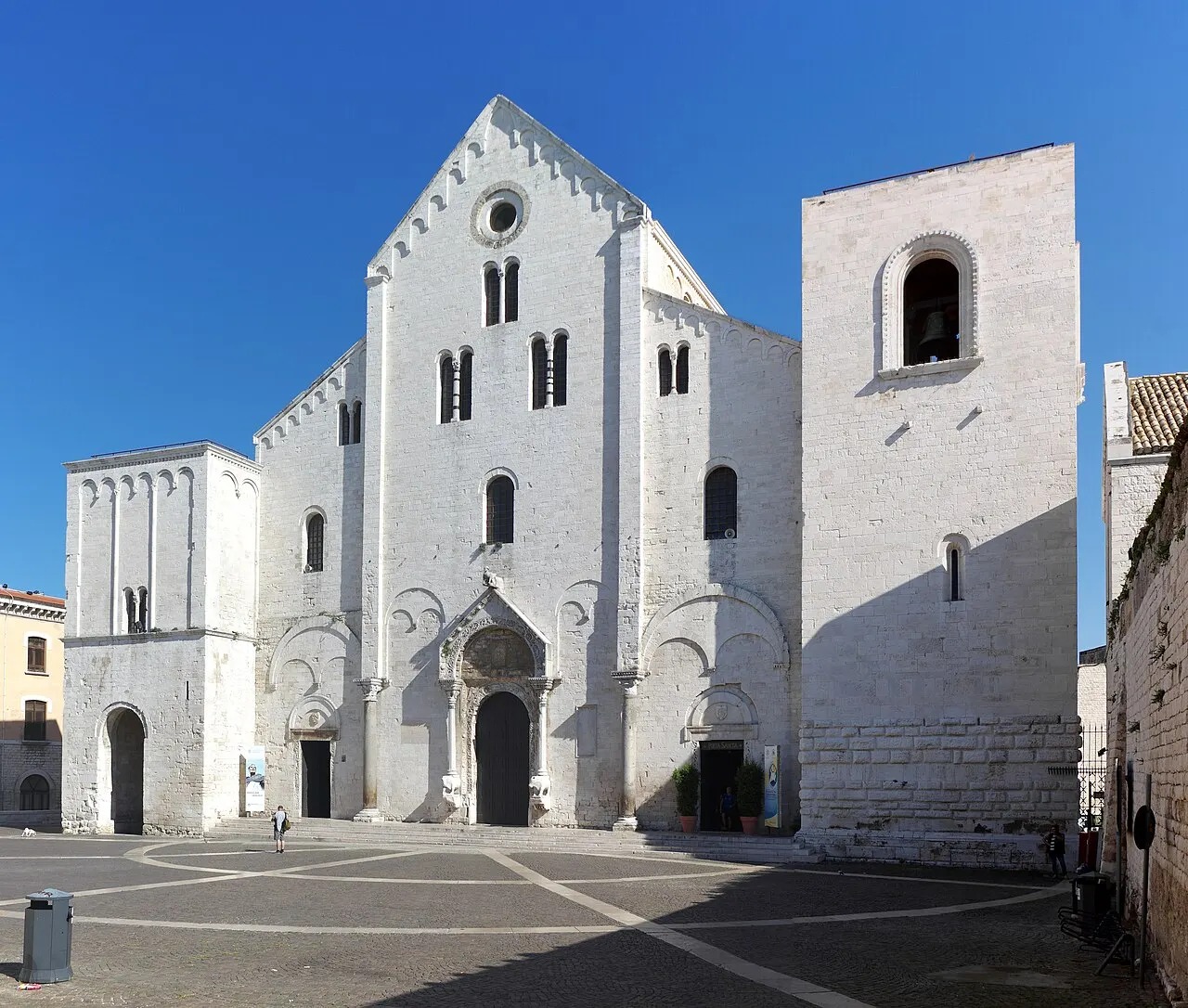
The basilica in Bari Vecchia introduces Puglian Romanesque architecture and remains a place of pilgrimage, with Catholic and Orthodox presence. Visit the church and crypt according to that day's opening and services, without joining a religious queue simply to obtain a photograph. The nearby old streets allow the journey to begin in central Bari before using the city as a connection to the rest of the region.
The basilica introduces the Romanesque architecture and pilgrimage that remain linked to Bari.
Check access
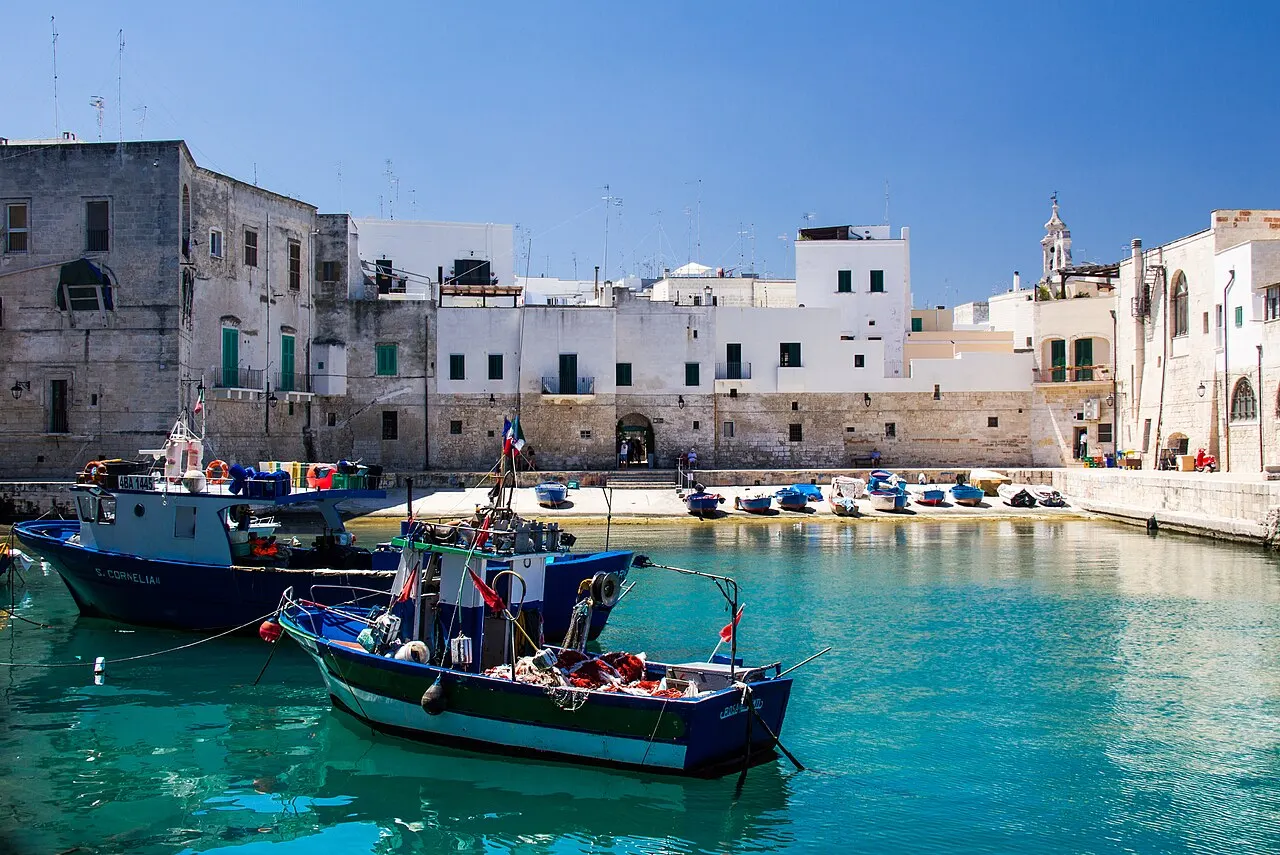
Porto Antico di Monopoli
The harbour and historic streets allow a concentrated day without a car between every stop. The interest lies in the relationship between town and sea, including the approaches to the walls and harbour activity. Respect the boats' working spaces; the visit is not equivalent to a sea excursion or an equipped beach.
The harbour and centre allow you to experience the town outside excursion hours too.
Check access

Rione Monti and Aia Piccola
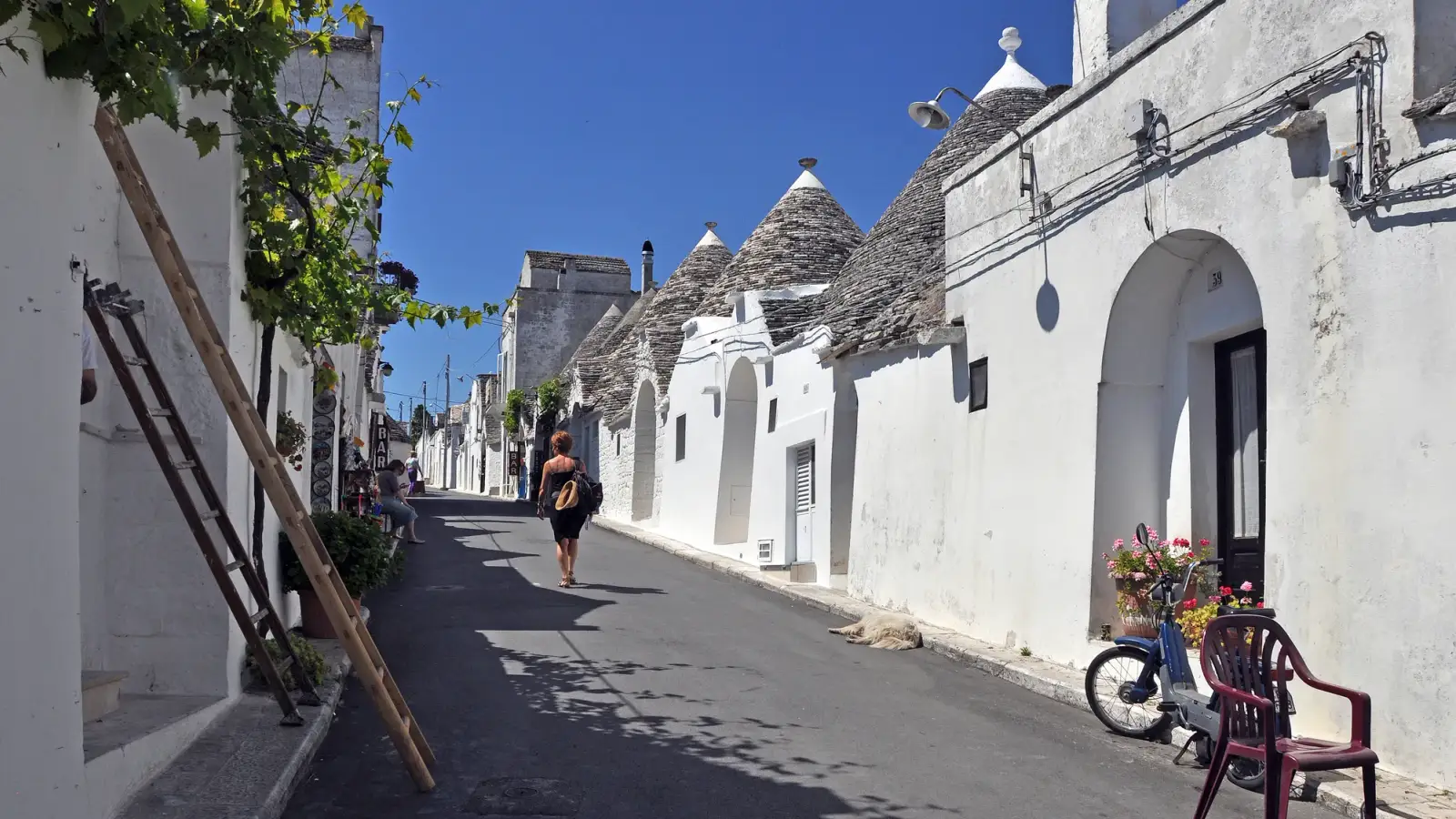
Alberobello's districts preserve ensembles of trulli, limestone buildings with conical roofs constructed using dry-stone techniques. UNESCO has recognised this heritage since 1996. Compare Monti's commercial area with residential streets in Aia Piccola, respecting homes and gates. Entering a shop does not replace learning about the building method; if you want to visit an interior presented as a museum, confirm its own ticket and hours.
The trulli ensemble explains a building technique that distinguishes this regional stage.
Check access
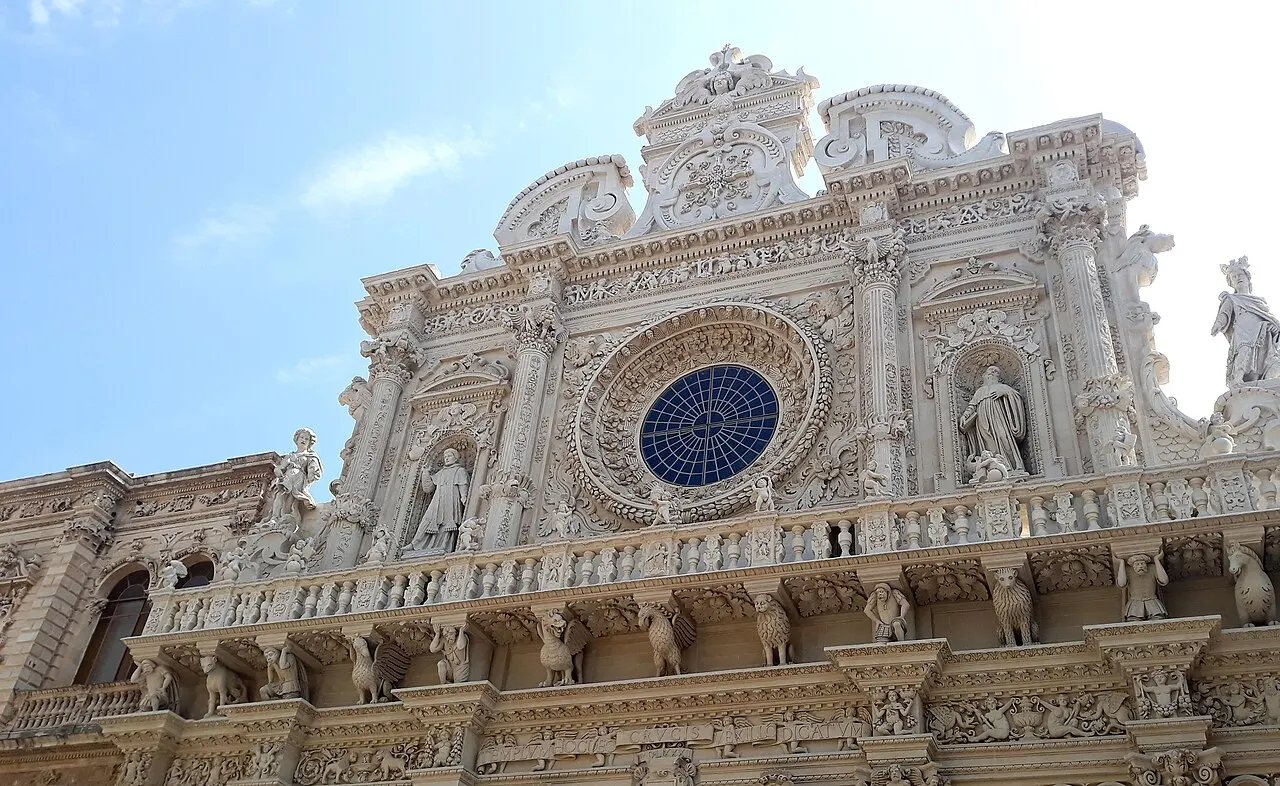
Basilica di Santa Croce
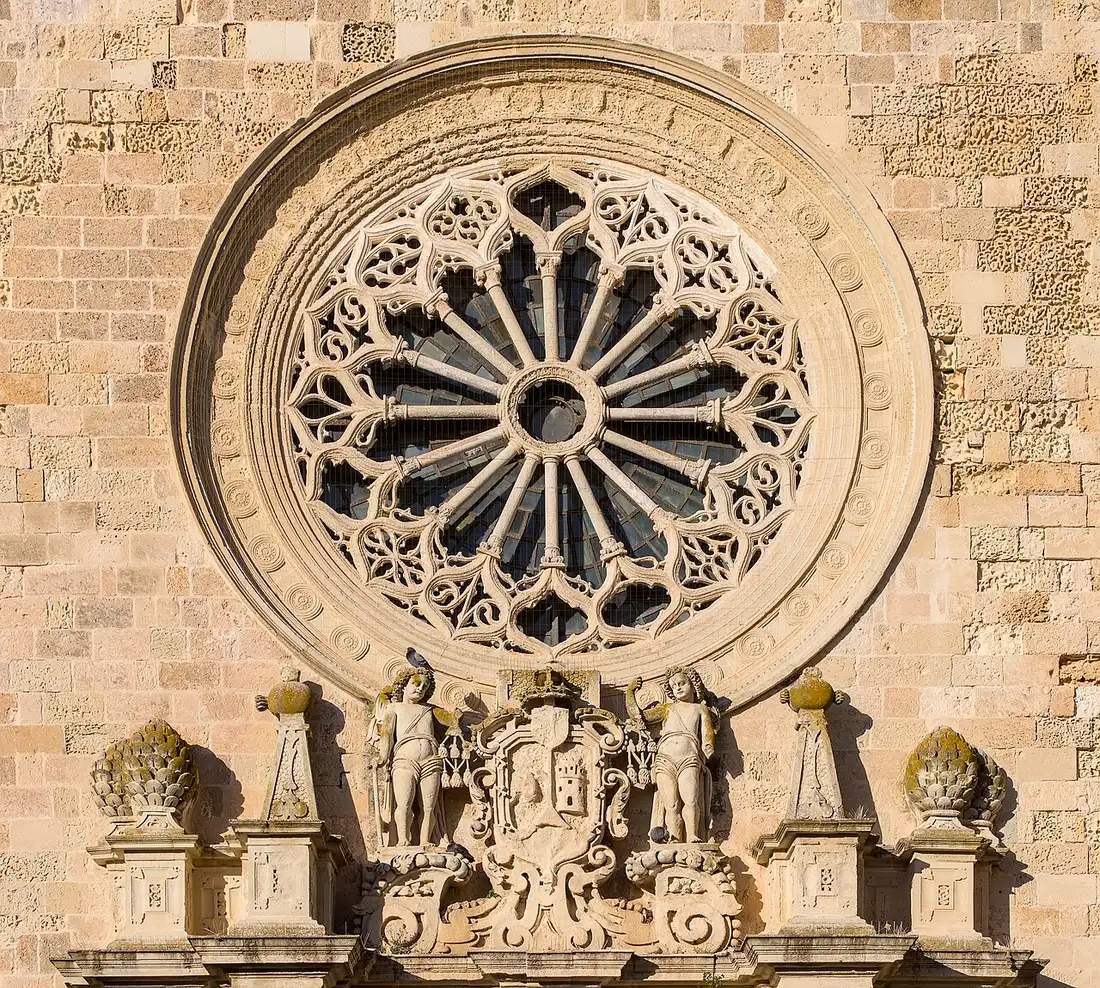
Lecce's carved façade, with plant, animal and ornamental figures, allows a close look at work in the local stone. The interior belongs to the LeccEcclesiae circuit. Consult the religious calendar before fixing the day's sequence; weddings and Mass may alter the time available for sightseeing.
The carved façade and interior introduce Lecce's Baroque architecture.
Check access

Duomo di Lecce
The square and cathedral help explain the city's Baroque ensemble, with different access for church and bell tower. When checked on 16 October 2026, the adult circuit without the bell tower cost €11; the version including it cost €21. Each has its own components and conditions, and the circuit's advertised validity is 15 days. Choose according to what you intend to visit rather than treating the viewpoint as automatically included in basic admission.
The square and cathedral ensemble is central to Lecce; the bell tower is a separate admission choice.
Check access

Castello Svevo di Bari
The castle beside the old centre relates the city to fortifications and successive powers in southern Italy. It is worth entering if military architecture and exhibitions interest you; the exterior alone helps orient a walk. Check the programme and spaces actually open before comparing tickets.
Worth considering for those interested in the building and open areas, without requiring entry on every first visit.
Check access

Lama Monachile
Polignano a Mare's small cove lies between rocky walls and the urban fabric. The viewpoint and beach are different experiences: the view can be a brief stop, whereas swimming requires favourable sea conditions and willingness to deal with crowds and a stony surface. Do not expect a place to spread a towel at any summer hour.
The cove warrants the view and a swim subject to sea conditions and available space.
Check access
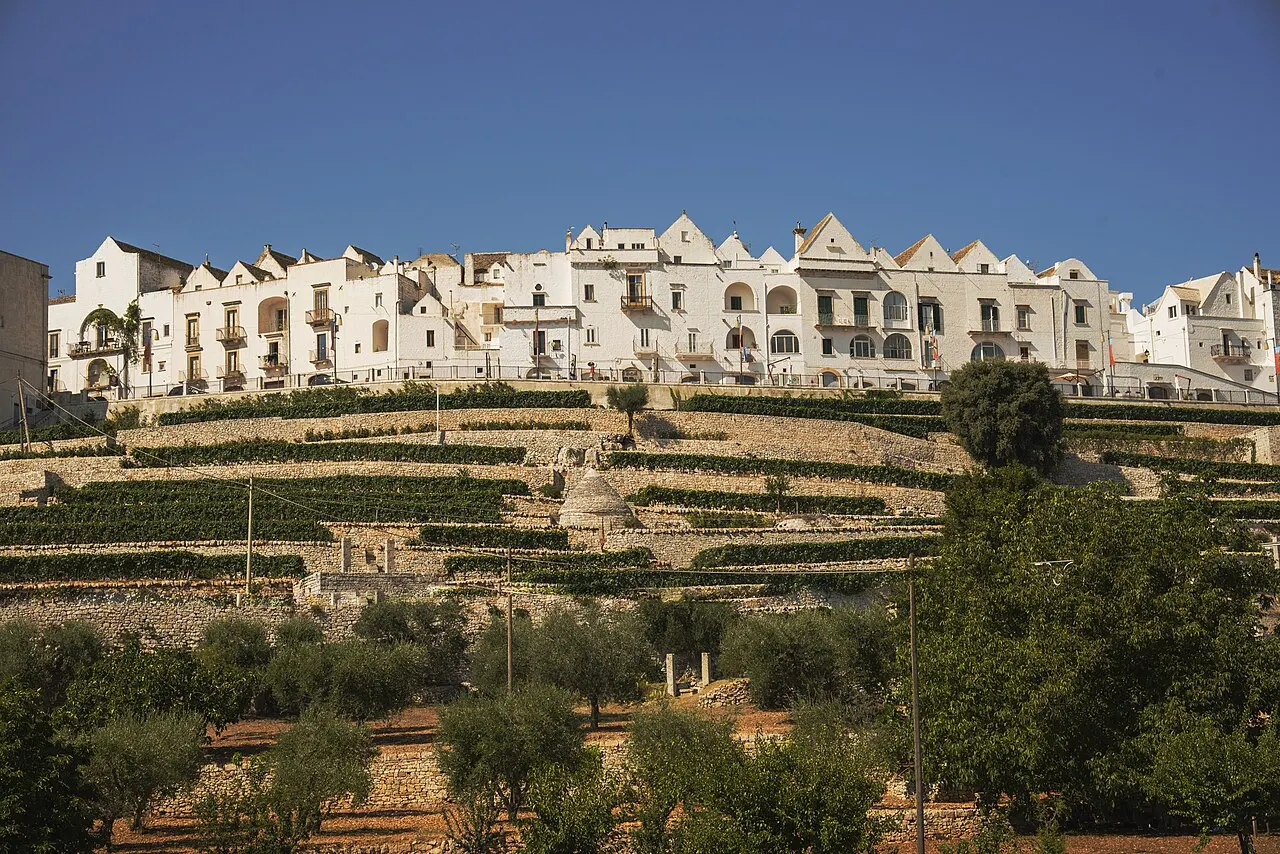
Centro storico di Locorotondo
The historic core offers a walk between whitewashed houses, narrow streets and views over the Itria Valley. It works well as a second stop after Alberobello if transport allows, but need not become a sequence of façade photographs. Set aside time for lunch or coffee and do not park in the old centre without checking traffic restrictions.
It complements Alberobello with another Itria Valley town, if transport allows an unhurried visit.
Check access
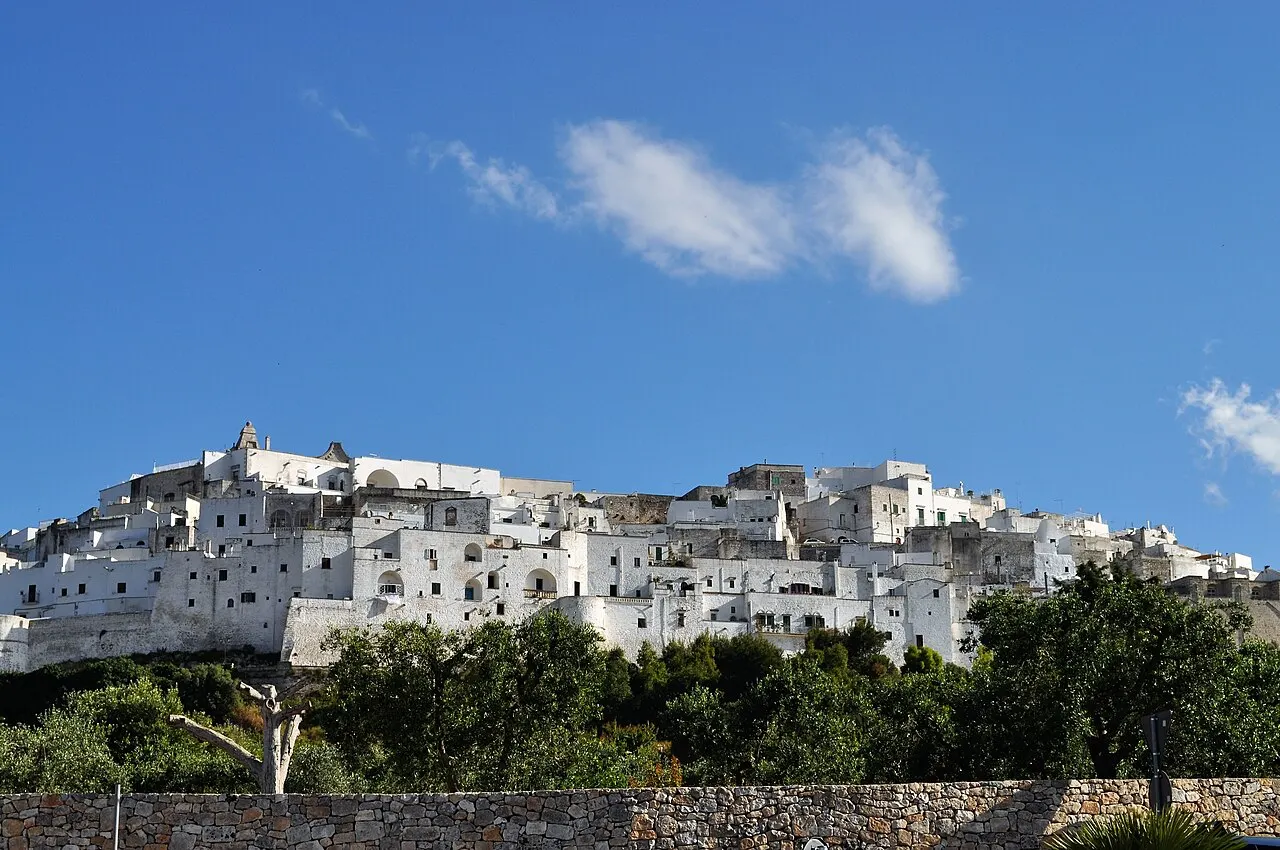
Centro storico di Ostuni
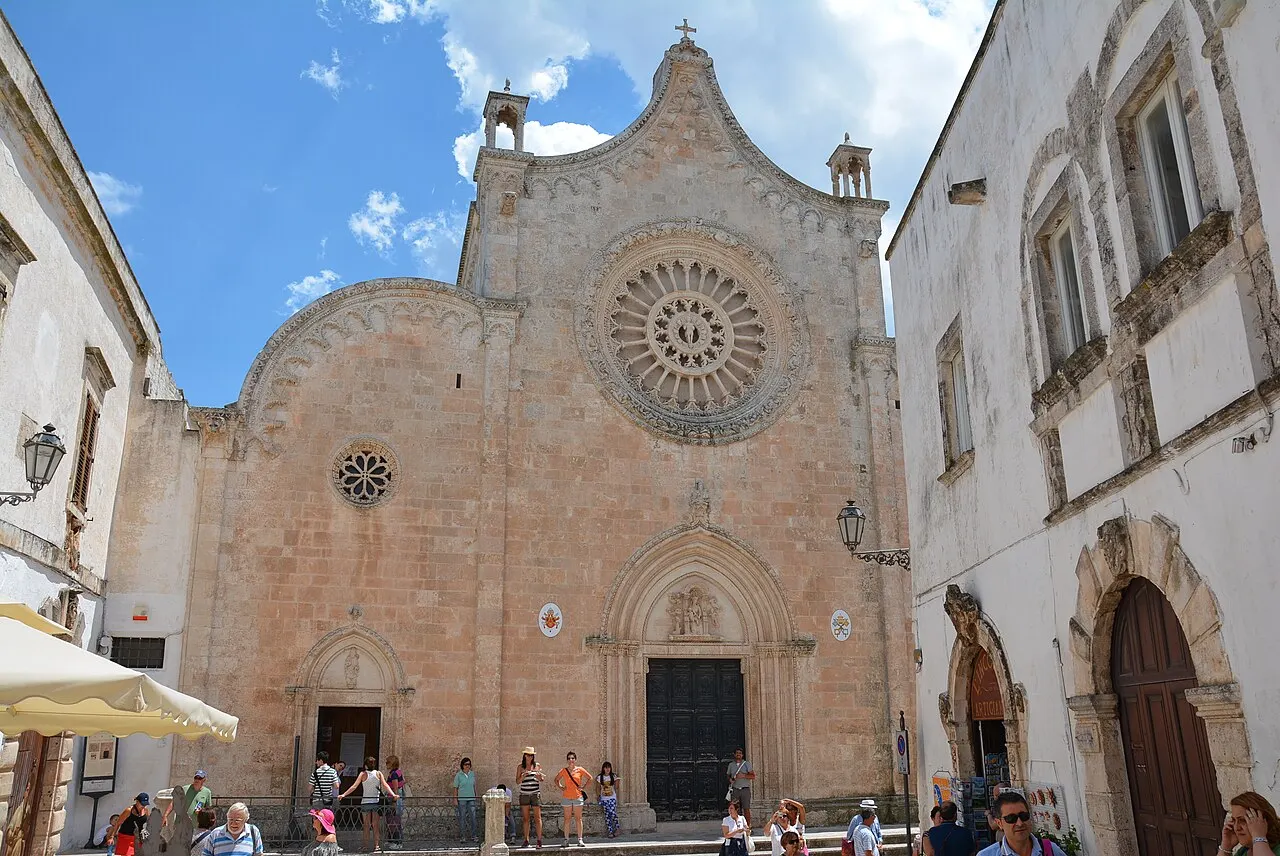
The historic town stands above the plain and involves slopes, steps and stone paving. Its interest lies both in the ensemble of pale houses and views across olive-growing land and the Adriatic. The railway station is not inside the old centre: plan the final leg by bus, taxi or car rather than expecting a train straight to the viewpoint.
The elevated centre and views justify the stop, with the final access leg arranged.
Check access
Nilo’s itinerary
Start with the basic programme and choose extensions for the time you have.
Plan my days in the app ↗Day 1 · Arrival at the Bari base and the old town
This is a full sightseeing day; if your flight arrives late, add arrival before the circuit. Leave luggage at your Bari accommodation and start in Bari Vecchia.
Visit the Basilica di San Nicola according to religious opening and walk towards the cathedral and Castello Svevo. Choose to enter the castle only if the open programme interests you.
Have lunch in town and leave the afternoon for the connection between the old centre, Murat and the sea. A car is not needed yet.
On your Bari Vecchia walk, also look at San Sabino and choose an interior according to opening and interest. Passing through Murat, Teatro Petruzzelli's exterior fits into the route; an interior visit or performance requires a confirmed programme and replaces another evening commitment. Stay overnight in Bari.
Day 2 · Bari with time for interiors, or Castel del Monte
Use the morning for the interior that did not fit into the first day, a walk around Murat and an unhurried meal.
If medieval architecture is a priority and complete transport is confirmed, replace the urban day with Castel del Monte. Do not combine this outing with the move to Monopoli in the same period.
Return to the same Bari accommodation. Prepare the next day's transfer and check the new base's luggage-storage policy.
Day 3 · Move to Monopoli
Leave Bari by train or car and drop luggage at your Monopoli accommodation, the base for three nights. Do not make sightseeing stops with possessions visible inside the vehicle.
After lunch, explore the Porto Antico and historic centre on foot, with a break during the hottest hours. Also observe the exterior of Castello Carlo V from permitted approaches, checking works; an indoor exhibition is a choice that replaces part of the walk.
If the sea is suitable, choose a swimming area accessible from this base, confirming services and conditions on site. Keep the night in Monopoli.
Day 4 · Polignano a Mare and a coastal afternoon
Go from Monopoli to Polignano a Mare using that day's rail connection or a car parked outside the centre. Walk through the historic core and view Lama Monachile from permitted access points.
Have lunch in Polignano. Swimming is an option depending on the sea and crowds, not a commitment maintained in any conditions.
Return to Monopoli for the afternoon and night. If the weather is bad, replace beach time with a confirmed visit to the Grotte di Castellana, with its own transport and session time. Do not add the caves after a whole afternoon by the sea.
Archaeology alternative: replace this Polignano and beach day with Egnazia, using a car or hired transport from Monopoli. Confirm the park and museum hours before leaving, visit in the morning and preserve lunch and the return to the same base.
Day 5 · Alberobello and, by car, Locorotondo
With a car or hired driver, leave Monopoli for Alberobello and reserve the morning for Monti, Aia Piccola and an open interior. The reference journey between centres is 22.6 km/25 minutes driving, plus parking and walking.
Have lunch and continue to Locorotondo, 8.9 km/9 minutes driving in the road reference, allowing time to park and explore the centre on foot. Afterwards return to Monopoli, around 25.8 km/24 minutes driving without traffic. Avoid parking in the restricted centre.
Without a car, replace this loop with Alberobello alone: for 19/10/2026, Lentini/CO.TR.A.P. showed departure from Monopoli Piazza S. Antonio, 6, at 11 a.m., arrival at Via Cavour, 18, at 11:55 a.m., and return at 6 p.m., arriving at 6:55 p.m. Confirm the service for your date, have lunch and visit the trulli in the afternoon; do not add an uncertain connection to Locorotondo. Both versions end with the third night in Monopoli.
Day 6 · Ostuni and the move to Lecce
Leave Monopoli with luggage and head to Ostuni. By car, use suitable parking and keep possessions out of sight. By train, confirm luggage storage and the final transport from the station to the centre beforehand; if there is no safe luggage solution, go straight to Lecce and leave Ostuni for an organised outing.
Walk through Ostuni's upper centre and observe the co-cathedral's façade and rose window; enter only if open and time permits before the transfer. Have lunch, then continue to your Lecce accommodation. Do not add a beach to this day of changing bases.
In late afternoon, begin a walk around Piazza del Duomo and visit the cathedral if the calendar allows. Stay overnight in Lecce.
Day 7 · Lecce's Baroque architecture
Set out from your Lecce accommodation and visit Santa Croce and the parts of the Baroque circuit that interest you. If you visited the cathedral the previous day, the same circuit remains subject to the ticket's validity and conditions.
Pause for lunch and explore the centre's streets and squares without travelling to another town. Choose the bell tower only if you want the view and have the corresponding admission.
Keep the second night in Lecce. Otranto is a day extension beyond the minimum; if you prefer the sea to the complete Baroque programme, swap part of this stage for that outing, with transport confirmed.


Food
Orecchiette
Semolina pasta shaped like small shells, associated with Puglia. The version with cime di rapa may contain anchovies; check before considering the dish vegetarian.
Focaccia barese and panzerotto
Focaccia with tomato, olives and other seasonings makes a simple meal in Bari. A panzerotto is filled dough, often with tomato and cheese. Fillings and preparation methods vary.
Burrata and cheeses
Burrata has a creamy filling and belongs to the region's dairy repertoire. Pair a tasting with bread or vegetables instead of treating it as an automatic recommendation for a complete meal. Watch refrigeration and transport if buying to eat later.
Fave e cicoria
Broad-bean purée with bitter leaves connects the meal to the area's pulses and vegetables. A useful choice for variety alongside pasta and fish, after checking accompaniments.
Pasticciotto and rustico leccese
Pasticciotto combines pastry and custard; rustico is savoury, with a filling that may combine white sauce, cheese and tomato. In Lecce, they help organise breakfast and snacks without turning a sightseeing day into a search for distant restaurants.
Where to eat
- Bari Vecchia and Murat
Focaccia and panzerotti are snack options; orecchiette and dishes with vegetables and pulses make a seated meal. Choose by preparation and menu, check for anchovies and do not assume every green pasta is vegetarian.
- Monopoli and Polignano
Look for fish and pasta dishes in places where price and charging unit are clear. If sold by weight, agree on portion size beforehand; a sea view alone does not tell you the cost of the meal.
- Itria Valley
Bread, olive oil, cheeses and vegetables introduce the agricultural repertoire between visits. For meals at rural properties, confirm booking, menu and return transport; tastings and dinners may have different formats.
- Lecce
Pasticciotto at breakfast and rustico as a snack add variety to church-visiting days. For a long meal, look for Salento dishes of vegetables, pasta and fish explained on the menu, and check ingredients according to your restrictions.
· 2026-10-16
Day trips
Otranto from Lecce
Leave Lecce to explore the cathedral, historic centre and waterfront of Otranto, on Salento's Adriatic coast. The road reference from Viale Marconi in central Lecce to Otranto's municipal offices is about 46 km and 43 minutes of driving, excluding traffic, parking and walking to the historic centre. By public transport, consult FSE for your date and confirm both directions before leaving; SalentoinBus 2026 ended on 13 September. Without a useful combination, book a car or driver. Allow an additional day or replace the Lecce day according to your interests, without adding Gallipoli. In the centre, Castello Aragonese can replace part of the waterfront walk; check the exhibition, ticket and underground access without adding another long visit to the programme already chosen.
Gallipoli as an alternative in Salento
Gallipoli offers an old town and waterfront on the Ionian coast, as an alternative to Otranto on the other side of Salento. From Viale Marconi in central Lecce, the road reference to the municipal offices in the old town is about 41 km and 40 minutes of driving, excluding traffic, parking and the final permitted stretch on foot. Consult FSE for services on your date, including possible replacements and connections, and confirm the return. Do not use a summer route outside its season; if the combination does not work, use a car or prebooked driver. A day allows the centre and lunch; for a beach holiday, consider staying on the coast. In the old town, observe Sant’Agata's façade and choose the interior if available outside services, preserving your return time to Lecce.
Where to begin
Arrival at the Bari base and the old town
This is a full sightseeing day; if your flight arrives late, add arrival before the circuit. Leave luggage at your Bari accommodation and start in Bari Vecchia.
Bari with time for interiors, or Castel del Monte

Use the morning for the interior that did not fit into the first day, a walk around Murat and an unhurried meal.
Move to Monopoli
Leave Bari by train or car and drop luggage at your Monopoli accommodation, the base for three nights. Do not make sightseeing stops with possessions visible inside the vehicle.
Polignano a Mare and a coastal afternoon
Go from Monopoli to Polignano a Mare using that day's rail connection or a car parked outside the centre. Walk through the historic core and view Lama Monachile from permitted access points.
Alberobello and, by car, Locorotondo
With a car or hired driver, leave Monopoli for Alberobello and reserve the morning for Monti, Aia Piccola and an open interior. The reference journey between centres is 22.6 km/25 minutes driving, plus parking and walking.
Ostuni and the move to Lecce
Leave Monopoli with luggage and head to Ostuni. By car, use suitable parking and keep possessions out of sight. By train, confirm luggage storage and the final transport from the station to the centre beforehand; if there is no safe luggage solution, go straight to Lecce and leave Ostuni for an organised outing.
Lecce's Baroque architecture
Set out from your Lecce accommodation and visit Santa Croce and the parts of the Baroque circuit that interest you. If you visited the cathedral the previous day, the same circuit remains subject to the ticket's validity and conditions.
Money
The currency is the euro. Do not compare a church ticket with a guided visit or a room rate with a per-person price. When checked on 16 October 2026, LeccEcclesiae listed €11 per adult for the circuit without the bell tower and €21 for the option including it; advertised validity was 15 days. Check the monuments and calendar before choosing. At restaurants, look for service charges and whether fish is sold by weight. Equipped beaches may charge for services; confirm the total and conditions before occupying a lounger or parasol.
Getting there and around
Bari (BRI) and Brindisi (BDS) are the main airport gateways for this circuit. Bari airport's railway link is operated by Ferrotramviaria; Trenitalia sells combinations with its services, but the transport contracts remain separate. Select Bari Centrale station and the final leg to your accommodation, not merely the word Bari in the result. For Brindisi, check AirPort Link and the rail connection that actually serves your arrival time.
The Adriatic railway axis links Bari, Polignano a Mare, Monopoli, Ostuni and Lecce with different services. Trenitalia advertises a fast Bari–Lecce service of 1 hour 27 minutes, with its own stops and limited departures; that time does not apply to every regional train or to door-to-door travel. Check the day's journey and do not add a tight connection to a museum reservation.
The Alberobello and Locorotondo day uses a car or hired driver, departing from and returning to Monopoli. Road references calculated between the centres are 22.6 km/25 minutes to Alberobello, 8.9 km/9 minutes from there to Locorotondo and 25.8 km/24 minutes back to Monopoli. These are driving times without traffic, parking or walking; add those margins and respect restricted zones. Without a car, visit Alberobello alone with Lentini/CO.TR.A.P.: in the query for Monday, 19/10/2026, route 584 offers departure from Piazza S. Antonio, 6, Monopoli, at 11 a.m., arrival at Via Cavour, 18, at 11:55 a.m., and a return at 6 p.m., arriving at 6:55 p.m. This allows lunch and an afternoon visit without adding Locorotondo. Confirm your day's journey, stops and tickets; this weekday query does not guarantee Sundays, public holidays or another season.
In Salento, SalentoinBus is seasonal: the 2026 edition operated from 13 June to 13 September. For the rest of the year, consult FSE by date and arrival point rather than relying on summer buses. By car, the reference from Viale Marconi in central Lecce is around 46 km/43 minutes to Otranto and 41 km/40 minutes to Gallipoli, excluding traffic, parking and walking; these are different coasts for separate days. If public transport does not provide a suitable outward and return journey, use a car or booked driver, or keep an urban day.
Safety
Protect possessions at stations and in crowded places; do not leave visible luggage in a car during stops between bases. At beaches, assess wind, waves, rocks and signs before swimming; a stretch that looks beautiful in a photograph does not establish safe access. Heat and exposed paving call for water and breaks. In centres with stairs, check the route for people with reduced mobility. In the countryside, check weather and fire warnings and avoid improvising long walks in intense heat.
Etiquette tips
Inhabited historic centres
Streets with trulli, doors and courtyards remain people's addresses. Respect photography boundaries and do not enter a property because it looks like a visitor setting.
Churches and pilgrimage
Dress according to church guidance and respect Mass and religious queues. A sightseeing ticket does not authorise interruption of a service.
Beach and rock
Use permitted access, take rubbish away and respect closures. A spot seen from a viewpoint is not necessarily an authorised or safe place to enter the sea.
Mistakes to avoid
Booking a single place to stay for Bari, the Itria Valley, Salento and Gargano as though everything fitted into short outings.
Getting off at Ostuni without planning how to get up from the station to the historic centre.
Using the SalentoinBus summer timetable for a trip in October or spring.
Planning Alberobello, Locorotondo, Ostuni and two beaches on the same day, without lunch, parking or the return journey.
Choosing a masseria for its building and discovering afterwards that dinner and outings require a car.
Useful phrases
Il treno ferma a Monopoli?
Does the train stop at Monopoli?
Da dove parte l’autobus?
Where does the bus leave from?
Una focaccia, per favore
A focaccia, please.
Contiene acciughe?
Does it contain anchovies?
Il prezzo è a persona o a camera?
Is the price per person or per room?
Where to stay
- Bari between Murat and Bari Vecchia · Airport or train arrivals and the first days without a car.: Murat makes the route between station and old centre easier; a position close to Bari Vecchia brings the monuments nearer. Compare noise, stairs and the real distance with luggage. A charming street deep in the old centre may not allow direct drop-off.
- Monopoli near the centre and station · Those wanting to combine the central coast and access to the Itria Valley.: It allows walks around the harbour and trains to Polignano and other towns on the Adriatic axis. The connection to Alberobello is different and must be checked. An address between station and centre reduces walks with luggage; in summer, the historic area may be noisy with difficult parking.
- Rural Itria Valley · Travellers with a car prioritising countryside and a stay in a trullo or masseria.: It suits exploring inland centres and resting at the property. Confirm a restaurant or kitchen, check-in time and parking. Without a vehicle, isolation can turn meals and short journeys into logistical problems.
- Lecce beside the historic centre · Those combining churches, food and a chosen outing in Salento.: An address within walking distance of the centre allows evenings without driving. If using trains or buses, compare the exact stop with your accommodation; the base is inland and does not put a beach on your doorstep. Check ZTL limits before driving in.
· 2026-10-16
Districts
Bari Vecchia and Murat
The old centre concentrates the basilica, narrow streets and historic buildings; Murat connects the station with the city and coast. They are different areas of the same base, useful before the regional stage.
Monopoli and the central coast
Monopoli combines a harbour centre, Polignano and access inland. Staying here also avoids relying solely on an excursion stop in each town.
Itria Valley
Historic towns and countryside between the areas of Bari, Brindisi and Taranto. Rural accommodation suits drivers; bus users need to check the street and return journey before booking.
Ostuni
An elevated historic centre and lower neighbourhoods with different functions. Proximity to the railway on a map does not remove the final transfer.
Lecce and Salento
Lecce serves the urban visit and provides a base for a chosen coastal outing. A beach base favours swimming and rest but increases travel to Baroque interiors.
Gargano
The northern area has its own coastline and nature. It lies outside the proposed seven-day circuit, which runs from Bari towards Salento.
History
Antiquity · Different peoples and ports
Daunians, Peucetians and Messapians occupied different areas, while the Greek presence particularly shaped Taranto. The region did not emerge from a single city.
Roman period · Connection with the Adriatic
Roads and ports, especially Brindisi, integrated the territory into Roman routes towards the eastern Mediterranean.
11th to 13th centuries · Churches and Norman and Swabian power
Puglian Romanesque architecture and castles associated with successive medieval powers remain among the trip's main visual references.
1240 · Castel del Monte
UNESCO dates the completion of Frederick II's castle to this year, highlighting its octagonal form and combination of architectural vocabularies.
16th and 17th centuries · Lecce's Baroque architecture
Churches and buildings in the centre began to display decorative schemes that now guide visits to the city.
1996 · Recognition of the trulli
The ensembles of Alberobello entered the World Heritage List, bringing international attention to a building technique linked to the limestone landscape.
Complete history
Puglia's coast belonged to networks crossing the Adriatic, while the interior retained its own forms of settlement and production. The towns do not tell the same story: Bari helps explain pilgrimage and trade; Taranto the Greek presence; Alberobello stone construction in the countryside. A regional itinerary gains meaning when these differences accompany changes of base.
Medieval architecture appears in Romanesque churches and castles. Castel del Monte is a particular case, whose octagonal design deserves more attention than an explanation of a generic fortress. In Lecce, observing carved stone and the relationships between churches and squares brings visitors closer to the city's Baroque transformation.
Trulli and masserie are part of an agricultural landscape that has also become an accommodation offering. Today, the comfort of a rural property may depend on having a car for meals and outings. Building conservation and practical location need to enter the decision alongside appearance.
Geography and shape of the city
This guide covers a region, not a city that can be explored on foot. Bari is on the Adriatic; Polignano and Monopoli lie to the south. The Itria Valley is inland and includes Alberobello and Locorotondo among other towns. Ostuni occupies an elevated position near the coast, but its centre is not at the station. Lecce is inland in Salento and provides a base for choosing Otranto's Adriatic coast or Gallipoli's Ionian coast. Gargano is in the north and needs another block of travel; including it as a short outing from Lecce compromises visiting time.
Puglia is a region. Bari, Alberobello and Lecce are separate towns, and moving between them requires its own transport and time.
The seven days are sightseeing days. A late arrival flight or early departure needs an additional overnight stay compatible with the chosen airport.
Culture
Pizzica music and dance are present in Salento, including stage programmes that reinterpret local traditions. La Notte della Taranta brings performances to different municipalities and a large event to Melpignano. A recording helps you recognise the repertoire; for a live performance, consult the edition and chosen location rather than assuming every restaurant offers the same programme.
Grecìa Salentina comprises communities associated with Griko, a language of Greek origin. This context belongs to particular places in Salento and does not make all of Puglia bilingual. Devotion to Saint Nicholas in Bari also has different dimensions, with calendars and participation from distinct Christian traditions.
Festivals and events
Saint Nicholas in Bari
The celebrations of the transfer of the relics concentrate on 7 to 9 May; there is also the liturgical celebration on 6 December and dates following the Julian calendar. Consult that year's programme for processions, access and traffic changes.
La Notte della Taranta
The festival associated with Salento's folk music usually takes place in August, with stages in municipalities and the final concert in Melpignano. Confirm the calendar, return transport and admission conditions for the edition you want before setting aside the day.
Books and films
La Notte della Taranta, festival recordings
The programme and official recordings introduce pizzica and its stage reinterpretations. They help choose a performance without reducing the musical tradition to restaurant background sound.
UNESCO documentation on the trulli and Castel del Monte
The two entries explain different techniques and architectural programmes. Reading the criteria before visiting helps you look at construction instead of seeking the same kind of experience at every monument.
Frequently asked questions
Puglia: how many days and bases should I use?
I would set aside seven full days for this first Puglia circuit, with two nights in Bari, three in Monopoli and two in Lecce. The proposal combines the central coast, a trulli day and two cities that deserve visiting time, without using every afternoon to change accommodation. Otranto can add an eighth day, and Gallipoli is a coastal alternative. Gargano, Taranto and a long beach stay require another block of days; I would not attach them to the same week. Those with less time should choose two of these areas without calling the selection a visit to the entire region.
Puglia: which airports and trains serve the circuit?
Bari (BRI) and Brindisi (BDS) are the main airport gateways for this circuit. Bari airport's railway link is operated by Ferrotramviaria; Trenitalia sells combinations with its services, but the transport contracts remain separate. Select Bari Centrale station and the final leg to your accommodation, not merely the word Bari in the result. For Brindisi, check AirPort Link and the rail connection that actually serves your arrival time. The Adriatic railway axis links Bari, Polignano a Mare, Monopoli, Ostuni and Lecce with different services. Trenitalia advertises a fast Bari–Lecce service of 1 hour 27 minutes, with its own stops and limited departures; that time does not apply to every regional train or to door-to-door travel. Check the day's journey and do not add a tight connection to a museum reservation.
Puglia: can I visit Alberobello and Locorotondo without a car?
The Alberobello and Locorotondo day uses a car or hired driver, departing from and returning to Monopoli. Road references calculated between the centres are 22.6 km/25 minutes to Alberobello, 8.9 km/9 minutes from there to Locorotondo and 25.8 km/24 minutes back to Monopoli. These are driving times without traffic, parking or walking; add those margins and respect restricted zones. Without a car, visit Alberobello alone with Lentini/CO.TR.A.P.: in the query for Monday, 19/10/2026, route 584 offers departure from Piazza S. Antonio, 6, Monopoli, at 11 a.m., arrival at Via Cavour, 18, at 11:55 a.m., and a return at 6 p.m., arriving at 6:55 p.m. This allows lunch and an afternoon visit without adding Locorotondo. Confirm your day's journey, stops and tickets; this weekday query does not guarantee Sundays, public holidays or another season.
Puglia: how can I visit Ostuni while changing bases?
Leave Monopoli with luggage and head to Ostuni. By car, use suitable parking and keep possessions out of sight. By train, confirm luggage storage and the final transport from the station to the centre beforehand; if there is no safe luggage solution, go straight to Lecce and leave Ostuni for an organised outing. Walk through Ostuni's upper centre and observe the co-cathedral's façade and rose window; enter only if open and time permits before the transfer. Have lunch, then continue to your Lecce accommodation. Do not add a beach to this day of changing bases.
Puglia: how should I choose between Otranto and Gallipoli?
Leave Lecce to explore the cathedral, historic centre and waterfront of Otranto, on Salento's Adriatic coast. The road reference from Viale Marconi in central Lecce to Otranto's municipal offices is about 46 km and 43 minutes of driving, excluding traffic, parking and walking to the historic centre. By public transport, consult FSE for your date and confirm both directions before leaving; SalentoinBus 2026 ended on 13 September. Without a useful combination, book a car or driver. Allow an additional day or replace the Lecce day according to your interests, without adding Gallipoli. In the centre, Castello Aragonese can replace part of the waterfront walk; check the exhibition, ticket and underground access without adding another long visit to the programme already chosen. Gallipoli offers an old town and waterfront on the Ionian coast, as an alternative to Otranto on the other side of Salento. From Viale Marconi in central Lecce, the road reference to the municipal offices in the old town is about 41 km and 40 minutes of driving, excluding traffic, parking and the final permitted stretch on foot. Consult FSE for services on your date, including possible replacements and connections, and confirm the return. Do not use a summer route outside its season; if the combination does not work, use a car or prebooked driver. A day allows the centre and lunch; for a beach holiday, consider staying on the coast. In the old town, observe Sant’Agata's façade and choose the interior if available outside services, preserving your return time to Lecce.
Puglia: how should I compare Lecce tickets and other costs?
The currency is the euro. Do not compare a church ticket with a guided visit or a room rate with a per-person price. When checked on 16 October 2026, LeccEcclesiae listed €11 per adult for the circuit without the bell tower and €21 for the option including it; advertised validity was 15 days. Check the monuments and calendar before choosing. At restaurants, look for service charges and whether fish is sold by weight. Equipped beaches may charge for services; confirm the total and conditions before occupying a lounger or parasol.
Other cities in the country
Italy ↗- Days
- 3–5
- When
- Apr–May · Sep–Oct
- Per person/day
- Average 130–190 EURMid-range · per person/day
Cost scope
Per person per day: accommodation, meals, urban transport, visits and a small allowance for extras. Flights excluded; larger purchases vary. Editorial estimate, not a quote.
- Days
- 2–3
- When
- Apr–Jun · Sep–Oct
- Per person/day
- Average 180–330 EURMid-range · per person/day
Cost scope
Per person per day: accommodation, meals, urban transport, visits and a small allowance for extras. Flights excluded; larger purchases vary. Editorial estimate, not a quote.
- Days
- 2–3
- When
- Mar–May · Sep–Oct
- Per person/day
- Average 180–250 EURMid-range · per person/day
Cost scope
Per person per day: accommodation, meals, urban transport, visits and a small allowance for extras. Flights excluded; larger purchases vary. Editorial estimate, not a quote.
- Days
- 1–2
- When
- Apr–Jun · Sep–Oct
- Per person/day
- Average 150–220 EURMid-range · per person/day
Cost scope
Per person per day: accommodation, meals, urban transport, visits and a small allowance for extras. Flights excluded; larger purchases vary. Editorial estimate, not a quote.
- Days
- 2–3
- When
- Apr–Jun · Sep–Oct
- Per person/day
- Average 130–200 EURMid-range · per person/day
Cost scope
Per person per day: accommodation, meals, urban transport, visits and a small allowance for extras. Flights excluded; larger purchases vary. Editorial estimate, not a quote.
- Days
- 3–4
- When
- May–Jun · Sep–Oct
- Per person/day
- Average 246 EURMid-range · per person/day
Cost scope
Per person per day: accommodation, meals, urban transport, visits and a small allowance for extras. Flights excluded; larger purchases vary. Editorial estimate, not a quote.
- Days
- 2–3
- When
- May–Jun · Sep
- Per person/day
- Average 170 EURMid-range · per person/day
Cost scope
Per person per day: accommodation, meals, urban transport, visits and a small allowance for extras. Flights excluded; larger purchases vary. Editorial estimate, not a quote.
- Days
- 3
- When
- May–Jun · Sep
- Per person/day
- Explore costsGuide estimate
Cost scope
Per person per day: accommodation, meals, urban transport, visits and a small allowance for extras. Flights excluded; larger purchases vary. Editorial estimate, not a quote.
- Days
- 6
- When
- Jun–Sep
- Per person/day
- Explore costsGuide estimate
Cost scope
Per person per day: accommodation, meals, urban transport, visits and a small allowance for extras. Flights excluded; larger purchases vary. Editorial estimate, not a quote.
- Days
- 3
- When
- Apr–Jun · Sep–Oct
- Per person/day
- Average 114 EURMid-range · per person/day
Cost scope
Per person per day: accommodation, meals, urban transport, visits and a small allowance for extras. Flights excluded; larger purchases vary. Editorial estimate, not a quote.