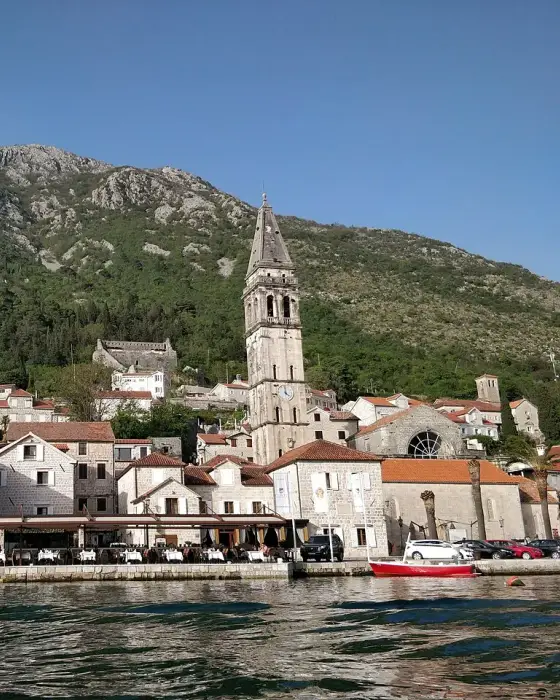
Days Start with the basic programme and choose extensions for the time you have.
How the guide reaches this number
A third day allows Dobrota, revisiting an interior or choosing the cable car with transport and operation confirmed. The Blue Cave and a long coastal circuit are not automatic additions to the Perast day. With only a few hours, I would stay in the streets and one interesting interior rather than compensating for limited time with a rushed climb.
2–3
When May, June and September; July and August bring higher coastal demand, and rain or heat affects walks.
How the guide reaches this number
May, June and September are the editorial choice for combining streets, the climb and time by the bay. July and August concentrate coastal demand; take breaks and decide on the walls walk according to heat and fitness. Spring and autumn do not eliminate rain, and wet stone can make the climb unsuitable. In winter, seek a trip focused on the centre and institutions confirming opening: the lapidarium closes seasonally, boats and cable car need verification and daylight is shorter. Consult forecasts and notices close to the visit, without using climate averages as permission for hiking or sailing.
Per person/day Budget around EUR 54; mid-range around EUR 131; comfortable around EUR 293 per person per day, based on spending travellers report to Budget Your Trip (consulted October 2026).
How the guide reaches this number
Indicative amounts, excluding travel to the destination.
Budget around EUR 54; mid-range around EUR 131; comfortable around EUR 293 per person per day, based on spending travellers report to Budget Your Trip (consulted October 2026). Indicative amounts, excluding travel to the destination.
Per person per day: accommodation, meals, urban transport, visits and a small allowance for extras. Flights excluded; larger purchases vary. Editorial estimate, not a quote.
 What Nilo thinks
I would stay two full days to explore Kotor and the inner bay: one for the centre with an optional fortress, and another for Perast. A third day allows Dobrota, revisiting an interior or choosing the cable car with transport and operation confirmed. The Blue Cave and a long coastal circuit are not automatic additions to the Perast day. With only a few hours, I would stay in the streets and one interesting interior rather than compensating for limited time with a rushed climb.I would choose Kotor for the relationship between town and terrain. You can recognise the centre as a small network of streets and then notice how far its defences reached up the slope. I would begin slowly in squares and churches, leaving the climb to a decision informed by weather, daylight and effort. Those remaining at water level still have plenty to understand.
Read more
I would also go beyond the walls. Perast connects palaces with navigators' history, while Dobrota offers another way to walk the bay. I would choose transport according to the time I want to devote to these places. A succession of brief landings may offer less than an unhurried village visit and a meal without an immediate boarding.
Quick facts
- Population
- 22,746 inhabitants in Kotor municipality, according to MONSTAT's 2023 census; the figure does not refer solely to the walled town.
- Foundation
- The settlement is ancient; today's visit focuses on the medieval town and fortifications expanded over the centuries.
- Country and region
- Montenegro, Boka Kotorska bay on the Adriatic.
- Language
- Montenegrin; signs and names may appear in Latin or Cyrillic alphabets.
- Currency
- Euro (EUR).
- Time zone
- Europe/Podgorica: UTC+1 in standard time and UTC+2 during daylight saving time.
- Best time
- May, June and September; July and August bring higher coastal demand, and rain or heat affects walks.
- Average daily cost
- Budget around EUR 54; mid-range around EUR 131; comfortable around EUR 293 per person per day, based on spending travellers report to Budget Your Trip (consulted October 2026). Indicative amounts, excluding travel to the destination.
When to go
May, June and September; July and August bring higher coastal demand, and rain or heat affects walks.
How the year changes
May, June and September are the editorial choice for combining streets, the climb and time by the bay. July and August concentrate coastal demand; take breaks and decide on the walls walk according to heat and fitness. Spring and autumn do not eliminate rain, and wet stone can make the climb unsuitable. In winter, seek a trip focused on the centre and institutions confirming opening: the lapidarium closes seasonally, boats and cable car need verification and daylight is shorter. Consult forecasts and notices close to the visit, without using climate averages as permission for hiking or sailing.
Nilo's tips
Check walls operation
I would use the municipal channel to check entrance and hours. Prohibition after 22:00 does not mean a climb can begin at dusk.
Ask how much time is ashore
Before reserving a boat, I would confirm landing, return and duration in Perast or on the islet. An advertised stop may simply mean sailing past the place.
Choose the shore before accommodation
I would compare the address with planned outings and return transport. Water between two nearby map points does not create an available crossing.
Have an alternative without climbing
If stone is wet or heat makes the stairs unsuitable, I would choose an open interior and a waterfront stretch, preserving the day's pace.
Explore the map
Explore the map, read about the other places and plan your travel days in the app.
Open the appWhat to see

Trg od Oružja
The Square of Arms beside the Sea Gate helps orient the first walk: notice how water access opens into a civic space, then divides into smaller streets. Recognise the clock tower and continue without treating the entire square as one monument from a single period. Tables, circulation and local activities share the space; avoid blocking groups and residents.
It helps orient arrival in the town and the relationship between sea access and squares.
Check access

Katedrala Svetog Tripuna
St Tryphon's Cathedral was consecrated in 1166 and combines religious architecture with devotion to Kotor's patron saint. Rebuilding forms part of its history, especially in a town affected by earthquakes. Check tourist access and services before counting on visiting the interior or adjoining areas; viewing the facade is not equivalent to admission to a museum or treasury. It suits those wanting to understand the centre beyond its walls.
The cathedral and its reconstructions explain religious history and earthquakes, with sightseeing access subject to worship.
Check access
Pomorski muzej Crne Gore
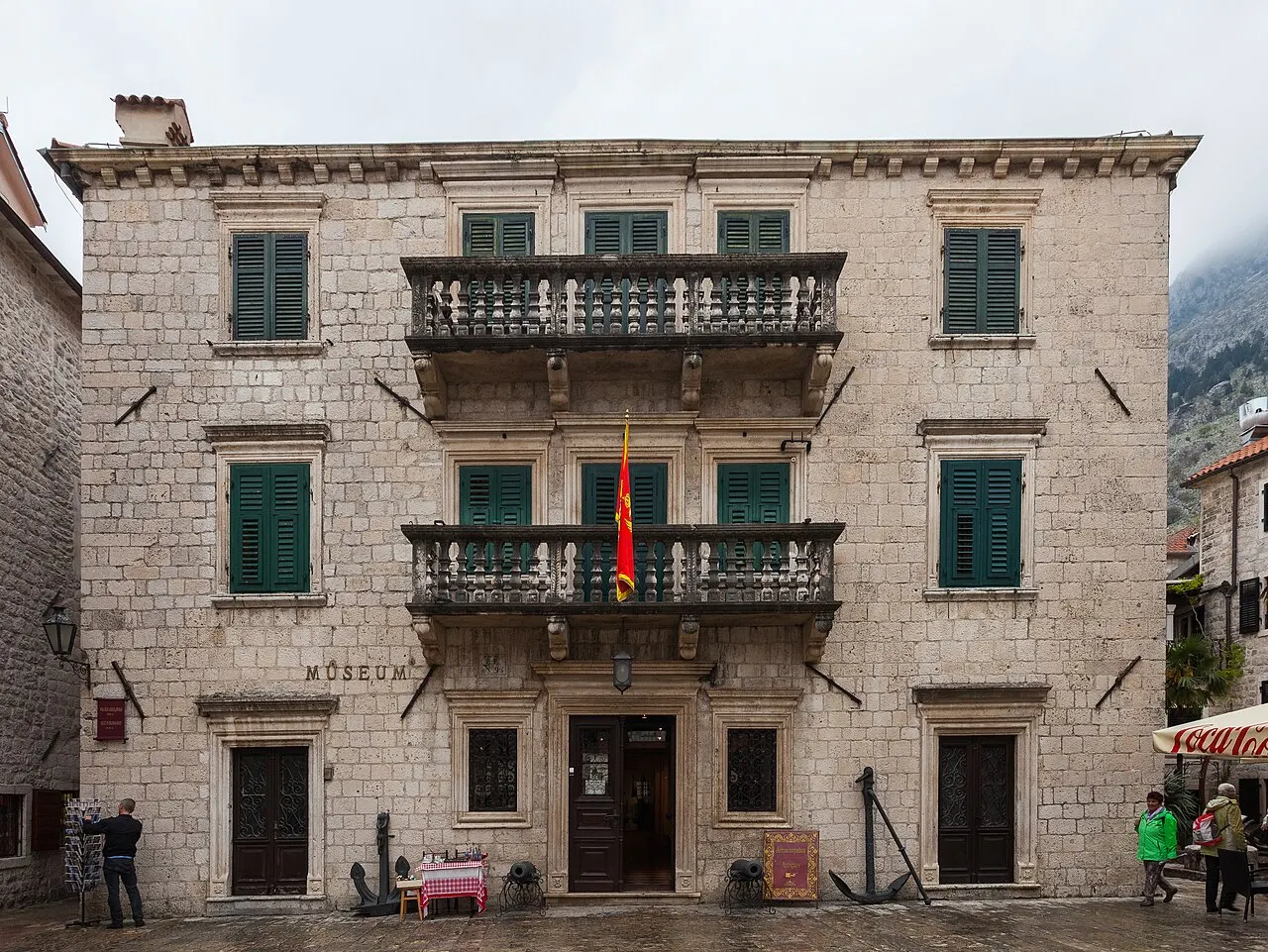
The Maritime Museum of Montenegro in the former Gregurina Palace presents the bay's navigation history through objects, portraits, maps and ship models. It makes sense for visitors wanting to understand the captains and trade suggested by central facades. Check hours and admission directly before organising the day: it is a different institution from the municipal Muzeji Kotor network, whose combined ticket should not be assumed valid here.
The choice for understanding navigation and trade, with its own ticket separate from the municipal network.
Check access

Perast
Perast brings together palaces and churches linked to navigation, facing two well-known bay islets. Walk around the village and, if open, visit the museum in Bujović Palace. This programme has value without boarding a boat. The village lies outside central Kotor: plan outward travel, lunch and return by road or a booked water connection, without treating the visit as a pedestrian extension of town.
The palaces and museum give context to navigation; the town deserves its own time beyond passing by boat.
Check access

Vrata od Mora
The Sea Gate links the waterfront with the Square of Arms and is a useful landmark for entering the walled centre. Stop outside to perceive the walls' volume before crossing, keeping passage clear for residents and groups. This is an urban entrance: the paid walls climb to St John begins at its own entrances within the centre, rather than at this gate.
It orients arrival and reveals the relationship between the walled town and the bay.
Check access
Kotorske zidine
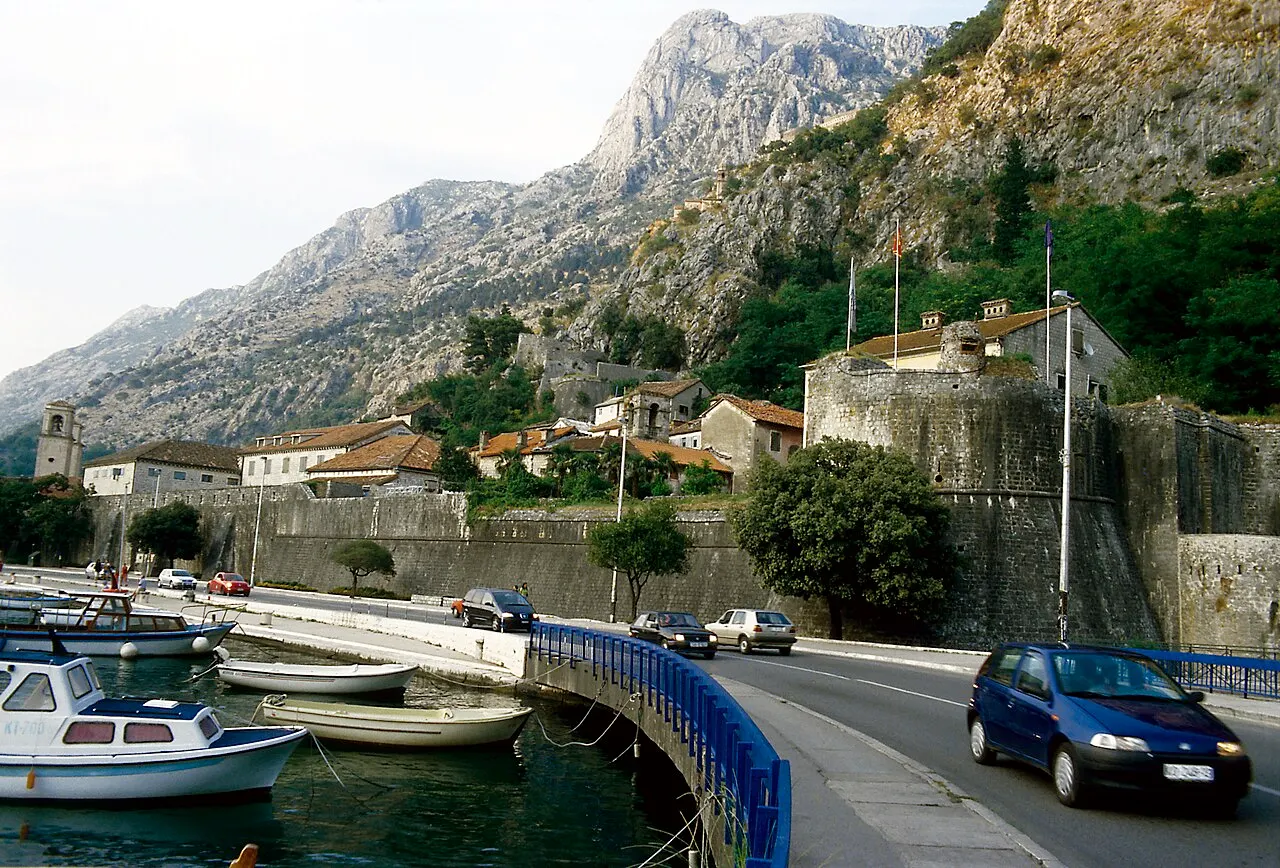
The walls follow the centre beside the water and climb the slope to St John's Fortress. Recognising the system from town level differs from taking the steep trail. To climb, use an official entrance and check hours and conditions; ticket offices have a seasonal calendar. The landscape seen from below already relates gates, town and mountain, without making an urban walk an obligation to reach the top.
The defensive ensemble explains the town’s form and can be observed without completing the entire climb.
Check access
Crkva Svetog Luke
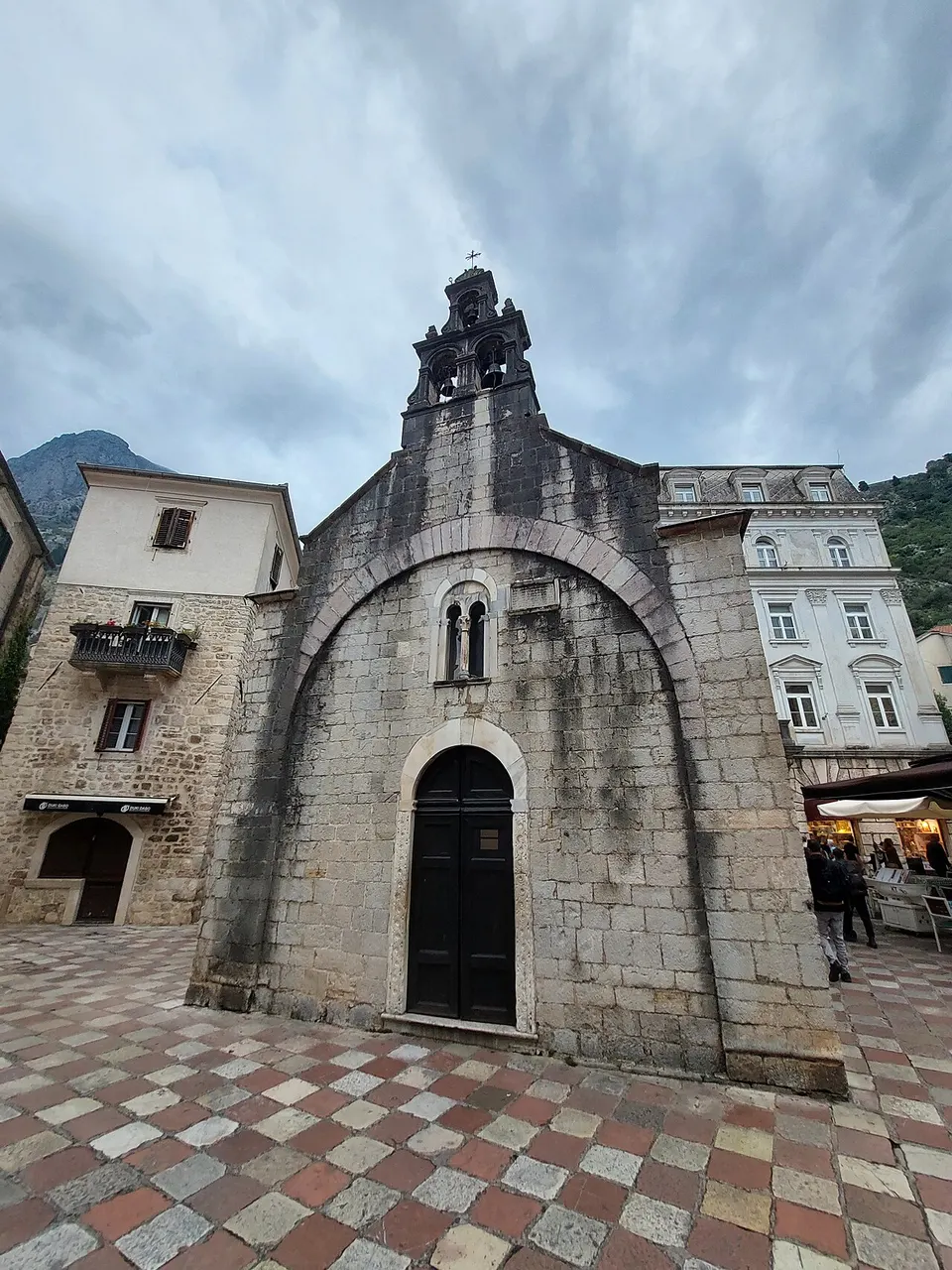
The small Church of St Luke helps reveal overlapping religious traditions in Kotor. The local tourism body highlights altars associated with Catholic and Orthodox use. Its scale invites observation without turning worship space into scenery: respect ceremonies, dress and photography instructions. If the door is closed, keep to an exterior visit rather than seeking improvised access.
It adds overlapping religious traditions in a brief, respectful visit.
Check access
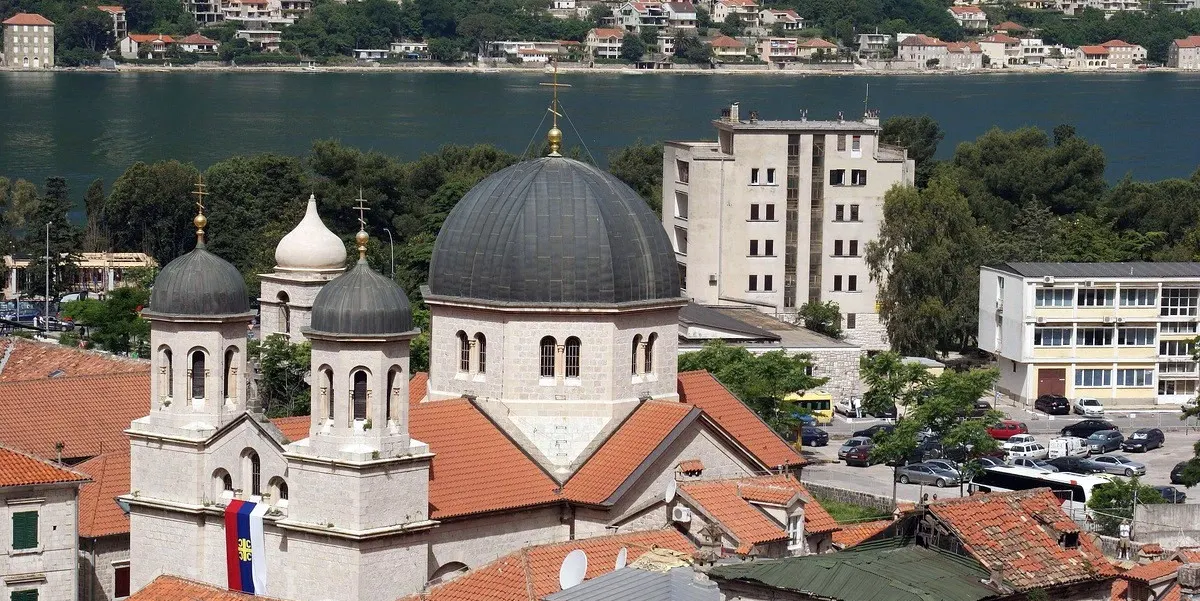
Crkva Svetog Nikole
St Nicholas's Church is Orthodox and dates from the early 20th century, unlike other nearby medieval buildings. That difference forms part of the interest of a church walk. Check access and respect worship times; do not assume its interiors follow a municipal museum's visiting policy. It is a short stop that can be combined with St Luke's without additional travel.
It helps distinguish the early 20th century from the surrounding medieval buildings.
Check access
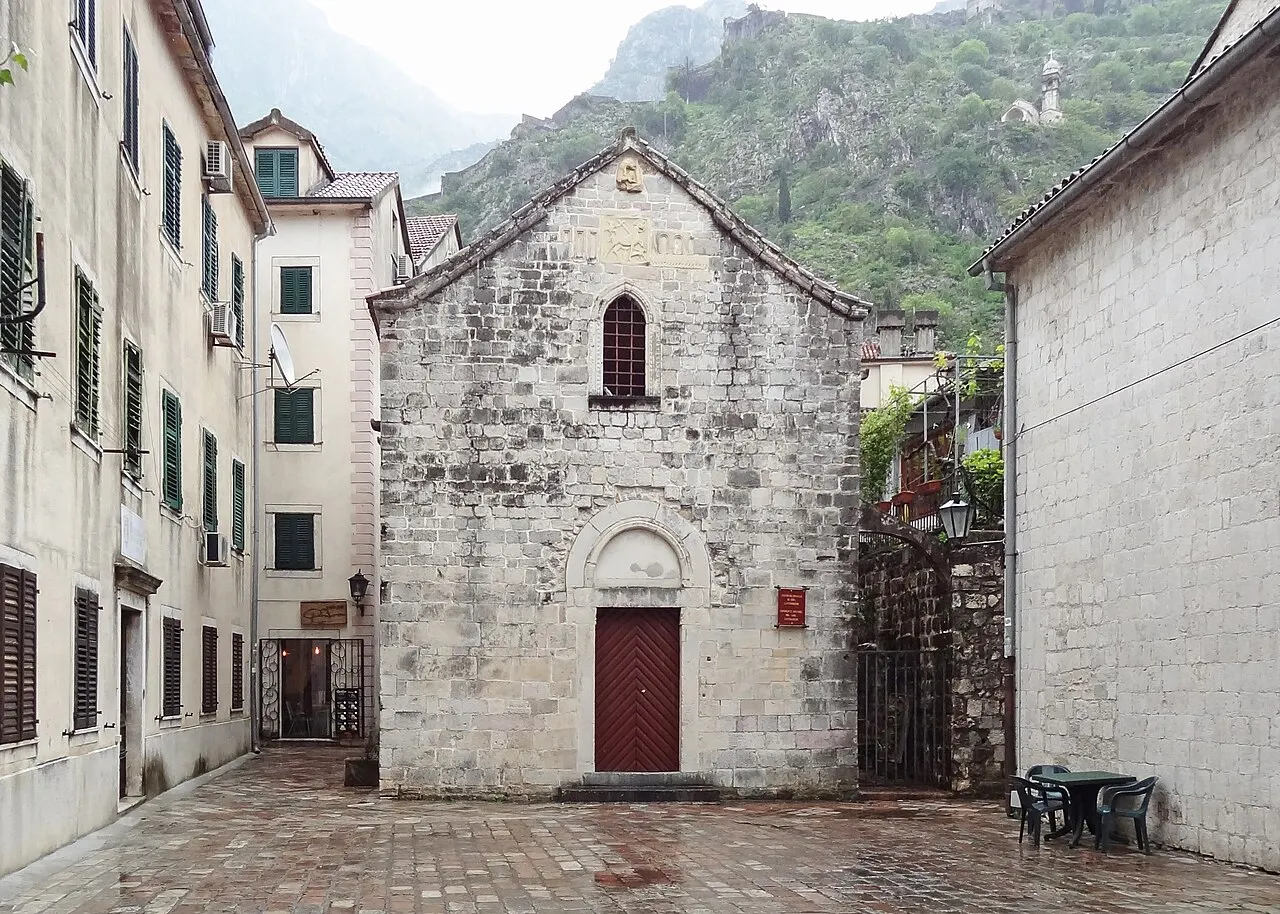
Crkva Svetog Mihaila
St Michael's Church houses the lapidarium, with stone fragments from different periods. The visit reveals remains no longer in their original positions in buildings. The calendar published by Muzeji Kotor provides for seasonal closure of the lapidarium between 15 October and 15 May, alongside other closed days. Reconfirm before including the interior; the square and exterior viewing remain a different experience.
It brings together fragments from different periods, but seasonal closure of the interior must be checked.
Check access
Nilo’s itinerary
Start with the basic programme and choose extensions for the time you have.
Plan my days in the app ↗Day 1 · The walled centre and an optional climb
Start at the Sea Gate, Square of Arms and clock tower to recognise the centre. Observe the walls from town level. If you intend to climb to the fortress and conditions suit, check the official entrance and climb early in its opening period, with water, daylight and time to return.
Anyone not wanting or able to climb stays in the centre and uses the morning for churches and the Maritime Museum, according to opening. These are two ways of organising the day, rather than an obligation to do everything that morning. St Mary of the River fits the northern section according to opening; Our Lady of Health stands on the slope and belongs only in the programme of those choosing stairs.
Take a lunch break inside or at the edge of the walls. Return to St Tryphon's Cathedral and the area of St Luke's and St Nicholas's according to tourist and worship times.
Use the afternoon for the Maritime Museum if not yet visited and open, or the lapidarium during its visiting season. Outside that season, extend the square walk and keep confirmed interiors.
Finish by the water or in a square without including another long journey. Adjust return to accommodation so you do not depend on a night climb or a boat without confirmed times.
Day 2 · Perast and the bay landscape
Confirm outward and return travel to Perast by the available land service or chosen boat. This journey requires transport rather than walking between the two centres.
In Perast, walk the waterfront and recognise palaces and the two islands. Visit the Bujović Palace museum if open; the published calendar includes closure on Mondays and in January. St George can be observed from the village without including landing.
Allow lunch time before deciding on the crossing to Our Lady of the Rocks. Confirm conditions, landing, visiting time and return. If water or operation prevents it, keep the afternoon in Perast rather than substituting an improvised boat. Those preferring the objects and portraits of Perast Museum can devote the afternoon to it instead of the crossing. Risan's mosaics need their own programme or replacement of part of this day, with transport and opening confirmed.
Return to Kotor on the previously confirmed service. Keep the end of the day for town, without adding a Blue Cave excursion or mountain ascent to this same itinerary.
If you stay longer
Day 3 · Dobrota or the cable car, according to interest and weather
With a third day, choose a stretch of Dobrota's waterfront to walk and observe captains' houses and churches. Set the turnaround point by effort and actual access, without assuming continuous pavement through the entire settlement.
Take a meal break in the chosen area or return to the centre. Extra time may recover an interior closed on day one, provided opening has been confirmed.
If you prefer the cable car, replace Dobrota's programme with this outing: check operation and wind, arrange transport to Dub, descent by cable car and return from the lower station to accommodation. Do not automatically include Njegoš's mausoleum or an unplanned hiking route.
Keep a buffer to return to accommodation and continue your journey. Use operators' schedules for the date rather than the last time seen on a previous season's page.
Food
Mussels in buzara sauce
Around the bay, mussels and other seafood are prepared with olive oil, wine, garlic and herbs; sauce versions vary. Ask about ingredients and portion size. Proximity to a shellfish farm does not mean any location offers visits or tastings without a reservation.
Fish and seafood rice
The coastal repertoire combines fish and rice dishes. In a restaurant, confirm whether the listed price is per plate, by weight or per whole fish, especially for sharing. Ingredients and available catch vary; do not treat the day's menu as a guarantee of one species.
Dobrota cake
The bay's sweets include a cake associated with Dobrota. Look for its name on the menu and ask ingredients, especially with nut allergies. The recipe belongs to the regional repertoire without a promise of permanent availability in every café.
Where to eat
- Walled centre and its edge
Compare menus explaining fish, seafood rice and buzara ingredients. For a quick meal, confirm what is ready and portion size; a square location does not replace an explanation of the cooking.
- Dobrota and Perast
A bay-side meal can combine fish or mussels with a coastal walk. Ask whether prices are per dish or by weight and confirm ingredients with allergies. The waterside table and the boat that brought you are different services.
- Bay cafés
Look for Dobrota cake when advertised and use the break to explore regional sweets. Ask ingredients and availability without expecting every café to maintain the same repertoire daily.
· 2026-10-16
Day trips
Perast
Perast lies on the same side of the bay north of Kotor. As a road reference between the two places, the route calculation consulted in October 2026 gives around 14 km and 22 minutes by car, without traffic or stops. In summer, allow a larger buffer. Blue Line buses or boats are alternatives with their own timetables: check stop or quay, landing and last return. Devote the second day to the village and chosen island without using driving time as outing duration.
Risan and the Roman mosaics
Risan adds archaeology to a longer bay stay, with mosaics managed by Muzeji Kotor. From Kotor, the route reference consulted in October 2026 is around 18 km and 29 minutes by car, without traffic or stops. Check mosaic opening and arrange the transfer's return; if preferring buses, consult Blue Line's connection and stops for the date. It can replace part of the regional day, but need not be added to Perast's programme to justify a combined ticket.
Lovćen and Cetinje
Choose an inland priority: Cetinje's museums and streets or the mountain and Njegoš's mausoleum. From Kotor, the road calculation consulted in October 2026 gives around 49 km and 1 hour 7 minutes to Cetinje and 31 km and 38 minutes to the mausoleum road point, without traffic, stops or a visit. These are driving references, especially limited on a mountain road: arrange the full route and return with a driver or excursion before leaving. Entering the mausoleum still requires 461 steps; assess exertion, weather, access and opening. The cable car ends at another point and needs its own land connection. Allow a whole day for the chosen extension without assuming both fit in the same time.
Where to begin
Perast and the bay landscape
Confirm outward and return travel to Perast by the available land service or chosen boat. This journey requires transport rather than walking between the two centres.
Dobrota or the cable car, according to interest and weather

With a third day, choose a stretch of Dobrota's waterfront to walk and observe captains' houses and churches. Set the turnaround point by effort and actual access, without assuming continuous pavement through the entire settlement.
Money
Montenegro uses the euro. Separate the cost of walking the centre from interior admissions, the walls climb and boats. Municipal Muzeji Kotor and the Maritime Museum are different institutions; compare named attractions in a combined ticket before paying. Boat prices should clarify return travel, landings and admissions ashore. In the cable-car shop consulted in October 2026, a return ticket for an adult aged 12 or over was advertised at EUR 20 in the postseason product; extra activities and connecting transport are not automatically the same product. Before buying, confirm the starting validity date stated on the ticket, the end of the season and operation on your intended day, as well as the current price and conditions. There is no single verifiable accommodation rate suitable for every address and season around the bay.
Getting there and around
Tivat Airport (TIV) is the nearest air arrival: the airport operator gives 8 km to Kotor and a road time of 12 minutes in its reference. This is not a summer transfer promise. Traffic, accommodation location and luggage change the journey. Agree the service and price before travel and confirm where the vehicle can stop near the walled centre.
Arriving through Dubrovnik involves crossing an international border. Consult documents required for your citizenship and residence, and check the bus connection or rental-car conditions. Do not turn driving time into total journey time: border queues and coastal traffic require a buffer. Podgorica is another possible arrival, but extends beyond a short urban transfer and needs its own planning.
The walled centre is visited on foot. For Perast, Dobrota or the opposite shore, consult Blue Line local public transport and current boat schedules. Confirm stop, direction, last return and payment with the operator; do not confuse urban buses, intermunicipal buses and excursions.
A boat outing may combine fast sailing, several stops and little time in Perast, or be a simpler connection. Compare time ashore, landing possibilities, wind policy and conditions for children or reduced mobility. A bay sheltered in the landscape does not guarantee a journey without waves or operational changes. A boat does not form part of a walking route.
The Kotor–Lovćen cable car leaves a station in Dub outside the walled centre. The operation itself advertises connecting transport; check hours, boarding location and any package before leaving. The upper destination should not be confused with automatic arrival at Njegoš's mausoleum. Operation and access depend on wind and season, so do not plan a flight connection relying on the ascent.
Safety
On the walls, the main risk for the proposed visit is terrain: stairs, gradient, wet stone, heat and unlit sections. Choose another activity if conditions or exertion are unsuitable. The municipal channel prohibits staying or climbing after 22:00 throughout the year; that does not mean entry remains open until then, since ticket offices close earlier according to season. On the bay, follow the boat operator, confirm equipment and do not insist on a landing refused because of wind or operation. On coastal roads, check space for walking and crossing; do not assume a continuous promenade simply because the water is beside you. Keep luggage and documents under control at boarding points and busy areas.
Etiquette tips
Active churches
Enter respecting services, requested dress and photography instructions. An open door during worship does not mean unrestricted tourist visiting.
Homes within the walls
Do not block stairs, gates or entrances for photographs. At night, remember that narrow lanes also provide access to homes.
Official entrances
The climb to the fortifications has entrances declared by the municipality. Do not cross private property or seek a window to avoid admission.
Mistakes to avoid
Calling the bay a fjord and treating the whole region as one map point. The road goes around the water and the chosen address changes travel.
Confusing a central walk with the fortress climb. Plan effort, daylight, opening and return separately.
Buying a multi-stop outing without checking time in Perast, landing permission and inclusions.
Choosing accommodation by straight-line distance, especially on the opposite shore of the bay.
Using the airport's quoted 12 minutes to schedule departure without a buffer for traffic and walking with luggage.
Assuming the cable car leaves from the Sea Gate or ends at Njegoš's mausoleum. Station, connecting transport and onward travel are separate decisions.
Useful phrases
Dobar dan
Good morning/good afternoon.
Hvala
Thank you.
Molim
Please.
Račun, molim
The bill, please.
Kada je povratak?
When is the return? Useful for confirming a boat or outing's return.
Where to stay
- Stari grad · Visitors prioritising streets and interiors on foot and wanting to return to the room between visits.: It brings central attractions closer, but requires checking steps, luggage access and street or establishment noise. A car or transfer does not necessarily reach the door.
- Dobrota's section near the centre · Visitors combining the waterfront with walks to the walls.: May reduce transport needs to the core, provided the address is truly nearby and the path suitable. Dobrota is extensive: do not book solely by the neighbourhood name.
- Muo or Prčanj · Visitors preferring another shore and willing to organise transport to the centre.: The waterside position offers another view of the bay with a longer land journey. Check parking, stop and last return; do not presume a public boat crossing.
- Škaljari and the southern edge · Visitors arriving by road and seeking practical access to the walled town.: Compare the address with the terminal and gate you will use. Benefits depend on the actual luggage route, traffic and noise rather than a distance measured on the map.
· 2026-10-16
Districts
Stari grad
The walled centre concentrates squares, churches, museums and visitor services. Its scale favours walking, with uneven paving and activity varying through the day; residents and places of worship remain.
Dobrota
Waterfront north of the centre, associated with old captains' houses and churches. It offers an alternative for waterside walks and sleeping outside the walls, with distances differing considerably by address.
Škaljari
Area south of the walled town, important for road arrivals and access to the rest of the bay. Check the exact stretch between accommodation, terminal and gates; proximity by neighbourhood does not guarantee an easy luggage route.
Muo and Prčanj
Settlements on the opposite shore of the inner bay, with a heritage linked to seafaring. They suit those willing to plan journeys in exchange for another waterside position. Confirm that a service exists and is operating before counting on a regular boat crossing.
History
Middle Ages · Port and artistic centre
The bay's natural shelter favoured trade, navigation and crafts such as stonework and icon painting.
1166 · St Tryphon's Cathedral
The cathedral was consecrated on the site of an earlier church; later rebuilding followed earthquake damage.
Venetian period · Defending the maritime route
Kotor's fortifications were adapted to its strategic Adriatic position, with walls linking the coast and slope.
1979 · Earthquake and heritage protection
An earthquake damaged regional monuments. World Heritage inscription came that same year and was followed by restoration.
2021 · Cultural heritage of the Boka Navy
UNESCO recognised the festive representation of the memory and identity of Kotor's traditional maritime organisation as intangible cultural heritage.
Complete history
Kotor's location helps explain the town before any date. A sheltered port surrounded by steep terrain brought together navigation, trade and defence. In the Middle Ages, the region also stood out for artistic crafts. Streets and squares adapted to the available space retain a less regular organisation than a planned city's layout. Walking slowly reveals church entrances, facades and passages between small spaces.
The period of Venetian influence matters for understanding the fortifications and Adriatic maritime connections. The defensive system follows the water before climbing the mountain. The upper section was more than a viewpoint: it formed part of the town's protection. On today's visit, that past does not remove the physical demands. Walking between the centre's gates and reaching the fortress are different activities in access, effort and duration.
Churches also retain changes in function and architecture. St Tryphon's was consecrated in 1166 over an earlier building and underwent rebuilding. St Luke's combines Catholic and Orthodox references, while St Nicholas's dates from the early 20th century. Observing these differences is more rewarding than assigning every stone facade to the same period.
The 1979 earthquake damaged many monuments around the bay. Subsequent restoration was accompanied by international protection and research. UNESCO recognises a region linking settlements, palaces, churches, slopes and waterfront; protection extends beyond the walled town. Perast and coastal settlements reveal this scope and the importance of historic navigation activities.
Maritime heritage includes living practices. The Boka Navy is a traditional organisation rather than a description of today's military navy. The festive representation of its memory was inscribed by UNESCO in 2021. Dance, costumes and ceremonies belong to this community context; they are not a guaranteed daily performance for visitors.
Geography and shape of the city
Boka Kotorska penetrates Montenegro's coast in different sections connected by narrow passages. Kotor occupies the inner end at the foot of a slope. There is no need to call the bay a fjord to explain its landscape: the local description identifies it as a ria, an ancient flooded river area. The walled centre fits into a walk, but coastal journeys follow roads around the water. Dobrota lies north of the core towards Perast; Škaljari occupies the southern approach. Muo and Prčanj stand on the opposite side of the inner arm. Accommodation seen 'across the water' on the map may require a much longer land journey than the distance across the water.
I would keep an overland alternative. A landscape sheltered by terrain does not guarantee operation in every condition.
Culture
The relationship with the sea appears in churches, palaces and collections, but also in ceremonies. The Boka Navy preserves community practices linked to navigators' memory; its kolo, a collective dance, forms part of this context. To watch, seek an actual celebration's programme and respect participants, without assuming a performance in any square.
Carnival and Bokeška noć show different festive uses of urban space. At carnival, parades, masks and satire mobilise the centre; on the bay night, decorated boats perform on the water. These events have their own organisation, calendar, traffic and crowd conditions, which can significantly change a short visit's experience.
I would check institution names and opening days before paying. Buying more tickets does not add hours to the itinerary.
Festivals and events
Kotor winter carnival
The 2026 edition took place in February, with an opening ceremony and activities on different days. Consult the edition for your trip; tradition does not automatically fix the same interval the following year.
Bokeška noć
A summer celebration with decorated boats and activities on the bay. Kotor's Cultural Centre announced the 2026 edition for 22 August. For another season, confirm the date and organise outward and return travel with a buffer for crowds.
Books and films
Boka Navy, traditional maritime organization
The UNESCO intangible heritage nomination film presents the maritime organisation and its festive practices. It helps distinguish community tradition from a performance staged for an outing and gives context for local ceremonies.
Natural and Culturo-Historical Region of Kotor, UNESCO/NHK
UNESCO's audiovisual record shows the relationship between urban settlements and the bay landscape. It introduces the regional scope of protection, rather than confirming current conditions for a church, boat or trail.
Frequently asked questions
Kotor: how many days should I allow?
I would stay two full days to explore Kotor and the inner bay: one for the centre with an optional fortress, and another for Perast. A third day allows Dobrota, revisiting an interior or choosing the cable car with transport and operation confirmed. The Blue Cave and a long coastal circuit are not automatic additions to the Perast day. With only a few hours, I would stay in the streets and one interesting interior rather than compensating for limited time with a rushed climb.
Kotor: how should I organise arrival through Tivat?
Tivat Airport (TIV) is the nearest air arrival: the airport operator gives 8 km to Kotor and a road time of 12 minutes in its reference. This is not a summer transfer promise. Traffic, accommodation location and luggage change the journey. Agree the service and price before travel and confirm where the vehicle can stop near the walled centre.
Kotor: what should I check before climbing to the fortress?
The climb to St John’s Fortress, also called San Giovanni, is steep and requires daylight, firm footwear, water and readiness for stairs. The gradient, wet stone, heat and unlit sections can make the exertion unsuitable; choose another activity in those conditions. The route is not accessible to everyone. Use the official entrances inside town and check seasonal opening and ticket-office hours before climbing. The municipal prohibition on staying or climbing after 22:00 applies all year; this does not mean entry remains open until then, since ticket offices close earlier according to season. Do not use shortcuts, windows or unauthorised access, or count on a night-time return. To avoid the exertion, remain in the centre and explore the bay overland.
Kotor: how should I visit Perast and distinguish its islands?
Perast lies on the same side of the bay north of Kotor. As a road reference between the two places, the route calculation consulted in October 2026 gives around 14 km and 22 minutes by car, without traffic or stops. In summer, allow a larger buffer. Blue Line buses or boats are alternatives with their own timetables: check stop or quay, landing and last return. Devote the second day to the village and chosen island without using driving time as outing duration. Our Lady of the Rocks occupies an artificial islet off Perast, formed by depositing stones and vessels around a rock. Church and museum connect to local maritime memory. To land, confirm permission, available time, return and price inclusions with the boat operator. Neighbouring St George is another island: do not assume the same trip authorises landing on both. If weather prevents sailing, observe the ensemble from Perast. St George's Island off Perast has vegetation, a church and an old cemetery. Its shape contrasts with the artificial islet of Our Lady of the Rocks, and observing both from the waterfront helps distinguish their histories. This entry proposes viewing from Perast. Do not include landing or an interior visit without specific permission; a ticket to the neighbouring island does not grant access to St George.
Kotor: does the cable car leave the centre and reach the mausoleum?
The cable car leaves Dub and climbs to the upper station in the Lovćen area. The lower station is outside the walled centre: arrange return transport, check operation according to wind and allow time to descend. Choose this as an alternative to the Dobrota outing. Reaching the top by cable car does not place visitors at the entrance to Njegoš's mausoleum or include a hike or onward journey there.