Switzerland
Zermatt
Three days for the village and two mountain sectors
Days Start with the basic programme and choose extensions for the time you have.
How the guide reaches this number
That leaves room for meals and rearranging the mountain trips according to the weather. For more walking or the Randa circuit, I would add separate days. A short visit can reveal a panorama but is more dependent on visibility at that moment; I would not buy two major mountain trips simply to complete a list.
3
When July to September for the walking itinerary; other seasons require their own selection of lifts and routes.
How the guide reaches this number
July to September is the choice for the summer walking itinerary, after checking snow and each path’s opening. July and August have higher demand; September may be less busy, without guaranteeing clear skies. In autumn and spring, maintenance and operating gaps affect mountain systems. In November 2026, Gornergrat announces works from 2 to 14, and the Matterhorn Museum closes from 1 to 19; the museum is not an alternative during this overlap. Winter suits skiing and prepared routes, rather than copying this guide’s lake trails. A three-day stay offers more chances to choose a visibility window, but does not guarantee a Matterhorn view.
Per person/day Budget around CHF 106; mid-range around CHF 242; comfortable around CHF 462 per person per day, based on spending travellers report to Budget Your Trip (consulted in October 2026).
How the guide reaches this number
Indicative figures, excluding travel to the destination.
Budget around CHF 106; mid-range around CHF 242; comfortable around CHF 462 per person per day, based on spending travellers report to Budget Your Trip (consulted in October 2026). Indicative figures, excluding travel to the destination.
Per person per day: accommodation, meals, urban transport, visits and a small allowance for extras. Flights excluded; larger purchases vary. Editorial estimate, not a quote.
 What Nilo thinks
I would stay three days and, if schedules allow, three nights: arrival with the village and museum, a day for Gornergrat and another for Sunnegga or, as an alternative, Matterhorn Glacier Paradise. That leaves room for meals and rearranging the mountain trips according to the weather. For more walking or the Randa circuit, I would add separate days. A short visit can reveal a panorama but is more dependent on visibility at that moment; I would not buy two major mountain trips simply to complete a list.Zermatt lets you start with the village and choose the mountain after looking at the sky. The church bridge offers a first Matterhorn viewpoint; Hinterdorf and the museum show valley life and the guides’ history. On later outings, Gornergrat opens the mountain and glacier panorama, while Sunnegga takes you to another side, with summer lakes and paths.
Read more
I would choose accommodation by the actual walk from the station. The private-car access restriction changes arrival, but also allows a stay organised around trains and local journeys. Up high, visibility, wind and altitude still matter; a ticket brings the panorama closer without guaranteeing conditions for every activity.
Quick facts
- Population
- 5,922 permanent municipal residents on 1 November 2025, according to the local authority; seasonal workers are excluded.
- Foundation
- No single foundation date; first documented in 1280 as Pratobornum.
- Country and region
- Switzerland, canton of Valais, Visp district.
- Language
- German, with a local dialect; other languages are used in tourist services.
- Currency
- Swiss franc (CHF).
- Time zone
- Europe/Zurich: UTC+1 in standard time and UTC+2 in summer time.
- Best time
- July to September for the walking itinerary; other seasons require their own selection of lifts and routes.
- Average daily cost
- Budget around CHF 106; mid-range around CHF 242; comfortable around CHF 462 per person per day, based on spending travellers report to Budget Your Trip (consulted in October 2026). Indicative figures, excluding travel to the destination.
When to go
July to September for the walking itinerary; other seasons require their own selection of lifts and routes.
How the year changes
July to September is the choice for the summer walking itinerary, after checking snow and each path’s opening. July and August have higher demand; September may be less busy, without guaranteeing clear skies. In autumn and spring, maintenance and operating gaps affect mountain systems. In November 2026, Gornergrat announces works from 2 to 14, and the Matterhorn Museum closes from 1 to 19; the museum is not an alternative during this overlap. Winter suits skiing and prepared routes, rather than copying this guide’s lake trails. A three-day stay offers more chances to choose a visibility window, but does not guarantee a Matterhorn view.
Nilo's tips
Decide by sector
I would start with Gornergrat and choose Sunnegga or Glacier Paradise for another day, according to my interests and personal circumstances.
Check the November suspension
Gornergrat has no trains from 2 to 14 November 2026, and the Matterhorn Museum closes from 1 to 19. I would check both calendars before booking during this transition.
Respect the nature of the outing
The 5-Seenweg is a 9.8 km walk, not a short loop around one lake. I would allow time for transport, breaks and lunch beyond the walking duration.
Reach your room without rushing
I would request the station route with luggage and confirm a transfer if there is a slope, instead of judging solely by straight-line distance.
Explore the map
Explore the map, read about the other places and plan your travel days in the app.
Open the appWhat to see
Gornergrat
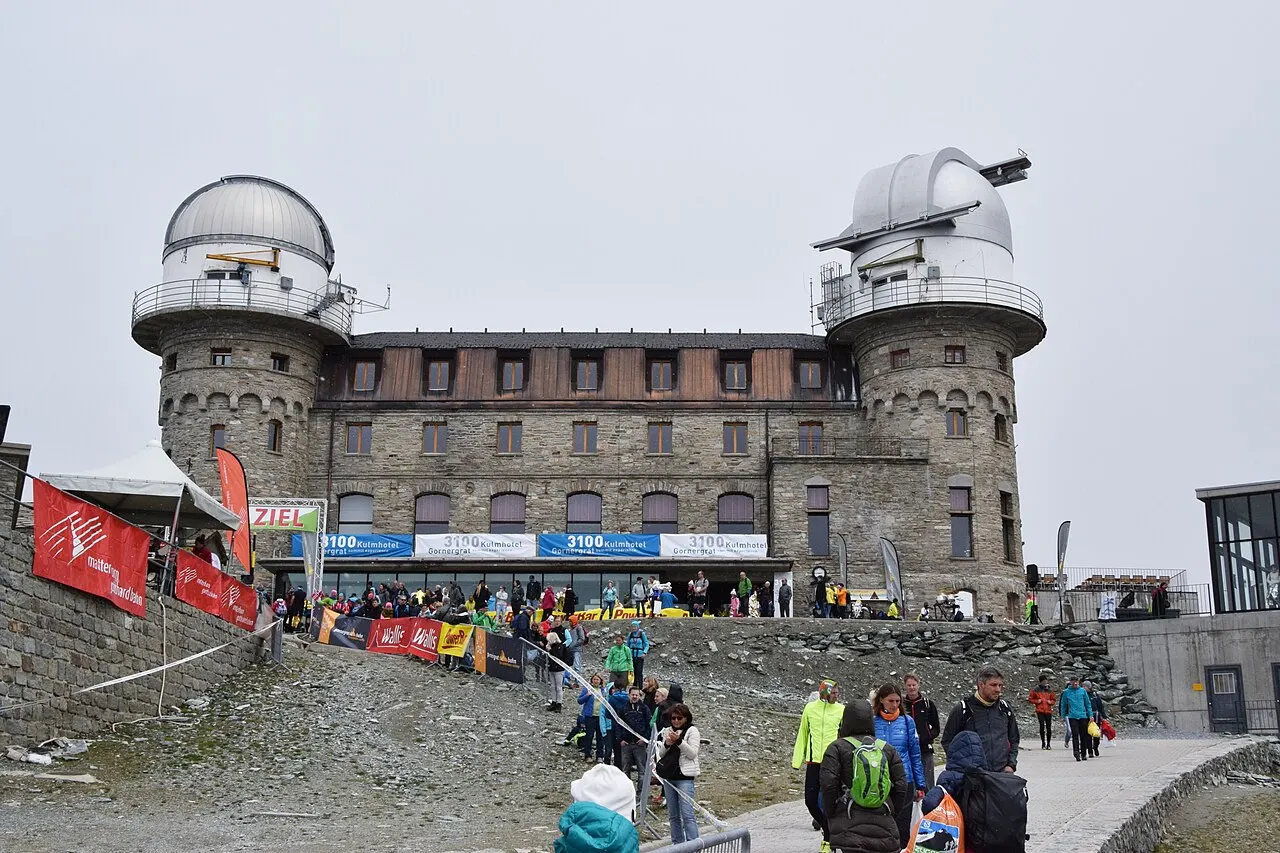
The cog railway climbs to the station at 3,089 m, with mountain and glacier panoramas when visibility allows. The journey and views from the top are worthwhile without a long walk. Check schedules and works: the operator announces a suspension from 2 to 14 November 2026. A running train does not prove that the paths to the lakes are accessible.
The train and panorama let you observe mountains and glaciers without a long walk, with visibility and operation confirmed.
Check access
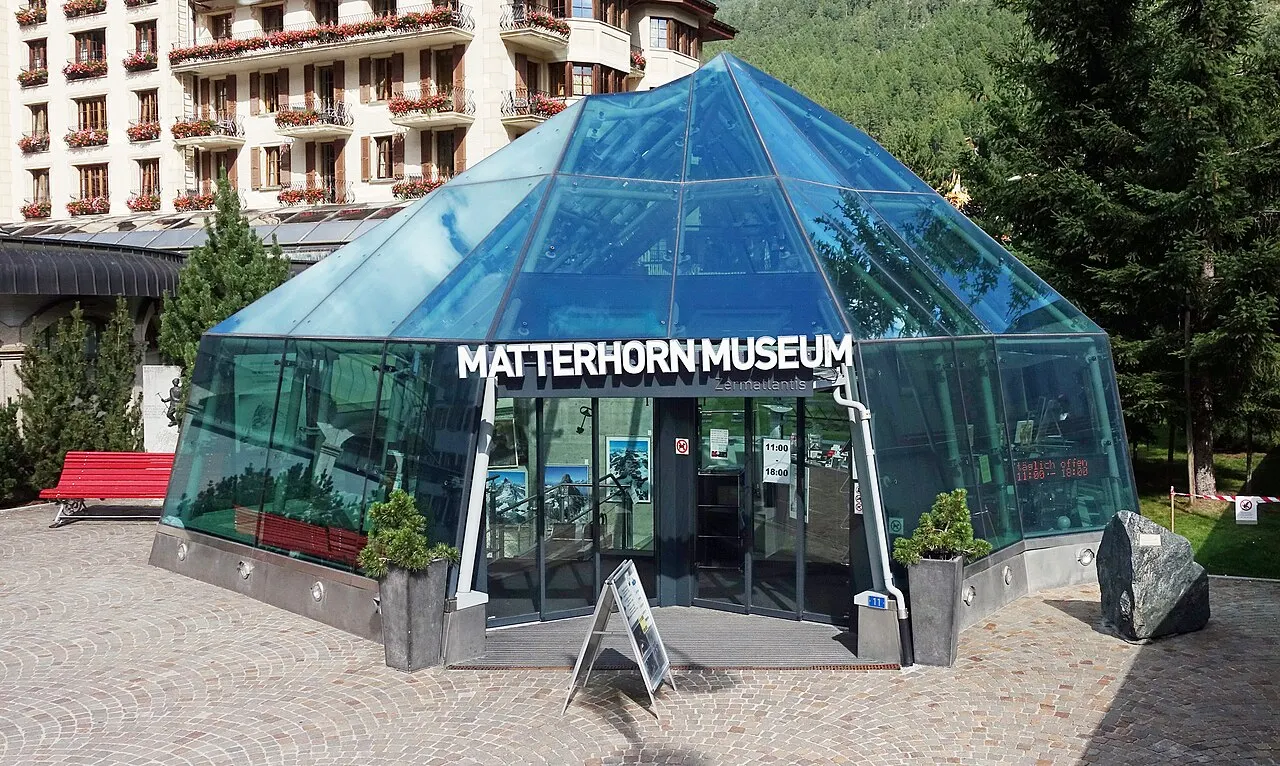
Matterhorn Museum - Zermatlantis
Below the church square, the museum presents the village, tourism and the first ascent of the Matterhorn. It gives context to the panorama and offers an indoor programme, subject to opening. Avoid treating it only as a bad-weather activity: the stories help explain what you later see in the mountains. In 2026, the museum closes from 1 to 19 November for maintenance; afterwards, check the seasonal calendar before visiting.
It gives context to the village and the first ascent of the Matterhorn, adding history to the mountain outing.
Check access
Hinterdorf
The old village core contains wooden granaries, stores, stables and houses from the 16th to 18th centuries. Observe the granaries’ stone supports and the close arrangement of the buildings, without entering private property. The visit is a street walk, not free access to the houses’ interiors.
The old buildings show the valley’s organisation and work before tourism.
Check access
Kirchbrücke
The bridge near the church provides a Matterhorn viewpoint within the village, without a mountain ticket. Pass by when visibility is good. Leave room for people to circulate and accept that the view depends on the clouds.
It provides a first view of the Matterhorn within the village when the clouds allow.
Check access

Matterhorn / Cervino
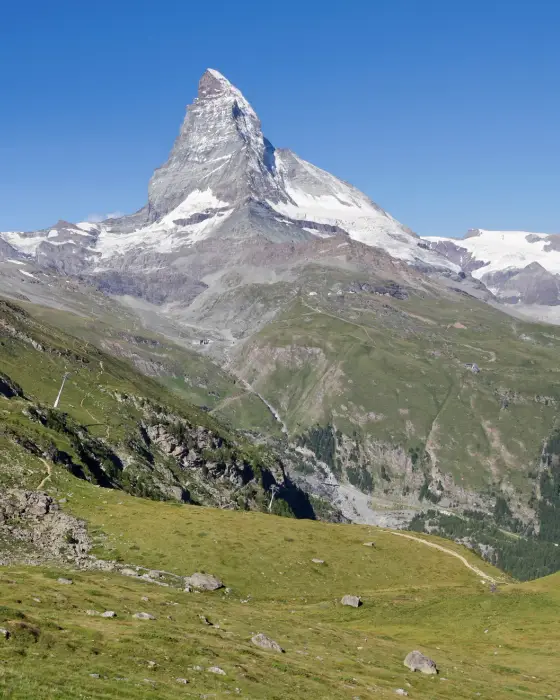
The Matterhorn, at 4,478 m, is the pyramid-shaped mountain that identifies Zermatt. Observe it from Kirchbrücke, Gornergrat or another viewpoint according to visibility, noticing how position changes its outline. This entry concerns the landscape viewed. The summit is not a tourist stop or the destination of the Glacier Paradise cableway, which reaches the Klein Matterhorn. Climbing it requires mountaineering experience; do not extend an ordinary walk in an attempt to reach the mountain.
The Matterhorn’s outline helps identify Zermatt and compare the landscape from different viewpoints.
Check access

Sunnegga
The funicular reaches a sector with Matterhorn views and access to Leisee and seasonal walks. It is an alternative to the higher-altitude Glacier Paradise trip, with different scenery and logistics. To continue to Blauherd or Rothorn, check each leg and its operating calendar.
It offers another angle and access to summer outings, as an option for a second day.
Check access

Riffelsee
The lake below Rotenboden is known for its Matterhorn reflection, which depends on calm water and a visible mountain. In summer, with a clear path, the approach from the station is short. Snow, ice or impassable ground may prevent this addition; being on the train guarantees neither the photograph nor a safe descent to the lake.
It complements the rail journey when the approach is safe and conditions allow the reflection to be seen.
Check access
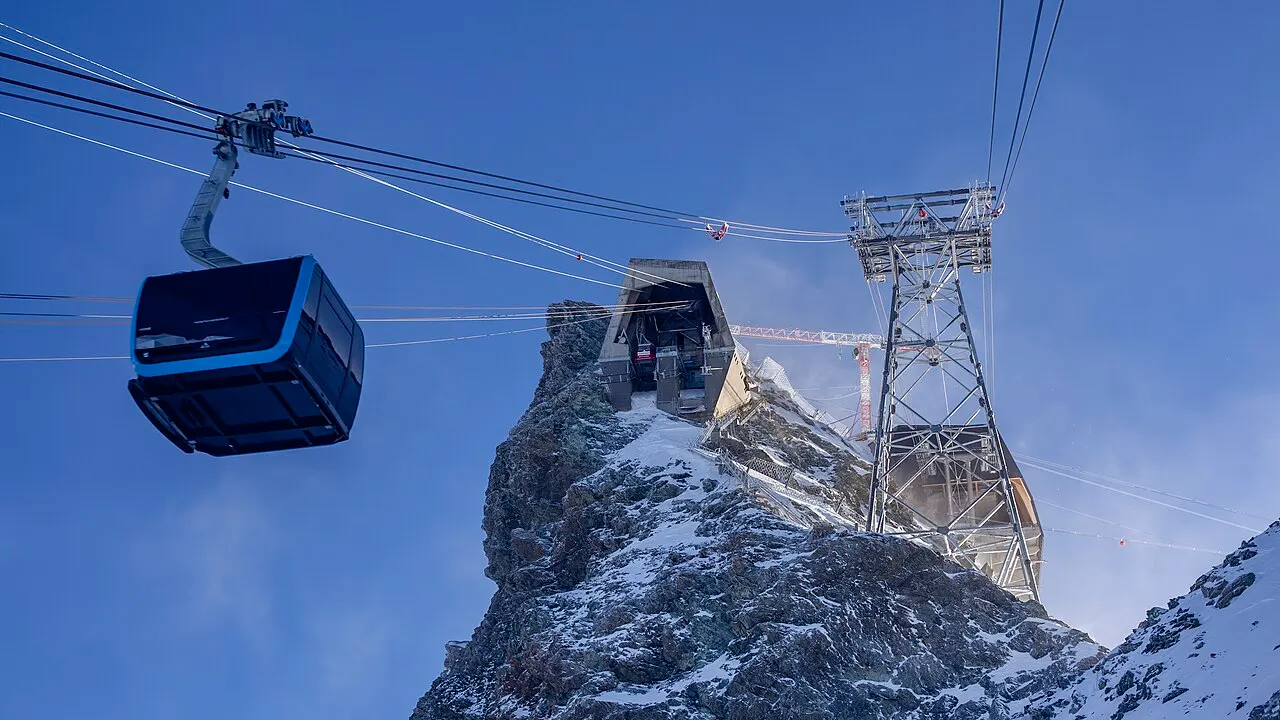
Matterhorn Glacier Paradise
The cableway system reaches the Klein Matterhorn, with a station at 3,883 m, a platform and access to the ice palace subject to operation. Altitude calls for a conscious decision, different from a valley walk. Under the product sold by the operator, children under 3 cannot travel on the Trockener Steg–Matterhorn Glacier Paradise leg for health reasons. The restriction concerns this leg; consider personal circumstances before buying.
The high-altitude experience interests those who choose it consciously, without confusing it with the Matterhorn summit.
Check access
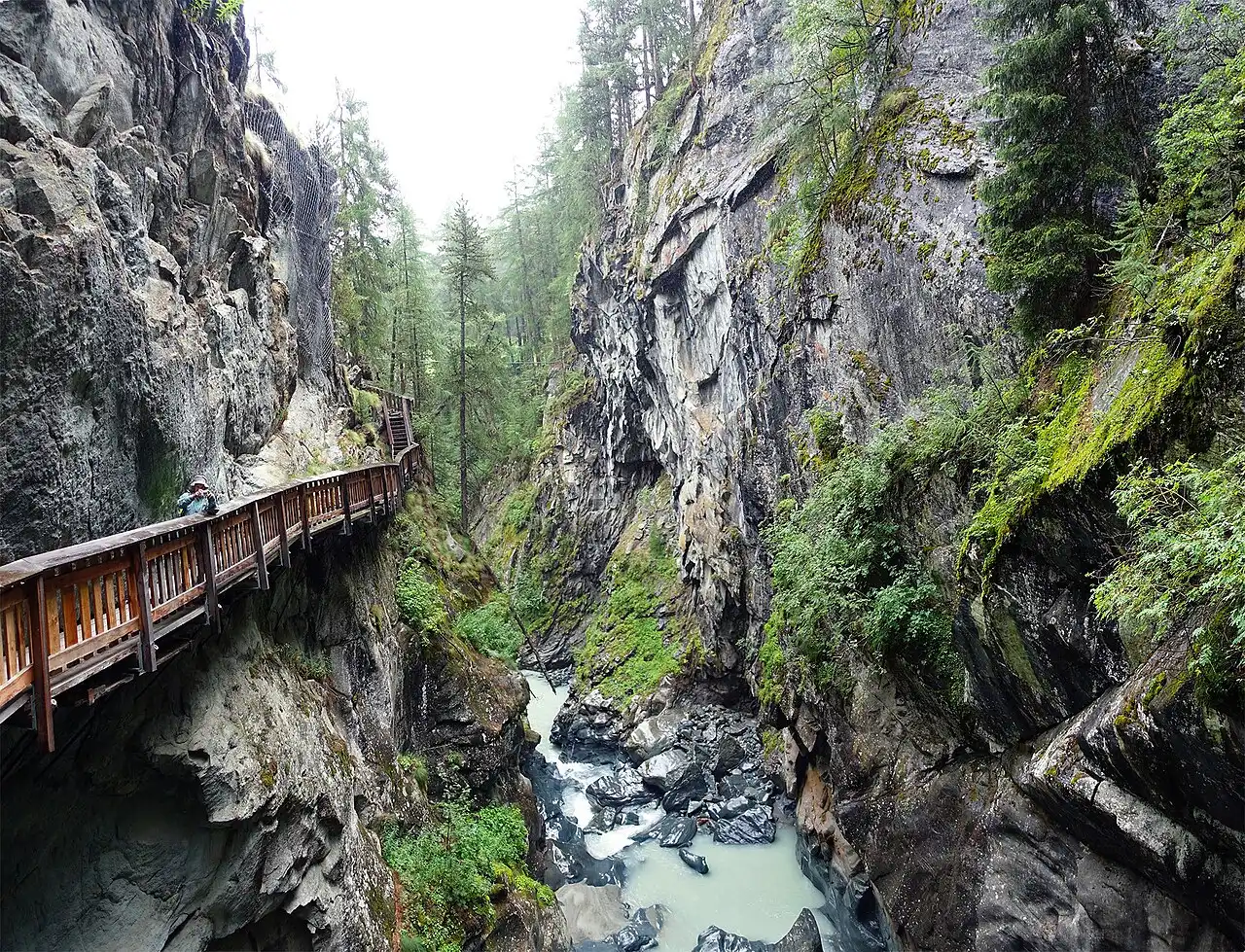
Gornerschlucht
Wooden walkways allow visits to part of the water-carved gorge south of the village. Tourist walking access differs from the guided rope activity in the upper section. The tourism calendar consulted indicates the season ending in October 2026 and closure until 31 May 2027. Reconfirm the closing date with the operator before visiting, especially during the seasonal transition.
The walkways offer another scale of landscape, with seasonal tourist access different from rope activities.
Check access
Nilo’s itinerary
Start with the basic programme and choose extensions for the time you have.
Plan my days in the app ↗Day 1 · Arrival, Hinterdorf and village history
Arrive by train, leave your luggage and identify the route between the station, accommodation and centre. You do not need to hire a car to get around Zermatt.
Walk through Hinterdorf and the church square and visit the Matterhorn Museum during confirmed opening, removing it from the programme between 1 and 19 November 2026. Have lunch or a break in the centre according to your arrival time.
Pass Kirchbrücke if the mountain is visible, observing the Matterhorn as landscape without confusing it with the cableway’s Klein Matterhorn. Check the weather and Gornergrat operation for the following day. Have dinner and sleep in Zermatt.
Day 2 · Gornergrat and mountain views
Take the Gornergrat Bahn at the station opposite the railway station where you arrived, after checking the calendar and visibility. Go up to the panorama and walk only in areas suitable for the day’s conditions.
Leave time to observe the mountains, rest and eat. Do not increase the effort simply because you came up by train.
On the summer descent, consider stopping at Rotenboden for Riffelsee only if the path is open, free of problematic snow and suitable for your group. Otherwise, keep to the rail trip.
Return to Zermatt and stay in the centre for dinner. Spend a second night at the same accommodation.
Day 3 · Sunnegga or the high-altitude trip
The standard plan is to take the funicular to Sunnegga when operating, for views and a walk chosen according to conditions at Leisee and nearby paths. Pause for lunch and return with time for the descent. If you want a higher viewpoint, continuing to Rothorn also requires checking Blauherd and the final leg; choose this option instead of a long walk, without assuming the Sunnegga ticket covers the whole route.
For a longer walk, plan the 5-Seenweg from Blauherd: the operator gives 9.8 km and around 2h30 of walking, plus transport, breaks and meals. Check the route and do not add it after completing another long outing.
An alternative replacing Sunnegga: Matterhorn Glacier Paradise, with its own ticket, confirmed operation and personal assessment for 3,883 m. Children under 3 cannot travel on the Trockener Steg–Glacier Paradise leg under the conditions published for this ticket. Do not feel obliged to combine both options.
Return to the village for departure or another night. If you have a long connection or flight, end the outing earlier or leave the next morning. Do not rely on the last cabin to catch the last train.

Food
Raclette du Valais
Heated cheese whose melted surface is scraped off and served, usually with potatoes and accompaniments. Valais produces cheese with AOP designation; the product name is more informative than a generic promise of an Alpine dinner.
Assiette valaisanne
A board bringing together products such as dried meat, ham, bacon, cheese and Valais rye bread. Composition varies; check the contents if you have dietary restrictions.
Valais rye bread
A dense bread traditionally made to keep, served with cheese and meats or bought to take away. The AOP version has controlled ingredients and origin.
Cheese fondue
A shared preparation of melted cheese found in Swiss restaurants in the village. Check whether the price is per person and whether a minimum party size applies, rather than assuming the whole pot costs the advertised individual price.
Where to eat
- Cheese Factory · Bahnhofstrasse
A restaurant focused on raclette and fondue, an option for a Valais cheese meal near the station. Check the menu and reservation; the interest is in the preparation, without relying on awards.
Source · 2026-10-16
- Centre and Bahnhofstrasse
An assiette valaisanne lets you compare dried meat, cheese and rye bread as a cold meal or starter. Check contents and portion size before deciding whether it will be enough to share.
- Village bakeries and markets
Rye bread and supplies bought in the valley are useful for a walk when service at altitude is unconfirmed. Choose a permitted resting place and take rubbish back, without counting on restaurant tables for your own food.
· 2026-10-16
Day trips
Randa and the Charles Kuonen bridge
Randa is 9 km from Zermatt according to local tourism and can be reached by train. The official bridge circuit from Randa station is 8.6 km, around four hours and 988 m of ascent and descent; allow a separate day with transport, meals and breaks. Crossing the bridge itself is brief but does not represent the effort of the approach. Check opening on the Europaweg and avoid the bridge during thunderstorms.
Furi and the Dossen glacier garden
For another summer landscape, choose a separate period in Furi. Check the cableway ascent and last descent, then follow signs to the glacier garden, around 30 minutes on foot from the station according to local tourism. Allow return time and a break; the figure covers only the approach. Do not add this programme to a full Glacier Paradise trip without calculating every leg, or use it as an automatic bad-weather substitute: it remains an outdoor activity.
Where to begin
Arrival, Hinterdorf and village history
Arrive by train, leave your luggage and identify the route between the station, accommodation and centre. You do not need to hire a car to get around Zermatt.
Gornergrat and mountain views
Take the Gornergrat Bahn at the station opposite the railway station where you arrived, after checking the calendar and visibility. Go up to the panorama and walk only in areas suitable for the day’s conditions.
Sunnegga or the high-altitude trip
The standard plan is to take the funicular to Sunnegga when operating, for views and a walk chosen according to conditions at Leisee and nearby paths. Pause for lunch and return with time for the descent. If you want a higher viewpoint, continuing to Rothorn also requires checking Blauherd and the final leg; choose this option instead of a long walk, without assuming the Sunnegga ticket covers the whole route.
Money
The currency is the Swiss franc. On the Matterhorn Gotthard Bahn channel consulted on 16/10/2026, the Täsch–Zermatt shuttle costs CHF17.20 per adult, return, at full fare; specific pass coverage and reductions apply. The Matterhorn Museum publishes CHF12 for a full-fare adult. These are prices for those services, not a daily budget. Mountain trips may vary by period and category; compare the final price for your date. For accommodation, check the room total, occupancy, cancellation and taxes. When paying with a card in another currency, compare the conversion offered without treating a euro amount as a guaranteed local fare.
Getting there and around
Airport and railway
Zermatt has no commercial airport. Compare arrival through Zurich (ZRH) or Geneva (GVA) and search the full rail connection in the SBB planner, usually changing at Visp for the Matterhorn Gotthard Bahn. Time depends on service and changes; do not buy a high-altitude trip immediately after your flight.
Arriving by car
Visitors leave private cars in Täsch and complete the trip by train or authorised service. The Matterhorn Terminal combines parking and station; the operator gives 12 minutes for the shuttle to Zermatt. Time to your room includes waiting, luggage and walking or an electric taxi. Do not assume even a private electric car is authorised to enter.
In the village
Walking, electric buses and electric taxis serve local journeys. Check the route and applicable ticket: some mountain tickets include the local bus, but this does not make all journeys free for everyone. Ask your accommodation for the best arrival with luggage and check steps or transfers.
Each mountain trip has its ticket
Gornergrat, Sunnegga/Rothorn and Matterhorn Glacier Paradise are different programmes. Compare single tickets and passes according to intended use, age and any discount card. Swiss Travel Pass does not mean universal free access to the mountains. Check works, maintenance, wind and the last descent too.
Safety
Altitude, cold, wind and path conditions matter even on a train or cableway trip. The Swiss Alpine Club advises descending if signs such as headache, dizziness or nausea appear, and seeking help when needed. For personal health questions and young children, consult a professional before high-altitude trips and follow the operator’s guidance. Do not enter glaciers or attempt climbs without appropriate preparation and support. Check weather alerts and your chosen trail, carry protection and turn back if conditions change. European emergency: 112; Swiss REGA air rescue: 1414.
Etiquette tips
In the old streets
Granaries and houses may be private property. Photograph from the public street and do not use steps, doors or gardens as supports without permission.
On transport
Let passengers alight, keep luggage out of passageways and check sports-equipment rules for your chosen service.
In the mountains
Stay on marked paths, respect protected areas and take rubbish back. Do not follow a shortcut to reach a reflection or another photograph.
Mistakes to avoid
Confusing the Matterhorns
Matterhorn Glacier Paradise is on the Klein Matterhorn; its ticket does not take you to the Matterhorn summit seen from the village.
Booking every mountain trip without checking the weather
Clouds and wind change the experience. Compare cancellation and operation, leaving room to rearrange the days.
Going to the lake because the train runs
The railway may be operating while the approach to Riffelsee has snow or ice.
Choosing Täsch based only on the 12 minutes
Staying there adds waiting and journeys to stations every day. Compare the total cost and routine, beyond the room rate.
Useful phrases
Grüezi.
Hello, a Swiss German greeting.
Wann fährt die letzte Bahn?
When does the last train or cableway leave?
Ist der Wanderweg offen?
Is the hiking trail open?
Ist das Billett hin und zurück?
Is the ticket for a return journey?
Gibt es einen Gepäcktransfer?
Is there a luggage transfer?
Where to stay
- Station and Bahnhofstrasse · Those arriving by train, staying briefly and prioritising Gornergrat.: Convenient for luggage, restaurants and rail departure. The commercial street’s activity may disturb those seeking quiet; check the room’s location and orientation.
- Centre, near Hinterdorf and the church · Those wanting to walk between history, meals and village access points.: Balances the arriving train and the southern village. Not every old street is level; ask your accommodation for the luggage route.
- Around Sunnegga’s lower station · Those wanting to use this sector on more than one day.: Simplifies the start of walks on this side. Sunnegga in a listing does not guarantee proximity to the funicular entrance; check the actual location and climb to the building.
- Schluhmatten and Winkelmatten · Those prioritising the Matterhorn Express or preferring the southern sector.: Residential areas and access to nearby paths. Distance from the main station and slopes may require a bus or electric taxi with luggage.
- Täsch · Those accepting daily travel in exchange for accommodation at a worthwhile rate.: The train connection is short, but door-to-door time includes waiting and walking. Compare transport cost and night operation, without assuming that sleeping outside is always cheaper.
· 2026-10-16
Districts
Station and Bahnhofstrasse
Arrival area, shops and restaurants, with easy access to the Gornergrat train. Useful for short stays and luggage.
Centre and Hinterdorf
Church, museum, old streets and wooden buildings. A sector for discovering history between mountain trips.
Sunnegga and the lower-station area
A useful village sector for those prioritising the funicular and walks at Blauherd. Check whether the listing means the lower station or accommodation on the hillside.
Schluhmatten and Winkelmatten
Southern area, near the Matterhorn Express access or valley walks depending on the address. Further from the arriving train, with slopes to consider.
Täsch
A separate locality outside Zermatt, with parking and a connecting train. An option for those accepting a daily rail journey there and back.
History
1280 · The village appears in documents
The mention as Pratobornum records the community, not a proven beginning of all human occupation in the valley.
16th–18th centuries · Granaries and houses in Hinterdorf
The surviving buildings show storage and housing techniques of Upper Valais before mountain tourism developed.
1865 · The first ascent of the Matterhorn
The expedition that reached the summit ended with the deaths of four members during the descent. It shaped mountaineering history and Zermatt’s international profile.
1891 · The railway reaches the village
The connection with Visp improved access and helped change the scale of tourism.
1898 · The Gornergrat Bahn opens
The cog railway made the high-altitude panorama accessible by rail. The line was later extended to the present station.
Complete history
The village before the postcard
Hinterdorf preserves houses, stables and granaries from the 16th to 18th centuries. Some stores rest on pillars with stone discs to discourage rodents. The buildings reveal a life organised around storing food and working in valley conditions, beyond today’s hotels and shops.
The mountain and the guides’ work
The first ascent of the Matterhorn in 1865 brought greater recognition, accompanied by the tragedy on the descent. The Matterhorn Museum presents this episode and village history. Mountaineering depends on knowledge, preparation and guides’ work; reaching a viewpoint does not mean being ready to climb the mountain.
Access changed the visit
The Visp line, opened in 1891, and Gornergrat, inaugurated in 1898, brought the destination within reach of visitors who were not mountaineers. Transport systems still shape the experience: each station opens up a different sector, and the final connection to your accommodation matters in a village where visitors cannot arrive driving their own cars.
Geography and shape of the city
A village at the head of the valley
Zermatt lies in southwestern Switzerland, in the upper Mattertal. The commercial stretch of Bahnhofstrasse connects the railway area to the historic centre; the Matter Vispa helps with orientation. Slopes make some accommodation harder to reach than the distance on the map suggests.
Three different access points
Gornergrat departs near the railway station. The Sunnegga funicular serves the Blauherd and Rothorn side. To the south, the Matterhorn Express begins the system that can take you to Matterhorn Glacier Paradise. A ski connection between sectors does not guarantee an equivalent walking route in summer.
I would confirm the station name: the Glacier Paradise outing is not an ascent to the Matterhorn summit.
Staying in Täsch can make sense, but I would compare the full rate and daily routine. Twelve minutes on the train are not twelve minutes from bed to mountain.
Culture
Mountaineering history
The museum and places linked to climbers present Zermatt’s relationship with guides and expeditions. Mountains should not be treated solely as a backdrop to conquest: accidents, work and techniques also belong to this history.
Upper Valais architecture
Hinterdorf’s granaries show local storage and building solutions. Compare the old core with Bahnhofstrasse’s tourism businesses, respecting the privacy of those using the buildings.
Music and life beyond skiing
Zermatt Unplugged brings performances to village and mountain venues. The town has cultural activities, but admission depends on each concert and its ticket, separate from transport passes.
Festivals and events
Zermatt Unplugged
An acoustic music festival. The next edition announced by the organiser runs from 6 to 10 April 2027. Check tickets for each show: a general-access pass does not mean admission to every main concert.
Folklore Festival
Traditions and performances in the village. Local tourism announces 7 and 8 August 2027; check the programme for your travel year rather than assuming identical dates annually.
Books and films
Matterhorn Museum - Zermatlantis
The collection sets the first ascent, guides and village development in context. It accompanies the visit rather than separating the mountain from its history.
Gornergrat Bahn stories
The operator’s history series presents construction, extension of the line and the cog mechanism. It helps you observe the journey beyond the window framing the Matterhorn.
Frequently asked questions
Zermatt: How many days should I allow?
I would stay three days and, if schedules allow, three nights: arrival with the village and museum, a day for Gornergrat and another for Sunnegga or, as an alternative, Matterhorn Glacier Paradise. That leaves room for meals and rearranging the mountain trips according to the weather. For more walking or the Randa circuit, I would add separate days. A short visit can reveal a panorama but is more dependent on visibility at that moment; I would not buy two major mountain trips simply to complete a list.
Zermatt: How do I arrive by air and rail?
Zermatt has no commercial airport. Compare arrival through Zurich (ZRH) or Geneva (GVA) and search the full rail connection in the SBB planner, usually changing at Visp for the Matterhorn Gotthard Bahn. Time depends on service and changes; do not buy a high-altitude trip immediately after your flight.
Zermatt: Can I enter with a private car and what does the shuttle cost?
Visitors leave private cars in Täsch and complete the trip by train or authorised service. The Matterhorn Terminal combines parking and station; the operator gives 12 minutes for the shuttle to Zermatt. Time to your room includes waiting, luggage and walking or an electric taxi. Do not assume even a private electric car is authorised to enter. On the operator’s channel consulted on 16/10/2026, the Täsch–Zermatt shuttle costs CHF17.20 per adult, return, at full fare; specific pass coverage and reductions apply.
Zermatt: Which base makes arrival by train easier?
Station and Bahnhofstrasse. Convenient for luggage, restaurants and rail departure. The commercial street’s activity may disturb those seeking quiet; check the room’s location and orientation. Centre, near Hinterdorf and the church. Balances the arriving train and the southern village. Not every old street is level; ask your accommodation for the luggage route. Täsch. The train connection is short, but door-to-door time includes waiting and walking. Compare transport cost and night operation, without assuming that sleeping outside is always cheaper.
Zermatt: Does Glacier Paradise reach the Matterhorn and who can go up?
Glacier Paradise reaches the Klein Matterhorn, not the summit of the 4,478 m Matterhorn seen from the village. The station is at 3,883 m; the platform and ice palace depend on operation. Under the operator’s product, children under 3 cannot travel on the Trockener Steg–Matterhorn Glacier Paradise leg for health reasons; the restriction concerns that leg. For personal conditions and young children, consult a professional before going up and follow the operator. The Swiss Alpine Club advises descending if headache, dizziness or nausea appear and seeking help when needed. The physical mountain requires mountaineering rather than an extension of an ordinary walk.
Zermatt: Does the Gornergrat train guarantee access to Riffelsee?
The cog railway climbs to the station at 3,089 m, with mountain and glacier panoramas when visibility allows. The journey and views from the top are worthwhile without a long walk. Check schedules and works: the operator announces a suspension from 2 to 14 November 2026. A running train does not prove that the paths to the lakes are accessible. The lake below Rotenboden is known for its Matterhorn reflection, which depends on calm water and a visible mountain. In summer, with a clear path, the approach from the station is short. Snow, ice or impassable ground may prevent this addition; being on the train guarantees neither the photograph nor a safe descent to the lake.
Zermatt: When should I follow the walking itinerary?
July to September is recommended for this walking itinerary after checking snow and path openings. September does not guarantee clear skies; three days increase visibility opportunities without guaranteeing a Matterhorn view. June may have snow on lake access paths; in October, cold, ice and service closures reduce options. In transition periods, check trains and trails separately. In November 2026, Gornergrat suspends service from 2 to 14 and the museum closes from 1 to 19. The tourism calendar indicates Gornerschlucht’s season ending in October 2026 and closure until 31/05/2027; reconfirm the closing day with the operator. In winter, replace the lake itinerary with prepared, open routes.
Zermatt: Does one pass cover all mountain trips and local journeys?
Gornergrat, Sunnegga/Rothorn and Matterhorn Glacier Paradise are different programmes. Compare single tickets and passes according to intended use, age and any discount card. Swiss Travel Pass does not mean universal free access to the mountains. Check works, maintenance, wind and the last descent too. Walking, electric buses and electric taxis serve local journeys. Check the route and applicable ticket: some mountain tickets include the local bus, but this does not make all journeys free for everyone. Ask your accommodation for the best arrival with luggage and check steps or transfers.
Zermatt: What should I allow in the budget?
Budget around CHF 106; mid-range around CHF 242; comfortable around CHF 462 per person per day, based on spending travellers report to Budget Your Trip (consulted in October 2026). Indicative figures, excluding travel to the destination. The currency is the Swiss franc. On the Matterhorn Gotthard Bahn channel consulted on 16/10/2026, the Täsch–Zermatt shuttle costs CHF17.20 per adult, return, at full fare; specific pass coverage and reductions apply. The Matterhorn Museum publishes CHF12 for a full-fare adult. These are prices for those services, not a daily budget. Mountain trips may vary by period and category; compare the final price for your date. For accommodation, check the room total, occupancy, cancellation and taxes. When paying with a card in another currency, compare the conversion offered without treating a euro amount as a guaranteed local fare.
Zermatt: Does the Charles Kuonen bridge work as a short stop?
Randa is 9 km from Zermatt according to local tourism and can be reached by train. The official bridge circuit from Randa station is 8.6 km, around four hours and 988 m of ascent and descent; allow a separate day with transport, meals and breaks. Crossing the bridge itself is brief but does not represent the effort of the approach. Check opening on the Europaweg and avoid the bridge during thunderstorms.
Other cities in the country
Switzerland ↗- Days
- 1–2
- When
- Jun–Sep
- Per person/day
- Average 250–400 CHFMid-range · per person/day
Cost scope
Per person per day: accommodation, meals, urban transport, visits and a small allowance for extras. Flights excluded; larger purchases vary. Editorial estimate, not a quote.
- Days
- 3–5
- When
- Jun–Sep
- Per person/day
- Average 254 CHFMid-range · per person/day
Cost scope
Per person per day: accommodation, meals, urban transport, visits and a small allowance for extras. Flights excluded; larger purchases vary. Editorial estimate, not a quote.