France
Nice
Old town, a seafront promenade on the Baie des Anges, the museums of Cimiez and the Riviera by train
Days Start with the basic programme and choose extensions for the time you have.
How the guide reaches this number
On the first, Vieux-Nice in the morning, with the Cours Saleya market, the Colline du Château after lunch and the port at dusk. On the second, Cimiez with the Matisse Museum, the monastery garden and the Chagall Museum, on a day that isn't Tuesday, and the Promenade des Anglais in the late afternoon. On the third, by bus and train, Èze, Monaco and Villefranche, returning to sleep in Nice. With a fourth day, I'd go to Antibes for the Picasso Museum and the walled town. With a fifth, I'd choose Saint-Paul-de-Vence and the Fondation Maeght, or Menton, which holds the Fête du Citron in February. With only one day, I'd do Vieux-Nice, the hill and the Promenade, and leave the Cimiez museums for another trip. Nice is not a sandy-beach city or one of long nightlife: the shore is pebbles, and what justifies the trip is the combination of the old town, the museums and the coast a few minutes away by train.
3–5
When May, June and September; July and August bring warmer sea and pricier hotels, and October and November are the rainiest months
How the guide reaches this number
Nice has a mild winter and a hot, dry summer. From December to February highs hover around 13 to 14 °C, with lows of about 6 °C, often clear skies and the sea at about 13 °C: it is the season for museums, the old town and the February Carnival, without the beach. May, June and September are the best windows for combining city, coast and sea, with highs of 21 to 25 °C and fewer people than at the peak. July and August reach highs of 27 and 28 °C, with lows above 20 °C and the sea near 24 °C, and are the busiest and priciest months, with packed trains to Monaco and a full bus to Èze. October and November are the rainiest months, with 128 mm and 138 mm, almost always in short, heavy storms that can lead to Météo-France alerts; between one storm and the next, the days are usually good for walking.
Per person/day Budget about 72 EUR; mid-range about 169 EUR; comfortable about 384 EUR per person, based on spending reported by travelers to Budget Your Trip (consulted October 2026).
How the guide reaches this number
Per person per day: accommodation, meals, urban transport, visits and a small allowance for extras. Flights excluded; larger purchases vary. Editorial estimate, not a quote.
 What Nilo thinks
I'd stay three days: two in Nice and one on the coast to the east. On the first, Vieux-Nice in the morning, with the Cours Saleya market, the Colline du Château after lunch and the port at dusk. On the second, Cimiez with the Matisse Museum, the monastery garden and the Chagall Museum, on a day that isn't Tuesday, and the Promenade des Anglais in the late afternoon. On the third, by bus and train, Èze, Monaco and Villefranche, returning to sleep in Nice. With a fourth day, I'd go to Antibes for the Picasso Museum and the walled town. With a fifth, I'd choose Saint-Paul-de-Vence and the Fondation Maeght, or Menton, which holds the Fête du Citron in February. With only one day, I'd do Vieux-Nice, the hill and the Promenade, and leave the Cimiez museums for another trip. Nice is not a sandy-beach city or one of long nightlife: the shore is pebbles, and what justifies the trip is the combination of the old town, the museums and the coast a few minutes away by train.Nice began as a Greek trading post on a hill above the Baie des Anges, spent four centuries tied to the House of Savoy and only became fully French in 1860. That history can still be read in the street: Vieux-Nice has ocher facades and Baroque domes that recall Genoa, and the new city, west of the covered river, was built for the English and Russians who came to escape the northern winter. It was the English who gave the Promenade des Anglais its name, the walkway of about 7 km where the whole city strolls in the late afternoon. Matisse lived here from 1917 until he died, and the Cimiez museum, in a Genoese villa in the middle of an olive grove, holds nearly 600 works donated by him and his heirs, including almost all of his sculpture. The cooking is that of the old county, with chickpea socca from the wood-fired oven, onion pissaladière and the pan bagnat eaten on the pebble beach. And Nice-Ville station puts Villefranche, Èze, Monaco and Menton a few minutes away by train.
Quick facts
- Population
- 357,737 residents in the commune and 987,709 in the urban unit (INSEE, 2023 census)
- Founding
- Greek colony of Nikaia, linked to Massalia (Marseille), between the 4th and 3rd centuries BC; the Roman city of Cemenelum was in Cimiez
- Country and region
- France, Provence-Alpes-Côte d'Azur region; capital of the Alpes-Maritimes department, on the Baie des Anges
- Language
- French; Niçard, a variety of Occitan, survives in songs and in the informal anthem "Nissa la Bella"
- Currency
- Euro (€); cards accepted in most shops, with exceptions at small places
- Time zone
- UTC+1 (CET) in winter and UTC+2 (CEST) in daylight saving time, from the last Sunday of March to the last Sunday of October
- Best time to go
- May, June and September; July and August bring warmer sea and pricier hotels, and October and November are the rainiest months
- Average daily cost
- Budget about 72 EUR; mid-range about 169 EUR; comfortable about 384 EUR per person, based on spending reported by travelers to Budget Your Trip (consulted October 2026).
When to go
May, June and September; July and August bring warmer sea and pricier hotels, and October and November are the rainiest months
How the year changes
Nice has a mild winter and a hot, dry summer. From December to February highs hover around 13 to 14 °C, with lows of about 6 °C, often clear skies and the sea at about 13 °C: it is the season for museums, the old town and the February Carnival, without the beach. May, June and September are the best windows for combining city, coast and sea, with highs of 21 to 25 °C and fewer people than at the peak. July and August reach highs of 27 and 28 °C, with lows above 20 °C and the sea near 24 °C, and are the busiest and priciest months, with packed trains to Monaco and a full bus to Èze. October and November are the rainiest months, with 128 mm and 138 mm, almost always in short, heavy storms that can lead to Météo-France alerts; between one storm and the next, the days are usually good for walking.
Nilo's tips
Sleep in Nice and see the coast by train
I'd sleep in Nice and do the coast by train, without a car: Villefranche is 5 minutes away, Monaco about 20 and Menton about 40, with dozens of trains a day. To stay close to the train, the center around Nice-Ville station is the most practical choice.
Allow time for the Chagall reopening in Cimiez, except on Tuesday
Both Cimiez museums are closed on Tuesdays, and the Chagall also pauses from 1 p.m. to 2:30 p.m. I'd start with the Matisse at 10 a.m., stop by the monastery garden and the ruins, have lunch in Cimiez and walk down to the Chagall for the afternoon reopening. Bus 5 makes the climb, and the walk down between the two museums takes about 15 minutes.
The municipal museums pass
If you're going to more than one city museum (Matisse, Masséna, Lascaris, Archaeology, Fine Arts), the four-day pass at €15 costs less than two €10 tickets. The Chagall Museum is national and outside the pass; on the first Sunday of the month, it is free.
Hot socca, at the counter
I'd order the socca fresh from the oven and eat it right there, with pepper, because the toasted crust is what makes the difference. The socca spots in Vieux-Nice and by the port keep short hours and close on different days; check before crossing the city for one.
The beach, the local way
Public beaches are free, with showers and restrooms; private ones rent loungers and umbrellas. I'd bring water shoes and a thick mat for the pebbles, and leave swimming for summer: the sea goes from about 13 °C in February to about 23.6 °C in August.
Explore the map
Explore the map, read about the other places and plan your travel days in the app.
Open the appWhat to see
Nice: The bay, the covered river and the hill
At the airport station, the 1991 to 2020 normals give highs of 13.3 °C and lows of 5.8 °C in January, and highs of 27.9 °C and lows of 21.1 °C in August, with about 2,760 hours of sun a year. Summers are dry (14 mm in July) and autumns are wet: October totals 128 mm and November 138 mm, often in short, heavy storms. More residential and less touristy than Vieux-Nice, and linked to the center by tram 2.

Promenade des Anglais
The walkway of about 7 km follows the Baie des Anges from the airport to the Quai des États-Unis. It began in 1820 as a path paid for by the Anglican community to employ beggars, took its current name after 1860 and is now used by people who run, cycle, skate or simply stroll. Along it are the public beaches and the private concessions, and a memorial remembers the victims of July 14, 2016.
About 7 km of promenade run along the Baie des Anges, from the airport to the Quai des États-Unis, and the seafront is part of the ensemble inscribed by UNESCO in 2021. Walking a stretch in late afternoon, with the sun sinking in the west, is the simplest way to understand why the city became a winter resort.
Check access

Vieux Nice
The old core between the Paillon and the hill, with narrow streets and ocher and yellow facades. The Sainte-Réparate cathedral, on the Place Rossetti, began construction in 1650 and has an 18th-century dome in the Genoese style. Around it are Baroque chapels, the Palais Lascaris and the shops that sell socca, pissaladière and zucchini-blossom beignets.
The narrow streets between the Paillon and the hill preserve the city from before it became French: the Baroque Sainte-Réparate cathedral, begun in 1650, Genoese palaces and socca shops. Early in the morning the streets are still empty and the Cours Saleya market is set up.
Check access

Colline du Château
The hill where Greek Nikaia and the medieval castle, razed in 1706, once stood became a 19.3-hectare public park in the 19th century. From the main viewpoint, at 92 m, you see the Promenade on one side and the port on the other. There are ruins of the old cathedral, the Tour Bellanda, rebuilt in 1844, a waterfall from 1885 fed by the waters of the Vésubie and two cemeteries. Entry is free; you climb by the Lesage stairs or by the free elevator next to the Quai des États-Unis. The park opens at 8:30 a.m. and closes at 6 p.m. from October to March and at 8 p.m. from April to September.
From the main viewpoint, at 92 m, you see the whole Promenade on one side and the port on the other. Park entry is free, and those who do not want to climb the Lesage stairs can use the free elevator beside the Quai des États-Unis.
Check access

Musée Matisse
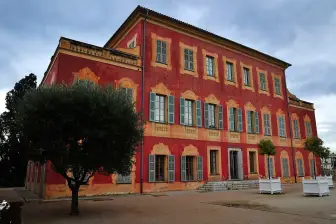
Housed since 1963 in the Villa des Arènes, a 17th-century Genoese villa in the middle of the Cimiez olive grove, it holds nearly 600 works and 138 objects donated by Matisse and his heirs, including almost all of his sculpture. It is open from 10 a.m. to 6 p.m. from April to October and from 10 a.m. to 5 p.m. from November to March, closed on Tuesdays, and admission costs €10; the four-day pass for the municipal museums costs €15.
Matisse lived in Nice from 1917 until his death in 1954, and the museum in the Villa des Arènes holds nearly 600 works donated by him and his heirs, as well as almost all of his sculpture. It is in Cimiez, the neighborhood where he lived in his last years; closed on Tuesdays.
Check access

Cours Saleya
The long square behind the Quai des États-Unis hosts the flower market on Tuesday through Sunday mornings, with stalls of fruit, vegetables and local products. On Mondays, from 7 a.m. to 6 p.m., about 180 antiques dealers and brocanteurs take over the Cours Saleya and the Place Pierre-Gautier. At night, restaurant tables fill the space.
The flower market runs on Tuesday through Sunday mornings, with fruit, vegetable and local-product stalls; on Mondays the same space hosts about 180 antiques dealers and brocanteurs, from 7 a.m. to 6 p.m. Worth passing through on the way to the hill, with no appointment needed.
Check access

Port Lympia
The port opened from 1748 east of the hill, with the neoclassical church of Notre-Dame-du-Port, from 1853, on the axis of the Place de l'Île-de-Beauté. Fishing boats, yachts and ferries to Corsica share the docks, and the streets behind the quay hold restaurants and socca spots.
The port that Charles Emmanuel III ordered opened in 1748 has the ocher and red facades of the Place de l’Île-de-Beauté and several socca spots. It fits a descent from the hill on the east side followed by dinner.
Check access
Musée national Marc Chagall
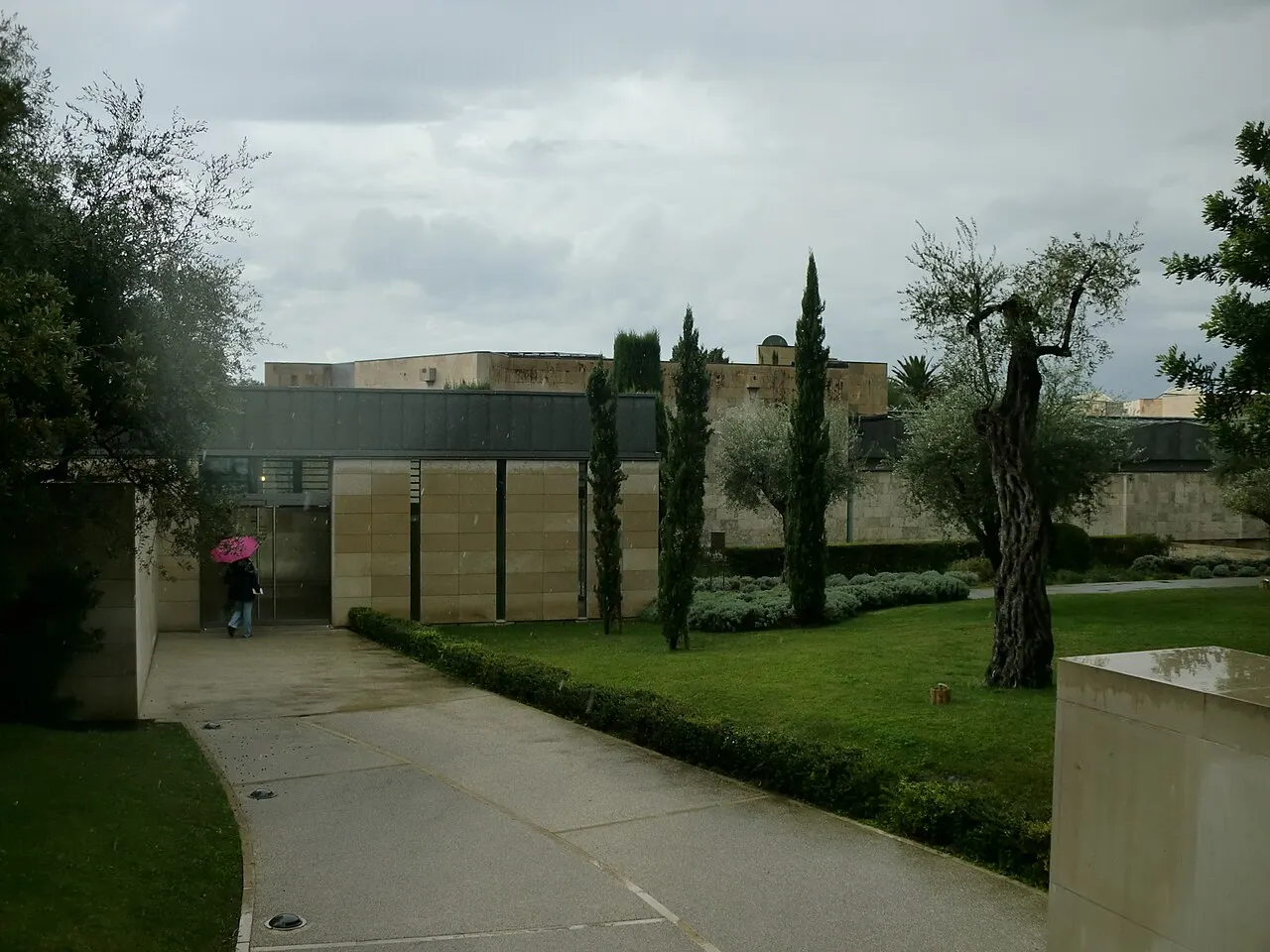
The museum was built between 1966 and 1973 by the architect André Hermant to house the 17 canvases of the Message Biblique: twelve large-format ones on Genesis and Exodus and five on the Song of Songs, in a hexagonal room. The auditorium has Chagall stained-glass windows on the days of creation. It is open from 10 a.m. to 1 p.m. and from 2:30 to 6 p.m. from May to October (until 5 p.m. from November to April, and 4:30 p.m. in March), closed on Tuesdays and charges €10, or €12 during exhibitions; on the first Sunday of the month admission is free.
The 17 canvases of the Message Biblique are in rooms Chagall helped design, inaugurated in 1973 with him present. I would go in if the interest is 20th-century painting; watch for the 1 to 2:30 p.m. break and Tuesday closure.
Check access
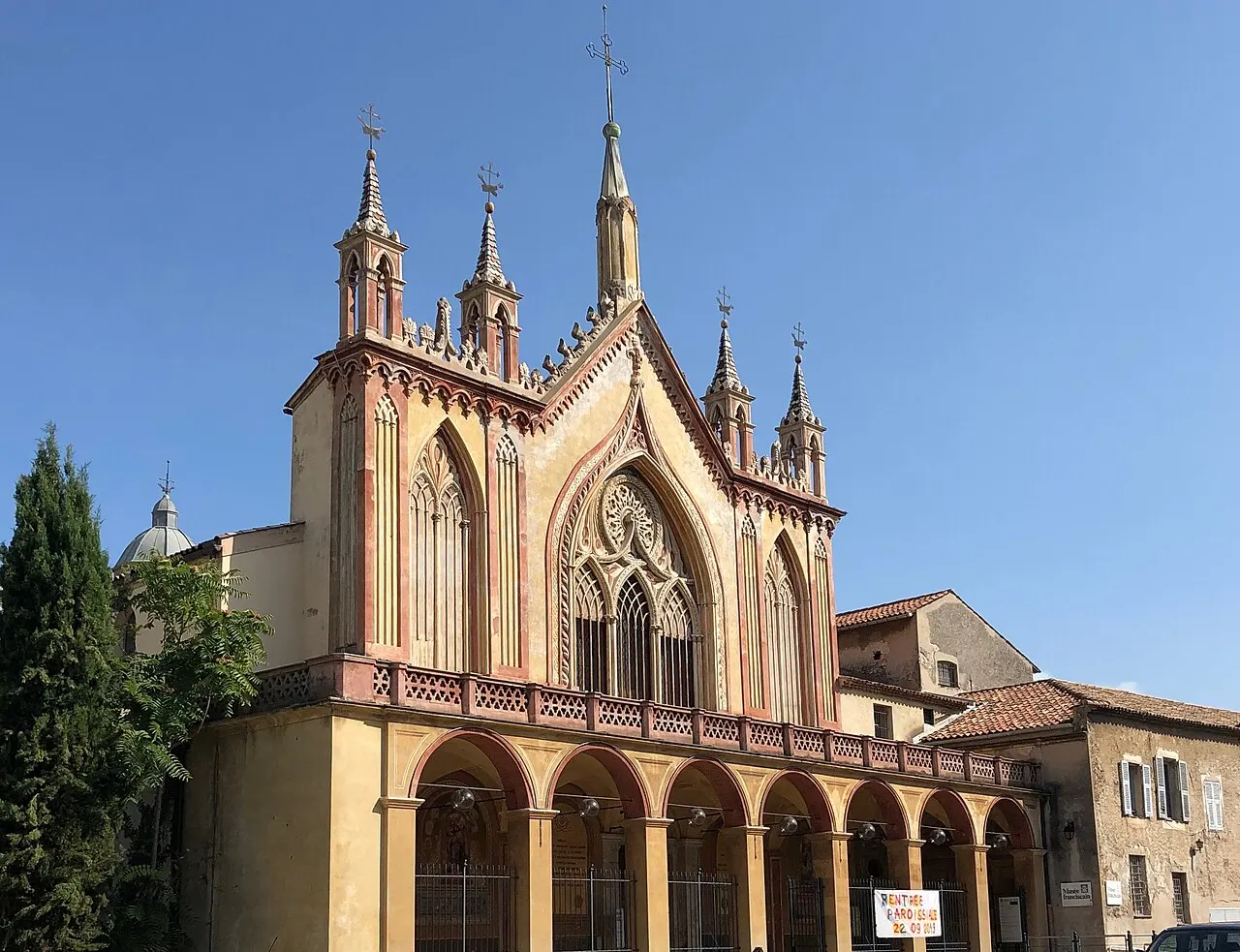
Monastère de Cimiez
The Franciscan monastery next to the Roman ruins has a garden of centuries-old olive trees and rose bushes with a view over the Paillon valley, free to enter. In the neighboring cemetery is Matisse's tomb.
The monastery garden of olive trees and roses is free, overlooks the Paillon valley and is a few steps from the Matisse Museum; the painter’s tomb is in the cemetery next door. It is the natural break between the two museums of Cimiez.
Check access
Cathédrale Saint-Nicolas de Nice
The Russian Orthodox cathedral, built from 1903 to 1912 by the architect Mikhail Preobrazhensky, with onion domes, stands near where Tsarevich Nicholas Alexandrovich died in 1865. Since 2013 it has belonged to the Russian Federation, by court decision. The visit is paid and requires suitable clothing; fares vary between sources, so confirm on site.
The Russian Orthodox cathedral of 1903–1912, with onion domes in the middle of a residential neighborhood, shows the scale of the Belle Époque Russian community. The visit is short and requires suitable clothing; shirtless men are not admitted.
Check access
Nilo’s itinerary
Start with the basic programme and choose extensions for the time you have.
Plan my days in the app ↗Day 1 · Vieux-Nice, the Colline du Château and the port
Start at 8:30 a.m. at the Cours Saleya flower market, which runs in the morning Tuesday through Sunday; on Mondays, the antiques market takes its place.
Walk into the streets of Vieux-Nice to the Place Rossetti and the Sainte-Réparate cathedral, and have socca and pissaladière for lunch at one of the neighborhood's spots.
If it isn't Tuesday, set aside an hour for the Palais Lascaris and its musical instruments.
Climb the Colline du Château by the Lesage stairs or the free elevator at the Quai des États-Unis, see the waterfall and stay at the 92 m viewpoint.
Come down the east side to Port Lympia, walk to the Place de l'Île-de-Beauté and have dinner around there.
Day 2 · Cimiez in the morning and the Promenade des Anglais in the afternoon
On any day but Tuesday, take bus 5 downtown to the Arènes / Musée Matisse stop and enter the museum at 10 a.m.
Cross the olive grove to the Roman ruins and the garden of the Monastère de Cimiez, and stop by Matisse's tomb in the neighboring cemetery.
Walk down, in about 15 minutes, to the Chagall Museum and go in from 2:30 p.m., when it reopens after the lunch break.
Return downtown by bus and cross the Promenade du Paillon from the Place Masséna toward the sea.
Walk the Promenade des Anglais westward in the late afternoon, stopping on the stones to watch the sunset over the bay.
Day 3 · The east coast: Èze, Monaco and Villefranche
On any day but Sunday, take bus 82 or 602 early from Vauban station to Èze village (on Sundays, only the 82, hourly) and see the village before the heat and the groups.
Walk down the Nietzsche path to Èze-sur-Mer station, which is at the seaside: 1 h to 1 h 30, with closed shoes and water.
Take the train to Monaco, have lunch and walk around the Rocher, the old town, and the port.
Late in the day, take the train back toward Nice and get off at Villefranche-sur-Mer to see the Saint-Pierre chapel, painted by Cocteau, on the quay.
From Villefranche to Nice-Ville is about 5 minutes by train; have dinner in Vieux-Nice.




If you stay longer
Day 4 · Antibes
Day trip
To the west, 20 to 30 minutes by train from Nice-Ville, depending on the train. The walled old town has the Château Grimaldi, where Picasso worked from September to November 1946 and left 23 paintings and 44 drawings; since 1966 the castle has been the Picasso Museum. It fills a whole day with the beach and the ramparts.
Day 5 · Saint-Paul-de-Vence
Day trip
A walled village in the interior, with no direct bus from Nice. There are two routes: train to Cagnes-sur-Mer (about 15 minutes) and bus 655 to Saint-Paul (about 30 minutes); or bus 9 from Grand Arénas, near the airport, to Vence (about 30 minutes, every half hour and hourly on Sundays) and the 655 for two stops. The 655 has a stop for the Fondation Maeght, opened in 1964 in a building by Josep Lluís Sert, with works by Chagall, Miró, Giacometti and Calder.
Food
Socca
A thin pancake of chickpea flour, olive oil and water, baked in a wood-fired oven on a wide pan until golden and slightly charred at the edges. It is eaten hot, with black pepper, standing or at the counter, as a morning or late-afternoon snack.
Pissaladière
Bread dough topped with onion cooked slowly for at least two hours until it turns into a jam, with small black olives from Nice and, in the traditional recipe, pissalat, a salted fish purée; today anchovy is commonly used.
Pan bagnat
A round roll filled with the ingredients of the niçoise salad and drizzled with olive oil. Tuna, common today, replaced the anchovy of the old version. It is the city's beach sandwich.
Salade niçoise
In the version defended in Nice, its vegetables are served raw: tomato, spring onion, fava beans, celery, small purple artichokes, bell pepper, basil, hard-boiled egg, anchovy, olives and olive oil, with no vinaigrette. Cooked potato and green beans are additions from elsewhere.
Petits farcis
Small tomatoes, zucchini, onions and peppers stuffed with meat, cheese, egg yolk and bread soaked in milk, baked in the oven. They appear as a starter or main course in restaurants serving niçoise cooking.
Tourte de blettes
A Swiss chard pie with pine nuts and raisins, served cold or lukewarm and dusted with powdered sugar. There is also a savory version, with rice and cheese.
Daube and raviolis
The daube niçoise is beef cooked for a long time in red wine with bacon, tomato and vegetables; the sauce and meat serve as the filling for the city's raviolis, in which chard also often appears.
Bellet wine
The Bellet appellation, created in 1941, lies within the commune itself, on slopes west of the city. The whites use the rolle grape (vermentino); reds and rosés use folle noire, braquet and cinsault. Production is small and it appears on local restaurant wine lists.
Where to eat
- Chez Pipo · Le Port · $
Wood-fired socca, pissaladière and chard pie at shared tables, in a house opened in 1923 on the rue Bavastro. Closed Mondays and Tuesdays; in July and August it also opens on Tuesdays.
Source · 2026-10-15
- La Merenda · Vieux-Nice · $$
Home-style niçoise cooking, such as pissaladière, tripes à la niçoise and stockfish, in a 24-seat room on the rue Raoul-Bosio. Open Tuesday to Friday, for lunch and dinner. It has no phone: book through the website or in person, and bring cash.
Source · 2026-10-15
- JAN · Le Port · $$$
Single tasting menu by the South African chef Jan Hendrik van der Westhuizen, with one Michelin star, in about 20 seats on the rue Lascaris; dinner only, Tuesday to Saturday, by reservation.
Source · 2026-10-15
- Vieux-Nice and Cours Saleya · $
Socca, pissaladière and zucchini-blossom beignets at the counter, to eat standing or at a street table.
- Promenade and beaches · $
A pan bagnat bought at a bakery and eaten on the beach, which is the simplest and cheapest seaside meal.
$: a simple meal, about €12 to €25 per person (Numbeo, October 2026) · $$: mid-range restaurant, about €28 to €60 per person for a three-course dinner without drinks (Numbeo, October 2026) · $$$: over €60 per person, or a tasting menu · 2026-10-15
Day trips
Villefranche-sur-Mer
To the east, on the other side of Mont Boron, about 5 minutes by train from Nice-Ville (€3.60 at the full fare), with about 60 round trips a day. A small port on a bay, with the fishermen's Saint-Pierre chapel, decorated by Jean Cocteau and inaugurated in 1957. It fits in half a day or as a stop on the east-coast day.
Èze
A medieval village perched above the sea, to the east. By bus, the 82 and 602 leave from Vauban station and stop at Èze village, roughly every 45 minutes Monday to Saturday (on Sundays only the 82, hourly); in summer they fill up. By train, you get off at Èze-sur-Mer, on the seaside, and the Nietzsche path climbs from 16 m to 358 m of altitude, in 1 h to 1 h 30 one way, according to regional tourism. The most comfortable way is to go up by bus and walk down.
Monaco
To the east, about 20 minutes by train from Nice-Ville (€6.10 at the full fare). The principality has the old town on the Rocher, with the prince's palace, and the port. It combines well with Èze and Villefranche in a single day.
Menton
Almost at the Italian border, about 40 minutes by train from Nice-Ville (€7.70 at the full fare), with about 65 round trips a day. A town of colorful facades and gardens that holds the Fête du Citron in February, with citrus sculptures and parades; in 2027, from February 13 to 28.
Antibes
To the west, 20 to 30 minutes by train from Nice-Ville, depending on the train. The walled old town has the Château Grimaldi, where Picasso worked from September to November 1946 and left 23 paintings and 44 drawings; since 1966 the castle has been the Picasso Museum. It fills a whole day with the beach and the ramparts.
Saint-Paul-de-Vence
A walled village in the interior, with no direct bus from Nice. There are two routes: train to Cagnes-sur-Mer (about 15 minutes) and bus 655 to Saint-Paul (about 30 minutes); or bus 9 from Grand Arénas, near the airport, to Vence (about 30 minutes, every half hour and hourly on Sundays) and the 655 for two stops. The 655 has a stop for the Fondation Maeght, opened in 1964 in a building by Josep Lluís Sert, with works by Chagall, Miró, Giacometti and Calder.
Where to begin
Vieux-Nice, the Colline du Château and the port
Start at 8:30 a.m. at the Cours Saleya flower market, which runs in the morning Tuesday through Sunday; on Mondays, the antiques market takes its place.
Cimiez in the morning and the Promenade des Anglais in the afternoon
On any day but Tuesday, take bus 5 downtown to the Arènes / Musée Matisse stop and enter the museum at 10 a.m.
Money
The currency is the euro, and cards work at most hotels, restaurants and shops; some traditional places accept only cash or check, so carry a few bills. According to Numbeo surveys updated in October 2026, a meal at a simple restaurant costs €18 on average, dinner for two at a mid-range restaurant, without drinks, about €80, a cappuccino about €3.30 and half a liter of draft beer about €7. At Chez Pipo, a socca spot by the port, dishes run between €3.50 and €7.50. For sleeping, a June 2026 survey of about 200 hotels in the city gave medians of about €142 a night for a double room in a three-star hotel and €211 in a four-star; a hostel bed runs about €28 to €45 a night in high season. Municipal museums, such as the Matisse, cost €10, and the four-day pass for all of them, €15; the Chagall Museum, which is national, costs €10, or €12 with an exhibition. For transport, the Solo ticket is €1.70 and the train to Monaco €6.10. The tourist tax is charged separately by the hotel, per person and per night, and varies with the category.
Getting there and around
From Nice Côte d'Azur airport to the center
The airport is at the mouth of the Var, west of the city, and tram 2 links terminals 1 and 2 to Jean Médecin station in under 30 minutes and continues to the port. Trams run every 7 or 8 minutes on weekdays, and the stretch between the two terminals and Grand Arénas is free. The airport has its own fare: the round-trip ticket costs €10. Since July 1, 2023 there has been no paper ticket: it goes on a rechargeable card, sold at Lignes d'Azur agencies and topped up at station machines, sales points or the app.
Lignes d'Azur tram and bus
The metropolitan network has four tram lines: line 1, from north to northeast along the Avenue Jean-Médecin and the Place Masséna; line 2, from the airport to the port; line 3, from the port to Saint-Isidore, passing the Allianz Riviera; and line B, from the airport to the administrative center. The Solo ticket costs €1.70 and is valid for 74 minutes with transfers, and there are 1-day (€7), 2-day (€13) and 7-day (€20) passes. Everything goes on a rechargeable card at the machines, sales points or the app, and you must validate at each boarding. Bus 5 climbs to Cimiez and stops at the Chagall and Matisse museums.
Train to the Riviera
TER regional trains (ZOU network) leave from Nice-Ville. To the east, they reach Villefranche-sur-Mer in about 5 minutes (€3.60), Monaco in about 20 minutes (€6.10) and Menton in about 40 minutes (€7.70), with about 60 round trips a day to Villefranche and 65 to Menton; to the west, Antibes in 20 to 30 minutes. These are full SNCF fares, and the ZOU card reduces them. The Lignes d'Azur ticket is not valid on the train.
On foot, by bike and by regional bus
From Vieux-Nice to the Place Masséna, the Promenade and the port, everything is walkable. For Èze village, buses 82 (Lignes d'Azur) and 602 (ZOU) leave from the Vauban bus station, roughly every 45 minutes Monday to Saturday; on Sundays only the 82 runs, hourly. For Saint-Paul-de-Vence there is no direct bus: take the train to Cagnes-sur-Mer and then bus 655, or take bus 9 from Grand Arénas to Vence and ride the 655 for two stops.
Safety
Nice is a calm city for walking, and the risk that weighs most for visitors is theft. The places mentioned most often are the airport tram, Nice-Ville station, crowded trains to Monaco and the beach, where a bag left on the stones during a swim disappears. A known scam is the person who offers to help at the ticket machine or the ATM. Keep your bag closed and in front of you on transit and don't leave anything alone on the beach. At night the stations empty out; prefer to wait for the train near other people. In autumn, storms can trigger Météo-France flood alerts; on those days, avoid riverbanks and low underpasses. Emergency: 112 (general) and 17 (police).
Etiquette tips
Say "bonjour" before ordering
In shops, at the socca counter, at market stalls and on buses, conversation starts with "bonjour" (or "bonsoir" in the evening). Ordering straight away, without greeting, is read as rude.
Street clothes away from the beach
At the Russian cathedral, men without a shirt are not admitted and suitable clothing is required. The same care applies to the churches of Vieux-Nice, where Mass is still held.
Respect the Promenade memorial
On the Promenade des Anglais, the memorial to the victims of July 14, 2016 is a place of remembrance. Avoid staged photos there.
On the beach, public and private follow different rules
Public beaches are free and have showers and restrooms. Private concessions rent loungers and umbrellas by the day, and using one of their loungers without paying is not accepted.
Mistakes to avoid
Leaving Cimiez for a Tuesday
The Matisse Museum, the Chagall Museum, the Palais Lascaris and the Masséna Museum are closed on Tuesdays. Plan Cimiez for another day and use Tuesday for the coast by train.
Arriving at the Chagall at 1 p.m.
From May to October, and in winter as well, the Chagall Museum closes from 1 p.m. to 2:30 p.m., and the ticket office stops half an hour before each closing. Arrive by 12:30 p.m. or after 2:30 p.m.
Expecting a sandy beach
Nice's shoreline is almost all pebbles. Anyone who arrives in flip-flops struggles to get into the sea; water shoes and a thick mat help. Sand is found only in a few stretches and on the neighboring beaches.
Looking for a paper ticket on the tram
Since July 1, 2023, Lignes d'Azur has not sold paper tickets: the Solo, at €1.70, and the airport ticket, at €10 round trip, go on a rechargeable card, sold at the agencies and topped up at station machines, which must be validated at each boarding.
Walking up to Èze at noon in summer
The Nietzsche path, from Èze-sur-Mer station to the village, climbs from 16 m to 358 m of altitude and takes 1 h to 1 h 30 one way, much of it in the sun. In summer, go up by bus (82 or 602, from Vauban) and walk down, or do the climb on foot early in the morning.
Combining Saint-Paul and Monaco in the same day
They lie on opposite sides of Nice, and Saint-Paul requires a transfer: train to Cagnes-sur-Mer and bus 655, or bus 9 to Vence and the 655. Separate the coast to the east and the interior to the west into different days.
Useful phrases
Bonjour
Good morning; it's the greeting that opens any conversation, at any hour before nightfall
Une socca, s'il vous plaît
One socca, please; at the counter you can also ask for "une part," a portion
Un aller-retour pour Monaco, s'il vous plaît
A round-trip ticket to Monaco, please; works for any destination on the regional train
Je voudrais recharger ma carte
I'd like to top up my card; useful at the Lignes d'Azur sales point
L'addition, s'il vous plaît
The check, please
Nissa la Bella
Nice, the beautiful, in Niçard; it is the name of the city's informal anthem, sung at matches and festivals
Where to stay
- Vieux-Nice · A short first trip, doing everything on foot · $$: It sits between the Cours Saleya, the hill and the beach, with socca at the door. The trade-off is that the streets are noisy late and many buildings have no elevator.
- Carré d'Or and Promenade · Those who want a sea view and don't mind paying more · $$$: It is the strip of hotels facing the Baie des Anges, a few minutes from the Place Masséna and the tram. It is the most expensive area in the city.
- Center, near Nice-Ville station · Those doing day trips by train · $$: The station is a few minutes' walk away and tram 1 goes down to the Place Masséna. There are many mid-range and simple hotels; the area is less pretty and calls for care at night.
- Le Port · Those who prefer a neighborhood with its own life · $$: It is less touristy than Vieux-Nice, has restaurants and sits at the end of tram line 2, which goes straight to the airport. The nearest beach is on the other side of the hill.
- Cimiez · Long stays and those who want quiet · $$: Residential and green, near the museums but far from the sea. It suits those who want to sleep in quiet and don't mind depending on bus 5.
$: hostel bed, about €28 to €45 per night in high season (The Savvy Backpacker) · $$: double room in a two- or three-star hotel, medians of about €133 and €142 per night (June 2026) · $$$: four stars, median of about €211 per night, and five stars, about €610 (June 2026) · 2026-10-15
Districts
Vieux-Nice
The old city, between the covered Paillon and the hill: narrow streets, the Sainte-Réparate cathedral, the Palais Lascaris, the Cours Saleya market and many socca spots. Very busy by day and with bars open late, which means noise for anyone sleeping there.
Le Port (Lympia)
The neighborhood around the port, east of the hill, with the facades of the Place de l'Île-de-Beauté, the church of Notre-Dame-du-Port, restaurants and the departure point for boats to Corsica. More residential and less touristy than Vieux-Nice, and linked to the center by tram 2.
Carré d'Or and Promenade
The quadrilateral between the Place Masséna and the Boulevard Gambetta, behind the Promenade des Anglais, with seafront hotels, shops and Belle Époque buildings. It is the most expensive part to sleep in.
Center (Jean-Médecin and Masséna)
The Avenue Jean-Médecin, a shopping axis served by tram 1, runs from the Place Masséna to Nice-Ville station. Around the station are many mid-range hotels and the Russian cathedral, west of the tracks.
Cimiez
The residential plateau to the north, where Roman Cemenelum and the grand winter hotels stood, such as the former Régina. It holds the Matisse Museum, the Chagall Museum, the Roman ruins and the monastery. It is calm and green, but far from the sea and depends on bus 5.
Mont Boron
The wooded hill between the port and Villefranche, with villas, trails and viewpoints over the two bays. A place for walks and homes, with few shops and services.
History
4th to 3rd century BC · The Greek colony of Nikaia
Greeks tied to Massalia (Marseille) found a trading post on the hill that overlooks the bay, today's Colline du Château. The name comes from Greek and is usually read as "the one that brings victory."
1st to 4th century · Cemenelum, a Roman provincial seat
The Romans set up the city of Cemenelum on the Cimiez plateau, seat of the province of the Maritime Alps, with three bath complexes and an amphitheater whose ruins now lie next to the Matisse Museum.
1388 · Nice chooses the House of Savoy
After the War of the Union of Aix, the city places itself under the protection of the Counts of Savoy, the "dedition of Nice." A period of more than four centuries tied to Turin begins, which explains the Genoese and Piedmontese Baroque of the old center.
1543 · The Franco-Ottoman siege
From August 6 to 22, troops of Francis I and the fleet of Barbarossa besiege Nice. The lower town capitulates on August 22, but the castle holds out. The washerwoman Catherine Ségurane, who is said to have knocked down a Turkish standard-bearer, entered local history, though the episode is treated as legend.
1706 · Louis XIV orders the castle razed
After the siege of 1705 to 1706, French troops demolish the citadel and the walls. The hill loses its fortress and, in the 19th century, becomes a public park.
1748 · Work begins on Port Lympia
King Charles Emmanuel III decides to open a port on marshy ground fed by the Lympia spring, east of the hill. The work stretches over more than a century and a half.
1792 to 1814 · French Nice for the first time
Troops of the First Republic take Nice, which stays under France through the Revolution and the First Empire. In 1814 the city returns to the Kingdom of Sardinia.
1820 · The English Way
In a harsh winter, the Reverend Lewis Way and members of the Anglican church pay for a seaside path to give work to beggars who had arrived in the city. It is the origin of the Promenade des Anglais.
1860 · Annexation to France
Under the Treaty of Turin, the Kingdom of Sardinia cedes the County of Nice to France in exchange for Napoleon III's support for Italian unification. A plebiscite on April 15 and 16 approves the change. Giuseppe Garibaldi, one of the leaders of Italian unification, had been born in Nice in 1807.
1865 to 1912 · The Russian colony
Tsarevich Nicholas Alexandrovich dies in Nice in 1865, aged twenty. The Russian presence grows until the construction of the Orthodox Cathedral of St. Nicholas, between 1903 and 1912.
1917 to 1954 · Matisse in Nice
Henri Matisse arrives in 1917 and lives in the city until his death in 1954; from 1938 he lives in the former Hôtel Régina, in Cimiez. He is buried in the cemetery of the Cimiez monastery.
1942 to 1944 · Occupation and deportations
Italian troops occupy Nice in November 1942 and, after the Italian surrender in 1943, the Germans arrive. During the war, 3,603 Jews were deported from Nice to the extermination camps. Nice is liberated at the end of August 1944.
1973 · Chagall's museum
The Message Biblique museum opens in Cimiez, designed by André Hermant with Chagall's participation. It was the first French national museum dedicated to a living artist.
2016 · The attack of July 14
A truck drives into the crowd gathered for the national holiday fireworks on the Promenade des Anglais, killing 86 people and injuring 458.
2021 · World Heritage Site
On July 27, UNESCO inscribes "Nice, Winter Resort Town of the Riviera," covering 522 hectares that include the Promenade, Cimiez, Mont Boron and the Château hill.
2025 · The Paillon becomes a full park
In October the last stretch of the Promenade du Paillon opens, about 8 hectares on the site of the Palais des congrès and the Théâtre national, adding to the 12 hectares inaugurated in 2013.
Complete history
Greek, Roman and Savoyard before it was French
Nice begins on the hill now called the Colline du Château: there, Greeks tied to Massalia set up Nikaia, a trading post facing the bay. The Romans preferred the Cimiez plateau, higher and farther from the sea, and made Cemenelum the seat of the province of the Maritime Alps. In 1388 Nice chose the House of Savoy, and for more than four centuries it was governed from Turin, not Paris. That phase gave the city the Sainte-Réparate cathedral, the Genoese palaces of Vieux-Nice and the ocher facades that repeat all the way to the port.
A contested border
As a Savoyard port on the border with Provence, Nice was besieged several times. In 1543 the fleet of Barbarossa, allied with Francis I, took the lower town but not the castle. In 1706 the troops of Louis XIV razed the citadel, which is why the hill today has ruins, gardens and a 19th-century waterfall where a fortress once stood. In 1748 Charles Emmanuel III ordered the Lympia port opened east of the hill. The Revolution brought the city into France between 1792 and 1814; the Congress of Vienna returned it to the Kingdom of Sardinia.
The winter season invents the new city
What you see of Nice beyond the old center was born of a fashion. From the 18th century, English families spent the winter here, away from the cold and smoke of the north, and in 1820 the Reverend Lewis Way financed the seaside path that became the Promenade des Anglais. After 1860, with annexation to France, came the hotels of Cimiez, the villas of Mont Boron and the Russian colony, which built the Cathedral of St. Nicholas. Queen Victoria spent seasons at the Hôtel Régina in the late 1890s. It was this urban fabric, built for foreigners arriving in winter, that UNESCO recognized in 2021.
Painters, war and the 20th century
In the 20th century the light drew painters: Matisse lived in Nice from 1917 to 1954 and Chagall followed the construction of the Message Biblique museum, opened in 1973. The Second World War brought the Italian and German occupations and the deportation of Jews, and liberation came at the end of August 1944. The attack of July 14, 2016 on the Promenade marked the city, and the seafront remains the place where Nice meets.
The name Promenade des Anglais comes from the path that the Anglican community paid for in 1820 to give work to beggars during a harsh winter.
Geography and shape of the city

The bay, the covered river and the hill
Nice occupies the head of the Baie des Anges, between the mouth of the Var, to the west, where the airport is, and Mont Boron, to the east. The commune covers 71.92 km² and runs from sea level to 520 m. The Paillon river came down from the mountains and used to cut the city in two; from the second half of the 19th century it was covered, and over its bed today run the Place Masséna and the linear park of the Promenade du Paillon. West of the old riverbed is the new city, in regular blocks down to the Promenade des Anglais; to the east, the Vieux-Nice leaning against the Colline du Château, 92 m at the main viewpoint, and, on the other side of it, Port Lympia.
The hills of Cimiez and Mont Boron
Behind the coastal plain, the city climbs residential hills: Cimiez to the north, with the museums and the old winter hotels, and Mont Boron to the east, covered in pines and villas.
The climate
The climate is Mediterranean. At the airport station, the 1991 to 2020 normals give highs of 13.3 °C and lows of 5.8 °C in January, and highs of 27.9 °C and lows of 21.1 °C in August, with about 2,760 hours of sun a year. Summers are dry (14 mm in July) and autumns are wet: October totals 128 mm and November 138 mm, often in short, heavy storms. The sea goes from about 13 °C in February to 23.6 °C in August.
The Paillon river still runs beneath the Place Masséna: it was covered from the second half of the 19th century, and the Promenade du Paillon park occupies the old bed.
Culture
The city of painters
The light and the mild winter drew painters. Matisse lived in Nice from 1917 to 1954 and left the city the collection now in the Villa des Arènes; Chagall followed the design of the Message Biblique museum, opened in 1973. On the surrounding coast, Picasso worked in Antibes in 1946 and Cocteau painted the fishermen's chapel in Villefranche in 1957. The MAMAC, the city's museum of modern and contemporary art, is closed for renovation until 2028.
Niçard and cooking as heritage
Niçard, a variety of Occitan spoken in the old county, survives in associations, songs and in the informal anthem "Nissa la Bella," written by Menica Rondelly in 1903. In 2019 the practices of niçoise cooking entered the French national inventory of intangible heritage, and dishes such as socca and pissaladière remain street food and home food, not just restaurant food.
Carnival, jazz and soccer
The Nice Carnival takes up much of February with parades of floats and flower battles on the Promenade, in which performers throw flowers at the public. In July, the Nice Jazz Festival sets up stages at the Place Masséna and the Théâtre de Verdure in the Jardin Albert-Ier. OGC Nice plays at the Allianz Riviera, a stadium opened in 2013 in the Var valley, served by tram 3.
Festivals and events
Nice Carnival, February
About three weeks of float parades, with the carnival king and queen, and the flower battles on the Promenade des Anglais. The 2027 edition, with the theme "Vive l'Amour," runs from February 9 to 28; the grandstands are paid.
Fête du Citron, Menton, February
Forty minutes away by train, Menton builds sculptures of lemons and oranges and holds fruit-float parades on the Promenade du Soleil. In 2027 the festival runs from February 13 to 28, with daytime parades on Sundays and evening parades on Thursdays, and overlaps with the Nice Carnival.
Nice Jazz Festival, July
Concert nights at the Place Masséna and the Théâtre de Verdure, with paid tickets. In 2026 it ran from July 23 to 25; check the dates for each year on the festival's website.
Books and films
À propos de Nice (1930), Jean Vigo
A silent documentary short of about 23 minutes, shot by Boris Kaufman, that contrasts the wealthy on vacation on the Promenade des Anglais with the working-class neighborhoods. It shows the winter-season city at the moment it reaches its peak.
Promise at Dawn (1960), Romain Gary
An autobiographical novel about Gary's childhood and youth with his mother, who moved with him to Nice in 1928 and began running a family guesthouse, the Mermonts. It gives Nice between the wars through the eyes of Russian and Polish immigrants.
Frequently asked questions
Nice: How do you get from the airport to the center?
Tram 2 links terminals 1 and 2 to Jean Médecin station in under 30 minutes and continues to the port. The airport has its own fare: the round-trip ticket costs €10.
Nice: How many days should you stay?
I'd stay three days: two in Nice and one on the coast to the east. With a fourth day, I'd go to Antibes for the Picasso Museum and the walled town.
Nice: How do you get to Monaco?
Monaco is to the east, about 20 minutes by train from Nice-Ville (€6.10 at the full fare), and it combines well with Èze and Villefranche in a single day.
Nice: How much is the tram, and where do you buy the ticket?
The Solo ticket costs €1.70 and is valid for 74 minutes with transfers, and there are 1-day (€7), 2-day (€13) and 7-day (€20) passes. Everything goes on a rechargeable card at the machines, sales points or the app, and you must validate at each boarding.
Nice: Is the beach sandy?
Nice's shoreline is almost all pebbles, and anyone who arrives in flip-flops struggles to get into the sea; water shoes and a thick mat help. Sand is found only in a few stretches and on the neighboring beaches.
Other cities in the country
France ↗- Days
- 4–5
- When
- Apr–Jun · Sep–Oct
- Per person/day
- Average 170–240 EURMid-range · per person/day
Cost scope
Per person per day: accommodation, meals, urban transport, visits and a small allowance for extras. Flights excluded; larger purchases vary. Editorial estimate, not a quote.
- Days
- 5–6
- When
- May–Jun · Sep–Oct
- Per person/day
- Explore costsGuide estimate
Cost scope
Per person per day: accommodation, meals, urban transport, visits and a small allowance for extras. Flights excluded; larger purchases vary. Editorial estimate, not a quote.