Days Start with the basic programme and choose extensions for the time you have.
How the guide reaches this number
This division preserves meals, rest and interiors rather than trying to drive around all Provence. With another day, Orange broadens the Roman heritage. Marseille, Aix, the Camargue and Verdon deserve their own choices or stages; they are not extra stops within these five days.
5–6
When May to June and September to October; a balance for cities and villages, adapting to heat and rain.
How the guide reaches this number
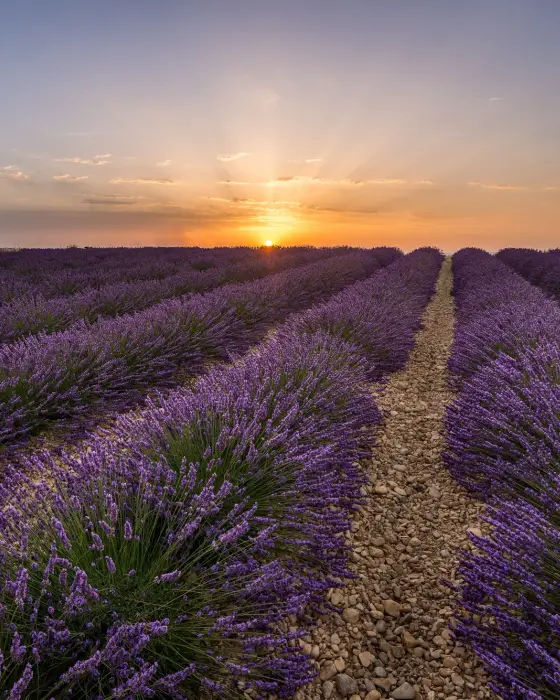
Lavender needs its own flowering calendar.
May to June and September to October; a balance for cities and villages, adapting to heat and rain. Lavender needs its own flowering calendar.
Per person/day Compare accommodation in Avignon, admissions and travel day by day.
How the guide reaches this number
A train or bus circuit costs differently from a car day or booked Luberon outing; include fuel, parking and complete transport as well as tickets.
Compare accommodation in Avignon, admissions and travel day by day. A train or bus circuit costs differently from a car day or booked Luberon outing; include fuel, parking and complete transport as well as tickets.
Per person per day: accommodation, meals, urban transport, visits and a small allowance for extras. Flights excluded; larger purchases vary. Editorial estimate, not a quote.
 What Nilo thinks
I would allow at least five full days based in Avignon: two for the city and Villeneuve, one for Arles, one for Pont du Gard with Uzès when transport permits, and one for Gordes and Roussillon. This division preserves meals, rest and interiors rather than trying to drive around all Provence. With another day, Orange broadens the Roman heritage. Marseille, Aix, the Camargue and Verdon deserve their own choices or stages; they are not extra stops within these five days.I would start Provence with Avignon and what can be explored from there without changing accommodation every night. Palace and bridge help place the papal city; Arles and Pont du Gard add two ways of observing Roman heritage. In the Luberon villages, stone and ochre make an interesting outing even when fields are not blooming. Transport deserves as much attention as scenery, especially if relying on buses between villages.
Quick facts
- Population
- 92,188 inhabitants in the commune of Avignon in 2023, INSEE data published in 2026. Provence is a wider historical region and does not correspond to this population.
- Foundation
- Avignon has prehistoric occupation and an ancient urban history; no single founding date sums up Provence.
- Country and region
- France. Based in Avignon, Vaucluse, in Provence-Alpes-Côte d’Azur; the Pont du Gard and Uzès outing enters Occitanie.
- Language
- French; Provençal belongs to the region's Occitan linguistic tradition.
- Currency
- Euro (EUR, €).
- Time zone
- Europe/Paris: UTC+1 in winter and UTC+2 during daylight saving time.
- Best time
- May to June and September to October; a balance for cities and villages, adapting to heat and rain. Lavender needs its own flowering calendar.
- Average daily cost
- Compare accommodation in Avignon, admissions and travel day by day. A train or bus circuit costs differently from a car day or booked Luberon outing; include fuel, parking and complete transport as well as tickets.
When to go
May to June and September to October; a balance for cities and villages, adapting to heat and rain. Lavender needs its own flowering calendar.
How the year changes

May to June and September to October are good choices for a first trip between cities and villages. The recommendation prioritises walking outside peak heat and holidays, but rain and wind remain possible. Lavender travellers should choose a sector and check flowering: Vaucluse tourism gives a broad June-to-early-August window varying with altitude, variety, weather and harvest. Do not expect identical scenery in Gordes and higher sectors on the same date. July coincides with Avignon's festivals, while July and August bring heat, demand and possible fire restrictions. In winter, short days and reduced calendars require greater attention to openings in villages, collections and restaurants.
Nilo's tips
Choose the day's sector
I would leave Arles, Pont du Gard and the Luberon for separate days. That allows time to enter a monument and have lunch without crossing the region between stops.
A car only when it helps
I would do Arles by train and reserve a car or driver for the villages. This reduces the need for garage parking during urban days.
Theatre requires different planning
I would choose the performance before arranging the excursion day. Duration, language and venue address matter more than simply being in Avignon in July.
Lavender in context
I would visit Sénanque for its architecture and monastic life. Flowers can add to the valley in the right season, but are not a condition for the building to merit a visit.
Explore the map
Explore the map, read about the other places and plan your travel days in the app.
Open the appWhat to see
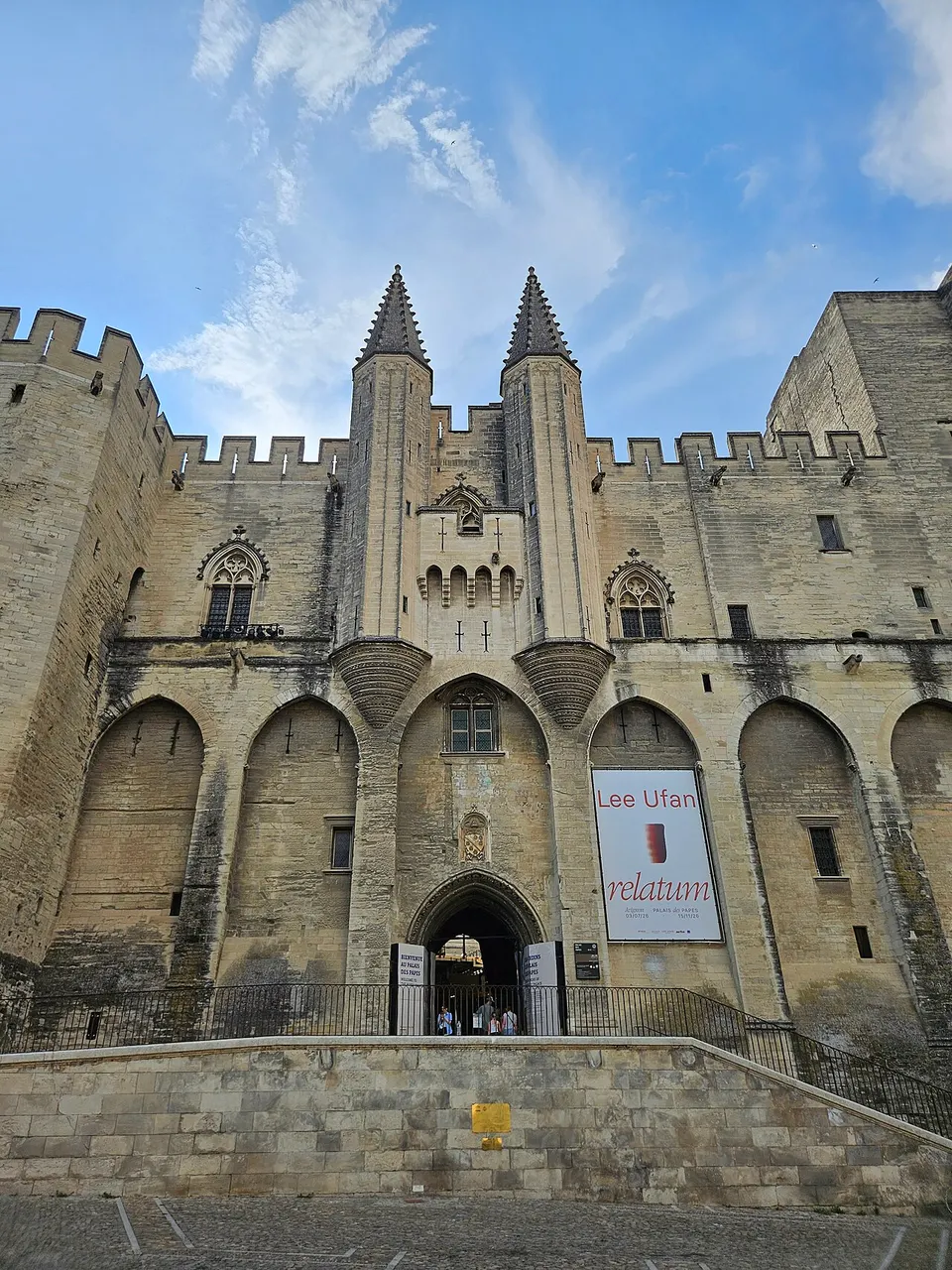
Palais des Papes
Avignon's Gothic complex reveals halls, courtyards and the organisation of papal power. Allow time for the route and interpretation resources; spacious interiors do not mean every room is furnished as in the 14th century. There are many stairs. Wheelchair users should enquire about the adapted route requiring reservation rather than assume ordinary admission resolves every access.
The palace explains papal power and the city’s development, with an adapted route reserved when needed.
Check access
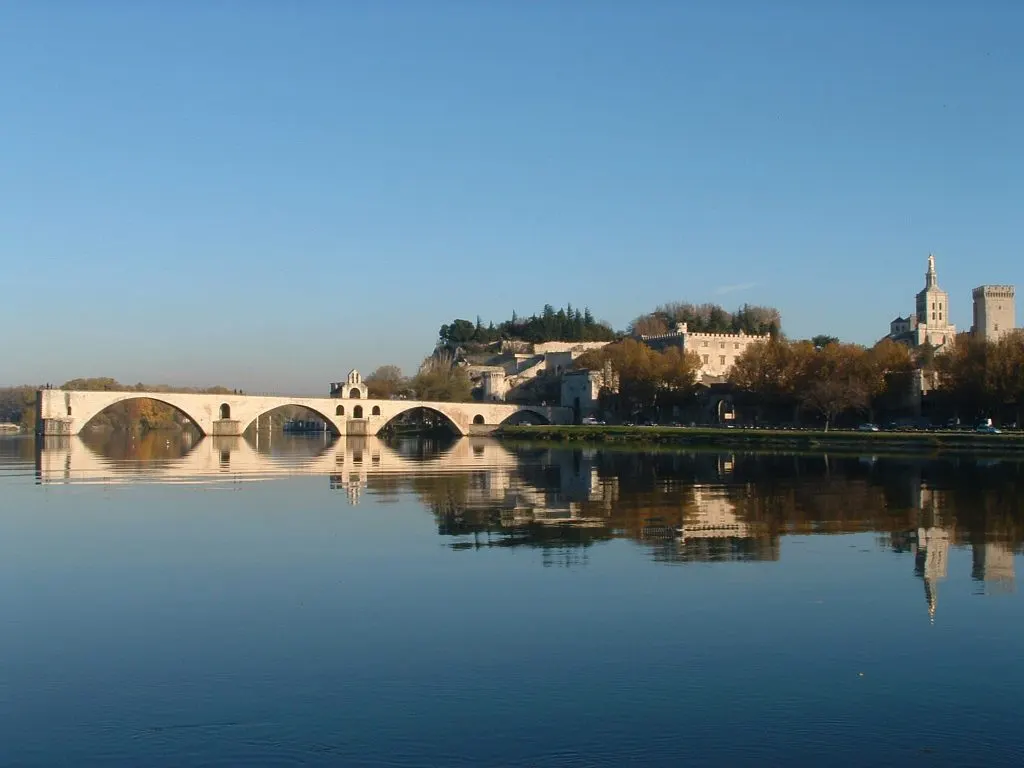
Pont Saint-Bénezet
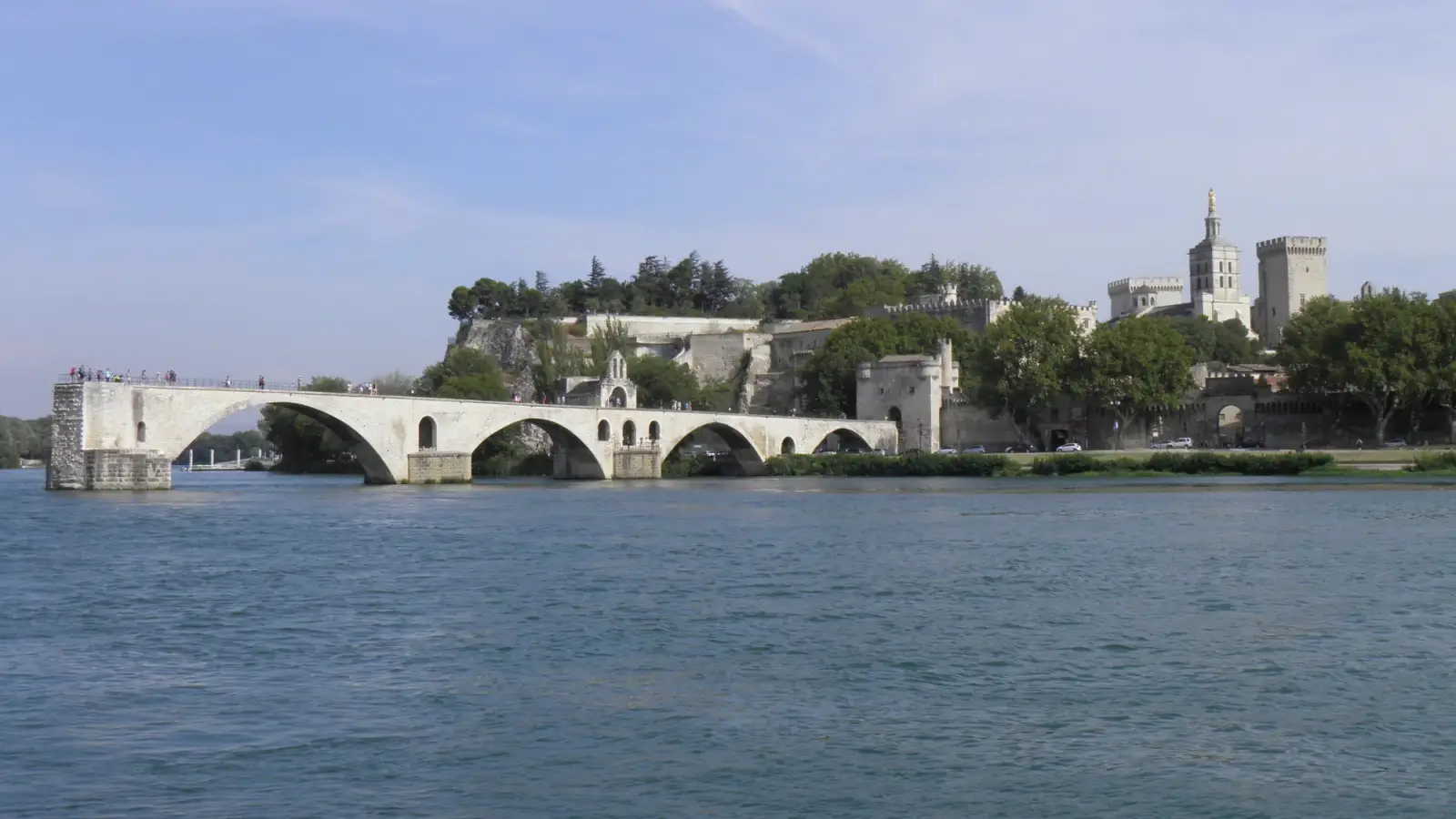
The bridge ending over the Rhône helps explain movement and Avignon's relationship with the river. Monument admission is paid and does not offer a full crossing to Villeneuve. Check the ticket type and lift operation if you need adapted access.
The monumental bridge explains the relationship with the Rhône without promising a full crossing.
Check access

Amphithéâtre d’Arles
The Roman amphitheatre remains integrated into the city and still hosts events. Visiting entrances and seating reveals the scale of an ancient entertainment building. Tourist opening may change during arena programming; do not expect a historical performance or included event on every date.
The amphitheatre integrates Roman architecture into the city’s fabric, subject to event programming.
Check access
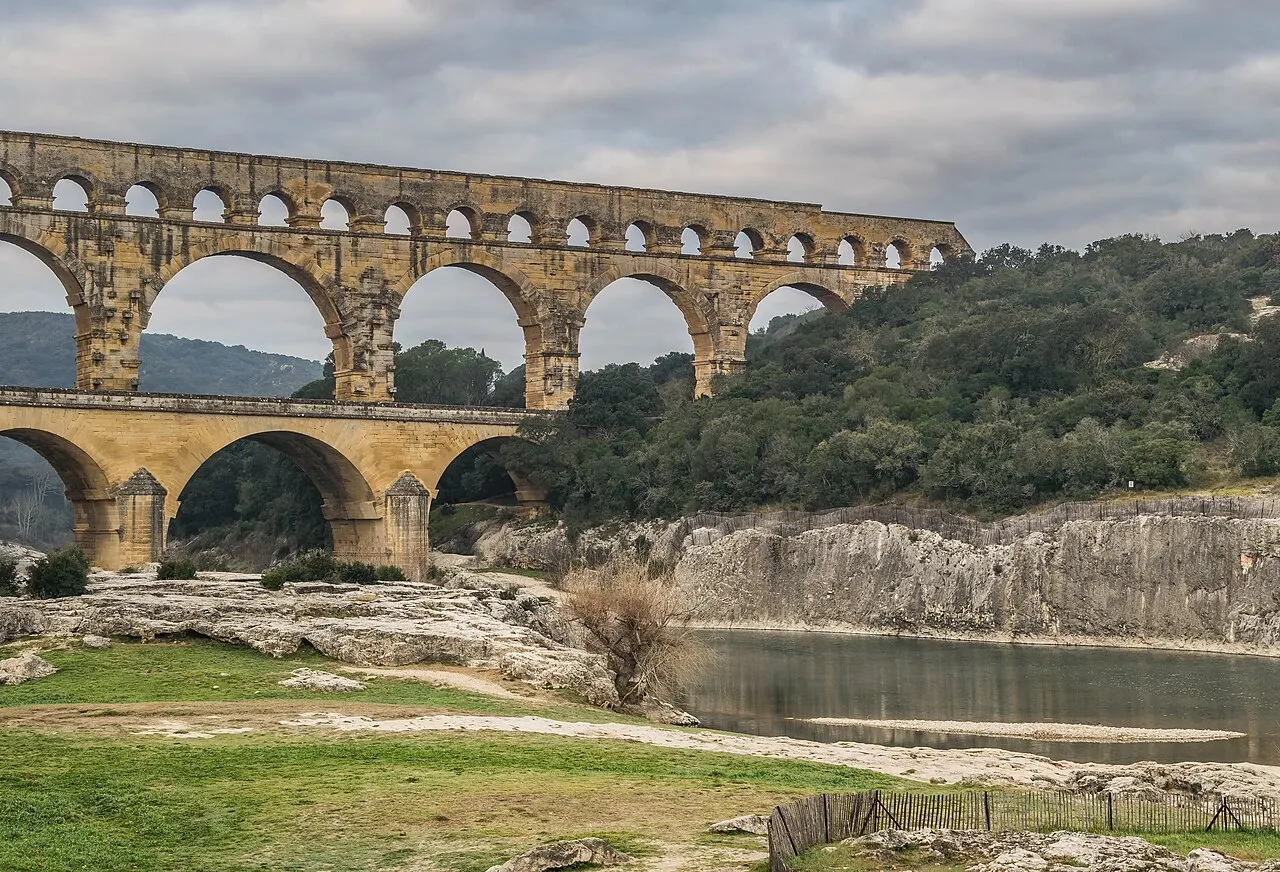
Pont du Gard
The Roman aqueduct bridge crosses the Gardon and formed part of Nîmes's water supply. Exterior access and viewing the monument are free; parking, museum and guided visits have separate charges. Do not buy an option assuming every admission includes the aqueduct's upper level. Choose your arrival bank and cultural programme beforehand.
The aqueduct retains a scale of Roman infrastructure not revealed by urban visits.
Check access
Gordes
Stone buildings and sloping streets connect the village with its height and the surrounding plain. View the whole from a permitted point and enter the core on foot, without stopping a car on a bend or verge for photographs. Parking and walking are part of the visit.
The stone setting and terrain justify an unhurried visit to a Luberon village.
Check access
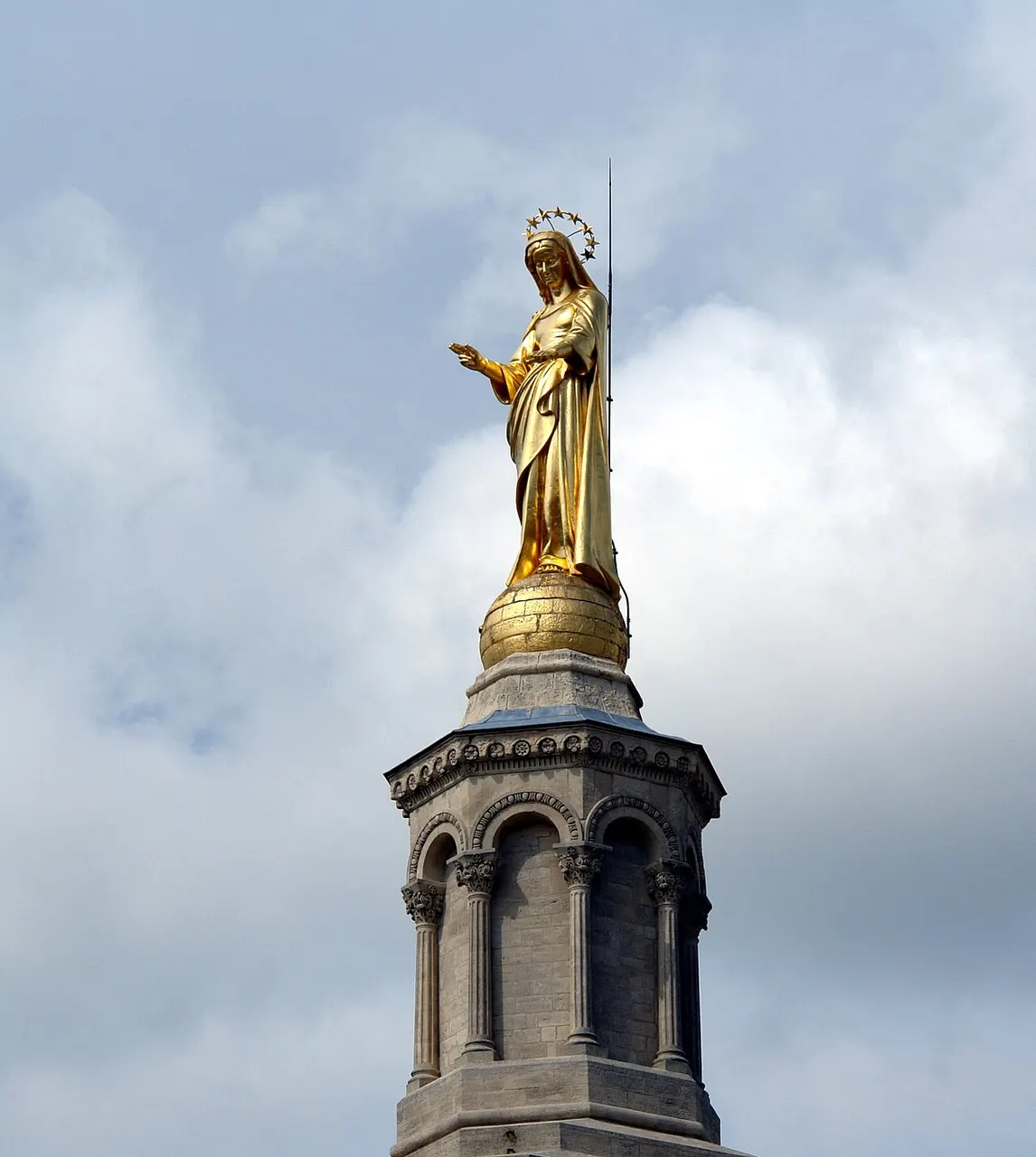
Basilique Métropolitaine Notre-Dame des Doms
Beside the Palais des Papes, the cathedral of Romanesque origin adds its own religious space to the papal complex. The bell tower with its gilded Virgin helps identify the skyline. The square slopes and has stone paving, and basilica entry involves steps; confirm access suited to the group. Respect silence, services and the church calendar, which differs from palace and Rocher garden hours.
It is a distinct monument in the papal complex, separate from palace and neighbouring garden.
Check access
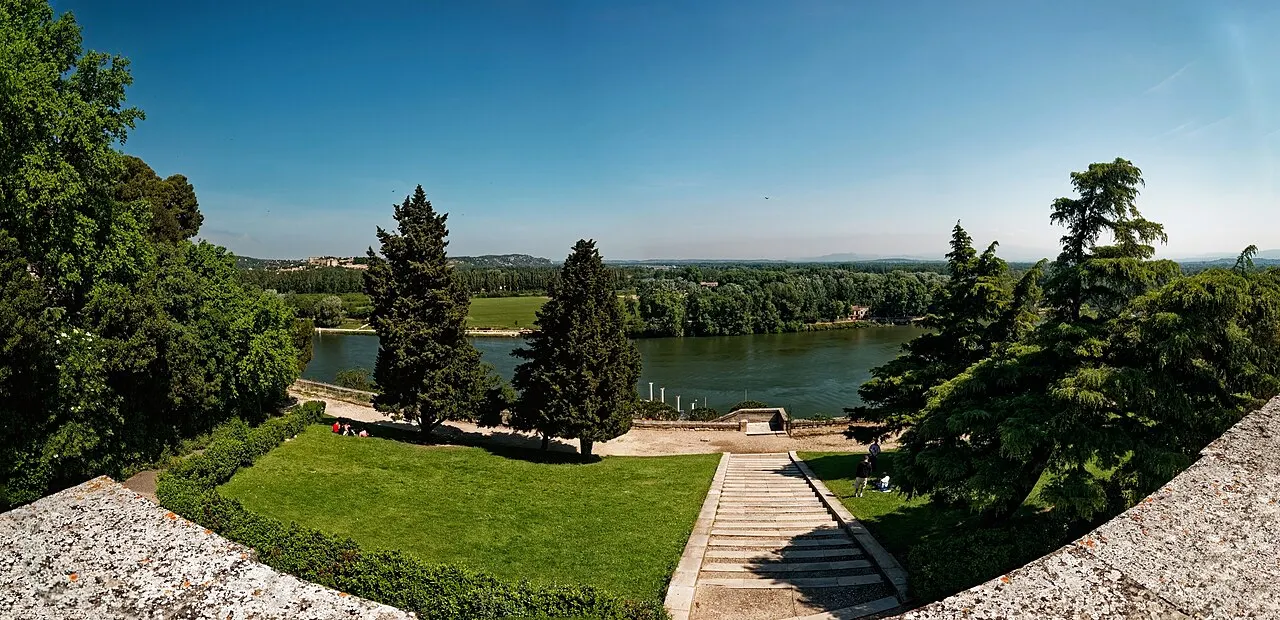
Rocher des Doms
The garden and viewpoints near the papal complex offer another reading of river and city. Restoration was organised in phases, including access routes: confirm open paths before planning a palace-garden-bridge connection. If closed, keep to permitted urban spaces.
The garden adds views when access routes are open during restoration.
Check access
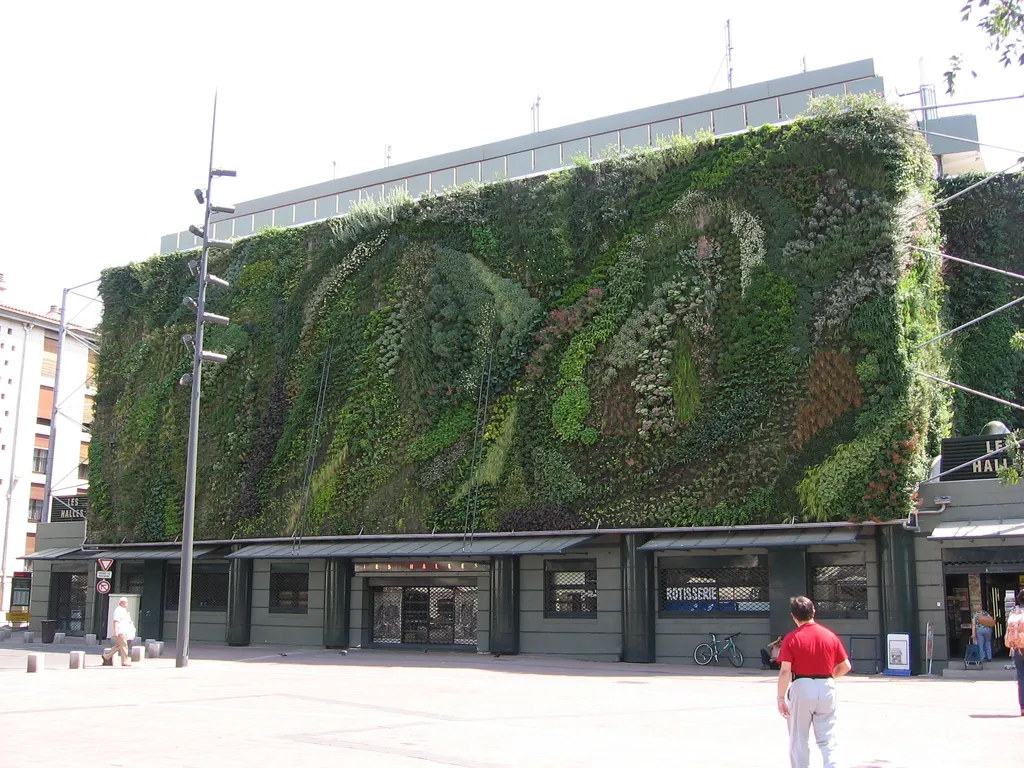
Les Halles d’Avignon
The covered market on Place Pie brings together fresh produce, prepared food and specialist stalls. Visit in the morning, Tuesday to Sunday, checking exceptions. Good for regional produce and a simple lunch; not every stall has tables or stays open until dinner.
The market connects the urban base with regional produce and food.
Check access
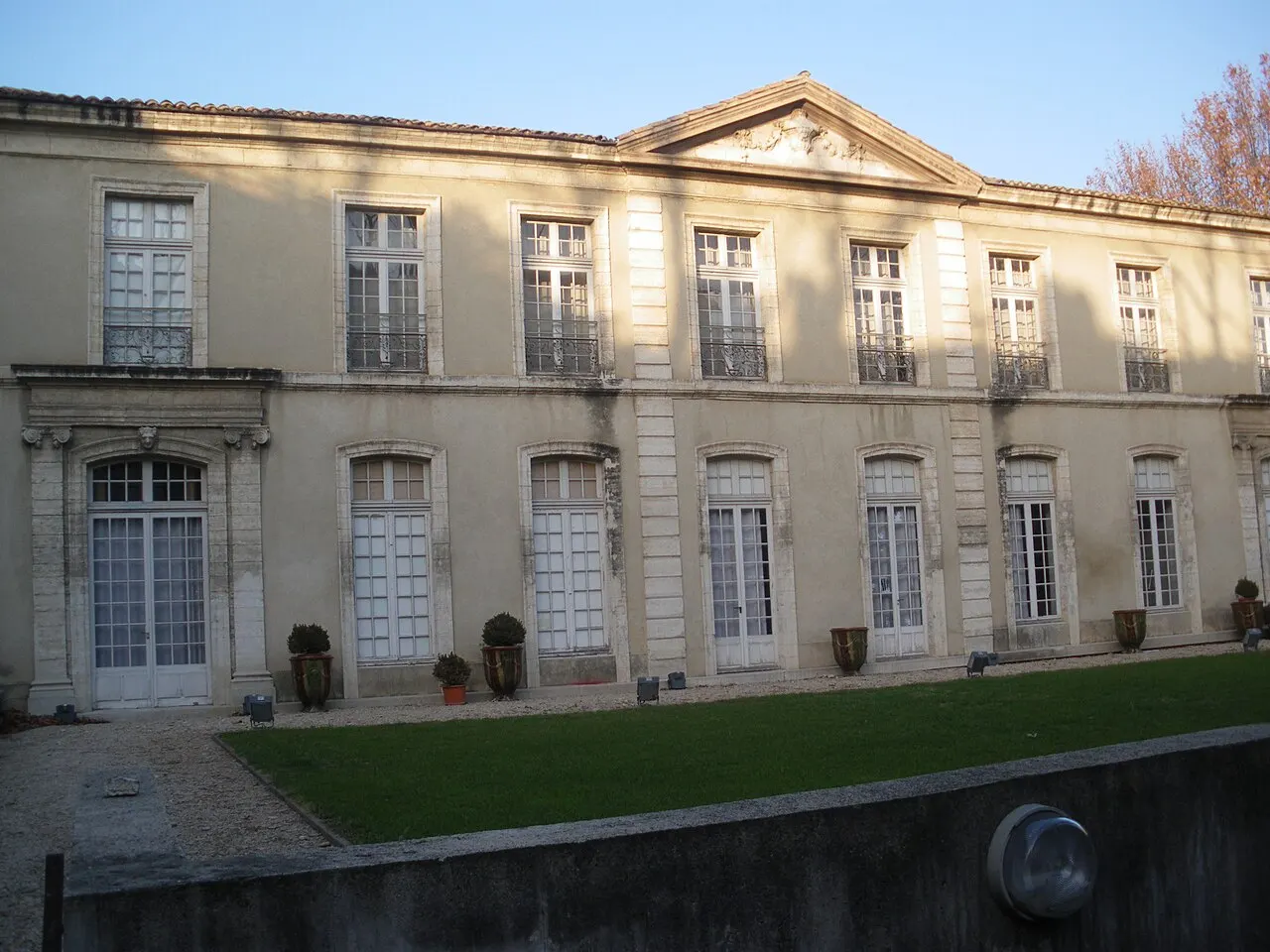
Collection Lambert
The contemporary art collection occupies two hôtels particuliers, former urban residences. Exhibitions and holdings reveal an Avignon beyond the palace. Check the calendar: opening varies seasonally and the published autumn 2026 programme closes Monday and Tuesday, with other weekdays starting in the afternoon.
The contemporary collection diversifies the programme, with its own days and hours.
Check access
Nilo’s itinerary
Start with the basic programme and choose extensions for the time you have.
Plan my days in the app ↗Day 1 · Papal Avignon and the Rhône
Keep Avignon as your base every night. Start at the Palais des Papes at your reserved time, allowing time for halls and interpretation. If you need the adapted route, arrange access and ticket type before travelling.
Have lunch in the centre and walk through Place du Palais, observing Notre-Dame des Doms. Visit inside the basilica only during opening and outside services; confirm steps and slope if needed. Continue through squares and streets within the walls, without adding another city during the palace-visit interval.
Visit Pont Saint-Bénezet with your chosen option. It does not cross the whole river. For Rocher des Doms, confirm paths released during works and use authorised access only. Also observe the walls from public spaces; the programme requires neither their complete perimeter nor a continuous wall-top route.
Dine and sleep in Avignon. If attending theatre that evening, check language, duration and venue address rather than assuming all shows are in the palace.
Day 2 · Market, Villeneuve and contemporary art
Start at Les Halles in the morning on an opening day to see produce and arrange a snack. The market regularly closes on Monday; choose another day of your stay for this visit.
Take an urban bus or taxi to Villeneuve-lès-Avignon and visit the Chartreuse during that day's hours. The crossing uses the road bridge, not the Saint-Bénezet monument.
Have lunch in Villeneuve or return to Avignon with time to rest. Arrange travel to reach the Collection Lambert in the afternoon, checking exhibition and calendar beforehand. If you prefer Italian painting and medieval art, replace Lambert with the Petit Palais, checking hours and accessibility; in 2026 it closes from 16 to 30 November.
In the published autumn 2026 programme, the Collection Lambert closes Monday and Tuesday. If the calendar prevents a visit, switch days or keep the walk and an open Villeneuve visit; do not automatically schedule another museum without checking. Return to Avignon for the night. The Petit Palais also regularly closes Mondays, so it is not an automatic substitute that day.
Day 3 · Arles, from amphitheatre to cloister
Take a train between Avignon Centre and Arles with outbound and return checked. Rail travel is separate from the walk between station and historic core.
Visit the Amphithéâtre d’Arles during tourist opening. On event days, check restrictions; if the interior is unavailable, observe the exterior and keep the city walk. The Théâtre antique is a nearby alternative with another admission or pass option. To visit both interiors, allow separate time and reduce the later walk rather than confuse the buildings or add visits without a buffer.
Have an unhurried lunch in the centre and then enter the Cloître Saint-Trophime, distinguishing church and cloister access. Allow time for sculptures and galleries.
Walk through the core and along the urban Rhône bank as energy allows and return by train to Avignon. The Camargue is another programme, not an automatic addition at the end of this afternoon.
Day 4 · Pont du Gard and, with viable transport, Uzès
Leave Avignon for Pont du Gard by car, hired transport or regional route 115 with checked timetables. Choose the arrival bank and stop and include the walk to the monument.
Observe the aqueduct and permitted exterior approaches. For the museum or an upper-level visit, confirm their specific options and times. Plan for water, shade and lunch.
With a car or viable bus connection, continue to Uzès for Place aux Herbes and the centre. Markets are Wednesday and Saturday morning programmes; this afternoon does not assume open stalls.
If public transport cannot support both visits with a reliable return, keep only Pont du Gard and its open cultural spaces. Return to Avignon for the night without relying on an unchecked connection.
Day 5 · Gordes and Roussillon in the Luberon
Leave Avignon by car or prearranged transport, having checked fire risk and Sentier des Ocres opening. Plan the two villages within one sector, without adding Valensole or the Verdon.
Explore Gordes on foot from authorised parking and observe the relationship between buildings and terrain. The stop does not depend on lavender flowering.
Allow lunch and rest before continuing to Roussillon. Visit the Sentier des Ocres only if open and suitable for the group's mobility; an accessible viewpoint does not represent the whole trail.
Sénanque can replace Roussillon if monastic architecture is a priority and a visit is confirmed; on Sundays tourist access starts in the afternoon. Do not combine monastery, trail, many villages and another region on the same day. Return to sleep in Avignon or end the trip with a realistic departure buffer.
If you stay longer
Day 6 · Orange
Day trip
An additional-day extension for the Roman theatre and an urban walk. SNCF gives about 28 rail kilometres between Avignon and Orange, an 18-minute average and faster 13-minute services, depending on the train. Check outbound and return, the walk from station to theatre, admission and possible programme-related closures. Return to Avignon for the night or make it a separate stage, without increasing this itinerary's five-day minimum.
Food
Olive oil, olives and tapenade
Olive oil underpins regional cooking. Tapenade combines olives, capers and traditionally anchovies; check the recipe for a fish-free option. Markets allow product comparisons without turning every purchase into a tasting appointment.
Ratatouille and tian
Vegetables, olive oil and oven or pan preparations feature in the Provençal repertoire. They connect meals with plant production and season. Ask how the dish is served and whether it is a starter, side or main course.
Papeton d’aubergine
The aubergine preparation associated with Avignon has a flan texture and usually contains eggs. An alternative for discovering local cooking beyond meat menus, checking the establishment's recipe and sauce.
Daube
The slow-cooked stew belongs to Provençal cooking and has local variants. Choose an unhurried seated meal and confirm meat and accompaniment, especially on seasonally changing menus.
Market produce
Fruit, cheese, bread and prepared food allow a simple meal in Les Halles or a stop during outings. Do not assume every lavender product is edible or every purchase can enter a monument.
Where to eat
- Les Halles, Avignon
Fresh produce and stall preparations allow a daytime lunch or snack chosen by season. Confirm seating, eating on site and each trader's hours; the market closes before dinner.
- Avignon within the walls
Look for aubergine papeton, daube or vegetable dishes for regional cooking in a seated meal. Compare starters and mains on the menu and explain restrictions, as fish and eggs can occur in apparently vegetable-based recipes.
- Arles and Uzès
Lunching in the visit's sector avoids crossing back to base to eat. Prefer a menu explaining products and allowing a choice by appetite and season; do not assume the same dish appears on every southern French menu.
- Gordes or Roussillon
Reserve the lunch break in one of the Luberon day's two villages, checking opening and access before leaving. Avoid replacing the meal with photographs that delay arrival until after kitchen service.
· 2026-10-16
Day trips
Orange
An additional-day extension for the Roman theatre and an urban walk. SNCF gives about 28 rail kilometres between Avignon and Orange, an 18-minute average and faster 13-minute services, depending on the train. Check outbound and return, the walk from station to theatre, admission and possible programme-related closures. Return to Avignon for the night or make it a separate stage, without increasing this itinerary's five-day minimum.
Where to begin
Papal Avignon and the Rhône
Keep Avignon as your base every night. Start at the Palais des Papes at your reserved time, allowing time for halls and interpretation. If you need the adapted route, arrange access and ticket type before travelling.
Market, Villeneuve and contemporary art
Start at Les Halles in the morning on an opening day to see produce and arrange a snack. The market regularly closes on Monday; choose another day of your stay for this visit.
Arles, from amphitheatre to cloister
Take a train between Avignon Centre and Arles with outbound and return checked. Rail travel is separate from the walk between station and historic core.
Pont du Gard and, with viable transport, Uzès
Leave Avignon for Pont du Gard by car, hired transport or regional route 115 with checked timetables. Choose the arrival bank and stop and include the walk to the monument.
Gordes and Roussillon in the Luberon
Leave Avignon by car or prearranged transport, having checked fire risk and Sentier des Ocres opening. Plan the two villages within one sector, without adding Valensole or the Verdon.
Money
Use euros. For the tariff valid from 1 August to 31 December 2026, the Palais des Papes publishes €16 full admission and €19.50 combined with Pont d’Avignon; confirm included spaces and reduced or free categories. This is not a festival ticket price. At Pont du Gard, exterior access is free for pedestrians and cyclists; parking costs €9 per vehicle according to the FAQ consulted on 16 October 2026, while cultural activities are paid separately. Compare transport and accommodation for identical dates. A rural house may provide space but add car, parking and outside meals; a room within the walls may reduce these journeys.
Getting there and around
Arriving by train
Avignon Centre is beside the historic core; Avignon TGV is about 6 km from the centre and requires a connection. Check TER or urban transport to your base. Choose the station according to your ticket rather than an abbreviated search-result name.
Arriving by air
Marseille Provence (MRS) is a regional gateway with scheduled flights. The airport lists a bus connection to Vitrolles-Aéroport Marseille Provence station, from which to check trains to Avignon. The station is not inside the terminal; include arrival procedures, transfer and waiting.
Avignon and Villeneuve
The centre within the walls can be explored on foot, with attention to paving and slopes. For Villeneuve, use Orizo or a taxi according to the address. Saint-Bénezet is a monument rather than an operating crossing between banks.
Arles by train
Services link Avignon Centre and Arles. SNCF gives about 35 rail kilometres and a 37-minute average across the services consulted; choose a direct train and check actual duration, station and return. This excludes the walk to monuments.
Pont du Gard and Uzès
The monument operator identifies regional route 115 from Avignon. Check the timetable for your date and the walk from the stop; no train leaves visitors beside the aqueduct. Combining Uzès on the same day depends on transport between stops and the last return.
Luberon
For Gordes and Roussillon on the same day, a rental car or prebooked transport is simplest. A bus route to one locality does not guarantee a convenient connection between both. Collect a car only when needed and confirm parking on return to base.
Driving and parking
Avignon has restricted access and parking to choose before entering the core. In villages, leave the car in an authorised place and continue on foot. If wine tasting, designate a driver who will not drink or arrange other transport.
Safety
Heat, wind and nature access warrant proportionate attention. Bring water and sun protection for ruins, aqueduct bridge and villages; with strong mistral, check notices before exposed outings. Between 15 June and 15 September, access to Vaucluse's massifs may be limited or prohibited according to daily fire risk. Check the official map and your chosen site's conditions; do not bypass barriers because you booked an activity. In rain or flood alerts, stay away from banks and do not cross flooded areas. In cities, stations and vehicles, watch belongings and do not leave luggage visible. In an emergency, call 112. For mobility, confirm palace, village and trail routes individually rather than treating one adapted sector as accessibility of the entire site.
Etiquette tips
Entering a shop
A bonjour before your request helps start the conversation. You need not speak fluent French to greet someone and ask which language is available.
Lavender fields and properties
Use authorised paths, do not tread on plants and do not enter for photographs without permission. Flowering precedes harvest and is part of the land's production.
Sénanque and churches
Remain quiet and respect enclosed areas and worship times. Tourist visiting does not include roaming throughout the monastery.
Museums, market and theatre
Check food and luggage rules for each venue. A morning market, afternoon museum and evening performance have different logistics.
Mistakes to avoid
Using Provence as a single destination
Avignon, Arles and the Luberon require separate outings; choosing a base before routes avoids a whole day of crossings.
Confusing Avignon's two stations
TGV is not beside the walls. Include the connection before your first programme or return train.
Crossing via Saint-Bénezet
The monument ends in the river. For Villeneuve, use the road crossing and operating transport.
Going to Les Halles late in the day
The market operates in the morning and closes Mondays on its regular published schedule. Its name is not a dinner guarantee.
Scheduling a museum on a closed day
The Collection Lambert publishes Monday and Tuesday closures for part of the year. The Chartreuse has a different schedule; check both before ordering day two.
Relying on lavender in August
The window varies by sector and harvest may already have taken place. Choose the trip for villages, heritage and food too.
Ignoring massif restrictions
In summer, check the daily fire-risk access decision before a trail or ochre outing. A ticket or reservation does not override closure.
Useful phrases
Bonjour
Good morning/hello.
Est-ce que ce billet comprend le musée?
Does this ticket include the museum?
Où se trouve l’arrêt du bus de retour?
Where is the return bus stop?
Le sentier est-il ouvert aujourd’hui?
Is the trail open today?
Est-ce que ce plat contient des anchois ou des œufs?
Does this dish contain anchovies or eggs?
Faut-il réserver pour déjeuner?
Do you need to reserve for lunch?
Where to stay
- Avignon within the walls · A first trip with dinners on foot, monuments and train outings.: This itinerary's base: explore the city without a car and return to restaurants after excursions. Compare distance to Centre station and the access gate; bar and theatre streets can be noisy, especially in July. If renting a car, confirm parking and luggage access.
- Avignon Centre and south of the walls · Those prioritising public transport and arrival with luggage.: Proximity to the station helps with Arles and connections without needing a car every day. Choose the side and route to the walls: near Centre does not mean beside the palace or near Avignon TGV.
- Villeneuve-lès-Avignon · Those wanting the opposite bank and accepting transport to the excursion base.: Offers access to its own heritage and can suit drivers wanting a different accommodation routine. The drawback is crossing to Avignon, especially for an early train or evening performance. Confirm last bus or taxi before booking.
- Gordes and Luberon villages · Another trip stage with more countryside days and a car.: Allows village and landscape exploration with less backtracking to Avignon, but is not equivalent for Arles and Pont du Gard. Restaurants, parking and luggage access vary by village. If changing base, reorder itinerary and nights; the five-day plan stays in Avignon.
· 2026-10-16
Districts
Avignon within the walls, Palais and Place de l’Horloge
Concentrates monuments and restaurants, with walking access to city visits. Theatre streets and squares have a different intensity in July.
Avignon within the walls, Les Halles and Rue des Teinturiers
The food-shopping sector and streets east of the centre add markets and urban walks to your base. Stall hours differ from restaurant hours and the square's nightlife.
Avignon within the walls, south and Rue Violette
The Collection Lambert occupies former urban residences here. Useful for combining art with the walk between the walled city and Centre station.
Avignon Centre and south of the walls
Suits those combining accommodation with train or bus outings. Compare your lodging's position relative to the station and city gate, without confusing Centre and TGV.
Villeneuve-lès-Avignon
Another commune and riverbank, with religious heritage and a small-town atmosphere. An alternative base for those prioritising accommodation outside Avignon's core and accepting daily transport.

Arles
A city requiring its own visit, with amphitheatre, historic core and cloister. The proposed day uses train and walking, without adding the Camargue as though it were another neighbourhood.
Pont du Gard and Uzès
A Gard sector with a Roman aqueduct and a town of squares and arcades. Linking the two depends on roads and timetables; with sparse buses, make only one visit.
Gordes and Roussillon, Luberon
Villages with sloping streets and road access. This choice combines stone architecture and ochre scenery in one sector; it does not require every famous village in a day.
History
Roman antiquity · Cities and infrastructure
Arles and the Nîmes aqueduct, of which Pont du Gard is part, retain structures revealing different scales of Roman presence in the region.
Middle Ages · Religious power and villages
Monasteries, episcopal seats and fortified settlements organised the territory. Saint-Trophime's cloister and Sénanque abbey reveal distinct functions and ways of life.
1309 · The papacy in Avignon
The establishment of the papal court transformed Avignon and its surroundings, with residences and institutions also on the opposite bank of the Rhône.
1335–1352 · Building the palace
Benedict XII and Clement VI oversaw the main construction phases of the Palais des Papes, combining residence, administration and the apparatus of power.
1791 · Incorporation into France
Avignon and the Comtat Venaissin joined France during the Revolution, ending papal rule over these territories.
19th and 20th centuries · The ochre industry
Pigment extraction left former quarries around Roussillon. Today's visited landscape has both natural history and human labour behind it.
1947 · Festival d’Avignon
Jean Vilar's founding of the festival linked the city with contemporary theatre and the cultural use of its heritage.
Complete history
Provence is not a city
The historical region brings together different landscapes and histories. Avignon, Arles and the Luberon are not neighbourhoods of one capital. Administrative divisions also affect the reading: Pont du Gard is a useful neighbour for this trip but stands in Gard, Occitanie.
The papal court and the Rhône
The palace was more than a dwelling: it represented administrative, religious and political power. Across the river, Villeneuve received residences and foundations connected with the court. Visiting the Chartreuse complements the palace through the organisation of a religious community.
Cultivated and excavated landscape
Olives, vines and lavender are crops with their own work and calendar. Roussillon's ochres also result from human extraction alongside geological formation. Respecting fields and paths is part of discovering the landscape without treating it as an empty stage.
Saint-Bénezet is the monumental bridge that ends in the river. Crossing to Villeneuve uses other infrastructure.
Geography and shape of the city
Avignon and two riverbanks
The historic city stands on the Rhône's left bank. Villeneuve-lès-Avignon is across the river and requires transport over an operating crossing; the Saint-Bénezet bridge does not span the entire river.
Outings by direction
Arles is south of Avignon; Pont du Gard and Uzès west; Gordes and Roussillon east. Combine places within one sector instead of crossing your base several times in a day.
Station and terrain
Avignon Centre is beside the walls, while Avignon TGV is away from the historic core. Elevated Luberon villages have slopes and uneven paving. Short map distances do not remove parking, steps or the final walk.
Mediterranean climate and mistral
Summer brings heat and dryness, and the mistral can blow strongly through the Rhône valley. Wind changes comfort on bridges, ruins and viewpoints. In the massifs, fire risk can restrict access regardless of clear skies.
The outing goes to Gard, Occitanie. It serves a trip from Avignon without changing Provence's historical boundary.
Flowers, paths and monuments have different calendars. A roadside view does not authorise entry onto property.
Culture
Heritage and performing arts
The Festival d’Avignon created a strong relationship between historic buildings and contemporary work. The city has theatres and institutions outside July too; an art collection or theatre archives broaden the medieval programme.
Working monasteries
Sénanque is a religious house with prayer times and enclosed areas. Permission to visit part of the building does not turn the whole valley into free space for entering fields or photographing people without consent.
Markets and production
Markets have specific days and seasonal products rather than an identical selection all year. Lavender is a harvested crop; olive groves and vineyards also involve work and property to respect.
Festivals and events
Festival d’Avignon
Performing arts in July, with different tickets and venues. The 2026 edition ran from 4 to 25 July. Check programme, language, duration and location of each performance before combining theatre and excursions.
Festival Off Avignon
The Off has its own organisation and ticketing even when its dates coincide with the main festival. In 2026 both ran from 4 to 25 July. A Festival d’Avignon discount card does not automatically apply to the Off.
Arles events
Arles has heritage events and activities in monuments that can affect amphitheatre access. Check your travel days and the specific programme; a demonstration in the summer calendar is not a permanent attraction.
Books and films
Maison Jean Vilar and the Festival archives
The institution's exhibitions and publications connect theatre history with the city and festival founded in 1947. Good preparation for Avignon even outside July.
Palais des Papes, BnF Passerelles
The Bibliothèque nationale de France material explains the palace's construction phases, form and function. Helps read spaces beyond the scale of a façade.
Ochre geology and landscape
Sentier des Ocres interpretation connects pigments, formations and land exploitation. Consult its introduction before choosing the outing, without confusing Roussillon with other regional ochre sites.
Frequently asked questions
Provence: how many days should I allow and where should I stay?
I would allow at least five full days based in Avignon: two for the city and Villeneuve, one for Arles, one for Pont du Gard with Uzès when transport permits, and one for Gordes and Roussillon. This division preserves meals, rest and interiors rather than trying to drive around all Provence. With another day, Orange broadens the Roman heritage. Marseille, Aix, the Camargue and Verdon deserve their own choices or stages; they are not extra stops within these five days.
Provence: how do I reach Avignon by train or through Marseille airport?
Avignon Centre is beside the historic core; Avignon TGV is about 6 km from the centre and requires a connection. Check TER or urban transport to your base. Choose the station according to your ticket rather than an abbreviated search-result name. Marseille Provence (MRS) is a regional gateway with scheduled flights. The airport lists a bus connection to Vitrolles-Aéroport Marseille Provence station, from which to check trains to Avignon. The station is not inside the terminal; include arrival procedures, transfer and waiting.
Provence: do I need a car for Arles and the Luberon?
Services link Avignon Centre and Arles. SNCF gives about 35 rail kilometres and a 37-minute average across the services consulted; choose a direct train and check actual duration, station and return. This excludes the walk to monuments. For Gordes and Roussillon on the same day, a rental car or prebooked transport is simplest. A bus route to one locality does not guarantee a convenient connection between both. Collect a car only when needed and confirm parking on return to base.
Provence: how do I reach Pont du Gard and what costs extra?
The monument operator identifies regional route 115 from Avignon. Check the timetable for your date and the walk from the stop; no train leaves visitors beside the aqueduct. Combining Uzès on the same day depends on transport between stops and the last return. The Roman aqueduct bridge crosses the Gardon and formed part of Nîmes's water supply. Exterior access and viewing the monument are free; parking, museum and guided visits have separate charges. Do not buy an option assuming every admission includes the aqueduct's upper level. Choose your arrival bank and cultural programme beforehand.
Provence: when should I go and how should I plan for lavender?
May to June and September to October are good choices for a first trip between cities and villages. The recommendation prioritises walking outside peak heat and holidays, but rain and wind remain possible. Lavender travellers should choose a sector and check flowering: Vaucluse tourism gives a broad June-to-early-August window varying with altitude, variety, weather and harvest. Do not expect identical scenery in Gordes and higher sectors on the same date. July coincides with Avignon's festivals, while July and August bring heat, demand and possible fire restrictions. In winter, short days and reduced calendars require greater attention to openings in villages, collections and restaurants.
Provence: can I cross Saint-Bénezet to Villeneuve?
The centre within the walls can be explored on foot, with attention to paving and slopes. For Villeneuve, use Orizo or a taxi according to the address. Saint-Bénezet is a monument rather than an operating crossing between banks.
Provence: how should I choose between Collection Lambert and Petit Palais?
The contemporary art collection occupies two hôtels particuliers, former urban residences. Exhibitions and holdings reveal an Avignon beyond the palace. Check the calendar: opening varies seasonally and the published autumn 2026 programme closes Monday and Tuesday, with other weekdays starting in the afternoon. On Place du Palais, the former archbishops' palace houses Italian painting and medieval art from Avignon and Provence. Its historical content differs from the Collection Lambert. Permanent collections are free to visit independently, but check days and hours: the 2026 calendar closes Mondays and from 16 to 30 November. There are many stairs, and access is unsuitable for wheelchairs according to tourism information; arrange specific conditions before visiting.
Provence: do the Festival d’Avignon and Off share ticketing?
Performing arts in July, with different tickets and venues. The 2026 edition ran from 4 to 25 July. Check programme, language, duration and location of each performance before combining theatre and excursions. The Off has its own organisation and ticketing even when its dates coincide with the main festival. In 2026 both ran from 4 to 25 July. A Festival d’Avignon discount card does not automatically apply to the Off.
Other cities in the country
France ↗- Days
- 4–5
- When
- Apr–Jun · Sep–Oct
- Per person/day
- Average 170–240 EURMid-range · per person/day
Cost scope
Per person per day: accommodation, meals, urban transport, visits and a small allowance for extras. Flights excluded; larger purchases vary. Editorial estimate, not a quote.
- Days
- 3–5
- When
- May–Jun · Sep
- Per person/day
- Average 169 EURMid-range · per person/day
Cost scope
Per person per day: accommodation, meals, urban transport, visits and a small allowance for extras. Flights excluded; larger purchases vary. Editorial estimate, not a quote.