
Switzerland
Zurich
River baths, Chagall windows and a mountain by train
Days Start with the basic programme and choose extensions for the time you have.
How the guide reaches this number
Anyone looking for grandeur will be disappointed, because you can walk across the medieval center in 20 minutes. Budget weighs in too, and CHF 120–180 a day already counts as budget travel. With just one day, start at the Lindenhof at 9am and go down to the Fraumünster to see the Chagall windows. Have the Mittagsmenü for lunch in the Niederdorf, on the other side of the bridge. In the afternoon, from May to September, swim at Seebad Enge for about CHF 8; the rest of the year, take the short boat loop that leaves from Bürkliplatz. Finish atop the Uetliberg, 20 minutes by train from the Hauptbahnhof, or at the arches of the Viadukt. In November, expect gray skies and low cloud, offset by the year's lowest prices.
1–2
When June to September, with the lake and river public baths open; September and October have the clearest air of the year
How the guide reaches this number
Summer is Zurich's season. From June to August highs run between 24 and 28 °C, heat waves above 33 °C are getting more frequent, thunderstorms roll in late afternoon, and the lake water sits between 21 and 24 °C in late July. This is when the public baths, the Limmat and the shores work as the city's shared living room. September and October bring 15 to 22 °C, the year's clearest air, and lower hotel prices. From November to January the plateau sits under a low cloud layer that can fail to lift for a whole week, with 0 to 5 °C, high humidity, and dark by 4:45pm. The way out is up the Uetliberg, which is usually above the cloud. Snow generally appears between December and February but rarely lingers long in the valley. Rain is spread through the year, about 1,100 mm, peaking in summer. High season runs June to August, plus December for the Christmas markets and the second Saturday of August for the Street Parade, when nightly rates double. November is gray, wet and festival-free, with the upside of being the cheapest month. A detail that goes unnoticed until the third hotel bill: since Zurich empties of executives on weekends, staying Friday through Sunday usually costs less than Tuesday through Thursday.
Per person/day Budget CHF 120–180; mid-range CHF 250–400; comfortable from CHF 550 up (the franc trades nearly at par with the euro)
How the guide reaches this number
Per person per day: accommodation, meals, urban transport, visits and a small allowance for extras. Flights excluded; larger purchases vary. Editorial estimate, not a quote.
 What Nilo thinks
Set aside a day for the old town and the waterfront and a second, if you have one to spare, for the museums, the industrial west, and the home mountain. Anyone looking for grandeur will be disappointed, because you can walk across the medieval center in 20 minutes. Budget weighs in too, and CHF 120–180 a day already counts as budget travel. With just one day, start at the Lindenhof at 9am and go down to the Fraumünster to see the Chagall windows. Have the Mittagsmenü for lunch in the Niederdorf, on the other side of the bridge. In the afternoon, from May to September, swim at Seebad Enge for about CHF 8; the rest of the year, take the short boat loop that leaves from Bürkliplatz. Finish atop the Uetliberg, 20 minutes by train from the Hauptbahnhof, or at the arches of the Viadukt. In November, expect gray skies and low cloud, offset by the year's lowest prices.On a summer afternoon in Zurich, locals leave work and head to the lake and Limmat river baths, open roughly from May to September. There are paid and free options; the swim down the current at Oberer Letten is for experienced swimmers. The old town occupies both banks where the river leaves the lake, with the twin-towered Grossmünster on one side and the Fraumünster and its five Marc Chagall windows on the other. Zurich began at this water bottleneck as a Roman customs post, making its living taxing and financing what passed through until it became Switzerland's banking center. At the table, the local dish is Zürcher Geschnetzeltes, strips of veal with mushrooms, white wine and cream, served with Rösti. To see everything from above, a train climbs in about 20 minutes to Uetliberg, the 871 m hill that often rises above low cloud in winter. Come from June to September, while the baths are open, and allow one day, plus a second for the museums and industrial west.
Quick facts
- Population
- 452,421 in the municipality (end of 2025); about 1.4 million in the urban area and about 2.1 million in the metropolitan region
- Founded
- Roman customs post Turicum, around 15 BC; Fraumünster abbey in 853; free imperial city in 1218
- Country and region
- Switzerland; capital of the canton of Zurich, on the Swiss Plateau (Mittelland); 87.88 km² divided into 12 districts (Kreise) and 34 neighborhoods
- Language
- German is the official, written language; on the street people speak Swiss German dialect (Züritüütsch); English is common in shops; about 1 in 3 residents holds a foreign passport
- Currency
- Swiss franc (CHF, “Fr.”); about 0.93 CHF per euro and about 0.80 CHF per dollar in 2026; the Twint app dominates payments among locals
- Time zone
- CET (UTC+1); daylight saving CEST (UTC+2) from the last Sunday of March to the last Sunday of October
- Best time to visit
- June to September, with the lake and river public baths open; September and October have the clearest air of the year
- Average daily cost
- Budget CHF 120–180; mid-range CHF 250–400; comfortable from CHF 550 up (the franc trades nearly at par with the euro)
When to go
June to September, with the lake and river public baths open; September and October have the clearest air of the year
January
-1° to 4°C
63 mm of rain
February
-1° to 5°C
60 mm of rain
March
2° to 10°C
71 mm of rain
April
5° to 15°C
80 mm of rain
May
9° to 19°C
128 mm of rain
October
7° to 14°C
85 mm of rain
November
3° to 8°C
76 mm of rain
December
0° to 4°C
83 mm of rain
How the year changes

Summer is Zurich's season. From June to August highs run between 24 and 28 °C, heat waves above 33 °C are getting more frequent, thunderstorms roll in late afternoon, and the lake water sits between 21 and 24 °C in late July. This is when the public baths, the Limmat and the shores work as the city's shared living room. September and October bring 15 to 22 °C, the year's clearest air, and lower hotel prices. From November to January the plateau sits under a low cloud layer that can fail to lift for a whole week, with 0 to 5 °C, high humidity, and dark by 4:45pm. The way out is up the Uetliberg, which is usually above the cloud. Snow generally appears between December and February but rarely lingers long in the valley. Rain is spread through the year, about 1,100 mm, peaking in summer. High season runs June to August, plus December for the Christmas markets and the second Saturday of August for the Street Parade, when nightly rates double. November is gray, wet and festival-free, with the upside of being the cheapest month. A detail that goes unnoticed until the third hotel bill: since Zurich empties of executives on weekends, staying Friday through Sunday usually costs less than Tuesday through Thursday.
The same numbers as a table
| Month | Temperature °C | Rain mm |
|---|---|---|
| January | -1 to 4 | 63 |
| February | -1 to 5 | 60 |
| March | 2 to 10 | 71 |
| April | 5 to 15 | 80 |
| May | 9 to 19 | 128 |
| June · | 13 to 22 | 128 |
| July · | 14 to 24 | 126 |
| August · | 14 to 24 | 119 |
| September · | 11 to 19 | 87 |
| October | 7 to 14 | 85 |
| November | 3 to 8 | 76 |
| December | 0 to 4 | 83 |
Nilo's tips
Have the Mittagsmenü for lunch, 11:30am to 2pm, CHF 22–30
At night the same kitchen charges CHF 30–50 for a main course. Make your big meal at midday and settle dinner with CHF 10–15 from the supermarket. After 2pm the lunch menu comes off the board, and nobody negotiates.
Buy the ticket before boarding: the fine is CHF 100
Inspectors charge passengers without tickets CHF 100 plus the fare, on the spot and without warning. Buy it at the platform machine or on the ZVV app: the single ticket costs CHF 4.60 and is valid for 1 hour, the Kurzstrecke, at CHF 2.80, covers short stretches, and from the third trip of the day on, the 24-hour pass, at CHF 9.20, already pays off. Tickets from the machine are already validated, so don't look for a place to stamp it.
Swim for free in the Limmat, at Flussbad Oberer Letten, if you have experience in currents
The bathing spot is free during the summer season and has a 400 m route in the river current, which requires open-water experience. If the current isn't for you, stay on the terrace or choose a lake bathing spot with an area for non-swimmers.
Shop on Thursday: stores stay open until 8pm
By cantonal law, stores close on Sundays, and on Saturday most pull down the shutters between 5pm and 6pm. If you need something on Sunday, go to the shops at the Hauptbahnhof and the airport, the legal exception, and sort out dinner at the station supermarket.
In winter, go up to the Uetliberg, at 871 m, above the fog
When the winter cloud layer covers the city, the summit is almost always above it. Take the S10 train at the Hauptbahnhof, which climbs up in about 20 minutes, and walk another 10 minutes to the top. If you have time, continue along the Planetenweg, a 2-hour trail to Felsenegg.
Book a hotel Friday to Sunday, when the nightly rate drops
Executives leave Zurich on weekends, so compare the nightly rate from Friday to Sunday with Tuesday to Thursday before booking. The exception is the second Saturday in August, during the Street Parade, when prices double and you need to book months ahead.
Explore the map
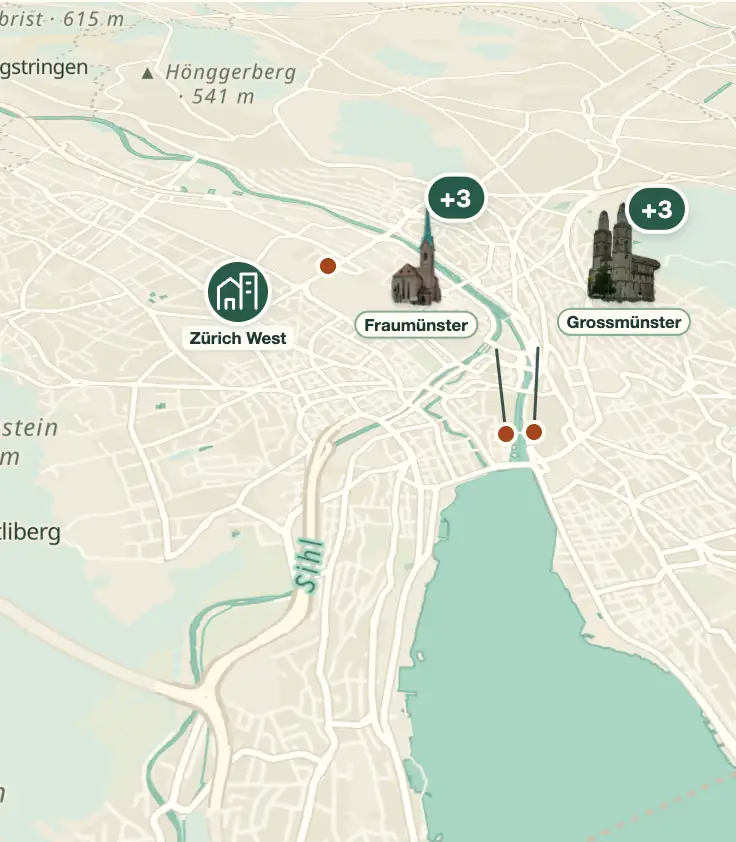
© OpenStreetMap · OpenFreeMap · © OpenMapTiles
Explore the map, read about the other places and plan your travel days in the app.
Open the appWhat to see
Zurich: The valley, the lake and the two ridges
Almost everything worth visiting is within walking distance of the point where the Limmat leaves the lake, between the Lindenhof and the Grossmünster, and the Uetliberg, 871 m, to the west, is 20 minutes away by train.
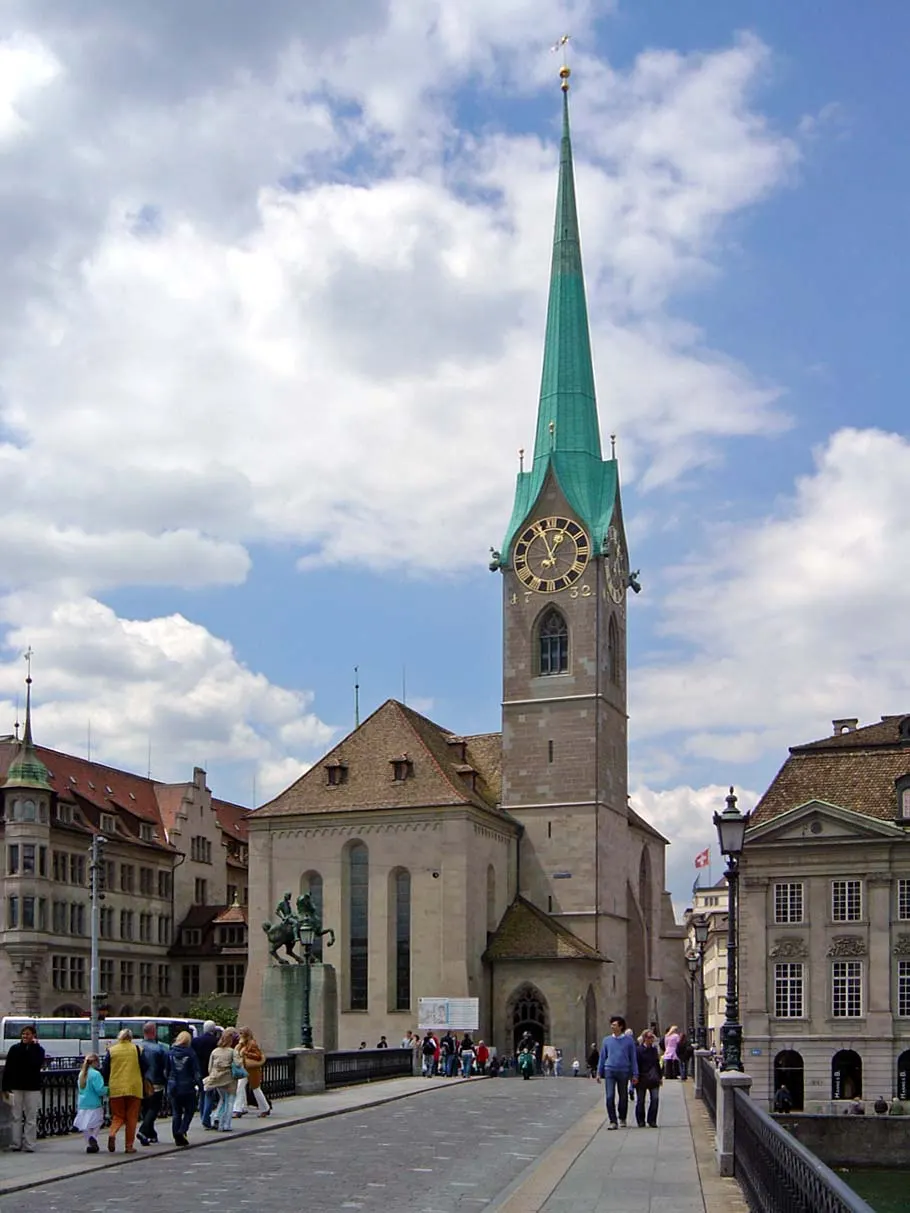
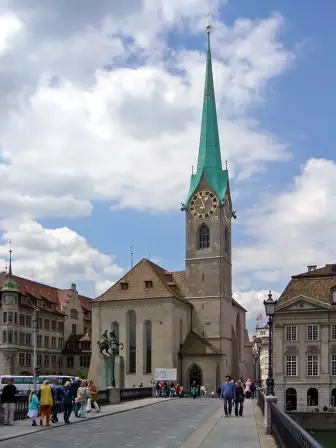
Fraumünster
What's left of the abbey founded in 853 that once ran the city; today's tower dates from 1732 and the cloister has frescoes by Paul Bodmer. The line forms for the five choir windows made by Marc Chagall in 1970, when he was 83, plus a 1945 window by Augusto Giacometti; closed during services, admission around CHF 5.
Those who brave the line come for the five choir windows Marc Chagall made in 1970, at 83; admission runs around CHF 5.
Check access

Lindenhof
A moraine terrace 25 m above the Limmat, with no buildings at all: this is where the Roman fort and the Carolingian palace once stood, and today there are lime trees, giant chessboards, and the best view of the right bank. The 1912 fountain recalls the defense of 1292, when, according to the chronicle, the women of Zurich climbed the hill armed to simulate an army.
The building-free terrace, 25 m above the Limmat, has the best view of the right bank, and the 1912 fountain recalls the 1292 defense, when, according to the chronicle, the women of Zurich climbed the hill armed to simulate an army.
Check access
Uetliberg
The city's home mountain, 871 m, reached by the S10 train from the Hauptbahnhof in about 20 minutes plus a 10-minute walk. At the top there's a 72 m observation tower and the start of the Planetenweg, a 2-hour trail to Felsenegg where the solar system appears at a scale of 1:1 billion; between November and January it's the most reliable way to see the sun.
The S10 train climbs the city's mountain, at 871 m, where there's a 72 m observation tower and the start of the Planetenweg, the trail that reduces the solar system to a scale of 1:1 billion.
Check access
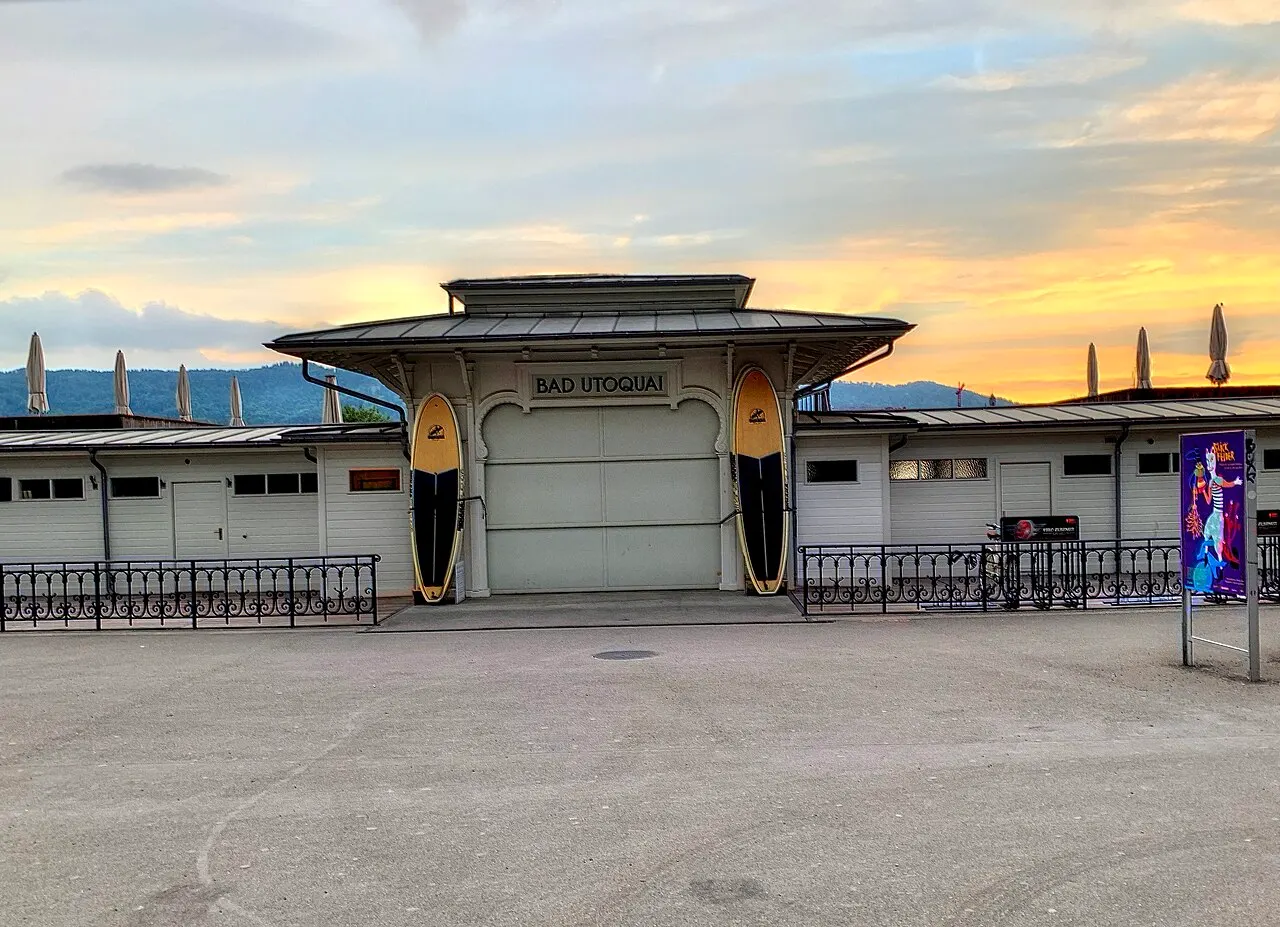
The public lake and Limmat baths
The city maintains a network of Badis, lake and river baths open roughly from May to September, with paid and free options. They include Utoquai (1890), Seebad Enge, the Frauenbad Stadthausquai of 1888 (women only by day, bar open to everyone at night) and the Männerbad on Schanzengraben. Flussbad Oberer Letten is free and has a 400 m route in the Limmat. The current requires experienced swimmers; children are not allowed in this bathing facility. Check conditions and exits with the staff before swimming.
The lake and river baths, open roughly from May to September, range from Seebad Enge, for about CHF 8, to Oberer Letten, free.
Check access
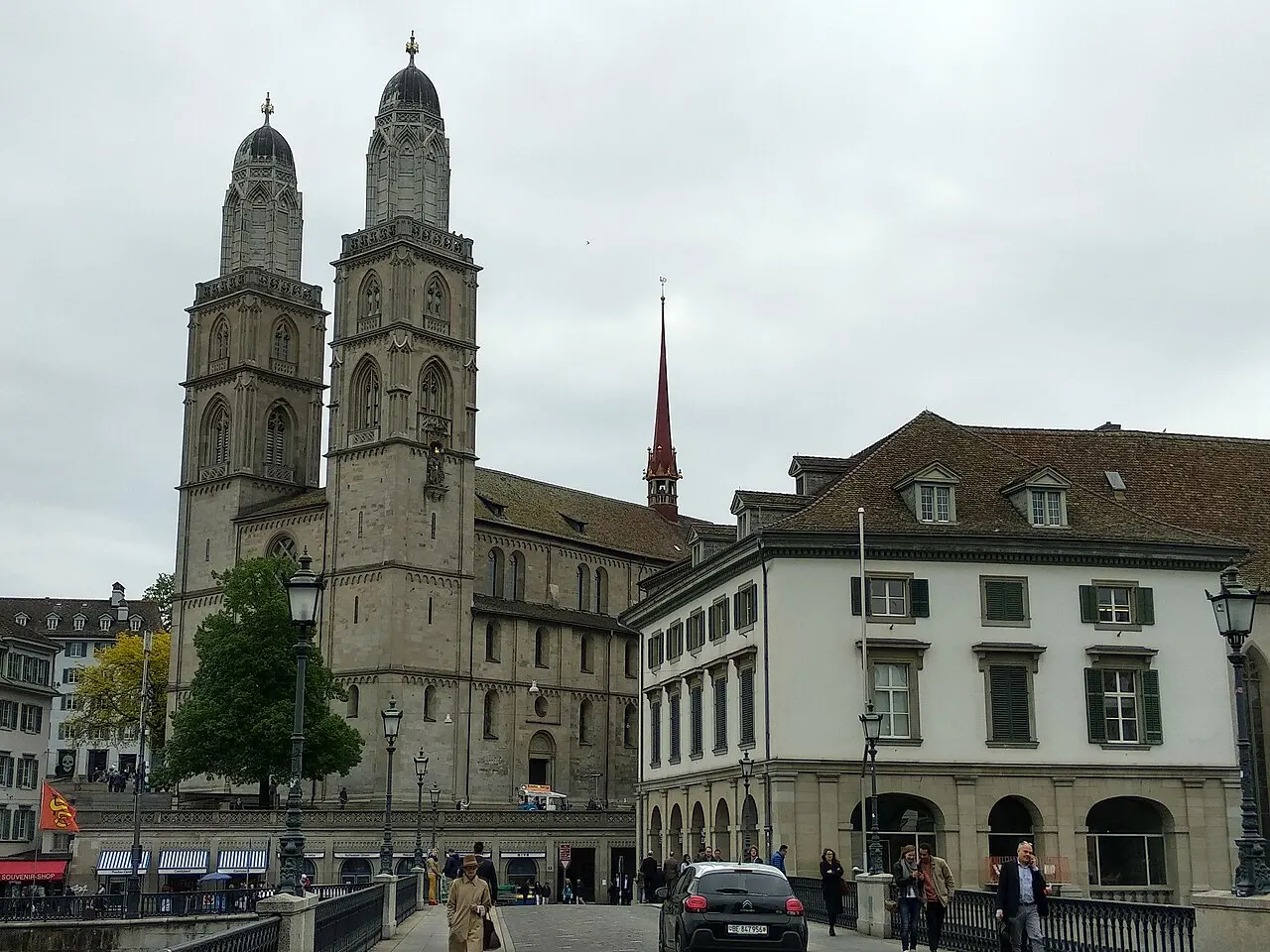
Grossmünster
A Romanesque twin-towered church begun around 1100 over the supposed tomb of patron saints Felix and Regula, where Zwingli preached from 1519. It has stained glass by Augusto Giacometti in the choir (1933), agate windows by Sigmar Polke (2009), and a climb up the Karlsturm's 187 steps for a view over the whole valley.
The Romanesque church was begun around 1100 over the supposed grave of Felix and Regula, and the climb up the Karlsturm, 187 steps, has a view over the whole valley.
Check access
Kunsthaus Zürich
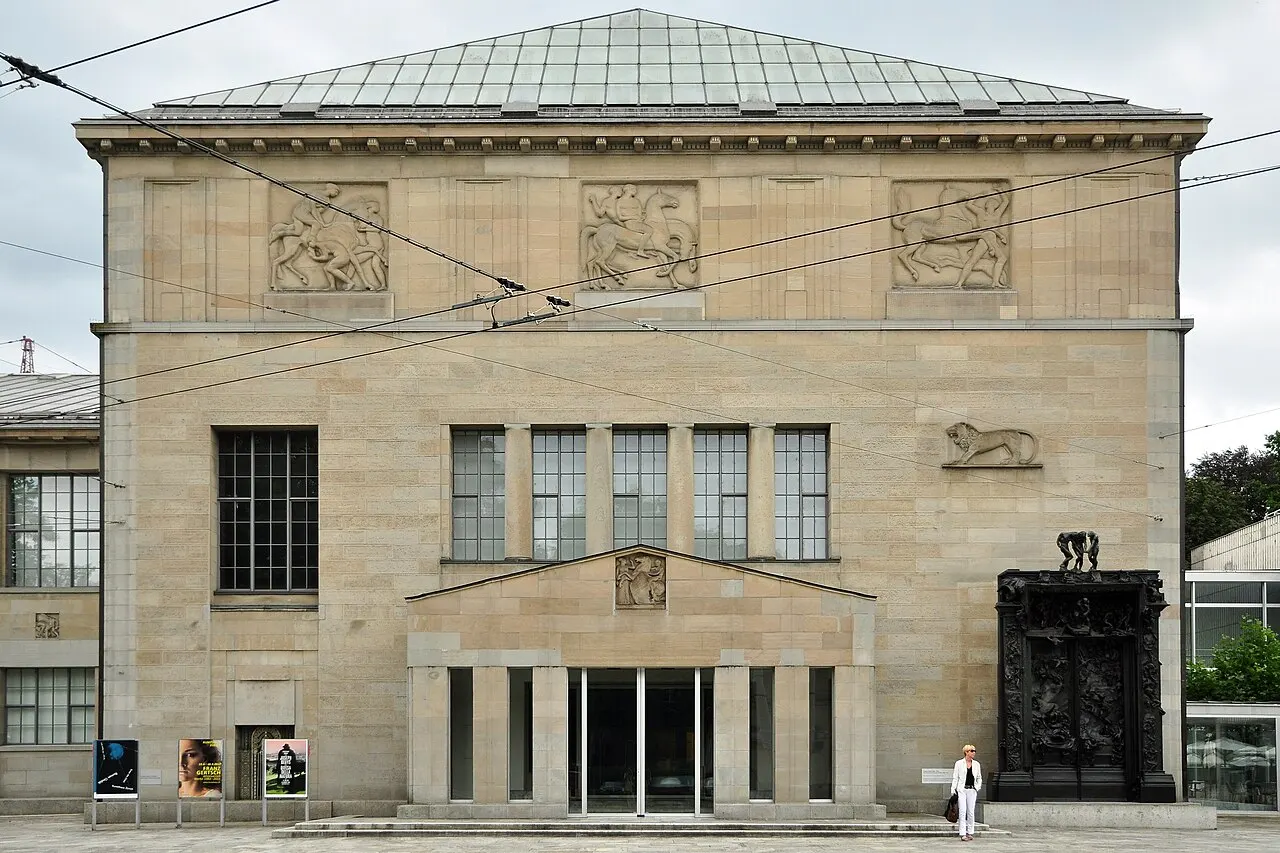
Switzerland's largest art museum since David Chipperfield's wing opened in October 2021, next to Karl Moser's 1910 building. It holds the largest Munch collection outside Norway, rooms of Giacometti and Hodler, and the Bührle collection, whose provenance (weapons sold in WWII, works from Jewish owners) has been publicly disputed since 2021. Closed Mondays.
The David Chipperfield wing, in October 2021, made this the largest art museum in Switzerland, and the largest Munch collection outside Norway sits alongside the Bührle collection, the subject of public dispute.
Check access
Swiss National Museum (Landesmuseum)
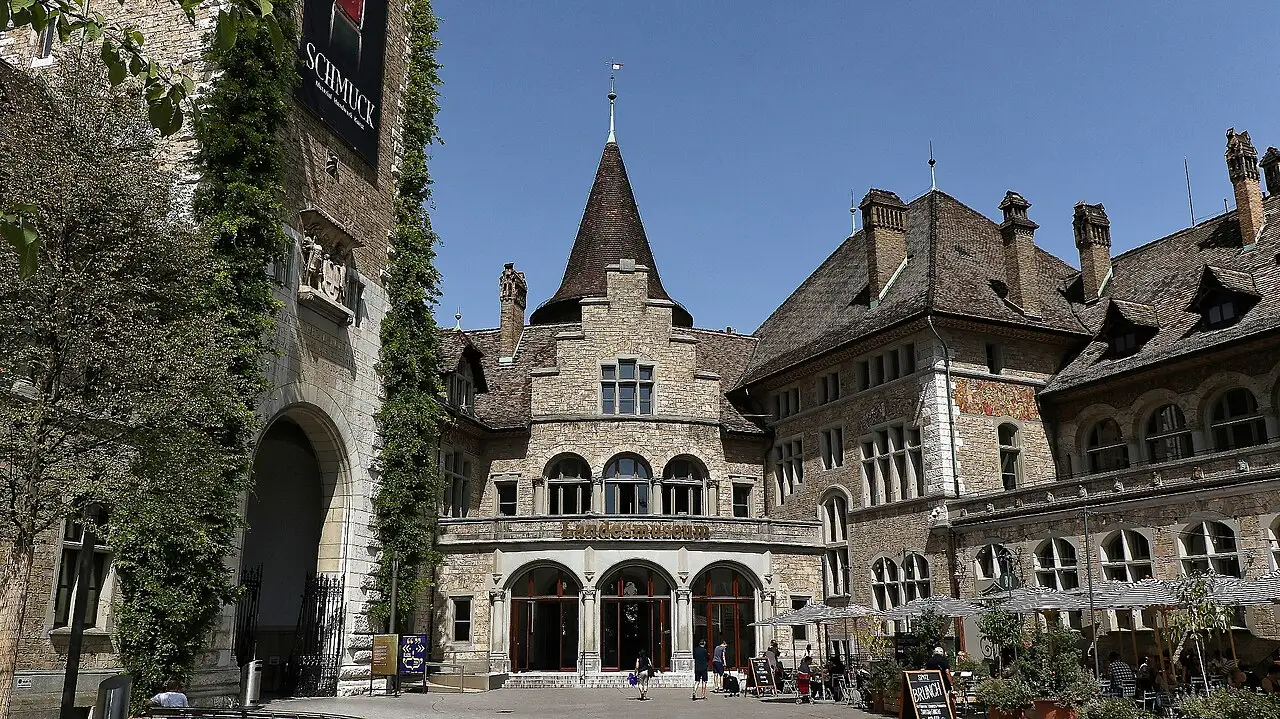
A historicist castle by Gustav Gull opened in 1898 behind the station, extended in 2016 by a curved concrete wing by Christ & Gantenbein. It holds the country's material history, from flint weapons and Gothic altarpieces to models of the Alpine railways, and is the best first stop for understanding why Switzerland is the way it is.
Check access
Zürich West: Viadukt, Prime Tower and Frau Gerolds Garten
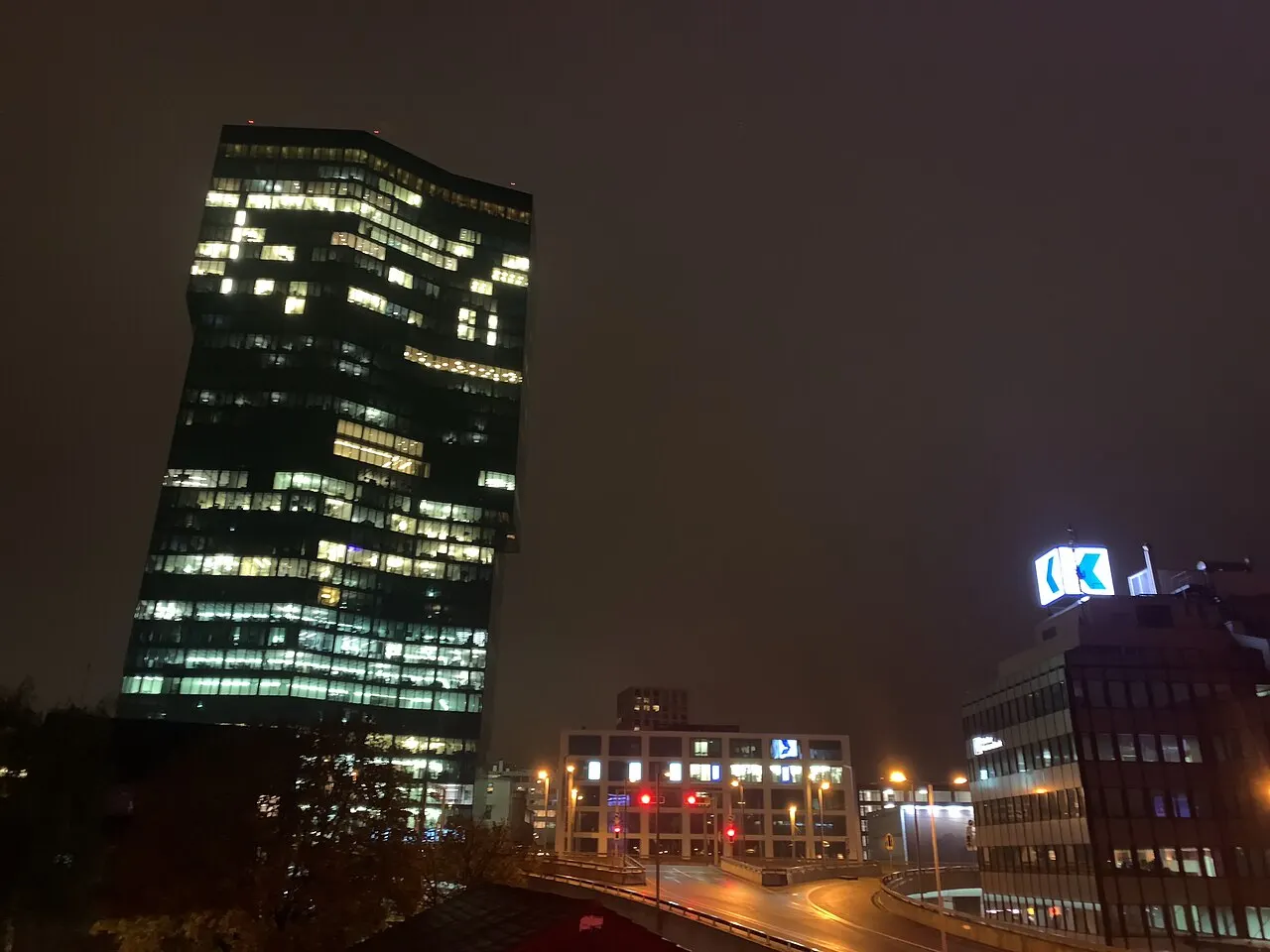
The former factory district holds the city's recent architecture: the 126 m Prime Tower (Gigon/Guyer, 2011), the 36 arches of the 1894 rail viaduct converted into shops and a market in 2010, the container courtyard of Frau Gerolds Garten, and the Freitag flagship tower, made of 17 stacked shipping containers in 2006, where recycled truck-tarp bags are sold.
The old industrial zone shows new construction in the Prime Tower, which has reached 126 m since 2011, and in the Freitag store-tower, made of 17 stacked containers in 2006, selling bags made of truck tarpaulin.
Check access
Bahnhofstrasse and Paradeplatz
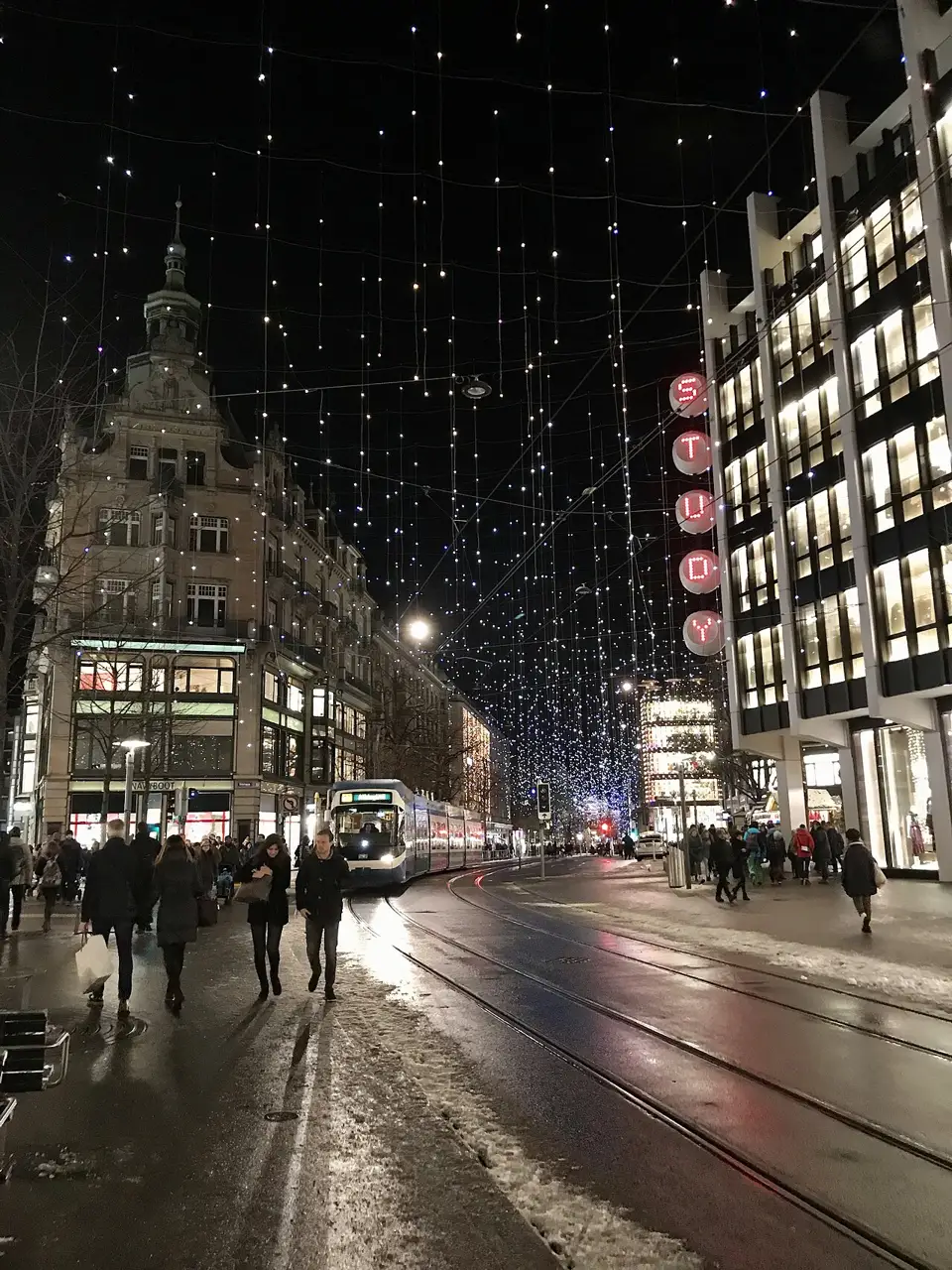
A 1.4 km avenue opened in 1867 over the filled-in Fröschengraben moat, linking the Hauptbahnhof to the lake. On the Paradeplatz, once a pig market, stand the UBS headquarters, the building of the defunct Credit Suisse, and the Sprüngli confectionery, at the same address since 1859; trams pass every minute and vaults beneath the street hold part of the country's gold reserves.
There's still something for those not shopping: the 1.4 km of Bahnhofstrasse between the station and the lake is a showcase of expensive stores, which close on Sundays under cantonal law. What history the street holds fits into Paradeplatz, with UBS headquarters, the building of the defunct Credit Suisse, and the Sprüngli confectionery, at the same address since 1859.
Check access
Nilo’s itinerary
Start with the basic programme and choose extensions for the time you have.
Plan my days in the app ↗Day 1 · The two banks of the Limmat
Start at 9am at the Lindenhof, the building-free terrace 25 m above the river where the Roman fort and the Carolingian palace once stood; free entry and the best view of the right bank.
Go into the Fraumünster to see the five choir windows by Marc Chagall (1970) and the 1945 window by Giacometti; admission is around CHF 5, and it's closed during services. Then cross the Münsterbrücke to the Grossmünster and climb the Karlsturm's 187 steps.
Have the Mittagsmenü, the dish of the day, for lunch in the Niederdorf or near the Rathaus.
Walk the full Bahnhofstrasse, 1.4 km from the station to the Bürkliplatz, stopping at the Paradeplatz and picking up a box of Luxemburgerli at Sprüngli, number 21.
End the afternoon on the water, on the short ZSG boat loop leaving from the Bürkliplatz, about 1 hour 30 minutes, or with a swim at Seebad Enge for about CHF 8, open May to September.



If you stay longer
Day 2 · Museums, the industrial west and the home mountain
Arrive at 10am at the Swiss National Museum, behind the station: an 1898 historicist castle plus a 2016 concrete wing by Christ & Gantenbein; allow two hours for the country's material history.
Have lunch in Zürich West, under the 36 arches of the 1894 viaduct converted into a market, or in the container courtyard of Frau Gerolds Garten, and stop by the Freitag flagship tower, stacked in 2006.
Visit the Kunsthaus in the afternoon, in Karl Moser's 1910 building and David Chipperfield's extension, opened October 2021, with the largest Munch collection outside Norway; it closes Mondays.
Take the S10 train to Uetliberg (about 20 minutes) and walk 10 minutes to the top, at 871 m; if there's time left, follow the Planetenweg to Felsenegg (about 2 hours) and take the cable car down to Adliswil, returning by S-Bahn.
Have Zürcher Geschnetzeltes with Rösti for dinner at a guild house on the Limmatquai, for CHF 35 to 55.


Food
 AI illustration
Zürcher Geschnetzeltes
Strips of veal, in the old recipe also kidney and liver, sautéed in butter with mushrooms, white wine and cream, served with Rösti. It's the dish that carries the city's name on any menu in German-speaking Switzerland, costs between CHF 35 and 55 at a guild house, and has appeared in cookbooks since the 1940s.
 AI illustration
Rösti
Grated potato pressed and fried in butter until it forms a crust, served as a side or, topped with egg and cheese, as a full dish. The linguistic border between German- and French-speaking Switzerland is called the Röstigraben, “the Rösti ditch,” which shows how seriously the subject is taken.
 AI illustration
Eglifilet
Small fillets of lake perch, dredged in flour and fried, served with tartar sauce and potatoes. It's worth asking whether the fish is “us em Zürisee”: much of what's sold under that name comes from elsewhere, and lakeside restaurants often state the origin on the menu.
 AI illustration
Bratwurst mit Bürli
A grilled white veal sausage served with a hard-crusted roll and strong counter mustard, no ketchup: asking for ketchup is the classic tourist mistake. Costs CHF 9–12 at street stalls and at the Sternen Grill on Bellevue, which has served this combination since 1963.
 AI illustration
Fondue and raclette
Winter food, generally served from September to April: fondue moitié-moitié mixes Gruyère and Vacherin fribourgeois with white wine and kirsch; raclette is melted cheese scraped over potatoes, pickles and pickled onions. CHF 28 to 40 per person; drink black tea or white wine with it, never cold water.
 AI illustration
Luxemburgerli
Two coin-sized almond meringue shells with a cream filling, created at the Confiserie Sprüngli starting in 1957 by a Luxembourgish pastry chef, Camille Studer. Sold by the piece or by weight at Bahnhofstrasse 21, they last 24 hours and are the city's most specific edible souvenir.
 AI illustration
Tirggel
A flour-and-honey cookie, thin and hard as cardboard, pressed in a carved wooden mold. It has been a documented specialty in Zurich since the 15th century and reappears in bakeries between November and Christmas.
 AI illustration
Bircher Müesli
Oats soaked overnight with condensed milk, lemon, grated apple and nuts, created around 1900 by physician Maximilian Bircher-Benner at his sanatorium on the Zürichberg as a therapeutic diet. It appears on breakfast menus at any bakery and shouldn't be confused with crunchy granola.
Day trips

Lucerne
Lucerne is reached by direct train from the Hauptbahnhof, 45–50 minutes, two departures an hour, about CHF 26 one way. It sits at the tip of a many-armed lake, with the wooden Kapellbrücke covered bridge from 1365 and the Museggmauer wall; from here run the Pilatus and Rigi cog railways, the latter Europe's first, from 1871.

The Rhine Falls (Rheinfall)
50 to 60 minutes by train to Schaffhausen or Neuhausen Rheinfall, changing at Winterthur. It's the highest-volume waterfall in Europe: 150 m wide, 23 m tall and about 600 m³/s during the summer thaw, with walkways on the central rock and a boat out to the middle crag.

Rapperswil and the lake
Rapperswil is 35 minutes away on the S7 or S5 train, or about 2 hours by boat across the whole lake. It has a 13th-century castle of the counts of Rapperswil, rose gardens on the wall, and an 841 m wooden footbridge over the shallow end of the lake to Hurden, rebuilt in 2001 over a crossing used since the Bronze Age.
Where to begin
The two banks of the Limmat
Start at 9am at the Lindenhof, the building-free terrace 25 m above the river where the Roman fort and the Carolingian palace once stood; free entry and the best view of the right bank.
Museums, the industrial west and the home mountain
Arrive at 10am at the Swiss National Museum, behind the station: an 1898 historicist castle plus a 2016 concrete wing by Christ & Gantenbein; allow two hours for the country's material history.
Money
The currency is the Swiss franc (CHF), with coins of 5, 10, and 20 centimes and of half, 1, 2, and 5 francs, and bills from 10 to 1,000. In 2026 the franc trades almost at par with the euro (about CHF 0.93 per €). Cards are accepted practically everywhere, but the locals' payment method is Twint, a QR app linked to a Swiss bank account, and it's good to carry a few bills for markets and stalls. 2026 price ranges: espresso CHF 4.50–6; a 3 dl beer CHF 6–8 and a half-liter CHF 8–11; bakery sandwich CHF 6–9; lunch set menu (Mittagsmenü) CHF 22–30; dinner main course CHF 30–50; ready-made supermarket meal CHF 10–15; hostel bed CHF 45–70; three-star hotel for two CHF 200–320, mid-range category CHF 300–450. Tipping isn't mandatory since service became included by law, in 1974: round up or leave 5% when the service is good. VAT has been 8.1% since January 1, 2024, with refunds possible for non-residents on purchases above CHF 300 at the same store on the same day. Hotels usually add a lodging tax of around CHF 3.50 per person per night separately, which goes back into local tourism. Tap water is drinkable throughout the city, including at the roughly 1,200 public street fountains; at a restaurant, ask for “Hahnenwasser,” but know that many places charge CHF 3–5 for the pitcher, and the charge is allowed.
From the airport to the center
Guide estimate
Scroll to compare all columns
| Route | Time | Price |
|---|---|---|
| ZRH → Hauptbahnhof · train from the station under the terminal | 10–13 min | about CHF 7, two-zone ticket |
| ZRH → north of the city · tram 10 | about 40 min | check locally |
| ZRH → center · taxi | 20–35 min | CHF 60–80 |
Getting there and around
Airport: 13 km, with a station under the terminal
Zurich Airport (ZRH), in Kloten, sits 13 km north of the center and has a train station under the terminal: it's 10 to 13 minutes to the Hauptbahnhof, with departures every few minutes, for about CHF 7 on a two-zone ticket. Tram 10 covers the same route in about 40 minutes and serves the north of the city. A taxi costs CHF 60–80 and takes 20 to 35 minutes depending on traffic, and Uber operates normally. The Hauptbahnhof is the country's rail hub: Lucerne is 45–50 minutes away, Bern 56 min, Basel 53 min, and Milan about 3 hours 20 minutes, and the station has luggage storage, a supermarket, and shops open on Sundays, which in Switzerland is a rare exception.
Trams: 15 lines, the 1990 S-Bahn and the funiculars
Within the city everything runs on ZVV: 15 tram lines, dozens of bus and trolleybus lines, the regional S-Bahn created in 1990, the Polybahn funicular (1889, from Central to ETH in two minutes), the Rigiblick and Dolder funiculars, and the ZSG boats on the lake, all on the same ticket system. The whole city is zone 110, which counts double for fare purposes: a single ticket costs CHF 4.60 and is valid for 1 hour, the short-distance ticket (Kurzstrecke) costs CHF 2.80, and the 24-hour pass (1–2 zones) costs CHF 9.20; on December 13, 2026 they rise to CHF 4.70, CHF 2.80 (no change) and CHF 9.40. Buy tickets on the ZVV app or at the platform machine: there's no on-board sale, and anyone caught without a ticket pays a hefty penalty, no tourist excuse accepted. The Zürich Card (24-hour about CHF 32, 72-hour about CHF 64) bundles transport, museums and discounts. The historic center can be crossed on foot in 20 minutes, there are PubliBike public bicycles and electric scooters with strictly enforced parking rules, and on Friday and Saturday nights a night network runs, with a CHF 5 surcharge.
Safety
Look after your wallet and phone at Hauptbahnhof, on crowded trams and at large events such as the Street Parade. Lock your bicycle to something fixed with a good lock. On Langstrasse, in Kreis 4, nightlife mixes bars, legal prostitution and alcohol; harassment and confrontations can occur. Avoid arguments, check prices before ordering drinks and use public transportation or a taxi if a route feels uncomfortable. At night, choose well-lit, busy streets over shortcuts through empty parks. At Oberer Letten, the current requires experienced swimmers; children are not allowed. Check conditions and exits with staff, obey the red flag and do not swim after drinking. On the lake, stay in permitted areas and away from boat routes. Emergency numbers: 112 general, 117 police, 144 ambulance, 118 fire department. Medical care can be expensive; carry insurance covering your planned activities.
Etiquette tips
Punctuality is literal
There's no such thing as a “fifteen-minute grace period”: you arrive at the agreed minute, and being ten minutes late to dinner requires a message beforehand. Tram schedules are kept to the minute, and people plan three-minute connections counting on it.
Say Grüezi on the way in
People greet each other on entering a shop, an elevator, a waiting room, or sitting down in an empty train car: “Grüezi” for one person, “Grüezi mitenand” for a group, and “Merci, adiö” or “Tschüss” on the way out. Between acquaintances it's three cheek kisses, starting on the right; with strangers, a handshake.
Noise has a schedule
Municipal regulations and building house rules protect quiet hours from 10pm to 7am and all of Sunday: no drilling, vacuuming, washing machines or loud music, and it's forbidden to drop glass into recycling bins during those hours. In many buildings there's also an informal agreement not to shower after 10pm.
Trash goes in the official bag
Household trash is only collected inside the Züri-Sack, the city's taxed blue bag (from 10 to 110 liters; the built-in tax runs from CHF 1.30 for the 35-liter bag to CHF 4.07 for the 110-liter one, and the store charges a bit more), sold at supermarkets and kiosks. Using another bag earns a fine starting at CHF 100, and enforcement officers open the bag looking for an envelope with the offender's name.
You don't cross on red
Even with no car in sight, pedestrians wait for the signal, and crossing on red in front of children draws reprimands from strangers. Nor do you walk in the bike lane: it's a separate lane, and whoever is riding it won't swerve.
The bill splits without drama
The waiter asks “zusammen oder getrennt?” and splitting per person is the norm, even on dates. You don't ask how much someone earns or how much they pay in rent: money is a private matter, even in the city that lives off it.
Mistakes to avoid
The federal capital has been Bern since 1848
Thinking Zurich is the capital of Switzerland. It's a common mistake: the federal capital has been Bern since 1848. Zurich is the largest city and the financial center, but the government, parliament and embassies sit 56 minutes away by train.
Boarding the tram to buy a ticket on board
Thinking you can buy a ticket once you're on board, as in so many other cities. In Zurich there's no on-board sale and no turnstile, and checks are random. Anyone caught without a ticket pays a hefty fine, and it goes on your record.
Shopping on Sunday, which the law shuts down
Planning shopping for Sunday. Cantonal law closes stores that day, and only the shops at the Hauptbahnhof and the airport stay open.
Twelve hundred fountains run drinking water
Buying bottled water all the time. The roughly 1,200 public fountains run drinkable water nonstop and are there for refilling a bottle; just avoid the few marked “kein Trinkwasser.”
Züritüütsch isn't “broken German”
Speaking standard German and being puzzled by the reply. Among themselves residents speak Züritüütsch, an Alemannic dialect that isn't “broken German” and isn't written in official documents. Anyone will switch to standard German or English if you ask, but the request has to come from you.
Useful phrases
Grüezi / Grüezi mitenand
Hello (for one person / for a group): the standard greeting on entering any place
Merci vilmal
Thank you very much (the French “merci” entered the dialect and is used constantly)
Excusi
Excuse me / sorry: used to ask someone to move aside and to apologize
Chan i zahle, bitte?
The check, please: asked of the waiter, who brings the card machine to the table
Es Stange, bitte
A 3 dl glass of beer, please (the Stange is the standard bar-counter measure)
Uf Widerluege / Adiö
See you / bye: said on the way out of a shop, even without buying anything
Districts
Kreis 1: Altstadt
Both banks of the river, squeezed between two hills, hold Romanesque churches and the old guild houses.
Niederdorf and Oberdorf
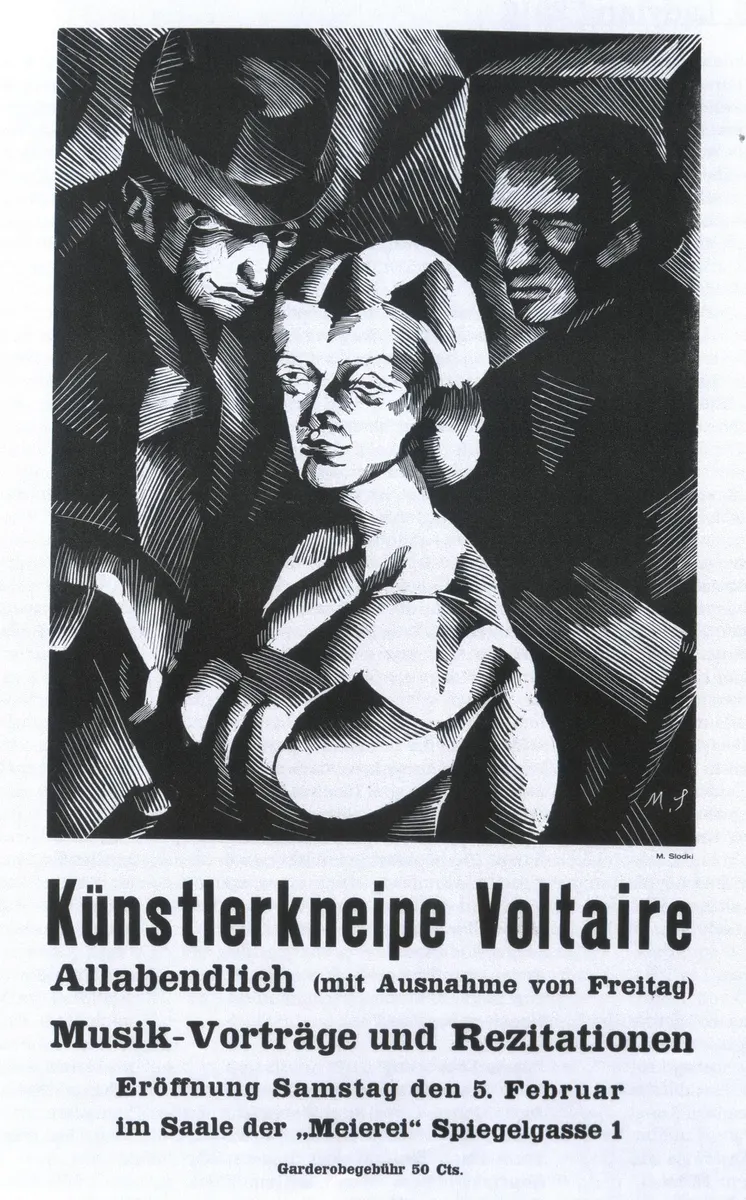
The strip of pedestrian lanes on the right bank, within Kreis 1, between Central and the Grossmünster. It's the city's oldest bar-and-restaurant street, pricey and touristy by day, lively into the night on weekends; on the Spiegelgasse stand the Cabaret Voltaire and the building where Lenin lived.
Kreis 4: Aussersihl and Langstrasse
A working-class immigrant district since 1900, with a legal red-light zone around the Langstrasse. Today it's Switzerland's densest concentration of bars and clubs, with Portuguese and Turkish taverns on the same block as natural-wine bars, and the Bäckeranlage as the neighborhood's backyard.
Kreis 5: Industriequartier / Zürich West
Zürich West, the former factory district in Kreis 5, suits visitors who like recent architecture and nightlife. It holds the 126 m Prime Tower, the city’s tallest tower, Schiffbau, a theater inside a former shipyard, the Viadukt arches converted into shops and the ZHdK arts school in an industrial building at Toni-Areal.
Kreis 8: Seefeld and Riesbach
The right bank of the lake, between Bellevue and the Zürichhorn: pricey 19th-century buildings, quiet cafés, the Opera, the Utoquai public bath and the Chinese Garden, a gift from Kunming in 1994. It's where residents run, swim and stroll at dusk.
Kreis 2: Enge and Wollishofen
The left bank of the lake, with the Rieterpark and the Rietberg Museum up top, the Strandbad Mythenquai down on the water, and the Rote Fabrik, a self-run cultural center since 1980, at the southern end. Residential, tree-lined and cheaper than Seefeld, though that doesn't mean cheap here.
Kreis 6: Oberstrass and Fluntern
The Zürichberg slope occupied by the University of Zurich, ETH and the University Hospital. Student-filled and family-friendly, with Irchel Park, the Fluntern cemetery where Joyce and Canetti are buried, and the zoo at the highest point.
Kreis 11: Oerlikon and Seebach
On the other side of the Zürichberg, a second hub born from the machine industry and now full of new towers, offices and schools. Home to the MFO-Park, a vertical trellis garden (1999–2002), the indoor velodrome, and the city's least absurd rents.
History
around 15 BC · Turicum, the Roman toll post
The Romans set up a customs station on the Lindenhof hill, where the Limmat leaves the lake, to tax goods in transit. A gravestone from around AD 200, found in 1747, bears the inscription STA(tio) TUR(i)CEN(sis): the first written mention of the city's name.

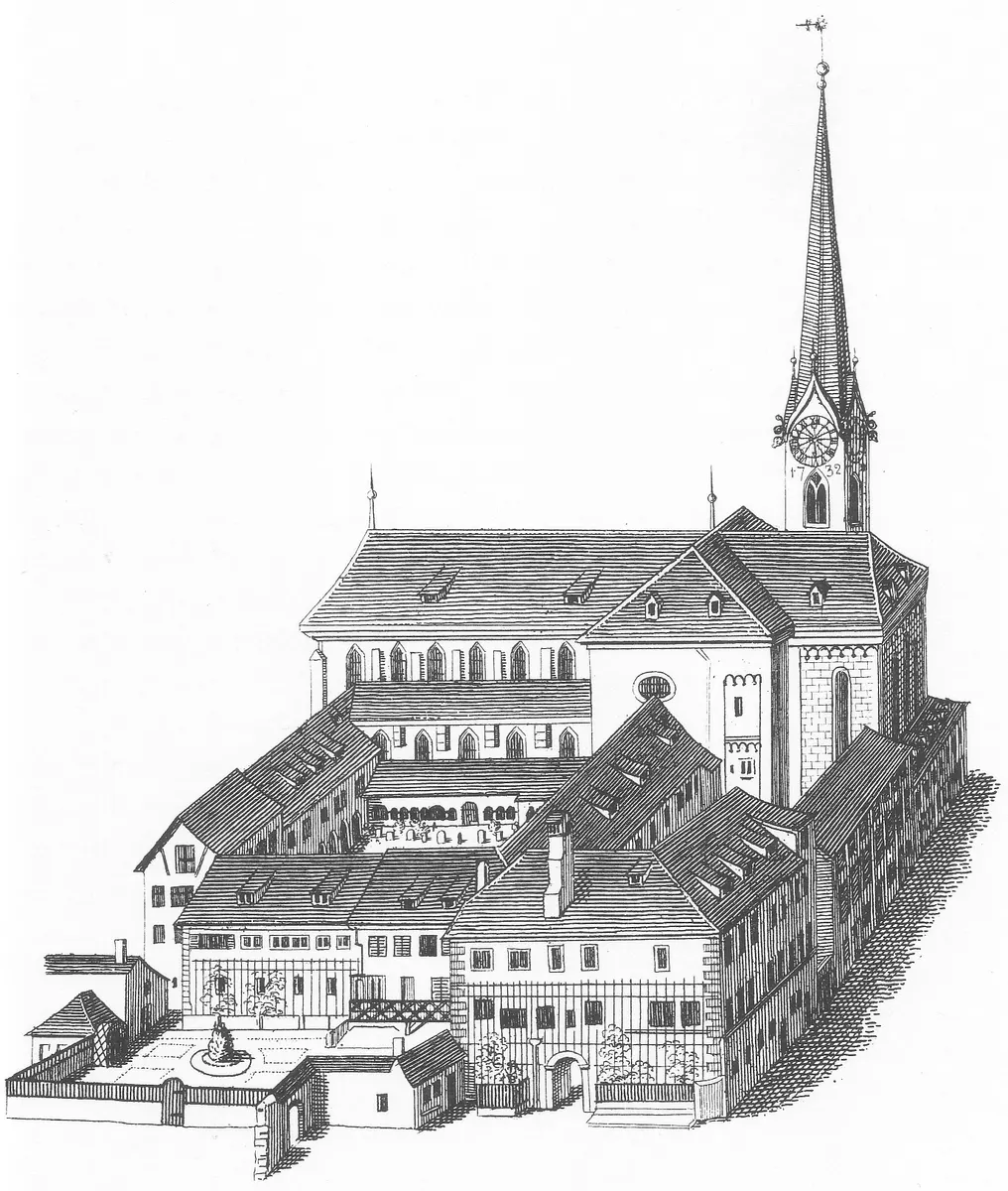
853 · The Fraumünster abbey
Louis the German founds a convent for his daughter Hildegard and grants her lands, market rights, minting rights and the right to levy tolls. For four centuries the abbess runs Zurich.
1218 · Free imperial city
When Berthold V of Zähringen dies without heirs, Frederick II confirms the city's status as a Reichsstadt: it answers to no local lord, only to the emperor. This is the start of self-government.
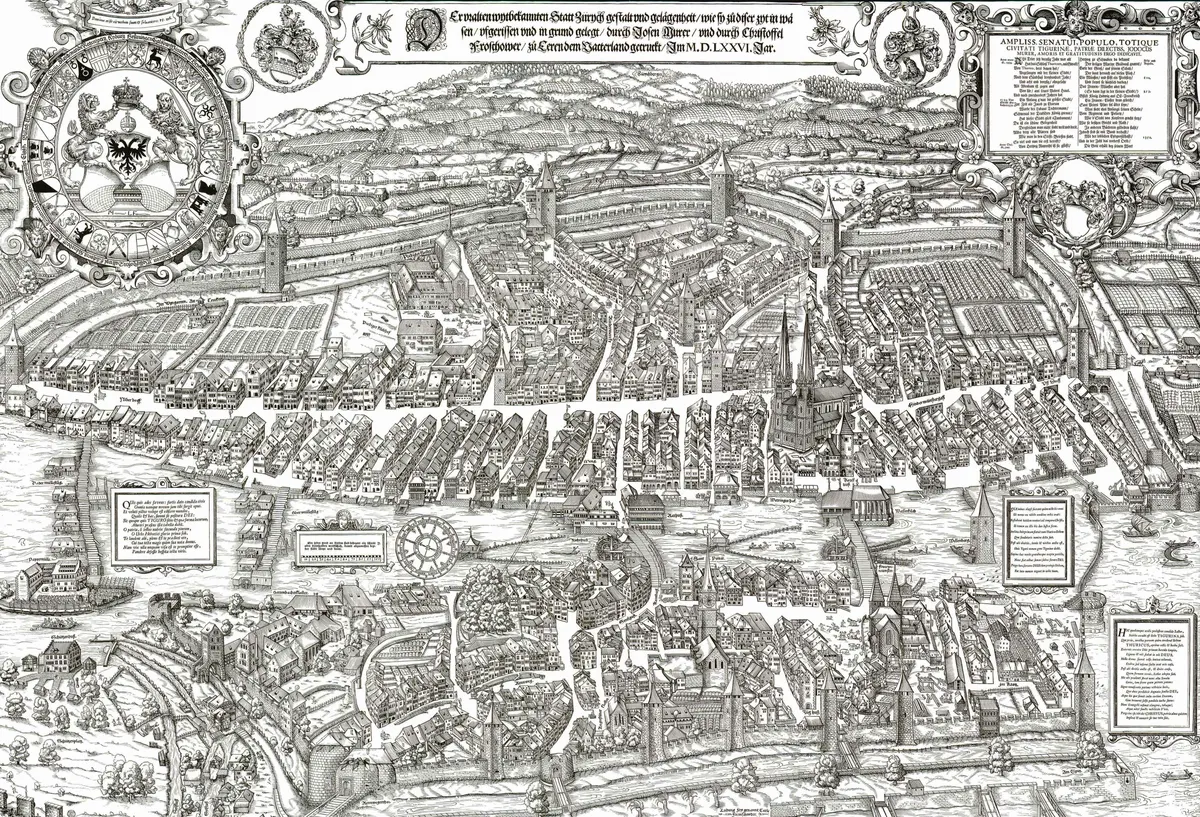
1336 · The guild revolution
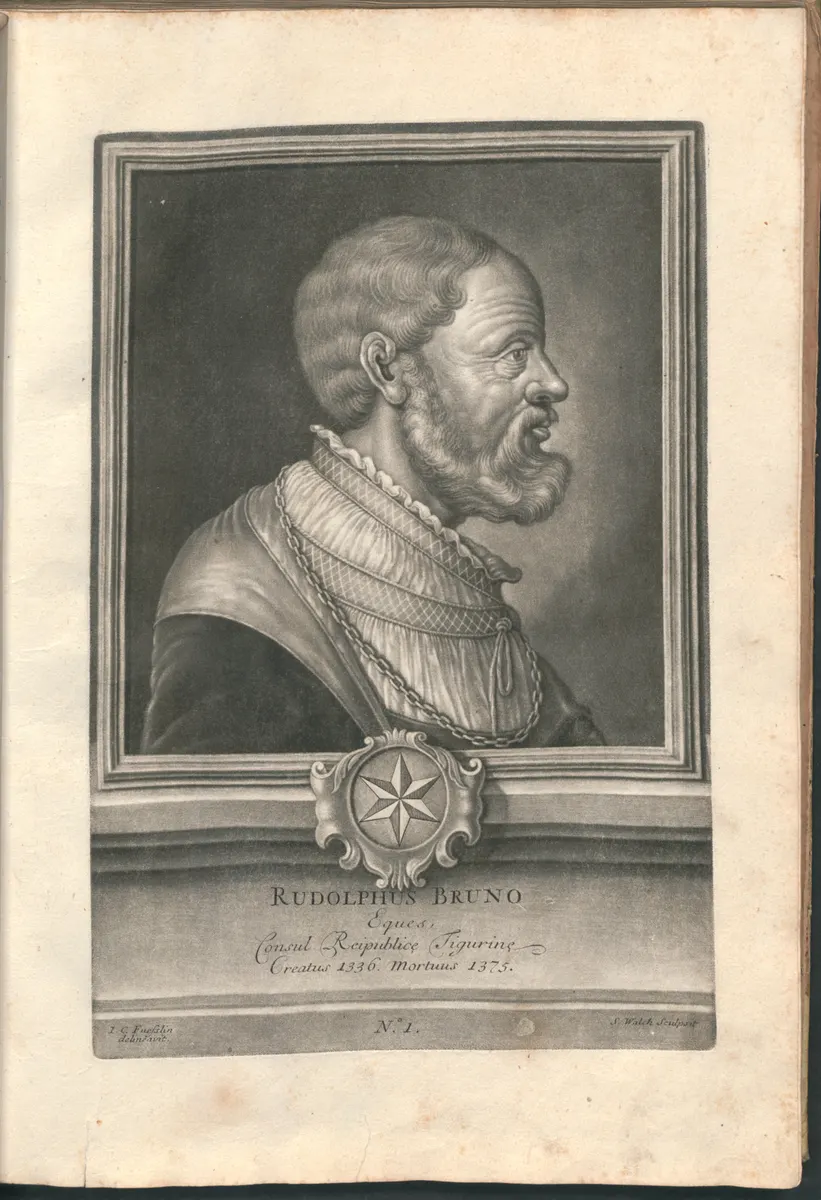
Rudolf Brun overthrows the patrician council and imposes the first guild constitution, in which thirteen craft guilds share the city council with the nobility. Brun becomes the first mayor (Bürgermeister), and the guilds begin choosing who governs.
1351 · Joining the Confederation
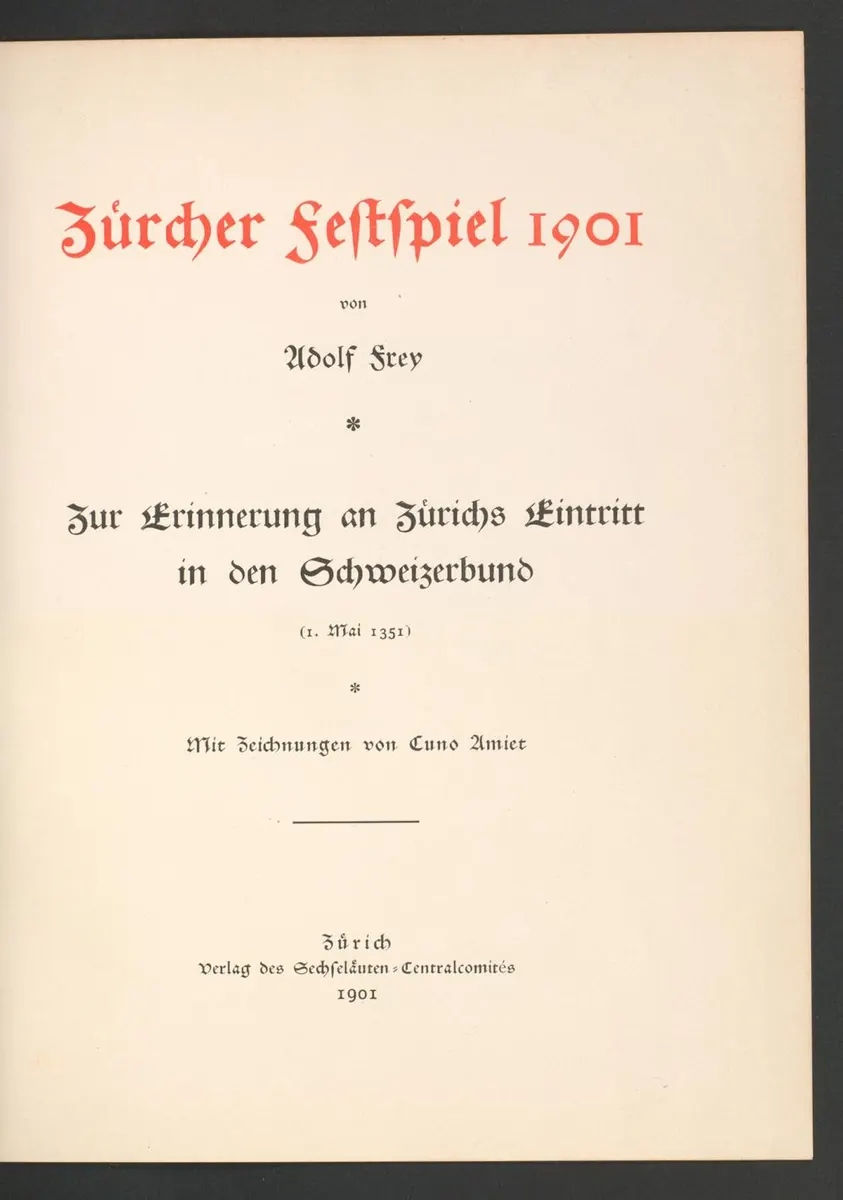
Zurich joins the Eidgenossenschaft as its fifth member, seeking protection against the Habsburgs. A century later it falls out with its fellow confederates in the Old Zurich War (1440–1446), loses, and returns humbled to the alliance.
1519–1531 · Zwingli and the Reformation
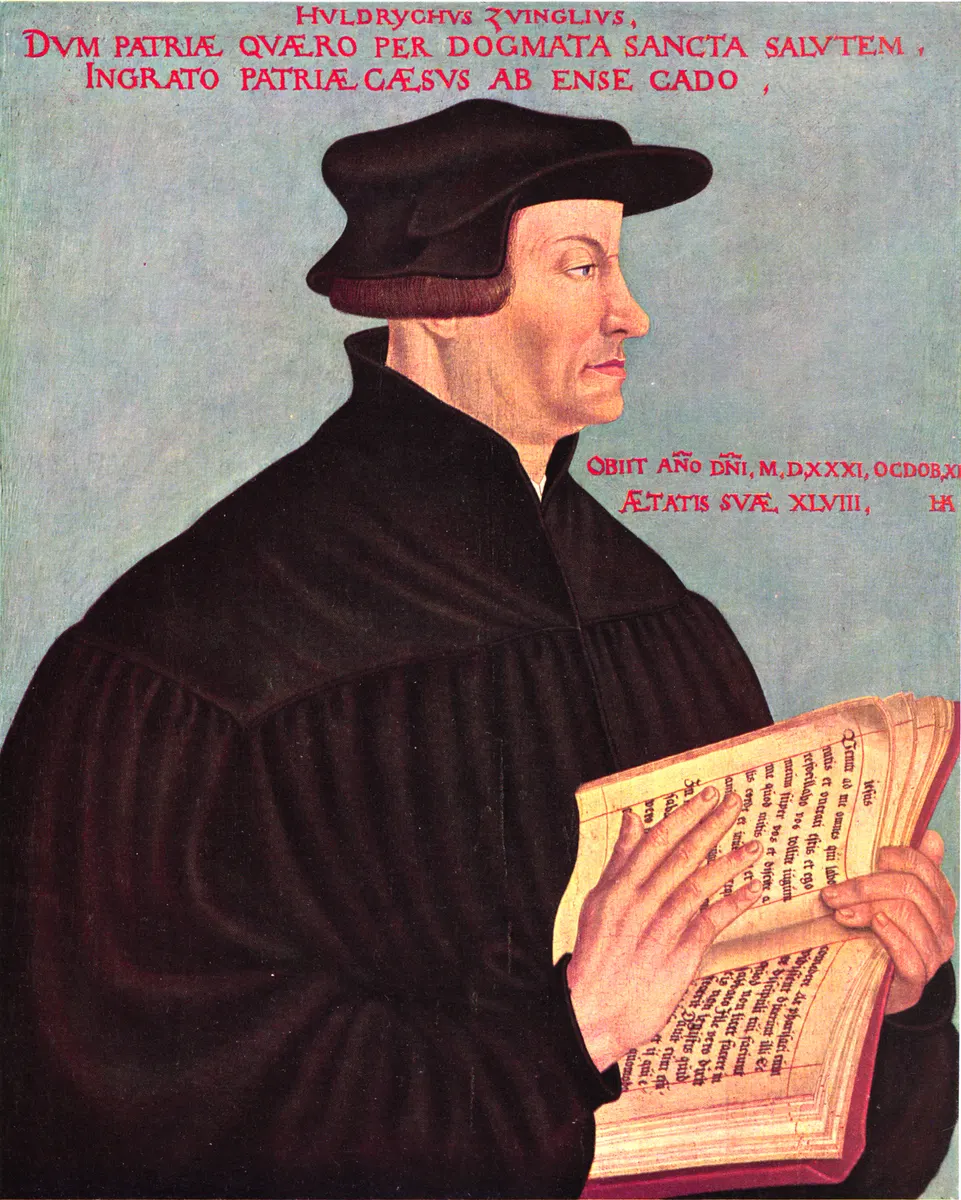
Huldrych Zwingli takes the pulpit at the Grossmünster on January 1, 1519, and makes the city the second capital of the Reformation, alongside Geneva. Images leave the churches in 1524, the organs are dismantled and singing disappears from worship for generations; Zwingli dies in battle at Kappel in 1531.
1798–1833 · The end of guild rule
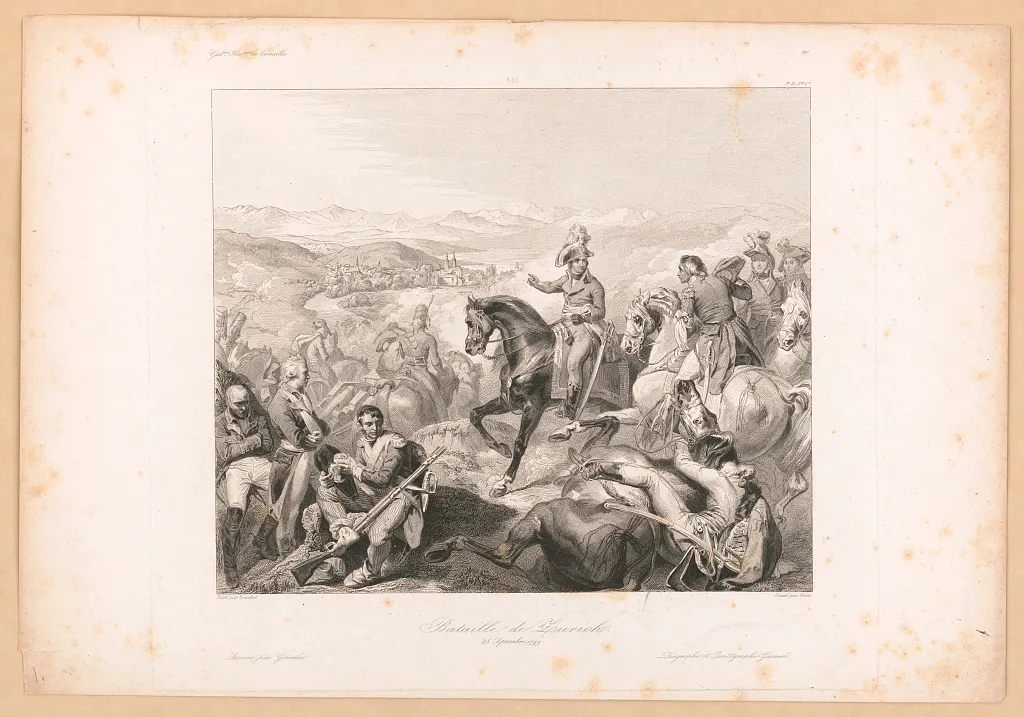
French troops occupy the city in 1798, and the Helvetic Republic abolishes the city's privilege over the countryside; the two Battles of Zurich, in 1799, devastate the surrounding area. The city regains part of that control in the following years, the liberal cantonal constitution of 1831 ends it for good, and in 1833 the walls begin to come down.
1855–1882 · Alfred Escher and the money
Politician and businessman Alfred Escher founds the Federal Polytechnic (today ETH) in 1855 and the Schweizerische Kreditanstalt, the future Credit Suisse, in 1856, to finance his own railways and the Gotthard tunnel, opened in 1882. The Bahnhofstrasse opens in 1867 over the filled-in Fröschengraben moat.

1893 and 1934 · The annexations that made the city
Zurich absorbs eleven neighboring municipalities in 1893 and eight more in 1934, jumping from a mid-sized city to the country's largest. That's why district numbers 1 to 12 follow the order of annexation, in a spiral, not geography.

1916 · Dada is born on the Spiegelgasse
On February 5, 1916, refugees from the First World War open the Cabaret Voltaire at Spiegelgasse 1 and invent Dadaism within a few weeks. Lenin lived fifty meters away, at number 14, until leaving for Russia in April 1917.
1980–2023 · Protests, drug policy and changes in banking
In 1980, the protests known as the Opernhauskrawalle opened a dispute over space for youth culture. The open drug scene at Platzspitz was closed in 1992; the concentration that later formed at Letten, in 1995. The response combined prevention, treatment, harm reduction and enforcement, with municipal, cantonal and federal participation.
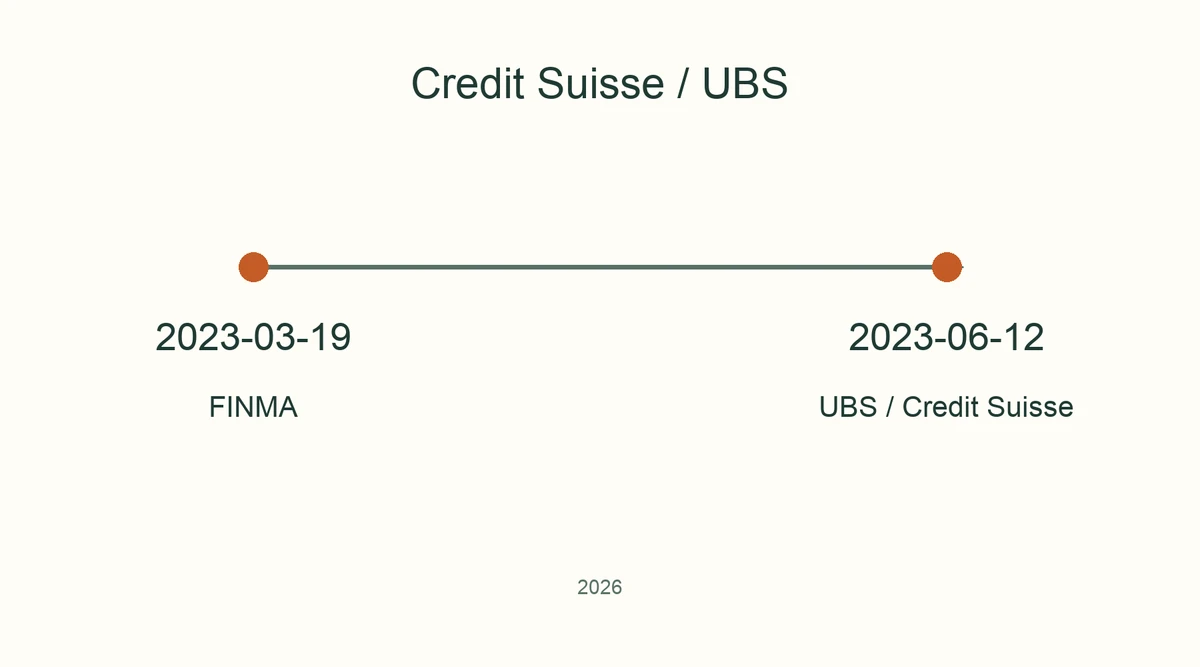
On 19 March 2023, FINMA approved the acquisition of Credit Suisse by UBS. The transaction between the groups was legally completed on 12 June; integration of the businesses continued afterwards.
Complete history
From Roman customs at Turicum to the guilds of 1336
Around 15 BC, the Romans set up a customs station called Turicum atop the Lindenhof, where the Limmat leaves the lake and goods had to change boats, and around AD 370 built a fort there against the Alamanni. In 853, Louis the German gave the Fraumünster convent to his daughter Hildegard, with land, market, minting and toll rights; for four centuries, the abbess was the city’s civil authority, while the Grossmünster occupied the opposite riverbank. In 1218, with the extinction of the House of Zähringen, Zurich became a free imperial city, answering only to the emperor, and began governing itself. In 1336, Rudolf Brun’s uprising toppled the council of patrician families and imposed a guild constitution, in which thirteen craft guilds shared council seats with the nobility. Fifteen years later, in 1351, Zurich joined the Confederation as its fifth member. The guild houses still line Limmatquai, and several now operate as restaurants serving Zürcher Geschnetzeltes with Rösti.
Zwingli and the Reformation of 1519
The Protestant Reformation changed the city from top to bottom. Zwingli took the pulpit at the Grossmünster on January 1, 1519, and within five years stripped the images from the churches, dismantled the organs, abolished fasting, closed the convents, and turned Church property into schools and poor relief. The result was a moralist republic, frugal in gesture and obsessed with regulation: sumptuary laws limited the luxury of clothing and parties into the 18th century. Guild rule grew ever more oligarchic until 1798, when the French came in and the Helvetic Republic abolished the city's privilege over the countryside; the two Battles of Zurich in 1799 devastated the surrounding area. In the following years the city regained part of that control, and only the liberal constitution of 1831 ended it for good, opening the way for the University of Zurich, founded in 1833, and for the walls to come down. The city became a refuge for German and Italian exiles, and among those who passed through were Georg Büchner, who died of typhus here in 1837, and Richard Wagner, a resident between 1849 and 1858.
Alfred Escher designed today's Zurich
Much of today's Zurich grew out of the enterprises of one man, Alfred Escher (1819–1882), politician and president of the cantonal parliament, who created the Nordostbahn in 1852, the Federal Polytechnic in 1855, the Schweizerische Kreditanstalt in 1856, and the Gotthard company in 1871: a railway to bring in cargo, a bank to finance the railway, an engineering school to build the railway. The Bahnhofstrasse opened in 1867 over the filled-in medieval moat, and the Hauptbahnhof, by Jakob Friedrich Wanner, was completed in 1871. By the time the world's money started looking for a vault (the federal banking secrecy law in 1934, the gold market after 1945) the vault was already built, with offices on the Paradeplatz. The 1893 and 1934 annexations doubled and redoubled the municipality; the heavy industry of Escher Wyss and Sulzer took over the western floodplain, and Italian, Spanish and later Yugoslav and Portuguese workers settled in Kreis 4 and Kreis 5.
Neutrality made it an address for exiles
In the 20th century Swiss neutrality made Zurich an address for people who couldn't be anywhere else. Lenin was writing on the Spiegelgasse while, fifty meters away, Hugo Ball and Tristan Tzara founded the Cabaret Voltaire on February 5, 1916; James Joyce spent the war years here writing Ulysses and is buried at Fluntern, next to Elias Canetti. After the war came money and boredom: in 1968, and especially in 1980, riots over cultural space broke out (the slogan was “Züri brännt”) which won the city the Rote Fabrik and a new cultural policy. In the 1980s and '90s, Platzspitz park, behind the National Museum, held the most visible open drug scene in Europe; the solution built after 1994, with consumption rooms and prescription heroin, became an international model and is the reason the city grew calm again.
New uses for the industrial city
In Zurich-West, former industrial spaces acquired different uses: theatre at the Schiffbau from 2000; shops and a market beneath the IM VIADUKT arches from 2010; the 126 m Prime Tower office building, completed in 2011; and the ZHdK arts campus in the former Toni-Areal dairy factory, occupied in 2014. In the centre, David Chipperfield’s Kunsthaus extension opened in October 2021 and doubled the museum’s gross floor area. Presentation of the Bührle collection as a long-term loan intensified debate over the origins of the works and their relationship to Nazi persecution.
The change in banking had distinct stages. On 19 March 2023, FINMA approved the acquisition of Credit Suisse by UBS in response to the crisis of confidence and liquidity. Legal completion between the groups took place on 12 June. Integration of the businesses began under the new structure and continued after that date.
Housing and climate also enter the city’s choices. The municipal count on 1 June 2025 recorded 235 vacant homes offered for sale or rent, a vacancy rate of 0.1%. This is a snapshot of one date, rather than the entire supply circulating during the year. In 2022, voters approved the target of net-zero direct emissions within the city’s territory by 2040; the target for indirect emissions is a 30% reduction per person from 1990 levels.
Joyce is buried in Fluntern, next to Canetti.
Geography and shape of the city
The valley, the lake and the two ridges
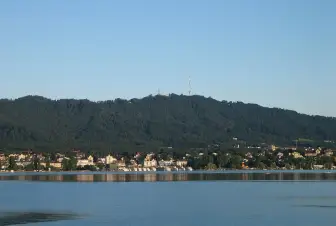
Zurich sits at the bottom of a glacial valley running from southeast to northwest, at the point where Lake Zurich (88 km², 40 km long, up to 136 m deep) drains into the Limmat at about 406 m altitude; the Sihl River enters beneath the Hauptbahnhof, whose platforms were built over it. Two forested moraine ridges close off the city: the Uetliberg and the Albis range to the west, 871 m at its highest point and served by its own train since 1875, and the Zürichberg with the Adlisberg to the east, about 700 m.
The two banks and the 12 districts
The urban grid follows this geometry: the medieval center squeezes both banks of the Limmat, the left bank holding the Lindenhof, Fraumünster, St. Peter's and the Bahnhofstrasse, the right bank holding the Grossmünster, the Niederdorf and the university slope, while 19th-century neighborhoods spread over terraces up the valley and the trams follow the flat ground. The 12 districts numbered in a spiral result from the 1893 and 1934 annexations, which explains why Kreis 11 lies at the far north and Kreis 2 in the south.
Bise, Föhn and the cloud lid
The climate is temperate oceanic with continental influence, about 1,100 mm of rain a year with a summer peak and afternoon thunderstorms; two winds run the local conversation: the Bise, cold and dry from the northeast, and the Föhn, warm from the south, which clears the sky and leaves half the city with a headache. From November to January the plateau sits under a low cloud lid (Hochnebel) between 600 and 800 m, and climbing the Uetliberg is the most direct way out of it.
The Chinese Garden, on the lake’s right bank, was a gift from the city of Kunming in 1994.
Culture

The city's culture came from refugees
Much of Zurich's culture originated with people who came here as refugees. In 1916 First World War refugees opened the Cabaret Voltaire and invented Dada; James Joyce wrote much of Ulysses here between 1915 and 1919 and is buried at Fluntern; Thomas Mann died in the city in 1955 and was buried in neighboring Kilchberg. Between 1933 and 1945 the Schauspielhaus was almost the only free German-language stage in Europe and premiered Brecht's Mother Courage (1941) and Life of Galileo (1943), with exiled actors. Local literature has two pillars: Gottfried Keller, who was cantonal chancellor in the 19th century and wrote Green Henry, and Max Frisch, born here in 1911, trained as an architect. The Letzigraben public pool, opened in 1949, is his work.
From the 1895 concert hall to the Street Parade
Musical life runs from the Tonhalle, an 1895 concert hall with acoustics ranked among Europe's best, to the 1891 Opera on Sechseläutenplatz, and culminates in the Street Parade, an electronic music parade held since 1992 on the second Saturday of August that draws close to a million people to the lakeshore. The nightlife axis has two hubs: the clubs under the Hardbrücke, in Kreis 5, and the bars of Langstrasse, in Kreis 4; the Rote Fabrik, approved as a cultural center by vote in 1977 and self-managed since 1980, remains the city's alternative cultural center. In sports, the Grasshopper Club, from 1886, and FC Zürich share the Letzigrund stadium, which hosts the Weltklasse Zürich in August, a track meet held since 1928; ZSC Lions ice hockey plays at the Swiss Life Arena, opened in 2022.
ETH has produced more than twenty Nobel laureates
Zurich is also a city of major universities. ETH, founded in 1855, has more than twenty Nobel laureates associated with its history, and Einstein studied there between 1896 and 1900 before returning as a professor in 1912; the University of Zurich, founded in 1833, awarded Russian Nadezhda Suslova a doctorate in medicine in 1867, the first woman to earn one at that institution. In graphic design, the so-called Zurich School of concrete art and the Swiss typography of Max Bill and Josef Müller-Brockmann established the layout grid, sans-serif lettering and left alignment that still organize posters, signs and websites worldwide. The city also produced Freitag, the brand of bags made from used truck tarps, which two brothers created in a Kreis 5 apartment in 1993 and which now sells from a tower of stacked containers.
Freitag was born in a Kreis 5 apartment, in 1993.
Festivals and events

Sechseläuten
Third Monday of April. The guilds parade in costume through the center and, at exactly 6pm, burn the Böögg, a cotton snowman stuffed with fireworks, in the square in front of the Opera; how long it takes the head to explode is read as a forecast for summer: 5 minutes 7 seconds in 1974, 57 minutes in 2023.

Street Parade
Second Saturday of August, since 1992. Sound trucks circle the lake basin between Utoquai and Bürkliplatz and draw about a million people; hotel prices double and booking months ahead is essential. Züri Fäscht held its last edition in the old format in 2023. The city is preparing a different festival for 2029, still subject to approval of the project and funding; confirm the calendar before planning your trip.

Zürcher Theater Spektakel
Three weeks between mid-August and early September, at the Landiwiese by the lake, since 1980. It's one of the largest open-air performing arts festivals in Europe, with tents, stages, international programming, and a strip of food and drink that works even for those not seeing a show.

Knabenschiessen
Second weekend of September, at the Albisgütli shooting range. A shooting competition for teenagers aged 13 to 17 with roots in the 17th century, today open to girls, alongside a huge fairground; the following Monday is a half-holiday in the city and schools close in the afternoon.

Christmas markets
Late November to December 24. The Christkindlimarkt fills the Hauptbahnhof's main hall with a tree covered in crystals, the Wienachtsdorf takes over the Sechseläutenplatz, and at the Werdmühleplatz a children's choir sings standing on a tree-shaped stand, every day, at set times.
Books and films
Green Henry, by Gottfried Keller (1854, revised 1879)
A coming-of-age novel about a young painter between 19th-century Zurich and Munich, written by a man who was the canton's chancellor for fifteen years. It explains the Protestant morality, economy and distrust of excess that still govern the city.
Die Schweizermacher: The Swissmakers (1978), by Rolf Lyssy
A comedy about two police inspectors who monitor naturalization candidates in Zurich to check whether they're Swiss enough. It was the most-watched film in the country's history and remains the best portrait of what the city understands by “rule.”
Züri brännt (1980), by Videoladen Zürich
A manifesto film made during the 1980 youth riots, with street footage and narration in dialect. It's the document of the rupture that produced the Rote Fabrik, the clubs and today's nightlife in Zurich.
Frequently asked questions
Zurich: Is it the capital of Switzerland?
No: the federal capital has been Bern since 1848. Zurich is the largest city and the financial center, but the government, parliament, and embassies are 56 minutes away by train.
Zurich: How do you get from the airport to the center?
The airport is 13 km north of the center and has a train station beneath the terminal: it's 10 to 13 minutes to the Hauptbahnhof, for about CHF 7. Tram 10 runs the route in about 40 minutes and serves those in the north of the city.
Zurich: How do you get to Lucerne by train?
Lucerne is reached by direct train from the Hauptbahnhof, 45 to 50 minutes, two departures an hour, about CHF 26 one way.
Zurich: What's summer like?
From June to August highs run between 24 and 28 °C, with heat waves above 33 °C becoming more frequent, late-afternoon thunderstorms, and the lake water between 21 and 24 °C in late July.
Zurich: How much lateness is tolerated for an appointment?
“Fifteen minutes of grace” doesn't exist: arrive at the agreed minute, and if you're going to be ten minutes late for dinner, let them know beforehand by message.
Other cities in the country
Switzerland ↗- Days
- 3–5
- When
- Jun–Sep
- Per person/day
- Average 254 CHFMid-range · per person/day
Cost scope
Per person per day: accommodation, meals, urban transport, visits and a small allowance for extras. Flights excluded; larger purchases vary. Editorial estimate, not a quote.
- Days
- 3
- When
- Jul–Sep
- Per person/day
- Average 242 CHFMid-range · per person/day
Cost scope
Per person per day: accommodation, meals, urban transport, visits and a small allowance for extras. Flights excluded; larger purchases vary. Editorial estimate, not a quote.


Itineraries through here
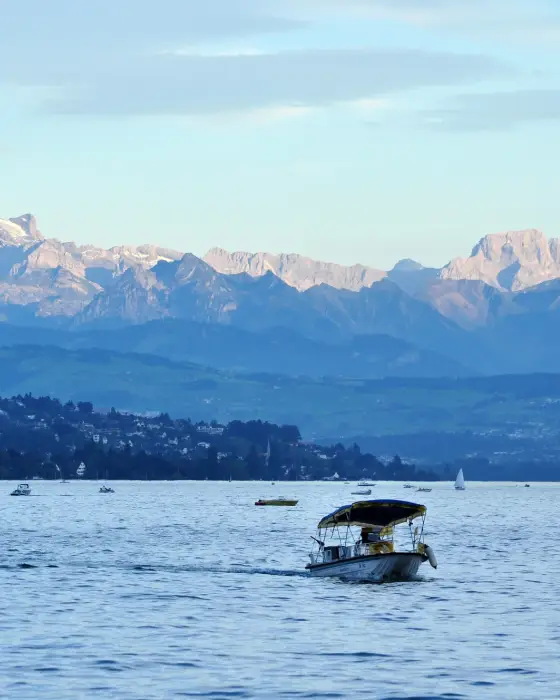 Switzerland, Germany and Italy in 7 daysCrossing the AlpsZurich · Munich · Milan4–7 days3 cities
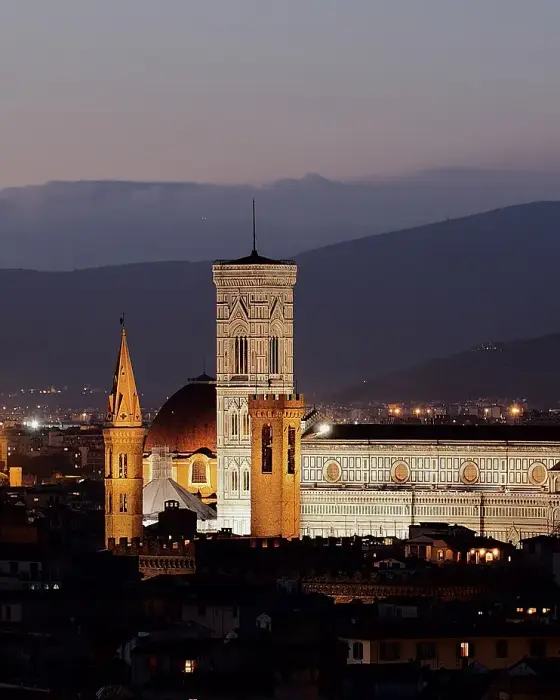 Italy and Switzerland in 10 daysFrom the Alps to Rome by trainZurich · Milan · Florence · Rome7–12 days4 cities
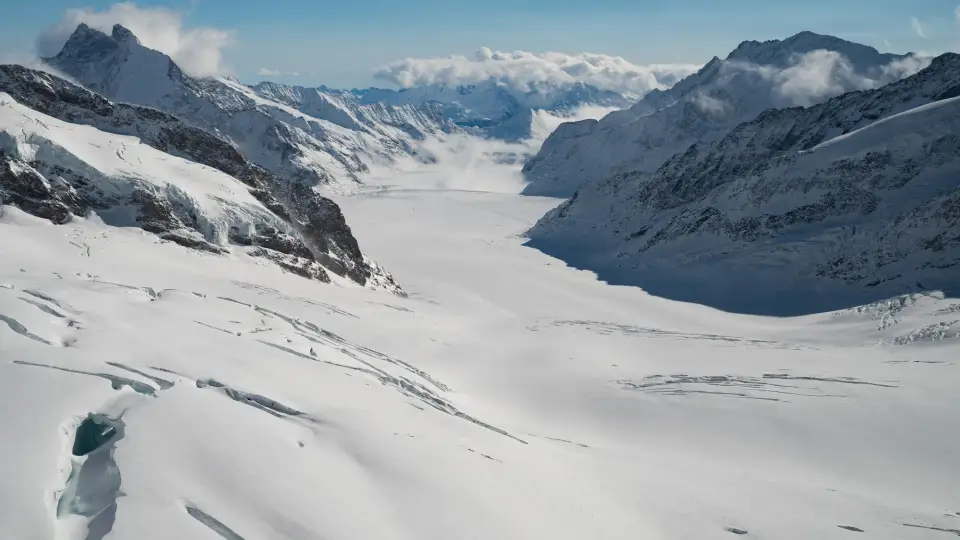
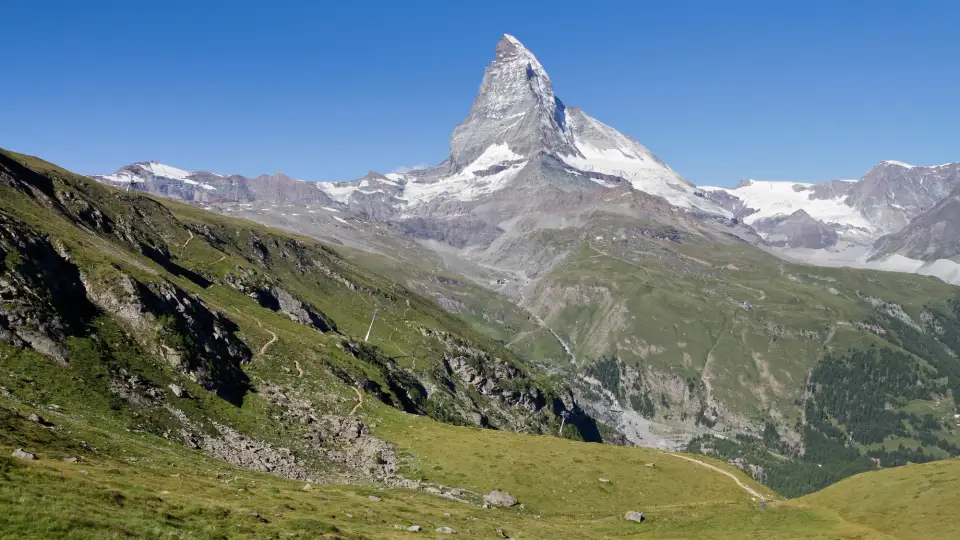
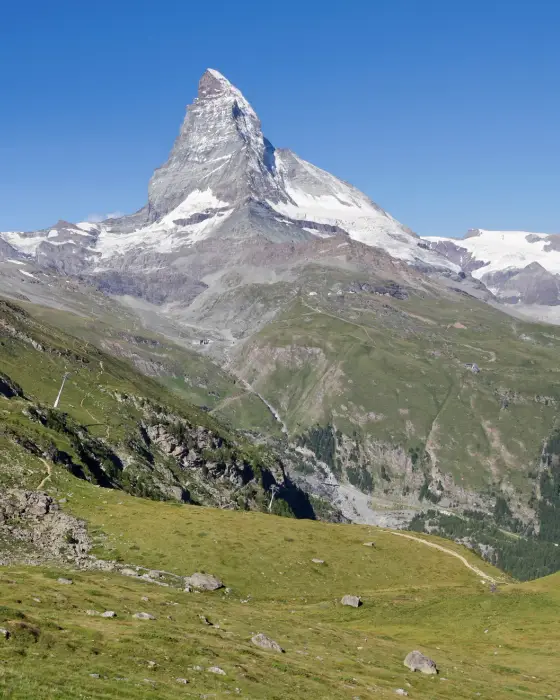 Switzerland in 10 daysFrom the Jungfrau to the MatterhornZurich · Interlaken · Zermatt7–10 days3 cities