Sweden
Stockholm
A 1628 warship, medieval lanes and ferries
Days Start with the basic programme and choose extensions for the time you have.
How the guide reaches this number
A third day, if you have one, goes to the Nationalmuseum, the Moderna Museet, and Gunnar Asplund's buildings. The city suits travelers who like walking by the water and don't expect locals to strike up a conversation. It's hard going for budget travelers, since a mid-range day costs 1,300 to 2,200 SEK. With a single day, enter the Vasa Museum first thing, take the ferry to Slussen, and have the dagens lunch in Södermalm. In the afternoon, cross over to Gamla Stan, linger at Stortorget and the side alleys, and finish at the Monteliusvägen lookout, which takes in the whole city. The letdowns are Norrmalm, the center demolished and rebuilt in concrete between 1951 and 1975, and Gamla Stan's main street, taken over by shops selling stuffed moose. Avoid November, when it's dark, wet and snowless.
2–3
When June and August, with long days and around 20 °C; September for good light and lower prices; December for the Nobel ceremony, Lucia, and the Advent lights.
How the guide reaches this number
In Stockholm, daylight weighs more in planning than temperature. At the June solstice, the sun rises around 3:30am and sets after 10pm; the sky never fully darkens, and there are about 18 hours 30 minutes of daylight. In late December, dawn comes around 8:45am and it's dark before 3pm: only six hours of low light. July averages: highs of 22–23 °C, with occasional heat waves above 30 °C. January and February bring highs between −1 °C and 1 °C, lows around −5 °C, and the inner bays of the Baltic freeze in the coldest winters. Rainfall adds up to about 540 mm a year, concentrated from July to October; no month is dry. June and August are the best months: long days, about 20 °C and the city in full swing. July has plenty of light, but it's when Swedes go on vacation and many shops and restaurants close. September still brings good light and lower prices. December makes up for the dark with Lucia, the Christmas markets and Nobel week.
Per person/day 1,300–2,200 SEK per person at a mid-range standard (about 120–200 €), not counting the flight
How the guide reaches this number
Per person per day: accommodation, meals, urban transport, visits and a small allowance for extras. Flights excluded; larger purchases vary. Editorial estimate, not a quote.
 What Nilo thinks
Stockholm fits into two days: the first for Djurgården and Gamla Stan, the second for the 20th-century center, with Stadshuset and the subway art. A third day, if you have one, goes to the Nationalmuseum, the Moderna Museet, and Gunnar Asplund's buildings. The city suits travelers who like walking by the water and don't expect locals to strike up a conversation. It's hard going for budget travelers, since a mid-range day costs 1,300 to 2,200 SEK. With a single day, enter the Vasa Museum first thing, take the ferry to Slussen, and have the dagens lunch in Södermalm. In the afternoon, cross over to Gamla Stan, linger at Stortorget and the side alleys, and finish at the Monteliusvägen lookout, which takes in the whole city. The letdowns are Norrmalm, the center demolished and rebuilt in concrete between 1951 and 1975, and Gamla Stan's main street, taken over by shops selling stuffed moose. Avoid November, when it's dark, wet and snowless.Stockholm spreads across 14 islands between Lake Mälaren and the Baltic, and within a few blocks you cross two bridges with water on both sides. On Djurgården, the Vasa Museum holds the warship that sank on its maiden voyage in 1628 and was raised from the harbor floor in 1961 with 98% of its original timber. Across the bay, the medieval lanes of Gamla Stan lead to Stortorget, the square of the 1520 Bloodbath. Even the subway is worth the ride, because about 90 of its 100 stations have commissioned artwork. The city is expensive, but dagens lunch, the weekday fixed-price lunch, puts a good restaurant within reach for 135–175 SEK. Between museums, do as the Swedes do and stop for fika, with coffee and cinnamon bread. Come in June or August, with long days and around 20 °C, allow two days, and bring a windbreaker for the bridges.
Quick facts
- Population
- about 1.0 million in the municipality (the 1 million mark passed in 2026); about 2.4 million in the metropolitan area and about 2.5 million in the county
- Founded
- Name first recorded in 1252, in correspondence from Birger Jarl; a palisade raised on Stadsholmen about two years before.
- Country and region
- Sweden: east coast, between the provinces of Uppland and Södermanland, at the mouth of Lake Mälaren, over 14 islands and 57 bridges
- Language
- Swedish; English spoken fluently by nearly the entire adult population; Finnish, Meänkieli, Sami, Romani, and Yiddish have official minority-language status
- Currency
- Swedish krona (SEK, kr); own currency kept since the 2003 popular vote: about 11 SEK per euro and 1.8 SEK per Brazilian real (Sep. 2026).
- Time zone
- CET (UTC+1) in winter and CEST (UTC+2) from late March to late October
- Best time to visit
- June and August, with long days and around 20 °C; September for good light and lower prices; December for the Nobel ceremony, Lucia, and the Advent lights.
- Average daily cost
- 1,300–2,200 SEK per person at a mid-range standard (about 120–200 €), not counting the flight
When to go
June and August, with long days and around 20 °C; September for good light and lower prices; December for the Nobel ceremony, Lucia, and the Advent lights.
January
-3° to 1°C
37 mm of rain
February
-3° to 1°C
29 mm of rain
March
-1° to 5°C
27 mm of rain
April
3° to 11°C
29 mm of rain
May
7° to 17°C
34 mm of rain
July
15° to 24°C
62 mm of rain
September
10° to 17°C
53 mm of rain
October
6° to 10°C
51 mm of rain
November
2° to 5°C
48 mm of rain
December
-1° to 3°C
48 mm of rain
How the year changes
In Stockholm, daylight weighs more in planning than temperature. At the June solstice, the sun rises around 3:30am and sets after 10pm; the sky never fully darkens, and there are about 18 hours 30 minutes of daylight. In late December, dawn comes around 8:45am and it's dark before 3pm: only six hours of low light. July averages: highs of 22–23 °C, with occasional heat waves above 30 °C. January and February bring highs between −1 °C and 1 °C, lows around −5 °C, and the inner bays of the Baltic freeze in the coldest winters. Rainfall adds up to about 540 mm a year, concentrated from July to October; no month is dry. June and August are the best months: long days, about 20 °C and the city in full swing. July has plenty of light, but it's when Swedes go on vacation and many shops and restaurants close. September still brings good light and lower prices. December makes up for the dark with Lucia, the Christmas markets and Nobel week.
The same numbers as a table
| Month | Temperature °C | Rain mm |
|---|---|---|
| January | -3 to 1 | 37 |
| February | -3 to 1 | 29 |
| March | -1 to 5 | 27 |
| April | 3 to 11 | 29 |
| May | 7 to 17 | 34 |
| June · | 12 to 21 | 62 |
| July | 15 to 24 | 62 |
| August · | 14 to 22 | 66 |
| September | 10 to 17 | 53 |
| October | 6 to 10 | 51 |
| November | 2 to 5 | 48 |
| December | -1 to 3 | 48 |
Nilo's tips
Train or bus from the airport cost less than Arlanda Express
The Arlanda Express charges about 340 SEK for the 18 minutes to Stockholm Central. The pendeltåg, with the combined SL + Arlanda ticket to Stockholm City, costs about 200 SEK (183 SEK bought in advance), and the Flygbussarna bus to Cityterminalen runs about 139 SEK. Both take around 45 minutes and suit anyone with light luggage and time to spare. In a group of four, a fixed-price taxi, usually 600–800 SEK, splits the bill well, as long as you check the yellow sticker in the window before getting in.
A 75-minute ticket is enough for the subway art circuit
It lets you step off the train, see the station, and get back on the platform without paying again. It's the SL single ticket, and the window covers T-Centralen, Kungsträdgården, Solna centrum, and Stadion, four of the roughly 90 stations with commissioned art since 1957. Go on a weekday between 10am and 3pm, because at rush hour the crowded platform hides the walls.
The 30-day pass is at half price until December 31
With the discount funded by the Swedish government, the SL 30-day pass costs about 530 SEK until the end of 2026, compared with more than 1,000 SEK without it. It pays off on stays of more than a week, and for short visits the 24-hour ticket runs about 180 SEK and the 72-hour one about 360 SEK. Do the math in the SL app before buying at the counter.
Lunch at 11:30am at a restaurant you'd never pay for at dinner
Dagens lunch, served on weekdays from 11am to 2pm, is the only time an expensive restaurant becomes affordable, for 135–175 SEK with bread, salad, water and coffee included. At dinner, the same place charges triple. By noon the line fills with office workers, and the most popular dish of the day runs out. Choose Södermalm or Vasastan over Gamla Stan, where tourist density alone pushes the bill up.
During Midsommar week, buy your drinks before Thursday
Systembolaget, the state chain that sells everything above 3.5% alcohol, doesn't open on Midsommar Eve, and on the Thursday before, the line wraps around the corner. The eve falls on a Friday between June 19 and 25, and on the eve of other holidays the chain often closes early too. Supermarkets carry only folköl, the weak beer, so buy what you need by Wednesday.
The Vasa at opening, and the ferry that's already in your ticket
At opening, you can stand in front of the carved stern of the 1628 ship without a tour group ahead of you. The museum opens at 8:30am from June to August and at 10am from September to May. On your way out, head back to Slussen on the Djurgårdsfärjan ferry, which is included in the SL ticket and is the cheapest boat ride in the city.
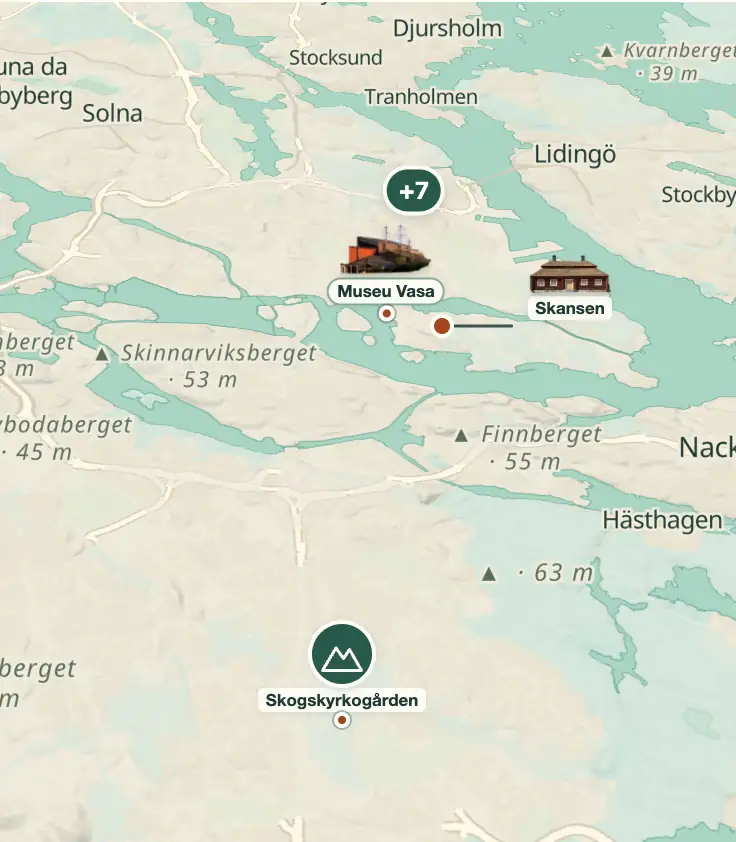
Explore the map
© OpenStreetMap · OpenFreeMap · © OpenMapTiles
Explore the map, read about the other places and plan your travel days in the app.
Open the appWhat to see
Stockholm: The lock between the lake and the sea
The center spreads over 14 islands linked by 57 bridges; to the east, the city dissolves into the Stockholm archipelago, some 30,000 islands and islets reaching 60 km out to sea. The medieval founding island, with the Royal Palace, Stortorget, and streets that still follow the 13th-century layout.

Vasa Museum (Vasamuseet)
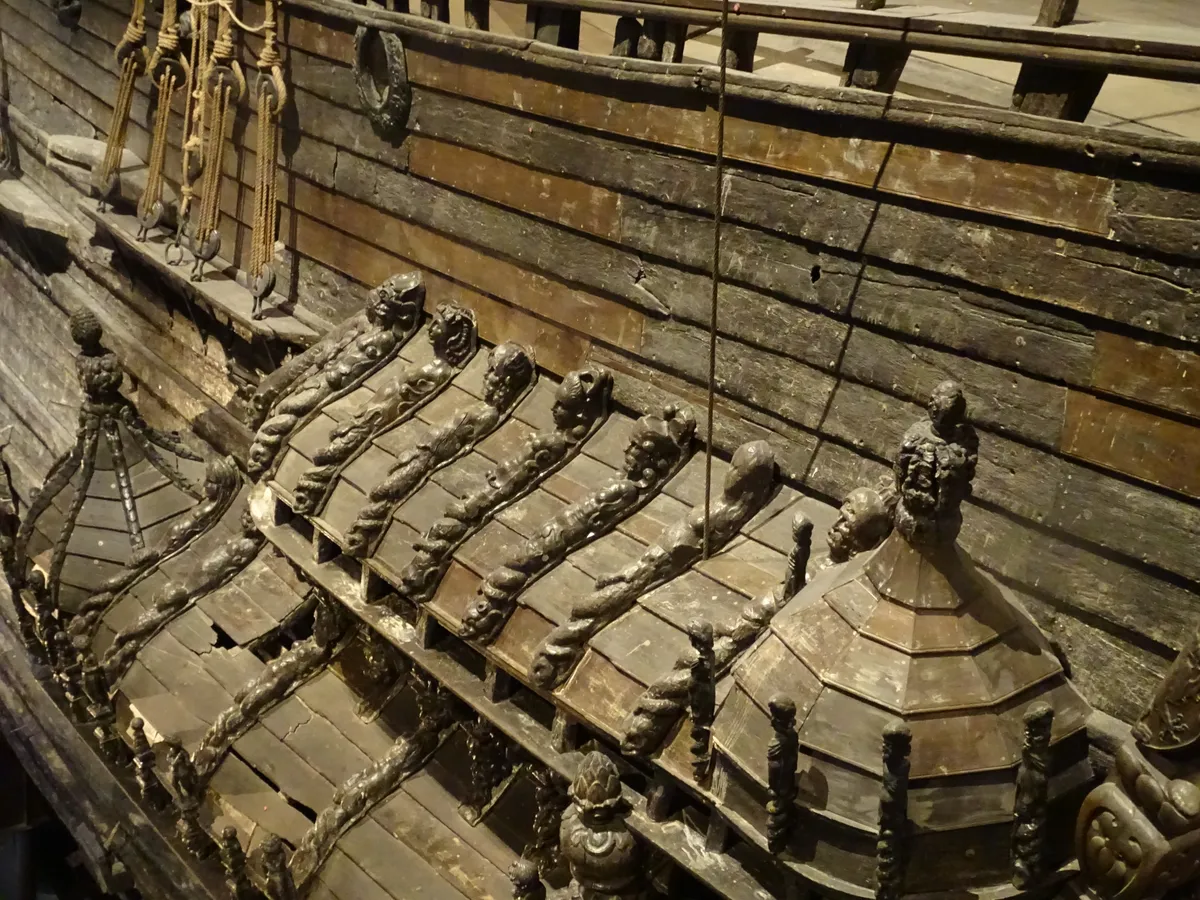
It houses the only 17th-century warship preserved almost whole: the Vasa, 69 m long with 64 cannons, sank about 1,300 m from the quay on its maiden voyage, on August 10, 1628, and was raised from the bottom of the harbor in 1961. About 98% of the timber is original. Opened in 1990, it's the most visited museum in Scandinavia, with more than 1 million visitors a year.
The Vasa measures 69 m, carries 64 cannons, and remains the only 17th-century warship preserved almost whole, raised from the bottom in 1961, with about 98% of its timber original.
Check access
Stadshuset (the city hall)
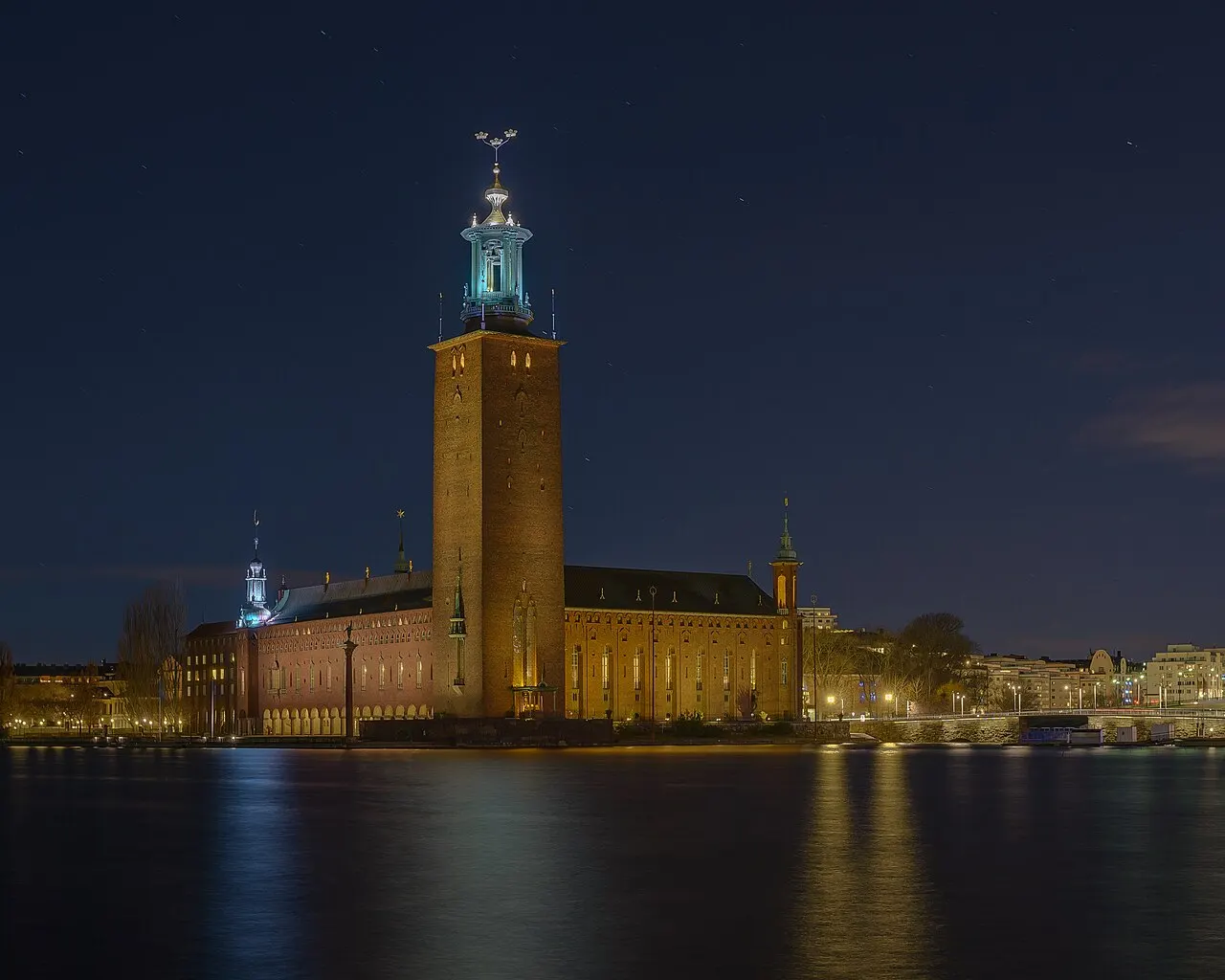
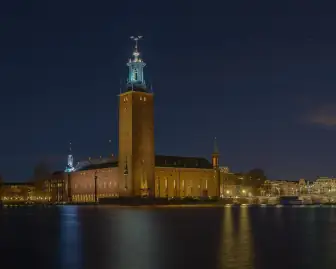
Ragnar Östberg designed the dark-brick building with its 106 m tower, built between 1911 and 1923. The opening was set for the eve of Midsommar 1923, June 23, to mark 400 years since Gustav Vasa entered the city, which history dates to June 24, 1523. The Blue Hall hosts the Nobel banquet; the Golden Hall has about 18 million glass-and-gold mosaic tiles. It's guided-tour only, and the tower is open from May to September.
Ragnar Östberg designed the dark-brick building that carries the 106 m tower, opened on the eve of Midsommar 1923 to mark 400 years since Gustav Vasa's arrival, and in it the Nobel banquet occupies the Blue Hall while the Golden Hall holds about 18 million mosaic tiles.
Check access

Gamla Stan and Stortorget
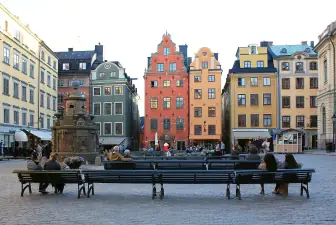
The island of Stadsholmen is packed with streets 3 to 5 m wide, the alley Mårten Trotzigs gränd (90 cm at its narrowest), and Stortorget, the square where about 80 people were executed in 1520 and where the Nobel Museum now sits, in the former Stock Exchange building from 1778. Next door, in Storkyrkan, stands the Saint George and the Dragon carved by Bernt Notke in 1489.
Walk down Mårten Trotzigs gränd and you'll find 90 cm of width at its narrowest point, and Stortorget, the site of around 80 executions in 1520, also holds the Nobel Museum. Next door, in Storkyrkan, stands the Saint George and the Dragon.
Check access
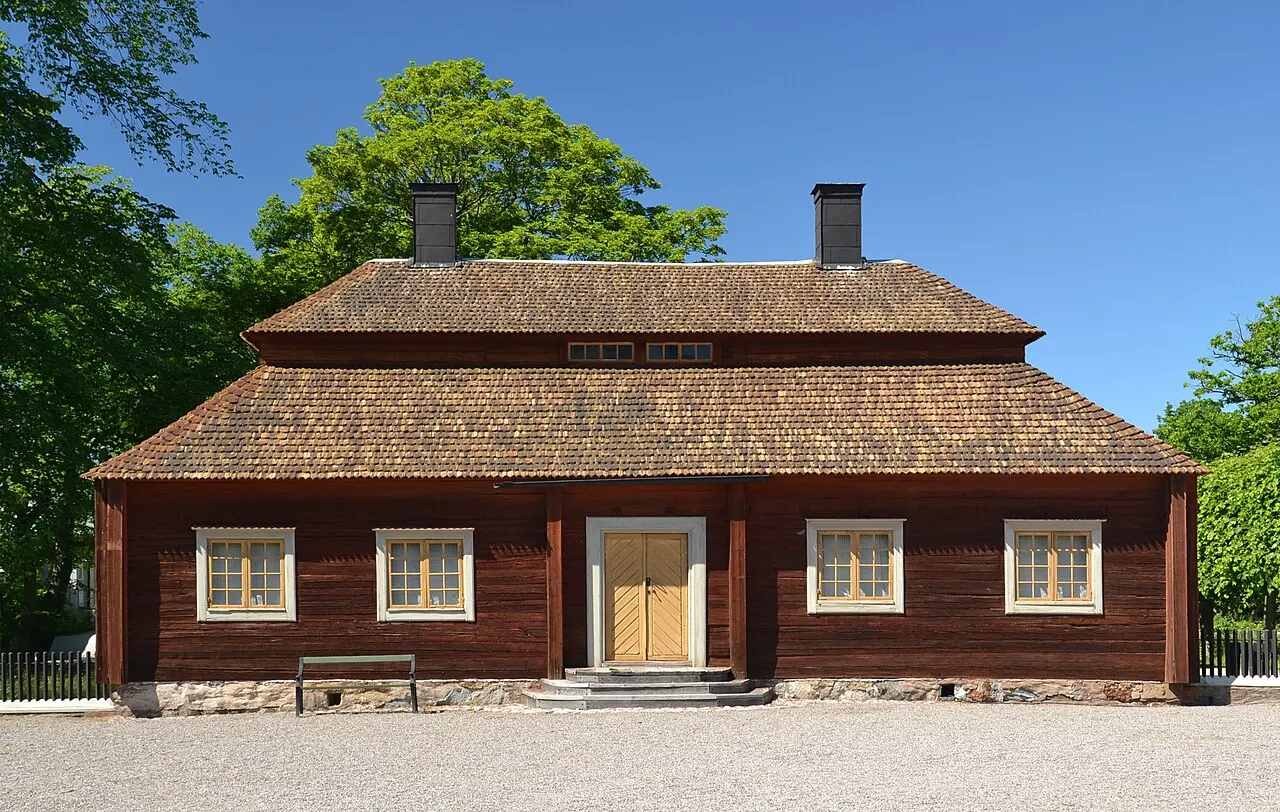
Skansen
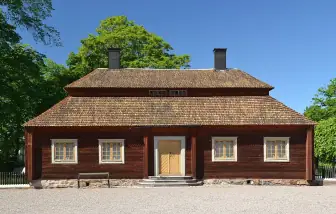
The world's first open-air museum, founded by Artur Hazelius in 1891 in Djurgården: about 150 buildings from every region of Sweden were taken apart and reassembled there, with craftspeople working regular hours and a zoo of Nordic wildlife, moose, lynx, bear, wolverine. It's where the city celebrates Valborg, Midsommar, and Lucia.
About 150 buildings brought from every region of Sweden were taken apart and reassembled at the world's first open-air museum, where crafts carry on during business hours, Nordic wildlife roams, and Valborg, Midsommar, and Lucia all take place.
Check access
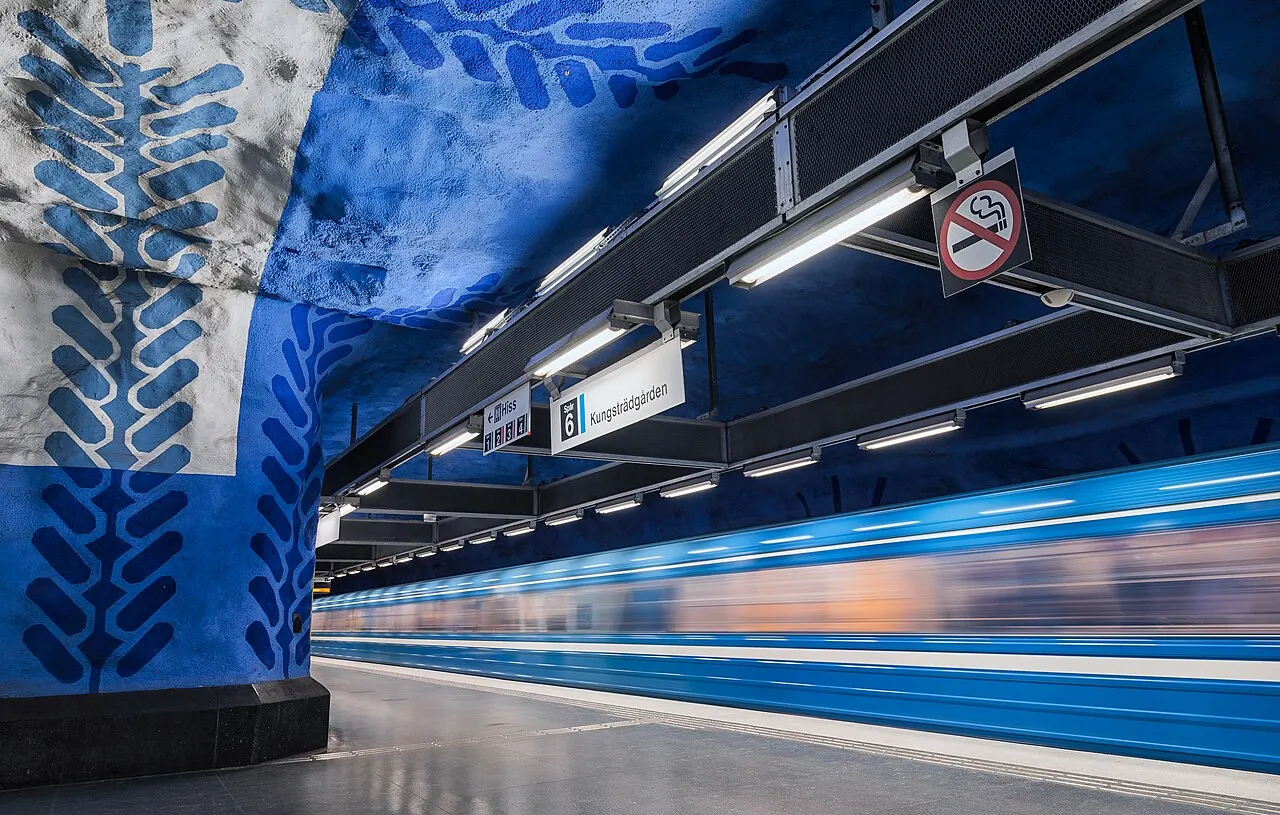
The art of the subway stations
About 90 of the tunnelbana's 100 stations have had commissioned art since 1957, adding up to roughly 110 km of gallery. A 75-minute ticket lets you get on and off at several: T-Centralen, with Per Olof Ultvedt's blue leaves (1975); Kungsträdgården, Ulrik Samuelson's archaeological cave (1977); Solna centrum, with its 1975 red forest; Stadion, with its 1973 rainbow.
About 90 of the 100 stations received commissioned art starting in 1957, across roughly 110 km of track, with a cave, a red forest, and a rainbow along the way.
Check access

Fotografiska
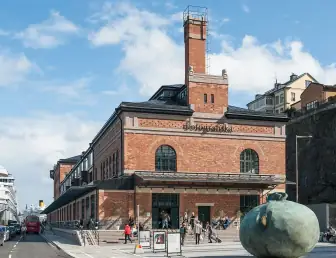
Photography museum opened in 2010 in the former 1906 customs house building, on the Stadsgården waterfront, in Södermalm. It has no permanent collection: it mounts four major exhibitions a year, stays open late into the night, and has a top-floor café with a straight-on view of the old town and the harbor.
The former customs house building has no permanent collection and rotates four major exhibitions a year, staying open late into the night, with a top-floor café facing the harbor.
Check access

Moderna Museet and Skeppsholmen
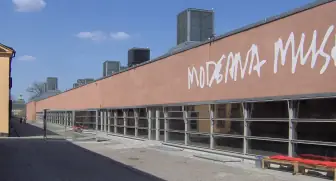
The former military island of Skeppsholmen, in the middle of the bay, holds the modern art museum in a building by Rafael Moneo, opened in 1998, with Picasso, Duchamp, Dalí, and the most complete Nordic 20th-century collection. Outside stands the Paradiset sculpture group, by Niki de Saint Phalle and Jean Tinguely; next to it, the ArkDes museum of architecture and design.
Rafael Moneo designed the building, opened in 1998, and inside, visitors still find the most complete 20th-century Nordic collection gathered under one roof. Outside stands the Paradiset sculpture group, and next to it, the ArkDes museum of architecture and design.
Check access
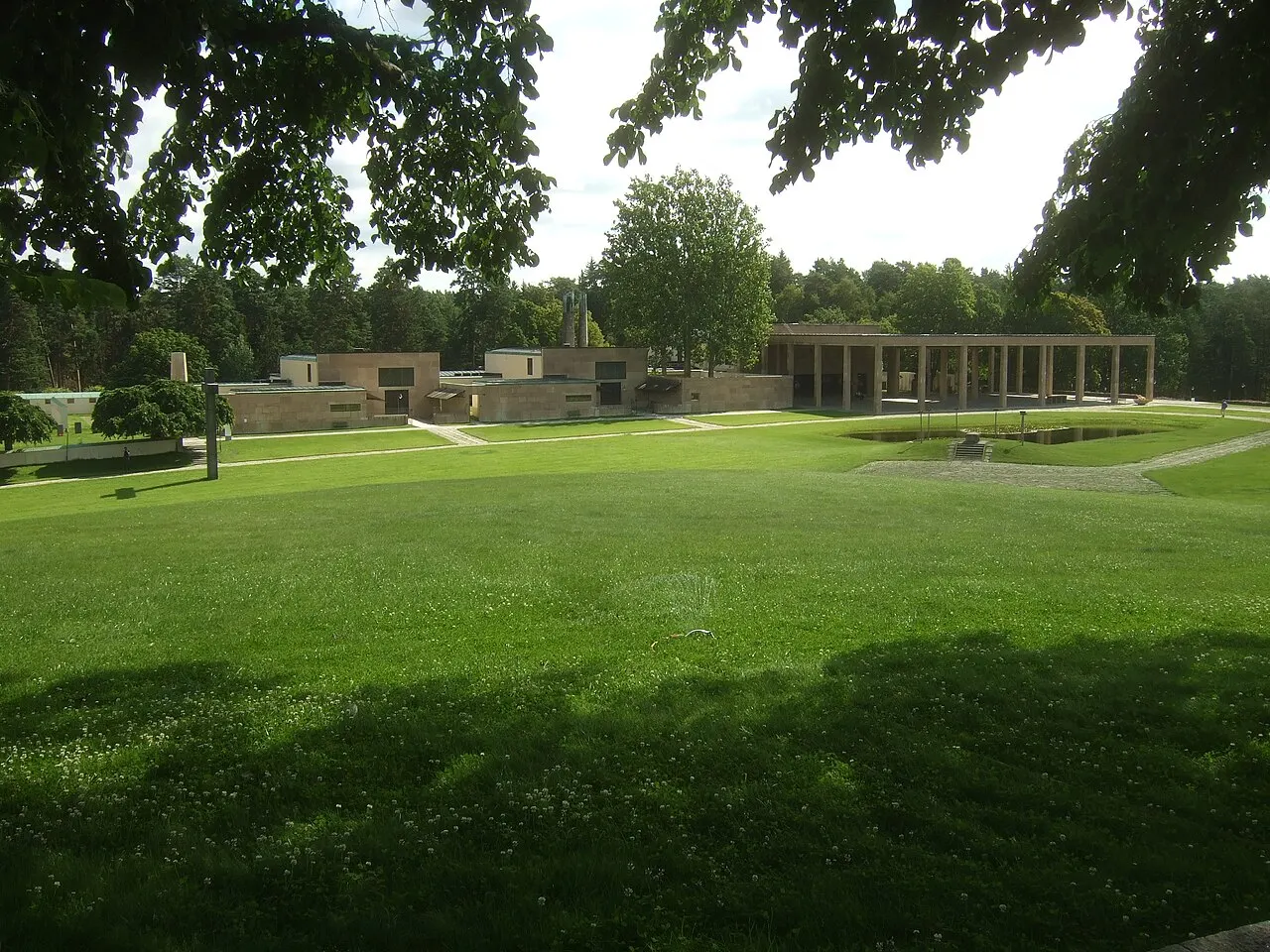
Skogskyrkogården (Woodland Cemetery)
Designed by Gunnar Asplund and Sigurd Lewerentz from a 1915 competition and built through 1940, it's been a World Heritage Site since 1994 for creating a language in which landscape, not monument, organizes grief. It's about 20 minutes away by the green subway line, at the station of the same name; Greta Garbo is buried there.
The design by Gunnar Asplund and Sigurd Lewerentz, from the 1915 competition, created a site where landscape, not monument, organizes grief, and Greta Garbo is buried on the same grounds.
Check access

Royal Palace (Kungliga slottet)
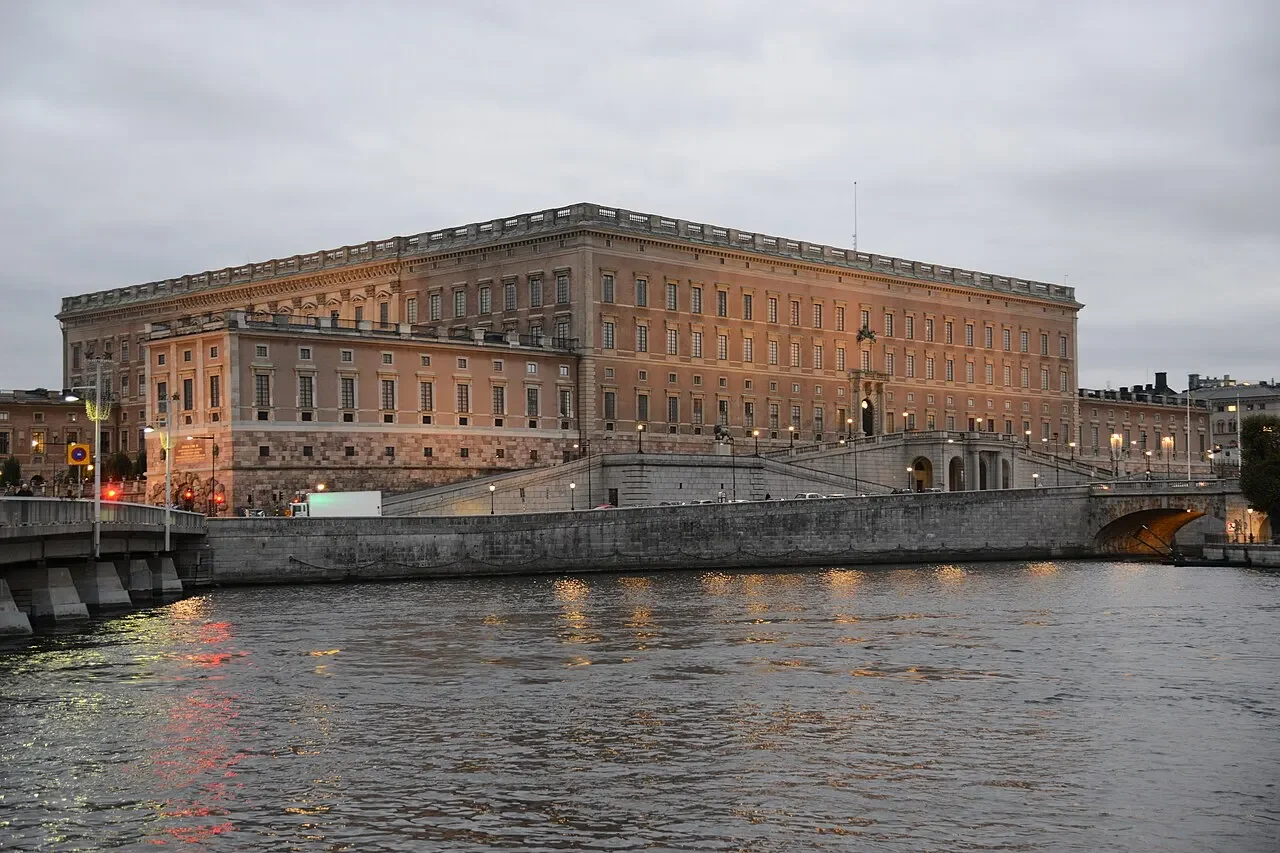
Built between 1697 and 1754 by Nicodemus Tessin the Younger, on the site of the burned Tre Kronor castle, it has over 600 rooms and is still the king's working address, even though the family has lived at Drottningholm since 1981. The changing of the guard happens daily in the outer courtyard, with a military band on the busiest days.
The palace that Nicodemus Tessin the Younger built between 1697 and 1754 on the site of the Tre Kronor castle has more than 600 rooms, but the royal family has lived in Drottningholm since 1981, and what nearly every visitor comes for is the daily changing of the guard in the outer courtyard. The interior only pays off for those who enjoy court halls.
Check access
Nilo’s itinerary
Start with the basic programme and choose extensions for the time you have.
Plan my days in the app ↗Day 1 · The museum island and the old town
Start at the Vasa Museum, on Djurgården, at opening (8:30am from June to August, 10am from September to May), before the tour groups: the first hour is the only time you can see the carved stern of the 1628 ship with no line in front of you.
Walk on to Skansen, opened by Artur Hazelius in 1891, and set aside two hours for the transplanted houses, the craftspeople, and the Nordic zoo.
Head back by tram 7 or the Djurgårdsfärjan ferry to Slussen (the ferry is included in the SL ticket) and have lunch in Södermalm, not in Gamla Stan.
Enter Gamla Stan from the south, stop at Stortorget to see the site of the 1520 Bloodbath and the Nobel Museum, and walk down the alley Mårten Trotzigs gränd, 90 cm at its narrowest.
Finish at Storkyrkan, in front of Bernt Notke's Saint George and the Dragon (1489), and watch the end of the day from up on Monteliusvägen, on the Södermalm cliff.
Day 2 · The 20th-century center
Take the Stadshuset guided tour first thing in the day: the Blue Hall of the Nobel banquet and the Golden Hall with about 18 million mosaic tiles.
Climb the 106 m of the Stadshuset tower, open only May to September, to see from above how the 14 islands fit together.
Cross into Norrmalm, see the 1967 Sergels torg and the five Hötorget towers, and have lunch at the basement market, Hötorgshallen.
Use a 75-minute ticket for the subway art circuit, stepping off and back onto the train at the painted stations without paying again.
End at Östermalms Saluhall, the covered market from 1888 reopened in 2020, with a toast Skagen and a glass at the counter.
If you stay longer
Day 3 · Art, architecture and Asplund's cemetery
Start at the Nationalmuseum, reopened in October 2018 after five years of renovation, then cross the bridge to Skeppsholmen and the Moderna Museet.
Have dagens lunch in Vasastan between 11am and 2pm, when the fixed price includes bread, salad, and coffee.
Stop by Gunnar Asplund's Municipal Library, in Odenplan, and step into the 1928 rotunda of shelves. It's free, and still a neighborhood library.
Take the green line to Skogskyrkogården station and walk through the Asplund and Lewerentz cemetery (1917–1940), a World Heritage Site since 1994.
Finish at Fotografiska, in the 1906 customs building, which stays open at night, with the whole harbor visible from the top-floor café.


Food
 AI illustration
Köttbullar
Swedish meatballs are ground beef and pork with bread soaked in milk and allspice, served with mashed potatoes, cream sauce, lingonberry jam, and pickled cucumber. It's home food and a weekday lunch dish; at a restaurant it costs 190–280 SEK.
 AI illustration
Kanelbulle and fika
Fika is the social break with coffee and something sweet, taken once or twice a day in almost every office. The classic pairing is the cinnamon roll, firmer and far less sweet than the American version, topped with pearl sugar; the cardamom variation (kardemummabulle) is the Swedes' favorite. Official kanelbulle day is October 4.
 AI illustration
Toast Skagen and löjrom
Fried toast topped with small shrimp, mayonnaise, dill, and lemon, created by chef Tore Wretman in 1956 and on any serious menu. The pricier version swaps the shrimp for löjrom, orange-colored roe from a river fish caught near Kalix, in the far north, with protected designation of origin since 2010. It comes with sour cream and chopped red onion.
 AI illustration
Sill and the smörgåsbord
Pickled herring in four or five marinades (mustard, dill, onion, curry, matjes) eaten cold with boiled potatoes, egg, Västerbotten cheese, and a shot of aquavit. It shows up at the Easter, Midsommar, and Christmas table; December's julbord is the long version, served at restaurants for 500–800 SEK.
 AI illustration
Räksmörgås
Open-faced shrimp sandwich: a mountain of peeled shrimp over mayonnaise, hard-boiled egg, and lettuce, on bread that nearly disappears underneath. It costs 150–250 SEK, counts as a full meal, and solves lunch at any café on the waterfront or ferry.
 AI illustration
Dagens lunch
The fixed weekday lunch, served from 11am to 2pm for 135–175 SEK, with bread, salad, water, coffee, and sometimes dessert included in the price. It's the cheapest way to eat well in Stockholm and the only time expensive restaurants become affordable: at night, the same place charges three times as much.
 AI illustration
Ärtsoppa med pannkakor
Thick yellow pea soup with pork and mustard, followed by thin pancakes with jam: served on Thursdays since at least the 17th century, when it was the meal before a fasting eve. Traditional restaurants and cafeterias still keep the custom, with hot punsch on the side.
 AI illustration
What people drink, and where they buy it
Any drink above 3.5% alcohol is only sold at the state-run Systembolaget stores, a monopoly created in 1955, with a minimum age of 20. Supermarkets carry only folköl, beer up to 3.5%. At a bar or restaurant the age drops to 18, and a 40 cl draft beer costs 85–110 SEK. Coffee is an institution: Swedes are among the world's top three consumers per capita.
Day trips
Drottningholm
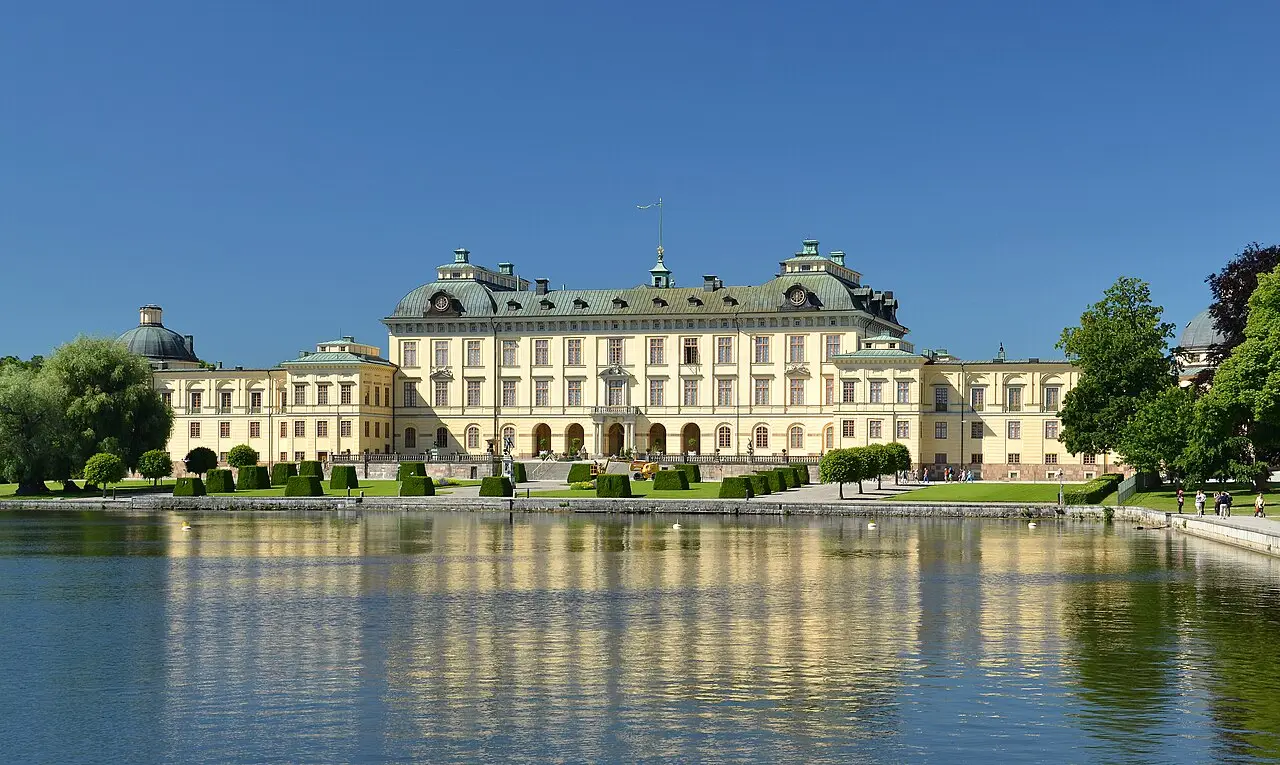
11 km west; boat from Stadshusbron in 50 to 60 minutes, May to September, or subway to Brommaplan plus bus, about 40 minutes year-round. A royal palace from the late 17th century, a World Heritage Site since 1991 and the royal family's residence since 1981; the 1766 Court Theatre still uses original stage machinery during its summer opera season, and the Chinese Pavilion dates from 1769.
Vaxholm and the archipelago
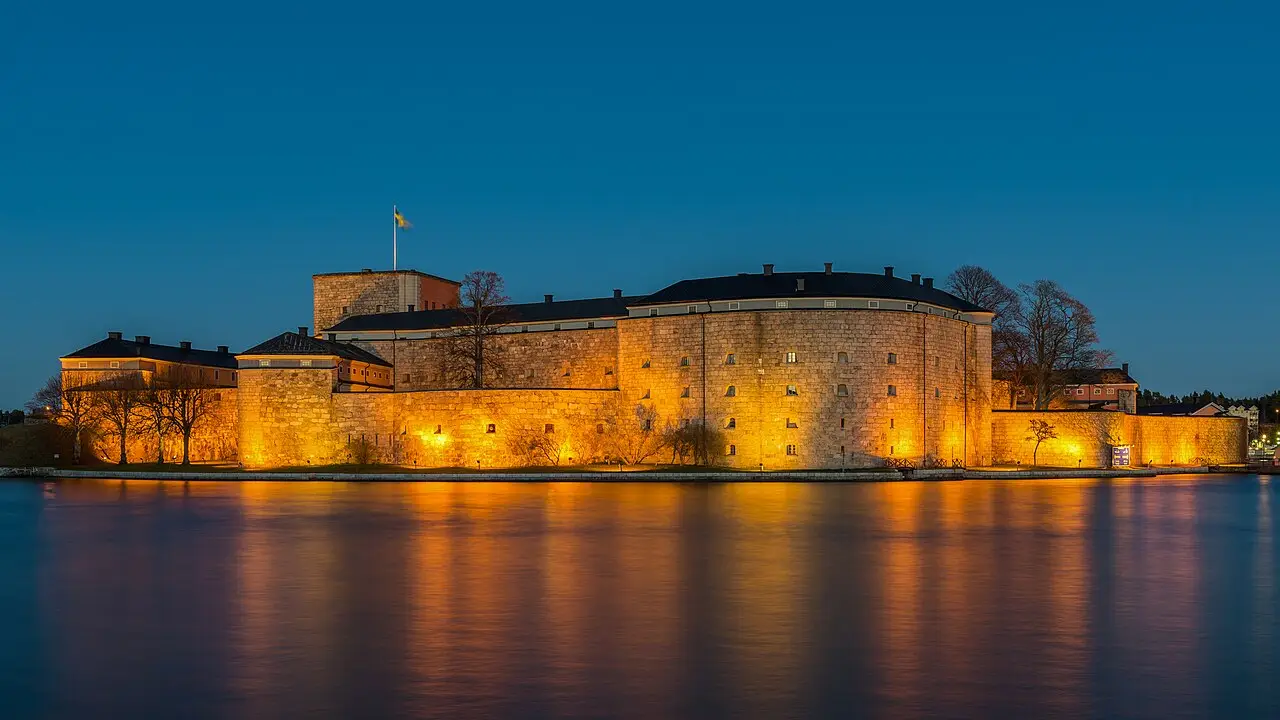
30 km northeast; Waxholmsbolaget boat from Strömkajen in about 1 hour 15 minutes, or bus 670 from Tekniska högskolan in about 1 hour. Yellow wooden houses and the fortress started by Gustav Vasa in 1548 and rebuilt in 1833, which sealed the sea route to the capital. For a shorter version, Fjäderholmarna is 25 minutes by boat from Nybroplan.
Uppsala
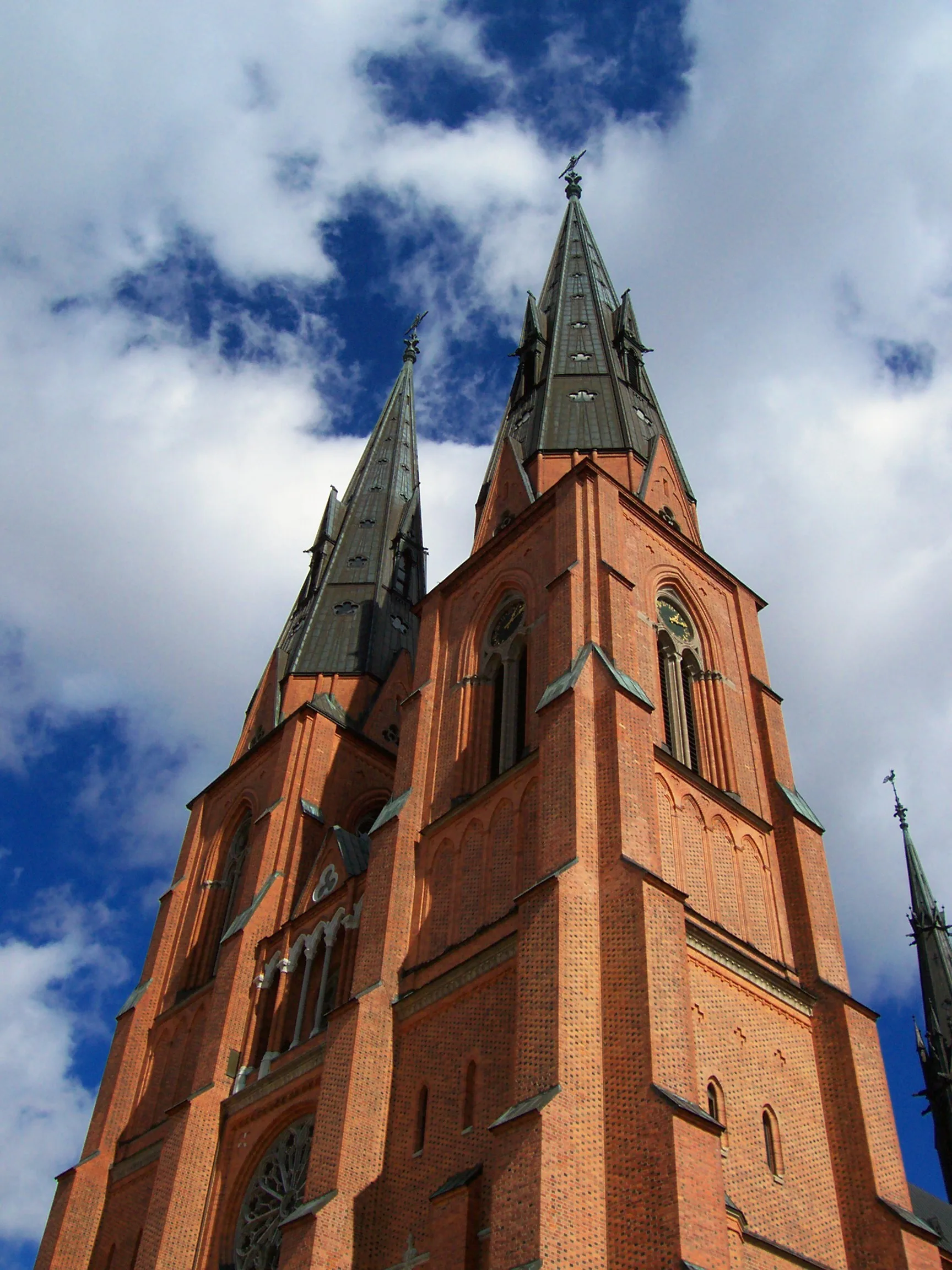
70 km north; train in 38 to 55 minutes from Stockholm Central, with departures every 15 minutes. A Gothic cathedral consecrated in 1435 and 118.7 m tall, the tallest in the Nordic countries; a university founded in 1477, the oldest in Scandinavia; the Linnaeus garden; and, 5 km away, the royal mounds of Gamla Uppsala, from the 5th and 6th centuries.
Where to begin
The museum island and the old town
Start at the Vasa Museum, on Djurgården, at opening (8:30am from June to August, 10am from September to May), before the tour groups: the first hour is the only time you can see the carved stern of the 1628 ship with no line in front of you.
The 20th-century center
Take the Stadshuset guided tour first thing in the day: the Blue Hall of the Nobel banquet and the Golden Hall with about 18 million mosaic tiles.
Art, architecture and Asplund's cemetery
Start at the Nationalmuseum, reopened in October 2018 after five years of renovation, then cross the bridge to Skeppsholmen and the Moderna Museet.
Money
The currency is the Swedish krona (SEK), which the country kept in the 2003 referendum and still has no date to replace with the euro. Stockholm is among the cities closest to abolishing cash: many businesses display the sign “Vi tar inte kontanter” (we don't accept cash), and museums, buses, markets and even church collections take payment by card or through the Swish app. So bring a contactless card with a PIN and forget about exchanging money. In approximate 2026 ranges, coffee costs 40–55 SEK and a kanelbulle 40–60 SEK, and dagens lunch, served on weekdays between 11am and 2pm, runs 135–175 SEK. Dinner at a mid-range restaurant is 400–600 SEK per person, without drinks; a 40 cl draft beer costs 85–110 SEK, and wine at a restaurant starts at 450 SEK. For sleeping, a hostel bed runs 400–650 SEK and a mid-range hotel between 1,500 and 2,500 SEK a night, more during Nobel week. VAT, 25% in general and 12% on food, restaurants and hotels, is already included, so the price on the tag is what comes off your card. Tipping isn't expected, because service is included in the price; rounding up, or leaving 5% to 10% after a long dinner, is already generous. The city charges no tourist lodging tax. Brazilians don't need a visa for up to 90 days in any 180 in the Schengen area, but from the last quarter of 2026 ETIAS comes into force, an electronic authorization costing about €20 to be requested before boarding. Confirm the official date before buying your ticket, because it has already been postponed several times.
Getting there and around
Arlanda Airport: 37 km north, the priciest option comes first
Arlanda Airport (ARN) is 37 km to the north and takes most international flights. There are three ways into the center. The priciest is the one every arrivals-hall sign advertises first: the Arlanda Express, a direct train to Stockholm Central in 18 minutes, for about 340 SEK (with an app discount, and for under-26s). The second option is the suburban train (pendeltåg), lines 40 and 41, to Stockholm City station in about 45 minutes. It requires the combined SL + Arlanda ticket, which covers the trip and passage through the airport station: about 200 SEK, or 183 SEK bought in advance (July 2026 price). The third is the Flygbussarna bus to Cityterminalen, about 45 minutes for around 139 SEK. Taxis run on a posted fixed price, usually 600–800 SEK: fares are unregulated in Sweden, so check the yellow sticker on the window before getting in. Bromma (BMA), 8 km to the west, handles domestic flights and has a politically uncertain future. Skavsta (NYO) and Västerås (VST) are about 100 km away and serve low-cost carriers, with buses of 80 to 100 minutes into the city.
One ticket opens the whole region
Within the metropolitan area, everything is SL, and a single ticket opens up the whole network. That includes the subway (tunnelbana, three color-coded lines, seven branches, 100 stations), the commuter trains, the Tvärbanan, Spårväg City, Lidingöbanan and Roslagsbanan tram lines, the blue and red buses and the Djurgården ferry. A single ticket costs about 43 SEK and is valid for 75 minutes, with as many transfers as fit in that time. The 24-hour ticket runs about 180 SEK, and the 72-hour ticket about 360 SEK. The 30-day pass costs about 530 SEK, a price already reduced by a Swedish government subsidy in effect from July 1 to December 31, 2026; without it, the pass tops 1,000 SEK. Check the SL app, the simplest way to buy. You can also just tap your bank card on the gate without buying anything first. The subway runs from 5am to 1am. On Friday and Saturday nights service runs all night; on other nights, night buses cover the lines. You can cross the center on foot in about an hour, but every neighborhood is an island, and the bridges add distance. The bike network is good and flat along the water, and a hard climb in Södermalm. A car isn't worth it: there's a congestion charge during business hours and expensive parking all over the center.
Safety
Stockholm is a very low-risk city for visitors. Violent crime is rare in the central and tourist areas, and walking alone through the center at night is what locals do, night after night. The real risk is theft: pickpockets work Gamla Stan, Drottninggatan, Sergels torg, Central Station and T-Centralen, and bike theft is epidemic, even of locked bikes. The city does have a problem with gang violence, but it's concentrated in a few suburbs and in feuds between the gangs themselves: it barely touches anyone moving around the central areas, and it's no reason to avoid any neighborhood during the day. Common scams: the “charity donation” clipboard on pedestrian streets, taxis with no fare shown on the yellow sticker in the window (fares are unregulated in Sweden, so stick to Taxi Stockholm, Sverigetaxi, Uber or Bolt) and tourist-brand ATMs with poor exchange rates; always decline conversion to reais on the card machine. The real physical risks come in winter: icy sidewalks in January and February, and ice and snow falling from roofs, which is why stretches of sidewalk are taped off. Respect the tape, even under a clear sky. Emergency: 112. For non-urgent health advice, call 1177.
Etiquette tips
Take your shoes off at the door
Walking into a Swedish apartment in shoes is about the most visible social slip there is, even at a party, even in a suit. Anyone going to dinner brings decent socks or a pair of spare shoes; the host won't ask, but expects it anyway.
Take the ticket before asking
Pharmacy, Systembolaget, post office, registry office, fishmonger, some bakeries: there's a ticket machine (kölapp) at the door. Speaking to the clerk without a number gets you sent back to the machine, politely and without exception.
Fika: a social invitation, 20 to 40 minutes
The invitation “ska vi ta en fika?” is social, not logistical: it means sitting for 20 to 40 minutes, with coffee and something sweet, and talking. Turning it down two or three times in a row reads as declining the relationship, not only the drink.
Alcohol only at Systembolaget
The state-run Systembolaget stores close on Sundays and at 3pm on Saturdays, and the cashier asks for ID from anyone who looks under 25. Bring your passport when you buy, even if you're over 20.
Split the bill exactly
Each person pays for what they had, and the card reader splits it per person without anyone finding it strange. Insisting on paying for everyone is awkward, not generous; among Swedes, the settling happens over Swish in seconds.
Space and silence on transit
If there's an empty pair of seats, don't sit next to a stranger. Speak quietly on the train and save video calls for later, because loud conversation gets noticed even when nobody complains. In elevators and on escalators, stand on the right and leave the left free for people in a hurry.
Mistakes to avoid
Buses, museums, and churches turn down cash
Counting on cash. Many cafés, museums, SL buses, and even churches turn down bills as a matter of policy, and the exchange office doesn't fix that, it only delays the problem. Bring an international contactless card with a PIN, and a second card on a different network as backup.
The Arlanda Express by reflex
Buying the Arlanda Express by reflex, because every sign in the arrivals hall points to it. The suburban train and the Flygbussarna bus cost much less and take about 25 to 30 minutes longer. With light luggage, the savings pay for a dagens lunch.
Going in July expecting a full city
Going in July expecting a busy city. It's the national vacation month: much of the retail trade cuts hours or closes its doors. The light is excellent, but if you want bustle, you've picked the wrong month: June and August bring sunshine without that silence.
Choosing clothes by the thermometer and forgetting the wind
Dressing for the temperature, not the wind. A May or September evening drops to 8 °C when the wind comes off the water between the islands, and the walk between two neighborhoods always crosses an exposed bridge. Bring a windbreaker and an extra layer in any season, summer included.
The archipelago in half an hour
Treating the archipelago as a half-hour outing. Waxholmsbolaget ferries take 1 to 3 hours to reach the bigger islands, run on a seasonal schedule, and cut back a lot from October to April. Check the schedule first, and set aside a full day, or stick to Fjäderholmarna, 25 minutes from Nybroplan.
Useful phrases
Hej / hej hej
Hi: works on arrival and, repeated, as goodbye; “hejdå” means bye
Tack så mycket
Thank you very much (pron. “tack so myu-ke”): Swedish has no word for “please,” and “tack” does that job too
Ursäkta
Excuse me / sorry (pron. “ur-SHEK-ta”): how you ask to pass, call a waiter, and start a conversation
Talar du engelska?
Do you speak English? The answer will be yes; asking first is what sets the tone of the conversation
Notan, tack
The check, please, but at most cafés and lunches you pay at the counter, not the table
Ska vi ta en fika?
Shall we grab a coffee? It's a social invitation and counts as the first step of any Swedish friendship
Districts
Gamla Stan
The medieval founding island, with the Royal Palace, Stortorget, and streets that still follow the 13th-century layout. It has around 3,000 residents and a tourist density that sends restaurant prices soaring. Swap the main street, lined with souvenir shops, for the side alleys, and eat in another neighborhood.
Norrmalm (the “City”)
The commercial and administrative center, rebuilt between 1951 and 1975: Sergels torg, the pedestrian Drottninggatan, the five Hötorget towers, Central Station, and the NK and Åhléns department stores. It holds most of the hotels and every transfer point.
Östermalm
The bourgeois grid from the late 19th century, with the waterfront Strandvägen (1897), the embassies, the covered market Östermalms Saluhall (1888, reopened in 2020 after restoration), and the pricey Stureplan nightlife. It's the most expensive square meter in the city.
Södermalm
The large southern island, working-class until the 1970s and now the neighborhood of cafés, thrift shops, and nightlife, with the SoFo sub-district east of Götgatan. It sits atop a cliff: Monteliusvägen and Fjällgatan give the most photographed views, and the entire geography of the Millennium trilogy is here.
Vasastan
Residential and dense, north of the center and around Odenplan: Asplund's library, Astrid Lindgren's apartment at Dalagatan 46, Vasaparken park and the restaurant streets of Rörstrandsgatan and Odengatan. It's a good neighborhood for eating and strolling among locals, away from the tourist circuit.
Kungsholmen
The island to the west, with the Stadshuset at its eastern tip, the courts, the shopping street Hantverkargatan, and the Norr Mälarstrand waterfront path. At Hornsbergs strand, former industrial land turned into wooden decks over the water where the city swims in summer.
Djurgården
Former royal hunting ground, part of the National Urban Park created in 1995, the first in the world, with almost no through traffic. It holds the Vasa Museum, Skansen, the Nordiska museet, the ABBA Museum, the Gröna Lund amusement park (1883), and a walking loop of about 8 km.
Hammarby Sjöstad and the subway suburbs
To the south, the former industrial port of Hammarby turned into a model sustainability district starting in 1997, linked by the Tvärbanan tram and a free ferry. Farther out, the ring of suburbs around subway stations (Vällingby (1954), Farsta, Skärholmen, Rinkeby) shows social-democratic urban planning and the inequalities it didn't solve.
History
1252 · Birger Jarl's letter
Two 1252 letters signed by Birger Jarl carry the first written mention of Stockholm, a name that reads as “the stake islet.” The fortification closes off the strait through which Lake Mälaren drains to the sea, after the sacking of Sigtuna in 1187.

1397–1471 · Kalmar Union and Brunkeberg
The 1397 dynastic union puts Sweden, Denmark, and Norway under the Danish crown, and Stockholm becomes the prize of every revolt. On October 10, 1471, Sten Sture the Elder defeats Christian I on Brunkeberg hill, inside the city.

1520 · The Stockholm Bloodbath
Christian II is crowned, promises amnesty, and three days later has about 80 nobles, bishops, and burghers executed in Stortorget, between November 8 and 10. The massacre destroys the union's legitimacy instead of cementing it.
1523 · Gustav Vasa takes the city
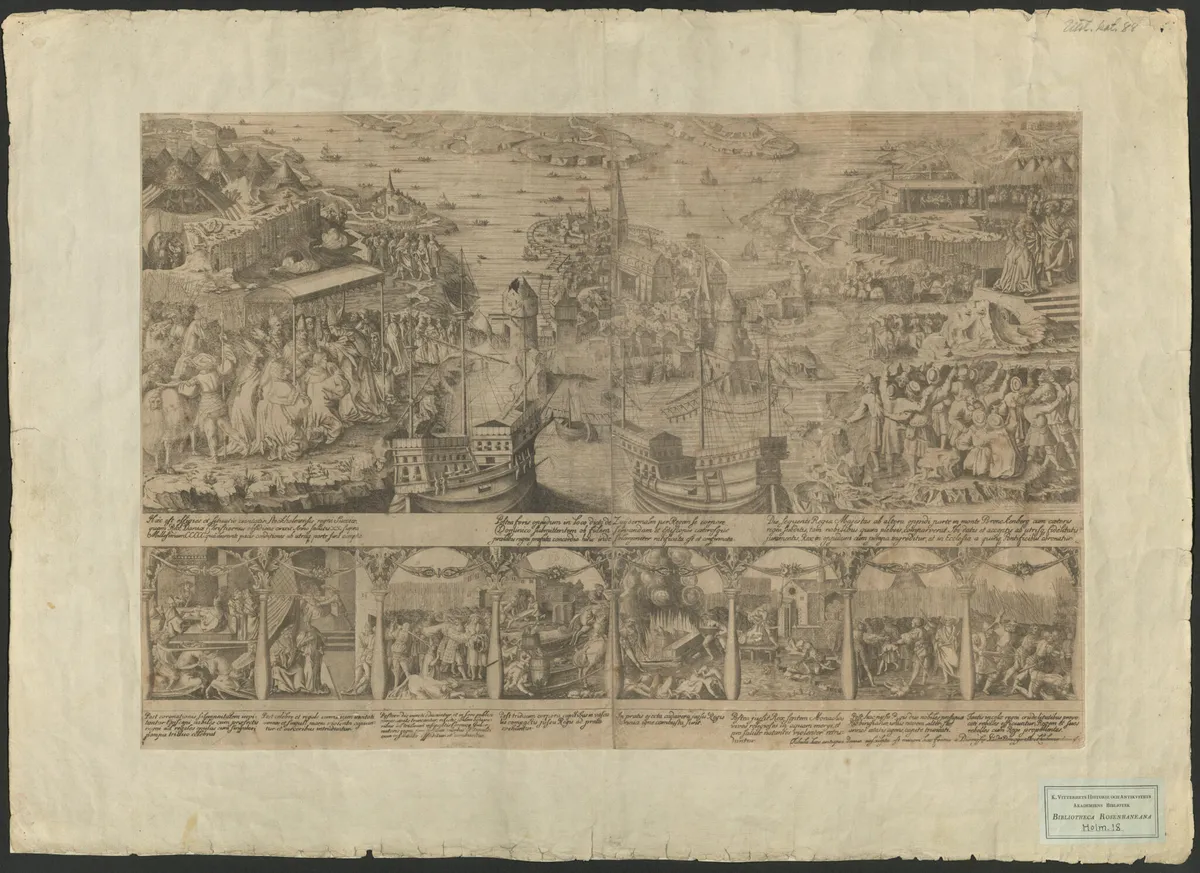
Son of one of the executed men, Gustav Eriksson Vasa is elected king on June 6 and enters Stockholm on June 24, 1523. In 1527 he confiscates church property, launching the Swedish Reformation and a hereditary monarchy.

1628 · The Vasa sinks in the harbor
The 64-gun flagship listed and sank about 1,300 m from the quay on its maiden voyage, on August 10, 1628, for being too tall and narrow. It sat 333 years in the harbor mud, which preserved it; it was raised in 1961.
1634–1697 · Imperial capital and the castle fire of 1697
The 1634 Instrument of Government formalizes Stockholm as the seat of the realm, and the population jumps from about 9,000 in 1600 to about 60,000 in 1700. On May 7, 1697, the medieval Tre Kronor castle burns with the royal library; in its place rises Nicodemus Tessin the Younger's palace.

1710 · The plague
The city's last major plague epidemic kills around 20,000 people in a few months, roughly a third of the population. Together with the defeat at Poltava in 1709, it starts the decline of the Swedish empire, which ends in 1721 with the Treaty of Nystad.
1792 · A king shot at a masked ball
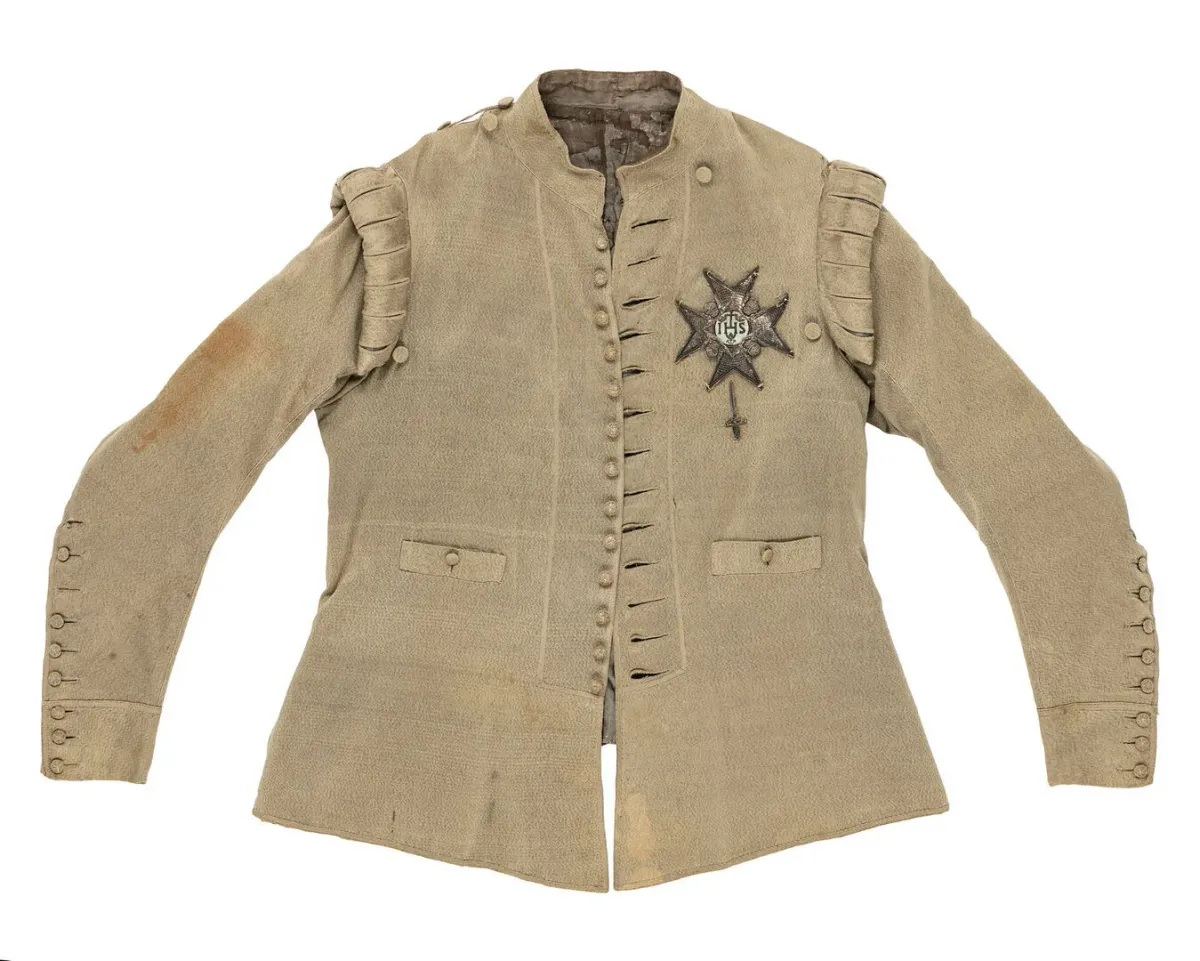
Gustav III is shot in the back at a masked ball at the Royal Opera on March 16, 1792, and dies 13 days later. The episode became Verdi's opera Un ballo in maschera, and it ended Swedish enlightened absolutism.
1866–1930 · The Lindhagen Plan and functionalism
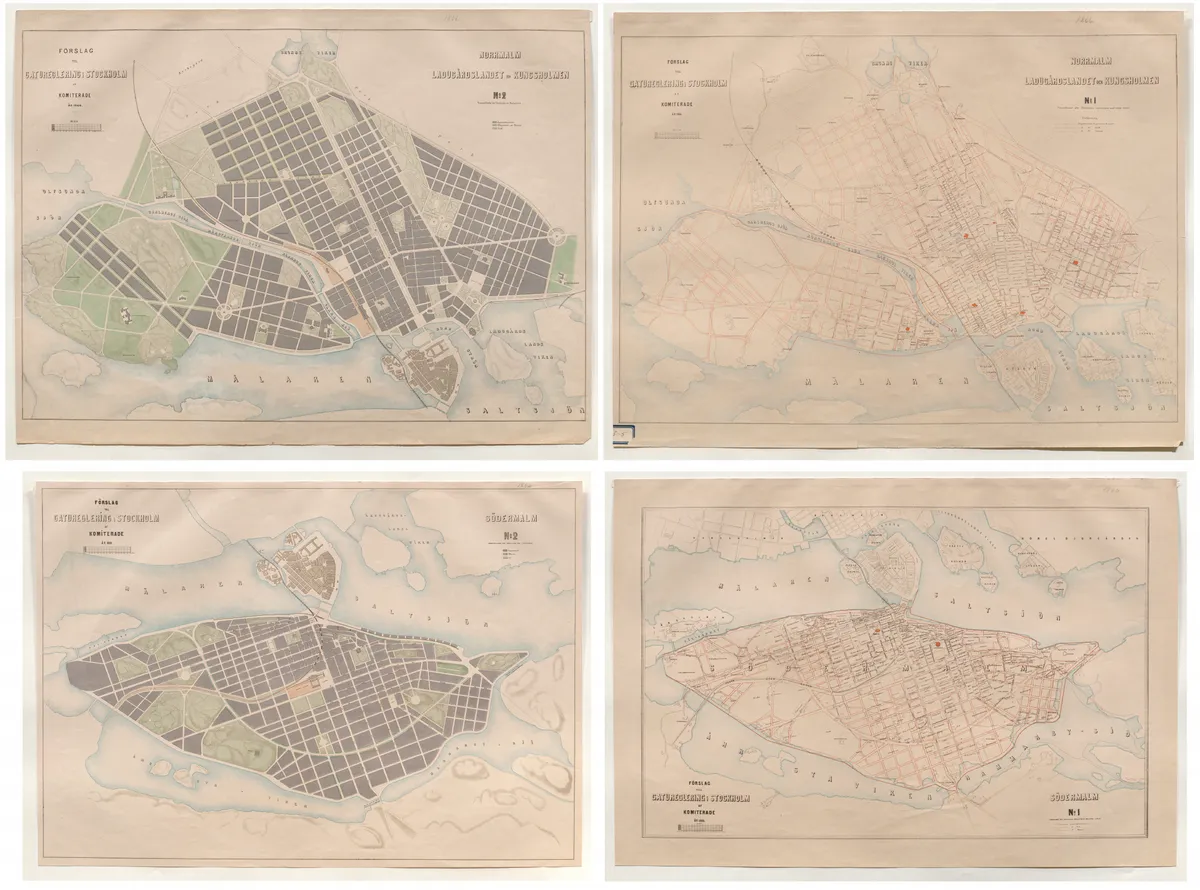
Albert Lindhagen's plan, approved in 1866, cuts straight avenues (Sveavägen, Karlavägen, Ringvägen) through the pre-industrial fabric, along Haussmann's lines. Gunnar Asplund's 1930 Stockholm Exhibition launches Scandinavian functionalism as the country's official aesthetic.
1950–1975 · The subway and the demolition of the center
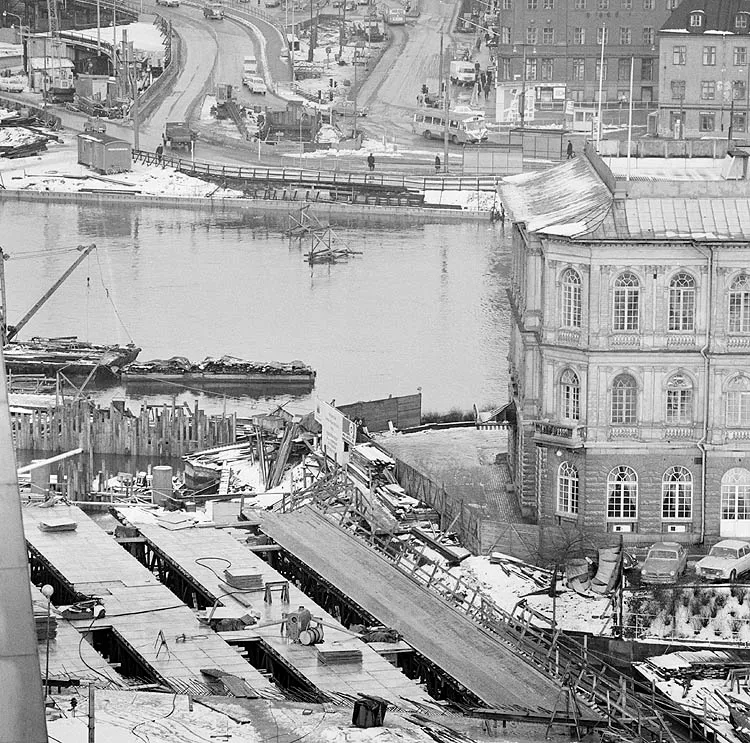
The tunnelbana opens on October 1, 1950, and organizes entire suburbs around its stations, starting with Vällingby in 1954. In parallel, the “Norrmalm regulation” tears down hundreds of 19th-century buildings to open Sergels torg (1967) and the five Hötorget towers.
1986–2026 · Palme, Citybanan, and the cashless city
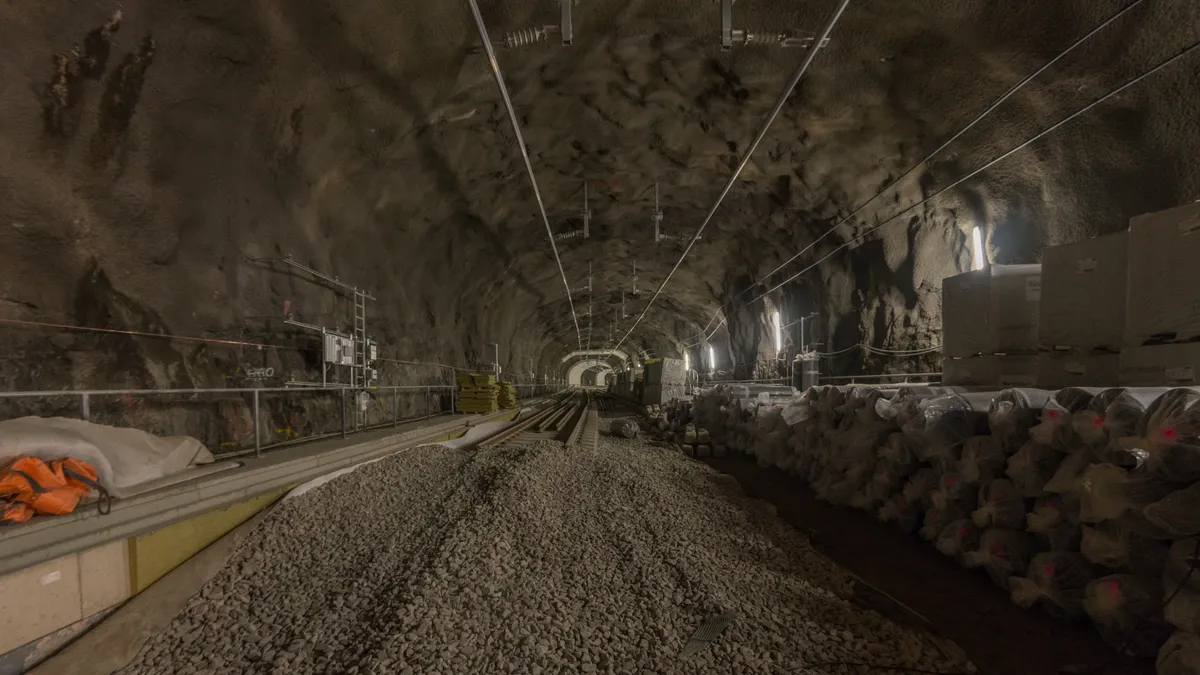
Prime minister Olof Palme is shot dead on Sveavägen on February 28, 1986, on foot and without a bodyguard, and the case marks the end of the country's informal self-image. In the following decades come the permanent congestion charge (2007), the Citybanan rail tunnel (2017), the Slussen reconstruction (since 2016), and the near-disappearance of cash.
Complete history
The founding on Stadsholmen, from 1250 to 1252
Stockholm was born as a military barrier on the strait between Lake Mälaren and the sea. Before it, power in the region lay farther inland on Lake Mälaren, at Birka and Sigtuna; when Baltic pirates sacked Sigtuna in 1187, it became clear the entrance had to be closed. Around 1250, stakes and a stone tower were planted on the islet of Stadsholmen, in the strait where the lake drains into the sea, and the name Stockholm first appears in two letters from Birger Jarl dated 1252. The city grew as a trading post of the Hanseatic League: in the 14th century, much of the population spoke Low German and the town charter reserved half the council seats for Germans. Iron and copper from Bergslagen shipped out through here, and the currency, commercial law and brick architecture came in with them.
Two centuries of dispute with the Kalmar Union
The following two centuries were a dispute between the Danish crown of the Kalmar Union, sealed in 1397, and the Swedish families. Sten Sture the Elder defeated Christian I at Brunkeberg in 1471, inside the city limits. In November 1520, Christian II was crowned, offered amnesty, and three days later had about 80 nobles, bishops, and burghers beheaded in Stortorget: the Stockholm Bloodbath. The effect was the opposite of what was intended: Gustav Vasa, whose father was among the dead, raised Dalarna, was elected king on June 6, 1523, and entered the city on the 24th. He broke with Rome, confiscated church property in 1527, and turned an elective monarchy into a hereditary one. It's the founding date of the modern Swedish state, which is why June 6 is the national day.
Military power of the north, in the 17th century
In the 17th century Sweden became the military power of northern Europe, and Stockholm became an imperial capital: a status formalized by the 1634 Instrument of Government. The population rose from about 9,000 residents in 1600 to 60,000 in 1700; the port filled with war spoils and iron for export; the crown began commissioning buildings from architects such as Nicodemus Tessin, father and son. It was also a century of disasters: the Vasa sank on its maiden voyage in 1628, and the Tre Kronor castle burned in 1697. The defeat at Poltava in 1709, and the 1710 plague, which killed a third of the city, started the decline, and the empire ended in 1721 with the Treaty of Nystad. In 1809, Sweden lost Finland to Russia: Stockholm, which had been the geographic center of the kingdom, became its eastern edge, and Sweden a country that hasn't gone to war since 1814.
The 1866 Lindhagen plan and functionalism
The modern city is the work of two plans and one ideology. Albert Lindhagen's plan, approved in 1866, cut straight, tree-lined avenues through the pre-industrial fabric and organized the expansion of Östermalm and Vasastan as industry and the railway arrived. After 1930, the functionalism launched by Gunnar Asplund at the Stockholm Exhibition joined the social-democratic project: the subway opened in 1950, the ABC suburbs debuted in Vällingby in 1954 (work, housing, and shops a few minutes from the platform) and the Million Programme, which between 1965 and 1974 built a million homes in a country of eight million people. The aesthetic cost was paid in the center: between 1951 and 1975, the Norrmalm regulation demolished hundreds of 19th-century buildings to open Sergels torg and the Hötorget towers, a project the city still debates today.
Political assassinations, an attack and the cashless city, from 1986 to today
The end of the 20th century brought two political assassinations that still serve as landmarks in the city's memory: Olof Palme on Sveavägen, in 1986, and foreign minister Anna Lindh, stabbed in a department store in 2003. The image of a safe, informal country changed again on April 7, 2017, when a truck was driven into pedestrians on Drottninggatan and killed five people. In parallel, the city reorganized itself around rails and data: the 6 km Citybanan tunnel opened on July 10, 2017 and doubled commuter-train capacity; the congestion charge became permanent in 2007; and the rebuilding of Slussen, begun in 2016, still occupies the meeting point of the two halves of the city. The software industry born here, from Skype, Spotify (founded in 2006), Klarna and Mojang, coexists with a housing market that pushes the average worker 40 minutes by train from their own capital. That same industry produced the most visible change for new arrivals: cash in circulation has fallen below 1% of GDP, almost no bus or museum accepts notes, and a visitor who brings only cash gets stuck at the very first café.
Prime Minister Olof Palme was shot dead on Sveavägen on February 28, 1986, while walking home from the movies without a bodyguard.
Geography and shape of the city
The lock between the lake and the sea
The city sits at the chokepoint where Lake Mälaren (Sweden's third largest, at about 1,140 km²) spills fresh water into the Saltsjön bay, an arm of the Baltic. That drop of less than a meter is Stockholm's reason for existing: whoever controls the strait controls navigation to Uppsala and the whole interior, and since the 17th century the flow has been regulated by locks in Slussen, between Gamla Stan and Södermalm, now under a reconstruction that began in 2016. The 3,700-tonne Guldbron golden bridge was placed in 2020.
Islands, bridges, and the rock
The center spreads over 14 islands linked by 57 bridges; to the east, the city dissolves into the Stockholm archipelago, some 30,000 islands and islets reaching 60 km out to sea. The terrain is smooth rock scoured by glaciers, with cliffs 30 to 40 m high in Södermalm (Mariaberget, Monteliusvägen), and the land is still rising about 4 mm a year through post-glacial rebound, which is why the Viking harbor of Birka now sits far from the waterline.
A three-layer grid and a humid continental climate
The urban fabric has three visible layers: the medieval maze of Gamla Stan; the straight avenues laid out by Albert Lindhagen in the second half of the 19th century; and the suburbs built between 1950 and 1975 around subway stations, each with a shopping center, school, and square a few minutes' walk from the platform. The climate is humid continental softened by the Baltic: a long winter with intermittent snow, a short and very bright summer, and about 540 mm of rain a year, well spread out.
Culture
The calendar turns on December 10
The cultural calendar has a fixed center: December 10, the anniversary of Alfred Nobel's death. Some of the prizes are decided in the city itself: the Swedish Academy, founded in 1786, chooses the literature prize in the same old Stock Exchange building that houses the Nobel Prize Museum, in Gamla Stan; the Karolinska Institute, in Solna, chooses the medicine prize. In literature, Stockholm is a character: August Strindberg dissected the city's hypocrisy in The Red Room (1879) and died at Drottninggatan 85, now a museum; Astrid Lindgren wrote almost all her work in an apartment at Dalagatan 46; Maj Sjöwall and Per Wahlöö launched the Nordic crime novel with the Inspector Martin Beck series; and Stieg Larsson set the Millennium trilogy at real addresses in Södermalm.
An export pop factory
The city is also a factory of pop music for export. ABBA won Eurovision in 1974 with Waterloo and has had its own museum in Djurgården since 2013; in the 1990s and 2000s, the Cheiron studio and producer Max Martin wrote a good share of the American charts from Stockholm; after them came Robyn, Avicii, Swedish House Mafia and First Aid Kit, plus a metal and indie scene that plays venues like Debaser. Spotify was founded here in 2006. In theater and film, the Dramaten, a 1908 building, was run by Ingmar Bergman, who staged most of his plays there; Greta Garbo was born in Södermalm in 1905 and is buried at Skogskyrkogården.
Design, sport, and the outdoors
In daily life, three things explain a lot: design, sports and the relationship with the outdoors. 1930s functionalism became the national taste and still shapes shops, homes and household objects; on Strandvägen, Svenskt Tenn, a shop opened in 1924, sells the printed fabrics of Josef Frank, who began designing for it in 1934. In soccer, Stockholm splits between AIK (Solna), Djurgården and Hammarby (Södermalm), and the last two share Tele2 Arena; in winter, hockey takes over. Allemansrätten, the right of public access to nature guaranteed by the constitution, lets you walk, camp and pick berries on other people's land, which is why, on the first sunny weekend, many residents swap the city for the archipelago or the forest.
In many cafés, museums and buses, the sign “Vi tar inte kontanter” warns right at the door that paper money isn't accepted.
Festivals and events
Valborg (Walpurgis Night)
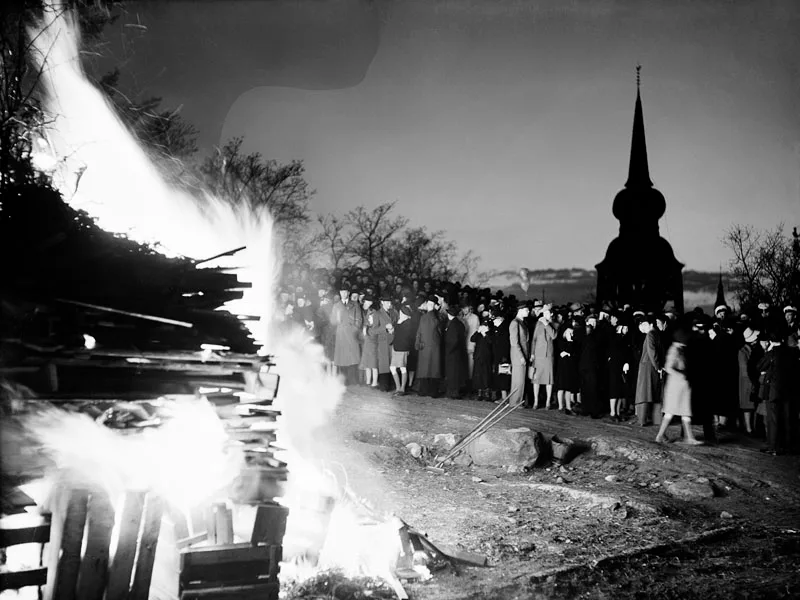
April 30: bonfires, student choirs, and speeches welcoming spring. In Stockholm, the main ones are at Skansen and Riddarholmen; in Uppsala, 70 km and 40 minutes away by train, the whole city takes part.
Midsommar
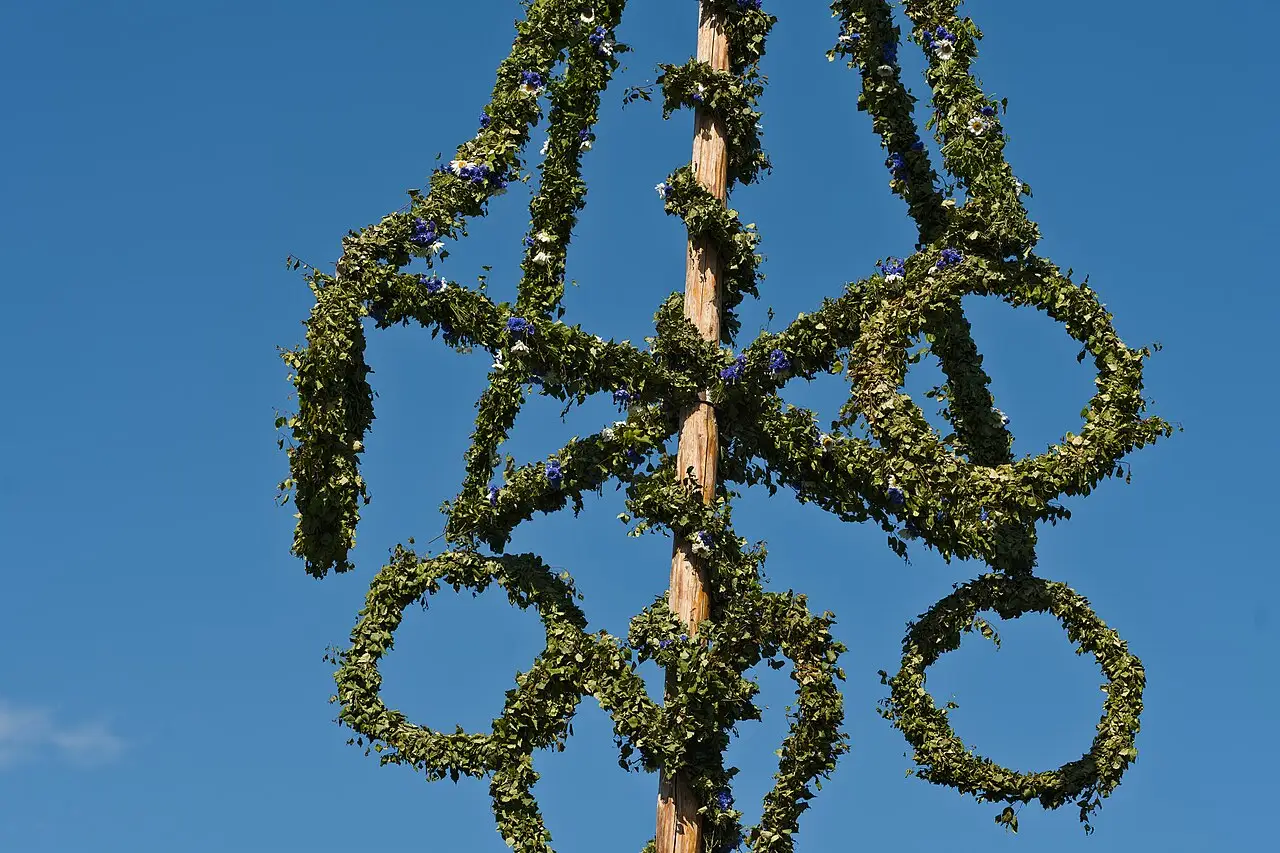
The Friday between June 19 and 25, the most important holiday of the year after Christmas. The city empties out because almost everyone heads to the countryside or the archipelago; those who stay find the flower-decked maypole, dancing, and herring at Skansen. Supermarkets close early and the Systembolaget closes the day before.
Kräftskiva
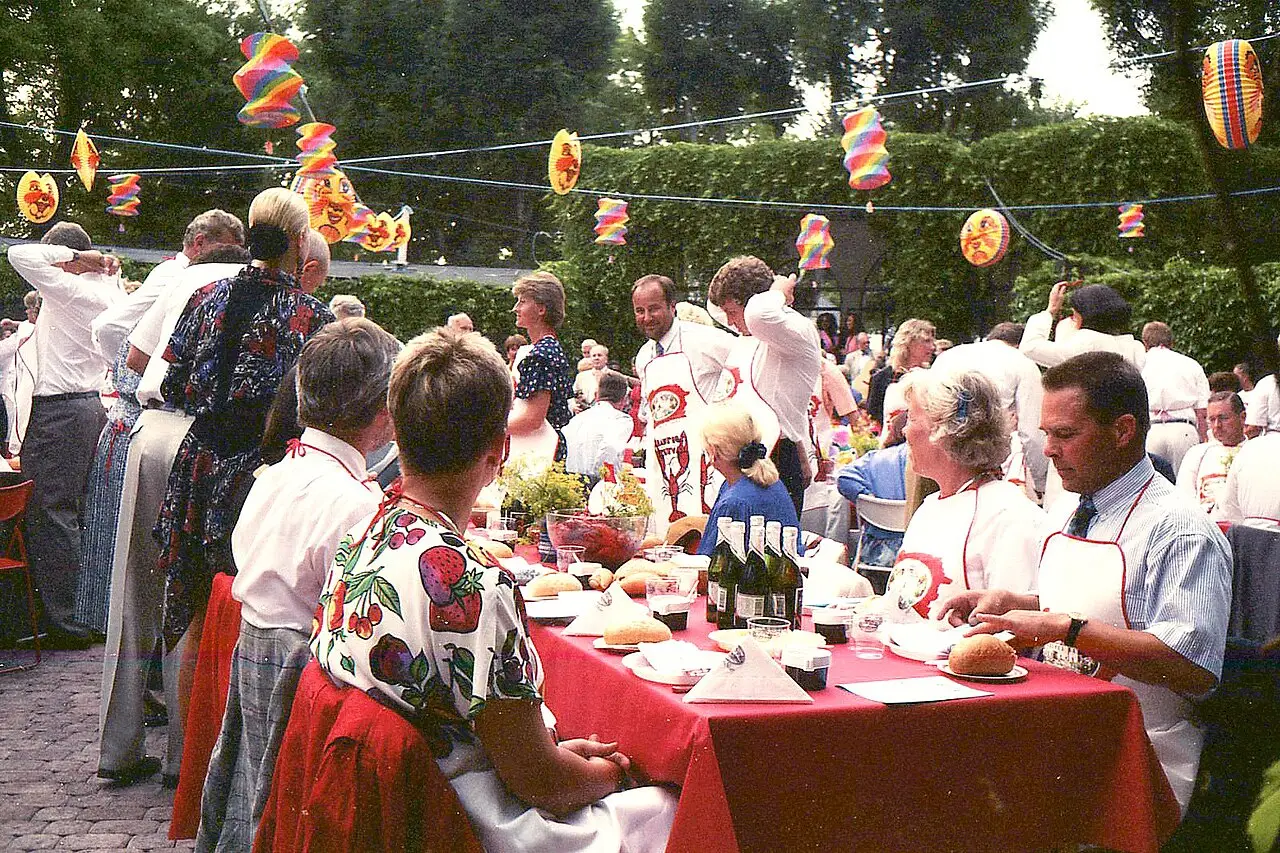
Crayfish parties between late July and early September: crayfish boiled with dill, eaten cold with your hands, paper hats, moon lanterns, and toasting songs. It's a private party, but restaurants set up versions and supermarkets sell the full kit.
 AI illustration
Stockholm Pride and the Kulturfestivalen
The biggest Nordic Pride fills Pride Park and its parade between late July and early August. In mid-August, the Stockholms kulturfestival spreads free stages across Norrmalm, Kungsträdgården, and Gamla Stan for about five days.
 AI illustration
Nobel and Lucia
On December 10 the prizes are awarded at the Konserthuset and the banquet takes place at the Stadshuset; television broadcasts it all and the hotels fill up. Three days later, in the early hours of December 13, Lucia processions with candle crowns sing in churches, schools, and train stations: at the darkest point of the year.
Books and films
The Girl with the Dragon Tattoo: Stieg Larsson (2005), first in the Millennium trilogy
Uses real Södermalm addresses as a map and draws the class boundary between the southern island and Östermalm. The City Museum has run a walking tour of the settings for years, which says a lot about how much the book shaped Stockholm's contemporary image.
Roseanna: Maj Sjöwall and Per Wahlöö (1965)
First of the ten Martin Beck novels, written between 1965 and 1975, credited with inventing Nordic crime fiction. The real subject isn't the crime, but the welfare state seen from inside a police station, in a Stockholm being demolished and rebuilt at the same time.
Easy Money (Snabba Cash): Jens Lapidus (2006), 2010 film and 2021 series
Weaves together three narrators who cross the line between the pricey Stureplan nightlife and the Million Programme suburbs. Explains the segregation of today's Stockholm (housing market, transport, parallel economy) better than any guide.
Frequently asked questions
Stockholm: Do I need cash?
No: many cafés, museums, SL buses, and even churches turn down bills as a matter of policy. Bring an international contactless card with a PIN, and a second card on a different network as backup.
Stockholm: What's the cheapest way from Arlanda to the center?
The Flygbussarna bus, around 139 SEK to Cityterminalen. The pendeltåg, with the combined SL + Arlanda ticket, costs about 200 SEK, and both take about 45 minutes, against the 18 minutes of the Arlanda Express, which the arrivals-hall signs advertise first and which charges about 340 SEK.
Stockholm: How do I get to Drottningholm?
Drottningholm Palace is 11 km to the west. From May to September, the boat leaves from Stadshusbron and takes 50 to 60 minutes; year-round, the subway to Brommaplan plus a bus covers the trip in about 40 minutes.
Stockholm: Does Sweden use the euro?
No: the currency is the Swedish krona (SEK), which the country kept in the 2003 referendum and still has no date to switch to the euro; in 2026, one euro is worth about 11 SEK.
Stockholm: Do I need to take off my shoes when entering a home?
Yes: walking into a Swedish apartment in shoes is about the most visible social slip there is, even at a party, even in a suit.