Denmark
Copenhagen
A clean harbor, bikes, design and smørrebrød
Days Start with the basic programme and choose extensions for the time you have.
How the guide reaches this number
A third day goes to Nørrebro, Vesterbro and more museums, and a fourth only pays off outside the city, at Louisiana, the modern art museum in Humlebæk. The city doesn't suit anyone looking for chaos, bargains or heat, or anyone who won't accept paying a lot all the time, because there are no discounts and no haggling anywhere. With just one day, rent the bike early, climb the free 106 m Christiansborg tower, have smørrebrød for lunch before 3pm and cross the harbor on the 991 harbor bus in the late afternoon. In winter, move everything earlier, because in December it gets dark at 3:38pm. The Little Mermaid is 1.25 m tall with a crowd around her, so don't build your day around her. Expect to spend more than you planned, too, in any neighborhood.
2–3
When Mid-May to late August; near 21 June the day has about 17 hours 30 minutes of light
How the guide reaches this number
Summer is short and it's the reason to come: from mid-May to late August, with highs of 20–22 °C in July, lows of 13–15 °C and, near the solstice, about 17 hours 30 minutes of daylight. The sun rises around 4:25am and sets near 10pm, which undoes any plan for an early dinner. May and September offer the best balance of light, price and crowds; September still has 13 hours of daylight and the harbor stays swimmable in the first weeks. Winter is dark more than cold: December and January sit between 0 and 4 °C, with wind that makes it feel colder, and on December 21 the sun sets at 3:38pm. Rain is spread through the year (about 600 mm), with the wettest months between August and November; the sideways drizzle is more of a nuisance than the volume. If you can choose, avoid February, the month with the least usable daylight and the fewest outdoor events. In July, keep in mind that many Danes take vacation in weeks 28 to 30 of the calendar, when some kitchens close. November is only worthwhile from mid-month, when Tivoli reopens for Christmas.
Per person/day Budget 550–850 kr; mid-range 1,200–2,000 kr; comfortable from 2,800 kr (≈ €75–115 / €160–270 / €375)
How the guide reaches this number
Per person per day: accommodation, meals, urban transport, visits and a small allowance for extras. Flights excluded; larger purchases vary. Editorial estimate, not a quote.
 What Nilo thinks
Set aside two days for Copenhagen, by bike: one for the medieval center, Slotsholmen and Nyhavn, another for Christianshavn, Christiania and the harbor. A third day goes to Nørrebro, Vesterbro and more museums, and a fourth only pays off outside the city, at Louisiana, the modern art museum in Humlebæk. The city doesn't suit anyone looking for chaos, bargains or heat, or anyone who won't accept paying a lot all the time, because there are no discounts and no haggling anywhere. With just one day, rent the bike early, climb the free 106 m Christiansborg tower, have smørrebrød for lunch before 3pm and cross the harbor on the 991 harbor bus in the late afternoon. In winter, move everything earlier, because in December it gets dark at 3:38pm. The Little Mermaid is 1.25 m tall with a crowd around her, so don't build your day around her. Expect to spend more than you planned, too, in any neighborhood.In Copenhagen, the harbor that runs through the center is clean enough to have public saltwater pools, and you can get around the whole city by bike, on bike lanes with their own curb height and traffic lights. It grew from the toll the crown charged ships in the Øresund strait from 1429 to 1857. Power still sits at Slotsholmen, where Christiansborg has a 106 m tower with free admission. Cycle to the canals of Christianshavn, walk through Christiania, and devote an afternoon to the Designmuseum, from the Ant chair to the Wishbone. For lunch, order smørrebrød at a classic lunch restaurant, starting with herring and a shot of akvavit, and save the pølsevogn hot dog for eating standing up. Expect high prices on everything, with no discounts or haggling. Come between mid-May and the end of August, when the days are long and the harbor is swimmable, and set aside two days, or three for Nørrebro and Vesterbro.
Quick facts
- Population
- 671,714 in the municipality (1/1/2026); 1,408,575 in the continuous urban area; about 2.1 million in the metro region
- Founded
- Port settlement in the 11th c.; Bishop Absalon's fortification in 1167; city rights in 1254
- Country and region
- Denmark; islands of Zealand and Amager, in the Capital Region (Region Hovedstaden), 88.25 km² in the municipality
- Language
- Danish; English spoken by about 86% of adults and used without ceremony in shops
- Currency
- Danish krone (DKK, “kr”); pegged to the euro at about 7.46 kr per €, with a ±2.25% band
- Time zone
- CET (UTC+1); daylight saving CEST (UTC+2) from the last Sunday in March to the last in October
- Best time to visit
- Mid-May to late August; near 21 June the day has about 17 hours 30 minutes of light
- Average daily cost
- Budget 550–850 kr; mid-range 1,200–2,000 kr; comfortable from 2,800 kr (≈ €75–115 / €160–270 / €375)
When to go
Mid-May to late August; near 21 June the day has about 17 hours 30 minutes of light
January
-1° to 3°C
56 mm of rain
February
-1° to 4°C
42 mm of rain
March
0° to 7°C
41 mm of rain
April
4° to 12°C
34 mm of rain
September
11° to 18°C
56 mm of rain
October
7° to 13°C
65 mm of rain
November
3° to 8°C
60 mm of rain
December
1° to 5°C
66 mm of rain
How the year changes

Summer is short and it's the reason to come: from mid-May to late August, with highs of 20–22 °C in July, lows of 13–15 °C and, near the solstice, about 17 hours 30 minutes of daylight. The sun rises around 4:25am and sets near 10pm, which undoes any plan for an early dinner. May and September offer the best balance of light, price and crowds; September still has 13 hours of daylight and the harbor stays swimmable in the first weeks. Winter is dark more than cold: December and January sit between 0 and 4 °C, with wind that makes it feel colder, and on December 21 the sun sets at 3:38pm. Rain is spread through the year (about 600 mm), with the wettest months between August and November; the sideways drizzle is more of a nuisance than the volume. If you can choose, avoid February, the month with the least usable daylight and the fewest outdoor events. In July, keep in mind that many Danes take vacation in weeks 28 to 30 of the calendar, when some kitchens close. November is only worthwhile from mid-month, when Tivoli reopens for Christmas.
The same numbers as a table
| Month | Temperature °C | Rain mm |
|---|---|---|
| January | -1 to 3 | 56 |
| February | -1 to 4 | 42 |
| March | 0 to 7 | 41 |
| April | 4 to 12 | 34 |
| May · | 8 to 17 | 41 |
| June · | 11 to 20 | 64 |
| July · | 14 to 23 | 62 |
| August · | 14 to 22 | 73 |
| September | 11 to 18 | 56 |
| October | 7 to 13 | 65 |
| November | 3 to 8 | 60 |
| December | 1 to 5 | 66 |
Nilo's tips
Take the paper number at the door, before joining the line
Bakeries, pharmacies, post offices and public counters serve in the order of those numbers, and anyone waiting without one won't be called, or warned. The dispenser sits right at the entrance, so grab yours as you walk through the door, before you even look at the display case.
From the airport, take the M2 metro, which runs 24 hours
It goes from Terminal 3 to the center in about 14 minutes, for about 36 kr, versus 250–350 kr by taxi. Install the official ticket app while you're still on the plane, because it changed its name at the end of 2025 and the store is full of copies. Without a valid ticket, the fine is about 750 kr. If you'll make more than four trips in a day, the City Pass Small pays off, at about 100 kr for 24 hours.
Have smørrebrød for lunch between 11:30am and 3pm, for 80 to 160 kr a piece
Those are the classic smørrebrød restaurants' hours, and after 3pm, when they close the kitchen, what stays open is the version made for tourists. To try it before lunch, go to Torvehallerne, the covered market at Nørreport, which sells herring smørrebrød from 9am. At the table, follow the traditional order, from herring to cheese, and save dinner for another cuisine.
Take boat-bus 991, included in the regular ticket
It crosses the harbor from end to end with no separate charge. The Nyhavn tourist boat does the same circuit in about 1 hour, with a line and commentary. The 992 and 993 harbor buses also cross the harbor with the regular ticket. Catch the 991 in the late afternoon, between Refshaleøen and downtown, and share the deck with locals heading home from work.
On Monday, with the museums closed, rent a bike
By bike, Nørrebrogade leads to the Assistens cemetery-park and the Superkilen mosaic park. Rental runs 100–150 kr a day. Nørrebrogade is the street with the most cyclists in the country, about 40,000 a day, so signal with your hand before turning or stopping, as cyclists here demand. Switch on your lights as soon as it gets dark, which in December happens at 3:38pm, because riding without lights gets you a fine.
Arrive by train or bike and earn a coffee with CopenPay
CopenPay gives coffees, bike rentals and admission to more than 90 attractions to anyone who arrives by train, cycles or picks up litter from the harbor, with no purchase required beforehand. Since June 2026 the program runs year-round, and each partner sets the task and the reward. Check the list of partners before planning your day, because it changes by neighborhood and by season.
Explore the map
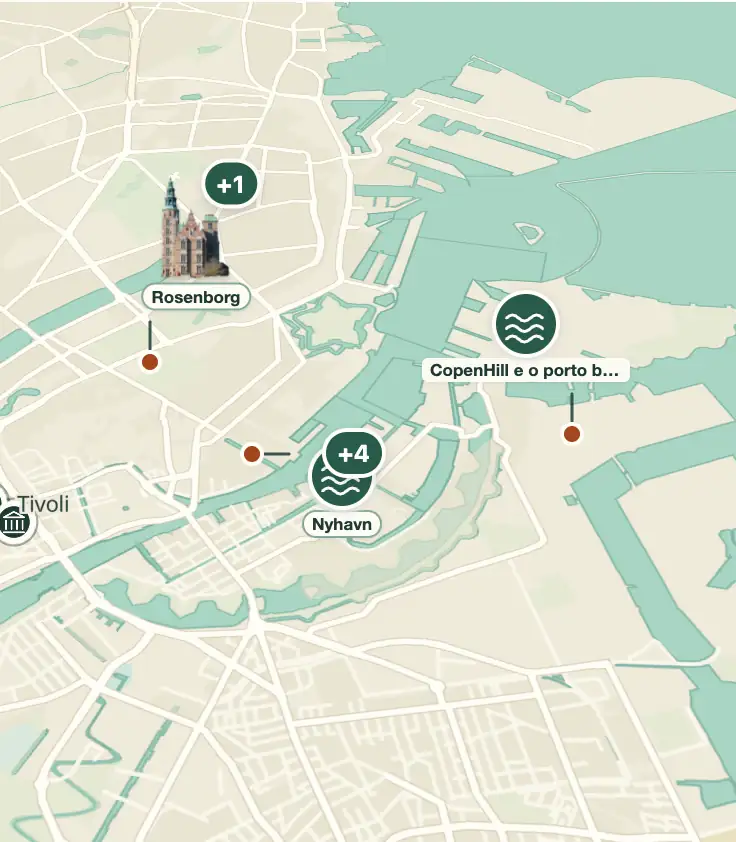
© OpenStreetMap · OpenFreeMap · © OpenMapTiles
Explore the map, read about the other places and plan your travel days in the app.
Open the appWhat to see
Copenhagen: Low ground and two islands
Copenhagen is flat and low: the municipality's highest natural point, Valby Hill, stands about 31 m, and much of Amager sits less than 3 m above sea level. The medieval center occupies what lay within the old walls and brings together Strøget, a 1.1 km pedestrian mall since 1962, Kongens Nytorv, the Latin Quarter around the university, Rosenborg and the covered market Torvehallerne, opened in 2011 with about 60 stalls.

Nyhavn
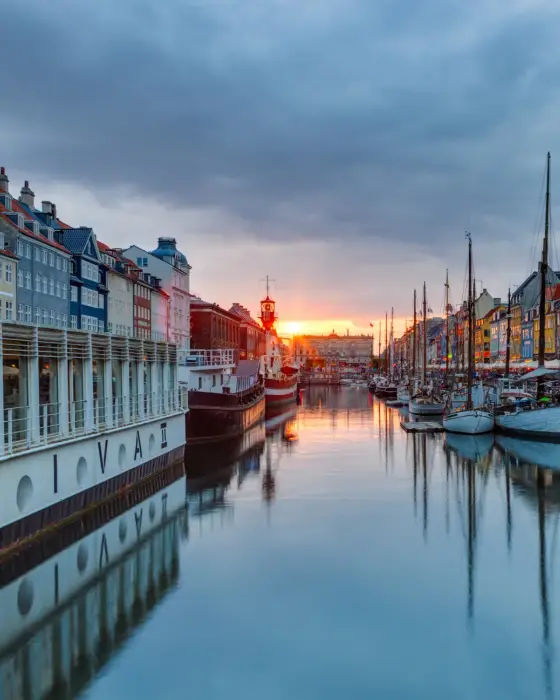
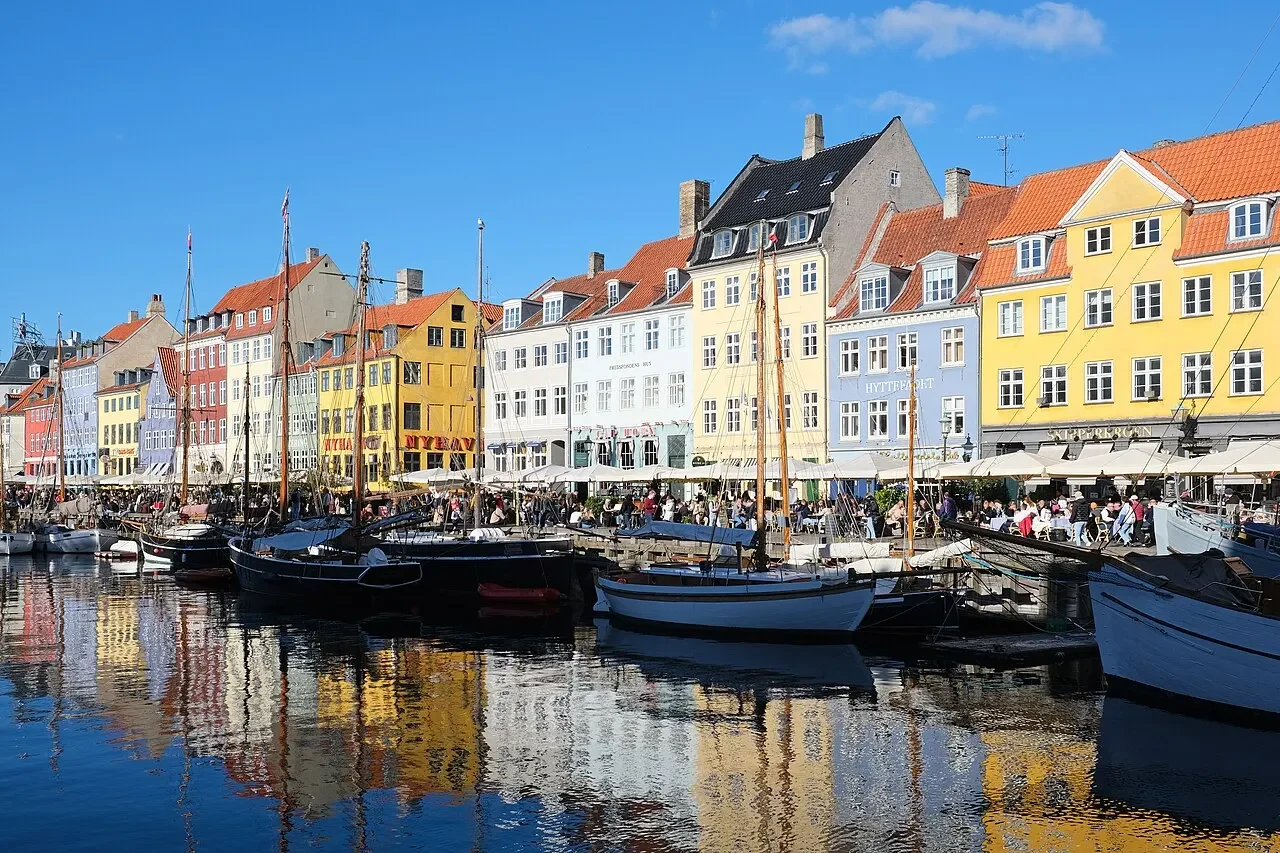
Canal dug between 1670 and 1673 by Swedish prisoners to bring ships into the center. The colorful three-story houses date from the 18th century; H.C. Andersen lived at numbers 20, 67, and 18. Canal boats leave from here and loop the harbor in about 1 hour.
The canal that Swedish prisoners dug between 1670 and 1673, lined with 18th-century colored houses where H.C. Andersen lived at three addresses, is the image of the city and the pier where the harbor boats leave from. To see the canal from the water without paying for a tour, catch the 991 harbor bus line, which stops here and is covered by the regular transit ticket.
Check access
Slotsholmen and Christiansborg
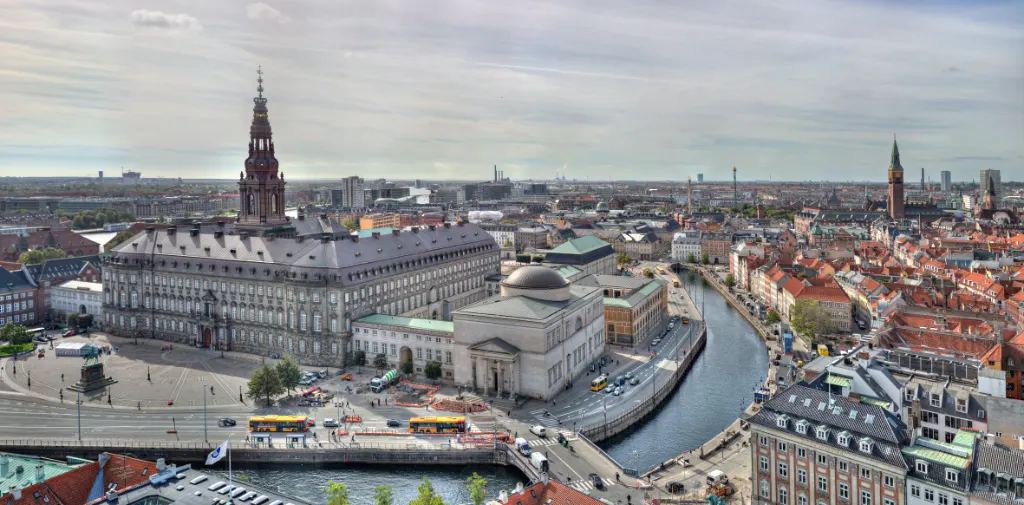
The islet of power: the current palace is the third on the site, built between 1907 and 1928, and houses the parliament, the prime minister's office, and the Supreme Court all at once. The tower stands 106 m, the tallest in the city, and the climb is free; the ruins of Absalon's castle lie in the basement. Next door, the 1640 Børsen has stayed fenced off since the fire of April 16, 2024.
On the islet that holds parliament, the prime minister's office and the Supreme Court, climb the Christiansborg tower, 106 m, the tallest in the city and free to enter; the climb and the viewpoint take about twenty minutes, and the castle's basement holds the ruins of Absalon's castle.
Check access

Rosenborg
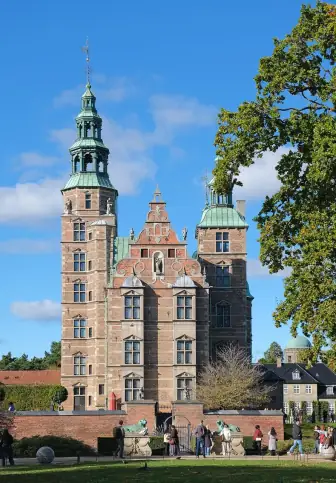
Christian IV's summer castle, built between 1606 and 1633 in Dutch Renaissance style and never remodeled inside. It keeps the crown jewels and the 1596 crown in the basement; around it, Kongens Have is the city's oldest park and the most used on sunny days.
In Rosenborg's basement are the crown jewels and the 1596 crown, and that's what the visit is for. Since almost every museum in Copenhagen closes on Mondays, check the hours before crossing the city.
Check access

Rundetårn
Observatory tower from 1637–1642, 34.8 m tall with a 209 m spiral ramp that climbs without a single step, built so carriages could carry instruments to the top. It's Europe's oldest functioning observatory; the telescope room is under restoration, with reopening expected in autumn 2026 (check before you go).
Half an hour, and it's the only climb in the city done without a single step: that matters for anyone who can't face stairs. The telescope room is under restoration; check before you go.
Check access
Vor Frelsers Kirke
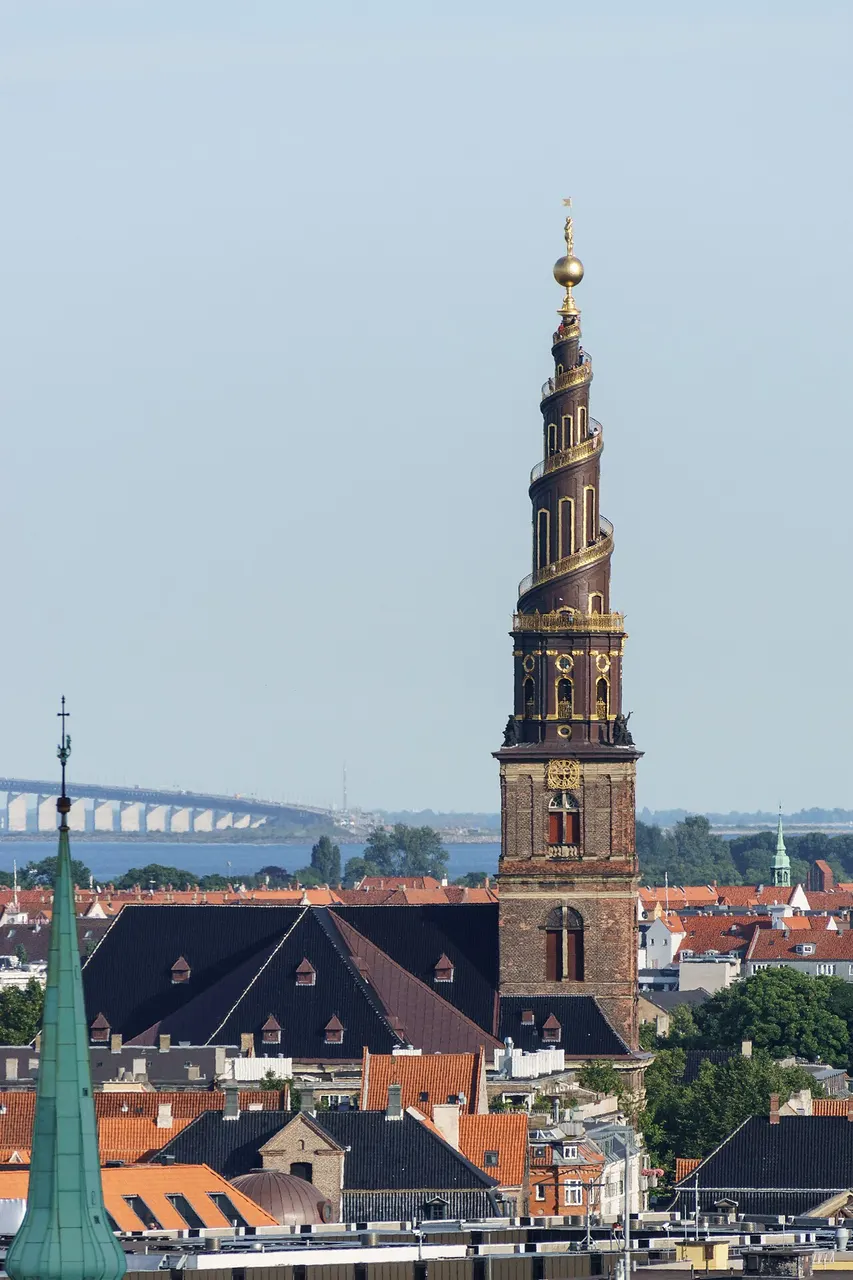
Baroque church in Christianshavn consecrated in 1696, with the external spiral spire added in 1752 by Lauritz de Thurah. There are 400 steps up to 90 m, the last 150 on the outside with a low railing; it closes on days of strong wind and in rain.
It's 400 steps up to 90 m, the last 150 along the outer spiral, with a low railing, and the view over Christianshavn and the harbor is worth the effort. The tower closes on days of strong wind and rain, so check the weather before crossing the city.
Check access
Ny Carlsberg Glyptotek and SMK
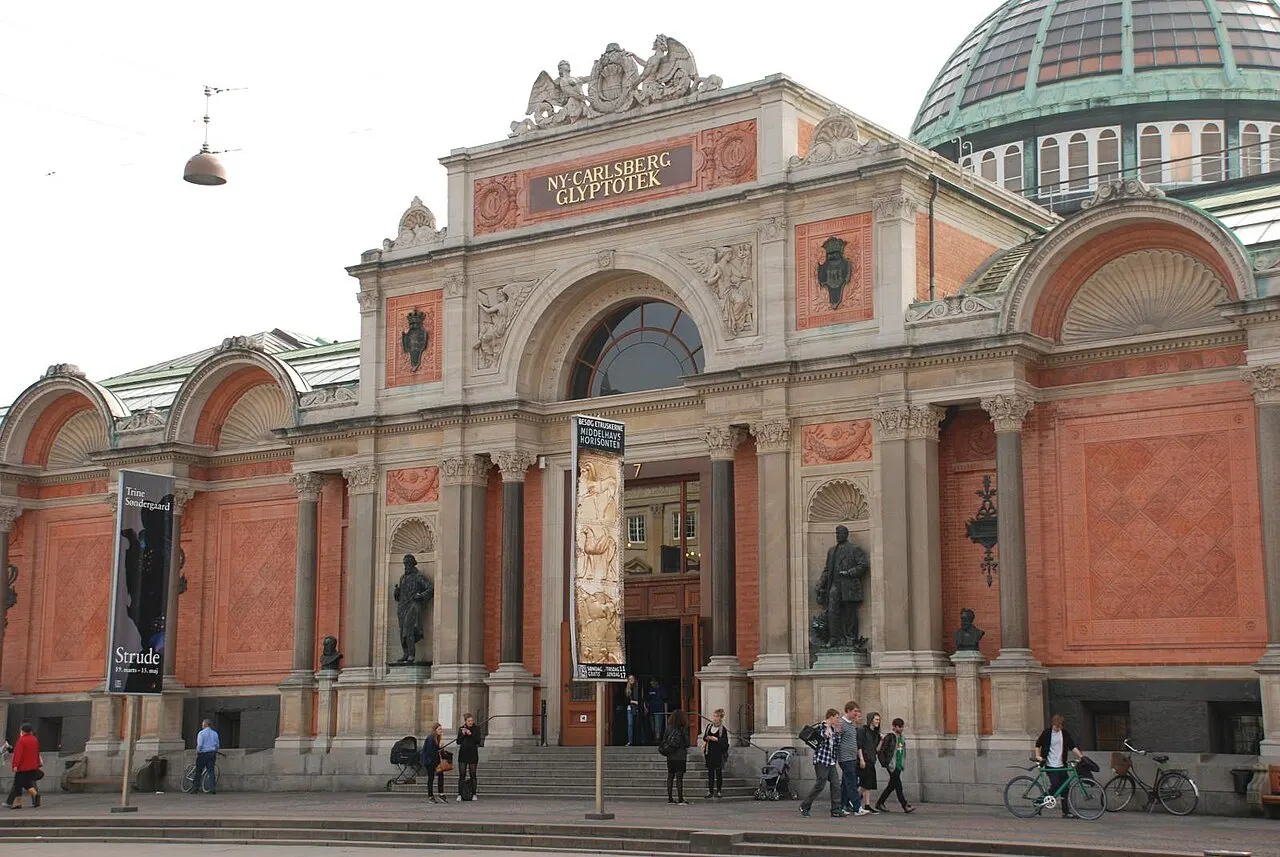
The Glyptotek, opened in 1897 by brewer Carl Jacobsen, brings together Egyptian, Greek, Etruscan, and Roman antiquities alongside a core of Rodin, Degas, and Gauguin around a palm-filled winter garden. Ten minutes away, the Statens Museum for Kunst holds the national collection, from Mantegna to Hammershøi, with the permanent collection generally free.
The SMK's permanent collection is usually free, and the Glyptotek has the winter garden with palm trees; the two are ten minutes apart, and, like almost every museum here, they don't open on Mondays.
Check access

CopenHill and the swimmable harbor
The Amager Bakke incinerator, a project by the BIG office opened in 2017, stands 85 m tall, with an artificial ski slope of about 450 m open since October 2019 and a climbing wall on its facade. Across from it, the harbor, cleaned up in the 1990s, has public baths at Islands Brygge (2002), Sluseholmen, and Nordhavn, open in summer and free.
The public baths at Islands Brygge, Sluseholmen and Nordhavn are free, but only open in summer, while the roughly 450 m ski slope on the roof of the 85 m incinerator has run year-round since October 2019.
Check access
Tivoli
Amusement park opened on August 15, 1843, by Georg Carstensen, on 8.3 ha next to the central station. The wooden roller coaster Rutschebanen dates from 1914 and still runs with an onboard brakeman; admission costs about 165–195 kr depending on the season, and the ride wristband adds about 295 kr.
Tivoli tickets cost 165–195 kr, and the rides require an extra wristband for about 295 kr. Apart from the 1914 wooden Rutschebanen, it's 8.3 ha of amusement park attached to the central station, which only pays off for those who come for the rides.
Check access

Amalienborg and the Marble Church
Four identical rococo palaces around an octagonal square, designed by Nicolai Eigtved between 1750 and 1760 and occupied by the royal family since the Christiansborg fire of 1794. The changing of the guard happens at noon, with the troop leaving Rosenborg at 11:30am. The neighboring dome of Frederiks Kirke is 31 m across and took from 1749 to 1894 to complete.
Check access
Nilo’s itinerary
Start with the basic programme and choose extensions for the time you have.
Plan my days in the app ↗Day 1 · Medieval center, Slotsholmen, and Nyhavn
Start at 9am at Torvehallerne, in Nørreport, with coffee and a herring smørrebrød; the two glass halls date from 2011 and hold about 60 stalls.
Climb the 209 m spiral ramp of Rundetårn (1642), and check beforehand whether the telescope room has come out of restoration, expected in autumn 2026.
Cross Strøget to Slotsholmen: the Christiansborg tower (106 m, free admission) and the ruins of Absalon's castle in the basement, with the Børsen fenced off for work next door.
Have smørrebrød before 3pm at a classic smørrebrød restaurant and walk to Kongens Have, Rosenborg's garden, with the crown jewels in the castle basement.
In the late afternoon, head down to Nyhavn and cross the harbor on the 991 harbor bus, which stops at the pier and is covered by the regular transit ticket, instead of paying separately for the tourist circuit.
Day 2 · Christianshavn, Amager, and the water
Take the metro to Christianshavn and walk back along the canals of 1618, between the houseboats and the shipowners' warehouses.
Climb the 400 steps of Vor Frelsers Kirke up to 90 m, the last 150 on the outside spiral; it closes in strong wind.
Walk through Christiania, settled on September 26, 1971; respect the signs asking you not to take photos.
Have lunch at Reffen, in Refshaleøen, on the site of the former Burmeister & Wain shipyard, and take the 991/992 harbor bus back, included in the standard ticket.
End the afternoon at CopenHill (85 m, a ski slope on the roof of the incinerator since 2019) or swim at the Havnebadet at Islands Brygge, from June to August.




If you stay longer
Day 3 · Nørrebro, Vesterbro, and museums
Rent a bicycle (about 100–150 kr a day) and follow Nørrebrogade, the street with the most cyclists in the country.
Stop at Assistens Kirkegård, cemetery and park at once, with the graves of Kierkegaard, H.C. Andersen, and Niels Bohr.
Have coffee and bakery bread on Jægersborggade and continue to the Superkilen mosaic park (2012), made with urban objects brought from dozens of countries.
Cycle to Vesterbro around Lake Peblinge and Lake Sankt Jørgens, which separate the historic city from the newer neighborhoods, and follow Istedgade to Kødbyen, the former slaughterhouse district turned into galleries and nightclubs.
Close with the Ny Carlsberg Glyptotek and its winter garden, or with the SMK, and have dinner in Vesterbro.

Food
 AI illustration
Smørrebrød
A single slice of dark rye bread (rugbrød) with butter and an assembled topping: pickled herring, shrimp, roast beef with crispy onions, egg with mayonnaise, liver pâté with mushroom. It's lunch food, served roughly 11:30am–3pm, eaten with knife and fork, and the correct order is herring, fish, meat, then cheese. Each piece costs 80–160 kr at classic houses.
 AI illustration
Ristet hotdog from the pølsevogn
The hot dog cart, the pølsevogn, has been regulated since 1921 and has become an institution. The standard is a toasted bun with the red sausage (rød pølse) and six toppings: ketchup, mustard, yellow remoulade, pickled cucumber, raw onion and fried onion. It costs 40–60 kr and is eaten standing on the sidewalk.
 AI illustration
Wienerbrød and the new bakery scene
The “Vienna bread” is the pastry the rest of the world calls Danish: cinnamon kanelsnegl, cream-filled spandauer, poppy-topped tebirkes. A new generation of bakeries (Hart, Juno the Bakery, Andersen & Maillard, Lille) has rewritten the genre around cardamom; expect a line and 35–60 kr per piece.
 AI illustration
Stegt flæsk med persillesovs
Voted the national dish in a public poll in 2014: thick slices of pork belly fried until crisp, boiled potatoes, and white parsley sauce, served all you can eat. The Sunday version is flæskesteg, roast pork with leather-crisp crackling and red cabbage, and the same roast reappears cold in Monday's smørrebrød.
 AI illustration
Sild and snaps
Herring cured in brine and then marinated in vinegar, curry, mustard, or sherry, the obligatory starting point of any long lunch. It goes with an ice-cold shot of akvavit flavored with caraway or dill and a pilsner beer to follow; toast with “skål” while looking each other in the eye.
 AI illustration
New Nordic cuisine
The 2004 New Nordic Cuisine manifesto and Noma, opened in 2003 in Christianshavn, swapped the French repertoire for local ingredients and fermentation, and pulled a whole generation of kitchens along behind them: Geranium, on the eighth floor of the Parken stadium, Alchemist, Kadeau, Jordnær. Tasting menus cost 2,500–4,500 kr per person and are booked months ahead. Noma has ended regular service and now opens for seasons and projects, so check the restaurant's website to see whether a season falls on your dates.
 AI illustration
Beer
Carlsberg was founded in 1847 by J.C. Jacobsen in Valby, and Tuborg in 1873; the profits from both paid for the Glyptotek, the Little Mermaid, and many of the city's museums. Since 2006, Mikkeller and a dozen microbreweries have redrawn the map: 50–80 kr a glass at the bar, 8–15 kr a can at the supermarket.
 AI illustration
Calendar sweets
Copenhagen's sweets follow the calendar: fastelavnsboller with cream during Lent, æbleskiver with gløgg in December, risalamande of rice and almonds on Christmas Eve and flødebolle, chocolate-covered meringue on a marzipan base, all year round. In summer the line is for soft-serve cones with chocolate shavings and whipped cream.
Day trips
Louisiana, in Humlebæk
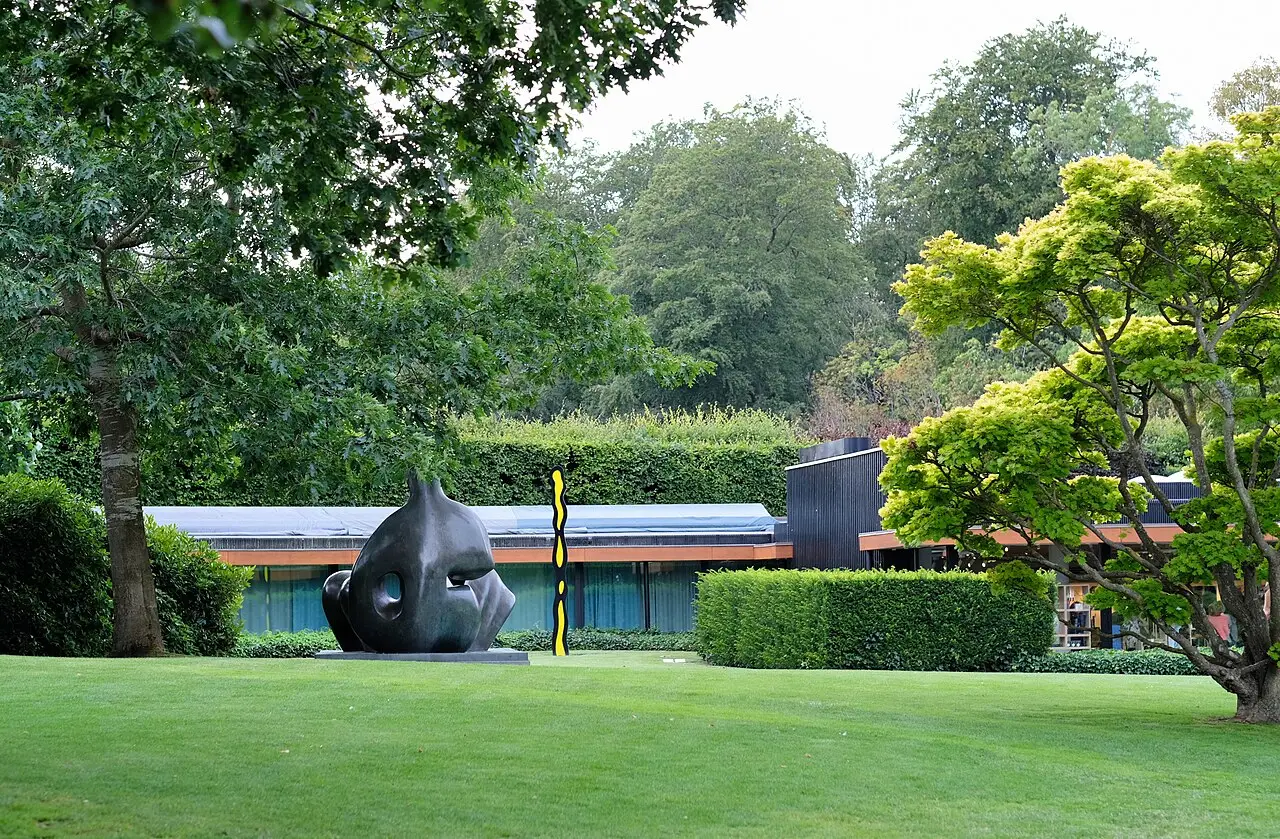
35 km to the north; train from Nørreport or Østerport to Humlebæk in about 36 min plus a 10-minute walk. Modern art museum opened in 1958, with low pavilions, a Calder and Moore sculpture garden, and a direct view of the Øresund. On the same line, 15 minutes further, is Kronborg, in Helsingør, Hamlet's castle, a UNESCO World Heritage Site since 2000.

Roskilde
30 km to the west; regional train of about 25 min from the central station. The brick cathedral, begun in the 1170s, has been a UNESCO World Heritage Site since 1995 and holds about 40 royal burials; the Viking Ship Museum displays five ships deliberately sunk around 1070 and recovered from the fjord in 1962.

Malmö, Sweden
Across the strait, Malmö costs less than Copenhagen and has the Turning Torso, a 190 m twisted tower from 2005, and the medieval center around the Lilla Torg square. It's 40 km away: the Øresund train leaves every 20 minutes and takes 35–40 minutes, crossing the 16 km of bridge, artificial island and tunnel opened on July 1, 2000. Bring your passport or ID card, because there's a Swedish check on arrival.
Where to begin
Medieval center, Slotsholmen, and Nyhavn
Start at 9am at Torvehallerne, in Nørreport, with coffee and a herring smørrebrød; the two glass halls date from 2011 and hold about 60 stalls.
Christianshavn, Amager, and the water
Take the metro to Christianshavn and walk back along the canals of 1618, between the houseboats and the shipowners' warehouses.
Nørrebro, Vesterbro, and museums
Rent a bicycle (about 100–150 kr a day) and follow Nørrebrogade, the street with the most cyclists in the country.
Money
The currency is the Danish krone (kr, DKK), pegged to the euro at about 7.46 kr per € within a narrow band. The country joined ERM II and never adopted the euro, which isn't accepted at most shops. A card handles everything, including the hot dog cart and the public restroom; many places don't take cash at all, and almost no one exchanges foreign currency on the street. Between individuals, transfers go through MobilePay, used by nearly the entire adult population, but it requires a Danish account and there's no point insisting otherwise. VAT (moms) is 25% and is already built into every posted price, so the number on the tag is the number you pay. Visitors from outside the EU can request a refund on purchases over about 300 kr at a single store. Real ranges in 2026: espresso 35–50 kr, beer at a bar 50–80 kr, smørrebrød 80–160 kr a piece, main course at a casual restaurant 160–260 kr, dinner with wine 500–800 kr, hostel bed 250–450 kr, mid-range hotel 1,100–1,900 kr a night. A tip isn't expected: service is included in the price by law, and rounding up is already generous.
Getting there and around
Kastrup Airport: 8 km and the M2 leaves right from the terminal
Kastrup airport (CPH) is 8 km from the center, and the trip into town can be done entirely with signs and ticket machines, without needing to talk to anyone. The M2 metro leaves from Terminal 3 and reaches Kongens Nytorv in about 14 minutes, with trains every 4–6 minutes and 24-hour service; a 3-zone ticket costs about 36 kr. There are also DSB regional trains to Central Station in about 13 minutes, and taxis for 250–350 kr. In the city, metro, trains and boats form a single system with the same ticket. The metro is driverless: M1 and M2 have run since 2002, the M3 ring since 2019 and the M4 to Sydhavn since June 2024. Working with it are the S-tog commuter trains, regional trains, buses and the 991/992/993 harbor buses, which travel the harbor. Fares are by zone: the center is in zones 1 and 2, where a single adult ticket costs about 24–30 kr, and tickets for 4 to 6 zones went up 2 kr on January 18, 2026. For short stays, the City Pass Small costs 100 kr for 24 hours and 220 kr for 72 hours. The ticket app changed its name at the end of 2025, so download the official one when you need it and ignore the clones. Riding without a valid ticket costs a fine of about 750 kr, and inspectors don't argue.
Bicycle: the transport network, with 380 km of bike lanes
The bicycle is the city's main means of transport: about 380 km of segregated bike lanes, with their own curb, their own traffic lights, and their own right of way, and between 45% and 50% of commutes for work and study within the municipality are made by pedaling. Rent from Donkey Republic or a neighborhood shop for about 100–150 kr a day and follow three rules the locals will enforce on the spot: signal with your hand before turning or stopping, pass on the left, and never stop in the lane to check the map. Front and rear lights are mandatory between sunset and sunrise, with a fine of about 700 kr. Bicycles ride free on the S-tog and need a separate ticket on the metro, with restrictions at rush hour. Walking works too: the historic center fits in a rectangle of about 2 km, and Strøget crosses it in 1.1 km. Uber left Denmark in 2017; what remains are traditional taxis (Dantaxi, 4x35) and the electric Viggo, with short rides around 100–150 kr. For Malmö, the Øresund train leaves the central station every 20 minutes and takes 35–40 minutes, with identity checks on the Swedish side.
Safety
Copenhagen is among the European capitals with the least violent crime, and walking alone through the center in the small hours is routine for locals. The real risks involve property and are concentrated. The first is bike theft, on an industrial scale, tens of thousands a year. Use the wheel lock plus a chain attached to a fixed point if you're leaving the bike for hours. The second is pickpockets on Strøget, in Nyhavn, around Central Station and in crowded metro cars in summer. The Istedgade area near the station has a drug and prostitution scene at night, which is unpleasant and rarely dangerous; don't buy anything and keep walking. Since Pusher Street in Christiania was shut down in April 2024, dealing has spread across the city: buying drugs is illegal and involves people you don't want to meet. Shootings between criminal groups flare up from time to time in Nørrebro and the suburbs, but they're disputes among those groups and don't affect visitors. The most likely accident is on a bike: car doors opening, buses turning right and tourists stopping without signaling. Tap water is drinkable everywhere, the emergency number is 112 and the non-emergency police line is 114.
Etiquette tips
Don't stop or walk in the bike lane
The strip between the sidewalk and the asphalt is a bike lane, and cyclists have priority and move at speed. Never stop, walk or take photos on it, and look left before stepping off the curb, because the oncoming cyclist won't wait for you to decide.
Wait for the green man
Crossing on red is an offense with a fine of about 1,000 kr and, more than that, reads as a lack of consideration. Locals wait even with an empty street, at three in the morning.
Skål with eye contact
When toasting, raise your glass, look each person in the eye, drink, and look again before setting it down. At a dinner with a host, wait for their first skål before taking your first sip.
Don't be surprised by the stroller on the sidewalk
It's an old custom in the city to leave the stroller parked on the sidewalk, with the child sleeping outside, even in the cold. Don't touch the stroller or call anyone over: for locals, the sight is as common as a bike leaning against the door.
Literal punctuality
An invitation for 7pm means 7pm, not 7:20pm. Delays of more than ten minutes call for a message, and in private homes take off your shoes at the door without asking.
Speak quietly and don't brag
The average conversation volume in restaurants and on transit is low, and the Jante Law (named after Aksel Sandemose's 1933 novel) discourages talking about your own salary, success, or purchases. Asking how much someone earns is the question that stops the table cold.
Mistakes to avoid
Smørrebrød for dinner
Ordering smørrebrød at dinner. It's a lunch dish, served roughly 11:30am to 3pm, and by evening the classic houses have already closed: what's left is a touristy mid-afternoon version.
Cycling like a pedestrian
Renting a bicycle and still acting like a pedestrian on it: stopping in the lane to check the map, riding side by side at rush hour, not signaling with your hand, cycling without lights after dark (fine about 700 kr). Bicycle traffic here has a hierarchy, and people will call you out on the spot, in a low voice.
Counting on cash or euros
Counting on cash or on euros. Many places are card-only, the euro doesn't circulate, and the exchange bureaus in the tourist areas charge a steep spread; withdraw kroner or pay by card.
Half a morning for the Little Mermaid
Setting aside half a morning for the Little Mermaid. The statue is 1.25 m tall, sits a 25-minute walk from downtown, and is always surrounded. Fit it into a walk that already includes Kastellet and Langelinie, or skip it without guilt.
Ignoring Monday
Ignoring the calendar. Almost every museum closes on Mondays, many kitchens take vacation in weeks 28–30 of July, and shops close early on Saturdays and stay shut on many Sundays outside the center.
Useful phrases
Hej / Hej hej
Hi / bye (approximate sound: “hi”); works for any situation, from the counter to the neighbor
Tak
Thank you (sound: “tahk”, with a nearly silent k); “tusind tak” is “a thousand thanks”
Undskyld
Sorry / excuse me (sound: “ohn-skyul”); what you say to get past people
Hvad koster det?
How much does it cost? (sound: “vah koster deh”)
Skål
Cheers, for a toast (sound: “skawl”); always paired with eye contact
Taler du engelsk?
Do you speak English? (sound: “tayler doo engelsk”); the answer is almost always yes, but asking is well received
Districts
Indre By
The medieval center within the old wall line: Strøget (1.1 km of pedestrian street since 1962), Kongens Nytorv, the Latin Quarter around the university, Rosenborg, and the covered market Torvehallerne, opened in 2011 with about 60 stalls. It concentrates shops, museums, and nearly all the tourist flow.
Christianshavn
Founded in 1618 on drained land, with straight canals, shipowners' houses, and boats moored as homes. It includes Christiania, a commune settled in 1971 on an abandoned military site, where the old Pusher Street was dismantled by residents themselves in April 2024.
Vesterbro
Once a working-class district behind the central station, today the densest in bars and restaurants. It holds Kødbyen, the 1930s meatpacking district turned galleries and nightclubs, Istedgade, and the former Carlsberg brewery, which became a new neighborhood after production moved out in 2008.
Nørrebro
The densest and youngest district in the country, with a strong immigrant population and the city's busiest cycling street, Nørrebrogade (about 40,000 cyclists a day). It contains Jægersborggade, the mosaic park Superkilen (2012), and the cemetery-park Assistens, where Kierkegaard, H.C. Andersen, and Niels Bohr are buried.
Østerbro
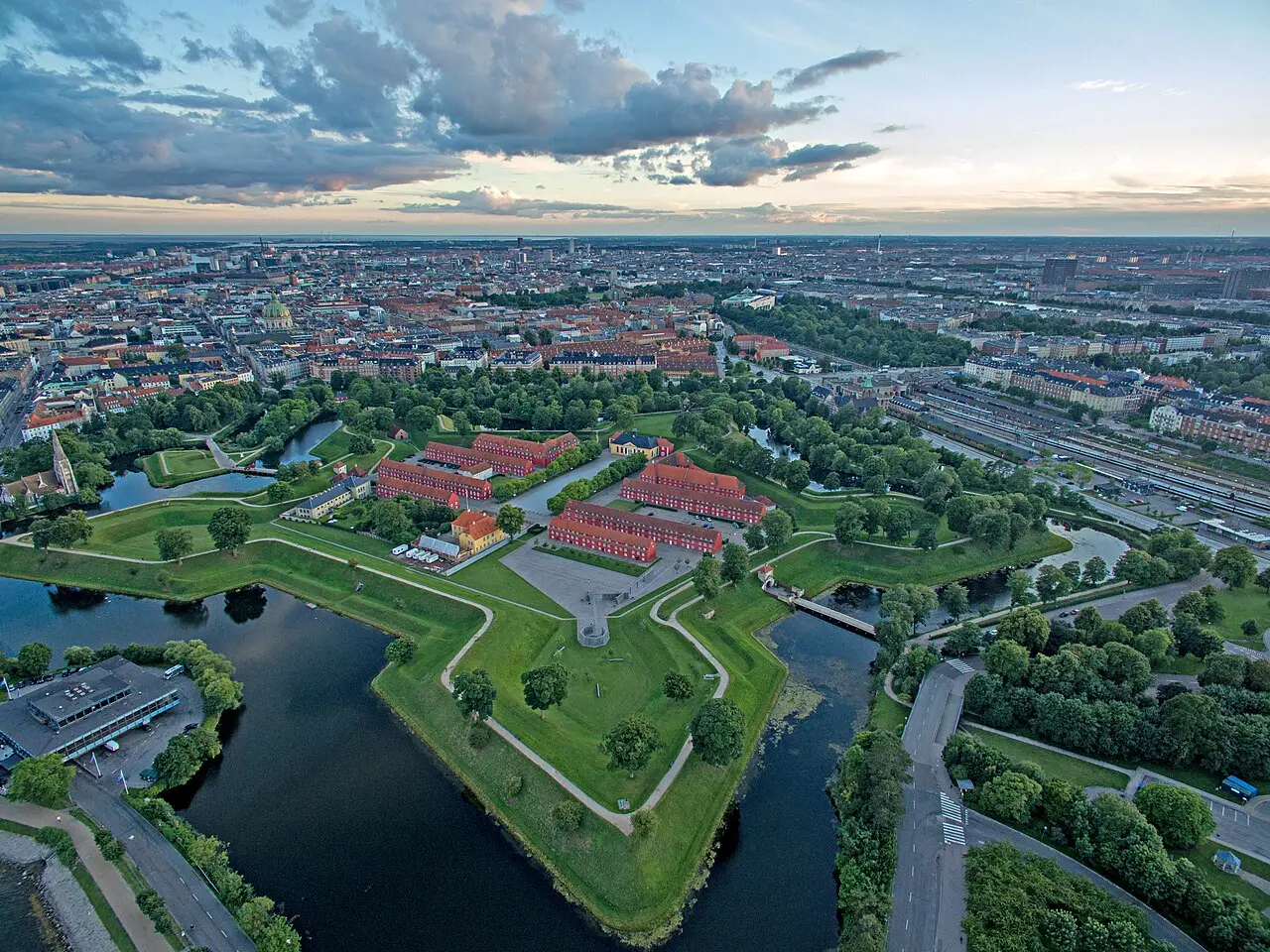
Residential, expensive, and green, north of the center. It holds Fælledparken (58 ha, the city's largest park), Parken stadium, the star-shaped fortress of Kastellet (1662), and the Langelinie waterfront stretch where the Little Mermaid sits.
Frederiksberg
An independent municipality of about 104,000 people surrounded on all sides by Copenhagen, with its own taxes and schools. It has the royal garden of Frederiksberg Have, the zoo dating from 1859, and pricey shopping streets like Værnedamsvej.
Amager and Ørestad
The island to the south and east: the working-class neighborhoods of Sundbyerne, the beach at Amager Strandpark, the Amager Fælled nature reserve, and the new Ørestad axis, planned from 1992 to pay for the metro, with the 8Tallet building (2010) and the Royal Arena (2017).
Refshaleøen and Nordhavn
Two harbor areas being converted. Refshaleøen is the former Burmeister & Wain shipyard, now home to the street food market Reffen, event warehouses, and the ski-topped incinerator CopenHill; Nordhavn is the high-density residential expansion served by the M4 metro line since 2020.
History
11th c.–1167 · The port and Absalon's castle
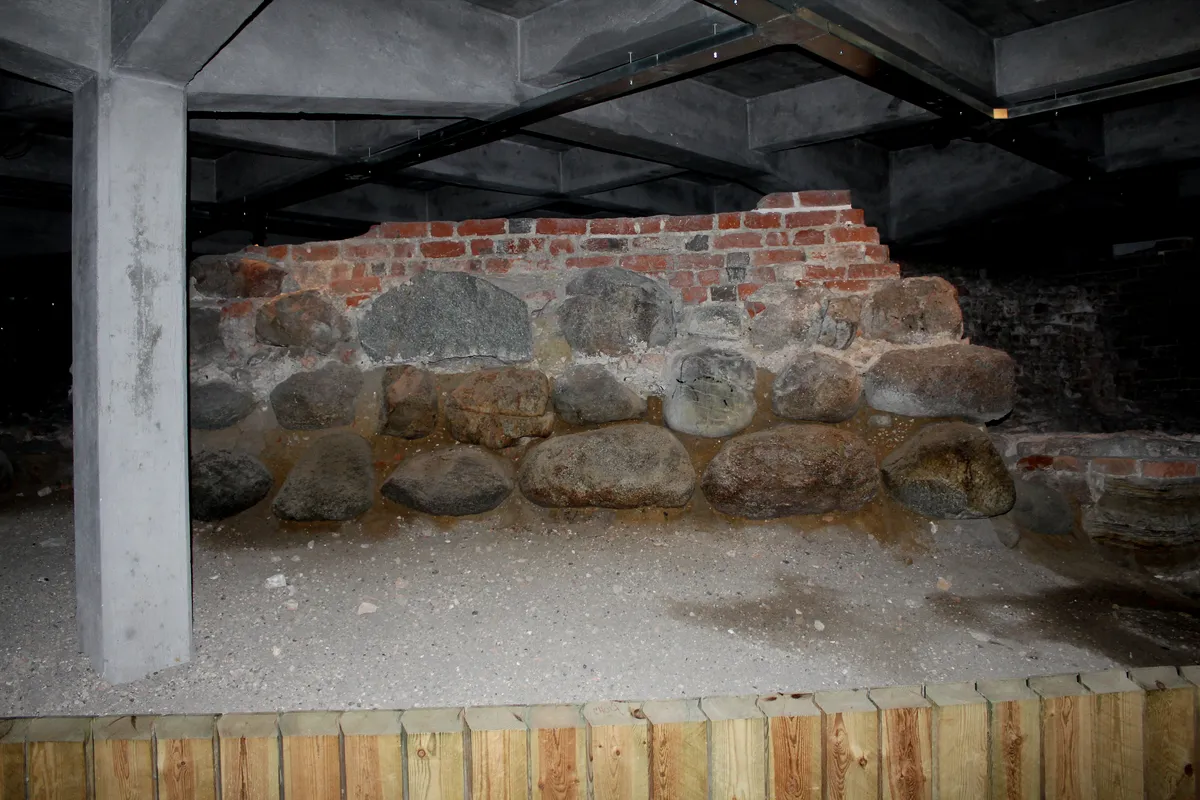
Excavations at Kongens Nytorv during the metro works (2008–2012) found traces of a settlement from the early 11th century. In 1167 Bishop Absalon raised a fortification on Slotsholmen to hold off Wendish pirates and charge passage through the Øresund; the ruins lie open beneath Christiansborg.
1254 · City charter
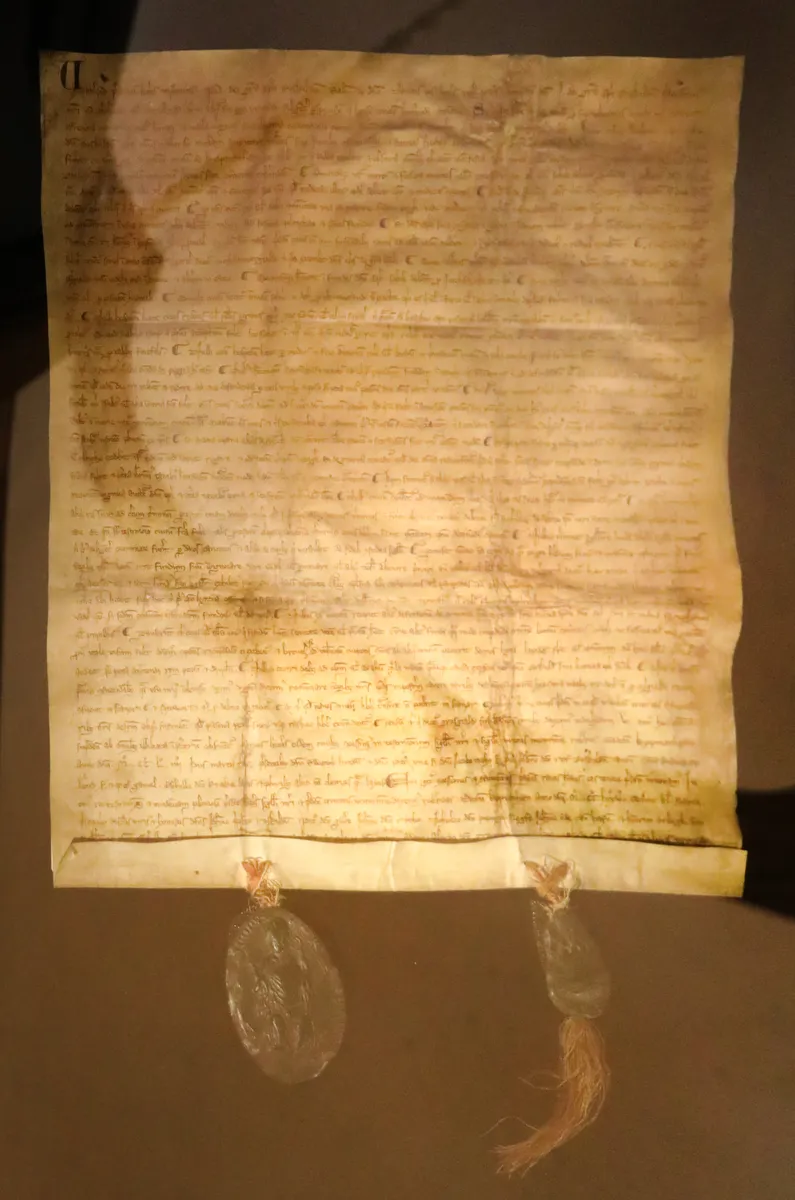
Bishop Jakob Erlandsen grants købstad rights to the settlement called Køpmannæhafn. The wealth came from Øresund herring, caught and salted on an industrial scale for all of Catholic Europe.
1417–1479 · The crown takes the city
Eric of Pomerania expels the bishopric and makes Copenhagen a royal residence; by around 1443 it is the kingdom's de facto capital. Christian I founds the University of Copenhagen on June 1, 1479.

1535–1536 · Siege and Reformation
The civil war known as the Count's Feud ends with the starving city's surrender on July 29, 1536. Christian III imposes Lutheranism, confiscates Church lands, and hands the crown a fortune that will fund the following century.
1588–1648 · Christian IV builds the city
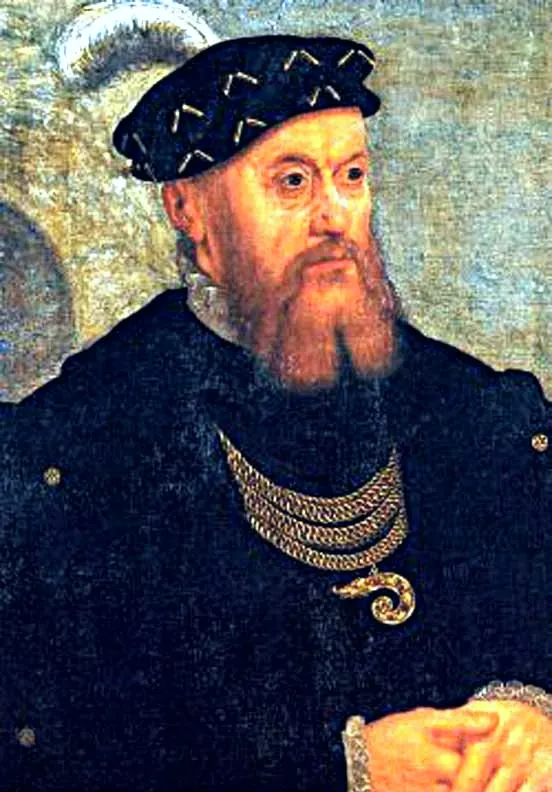
In a sixty-year reign come Rosenborg (1606–1633), the Børsen stock exchange (1619–1640), the Round Tower (1637–1642), the sailors' houses of Nyboder (1631), and the Christianshavn district, founded in 1618 on land drained the Dutch way. The population doubles.

1658–1660 · Swedish siege and absolutism
After losing Scania in the Treaty of Roskilde (1658), the city withstands the Swedish assault of February 11, 1659, and becomes a border city. In 1660 King Frederick III institutes absolute monarchy with the backing of Copenhagen's burghers.
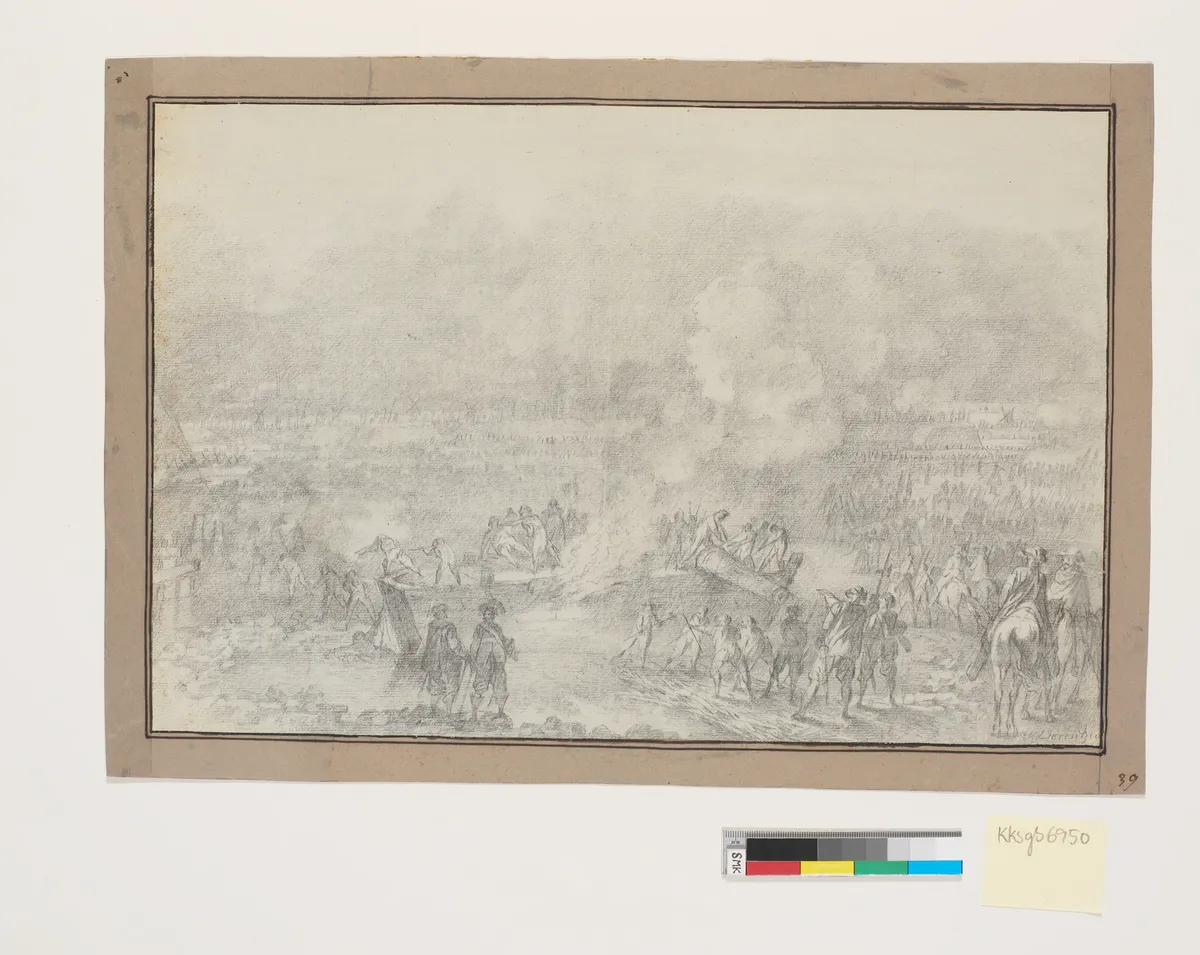
1711–1795 · Plague and two fires
The plague of 1711 kills about 22,000 people, roughly a third of the population. The fire of October 1728 destroys about 28% of the city, and the fire of June 1795 consumes over 940 more houses: the “old” Copenhagen seen today is, in large part, a reconstruction from the late 18th century.
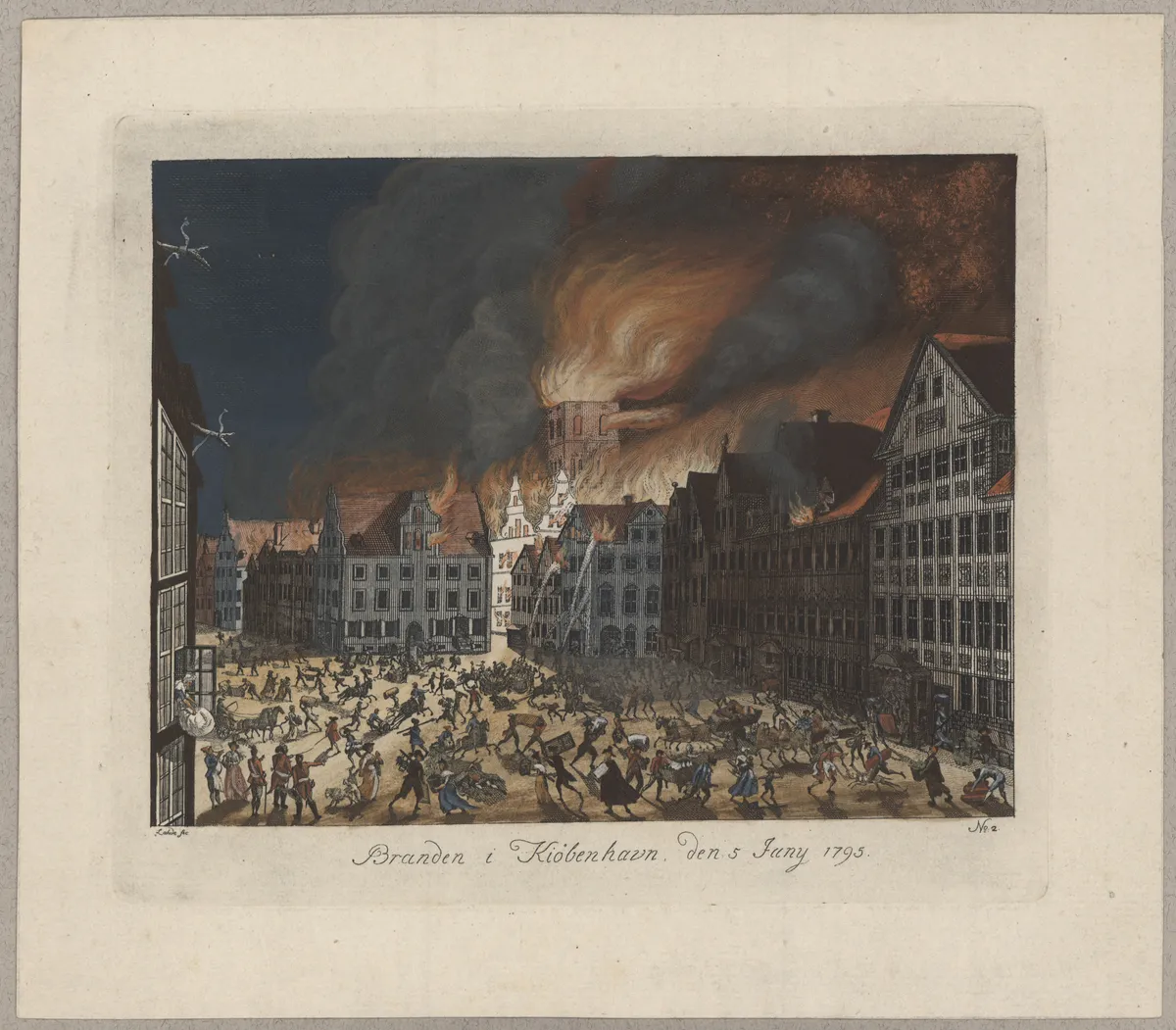
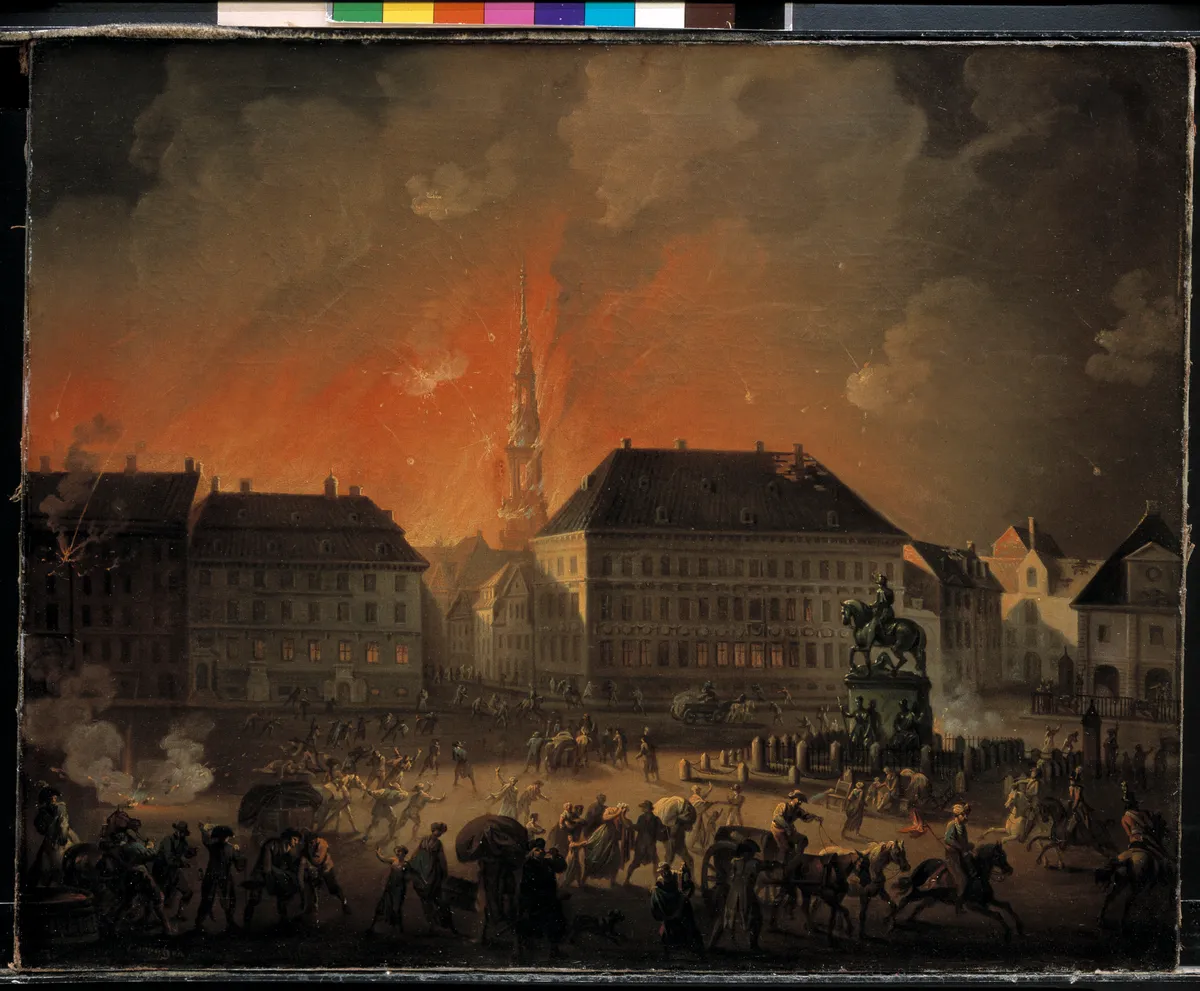
1807 · British bombardment
Between September 2 and 5, the British fleet bombards the city with Congreve rockets to keep the Danish navy from falling into Napoleon's hands. About 200 civilians die, more than a thousand buildings burn, and the British take the entire fleet. Denmark comes out ruined, declares bankruptcy in 1813, and loses Norway in 1814.
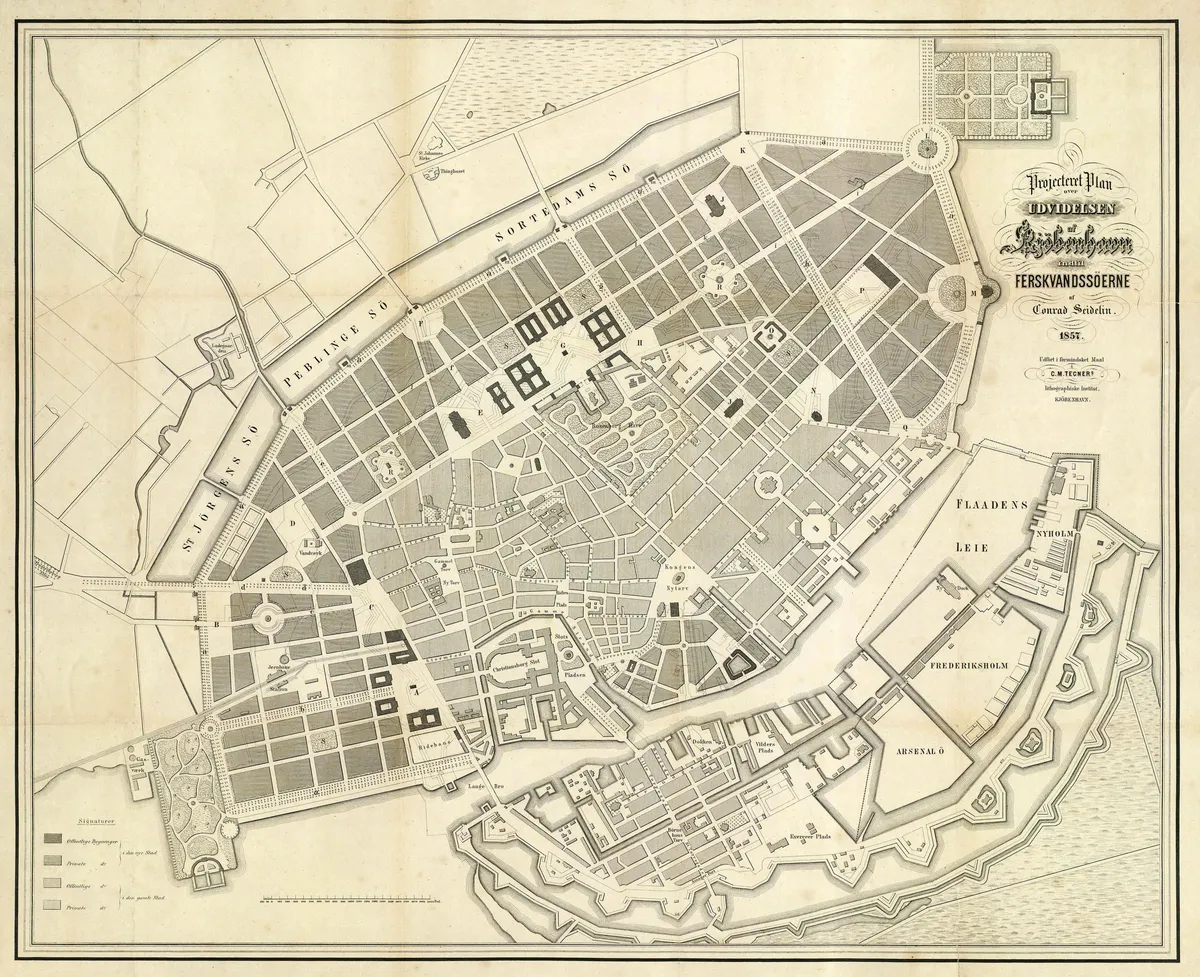
1856–1901 · The walls come down
The demolition of the fortifications starting in 1856 frees the ring of land where Nørrebro, Vesterbro, and Østerbro are born. The population jumps from about 130,000 in 1850 to about 400,000 in 1901, the year Valby, Brønshøj, and Sundbyerne are incorporated into the municipality.
1940–1945 · German occupation
Denmark is occupied on April 9, 1940. In October 1943, warned of an imminent deportation, the population helps about 7,200 Jews cross the Øresund in fishing boats; on March 21, 1945, an RAF raid on the Gestapo headquarters misses and hits the Den Franske Skole, killing 86 children.
1947–2019 · The Finger Plan, Strøget, and the metro
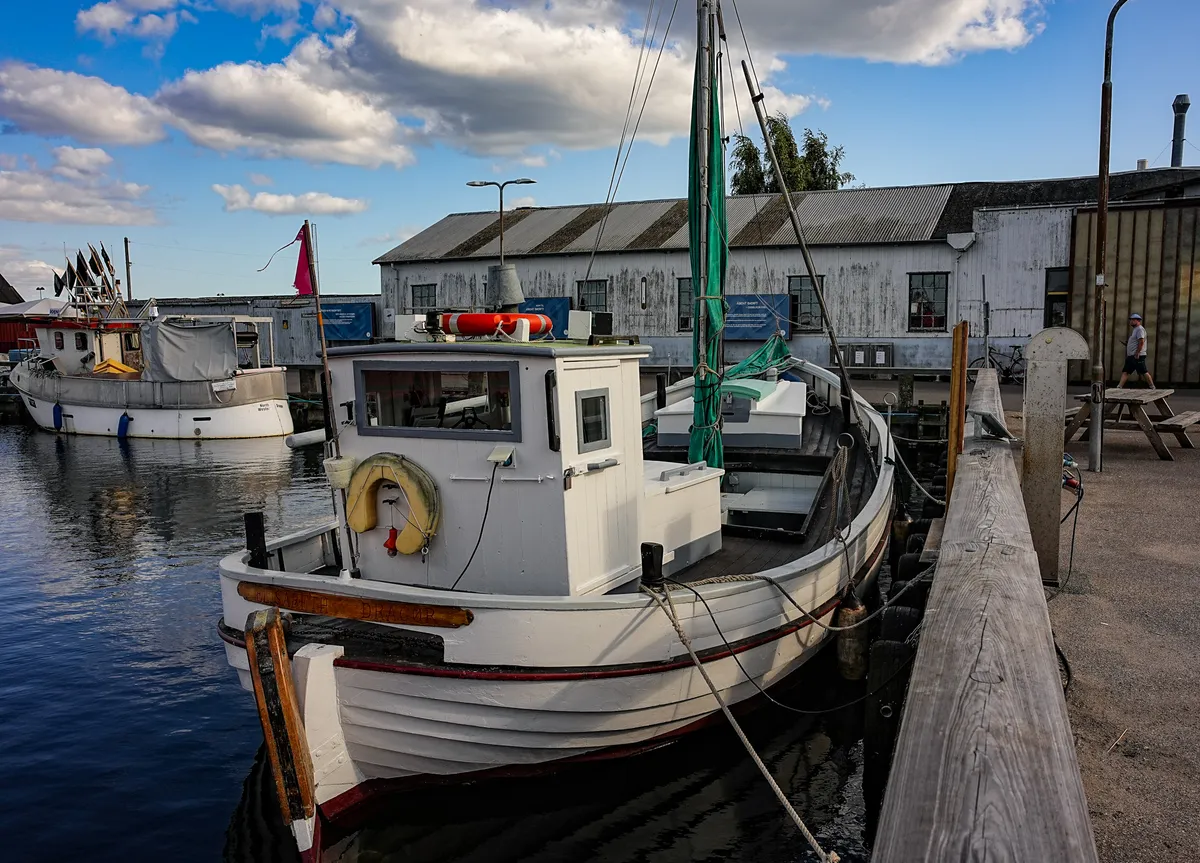
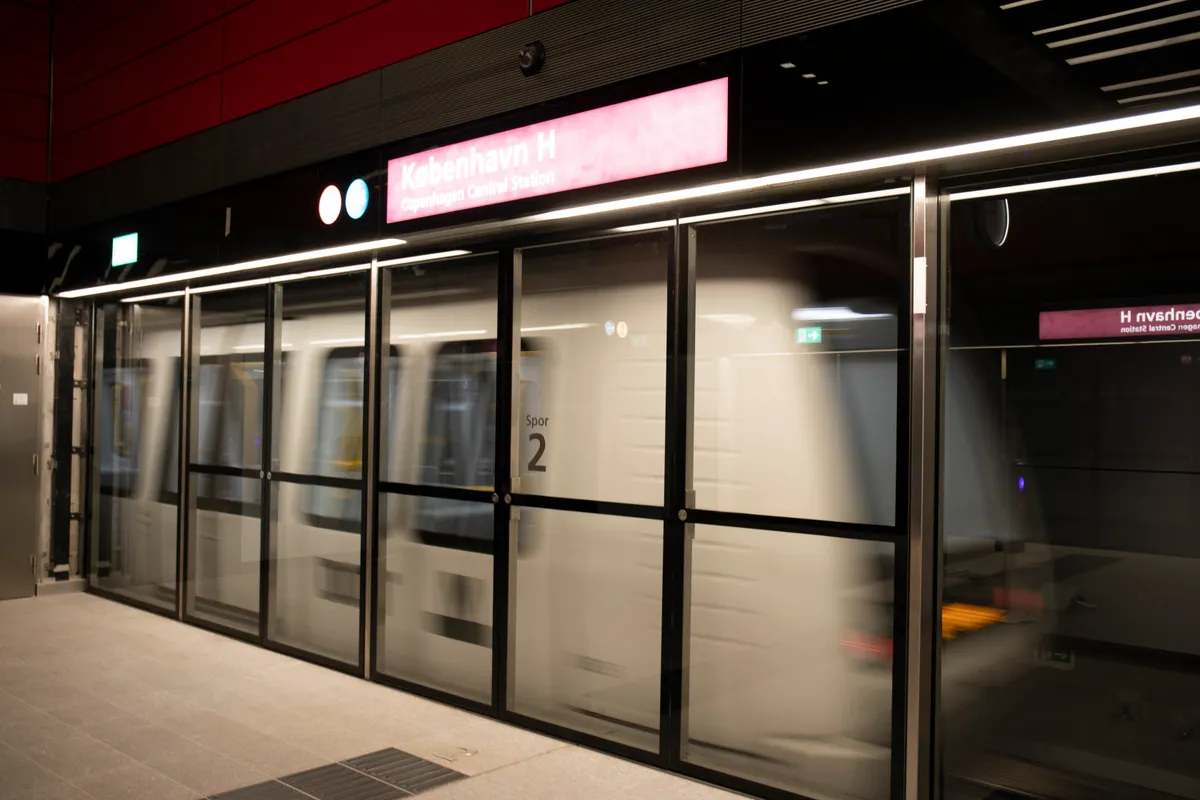
The 1947 Finger Plan organizes growth into five “fingers” along the train lines, with green wedges between them. Strøget street becomes a pedestrian mall on November 17, 1962, Christiania is occupied on September 26, 1971, the Øresund Bridge opens on July 1, 2000, the driverless metro on October 19, 2002, and the Cityringen loop on September 29, 2019.
Complete history
Copenhagen: a toll city
Copenhagen owes its existence to the tolls on the strait. The Øresund strait is about 4 km wide at its narrowest, between Helsingør and Helsingborg, and whoever controlled both shores could charge every ship entering the Baltic: the Sound Dues (Øresundstolden), levied from 1429 to 1857. Absalon fortified Slotsholmen in 1167 for that reason, and for the same reason the Hanseatic League sacked and demolished the castle several times in the 14th century. The 1254 city charter and the strait's herring did the rest, making it a merchant town that the crown took from the bishopric in 1417 and never gave back. The geography still shapes the city today: everything is organized around a saltwater basin running through the center, and neither shore is more than 3 km from the other.
Christian IV builds Rosenborg and the Round Tower
The 17th century gave the city its visible skeleton. Christian IV reigned from 1588 to 1648, spent the kingdom's treasury on building works, and left Rosenborg, the Børsen with its four-tailed dragon spire, the Round Tower with a spiral ramp instead of stairs, the working-class district of Nyboder in ochre rows, and Christianshavn, drained in 1618 by Dutch engineers with canals and bastions. Then came the string of disasters that rewrote the rest: plague in 1711, fire in 1728, palace fire in 1794, city fire in 1795, British bombardment in 1807. Each disaster was followed by stricter building codes (wider streets, chamfered corners, masonry walls instead of timber framing), and it's this accumulated discipline that gives the center its uniform look.
The modern city is born from tearing down the walls
The modern city was born from tearing down the walls starting in 1856, and with the new neighborhoods the population jumped from about 130,000 in 1850 to about 400,000 in 1901. The Sortedams, Peblinge and Sankt Jørgens lakes, former reservoirs dammed in the Middle Ages, became the border between the historic city and the new rental neighborhoods: Nørrebro, Vesterbro and Østerbro, put up quickly in five-story blocks for workers and rural migrants. The 20th century brought the welfare state, the urban planning of the 1947 Finger Plan and, in the late 1980s, a harsh crisis: deindustrialization, municipal debt and population loss to the suburbs. The way out was negotiated in 1992 with the Ørestad law, which funded the metro by selling public land on Amager.
Strøget goes car-free, starting in 1962
What you see today is the result of three public decisions made against the grain of their time. The first: closing Strøget to cars on November 17, 1962, a measure unpopular at first and later studied for decades by the architect Jan Gehl, who began counting people instead of vehicles. The second: rebuilding the cycling network after the 1973 oil crisis and the protests of the 1980s, reaching some 380 km of bike lanes and a 45–50% share of daily trips to work and school made by bike within the municipality. The third: cleaning up the harbor in the 1990s to the point of opening public swimming pools in the salt water, the first of them at Islands Brygge, in 2002.
The 2024 Børsen fire and Lynetteholm
Today the city is juggling big construction projects, an environmental target it missed and a new tourism policy. The fire of April 16, 2024, brought down the dragon spire of the Børsen, from 1640, and reconstruction is ongoing with the building fenced off. The artificial island of Lynetteholm, approved by parliament in June 2021, is being filled in at the mouth of the harbor to serve as a dike against sea-level rise and as land for housing, on a timeline that spans decades. The carbon-neutrality target for 2025 wasn't met: city hall admitted as much in 2022, when funding for carbon capture at the Amager incinerator fell through. In tourism, the CopenPay program, piloted in 2024, became permanent and runs year-round from June 2026, rewarding visitors who get around without a car and help clean up the city.
Until 1857, every ship that crossed the strait paid the crown the Øresundstolden, and that toll, charged since 1429, is where Copenhagen began.
Geography and shape of the city
Low ground and two islands
The city is flat and low: the municipality's highest natural point, Valby Hill, stands about 31 m, and much of Amager sits less than 3 m above sea level. The historic center occupies the western bank of the harbor, on Zealand, and spreads in a semicircle from Slotsholmen; the eastern bank is the island of Amager, linked by seven bridges and the metro.
From the medieval center to Ørstedsparken and the lakes
The urban layout has three legible rings: the twisted medieval street pattern within the old walls, the belt of parks and lakes where the walls stood (Ørstedsparken, Botanisk Have, the three dammed lakes), and the late-19th-century rental districts in closed blocks with inner courtyards. Beyond that lies the 1947 Finger Plan: five suburban corridors along the S-tog train lines, radiating from the palm that is the city center, with agricultural green wedges between the fingers, a planning rule respected for nearly eighty years.
West wind and leisure water
The climate is temperate oceanic with a Baltic influence, about 600 mm of rain spread evenly through the year, a steady westerly wind and a small temperature range. Outdoor leisure revolves around the water: the harbor canal, the artificial beach of Amager Strandpark (2 km, reopened in 2005) and the former industrial areas of Refshaleøen and Nordhavn, now being redeveloped.
The highest hill is about 31 m.
Culture
The design school and the 1952 Ant chair
Copenhagen is the birthplace of the school of industrial design that took shape around the Royal Academy and the cabinetmakers' annual exhibition, between the 1920s and the 1960s. Out of it came the Ant chair (Arne Jacobsen, 1952), the Egg and Swan armchairs made in 1958 for the SAS Royal hotel, Hans Wegner's Wishbone (1949) and Poul Henningsen's PH lamps, designed from 1926 onward to hide the bulb and spread the light. Alongside them are Royal Copenhagen porcelain (1775), Georg Jensen silverware and the contemporary architectural vocabulary of Bjarke Ingels, 3XN and Henning Larsen, designer of the 2005 Opera House donated by the A.P. Møller foundation. Seeing it all together takes an afternoon: Designmuseum Danmark, reopened in 2022 in the former Frederiks Hospital, from 1757.
Andersen in 1819 and Kierkegaard between 1813 and 1855
In literature, three names wrote the city from the inside. Hans Christian Andersen arrived from Odense on September 4, 1819, at 14, and spent his life in boarding houses around the center; Søren Kierkegaard (1813–1855) wrote almost everything while walking these streets and is buried in Assistens; Tove Ditlevsen told of her working-class childhood in Vesterbro in the trilogy published between 1967 and 1971. Cinema came later and went further: the Dogme 95 manifesto, signed by Lars von Trier and Thomas Vinterberg on March 13, 1995, and the wave of TV series that exported the country's gray palette; Forbrydelsen (2007), Borgen (2010) and Bron/Broen (2011), which begins right in the middle of the Øresund bridge.
Nightlife is organized by neighborhood
Nightlife is organized by neighborhood and by hour: bars in Nørrebro and Vesterbro until late, music venues like Vega (a 1956 union building designed by Vilhelm Lauritzen, turned concert hall in 1996) and the techno circuit of Kødbyen. Jazz is an old layer: Copenhagen welcomed American musicians in the 1960s and 1970s, Dexter Gordon and Ben Webster lived here, and the Copenhagen Jazz Festival has run since 1979. In sports, soccer splits the city between FC København, which plays at Parken (about 38,000 seats), and Brøndby, from the western suburbs; the national team won Euro 1992 after entering the tournament as a replacement. The official religion is Lutheran and about two-thirds of Danes are members of the Folkekirken, but weekly church attendance is just a few percent.
The Designmuseum is worth a whole afternoon just for the chairs, from the Ant to the Wishbone.
Festivals and events
Copenhagen Jazz Festival
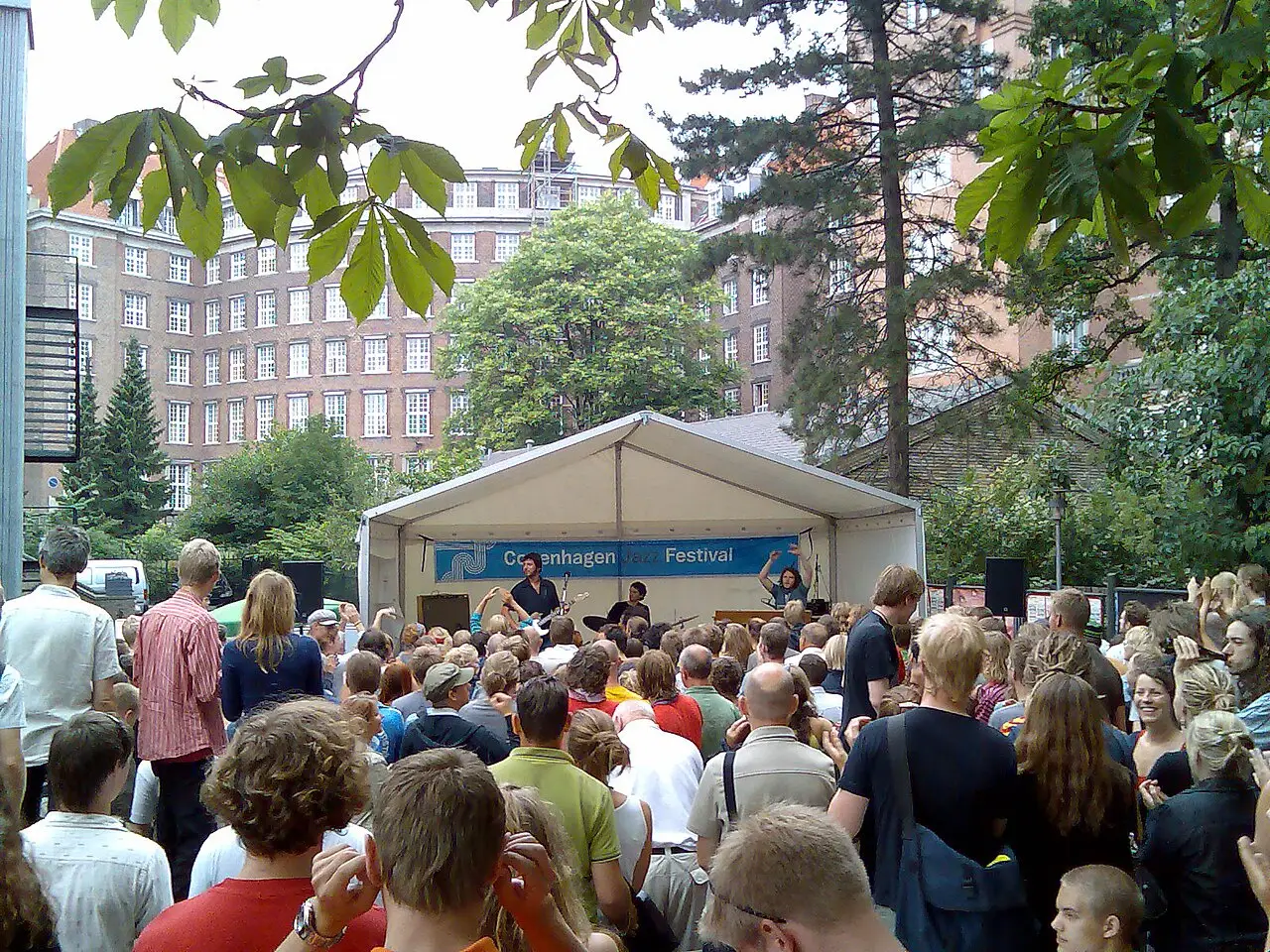
Ten days in early July since 1979, with over a thousand concerts in squares, courtyards, churches, and bars; much of it is free and happens outdoors in the mid-afternoon.

Distortion
Last week of May or first of June: street parties take over Nørrebro one day and Vesterbro the next, with sound systems on the sidewalks, then move indoors to harbor warehouses.
Copenhagen Pride
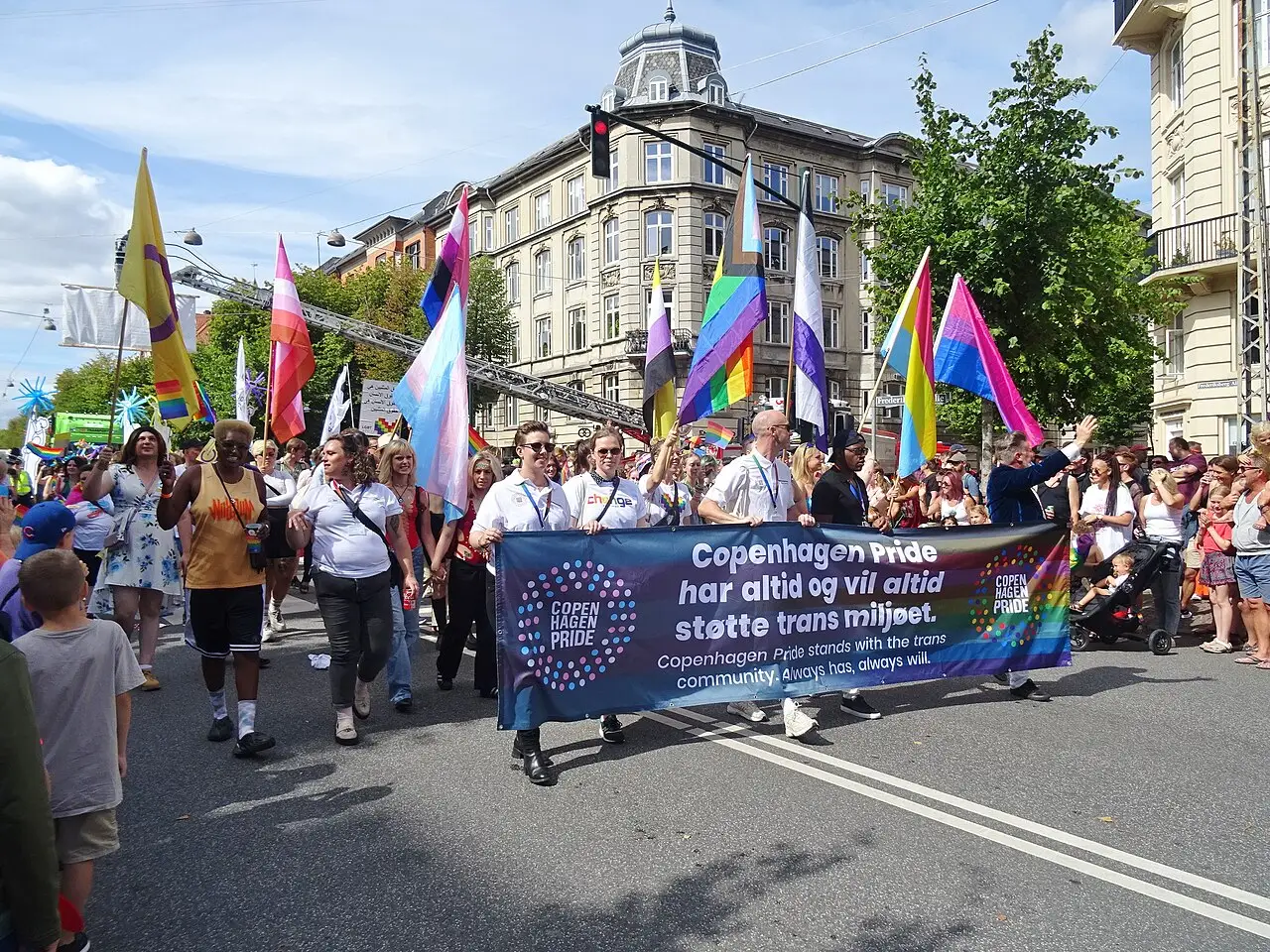
A week in August ending with the parade leaving downtown and city hall square turned into “Pride Square,” with a stage and bars for several days.
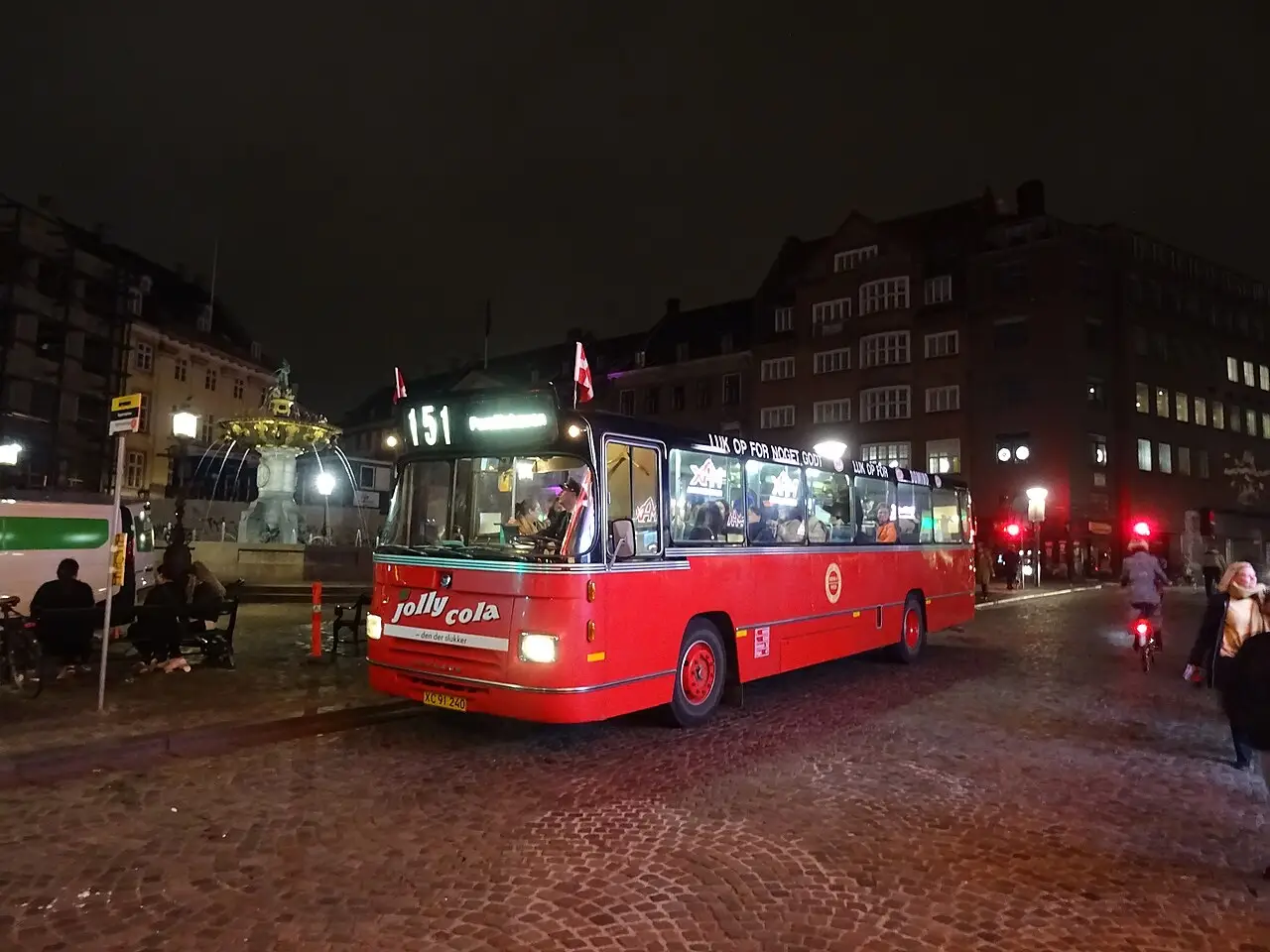
Kulturnatten
Culture Night, on the second Friday of October: about 250 institutions open from 6pm to midnight (parliament, laboratories, towers, the cemetery, the fire department) with a single wristband for about 110 kr that also works as a transit ticket.
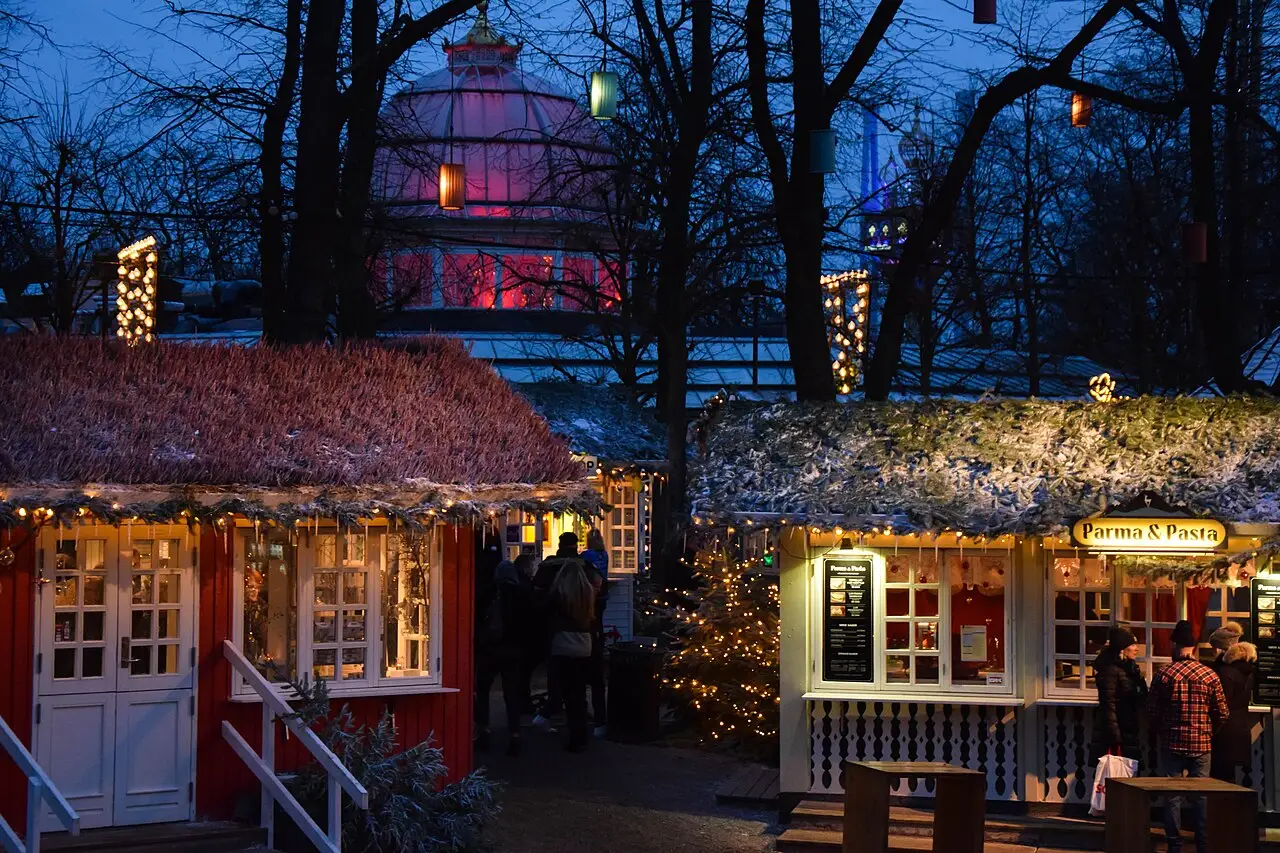
Christmas at Tivoli
From mid-November to early January, the park turns into a Christmas market with gløgg, æbleskiver and skating. It's the busiest stretch of the year after summer, and since the city goes dark at 3:38pm in December, arrive in the early afternoon if you want to see the park in daylight too.
Books and films
The Copenhagen Trilogy, by Tove Ditlevsen (1967–1971)
Childhood, youth, and drug dependency in working-class Vesterbro of the 1930s and 1940s; it's the inside portrait of the city that urban renewal later erased.
Borgen (series, since 2010)
Danish politics filmed in and around Christiansborg: it explains coalition parliamentarism, the press, and the small scale of power in the country.
Another Round, by Thomas Vinterberg (2020)
In Another Round (Druk), Thomas Vinterberg, one of the authors of the Dogme 95 manifesto, films in Østerbro the exact place alcohol holds in Danish adult life, from high school to the street.
Frequently asked questions
Copenhagen: How do you get from Kastrup Airport to downtown?
The M2 metro leaves from Terminal 3 and reaches Kongens Nytorv in about 14 minutes, with trains every 4 to 6 minutes and 24-hour service; a 3-zone ticket costs about 36 kr.
Copenhagen: How do you get to the Louisiana Museum, in Humlebæk?
By train: from Nørreport or Østerport to Humlebæk is about 36 minutes, plus 10 on foot. The Louisiana, a modern art museum opened in 1958, is 35 km to the north, with a sculpture garden and a direct view of the Øresund.
Copenhagen: Does Denmark use the euro?
No: the currency is the Danish krone (kr, DKK), pegged to the euro at about 7.46 kr per €, and the euro isn't accepted at most shops; pay by card or withdraw kroner.
Copenhagen: What's the best time to go?
Summer is short and it's the reason to come: from mid-May to late August, with highs of 20 to 22 °C in July, lows of 13 to 15 °C and, near the solstice, about 17 hours 30 minutes of daylight.
Copenhagen: Can you stop or walk in the bike lane?
No. The strip between the sidewalk and the asphalt is a bike lane, and cyclists have priority and move at speed. Never stop, walk or take photos on it, and look left before stepping off the curb.