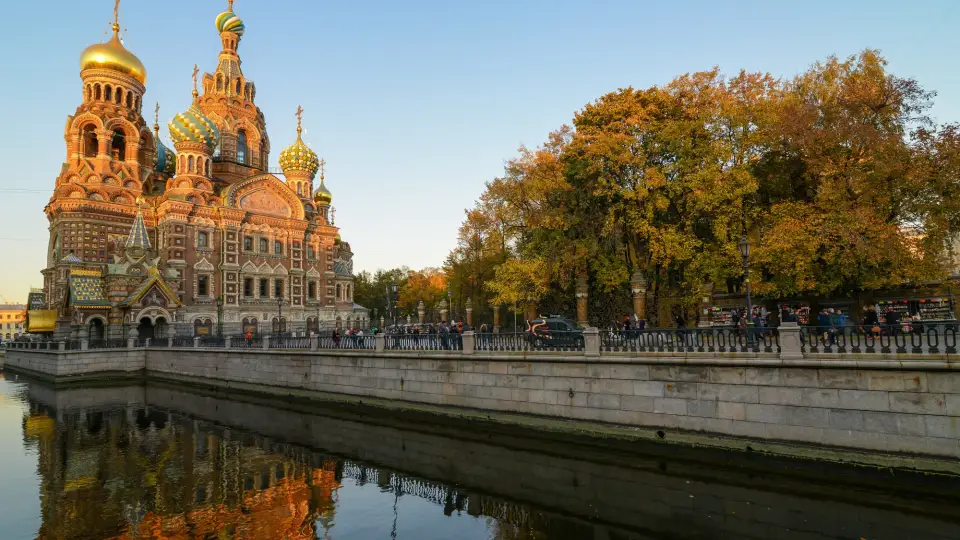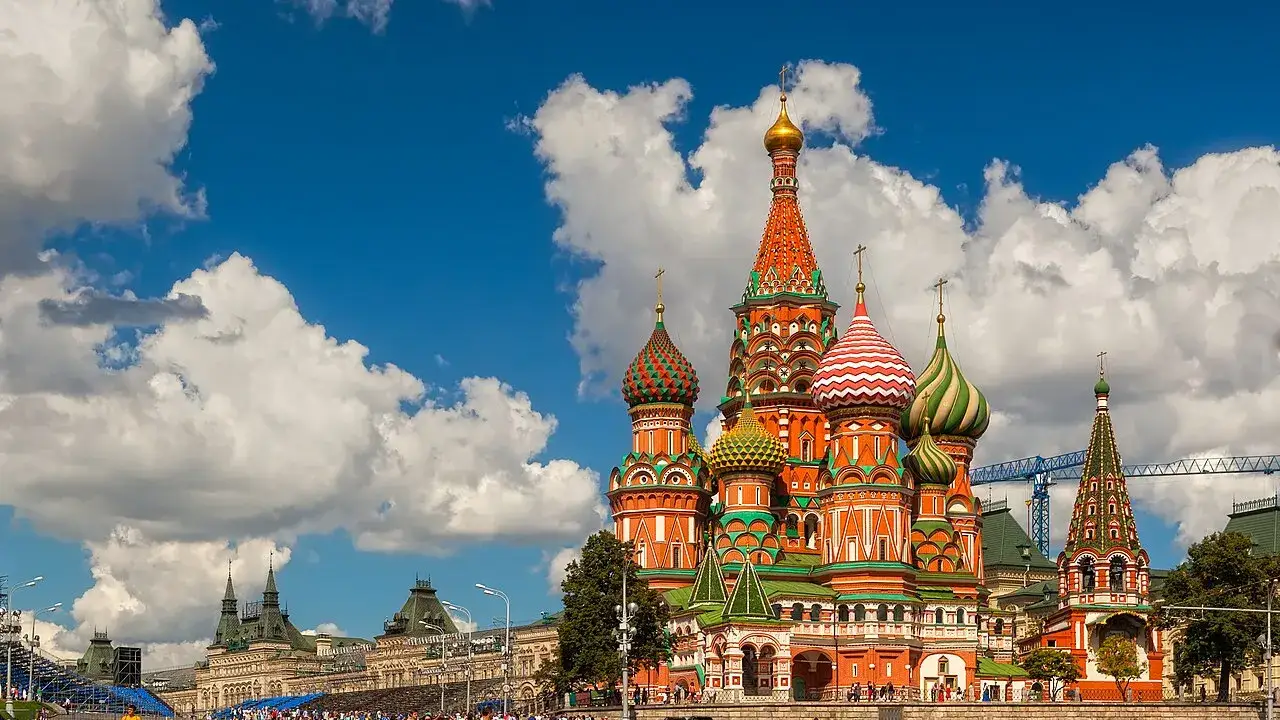
Russia
Moscow
Kremlin, Red Square, museum-like metro and the Bolshoi
Days Start with the basic programme and choose extensions for the time you have.
How the guide reaches this number
In the centre, choose the Cathedral Square programme or an Armoury session, with Red Square in the remaining time. For art, choose the historic Tretyakov or the New Tretyakov according to the period that interests you; visiting both calls for a journey between buildings and a break. Use the other day for a few metro stations, neighbourhoods or outdoor spaces according to your interests and available access. With only one day, choose a main programme and allow meals and breaks to fit within it. St. Basil’s can complement your passage through the square if the calendar and last entry allow; the Armoury has its own session and does not include Cathedral Square admission. Zaryadye Park can provide a break if there is time, energy and access to your chosen stretch. If Rublev’s “Trinity” is the reason for your journey, remember that it was transferred to Sergiev Posad in June 2024 and check access there before planning the trip. Adapt these programmes to arrival and departure times. Confirm check-in, check-out and luggage storage at your accommodation; allow time for transport, a meal and rest. Arrange payment and any necessary tickets before setting out, and allow for entry checks and pauses. If you arrive tired or short of time, choose the arrival-and-rest proposal and leave the ticketed visit for another day.
3
When May to September: an option for walks and parks, with forecast and programme checked for your dates.
How the guide reaches this number
For a combination of walking, parks and museums, May to September is a period to consider. Choose dates around the programme you want too: a concert, exhibition or winter visit may justify another season. Check the forecast before reserving long periods outdoors and keep an indoor alternative.
Per person/day Budget about 2,800 RUB; mid-range about 6,800 RUB; comfortable about 15,400 RUB per person, based on what travellers report to Budget Your Trip (checked October 2026).
How the guide reaches this number
Confirm in advance how you will pay, and include arrival, departure and trips outside the centre.
Budget about 2,800 RUB; mid-range about 6,800 RUB; comfortable about 15,400 RUB per person, based on what travellers report to Budget Your Trip (checked October 2026). Confirm in advance how you will pay, and include arrival, departure and trips outside the centre.
Per person per day: accommodation, meals, urban transport, visits and a small allowance for extras. Flights excluded; larger purchases vary. Editorial estimate, not a quote.
 What Nilo thinks
I would set aside three days for a first visit to Moscow. In the centre, choose the Cathedral Square programme or an Armoury session, with Red Square in the remaining time. For art, choose the historic Tretyakov or the New Tretyakov according to the period that interests you; visiting both calls for a journey between buildings and a break. Use the other day for a few metro stations, neighbourhoods or outdoor spaces according to your interests and available access.
With only one day, choose a main programme and allow meals and breaks to fit within it. St. Basil’s can complement your passage through the square if the calendar and last entry allow; the Armoury has its own session and does not include Cathedral Square admission. Zaryadye Park can provide a break if there is time, energy and access to your chosen stretch. If Rublev’s “Trinity” is the reason for your journey, remember that it was transferred to Sergiev Posad in June 2024 and check access there before planning the trip.
Adapt these programmes to arrival and departure times. Confirm check-in, check-out and luggage storage at your accommodation; allow time for transport, a meal and rest. Arrange payment and any necessary tickets before setting out, and allow for entry checks and pauses. If you arrive tired or short of time, choose the arrival-and-rest proposal and leave the ticketed visit for another day.Moscow grew in rings around the Kremlin, the red-brick-walled fortress where the Russian government has worked since 1918. Pressed against it, Red Square ends at St. Basil's Cathedral, an ensemble of churches and galleries with domes of different shapes. Below the street sits another collection: the mosaics at Mayakovskaya and the bronzes at Ploshchad Revolyutsii. Choose the stations that fit your route and check access to the paid area; exiting and entering again may require another payment. Across the river, the Tretyakov Gallery tells the story of Russian art from medieval icons to Vrubel, and a Bolshoi performance can fit the programme according to the chosen production, session and ticket. A stolovaya, the tray-and-counter cafeteria, can fit a lunch break; a Georgian restaurant offers another dinner option, according to its menu and address. For walks and parks, consider May to September and check the forecast for your dates. Set aside three days.
Quick facts
- Population
- About 13.3 million in the city of Moscow on January 1, 2025 (Mosstat preliminary estimate).
- Historical reference
- First known written mention in 1147; earth-and-timber fortifications recorded in 1156 in the Tver Chronicle.
- Country and region
- Russia: federal city, national capital, and seat of the Central Federal District
- Language
- Russian, in the Cyrillic alphabet; confirm the language offered by each provider and save Russian names and addresses for your journeys.
- Currency
- Ruble (RUB, ₽). Visa and Mastercard cards issued outside Russia do not work at shops or ATMs; confirm other networks with the issuer.
- Time zone
- MSK (UTC+3), no daylight saving since 2014
- Best time to visit
- May to September: an option for walks and parks, with forecast and programme checked for your dates.
- Average daily cost
- Budget about 2,800 RUB; mid-range about 6,800 RUB; comfortable about 15,400 RUB per person, based on what travellers report to Budget Your Trip (checked October 2026). Confirm in advance how you will pay, and include arrival, departure and trips outside the centre.
When to go
May to September: an option for walks and parks, with forecast and programme checked for your dates.
January
-9° to -4°C
53 mm of rain
February
-9° to -3°C
44 mm of rain
March
-4° to 3°C
39 mm of rain
April
2° to 12°C
37 mm of rain
October
3° to 9°C
70 mm of rain
November
-2° to 2°C
52 mm of rain
December
-6° to -2°C
51 mm of rain
How the year changes
For a combination of walking, parks and museums, May to September is a period to consider. Choose dates around the programme you want too: a concert, exhibition or winter visit may justify another season. Check the forecast before reserving long periods outdoors and keep an indoor alternative.
Historical monthly mean temperatures at the VDNKh station, for the Russian Hydrometeorological Centre’s 1991–2020 reference period, are about −6 °C in January, 20 °C in July and 12 °C in September. These are historical averages, not a daily range or a forecast for your trip. The centre and neighbourhoods can have different conditions; summer also calls for rain protection, and cold weather requires clothing and footwear suited to the ground conditions.
In winter and during thaw, adapt walking stretches to street conditions and take breaks in heated places. If seeking snow or autumn colours, check conditions close to the trip. In any season, compare accommodation for the chosen dates and check museum, performance and event calendars: holidays and festivals can change access and journeys.
The same numbers as a table
| Month | Temperature °C | Rain mm |
|---|---|---|
| January | -9 to -4 | 53 |
| February | -9 to -3 | 44 |
| March | -4 to 3 | 39 |
| April | 2 to 12 | 37 |
| May · | 8 to 19 | 61 |
| June · | 12 to 22 | 77 |
| July · | 15 to 25 | 84 |
| August · | 13 to 23 | 78 |
| September · | 8 to 16 | 66 |
| October | 3 to 9 | 70 |
| November | -2 to 2 | 52 |
| December | -6 to -2 | 51 |
Nilo's tips
Arrange payment before traveling
I would arrange payment for accommodation and arrival transport before planning the first outing. Visa and Mastercard cards issued outside Russia do not work at Russian merchants or ATMs; other networks require confirmation with the issuer. If exchanging cash, check the net rate, documents, accepted notes and the provider’s opening hours. Visiting a bank branch takes time too: fit it in near your accommodation, without assuming service straight after your flight.
Troika: check the zone and fare type
When checked on the transport portal in October 2026, the wallet balance charged 75 ₽ on the metro, MCC and central MCD zone, or 102 ₽ in the MCD suburban zone. The 90-minute fare cost 112 ₽ for one metro/MCC/central MCD journey and unlimited urban surface transport transfers within that interval. Without an active pass loaded, the card applies the fare automatically according to use; a loaded pass takes priority. The physical card required a 150 ₽ deposit, refundable when returned in working condition. Check the current table and zone before topping up: fare, balance, deposit and pass are different things.
Choose a station to look at slowly
I would start with the mosaics at Mayakovskaya and add another station that fits the day’s route. Check the opening hours of the entrance you intend to use and look for a moment when you can observe without blocking passengers; arriving early does not guarantee an empty platform. These stations are everyday transport, so keep passageways clear and follow local notices. To travel around the metro, check whether changes stay within the paid area: leaving and entering again can incur another charge.
Around May 9, check whether Red Square is open
Before planning a Red Square visit around May 9, consult official access and transport notices for your dates. Restrictions in the centre can affect streets, passages and metro exits, as well as change bus routes. For St. Basil’s or GUM, also check the venue’s own calendar and designated entrance. Match your visit time to the journey possible that day and keep an outing in another area as an alternative if access is blocked.
Consider Stolovaya No. 57 when near Red Square
Stolovaya No. 57 is on the third floor, third line of GUM. Cafeteria service is an option for combining dishes and taking a break during a central-city itinerary. Check each item’s price at the counter and allow time for the queue and meal before the next visit.
For a group dinner, a Georgian restaurant can offer dishes for different tastes. Choose an address that fits the end of your day and check the menu, reservation and return to your accommodation. Cuisine or neighbourhood alone does not determine the bill.
Plan your return before going out at night
Choose your return route from the address where the evening will end. Check the last train and last connection on that route; a station’s closing time does not guarantee a departure for your destination. The city also has night routes, including connections with Kitai-Gorod and the Garden Ring, but you need to check the stop and timetable of the line serving your address. If choosing a taxi or transfer, confirm the price, meeting point and payment method with the provider. Prepare that decision before going out rather than relying on a fixed price range when the bar closes.
Explore the map

© OpenStreetMap · OpenFreeMap · © OpenMapTiles
Explore the map, read about the other places and plan your travel days in the app.
Open the appWhat to see
Moscow: The terrain and the rivers
Routes beside the Moskva River and on the slopes of Sparrow Hills have different access points and changes in elevation; choose your stretch and return connection. In the centre, the Neglinnaya flows through underground conduits, with a 3 km section enclosed between 1817 and 1819: this infrastructure is not a route open for independent sightseeing.

Kremlin
The triangular fortress brings together squares, cathedrals and palaces on the hill beside the river. Choose what you want to visit: the Cathedral Square museums ticket includes the Kremlin grounds, with the Tsar Bell and Tsar Cannon; the Armoury has its own ticket and timed sessions. Both close on Thursdays, and museum notices may limit access to parts of the ensemble.
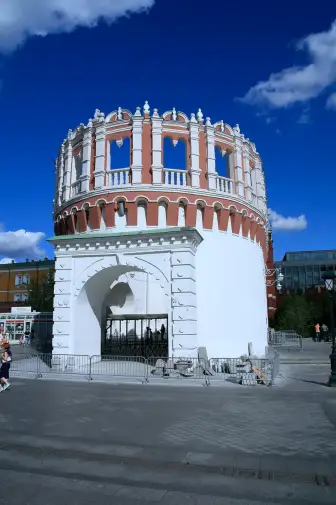
Vouchers bought through the official website must be exchanged at the Alexander Garden ticket offices. For the Armoury, exchange yours at least 45 minutes before the session and head to the Borovitsky Gates; Cathedral Square uses the Kutafya Tower. Check baggage restrictions: the left-luggage office is near Kutafya, has size limits and does not accept suitcases. Store travel luggage at your accommodation and allow time for the ticket office, security and the walk to your chosen entrance.
The cathedrals and Armoury reveal different sides of the fortress. Choose the visit by your interests and ticket; the Armoury session, voucher exchange and different entrances need to be part of the plan.
Check access

Red Square
Red Square brings together the domes of St. Basil’s, GUM and the State Historical Museum in front of the Kremlin wall. Walk through it to observe the buildings and choose which interior you want to explore; entering each one requires checking its own calendar and admission.
Before passing through, consult access and transport notices for your dates, especially when ceremonies and events take place in the centre. Restrictions can change the route to the square and metro exits. If you combine a booked visit, allow time to reach the designated entrance and for a break; a closed area calls for another route or programme, without assuming every building is closed.
The square lets you observe the buildings that define the centre side by side. I would start with this exterior view and choose an interior around my interests, checking that day’s access.
Check access
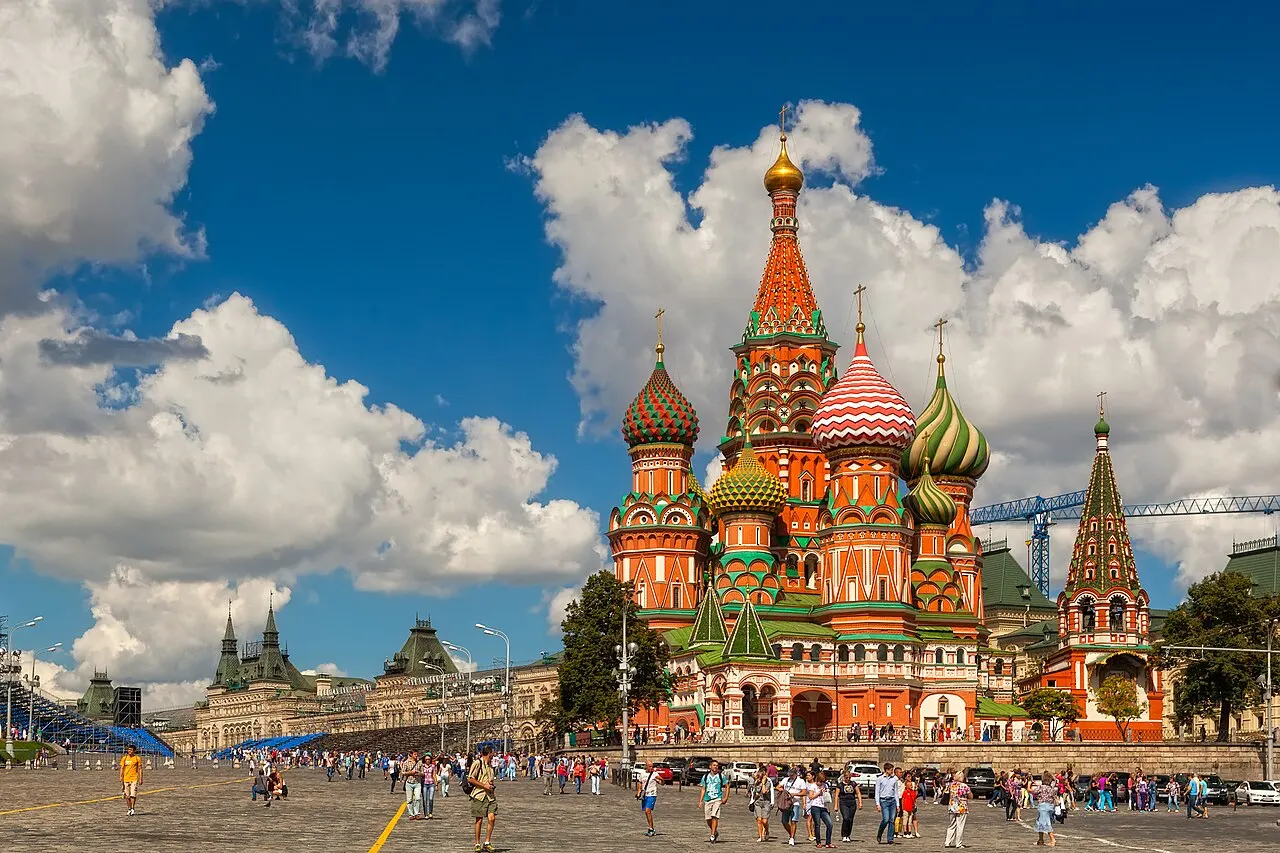
St. Basil's Cathedral
Built between 1555 and 1561 on Ivan IV’s orders to celebrate the conquest of Kazan, St. Basil’s began with nine churches on a shared base. Two lower churches were added in 1588 and 1672; the museum now describes an ensemble of eleven. The inner gallery runs around the central Church of the Intercession, while another gallery links the outer churches. The domes and paintings changed through several renovations.
Explore the churches and galleries at your own pace, looking at the paintings and iconostases. Check the calendar before fitting the visit in after the Kremlin: the museum closes on the first Wednesday of the month, and ticket sales and entry end one hour before closing. There are uneven historic floors, high thresholds and stairs; ask the museum about the route if these conditions would limit your visit.
The galleries, paintings and iconostases reveal how the churches form an ensemble. Go inside to understand the interior; plan around the calendar and last entry, with time to explore the spaces at your own pace.
Check access

The metro as a museum
Some stations turn a journey into a visit to Soviet art. At Mayakovskaya, opened in 1938, Aleksandr Deineka’s mosaics appear in the ceiling domes between metal-clad arches. Novoslobodskaya, dating from 1952, incorporates stained glass into its lighting. Komsomolskaya on the Circle line, also from 1952, has a hall with baroque ornamentation; it is distinct from the station of the same name on the Sokolnicheskaya line. At Ploshchad Revolyutsii, the bronze figures were made under the direction of Matvey Manizer.
I would choose one or two of these stations according to the day’s route. They are at different points in the network: check the line, changes and access to the paid area before arranging the sequence. Allow time to look around the hall without blocking passageways or movement on the platform. For photographs, follow metro rules, which prohibit tripods and situations that obstruct passenger flow. A visit to the group depends on which stations you choose; going early does not guarantee empty halls.
Mosaics, stained glass and bronzes show different expressions of Soviet art in stations that still carry passengers. Choose those that fit your route and look around without blocking movement.
Check access
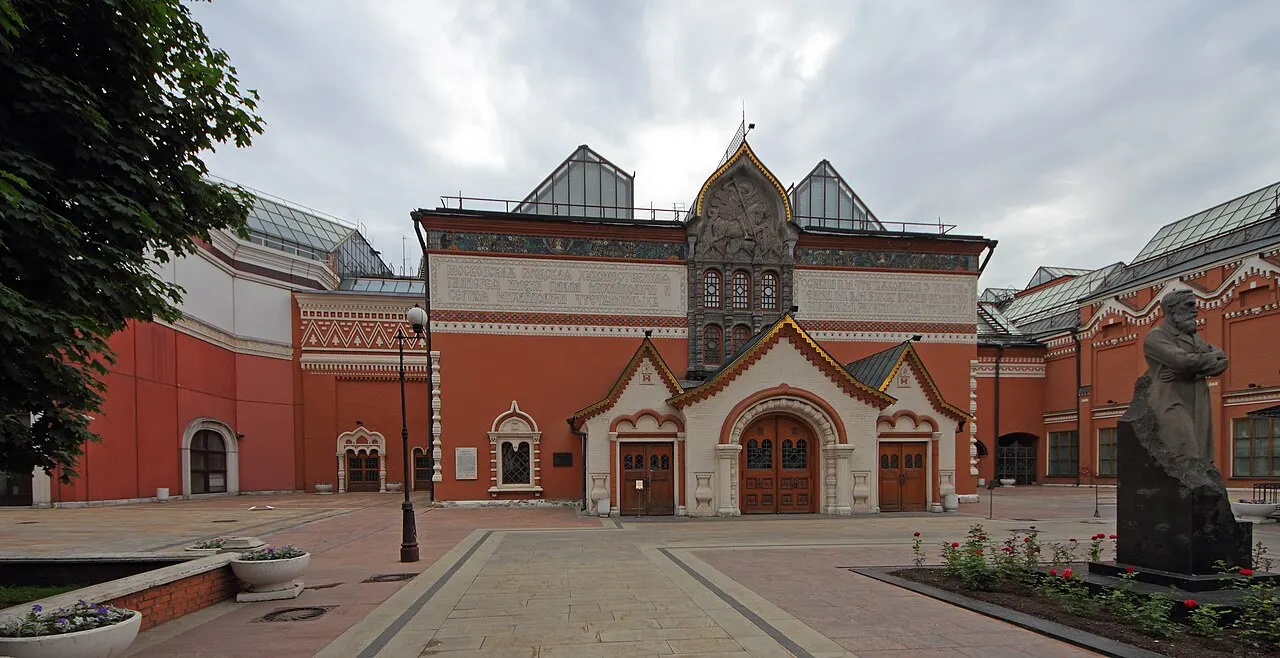
Tretyakov Gallery
The collection begun by Pavel Tretyakov in 1856 was donated to the city in 1892. In the historic building at 10 Lavrushinsky Lane, the route spans medieval icons, nineteenth-century portraits and landscapes, and artists around the turn of the twentieth century, such as Vrubel. Choose the periods that interest you rather than trying to cover every room.
Check the calendar and display of the works that motivate your visit: the museum closes on Mondays, and entry ends one hour before closing. Rublev’s “Trinity” was transferred in June 2024 to the Trinity Cathedral at the Trinity Lavra of St. Sergius in Sergiev Posad; a journey to see it requires checking its own access arrangements. Allow time for museum entry checks and a break before continuing through the neighbourhood.
Icons, portraits and landscapes let you trace different periods of Russian art. Choose a route around your interests and check the display of the works and the calendar before organising the day.
Check access
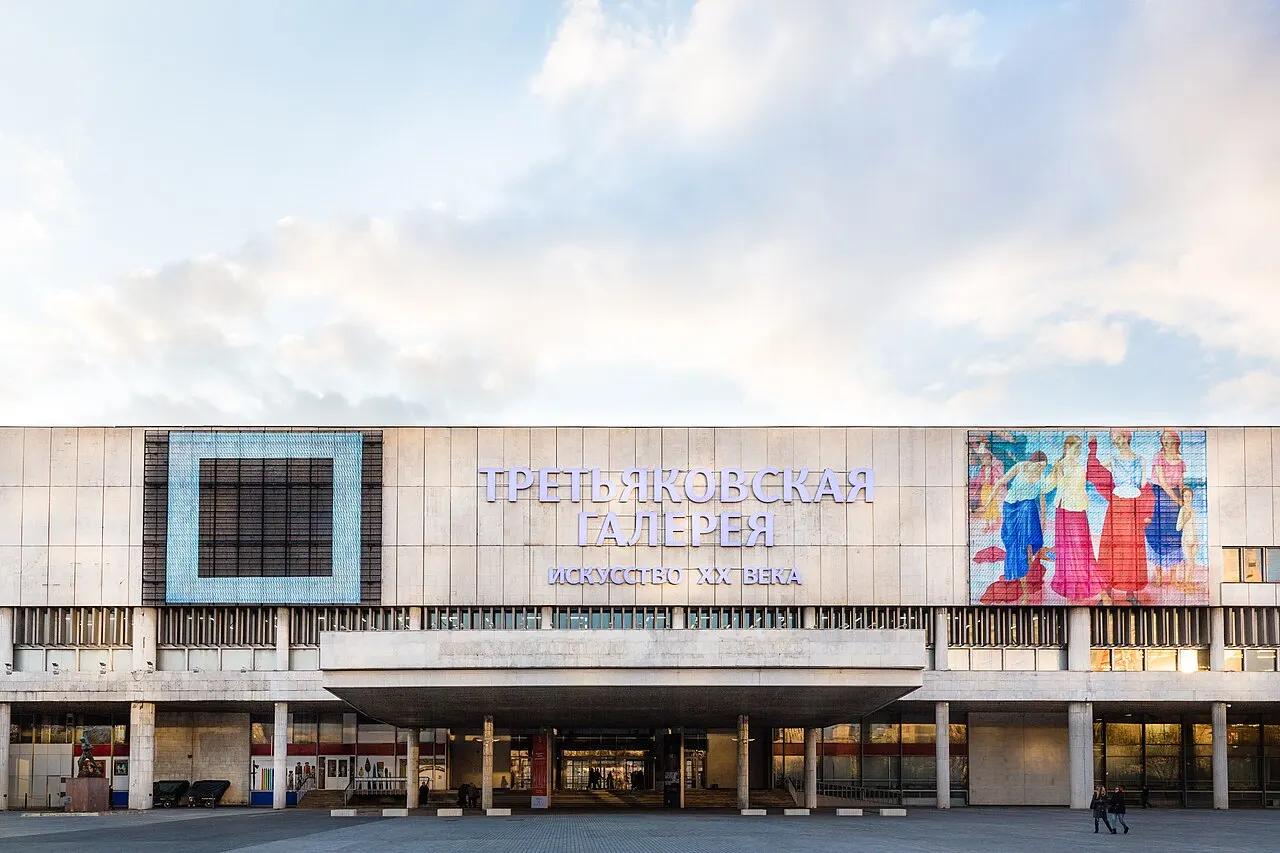
New Tretyakov, on Krymsky Val
The New Tretyakov, at 10 Krymsky Val, presents twentieth-century Russian art: the avant-garde, Socialist Realism, unofficial art and late-century movements. Malevich’s “Black Square” belongs to the collection; consult the current room displays and exhibitions if a specific work is the reason for your visit.
I would choose this building to explore the twentieth century, leaving the historic Tretyakov for another programme if the day is short. Check the calendar and exhibition ticket: the museum closes on Mondays, and entry ends one hour before closing. If you decide to visit both buildings, allow for the journey and a break between them, adapting the visit to your pace.
Choose this museum for the avant-garde and the changes in twentieth-century Russian art. Decide which rooms you want to see and check the ticket and calendar, allowing for a break and the journey if you combine another visit.
Check access
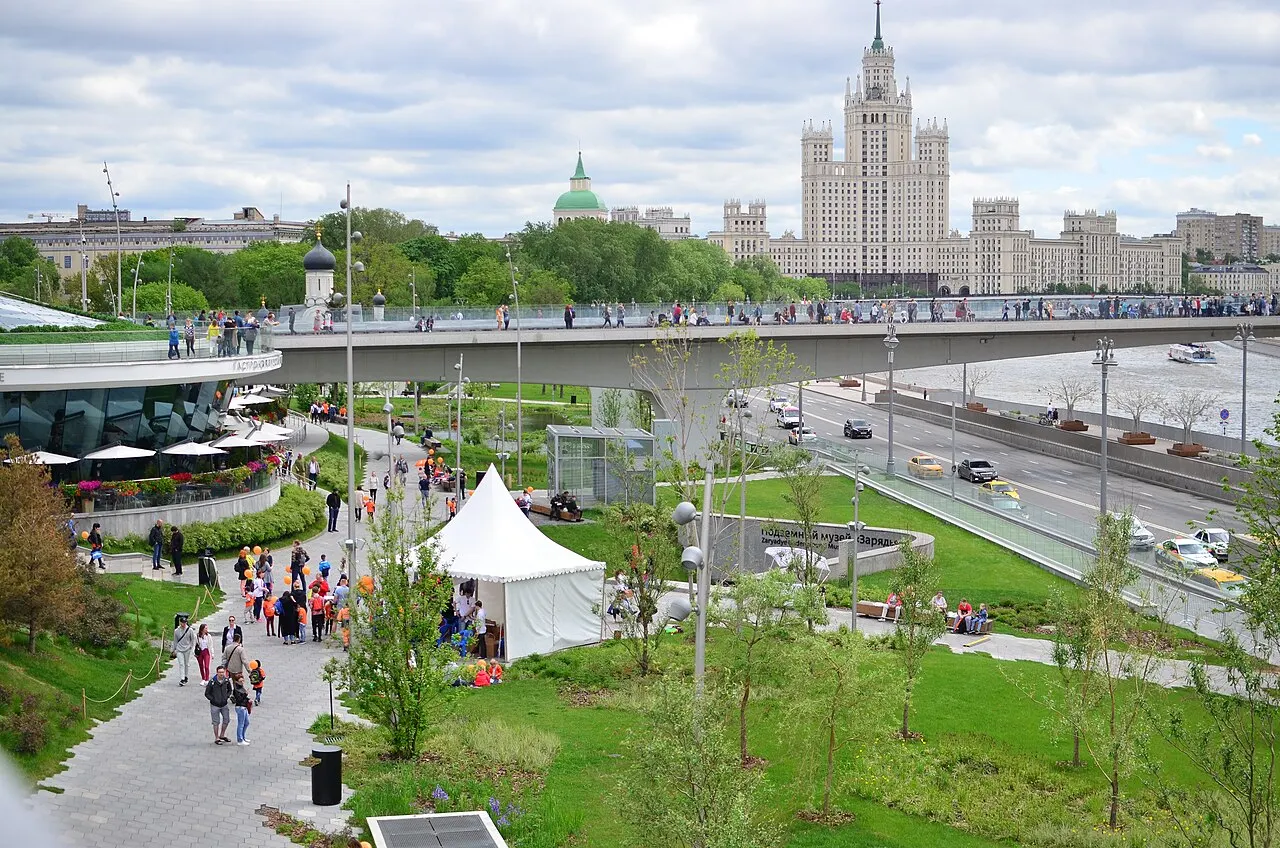
Zaryadye Park
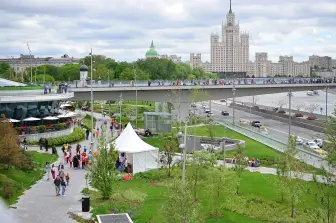
Opened in 2017 on the site of the former Rossiya Hotel, Zaryadye brings together landscapes inspired by Russian tundra, steppe, forest and wetlands. Paths and terraces cross these areas; the V-shaped platform cantilevers towards the Moskva River, above the riverside road, for views of the centre. It is a viewing platform, not a crossing to the opposite bank.
I would fit the park in as an outdoor break after Red Square, if time and energy allow. Check access notices for the areas you want to visit and adapt the walk to the weather. Exhibitions, attractions and guided visits have their own programmes; choose one separately if you want to extend your visit.
The terraces and viewing platform offer another perspective on the centre and space for a break between visits. Choose your stretch according to the weather and your energy, checking access before counting on the platform.
Check access

VDNKh and the Worker and Kolkhoz Woman
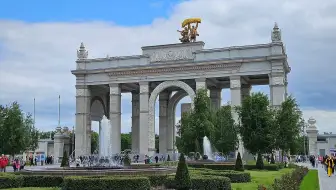
VDNKh opened in 1939 as an agricultural exhibition and brings together pavilions, gardens and monuments from the Soviet period. On the central avenue, the Friendship of Peoples fountain, inaugurated in 1954, has sixteen gilded figures representing the Soviet republics of that time. Vera Mukhina’s Worker and Kolkhoz Woman was made for the 1937 Paris exhibition; the sculpture stands on its own pavilion at Prospekt Mira, 123B, rather than on the main entrance arch.
I would choose a few places within the complex and allow time for walking and breaks. Each museum or pavilion has its own programme and admission. When checked in October 2026, the pavilion beneath Worker and Kolkhoz Woman was closed for modernisation; check notices and access around it if you want to see the sculpture from outside. To enter another exhibition, consult that venue’s calendar and ticket.
The pavilions and Friendship of Peoples fountain help you read the Soviet representation of agriculture and the republics; choose your stretch and exhibitions according to available time and current access.
Check access
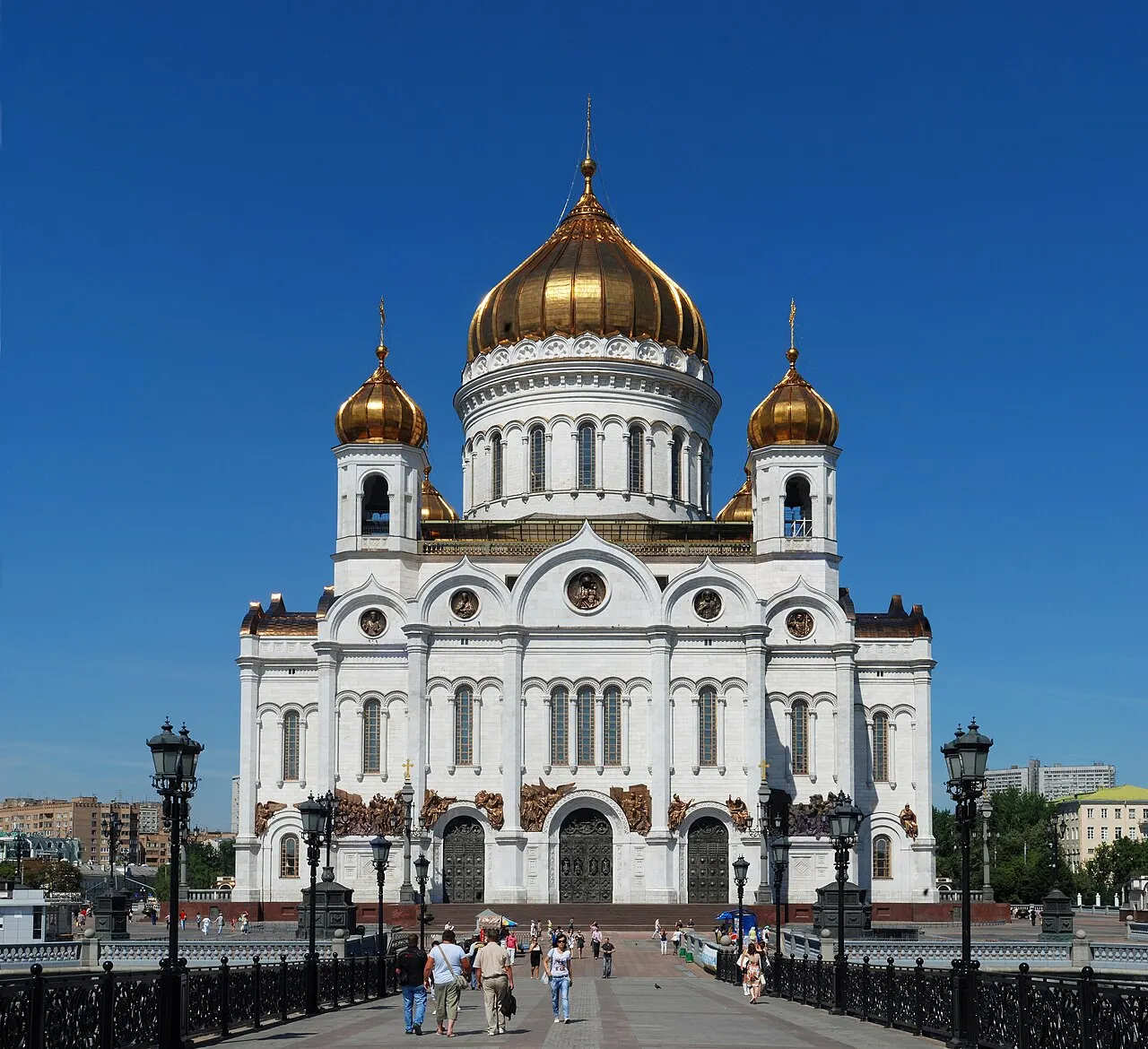
Cathedral of Christ the Savior
The original church, designed by Konstantin Thon to commemorate the war of 1812, was consecrated in 1883 and destroyed on 5 December 1931. The Palace of Soviets planned for the site was never completed. The site later housed the outdoor Moskva pool, opened in 1960 and dismantled in 1994. Reconstruction began with the removal of the pool and foundation works in 1994; the new cathedral opened at the end of 1999 and received its great consecration in August 2000. Its 103 m height restores the former silhouette, but the complex incorporates a lower floor and modern construction methods.
The cathedral remains a place of worship. Published hours for the main church are 10am to 6pm, opening at 1pm on Mondays; check notices and the religious calendar before visiting. I would choose between seeing the complex from outside, visiting the interior or taking a guided tour, allowing time for that programme. The viewing platforms are visited with a guide, with their own schedule and arrangements through the Cathedral Foundation; they are not an unrestricted climb included in any admission.
For visitors who need mobility assistance, the Foundation describes ramps and a platform lift operated by staff, with a call button by the main entrance. It also directs visitors to security at the entrance to the Transfiguration Church for lift access. Arrange this assistance before planning your route around the complex.
Demolition and reconstruction help reveal how the city changed in the twentieth century. I would leave the complex for those who want to explore that history; choose the interior or viewing platforms according to worship and guided-tour arrangements.
Check access
Nilo’s itinerary
Start with the basic programme and choose extensions for the time you have.
Plan my days in the app ↗Day 1 · The fortified center
Check the Kremlin calendar and choose Cathedral Square, with the Tsar Bell and Tsar Cannon, on an open day. If you bought a voucher online, exchange it at the Alexander Garden ticket office before heading to Kutafya. Store suitcases at your accommodation and allow time for security and a break before the next visit.
If you prefer the Armoury, arrange the day around your ticket’s session and the Borovitsky Gates entrance. Exchange the voucher at the ticket office at least 45 minutes before the session; Cathedral Square admission is separate. Choose how much you want to see and keep the rest of the day flexible: the museum advertises the full Armoury audio guide as a route of about three hours. Adapt the programme to your chosen route and include a break.
After your chosen Kremlin visit and a break, head to Red Square. If you want to go inside St. Basil’s, check the calendar and arrive before last entry, one hour before closing; the first Wednesday of the month is a closed day. Leave GUM and a meal for the remaining time, or visit the cathedral another day if the Armoury session takes up much of your programme.
If you still have time and energy, add Zaryadye Park after your passage through Red Square. Choose a stretch for walking or resting and check access to the V-shaped viewing platform; adapt the outing to the weather, without having to wait for sunset.
Take a meal break where it fits your chosen route. Stolovaya 57, on the third line of GUM’s third floor, is an option if you are around Red Square; check service and the day’s menu. If you prefer Kitai-gorod or Nikolskaya Street, choose the establishment and plan your return to your accommodation from its address, allowing time for the journey.
For an outdoor-only programme, choose Red Square and, if access and weather allow, Zaryadye Park. Take a break between them and adapt your route to the available entrances; going inside the Kremlin or St. Basil’s belongs to another programme.
If this is your arrival day, prioritise the journey to your accommodation, a meal and rest. Confirm check-in time and where you can leave your suitcases if you arrive early. Add a short walk only if you still have energy; do not book a museum session around a tight arrival schedule.
Day 2 · Across the river, art and a park
Choose the historic Tretyakov on Lavrushinsky Lane for icons and nineteenth- and early twentieth-century painting. Check the calendar, ticket and last entry before deciding when to start the day; the museum closes on Mondays. Explore the rooms that interest you and allow time for a break afterwards.
Take a lunch break in the neighbourhood of your chosen programme. If you are at the historic Tretyakov, Pyatnitskaya Street is a possibility in Zamoskvorechye; choose the establishment by its address and the day’s service before deciding on your next journey.
If your main interest is the twentieth century, choose the New Tretyakov on Krymsky Val instead of chaining the two museums together. Check the calendar and room displays, especially if you want to see the “Black Square”. Combine both only if there is time for the journey between buildings, admission and a break.
To finish outdoors, choose a stretch of Muzeon or Gorky Park according to access, weather and energy. In October 2026 the operator reports works with partial closure of the Parterre and main entrance; check entrances for your date. On Pushkinskaya Embankment, between Krymsky and Andreevsky bridges, entering with bicycles and scooters is prohibited. If you prefer the Garage Museum, check its programme before fitting in another visit.
Patriarch’s Ponds and the Bulgakov Museum can form another programme rather than a compulsory finish after the art museums. The museum’s real address is 10 Bolshaya Sadovaya, apartment 50; “Sadovaya 302-bis” is the literary address in The Master and Margarita. Check the calendar if you want to go inside; the guided visit advertised by the museum requires buying a ticket online beforehand. End the day with a meal and plan the journey back to your accommodation from your chosen place.
Day 3 · Choices: the metro, VDNKh or another programme
Choose among Ploshchad Revolyutsii, Mayakovskaya, Novoslobodskaya and Komsomolskaya on the Circle line the stations that fit your route. Check entrances and changes within the paid area and leave room for passengers; going early does not guarantee empty stations.
Choose VDNKh if you want to devote part of the day to pavilions and outdoor spaces. Consult the map and programmes to choose the stretch you will cover. When checked in October 2026, the pavilion beneath Worker and Kolkhoz Woman was closed for modernisation; viewing the sculpture from outside requires checking access around it. If you prefer the Cosmonautics Museum, it is at Prospekt Mira, 111, in the base of the 1964 Monument to the Conquerors of Space. The museum opened in 1981 and sells admission by session: check the calendar, entry and visiting time before combining both programmes.
Have your meal near the chosen programme and take a break before deciding on another visit. To combine metro stations with VDNKh, check the route from the station where you are, changes and your return to the accommodation. Travel between these proposals also takes part of the day; choose one if time becomes tight.
Sparrow Hills can be a separate programme according to weather, energy and access. Vorobyovy Gory station and the viewpoint are distinct places: check the exit and the way to the upper level, including whether the escalator gallery is operating if you want to use it. Moscow State University’s main building opened in 1953 and can be viewed from outside; an interior visit has its own conditions. Allow time for travel, a break and the return rather than treating the viewpoint as a compulsory stop after VDNKh.
If you want to attend a performance at the Bolshoi or visit Sanduny, make it a separate choice. Consult the theatre’s programme and admission conditions. At Sanduny, check your chosen department, its calendar, service type and payment method; spaces and hours differ. Allow a meal and break before the programme, check your return and keep the evening free if you are tired.
To stay only at VDNKh, choose a few pavilions or an outdoor stretch according to that day’s programmes and access. Include a meal and break on the same outing. The Cosmonautics Museum is a distinct visit and only joins the plan if you choose that session and have time for travel and the visit.
If this is your departure day or you prefer to rest, keep time for check-out, luggage storage, a meal and transport to the next commitment. A short walk near the accommodation may fit; confirm when you need to leave before adding a visit or performance.

Food
 AI illustration
Borscht
Beet soup, with versions that include cabbage, potato and meat. Smetana, a sour cream, may come as an accompaniment. Recipes differ between kitchens; check the stock and ingredients when choosing your portion.
 AI illustration
Pelmeni
Small filled dough dumplings, often with meat, though fish and mushroom versions also exist. Preparation and accompaniments depend on the kitchen; choose according to the menu description.
 AI illustration
Blini
Pancakes served plain or with sweet and savoury fillings. Moscow has versions with meat, mushrooms, cheese or jam, alongside each kitchen’s own combinations. Check the filling and portion size; a festival stall and a restaurant have different service arrangements.
 AI illustration
Selyodka pod shuboy
“Herring under a fur coat”: a cold layered salad of herring, beet, potato, carrot and mayonnaise; some recipes also include egg and onion. Ingredients and assembly vary between kitchens.
 AI illustration
Olivier salad
A salad of potato, vegetables, egg, pickled cucumber and mayonnaise, with versions adding meat or sausage. Meat-free recipes exist too. Compare the ingredients in the menu description before ordering.
 AI illustration
Georgian food
A Georgian restaurant is an option for a meal with varied dishes: khachapuri adjaruli, boat-shaped bread with cheese and egg; khinkali, dumplings containing filling and broth; lobio, a bean dish; and badrijani, with aubergine and walnuts. Khinkali is commonly held by the knot, taking a small first bite to drink the broth. Choose the restaurant by its address, menu and the time available that day; for a group, check reservations and portion sizes.
 AI illustration
Bird's milk cake
Cake layers, soufflé and a chocolate coating characterise bird’s milk cake. It is associated with confectioner Vladimir Guralnik’s work and the pastry kitchen of the Praga restaurant on Arbat Street. Coffee and other flavour variations exist, and the texture depends on the recipe.
At the pastry shop you choose, check whether it serves slices, individual portions or whole cakes, along with the ingredients and size. The pause can fit an Arbat visit, depending on the selected place’s address and hours.
 AI illustration
Kvass and mors
Kvass is a fermented drink with a bread-like aroma, available in different recipes and packaging. Check the ingredients, alcohol content and portion size on the label or menu. Bottles, cans or service by the glass depend on the product and establishment.
Mors is a fruit drink, often made with cranberry, lingonberry or currant, sweetened according to the recipe. Flavour and sweetness differ between versions. Choose by the menu description and serving size; there is no need to look for a street vendor to try these drinks.
Day trips

Sergiyev Posad
The Trinity Lavra of St. Sergius is a working monastery, with origins in 1337 and an ensemble inscribed on the World Heritage List in 1993. For Sergiyev Posad, the monastery lists trains from Yaroslavsky or Rostokino to the town’s station. Choose outward and return services from the operator’s timetable for your date, adding station access, waiting and the final leg to the Lavra. A train’s running time is not the duration of the complete outing.
Check the Lavra’s calendar and the programme you want to attend: entry to the grounds does not mean every church is open for an independent visit. The institution states that churches open during services and arranged tours. Fit that condition around a meal, a break and the return journey, keeping the rest of your Moscow day light.
Vladimir and Suzdal
Vladimir and Suzdal bring together white-stone monuments, with 12th- and 13th-century buildings in the UNESCO-listed ensemble. I would choose one town for a day trip rather than treat both as an automatic sequence. To include both, check your intended visits, travel between them and the option of an overnight stay.
Suzdal has no railway station: one option is a train to Vladimir and a bus to Suzdal. Check the departure station on your ticket, timetables and the return; the train service and road connection change the total journey time. Include travel from the bus station to the visits, a meal and breaks. Museums and churches have their own calendars and tickets; choose the entrances before arranging your return connection.
New Jerusalem, in Istra
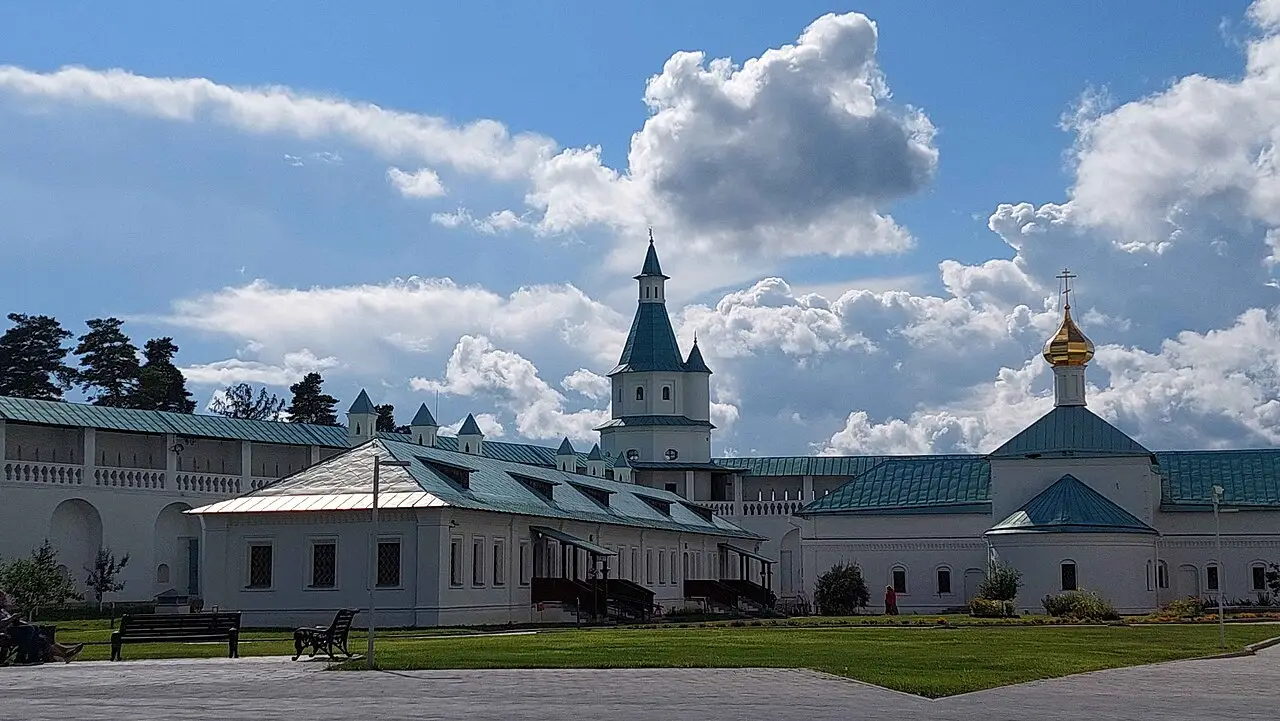
In Istra, the Resurrection Monastery was founded in 1656 as part of Patriarch Nikon’s project to represent places in the Holy Land. Its main church takes the Church of the Holy Sepulchre as a reference. The monastery is at 2 Sovetskaya Street; the New Jerusalem history and art museum occupies a different address, 1 Novo-Ierusalimskaya Embankment. Choose the monastery, a museum exhibition, or both only if access conditions and your available time allow.
For the museum, the institution lists a train to Istra and a local connection, with a final walk. Check your boarding station and timetables for the date, as well as access to the address you choose; do not count a fixed walk from any station as arrival at both monastery and museum. Compare worship, visitor and exhibition calendars, leaving lunch, rest and a margin for the return to Moscow.
Where to begin
The fortified center
Check the Kremlin calendar and choose Cathedral Square, with the Tsar Bell and Tsar Cannon, on an open day. If you bought a voucher online, exchange it at the Alexander Garden ticket office before heading to Kutafya. Store suitcases at your accommodation and allow time for security and a break before the next visit.
Across the river, art and a park
Choose the historic Tretyakov on Lavrushinsky Lane for icons and nineteenth- and early twentieth-century painting. Check the calendar, ticket and last entry before deciding when to start the day; the museum closes on Mondays. Explore the rooms that interest you and allow time for a break afterwards.
Money
The currency is the ruble (RUB, ₽). The Bank of Russia publishes official reference rates; the rate offered by a bank or exchange bureau can differ. Before exchanging money, compare how many rubles you receive, fees and required documents, rather than using one fixed dollar or euro conversion for the whole trip.
Since the networks suspended operations in March 2022, Visa and Mastercard cards issued outside Russia have not worked at Russian merchants or ATMs. For other networks, confirm conditions with the issuer. Before departure, agree with your accommodation and arrival transport provider on how you will pay; having a reservation does not mean payment is complete. Plan access to funds throughout your stay, including if your intended method becomes unavailable. If you bring cash to exchange, check which notes the provider accepts and the cash-carrying and banking rules applicable to your circumstances.
Build your budget from accommodation for your dates, meals, admissions and chosen journeys. Add arrival, departure and trips outside the center separately: a hotel night or metro fare does not describe the cost of an entire day. Confirm prices and payment methods before finalizing reservations, and check the restaurant bill before adding a tip.
Getting there and around
Choose airport access around your accommodation
Check the airport code and terminal before planning arrival. Sheremetyevo (SVO) has Aeroexpress trains to Belorussky and express buses to Khovrino metro station; Domodedovo (DME) has Aeroexpress trains to Paveletsky and express buses to Domodedovskaya. At Vnukovo (VKO), Aeroport Vnukovo station on the Solntsevskaya line has an underground connection to Terminal A; Aeroexpress trains for this airport were suspended in July 2024. For Zhukovsky (ZIA), compare bus 441 to Kotelniki with a train via Otdykh and the 2A connection to the airport. Choose by your hotel address, terminal and number of changes with luggage, rather than distance to an abstract city center.
Check operator timetables and notices for your date: changes and cancellations can affect the connection. Allow for disembarking, entry controls, waiting and the final leg to your accommodation; leave time to store luggage or check in before sightseeing. If you prefer a transfer or taxi, agree on the price and payment before departure. For entry to Russia, check official rules for your passport, purpose and travel dates; the electronic visa applies only to nationalities and border crossing points listed by the Foreign Ministry. For onward rail travel, use the station specified on your ticket, without assuming all services leave the same terminal.
Metro, urban rail and the walk to your destination
I would choose a station near each visit and your accommodation before settling the order of the day. The metro, MCC rail ring and MCD cross-city rail lines can complement each other, but fare zones and access points differ. Check the exit, changes and last connection, especially for an address outside the center. Allow time on walks to cross avenues and reach the correct entrance; where there are stairs or an underpass, check an accessible alternative if you need one.
The Troika card holds a balance and different passes. Check the fare for your route and MCD zone rather than counting every journey as one metro ride. The network offers top-ups at ticket offices, machines and digital channels; a remote top-up may need activation. These channels do not guarantee acceptance of your bank card: Visa and Mastercard cards issued outside Russia do not work at Russian merchants, and other networks require confirmation. Bring a payment method compatible with your chosen channel and check the balance before starting the journey.
Safety
Before deciding to travel to Moscow, check your country’s official travel advisory and the consular help available. On October 7, 2026, the British government advises against all travel to Russia and the U.S. Department of State retains Level 4, Do Not Travel. Those authorities warn of risks related to the war, terrorism and detention, with limited consular assistance. Check the guidance applicable to your nationality, including conditions for dual Russian nationals.
Drone attacks and airspace restrictions can disrupt airport operations at short notice. Confirm flights with your airline and review departure options. Allow a connection buffer and keep an alternative in case the service is cancelled. Arrange access to funds throughout your stay too, considering the payment restrictions described in this guide.
Consular advisories warn of detention and restrictions on public expression, publications about the armed forces and photography at military or secure sites. Avoid political demonstrations and do not photograph installations or activities subject to restrictions. Laws concerning LGBT+ expression and organisation also affect travellers. Consult official guidance and consider these conditions when deciding to travel and choosing your programme.
The FCDO advises its travellers to carry their original passport, as a copy does not replace the document during an identity check. Check with the relevant Russian diplomatic mission which documents and deadlines apply to your nationality and stay, including immigration and registration, and agree with your accommodation what it must arrange. Confirm Russia coverage, activities, assistance and exclusions with your insurer, including when travel goes against an official advisory.
Look after luggage and documents in busy areas and terminals. Call a licensed taxi through an app or a company recommended by your accommodation; check the car, fare and agreed payment before boarding. To exchange money, use a bank or authorised exchange service and check the rate, fees and amount you will receive.
In winter and during thaw, watch ground conditions and areas cordoned off for falling ice or work on roofs. Respect barriers and choose another route when necessary. In an emergency, call 112 and describe what happened and the address or landmarks; keep your accommodation’s address and those of chosen places saved in Cyrillic.
Etiquette tips
Check cloakroom arrangements before visiting
At the Tretyakov, the rules require you to leave your coat in the cloakroom before entering the exhibition rooms. Keep the numbered tag until you collect it. Bags, backpacks and other objects have their own admission and storage conditions; keep documents and valuables with you, and suitcases that do not fit in a locker are not accepted. Arrange luggage storage at your accommodation or another service before visiting the museum on an arrival or departure day. At theatres, restaurants and other museums, check the venue’s conditions and allow time to leave and collect your coat.
On the escalator, hold the handrail
To stand still, stay on the right facing the direction of travel. If passing on the left, hold the handrail. When passenger flow increases, staff may instruct passengers to use both sides; follow that instruction. Hold small children by the hand or carry them, keep luggage and long clothing under control and clear the exit when stepping off. Do not run or put objects on the steps.
Flowers according to the occasion
The convention of giving an odd number of flowers and associating even numbers with mourning is a reference to consider when choosing a gift. Bouquet composition and the recipient’s preferences matter too. Explain the occasion to the florist and choose the stems and presentation together, rather than expecting an automatic correction at the counter.
When invited into a home
Wait for the invitation to enter and follow your host’s guidance. Ask where to leave your coat and whether to remove your shoes; the answer depends on the home and host. Agree on the visit time too, so it fits the day without rushing a meal or the return to your accommodation.
Start with a greeting and a clear request
When asking for information, greet the person and ask a specific question. Show your destination’s name or address if useful. A smile or a serious expression alone does not tell you whether someone wants to talk or can help; respect their answer and time.
Names and forms of address follow the introduction
In Russian, “vy” is a respectful form of address. A first name and patronymic, such as Anna Sergeyevna or Ivan Petrovich, are an option in formal contact when you know them. Start politely and use the form the person introduces themselves with or agrees with you. A diminutive, such as Anya or Vanya, depends on that relationship and an invitation to use it, not age alone.
Mistakes to avoid
Leaving payment arrangements until arrival
A hotel or transfer reservation may still require payment at your destination. Before departure, confirm the outstanding amount and accepted method with each provider. Visa and Mastercard cards issued outside Russia do not work at Russian shops or ATMs; for other networks, consult the issuer. Arrange payment for arrival and the first night, plus an alternative way to access funds during your stay, without depending on finding an ATM after landing.
Underestimating the journey between visits
Group nearby visits, but check the full journey between their addresses. Walking can work within a neighbourhood; when comparing it with the metro, include station access, waiting, changes and the exit-to-destination leg. The choice depends on distance, weather, luggage and the traveller’s mobility. Allow breaks and a margin before a visit with a booked session.
Relying only on transliterated names
The Russian alphabet has 33 letters. Becoming familiar with it can help you recognise names, but learning the letters does not mean understanding signs and menus. Save accommodation and visit names and addresses in Cyrillic alongside the transliteration you use. When checking a station or exit, compare the full name, line and destination street; a saved map and translation tool can complement your reading.
Dressing only for the street
In winter, plan clothing for outdoor stretches and layers you can remove in heated interiors. The number and type depend on the forecast and that day’s programme; include footwear suited to street conditions. At the Tretyakov, your coat stays in the cloakroom before entering exhibition rooms. Elsewhere, check the venue’s own rule and allow time to leave and collect it, without bringing suitcases the service does not accept.
Choosing an exit without checking the destination
Before going up to street level, compare the indicated exit with your visit’s address. Where exits are numbered, check the number and street; “выход в город” means exit to the city, not which exit best serves your journey. For luggage or reduced mobility, consult operator information about lifts, ramps and the appropriate exit. Include the final walking leg and check closure notices for your date.
Useful phrases
Здравствуйте
Hello, formal (zdrástvuitie)
Спасибо
Thank you (spassíba)
Пожалуйста
Please, and also you're welcome (pajálusta)
Сколько стоит?
How much does it cost? (skólka stóit)
Я не говорю по-русски
I don't speak Russian (iá ni gavariú pa-rússki)
Выход в город
Exit to the street, the metro sign (výkhad v górad)
Districts
Kremlin and Kitai-gorod
Red Square, GUM and Nikolskaya Street form a different outing from admission to the Kremlin museums. GUM’s covered galleries and cafés can provide a break, according to opening hours and the establishment you choose. For the Kremlin, select your museum and ticket, check the designated gate and allow time for access checks; a walk around the area does not include entry to the buildings.
Tverskoy
Choose a stretch of Tverskaya and its surrounding streets to look at the façades, or organise the outing around a theatre performance. The Hermitage Garden is on Karetny Ryad and offers another possible stop: include the journey to the garden and your return in the plan. For a Bolshoi performance, check the building, production and time on your ticket before combining other visits.
Arbat and Khamovniki
Pushkin’s house museum is at 53 Arbat; choose between a walk along the street and the exhibition visit, which requires checking admission and opening days. In Khamovniki, Tolstoy’s house at 21 Lev Tolstogo Street and the Novodevichy Convent offer other interests at distinct addresses. Set aside a period for your chosen visit, including travel, a break and the return, rather than treating every place as an automatic continuation of Arbat.
Zamoskvorechye and Yakimanka
The Tretyakov Gallery on Lavrushinsky Lane and the New Tretyakov on Krymsky Val are distinct destinations. Choose the collection or exhibition you want to see and check its address and admission. In the streets of Zamoskvorechye and Yakimanka, combine a walking stretch with a meal break according to the menu and venue you choose; assess the journey there and the price of that specific meal.
Patriarch's Ponds and Presnya
The name Patriarch’s Ponds remains, but a single pond surrounded by a garden survives. The action of The Master and Margarita begins here, and the Bulgakov museum proposes walks linking literary and biographical addresses in the area. Choose the places you want to recognise and your walking stretch; to continue through Presnya or have a meal, check the address, access and menu, allowing time for the break.
Moscow-City
The Moscow-City towers can be viewed from the surrounding area; going up to an observation deck is a separate visit with its own admission and access. PANORAMA360 is on the 89th floor of the East Federation Tower at 12 Presnenskaya Embankment; the operator directs visitors to reception on level -2. Choose your session and check entry instructions before combining a meal or the return journey. For a meal on a high floor, assess the venue, menu and specific reservation, allowing time between commitments.
Basmanny and Chistye Prudy
Chistye Prudy pond and the Winzavod and Artplay centres offer different outings. Winzavod is at 1/8 Fourth Syromyatnichesky Lane; Artplay is at 10 Nizhnyaya Syromyatnicheskaya Street. Choose the exhibition, gallery or activity you want to see and confirm its building and opening arrangements: the site’s hours do not apply to every room, shop or café. If you combine two addresses, include travel and a break rather than treating the whole area as a single visit.
VDNKh and Ostankino
VDNKh brings together pavilions, museums, gardens and fountains; choose the exhibition or part of the grounds you want to explore, allowing time to walk and rest. The grounds’ opening arrangements do not determine each attraction’s hours or admission, and the operator’s guided tours require advance registration. Ostankino Tower is a separate visit at 15 Akademika Korolyova Street, building 2: check your session, documents, access restrictions and required arrival margin before combining travel and the return.
History
1147 · The first written line
The Hypatian Chronicle records a meeting between Yuri Dolgoruky and Prince Svyatoslav Olgovich in Moscow in 1147. The city counts its age from this first written mention. Its municipal celebration takes place in September, with dates announced for each edition.
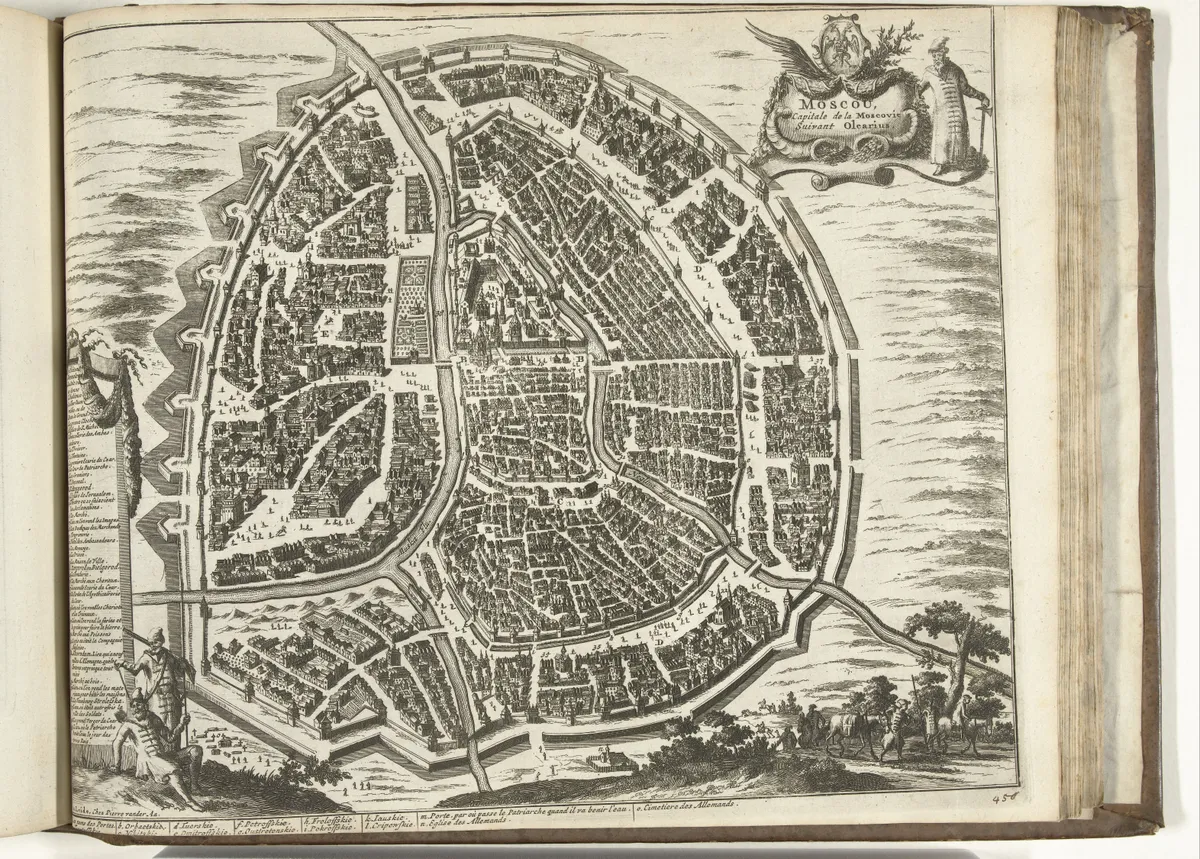
1156 · The wooden fortress
The Tver Chronicle records Moscow’s fortification in 1156. The new timber and earth defenses bring together two already fortified centers on Borovitsky Hill, beside the confluence of the Neglinnaya and Moskva rivers. The position forms part of the defense of the southwestern frontier of the Suzdal principality.
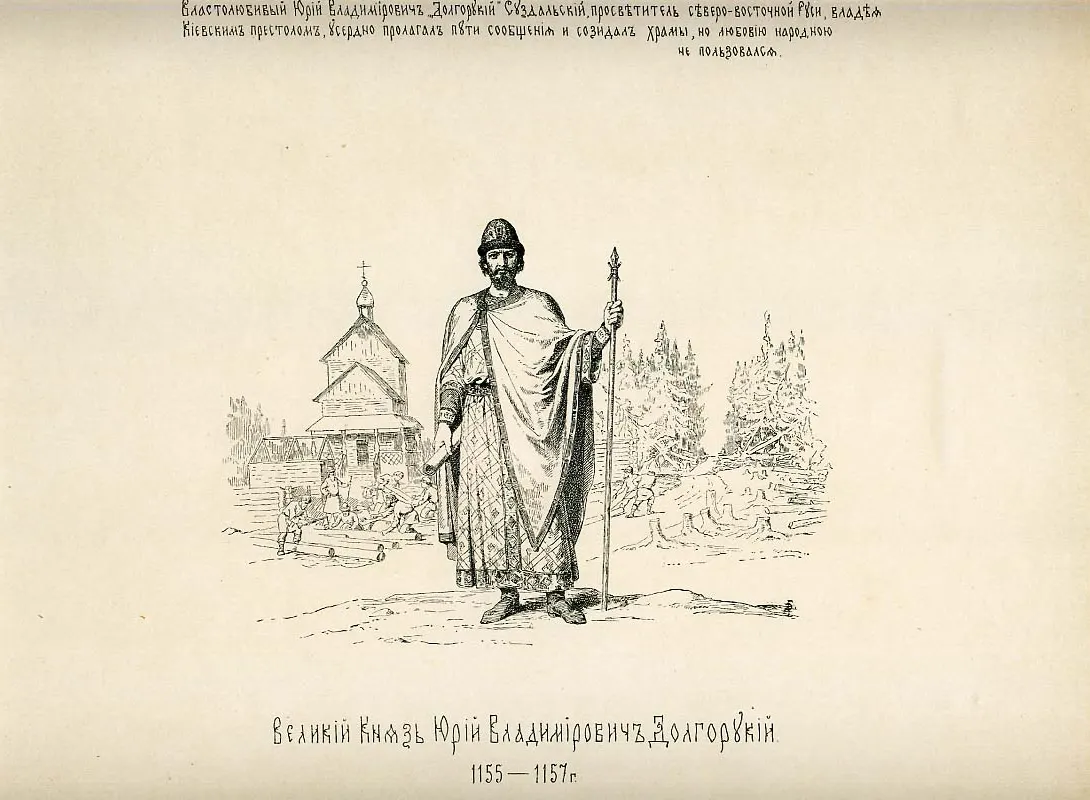
1238 · The Mongol burning
Batu Khan’s troops sack and burn Moscow in 1238 during the invasion of Rus. Fire layers and buried treasures in the Kremlin preserve traces of the attack. The continuity of archaeological deposits indicates that the city was occupied again soon after its destruction.
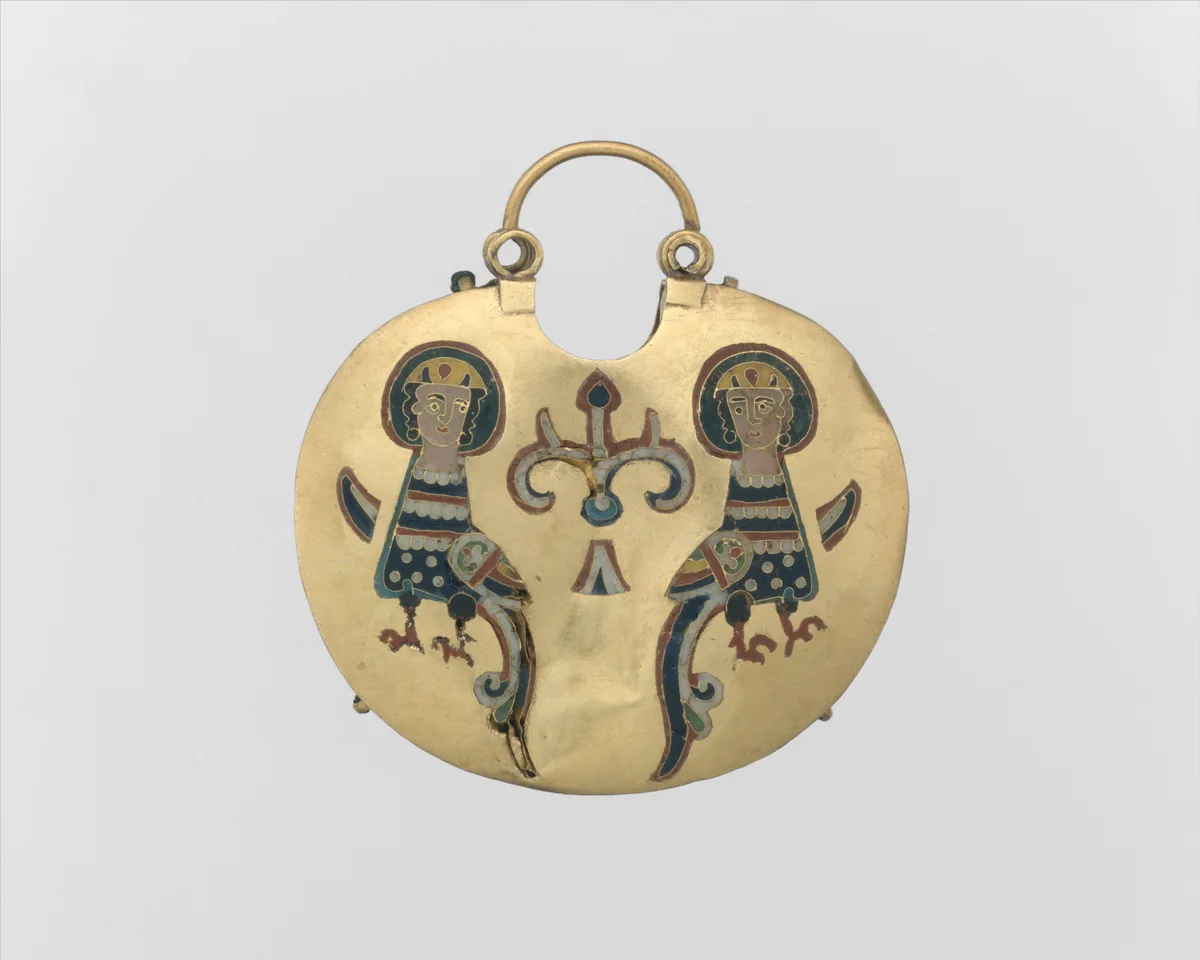
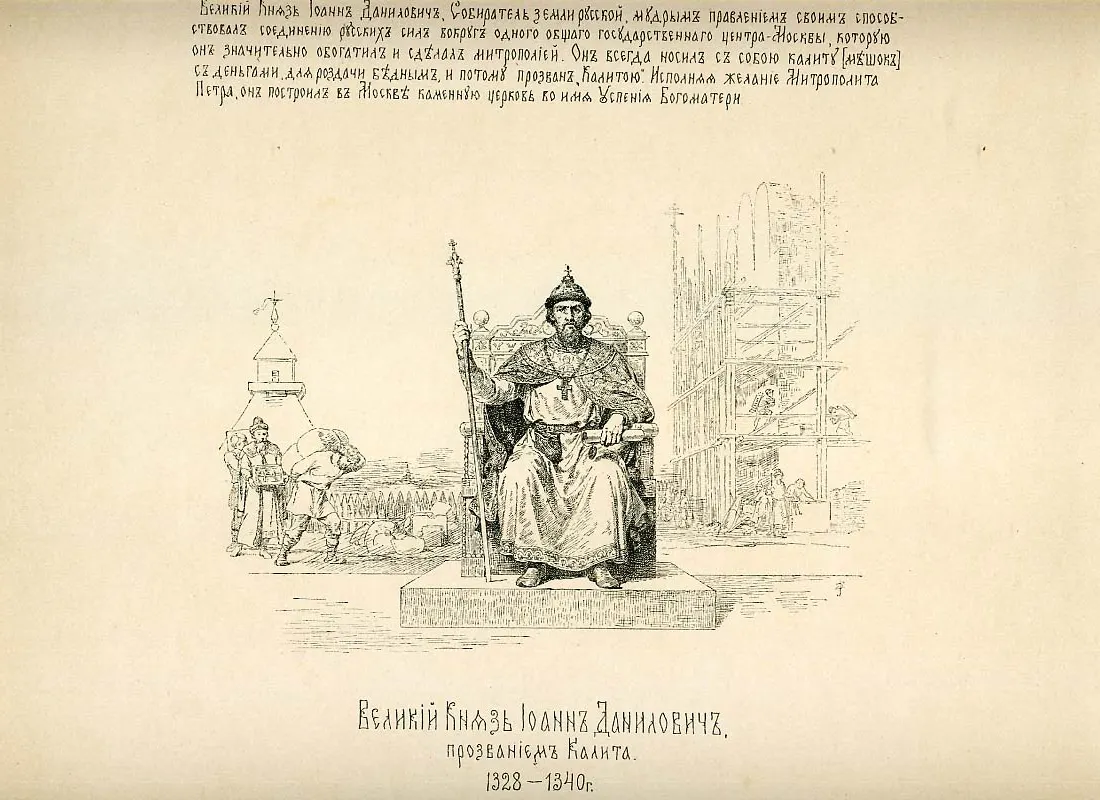
1325–1340 · Ivan Kalita and the miter
Metropolitan Peter takes up residence in Moscow in 1325. The first stone Cathedral of the Dormition is begun in 1326 and consecrated in 1327. In 1328 Ivan Kalita receives the Horde’s patent for the grand principality of Vladimir but keeps his residence in Moscow. The link with religious authority and his role in collecting tribute increase the city’s political weight.
1367–1380 · White stone and Kulikovo
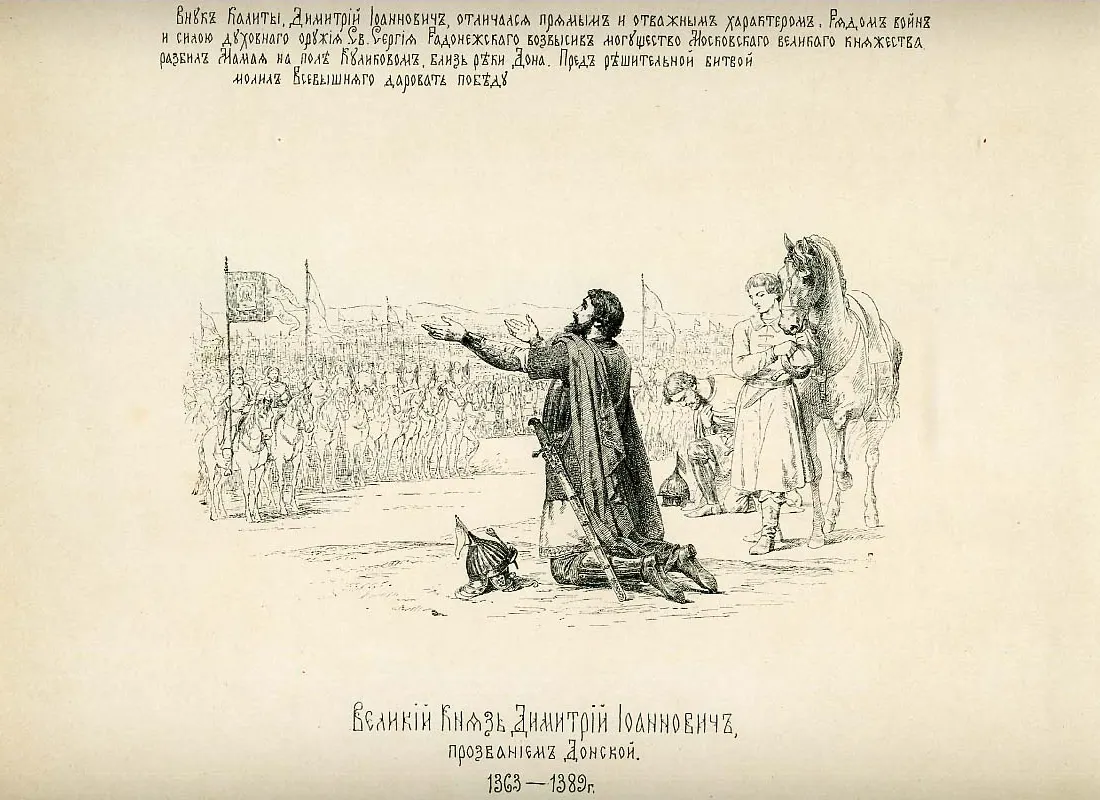
After the fire of 1365, Dmitry Ivanovich orders white limestone walls for the Kremlin, with construction beginning in 1367. In 1380 the coalition led by the prince defeats Mamai’s forces at Kulikovo, bringing prestige to Moscow. Dependence on the Horde continues: in 1382 Tokhtamysh burns the city and tribute payments resume.
1480–1495 · Independence and the red wall
In 1480 the confrontation on the Ugra River marks the end of Moscow’s dependence on the Great Horde. Under Ivan III, Aristotele Fioravanti builds the present Cathedral of the Dormition between 1475 and 1479, and Italian masters begin the core of the red walls in 1485. The fortifications gain new structures in the following century; the towers’ silhouette continues to change afterward.

1547–1612 · Tsars and the Time of Troubles
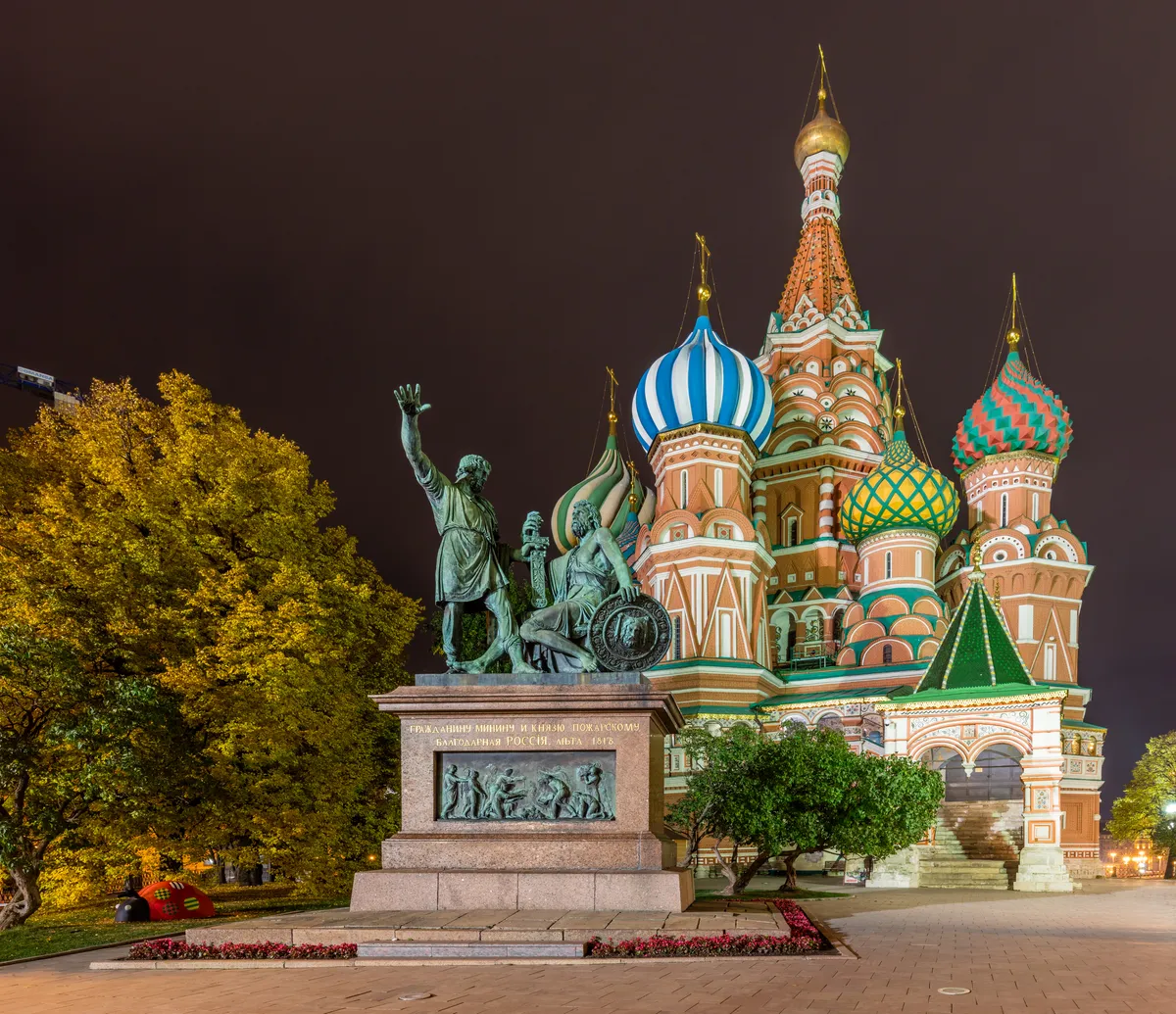
Ivan IV is crowned tsar in the Cathedral of the Dormition in 1547 and commissions St. Basil’s, built between 1555 and 1561 to commemorate the conquest of Kazan. The death of his son Fyodor in 1598 opens a succession dispute. During the Time of Troubles, the Polish-Lithuanian occupation reaches the Kremlin from 1610 to 1612. The militia organized by Minin and Pozharsky takes part in liberating Moscow in 1612.
1712 · Peter I moves the capital to Saint Petersburg
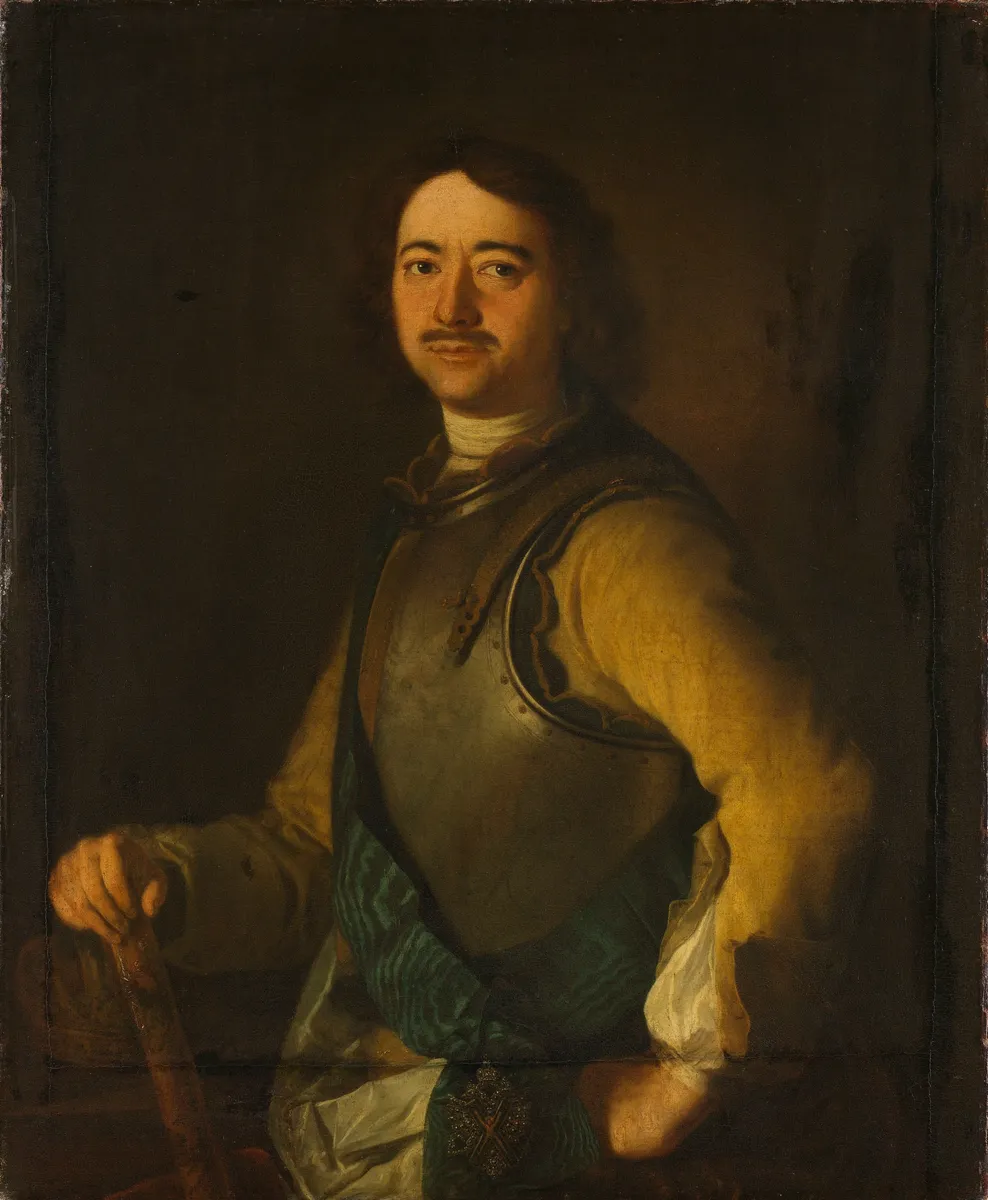
The transfer of capital functions to St. Petersburg takes place in stages under Peter I: 1712 is the traditional date of the move, and the Senate follows in 1713. Moscow retains its role as the city of coronations and remains a center of trade and religious life. The university is founded here in 1755.
1812 · The fire
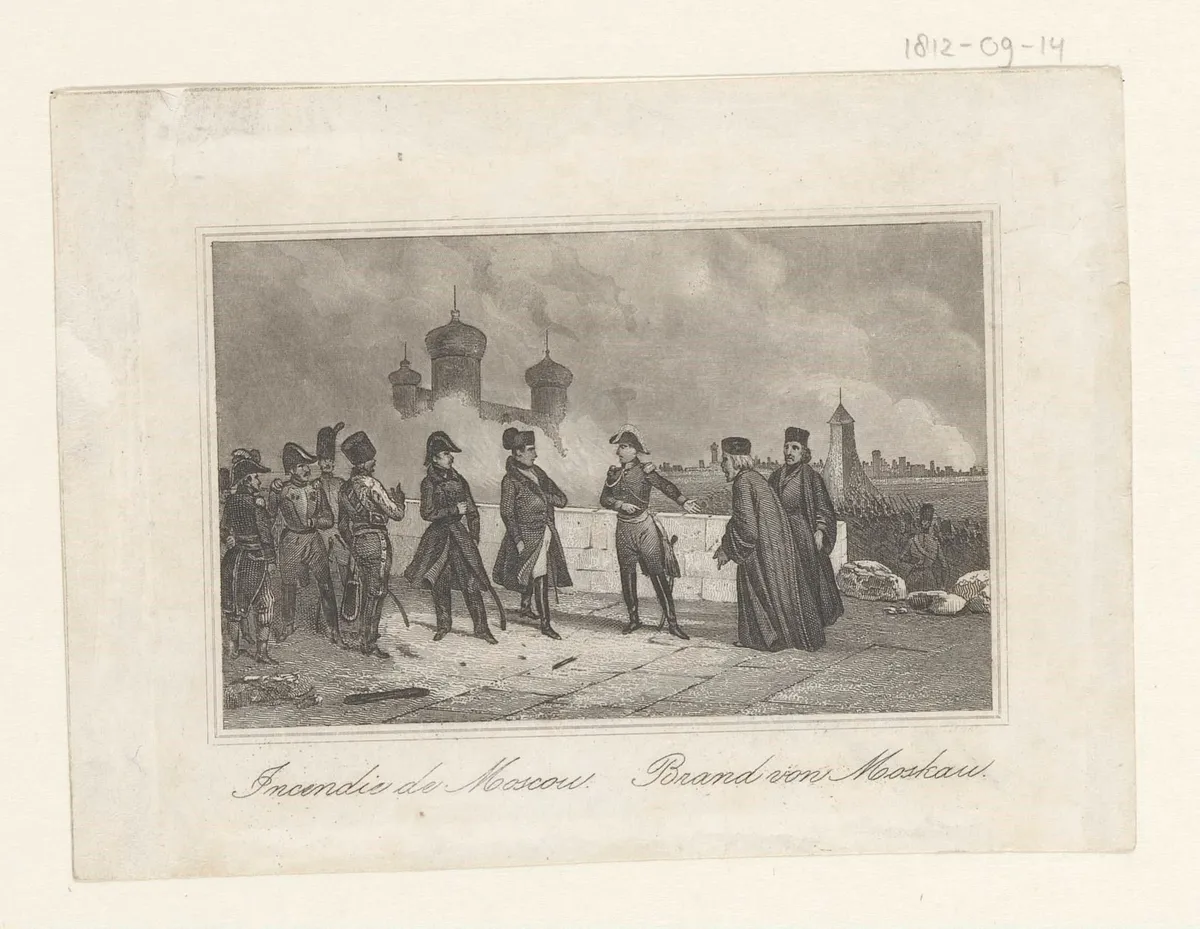
In September 1812, occupation by Napoleon’s troops coincides with fires that devastate much of Moscow. The Commission for Construction, established in 1813, coordinates recovery; a new urban plan is approved in 1817. Rebuilding reorganizes streets and squares and involves both new buildings and the restoration of surviving ones.
1918–1957 · Soviet capital and reconstruction
The Bolshevik government moves to Moscow in March 1918. The Cathedral of Christ the Saviour is demolished in 1931. The 1935 general plan calls for wider streets, with work carried out in subsequent years; the metro opens on May 15 that year. The seven Stalinist towers are built between 1947 and 1957.

1991–2026 · Contemporary Moscow and new rings
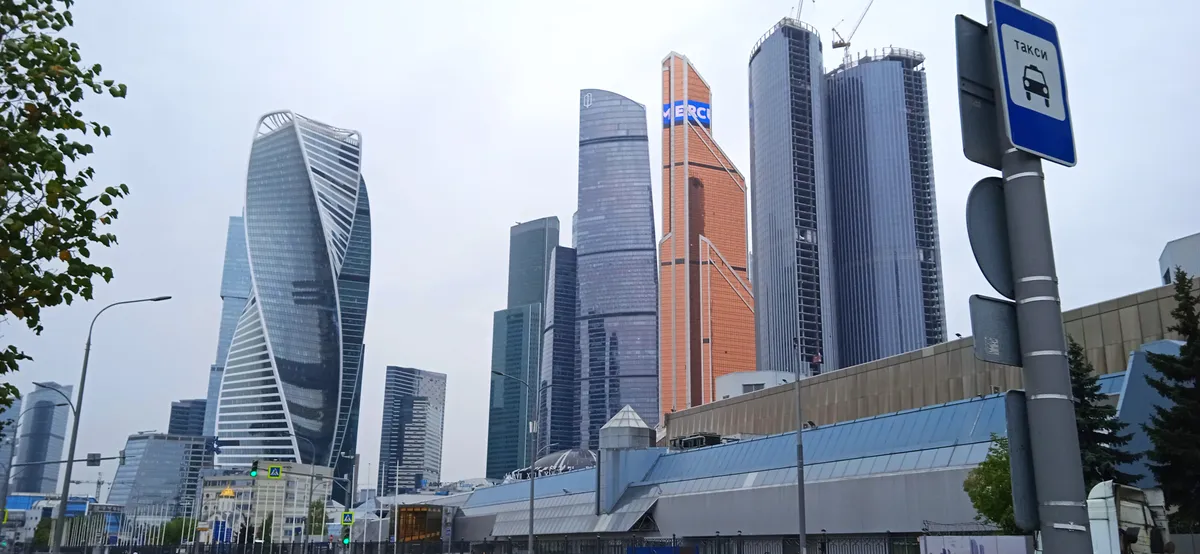
The White House, seat of the Russian parliament, is a center of resistance to the August 1991 coup and is shelled during the political conflict of October 1993. In the following decades, Moscow-City transforms a former industrial area. On July 1, 2012, New Moscow expands the municipal territory to the southwest; on March 1, 2023, trains begin running along the entire Big Circle Line of the metro.
Complete history
Moscow’s origin on the hill between the rivers
Borovitsky Hill stands at the confluence of the Neglinnaya and the Moskva rivers. The position helped with defense and contact with other settlements along waterways. Kremlin archaeology reveals craftspeople, everyday objects and goods imported from other centers of Rus and more distant regions. Moscow already had urban life before becoming a center of power.
The Hypatian Chronicle mentions the meeting of Yuri Dolgoruky and Svyatoslav in 1147, the year the city uses to count its age. Another written tradition, the Tver Chronicle, records the fortification of 1156. In 1238 Batu Khan’s attack leaves fires, destruction and buried treasures. Archaeological deposits before and after the invasion show continuity, indicating that occupation resumed quickly.
Political power develops in stages. Peter establishes his residence in the Kremlin in 1325; construction of the first stone Cathedral of the Dormition begins in 1326 and it is consecrated the following year. Ivan Kalita receives the patent for the grand principality of Vladimir in 1328 and remains in Moscow, expanding his domains and taking part in collecting tribute for the Horde. The prince’s and metropolitan’s residences bring political and religious authority into the same complex.
From the 14th to the 16th century, Moscow became the capital of a state
From the 14th to the 16th century, Moscow expands its domains and becomes the center of a state. The white walls help defend the city, and victory over Mamai at Kulikovo in 1380 increases its prestige. Dependence on the Horde continues through this period: in 1382 Tokhtamysh burns Moscow and tribute payments resume. The confrontation on the Ugra River in 1480 marks the end of dependence on the Great Horde.
Ivan III commissions buildings that change the Kremlin’s scale. Aristotele Fioravanti raises the present Cathedral of the Dormition between 1475 and 1479. Construction of the red brick walls begins in 1485 with Italian masters, and work on the defenses continues in the early 16th century. The twenty towers catalogued today include Kutafya, built in 1516, and the small Tsarskaya Tower, added to the wall in the 1680s. The upper structures of several towers also date from the 17th century. The outline visible today brings these stages together.
Ivan IV is crowned tsar in the Cathedral of the Dormition in 1547. St. Basil’s, built between 1555 and 1561, commemorates the conquest of the Kazan Khanate. During the Time of Troubles, the Polish-Lithuanian occupation of 1610–1612 affects the Kremlin; the militia of Kuzma Minin and Dmitry Pozharsky takes part in liberating Moscow in 1612. The monument unveiled on Red Square in 1818 commemorates those events.
Imperial Moscow: coronations, avenues and rebuilding
The transfer of capital functions to St. Petersburg takes place in stages: the traditional date is 1712, and the Senate moves in 1713. Moscow remains the city of coronations. The founding of the university in 1755 adds a new center of learning to a city of trade, churches and monasteries.
The urban layout also preserves earlier stages. The Boulevard Ring begins to take shape in the late 18th century along the demolished walls of the White City. Despite its name, its ends reach the Moskva River without completing a full circuit. The Garden Ring develops after the war of 1812 along the former earthen defenses of the Earthen City; gardens required in front of the houses give the new avenue its name.
The fires of September 1812, during the French occupation, destroy much of the city. The Commission for Construction of 1813 coordinates rebuilding, and the plan approved in 1817 combines repairs, new buildings and changes to streets and squares. The 19th century also leaves spaces for culture: Pavel Tretyakov begins his collection in 1856 and, in 1892, gives the city his collection and that of his brother Sergei, together with the house that held them.
Soviet Moscow: capital, demolitions and new neighborhoods
In March 1918, the Bolshevik government leaves Petrograd and moves to Moscow, which becomes the capital again. The Kremlin houses the government; access is restricted, although authorized visits take place before it opens to the general public in 1955. Demolitions also change the landscape: the Cathedral of Christ the Saviour is destroyed in 1931 for the Palace of the Soviets project, which is never completed. An outdoor swimming pool occupies the site from 1960. The Sukharev Tower is demolished in 1934.
The 1935 general plan calls for wider streets, but construction proceeds in stages. On Tverskaya, some buildings are demolished and others moved: the building of the former Savvino-Storozhevsky Monastery courtyard is shifted on rails into the block in March 1939. The metro opens on May 15, 1935, linking Sokolniki to Park Kultury, with a branch to Smolenskaya.
The Battle of Moscow lasts from September 1941 to April 1942; the Soviet counteroffensive begins in December 1941. After the war, the seven Stalinist towers are built between 1947 and 1957. The housing policy of July 1957 directs new construction, from 1958 onward, toward economical apartments for one family, using standardized designs. The program promotes four- to five-story buildings in cities and the use of prefabricated components.
From the White House to New Moscow
The White House, seat of the Russian parliament, is one of the central locations of resistance to the August 1991 coup. In October 1993, the same building is hit by tanks during the confrontation between the presidency and parliament. These are two distinct episodes in the country’s political transformation. Another change takes shape in the former industrial area near the Expocentre: architect Boris Tkhor develops the Moscow-City model between 1988 and 1991, and the tower district is built later, with changes to the initial proposal.
On July 1, 2012, the annexation of New Moscow adds roughly 1,480 km² to the southwest and more than doubles the city’s administrative area. This does not mean the entire new territory is a continuous extension of the center: the change incorporates settlements and areas with different patterns of development.
In the 2010s, the My Street program renovates streets, sidewalks, lighting and urban infrastructure. Zaryadye Park opens in 2017. The housing renovation program is approved that same year to rehouse residents of buildings included in its project list. The metro network also expands: trains begin running along the entire Big Circle Line on March 1, 2023, on a line with 70 km and 31 stations.
Moscow’s power grew while it was still dependent on the Horde. In 1328 Ivan Kalita received the patent for the grand principality of Vladimir, remained in Moscow and expanded his domains. Tribute collection and the metropolitan’s presence in the Kremlin formed part of this concentration of authority.
The Soviet counteroffensive began on December 5, 1941, during the Battle of Moscow, fought from September 1941 to April 1942.
Geography and shape of the city
The terrain and the rivers
The banks of the Moskva River and the slopes of Sparrow Hills offer different routes. The viewpoint, woodland paths and a walk beside the water are distinct outings: choose your access point and the stretch you want to explore, allowing for climbs, ground conditions and the return. When combining places on different banks, check the bridge or connection you need.
Another river helps explain the centre even without appearing at the surface. The Neglinnaya runs through underground conduits; a 3 km section was enclosed in a conduit between 1817 and 1819. That work is part of the transformation of Moscow’s waterways, rather than an underground route open for independent sightseeing.
Radial streets and rings from different periods
Moscow’s layout combines streets radiating from the center with rings formed in different periods. The Boulevard Ring follows part of the demolished White City walls and has both ends beside the Moskva River, without completing a circuit. The Garden Ring occupies the former earthen defenses, reorganized after the war of 1812.
The Third Ring and MKAD are roads; the MCC reuses a circular railway for passengers. These routes help locate neighborhoods and connections, but they do not bound the whole city. The expansion of New Moscow in 2012 incorporates territory to the southwest, beyond the former boundaries. When planning a day, use the rings as reference points and check the journeys between your chosen places.
Seasons and ground conditions
Winter and thaw change walking conditions; in summer, rain and heat also belong in the plan. Historical climate averages help compare seasons, but temperature, snow cover and ground conditions vary between dates and places. Check the forecast close to your trip and adjust outdoor stretches, with suitable footwear and breaks in heated places when it is cold.
Culture
The Bolshoi, the Art Theatre and the Conservatory
Opera and ballet are part of the Bolshoi’s repertoire. To attend, choose the production, date and venue from the official programme; the performance you want to see should guide how you reserve the evening. Check the time, announced cast and your ticket’s sales and admission conditions, including identification required for a named ticket.
The A. P. Chekhov Moscow Art Theatre, associated with its founders Stanislavski and Nemirovich-Danchenko, offers another stage option. Check the language of the play and whether suitable translation resources are available to follow it. The theatre requires a ticket and proof of payment and states that entry begins 45 minutes before the performance. Visitors needing mobility assistance should arrange the visit with the administration: current guidance covers the Main Stage, with two flights of stairs and help from a companion; the Small and New Stages are not adapted.
For a concert, the Tchaikovsky Conservatory, founded in 1866, has its own programme, and the Moscow Philharmonic presents concerts at Tchaikovsky Hall on Triumfalnaya Square. Confirm the venue and address for your chosen event. I would leave time for a break and a meal before entry, allowing for travel and admission checks, then plan the return around the finishing time. Choose a programme that fits the day, including after arriving with luggage or a long museum visit.
Vinzavod and Artplay: choose an exhibition
Near Kurskaya and Chkalovskaya stations, Vinzavod brings together galleries, studios and exhibitions in a former drinks-production complex. Artplay, on Nizhnyaya Syromyatnicheskaya, is an architecture and design centre with studios, shops and cultural programmes on a former industrial site. They are separate complexes, each with its own rooms and events.
I would choose an exhibition and check its building, hours and ticket or registration requirements before combining the two places. At Vinzavod, opening the grounds does not mean every gallery is open; the centre states that it has no luggage storage and advises arranging assistance for spaces with access barriers. Arrange luggage storage before visiting on an arrival or departure day. For a meal or an evening out afterwards, choose a venue by its address and hours, leaving time for a break and preparing the return.
Games, baths and evenings out
Spartak, CSKA, Dynamo and Lokomotiv are reference points for the city’s football; ice hockey also offers games involving clubs such as Dynamo. If you want to attend a game, choose it from the club’s calendar and check whether it is at home, which arena is being used and what documents and tickets are required. At Spartak, published conditions for Premier League games include a Fan ID. Allow time for entry, the game, a meal and leaving the stadium.
A banya can be a separate programme. Sanduny has public departments and spaces with different admission and booking conditions; steam, bathing and additional services should be chosen according to the programme and how visitors feel. Check the department, included time and extension conditions before paying. I would allow a break afterwards rather than automatically adding it to a day already full of visits.
For an evening out, choose an address and check the venue’s hours. Plan the return around the last connection serving your accommodation; the network also has night buses, but stops and hours depend on the route. If choosing a taxi or transfer, agree the meeting point, price and payment. Choose the evening around the programme that interests you and the energy left at the end of the day.
When choosing a Bolshoi performance, check the venue, time and documents required for admission with your ticket.
Festivals and events

Maslenitsa
Maslenitsa follows the week before Orthodox Lent, with dates that move each year. Programmes may include blini, music, games and museum activities; each venue has its own times and participation conditions. Choose an activity announced for your travel year and check whether registration or a ticket is needed. Allow time to get there and for a break indoors, rather than counting on a festival in every central square.
Victory Day, May 9
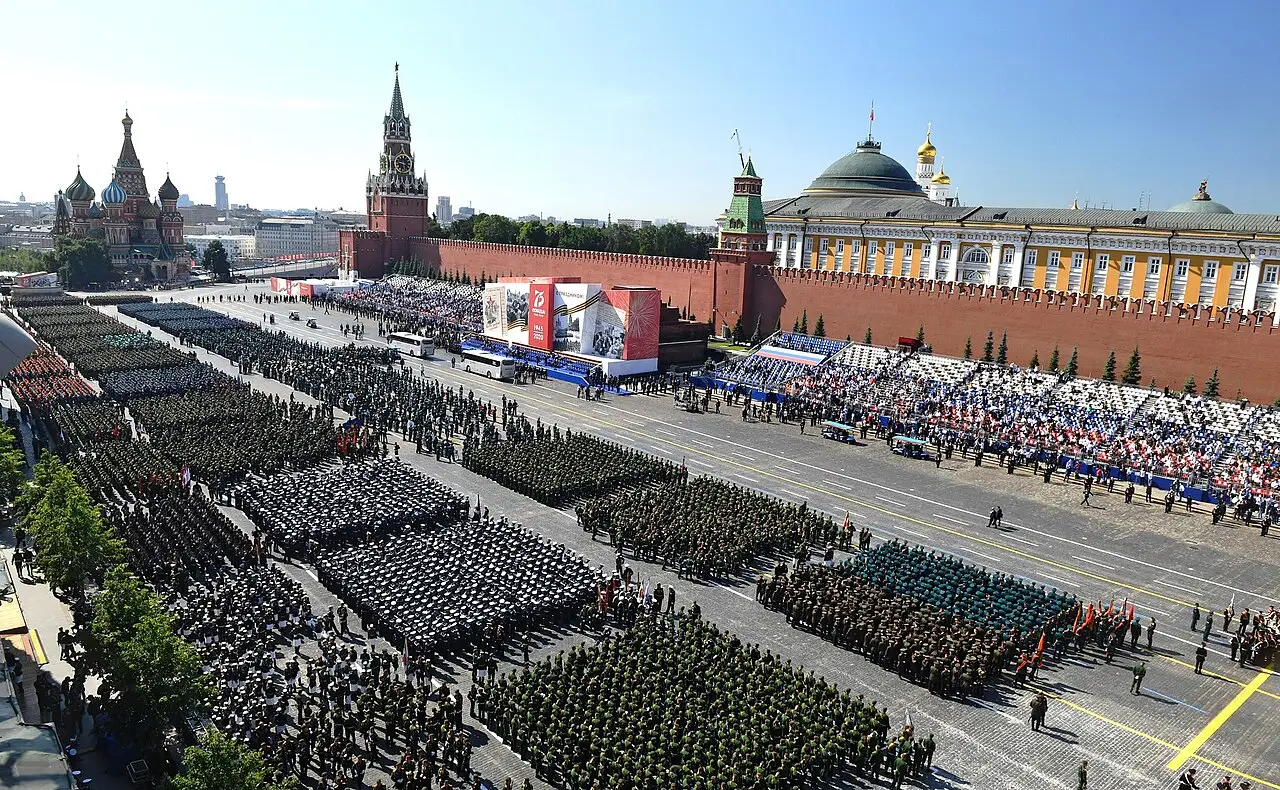
May 9 marks Victory Day. Check that year’s programme and access conditions before trying to attend a ceremony; the format of Immortal Regiment events also depends on the edition. Consult transport notices to choose your station and exit: restrictions in the centre can affect streets, pedestrian passages and metro access, as well as change bus routes. I would keep a visit in another area as an alternative for the day, without depending on crossing a closed zone.
City Day
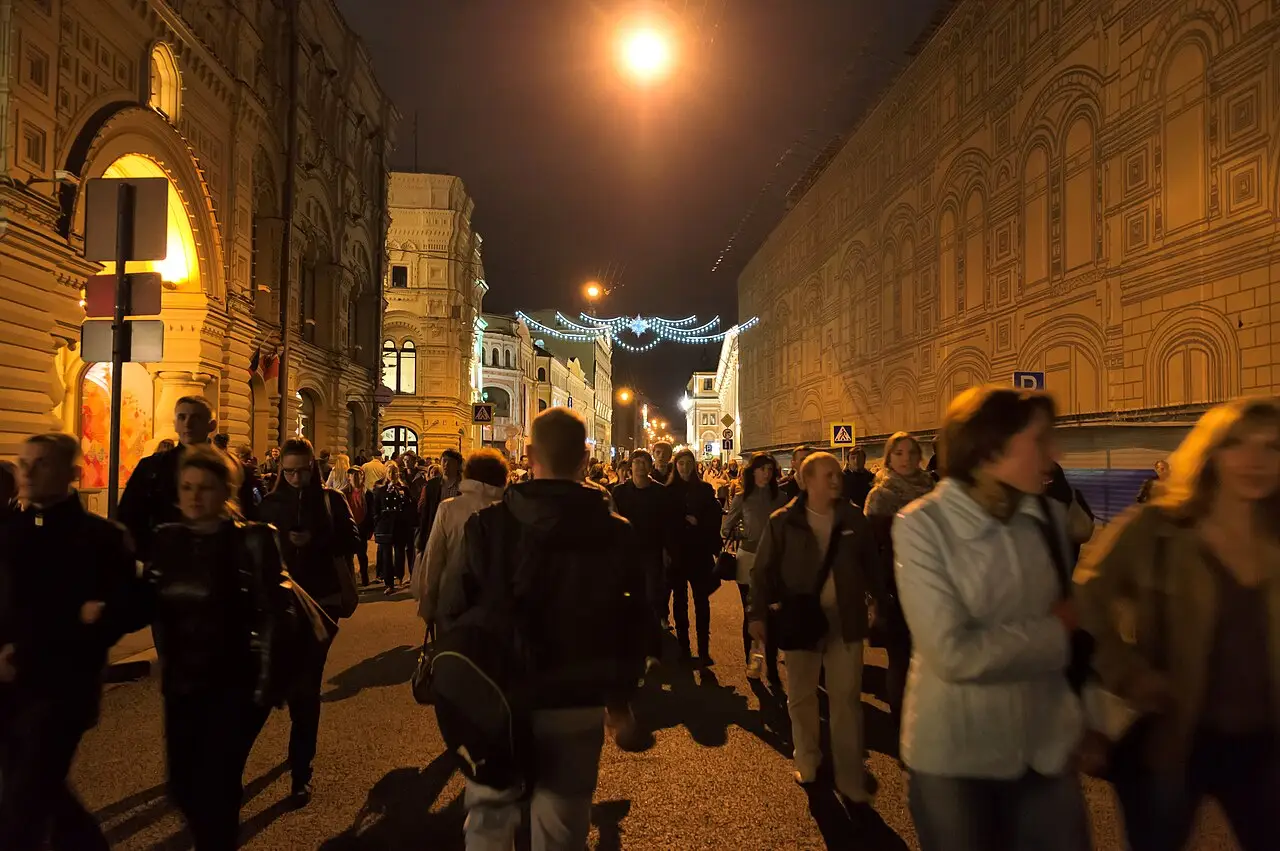
The September municipal celebration counts Moscow’s age from its first written mention in 1147. Dates, stages and activities change with each edition. Before planning the day, check the municipal program and transport notices; museum admission follows the conditions announced by each institution.

Krug Sveta (Circle of Light)
Circle of Light uses projections and light shows to turn façades into screens. Consult the organiser’s announced programme to confirm dates, venues and participation conditions; a general festival description is not enough to schedule autumn evenings in your itinerary. Choose a show by its address and time, allowing a margin for access and the return to your accommodation. Workshops and talks may require separate registration.
Journey to Christmas
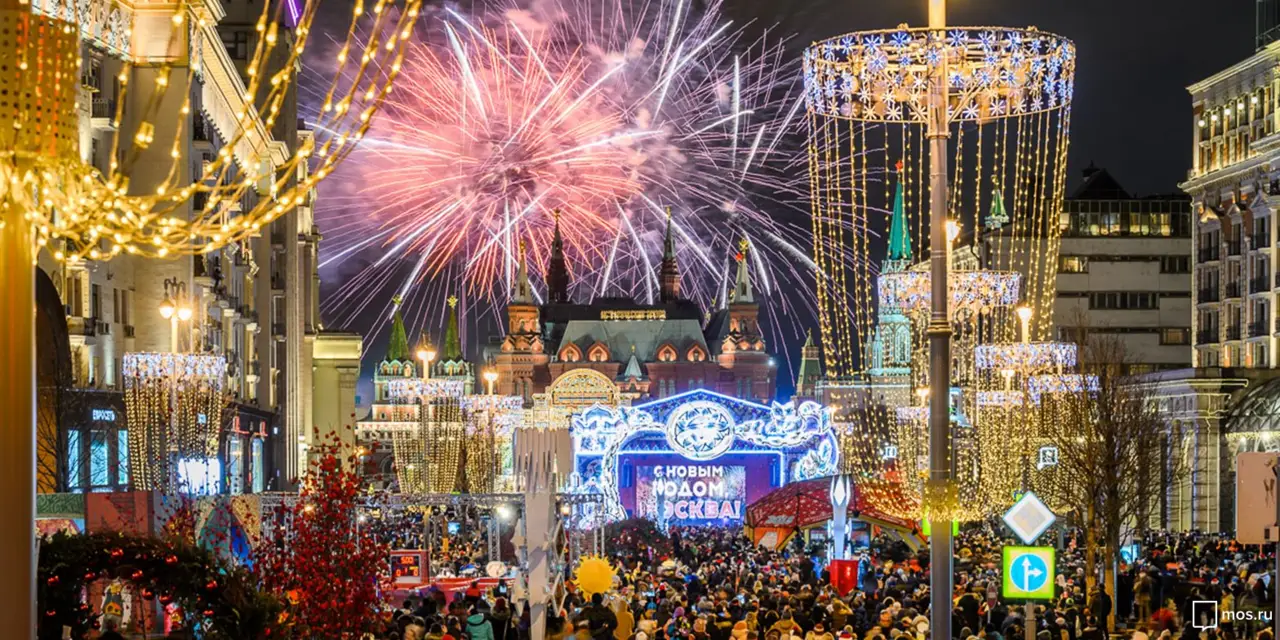
Journey to Christmas brings together winter activities in the Moscow Seasons project’s seasonal programmes. For your trip, consult the announced programme: choose a fair, show or workshop by address and time, rather than assuming every central square hosts the same event. Check an ice rink’s sessions, booking and equipment rental separately. An outdoor activity fits better with a break somewhere warm and a planned journey back.
Books and films
“The Master and Margarita,” Mikhail Bulgakov
Bulgakov worked on the novel from 1928 until his final dictations in 1940; its first publication, in Moskva magazine in 1966–67, was cut by the censors. The devil’s arrival in the city mixes love, satire and fantastic events. Read it as a literary transformation of Moscow, for its atmosphere and the tensions between characters, power and creativity.
“Moscow Does Not Believe in Tears,” Vladimir Menshov (1979)
Winner of the Oscar for Foreign Language Film in 1981, it follows three young women who arrive in 1950s Moscow and share a dormitory. Each seeks her own path through work, love and expectations, while their friendship spans the years. This fiction offers a way to observe relationships and aspirations in the Soviet city.
“Secondhand Time,” Svetlana Alexievich
Originally published in 2013, it brings together oral histories of Soviet life and the changes after the USSR’s collapse. The voices preserve memories, losses, expectations and contradictions among people who lived through that transformation. Read it to reflect on memory and social change before exploring Moscow.
Frequently asked questions
Moscow: Can you see the center on foot?
There are walking routes between nearby visits, but compare their addresses and the complete journey. When choosing the metro, include station access, waiting, changes and the final leg from the exit. Group the day by area and adapt distances to weather, luggage and your mobility, allowing breaks and a margin before a booked session.
Moscow: How should you plan the airport-to-accommodation journey?
Compare the airport and your accommodation address: SVO has Aeroexpress trains to Belorussky or express buses to Khovrino; DME has Aeroexpress trains to Paveletsky or express buses to Domodedovskaya. VKO has Aeroport Vnukovo metro station connected to Terminal A, and its Aeroexpress service has been suspended since July 2024. For ZIA, check bus 441 to Kotelniki or a train via Otdykh with the 2A connection. Check operator timetables and notices for your date, and allow for waiting, luggage and the final leg to your hotel before scheduling a visit.
Moscow: How do you get to Sergiyev Posad?
The monastery lists trains from Yaroslavsky or Rostokino to Sergiyev Posad. Consult the operator’s timetables to choose outward and return services for your date, including station access, waiting and the final leg to the Lavra. Check the visitor calendar too: the grounds and churches have different access conditions. Allow a meal, a break and a return buffer, without treating an express train’s running time as the duration of the complete day trip.
Moscow: What is the currency, and how should you plan an exchange?
The currency is the ruble (RUB, ₽). The Bank of Russia’s official rates are a reference, not a guaranteed rate for a currency exchange. Compare the net amount in rubles and the provider’s fees. Visa and Mastercard cards issued outside Russia do not work at Russian shops or ATMs; confirm other networks with the issuer and arrange payment for accommodation and arrival before traveling.
Moscow: What's winter like?
Winter requires preparation for cold and street conditions. At VDNKh station, January’s monthly mean is about −6 °C for 1991–2020; that value predicts neither the temperature nor the snow on your trip. Check the forecast close to your dates, choose suitable clothing and footwear, and combine short outdoor stretches with breaks in heated places.
Other cities in the country
Russia ↗- Days
- 3–4
- When
- May–Jul · Sep
- Per person/day
- Average 3,500–7,000 ₽Mid-range · per person/day
Cost scope
Per person per day: accommodation, meals, urban transport, visits and a small allowance for extras. Flights excluded; larger purchases vary. Editorial estimate, not a quote.