United Arab Emirates
Abu Dhabi
The Grand Mosque, the fort where the city began, and the museums of Saadiyat Island
Days Start with the basic programme and choose extensions for the time you have.
How the guide reaches this number
On the first, the center: Qasr Al Hosn at 9 a.m., Qasr Al Watan in the early afternoon and the Grand Mosque on the guided cultural tour at 5 p.m., staying until the lights come on. On the second, Saadiyat: the Louvre at 10 a.m., the Zayed National Museum in the afternoon, or the Natural History Museum with children, and the Corniche at sunset. The third is the freer day: the Mina Zayed fish market early, the Jubail mangrove before the heat and Yas Island in the afternoon, which is worth it above all for those who like theme parks or come for Formula 1. With a fourth day, I'd go to the Al Ain oasis. I'd come between November and March; from May to September, the city is still visitable, but only inside museums and cars. Between attractions, distances are covered by car or bus, and it isn't worth trying to link the islands on foot. Anyone coming for just one day from Dubai should stick to the Grand Mosque and the Louvre.
2–3
When November to March; in April and October the average high is already between 35 °C and 37 °C, and from May to September it exceeds 39 °C
How the guide reaches this number
Abu Dhabi has a mild winter and a long, very hot summer. From November to March, the average high runs between 24.5 °C in January and 31 °C in November, nights are between 14 °C and 20 °C, and this is when the Corniche, the beaches and the outdoor sites work well; it is also when almost all of the year's little rain falls, about 50 mm, and there are foggy mornings. In April and October, the average high is already between 35 °C and 37 °C. From May to September the high is above 39 °C, reaching 43.4 °C in August, the low does not drop below 27 °C from June to September, and coastal humidity increases the sense of heat; in that season a visit goes from museum to museum, by car, with outdoor hours only in early morning and after sunset. July is the cheapest month for hotels. December has the Formula 1 Grand Prix and the national holiday of December 2, and Ramadan, which in 2027 should run from about February 8 to March 8, changes the hours of museums, restaurants and the Grand Mosque.
Per person/day Budget about 303 AED; mid-range about 724 AED; comfortable about 1,610 AED per person, based on what travelers report spending on Budget Your Trip (consulted in October 2026).
How the guide reaches this number
Per person per day: accommodation, meals, urban transport, visits and a small allowance for extras. Flights excluded; larger purchases vary. Editorial estimate, not a quote.
 What Nilo thinks
Three days is ideal, and two are enough for the essentials. On the first, the center: Qasr Al Hosn at 9 a.m., Qasr Al Watan in the early afternoon and the Grand Mosque on the guided cultural tour at 5 p.m., staying until the lights come on. On the second, Saadiyat: the Louvre at 10 a.m., the Zayed National Museum in the afternoon, or the Natural History Museum with children, and the Corniche at sunset. The third is the freer day: the Mina Zayed fish market early, the Jubail mangrove before the heat and Yas Island in the afternoon, which is worth it above all for those who like theme parks or come for Formula 1. With a fourth day, I'd go to the Al Ain oasis. I'd come between November and March; from May to September, the city is still visitable, but only inside museums and cars. Between attractions, distances are covered by car or bus, and it isn't worth trying to link the islands on foot. Anyone coming for just one day from Dubai should stick to the Grand Mosque and the Louvre.Abu Dhabi began around a fresh-water well on a low island in the Persian Gulf, and the tower that protected it still stands in the center, surrounded by avenues and towers: Qasr Al Hosn, from where the Al Nahyan family ruled until 1966. In a little over half a century, oil money turned a village of pearl fishermen, which a traveler described in 1948 as having about 2,000 inhabitants, into the capital of a country. The most visible result is the Sheikh Zayed Grand Mosque, in white marble, with 82 domes and reflecting pools that mirror the columns at dusk, open to visitors of any faith. The most recent is on Saadiyat Island, where Jean Nouvel's Louvre, under a dome that filters light like palm fronds, gained the Zayed National Museum and the Natural History Museum as neighbors in 2025, and will have the Guggenheim at the end of 2026. In the middle of it all there is Arabic coffee served with dates, the fish market at the port and a mild winter, which is when the city is at its best outdoors.
Quick facts
- Population
- about 2.5 million in the urban area (Statistics Centre Abu Dhabi estimate, 2023); 4,135,985 in the emirate of Abu Dhabi (2024 census)
- Founding
- Settlement founded in 1761, according to tradition, when Bani Yas hunters found fresh water on the island; the watchtower from which Qasr Al Hosn grew dates from about 1790
- Country and region
- United Arab Emirates; capital of the federation and of the emirate of Abu Dhabi, on the southern coast of the Persian Gulf
- Language
- Arabic, the official language; English appears on signs, in museums and in tourist services
- Currency
- UAE dirham (AED, written Dh or Dhs), pegged to the US dollar at 3.6725 per US$1 since November 1997
- Time zone
- Gulf Standard Time, UTC+4, no daylight saving time
- Best time to go
- November to March; in April and October the average high is already between 35 °C and 37 °C, and from May to September it exceeds 39 °C
- Average daily cost
- Budget about 303 AED; mid-range about 724 AED; comfortable about 1,610 AED per person, based on what travelers report spending on Budget Your Trip (consulted in October 2026).
When to go
November to March; in April and October the average high is already between 35 °C and 37 °C, and from May to September it exceeds 39 °C
How the year changes
Abu Dhabi has a mild winter and a long, very hot summer. From November to March, the average high runs between 24.5 °C in January and 31 °C in November, nights are between 14 °C and 20 °C, and this is when the Corniche, the beaches and the outdoor sites work well; it is also when almost all of the year's little rain falls, about 50 mm, and there are foggy mornings. In April and October, the average high is already between 35 °C and 37 °C. From May to September the high is above 39 °C, reaching 43.4 °C in August, the low does not drop below 27 °C from June to September, and coastal humidity increases the sense of heat; in that season a visit goes from museum to museum, by car, with outdoor hours only in early morning and after sunset. July is the cheapest month for hotels. December has the Formula 1 Grand Prix and the national holiday of December 2, and Ramadan, which in 2027 should run from about February 8 to March 8, changes the hours of museums, restaurants and the Grand Mosque.
Nilo's tips
Grand Mosque: book, dress beforehand and go in late afternoon
The reservation is made on the mosque center's website, and clothing is checked at the entrance; since abayas are no longer lent, leave the hotel already in loose, long clothing, and a scarf for the hair in the case of women. The free guided tour at 5 p.m. ends near sunset, and the grounds stay open until 8:30 p.m., time to see the reflecting pools lit. On Friday, the mosque closes to visitors from 11:30 a.m. to 2:30 p.m.
In Saadiyat, buy the pass and don't go on a Monday
The Louvre alone costs 70 AED; the Saadiyat museum pass gives entry to two of the three museums (Louvre, Zayed National Museum and Natural History Museum) from 120 AED, or to all three for 170 AED, is valid for 30 days and lets visitors under 18 in free. The Louvre closes on Mondays, so schedule the Saadiyat day between Tuesday and Sunday and start with it, at 10 a.m.
Group the day by island
The center, Saadiyat and Yas are 15 or 30 minutes by car from one another, and crossing the city twice in one day eats up the afternoon. One day for the center and the mosque, another for Saadiyat and another for Yas works, and the free Experience Abu Dhabi bus links the three islands to the center.
At Qasr Al Watan, choose the ticket by time
The official site sells the standard ticket, which allows entry at any time during opening hours, and the off-peak one, which is only valid for entering between 1 p.m. and 4 p.m. and fits between Qasr Al Hosn in the morning and the Grand Mosque in late afternoon. The ticket includes Palace in Motion, but that light and sound show is at night: anyone following the day 1 itinerary won't see it, and anyone who wants to see it has to return to the palace on another night. Shoulders and knees covered, and no re-entry.
To go to Dubai, buy the train ticket beforehand and count the trip to the station
The Etihad Rail train takes a little over an hour, but it leaves from Mohamed bin Zayed City, on the mainland, and the first weekend's tickets sold out. Buy ahead. From the center, add the MR1 or MR2 bus, the 10 AED van booked on the app or a taxi, and in Dubai the 400 m walkway to the metro.
Explore the map
Explore the map, read about the other places and plan your travel days in the app.
Open the appWhat to see
Abu Dhabi: A T-shaped island
East of the island lie the mangroves of the Mangrove National Park, and on Jubail Island, between Saadiyat and Yas, a park of boardwalks over the mangrove. The north waterfront of the island, with 8 km of promenade, a separate bike path, playgrounds, cafés and the Corniche beach, with lifeguards.
Sheikh Zayed Grand Mosque
The country's largest mosque was built between 1996 and 2007, with 82 domes of seven sizes, more than a thousand columns, a 5,627 m² carpet made in Iran and chandeliers with Swarovski crystals; the largest is 10 m across. The reflecting pools along the arcades mirror the columns, and the night lighting changes with the phases of the moon. Sheikh Zayed is buried on the grounds. Visitors book a time slot on the mosque center's website; since September 2026, entry costs 10 AED for those from outside the Emirates, and people 60 and older do not pay. It is open Saturday to Thursday from 9 a.m. to 8:30 p.m., with last entry at 8 p.m.; on Friday, from 9 a.m. to 11:30 a.m. and from 2:30 p.m. to 8:30 p.m. There are two kinds of guided tour: the free cultural tour, 30 to 45 minutes, which leaves at 11 a.m., 1 p.m. and 5 p.m. (on Friday, only at 11 a.m. and 5 p.m.), and the paid tour of the main prayer hall, 30 AED, held outside prayer times; on Friday, the hall is closed to tourists from noon to 3 p.m.
The mosque's 82 domes and more than a thousand columns make it the city's defining visit. The free 5 p.m. cultural tour is a way to explore the complex in the late afternoon. Visitors must book online and wear long, loose clothing; entry costs 10 AED for visitors from outside the country, with free entry for those aged 60 and over.
Check access
Louvre Abu Dhabi
Jean Nouvel's museum, opened in 2017 on Saadiyat Island, sits under a dome of 7,850 aluminum stars that lets light through in points, like sun through palm leaves. The galleries run through human history from Antiquity to contemporary art, starting from the idea that civilizations have more in common than in conflict, with its own collection and loans from French museums. It opens at 10 a.m. and closes on Mondays; admission costs 70 AED, and visitors under 18 do not pay. Allow two to three hours. There are kayak tours around the building.
Jean Nouvel's dome, with 7,850 aluminum stars filtering the light, is worth the trip in itself, and the galleries bring together works from several civilizations, from Antiquity to contemporary art. Closed on Mondays; a separate ticket costs 70 AED, and the museum is also included in the Saadiyat museum pass.
Check access

Qasr Al Hosn
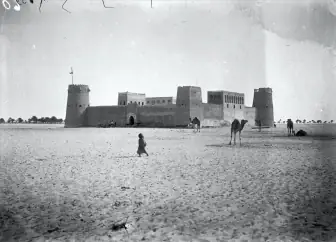
The oldest building in the city: the watchtower that guarded the well, from about 1790, became the Inner Fort in 1795, and the Outer Palace was added between 1939 and 1945. It was the residence of the rulers and the seat of government until 1966, and reopened as a museum in 2018, after more than 11 years of restoration. The rooms tell the story of the passage from pearl village to capital. On the same grounds, the Artisans' House, with free admission, shows sadu weaving and talli embroidery, and Bait Al Gahwa demonstrates the preparation of Arabic coffee. It is open Saturday to Thursday from 9 a.m. to 8 p.m. and on Friday from 2 p.m. to 8 p.m.; the fort charges admission, sold on the website and at the ticket office.
The city's oldest building began as a watchtower guarding a well, became a fort in 1795 and remained the seat of government until 1966. Its rooms explain how a pearling village became a capital. It opens at 9 a.m., except on Fridays, when it opens at 2 p.m.
Check access
Zayed National Museum
The national museum of the Emirates, by Foster + Partners, opened on December 3, 2025 on Saadiyat, with five towers shaped like a falcon's wing. Six permanent galleries tell the life of Sheikh Zayed, the country's archaeology, the sea and the traditions, with about 1,500 objects on display, among them an 18 m replica of a Bronze Age Magan boat. It is included in the Saadiyat museum pass.
The national museum, opened in December 2025, tells the story of the country and Sheikh Zayed through around 1,500 objects, taking further the history introduced at Qasr Al Hosn. It is included in the Saadiyat museum pass, alongside the Louvre and the Natural History Museum.
Check access
Abu Dhabi Natural History Museum
Opened on November 22, 2025, next to the Louvre, it covers 13.8 billion years of history, from the Big Bang to life on the Arabian Peninsula. The highlights are Stan, a nearly complete Tyrannosaurus rex skeleton, a 25 m blue whale skeleton and five sauropods in the atrium. It is the best choice on Saadiyat for anyone traveling with a child.
Stan the tyrannosaur, the 25 m blue whale and the five sauropods in the atrium make this the best choice on Saadiyat for families traveling with children. For adults with only one day on the island, the Zayed National Museum explains more about the country.
Check access
Abu Dhabi Corniche
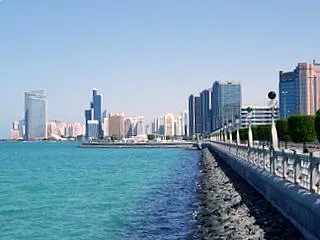
Eight kilometers of waterfront with a promenade, a separate bike path, cafés and a 2 km beach with a Blue Flag and lifeguards on duty until sunset. The beach has three sections: Al Sahil, with free entry, and gates 2 and 3, for families, fenced, which cost 10 AED. Bicycles can be rented along the promenade from 30 AED an hour. In summer, swim early, while there are lifeguards, and leave only the promenade walk for after sunset.
Eight kilometers of promenade and cycle path, with a 2 km beach that has a free section and lifeguards until sunset. From November to March, the whole afternoon works well; in summer, swim in the morning and leave the walk for after sunset.
Check access
Qasr Al Watan
The presidential palace of the Emirates, completed in 2017 and opened to the public in March 2019, still hosts government meetings and state visits. The visit takes in the Great Hall, under a dome with a chandelier of 350,000 pieces of crystal, the room of diplomatic gifts and a library of more than 50,000 books. The official website sells two tickets: the standard one, which allows entry at any time during opening hours, and the off-peak one, which only allows entry between 1 p.m. and 4 p.m.; the times for the day and the price appear at purchase. The ticket includes Palace in Motion, a light and sound show held every night, with entry up to 30 minutes before the session. Knees and shoulders must be covered, and there is no re-entry.
The presidential palace, still used for government meetings, opens its Great Hall with a chandelier of 350,000 crystals and its diplomatic gifts room to visitors. It fits early in the afternoon, between the city center in the morning and the mosque in the late afternoon; Palace in Motion, included in the ticket, takes place at night.
Check access
Abrahamic Family House
Three houses of worship of the same size, a mosque, a Catholic church and a synagogue, on a shared pavilion, designed by David Adjaye and inaugurated in 2023 on Saadiyat. Entry is free and the complex is a few minutes from the museums; check the website for visiting hours.
A mosque, a church and a synagogue of the same size, designed by David Adjaye, a few minutes from the Louvre, with free entry. It fits into a break during a day on Saadiyat.
Check access

Mina Zayed and the fish market
At Zayed Port, the fish market still operates alongside the fruit and vegetable, plant and meat markets, and the wharf still has wooden dhows. Next to it are Souq Al Mina and the Zayed Port Heritage Village. Buses 5, 7, 8, 9 and 11 stop nearby, and by taxi it is 5 to 10 minutes from the center.
Zayed Port's fish market still operates beside the fruit and plant markets, with wooden dhows at the wharf, showing the trading city that existed before oil. Go early.
Check access
Nilo’s itinerary
Start with the basic programme and choose extensions for the time you have.
Plan my days in the app ↗Day 1 · The fort, the presidential palace and the Grand Mosque at dusk
Don't pick a Friday for this day: Qasr Al Hosn only opens at 2 p.m. and the mosque closes from 11:30 a.m. to 2:30 p.m.
Book the Grand Mosque time slot online for late afternoon and buy the Qasr Al Watan ticket on the official site; the standard one allows entry at any time during opening hours, and the off-peak one only between 1 p.m. and 4 p.m.
Arrive at Qasr Al Hosn at 9 a.m., when it opens: the Inner Fort, the Outer Palace and the rooms on the pearl village. Then stop by the Artisans' House, free, and Bait Al Gahwa.
Have lunch with Emirati food in the center, such as machboos, and take a taxi to Qasr Al Watan, at the western end of the island.
Visit Qasr Al Watan in the early afternoon, with knees and shoulders covered: the Great Hall, the room of gifts and the library. The Palace in Motion show is at night and is left out of this day.
Continue by taxi to the Grand Mosque, in long, loose clothing, and take the free guided cultural tour at 5 p.m.
Stay in the courtyard until the lights come on in the reflecting pools; last entry is at 8 p.m. and the grounds close at 8:30 p.m.
Day 2 · Saadiyat: the Louvre, the national museum and the waterfront in late afternoon
Don't pick a Monday: the Louvre is closed that day.
Buy the Saadiyat museum pass: two of the three museums (Louvre, Zayed National Museum and Natural History Museum) from 120 AED, or all three for 170 AED; visitors under 18 enter free.
Arrive at the Louvre Abu Dhabi at 10 a.m. and allow two to three hours for the galleries and for the light that comes through the dome.
Have lunch at one of the cafés in the cultural district and see the Abrahamic Family House from outside, a few minutes away.
In the afternoon, go into the Zayed National Museum or, with children, the Natural History Museum.
Late in the afternoon, take a taxi to the Corniche, about 15 minutes away, and walk the promenade until sunset.
If you stay longer
Day 3 · Port, mangrove and Yas Island
Start early at the Mina Zayed fish market, with the fruit and vegetable markets next door and the dhows at the wharf.
Take a taxi to Jubail Mangrove Park, about 30 minutes away, and walk the boardwalk before the heat; admission costs 15 AED.
Continue to Yas Island on the free Experience Abu Dhabi bus or by taxi.
In the afternoon, choose a park, such as Ferrari World, with a ticket bought beforehand, or stay on the Yas Bay waterfront, which is free.
Have dinner on Yas and return to the center by taxi, about 30 minutes.

Food
Machboos
The everyday dish: seasoned rice cooked with chicken, lamb or shrimp, with spices and dried lime, loomi, and sometimes onion, potato and tomato. It is on almost every Emirati menu.
Harees
Wheat and meat cooked slowly into a thick porridge. It is the dish of Ramadan and of weddings.
Thareed
A meat stew with potato and vegetables served over pieces of thin regag bread. In family homes, it appears almost every day during Ramadan.
Madrooba
Salted fish cooked with spices until it forms a thick sauce. It is common at iftar, the meal that breaks the fast in Ramadan.
Chebab and regag
Chebab is a thin pancake with cardamom and turmeric, served with date syrup at breakfast. Regag is a crisp, very thin bread, eaten with egg or cheese.
Luqaimat
Fried dough balls, crisp outside and soft inside, drizzled with date syrup. It is the sweet of Ramadan and of festivals.
Gahwa and dates
Arabic coffee with cardamom and saffron is served in small cups from a dallah and traditionally accompanied by dates. The ritual entered UNESCO’s intangible cultural heritage list in 2015. A serving usually fills a quarter of the cup to allow refills; when finished, gently shake the cup to show that you do not want more.
Where to eat
- Al Mina · $
Fish and seafood bought at the Mina Zayed fish market, with fruit and spices at the markets next door.
- Al Mrzab · Center, Sheikh Rashid bin Saeed Street · $$
Traditional Emirati menu, cited by the emirate's tourism authority, near the center.
Source · 2026-10-16
- Al Fanar · Yas Island · $$
Traditional Emirati menu, cited by the emirate's tourism authority; it fits the Yas day.
Source · 2026-10-16
- Bait Al Gahwa · Qasr Al Hosn · $
Gahwa and dates served in the ceremonial way, with a demonstration of how the coffee is prepared.
Source · 2026-10-16
- Saadiyat Island · $$
Cafés and restaurants in the cultural district, for lunch between the Louvre and the Zayed National Museum without crossing the city.
$: a meal at a simple restaurant, about 30 AED (20 to 60) · $$: three-course dinner for two, without drinks, about 200 AED (140 to 450) · $$$: over 450 AED for two, without drinks · 2026-10-16
Day trips
Al Ain
The emirate's oasis city lies about 160 km to the east, some 90 minutes by car, near the border with Oman. The Cultural Sites of Al Ain were the country's first UNESCO World Heritage site, in 2011. The Al Ain Oasis has 1,200 hectares and 147,000 date palms irrigated by the falaj, water channels about 3,000 years old; the Eco-Centre, at the entrance, is free. Nearby are the Qasr Al Muwaiji fort and the camel market, and a free bus from the tourism authority links the sights within Al Ain. Without a car, Wikivoyage lists hourly buses from Abu Dhabi's main bus station to Al Ain's, in about 2 hours; check the line and timetable in the emirate's transport apps. Organized tours are also available. Prefer the winter months.
Dubai
The country's largest city is about an hour away by train. Since September 30, 2026, Etihad Rail links the Mohamed bin Zayed City station to the Al Yalayis station, from where a 400 m walkway leads to the Jumeirah Golf Estates station on the Dubai Metro red line; the Comfort ticket starts at 39 AED. Also count the trip to the Abu Dhabi station, which is on the mainland. The Dubai guide has what to see there.
Where to begin
The fort, the presidential palace and the Grand Mosque at dusk
Don't pick a Friday for this day: Qasr Al Hosn only opens at 2 p.m. and the mosque closes from 11:30 a.m. to 2:30 p.m.
Saadiyat: the Louvre, the national museum and the waterfront in late afternoon
Don't pick a Monday: the Louvre is closed that day.
Port, mangrove and Yas Island
Start early at the Mina Zayed fish market, with the fruit and vegetable markets next door and the dhows at the wharf.
Money
The currency is the UAE dirham (AED), pegged to the US dollar at 3.6725 per US$1 since 1997, so the dollar rate does not change. According to Numbeo, updated on October 15, 2026, a meal at a simple restaurant costs about 30 AED (20 to 60), a fast-food combo about 35 AED, a cappuccino about 22 AED, and a three-course dinner for two, without drinks, about 200 AED (140 to 450). A half-liter beer, only at a licensed venue, runs around 42 AED. Tickets weigh on the budget: the Louvre alone costs 70 AED, and the Saadiyat museum pass gives entry to two of the three museums (Louvre, Zayed National Museum and Natural History Museum) from 120 AED, or to all three for 170 AED, is valid for 30 days and lets visitors under 18 in free. The Grand Mosque charges 10 AED to those from outside the country; the guided cultural tour is free, and the visit to the main prayer hall costs 30 AED extra. In a taxi, the official tariff gives a flag-fall of 5 AED by day, 1.82 AED per kilometer and a minimum fare of 12 AED. For sleeping, momondo gives averages of US$116 a night for a three-star and US$211 for a five-star, with July as the cheapest month. Keep some small change for markets and stalls, and carry the Hafilat card if you'll use buses, because the driver does not accept cash.
Getting there and around
From the airport to the center
Zayed International Airport (AUH) operates all flights from Terminal A, opened in November 2023, and sits on the mainland, about 15 minutes from Yas Island. Buses A1 and A2 go to the center and run 24 hours; payment is with the Hafilat card, sold at machines in the airport and in supermarkets, because the driver does not accept cash. A taxi to Saadiyat costs 60 to 80 AED and takes 25 to 30 minutes, according to the emirate's tourism authority. Uber and Careem also operate, and the official taxi can be hailed through the Abu Dhabi Taxi app.
Taxi, ride-hailing and the free bus
Since the attractions are on different islands and the blocks are huge, the taxi is the most practical way to get around. By the official Abu Dhabi Mobility tariff, the silver taxi has a flag-fall of 5 AED from 6 a.m. to 10 p.m. and 5.50 AED at night, 1.82 AED per kilometer, 0.50 AED per minute of waiting and a minimum fare of 12 AED; when booked by app, a fee of 4 AED by day and 5 AED at night is added. The airport taxi has a flag-fall of 20 AED. From the center to Yas, the tourism authority estimates 50 to 70 AED. The Experience Abu Dhabi Shuttle Bus, free, with air conditioning and wi-fi, has eight lines between Yas, Jubail, Saadiyat, the center and the Grand Canal area; you board by scanning the QR code. City buses use the Hafilat card, and the timetables are in the emirate's transport apps. Crossing the street outside a crosswalk is illegal and can bring a fine.
By train to Dubai and the east coast
Since September 30, 2026, Etihad Rail links the Mohamed bin Zayed City station, opposite Dalma Mall and next to the Mussafah bus station, to the Al Yalayis station in Dubai, in a little over an hour; the Comfort ticket costs from 39 AED and Premium from 109 AED. The trains of the first weekend sold out and the company added trips, so buy your ticket in advance on the website or the app. The station is far from the center: bus lines MR1 and MR2 connect it to the main bus station and to the Al Zahiyah one, and Etihad Rail has vans at 10 AED from the ADNOC headquarters, on Corniche Road West, from ADNEC and from Reem Mall, booked on the website or the app. Since June 30, 2026 there is also a train to Fujairah, on the east coast, in 1 hour 45 minutes.
Safety
Abu Dhabi has appeared for years at the top of Numbeo's city safety index, and ordinary precautions are enough for your belongings; don't accept drinks from strangers and don't leave your glass alone. The risk that calls for attention in 2026 is regional. On February 28, 2026, during the conflict between Iran, the United States and Israel, an incident at Zayed International Airport killed one person and injured seven, and flights were suspended. The British government, in an advisory updated in July 2026, reports attacks from Iran in the region since July 8 and recommends expecting flight cancellations and airspace closures, following the local authorities, keeping away from military installations and, if there is an alert, sheltering in a solid building, away from windows. Before traveling, check your government's advisory and your flight status. Local laws are the other point: drinking in public, swearing, displays of affection and drugs, even as residue, lead to prison, and relations between people of the same sex are illegal. At sea, swim only at a beach with lifeguards and a flag, and respect the red flag. In summer heat, drink water often and avoid outdoor exertion in the middle of the day. Emergencies: police 999, ambulance 998, fire 997.
Etiquette tips
Clothing: shoulders and knees covered away from the beach
In malls, museums and public buildings, the official guidance is to cover shoulders and knees and avoid see-through clothing or clothing with offensive slogans. Bikinis and swim trunks stay at the beach and the pool. At the Grand Mosque the rule is stricter: loose clothing down to the ankle and hair covered for women, long pants for men.
No public displays of affection
Kissing in public can lead to arrest, and at the mosque any display of affection is prohibited. It applies to couples in any public place, including the beach and the mall.
No swearing and no obscene gestures
Cursing and making obscene gestures is a crime, including in messages and on social media, and can end in jail or deportation. It also applies in a traffic dispute.
Ask before photographing people
Don't photograph anyone without permission: men have been arrested for photographing women on the beach. A camera pointed at a military installation, a government building or an airport can also be misread. At the Grand Mosque, photos are only allowed at the designated spots.
In Ramadan, no eating in public by day
During the month of fasting, eating, drinking, smoking or chewing gum in public during the daytime can cause offense, including inside a car. Hotels and restaurants that serve food during fasting hours may separate customers with screens.
The coffee ritual
Gahwa, Arabic coffee, is the traditional way of welcoming a visitor. The guest is served first, the cup comes only partly full so it can be topped up, and one to three cups is the amount considered respectful. When you don't want any more, shake the cup lightly as you hand it back.
Mistakes to avoid
Going to the mosque without booking and without the right clothes
Visitors need a reservation made on the mosque center's website, and clothing is checked at the entrance. The mosque stopped lending abayas after the pandemic; anyone who arrives in shorts, a tank top or tight clothing is turned away, and the fix is to buy an abaya for 45 AED at Souq Al Jami.
Planning the day as if the city were for walking
The Grand Mosque, the center, Saadiyat and Yas are 15 or 30 minutes by car from one another, and between them lie wide avenues of many lanes. Group the day by island and use a taxi or the free Experience Abu Dhabi bus between them.
Forgetting Monday and Friday
The Louvre closes on Mondays. On Friday, the Grand Mosque closes from 11:30 a.m. to 2:30 p.m. and Qasr Al Hosn only opens at 2 p.m., so don't schedule the center day for a Friday morning.
Sightseeing outdoors in the middle of the day in summer
From May to September, the average high is above 39 °C and humidity is high. Beach and mangrove are for early morning, when there are lifeguards on the beach, and the walk on the Corniche can wait until after sunset, with no sea swim.
Bringing medication without checking the rule
Some medications that are common in other countries are controlled in the Emirates, and you need to ask the Ministry of Health for approval before traveling, online; the stated processing time is five business days. CBD products are prohibited, and drug residue in luggage already means prison.
Thinking the train to Dubai leaves from the center
The Etihad Rail station is in Mohamed bin Zayed City, on the mainland, far from the center. Add the MR1 or MR2 bus, the Etihad Rail van or a taxi to your travel time.
Useful phrases
As-salamu alaykum
Peace be upon you (as-sa-LA-mu a-LAI-kum); the most common greeting, answered with “wa alaykum as-salam”
Shukran
Thank you (SHOO-kran)
Min fadlak / min fadlik
Please, to a man / to a woman (min FAD-lak / min FAD-lik)
Kam?
How much? (kam)
La, shukran
No, thank you (la, SHOO-kran); works for turning down more coffee or an offer on the street
Inshallah
God willing (in-SHA-lah); heard in any arrangement about the future, from a taxi pickup time to a meeting
Ma'a as-salama
See you later (MA-a as-sa-LA-ma)
Where to stay
- Corniche and Al Khalidiyah · First visit without a car · $$: The beach and the promenade are on the doorstep, and Qasr Al Hosn, Qasr Al Watan and Saadiyat are a short taxi ride away.
- Saadiyat Island · Those coming for the museums and the beach · $$$: The resorts are near the Louvre and the Zayed National Museum and have their own beach. For the center and the mosque, you depend on taxis.
- Yas Island · Families, theme parks and Formula 1 · $$: It is 15 minutes from the airport, with the parks and the racetrack close by and a free bus between hotels and attractions on the island, but 30 minutes from the center.
- Khor Al Maqta and Grand Canal · Those who want the mosque nearby · $$$: The canal hotels are close to the Grand Mosque and Souq Al Jami, and the free Experience Abu Dhabi bus serves the area.
- Al Hosn and the center · Tight budgets and bus users · $: It is close to Qasr Al Hosn and the city bus lines, with inexpensive restaurants, but far from the resort beaches.
$: under US$116 a night, in US dollars (average for a three-star on momondo) · $$: around US$116 a night, three-star average · $$$: around US$211 a night, five-star average; July is the cheapest month · 2026-10-16
Districts
Al Hosn and the center
The old heart of the island, around Qasr Al Hosn, with the Cultural Foundation and the Artisans' House on the same grounds. It's the place to understand how the city began.
Corniche and Al Khalidiyah
The north waterfront of the island, with 8 km of promenade, a separate bike path, playgrounds, cafés and the Corniche beach, with lifeguards.
Al Mina
The Zayed Port area, at the far northeast of the island, with the fish market, the fruit and vegetable market, Souq Al Mina and the dhow wharf, the wooden boats. It's the district most tied to the city's trading past.
Al Ras Al Akhdar
The western tip of the island, home to Qasr Al Watan, the presidential palace open to visits. The Emirates Palace and the Etihad Towers are in the same area, and on the island of Marina Mall, near the center, the Heritage Village.
Khor Al Maqta and Grand Canal
The strip of the island facing the mainland, between the three bridges, where the Sheikh Zayed Grand Mosque and Souq Al Jami stand. Large hotels line the banks of the canal.
Saadiyat Island
The island north of the center, with the cultural district (Louvre, Zayed National Museum, Natural History Museum, teamLab Phenomena and the Abrahamic Family House) and resort beaches where hawksbill turtles nest.
Yas Island
The entertainment island, about 15 minutes from the airport: the Yas Marina racetrack, Ferrari World, Warner Bros. World, SeaWorld and Yas Waterworld, plus hotels, a mall and the Yas Bay waterfront.
Reem Island
An island of residential and office towers northeast of the center, linked by the Al Mafraq bridge. It has a mall and services, but little to visit.
History
3rd millennium BC · The Umm Al Nar culture
The surroundings of Abu Dhabi hold traces of the Bronze Age Umm Al Nar culture. In the interior of the emirate, the sites at Al Ain show continuous occupation around the oases.
1761 · Fresh water on the island
According to tradition, a hunting party led by Sheikh Dhiyab bin Isa Al Nahyan, of the Bani Yas tribe, then based at the Liwa oasis, finds fresh water near the coast. Popular history says the hunters were following a gazelle, which is where the name comes from: Abu Dhabi, “father of the gazelle.”
c. 1790–1795 · The watchtower becomes a fort
A watchtower guards the fresh-water well. In 1795 it becomes the Inner Fort, residence of the ruling family and seat of government, the core of today's Qasr Al Hosn.
1820 · The treaties with Britain
The sheikhs of the coast sign truces with Britain, which comes to dominate the region to protect the route to India. The coastal strip becomes known as the Trucial Coast.
late 19th century to 1930 · The pearl economy
Pearl fishing sustains the city and peaks between the late 19th century and the 1910s. Divers went down without equipment, with a leather nose clip, and received a share of the season's proceeds. The trade declines in the 1930s.
1939–1945 · The Outer Palace
With income from the first oil concessions, signed by Sheikh Shakhbut in 1936 and 1939, the fort gains the Outer Palace, built between 1939 and 1945 around the old core.
1958–1962 · Oil at sea and on land
In 1958 oil is found in the offshore Umm Shaif field; in 1959, the Murban No. 3 well confirms oil on land; Bu Hasa follows in 1962. Ten years before the first discovery, in 1948, the explorer Wilfred Thesiger had described Abu Dhabi as a small town of about 2,000 people.
1966 · Zayed takes power
On August 6, 1966, with British support, Sheikh Zayed bin Sultan Al Nahyan replaces his brother Shakhbut in a bloodless coup and begins using oil revenue to build the modern city.
1971 · The United Arab Emirates is born
On December 2, 1971, Abu Dhabi and five other emirates form the United Arab Emirates. Zayed is the first president, and Abu Dhabi becomes the seat of the federal government, at first as a provisional capital.
1996–2007 · The Grand Mosque
Construction of the Sheikh Zayed Grand Mosque begins in 1996, and it opens in December 2007. Zayed dies in 2004 and is buried on the mosque grounds.
2017 · The Louvre Abu Dhabi
The result of a 2007 agreement with France, Jean Nouvel's museum opens on Saadiyat Island on November 11, 2017, the first of the island's major cultural-district museums.
2025–2026 · Saadiyat's new museums and the train
The Natural History Museum opens on November 22, 2025, and the Zayed National Museum on December 3, 2025. In 2026 Etihad Rail passenger trains begin, to Fujairah in June and to Dubai in September, and the Guggenheim Abu Dhabi is scheduled to open on December 11.
Complete history
A pearl settlement around a well
Abu Dhabi began as a fresh-water well on a low, salty island. Tradition places the discovery in 1761, by Bani Yas hunters, a tribe that lived at the Liwa oasis, in the interior. The watchtower that protected the well became, in 1795, the fort of the Al Nahyan family, and that building, Qasr Al Hosn, still stands in the center of the city, surrounded by avenues and towers. For more than a century the settlement lived off the sea: fish, trade and, above all, pearls. The season took the men to the oyster beds for months, and each diver received a fraction of what the boat sold at the end. When the pearl trade went into decline, in the 1930s, the city lost its main income.
From oil to federal capital
Oil arrived in time to replace pearls, but it was slow to change the city. The concessions were signed in 1936 and 1939, the first commercial discovery came at sea, in 1958, and the income only turned into construction after 1966, when Sheikh Zayed bin Sultan Al Nahyan took over the government from his brother Shakhbut. Wilfred Thesiger, who reached Abu Dhabi in 1948 after crossing the Rub' al-Khali, described a town of about 2,000 people. In 1971, with the end of the British protectorate, Abu Dhabi and five other emirates formed the United Arab Emirates, and Zayed presided over the federation until his death in 2004. That is why his name is everywhere: on the mosque, the port, the national museum and the avenues.
The planned city and the islands
The plan of the modern city is one of large blocks cut by wide avenues, designed for the car, with the Corniche, an 8 km waterfront, on the north side of the island. From the 2000s, growth moved to the neighboring islands. Saadiyat received the cultural district, with the Louvre in 2017 and, in 2025, the Natural History Museum and the Zayed National Museum. Yas got the Formula 1 racetrack, in use since 2009, and the theme parks. The Grand Mosque, inaugurated in 2007 between the bridges that connect the island to the mainland, became the most visited attraction: the mosque center counted more than 4.3 million visitors in 2025, in addition to worshippers. Most of the population is foreign, and the emirate reached 4.1 million inhabitants in the 2024 census.
Geography and shape of the city
A T-shaped island
Central Abu Dhabi occupies a T-shaped island on the southern coast of the Persian Gulf, separated from the mainland by a channel less than 250 m wide. Three bridges make the connection: Maqta (1968), Mussafah (1977) and the Sheikh Zayed Bridge, designed by Zaha Hadid and opened in 2010. The Grand Mosque sits right between these bridges, on the side of the island facing the mainland. Other bridges lead to Saadiyat Island, to the north, Reem, to the northeast, and Yas, already near the airport. The emirate presents itself as an archipelago of more than 200 islands.
Big blocks and long distances
The city was laid out in large blocks, divided by multi-lane avenues, and the distances between attractions are covered by car: Saadiyat is about 15 minutes from the center, and Yas about 30. On the main island, the Corniche occupies the north front, with 8 km of promenade, a bike path and a 2 km beach. East of the island lie the mangroves of the Mangrove National Park, and on Jubail Island, between Saadiyat and Yas, a park of boardwalks over the mangrove. The waters of the emirate hold the largest known population of Indo-Pacific humpback dolphins.
A hot, humid desert climate
The climate is hot desert. In the 1991–2020 normals measured at the airport, the average high goes from 24.5 °C in January to 43.4 °C in August, and the August low is 30.2 °C. Coastal humidity increases the sense of heat in summer, when there are also dust storms. It rains about 50 mm a year, almost all of it between December and March, and from November to March the weather is mild, sometimes with morning fog.
Abu Dhabi occupies a T-shaped island linked to the mainland by three bridges, and the Grand Mosque sits between them.
Culture
What remains of the desert and the sea
Emirati culture formed between the desert, the oasis and the sea, and several old practices are still alive. Falconry and al-ayyala, a dance with sticks and drums, are on UNESCO's intangible heritage list, as is sadu weaving, of Bedouin wool, recognized in 2011. At Qasr Al Hosn, the Artisans' House shows sadu, palm-leaf braiding and talli, embroidery with gold and silver thread, and the artisans sell the pieces on the spot. The majlis, the room where visitors are received, and coffee with dates remain the way of welcoming anyone.
The museums of Saadiyat
Saadiyat Island brings together the Louvre Abu Dhabi (2017), teamLab Phenomena (April 2025), the Natural History Museum (November 2025) and the Zayed National Museum (December 2025). The Guggenheim Abu Dhabi, by Frank Gehry, is scheduled to open on December 11, 2026, focused on art from the 1960s onward. Manarat Al Saadiyat hosts temporary exhibitions and the Abu Dhabi Art fair, and in the city center the Cultural Foundation, next to Qasr Al Hosn, has a program of exhibitions and performances all year.
Religion, rules and coexistence
The Emirates is a Muslim country, and the rhythm of the city changes with the Islamic calendar, especially in Ramadan. At the same time, most residents are foreign, and the Abrahamic Family House, opened in 2023 with a mosque, a church and a synagogue side by side, grew out of the Document on Human Fraternity, signed in Abu Dhabi in 2019 by Pope Francis and the Grand Imam of Al-Azhar, Ahmed el-Tayeb. Alcohol is served in licensed hotels, restaurants and clubs, with a minimum age of 21; drinking or being drunk in a public place is a crime throughout the country.
Sport and shows
The Abu Dhabi Formula 1 Grand Prix has been held at the Yas Marina circuit since 2009, and in 2026 it is the last round of the calendar. Etihad Arena, also on Yas Island, hosts international concerts. The emirate has also served as a film setting: the Rub' al-Khali desert stood in for the planet Jakku in Star Wars: The Force Awakens, and the Etihad Towers, in the center, appear in Furious 7.
Arabic coffee is traditionally served with dates. Shaking the cup as you return it indicates that you do not want another serving.
Festivals and events
Abu Dhabi Formula 1 Grand Prix, December
The last round of the 2026 season is scheduled for December 6, at the Yas Marina circuit. Hotels on Yas and in the center get harder to book on race weekend.
Eid Al Etihad, December 2
The national holiday marks the formation of the Emirates, on December 2, 1971. The Zayed National Museum was inaugurated during the 2025 celebrations.
Ramadan, about February 8 to March 8, 2027
The dates depend on the sighting of the moon. During the month, the hours of museums, shops and restaurants change, eating and drinking in public during the day can cause offense, and the Grand Mosque is open by day from 9 a.m. to 6 p.m. and, for the first 20 days, also at night, from 9:30 p.m. to 1 a.m.
Al Hosn Festival, early in the year
An annual festival of Emirati culture on the grounds of Qasr Al Hosn, held early in the year, with performances, workshops, exhibitions, a traditional market and activities for children. The dates for each edition are posted on the Department of Culture and Tourism website.
Sheikh Zayed Festival, Al Wathba
An annual season of culture and heritage at Al Wathba, on the mainland, created in 2021, with pavilions decorated in the style of various countries. On the night of December 31 there are fireworks and a light show.
Books and films
Arabian Sands (1959), Wilfred Thesiger
The account of the two crossings of the Rub' al-Khali that the British explorer made between 1946 and 1948. The second ends in Abu Dhabi, in March 1948, in a town of about 2,000 people, and continues to the Buraimi oasis, where Thesiger spent a month with Sheikh Zayed. It is a portrait of the Bedouin world just before oil.
Star Wars: The Force Awakens (2015), J. J. Abrams
Principal photography began in Abu Dhabi on May 16, 2014, in the Rub' al-Khali desert, within the emirate, which stood in for the planet Jakku. Large sets were built there, among them a ship and a market. The set was in the desert, far from the capital.
Furious 7 (2015), James Wan
In the most remembered sequence, the car crosses three of the five Etihad Towers, the group of towers opposite the Emirates Palace.
Frequently asked questions
Abu Dhabi: how do you get from the airport to the center?
Buses A1 and A2 go from Zayed International Airport (AUH) to the center, 24 hours, paid with the Hafilat card, sold at machines in the airport, because the driver does not accept cash. A taxi to Saadiyat costs 60 to 80 AED and takes 25 to 30 minutes.
Abu Dhabi: how much does it cost to visit the Grand Mosque?
The Grand Mosque charges 10 AED to those from outside the country, with a reservation on the mosque center's website. The guided cultural tour is free, and the visit to the main prayer hall costs 30 AED extra. People aged 60 and older do not pay the entry fee.
Abu Dhabi: how many days should I stay?
Three days is ideal, and two are enough for the essentials: the center with the Grand Mosque, Saadiyat with the Louvre, and on the third Mina Zayed, the Jubail mangrove and Yas Island. With a fourth day, I'd go to the Al Ain oasis.
Abu Dhabi: how do you get to Dubai by train?
Since September 30, 2026, Etihad Rail runs from Mohamed bin Zayed City, on the mainland and far from the center, to Al Yalayis, in Dubai, in a little over an hour. The Comfort ticket costs from 39 AED, and the trains of the first weekend sold out, so buy in advance.
Abu Dhabi: is it safe to travel in 2026?
The risk that calls for attention in 2026 is regional: the British advisory cited in the guide, updated in July 2026, reports attacks in the region and possible flight cancellations and airspace closures. Follow the local authorities, keep away from military installations and, if there is an alert, shelter in a solid building, away from windows. Before traveling, check your government’s current advisory and your flight status.
Other cities in the country
United Arab Emirates ↗- Days
- 2–3
- When
- Jan–Mar · Nov–Dec
- Per person/day
- Average 600–900 AEDMid-range · per person/day
Cost scope
Per person per day: accommodation, meals, urban transport, visits and a small allowance for extras. Flights excluded; larger purchases vary. Editorial estimate, not a quote.