India
Mumbai
Gateway, Elephanta, Marine Drive and street food
Days Start with the basic programme and choose extensions for the time you have.
How the guide reaches this number
Spend one on the southern tip on foot, between the Victorian stone of Fort and the sea at Marine Drive, and the other on Elephanta and the 19th-century city, with the CSMT and Crawford Market. If you have a third, take the train north to the Dhobi Ghat, Dadar and the beaches of Bandra and Juhu. The city doesn't suit anyone looking for silence, visual order or a compact historic center. With just one day, start at 8am at the Gateway of India, go into the CSMVS at around 10:30am and have lunch in Kala Ghoda. At 5pm walk the 3.6 km of Marine Drive to Girgaon Chowpatty and have dinner at the beach stalls. The beaches disappoint anyone thinking of a swim, because Juhu and Chowpatty are for strolling at dusk and eating. Between June and September, the monsoon suspends the Elephanta ferries and shuts down half of the outdoor sightseeing.
2–3
When November to February: 18–33 °C, dry air, no rain and none of May's heat
How the guide reaches this number
The good window runs from November to February: lows of 18 to 22 °C, highs of 30 to 33 °C, tolerable humidity and practically no rain. It's high season, with pricier hotels and a calendar full of weddings and festivals. March to May heat up for real: 33 to 36 °C with humidity above 70% and a worse heat index near the sea. May is the month when any walk between noon and four in the afternoon becomes a problem. The monsoon usually arrives in the first half of June and runs through the end of September, dumping about 2,200 mm, with July as the rainiest month. The temperature drops to 26 to 30 °C, but there are flood days when trains run late or stop, the ferries to Elephanta are suspended and low-lying streets become impassable. October is the so-called October heat: the rain stops, the humidity stays and the city gets stifling. If your goal is to see the city on foot, avoid May; if the idea is to see the monsoon, August delivers the whole phenomenon, at the cost of losing half the outdoor outings.
Per person/day Budget ₹2,000–3,500; mid-range ₹6,000–12,000; high above ₹20,000 (about R$125–750+)
How the guide reaches this number
Per person per day: accommodation, meals, urban transport, visits and a small allowance for extras. Flights excluded; larger purchases vary. Editorial estimate, not a quote.
 What Nilo thinks
Stay two days in Mumbai. Spend one on the southern tip on foot, between the Victorian stone of Fort and the sea at Marine Drive, and the other on Elephanta and the 19th-century city, with the CSMT and Crawford Market. If you have a third, take the train north to the Dhobi Ghat, Dadar and the beaches of Bandra and Juhu. The city doesn't suit anyone looking for silence, visual order or a compact historic center. With just one day, start at 8am at the Gateway of India, go into the CSMVS at around 10:30am and have lunch in Kala Ghoda. At 5pm walk the 3.6 km of Marine Drive to Girgaon Chowpatty and have dinner at the beach stalls. The beaches disappoint anyone thinking of a swim, because Juhu and Chowpatty are for strolling at dusk and eating. Between June and September, the monsoon suspends the Elephanta ferries and shuts down half of the outdoor sightseeing.Mumbai was born from seven islands of Koli fishermen, filled in over two centuries until they became a peninsula about 50 km long, which is why almost every trip across it runs north to south along rail lines. At the southern tip sit the Victorian stonework of Fort, the galleries of Kala Ghoda, the Gateway of India, and the neo-Gothic CSMT station, through which more than 3 million passengers pass every day. At dusk, the curved streetlamps of Marine Drive light up and give the art deco promenade its nickname, the Queen's Necklace. Eat on the street: vada pav on any corner, bhelpuri at the Chowpatty stalls, bun maska at an Irani café, and kebab on Mohammed Ali Road until the small hours. An hour's ferry ride away, on Elephanta Island, the Trimurti of Shiva occupies a cave carved in the 5th and 6th centuries. Come between November and February, when it doesn't rain, and stay two days.
Quick facts
- Population
- about 12.5 million in the city (603 km²); about 23–25 million in the Mumbai Metropolitan Region (6,328 km²)
- Founded
- Koli villages before the common era; Elephanta caves in the 5th–6th c.; English city from 1661
- Country and region
- India, capital of Maharashtra state, Konkan coast, Arabian Sea
- Language
- Marathi (official), Hindi and English everywhere; Gujarati, Urdu and Bambaiya Hindi on the streets
- Currency
- Indian rupee (INR, ₹); about ₹89 to the dollar and about ₹16 to the Brazilian real in 2026
- Time zone
- UTC+5:30 (IST), no daylight saving
- Best time to visit
- November to February: 18–33 °C, dry air, no rain and none of May's heat
- Average daily cost
- Budget ₹2,000–3,500; mid-range ₹6,000–12,000; high above ₹20,000 (about R$125–750+)
When to go
November to February: 18–33 °C, dry air, no rain and none of May's heat
March
21° to 33°C
0 mm of rain
April
24° to 33°C
0 mm of rain
May
27° to 34°C
7 mm of rain
June
27° to 33°C
526 mm of rain
July
26° to 30°C
920 mm of rain
August
25° to 30°C
561 mm of rain
September
25° to 31°C
384 mm of rain
October
24° to 34°C
91 mm of rain
How the year changes
The good window runs from November to February: lows of 18 to 22 °C, highs of 30 to 33 °C, tolerable humidity and practically no rain. It's high season, with pricier hotels and a calendar full of weddings and festivals. March to May heat up for real: 33 to 36 °C with humidity above 70% and a worse heat index near the sea. May is the month when any walk between noon and four in the afternoon becomes a problem. The monsoon usually arrives in the first half of June and runs through the end of September, dumping about 2,200 mm, with July as the rainiest month. The temperature drops to 26 to 30 °C, but there are flood days when trains run late or stop, the ferries to Elephanta are suspended and low-lying streets become impassable. October is the so-called October heat: the rain stops, the humidity stays and the city gets stifling. If your goal is to see the city on foot, avoid May; if the idea is to see the monsoon, August delivers the whole phenomenon, at the cost of losing half the outdoor outings.
The same numbers as a table
| Month | Temperature °C | Rain mm |
|---|---|---|
| January · | 17 to 31 | 0 |
| February · | 18 to 32 | 0 |
| March | 21 to 33 | 0 |
| April | 24 to 33 | 0 |
| May | 27 to 34 | 7 |
| June | 27 to 33 | 526 |
| July | 26 to 30 | 920 |
| August | 25 to 30 | 561 |
| September | 25 to 31 | 384 |
| October | 24 to 34 | 91 |
| November · | 21 to 34 | 11 |
| December · | 18 to 33 | 2 |
Nilo's tips
From Terminal 2 to downtown, take Metro Line 3 for ₹10–80
Line 3 doesn't depend on traffic, which can double the taxi time on the same route. Opened in October 2025, it leaves from Terminal 2 and reaches BKC, Worli, Churchgate, and Cuffe Parade in about 50 minutes, for ₹10–80. The prepaid taxi counter at arrivals charges ₹600–1,000 for the same destination. Save the taxi for when you land with large luggage or in the small hours.
On the suburban train, pay for first class and travel between 11am and 4pm
Between 11am and 4pm the cars empty out, and with a first-class ticket you can travel seated and board without the shoving match. A first-class ticket, or one for the air-conditioned train, costs a few dozen rupees. Avoid the peaks, 8am to 11am and 6pm to 9pm. The ticket is only valid that day: buy it at the counter or on the RailOne app.
Avoid Siddhivinayak on Tuesdays
On Tuesdays the Ganesha temple in Prabhadevi gets packed, and the wait can run over three hours. Pick another day of the week and arrive in the morning. Phones and cameras go in the luggage storage, so carry little in your hands. At Ganesh Chaturthi, the Lalbaugcha Raja pandal also has hours-long lines, and anyone who doesn't arrive early spends the day waiting.
Go to Haji Ali at low tide: the 500 m causeway floods
The Haji Ali mausoleum, from 1431, can only be reached on foot along the stone causeway, which the sea covers twice a day. Check the tide table before you set out and allow plenty of time, so you don't get stranded on the shrine side when the water rises again.
Go to the Dadar flower market between 4am and 6am
The market opens at 4am and is already crowded by 6am, so it's worth getting up before dawn. It's at Dadar station, where almost everyone changes trains. Afterward, walk to Shivaji Park and head on to the Tamil cafés of Matunga.
Alcohol: only from age 25; dry days 1/26, 8/15 and 10/2
Alcohol in Maharashtra has its own rules: a minimum age of 25 and a drinking permit, available at hotels or online. On the dry days, January 26, August 15 and October 2, no bar serves alcohol. If you land on one of those dates, have dinner on Mohammed Ali Road, which runs from evening to dawn and never depended on a bar. Beef has been banned in the state since 2015, and what's sold as beef is buffalo.
Explore the map
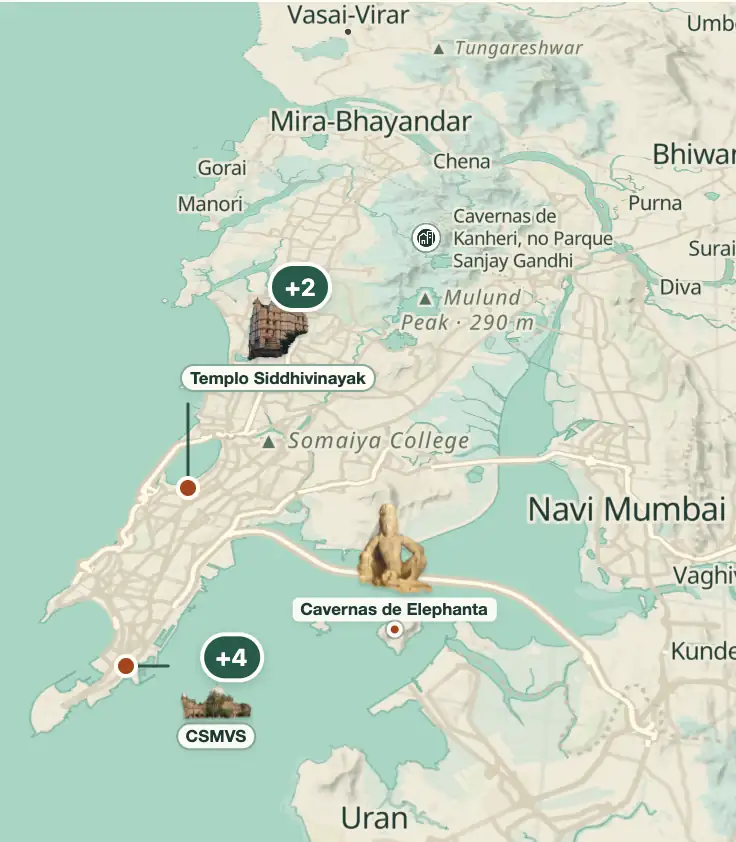
© OpenStreetMap · OpenFreeMap · © OpenMapTiles
Explore the map, read about the other places and plan your travel days in the app.
Open the appWhat to see
Mumbai: the peninsula, the creek, and the park
Mumbai occupies a narrow peninsula on the Konkan coast, with the Arabian Sea to the west and Thane Creek to the east, at the mouth of the Ulhas River.
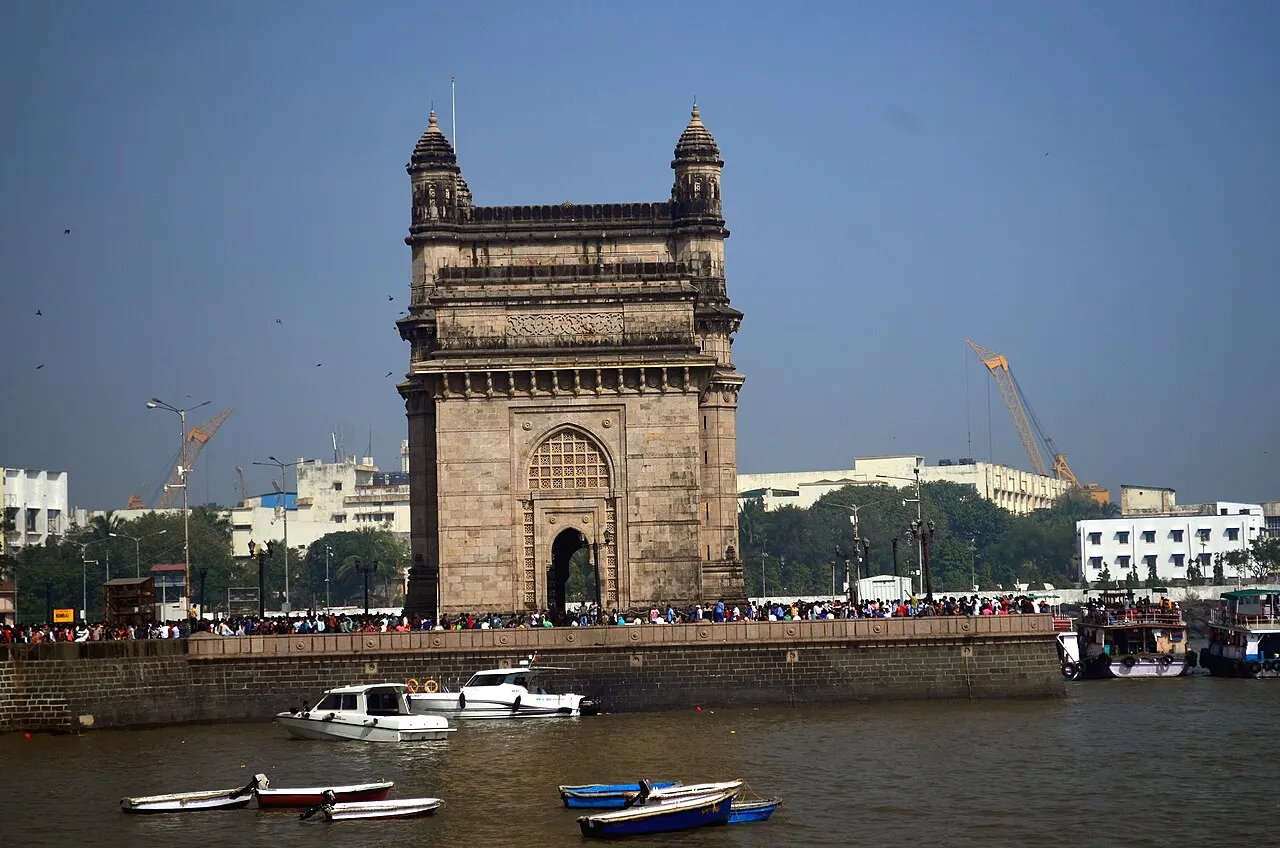
Gateway of India
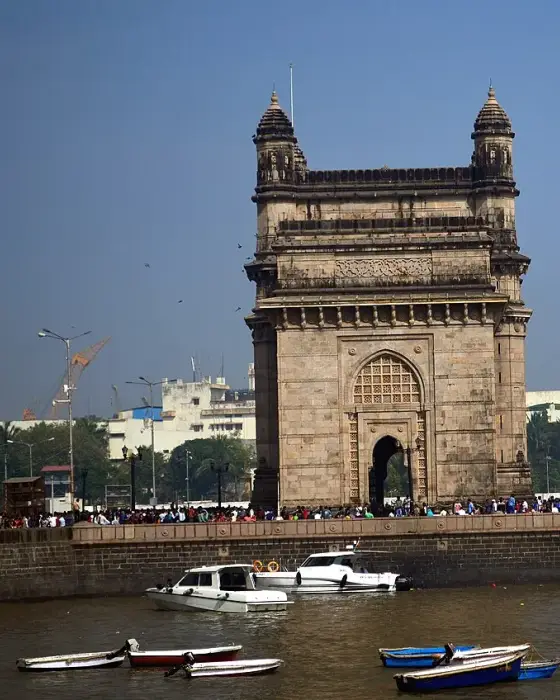
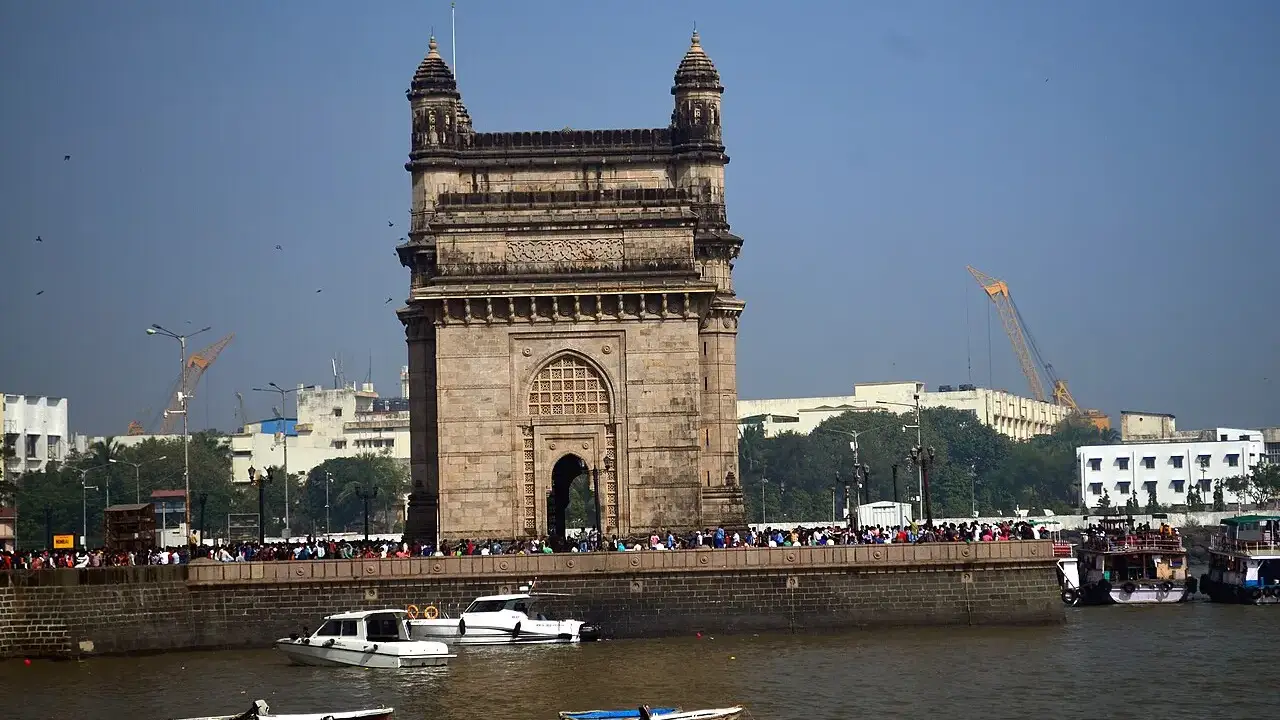
A 26 m yellow basalt arch designed by George Wittet, built between 1913 and 1924 to mark George V's visit in 1911. In February 1948 the last British soldiers shipped out through it; today it's the ferry dock for Elephanta and Mandwa.
The 26 m arch, designed by Wittet and built from 1913 to 1924 for George V's visit, is where the British soldiers shipped out in 1948, and today it serves as the ferry dock.
Check access

Elephanta Caves
Temples carved into the rock of Gharapuri island in the 5th–6th c., a World Heritage Site since 1987, with the Trimurti of Shiva about 6 m tall. The ferry from the Gateway takes about 1 hour; the island is closed on Mondays and there are 120 steps up to the main cave (a little train runs from the dock to the base).
The rock-cut temples hold the Trimurti, about 6 m tall, and have been a World Heritage Site since 1987, and the ferry leaves from the Gateway while the main cave calls for 120 steps.
Check access
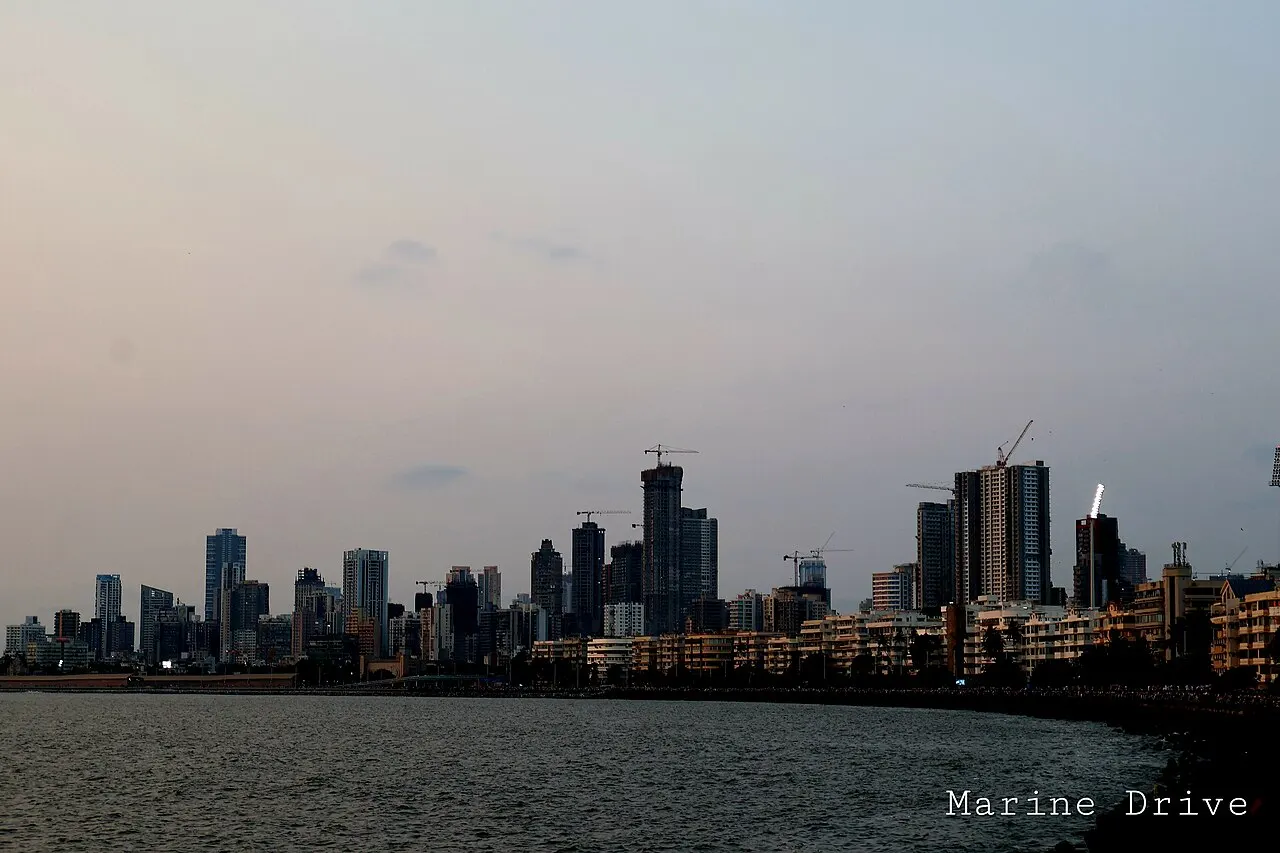
Marine Drive and its Art Deco ensemble
A 3.6 km promenade built over land reclaimed between the 1920s and 1940s, lined with Art Deco buildings on the land side. Mumbai's Victorian and Art Deco ensemble became a World Heritage Site in 2018; at night the curved streetlamps earn it the nickname Queen's Necklace.
A 3.6 km curved promenade over land reclaimed in the 1920s to 40s, with the largest contiguous row of art deco buildings after Miami.
Check access

Chhatrapati Shivaji Maharaj Terminus
F. W. Stevens's neo-Gothic station, built between 1878 and 1888 and named Victoria Terminus, has been a World Heritage Site since 2004 and handles more than 3 million passengers a day. See the facade and the central staircase from outside, in the middle of the bustle, or book one of the guided tours of the station's heritage gallery.
The neo-Gothic station by Stevens has been a World Heritage Site since 2004 and handles more than 3 million passengers a day, and visitors see the facade and the central staircase from outside, among the commuters, or book a guided tour of the heritage gallery.
Check access

CSMVS (formerly the Prince of Wales Museum)
An Indo-Saracenic museum by George Wittet, opened to the public in 1922, with about 70,000 pieces spanning Mughal miniatures, Gandhara sculpture and natural history. Set aside at least 1 hour 30 minutes; the ticket office closes before the museum does.
Wittet's Indo-Saracenic museum holds about 70,000 pieces, with miniatures and natural history, calls for at least 1 hour 30 minutes, and the ticket office closes before the museum does.
Check access

Dhobi Ghat
An open-air laundry in Mahalaxmi, operating since 1890, with hundreds of concrete wash pens where thousands of garments are washed each day. The classic view is from the Mahalaxmi station footbridge; asking permission before photographing the workers is the local rule.
It's worth half an hour for the view from the Mahalaxmi station footbridge, from where you can see the hundreds of concrete wash pens in use since 1890. Ask permission before photographing the people working.
Check access
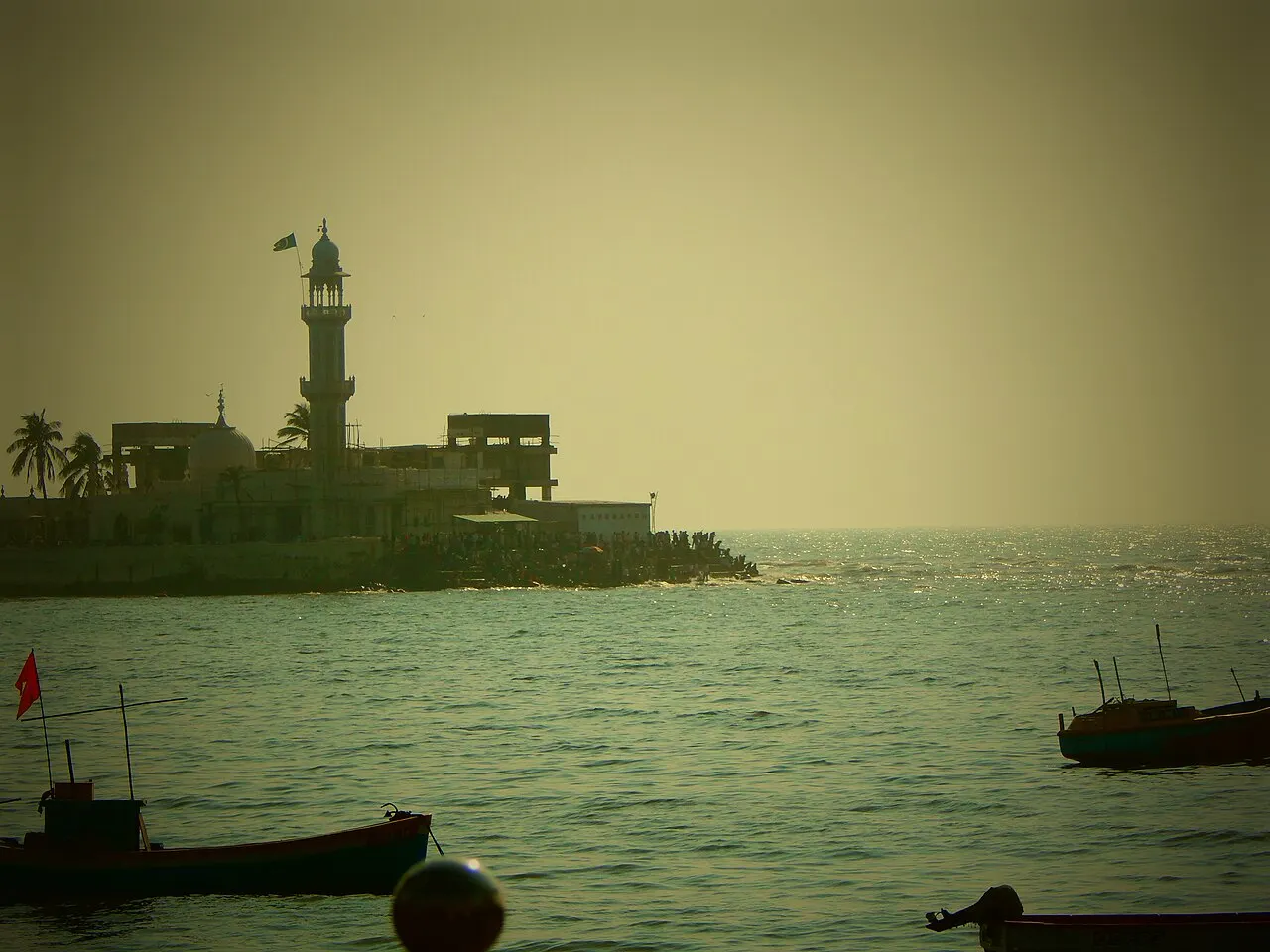
Haji Ali Dargah
A white mausoleum from 1431 on an islet in Worli Bay, connected to land by a roughly 500 m causeway that's submerged at high tide. Check the tide table before going; men and women enter through separate access points at the inner shrine.
The 1431 mausoleum on a small islet off Worli is reached by a causeway about 500 m long that's submerged at high tide, and men and women use separate entrances.
Check access

Crawford Market and Mohammed Ali Road
A market from 1869, now called Mahatma Jyotiba Phule Mandai, with reliefs by John Lockwood Kipling on its façade, selling fruit, spices and household goods. Ten minutes on foot away, Mohammed Ali Road begins, a corridor of Muslim food that comes alive at night and turns into a fair during Ramadan.
The 1869 market, whose facade carries bas-reliefs, sells fruit, spices, and household goods, and Mohammed Ali Road, a ten-minute walk away, is busy at night and turns into a fair during Ramadan.
Check access
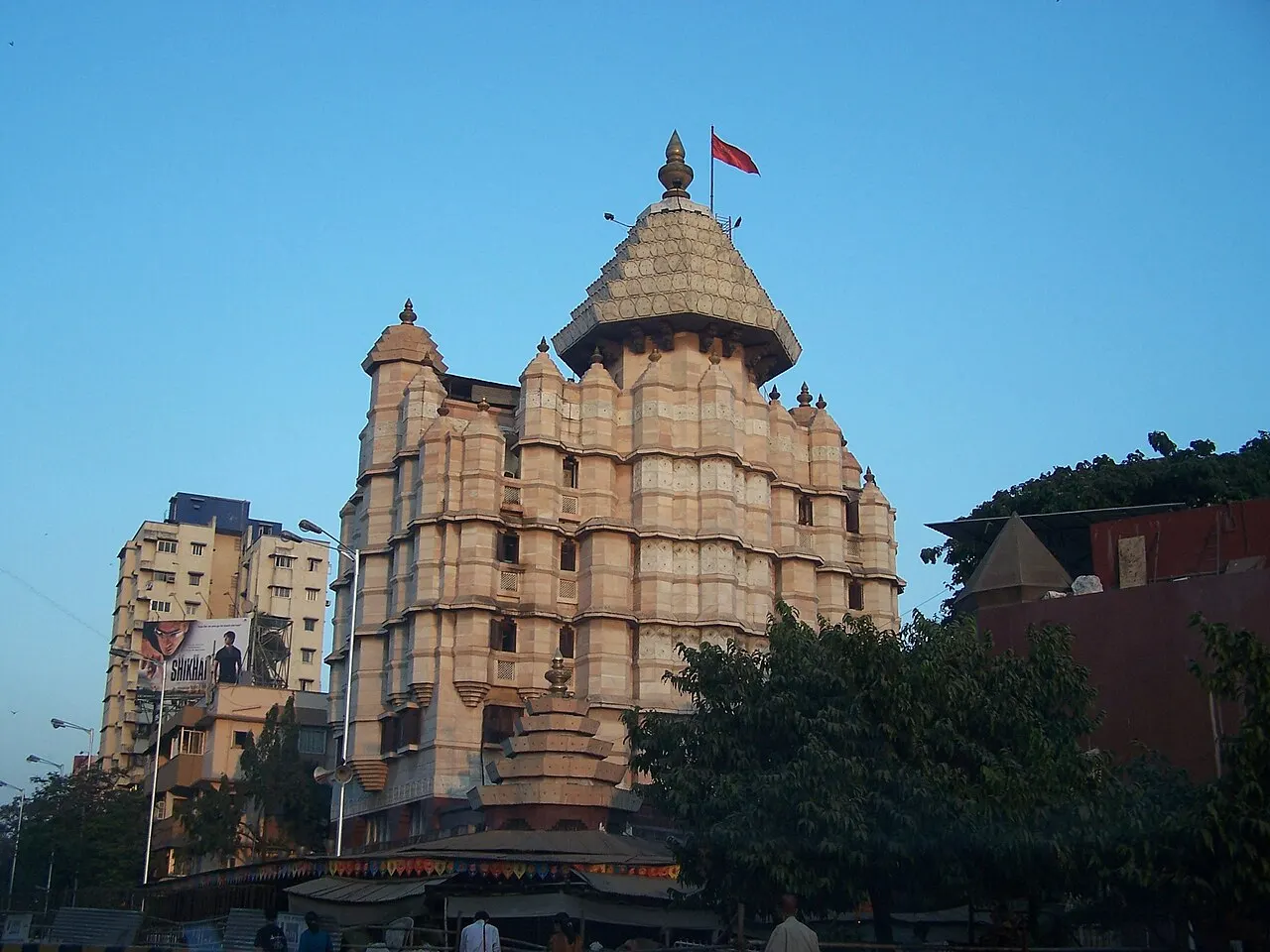
Siddhivinayak Temple
A Ganesha temple in Prabhadevi, founded in 1801 and rebuilt in 1990, with a golden dome. Tuesdays draw lines that can run over three hours; phones and cameras go into luggage storage.
Founded in 1801 and rebuilt in 1990, it's a temple of devotion before it's an attraction: on Tuesdays the line runs over three hours, and phones and cameras go in the luggage storage. Anyone looking for ancient sculpture will find the Trimurti of Shiva, about 6 m tall, from the 5th–6th centuries, at Elephanta.
Check access
Nilo’s itinerary
Start with the basic programme and choose extensions for the time you have.
Plan my days in the app ↗Day 1 · The southern tip: Victorian stone and sea
Start at 8am at the Gateway of India, take in the facade of the Taj Mahal Palace (1903) across the street and continue on foot along Colaba Causeway.
Go into the CSMVS museum (1922) at around 10:30am and set aside 1 hour 30 minutes; the ticket office closes before the museum does.
Have lunch in Kala Ghoda and walk the block: the Jehangir Art Gallery, the Knesset Eliyahoo synagogue (1884), the Asiatic Society (1833) and the High Court from outside.
At 5pm walk the 3.6 km of Marine Drive to Girgaon Chowpatty, taking in the Art Deco row on the land side.
Have bhelpuri and pav bhaji for dinner at the beach stalls, which run late.
Day 2 · Elephanta and the 19th-century city
Take the first ferry from the Gateway to Elephanta at around 9am: a 1-hour crossing, and the island is closed on Mondays.
Climb the 120 steps (or take the little train from the dock) up to Cave 1 and set aside time for the Trimurti, about 6 m tall; head back on the mid-afternoon ferry.
Back on the mainland, see the Chhatrapati Shivaji Maharaj Terminus (1888) from outside and cross over to Crawford Market (1869).
Walk over to Mohammed Ali Road in the late afternoon for kebabs and sweets, once the stalls open.
Close out at an Irani café: Britannia (1923) closes early, Kyani (1904) and Yazdani serve bun maska and chai until later.


If you stay longer
Day 3 · North: work, film and beach
Take the Western line train after the morning peak (between 11am and 4pm) to Mahalaxmi and view Dhobi Ghat from the station footbridge.
Continue to Haji Ali Dargah (1431); the access causeway only exists at low tide, so check the day's tide table.
Have lunch in Dadar, walk past the flower market and Shivaji Park, and watch the crossing of the Western and Central lines.
Take the train or metro to Bandra: Hill Road, the murals on Chapel Road, Bandstand and the view of the 5.6 km Sea Link.
End the day in Juhu or Versova, on the beach at sunset, with pav bhaji and gola at the stalls.


Food
 AI illustration
Vada pav
A seasoned potato dumpling fried in chickpea batter, served inside a pav bun with dry garlic chutney. It was born in the mid-1960s at a stall near Dadar station and costs between ₹15 and ₹40 on any corner.
 AI illustration
Pav bhaji
Vegetables cooked and mashed on a griddle with butter and a spice blend, served with toasted bread. It appeared in mill canteens in the 19th century as a quick worker's meal; today it's beach food at Chowpatty and Juhu.
 AI illustration
Beach chaat
Bhelpuri (puffed rice with sweet and green chutney), sev puri and pani puri, assembled to order at stalls in Girgaon Chowpatty and Juhu. Each serving costs ₹40–100 and is put together in seconds, which also works as a freshness check.
 AI illustration
Bombil and koliwada fish
Bombil, or Bombay duck, is a soft-fleshed fish coated in rava and fried; the koliwada recipe, coated in chickpea batter and chili, comes from the koli community. Gomantak and Malvani restaurants serve fish thalis for ₹300–700.
 AI illustration
Bombay sandwich
White sandwich bread with butter, green cilantro chutney, cucumber, boiled potato and beet, pressed or not, sold from carts with a small stove. The grilled version with cheese is the standard in front of offices; ₹50–120.
 AI illustration
Irani café: bun maska, chai and keema pav
Cafés founded by Zoroastrian immigrants from Iran in the early 20th century serve soft buttered bread, strong milk tea and spiced minced meat with bread. Britannia (1923), Kyani (1904) and Yazdani are among the survivors of a chain that once had hundreds of outlets.
 AI illustration
Falooda and kulfi
A cold dessert of milk, rose syrup, vermicelli, basil seeds and ice cream, served in a tall glass. The historic shops sit near Crawford Market; ₹120–250 a glass.
 AI illustration
Muslim street food on Mohammed Ali Road
Seekh kebab, baida roti, nihari and malpua served at stalls running from night into the early morning, peaking during Ramadan. It's the one part of the city where eating at two in the morning is routine, not the exception.
Day trips

Alibaug, via the Mandwa ferry
A catamaran ferry from the Gateway of India to Mandwa takes 20–60 minutes depending on the boat, plus a 20-minute bus ride to Alibaug, about 25 km away as the crow flies across the bay. Wide beaches, the 17th-century Kolaba Fort reachable on foot at low tide, and seafood restaurants; ferries stop running during the monsoon.

Matheran
About 90 km east, 2 hours 30 minutes by train to Neral plus the 1907 narrow-gauge train or a shared taxi to the entrance. It's the only hill station in India where motor vehicles are banned, at 800 m, with forest trails and temperatures about 6 °C below the city's.
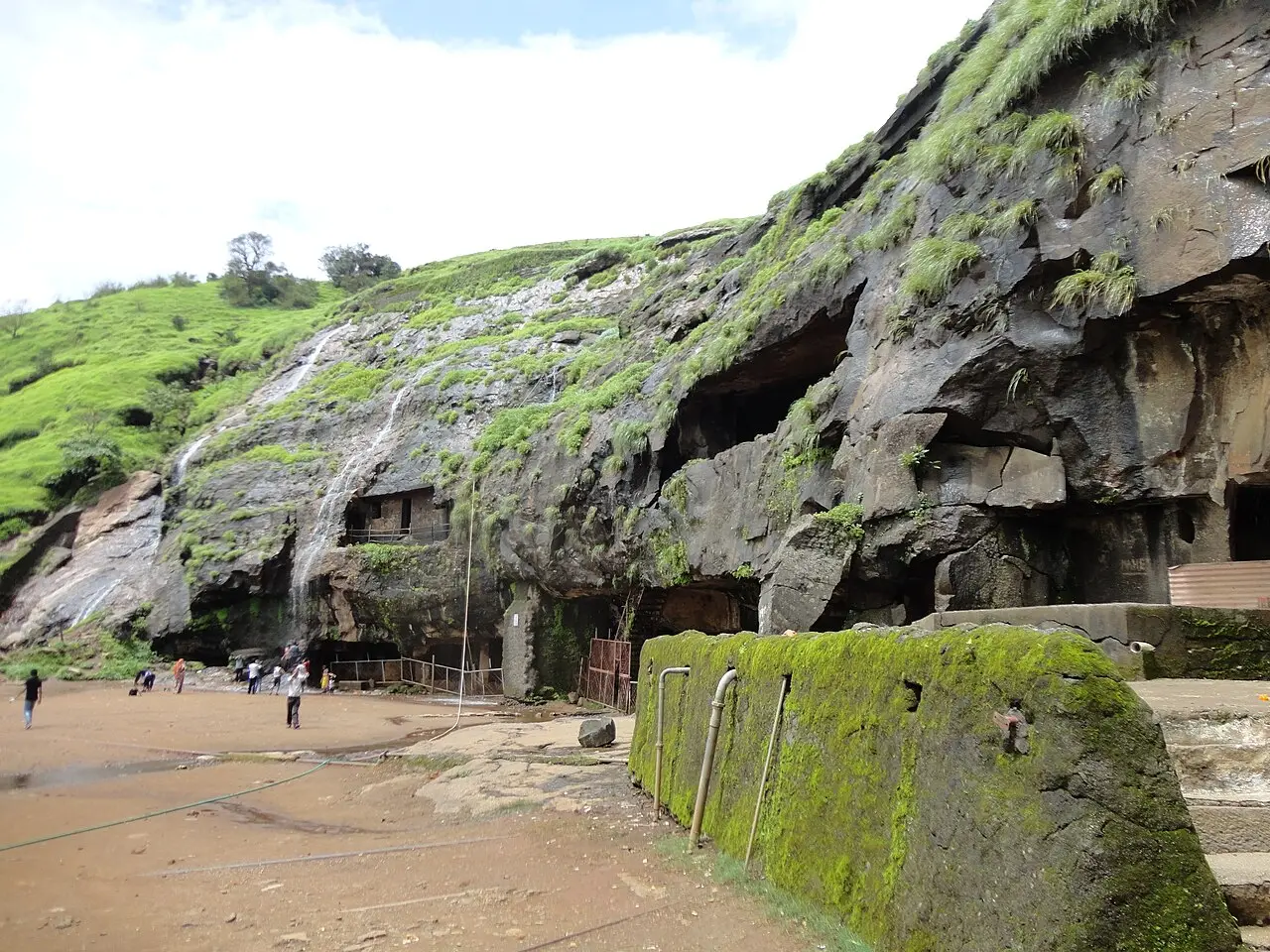
Karla and Bhaja caves, near Lonavala
About 100 km southeast, 2 hours to 2 hours 30 minutes by express train or by car on the Mumbai–Pune Expressway. Karla has India's largest rock-cut Buddhist prayer hall, from the 1st century BCE; Bhaja, 10 km away, has 22 caves from the 2nd century BCE and a waterfall that flows during the monsoon.
Where to begin
The southern tip: Victorian stone and sea
Start at 8am at the Gateway of India, take in the facade of the Taj Mahal Palace (1903) across the street and continue on foot along Colaba Causeway.
Elephanta and the 19th-century city
Take the first ferry from the Gateway to Elephanta at around 9am: a 1-hour crossing, and the island is closed on Mondays.
North: work, film and beach
Take the Western line train after the morning peak (between 11am and 4pm) to Mahalaxmi and view Dhobi Ghat from the station footbridge.
Money
The currency is the Indian rupee (INR, ₹), at about ₹89 per dollar and ₹16 per real in 2026. The price ranges: chai at a stall ₹10 to 20, vada pav ₹15 to 40, vegetarian thali ₹150 to 350, a meal for two at a neighborhood restaurant ₹800 to 1,500 and ₹2,500 to 5,000 at a good restaurant, beer at a bar ₹250 to 500, café coffee ₹150 to 300. Transport is cheap: train ₹5 to 20, metro ₹10 to 80, bus from ₹5, a short rickshaw ride ₹26 to 60, a taxi ₹31 to 100, and an app crossing from south to north ₹350 to 800. Lodging is the expensive item: a hostel dorm bed ₹700 to 1,800, a clean mid-range hotel ₹4,500 to 9,000, a high-end hotel above ₹18,000. The standard local payment is UPI by QR code, even at street stalls. Visitors can use international cards at restaurants, shops and apps, but it's worth always having small bills for chai, rickshaws, train counters and temples, because change for a ₹500 note often runs out. Tipping isn't mandatory: 5 to 10% at a restaurant when there's no service charge on the bill, ₹20 to 50 for a porter or delivery person, and nothing in a taxi or rickshaw beyond rounding up.
Getting there and around
Terminal 1 and Terminal 2 at the airport, 6 km apart
From the airport: Chhatrapati Shivaji Maharaj (BOM) has Terminal 2, international and part of the domestic flights, and Terminal 1, domestic, about 6 km apart and linked by a connecting bus. Since October 2025, metro Line 3 links T2 to BKC and Worli and to the south center (Churchgate, Cuffe Parade) in about 50 minutes for ₹10–80, and it's the most predictable option at rush hour. The alternatives are the prepaid taxi counter at arrivals, ₹600–1,000 to the south and more if traffic has other plans, and the Uber, Ola, and Rapido apps, which have marked pickup points. The second airport, Navi Mumbai (NMI), has been operating since December 25, 2025, and has received international flights since July 2026. It's 35–40 km from south Mumbai via the Atal Setu, 45 to 90 minutes by car, and the bridge toll for cars is about ₹250 each way.
Getting around the city: three systems, all used in a single day
In the city, three systems add up. The suburban railway has the Western (Churchgate–Dahanu), Central (CSMT–Kasara/Khopoli) and Harbour (CSMT–Panvel/Andheri) lines and carries around 7 million passengers a day. A second-class ticket costs ₹5 to ₹20, first class costs four to five times more and is far less crowded, and air-conditioned trains start at ₹30. Tickets are valid only that day, bought at the counter or on the RailOne app (the old UTS was decommissioned on March 1, 2026), and every train has women-only cars, marked by stripes on the platform. The metro adds up to about 101 km and 77 stations in 2026, with lines 1 (Versova–Ghatkopar), 2A and 7 (elevated, in the west), 3 (underground, Cuffe Parade–Aarey) and the open stretch of line 9. The Mumbai 1 card (NCMC) and the Mumbai One app integrate the metro, BEST buses and, progressively, the railway. BEST's red buses have fares starting at ₹5, are paid with the Chalo app or the NCMC card and run where the rails don't reach. Auto-rickshaws can't operate south of Bandra and Sion, so in the southern center only taxis and apps are left. Walking works in Colaba, Fort, Kala Ghoda, Marine Drive and Bandra. Outside those areas the sidewalks are occupied by other trades and a bicycle isn't a practical option.
Safety
Mumbai has low rates of violent crime for a city this size, and much of the south center and Bandra are walkable at night, even for solo travelers. Even so, the standard advice for women is to use the train's women-only car and book a ride through an app rather than accept an offer on the street. The real risks are of a different kind: traffic, crossing outside the crosswalk, packed platforms, and the monsoon. On the suburban rail network, more than 2,500 people die on the tracks every year, nearly half of them crossing the line on foot. Never cross the tracks or ride hanging out the door, however natural that may look from outside. Between June and September, avoid historically flood-prone spots (Hindmata, Sion, Kurla, the Andheri and Milan underpasses) on alert days, and don't walk through a street with standing water, because an open manhole is the most common accident. Wallet and phone theft happens on packed trains, at Crawford Market, and at the Gateway; carry your backpack in front. The scams that keep repeating: a driver claiming the meter is broken (ask for the fare card or use an app), an informal guide at the Gateway or at temples warning that the place is closed, schemes selling gems and carpets with a promise of resale, and tip collectors at temples who aren't part of the shrine's staff. General emergency 112, police 100, ambulance 108; hotels, stations, and malls have metal detectors at the entrance, and bag checks have been routine since 2008.
Etiquette tips
Take off your shoes before entering
This applies to every temple, mosque, gurdwara and private home, and to some small shops and workshops. Large temples have shoe checks at the entrance, usually free or for a few rupees, and socks are acceptable.
Use your right hand for eating and handing things over
The left hand is considered impure for contact with food and for passing objects, money or documents. Eating with your right hand is normal and expected at thali restaurants; there's a hand-washing sink at the entrance.
Respect the women's train coaches
All suburban trains have coaches reserved for women, at specific times, marked by stripes on the platform. Men who enter those coaches can be fined and are removed without argument.
Ask before photographing people
At Dhobi Ghat, Dharavi, markets and temples, a camera pointed at someone without asking reads as rude. Photography is banned inside many shrines, and there are railway rules restricting photos on platforms and at stations.
A head wobble side to side means yes
The sideways head movement means agreement, acceptance or “got it,” not denial or doubt. Don't feel you have to copy it, but read it as confirmation when it comes from someone else.
Alcohol and beef follow state rules
The legal drinking age in Maharashtra is 25, a drinking permit is technically required (obtainable at hotels or online), and there are dry days (January 26, August 15 and October 2) when bars don't serve. Cow beef has been banned in the state since 2015; what's sold as beef is buffalo meat.
Mistakes to avoid
Underestimating distances between neighborhoods
Underestimating the distance. Colaba to Andheri is about 25 km, and a car can take 50 minutes to two hours at rush hour, while the train or metro covers the same trip in 35–50 minutes and the price drops from ₹700 to ₹20.
Looking for a rickshaw in south Mumbai
Looking for an auto-rickshaw in south Mumbai. Rickshaws don't run south of Bandra and Sion. Between Colaba, Fort and Worli, your options are a taxi, an app, a bus or the metro, and whoever's waiting on the corner keeps waiting.
Riding the suburban train with a suitcase at rush hour
Tackling the suburban train with luggage at rush hour. Between 8am and 11am and between 6pm and 9pm the cars are too crowded for bags, and you get ready to exit two minutes early, standing near the door, because the stop is short and nobody holds up boarding for you.
Booking Elephanta on a Monday or during the monsoon
Booking Elephanta on a Monday or during the monsoon. The island is closed on Mondays, and ferries from the Gateway are frequently suspended between June and September because of the swells; confirm at the pier the same day.
Tap water and ice of doubtful origin
Drinking tap water and ice of doubtful origin. Sealed bottled water costs ₹20 and is sold at every stall. Busy street food is usually safe precisely because of the turnover, and the empty stall at three in the afternoon isn't.
Useful phrases
नमस्कार: Namaskar (namaskár)
Hello / formal greeting in Marathi, with hands joined together
किती रुपये? Kiti rupaye? (kíti rupaiê)
How much does it cost? (Marathi)
धन्यवाद: Dhanyavaad (dhânyavád)
Thank you (Marathi and Hindi; day to day people often just say “thank you”)
मला मराठी येत नाही: Mala Marathi yet nahi (malá maráti iêt nái)
I don't speak Marathi
मीटर से चलिए: Meter se chaliye (mítar se tchálie)
Run the meter, please (Hindi)
इथे थांबा: Ithe thamba (íthe thámba)
Stop here (Marathi); in Hindi, “yahan rokiye”
Districts
Colaba and Fort
The southern tip of the peninsula, home to the Gateway of India, the Taj hotel (1903), blocks of Victorian stone and the Colaba Causeway, a street of shops and cafés. This is where most visitor hotels are and where you'll find the highest density of museums per square meter.
Kala Ghoda
An art district between Fort and Colaba, with the CSMVS museum (1922), the Jehangir Art Gallery, the Knesset Eliyahoo synagogue (1884) and the Asiatic Society (1833). It's a hub of galleries, bookshops and the February arts festival.
Marine Drive and Churchgate
A 3.6 km promenade curve over land reclaimed in the 1920s–40s, with the largest continuous row of Art Deco buildings outside of Miami. Good for an evening walk, and the terminus of the Western Railway.
Girgaon and Malabar Hill
A traditional Marathi neighborhood at the base of an expensive residential hill. Here you'll find the Banganga Tank (1127), the Hanging Gardens, the Parsi Towers of Silence and Chowpatty beach, stage for the Ganesh immersions.
Byculla and Mazgaon
A 19th-century district to the east, with the Bhau Daji Lad Museum (1872), the Veermata Jijabai Bhosale Zoo, scrap-metal markets and Portuguese churches. This is working Mumbai, with little tourist presence.
Lower Parel and Worli
Once Girangaon, the belt of mills that closed after 1982, now office towers, malls in converted mill sheds, and bars. The Bandra–Worli Sea Link (2009, 5.6 km) starts from here.
Dadar and Matunga
The geographic center and the only point where the Western and Central lines cross, which makes it the city's transfer hub. It has the flower market that opens at 4am, Shivaji Park and the Tamil food of Matunga.
Bandra, Juhu and Versova
Western suburbs with artists' homes, murals on Chapel Road, the Mount Mary basilica, restaurants and the beaches of Juhu and Versova. Bandra East is home to BKC, a business district planned in the 1970s on reclaimed land.
History
5th–6th c. · The Elephanta caves
Temples carved into the rock of Gharapuri island, with the Trimurti of Shiva standing about 6 m tall. The archipelago was already a stop on coastal shipping routes in the Arabian Sea.
1534 · Portugal takes the archipelago
Bahadur Shah, Sultan of Gujarat, cedes the islands under the Treaty of Bassein. The Portuguese call the place Bombaim and build forts at Bandra, Mahim and Bassein.
1661–1668 · English dowry and lease
The islands pass to the English crown at the marriage of Catherine of Braganza to Charles II. In 1668 Charles leases them to the East India Company for £10 a year, and in 1687 the company's headquarters moves from Surat.
1782–1845 · Hornby Vellard and the reclamations
Governor William Hornby orders the Worli breach sealed, starting the stitching-together of the seven islands. By 1845 the archipelago is already a single landmass, later expanded by further reclamation to this day.
1853 · Asia's first railway
On April 16, 1853, India's first passenger train leaves Bori Bunder, running 34 km to Thane. Today's suburban network still runs on that same route.
1861–1869 · Cotton and the Suez Canal
The American Civil War cuts off cotton from the southern US, and Bombay becomes a supplier to British textile mills, in a boom that busts in 1865. The 1869 opening of the Suez Canal cements the city as India's gateway port.
1888 · Victoria Terminus
F. W. Stevens completes the neo-Gothic station after ten years of construction. Renamed Chhatrapati Shivaji Maharaj Terminus in 1996, it's been a UNESCO World Heritage Site since 2004.

1960 · Capital of Maharashtra
On May 1 the bilingual state of Bombay is split after the Samyukta Maharashtra campaign, and the city becomes the capital of the new state of Maharashtra. Marathi becomes the official language.
1982 · The mill workers' strike
About 250,000 workers led by Datta Samant shut down the Girangaon textile mills for over a year. The mills never reopen, and the land becomes office towers and malls in Lower Parel and Worli.
1992–2008 · Riots, bombs and 26/11
Riots in December 1992 and January 1993 kill about 900 people; on March 12, 1993, thirteen coordinated bombings kill 257. These are followed by the July 26, 2005 flood (944 mm in 24 hours), the July 11, 2006 train bombings, and the November 26–29, 2008 attack, with 166 dead.
 AI illustration
2024–2025 · Bridges, a metro, and a second airport
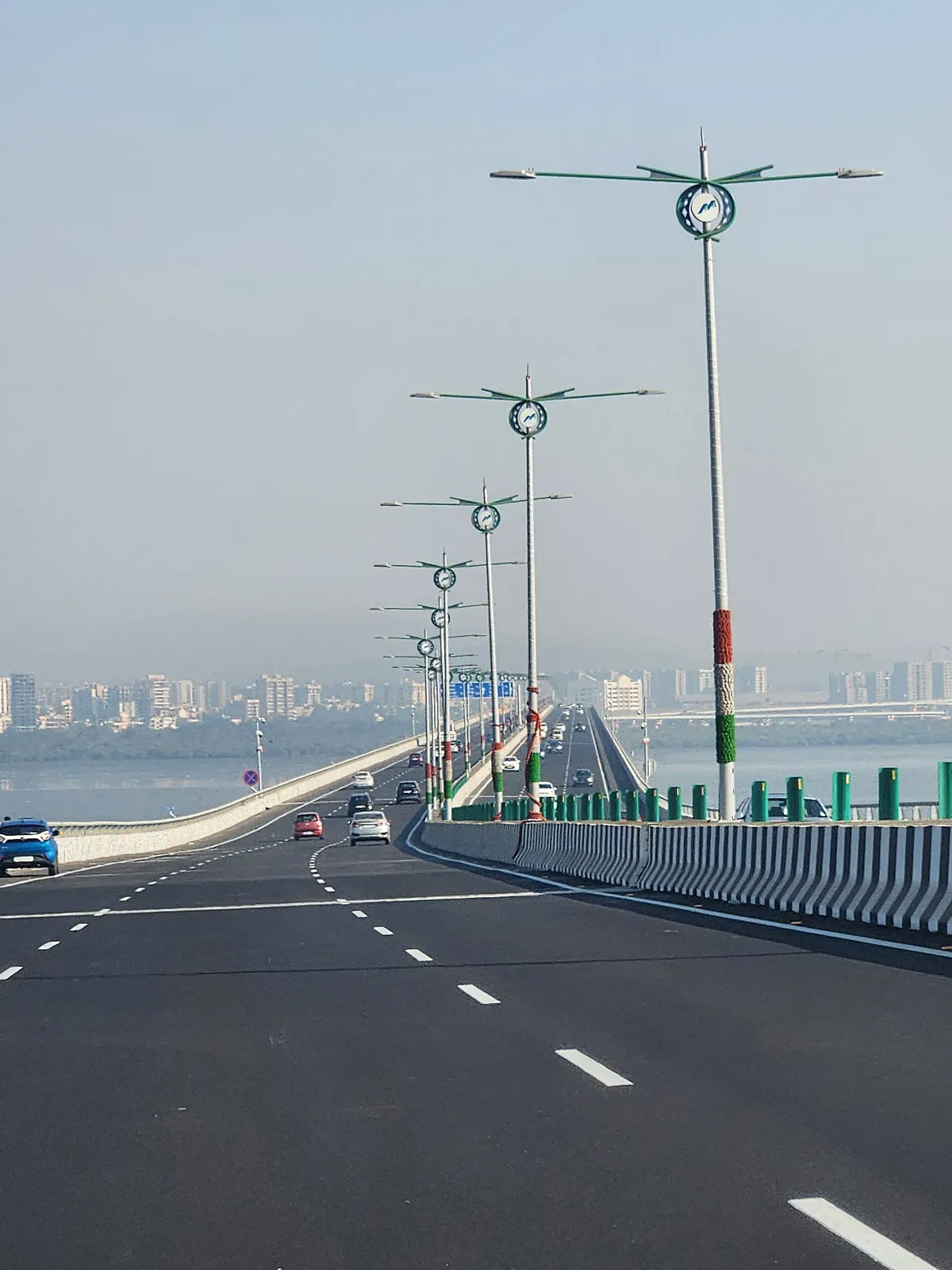
The Atal Setu, a 21.8 km bridge across the bay, opens on January 12, 2024, and the first stretch of the Coastal Road in March. Metro Line 3 is completed on October 8, 2025, and Navi Mumbai airport starts operating on December 25, 2025.
Complete history
The seven basalt islands that became Mumbai
Before any urban plan there were seven basalt islands and a population of Koli fishers, whose goddess Mumbā would eventually give the city its name. The islands passed through the Maurya Empire in the 3rd century BCE, the Chalukyas and the Gujarat Sultanate, which ceded them to Portugal in 1534. Portugal treated the place as an outpost of Bassein and handed it over as a dowry in 1661, when Catherine of Braganza married Charles II of England. In 1668 the Crown leased the archipelago to the East India Company for 10 pounds a year, and Governor Gerald Aungier offered freedom of worship and predictable trade rules, attracting Parsis from Surat, Gujarati Banias, Bene Israel Jews, Armenians and Bohra Muslim merchants. That's why Bombay grew without a majority group.
Landfill and rails: the islands become a peninsula
The city that exists today was built on landfill. The Hornby Vellard project, begun in 1782, closed the gap where the sea flooded in at Worli, and successive reclamations joined the islands by 1845; the municipality grew from a handful of separate islands to 435 km² and later to today's 603 km². The result is a narrow peninsula pointing south, with the historic center at the tip and growth forced northward. On April 16, 1853, Asia's first passenger train left from here, and the three suburban lines (Western, Central and Harbour) became the city's backbone. Ever since, neighborhoods, rents and working hours in Mumbai have depended on the distance to a station.
The wealth came from cotton
The wealth came from cotton. When the American Civil War (1861–1865) cut off supply from the southern US, Bombay became a supplier to the British textile industry, and speculation in shares ended in the crash of 1865. The Suez Canal, opened in 1869, shortened the route to Europe and cemented the port, and the Bombay Stock Exchange, the oldest in Asia, was founded in 1875 on Dalal Street. The mills were concentrated in Girangaon, the “village of mills,” with more than 130 units and a Marathi working class that shaped local politics. The Victorian architecture along the waterfront, with Victoria Terminus (1888), the University of Mumbai and the High Court, was paid for with that money.
Congress, independence and the textile strike
From the late 19th century until independence, the city was the center of national politics: the Indian National Congress held its first session in Bombay in December 1885 and the Quit India movement was launched at Gowalia Tank on August 8, 1942. After 1947 came the division of the state in 1960, the founding of the Shiv Sena in 1966 on a “sons of the soil” platform, and the 1982 textile strike, which broke Girangaon: 250,000 jobs vanished and the mill land became the most expensive square meter in India. The 1991 liberalization completed the switch: from industrial city to city of finance, advertising, media and film. Mumbai today generates roughly 5% of India's GDP and a disproportionate share of the income tax collected in India, and at the same time about 40% of residents live in informal settlements, of which Dharavi, with approximately 1 million people in about 2.4 km², is the best known.
Three decades of violence and construction
The last three decades have been marked by violence and by construction. The 1992–93 riots, the March 12, 1993 bombings, the July 26, 2005 flood, the 2006 train bombings and the November 2008 attack are part of everyday memory and explain the metal detectors at the entrances of hotels, stations and malls. Since 2024 the city has been living through its biggest infrastructure wave since the 19th-century reclamations: the Atal Setu (21.8 km, January 2024) linked Sewri to Nhava Sheva, the Coastal Road opened up the western waterfront, Metro Line 3 was completed in October 2025 with 33.5 km and 27 stations, almost all underground, and Navi Mumbai airport went into operation on December 25, 2025, with international flights since July 2026. In parallel runs the Dharavi redevelopment project, begun with a door-to-door housing survey and no reliable completion date.
Colaba, the hotel district at the southern tip, joins two of the seven original islands, Colaba and Old Woman's Island, linked by landfill.
Geography and shape of the city
The peninsula, the creek and the park
Mumbai occupies a narrow peninsula on the Konkan coast, with the Arabian Sea to the west and Thane Creek to the east, at the mouth of the Ulhas River. Average elevation is about 14 m, and the highest point sits around 450 m in the Salsette hills, inside Sanjay Gandhi National Park: 104 km², about a sixth of the municipal area, with resident leopards.
The seven islands and the north-south axis
The seven original islands (Bombay, Colaba, Old Woman's Island, Mahim, Parel, Worli and Mazagaon) were joined by landfill between 1782 and 1845, and the larger island of Salsette, to the north, today holds the suburbs. The resulting shape, 3 to 12 km wide by about 50 km long, forces all traffic to run on the north-south axis: three parallel rail lines, two expressways and, since 2024, the Coastal Road and the Atal Setu. East-west crossings are few and slow, which is why ten kilometers can take forty minutes or two hours depending on the time.
The monsoon and the Mithi floods
The climate is tropical savanna, with a dry season from November to May and monsoon from June to September: about 2,200 mm of rain falls per year, and over 70% of it in those four months, flooding low-lying spots like Hindmata, Sion, Kurla and the Andheri and Milan underpasses. The Mithi River, channeled and narrowed by encroachment, has been the main driver of urban flooding since 2005.
Ten kilometers can take forty minutes or two hours, depending on the time, because almost everything runs on the north-south axis.
Culture
The home of Hindi cinema
Mumbai is home to the Hindi-language film industry, which produces a few hundred films a year and employs tens of thousands of people at Film City, in Goregaon, a studio complex opened in 1977 across about 210 hectares. Alongside it runs a theater circuit that never shut down: Prithvi Theatre, founded by the Kapoor family in Juhu in 1978, keeps a daily program in Hindi and English, and the NCPA, at Nariman Point, has housed halls for Indian classical, Western classical and Marathi theater since 1969. Marathi theater is a tradition of its own, with venues in Dadar and Vile Parle and a loyal audience.
Film music, rap and modern art
Mumbai is also where the country's soundtrack comes from. Film scores and the record industry that grew around them have made the city the center of Indian popular music since the 1940s, and since 2015 the Hindi rap that emerged in Kurla, Dharavi and Andheri (Divine, Naezy and the scene the film Gully Boy brought to the screen in 2019) has gone from neighborhood to national market. In the visual arts, the Progressive Artists' Group, founded in Bombay in 1947 by Souza, Husain, Raza and others, broke with academic painting and defined modern Indian art; you'll find its legacy in the Kala Ghoda galleries and the Bhau Daji Lad Museum.
Cricket organizes the calendar
Cricket organizes the social calendar: Wankhede Stadium, opened in 1974 with about 33,000 seats, hosted the 2011 World Cup final and hosts the Mumbai Indians' Indian Premier League matches between March and May. Outside the stadiums, the game happens at Shivaji Park, the Oval Maidan and Azad Maidan, where dozens of matches share the same field at once. Religious life is just as public and simultaneous: Hindu temples, mosques, Portuguese churches, 19th-century synagogues, Sikh gurdwaras and Parsi fire temples operate within a few blocks of each other.
The Oval Maidan hosts many cricket matches at once, each on its own patch of grass, in front of the Victorian and Art Deco facades.
Festivals and events

Ganesh Chaturthi
Ten or eleven days between late August and September, starting on the fourth day of the waxing moon of the Hindu month of Bhadrapada. Images of Ganesha are installed in neighborhood pandals (the Lalbaugcha Raja, set up since 1934, draws lines lasting hours) and on the last day go in procession to the sea at Chowpatty and Juhu for immersion. It's the busiest time of year on the streets.

Navratri and Dussehra
Nine nights between September and October, with garba and dandiya dancing at neighborhood courts and clubs, especially in the Gujarati areas up north and in Ghatkopar. Many people fast and street food menus shift; specific outfits are rented by the night.

Diwali
Five days between October and November, with lamps on balconies, sweets exchanged between neighbors, and fireworks the city government limits to set time windows. Offices and markets partly close and trains run emptier than usual.

Kala Ghoda Arts Festival
Nine days in early February, running since 1999, with installations, theater, film and a street fair in the district between Fort and Colaba. It's free and takes over streets closed to traffic.
 AI illustration
Ramadan on Mohammed Ali Road
A month that shifts on the Islamic lunar calendar, with food stalls running from the breaking of the fast until early morning in Bhendi Bazaar and around the Minara mosque. Outside of Ramadan, the same street still runs at night, but with half the stalls.
Books and films
Maximum City: Bombay, Lost and Found, Suketu Mehta (2004)
A sweeping piece of reportage written after the author moved back to the city, covering police, the mafia, cinema, bar dancers and post-1993 politics. It's the text that best explains how the city's institutions work from the inside.
Salaam Bombay!, Mira Nair (1988)
A film shot with real street children around Grant Road and Kamathipura, nominated for the Best Foreign Language Oscar. It shows the city's margins in the 1980s, before the towers of Lower Parel.
Gully Boy, Zoya Akhtar (2019)
A fiction based on the rappers Divine and Naezy, filmed in Dharavi, Kurla and Andheri. It works as a sonic and social map of young Mumbai and the Hindi rap that moved from the settlements to the national market.
Frequently asked questions
Mumbai: how do you get from the airport to the south center?
Since October 2025, metro Line 3 links T2 to BKC and Worli and to the south center (Churchgate, Cuffe Parade) in about 50 minutes for ₹10 to 80, and it's the most predictable option at rush hour.
Mumbai: how do you get to Alibaug by ferry?
A catamaran ferry from the Gateway of India to Mandwa takes 20 to 60 minutes depending on the boat, plus 20 minutes by bus to Alibaug, about 25 km as the crow flies across the bay.
Mumbai: what's the currency, and what's it worth?
The currency is the Indian rupee (INR, ₹), at about ₹89 to the dollar and ₹16 to the real in 2026.
Mumbai: what's the best time to go?
The good window runs from November to February: lows of 18 to 22°C, highs of 30 to 33°C, tolerable humidity, and practically no rain.
Mumbai: where do you have to take your shoes off?
It applies to every temple, mosque, gurdwara, and private home, and to some small shops and workshops.
Other cities in the country
India ↗- Days
- 3
- When
- Jan–Mar · Oct–Dec
- Per person/day
- Average 5,000–9,000 INRMid-range · per person/day
Cost scope
Per person per day: accommodation, meals, urban transport, visits and a small allowance for extras. Flights excluded; larger purchases vary. Editorial estimate, not a quote.
- Days
- 2–3
- When
- Jan–Mar · Oct–Dec
- Per person/day
- Average 4,000–7,000 INRMid-range · per person/day
Cost scope
Per person per day: accommodation, meals, urban transport, visits and a small allowance for extras. Flights excluded; larger purchases vary. Editorial estimate, not a quote.
- Days
- 2–3
- When
- Jan–Feb · Nov–Dec
- Per person/day
- Average 6,000–10,000 INRMid-range · per person/day
Cost scope
Per person per day: accommodation, meals, urban transport, visits and a small allowance for extras. Flights excluded; larger purchases vary. Editorial estimate, not a quote.
- Days
- 2–3
- When
- Jan–Feb · Nov–Dec
- Per person/day
- Average 20–40 USDMid-range · per person/day
Cost scope
Per person per day: accommodation, meals, urban transport, visits and a small allowance for extras. Flights excluded; larger purchases vary. Editorial estimate, not a quote.