Sri Lanka
Colombo
A Dutch fort, the Pettah bazaar and Indian Ocean sunsets
Days Start with the basic programme and choose extensions for the time you have.
How the guide reaches this number
Anyone who only sleeps here sees the traffic on Galle Road and nothing else, while a day started early covers the Dutch fort, the Pettah and the wind at Galle Face. With a second day, visit the temples, the National Museum and the city seen from the top of the Lotus Tower. Don't come for beaches or scenery: you can't swim along the city's waterfront, and after 10am the heat limits what you can do outdoors. For the single day, leave Fort station at 8am, get into the Pettah before 10am and climb up to Wolvendaal Church. Have rice and curry for lunch at 1pm and reach Galle Face Green at 5:30pm for the 6:15pm sunset. Port City disappoints. It's 269 hectares reclaimed from the sea, with a mall opened in 2024, a marina promised for 2027 and wide avenues with nobody on them, worth the walk only to see the scale.
1–2
When January to March: highs of 29–31°C, little rain, slightly lower humidity
How the guide reaches this number
Colombo lies less than 7° from the Equator and has practically no temperature seasons, with highs of 29 to 32 °C, lows of 24 to 26 °C and relative humidity between 75% and 85% all year. What changes is the rain, brought by two monsoons separated by two inter-monsoon periods. The southwest monsoon, from May to September, is wettest in May and June. The second inter-monsoon, from October to November, brings the most violent thunderstorms and flooding in low-lying streets, and October is the rainiest month, with somewhere between 350 and 400 mm. The annual total tops 2,300 mm, but rain usually comes in twenty- to forty-minute downpours in the late afternoon, and it almost never forces you to cancel the day, only to push it back two hours. The dry window runs from January to March, which is also high season and the period of highest prices. April is the hottest month and brings the Sinhala and Tamil New Year on April 13 and 14, when shops, markets and transportation stop for several days, so check what's open before booking your trip for those dates. Avoid October, which combines heavy rain, flooding and mosquitoes.
Per person/day US$30–55 per person with a simple hotel, local food, and app-hailed tuk-tuks
How the guide reaches this number
Per person per day: accommodation, meals, urban transport, visits and a small allowance for extras. Flights excluded; larger purchases vary. Editorial estimate, not a quote.
 What Nilo thinks
Give Colombo a full day, not just the stopover night between the airport and the south. Anyone who only sleeps here sees the traffic on Galle Road and nothing else, while a day started early covers the Dutch fort, the Pettah and the wind at Galle Face. With a second day, visit the temples, the National Museum and the city seen from the top of the Lotus Tower. Don't come for beaches or scenery: you can't swim along the city's waterfront, and after 10am the heat limits what you can do outdoors. For the single day, leave Fort station at 8am, get into the Pettah before 10am and climb up to Wolvendaal Church. Have rice and curry for lunch at 1pm and reach Galle Face Green at 5:30pm for the 6:15pm sunset. Port City disappoints. It's 269 hectares reclaimed from the sea, with a mall opened in 2024, a marina promised for 2027 and wide avenues with nobody on them, worth the walk only to see the scale.Colombo is the cinnamon port where Arabs, Portuguese, Dutch, and British each left a layer on a flat strip of coast, and what every one of them built stays in use. In the Fort, the old 17th-century Dutch hospital is now a courtyard of restaurants, and Wolvendaal Church, from 1749, has a floor made of Dutch governors' tombstones. Just below, Pettah is a bazaar organized by trade, with gold on Sea Street and spices on Gabo's Lane. Eat rice and curry for lunch and kottu at night, and try isso wade, the shrimp-and-lentil fritter, from the carts at Galle Face Green, where locals fly kites as the sun drops into the Indian Ocean. The city is still rebuilding from 26 years of civil war and the 2022 debt default. Come between January and March, in the dry window, and give Colombo a full day, or two for the temples, the National Museum, and the Lotus Tower.
Quick facts
- Population
- about 750,000 in the municipality (2024 census); about 5.6 million in the Colombo metropolitan area
- Founded
- Arab port since the 8th c.; Portuguese fort from 1517; capital of the whole island in 1815
- Country and region
- Sri Lanka, Western Province, southwest coast, at 6°55′ north latitude
- Language
- Sinhala and Tamil (official); English common on signs, in shops, and in hotels
- Currency
- Sri Lankan rupee (LKR); about 320–330 LKR per dollar in mid-2026
- Time zone
- UTC+5:30, no daylight saving
- Best time to visit
- January to March: highs of 29–31°C, little rain, slightly lower humidity
- Average daily cost
- US$30–55 per person with a simple hotel, local food, and app-hailed tuk-tuks
When to go
January to March: highs of 29–31°C, little rain, slightly lower humidity
April
25° to 32°C
249 mm of rain
May
26° to 32°C
314 mm of rain
June
26° to 31°C
197 mm of rain
July
26° to 30°C
123 mm of rain
August
26° to 30°C
116 mm of rain
September
25° to 30°C
264 mm of rain
October
25° to 30°C
359 mm of rain
November
24° to 31°C
346 mm of rain
December
24° to 31°C
171 mm of rain
How the year changes
Colombo lies less than 7° from the Equator and has practically no temperature seasons, with highs of 29 to 32 °C, lows of 24 to 26 °C and relative humidity between 75% and 85% all year. What changes is the rain, brought by two monsoons separated by two inter-monsoon periods. The southwest monsoon, from May to September, is wettest in May and June. The second inter-monsoon, from October to November, brings the most violent thunderstorms and flooding in low-lying streets, and October is the rainiest month, with somewhere between 350 and 400 mm. The annual total tops 2,300 mm, but rain usually comes in twenty- to forty-minute downpours in the late afternoon, and it almost never forces you to cancel the day, only to push it back two hours. The dry window runs from January to March, which is also high season and the period of highest prices. April is the hottest month and brings the Sinhala and Tamil New Year on April 13 and 14, when shops, markets and transportation stop for several days, so check what's open before booking your trip for those dates. Avoid October, which combines heavy rain, flooding and mosquitoes.
The same numbers as a table
| Month | Temperature °C | Rain mm |
|---|---|---|
| January · | 23 to 31 | 80 |
| February · | 24 to 32 | 77 |
| March · | 25 to 32 | 103 |
| April | 25 to 32 | 249 |
| May | 26 to 32 | 314 |
| June | 26 to 31 | 197 |
| July | 26 to 30 | 123 |
| August | 26 to 30 | 116 |
| September | 25 to 30 | 264 |
| October | 25 to 30 | 359 |
| November | 24 to 31 | 346 |
| December | 24 to 31 | 171 |
Nilo's tips
From the airport, bus 187 costs 500 to 700 LKR
The 187 express bus runs to Fort station for a fraction of the official counter taxi, which asks 4,000–6,000 LKR. It runs almost 24 hours a day and boards from the parking lot across from arrivals, not at the terminal door. PickMe fares run 3,000–4,500 LKR, with the roughly 400 LKR toll already included. Buy a Dialog or Mobitel SIM in the arrivals hall, because without an app you'll pay tourist prices from drivers on the curb for everything that follows.
The Pettah closes on Sunday: go before 10am
Between 11am and 3pm the heat under the awnings turns unbearable, and on Sundays the whole bazaar is closed. On other days, go in via Main Street around 9:30am. Each street has its own trade, from the gold of Sea Street to the spices of Gabo's Lane, and the minarets of the Jami Ul-Alfar mosque help you find your bearings among the awnings. Keep your wallet in a front pocket, because the risk there is pickpocketing in the crush of the crowd.
Book the tuk-tuk by app, and always carry small bills
Call tuk-tuks through the app, because the same ride agreed at the curb, with no meter, costs three to five times the app fare. For whatever you pay in cash, get small bills early on, asking for change at your first tea of the day, 50–150 LKR, because a 5,000 note won't work in a tuk-tuk, on a bus or at a stall.
The coastal train at 4:30pm, seated on the sea side
The track runs a few meters from the surf, and it's the cheapest ride in town. The Bambalapitiya-to-Mount Lavinia stretch takes about 20 minutes and costs less than 100 LKR in second class. Board at Bambalapitiya around 4:30pm and sit on the sea side, which heading south is the right-hand side. Swim there, on the stretch in front of the Mount Lavinia hotels; never at Galle Face, because of rip currents, sewage, and no lifeguard.
Check the poya date: the bars close
Poya is a national holiday on every full moon, twelve times a year, and the date shifts each month. Alcohol sales stop across the whole country: bars close, liquor stores pull down the shutters, and only some hotels serve guests, discreetly. Check the calendar before booking dinner, because trying another neighborhood won't help. In exchange, it's the best night to walk around, with temples full of people dressed in white and dansal stalls handing out free food in the street.
Lotus Tower at 5pm, or the free Dutch Hospital courtyard
At 5pm there's still light to see the city's layout and the Port City from above, and after dark the climb isn't worth it. If you're short on time, the Old Colombo Dutch Hospital, from the 17th century, charges no admission, and its courtyard is the best place to understand the layout of the Fort.
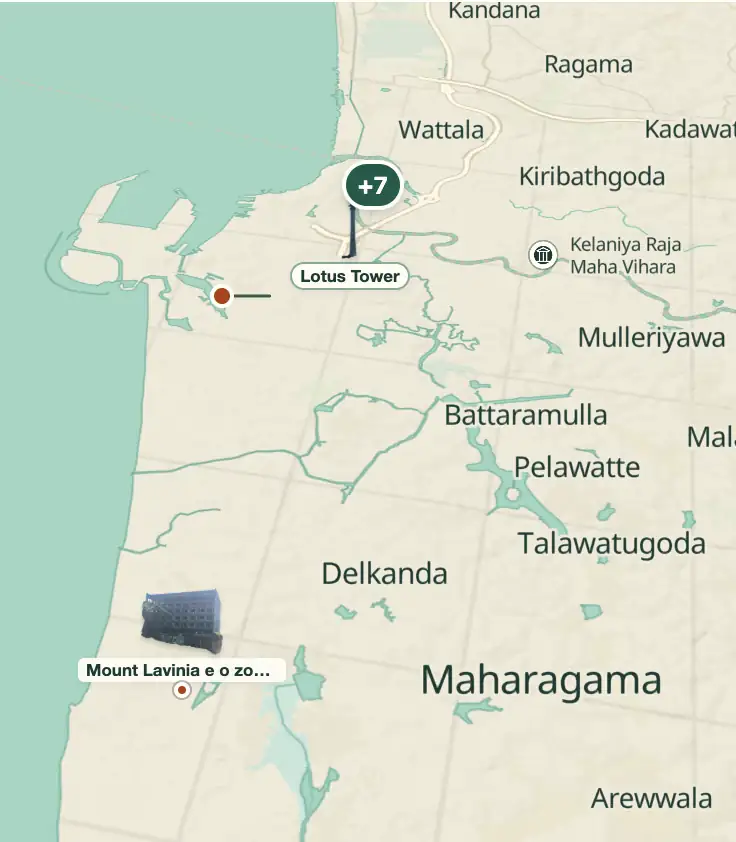
Explore the map
© OpenStreetMap · OpenFreeMap · © OpenMapTiles
Explore the map, read about the other places and plan your travel days in the app.
Open the appWhat to see
Colombo: A low plain and the water that organizes it
Colombo sits on a nearly flat coastal plain, almost entirely below 10 m, between the Indian Ocean and the mouth of the Kelani River, and what organizes the city is water: Beira Lake, a former Dutch moat in the middle of downtown, and the canals the Dutch dug to the Kelani. Low ground, concentrated rainfall, and silted-up canals make seasonal flooding a structural problem in Kolonnawa, along the Kelani, and on the banks of the Beira.
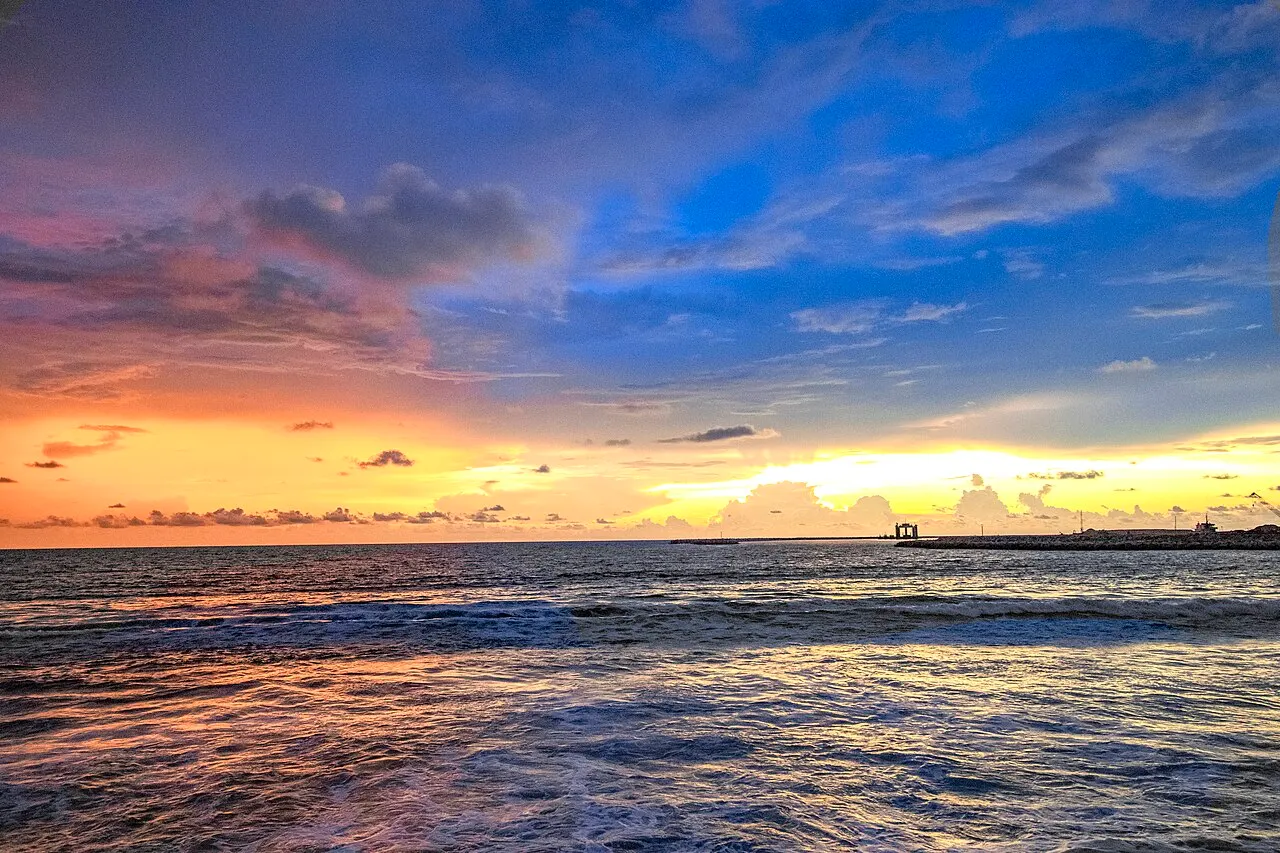
Galle Face Green
A strip of lawn of about 5 hectares with 500 m of sea frontage, opened by Governor Henry Ward in 1859 as a racecourse and golf course. Today it's where residents stroll in the late afternoon: kites, isso wade carts and a constant wind. It was also the site of the protest camp that brought down the president in July 2022.
Governor Henry Ward opened this strip by the sea in 1859, with about 5 hectares and 500 m of sea frontage, and residents still keep up the late-afternoon stroll on the ground where the protest camp brought down the president.
Check access
Gangaramaya Temple and Seema Malaka
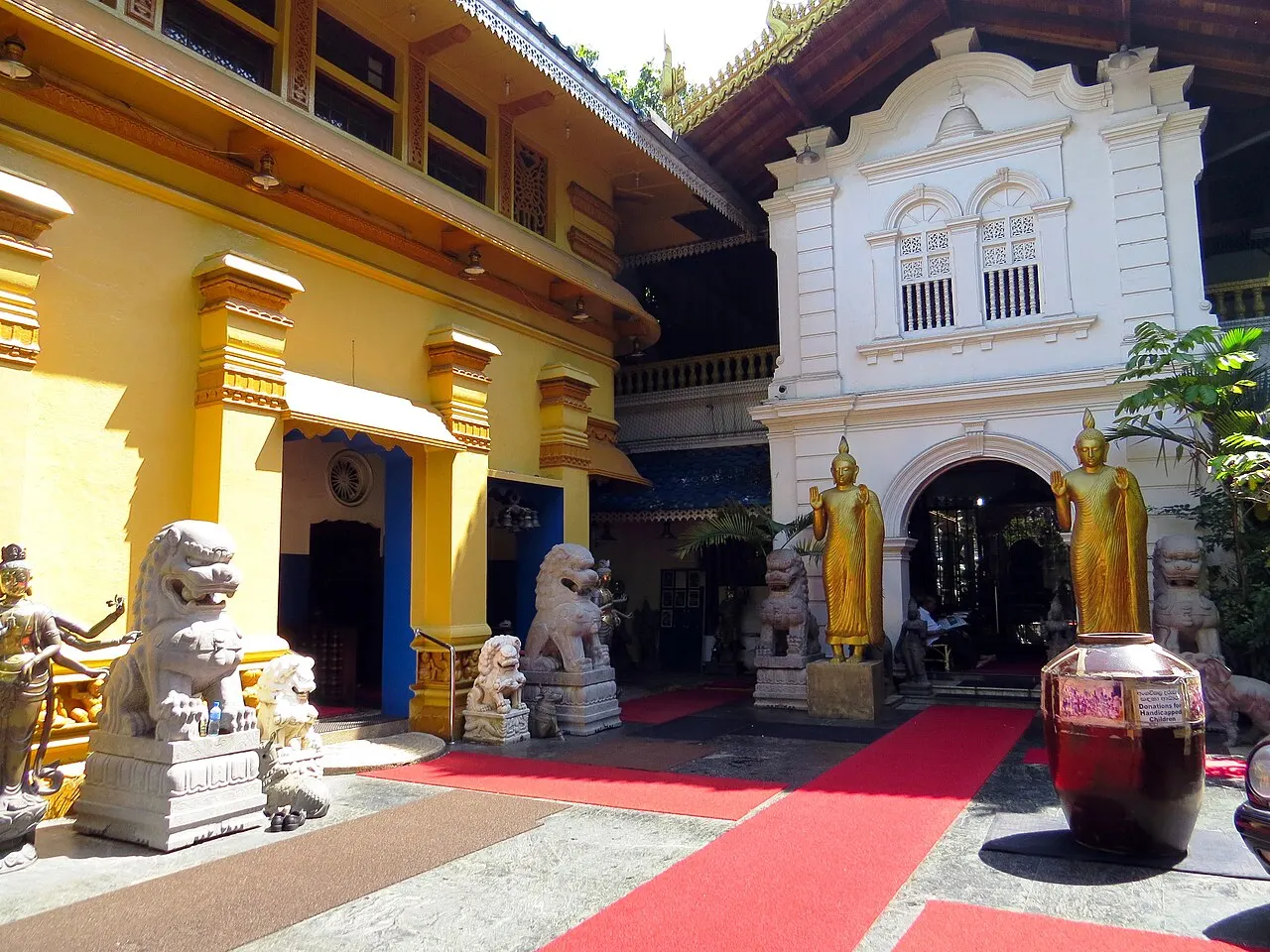
A temple founded in the late 19th century by Hikkaduwe Sri Sumangala, with a storehouse museum of donations that runs from ivory and coins to wristwatches and vintage cars. Seema Malaka, a meditation pavilion on stilts over Beira Lake, was redesigned by Geoffrey Bawa in 1976 and is the city's most reproduced piece of architecture.
The donations include ivory, coins, wristwatches, and vintage cars, and Geoffrey Bawa's 1976 work on Beira Lake is the city's most reproduced piece of architecture.
Check access

Pettah and the Jami Ul-Alfar mosque
An open-air bazaar organized by trade: Sea Street is gold, Gabo's Lane is spices and ayurveda, Main Street is fabric. In the middle of it, the 1909 Jami Ul-Alfar, with a red-and-white striped façade that used to serve as a landmark for ships entering the harbor.
Each street sells only one trade, and the striped building was the landmark ships used when arriving; the 1909 Jami Ul-Alfar; Sea Street is gold.
Check access
Old Colombo Dutch Hospital
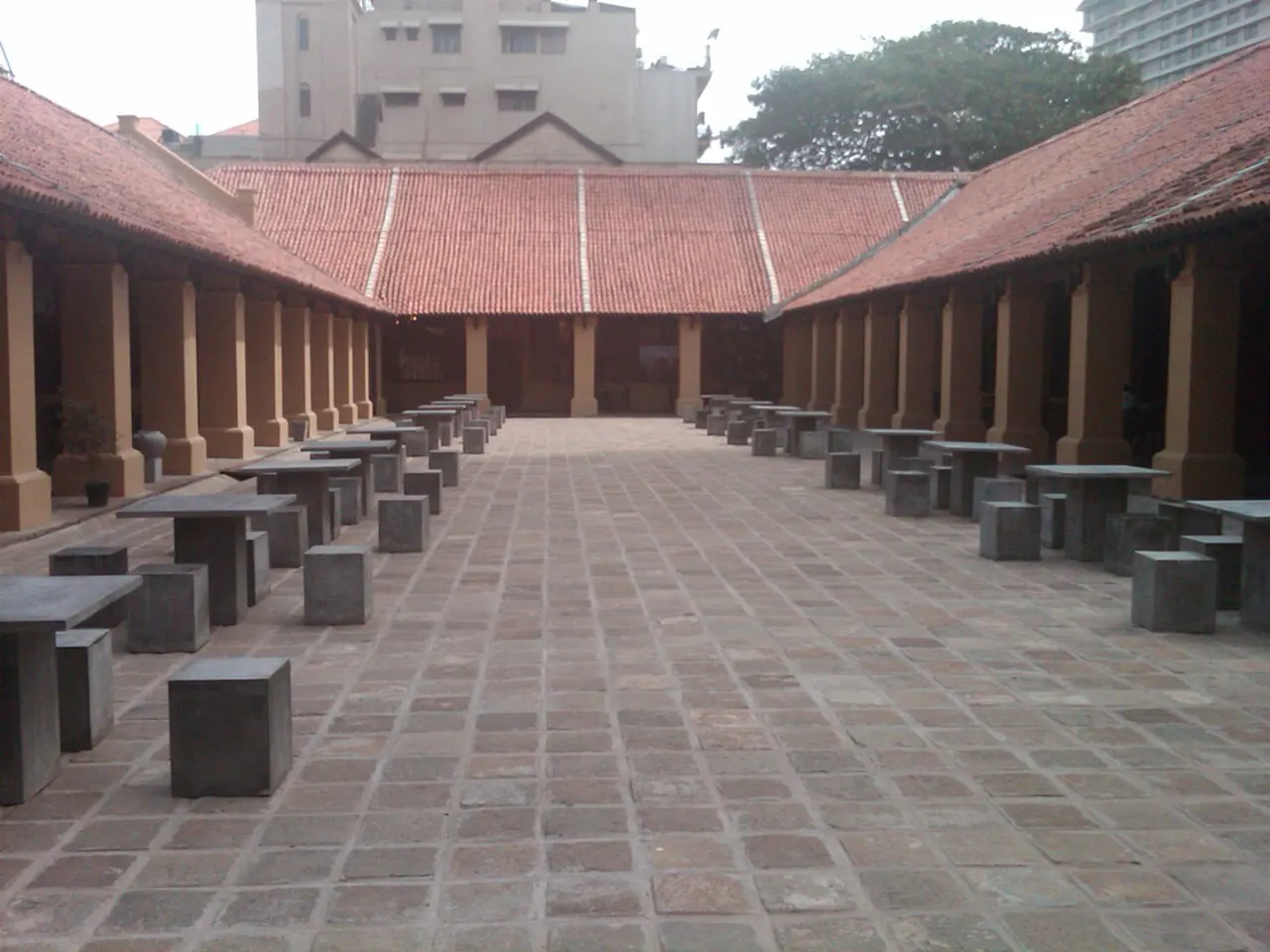
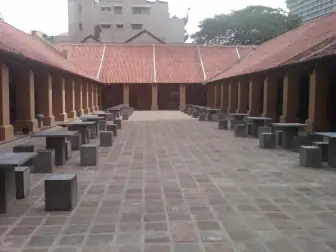
The Fort's oldest building, from the 17th century, with two inner courtyards and a gabled roof, built to treat Dutch East India Company staff. Restored and reopened in 2011 as a cluster of restaurants and shops; getting in costs nothing, and the courtyard is the best place to grasp the district's layout.
The visit costs nothing, and the open courtyard shows how the block was laid out, now filled with tables and shopfronts; the Fort's oldest building; reopened in 2011.
Check access
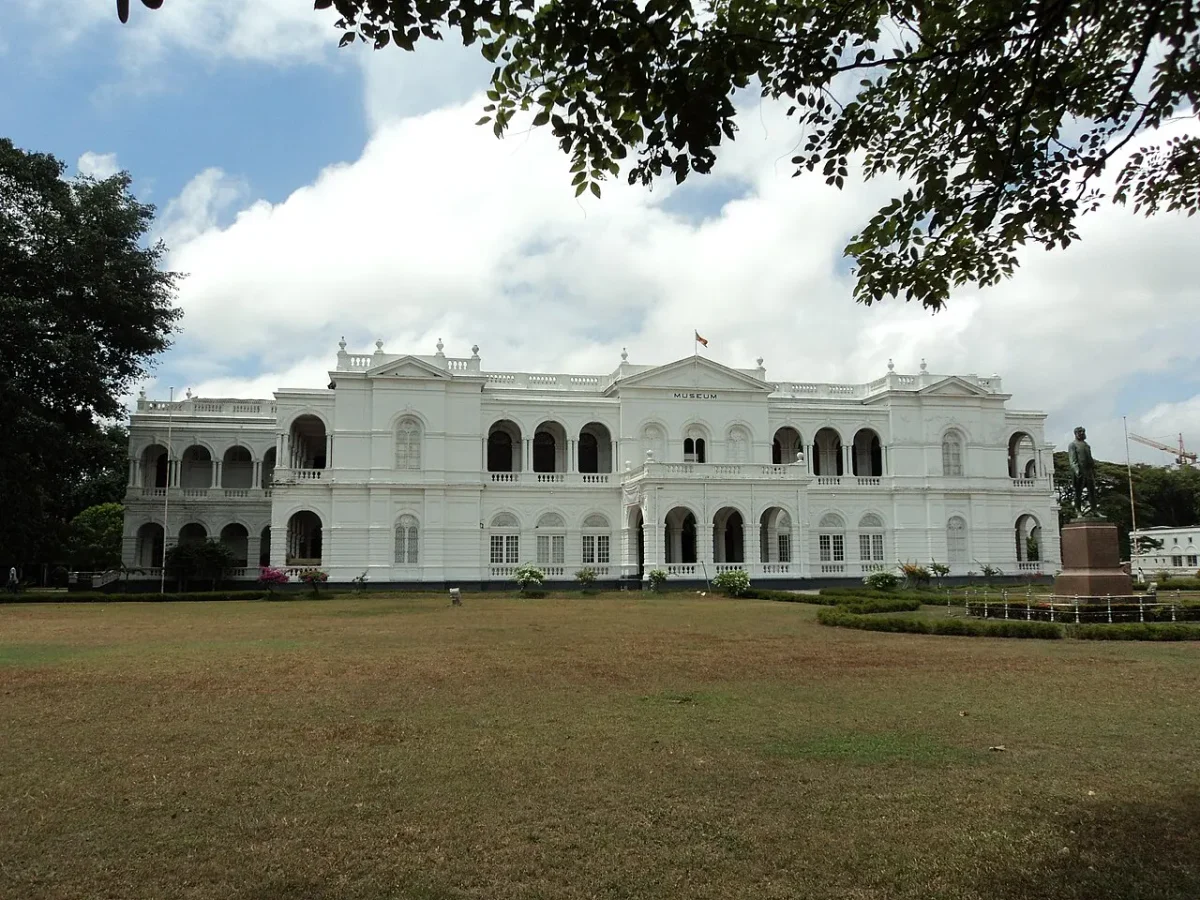
Colombo National Museum
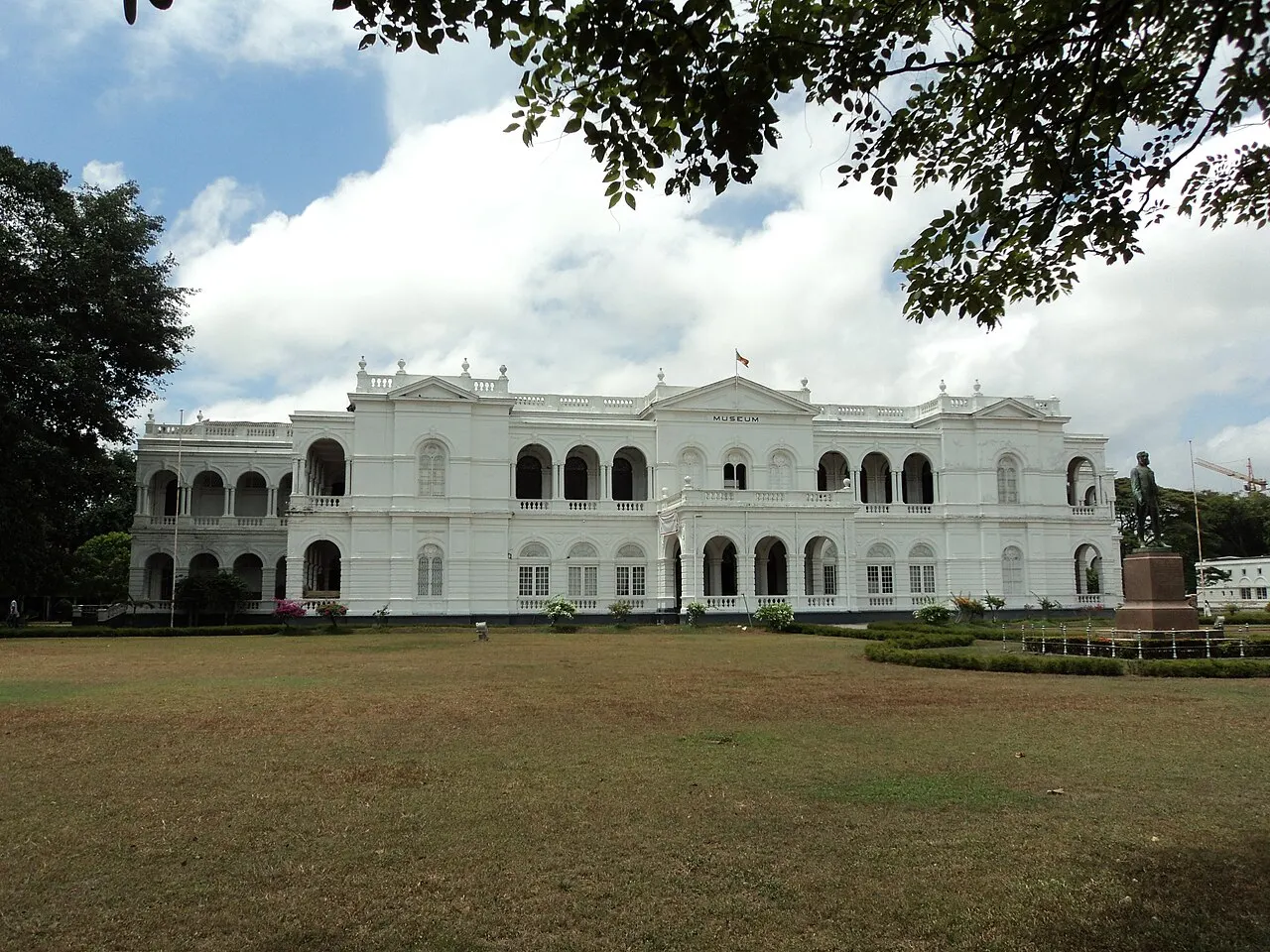
Opened in 1877 on the initiative of Governor William Henry Gregory, in an Italianate building designed by James G. Smither. It holds the throne and crown of Sri Vikrama Rajasinha, the last king of Kandy, deposed in 1815, along with ritual masks from the south and Polonnaruwa bronzes.
Opened in 1877 on the initiative of William Henry Gregory, the museum holds the throne and crown of Sri Vikrama Rajasinha, deposed in 1815, along with ritual masks from the south.
Check access
Wolvendaal Church
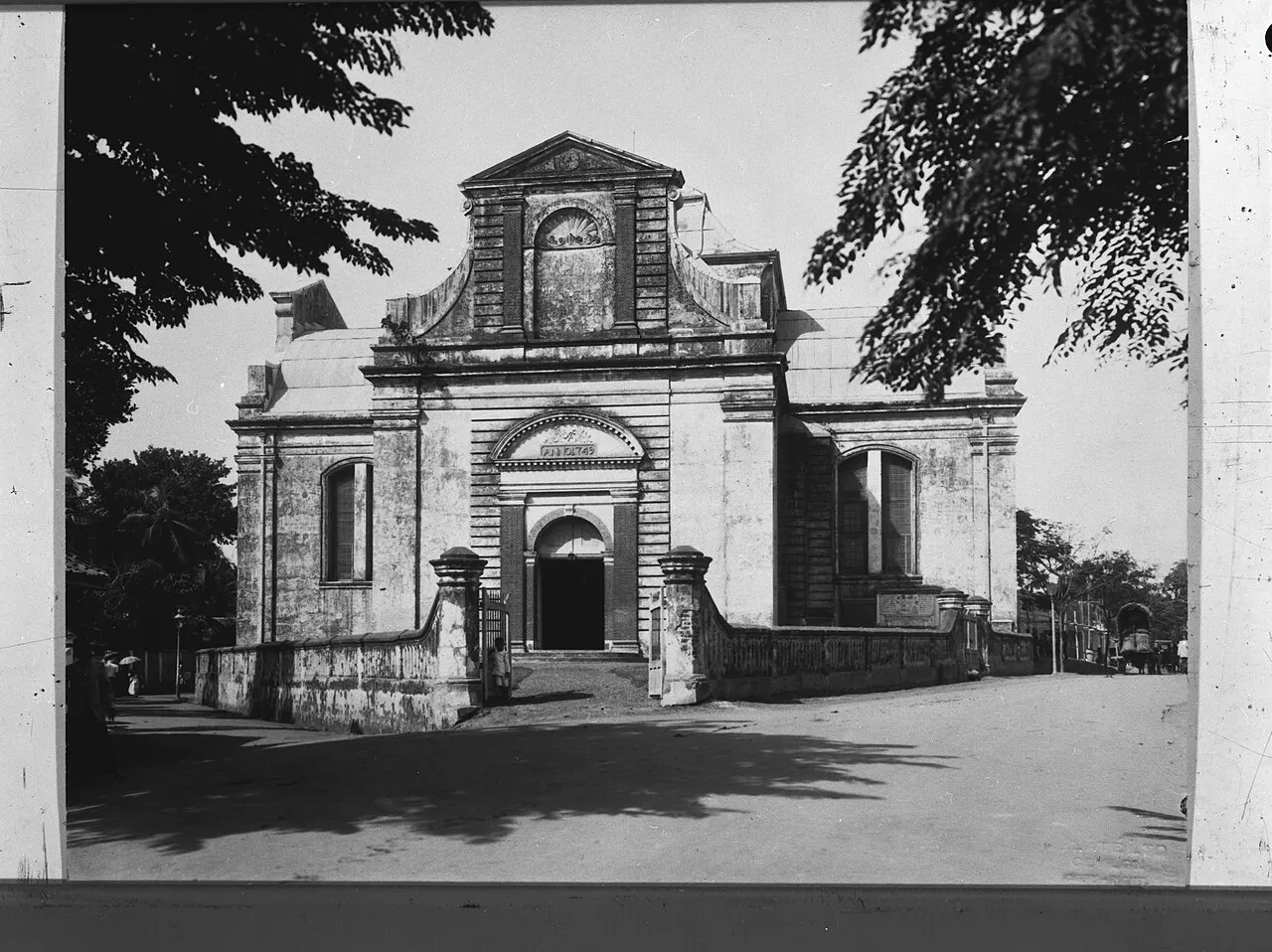
A 1749 Dutch Reformed church atop a hill overlooking Pettah, built in a Greek-cross plan with walls about 1.5 m thick. The floor is made of tombstones of Company governors and officials, moved from the Fort's cemetery.
The 1749 Dutch Reformed church has walls about 1.5 m thick, and the floor is made of tombstones from the Fort's cemetery.
Check access
Kelaniya Raja Maha Vihara
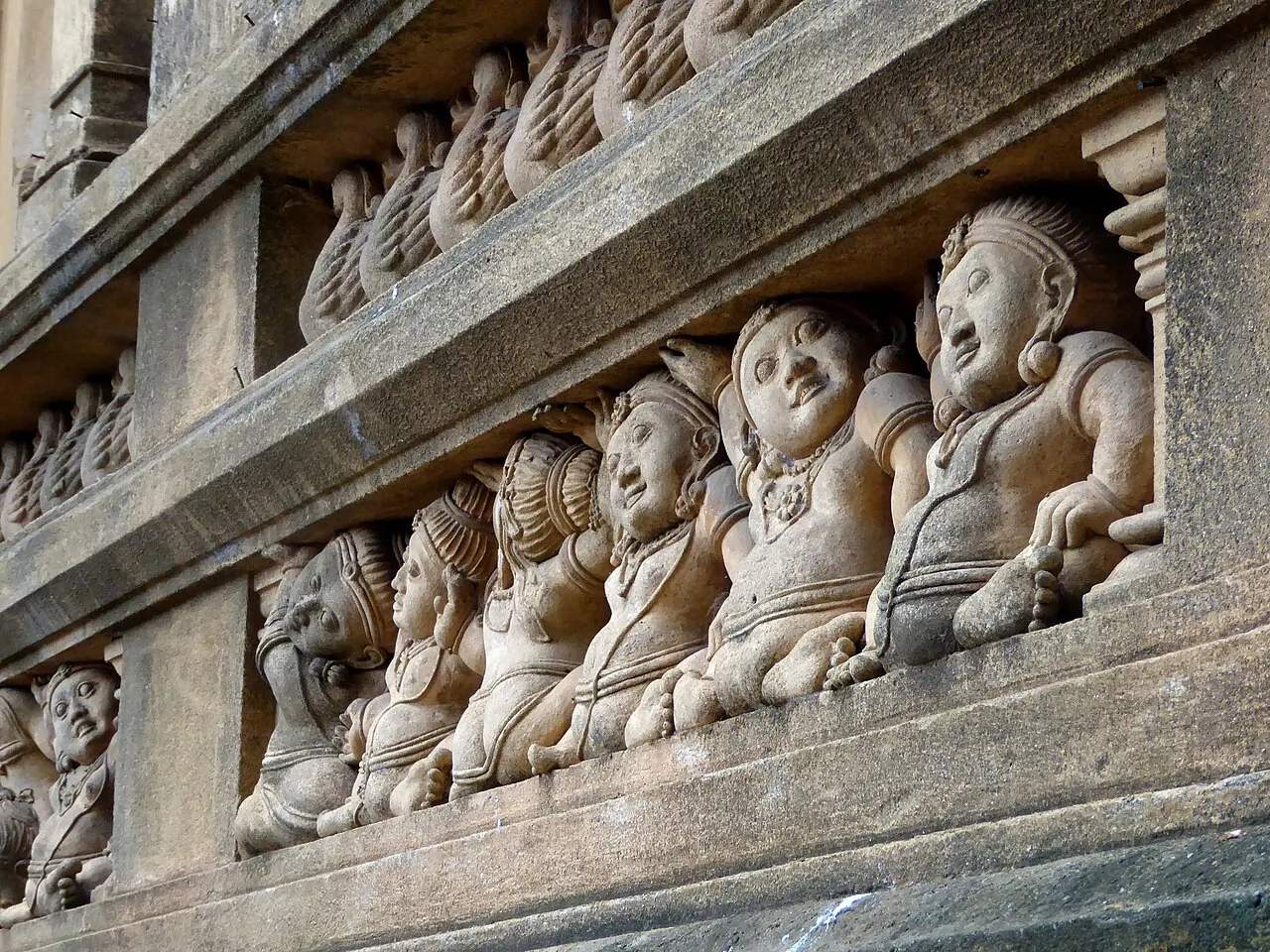
A temple 11 km northeast, on the bank of the Kelani River, linked by tradition to the Buddha's third visit to the island. The dagoba is shaped like a heap of rice, and the interior walls were painted by Solias Mendis between the 1930s and 1940s, in a style that deliberately echoes the murals of Sigiriya and Ajanta.
Tradition links the temple, 11 km to the northeast, to the Buddha's third visit to the island, and what you see there is the dagoba shaped like a heap of rice, with interior walls Solias Mendis painted between the 1930s and 1940s.
Check access

Mount Lavinia and the Dehiwala Zoo
The city's urban beach, 11 km to the south, below the headland where Governor Thomas Maitland built his residence in 1806, now a hotel. Two kilometers away, the National Zoo has been running since 1936 and is the standard family outing on Sundays.
The beach sits below the headland where Thomas Maitland built his residence in 1806, now a hotel, 11 km to the south, and the zoo is two kilometers from there, the standard family outing on Sundays.
Check access

Lotus Tower (Nelum Kuluna)
A 356 m communications tower opened to the public on September 15, 2022, the tallest self-supporting structure in South Asia. It has an enclosed observation deck, a revolving restaurant, and hours from 9am to 11pm; the ticket for foreigners costs $20 ($10 for children), compared with 500 rupees for residents.
Go up only with clear skies and stay half an hour, because Colombo is flat and from above you read the street grid, not mountains. If it's hazy, swap it for the Dutch Hospital courtyard, which is free.
Check access
Nilo’s itinerary
Start with the basic programme and choose extensions for the time you have.
Plan my days in the app ↗Day 1 · Fort, Pettah, and the Galle Face wind
8am: start at Fort station, from 1917, and walk to the Old Colombo Dutch Hospital, the district's oldest building, restored in 2011.
9:30am: enter Pettah via Main Street and follow the logic of streets by trade (Sea Street is gold, Gabo's Lane is spices) up to the 1909 Jami Ul-Alfar mosque.
11am: climb the hill to Wolvendaal Church, a 1749 Dutch Reformed church with governors' tombstones set into the floor.
1pm: have rice and curry for lunch at a simple eatery in the Fort, served on a tray with four to six side dishes and eaten with your right hand.
5:30pm: go to Galle Face Green for the wind, the kites and the isso wade carts, and wait for the sun to drop into the sea around 6:15pm, as it does all year.


If you stay longer
Day 2 · Temples, a museum, and the city from above
8am: visit Gangaramaya Temple, founded in the late 19th century, with its museum-storehouse of donations accumulated over more than a century.
9am: cross the walkway to Seema Malaka, on Beira Lake.
10:30am: head into the Colombo National Museum, opened in 1877, to see the throne of the last king of Kandy and the ritual masks of the south.
1pm: have lunch in Cinnamon Gardens and walk back through Viharamahadevi Park, past the 1928 Town Hall.
5pm: go up the Lotus Tower, 356 m tall and opened in 2022, to see the layout of the city, the port and Port City before dark.


Food
 AI illustration
Rice and curry (bath saha maalu)
The central dish: rice with three to six curries (dhal, green jackfruit, pumpkin, fried eggplant, fish) plus pol sambol of grated coconut with chili and papadam. Eaten at midday, with the right hand; the takeaway wrapped version, the lunch packet, runs 350–700 LKR.
 AI illustration
Kottu roti
Godamba flatbread chopped on the griddle with vegetables, egg, and meat, to the sound of two metal blades striking at a steady rhythm. That sound is what announces the kottu to passersby. It's night food, served from stalls and cafés from around 6pm; cheese kottu is a recent urban invention.
 AI illustration
Hoppers and string hoppers
The appa is a crisp bowl of fermented rice batter and coconut milk, made in a deep pan; with an egg in the center it becomes an egg hopper and is breakfast fare. String hoppers (idiyappam) are steamed noodle nests, eaten with coconut curry and sambol.
 AI illustration
Isso wade
A fried lentil fritter with a whole shrimp on top, sold from carts on Galle Face Green in the late afternoon. It comes with onion, green chili, and lime, served on paper, and it's the snack most associated with Colombo.
 AI illustration
Lamprais
A legacy of the Dutch burghers: rice cooked in meat stock, frikkadels, a three-meat curry, eggplant, and shrimp sambol, all wrapped in banana leaf and baked together. It's order-ahead food, bakery food, and home food in Colombo, and barely exists inland.
 AI illustration
Short eats
The tray of savories that arrives at your table at any café before you even order: maalu paan (fish bun), cutlets, patties, breaded rolls. You eat whatever you want and pay only for what you took, 80–250 LKR apiece.
 AI illustration
King coconut and Ceylon tea
The orange king coconut is cracked open with a machete on the sidewalk for 150–250 LKR and drunk on the spot. Tea is taken with milk and plenty of sugar in a small glass; a plain tea runs 50–150 LKR and works as the standard unit for any break.
 AI illustration
Watalappan
A coconut milk pudding with palm jaggery, cardamom, and nutmeg, of Malay origin, served chilled. It shows up year-round in restaurants, but it's a must on the tables at Eid.
Day trips
Negombo
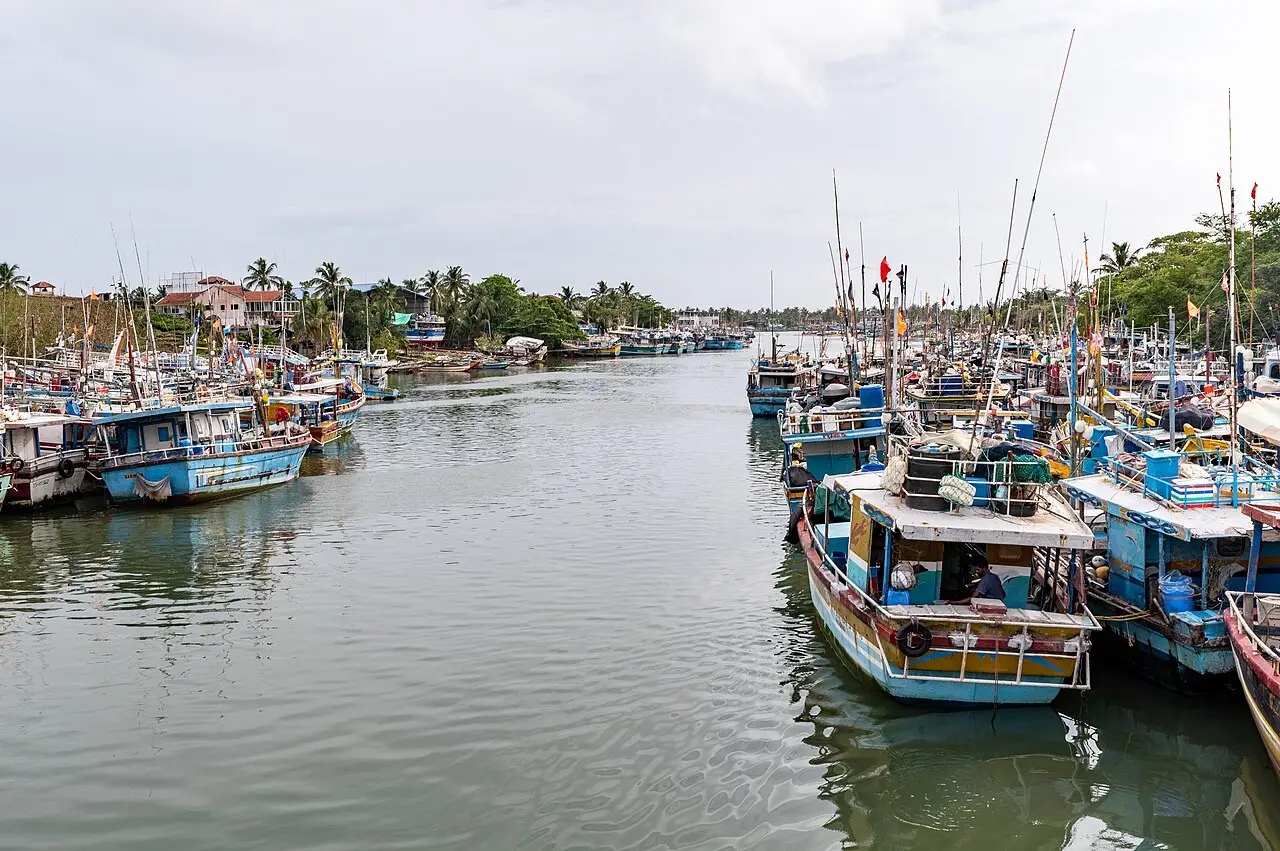
37 km north, 45 to 70 minutes on the E03 expressway. An early-19th-century Dutch canal, a morning fish market, and a long beach; it works well as a last night, since it's 15 minutes from the airport.

Galle
119 km south: 1 hour 30 minutes to 2 hours by express bus on the E01, or 2 hours 30 minutes to 3 hours by coastal train, slower but with a better view. The Dutch fort, begun in 1663, sits within walls that became a UNESCO World Heritage Site in 1988.

Kandy
115 km northeast, 3 hours to 3 hours 30 minutes by train from Fort station, climbing 500 m in altitude. The last Sinhalese capital, with the Temple of the Tooth and the artificial lake from 1807; you can do it as a day trip, but you'll have little time there.
Where to begin
Fort, Pettah, and the Galle Face wind
8am: start at Fort station, from 1917, and walk to the Old Colombo Dutch Hospital, the district's oldest building, restored in 2011.
Temples, a museum, and the city from above
8am: visit Gangaramaya Temple, founded in the late 19th century, with its museum-storehouse of donations accumulated over more than a century.
Kelaniya, Galle Road, and the southern sea

8am: take a tuk-tuk or the train to Kelaniya Raja Maha Vihara, 11 km northeast, with murals painted by Solias Mendis in the 1930s and 1940s.
Money
The currency is the Sri Lankan rupee (LKR), which hovered around 320–330 to the dollar in mid-2026, with inflation back around 8% a year in August after a period of deflation. Reference prices in Colombo: plain tea at a neighborhood shop, 50–150 LKR; a rice-and-curry lunch packet, 350–700 LKR; kottu roti, 700–1,400 LKR; a meal at a mid-range restaurant, 2,500–5,000 LKR per person; a 625 ml bottle of Lion beer, 700–1,000 LKR at a shop and 1,200–2,200 LKR at a bar; hostel bed, 2,500–4,500 LKR; mid-range hotel room, 12,000–30,000 LKR a night. Cards work at malls, hotels, chains and downtown restaurants. For tuk-tuks, buses, markets and street stalls, carry cash in small bills, because change for a 5,000 note is a problem. There are ATMs all along Galle Road. Each withdrawal carries its own fee of 400–600 LKR, with a cap of a few tens of thousands of rupees, so you get more out of withdrawing once, a large amount. At mid-range restaurants and up, the bill already adds a 10% service charge, which works as the tip, plus 18% VAT. Otherwise, the custom is to round up or leave 100–200 LKR for whoever carries your bags.
Getting there and around
Bandaranaike Airport: 32 km, on the E03
Bandaranaike International Airport (CMB) is in Katunayake, 32 km north. The E03 expressway connects the terminal to Colombo's northern entrance in 30 to 45 minutes outside rush hour. From cheapest to most expensive: the 187, an express bus to Fort station, for 500–700 LKR, running almost all day; PickMe or Uber, for 3,000–4,500; a taxi from the official counter, for 4,000–6,000. In all three cases, the E03 toll of about 400 LKR is already included in the price. There's no direct train, and the nearest station requires a transfer, which isn't worth it with luggage. Buy a local SIM, Dialog or Mobitel, in the arrivals hall before you leave, because everything in Colombo depends on apps. Before flying to the country, get your ETA, the electronic travel authorization, which since May 25, 2026, has been free for nationals of 40 countries, is valid for 30 days and allows two entries.
Around the city: buses and app-hailed tuk-tuks
Buses come in two kinds, the red state-run SLTB ones and the white private ones, and charge 30 to 120 LKR per ride, paid in cash to the conductor. There's no single ticket valid across the whole network, although the private operator Lanka Metro Transit has introduced cards and QR codes on its own modern routes. Call tuk-tuks through PickMe or Uber, never from the curb: rides cost 100–130 LKR per kilometer, with a minimum of about 200 LKR. The Fort, Pettah and Galle Face can be covered on foot in a morning. Beyond that axis the sidewalks disappear, the heat is heavy after 10am and, to cross the street, you have to wait for a real gap in traffic, because pedestrians don't actually have right of way. Cycling isn't a practical option, with no continuous bike lanes, aggressive traffic and 80% humidity. The exceptions are the empty avenues of Port City and the Galle Face waterfront, where you can rent bikes and scooters on weekends.
Safety
Colombo has a low rate of violent crime against foreigners, and the real risk is traffic: away from signaled intersections, pedestrians have no real right of way, and buses and tuk-tuks fight for space at high speed on Galle Road. The scams are standardized and easy to spot, because they all start with someone being helpful first: the friendly stranger who warns you the temple is closed today and leads you to a gem or batik shop; the meterless tuk-tuk that agrees to take you to your hotel and stops at three shops first; sapphires sold without independent certification. None of them is violent: declining and walking on settles it. Pickpocketing happens in the crush of Pettah and on rush-hour trains, especially near the doors. Dengue is the city's most concrete health issue, and it rises after the June-July and October-November rains: use repellent at dusk and dawn. Don't go into the sea at Galle Face or any urban beach with no lifeguard; the rip current on the west coast kills swimmers every year. Protests and official convoys close streets around the Fort and Galle Face without warning, and rerouting is always faster than pushing through. Emergencies: 119 (police) and 1990 Suwa Seriya (ambulance, free).
Etiquette tips
Shoes and hats stay outside the temple
At any vihara or dagoba you take off your shoes and hat before entering the grounds, not just the hall, and the sand or stone floor gets hot by midday. Shoulders and knees covered; a light sarong in your bag solves it.
Never turn your back to the Buddha
Photographing yourself with your back to a Buddha image is a serious offense and has already led to detention and deportation. Visible tattoos of the Buddha have also caused entry refusals into the country; cover your arm at the airport.
The head wobbles sideways
The sideways wobble means yes, I understand, or maybe, depending on speed and repetition, and it's the most-used gesture in a conversation. A sharp vertical nod reads as haste or impatience.
Right hand for eating and handing things over
Rice and curry is eaten with the right hand, mixed at the fingertips without dirtying the palm. Money, cards, documents, and gifts are passed with the right hand or with both hands, never with the left alone.
Poya is a dry day
On every full moon, by law, alcohol sales stop across the whole country for a day, and the rule applies to visitors too, though some hotels serve guests discreetly. Ask about the date before booking a dinner with wine.
A personal question isn't prying
Marital status, children, salary, religion, and where you're headed come up within the first few minutes, even with your tuk-tuk driver. A short answer plus returning the same question closes the topic without offending anyone.
Mistakes to avoid
Agreeing on a tuk-tuk fare from the curb
Settling on a tuk-tuk price from the curb, with no meter: the ride comes to three to five times the fair price. Call one through the app, which shows the total before you get in.
Pettah on a Sunday
Showing up at Pettah on the wrong day or at the wrong time: on Sundays the whole bazaar closes, and between 11am and 3pm the heat under the awnings turns stifling. Go Monday to Saturday and enter via Main Street around 9:30am, to cover the streets before the heat sets in.
Planning a bar night without checking if it's a poya day
Booking a night out at a bar without checking if it's a poya day. On the full moon, alcohol sales stop across the whole country, and only some hotels serve guests, discreetly; the date falls on a different day each month.
For swimming, take the train to Mount Lavinia
Swimming at Galle Face Green. The water there has rip currents, sewage nearby, and no lifeguard, which is why it isn't a swimming beach. Save the dip for Mount Lavinia, on the stretch in front of the hotels.
The temple that's “closed today”
Taking a stranger's word that the temple is closed today but there's a festival with discounts just around the corner. It's the standard opening of the gem shop or batik shop scam, and the conversation always starts in perfect English, so say thanks and go on your way.
Useful phrases
ආයුබෝවන්: Ayubowan (a-yu-bo-wan)
Hello, literally “may you live long”; said with palms together at chest height
ස්තූතියි: Sthuthi (stoo-thi)
Thank you; “bohoma sthuthi” (bo-ho-ma stoo-thi) is thank you very much
කීයද? Kiyada? (ki-ya-da)
How much does it cost? The question that opens any purchase in Pettah
හරි: Hari (ha-ri)
Right, ok, agreed; works as an answer to almost anything
එපා: Epa (e-pa)
I don't want it, no thanks; a firm, polite refusal to a vendor
வணக்கம்: Vanakkam (va-na-kkam)
Hello in Tamil, useful in Wellawatte, Bambalapitiya, and Kotahena
Districts
Fort (Colombo 1)
The colonial and financial core between the port and Beira Lake: banks, the 1930 Presidential Secretariat, the World Trade Centre towers, and the restored Dutch quarter. Some streets still have security barriers, and the district empties out after 7pm.
Pettah (Colombo 11)
The city's wholesale bazaar, just east of the Fort, organized street by street by trade since the 19th century. It's where you buy almost anything for less, and where the heat, the noise, and the crowds hit their peak; closed on Sundays.
Slave Island / Kompannaveediya (Colombo 2)
A strip between Beira Lake and the Fort, with the city's oldest Malay community, the Gangaramaya temple, and neighborhood mosques. It has been getting torn down and rebuilt into towers since 2015, with the old low houses squeezed between construction sites.
Cinnamon Gardens (Colombo 7)
A former cinnamon plantation of the Dutch East India Company, converted by the British into an elite neighborhood: tree-lined streets, embassies, the National Museum, Viharamahadevi Park, and the 1928 Town Hall. It's the city's most expensive and quietest address.
Kollupitiya (Colombo 3)
The stretch of Galle Road with the malls (One Galle Face, Liberty Plaza), consulates, big hotels, and the highest concentration of mid-priced restaurants. It's the most practical neighborhood for anyone staying without a car.
Bambalapitiya and Wellawatte (Colombo 4 and 6)
Galle Road's continuation to the south, more residential and cheaper. Wellawatte is the city's Tamil neighborhood: sari shops, jewelers along Galle Road, South Indian vegetarian restaurants, and the beach at the end of the side streets.
Kotahena (Colombo 13)
A port district north of Pettah, with the highest density of Catholic churches in the country, including St. Lucia's Cathedral and the St. Anthony's Shrine in Kochchikade, hit in the 2019 attacks. Burgher, Tamil, and Sinhalese communities sit side by side there.
Port City
A 269-hectare landfill next to the Fort, under its own legal regime and commission since 2021. Right now empty avenues outweigh finished buildings: the duty-free mall opened in 2024, and the 250-berth marina, budgeted at $120 million, isn't due until 2027.
History
8th c. · The Arab merchants' port
Arab traders settle at the anchorage and control the export of cinnamon harvested in the humid lowlands inland. The name Kolamba appears in records from the period, and the traveler Ibn Battuta passes through in 1344.
1505–1517 · The Portuguese arrival
Lourenço de Almeida's fleet enters the bay in 1505, blown off course by the winds, and negotiates with the king of Kotte. In 1517 the Portuguese build a fortified trading post exactly where the Fort district stands today.
1656 · The Dutch siege
The Dutch East India Company takes Colombo from the Portuguese on May 12, after a seven-month siege. The Dutch rebuild the walls, dig the canal network, and raise the Wolvendaal Church in 1749.
1796 · The British occupy the fort
The British East India Company takes Colombo in February, with little Dutch resistance. In 1802 Ceylon becomes a Crown colony and Colombo becomes the administrative seat.
1815 · Capital of the whole island
With the Kandyan Convention, on March 2, the British annex the last independent Sinhalese kingdom. For the first time, a single administration in Colombo governs the whole island.
1859–1885 · Galle Face, the railway, and an artificial harbor
Governor Henry Ward opens the Galle Face esplanade in 1859, and the first railway, from Colombo to Ambepussa, enters service in 1864. Between 1875 and 1885, breakwaters turn the open bay into a sheltered harbor; the fort's walls are torn down, and the Fort becomes an office district.

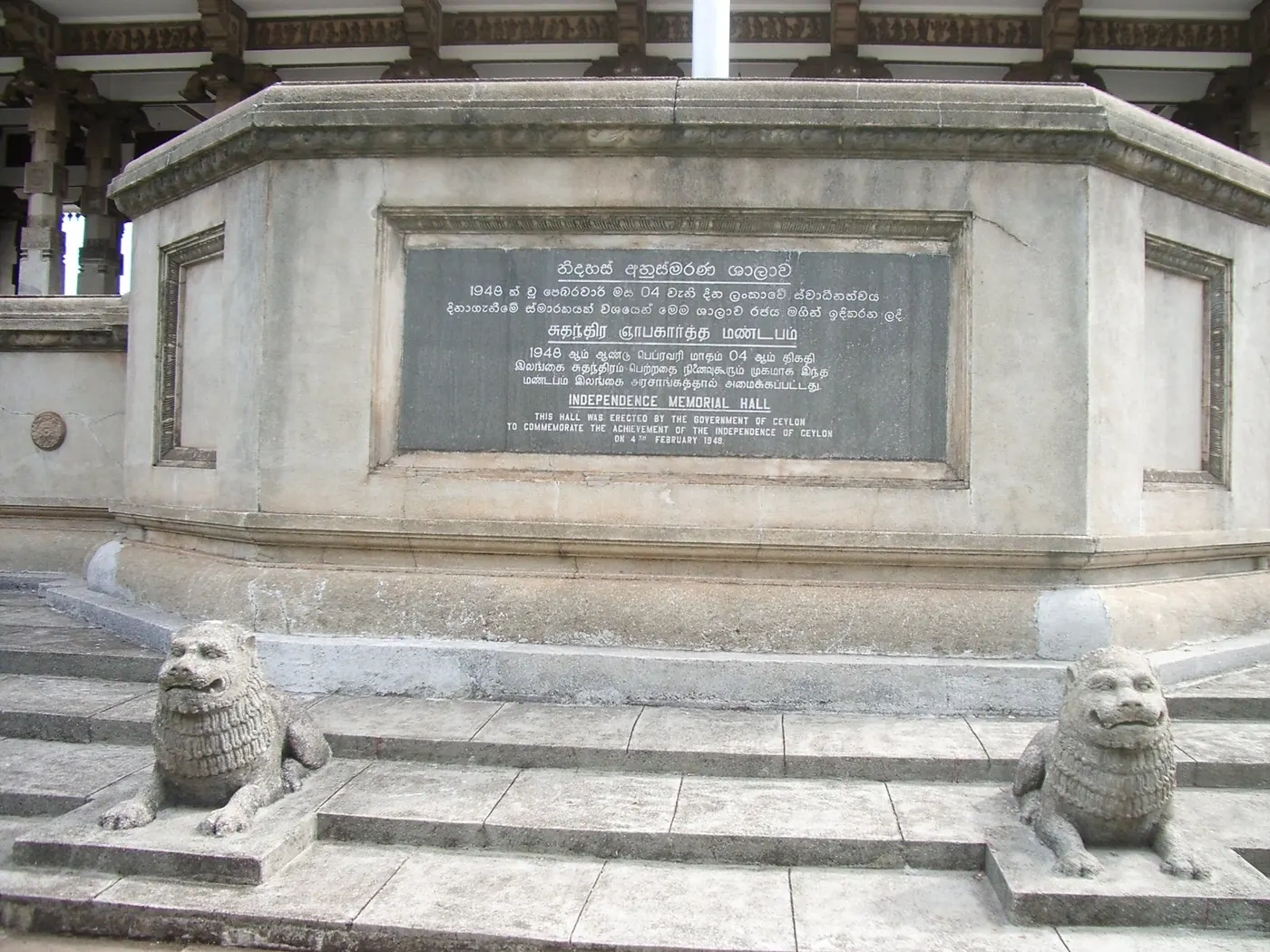
1948 · Independence
Ceylon becomes independent on February 4, with Colombo as its capital. The Independence Memorial Hall opens in 1953 on the grounds where the first parliament convened.
1982 · Parliament moves
Parliament moves to Sri Jayawardenepura Kotte, 10 km east, into a Geoffrey Bawa building on an artificial island. Colombo keeps the executive, judicial, and commercial capital and loses the legislative one.

1983 · Black July
Between July 23 and 30, anti-Tamil pogroms burn homes, shops, and entire streets of Colombo. The episode opens a 26-year civil war and empties Tamil neighborhoods in the city.
2009–2019 · End of the war and Easter Sunday
The war ends on May 18, 2009, and the Fort reopens streets closed for two decades, followed by a wave of towers and malls. On April 21, 2019, coordinated bombings against churches and three Colombo hotels kill about 270 people.

2022–2026 · Default, protest, and recovery
In April 2022 the country defaults on its debt for the first time in its history; the protest camp at Galle Face brings down the president in July. After the IMF agreement in 2023 and the debt restructuring completed in December 2024, the city has again drawn more than two million visitors a year, with inflation back around 8% in August 2026.
 AI illustration
Complete history
Why Colombo exists: cinnamon and the Galbokka anchorage
Colombo exists because of cinnamon. The species Cinnamomum verum grows wild in the humid lowlands of the island's southwest, and the anchorage sheltered by the Galbokka point was the most practical spot to ship it out. Arab merchants settled there from the 8th century on, married into local families, and formed the community the Portuguese would call Moors; Ibn Battuta passed through the port in 1344. The city was never the capital of a Sinhalese kingdom: power sat in Kotte, 10 km inland, and Colombo was the trading post. That split between power inland and money on the coast runs through the whole local history, and it came back literally in 1982, when Parliament moved once again to Kotte.
The 1517 Portuguese fort, besieged by the Dutch
The Europeans arrived in sequence, and each left a layer still visible today. The Portuguese built a fortified trading post in 1517 and expanded it into a citadel that withstood seven months of Dutch siege before falling on May 12, 1656. The Dutch East India Company ruled Colombo for 140 years, and it was the Dutch who laid out the city still in use today: canals linking Beira Lake to the Kelani River, a warehouse system, a civil administration, and the 1749 Wolvendaal Church, with walls a meter and a half thick and governors' tombstones set into the floor. The Burgher community (descendants of Dutch, Portuguese, and locals) was born in this period and gave Sri Lanka lamprais, baila, and many of the surnames of the city center.
The British and the fall of Kandy
The British took the fort in 1796 and, in 1815, with the fall of Kandy, began governing the whole island from here. They were the ones who turned the fortified outpost into a city: they tore down the walls, built the breakwaters between 1875 and 1885 that created the artificial harbor, opened the first railway in 1864, laid out the residential district of Cinnamon Gardens over a former cinnamon plantation of the Dutch East India Company, and set up the Municipal Council in 1865. Work at the port and on the plantations drew Tamils from South India and Muslim traders, and the result is the most mixed city in the country, with Tamil, Muslim, Catholic, and Buddhist-majority neighborhoods a few blocks from each other.
Independence in 1948 and 26 years of civil war
Independence came on February 4, 1948, without violence, but language policy and the fight over representation led to a rupture. In July 1983, the pogroms known as Black July destroyed Tamil neighborhoods in Colombo and set off 26 years of war. The city lived through that period as a target: the bombing of the Central Bank on January 31, 1996, killed about 90 people and flattened blocks of the Fort, checkpoints closed entire streets for two decades, and the urban coastline became militarized. The war ended on May 18, 2009, the Fort reopened, and what followed was a decade of large-scale construction (the coastal highway, the malls on Galle Road, the towers of Slave Island) interrupted by the Easter Sunday attacks on April 21, 2019, which hit three churches and three hotels and set tourism back for years.
The 2022 crisis and the Galle Face Green protest camp
The 2022 crisis is the key to understanding today's city. With reserves exhausted, the country stopped paying its foreign debt in April of that year and spent months with fuel lines, scheduled blackouts, and medicine shortages. The protest camp set up on Galle Face Green (the same lawn where families fly kites) lasted from April to July and ended with the president fleeing and resigning. Then came the IMF program in 2023, the debt restructuring completed in December 2024, and the election of a new government between September and November 2024. In 2026 the city is functioning: tourism has again topped two million arrivals a year, hotels have reopened, but inflation climbed back to about 8% in August, and Port City, the 269 hectares reclaimed from the sea next to the Fort, remains mostly empty avenues with a duty-free mall opened in September 2024.
In 2022 the country defaulted on its foreign debt, and that crisis comes up fast in any conversation.
Geography and shape of the city
A low plain and the water that organizes it
Colombo sits on a nearly flat coastal plain, almost entirely below 10 m in elevation, between the Indian Ocean to the west and the mouth of the Kelani River to the north; the only notable rise in the terrain is the Mount Lavinia headland, 11 km to the south. What structures the city is water: Beira Lake, originally a Dutch defensive moat and now a body of water set into the center, and the canal network the Dutch dug linking it to the Kelani and the Negombo lagoon system.
Colombo: three axes and the address by number
Three axes organize movement: Galle Road, hugging the sea, from the Fort to Mount Lavinia; the coastal railway, parallel to it and sometimes a few meters from the surf; and Baseline Road, running north–south on the inland side. To find their way, locals use the postal number more than the neighborhood name and say “Colombo 7” for Cinnamon Gardens and “Colombo 6” for Wellawatte, in a sequence of 15 districts that runs from the Fort (1) to Modara (15).
Flooding and the push into the sea
Low ground, concentrated rainfall, and silted-up canals make seasonal flooding a structural problem in Kolonnawa, along the Kelani, and on the banks of the Beira. Recent growth has pushed the metro area east, toward Battaramulla and Sri Jayawardenepura Kotte, and out to sea, with the 269 hectares reclaimed for Port City.
Culture
The street is religiously mixed
Colombo is the most religiously mixed city in the country, and you can read it in the street: a Buddhist dagoba, a Hindu kovil with a colorful gopuram, a mosque, and a Catholic church all fit within the same kilometer in Kotahena or Slave Island. Four calendars overlap over the year. The twelve Buddhist poya days, Hindu Deepavali, Ramadan, and Christmas are all official holidays. St. Anthony's Shrine in Kochchikade draws Buddhists, Hindus, and Muslims asking the saint for favors, which gives a better sense of the city than any census figure. The full moon runs the social calendar: on a poya day, bars and liquor stores close, temples fill with people dressed in white, and dansal stalls hand out free food on the sidewalk.
Cricket, baila and nightlife
Cricket shapes the sporting year. The Sinhalese Sports Club, in Cinnamon Gardens, and R. Premadasa Stadium, in Maligawatta, host international matches, and the P. Sara Oval staged the country's first Test match in 1982. In March, the Royal–Thomian, played since 1879 between two Colombo schools, brings part of the city to a halt for three days and is more a social event than a sporting one, with papare bands playing in the stands. Away from the stadium, the party music is baila, of Portuguese roots and kept alive by the Burgher community, and nightlife is concentrated in the rooftop bars of Kollupitiya and the Fort and in the casinos, which are legal and mostly frequented by foreigners.
Bawa and tropical modernism
The city produced its own architecture: Geoffrey Bawa (1919–2003) worked out tropical modernism here, with courtyards, cross ventilation, and a seamless transition between indoors and out. His house, on 33rd Lane in Kollupitiya, can be visited by appointment, and both the Seema Malaka and the Kotte Parliament are his work. In the visual arts, the '43 Group, founded in 1943 around George Keyt and the photographer Lionel Wendt, took Sinhalese painting out of academicism; the 1953 Lionel Wendt Art Centre and the Barefoot Gallery remain the go-to exhibition spaces. In literature, Colombo is a recurring setting for Michael Ondaatje, Romesh Gunesekera, Ashok Ferrey, and Shehan Karunatilaka, whose novel about the city in 1990 won the Booker in 2022.
On poya, the full moon holiday, worshippers go to the temples dressed in white.
Festivals and events
 AI illustration
Duruthu Perahera (January full moon)
A three-night procession at Kelaniya Raja Maha Vihara, with dressed-up elephants, Kandyan dancers, and whip-crackers, marking the Buddha's visit to the island. It's the first big perahera of the calendar and the closest to downtown.

Navam Perahera (February full moon)
Created in 1979 by the Gangaramaya, it sets out from Slave Island and circles Beira Lake with dozens of elephants and hundreds of dancers. It's Colombo's biggest procession and happens at night, with crowds on the sidewalk.
 AI illustration
Aluth Avurudu, the Sinhalese and Tamil New Year (April 13–14)
The year turns at an exact astrological time, not at midnight. The city empties out because everyone goes home to family; shops, markets, and transport stop for several days, and people eat kiribath, coconut milk rice.

Vesak (May full moon)
The most important date on the Buddhist calendar, marking the Buddha's birth, enlightenment, and death. Colombo covers itself in paper lanterns and giant electric pandals with painted scenes, and volunteers set up dansal serving free food and drink on the street all night.
 AI illustration
Deepavali and Christmas (October–November and December)
Deepavali fills Wellawatte and Bambalapitiya with lights and sweets in the Tamil shop windows. In December, the whole of Galle Road puts up Christmas lights, with artificial pine trees in malls and temperatures around 30°C.
Books and films
“Anil's Ghost,” Michael Ondaatje (2000)
A novel about a forensic anthropologist who returns to Sri Lanka at the height of the war. It explains why so many Colombo buildings have a sentry box, and why the subject doesn't come up in the first conversation.
“The Seven Moons of Maali Almeida,” Shehan Karunatilaka (2022)
Winner of the Booker Prize, narrated by a war photographer killed in 1990. It's the most precise portrait of Colombo in those years, with real street names and dark humor.
“Funny Boy,” Deepa Mehta (2020)
An adaptation of Shyam Selvadurai's novel. The second half unfolds during the July 1983 pogroms and shows the social geography of the city's neighborhoods from the inside.
Frequently asked questions
Colombo: How do you get from Bandaranaike Airport to downtown?
The E03 expressway connects the terminal to Colombo's northern entrance in 30 to 45 minutes outside rush hour. From cheapest to most expensive: the 187, an express bus to Fort station, for 500 to 700 LKR, running almost all day; PickMe or Uber, for 3,000 to 4,500; a taxi from the official counter, for 4,000 to 6,000.
Colombo: What's the currency, and what's the exchange rate?
The currency is the Sri Lankan rupee (LKR), which hovered around 320 to 330 to the dollar in mid-2026, with inflation back around 8% a year in August after a period of deflation.
Colombo: What's the climate like throughout the year?
Colombo lies less than 7° from the Equator and has practically no temperature seasons, with highs of 29 to 32°C, lows of 24 to 26°C, and relative humidity between 75% and 85% all year.
Colombo: Do you need to take off your shoes and hat at temples?
At any vihara or dagoba you take off your shoes and hat before entering the grounds, not just the hall, and the sand or stone floor gets hot by midday.
Colombo: Is the city safe, and what scams should you avoid?
Colombo has a low rate of violent crime against foreigners, and the real risk is traffic: away from signaled intersections, pedestrians have no real right of way, and buses and tuk-tuks fight for space at high speed on Galle Road. The scams are standardized and easy to spot, because they all start with someone being helpful first: the friendly stranger who warns you the temple is closed today and leads you to a gem or batik shop; the meterless tuk-tuk that agrees to take you to your hotel and stops at three shops first; sapphires sold without independent certification.