India
Agra
The Taj at dawn, a sandstone fort and old-city bazaars
Days Start with the basic programme and choose extensions for the time you have.
How the guide reaches this number
What you come here to see is stonework: parchin kari, the inlay of semiprecious stones in the marble of the Itimad-ud-Daulah and the Taj, the sandstone of Fatehpur Sikri and the 2.4 km of walls of the Fort, which is a palace inside. With two nights, give one day to the Taj and the Fort and another to Fatehpur Sikri; with three, add Sikandra, Kinari Bazaar and the other bank of the river. With just one day, enter the Taj through the east gate at opening, have lunch in Taj Ganj, spend the afternoon at the Fort and finish at Mehtab Bagh with the sun low, leaving Fatehpur Sikri out. Anyone who likes to wander without a plan will struggle, because there's no continuous sidewalk, and in winter the air quality index often sits between 250 and 350. Outside the three sites, the city disappoints: marble and leather sellers approach passersby with polite insistence. Even the Taj garden doesn't follow the Mughal design, because it's the lawn redesigned in the British restoration of 1899 to 1905.
2–3
When October to March; November and late February give the best balance of clear skies and temperature
How the guide reaches this number
Agra has three well-defined seasons, and the month you choose changes the timing of every visit. Winter runs from November to February, with lows of 5°C to 10°C and highs of 20°C to 25°C, and it's the best window for walking all day. In December and January, though, dense early-morning fog hides the Taj until 10am, delays trains and flights in Delhi, and pollution peaks, with the index in the 250 to 350 range. March and the first half of April are mild, 30°C to 35°C. May and June pass 45°C, with hot wind in the afternoon and marble that burns bare feet, and a visit only works at dawn. The monsoon runs from late June to September and concentrates almost all of the roughly 650 mm of annual rain in short bursts: the green comes back and the monuments empty out, a trade-off few people consider. High season runs from October to March, and prices climb most at three moments: December, the Taj Mahotsav (February 18 to 27) and national holidays. I'd choose November or late February and avoid May and June.
Per person/day Backpacking ₹1,500–2,500; mid-range comfort ₹4,000–7,000 (about US$45–80), tickets not included
How the guide reaches this number
Per person per day: accommodation, meals, urban transport, visits and a small allowance for extras. Flights excluded; larger purchases vary. Editorial estimate, not a quote.
 What Nilo thinks
Stay two nights, the minimum to see the essentials, and three if you want everything with time to spare. What you come here to see is stonework: parchin kari, the inlay of semiprecious stones in the marble of the Itimad-ud-Daulah and the Taj, the sandstone of Fatehpur Sikri and the 2.4 km of walls of the Fort, which is a palace inside. With two nights, give one day to the Taj and the Fort and another to Fatehpur Sikri; with three, add Sikandra, Kinari Bazaar and the other bank of the river. With just one day, enter the Taj through the east gate at opening, have lunch in Taj Ganj, spend the afternoon at the Fort and finish at Mehtab Bagh with the sun low, leaving Fatehpur Sikri out. Anyone who likes to wander without a plan will struggle, because there's no continuous sidewalk, and in winter the air quality index often sits between 250 and 350. Outside the three sites, the city disappoints: marble and leather sellers approach passersby with polite insistence. Even the Taj garden doesn't follow the Mughal design, because it's the lawn redesigned in the British restoration of 1899 to 1905.In Agra, the day starts before the sun, because it's in the first light, with the line still short, that the Taj Mahal looks its best. Three emperors, Akbar, Jahangir, and Shah Jahan, made it the seat of the empire, and inside the 2.4 km red sandstone wall of Agra Fort stand the palaces they added. Across the Yamuna, Itimad-ud-Daulah was the rehearsal for parchin kari, the semiprecious-stone inlay that covers the Taj, and the Mehtab Bagh garden lines up with the mausoleum. Order bedai with jalebi for breakfast and bring back petha, the ash-gourd sweet the city invented. Outside the Taj, the Fort, and Fatehpur Sikri, the capital Akbar abandoned for lack of water, expect broken sidewalks and pushy vendors. Come in November or late February and stay two nights, or three for Sikandra and the far bank.
Quick facts
- Population
- about 2.4 million in the city and about 2.6 million in the metro area (2026 estimates; the last census is from 2011)
- Founded
- Recorded in 1475; re-founded as capital by Sikandar Lodi in 1504–1505
- Country and region
- India: Uttar Pradesh state, Agra district, in the doab between the Yamuna and Chambal rivers
- Language
- Hindi and Braj Bhasha in daily life, Urdu present; English at hotels, ticket counters and among guides
- Currency
- Indian rupee (INR, ₹): about ₹88 per dollar and about ₹16 per real in 2026
- Time zone
- IST (UTC+5:30), no daylight saving
- Best time to visit
- October to March; November and late February give the best balance of clear skies and temperature
- Average daily cost
- Backpacking ₹1,500–2,500; mid-range comfort ₹4,000–7,000 (about US$45–80), tickets not included
When to go
October to March; November and late February give the best balance of clear skies and temperature
How the year changes
Agra has three well-defined seasons, and the month you choose changes the timing of every visit. Winter runs from November to February, with lows of 5°C to 10°C and highs of 20°C to 25°C, and it's the best window for walking all day. In December and January, though, dense early-morning fog hides the Taj until 10am, delays trains and flights in Delhi, and pollution peaks, with the index in the 250 to 350 range. March and the first half of April are mild, 30°C to 35°C. May and June pass 45°C, with hot wind in the afternoon and marble that burns bare feet, and a visit only works at dawn. The monsoon runs from late June to September and concentrates almost all of the roughly 650 mm of annual rain in short bursts: the green comes back and the monuments empty out, a trade-off few people consider. High season runs from October to March, and prices climb most at three moments: December, the Taj Mahotsav (February 18 to 27) and national holidays. I'd choose November or late February and avoid May and June.
Nilo's tips
Taj: closed Fridays, open at night five nights a month
The Taj Mahal closes every Friday, because the mosque inside the complex is reserved for that day's prayers. On that Friday, visit Agra Fort, Itimad-ud-Daulah, Chini ka Rauza, and Ram Bagh, which open as usual. There's a night visit on five nights a month, on the full moon and the two nights before and after, with a separate ticket. Plan your itinerary around those two dates, not around your hotel.
Keep your Taj ticket: the ₹500 fee covers the day's other monuments
Do the Taj first and keep the ticket, because the ₹500 municipal fee built into it is paid once a day. Show it at the Fort and the other monuments, which charge ₹300 to ₹610 each, and you won't pay that fee again. Buy it on the ASI website the day before, or at the official box office.
East gate before eight
Get to the east gate before 8am, while the line is still short, because after that it wraps around the esplanade. In December and January, fog hides the dome until 10am, so in those months the first hour gets you the short line, not the view. To go from the Taj to the Fort afterward, take the metro, which has linked the Taj Mahal and Agra Fort stations since March 2024.
Mehtab Bagh, on the other bank, with the sun low
From there you can see the Taj's north face, which almost no one photographs, because everyone enters from the south side. On the same bank, set aside time for the Itimad-ud-Daulah, completed in 1628, the first Mughal building made entirely of marble and the rehearsal for the technique the Taj would take to its ultimate scale.
Breakfast at 7, petha by the kilo
Bedai with aloo and jalebi runs out before noon, so go between 7 and 9am to pick your stall. At the stall it costs ₹40 to ₹70. Order jalebi by weight: 100 g is enough for one person. To take petha home, don't buy it at the monument's gate; go to Hing ki Mandi, in the Noori Darwaza area, where the factories are and the kilo costs ₹150 to ₹400, and ask for the sealed box.
For Fatehpur Sikri, bus from Idgah at 7am.
Fatehpur Sikri is 37 km west and takes up a whole day if you set out late; leave at 7am and you're back in time for lunch. Buses depart from the Idgah terminal and cost ₹50 to ₹80, and a shuttle covers the final stretch to the gate, so don't try walking up with luggage. Inside, the monuments are a few steps apart. The city is intact because it was abandoned around 1585, for lack of water, and never reoccupied.
Explore the map

© OpenStreetMap · OpenFreeMap · © OpenMapTiles
Explore the map, read about the other places and plan your travel days in the app.
Open the appWhat to see
Agra: the bend in the Yamuna
The urban fabric has three overlapping layers: the Mughal web of alleys around the Fort, Kinari Bazaar, and Taj Ganj; the British cantonment opened from 1803 onward to the southwest, with wide avenues and bungalows; and the late-20th-century expansion along Fatehabad Road, Bypass Road, and beyond the river, in Kalindi Vihar.

Taj Mahal
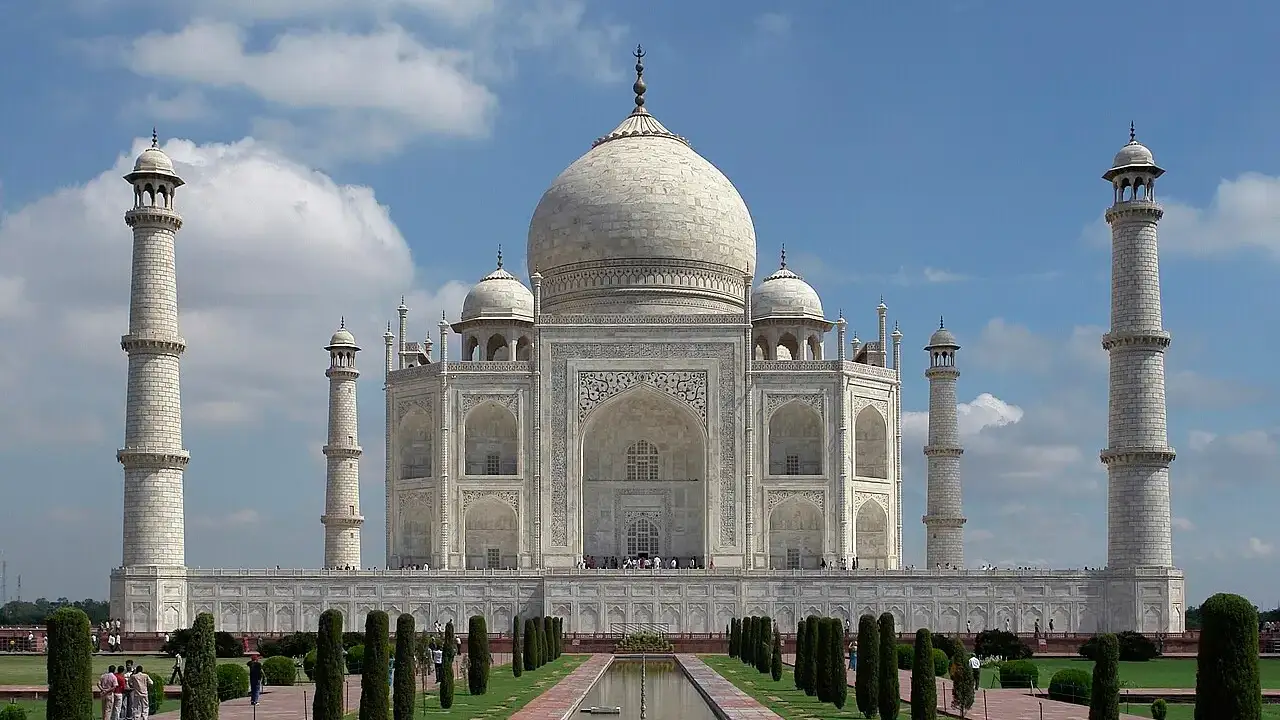
Mausoleum of Mumtaz Mahal, commissioned by Shah Jahan in 1632 and completed around 1653, in Makrana marble inlaid with semiprecious stones. The dome reaches about 73 m with the finial, and the four minarets lean outward on purpose, so they'd fall away from the tomb in an earthquake. Closes on Fridays and opens for a night visit on five nights a month, around the full moon.
Shah Jahan commissioned Mumtaz Mahal's mausoleum in 1632, finishing it around 1653, and the dome reaches about 73 m with the finial.
Check access

Agra Fort
A 2.4 km red sandstone wall built by Akbar between 1565 and 1573, with palaces added by Jahangir and Shah Jahan. Only about a quarter of the area is open to the public; the rest still belongs to the Indian Army. From the Musamman Burj, the octagonal marble tower where Shah Jahan was imprisoned from 1658 to 1666, you can see the Taj downriver.
Only about a quarter of the grounds is open to visitors, because the rest remains under the Army, and from the tower where Shah Jahan was imprisoned between 1658 and 1666 you can see the Taj downriver.
Check access
Itimad-ud-Daulah
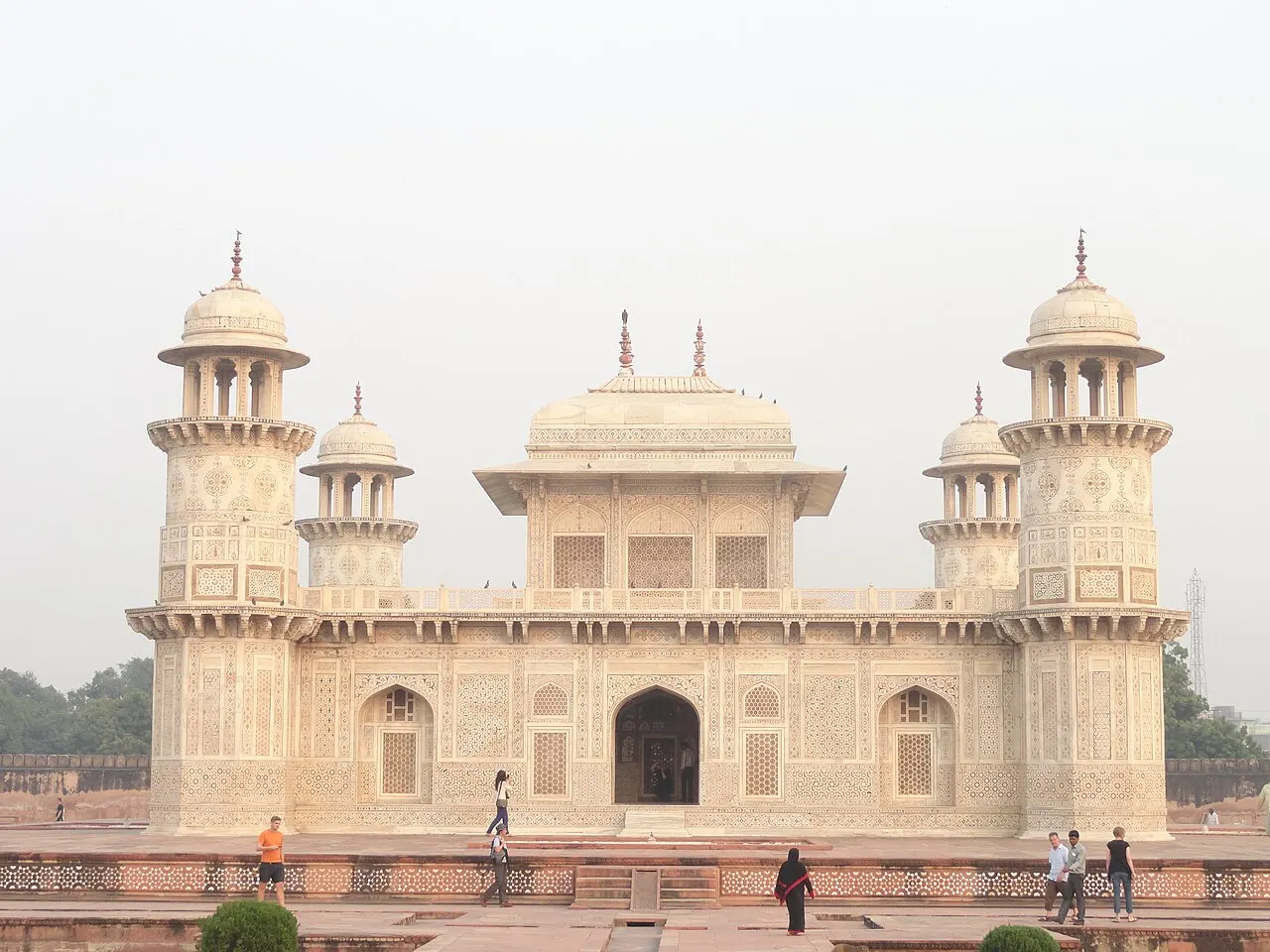
Tomb of Mirza Ghiyas Beg, commissioned by his daughter, Empress Nur Jahan, between 1622 and 1628. It's the first Mughal building entirely in marble and the first with large-scale parchin kari, the technical rehearsal for the Taj Mahal, begun four years later, in 1632. It's on the left bank and almost never has a line.
Nur Jahan commissioned her father Mirza Ghiyas Beg's tomb from 1622 to 1628, the first Mughal building made entirely of marble and the first with large-scale parchin kari, which served as the model for the Taj when it began in 1632, and the site almost never has a line.
Check access

Mehtab Bagh
Square Mughal garden on the opposite bank, aligned with the Taj's axis and likely part of the original design. It was rediscovered under sand and replanted in the 1990s; it's the spot to see the north facade at the end of the day, the one side nobody photographs from the south gate.
The square Mughal garden on the opposite bank follows the Taj's axis and was replanted in the 1990s after emerging from the sand; it's worth it in the late afternoon, with the sun low.
Check access

Akbar's Tomb, in Sikandra
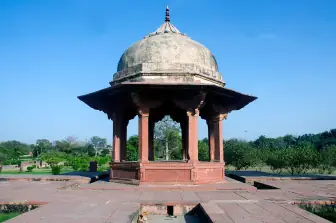
Complex from 1605–1613, started by Akbar himself and finished by Jahangir, 10 km north on the Delhi road. It combines red sandstone and marble across five open stories, in a garden where spotted deer and rhesus macaques roam free.
Akbar started it in 1605 and Jahangir finished the work in 1613, ten kilometers toward Delhi, with sandstone and marble stacked in five open-sided tiers in a garden with spotted deer and rhesus macaques roaming free.
Check access

Jama Masjid
Mosque from 1648 commissioned by Jahanara Begum, Shah Jahan's eldest daughter, facing the Fort. Built of sandstone with zigzag marble bands, it sits in the middle of the Kinari Bazaar and remains in daily use. It isn't a paid monument.
Jahanara Begum had it built in 1648, facing the Fort, sandstone with marble in a zigzag pattern in the heart of Kinari Bazaar, where worshippers go in every day without paying a monument admission fee.
Check access

Mankameshwar Mandir
Shiva temple next to the Jama Masjid, one of Agra's four ancient Shiva temples, with the lingam clad in silver. It runs from dawn to night, is the living counterpoint to the museum-monuments, and gives its name to the metro line's terminal station.
One of the city's four ancient Shiva temples holds the silver-plated lingam, is open from before dawn until night, and lends its name to the metro's terminal station.
Check access

Chini ka Rauza
Tomb of Afzal Khan, Shah Jahan's Persian minister, from about 1635, on the left bank. It was clad in colored glazed tile, hence the name “porcelain tomb”; today it's half in ruins, with tile fragments still clinging to the facade.
Of the 1635 tilework only fragments remain stuck to the facade: on the same bank, Itimad-ud-Daulah delivers whole what you have to imagine here.
Check access
Ram Bagh
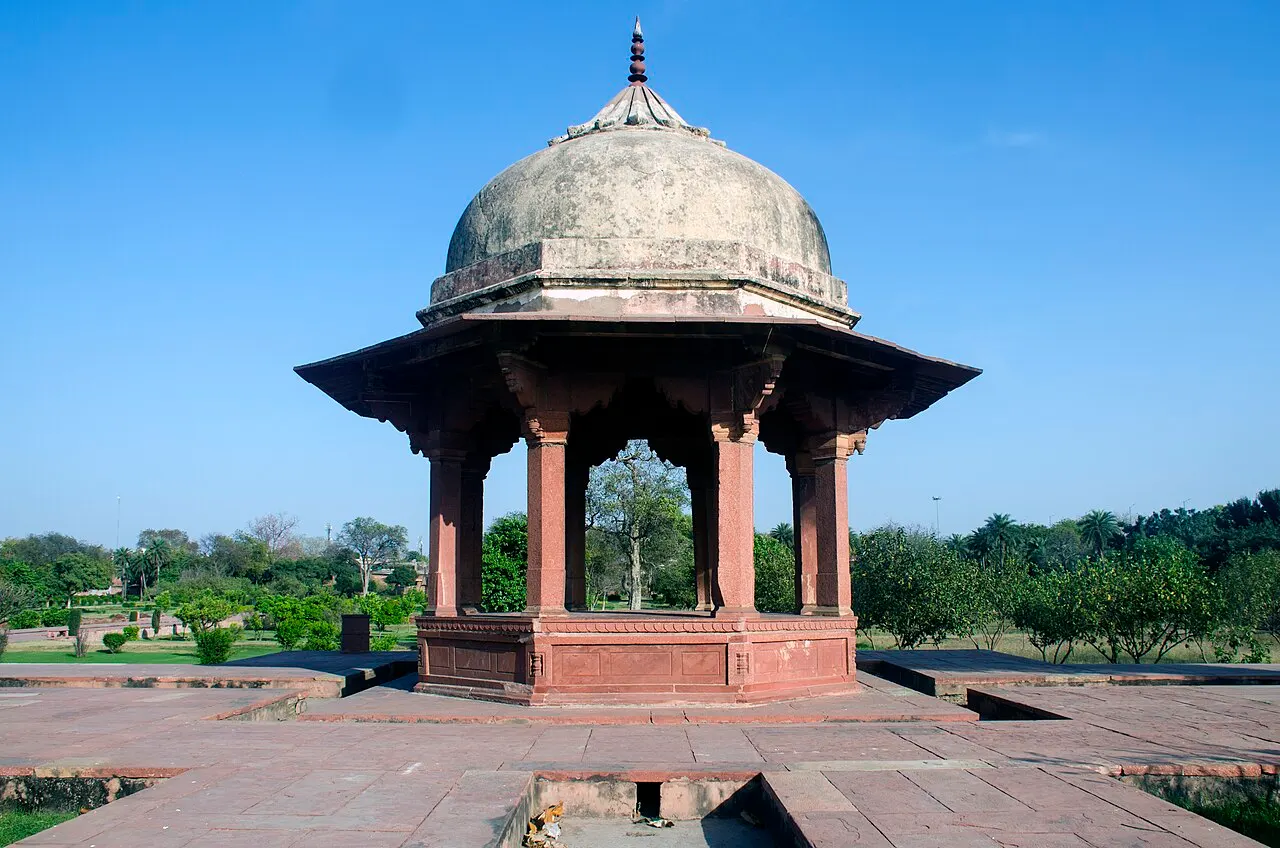
Garden from 1528 attributed to Babur, considered the oldest Mughal garden in India, about 3 km from the Taj on the left bank. It shows the charbagh layout, divided into four by water channels, which every later monument repeats.
What's left of the 1528 garden is the charbagh layout, four beds and channels, and you've already seen the same scheme at the Taj and Itimad-ud-Daulah, with a building on top.
Check access
Nilo’s itinerary
Start with the basic programme and choose extensions for the time you have.
Plan my days in the app ↗Day 1 · The Taj and the Fort
Buy the ticket on the ASI website the day before and go in through the east gate at 6am. (April to September) or 6:30am. (October to March); the line thickens after 8am.
Leave backpack, food, tripod and drone at the hotel before the security check: only camera, phone, wallet and a clear bottle get through.
Put on the cloth booties handed out at the entrance before stepping onto the marble platform; the mausoleum chamber requires an extra ticket, and photography isn't allowed inside.
Have lunch in Taj Ganj and head to Agra Fort in the afternoon, 2.5 km north: Jahangiri Mahal, Khas Mahal and the Musamman Burj, where Shah Jahan was held prisoner until 1666.
Finish at Mehtab Bagh, on the other bank, to see the Taj's north facade with the sun low.
Day 2 · Fatehpur Sikri and the marble
Leave early, at 7am, and take the bus to Fatehpur Sikri: the ride takes about an hour, costs up to ₹80 and ends with a shuttle to the gate, because you can't walk up with luggage.
Walk through the 54 m Buland Darwaza, the Jama Masjid, Salim Chishti's marble dargah and the five-story Panch Mahal, all abandoned around 1585.
Head back for lunch and visit the Itimad-ud-Daulah, from 1622–1628, on the left bank: the first Mughal building entirely in marble.
Stop by a parchin kari workshop to see the stones being cut and fitted; watch with no obligation to buy, and haggle if you do.
Have dinner in Sadar Bazaar and try bhalla and chaat at Chaat Gali, after 7pm.



If you stay longer
Day 3 · Sikandra, the market and the left bank
Have breakfast of bedai with aloo and jalebi at a downtown stall, between 7 and 9am, before it runs out.
Go to Sikandra, 10 km north, for Akbar's tomb (1605–1613); keep food out of sight in your bag because of the garden's monkeys.
Head down to the Kinari Bazaar, next to the Fort, for cloth, zardozi and spices; the 1648 Jama Masjid sits across from Agra Fort station.
Save the late morning for Chini ka Rauza and Ram Bagh, on the left bank: both are nearly empty and a few minutes apart.
Buy petha in a sealed box and dalmoth in a tin at Sadar or in Hing ki Mandi before catching your train at Agra Cantt.

Food
 AI illustration
Petha
A translucent sweet of ash gourd cooked in syrup, invented in Agra and the city's standard purchase. It's sold boxed by weight, ₹150 to ₹400 a kilo, in dry, angoori (small and moist), saffron, coconut or paan versions.
 AI illustration
Bedai with aloo sabzi
Fried bread stuffed with lentil, served hot with aloo sabzi and sweet jalebi: the city's typical street breakfast.
 AI illustration
Jalebi
Fried spirals of fermented batter dipped in syrup, eaten hot right after bedai. The pair is inseparable in Agra. Order by weight; 100 g is enough for one person.
 AI illustration
Dalmoth
Savory mix of fried lentil, peanut, cashew and spices, associated with Agra since the 19th century. It keeps for weeks in a tin and is the city's other classic gift, alongside petha.
 AI illustration
Bhalla
Fried urad dal fritter served with yogurt, tamarind chutney and spices; Agra's version usually adds potato and less yogurt than Delhi's. It shows up on the Sadar Bazaar stalls in the late afternoon.
 AI illustration
Mughlai: korma, biryani and kebab
The court cuisine survived in restaurants downtown and along Fatehabad Road: mutton korma with yogurt and cashew, biryani, seekh and galouti kebab. A main dish runs ₹250 to ₹600.
 AI illustration
Stuffed paratha
Wheat bread rolled out on the griddle with potato, radish, cauliflower or paneer, served with pickle, yogurt and butter. Downtown shops have served it since the 1960s; ₹60 to ₹150 a plate.
 AI illustration
Lassi and kulfi
Whipped yogurt served in a clay cup for ₹40 to ₹80, and dense ice cream made from reduced milk with pistachio or saffron, sold on a metal skewer on downtown streets after 8pm.
Where to eat
- Peshawri · Fatehabad Road, inside ITC Mughal · $$$
Meat and bread from clay tandoors of the north-west frontier, served in the hotel's outdoor garden.
Source · 2026-09-28
- Pinch of Spice · Fatehabad Road, opposite ITC Mughal · $$
Punjabi and Mughal-era cooking, from tandoori chicken to curry, in an air-conditioned room.
Source · 2026-09-28
- Joney's Place · Taj Ganj · $
Malai kofta and banana lassi in a small, simple house, open from 5am for anyone leaving early for the Taj.
Source · 2026-09-28
$: up to ₹150 · $$: ₹150-600 per dish · $$$: above ₹600, or a dinner with a Taj view · 2026-09-28
Day trips
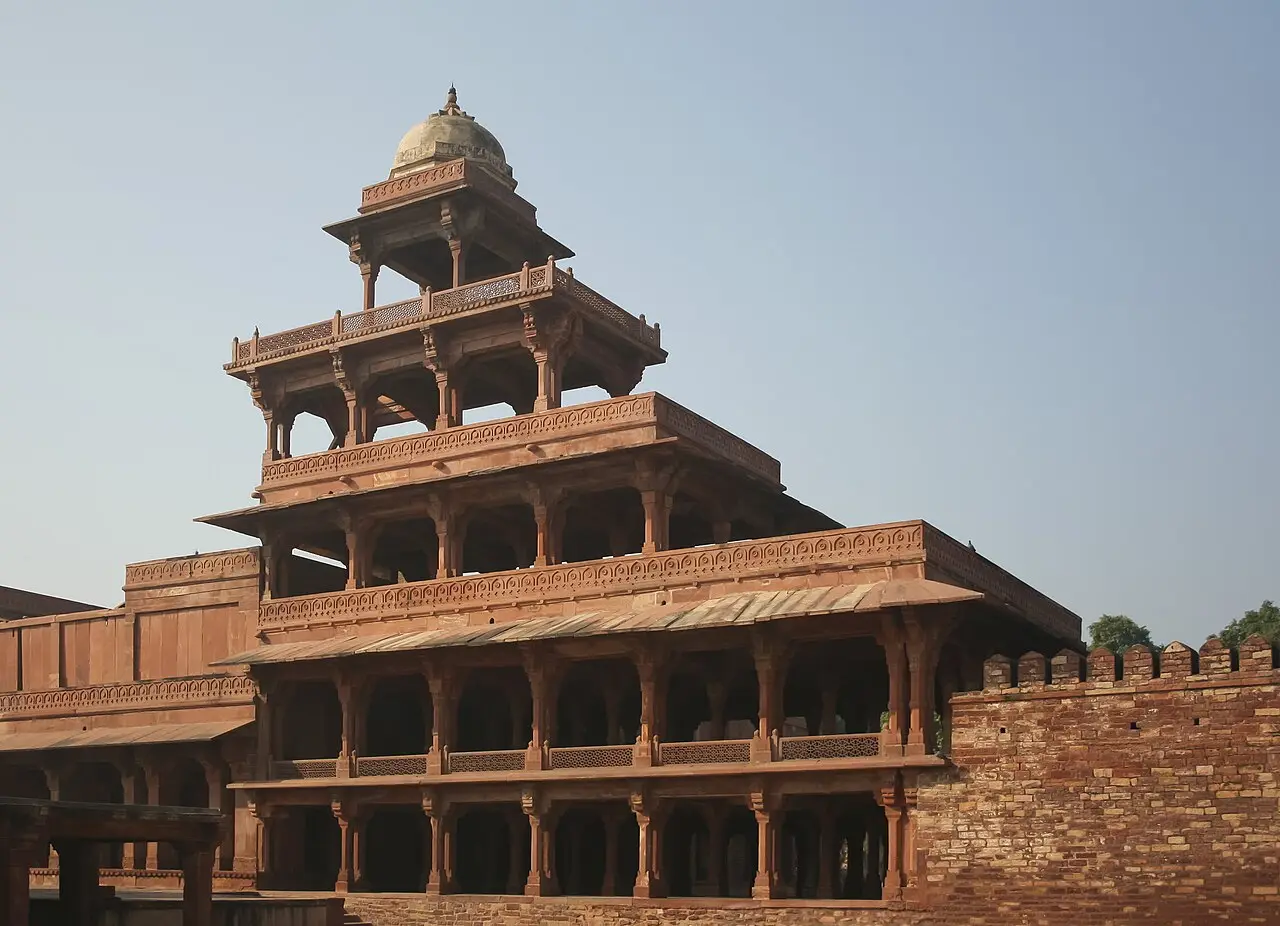
Fatehpur Sikri
37 km west, about 1 hour by car or by bus from the Idgah terminal (₹50–80). Akbar's capital between 1571 and 1585, abandoned for lack of water and preserved almost intact: the 54 m Buland Darwaza, the five-story Panch Mahal, and Salim Chishti's marble dargah, which still draws pilgrims. A UNESCO World Heritage Site since 1986.
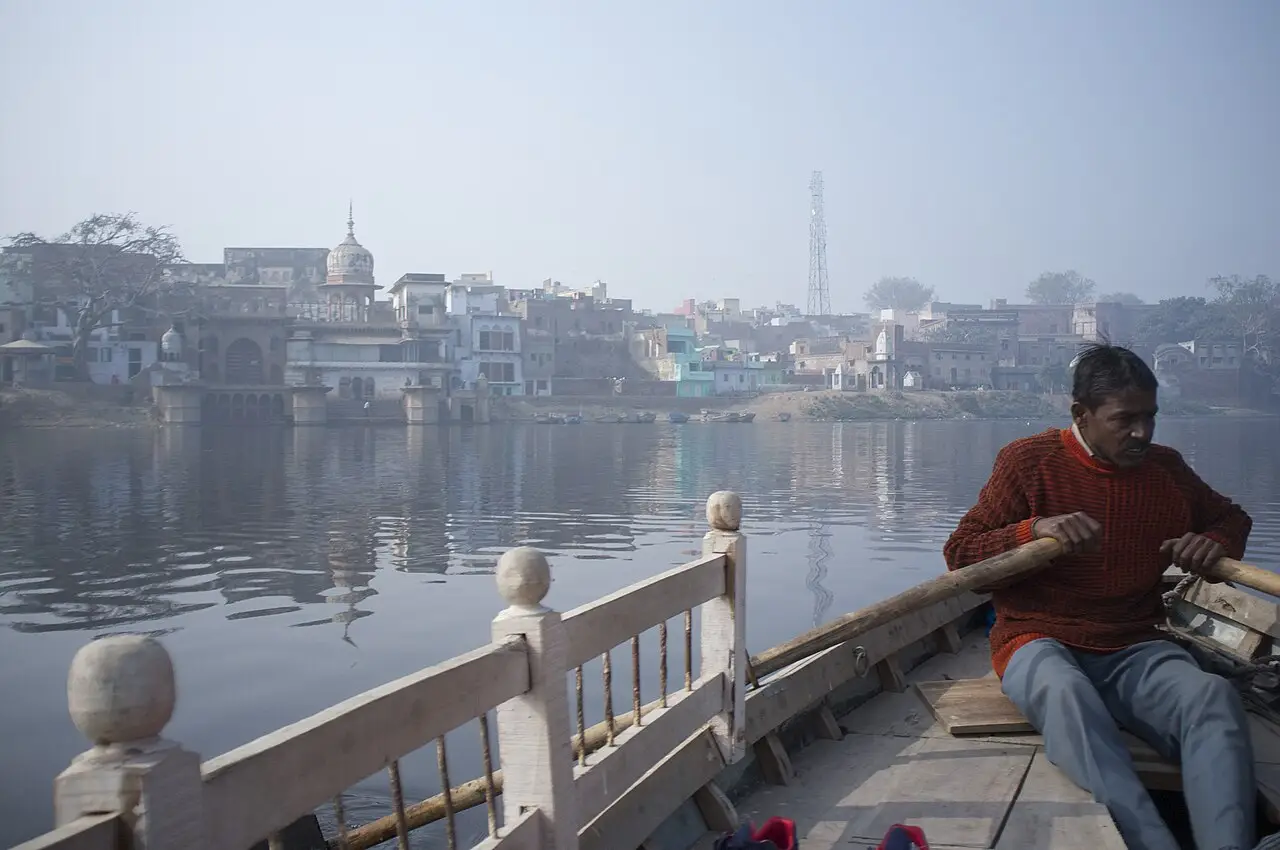
Mathura and Vrindavan
55 to 70 km to the north, 1 hour 30 minutes by highway or by train. Mathura is considered Krishna's birthplace, and Vrindavan gathers hundreds of active temples, among them Banke Bihari; it's the heart of the Braj region, where the local language and poetry come from. Go early and avoid religious holidays, when the crowd shuts down the streets.
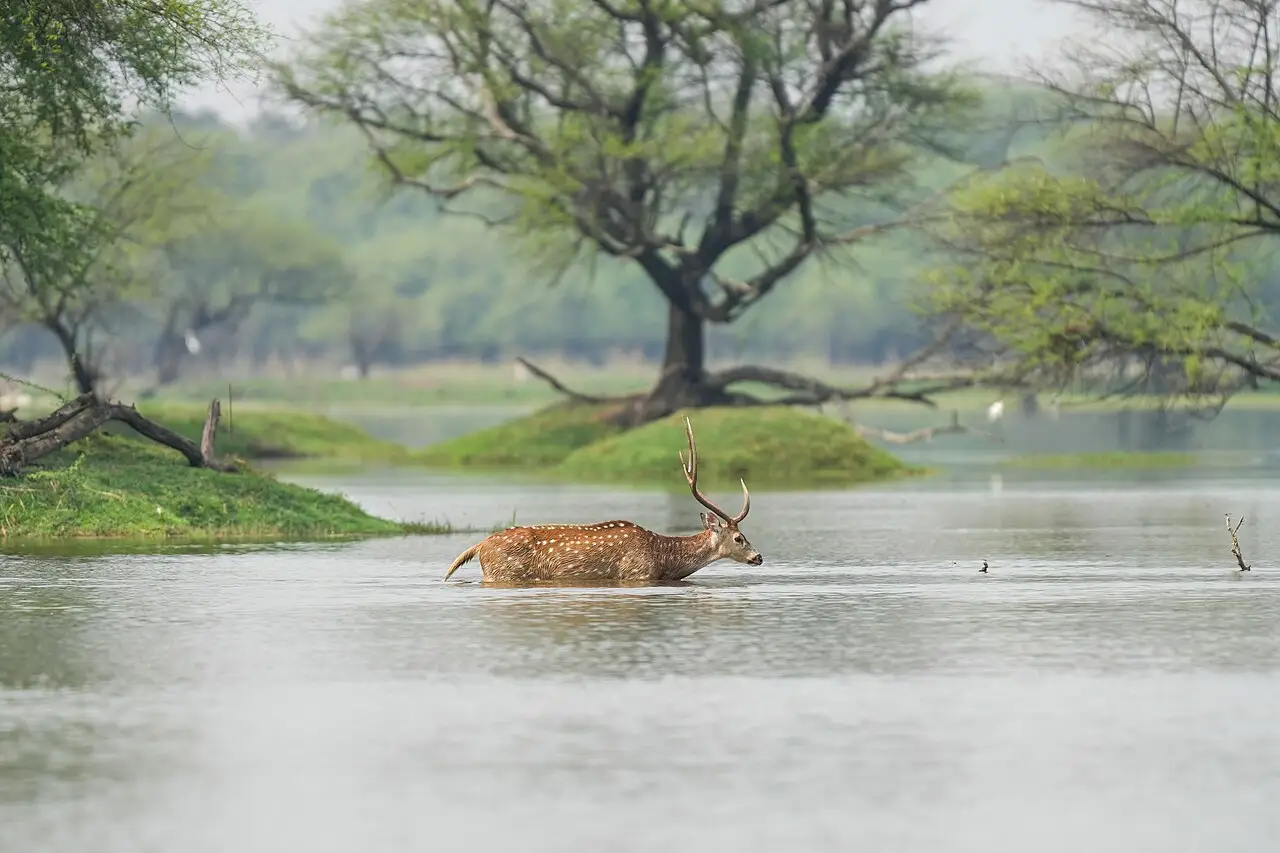
Keoladeo National Park, Bharatpur
55 km west, about 1 hour 15 minutes. A former hunting marsh of the maharajas of Bharatpur, a UNESCO World Heritage Site since 1985, with more than 350 bird species recorded; the route by bicycle or rickshaw takes 3 to 4 hours, and the good season runs from November to February.
Where to begin
The Taj and the Fort
Buy the ticket on the ASI website the day before and go in through the east gate at 6am. (April to September) or 6:30am. (October to March); the line thickens after 8am.
Fatehpur Sikri and the marble
Leave early, at 7am, and take the bus to Fatehpur Sikri: the ride takes about an hour, costs up to ₹80 and ends with a shuttle to the gate, because you can't walk up with luggage.
Sikandra, the market and the left bank
Have breakfast of bedai with aloo and jalebi at a downtown stall, between 7 and 9am, before it runs out.
Money
Everything is paid in rupees: one real is worth about ₹16, and one dollar about ₹88. Everyday ranges: street-stall chai ₹10–20, café coffee ₹150–250, vegetarian thali ₹120–250, a main course at a mid-range restaurant ₹250–600, and dinner on a rooftop with a view of the Taj ₹1,200–2,500 per person. A bed in a Taj Ganj hostel costs ₹500–900, a simple air-conditioned room ₹1,200–2,500, a mid-range hotel ₹3,000–6,000, and upscale starts at ₹15,000. A short auto-rickshaw ride runs ₹50–150, and the metro ₹10–30. The biggest expense is the monument admission: the Taj Mahal costs about ₹1,100 for foreigners, plus ₹200 to enter the mausoleum's inner chamber, and the other monuments charge between ₹300 and ₹610. What eases the bill is the ₹500 municipal fee built into the Taj ticket: it's paid once a day and covers the other sites that same day. Cards work at hotels, bigger restaurants, and for buying tickets online. On the street it's cash or UPI, and UPI requires an Indian bank account, so carry ₹10, ₹50, and ₹100 bills. ATMs are common and charge ₹200–250 per international withdrawal. Tipping isn't mandatory: leave 10% where there's no service charge, and ₹50–100 a day for a driver or porter.
Getting there and around
Agra's airport sits inside an air force base
Don't count on Agra's airport (AGR, Kheria): it's a civilian enclave inside an Air Force base, with very few flights, restricted hours, and a new civilian terminal still under construction. The real gateway is Delhi, 230 km away. By car, the Yamuna Expressway (165 km of limited-access toll road, with a toll of around ₹500–700 for a car) makes the trip in 3 to 4 hours door to door; the old NH-19 takes longer. By train, the Gatimaan Express links Hazrat Nizamuddin to Agra Cantt in about 1 hour 40 minutes, and the Shatabdi, the Vande Bharat, and dozens of other services run on the same line. Book through IRCTC well ahead, because seats sell out on holidays. The city has four stations, and it's easy to get off at the wrong one the first time: Agra Cantt is the main one, in the cantonment, and there are also Agra Fort, Raja ki Mandi, and Idgah. Interstate buses stop at the ISBT, on Bypass Road, and at the Idgah terminal, where buses leave for Fatehpur Sikri.
Agra's metro: 6 km running since 2024
Within the city, the metro began operating in March 2024 with about 6 km of the Yellow Line and six stations between Taj East Gate and Mankameshwar, passing through Taj Mahal and Agra Fort; the fare runs between ₹10 and ₹30. The rest of Corridor 1 and Corridor 2 (Agra Cantt–Kalindi Vihar) were expected to open starting in 2026, so confirm what's running on the day of your trip. Outside the metro, everything is handled by auto-rickshaw, e-rickshaw and pedal rickshaw. In the roughly 500 m around the Taj, only electric or animal-drawn vehicles circulate, by rule of the Trapezium Zone, so the last stretch is always on foot or by e-rickshaw. The driver stops far from the gate because he has to, not because he wants to sell you something. Uber and Ola work well. Agree on the price before getting into an auto (₹50–150 for short trips) and budget ₹2,000–3,500 for a car with driver for the full day. Taj Ganj is walkable; the rest isn't: from the Fort to Sikandra is more than 10 km.
Safety
Agra has little violent crime against visitors, and the real nuisance is commercial: unlicensed guides, the line that the monument “is closed today” to steer you to a shop, a rickshaw fare agreed and then renegotiated, and ticket resale at a markup. Always buy from the official ASI website or the ticket counter, and hire a guide with a Ministry of Tourism badge. Pickpocketing happens in the crowds of Sadar Bazaar and in the Taj lines, but it's occasional. The bigger risk is traffic: there's no continuous sidewalk, motorbikes and autos share the same lane, and the safest way to cross is with a group of pedestrians. Women traveling alone report insistent staring and verbal harassment. At night, prefer an app or hotel car over an open rickshaw, and avoid the riverbanks in the dark. Drink only bottled or filtered water and eat at stalls with a line and turnover. The rhesus macaques in Sikandra, Mehtab Bagh and around the Fort snatch food, bags and glasses. Don't walk around with food in hand or stare the animal down. Between mid-December and mid-January, anyone with asthma or a respiratory condition should carry an N95 mask.
Etiquette tips
Covered feet on the marble
On the Taj's platform you take off your shoes or use the cloth booties handed out at the entrance; the rule applies to everyone. At temples and mosques shoes stay outside, and a pair of socks helps when the stone is at 50 °C.
Photography is free in the gardens, banned inside the mausoleum chamber
Photography is free in the gardens and on the facades, but forbidden inside the Taj's mausoleum chamber; tripods and drones don't clear the security check. Ask permission before photographing people, especially women.
Right hand
Eat, hand over money and receive objects with your right hand. The left is for hygiene, and using it for exchanges reads as carelessness.
Dress at places of worship
Shoulders and knees covered in mosques and temples; at the Jama Masjid, women cover their heads with a scarf. At the Taj, the mausoleum itself isn't a place of worship, but the mosque beside it receives worshippers, so dress with the same modesty you'd use in the rest of the city.
Say no without breaking stride
Street offers of service are constant and rarely aggressive. Say “nahin chahiye” once, smile and keep walking; stopping to explain reopens the conversation and prolongs the sales pitch.
Greeting without touch
Greet with palms joined and a “namaste.” Shake a woman's hand only if she offers it first; hugs and cheek kisses aren't part of the local repertoire, and couples avoid public displays of affection.
Mistakes to avoid
Taj Mahal on a Friday
Scheduling the Taj Mahal for a Friday, the day it's closed. Plenty of people find out at the gate, with their return ticket already booked.
Big bag at the gate
Showing up at the gate with a large backpack, food, tripod, drone, playing cards or cigarettes. Only camera, phone, wallet and water in a clear bottle get through; the lockers exist, but cost you half an hour.
A “free” ride to the marble workshop
Accepting a “free” ride or guide to a marble workshop. The tour is paid for through commission on what you buy, and the piece's price is already inflated to cover it.
A one-day trip squeezed between two trains
Trying to fit the city between two trains in the same day. The Taj, the Fort and Fatehpur Sikri don't fit in eight hours with Agra's traffic; two nights is the reasonable minimum.
The other bank, ten minutes away and no line
Staying only at the south gate and ignoring the other bank. Mehtab Bagh, Itimad-ud-Daulah, Chini ka Rauza and Ram Bagh are ten minutes away by car, cost a fraction of the Taj and have almost no line.
Useful phrases
नमस्ते: Namaste (na-más-te)
Hello and also goodbye, with palms joined in front of the chest
कितने का है? Kitne ka hai? (kít-ne ka rê)
How much does it cost?
नहीं चाहिए: Nahin chahiye (na-ín tchá-ri-ê)
I don't want it, thanks: the standard refusal for street vendors and guides
बहुत महंगा: Bahut mehnga (ba-rút mê-an-ga)
Too expensive; the phrase that opens the negotiation
पानी: Paani (pá-ni)
Water
शुक्रिया: Shukriya (chu-krí-ia)
Thank you, the form most used in Agra
Where to stay
- Taj Ganj · A first trip, a rooftop view of the dome · $: Right against the south gate, it pairs the cheapest nightly rate with the closest view of the Taj; the narrow street only admits electric or animal-drawn vehicles, and the quiet ends at sunrise with the first tour group.
- Fatehabad Road · Security and a chain hotel · $$$: A corridor built up in the 1990s and 2000s, with a well-kept avenue and an easy taxi at any hour; in exchange, it sits about 3 km from the Taj with no street life to walk into at night.
- Sadar Bazaar · Night street food and a market · $$: About 4 km from the Taj, this is the street that wakes up after 6pm, with chaat stalls and leather shops; by day it is quieter than the rest of the city.
- Agra Cantonment · Arriving or leaving by train, and quiet · $$: Straight avenues of the old British cantonment, next to the main railway station; the roughly 6 km to the Taj calls for a taxi or a rickshaw booked ahead.
$: hostel in Taj Ganj, ₹500-900 · $$: mid-range hotel, ₹3,000-6,000 · $$$: above ₹6,000 a night · 2026-09-28
Districts
Taj Ganj
Neighborhood built in the 17th century to house workers and merchants from the Taj construction site, right by the south gate. It concentrates cheap lodging, rooftops with a view of the dome, and narrow streets where only electric or animal-drawn vehicles enter.
Sadar Bazaar
Market born to serve the British cantonment, about 4 km from the Taj. It's the shopping and night-food street, with chaat stalls, leather shops and Chaat Gali; the action runs from 6pm to 10pm.
Agra Cantonment
Military cantonment laid out from 1803, with straight avenues, bungalows and the main railway station. A quiet, practical area for those arriving or leaving by train, but about 6 km from the Taj.
Kinari Bazaar and Rawatpara
The Mughal fabric of alleys between the Fort and the Jama Masjid, organized by street and by trade: fabric, zardozi embroidery, jewelry, spices and household goods. You can only get around on foot or by cycle rickshaw.
Fatehabad Road
Corridor opened in the 1990s and 2000s to the east, with chain hotels, restaurants with English-language menus and marble workshops. Convenient, well served by taxi, and without street life.
Hing ki Mandi
Former spice market turned hub for footwear and petha factories, west of the Fort. It's where you buy the sweet by the kilo straight from the maker, and where you see the leather industry that sustains the city.
Sikandra
Far north, on the way out to Delhi, around Akbar's tomb. Residential and light-industry neighborhood, with colleges nearby and cheaper hotels for those arriving by car.
Trans-Yamuna and Kalindi Vihar
Left bank of the river, with recent residential neighborhoods and little tourist pressure. From there you see the Taj face-on at the end of the day, and that's where the metro's planned eastern terminal will go.
History
1475 · First written record
The poet Gayasuddin mentions Agra as a settlement on the banks of the Yamuna. Before that the city only appears in traditions tied to the Mahabharata, under the name Agrabana.
1504–1505 · Sikandar Lodi moves the capital
The Sultan of Delhi transfers the court to Agra and makes the city the seat of the Sultanate. He dies there in 1517 and is succeeded by his son, Ibrahim Lodi.
1526 · Panipat and the Mughal arrival
Babur defeats Ibrahim Lodi at Panipat, on April 21, and occupies Agra along with the Lodi treasury and the Koh-i-Noor diamond. He orders the Ram Bagh laid out, considered the first Mughal garden in India.
1565–1573 · Akbar builds the fort
Akbar replaces the Lodis' mud fortification with 2.4 km of red sandstone walls. The work employs thousands of workers over about eight years.
1571–1585 · The capital at Fatehpur Sikri
Akbar raises a new city 37 km to the west and abandons it after about fourteen years, due to water shortages and military campaigns in Punjab. The sandstone complex remained nearly intact.
1632–1653 · Taj Mahal
Shah Jahan orders the mausoleum of Mumtaz Mahal, who died in 1631 giving birth to their fourteenth child. The work employs about 20,000 laborers and marble brought from Makrana, in Rajasthan, 320 km away.
1648 · The court moves to Delhi
Shah Jahan transfers the capital to Shahjahanabad. Agra loses its political role and lives on as garrison, craft and trade-route town.
1658–1666 · Aurangzeb imprisons his father
Aurangzeb deposes Shah Jahan and keeps him confined at Agra Fort until his death, in 1666. His body is buried beside his wife, inside the Taj.
1761–1803 · Jats, Marathas and the British
The Jats of Bharatpur sack the city in 1761 and carry off pieces from the palaces; the Marathas and the Scindias fight for control; the British take Agra in 1803.
1836–1858 · British capital and revolt
Agra is capital of the North-Western Provinces and gains a military cantonment to the southwest. In 1857 civilians and troops lock themselves inside the Fort for months; in 1858, right after the uprising, the provincial capital moves to Allahabad.

1983–2026 · Heritage, pollution and the metro
The Taj Mahal and the Fort join the UNESCO list in 1983, Fatehpur Sikri in 1986. In 1996 the Taj Trapezium Zone is created; the metro begins operating in March 2024, with the rest of Corridor 1 expected in 2026.

Complete history
Capital in 1504, by a Lodi's decision
Agra appears in writing in 1475 and becomes capital in 1504–1505, when Sikandar Lodi takes the court from Delhi and settles it on the right bank of the Yamuna. The choice is logistical: the river provides water and transport, and the site sits midway between the Gangetic plain and the routes into Rajasthan and the Deccan. Sikandar dies there in 1517; his son, Ibrahim Lodi, loses the throne to Babur at Panipat, in April 1526, and Agra passes to the Mughals with the treasury still inside.
The Mughal peak: Akbar's fort, Fatehpur Sikri and the Taj
Agra's century runs from 1558 to 1648. Akbar rules from there, rebuilds the Lodis' mud fort in red sandstone between 1565 and 1573, and tries out a new capital at Fatehpur Sikri, occupied from 1571 to about 1585 and abandoned for lack of water. Jahangir and Empress Nur Jahan carry the work forward: the Itimad-ud-Daulah, finished in 1628, introduces white marble and the semi-precious stone inlay, parchin kari. Shah Jahan begins the Taj Mahal in 1632, a year after Mumtaz Mahal's death, and the complex is finished around 1653: the same technique taken to its fullest scale.
In 1648 the court moves and the city loses its capital status
In 1648 Shah Jahan moves the capital to Shahjahanabad and Agra stops being the empire's center; ten years later Aurangzeb deposes his father and keeps him imprisoned at the Fort until 1666. Through the 18th century the city changes hands several times: the Jats of Bharatpur sack it in 1761 and carry off entire pieces from the palaces, the Marathas of Scindia control it, and the British enter in 1803. Much of the stone, metal and semi-precious inlay from the Mughal buildings leaves the city during this period.
Provincial capital between 1836 and 1858, with a British cantonment
Under British rule, Agra is capital of the North-Western Provinces from 1836 to 1858 and gains a cantonment southwest of the center, with straight avenues and barracks that still organize that part of the urban grid. In 1857 the uprising arrives and the garrison shuts itself inside the Fort. In 1858, right after the uprising, the provincial capital moves to Allahabad, and the city becomes a railway junction and a leather hub. Between 1899 and 1905, under Lord Curzon, the monuments undergo restoration and the Taj garden is redesigned into the lawn seen today. The “original” landscape that visitors photograph is, in part, Edwardian.
From royal court to tourism economy
The 20th and 21st centuries trade the court for the visit economy. In 1996 the Supreme Court creates the Taj Trapezium Zone: 10,400 km² where polluting industries had to switch from coal to gas or leave, which closed hundreds of foundries and shifted the economic base to leather, marble and tourism. The unsolved problem is air and traffic: in winter the air quality index often reaches the 250 to 350 range, and the registered vehicle fleet has passed 1.6 million. The response has been infrastructure: the Yamuna Expressway, opened in 2012, cut the trip from Delhi to about three hours, and the metro began operating in March 2024.
In 1761 the Jats of Bharatpur looted Agra and carried off entire pieces of the palaces.
Geography and shape of the city
The Yamuna's bend
Agra sits at about 171 m of elevation on the Indo-Gangetic plain, on the right (west) bank of the Yamuna, within the doab between that river and the Chambal. The Yamuna makes a wide bend north and east of the historic center, and it's that bend that organizes everything: the Fort and the Taj Mahal stand on the right bank, about 2.5 km apart, while Mehtab Bagh, Chini ka Rauza and Ram Bagh sit on the opposite bank, which explains why half the monuments have almost no line.
Three overlapping layers of grid
The urban grid has three overlapping layers: the Mughal fabric of alleys around the Fort, Kinari Bazaar and Taj Ganj; the British cantonment opened from 1803 to the southwest, with wide avenues and bungalows; and the expansion from the late 20th century along Fatehabad Road, Bypass Road and across the river, in Kalindi Vihar.
The climate and the river today
The climate is transitional semi-arid, with summers above 45 °C, monsoon from July to September and a winter of dense fog. The river, once a transport route and part of the Mughal landscape design, now runs low and polluted most of the year.
Culture
The stone set into marble
The craft that defines Agra is parchin kari, the inlay of semi-precious stone in marble that covers the Taj and the Itimad-ud-Daulah: malachite, lapis lazuli, carnelian and mother-of-pearl cut into millimeter slivers and fitted into cavities carved in the stone. Dozens of workshops in Gokulpura and along Fatehabad Road claim descent from the 17th-century craftsmen, and the technique is still passed down within families. Alongside it there's a much bigger and less photogenic industry: Agra is one of India's largest leather-footwear hubs, with thousands of units in Hing ki Mandi and around it, plus zardozi embroidery with metal thread.
Urdu poetry: Nazir Akbarabadi and Ghalib's legacy
The city also has an Urdu and Braj literary lineage. Nazir Akbarabadi (1735–1830) wrote about Agra's fairs, vendors and festivals in deliberately popular poetry, and Mirza Ghalib, the greatest name in Urdu ghazal, was born here in 1797 before moving to Delhi. The Braj region, which begins just to the north, is the territory of Krishna traditions and the Braj Bhasha language: Mathura and Vrindavan are less than 70 km away, and the devotion heard on Agra's streets partly comes from there. At the dargah of Salim Chishti, in Fatehpur Sikri, qawwali is still sung on Thursdays.
Domestic tourism and street life beyond the monuments
Today, Agra's cultural economy is the visit: the Taj Mahal receives millions of people a year, the vast majority Indian, on school trips, pilgrimages or family vacations. That gives the city an odd rhythm, with lines at six in the morning and dead streets by eleven at night. Away from the monuments, public life happens in cricket games on vacant lots, kite flying on rooftops on January afternoons, and processions. The Ram Barat, in September or October, is the biggest street event of the year and has nothing to do with tourism.
The first written record of Agra is a poem by Gayasuddin, from 1475, which describes it as a riverside village.
The monuments open before sunrise, and the street empties before midnight.
Look closely and you'll notice the Taj's minarets lean outward: it's protection against earthquakes, so they would fall away from the dome.
Festivals and events
 AI illustration
Taj Mahotsav
From February 18 to 27, at Shilpgram, next to the Taj's east gate. A craft fair drawing from across the country, created in 1992, with music, dance and regional food; entry costs a few dozen rupees.
 AI illustration
Ram Barat
September or October, within the Ramlila cycle. A night procession for Rama's wedding that fills entire neighborhoods for three days, with parade floats, lighting and bands; the city's biggest street event.
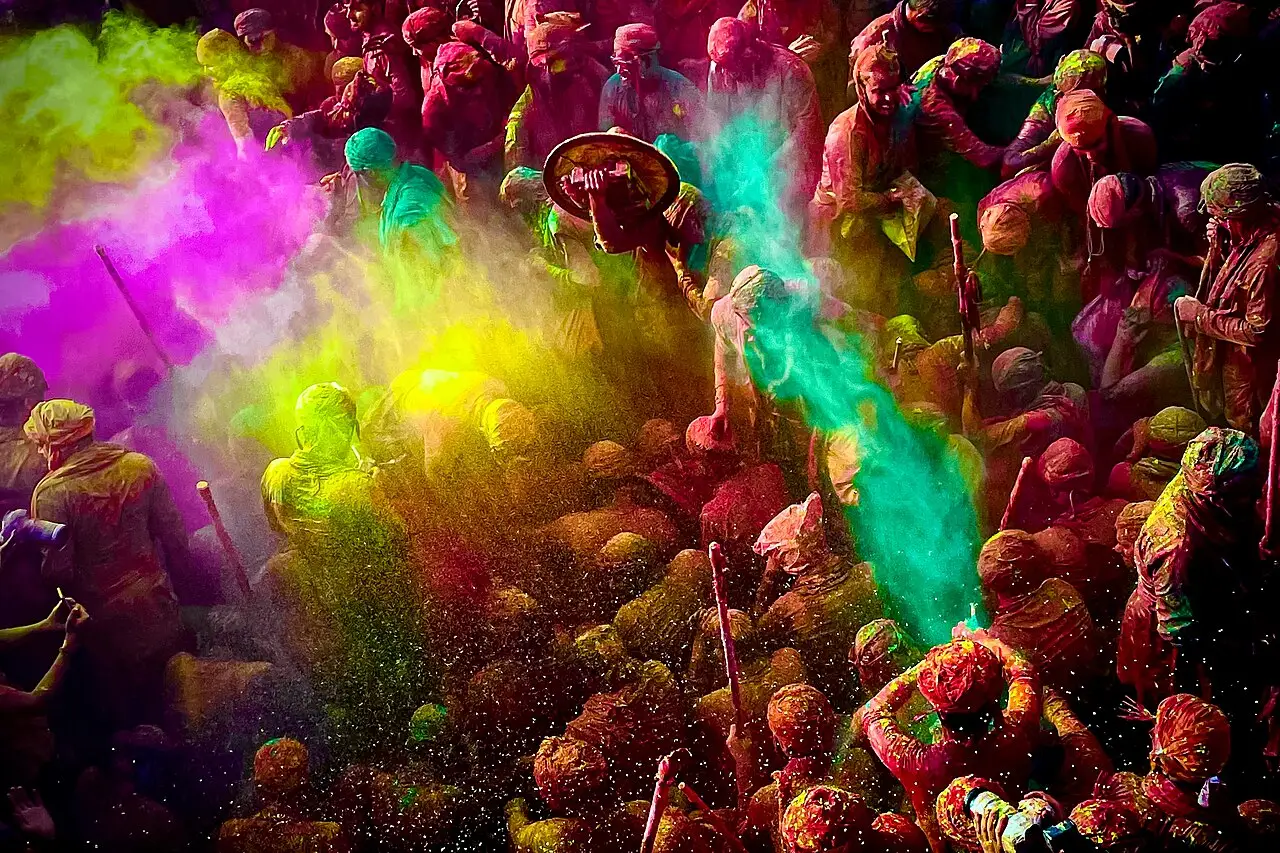
Braj Holi
February or March. Agra sits within the Braj region: in Barsana and Nandgaon, 60–80 km away, Lathmar Holi happens about a week before the national date, and on the main day the whole city plays with color.
 AI illustration
Kailash Mela
August or September, at the Kailash temple, 12 km north, on the banks of the Yamuna. A two-day fair with a pilgrimage to the Shiva lingam, within the Sawan calendar.
 AI illustration
Bateshwar Fair
October or November, in Bateshwar, 70 km southeast. A cattle and horse fair next to a riverside temple complex, with a simultaneous pilgrimage; one of Uttar Pradesh's biggest rural events.
Books and films
“A Teardrop on the Cheek of Time,” by Diana and Michael Preston (2007)
A biography of the Taj Mahal as both a construction project and a piece of politics: money, worksite, materials, the craftsmen and what happened to the building after Shah Jahan.
“Jodhaa Akbar,” by Ashutosh Gowariker (2008)
Film about Akbar's court, with scenes shot at Agra Fort; it helps explain why the fort is an entire palace and not just a wall.
“Diwan-e-Ghalib,” by Mirza Ghalib
A collection of the ghazals of Mirza Ghalib, the greatest name of the form in Urdu, who was born in Agra in 1797 before moving to Delhi. Read a few before you go: Urdu still circulates in the city alongside Hindi and Braj Bhasha.
Frequently asked questions
Agra: what can you bring inside the Taj Mahal?
Only a camera, phone, wallet, and water in a clear bottle get through; there's luggage storage, but it costs half an hour of your day.
Agra: how do you get to Fatehpur Sikri?
37 km to the west, about 1 hour by car or by bus from the Idgah terminal (₹50 to 80).
Agra: what's the best time to go?
The good season runs from October to March, and November and late February give the best balance between clear skies and temperature. In December and January, thick early-morning fog hides the Taj until 10am; May and June go above 45°C.
Agra: do you have to take your shoes off at the Taj Mahal?
On the Taj's platform you take off your shoes or wear the fabric covers given out at the entrance; the rule applies to everyone.
Agra: is it safe for visitors?
Agra has little violent crime against visitors, and the real nuisance is commercial: unlicensed guides, the line that the monument “is closed today” to steer you to a shop, a rickshaw fare agreed on and then renegotiated, and tickets resold at a markup.
Other cities in the country
India ↗- Days
- 3
- When
- Jan–Mar · Oct–Dec
- Per person/day
- Average 5,000–9,000 INRMid-range · per person/day
Cost scope
Per person per day: accommodation, meals, urban transport, visits and a small allowance for extras. Flights excluded; larger purchases vary. Editorial estimate, not a quote.
- Days
- 2–3
- When
- Jan–Feb · Nov–Dec
- Per person/day
- Average 6,000–12,000 INRMid-range · per person/day
Cost scope
Per person per day: accommodation, meals, urban transport, visits and a small allowance for extras. Flights excluded; larger purchases vary. Editorial estimate, not a quote.
- Days
- 2–3
- When
- Jan–Feb · Nov–Dec
- Per person/day
- Average 6,000–10,000 INRMid-range · per person/day
Cost scope
Per person per day: accommodation, meals, urban transport, visits and a small allowance for extras. Flights excluded; larger purchases vary. Editorial estimate, not a quote.
- Days
- 2–3
- When
- Jan–Feb · Nov–Dec
- Per person/day
- Average 20–40 USDMid-range · per person/day
Cost scope
Per person per day: accommodation, meals, urban transport, visits and a small allowance for extras. Flights excluded; larger purchases vary. Editorial estimate, not a quote.
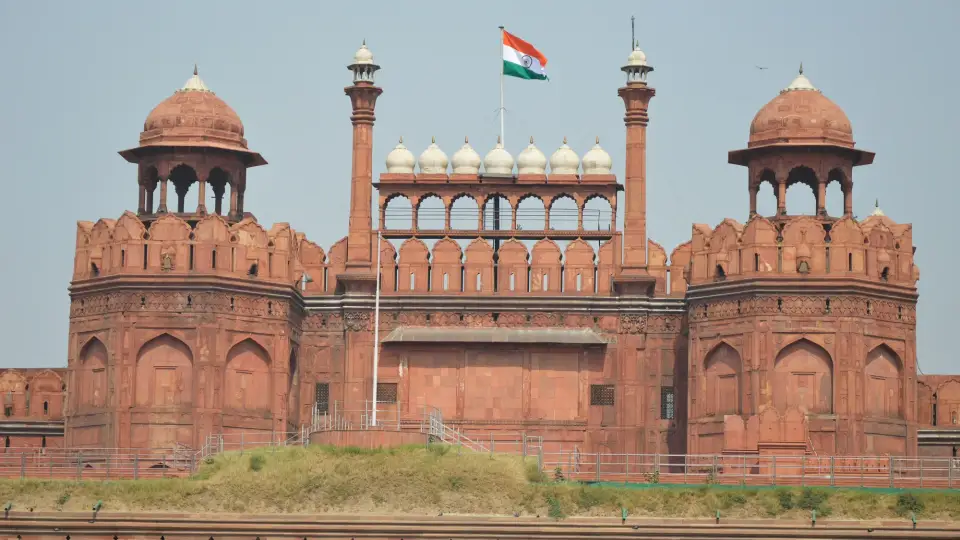
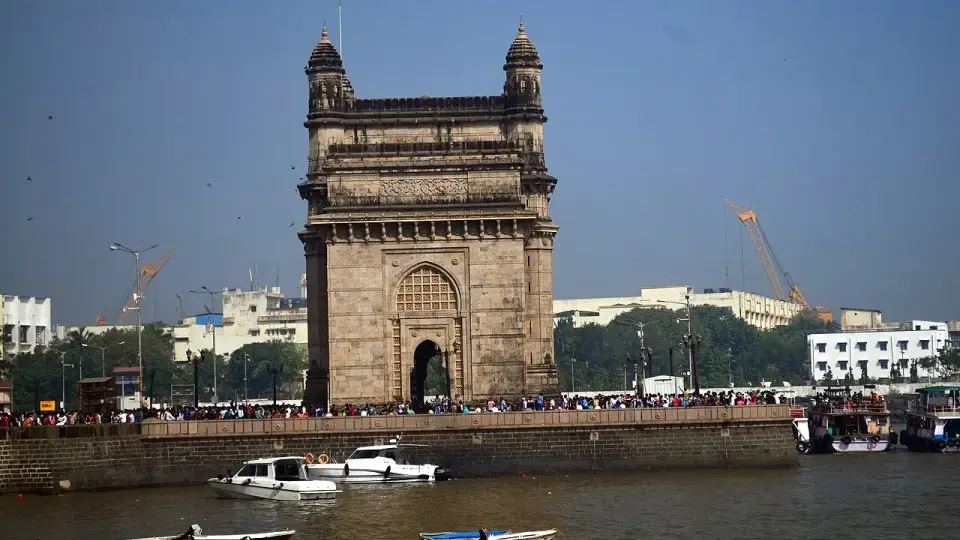
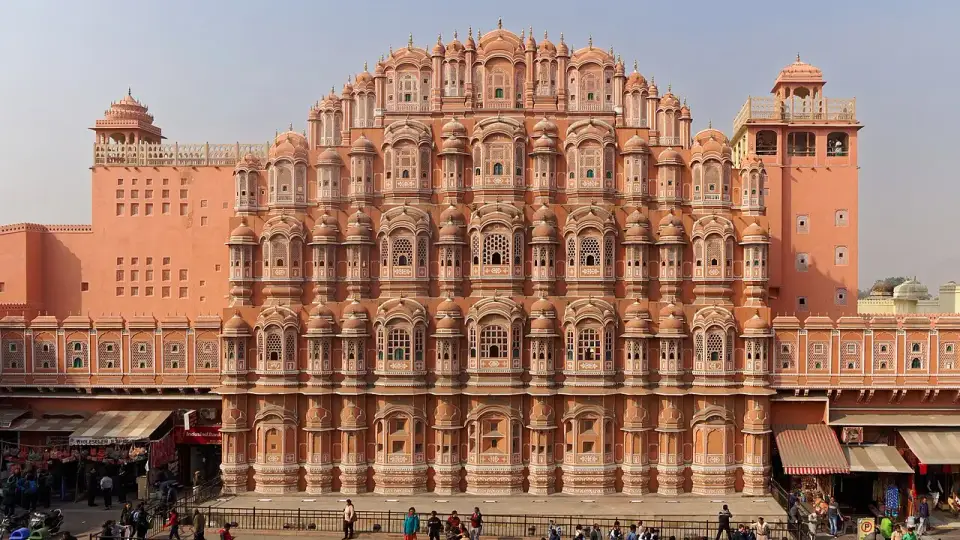


Itineraries through here
 India’s Golden Triangle in 7 daysThe Golden TriangleNew Delhi · Agra · Jaipur7–9 days3 cities
 India in 10 daysThe Taj Mahal and the GangesNew Delhi · Agra · Jaipur · Varanasi9–12 days4 cities
 India and Nepal in 10 daysFrom the Taj Mahal to the HimalayasNew Delhi · Agra · Varanasi · Kathmandu10–13 days4 cities