Uzbekistan
Samarkand
Samarkand holds Timur's city and the tsar's side by side
Days Start with the basic programme and choose extensions for the time you have.
How the guide reaches this number
Spend the first at the Registan, Gur-e-Amir, where Timur is buried, and the Russian city. On the second, combine Bibi-Khanym, Siab Bazaar, Shah-i-Zinda and the Afrasiab plateau, with Ulugh Beg's observatory. For a one-day visit, enter the Registan at 8am, walk to Bibi-Khanym and stop at the neighboring market for an osh lunch before 2pm. Finish at Shah-i-Zinda, 800 m from the bazaar. Come for the tilework and the time to examine it, knowing that much was remade in the 20th century during Soviet restoration. The 2018–2019 promenade hides the life of the mahallas, which begins one street farther in: explore in the morning, even without signs. Nightlife choices are limited: around 10pm the center empties, leaving the shashlik grills still glowing.
2
When April–May and September–October, highs of 20–28°C and almost no rain
How the guide reaches this number
April and May are the best window: 20–28 °C, apricot and pomegranate trees in bloom, everything open. September and October repeat the weather and add the harvest: melons, grapes and dried apricots take over the Siab bazaar, and the fruit aisle changes smell from one week to the next. From June to August it's 35–40 °C, with cloudless skies and no shade at all on Registan Square; if you go then, visit monuments from 7am to 10am and come back after 6pm. From December to February the temperature stays between 0 and 8 °C, with snow a few times each winter, hotels at half price and the necropolises almost empty. Bring a real coat, because heating isn't always reliable. March brings Navruz, on the 21st, and the busiest domestic travel of the year, with unsettled weather. July is the month I'd avoid.
Per person/day US$25–35 on the basics; US$60–90 with a mid-range hotel and taxis (2026)
How the guide reaches this number
Per person per day: accommodation, meals, urban transport, visits and a small allowance for extras. Flights excluded; larger purchases vary. Editorial estimate, not a quote.
 What Nilo thinks
Allow two days to see Samarkand's monuments without rushing from one courtyard to the next. Spend the first at the Registan, Gur-e-Amir, where Timur is buried, and the Russian city. On the second, combine Bibi-Khanym, Siab Bazaar, Shah-i-Zinda and the Afrasiab plateau, with Ulugh Beg's observatory. For a one-day visit, enter the Registan at 8am, walk to Bibi-Khanym and stop at the neighboring market for an osh lunch before 2pm. Finish at Shah-i-Zinda, 800 m from the bazaar. Come for the tilework and the time to examine it, knowing that much was remade in the 20th century during Soviet restoration. The 2018–2019 promenade hides the life of the mahallas, which begins one street farther in: explore in the morning, even without signs. Nightlife choices are limited: around 10pm the center empties, leaving the shashlik grills still glowing.Three madrasas covered in blue tile close off Registan Square, and it's the reason to come to Samarkand. The city was the capital of Timur's empire from 1370, and what he and his successors built still stands: Timur's tomb under the ribbed dome of Gur-e-Amir, the Bibi-Khanym mosque, and Shah-i-Zinda, a slope of mausoleums with the city's best-preserved tile. Alongside the monuments, two other cities remain inhabited: the Tajik-speaking mahallas and the plane-tree avenues of the Russian layout of 1871, where the Khovrenko winery has made wine since 1868. At the Siab bazaar, stamped non comes hot from the tandyr; always set it down stamp-side up and tear it by hand, never with a knife. At the table, Samarkand plov arrives in layers, with the meat on top, and grilled shashlik is the city's dinner. Come in April and May or in September and October, with highs of 20 to 28 °C, and allow two days.
Quick facts
- Population
- about 595,000 in the city (January 2025); about 1.3 million in the metro area: third in the country
- Founded
- 7th c. BC as Marakanda, on the Afrasiab plateau; refounded south of the ancient site after 1220
- Country and region
- Uzbekistan, Samarkand province, Zarafshan valley, Central Asia
- Language
- Uzbek (official, Latin alphabet since 1993), Tajik in the old mahallas, Russian as a counter-window language
- Currency
- Uzbek som (UZS); about 11,800 som to the dollar in 2026
- Time zone
- UTC+5, no daylight saving
- Best time to visit
- April–May and September–October, highs of 20–28°C and almost no rain
- Average daily cost
- US$25–35 on the basics; US$60–90 with a mid-range hotel and taxis (2026)
When to go
April–May and September–October, highs of 20–28°C and almost no rain
January
-1° to 7°C
41 mm of rain
February
0° to 10°C
52 mm of rain
March
5° to 15°C
73 mm of rain
June
18° to 33°C
7 mm of rain
July
20° to 35°C
2 mm of rain
August
18° to 33°C
2 mm of rain
November
3° to 15°C
40 mm of rain
December
0° to 9°C
39 mm of rain
How the year changes
April and May are the best window: 20–28 °C, apricot and pomegranate trees in bloom, everything open. September and October repeat the weather and add the harvest: melons, grapes and dried apricots take over the Siab bazaar, and the fruit aisle changes smell from one week to the next. From June to August it's 35–40 °C, with cloudless skies and no shade at all on Registan Square; if you go then, visit monuments from 7am to 10am and come back after 6pm. From December to February the temperature stays between 0 and 8 °C, with snow a few times each winter, hotels at half price and the necropolises almost empty. Bring a real coat, because heating isn't always reliable. March brings Navruz, on the 21st, and the busiest domestic travel of the year, with unsettled weather. July is the month I'd avoid.
The same numbers as a table
| Month | Temperature °C | Rain mm |
|---|---|---|
| January | -1 to 7 | 41 |
| February | 0 to 10 | 52 |
| March | 5 to 15 | 73 |
| April · | 10 to 22 | 63 |
| May · | 14 to 27 | 40 |
| June | 18 to 33 | 7 |
| July | 20 to 35 | 2 |
| August | 18 to 33 | 2 |
| September · | 14 to 29 | 3 |
| October · | 8 to 22 | 16 |
| November | 3 to 15 | 40 |
| December | 0 to 9 | 39 |
Nilo's tips
The Registan ticket is good all day
That way you can enter at 8am, before the heat and the tour groups, and come back to the square in the late afternoon. The ticket costs around 100,000 som (2026). Keep the receipt and come back around 6:30pm, on the Ulugh Beg madrasa side, when the light falls full on the two facades opposite.
At the Siab bazaar, buy bread before 7am, while the batch is still warm
The Siab bazaar opens around 6am, and the stamped non comes out of the tandyr warm early on. Buy before 7am, because by 10am the good batch is gone. At the dried-fruit stalls, taste before you settle on a kilo: the vendor expects it, and what's odd is not tasting.
Have plov for lunch before 2pm, when the pot runs out
Samarkand osh is a lunch dish, and after 2pm the pot runs out with no new one made. At a neighborhood oshxona, in Bogishamol or the microdistricts, a plate costs 30–50 thousand som and a full meal 40–70 thousand, while at a tourist restaurant in the center the bill reaches 100–200 thousand. At night, with no plov, the option is grilled shashlik.
Buy the Afrosiyob train ticket two weeks ahead
In high season, the Afrosiyob sells out weeks ahead, and the ticket office the day before won't solve it: book your seat online as soon as you have the date. Economy costs around 300,000 som (2026). With no seats left, the slower trains take an hour longer on the same route and cost much less. The station is 5 km from the Registan, so arrive with Yandex Go open.
From 12 to 4pm in summer, wait out the heat in a chaikhana
Between noon and four in the afternoon, in July and August, the street sits at 35–40 °C of dry air, and there's no shade at all on the Registan. Spend those hours in a chaikhana, where a pot of tea for 5,000 to 10,000 som holds your table the whole afternoon, and head back out when the sun goes down.
Go to the Urgut market, 45 km away, on Saturday or Sunday
The suzani, textile, and antiques fair only happens on those two days, southeast of the city, about 1 hour by car. Leave at 7am, because the market empties out at noon and what's left after that is the plastic-goods aisle. On the same day, stop by the Chor-Chinor grove, with plane trees several hundred years old, one of them hollow inside, and be back in time for late afternoon at the Registan.
Explore the map

© OpenStreetMap · OpenFreeMap · © OpenMapTiles
Explore the map, read about the other places and plan your travel days in the app.
Open the appWhat to see
Samarkand: The Zarafshan valley and the water
Samarkand sits at about 700 m altitude, on terraces of the Zarafshan valley. The water is all mountain water, and all channeled, and the Siab canal is the reason a city exists at this spot.

Registan square
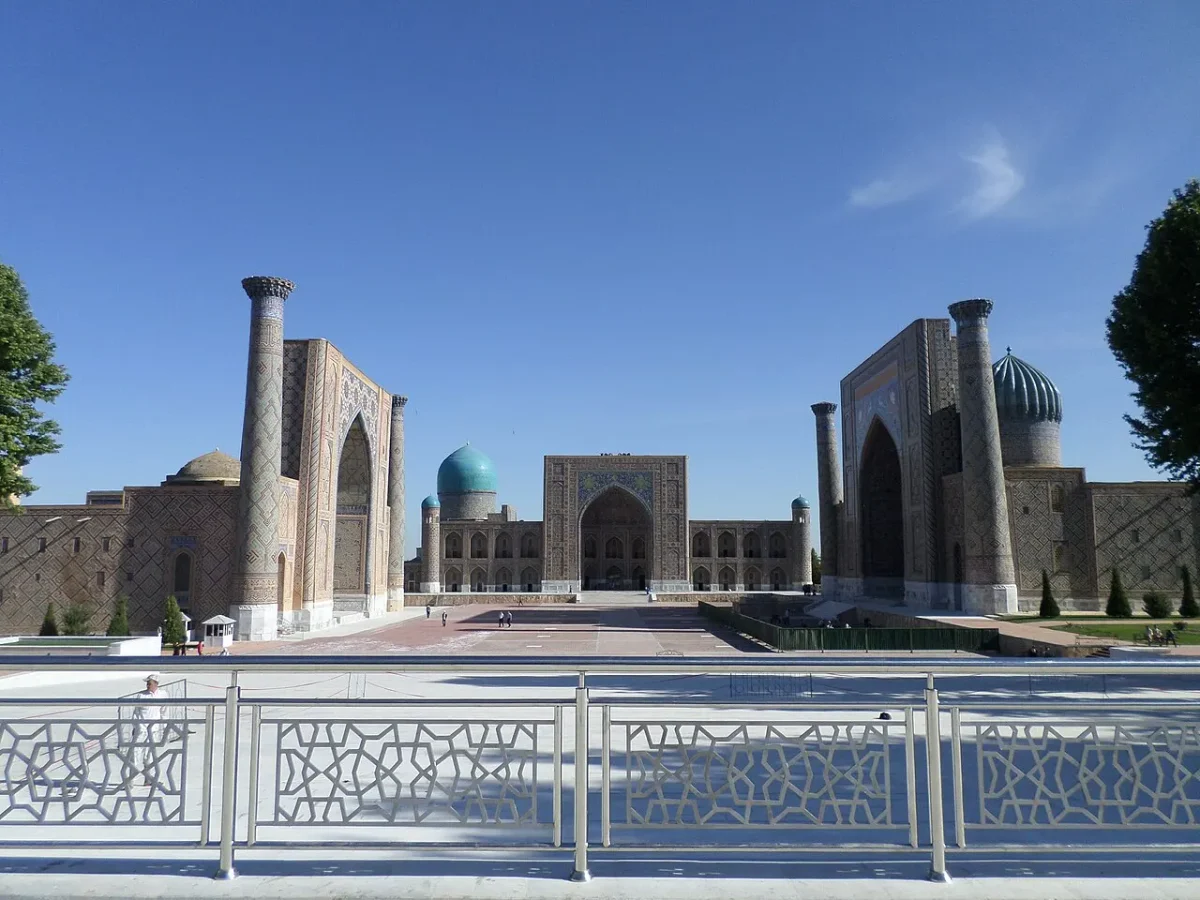
Three madrasas facing each other: Ulugh Beg (1417–1420), Sher-Dor (1619–1636), and Tilya-Kori (1646–1660). The Sher-Dor's facade carries tigers with suns on their backs, animal figures rare in Sunni Islamic art. Admission runs around 100,000 som (2026); the Tilya-Kori's gold hall is the most elaborate interior in the city.
The facade carries tigers with suns on their backs. They're animal figures rare in Sunni Islamic art.
Check access

Gur-e-Amir
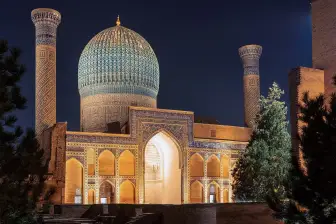
A mausoleum finished in 1404 for Muhammad Sultan, Timur's late grandson, and occupied by Timur himself in 1405. The ribbed dome has 64 ribs. The tombstone, of dark green jade, was a single slab until 1740, when Nadir Shah tried to take it to Persia and it broke in two; the repair is still visible today. The grave was opened by the anthropologist Mikhail Gerasimov on June 21, 1941.
Timur occupied in 1405 what had been finished in 1404 for Muhammad Sultan, under the ribbed dome of 64 ribs and under the jade slab that was a single piece until 1740, the year Nadir Shah tried to take that slab to Persia and it broke in two, with the repair still visible, and Gerasimov opened the grave on June 21, 1941.
Check access
Shah-i-Zinda
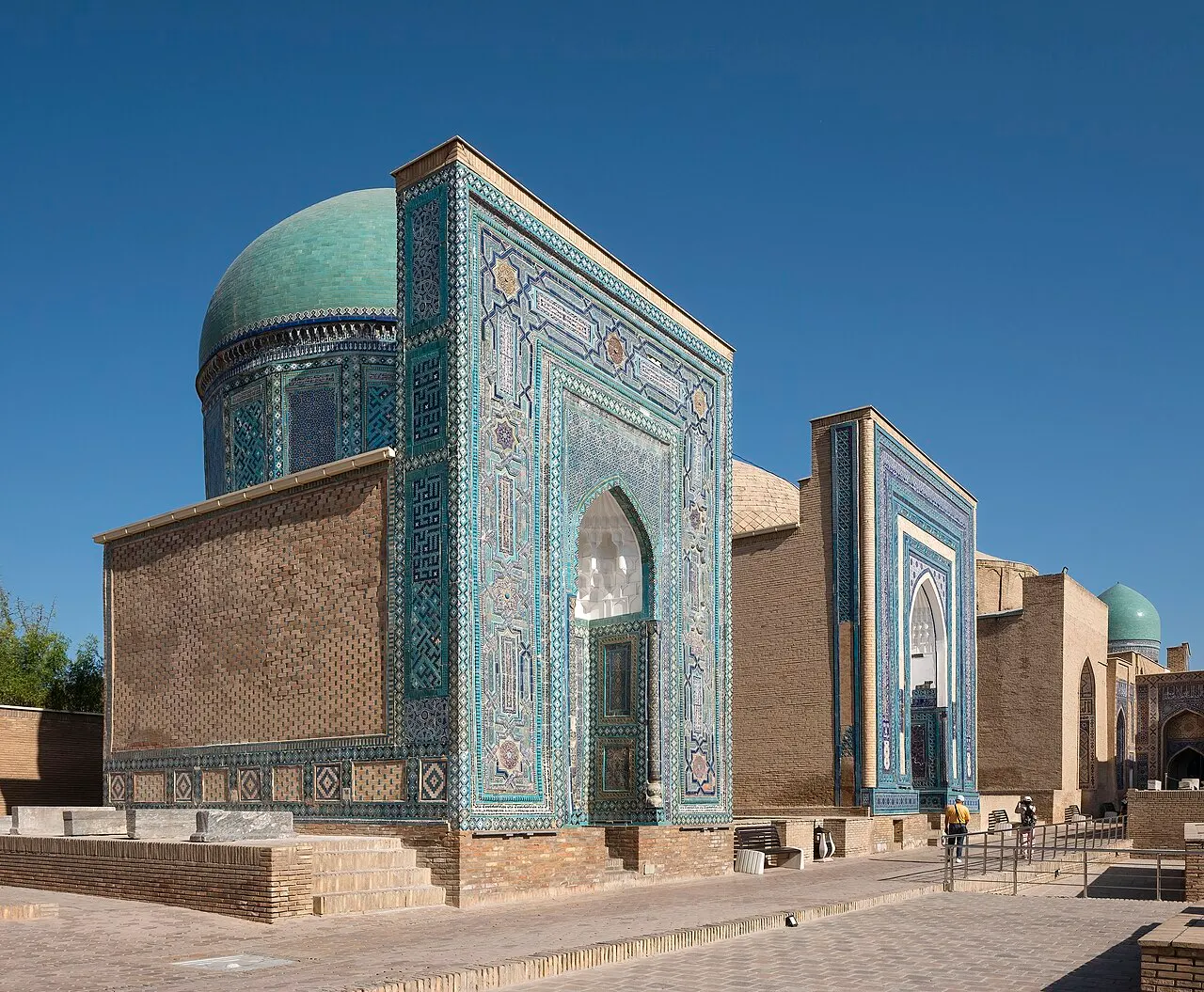
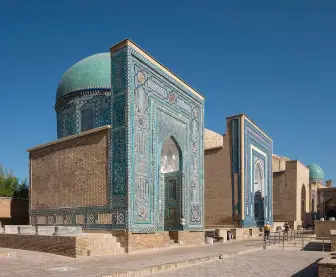
A narrow uphill lane of mausoleums, from the 11th to the 19th centuries, built around the tomb of Kussam ibn Abbas, a cousin of the Prophet Muhammad. It's the best-preserved tile complex in the city. Count the steps going up and coming down: if you get the same number, custom says, you're an honest person.
The steep lane of tombs, built between the 11th and 19th centuries around the grave of Kussam ibn Abbas, a cousin of the Prophet Muhammad, holds the city's best-preserved tile, and the custom is to count the steps on the way up and the way down.
Check access

Siab bazaar
The main market, next to Bibi-Khanym, under a covered structure from the 2000s. This is where you buy the stamped non still warm, dried apricots, green raisins, kurt (a small ball of salted dried curd), navat (sugar crystal), and spices. Food prices are fixed; it opens around 6am.
The central market, next to Bibi-Khanym and under a roof built in the 2000s, is where you find non still warm, dried apricots, kurt made of salted curd, navat, and spices; food prices stay fixed, and it opens around 6am.
Check access

Ulugh Beg's observatory
Built in the 1420s on a hill to the northeast. Of the 40 m-radius meridian sextant, the section cut into the rock survives, with about 11 m exposed. The Zij-i Sultani catalog (1437) fixed 1,018 stars. The ruins were identified in 1908 by Vasily Vyatkin, who is buried on the site.
What's left of the sextant is the stretch carved into the rock.
Check access

Afrasiab Museum
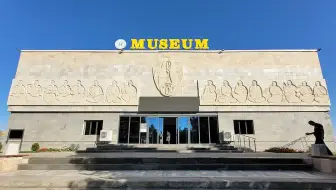
Holds the 7th-century Sogdian murals uncovered in 1965 during road works: a whole wall showing Chinese, Korean, and Turkic envoys before King Varkhuman. It sits at the edge of the plateau where the ancient city stood, now open ground you can walk across.
The Sogdian paintings, from the 7th century, were found in 1965 while a road was being opened, and a whole wall shows Chinese, Korean, and Turkic envoys before King Varkhuman.
Check access
Hazrat Khizr mosque and Islam Karimov's mausoleum
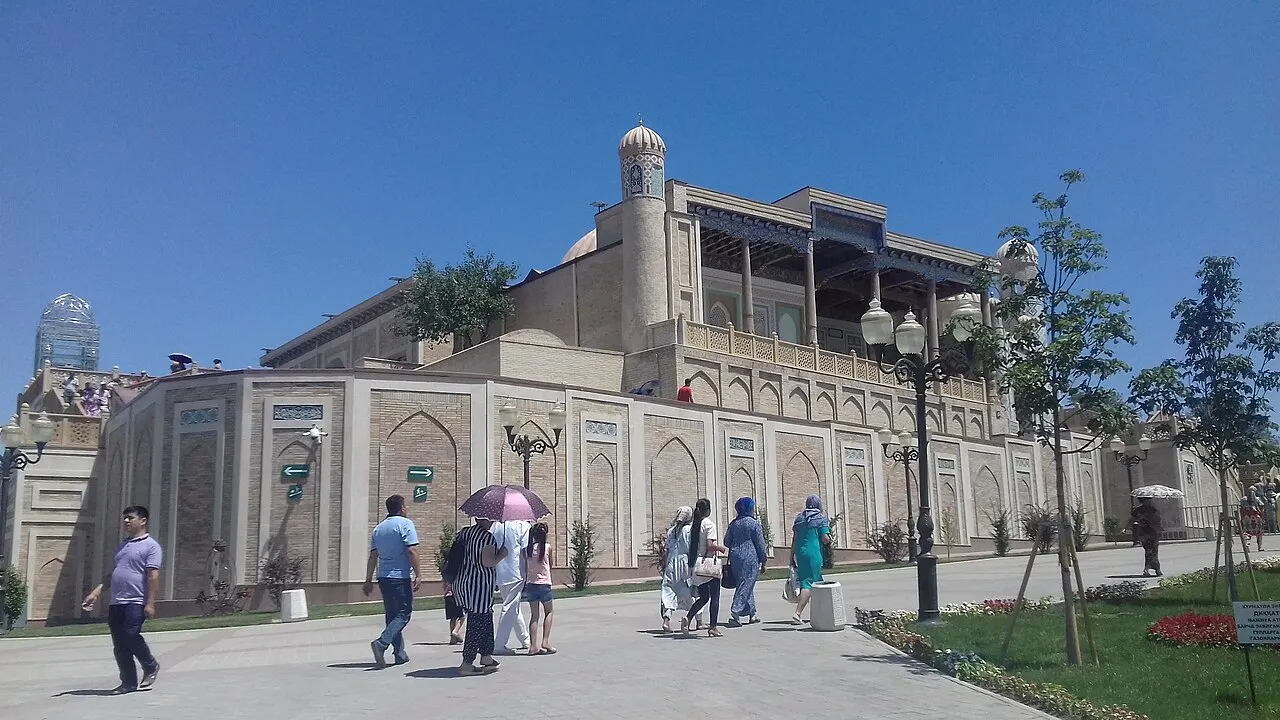
The mosque, on the south edge of Afrasiab, is a 19th-century rebuild on 8th-century foundations and has the most photographed wooden veranda in the city. Next to it stands the tomb of Islam Karimov (1938–2016), Uzbekistan's first president, open to the public since 2017 and with a steady line of local visitors.
The kilometer between Registan square and the Bibi-Khanym mosque became a pedestrian street in 2018 to 2019, with shops, cafés, and tourist police.
Check access
Khoja Doniyor mausoleum
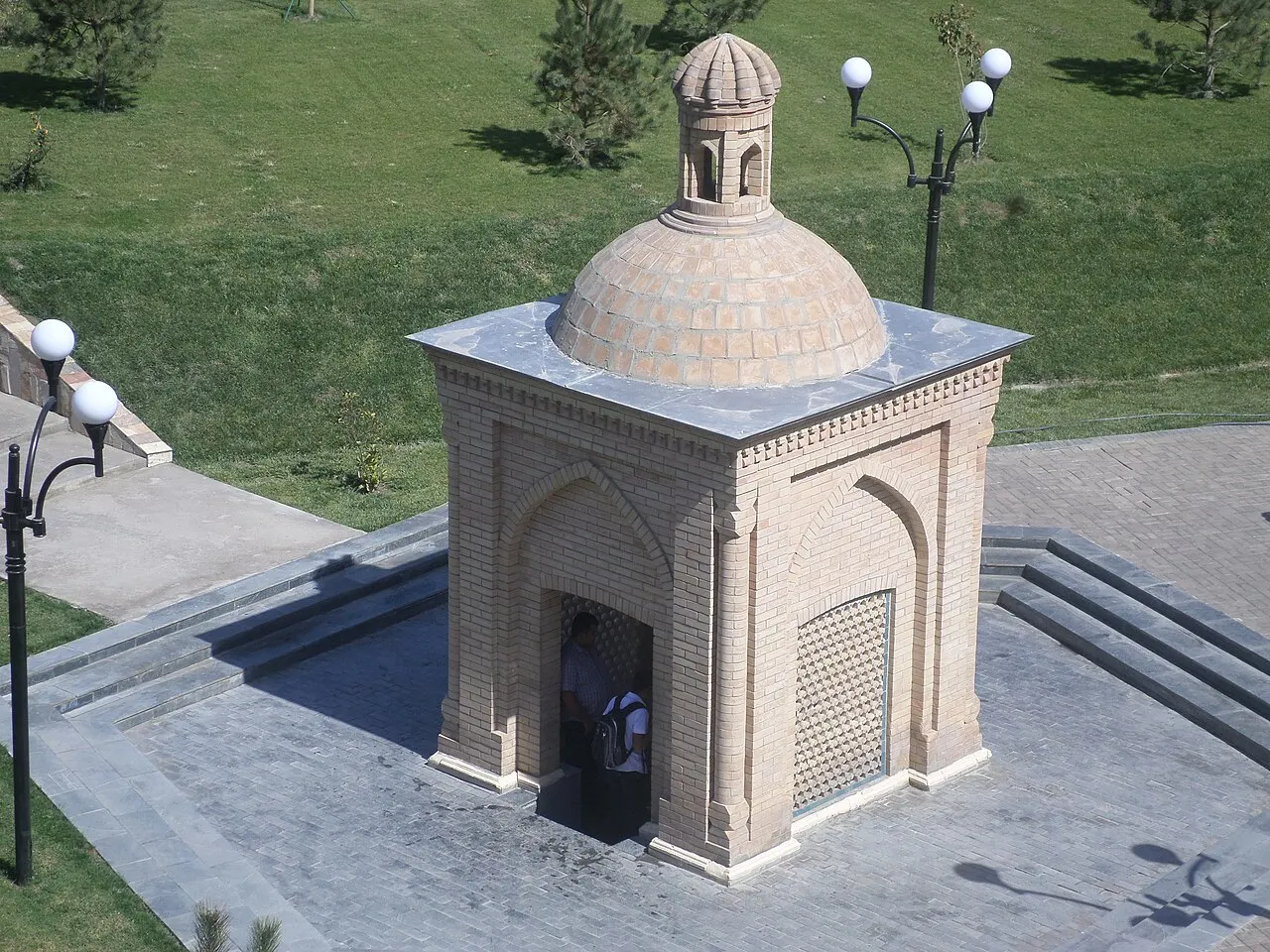
On the bank of the Siab river, below Afrasiab. Houses an 18 m cenotaph linked to the prophet Daniel; local legend says the body keeps growing, which is why the sarcophagus was extended over time. It's visited by Muslims, Christians, and Jews alike, and has a spring and an old mulberry tree beside it.
On the bank of the Siab river, below Afrasiab, there's an 18 m cenotaph linked to the prophet Daniel; the sarcophagus kept being extended because, as the story goes, the body never stops growing, and the place welcomes Muslims, Christians, and Jews and has a spring.
Check access

Bibi-Khanym mosque
Built between 1399 and 1404 with the spoils of Timur's Indian campaign. It was too ambitious for the engineering of the time and began collapsing within decades; the heavy reconstruction dates from 1974 onward. In the courtyard stands the marble lectern commissioned by Ulugh Beg.
What stands today is the heavy reconstruction from 1974 onward, and it shows up close. Twenty minutes is enough, and mornings are better, when the courtyard still has shade.
Check access
Nilo’s itinerary
Start with the basic programme and choose extensions for the time you have.
Plan my days in the app ↗Day 1 · The Timurid axis
8am: Registan at opening, before the heat and the tour buses. Admission around 100,000 som; step into Tilya-Kori's gold hall and look up at the sun-tigers on the Sher-Dor's facade.
10:30am: Gur-e-Amir, 900 m to the southwest. The green jade slab over Timur's tomb broke in two in 1740, and the repair is visible; Ulugh Beg is buried alongside him. Stop by the Ruhobod, from the 1380s, a hundred meters away.
Have osh for lunch at 12:30pm at a neighborhood oshxona: Samarkand plov comes in layers, with the meat on top, and runs out at 2pm.
In mild weather, walk through the Russian town at 3:30pm along Universitet xiyoboni, shaded by plane trees, and taste wines at Khovrenko winery, opened in 1868. In summer, leave the walk until after 5pm and check whether the winery’s opening hours allow you to combine the visits.
Go back to the lit-up Registan at 8pm; in some months there's a light show projected onto the three facades.
Day 2 · Afrasiab, the bazaar, and the stars
Start at 8am at the Bibi-Khanym mosque and look for Ulugh Beg's marble lectern in the courtyard.
9:30am: Siab bazaar, across the street. Buy dried apricots, navat, kurt, and a stamped non to take with you, and taste before settling the price; the warm bread straight from the tandyr goes to whoever arrives before 7am.
11am: Shah-i-Zinda, the corridor of mausoleums from the 11th to 19th centuries around the tomb of Kussam ibn Abbas. Count the steps going up and coming down.
In mild weather, climb to Hazrat Khizr mosque at 1pm, on the edge of the plateau, and visit the neighboring mausoleum of Islam Karimov (1938–2016). In summer, avoid this time: make the walk before 10am or after 5pm, checking the opening hours of both sites.
At 4pm, visit the Afrasiab museum, with the 7th-century Sogdian murals found in 1965, and the Ulugh Beg observatory, with the arc of the sextant dug into the rock.



Food
 AI illustration
Samarkand non (obi non)
A round bread baked stuck to the wall of the tandyr, with a sunken center stamped by the chekich, a nail-studded seal. It's denser and saltier than Tashkent's non and dries without going moldy, which gave it a reputation for lasting months. Buy it warm at Siab, in the morning.
 AI illustration
Samarkand-style osh (plov)
Different from Tashkent's: the rice isn't mixed, it sits in layers, with yellow and orange carrot, chickpeas, raisins, and the mutton laid on top just before serving. It's a lunch dish: after 2pm the pot's empty.
 AI illustration
Shashlik
Mutton skewers over coals, alternating meat and fat, and lyulya, the ground-meat-and-onion version. They're served on bread, with raw sliced onion and vinegar. It's the evening dish, once the lunch places have closed.
 AI illustration
Samsa
A baked pastry stuck to the wall of the tandyr, filled with chopped mutton, onion, and tail fat. It comes out in batches; wait for the next one instead of buying one that's gone cold. The flaky-pastry version is more common around the bazaar.
 AI illustration
Lagman
Hand-pulled noodles, of Uyghur and Dungan origin, served as soup (suyuq) or stir-fried with vegetables and meat (quruq). It's the go-to when you're tired of rice, and usually the cheapest dish on the menu.
 AI illustration
Manti and chuchvara
Large steamed dumplings with mutton and onion (manti), and small dumplings served in broth or fried (chuchvara). They come with katyk, a sour yogurt, or with cream.
 AI illustration
Kok choy and the teapot ritual
Green tea is the summer standard, black in winter. Whoever serves it pours the brew out and back into the pot three times before the first cup, and always fills the cup only halfway. A pot costs 5,000–10,000 som and buys unlimited table time.
 AI illustration
Dried fruit, kurt, and halva
Dried apricots, green raisins, kurt, the small balls of dried salted curd, and halva are the bazaar purchase that survives the trip home: taste a piece before you close the bag.
Day trips
Shakhrisabz
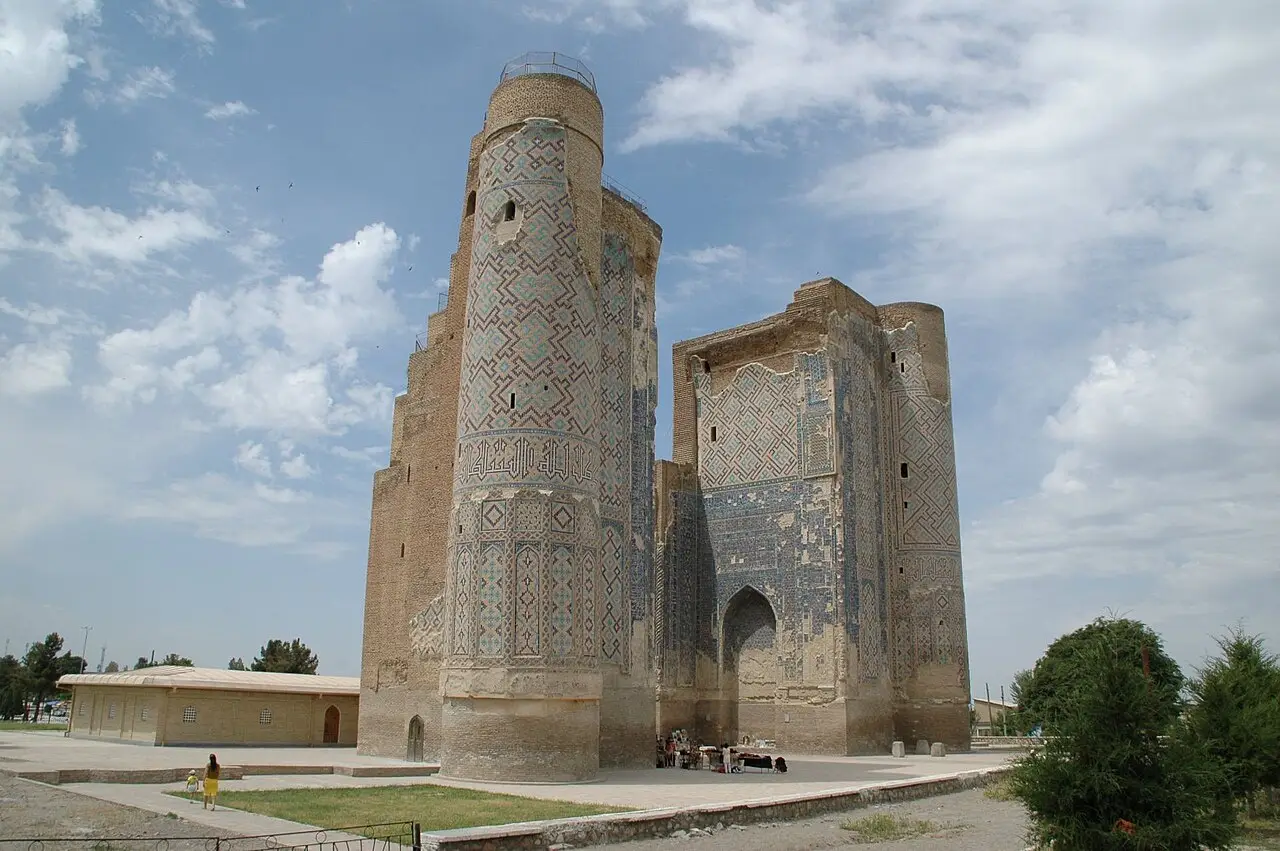
85 km to the south, about 2 hours by car over the Takhtakaracha pass (1,675 m). Timur's hometown: what's left is the portal of the Ak-Saray palace (1380–1405), about 38 m tall, along with the Dorut Tilovat complex and the mausoleum of Jahongir. Shared taxis leave from the southern terminal; set aside the whole day.
Urgut
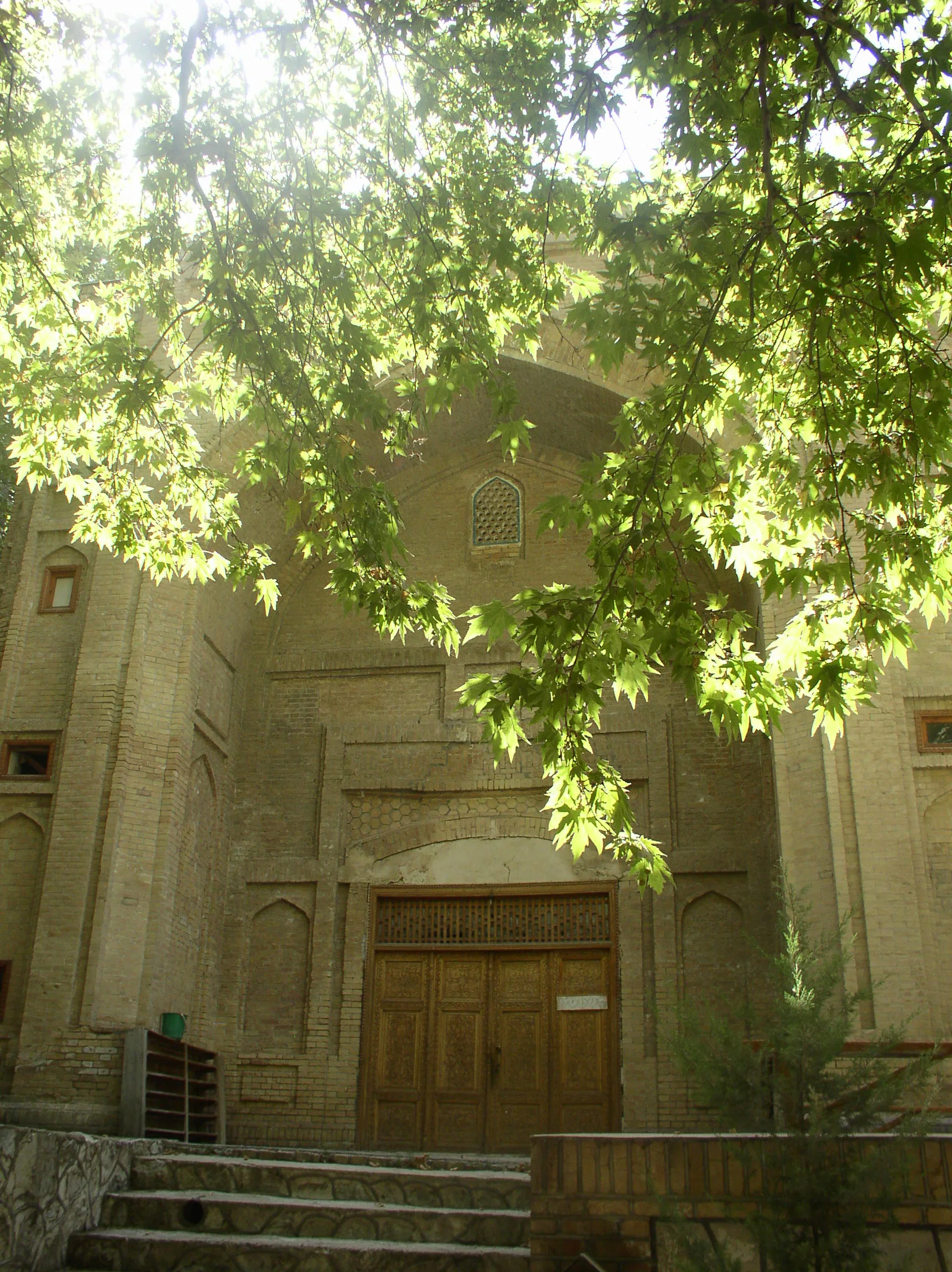
Urgut, 45 km away and about an hour by car, is the town of the weekend market, where you can hunt for suzani embroidery, fabrics and antiques until noon. Nearby is the Chor-Chinor grove of centuries-old plane trees.
Bukhara
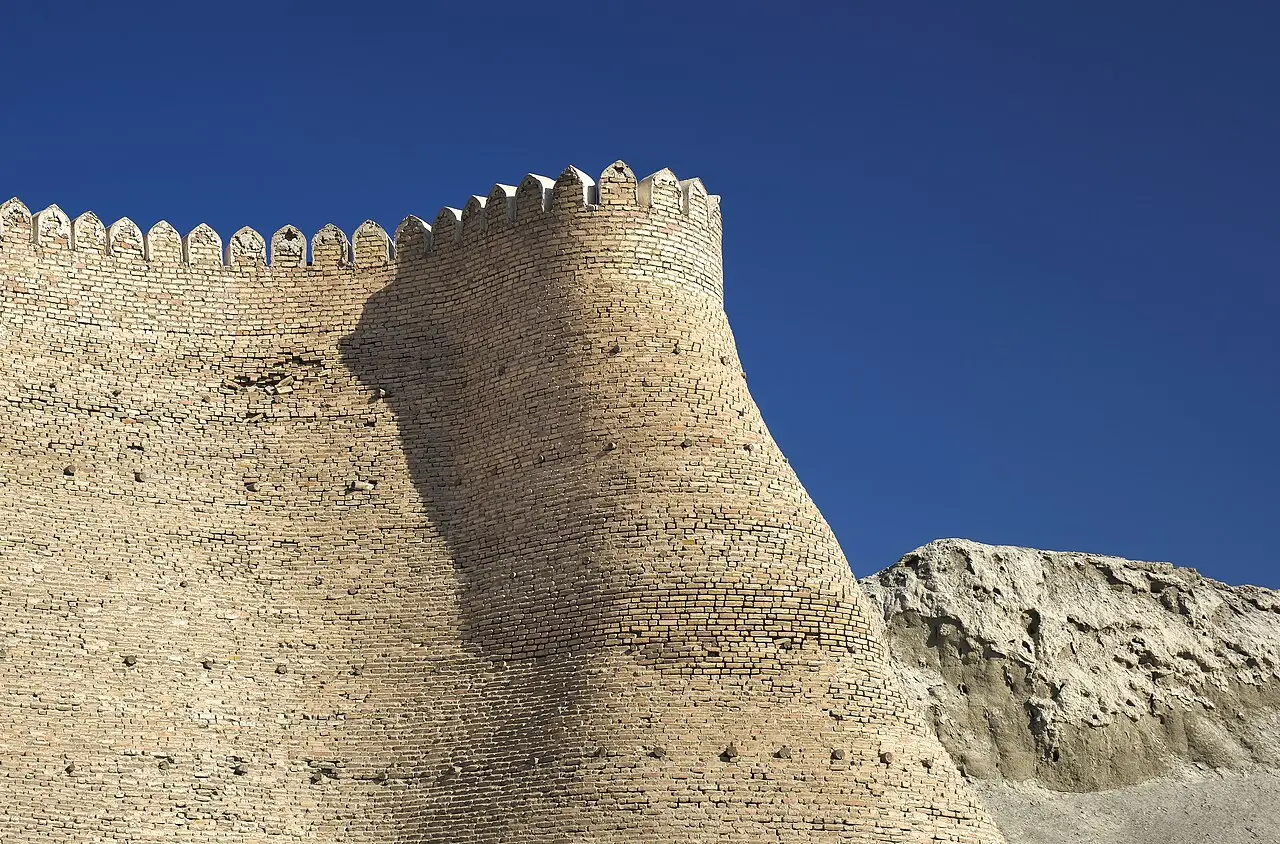
270 km to the west, 1 hour 30 minutes on the Afrosiyob. It fits as a tight day trip, but the old town (Poi Kalyan, Lyabi-Hauz, the Ark fortress, and the 10th-century Samanid mausoleum) deserves at least one night.
Where to begin
The Timurid axis
8am: Registan at opening, before the heat and the tour buses. Admission around 100,000 som; step into Tilya-Kori's gold hall and look up at the sun-tigers on the Sher-Dor's facade.
Afrasiab, the bazaar, and the stars
Start at 8am at the Bibi-Khanym mosque and look for Ulugh Beg's marble lectern in the courtyard.
Crafts, villages, and the last light
At 9am, go to the village of Konigil, 8 km northeast, where the Meros workshop makes mulberry paper again with a water mill, following the 8th-century technique.
Money
The currency is the Uzbek som (UZS), in bills from 1,000 to 200,000, so count the zeros calmly at the counter. In 2026 the dollar is worth around 11,800 som and the Brazilian real somewhere near 2,200 som (check the day before). Since the 2017 currency liberalization there's no longer a black market: change money at a bank or an official exchange office and ignore anyone offering a better rate on the street. ATMs from Kapitalbank, NBU and Ipoteka accept Visa more often than Mastercard, and some dispense dollars. Real ranges: tea with bread at a chaikhana 10,000–15,000 som; a plate of plov 30–50 thousand; a meal at a neighborhood oshxona 40–70 thousand; dinner at a tourist-oriented restaurant 100–200 thousand; a guesthouse with breakfast 250–450 thousand a night; a four-star hotel 700,000 to 1.2 million. Cards work in hotels and restaurants in the center; the bazaar, street taxis and monument ticket offices want cash. There's no tipping tradition, and tourist restaurants already add a 10% service charge to the bill.
Getting there and around
Airport: 6 km northeast, new terminal since 2022
Samarkand International Airport (SKD) has had a new terminal since March 2022, sits about 6 km northeast of the center and is a 15- to 20-minute taxi ride for 30,000–50,000 som. There are direct flights from Tashkent (1 hour), Istanbul, Dubai, Almaty, Moscow and Jeddah. The most common way to arrive, though, is by train, and it's the one I'd choose: the Afrosiyob (Talgo 250) covers Tashkent–Samarkand in 2 hours 5 minutes to 2 hours 20 minutes, with economy at around 300,000 som in 2026, and continues to Bukhara in another 1 hour 30 minutes. The Sharq and Registon trains cover the same stretch in 3 hours to 3 hours 30 minutes for much less. Buy ahead at chipta.railway.uz or in the railway app. The station is about 5 km west of the Registan and requires a taxi on arrival.
Buses and trams, two thousand som a ride
Buses and trams run within the city; the tram service opened in 2017. A ride costs around 2,000 som, paid in cash or by card at the validator, and there is no integrated tourist ticket to buy. In practice, almost every visitor uses Yandex Go: urban rides cost 12 to 25 thousand som, with the fare fixed before boarding. A street taxi is any car that stops when you raise your hand. Always agree on the price beforehand, never afterward. The monumental center is walkable: from Registan to Bibi-Khanym and Siab bazaar is about 1 km along a pedestrian promenade; from there to Shah-i-Zinda, another 800 m. From Registan to Gur-e-Amir, it is 900 m in the opposite direction. Bicycles are rare and traffic makes little room for them; in summer, walk before 10am and after 5pm, avoiding the middle of the day.
Safety
Violent crime in Samarkand is very low, street theft is rare and walking at night through the center and along the Registan promenade is routine. The real risks are traffic, heat and the taxi without an agreed fare. Traffic: pedestrians don't have right of way, and crossing outside a crosswalk with lights is the main cause of accidents involving foreigners. Wait until the car has really stopped before trusting it. Heat: in July and August, 35–40 °C of dry air dehydrates you without warning, so that means 3 liters of water a day, a hat and a break from 12 to 4pm. Don't drink tap water; use bottled water, including for brushing your teeth if your stomach is sensitive. The most common scam is the taxi without an agreed fare, which triples at the end of the ride: settle the price before getting in or use Yandex Go. Changing money with strangers is illegal and hasn't been worth it since 2017. The police are visible and honest; carry a copy of your passport and keep the proof of accommodation, the registratsiya, which hotels and guesthouses issue automatically. Checks have become rare, but the rule is still in force. Photographing military installations and government buildings is forbidden, and that's a subject nobody here jokes about.
Etiquette tips
Non bread never goes face down
Non bread is torn by hand, never cut with a knife, never set down with the stamp facing down and never thrown away. Leave leftover bread on the low wall set aside for it, not in the trash.
The teacup comes half full
A cup filled to the brim is the polite way of saying it's time to go.
Shoes off in working mosques and in homes
At the Registan's museum-madrasas you don't need to take your shoes off; at Hazrat Khizr, at Khoja Doniyor, and in any home you're invited into, you do. Bring socks without holes.
Right hand for greeting, left over the heart
When greeting someone, shake with your right hand and bring your left to your heart; between men, the handshake often comes with both hands. Men don't offer their hand to a woman unless she offers first, and a slight nod of the head is enough.
Ask before photographing people
At the bazaar people almost always agree with a gesture; older women tend to say no, and the no is final. Avoid photographing official buildings, barracks, and police posts.
Haggling has its place
Suzanis, rugs, ceramics and knives are negotiable, and the first price usually comes down 20–30%. Bread, fruit and food at the Siab bazaar have fixed prices, and haggling there comes across badly.
Mistakes to avoid
Samarkand as a day trip from Tashkent
Doing Samarkand as a day trip from Tashkent. The hours disappear fast: a same-day round trip on the Afrosiyob leaves about five hours in the city, and just the Registan–Bibi-Khanym–Shah-i-Zinda triangle eats up all of it.
Buying the Afrosiyob at the last minute
Buying a train ticket the same day. In high season (April–May, September–October) the Afrosiyob sells out one to two weeks in advance, and what's left is the slow train or a 4-hour shared taxi.
Carrying only a card
Carrying only a card. The nearest ATM could be 2 km from where your card fails, so always bring cash. The Siab bazaar, street taxis, monument ticket booths, and neighborhood chaikhanas only take cash.
Scheduling the Registan for midday
Seeing the Registan at midday, when the head-on light flattens the three tiled facades, which are exactly what you come to see. Arrive at 8am, at opening, or come back around 6:30pm, when the low sun hits the facades.
Assuming everyone speaks Uzbek
Assuming everyone speaks Uzbek. In Samarkand, Tajik is the home language for a large share of the population, and Russian is the common language across generations. To say thank you, “rahmat” works in Uzbek and in Tajik; in Russian you say “spasibo.”
Useful phrases
Assalomu alaykum
“peace be upon you,” the standard greeting (ah-sah-LOH-moo ah-lay-KOOM)
Rahmat
thank you: works in both Uzbek and Tajik (RAKH-maht)
Kechirasiz
excuse me, sorry (keh-chee-rah-SEEZ)
Qancha turadi?
how much does it cost? (KAHN-chah too-rah-DEE)
Yo'q, kerak emas
no, I don't need it: the polite refusal at the bazaar (YOHK, keh-RAHK eh-MAHS)
Bir piyola choy
one cup of tea (beer pee-yoh-LAH choy)
Districts
Registon and the pedestrian axis
The kilometer between Registan square and the Bibi-Khanym mosque became a pedestrian street in 2018–2019, with shops, cafés, and tourist police. It's where you spend half your time in the city, and where prices are tourist prices.
Old city (Siab and the mahallas)
Curved streets, blind mud walls, wooden gates, and inner courtyards northeast of the Registan, between the bazaar and Shah-i-Zinda. Tajik is spoken, the houses have no windows onto the street, and life happens in the courtyard. Walk in the morning.
Afrosiab
The 220 hectares of the pre-Mongol city, to the north: an earthen plateau with trails, open excavations, and the museum of Sogdian murals. There's no shade and no shops. Go early, with water.
Russian city (Universitet xiyoboni)
A fan-shaped grid dating from 1871, southwest of the Registan: wide avenues, plane trees, round squares, the university, cafés with wi-fi, and the shops where locals actually shop. This is Samarkand's everyday city.
Jewish quarter (Mahallai Yahudiyon)
Blocks between Khudjum street and the Registan where the Bukharan Jewish community lived, with the Gumbaz synagogue (1891) and double-fronted houses. Few families remained after the emigration of the 1990s; the architecture stayed.
Bogishamol and the microdistricts
Soviet residential blocks from the 1960s to 1980s to the south and east, with neighborhood markets, cheap oshxonas, and no tourists. It's where you eat plov at the local price.
Konigil and Motrid
Villages 6–8 km to the northeast, still within the municipality: a water mill, a mulberry-paper workshop, orchards, and silkworm raising. A fifteen-minute taxi ride, and a different scale of city.

Silk Road Samarkand (Ipak Yo'li)
A hotel and convention complex opened in 2022 to the east, with an artificial lake, eight hotels and the Eternal City. It was built for the September 2022 Shanghai Cooperation Organization summit and holds most of the city's international-standard hotels.
History
7th c. BC · Marakanda, Sogdian capital
A fortified settlement on the Afrasiab plateau, north of today's city. The walls enclosed about 220 hectares supplied by a canal drawn off the Zarafshan.
329 BC · Alexander takes the city
The Macedonian army occupies Marakanda on the way to the Oxus. It's at a banquet there that Alexander kills Cleitus the Black, his general.
712 · Arab conquest
Qutayba ibn Muslim takes Samarkand for the Umayyad caliphate. Over the following century Islam replaces the Sogdians' Zoroastrianism, Buddhism, and Manichaeism.
751 · Paper reaches the west
After the Battle of Talas, craftsmen tied to Chinese papermaking are said to have set up the first paper mill west of China in Samarkand. The city's paper supplies Baghdad for three centuries.
1220 · Genghis Khan razes Afrasiab
The Mongols destroy the channels that carried water up to the plateau, and Afrasiab is abandoned after eighteen centuries. The city is reborn lower down, where the Registan and Gur-e-Amir stand today.
1370–1405 · Timur's capital
Timur (Tamerlane) makes Samarkand the capital of an empire stretching from Ankara to Delhi and deports here the craftsmen of the cities he destroys. Bibi-Khanym and Gur-e-Amir date from this period.
1409–1449 · Ulugh Beg and the observatory
Timur's grandson rules as an astronomer. His meridian sextant, with a 40 m radius, produces the Zij-i Sultani catalog of 1,018 stars in 1437. He is assassinated in 1449 on his own son's order.
1619–1660 · The Registan gets its three façades
Yalangtush Bahodur has the Sher-Dor (1619–1636) and Tilya-Kori (1646–1660) madrasas built facing Ulugh Beg's. Only then does the square gain the three facades seen today.

1868 · Russian conquest
General Kaufman's troops take the city, and the Russian Empire builds a new town to the southwest with radial avenues. The Trans-Caspian railway arrives in 1888.

1925–1930 · Soviet capital
Samarkand is the capital of the Uzbek Soviet Socialist Republic for five years, until the capital moves to Tashkent in 1930. The big restoration of the monuments would come later, between the 1960s and the 1980s.

2001–2022 · Heritage and rebuilding
UNESCO inscribes “Samarkand: Crossroad of Cultures” in 2001. In 2022 the new airport terminal and the Silk Road Samarkand complex open, and the complex hosts the Shanghai Cooperation Organization summit that September.

Complete history
Marakanda, capital of Sogdiana
Samarkand begins as Marakanda, capital of Sogdiana, on the Afrasiab plateau, where the Siab canal secured water in a semi-arid valley. The Sogdians never built an empire: they were merchants running the Silk Road between China and Iran, with colonies in Turfan and Chang'an and their own trade language. The 7th-century murals found at Afrasiab in 1965 show Chinese, Korean and Turkic envoys arriving at the court of King Varkhuman. They're the most direct picture of what the city was like before Islam.
The Arab conquest reshapes religion and economy
The Arab conquest of 712 reshapes religion and the economy. After the Battle of Talas in 751, prisoners tied to Chinese papermaking are said to have set up the first paper mill west of China here; the product supplies Baghdad and becomes a byword for quality for three centuries. Under the Samanids, in the 9th and 10th centuries, the city is Persian in language and Muslim in faith. That double layer is why much of Samarkand still speaks Tajik at home and Uzbek at the counter today.
In 1220, the city moves to what is now the Registan
In 1220, Genghis Khan destroys the channels that carried water up to Afrasiab, and the plateau that had been inhabited for eighteen centuries is abandoned; the city is reborn lower down, on the ground of today's Registan. A hundred and fifty years later, Timur chooses Samarkand as his capital and forcibly brings in the craftsmen of the cities he was razing. Bibi-Khanym (1399–1404) was built with the spoils of the Indian campaign, including ninety elephants brought from Delhi, and began to crumble while still in the 15th century: it was too big for the building techniques of the time.
Ulugh Beg and the observatory (1409–1449)
Timur's grandson, Ulugh Beg, rules from 1409 to 1449 and devotes his reign to astronomy. His observatory, with a meridian arc 40 m in radius partly dug into the rock, produces the Zij-i Sultani in 1437, a catalog of 1,018 stars and a measurement of the sidereal year with an error of less than a minute. Before that, between 1417 and 1420, he builds on the Registan the madrasa that bears his name, the first of the square's three: Sher-Dor only comes to face it from 1619, and Tilya-Kori from 1646. Ulugh Beg is beheaded in 1449 on the orders of his own son, and the observatory is demolished; the ruins only come back to light in 1908, with the archaeologist Vasily Vyatkin.
Decline and Russian resettlement, from the 18th century to today
From the 18th century until 1868 the city shrinks and comes close to emptying out. It's the Russians who repopulate it: taken in 1868, it gains a new town to the southwest with fan-shaped avenues and plane trees, kept separate from the old one. Samarkand is capital of the Uzbek SSR between 1925 and 1930, loses the title to Tashkent, and spends the rest of the 20th century as a restoration site: much of the tilework you photograph today is Soviet reconstruction from the 1960s to 1980s. After 2017 the country opens its borders and drops visa requirements for dozens of nationalities, Brazil included. In 2018–2019, the stretch between the Registan and Bibi-Khanym became a pedestrian walkway, a project that demolished blocks of the old mahalla and drew conservation criticism, and since 2022 the city has had a new airport terminal and the Silk Road Samarkand complex.
To raise Bibi-Khanym, ninety elephants came from Delhi.
Geography and shape of the city
The Zarafshan valley and its water
Samarkand sits about 700 m above sea level, on terraces of the valley of the Zarafshan, a river that comes down from the Turkestan mountains and disappears into the desert before reaching the Amu Darya. The water is all mountain water, and all channeled, and the Siab canal is the reason a city exists at this spot. The climate is continental semi-arid: summers of 35–40 °C with no rain, winters of 0–8 °C with occasional snow, and about 330 mm of rain a year, concentrated between November and April.
Layers of the city: Afrasiab, Timurid, and Russian
Samarkand has three layers, from north to southwest. To the north is the Afrasiab plateau, where the ancient city stood until 1220, today an open expanse you can walk across. In the middle, around the Registan, are the Timurid complexes and the mahallas, with windowless mud walls and Tajik spoken at home. To the southwest, the district planned by Russian engineers after 1871 has fan-shaped avenues, wide streets and plane-tree shade laid out on purpose.
The Zarafshan mountains and the Takhtakaracha pass
The Zarafshan mountains show up to the south on clear days and mark the Takhtakaracha pass, at 1,675 m, where the road to Shakhrisabz crosses.
Culture
Uzbek on the signs, Tajik in the old city's speech
Samarkand is bilingual in a way that doesn't show on the signs. Uzbek is the official language and has been written in the Latin alphabet since 1993, with Cyrillic still on walls and menus, but much of the old city speaks Tajik, a form of Persian, at home, and Russian remains the everyday language of commerce across generations. Islam here is Sunni of the Hanafi school, practiced quietly: the Registan's madrasas are museums, and the neighborhood mosques are the ones in actual use. Until the 1970s there was a large Bukharan Jewish community around Khudjum Street, with the Gumbaz synagogue (1891) still standing; nearly all of it emigrated after 1991.
Shashmaqom and the six maqams
The local classical music is shashmaqom, a cycle of six maqams sung with tanbur, doira, and ghijak, recognized by UNESCO in 2003. At weddings, though, what you hear at the door is the karnay, a straight horn up to two meters long, with surnay. The living crafts have addresses: suzanis embroidered in basma stitch, mulberry paper remade in Konigil village since the 1990s by the Mukhtarov family following an 8th-century technique, and turquoise-glazed ceramics. The city has also made wine since 1868, when the merchant Dmitri Filatov opened the factory now known as Khovrenko, which keeps a tasting room.
The mahalla and the night that ends early
Life in the old city is organized around the mahalla, the neighborhood of windowless mud walls where Tajik is spoken at home, and it's there that, at Navruz, people cook sumalak, a wheat-sprout paste stirred all night long in a communal cauldron. The street, on the other hand, turns in early: around 10pm the center empties and only the shashlik embers are left, and the evening program comes down to the lit-up Registan and the Silk Road Samarkand complex.
At Shah-i-Zinda, the custom is to count the steps on the way up and on the way down: if you get the same number, you're an honest person.
The ribbed dome of the Gur-e-Amir mausoleum, where Timur lies, has 64 ribs.
Festivals and events
 AI illustration
Navruz
March 21, the Persian new year and a national holiday. In the mahallas people cook sumalak, a wheat-sprout paste stirred all night in a communal cauldron, and there are shows in the squares and kupkari on the outskirts.
Sharq Taronalari (Melodies of the Orient)
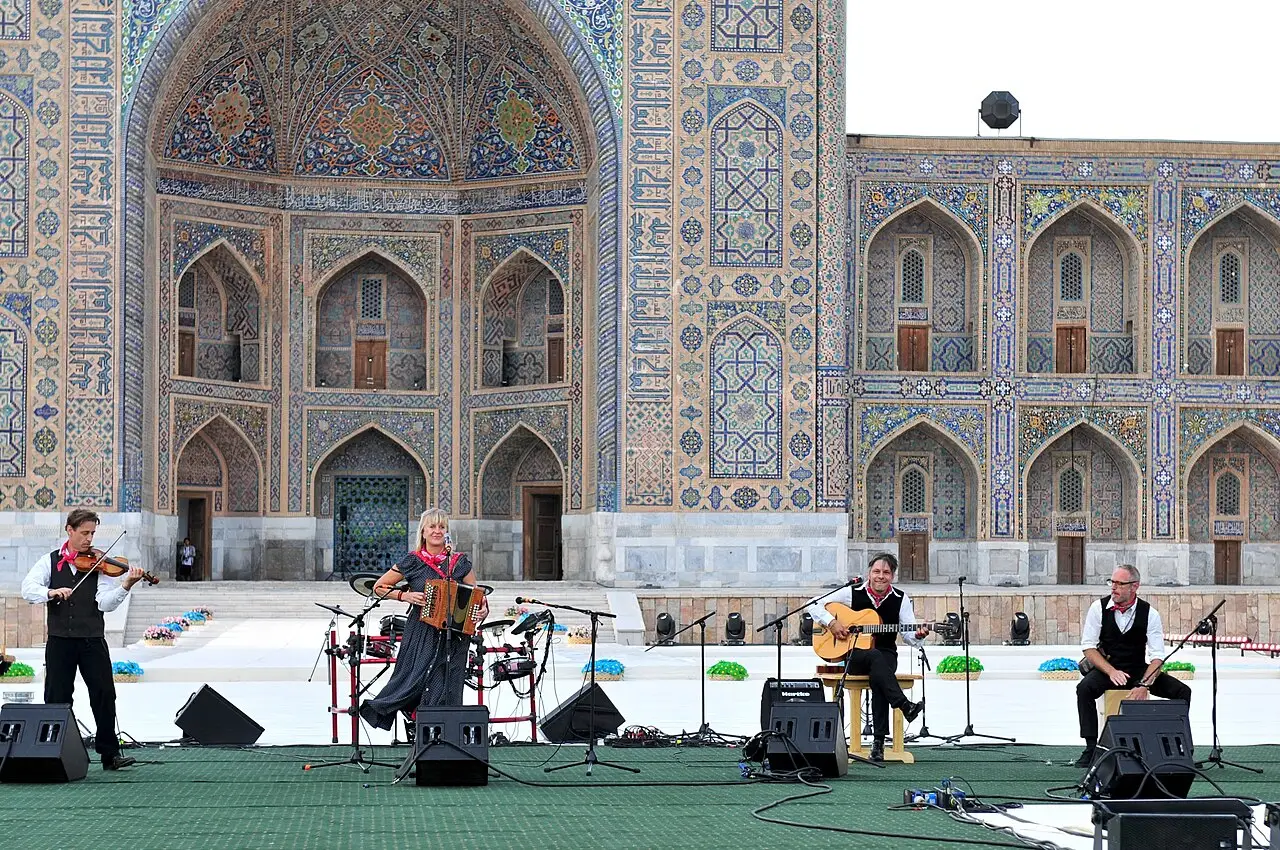
An international music festival founded in 1997, traditionally held every two years, with a stage on Registan Square. The 2024 edition ran from August 26–30; interruptions to the calendar mean that alternating years cannot predict the next date. Check the official program before planning your trip.
 AI illustration
Ramazon Hayit and Qurbon Hayit
The two Islamic holidays, on moving dates set by the lunar calendar, are national holidays. Families visit relatives and cemeteries early in the day, and many shops close for a day or two.
 AI illustration
Independence Day
September 1, with a parade, a concert, and fireworks. It coincides with the start of the busy autumn season, and downtown hotels fill up that week.
 AI illustration
Kupkari (ulak)
From December to March, on weekends, in villages of the Zarafshan valley: dozens of riders compete for a goat carcass in an open field. There's no published schedule. Ask at your hotel the day before.
Books and films
Samarkand, by Amin Maalouf (1988)
A novel that follows the manuscript of Omar Khayyam's rubaiyat from the 11th century to the sinking of the Titanic. It explains the city's Persian and scientific side better than any guidebook.
The Lost Heart of Asia, by Colin Thubron (1994)
A journey through Central Asia right after the fall of the USSR. The Samarkand chapter shows a city caught between Soviet restoration and a newly invented country.
The Star of Ulugbek, by Latif Faiziyev (1964)
A film from the Uzbekfilm studio about the astronomer-ruler and his fall in 1449, shot at the actual monuments before the major restorations.
Frequently asked questions
Samarkand: Do you need to buy the Afrosiyob train ticket in advance?
Yes, in high season: in April, May, September, and October the Afrosiyob sells out one to two weeks ahead, and what's left is the slow train or the 4-hour shared taxi.
Samarkand: What's the local currency?
The currency is the Uzbek som (UZS), in notes from 1,000 to 200,000, so count the zeros calmly at the counter.
Samarkand: What's the best time to go?
April and May are the best window: 20 to 28 °C, apricot and pomegranate trees in bloom, everything open.
Samarkand: What etiquette applies to non bread at the table?
Non bread is torn by hand, never cut with a knife, never set down stamp-side down, and leftovers are never thrown in the trash. Leave leftover bread on the little wall set aside for that, not in the garbage.
Samarkand: Is it safe to walk around the center at night?
Violent crime in Samarkand is very low, street theft is rare, and walking at night through the center and along the Registan promenade is routine.


