
United Arab Emirates
Dubai
Creek boats, gold souk, an 828 m tower and dunes
Days Start with the basic programme and choose extensions for the time you have.
How the guide reaches this number
With a third, follow the Jumeirah coast, the Al Quoz galleries, and the desert. Don't come looking for a historic center, because all that's left of the past is the 1787 fort and the lanes of Al Fahidi, which fit into a morning. Anyone expecting street life finds malls instead, since from June to September that's where people stroll. With 24 hours, stay on the old side: start in Al Fahidi at 8am, cross the Creek by abra for 1 AED and, at the Gold Souk, ask for the price of the piece and the price of the workmanship separately. Have biryani for lunch for 15 to 25 AED at a cafeteria in Naif and end the day at the Downtown fountain, which goes off every 30 minutes until 11pm. The Museum of the Future closed in mid-September 2026 for renovation, with reopening expected in the first quarter of 2027, and until then the building can only be seen from outside. In summer, from June to September, highs top 40°C, and walking on the sidewalk only becomes possible again in November.
2–3
When November to March; December, January, and February are the months you live outdoors
How the guide reaches this number
The year here splits in two, not four. From November to March, highs run between 24 °C and 30 °C, lows between 14 °C and 19 °C, the sea is around 23 °C and you can stay outdoors all day: this is high season, with the priciest room rates between December and February and during the Dubai Shopping Festival. From June to September, highs run between 40 °C and 45 °C, with peaks above 48 °C and humidity topping 80% at night. Avoid July and August if you want to walk the streets; they're also the months when room rates fall by almost half and the malls become the city's real public space. April, May and October are transition months: still hot, but with better prices and empty beaches. It rains very little, about 90 to 100 mm a year, concentrated between December and March, but when it rains the city floods: on April 16, 2024, about 250 mm fell in a single day, the most since records began in 1949, and the airport and highways shut down for two days. Between March and August, shamal winds kick up dust and cut visibility for one or two days at a time, until the sky turns a washed-out gray.
Per person/day Budget 250–400 AED (about US$70–110); mid-range 600–900 AED; comfortable from 1,500 AED, not counting hotel fees
How the guide reaches this number
Per person per day: accommodation, meals, urban transport, visits and a small allowance for extras. Flights excluded; larger purchases vary. Editorial estimate, not a quote.
 What Nilo thinks
Give Dubai two days: one for the Creek, the souks, and Al Fahidi, another for Downtown and the Burj Khalifa. With a third, follow the Jumeirah coast, the Al Quoz galleries, and the desert. Don't come looking for a historic center, because all that's left of the past is the 1787 fort and the lanes of Al Fahidi, which fit into a morning. Anyone expecting street life finds malls instead, since from June to September that's where people stroll. With 24 hours, stay on the old side: start in Al Fahidi at 8am, cross the Creek by abra for 1 AED and, at the Gold Souk, ask for the price of the piece and the price of the workmanship separately. Have biryani for lunch for 15 to 25 AED at a cafeteria in Naif and end the day at the Downtown fountain, which goes off every 30 minutes until 11pm. The Museum of the Future closed in mid-September 2026 for renovation, with reopening expected in the first quarter of 2027, and until then the building can only be seen from outside. In summer, from June to September, highs top 40°C, and walking on the sidewalk only becomes possible again in November.Dubai begins at the Creek, the 14 km inlet you cross in a wooden abra for one dirham, between the coral-stone lanes and wind towers of Al Fahidi and the gold and spice souks of Deira. Almost everything else was built after oil was discovered in 1966: towers, malls, and a metro in a city where nearly nine in ten residents are foreign. In Downtown, the Burj Khalifa reaches 828 m over the fountain lake, and the 321 m sail of the Burj Al Arab is visible for free from the public beach at Umm Suqeim. Eat at the cafeterias of Karama and Naif, with biryani for 15 to 25 AED and one-dirham karak. The 1979 Jumeirah Mosque welcomes non-Muslims on guided tours with coffee and dates. Come from November to March and give Dubai two days, or three for the Jumeirah coast and the desert.
Quick facts
- Population
- about 4.7 million in the emirate (real-time census, July 2026); about 6.4 million during the day; about 11 million in the Emirates; 85–90% are foreigners
- Founded
- Settlement mentioned in text in 1095; the Al Maktoum dynasty settles on the Creek in 1833
- Country and region
- United Arab Emirates: emirate of Dubai, one of the seven in the federation created on December 2, 1971
- Language
- Arabic is official; English is the language of work and the street; Hindi, Urdu, Malayalam, and Tagalog dominate entire neighborhoods
- Currency
- UAE dirham (AED), pegged to the dollar
- Time zone
- Gulf Standard Time, UTC+4, no daylight saving
- Best time to visit
- November to March; December, January, and February are the months you live outdoors
- Average daily cost
- Budget 250–400 AED (about US$70–110); mid-range 600–900 AED; comfortable from 1,500 AED, not counting hotel fees
When to go
November to March; December, January, and February are the months you live outdoors
April
22° to 34°C
3 mm of rain
May
26° to 38°C
0 mm of rain
June
29° to 40°C
0 mm of rain
July
31° to 42°C
1 mm of rain
August
32° to 42°C
0 mm of rain
September
29° to 40°C
0 mm of rain
October
25° to 36°C
2 mm of rain
How the year changes
The year here splits in two, not four. From November to March, highs run between 24 °C and 30 °C, lows between 14 °C and 19 °C, the sea is around 23 °C and you can stay outdoors all day: this is high season, with the priciest room rates between December and February and during the Dubai Shopping Festival. From June to September, highs run between 40 °C and 45 °C, with peaks above 48 °C and humidity topping 80% at night. Avoid July and August if you want to walk the streets; they're also the months when room rates fall by almost half and the malls become the city's real public space. April, May and October are transition months: still hot, but with better prices and empty beaches. It rains very little, about 90 to 100 mm a year, concentrated between December and March, but when it rains the city floods: on April 16, 2024, about 250 mm fell in a single day, the most since records began in 1949, and the airport and highways shut down for two days. Between March and August, shamal winds kick up dust and cut visibility for one or two days at a time, until the sky turns a washed-out gray.
The same numbers as a table
| Month | Temperature °C | Rain mm |
|---|---|---|
| January · | 15 to 24 | 21 |
| February · | 16 to 26 | 10 |
| March · | 19 to 29 | 22 |
| April | 22 to 34 | 3 |
| May | 26 to 38 | 0 |
| June | 29 to 40 | 0 |
| July | 31 to 42 | 1 |
| August | 32 to 42 | 0 |
| September | 29 to 40 | 0 |
| October | 25 to 36 | 2 |
| November · | 21 to 31 | 6 |
| December · | 17 to 27 | 15 |
Nilo's tips
Cross the Creek by abra for one dirham, before 9am
Before 9am the light is still low and the boat is full of locals on their way to work. Bring coins, because the wooden abra's boatman has no card machine and the Nol card only works on the motorized abras.
Buy the Nol at the first station you set foot in
The same card works on the metro, the tram, the bus, and the motorized abra. The Nol Silver costs 25 AED, 19 of which already come as credit. If you're arriving via DXB, buy the card at the Terminal 1 or 3 station. From there, Union or Burjuman are about 10 minutes away, for under 8 AED.
Go up the Burj Khalifa at the first slot, not between 4pm and 7pm
At the first slot you pay the lowest rate, get clear air before the dust rises, and don't fight for the glass. Between 4pm and 7pm, everyone wants to go up to watch the sunset. Book days ahead. Floor 148, at 555 m, is higher, but the view doesn't improve.
Install Botim before you board
The local network blocks voice and video calls on WhatsApp, FaceTime, and Skype. Many people only find out on arrival, when they try to say they've landed. Install an app licensed in the Emirates, such as Botim, while you're still at home, or rely on international roaming. Text messages and data keep working normally; only calls drop.
The hotel bill runs 25% to 30% above the nightly rate
VAT, the municipal fee, the service charge, and the Tourism Dirham add on top of the advertised rate, and the total only shows up at checkout. Compare hotels by the total, asking for the final price in writing before you book.
Weekend: Saturday and Sunday
Many Alserkal Avenue galleries, in Al Quoz, close on Sunday, each with its own hours. If art is the reason to go to Al Quoz, plan the visit for Monday to Saturday and check the gallery on the Alserkal website before heading out. Friday, contrary to what many people assume, is a workday.
Explore the map

© OpenStreetMap · OpenFreeMap · © OpenMapTiles
Explore the map, read about the other places and plan your travel days in the app.
Open the appWhat to see
Dubai: The desert strip and the inlet
Palm Jumeirah (about 5 km², reclaimed between 2001 and 2006), Bluewaters, and the Burj Al Arab's island are all land reclaimed from the sea. The north bank of the Creek and the oldest commercial core, with the Gold Souk (about 380 shops), the Spice Souk, the Waterfront Market, and the dense Naif district.
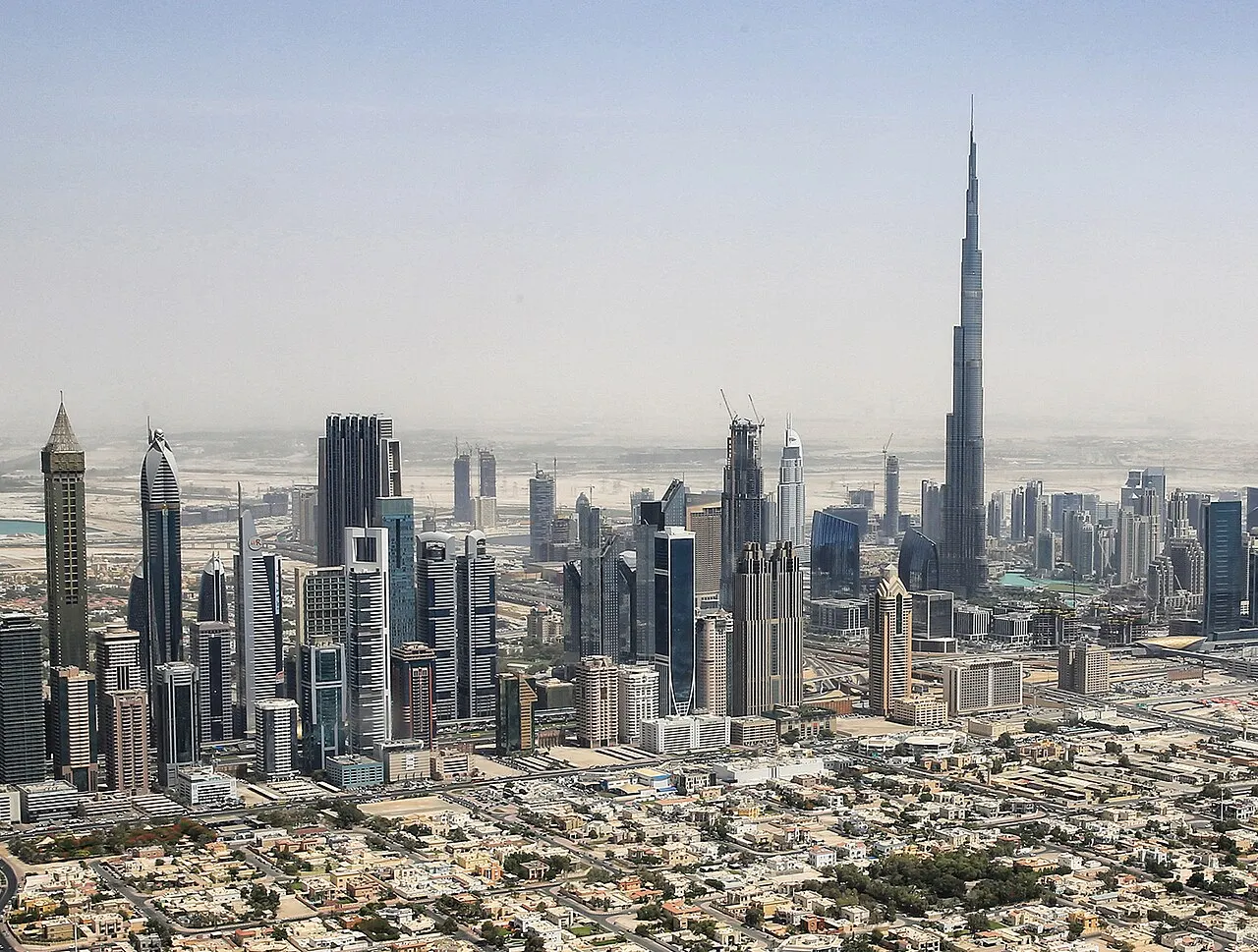
Burj Khalifa
A 828 m tower with 163 habitable floors, inaugurated on January 4, 2010, designed by Adrian Smith at SOM with a Y-shaped structure inspired by the Hymenocallis flower. The observation deck on floors 124 and 125 costs about 173 AED off-peak and about 250 AED between 4pm and 7pm; floor 148, at 555 m, runs over 400 AED. Buy days ahead.
The 828 m tower, with 163 habitable floors, has observation decks whose price rises between 4pm and 7pm, and tickets call for buying days ahead.
Check access

Dubai Mall and the fountain
A mall of about 1,200 shops and more than 100 million visits a year, with an aquarium holding 10 million liters and an ice rink. On the outdoor lake, the Dubai Fountain shoots water up to 150 m across a 275 m pool, every 30 minutes from early evening until 11pm; it was renovated in 2025.
The mall combines shops, a huge tank, and an ice rink, and outside the water shoots up at night; about 1,200 shops; jet up to 150 m.
Check access

Al Fahidi and the 1787 fort
A maze of 3 m alleys between coral-and-gypsum houses built by Persian merchants starting in the 1890s, with dozens of barjeel, the wind towers that cooled rooms before electricity. The Al Fahidi fort, from 1787, is the city's oldest building and houses the Dubai Museum, closed for restoration in recent years: confirm the reopening before going.
The fine-grained layout shows how the heat was beaten without machines, in the merchants' houses; 3 m alleys; the 1787 fort.
Check access

Deira souks and the abra crossing
The Gold Souk holds about 380 merchants and routinely displays pieces weighing dozens of kilos; the price per gram is set by the international market, and what gets negotiated is the labor. You get there by boat: the wooden abra crosses the Creek between Bur Dubai and Deira in about 5 minutes for 1 AED handed straight to the boatman.
The metal's price follows the world market, and the only thing negotiated is the labor, after a short boat crossing; about 380 merchants; abra for 1 AED.
Check access
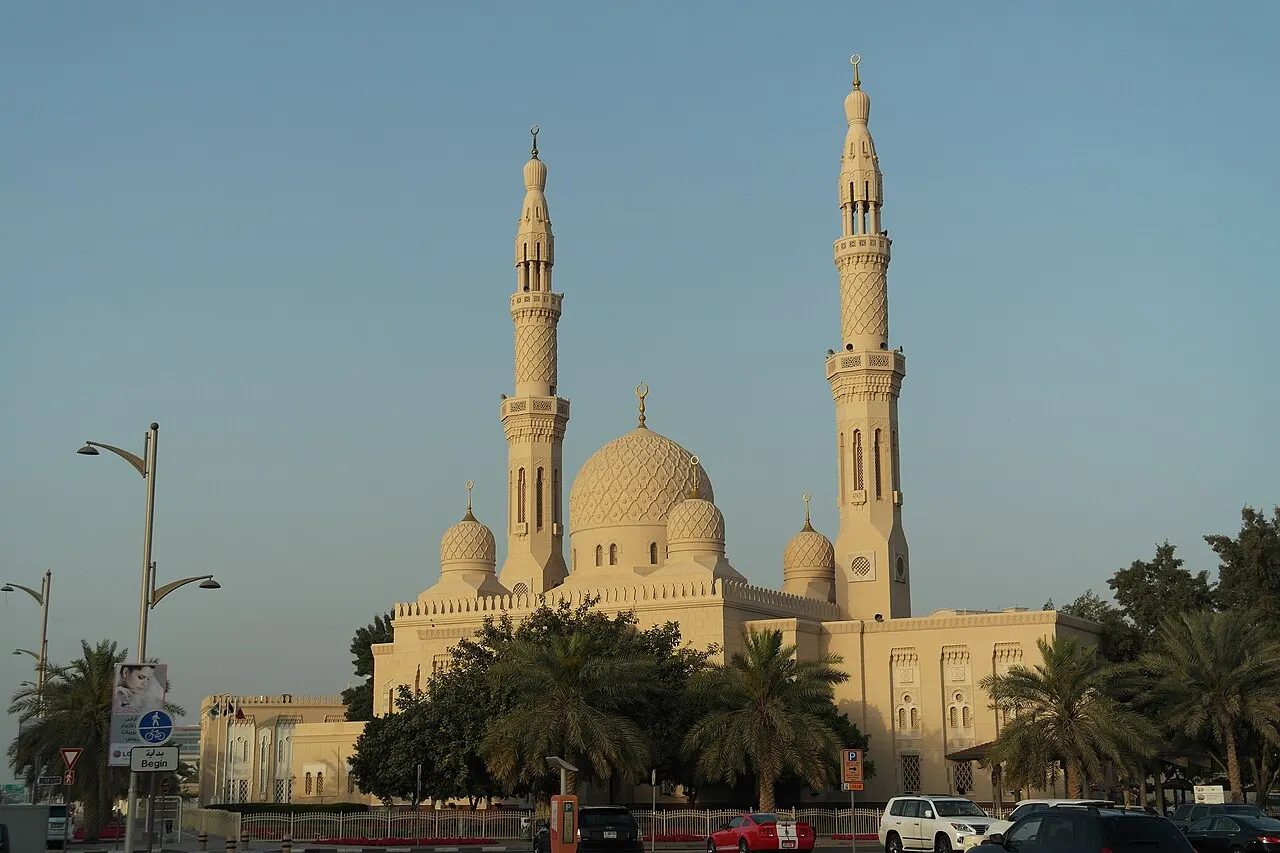
Jumeirah Mosque
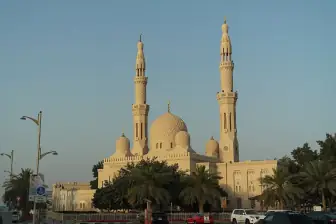
Built in 1979 in Fatimid style, with two 55 m minarets, it's the city's mosque open to non-Muslim visitors. The SMCCU cultural center's guided tours run almost every morning, cost about 40 AED with coffee and dates, and are a chance to ask questions no brochure answers.
It was built in 1979 in Fatimid style with two 55 m minarets and opens to people who aren't Muslim, and the guided tours run almost every morning for about 40 AED, where there's room for the questions no brochure answers.
Check access

Dubai Frame
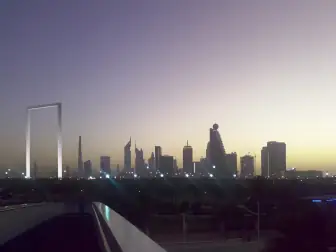
A 150 m tall, 93 m wide frame in Zabeel Park, opened in January 2018, designed by Mexican architect Fernando Donis. The glass walkway at the top frames old Dubai, Deira and Karama, on one side, and the Sheikh Zayed Road towers on the other; tickets run around 50 AED.
From up top, one side shows the old core and the other the avenue's row of skyscrapers; 150 m by 93 m; January 2018.
Check access

Etihad Museum
Opened in 2017 on the site of Union House, where the federation was signed on December 2, 1971, with a manuscript-shaped roof and seven columns for the seven signatories. It's the most direct place to understand how seven emirates became one country, and tickets run around 25 AED.
On the site where the federation was signed on December 2, 1971, the museum, whose building has seven columns, one per signatory, is the direct route to understanding how seven emirates became one country, and tickets run around 25 AED.
Check access
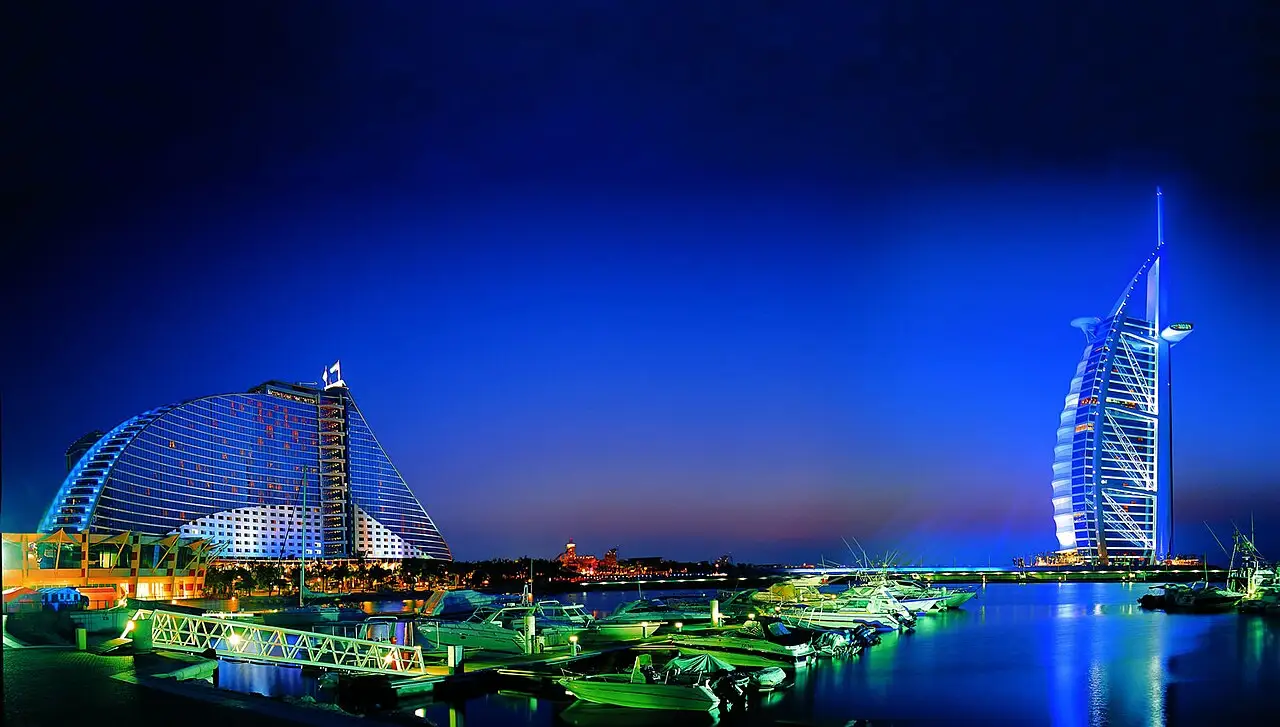
Burj Al Arab and Madinat Jumeirah
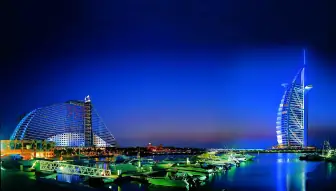
A 321 m sail-shaped hotel, opened December 1, 1999, on an artificial island 280 m from the beach, designed by Tom Wright. You can't get in without a restaurant reservation or a paid tour; the free frontal view is from the public beach at Umm Suqeim, and next door Madinat Jumeirah recreates a souk with navigable canals.
You can't get in without a restaurant reservation or a paid tour, and the island sits 280 m from the shore: the 321 m sail is visible for free, head-on, from the public beach at Umm Suqeim, which is worth the stop on its own.
Check access
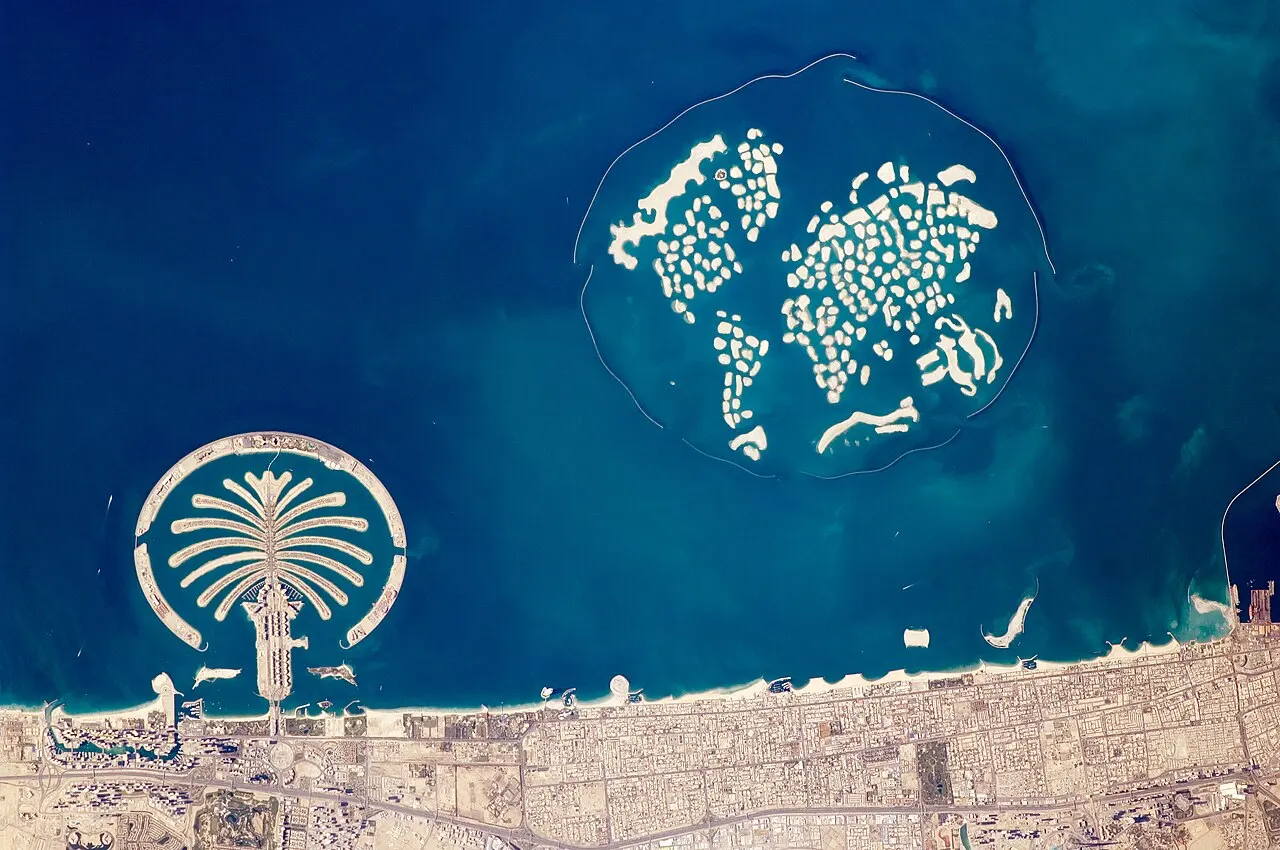
Palm Jumeirah and The View
An artificial archipelago shaped like a palm tree, reclaimed between 2001 and 2006 with about 94 million m³ of sand and 7 million tons of rock, connected to the coast by a 5 km road and a 2009 monorail. The View observation deck, on the 52nd floor of Palm Tower, at 240 m, shows a layout that only makes sense from above.
From the 52nd floor of Palm Tower, at 240 m, the whole shape of the palm lies right below, while from the Burj Khalifa the island is only visible in the distance, to the west-southwest. It's a second paid observation deck in a city where the Burj already charges about 173 AED, and it's far from the Creek and Downtown: on a short visit, it only pays off for those set on seeing the palm up close and from above.
Check access
Nilo’s itinerary
Start with the basic programme and choose extensions for the time you have.
Plan my days in the app ↗Day 1 · The Creek and the old city
Start at Al Fahidi at 8am, before the heat: 3 m alleys between 1890s coral houses, dozens of wind towers, and free entry; the 1787 fort sits at the edge of the district.
Cross the Creek by abra at the Bur Dubai Souk station, heading to Deira Old Souk.
Walk through the Spice Souk and the Gold Souk: gold's price per gram is fixed by the market, and what gets negotiated is the labor, so ask for the piece price and the making charge separately.
Have lunch at a cafeteria in Naif or Al Ras, biryani or thali for 15 to 25 AED, and escape the heat until 4pm.
Finish on the Al Seef promenade, on the Bur Dubai bank, and head back on the metro's Green Line from Al Ghubaiba station.
Day 2 · Downtown and the skyline
Book the Burj Khalifa days ahead.
Reach the Dubai Mall via the Burj Khalifa/Dubai Mall station and the roughly 800 m climate-controlled walkway; the aquarium and waterfall are along the way.
See the Museum of the Future from outside, on Sheikh Zayed Road: the galleries closed in mid-September 2026 for renovation, with reopening announced for the first quarter of 2027.
Save late afternoon for the Dubai Frame, in Zabeel Park, which settles the old-vs-new comparison in one hour.
Return to the Downtown lake at dusk for the fountain, which fires every 30 minutes until 11pm, and have dinner in Business Bay or at Souk Al Bahar.


If you stay longer
Day 3 · The coast, the art, and the desert
Take the SMCCU guided tour of the Jumeirah Mosque in the morning: about 40 AED, arms and legs covered, a veil lent at the door, and questions allowed.
Head to the free public beach at Umm Suqeim, with a frontal view of the Burj Al Arab, and take a walk through the canals of Madinat Jumeirah.
Have lunch in Al Quoz and set aside two hours for the Alserkal Avenue galleries, many of which close on Sundays, or for the Jameel Arts Centre, in Jaddaf, which is free to enter.
Spend the late afternoon in Dubai Marina: take the Al Sufouh tram, walk the JBR promenade and, to see the island from above, go up to The View at the Palm, on the 52nd floor, at 240 m.
If you prefer the desert to the Marina, swap the afternoon for a safari in Al Marmoom or Al Aweer, leaving around 3pm, with dinner at a camp and a return around 9pm.
Food
 AI illustration
Karak chai
Strong black tea boiled with evaporated milk, cardamom, and plenty of sugar, served in a small cup for 1 to 2 AED at any café. It's a late-afternoon and late-night drink, often handed through the window straight to the car.
 AI illustration
Shawarma
A Levantine version, thin and rolled in small Arabic bread, with garlic sauce, pickles, and shoestring fries, for 8 to 15 AED. Places in Al Satwa and Al Karama serve it late into the night; Al Mallah, in Satwa, has been open since 1979.
 AI illustration
Machboos
An Emirati rice dish cooked in meat or fish broth with loomi, dried lime, turmeric, and baharat. It appears at Emirati restaurants and family homes; it's the Friday lunch dish.
 AI illustration
Luqaimat
Fried dough balls, crispy outside, topped with date syrup and sometimes sesame seeds. A Ramadan sweet now eaten year-round, sold in trays for 15 to 25 AED.
 AI illustration
Balaleet and regag
Balaleet is an Emirati breakfast of sweet vermicelli with saffron and cardamom topped with a savory omelet. Regag is a thin pancake cooked on a griddle with processed cheese, egg, and fish sauce, made at street carts for about 10 AED.
 AI illustration
Cafeteria biryani
Long-grain rice cooked in layers with chicken or mutton, served with raita and salad for 15 to 25 AED at the cafeterias of Deira, Karama, and Naif. It's the standard meal for much of the city and the practical answer to anyone who thinks Dubai is expensive.
 AI illustration
Dates and gahwa
Khalas and medjool varieties are sold by weight at the Spice Souk and specialty shops, from 30 to 120 AED a kilo. They accompany gahwa, light Arabic coffee with cardamom served in a small cup, a welcome ritual at home and in shops.
 AI illustration
Hotel brunch
A local institution: a multi-hour buffet with drinks included, on Saturdays since the weekend change in 2022. Priced between 250 and 600 AED per person depending on the hotel, with a reservation almost always required.
Day trips
Abu Dhabi
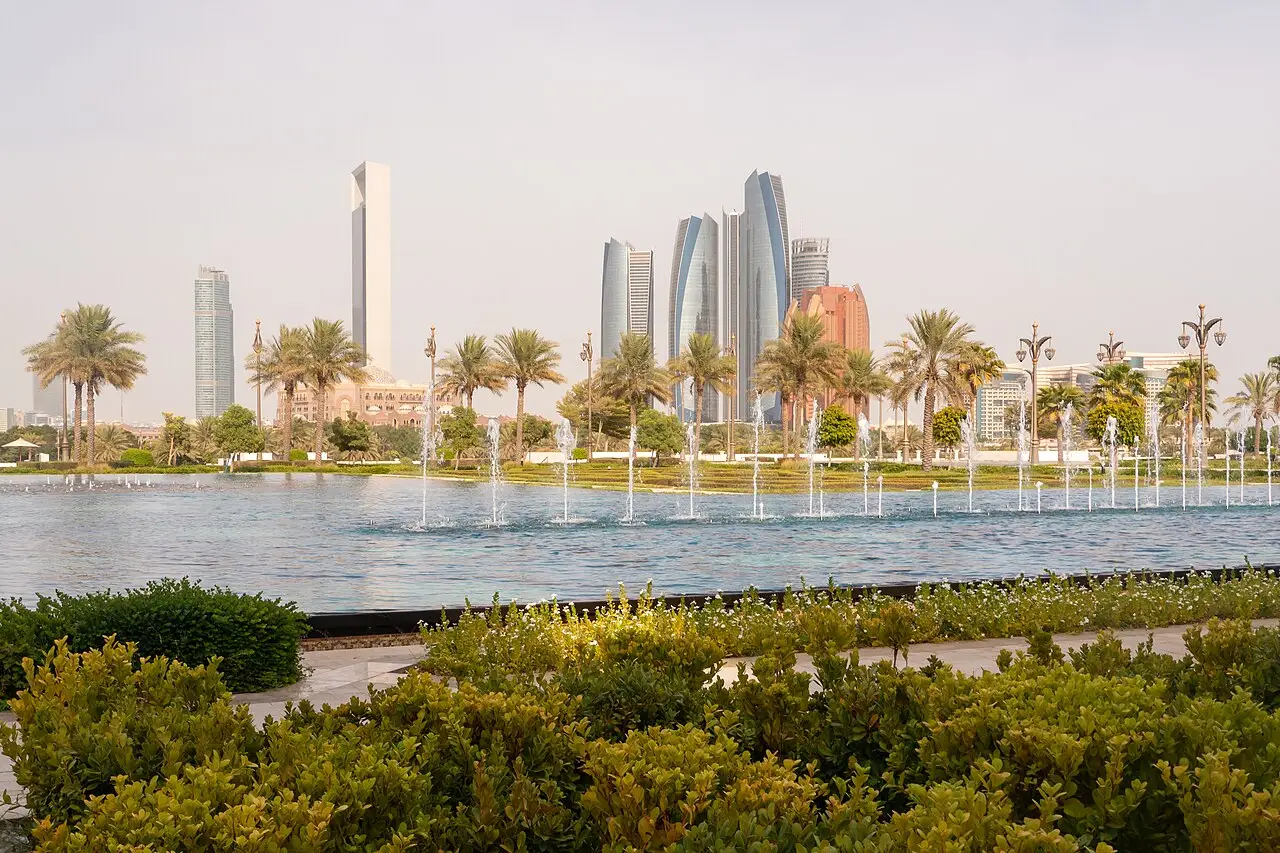
The country's capital is about 140 km away on the E11, or 1 hour 30 minutes by car. Since September 30, 2026, Etihad Rail has linked Al Yalayis to Mohamed bin Zayed City in about an hour, with Comfort tickets from 39 AED. Go for the Sheikh Zayed Grand Mosque, built between 1996 and 2007 with 82 domes, and Jean Nouvel's Louvre Abu Dhabi, opened in 2017.
Hatta
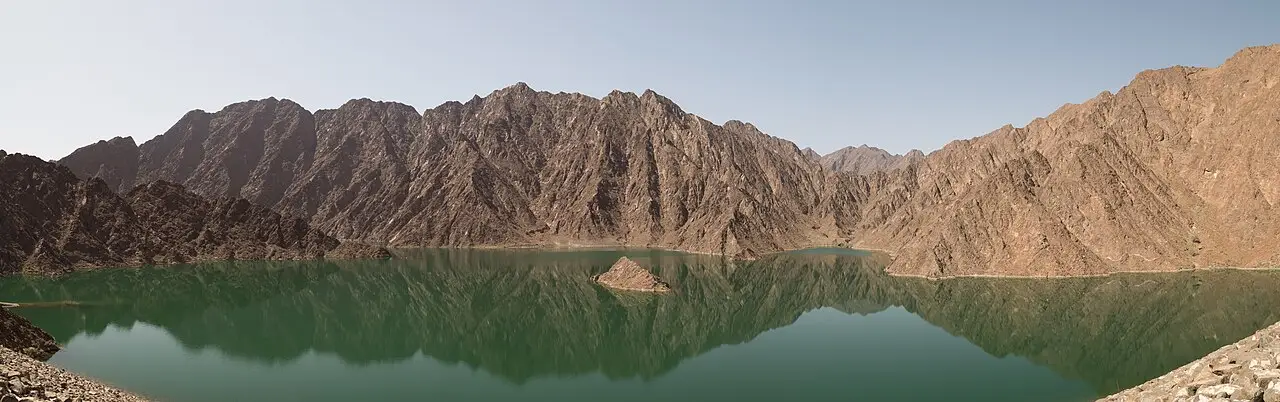
A Dubai exclave tucked into the Hajar mountains, about 130 km southeast, 1 hour 30 minutes by road. A turquoise reservoir with kayaking, trails, and mountain biking at Hatta Wadi Hub, restored stone houses, and temperatures a few degrees below the coast. Bring your passport: the route runs right along the border with Oman.
Sharjah
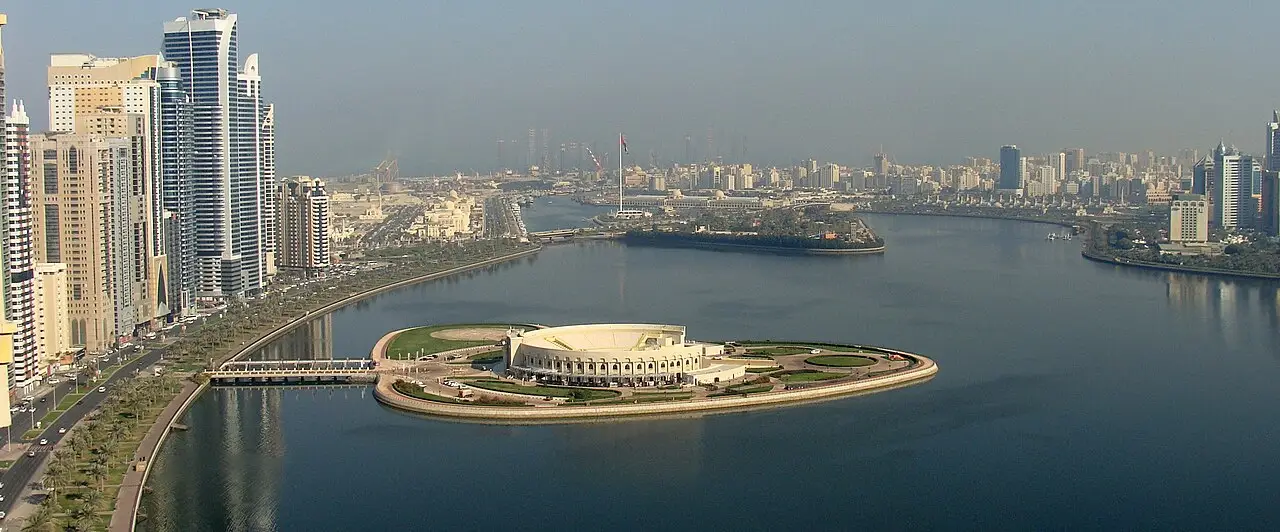
A neighboring emirate about 30 km away, 30 to 90 minutes depending on traffic, which is heavy at peak times. The Museum of Islamic Civilization in a former 1987 market, Al Noor Mosque, and the Blue Souk. It's a dry emirate, with no sale or consumption of alcohol, and a stricter dress code than Dubai's.
Where to begin
The Creek and the old city
Start at Al Fahidi at 8am, before the heat: 3 m alleys between 1890s coral houses, dozens of wind towers, and free entry; the 1787 fort sits at the edge of the district.
Downtown and the skyline
Book the Burj Khalifa days ahead.
The coast, the art, and the desert
Take the SMCCU guided tour of the Jumeirah Mosque in the morning: about 40 AED, arms and legs covered, a veil lent at the door, and questions allowed.
Money
The currency is the UAE dirham (AED, written “dhs”), divided into 100 fils and pegged to the US dollar at 3.6725 since 1997: the rate is the same everywhere, because it doesn't change day to day. The most common prices: karak 1 to 2 AED, shawarma 8 to 15, a cafeteria meal with rice 15 to 25, a mall food court 35 to 50, a mid-range restaurant 120 to 200 per person, beer at a hotel bar 35 to 60. The metro is 3 to 7.50 a ride, a short taxi ride 15 to 30, a three-star hotel 300 to 500 a night and five stars from 800. There's no personal income tax, but there's a 5% VAT since 2018, a 7% municipal fee on lodging, a 10% service charge and the Tourism Dirham of 7 to 20 AED per room per night depending on category: on the final bill the hotel usually comes out 25% to 30% above the advertised rate, and the difference shows up at checkout, never at booking. Cards are accepted almost everywhere, including taxis, but carry small notes for the abra, the souk and the cafeteria. Tipping isn't mandatory and the 10% service charge rarely reaches the person who served you, so 10 to 20 AED in cash, handed over directly, makes a difference; in taxis, round up. Visitors can reclaim VAT on purchases over 250 AED at the Planet kiosks in the airport, with passport and receipt.
Getting there and around
Airport: 5 km from the Creek, 92 million passengers a year
Dubai International Airport (DXB) is in Al Garhoud, about 5 km from the Creek and about 15 km from Downtown, and handles about 92 million passengers a year. It is the world's busiest for international traffic. Terminals 1 and 3 have their own Red Line metro stations: to Union or Burjuman takes about 10 minutes for less than 8 AED with a Nol card, and to Downtown about 25 minutes with one transfer. An RTA taxi to Downtown costs 60 to 80 AED and takes 20 to 30 minutes outside rush hour, with a 25 AED airport pickup fee added. Careem, Uber and Bolt operate legally and charge similar fares. The second airport, Al Maktoum (DWC), lies 40 km southwest, handles few commercial flights today and is undergoing an expansion budgeted at 128 billion dirhams, with five parallel runways and a first phase scheduled for 2032.
Driverless metro since 2009: you can see the track from the front window
The metro opened on September 9, 2009, was the first on the Arabian Peninsula, and runs without a driver, so from the first car you can watch the track through the front window. There are two lines, Red and Green, with about 90 km and 55 stations, running from about 5am to midnight, and later on Friday and Saturday nights. Fares are zone-based, from 3 to 7.50 AED a ride with the Nol Silver card, and there's a day pass of about 20 AED. Buy the card before the turnstile, because no tickets are sold on the train and cash isn't accepted. The same card works on the Al Sufouh tram in the Marina, opened in 2014, on RTA buses, and on the motorized abras, while the traditional Creek crossing costs 1 AED paid into the boatman's hand. Taxis charge a 5 AED base fare by day and 5.50 at night, about 2.2 AED per kilometer, and a 12 AED minimum fare. Walking between neighborhoods almost never works, because distances run 5 to 15 km, avenues have six to twelve lanes, and, from June to September, the heat rules out walking except around dawn, with May and October almost as hot by midday. Since September 30, 2026, Etihad Rail has linked Al Yalayis station to Abu Dhabi in about an hour, and the metro's Blue Line, with 14 stations and 30 km to Al Maktoum and Expo City, is scheduled for September 2029.
Safety
Dubai has one of the lowest violent crime rates in the world, with a homicide rate below 0.5 per 100,000 people, and walking alone at night in any neighborhood is routine, including in Naif and Deira at midnight, where the most that usually happens is a phone-case vendor offering their wares. The real risks are traffic, heat, and the sea current. The first is traffic: multi-lane avenues, fast cars, and pedestrians killed mostly while crossing outside marked crossings, which is exactly why the 400 AED fine for jaywalking exists. Use the footbridge even when it means a long detour. The second is heat and dehydration, with highs above 40°C from June to September and May and October still hot. The third is the rip current on Jumeirah's beaches, where the red flag needs to be taken seriously, because there are drownings every year. The common scams are apartment rentals advertised falsely with an upfront deposit, unlicensed drivers approaching you at the airport exit, and wrong change at tourist souks: use a cream RTA taxi or an app, and check that the meter is running. The thing that catches foreigners out most is legal, not criminal: zero tolerance on drugs, including trace amounts found in a blood test and CBD products; fines for obscene gestures or swearing, including in traffic and text messages; and a bounced check or unpaid debt, which can still trigger an exit ban from the country. Emergencies at 999 (police), 998 (ambulance), and 997 (fire); the private hospital network is good, expensive, and requires insurance.
Etiquette tips
Clothing off the beach
In malls, souks, the metro, and public buildings, cover shoulders and knees; bikinis and swim trunks only on sand and in pools. The dress code is posted at mall entrances and enforced by security guards.
Alcohol only where licensed
You drink at licensed hotels, clubs, and restaurants, from age 21. Drinking in the street, carrying an open bottle, or appearing drunk in public is a crime, and the drink-driving tolerance is zero.
Public affection
Kissing and hugging between couples can bring a fine or detention, including on beaches and in malls. Holding hands is tolerated; the rest isn't, and the rule applies equally to foreign couples.
Don't photograph people without asking
Don't photograph people without asking, especially Emirati women and families; posting a photo of someone without consent is a crime under the cybercrime law. Government buildings, ports, airports, and military installations are off-limits.
Right hand and the gahwa cup
Hand over money, cards, and food with your right hand. Arabic coffee is served in a small cup and refilled indefinitely: to signal you're done, shake the empty cup two or three times from side to side before handing it back.
Friday noon and the weekend
Friday prayer empties small shops and offices between about 12pm and 1:30pm. Since January 2022 the official weekend is Saturday and Sunday, and Friday is a workday with reduced hours in the public sector: plan meetings and errands around that logic, not the old one.
Mistakes to avoid
Walking from one point to another
Thinking you can walk from one point to another. From the Dubai Mall to the Burj Al Arab is about 15 km, and from June to September the temperature tops 40°C with high humidity, with May and October not far behind. Plan your day around the metro, taxis, and climate-controlled walkways, and save walking for early morning or after 8pm.
Taking the metro without a Nol card
Boarding the metro without a Nol card. There's no ticket sold on board and no turnstile that takes cash, and traveling without validation gets you a fine of a few hundred dirhams: buy the card at the ticket counter of the first station, before the turnstile.
Common medication without a prescription
Bringing common medication without a prescription. Codeine, tramadol, some antidepressants, and any CBD product are on the UAE's controlled-substance list. Carry a prescription in English and check the Ministry of Health's list before you fly.
Counting on a WhatsApp call
Relying on WhatsApp to let someone know you've landed or to find your transfer driver. Voice and video calls don't go through on the local network, so arrange the meetup by text message, which works normally.
A 15 AED meal in Karama and Deira
Eating only at malls and concluding the city is expensive. The cafeterias of Karama, Deira, and Satwa serve a full meal for 15 to 25 AED, and karak costs 1 or 2. The price gap between the two Dubais runs tenfold, and nobody warns you which one you've walked into.
Useful phrases
السلام عليكم: as-salamu alaykum (as-sah-LAH-moo ah-LAY-koom)
Peace be upon you. It's the standard greeting; the reply is “wa alaykum as-salam”
مرحبا: marhaba (MAR-ha-ba)
Hello. The friendly reply is “marhabtain,” literally “two hellos”
شكرا: shukran (SHOO-kran)
Thank you. The reply is “afwan,” you're welcome
كم السعر؟: kam as-si'r? (kam as-SEER)
How much is it? Useful in the souk, where the asking price is a starting point
إن شاء الله: inshallah (in-shah-AH-lah)
God willing. Used for “maybe,” “we'll see,” and, often, “no”
يلا / خلاص: yalla / khalas (YAL-la / kha-LAHS)
Let's go, hurry up / it's done, enough, settled. These are the two most-used words on the street, in whatever language the person is speaking
Districts
Deira
The north bank of the Creek and the oldest commercial core, with the Gold Souk (about 380 shops), the Spice Souk, the Waterfront Market, and the dense Naif district. This is low-rise Dubai, full sidewalks and wholesale trade, with a South Asian majority.
Bur Dubai and Al Fahidi
The south bank, home to the historic Al Fahidi district, with coral-and-gypsum houses from the 1890s and barjeel wind towers, the 1787 fort, the Meena Bazaar textile market, and the Hindu and Sikh temples. Al Seef, next door, is a 2017 waterfront promenade built in an old-style look.
Al Karama and Al Satwa
Districts of four-story buildings from the 1970s and 1980s, with the city's cheapest cafeterias, Indian, Pakistani, and Filipino food, tailors, and the counterfeit market. This is where much of the working class that serves the rest of the emirate lives.
Downtown Dubai
District built by Emaar starting in 2004 around the Burj Khalifa, the Dubai Mall, the Dubai Opera, and the fountain lake. It functions as the tourist and financial center, and almost everything is covered by climate-controlled walkways rather than sidewalk.
Business Bay
A dug-out extension of the Creek, with office towers and apartments cheaper to rent than in neighboring Downtown, and views of the Burj Khalifa. The 2016 canal produced a several-kilometer running promenade, rare in the city.
Jumeirah and Umm Suqeim
A coastal strip of low houses and villas, with the free public beaches of Kite Beach and Umm Suqeim, the Jumeirah Mosque, the Burj Al Arab, and Madinat Jumeirah. This is the part of the city with the most human scale and the slowest traffic.
Dubai Marina and JBR
An artificial 3 km canal ringed by residential towers built between 2003 and 2013, with the Marina Walk promenade, JBR beach, and the Al Sufouh tram. It concentrates upper-middle-income foreigners, restaurants, and the nightlife of the city's south.
Al Quoz
An industrial zone between Sheikh Zayed Road and Al Khail, with marble warehouses and workshops. Since 2007 it's held Alserkal Avenue, with about 25 galleries, independent cinema, roasteries, and studios. This is where the city's contemporary art happens.
History
c. 1000 BCE · Saruq Al Hadid
Iron Age metalworking site in the desert south of the city, excavated since 2002, with thousands of copper, iron, and gold pieces. The gold ring found there became the basis for the Expo 2020 Dubai logo.
1095 · First written mention
Andalusian geographer Abu Abdullah al-Bakri records the place's name in his geography book. In 1580 Venetian pearl merchant Gasparo Balbi cites it again.
1833 · Arrival of the Al Maktoum
About 800 members of the Al Bu Falasah section of the Bani Yas tribe leave Abu Dhabi under Maktoum bin Butti and settle on the bank of Bur Dubai. The same family has ruled the emirate ever since.
1892 · Exclusive treaty with London
Already part of the Trucial States since the 1820 and 1853 maritime treaties, Dubai signs the Exclusive Agreement: the United Kingdom handles defense and foreign affairs in exchange for commercial and diplomatic exclusivity. The arrangement lasts until 1971.
1901–1930 · Free port and pearls
Sheikh Maktoum bin Hasher abolishes import duties in 1901 and attracts Persian merchants from Lingah, who build Bastakiya with its wind towers. The Japanese cultured pearl and the 1929 crash bring down the industry that sustained the city.
1958–1961 · Dredging the Creek
Sheikh Rashid bin Saeed takes over in 1958 and borrows from Kuwait to dredge the silted-up inlet. The work allows larger ships and shapes the economy for the following sixty years.
1966 · Oil at the Fateh field
Oil is found offshore in 1966 and begins to be exported in 1969, in much smaller volume than Abu Dhabi's. The revenue is used to build ports, roads, an airport, and the first Creek tunnel.
1971 · Federation of the Emirates
On December 2, six emirates sign the union at Union House, on the Jumeirah waterfront; Ras Al Khaimah joins in February 1972. The building is now the Etihad Museum.
1979–1985 · Jebel Ali, Emirates, and the free zones
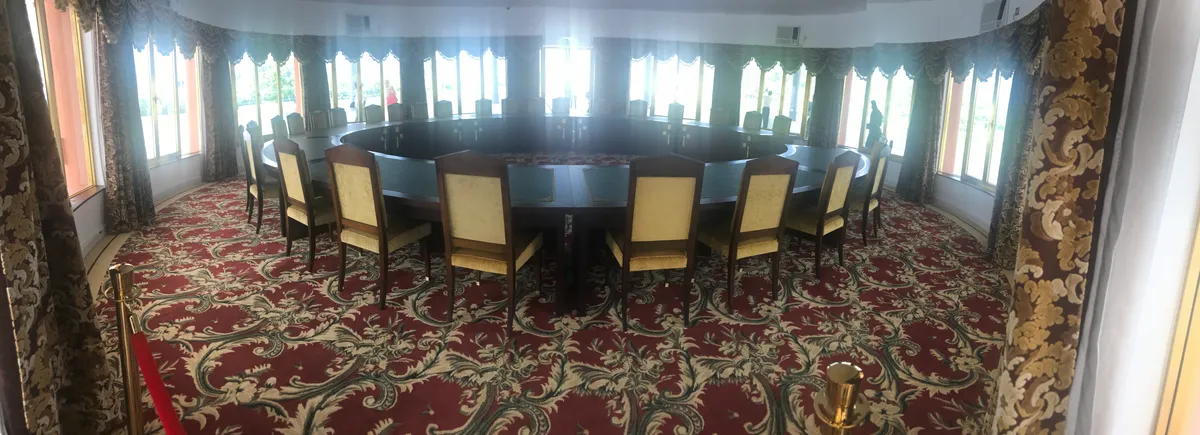
The port of Jebel Ali, the world's largest man-made harbor, opens, along with the 149 m World Trade Centre. In 1985 the JAFZA free zone and Emirates are born, the latter starting with two leased aircraft and an inaugural flight to Karachi.

1999–2010 · From the Burj Al Arab to the Burj Khalifa
The 321 m hotel opens in 1999, freehold property for foreigners is allowed in 2002, and the metro debuts on September 9, 2009. The 2009 crisis calls for a US$ 10 billion bailout from Abu Dhabi, and the 828 m tower is inaugurated on January 4, 2010, already renamed Burj Khalifa.

2021–2026 · Expo, record rain, and 4.7 million
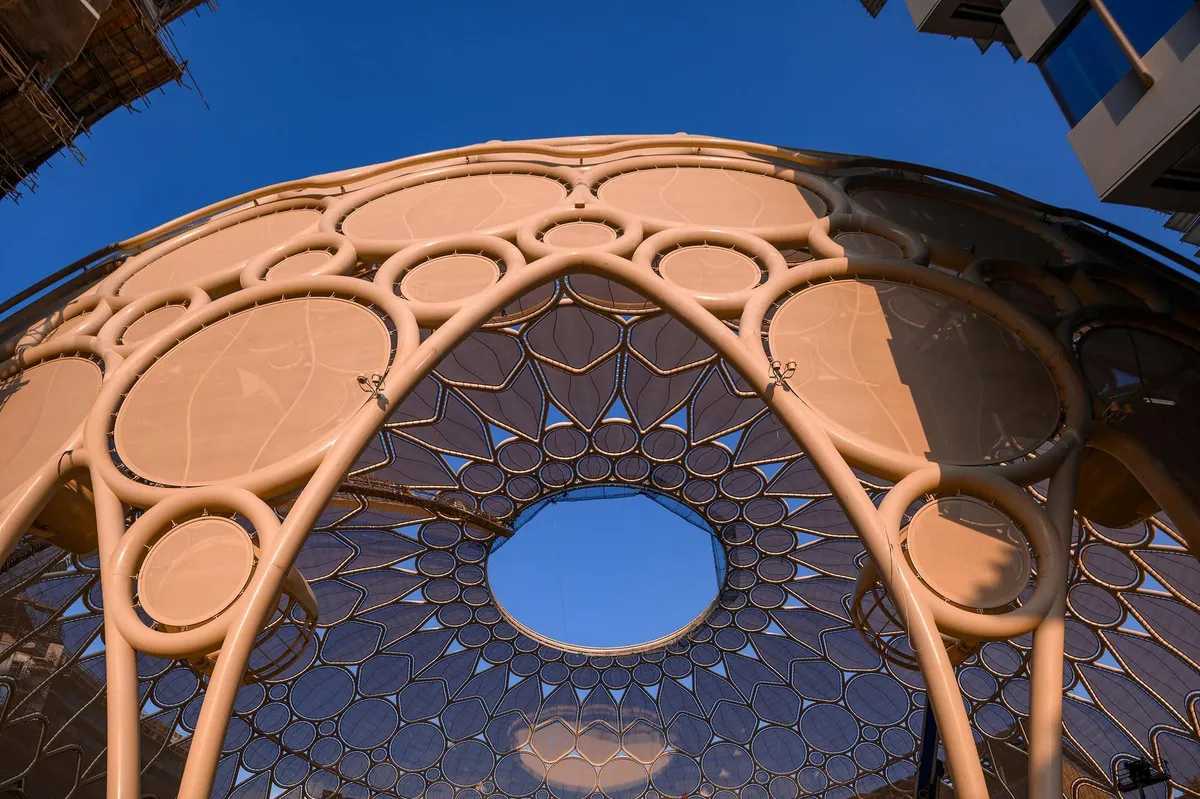
Expo 2020, delayed by the pandemic, runs from October 2021 to March 2022 with 24.1 million visits, and COP28 takes place at Expo City in 2023. On April 16, 2024, about 250 mm of rain falls in one day, the largest volume since records began in 1949; in 2026 the population passes 4.7 million.
Complete history
Founded as a fishing and pearling port
Dubai didn't start as an oil city, and that's the key to understanding it. The place was an anchorage for fishermen and pearl divers on the bank of a 14 km inlet, the only sheltered natural harbor along hundreds of kilometers of coast. In 1833, about 800 people from the Al Bu Falasah branch of the Bani Yas split off from Abu Dhabi and settled there under Maktoum bin Butti, whose family still rules today. Dubai was already part of the Trucial States, the coast pacified by the 1820 and 1853 maritime treaties with Britain, when in 1892 it signed the Exclusive Agreement, which handed London foreign policy, froze the borders, and gave the port predictability. The founding decision came in 1901, when Sheikh Maktoum bin Hasher abolished import duties and offered land to foreign merchants: hundreds of Persian families from the port of Lingah crossed the Gulf and built Bastakiya, the wind-tower district that still stands in Al Fahidi.
Pearls sustained everything until the 1930s
Pearls sustained the economy until the 1930s. Japanese cultured pearls, developed in the 1920s, and the 1929 depression destroyed the market in under a decade, and the city shrank. What was left was its role as an entrepôt: gold, textiles and goods re-exported to India and Iran on wooden boats. Sheikh Rashid bin Saeed, who took over in 1958, bet on that role. Between 1959 and 1961 he borrowed from Kuwait to dredge the silted-up Creek, an expensive project with no guaranteed return that let bigger ships in. Oil only turned up later, at the offshore Fateh field in 1966, and always in modest quantities next to Abu Dhabi's. Rashid used that limited income as construction capital: the airport, the Al Shindagha tunnel, Port Rashid and, in 1979, the port of Jebel Ali, designed for a volume of traffic nobody had at the time.
The federation, on December 2, 1971
The federation of the United Arab Emirates was signed on December 2, 1971, when the United Kingdom withdrew from the Gulf. The agreement gave Abu Dhabi the presidency and the bulk of the oil, and Dubai the vice presidency, the prime ministership, and near-total freedom to run its own economy. It was that freedom that produced, in 1985, two decisive experiments: the Jebel Ali free zone, where a foreign company could own 100% of its own capital, and Emirates, created with two leased aircraft and US$10 million in starting capital. The model is always the same: build the infrastructure before demand, and charge for the transit of people, cargo, and money.
The years of construction and hype
The years from 1999 to 2008 were a time of breakneck construction and publicity: the Burj Al Arab in 1999, foreigners allowed to buy property in 2002, Palm Jumeirah reclaimed from the sea between 2001 and 2006, Dubai Marina, Downtown. The model broke down in 2009, when Dubai World asked for a moratorium on US$ 26 billion of debt and property prices fell by half; Abu Dhabi bailed the emirate out with US$ 10 billion, and the tower that opened in January 2010 was planned as the Burj Dubai but inaugurated as the Burj Khalifa, in honor of the president who signed the check. The recovery came through tourism, logistics and finance.
Dubai today: migration, taxes and the projects of the 2030s
Today Dubai grows through migration and depends on continuing to take people in. The population rose about 7.5% in 2025, one of the highest rates ever recorded, and passed 4.7 million in 2026, while DXB airport remains the world's busiest for international passengers, with about 92 million a year. With no income tax, a 5% VAT since 2018 and a 9% corporate tax since 2023, the emirate draws companies and residents with its tax regime and long-term visas, such as the ten-year Golden Visa. Infrastructure keeps pace: from September 30, 2026, Etihad Rail links Dubai to Abu Dhabi, and the first phase of the new Al Maktoum airport, budgeted at 128 billion dirhams, is scheduled for 2032. At the same time, the country changed its own rules of coexistence: in November 2020 it decriminalized drinking alcohol without a license and cohabitation by unmarried couples, and since January 2022 the official weekend has been Saturday and Sunday, instead of Friday and Saturday, to align the workweek with Western markets.
The Creek inlet was dredged in 1961, five years before the oil.
Geography and shape of the city
The desert strip and the inlet
Dubai covers 4,114 km² of flat coastal desert, about 5% of the Emirates' territory, but the city itself is a strip about 60 km long by 10 to 15 km deep, hugging the Persian Gulf. There's no river: the central structure is Dubai Creek, a saltwater inlet about 14 km long that separates Deira, to the north, from Bur Dubai, to the south, and ends at the Ras Al Khor lagoon, a flamingo reserve within the urban fabric; an artificial 3.2 km canal, opened in 2016, extended this arm of water through Business Bay to the sea. Inland the ground goes from sabkha, salt flat, to red dunes rising to 100 m; the Hajar mountains only appear 130 km away, in the Hatta exclave.
The parallel strips and reclaimed land
The city is laid out in strips parallel to the coast. Sheikh Zayed Road (E11), with twelve lanes and interchanges numbered 1 to 8, is the axis every address refers to, followed by Al Khail Road and Emirates Road, so distances run lengthwise, and crossing the city means finding one of the widely spaced footbridges. Palm Jumeirah (about 5 km², reclaimed between 2001 and 2006), Bluewaters and the Burj Al Arab's island are all land reclaimed from the sea.
The climate and the desalinated water
The climate is hyperarid, with about 90 to 100 mm of rain a year and summer above 40 °C, and practically all fresh water comes from desalination, mostly from the Jebel Ali plants.
The Expo 2020 Dubai logo copies an Iron Age gold ring found at Saruq Al Hadid, in the desert south of the city.
Culture
Demographics define the culture
Dubai's culture is defined by its demographics: between 85% and 90% of residents are foreigners from about 200 nationalities, and Emiratis are a minority in their own city. The result is a cultural life in parallel layers: Malayalam cinema in Deira, churches and temples concentrated in Jebel Ali and Bur Dubai, the 2012 Sikh gurdwara and the Hindu temple in Jebel Ali opened in 2022, British, Indian, Filipino, and French schools, with Arabic as the official language, Islam as the state religion, and English as the common language among everyone. The call to prayer organizes the day, Ramadan reorganizes the year, and Friday prayer empties small shops and offices between about 12pm and 1:30pm.
Art took hold in Al Quoz from 2007
The contemporary art scene took hold starting in 2007, when marble warehouses in Al Quoz became Alserkal Avenue, now with about 25 galleries, independent cinema, and the Concrete space, designed by OMA and opened in 2017. The Art Dubai fair has run since 2007, usually in April, and is the main meeting point of the market between the Middle East, South Asia, and Africa; the Jameel Arts Centre, opened in 2018 in Jaddaf Waterfront, has free admission. For live shows there's the 2016 Dubai Opera, with 2,000 seats and the shape of a dhow boat, and the 2019 Coca-Cola Arena, with 17,000 seats: both hold the concert season between October and April. The Emirates Airline Festival of Literature has brought authors together every February since 2009.
Horses, tennis, and cricket
In sports, the emirate hosts the Dubai World Cup at Meydan on the last Saturday of March, a tennis tournament in February, the Dubai Desert Classic golf event in January, and stages of the UAE Tour cycling race; the International Cricket Council has been based in Dubai since 2005, and Dubai International Stadium hosts matches with a mostly Indian and Pakistani crowd. There's camel racing with robot jockeys in Al Marmoom, from October to April, and falconry at desert clubs. Nightlife is legal and expensive, restricted to hotels and licensed venues: bars close between 2 and 3am, drinking is allowed from age 21, and there's no drinking in public space.
At the Al Marmoom camel race, the jockey is a robot, which leaves it an open question whom to credit for the win.
Festivals and events
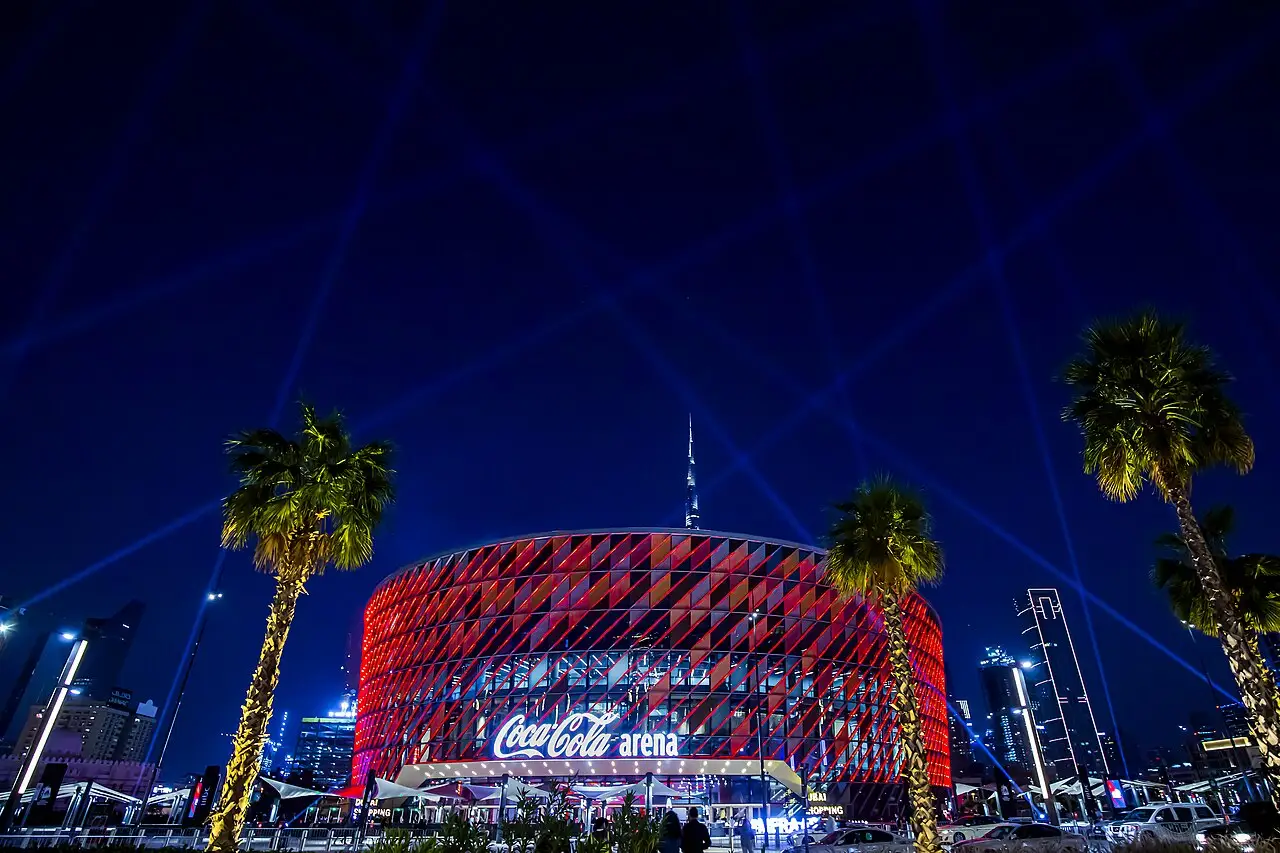
Dubai Shopping Festival
From mid-December to mid-January, since 1996. Discounts, raffles, shows, and fireworks across the city; it's the period of highest hotel occupancy and highest rates of the year.
 AI illustration
Ramadan and Eid al-Fitr
The fasting month moves back about 11 days a year on the Gregorian calendar: in 2027 it should start around February 7. Reduced business hours, iftar tents at sunset, suhoor late into the night, and a ban on eating, drinking, or smoking in public during the day.
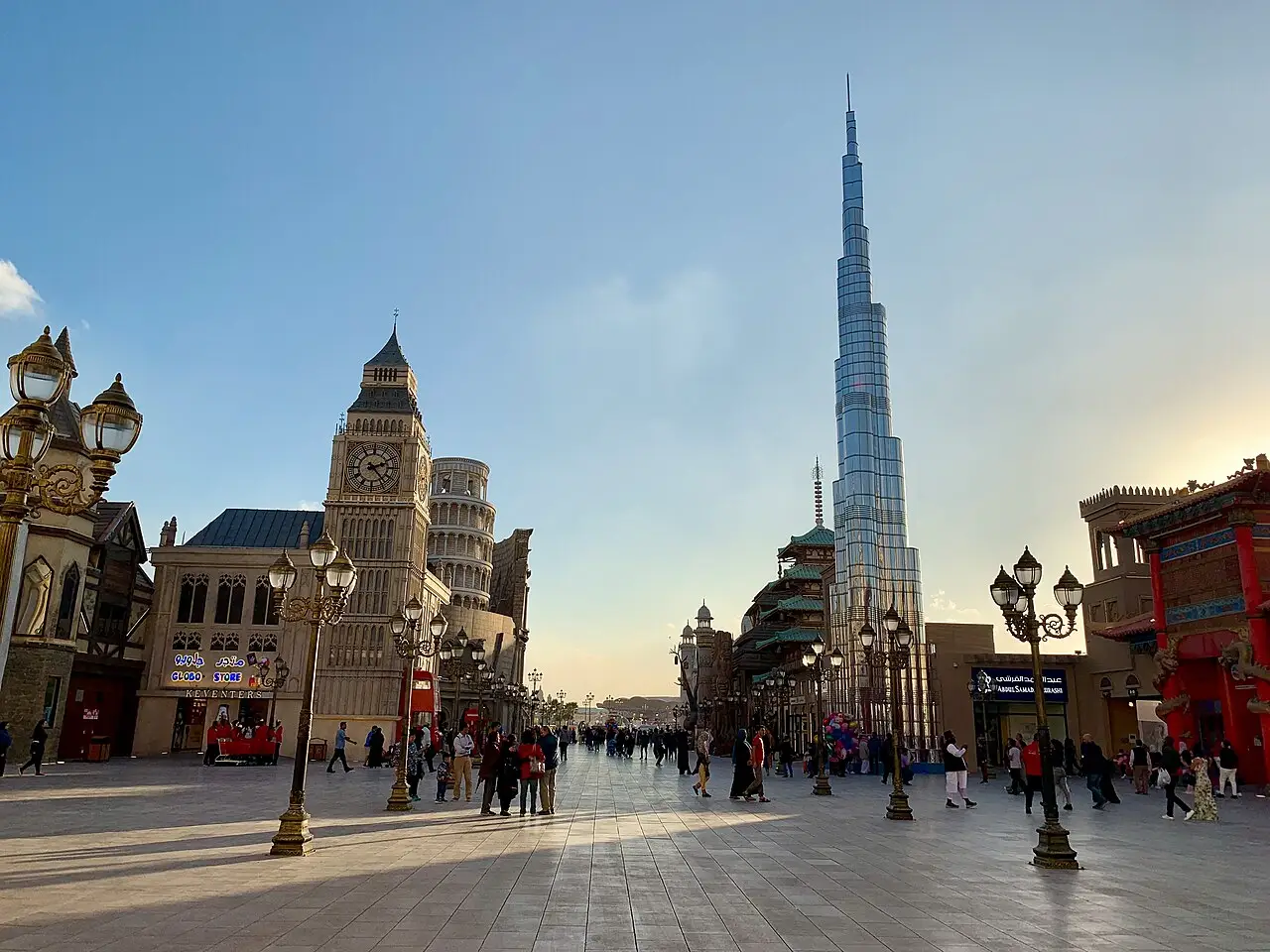
Global Village
From October to April, on Sheikh Mohammed Bin Zayed Road, with pavilions from about 90 countries, street food, and shows. It draws close to 10 million visits per season, and tickets run 25 to 30 AED.
 AI illustration
Dubai World Cup
Last Saturday of March at the Meydan racecourse, since 1996. It's the horse race with the biggest prize money in the world, over US$30 million total, and functions as the emirate's social and fashion event.

Eid Al Etihad
National holiday on December 2 and 3, marking the anniversary of the 1971 federation. Offices and schools close, cars drive around with flags and portraits, and there are parades, shows, and fireworks across the city.
Books and films
City of Gold: Dubai and the Dream of Capitalism, Jim Krane (2009)
A work of reportage that reconstructs how the 1961 dredging of the Creek, the port of Jebel Ali, and the free zones produced today's city, with oil always in a supporting role. Also published as “Dubai: The Story of the World's Fastest City.”
Temporary People, Deepak Unnikrishnan (2017)
Fiction in stories about the Gulf's migrant workers, written by an author raised in Abu Dhabi. It explains the part of the population that builds the city, lives in labor housing, and doesn't show up in the brochure.
City of Life, Ali F. Mostafa (2009)
The first Emirati fiction feature shot in Dubai: three intersecting stories among a young Emirati, an Indian taxi driver, and a Romanian flight attendant. Filmed in Karama, Satwa, and the newly built Downtown.
Frequently asked questions
Dubai: Can you walk from one attraction to another?
On most routes, no: from the Dubai Mall to the Burj Al Arab is about 15 km, and from June to September the temperature tops 40°C with high humidity. Plan your day around the metro, taxis, and climate-controlled walkways, and save walking for early morning or after 8pm.
Dubai: What's the currency, and how much do things cost?
The currency is the UAE dirham (AED, written "dhs"), divided into 100 fils and pegged to the US dollar at 3.6725 since 1997: the rate is the same everywhere, because it doesn't change day to day. The most common prices: karak 1 to 2 AED, shawarma 8 to 15, a cafeteria meal with rice 15 to 25, a mall food court 35 to 50, a mid-range restaurant 120 to 200 per person, beer at a hotel bar 35 to 60.
Dubai: What should you wear off the beach?
In malls, souks, the metro, and public buildings, cover shoulders and knees; bikinis and swim trunks only on sand and in pools.
Dubai: Is it safe to walk alone at night?
Dubai has one of the lowest violent crime rates in the world, with a homicide rate below 0.5 per 100,000 people, and walking alone at night in any neighborhood is routine, including in Naif and Deira at midnight, where the most that usually happens is a phone-case vendor offering their wares.
Dubai: What is karak chai, and how much does it cost?
Strong black tea boiled with evaporated milk, cardamom, and plenty of sugar, served in a small glass for 1 to 2 AED at any cafeteria.
Other cities in the country
United Arab Emirates ↗- Days
- 2–3
- When
- Jan–Mar · Nov–Dec
- Per person/day
- Average 724 AEDMid-range · per person/day
Cost scope
Per person per day: accommodation, meals, urban transport, visits and a small allowance for extras. Flights excluded; larger purchases vary. Editorial estimate, not a quote.


Itineraries through here
 Dubai and Doha in 5 daysSkyscrapers and souks of the GulfDubai · Doha4–6 days2 cities
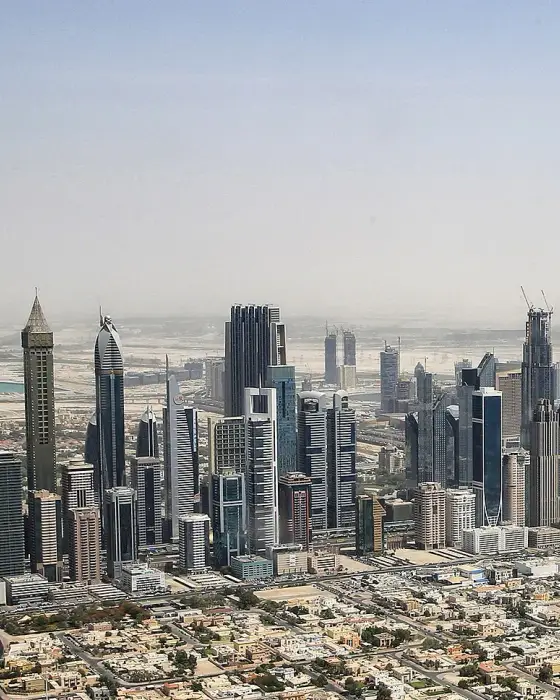 Dubai and Abu Dhabi in 5 daysFrom the Burj Khalifa to the Grand MosqueDubai · Abu Dhabi4–6 days2 cities
 Dubai and the Maldives in 7 daysDubai’s souks and the lagoons of the MaldivesDubai · Malé (Maldives)7–9 days2 cities