Qatar
Doha
Pei and Nouvel museums, Souq Waqif and the desert sea
Days Start with the basic programme and choose extensions for the time you have.
How the guide reaches this number
You can only get there by 4x4 with a driver, for about QR 250–400 for a half day. Come for signature museums and recent architecture, and on a long layover it's worth leaving the airport instead of waiting inside it. Don't come looking for old streets or chance discoveries, because almost nothing from before 1950 is still standing: Souq Waqif is a reconstruction begun in 2006, and Qanat Quartier imitates Venice. With just one day, other than a Tuesday or Wednesday, visit the Museum of Islamic Art at 9am and the National Museum at 4pm. On Fridays, start at the first museum at 1:30pm and keep to those two before dinner. In the evening, move on to Souq Waqif from 7pm, on the same Corniche axis, with two short taxi rides. What disappoints is the scale: outside five or six walkable areas, the city was designed for cars. From June to September, the heat limits walking; I’d come between November and March.
2–3
When November to March: 20–28 °C by day, rare rain, tolerable humidity
How the guide reaches this number
From November to March days run between 20 and 28 °C, skies are clear and everything outdoors works. This is high season, with higher hotel prices and events concentrated in December. April and October are transition months, with highs of 33 to 38 °C, still bearable in the morning and evening. From June to September average highs top 40 °C and reach 46 °C, with humidity from the Gulf pushing the heat index above 50 °C. In those months the city moves between cars, malls and museums, and many terrace restaurants close. July and August are the months to avoid if you want to walk. Rain falls mostly between December and March, is scarce (about 75 mm a year) and comes in short storms that quickly flood roads. The shamal, a northwesterly wind, kicks up dust mainly between February and June and can cut visibility for a day or two, so save high viewpoints and the desert for another day if it's blowing. If your trip coincides with Ramadan, expect changed hours and restaurants closed during the day.
Per person/day Budget about QR 250 (about US$70); mid-range QR 450–700 (about US$125–190); approximate 2026 figures
How the guide reaches this number
Per person per day: accommodation, meals, urban transport, visits and a small allowance for extras. Flights excluded; larger purchases vary. Editorial estimate, not a quote.
 What Nilo thinks
Give Doha two days and, if you like, a third for Khor Al Adaid, the inland sea about 60 km south. You can only get there by 4x4 with a driver, for about QR 250–400 for a half day. Come for signature museums and recent architecture, and on a long layover it's worth leaving the airport instead of waiting inside it. Don't come looking for old streets or chance discoveries, because almost nothing from before 1950 is still standing: Souq Waqif is a reconstruction begun in 2006, and Qanat Quartier imitates Venice. With just one day, other than a Tuesday or Wednesday, visit the Museum of Islamic Art at 9am and the National Museum at 4pm. On Fridays, start at the first museum at 1:30pm and keep to those two before dinner. In the evening, move on to Souq Waqif from 7pm, on the same Corniche axis, with two short taxi rides. What disappoints is the scale: outside five or six walkable areas, the city was designed for cars. From June to September, the heat limits walking; I’d come between November and March.Doha is a city to visit for its museums: the Museum of Islamic Art, which I.M. Pei designed from the ablution fountain of Ibn Tulun Mosque, and the National Museum, where Jean Nouvel stacked 539 concrete discs into the shape of a desert rose. Almost everything you see was built after 1995 with gas money, in a city that was a poor settlement of fishers and pearl divers until 1949. From the two neighboring museums at the southern end of the bay, the Corniche curves for 7 km to West Bay's towers, with wooden dhows anchored in front. At night, Souq Waqif fills with falconry, shisha and machboos. For cheap meals, head to Najma or Old Airport, where biryani and kottu cost QR15–30. Come between November and March, with daytime temperatures of 20 to 28 °C, and give the city two days, or three to reach Khor Al Adaid by 4WD, the inland sea in the southern desert.
Quick facts
- Population
- about 1.2 mi in Doha municipality; about 2.8 mi in Greater Doha; about 3.2 mi in Qatar (end of 2025)
- Founded
- c. 1825; the neighboring settlement of Al Bidda appears in documents from the late 17th c.
- Country and region
- State of Qatar, Persian Gulf peninsula, land border only with Saudi Arabia
- Language
- Arabic (official, Gulf dialect on the street); English works as the day-to-day lingua franca
- Currency
- Qatari riyal (QAR/QR), pegged to the dollar
- Time zone
- UTC+3 (Arabian Standard Time), no daylight saving
- Best time to visit
- November to March: 20–28 °C by day, rare rain, tolerable humidity
- Average daily cost
- Budget about QR 250 (about US$70); mid-range QR 450–700 (about US$125–190); approximate 2026 figures
When to go
November to March: 20–28 °C by day, rare rain, tolerable humidity
How the year changes
From November to March days run between 20 and 28 °C, skies are clear and everything outdoors works. This is high season, with higher hotel prices and events concentrated in December. April and October are transition months, with highs of 33 to 38 °C, still bearable in the morning and evening. From June to September average highs top 40 °C and reach 46 °C, with humidity from the Gulf pushing the heat index above 50 °C. In those months the city moves between cars, malls and museums, and many terrace restaurants close. July and August are the months to avoid if you want to walk. Rain falls mostly between December and March, is scarce (about 75 mm a year) and comes in short storms that quickly flood roads. The shamal, a northwesterly wind, kicks up dust mainly between February and June and can cut visibility for a day or two, so save high viewpoints and the desert for another day if it's blowing. If your trip coincides with Ramadan, expect changed hours and restaurants closed during the day.
Nilo's tips
From the airport, QR 2 and twenty minutes
It's the metro, from Terminal 1 to Msheireb, and a Karwa taxi to West Bay runs QR 50–70 without getting there any faster. Buy the standard card (QR 10) right at the station; it covers the whole trip. Gold Club class costs QR 10 per leg and only pays off with a big suitcase during rush hour.
On Friday, the metro only opens at 2pm
The local weekend is Friday and Saturday, and Sunday is a working day. Leave Friday morning free, because the museums also don't open until 1:30pm, and take a taxi or a ride app if you want to arrive at opening, without trying to fit in the same number of visits as other days.
Falcons until 2pm, souq shops after 6pm
The falcon hospital only takes visitors until 2pm, and the souq's shops reopen after 6pm, when the area stays busy until midnight. The Souq Waqif Falcon Hospital, in the souq's falcon section, opens Saturday to Thursday from 7am and closes on Fridays; call ahead to confirm your visit.
Check opening hours before combining the two museums
Each museum closes on a different day: the Museum of Islamic Art, by Pei, on Wednesdays, and the National Museum, by Nouvel, on Tuesdays. The Museum of Islamic Art opens at 9am; on Fridays, both only open at 1:30pm. Save the National Museum for late afternoon, keeping in mind it closes at 7pm and the last admission is 45 minutes before. Both are at the southern end of the Corniche, and after the visit you can walk along the waterfront once the heat eases.
Have dinner in Old Airport, not West Bay
A full meal in Old Airport, Najma, or Mansoura costs QR 15–30, while in West Bay a mid-range dinner runs QR 90–160 per person, without being five times better. Carry small bills: cards work almost everywhere, but in these neighborhoods cash riyals get things done faster.
See the public art and the library for free
Rem Koolhaas's Qatar National Library is free to enter and offers shelter from the afternoon heat. Get off at Qatar National Library station on the Green Line; the library is next door. It opens Saturday through Thursday from 8am to 8pm, and Friday only from 4pm to 8pm. Education City's free tram helps with other trips across campus. Farther away, 80 km west in Zekreet, stand Richard Serra's four steel plates: the visit is free, but calls for a car and a late-afternoon arrival.
Explore the map

© OpenStreetMap · OpenFreeMap · © OpenMapTiles
Explore the map, read about the other places and plan your travel days in the app.
Open the appWhat to see
Doha: The peninsula with no river
Qatar is a flat limestone-and-sand peninsula of 11,600 km², and its highest point is only 103 m, at the far south. Doha occupies the east coast, in the curve of a shallow bay, and at the northern tip of the Corniche is West Bay, the financial district, with the office towers, the ministries, the chain hotels, and most of the skyline that shows up on postcards.

Museum of Islamic Art (MIA)
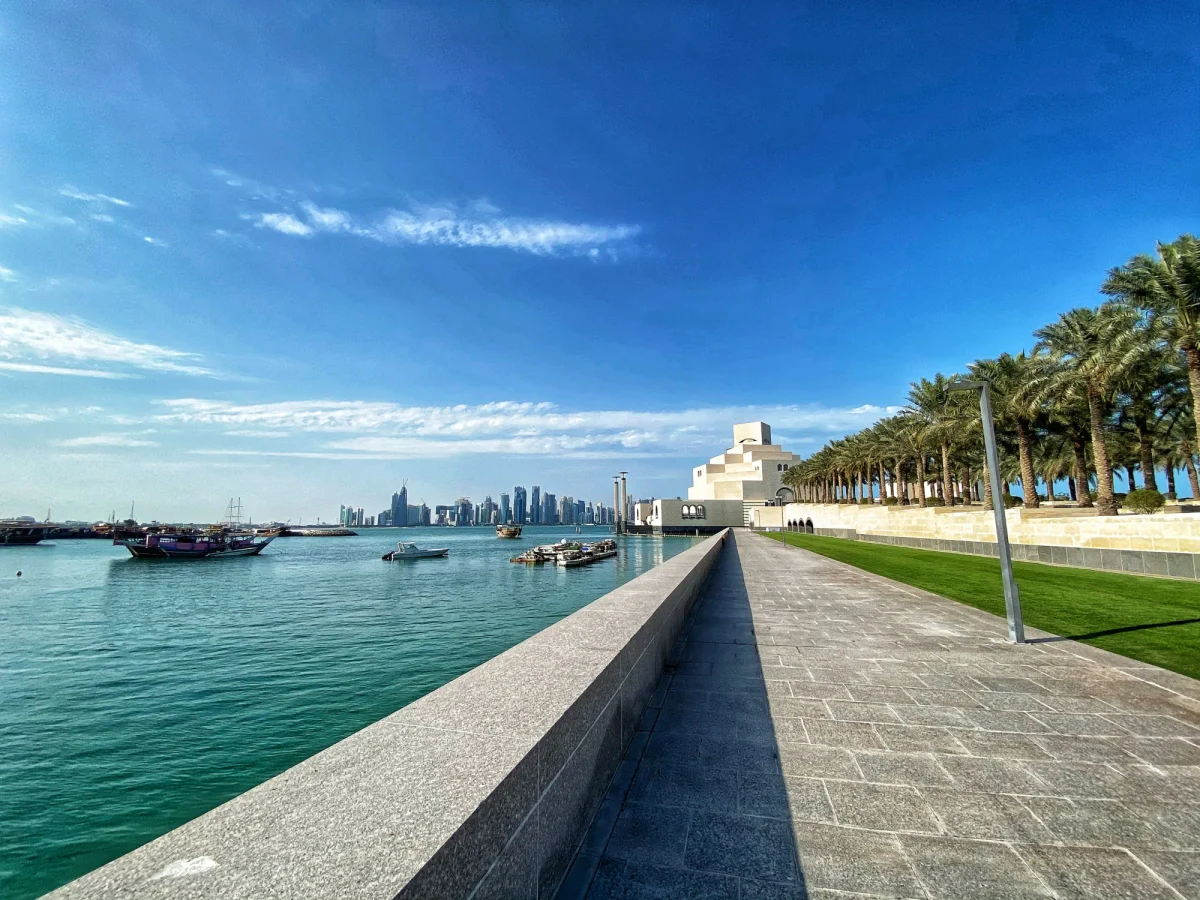
An I.M. Pei project opened in December 2008 on an artificial island at the tip of the Corniche, inspired by the ablution fountain of the Ibn Tulun mosque in Cairo. It covers 1,400 years of Islamic art from Spain to India; it reopened in October 2022 after a complete renovation of the galleries.
The I.M. Pei building, on an artificial island at the tip of the Corniche, holds 1,400 years of Islamic art, from Spain to India. Arrive at opening, 9am or 1:30pm on Fridays, and set aside two hours for the galleries reopened in October 2022. The museum closes on Wednesdays.
Check access
National Museum of Qatar
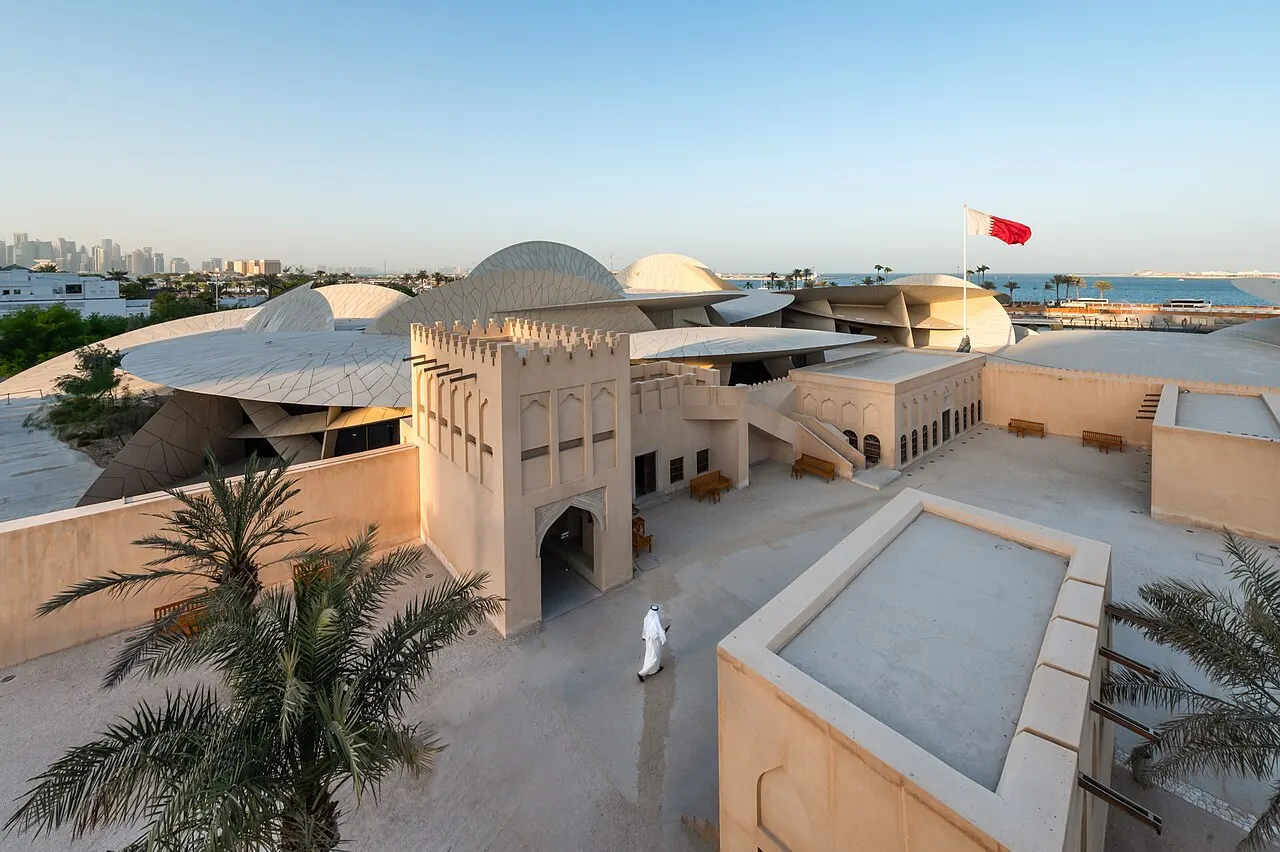
Opened in March 2019, it's Jean Nouvel's building made of 539 concrete discs that mimic the desert rose. The 1.5 km route wraps around the restored 1906 palace of Sheikh Abdullah bin Jassim Al Thani, the only preserved historic building on the site.
Arrive at 4pm to take your time with Jean Nouvel's discs and the 1906 palace. Check which galleries are open; the museum closes on Tuesdays and starts clearing visitors out 45 minutes before closing, usually at 7pm.
Check access
Souq Waqif
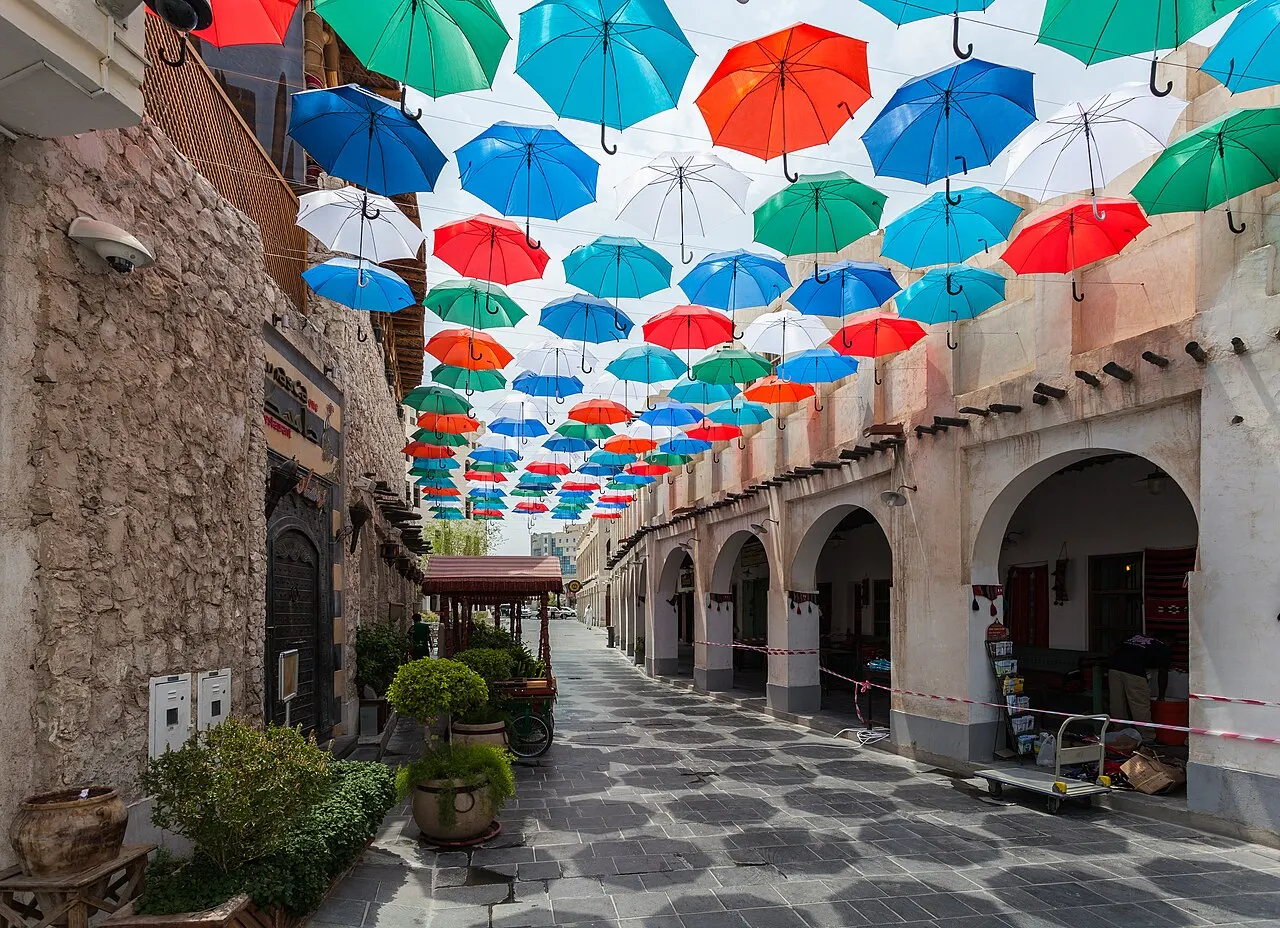
A historic market rebuilt in 2006 with plaster and bamboo beams, active since at least the 19th century as a Bedouin trading spot. In the falcon section, birds sell for car-level prices, and the Souq Waqif Falcon Hospital treats hundreds of patients a week.
Two hours in the late afternoon, and not before: during the day the souq is a hot, enclosed corridor. On Fridays, the metro only opens at 2pm, so plan on a taxi if you want to arrive earlier.
Check access
Corniche
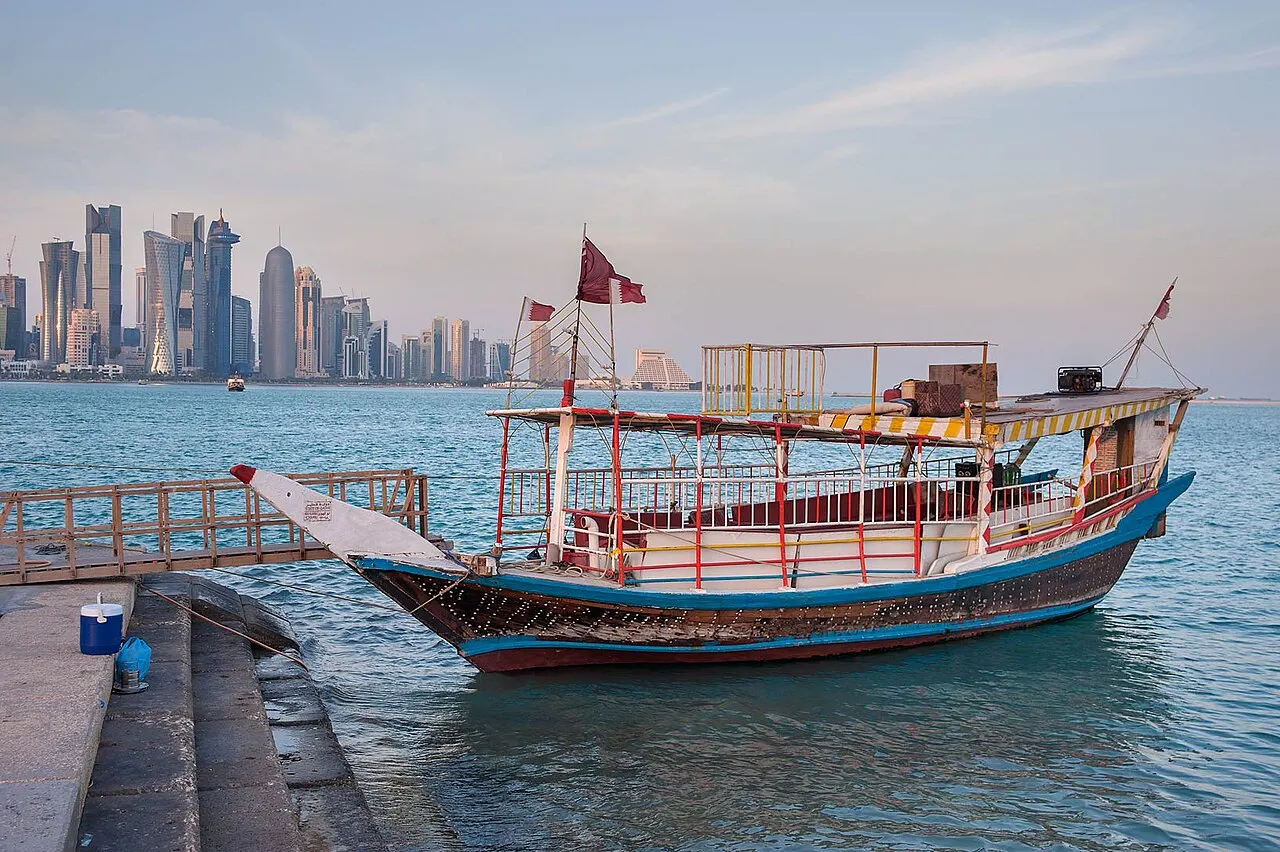
A 7 km arched promenade along the bay, from the National Museum to the pyramid-shaped 1982 Sheraton, all built on landfill from the 1970s and 1980s. It's the country's only long urban walk, and the best spot to see wooden dhows anchored in front of the towers.
It's 7 km in an arc over landfill from the 1970s and 1980s, and it's the country's only long urban walk, but before 6pm, in summer, it simply isn't walkable: ten minutes in the sun at 1pm is already dangerous.
Check access

Msheireb Museums
Four restored family houses in the old center, opened in 2015. Bin Jelmood House is dedicated to the Indian Ocean slave trade and to abolition in Qatar in 1952, a subject rarely covered in the region; Radwani House shows domestic life before and after oil.
They're four small houses, restored and opened in 2015, and it's the museum that explains where the city's money comes from. Start at Bin Jelmood and finish at Radwani.
Check access

Mathaf: Arab Museum of Modern Art
Opened in 2010 in a former school in Education City, it holds about 9,000 works covering modern Arab art from the late 19th century to today. It's the region's reference collection for the period spanning Cairo, Beirut, Baghdad, and Casablanca.
With about 9,000 works, from the late 19th century to today, the Mathaf is the region's reference collection for modern Arab art. Admission is free with a reservation; the museum closes on Mondays and opens at 1:30pm on Fridays.
Check access
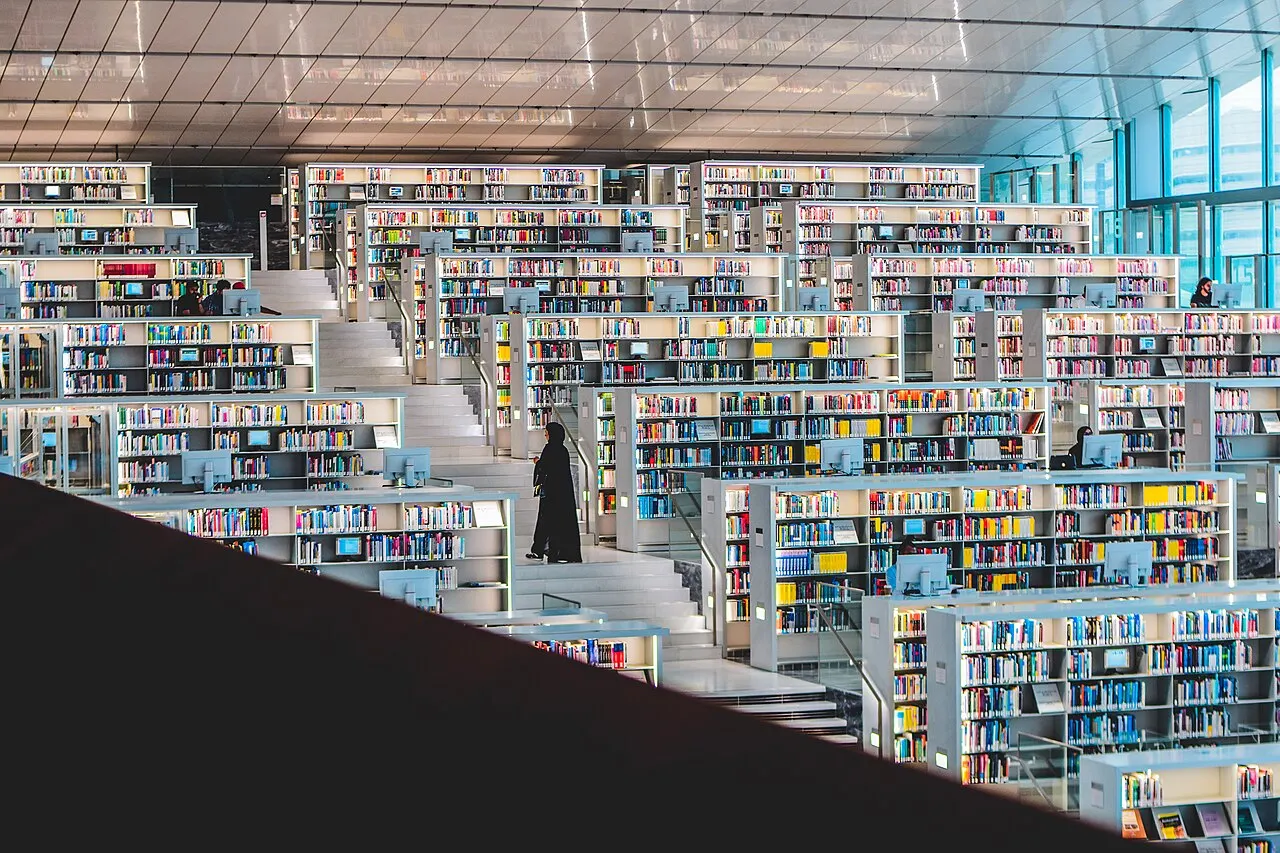
Qatar National Library
A Rem Koolhaas/OMA building opened in 2018, with a single tiered reading room and capacity for over a million volumes. In the center, sunken and clad in travertine, sits the Heritage Library, with manuscripts and historic maps of the Arab world; free admission.
Admission is free, and the sunken room in the middle of the hall is the reason to go in. An hour is enough, and it's the midafternoon shade plan.
Check access

Katara Cultural Village
A 2010 complex with a Greek-style beachfront amphitheater, an opera house, galleries, traditional pigeon towers, and the Golden Mosque, clad in mosaic. It hosts the International Dhow Festival and much of the year-end cultural program.
It's a complex built in 2010 and it's worth it for whatever's on: outside the International Dhow Festival and the December program, what's left is a concrete beachfront amphitheater, the pigeon towers, and the Golden Mosque, done in forty minutes.
Check access
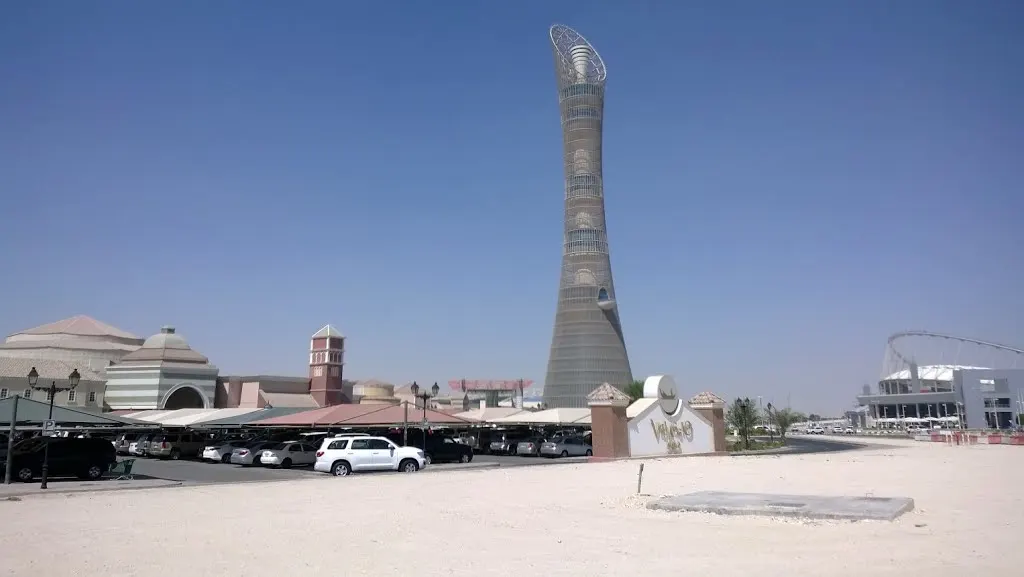
Aspire Park, Torch Tower, and the 3-2-1 Olympic Museum
Doha's largest park (88 hectares), under the 300 m Aspire Tower lit like a torch for the 2006 Asian Games. Next to it, the 3-2-1 museum, opened in 2022, displays Olympic and sports history in a spiral building by architect Joan Sibina.
From May to October, save the walk through the park's 88 hectares for after sunset. The 3-2-1 museum, at Khalifa International Stadium, opened in 2022 and is worth it mainly for those who like sports and Olympic history. On a two-day itinerary, I'd prioritize the Mathaf and the Msheireb Museums.
Check access
Nilo’s itinerary
Start with the basic programme and choose extensions for the time you have.
Plan my days in the app ↗Day 1 · The bay, the two museums, and the souq
9am: enter the Museum of Islamic Art and allow two hours for the galleries. It closes on Wednesdays; swap the order of your days if necessary. On Fridays it opens at 1:30pm: prioritize this museum and the National Museum, leaving Msheireb for another day. Leave through MIA Park when the heat allows.
11:30am: take a taxi to the falcon section of Souq Waqif. Check whether a visit to the falcon hospital is possible; it closes on Fridays. Then have lunch in Msheireb, about ten minutes away on foot; in intense heat, take a car. On Fridays, have lunch before the museums open.
2pm: visit Msheireb Museums, starting at Bin Jelmood House, about slavery in the Indian Ocean, then moving to Radwani House. They close on Sundays. On Fridays they open at 3pm: if you are visiting MIA and the National Museum, save Msheireb for another day.
4pm: take a taxi to the National Museum of Qatar, at the southern end of the Corniche, and explore the galleries among Jean Nouvel’s disks. It closes on Tuesdays; also check which galleries are open. The museum normally closes at 7pm. Last admission and the gradual clearing of galleries begin 45 minutes earlier. Arriving early keeps the visit from feeling rushed.
8pm: have mezze or machboos for dinner at Souq Waqif, with the shops open by then, and drink tea with shisha on one of the corner terraces.
Day 2 · Education City, Katara, and the new islands
9am: take the Green Line to Qatar National Library station and visit the library, which is free to enter. On Fridays it opens only at 4pm; reverse the visits that day, starting at Mathaf at 1:30pm, and reduce your afternoon stops.
11am: use campus transportation to reach Mathaf, with its modern Arab art, then have lunch in Education City or Al Rayyan. The museum closes on Mondays and opens at 1:30pm on Fridays. Check the current exhibitions and book a free ticket. On Mondays, visit just the library and continue to Katara.
3pm: take a taxi to Katara Cultural Village and walk between the seafront amphitheater, the Golden Mosque, the pigeon towers and the galleries.
5:30pm: head to The Pearl-Qatar, start at the Porto Arabia marina and finish on foot along the canals of Qanat Quartier at sunset.
8:30pm: have dinner on the Lusail boulevard and take an evening walk with a view of the illuminated Lusail Stadium.



If you stay longer
Day 3 · Desert, sport, and the city within
7am: leave by 4x4 with a driver for Khor Al Adaid, the inland sea about 60 km south; half-day tours cost around QR 250–400 per person.
1pm: have lunch in Al Wakrah, 20 km south of Doha, at the restored seafront souq.
4pm: visit the 3-2-1 Qatar Olympic and Sports Museum at Khalifa International Stadium; it closes on Tuesdays. Afterward, walk through Aspire Park once the heat eases. From May through October, leave the outdoor part until after sunset.
7pm: shop for dates, spices and gold at Souq Waqif and the neighboring Gold Souq, both open until late.
9pm: end the night at a karak window, where a cup costs QR 1 to 2 and comes out on the spot.
Food
 AI illustration
Machboos (majboos)
The national dish: long-grain rice cooked with lamb, chicken, or fish, loomi (dried lime), saffron, cinnamon, and baharat. Served on a shared platter at lunch, and the centerpiece of any family meal.
 AI illustration
Karak chai
Black tea boiled with condensed milk and cardamom, sold for QR 1–2 at street stalls and drive-thrus open late. It's the country's everyday drink, inherited from the South Asian community, and works as a social excuse at any hour.
 AI illustration
Gahwa and dates
Light Arabic coffee, with cardamom and sometimes saffron, served in small handleless cups alongside dates. It's the standard welcome gesture; tilting the cup side to side means you've had enough.
 AI illustration
Harees
A dense porridge of cracked wheat and meat, beaten for hours into a smooth paste, seasoned with ghee and cinnamon. It shows up mostly during Ramadan, to break the fast, and at weddings.
 AI illustration
Balaleet
Sweet vermicelli with saffron, cardamom, and rosewater, topped with a thin, salted omelet. It's a breakfast dish, and the sweet-salty combination is the signature of Gulf cuisine.
 AI illustration
Luqaimat
Fried dough balls, crisp outside and soft inside, drizzled with date syrup or honey and sesame. Sold at street stalls during Ramadan and at festivals.
 AI illustration
Regag and cheese chapati
Ultra-thin bread baked on a round griddle, filled fresh with processed cheese, egg, honey, or date sauce. It costs a few riyals at kiosks and is the most common late-afternoon snack.
 AI illustration
Diaspora food
Kerala biryani, Sri Lankan kottu, Nepali thali, Lebanese shawarma, and Yemeni mandi are the real everyday menu of Doha in Najma, Mansoura, and Old Airport. A full meal at these places costs about QR 15–30.
Day trips

Khor Al Adaid (inland sea)
About 60 km south: an hour on paved roads to Mesaieed, then another 30 to 40 minutes across dunes, strictly in a 4WD with an experienced driver. This arm of the sea reaches into the desert on the Saudi border, declared a nature reserve by Qatar in 2007 and on UNESCO's Tentative List since 2008, still without World Heritage inscription. Most visitors take a half-day tour or stay overnight at a camp.

Al Zubarah
About 105 km to the northwest, 1 hour 30 minutes by car on a good road: a fort from 1938 and the excavated ruins of an 18th-century pearling and trading town, abandoned in the early 19th century. It is Qatar's only UNESCO World Heritage Site, since 2013; bring water, there is no shade.
Zekreet and the Brouq reserve
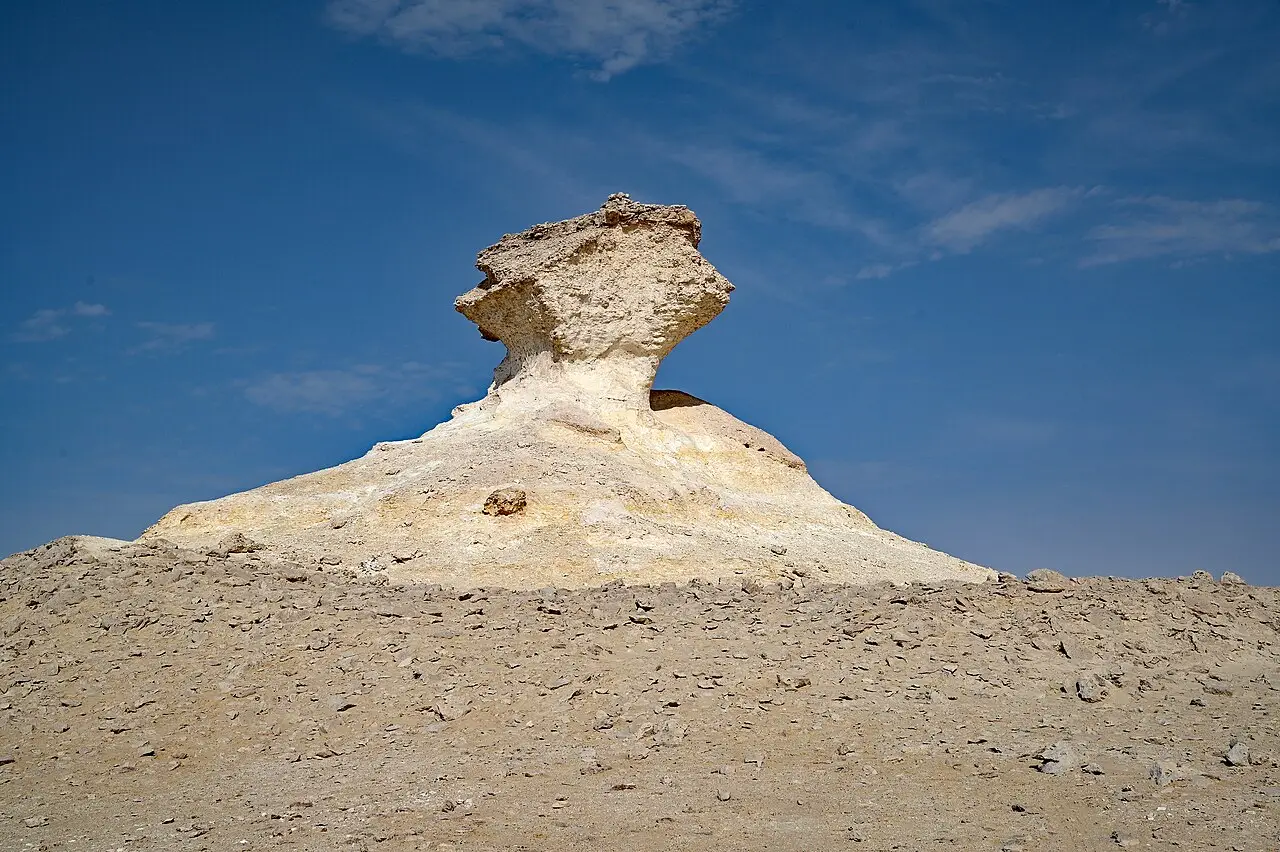
About 80 km to the west, 1 hour 15 minutes by car: wind-eroded limestone mesas, an abandoned film-set village and Richard Serra's “East-West/West-East” (2014), four 14.7 m steel plates lined up across a kilometer of desert. Best in the late afternoon.
Where to begin
The bay, the two museums, and the souq
9am: enter the Museum of Islamic Art and allow two hours for the galleries. It closes on Wednesdays; swap the order of your days if necessary. On Fridays it opens at 1:30pm: prioritize this museum and the National Museum, leaving Msheireb for another day. Leave through MIA Park when the heat allows.
Education City, Katara, and the new islands
9am: take the Green Line to Qatar National Library station and visit the library, which is free to enter. On Fridays it opens only at 4pm; reverse the visits that day, starting at Mathaf at 1:30pm, and reduce your afternoon stops.
Desert, sport, and the city within
7am: leave by 4x4 with a driver for Khor Al Adaid, the inland sea about 60 km south; half-day tours cost around QR 250–400 per person.
Money
The currency is the Qatari riyal (QR), pegged to the dollar at QR 3.64 = US$1 since 2001, which makes the exchange rate predictable; in late September 2026, QR 1 was worth about R$1.40. Cards are accepted almost everywhere, including taxis and the metro, but keep small bills for karak, tips, and Souq Waqif. Typical 2026 ranges, approximate: karak QR 1–2; specialty coffee QR 18–25; shawarma QR 8–12; full meal at a neighborhood restaurant QR 15–30; mid-range dinner QR 90–160 per person; beer at a hotel bar QR 45–70. A three-star hotel runs QR 300 to 450 a night, four or five stars QR 500 to 1,100. Hotels and restaurants may include a service charge; check the itemized charges and total price before booking or ordering. Tipping isn't mandatory: round up the taxi fare and leave 10% when there's no service charge on the bill.
Getting there and around
Hamad Airport: 10 km from downtown, on the Red Line
Hamad International Airport sits about 10 km southeast of the center and is connected to the metro's Red Line: from the Terminal 1 station to Msheireb is about 20 minutes for QR 2 in standard class. By Karwa taxi, the ride to West Bay runs around QR 50–70. You can also request a ride through Uber or the Karwa app; compare the price before confirming. The metro, opened in 2019, is automated, has three lines (Red, Green, and Gold), about 37 stations, and a single interchange at Msheireb: there's no cab and no driver in the first car. A single ride costs QR 2, the day pass QR 6, the rechargeable standard card QR 10, the weekly pass QR 40, and the monthly pass QR 120. Gold Club class costs QR 10 per ride. Metrolink buses feed the stations within a radius of a few kilometers and are included in the fare. Approximate hours are 6am to 11pm Saturday through Thursday, and from 2pm on Fridays, because of midday prayer.
Off the metro, it's a car city
Away from the metro lines, Doha is a car city, because of how wide the blocks are. Karwa's turquoise taxis are metered and reliable, with a minimum fare of around QR 10 on the street and a higher minimum from the airport, and ride-hailing apps cover everything. Renting a car is simple with an international license, but traffic is aggressive and the roundabouts demand attention. On foot, the Corniche (7 km, doable from November to March), Msheireb, Souq Waqif, Katara, Qanat Quartier and the Lusail boulevard all work. Between neighborhoods, walking is almost never worth it: the blocks are long, there are few crossings, the roundabouts have no crosswalks or shade and, in summer, sun exposure is dangerous. Cycling is more leisure than transportation: there are bike paths in Aspire Park, on the Corniche, in Lusail and on the Al Khor ring, but they don't form a useful network. The Lusail tram, opened in 2022, links the boulevard to Legtaifiya station on the Red Line.
Safety
Qatar has one of the lowest crime rates in the world, and walking alone at night in Doha is routine, for women too. Street theft and tourist scams are rare, and metered taxis and ride-hailing apps take haggling out of the picture. The real risks lie elsewhere, and there are three of them, none to do with who you'll meet on the sidewalk. The first is heat: between June and September, heatstroke and dehydration put people in the hospital every year, so carry water, stay out of the sun between 10am and 5pm, and take any dizziness seriously. The second is traffic. The road death rate is high by Gulf standards, drivers change lanes without signaling, and crosswalks aren't always respected. Cross only at traffic lights, and even there watch for oncoming cars. The third is legal, and it's the one that catches careless visitors: there's zero tolerance for drugs (including trace amounts and substances that are legal elsewhere), public drunkenness is a crime, public displays of affection and obscene gestures can lead to detention, homosexual relations are criminalized, and criticizing the emir, Islam or the state in public or online can lead to prosecution. Carry a copy of your passport and leave the original at the hotel.
Etiquette tips
Cover shoulders and knees
In public spaces, museums, malls, and government offices, clothing that covers shoulders and knees is expected, for men and women. It's not a headscarf requirement, just a sleeved shirt and long pants or a long skirt; tank tops and short shorts can get you turned away at the door.
Tilt the gahwa cup
Arabic coffee gets refilled automatically as long as you hold the cup still. To decline another round, tilt the finjan side to side two or three times as you hand it back; saying no out loud doesn't stop the service.
Use your right hand
Eat, hand over money, take a card, and greet always with your right hand; the left is considered unclean. If you're eating from a shared platter, take only what's directly in front of you.
Don't photograph people without permission
Photographing women, families, and children without consent is offensive and can cause legal trouble, even in a public place. The same goes for government buildings, military installations, ports, and the airport; drones require prior authorization.
Greeting across genders
Many Qatari men and women don't shake hands with people of the other gender. Wait for the other person to extend their hand first; if that doesn't happen, a slight nod of the head with the right hand over the chest does the job.
Ramadan and Friday
During Ramadan, don't eat, drink, or smoke in public between sunrise and sunset, including inside a car. On Fridays, roughly between 11am and 1pm, many shops close for prayer, and Souq Waqif only wakes up in the afternoon.
Mistakes to avoid
Walking between neighborhoods in summer
Planning walks between neighborhoods in summer. Between June and September, ten minutes in the sun at 1pm is already dangerous. Organize the day around metro, taxi, and air-conditioned interiors, and save the Corniche for after 6pm.
Souq Waqif in the middle of the afternoon
Arriving at Souq Waqif in the middle of the afternoon. Most shops close between about 12pm and 4pm, and the area only comes alive after 6pm. The same pattern holds for many neighborhood businesses.
Alcohol and e-cigarettes in your luggage
Trying to enter Qatar with alcohol or electronic cigarettes in your luggage. Licensed hotel bars sell alcohol, and the QDC store serves residents with permits, but travelers cannot import it. Customs confiscates it on arrival. Importing vapes and e-liquids is also prohibited. If you are only connecting without entering the country, check baggage and Hamad transit screening rules with your airline; a connection and entry into Qatar are different situations.
The local weekend is Friday and Saturday
Confusing the weekend. The local rest days fall on Friday and Saturday: government offices and many businesses close on Friday, and Sunday is a normal working day. It's easy to assume Sunday will be quiet, but it's the busiest day of the week.
No confirmed hotel booking
Arriving without a confirmed hotel booking. The visa-on-arrival exemption, valid for Brazilians for up to 90 days, usually requires proof of accommodation and a passport valid for at least three months; the paperwork gets checked at the counter.
Useful phrases
السلام عليكم: As-salamu alaykum (as-sa-LAA-mu a-LAY-kum)
Peace be upon you. Standard greeting; the reply is “wa alaykum as-salam”
شكراً: Shukran (SHOO-cran)
Thank you. The usual reply is “afwan” (AF-wan), you're welcome
من فضلك: Min fadlak (min FAD-lak)
Please, addressed to a man; for a woman, “min fadlik”
كم السعر؟: Kam as-si'r? (kam as-SEER)
How much does it cost? Useful in Souq Waqif, where the first number is negotiable
شلونك؟: Shlonak? (SHLOH-nak)
How are you? Gulf form; for a woman, “shlonich”
إن شاء الله: Inshallah (in-SHAA-lah)
God willing. Used all the time, also in the sense of “maybe” or “we'll see”
Districts
West Bay (Al Dafna)
The financial district: office towers, ministries, chain hotels, and most of the skyline that shows up on postcards. This is where Jean Nouvel's Doha Tower (238 m, 2012) and the Convention Center stand; it empties out at night.
Msheireb Downtown
One square kilometer of the old city center, demolished and rebuilt between 2010 and 2022 with contemporary architecture drawing on local design, planned shading, and reduced traffic. It concentrates the Msheireb Museums, restaurants, and the interchange station for the three metro lines.
Souq Waqif and Al Jasrah
The historic commercial core, rebuilt from 2006 in a 19th-century style after a fire. It runs on trade, cafés, shisha, and the falcon souq; it's the most walkable area of Doha and mostly runs from late afternoon to midnight.
Katara and Al Qassar
A cultural village built in 2010 between West Bay and The Pearl, with a beachfront amphitheater, galleries, a mosque with golden mosaic, mud pigeon towers, and a paid beach. It serves as the festival hub and address for expensive restaurants.

The Pearl-Qatar
An artificial archipelago of about 4 km² to the north, opened from 2009, with a marina, residential towers, and the pastel-colored Qanat Quartier, crossed by canals. It was the first area in the country where foreigners could buy property outright.
Lusail
A planned city 15 km north of the center, with a central boulevard, Place Vendôme, and Lusail Stadium (88,966 seats), site of the 2022 final. There are still empty blocks between finished towers; the boulevard is for walking at night.
Education City (Al Rayyan)
A 12 km² Qatar Foundation campus to the west, with branches of Georgetown, Northwestern, Weill Cornell, Texas A&M, and Carnegie Mellon, plus the Qatar National Library and the Mathaf museum. It has its own metro station and an internal tram.
Najma, Mansoura, and Old Airport
Dense neighborhoods southeast of the center where much of the South Asian and Filipino population lives. This is where you eat biryani, kottu, and cheap Nepali food, and where prices bear no relation to those in West Bay.
History
1681 · Al Bidda on record
The settlement of Al Bidda, now swallowed by Doha, appears in a Carmelite manuscript from 1681. It lived on fishing, pearl diving and coastal trade.
1821 · The British bombardment
A British East India Company ship bombards Al Bidda in retaliation for maritime raids, and the population flees. It is the first recorded total destruction of the site.
c. 1825 · Doha founded
A new settlement, Al Dawha, grows next to the ruins, on the shallow curve of the bay. The name comes from dohat, the Arabic word for a rounded cove.
1867–1868 · War and the birth of the state
A force from Bahrain and Abu Dhabi razes Doha in 1867. In the negotiation that follows, British agent Lewis Pelly deals directly with Mohammed bin Thani in 1868, in effect recognizing Qatar as a separate entity.
1871–1915 · The Ottoman garrison
The Ottomans install troops in the Al Bidda fort and fold Qatar into the vilayet of Basra. In 1893, Jassim bin Mohammed Al Thani defeats an Ottoman column at Al Wajbah, west of Doha.
1916 · British protectorate
The Anglo-Qatari treaty puts defense and foreign relations in London's hands in exchange for protection. Doha becomes the administrative seat of an emirate of a few thousand people.
1930s · The pearl collapse
Cultured Japanese pearls and the Depression destroy Qatar's only export sector. Whole districts of Doha are abandoned and the city's population shrinks drastically.
1939–1949 · Oil in Dukhan
Oil is found in Dukhan, on the west coast, in 1939; the war delays everything, and the first export shipment leaves only in December 1949. The income starts rebuilding Doha in the 1950s.

1971 · Independence
Qatar becomes independent on September 3, 1971, after the British withdrawal from the Gulf, and Doha becomes the capital of a sovereign state. In the following years oil is nationalized.
1995–1997 · The gas and media turn
Hamad bin Khalifa Al Thani deposes his father in 1995, founds Al Jazeera in Doha in 1996, and begins exporting LNG from the North Field in 1997. Within three decades the country becomes one of the world's largest exporters of liquefied gas.

2017–2022 · Blockade, metro, and the World Cup
Saudi Arabia, the Emirates, Bahrain and Egypt blockade Qatar between June 2017 and January 2021, and in that interval the metro (2019) and the National Museum (2019) open. Once the blockade ends, the World Cup is played in and around Doha in November and December 2022.

Complete history
Pearls and the port, up to the 1920s
Doha exists because of the pearl. Between the 18th century and the 1920s, the entire Qatari coast economy revolved around the diving season, the ghaus, running from May to September: whole crews spent months on wooden boats, with no equipment, financed by advances that almost always turned into debt. Trade linked Doha to Basra, Bombay and Zanzibar, and brought Persians, Baluchis, and enslaved Africans to the city: a layer of population the Msheireb Museum now documents at the Bin Jelmood House. The city was a cluster of coral and plaster houses around a shallow bay, with no freshwater of its own, dependent on wells and rain.
Doha destroyed twice: 1821 and 1867
Modern politics begins with two attacks that destroy the city: in 1821 a British ship bombards Al Bidda, and in 1867 an expedition from Bahrain and Abu Dhabi razes Doha again. The diplomatic response to that second attack is the 1868 agreement between the British agent Lewis Pelly and Mohammed bin Thani, which in practice separates Qatar from Bahrain and installs the Al Thani as the ruling family, the same one that has governed ever since. The Ottoman presence between 1871 and 1915 and the 1916 treaty with Britain kept the emirate a small piece between empires until the First World War.
The pearl collapse of the 1930s
The collapse of pearling in the 1930s, brought on by Japanese cultured pearls and the Depression, was the greatest catastrophe in the country's history. With no exports and no alternative, there was hunger and emigration, and Doha shrank. Recovery came from oil. Oil was found at Dukhan in 1939, but the Second World War delayed everything, and the first cargo didn't sail until December 1949. The 1950s and 1960s brought electricity, the first public school, the first hospital and the systematic demolition of the old houses, which is why almost nothing built before 1950 still stands in Doha.
Independence and the North Field in the same year
Independence on September 3, 1971 coincides with the discovery of the North Field, the offshore gas field Qatar shares with Iran and which is the largest non-associated gas field on the planet. The bet on liquefied natural gas was expensive and was made by Hamad bin Khalifa Al Thani, who deposed his father in 1995 and signed the contracts that put the first LNG ship to sea in 1997. In the same decade he founded Al Jazeera (1996) and the Qatar Foundation (1995), two tools of external projection that explain why Doha shows up in the news out of proportion to its size.
Twenty-five years of accelerated construction
The last twenty-five years have brought rapid construction and a foreign policy built on mediation. Along came museums designed by I.M. Pei (2008) and Jean Nouvel (2019), an entire district demolished and rebuilt in Msheireb, the driverless metro opened in 2019, the 2022 World Cup and the new city of Lusail to the north. The blockade imposed by four neighbors between 2017 and 2021 sped up food self-sufficiency and the alliance with Turkey. At the same time, international pressure over migrant working conditions led to reforms of the kafala system from 2020, with a minimum wage and an end to the requirement for employer permission to change jobs or leave the country. About nine in ten Doha residents are not Qatari citizens, and almost all of the city a visitor walks through, from the reclaimed waterfront to the towers of Lusail, was paid for by gas.
In Al Shahaniya, west of Doha, the jockeys in the camel races are robots, and the owner steers them by radio while following the animal by car.
Geography and shape of the city
The peninsula with no river
Qatar is a flat limestone-and-sand peninsula of 11,600 km², and its highest point is only 103 m, at the far south. Doha sits on the east coast, on the curve of a shallow bay facing north, and has no river, spring, or usable water table: practically all drinking water comes from desalination. It rains about 75 mm a year, almost all between December and March, and the surrounding ground is sabkha, a salt flat that floods and hardens.
The lettered ring roads
The urban grid is radial and road-based: ring roads named by letter (A Ring Road through E Ring Road) fan out from the historic center, cut across by fast corridors like Salwa Road, Al Corniche, and Lusail Expressway.
The coastline that was reclaimed
Much of what looks like natural coastline is landfill. The 7 km Corniche was reclaimed from the sea in the 1970s and 1980s, the Museum of Islamic Art stands on an artificial island, and The Pearl-Qatar (about 4 km²) is an archipelago built up from the floor of the bay starting in 2004; neighboring Lusail was built almost entirely on solid ground. The result is a city of huge blocks, distances designed for cars and temperatures that, from June to September, make the sidewalk practically unusable between 10am and 5pm.
Culture
Al Jazeera, founded here in 1996
Doha has more international influence than its size would suggest. Al Jazeera, founded in 1996 and headquartered here, redefined Arabic-language news and is the reason the city constantly appears in regional crises; alongside it, the Qatari government has specialized in mediation, hosting negotiations that range from Afghanistan to Gaza. Qatar Foundation, created in 1995, imported entire American university campuses to Education City, and Qatar Museums, led by Sheikha Al Mayassa Al Thani, has bought over the last two decades one of the largest collections of modern and contemporary art in the world, besides commissioning public art on an unusual scale.
The public art you see for free
Much of Doha's public art can be seen for free. There's Urs Fischer's 7 m yellow lamp bear in the airport concourse, Damien Hirst's fourteen bronze sculptures showing human gestation in front of Sidra hospital and, in the Zekreet desert, Richard Serra's four 14.7 m steel plates lined up across a kilometer. The Doha Film Institute, founded in 2010, runs the Ajyal festival and funds Arab and African cinema. The Qatar Philharmonic has played since 2007, and the private gallery scene clusters at the Fire Station, a 1982 fire station converted into an artist residency in 2015.
Falconry in Souq Waqif, camel racing with robot jockeys
The traditional side isn't showcase folklore: falconry is a sport with its own market, hospital, and auctions in Souq Waqif, and camel races in Al Shahaniya, to the west, have run with radio-controlled robot jockeys since 2005, with owners chasing the animals by car along the parallel track. Soccer has organized the calendar since the 2022 World Cup, the MotoGP Grand Prix has run at the Lusail circuit since 2004, and the Doha tennis tournament opens the Middle East season in February. At night, real social life happens in private majlis, in shisha cafés, and in air-conditioned malls: bars exist, but only inside licensed hotels.
Education City is an entire campus, with a different American university at every door.
Sheikh Abdullah bin Jassim Al Thani's 1906 palace, inside the National Museum, is the only historic building preserved on the site.
Festivals and events
Ramadan, Garangao, and Eid al-Fitr
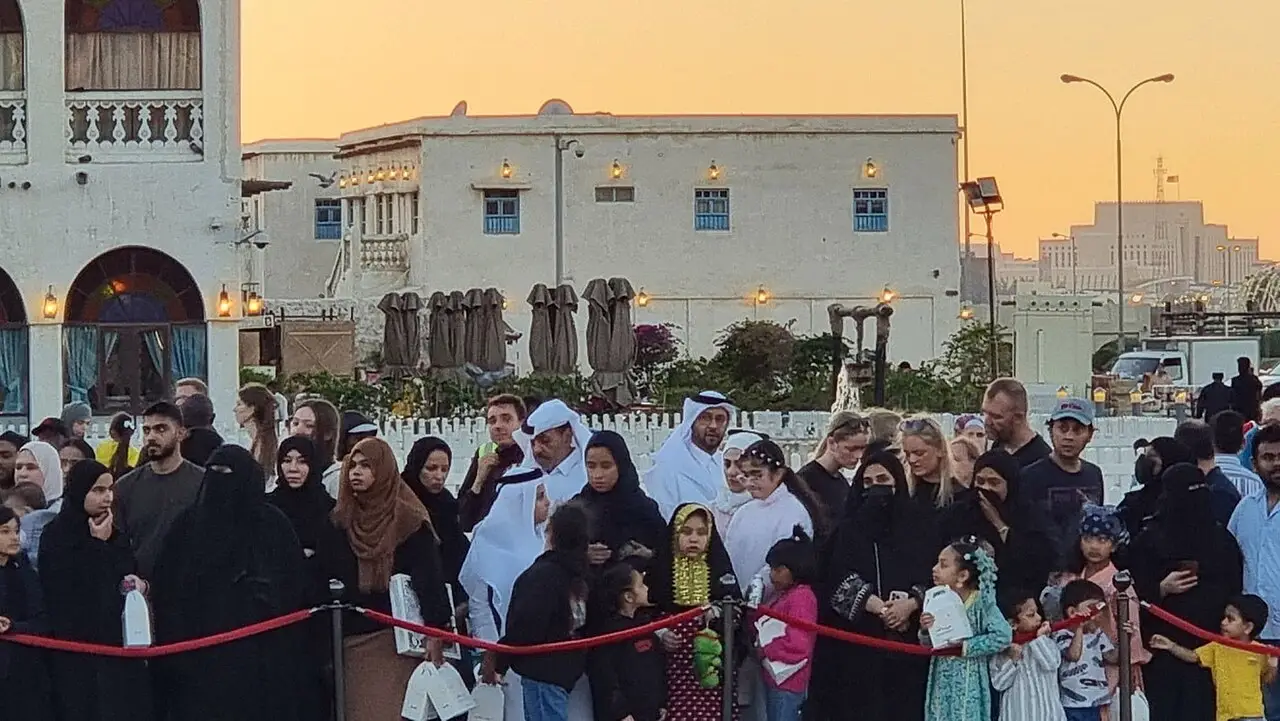
A movable date on the lunar calendar; in 2026 Ramadan falls around February and March. Restaurants close by day, the city turns nocturnal, and on the 14th day children go door to door with bags to collect sweets and nuts for Garangao.

Qatar National Day
December 18, the anniversary of the unification under Jassim bin Mohammed in 1878. There's a military parade on the Corniche, the Darb Al Saai cultural camp with falconry and traditional food, and gridlocked traffic downtown for days.
 AI illustration
Ajyal Film Festival
In November, organized by the Doha Film Institute, with juries made up of children and young people aged 8 to 25. Open-air screenings and Arab cinema showcases, usually in Katara and Msheireb.
Katara International Dhow Festival
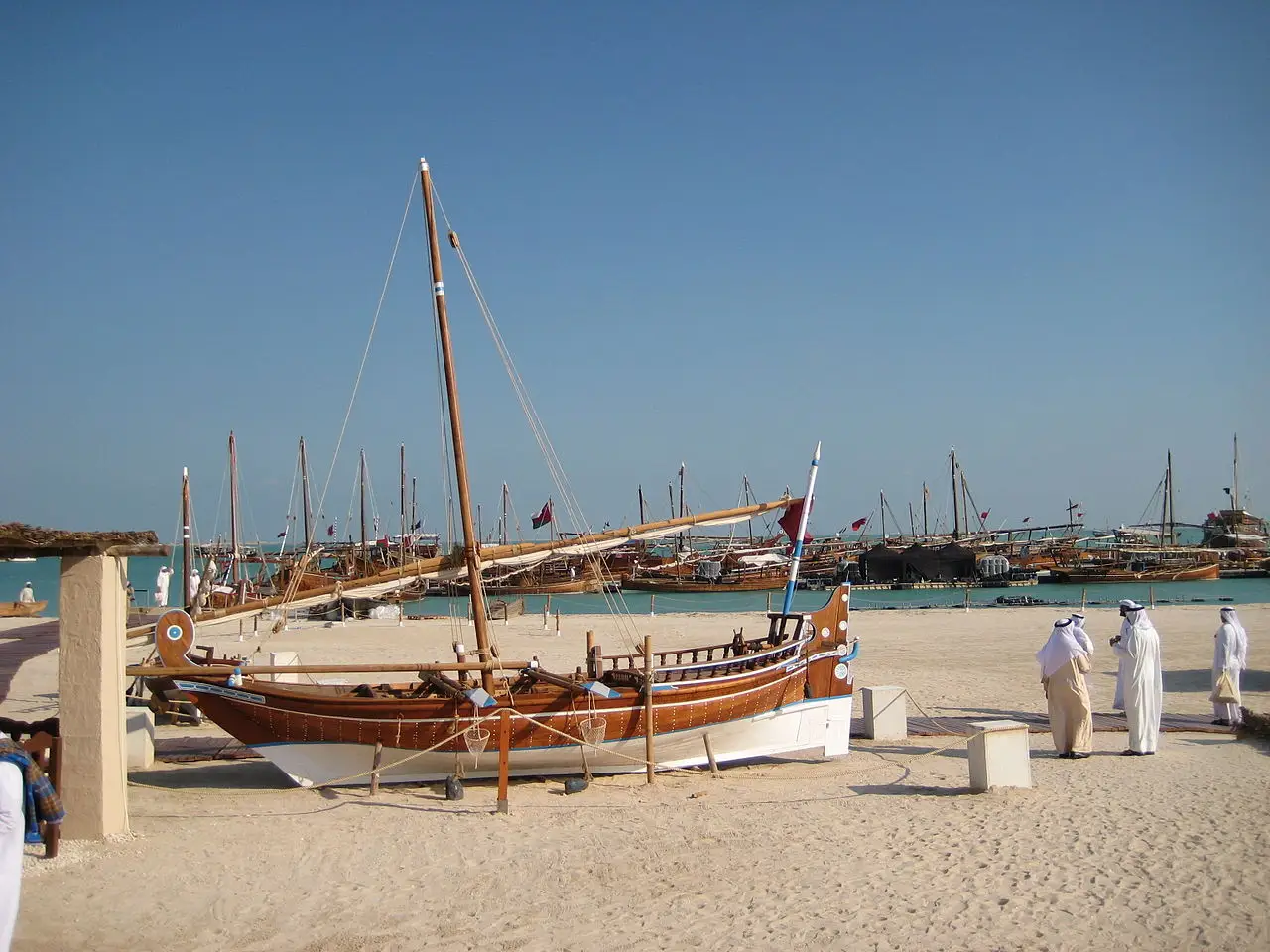
November or December, in Katara: traditional wooden boats moored on the beach, pearl-diving competitions, sailor songs, and live boat building. Free admission.
 AI illustration
Qatar International Food Festival
March, usually at the National Museum or the Corniche, with stalls from local restaurants, food trucks, and cooking classes. It's the last big outdoor event before the heat closes the season.
Books and films
“Qatar: A Modern History”, Allen J. Fromherz (2012)
The country's history from pearl to gas in one volume, written by a historian who lived in the Gulf. It explains why the Al Thani family has governed since 1868 and how the state organized itself after 1971.
“The Corsair”, Abdulaziz Al-Mahmoud (2011)
The first Qatari novel translated into English, set in the Gulf of the 1820s, among corsairs, the British, and the bombardment of Al Bidda. It recovers the maritime world that existed before oil.
“Black Gold”, Jean-Jacques Annaud (2011)
An epic co-produced by the Doha Film Institute about oil's arrival on the Arabian peninsula in the 1930s and the clash between tribes, tradition, and foreign concessions. It's the dramatized version of the turn that made Doha exist at its current scale.
Frequently asked questions
Doha: Can you walk between neighborhoods in summer?
No: between June and September, ten minutes in the sun at 1pm is already dangerous, and the long blocks and shadeless roundabouts don't help. Organize the day around metro, taxi, and air-conditioned interiors, and save the Corniche for after 6pm.
Doha: How do you get to Khor Al Adaid, the inland sea?
About 60 km south: an hour on paved roads to Mesaieed, then another 30 to 40 minutes across dunes, strictly in a 4WD with an experienced driver.
Doha: What's the currency, and what's it worth in reais?
The currency is the Qatari riyal (QR), pegged to the dollar at QR 3.64 = US$1 since 2001, which makes the exchange rate predictable; in late September 2026, QR 1 was worth about R$1.40.
Doha: What's the best time to go?
From November to March days run between 20 and 28 °C, skies are clear and everything outdoors works.
Doha: What should you wear in museums, malls, and government offices?
In public spaces, museums, malls, and government offices, clothing that covers shoulders and knees is expected, for men and women.


