Israel
Jerusalem
Old City, the Wall, Holy Sepulchre and Dome of the Rock
Days Start with the basic programme and choose extensions for the time you have.
How the guide reaches this number
On Friday transit stops in the afternoon, on Saturday almost everything closes, and Sunday is the real working day. Devote the first day to the Old City, the second to the museums outside the walls and Mahane Yehuda, and the third to the Mount of Olives and the eastern side. With only one day, enter through Jaffa Gate at 7:30am and go up to the Esplanade in the first morning window, Sunday to Thursday. Then head down to the Western Wall and follow the Via Dolorosa to the Holy Sepulchre, stopping for hummus before 3pm. What disappoints is the scale: the Holy Sepulchre is dark, cramped and divided among six denominations. You also only see the golden dome from the outside, because non-Muslims can't enter the Dome of the Rock; what you visit is the Esplanade around it, in short windows. Even so, no other place brings together so many holy sites in so little space.
3
When April–May and October–November; 18–25 °C with little rain
How the guide reaches this number
The climate is Mediterranean at altitude, with clearly separated dry and rainy seasons. From June to September it hardly rains at all: afternoons reach 28–32 °C, with low humidity and nights that drop to 17–20 °C, which makes summer bearable as long as you avoid the sun between 11am and 4pm. From December to February it's 8–13 °C by day and 4–7 °C at night, and almost all of the annual precipitation, about 550 mm, falls in this period, with strong wind; it snows once or twice a year, enough to paralyze the city for a day. The best windows are April and May and October and November, with 18–25 °C, clear skies and long days. In April, May or September, watch out for the sharav (khamsin), a hot, dry desert wind that can push temperatures to 35 °C for two or three days. To avoid the crowds, skip Passover, Holy Week and Sukkot, unless you're going precisely for them, because prices rise, hotels fill up and the religious sites become impassable. August combines heat and school vacation; January is cold and damp, but it's the cheapest and emptiest month.
Per person/day Budget about ₪200–280; mid-range about ₪450–750; high above ₪1,200
How the guide reaches this number
Per person per day: accommodation, meals, urban transport, visits and a small allowance for extras. Flights excluded; larger purchases vary. Editorial estimate, not a quote.
 What Nilo thinks
Set aside three days for Jerusalem and build the trip around the week's calendar. On Friday transit stops in the afternoon, on Saturday almost everything closes, and Sunday is the real working day. Devote the first day to the Old City, the second to the museums outside the walls and Mahane Yehuda, and the third to the Mount of Olives and the eastern side. With only one day, enter through Jaffa Gate at 7:30am and go up to the Esplanade in the first morning window, Sunday to Thursday. Then head down to the Western Wall and follow the Via Dolorosa to the Holy Sepulchre, stopping for hummus before 3pm. What disappoints is the scale: the Holy Sepulchre is dark, cramped and divided among six denominations. You also only see the golden dome from the outside, because non-Muslims can't enter the Dome of the Rock; what you visit is the Esplanade around it, in short windows. Even so, no other place brings together so many holy sites in so little space.Jerusalem packs the holiest sites of three religions into one square kilometer of rock: the Western Wall, the Holy Sepulchre, and the Dome of the Rock, with its golden cupola. All of it sits inside Suleiman's walls, in an Old City of alleys and covered markets where breakfast is sesame ka'ak with za'atar and lunch is hot hummus with ful. The city was born here because of the Gihon Spring, and you can still wade through Hezekiah's Tunnel, 533 m long, in knee-deep water. Outside the walls are the Israel Museum, with the Dead Sea Scrolls, Yad Vashem, and the Mahane Yehuda market, where the bars open as the stalls close. Plan around the calendar, because Shabbat halts the light rail and shops from Friday afternoon until nightfall on Saturday. Come in April and May or in October and November, at 18 to 25 °C, and allow three days.
Quick facts
- Population
- about 1.07 million in the city (June 2026); about 1.3 million in the metro area
- Founded
- Settlement by the Gihon spring since about 3000 BCE; mentioned in Egyptian sources from the early second millennium BCE
- Country and region
- Israel, Judean Hills; sovereignty over the city is an international dispute
- Language
- Hebrew and Arabic; English is common in tourism and hospitality
- Currency
- New Israeli shekel (₪, ILS); 1 ₪ ≈ R$1.60 and ≈ US$0.29 (2026)
- Time zone
- UTC+2; UTC+3 during daylight saving, late March to late October
- Best time to visit
- April–May and October–November; 18–25 °C with little rain
- Average daily cost
- Budget about ₪200–280; mid-range about ₪450–750; high above ₪1,200
When to go
April–May and October–November; 18–25 °C with little rain
January
7° to 13°C
137 mm of rain
February
7° to 14°C
118 mm of rain
March
10° to 17°C
67 mm of rain
June
18° to 29°C
0 mm of rain
July
20° to 30°C
0 mm of rain
August
20° to 30°C
0 mm of rain
September
19° to 29°C
1 mm of rain
December
9° to 15°C
112 mm of rain
How the year changes
The climate is Mediterranean at altitude, with clearly separated dry and rainy seasons. From June to September it hardly rains at all: afternoons reach 28–32 °C, with low humidity and nights that drop to 17–20 °C, which makes summer bearable as long as you avoid the sun between 11am and 4pm. From December to February it's 8–13 °C by day and 4–7 °C at night, and almost all of the annual precipitation, about 550 mm, falls in this period, with strong wind; it snows once or twice a year, enough to paralyze the city for a day. The best windows are April and May and October and November, with 18–25 °C, clear skies and long days. In April, May or September, watch out for the sharav (khamsin), a hot, dry desert wind that can push temperatures to 35 °C for two or three days. To avoid the crowds, skip Passover, Holy Week and Sukkot, unless you're going precisely for them, because prices rise, hotels fill up and the religious sites become impassable. August combines heat and school vacation; January is cold and damp, but it's the cheapest and emptiest month.
The same numbers as a table
| Month | Temperature °C | Rain mm |
|---|---|---|
| January | 7 to 13 | 137 |
| February | 7 to 14 | 118 |
| March | 10 to 17 | 67 |
| April · | 13 to 22 | 22 |
| May · | 16 to 26 | 7 |
| June | 18 to 29 | 0 |
| July | 20 to 30 | 0 |
| August | 20 to 30 | 0 |
| September | 19 to 29 | 1 |
| October · | 17 to 26 | 10 |
| November · | 13 to 20 | 51 |
| December | 9 to 15 | 112 |
Nilo's tips
Visit the Esplanade in the morning, Sunday to Thursday
For non-Muslims, the Esplanade closes on Fridays and Saturdays, on Islamic holidays and on days of tension. From April to September, visiting hours are 7:30am to 11am and 1:30pm to 2:30pm; in winter, 7:30am to 10:30am and 12:30pm to 1:30pm. Fit the Esplanade into the first weekday of your trip and confirm the hours that same morning. If you can't get in, go up to the Mount of Olives lookout at dawn, where the golden dome faces you head-on, with no line.
On Friday, light rail and buses stop around 2pm and only come back Saturday night
With Shabbat, supermarkets close, and Israeli light rail and buses stop, between about 2pm and sunset on Friday. Take care of shopping and lunch at Mahane Yehuda before 2pm, while the market is buzzing, because within an hour it empties out; Friday is also when chocolate rugelach comes out of the stalls warm. To get around on Saturday, use the Arab lines that leave from the bus station by Damascus Gate, which keep running while the rest of the city stops.
From the airport: a 25-minute train, except on Shabbat and Jewish holidays
The fast train from Ben Gurion to Yitzhak Navon station doesn't run from late Friday afternoon to nightfall on Saturday, nor on Jewish holidays. On other days, the fare costs about ₪19; in the window without a train, take the Nesher sherut or a taxi. Sort out the ETA-IL with plenty of time before you fly, because it can take up to 72 hours to be issued.
One light rail line covers nearly the whole itinerary
The Red Line runs along Jaffa Street, past Mahane Yehuda, and near Damascus Gate. Pay with a Rav-Kav card or the Rav Pass app: a fare costs about ₪6–8, with free transfers for 90 minutes. On days when you'll chain several rides, compare it with the day pass, and if you're staying the whole week and using light rail and buses, with the discounted weekly pass. For Yad Vashem, the Israel Museum, and Ein Kerem, count on an hour of travel each way, because the city spreads across 125 km² of hills and these places are too far to reach on foot.
Eat hummus before 3pm, when it runs out
The hot hummus in the Old City runs out early: by about 3pm the pots are already empty, and on busy days they empty sooner. Order it with ful, olive oil, and pita, for ₪30–50, and eat it right there, lukewarm, which is how it's served. For breakfast, buy ka'ak from the carts at Damascus Gate, a 30 cm ring of sesame bread that comes with a little paper packet of za'atar, for ₪5–10, and carry it on your forearm, like the locals.
Show your passport at the hotel for 18% off the nightly rate
With your passport, you're exempt from the 18% VAT on the nightly rate. Show it at check-in and pay in foreign currency or with an international card. In the souk, payment is in cash; on the other side of the city, even the fruit stand takes cards.
Explore the map

© OpenStreetMap · OpenFreeMap · © OpenMapTiles
Explore the map, read about the other places and plan your travel days in the app.
Open the appWhat to see
Jerusalem: The ridge and the watershed
Jerusalem sits on a watershed: what falls to the west drains toward the Mediterranean, 60 km away, and what falls to the east descends 30 km to the Dead Sea, 430 m below sea level, crossing the Judean Desert, which is why the western neighborhoods are green while an arid horizon is visible from the Mount of Olives.

Western Wall (Kotel)
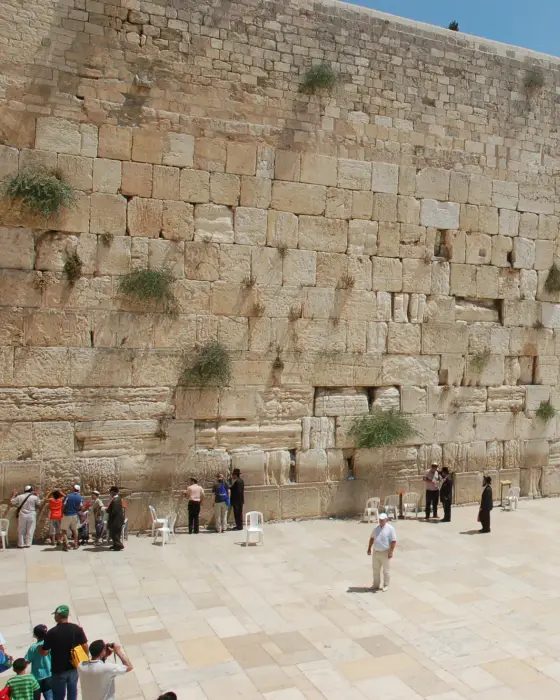
Exposed section of the Herodian retaining wall of the Esplanade, with 57 m visible in the plaza and another 300 m in the tunnel excavated to the north. Open 24 hours, free, with separate men's and women's sections; the tunnel needs a booking and a guide.
The visible stretch measures 57 m in the plaza and the tunnel dug to the north adds another 300 m, with no closing time and no charge, men and women on separate sides, and only the part underground requires a booking and a guide.
Check access

Temple Mount / Al-Aqsa Compound
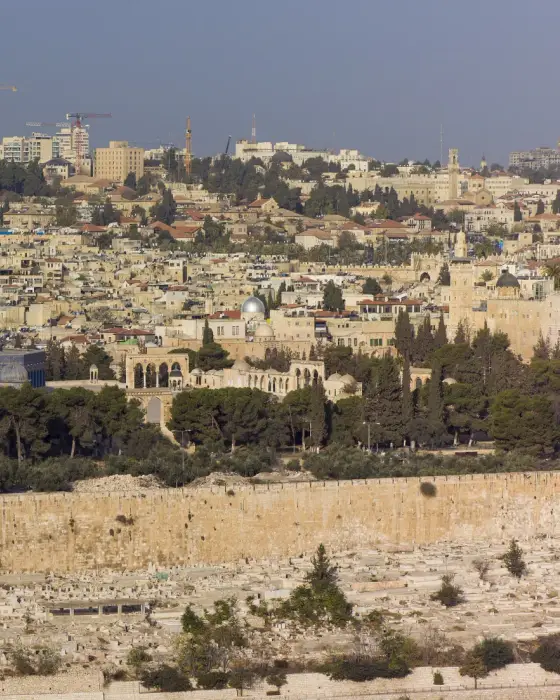
A platform of about 144,000 m² with the Dome of the Rock (691, golden dome 20 m across) and the al-Aqsa Mosque. Non-Muslims enter only via the Mughrabi Bridge, in short windows Sunday to Thursday, with no religious objects and no praying; confirm the hours on the day.
Check access
Church of the Holy Sepulchre
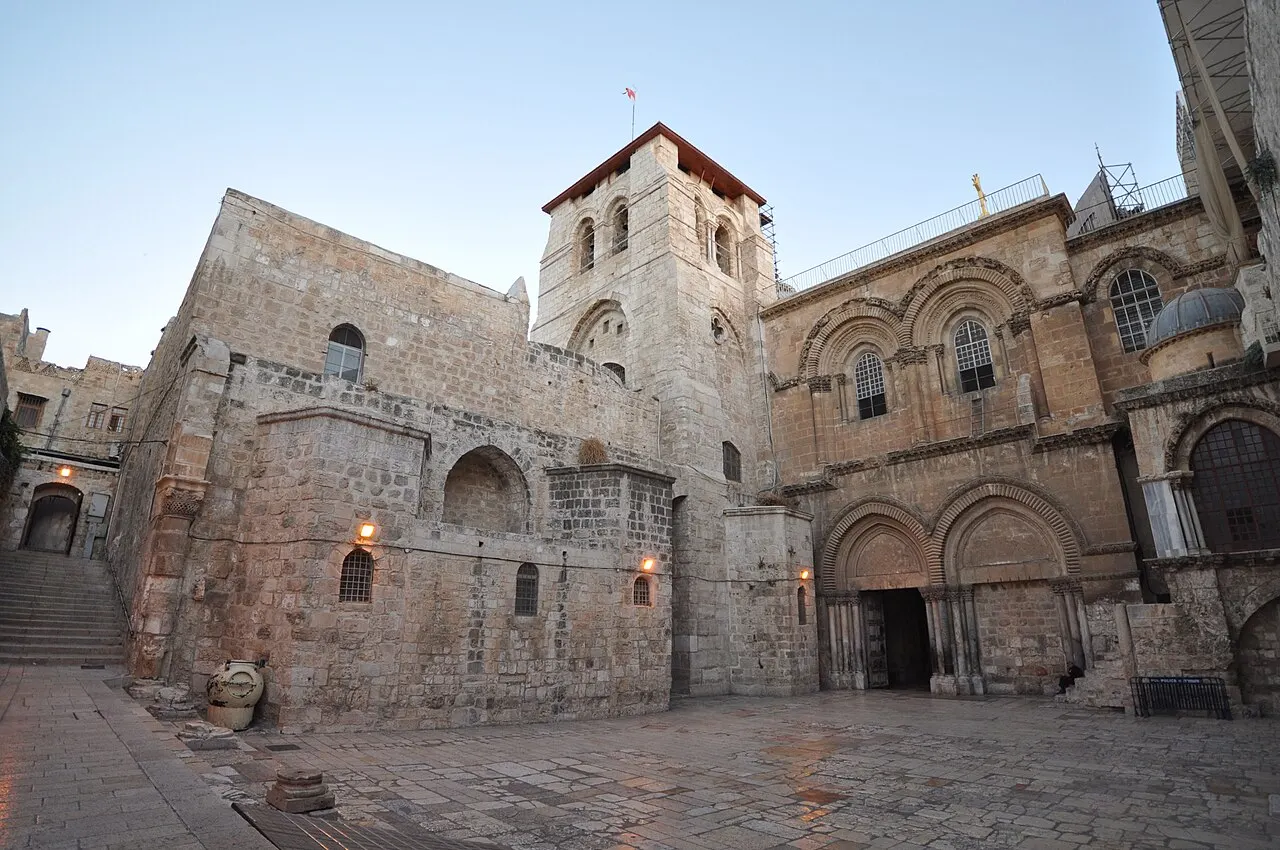
Built over Golgotha and the tomb attributed to Jesus, consecrated in 335 and rebuilt by the Crusaders in 1149. Six Christian denominations divide it under an 1852 agreement; the door key has been kept for centuries by two Muslim families, and a wooden ladder has stayed in place unmoved since the 18th century.
The basilica was built over Golgotha and over the tomb attributed to Jesus, so the two lie under the same building.
Check access

Tower of David and Mahane Yehuda
The citadel by Jaffa Gate holds Hasmonean, Herodian, Mamluk, and Ottoman layers and houses the city history museum, reopened after renovation in 2023. Meanwhile Mahane Yehuda Market, with over 250 stalls and running since the late 19th century, is the best place to understand the city without stepping into a single temple.
Mahane Yehuda is a market active since the late 19th century, with more than 250 stalls, and it's the best place to understand Jerusalem without stepping into a single temple.
Check access

Walls and Damascus Gate
Suleiman's 4 km wall, built between 1537 and 1541, has seven open gates today, among them the New Gate, from 1889; the Golden Gate, the eighth, remains walled up. Damascus Gate, from 1537, is the most monumental and doubles as a plaza, bus stop, and market; you can walk atop the wall along two stretches, with a cheap ticket.
Walking atop the wall is cheap; Suleiman built it between 1537 and 1541 and it's 4 km long.
Check access

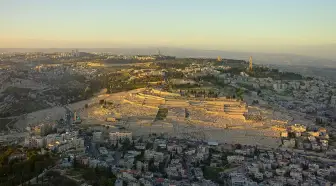
Mount of Olives and Gethsemane
The eastern slope holds a Jewish cemetery in continuous use for three thousand years, with about 150,000 graves, and the best overlook of the Esplanade. At its foot are the Garden of Gethsemane, with olive trees with thousand-year-old trunks, and the Church of All Nations, from 1924.
At the foot of the slope, the Garden of Gethsemane holds olive trees with thousand-year-old trunks, and higher up the cemetery gathers about 150,000 graves.
Check access

Yad Vashem
Holocaust memorial and research center opened in 1953, with Moshe Safdie's historical museum (2005), a 180 m concrete prism cutting through the hill. Free entry, closed on Shabbat, and the Children's Memorial uses mirrors and five candles to simulate a million and a half flames.
Visitors to the Children's Memorial find mirrors alongside five candles, the device the place uses to simulate a million and a half flames.
Check access

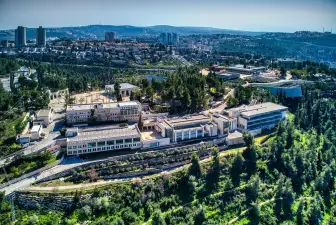
Israel Museum
The country's largest museum holds the Dead Sea Scrolls in the Shrine of the Book, under the white dome, and displays outdoors a 1:50 scale model of Jerusalem in the year 66 CE, covering about 2,000 square meters. Set aside at least three hours.
The country's largest museum holds the Dead Sea Scrolls in the Shrine of the Book and the 1:50 scale model of Jerusalem in the year 66 CE; arrive early and set aside at least three hours.
Check access

Via Dolorosa
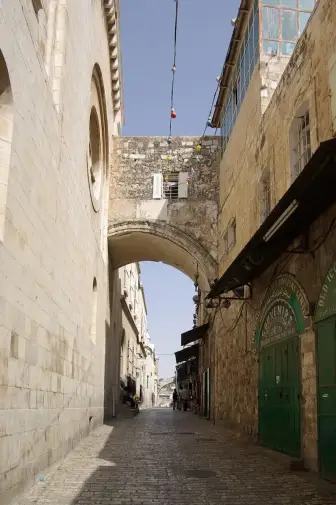
A roughly 600 m route with fourteen stations, from the Muslim Quarter to inside the Sepulchre. The current path was fixed by Franciscans in the 18th century; there's a communal procession on Friday afternoons, usually 3pm in winter and 4pm in summer.
The fourteen stations are a devotional convention fixed by Franciscans in the 18th century, not an excavated route, and the 600 m cross the souk between open shops. You'll walk this path anyway to reach the Holy Sepulchre: only set aside dedicated time if it's Friday, for the procession at 3pm in winter and 4pm in summer.
Check access
Nilo’s itinerary
Start with the basic programme and choose extensions for the time you have.
Plan my days in the app ↗Day 1 · The Old City, from the Esplanade to the walls
Enter through Jaffa Gate at 7:30am and go straight to the Temple Mount/Haram al-Sharif via the Mughrabi Bridge, in the first morning window, Sunday to Thursday; bring no religious objects and don't stop to pray.
Go down to the Western Wall, then climb up to the Muslim Quarter and follow the Via Dolorosa from the first station to the Holy Sepulchre, avoiding midday.
Have hot hummus for lunch at an old house in the Muslim Quarter before 3pm, when the pots run out.
Go back to Jaffa Gate and climb the Tower of David, which opens at 9am (noon on Sunday) and takes its last admission at 4pm (2pm on Friday), to see from above the layout of the four quarters you've just crossed.
Leave the Tower for the wall and walk along it from Jaffa Gate to Zion Gate, about 40 minutes, with the sun low on the stone.
Day 2 · Outside the walls: museums and market
Start at the Israel Museum, at the Shrine of the Book, and at the model of the city in 66 CE; set aside three hours.
Take the bus or light rail to Yad Vashem, which is free to enter, and set aside two and a half hours for the visit; afterward, leave a break before anything festive.
Head back on the light rail to Mahane Yehuda in the late afternoon, when the stalls close and the bars open behind their painted steel shutters.
Have meorav yerushalmi or kubbeh soup for dinner on Eitz Chaim and HaEgoz streets, inside the market.
If it's Friday, move everything earlier: the market is buzzing until 2pm and then empties within an hour.
Day 3 · Valleys, tunnels, and the eastern side
Start at the Mount of Olives overlook at sunrise, when the sun hits the Dome of the Rock head-on.
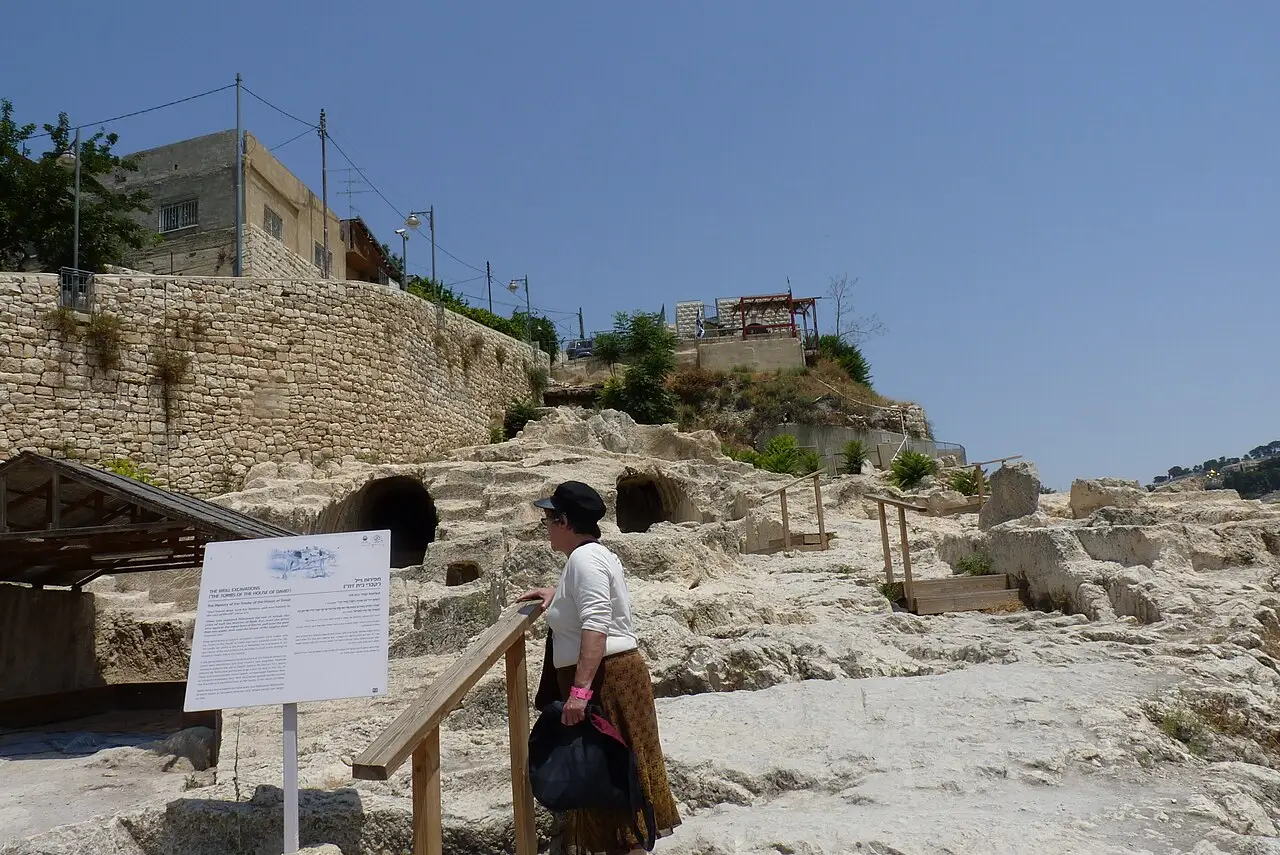
Walk down to Gethsemane and the Church of All Nations, then cross the Kidron Valley to the City of David.
Walk Hezekiah's Tunnel with water shoes and a flashlight, 533 m and about 40 minutes; there's a dry route for those who prefer it.
Have lunch on Salah al-Din Street, in East Jerusalem, and finish with knafeh cut fresh.
Finish on Mount Zion, with the Room of the Last Supper and King David's Tomb, ten minutes' walk from Zion Gate.




Food
 AI illustration
Ka'ak al-Quds
A 30 cm soft bread ring covered in sesame, sold from carts at Damascus Gate and inside the Old City. It comes with a small packet of za'atar and sometimes a boiled egg; it costs ₪5–10 and is the standard street breakfast.
 AI illustration
Hot hummus with fava
Served warm on a shallow plate, with olive oil, whole chickpeas, and ful, alongside pita, raw onion, and pickles. The historic houses in the Old City open early and close when the pot runs out, often before 3pm; ₪30–50.
 AI illustration
Meorav Yerushalmi
Jerusalem's mixed grill, created at the stalls of Mahane Yehuda in the mid-20th century: chicken hearts, liver, and thigh chopped on the griddle with onion, cumin, turmeric, and saffron, served in pita or on a plate. A portion runs ₪50–75.
 AI illustration
Falafel and sabich
Chickpea falafel fried to order, inside pita with salad, tahini, and amba; sabich swaps the falafel for fried eggplant and boiled egg. It's the cheapest quick meal in the city, ₪18–30, and the pita is refilled free at many places.
 AI illustration
Knafeh nabulsieh
A hot dessert of stretchy cheese topped with orange-colored dough and sugar syrup with orange blossom water, cut from huge trays. Sold by weight in the Old City and on Salah al-Din Street; a slice runs ₪15–25.
 AI illustration
Kubbeh soup
A legacy of Iraqi and Kurdish Jews: semolina dumplings stuffed with meat, cooked in a broth of beet, pumpkin, or chard. It's a cold-day lunch dish, served in small places around Mahane Yehuda for ₪45–65.
 AI illustration
Jachnun, malawach, and rugelach
Yemenite and Eastern European baking coexist in the same neighborhood: jachnun is a rolled dough baked overnight and eaten Shabbat morning with grated tomato and egg; fresh rugelach appears at the Mahane Yehuda stalls early, before Friday noon.
 AI illustration
Arabic coffee with cardamom and limonana
The coffee is boiled with ground cardamom and served in a small cup, unstrained, with the grounds settled at the bottom. In summer the standard street drink is limonana, blended lemonade with mint and ice, for ₪12–20.
Day trips

Bethlehem
10 km to the south, 30 to 45 minutes, in territory under Palestinian control: you pass through Checkpoint 300 with your passport. It holds the Church of the Nativity, built over the grotto since 339 and rebuilt by Justinian in the 6th century, and the separation wall with the murals attributed to Banksy.
Masada, Ein Gedi, and the Dead Sea
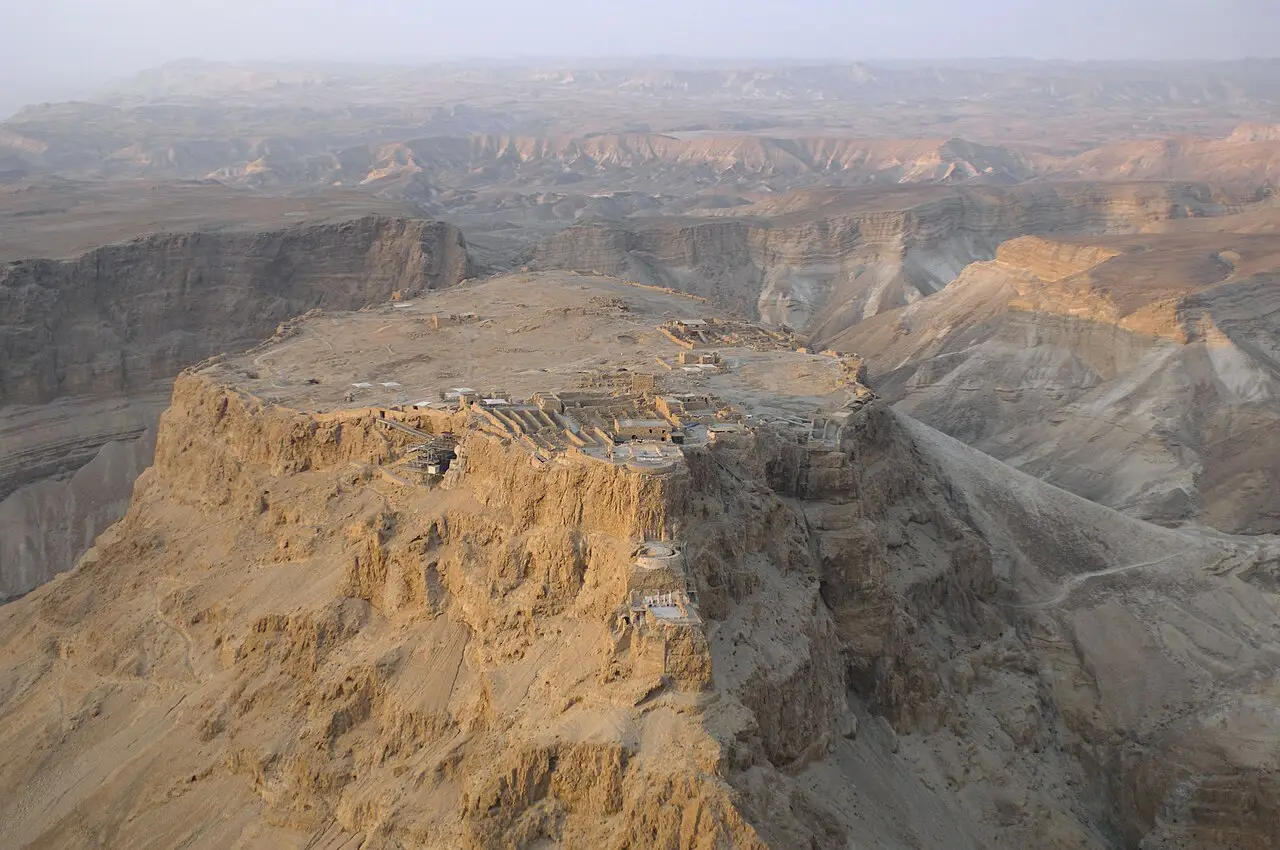
1 hour 30 minutes by car heading east, dropping 1,150 m to 430 m below sea level. The Herodian fortress of Masada is reached by cable car or by the Snake Path in 45 minutes, and the Ein Gedi oasis has waterfalls just a few kilometers from the salt beaches.

Tel Aviv and Jaffa
60 km to the west, 32 minutes by fast train from Yitzhak Navon station, several departures an hour, except on Shabbat. It's the urban opposite of Jerusalem: beach, 1930s Bauhaus, and the port of Jaffa, inhabited for over three thousand years.
Where to begin
The Old City, from the Esplanade to the walls
Enter through Jaffa Gate at 7:30am and go straight to the Temple Mount/Haram al-Sharif via the Mughrabi Bridge, in the first morning window, Sunday to Thursday; bring no religious objects and don't stop to pray.
Outside the walls: museums and market
Start at the Israel Museum, at the Shrine of the Book, and at the model of the city in 66 CE; set aside three hours.
Valleys, tunnels, and the eastern side
Start at the Mount of Olives overlook at sunrise, when the sun hits the Dome of the Rock head-on.
Money
The currency is the Israeli new shekel (₪, ILS), worth roughly R$1.60 and US$0.29 per shekel in 2026, and Israel is expensive by regional standards. An espresso costs ₪12–18, a falafel pita ₪18–25 and a plate of hummus ₪30–50; a main course at a restaurant runs ₪70–130, a beer at a bar ₪28–38 and a light rail fare about ₪6–8. A hostel costs ₪130–200 per bed and a mid-range hotel ₪500–900 per room in low season, much more on Jewish holidays. VAT is 18%, but tourists staying in hotels are exempt on the room rate and car rental when they pay in foreign currency or with an international card; bring your passport to check-in, because that's what triggers the exemption. There is no municipal tourist tax per night. Cards are accepted for practically everything on the western side, including market stalls, but carry cash for the Old City souks, for street carts and for East Jerusalem, where many shops only take cash. The tip at restaurants with table service is 10% to 12% and is almost never included in the bill; taxis don't expect a tip. In the souks and souvenir shops of the Old City, bargaining is expected; in formal stores on the western side, with price tags, pay the marked price.
Getting there and around
Ben Gurion Airport is 50 km away, but the high-speed train shortens it
Ben Gurion International Airport (TLV) is about 50 km west, 45–60 minutes by car. The fastest option is the high-speed train to the underground Yitzhak Navon station: the ride takes about 25 minutes and costs about ₪19, with frequent departures. The station is 80 m below ground, and three elevators take you up to the surface, next to the central bus station and the light rail. The train doesn't run from late Friday afternoon until nightfall on Saturday, or on Jewish holidays, and during that window you're left with the Nesher sherut, door to door, for about ₪80–100 per person booked by phone, or a taxi, for ₪350–450. On the way back, allow 90 minutes for security procedures when leaving the country, or three hours in high season. Before flying to Israel, check whether you need the ETA-IL electronic travel authorization: since January 2025 it has been mandatory for travelers from visa-exempt countries, costs ₪25, is valid for two years and must be requested at least 72 hours in advance.
A 22.5 km light rail line that crosses the whole city
Within the city, transit combines the light rail with a dense bus network. The light rail's Red Line is 22.5 km long with 35 stops and crosses the city from Neve Yaakov, in the north, to Hadassah Ein Kerem hospital, in the southwest, passing along Jaffa Street, by the market and 300 m from Damascus Gate. The Green Line has been partly running since July 2026, with the rest of the route expected in 2027. Pay with a Rav-Kav card or through the Rav Pass and Moovit apps: a city fare costs about ₪6–8 and includes transfers for 90 minutes, and there are discounted day and weekly passes. Israeli light rail and buses stop on Shabbat, but the Arab lines that leave from the bus station by Damascus Gate, serving East Jerusalem and the West Bank, run on Saturdays. There are plenty of taxis, also available through the Gett app: insist on the meter (“moné, bevakashá”) or agree on the fare beforehand. The Old City is entirely pedestrian, with steps and slippery polished stone. Cycling makes little sense on the hills, with one exception: the Railway Park has 7 km of flat bike path along the old Ottoman railroad.
Safety
Common crime is low by capital-city standards: violent assault is rare and walking at night in central areas is normal. The real risks are of another kind and change fast: political friction concentrated around religious sites, protests, checkpoints, sudden street closures, and periods of alert across the region since 2023. Before and during the trip, check your government's official advisories and install the Home Front Command app, which issues alerts by region. Avoid crowds on days of tension, especially Friday midday near the Esplanade and on overlapping religious dates, and don't film security forces or checkpoints. Always carry your passport, since there are bag checks at the entrance to stations, markets, museums, and malls, and you may be asked for ID. The check can repeat ten times in a day, and no one there finds that odd. The scams are small: “guides” who offer themselves unprompted in the Old City and charge at the end, taxis that refuse to turn on the meter, shops that double the price on the first sentence. Drones are banned. Day trips to Bethlehem, Jericho, and Ramallah are common and legal for foreigners, but Israeli rental cars generally have no insurance coverage in territory under Palestinian control. Check the contract first.
Etiquette tips
Dress for the place, not the weather
Covered shoulders and knees are a practical requirement at nearly every religious site, and men are given a paper kippah at the entrance to the Wall. In Mea Shearim and Haredi neighborhoods, short sleeves and tight clothes read as provocation; carry an extra layer in your bag.
Respect Shabbat even if you don't observe it
From Friday afternoon to Saturday night, don't photograph religious people, don't smoke near synagogues, and don't drive through Haredi neighborhoods, where some streets are physically closed. Sort out food and transport before the siren sounds.
On the Esplanade, follow the rule to the letter
Non-Muslims enter only via the Mughrabi Bridge, in short hours Sunday to Thursday, and can't carry religious objects or pray there. Arguing the rule with the guards won't change it and will create an incident; check the hours on the morning of your visit.
Mind the names
Almost every place name has two versions and each carries a political stance: Temple Mount and Haram al-Sharif, the West Bank and Judea and Samaria. Use the name your conversation partner uses and don't correct anyone.
Haggle in the souk, not in the shop
In the alleys of the Old City, the first price is an opening to start talking, and you usually settle at a third to half of it. In any shop with price tags on the western side, haggling is awkward.
Accept the coffee, and set aside time
An offer of Arabic coffee or mint tea in a shop isn't a sales trap; refusing outright is rude, accepting means fifteen minutes of conversation. If you can't stay, thank them and say you'll come back, and do.
Mistakes to avoid
Friday afternoon without a plan
Arriving on Friday afternoon without planning ahead. Between around 2pm and sunset, everything closes at once: supermarkets, the light rail, buses, most restaurants. Anyone landing at 4pm finds the city shut down, with no cheap taxi until Saturday night.
The Esplanade as a guaranteed stop
Counting on the Esplanade as a guaranteed stop on your itinerary. For non-Muslims, it closes on Fridays and Saturdays, on Islamic holidays and whenever there's tension, and on other days the visiting window is a few hours in the morning. Fit the visit in early, on the first weekday, and have a plan B ready, such as the Mount of Olives lookout.
Sandals or smooth soles
Wearing sandals or smooth-soled shoes. The limestone in the Old City's streets, polished by centuries of foot traffic, gets slick as soap when wet, and most of the rest of the municipality adds long staircases and 10% slopes.
Underestimating the distance to Yad Vashem and the Israel Museum
Thinking everything's close because the Old City is small. The old core fits in 0.9 km², but the city covers 125 km² of hills. Going to Yad Vashem, the Israel Museum, or Ein Kerem takes a whole morning of travel, not a quick hop.
Packing for a hot desert
Packing for a “hot desert.” At 750 m above sea level, from December to February it rains with wind and drops to 8 °C, and many old buildings lack efficient heating, so anyone who shows up in shorts gets cold inside the stone churches.
Useful phrases
שלום (shalom)
hello, goodbye, and peace. The same word covers all three
תודה רבה (toda raba)
thank you very much
כמה זה עולה? (kama ze ole?)
how much does this cost?
שבת שלום (shabbat shalom)
greeting for the rest period, from early Friday afternoon to Saturday nightfall
مرحبا / شكراً (marhaba / shukran)
hello / thank you, in Arabic: the everyday language of the Old City and East Jerusalem
הכל בסדר (hakol beseder)
everything's fine: the default answer for almost any situation
Districts
Old City
0.9 km² divided since the 19th century into four quarters (Muslim, Christian, Armenian, and Jewish) inside Suleiman's wall. People genuinely live there: 35,000 residents, schools, workshops, and covered markets, plus the flow of pilgrims.
Downtown / Ben Yehuda and Jaffa Road
The commercial axis of the western city, with Jaffa Road closed to cars and served by the light rail. It concentrates hotels, cafés, shops, and secular nightlife, which is modest compared to Tel Aviv.
Mahane Yehuda and Nachlaot
The central market and the tangle of 19th-century alleys around it. By day it's a fruit, spice, and fish market; at night the stalls pull down steel shutters, turn into bars, and the street changes function entirely.
Rehavia and Talbieh
Neighborhoods planned in the 1920s and 1930s by German-trained architects, with gardens, Bauhaus adapted to stone, and streets named after medieval sages. It's where the president's residence and much of the academic middle class are found.
Mea Shearim and Geula
Founded in 1874, it's the world's best-known Haredi enclave, with signs at the entrance asking for modest dress and streets closed to traffic on Shabbat. Bakeries, religious bookstores, and synagogues of specific Hasidic sects occupy nearly every corner.
East Jerusalem: Salah al-Din and Sheikh Jarrah
The city's Palestinian commercial center, just north of the wall, with Salah al-Din Street as the axis of shops, offices, and the Arab bus station. Sheikh Jarrah has stone houses from the late 19th century and is a recurring flashpoint for property disputes in court.
German Colony and Baka
Streets laid out by German Templers in 1873 and high-ceilinged Arab houses occupied after 1948 make this an expensive, walkable neighborhood today, centered on Emek Refaim Street and the Railway Park, a former rail line turned into a 7 km promenade.
Ein Kerem
A stone village in a valley to the west, within the municipality but with the feel of a hamlet, with churches tied to the tradition of John the Baptist's birth, studios, and restaurants. It sits next to Hadassah Hospital, whose synagogue holds the Chagall windows.
History
about 1000 BCE · David takes Jebus
King David conquers the Canaanite citadel on the Ophel hill and makes it his political capital. The original site covered about 5 hectares and depended entirely on the Gihon spring in the Kidron Valley.

about 957 BCE · First Temple
Solomon builds the Temple on the summit north of the City of David, the hill that would later become the Esplanade. The city becomes a center of worship as well as a seat of government.

701 BCE · Hezekiah's Tunnel
Facing the Assyrian siege of Sennacherib, King Hezekiah cuts a 533 m tunnel through the rock to bring Gihon's water inside the walls. The tunnel still works today and can be walked.

586 BCE · Babylonian destruction
Nebuchadnezzar II razes the Temple and the walls and deports the elite to Babylon. The half-century exile reorganizes the religion around the text rather than the sanctuary.

516 BCE · Second Temple
After the edict of Cyrus, in 538 BCE, the returning exiles rebuild the Temple on a modest scale. Herod expands it about five centuries later.

19 BCE · Herod raises the Esplanade
Herod the Great doubles the Temple platform to about 144,000 m², held up by retaining walls built of blocks weighing more than 500 tons. The Western Wall is a stretch of that retaining wall; it was never part of the Temple itself.

70 and 135 CE · Rome destroys and refounds
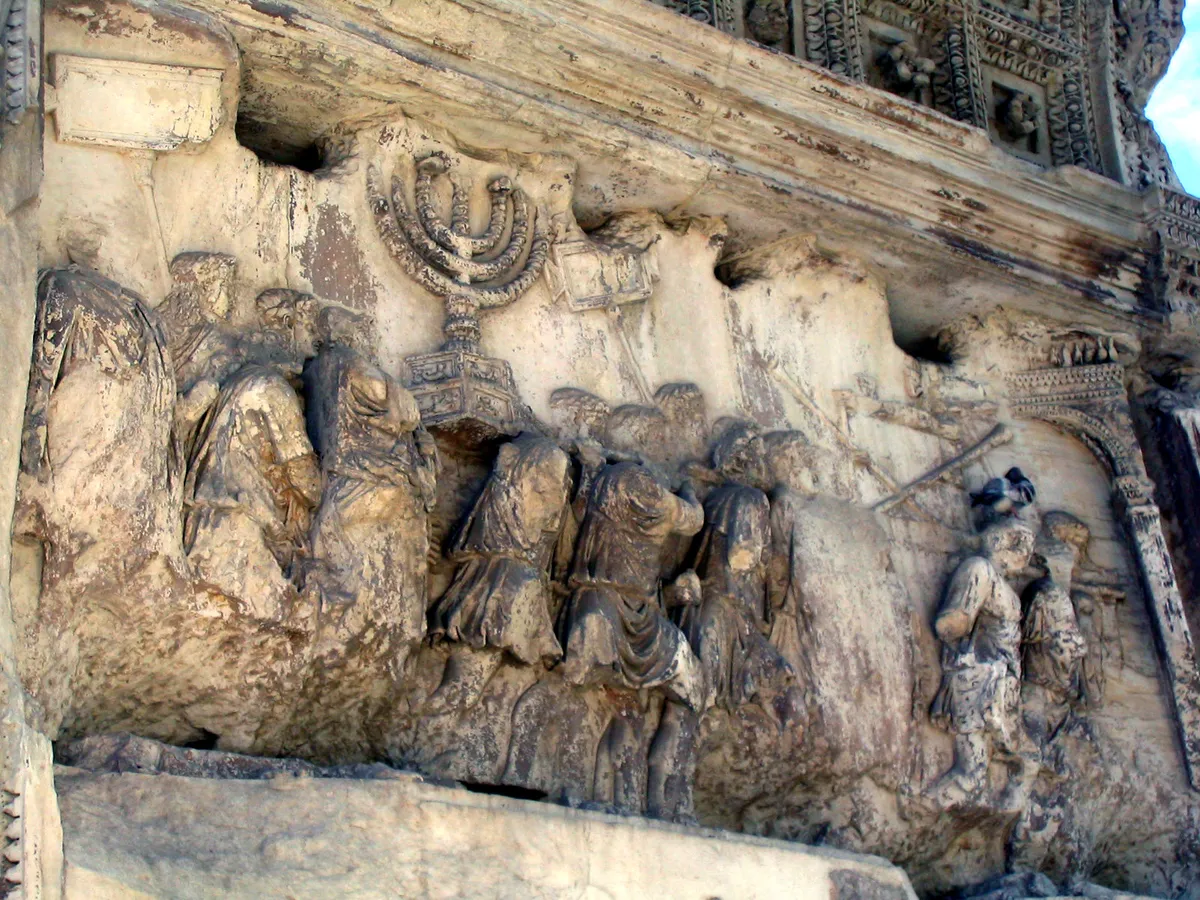
Titus razes the Second Temple in 70, at the end of the Great Revolt. After the Bar Kokhba revolt, Hadrian refounds the city in 135 as Aelia Capitolina, with the Roman grid that still organizes the streets of the Old City.
326–335 · Christian Jerusalem
Constantine and his mother Helena identify the sites of the crucifixion and burial and have the Church of the Holy Sepulchre built, consecrated in 335. The city becomes a mass pilgrimage destination for the first time.

638 and 691 · Arab conquest and the Dome of the Rock
Caliph Umar takes the city in 638 without destroying it. In 691 Abd al-Malik completes the Dome of the Rock on the Esplanade, the oldest Islamic monument still standing.
1099–1517 · Crusaders, Saladin, Mamluks
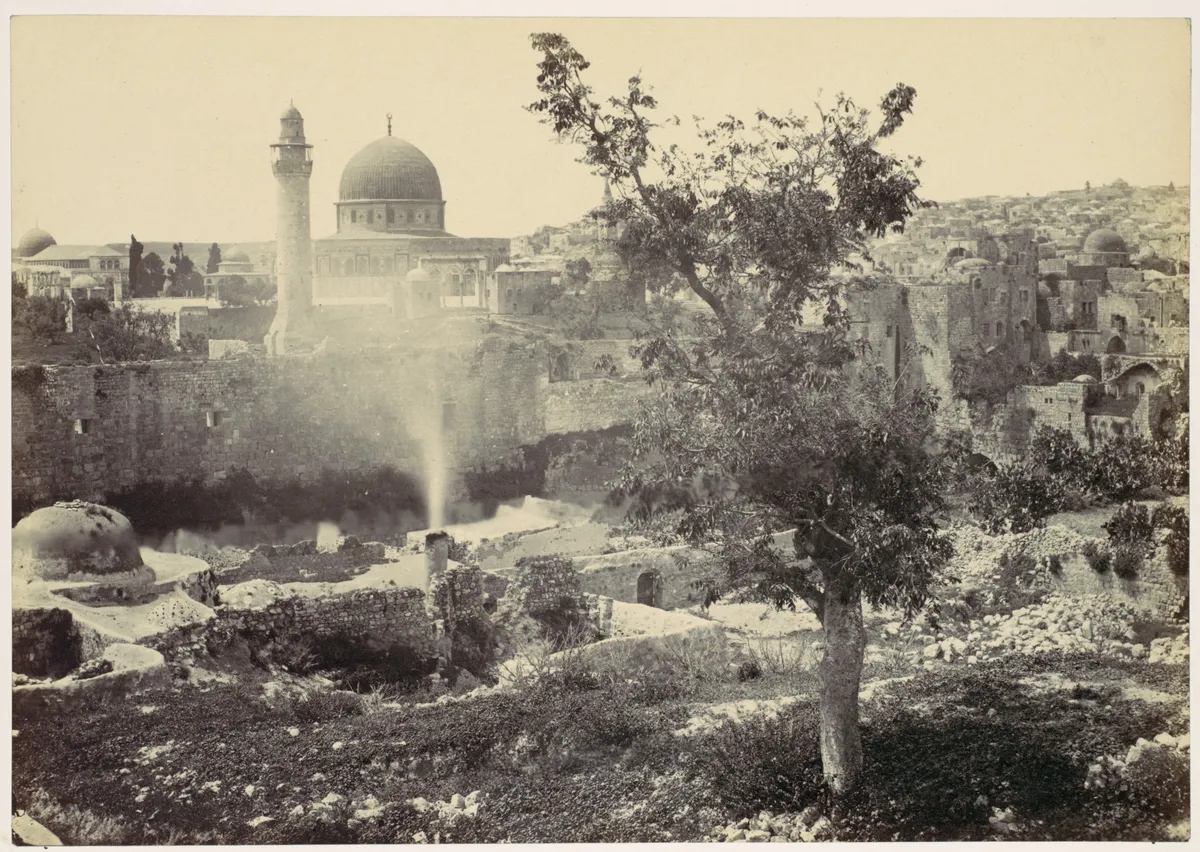
The Crusaders take the city in 1099 with a massacre of the population; Saladin retakes it in 1187 and restores Muslim worship on the Esplanade. Under the Mamluks, from the late 13th century to 1517, the Muslim quarter fills with madrasas and vaulted markets.

1948–1967 · Division and reunification
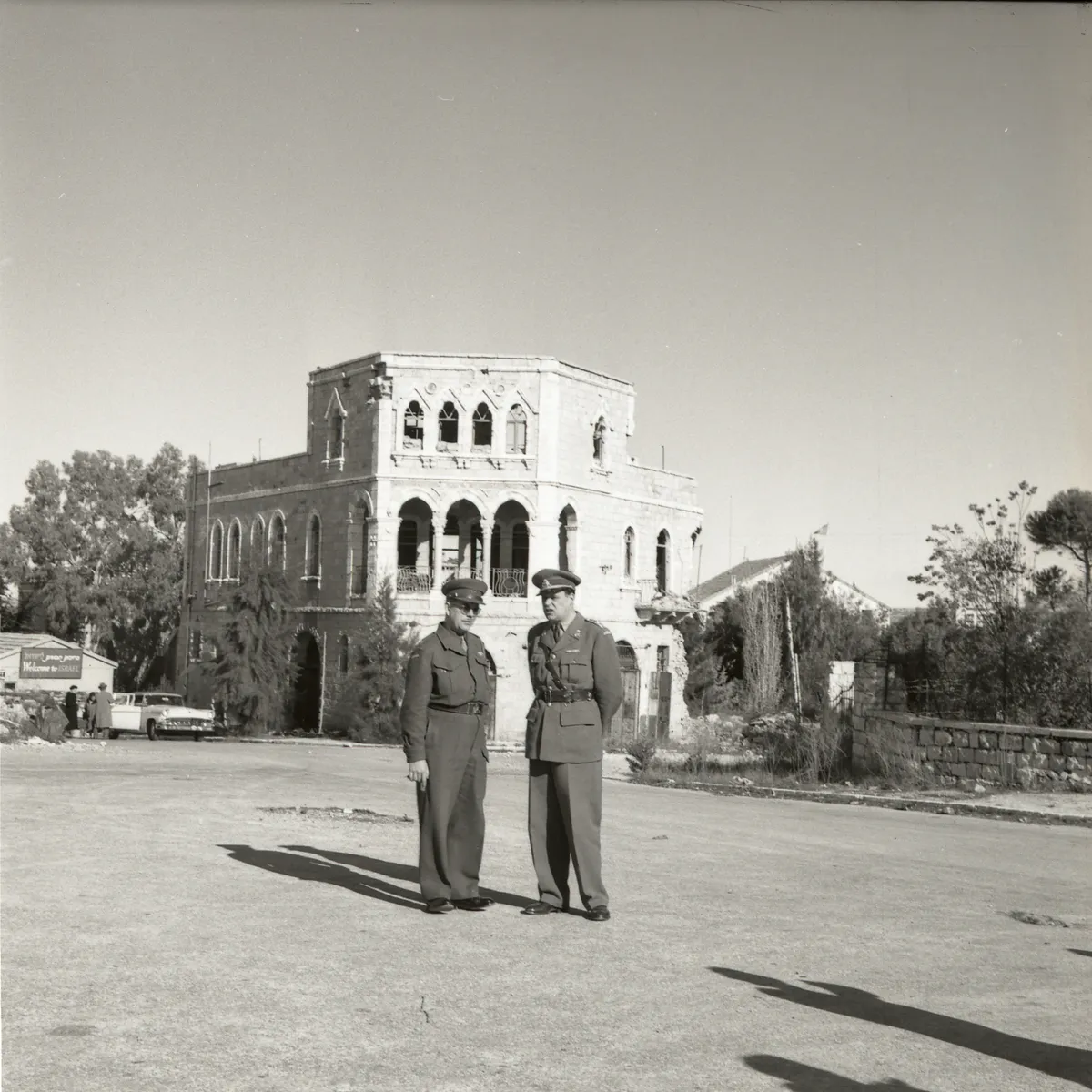
The 1948 war splits the city: Jordan holds the Old City and the east, Israel the west, separated by barbed wire and a single crossing point, the Mandelbaum Gate. In June 1967 Israel takes the eastern part, demolishes the Mughrabi quarter to open the plaza in front of the Wall, and takes over administration of the whole city.
Complete history
The Gihon spring and the City of David, until 586 BCE
The Judean range is dry, and the only year-round spring in the region is the Gihon, in the Kidron Valley; that's why the first settlement grew right beside it, on a narrow hill of about 5 hectares now called the City of David. There are traces of settlement from the fourth millennium BCE; the city appears in Egyptian execration texts around 1900 BCE and again in the Amarna letters, around 1350 BCE, in which a local ruler named Abdi-Heba asks the pharaoh for help. Around 1000 BCE David takes it from the Jebusites, Solomon builds the Temple on the summit to the north, and in 701 BCE Hezekiah cuts 533 m through rock to bring the water of the Gihon inside the walls against the Assyrian siege. In 586 BCE Nebuchadnezzar II destroys everything and deports the elite: it is in the Babylonian exile that the religion reorganizes itself around the written text.
The return authorized by Cyrus
The return authorized by Cyrus in 538 BCE produces a modest Second Temple, completed in 516 BCE, which survives Persian rule, Seleucid Hellenization, the Maccabean revolt of 167–164 BCE and the arrival of Rome with Pompey in 63 BCE. The city described in the New Testament is the city of Herod the Great, who from 19 BCE doubles the Temple platform to about 144,000 m² and holds it up with retaining walls of gigantic blocks. The Western Wall is a section of that retaining structure. The Great Revolt ends with Titus razing the Temple in 70 CE; the Bar Kokhba revolt ends with Hadrian refounding the site in 135 as a Roman colony, Aelia Capitolina, and banning Jews from it. The Roman grid (the north-south cardo, the east-west decumanus) is the same one that divides the Old City into its four quarters today.
From the Holy Sepulchre to the Dome of the Rock
The Christian and Islamic layers came next, each built on top of the previous one without erasing it. Between 326 and 335, Constantine and Helena identify Calvary and the tomb and build the Basilica of the Holy Sepulchre there, creating Christian pilgrimage on a large scale. The Sasanian Persians sack the city in 614; in 638 Caliph Umar takes it by surrender; in 691 Abd al-Malik completes the Dome of the Rock, the oldest Islamic monument still standing, over the rock of the Esplanade, which Muslims call Haram al-Sharif. The destruction of the Sepulchre by Caliph al-Hakim in 1009 is one of the triggers of the First Crusade: the Crusaders take the city in 1099 with a massacre, Saladin recovers it in 1187 after Hattin, and the Mamluks, from the late 13th century to 1517, fill the surroundings of the Esplanade with madrasas, hospices and covered streets that are still standing.
Ottoman rule lasts four centuries
The Ottomans rule from 1517 to 1917. Suleiman the Magnificent rebuilds the walls between 1537 and 1541 (4 km in perimeter, 34 towers, six open gates and the walled-up Golden Gate; today's seventh open gate, the New Gate, wasn't opened until 1889), and that is the silhouette the world recognizes as old Jerusalem. Three centuries of stagnation follow, then a 19th century of reopening: European consulates, the Russian Compound, missionary hospitals and schools, and in 1860 the first Jewish neighborhood outside the walls, Mishkenot Sha'ananim, financed by Moses Montefiore. Allenby enters the city in 1917; under the British Mandate, governor Ronald Storrs decrees in 1918 that all construction be clad in local stone, a rule that has survived every regime since and gives the city its uniform color. The 1948 war cuts it in half for nineteen years, with the Old City's Jewish Quarter destroyed under Jordanian control; in June 1967 Israel takes the eastern side and demolishes the Mughrabi quarter to open the plaza in front of the Wall.
Capital by law since 1980, disputed by the UN
Since 1967 the whole city has been under Israeli administration, and today's Jerusalem is the product of that decision combined with demographics. In 1980 Israel passed the basic law declaring the city its unified capital, a measure rejected by the UN Security Council; most embassies stayed in Tel Aviv, although the US moved its own in 2018. The separation barrier, built from 2002, left Palestinian neighborhoods that are formally part of the municipality on the outside. The population is about 60% Jewish and 38% Arab, and about a third of the city's Jews are Haredi, which gives Jerusalem the highest poverty rate among Israel's large cities and a steady drain of young secular residents to Tel Aviv. The light rail (Red Line) opened in 2011 and gained extensions in February 2025; the first section of the Green Line went into service in July 2026, with full opening expected in 2027. Tourism dropped sharply after October 2023 and was partially recovering in 2026: check the situation and official advisories before buying a ticket.
The Western Wall is a section of the retaining wall that holds up the terrain; it is not a wall of the temple.
Geography and shape of the city
The ridge and the watershed
Jerusalem sits on the ridgeline of the Judean Hills, between 650 and 830 m altitude, with Mount Scopus at 826 m as its high point. It's a watershed: what falls to the west drains toward the Mediterranean, 60 km away, and what falls to the east descends 30 km to the Dead Sea, 430 m below sea level, crossing the Judean Desert; hence the stark contrast between the green, Mediterranean western neighborhoods and the arid horizon seen from the Mount of Olives.
The three valleys and the two cities
Three valleys shape the old city: the Kidron to the east, the Hinnom (Gehenna) to the south and west, and the Tyropoeon, now buried, which cuts the Old City in half. The Old City covers just 0.9 km² inside 4 km of Ottoman wall and keeps the Roman grid from the 2nd century; the modern city spreads over 125 km² across ridges and gullies, which explains the constant slopes and why almost nothing is flat.
The climate and the 1918 law requiring limestone
The climate is Mediterranean at altitude, with dry summers and cool nights and rainy winters that occasionally bring snow. Since 1918 a zoning rule has required cladding in local limestone (the so-called Jerusalem stone) which gives the whole city, malls and office buildings included, the same golden sand color at dusk.
Culture
The Jerusalem Cinematheque and its film festival
The cultural output that defines Jerusalem is the kind that deals with forced coexistence, and it shows up more in debate than on big stages. The Jerusalem Cinematheque, opened in 1981 in the Hinnom Valley, has run the Jerusalem Film Festival every July since 1984, one of the few platforms where Israeli and Palestinian films share the same program. The Bezalel Academy of Arts and Design, founded in 1906, is the country's oldest art institution and feeds the gallery circuit on Hanevi'im Street and at the Hansen complex, a former 19th-century leper hospital turned into an art and technology center. In music, the city is strong at two ends. One is liturgy: synagogue chant, Armenian choirs, the muezzin and Orthodox bells, all audible from the same spot at dusk. The other is a small, persistent independent scene, concentrated in bars like the ones in Mahane Yehuda after the stalls close.
Amos Oz and S. Y. Agnon wrote the city
Literature is the genre where the city most explained itself. Amos Oz grew up in the Kerem Avraham neighborhood of the 1940s and rebuilt it in “A Tale of Love and Darkness”; S. Y. Agnon, the 1966 Nobel laureate, wrote nearly his whole body of work in Talpiot, where the house is now a museum; Yehuda Amichai turned the city's topography into everyday, conversational poetry; on the Palestinian side, Jabra Ibrahim Jabra and Emile Habibi wrote of loss and endurance. The National Library of Israel opened a new building by Herzog & de Meuron next to the Knesset in 2023, with a reading room open to the public and free manuscript exhibitions.
Religion organizes the week in Jerusalem
Religion sets how the week works. Muslims hold Friday midday communal prayer, when tens of thousands cross the Old City's gates; Jews observe Shabbat from Friday afternoon to Saturday nightfall, with public transport stopped and most businesses closed; Christians, split between Gregorian and Julian calendars, celebrate on Sunday and sometimes have two Easters weeks apart. Anyone who spends a full week in the city notices that the three rest days never coincide, and that a good part of the urban logistics exists to accommodate that.
The key to the door of the Holy Sepulchre, shared among six Christian denominations, has been kept for centuries by two Muslim families.
On Yom Kippur, which lasts 25 hours, there are no flights, buses or cars on Jewish roads, and children ride bikes down the middle of the avenues.
Festivals and events
Passover (Jewish Pesach)
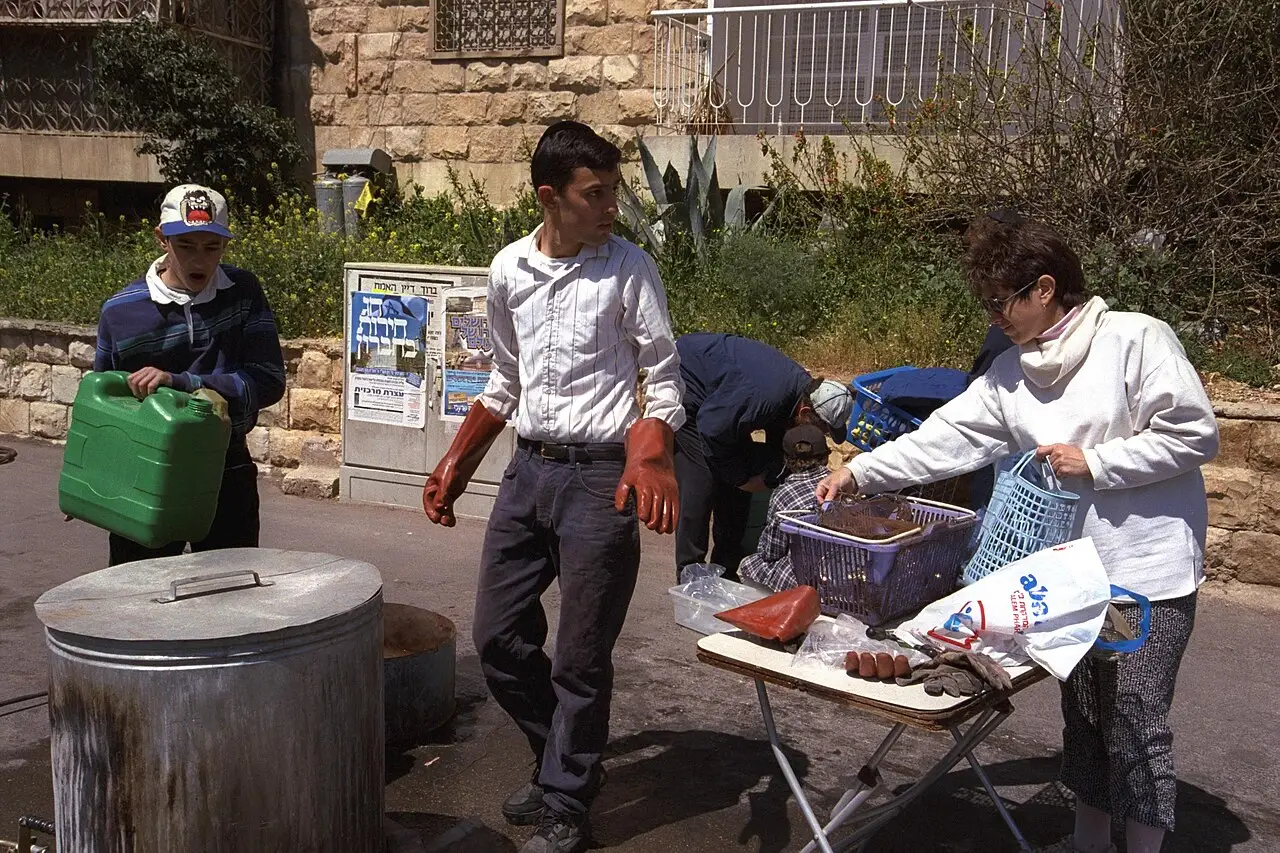
March or April, seven days in Israel. The city fills with pilgrims, bread disappears from shelves, restaurants change their menus, and there's a mass priestly blessing at the Western Wall. Hotels fill up and rates double.

Holy Week and Holy Fire
March to May, with Catholic and Orthodox dates that rarely coincide. On Orthodox Holy Saturday, the Holy Fire ceremony at the Holy Sepulchre gathers thousands of the faithful in a tight space, with entry controlled by police and lines from before dawn.
Ramadan
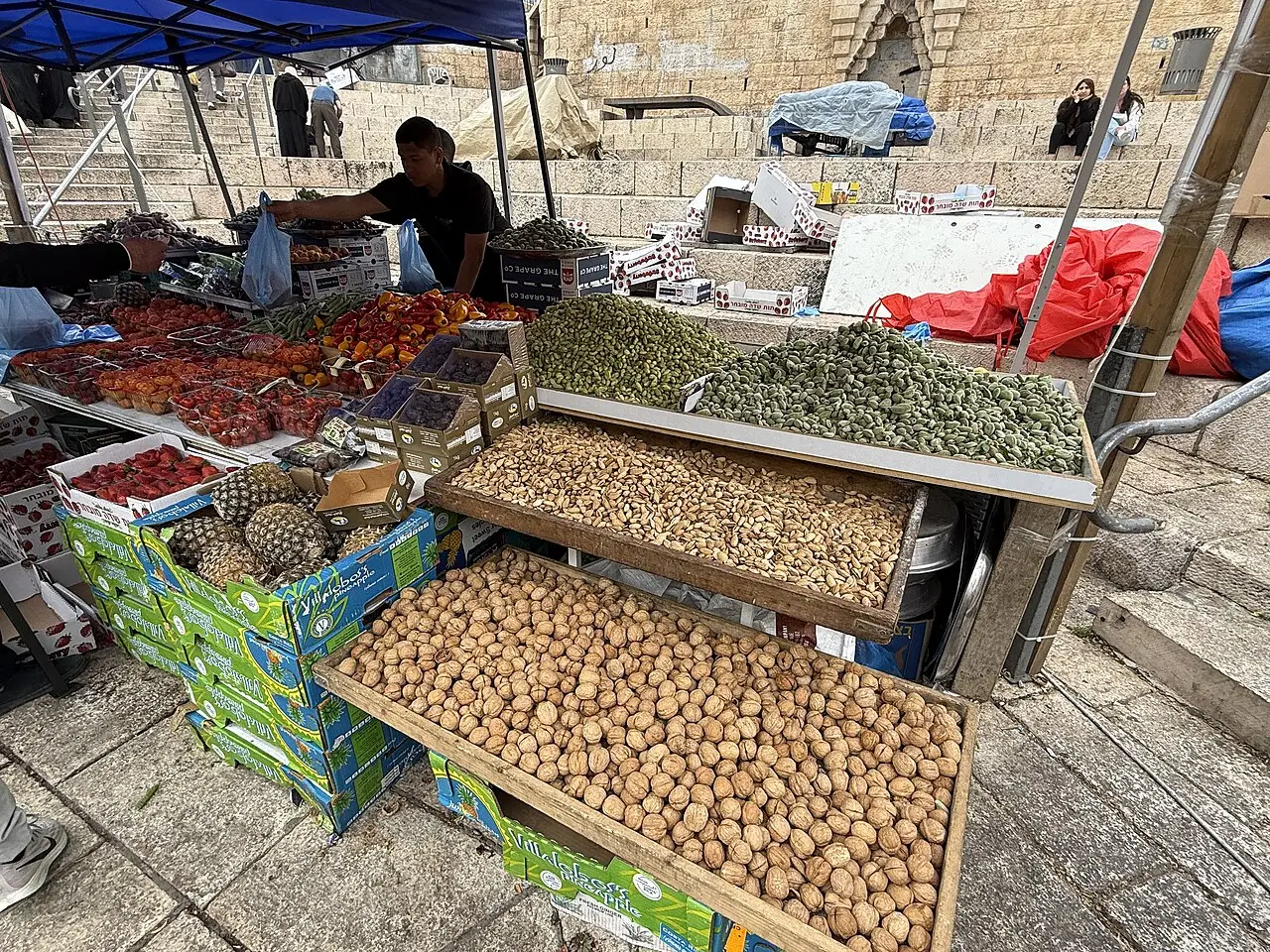
A month of the Islamic lunar calendar; in 2026 it fell around February–March and shifts about eleven days earlier each year. At night Damascus Gate and the Muslim Quarter stay lit and open late, with sweets and street food after iftar; on the last nights access to the Esplanade is restricted.
Yom Kippur
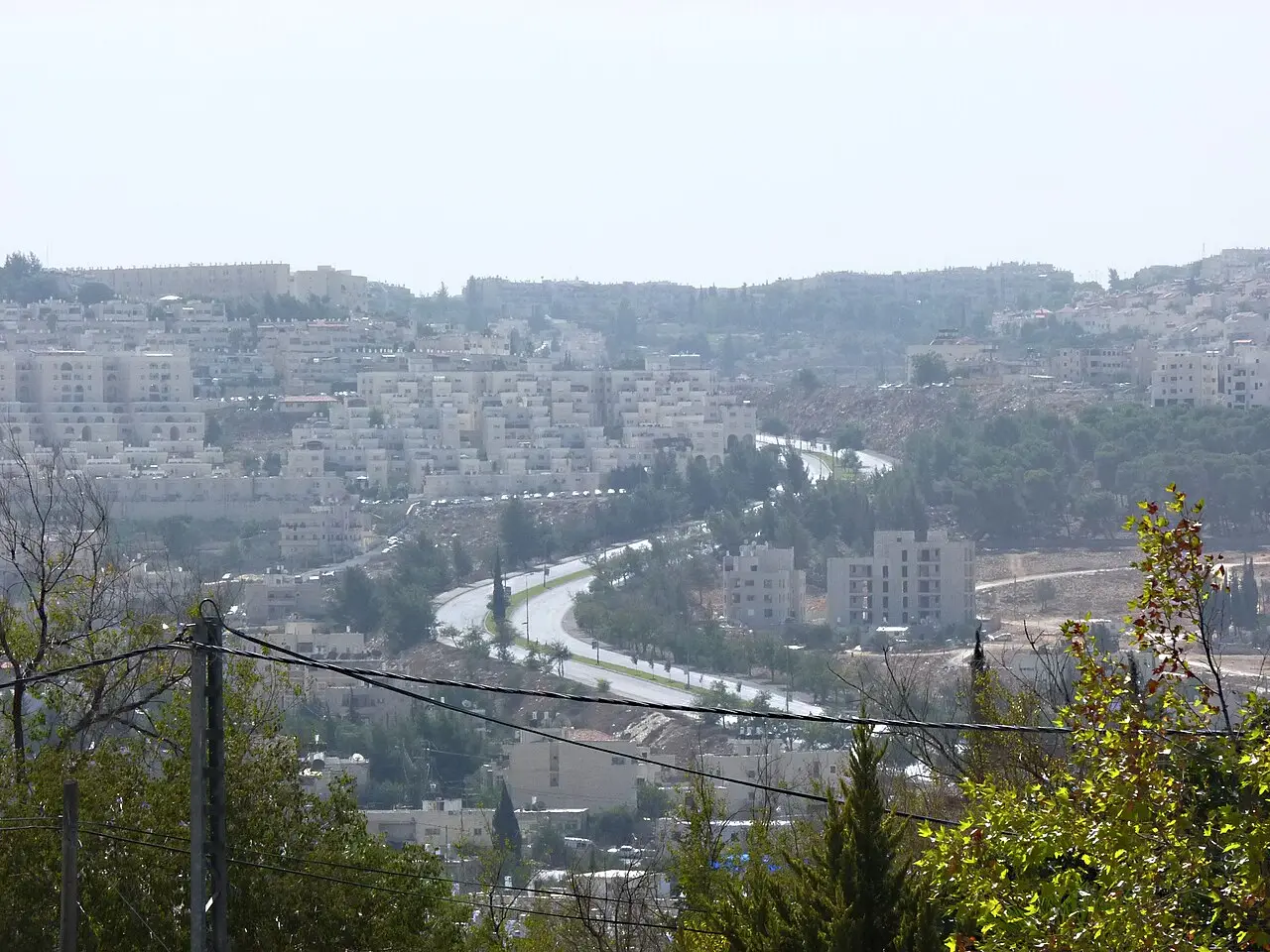
September or October, 25 hours. It's the day the whole city stops: no flights, no buses, no cars on Jewish streets, shops closed, and children riding bikes down the middle of avenues. Plan food and lodging ahead of time.

Festival of Light and the Jerusalem March
The Festival of Light usually happens in June and projects light installations onto the walls and alleys of the Old City, with free nighttime routes. In September or October, during Sukkot, the Jerusalem March takes tens of thousands of people down avenues closed to traffic.
Books and films
“Jerusalem: The Biography,” Simon Sebag Montefiore (2011)
Tells three thousand years through the sequence of who ruled the city, dynasty by dynasty. It's the book that ties together the layers you see stacked in the same wall.
“A Tale of Love and Darkness,” Amos Oz (2002)
A childhood memoir in the Kerem Avraham neighborhood between 1939 and 1952, with the partition, the siege, and the city's division seen from the window of a tiny apartment full of books.
“Ushpizin,” dir. Gidi Dar (2004)
A comedy filmed in Mea Shearim with actors and crew from the Haredi community itself, set during Sukkot. It shows, from the inside, without mockery or devotion, the domestic logic of the city's most closed-off neighborhood.
Frequently asked questions
Jerusalem: What closes on Friday afternoon, with Shabbat?
Between around 2pm and sunset on Friday, everything closes at once: supermarkets, the light rail, buses, most restaurants. Anyone landing at 4pm finds the city shut down, with no cheap taxi until Saturday night.
Jerusalem: How do you get from Ben Gurion Airport?
The fastest option is the high-speed train to the underground Yitzhak Navon station: the ride takes about 25 minutes and costs about ₪19, with frequent departures. The train doesn't run from late Friday afternoon to nightfall on Saturday.
Jerusalem: What to see on the day trip to Bethlehem?
Bethlehem, 10 km to the south, concentrates the Church of the Nativity, built over the grotto since 339 and rebuilt by Justinian in the 6th century, and the separation wall with the murals attributed to Banksy.
Jerusalem: What's the currency, and is the trip expensive?
The currency is the Israeli new shekel (₪, ILS), worth roughly R$1.60 and US$0.29 per shekel in 2026, and Israel is expensive by regional standards.
Jerusalem: What's the best time to go?
The best windows are April and May and October and November, with 18 to 25 °C, clear skies, and long days. From June to September it doesn't rain, but afternoons reach 28 to 32 °C; from December to February it's 8 to 13 °C by day, and that's when almost all the year's rain falls.