Egypt
Cairo
Pyramids, the new museum, Islamic Cairo and the Nile
Days Start with the basic programme and choose extensions for the time you have.
How the guide reaches this number
Devote the first to Giza and the Grand Egyptian Museum, and the second to Islamic Cairo on foot, from Ibn Tulun to al-Muizz Street. The third is for Coptic Cairo, the National Museum of Egyptian Civilization, and the Tahrir museum; with a fourth, go to Saqqara, Dahshur, and Memphis. The city isn't for anyone looking for peace and quiet, clear sidewalks, or fixed prices, because almost everything is negotiated and the noise never stops. With just one day, reach the Giza plateau at 8am through the access point shown on your ticket, and see the pyramids and the Sphinx using the internal transportation and walking sections, without horse or camel, because anyone who climbs on is usually hit with a fee to get off, one that was never part of the agreed price. Have lunch before continuing to the GEM, book the museum for early afternoon, with three to four hours for the visit, and head back downtown afterward, allowing for traffic. I'd keep that evening free of fixed-time plans. Anyone who goes to the Tahrir museum looking for the boy pharaoh and the mummies leaves disappointed, because both collections have moved to Giza and Fustat.
3–4
When November to March: highs of 19–24 °C, dry skies, almost no rain.
How the guide reaches this number
Avoid June to August (36–40 °C)
November to March: highs of 19–24 °C, dry skies, almost no rain. Avoid June to August (36–40 °C)
Per person/day Backpacker US$25–40; mid-range comfort US$70–120.
How the guide reaches this number
Site and museum tickets are the biggest fixed expense of the day
Backpacker US$25–40; mid-range comfort US$70–120. Site and museum tickets are the biggest fixed expense of the day
Per person per day: accommodation, meals, urban transport, visits and a small allowance for extras. Flights excluded; larger purchases vary. Editorial estimate, not a quote.
 What Nilo thinks
Give Cairo three days. Devote the first to Giza and the Grand Egyptian Museum, and the second to Islamic Cairo on foot, from Ibn Tulun to al-Muizz Street. The third is for Coptic Cairo, the National Museum of Egyptian Civilization, and the Tahrir museum; with a fourth, go to Saqqara, Dahshur, and Memphis. The city isn't for anyone looking for peace and quiet, clear sidewalks, or fixed prices, because almost everything is negotiated and the noise never stops. With just one day, reach the Giza plateau at 8am through the access point shown on your ticket, and see the pyramids and the Sphinx using the internal transportation and walking sections, without horse or camel, because anyone who climbs on is usually hit with a fee to get off, one that was never part of the agreed price. Have lunch before continuing to the GEM, book the museum for early afternoon, with three to four hours for the visit, and head back downtown afterward, allowing for traffic. I'd keep that evening free of fixed-time plans. Anyone who goes to the Tahrir museum looking for the boy pharaoh and the mummies leaves disappointed, because both collections have moved to Giza and Fustat.From the terrace of the Citadel, on a clear day, all of Cairo comes into view, from both banks of the Nile to the Pyramids of Giza on the horizon. In the historic neighborhoods, the route passes Coptic churches and mosques from several dynasties, surrounded by the life of today's city. At the Grand Egyptian Museum, next to the plateau, the complete Tutankhamun collection is displayed together for the first time. In Islamic Cairo, al-Muizz Street lines up more than 30 monuments from the 10th through 19th centuries as far as Khan el-Khalili. Eat on the street like Cairenes: ful for breakfast, koshary for lunch and freshly pressed sugarcane juice. With about 23 million people, the city is noisy, traffic is heavy and almost every price is negotiated. Come between November and March, with highs of 19–24 °C, and allow three days, or four with Saqqara, Dahshur and Memphis.
Quick facts
- Population
- about 10 million in the city of Cairo; about 23 million in Greater Cairo, including Giza and Qalyubia (est. 2026)
- Founded
- 969 CE as al-Qahira, a Fatimid city; the earlier core, Fustat, dates to 641; Memphis, about 20 km south, to c. 3000 BCE
- Country and region
- Egypt, northeast Africa; the metro area covers three governorates: Cairo, Giza, and Qalyubia
- Language
- Arabic (Egyptian dialect on the street, standard Arabic in writing). English is common in tourism and hotels; French is still present in schools
- Currency
- Egyptian pound (EGP, £E). About EGP 47–50 per US$1 and about EGP 55–58 per €1 in 2026; floating exchange rate since March 2024
- Time zone
- UTC+2 (EET), with daylight saving UTC+3 from late April to late October
- Best time to visit
- November to March: highs of 19–24 °C, dry skies, almost no rain. Avoid June to August (36–40 °C)
- Average daily cost
- Backpacker US$25–40; mid-range comfort US$70–120. Site and museum tickets are the biggest fixed expense of the day
When to go
November to March: highs of 19–24 °C, dry skies, almost no rain. Avoid June to August (36–40 °C)
April
16° to 28°C
1 mm of rain
May
19° to 32°C
0 mm of rain
June
22° to 35°C
0 mm of rain
AvoidJuly
24° to 35°C
0 mm of rain
AvoidAugust
24° to 35°C
0 mm of rain
AvoidSeptember
23° to 33°C
0 mm of rain
October
20° to 30°C
1 mm of rain
How the year changes
Come between November and March, Cairo's winter, with highs of 19–24 °C, lows of 9–12 °C, clear skies and a few millimeters of rain. It's also high season, with pricier hotels and longer lines at the pyramids and the GEM, especially between Christmas and early January. From March to May the khamsin blows, the desert wind that fills the air with sand and washes out the horizon for days on end, and April and October sit in the middle ground, at 28–33 °C. Avoid June to August: highs reach 36–40 °C, nights don't drop below 24 °C, and a layer of pollution sits trapped over the city. August is the worst of the three months, because peak heat is compounded by reduced services; if there's no other date, visit open-air sites before 10am and spend the afternoon in air-conditioned museums. Ramadan doesn't rule out the trip, but restaurants close during the day, monuments are best in the morning, and life shifts to the night, to the point that the street is busier at eleven at night than at noon.
The same numbers as a table
| Month | Temperature °C | Rain mm |
|---|---|---|
| January · | 10 to 19 | 5 |
| February · | 11 to 21 | 4 |
| March · | 13 to 24 | 6 |
| April | 16 to 28 | 1 |
| May | 19 to 32 | 0 |
| June | 22 to 35 | 0 |
| July | 24 to 35 | 0 |
| August | 24 to 35 | 0 |
| September | 23 to 33 | 0 |
| October | 20 to 30 | 1 |
| November · | 16 to 25 | 4 |
| December · | 12 to 21 | 3 |
Nilo's tips
Book a time slot at the Grand Egyptian Museum (1,450 EGP)
Without a chosen time slot you can't get in, and the foreigner ticket costs about 1,450 EGP. Buy ahead, online, at the kiosk, or at the ticket office. Schedule the visit for right after lunch, not for the end of the day, because the pyramids take the morning and the museum needs three to four hours.
Giza at 8am, with the entrance confirmed on your ticket
At that hour the light is still good and the heat hasn't built up, and both get worse by the hour. The ticket costs about 700 EGP, with the Great Pyramid's chamber charged separately, and the ticket shows the access point, which since 2025 has been via Fayoum Road. Turn down horses and camels even with an agreed price, because the classic charge is the fee to get off the animal, which nobody agrees on beforehand.
On Fridays, skip mosques from 11:30am to 1:30pm
At that time, working mosques close to visitors for prayer, so use the morning and early afternoon for museums and Downtown. Save al-Muizz Street for late afternoon, when the facades of its more than 30 monuments light up along about 1 km. Start at Bab Zuweila, the 1092 gate, and climb straight to the minarets, which few people visit and which give the best view of the medieval city. Then walk north to Bab al-Futuh and head back to Khan el-Khalili for tea at Al-Fishawi.
On the metro, the fare runs 10 to 20 EGP by distance
Since March 2026 the fare has been by distance: 10 EGP for up to nine stations, 12 for up to 16, 15 for up to 23, and 20 above that. Count the stations before reaching the ticket window and ask for the right fare. The metro runs from 5am to midnight, and the two middle cars are reserved for women until 9pm. Line 1 covers Coptic Cairo, at Mar Girgis, and Downtown, at Sadat, beneath Tahrir; there's no metro to the pyramids, only a car or bus along Al-Haram road.
From the airport, call the car from inside the terminal
Ordered while still in the terminal, Uber or Careem costs about 350–700 EGP, half the taxi negotiated at the curb, and the driver usually calls to arrange the meeting point. There's no train or metro to the airport, because Line 3 ends at Adly Mansour, about 10 km south of the terminal, and the car takes 40 to 90 minutes. Check the license plate and keep your phone handy. Skip the airport exchange counters, withdraw from a CIB, Banque Misr, or QNB ATM, and keep 10, 20, and 50 EGP notes for baksheesh.
Koshary at a specialized restaurant, ful at the street cart
Koshary isn't ordered at an ordinary restaurant: it's served at specialized shops, for 30–70 EGP a plate. Breakfast is from a cart: ful and ta'meya come from the same stall, 10–25 EGP inside baladi bread. Feteer meshaltet, with honey and white cheese, is a Friday thing, from a neighborhood bakery. To drink on the street, aseer asab, pressed on a roller mill, costs 10–20 EGP a glass; choose it without ice if the vendor can't tell you where the water comes from.
Explore the map

© OpenStreetMap · OpenFreeMap · © OpenMapTiles
Explore the map, read about the other places and plan your travel days in the app.
Open the appWhat to see
Cairo: The river between the cliff and the desert
The Nile crosses Cairo from south to north, shortly before opening into the delta. On the east bank, the historic core leans against the Muqattam cliff; on the west, Giza climbs to the desert plateau; and in the middle of the river, the islands of Gezira, with Zamalek, and Roda organize the center.

Giza pyramids and the Sphinx
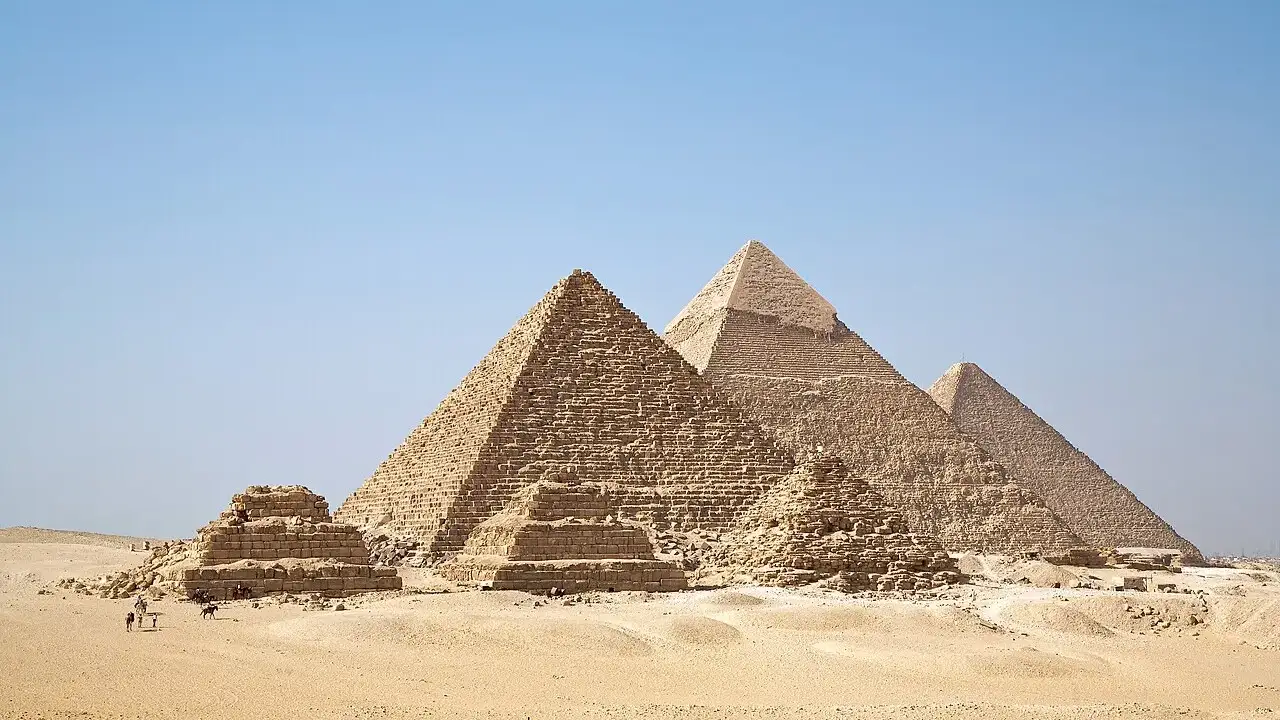
Three 4th Dynasty pyramids (about 2560–2510 BCE). Khufu's stood 146.6 m tall and today measures about 138.5 m, without its limestone casing. The Sphinx, about 73 m long, is carved from a single rock outcrop. Entry to the plateau is about EGP 700, with an extra fee to enter the Great Pyramid's chamber (2026).
The trio of 4th Dynasty pyramids stands on the plateau; Khufu's stood 146.6 m tall and today measures about 138.5 m, without its limestone casing, and the Sphinx, about 73 m long, was carved from a single rock outcrop.
Check access
Grand Egyptian Museum (GEM)
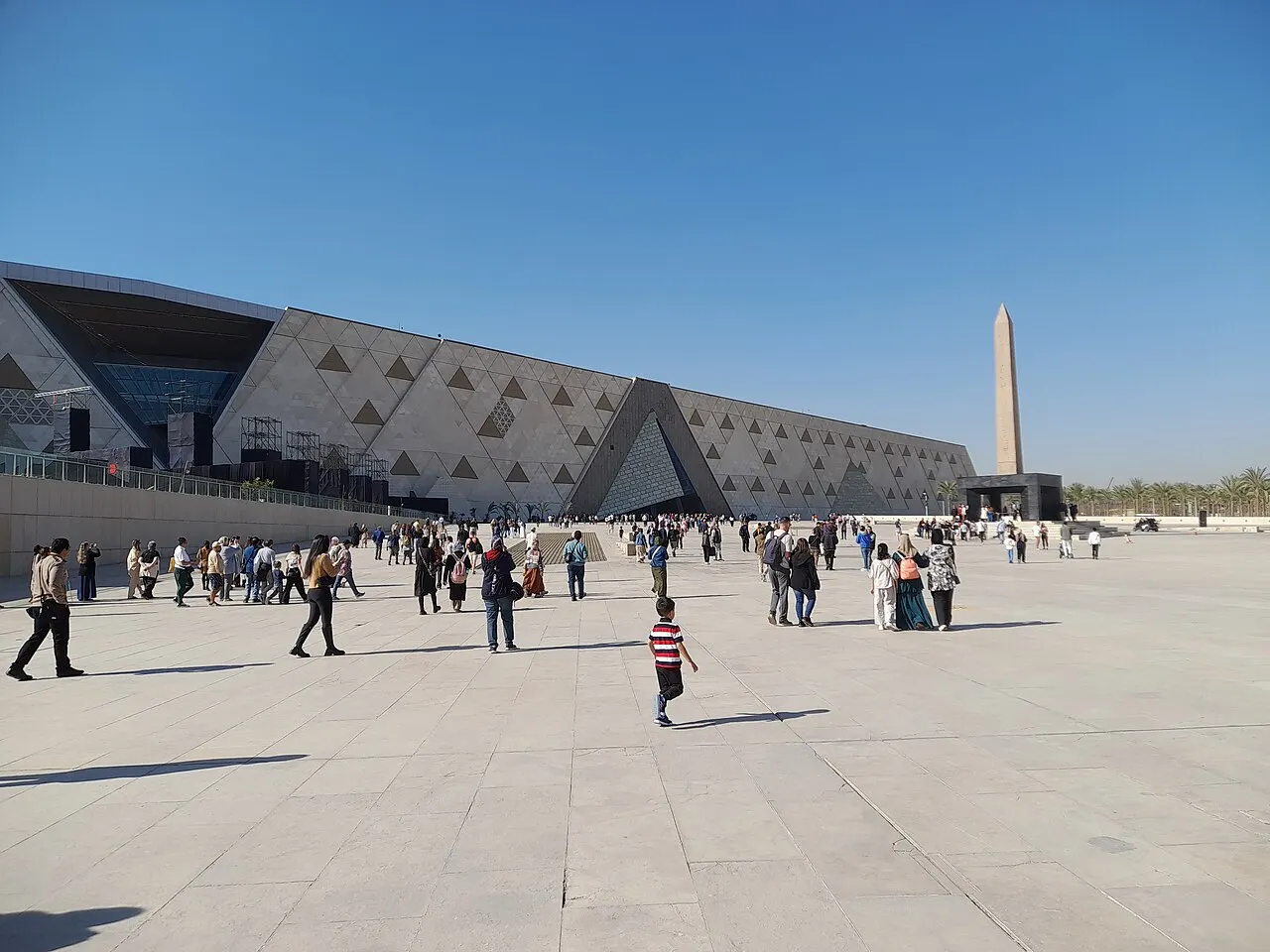
Opened to the public in November 2025 about 2 km from the pyramids, with over 100,000 pieces and Tutankhamun's complete collection displayed together for the first time. Foreign admission is about EGP 1,450; entry requires a scheduled time slot, via the website, a kiosk, or the on-site counter. Set aside 3 to 4 hours.
Opened in November 2025, about 2 km from the pyramids, it displays Tutankhamun's complete collection together for the first time among more than 100,000 pieces; the foreign admission ticket costs about 1,450 EGP, with a scheduled time slot, and the visit calls for 3 to 4 hours.
Check access
Mosque of Ibn Tulun
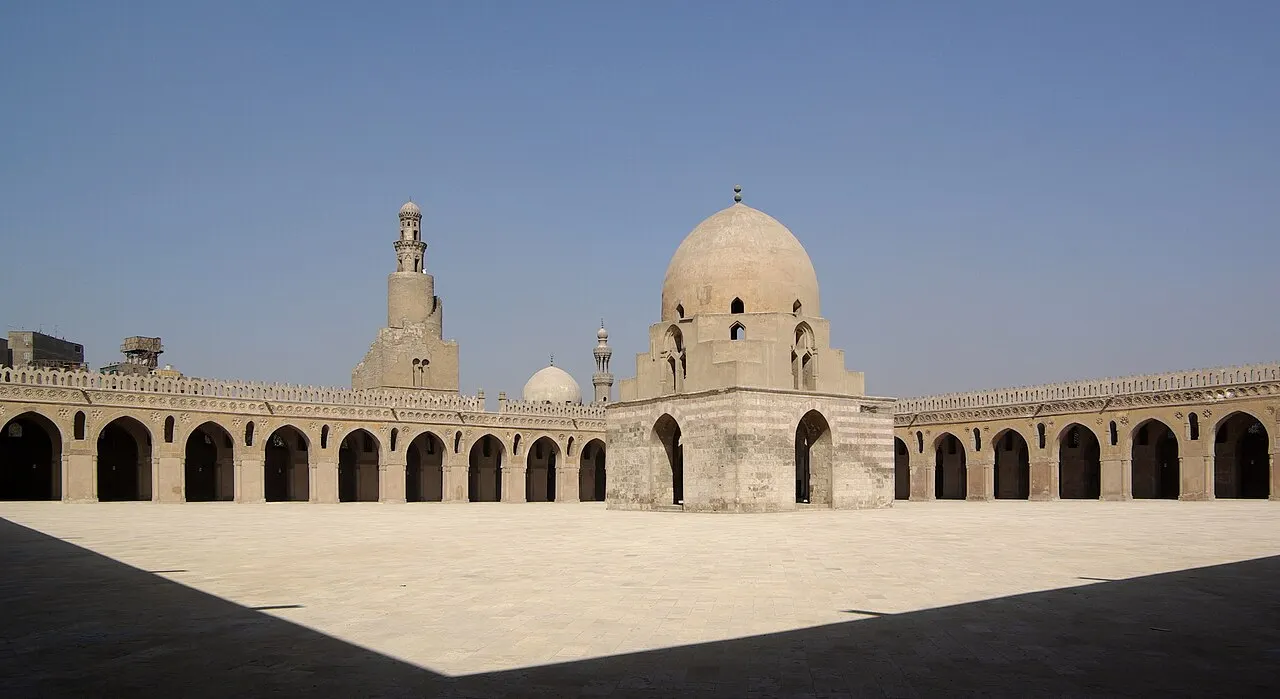
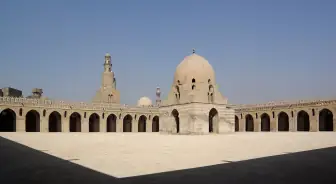
Built between 876 and 879, it's Cairo's oldest mosque preserved in its original form. It covers about 26,000 m², has a courtyard 92 m on each side, and an external spiral-ramp minaret, unique in Egypt; the Gayer-Anderson house museum leans right against it.
Cairo's oldest mosque preserved in its original form.
Check access

Al-Muizz street
The north-south axis of Fatimid Cairo, about 1 km between the Bab al-Futuh and Bab Zuweila gates, restored and closed to traffic along most of its length. It lines up over 30 monuments from the 10th to the 19th centuries, including the Qalawun complex (1285).
The stretch of about 1 km between Bab al-Futuh and Bab Zuweila has been restored and closed to traffic along most of its length, and it lines up more than 30 monuments from the 10th to the 19th centuries, starting with the Qalawun complex, from 1285.
Check access
Saladin's Citadel and the Mosque of Muhammad Ali
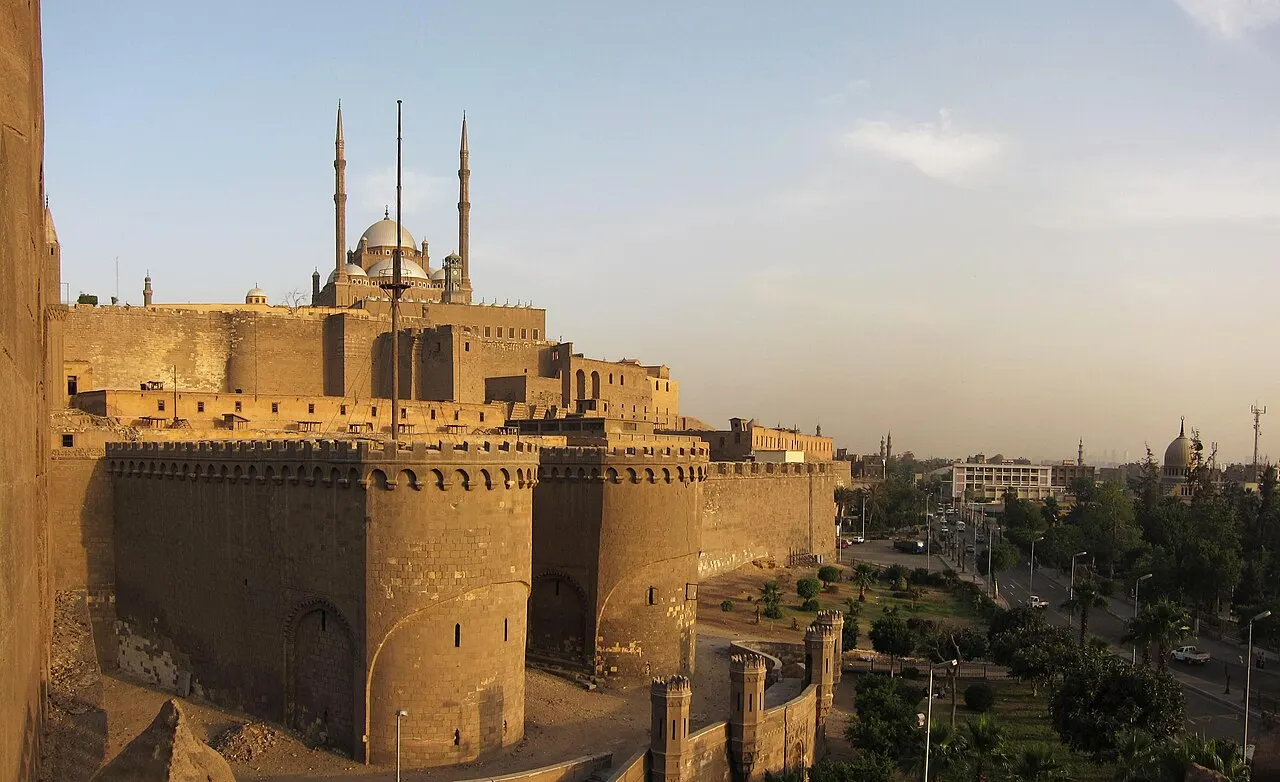
A fortress begun in 1176 on the Muqattam spur, seat of the Egyptian government until 1874. Muhammad Ali's alabaster mosque (1830–1848) copies the Ottoman model from Istanbul; from the terrace you can see the whole city as far as the pyramids on a clear day.
It's worth it for the view and the mosque: the fortress Saladin began in 1176 holds Muhammad Ali's alabaster mosque, and from the terrace, on a clear day, the whole city appears all the way to the pyramids. Plan the visit for the morning and avoid Friday between 11:30am and 1:30pm, when prayer closes the mosques.
Check access

Sultan Hassan and Al-Rifai
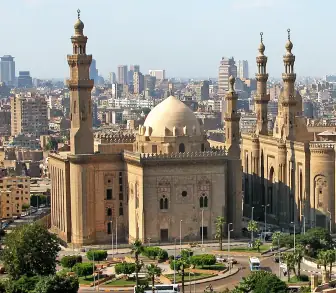
Two mosques facing each other, separated by a passage. Sultan Hassan's madrasa-mausoleum (1356–1363) has 36 m walls and is the peak of Mamluk architecture; Al-Rifai, finished in 1912, holds the tombs of the royal family and Iran's last shah.
Sultan Hassan's madrasa (1356–1363), with 36 m walls, is the peak of Mamluk architecture, and Al-Rifai, finished in 1912 across the passage, holds the tombs of the royal family and Iran's last shah.
Check access

Khan el-Khalili and Al-Fishawi
A market opened in 1382 over a former Fatimid cemetery, today split between the tourist sector and the surrounding streets of metalwork, textiles, and spices. Café Al-Fishawi has run in the alley since the late 18th century and was a haunt of Naguib Mahfouz.
The bazaar called Khan el-Khalili is split between the tourist sector and the surrounding streets of metalwork, textiles, and spices.
Check access

Coptic Cairo
Inside the Roman fortress: the Hanging Church, from the 7th century, built over a tower; Abu Serga, over the crypt where tradition places the Holy Family; and the Ben Ezra synagogue, where the Cairo Geniza, with about 280,000 medieval documents, was found in 1896.
The Hanging Church was built in the 7th century over a fortress tower, and the Ben Ezra synagogue revealed the Geniza in 1896, with about 280,000 papers; tradition places the Holy Family under Abu Serga.
Check access
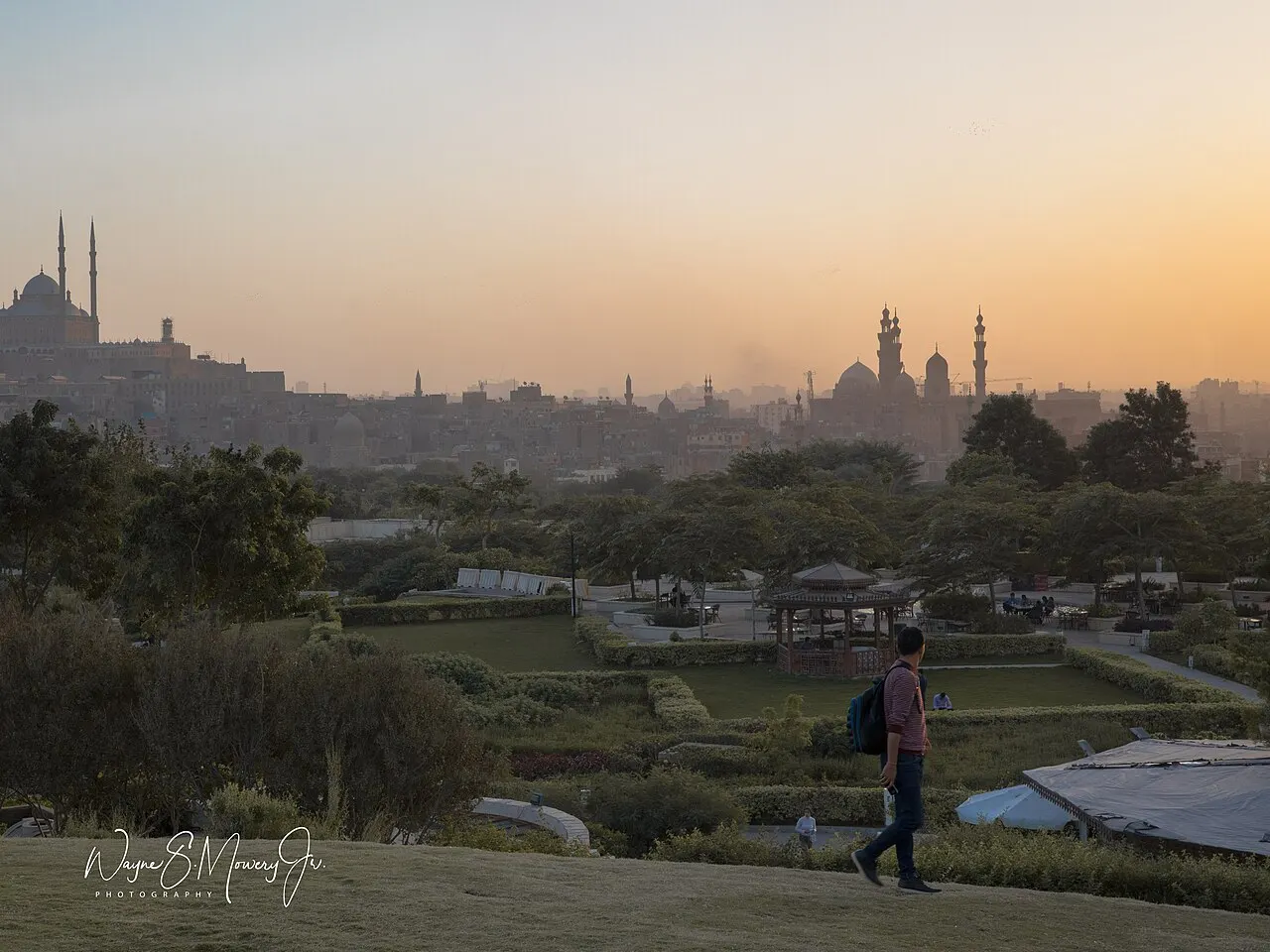
Al-Azhar Park and Bab Zuweila
A 30-hectare park opened in 2005 over five centuries of accumulated rubble, with a straight-on view of the Citadel. 500 m away, the minarets of the Bab Zuweila gate (1092) can be climbed and give the best view of the medieval city.
The 30-hectare park, opened in 2005 over five centuries of accumulated rubble, has a straight-on view of the Citadel, and 500 m away the minarets of Bab Zuweila, from 1092, can be climbed.
Check access
Nilo’s itinerary
Start with the basic programme and choose extensions for the time you have.
Plan my days in the app ↗Day 1 · Giza and the new museum
Reach the Giza plateau at 8am with your ticket bought and the entrance confirmed on it; the main entrance is on Fayoum Road. Send the location to your driver before leaving.
Visit the pyramids, the panoramic viewpoint and the Sphinx using internal transportation and walking sections according to the heat and your energy; you do not need to hire a horse or camel.
Reserve time for lunch before heading to the museum. In Nazlet el-Semman, the village at the foot of the plateau, a plate of koshary costs 30–70 EGP and grilled food, about 100–250 EGP.
Enter the Grand Egyptian Museum at your reserved time, shortly after lunch, and allow 3 to 4 hours for the Ramesses II atrium, the grand staircase and the Tutankhamun galleries. Check the closing time on the date of your ticket before booking entry.
Return downtown after finishing your visit, allowing for late-afternoon traffic. If you'd rather have dinner in Giza before returning, arrange the stop and transportation; staying in the galleries at night depends on that day's opening hours.
Day 2 · Islamic Cairo on foot
Start at the Mosque of Ibn Tulun (876–879) and climb the spiral minaret; also step into the Gayer-Anderson house museum, right next to it.
Move on to the Sultan Hassan and Al-Rifai pair and then to Saladin's Citadel, avoiding the time of the Friday prayer.
Have lunch in Sayyida Zeinab: fatta, kebab, or hamam mahshi at a grill house.
Walk al-Muizz street from Bab Zuweila to Bab al-Futuh (about 1 km) in the late afternoon.
Finish with tea at Al-Fishawi, in the Khan el-Khalili alley, and walk to Al-Azhar Park to see the Citadel lit up.
Day 3 · River, Copts, and Tahrir
Take metro Line 1 to Mar Girgis and visit the Hanging Church, Abu Serga, the Ben Ezra synagogue and the Coptic Museum, all within a 300 m radius.
Walk to Fustat and set aside two hours for the National Museum of Egyptian Civilization, where the royal mummies have been since 2021.
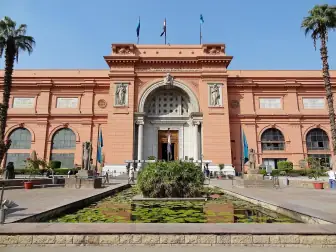
Return to the Egyptian Museum in Tahrir in the mid-afternoon: even thinned out, it still displays tens of thousands of pieces.
Spend the late afternoon in Zamalek, between the Diwan bookstore, the galleries and the waterfront of Gezira Island, and go up the Cairo Tower (187 m, 1961) before sunset.
Have a late dinner Downtown, between Talaat Harb and Champollion streets; the city doesn't sit down to eat until 10pm.



If you stay longer
Day 4 · Saqqara, Dahshur, and Memphis
Day trip
Memphis is about 20 km south of Cairo, Saqqara about 30 km, and Dahshur about 40 km, 45 to 70 minutes away by car. The Step Pyramid of Djoser (around 2650 BCE), in Saqqara, is the oldest monumental stone building in the world; Dahshur has the Bent and Red pyramids, the attempts that led to the Giza shape. Half a day with a driver costs 1,200–2,500 EGP.
Food
 AI illustration
Koshary
Cairo's everyday dish: rice, pasta, lentils, and chickpeas with tomato sauce, garlic vinegar, and fried onions. Invented in the 19th century, it costs EGP 30–70 and is served at specialized shops, not ordinary restaurants.
 AI illustration
Ful medames
Fava beans slow-cooked overnight in a narrow-necked pot, mashed with olive oil, lemon, and cumin. It's the national breakfast, sold from carts for EGP 10–25 tucked into baladi bread.
 AI illustration
Ta'meya
The Egyptian version of falafel, made with skinned fava beans instead of chickpeas, which leaves the inside green. Fried to order, eaten in bread with salad and tahini, usually at the same cart as the ful.
 AI illustration
Molokhia
A thick soup of very finely chopped corchorus leaves, seasoned with garlic and coriander fried in butter and served with rice and chicken or rabbit. It's home cooking more than restaurant food, and the slippery texture divides opinion.
 AI illustration
Hamam mahshi
Pigeon stuffed with freek (toasted green wheat) or rice, roasted or grilled. Served whole, eaten with the hands, and it's the special-occasion dish at the grill houses of Sayyida Zeinab and along the Al-Haram road.
 AI illustration
Feteer meshaltet
Flaky pastry rolled out in very thin layers and baked in a hot oven, savory or sweet. Cut into slices like a pizza; the sweet version comes topped with honey and white cheese.
 AI illustration
Om Ali
A hot pudding of flaky pastry with milk, coconut, raisins, and nuts, baked until it browns on top. The recipe is credited to the 13th century, and it's the standard dessert at any Egyptian restaurant.
 AI illustration
Aseer asab and karkadé
Fresh-pressed green cane juice, sold at stalls with roller presses for EGP 10–20 a glass, and cold hibiscus tea (karkadé), served sweet. Both are street drinks, not restaurant ones.
Day trips
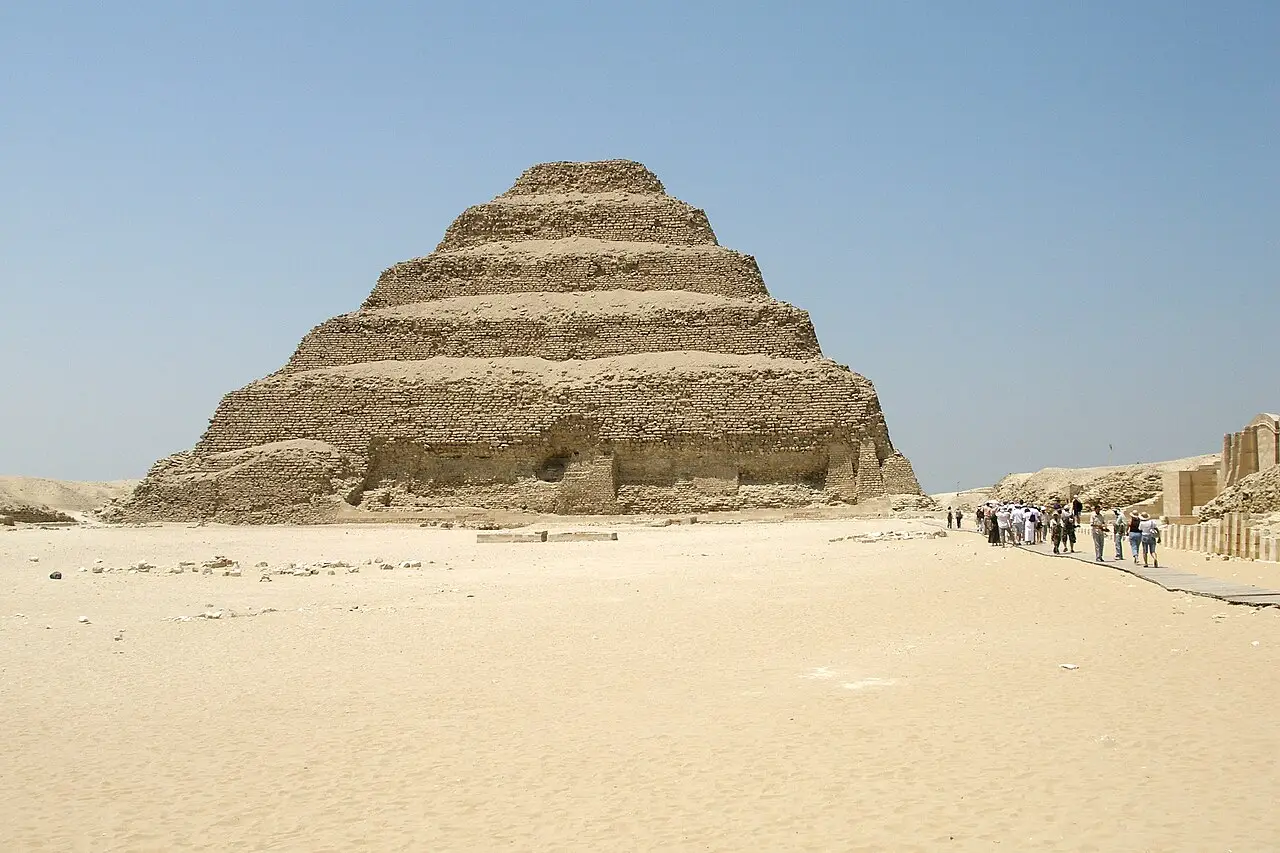
Saqqara, Dahshur, and Memphis
Memphis is about 20 km south of Cairo, Saqqara about 30 km, and Dahshur about 40 km, 45 to 70 minutes away by car. The Step Pyramid of Djoser (around 2650 BCE), in Saqqara, is the oldest monumental stone building in the world; Dahshur has the Bent and Red pyramids, the attempts that led to the Giza shape. Half a day with a driver costs 1,200–2,500 EGP.
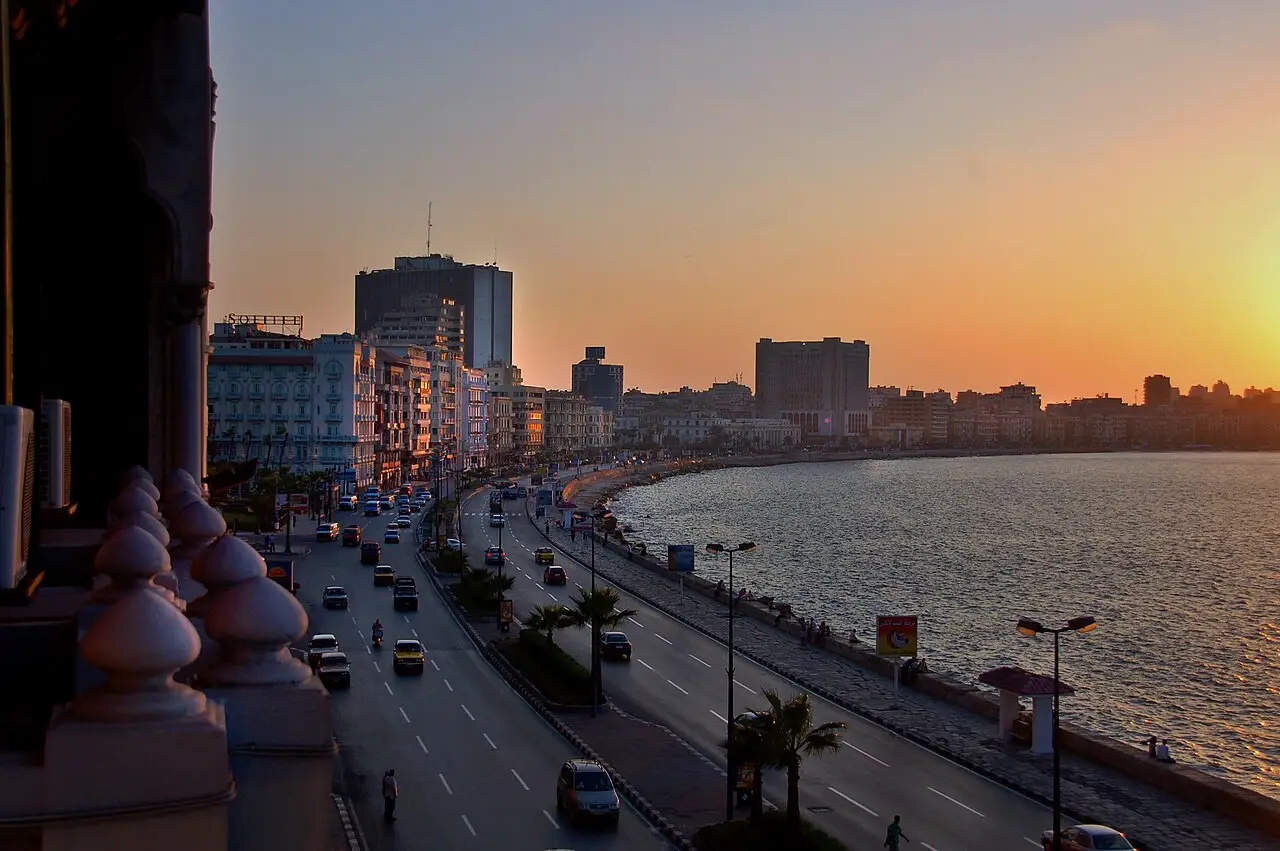
Alexandria
Alexandria is about 220 km to the north, 2 hours to 2 hours 40 minutes by express train from Ramses station, with departures throughout the day, so you can go and come back the same day. See the Bibliotheca Alexandrina (2002), the catacombs of Kom el-Shoqafa (2nd century) and the Qaitbay fort, built in 1477 on the foundations of the Lighthouse.

Fayoum and Wadi al-Rayan
Fayoum is about 100–130 km to the southwest, 1 hour 30 minutes to 2 hours 30 minutes away by car. It's an oasis irrigated by the Bahr Yussef channel, with Lake Qarun, the Wadi al-Rayan falls, and, farther on, Wadi al-Hitan, a UNESCO site with skeletons of early whales about 40 million years old.
Where to begin
Giza and the new museum
Reach the Giza plateau at 8am with your ticket bought and the entrance confirmed on it; the main entrance is on Fayoum Road. Send the location to your driver before leaving.
Islamic Cairo on foot
Start at the Mosque of Ibn Tulun (876–879) and climb the spiral minaret; also step into the Gayer-Anderson house museum, right next to it.
River, Copts, and Tahrir

Take metro Line 1 to Mar Girgis and visit the Hanging Church, Abu Serga, the Ben Ezra synagogue and the Coptic Museum, all within a 300 m radius.
Money
The currency is the Egyptian pound (EGP), which has floated since March 2024: about 47–50 to the dollar and 55–58 to the euro in 2026. Street prices are still low: tea at an ahwa EGP 15–30, a ful or ta'meya sandwich EGP 10–25, a plate of koshary EGP 30–70, a meal at a local restaurant EGP 150–350, dinner in Zamalek EGP 400–900. What adds up is admission, charged at foreigner rates: about EGP 1,450 at the Grand Egyptian Museum, EGP 700 for the Giza plateau and EGP 550 at the Egyptian Museum in Tahrir (2026). A mid-range hotel runs EGP 1,500–4,000 a night. Cards work at hotels, malls and ride-hailing apps; cash is a must for taxis, markets and baksheesh. Keep EGP 10, 20 and 50 notes for that tip, which comes with almost every service, from parking the car to holding a door. In restaurants, 10% is already added to the bill as “service,” and people still leave another 5–10% on the table.
Getting there and around
Cairo Airport (CAI), 22 km away, with three terminals
Cairo International Airport (CAI) sits about 22 km northeast of the center. Terminal 3 handles EgyptAir and Star Alliance; Terminal 2 takes much of the European traffic. There's no direct rail link to the terminal as of 2026. Metro line 3 ends at Adly Mansour, about 10 km south, from where the LRT to the New Capital and buses depart. In practice, access is by car: 40 to 90 minutes depending on the time of day, and the app already handles the meeting point inside the terminal. Arriving overland, Ramses (Misr) station receives trains from Alexandria and the south, above the Al-Shohadaa metro station.
The metro: three lines, 89 stations, 107 km
The metro is the most reliable way to cross the city: three lines, 89 stations, about 107 km. The fare switched to a distance-band structure in March 2026. It runs from early morning to midnight, with cars reserved for women. No line reaches the pyramids. Minibuses and public buses run above ground. The LRT has served the new towns since 2022, while the eastern monorail began operating in 2026; check the stations and schedule for the section you need before counting on this connection. Uber, Careem, and inDrive cost 60–150 EGP for a short ride; white taxis have meters that rarely get switched on, so agree on the price beforehand. On foot works in Downtown, Zamalek, and al-Muizz street: elsewhere the distances don't pay off, and a bicycle only makes sense in Maadi.
Safety
Scams, overcharging and traffic require attention in Cairo. Agree on the price and service before accepting tours, transportation or paid help, and refuse detours to shops you didn't choose. With rideshares, check the license plate and driver and share your route; the trip record helps you request support if something goes wrong. There are reports of harassment and sexual violence in Egypt, including in tourist settings. If someone persists or threatens you, head to a busy establishment and ask for help; take extra care when traveling alone at night as a woman. To cross avenues, favor pedestrian bridges or marked crossings and wait on the sidewalk for a safe opportunity. Following a local does not guarantee cars will stop. Avoid demonstrations and public political arguments. Put away your camera near police and military posts and follow photography signs. For trips beyond the capital, consult official advisories for your itinerary, especially in Sinai and border regions. Keep a digital copy of your passport and protect the original, as it may be requested at accommodations and currency exchanges.
Etiquette tips
Baksheesh isn't charity
Baksheesh is the gratuity that comes with almost every informal service: the man who points out the parking spot, the one who opens the restroom, the one who shows you the way. Carry 10 and 20 EGP notes and hand them over without embarrassment; turning down the service before you receive it avoids the request afterward.
Clothing covers shoulders and knees
Covering shoulders and knees applies to men and women in working-class neighborhoods and is mandatory in mosques, where women also cover their hair. Bring a scarf instead of using the ones lent at the door. Shoes come off at the entrance to any mosque.
Friday noon prayer closes the mosques
The Friday noon prayer closes working mosques for about two hours. Schedule the Citadel and the al-Muizz mosques for another time, or another day.
Right hand for eating, giving, and receiving
Bread, money, and documents pass with the right hand. Eating with your hands is normal with grills and ful; baladi bread doubles as cutlery.
Photographing Egyptians requires written permission
Official rules require written permission to photograph Egyptian citizens and prohibit photographing children. Also respect restrictions at police and military installations and other marked areas. At museums and archaeological sites, check the rules for cameras, flash and tripods before using your equipment.
At Khan el-Khalili, the opening price can be triple the final one
At Khan el-Khalili and at any stall, the opening price can be three times the final one; counter with half and walk away slowly. If you don't want to buy, say “la, shukran” with your hand on your chest and keep walking, because stopping to explain only drags out the conversation.
Mistakes to avoid
Museum ticket without a time slot
Showing up at the Grand Egyptian Museum without a timed reservation. Entry requires choosing a date and time in advance, even if you buy at the kiosk or at the counter on site, and the day's time slots may be sold out when you arrive.
The stranger who says it's closed
Changing your plan on the advice of a stranger who offers another entrance or insists you need a horse ride to visit the pyramids. Confirm the access point on your ticket or with official staff: the main entrance moved to Fayoum Road in 2025, and old directions may lead to deactivated gates. Buy only through official channels and skip the horse ride, which nobody requires for the visit.
Giza to Downtown: 12 km, 25 to 90 minutes
Underestimating the traffic: the 12 km from Giza to Downtown can take 25 minutes at 8am and 90 minutes at 6pm. Squeezing the pyramids and the Tahrir museum into the same day usually ends with one of them cut short, and it's always the second.
Only EGP 100 and 200 notes
Carrying only EGP 100 and 200 notes. Taxis, ful carts, and public bathrooms have no change, and a lack of small bills turns into a forced tip.
Street-stall ice
Drinking untreated water or accepting ice without knowing its source can cause intestinal infections. Choose bottled water with an intact seal and skip ice unless you can confirm it was made with safe water; a bottle usually costs 10–15 EGP.
Useful phrases
السلام عليكم (as-salamu alaikum)
“Peace be upon you”: the standard greeting; the reply is “wa alaikum as-salam”
شكراً (shukran)
Thank you. “Thank you very much” is “shukran gazilan”
كام ده؟ (kam da?)
How much is this?
غالي أوي (ghali awi)
Too expensive: the opening line of any negotiation
لا، شكراً (la, shukran)
No, thank you: said with your hand on your chest, it ends the pitch without rudeness
الحساب لو سمحت (el-hessab law samaht)
The check, please
Districts
Downtown (Wust al-Balad)
Khedival Cairo from 1865–1910, with eclectic facades, old cinemas, and Tahrir Square at its western tip. Home to historic cafés, bookshops, cheap hotels, and the city's cheapest nightlife; it's the most walkable district in the center.
Gamaliya and Khan el-Khalili
The heart of Fatimid and Mamluk Cairo, cut through by al-Muizz street. A market since 1382, copper and glass workshops, and the largest concentration of standing medieval Islamic monuments in the world.
Darb al-Ahmar
A strip between Bab Zuweila and the Citadel, of tent-makers, leather, and wood artisans. It was redeveloped alongside the creation of Al-Azhar Park (2005), built over 500 years of accumulated rubble.
Masr al-Qadima (Coptic Cairo and Fustat)
Inside the Roman walls of Babylon, it gathers half a dozen churches from the 4th to 9th centuries, the Ben Ezra synagogue, and the Coptic Museum. Nearby lie Fustat, the National Museum of Egyptian Civilization, and the potters' quarter.
Zamalek
The northern half of Gezira island, with 1930s buildings, embassies, galleries, and the Cairo Opera House, opened in 1988 to replace the Khedival Opera House, which burned down in 1971. It's the greenest and quietest district in the center, and the most expensive one to eat in.
Garden City
Laid out in curved streets in 1906 over a former palace garden, between the Nile and Tahrir. Home to embassies, faded mansions, and riverside hotels; useful for staying near the center without Downtown's noise.
Maadi
A garden suburb founded in 1907 by a British railway company, about 10 km south, with numbered streets and tall trees. It concentrates resident foreigners, international schools, and restaurants priced high by local standards.
Giza, Dokki, and Mohandessin
The west bank: Dokki and Mohandessin are middle-class districts from the 1950s–70s, with shops and restaurants; the Al-Haram road runs in a straight line to the pyramid plateau, about 12 km from the center.
History
c. 3000–2500 BCE · Memphis and the Giza necropolis
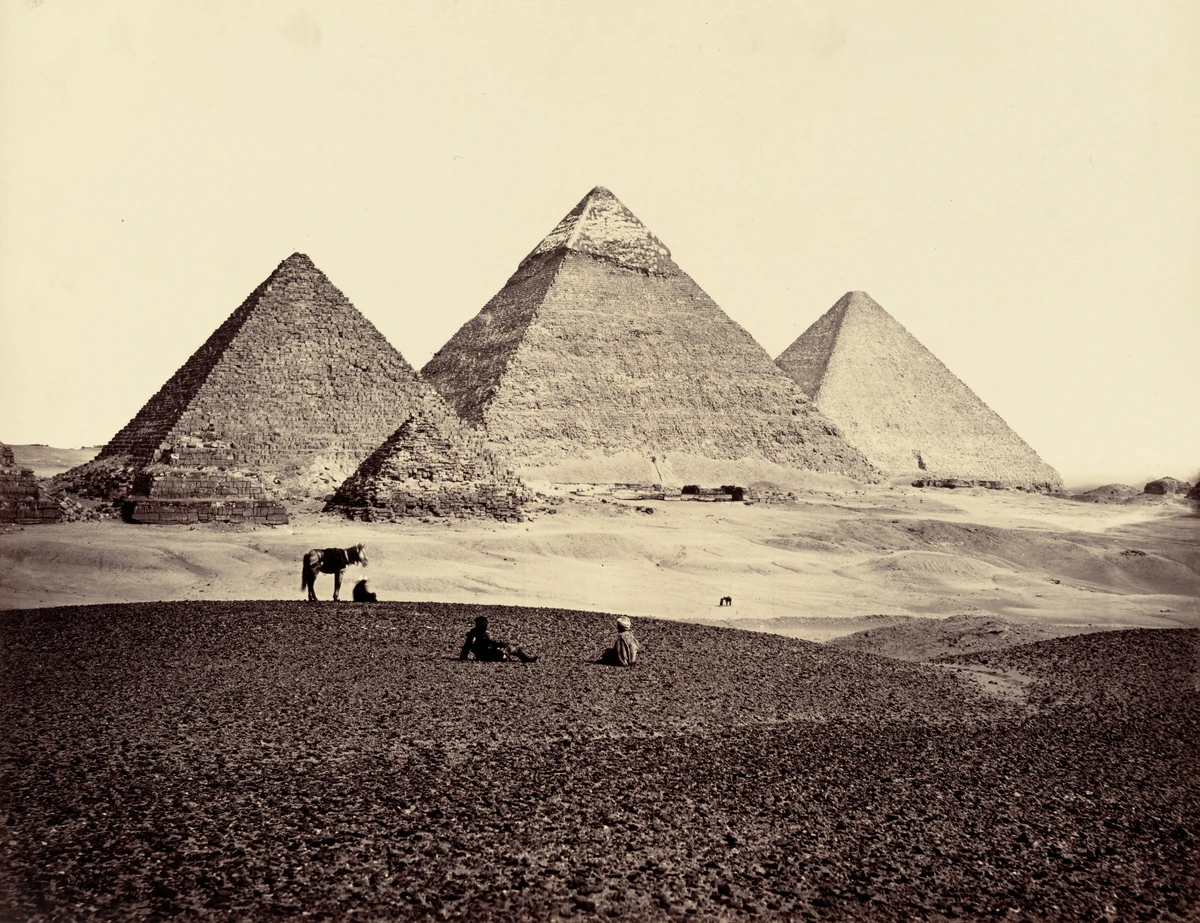
Memphis, about 20 km south, is the capital of the Old Kingdom, built right at the vertex between valley and delta. The three Giza pyramids are built in the 4th Dynasty, between about 2560 and about 2510 BCE, for Khufu, Khafre, and Menkaure.
30 BCE–641 · The Babylon of Egypt
The Romans fortify the river crossing with a fortress called Babylon. Coptic Cairo is born inside its walls, with the Hanging Church (al-Muallaqa) resting on one of its towers.

641 · Fustat, the first Arab capital
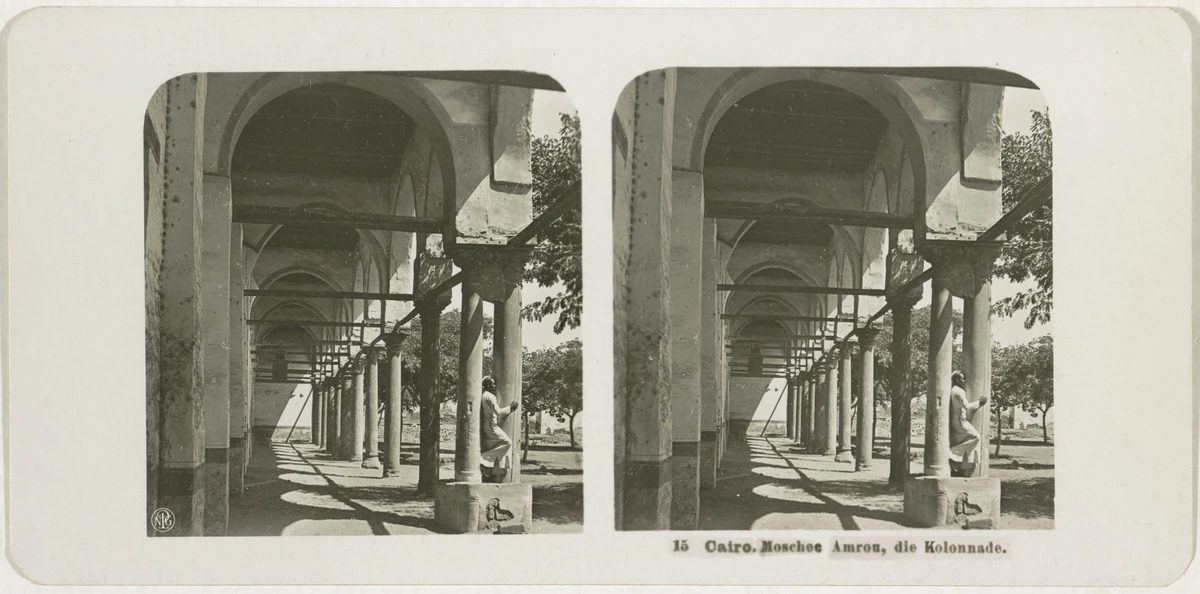
General Amr ibn al-As camps north of the Byzantine fortress and founds Fustat. The mosque that bears his name is the first built in Egypt and on the entire African continent.
876–879 · Ibn Tulun's city
Governor Ahmad ibn Tulun declares himself autonomous from Baghdad and builds al-Qatai with a mosque of about 26,000 m², with a courtyard 92 m on each side and a spiral minaret inspired by Samarra. It's Cairo's oldest mosque still in its original form.

969–972 · The Fatimids found al-Qahira
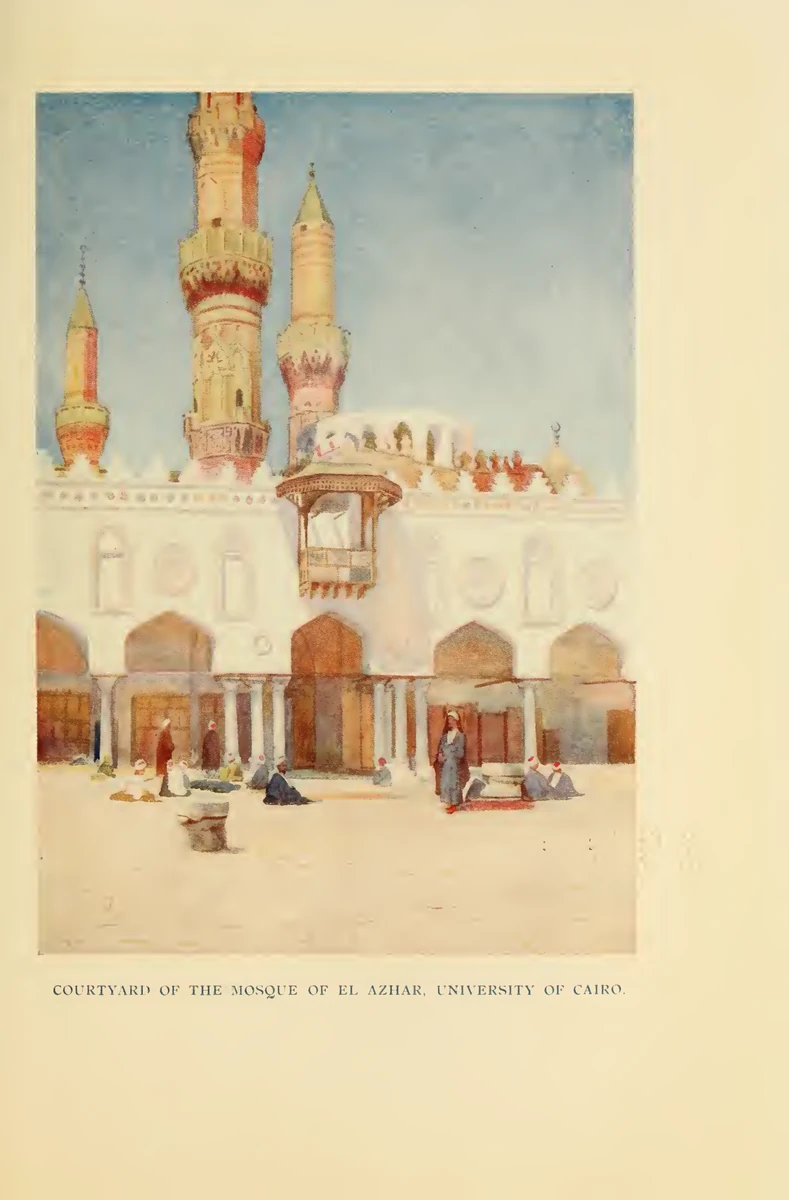
General Jawhar lays out a walled palace city for the Shiite Fatimid caliph; its name means “the Victorious” and became Cairo in European languages. Al-Azhar mosque opens in 972 and becomes the most influential center of Islamic learning in the world.
1176–1183 · Saladin's Citadel
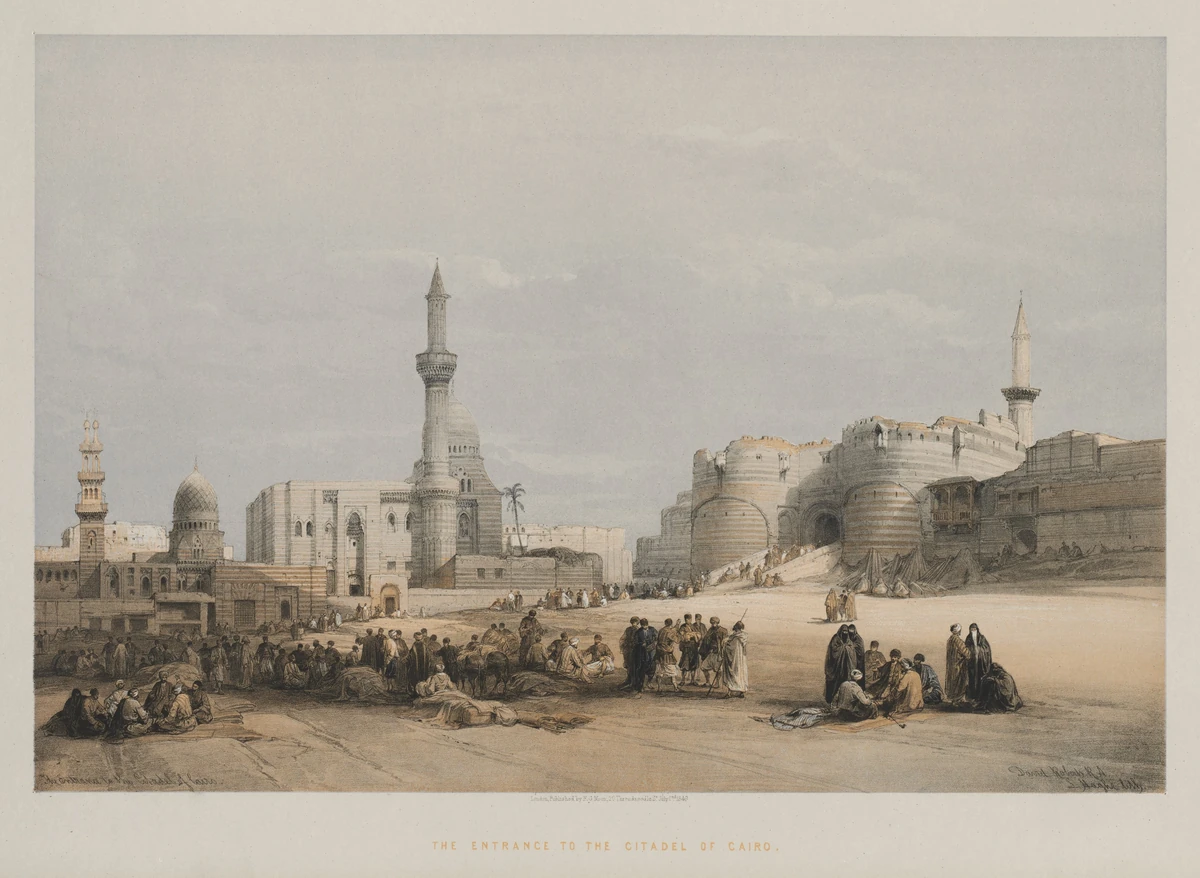
Salah ad-Din ends the Fatimid caliphate and builds the citadel on the limestone spur of Muqattam, tying Fustat and al-Qahira together within a single wall. It housed the Egyptian government for about 700 years.
1250–1517 · The Mamluk sultanate
Cairo becomes the trading post between the Indian Ocean and the Mediterranean and reaches about 500,000 inhabitants. This era gives us carved-stone domes, the al-Muizz madrasas, and the Khan el-Khalili market (1382).
1517–1798 · Ottoman province
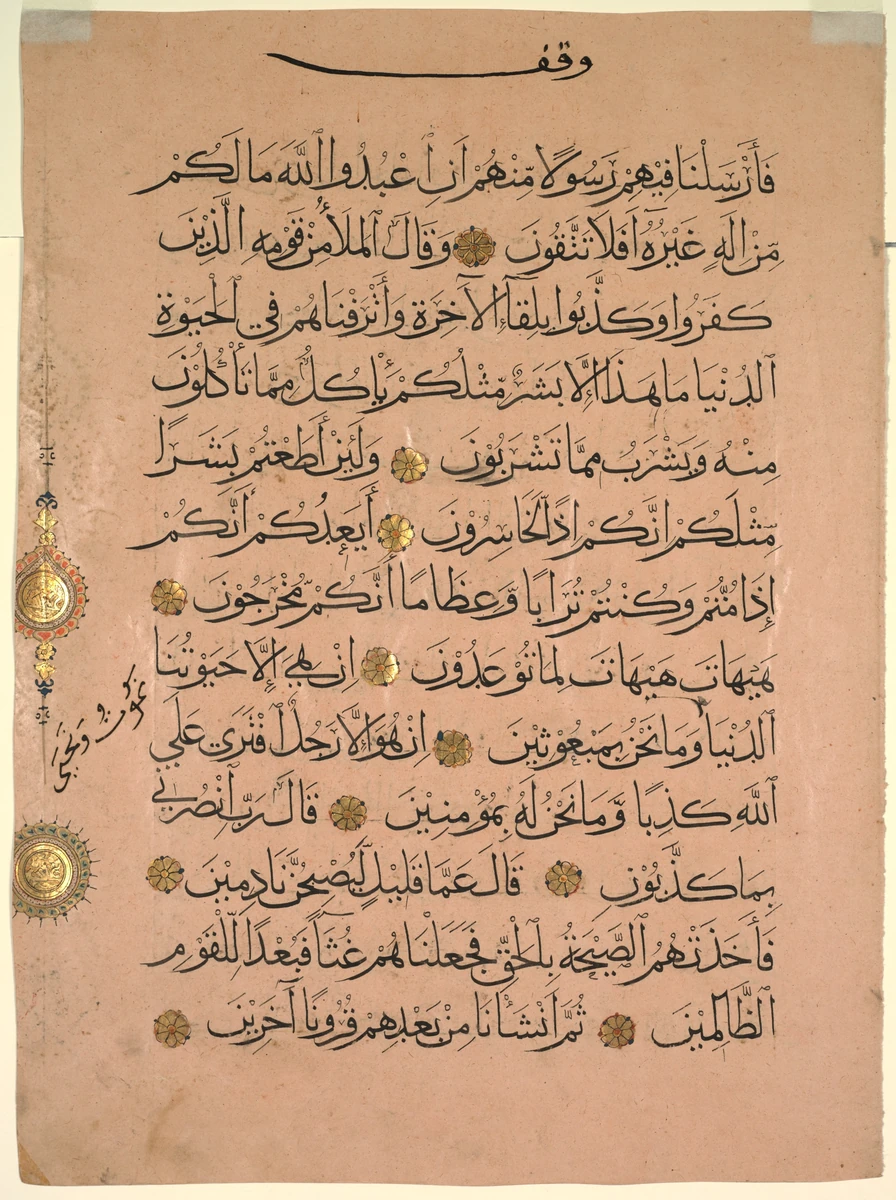
Selim I takes Egypt and the court moves to Istanbul; Cairo loses its role as imperial capital but keeps the guilds, the trade, and al-Azhar. Napoleon lands in 1798 and the French occupation lasts three years.

1805–1848 · Muhammad Ali and the new order
The Albanian commander takes power in 1805 and eliminates the Mamluks at the Citadel in 1811. His alabaster mosque, built between 1830 and 1848, still defines the city's skyline as seen from the river.
1863–1882 · Khedival Cairo
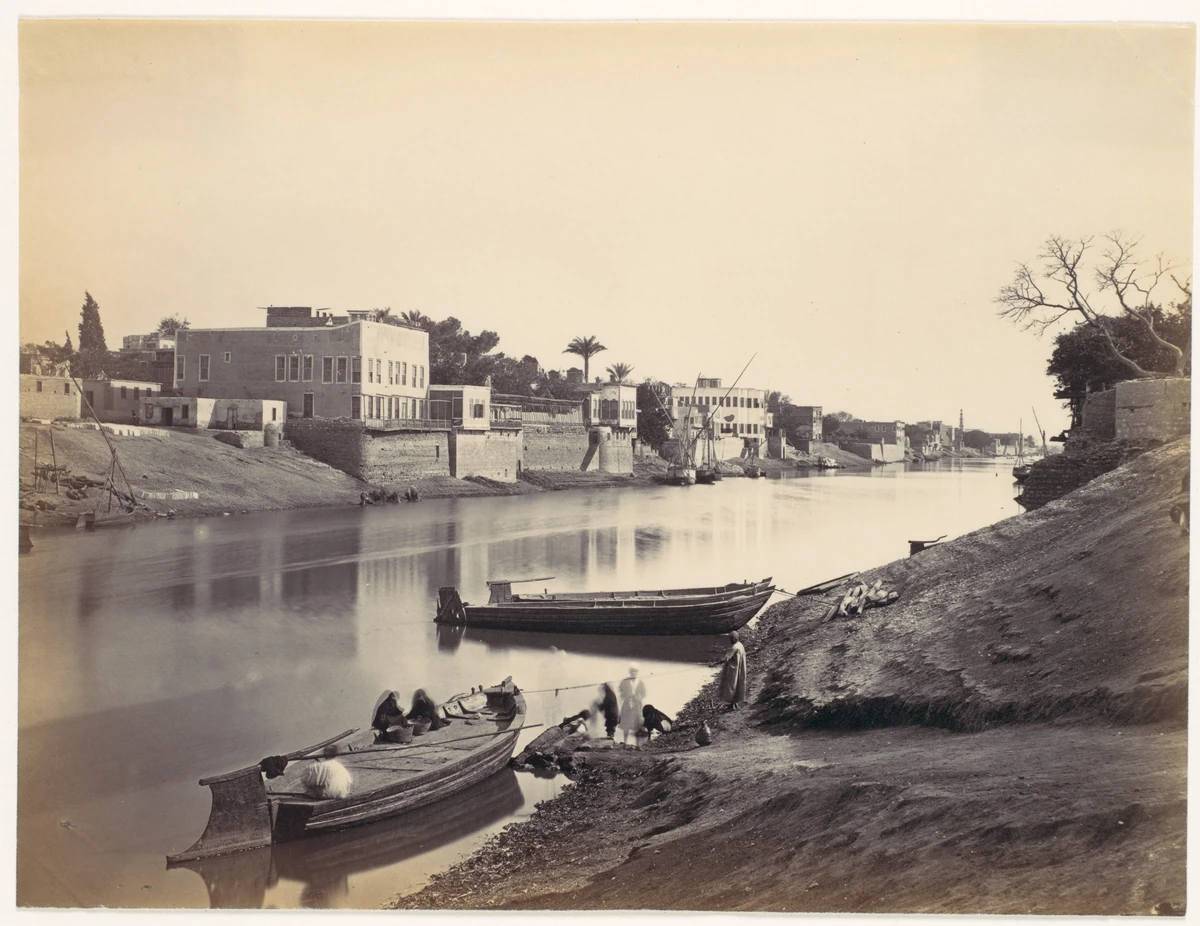
Khedive Ismail has Downtown laid out on a radial plan in the Haussmann style, opens the Khedival Opera House in 1869 for the Suez Canal, and drives the country into debt. In 1882 the British occupy Egypt.

1952–2026 · Republic, Tahrir, and the new capital
The Free Officers overthrow the monarchy in 1952 and Nasser nationalizes the Canal in 1956; the population leaps from about 2 million to more than 20 million. Tahrir Square is the center of the 18 days that topple Mubarak in 2011. Since 2015 the government has been building the New Administrative Capital, 45 km to the east, and the ministries start moving there in 2023.

Complete history
Memphis and Giza, where the valley meets the Delta (c. 3000–2510 BCE)
Cairo was founded four times, always on the same stretch of river. Around 3000 BCE, Memphis is built about 20 km south of the present city, at the point where the narrow Nile valley opens into the fan of the Delta, a position that gave control over the river upstream and over its mouths downstream. The Pyramids of Giza, built between around 2560 and around 2510 BCE, are the necropolis of that capital, set on the plateau of the western desert because irrigable land couldn't be spent on tombs. When Memphis declines, the center of power shifts a few kilometers north, always on the east bank, where the following capitals are born.
Roman Babylon, Fustat, al-Qatai and al-Qahira (641–972)
After Memphis, each conqueror builds his capital a little north of the previous one. The Romans guard the crossing with the fortress of Babylon, inside which the Coptic core survives to this day. In 641, Amr ibn al-As founds Fustat next to it and Egypt begins to be governed in Arabic. In 876 Ahmad ibn Tulun breaks with Baghdad and builds al-Qatai, with its brick mosque and spiral minaret. In 969 the Fatimids, Shiites from Tunisia, wall in a palace city closed to the people and call it al-Qahira. Al-Azhar opens in 972 as their school of religious propaganda and, ironically, ends up becoming the most respected Sunni authority on the planet. These settlements went through destruction and rebuilding. Their surviving monuments and remains, such as the Ibn Tulun mosque, let you trace the shifting centers of power through today’s city.
Saladin, the Citadel and Mamluk Cairo (1171–1517)
Saladin ends the Fatimid caliphate in 1171 and, from 1176, builds the Citadel on the Muqattam spur and ties Fustat and al-Qahira together within a single wall. The peak, however, comes with the Mamluks, slave soldiers who rule from 1250 to 1517. With the spice trade forced to pass through Cairo, the city reaches about 500,000 inhabitants and funds the architecture that still shapes its streets: madrasas, sabils, domes of carved stone and Khan el-Khalili, opened in 1382. Two catastrophes end the cycle: the Black Death of 1348, which kills about a third of the population, and Vasco da Gama's route around the Cape in 1498, which takes the spice monopoly away from Egypt. In 1517 the Ottomans take the country and the capital of the empire becomes Istanbul.
Muhammad Ali (1805-1848) and Khedive Ismail's debt
Modern Cairo was born from the reforms of two rulers and the debt they left behind. Muhammad Ali, in power from 1805 to 1848, industrializes the country by force and builds the alabaster mosque on the Citadel that became a postcard image. His grandson Ismail, khedive from 1863 to 1879, wants a Cairo that is “part of Europe”: he opens boulevards on the reclaimed land west of the medieval city, inaugurates the Khedival Opera House in 1869 along with the Suez Canal, and creates the Downtown of eclectic facades that is still there. The bill brings Ismail down: Egypt goes bankrupt, and the British occupy the country in 1882 and stay, in one form or another, until 1954. During those years of British rule, Cairo gets trams, planned suburbs (Heliopolis in 1905, Maadi in 1907), and its first urban middle class.
Population explosion: from 1.3 million to 20 million in the 20th century
The 20th century is a population explosion. From about 1.3 million inhabitants in 1937, the city passes 6 million in 1976 and exceeds 20 million in the metropolitan area in the 2010s, absorbing rural migration without matching infrastructure. That's where the informal neighborhoods (“ashwa’iyat”) come from, home to nearly half the population, along with the residential occupation of the City of the Dead. To move all these people, the metro opens in 1987, the first in Africa. Five years later, the 1992 earthquake (magnitude 5.8, about 550 dead) exposes the fragility of the city's housing. In 2011 Tahrir Square becomes the country's political center of gravity. Since 2015 the state has been building the New Administrative Capital 45 km to the east and moving ministries there since 2023, while the Grand Egyptian Museum, opened in November 2025 next to the pyramids, shifts the tourist axis that used to belong to Tahrir to Giza.
Geography and shape of the city
The river between the cliff and the desert
Cairo occupies both banks of the Nile about 30 km before the river splits into the Damietta and Rosetta branches. To the east, the historic core sits squeezed between the water and the limestone cliff of Muqattam (about 200 m), where the Citadel and the quarries that supplied the pyramids' casing stand; to the west, Giza climbs to the Libyan desert plateau, which is why the pyramids appear at the end of ordinary avenues.
Gezira, Roda, and neighborhoods by era
Two river islands organize the middle: Gezira, whose northern half is Zamalek, and Roda, home to the 861 Nilometer. The urban fabric reads like growth rings: the irregular medieval layout of Fatimid and Mamluk Cairo, the khedival grid of Downtown next to it, the tram suburbs of Heliopolis and Maadi from the early 20th century, and then the 1980s–90s Ring Road connecting the desert new towns; 6th of October, New Cairo, 15th of May, Sheikh Zayed, and the New Administrative Capital.
Desert climate and the khamsin
The climate is hot desert (BWh): about 25 mm of rain a year, concentrated in winter, and summer highs of 36–40 °C. Between March and May the khamsin blows, a desert wind that cuts visibility for days.
The stones that faced the pyramids came from Muqattam, to the east.
Culture
Umm Kulthum on the first Thursday
Music is the city's strongest institution. Umm Kulthum sang live on the first Thursday of every month, broadcast by radio across the Arab world from the 1930s to the 1970s, and the streets would empty out; her 1975 funeral drew a bigger crowd than that of any Egyptian head of state. Abdel Halim Hafez and Mohamed Abdel Wahab complete the canon, and Mohamed Mounir has kept the popular core alive since the 1970s. Since about 2007, the real sound of the streets is mahraganat, made on home computers in the Dar al-Salam and Salam City neighborhoods: banned by the musicians' union in 2020, it still plays at weddings, minibuses, and tuk-tuks.
Film and literature: Studio Misr, Chahine and Mahfouz
For much of the 20th century, the Arab world's cinema was made in Cairo. Studio Misr, opened in 1935, launched an industry that produced thousands of films and exported the Egyptian dialect as the lingua franca of entertainment; Youssef Chahine directed from 1950 to 2007 and Omar Sharif started here before Hollywood. In literature, Naguib Mahfouz mapped the Gamaliya neighborhood street by street and won the Nobel Prize in 1988; Café Riche, opened in 1908 Downtown, was a table for writers and conspirators for a century. The Cairo International Film Festival, founded in 1976, is the only festival in Africa and the Arab world recognized in the competitive category of FIAPF, the international federation of film producers; the region's oldest festival is Carthage, in Tunisia, from 1966.
Al-Azhar (972) and the Al Ahly-Zamalek derby
Public life revolves around religion and soccer. Al-Azhar, founded in 972, is the most widely cited authority on Sunni jurisprudence in the world, and the Coptic Orthodox Church, seated at St. Mark's Cathedral in Abbassia, accounts for about 10% of Egyptians. On the field, the Al Ahly (1907) versus Zamalek (1911) derby pits Africa's two most decorated clubs against each other at the Cairo International Stadium, built in 1960. At night the city lives in its “ahwas,” sidewalk cafés with backgammon, dominoes and shisha that stay open until 2 or 3am, and during Ramadan the schedule flips entirely, with streets full from sunset to dawn.
It's common to hear three tuk-tuks playing the same mahraganat song on the same block, a style banned by the musicians' union in 2020.
Sitting down at an ahwa, a sidewalk cafe, at eleven at night can feel late. These cafes stay open until 2 or 3 in the morning.
Festivals and events
Ramadan
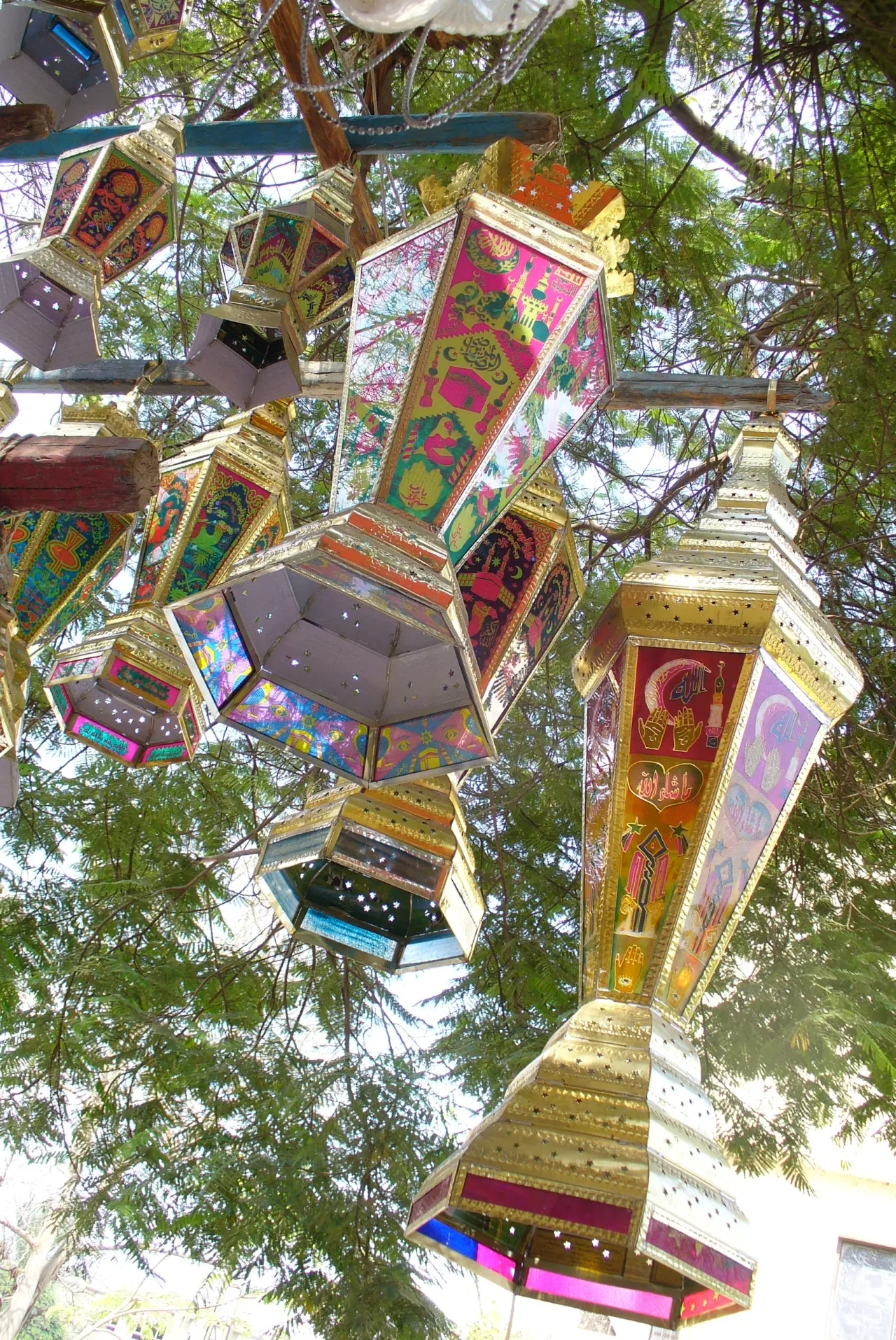
The lunar month of fasting moves about 11 days earlier each year: it ran from February to March in 2026, and in 2027 it runs from about February 8 to March 9. “Fanous” lanterns fill the streets, restaurants close during the day, and the whole city sits down to eat at sunset; sightseeing works best in the morning, and haggling at the market pays off less.
 AI illustration
Eid al-Fitr and Eid al-Adha
The two major Islamic-calendar holidays, each with three to four days off. Museums and sites open, but with local crowds; intercity transport and trains sell out beforehand.
 AI illustration
Sham el-Nessim
The Monday after Coptic Easter, which falls in April or May depending on the year. A pharaonic-origin festival celebrated by all Egyptians with a picnic on any patch of grass, dyed eggs, green onions, and fesikh, a strong-smelling fermented fish.
 AI illustration
Moulids
Birthday celebrations for saints and Sufi figures, especially those of Sayyida Zeinab and al-Hussein, which fill the neighborhoods around the mosques for several days, with processions, dhikr, and the tanoura dance. The dates follow the lunar calendar and change every year.
 AI illustration
Cairo International Film Festival
In November, since 1976, based at the Cairo Opera House in Zamalek. Tickets are cheap and screenings sell out; it's the week Downtown gets busiest at night.
Books and films
“Palace Walk”, by Naguib Mahfouz (1956)
The first volume of the Cairo Trilogy, set in Gamaliya between 1917 and 1919, up to the revolution against British rule. Mahfouz, the 1988 Nobel laureate, describes the district street by street, and the novel tells the domestic life of Cairo that the monuments don't show.
“Cairo Station” (Bab el-Hadid), by Youssef Chahine (1958)
In “Cairo Station” (Bab el-Hadid, 1958), shot inside Ramses station, Youssef Chahine directs and plays the lead role. The film portrays the working-class Cairo that passes through the station six years after the 1952 revolution and is one of the landmarks of realism in Egyptian cinema.
“The Yacoubian Building”, by Alaa Al Aswany (2002)
A real building in khedival Downtown serves as a cross-section of Cairene society in the 1990s, from the rooftop to the grand main floor. It was made into a film in 2006.
Frequently asked questions
Cairo: Do I need to take a horse ride to see the pyramids?
No: the plateau is covered with the internal transportation and on foot, and whoever accepts a horse or camel is usually charged, when it's time to get off, a fee that wasn't part of the price. Also be wary of a stranger pointing you to another entrance: since 2025 the main access is via Fayoum Road, and your ticket states which one to use.
Cairo: Which airport terminal does each airline arrive at?
Terminal 3 handles EgyptAir and Star Alliance; Terminal 2 takes much of the European traffic.
Cairo: How far are Saqqara, Dahshur, and Memphis?
Memphis is about 20 km south of Cairo, Saqqara about 30 km, and Dahshur about 40 km; by car, it's 45 to 70 minutes.
Cairo: What's the currency, and how much is the pound worth?
The currency is the Egyptian pound (EGP), which has floated since March 2024: about 47 to 50 to the dollar and 55 to 58 to the euro in 2026.
Cairo: What's the best time to visit?
Come between November and March, Cairo's winter, with highs of 19 to 24 °C, lows of 9 to 12 °C, clear skies, and a few millimeters of rain.
Other cities in the country
Egypt ↗- Days
- 2–3
- When
- Jan–Mar · Oct–Dec
- Per person/day
- Average 70–120 USDMid-range · per person/day
Cost scope
Per person per day: accommodation, meals, urban transport, visits and a small allowance for extras. Flights excluded; larger purchases vary. Editorial estimate, not a quote.

Itineraries through here
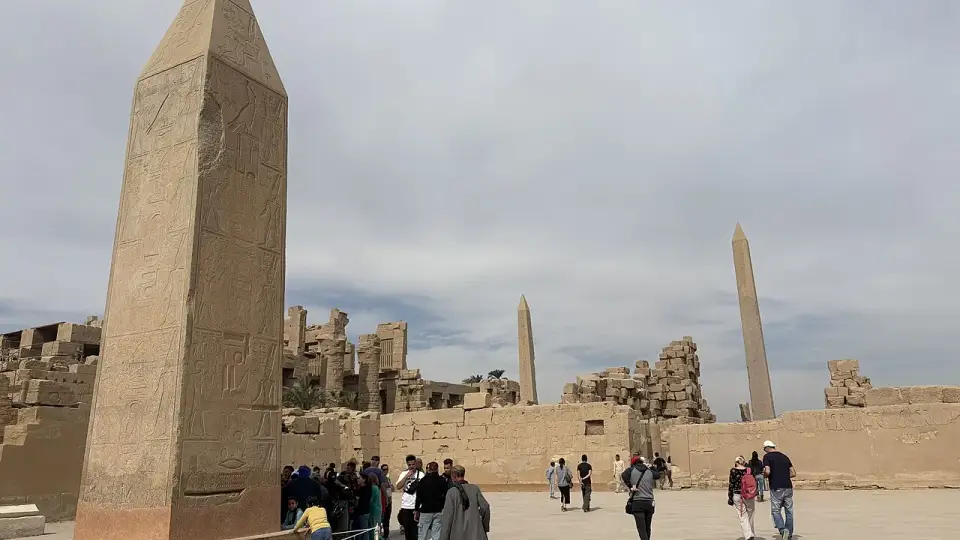
 Egypt in 7 daysFrom the pyramids to LuxorCairo · Luxor5–7 days2 cities
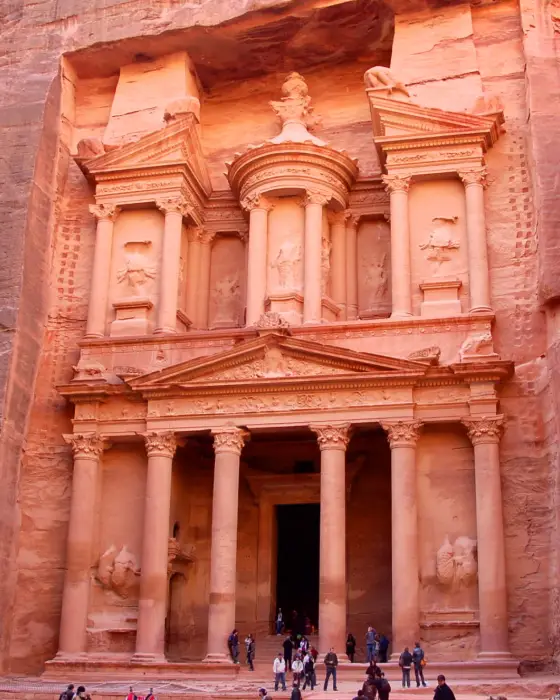 Egypt and Jordan in 7 daysFrom the pyramids to PetraCairo · Luxor · Petra7–9 days3 cities
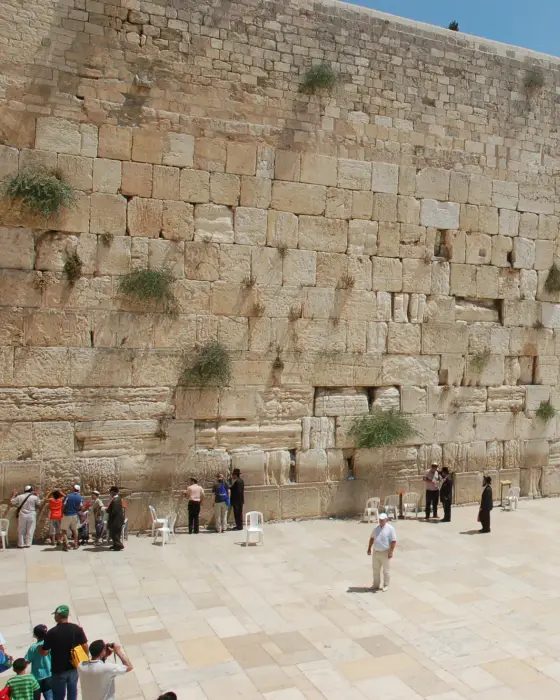 Egypt, Jordan and Israel in 10 daysPyramids, Petra and JerusalemCairo · Luxor · Petra · Jerusalem10–12 days4 cities
 Turkey and Egypt in 10 daysFrom Istanbul to the pyramidsIstanbul · Cairo · Luxor8–11 days3 cities