Days Start with the basic programme and choose extensions for the time you have.
How the guide reaches this number
With six days, I would add Nordeste without squeezing the rest. This is still a trip to one Azorean island; including another needs its own time and logistics. Count arrival and departure by the hours available, rather than as two full days.
5–6
When June to September; this recommendation prioritises outdoor activities and the sea, but rain, wind and fog remain possible.
How the guide reaches this number
June to September suits a first visit focused on landscape and sea. The warmer, less rainy period makes outdoor activities easier, but does not eliminate wind, rain or fog in the calderas. July and August call for advance planning of accommodation and vehicles. In shoulder months, allow room to switch lake days; in winter, keep urban and indoor options and check sea and trail cancellations. The ideal season depends on your aim: sea bathing and garden visits do not have the same requirements.
Per person/day On São Miguel, compare accommodation in Ponta Delgada and transport for each circuit: a car, fuel and parking, or a booked excursion.
How the guide reaches this number
Add boats, thermal baths and other chosen admissions separately; sharing a vehicle changes the cost per person.
On São Miguel, compare accommodation in Ponta Delgada and transport for each circuit: a car, fuel and parking, or a booked excursion. Add boats, thermal baths and other chosen admissions separately; sharing a vehicle changes the cost per person.
Per person per day: accommodation, meals, urban transport, visits and a small allowance for extras. Flights excluded; larger purchases vary. Editorial estimate, not a quote.
 What Nilo thinks
I would allow at least five full days for São Miguel, based in Ponta Delgada: one for the town, one for Sete Cidades and Mosteiros, one for the Fogo sector, one for Furnas and another for the tea coast and the buffer the weather requires. With six days, I would add Nordeste without squeezing the rest. This is still a trip to one Azorean island; including another needs its own time and logistics. Count arrival and departure by the hours available, rather than as two full days.On São Miguel, I would pay attention both to the lakes and to what lies between them. Ponta Delgada has a volcanic-stone port centre and a museum with natural collections; on the north coast, the tea fields remain connected to production. In Furnas, ground heat appears in cooking and bathing, but the gardens also deserve time. The island works well when you accept changing the order of outings to make the most of visibility. A first trip can stay entirely here without losing days travelling between islands.
Quick facts
- Population
- 138,557 inhabitants on São Miguel and 71,695 in the municipality of Ponta Delgada, according to INE/SREA estimates for the end of 2025. These are not counts for the urban centre.
- Foundation
- Ponta Delgada received its town charter in 1499 and became a city in 1546; these are administrative milestones for an earlier settlement.
- Country and region
- Portugal, Autonomous Region of the Azores; itinerary on São Miguel, in the Eastern Group.
- Language
- Portuguese.
- Currency
- Euro (EUR, €).
- Time zone
- Atlantic/Azores: UTC−1 in winter and UTC+0 during daylight saving time.
- Best time
- June to September; this recommendation prioritises outdoor activities and the sea, but rain, wind and fog remain possible.
- Average daily cost
- On São Miguel, compare accommodation in Ponta Delgada and transport for each circuit: a car, fuel and parking, or a booked excursion. Add boats, thermal baths and other chosen admissions separately; sharing a vehicle changes the cost per person.
When to go
June to September; this recommendation prioritises outdoor activities and the sea, but rain, wind and fog remain possible.
How the year changes
June to September suits a first visit focused on landscape and sea. The warmer, less rainy period makes outdoor activities easier, but does not eliminate wind, rain or fog in the calderas. July and August call for advance planning of accommodation and vehicles. In shoulder months, allow room to switch lake days; in winter, keep urban and indoor options and check sea and trail cancellations. The ideal season depends on your aim: sea bathing and garden visits do not have the same requirements.
Nilo's tips
Book what has a time slot
I would book the timed thermal bath first and arrange nearby stops around it. A viewpoint can wait for another window; a ticket does not change itself.
Choose your level of effort
I would distinguish a roadside stop from a descent to the lake. Both reveal the landscape, with different time and mobility requirements.
Keep one base
I would sleep in Ponta Delgada for the five days of this itinerary. Splitting a longer stay with Furnas can work, provided the move reduces journeys rather than creating new ones.
Leave room for the garden
I would arrive at Terra Nostra with time to walk before bathing. Using the park solely as a swimming pool misses an important part of the visit.
Explore the map
Explore the map, read about the other places and plan your travel days in the app.
Open the appWhat to see
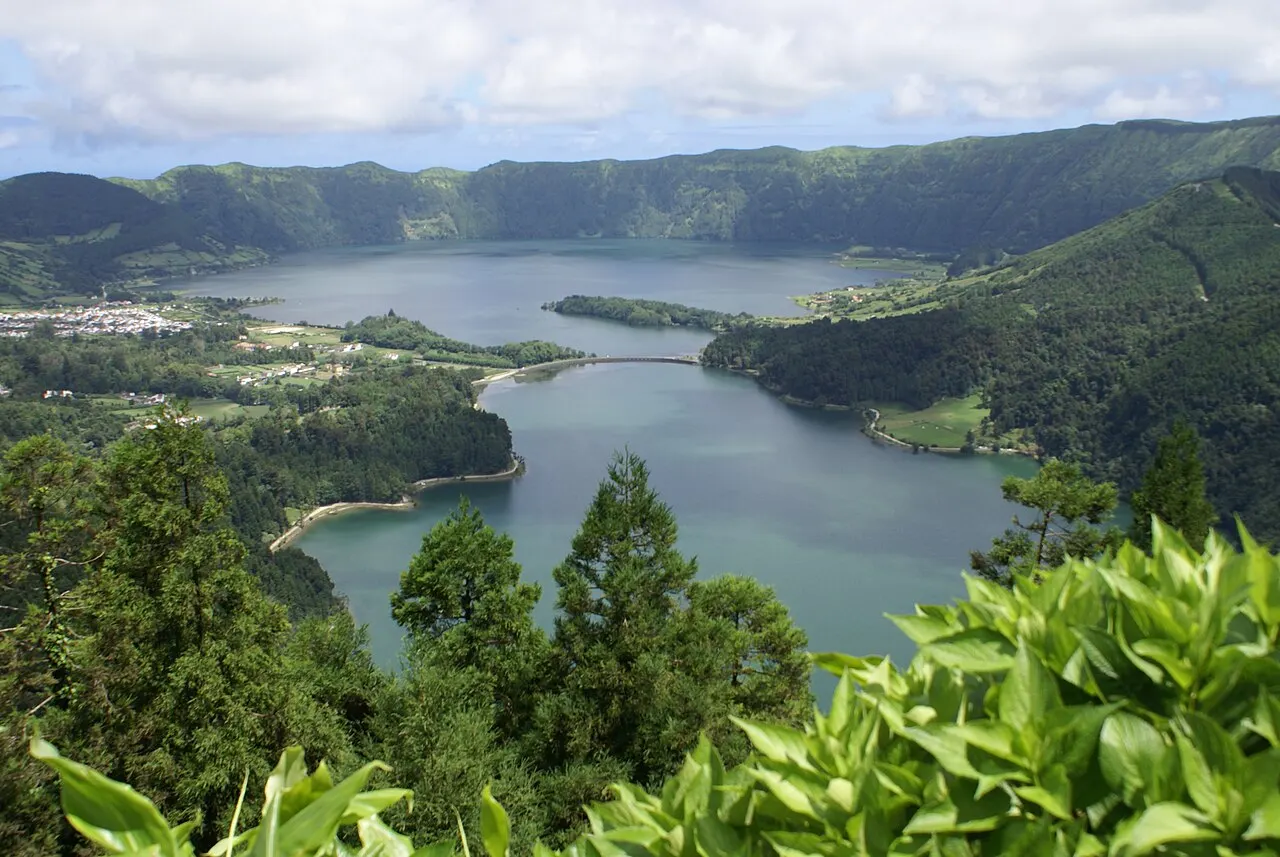
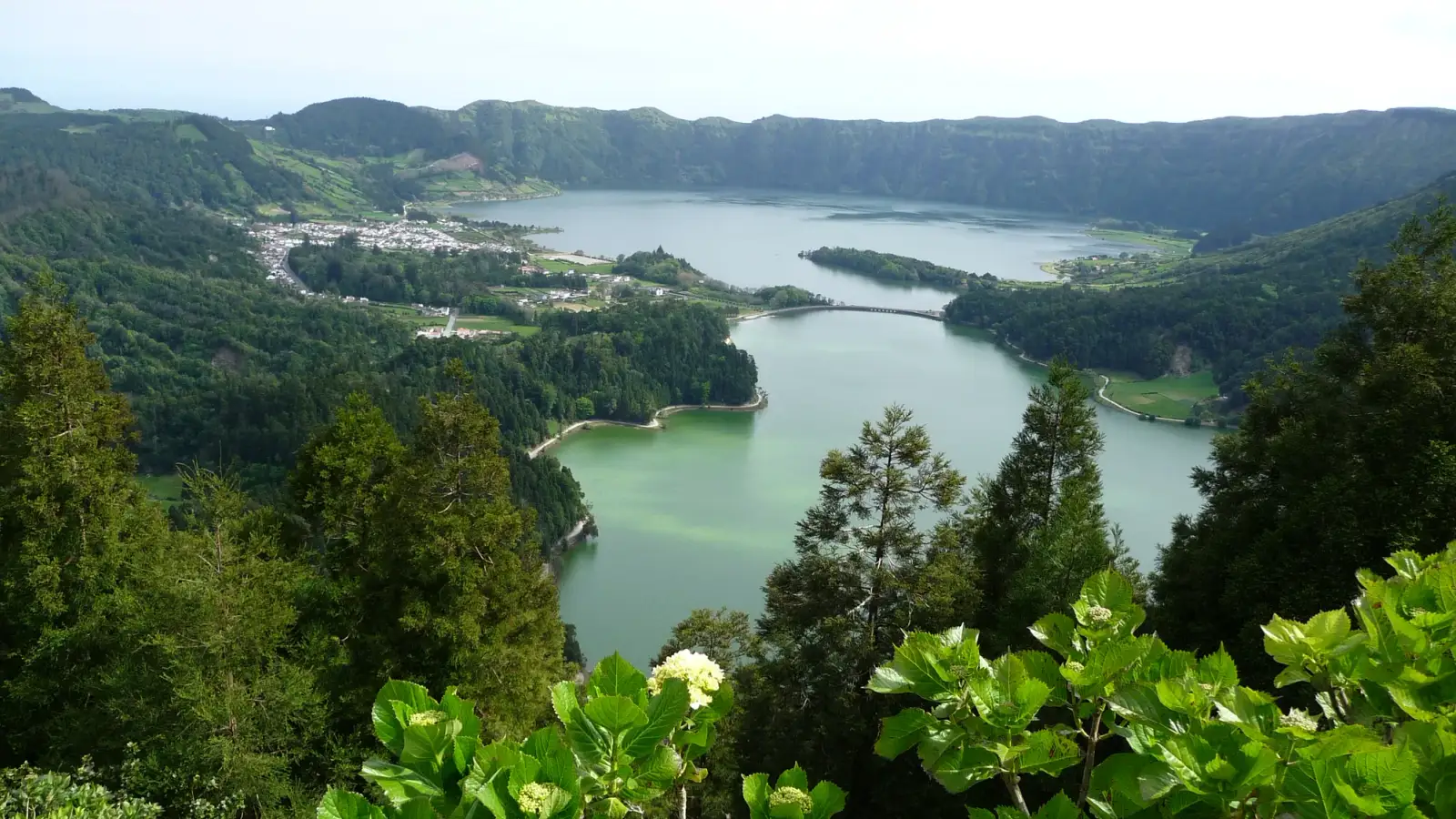
Miradouro da Vista do Rei
The view over the Sete Cidades lakes reveals the scale of the caldera and the village's position beside the water. The viewpoint is worth pursuing only with visibility. After looking from above, going down to the village adds another perspective. This programme does not include entering nearby abandoned buildings.
The view of caldera and lakes helps explain the west when visibility allows.
Check access
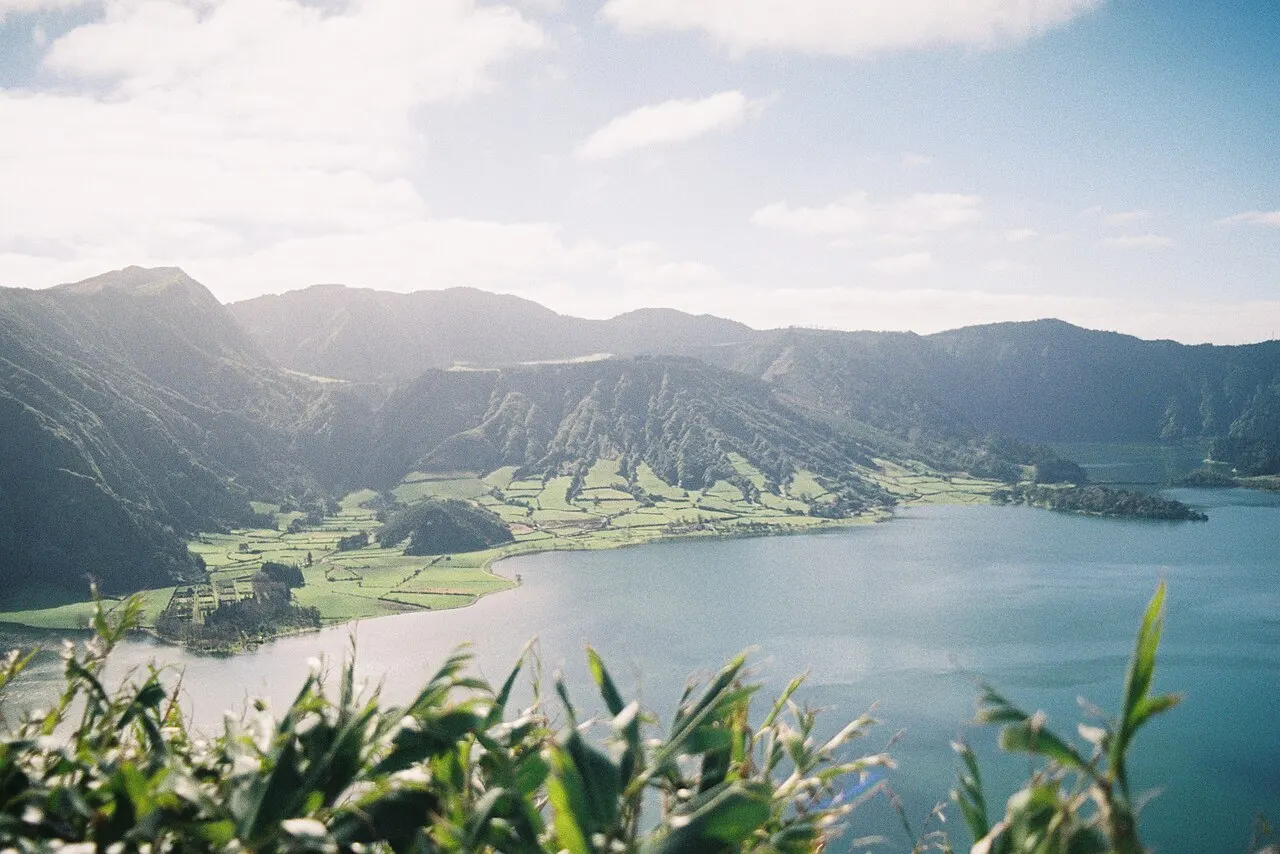
Lagoa das Sete Cidades
The shore and village allow lower-level walks and views of the lakes from the bridge and local roads. A ridge hike is not required to explore the area. For longer walks, check trail status and arrange return transport, especially on linear routes.
Exploring the shore and village complements the viewpoint and allows a less strenuous visit.
Check access
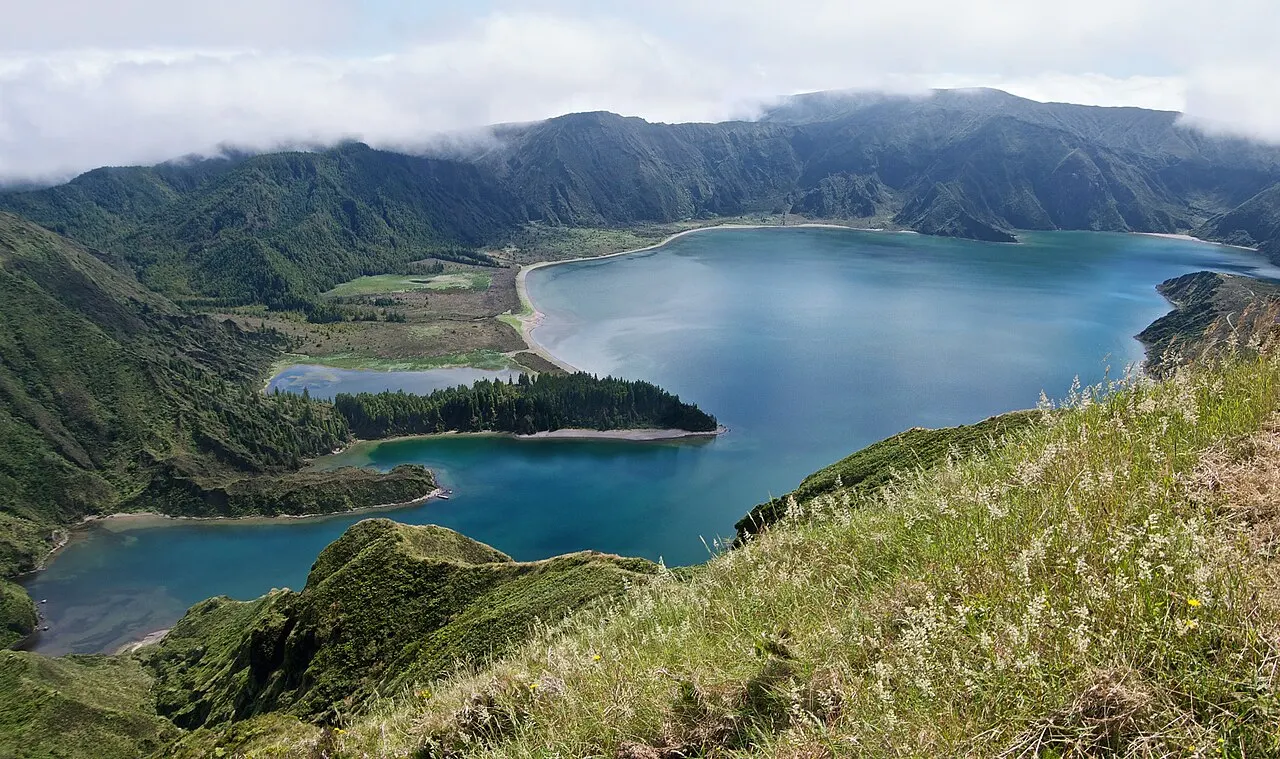
Miradouro da Lagoa do Fogo
The viewpoint overlooks a lake inside a higher, more exposed caldera. A roadside stop is different from descending a trail to the shore. During the seasonal shuttle operation, rental-car access is restricted; check the current calendar and rules before going up and choose the access appropriate to your date.
The central caldera offers scenery distinct from Sete Cidades, subject to visibility and access.
Check access
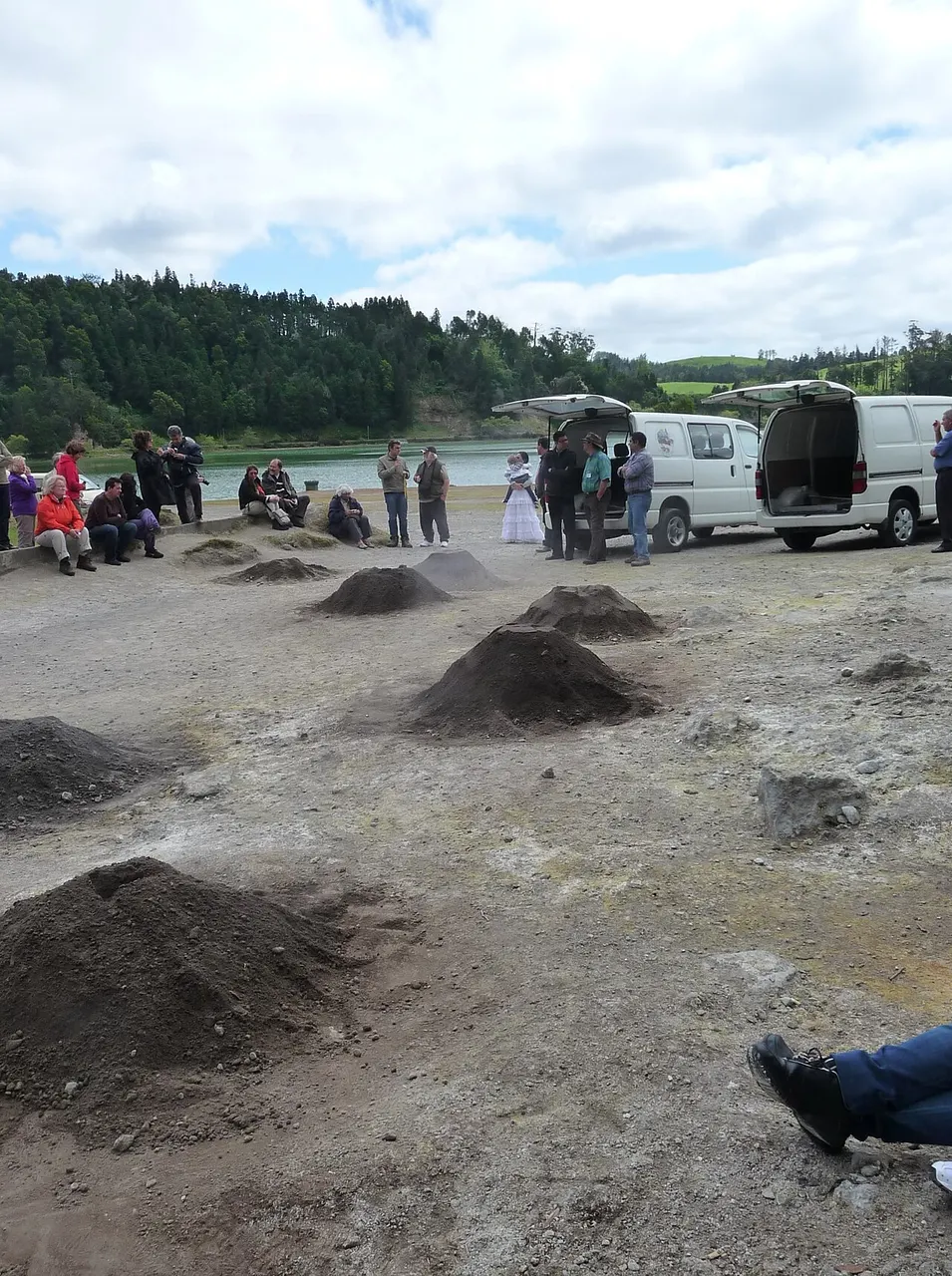
Caldeiras da Lagoa das Furnas
The fumaroles beside the northern shore are associated with cooking food using geothermal heat. This is not the same entrance as the Caldeiras in central Furnas. Remain on the permitted route, away from hot ground and boiling water; confirm access and conditions locally.
The lakeside area shows the tangible relationship between geothermal activity and cooking.
Check access

Parque Terra Nostra
The Furnas garden brings together botanical collections, tree-lined paths and a thermal pool. Allow time to walk beyond the bathing area; even visitors who do not want to enter the water have reason to come. The operator publishes hours of 10:30am to 4:30pm, with last admission half an hour before closing, subject to the date selected in the ticket office. Bring dark swimwear for bathing: iron-rich water can stain light fabrics. The park advises spending no more than 30 minutes in the thermal pool or jacuzzis.
Botanical garden and bathing offer a full valley experience, with interest beyond the pool.
Check access
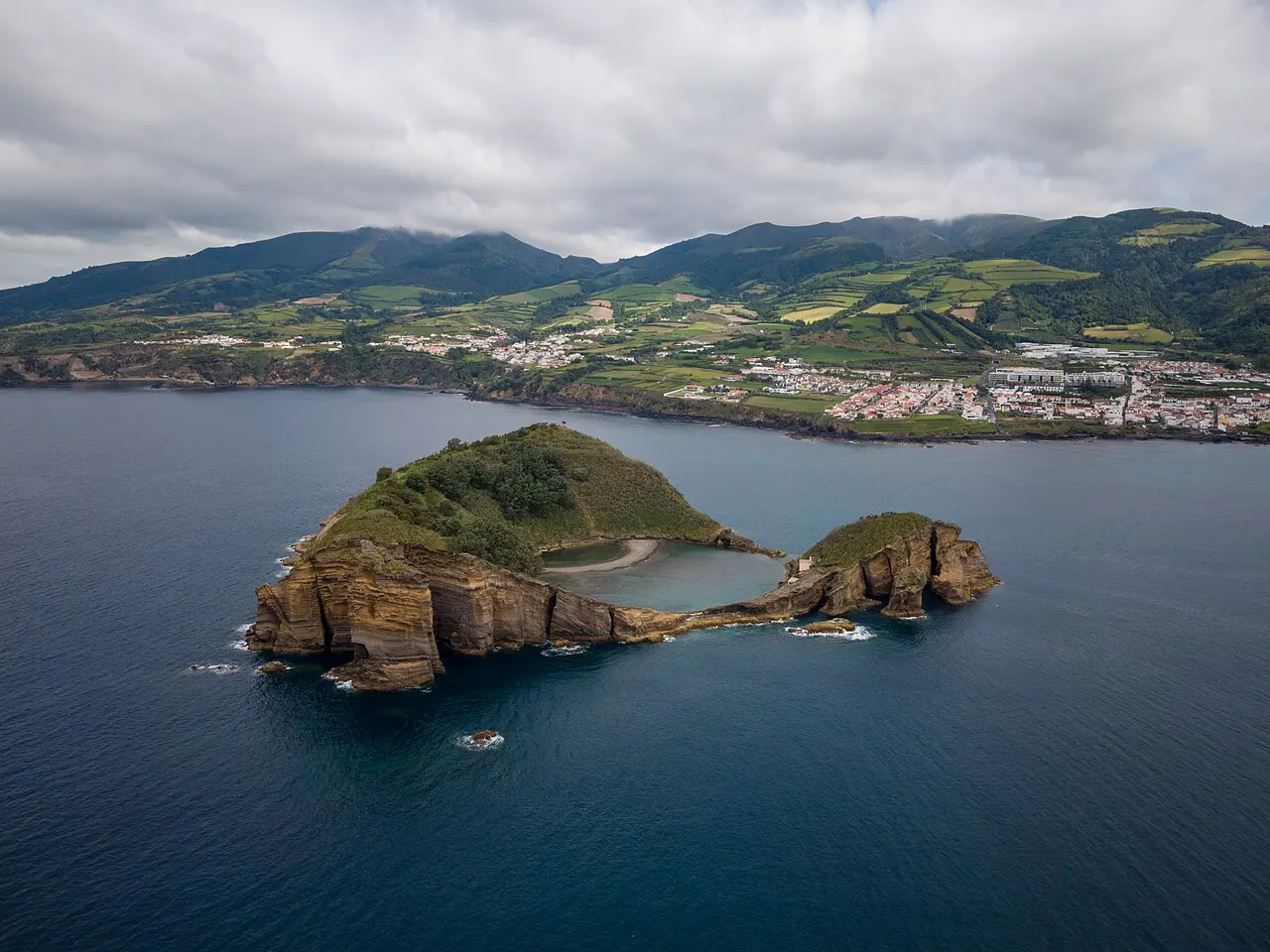
Ilhéu de Vila Franca do Campo
The reserve occupies the crater of an old volcano off Vila Franca do Campo, on the south coast. Different types of visit apply: the bathing area depends on the annual season and authorised operation; nature interpretation uses authorised operators and qualified guides. The published 2026 bathing calendar ran from 1 June to 11 October, without guaranteeing access in adverse seas. Nature-interpretation visits are limited to one and a half hours inside the protected area. From 15 October to 15 April, this type of visit cannot be booked on weekends or public holidays. Check the visit type, authorisation, boarding and return before buying; a boat trip simply circling the islet does not mean landing or bathing.
It is a coastal reserve with its own identity, distinct from inland lakes and subject to the access option.
Check access
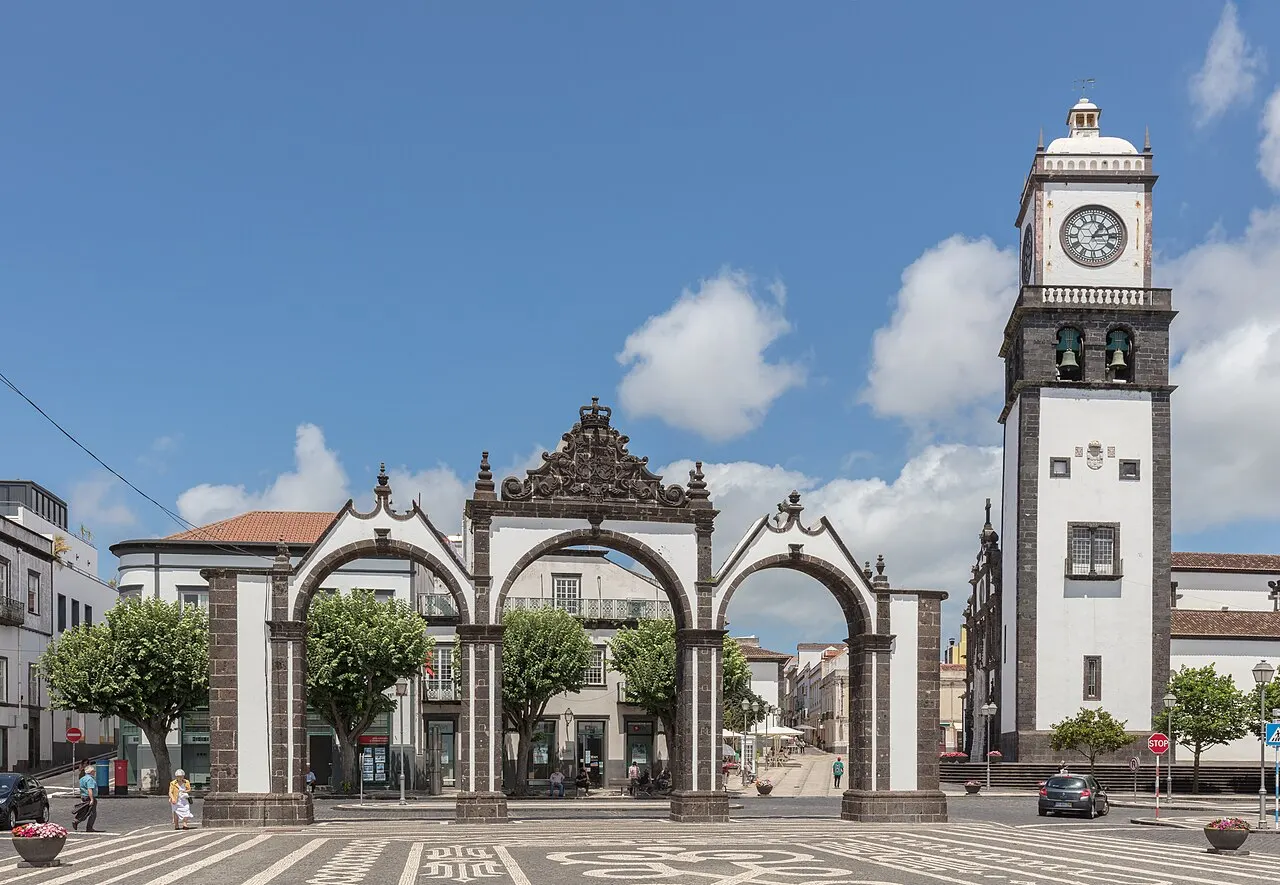
Portas da Cidade
The three arches are a landmark in central Ponta Delgada. Built beside the old quay, they were moved during the waterfront redevelopment. Look at the coats of arms and their relationship to the square and main church; this is a brief stop on an urban walk, rather than an attraction requiring a separate journey.
It is the reference point for beginning the urban walk and understanding the former port frontage.
Check access
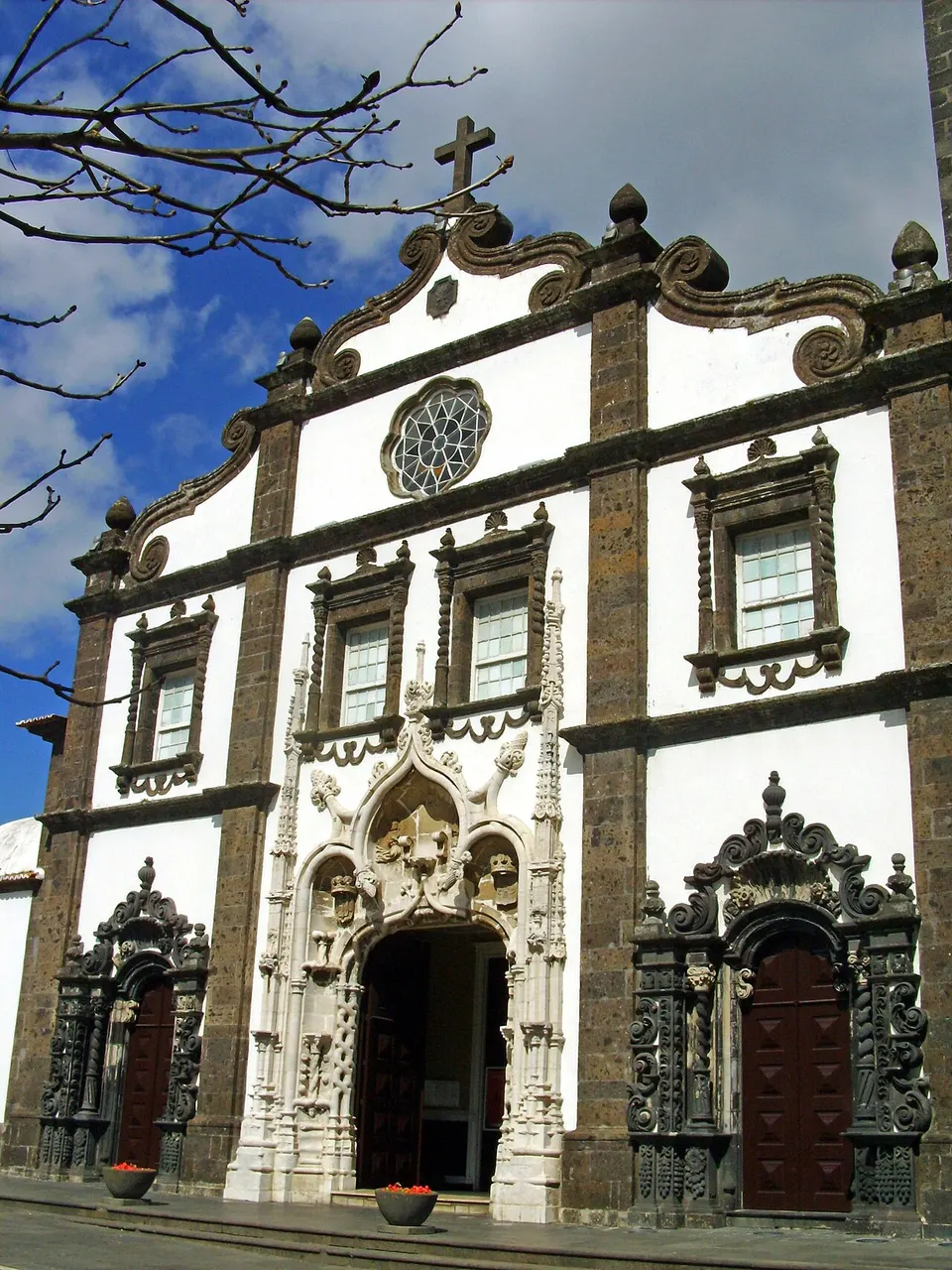
Igreja de São Sebastião
The main church stands beside the civic centre and offers a chance to observe volcanic stonework in the town's religious architecture. The exterior remains part of the walk when the interior is unavailable. To enter, respect services and check opening locally.
Volcanic-stone architecture adds context to the centre, subject to interior availability.
Check access
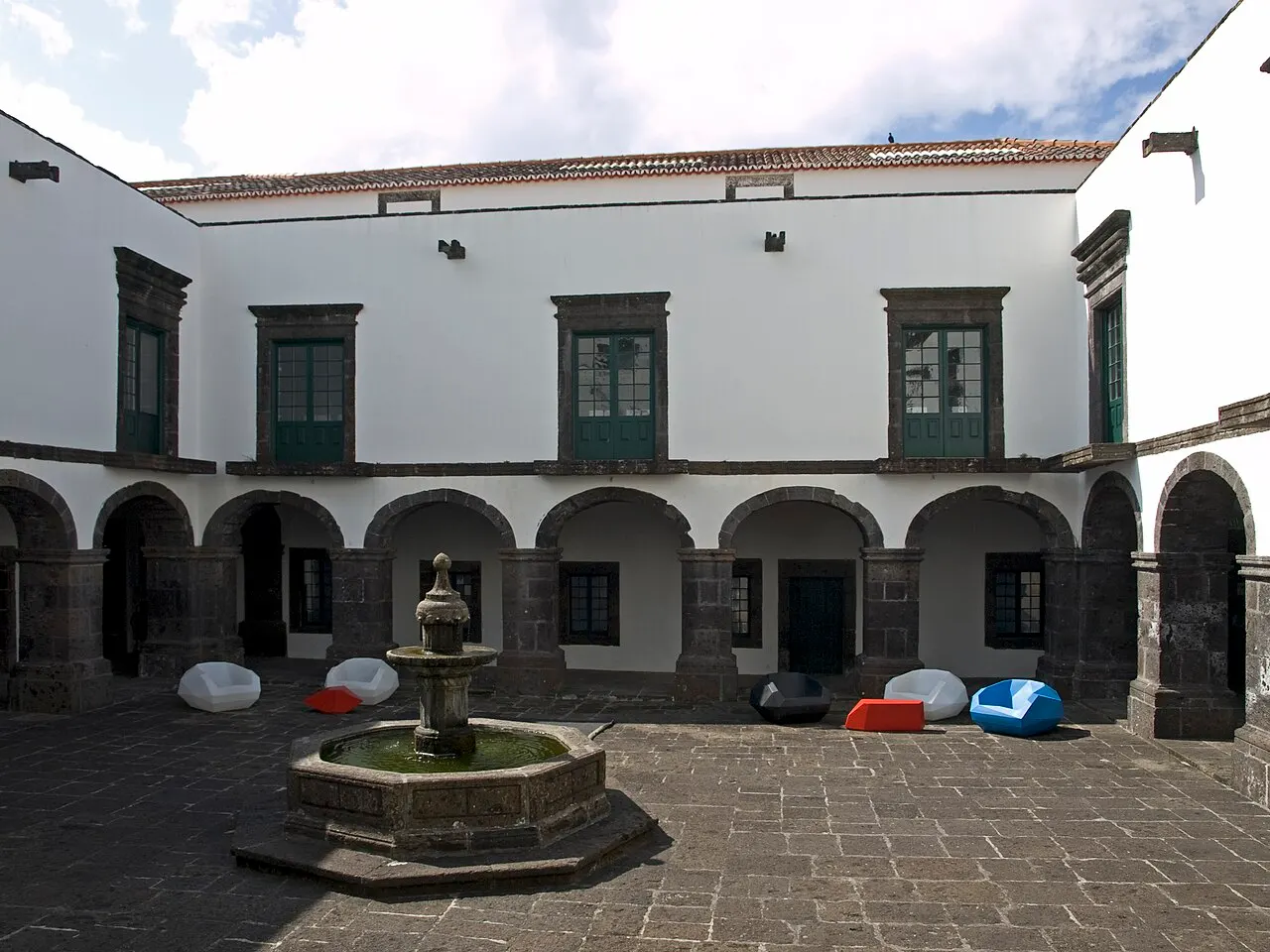
Museu Carlos Machado, Santo André site
The former convent houses the Convent Memory and Natural History circuits. Together, they help explain religious buildings and the study of the island's nature. Do not confuse this entrance with the Sacred Art site in the former Colégio church. The website lists Monday closures; also check holidays and exhibitions before visiting.
The convent and natural history circuits broaden the visit beyond landscapes.
Check access
Nilo’s itinerary
Start with the basic programme and choose extensions for the time you have.
Plan my days in the app ↗Day 1 · Ponta Delgada on foot
Stay in Ponta Delgada throughout the itinerary. Keep this first day for the centre, without collecting a car before you need it. If you arrive late, move part of this programme to a cloudy morning.
Start at Mercado da Graça, checking which stalls are open. Walk to Igreja de São Sebastião and Portas da Cidade, with a lunch break in the centre.
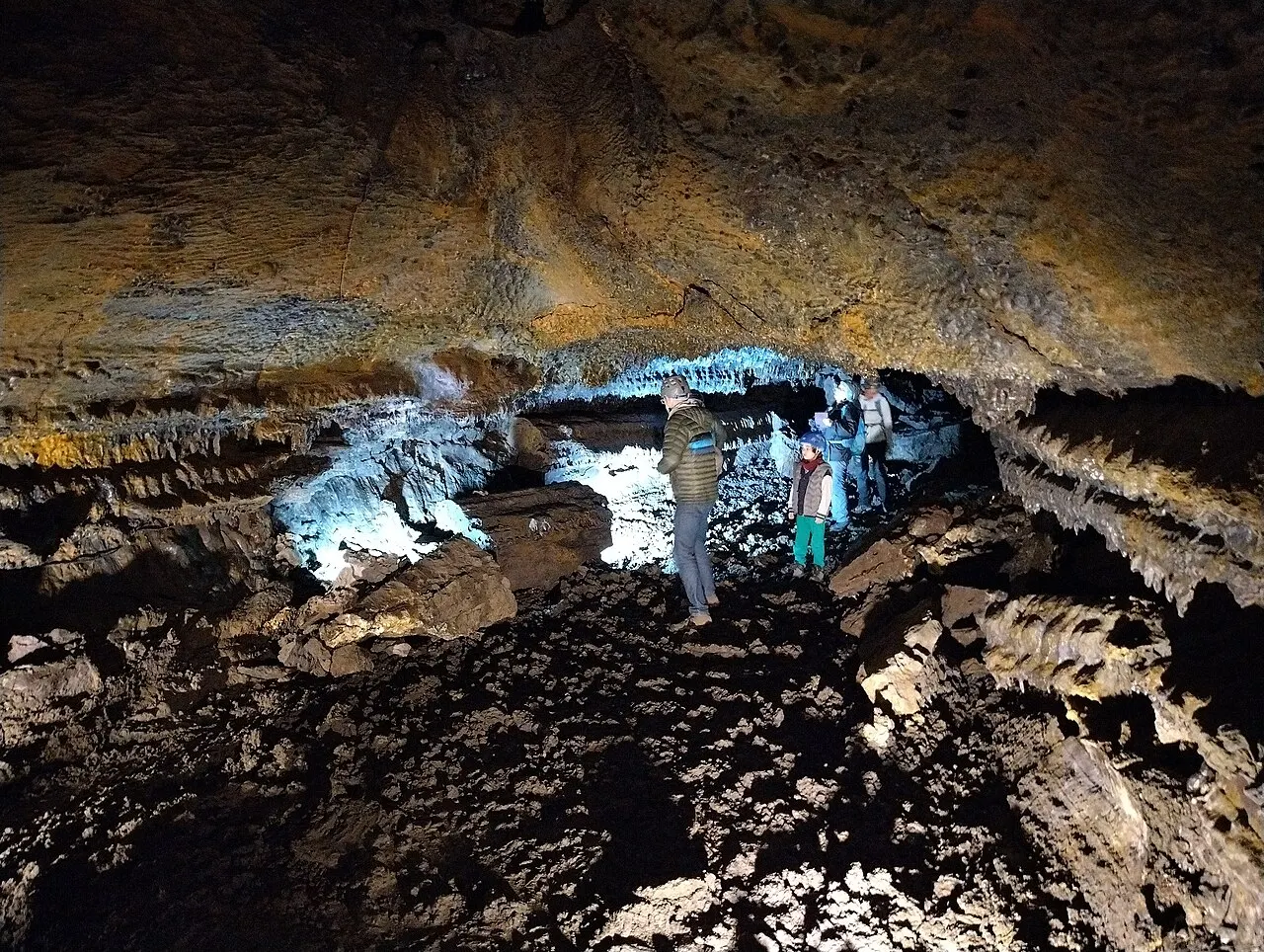
In the afternoon, visit the Santo André site of the Museu Carlos Machado if open. On Monday, keep the urban walk and move the museum to another day; do not substitute another site whose opening has not been confirmed. For a geology alternative, replace the museum with Gruta do Carvão's short guided session, after checking transport, stairs and language; do not book both for the same period.
Pass through Campo de São Francisco to see Convento da Esperança and Igreja de São José; enter the chapel only during available opening and outside services. Finish on the waterfront and dine in the centre. Arrange the following day's transport and check visibility at the lakes.
Day 2 · Sete Cidades and the Mosteiros coast
Leave Ponta Delgada by car or hired transport. Choose your Sete Cidades morning according to visibility, switching the order of outdoor days when necessary.
Stop at Miradouro da Vista do Rei. If the crater is cloud-covered, do not expect the viewpoint to guarantee a view; go down to the village and reassess conditions before returning to the rim.
Walk through the village and along an authorised stretch of the Lagoa das Sete Cidades shore. Have lunch in the area and allow time to rest. A long hike replaces part of this programme rather than being added automatically.
Continue to Mosteiros to see the beach, lava coast and islets. Bathing is optional and depends on sea conditions. Return to Ponta Delgada for the night; do not rely on the last bus without checking its timetable. Those preferring coastal geothermal scenery can replace Mosteiros with Ferraria, confirming the authorised descent and local conditions; bathing is not a requirement of the visit.
Day 3 · Lagoa do Fogo, Caldeira Velha and Ribeira Grande
Before leaving Ponta Delgada, confirm traffic arrangements for Lagoa do Fogo, dedicated transport when operating and your chosen Caldeira Velha booking. Preserve your ticket time when ordering the circuit.
Visit the Lagoa do Fogo viewpoint if visibility and authorised access allow. The proposal is to look from above; walking down is another programme requiring checks of the route, conditions and effort.
Continue to Caldeira Velha for your reserved ticket type and slot. Bring a change of clothes and allow a buffer between travel and admission. If closed, remove bathing from the day and keep only accessible visits.
Have lunch and walk in Ribeira Grande. Keep the afternoon free of another fixed mountain attraction, allowing rest or a return to the viewpoint if conditions improve. Return to Ponta Delgada.
Day 4 · Furnas, from lake to thermal garden
Leave Ponta Delgada by car or arranged transport, having confirmed lunch and Terra Nostra admission and hours. Begin at Caldeiras da Lagoa das Furnas, observing the permitted area; do not schedule a demonstration of the cozido being lifted from the ground without a confirmed time.
Continue to the village and have cozido for lunch if reserved. Those who do not eat meat can choose another meal, without relying on an unconfirmed vegetarian version.
Devote the afternoon to Parque Terra Nostra, allowing time for the garden paths and, if desired and operating, bathing. Published hours end at 4:30pm; plan to arrive with enough time rather than expecting a night visit.
Explore the Caldeiras das Furnas in the village according to daylight and the group's energy, without touching the springs. Return to sleep in Ponta Delgada. Walking the complete lake circuit would replace other visits that day.
Day 5 · Tea on the north coast and room for the weather
Leave Ponta Delgada for the north coast. Visit Gorreana's fields and tea factory during confirmed operation, without assuming every machine will be running on your date.
Allow a break for lunch and coastal views, without combining an extensive hike with a fixed-time activity. If you prefer walking, first choose an open route on the official portal suited to your group.
Use the second half of the day for an outdoor visit previously obscured by cloud, or return to town and the museum if sea and mountain conditions are poor. This flexibility is part of the itinerary.
Stay in Ponta Delgada again. If departing that day, reduce the programme to the actual time before your flight; five full days are not equivalent to a stay whose arrival and departure occupy two of them.
South-coast alternative: replace this tea and catch-up day with Vila Franca do Campo and the islet, only with the visit type and crossing confirmed. Allow time for lunch and the return to Ponta Delgada. To keep both programmes, add a separate day rather than combining the sea outing with Gorreana.

If you stay longer
Day 6 · Nordeste
Day trip
An extension for those who have completed São Miguel's core sights. Municipal tourism gives 58.2 km and about 49 minutes by car between Ponta Delgada airport and the village of Nordeste via the fast road, without stops; departure from the centre takes a different time. Hire transport or drive, choose viewpoints in the eastern sector and allow the day for sightseeing and meals, returning to Ponta Delgada. The coastal route with stops is longer; do not treat the fast-road driving time as the duration of the outing.
Food
Cozido das Furnas
Meat, sausages and vegetables are cooked in containers buried in ground heated by geothermal activity. Choose lunch in Furnas and confirm advance ordering, portion size and timing with the restaurant; seeing the cooking sites does not include a meal.
Chicharro and fish
Chicharro, a small fish eaten on the island, is served roasted, grilled or fried. Molho vilão combines wine, garlic and local pepper. Available species and preparations vary; ask about the day's selection before choosing a dish.
Bolo lêvedo
The round bread associated with Furnas makes a simple snack and comes with different accompaniments. It is a useful break between gardens and springs, without needing to turn every meal into a tasting menu.
Queijadas and tea
Vila Franca do Campo's queijadas contain eggs and milk; São Miguel's black and green teas can be found at the north-coast factories. Ask about the factory's varieties and compare flavours before deciding what to take home.
Where to eat
- Furnas
Geothermal cozido as a main-course lunch, with reservation and portion size checked directly. The choice is justified by the relationship between cooking and ground heat; a meal is not included in admission to the caldeiras.
- Central Ponta Delgada
Fish of the day or chicharro, asking about species, preparation and price before ordering. An alternative to balance the trip after cozido and have dinner without returning to the road.
- Furnas and the north coast
Bolo lêvedo during a break in Furnas and tea connected to local production on the north coast. These work as snacks; confirm availability and hours instead of expecting a complete meal at any factory.
· 2026-10-16
Day trips
Nordeste
An extension for those who have completed São Miguel's core sights. Municipal tourism gives 58.2 km and about 49 minutes by car between Ponta Delgada airport and the village of Nordeste via the fast road, without stops; departure from the centre takes a different time. Hire transport or drive, choose viewpoints in the eastern sector and allow the day for sightseeing and meals, returning to Ponta Delgada. The coastal route with stops is longer; do not treat the fast-road driving time as the duration of the outing.
Lagoa das Furnas trail
Devote another day to the valley instead of adding activities to the thermal day. The official circular route is listed as 9.4 km and about three hours' walking, starting in Furnas. Arrive from Ponta Delgada by prearranged transport, check the route's current status and return arrangements beforehand, and bring food, water and rain protection. Trail time excludes travel from your base and meals.
Vila Franca do Campo and the islet
Leave Ponta Delgada by car or hired transport and allow a day for the town, lunch and the type of islet visit confirmed beforehand. Organise arrival at Tagarete quay and the return; reaching the town does not include the crossing. Visiting the reserve depends on season, authorisation, capacity and sea conditions. Without authorised landing, keep a walk in the town and along the coast, without turning a boat circuit into a promise of bathing. This can replace day five or occupy an additional day, always returning to the same base.
Where to begin
Ponta Delgada on foot
Stay in Ponta Delgada throughout the itinerary. Keep this first day for the centre, without collecting a car before you need it. If you arrive late, move part of this programme to a cloudy morning.
Sete Cidades and the Mosteiros coast
Leave Ponta Delgada by car or hired transport. Choose your Sete Cidades morning according to visibility, switching the order of outdoor days when necessary.
Lagoa do Fogo, Caldeira Velha and Ribeira Grande

Before leaving Ponta Delgada, confirm traffic arrangements for Lagoa do Fogo, dedicated transport when operating and your chosen Caldeira Velha booking. Preserve your ticket time when ordering the circuit.
Furnas, from lake to thermal garden
Leave Ponta Delgada by car or arranged transport, having confirmed lunch and Terra Nostra admission and hours. Begin at Caldeiras da Lagoa das Furnas, observing the permitted area; do not schedule a demonstration of the cozido being lifted from the ground without a confirmed time.
Tea on the north coast and room for the weather
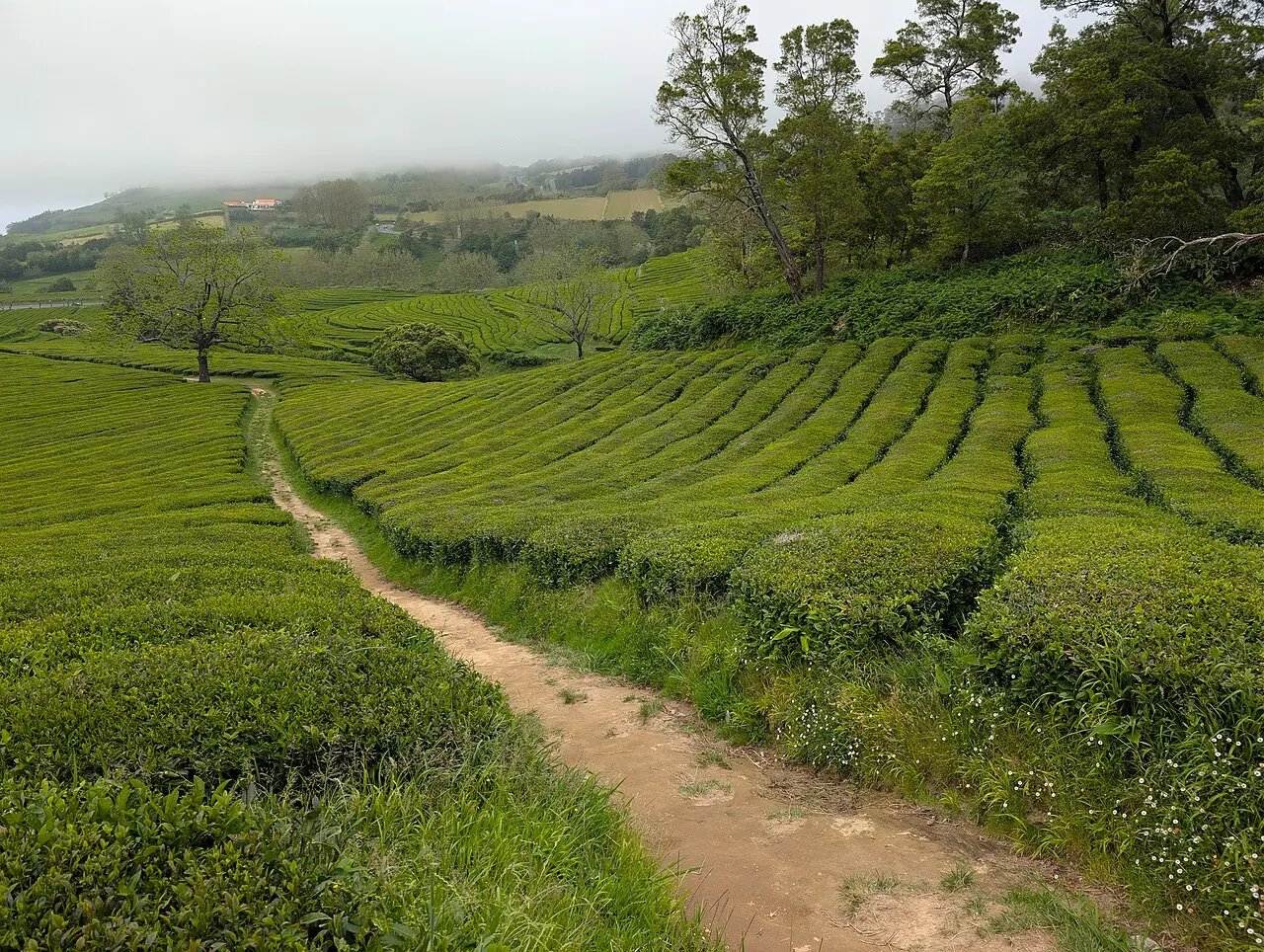
Leave Ponta Delgada for the north coast. Visit Gorreana's fields and tea factory during confirmed operation, without assuming every machine will be running on your date.
Money
Use euros. Rural transport and thermal visits have different cost implications for those sharing a car and those booking individual outings. Compare proposals for the same dates and inclusions. The official Caldeira Velha tariff consulted on 16 October 2026 lists €10 for full adult admission, ages 15 to 64, and €3 for a visit without pools; discounted and free categories exist, including Azorean residents under the published conditions. Do not treat these amounts as prices for every thermal facility on the island. Accommodation and meals vary by date, category and composition; confirm the total and terms with the supplier.
Getting there and around

Arriving on São Miguel
João Paulo II Airport (PDL) serves Ponta Delgada. The official page lists taxis in the arrivals area and contacts for adapted taxis. Confirm your final address and the fare before setting off; do not rely on an airport bus route without checking its current operation.
Base and car
Central Ponta Delgada works on foot for the first day. For the western and central sectors and Furnas, a rental car or hired transport allows you to combine stops. Choose accommodation with a clear parking arrangement if driving; a central address does not guarantee a space outside the door.
Interurban buses
Consult official AzoresBus timetables for the day and direction, including the return. The Mosteiros parish council identifies route 206 to Ponta Delgada. A route to the village does not prove service to the crater viewpoint; do not plan a viewpoint circuit solely from a locality's name.
Lagoa do Fogo
Dedicated transport has access points at Caldeira Velha on the Ribeira Grande side and Casa da Água on the Lagoa side. In 2026, the summer service only began on 1 August; rental cars were restricted from passing through during its operation. Check the regional tourism service for the calendar, times and rules valid for your date before choosing an access point. The service does not replace the journey from Ponta Delgada to either of these points.
Trails and other islands
Use each approved trail's information sheet and current status, planning the return on linear routes. Another island is not an extension by car: it requires separately checking flights or maritime connections actually operating, and allowing a buffer before an international connection.
Safety
The main concerns on this itinerary are terrain, water and weather. Check Civil Protection notices, forecasts and trail status; do not enter a closed route. Bring grippy footwear and rain protection, and keep away from cliffs, fumaroles and boiling water. At the sea and natural pools, follow signs and local guidance; other people being in the water does not establish safety. In an emergency, call 112 and give your location and, on a marked trail, the number of the nearest post. In town, look after documents and belongings and do not leave valuables visible in the vehicle.
Etiquette tips
Churches and processions
Enter quietly and leave room for people taking part in a service. During the procession, do not cut across its path for a photograph.
Fields and pastures
Use permitted paths and leave gates as you found them. A photogenic area may be working private property.
Thermal baths
Follow each facility's rules for bathing, hygiene, children and length of stay. Do not enter springs or fumaroles outside authorised spaces.
Mistakes to avoid
Trying to see several islands in five days
Connections and weather take time. This itinerary already fills five complete days on São Miguel; a second island deserves another stage.
Fixing a viewpoint to a single time
A cloud-covered caldera can wait for another day. Check webcams and the forecast while preserving a bathing booking you have already made.
Confusing entrances in Furnas
The cooking area is beside the lake; the village's caldeiras and Parque Terra Nostra have different entrances and functions.
Adding every thermal bath
Choosing one soak per sector lets you enjoy the landscape without turning the day into a succession of ticket offices. Caldeira Velha and Terra Nostra offer different settings.
Entering unsafe places for a better view
Abandoned buildings, cliff edges and shortcuts are not part of the programme. Do not cross barriers in pursuit of a view.
Useful phrases
Bom dia
A greeting for starting a conversation or entering a shop.
Autocarro
Bus. Also confirm the direction and the return stop.
Fato de banho
Swimwear.
A que horas é o último autocarro?
A useful question before setting off for somewhere outside your base: what time is the last bus?
É preciso encomendar o cozido?
Ask the restaurant before lunch in Furnas whether the cozido must be ordered in advance.
Where to stay
- Central Ponta Delgada · A first trip, dinners on foot and organised island outings.: Allows the urban programme without transport and a return to a broader choice of services. Confirm each excursion's meeting point: central accommodation does not guarantee pickup. For drivers, local traffic and parking are the main drawbacks; find a parking solution before booking.
- Ribeira Grande · Drivers prioritising the north coast and the Fogo sector.: Its position helps distribute visits across the north, but does not eliminate mountain roads or viewpoint access restrictions. Airport arrival and Ponta Delgada's urban programme still require travel. Logistics differ for those relying solely on buses.
- Furnas · Those wanting a few days of gardens, springs and valley walks.: Allows visits around the valley with less daily travel and time to enjoy the village's pace. Less convenient for the west and early flights. If splitting your stay, reorder the itinerary and transport; this page's five-day plan keeps every night in Ponta Delgada.
· 2026-10-16
Districts
Central Ponta Delgada
Portas da Cidade, the main church, shops and access to the waterfront. This is the reference point for the urban itinerary and the most convenient base for dinner without driving.

São Pedro and Mercado da Graça
East of the main church, the market area adds food shopping to the walk. Explore on foot from the centre, checking which stalls are operating that day.
Sete Cidades and Mosteiros
The western sector combines caldera viewpoints, the village beside the lakes and the volcanic coast at Mosteiros. Transport is needed between stops.
Ribeira Grande and the north coast
An alternative base for those giving more weight to the island's north. Access to Caldeira Velha, the tea fields and the coast is convenient, while dinners and arrival in Ponta Delgada require a journey.
Furnas
A village inside a caldera, with springs, gardens and thermal facilities. Staying here suits a slower trip but changes the logistics for the west and the airport.
Vila Franca do Campo and the south coast
The former island capital and Tagarete quay are the starting points for visiting the islet. The outing involves a crossing and specific rules; it is not an automatic stop on the way to Furnas.
Ginetes and Ferraria
Reaching Ferraria's thermal coast involves a separate descent in the far west. Check traffic arrangements and sea conditions before deciding to bathe; a visit can focus solely on the landscape.
Western Ponta Delgada
Gruta do Carvão is on Rua do Paim, outside the small circuit between Portas da Cidade and Mercado da Graça. Arrange transport to the entrance and a guided session; a Ponta Delgada address does not mean an attraction is on the main square.
History
15th century · Portuguese settlement
Settlement on São Miguel established coastal communities and an agricultural economy; Vila Franca do Campo was the island's first capital.
1499 · Ponta Delgada becomes a town
The municipal charter recognised the importance of a port settlement gaining autonomy from Vila Franca.
1522 · Destruction of Vila Franca
An earthquake and landslides struck the former capital. Ponta Delgada grew in importance through a process that also involved its port and commercial administration.
1546 · City status
A royal charter from João III elevated Ponta Delgada to city status.
1883 · Gorreana tea factory
The factory's foundation continued tea growing on São Miguel; its production and fields can still be explored on the north coast.
1976 · Regional autonomy
Azorean autonomy established the contemporary regional political framework. The Museu Carlos Machado dedicates one of its sites to this history.
Complete history
The port town
Ponta Delgada grew beside the sea, with commercial and administrative functions. The 1522 earthquake in Vila Franca do Campo was decisive in the island's history, but does not alone explain this rise. The town charter and the establishment of commercial institutions already reflected a shift in importance between the two settlements.
Stone, churches and convents
Volcanic-stone surrounds lend unity to white façades, but the buildings have different functions and dates. In the former Convento de Santo André, the Museu Carlos Machado allows visitors to explore enclosed convent spaces and natural history collections. Its sacred art collection occupies another building, the former Colégio church.
Agriculture and landscape
Pastures, plantations and gardens coexist with conservation areas. Gorreana's tea fields are a working landscape; Terra Nostra's gardens are a botanical collection developed over time. Neither represents an untouched forest.
Geography and shape of the city
The island and the archipelago
São Miguel belongs to the Eastern Group of the Azores. Ponta Delgada is on the south coast; the other islands require their own transport and accommodation planning. They are not automatic day trips on this itinerary.
Three volcanic areas
Sete Cidades occupies the west, the Fogo massif the central area and Furnas the eastern part of this itinerary. The coast may be clear while the mountains are cloud-covered; treating Ponta Delgada's forecast as a guarantee for every viewpoint can lead to wasted journeys.
Coast and interior
Journeys to the lakes use mountain roads. Organising outings by sector avoids travelling back and forth between opposite ends of the island. Viewpoints do not require the same effort as trails down to the water; choose an experience suited to your group.
Caldeira Velha offers visit-only admission and admission with pools. Terra Nostra is another park, in Furnas, with its own ticket office.
The complete lakeside walk fits better on a separate day than between lunch, garden and bathing.
Those unable or unwilling to enter the water still have enough landscape, geology, town and gardens for the trip.
Culture
Religion and public space
The Senhor Santo Cristo festivities connect Convento da Esperança with Ponta Delgada's streets and the Azorean diaspora. Visiting a church during a service requires discretion; the procession is not a performance organised for tourism.
Collections and nature
The Museu Carlos Machado shows how observing animals, plants and rocks became part of public collections. Alternating the museum with the landscape avoids reducing the island to its viewpoints.
Local production
Tea and market produce bring the trip closer to the island's agricultural work. In cultivated fields, use authorised paths and do not pick leaves or fruit.
Festivals and events
Senhor Santo Cristo dos Milagres
A movable-date celebration linked to Easter, with a procession in Ponta Delgada. In 2026, the official programme ran from 8 to 14 May. For another trip, consult the annual calendar and consider changes to traffic and accommodation demand.
Festas do Espírito Santo
Celebrations take place in different communities on different dates, with religious observance and food sharing. Check the programme in the parish you visit, without assuming free access to every meal or space.
Music and arts
The island calendar includes events such as Tremor and Walk&Talk. Check the edition, venue and tickets with the organiser; a festival may spread activities across several sites and affect accommodation availability.
Books and films
Antero de Quental cultural itinerary
The Regional Directorate of Culture's itinerary places the São Miguel poet in the settings of his life. It complements the urban walk; it is not a guide to natural attractions.
Museu Carlos Machado Natural History circuit
Before or after island outings, the geology, botany and zoology collections help contextualise observations outside the museum. Consult the circuit introduction and available exhibitions.
Frequently asked questions
Azores (São Miguel): how many days should I allow?
I would allow at least five full days for São Miguel, based in Ponta Delgada: one for the town, one for Sete Cidades and Mosteiros, one for the Fogo sector, one for Furnas and another for the tea coast and the buffer the weather requires. With six days, I would add Nordeste without squeezing the rest. This is still a trip to one Azorean island; including another needs its own time and logistics. Count arrival and departure by the hours available, rather than as two full days.
Azores (São Miguel): how do I reach Ponta Delgada from the airport?
João Paulo II Airport (PDL) serves Ponta Delgada. The official page lists taxis in the arrivals area and contacts for adapted taxis. Confirm your final address and the fare before setting off; do not rely on an airport bus route without checking its current operation.
Azores (São Miguel): do I need a rental car for the lakes?
Central Ponta Delgada works on foot for the first day. For the western and central sectors and Furnas, a rental car or hired transport allows you to combine stops. Choose accommodation with a clear parking arrangement if driving; a central address does not guarantee a space outside the door. Consult official AzoresBus timetables for the day and direction, including the return. The Mosteiros parish council identifies route 206 to Ponta Delgada. A route to the village does not prove service to the crater viewpoint; do not plan a viewpoint circuit solely from a locality's name.
Azores (São Miguel): how does access to Lagoa do Fogo work?
Dedicated transport has access points at Caldeira Velha on the Ribeira Grande side and Casa da Água on the Lagoa side. In 2026, the summer service only began on 1 August; rental cars were restricted from passing through during its operation. Check the regional tourism service for the calendar, times and rules valid for your date before choosing an access point. The service does not replace the journey from Ponta Delgada to either of these points.
Azores (São Miguel): can I land and bathe on the Vila Franca islet?
The reserve occupies the crater of an old volcano off Vila Franca do Campo, on the south coast. Different types of visit apply: the bathing area depends on the annual season and authorised operation; nature interpretation uses authorised operators and qualified guides. The published 2026 bathing calendar ran from 1 June to 11 October, without guaranteeing access in adverse seas. Nature-interpretation visits are limited to one and a half hours inside the protected area. From 15 October to 15 April, this type of visit cannot be booked on weekends or public holidays. Check the visit type, authorisation, boarding and return before buying; a boat trip simply circling the islet does not mean landing or bathing.
Azores (São Miguel): how should I choose between Caldeira Velha and Terra Nostra?
Vegetation and thermal waters allow a visit to the natural monument to be combined with bathing, depending on the ticket purchased. Full admission includes pools; a visit-only ticket excludes bathing. Entry uses slots of 1 hour 30 minutes and may be suspended because of weather. Choose the ticket type, date and time through the official channel before arranging the rest of your day. The Furnas garden brings together botanical collections, tree-lined paths and a thermal pool. Allow time to walk beyond the bathing area; even visitors who do not want to enter the water have reason to come. The operator publishes hours of 10:30am to 4:30pm, with last admission half an hour before closing, subject to the date selected in the ticket office. Bring dark swimwear for bathing: iron-rich water can stain light fabrics. The park advises spending no more than 30 minutes in the thermal pool or jacuzzis.
Azores (São Miguel): when is the best time to go?
June to September suits a first visit focused on landscape and sea. The warmer, less rainy period makes outdoor activities easier, but does not eliminate wind, rain or fog in the calderas. July and August call for advance planning of accommodation and vehicles. In shoulder months, allow room to switch lake days; in winter, keep urban and indoor options and check sea and trail cancellations. The ideal season depends on your aim: sea bathing and garden visits do not have the same requirements.
Other cities in the country
Portugal ↗- Days
- 3–4
- When
- Apr–Jun · Sep–Oct
- Per person/day
- Average 130–200 EURMid-range · per person/day
Cost scope
Per person per day: accommodation, meals, urban transport, visits and a small allowance for extras. Flights excluded; larger purchases vary. Editorial estimate, not a quote.
- Days
- 2–3
- When
- May–Jun · Sep–Oct
- Per person/day
- Average 70–120 EURMid-range · per person/day
Cost scope
Per person per day: accommodation, meals, urban transport, visits and a small allowance for extras. Flights excluded; larger purchases vary. Editorial estimate, not a quote.
- Days
- 4–5
- When
- Apr–Jun · Sep–Oct
- Per person/day
- Average 116 EURMid-range · per person/day
Cost scope
Per person per day: accommodation, meals, urban transport, visits and a small allowance for extras. Flights excluded; larger purchases vary. Editorial estimate, not a quote.
- Days
- 3–4
- When
- May–Jun · Sep–Oct
- Per person/day
- Average 143 EURMid-range · per person/day
Cost scope
Per person per day: accommodation, meals, urban transport, visits and a small allowance for extras. Flights excluded; larger purchases vary. Editorial estimate, not a quote.