Portugal
Madeira
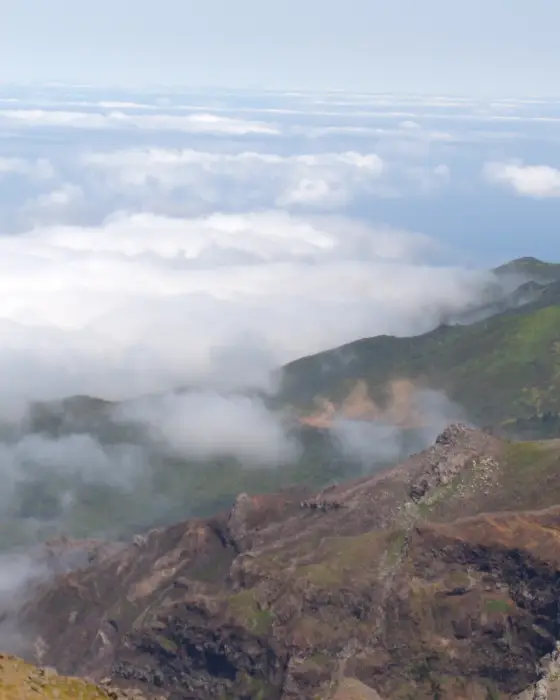
Levadas, peaks above the clouds and Funchal as a base for the whole island
Days Start with the basic programme and choose extensions for the time you have.
How the guide reaches this number
The first is for the city on foot: the Mercado dos Lavradores, the Zona Velha, the Sé and a wine tasting at Blandy's. The second rides the cable car up to Monte, with the Monte Palace garden and the ride down in a carro de cesto (on Sunday, when there is no carro de cesto, the way back is by cable car), and ends at Câmara de Lobos and Cabo Girão. The third is the Vereda do Areeiro, from Pico do Arieiro to Pico Ruivo, with the reservation made as soon as the trip dates are settled and a taxi arranged to pick you up at Achada do Teixeira. The fourth needs a car: the 25 Fontes at Rabaçal in the morning and the Porto Moniz pools in the afternoon. With a fifth day, I'd go to Ponta de São Lourenço, the basalt peninsula at the far east, with the sea on both sides. I'd leave a spare day if the trip depended on the PR1, because bad weather closes the mountain and the fee is not refunded for dropping out.
4–5
When April to June and September to October; from June to August it barely rains in Funchal, and the rains return in October and last through March
How the guide reaches this number
Funchal has a mild climate all year: average highs run from 20.0 °C in January to 26.8 °C in August, and lows from 13.9 °C in February to 20.7 °C in August (IPMA normals, 1991–2020). Rain concentrates from October to March, with more than 60 mm a month and the peak in December (94.8 mm), while July and August stay under 2 mm. The sea ranges from about 18 °C in February and March to 24 °C from August to October. The mountain is another story: in the central massif the weather changes suddenly, a hike can cross the clouds, and trails can close because of heavy rain, wind or works; a weather alert does not automatically close everything, and the status of each route is posted on the IFCN page. April to June combine little rain with the Festa da Flor; September and October have the warmest sea and the Festa do Vinho. December brings the Christmas lights and the New Year's Eve fireworks.
Per person/day Budget about 49 EUR; mid-range about 116 EUR; comfortable about 248 EUR per person, based on spending that travelers report to Budget Your Trip (consulted in October 2026).
How the guide reaches this number
Per person per day: accommodation, meals, urban transport, visits and a small allowance for extras. Flights excluded; larger purchases vary. Editorial estimate, not a quote.
 What Nilo thinks
I'd stay four days, always sleeping in Funchal. The first is for the city on foot: the Mercado dos Lavradores, the Zona Velha, the Sé and a wine tasting at Blandy's. The second rides the cable car up to Monte, with the Monte Palace garden and the ride down in a carro de cesto (on Sunday, when there is no carro de cesto, the way back is by cable car), and ends at Câmara de Lobos and Cabo Girão. The third is the Vereda do Areeiro, from Pico do Arieiro to Pico Ruivo, with the reservation made as soon as the trip dates are settled and a taxi arranged to pick you up at Achada do Teixeira. The fourth needs a car: the 25 Fontes at Rabaçal in the morning and the Porto Moniz pools in the afternoon. With a fifth day, I'd go to Ponta de São Lourenço, the basalt peninsula at the far east, with the sea on both sides. I'd leave a spare day if the trip depended on the PR1, because bad weather closes the mountain and the fee is not refunded for dropping out.In Madeira, water comes down from the mountain through stone channels dug since the 15th century to irrigate the southern slopes, and visitors to the island walk beside them. The levadas cross the laurisilva, the laurel forest that UNESCO protects, pass through tunnels and end in lagoons and waterfalls. Above them, Pico do Arieiro and Pico Ruivo pass 1,800 m, and the trail between the two can run inside or above the clouds. Below, Funchal gathers the legacies of sugar and wine: the Sé of 1514, the Mercado dos Lavradores, the Madeira wine lodges of Avenida Arriaga and the cable car that rises to Monte, from where you ride down in wicker baskets pushed by two carreiros.
Quick facts
- Population
- About 105,800 residents in the municipality of Funchal (2021 Census); 266,100 in the Autonomous Region of Madeira, counting Porto Santo (INE/DREM estimate for December 31, 2025)
- Founding
- Portuguese settlement from about 1420 to 1425; town between 1452 and 1454 and city in 1508
- Country and region
- Portugal, Autonomous Region of Madeira, in the Atlantic; Funchal is on the south coast of the island of Madeira
- Language
- Portuguese
- Currency
- Euro (€)
- Time zone
- WET, UTC+0; UTC+1 in daylight saving time (WEST)
- Best time to go
- April to June and September to October; from June to August it barely rains in Funchal, and the rains return in October and last through March
- Average daily cost
- Budget about 49 EUR; mid-range about 116 EUR; comfortable about 248 EUR per person, based on spending that travelers report to Budget Your Trip (consulted in October 2026).
When to go
April to June and September to October; from June to August it barely rains in Funchal, and the rains return in October and last through March
How the year changes
Funchal has a mild climate all year: average highs run from 20.0 °C in January to 26.8 °C in August, and lows from 13.9 °C in February to 20.7 °C in August (IPMA normals, 1991–2020). Rain concentrates from October to March, with more than 60 mm a month and the peak in December (94.8 mm), while July and August stay under 2 mm. The sea ranges from about 18 °C in February and March to 24 °C from August to October. The mountain is another story: in the central massif the weather changes suddenly, a hike can cross the clouds, and trails can close because of heavy rain, wind or works; a weather alert does not automatically close everything, and the status of each route is posted on the IFCN page. April to June combine little rain with the Festa da Flor; September and October have the warmest sea and the Festa do Vinho. December brings the Christmas lights and the New Year's Eve fireworks.
Nilo's tips
Book the first PR1 slot and the taxi back
The full PR1 costs €10.50 and can only be bought online, on SIMplifica, with an entry time. I'd pick one of the first times of the day, because the trail takes about 3 hours to Pico Ruivo plus another 2.8 km of descent to Achada do Teixeira, which I'd add separately when setting the taxi time. Since the IFCN does not guarantee the return, I'd have the taxi arranged before leaving Funchal.
Bring a flashlight for the tunnels
The PR1 and the Caldeirão Verde go through tunnels cut into the rock, and the official recommendations include a flashlight. I'd bring a headlamp, to keep my hands free on the stairways.
Combine several levadas in the same booking
With two or more routes on the same day, SIMplifica automatically applies the daily rate of €9, and with three or more it comes out cheaper than the individual €4.50 fees. For those hiking over three days, there is the €22.50 rate. At Rabaçal, I'd combine the 25 Fontes and the Levada do Risco, which leave from the same point. The PR1 is outside these rates.
Ride the cable car up and the basket sled down
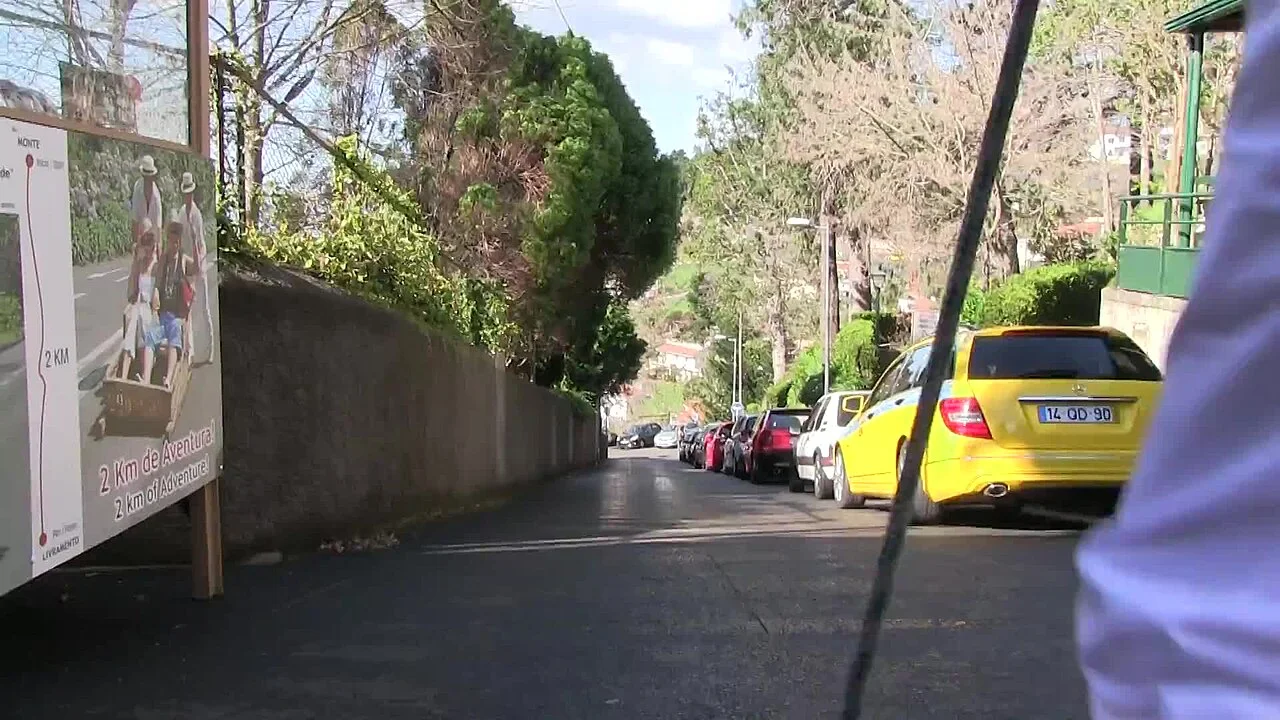
I'd buy only the one-way cable car ticket (€16) and ride down from Monte in the carros de cesto, which run Monday to Saturday and sell tickets only on site, for the same day. With three people, the sled comes to €60, €20 per person, but in rain or on a wet surface they do not carry three; and they can close early because of queues or bad weather. On Sunday, I'd buy the round-trip cable car (€22).
Get to Porto Moniz early in winter
Outside daylight saving hours, the natural pools close at 5 p.m. I'd do Rabaçal in the morning and reach the pools after lunch, with time for a swim.
Use the Aerobus on arrival
The Aerobus costs €6.70 on board and runs from the airport to Funchal. I'd take a taxi only when arriving in the small hours or with a lot of luggage.
Explore the map
Explore the map, read about the other places and plan your travel days in the app.
Open the appWhat to see
Madeira: A volcanic island with a spine down the middle
The cable car covers a 560 m rise in about 15 minutes. It is flat near the sea and within walking distance of the market and the Zona Velha.
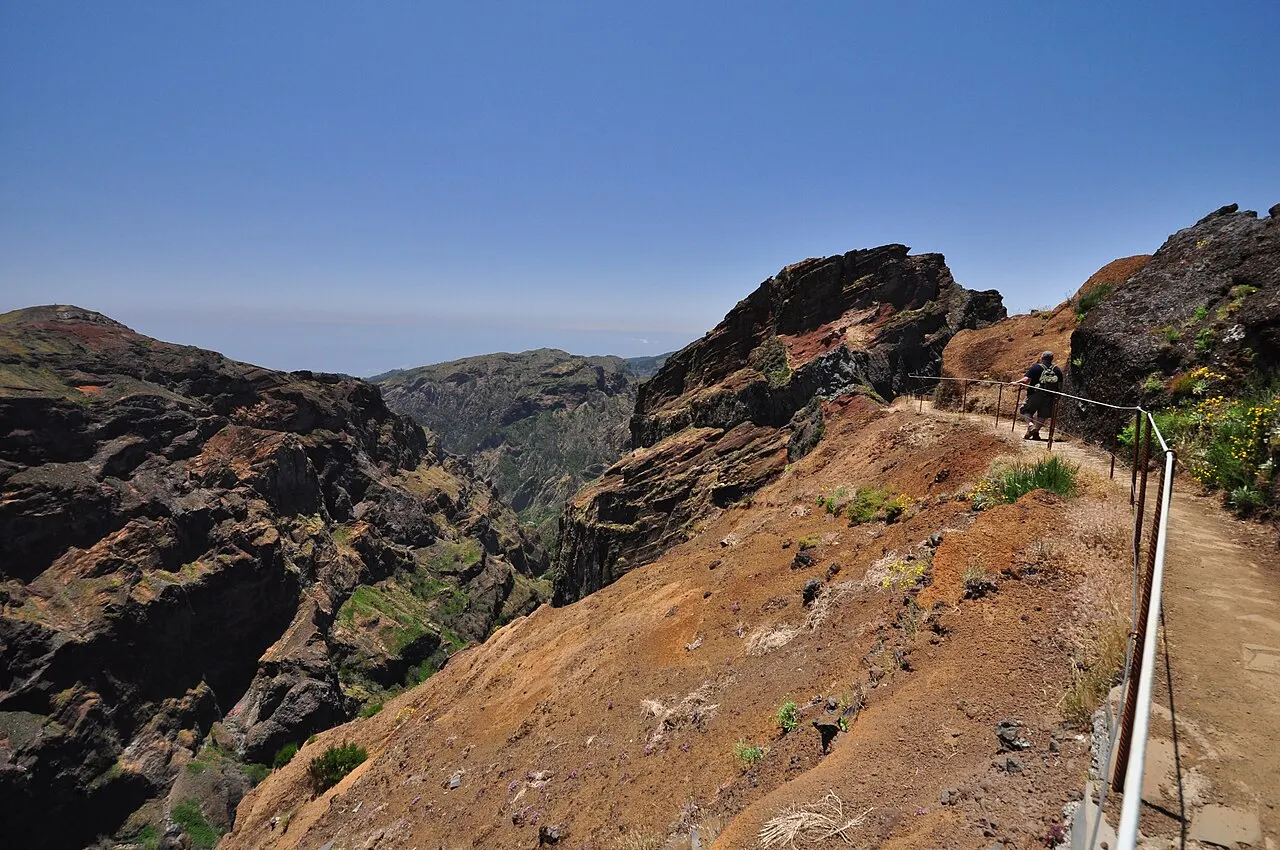
Pico do Arieiro
The third-highest peak on the island, at 1,818 m, about 18 km by road from Funchal, with a viewpoint, a café and an Air Force radar station. It is the starting point of the PR1, the Vereda do Areeiro, which links the peak to Pico Ruivo along ridges, tunnels cut into the rock and stairways. As far as the Miradouro da Pedra Rija the trail is out-and-back; from there on, only in the direction of Pico Ruivo. A reservation with an entry time on SIMplifica is mandatory.
It is the start of the island’s best-known hike, from Pico do Arieiro (1,818 m) to Pico Ruivo along the ridges and tunnels of PR1. A timed reservation on SIMplifica is mandatory; after Pedra Rija, the route is one-way toward Pico Ruivo. Start early and plan the return without relying on retracing the same trail beyond that point.
Check access
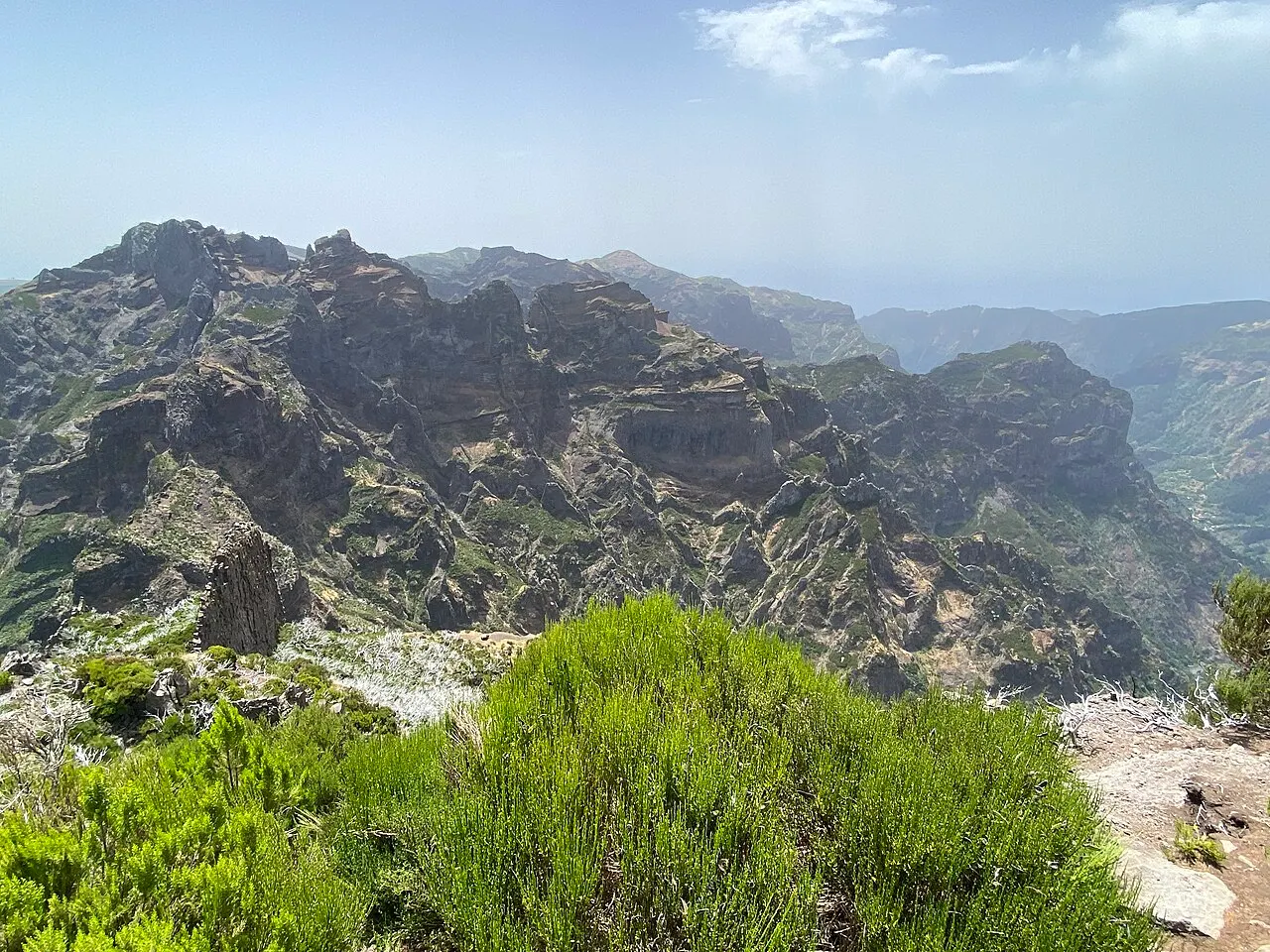
Pico Ruivo
The highest point on Madeira, at 1,862 m, in the municipality of Santana. You reach it at the end of the PR1, from Pico do Arieiro, or by the PR1.2, the Vereda do Pico Ruivo, which leaves from Achada do Teixeira and is 2.8 km each way, passing the rock formation called Homem em Pé and shelters for sudden changes in the weather. Near the summit stands the Pico Ruivo shelter house, where the trails cross.
Madeira’s highest point, at 1,862 m, is the end of PR1 and the reason for the mountain day; those not doing the whole trail can reach it on the 2.8 km PR1.2 from Achada do Teixeira.
Check access

Levada das 25 Fontes
The PR6 leaves from Rabaçal, on regional road 105, and follows the levada for 4.3 km through the laurisilva, with views of the Ribeira da Janela valley, to a lagoon fed by water that springs from the Paul da Serra at 25 points. The return is by the same path, in about 3 hours in total. It starts at the same point as the PR6.1, the Levada do Risco, 1.5 km to a waterfall.
The levada that reveals the laurisilva with less effort: 4.3 km each way to the lagoon of 25 springs, about 3 hours in total, with a reservation and a €4.50 fee.
Check access
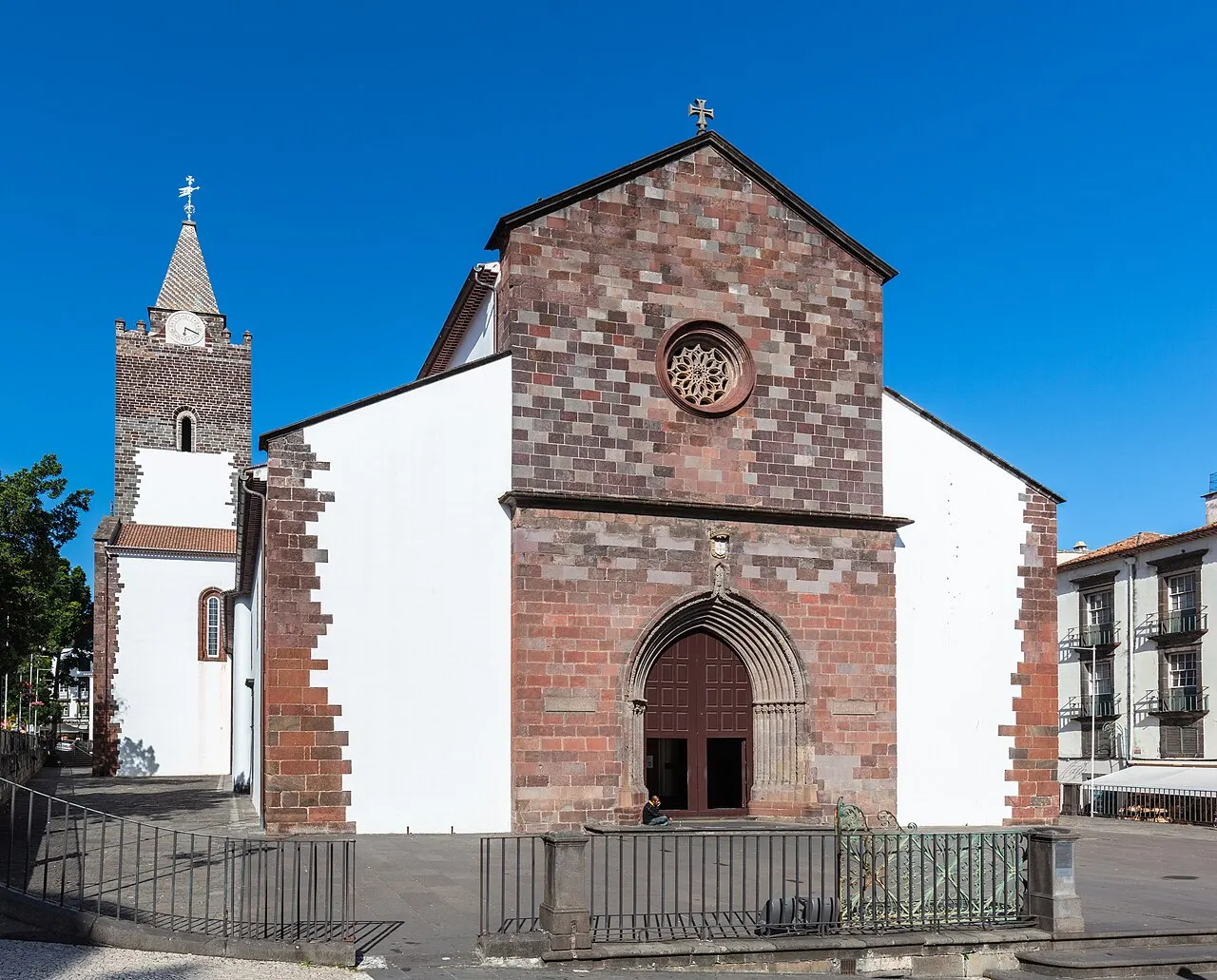
Sé do Funchal
Construction of the cathedral began around 1493, by order of Manuel I, and finished in 1514, when Funchal received its bishopric. It is Gothic, with the chancel choir stalls carved with saints and apostles in 16th-century dress, and it holds a silver processional cross given by the king. It stands in the center, a few steps from Avenida Arriaga, and the visit is short.
The cathedral completed in 1514, with its 16th-century choir stalls and Manuel I’s silver cross, is the building that tells the story of the sugar era, and lies on the route between Blandy’s and the Zona Velha.
Check access

Mercado dos Lavradores
Inaugurated in 1940, designed by Edmundo Tavares with azulejo panels by João Rodrigues, the market gathers fruit stalls, flower stalls and fish stalls around a central courtyard. It is the best place in the city to see up close what the island produces. At the fruit stalls, some vendors offer samples and charge a lot afterward: ask the price per kilo first.
The 1940 market, with João Rodrigues’s azulejo tiles, offers a short introduction to the island’s fruit and black scabbardfish; go in the morning, when the stalls are full.
Check access

Zona Velha
The historic Santa Maria core, between the market and the sea, is one of the first settled areas of Funchal. Rua de Santa Maria holds a processional passo dated 1733, and at its end stands the Forte de São Tiago, begun in 1614 as part of the walls and used as barracks until 1992. It is also where the lower station of the Monte cable car is.
The Santa Maria quarter brings together one of the city’s first settled areas, the 1614 Forte de São Tiago and the cable car station, and can be explored on foot on the same outing as the market.
Check access
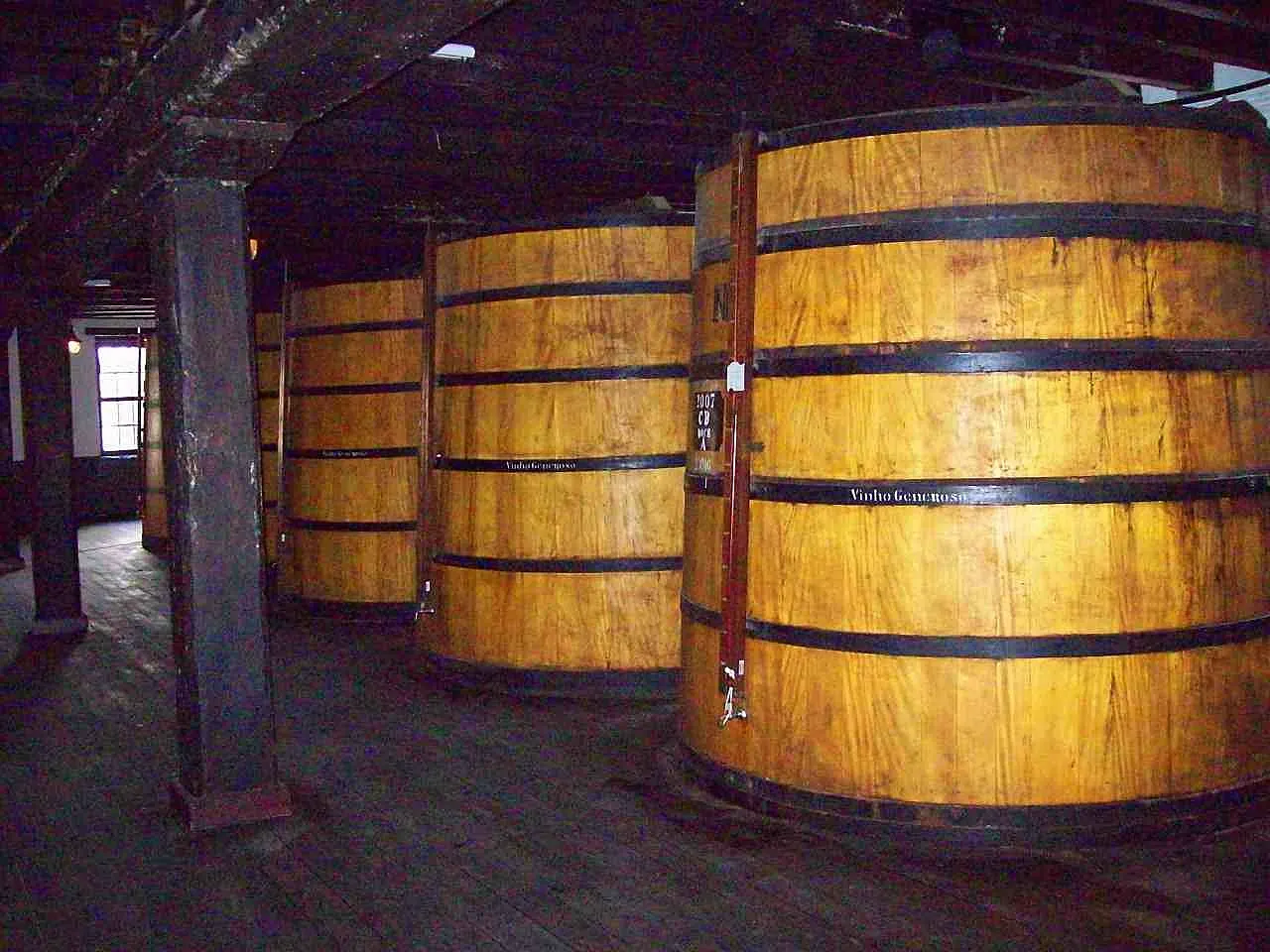
Blandy's Wine Lodge
The Blandy family's winery, at Avenida Arriaga 28, holds more than 650 barrels and vats of Madeira wine in a historic building in the center. The tour shows the cooperage and the canteiro aging rooms, where the wine matures only with the natural heat of the attic. The Premium Tour costs €23, lasts 45 minutes and ends with three wines; there are tours in English, Portuguese, German, French and Spanish.
The most direct way to understand Madeira wine: the 45-minute tour passes through the canteiro aging rooms and ends with three wines, for €23, with departures scheduled by language.
Check access
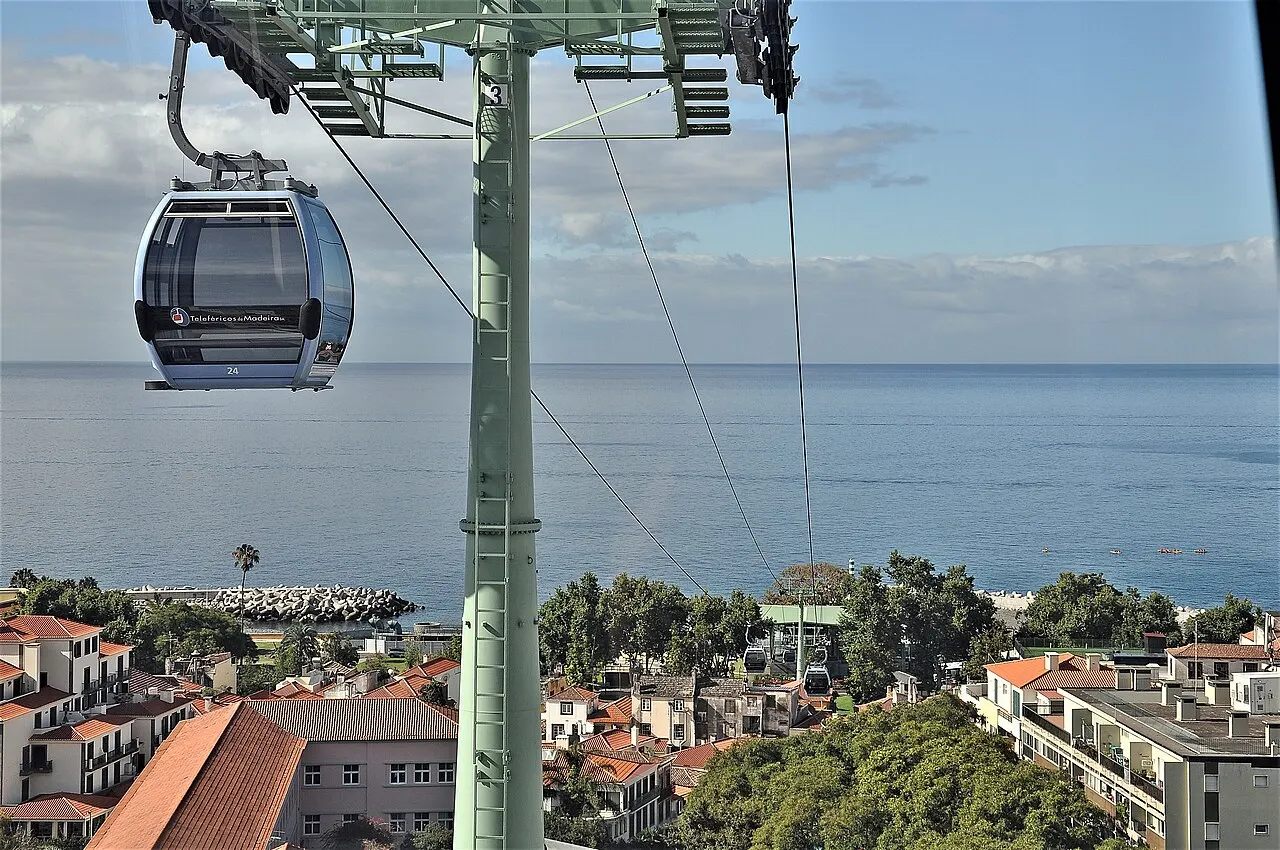
Funchal Cable Car
Opened in November 2000, it rises from Parque Almirante Reis, in the Zona Velha, to Monte, climbing 560 m in about 15 minutes over the city's rooftops. It costs €16 one way and €22 round trip, runs from 8:45 a.m. to 5:45 p.m. and closes only on Christmas Day; children up to 6 ride free, and ages 7 to 14 pay half.
It climbs 560 m over the city in about 15 minutes and is the practical way to reach Monte; Monday through Saturday a one-way ticket is enough if you plan to start the descent on the basket sleds.
Check access

Monte Palace Madeira
A garden of about 7 hectares at Monte, with African cycads, camellias, oriental gardens and a recreation of laurisilva, plus a museum with more than a thousand sculptures and more than 700 minerals, tied to José Berardo's collection. Admission is €18, and accompanied children up to 14 are free. It opens from 9 a.m. to 6 p.m. from October to March and until 7 p.m. from April to September.
Seven hectares of gardens with recreated laurisilva, oriental gardens and a museum of sculptures and minerals, for €18; it is the reason to spend the morning at Monte.
Check access
Nilo’s itinerary
Start with the basic programme and choose extensions for the time you have.
Plan my days in the app ↗Day 1 · Central Funchal on foot
Start at the Mercado dos Lavradores in the morning, when the fruit stalls and the fish pavilion are full, and ask the price per kilo before accepting samples.
Walk down Rua de Santa Maria, in the Zona Velha, to the Forte de São Tiago, by the sea.
Return along the waterfront to the Sé, finished in 1514, and notice the choir stalls in the chancel.
In the afternoon, take the Blandy's Premium tour, at Avenida Arriaga 28 (€23, 45 minutes, with three wines); check the website for the time in your language.
Have dinner in the Zona Velha with espetada and bolo do caco.
Day 2 · Monte, the carros de cesto and Câmara de Lobos
Ride the cable car up from the Zona Velha (€16 one way, about 15 minutes; opens at 8:45 a.m.).
Visit the Monte Palace garden (€18) and set aside at least two hours for the gardens and the museum.
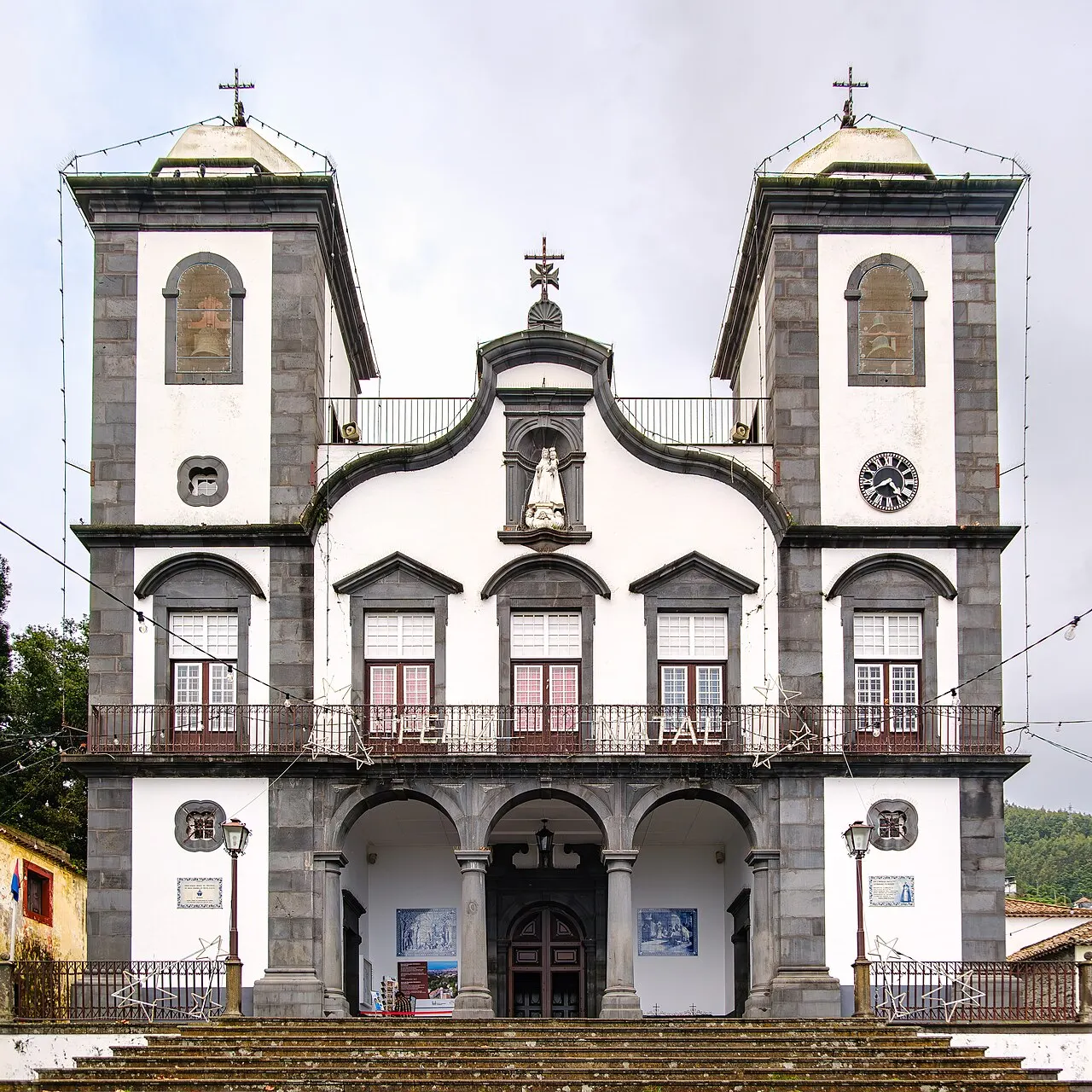
Step into the Igreja de Nossa Senhora do Monte, where the chapel of Charles I of Austria-Hungary is.
Ride down in the carros de cesto to Livramento (€30 for one person, €40 for two, Monday to Saturday; ticket only on site, for the same day) and continue by taxi or bus to the center. On Sunday, go back down by cable car.
In the afternoon, go to Câmara de Lobos, about 9 km away, and continue to the Cabo Girão viewpoint, 580 m above the sea, for the end of the day.
Day 3 · From Pico do Arieiro to Pico Ruivo
As soon as your dates are settled, book the full PR1 (€10.50) on SIMplifica for one of the first entry times, because the slots fill up, and arrange the return taxi at Achada do Teixeira.
Go up early to Pico do Arieiro, about 18 km by road from Funchal, by taxi or on the Horários do Funchal bus that leaves at 6:00 a.m. from the Teleférico, in the Zona Velha, and arrives at 6:45 a.m. (€3 on board; seat reserved by phone, 291 705 555, between seven and two business days ahead). Bring a rain jacket, a warm layer, water and a flashlight for the tunnels.
Walk the 6.1 km of the Vereda do Areeiro to Pico Ruivo, in about 3 hours; after Pedra Rija the direction is one-way.
From Pico Ruivo, go down the PR1.2 for the 2.8 km to Achada do Teixeira, included in the full PR1 ticket; Visit Madeira gives 1.5 hours for that round-trip route, so count the descent separately from the 3 hours of the PR1 when setting the taxi time.
At Achada do Teixeira, meet the taxi you arranged to return to Funchal, about 50 km by road.
Day 4 · Rabaçal, 25 Fontes and Porto Moniz, by car
Book the Levada das 25 Fontes on SIMplifica and, if you like, the Risco on the same morning; with two routes in a day, the system applies the 1-day rate of €9.
Leave Funchal early for Rabaçal, about 43 km by road, and walk the 4.3 km to the 25 Fontes lagoon and back, in about 3 hours.
Continue to Porto Moniz and swim in the natural pools (€3); in winter they close at 5 p.m.
Stop at Seixal, 9 km east, on the way to São Vicente.
Return to Funchal through the interior, from São Vicente.



If you stay longer
Day 5 · Ponta de São Lourenço
Day trip
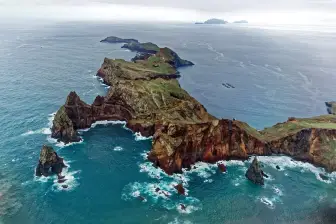
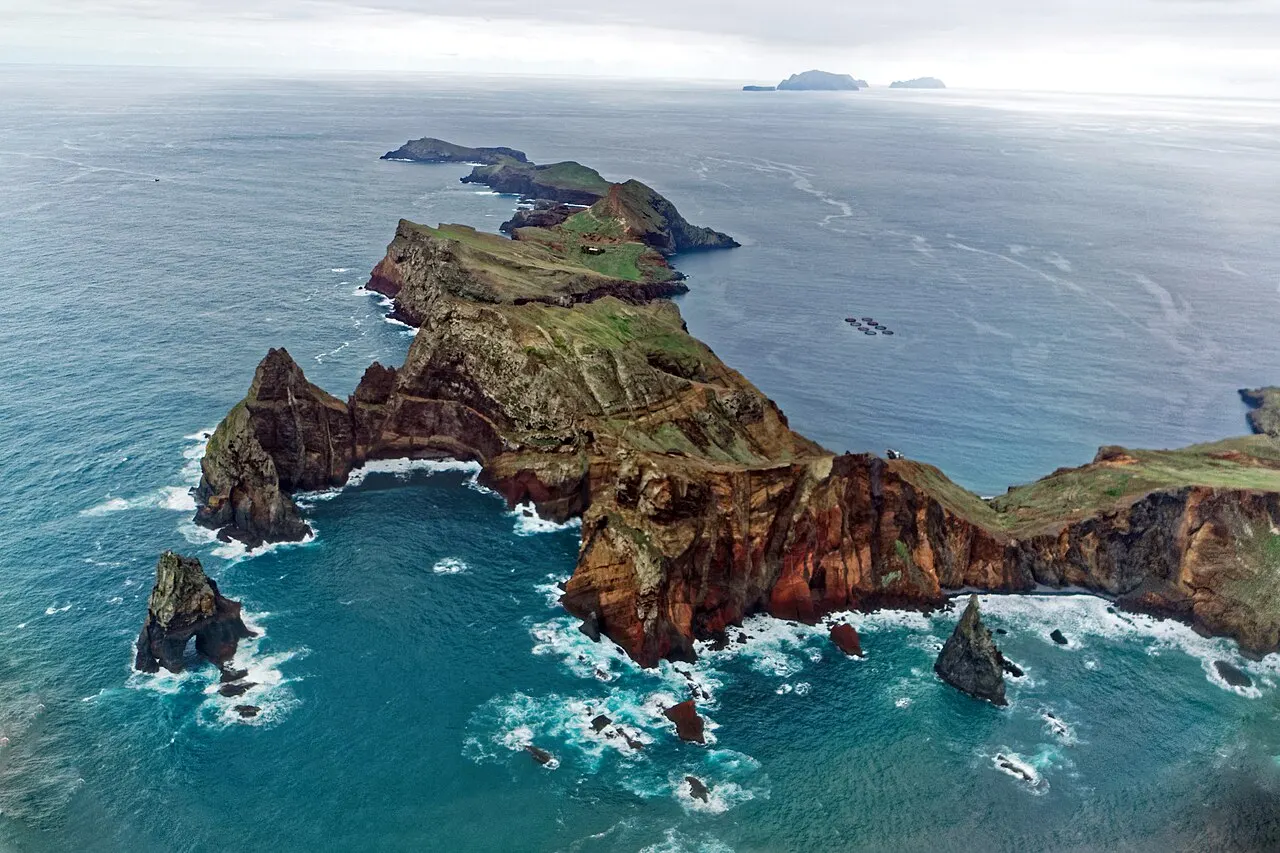
About 33 km by road from Funchal, to the east. The PR8 is 4 km each way between Baía d'Abra and Casa do Sardinha, about 2.5 hours out and back, with temporary marked detours in October 2026. Reservation on SIMplifica and a fee of €4.50.
Food
Espetada
Beef marinated with garlic, salt, bay leaf, Madeira wine, vinegar and olive oil and roasted on a skewer made of laurel wood. It usually comes with bolo do caco.
Bolo do caco
Flat bread of wheat flour and sweet potato, cooked on the caco, a heated griddle. It is served hot, as a starter, spread with garlic and parsley butter, or filled with meat or fish.
Espada com banana
Black scabbardfish, a deep-water fish, fried in breading and served with fried banana, sometimes with passion fruit sauce. It is the main catch of Câmara de Lobos.
Lapas
Shelled mollusks that live clinging to the rocks of the coast and appear on the island's menus alongside fish.
Milho frito
Fried cubes of cornmeal mush, similar to Italian fried polenta, a common side to espetada and fish.
Carne de vinha d'alhos
Pork marinated in wine and garlic, tied to the pig slaughter held weeks before Christmas; it appears mostly in the festive season.
Bolo de mel
Dark, dense cake made with cane honey, tied to Christmas. By tradition, it is broken by hand, not cut with a knife.
Poncha
A drink of cane spirit with lemon juice and sugar or cane molasses, mixed on the spot. It is popular on the island, alongside Coral, a beer brewed on Madeira since 1872.
Madeira wine
A fortified wine that ages through heat, in a heated tank (estufa) or naturally in attics, in canteiro. The noble grapes run from Sercial, the driest, to Verdelho, Boal and Malvasia, the sweetest; about 85% of production uses Tinta Negra. Frasqueira can only be sold after 20 years.
Where to eat
- Mercado dos Lavradores · $
Island fruit, such as anona and passion fruit, and the black scabbardfish pavilion, in the morning.
- Center and Zona Velha · $$
Espetada on a laurel skewer with bolo do caco and milho frito.
- Câmara de Lobos · $$
Espada com banana and poncha in the village where the black scabbardfish makes up most of the catch.
- Avenida Arriaga · $$
Madeira wine tasting at a winery in the center, such as Blandy's, from two to six wines depending on the tour.
- Porto Moniz · $$
Fish and lapas near the natural pools, after the swim.
$: inexpensive restaurant meal, average €13.50 (from €10.50 to €20) per person (Numbeo, 10/15/2026) · $$: about €29 per person, half of the three-course dinner for two at €57.50, without drinks (Numbeo, 10/15/2026) · $$$: above €45 per person, without drinks; Numbeo records up to €90 for the three-course dinner for two in the mid-range (10/15/2026) · 2026-10-15
Day trips
Ponta de São Lourenço
About 33 km by road from Funchal, to the east. The PR8 is 4 km each way between Baía d'Abra and Casa do Sardinha, about 2.5 hours out and back, with temporary marked detours in October 2026. Reservation on SIMplifica and a fee of €4.50.
Levada do Caldeirão Verde
The Parque Florestal das Queimadas, in Santana, is about 43 km by road from Funchal; parking costs €2 per hour. The PR9 is 8.7 km each way, with four tunnels and about 6.5 hours out and back to the Caldeirão Verde waterfall. Leave early, with a flashlight.
Vereda dos Balcões, at Ribeiro Frio
About 18 km by road from Funchal, through the mountains. The PR11 is easy: 1.5 km each way along the Levada da Serra do Faial to the Balcões viewpoint, with views of the laurisilva valleys and, on a clear day, the peaks. About 1.5 hours out and back, with reservation and a fee of €4.50.
Porto Santo
The neighboring island, 71 km away, has a 9 km sand beach, something Madeira does not offer: its sand beaches are few and small, and the one at Calheta is made of imported sand. The ship Lobo Marinho leaves from Funchal, and the one-day cruise costs from €58.90 for the crossing alone; schedules are on the Porto Santo Line website, and the ship is in maintenance from October 14 to 22, 2026.
Where to begin
Central Funchal on foot
Start at the Mercado dos Lavradores in the morning, when the fruit stalls and the fish pavilion are full, and ask the price per kilo before accepting samples.
Monte, the carros de cesto and Câmara de Lobos
Ride the cable car up from the Zona Velha (€16 one way, about 15 minutes; opens at 8:45 a.m.).
From Pico do Arieiro to Pico Ruivo
As soon as your dates are settled, book the full PR1 (€10.50) on SIMplifica for one of the first entry times, because the slots fill up, and arrange the return taxi at Achada do Teixeira.
Rabaçal, 25 Fontes and Porto Moniz, by car
Book the Levada das 25 Fontes on SIMplifica and, if you like, the Risco on the same morning; with two routes in a day, the system applies the 1-day rate of €9.
Money
The currency is the euro. In October 2026, a meal at an inexpensive restaurant in Funchal costs on average €13.50 (from €10.50 to €20), a three-course dinner for two at a mid-range restaurant, €57.50 without drinks, and a 0.5 l beer, €2.50 (Numbeo, updated October 15, 2026). Lodging is what weighs most: from January to August 2026, the region's tourist accommodation charged an average of €136.58 per occupied room, and €142.95 in hotels; in August, the average rose to €166.24 (DREM). Attractions have fixed prices: the trail fee is €4.50 per route and €10.50 for the full PR1, with 1-, 3- and 7-day rates (€9, €22.50 and €52.50) for those who do two or more routes, not including the PR1. The Monte cable car costs €16 one way, Monte Palace €18, the carros de cesto €30 for one person, the Blandy's Premium tour €23 and the Porto Moniz pools €3. To save on transport, load trips or a day ticket onto the GIRO card instead of paying on board.
Getting there and around
From the airport to Funchal
Madeira International Airport Cristiano Ronaldo (FNC) is in Santa Cruz, 13.2 km as the crow flies from Funchal and about 20 to 25 minutes by car. The Aerobus costs €6.70 bought on board (€3.30 for children aged 6 to 12). There are taxis at the terminal, and Uber and Bolt work on the island.
The wind at the airport
The 2,781 m runway lies between the mountain and the sea, and pilots need additional training to land there. The airport has mandatory wind limits and suffers frequent restrictions because of them. On a day of strong wind, expect delays and do not book a tight connection the same day.
Buses and the GIRO card
In Funchal, the urban bus network (autocarros, on the island's signs) is run by Horários do Funchal, which renumbered the lines in March 2026: check the line on the website's planner before setting out. The ticket on board costs €2.05 within the municipality and €2.65 between municipalities. Loaded onto the GIRO card, each trip drops to €1.45 and €2.00, and the 1-day ticket costs €4.95 in the municipality and €6.55 between municipalities (3 days, €12.50 and €16.70; 7 days, €23.50 and €31.10). The passes are not valid on the Aerobus. For Porto Moniz, Rodoeste runs lines 80 and 139.
Car, taxi and the trails
For the trails and the north coast, a rental car is the most practical option: the expressways cross the island without tolls, and in Funchal blue-line parking is paid Monday to Friday from 8 a.m. to 8 p.m., and on Saturday from 8 a.m. to 2 p.m. The PR1 ends far from where it starts, and the IFCN does not provide the return: those without a car can take the Horários do Funchal bus that leaves from the Teleférico, in the Zona Velha, at 6:00 a.m. and 1:30 p.m. and reaches Pico do Arieiro at 6:45 a.m. and 2:15 p.m. (€3, on board only; reservation by phone, 291 705 555, between seven and two business days ahead; 31 seats, every day except December 25). Up there, a €1.20 connecting bus does the loop between the Parque do Pico do Areeiro and the roundabout by the radar. To return from Achada do Teixeira, about 50 km by road from Funchal, you need to arrange a taxi or transfer.
Porto Santo by boat
The ship Lobo Marinho, of Porto Santo Line, links Funchal to Porto Santo, 71 km away, and sells a one-day cruise from €58.90 for the crossing alone. From October 14 to 22, 2026, the ship is in technical maintenance.
Safety
Official visitor advisories deal mostly with the mountain and the weather. On the trails, the recommendations of Visit Madeira and the IFCN ask that you not hike alone, tell someone your route and expected arrival time, finish before dark, carry food, water, a rain jacket and a flashlight and avoid the most exposed routes if you have vertigo. In heavy rain or wind, do not start the hike, or turn back the same way where that is allowed. Routes close because of bad weather, rockfall or works, and the status of each is posted on the IFCN page and on Visit Madeira's; in October 2026, the Ponta de São Lourenço had marked detours and the Vereda da Encumeada (PR1.3) was restricted. At sea, the Porto Moniz pools have lifeguards all year. The emergency number is 112; Madeira's Civil Protection answers at 291 700 112 and has the Prociv Madeira app, with alerts.
Etiquette tips
Book the trail before you go
A reservation with an entry time on the SIMplifica portal is mandatory on all trails classified by the IFCN, even for those exempt from the fee, such as children up to 12 and residents of Madeira. Entering without a reservation is an offense and can bring a fine and an order to leave the route.
Arrive on time
The tolerance for entering the route is about 15 minutes before or after the reserved time, a little more for those doing routes in sequence. The system exists to spread people out over the day.
Respect the one-way rule on the PR1
After the Miradouro da Pedra Rija, the Vereda do Areeiro can only be walked in the direction of Pico Ruivo. Going back the same way from there is not allowed.
Leave the trail as you found it
The IFCN rules ask that you stay on the path, that you not pick or damage plants, that you not light fires and that trash go back out with whoever brought it, including tissues and cigarette butts.
Break the bolo de mel by hand
By tradition, bolo de mel, the cane honey cake, is not cut with a knife; it is broken by hand.
Mistakes to avoid
Arriving at the trail without a reservation
Thinking it is enough to show up at the start of the levada. Reservation is online only, on SIMplifica, and the slots fill up: when an hour's capacity runs out, it is blocked. There is no sale on site, not even at IFCN posts.
Counting on a refund if it rains
The fee is only refunded or rescheduled when the route is officially closed. Dropping out because of rain, illness, a canceled flight or a date error means losing what you paid.
Planning the PR1 as an out-and-back
Leaving the car at Pico do Arieiro and intending to return the same way after reaching Pico Ruivo. From Pedra Rija on, the direction is one-way, and the exit is through Achada do Teixeira or the Vereda da Ilha, far from the car.
Underestimating the Caldeirão Verde
Starting the PR9 after lunch. It is 17.4 km out and back and about 6.5 hours, with tunnels, and the route has to be finished before dark.
Dressing for Funchal and climbing into the mountains
Leaving the city in the sun in a T-shirt and arriving at Pico do Arieiro, at 1,818 m, inside the cloud. Official recommendations call for a rain jacket, a warm layer, spare clothes, food, water and a flashlight for the tunnels.
Useful phrases
Bom dia / boa tarde
Greeting when entering a shop or café; boa tarde from lunchtime on
Se faz favor
Please; also used to call over whoever is serving
Uma poncha, se faz favor
The drink of cane spirit, lemon and sugar, ordered at the counter
Semilha
Potato, in Madeiran speech
Onde é o início da vereda?
Where does the trail start? Vereda is the mountain path; levada, the path beside the channel
A conta, se faz favor
The check, please
Where to stay
- Sé · First trip without a car · $$: Within walking distance of the market, the Zona Velha and the Sé, and the center is flat near the sea.
- Zona Velha · Those who want to eat out and walk back · $$: Right by the market and the Monte cable car station, with restaurants on the narrow streets of the old core.
- Lido and São Martinho · Families and those who want a hotel with a pool · $$$: This is the zone of the large hotels, with the Lido promenade. To get to the center, you depend on a bus or taxi.
- Monte · Those who want quiet and cooler air · $$: It sits high up, near the Monte Palace and the church, away from the bustle of the center. To get down, you depend on the cable car, which closes at 5:45 p.m., or on a taxi.
- Porto Moniz · Those who want to sleep one night on the north coast · $$: It avoids the drive back to Funchal on the day of Rabaçal and the pools, and leaves the north coast road for the next morning.
$: alojamento local and hostel; no published average consulted, compare on booking sites · $$: around the regional average of €136.58 per occupied room (tourist accommodation, January to August 2026, DREM) · $$$: above €142.95, the hotel average in the same period, especially in August, when the regional average reached €166.24 (DREM) · 2026-10-15
Districts
Sé
The center of Funchal, with the Sé, Avenida Arriaga and Blandy's. It is flat near the sea and within walking distance of the market and the Zona Velha.
Zona Velha
The Santa Maria core, one of the first settled areas of the city, between the Mercado dos Lavradores and the Forte de São Tiago. It has narrow streets, old churches and the lower station of the Monte cable car.
Lido and São Martinho
The hotel zone west of the center, in the parish of São Martinho, with large hotels and the Lido promenade. It is a bus or taxi ride from the center.
Monte
The old summer parish of wealthy families, high on the slope, with the church where Emperor Charles I lies, the Monte Palace garden and the start of the carros de cesto. You get there by cable car.

Câmara de Lobos
A fishing village about 9 km west of Funchal, where the black scabbardfish makes up most of the catch. Estreito, in the same municipality, is the main vineyard area for Madeira wine.
Maciço Montanhoso Central
The interior of the island, with Pico do Arieiro, Pico Ruivo and Achada do Teixeira. It has no town lodging; it is a day destination, by road and trail.
Rabaçal and Paul da Serra
The plateau to the west, where the levadas of the 25 Fontes and the Risco start, about 43 km by road from Funchal.
Porto Moniz and the north coast
The northwest tip of the island, with the natural lava pools, Seixal and the road that continues to São Vicente. It is about 50 km by road from Funchal.
History
1418–1419 · Porto Santo and Madeira enter the Portuguese map
João Gonçalves Zarco and Tristão Vaz Teixeira reach Porto Santo in 1418, blown off course by a storm, and the island of Madeira in 1419, with Bartolomeu Perestrelo. The island's name comes from the woodland that covered its slopes.
c. 1420–1425 · Settlement begins
The first settlers establish themselves on the south coast, and Zarco occupies with his family the lands that would become the center of Funchal. The first levadas are dug in that century to bring water to the farmland.
1490 · Madeira's sugar supplies Europe
Sugarcane, brought in with the backing of Prince Henry the Navigator, makes the island Europe's main source of sugar around 1490. The cycle declines in the second half of the 16th century, with cane diseases and competition from Brazil.
1508 · Funchal becomes a city
Manuel I raises Funchal to city status in 1508. The Sé, begun around 1493, is finished in 1514, the year the city receives its bishopric.
1566 · The sack by French corsairs
In September 1566, French corsairs attack Funchal and the sack lasts fifteen days. The city begins investing in walls, and construction of the Forte de São Tiago starts in 1614.
17th–18th c. · Wine replaces sugar
Trade treaties with England bring investment and English merchants, who come to control the wine trade. Cane fields give way to vineyards, and the island becomes a port of call for ships bound for America and the Indies.
1893–1943 · The Monte train
A rack railway links Funchal to Monte for fifty years and is shut down during World War II. The carros de cesto, wicker sleds that slide down the streets of Monte, had been running since the late 19th century.
1922 · An emperor dies at Monte
Charles I, the last Habsburg to rule Austria-Hungary, dies in exile on Madeira on April 1, 1922. His remains, except for his heart, rest in a chapel of the Church of Nossa Senhora do Monte.
1940 · The Mercado dos Lavradores opens
Designed by Edmundo Tavares, the market was inaugurated on November 25, 1940, between Art Deco and modernism, with azulejo panels by João Rodrigues at the entrance and in the courtyard.
1964–2000 · The airport and the runway on pillars
The airport opens in 1964 with a 1,600 m runway. The extension inaugurated on September 15, 2000 takes the runway to 2,781 m, part of it over the sea, held up by 180 pillars of about 70 m.
1976 · Regional autonomy
The 1976 Constitution gives Madeira autonomous administration, and the region has had its own government and assembly since April 30, 1976.
1999 · The laurisilva on the UNESCO list
Madeira's laurisilva forest, with about 15,000 hectares on the humid northern slopes, is placed on the World Heritage list in 1999.
2010 · The flash flood of February 20
A storm drops 108 mm of rain on Funchal in five hours and 165 mm on Pico do Arieiro. The torrents and landslides kill more than 40 people and sweep away cars and houses in the center of the city.
2026 · The PR1 reopens all the way to Pico Ruivo
The Vereda do Areeiro, between Pico do Arieiro and Pico Ruivo, reopens in full on May 1, 2026, one-way after Pedra Rija and with mandatory reservation.
Complete history
An island without people until the 15th century
Madeira had no population when Portuguese navigators arrived in 1419. Settlement began a few years later on the south coast, drier and more sheltered, and Funchal grew around the bay that Zarco chose for his family. Since rain falls mostly on the northern slopes and flat land is rare, the settlers began digging levadas as early as the 15th century, narrow channels that carry water from the mountains to the terraces of the south. These works, extended over five centuries until they passed 2,000 km, are what visitors walk today.
Sugar, wine and English merchants
The first cycle of wealth was sugar: around 1490, Madeira was Europe's main supplier, and the money from cane paid for the Sé, finished in 1514. When Brazilian sugar pushed prices down, the slopes were replanted with vines. From the 17th century on, English merchants settled in Funchal and came to control the export of a fortified wine that crossed the Atlantic in the holds of ships, where the heat of the voyage transformed it. Blandy's, on Avenida Arriaga, is the family that still keeps this business, seven generations on.
From winter resort to mass tourism
In the 19th century, the English and Germans laid the foundations of the hotel network, and Monte, cooler, became the summer retreat of wealthy families, with a rack railway and carros de cesto to ride back down. The 1976 autonomy and the airport expanded in 2000 changed the scale: in 2025, Funchal airport received about 5.65 million passengers, and tourism accounts for about a fifth of the region's output.
The mountain rules
The same geography that made the levadas also exacts its price. The flash flood of February 20, 2010 came down the streams that cut through Funchal and killed more than 40 people. Today, the trails classified by the IFCN, the forestry institute, operate with hourly reservations and a fee, a model created to control how many people enter each route over the course of the day.
Geography and shape of the city
A volcanic island with a spine down the middle
The island of Madeira covers 740.7 km² and is the top of an extinct volcano. The terrain climbs fast from the coast to the central massif, where Pico Ruivo (1,862 m), Pico das Torres (1,851 m) and Pico do Arieiro (1,818 m) stand. To the west, the Paul da Serra plateau feeds the springs of Rabaçal; to the east, the island narrows into the Ponta de São Lourenço peninsula, low and made of basalt.
Wet north, dry south
The winds arrive from the north, and it is on the northern slopes, between about 300 and 1,300 m, that the laurisilva grows, the forest of laurel trees that UNESCO declared a World Heritage Site. The south, where Funchal lies, gets less rain and holds the population, the vineyards and the banana plantations. The levadas exist to correct this difference, carrying water from the north to the south.
Funchal climbing the slope
The historic center is by the sea, between the Sé and the Zona Velha, and the city climbs the slope to Monte. The cable car covers a 560 m rise in about 15 minutes. In Funchal, average highs run from 20.0 °C in January to 26.8 °C in August, and 574 mm of rain falls per year, almost all of it between October and March (IPMA normals, 1991–2020, Observatório station, at 58 m).
The levadas carry water from the humid northern slopes to the drier fields of the south; together, they pass 2,000 km.
Culture
The music of the machete
Traditional Madeiran music uses the machete, the rajão, the brinquinho and the cavaquinho, and accompanies dances such as the bailinho da Madeira. Madeiran emigrants helped create the ukulele from the cavaquinho and the rajão, and the first instruments are attributed to three of the island's cabinetmakers, Manuel Nunes, José do Espírito Santo and Augusto Dias.
Wine, harvest and festival
Madeira wine remains present in life in Funchal: the Festa do Vinho takes place at harvest time, in the city's streets and in the vineyard areas, and the municipality of Câmara de Lobos, with Estreito, accounts for most of the grapes harvested for Madeira wine.
Football and Cristiano Ronaldo
Football is the most popular sport on the island, where the first match was organized by British residents in 1875. Marítimo and Nacional are Funchal's clubs. Cristiano Ronaldo was born in the city in 1985; the airport has carried his name since 2017, and the CR7 Museum in Funchal is dedicated to him.
Writers of Funchal
The poet Herberto Helder was born in Funchal in 1930, in the parish of São Pedro, and left for the mainland in the late 1940s; his first poems appeared in Funchal anthologies, Arquipélago (1952) and Poemas Bestiais (1954). The novelist Ana Teresa Pereira, also born in Funchal, won the Prémio Oceanos in 2017.
Madeiran emigrants helped create the ukulele, from the island's cavaquinho and rajão.
Festivals and events
Festa da Flor, April and May
An annual spring festival in Funchal, with two allegorical parades of floats and groups decked in flowers through the streets of the center and the Muro da Esperança, where children place a flower on a wall as a plea for peace. In 2027, it runs from April 29 to May 30.
Festa do Vinho, late August to September
At harvest time, the festival fills the streets of Funchal and the vineyard areas, and anyone who wants to take part in the harvest arranges it beforehand with Visit Madeira. The Festa das Vindimas do Estreito takes place in the first half of September. In 2027, the Festa do Vinho runs from August 22 to September 12.
Christmas and New Year, December and early January
The season runs from December 1, 2026 to January 10, 2027, with the center lit up and the Noite do Mercado, always on December 23, at the Mercado dos Lavradores. The New Year's Eve fireworks were recognized by Guinness in 2006 as the largest fireworks display in the world.
Carnival, February or March
Funchal's Carnival follows the Easter calendar; in 2027, Shrove Tuesday is February 9. It is the season of malassadas, fried dough fritters.
Books and films
Os Lusíadas (1572), Luís de Camões, Canto V, stanza 5
On Vasco da Gama's voyage, Camões passes by the «grande Ilha da Madeira, / Que do muito arvoredo assim se chama», the first one the Portuguese settled. It is eight lines that explain the island's name.
Elucidário Madeirense (1921), coordinated by Father Fernando Augusto da Silva
A multivolume encyclopedia on the history, nature and customs of the archipelago, with flora and fauna entries by Carlos Azevedo de Meneses. It is digitized at the Biblioteca Pública Regional da Madeira and on Wikisource, and serves for looking up any place or word that comes up on the trip.
The legend of Machim, in the «Epanáfora amorosa» by D. Francisco Manuel de Melo (17th century)
The literary version of the legend of the Englishman Robert Machim and Ana de Arfet, who supposedly reached the island fleeing before the Portuguese and gave Machico its name. The story is unproven, but it is still told on the island.
Frequently asked questions
Madeira: how do you get from the airport to Funchal?
The airport (FNC) is in Santa Cruz, about 20 to 25 minutes by car from Funchal, and the Aerobus costs €6.70 bought on board. On a day of strong wind at the airport, expect delays and don't book a tight connection on the same day.
Madeira: how do you book the trails, and how much do they cost?
A reservation with an entry time on SIMplifica is mandatory on all trails classified by the IFCN, online only, and the slots fill up. The fee is €4.50 per route and €10.50 for the full PR1, and it is only refunded or rescheduled when the route is officially closed. Children up to 12 and Madeira residents are exempt from the fee, but must also book.
Madeira: how do you do the PR1, from Pico do Arieiro to Pico Ruivo?
The PR1 costs €10.50, online only, on SIMplifica, and from Pedra Rija it is one-way, exiting via Achada do Teixeira or the Vereda da Ilha. Since the IFCN does not provide the return, I'd arrange the taxi before leaving Funchal.
Madeira: how many days should I stay?
I'd stay four days, sleeping in Funchal: the city, Monte and Cabo Girão, the Vereda do Areeiro, and Rabaçal with Porto Moniz. If the trip depended on the PR1, I'd leave a spare day, because bad weather closes the mountain.
Madeira: how do you get to Porto Santo?
The Lobo Marinho ship leaves Funchal for Porto Santo, 71 km away, and the day cruise costs from €58.90 for the fare alone. From October 14 to 22, 2026, the ship is out of service for maintenance.
Other cities in the country
Portugal ↗- Days
- 3–4
- When
- Apr–Jun · Sep–Oct
- Per person/day
- Average 130–200 EURMid-range · per person/day
Cost scope
Per person per day: accommodation, meals, urban transport, visits and a small allowance for extras. Flights excluded; larger purchases vary. Editorial estimate, not a quote.
- Days
- 2–3
- When
- May–Jun · Sep–Oct
- Per person/day
- Average 70–120 EURMid-range · per person/day
Cost scope
Per person per day: accommodation, meals, urban transport, visits and a small allowance for extras. Flights excluded; larger purchases vary. Editorial estimate, not a quote.
- Days
- 3–4
- When
- May–Jun · Sep–Oct
- Per person/day
- Average 143 EURMid-range · per person/day
Cost scope
Per person per day: accommodation, meals, urban transport, visits and a small allowance for extras. Flights excluded; larger purchases vary. Editorial estimate, not a quote.
- Days
- 5–6
- When
- Jun–Sep
- Per person/day
- Explore costsGuide estimate
Cost scope
Per person per day: accommodation, meals, urban transport, visits and a small allowance for extras. Flights excluded; larger purchases vary. Editorial estimate, not a quote.