Portugal
Lisbon
Steep streets, river views and fado nights in Lisbon
Days Start with the basic programme and choose extensions for the time you have.
How the guide reaches this number
A fourth day only pays off if it's a full one, for Sintra, because a morning isn't enough for the palaces. The city doesn't suit anyone in a hurry or looking for a flat center, since the slopes are real and the calçada gets slippery in the rain. The historic center also now has more people passing through than residents, and those who live there discuss it openly. With just one day, start at 9am at the Terreiro do Paço and climb on foot to the Sé and the castle. Have lunch at a tasca, with a dish of the day between €9 and €13, and end at a miradouro late in the afternoon. The predictable letdown is the 28E tram, which at ten in the morning builds up a 40-minute line at Martim Moniz. In the center, whole streets sell the same tin of sardines, but walk two blocks uphill and the identical souvenir shops disappear.
3–4
When April to June and September to October; August is the hottest, most expensive and most crowded month
How the guide reaches this number
The climate is Mediterranean, with dry summers: January has highs of 15 °C and lows of 8 °C, and July and August sit between 28 °C and 33 °C, with occasional heat waves above 38 °C. It rains between October and March, about 750 mm a year concentrated in those months, and almost never between June and September; snow is rare, falls once a decade or so and doesn't settle. The best windows are April to June, with long days, everything open and the June festivities, and September and October, with the sea still at 19–20 °C and fewer people. July and August are the heavy high season, with peak prices, lines at the monuments and relief only late in the afternoon, when the nortada blows. Many neighborhood businesses close because lisboetas go on vacation too, and it's not unusual to find three tascas in a row with a note on the door and the same return date. November and December are the rainiest months and the cheapest, with short days, mild temperatures and the city moving at the pace of the people who live in it. If you can choose one month to avoid, avoid August; if you come in winter, expect poorly heated old buildings and pack clothes in layers.
Per person/day Backpacker €60–80; comfortable trip €130–200; plus €4 per person per night in tourist tax
How the guide reaches this number
Per person per day: accommodation, meals, urban transport, visits and a small allowance for extras. Flights excluded; larger purchases vary. Editorial estimate, not a quote.
 What Nilo thinks
Stay three days in Lisbon: the Baixa, Alfama and the castle on the first, Belém and the river on the second, museums and miradouros on the third. A fourth day only pays off if it's a full one, for Sintra, because a morning isn't enough for the palaces. The city doesn't suit anyone in a hurry or looking for a flat center, since the slopes are real and the calçada gets slippery in the rain. The historic center also now has more people passing through than residents, and those who live there discuss it openly. With just one day, start at 9am at the Terreiro do Paço and climb on foot to the Sé and the castle. Have lunch at a tasca, with a dish of the day between €9 and €13, and end at a miradouro late in the afternoon. The predictable letdown is the 28E tram, which at ten in the morning builds up a 40-minute line at Martim Moniz. In the center, whole streets sell the same tin of sardines, but walk two blocks uphill and the identical souvenir shops disappear.Lisbon spreads over limestone hills that run down to the Tagus, and the reward for every slope is a miradouro with the river below. The city grew rich on spices and collapsed in the 1755 earthquake, which is why the Baixa is a grid rebuilt in straight lines, while Alfama, which the earthquake spared, still winds down in alleys and stepped lanes to the fado houses. Downriver, in Belém, the Jerónimos Monastery holds the tomb of Vasco da Gama, and pastéis de nata have been coming out warm from the oven on Rua de Belém since 1837. To eat like the lisboetas, order the dish of the day at a tasca, have your bica standing at the counter, and try a ginja at the Largo de São Domingos. Come from April to June, with the Santo António arraiais filling Alfama with grilled sardines in June, or in September and October, and allow three days, plus a whole one for Sintra.
Quick facts
- Population
- about 546,000 in the municipality, about 3.0 million in the Metropolitan Area
- Founded
- Pre-Roman settlement; Roman base from 138 BC as Felicitas Julia Olisipo; capital of the kingdom since 1255
- Country and region
- Portugal, Lisbon and Tagus Valley region
- Language
- European Portuguese; English spoken by almost everyone in restaurants, shops and transport
- Currency
- Euro (€); Multibanco ATMs everywhere and cards accepted even at the neighborhood café
- Time zone
- WET (UTC+0) in winter and WEST (UTC+1) in summer: the same time as London, one hour behind Madrid
- Best time to visit
- April to June and September to October; August is the hottest, most expensive and most crowded month
- Average daily cost
- Backpacker €60–80; comfortable trip €130–200; plus €4 per person per night in tourist tax
When to go
April to June and September to October; August is the hottest, most expensive and most crowded month
January
9° to 15°C
104 mm of rain
February
9° to 16°C
75 mm of rain
March
11° to 19°C
72 mm of rain
July
18° to 28°C
3 mm of rain
August
19° to 28°C
7 mm of rain
November
12° to 18°C
121 mm of rain
December
10° to 15°C
102 mm of rain
How the year changes
The climate is Mediterranean, with dry summers: January has highs of 15 °C and lows of 8 °C, and July and August sit between 28 °C and 33 °C, with occasional heat waves above 38 °C. It rains between October and March, about 750 mm a year concentrated in those months, and almost never between June and September; snow is rare, falls once a decade or so and doesn't settle. The best windows are April to June, with long days, everything open and the June festivities, and September and October, with the sea still at 19–20 °C and fewer people. July and August are the heavy high season, with peak prices, lines at the monuments and relief only late in the afternoon, when the nortada blows. Many neighborhood businesses close because lisboetas go on vacation too, and it's not unusual to find three tascas in a row with a note on the door and the same return date. November and December are the rainiest months and the cheapest, with short days, mild temperatures and the city moving at the pace of the people who live in it. If you can choose one month to avoid, avoid August; if you come in winter, expect poorly heated old buildings and pack clothes in layers.
The same numbers as a table
| Month | Temperature °C | Rain mm |
|---|---|---|
| January | 9 to 15 | 104 |
| February | 9 to 16 | 75 |
| March | 11 to 19 | 72 |
| April · | 12 to 20 | 67 |
| May · | 15 to 23 | 54 |
| June · | 17 to 26 | 13 |
| July | 18 to 28 | 3 |
| August | 19 to 28 | 7 |
| September · | 18 to 26 | 36 |
| October · | 15 to 23 | 109 |
| November | 12 to 18 | 121 |
| December | 10 to 15 | 102 |
Nilo's tips
Catch the 28E empty at Prazeres, not at Martim Moniz
Don't join the line at Martim Moniz at 10am: it's 40 minutes standing still just to ride standing up. Catch the 28E at the other end, in Campo de Ourique (Prazeres), where it leaves empty. Or use the 12E, which does a similar loop by the castle. Load your ticket beforehand: on board it costs far more than the €1.90 on the Navegante Ocasional.
Go up to the Castle on the two municipal elevators, for free
To get from the Baixa to the castle, you don't have to climb on foot or pay. Go in on Rua dos Fanqueiros and take the two municipal elevators, the second one inside the Mercado do Chão do Loureiro. They drop you at Costa do Castelo, already on the slope below the walls, and almost no list of attractions mentions them.
Belém: book the cloister and check church hours
The Jerónimos church is free, but opens at 10:30 a.m. Tuesday through Saturday and at 2 p.m. on Sundays and religious holidays. The cloister is a separate visit, with an €18 ticket in 2026, and opens at 9:30 a.m.; both close on Mondays. Book the cloister ahead and fit the church around that day’s hours. At Pastéis de Belém, 84 Rua de Belém, choose the counter or a table depending on the line. Trains connect Belém with Cais do Sodré; check the next departure before leaving. Check the official website for holiday and special-event closures as well, including Easter Sunday.
The Feira da Ladra only sets up on Tuesday and Saturday
Lisbon's flea market fills the Campo de Santa Clara, next to the National Pantheon, so schedule your climb up the Graça hill for one of these two days. Follow the market with the Pantheon and the miradouros of Graça and Senhora do Monte, which give you the best view of the neighborhood for free.
Refuse the couvert and count on a €4 tax per night
Bread, olives and cheese cost €2–6 if they stay on the table, so decline the couvert when you sit down with a “no, thanks, you can take it back.” Also budget for the €4-a-night tourist tax, which doesn't show up in the booking and is charged separately, on arrival at the hotel.
Hear free fado at a neighborhood association, in silence
Free fado is found at the coletividades, the residents' associations, where people sing with no dinner required and less polish. When the fado is announced, stop talking and handling your cutlery, and put your phone away until the break. If you'd rather go to a fado house, book for 9:30pm, arrive before the first fado and ask for the check only during the break.
Explore the map

© OpenStreetMap · OpenFreeMap · © OpenMapTiles
Explore the map, read about the other places and plan your travel days in the app.
Open the appWhat to see
Lisbon: The estuary and the hills
Lisbon occupies the north bank of the Tagus estuary, at 38.7° north latitude, with the Atlantic about 10 km to the west. By the river, the Baixa is the grid rebuilt after 1755 between the Rossio and the Terreiro do Paço, with streets named for trades (Douradores, Sapateiros, Prata).

Jerónimos Monastery
Commissioned by Manuel I in 1501 with the tax on pepper and finished almost a century later, it's the masterpiece of the Manueline style and a World Heritage Site since 1983. The church is free to enter and holds the tombs of Vasco da Gama and Camões; the cloister is paid, about €18 in 2026.
It's the essential stop in Belém: the nave, free to enter, holds the tombs of Vasco da Gama and Camões, and the Manueline cloister stretches the visit from forty minutes to an hour and a half. The 6 km out there are worth the 20-to-25-minute ride on the 15E.
Check access
São Jorge Castle
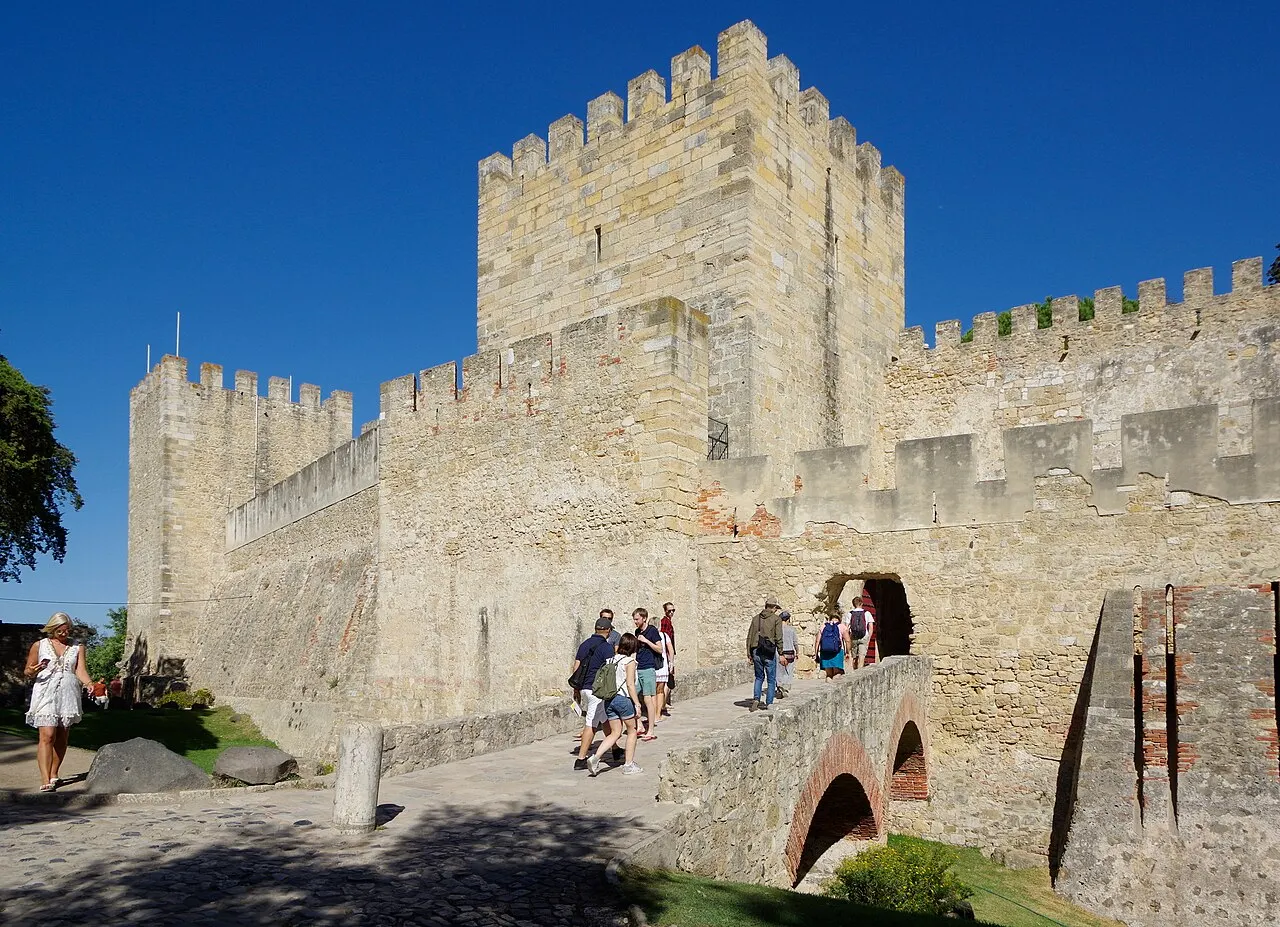
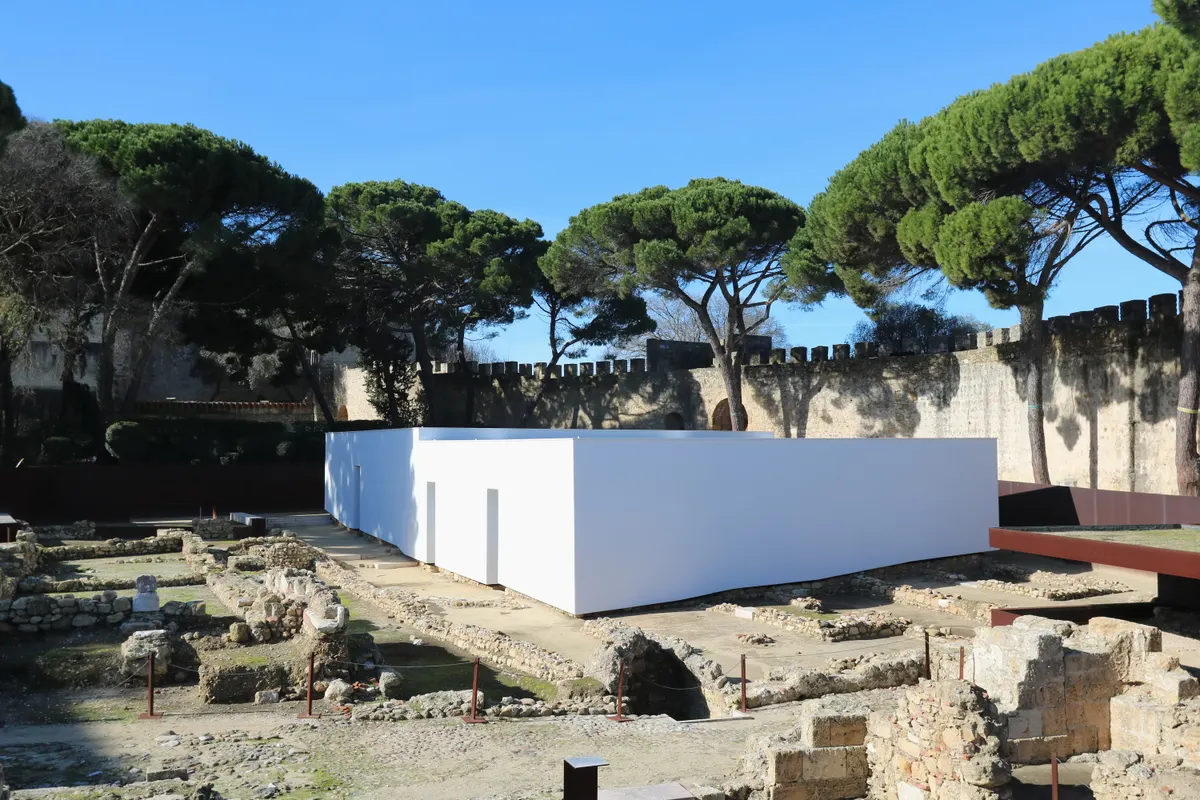
An Islamic-era fortification at the highest point of the center, restored in an idealized form in the 1940s. Visit for the walls and views over the Baixa. Access to the archaeological site, with layers from the Iron Age to a Moorish house, is limited to the guided visit included in admission; ask about availability at the ticket office. Buying ahead avoids the ticket-purchase line but does not guarantee a guided-tour time.
Allow about 90 minutes for the walls and views, plus time for the climb and rest. Archaeological-site access depends on the included guided visit and availability that day. Buying ahead through the official channel linked on the castle’s website avoids the ticket-purchase line; it does not guarantee a guided-visit place.
Check access
The miradouros
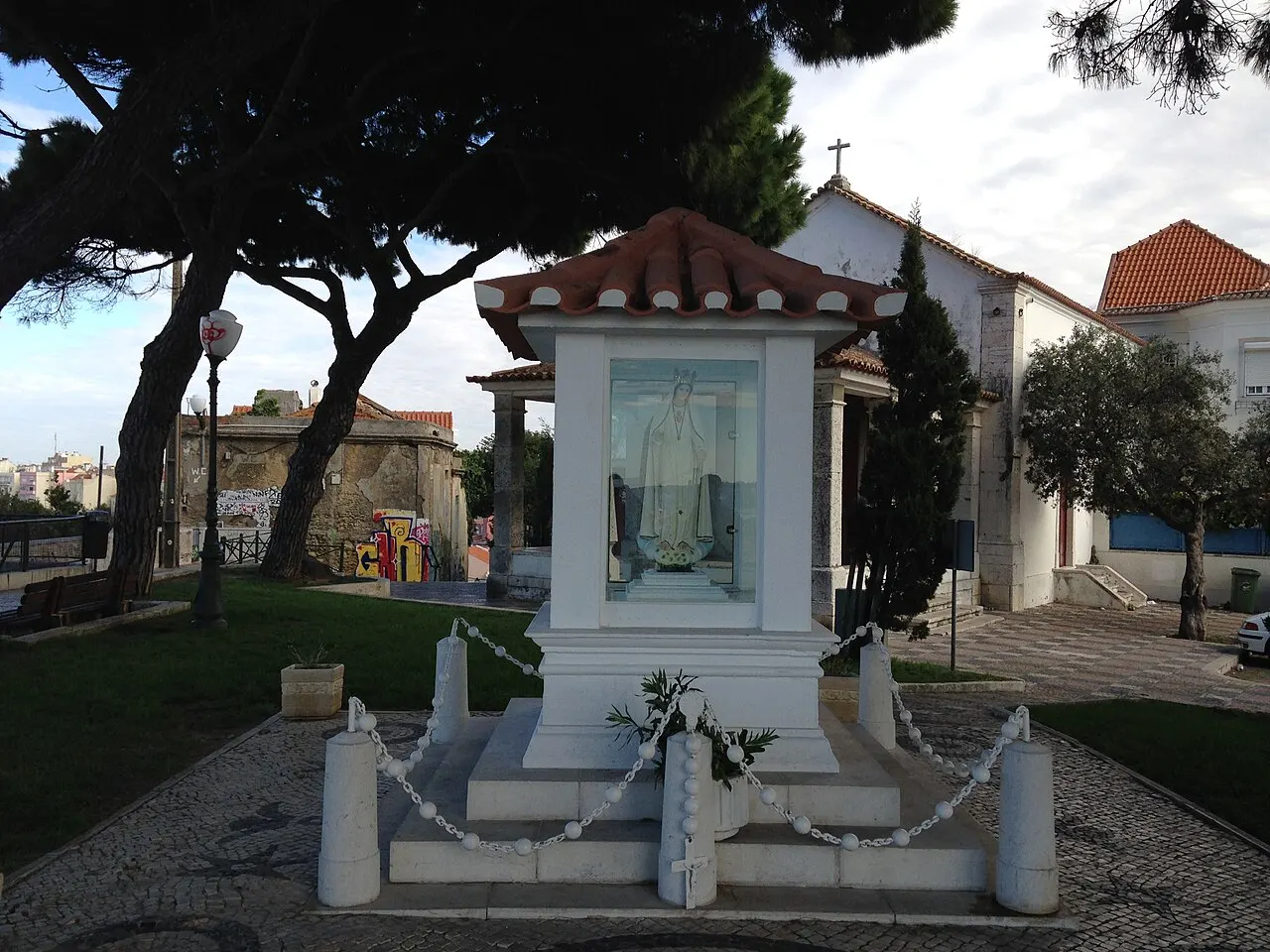
The miradouros are public terraces on the crests of the hills, with a kiosk and people sitting on the wall looking at the river. Senhora do Monte is the highest, Graça the liveliest, São Pedro de Alcântara faces the castle, and Santa Catarina, with the statue of Adamastor, is where lisboetas go to watch the sunset over the Tagus.
Twenty minutes each, and what changes between them is the time of day. Neither charges admission, and it's a good plan for an afternoon with no agenda.
Check access

Lisbon Cathedral (Sé)
Begun in 1147, right after the conquest, over the great mosque; a Romanesque facade with two towers and a rose window, and a cloister with excavations that reach Roman streets. 30 m away, the Church of Santo António marks the place where the saint the city celebrates in June was born, in 1195.
Begun in 1147 over the main mosque, with a cloister under excavation that reaches down to Roman streets. It's the same route as the 28E, climbed on foot, with no line.
Check access
Praça do Comércio and the Rua Augusta Arch
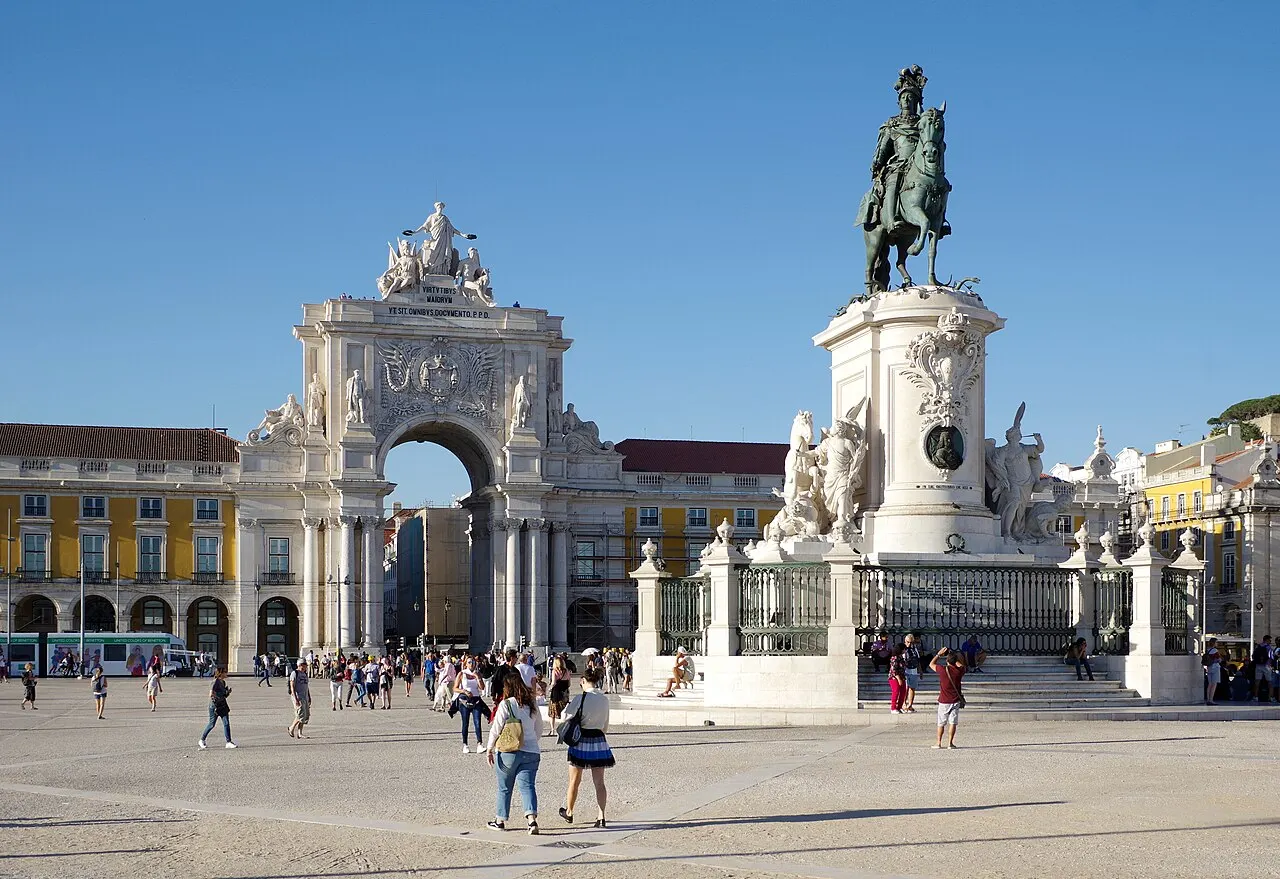
The old Terreiro do Paço, 180 by 200 m open to the river, on the site of the royal palace destroyed in 1755; this is where Carlos I died in 1908 and where government ministries still sit. The arch, finished only in 1875, has a viewpoint on top, and the equestrian statue of José I in the center is by Machado de Castro, 1775.
The old Terreiro do Paço is the required passage between the Baixa and the river, and from the viewpoint atop the Rua Augusta Arch, finished in 1875, you see the grid rebuilt after 1755. It was in this square that King Carlos I died, in 1908.
Check access

Carmo Convent and the Santa Justa Lift
The Gothic convent from 1389 lost its roof in the earthquake and has stayed that way: today it is an open-air archaeological museum and the monument that best explains 1755. Next to it, the Santa Justa Lift, in iron, from 1902, designed by Raoul Mesnier du Ponsard, links the Baixa to Largo do Carmo over 45 vertical meters and has its own ticket. It has been stopped since the Glória accident, in September 2025, and in September 2026 it still had no date to reopen.
The Carmo Convent, roofless since the earthquake, can be seen in forty minutes, so it fits between two bigger visits. The Santa Justa Lift, next to it, has its own ticket and has been out of service since September 2025, but the same link between the Baixa and the Largo do Carmo can be made on foot, for free.
Check access
National Tile Museum
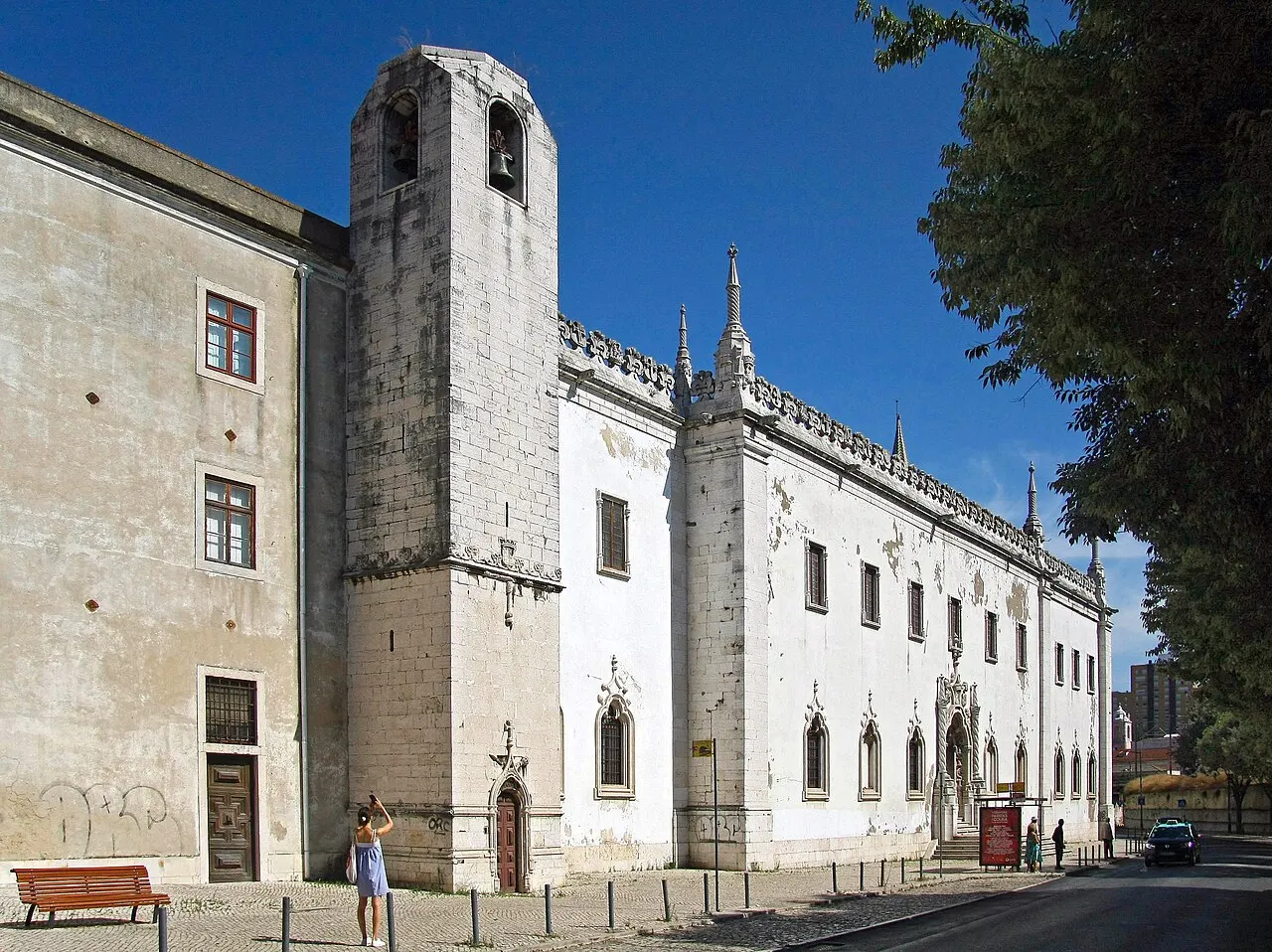
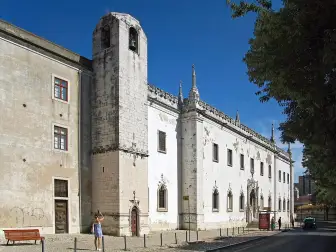
Housed in the Convento da Madre de Deus, founded in 1509, it shows five centuries of azulejo, from Hispano-Moorish patterns to contemporary compositions. The centerpiece is the 23 m panoramic panel of Lisbon before the earthquake, the most faithful portrait of the city that disappeared. The museum is closed for renovation, according to its official notice checked on October 5, 2026. Confirm reopening before planning a visit.
The collection shows how tiles became a storytelling medium, with a 23 m panel of Lisbon before 1755. The museum is closed for renovation, according to its official notice checked on October 5, 2026. Confirm reopening before traveling there; meanwhile, look at facade tiles on the central itinerary.
Check access
Calouste Gulbenkian Museum
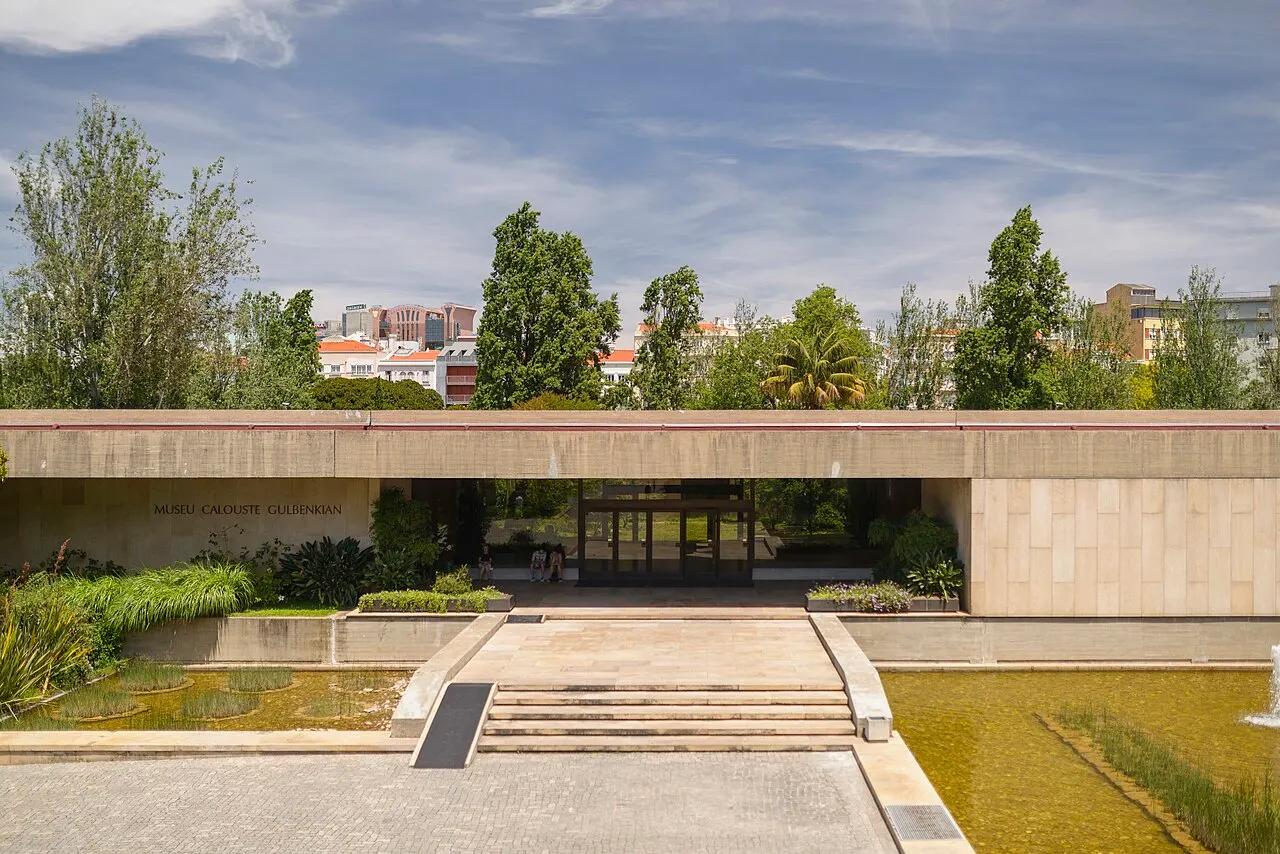
The collection was assembled by Calouste Gulbenkian, an Armenian oil magnate who died in Lisbon in 1955, and ranges from Egyptian, Islamic and Far Eastern art to Rembrandt, Rubens and the world's largest Lalique collection. The 1969 building and the garden are a landmark of modern Portuguese architecture, and the Modern Collection, next door, covers 20th-century Portuguese art.
It usually has free admission on Sundays from 2pm, but confirm before you go; there are two separate collections, the founder's collection and the Modern Collection, plus the garden, and each one needs its own time.
Check access

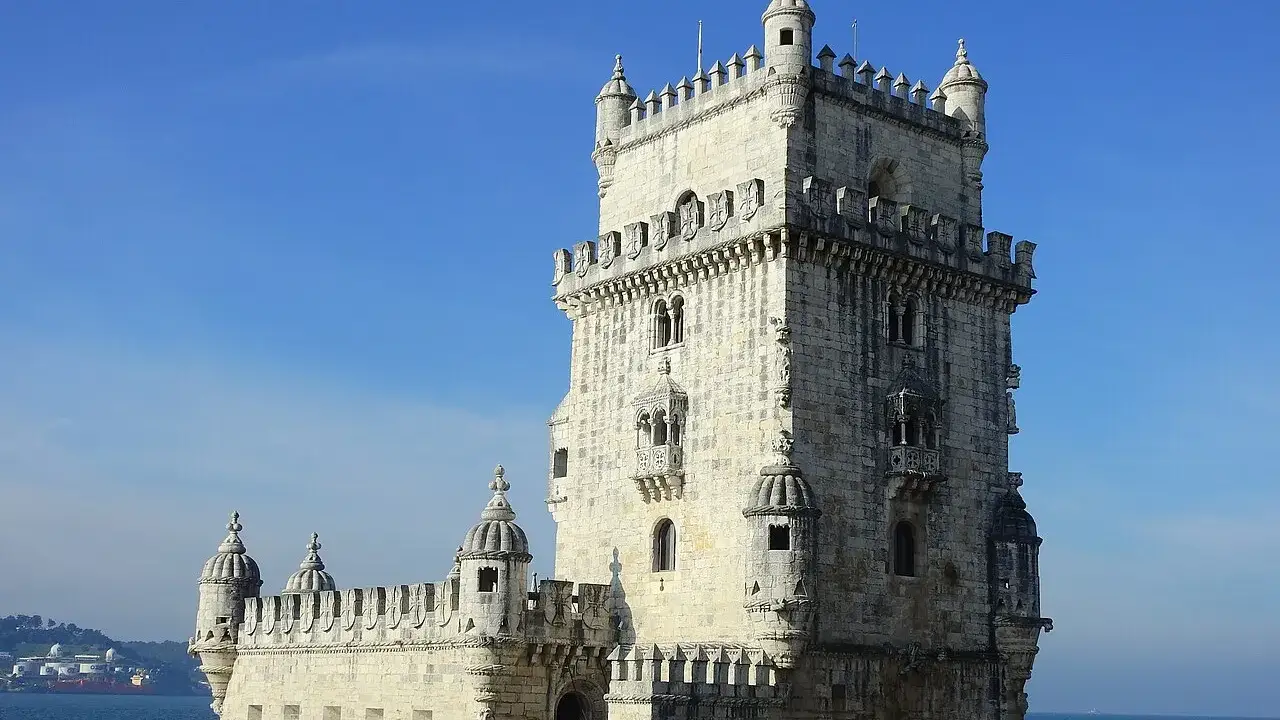
Belém Tower
Built between 1514 and 1519 by Francisco de Arruda as a fortress guarding the river mouth, it has Moorish-style balconies and the first rhinoceros carved in Europe, on a corbel on the west side. The tower stood in the middle of the river; silting and the 1755 earthquake brought it closer to the bank.
The tower is a 10-minute walk from the Jerónimos, and from outside you already see the whole architecture: the Moorish-style balconies and the rhinoceros carved on the corbel on the west side. Inside it's a narrow spiral staircase, with a timed slot, and that's the part to skip when the Belém day gets tight.
Check access
Nilo’s itinerary
Start with the basic programme and choose extensions for the time you have.
Plan my days in the app ↗Day 1 · Baixa, Alfama and the castle
Start at 9am at the Terreiro do Paço, go through the Rua Augusta Arch and walk up Rua Augusta to the Rossio, a flat 15-minute route that gives you the scale of the Pombaline reconstruction.
Climb to the Sé (1147) and continue on foot along Rua Augusto Rosa to the Santa Luzia and Portas do Sol miradouros. It's the same route as the 28E tram, without the line.
Climb to São Jorge Castle and allow about an hour and a half for the walls and views. Buy through the official channel linked on the castle’s website; to enter the archaeological site, ask the ticket office about the included guided visit and availability. Stop for water and a rest before heading downhill again.
Have lunch at a tasca on Rua dos Bacalhoeiros or Rua de São Miguel: dish of the day between €9 and €13, soup included, and an imperial at the counter afterward.
Walk down through Alfama to Largo do Chafariz de Dentro and book a fado house for 9:30pm; have a simple dinner, arrive before the first fado and don't talk while someone is singing.
Day 2 · Belém and the river line
Plan Belém for a day other than Monday, when Jerónimos closes. Take tram 15E or a train from Cais do Sodré, check service, and allow time for waiting and walking from the stop to the monument; traffic and lines affect arrival time.
Book the Jerónimos cloister, which opens at 9:30 a.m. and costs €18 in 2026. The church is free and follows different hours: from 10:30 a.m. Tuesday through Saturday, and from 2 p.m. on Sundays and religious holidays. In the latter case, walk along the river first and return to the church in the afternoon. Check the official website for holiday and special-event closures as well, including Easter Sunday.
Try a pastel de nata at Pastéis de Belém, 84 Rua de Belém, where the pastry has been made since 1837. Take a seated lunch break before continuing along the waterfront: a pastry does not replace a meal, and the walk offers little shade.
Walk 10 minutes through the garden to Belém Tower (1514–1519) and circle it from the outside, looking for the Moorish balconies and, on the west side, the first rhinoceros carved in Europe. The climb inside is a narrow spiral staircase, with a timed entry, and can be skipped if the day gets tight.
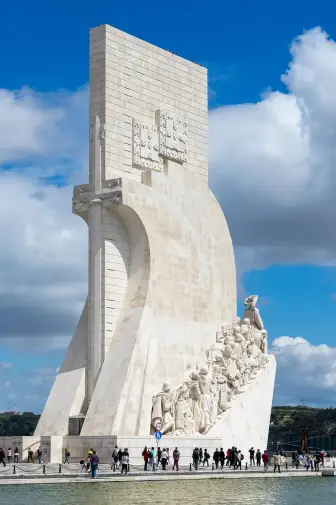
From the tower, follow the waterfront back past the Padrão dos Descobrimentos toward MAAT. Choose an indoor visit according to your interests and available time rather than adding every ticketed attraction to the same day. Return from Belém station to Cais do Sodré, checking the next train; on Sundays, fit in the Jerónimos church first, which opens at 2 p.m.
Day 3 · Art, Campo de Ourique and the river
Spend the morning at Gulbenkian: choose the founder’s collection or the Centro de Arte Moderna (CAM) instead of rushing through both, and take a garden break. The museum and CAM close on Tuesdays; on that day, swap the order of these itineraries or choose the garden, which is free to enter.
The National Tile Museum is closed for renovation, according to its official notice checked on October 5, 2026; do not count on visiting until reopening is confirmed. Continue to Campo de Ourique by public transport or taxi, checking the route from your chosen Gulbenkian exit.
Have an unhurried lunch in Campo de Ourique and visit Casa Fernando Pessoa, at 16–18 Rua Coelho da Rocha, if literature interests you. The house opens Tuesday through Sunday, 10 a.m. to 6 p.m.; on Monday, explore the neighborhood and save the visit for another day. Then take transport to Chiado to avoid another long climb.
From Chiado, walk to the Santa Catarina viewpoint and rest while looking over the Tagus. Head down to Cais do Sodré when you want to continue; the paving needs care, especially when wet, and sunset time changes through the year.
If you still have energy, take the ferry to Cacilhas and have dinner by the river; check upcoming departures and the last return before boarding. For an earlier finish, eat in Cais do Sodré. The crossing and Ginjal walk are an optional extension, especially on departure day, when luggage, checkout and the journey to the airport take priority.

If you stay longer
Day 4 · Sintra
Day trip
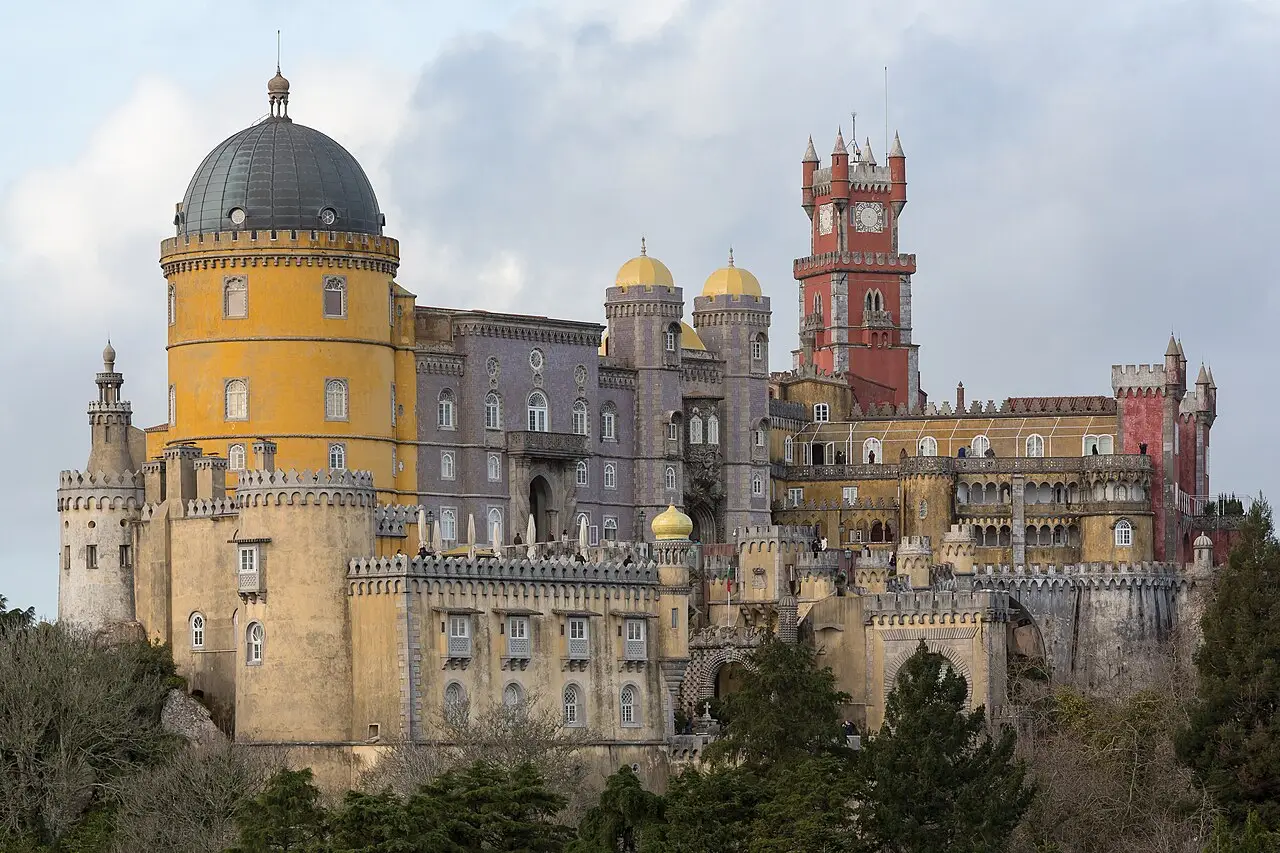
28 km to the northwest; Sintra line train from the Rossio, about 40 minutes, with several departures an hour. Pena Palace, Quinta da Regaleira and the Moorish Castle require timed tickets and a full day; bus 434 has long lines between 10am and 2pm, and the hills are 3 to 5 °C cooler and damper than the city.
Food
 AI illustration
Pastel de nata
Puff pastry with egg custard scorched in an oven at over 300 °C. The recipe came out of the Jerónimos Monastery and has been made since 1837 at Rua de Belém 84, where the pastry is called pastel de Belém. Eat it warm, standing at the counter, dusting on the cinnamon and powdered sugar yourself.
 AI illustration
Bacalhau
North Atlantic fish, salted and dried, eaten in Portugal since the 16th century and prepared in dozens of ways. In Lisbon the main ones are à Brás (shredded with shoestring potatoes and egg), com natas (with cream), à Lagareiro (roasted with olive oil and batata a murro, smashed potatoes) and fried pastéis de bacalhau.
 AI illustration
Sardinha assada
The sardines are grilled over coals and served on a slice of bread, with roasted pepper and boiled potato, and the season runs from June to September, when the fish has fat on it. In June the grills come out into the streets of Alfama, Bica and Madragoa, and the smoke is part of the Santo António festivities.
 AI illustration
Bifana and prego
A bifana is pork loin marinated in garlic and white wine inside a papo-seco roll; a prego is a beef steak with garlic, also on bread. A counter lunch for €4–7, with mustard or piri-piri, and an imperial on the side.
 AI illustration
Grilled fish and amêijoas à Bulhão Pato
Sea bass, sea bream, horse mackerel and white seabream come grilled whole, with olive oil and potatoes. Amêijoas à Bulhão Pato, clams, come with garlic, cilantro, olive oil and lemon, and the name honors Bulhão Pato, a 19th-century Portuguese poet. Fish is ordered by weight, so confirm the price per kilo first.
 AI illustration
Arroz de marisco and cataplana
Arroz de marisco is a brothy rice made with tomato and cilantro, shrimp, clams and crab, and it arrives at the table in the pot for two people. Cataplana, from the south, cooks seafood and pork in a closed copper pan. These are dishes for a long meal, usually €18–28 per person.
 AI illustration
Ginjinha
A sour cherry liqueur with sugar and brandy, drunk from a small glass, with or without the fruit inside. Drink it standing at the tiny counters, like the one on Largo de São Domingos, open since 1840, at €1.50–2 a glass and at any hour of the day.
 AI illustration
Imperial and regional wine
An imperial is a 20 cl glass of draft beer: ordering “uma imperial” costs €1.50–2.50. For wine, look for the whites of Colares and Bucelas, both from the Lisbon region, and Moscatel de Setúbal at the end of the meal; house wine in a jug runs about €6–12.
Day trips
Sintra
28 km to the northwest; Sintra line train from the Rossio, about 40 minutes, with several departures an hour. Pena Palace, Quinta da Regaleira and the Moorish Castle require timed tickets and a full day; bus 434 has long lines between 10am and 2pm, and the hills are 3 to 5 °C cooler and damper than the city.
Cascais, Estoril and Guincho
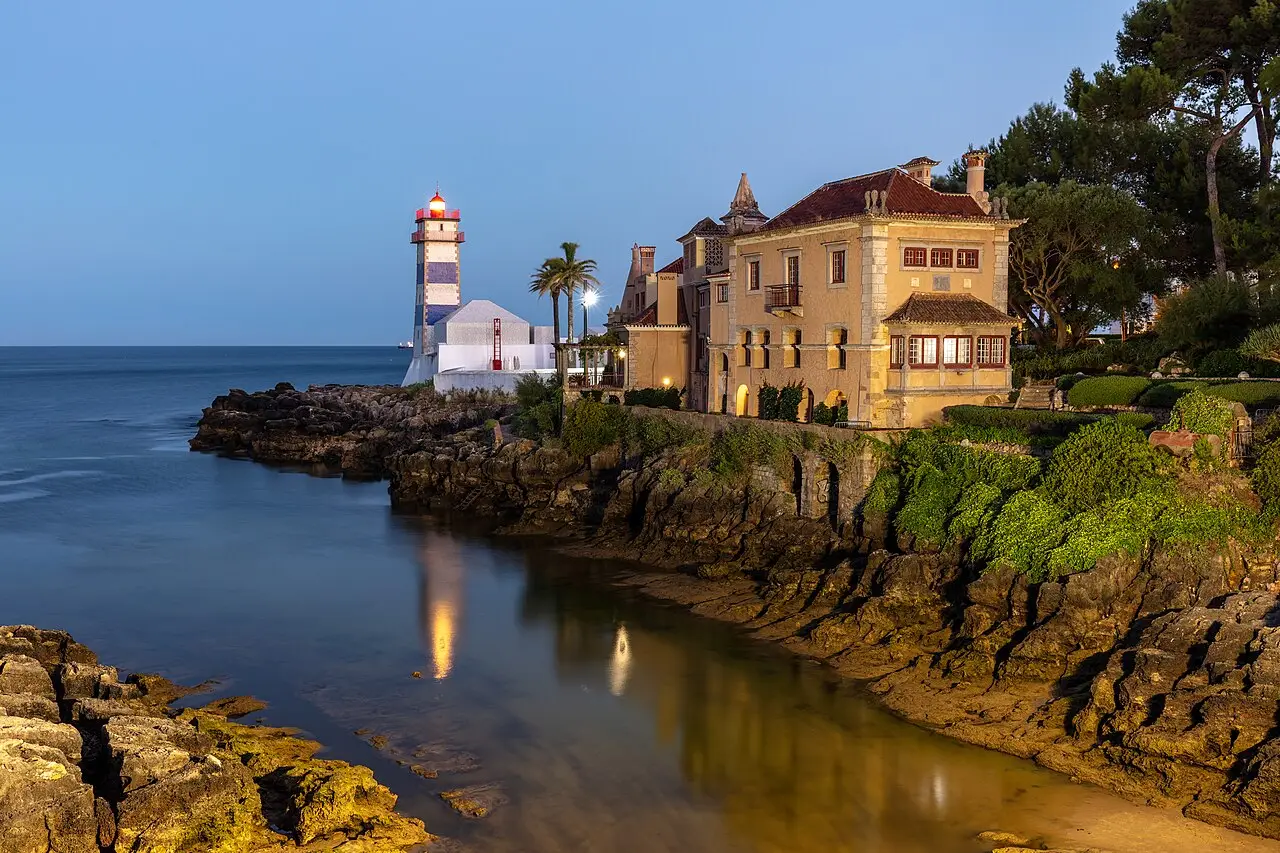
About 30 km to the west. The train leaves from Cais do Sodré, follows the river and then the coast, and takes 33 minutes to Cascais, with stops at Carcavelos and Estoril for city beaches. Cascais has a marina, the Paula Rego museum and the Boca do Inferno; Guincho is 20 minutes away by bus, with strong wind and currents.
Arrábida, Sesimbra and Setúbal
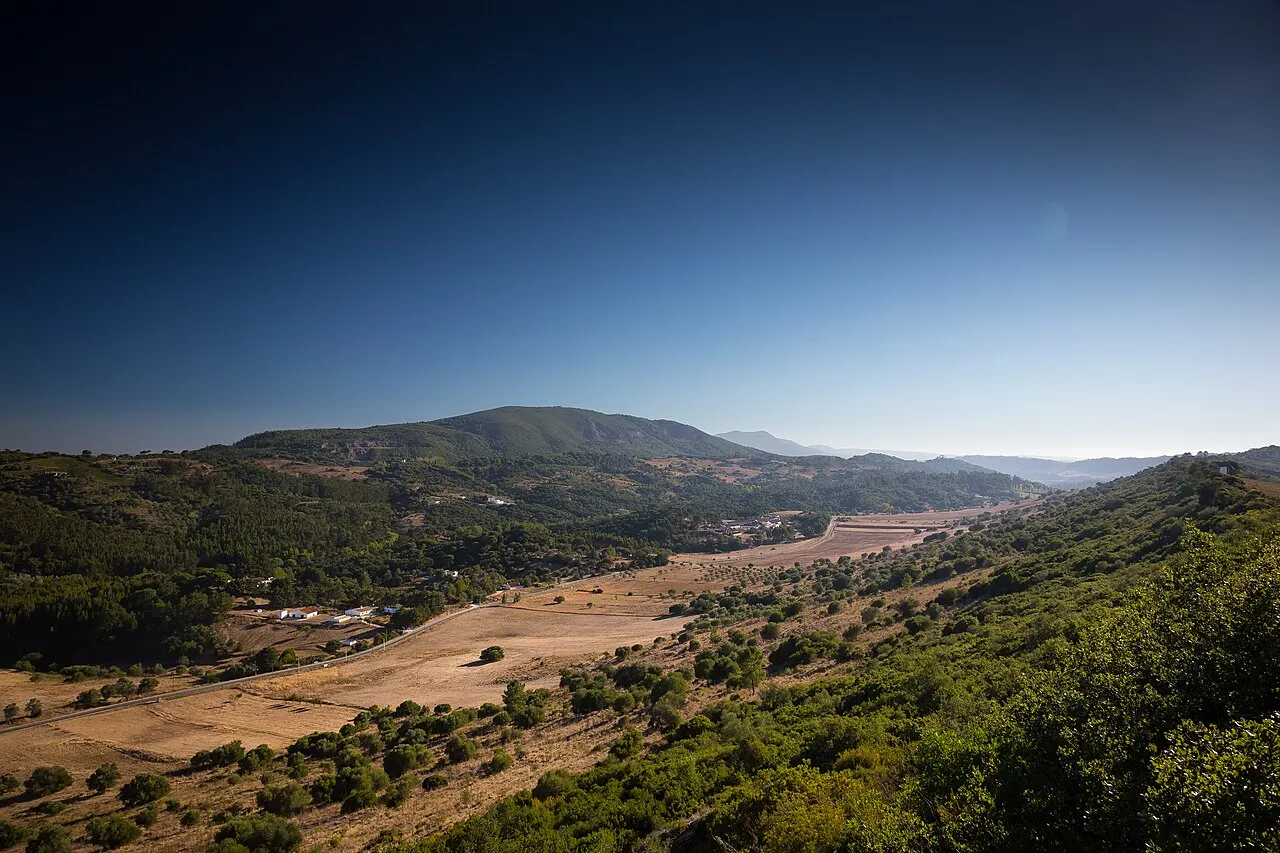
40 to 50 km south, 1 hour to 1 hour 15 minutes by car over the 25 de Abril Bridge, or the Fertagus train to Setúbal. Calm-water beaches in the Arrábida hills (Portinho, Galapinhos, with limited access in summer), grilled fish in Sesimbra and boats that watch the resident bottlenose dolphins in the Sado estuary.
Where to begin
Baixa, Alfama and the castle
Start at 9am at the Terreiro do Paço, go through the Rua Augusta Arch and walk up Rua Augusta to the Rossio, a flat 15-minute route that gives you the scale of the Pombaline reconstruction.
Belém and the river line
Plan Belém for a day other than Monday, when Jerónimos closes. Take tram 15E or a train from Cais do Sodré, check service, and allow time for waiting and walking from the stop to the monument; traffic and lines affect arrival time.
Art, Campo de Ourique and the river
Spend the morning at Gulbenkian: choose the founder’s collection or the Centro de Arte Moderna (CAM) instead of rushing through both, and take a garden break. The museum and CAM close on Tuesdays; on that day, swap the order of these itineraries or choose the garden, which is free to enter.
Money
The currency is the euro, and cards work even at market stalls, but carry €20–30 in small notes for kiosks, tips and old-school petiscos places. 2026 reference prices: a bica at the counter €0.80–1.20 (at a sidewalk table it can cost double), an imperial €1.50–2.50, a pastel de nata €1.40–1.80, a dish of the day with soup €9–13, dinner with wine €20–35 per person, a metro ride €1.90, a hostel bed €25–45, a three-star hotel €110–200 in high season. The couvert (bread, olives, butter, cheese) arrives without being ordered, costs €2–6 and can be sent back with no awkwardness, because it isn't a courtesy of the house, however much it looks like one in your first two days. Tipping isn't mandatory, and nobody expects a percentage: round up, or leave 5% to 10% on a long dinner. The municipal tourist tax is €4 per person per night, from age 13, with a maximum of 7 nights per stay, and it's almost always charged separately, at check-in. Withdraw cash at bank Multibanco machines and avoid the independent foreign-brand machines on tourist streets, which charge a commission and offer conversion to your home currency: always decline that conversion and choose to pay in euros.
Getting there and around
The airport is inside the city, 7 km away
Humberto Delgado Airport (LIS) sits inside the city, 7 km from downtown, which shortens arrival a lot. The red metro line leaves Terminal 1 and reaches Saldanha or Alameda in 20 to 25 minutes for €1.90. Taxi, Uber, Bolt or FreeNow cost €15 to 25 to the Baixa, more at peak hours, and the apps tend to come out cheaper than a street taxi. The metro has four lines and 56 stations and runs from 6:30am to 1am. The Circular Line extension between Rato and Cais do Sodré is under construction, with new Estrela and Santos stations and an opening planned for 2027. Carris runs the buses, the funiculars, the Santa Justa Lift and six elétrico lines, as lisboetas call the tram: the historic 28E, the modern 15E to Belém, the 12E, the 18E, the 24E and the 25E. After the Glória accident, on September 3, 2025, the funiculars stopped, and only the Graça one started running again, on April 30, 2026; the Glória, Lavra and Bica funiculars, and also the Santa Justa Lift, were still closed in September 2026, with no confirmed reopening date. CP trains link Cais do Sodré to Cascais (33 min), the Rossio to Sintra (40 min), and Santa Apolónia and Oriente to Porto (2 hours 50 minutes on the Alfa Pendular). Transtejo boats cross the river from Cais do Sodré to Cacilhas in 10 minutes and from the Terreiro do Paço to Barreiro.
The Navegante card costs €0.50 and is made of paper
Buy the Navegante Ocasional card at the first machine you see (€0.50, paper and rechargeable): in 2026, a single metro or Carris ride costs €1.90 and gives you 60 minutes of travel, and the Carris/Metro day ticket is €7.25, or €10.35 with the boat to Cacilhas and €11.40 with suburban trains. If you're staying a month, buy the municipal Navegante pass (€30) or the metropolitan one (€40), among the cheapest in Western Europe, and with it the Graça funicular is free. Buying a ticket on board the tram costs much more. You can do almost everything on foot, but nearly always uphill, and 1.5 km on the map can turn into 30 real minutes. The free municipal Castelo elevator saves you the whole climb: it goes up from Rua dos Fanqueiros to Rua da Madalena and, in a second stretch, from the Mercado do Chão do Loureiro to Costa do Castelo. Bikes only with electric assist; the city's GIRA bikes work well along the riverfront, which is flat and has a continuous bike lane from Belém to the Parque das Nações.
Safety
Lisbon is among the European capitals with the least violent crime, and you can walk calmly at night in most of the center; the real risk is the pickpocket. He works where there's crowding and distraction: on the 28E and 15E trams, on the metro's blue and green lines at rush hour, in the Rossio, on the Praça do Comércio and outside the Cais do Sodré bars in the early hours, so wear your backpack in front on the tram and don't leave your phone on an outdoor table. On Rua Augusta, in Bairro Alto and near Cais do Sodré, sellers quietly offer drugs to foreigners; the product is almost always fake, and the right answer is to keep walking with a “não, obrigado.” Also watch for three smaller scams: independent ATMs with unfavorable currency conversion, taxis that don't turn on the meter at the airport (ask for the meter or use an app) and restaurants that bring an expensive couvert and add it to the bill. The most frequent physical danger is wet calçada on a slope. On the beaches along the Cascais train line and at Guincho, respect the flags, because the Atlantic current is strong and the water stays at 17–19 °C even in August.
Etiquette tips
It costs less at the counter
A bica can cost €0.80 at the counter and double at a sidewalk table. Price lists by zone are posted and legal, and having your coffee standing up is lisboetas' daily habit.
The couvert can be refused
Bread, olives, butter and cheese appear on the table without being ordered and go on the bill. Saying “não, obrigado, pode levar” right at the start is common and nobody takes offense.
Silence when fado is sung
When the fado is announced, everyone goes quiet: no cutlery, no conversation, no phone. Talking, filming with flash or walking in in the middle of a fado is the serious local faux pas, so wait for the break.
Alfama: a lived-in neighborhood, quiet after 11pm
The little stairways, the hanging laundry and the open doors belong to the people who live there. After 11pm, lower your voice, and don't photograph elderly people at their windows without speaking to them first, because it's frowned upon.
Greet people when you walk in
Say bom dia or boa tarde when you walk into the bakery, the elevator, the waiting room and the taxi. Walking in without a word is the gesture people notice, more than any grammar mistake.
Don't start the conversation in Spanish
In Lisbon people speak Portuguese, and opening a conversation in Spanish ignores a difference the Portuguese take seriously for historical reasons. English handles almost everything in restaurants and on transit, and three words of Portuguese already change the tone of the conversation.
Mistakes to avoid
Forty minutes in line for the 28E
Waiting for the 28E at Martim Moniz in mid-morning. The line often reaches 40 minutes, and you still ride standing.
Polished limestone pavement: falls on slopes are the most common injury
Wearing smooth soles. The calçada portuguesa is limestone polished by millions of footsteps, it gets slippery with rain or morning dew, and a fall on a slope is the most common injury among visitors: locals walk down the streets sideways, and it's worth doing the same.
Single tickets instead of the Navegante
Paying for each ride on the spot, on board or at the ticket office, without loading the €0.50 paper card. With it a ride costs €1.90 and the day ticket €7.25, and it covers metro, buses and trams.
Sintra in a morning
Saving Sintra for a morning. It's 40 minutes by train plus bus lines and timed tickets at the palaces: either you set aside the whole day, or you pick a single monument and accept not seeing the others.
Glória funicular closed since the 2025 accident
Counting on the funiculars to climb the hills. The Glória funicular has been closed since the accident of September 3, 2025, and new equipment is unlikely to be ready before 2029. The Lavra and Bica funiculars and the Santa Justa Lift were also closed in September 2026, and only the Graça funicular went back into service, since April 30, 2026: always have a plan on foot.
Useful phrases
Bom dia / boa tarde
Bom dia until lunch, boa tarde after; you say it when walking into any shop or café.
Se faz favor
Please, and also the way to call the waiter, without raising your hand or snapping your fingers.
Um café, se faz favor
A short espresso. In Lisbon people also say uma bica; if you want it with more water, ask for an abatanado.
A conta, se faz favor
The check only comes when you ask for it, and nobody will rush you to free up the table.
Não, obrigado, pode levar
The phrase for refusing the couvert that arrives at the table without being ordered and gets charged.
Obrigado / obrigada
The word agrees with the speaker, not the listener: a man says obrigado, a woman says obrigada.
Districts
Baixa Pombalina and Chiado
The grid rebuilt after 1755, between Rossio and the Terreiro do Paço, with streets named after trades (Douradores, Sapateiros, Prata). Chiado climbs to the west; it is the area of bookshops, theaters and old shops, and was rebuilt by Siza Vieira after the 1988 fire.
Alfama and Mouraria
The two neighborhoods the earthquake spared, with alleys, stepped lanes and hanging laundry; they concentrate fado houses, the Fado Museum and the Santo António festivities in June. Mouraria is today one of the neighborhoods with the most immigrants in the city, with Chinese, Nepalese, Bangladeshi and Indian businesses around Martim Moniz.
Graça and São Vicente
A hill to the northeast, with the two best public miradouros (Graça and Senhora do Monte), the National Pantheon and the Feira da Ladra, a street market on Tuesdays and Saturdays at Campo de Santa Clara. A residential area, with bakeries and tascas that are still neighborhood places.
Bairro Alto and Príncipe Real
Bairro Alto is a 16th-century street grid that sleeps by day and fills with people at night, with tiny bars and drinking in the street until 2am. Príncipe Real, just above, has the garden with the century-old cedar, design shops and the city's gay life.
Cais do Sodré and Santos
A former port area of sailors, today home to Pink Street, the Time Out Market (1882 as the Mercado da Ribeira, reconverted in 2014), the train station for Cascais and the pier for the boats to Cacilhas. Santos and Madragoa, to the west, keep streets of low houses and neighborhood restaurants.
Belém and Ajuda
6 km west of the center, along the river: the Jerónimos, the Belém Tower, the Padrão dos Descobrimentos, MAAT, the Coach Museum and the Presidency of the Republic. Ajuda, on the hillside, has the National Palace and the Botanical Garden from 1768.
Parque das Nações
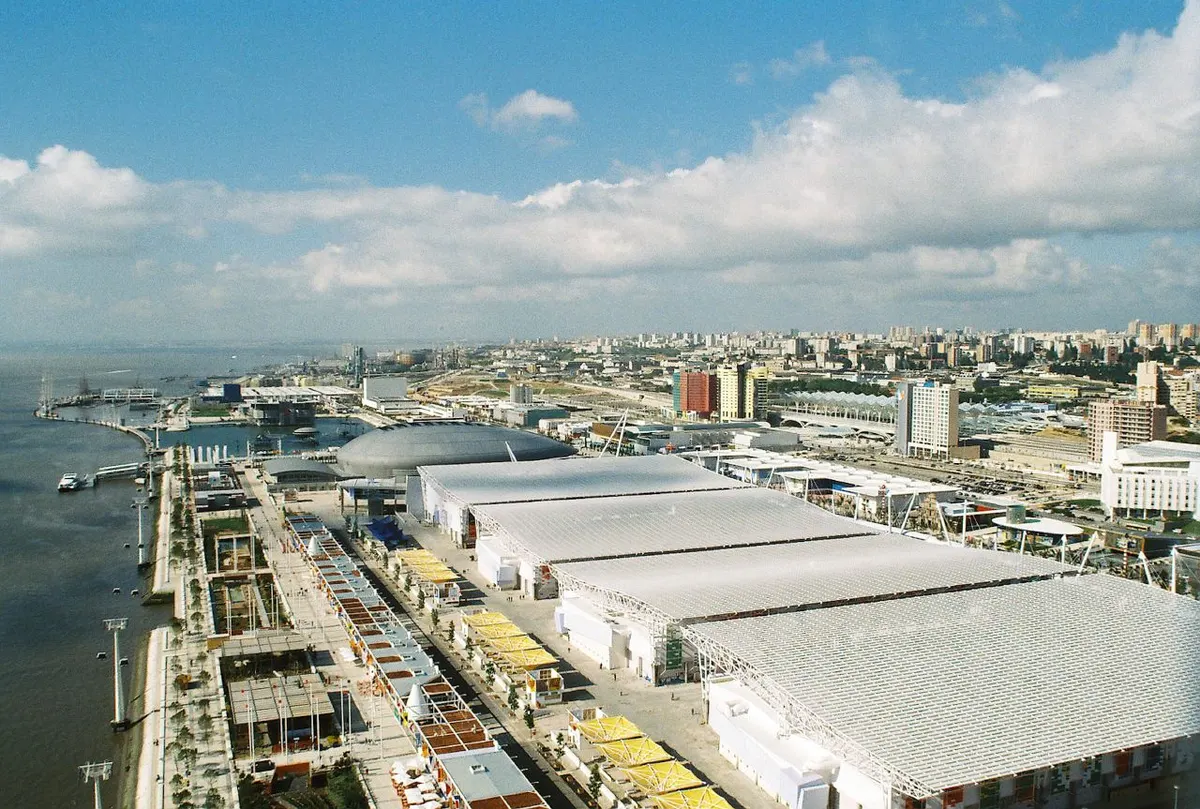
The 5 km of waterfront redone for Expo 98, to the east: the Oceanário, the Altice Arena, a cable car, Calatrava's architecture at the Gare do Oriente and a flat promenade along the Tagus. With no hills and no old houses, it suits families on weekends and anyone who wants to walk without a slope.
Alcântara, Marvila and Beato
The former industrial areas at both ends: to the west, LX Factory and the Museu do Oriente under the 25 de Abril Bridge; to the east, warehouses in Marvila and Beato converted into craft breweries, galleries and tech offices, with the Hub Criativo do Beato in a former military supply depot.
History
138 BC · Olisipo joins Rome
The legions of Decimus Junius Brutus use the Tagus port as a base for their campaigns in the northwest of the peninsula. Under Caesar, the settlement becomes a Roman municipium; the Roman Theater, in Alfama below the castle, is today a branch of the Museu de Lisboa, and the Roman Galleries of Rua da Prata still lie beneath the Baixa.

714–1147 · Muslim al-Ushbuna
Ruled from Córdoba and later by the Almoravids, the city gains the Moorish wall and the layout of alleys that still defines Alfama and Mouraria. The name Alfama comes from al-hamma, the hot springs.
1147–1255 · Christian conquest and capital
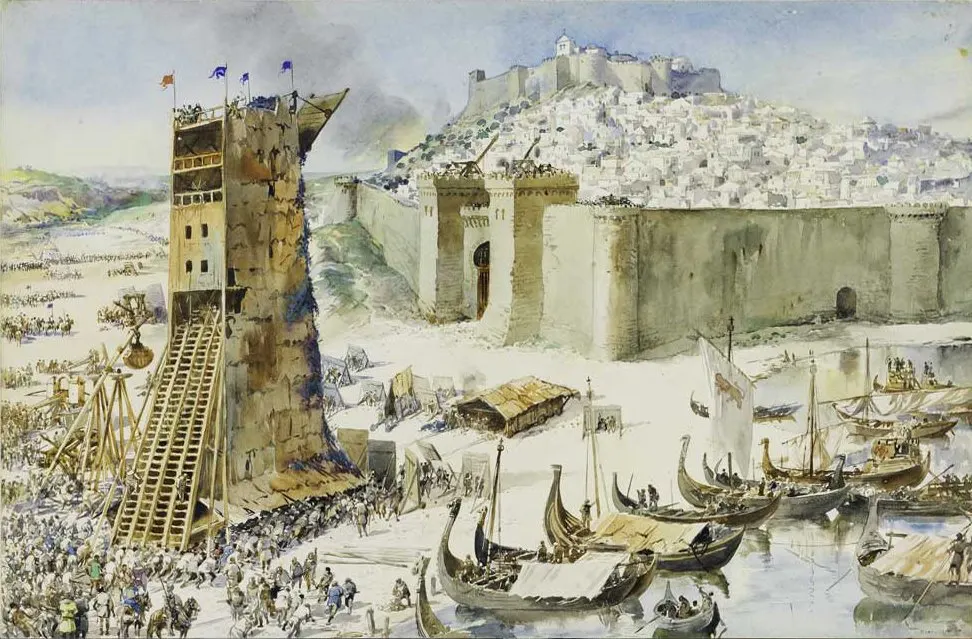
Afonso Henriques takes the city on October 25, 1147, after a 17-week siege, with English, Flemish and German crusaders diverted from the Second Crusade. In 1255, Afonso III moves the court from Coimbra to Lisbon, closer to the sea.
1497–1498 · The route to India
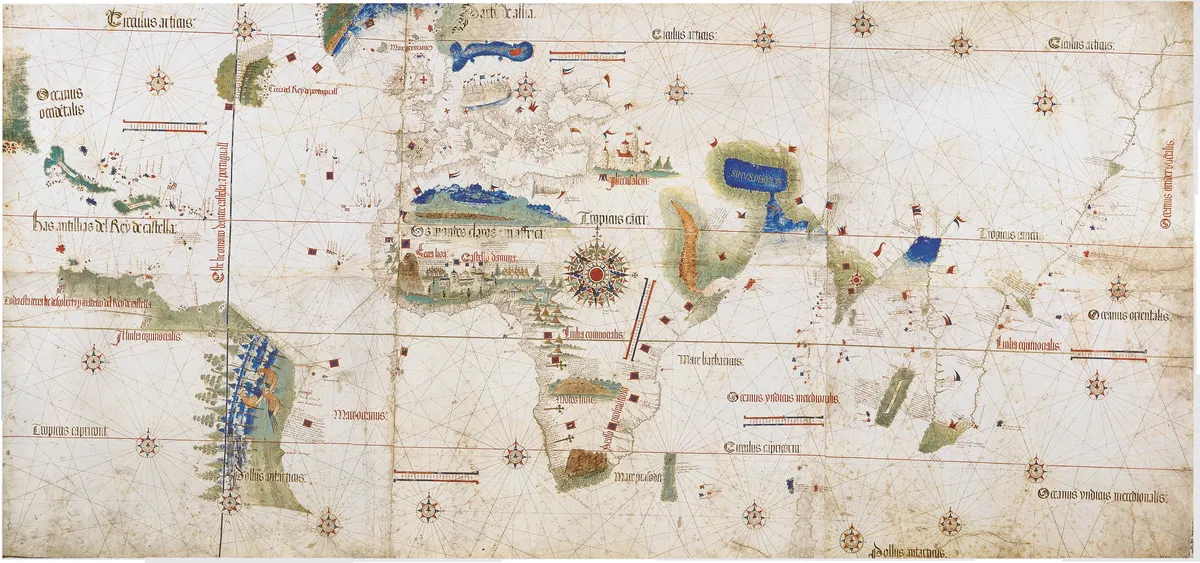
Vasco da Gama sets out from Belém in July 1497 and reaches Calicut in May 1498. Pepper and cinnamon start being cleared at the Casa da Índia, on the Terreiro do Paço, and they pay for the Jerónimos and the Belém Tower.
Nov 1, 1755 · Earthquake, tsunami and fire
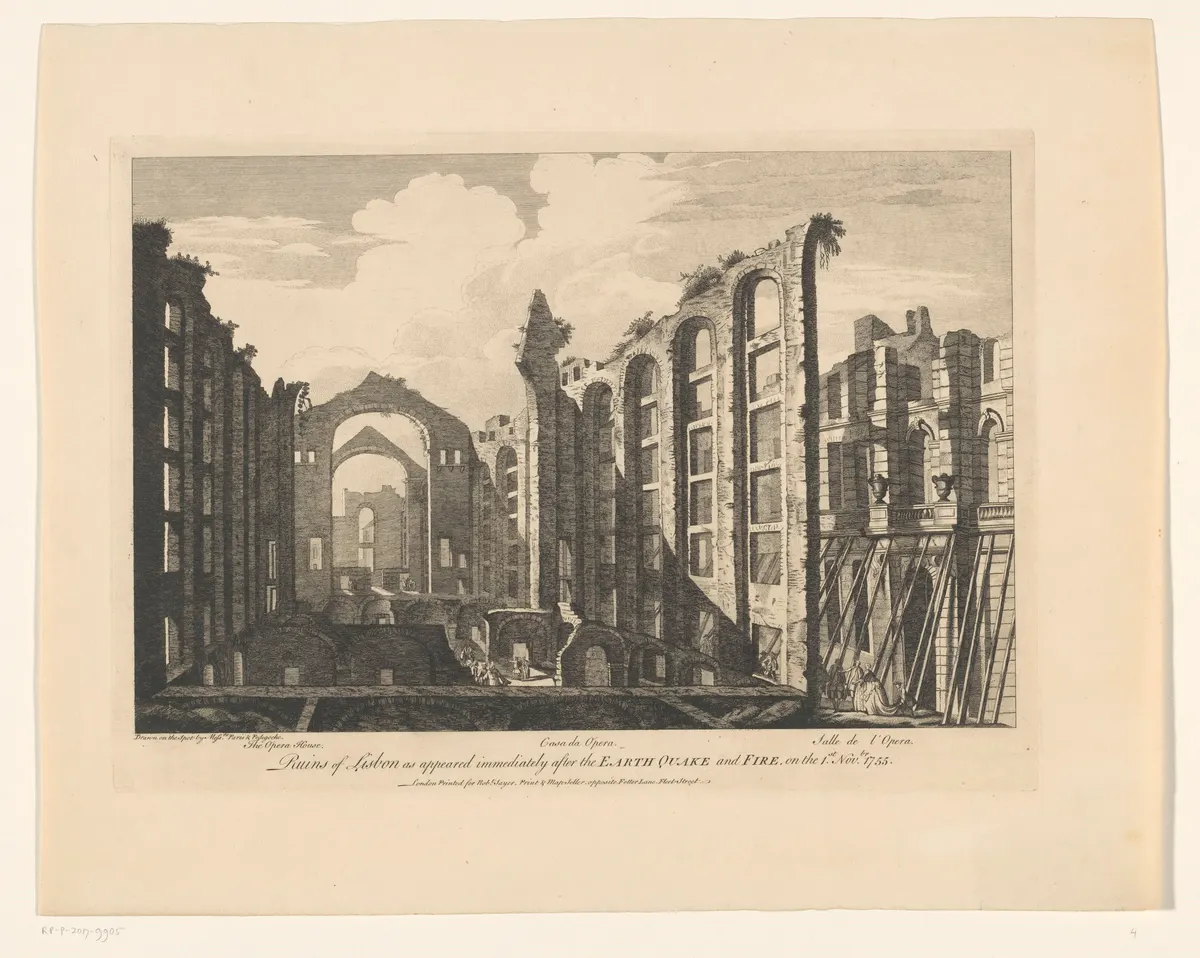
An earthquake of estimated magnitude 8.5, on All Saints' Day, followed by a tsunami and three days of fire, kills tens of thousands and brings down the center. The Marquis of Pombal rebuilds the Baixa on a grid with the gaiola pombalina, one of the world's first earthquake-resistant structures.
1908–1910 · Regicide and Republic
King Carlos I and Crown Prince Luís Filipe are shot dead in the Terreiro do Paço on February 1, 1908. On October 5, 1910, the Republic is proclaimed from the balcony of the Paços do Concelho, the city hall on Praça do Município.
1933–1974 · Estado Novo
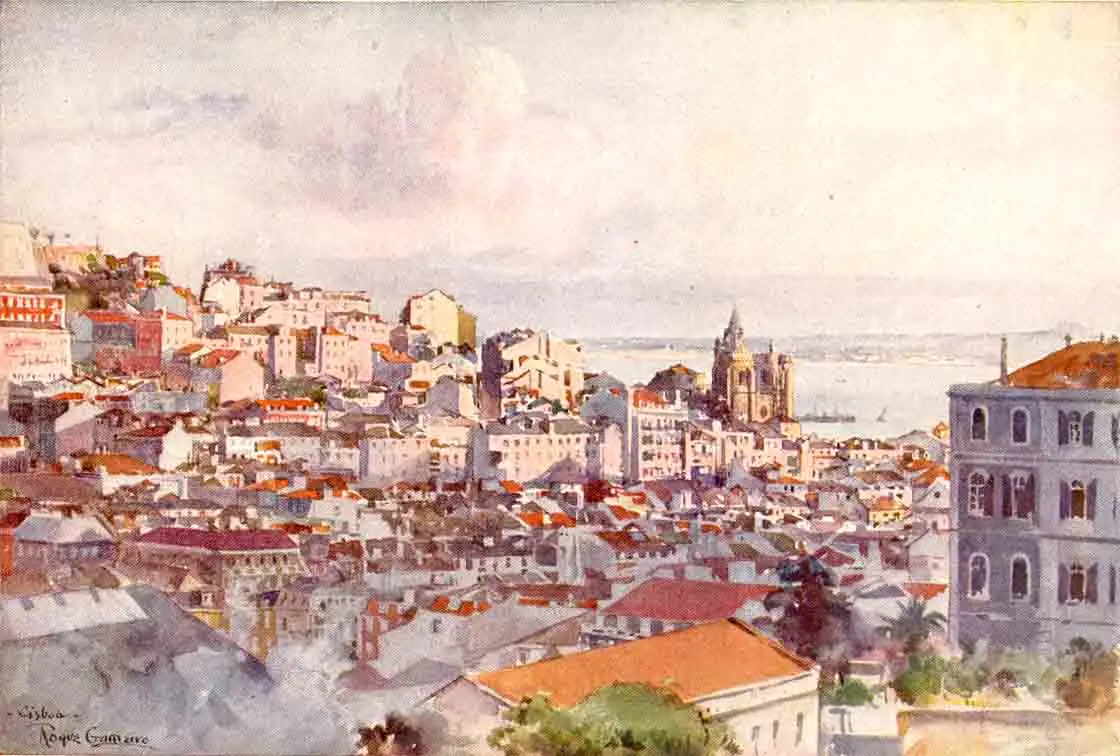
Salazar's dictatorship concentrates public works in the capital: the Padrão dos Descobrimentos (1960), the bridge over the Tagus (1966), neighborhoods of low-cost housing. At the same time there is censorship, a political police and thirteen years of colonial war.
Apr 25, 1974 · Carnation Revolution
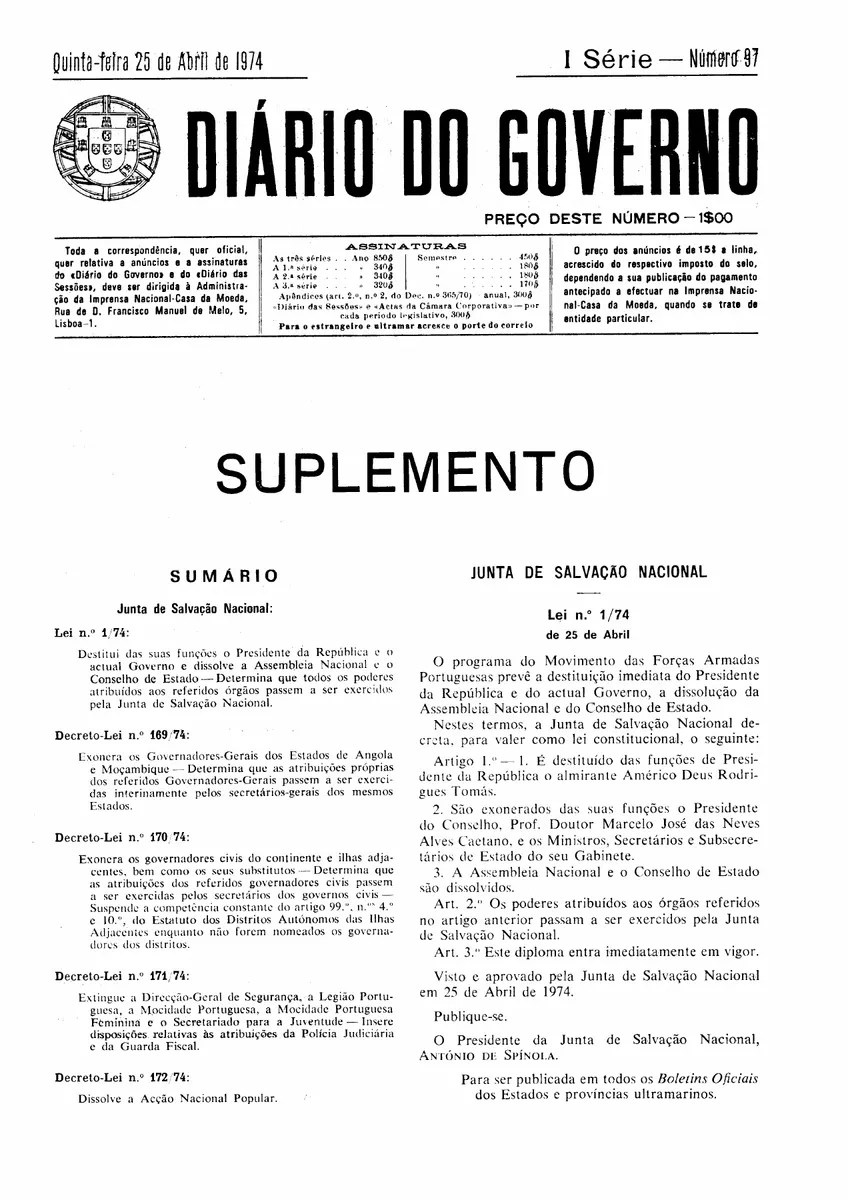
A military coup with almost no shots fired topples the regime, and Marcelo Caetano surrenders in Largo do Carmo. The carnations that became the symbol of the revolution were handed to the soldiers by Celeste Caeiro, who worked at a restaurant on Rua Braamcamp: they were the flowers the restaurant had bought to celebrate its own anniversary. Over the next two years about half a million retornados arrive from the former African colonies.
1998 · Expo and the city turning east
The World Exposition turns 5 km of industrial waterfront into the Parque das Nações and opens the Oceanário and the Vasco da Gama Bridge, which at 17.2 km was the longest in Europe at the time. Portugal had joined the EEC in 1986 and adopts the euro in 2002.
2007–2019 · Treaty, troika and tourism boom
The Treaty of Lisbon is signed at the Jerónimos on December 13, 2007. After the 2011–2014 financial bailout, golden visas, short-term rentals and low-cost flights multiply visitors, empty central neighborhoods and send housing prices soaring.
Sep 3, 2025 · Glória Funicular accident
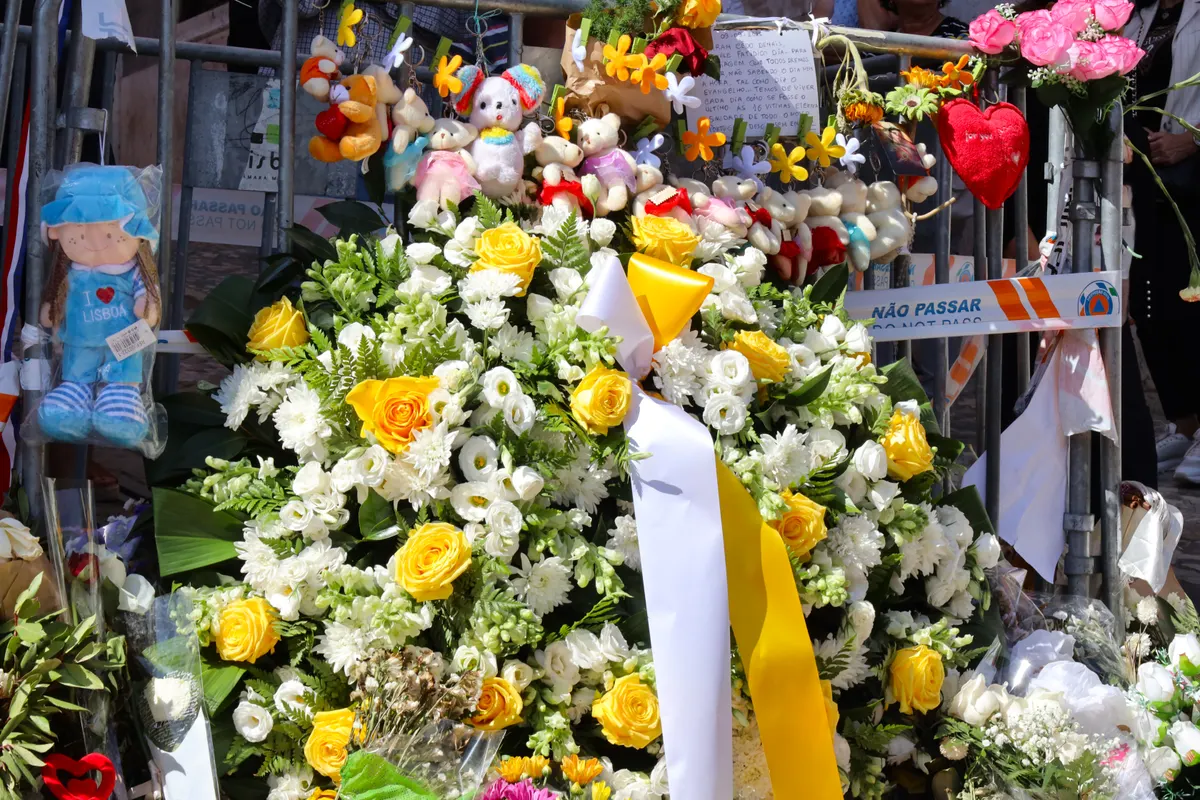
The snapping of the cable on the Calçada da Glória funicular kills 16 people and injures more than 20. In October 2026, the funicular remains closed. GPIAAF expects its final report around the end of the first quarter of 2027; Carris expects a new system to enter service in 2029, subject to design, authorizations, construction and certification.
Complete history
It started as a port
Lisbon was born as a port, thanks to a rare feature of the Tagus. The river opens here into a wide, sheltered basin, the Mar da Palha, deep enough for large ships and with a bar that can be crossed at almost any tide, something with no equivalent on the Atlantic coast between Gibraltar and Galicia. Phoenicians and Carthaginians used the site as a stopover; in 138 BC, the legions of Decimus Junius Brutus made it a logistics base, and under Julius Caesar the settlement received the status of a Roman municipium under the name Felicitas Julia Olisipo. The Roman Theater is in Alfama, on Rua de São Mamede, on the slope below the castle and near the Sé, and is a branch of the Museu de Lisboa, open Tuesday to Sunday, from 10am to 6pm. Beneath the Baixa lie the Roman Galleries of Rua da Prata and fish-salting tanks; the galleries open only for guided tours a few times a year.
Between 714 and 1147 it was al-Ushbuna
Between 714 and 1147 the city was al-Ushbuna, tied to Córdoba and later to the Almoravids, with a wall, a main mosque atop the hill and a web of alleys climbing from the river. The Christian conquest, in October 1147, was carried out by Afonso Henriques with a fleet of crusaders from northern Europe who were on their way to the Holy Land and stopped here; construction of the Sé began that same year, over the old main mosque, with castle-like walls because the temple also served as a defense. In 1255 the court moved from Coimbra to Lisbon, and the city became both political capital and trading port with the Mediterranean and the North.
The world's distribution center
In the 15th and 16th centuries, Lisbon became the world's distribution center. After Ceuta (1415) and Vasco da Gama's voyage (1497–1498), the Casa da Índia, on the Terreiro do Paço, took control of Asian spices, and later of Brazil's gold and sugar; the Manueline style (ropes, armillary spheres, seaweed carved in stone) is the architectural mark of that money. That wealth was also built on slavery: in the 16th century, about a tenth of the inhabitants were enslaved Africans, and the Mocambo neighborhood, today Madragoa, keeps the name of that presence. The Inquisition burned people in the Rossio, and the expulsion and forced conversion of the Jews, from 1496 on, emptied the Judiaria that stood where the Baixa is today.
The earthquake of November 1, 1755: ten minutes that brought down the city
On November 1, 1755, the city enriched by spices collapsed in ten minutes: the earthquake, the tsunami that surged up the Tagus and the fire that burned for three days killed tens of thousands of people and destroyed churches, archives, the Paço da Ribeira and the royal library. The reconstruction led by the Marquis of Pombal was the largest urban planning operation in 18th-century Europe: identical, numbered streets, standardized buildings, sewers and the gaiola pombalina, a timber frame of St. Andrew's crosses designed to withstand earthquakes. The 19th century brought Avenida da Liberdade (1879) and the neighborhoods to the north; the 20th brought the 1908 regicide in the Terreiro do Paço, the Republic of 1910, forty years of the Estado Novo and, on April 25, 1974, the revolution that ended both the dictatorship and the empire. The arrival of half a million retornados from Angola and Mozambique, followed by Cape Verdean, Guinean and São Tomé immigration, reshaped the demographics of the metropolitan area.
Expo 1998 and the end of the bailout in 2014
Today's Lisbon was shaped by two recent dates: 1998, when Expo turned the city toward the river and the east, and 2014, when the end of the financial bailout coincided with the boom in tourism and short-term rentals. With millions of visitors arriving each year, the historic center lost residents to short-stay apartments, and the price of housing became the main local political issue. In 2026 three projects define the map: the extension of the metro into a Circular Line; the decision, validated in March 2026, to build the new Luís de Camões airport at the Campo de Tiro de Alcochete, with operations scheduled for 2034; and the rebuilding of the Ascensor da Glória, destroyed in the accident of September 3, 2025, which killed 16 people and whose replacement is not expected to open until 2029.
The Sé, built on the site of the mosque after the 1147 conquest, looks like a fortress because it also served as one.
Geography and shape of the city
The estuary and the hills
Lisbon occupies the north bank of the Tagus estuary, at 38.7° north latitude, with the Atlantic about 10 km to the west. The city grew on a series of limestone and basalt hills (the traditional count is seven, but there are more) separated by narrow valleys, and the difference in height between the river and the Miradouro da Senhora do Monte is a little over 110 m in less than 1.5 km: any route on the map takes longer than it looks.
Three layouts and two bridges
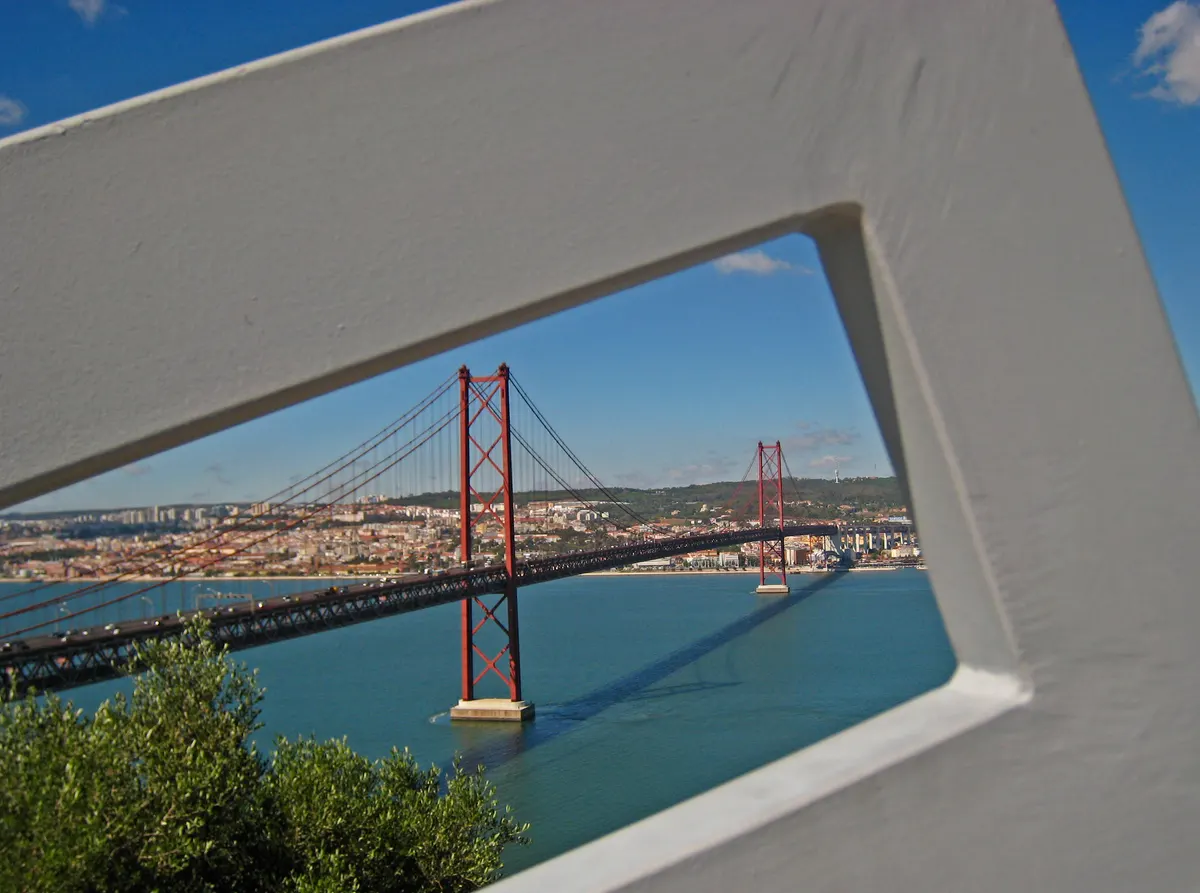
The center has three layers of street plan stacked on top of one another: the medieval and Islamic alleys that survived 1755 (Alfama, Mouraria, Castelo), the Pombaline grid built over the marshy valley of the Baixa, and the 19th- and 20th-century expansion to the north, with Avenida da Liberdade (1.1 km, opened in 1879) as its spine and Ressano Garcia's Avenidas Novas at its end. The river is crossed by the 25 de Abril Bridge (2,278 m of suspended deck, opened in 1966) and, 12 km to the east, by the Vasco da Gama Bridge (17.2 km, 1998).
Sun, nortada, calçada and Monsanto
The climate is hot-summer Mediterranean (Csa), with 2,700 to 2,800 hours of sunshine a year and rain concentrated between October and March; the nortada blows from the northwest on summer afternoons and is the reason the city is more bearable than Seville in August. The streets are paved with calçada portuguesa, white limestone and basalt laid by hand, beautiful and slippery. Monsanto, to the west, has about 10 km² of forest planted in the 1930s and is the country's largest urban park.
When it was finished, in 1519, Belém Tower was surrounded by water, and it was the build-up of sand, combined with the 1755 earthquake, that joined it to dry land.
Culture
Fado was born around 1820
Fado was born in Lisbon around 1820, among sailors, prostitutes and port workers in Alfama, Mouraria and Bairro Alto, and has been on UNESCO's Intangible Heritage list since 2011. The fadista sings accompanied by musicians playing the 12-string Portuguese guitar and the viola, and the room falls completely silent: when the fado is announced, the lights go down and the cutlery stops. Amália Rodrigues (1920–1999) took the genre abroad and lies in the National Pantheon, and Carlos do Carmo, Mariza, Camané, Carminho and Gisela João have kept it going. To hear it, choose between the fado houses of Alfama and Madragoa, with dinner and a set price, and the neighborhood associations, where fado is free and rawer.
Pessoa's city
Lisbon is a city of very specific literature: Fernando Pessoa (1888–1935) worked as a commercial correspondent in the Baixa and left in The Book of Disquiet an exact inventory of the routine of those streets; José Saramago, Nobel laureate in 1998, recreated the city of 1936 in The Year of the Death of Ricardo Reis and is buried next to the Casa dos Bicos. In film, Wim Wenders' Lisbon Story (1994) captured the city before the Expo, and in the 1990s Pedro Costa filmed the Fontainhas neighborhood and Cape Verdean immigration. The city also has the National Museum of Ancient Art (with the Saint Vincent Panels and Bosch's Temptation of St. Anthony) and a tradition of azulejo you can read on ordinary facades, not just in museums.
Suburban music, nightlife, soccer and the Web Summit
The metropolitan area's contemporary music comes largely from the suburbs: batida, kuduro and afro-house out of Amadora, Seixal and Cacém, with the Príncipe Discos label, DJ Marfox, Nídia and the legacy of Buraka Som Sistema. At night, the city heads to Bairro Alto, with small bars and drinking in the street, to the clubs of Cais do Sodré, open until morning, and to Alcântara. In soccer, Lisbon is split between Benfica (Estádio da Luz, about 64,000 seats) and Sporting (Alvalade, about 50,000), and the games between the two bring whole neighborhoods to a halt. In November, the Web Summit, at the Altice Arena since 2016, brings in tens of thousands of people and helps explain why so many tech workers have moved to the city.
The tomb of Saramago, winner of the 1998 Nobel Prize in Literature, isn't in a cemetery: he is buried next to the Casa dos Bicos, in the center of the city.
Festivals and events
 AI illustration
Santo António and the Santos Populares
June 12 and 13, with arraiais in Alfama, Mouraria, Bica, Graça and Madragoa throughout the month: grilled sardines, wine, street dances and manjericos with quadras stuck in. On the night of the 12th the Marchas Populares parade down Avenida da Liberdade, with the neighborhoods competing in choreography and costume, and the 13th is a municipal holiday.
 AI illustration
Festas de Lisboa
Throughout June, the city program brings together concerts, open-air cinema, the Santo António weddings at the Sé and hundreds of neighborhood events, almost all at night and in the street.
NOS Alive
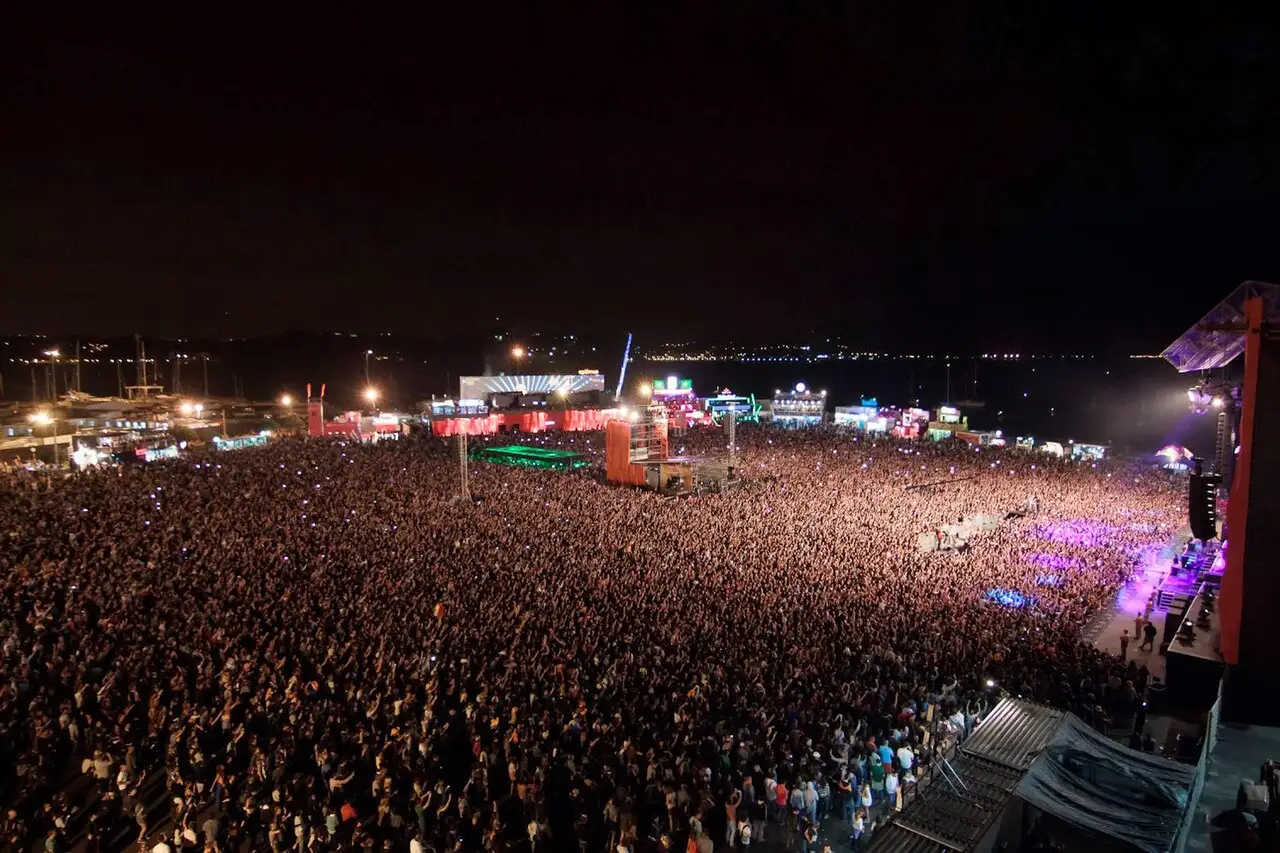
Three days in July on the Passeio Marítimo de Algés, by the Tagus, with international headliners; tickets sell out months ahead and there is a direct train from Cais do Sodré. The same month brings Super Bock Super Rock, and in June of even years it is Rock in Rio Lisboa's turn.

Web Summit
November, at the Altice Arena and FIL, in Parque das Nações: one of the largest tech conferences in the world, with tens of thousands of participants. During that week hotels in the center sell out and prices rise visibly.
 AI illustration
IndieLisboa and DocLisboa
Festivals of independent film (May) and documentary (October), with screenings at Cinema São Jorge, Culturgest and the Cinemateca. April brings Peixe em Lisboa, ten days of Portuguese cooking at the Pátio da Galé, on Praça do Comércio.
Books and films
The Book of Disquiet, Fernando Pessoa (Bernardo Soares)
Written between 1913 and 1935 and published only in 1982, it maps the Baixa from the offices of Rua dos Douradores. The city appears as routine, window and fog, rarely as monument.
Lisbon Story, Wim Wenders (1994)
A sound engineer crosses Lisbon recording trams, stairways and children's voices. The film preserves on screen the city just before Expo 98 and mass tourism, with Madredeus playing inside the story itself.
Busto, Amália Rodrigues (1962)
The album on which Amália sings poems by Pedro Homem de Melo set to music by Alain Oulman, and that defines modern fado. It explains why, in Lisbon, an entire room falls silent before someone starts to sing.
Frequently asked questions
Lisbon: How do you get from the airport to downtown?
The red metro line leaves Terminal 1 and reaches Saldanha or Alameda in 20 to 25 minutes for €1.90.
Lisbon: How do you do a day trip to Sintra?
Sintra is 28 km northwest, about 40 minutes by train from the Rossio. Pena, Regaleira and the Moorish Castle require timed tickets and a full day; bus 434 has long lines between 10am and 2pm.
Lisbon: Do you need cash, or is a card enough?
A card is almost always enough, since it works even at market stalls, but carry €20 to 30 in small notes for kiosks, tips and old-school petiscos places.
Lisbon: What's the climate like throughout the year?
The climate is Mediterranean, with a dry summer: January has highs of 15°C and lows of 8°C, and July and August run between 28°C and 33°C, with occasional heatwaves above 38°C.
Lisbon: Is it safe to walk at night?
Yes: Lisbon is among the European capitals with the least violent crime, and you can walk calmly at night in most of downtown; the real risk is the pickpocket.
Other cities in the country
Portugal ↗- Days
- 2–3
- When
- May–Jun · Sep–Oct
- Per person/day
- Average 70–120 EURMid-range · per person/day
Cost scope
Per person per day: accommodation, meals, urban transport, visits and a small allowance for extras. Flights excluded; larger purchases vary. Editorial estimate, not a quote.
- Days
- 4–5
- When
- Apr–Jun · Sep–Oct
- Per person/day
- Average 116 EURMid-range · per person/day
Cost scope
Per person per day: accommodation, meals, urban transport, visits and a small allowance for extras. Flights excluded; larger purchases vary. Editorial estimate, not a quote.
- Days
- 3–4
- When
- May–Jun · Sep–Oct
- Per person/day
- Average 143 EURMid-range · per person/day
Cost scope
Per person per day: accommodation, meals, urban transport, visits and a small allowance for extras. Flights excluded; larger purchases vary. Editorial estimate, not a quote.
- Days
- 5–6
- When
- Jun–Sep
- Per person/day
- Explore costsGuide estimate
Cost scope
Per person per day: accommodation, meals, urban transport, visits and a small allowance for extras. Flights excluded; larger purchases vary. Editorial estimate, not a quote.


Itineraries through here
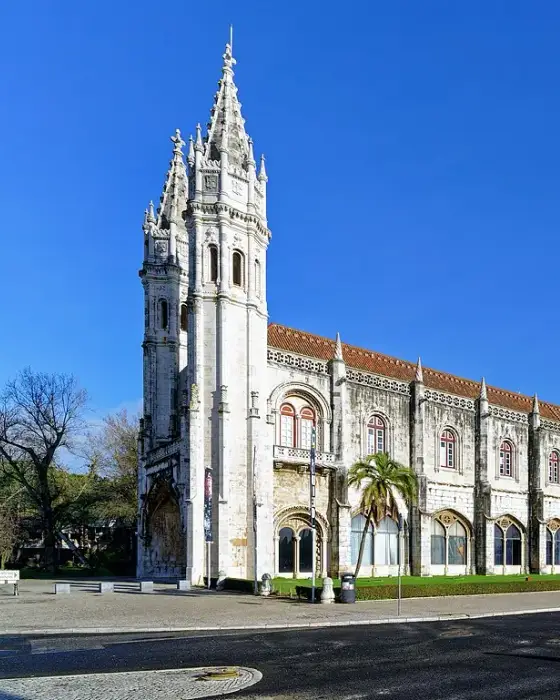 Portugal and Spain in 15 daysIberia from end to endLisbon · Porto · Madrid · Seville · Barcelona13–18 days5 cities
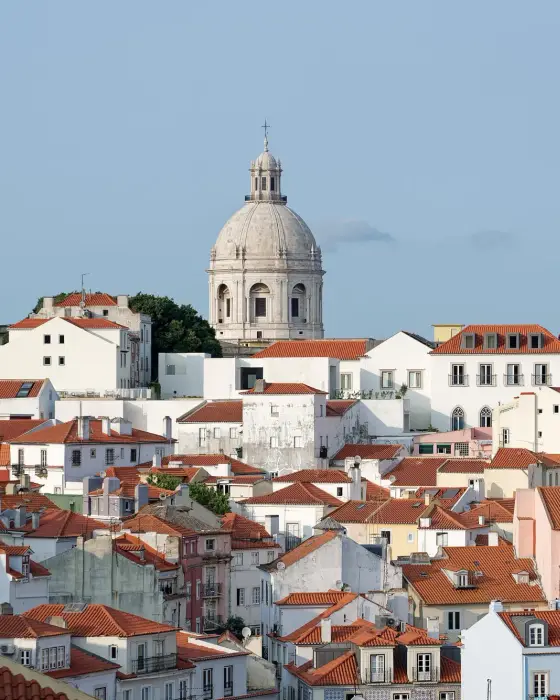 Lisbon and Porto in 7 daysMiradouros and port wineLisbon · Porto5–7 days2 cities
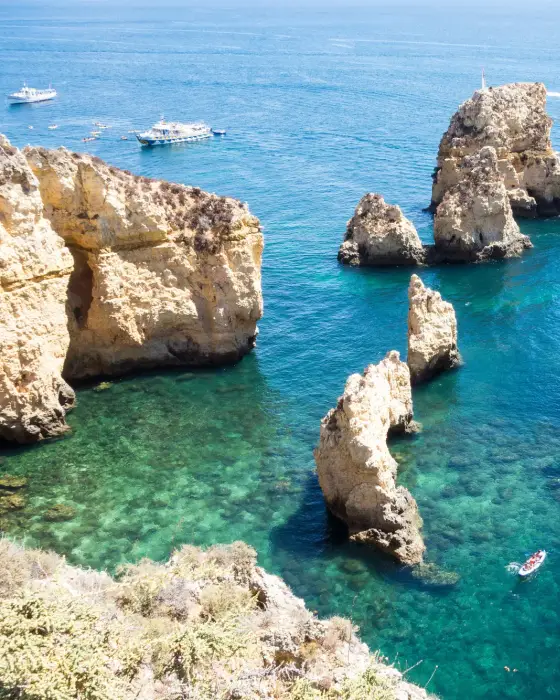 Portugal in 10 daysPort cellars and Algarve cliffsPorto · Lisbon · Algarve8–11 days3 cities
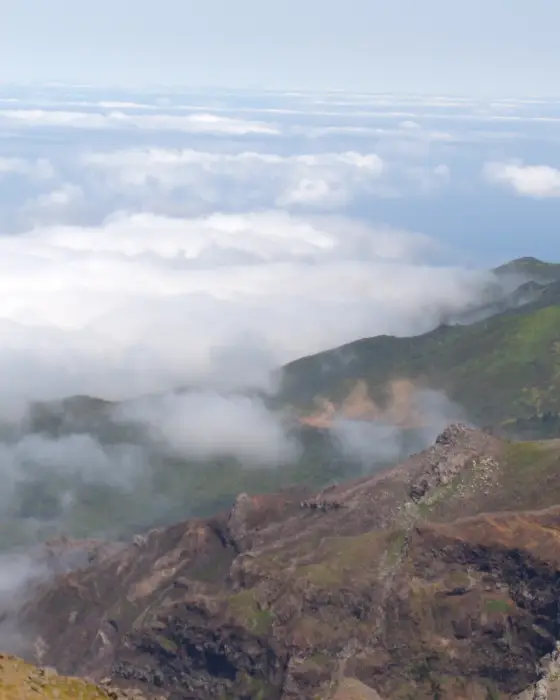 Lisbon and Madeira in 7 daysLisbon and the levadas of MadeiraLisbon · Madeira7–9 days2 cities
 Lisbon, the Algarve and Andalusia in 15 daysSagres, Seville and the AlhambraLisbon · Algarve · Seville · Granada · Madrid13–18 days5 cities