
Spain
Seville
Alcázar, Cathedral and Giralda, Triana and flamenco
Days Start with the basic programme and choose extensions for the time you have.
How the guide reaches this number
Stay two days, one in the monumental center and another on the river, in Triana and for flamenco; the third, if you have it, goes to the north, the museums and the Roman ruins of Itálica. Avoid August for the heat, and, if you want quiet, avoid Holy Week and the Fair, which fall between March and May depending on Easter. With just one day, go into the Alcázar at the first slot and climb the Giralda's 35 ramps, have a standing lunch at a bar in the Alfalfa, and in the afternoon, cross the Isabel II bridge to see the city from Calle Betis. The Fair disappoints anyone without an invitation: of the roughly thousand canvas casetas, most are private, leaving the fairground rides, the horse rides and the few public casetas. Walk through Santa Cruz in the morning, but have dinner away from the Cathedral, because the neighborhood charges a lot at night.
2–3
When March to May and October to November; August is the month to avoid
How the guide reaches this number
The good window runs from March to May and from October to November, with highs between 20°C and 30°C and sun almost guaranteed: Seville gets around 3,000 hours of sunshine a year. Summer is the real problem: July and August have average highs around 36°C, with heatwaves passing 42°C, and the airport station's record is 47°C, on July 23, 1995. August is the month I'd avoid: many neighborhood bars close for vacation, and the street empties between two and six in the afternoon, the stretch when you don't walk in summer. Winter is mild, with highs of 16–18°C and lows rarely below 3°C, and it concentrates the rain: of the roughly 540 mm a year, almost all of it falls between November and March. Spring has been getting hotter. The 2026 Fair, on April 21, came close to 37°C. If your dates are flexible, first decide whether you want to be in the city for Holy Week and the Fair or avoid them, because in those two weeks there's no middle ground.
Per person/day €70–120 per person with a mid-range hotel, meals at bars and public transport
How the guide reaches this number
Per person per day: accommodation, meals, urban transport, visits and a small allowance for extras. Flights excluded; larger purchases vary. Editorial estimate, not a quote.
 What Nilo thinks
The whole center can be done on foot, as long as you walk in the morning and the late afternoon, because in July and August the highs run around 36°C. The hot hours are for the late lunch, and dinner starts after nine. Stay two days, one in the monumental center and another on the river, in Triana and for flamenco; the third, if you have it, goes to the north, the museums and the Roman ruins of Itálica. Avoid August for the heat, and, if you want quiet, avoid Holy Week and the Fair, which fall between March and May depending on Easter. With just one day, go into the Alcázar at the first slot and climb the Giralda's 35 ramps, have a standing lunch at a bar in the Alfalfa, and in the afternoon, cross the Isabel II bridge to see the city from Calle Betis. The Fair disappoints anyone without an invitation: of the roughly thousand canvas casetas, most are private, leaving the fairground rides, the horse rides and the few public casetas. Walk through Santa Cruz in the morning, but have dinner away from the Cathedral, because the neighborhood charges a lot at night.The Giralda, a 12th-century Almohad minaret climbed by 35 ramps, gives you a view of all of downtown Seville, with the Real Alcázar pressed against the Cathedral and the Guadalquivir in the background. It was through this river that the city grew rich, as the only legal port for trade with the Americas from 1503 to 1717, and the fleets' money is still in the courtyards, the tiles and the Archivo de Indias. The table is the counter: in the bars of the Alfalfa, you eat spinach with chickpeas standing, with a caña. Across the Isabel II bridge, Triana sells fried fish by weight and holds the flamenco peñas, where the singing starts later and costs less than at the tablaos. The Almohads laid out narrow, crooked streets for shade, and in summer canvas awnings help against the 36°C heat. Come from March to May or in October and November, and allow two days.
Quick facts
- Population
- about 685,000 in the city; about 1.57 million in the metropolitan area (46 municipalities)
- Founded
- Turdetani settlement; refounded as the Roman colony Hispalis in 45 BC by Julius Caesar
- Country and region
- Spain: capital of the autonomous community of Andalusia
- Language
- Spanish, in western Andalusian accent: the final “s” disappears and the “ch” sounds almost like “sh”
- Currency
- Euro (€)
- Time zone
- CET (UTC+1), 4 hours ahead of Brasília; during European summer time, from late March to late October, CEST (UTC+2), 5 hours ahead
- Best time to visit
- March to May and October to November; August is the month to avoid
- Average daily cost
- €70–120 per person with a mid-range hotel, meals at bars and public transport
When to go
March to May and October to November; August is the month to avoid
January
6° to 16°C
56 mm of rain
February
7° to 18°C
46 mm of rain
June
18° to 32°C
6 mm of rain
July
20° to 36°C
1 mm of rain
August
21° to 36°C
3 mm of rain
AvoidSeptember
18° to 31°C
33 mm of rain
December
7° to 17°C
77 mm of rain
How the year changes
The good window runs from March to May and from October to November, with highs between 20°C and 30°C and sun almost guaranteed: Seville gets around 3,000 hours of sunshine a year. Summer is the real problem: July and August have average highs around 36°C, with heatwaves passing 42°C, and the airport station's record is 47°C, on July 23, 1995. August is the month I'd avoid: many neighborhood bars close for vacation, and the street empties between two and six in the afternoon, the stretch when you don't walk in summer. Winter is mild, with highs of 16–18°C and lows rarely below 3°C, and it concentrates the rain: of the roughly 540 mm a year, almost all of it falls between November and March. Spring has been getting hotter. The 2026 Fair, on April 21, came close to 37°C. If your dates are flexible, first decide whether you want to be in the city for Holy Week and the Fair or avoid them, because in those two weeks there's no middle ground.
The same numbers as a table
| Month | Temperature °C | Rain mm |
|---|---|---|
| January | 6 to 16 | 56 |
| February | 7 to 18 | 46 |
| March · | 10 to 22 | 47 |
| April · | 12 to 24 | 54 |
| May · | 15 to 28 | 34 |
| June | 18 to 32 | 6 |
| July | 20 to 36 | 1 |
| August | 21 to 36 | 3 |
| September | 18 to 31 | 33 |
| October · | 15 to 26 | 75 |
| November · | 10 to 20 | 72 |
| December | 7 to 17 | 77 |
Nilo's tips
Buy the first session at the Alcázar, at 9:30am
At 9:30am the Mudéjar palace is still empty, and by eleven the rooms are already taken over by a moving line. Buy the Real Alcázar ticket on the official site, days ahead. The Cuarto Real Alto is a separate ticket, almost nobody adds it, and it has almost no line.
The EA bus for €6, straight to Santa Justa
The EA bus is the cheapest way out of the airport: €6 per person, with a stop at Santa Justa for anyone continuing by train. Taxis charge a flat fare from the airport to the center, in the €25–30 range, higher at night, on Sundays and on holidays, in other words more than four times the price of the bus.
From the third ride on, the card is worth the €1.50 deposit
With the multi-trip card, each bus ride drops from €1.40 to about €0.69, and the math turns in your favor by the third trip. The deposit is paid just once. Prefer the circular lines C1 to C5, which skirt the center instead of crossing it. The metro helps little, because line 1 doesn't enter downtown and line 3 has been under construction since 2023.
Read the menu's three prices before sitting down
At tapas bars, the price rises from the counter to the table and from the table to the terrace. On a night of several rounds, that difference adds up on the bill, so check the menu before pulling up a chair, and if the group can handle standing, order at the counter.
After the tablao, go to a peña in Triana or the Alameda
In the peñas of Triana, the Alameda and the Macarena, the singing continues after the tablaos close, with no stage and for far less. The downtown tablao, the one that shows up online, has a set time and a €25–40 ticket, and the peñas start later. Never buy a flamenco ticket on the street. If you can pick the month, go in September of an even year, when the Bienal takes over the city's theaters and courtyards.
Between 2pm and 6pm in summer, head to the free Archivo de Indias
In July and August nobody walks the street at that hour, and the Archivo General de Indias, in the old Casa Lonja, is free and stays empty. In Triana, the ruins of the castle that housed the Inquisition, under the market, can also be visited for free, and the Museum of Fine Arts, with its Murillos, charges little and doesn't charge EU passport holders. If the heatwave passes 42°C, leave the city: Cádiz, with an urban beach on the Atlantic, is less than two hours away by train.
Explore the map

© OpenStreetMap · OpenFreeMap · © OpenMapTiles
Explore the map, read about the other places and plan your travel days in the app.
Open the appWhat to see
Seville: The river, the port and the cut meander
Seville sits about 7 m above sea level, on the vega of the Guadalquivir, an alluvial plain bounded by the Aljarafe plateau to the west and the campiña to the east.
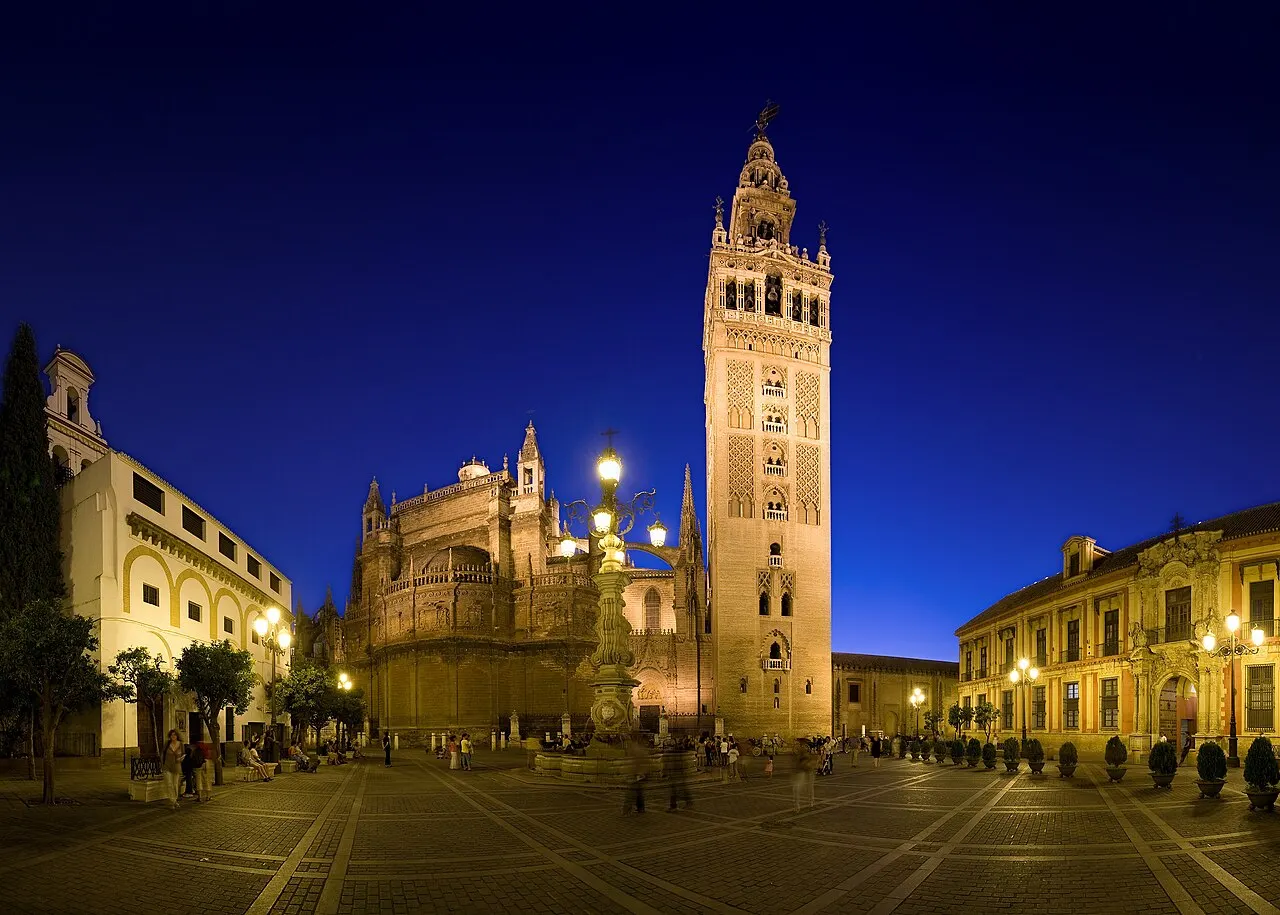
Seville Cathedral and the Giralda
The Gothic cathedral was planned in 1401 on the site of the former mosque, already converted into a church, and opened in 1507; rebuilding and extensions continued afterwards. It holds a great altarpiece begun by Pieter Dancart and Christopher Columbus’s tomb. The Giralda retains the minaret of 1184–1198 and the Renaissance bell chamber completed in 1568. The ascent has 35 ramps and 17 final steps: check access conditions if you need mobility support. In October 2026, the advertised general price is €13 online or €14 at the ticket office, including the Church of El Salvador. Check the calendar and price when booking.
Choose an available time in the official calendar and allow around an hour and a half as a planning margin for the Cathedral and Giralda. The tower has 35 ramps and 17 final steps; check access with the cathedral if you need mobility support. You can focus your visit on the cathedral without climbing the tower.
Check access

Real Alcázar
The oldest royal palace still in use in Europe, with layers from the 10th to the 19th century; the core is Pedro I's Mudéjar palace, from 1364–1366, with the Hall of Ambassadors. General admission €15.50, with a set date and time; the Cuarto Real Alto costs €5.50 extra and can only be bought together with general admission. Open 9:30am–7pm from April to September and 9:30am–5pm from October to March. It stood in for Dorne in “Game of Thrones” in 2015.
The Real Alcázar sells tickets with a set date and time, and in high season the slots sell out: the Patio de Banderas ticket office only sells what's left of the day, with a line of more than an hour. Two hours covers the Mudéjar palace and the garden, and anyone who wants the Hall of Ambassadors with nobody in front of them needs the first slot, at 9:30am.
Check access
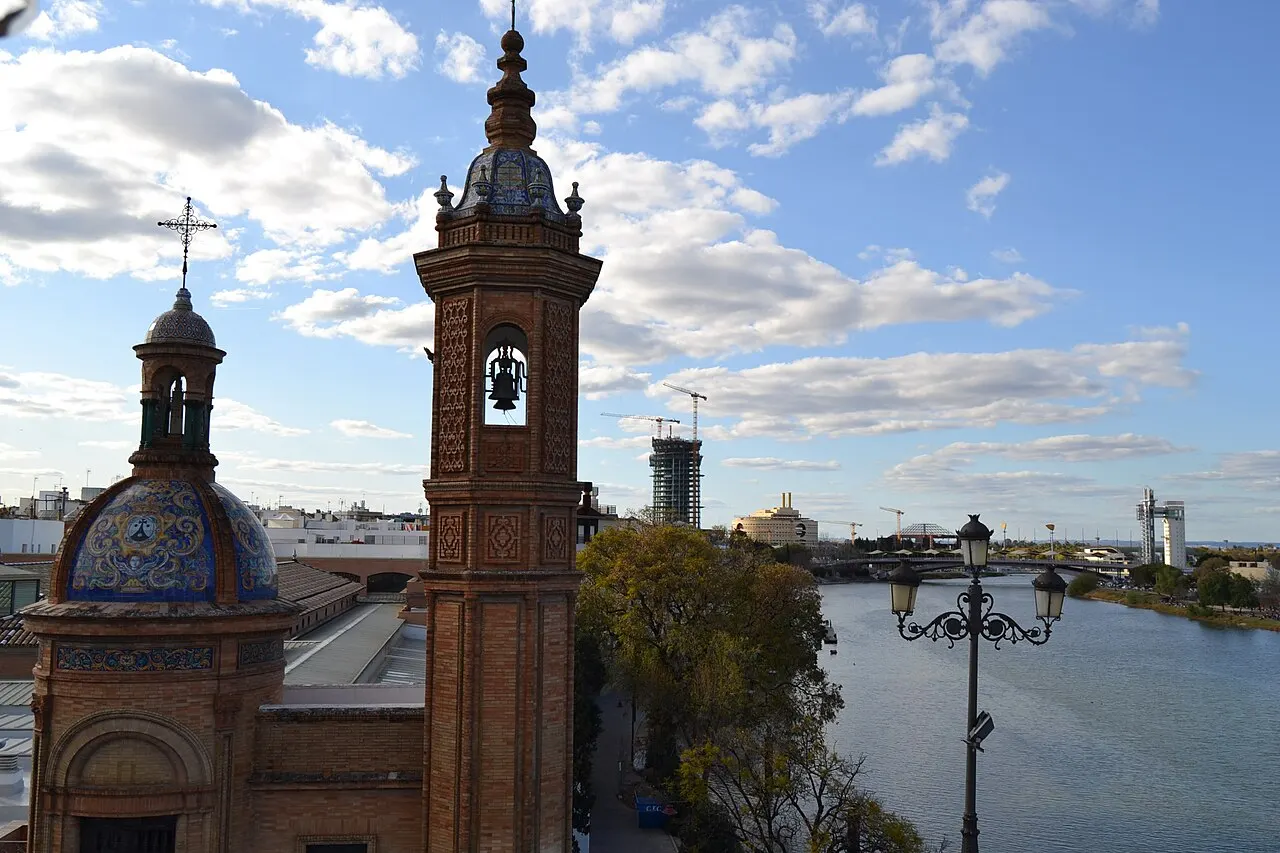
Triana: market, Castillo de San Jorge and Calle Betis
Triana's market operates over the ruins of the castle that housed Seville's Inquisition tribunal between 1481 and 1785, today a free interpretation center. A few steps away, Calle Betis gives the classic view of the city seen from the far bank.
Cross the Isabel II bridge in the late afternoon, the best hour for the view of the city from the other bank. The interpretation center under the market is free and takes twenty minutes.
Check access
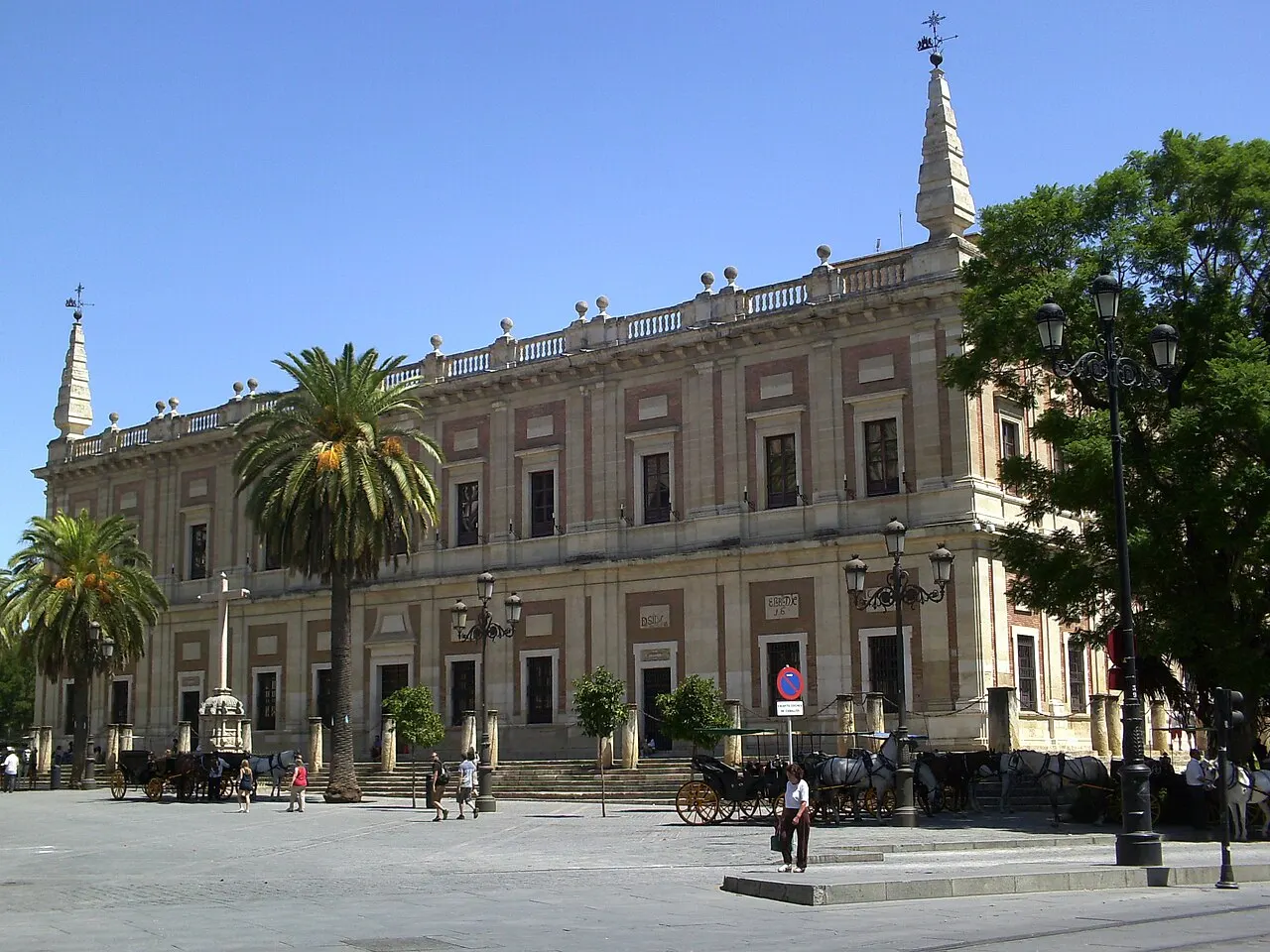
Archivo General de Indias
The old merchants' Casa Lonja, built between 1584 and 1598 to a design in the line of Juan de Herrera, became in 1785 the archive of the American empire by decision of Carlos III. It holds tens of millions of pages, including documents signed by Columbus, Cortés and Cervantes. Free admission.
Free admission, and it's the cool interior that stays empty right between two and six, the stretch when you don't walk in Seville in summer; the old Casa Lonja holds documents signed by Columbus, Cortés and Cervantes.
Check access
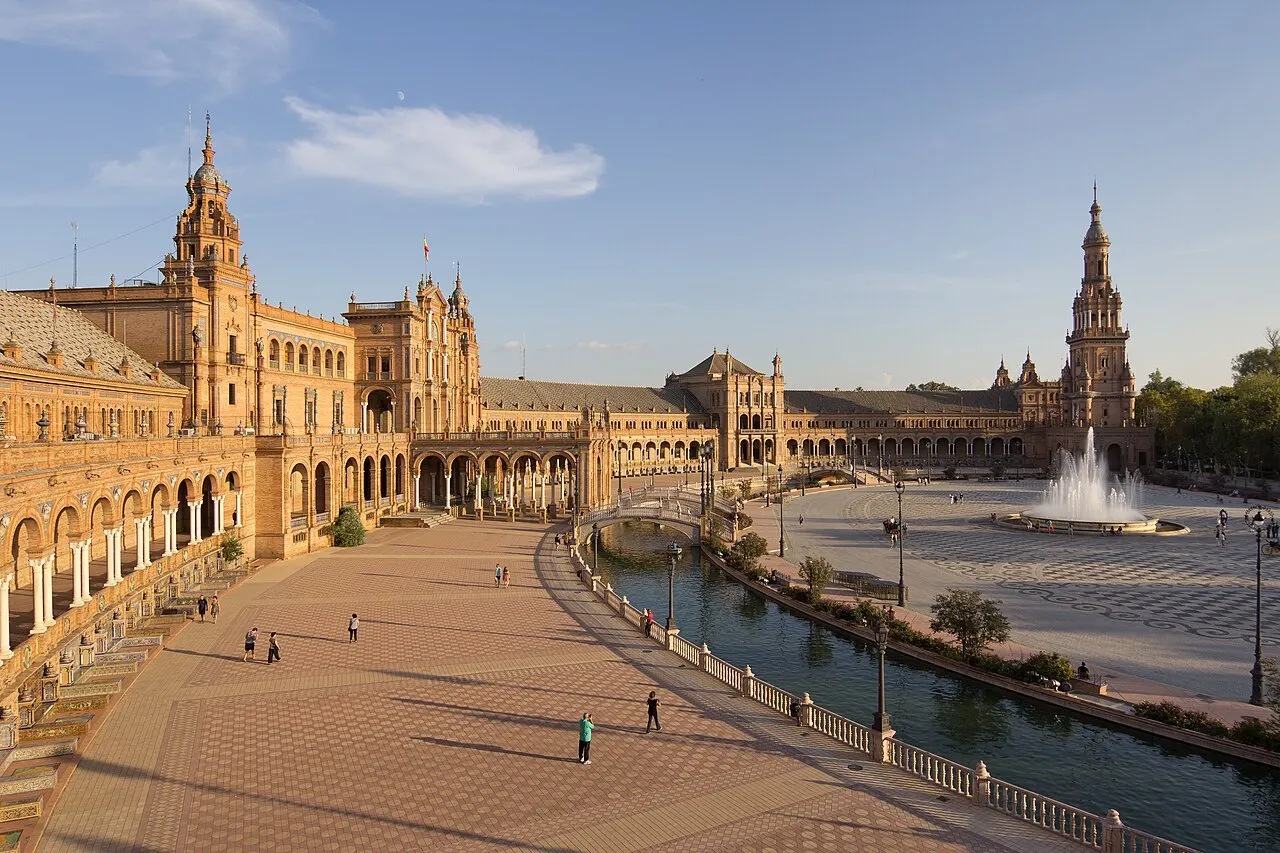
Plaza de España and Parque de María Luisa
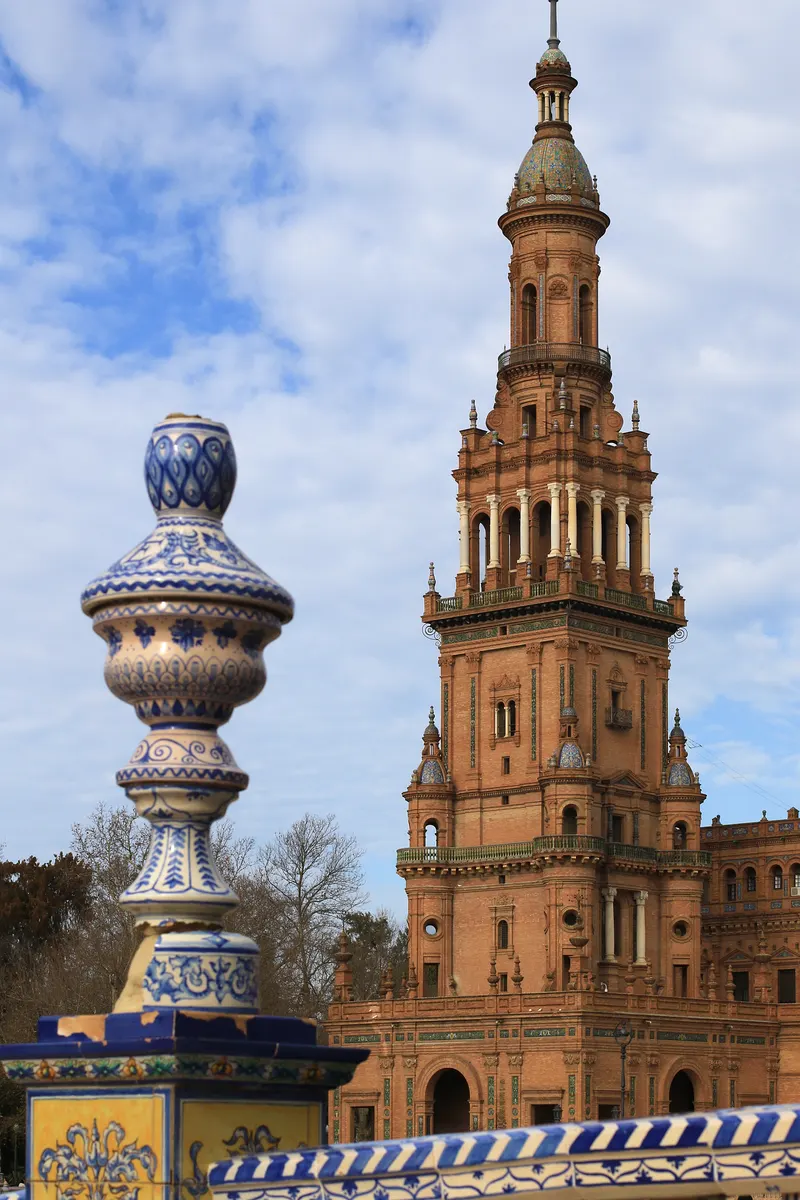
The work of Aníbal González for the 1929 Ibero-American Exposition: a semicircle about 200 m in diameter, a navigable canal with four bridges and 48 tiled benches, one per Spanish province. It stood in as the setting for “Lawrence of Arabia” (1962) and for Naboo in “Star Wars: Episode II” (2002). Free admission, although the city council has already proposed fencing it off and charging non-residents.
The Plaza de España has free admission: it's a semicircle about 200 m across, with a navigable canal and 48 tiled benches, one per province. Since it's an open square with no shade, go in the morning or late afternoon, never between two and six.
Check access
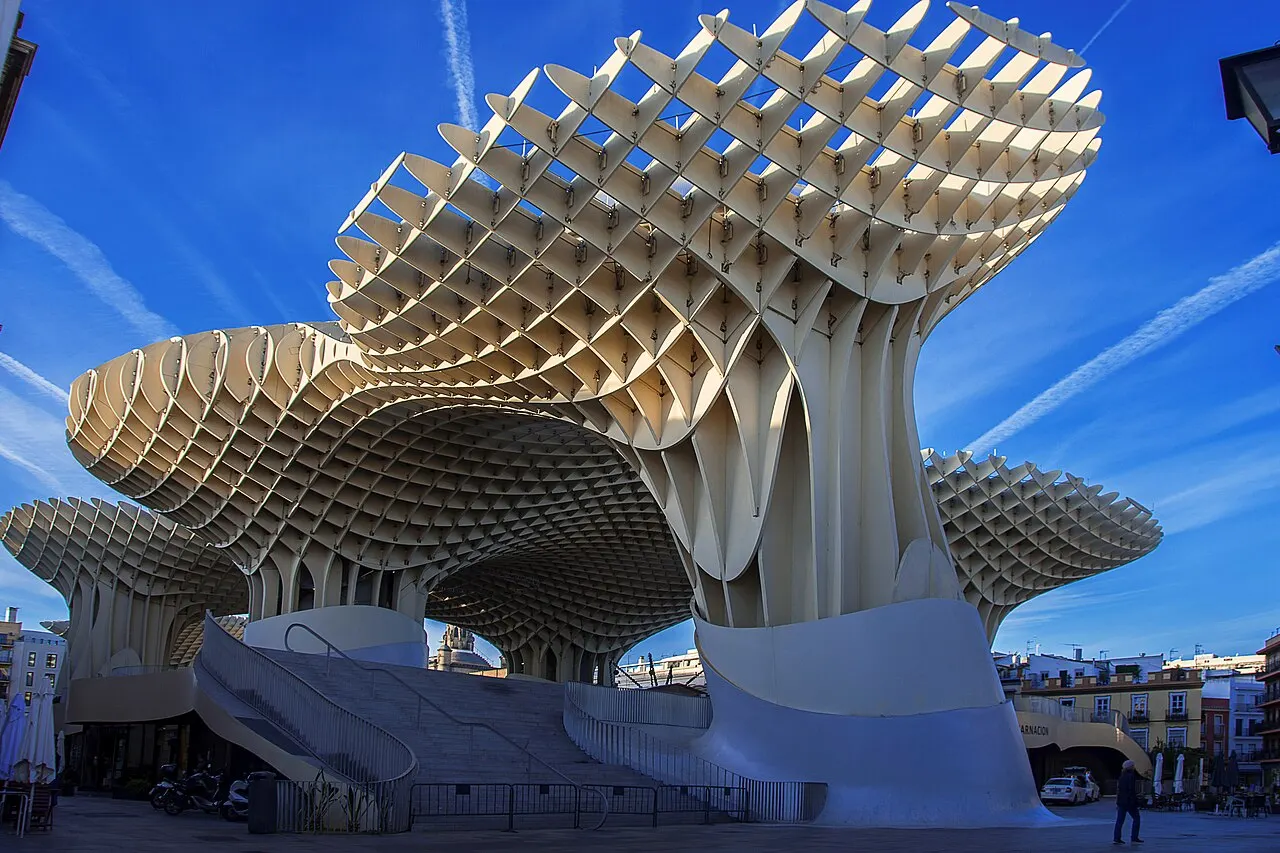
Metropol Parasol (Las Setas)
A laminated-timber structure designed by Jürgen Mayer and opened in 2011 on Plaza de la Encarnación, about 26 m high, with a panoramic walkway on top. Below, the Antiquarium displays the Roman and Almohad ruins found during construction, which is why it took six years to build.
The hour worth the climb is the last light of day, and the walkway is exposed to the wind. Below, the Antiquarium is the part almost nobody goes down to see, and it's the one that explains the square.
Check access
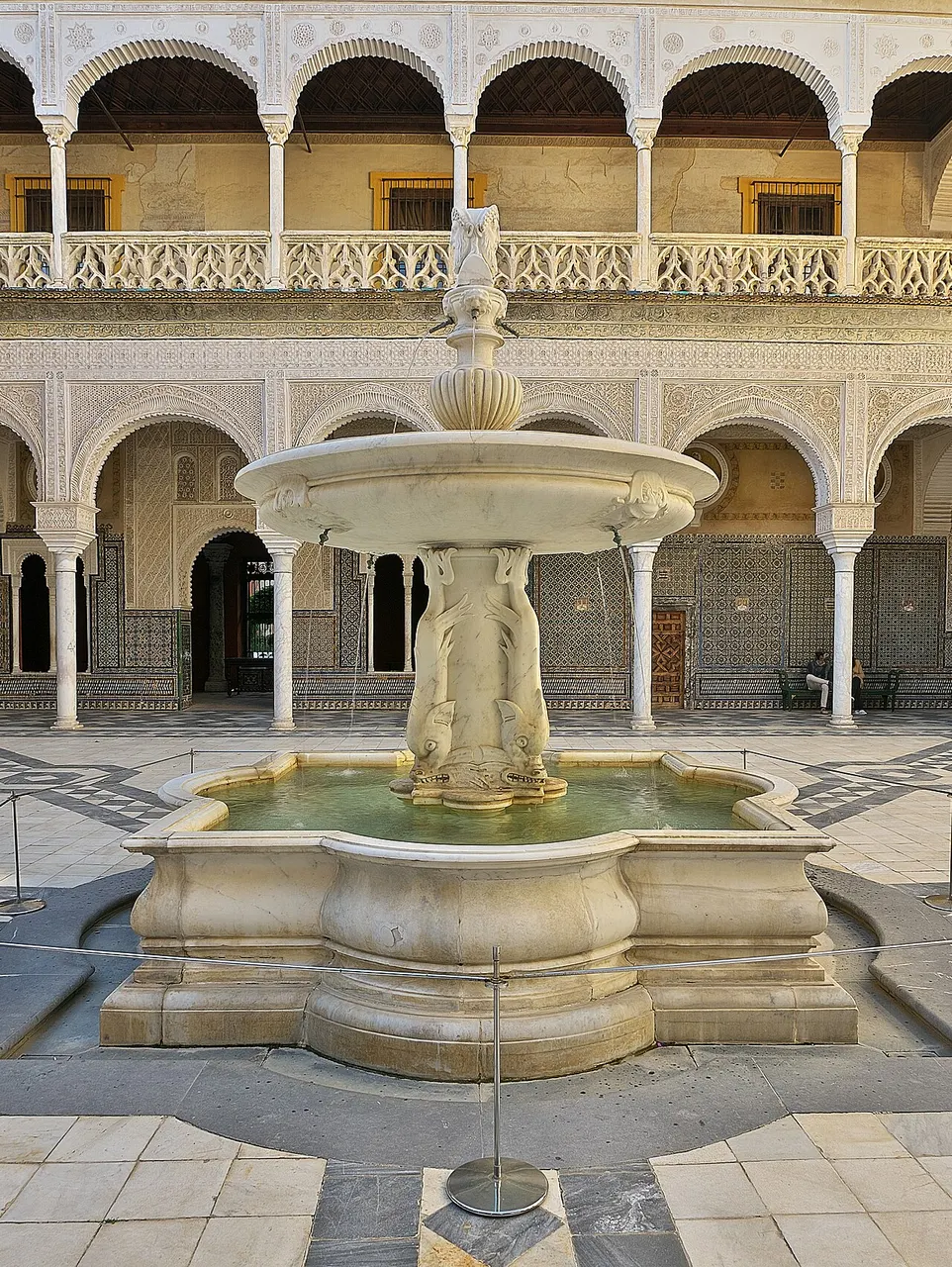
Casa de Pilatos
The palace of the Dukes of Medinaceli, begun in 1483, a mix of Mudéjar, Gothic and Italian Renaissance, with one of the largest collections of 16th-century tile in a single building. It's the model for Seville's courtyard-palace and remains the family's residence.
Check access
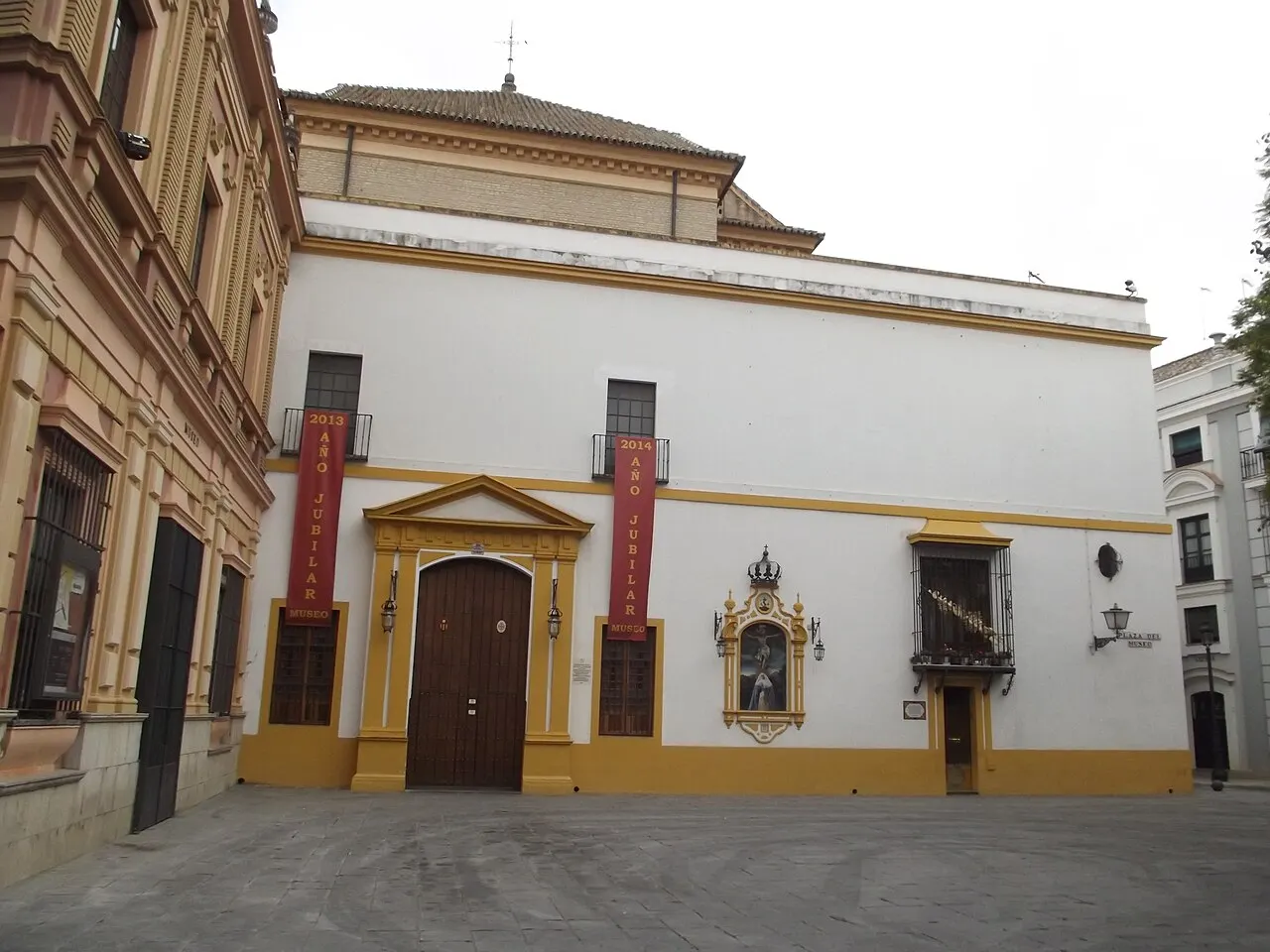
Museum of Fine Arts
Housed in the old Convento de la Merced, remodeled in the 17th century, it holds the largest Murillo collection in the world, along with works by Zurbarán, Valdés Leal and El Greco. It's considered Spain's second-largest painting collection after the Prado; admission is a few euros and free for European Union citizens.
The Museum of Fine Arts calls for two hours, not twenty minutes, because it holds the largest Murillo collection in the world, along with Zurbarán and Valdés Leal. The former convent is enclosed and cool, the right place for the hot hours when you don't walk the street.
Check access

Torre del Oro
An Almohad river watchtower, built in 1220–1221, 36 m tall; it closed off the port with a chain stretched to the far bank. Today it houses a small naval museum and marks the start of the riverside walk.
It's a 36 m Almohad tower, built between 1220 and 1221, with a small naval museum inside; from the riverside walk you already see the whole tower. Spend the half hour at the Archivo General de Indias, ten minutes further on, which is free and cool.
Check access
Nilo’s itinerary
Start with the basic programme and choose extensions for the time you have.
Plan my days in the app ↗Day 1 · The monumental center
Enter the Real Alcázar for the first morning session, with a €15.50 ticket bought ahead on the official website; set aside two hours, one of them in the gardens.
Cross the Patio de Banderas to the Cathedral at the time selected in the official calendar. The Giralda has 35 ramps and 17 final steps; if the climb does not suit you, visit the cathedral and check the temple’s accessibility resources.
Have lunch standing, at the bar of a place in the Alfalfa: espinacas con garbanzos, a montadito de pringá and a caña.
Pass by the Archivo General de Indias, free admission, and then the Hospital de la Caridad, where Valdés Leal's paintings still hang on the walls they were painted for.
End the day at the Setas de la Encarnación and go down to the Antiquarium to see the Roman Hispalis excavated under the square.
Day 2 · The river, Triana and flamenco
Start at the Mercado de Triana, built over the ruins of the San Jorge castle, and go into the free Inquisition interpretation center.
Follow Calle Alfarería and Callao to see the workshops that still make tile by hand, then the Capilla de los Marineros.
Have lunch at a freiduría: fried fish by weight, in a paper cone, eaten standing or walking.
Come back over the Isabel II bridge, walk along the riverbank to the Torre del Oro and, next door, take the guided tour of the Maestranza bullring.
At night, choose between a tablao at a set time downtown and a peña in Triana, which starts later and charges less.



If you stay longer
Day 3 · North, museums and the Roman world
Take bus M-170 or M-172 from Plaza de Armas to Santiponce, about 30 minutes, for the ruins of Italica: an amphitheater for about 25,000 people and mosaics in their original spot.
Head back for lunch and give the afternoon to the Museum of Fine Arts, which holds the largest Murillo collection in the world.
Walk the preserved stretch of Almohad city wall in the Macarena, about 500 m with towers, and go into the basilica to see the image carried in the Madrugá.
Head up Calle Feria in the late afternoon, when the neighborhood bars open, and end at the Alameda de Hércules, between the two Roman columns set up in 1574.
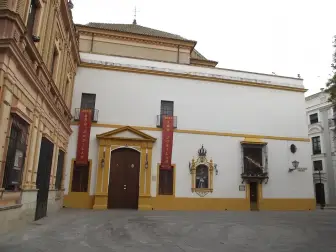
Food
 AI illustration
Pescaíto frito
Small fish (dogfish in adobo marinade, boquerones, cuttlefish, baby squid) dredged in hard-wheat flour and fried in hot olive oil, sold by weight in a paper cone at freidurías. It's also the dinner that opens the April Fair, on Monday night.
 AI illustration
Espinacas con garbanzos
Spinach sautéed with chickpeas, cumin, garlic and ground fried bread; a tapa of convent and Lenten origin that became a permanent fixture on any neighborhood bar's menu. Usually costs €3–4.
 AI illustration
Salmorejo and gazpacho
Two cold tomato creams that share the same menu. Gazpacho is Andalusian, drinkable, with cucumber and bell pepper; salmorejo is from Córdoba, denser because of the bread, served with chopped hard-boiled egg and ham on top. They appear from May to September.
 AI illustration
Solomillo al whisky
Pork tenderloin medallions in a garlic, lemon and whisky sauce, a Sevillian bar creation from the 1970s that spread across the whole city. It's the dish nearly every tapas bar has on the chalkboard.
 AI illustration
Montadito de pringá
A small sandwich with the shredded meat left over from the cocido (beef, pork belly, chorizo and morcilla blood sausage) pressed into warm bread. Usually goes for €2–3 and is the classic late-night order.
 AI illustration
Caracoles and cabrillas
Small snails served in herb broth, with a spoon, and cabrillas, larger ones, in a spicy sauce. They appear around April and disappear by June; a hand-written sign on the door announces the season.
 AI illustration
Carrillada and cola de toro
Iberian pork cheek or oxtail stewed in red wine for hours, until it falls apart with a fork. These are the winter dishes, and the portions where it's worth ordering a “media ración.”
 AI illustration
Manzanilla, fino and rebujito
Dry wines aged under a layer of yeast flor, from Sanlúcar and Jerez, drunk chilled in a small glass, not a wine glass. Mixed with lemon-lime soda they become rebujito, which is what's drunk in the Fair's casetas.
Day trips

Italica (Santiponce)
Italica is 9 km north of the city, half an hour away by public bus. It's a Roman city founded in 206 BC, with an amphitheater for about 25,000 spectators and the mosaic houses of the district Hadrian expanded.
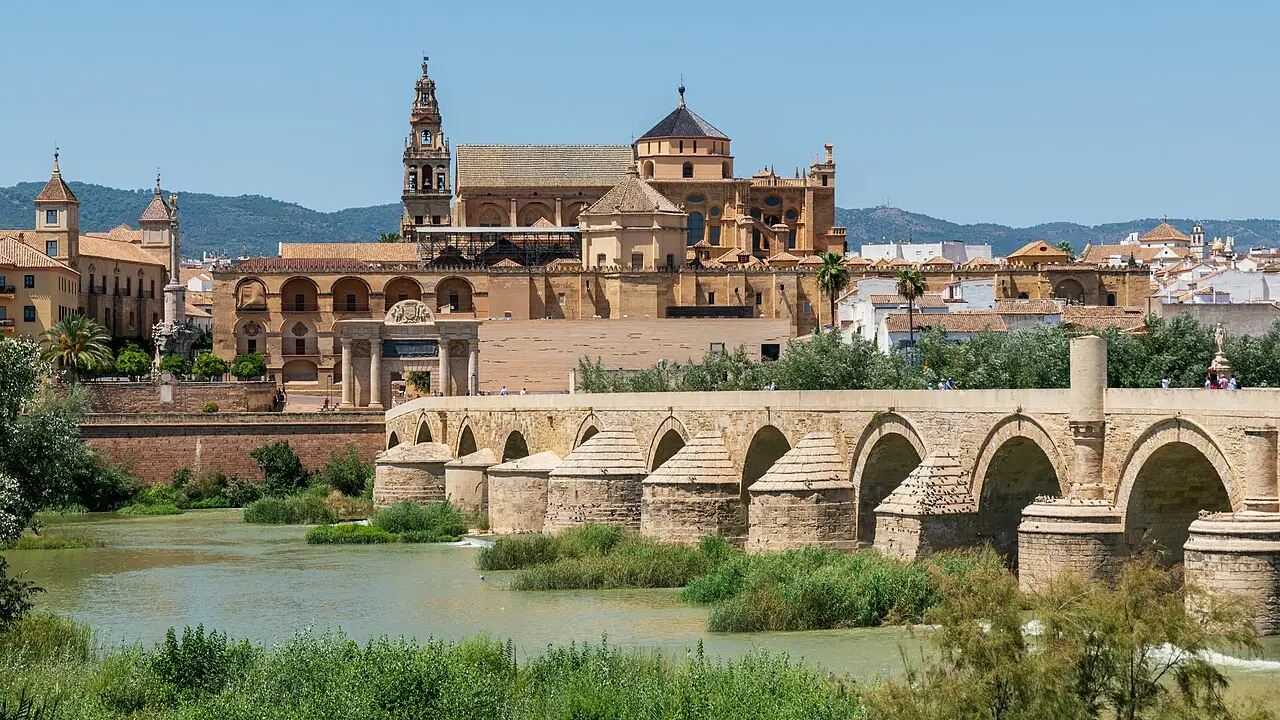
Córdoba
Córdoba is 140 km northeast, 45 minutes by AVE or Avant train from Santa Justa, with several departures an hour. You can see the Mosque-Cathedral, the Jewish quarter and Medina Azahara and come back the same day.
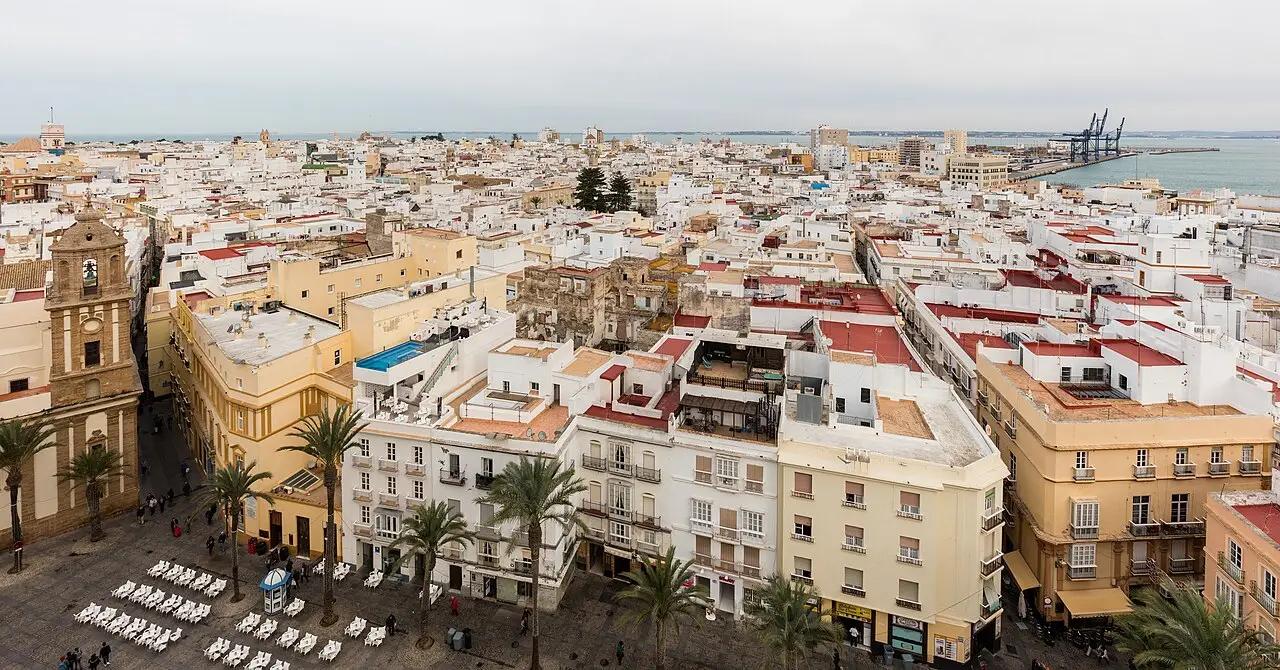
Cádiz
Cádiz is 120 km south, about 1 hour 40 minutes by regional train from Santa Justa. The city, of Phoenician origin, occupies a tongue of land on the Atlantic, with an urban beach and a baroque cathedral by the sea, and it's the best escape from the summer heat.
Where to begin
The monumental center
Enter the Real Alcázar for the first morning session, with a €15.50 ticket bought ahead on the official website; set aside two hours, one of them in the gardens.
The river, Triana and flamenco
Start at the Mercado de Triana, built over the ruins of the San Jorge castle, and go into the free Inquisition interpretation center.
North, museums and the Roman world
Take bus M-170 or M-172 from Plaza de Armas to Santiponce, about 30 minutes, for the ruins of Italica: an amphitheater for about 25,000 people and mosaics in their original spot.
Money
The currency is the euro. What a normal day costs: coffee with milk €1.50–2.50, a caña €1.80–3, a tapa €3–5, a menú del día at lunch €12–18, a sit-down dinner €25–40 per person, a mid-range hotel room €90–160 outside peak season. During Holy Week and the April Fair, lodging doubles or triples and needs booking months ahead. Many bars charge different prices at the bar, at a table and on the terrace, and the menu usually lists all three columns: it's worth checking before sitting down, because sitting is the decision that costs. Cards are accepted almost everywhere, even for small amounts, but old-school bars still ask for cash or a minimum order. Tipping isn't mandatory: rounding up the bill or leaving up to 5% is the local norm. In August 2026 the city council again proposed a tourist tax on lodging. As of early September it wasn't yet in force and depended on approval from the Junta de Andalucía.
Getting there and around
San Pablo airport, 10 km away: the EA bus reaches Plaza de Armas
San Pablo airport (SVQ) is 10 km northeast of the center. TUSSAM's EA bus links the terminal to the Plaza de Armas bus station in about 35 minutes, with a stop at Santa Justa station, every 12–15 minutes, for €6 one way and €8 round trip same day. Taxis have a fixed airport–center fare of about €25–30, higher at night, on Sundays and on holidays. By train, the AVE links Madrid to Santa Justa in about 2 hours 30 minutes, over the 471 km line opened in April 1992. Long-distance buses leave from two different places, and it's easy to go to the wrong one: Plaza de Armas for northern Spain and Portugal, Prado de San Sebastián for Andalusia. Travelers arriving from Brazil don't need a visa for short stays, but should expect the EES biometric registration on entry and, from the end of 2026, the ETIAS electronic authorization during its transition period. Worth checking the requirement a few weeks before traveling.
The metro: a single line, missing the historic center
Within the city, the metro doesn't do much: there's only Line 1, 18 km long with 22 stations, opened in April 2009, which runs east to west and doesn't serve the historic center. Line 3 has been under construction since 2023, with sections due by the end of the decade. What works is the TUSSAM bus, with the C1 to C5 circular lines skirting the center, the MetroCentro tram between Plaza Nueva and San Bernardo and, above all, walking, because the historic center covers about 4 km² and is almost entirely pedestrian. A single bus ticket costs €1.40; with the multi-trip card, reloadable against a €1.50 deposit, a ride comes to about €0.69, or €0.76 with a transfer within an hour. There's also Sevici, the public bike system with about 2,600 bikes at 260 stations, on roughly 180 km of separated bike lanes built between 2006 and 2011, a network that became a benchmark for bike planning in Europe.
Safety
Violent crime is low, and downtown stays busy late. The concrete risk is theft, and it has a time and a place: pickpockets on the circular buses, in the Cathedral line, in the Holy Week crush and in the small hours of the Fair, plus a bag hung on a terrace chair back. In street parking, cars get broken into, so don't leave anything visible inside. The most common scam is the sprig of rosemary, near the Giralda and the Plaza del Triunfo: someone puts the sprig in your hand, offers to “read your fortune” and then charges you for it, so don't take anything handed to you and keep walking. Flamenco tickets sold on the street and “guides” who approach in monument lines also tend to cause trouble. The most socially vulnerable areas, like Polígono Sur and Tres Barrios-Amate, are far from the sightseeing circuit, and there's no reason to go. In July and August, the heat weighs more on visitor safety than crime does, so carry water, stay in the shade and avoid long walks between 2pm and 6pm.
Etiquette tips
Order “una caña”
The caña is the small draft beer glass, around 200 ml, and it's the city standard. Order “una cerveza” and you'll get a question back, and ordering a pint marks you as a tourist right away.
Eat standing, at the bar
The same tapa costs less at the bar, more at a table and more still on the terrace, and many bars list all three prices. Eating standing at the counter is simply the custom, even for people who could pay for a table.
Don't cross a procession
During Holy Week the line of nazarenos doesn't get cut. Wait for the gap between tramos or go around the block; anyone who tries to push through gets scolded by whoever's nearby.
Order tinto de verano, not sangria
Outside the tourist circuit, nobody orders sangria. The local equivalent is tinto de verano, red wine with lemon soda, and, at the Fair, rebujito.
Dine after nine
Booking for 9:30pm is normal here, and it's not late. Before that, a full dining room is full of tourists, and an empty one hasn't opened yet.
Walk in the shade
From June to September the central streets get canvas awnings and everyone walks on the shaded side, even if it means going further out of the way. It isn't folklore: the difference runs several degrees.
Mistakes to avoid
Buying the Alcázar ticket at the door
Buying the Real Alcázar ticket at the door. In high season the time slots tend to sell out, and at the Patio de Banderas only a few same-day tickets are left, contested in a line of more than an hour. On the official site general admission costs €15.50, with a set date and time, and it's worth locking in the purchase days ahead.
Booking August thinking it's “just heat”
Booking August thinking the heat is “just heat.” Average highs run around 36°C, many neighborhood restaurants close for vacation, and the only realistic plan between two and six in the afternoon is air-conditioned interiors.
Booking a trip during Holy Week without knowing
Booking the trip during Holy Week or the Fair without knowing they exist. Hotels triple in price, whole blocks downtown become impassable for hours and a ten-minute trip turns into forty.
Counting on the metro in the historic center
Counting on the metro. Line 1 doesn't reach the historic center and line 3 won't be ready until the end of the decade. The city runs on foot, by bus and by bike.
The tablao has a set time; the peña doesn't
Confusing a tablao with a peña. A tablao is a show at a set time with tickets at €25–40; if you want the other flamenco, look for the peñas of Triana and the Alameda, or go to the Bienal, in September of even years.
Useful phrases
¿Me pone una caña?
Can I get a small draft beer? The normal way to order beer at the bar
Media ración, por favor
A half portion, please: the middle ground between a tapa and a full portion
¿Está muy lejos andando?
Is it far on foot? The Sevillian answer is almost always “aquí al lado”
La cuenta cuando pueda
The check whenever you can. Nobody brings the check before you ask
Ozú, qué calor
Gosh, what heat: an Andalusian interjection that works as a greeting from June to September
Quillo, quilla
Dude, mate: Sevillian form of address derived from “chiquillo”; used among people who know each other, not with strangers
Districts
Santa Cruz
The old Jewish quarter, between the Cathedral and the Jardines de Murillo: alleys two meters wide, whitewashed walls and the city's highest density of restaurants aimed at tourists. Good for walking through early in the morning, pricey for dinner.
Alfalfa and Encarnación
The everyday center, between Plaza de la Alfalfa and Las Setas: tapas bars used by Sevillians, neighborhood shops and the Encarnación market. It's where you eat best for the price.
Triana
Across the river, linked by the Isabel II bridge (1852). A historic neighborhood of potters, sailors and flamenco singers, it keeps the ceramics workshops on Calle Alfarería, the market built over the ruins of San Jorge castle, and Calle Betis along the water.
Macarena
North of the center, around the Basílica de la Macarena and the surviving stretch of Almohad city wall, about 500 m with towers. Less tourism, more residents, cheaper rent and neighborhood bars on Calle Feria.
Alameda de Hércules and San Lorenzo
The Alameda is a tree-lined promenade opened in 1574, with two Roman columns at its entrance; today it holds the city's alternative and LGBT nightlife. San Lorenzo, next door, is residential, quiet and expensive.
Arenal
Between the Cathedral and the river, on the old sandbank where the Indies fleets were unloaded. It holds the Maestranza bullring, the Teatro de la Maestranza and fish restaurants.
Los Remedios
A middle-class neighborhood built in the 1960s on the west bank. Outside the April Fair, which occupies its fairground, it's a residential area with no tourist interest and lower bar prices.
Nervión and La Cartuja
Nervión is the office and mall axis, and home to the Ramón Sánchez-Pizjuán stadium, Sevilla FC's ground. La Cartuja, the Expo '92 island, became a tech park, university campus and the site of the Estadio de La Cartuja.
History
206 BC · Italica, the first Roman city
In 206 BC, Scipio Africanus establishes a settlement for soldiers from the Second Punic War near present-day Santiponce, alongside a Turdetani community. The families of emperors Trajan and Hadrian come from Italica; under Hadrian in the second century AD, the city expands and gains major buildings such as the amphitheatre.
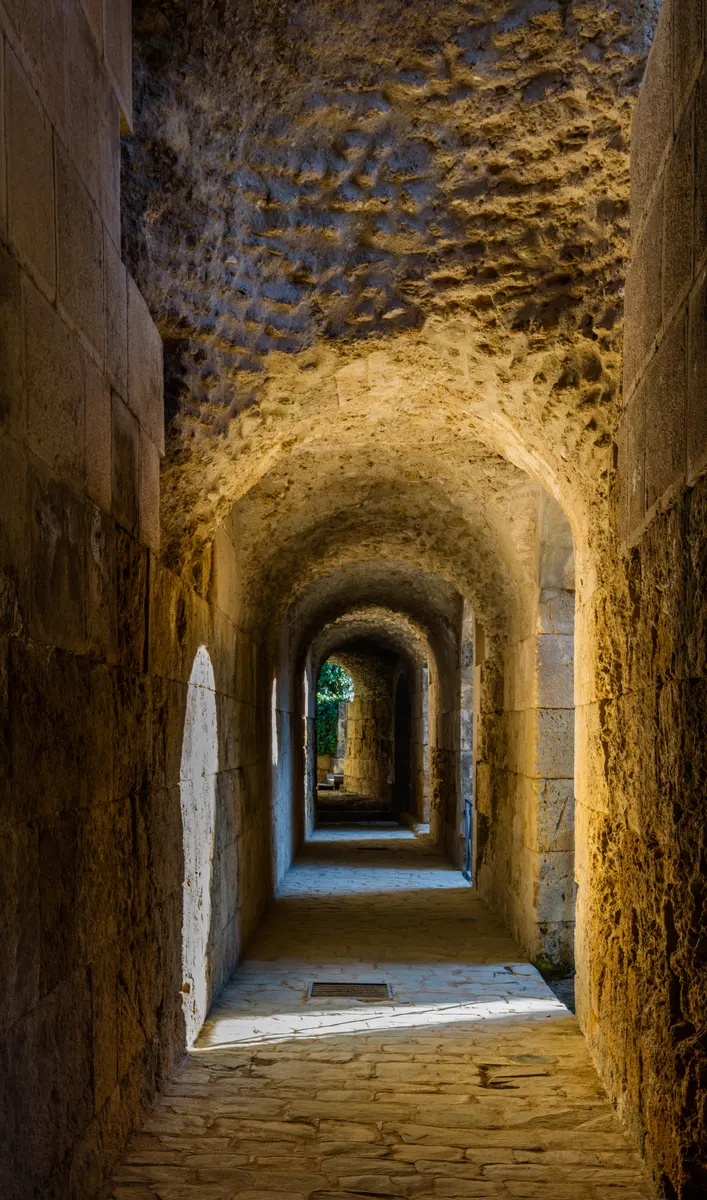
45 BC · Caesar refounds Hispalis
Julius Caesar turns the Turdetani port on the Guadalquivir into the Colonia Iulia Romula Hispalis. The river, navigable from the Atlantic, would define the city's economic role for the next two thousand years.
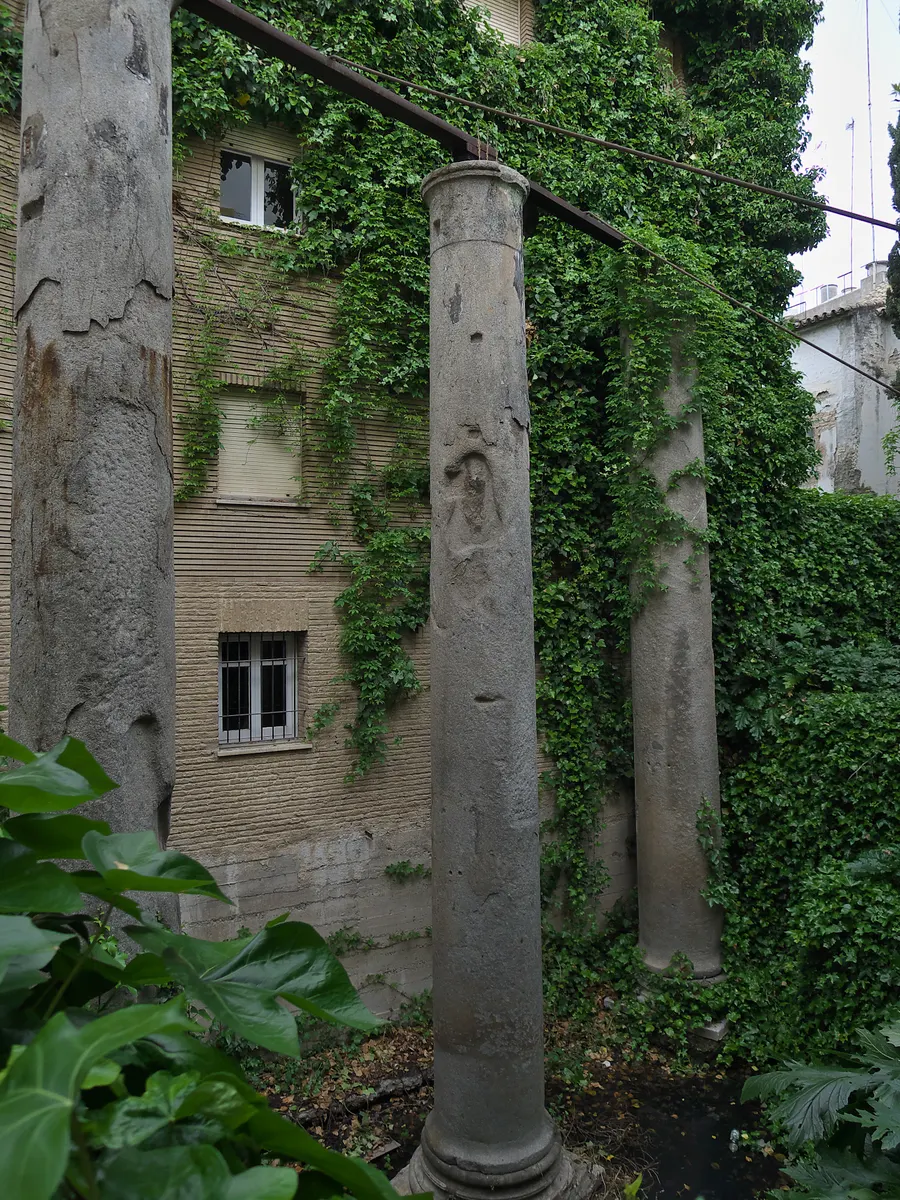
712 · Muslim Ishbiliya
Musa ibn Nusayr's troops take the city. Under the Abbadids (1023–1091) and then the Almohads, it becomes a capital: in 1184 work begins on the minaret that is today the Giralda.
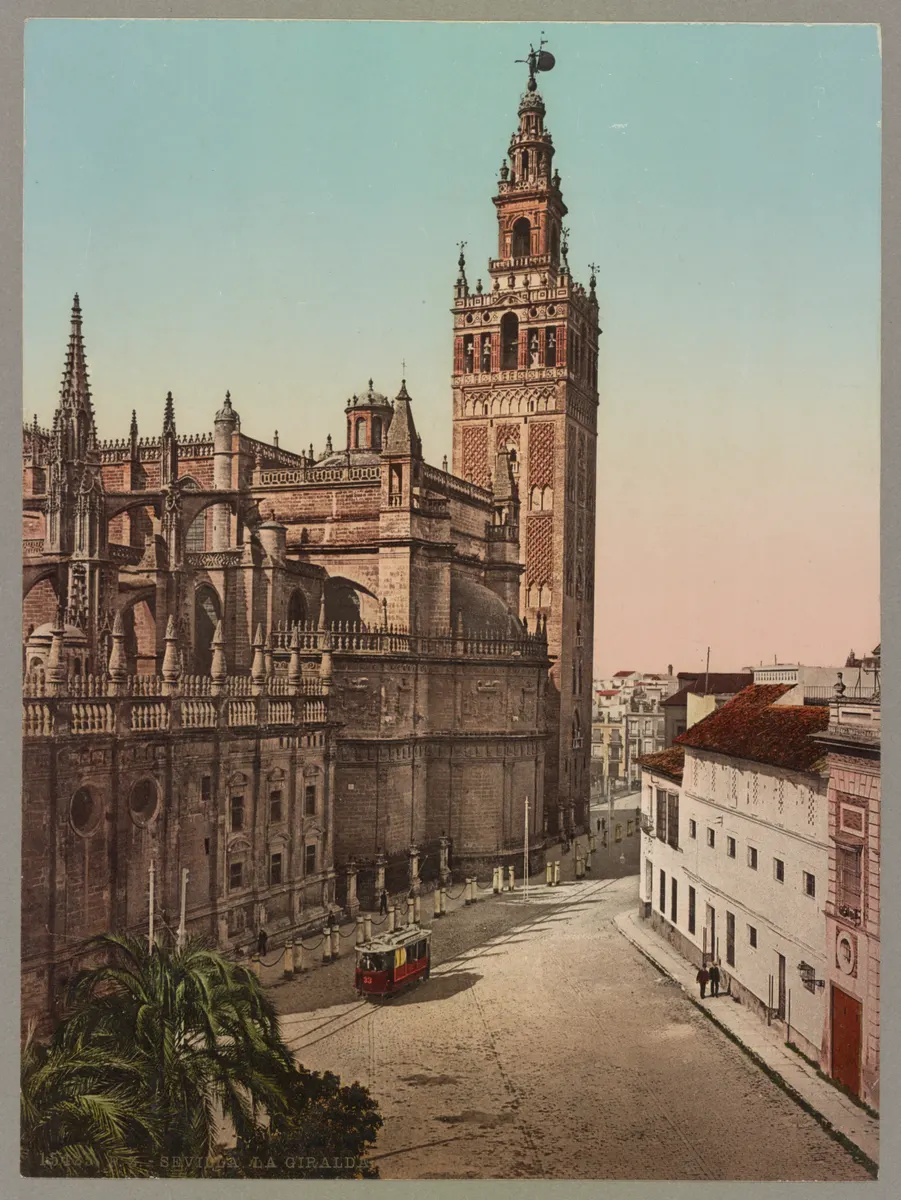
1248 · Castilian conquest
Ferdinand III enters Seville on November 23, after a sixteen-month siege and the breaking of the pontoon bridge that linked Triana. The Muslim population is expelled and the city divided among Christian settlers.

1364–1366 · Pedro I's Mudéjar palace
King Pedro I has a palace built inside the Alcázar with craftsmen brought from Granada and Toledo. It is the core of what is still today the oldest royal palace in Europe still in use.
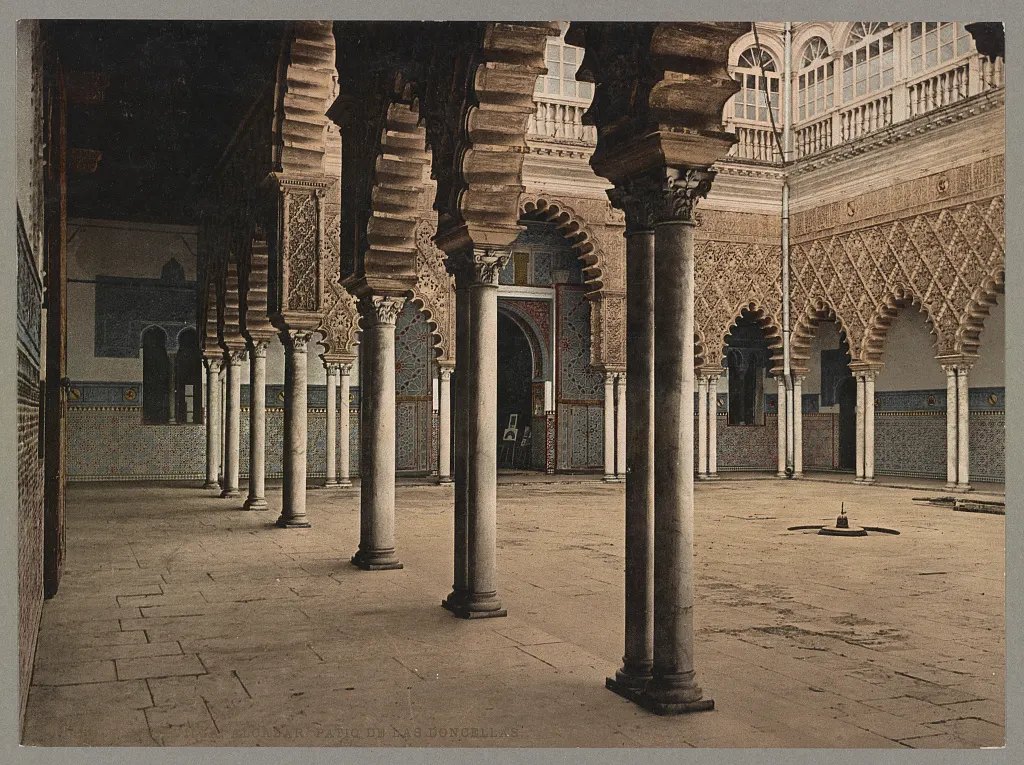
1401 · The Gothic cathedral begins
In 1401, the cathedral chapter decides to build a new Gothic cathedral on the site of the former mosque, already converted into a church. The first crossing tower is completed in 1506, and the cathedral opens in 1507; its collapse in 1511 requires rebuilding while other work continues. The scale of the complex makes it the world’s largest Gothic cathedral.
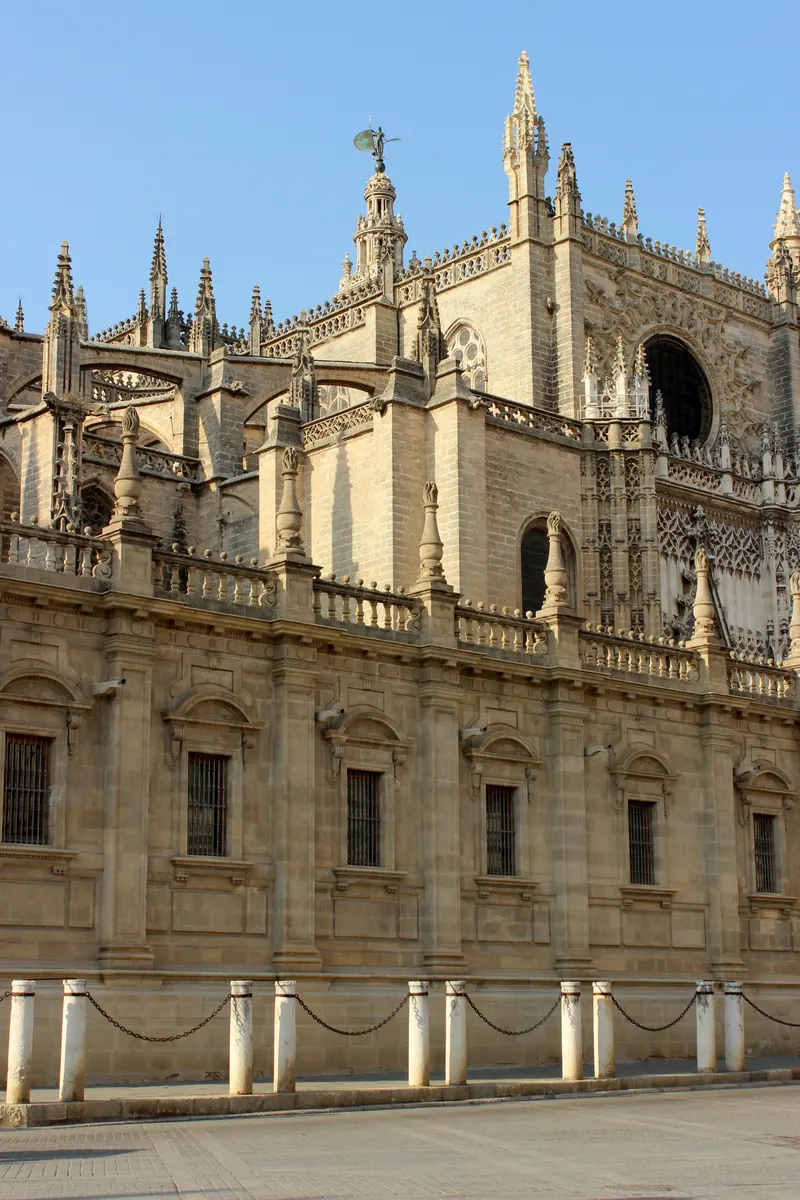
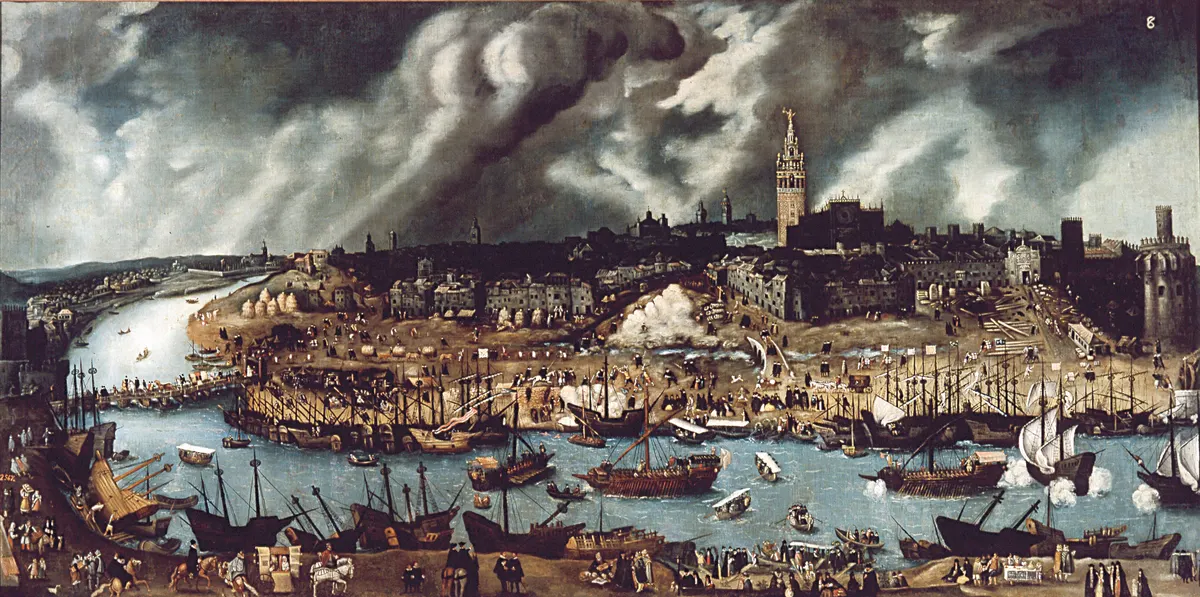
1503 · Casa de Contratación
The Crown concentrates all trade with the Indies in Seville: every ship, every nautical chart and every shipment of silver passed through here. The monopoly lasts until 1717, when it is transferred to Cádiz.
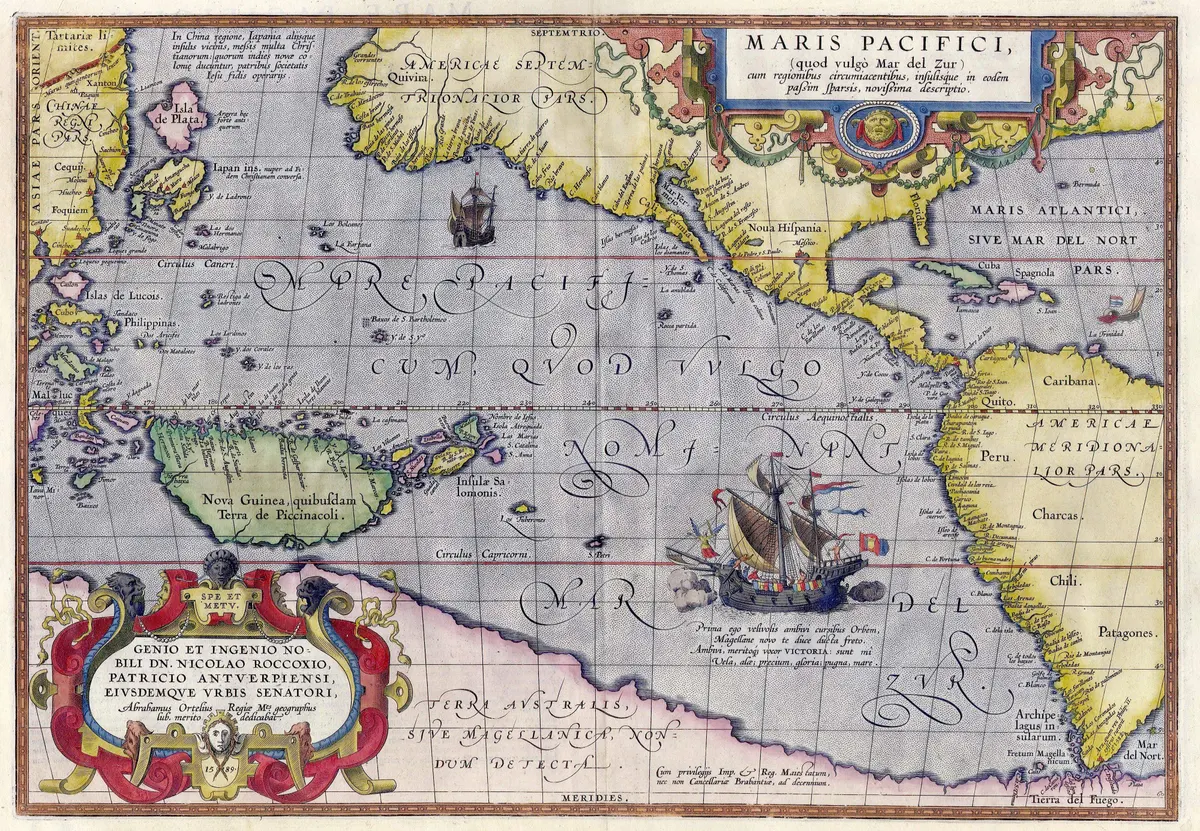
1519–1522 · The first voyage around the world
Ferdinand Magellan's expedition sets out from the port of Seville in August 1519. It returns in September 1522 under the command of Juan Sebastián Elcano, with eighteen survivors.
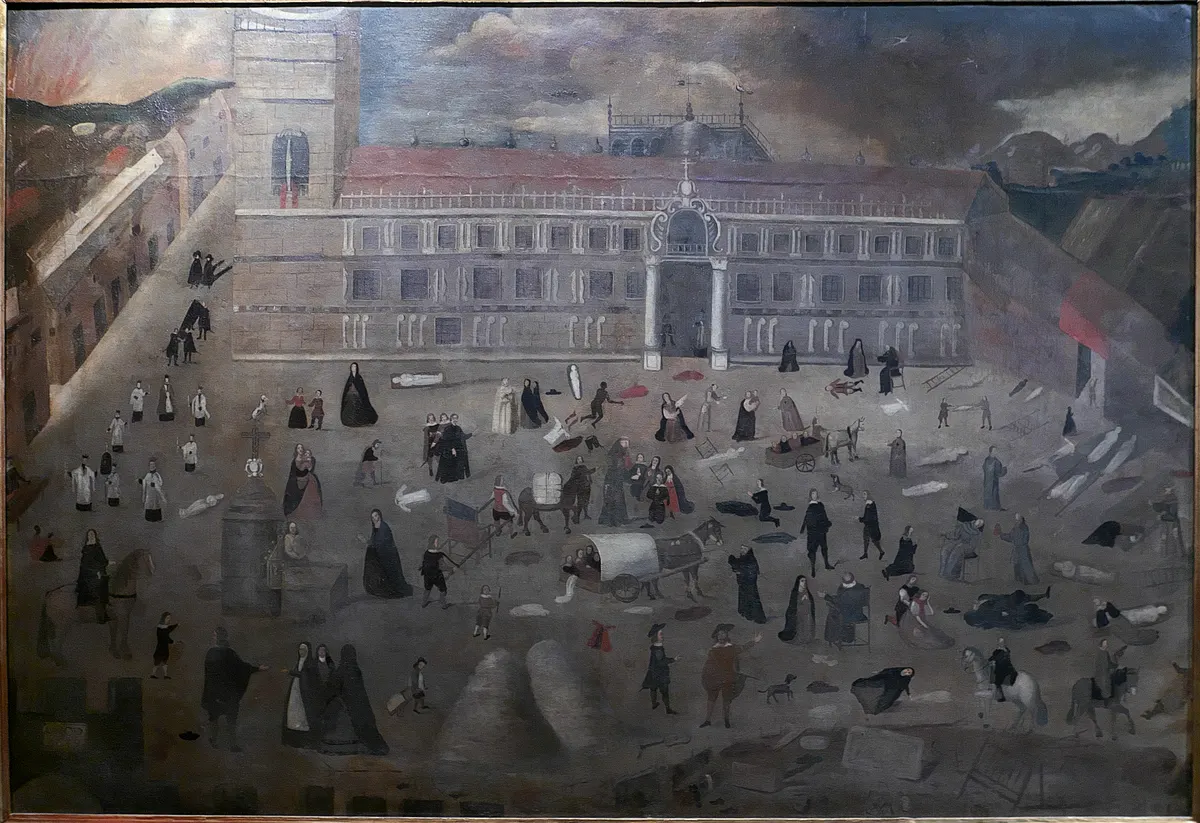
1649 · The plague
The epidemic kills about half the population within a few months. The city, which had passed 120,000 people around 1600, takes two centuries to regain that size.
1929 · Ibero-American Exposition
Aníbal González designs the Plaza de España and the Parque de María Luisa hosts the national pavilions. The city gains at a stroke the backdrop it has been photographed against ever since.
1992 · Expo, bridges and high speed
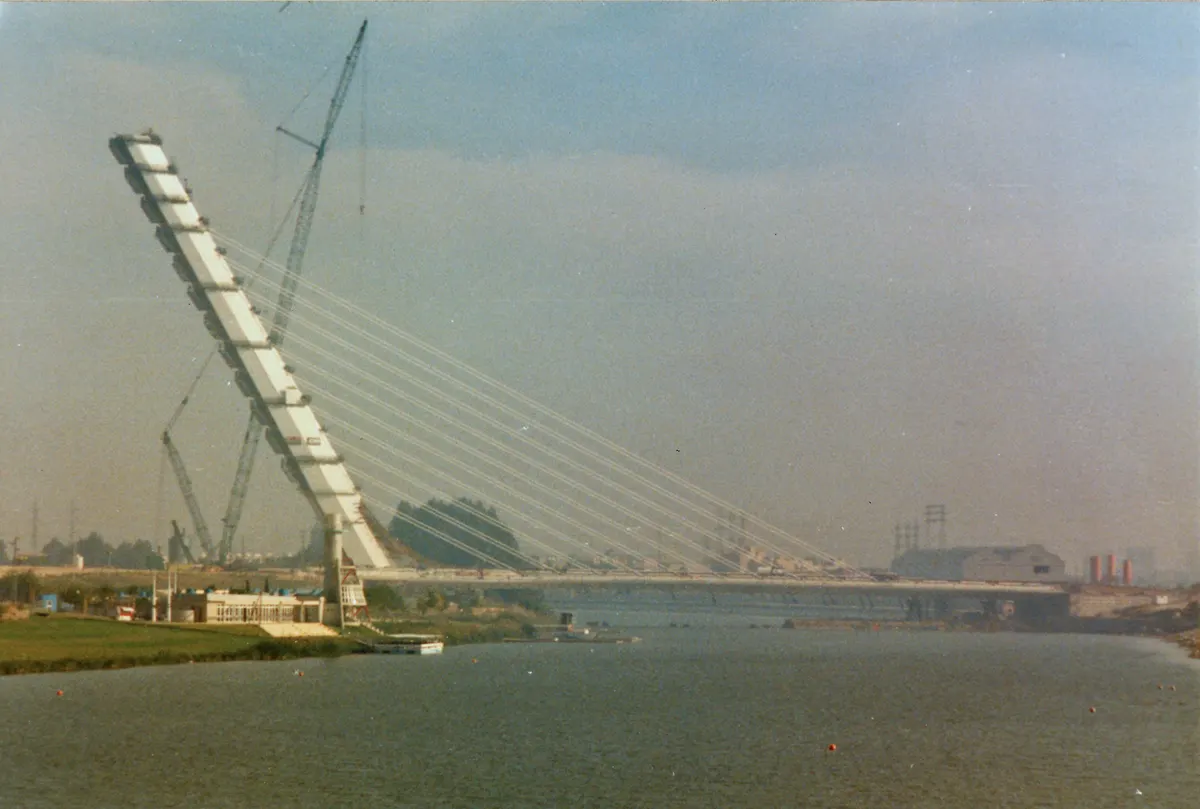
Expo '92 on the island of La Cartuja brings six new bridges, the airport terminal designed by Rafael Moneo and Spain's first high-speed line, Madrid–Seville, opened that April.
Complete history
Hispalis and Italica, the Roman port on the Guadalquivir
The Guadalquivir connects Seville’s history with navigation and trade. In the late Roman Republic, Hispalis receives a colonial settlement associated with Julius Caesar’s programme, consolidated under Augustus. Near present-day Santiponce, Italica begins in 206 BC as a soldiers’ settlement alongside a Turdetani community. Trajan’s and Hadrian’s families come from there; under Hadrian, the city expands and builds major structures, including the amphitheatre. It later loses population and importance, but urban life continues into late Roman times. Hispalis gains importance as a port city. Today, part of Italica is an archaeological site outside Seville, while the ancient core of Hispalis lies beneath the modern city.
Ishbiliya, Abbadid taifa and Almohad capital (1023–1248)
After 712, Ishbiliya was a taifa capital under the Abbadids (1023–1091) and, from 1147, the peninsular capital of the Almohads. From that period come the Giralda, a minaret built between 1184 and 1198, the Torre del Oro (1220–1221) and the layout of narrow, twisting streets downtown, designed to produce shade. Ferdinand III of Castile took the city on November 23, 1248, after a siege that only worked once the Castilian fleet broke the pontoon bridge to Triana. The Muslim population was expelled and the city divided among Christian settlers, but the architecture stayed: in 1364 King Pedro I had an entirely Mudéjar palace built inside the Alcázar, and that is what visitors photograph.
The one moment as a world capital
The 16th century was the one moment when Seville was a world capital. The Casa de Contratación, created in 1503, gave the city the legal monopoly on all trade with America: every ship left and returned from here, every nautical chart was corrected here, every arroba of silver was weighed here. Magellan's expedition left the port in August 1519 and returned with Elcano in September 1522, with eighteen men out of five ships. The population passed 120,000 around 1600, one of the largest in Europe, and the money paid for the cathedral, the convents and the generation of painters that included Velázquez, Murillo and Zurbarán.
Plague, a silted river, and the end of the trade monopoly
The fall was fast and had three causes together: the plague of 1649, which killed about half the inhabitants; the silting of the river bar, which the larger ships could no longer cross; and the transfer of the Casa de Contratación to Cádiz in 1717. Seville spent the next two centuries as an agricultural provincial capital, with a tobacco factory, today the university's main building, as its largest industrial building. The revival came through spectacle: the 1929 Ibero-American Exposition rebuilt half the city in regionalist style, with Aníbal González's Plaza de España, and fixed the image of Seville that has circulated ever since.
In 1982, Seville becomes the capital of Andalusia
The 20th century left two decisive dates. In 1982, the Statute of Autonomy made Seville the capital of Andalusia, a region of about 8.6 million people, and installed the regional Parliament and bureaucracy here, today the city's largest employer. In 1992, the Expo on the island of La Cartuja brought bridges, a new airport and the Madrid–Seville AVE. Since then the economy has rested on public administration, the university, aerospace (Airbus assembles the A400M at San Pablo) and tourism, and the current debate is over the excess of the latter.
Geography and shape of the city
The river, the port and the cut meander
Seville sits about 7 m above sea level, on the vega of the Guadalquivir, an alluvial plain bounded by the Aljarafe plateau to the west and the campiña to the east. The river reaches the Atlantic 80 km downstream, at Sanlúcar de Barrameda, and the Port of Seville remains Spain's only inland seaport, reached through a lock. The river's current course is an engineering job: between the 1940s and the 1990s the historic meander was cut several times to contain floods (the last serious flood was in 1961) and the old branch became the Dársena, which today separates the city from Triana and the island of La Cartuja.
The Islamic core that makes shade
The historic center covers about 4 km², one of the largest in Europe, and keeps the Islamic logic: narrow, curving streets that produce shade, blocks turned inward, courtyards with water and plants.
The straight avenues and the long summer
The straight avenues, the large squares and the developed riverfront are additions from the 19th century and the two expositions, 1929 and 1992. The climate is continentalized Mediterranean: long, very hot summer, short, mild winter, rain concentrated between November and March.
Seville's last major flood was in 1961.
Culture
Flamenco: downtown tablaos and neighborhood peñas
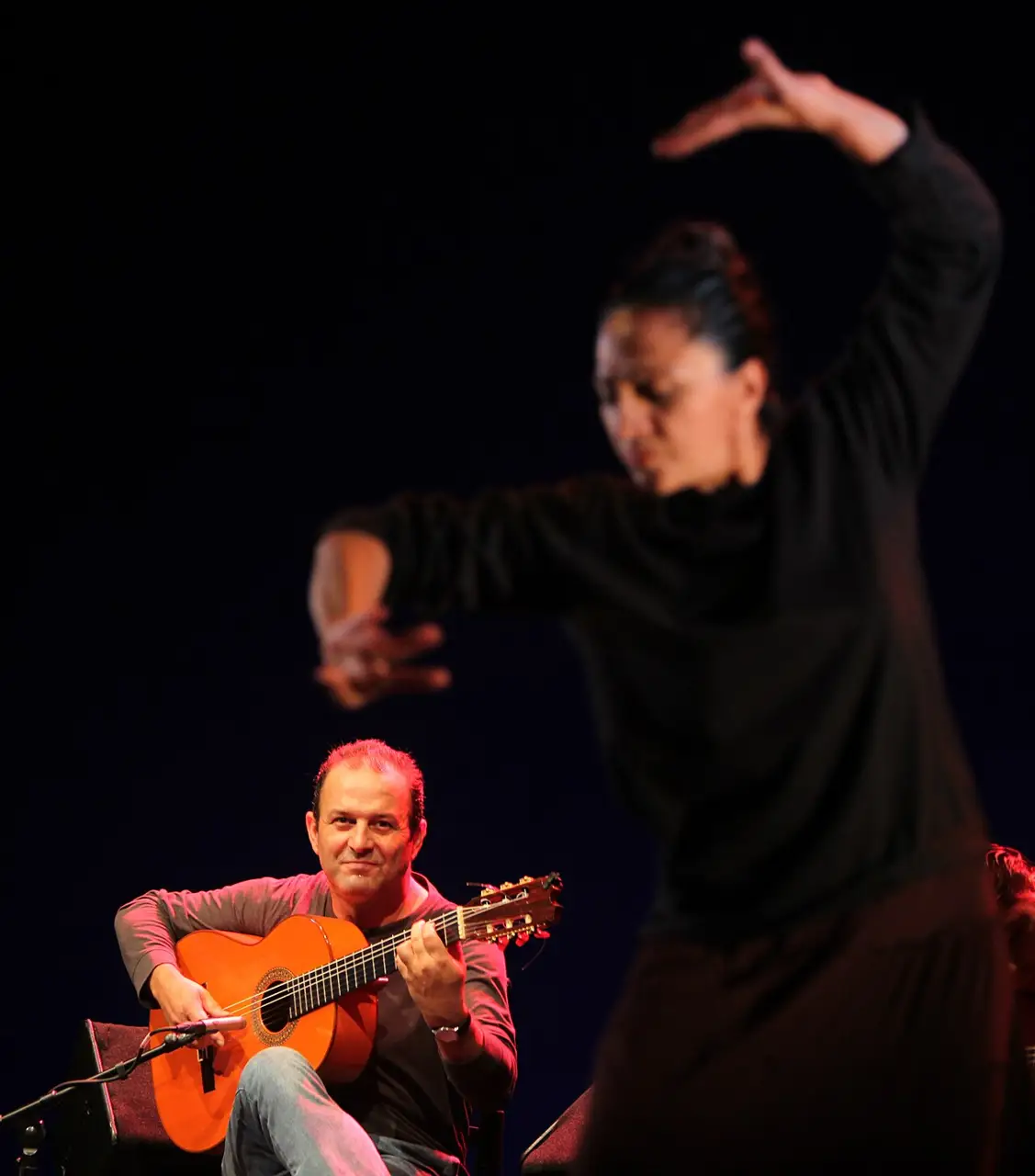
Seville shares flamenco's historic axis with Jerez and Cádiz, and has two parallel scenes: the downtown tablaos, with a show at a set time and tickets at €25–40, and the peñas of Triana, the Alameda and the Macarena, where singing starts later, with no stage and for much less. The Bienal de Flamenco, created in 1980, fills theaters, courtyards and churches in September of even years and is the largest gathering of the genre in the world. Sevillanas are a different thing, and worth not confusing: party music in four coplas, danced at the Fair, taught in school to practically every Sevillian.
The Golden Age painting
Golden Age painting is the second backbone of local identity. Diego Velázquez was born here in 1599; Bartolomé Esteban Murillo (1617–1682) and Juan de Valdés Leal worked for the city's convents and hospitals, and much of what survives is in the Museum of Fine Arts and the Hospital de la Caridad. In literature, Gustavo Adolfo Bécquer was born in 1836 and Antonio Machado in 1875, at the Palacio de las Dueñas; Cervantes was imprisoned in Seville in 1597 and set “Rinconete y Cortadillo” here. The city is also a borrowed setting: “Carmen,” “The Barber of Seville” and “Don Giovanni” take place here without any of their authors being from here.
Brotherhoods: associations active all year
The more than sixty Holy Week brotherhoods aren't a one-week event: they're associations that run all year, with their own headquarters, charitable works and a waiting list to join, and they organize much of the city's social life. Soccer takes up the rest: Sevilla FC, founded in 1890, is one of Spain's oldest clubs and has won the Europa League seven times; Real Betis, from 1907, plays at the Benito Villamarín, and the derby stops the city. Nights start late and outdoors, on terraces in the Alameda and the Alfalfa, with Cruzcampo, a beer brewed in Seville since 1904, and in summer, the street doesn't really get going again until after ten.
Velázquez was born in Seville in 1599.
Cruzcampo has been brewed in Seville since 1904.
Festivals and events

Semana Santa (Holy Week)
From Palm Sunday to Easter Sunday: in 2026 it ran from March 29 to April 5; in 2027 it falls earlier, from March 21 to 28. More than sixty brotherhoods carry pasos through the street for hours, all passing along the “carrera oficial” to the Cathedral. The most intense night is the Madrugá, between Holy Thursday and Good Friday, when the city doesn't sleep.

Feria de Abril
One to two weeks after Easter: in 2026, the pescaíto dinner on Monday, April 20, the “alumbrao” lighting at midnight and the fair running until Sunday the 26th. About a thousand canvas casetas at the Real de Los Remedios, most of them private.

Corpus Christi
A Thursday sixty days after Easter. A morning procession through streets covered in rushes and rosemary, and the dance of the “seises,” boys who dance with castanets inside the Cathedral, a privilege of medieval origin.
Bienal de Flamenco
September of even years, over about a month, in theaters, courtyards and churches across the city. It's where shows that later tour the world premiere.

Velá de Santa Ana
Late July in Triana, around the church of Santa Ana. A neighborhood festival with stalls along the riverbank and the “cucaña,” a greased pole stretched over the water where a flag is contested.
Books and films
“The Seville Communion,” Arturo Pérez-Reverte (1995)
A crime novel set in a church in downtown Seville; it uses the fight between heritage, the Church and real-estate speculation as its plot, which is the city's real fight.
“Juan Belmonte, Killer of Bulls,” Manuel Chaves Nogales (1935)
A biography of the Triana bullfighter written by a Sevillian journalist. It explains the neighborhood, the river and early-20th-century social mobility from inside bullfighting.
“Carmen,” Georges Bizet (1875)
The opera fixed Seville's international image: tobacco factory, bullring, smugglers. Listen to it to understand where the cliché the city still trades on comes from.
Frequently asked questions
Seville: How do you get from the airport to downtown?
TUSSAM's EA bus links the terminal to the Plaza de Armas bus station in about 35 minutes, with a stop at Santa Justa station, every 12 to 15 minutes, for €6 one way and €8 round trip on the same day.
Seville: How much does a day in the city cost?
Count on €70 to 120 per person per day, with a mid-range hotel, meals at bars and public transport. At the counter, a café con leche costs €1.50 to 2.50, a caña €1.80 to 3 and a tapa €3 to 5; the lunch menú del día runs €12 to 18, a sit-down dinner €25 to 40 per person, and a mid-range hotel room €90 to 160 outside high season.
Seville: What's the best time to go?
The good window runs from March to May and from October to November, with highs between 20°C and 30°C and sun almost guaranteed: Seville gets around 3,000 hours of sunshine a year. Summer is the real problem: July and August have average highs around 36°C, with heatwaves passing 42°C, and the airport station's record is 47°C, on July 23, 1995.
Seville: What is pescaíto frito?
Pescaíto frito is small fish (dogfish in adobo marinade, boquerones, cuttlefish, baby squid) dredged in hard-wheat flour and fried in hot olive oil, sold by weight in a paper cone at freidurías.
Seville: What's the best time to visit the Real Alcázar?
At 9:30am, the first slot, when the Mudéjar palace is still empty: buy the €15.50 ticket days ahead on the official site and set aside two hours, one of them in the gardens.
Other cities in the country
Spain ↗- Days
- 3–4
- When
- May–Jun · Sep–Oct
- Per person/day
- Average 140–200 EURMid-range · per person/day
Cost scope
Per person per day: accommodation, meals, urban transport, visits and a small allowance for extras. Flights excluded; larger purchases vary. Editorial estimate, not a quote.
- Days
- 3–4
- When
- Apr–Jun · Sep–Oct
- Per person/day
- Average 156 EURMid-range · per person/day
Cost scope
2026 planning examples per person per day: accommodation, food, local transport, admission fees and extras. Flights and trips to other cities excluded. Hostel: one bed; hotels: one whole room allocated to one person. If sharing, divide accommodation. Admission and transport amounts are averages across the stay; check prices for your dates.
- Days
- 2–3
- When
- Apr–May · Oct
- Per person/day
- Average 150 EURMid-range · per person/day
Cost scope
Per person per day: accommodation, meals, urban transport, visits and a small allowance for extras. Flights excluded; larger purchases vary. Editorial estimate, not a quote.
- Days
- 3–4
- When
- Apr–Jun · Sep–Oct
- Per person/day
- Average 153 EURMid-range · per person/day
Cost scope
Per person per day: accommodation, meals, urban transport, visits and a small allowance for extras. Flights excluded; larger purchases vary. Editorial estimate, not a quote.
- Days
- 4–5
- When
- May–Jun · Sep–Oct
- Per person/day
- Explore costsGuide estimate
Cost scope
Per person per day: accommodation, meals, urban transport, visits and a small allowance for extras. Flights excluded; larger purchases vary. Editorial estimate, not a quote.
- Days
- 3
- When
- May–Jun · Sep
- Per person/day
- Average 113 EURMid-range · per person/day
Cost scope
Per person per day: accommodation, meals, urban transport, visits and a small allowance for extras. Flights excluded; larger purchases vary. Editorial estimate, not a quote.
- Days
- 3
- When
- Apr–Jun · Sep–Oct
- Per person/day
- Average 165 EURMid-range · per person/day
Cost scope
Per person per day: accommodation, meals, urban transport, visits and a small allowance for extras. Flights excluded; larger purchases vary. Editorial estimate, not a quote.
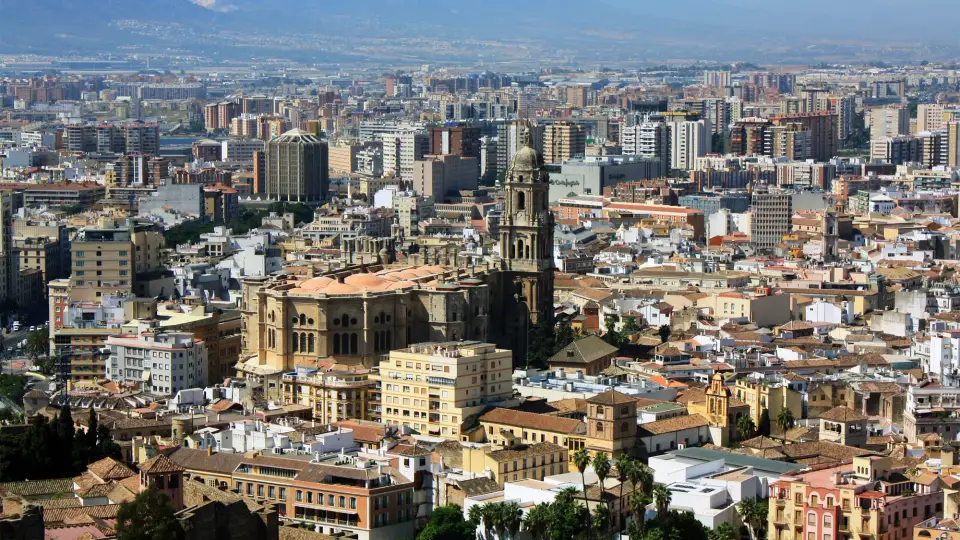


Itineraries through here
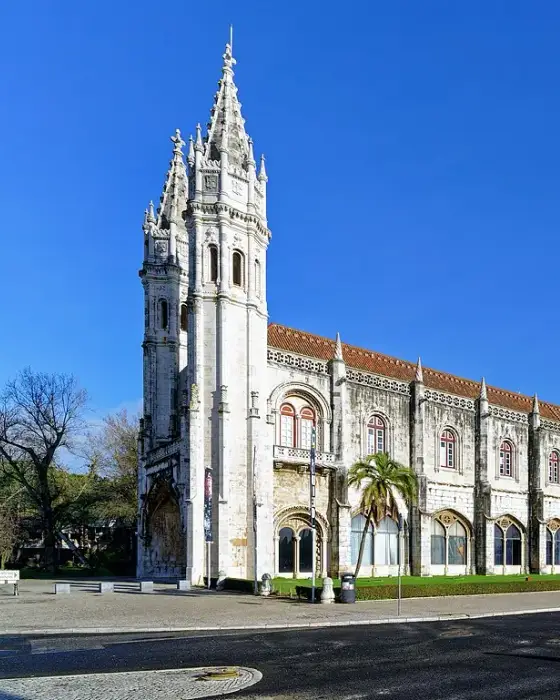 Portugal and Spain in 15 daysIberia from end to endLisbon · Porto · Madrid · Seville · Barcelona13–18 days5 cities
 Spain in 10 daysPrado, flamenco and GaudíMadrid · Seville · Barcelona8–11 days3 cities
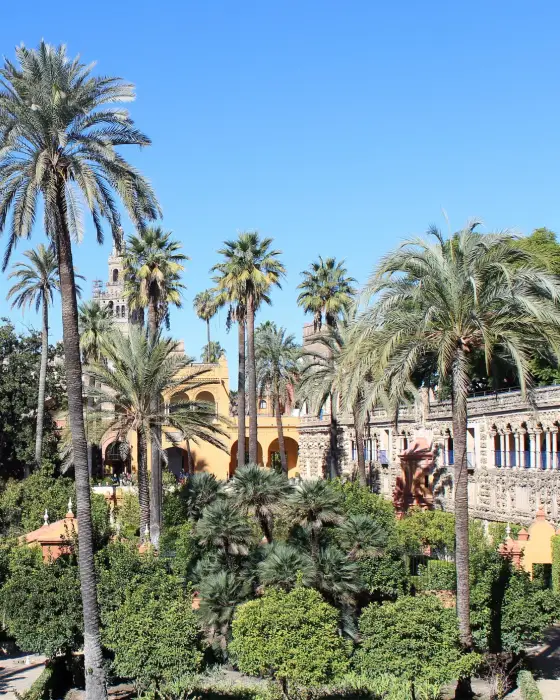 Spain and Morocco in 10 daysBoth sides of the StraitMadrid · Seville · Marrakesh8–10 days3 cities
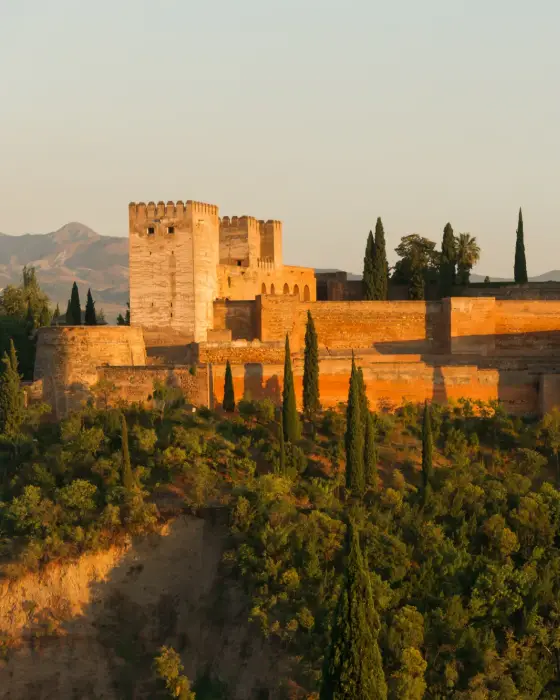 Lisbon, the Algarve and Andalusia in 15 daysSagres, Seville and the AlhambraLisbon · Algarve · Seville · Granada · Madrid13–18 days5 cities