Spain
Mallorca
Palma as a base for the city and Tramuntana
Days Start with the basic programme and choose extensions for the time you have.
How the guide reaches this number
Five days are ideal if the trip also calls for beaches and Mondragó paths, with a separate day for the southeast. The north, with Alcúdia and Formentor, requires more time or replacement of one of these sectors. For those mainly wishing to rest beside the sea, I would change the base and choose fewer journeys.
4–5
When May to June and September to October; for combining city, mountains and coast while accepting variable weather and sea conditions.
How the guide reaches this number
May, June, September and October are the choices for combining Palma, the mountains and coast without concentrating the whole trip at the summer peak. Rain and changing sea conditions remain possible, especially on coastal outings. July and August require more attention to heat, room availability and parking. In the cooler season, Palma retains museums and urban life while beach services and some tourist operations reduce their offer. Walks require a weather bulletin and effort assessment in any month; sea bathing is not guaranteed by the date.
Per person/day Accommodation in Palma, car rental for inland days, parking and admissions are the items to compare.
How the guide reaches this number
The same itinerary can cost differently at the height of summer and outside it; separate the excursion budget from spending on days walking in Palma.
Accommodation in Palma, car rental for inland days, parking and admissions are the items to compare. The same itinerary can cost differently at the height of summer and outside it; separate the excursion budget from spending on days walking in Palma.
Per person per day: accommodation, meals, urban transport, visits and a small allowance for extras. Flights excluded; larger purchases vary. Editorial estimate, not a quote.
 What Nilo thinks
I would allow at least four days for this selection, sleeping in Palma: one for the capital, another for Sóller and the port, one for Valldemossa with Deià when logistics allow, and another for Drach and Porto Cristo. Five days are ideal if the trip also calls for beaches and Mondragó paths, with a separate day for the southeast. The north, with Alcúdia and Formentor, requires more time or replacement of one of these sectors. For those mainly wishing to rest beside the sea, I would change the base and choose fewer journeys.The first decision in Mallorca is where to sleep. Palma brings the cathedral, old streets, museums and transport departures closer; Sóller places the stay in the Tramuntana valley; a coastal base shifts the trip towards the sea. Each choice can work, provided outings follow that geography.
Read more
I would start with Palma and separate the mountains from the east. The Sóller train lets you observe the passage through the mountains, Valldemossa adds cultural history, and Cuevas del Drach leads into an underground environment in Porto Cristo. For beaches and paths in Mondragó, I would allow an additional day, with time to stay in the place rather than cross the island again.
Quick facts
- Population
- About 982,500 island residents on 1 July 2026, according to INE estimates reproduced by Radio Mallorca; this is neither Palma city’s population nor a count of people present including tourists.
- Foundation
- An island with prehistoric occupation; Palma has Roman origins linked to the conquest of 123 BC. Mallorca has no single urban foundation.
- Country and region
- Spain, autonomous community of the Illes Balears.
- Language
- Catalan, in its Mallorcan variety, and Spanish.
- Currency
- Euro (EUR).
- Time zone
- Europe/Madrid: UTC+1 in standard time and UTC+2 in daylight saving time.
- Best time
- May to June and September to October; for combining city, mountains and coast while accepting variable weather and sea conditions.
- Average daily cost
- Accommodation in Palma, car rental for inland days, parking and admissions are the items to compare. The same itinerary can cost differently at the height of summer and outside it; separate the excursion budget from spending on days walking in Palma.
When to go
May to June and September to October; for combining city, mountains and coast while accepting variable weather and sea conditions.
How the year changes
May, June, September and October are the choices for combining Palma, the mountains and coast without concentrating the whole trip at the summer peak. Rain and changing sea conditions remain possible, especially on coastal outings. July and August require more attention to heat, room availability and parking. In the cooler season, Palma retains museums and urban life while beach services and some tourist operations reduce their offer. Walks require a weather bulletin and effort assessment in any month; sea bathing is not guaranteed by the date.
Nilo's tips
Distinguish the tickets
I would compare the Sóller tourist train and TIB transport as separate services, including the return and any tram.
Choose the session after transport
For the caves, I would check arrival time and the bus stop before buying the time slot.
Plan one sector per day
I would leave Formentor to those with a northern day. I would not put the lighthouse after the caves or a complete Sóller outing.
A beach base
If bathing and rest are the priority, I would choose a coastal base and reduce distant outings, rather than keeping every departure day from Palma.
Explore the map
Explore the map, read about the other places and plan your travel days in the app.
Open the appWhat to see
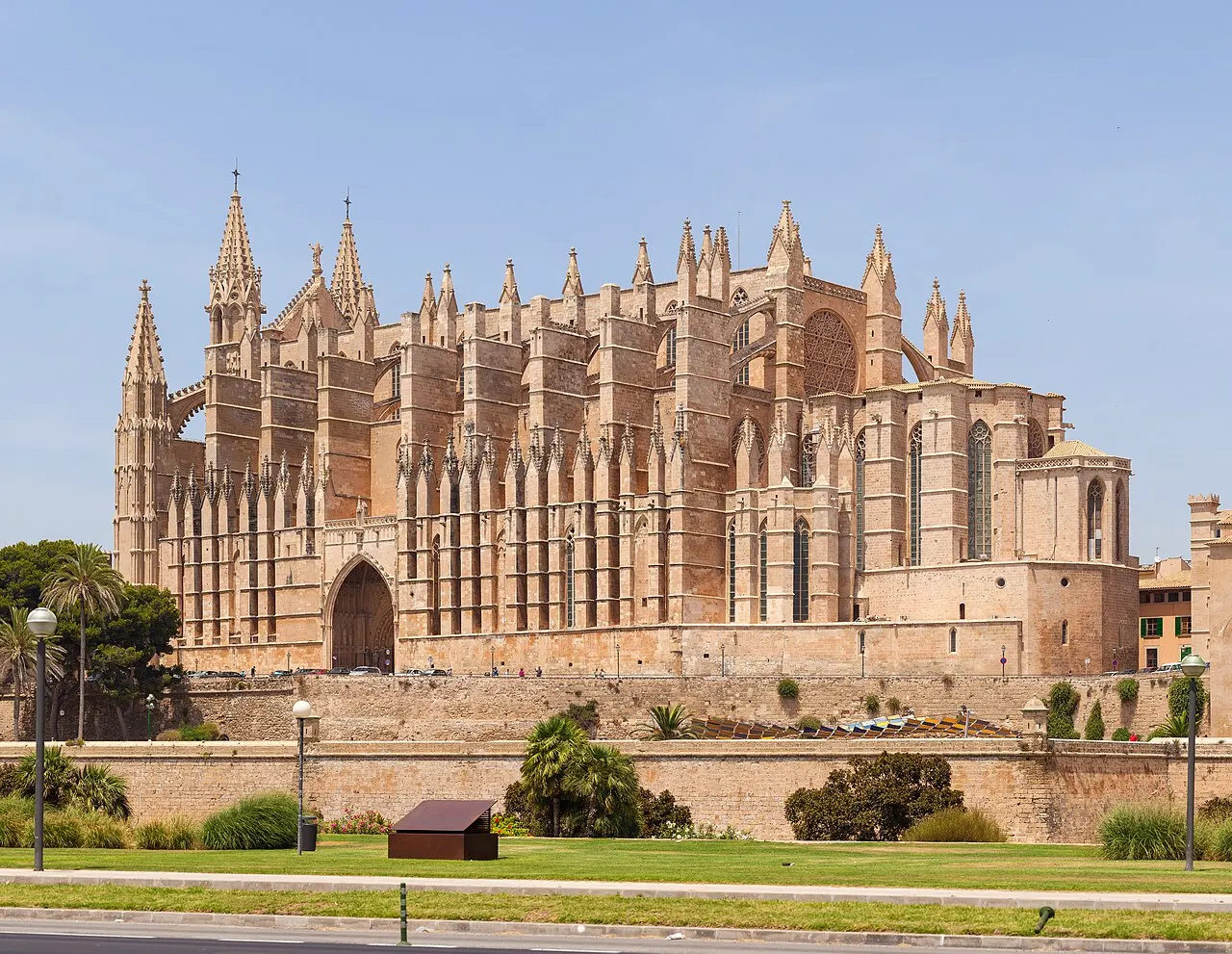
Catedral de Mallorca
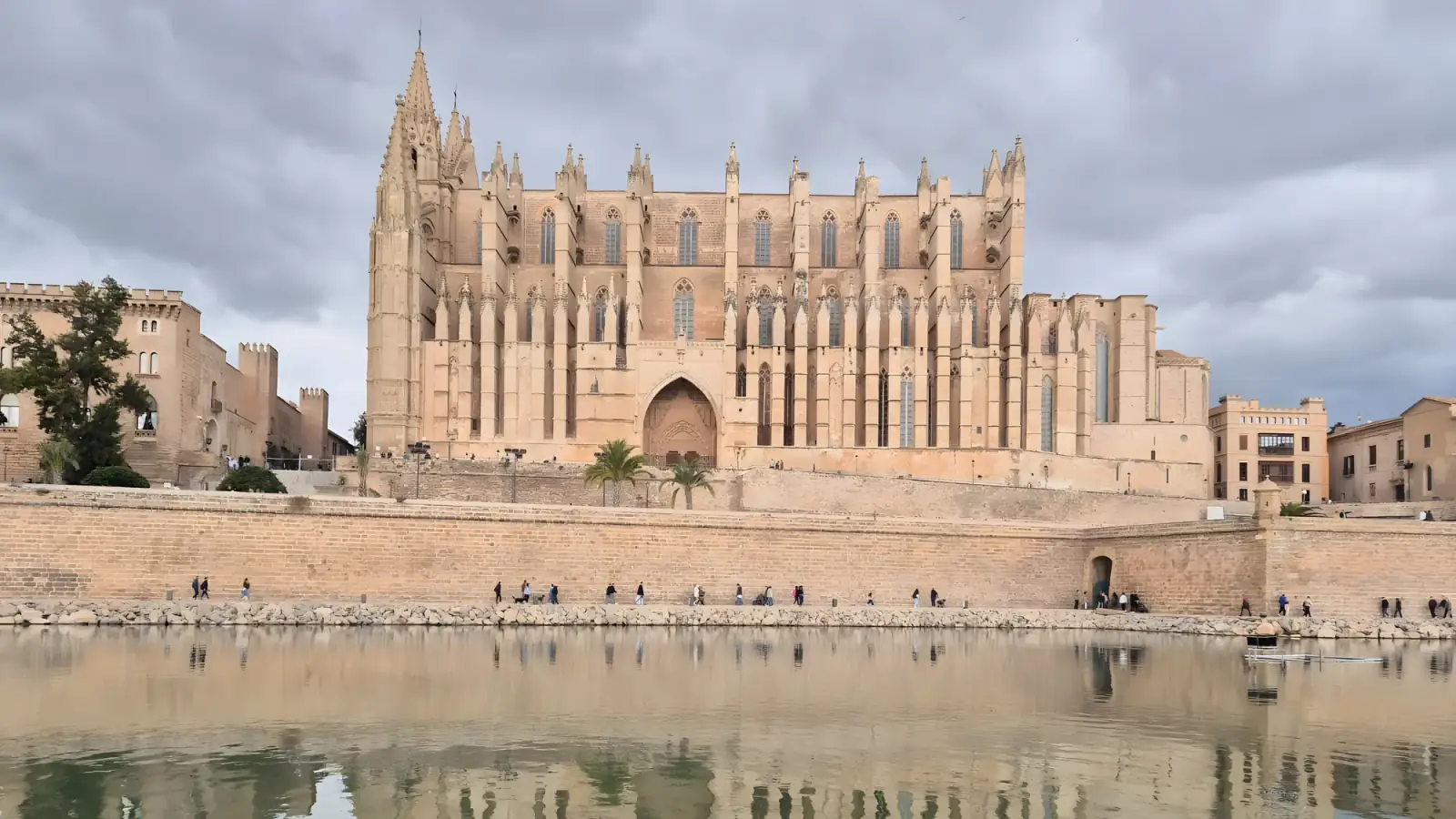
La Seu dominates Palma’s waterfront and introduces Gothic architecture and later interventions. The ordinary visit and the terrace option are different. In 2026, the terraces operate from March to November and are limited to those over 9; minors must prove their age with official identification and have one adult for each person under 18. The route requires stairs and is not permitted for people with reduced mobility, vertigo, claustrophobia or cardiorespiratory conditions, according to the operator’s rules. Check the full conditions and opening times before buying; these terrace restrictions do not define ordinary cathedral access. Religious services take priority over tourist visits.
The cathedral helps explain the capital’s historic waterfront; the terrace option needs its own choice.
Check access

Ferrocarril de Sóller
The historic line crosses the mountains between Palma and Sóller. The railway route is 27 km and the published timetable allows about an hour on the train; the whole programme needs time for the town, lunch and any tram trip to the port. The tourist ticket is separate and should not be confused with TIB rail transport.
The route crosses the mountains and organises a day in the valley and port, with its own ticket.
Check access
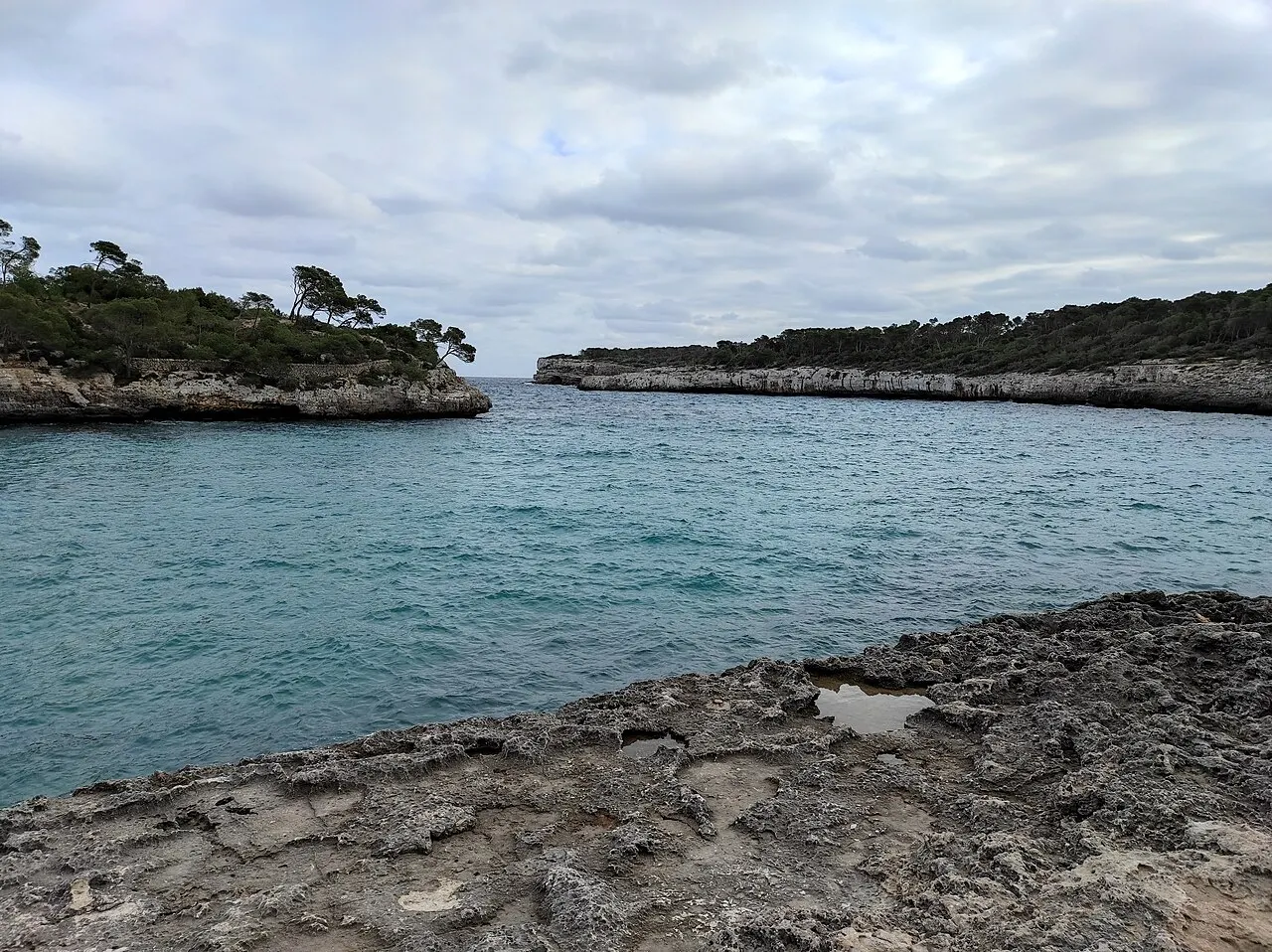
Parc Natural de Mondragó
In the Santanyí area, it combines beaches, wetlands, coastal vegetation and traces of former farming. Marked paths help reveal more than sand; the park lists routes from 15 to 60 minutes. Use designated access and parking and respect dunes, protected areas and properties.
It combines sea and park paths on an additional day, without reducing the visit to a cove photograph.
Check access
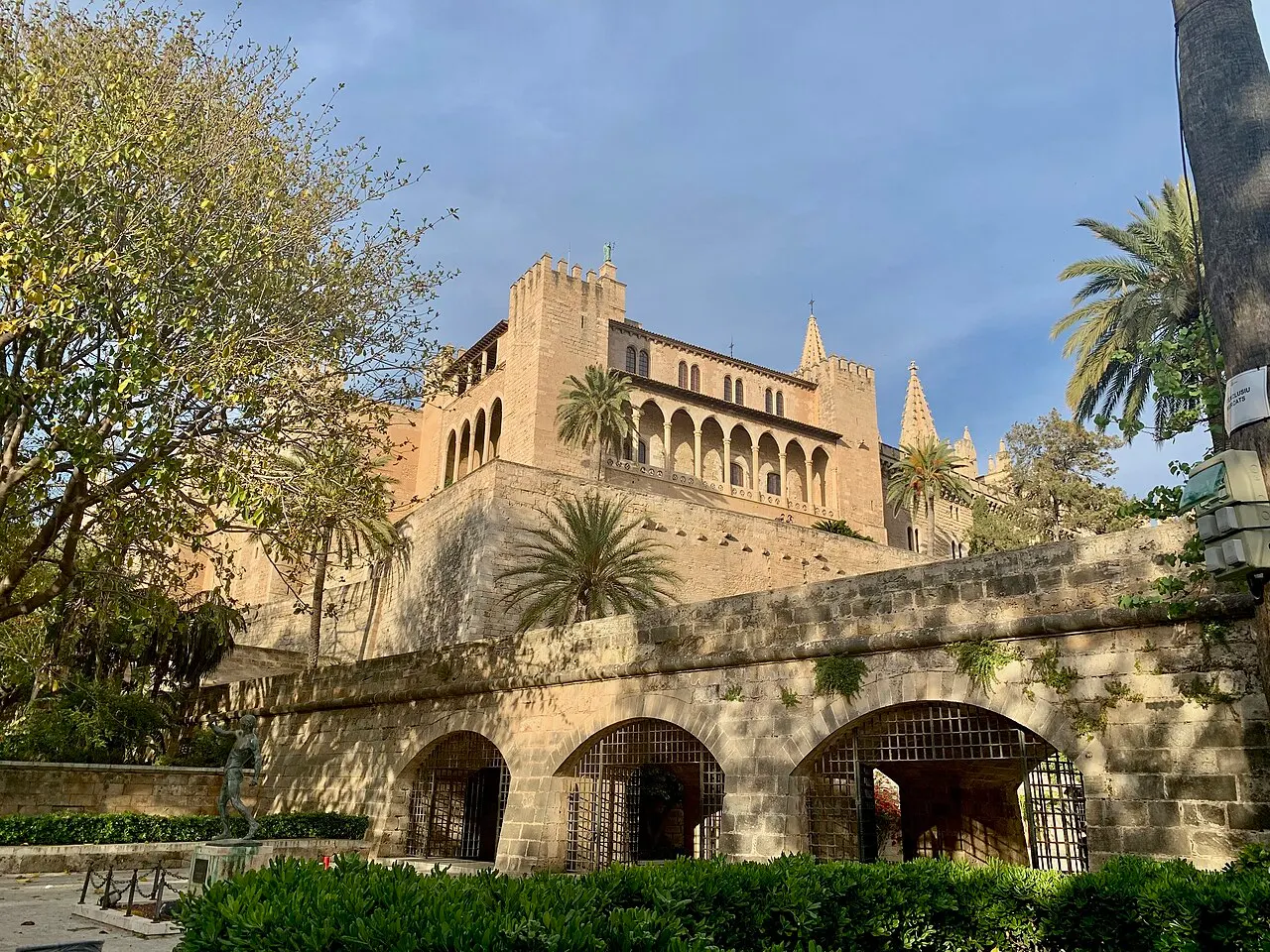
Palau Reial de l’Almudaina
Beside the cathedral, the palace preserves the overlap of the Islamic fortification and the residence of Mallorca’s kings. Courtyards, chapel and rooms offer a reading of political power complementing the religious visit. It is a monument with its own ticket and calendar, managed by Patrimonio Nacional; ceremonies may change access. Choose interiors according to available time and check partial-opening notices. Proximity to the cathedral does not mean a combined ticket or make it possible to schedule all Palma interiors without breaks.
Courtyards and rooms help explain Mallorca’s political history alongside the religious cathedral visit.
Check access
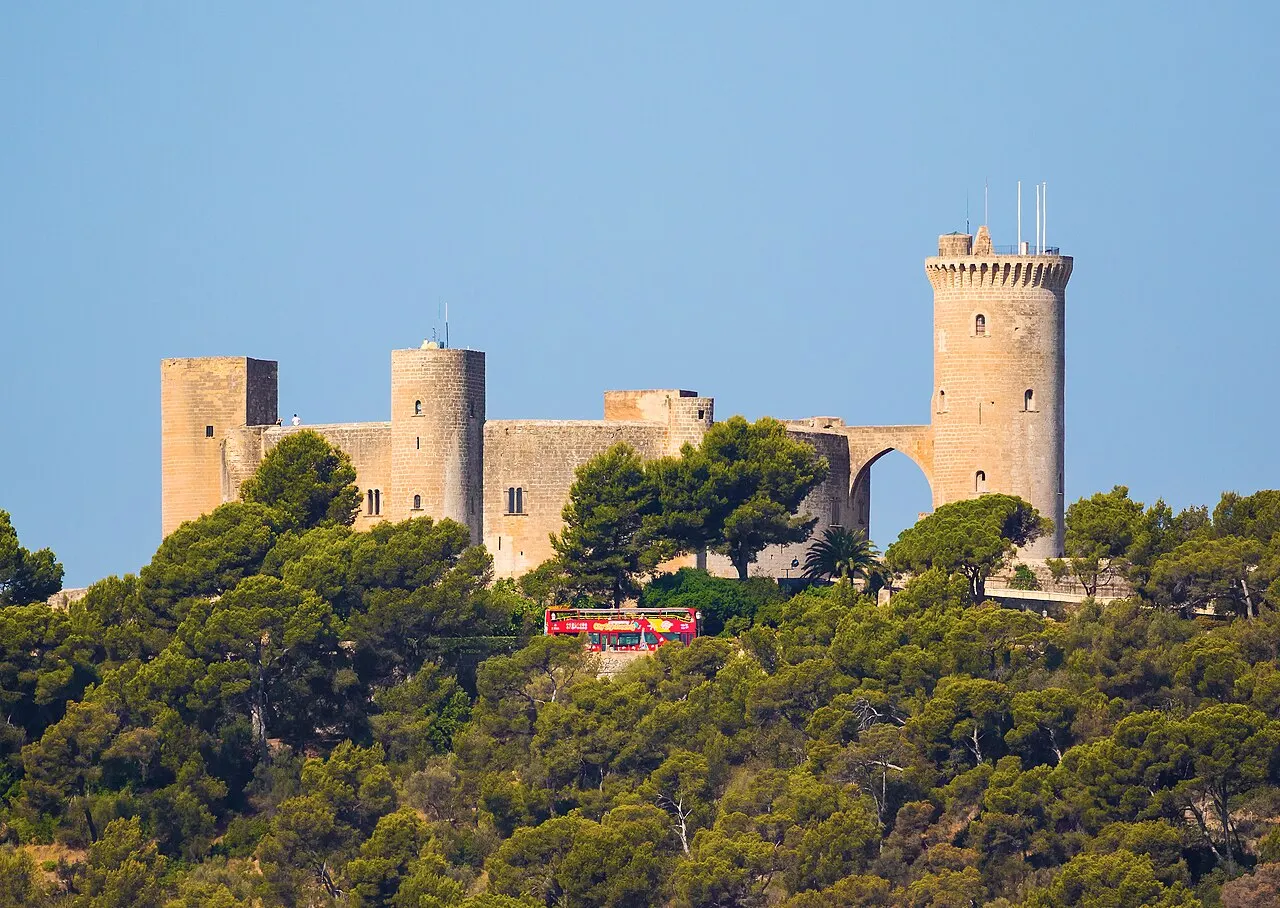
Castell de Bellver
The elevated castle offers a reading of the bay and city, as well as the building’s architecture and history. Travel and the climb deserve their own time: do not treat it as next door to the cathedral. Check opening and access through the municipal channel, especially during events.
The elevated position and architecture add a reading of the bay, with a separate journey.
Check access

Es Baluard Museu d’Art Contemporani de Palma
The museum beside the old wall adds modern and contemporary art to the urban outing. Its collection and exhibitions should guide the visit alongside the external views. In the current information consulted, the museum closes on Mondays; opening hours for the cultural complex are not the same as for the galleries.
It adds contemporary art to the urban walk without confusing external access with gallery opening.
Check access

Cartoixa de Valldemossa
The former religious and palatial complex helps explain the village, with spaces and collections determined by the ticket bought. Its association with Chopin and George Sand matters, but the Cel·la de Chopin visit has its own channel and ticket office. Check what is included rather than buying in expectation of automatic access to every space.
It contextualises Valldemossa, provided the visitor checks the spaces covered by each ticket.
Check access

Deià
The village on the Tramuntana slopes is worth visiting for its setting between mountains, terraces and coast, and its links with artists. Walk through the centre respecting properties and stop for a meal. Descending to a cove is another route, with effort, parking and return needing planning; it is not automatically part of a stop in the centre.
The hillside setting deserves a walk and time in the village, without adding a compulsory descent to the cove.
Check access

Cuevas del Drach
In Porto Cristo, the visit follows the caves and includes a concert on Lake Martel. Admission includes the option of crossing this stretch by boat or continuing on foot, with no supplement according to the operator. Allow about an hour inside, with steps and potentially slippery flooring. Buy the desired session and do not confuse the site with the Hams caves. The route is not accessible to wheelchairs or pushchairs according to the operator. The operator advises against the visit for people with coronary insufficiency or claustrophobia. If you have a health condition, consult your doctor and tell the staff before entering.
It is the underground outing selected for the east, with its own session and accessibility conditions.
Check access
Nilo’s itinerary
Start with the basic programme and choose extensions for the time you have.
Plan my days in the app ↗Day 1 · Palma, cathedral and old centre
Settle into Palma. Visit the cathedral at the confirmed time; if arriving late or on a day without tourist visits, reschedule this commitment for another period in the capital. If choosing the terraces, check the stair route, restriction to those over 9, and requirement for identification and one adult per minor under 18, as well as the health conditions and reservation specific to this option.
Walk through the old centre and pause for lunch. Beside the cathedral, identify the Palau de l’Almudaina and choose its interior if calendar and time allow; it may take the period intended for another museum. Continue past the Llotja building and waterfront, distinguishing external passage from a possible interior visit.
If open and time allows, visit Es Baluard for a contemporary reading of the city. On Monday, remove the museum and retain the urban walk; Bellver is another possible visit in its own period after checking travel and opening. Those preferring Miró’s work and creative spaces can choose the Fundació in a separate period or instead of Es Baluard, travelling to Cala Major; consider Son Boter’s temporary closure and do not add all three museums as an obligation.
Have dinner in the centre or Santa Catalina and sleep in Palma.
Day 2 · Sóller and the port by train and tram
Leave from Ferrocarril de Sóller’s own Palma station with outward and return times chosen. The train takes about an hour; do not confuse its ticket office with TIB trains.
Walk through Sóller’s centre and allow time for lunch and the valley.
If you chose the corresponding combined ticket, take the tram to Port de Sóller and walk the waterfront. Stay in this sector rather than adding Sa Calobra to the same day.
Return by tram and train at compatible times. A TIB bus as a return alternative requires checking route and separate ticket. Second night in Palma.
Day 3 · Valldemossa and a Tramuntana choice
Travel to Valldemossa by TIB 203 bus or car. Check the current stop and timetable before leaving. Dedicate the morning to the village and Cartoixa within opening hours.
If Chopin is your main interest, check Cel·la de Chopin and its separate ticket before choosing the visit. Do not buy a ticket expecting it to include every space in the complex.
Have lunch in Valldemossa. In the afternoon, continue to Deià only if the connection and return to Palma allow a visit with walking time; otherwise stay in Valldemossa and its local outings.
Do not add a descent to a cove or a long trail without calculating the return. Go back to the same Palma base for dinner and sleep.
Day 4 · Cuevas del Drach and Porto Cristo
Reserve a Cuevas del Drach session compatible with transport. By car, the Palma–Porto Cristo route reference is about 65 km and an hour, without a traffic guarantee; on TIB 401, check duration, stop and the final stretch to the caves.
Arrive ahead of time at the operator’s indicated entrance and make the approximately one-hour visit. The concert and lake-crossing option are part of admission, without needing to buy an additional outing.
Have lunch in Porto Cristo and walk around the port. Time on the urban beach depends on sea conditions and your return time; it does not require changing coasts again.
Return to Palma. If flying out the same day, reduce the programme or leave the outing for another day with an overnight stay; do not tie a late session to the last airport connection.

If you stay longer
Day 5 · Parc Natural de Mondragó
Day trip
For the fifth day, allow a separate programme of beaches and paths in the southeast. The car route from Palma to Playa Mondragó is estimated at about 59 km and 51 minutes by the consulted planner, before traffic and parking. Check access to ses Fonts de n’Alis or s’Amarador and follow official paths, with options from 15 to 60 minutes. Without a car, check the season’s TIB combination and final stretch; do not assume a bus to Santanyí drops you at the beach.
Food
Ensaïmada
A spiral of fermented sweet dough, plain or filled. The traditional recipe uses pork lard, relevant information even when its appearance suggests a meat-free sweet bread.
Sobrassada de Mallorca
A soft-textured cured sausage made with pork and paprika, used on slices of bread or in dishes. A protected-designation product is not synonymous with any reddish meat paste.
Pa amb oli
Bread with olive oil and tomato, often accompanied by cheese or cured meats. It is a simple meal whose contents and size vary by place.
Tumbet
A layered vegetable preparation, with ingredients such as potato, aubergine and pepper, with tomato. Some versions are accompanied by meat or fish; check the composition rather than assuming a vegetarian choice on every menu.
Where to eat
- Bakeries in Palma and villages
Choose a plain ensaïmada to recognise the dough before the fillings. The traditional recipe contains pork lard; check ingredients when restrictions apply and order large sizes ahead if necessary.
- Palma, centre and Santa Catalina
Pa amb oli allows a meal of bread, tomato and olive oil with chosen accompaniments. Read the composition and portion price; adding cheese or cured meats changes the dish and cost.
- Sóller and Valldemossa
Look for Mallorcan cooking with dishes such as tumbet and preparations using sobrassada. The reason for choosing is the regional repertoire; check ingredients and allow time for a meal rather than eating in a rush before the last bus.
- Porto Cristo
After the caves, eat in the port sector according to displayed menus and prices. If choosing fish, ask species, origin and charging unit, without assuming local produce because you face the water.
· 2026-10-16
Day trips
Parc Natural de Mondragó
For the fifth day, allow a separate programme of beaches and paths in the southeast. The car route from Palma to Playa Mondragó is estimated at about 59 km and 51 minutes by the consulted planner, before traffic and parking. Check access to ses Fonts de n’Alis or s’Amarador and follow official paths, with options from 15 to 60 minutes. Without a car, check the season’s TIB combination and final stretch; do not assume a bus to Santanyí drops you at the beach.
Alcúdia and Pol·lèntia
A northern extension combines the walled centre and archaeology. The Palma–Alcúdia route reference is about 55 km and 47 minutes by car, without traffic; by bus, consult TIB for outward and return services. Allow a day with a lunch break and check the site and museum separately. Formentor lighthouse needs another assessment of time and access; it is not automatically a final stop.
Lluc, on its own Tramuntana day
To deepen the mountains’ heritage, choose Lluc sanctuary as the day’s focus. Check outward and return road travel or the TIB connections available for your date, pause for lunch and select spaces in the complex according to opening. Sa Calobra requires another calculation of route and conditions; do not add it because it is in the same municipality.
Sa Calobra and the Torrent de Pareis mouth
Allow an additional day for the Escorca coast. By car, calculate the mountain-road route and check traffic rules and parking. If taking a boat from Port de Sóller, check operation, sea conditions and the return ticket before leaving. The programme is coastal, contemplating the mouth without descending the canyon. It replaces another outing day rather than fitting after the historic train or Lluc without a margin.
Where to begin
Palma, cathedral and old centre
Settle into Palma. Visit the cathedral at the confirmed time; if arriving late or on a day without tourist visits, reschedule this commitment for another period in the capital. If choosing the terraces, check the stair route, restriction to those over 9, and requirement for identification and one adult per minor under 18, as well as the health conditions and reservation specific to this option.
Sóller and the port by train and tram
Leave from Ferrocarril de Sóller’s own Palma station with outward and return times chosen. The train takes about an hour; do not confuse its ticket office with TIB trains.
Valldemossa and a Tramuntana choice
Travel to Valldemossa by TIB 203 bus or car. Check the current stop and timetable before leaving. Dedicate the morning to the village and Cartoixa within opening hours.
Cuevas del Drach and Porto Cristo
Reserve a Cuevas del Drach session compatible with transport. By car, the Palma–Porto Cristo route reference is about 65 km and an hour, without a traffic guarantee; on TIB 401, check duration, stop and the final stretch to the caves.
Money
The currency is the euro. In the 16/10/2026 consultation, Cuevas del Drach lists €18.50 online or €19.50 at the ticket office for ages 13 and over; ages 3 to 12 pay €11.50 or €12.50, and ages 0 to 2 enter free. The concert and lake-crossing option are included. The Sóller train lists €30 return Palma–Sóller and €40 for the Palma–Port de Sóller–Palma combination with train and tram. These are outing fares, not a daily budget. Accommodation may charge the tourist-stay tax according to category, period and stay conditions; those under 16 are exempt. Ask the property for the applicable calculation, including any reductions and taxes, rather than adding a fixed charge to every room.
Getting there and around
Airport and Palma
Palma de Mallorca Airport (PMI) is the air gateway. Aena identifies EMT line A1 as a connection with Palma; check the appropriate stop for your hotel and the separate airport fare. Other airport lines serve island sectors according to operations. Do not assume every bus goes to the old centre or arrives at your room’s door.
Networks and tickets
EMT serves Palma’s urban network; TIB brings together interurban buses, trains and metro. On TIB, current guidance allows using a bank card by validating on entry and exit, always with the same card and device. On buses, a group of up to five people validates once per passenger on entry and once for the group on exit, according to TIB instructions. Free travel with local cards does not mean free travel for every visitor.
Tramuntana without a car
The tourist train links Palma with Sóller and the tram continues to the port, with its own ticket. TIB line 203 serves the Valldemossa and Deià axis; check the day’s route and stop. The seat-reservation service announced in 2026 was directed at holders of specific local cards, not a promise of reserved seats for every tourist.
East and car
TIB line 401 connects Palma and Porto Cristo through the interior. For Cuevas del Drach, choose the stop and final stretch before buying the session. A hire car makes combining some sectors and beaches easier, but brings parking, restricted-access areas and winding roads. The first day’s urban itinerary needs no car.
Formentor
In the restriction season, plan line 334 and check both regulated sections. Do not rely on driving to the lighthouse and returning after the prohibition begins; the rule may prevent travel in both directions. Check the period for the specific year before leaving Palma.
Safety
In the mountains, check the weather, carry water, sun protection and suitable footwear, and follow permitted paths. Heat, rain and rocky ground change the effort; do not turn a gorge crossing into an improvised alternative to a coastal outing. At sea, respect signs, flags and lifeguard guidance, without entering unsuitable water conditions. On roads, give cyclists space and avoid stopping on bends for photographs. In Palma and busy places, keep documents and belongings close. Emergency: 112.
Etiquette tips
In villages and fields
Respect houses, walls and private access. A path to a viewpoint does not authorise crossing a property or opening a closed gate.
In the cathedral
Wear clothing suited to the religious space and follow visit conditions. Mass does not replace a tourist ticket or allow free circulation during worship.
On beaches and in parks
Protect dunes and vegetation, take your waste and use indicated paths. Do not remove natural elements or block emergency access to park.
Mistakes to avoid
Choosing a base only by the beach photograph
Accommodation on the east or north coast changes access to Palma and the Tramuntana. Compare the whole itinerary and evening connections.
Mountains and east on the same day
Sóller, Valldemossa and Porto Cristo do not form a compact circuit. Separate regions and preserve lunch and the return.
Confusing visits in Valldemossa
The Cartoixa complex and Cel·la de Chopin have their own conditions. Check the ticket rather than assuming one name covers every space.
Treating the lighthouse as an unrestricted car stop
Formentor has seasonal regulation and different conditions by section. Parking or entering before the restriction does not create permission to drive later.
Useful phrases
Bon dia.
Good morning, in Catalan.
Gràcies.
Thank you.
On és l’estació?
Where is the station?
¿Esta entrada incluye el concierto?
Does this ticket include the concert?
¿Dónde se coge el autobús de vuelta?
Where do I catch the return bus?
Where to stay
- Palma, old centre and around Plaça d’Espanya · For first-time visitors wanting evening restaurants and public transport departures.: It is the standard base for the four days: it allows enjoying the capital and reaching bus and train departures. Check car and luggage access in the old centre, noise and the actual distance to the station.
- Santa Catalina, Palma · For those prioritising meals and urban life and willing to walk to connections.: It is near the Es Baluard sector and waterfront, but not beside Estació Intermodal. Night noise and travel with luggage should enter the choice.
- Sóller or Port de Sóller · For those wanting more days in the Tramuntana and fewer outings to the other side of the island.: Valley and port serve different programmes. Compare address, connection and parking; using this base to repeat Palma and Porto Cristo every day adds travel.
- Porto Cristo and east coast · For those prioritising beaches and caves during their stay.: It brings the Drach day and other eastern programmes closer. Reduce mountain visits and check seasonal services if travelling outside summer.
- Alcúdia or Port de Pollença · For those dedicating several days to the north and bays.: It makes beaches and historic towns easier to combine and helps plan Formentor. It does not offer Palma’s logistics for the standard itinerary; check whether accommodation is in the historic centre, port or a distant beach.
· 2026-10-16
Districts
Palma, old centre
Cathedral, historic streets, shops and access to the bay promenade. It suits urban visits and meals without driving.
Palma, Plaça d’Espanya and Estació Intermodal
An area for bus and train departures, useful for outings without a car. The Sóller train has its own station near the square.
Palma, Santa Catalina
A market and restaurant neighbourhood west of the old centre, near the Es Baluard sector. Nightlife may influence your room choice.

Sóller and Port de Sóller
The town occupies the valley; the port is on the coast, linked by tram. Choosing one is not the same as staying in the other.
Valldemossa and Deià
Tramuntana villages with sloping streets and strong tourism demand. The interest lies in walking and choosing cultural visits, without turning every place into a photo stop.
Porto Cristo and east coast
A base near Cuevas del Drach and other eastern coastal outings. The capital and mountain villages then require longer journeys.
Alcúdia and Port de Pollença
A northern sector with a historic centre, bays and access to the Formentor peninsula. It is an alternative base for a stay focused on this side of the island.
History
123 BC · Palma in the Roman period
The Roman conquest of the island gave rise to new urban centres. Palma and Pol·lèntia help identify this historical layer in different parts of Mallorca.
10th–13th centuries · The Islamic island
The Islamic period left marks on town organisation and agricultural water use. Hydraulic systems integrated into the Tramuntana are part of reading today’s landscape.
1229 · Jaume I’s conquest
The taking of Palma changed power, society and the city. The Christian medieval centre developed over an earlier city without erasing all its layers.
1838–1839 · Chopin and George Sand in Valldemossa
The winter stay became an important part of the village’s cultural memory. The Cartoixa and Cel·la de Chopin have visits that must be distinguished when choosing a ticket.
1912 · The train links Palma with Sóller
The railway crossed the mountains and improved communication with the valley. The historic route is now also a tourist attraction.
2011 · The Tramuntana landscape is recognised
UNESCO inscribed the cultural landscape, valuing the relationship between agriculture, terraces, dry stone and water management. Protection is not confined to the mountains seen from the road.
Complete history
Reading the capital and countryside
Palma brings together traces of successive occupations, but the island also calls for a reading beyond its capital. Pol·lèntia, in Alcúdia, represents the Roman past in the north; Tramuntana water systems and terraces show the work that adapted agriculture to the slopes. Dry-stone walls organise terrain and circulation as well as making a photogenic landscape.
The city after the conquest
The conquest of 1229 established a new political and social order. The cathedral and other medieval buildings came to mark Palma beside the sea. Visiting the centre connects monumental scale with streets, courtyards and commercial structures, without treating every old building as belonging to the same period.
Travel, art and tourism
Chopin and George Sand spent part of the winter of 1838–1839 in Valldemossa. Their memory now coexists with life in a much-visited village. In Sóller, the train inaugurated in 1912 shows another transformation: access through the mountains. Museums such as Es Baluard add contemporary creation to a trip that might otherwise be confined to medieval heritage and beaches.
Geography and shape of the city
Sectors of the island
Palma lies on the broad southwestern bay and concentrates air arrivals and transport connections. The Tramuntana follows the northwestern coast; Sóller, Valldemossa and Deià are in this sector, but not on the same street. Porto Cristo is on the east coast. Alcúdia and Pollença organise part of the north.
Roads and coves
An apparently short map distance may involve bends, parking and walking. A beach at the end of a narrow path requires different logistics from an urban stretch of sand. The proposed itinerary separates the mountains from the east coast and keeps Palma as its base.
I would compare the address with the day’s programmes, particularly when choosing coastal accommodation advertised only as Mallorca.
An attraction ticket does not resolve roads, parking or the return bus. I would settle those conditions before scheduling the time.
Culture
Catalan and place names
Mallorca uses Catalan and Spanish, and many names appear in different forms in guides. Recognising Palma, Sóller, Deià and Port de Pollença as they appear on signs helps orientation. Do not treat the local language as an exotic attraction.
Art and literature
Valldemossa preserves the memory of Chopin and George Sand, while Palma brings together museums and artistic interventions from different periods. Es Baluard offers a contemporary complement with its own programme.
Dry stone and water
In the Tramuntana, walls, terraces and water systems help explain how the countryside was worked. UNESCO’s inscription concerns a cultural landscape, not just a succession of natural viewpoints.
Festivals and events
Sant Sebastià, Palma
Patron-saint festivities in January, with activities distributed through the municipal calendar around 19 and 20 January. Check your travel year’s edition for concerts and traffic changes.
Cant de la Sibil·la
Traditional chant associated with Christmas celebrations in Mallorca, recognised by UNESCO as intangible cultural heritage. To attend, check the church, time and conditions of the service, maintaining priority for worship.
Books and films
A Winter in Majorca, George Sand
The book grew from the stay with Chopin and presents a historical traveller’s view, with the prejudices and tensions of its time. It helps contextualise Valldemossa when read critically, without turning the author’s judgment into a description of today’s residents.
Cultural Landscape of the Serra de Tramuntana, UNESCO
The dossier and presentation explain the combination of water, agriculture and dry stone. Useful reading before following the mountain road or paths.
Frequently asked questions
Mallorca: How many days should I allow?
I would allow at least four days for this selection, sleeping in Palma: one for the capital, another for Sóller and the port, one for Valldemossa with Deià when logistics allow, and another for Drach and Porto Cristo. Five days are ideal if the trip also calls for beaches and Mondragó paths, with a separate day for the southeast. The north, with Alcúdia and Formentor, requires more time or replacement of one of these sectors. For those mainly wishing to rest beside the sea, I would change the base and choose fewer journeys.
Mallorca: Which Palma area works as a base?
Palma, old centre and around Plaça d’Espanya. It is the standard base for the four days: it allows enjoying the capital and reaching bus and train departures. Check car and luggage access in the old centre, noise and the actual distance to the station. Santa Catalina, Palma. It is near the Es Baluard sector and waterfront, but not beside Estació Intermodal. Night noise and travel with luggage should enter the choice.
Mallorca: How do I get from the airport?
Palma de Mallorca Airport (PMI) is the air gateway. Aena identifies EMT line A1 as a connection with Palma; check the appropriate stop for your hotel and the separate airport fare. Other airport lines serve island sectors according to operations. Do not assume every bus goes to the old centre or arrives at your room’s door.
Mallorca: How do I pay for public transport?
EMT serves Palma’s urban network; TIB brings together interurban buses, trains and metro. On TIB, current guidance allows using a bank card by validating on entry and exit, always with the same card and device. On buses, a group of up to five people validates once per passenger on entry and once for the group on exit, according to TIB instructions. Free travel with local cards does not mean free travel for every visitor.
Mallorca: Can I take the outings without a car?
The tourist train links Palma with Sóller and the tram continues to the port, with its own ticket. TIB line 203 serves the Valldemossa and Deià axis; check the day’s route and stop. The seat-reservation service announced in 2026 was directed at holders of specific local cards, not a promise of reserved seats for every tourist. TIB line 401 connects Palma and Porto Cristo through the interior. For Cuevas del Drach, choose the stop and final stretch before buying the session. A hire car makes combining some sectors and beaches easier, but brings parking, restricted-access areas and winding roads. The first day’s urban itinerary needs no car.
Mallorca: What is the Cuevas del Drach visit like and what does it cost?
In Porto Cristo, the visit follows the caves and includes a concert on Lake Martel. Admission includes the option of crossing this stretch by boat or continuing on foot, with no supplement according to the operator. Allow about an hour inside, with steps and potentially slippery flooring. Buy the desired session and do not confuse the site with the Hams caves. The route is not accessible to wheelchairs or pushchairs according to the operator. The operator advises against the visit for people with coronary insufficiency or claustrophobia. If you have a health condition, consult your doctor and tell the staff before entering. In the 16/10/2026 consultation, ages 13 and over paid €18.50 online or €19.50 at the ticket office; ages 3 to 12 paid €11.50 or €12.50, and ages 0 to 2 entered free. The concert and lake-crossing option are included.
Mallorca: Do the cathedral and terraces have the same conditions?
La Seu dominates Palma’s waterfront and introduces Gothic architecture and later interventions. The ordinary visit and the terrace option are different. In 2026, the terraces operate from March to November and are limited to those over 9; minors must prove their age with official identification and have one adult for each person under 18. The route requires stairs and is not permitted for people with reduced mobility, vertigo, claustrophobia or cardiorespiratory conditions, according to the operator’s rules. Check the full conditions and opening times before buying; these terrace restrictions do not define ordinary cathedral access. Religious services take priority over tourist visits.
Mallorca: Can I drive to Formentor lighthouse?
The peninsula extends the Tramuntana into the island’s north. Its interest lies in panoramas and the relationship between road, coast and terrain. In 2026, restrictions operate from 15 May to 18 October, from 10 am to 10 pm, with conditions differing by section. Check the regulations and line 334; entering early does not authorise continued driving in the lighthouse section after the restriction begins. In the restriction season, plan line 334 and check both regulated sections. Do not rely on driving to the lighthouse and returning after the prohibition begins; the rule may prevent travel in both directions. Check the period for the specific year before leaving Palma.
Mallorca: When should I travel to combine city and coast?
May, June, September and October favour combining city, mountains and coast, without guaranteeing sea bathing or dry weather. July and August concentrate heat and demand. In April, adapt Palma and a Tramuntana choice to rain, wind and terrain, checking seasonal connections; city or caves can replace the beach. In the cooler season, confirm tourist operations and restaurants without assuming summer services. Walks require forecasts and effort assessment in any month.
Mallorca: How does the accommodation tax work?
Accommodation may charge the tourist-stay tax according to category, period and stay conditions; those under 16 are exempt. Ask the property for the applicable calculation, including any reductions and taxes, rather than adding a fixed charge to every room.
Mallorca: Can I visit all the Miró spaces?
The complex associated with Joan Miró includes the Taller Sert and Son Boter workspaces and the exhibition building. Here you can explore the relationship between Miró’s work and the places where he created it, offering a different experience from Es Baluard. In October 2026, the Fundació reported Son Boter temporarily closed for rehabilitation; do not count on access to that studio during the closure. It lies outside the immediate cathedral circuit: check transport, calendar and which spaces will be accessible. Choose a separate period or replace another museum, preserving travel and break time rather than adding it at the end of an already full day.
Other cities in the country
Spain ↗- Days
- 3–4
- When
- May–Jun · Sep–Oct
- Per person/day
- Average 140–200 EURMid-range · per person/day
Cost scope
Per person per day: accommodation, meals, urban transport, visits and a small allowance for extras. Flights excluded; larger purchases vary. Editorial estimate, not a quote.
- Days
- 3–4
- When
- Apr–Jun · Sep–Oct
- Per person/day
- Average 156 EURMid-range · per person/day
Cost scope
2026 planning examples per person per day: accommodation, food, local transport, admission fees and extras. Flights and trips to other cities excluded. Hostel: one bed; hotels: one whole room allocated to one person. If sharing, divide accommodation. Admission and transport amounts are averages across the stay; check prices for your dates.
- Days
- 2–3
- When
- Mar–May · Oct–Nov
- Per person/day
- Average 70–120 EURMid-range · per person/day
Cost scope
Per person per day: accommodation, meals, urban transport, visits and a small allowance for extras. Flights excluded; larger purchases vary. Editorial estimate, not a quote.
- Days
- 2–3
- When
- Apr–May · Oct
- Per person/day
- Average 150 EURMid-range · per person/day
Cost scope
Per person per day: accommodation, meals, urban transport, visits and a small allowance for extras. Flights excluded; larger purchases vary. Editorial estimate, not a quote.
- Days
- 3–4
- When
- Apr–Jun · Sep–Oct
- Per person/day
- Average 153 EURMid-range · per person/day
Cost scope
Per person per day: accommodation, meals, urban transport, visits and a small allowance for extras. Flights excluded; larger purchases vary. Editorial estimate, not a quote.
- Days
- 3
- When
- May–Jun · Sep
- Per person/day
- Average 113 EURMid-range · per person/day
Cost scope
Per person per day: accommodation, meals, urban transport, visits and a small allowance for extras. Flights excluded; larger purchases vary. Editorial estimate, not a quote.
- Days
- 3
- When
- Apr–Jun · Sep–Oct
- Per person/day
- Average 165 EURMid-range · per person/day
Cost scope
Per person per day: accommodation, meals, urban transport, visits and a small allowance for extras. Flights excluded; larger purchases vary. Editorial estimate, not a quote.