Spain
San Sebastián
Three days of La Concha, pintxos and Basque culture
Days Start with the basic programme and choose extensions for the time you have.
How the guide reaches this number
This division allows unhurried meals and alternatives according to rain. Bilbao deserves an additional day or a stop of its own, without increasing Donostia's minimum or erasing the local program. Anyone coming for just one night should choose one area instead of compressing the three days.
3
When May to June and September; pleasant walks outside the holiday peak, with possible rain and demand spikes around events.
How the guide reaches this number
May to June and September are good choices for walking and eating outside the summer holiday peak. Rain is part of the Atlantic climate and possible in any month; bring protection and an indoor alternative. July and August place more emphasis on beaches and events, with greater demand for accommodation. September requires care around film festival dates: a pleasant walking month may coincide with a heavily booked week. In winter, a food and culture visit remains possible, but coastal walks and viewpoints depend more on wind and sea conditions.
Per person/day Budget around EUR45; mid-range around EUR113; comfortable around EUR289 per person per day, based on spending reported by travelers to Budget Your Trip (checked October 2026).
How the guide reaches this number
Indicative figures, excluding travel to the destination.
Budget around EUR45; mid-range around EUR113; comfortable around EUR289 per person per day, based on spending reported by travelers to Budget Your Trip (checked October 2026). Indicative figures, excluding travel to the destination.
Per person per day: accommodation, meals, urban transport, visits and a small allowance for extras. Flights excluded; larger purchases vary. Editorial estimate, not a quote.
 What Nilo thinks
I would dedicate at least three full days to San Sebastián: one for the Parte Vieja, San Telmo and Urgull; another for La Concha, Miramar, Ondarreta and the western end; and a third for Gros, Zurriola and Tabakalera. This division allows unhurried meals and alternatives according to rain. Bilbao deserves an additional day or a stop of its own, without increasing Donostia's minimum or erasing the local program. Anyone coming for just one night should choose one area instead of compressing the three days.I would combine San Sebastián's walks with time to eat and observe what happens in each neighborhood. La Concha's bay brings together the resort city; at Urgull's foot, the Parte Vieja adds history, pintxos and a museum about Basque society. Across the river, Gros offers the surf beach and streets that remain residential. It is a city where you can walk back from dinner, include an exhibition and choose a viewpoint without renting a car for every outing.
Quick facts
- Population
- 189,866 residents in the municipality, according to the official revision of the municipal population register dated 1 January 2025.
- Foundation
- Around 1180, with the charter granted by Sancho VI of Navarre.
- Country and region
- Spain, Basque Country/Euskadi, territory of Gipuzkoa.
- Language
- Basque and Spanish, both official. Donostia and San Sebastián refer to the same city.
- Currency
- Euro (EUR, €).
- Time zone
- Europe/Madrid: UTC+1 in winter and UTC+2 in daylight saving time.
- Best time to visit
- May to June and September; pleasant walks outside the holiday peak, with possible rain and demand spikes around events.
- Average daily cost
- Budget around EUR45; mid-range around EUR113; comfortable around EUR289 per person per day, based on spending reported by travelers to Budget Your Trip (checked October 2026). Indicative figures, excluding travel to the destination.
When to go
May to June and September; pleasant walks outside the holiday peak, with possible rain and demand spikes around events.
How the year changes
May to June and September are good choices for walking and eating outside the summer holiday peak. Rain is part of the Atlantic climate and possible in any month; bring protection and an indoor alternative. July and August place more emphasis on beaches and events, with greater demand for accommodation. September requires care around film festival dates: a pleasant walking month may coincide with a heavily booked week. In winter, a food and culture visit remains possible, but coastal walks and viewpoints depend more on wind and sea conditions.
Nilo's tips
A seated meal counts too
I would alternate pintxo rounds with a seated meal. It works better for resting, talking and discovering dishes that do not fit in a small portion.
Check Monday
I would compare San Telmo and Tabakalera calendars first. Both may be closed on the very day set aside for rain.
Choose a workable approach
I would check mobility before buying Igeldo admission. The historic funicular has steps and is not wheelchair adapted.
The west without an extra return trip
I would lunch in Antiguo on the Ondarreta and Peine del Viento day, keeping the route in the same city sector.
Explore the map
Explore the map, read about the other places and plan your travel days in the app.
Open the appWhat to see
Playa de la Concha
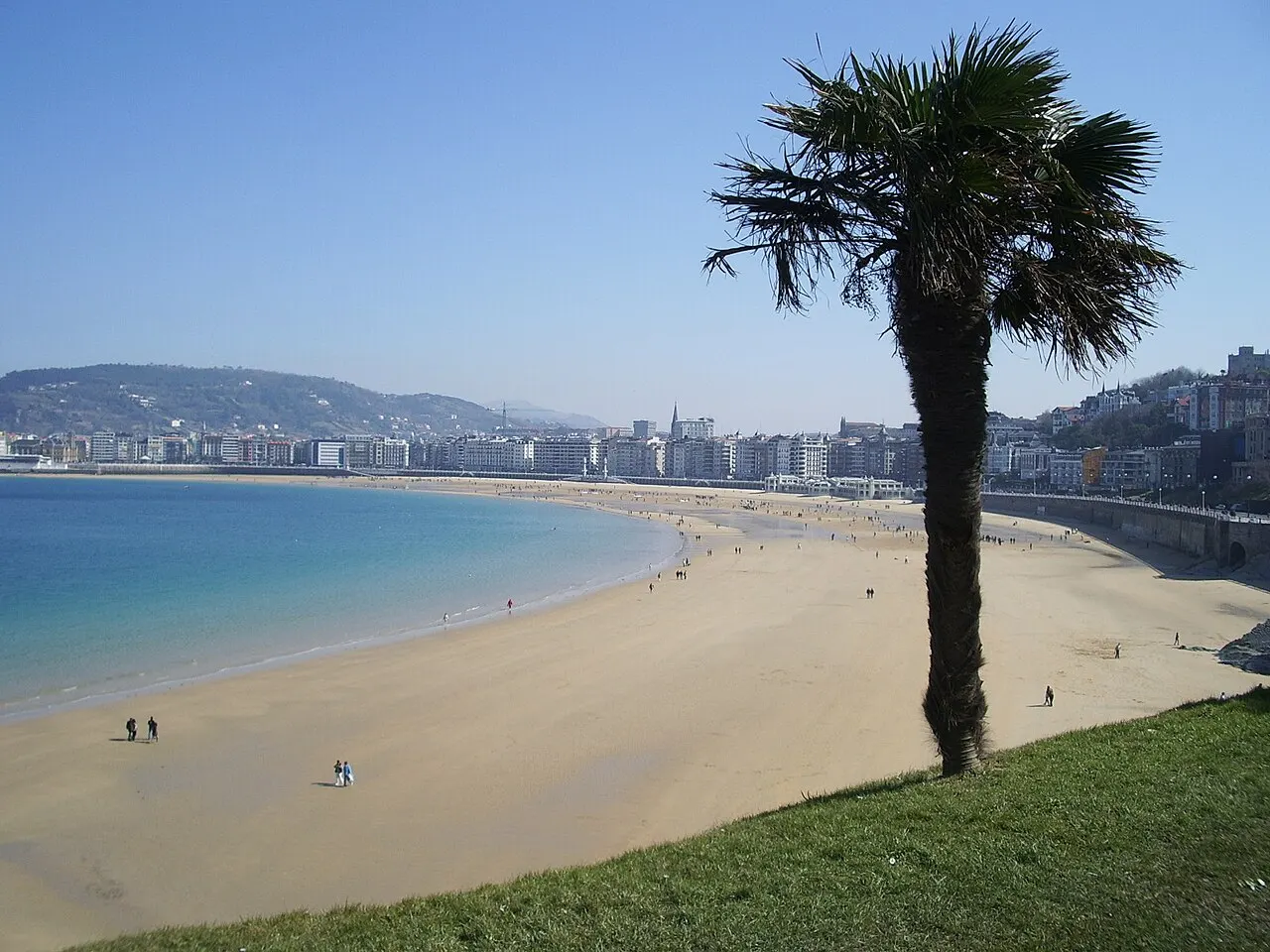
The beach and promenade reveal the resort city in one view: bay, balustrade and hills at either end. Walk here even outside swimming season. The tide changes the available sand; to continue to Ondarreta, prefer the urban promenade rather than depending on a passage along the beach.
The beach and promenade reveal the relationship between the bay and the resort city.
Check access
Parte Vieja
The neighborhood combines the rebuilt historic core, churches, bars and approaches to the port and Urgull. Explore beyond the queue for a single pintxo, combining architecture and meals. At night, preserve the peace of residents in apartments above the businesses.
The historic core combines streets, food and access to the port and museum.
Check access
San Telmo Museoa
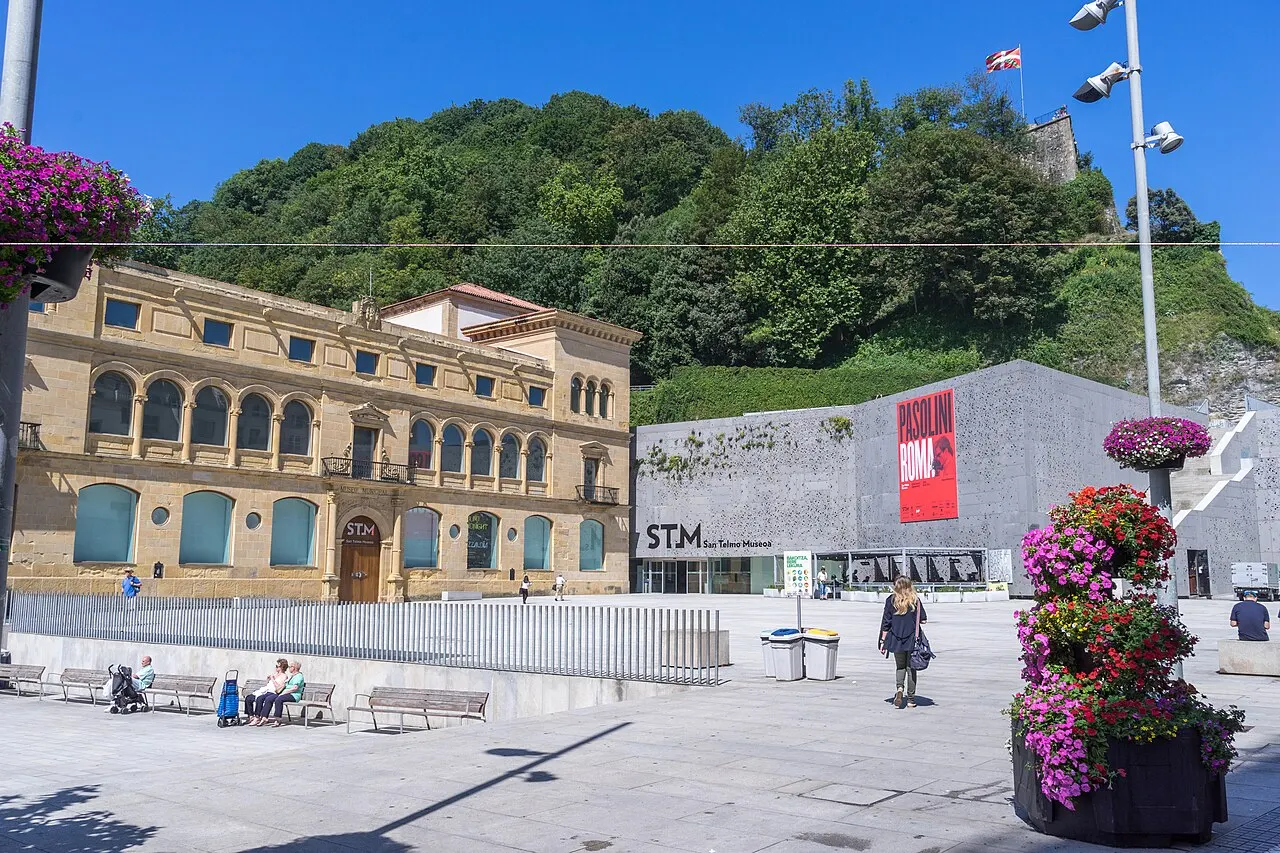
The museum of Basque society combines a former convent and a contemporary extension. Alongside temporary exhibitions, its collections connect work, ways of life and social change in the region. It normally closes on Mondays, with exceptions for public holidays and holiday weekends; confirm the calendar and any closed areas.
The museum contextualises Basque society beyond food and landscape.
Check access
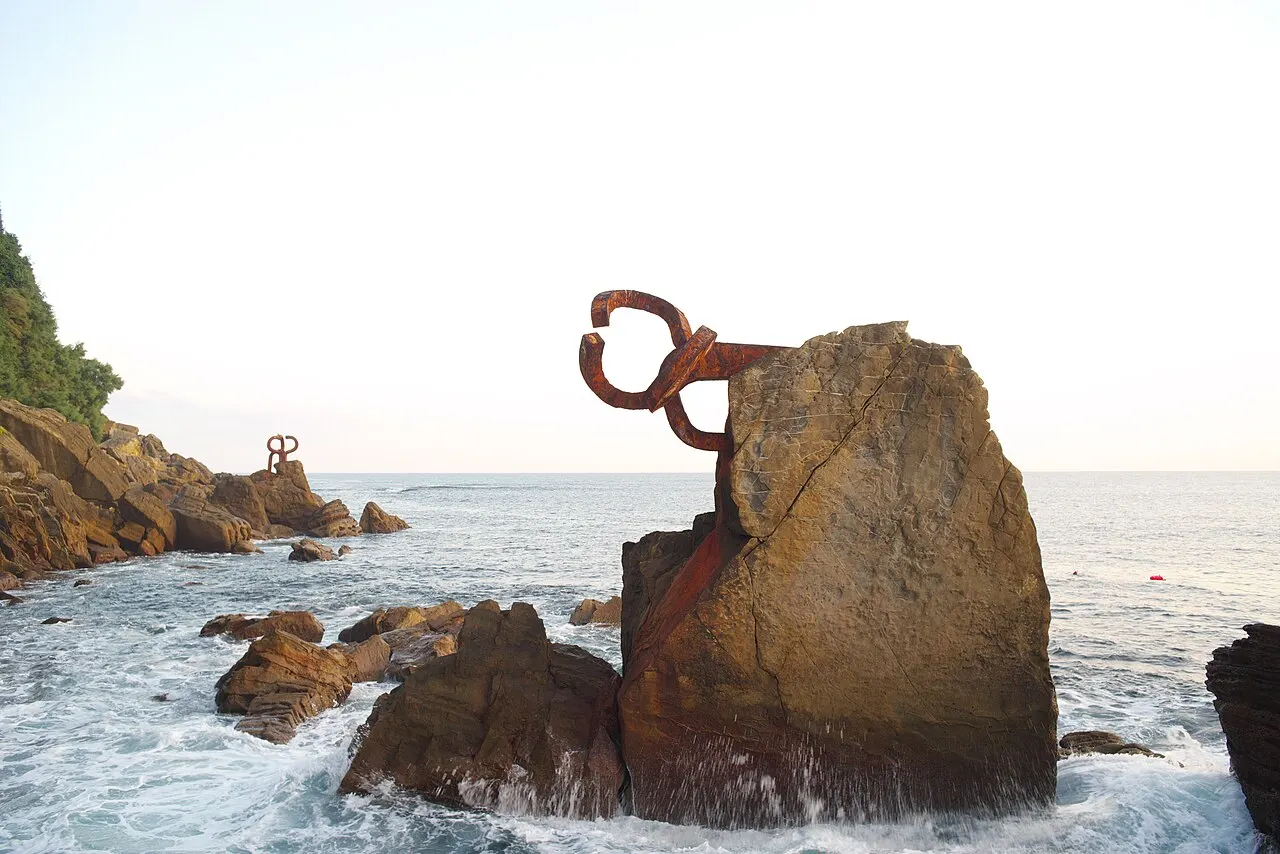
Peine del Viento
Eduardo Chillida's steel sculptures are anchored in rocks at the promenade's western end. Their interest lies in the physical relationship between art and coast, best appreciated with time to look from different permitted points. In strong waves or during a closure, remove this stop; proximity to the sea requires respecting barriers.
Chillida’s sculptures have a physical relationship with the coast and justify extending the walk.
Check access
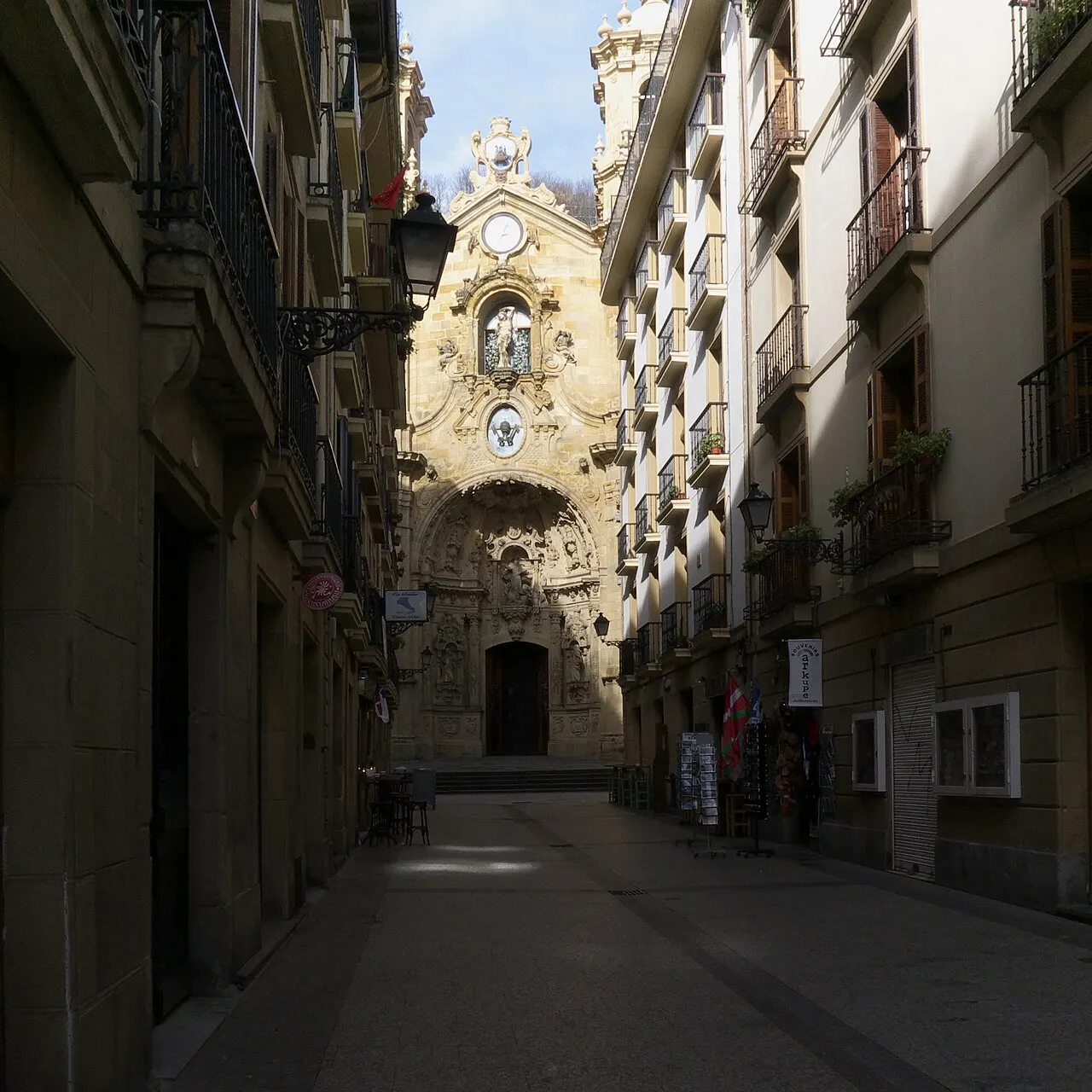
Basílica de Santa María del Coro
At the foot of Urgull, the baroque façade closes an important perspective in the Parte Vieja. Observe the portal and its relationship with Calle Mayor before continuing along Calle 31 de Agosto. Tourist entry to the interior and diocesan museum has its own conditions; confirm the visit type, price and services rather than assuming free entry because it is a church.
The Baroque façade and portal add a distinct reading of Parte Vieja architecture and history.
Check access
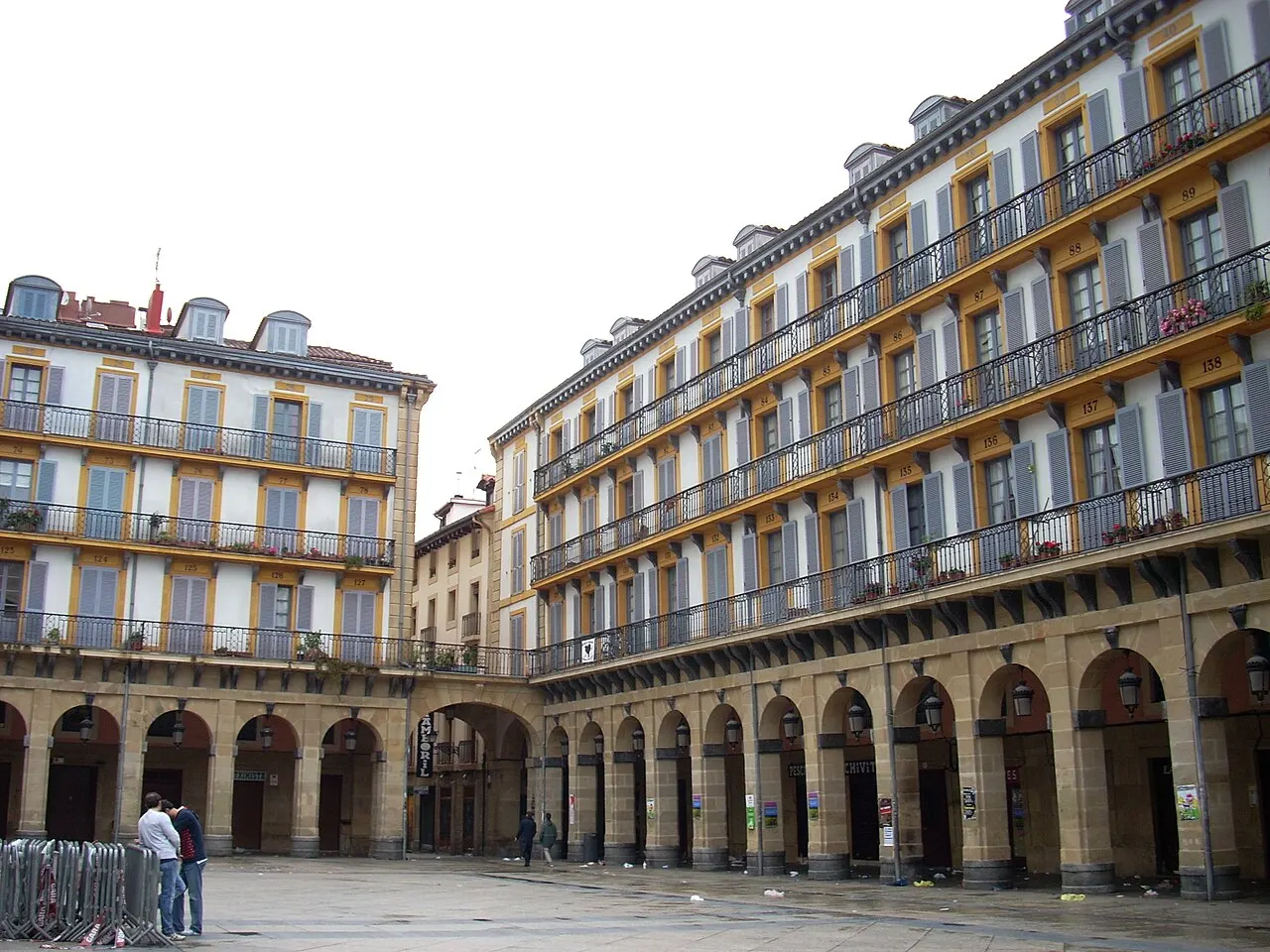
Plaza de la Constitución
The Parte Vieja's central square hosts gatherings and celebrations, including the opening of the Tamborrada. It is worth a pause to understand the neighborhood's civic role. There is no need to schedule a separate visit or buy something on a café terrace to observe the ensemble.
The square brings civic life and neighbourhood festivals into the walk.
Check access

Monte Urgull
Paths, fortifications and views surround the Parte Vieja. The climb explains the headland's defensive role and offers bay perspectives different from Igeldo's. There are slopes and park hours: check gates and conditions before climbing, especially late in the day.
Paths and fortifications add history and views for those able to climb.
Check access
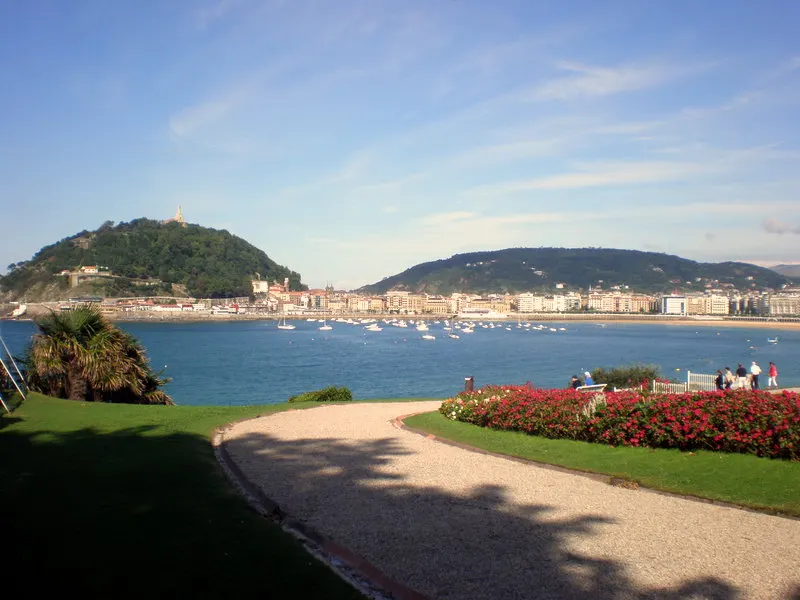
Jardines de Miramar
The gardens occupy the rise between La Concha and Ondarreta, in front of the palace built for Queen María Cristina. This guide proposes walking through the gardens and viewing the exterior; entry to the rooms depends on a specific program or activity.
The gardens connect the beaches and introduce the summer residence’s exterior.
Check access
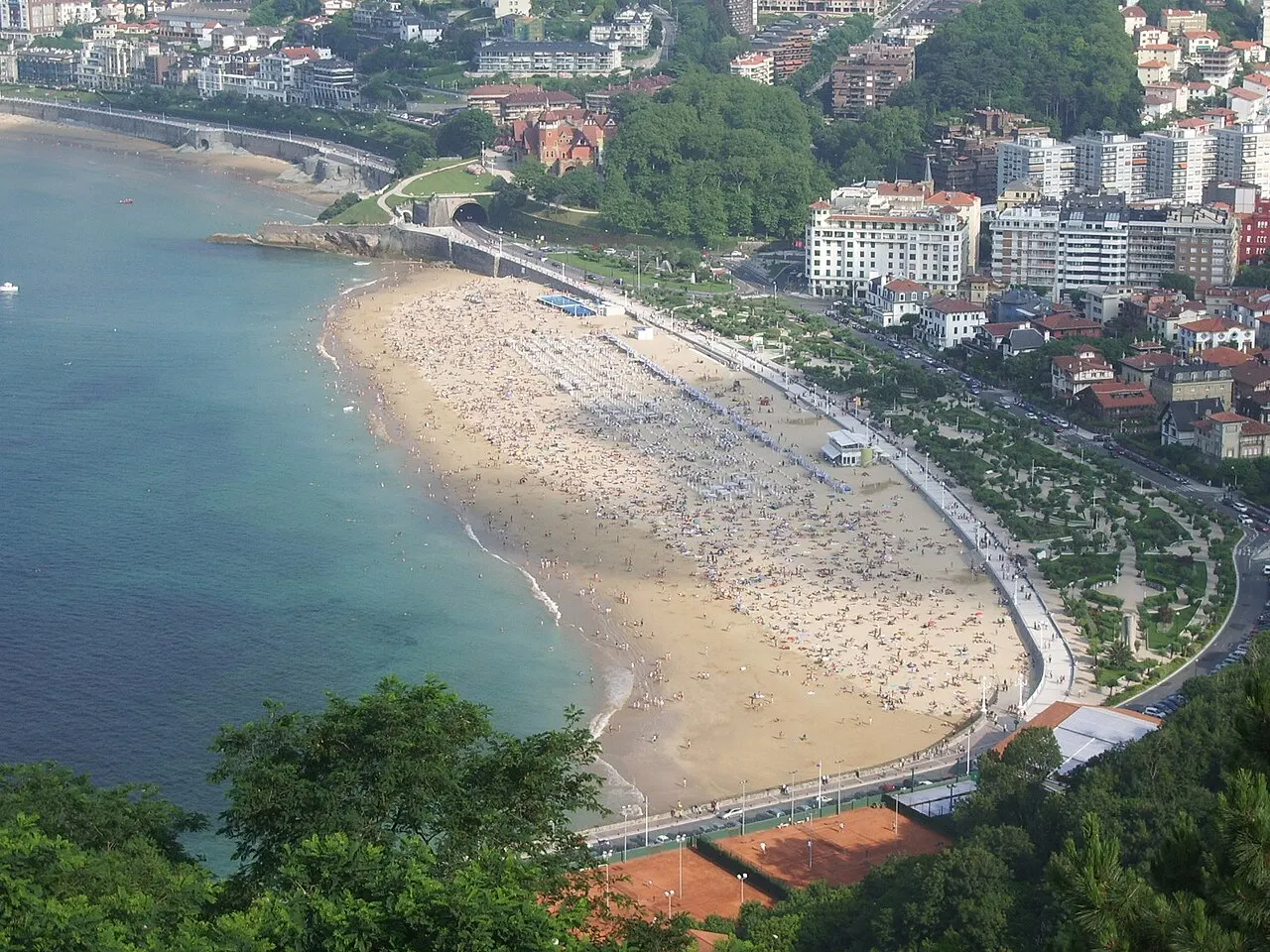
Playa de Ondarreta
The beach at the western end of the bay extends the La Concha walk and provides access to Antiguo. Combine it with lunch or rest before the sculptures. Sand and sea conditions change; observe signs rather than assuming safety from its sheltered position alone.
A beach or walking break coherent with the western sector.
Check access
Nilo’s itinerary
Start with the basic programme and choose extensions for the time you have.
Plan my days in the app ↗Day 1 · Parte Vieja, San Telmo and Urgull
Start at Plaza de la Constitución and the streets of the Parte Vieja, passing the exteriors of Santa María del Coro and San Vicente. Observe the neighborhood’s relationship with the port without scheduling church entry during services.
Visit San Telmo within the day's opening hours. If it is Monday without a special opening, move this visit to another day and keep the urban walk.
Have lunch in the Parte Vieja: choose a seated meal or a short pintxo sequence, asking about hot dishes and allowing time to rest.
In the afternoon, choose the Urgull climb with paths and gates open or a substantial visit to the Aquarium at the port. Do not add both by obligation after San Telmo; if you prefer the Aquarium as the main museum, it can also replace San Telmo in the morning. Anyone avoiding the slope can stay around the port and accessible urban promenades. Finish beside La Concha and sleep in San Sebastián.
Day 2 · La Concha, Miramar and the western end
Start at Buen Pastor square to view the cathedral; enter only if visiting is available outside services. Continue along the La Concha promenade toward Jardines de Miramar, using urban routes instead of relying on crossing sand at low tide.
Observe Miramar's exterior, descend toward Ondarreta and stop for lunch in Antiguo. Beachgoers can reserve part of this period for permitted swimming.
Continue to Peine del Viento if there is no closure or dangerous sea. Stay on permitted access; if closed, remain in the neighborhood and remove the approach to the rocks.
Check operations and take the Igeldo funicular to the viewpoint grounds if suited to the group's mobility. Park rides are optional and paid separately. Return to the center on foot or by Dbus and sleep in San Sebastián.
An alternative pace: replace Peine del Viento and Igeldo with the crossing to Santa Clara, allowing time for boarding, walking and return. If Hondalea is the main interest, check its calendar and the path to the lighthouse separately; do not assume boat operations confirm the artwork is open. Without a suitable crossing, keep the land-based program.
Day 3 · Gros, Zurriola and art in Egia
Cross the Urumea to view the Kursaal's exterior and walk along Zurriola toward Sagüés. Do not count on access to auditorium halls without a confirmed activity.
Have lunch in Gros and allow time for the beach or rest. A surf lesson requires booking and suitable conditions; if choosing one, reduce the rest of the morning rather than adding activities.
Continue to Egia and visit a Tabakalera exhibition in the afternoon. Galleries usually open Tuesday to Sunday, with an afternoon session from 4 p.m. to 8 p.m.; check the day's exhibition. On Monday, reorganize the days or keep only the building's open spaces.
Return to the center or dine in the neighborhood. The itinerary ends in San Sebastián; Bilbao is an optional extension on another day, without an automatic change of overnight base.
Food
Pintxos
Small preparations served in bars may be cold or cooked to order. Moving between bars and trying one or two at each stop helps discover different kitchens, but does not oblige you to eat standing up throughout. Ask what should be ordered from the kitchen and how much it costs before starting a sequence.
Gilda
The combination of olive, anchovy and piparra, a pickled pepper, is a recognizable pintxo to start with. The taste of fish and pickles matters more to the choice than a photograph of a full counter.
Seafood cooking
Fish and txangurro, prepared with crab meat, are part of the local repertoire. A seated meal offers more substantial preparations. Confirm fish species, size, price and charging method before ordering.
Cheesecake
The local cheesecake has a creamy interior and browned surface. It can be a dessert while exploring the Parte Vieja; it need not replace dinner or force every meal to follow a list of famous addresses.
Txakoli and cider
Txakoli is a white wine associated with the territory; cider also plays a role in Basque food culture. A meal at a cider house outside the city requires a reservation and separately arranged return transport, without assuming every establishment follows the same calendar.
Where to eat
- Parte Vieja
Cold and hot pintxos over a few stops, varying ingredients and asking what is cooked to order. The area has a high concentration of bars; use the food and available time as criteria rather than relying on one queue.
- Gros
Pintxo bars and neighborhood restaurants offer meals near Zurriola and a change from the Parte Vieja circuit. Look for dishes and conditions that suit, especially when needing to sit or explain dietary restrictions.
- Antiguo
A seated meal on the neighborhood's shopping streets between the Ondarreta walk and the Igeldo ascent. It is a more useful pause than crossing the city just to return to a famous address.
- La Viña · Parte Vieja
Cheesecake with a creamy interior and browned top, at a bar that also serves traditional pintxos. This is a specific dessert choice; local tourism lists Mondays as the closing day, and confirming operations is advisable.
Source · 2026-10-16
· 2026-10-16
Day trips
Bilbao
About 100 km west. Local tourism presents the connection as approximately one hour by car, excluding traffic, parking and visits. Without driving, check the intercity bus between Donostia and Bilbao and arrange the return; the BIO airport connection is a different service. Choose the Guggenheim or another cultural activity and a riverside walk, checking tickets and opening hours before departure. This is an extra day or a separate stop with its own overnight stay, outside San Sebastián's minimum three days.
Where to begin
Parte Vieja, San Telmo and Urgull
Start at Plaza de la Constitución and the streets of the Parte Vieja, passing the exteriors of Santa María del Coro and San Vicente. Observe the neighborhood’s relationship with the port without scheduling church entry during services.
La Concha, Miramar and the western end
Start at Buen Pastor square to view the cathedral; enter only if visiting is available outside services. Continue along the La Concha promenade toward Jardines de Miramar, using urban routes instead of relying on crossing sand at low tide.
Gros, Zurriola and art in Egia

Cross the Urumea to view the Kursaal's exterior and walk along Zurriola toward Sagüés. Do not count on access to auditorium halls without a confirmed activity.
Money
The currency is the euro. A succession of pintxos with drinks can cost more than expected when thinking only of one item; ask prices and order gradually. There is no need to book a tasting menu to discover local cooking. As a service reference, San Telmo publishes general admission of €10 and reduced admission of €4 for documented categories, checked 16 October 2026; verify free admission and documentation in the official calendar. The daytime Dbus single fare is €1.95 in 2026; it is not the airport or intercity bus fare. Compare accommodation for the same dates, occupancy and conditions, particularly during festival weeks.
Getting there and around

San Sebastián Airport
EAS airport is in Hondarribia, rather than central Donostia. Since 1 October 2026, the network identifies the year-round airport connection to Donostia's bus station as BI01. Check the timetable for your date, the stop and the final stretch to your accommodation; flying to EAS does not mean arriving within walking distance of the city.
Bilbao Airport
Bilbao/BIO is another regional gateway, with an intercity bus connection to Donostia. Consult the operator for travel from the airport, distinguishing it from the service departing central Bilbao. Add a buffer for arrival procedures and the final access to accommodation.
Train and intercity bus
The bus station is beside Donostia railway station, near Tabakalera. Euskotren and other operators' trains are not the same network and do not necessarily use the same station. Check the full station name and destination before choosing accommodation by distance to a train.
Walking and Dbus
Urban walks connect much of the visit. Dbus helps with returning from Antiguo and rainy days; the published 2026 daytime single fare is €1.95 per journey, different from night tickets and transport-card fares. Bank cards and cash have different transfer rules.
Car
For the three-day itinerary, a car adds parking and circulation restrictions without solving the walks' climbs. If driving in, check permitted accommodation access and parking before entering the center. Use intercity transport or rent only for a regional leg that actually requires it.
Safety
The main precautions concern the sea and personal belongings in busy areas. Respect flags, surf zones and storm closures of promenades; do not approach waves at Peine del Viento or Paseo Nuevo to take photographs. On Urgull, use authorized paths and check gate closing times. In bars, on beaches and at stations, keep documents and your phone in sight and do not leave belongings unattended while swimming. In an emergency, call 112. For mobility needs, confirm the specific route: Igeldo's historic funicular is not wheelchair adapted.
Etiquette tips
At the counter
Ask how to order and pay at each bar; do not pick up pintxos by hand without instruction. Clear the ordering space when finished and mention allergies before choosing.
In residential streets
At night, keep conversation quiet outside bars, especially in the Parte Vieja. Residential apartments sit above many of the most popular streets.
On the beach
Municipal regulations prohibit smoking and loudspeakers on beaches. Follow local signs, collect litter and respect swimming and surfing sectors.
Languages
A Basque greeting is welcome as a courtesy but does not impose a conversation in that language. Use a language in which you understand one another.
Mistakes to avoid
Counting Bilbao within Donostia's three days
The day trip takes travel time and has its own content. Add a day or another stop instead of removing the city's eastern side.
Confusing the hills
Urgull has paths and fortifications beside the Parte Vieja; Igeldo has a funicular and paid viewpoint grounds at the western end. Their approaches are not interchangeable.
Thinking admission covers every ride
At Igeldo, admission to the grounds and use of attractions are charged separately. Also check whether they operate on your day.
Scheduling two closed venues on Monday
San Telmo and Tabakalera's exhibition galleries usually close on Mondays. Reorganize the days around opening times before choosing a rainy-day activity.
Assuming the bay's appearance guarantees swimming
Tides, swell and notices change. Respect flags and closures even when other people are in the water.
Useful phrases
Kaixo
Hello, in Basque.
Eskerrik asko
Thank you, in Basque.
Agur
Goodbye, in Basque.
On egin
Enjoy your meal, in Basque.
¿Se pide en la barra o en la mesa?
Do we order at the counter or at the table?
¿Este pintxo lleva frutos secos o marisco?
Does this pintxo contain nuts or shellfish? The phrase starts the conversation and does not replace explaining your allergy.
Where to stay
- Centro and La Concha · First visits, walking and balanced access between the west, Parte Vieja and Gros.: The location reduces travel for the itinerary and keeps restaurants and shops close. Compare bayfront and inland streets for the same dates and room conditions. Check lift, noise and luggage access at your chosen accommodation.
- Gros · Visitors seeking Zurriola beach, surfing and neighborhood meals.: Allows a walk across the river to the center while remaining close to the Kursaal. Streets with bars and proximity to the beach can mean nighttime activity; check the address and room soundproofing. The bay's far western end is farther away.
- Parte Vieja · Visitors prioritizing pintxos, the museum and movement around the historic core.: The first day's visits are nearby, with many food options. The drawbacks are noise on bar streets and arrival logistics with a car or luggage. Prefer another area if light sleep and vehicle arrival are priorities.
- Antiguo and Ondarreta · Visitors wanting more time at the western beach and a neighborhood routine.: Facilitates Miramar, Ondarreta and the Igeldo sector, with local shops for meals. For dinner in the Parte Vieja or events in Gros, allow a longer walk or Dbus. Do not confuse proximity to the hill with an easy walk to the top.
· 2026-10-16
Districts
Parte Vieja
Between the port and the Urumea, at Urgull's foot, it concentrates pintxos, churches, Plaza de la Constitución and San Telmo. Proximity helps getting around, but lively streets can mean noise for overnight guests.
Centro and La Concha
The urban extension brings together shops, avenues and access to the bay promenade. It is a practical base for a first visit without a car, with walking connections to the Parte Vieja and Gros.
Gros
Across the Urumea, it combines residential streets, bars, the Kursaal and Zurriola. It suits visitors seeking the beach, surfing or neighborhood meals without staying in the Parte Vieja core.
Antiguo and Ondarreta
The western sector has neighborhood shops, beach, Miramar gardens and access to Peine del Viento and Igeldo. The distance from activities in Gros and the Parte Vieja makes buses more useful.
Egia
The area around Tabakalera and the stations facilitates arrival by bus or train and access to contemporary culture. The specific street matters: routes and slopes vary within the neighborhood.

La Concha Bay and Santa Clara
The island is a landmark seen from the waterfront, but visiting involves a boat and its own paths. The lighthouse houses Hondalea, whose calendar differs from the motorboats' operations; do not choose the outing solely because boats are visible in the bay.
History
Around 1180 · A port for Navarre
Sancho VI granted the charter marking the city's foundation and its role as a port.
1813 · Siege and fire
During the war against Napoleonic troops, capture by Anglo-Portuguese forces was followed by looting and fire. Reconstruction shaped much of today's Parte Vieja.
1863 · The walls come down
Demolition allowed the city to expand beyond the core beside Urgull, developing the urban extension and summer resort.
1893 · A summer residence at Miramar
The palace was built at Queen María Cristina's request, strengthening the city's role as a summer retreat for the court.
1912 · Igeldo funicular
The funicular's inauguration integrated the hill into urban leisure, alongside the expansion of theaters and hotels.
1953 · Film festival
The first festival edition began a lasting relationship between the city and the international circulation of film.
2015 · Tabakalera becomes a cultural center
The former tobacco factory opened as an international center for contemporary culture, expanding artistic activity in Egia.
Complete history
The rebuilt Parte Vieja
The compact layout below Urgull preserves the position of the old fortified town, but many buildings result from reconstruction after 1813. The memory of the fire helps explain Calle 31 de Agosto and prevents treating the whole neighborhood as an intact medieval ensemble.
The summer resort city
After the walls came down, avenues, gardens and leisure facilities accompanied the growth of summer visits. La Concha's promenade and Miramar Palace reveal this transformation without requiring access to private interiors.
Contemporary culture
San Telmo explores Basque society in a former convent; Tabakalera works with artistic production and cinema in a former factory. Reusing these buildings gives substance to rainy days and reveals a city that continues to produce culture.
Geography and shape of the city
Bay and river
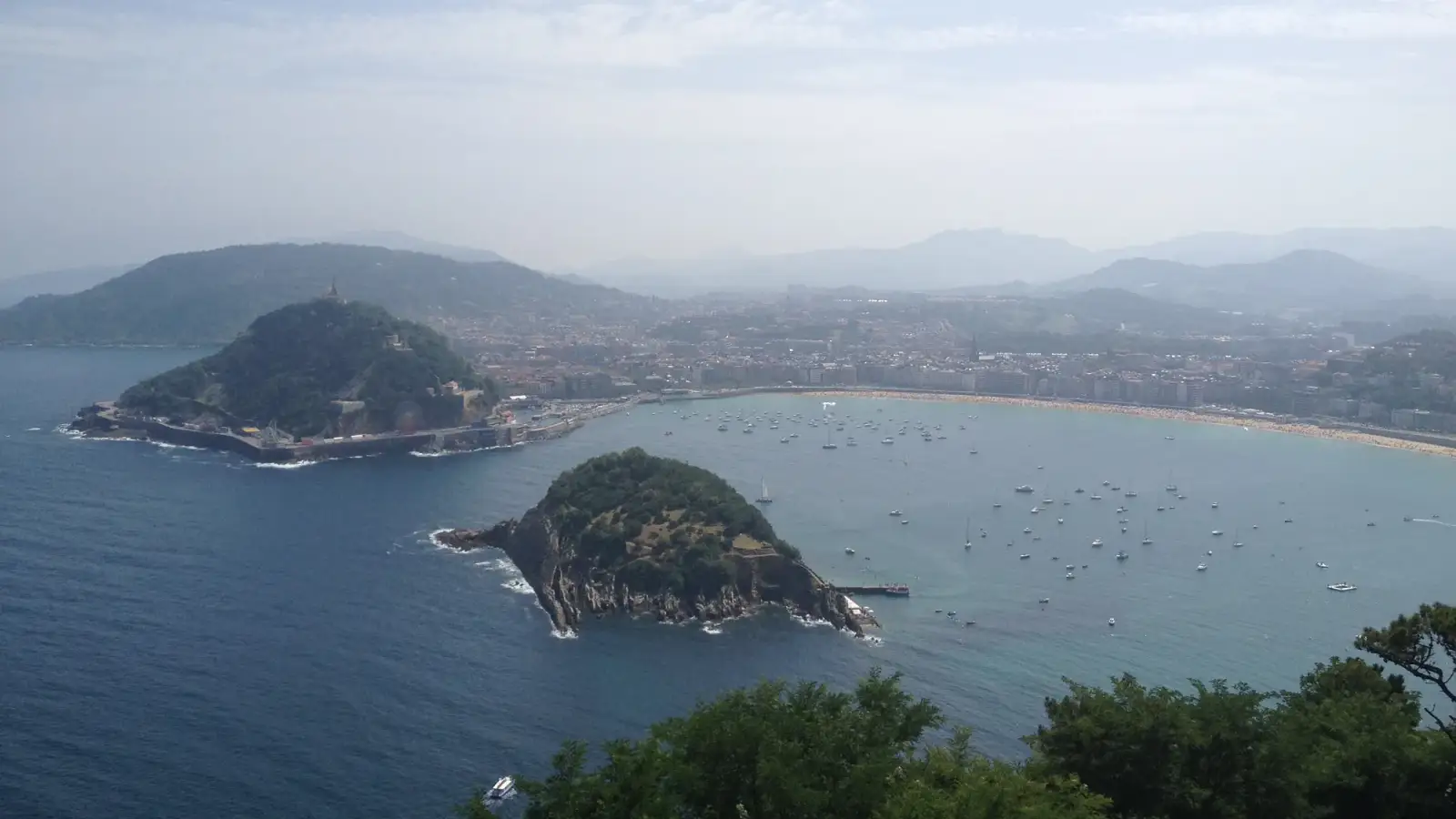
La Concha and Ondarreta lie inside the bay between Urgull and Igeldo. Zurriola is east of the Urumea's mouth, beside Gros, more exposed to waves. The beaches have different settings, and all require checking flags and swimming conditions. Santa Clara lies in the center of the bay and requires its own crossing to visit.
Walking and terrain
Centro, the Parte Vieja and the seafront form urban walks that combine easily. Climbing Urgull or reaching Igeldo's viewpoint requires a different level of mobility. To reduce walking, use Dbus and check the exact destination stop.
Basque region
Bilbao is a separate city to the west, with its own intercity transport and activities. It is not a San Sebastián neighborhood and does not automatically replace a day of local visits.
EAS is in Hondarribia. BIO is Bilbao's airport; do not choose a transfer solely by the region's name.
Urgull adds fortifications and paths; Igeldo offers a broad bay view and involves paid grounds. There is no need to climb both if that does not suit the group.
Culture
Basque and Spanish
Both languages appear in signs and services. Recognizing Donostia, Parte Zaharra and bilingual names helps locate places without treating Basque as a folkloric detail. Do not assume which language a person prefers to speak.
Eating together
Bars and tables form part of neighborhood social life. Visitors are better served by choosing a few dishes with attention to ingredients and hours than by assuming every counter is self-service or every table accepts reservations.
Cinema and the arts
The international festival is the most visible part of a calendar that also runs throughout the year. Tabakalera, San Telmo, theaters and the Kursaal support a cultural trip without relying on one particular week.
Donostia is the Basque name; San Sebastián is the Spanish name. Searches and signs may use either or both.
Festivals and events
Tamborrada
San Sebastián's day is celebrated on 20 January with drums, parades and ceremonies in Plaza de la Constitución. The program starts with the flag at midnight; the city has very different crowds and sound from an ordinary winter visit.
Jazzaldia
The jazz festival takes place in July, with a program in different venues and different access conditions. In 2026 it ran from 22 to 26 July. Check the intended edition and distinguish open performances from reserved tickets.
Aste Nagusia / Semana Grande
The summer celebration fills August with public activities, music and fireworks. Dates vary by edition; the 2026 program ran from 8 to 15 August. Allow for crowded streets and transport changes.
San Sebastián Festival / Zinemaldia
The film festival takes place in September, combining public screenings and professional activities. The 2026 edition ran from 18 to 26 September. To travel during the event, book accommodation and check ticket sales and screening languages.
Books and films
San Sebastián Festival program
Zinemaldia's catalogue and sections help select films by language, origin and theme. Outside September, also check Tabakalera's cinema program; a screening can give the evening substance without attending the festival.
San Telmo's materials on 1813
The museum's historical material connects siege, fire and reconstruction with the Parte Vieja's streets. It helps recognize the history of a neighborhood that looks older and more homogeneous than its actual formation.
Frequently asked questions
San Sebastián: how many days should I allow?
I would dedicate at least three full days to San Sebastián: one for the Parte Vieja, San Telmo and Urgull; another for La Concha, Miramar, Ondarreta and the western end; and a third for Gros, Zurriola and Tabakalera. This division allows unhurried meals and alternatives according to rain. Bilbao deserves an additional day or a stop of its own, without increasing Donostia's minimum or erasing the local program. Anyone coming for just one night should choose one area instead of compressing the three days.
San Sebastián: how do I arrive from EAS and Bilbao airports?
EAS airport is in Hondarribia, rather than central Donostia. Since 1 October 2026, the network identifies the year-round airport connection to Donostia's bus station as BI01. Check the timetable for your date, the stop and the final stretch to your accommodation; flying to EAS does not mean arriving within walking distance of the city. Bilbao/BIO is another regional gateway, with an intercity bus connection to Donostia. Consult the operator for travel from the airport, distinguishing it from the service departing central Bilbao. Add a buffer for arrival procedures and the final access to accommodation.
San Sebastián: do I need a car for the three days?
For the three-day itinerary, a car adds parking and circulation restrictions without solving the walks' climbs. If driving in, check permitted accommodation access and parking before entering the center. Use intercity transport or rent only for a regional leg that actually requires it.
San Sebastián: does the Santa Clara crossing include Hondalea?
The island in the bay center changes the perspective on the city and offers walks away from the urban waterfront. The motorboat crossing has its own ticket, season and sea conditions; confirm departure and return before boarding. Paths climb to the lighthouse, and the small beach should not be treated as a swimming area that is always available. Choose this outing to replace part of the western day or reserve another period. Cristina Iglesias's work occupies Santa Clara's lighthouse house and connects sculpture, geology and water. Reaching the island does not guarantee the installation is open: check its specific calendar before buying the boat ticket. In the summer 2026 season, ordinary visits were free without advance reservation; guided visits required their own booking. Access from the landing involves climbing paved hillside paths, and the municipality does not recommend it for people with reduced mobility.
San Sebastián: what does Igeldo admission include and how is access?
The viewpoint grounds offer a broad view of the bay and include an amusement park. A funicular ticket includes admission to the grounds; rides are paid separately. Road access has a different entrance ticket and does not include the funicular. The historic vehicle is not wheelchair adapted, so confirm a suitable alternative before choosing the ascent.
San Sebastián: when is best for walking and exploring the city?
May to June and September are good choices for walking and eating outside the summer holiday peak. Rain is part of the Atlantic climate and possible in any month; bring protection and an indoor alternative. July and August place more emphasis on beaches and events, with greater demand for accommodation. September requires care around film festival dates: a pleasant walking month may coincide with a heavily booked week. In winter, a food and culture visit remains possible, but coastal walks and viewpoints depend more on wind and sea conditions.
San Sebastián: how can I include Bilbao in the trip?
About 100 km west. Local tourism presents the connection as approximately one hour by car, excluding traffic, parking and visits. Without driving, check the intercity bus between Donostia and Bilbao and arrange the return; the BIO airport connection is a different service. Choose the Guggenheim or another cultural activity and a riverside walk, checking tickets and opening hours before departure. This is an extra day or a separate stop with its own overnight stay, outside San Sebastián's minimum three days.
Other cities in the country
Spain ↗- Days
- 3–4
- When
- May–Jun · Sep–Oct
- Per person/day
- Average 140–200 EURMid-range · per person/day
Cost scope
Per person per day: accommodation, meals, urban transport, visits and a small allowance for extras. Flights excluded; larger purchases vary. Editorial estimate, not a quote.
- Days
- 3–4
- When
- Apr–Jun · Sep–Oct
- Per person/day
- Average 156 EURMid-range · per person/day
Cost scope
2026 planning examples per person per day: accommodation, food, local transport, admission fees and extras. Flights and trips to other cities excluded. Hostel: one bed; hotels: one whole room allocated to one person. If sharing, divide accommodation. Admission and transport amounts are averages across the stay; check prices for your dates.
- Days
- 2–3
- When
- Mar–May · Oct–Nov
- Per person/day
- Average 70–120 EURMid-range · per person/day
Cost scope
Per person per day: accommodation, meals, urban transport, visits and a small allowance for extras. Flights excluded; larger purchases vary. Editorial estimate, not a quote.
- Days
- 2–3
- When
- Apr–May · Oct
- Per person/day
- Average 150 EURMid-range · per person/day
Cost scope
Per person per day: accommodation, meals, urban transport, visits and a small allowance for extras. Flights excluded; larger purchases vary. Editorial estimate, not a quote.
- Days
- 3–4
- When
- Apr–Jun · Sep–Oct
- Per person/day
- Average 153 EURMid-range · per person/day
Cost scope
Per person per day: accommodation, meals, urban transport, visits and a small allowance for extras. Flights excluded; larger purchases vary. Editorial estimate, not a quote.
- Days
- 4–5
- When
- May–Jun · Sep–Oct
- Per person/day
- Explore costsGuide estimate
Cost scope
Per person per day: accommodation, meals, urban transport, visits and a small allowance for extras. Flights excluded; larger purchases vary. Editorial estimate, not a quote.
- Days
- 3
- When
- Apr–Jun · Sep–Oct
- Per person/day
- Average 165 EURMid-range · per person/day
Cost scope
Per person per day: accommodation, meals, urban transport, visits and a small allowance for extras. Flights excluded; larger purchases vary. Editorial estimate, not a quote.