Greece
Athens
The Acropolis, museums, late dinners and the port of Piraeus
Days Start with the basic programme and choose extensions for the time you have.
How the guide reaches this number
If you have a third, spend it in Piraeus and on the coast; with four, you can fit in Cape Sounion in the late afternoon or Delphi. With twenty-four hours, I'd enter the Acropolis at 8am through the south gate and walk down to the Acropolis Museum. Then I'd have lunch at a magirio, pointing at the pots in the kitchen. In the late afternoon, climb Filopappou Hill on Pikionis's stone path to watch the sunset. Eat dinner after 9pm, even if you're hungry earlier, because that's the hour Athenians eat. Don't expect a capital of neat facades: much of the center is polykatoikia, the concrete apartment blocks of the 1950s to 1980s, covered in graffiti. Avoid the height of summer, when the heat closes the Acropolis in the middle of the day and every walk has to be planned around the shade.
2–3
When April–May and September–mid-October
How the guide reaches this number
The climate is Mediterranean, with a long, dry summer. July and August average highs of 33 to 38 °C, with heat waves topping 40 °C that force the Acropolis to close during the central hours. It's also when the city itself empties out, especially around August 15, and many neighborhood restaurants shut for weeks. Winter is mild: 6 to 14 °C, rain concentrated from November to February, snow rare in the city and common on Mount Parnitha. April, May, September and the first half of October are the best windows: 20 to 28 °C, the sea still swimmable in September and shorter lines at the sites. March and November bring moderate rain and cold, but also shorter hours at the archaeological sites, which close around 5pm, and much lower accommodation prices. If you can choose, avoid the second half of July and the first half of August.
Per person/day €40–70 budget; €90–150 comfortable; €200+ with a view hotel (2026)
How the guide reaches this number
Per person per day: accommodation, meals, urban transport, visits and a small allowance for extras. Flights excluded; larger purchases vary. Editorial estimate, not a quote.
 What Nilo thinks
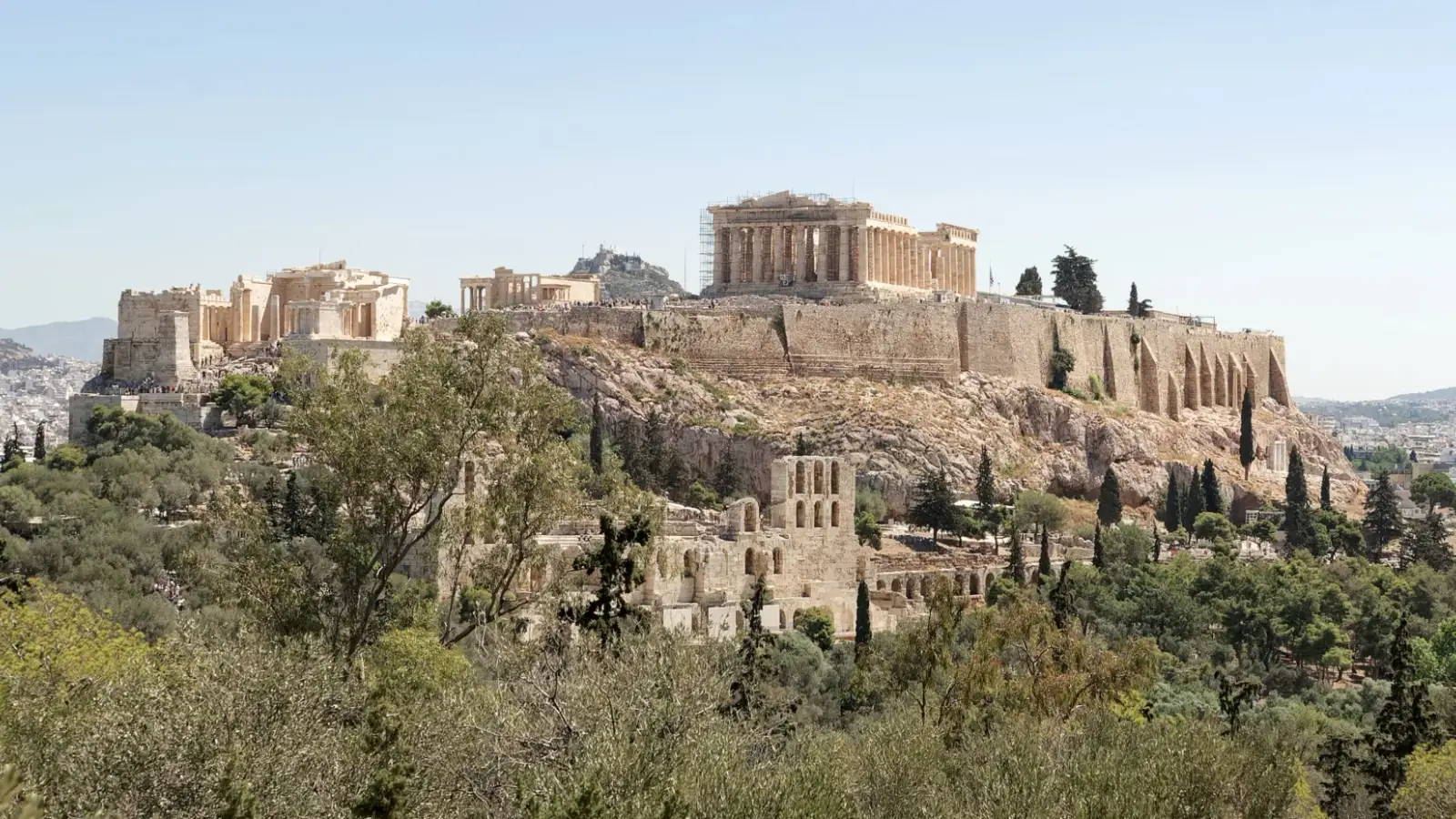
Stay two days: the first for the Acropolis, the museum and Filopappou Hill, the second for the Agora, the market and the National Archaeological Museum. If you have a third, spend it in Piraeus and on the coast; with four, you can fit in Cape Sounion in the late afternoon or Delphi. With twenty-four hours, I'd enter the Acropolis at 8am through the south gate and walk down to the Acropolis Museum. Then I'd have lunch at a magirio, pointing at the pots in the kitchen. In the late afternoon, climb Filopappou Hill on Pikionis's stone path to watch the sunset. Eat dinner after 9pm, even if you're hungry earlier, because that's the hour Athenians eat. Don't expect a capital of neat facades: much of the center is polykatoikia, the concrete apartment blocks of the 1950s to 1980s, covered in graffiti. Avoid the height of summer, when the heat closes the Acropolis in the middle of the day and every walk has to be planned around the shade.From almost every street in central Athens, you can see the Parthenon on its rocky summit above the buildings' continuous balconies. The marble dates from the 5th century BC, while the surrounding housing grew in the 20th century, as refugees from Asia Minor and rural migrants arrived, until Attica held nearly a third of the country's population. Beyond the rock, see the original Caryatids at the Acropolis Museum, the Hephaisteion in the Ancient Agora and the Antikythera mechanism at the National Archaeological Museum. Lunch at a magirió by pointing to pots in the kitchen, order a freddo espresso without rushing to give up your table, and dine late on mezédes and tsípouro. Piraeus, the ferry port for the islands, lies at the end of metro line 1. Come in April, May, September or the first half of October, with grippy shoes for the polished marble, and allow two days, or three for the port and coast.
Quick facts
- Population
- about 643,000 in the municipality; about 3.1 million in the urban area; about 3.8 million in Attica (2021 census)
- Founded
- Continuous occupation since about 3000 BC; city-state consolidated from the 8th c. BC
- Country and region
- Greece · Attica region · Central Athens regional unit
- Language
- Modern Greek, 24-letter Greek alphabet; English widely used in commerce and tourism
- Currency
- Euro (€), since 2002
- Time zone
- EET, UTC+2; UTC+3 during daylight saving (late March to late October)
- Best time to visit
- April–May and September–mid-October
- Average daily cost
- €40–70 budget; €90–150 comfortable; €200+ with a view hotel (2026)
When to go
April–May and September–mid-October
January
7° to 13°C
49 mm of rain
February
7° to 14°C
36 mm of rain
March
9° to 17°C
44 mm of rain
June
21° to 30°C
10 mm of rain
July
24° to 33°C
10 mm of rain
August
24° to 33°C
3 mm of rain
November
12° to 19°C
68 mm of rain
December
9° to 15°C
64 mm of rain
How the year changes
The climate is Mediterranean, with a long, dry summer. July and August average highs of 33 to 38 °C, with heat waves topping 40 °C that force the Acropolis to close during the central hours. It's also when the city itself empties out, especially around August 15, and many neighborhood restaurants shut for weeks. Winter is mild: 6 to 14 °C, rain concentrated from November to February, snow rare in the city and common on Mount Parnitha. April, May, September and the first half of October are the best windows: 20 to 28 °C, the sea still swimmable in September and shorter lines at the sites. March and November bring moderate rain and cold, but also shorter hours at the archaeological sites, which close around 5pm, and much lower accommodation prices. If you can choose, avoid the second half of July and the first half of August.
The same numbers as a table
| Month | Temperature °C | Rain mm |
|---|---|---|
| January | 7 to 13 | 49 |
| February | 7 to 14 | 36 |
| March | 9 to 17 | 44 |
| April · | 12 to 20 | 26 |
| May · | 16 to 25 | 16 |
| June | 21 to 30 | 10 |
| July | 24 to 33 | 10 |
| August | 24 to 33 | 3 |
| September · | 20 to 29 | 17 |
| October · | 16 to 24 | 33 |
| November | 12 to 19 | 68 |
| December | 9 to 15 | 64 |
Nilo's tips
Reach the Acropolis at 8am, by the south gate
The south gate, by the Theatre of Dionysus, is the least crowded, and in summer the heat can shut the site at midday. The Acropolis ticket has cost about €30 year round since April 2025. It comes with a timed slot and a cap on visitors per time slot, so book the first slot, at 8am, in advance.
Validate your ATH.ENA card or risk a fine
Without validation, the ticket counts as riding without paying, and inspectors, who work in plain clothes, fine you dozens of times the ticket price. Always validate at the metro turnstile or the bus validator. Buy the rechargeable ATH.ENA card and load it with the 24-hour pass, for €4.10, or the 5-day one, for about €8.20; on its own, the 90-minute ticket with free transfers costs €1.20.
After 11:30pm, swap the metro for the €5.50 express bus
Metro line 3 stops running around 11:30pm. After that, anyone leaving the airport relies on the express buses, which run 24 hours for about €5.50. The X95 goes to Syntagma, the X96 to Piraeus and the X93 to the Kifisou bus station. The other option is a flat-fare taxi, around €40 by day and €55 between midnight and 5am. Turn down anyone offering a ride inside the terminal and go to the official rank, where the fare is posted.
Point at the pot, not the menu
At a magirio, the home-cooking eatery, the dishes sit cooked in pots in the kitchen and are served lukewarm on purpose. Walk in, look at the pots and point at what you want (gemista, briam, fasolakia, giouvetsi) instead of waiting for a menu. Lunch runs €8 to €14, and food that's lukewarm at the first forkful is exactly how it should be.
On Sunday, the Varvakios market and the shops close
Varvakios, on Athinas Street, only opens Monday to Saturday, from before dawn, and neighborhood shops close on Saturday afternoon and all day Sunday. Sunday is for the changing of the evzones guard at Syntagma, which happens on the hour and has its full ceremony at 11am, and for the Monastiraki flea market, where pickpockets work: wear your bag in front of your body.
Dinner between 9pm and 10:30pm, rebetiko at 11pm.
Book your table for after 9pm, because Athenians eat dinner between 9pm and 10:30pm. The night continues with live rebetiko in Psyrri, Exarchia and Petralona, starting around 11pm, and at the bouzoukia, the music clubs with a dance floor, nobody gets in before midnight. From May to September, open-air cinemas run two screenings a night, such as Cine Thisio, with the Acropolis behind the screen, and Cine Paris, in the Plaka: go to the second screening, when the heat eases.
Explore the map

© OpenStreetMap · OpenFreeMap · © OpenMapTiles
Explore the map, read about the other places and plan your travel days in the app.
Open the appWhat to see
Athens: The basin and the loose rocks
Athens sits in the lekanopedio, a basin of about 450 km² closed off by Mount Aegaleo, Parnitha, Pentelicus, and Hymettus and open to the southwest toward the Saronic Gulf. Inside it, isolated limestone outcrops organize the center: the Acropolis (156 m), with the Plaka pressed against its north and east slopes, Lycabettus (277 m), Philopappos Hill, the Pnyx, and the Areopagus.

Acropolis and Parthenon
The site brings together the Parthenon (447–432 BC), the Propylaea, the Temple of Athena Nike and the Erechtheion with its porch of the Caryatids. The six in place are copies; five originals are in the Acropolis Museum and one in the British Museum. Admission has cost about €30 year-round since April 2025, with timed entry and a cap on visitors per time slot; on days of extreme heat the site closes from about 12pm to about 5pm.
On the same rock stand the Parthenon, built between 447 and 432 BC in marble from Mount Pentelicus, the Propylaea, the Temple of Athena Nike, and the Erechtheion with the Caryatids, the ensemble that defines classical architecture. Book a timed entry and go up through the south gate, on Dionysiou Areopagitou street, because the crowds pile up at the west entrance.
Check access

Acropolis Museum
Opened in June 2009, designed by Bernard Tschumi with Michalis Photiadis, built over an excavated ancient neighborhood visible through the glass floor. The top-floor gallery reproduces the Parthenon's exact plan and orientation and displays the frieze at its original height, with the gaps left by the pieces in London.
Start on the third floor, in the Parthenon gallery, which reproduces the temple's exact floor plan and orientation, and go down to the Caryatids: five of the six originals are here, one is in London, and the six on the balcony above are copies.
Check access
National Archaeological Museum
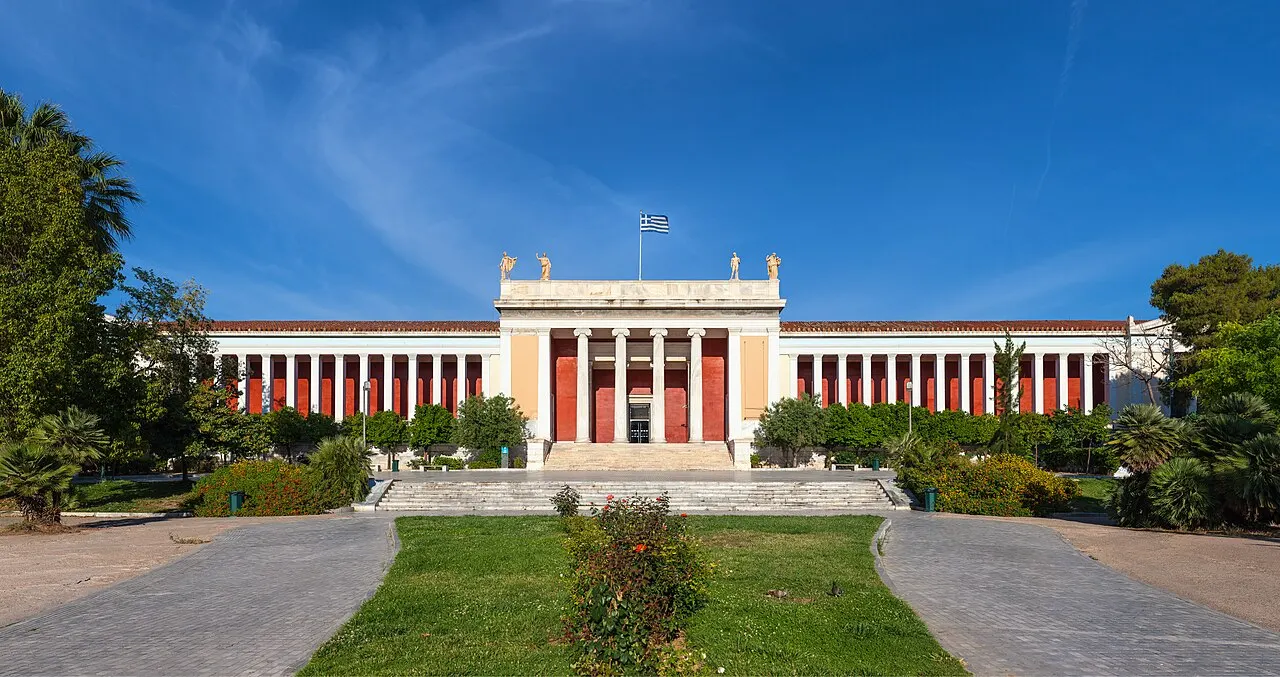
Opened in 1889 on Patission street, it's the largest collection of ancient Greek art in the world. It holds the Mask of Agamemnon from Mycenae (16th c. BC), the Artemision Bronzes, the Artemision Jockey and the Antikythera mechanism (about 100 BC), a bronze gear device used to predict astronomical positions. Set aside at least two hours.
Set aside at least two hours: the gold mask of Mycenae, the bronzes from Cape Artemisio, and the Antikythera mechanism sit in rooms far apart from each other, and the museum is on Patission Street, off the Acropolis axis.
Check access
Ancient Agora and Hephaisteion
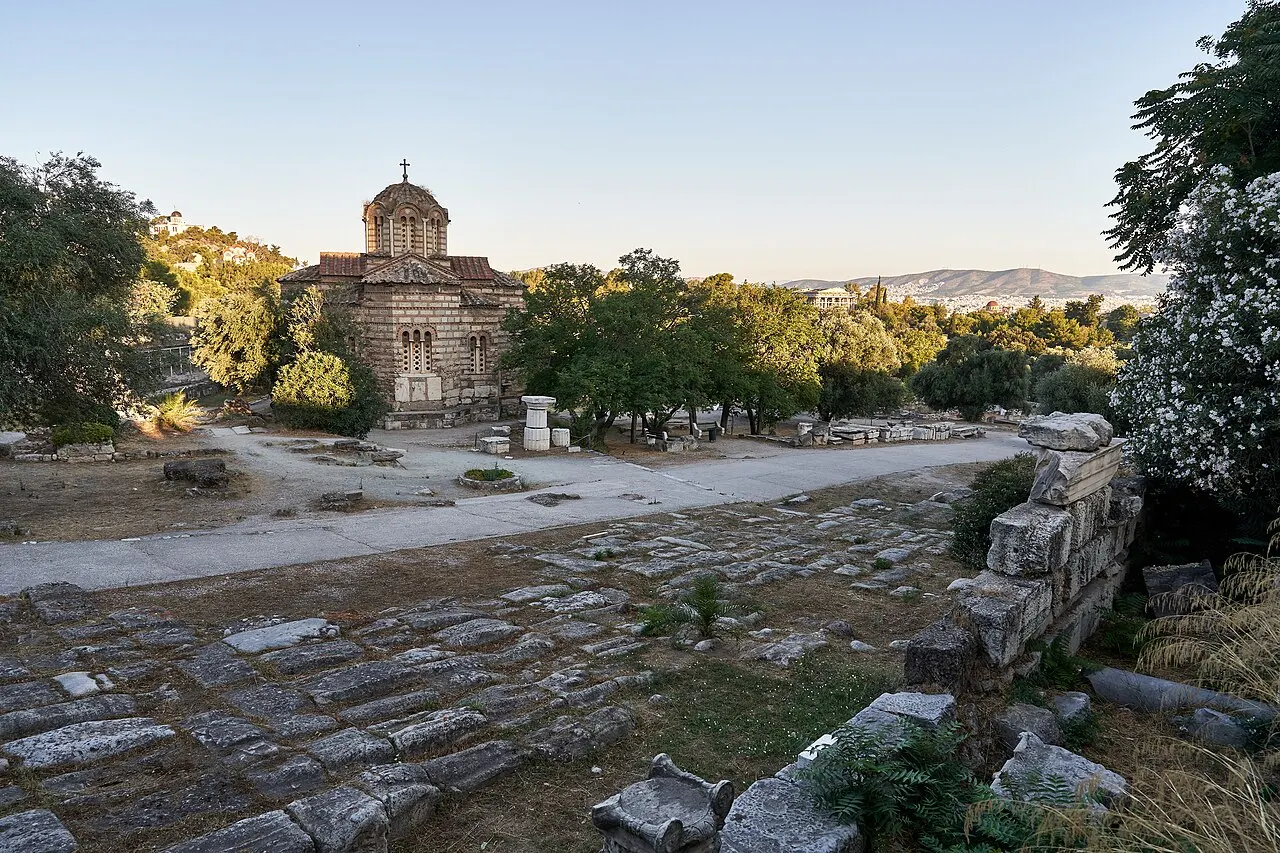
The political and commercial center of the classical city, where Socrates argued and the Bouleuterion met. It holds the Hephaisteion (449–415 BC), Greece's best-preserved Doric temple, and the Stoa of Attalos, rebuilt between 1953 and 1956 by the American School and now the site's museum.
Arrive at opening time to see, before the crowds, the Hephaisteion (449–415 BC), the best-preserved Doric temple in Greece, and the Stoa of Attalos, rebuilt by the American School and now the site museum. It's the ground of the classical city, where Socrates argued.
Check access

Kerameikos
The ancient city's cemetery and a stretch of the Themistoclean wall, with the Dipylon and the Sacred Gate from which the procession to Eleusis set out. The Demosion Sema stood there, where those who died in battle were buried and where Pericles gave the funeral oration recorded by Thucydides. The Eridanos stream still runs in the open on the site.
Worth it for what's rarely seen standing in an ancient city: the Dipylon and the Sacred Gate, from which the procession to Eleusis set out, the stretch of the Themistoclean Wall, and the Eridanos stream still running in the open at the site.
Check access

Lycabettus
A 277 m hill, the highest point in the center, with the chapel of St George on top and a view over the whole basin to the sea. On foot from Kolonaki, the climb takes 25–35 minutes of steep street; the funicular from Aristippou Street saves you the walk and costs about €13 round-trip, or €10 one way up (2026 prices).
Check access
Stavros Niarchos Cultural Center (SNFCC)
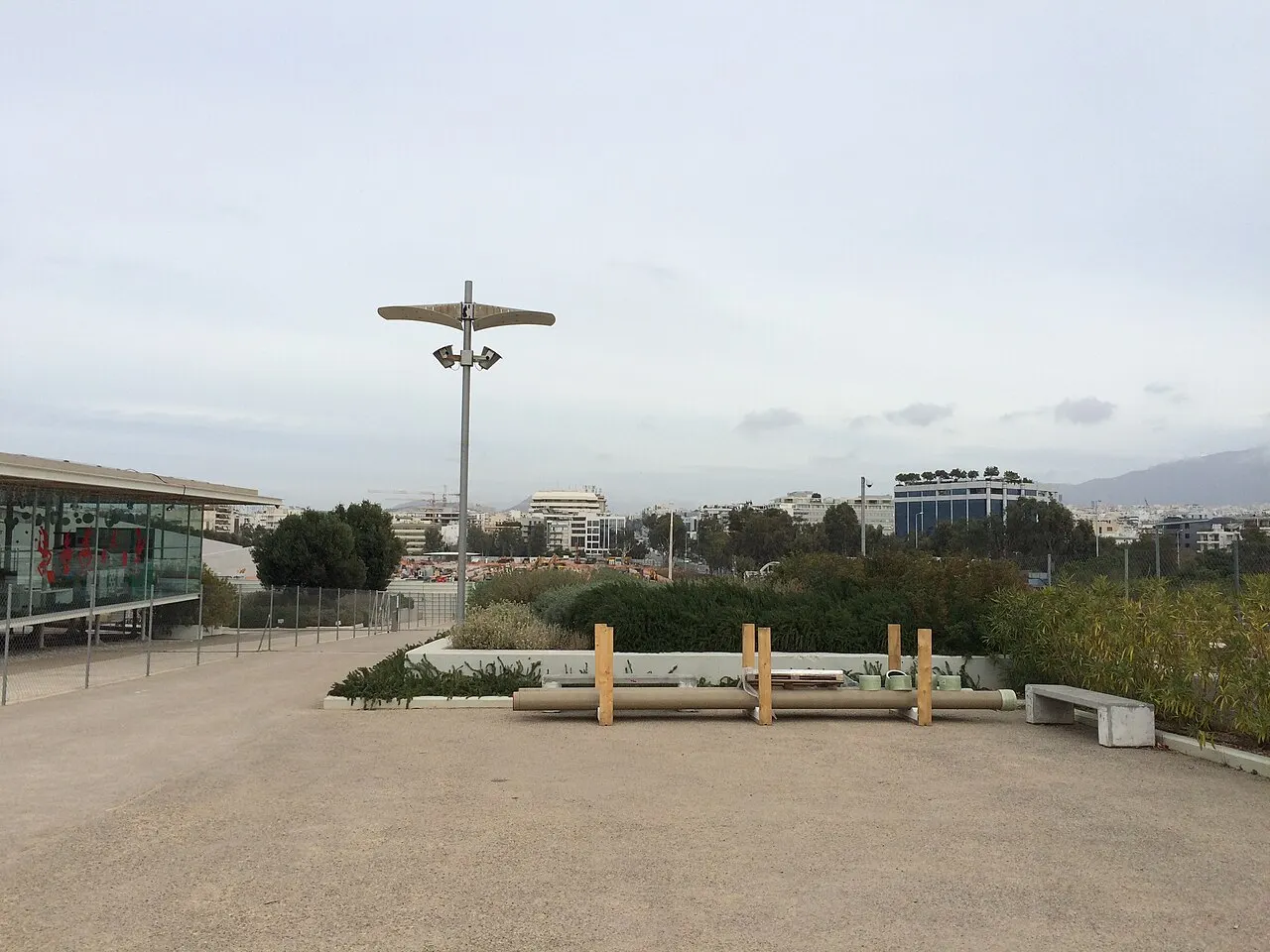
A Renzo Piano complex opened in 2016 in Kallithea, with the National Library and the Greek National Opera set under a 32-meter artificial hill and a park of about 210,000 m². Free park entry, daily program of free events, bus and tram from the center.
Worth it for the free park of about 210,000 m² that climbs the 32 m artificial hill of Renzo Piano's complex, with the National Library and the Opera below and a daily program of free events. The tram and the bus get you there from downtown.
Check access
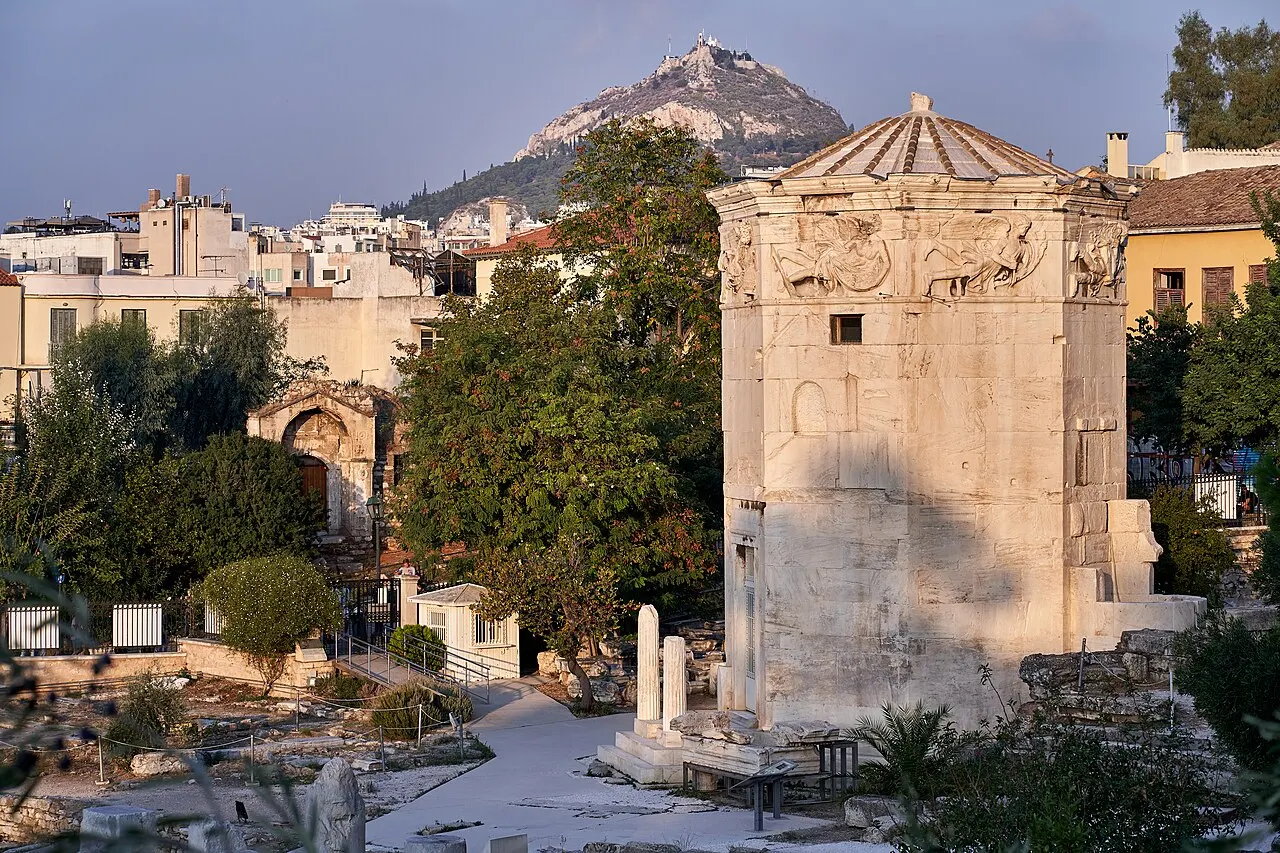
Roman Agora and Tower of the Winds
A commercial square built with money from Julius Caesar and Augustus, next to the Greek agora. The Tower of the Winds (Horologion of Andronikos, 1st c. BC) stands 12 m tall, octagonal in plan, with eight wind reliefs, and once housed a water clock; next door stands the 17th-century Fethiye mosque.
The commercial square paid for by Julius Caesar and Augustus, and the Tower of the Winds, a 12 m octagon from the 1st century BC with eight wind reliefs and an ancient water clock, can be seen in twenty minutes, so the visit only pays off as a short stop for those already passing by the Ancient Agora next door.
Check access
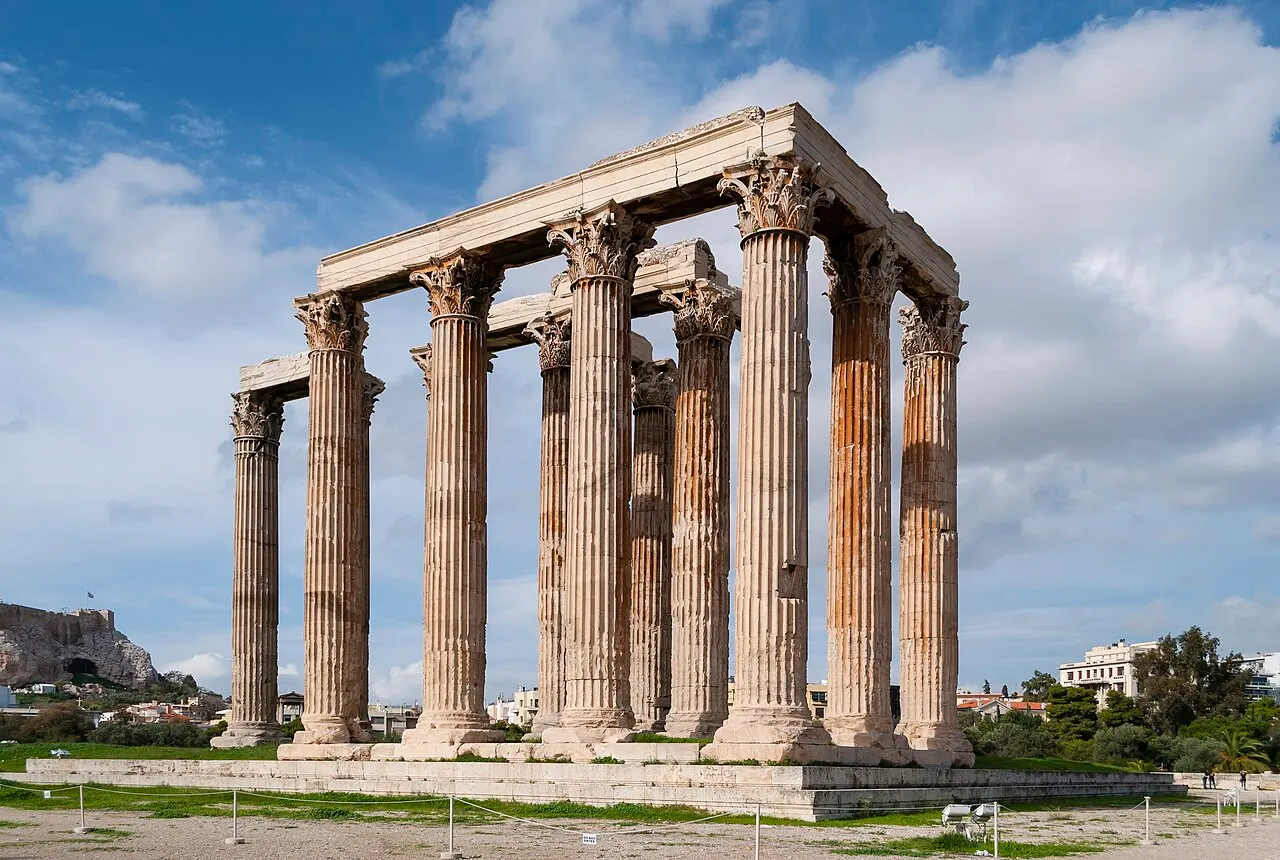
Temple of Olympian Zeus and Hadrian's Arch
Begun in the 6th century BC by the Peisistratids and only finished by Emperor Hadrian in AD 131, it had 104 Corinthian columns, each 17 m tall. Of these, 15 still stand, and one lies where a storm toppled it in 1852. Hadrian's Arch, from AD 132, used an inscription to separate the “city of Theseus” from the “city of Hadrian”.
Of the 104 Corinthian columns, 17 m tall, of the temple completed by Hadrian in 131 AD, 15 remain standing and one lies toppled by the 1852 storm. Hadrian's Arch, from 132 AD, reads fully from the sidewalk, so the enclosure only pays off for those with time to spare.
Check access
Nilo’s itinerary
Start with the basic programme and choose extensions for the time you have.
Plan my days in the app ↗Day 1 · The Acropolis, the museum and the hill
Enter the Acropolis at the first time slot, 8am, with tickets bought ahead and a reserved time; use the south gate, on Dionysiou Areopagitou street.
Walk through the Propylaea, the Temple of Athena Nike, the Parthenon and the Erechtheion, then head down the south slope past the Theater of Dionysus and the Odeon of Herodes Atticus.
Walk 10 minutes to the Acropolis Museum, start on the third floor in the Parthenon Gallery and work your way down to the original Caryatids.
Have lunch in Koukaki and sit over a freddo espresso, taking your time, on Drakou Street.
In the late afternoon, climb Filopappou Hill on the stone path designed by Dimitris Pikionis in the 1950s and watch the sun set over the Saronic Gulf.
Day 2 · The Agora, the market, and the Archaeological Museum
Enter the Ancient Agora right at opening time to see the Hephaisteion, the line of the Panathenaic Way and the museum inside the Stoa of Attalos.
Walk on to Kerameikos, see the Dipylon, the Sacred Gate and the Eridanos stream, and come back via Ermou street.
Walk through the Varvakios market on Athinas Street and have lunch at a magirio around Sofokleous, pointing at the pots in the kitchen.
Set aside two hours for the National Archaeological Museum: the mask of Mycenae, the bronzes from Cape Artemision and the Antikythera mechanism.
Have a late dinner in Psyrri or Exarchia, with mezedes and tsipouro, and stay for live rebetiko from 11pm.


If you stay longer
Day 3 · The port, the sea and the view
Take metro line 1 to Piraeus, walk around the Mikrolimano cove and visit the Archaeological Museum of Piraeus, home to the bronze kouros of Apollo.
Take the tram or bus along the coast to the Stavros Niarchos Foundation Cultural Center, climb Renzo Piano's artificial hill and cross the park.
Head back to the center for the Panathenaic Stadium and the National Garden; the evzones' changing of the guard in Syntagma happens on the hour, with the full ceremony on Sundays at 11am.
Take the Lycabettus funicular up from Aristippou street, in Kolonaki, to the 277-meter summit and the view over the whole basin.
Have dinner in Pangrati or Kolonaki after 9:30pm and, in summer, catch an open-air screening at Cine Thisio, with the Acropolis lit up behind.


Food
 AI illustration
Souvlaki and gyros in pita
Grilled pork or chicken skewer, or vertical-spit meat, served in pita with tomato, onion, tzatziki and fries tucked inside. It costs about €3.50–5 for the handheld wrap; historically concentrated in Monastiraki (Mitropoleos street) and found in almost every neighborhood.
 AI illustration
Koulouri
A sesame-covered bread ring, sold from street carts from 6am for €0.60–1. It's the standard Athenian breakfast, eaten standing up on the way to work; it hardens fast, so buy from the busiest cart.
 AI illustration
Mageirefta
At a magirio, the home-cooking eatery, you order by pointing at the pots in the kitchen: gemista (tomatoes and peppers stuffed with rice), briam (vegetables baked with olive oil), fasolakia (green beans stewed in tomato sauce) or giouvetsi (meat baked with small pasta). Lunch runs €8–14, and the dishes are served lukewarm on purpose.
 AI illustration
Mezedes with ouzo or tsipouro
A succession of small plates to share (taramosaláta, gávros marinátos, saganáki, keftedákia and Santorini fava) accompanies anise-flavored spirits served with water and ice, which turn the drink white. A table at a mezedopoleío with drinks costs €15–25 per person.
 AI illustration
Freddo espresso and frappé
Coffee in Athens is iced all year: freddo espresso and freddo cappuccino shaken with ice, or the instant-coffee frappé invented in Thessaloniki in 1957. Specify the sugar (sketos for none, metrios for medium, glykos for sweet); a glass costs €2.50–4.50.
 AI illustration
Bougatsa, galaktoboureko and loukoumades
Bougatsa is phyllo pastry with cream or cheese filling, cut on the spot and dusted with sugar and cinnamon; galaktoboureko is the syrup-soaked tray version. Loukoumades are fried dough balls with honey and nuts, served hot in portions of €2.50–5.
 AI illustration
Fish and seafood
In Mikrolimano and Piraeus, fish is sold by the kilo and weighed at the table: sea bream, sea bass, red mullet, grilled octopus. Expect €45–80 for two with fresh fish; the cheap option is fried anchovy or sardine, much easier on the budget.
 AI illustration
Patsas at Varvakios
At the Varvakios market, the meat and fish stalls open before dawn, Monday to Saturday, and the soup joints around it serve patsas both to people leaving a night out and to those arriving for work.
Day trips

Cape Sounion
A Temple of Poseidon from 444 BC on a cliff 60 m above the sea, at the southern tip of Attica, with 15 columns of Agrileza marble still standing: one has Byron's name carved into it in 1810. It's about 70 km away, 1 hour 30 minutes to 2 hours by KTEL bus from Mavromateon Street, or just over an hour by car along the coast; go in the late afternoon, for the sunset.

Delphi
The sanctuary of Apollo and the oracle sits at 570 m on the slopes of Mount Parnassus, with a temple, theater, stadium and a museum that holds the bronze Charioteer from 470 BC. It's about 180 km, or roughly three hours by KTEL bus from the Liosion terminal; you can go and come back the same day, but you'll get more out of it by car.

Saronic Gulf islands
Ferries leave Piraeus for Aegina (about 40 min by fast boat, 1 hour 10 minutes by conventional ferry), Poros and Hydra (1 hour 30 minutes to 2 hours). Aegina has the 5th-century BC Temple of Aphaia, plus pistachios; Hydra bans cars and motorbikes, and you get around the island on foot, by mule or by boat. Tickets run €15 to €40 each way, with frequent morning departures.
Where to begin
The Acropolis, the museum and the hill
Enter the Acropolis at the first time slot, 8am, with tickets bought ahead and a reserved time; use the south gate, on Dionysiou Areopagitou street.
The Agora, the market, and the Archaeological Museum
Enter the Ancient Agora right at opening time to see the Hephaisteion, the line of the Panathenaic Way and the museum inside the Stoa of Attalos.
The port, the sea and the view
Take metro line 1 to Piraeus, walk around the Mikrolimano cove and visit the Archaeological Museum of Piraeus, home to the bronze kouros of Apollo.
Money
The currency is the euro, and typical 2026 ranges, all approximate, look like this: freddo coffee €2.50–4.50; koulouri €0.60–1; souvlaki in pita €3.50–5; lunch at a magirio €8–14; taverna dinner with wine €18–30 per person; beer €4–6; 90-minute ticket €1.20; three-star hotel in the center €80–150 a night in high season. Add the climate resilience fee, which your host charges per room per night: roughly €1.50 at 1–2-star hotels and up to €10 at five-star hotels between March and October, with much lower amounts in winter. The law requires most businesses to accept cards, but kiosks, koulouri carts, markets and small tavernas prefer cash. To withdraw money, avoid the independent lobby ATMs, which charge their own fee and offer an unfavorable conversion, and use those of Greek banks. Tipping isn't mandatory: round up the bill or leave 5–10% at sit-down restaurants, and check first whether service is already included on the receipt.
Getting there and around
The airport sits 33 km from downtown, with four ways to get there
Eleftherios Venizelos airport (ATH) sits in Spata, 33 km east of the center, and getting out of there comes down to a choice among four options. The metro, blue line 3, reaches Syntagma and Monastiraki in about 40 minutes; the airport ticket costs about €9 one way, with discounts for groups and for round-trip purchases. The suburban train (Proastiakos) also serves the airport. The express buses X95 (Syntagma), X96 (Piraeus), X93 (Kifisou bus station) and X97 cost about €5.50, run 24 hours, and are the fallback once the metro closes. The last metro train leaves around 11:30pm. Taxis have an official flat fare between the airport and the center, on the order of €40 by day and €55 between midnight and 5am. The figures are approximate: check the sign at the official taxi rank, and turn down drivers who approach you inside the terminal.
Athens metro: three lines, with the M1 descending from the 1869 railway
The urban network has three metro lines: M1 green (Piraeus–Kifisia, successor to the 1869 steam railway), M2 red (Anthoupoli–Elliniko) and M3 blue (Dimotiko Theatro–Airport), plus a tram to the coast, trolleybuses and buses, all run by OASA. In 2026, a single 90-minute ticket costs €1.20 and a 24-hour pass €4.10, always loaded onto the rechargeable ATH.ENA card or a paper ticket. Buying the ticket isn't enough: if you don't validate it at the gate or on the bus validator, it counts as unpaid, and the fine is steep. Line 4 is under construction between Alsos Veikou and Goudi, with the first section expected by the end of the decade. The historic center is done on foot: the Dionysiou Areopagitou–Apostolou Pavlou pedestrian route links Olympian Zeus, the Acropolis, Filopappou, the Agora and Kerameikos over about 4 km with no cars. For taxis, use FREE NOW or Uber, which dispatch metered yellow cabs; cycling works on the coast, but the center is steep, hot and has few bike lanes.
Safety
Athens is a European capital with low violent crime and above-average street theft, and both are true at once. The concrete risk is pickpocketing at busy times on line 1 (green) between Monastiraki, Omonia and Piraeus, on the escalators at the Syntagma and Monastiraki stations, on the X95 airport bus, and at the Sunday market in Monastiraki. Carry your bag in front and keep nothing in a back pocket. At night, avoid walking the streets around Omonia square, Vathis and Menandrou, which are linked to drug dealing and use, and detour along Ermou instead. Demonstrations are frequent and generally peaceful, but around November 17 and December 6 there can be tear gas near the Polytechnic and Exarchia, and the solution is simply not to be nearby. Strikes (apergia) halt the metro, buses and ferries with only a few days' notice, so check before any trip on a fixed schedule. In summer, the real health risk is the heat: heatstroke and dehydration send more visitors to the emergency room than any other cause. The single emergency number is 112.
Etiquette tips
Gestures: how Greeks say no
Tilting the chin up with a short click of the tongue (“tsk”) means no, not disdain. Shaking the head from side to side means “I didn't understand” or “what a pity,” and never no.
Showing an open palm is considered an insult
Holding out an open hand with the five fingers spread toward someone is the moutza, an old insult. To wave or ask for the check, raise your hand with the fingers together or mime writing in the air.
The table is shared
Mezedes and salads go in the middle and everyone eats from the same plate; ordering just one individual dish and not sharing feels odd. Whoever invites usually pays the whole bill, and splitting it to the cent is uncommon.
Coffee is never rushed
Lingering two hours over a single freddo is perfectly normal, and nobody will rush you or bring the check unless you ask. To ask for the check, say “to logariasmo, parakalo.”
Dress and silence in churches
Cover your shoulders and knees to enter an Orthodox church or monastery, and light your candle at the entrance, on the left. Don't take photos during the liturgy or walk in front of the altar.
The paper goes in the bin
Most buildings' old plumbing can't take toilet paper; use the bin next to the toilet, including in restaurants and hotels. The notice is usually posted on the bathroom door.
Mistakes to avoid
The Acropolis at noon in July
Climbing the Acropolis at noon in July. The site has almost no shade, the marble radiates the heat back, and the walk is steep. Go in the first time slot, at 8am, or the last two hours of the day, and bring water. There's a fountain at the entrance.
Smooth-soled shoes
Wearing smooth-soled shoes. The rock of the Acropolis, Pikionis's path on Filopappou and the paving stones of the Plaka have been polished by centuries of feet and are slippery even on a dry, flat step, so wear sneakers or shoes with grippy soles.
Buying isn't enough: you still have to tap the turnstile
Not validating your metro or bus ticket. Buying it isn't enough: you have to tap the card at the turnstile or the onboard validator, and plainclothes inspectors hand out steep fines, tourists included.
Entering through the main gate
Arriving at the Acropolis without timed entry and going in through the main gate. Tickets come with an entry window, and the west access draws the tour groups; the south gate, by the Theater of Dionysus, usually has a shorter line.
Dinner at seven
Planning dinner for 7pm and concluding the city has no nightlife. Before 9pm the restaurant will be empty and you'll think you've got the wrong address. The same goes for shopping: neighborhood store hours aren't the same as the tourist center's.
Useful phrases
Γεια σας (yá sas)
Hello / goodbye, the polite form; “yá sou” between people who know each other
Ευχαριστώ (efharistó)
Thank you; the reply is “parakaló”
Παρακαλώ (parakaló)
Please, you're welcome, and “go ahead”. It covers all three
Πόσο κάνει; (póso káni?)
How much is it?
Έναν φρέντο εσπρέσο, μέτριο (énan frédo espréso, métrio)
One freddo espresso, medium sweet
Το λογαριασμό, παρακαλώ (to logariasmó, parakaló)
The check, please
Districts
Plaka
A neighborhood pressed against the north and east slope of the Acropolis, with narrow Ottoman-era streets and 19th-century neoclassical houses. It's the most touristy area of the city; the Anafiotika rise, built in the 19th century by stonemasons from the island of Anafi, keeps whitewashed houses on a Cycladic scale.
Monastiraki and Psyri
Monastiraki is the market crossroads, with the Ifaistou flea market and the station where lines 1 and 3 meet. Psyri, next door, was once a workshop district and became a cluster of mezedopoleia and bars with murals; it fills up after 10pm and stays loud until the early hours.
Syntagma and Kolonaki
Syntagma is the square with Parliament, the Tomb of the Unknown Soldier and the evzones' changing of the guard, plus the main metro hub. Kolonaki, climbing toward Lycabettus, is the high-income neighborhood: art galleries, tailors, square-side cafés and the embassies.
Exarchia
Historically tied to the Polytechnic University and the 1973 uprising, it's the neighborhood of bookshops, cheap tavernas, publishers and left-wing politics, with a strong anarchist tradition and painted walls. Busy and ordinary by day; at night it lives alongside occasional protests and a police presence.
Koukaki and Petralona
Slopes to the south and west of the Acropolis, residential and low-rise, taken over by short-term rentals since 2015. Koukaki gives direct access to the site's south entrance; Petralona keeps neighborhood tavernas and Trion Ierarchon street with live music.
Kypseli and Patisia
Dense neighborhoods north of the center, with the first big stock of 1930s–60s polykatoikies and Fokionos Negri street, a pedestrian boulevard. A diverse population, with African, South Asian and Albanian communities, cheap markets, and the Kypseli municipal market reopened as public space.
Piraeus
Port municipality of about 160,000 residents 10 km from the center, linked by metro line 1. It holds the island ferries, the cruise terminal, the Piraeus Archaeological Museum and the Mikrolimano cove, with its fish restaurants.
Glyfada and the riviera
A coastal strip to the southeast along Poseidonos Avenue, from Alimos to Vouliagmeni, served by tram and bus. Malls, marinas, paid beaches with sun loungers (€6–20 a day) and free public beaches; it's where the city goes on summer weekends.
History
13th century BC · The Mycenaean citadel
Strong walls surround the Acropolis, the seat of a local ruler and the Mycenaean elite. The hill is already a centre of power before the classical temples.
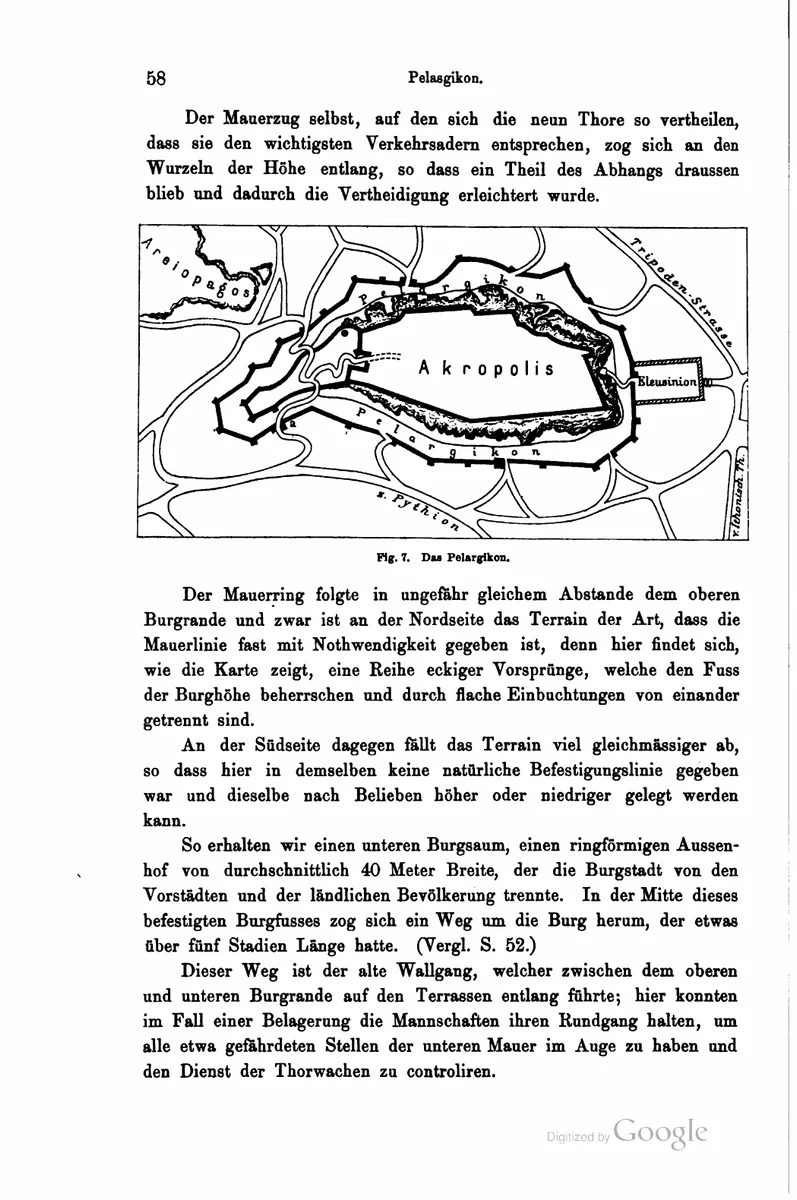
508 BC · Cleisthenes' reform
Cleisthenes reorganizes citizens into ten artificial tribes mixing coast, city and inland, breaking the clans' hold on power. That arrangement is where the word demokratía comes from.
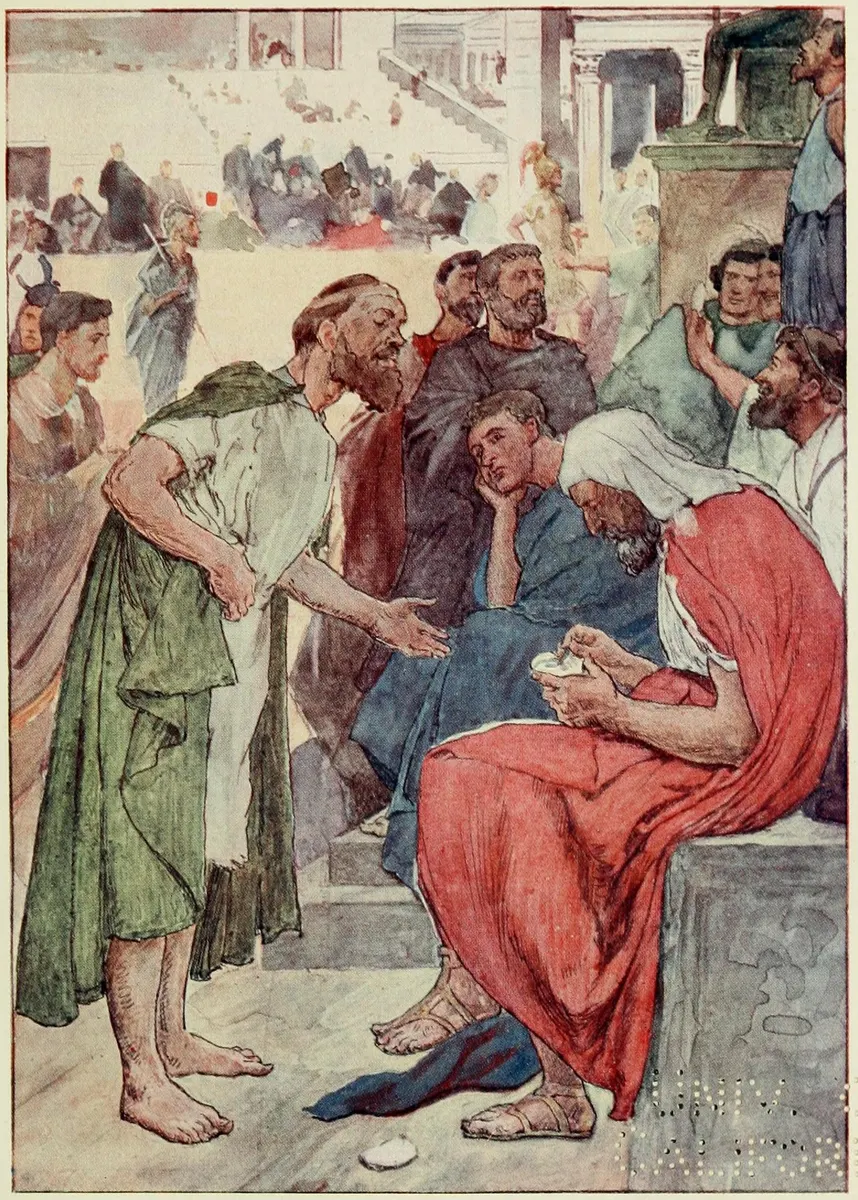
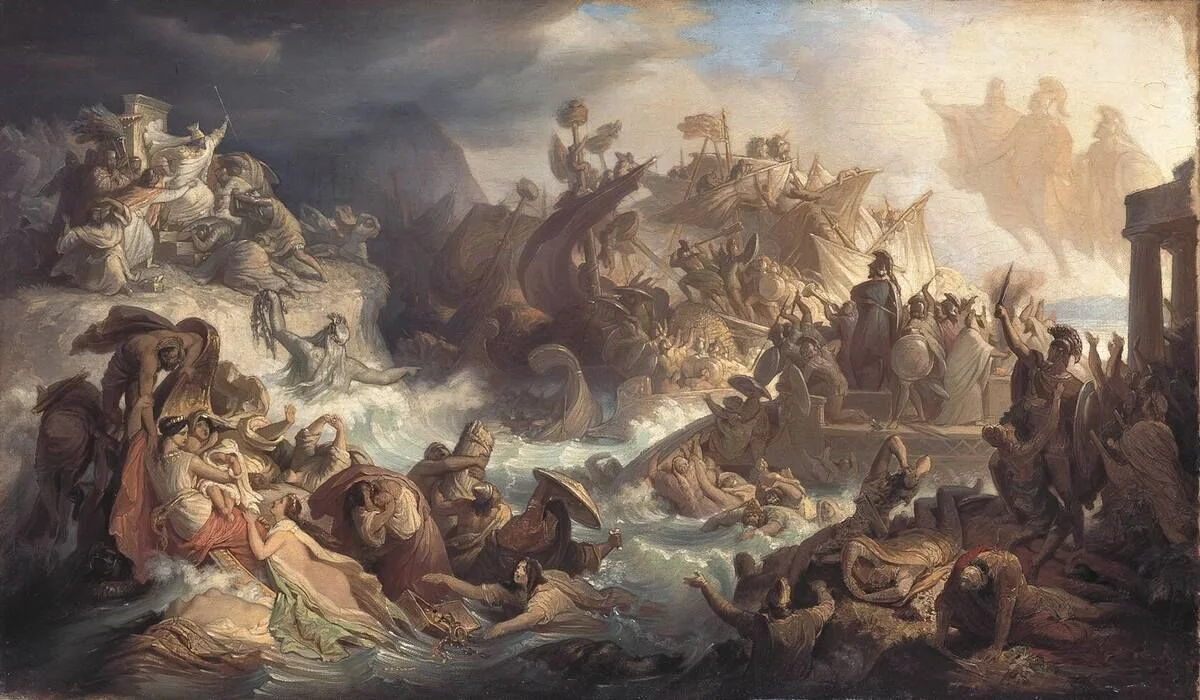
480 BC · The Persians burn the city
After Thermopylae, Xerxes' army sets fire to the Acropolis and the archaic temples. The Athenians win at sea at Salamis, in the strait facing Piraeus, and come back to rebuild over the ruins.
447–432 BC · Pericles' Parthenon
With money from the Delian League moved to Athens, Pericles raises the Parthenon in marble from Mount Pentelicus: architects Ictinus and Callicrates, sculpture under Phidias. The columns have a calculated curve so they don't look concave from a distance.
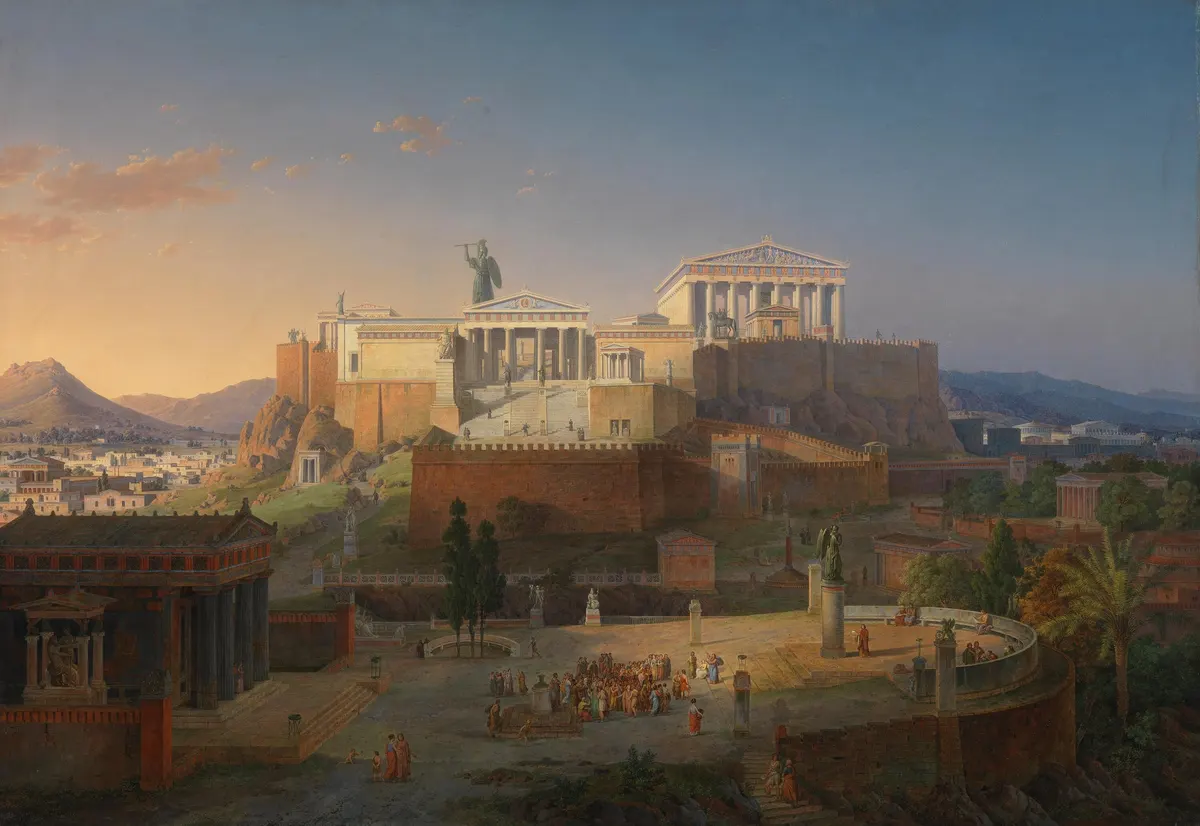
431–404 BC · The Peloponnesian War
The war against Sparta lasts 27 years, and an epidemic kills about a quarter of the population between 430 and 426 BC, including Pericles. Athens surrenders in 404 and never again becomes a military power.

86 BC – 529 AD · Rome, Hadrian and the closing of the schools
Sulla sacks the city in 86 BC; in the 2nd century AD Emperor Hadrian rebuilds it and finishes the Temple of Olympian Zeus. In 529 Justinian closes the philosophical schools, and Athens becomes a provincial town of a few thousand people.
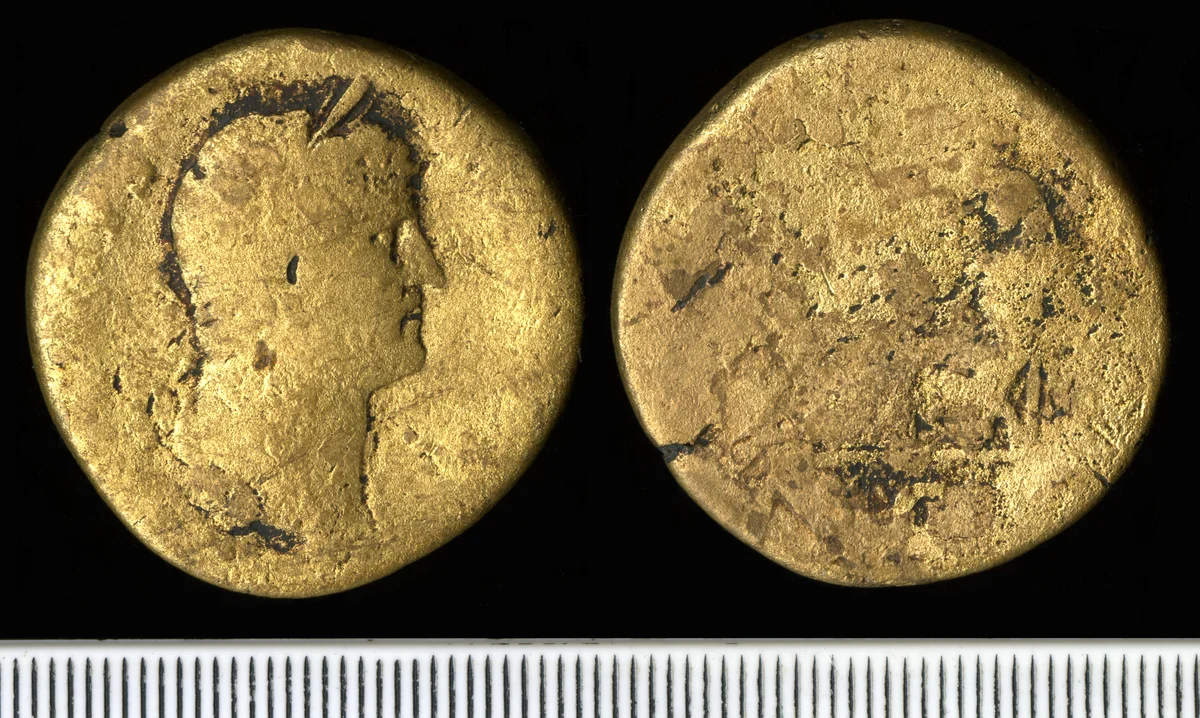
1456–1687 · The Ottomans and the explosion
Under Ottoman rule from 1456, the Parthenon serves as a mosque and later a gunpowder store. On September 26, 1687, a Venetian bomb from Morosini's army hits the store and blows out the temple's core: the damage still visible today.

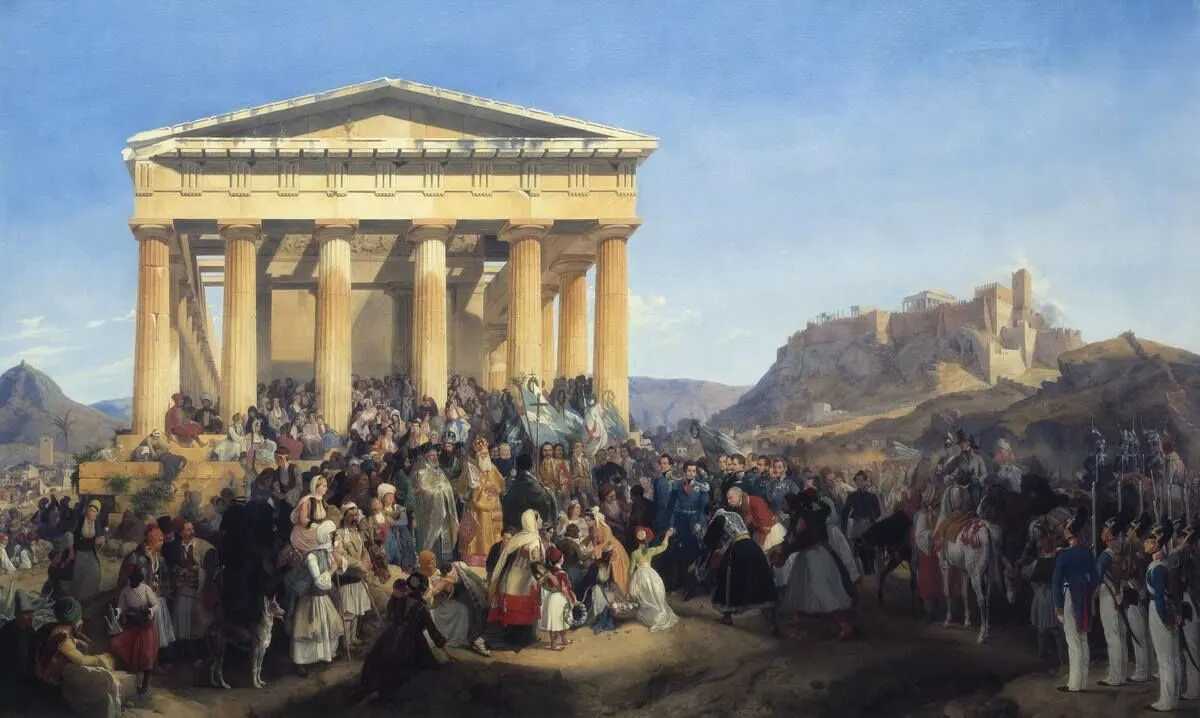
1834 · Capital of a new kingdom
Athens, with perhaps 4,000 to 10,000 residents and in ruins after the war of independence, is chosen as capital of the Greek kingdom on symbolic grounds. Bavarian and Greek architects lay out a neoclassical triangle between Omonia, Syntagma and Kerameikos.
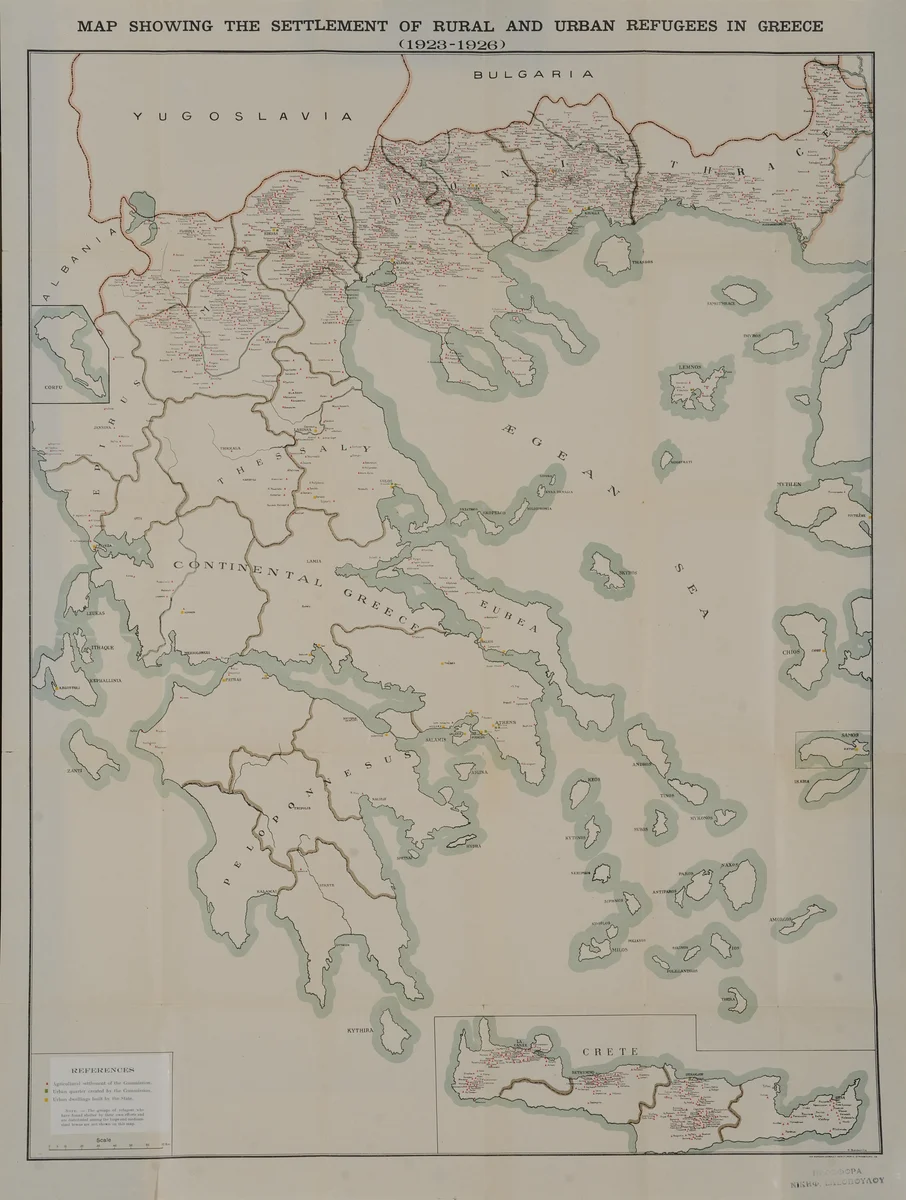
1922–1923 · The Asia Minor refugees
Defeat in Anatolia and the population exchange bring about 1.2 million Greek refugees, hundreds of thousands of whom settle in Attica. Whole neighborhoods spring up named for their origin: Nea Smyrni, Nea Ionia, Kaisariani.
1941–1949 · Occupation, famine and civil war
The Axis occupation brings a famine that kills tens of thousands of Athenians in the winter of 1941–42. After liberation come the fighting of December 1944 right in the center and a civil war that ends in 1949.
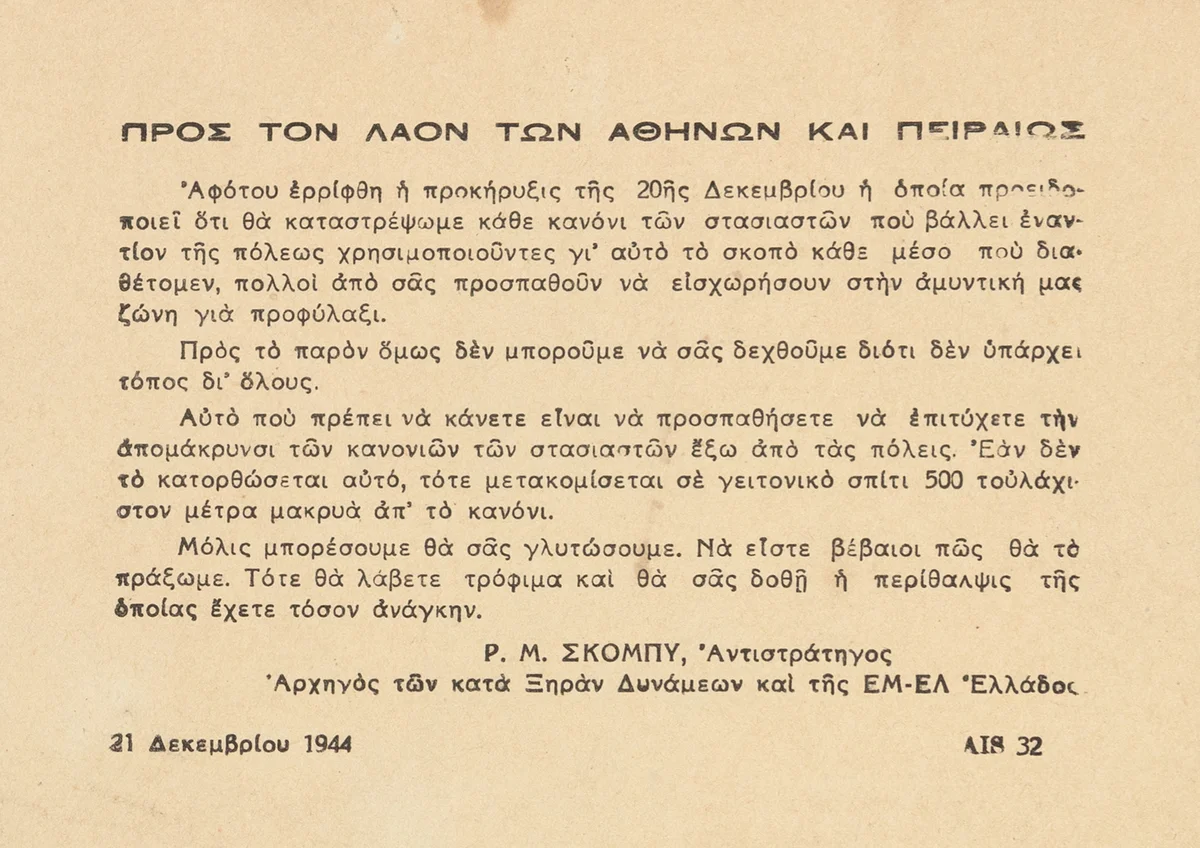
1973–2018 · The Polytechnic, the Olympics and the crisis
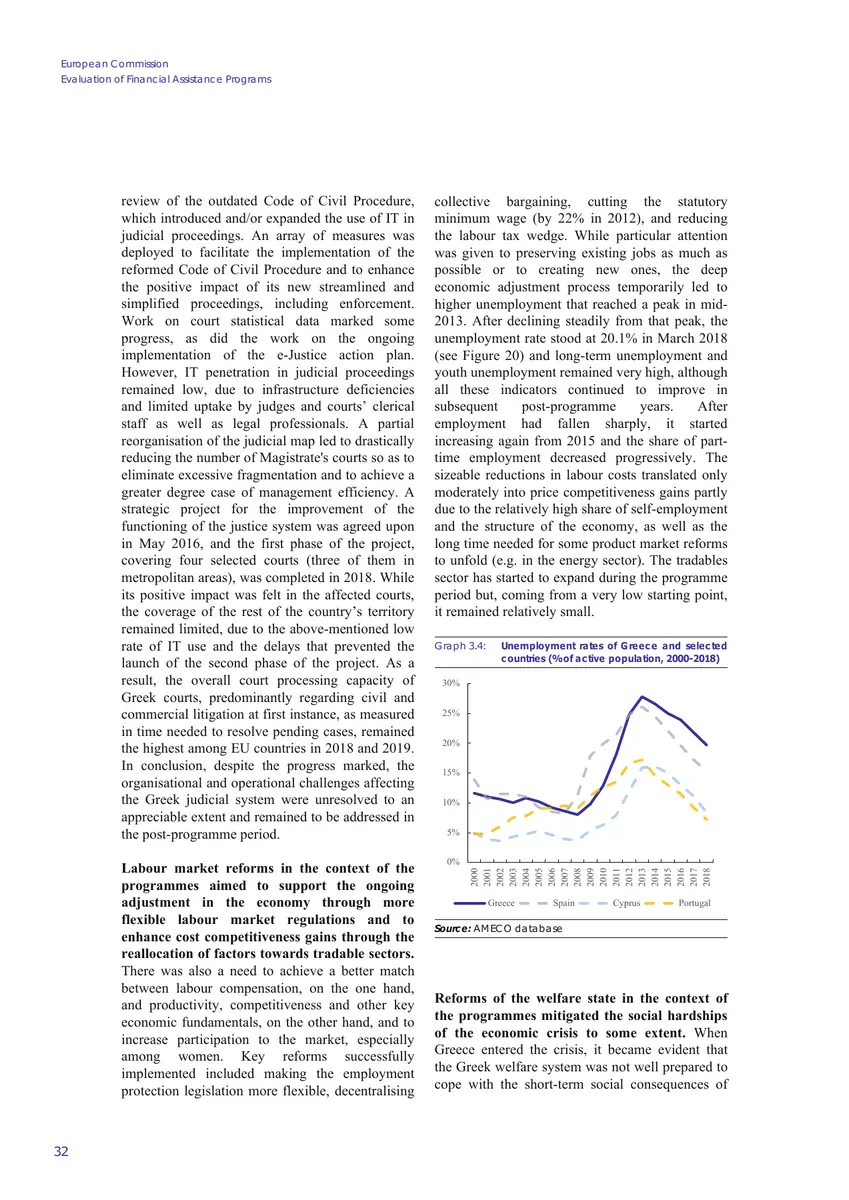
The Polytechnic uprising on November 17, 1973, foreshadows the fall of the dictatorship in 1974. The 2000 metro and the 2004 Olympics remake the city; the debt crisis between 2010 and 2018 pushes unemployment to about 27% and empties out shops across whole neighborhoods.
Complete history
The Mycenaean citadel on the Acropolis in the 13th century BC
Before its classical temples, the Acropolis was a Mycenaean citadel: in the 13th century BC, strong walls protected the local ruler’s seat and the region’s elite. Pottery, seals and implements displayed in the Acropolis Museum connect this power with everyday life. A cache of bronze weapons and tools found between stones in a wall may have been hidden by a craftsman in the 12th century BC. Ancient tradition linked the communities of Attica through shared gods, worship on the hill and Athena’s festival; that tradition does not establish a proven date for the region’s political unification.
Solon's laws and the tyranny
The 6th century BC brings Solon's laws, which abolish debt slavery, and the tyranny of the Peisistratids, who build infrastructure and organize the Great Panathenaea. In 508 BC Cleisthenes redraws citizenship by territory rather than lineage. The Persian invasion of 480 BC burns everything on the Acropolis; the naval victory at Salamis turns Athens into a sea power, and the treasury of the Delian League, moved from the island to the city in 454 BC, pays for the Parthenon, the Propylaea, the Erechtheion and the Temple of Athena Nike, built between 447 and 406 BC. The entire classical canon (Aeschylus, Sophocles, Euripides, Aristophanes, Socrates, Thucydides) fits within that same stretch of about seventy years. The Peloponnesian War, the plague of 430 BC and the defeat of 404 BC end the period of hegemony without ending the prestige: the city remains a center of learning for another eight hundred years.
From the end of Roman rule to administrative neglect
After Roman rule, Athens loses administrative weight and spends centuries on the sidelines. Byzantium turns the Parthenon into a church of the Virgin, the Ottomans turn it into a mosque from 1456, and the 1687 explosion destroys the temple's cella. In 1801–1812 Lord Elgin removes much of the frieze, now in the British Museum and the subject of a formal claim by the Greek state. When independent Greece picks Athens as its capital in 1834, the city is a village of low houses around the Plaka, with an estimated population of 4,000 to 10,000. The architects Stamatios Kleanthis and Eduard Schaubert draw up the triangular plan that still defines the center, and Bavarian neoclassicism produces the Trilogy on Panepistimiou Street (Academy, University, National Library) between 1839 and 1891. The first modern Olympic Games, in 1896, rebuild the Panathenaic Stadium in Pentelic marble.
The demographic break is 1922
The demographic break is 1922. Defeat in Asia Minor and the population exchange with Turkey pour about 1.2 million refugees into a country of 5 million; Attica absorbs most of them, and neighborhoods like Nea Smyrni, Nea Ionia, Kaisariani and Vyronas rise out of shacks and minimal housing. It's this displacement that brings rebetiko, the music of Piraeus's cafés-aman, into the center of Greek popular culture. Then come the German and Italian occupation of 1941, the famine of the winter of 1941–42, the fighting of December 1944 in Syntagma Square, and the civil war that lasts until 1949. In the following decades the state solves the housing shortage with the antiparochi: a landowner hands the property to a builder and gets apartments back in exchange. This gives rise to the polykatoikia, the five-to-seven-story building with a running balcony, repeated for miles, and Greater Athens's population jumps from about 1.4 million in 1951 to more than 3 million in 1981.
Dictatorship, Europe and pollution
A military dictatorship ruled from 1967 to 1974, Greece joined the European Community in 1981, and in the 1980s photochemical smog grew so thick it earned its own name, nefos. The metro opened in 2000 and the works for the 2004 Olympics changed the city more than any earlier plan: new lines, a new airport at Spata (2001), a tram to the coast and the Unification of Archaeological Sites, a pedestrian route of about 4 km linking Kerameikos to the Panathenaic Stadium. The 2010–2018 debt crisis cut wages and pensions, pushed unemployment to about 27% and youth unemployment above 50%, and left shuttered storefronts and graffiti across the center. Recovery came through tourism and short-term rentals: in 2025 the state began restricting new short-stay registrations in parts of the center, and the climate hotel tax, charged per night, became part of every visitor's budget.
The city was born on the Acropolis rock, because it's easy to defend and has a spring.
Geography and shape of the city
The basin and the loose rocks
Athens sits in the lekanopedio, a basin of about 450 km² closed off by four mountains: Aegaleo (468 m) to the west, Parnitha (1,413 m) to the north, Pentelicus (1,109 m) to the northeast and Hymettus (1,026 m) to the east, and open to the southwest toward the Saronic Gulf. Inside the basin sit isolated limestone outcrops that organize how you read the city: the Acropolis (156 m), Lycabettus (277 m), Philopappos Hill, the Pnyx and the Areopagus.
The buried rivers and the heat
The two rivers, Kifisos and Ilisos, were almost entirely channeled under avenues in the 20th century. The Kifisos runs beneath the expressway of the same name. The climate is Mediterranean with a hot summer, rain concentrated between November and February and almost none from June to August; the surrounding mountains trap the air and create thermal inversions, which explains the chronic pollution of the 1970s–90s and the extreme heat of July and August.
Plaka, the 1833 triangle and the polykatoikies
The urban fabric has three visible layers: the irregular streets of the Plaka, inherited from the Ottoman-era settlement nestled against the rock; the 1833 neoclassical triangle between Omonia, Syntagma and Kerameikos, with straight avenues (Stadiou, Panepistimiou, Athinas); and the postwar expansion of polykatoikies, which climbed the slopes as far as the law allowed and stopped at the protected-forest lines. Piraeus, the port, is a separate municipality, 10 km away, and remains Europe's busiest passenger port.
Of Athens's ancient rivers, only the Eridanos stream still runs in the open, inside the Kerameikos site.
Culture
Rebetiko came from the port
Greek urban popular music was born in Piraeus. Rebetiko, played on bouzouki and baglamas in the cafés of the Asia Minor refugees from 1922 on, was persecuted, censored under Metaxas in the 1930s and later absorbed into the national songbook: Markos Vamvakaris, Vassilis Tsitsanis, Sotiria Bellou. In the 1960s Manos Hadjidakis and Mikis Theodorakis brought the bouzouki to film and concert music, and laiko became the soundtrack of the dance-floor nightclubs, the bouzoukia, where people throw carnations (flowers now, not plates) and where you go in after midnight. Live rebetiko tavernas hold on in Psyri, Exarchia and Petralona, and the night there has no closing time.
Literature Nobels: Seféris and Elýtis, both poets
Modern Greek literature has two Nobel laureates, both poets: Giorgos Seferis in 1963 and Odysseas Elytis in 1979; Yannis Ritsos, exiled during the dictatorship, is the third name in the canon. In film, Theo Angelopoulos shaped the country's international image until 2012, and the so-called “Greek Weird Wave” of the 2010s (Yorgos Lanthimos, Athina Rachel Tsangari) filmed precisely the concrete suburbs of Attica. The same crisis years that generation filmed produced one of the most extensive street-art scenes in Europe: the murals of Psyrri, Metaxourgeio and Exarchia are by identifiable artists, not anonymous ones. For art indoors, the city has about a hundred museums and galleries, from the Benaki Museum to the Museum of Cycladic Art.
Dinner starts after 9pm
Social life happens on the street, and late. Dinner starts between 9pm and 10:30pm, afternoon coffee can stretch two hours over a single glass, and in summer open-air cinemas extend the night. At those tables, soccer is a serious and divisive subject: Olympiacos (Piraeus), Panathinaikos, and AEK, the last founded by refugees from Constantinople, split the city, and basketball carries equal weight. The calendar, meanwhile, is the Orthodox Church's, even for non-practitioners: Easter is the year's biggest date, and your name day (the feast of your name's saint) often outweighs your birthday.
At bouzouki clubs, the audience throws carnations and flowers onto the dance floor, not plates anymore. The flowers on the floor can look like litter at first glance.
Festivals and events
 AI illustration
Apokries and Clean Monday
The three weeks of carnival end on Clean Monday, 48 days before Orthodox Easter, when Lent begins. In Athens the day is marked by kite-flying on the hills of Philopappos and Ardittos and eating lagana, unleavened flatbread, with shellfish and no meat.
 AI illustration
Orthodox Easter
The biggest celebration of the year, usually between April and May and almost always on a different date from Catholic Easter. On Good Friday the epitaphioi are carried in procession through the streets; at midnight on Saturday the lights go out and the flame passes from candle to candle; then comes magiritsa soup and, on Sunday, spit-roasted lamb. The city empties because many people go back to their home island or village.

Athens and Epidaurus Festival
From June to August, with theater, dance and concerts at the Odeon of Herodes Atticus, a Roman theater from 161 AD set against the Acropolis, and the tragedies at the ancient theater of Epidaurus, two and a half hours from the city. Tickets run roughly €15 to €90, with the program announced in April.
 AI illustration
October 28 and November 17
“Ohi Day,” on October 28, marks Greece's refusal of the 1940 Italian ultimatum with a military and school parade. On November 17, the anniversary of the 1973 Polytechnic uprising is marked by a march from the Polytechnic to the U.S. embassy; downtown streets close and traffic stops in the afternoon and evening.
Athens Marathon
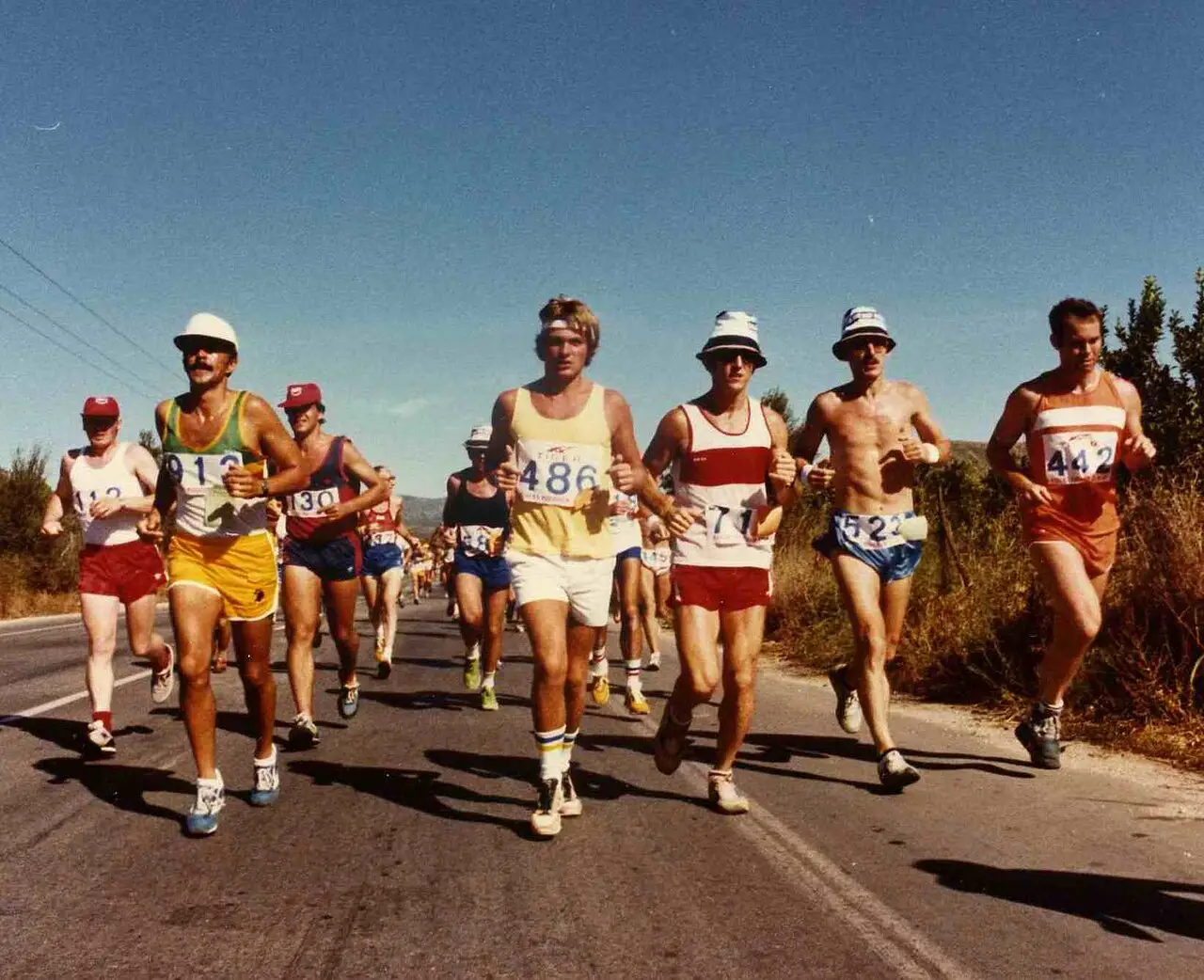
A race on a Sunday in early November on the original course: 42.195 km from the village of Marathon to the finish inside the Panathenaic Stadium. It draws tens of thousands of entrants across the marathon and the 5K and 10K races, and closes entire avenues on the city's east side.
Books and films
“History of the Peloponnesian War,” Thucydides
An Athenian general's account of the war that ended the city's hegemony. Pericles' funeral oration and the account of the plague of 430 BC explain, in twenty pages, what classical Athens thought of itself and what brought it down.
The Inspector Kostas Charitos series, by Petros Markaris
Crime novels set in contemporary Athens, from the traffic on Kifisou avenue to the offices of Syntagma. The volumes written during the debt crisis work as a direct record of how the economic collapse was lived neighborhood by neighborhood.
“Never on Sunday” (1960), by Jules Dassin
Filmed in Piraeus, with Melina Mercouri (later Minister of Culture and the force behind the campaign to return the Parthenon marbles) and a score by Manos Hadjidakis. It shows the port, the cafés and the bouzouki at the exact moment rebetiko was becoming national culture.
Frequently asked questions
Athens: What time should you visit the Acropolis in summer?
Go in the first time slot, at 8am, or in the last two hours of the day, and bring water. There's a water fountain at the entrance.
Athens: How do you get from the airport to the center?
The metro, blue line 3, reaches Syntagma and Monastiraki in about 40 minutes; the airport ticket costs about €9 one way, with discounts for groups and for round-trip purchases.
Athens: Cape Sounion?
A Temple of Poseidon from 444 BC on a cliff 60 m above the sea, at the southern tip of Attica, with 15 columns of Agrileza marble still standing: one has Byron's name carved into it in 1810.
Athens: How much do things cost in the city?
The currency is the euro, and typical 2026 ranges, all approximate, look like this: freddo coffee €2.50 to 4.50; koulouri €0.60 to 1; souvlaki in pita €3.50 to 5; lunch at a magirio €8 to 14; taverna dinner with wine €18 to 30 per person; beer €4 to 6; 90-minute ticket €1.20; three-star hotel in the center €80 to 150 a night in high season.
Athens: How do Greeks say no?
Tilting the chin up with a short click of the tongue (“tsk”) means no, not disdain.
Other cities in the country
Greece ↗- Days
- 2–3
- When
- Jun · Sep
- Per person/day
- Average 150–250 EURMid-range · per person/day
Cost scope
Per person per day: accommodation, meals, urban transport, visits and a small allowance for extras. Flights excluded; larger purchases vary. Editorial estimate, not a quote.
- Days
- 2–3
- When
- May–Jun · Sep–Oct
- Per person/day
- Average 272 EURMid-range · per person/day
Cost scope
Per person per day: accommodation, meals, urban transport, visits and a small allowance for extras. Flights excluded; larger purchases vary. Editorial estimate, not a quote.
- Days
- 7
- When
- May–Jun · Sep
- Per person/day
- Average 144 EURMid-range · per person/day
Cost scope
Per person per day: accommodation, meals, urban transport, visits and a small allowance for extras. Flights excluded; larger purchases vary. Editorial estimate, not a quote.


Itineraries through here
 Greece and Croatia in 7 daysFrom the Acropolis to the walls of DubrovnikAthens · Santorini · Dubrovnik6–9 days3 cities
 Turkey and Greece in 7 daysFrom the Bosphorus to the AcropolisIstanbul · Athens5–7 days2 cities
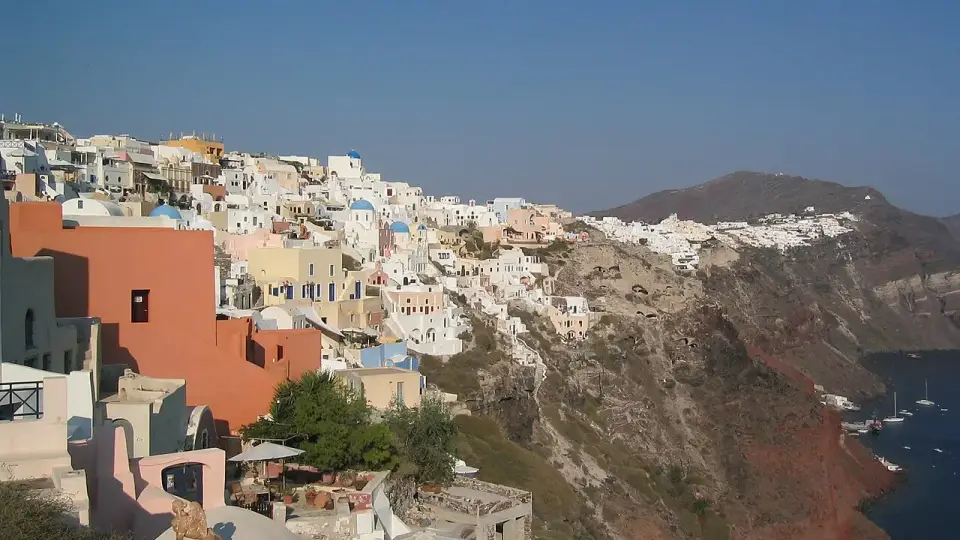
 Athens and Santorini in 5 daysThe Acropolis and the calderaAthens · Santorini4–6 days2 cities
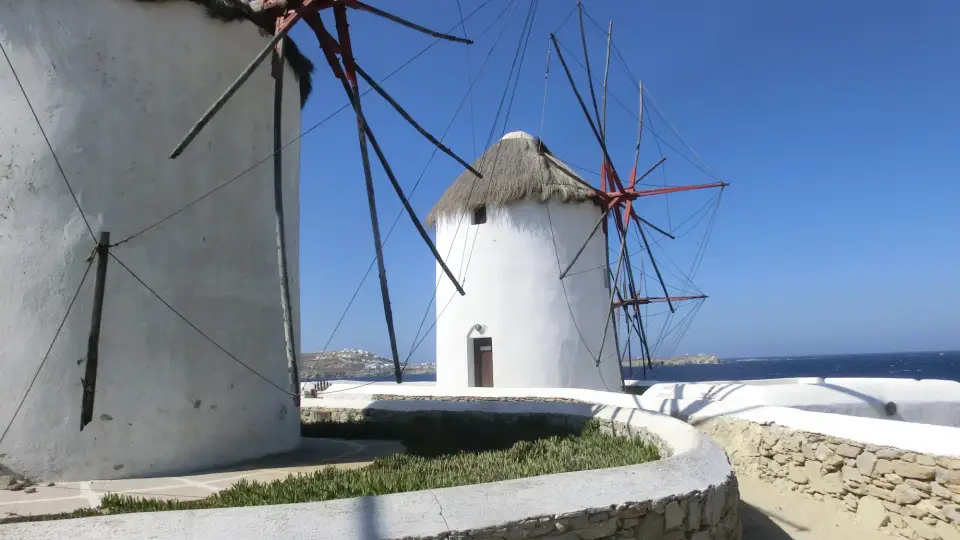
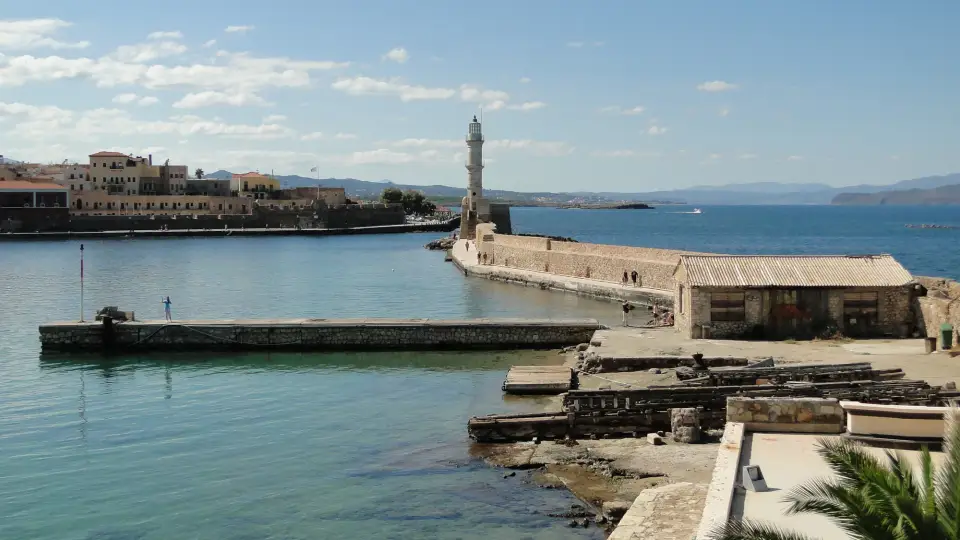
 Greece in 15 daysIsland-hopping the Cyclades to CreteAthens · Mykonos · Santorini · Crete13–16 days4 cities
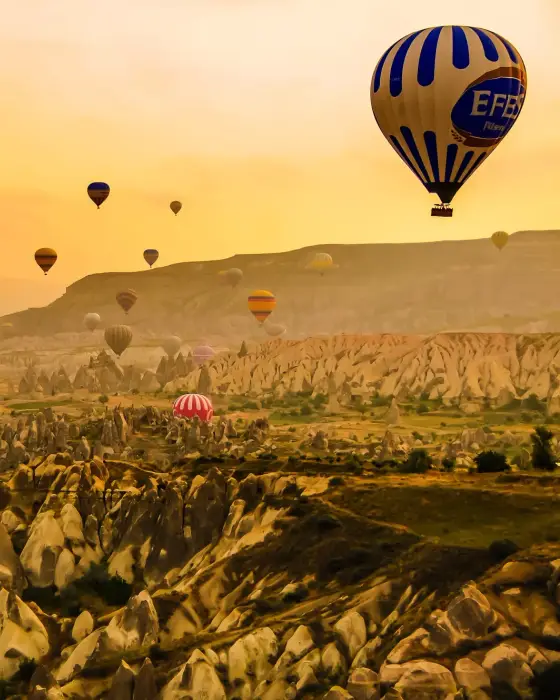 Turkey and Greece in 15 daysFrom Cappadocia’s balloons to Santorini’s calderaIstanbul · Cappadocia · Athens · Mykonos · Santorini12–17 days5 cities