Greece
Crete
A week between Heraklion, Rethymno and Chania
Days Start with the basic programme and choose extensions for the time you have.
How the guide reaches this number
That connects Knossos with the museum, includes harbour towns and devotes a day to a western beach without returning each night to the same end of the island. Samaria needs another day, or entirely replaces the last urban day for those able to make the crossing with all logistics confirmed. For Spinalonga and the east, I would add another block with its own base; I would not call this week a visit to the entire island.
7
When May to June and September, for combining towns, archaeology and the coast, checking trail opening and sea conditions.
How the guide reaches this number
May to June and September are the editorial choice for combining towns, sites and days by the sea. This guarantees neither Samaria opening nor suitable swimming at every beach: check the park and local conditions for your date. July and August call for greater care with heat, exposure at sites and transport demand. Outside the main season, towns and museums can sustain the trip while beach services, boats and trails have different availability. Rain and wind can alter an outing; keep an urban day as an alternative instead of reserving every day for weather-sensitive activities.
Per person/day Budget around EUR 56; mid-range around EUR 144; comfortable around EUR 378 per person per day, based on spending travellers report to Budget Your Trip (consulted October 2026).
How the guide reaches this number
Indicative amounts, excluding travel to the destination.
Budget around EUR 56; mid-range around EUR 144; comfortable around EUR 378 per person per day, based on spending travellers report to Budget Your Trip (consulted October 2026). Indicative amounts, excluding travel to the destination.
Per person per day: accommodation, meals, urban transport, visits and a small allowance for extras. Flights excluded; larger purchases vary. Editorial estimate, not a quote.
 What Nilo thinks
I would set aside seven full days for central and western Crete, with two nights in Heraklion, two in Rethymno and three in Chania. That connects Knossos with the museum, includes harbour towns and devotes a day to a western beach without returning each night to the same end of the island. Samaria needs another day, or entirely replaces the last urban day for those able to make the crossing with all logistics confirmed. For Spinalonga and the east, I would add another block with its own base; I would not call this week a visit to the entire island.I would go to Crete for the chance to connect archaeology, towns and food in one trip, without changing islands to change landscapes. Heraklion's museum gives context to the remains at Knossos; farther west, Rethymno and Chania reveal harbours and fortifications from other periods. Between these visits, a taverna offers cheeses, greens, dakos and dishes that take longer to prepare. I would keep a full day for a beach in the far west. Distances and terrain call for choices, and a well-placed base avoids spending the trip repeating the road back.
Quick facts
- Population
- 624,408 residents in the region of Crete, according to the 2021 ELSTAT Census.
- Foundation
- An island inhabited since prehistory, with Bronze Age Minoan palatial centres; it has no single urban foundation.
- Country and region
- Greece, region of Crete, south of the Aegean Sea. Heraklion is the regional capital.
- Language
- Greek; English is used in many tourist services, with no guarantee in every situation.
- Currency
- Euro (EUR).
- Time zone
- Europe/Athens: UTC+2 in standard time and UTC+3 during daylight saving time.
- Best time
- May to June and September, for combining towns, archaeology and the coast, checking trail opening and sea conditions.
- Average daily cost
- Budget around EUR 56; mid-range around EUR 144; comfortable around EUR 378 per person per day, based on spending travellers report to Budget Your Trip (consulted October 2026). Indicative amounts, excluding travel to the destination.
When to go
May to June and September, for combining towns, archaeology and the coast, checking trail opening and sea conditions.
How the year changes
May to June and September are the editorial choice for combining towns, sites and days by the sea. This guarantees neither Samaria opening nor suitable swimming at every beach: check the park and local conditions for your date. July and August call for greater care with heat, exposure at sites and transport demand. Outside the main season, towns and museums can sustain the trip while beach services, boats and trails have different availability. Rain and wind can alter an outing; keep an urban day as an alternative instead of reserving every day for weather-sensitive activities.
Nilo's tips
One direction for the circuit
I would start in Heraklion and finish in Chania if flights allowed. Arriving through Chania, I would reverse the order while keeping overnight stays by sector.
Museum and site with separate admissions
I would confirm both tickets separately. An old combined-ticket page does not settle the museum's current conditions.
A hike with the return arranged
I would choose Samaria only after checking the park, boat and final transport, alongside my readiness for a long walk.
One distant beach a day
I would choose Elafonisi or Balos and save the other for a longer trip. That makes access time part of the programme.
Explore the map
Explore the map, read about the other places and plan your travel days in the app.
Open the appWhat to see
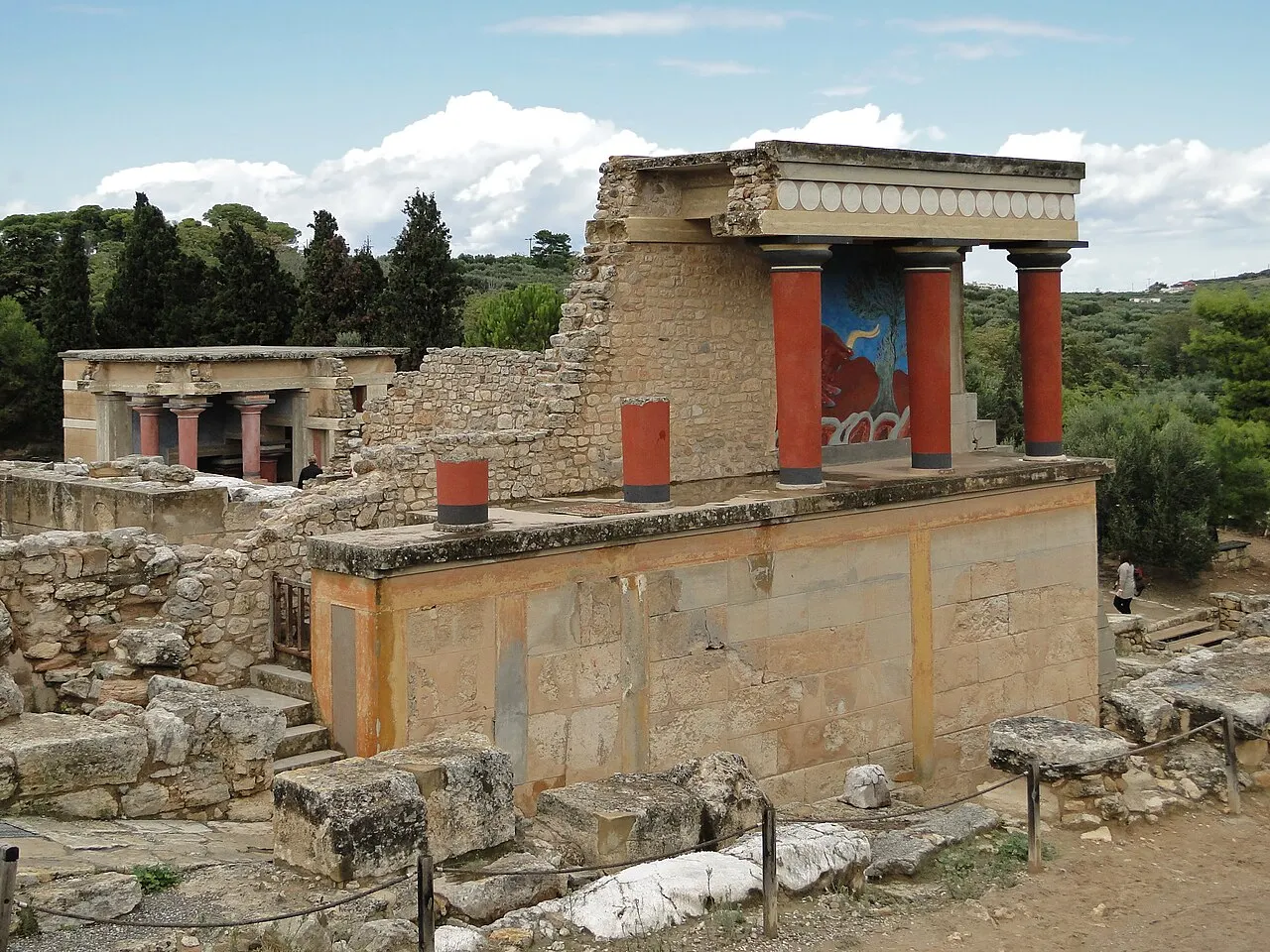
Knossos
The Minoan palatial centre reveals courtyards, storerooms and the organisation of a Bronze Age complex. Part of its familiar appearance results from Arthur Evans's interventions; ancient structures and modern reconstructions need distinguishing during the visit. Combine the site with the Archaeological Museum of Heraklion to see objects and paintings in the collection's context, without assuming a single ticket includes both. Consult the official Hellenic Heritage channel for admission date, time and conditions.
This is the main archaeological visit in this proposal, with a critical reading of reconstructions and a confirmed ticket.
Check access

Archaeological Museum of Heraklion
The museum brings together finds from different areas of Crete and helps interpret Knossos without reducing Minoan civilisation to one palace. Allow time for objects, paintings and explanations rather than rushing through before a bus. The institution has its own opening hours and ticket. Confirm opening for your date through the official website or by telephone on +30 2810 279000 before ordering your Heraklion visits; if it cannot be confirmed, switch the museum and Knossos days and keep an urban walk as an alternative.
The collection gives context to Minoan sites and warrants its own visiting time.
Check access
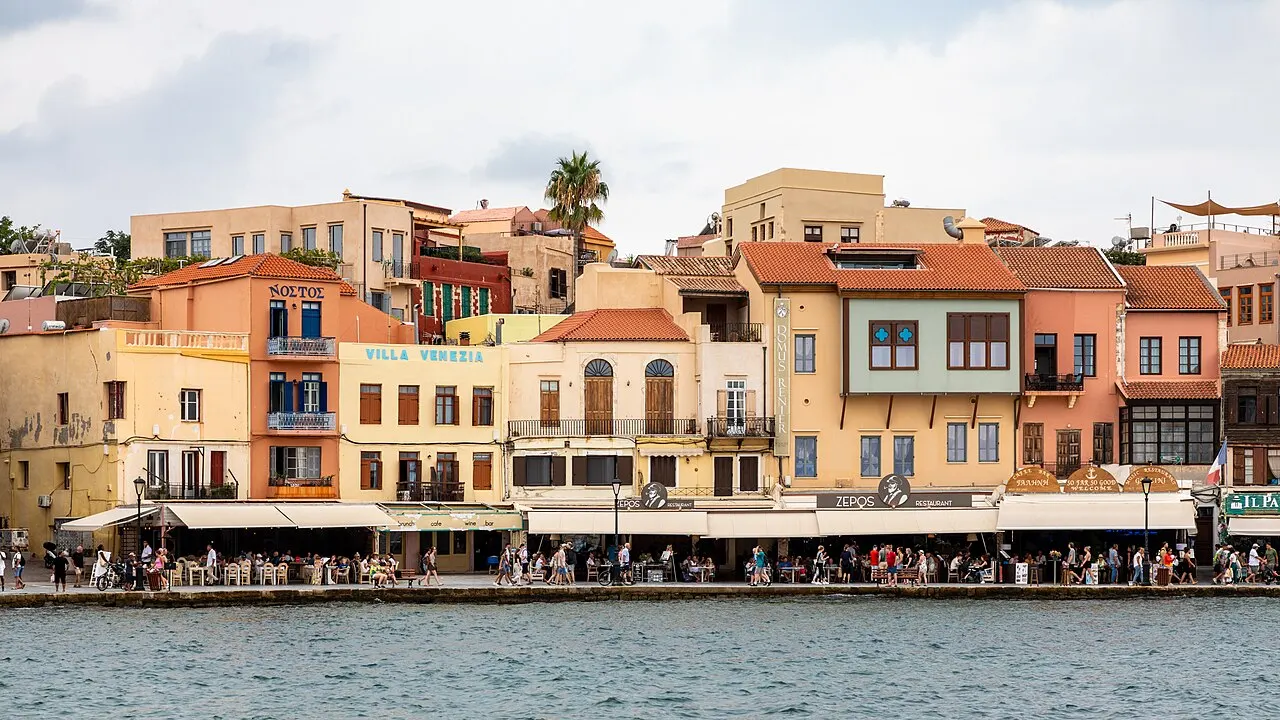
Old Venetian Harbour of Chania
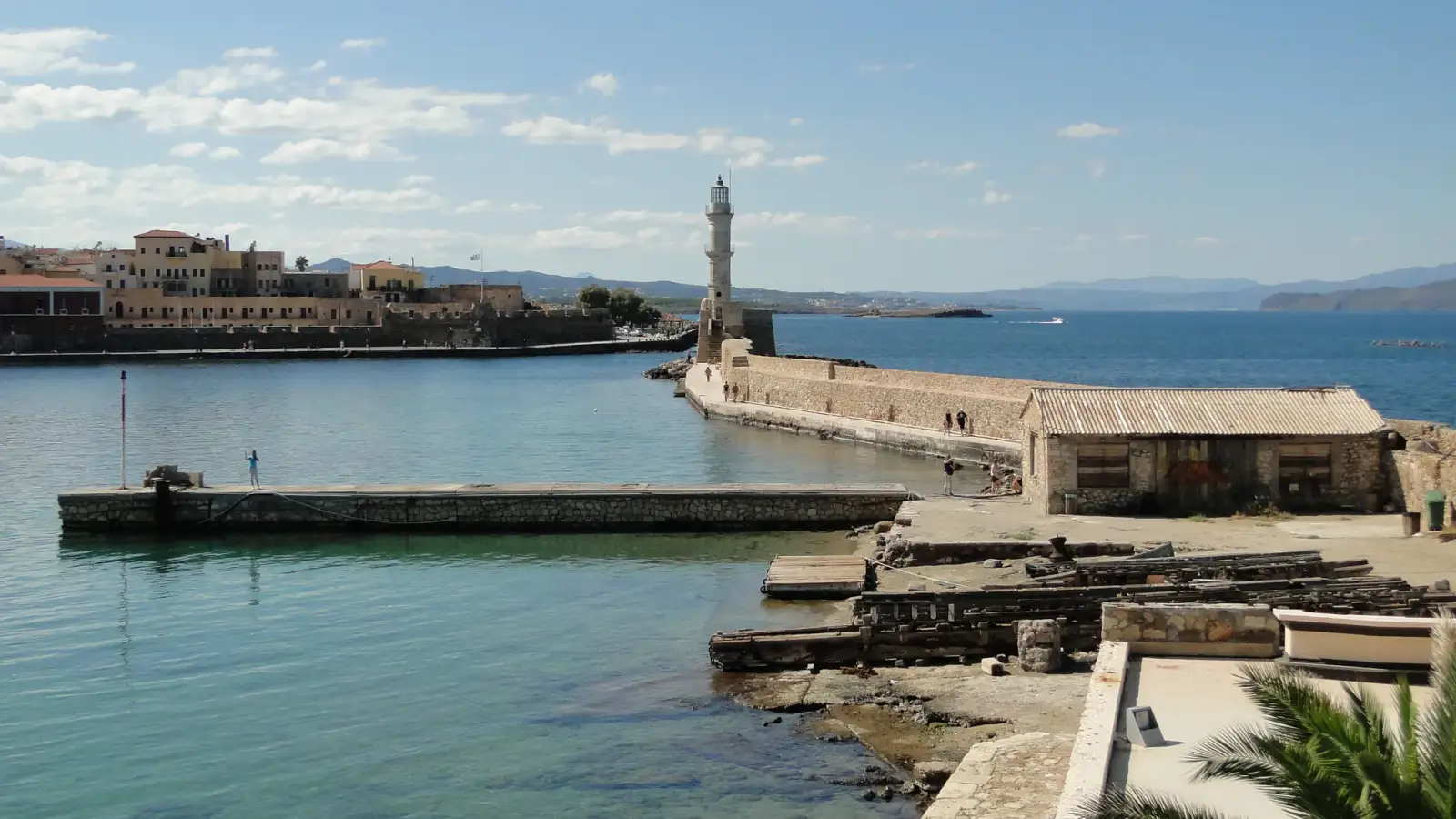
The old harbour connects the seafront walk, the streets of Topanas and Splantzia and monuments from different periods. Today's lighthouse also includes work from the Egyptian period; do not attribute every element of the view to the same Venetian era. Walk in stages, between meal breaks and inland streets. This area suits exploring Chania on foot, but not driving to every accommodation's door.
It reveals historical layers and allows you to enjoy Chania on foot in the evening too.
Check access
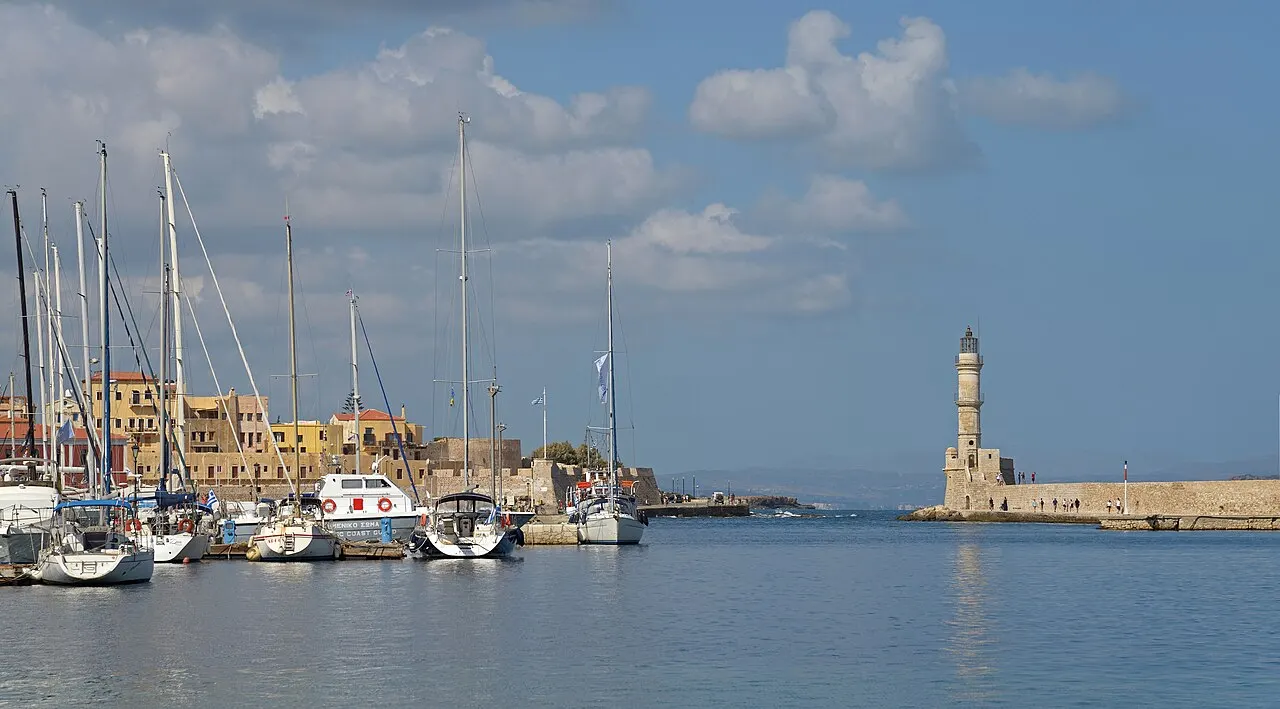
Egyptian Lighthouse of Chania
The lighthouse marks the end of the old harbour's breakwater and is a landmark in its own right in Chania, beyond a detail in the waterfront view. Its Venetian origins and reconstruction during the Egyptian period explain its current name. First observe the ensemble from the harbour promenade. Approaching along the breakwater requires assessing the surface, wind, waves and any barriers; completing the walk is unnecessary to recognise the landscape. Observing the lighthouse does not require entering the tower; do not count on an interior visit or a climb inside.
The lighthouse guides a reading of the harbour and reveals the relationship between breakwater and city without relying on entry to the tower.
Check access

Koules Fortress
The fortification beside Heraklion's old harbour presents the town's relationship with defence and maritime trade. The exterior can form part of a central walk; confirm specific opening hours and admission for the interior. Its position on the breakwater also exposes the walk to wind and sun, so it cannot be treated as shelter between two visits.
It helps explain the old harbour; the interior is an additional choice depending on opening.
Check access

Fortezza of Rethymno
The Venetian fortress occupies the hill above central Rethymno. Walking through its defensive spaces and looking down over the town helps explain the scale of the old harbour settlement. The route is exposed to the sun and has uneven paving. Check current access and choose a time that allows you to examine the complex without crossing it in the strongest heat.
The defensive ensemble and view situate the old town, with care needed over sun and paving.
Check access
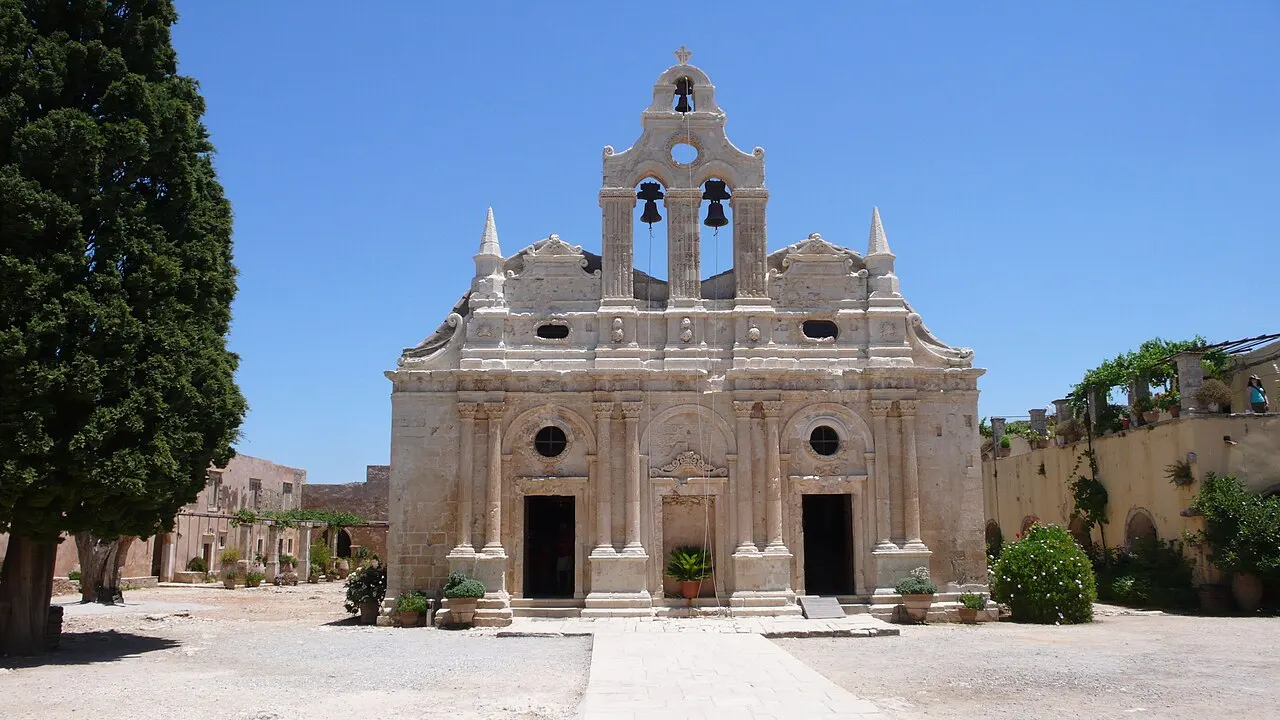
Arkadi Monastery
The monastery combines a church, courtyards and the memory of the events of 1866, linked to resistance against Ottoman rule and the deaths of people sheltering in the complex. It is a visit about history and religion, beyond a photographic stop at a facade. Continue to respect dress guidance and areas reserved for the monastic community. The outing works from Rethymno with outward and return transport planned.
It combines religious architecture and the memory of 1866 in a separate outing from Rethymno.
Check access

Elafonisi Beach
In the far southwest, pale sand, pink patches and shallow water create a landscape that changes with light, wind and crowds. The outing requires a day from Chania, allowing road time and the access walk. Respect dunes, vegetation and closed areas, do not collect sand, and assess sea conditions on site. A photograph of a calm lagoon guarantees neither safe swimming nor a continuous pink strip.
The landscape justifies a day of its own from Chania when access and sea conditions are suitable.
Check access

Balos Lagoon
The lagoon lies in the northwest and calls for its own access decision. Boat trips may leave Kissamos port and combine Balos with Gramvousa; operation depends on the sea and the booked programme. Anyone considering the land route must confirm road restrictions, rental company permission and the walk between parking and beach. It is an alternative to Elafonisi for a day devoted to the coast, rather than a second beach to complete after lunch.
An alternative to Elafonisi, with access arrangements, conservation rules and sea conditions checked.
Check access
Nilo’s itinerary
Start with the basic programme and choose extensions for the time you have.
Plan my days in the app ↗Day 1 · Heraklion and the archaeological museum
Start the first full day from your accommodation in Heraklion; a late arrival requires an additional preceding day. Visit the Archaeological Museum with confirmed opening and time for the collection.
Have lunch in the centre and spend the afternoon among urban streets and the old harbour. Choose Koules's interior only if open and you feel up to it.
Sleep in Heraklion. Check admission and access to Knossos for the next morning, without assuming a joint ticket with the museum.
Day 2 · Knossos and another afternoon in Heraklion
Leave your accommodation for Knossos by urban bus, taxi or car, according to that day's connection. Prefer an early visit when it reduces heat exposure, respecting your ticket time.
At the site, observe how the areas are organised and distinguish reconstruction from ancient remains. There is no need to add another palace to compare Minoan civilisation on the same day.
Return to Heraklion for lunch and an afternoon with a break, using the centre or a historical museum of interest with opening checked. As a walking option, choose a permitted stretch of the walls and Kazantzakis's tomb at Martinengo, considering climb and heat; replace another urban walk without requiring the whole fortification circuit. Keep the second night in the same base.
Day 3 · Moving to Rethymno
Travel from Heraklion bus station to Rethymno along the northern axis; the institutional reference is around 90 minutes by bus, plus terminal access and waiting. Settle luggage and arrival at your accommodation before sightseeing.
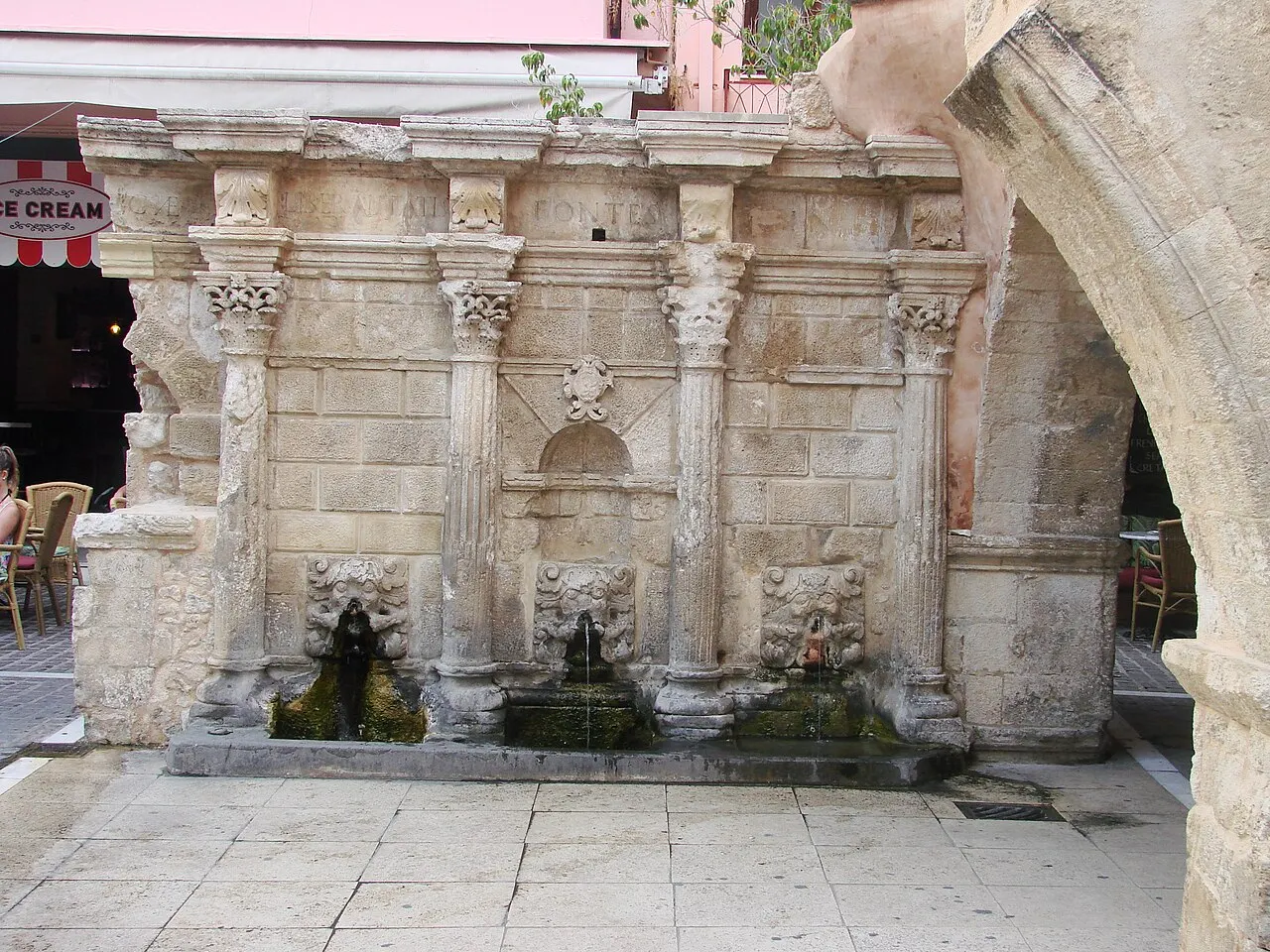
After lunch, explore the old town, passing the Rimondi Fountain, and continue to the old harbour to observe its lighthouse from the waterfront, without depending on entering the tower or walking the mole. Leave the Fortezza for a time compatible with opening, heat and willingness to climb.
Sleep in Rethymno rather than continuing to Chania on the same day just for dinner and returning.
Day 4 · Arkadi and the Rethymno area
Leave Rethymno for Arkadi with outward and return transport confirmed. Allow the morning for the church, courtyard and an understanding of the events of 1866.
Take a lunch break and return to base. If no suitable public connection exists, arrange transport or substitute an urban programme; do not rely on finding a taxi at the exit without arranging it.
Use the rest of the afternoon in town or on the nearby coast, depending on the sea. Sleep a second night in Rethymno.
Day 5 · Moving to Chania and the old harbour
Leave Rethymno for Chania on your chosen bus; the institutional approximate duration is 60–70 minutes, varying by departure and traffic, plus waiting and access to the hotel. Leave luggage at your new accommodation, retained for three nights.
After lunch, explore the old harbour and Topanas and Splantzia streets on foot. Observe the lighthouse from the waterfront; the approach along the mole is optional and depends on surfaces, wind, waves and permitted access, without a promise of tower entry. Distribute the walk with breaks, without relying on taking a vehicle into the historic core. Observe Yali Mosque and the neoria from permitted public spaces; restoration projects may limit approaches to the shipyards. If choosing the archaeological stop at Kydonia in Kastelli, shorten another neighbourhood stretch and do not depend on entering the excavated area.
Choose dinner in the centre by the menu and displayed prices. Confirm departure and return for the next day's coastal outing.
Day 6 · A western beach day
Set aside the whole day for Elafonisi from Chania. KTEL published a 09:00 departure and 16:00 return in the timetable introduced on 9 October 2026; confirm both services for your travel date before leaving. By car, allow around 72 km/1 hour 20 minutes' driving to the parking area, adding traffic, stops and the walk to the sand. Bring water and sun protection.
Respect dunes and protected areas, assess swimming conditions and take breaks. Lunch and available services depend on the season.
If you prefer Balos, replace the whole outing with a trip whose inclusions and boarding you have checked; do not include both beaches. With wind or closures, keep the day in Chania. Return for the second night in your base.
Day 7 · Chania with time to choose
Leave the same accommodation and use the morning for a museum or another stretch of historic neighbourhoods according to interest and confirmed opening. The day can absorb a weather change affecting the beach without eliminating all urban sightseeing. For western archaeology, choose the Archaeological Museum in Chalepa, confirming transport and opening on a day other than Tuesday; it replaces the morning walk without requiring entry to Kydonia's excavated area.
Have lunch and keep the afternoon less demanding, with a nearby beach only if sea conditions are suitable and access is simple from your accommodation.
Sleep a third night in Chania. Samaria is an extra day's extension or entirely replaces this day for prepared walkers, with the park open and all logistics confirmed. Do not combine it with a departing flight that day.
Food
Dakos
Barley rusk is topped with tomato, cheese such as xinomyzithra and olive oil. It introduces the Cretan repertoire, useful as a shared dish or part of a meal, without assuming one portion replaces lunch for everyone.
Kalitsounia
Small pies or pastries that may contain cheese and herbs, in sweet and savoury versions. Ask about the filling and preparation, especially with dairy restrictions.
Gamopilafo
Rice cooked in meat stock, associated with celebrations such as weddings. The name does not imply daily availability in every restaurant; consult the menu and confirm the stock before choosing.
Apaki and meat dishes
Apaki is marinated, smoked pork; other preparations include lamb with greens and herbs. In tavernas, ask what was prepared that day and whether a portion is individual or shared.
Graviera, greens and olive oil
Local cheeses, cooked leaves, vegetables and olive oil widen choices beyond grilled food. Variety changes with the kitchen and season; a familiar Greek culinary name alone does not explain the dish served.
Tsikoudia
A spirit also called raki in Crete. If offered at the end of a meal, decide whether you wish to drink and remember that driving remains incompatible with alcohol consumption. There is no obligation to accept.
Where to eat
- Central Heraklion
Tavernas and meze establishments allow combinations of dakos, greens, cheeses and meat dishes prepared that day. Meze are small portions, but sizes vary; check before ordering several dishes for one person.
- Rethymno and surroundings
Look for vegetables, cooked greens, pies and local preparations on the menu, using a meal to vary between museum and sea days. Ask about stock, cheese and meat in dishes that appear vegetable-based.
- Chania, inner streets of the centre
Kalitsounia and other pastries suit a snack; for dinner, compare Cretan menus offering fish, meat and vegetable dishes. An address away from the harbour does not guarantee quality, just as a harbour view does not prevent it: judge preparation, ingredients and clear prices.
- Beach and hiking outings
Before leaving, check where water, lunch and snacks will be available. For a long crossing, bring what the route requires rather than relying on finding a restaurant inside the gorge; for a beach, check seasonal services.
· 2026-10-16
Day trips
Samaria from Chania
Allow a full day from Chania, with a KTEL bus to Xyloskalo, a 16 km route to Agia Roumeli and approximately six hours' walking as the tourism reference. Afterwards, take an ANENDYK boat to Sougia or Hora Sfakion and the connecting KTEL bus back to Chania. Confirm the entire chain before the hike: park opening, sailing and the bus after disembarkation, subject to operation on your date and sea conditions. Total time includes outward travel, rest, waiting and return, beyond the six hours on foot. This is an extension beyond the seven days or entirely replaces the last urban day; it does not fit on flight day.
Balos and Gramvousa from Kissamos
Operator Cretan Daily Cruises places Kissamos port 43 km from Chania and requests arrival 40 minutes before boarding. The road calculation between central Chania and the port point is around 41 km/46 minutes' driving, before traffic and parking; the measurement points explain the small difference. Without a car, check the KTEL Chania–Kissamos Port route and return after the boat; do not buy a connection without a check-in buffer. The full cruise takes around seven hours, or five on certain high-season express departures to Balos only. Add the land transfer and confirm duration, disembarkations and format. It is an alternative to the Elafonisi day, rather than a second outing for the same day.
Where to begin
Heraklion and the archaeological museum
Start the first full day from your accommodation in Heraklion; a late arrival requires an additional preceding day. Visit the Archaeological Museum with confirmed opening and time for the collection.
Knossos and another afternoon in Heraklion

Leave your accommodation for Knossos by urban bus, taxi or car, according to that day's connection. Prefer an early visit when it reduces heat exposure, respecting your ticket time.
Moving to Rethymno
Travel from Heraklion bus station to Rethymno along the northern axis; the institutional reference is around 90 minutes by bus, plus terminal access and waiting. Settle luggage and arrival at your accommodation before sightseeing.
Arkadi and the Rethymno area
Leave Rethymno for Arkadi with outward and return transport confirmed. Allow the morning for the church, courtyard and an understanding of the events of 1866.
Moving to Chania and the old harbour

Leave Rethymno for Chania on your chosen bus; the institutional approximate duration is 60–70 minutes, varying by departure and traffic, plus waiting and access to the hotel. Leave luggage at your new accommodation, retained for three nights.
A western beach day
Set aside the whole day for Elafonisi from Chania. KTEL published a 09:00 departure and 16:00 return in the timetable introduced on 9 October 2026; confirm both services for your travel date before leaving. By car, allow around 72 km/1 hour 20 minutes' driving to the parking area, adding traffic, stops and the walk to the sand. Bring water and sun protection.
Chania with time to choose

Leave the same accommodation and use the morning for a museum or another stretch of historic neighbourhoods according to interest and confirmed opening. The day can absorb a weather change affecting the beach without eliminating all urban sightseeing. For western archaeology, choose the Archaeological Museum in Chalepa, confirming transport and opening on a day other than Tuesday; it replaces the morning walk without requiring entry to Kydonia's excavated area.
Money
The currency is the euro. Compare what services include before adding up visiting costs: archaeological site admission, museum, bus, boat and organised transport can be separate purchases. Use Hellenic Heritage ticketing for Knossos, the Heraklion museum's channel for its admission and the park operator for Samaria. An old combined-ticket page does not prove it remains on sale. At a beach or taverna, ask the price and unit before occupying equipped facilities or choosing fish sold by weight. For accommodation, confirm the booking total and any additional charges in writing, without turning a room rate into per-person spending.
Getting there and around
This itinerary starts in Heraklion (HER) and ends in Chania (CHQ). At HER, Astiko KTEL Heraklion urban buses leave from outside arrivals and serve the centre; choose the direction and stop near your accommodation. For the intercity station beside the harbour, the University of Crete gives a reference of around 20 minutes on the urban bus, excluding waiting; confirm your chosen service serves the station. At CHQ, use KTEL Chania–Rethymno to Chania bus station; the airport stop is across from departures, east of the terminal. The institutional reference is around 30 minutes in the vehicle to town, plus waiting and access to the hotel. Airport timetables change weekly: confirm your day and reserve a taxi if the flight does not fit. Do not treat announced new airport infrastructure as an already operational replacement for the airport on your ticket.
KTEL intercity buses link the northern towns, with their own timetables and stops. For an approximate duration, the University of Crete gives around 90 minutes between Heraklion bus station and Rethymno, and 60–70 minutes between Chania and Rethymno. Add access to the station, waiting and arrival at accommodation; not every departure follows the same variant. Check the current KTEL Chania–Rethymno or KTEL Heraklion–Lasithi timetable and buy ahead when possible: seats can sell out, and intermediate boarding requires confirmation of the stop. A Heraklion–Chania express departure does not automatically provide a stop in Rethymno.
A car helps with Arkadi and some beach outings but is unnecessary in the old centres. For Elafonisi, KTEL Chania–Rethymno publishes departure from Chania bus station at 09:00 and return at 16:00 in the timetable effective since 9 October 2026; check operation on your date and the arrival stop rather than treating this as a year-round schedule. By car, the calculation between central Chania and Elafonisi's parking area is around 72 km and 1 hour 20 minutes' driving, before traffic, parking and the walk to the sand. The road requires time and attention. Confirm parking outside restricted centres; rental companies may restrict unpaved sections, including land access to Balos.
Samaria requires reaching Xyloskalo, walking to Agia Roumeli, a boat and a land return. The exit chain can use ANENDYK from Agia Roumeli to Sougia or Hora Sfakion and, from either port, a KTEL bus to Chania. Check the park, boat and corresponding bus beforehand: the October 2026 sailing timetable instructs passengers to confirm post-disembarkation departures with KTEL. A car left at Xyloskalo will not be waiting at the southern exit. If you prefer organised transport, compare inclusions without assuming a guide, admission or meal.
Safety
Heat, wind, sea conditions and fires can change the itinerary. Consult official notices and obey trail and site closures; water, suitable footwear and a time buffer are necessary at Samaria, whose long route does not suit every level of fitness. At beaches, assess signs and waves before entering the water. On roads, consider bends, limited lighting on some stretches and fatigue after an active day. Do not leave luggage visible in the car when changing bases. In an emergency, the European number is 112.
Etiquette tips
Monasteries and churches
Follow the indicated dress and visiting restrictions. Publicly accessible courtyards do not mean access to every room.
Protected beaches
Stay on authorised access routes, protect dunes and plants, and do not take sand. Tourist services and conservation must coexist in the same space.
Music and celebrations
Observe how participation is organised and ask permission before filming people closely. A community celebration is not a performance commissioned for every visitor.
Mistakes to avoid
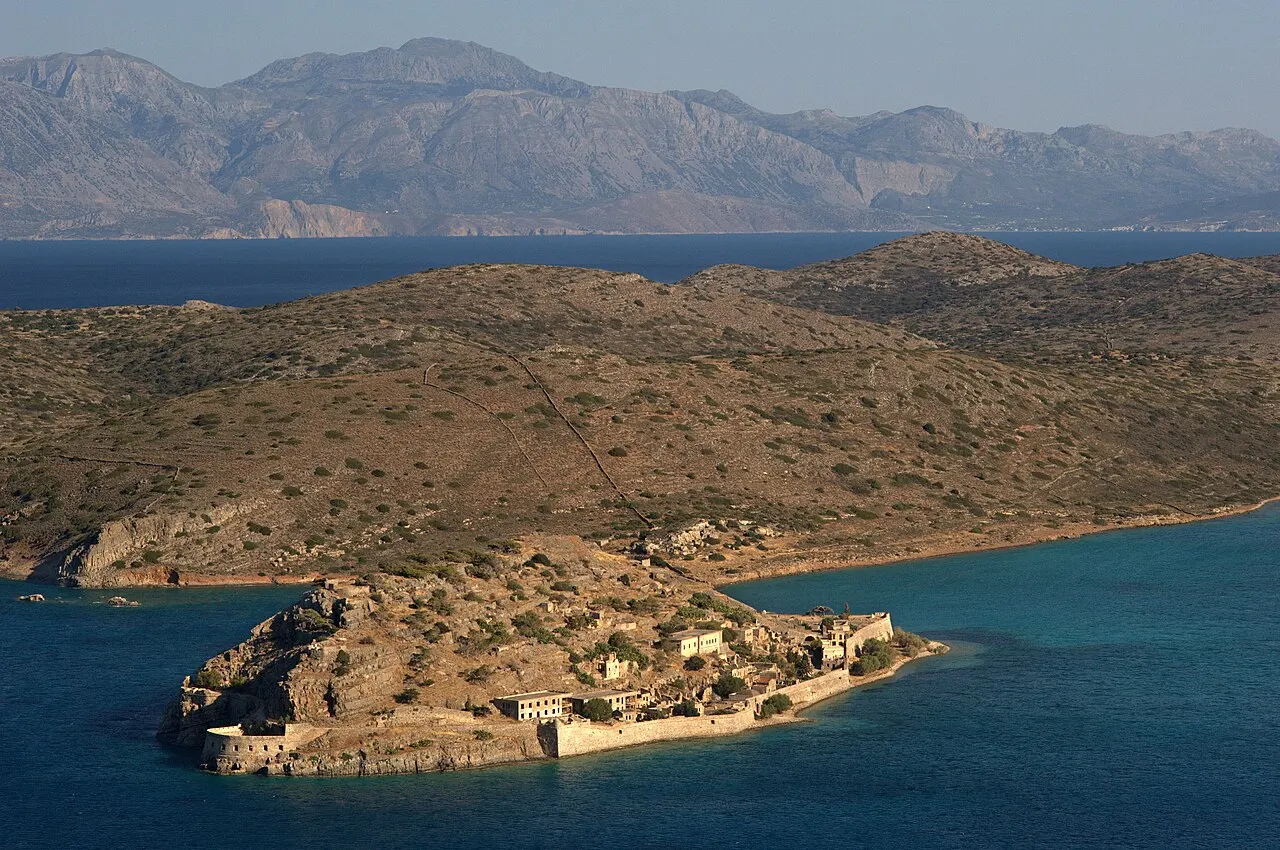
Sleeping at the same address to visit Heraklion, Chania, Elafonisi and Spinalonga, repeating long journeys.
Calling Knossos an intact palace without distinguishing ancient material from modern reconstruction.
Buying Knossos admission assuming Heraklion's museum is included.
Planning Samaria as a circular walk ending at the departure car park.
Booking Elafonisi and Balos on the same day simply because both appear in the west of the map.
Using a boat or bus timetable from another season to guarantee the return from a crossing.
Useful phrases
Καλημέρα (kaliméra)
Good morning.
Ευχαριστώ (efharistó)
Thank you.
Πόσο κάνει; (póso káni?)
How much does it cost?
Χωρίς τυρί (horís tirí)
Without cheese. Also confirm the filling and preparation.
Πού είναι η στάση; (pu íne i stási?)
Where is the bus stop?
Where to stay
- Central Heraklion · Visitors starting with the museum and Knossos and arriving through the capital's gateway.: An address within walking distance of the museum and centre reduces travel on the first day. Compare arrival from airport or port, noise and the transport stop for Knossos. Proximity to the sea does not mean a beach at your door.
- Rethymno beside the old town · Visitors wanting to divide the circuit and visit Arkadi without changing base that day.: It allows walking around the centre and keeping two nights between stages. Check parking, luggage access and a lift: an address within the old streets may require walking and stairs.
- Chania between the old centre and intercity station · A first western visit, with urban walks and bus outings.: Walking distance to both reduces dependence on taxis. Harbour streets may be noisy and many old buildings have stairs. Confirm the street, entrance and actual excursion pickup point before booking.
- Beaches near Chania or Rethymno · Visitors prioritising rest and swimming who accept another means of transport to the centre.: It trades proximity to monuments for coastal access. Check evening buses, operating services and beach conditions; do not assume every coastal property has sand suitable for swimming.
· 2026-10-16
Districts
Heraklion
An arrival and archaeology base, with a museum, urban centre and access to Knossos. Accommodation choice must account for luggage, airport connections and noise, without confusing an address near the harbour with arrival at the museum door.
Rethymno
An intermediate base with an old town, fortress and access to the Arkadi area. It divides the journey without promising to reach any end of the island on a short outing.

Chania
A western base with an old harbour, historic neighbourhoods and coastal outings. Topanas and Splantzia are parts of the urban walk; beaches in the far west lie beyond it.
Southwest coast
An area where roads and boats determine travel. Agia Roumeli and other settlements do not connect to the rest of the circuit as neighbourhoods of Chania would.
Lassithi and the east
A sector for another block of travel, with Agios Nikolaos, Elounda, Spinalonga and Sitia. Choose a separate base if this is your main interest.
History
Bronze Age · Minoan centres
Sites such as Knossos and Phaistos concentrated administrative, economic and religious functions, connected to Mediterranean maritime networks.
Roman and Byzantine periods · Other forms of government
The island's history continued after the palaces, with towns and institutions transformed under successive powers.
Venetian rule · Towns and fortifications
Harbours and defensive systems left visible traces in Heraklion, Rethymno and Chania, although buildings underwent later alterations.
17th century · Ottoman conquest
War between Venice and the Ottoman Empire changed power over the island; mosques and other urban uses help identify this period.
1866 · The events at Arkadi
The resistance and explosion at the monastery became central to the memory of Cretan struggles, commemorated at the visitor site.
1913 · Union with Greece
The island's incorporation into Greece ended a period of autonomy and political conflicts.
2025 · Minoan World Heritage
UNESCO inscribed six palatial centres of Crete as a serial property, rather than a single continuous park.
Complete history
The Minoan centres belong to the Bronze Age and were connected to networks of navigation and exchange. Rather than imagining the whole island governed through an image of a labyrinth, look at courtyards, storage areas, techniques and objects. Knossos and Phaistos help reveal the organisation of the sites; Heraklion's museum lets you examine the finds closely and compare contexts.
Venice and the Ottoman Empire left other traces, particularly in the north coast towns. Harbours, fortifications and religious buildings remain part of an urban walk, but do not form an ensemble from a single period. In Chania, distinguishing the harbour's history from the lighthouse's is a start towards examining these layers carefully.
Arkadi brings visitors closer to the memory of the 19th century and struggles linked to the end of Ottoman rule. Union with Greece occurred in 1913. Literature, history museums and local institutions expand this context without attributing a novel's characters and behaviour to contemporary life.
At Knossos, identifying modern interventions helps explain what you see; they do not prove how every detail originally looked.
Geography and shape of the city
Heraklion, Rethymno and Chania lie on the north coast, connected by the main road axis of this proposal. In the south and far west, terrain changes access: winding roads, plateaus and gorges make straight-line distance a poor measure for a day's visit. Elafonisi is in the southwest; Balos in the northwest; Samaria ends on the south coast, where the return includes a boat. Agios Nikolaos, Elounda and Spinalonga belong to another sector, east of Heraklion. No rail network replaces these journeys around the island.
Samaria's reference of six hours means walking. Boat, waiting and return transport remain outside that total.
Culture
The lyra and laouto feature in Cretan music, alongside singing and dancing at festivals and performances. Choose a programme by venue, artists and duration rather than expecting a show every evening in any village. A religious celebration may also bring together food and music, but access and participation should follow the community's arrangements.
Nikos Kazantzakis was born in Heraklion and wrote works such as Zorba the Greek. His life and work can be explored through archives and museums, including the collection at the Historical Museum of Crete and the museum dedicated to the writer in Myrtia. The novel introduces questions in his work without serving as a literal description of all island residents.
Festivals and events
Orthodox Easter
A movable date, to confirm for the year of travel. Religious celebrations can change visiting and transport hours. To participate, consult the church or community programme rather than using a fixed April date in every calendar.
Dormition of the Virgin
On 15 August, various communities hold religious celebrations. The programme and effects on movement vary by locality; check especially if relying on a bus or a road journey for a meal away from your base.
Summer cultural programme
Towns and the region announce performances in historic spaces and other venues. Choose using the current edition: an old festival programme does not prove a concert will take place on the same date the following year.
Books and films
Zorba the Greek, by Nikos Kazantzakis
The novel introduces questions in the work of a writer born in Heraklion. Read it as literature rather than a portrait of how Cretans behave today.
Kazantzakis Collection at the Historical Museum of Crete
Documents, objects and a reconstruction of the writer's workspace connect literature and biography. The digital collection helps prepare a visit without adding another journey to the week.
UNESCO entry on the Minoan palatial centres
It explains why six separate sites form a serial property. Useful before Knossos, it helps avoid confusing recognition of the whole with uniform tourist access to every component.
Frequently asked questions
Crete: how many days and bases should I allow?
I would set aside seven full days for central and western Crete, with two nights in Heraklion, two in Rethymno and three in Chania. That connects Knossos with the museum, includes harbour towns and devotes a day to a western beach without returning each night to the same end of the island. Samaria needs another day, or entirely replaces the last urban day for those able to make the crossing with all logistics confirmed. For Spinalonga and the east, I would add another block with its own base; I would not call this week a visit to the entire island.
Crete: how do I arrive through the airports and change bases?
This itinerary starts in Heraklion (HER) and ends in Chania (CHQ). At HER, Astiko KTEL Heraklion urban buses leave from outside arrivals and serve the centre; choose the direction and stop near your accommodation. For the intercity station beside the harbour, the University of Crete gives a reference of around 20 minutes on the urban bus, excluding waiting; confirm your chosen service serves the station. At CHQ, use KTEL Chania–Rethymno to Chania bus station; the airport stop is across from departures, east of the terminal. The institutional reference is around 30 minutes in the vehicle to town, plus waiting and access to the hotel. Airport timetables change weekly: confirm your day and reserve a taxi if the flight does not fit. Do not treat announced new airport infrastructure as an already operational replacement for the airport on your ticket. KTEL intercity buses link the northern towns, with their own timetables and stops. For an approximate duration, the University of Crete gives around 90 minutes between Heraklion bus station and Rethymno, and 60–70 minutes between Chania and Rethymno. Add access to the station, waiting and arrival at accommodation; not every departure follows the same variant. Check the current KTEL Chania–Rethymno or KTEL Heraklion–Lasithi timetable and buy ahead when possible: seats can sell out, and intermediate boarding requires confirmation of the stop. A Heraklion–Chania express departure does not automatically provide a stop in Rethymno.
Crete: do Knossos and the museum share a ticket?
The Minoan palatial centre reveals courtyards, storerooms and the organisation of a Bronze Age complex. Part of its familiar appearance results from Arthur Evans's interventions; ancient structures and modern reconstructions need distinguishing during the visit. Combine the site with the Archaeological Museum of Heraklion to see objects and paintings in the collection's context, without assuming a single ticket includes both. Consult the official Hellenic Heritage channel for admission date, time and conditions. The museum brings together finds from different areas of Crete and helps interpret Knossos without reducing Minoan civilisation to one palace. Allow time for objects, paintings and explanations rather than rushing through before a bus. The institution has its own opening hours and ticket. Confirm opening for your date through the official website or by telephone on +30 2810 279000 before ordering your Heraklion visits; if it cannot be confirmed, switch the museum and Knossos days and keep an urban walk as an alternative.
Crete: how should I choose and reach Elafonisi or Balos?
Choose Elafonisi or Balos for a full day from Chania, having checked access and sea conditions. For Elafonisi, KTEL Chania–Rethymno publishes departure from Chania bus station at 09:00 and return at 16:00 in the timetable effective since 9 October 2026; check operation on your date and the arrival stop rather than treating this as a year-round schedule. By car, the calculation between central Chania and Elafonisi's parking area is around 72 km and 1 hour 20 minutes' driving, before traffic, parking and the walk to the sand. The road requires time and attention. Confirm parking outside restricted centres; rental companies may restrict unpaved sections, including land access to Balos. Operator Cretan Daily Cruises places Kissamos port 43 km from Chania and requests arrival 40 minutes before boarding. The road calculation between central Chania and the port point is around 41 km/46 minutes' driving, before traffic and parking; the measurement points explain the small difference. Without a car, check the KTEL Chania–Kissamos Port route and return after the boat; do not buy a connection without a check-in buffer. The full cruise takes around seven hours, or five on certain high-season express departures to Balos only. Add the land transfer and confirm duration, disembarkations and format. It is an alternative to the Elafonisi day, rather than a second outing for the same day.
Crete: how should I organise the Samaria crossing?
Allow a full day from Chania, with a KTEL bus to Xyloskalo, a 16 km route to Agia Roumeli and approximately six hours' walking as the tourism reference. Afterwards, take an ANENDYK boat to Sougia or Hora Sfakion and the connecting KTEL bus back to Chania. Confirm the entire chain before the hike: park opening, sailing and the bus after disembarkation, subject to operation on your date and sea conditions. Total time includes outward travel, rest, waiting and return, beyond the six hours on foot. This is an extension beyond the seven days or entirely replaces the last urban day; it does not fit on flight day.
Other cities in the country
Greece ↗- Days
- 2–3
- When
- Apr–May · Sep–Oct
- Per person/day
- Average 90–150 EURMid-range · per person/day
Cost scope
Per person per day: accommodation, meals, urban transport, visits and a small allowance for extras. Flights excluded; larger purchases vary. Editorial estimate, not a quote.
- Days
- 2–3
- When
- Jun · Sep
- Per person/day
- Average 150–250 EURMid-range · per person/day
Cost scope
Per person per day: accommodation, meals, urban transport, visits and a small allowance for extras. Flights excluded; larger purchases vary. Editorial estimate, not a quote.
- Days
- 2–3
- When
- May–Jun · Sep–Oct
- Per person/day
- Average 272 EURMid-range · per person/day
Cost scope
Per person per day: accommodation, meals, urban transport, visits and a small allowance for extras. Flights excluded; larger purchases vary. Editorial estimate, not a quote.