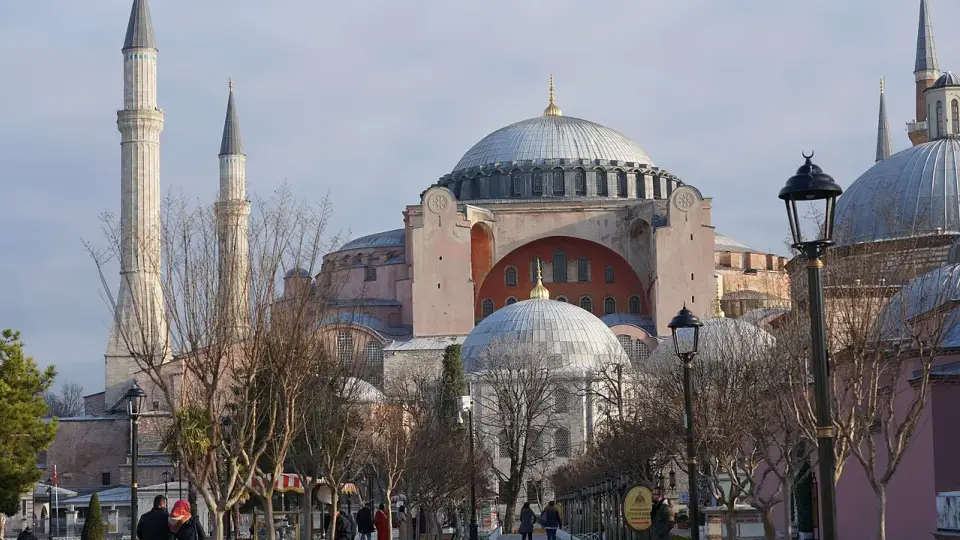
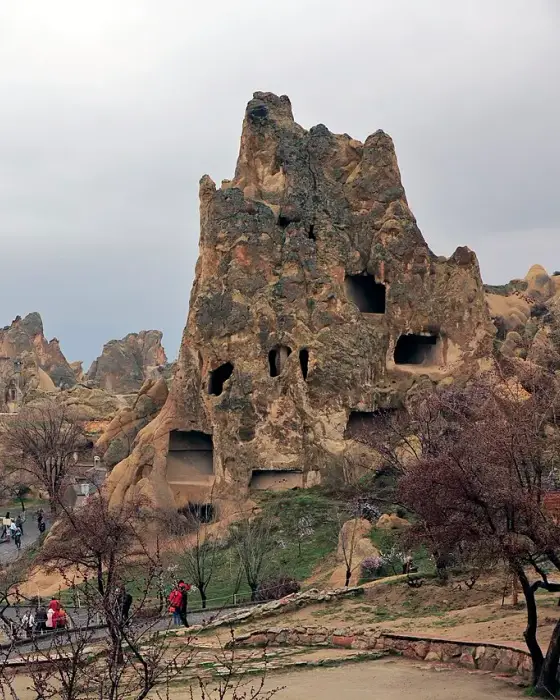
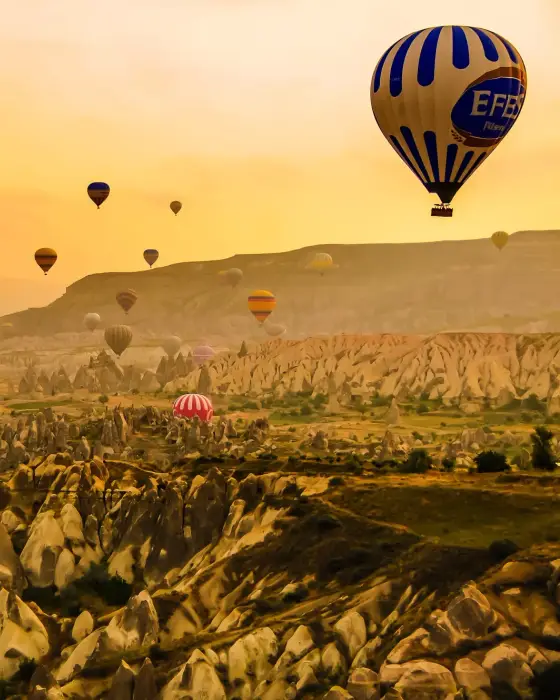
Türkiye
Cappadocia
Dawn balloons, rock-cut churches, underground cities and valleys to walk
Days Start with the basic programme and choose extensions for the time you have.
How the guide reaches this number
On the first, the balloon at dawn, the Open-Air Museum with the Dark Church and Tokalı, and in the afternoon Çavuşin, Paşabağ and Zelve. On the second, Uçhisar castle in the morning, the walk down Pigeon Valley to Göreme and the pottery workshops of Avanos, with Rose Valley in late afternoon. On the third, the south, by car: Derinkuyu early and a stretch of the Ihlara canyon, going down the staircase and returning by it. The third night serves as a reserve for the balloon: if the wind cancels the first morning, two are still left. With a fourth day, I'd go to Kayseri for the mantı and the pastırma, or to Erciyes in winter. With only one day, I'd do the Open-Air Museum, Paşabağ and a stretch of Pigeon Valley, and leave the balloon and the underground cities for another trip. Anyone looking for nightlife or big collections in a building will be frustrated here: what justifies the trip is the combination of the landscape, the rock-cut churches and walking between one and the other.
3–4
When April to June and September to October: highs of 16 °C to 26 °C and cool nights; July and August have average highs of 29 °C, and from December to February the lows fall below freezing
How the guide reaches this number
The plateau has four well-marked seasons. In spring, from April to June, highs rise from 16 °C to 26 °C and nights stay between 5 °C and 12 °C; May is the rainiest month of the year, with 57 mm, in showers. Summer, July and August, is dry and hot in the afternoon, with highs of 29 °C and almost no rain, and the shadeless trails call for an early start. September and October return to mild weather, with highs of 25 °C and 19 °C. From December to February highs are between 4 °C and 6 °C and lows below freezing, with possible snow on the chimneys, and it is the time when the balloon flight costs least, but the predawn cold and the wind cancel more departures. The numbers are from the 1991 to 2020 normals of the Nevşehir station, at 1,260 m and 11 km from Göreme. In any month, the balloon departure is before sunrise and in the cold, so bring a jacket.
Per person/day Budget about 2,500 TRY; mid-range about 6,070 TRY; comfortable about 13,800 TRY per person, based on what travelers report to Budget Your Trip (checked October 2026).
How the guide reaches this number
Per person per day: accommodation, meals, urban transport, visits and a small allowance for extras. Flights excluded; larger purchases vary. Editorial estimate, not a quote.
 What Nilo thinks
I'd stay three days, sleeping in Göreme. On the first, the balloon at dawn, the Open-Air Museum with the Dark Church and Tokalı, and in the afternoon Çavuşin, Paşabağ and Zelve. On the second, Uçhisar castle in the morning, the walk down Pigeon Valley to Göreme and the pottery workshops of Avanos, with Rose Valley in late afternoon. On the third, the south, by car: Derinkuyu early and a stretch of the Ihlara canyon, going down the staircase and returning by it. The third night serves as a reserve for the balloon: if the wind cancels the first morning, two are still left. With a fourth day, I'd go to Kayseri for the mantı and the pastırma, or to Erciyes in winter. With only one day, I'd do the Open-Air Museum, Paşabağ and a stretch of Pigeon Valley, and leave the balloon and the underground cities for another trip. Anyone looking for nightlife or big collections in a building will be frustrated here: what justifies the trip is the combination of the landscape, the rock-cut churches and walking between one and the other.In Cappadocia, the rock is soft enough to be dug with simple tools, and so almost everything people built here was opened inward: homes and dovecotes in the tuff chimneys, churches with Byzantine frescoes in the cliffs of Göreme, cellars under the houses of Ürgüp and whole cities underground, like Derinkuyu, which goes down about 85 m. The landscape comes from three volcanoes that covered the plateau in ash millions of years ago, and erosion did the rest. At dawn, when the wind allows, the balloons rise from the fields around Göreme. During the day, the valley trails lead from one village to the next between pink cliffs and dovecotes, and at night dinner can be a testi kebabı broken open at the table, in the clay pot from Avanos.
Quick facts
- Population
- 2,034 inhabitants in the belde of Göreme and 310,011 in Nevşehir Province (TÜİK, December 31, 2022)
- Founding
- Korama and Matiana, the two settlements that make up present-day Göreme, appear in the records of the Council of Chalcedon, in 451; there have been rock-cut houses since at least the 3rd century
- Country and region
- Turkey, Central Anatolia; a belde in the central district of Nevşehir Province, about 10 km from the provincial capital and about 1,100 m above sea level
- Language
- Turkish; English in Göreme's hotels, agencies and restaurants
- Currency
- Turkish lira (₺, TRY), at about ₺55 per euro (ECB, October 15, 2026); balloon flights and museums charge foreigners in euros
- Time zone
- UTC+3 year-round; Turkey does not observe daylight saving time
- Best time
- April to June and September to October: highs of 16 °C to 26 °C and cool nights; July and August have average highs of 29 °C, and from December to February the lows fall below freezing
- Average cost per day
- Budget about 2,500 TRY; mid-range about 6,070 TRY; comfortable about 13,800 TRY per person, based on what travelers report to Budget Your Trip (checked October 2026).
When to go
April to June and September to October: highs of 16 °C to 26 °C and cool nights; July and August have average highs of 29 °C, and from December to February the lows fall below freezing
How the year changes
The plateau has four well-marked seasons. In spring, from April to June, highs rise from 16 °C to 26 °C and nights stay between 5 °C and 12 °C; May is the rainiest month of the year, with 57 mm, in showers. Summer, July and August, is dry and hot in the afternoon, with highs of 29 °C and almost no rain, and the shadeless trails call for an early start. September and October return to mild weather, with highs of 25 °C and 19 °C. From December to February highs are between 4 °C and 6 °C and lows below freezing, with possible snow on the chimneys, and it is the time when the balloon flight costs least, but the predawn cold and the wind cancel more departures. The numbers are from the 1991 to 2020 normals of the Nevşehir station, at 1,260 m and 11 km from Göreme. In any month, the balloon departure is before sunrise and in the cold, so bring a jacket.
Nilo's tips
Book the balloon for the first morning
Turkish civil aviation authorizes or cancels flights every day, depending on the wind, and the decision applies to all companies. With the flight booked for the first morning, the following ones stay in reserve; under the conditions published by Voyager Balloons, anyone whose flight was canceled has priority the next morning, and cancellation because of weather gets a full refund.
Run the numbers on the Museum Pass Cappadocia
For €65, the pass is valid for three days from the first entry and covers thirteen Ministry of Culture sites, one entry each; among them the Göreme Open-Air Museum, the Dark Church, Zelve and Paşabağ, the Çavuşin church (closed for restoration in October 2026), Derinkuyu, Kaymaklı, Özkonak, Ihlara, the Nevşehir Museum and the Hacıbektaş Museum. Before buying, add up at muze.gov.tr the individual tickets for the sites you will really visit and compare with the €65. Compare only open sites that you intend to visit.
Walk Pigeon Valley from Uçhisar to Göreme
In the Uçhisar to Göreme direction, the roughly 4 km are almost all downhill and end in the village, near lunch. Start early in summer, because the valley has no shade.
Choose one underground city
Derinkuyu goes deeper, to about 85 m; Kaymaklı has even lower passages. For most people, one is enough, and the time left over is better spent on Ihlara.
Bring a jacket for the predawn
The balloon departure is before sunrise at more than 1,000 m, and even in July the predawn is cold. Closed shoes help with the landing, which is in an open field.
Explore the map
Explore the map, read about the other places and plan your travel days in the app.
Open the appWhat to see
Cappadocia: The plateau and the three volcanoes
Göreme sits at about 1,100 m, in an amphitheater of valleys that descend toward the Kızılırmak River, the longest in Turkey, which passes through Avanos, 8 km to the north as the crow flies. The village in the middle of the valleys, with the bus station, the agencies, most of the guesthouses and cave hotels, and restaurants along the main street.
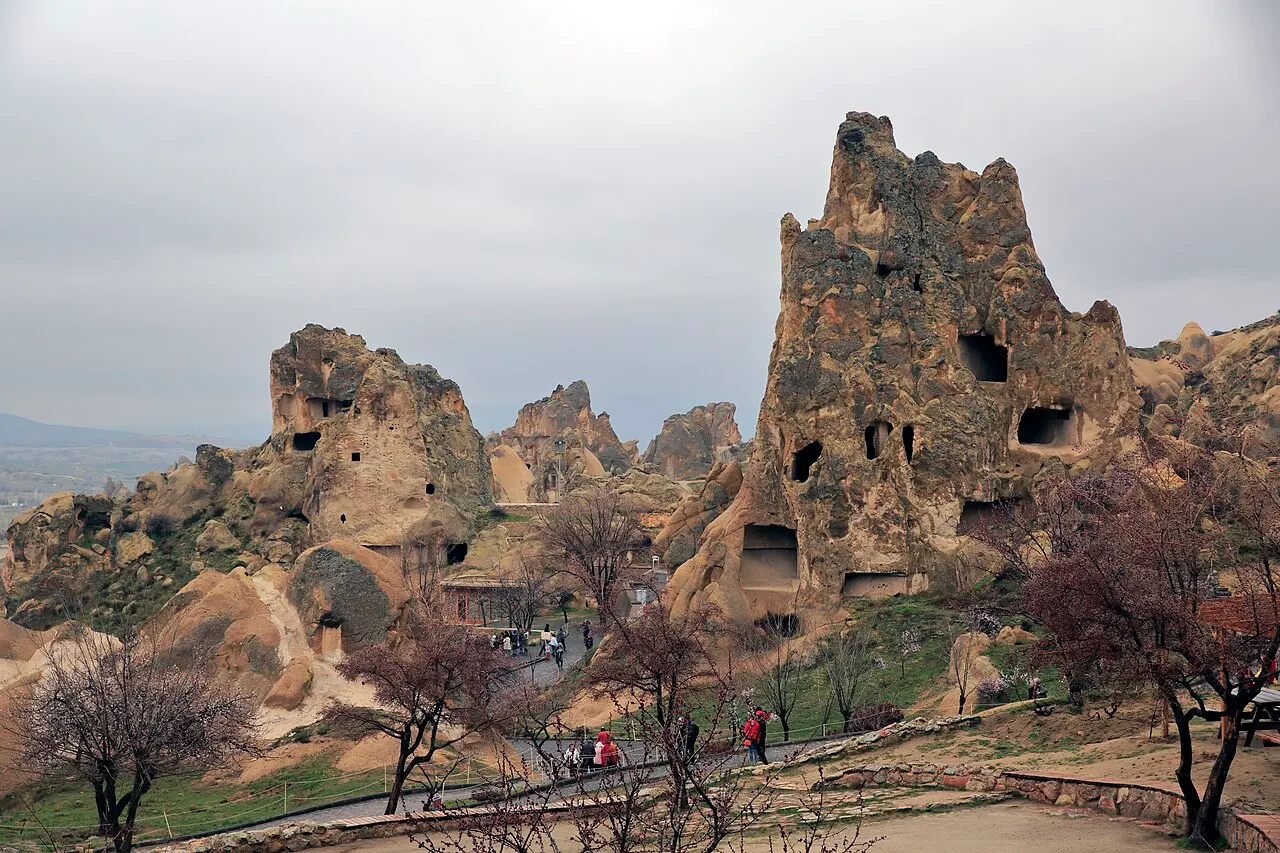
Göreme Açık Hava Müzesi
The Göreme Open-Air Museum brings together a rock-cut monastic complex, used from the 4th to the 13th century, with the Maidens' Monastery, the churches of St. Basil, the Apple (Elmalı), St. Barbara, the Snake and the Sandal (Çarıklı), and, 50 m below the entrance, Tokalı, Göreme's largest church, with blue lapis lazuli panels. It opened to visitors in 1967. It is open from 8 a.m. to 5:45 p.m., with the ticket office open until 5:15 p.m.; admission is charged in euros to foreigners, included in the Museum Pass Cappadocia.
The complex explains monastic Cappadocia: rock-cut churches used from the 4th to 13th centuries, with Tokalı and its lapis lazuli panels on the same ticket. It opens at 8 a.m.; early in the morning there is less waiting to enter the small churches.
Check access

Uçhisar Kalesi
The rock about 60 m high that gives Uçhisar its name (the outer castle) is crossed by carved passages and rooms, now almost all blocked, and was inhabited in Byzantine times. From the top you see Pigeon Valley, which descends toward Göreme.
The roughly 60 m rock offers views of Pigeon Valley toward Göreme. Combine it with the downhill walk through the valley afterward.
Check access
Derinkuyu Yeraltı Şehri
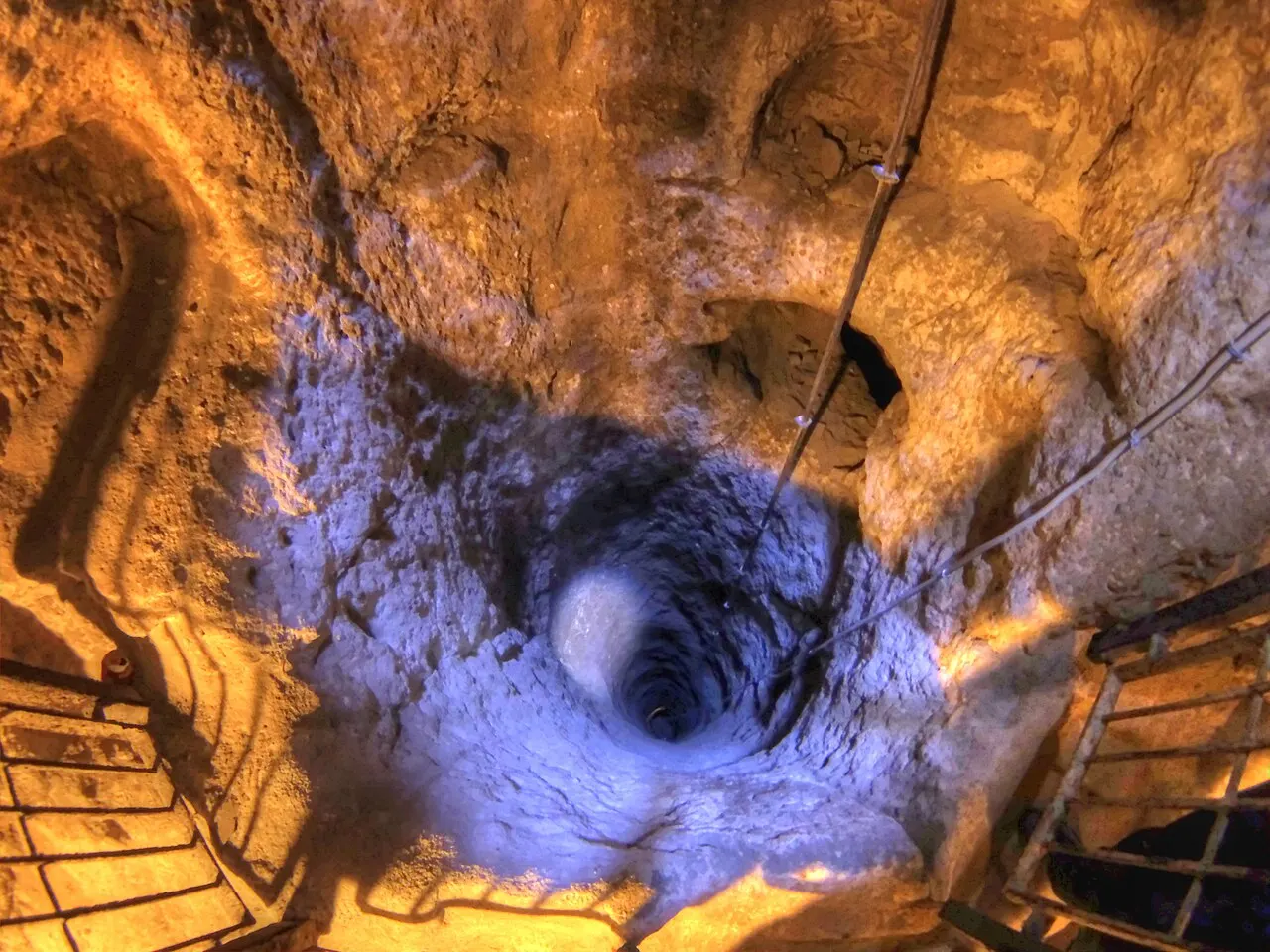
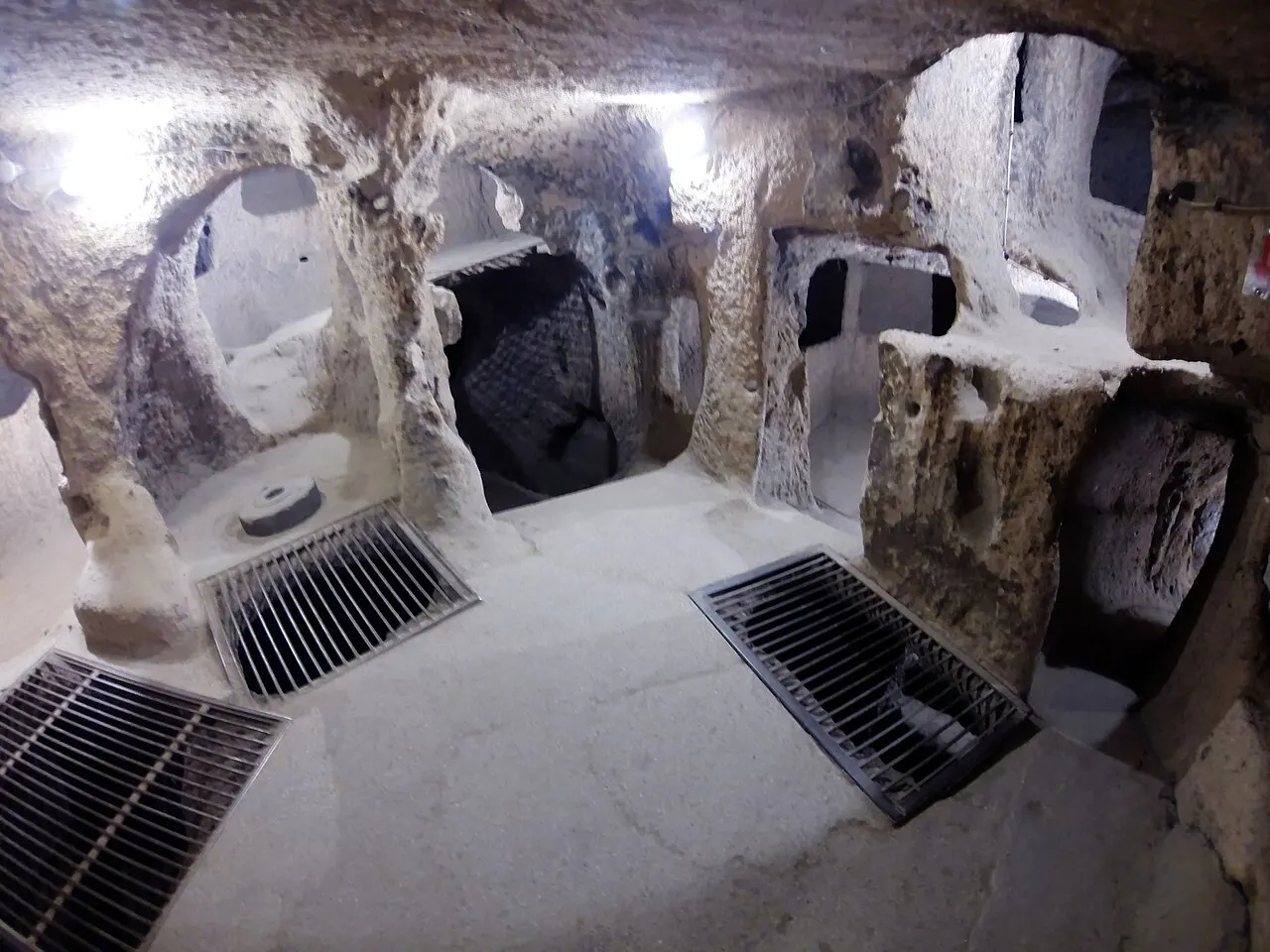
Turkey's largest excavated underground city goes down about 85 m, with stables, cellars, refectories, chapels and a vaulted hall on the second level, and a 55 m ventilation shaft that also served as a water well. Round stone doors sealed each level. Only about 10% can be visited. It is 31 km from Göreme as the crow flies, about 40 km and 40 minutes by road; 8 a.m. to 6 p.m., ticket office until 5:15 p.m. The passages are low and tight, and the descent calls for good knees and little claustrophobia.
Turkey's largest excavated underground city descends about 85 m, with a 55 m ventilation shaft and round stone doors. If you visit only one, choose this one, early in the morning before the tour groups.
Check access
Karanlık Kilise
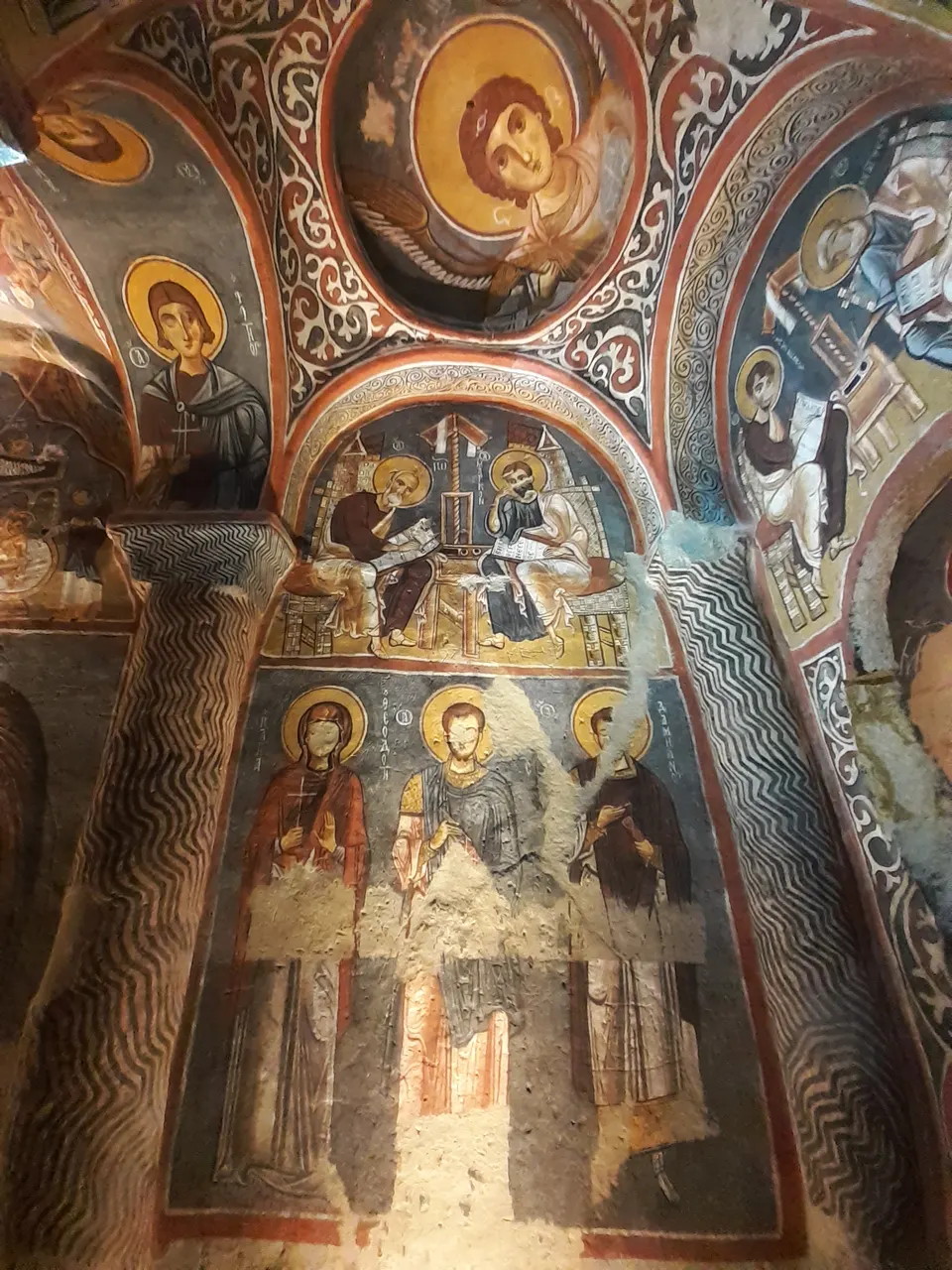
The Dark Church, inside the Open-Air Museum, has a separate admission. It dates from the late 11th and early 12th centuries, in a cross plan with a central dome and four columns, and receives light only through a small window in the narthex: that is why the frescoes of the life of Christ, from the Annunciation to the crucifixion, kept their vivid color. It is included in the Museum Pass Cappadocia.
The late 11th- and early 12th-century frescoes retained their vivid colors because almost no light enters the church; these are the museum's best-preserved paintings. Admission is separate but included in the Museum Pass Cappadocia, and worth the extra if you are already inside.
Check access
Zelve Açık Hava Müzesi
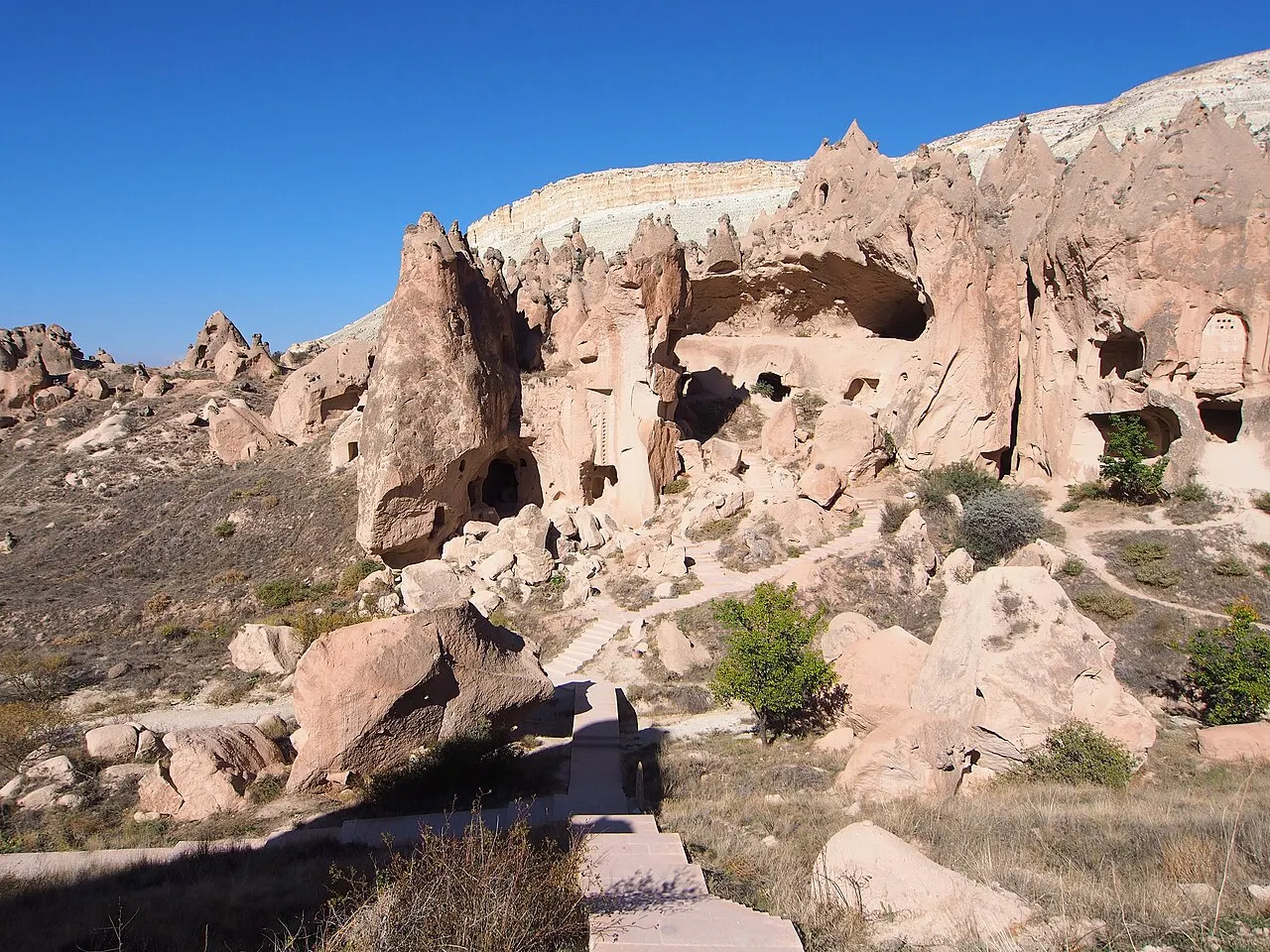
Three valleys on the slopes of Aktepe, about 4 km from Göreme as the crow flies, with carved-out houses, churches, a mill, a small mosque and dovecotes, inhabited until 1952, when the risk of collapse moved the residents to Yeni Zelve. It opened as a museum in 1967. The frescoes are few; the appeal is seeing an entire rock village. Open 8 a.m. to 6 p.m., ticket office until 5:15 p.m.
Three valleys hold an entire rock village, inhabited until 1952, with houses, a mill, a mosque and dovecotes. There are few frescoes, but it shows how people lived in the rock, and the ticket includes Paşabağ.
Check access

Paşabağ
The old Monks Valley, 1 km from Zelve and on the same ticket as Zelve, has fairy chimneys with several trunks and several heads. One of them, with three heads, holds a chapel dedicated to St. Simeon Stylites, with a hermit's cell. It is the easiest place to see chimneys up close.
The easiest place to see multi-stemmed fairy chimneys up close, with the Chapel of St. Simeon carved into one of them. It is on the same ticket as Zelve and fits into a short stop.
Check access
Nikeforos Fokas Kilisesi
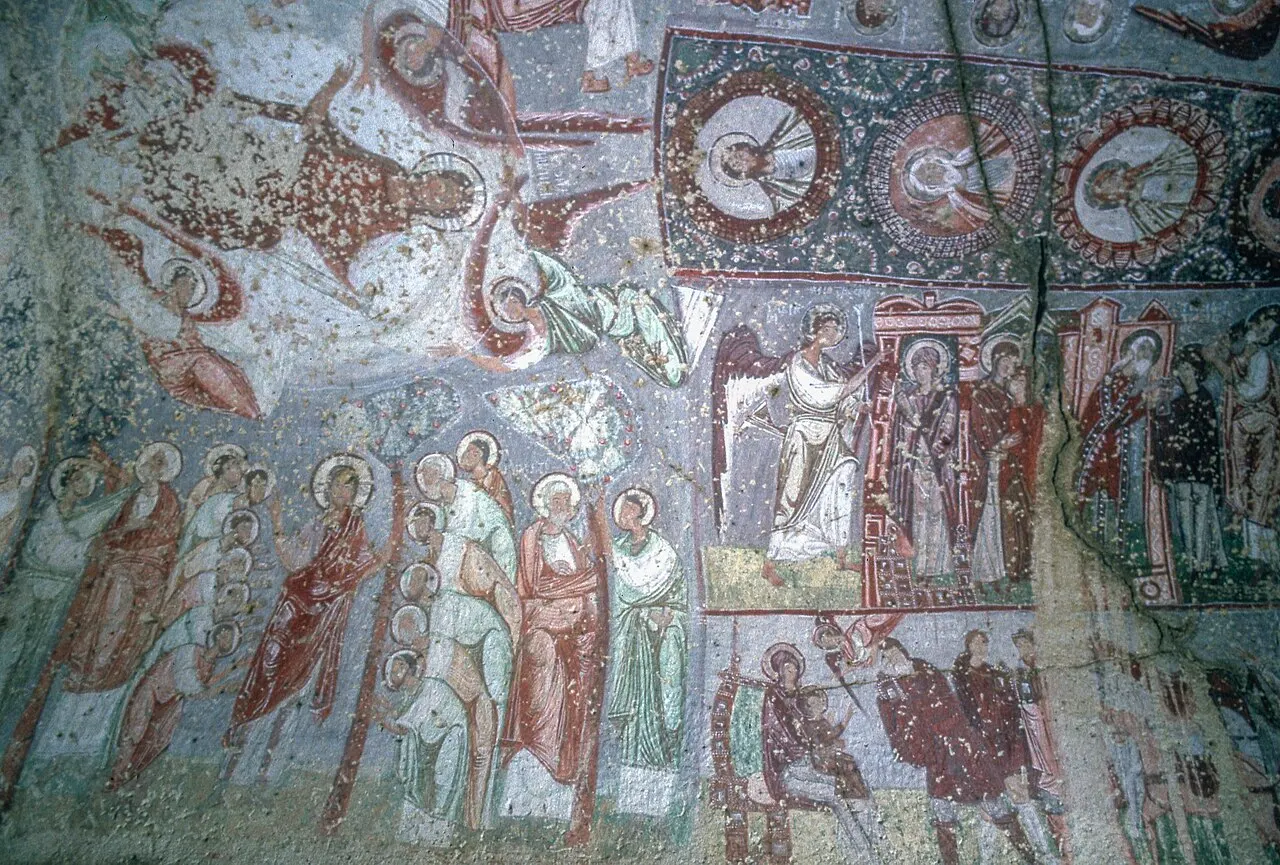
The Church of Nikephoros Phokas in Çavuşin stands beside the road from Göreme to Avanos, with part of its facade fallen and two painted angels exposed to the open air. The frescoes with the emperor and Empress Theophano date it to 963 to 969; on the north wall appear the Forty Martyrs of Sebaste. In October 2026, the Ministry of Culture lists the church as closed for restoration, with no reopening date. Although it is listed under Museum Pass Cappadocia coverage, do not count on entering while it is closed.
The frescoes of Emperor Nikephoros Phokas and Empress Theophano date the church to 963–969, and the fallen facade leaves two painted angels exposed, on the road between Göreme and Avanos. In October 2026, the Ministry lists it as closed for restoration, with no reopening date; although it is listed under Museum Pass Cappadocia coverage, do not count on entering while it is closed.
Check access

Güvercinlik Vadisi
Pigeon Valley links Uçhisar to Göreme along a trail of about 4 km, between cliffs with hundreds of carved dovecotes. Pigeon dung was fertilizer for the vegetable gardens until the 1970s. Done from Uçhisar to Göreme, the walk is almost all downhill and takes about two hours.
About 4 km between cliffs full of carved dovecotes, almost all downhill from Uçhisar to Göreme. This walk links the castle to the village without a car, and calls for an early start in summer because there is no shade.
Check access

Kızılçukur Vadisi
Red Valley and neighboring Güllüdere, Rose Valley, begin near Çavuşin and hide carved-out churches, such as that of St. Agathangelos, from the 6th or 7th century, about 2 km from the village, with two or three layers of frescoes in the apse. The trails are dirt and shadeless, and late afternoon is the coolest time to walk.
Red and Rose Valleys hide rock-cut churches such as St. Agathangelos, from the 6th or 7th century, about 2 km from Çavuşin. The trail has no shade; late afternoon is the coolest time.
Check access
Nilo’s itinerary
Start with the basic programme and choose extensions for the time you have.
Plan my days in the app ↗Day 1 · Balloon at dawn, the Open-Air Museum and Zelve valley
Head out with the balloon company, which picks you up at the hotel about 90 minutes before sunrise; if the flight is canceled because of wind, rebook for the next morning.
After breakfast, walk to the Göreme Open-Air Museum (opens at 8 a.m.) and enter the Dark Church, with a separate ticket or through the Museum Pass Cappadocia.
Go down the 50 m to Tokalı, which is part of the same ticket, and look for the blue lapis lazuli panels.
Have lunch in Göreme and, if continuing by taxi or on foot through the valleys to Çavuşin village, do not plan to enter the Church of Nikephoros Phokas beside the road: it is closed for restoration, with no reopening date listed in October 2026. Keep the stop to accessible outdoor areas of the village.
Continue to Paşabağ and Zelve, which share one ticket (or enter with the pass), and arrive before 5:15 p.m., when the ticket office closes.
Return to Göreme for dinner and order the testi kebabı, which comes in the clay pot broken at the table.
Day 2 · Uçhisar, Pigeon Valley and Avanos
Take a taxi to Uçhisar and climb the castle in the morning, before the heat.
Walk down through Pigeon Valley to Göreme, about 4 km and two hours, almost all downhill.
Have lunch in Göreme and continue to Avanos, 8 km north as the crow flies, to see the pottery workshops on the banks of the Kızılırmak.
In late afternoon, when the heat eases, walk a stretch of Rose Valley from Çavuşin.
If the balloon was canceled on day 1 and flies this morning, the return to the hotel is early: in summer, flip the day, with Avanos and Rose Valley after the flight and the Pigeon Valley descent in late afternoon, when the heat eases.
Day 3 · To the south: Derinkuyu and the Ihlara canyon
Leave early by rental car for Derinkuyu, about 40 km and 40 minutes by road, and go down the levels of the underground city (opens at 8 a.m.).
Continue to the Ihlara valley, in Aksaray Province, about 55 km and an hour by road, and leave the car at the top of the main entrance staircase, where the ticket office closes at 4:15 p.m.
Go down the almost 400 steps to the Melendiz River and walk along the bank among the churches of the Ihlara group, such as Ağaçaltı; bring water and a snack.
Return along the same bank and climb the staircase to the car. Those who want to see Belisırma and the Kırkdamaltı church, in the middle of the canyon, continue along the bank and must allow for the same way back.
Return to Göreme, about 80 km and an hour and a half by road, and save the end of the day for dinner.
If the balloon was left for this morning, head south right after the return to the hotel: Derinkuyu and Ihlara still fit before 4:15 p.m., but without time for Belisırma.

If you stay longer
Day 4 · Kayseri and Erciyes
Day trip
Kayseri, the former Caesarea, is 58 km from Göreme as the crow flies, and access is by road or through Kayseri airport. It is the city of mantı and pastırma, and south of it is the Erciyes volcano, at 3,916 m, with a ski resort at 2,200 m. It fits in a day by car.
Food
Testi kebabı
Beef or lamb with vegetables and spices, put raw into a clay pot from Avanos, sealed with dough and baked in the oven for 2 to 2.5 hours. It is served by breaking the neck of the pot at the table. The Nevşehir version has had a geographical indication since 2021.
Kayseri mantı
Tiny pastries of dough filled with meat, served with yogurt, melted butter with mint or Aleppo pepper and dried mint on top. It is the trademark of Kayseri, the big city east of the region.
Pastırma
Cured beef coated in a paste of fenugreek and garlic, sliced thin. Kayseri is the traditional address; it appears at breakfast, in fried eggs with pastırma and in sandwiches.
Pekmez
Cooked grape molasses, made in the presses carved into the region's houses. It is eaten at breakfast, mixed with tahini and spread on bread.
Cappadocian wine
The vines grow between 1,000 and 1,200 m, in tuff soil. The local white grape is Emir, high in acidity; among the reds are Öküzgözü and Kalecik Karası, from other regions of Turkey. Ürgüp is the center of production.
Where to eat
- Seten · Göreme · $$$
Anatolian cooking on a terrace with a view of the village, with a cellar in a former grape-treading room. It does not take reservations: arrive before sunset.
Source · 2026-10-15
- Göreme and Avanos · $$
Testi kebabı baked in the Avanos clay pot, which takes 2 to 2.5 hours in the oven.
- Turasan · Ürgüp · $$
Wine from the white Emir grape and the reds Öküzgözü and Kalecik Karası, from the winery founded in 1943, which ages wine in a cellar carved into the tuff; check the website for visits.
Source · 2026-10-15
- Nevşehir · $
Lunch at a lokanta, the restaurant of ready-made dishes of the day, cheaper than on Göreme's main street.
$: about ₺350 to ₺900 per meal at a simple restaurant · $$: about ₺750 to ₺2,000 per person for a three-course dinner, without drinks · $$$: above ₺2,000 per person, with wine or at a terrace restaurant · 2026-10-15
Day trips
Kayseri and Erciyes
Kayseri, the former Caesarea, is 58 km from Göreme as the crow flies, and access is by road or through Kayseri airport. It is the city of mantı and pastırma, and south of it is the Erciyes volcano, at 3,916 m, with a ski resort at 2,200 m. It fits in a day by car.
Hacıbektaş
Forty km from Göreme as the crow flies, to the northwest, the town holds the complex of the former convent of Hacı Bektaş Veli, now a museum, with the tomb of the 13th-century mystic; the museum is covered by the Museum Pass Cappadocia. In August it hosts the annual commemoration. You get there by car or by transport from Nevşehir.
Özkonak
An underground city 14 km northeast of Avanos, discovered in 1972 by a farmer looking for where the water on his field was going. It has ten known levels, up to 40 m deep, and four open to visitors, and is covered by the Museum Pass Cappadocia. It is the less crowded alternative to Derinkuyu and Kaymaklı, and combines with Avanos in half a day.
Where to begin
Balloon at dawn, the Open-Air Museum and Zelve valley
Head out with the balloon company, which picks you up at the hotel about 90 minutes before sunrise; if the flight is canceled because of wind, rebook for the next morning.
Uçhisar, Pigeon Valley and Avanos
Take a taxi to Uçhisar and climb the castle in the morning, before the heat.
To the south: Derinkuyu and the Ihlara canyon
Leave early by rental car for Derinkuyu, about 40 km and 40 minutes by road, and go down the levels of the underground city (opens at 8 a.m.).
Money
The currency is the Turkish lira (₺, TRY), at about ₺55 per euro on October 15, 2026 (ECB). With high inflation, lira prices go out of date quickly, and in Göreme many tourist items are already quoted in euros. The balloon flight is the biggest expense: on Voyager Balloons' price list in October 2026, the standard 60-minute flight in a basket of 20 people costs €260 from April 1 to November 1 and €160 in winter, and the 75-minute flight in a basket of 16 people, €330 and €180; cancellation because of wind gets a full refund. Ministry of Culture museums charge foreigners in euros; the Museum Pass Cappadocia costs €65 and is valid for three days from the first entry, and covers thirteen Ministry of Culture sites, one entry each; among them the Göreme Open-Air Museum, the Dark Church, Zelve and Paşabağ, the Çavuşin church (closed for restoration in October 2026), Derinkuyu, Kaymaklı, Özkonak, Ihlara, the Nevşehir Museum and the Hacıbektaş Museum. The Ministry's website does not show the individual price of each site without logging in, so compare at the time of purchase. The MüzeKart, the cheap annual card, is valid only for Turkish citizens. For food, Numbeo's crowdsourced data for Nevşehir (August 2026, with few entries) gives about ₺450 for a meal at a simple restaurant and ₺2,100 for a three-course dinner for two without drinks. A hostel dorm bed in Göreme appears at €9 to €18 a night in October 2026 listings. Cards work at hotels, agencies and most restaurants; have cash lira for buses, the market and tips.
Getting there and around
Getting there: two airports
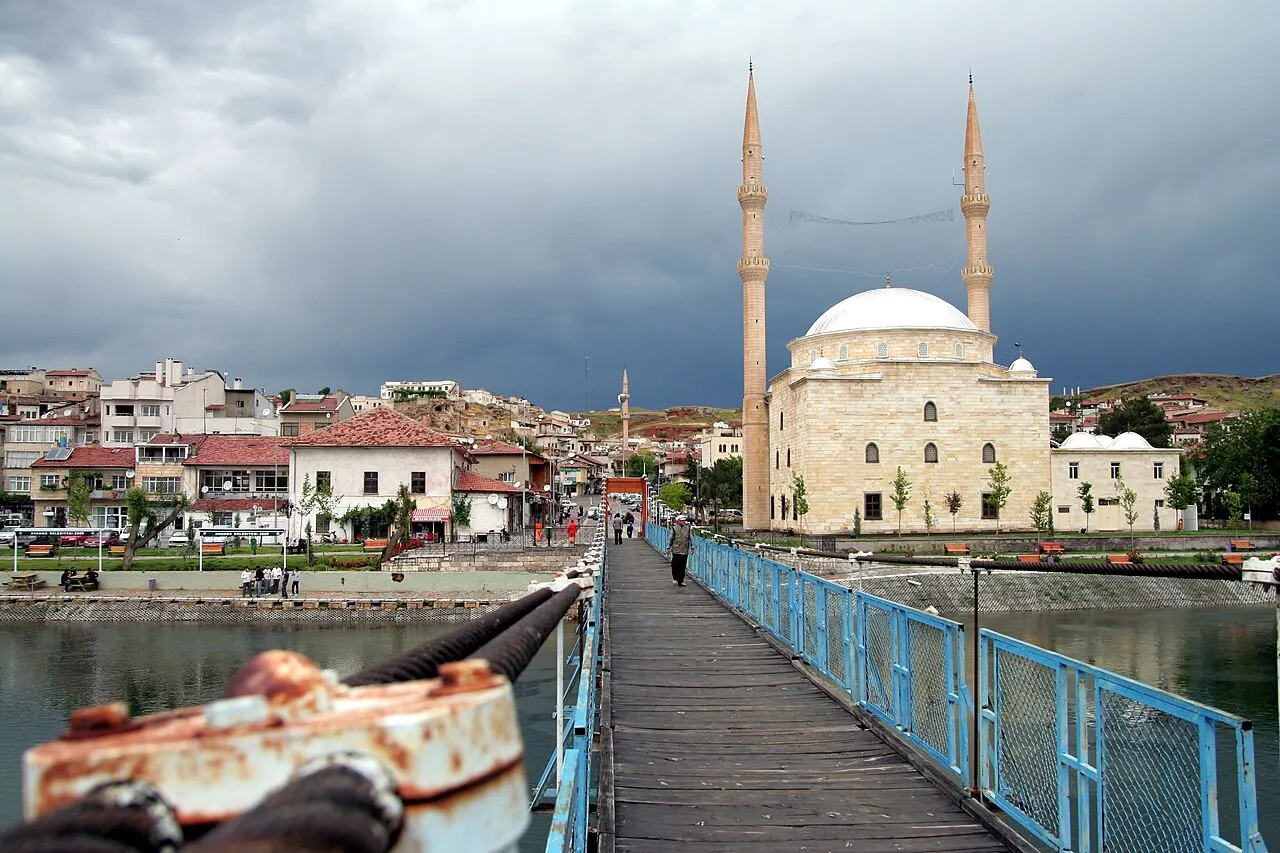
There are two airports. Kapadokya (NAV) is about 30 km from Göreme as the crow flies, about 40 km and 40 minutes by road, northwest of Nevşehir; it has flights from Istanbul on Turkish Airlines, and a new terminal began operating on February 16, 2026, the first stage of a project intended to raise capacity from 700,000 to 2 million passengers a year. A shuttle service, İpek Tur, leaves at flight times, in addition to taxis and car rental. Kayseri (ASR) is about 60 km from Göreme as the crow flies, about 75 km and an hour and fifteen minutes by road, and is a base for Pegasus and AJet. From either one, I'd use the shared transfer booked by the hotel, with the price confirmed when booking. Göreme is also served by long-distance buses from several cities in Turkey.
Getting around the region
Göreme is walkable, and the Open-Air Museum, Love Valley and Pigeon Valley start a walk from the center. There are buses from Göreme to Ürgüp and Avanos; check the times at the bus station. To Zelve, Paşabağ and Çavuşin you can go on foot through the valleys or by taxi. For Kaymaklı and Derinkuyu, to the south (Derinkuyu about 40 km and 40 minutes by road), and for Ihlara, to the southwest (about 80 km and an hour and a half), the most practical option is a rental car or a day tour. On the trails, carry the map downloaded on your phone and water.
The balloon transfer
Balloon companies pick you up at the hotel about 90 minutes before sunrise. The whole outing takes 3 to 4 hours, with 60 to 90 minutes of flight depending on the package, so the return to the hotel is early in the morning, in time for breakfast.
Safety
Tourist Cappadocia is a quiet rural area, and crime against tourists is not the main concern. The most serious risk is the balloon flight itself: there have been fatal accidents in hard landings caused by wind changes, as in October 2022, with two tourists killed, and in June 2025, when a pilot died in a landing near Ihlara. Fly with an authorized company, follow the crew's landing instructions and accept the cancellation when it comes. On the valley trails, the danger is falling: the tuff edges crumble and there is no protection. Carry water, a phone with the map downloaded and don't walk alone on a little-used trail in late afternoon. In the underground cities, the passages are low and slippery, and anyone with claustrophobia or a knee problem should think before going down. In winter, ice on the slopes of Göreme and Uçhisar calls for shoes with firm soles. Emergency: 112.
Etiquette tips
In mosques
Take your shoes off at the door, cover shoulders and knees and, for women, hair. Avoid entering during the five daily prayers, especially at noon on Friday.
The offered tea
Accepting a çay in a shop or pottery workshop does not oblige you to buy anything, and declining is not offensive. To decline, hand on chest and a "teşekkürler".
Don't enter inhabited caves
In Göreme, Çavuşin and Uçhisar, many caves are storage, stable or a family's home, even with the door open. Outside the museums and trails, don't enter without an invitation.
Respect closed areas
At museum sites, upper floors and closed rooms are closed because of erosion risk, as at Göreme's Maidens' Monastery. Don't climb chimneys or cliffs off the trails.
Insulting Atatürk's memory is a crime
The portrait of Mustafa Kemal is in government offices, schools and shops, and insulting his memory is a crime under Law 5816, of 1951. Domestic politics is a subject to listen to.
Mistakes to avoid
Booking the balloon for the last day
The flight depends on the daily civil aviation authorization, and the wind cancels departures without warning. Whoever leaves the balloon for the last morning has no way to rebook. Book it for the first morning and keep the others free.
Doing both underground cities on the same day
Derinkuyu and Kaymaklı are similar in experience, and both have low, tight passages. For most people, one is enough; Derinkuyu is the deepest.
Buying individual tickets without comparing with the pass
The Museum Pass Cappadocia costs €65 and covers, one entry each, the Open-Air Museum, the Dark Church, Zelve and Paşabağ, the Çavuşin church (closed for restoration in October 2026) and the underground cities, among other sites. Add up the individual tickets for your itinerary at muze.gov.tr before deciding. Compare only open sites that you intend to visit.
Underestimating the predawn cold
Even in summer, the balloon departure is in the predawn hours at more than 1,000 m, and the temperature drops a lot at night. A jacket and closed shoes solve it.
Starting a trail at noon in summer
The valleys have no shade, and July and August have average highs of 29 °C. Start early or in late afternoon, with water.
Useful phrases
Merhaba (MEHR-hah-bah)
Hello
Teşekkür ederim (teh-shek-KYUR eh-deh-RIM)
Thank you
Ne kadar? (neh kah-DAR)
How much is it?
Hesap, lütfen (heh-SAHP, LYUT-fen)
The check, please
Bugün balon uçuyor mu? (boo-GYUN bah-LOHN oo-choo-YOR moo)
Are the balloons flying today?
Yeraltı şehri nerede? (yeh-rahl-TUH sheh-HREE neh-reh-DEH)
Where is the underground city?
Where to stay
- Göreme · First trip, balloon flyers and those without a car · $$: It has the largest supply of guesthouses and cave hotels, the bus station, the agencies and the Open-Air Museum a walk away. Balloon transfers pick up here first. In return, the main street is the busiest in the region.
- Uçhisar · Couples and those who want quiet and a view · $$$: A hilltop town around the castle, with stone houses converted into hotels and a view of Pigeon Valley. It is 2.7 km from Göreme as the crow flies, linked by the valley trail, but at night it has fewer places to eat.
- Ürgüp · Those traveling by car who want a town with services · $$: It is the largest town in the area, with more shops, restaurants and wineries, and 19th-century mansions converted into hotels. It is 7 km from Göreme as the crow flies, so the valleys call for a car or taxi.
- Çavuşin · Those who want a small village near the trails · $: On the road between Göreme and Avanos, next to Rose Valley, with hotels opened in the old part since the 2010s. Fewer restaurant options than in Göreme.
- Avanos · Tight budgets and those who prefer a real town · $: A town on the banks of the Kızılırmak, with a life of its own beyond tourism and the pottery workshops. It is 8 km from Göreme as the crow flies, so the sights call for transport.
$: hostel dorm bed, about €9 to €18 a night · $$: room in a simple guesthouse or cave hotel; starting rates listed in October 2026 were between €20 and €80 · $$$: cave hotel with terrace and view, above that; check the rate for your date, because it varies a lot with the season · 2026-10-15
Districts
Göreme
The village in the middle of the valleys, with the bus station, the agencies, most of the guesthouses and cave hotels, and restaurants along the main street. It is a walk from the Open-Air Museum and the valley trails, and it is where most of the balloon transfers leave from.
Uçhisar
A hilltop town around the castle rock of about 60 m, 2.7 km from Göreme as the crow flies. It has stone houses converted into hotels, many by foreigners, and is quieter than Göreme. The Pigeon Valley trail links the two.
Ürgüp
The largest town in the tourist area, with 24,647 inhabitants (TÜİK, 2022), 19th-century stone mansions, more commerce and services than Göreme and a wine tradition: Turasan, founded in 1943, presents itself as Cappadocia's first winery. It is 7 km from Göreme as the crow flies.
Avanos
A town on the banks of the Kızılırmak, 8 km north of Göreme as the crow flies, known for pottery made from the river's red clay, a craft that may date back to the Hittites. The workshops occupy old galleries dug into the north bank.
Çavuşin
A village of 421 inhabitants (2022) on the road between Göreme and Avanos, about 3 km from central Göreme as the crow flies. The old part climbs a rock face, and the Church of St. John the Baptist, with 10th-century frescoes, sits beside the road. It is the gateway to Rose Valley.
Nevşehir
The provincial capital, about 10 km west of Göreme, with a hospital, banks and everyday shopping. It is a service town, not a sightseeing one, and lies on the way to Kapadokya airport.
History
6th c. BC · Katpatuka in the Persian inscriptions
The name first appears as Katpatuka in the inscriptions of Darius I and Xerxes I, among the countries of the Achaemenid Empire. The region continued to be governed by local lords, tributaries of the Persian king.
AD 17 · Roman province
Emperor Tiberius deposes King Archelaus and turns the kingdom of Cappadocia into a Roman province, with its capital at Caesarea, present-day Kayseri.
4th c. · The Cappadocian Fathers
Basil of Caesarea, his brother Gregory of Nyssa and Gregory of Nazianzus form the group known as the Cappadocian Fathers. Communities of hermits follow Basil's teachings and begin to dig cells into the tuff, the start of the monastic life that lasted until the 13th century.
451 · Korama and Matiana at Chalcedon
Representatives of Korama, where the Open-Air Museum is today, and of Matiana, where the village is, sign the records of the Council of Chalcedon. It is the first written record of the two settlements that make up Göreme.
780–1180 · The Arab-Byzantine wars and the underground cities
With Cappadocia on the frontier between Byzantium and the caliphate, underground cities such as Derinkuyu and Kaymaklı are enlarged to shelter the population during raids. Round stone doors sealed each level from the inside.
963–969 · The emperor in the Çavuşin frescoes
The Church of St. John the Baptist, beside the Çavuşin road, receives frescoes showing Emperor Nikephoros Phokas and Empress Theophano, which makes it possible to date it with rare precision among the region's churches.
1071 · Manzikert and the arrival of the Seljuks
The Byzantine defeat at Manzikert opens Anatolia to the Turkish clans. Cappadocia passes to the Seljuks, then to the principality of Karaman and, at the end of the 15th century, to the Ottomans; part of the Christian population stays and keeps using the churches.
early 18th c. · Nevşehir, the new city
Grand Vizier Nevşehirli Damat İbrahim Pasha, born in the village of Muşkara, turns it into a city with mosques and public works. The name Nevşehir means new city, and it remains the provincial capital.
1923–1924 · The population exchange
Under the agreement between Greece and Turkey, Cappadocia's Orthodox Christians are sent to Greece, and the underground cities and many churches are abandoned. The Greeks of Ürgüp take the relics of St. John the Russian to the island of Euboea.
1952–1967 · Zelve emptied and the museums opened
Zelve's residents are relocated in 1952 because of the risk of collapse. Derinkuyu, rediscovered in 1963 when a resident knocked down a cellar wall, opens to visitors in 1965; the Göreme Open-Air Museum and Zelve open in 1967.
1985 · World Heritage
UNESCO inscribes the Göreme National Park and the Rock Sites of Cappadocia. In the following years, almost all of Göreme's old houses become guesthouses and cave hotels.
2019 · End of the national park
A decision published in the Official Gazette on October 22, 2019 removes national park status, and management passes to the Kapadokya Alan Başkanlığı, the Cappadocia area authority.
Complete history
A landscape made of volcanic ash
Cappadocia exists as a landscape because three volcanoes, Erciyes, Hasan Dağı and Göllüdağ, covered the plateau with thick layers of ash that hardened into tuff, between about nine and three million years ago. Where a harder layer stayed on top, erosion left towers with caps, the fairy chimneys; where it did not, it opened canyon-shaped valleys. Tuff is easy to dig, and that explains almost everything you see today: homes, cellars, stables, dovecotes and churches opened inside the rock, and whole cities dug downward.
A Persian name and a Roman province
The name Katpatuka appears at the end of the 6th century BC in the inscriptions of the Persian kings, and for centuries the region kept an Iranian character: Strabo, in the 1st century, still described fire temples. After Alexander, a kingdom of Cappadocia formed, which Rome annexed in AD 17, with its capital at Caesarea, present-day Kayseri. Christianity was well established in the region by the 3rd century, and in the 4th century the Cappadocian Fathers, Basil of Caesarea and the two Gregorys, gave the region an intellectual weight that is reflected in its monastic life: hermits dug cells into the tuff and, over time, churches and refectories.
Byzantium's frontier, shelter underground
Between the 7th and 10th centuries Cappadocia became the frontier between Byzantium and the caliphate, with almost yearly raids. It is in this period that the underground cities, perhaps begun by the Phrygians, take the form that can be visited: Derinkuyu goes down about 85 m, with stables at the top, kitchens, cellars, chapels and a 55 m ventilation shaft. When the frontier moved away, in the 10th century, came Göreme's most richly painted churches, such as Tokalı, with lapis lazuli blue panels, and the Dark Church, whose frescoes from the late 11th and early 12th centuries kept their color because they receive almost no light.
Seljuks, Ottomans and the 1923 exchange
After Manzikert, in 1071, the region passed to the Seljuks, the Karamanids and the Ottomans. Christians and Muslims lived side by side for centuries: a church in Ihlara dated between 1283 and 1295 mentions both the Seljuk sultan and the Byzantine emperor. Many of the region's Christians came to speak Turkish and write it in the Greek alphabet, known as karamanlıca. In the 19th century, Greeks and Armenians built a good part of the stone houses still seen in Ürgüp and Avanos. The population exchange of 1923 sent the Orthodox Christians to Greece, and the churches and underground cities fell out of use.
From farming village to tourism
Until the 1970s, Göreme lived from agriculture, and families lived in stone houses attached to caves used as stables, storage and grape presses for making pekmez, grape molasses. The opening of the museums in the 1960s, the UNESCO inscription in 1985 and, later, the balloon flights changed the village: by around 2015 almost all the old houses had become hotels, and many residents moved to Nevşehir, Avanos, Uçhisar and Ürgüp. In 2019 the national park status was removed, and the area came to be run by the Cappadocia authority.
Geography and shape of the city

The plateau and the three volcanoes
Tourist Cappadocia occupies a plateau above 1,000 m in the center of Anatolia. To the east is Erciyes, at 3,916 m, near Kayseri; to the southwest, Hasan Dağı, near Aksaray. Göreme sits at about 1,100 m, in an amphitheater of valleys that descend toward the Kızılırmak River, the longest in Turkey, which passes through Avanos, 8 km to the north as the crow flies.
The valleys around Göreme
The villages lean against the harder formations: Uçhisar around a rock about 60 m high; Ortahisar around another; Ürgüp around Temenni Hill. Between them run narrow valleys with trails, such as Pigeon Valley, from Uçhisar to Göreme, Güllüdere and Kızılçukur (Rose Valley and Red Valley; gül is rose and kızıl is red, in Turkish) and Aşk Vadisi, Love Valley, known for its fairy chimneys. To the south, the terrain is flatter and hides the underground cities of Kaymaklı and Derinkuyu.
The plateau climate
The climate is continental and semiarid. At the Nevşehir station, at 1,260 m, the 1991 to 2020 normals give highs of 29 °C in July and August and 4 °C in January, with lows of minus 3.5 °C in January. About 410 mm of rain falls per year, with the rainiest month being May (57 mm) and July and August almost dry (7 to 8 mm). The daily range is large: even in summer, the predawn hours of the balloon launch call for a jacket.
Cappadocia's tuff comes from the ash of three volcanoes, Erciyes, Hasan Dağı and Göllüdağ, and is soft enough to be dug by hand.
Culture
The art of the rock-cut churches
The region has more than 600 churches carved into the tuff, according to the Ministry of Culture. The frescoes were painted in two ways, directly on the rock or on plaster with tempera, and tell stories from the Bible and of local saints. During iconoclasm (725 to 842), decoration was limited to crosses and geometric motifs, still visible in churches at Zelve; afterward came the full cycles of the life of Christ, such as those at Tokalı and the Dark Church. Tokalı also has one of the two known cycles of the life of St. Basil.
Pottery, wine and molasses
The region's material life revolves around rock and earth. Avanos has worked the red clay of the Kızılırmak for centuries, and the workshops occupy the carved-out galleries of the old town. The old houses have carved presses for treading grapes and making pekmez, and tandır ovens in the floor, which also heated the house. Ürgüp and the villages around it still produce wine, and Turasan, founded in 1943, ages wine in a cellar carved into the tuff.
Cappadocia on film
The landscape has attracted foreign and Turkish cinema. Pier Paolo Pasolini filmed Medea, with Maria Callas, in the churches of the Open-Air Museum in 1969. Nuri Bilge Ceylan shot Winter Sleep (Kış Uykusu) over two winter months in the region, and the film won the Palme d'Or at Cannes in 2014. The series Asmalı Konak, filmed in Ürgüp and aired from 2002 to 2004, is credited with giving domestic tourism to Cappadocia a push.
Hacıbektaş and the Alevi tradition
Forty km from Göreme as the crow flies is Hacıbektaş, the town of Hacı Bektaş Veli, a 13th-century mystic whose name founded the Bektashi order. The complex of his former convent, now a museum and included in the Museum Pass Cappadocia, is a place of visit for Alevis and Sunnis, and in August it hosts a large annual commemoration.
The Dark Church receives light only through a small window, and that is why the frescoes from the late 11th and early 12th centuries kept their color.
Festivals and events
Culture Route Festival, Nevşehir, August
The Türkiye Kültür Yolu Festivali, a Ministry of Culture festival that passes through 26 cities, usually reaches Cappadocia in August, with concerts and exhibitions; in 2026 the Nevşehir leg ran from August 1 to 9. The dates change every year, so check the calendar on the festival's website.
Hacı Bektaş Veli commemoration, August
Every year in August, Hacıbektaş, 40 km from Göreme as the crow flies, hosts the commemoration of the 13th-century mystic, with ceremonies, music and visitors from all over Turkey.
Kayseri at the Culture Route Festival, September
In 2026 the Kayseri leg, 58 km from Göreme as the crow flies, ran from September 5 to 13, after the Nevşehir one. The dates change every year; check the calendar on the festival's website.
Books and films
Winter Sleep (Kış Uykusu), 2014, Nuri Bilge Ceylan
The film follows a retired actor who runs a hotel in the rocks of Cappadocia and was shot over two winter months in the region. It won the Palme d'Or at Cannes and shows the landscape with snow, far from the image of the balloon.
Medea (1969), Pier Paolo Pasolini
Pasolini used the churches of the Göreme Open-Air Museum as the temple of the golden fleece, in Colchis, with Maria Callas in her only film role. Worth it to see the place before mass tourism.
Caves of God: Cappadocia and Its Churches (1989), Spiro Kostof
A study in architectural history of Cappadocia's rock-cut churches, published by Oxford University Press, for those who want to understand how and why people dug instead of building.
Frequently asked questions
Cappadocia: Which airport should you use to reach Göreme?
Kapadokya (NAV) is about 40 km and 40 minutes by road, with flights from Istanbul on Turkish Airlines; Kayseri (ASR), about 75 km and an hour and fifteen minutes away, is a base for Pegasus and AJet. From either one, I'd use the shared transfer booked by the hotel, with the price confirmed when booking.
Cappadocia: How many days should you stay?
Three days, sleeping in Göreme: the balloon and the northern valleys on the first, Uçhisar, Pigeon Valley and Avanos on the second, and Derinkuyu and Ihlara by car on the third. The third night serves as a backup for the balloon: if the wind cancels the first morning, two are still left.
Cappadocia: How much does a balloon flight cost?
On Voyager Balloons' price list in October 2026, the standard 60-minute flight in a basket of 20 people costs €260 from April 1 to November 1 and €160 in winter. Cancellation because of wind gets a full refund.
Cappadocia: Is there an underground city less crowded than Derinkuyu?
Özkonak, 14 km northeast of Avanos, has ten known levels, up to 40 m deep, and four open to visitors. It is covered by the Museum Pass Cappadocia and combines with Avanos in half a day.
Cappadocia: When is the best time to go?
April to June and September to October, with highs of 16 °C to 26 °C and cool nights. July and August have average highs of 29 °C, and from December to February the lows fall below freezing.
Other cities in the country
Türkiye ↗- Days
- 3–4
- When
- Apr–May · Sep–Oct
- Per person/day
- Average 40–70 EURMid-range · per person/day
Cost scope
Per person per day: accommodation, meals, urban transport, visits and a small allowance for extras. Flights excluded; larger purchases vary. Editorial estimate, not a quote.