Norway
Tromsø
Northern lights, fjords, dogsledding and whales
Days Start with the basic programme and choose extensions for the time you have.
How the guide reaches this number
With four or five nights, you can also fit in dogsledding and a whale safari without sacrificing a clear night. Tromsø isn't for anyone who wants guaranteed plans or has a tight budget. An aurora tour costs 1,200 to 2,000 kr, and a double hotel room, 1,600 to 2,600 kr, with higher prices in January and February. The town itself takes a day and a half: you can walk across the center in 20 minutes, and the list of museums is short. With just one day, I'd do the Polarmuseet in the morning and walk across the bridge to the Ishavskatedralen in the afternoon. At the end of the day, ride Fjellheisen up in daylight and come down in the dark, keeping an eye on the sky. I'd leave November out, because the dogsledding and snow tours don't have firm ground yet.
3
When September to March for the aurora; late May to mid-July for endless daylight and hiking; November is the least forgiving month
How the guide reaches this number
In Tromsø, the calendar is divided by light, not temperature. The sun stays below the horizon from about November 27 to about January 15, the mørketid, with three to four hours of blue twilight in the middle of the day. Between about May 20 and about July 22, it doesn't set. The aurora appears from late August to mid-April, with the best chances between September and March, and it depends on clear skies, not cold, which almost everyone gets wrong before they arrive. The ocean current takes the edge off the extremes: January averages between -6°C and -1°C, July between 9°C and 16°C, and the heat record is above 30°C. It rains and snows a lot, about 1,000 to 1,100 mm a year concentrated between September and January, and firm snow usually covers the ground from December to March, in some years until April. There are two high seasons: January to March, for the aurora, dogsledding and skiing, and June to July, for the midnight sun and hiking. November is the dead month, dark and wet, with lots of thaw and not yet enough firm snow for winter tours.
Per person/day 1,700–2,800 kr per person at a mid-range standard; each aurora tour adds 1,200–2,000 kr
How the guide reaches this number
Per person per day: accommodation, meals, urban transport, visits and a small allowance for extras. Flights excluded; larger purchases vary. Editorial estimate, not a quote.
 What Nilo thinks
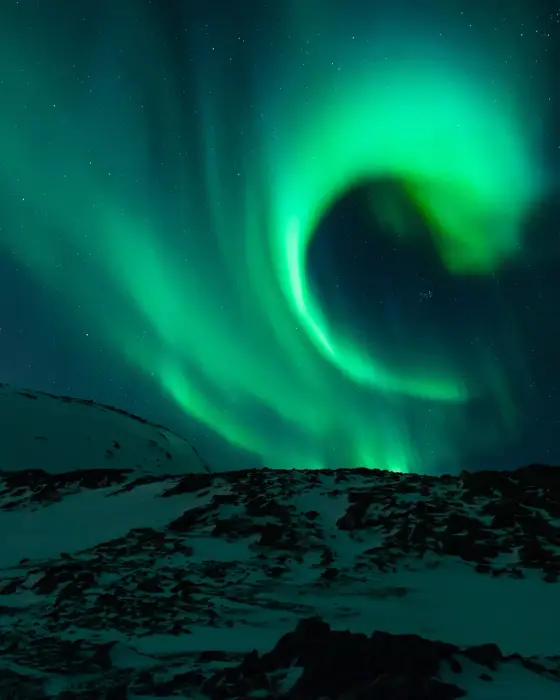
Stay at least three nights between September and March, because the aurora depends on clear skies and a single night is a gamble. With four or five nights, you can also fit in dogsledding and a whale safari without sacrificing a clear night. Tromsø isn't for anyone who wants guaranteed plans or has a tight budget. An aurora tour costs 1,200 to 2,000 kr, and a double hotel room, 1,600 to 2,600 kr, with higher prices in January and February. The town itself takes a day and a half: you can walk across the center in 20 minutes, and the list of museums is short. With just one day, I'd do the Polarmuseet in the morning and walk across the bridge to the Ishavskatedralen in the afternoon. At the end of the day, ride Fjellheisen up in daylight and come down in the dark, keeping an eye on the sky. I'd leave November out, because the dogsledding and snow tours don't have firm ground yet.In Tromsø, at 69° north, the northern lights can appear over the city itself when the sky is clear, and that's why people come between September and March. The city occupies an island in a strait that the North Atlantic Current keeps free of ice, and it was from this port that Nansen and Amundsen set out, whose expeditions the Polarmuseet tells through original equipment. Across the bridge stands the Ishavskatedralen, and the Fjellheisen cable car climbs to Storsteinen, 421 m up, the easiest viewpoint for waiting on the aurora without a car. In the daylight hours, leave the island for dogsledding, Sámi reindeer, the fjords of Kvaløya and, from November to January, whales. At the table, try skrei, the cod that arrives between January and April, and reindeer finnbiff. Set aside at least three nights, because a single night is a gamble, and skip November, when it's dark and the snow hasn't settled.
Quick facts
- Population
- about 80,000 in the municipality in early 2026; most live on the island of Tromsøya
- Founded
- Royal church of St. Mary in 1252; town charter (kjøpstad) by decree of June 20, 1794, with a little over 80 residents
- Country and region
- Norway, Troms county: island of Tromsøya, 69°39′ N, about 350 km north of the Arctic Circle; municipality of about 2,520 km²
- Language
- Norwegian (Bokmål); Northern Sámi is an official language in the country and appears on signs and place names (Romsa); English spoken by nearly everyone
- Currency
- Norwegian krone (NOK, kr): Norway is Schengen but doesn't use the euro; about 1 € ≈ 11–12 kr in 2026
- Time zone
- CET (UTC+1); CEST (UTC+2) from late March to late October
- Best time to visit
- September to March for the aurora; late May to mid-July for endless daylight and hiking; November is the least forgiving month
- Average daily cost
- 1,700–2,800 kr per person at a mid-range standard; each aurora tour adds 1,200–2,000 kr
When to go
September to March for the aurora; late May to mid-July for endless daylight and hiking; November is the least forgiving month
April
-2° to 4°C
71 mm of rain
May
2° to 9°C
57 mm of rain
June
6° to 13°C
58 mm of rain
July
9° to 16°C
73 mm of rain
August
8° to 15°C
88 mm of rain
How the year changes
In Tromsø, the calendar is divided by light, not temperature. The sun stays below the horizon from about November 27 to about January 15, the mørketid, with three to four hours of blue twilight in the middle of the day. Between about May 20 and about July 22, it doesn't set. The aurora appears from late August to mid-April, with the best chances between September and March, and it depends on clear skies, not cold, which almost everyone gets wrong before they arrive. The ocean current takes the edge off the extremes: January averages between -6°C and -1°C, July between 9°C and 16°C, and the heat record is above 30°C. It rains and snows a lot, about 1,000 to 1,100 mm a year concentrated between September and January, and firm snow usually covers the ground from December to March, in some years until April. There are two high seasons: January to March, for the aurora, dogsledding and skiing, and June to July, for the midnight sun and hiking. November is the dead month, dark and wet, with lots of thaw and not yet enough firm snow for winter tours.
The same numbers as a table
| Month | Temperature °C | Rain mm |
|---|---|---|
| January · | -5 to -1 | 108 |
| February · | -6 to -1 | 97 |
| March · | -4 to 1 | 97 |
| April | -2 to 4 | 71 |
| May | 2 to 9 | 57 |
| June | 6 to 13 | 58 |
| July | 9 to 16 | 73 |
| August | 8 to 15 | 88 |
| September · | 5 to 11 | 111 |
| October · | 1 to 5 | 127 |
| November · | -2 to 2 | 94 |
| December · | -4 to 0 | 110 |
Nilo's tips
From the airport, city bus at Giæverbukta for 50 kr
The city bus covers the 4 km into the center for 50 kr, paid through the Svipper app, compared with about 135 kr for the express. The Giæverbukta stop is a 5- to 8-minute walk from the airport, and on weekdays, from 9am to 2pm and from 5pm to 1am, the fare drops to 30 kr.
Buy the ice cleats on the first day
Between November and April, stop at a sports shop on your first day and ask for brodder, elastic straps with metal studs that attach to the sole of your shoe. They cost less than a simple lunch, and the clerk fits them to your footwear on the spot. They prevent the most common accident in town, a fall on the black ice of the sloping sidewalks.
Three nights and a tour that chases clear sky
Solar activity forecasts measure particles, not clouds. So a single night doesn't guarantee clear skies. Choose a tour that relocates: the good ones drive hundreds of kilometers chasing clear sky. Some reach Finnmark or Finland, and return before dawn.
On Sunday, the Ølhallen is almost the only open door
On Sundays, nearly all the bars in the center close, which leaves Ølhallen, open since 1928 in the basement of the Mack brewery, with about seventy taps.
Fjellheisen at 645 kr: up in daylight, down after dark
Fjellheisen climbs to Storsteinen, at 421 m, in about four minutes, and a round-trip adult ticket costs 645 kr (2026). Go up while there's still light in the sky and come down only after dark, to see the city by day and get a shot at the aurora on a single ticket. To pay nothing, walk up to Prestvannet lake, at the top of the island, away from the lights of Storgata.
Dine early, lunch in Breivika
Book dinner for 6pm to 7pm, because restaurant kitchens in the center close early and latecomers may not get to order. In January and February, reserve ahead, because without a booking you won't get a table. Eating out in the center is expensive: on the waterfront, fish soup alone costs 200–280 kr a bowl. To spend less on lunch, head to Breivika, where the UiT campus and the hospital keep prices below those in the center.
Explore the map
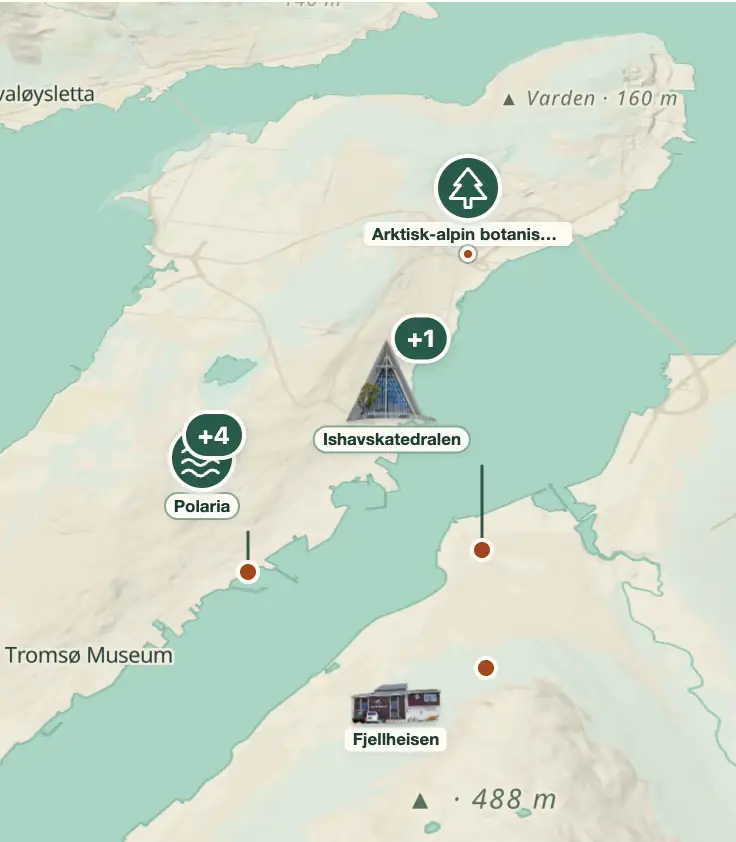
© OpenStreetMap · OpenFreeMap · © OpenMapTiles
Explore the map, read about the other places and plan your travel days in the app.
Open the appWhat to see
Tromsø: The island between two arms of the sea
Downtown Tromsø sits on the east side of Tromsøya island, facing the mainland, in a 19th-century grid parallel to the water, between the quay and Storgata, a pedestrian street about 1 km long. The cross streets climb the hillside from Storgata, which is why almost every walk downtown is uphill.

Ishavskatedralen (Tromsdalen church)
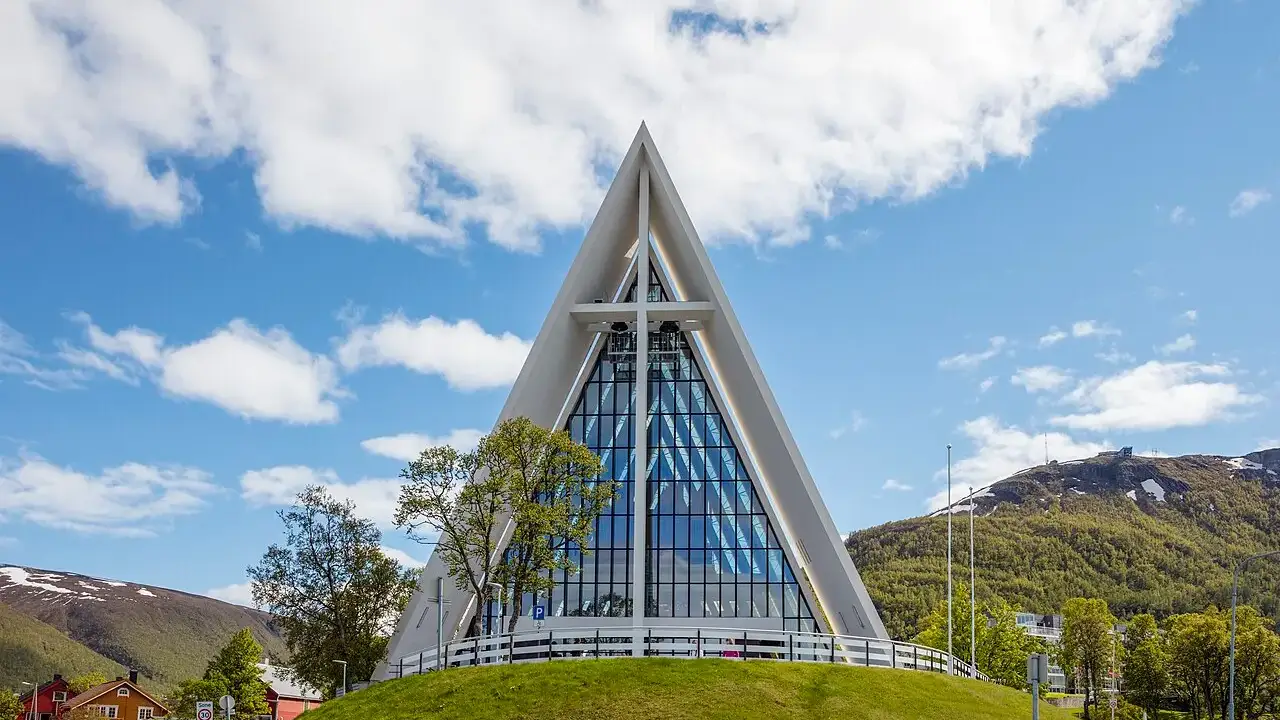
A 1965 church designed by Jan Inge Hovig, with eleven triangular concrete panels clad in aluminum on each side, forming an ice wedge. The east stained-glass window, by Victor Sparre, was added in 1972 and covers about 140 m². There are short midnight concerts in summer and aurora-themed music in winter.
Eleven triangular concrete panels clad in aluminum on each side form an ice wedge, and the east stained-glass window, added in 1972, covers about 140 m².
Check access

Fjellheisen and Storsteinen
A cable car opened in 1961 that climbs in about four minutes to the Storsteinen lookout, at 421 m, with a platform and the Fjellstua restaurant. It's the easiest spot to try for the aurora without a car; on foot, the Sherpatrappa covers the same route via about 1,200 stone steps, unusable when icy.
It's the simplest way to try for the aurora without a car: the cable car, opened in 1961, climbs in about four minutes to the Storsteinen lookout, at 421 m, where there's a restaurant. On foot, the Sherpatrappa covers the same route over about 1,200 stone steps, impassable when icy.
Check access

Polarmuseet
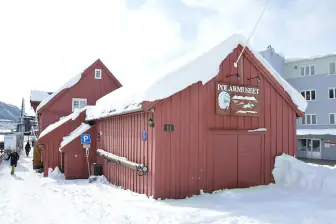
A polar museum housed in a wooden customs warehouse from the 1830s, right on the waterfront. It tells the story of seal and walrus hunting and the Nansen and Amundsen expeditions with original equipment (including items linked to the one-way flight of 1928) and doesn't romanticize the killing.
In a wooden customs warehouse from the 1830s, right on the waterfront, the museum tells the polar story of the city from which Nansen and Amundsen set out, with original expedition equipment and items from the 1928 flight with no return. Seal and walrus hunting is shown as it was, without dressing up the killing.
Check access
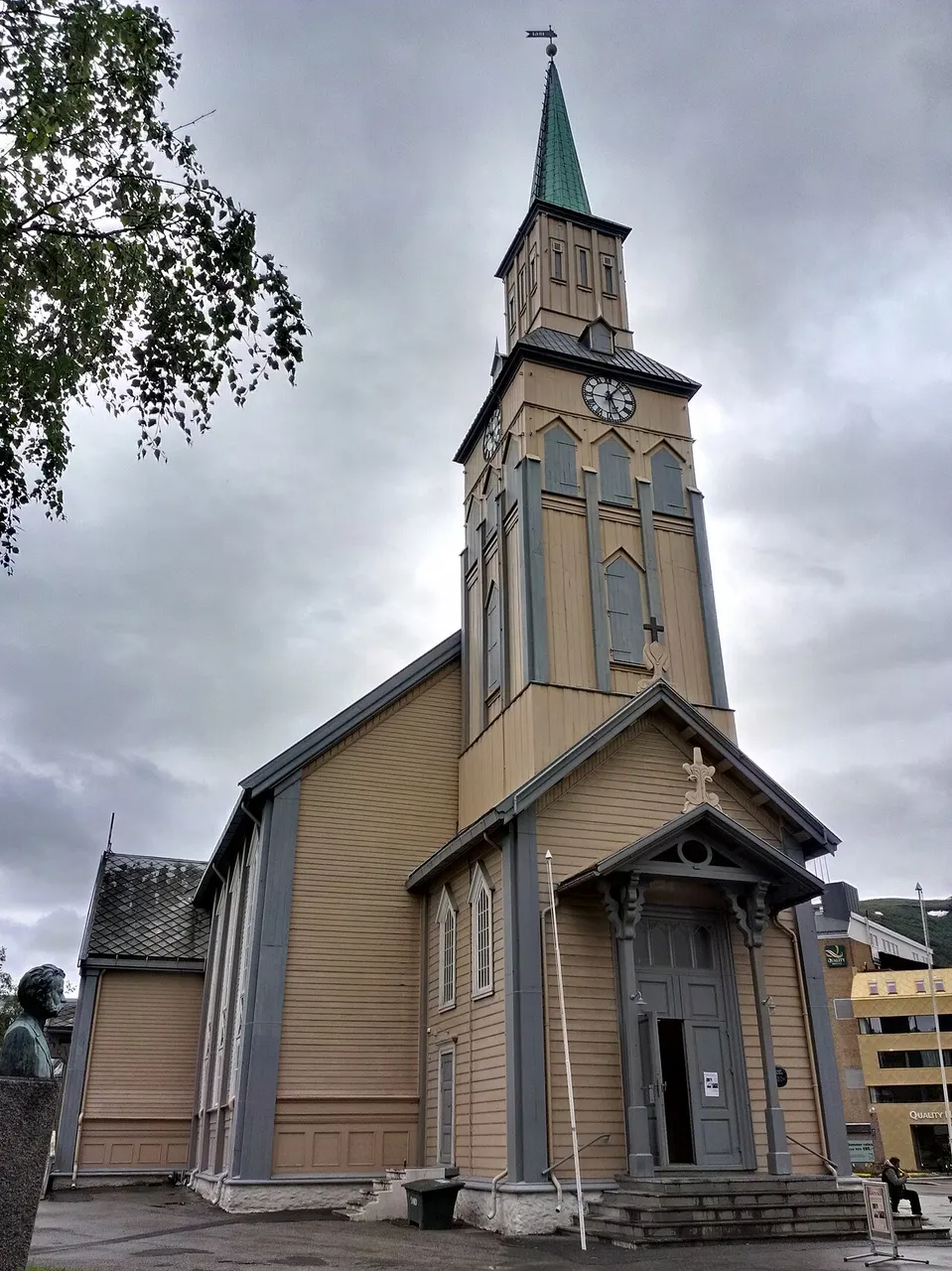
Tromsø domkirke
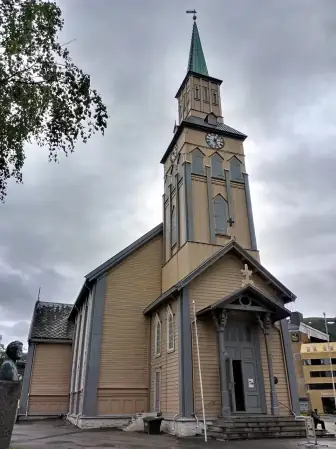
A wooden Lutheran cathedral from 1861, designed by Christian Heinrich Grosch, set in the middle of the central square. It's Norway's only wooden Protestant cathedral and one of the country's largest wooden churches, with about 600 seats.
Grosch designed Norway's only wooden Protestant cathedral, built in 1861 in the middle of the central square. The church holds about 600 seats and ranks among the country's largest wooden churches.
Check access

Tromsø Museum – Norges arktiske universitetsmuseum
The university museum, with the largest Sámi collection in northern Norway, medieval sacred art, Arctic wildlife and a room dedicated to the aurora. A move to a new downtown building has been discussed for years: confirm the address before going.
The university museum holds the largest Sámi collection in northern Norway, and the move to a new downtown building has been under discussion for years, so it's worth confirming the address.
Check access
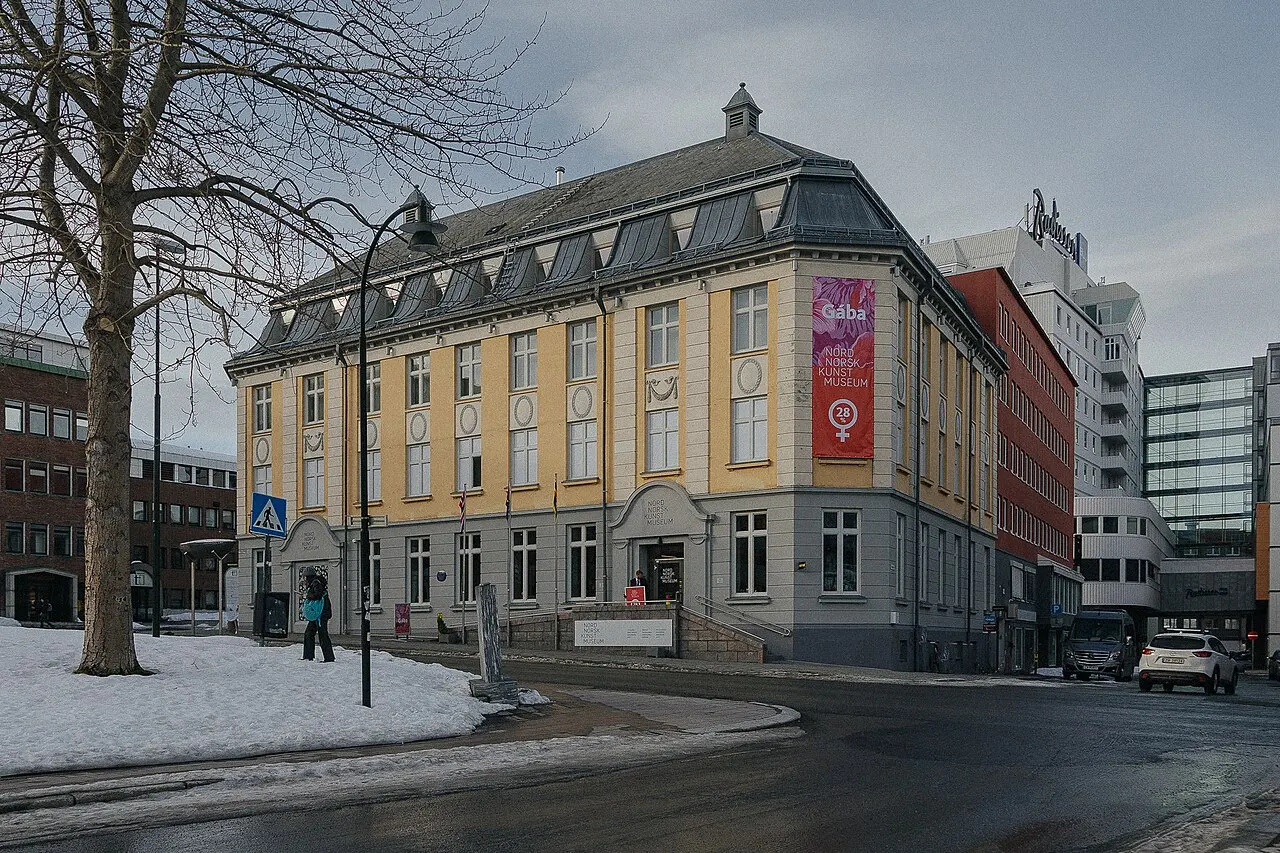
Nordnorsk Kunstmuseum
The art museum of northern Norway, on Sjøgata, with 19th-century northern painting, Sámi art and contemporary exhibitions. Admission is free and the collection fits into an hour and a half.
Admission is free and the collection fits into an hour and a half: 19th-century northern painting and Sámi art, on Sjøgata.
Check access

Ølhallen and the Mack brewery
Mack was founded in 1877 and its bar, Ølhallen, opened in 1928 in the brewery's basement, in the center. Main production moved to Nordkjosbotn in 2012, but the hall is still in place and pours from about seventy taps.
The Ølhallen opened in 1928 in the basement of the Mack brewery, founded in 1877, and the hall stayed in place when the main production moved to Nordkjosbotn in 2012. Today it pours from about seventy taps and is the bar for trying the local beer where it was born.
Check access
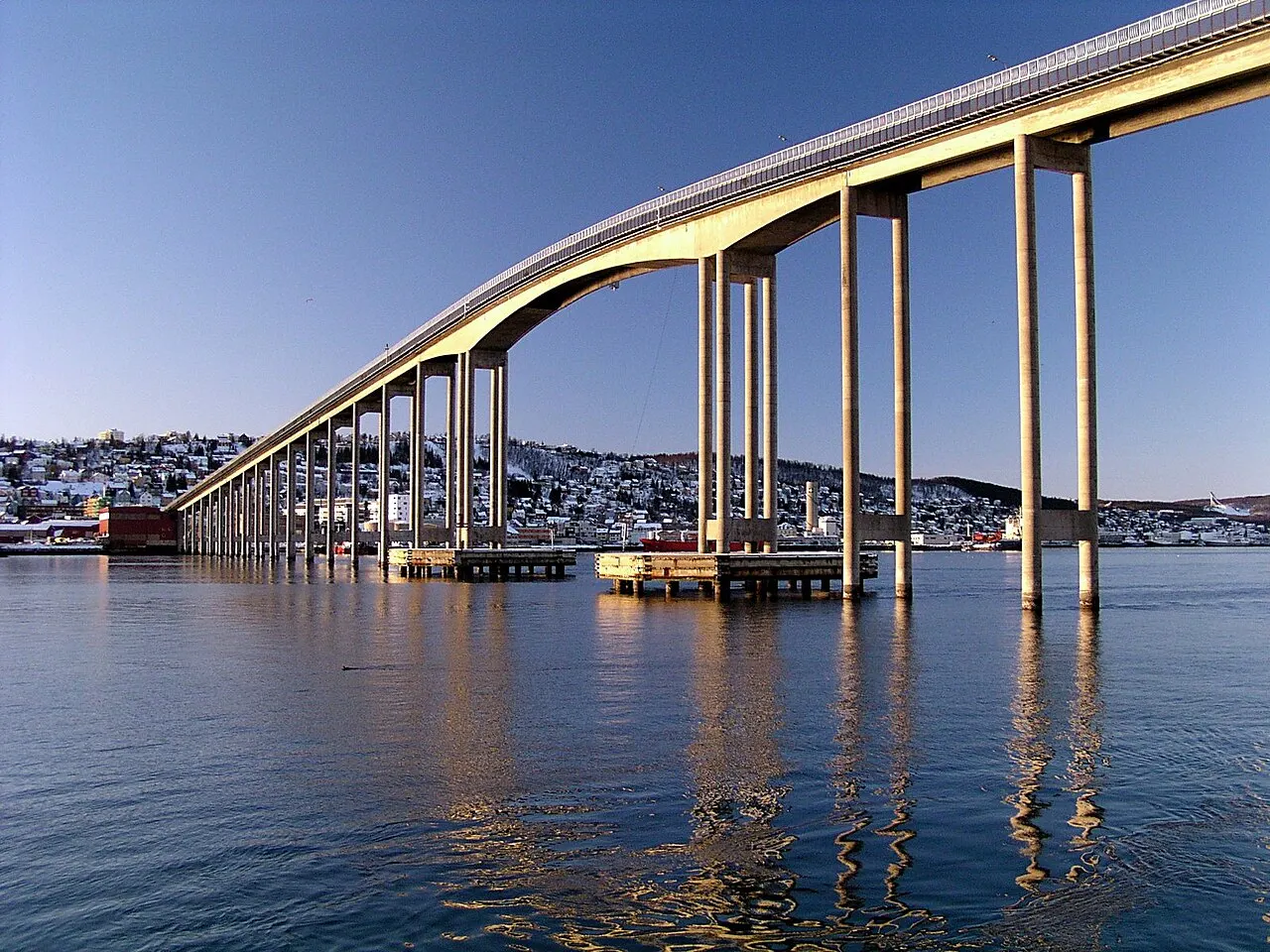
Tromsøbrua
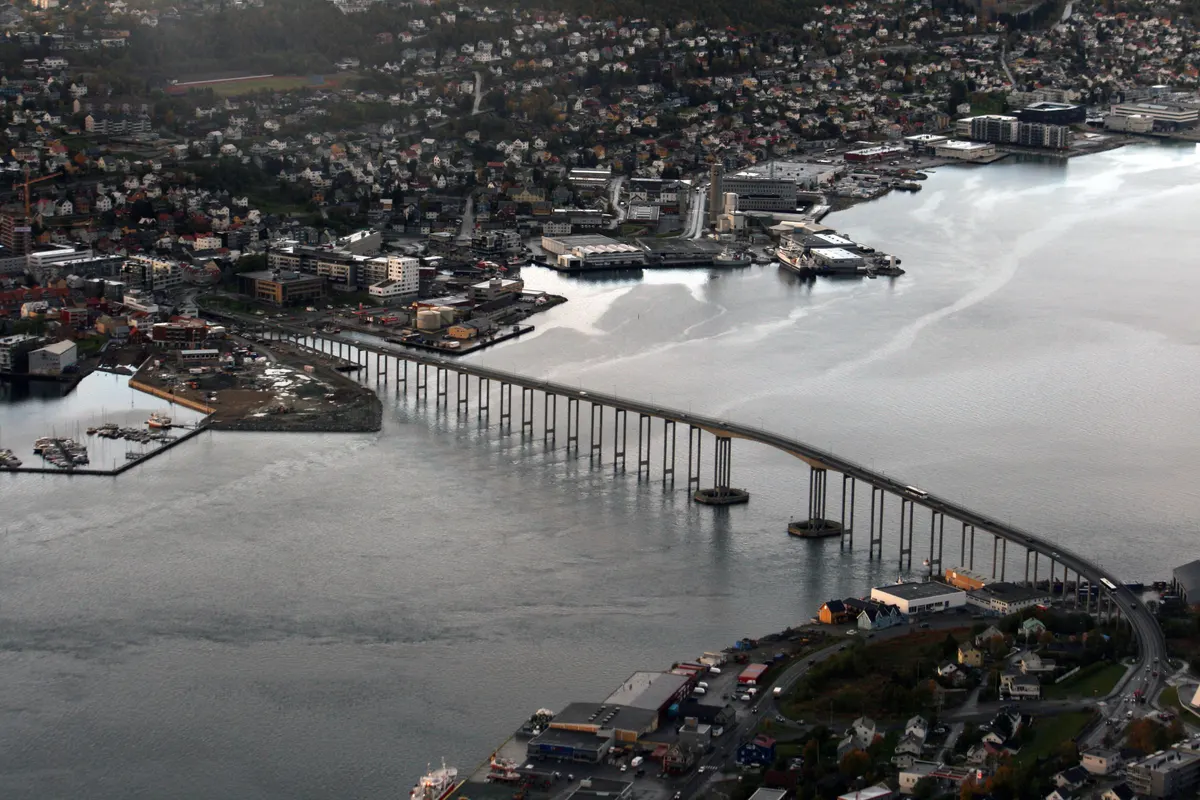
A 1,036 m cantilever bridge with 58 spans, opened in 1960, with a pedestrian walkway on one side. Crossing takes 15 to 20 minutes and gives the best frame of the city against Tromsdalstinden, at 1,238 m.
On foot, the walk takes 15 to 20 minutes and gives the best framing of the urban core with Tromsdalstinden in the background.
Check access
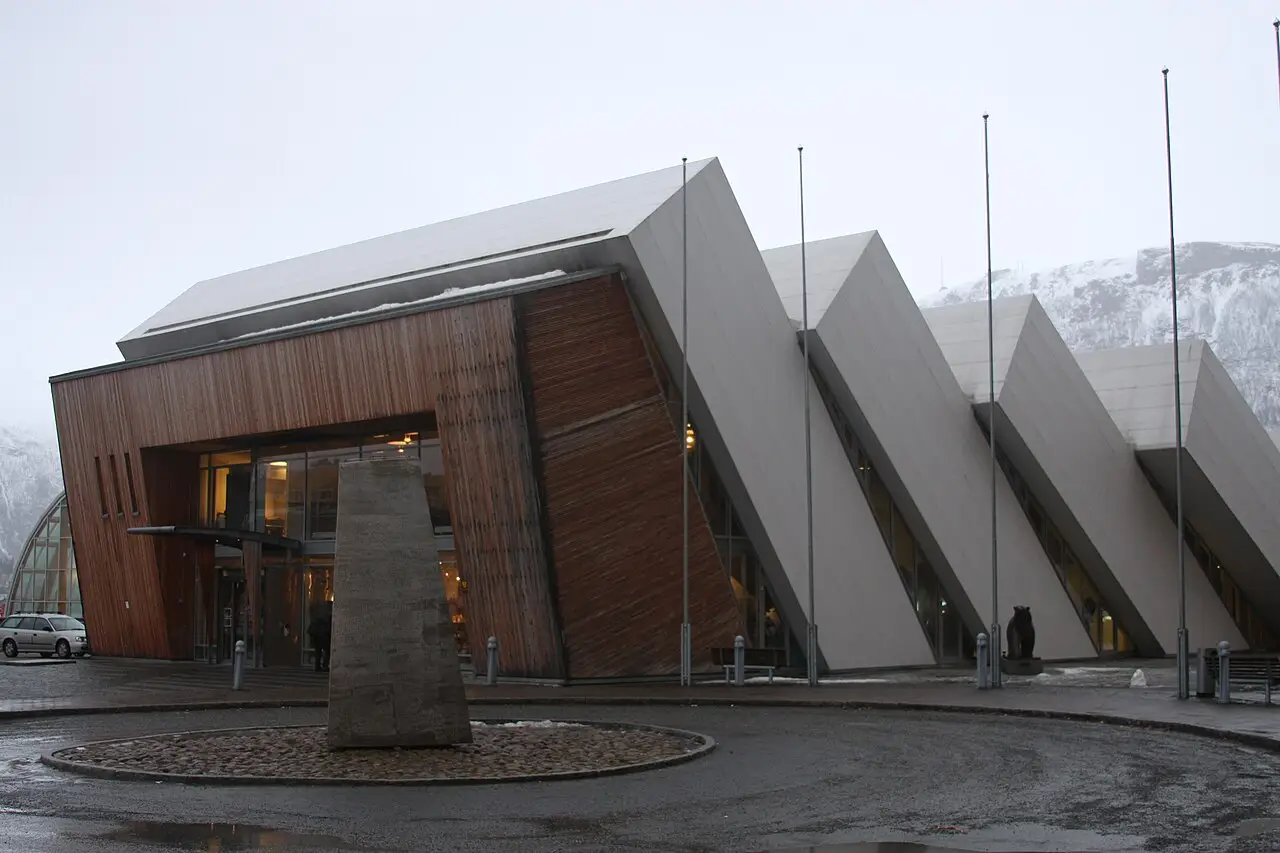
Polaria
An aquarium and Arctic center opened in 1998, in a building that mimics ice floes pushed onto the beach. It has bearded seals from the Barents Sea, tanks of northern wildlife and a panoramic film about Svalbard; a good option on a windy day.
An aquarium from 1998 with bearded seals and a film about Svalbard, good for a windy day. Among the city's museums, it ranks behind the Polarmuseet and the Nordnorsk, and admission carries a Norwegian price tag.
Check access
Nilo’s itinerary
Start with the basic programme and choose extensions for the time you have.
Plan my days in the app ↗Day 1 · The island, the bridge and the lookout
Start at the Polarmuseet, in the 1830s customs warehouse, right when it opens; set aside an hour and a half for the Nansen, Amundsen and seal-hunting rooms.
Walk up the Storgata to the Tromsø domkirke, from 1861, and go in: the wooden cathedral stays open most of the year, outside service hours.
Have fish soup for lunch at one of the waterfront restaurants, between Prostneset and Sjøgata, and expect 200–280 kr for the bowl.
Cross the Tromsøbrua on foot, 1,036 m in 15 to 20 minutes, to the Ishavskatedralen, from 1965, to see Victor Sparre's stained glass from inside.
Ride the Fjellheisen up to Storsteinen, at 421 m, in the late afternoon and come down only after dark; finish with a beer at the Ølhallen, open since 1928.
Day 2 · Away from the island by day, back downtown at night
Book a dogsledding tour, a visit to a Sámi reindeer camp or, between November and January, a whale safari ahead of time: almost all of them depart from Prostneset between 8 and 10am.
If you'd rather go on your own, take the bus to Kvaløya and continue to Ersfjordbotn, about 20 km away: mountains from 600 to 1,000 m dropping straight into the fjord.
Head back to the center in the late afternoon and eat early, with a reservation: restaurant kitchens close earlier than you'd expect.
Go out on an aurora tour between September and March.
If the sky is clear and you don't want to leave the city, walk up to Lake Prestvannet, at the top of Tromsøya, away from the Storgata lights.
Day 3 · Science, collections and the southern tip
Start with the university museum, the Sámi collection and the medieval sacred art; confirm the address first, since the move to a new building has been discussed for years.
Walk to Telegrafbukta and the island's southern tip, in Folkeparken: birches, a pebble beach and a view of Kvaløya.
In the afternoon, see the Polaria and the Framsenteret, side by side on the waterfront, then the free-admission Nordnorsk Kunstmuseum, on Sjøgata.
Stop by UiT's Arctic botanical garden, in Breivika: open year-round, with no gate and no ticket.
Finish with a screening at the Verdensteatret, a 1916 cinema with 1921 murals and the oldest one in Norway still running.


Food
 AI illustration
Skrei and mølje
Migratory cod from the Barents Sea reaches the coast between January and April to spawn and is the most prized winter product. It comes boiled with potato and carrot, or as “mølje”: fish, liver and roe on the same plate, the old way of eating the season.
 AI illustration
Boknafisk
Cod half-dried in the wind for a few weeks and then steamed. Served with fried bacon, mashed rutabaga (kålrabistappe) and potato; a late-autumn, early-winter dish.
 AI illustration
Fiskesuppe
A creamy fish soup with cod or salmon, carrot, celery and dill. It's the standard waterfront lunch and runs 200–280 kr a bowl at most places downtown.
 AI illustration
Finnbiff and bidos
Reindeer meat, raised by Sámi herders from the region. Finnbiff is thin slices sautéed with cream, mushroom and juniper, served with mash and lingonberry; bidos is the Sámi festive stew, with potato and carrot and no cream.
 AI illustration
Kongekrabbe
King crab from the Barents Sea, a species introduced by Soviet biologists in the 1960s and now commercially fished in Finnmark. It comes cooked, by the leg, and is usually the priciest item on the menu.
 AI illustration
Hvalbiff
Minke whale steak, grilled rare like red meat and served with a dark sauce. Hunting is legal in Norway, under an annual quota set by the government; many visitors choose not to eat it, and no one pushes it.
 AI illustration
Multer
Cloudberries are picked in the bogs in August and September and are expensive even here, sold in small jars. They show up mostly as “multekrem”, folded into whipped cream, as a Christmas and wedding dessert.
 AI illustration
Kaffe, kanelbolle and Mack
Filter coffee all day, including at three in the afternoon in the dark, paired with a cinnamon or cardamom sweet bun. For beer, Mack has been local since 1877, and the Ølhallen, from 1928, is the city's historic bar.
Where to eat
- Fiskekompaniet · Killengrens gate 6, on the harbor · $$$
The day's fish and shellfish on a four to six course tasting menu, with a separate seafood bar for smaller plates.
Source · 2026-09-28
- Mathallen · Grønnegata 58-60 · $$
A food hall with several stalls under one roof, from Arctic fish to traditional Norwegian dishes.
Source · 2026-09-28
- Risø Mat & Kaffebar · Strandgata 32, Skansen · $
A café inside an 1806 timber house, roasting its own beans, with a cinnamon roll that usually sells out before noon.
Source · 2026-09-28
$: up to 200 kr, coffee or a set lunch · $$: 200-450 kr per dish · $$$: above 450 kr, or a tasting menu · 2026-09-28
Day trips
Kvaløya, Ersfjordbotn and Sommarøy
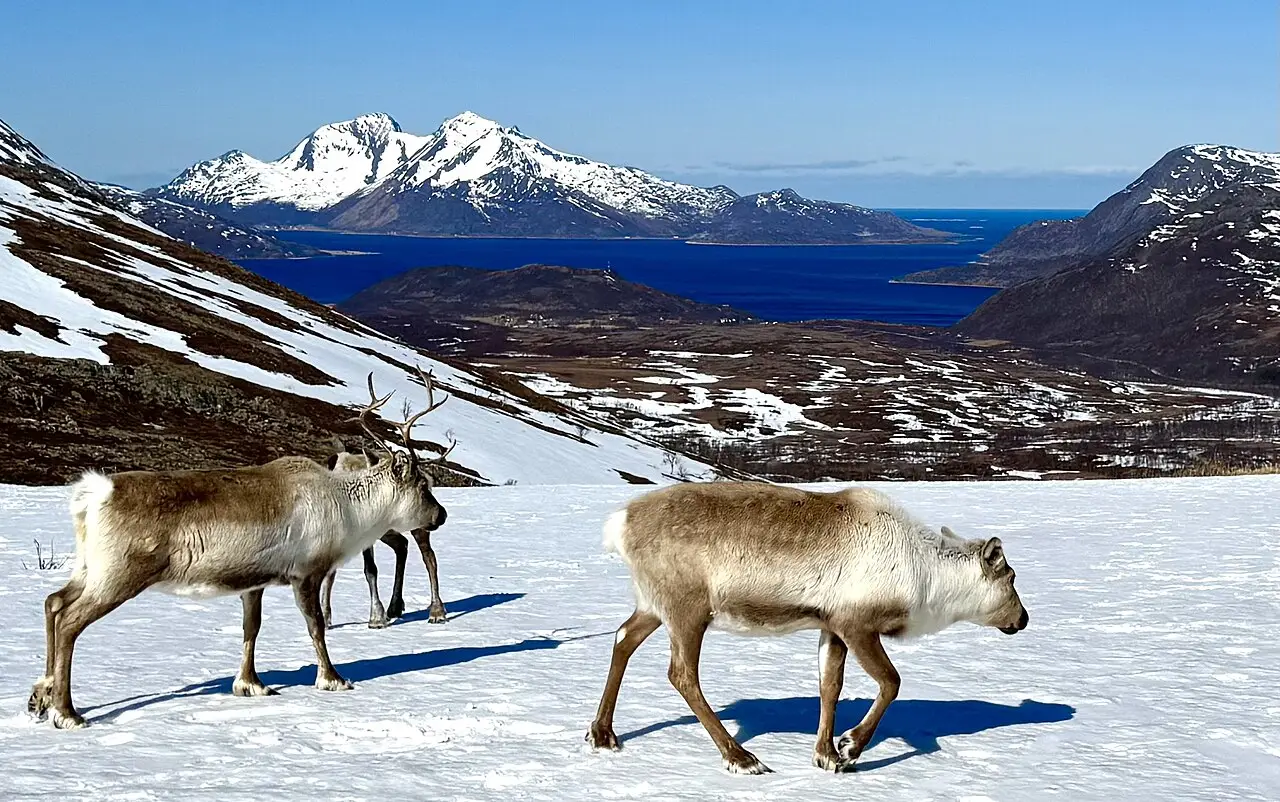
The neighboring island, linked by the Sandnessund bridge. Ersfjordbotn is about 20 km away, 30 minutes by car, and Sommarøy, with pale sand beaches and icy turquoise water, about 60 km away, 1 hour to 1 hour 15 minutes. There's a bus, but with few departures a day.
The Lyngen Alps
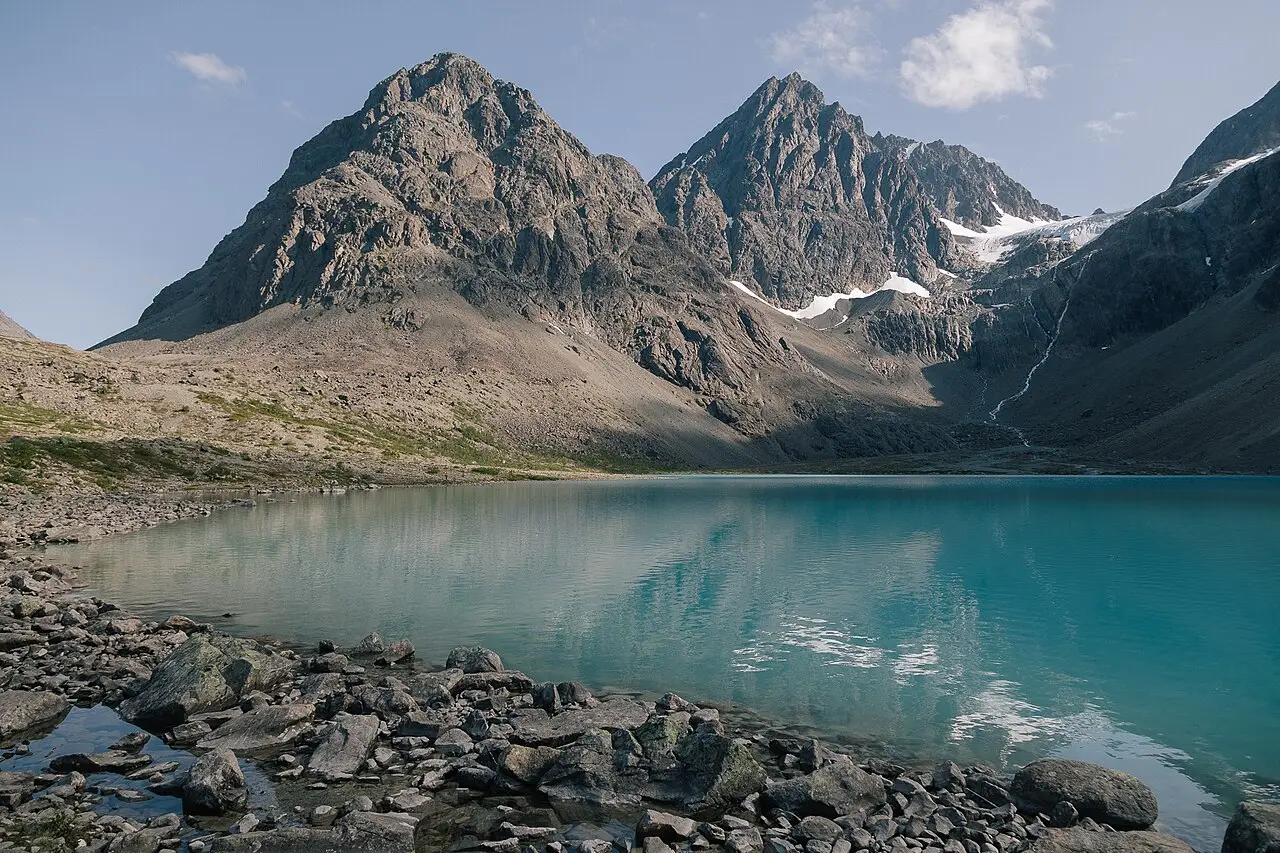
A mountain range east of the city, with Jiehkkevárri topping out at about 1,830 m, reached via the Breivikeidet–Svensby ferry, a crossing of about 20 minutes. Allow 2 to 2½ hours to Lyngseidet; it's the ski-touring destination between March and May.
Senja
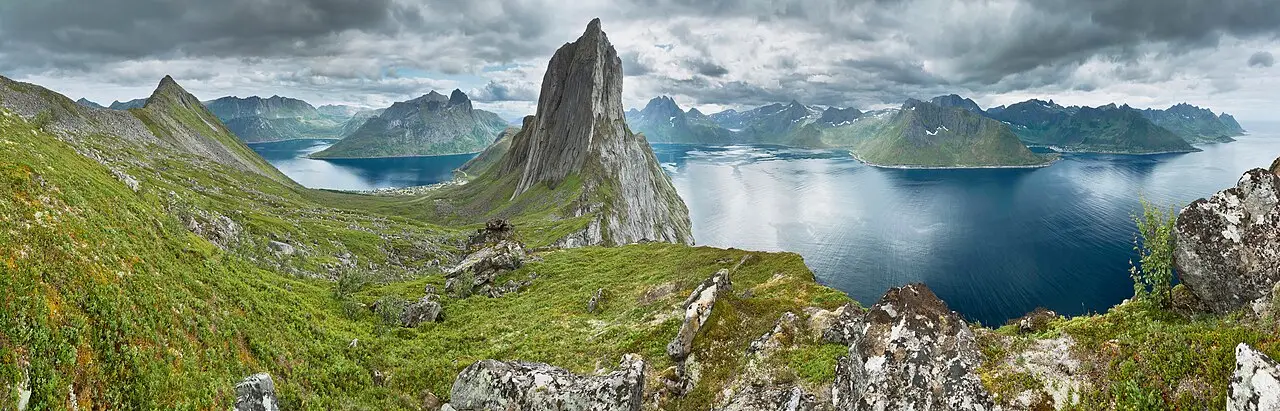
Norway's second-largest island, 2½ to 3 hours by car via the south, or via the Brensholmen–Botnhamn ferry in summer. The national scenic route leads to Tungeneset and Mount Segla, 639 m, with a trail that takes 2 to 3 hours round-trip.
Where to begin
The island, the bridge and the lookout
Start at the Polarmuseet, in the 1830s customs warehouse, right when it opens; set aside an hour and a half for the Nansen, Amundsen and seal-hunting rooms.
Science, collections and the southern tip
Start with the university museum, the Sámi collection and the medieval sacred art; confirm the address first, since the move to a new building has been discussed for years.
Money
The currency is the Norwegian krone (NOK, kr): Norway is part of Schengen but outside the European Union and doesn't use the euro. In 2026 one euro is around 11 to 12 kr, and one dollar between 10 and 11 kr. The country is among the least cash-reliant in the world: buses, taxis, markets and boats are all paid by contactless card, and some places simply don't take banknotes. Approximate 2026 ranges: coffee 45–60 kr; 0.4 l beer at a bar 105–140 kr; simple lunch 180–260 kr; dinner at a midrange restaurant 350–600 kr per person without drinks; hostel bed 400–600 kr; double hotel room 1,600–2,600 kr, rising in January and February. Tours drive the budget: aurora chase 1,200–2,000 kr, dogsledding 1,800–2,800 kr, whale safari 1,400–2,200 kr and the Fjellheisen cable car 645 kr round-trip (2026). Wine and spirits are sold only at Vinmonopolet, the state chain, and the high price comes from tax, which weighs more than the bar's markup. Tipping isn't expected: rounding up or leaving 5% to 10% after a good dinner is already generous. VAT is 25% (12% on hotels and transport), and non-residents can claim a refund at the airport on receipts over about 315 kr. A 2025 law allows municipalities to charge a visitor levy of up to 3% on lodging and cruise passengers, and Tromsø applied to adopt it; since implementation was still uneven in September 2026, check whether the fee appears on your room rate.
Getting there and around
The airport on the same island, 4 km away
Tromsø-Langnes Airport (TOS) is on the west side of the same island as the center, about 4 km away, with direct flights from Oslo, Bergen, Trondheim, Longyearbyen and, in winter, several European cities. The airport express bus takes 10 to 15 minutes to Storgata and costs about 135 kr one way and 200 kr round-trip (2026). It's cheaper to walk 5 to 8 minutes to the Giæverbukta stop and catch a regular city bus at the normal fare. A taxi to the center costs 250 to 350 kr. There's no train, and that's no small detail: the Norwegian railway ends at Bodø, about 550 km south by road, and the Swedish line reaches Narvik. Everything else is plane, long-distance bus (route 100 links Narvik and Alta) or the coastal ship, which docks at the Prostneset terminal every day, northbound in the late afternoon and southbound around midnight. Brazilians don't need a visa for stays of up to 90 days in any 180. The EES biometric border registration has been rolling out since October 2025, and the ETIAS electronic authorization is expected by the end of 2026, so check both rules a few weeks before you fly.
Svipper buses, fare in the app
Within the city, buses run under the Svipper brand, formerly Troms fylkestrafikk, and cover the island, Tromsdalen, Kvaløysletta and Kroken. A single ticket on the app costs 50 kr and, since February 1, 2026, there's an off-peak fare of 30 kr on weekdays from 9am to 2pm and from 5pm to 1am. Paying on board costs more, and cards are accepted everywhere. You can cross the center on foot in 20 minutes, but the streets climb the hillside, and from November to April those slopes are covered in ice. Between November and April, a pair of ice cleats (brodder) strapped to your soles is worth more than any ticket, and it's the most useful purchase you can make here. Cycling works well from May to September, with bike lanes on the island; in winter, only with studded tires. Renting a car only pays off for chasing the aurora or heading out to Kvaløya, Lyngen and Senja, and then with winter tires, a full tank and an eye out for reindeer on the road.
Safety
Tromsø has a very low violent crime rate, and the real risk here is environmental. Black ice on the sidewalk is the leading cause of accidents among visitors: use ice cleats, avoid the polished edge of sloped streets, and be wary of outdoor stairs in the late afternoon, when meltwater refreezes. In the mountains around it, avalanches kill people almost every winter on Kvaløya and in the Lyngen Alps. Check the official bulletin at varsom.no before any climb and don't improvise a snow trail without gear or someone who knows the terrain. Driving in the dark on frozen roads requires winter tires, effectively mandatory from November to April, and low speed: reindeer and moose cross the road without warning, especially on Kvaløya and in Lyngen. Street theft is rare, but don't leave camera gear unattended at a lookout. The only spot of urban friction is the Storgata bars emptying out in the small hours of Friday and Saturday, with alcohol and loud noise, and little more than that. Emergencies: 112 police, 113 ambulance, 110 fire department.
Etiquette tips
Take your shoes off at the door
In someone's home, shoes come off at the door, always, even at a party and especially with melted snow on your soles. That's why clean socks are part of your visiting outfit.
Silence here is neutral, with no hint of coldness
Nobody starts a conversation in line, on the bus or in the elevator, and the empty seat next to you is left that way on purpose. But if you do ask something, people tend to stop for ten minutes to help.
Drinking has a schedule and an address
Wine and spirits are sold only at Vinmonopolet, the state liquor store, which closes around 6pm on weekdays and 4pm on Saturdays and doesn't open on Sundays. Supermarkets sell beer until 8pm on weekdays and 6pm on Saturdays; nothing on Sundays. Drinking in public is illegal.
Agreeing on a time means showing up at that exact time
“Klokka sju” means 7pm, not 7:20, and that applies to dinner, tours and boats. A ten-minute delay calls for a text.
Here, winter clothing is technical gear
Wear wool layers, a windproof jacket and, between November and April, ice cleats strapped to your soles. Canceling plans because of the cold sounds odd here, and showing up badly dressed for them even more so.
The gákti, traditional Sámi dress, requires consent for photos
The gákti, the traditional dress, isn't a costume and isn't worn for photos. Avoid the term “Lapp,” now considered offensive, and ask before photographing people, herds or reindeer enclosures.
Mistakes to avoid
Betting on the aurora with just one night booked
Booking a single night and counting on the aurora. Solar activity forecasts don't predict clouds. Three nights in one place greatly increase the odds, and good tours drive hundreds of kilometers chasing clear sky, sometimes as far as Finnmark or Finland.
City shoes on ice
Arriving in city shoes. Tromsø's sidewalks slope and freeze and thaw all winter long. Without cleats on your soles, a ten-minute walk turns into a problem, and falling on ice is the most common accident among visitors.
In winter, rain turns into black ice
Picturing a dry Arctic at -30°C. The ocean current keeps the January average near -4°C, it rains in midwinter, and meltwater turns to black ice as soon as it gets dark, which during mørketid happens in the early afternoon.
The railway ends at Bodø, 550 km by road
Planning to arrive by train. Tromsø has no station, and the nearest tracks end far away: the Norwegian ones at Bodø, about 550 km by road, and the Swedish ones at Narvik. To get here, count on a flight, the scheduled bus from Narvik or the ship that runs along the coast.
Lofoten as a day trip
Thinking Lofoten or the North Cape fit into a day trip. Tromsø–Svolvær takes 7 to 9 hours by road and ferry, and Tromsø–Nordkapp about 10 hours by car.
Useful phrases
Hei
Hi: works from the bakery counter to the neighbor in the elevator (pron. “hey”, with a soft h)
Tusen takk
Thank you very much, literally “a thousand thanks” (pron. “TOO-sen tahk”)
Unnskyld
Excuse me, and also sorry: used to get past someone and to get attention (pron. “ERN-shul”)
Er det nordlys i natt?
Is there aurora tonight? “Nordlys” is literally “northern light” (pron. “ehr deh NOR-lees ee nat”)
Skål
Cheers, for a toast; you look people in the eye before drinking (pron. “skoal”)
Bures
Hello in Northern Sámi, the region's indigenous language (pron. “BOO-res”)
Where to stay
- Sentrum · A short first trip, everything on foot · $$$: Everything is walkable: the pedestrian Storgata takes 20 minutes end to end. It is the priciest stretch of town, and the Friday and Saturday noise reaches the windows.
- Tromsdalen · Sunrise at the Arctic Cathedral and the first cable car up · $$: Sleeping near the cable car shaves 20 minutes off the morning for anyone after the first ride up. In exchange, downtown is across the 1,036 m bridge, on foot or by bus.
- Breivika · A tight budget, close to the university · $: A student and researcher neighborhood around UiT, with cheaper meals and rents than downtown, about a 25-minute walk or bus ride from Sentrum.
- Kvaløysletta and Kvaløya · A car, hiking and weekend skiing · $$: Across the Sandnessund bridge, this is where locals who ski and hike the 600 to 1,000 meter mountains live; without a car, the bus into downtown takes about 25 minutes.
$: hostel, 400-600 kr · $$: mid-range hotel, 1,600-2,200 kr · $$$: above 2,200 kr a night · 2026-09-28
Districts
Sentrum
The 19th-century grid on the east side of Tromsøya, between Storgata, pedestrianized for about 1 km, and the quay. It concentrates hotels, restaurants, museums and Friday and Saturday nightlife, and you can walk it end to end in 20 minutes.
Skansen and the north end of Storgata
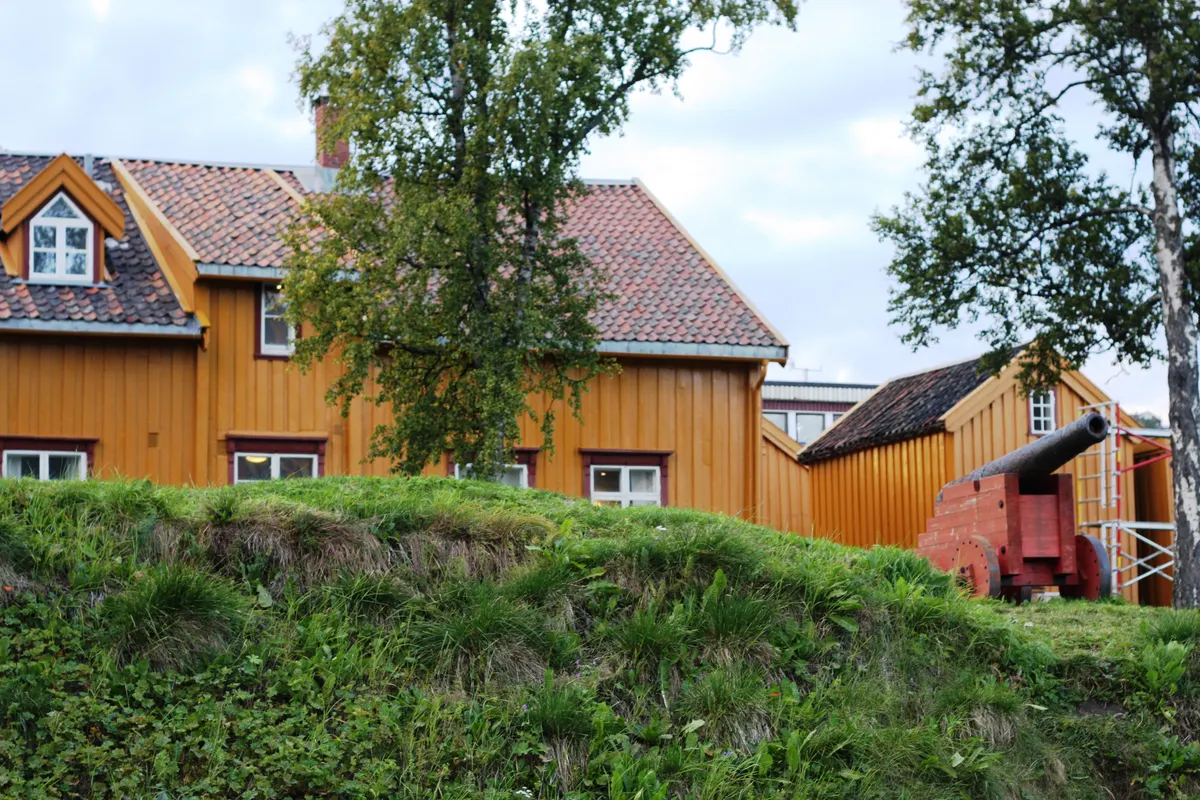
The oldest part of the city, with wooden houses from the 1790s to the 1830s, the Skansen earthwork fort and the Polarmuseet in a customs warehouse. This is where you see the Tromsø before concrete.
Prostneset and the southern waterfront
A marine terminal opened in 2017, where the coastal ships dock every day, plus the Polaria and the Framsenteret. It's the starting point for most boat, whale and aurora tours.
Tromsdalen
Across the strait, already on the mainland: the Ishavskatedralen, the lower station of the Fjellheisen cable car and a residential neighborhood of low houses. Worth reaching on foot, crossing the 1,036 m bridge.
Breivika
UiT campus, the University Hospital of North Norway, the Arctic botanical garden and the cruise terminal. A student and researcher neighborhood, with meal prices lower than downtown.
Langnes and Giæverbukta
West of the island: Langnes airport and the Jekta mall, the largest in the north of the country. Useful for logistics (car rental, cold-weather clothing, a big supermarket) not for sightseeing.
Sydspissen and Folkeparken
The island's southern tip, with the university museum, a birch grove and Telegrafbukta beach, used for a quick swim in summer and for watching the aurora without leaving the city.
Kvaløysletta and Kvaløya
Across the Sandnessund bridge: a residential suburb and, right behind it, mountains from 600 to 1,000 m dropping into the fjord, with Ersfjordbotn about 20 km away and Sommarøy about 60 km away. This is where locals ski and hike on weekends.
History
before 1200 · Sápmi before Norway
The coast and the surrounding fjords have long been Sámi territory, inhabited by the sjøsamer, the sea Sámi, who lived off fishing and small herds. Tromsø's story begins inside that already-inhabited territory.
1252 · The church “among the pagans”
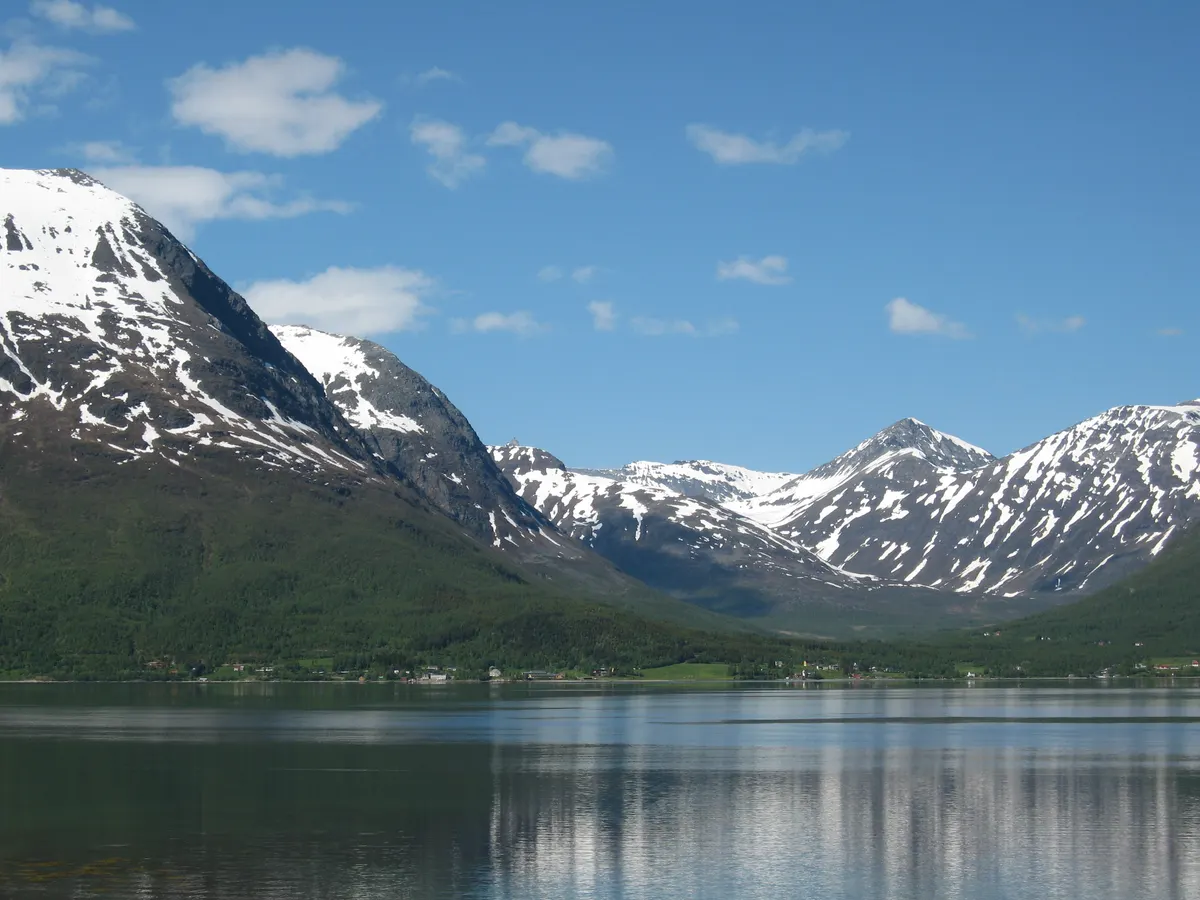
Håkon Håkonsson has the Ecclesia Sanctae Mariae de Trums juxta paganos built, then the northernmost church in the world. It was a border marker of the Christian kingdom as much as a temple.

1789–1794 · End of the monopoly and town charter
Copenhagen breaks Bergen's monopoly on northern trade in 1789. On June 20, 1794, Tromsø receives kjøpstad status, with a little over eighty residents.
1820–1900 · Pomor trade, seals and the “Paris of the North”
Pomor trade swaps fish for Russian flour and timber every summer, and the city's hunting fleet starts operating out of Svalbard, Jan Mayen and Novaya Zemlya. The wooden cathedral comes in 1861, the museum in 1872 and the Mack brewery in 1877.
1893 · The coastal steamer starts stopping here
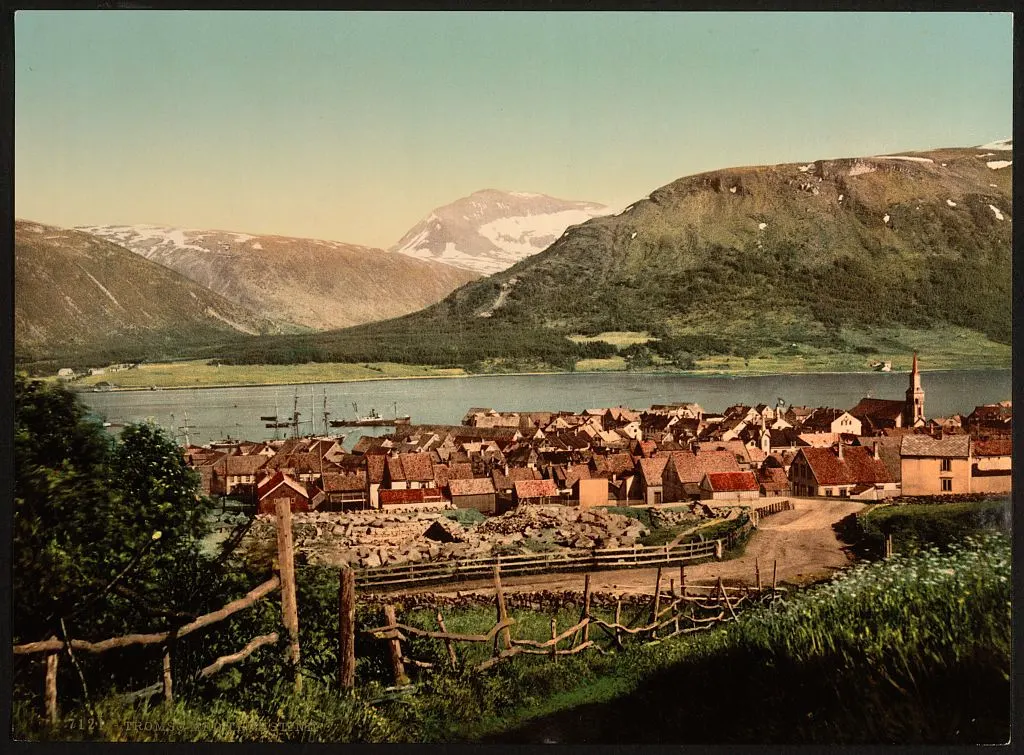
Richard With launches the Hurtigruten route in July 1893 with the DS Vesteraalen, linking Trondheim to Hammerfest. Tromsø gets a daily ship, and with it mail, fresh fish and passengers.
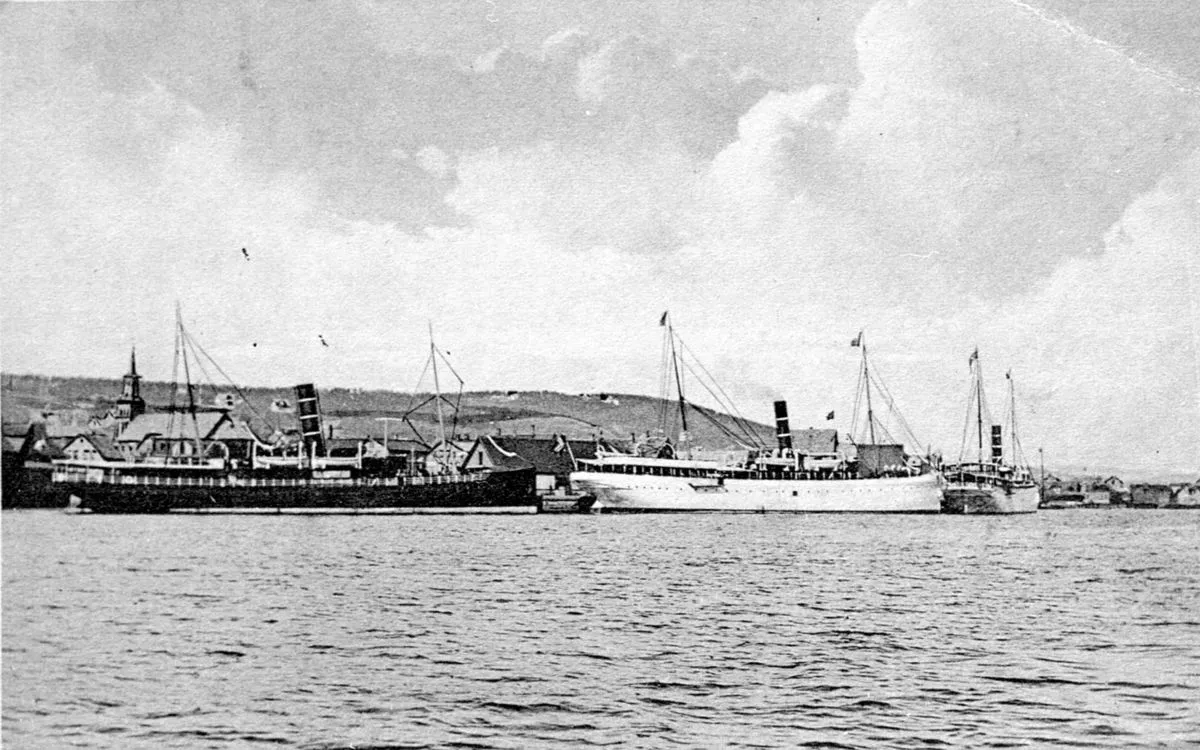
1906–1928 · Last port before the ice
Nansen, Sverdrup, Wisting and Amundsen use Tromsø as a polar departure base. On June 18, 1928, Amundsen takes off from here in the Latham 47 seaplane to search for Umberto Nobile and disappears over the Barents Sea.

1940 · Norway's capital in May and June 1940
With Oslo occupied since April, King Haakon VII and the government arrive in Tromsø on May 1, 1940, aboard the British cruiser HMS Glasgow, and stay until June 7, when they leave for exile in London. In those five weeks, the city was, in effect, the country's capital.
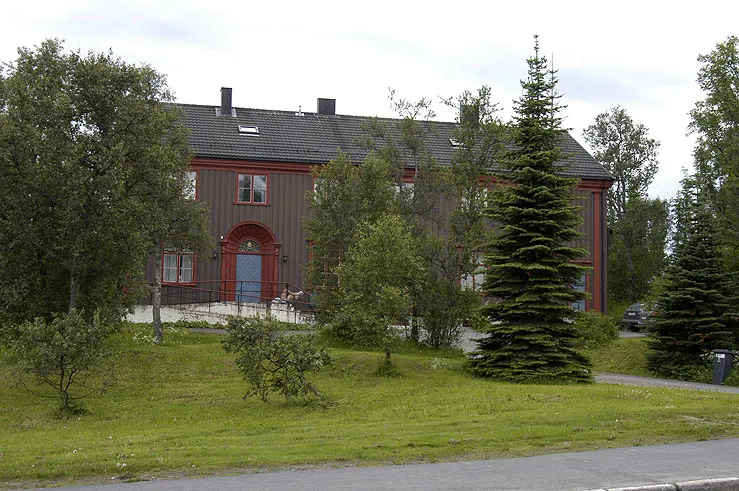
November 12, 1944 · The Tirpitz sinks offshore
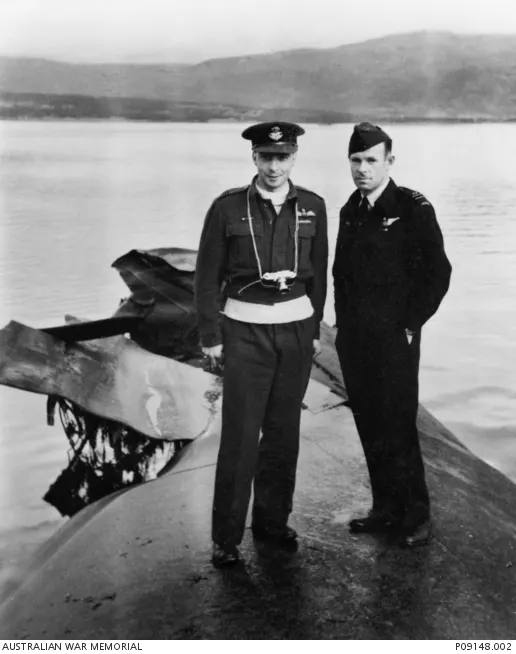
RAF Lancaster bombers sink the German battleship Tirpitz in Håkøya bay, a few kilometers from the center, killing about a thousand sailors. That same winter the Wehrmacht burns Finnmark and northern Troms, and about 50,000 evacuees pass through the region.
1960–1974 · The bridges and the municipal merger
The Tromsøbrua, 1,036 m long, opens in 1960 and ends the dependence on boats; the Kvaløya bridge, 1,220 m, opens in 1974. Between the two, the 1964 merger with Tromsøysund, Ullsfjord and Hillesøy takes the municipality from about 12,000 to about 32,000 residents and more than 2,500 km².
1968–1972 · The northernmost university
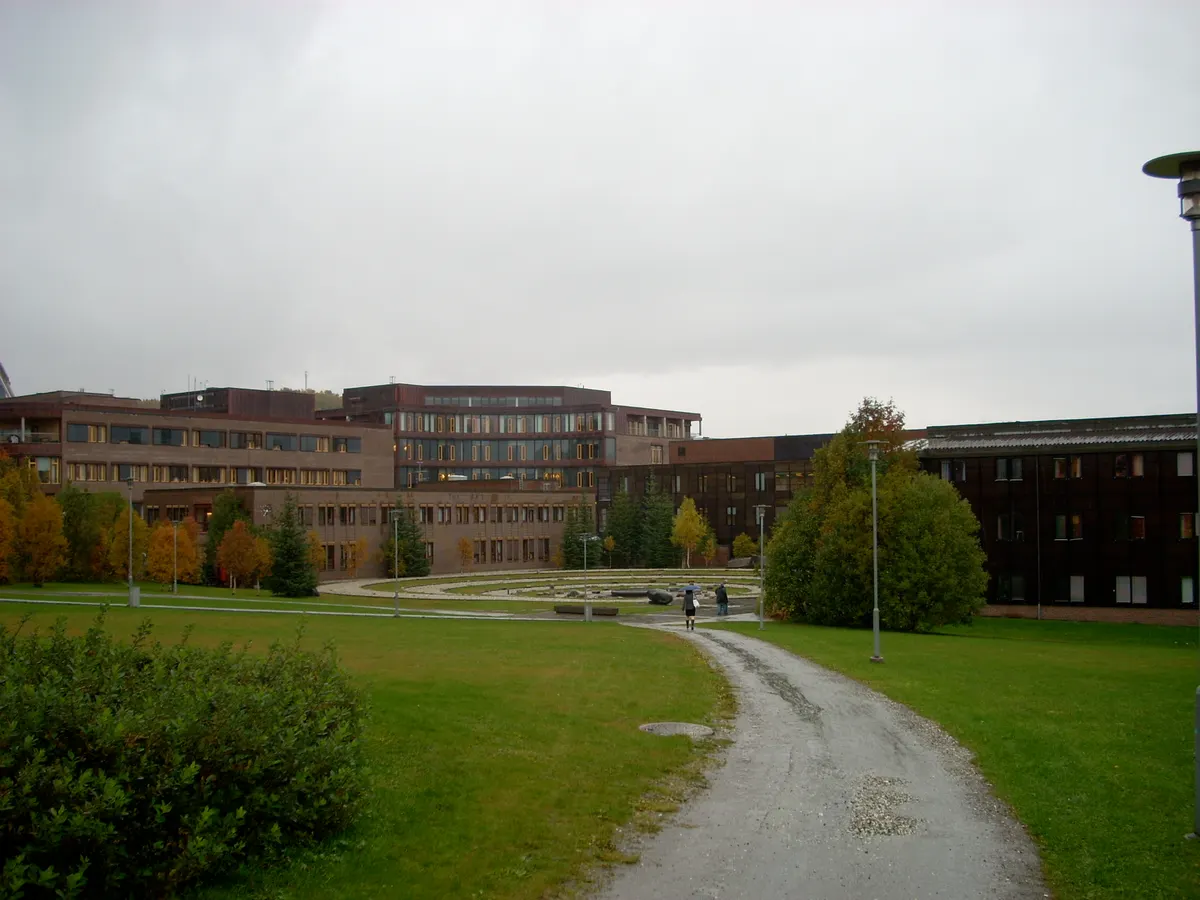
The Storting approves the creation of a northern university in 1968 and classes begin in 1972, with the mission of training doctors and teachers who would stay in the region. The northern university hospital, UNN, opens in 1991.
1998–2026 · Administrative capital of the Arctic
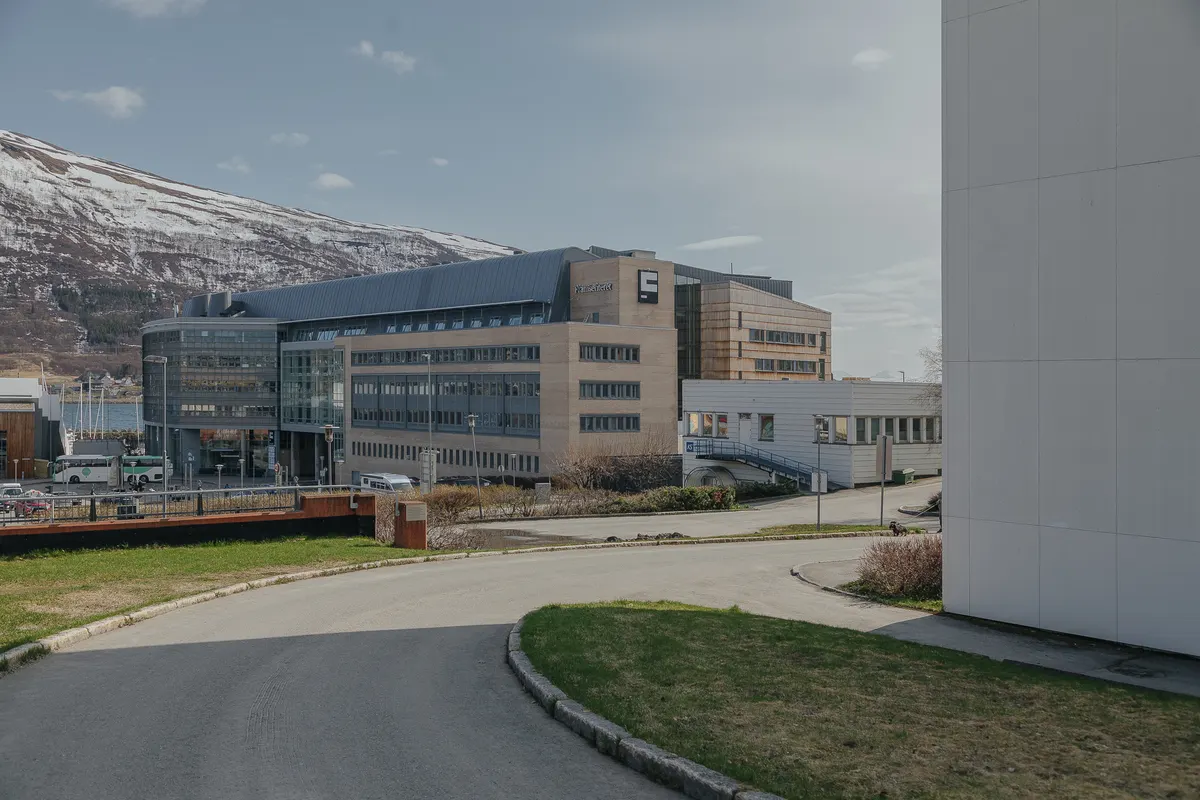
The Norwegian Polar Institute moves from Oslo to Tromsø in 1998, the Framsenteret opens in 2010 and the Arctic Council's permanent secretariat is set up here in 2013. Through the 2010s and 2020s, direct European flights and online aurora forecasting turn winter into high season.
Complete history
It exists because of water that doesn't freeze
Tromsø exists because of water that doesn't freeze. At 69°39′ north, in the same band as uninhabited stretches of the Canadian and Siberian Arctic, the Norwegian branch of the North Atlantic Current keeps the Tromsøysundet strait open all year. The result is a deepwater harbor at a latitude where the sea usually freezes. The region has long been Sámi territory: the sjøsamer, the sea Sámi, lived from fishing and small herds in these fjords long before there was a Norway in the modern sense. In 1252, Håkon Håkonsson had the Ecclesia Sanctae Mariae de Trums juxta paganos built here, “the church of St Mary of Tromsø beside the heathens”, then the northernmost in the world. The name already explains its role: a border marker of the kingdom as much as a place of worship.
Bergen's monopoly and the 1794 town charter
For centuries the north depended commercially on the south: dried fish had to go through Bergen, under monopoly. Copenhagen broke that monopoly in 1789 and, on June 20, 1794, Tromsø received its town charter with just over eighty residents. In the 19th century, the town grew with the Pomor trade, the summer exchange between Norwegian fishermen and Russian merchants from the White Sea, fish for flour and timber, which enriched the coast until the 1917 Revolution. At the same time, Tromsø became the base of a fleet hunting seals, walruses and bears around Svalbard, Jan Mayen and Novaya Zemlya. The town got a wooden cathedral in 1861, a museum in 1872 and a brewery in 1877, and travelers surprised by how the local women dressed began calling it the “Paris of the North”.
The last port before the ice
With that hunting fleet in place, Tromsø became the last port before the polar ice. Nansen, Sverdrup, Wisting and Amundsen set out from here; on June 18, 1928, Amundsen took off from Tromsø in the French Latham 47 seaplane to search for Umberto Nobile, whose airship had crashed on the ice, and vanished over the Barents Sea with his crew. Twelve years later, the war made Tromsø the country's capital: with Oslo occupied in April 1940, King Haakon VII and the government set up in the city until June 7, when they sailed for London. On November 12, 1944, RAF Lancaster bombers sank the battleship Tirpitz in Håkøya bay, a few kilometers from the center, killing about a thousand sailors; the capsized hull stayed visible for years. That same winter, the retreating Wehrmacht burned Finnmark and northern Troms and forced the evacuation of about fifty thousand people: Tromsø, spared from destruction, took in many of them.
Three postwar decisions transformed Tromsø
Today's Tromsø is the product of three postwar decisions. In 1960 the Tromsøbrua opened, a 1,036 m bridge that links the island to the mainland and ended the reliance on boats; in 1974 came the bridge to Kvaløya and, in 1994, an undersea tunnel with roundabouts dug beneath the sea. In 1964, the merger with Tromsøysund, Ullsfjord and Hillesøy turned a municipality of about 12,000 people into one of about 32,000 covering more than 2,500 km², which explains why “Tromsø” today includes islands and fjords 60 km from the center. The third came in 1968, when the Storting approved a university for the north, with classes from 1972: UiT, the northernmost in the world, designed to train professionals who would stay in the region. The university hospital, opened in 1991, completed the setup.
The Arctic as subject and as economy
Since then, Tromsø has specialized in the Arctic, both as a subject and as an economy. The Norwegian Polar Institute moved here from Oslo in 1998, the Framsenteret opened in 2010, bringing together about twenty research institutions, and the Arctic Council's permanent secretariat settled in the city in 2013. Fishing and salmon farming grew alongside it, and since the 2010s so has winter tourism, which barely existed before: direct European flights, online aurora forecasts and cruise ships have pushed the high season into the polar night. The municipality passed 80,000 residents in early 2026 and, like other Norwegian cities, is debating a visitor levy. The tension between a small city and a large flow of tourists is now the most constant local topic after the weather.
Amundsen left from here in 1928 and never came back.
The 1994 undersea tunnel has roundabouts dug beneath the sea.
Geography and shape of the city
The island between two arms of the sea
Tromsø occupies the island of Tromsøya, about 21 km², squeezed between two arms of the sea: the Tromsøysundet, which separates it from the mainland to the east, and the Sandnessundet, which separates it from Kvaløya to the west.
The grid-plan center and the slope
The center lies on the east side, facing the mainland, in a 19th-century grid parallel to the water. Storgata runs along the axis and the cross streets climb the hillside, which is why almost every walk is uphill. At the top of the island, at about 100 m, is Prestvannet lake, a bird reserve; around the edges are the airport to the west, the university campus and hospital to the northeast, and the museum and birch woods at the southern tip.
The large municipality and the warm current
The municipality is out of proportion to the city's size: about 2,520 km², including Kvaløya, Ringvassøya, Reinøya and fjords reaching tens of kilometers inland, the result of the 1964 merger. Around it rise mountains of ancient rock: Tromsdalstinden, 1,238 m, right behind the Arctic Cathedral, and Fløya, 671 m, whose shoulder at 421 m holds the cable car station. The latitude is 69°39′ N (the same as stretches of northern Alaska and Siberia), but the North Atlantic Current keeps the fjord ice-free year-round, and that thermal anomaly explains why a city of 80,000 exists here.
Culture
A research city: UiT and the Norwegian Polar Institute
Tromsø is, first of all, a research city. UiT, the Arctic University of Norway, teaching since 1972, is the northernmost in the world and brings together about 17,000 students in a municipality of 80,000, which pulls the average age down and explains the density of bars. Around it orbit the Norwegian Polar Institute, moved from Oslo in 1998, the Framsenteret, opened in 2010 with about twenty Arctic research institutions, and the permanent secretariat of the Arctic Council, set up in the city in 2013. Climate, sea ice, and the law of the sea are the work of a good part of the city.
Tromsø is an urban center of Sámi culture
The city is also one of the urban centers of Sámi culture: it has a large urban Sámi population, the university's Sámi studies center and the biggest ethnographic collection in the north, and in February, Sámi Week fills Storgata with reindeer races and a market of duodji, traditional handicraft. Far from tradition, the city also exported an electronic scene out of proportion to its size: Biosphere, Geir Jenssen's project, the band Bel Canto and the early years of Röyksopp came from here in the 1990s, and the Insomnia Festival keeps the line going in October. For film, Verdensteatret, from 1916, with murals painted in 1921, is the oldest operating cinema in Norway and screens year-round.
The calendar follows the light
Otherwise, cultural life follows the calendar of light. TIFF, the January film festival, screens movies in the midday darkness and puts screens out on the snow; Nordlysfestivalen fills the same month with classical music; summer brings a midnight marathon and a rock festival on the beach. Soccer means Tromsø IL, founded in 1920 and the northernmost top-flight club in Europe, which plays at Alfheim on undersoil-heated grass. Behind all of this is a daily habit, coffee: Norway ranks among the world's biggest per capita consumers, and in Tromsø the three o'clock coffee happens in the dark, as a normal part of the winter routine.
The Ishavskatedralen, built in 1965 across the Tromsøbrua, holds a stained-glass window by Victor Sparre.
In January, in the dark, the city has a film festival and a classical music festival; in summer, a midnight marathon.
Festivals and events

TIFF – Tromsø internasjonale filmfestival
Mid-January, since 1991, in the depths of the polar night. About 60,000 tickets sold per edition, with outdoor screenings in the snow.
 AI illustration
Nordlysfestivalen
Late January to early February, since 1988. Classical and contemporary music in downtown venues and concerts inside the Ishavskatedralen.
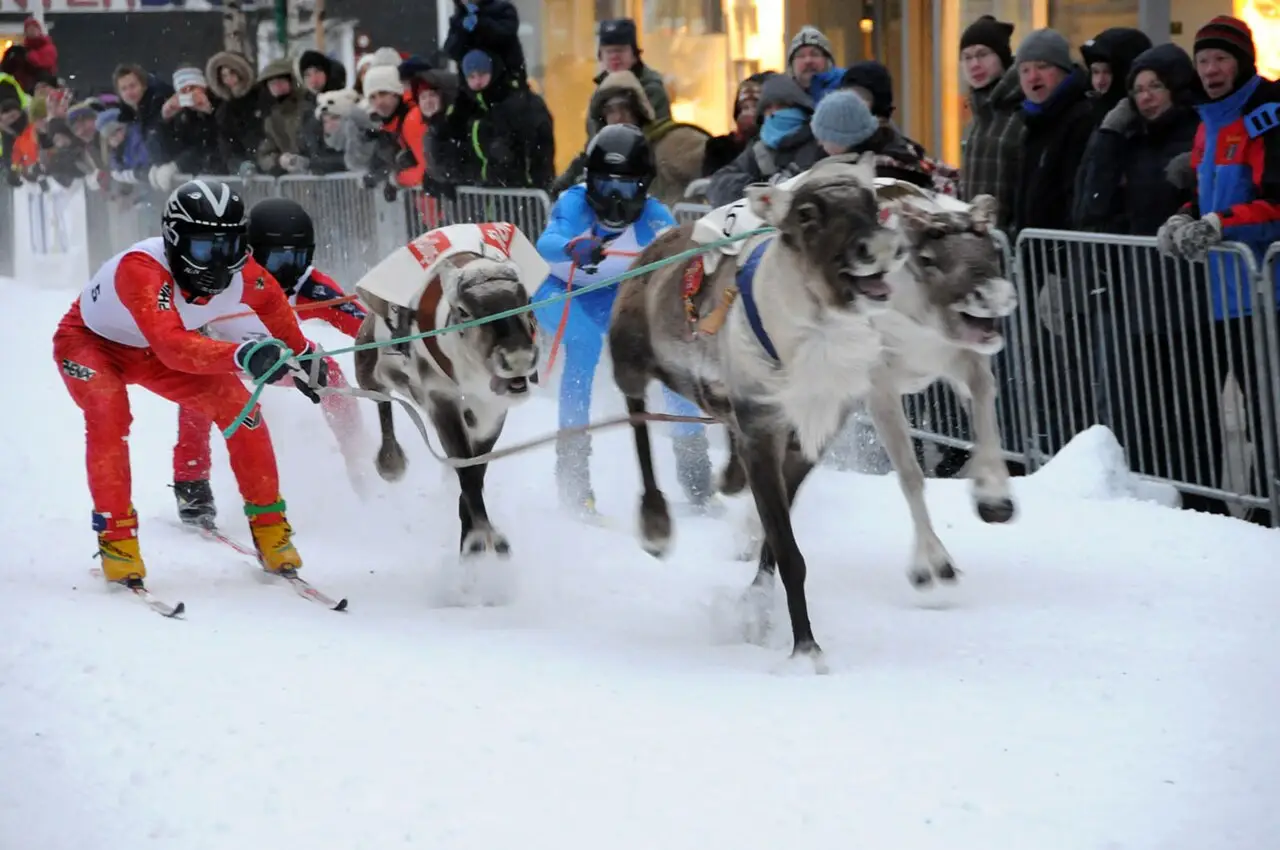
Sámi Week and February 6
First week of February, around Sámi National Day. Reindeer races pulling skiers down the Storgata, a duodji market, joik singing and lasso throwing.
 AI illustration
Midnattsolmaraton
A Saturday close to the solstice, in June, since 1990. The marathon starts around 8:30pm and finishes in the small hours under full sun, with shorter races the same day.

Bukta Tromsø Open Air
July, at Telegrafbukta beach, on the island's southern tip. Three days of rock and Norwegian music outdoors, still within the midnight-sun period.
Books and films
“Alberta and Jacob” (1926), by Cora Sandel
Cora Sandel, born Sara Fabricius, lived in Tromsø from 1892 to 1905, and “Alberta and Jacob” is set in a recognizable northern town. The novel shows the cold, the social surveillance and the polar night from inside a family home.
“Insomnia” (1997), by Erik Skjoldbjærg
Erik Skjoldbjærg's crime thriller, shot in northern Norway, about a detective who can't sleep under the midnight sun. It explains better than any guidebook why constant daylight keeps you awake.
“Substrata” (1997), by Biosphere
An album by Geir Jenssen, a Tromsø resident, made of slow layers and field recordings from the north. It became the sonic definition of Arctic landscape and works as a mørketid soundtrack.
Frequently asked questions
Tromsø: How do you get from the airport to downtown?
By bus: the express takes 10 to 15 minutes to Storgata for about 135 kr, and the city bus, which stops at Giæverbukta, 5 to 8 minutes on foot from the airport, makes the same trip for 50 kr paid through the Svipper app.
Tromsø: Does Norway use the euro?
No: the currency is the Norwegian krone (NOK, kr), and Norway, part of Schengen, lies outside the European Union. In 2026 one euro runs around 11 to 12 kr, and one dollar between 10 and 11 kr. The country is among the least cash-reliant in the world: buses, taxis, markets and boats are paid with contactless cards, and some places don't accept banknotes.
Tromsø: Do I need to take off my shoes at someone's home?
Yes: at someone's home, shoes come off at the door, always, even at a party and especially with melted snow on the soles, so clean socks are part of your visiting outfit.
Tromsø: Is it safe for tourists?
Yes: Tromsø has a very low violent crime rate, and the real risk is black ice on the sloped sidewalks, which calls for ice cleats, and, for anyone climbing the mountains in winter, avalanches (check varsom.no).
Tromsø: What is skrei, and how is it eaten?
Skrei is the migratory cod of the Barents Sea, which reaches the coast between January and April to spawn and is the most prized product of winter. It comes boiled with potato and carrot, or as mølje, with liver and roe on the same plate.
Other cities in the country
Norway ↗- Days
- 2
- When
- May–Aug
- Per person/day
- Average 1,100–1,700 NOKMid-range · per person/day
Cost scope
Per person per day: accommodation, meals, urban transport, visits and a small allowance for extras. Flights excluded; larger purchases vary. Editorial estimate, not a quote.