Colombia
Bogotá
Museo del Oro, Monserrate, the Ciclovía and ajiaco
Days Start with the basic programme and choose extensions for the time you have.
How the guide reaches this number
The Museo del Oro and Museo Botero offer different reasons to linger: the first brings you closer to the lives and offerings of pre-Hispanic societies; the second brings together Botero’s work and the art collection he donated. Check each museum’s calendar before choosing the date. If that day includes arrival or departure, reduce the program to account for travel, hotel check-in or checkout and luggage storage; those hours are not all visiting time. With another day available, Monserrate is an option once you have adjusted to the altitude and feel well, subject to operations and the forecast that day. If it is not the right time to ascend, keep to lighter activities and postpone the mountain. On a Sunday or public holiday, I would choose a section of the Ciclovía in the morning; the Usaquén flea market can be another option on its opening days. You need not do both: travel, bicycle return, lunch and rest also take up the day. With only one free day, I prefer to focus on one area and interest, such as the central museums or a morning on the Ciclovía with a meal and return journey. Free Sunday admission at the Museo del Oro may influence the choice, but it does not determine the date alone or guarantee time for every program. I would allow more days to explore other neighborhoods, add visits and walk at a relaxed pace, after checking access and travel.
2–3
When January, February, July and August generally have less rain across much of the urban area; compare the forecast and visit calendars for your dates
How the guide reaches this number
Bogotá has a cool high-altitude climate throughout the year. In IDEAM’s 1991–2020 normals, monthly mean temperatures at El Dorado station are close to 14 °C; this airport record does not describe every part of the city or the temperature of a specific visit. Prepare for changes between day and night, with clothing layers and rain protection.
Per person/day Budget about 96,000 COP; mid-range about 239,000 COP; comfortable about 597,000 COP per person, based on what travellers report to Budget Your Trip (checked October 2026).
How the guide reaches this number
Compare accommodation for your dates and check taxes and what the rate includes.
Budget about 96,000 COP; mid-range about 239,000 COP; comfortable about 597,000 COP per person, based on what travellers report to Budget Your Trip (checked October 2026). Compare accommodation for your dates and check taxes and what the rate includes.
Per person per day: accommodation, meals, urban transport, visits and a small allowance for extras. Flights excluded; larger purchases vary. Editorial estimate, not a quote.
 What Nilo thinks
I would allow a day for the central museums, with a meal and breaks between visits. The Museo del Oro and Museo Botero offer different reasons to linger: the first brings you closer to the lives and offerings of pre-Hispanic societies; the second brings together Botero’s work and the art collection he donated. Check each museum’s calendar before choosing the date. If that day includes arrival or departure, reduce the program to account for travel, hotel check-in or checkout and luggage storage; those hours are not all visiting time. With another day available, Monserrate is an option once you have adjusted to the altitude and feel well, subject to operations and the forecast that day. If it is not the right time to ascend, keep to lighter activities and postpone the mountain. On a Sunday or public holiday, I would choose a section of the Ciclovía in the morning; the Usaquén flea market can be another option on its opening days. You need not do both: travel, bicycle return, lunch and rest also take up the day. With only one free day, I prefer to focus on one area and interest, such as the central museums or a morning on the Ciclovía with a meal and return journey. Free Sunday admission at the Museo del Oro may influence the choice, but it does not determine the date alone or guarantee time for every program. I would allow more days to explore other neighborhoods, add visits and walk at a relaxed pace, after checking access and travel.At the Museo del Oro, the Muisca Raft is just 19.5 cm long, with figures gathered around a central character. The small offering is interpreted as a representation of a chief’s investiture, associated with the legend of El Dorado. In La Candelaria, the Museo Botero places the painter’s work alongside Picasso, Monet and Dalí, with free admission. Between visits, ajiaco santafereño offers another way into the city: a chicken soup with three kinds of potato, corn and guascas, the herb that gives it its aroma. I would begin with the central museums, leaving time to look at the pieces and have a meal, and checking each place’s calendar before combining visits. Monserrate can come at another point, after adjusting to the altitude and subject to opening and operations that day; the funicular or cable car reduces exertion, but not the altitude at the destination. On Sundays and public holidays, the recreational Ciclovía opens selected roads for cycling and walking, usually from 7am to 2pm. Choose a section using the map and weekly notices, and allow time to return the bicycle, rest and get back to your accommodation. The length of the trip depends on those choices and your pace; I would not try to fit all the neighborhoods and the mountain into the same day.
Quick facts
- Population
- about 7.95 million in the Capital District — DANE projection for 2026, series updated in 2025
- Founded
- August 6, 1538 is the commemorated date; the Cabildo, Santa Fe’s municipal government, was created on April 27, 1539.
- Country and region
- Colombia, Capital District; Bogotá sabana, in the Eastern Cordillera of the Andes. Urban area at roughly 2,600 m above sea level, varying by location.
- Language
- Spanish. In Bogotá, “usted”, “tú” and “sumercé” vary with the relationship and situation; ask how the person prefers to be addressed.
- Currency
- Colombian peso (COP); check a dated rate for your currency and payment fees
- Time zone
- UTC−5, no daylight saving
- Best time to visit
- January, February, July and August generally have less rain across much of the urban area; compare the forecast and visit calendars for your dates
- Average daily cost
- Budget about 96,000 COP; mid-range about 239,000 COP; comfortable about 597,000 COP per person, based on what travellers report to Budget Your Trip (checked October 2026). Compare accommodation for your dates and check taxes and what the rate includes.
When to go
January, February, July and August generally have less rain across much of the urban area; compare the forecast and visit calendars for your dates
March
9° to 20°C
83 mm of rain
April
10° to 20°C
117 mm of rain
May
10° to 19°C
109 mm of rain
June
9° to 19°C
57 mm of rain
September
8° to 19°C
57 mm of rain
October
8° to 19°C
108 mm of rain
November
9° to 19°C
107 mm of rain
December
8° to 20°C
61 mm of rain
How the year changes

Bogotá has a cool high-altitude climate throughout the year. In IDEAM’s 1991–2020 normals, monthly mean temperatures at El Dorado station are close to 14 °C; this airport record does not describe every part of the city or the temperature of a specific visit. Prepare for changes between day and night, with clothing layers and rain protection.
Rain is the main difference between seasons. IDIGER describes two periods of higher rainfall, peaking in April and May and in October and November. January, February, July and August generally have less rain across much of the urban area, but the east and southeast have distinct patterns and rain can also fall in those months. These are historical patterns: they do not promise a sunny morning, rain at a fixed hour or a rain-free season. For walking and cycling, I would start comparing those lower-rainfall months alongside the calendars of visits and events that interest you.
Check the forecast and local notices near your dates and allow room to replace an outdoor activity with an indoor visit or rest, subject to opening hours. Do not count on a clear view from Monserrate simply by choosing a month. Clouds and feeling cold do not eliminate ultraviolet exposure: seek shade, wear protective clothing and use sunscreen on uncovered areas. If you have just arrived at altitude, keep your programme light according to your adjustment rather than using a sunny spell to force an ascent.
The same numbers as a table
| Month | Temperature °C | Rain mm |
|---|---|---|
| January · | 6 to 20 | 33 |
| February · | 8 to 20 | 51 |
| March | 9 to 20 | 83 |
| April | 10 to 20 | 117 |
| May | 10 to 19 | 109 |
| June | 9 to 19 | 57 |
| July · | 9 to 19 | 49 |
| August · | 8 to 19 | 44 |
| September | 8 to 19 | 57 |
| October | 8 to 19 | 108 |
| November | 9 to 19 | 107 |
| December | 8 to 20 | 61 |
Nilo's tips
Ciclovía and the market: choose the route and check the day
Recreational Ciclovía normally runs on Sundays and public holidays, 7am–2pm, on selected roads. Check IDRD’s weekly route and notices before renting a bike; choose a section that fits your base, pace and return location, without counting on empty avenues. If combining it with Usaquén, allow for travel, lunch and rest. The flea market operator lists Saturdays, Sundays and public-holiday Mondays, 9am–5:30pm; confirm operation on your visit date.
Separate the ascent, basilica and return at Monserrate
Transport publishes a 6:30am start Monday to Saturday and on public holidays, and 5:30am on Sundays. Normal closing is 10pm Monday to Saturday, except public holidays, and 5pm on Sundays and public holidays; maintenance and availability may change funicular or cable-car operation. Check the basilica too: it opens at 6am on other days, but at noon on Tuesdays. Do not use the transport start as the church’s entry time.
Bring a layer for the hill and fit the visit around adjustment to altitude and the day’s conditions. The IDRD trail normally admits ascents Wednesday to Monday, 5am–1pm, with descents until 4pm; it closes on Tuesdays. If you want to visit Quinta afterwards, first return to the base, rest and confirm the museum is open. Allow for the journey to its entrance and the visit without relying on five minutes from the hilltop.
Check tullave before counting on free transfers
In 2026, tullave costs COP 8,000, plus credit; check the current price and purchase/top-up points before boarding. The basic card does not give the transfer benefit. Personalized Plus allows free connections within the 125-minute window, under system rules and exclusions. Confirm where to personalize and which documents are accepted before relying on the saving; the same route, the same stop and some combinations are excluded. Check the service’s direction and hours and keep enough credit for the journey.
Confirm the terminal and transport at El Dorado
Check your flight’s terminal and operating airline, including connections. If you need to move between T1 and T2, check OPAIN’s free shuttle and allow transfer time. On arrival, seek the official taxi’s identified staff or arrange an accommodation transfer; confirm the vehicle, meeting point and price. Fit hotel departure around checkout, luggage and the airline’s required boarding lead time.
Have another payment option besides your card
Check whether the business accepts your card before ordering. For a small purchase, carry some cash and ask about available change; do not assume every vendor can accept a large note. I would compare the menu and what comes in a corrientazo, a set lunch, before choosing it or an à la carte meal. The displayed price and contents help more than a generic range for the whole city.
Check accommodation VAT and the tip on the bill
Before booking, ask the hotel for the final price and the conditions and documents for any VAT exemption. Residence abroad, an eligible service and a provider registered in the Registro Nacional de Turismo (RNT) matter; a passport or nationality alone is not enough. In a restaurant, the suggested tip on the bill is voluntary, up to 10%, and you must be asked beforehand. You can decline or change it; if you were not consulted before the bill was issued, you can still request an adjustment.
Explore the map
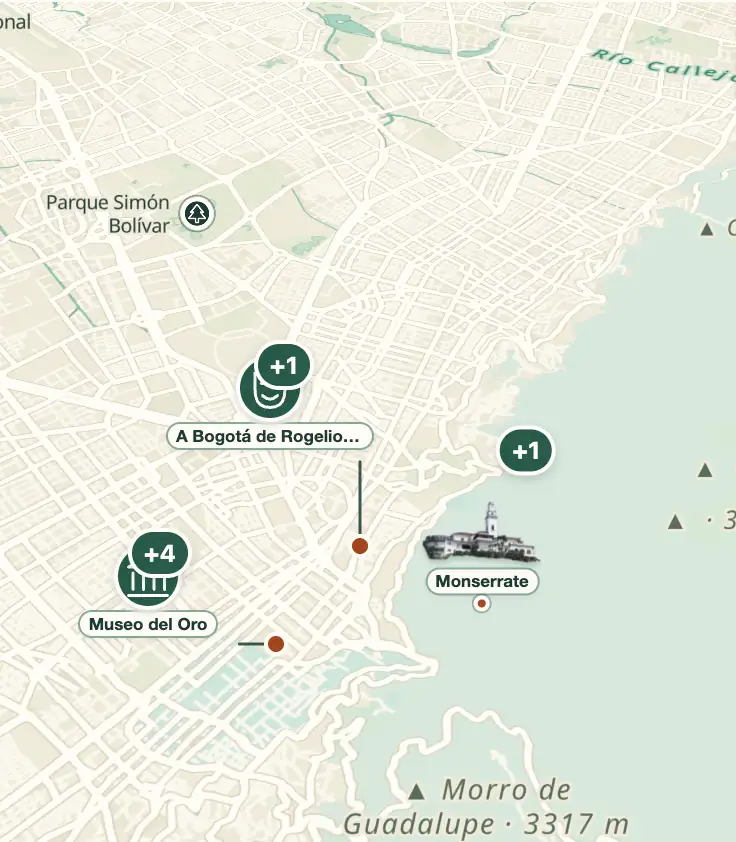
© OpenStreetMap · OpenFreeMap · © OpenMapTiles
Explore the map, read about the other places and plan your travel days in the app.
Open the appWhat to see
Bogotá: The wall to the east
The city grew along that wall, in a narrow north-south rectangle about 40 km long and 15 km wide, and the grid follows a logic: calles run east-west and increase in number going north; carreras run south-north and increase going west; an address like “Calle 72 # 10-34” means 34 meters from Carrera 10, on Calle 72.

Museo del Oro
The Museo del Oro brings together archaeological objects in metal, ceramics, stone and wood. I would begin with the relationships between these materials and the uses explored in the rooms, choosing a route according to your interests. The Balsa Muisca, found in a cave in Pasca in 1969, measures 19.5 cm; it is commonly interpreted as a depiction of a chief’s investiture, linked to the El Dorado tradition. This is an interpretation of the object, not a literal record of the ceremony.
The museum publishes opening Tuesday to Saturday, 9am–7pm, and Sunday, 10am–5pm; it closes on Mondays, with last admission one hour before closing. A general individual visit does not require advance booking. Check the calendar, applicable admission rate and free-entry conditions, including the free Sunday admission advertised; group activities can have their own conditions.
From October 6 to November 6, 2026, Banco de la República announces intermittent closures of permanent exhibition rooms for renewal. Check which rooms will be accessible before setting out and adapt your visit; the notice does not mean the entire museum is closed. Do not rely on a particular object or room without confirming availability.
The collection helps connect objects with the practices of different societies. Choose available rooms; check the calendar, including partial renewal in October and November 2026, before arranging the visit.
Check access
Monserrate
The Señor Caído sanctuary stands on top of Monserrate, at 3,152 m. Worship began in a seventeenth-century hermitage; the current building was completed in 1925 and gained its neocolonial appearance in the 1949 renovation. The funicular and cable car, inaugurated in 1929 and 1955, connect the base to the hill according to the day’s operation.
Check transport and basilica hours separately: on Tuesdays, the church opens at noon even if transport is already running. Clouds affect the view. The sendero peatonal, a trail managed by the IDRD, normally admits ascents Wednesday to Monday from 5am to 1pm, with descents until 4pm; it closes on Tuesdays and may have additional restrictions. The trail does not admit children under one metre tall or pets. Walking requires effort at altitude.
The map point represents the hilltop. To continue to Quinta de Bolívar, first return to the base by your chosen access, then arrange the journey to the museum; allow for queues, the return and rest.
The relationship between sanctuary and city seen from the hill makes this a worthwhile choice if you have adjusted to altitude. Check transport and basilica hours separately; clouds may obscure the view, and the church opens at noon on Tuesdays.
Check access
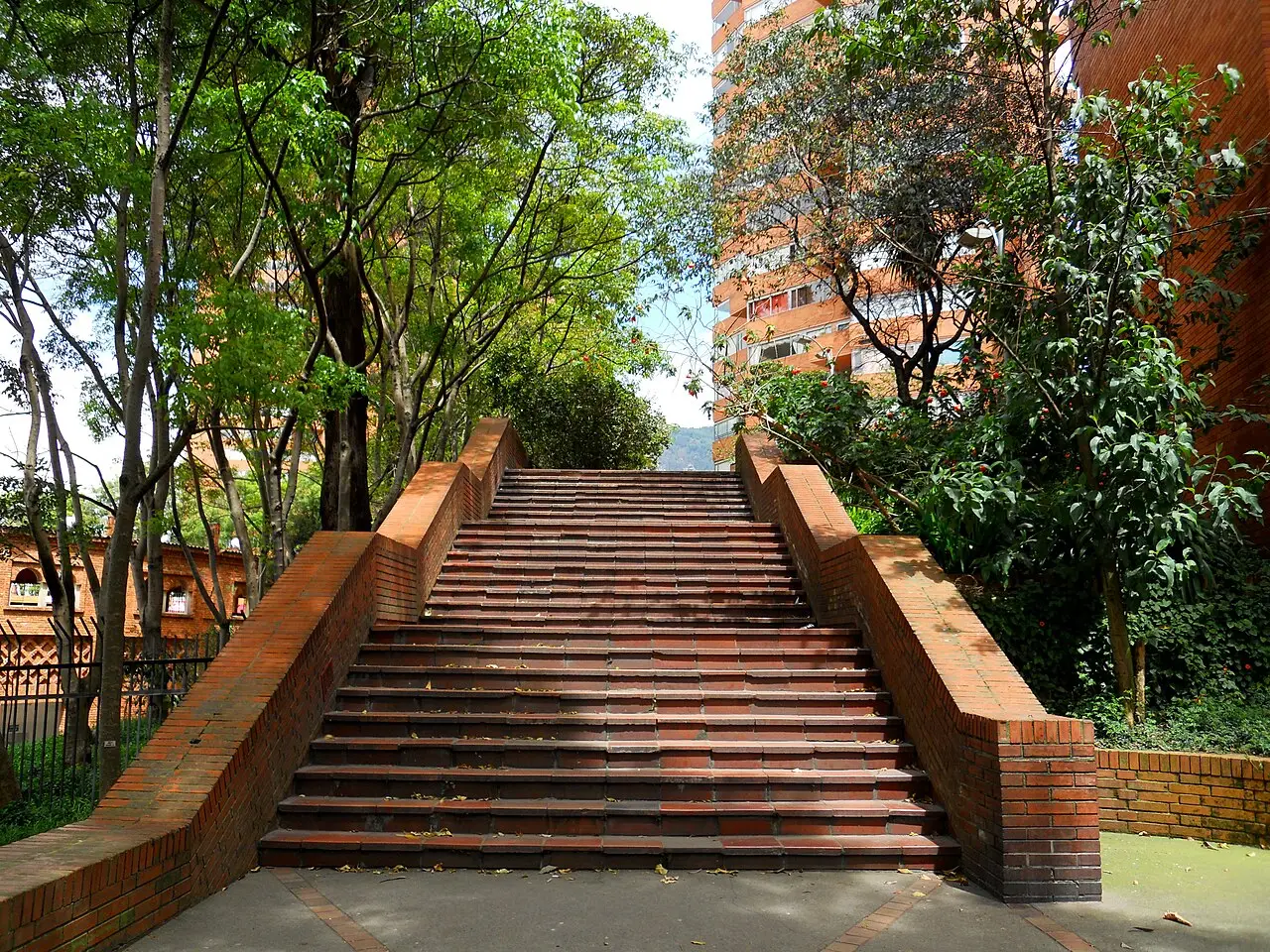
Torres del Parque
Torres del Parque, completed in 1970, is a residential ensemble by Rogelio Salmona beside Parque de la Independencia and the bullring. Brick, curved volumes and the relationship between buildings, gardens, ramps and steps help explain how the architect approached the meeting of housing and public space. I would begin by looking from outside, respecting residents and private access.
To explore other works, choose separate visits. MAMBO, the Museo de Arte Moderno de Bogotá, opened the first stage of its Salmona-designed home in 1979 and completed construction in 1985. Museum entry depends on admission and the calendar: the operator lists Tuesday–Saturday 10am–6pm, and Sundays and public holidays noon–5pm, with last admission 45 minutes before closing. It closes on Mondays; after a public-holiday Monday, it closes on Tuesday. Check exhibitions, hours and admission conditions for your date.
The Eje Ambiental on Avenida Jiménez, by Salmona and Luis Kopec, is a public-space intervention that evokes the San Francisco River. Biblioteca Pública Virgilio Barco, inaugurated in 2001, stands in Teusaquillo in the park ensemble to the west; it is another destination with its own services and calendar. BibloRed lists Tuesday–Saturday 8am–7pm and Sunday 10am–5pm, with no service on Mondays and public holidays. Check library notices before going.
I would choose one work according to my interests and available time. To combine Torres and MAMBO, check access to each and leave room for a meal and rest between visits; the library needs another journey. There is no need to cover all four works in one day. Arrange the return around your chosen visit and save the others for another day if their hours and journeys will not fit.
I would choose Torres to see how brick, gardens and changes of level bring housing and public space together. An exterior visit respects residents; MAMBO and Biblioteca Virgilio Barco remain choices with their own access.
Check access
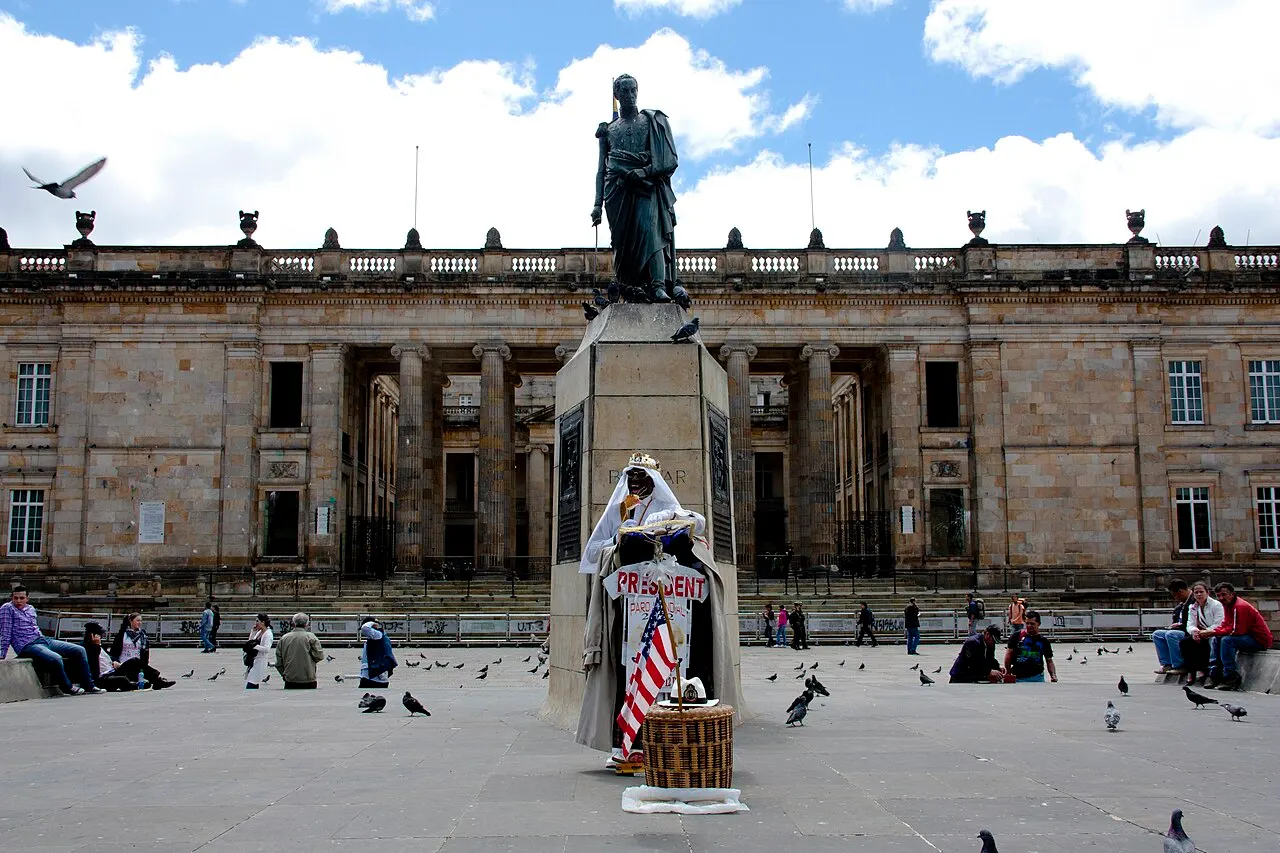
Plaza de Bolívar
On Plaza de Bolívar, the façades bring public institutions and religious life together: Catedral Primada, Capitolio Nacional, the city hall’s Palacio Liévano and Palacio de Justicia. I would begin by looking at the relationship between these buildings and the open space before choosing an interior. The square also hosts gatherings, demonstrations and cultural activities; the day’s program can change how people move through it.
Domingo de Petrés designed the cathedral, with Nicolás León continuing the work after the architect’s death; it was consecrated in 1823. Construction of the Capitol extended from 1848 to 1926. On the former Plaza Mayor, Policarpa Salavarrieta was executed on November 14, 1817, during the Spanish reconquest. These histories offer a way to look at the square beyond a list of buildings.
Visiting the public space does not automatically include the interiors. To enter the cathedral, check opening and services; for the Capitol, check guided-visit availability and registration. Casa del Florero is the Museo de la Independencia, at Carrera 7 No. 11–28, with its own admission arrangements and calendar. Choose one of these visits if it fits your day and allow for lunch, a break and the next transfer.
Choose it for the relationship between public buildings, the cathedral and the square’s uses. Look at the ensemble and select an interior by your interests, checking access and the calendar; arriving at 9am does not guarantee small crowds.
Check access

Museo Botero
Fernando Botero’s donation in 2000 brought together 208 works: 123 of his own and 85 by international artists. I would choose a few paintings and sculptures to look at closely, letting the comparison between Botero’s visual language and his collection guide the visit. Admission is free; the size of the donation does not determine how long you should stay.
The building at Calle 11 No. 4–41 occupies the site of the former Archbishop’s Palace, destroyed in 1948 and rebuilt before housing the museum in 2000. It belongs to the Manzana Cultural with MAMU and Casa de Moneda. Museo Botero closes on Tuesdays; check the calendar and hours for your date. Biblioteca Luis Ángel Arango is another possible visit in the area, with its own access arrangements and calendar, and closes on public holidays. Do not rely on it as an automatic replacement for a closed museum.
Choose the museum to compare Botero’s work with the collection he donated. Free admission lets your interests guide the route; check the calendar, as it closes on Tuesdays.
Check access
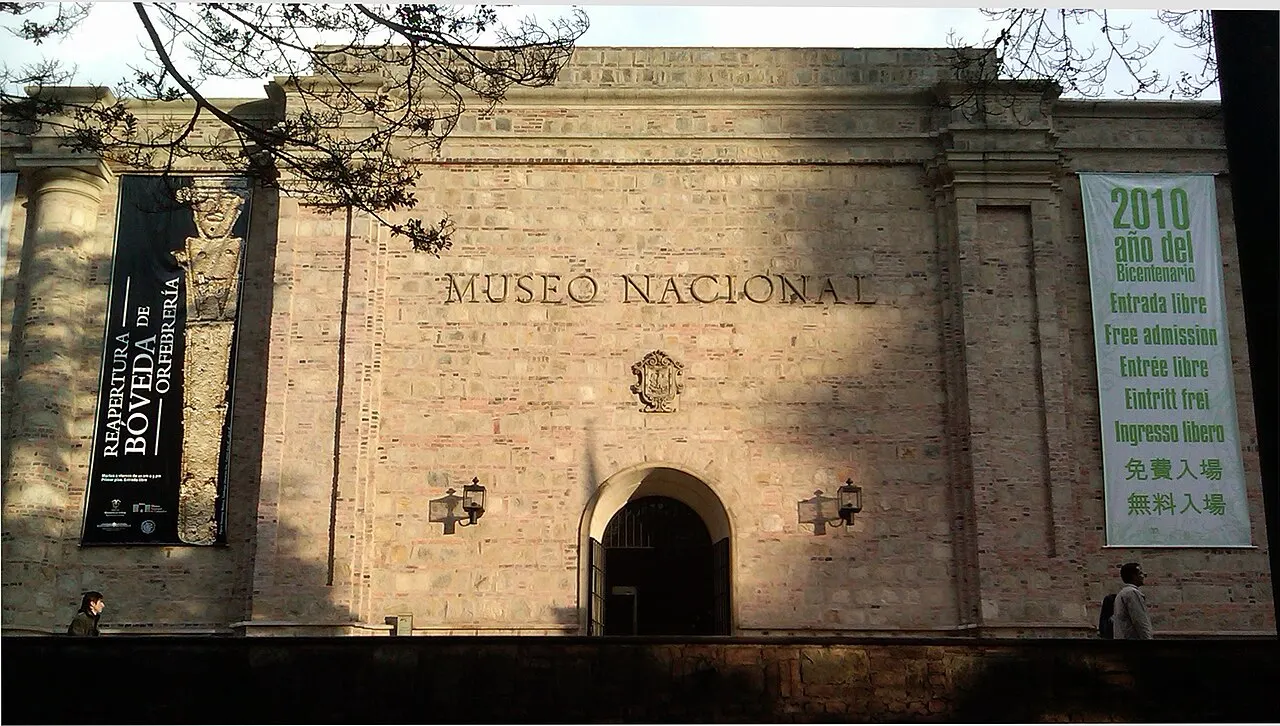
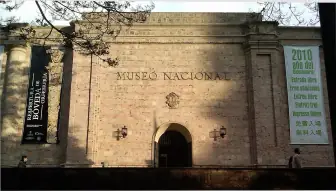
Museo Nacional de Colombia
Founded in 1823, the Museo Nacional de Colombia brings together art, archaeology, ethnography and history collections. I would choose rooms by the subject you want to explore, allowing time for the relationship between objects and accounts of the country.
The site occupies the former Penitenciaría Central de Cundinamarca, known as the Panóptico. Thomas Reed designed it, and construction began in 1874; that year marks the start of building work, not the creation of the design. Although the name refers to seeing the whole space, the completed structure does not match the panopticon building type. After the building was adapted, the museum opened here on May 2, 1948. Its change from prison to museum is also part of the visit.
Check exhibitions, accessible rooms, the calendar and admission before going. The museum publishes opening Tuesday to Sunday and closure on Mondays; confirm hours and any changes for your date. It can be the main choice for a day with a meal and a break, instead of being added automatically after Monserrate and Quinta de Bolívar.
Choose the museum to explore history and art alongside the transformation of a former prison. Select rooms according to your interests and check the calendar and admission; allow for a meal and a break without relying on fitting it in after the hill.
Check access

Chorro de Quevedo and Callejón del Embudo
Chorro de Quevedo is a small square in La Candelaria connected with the memory of Bogotá’s origins. Local tradition places an early Spanish settlement here, but the precise location of the founding has not been established. I would look at it as one way the city tells its beginning, alongside the life that fills the square today.
Callejón del Embudo, beside it, brings painted façades, cafés, bars and crafts together along a narrow stone-paved passage. The square hosts gatherings and performances; the program and activity vary. Corn chicha, rooted in Muisca tradition, is among the local drinks, though a visit can simply be a chance to look at the streets and take a break.
Choose this stop if you are exploring the area and have time between other visits. The streets are narrow and access is partly pedestrian: check the route, surface and where to meet your return transport. Fit the visit around a meal and rest at your own pace rather than relying on a fixed time to find a performance or an open business.
Choose it for the social life and art of this small square-and-alley ensemble. Make it a break if you are already in La Candelaria; check access and the return journey, and choose a drink only if it interests you.
Check access
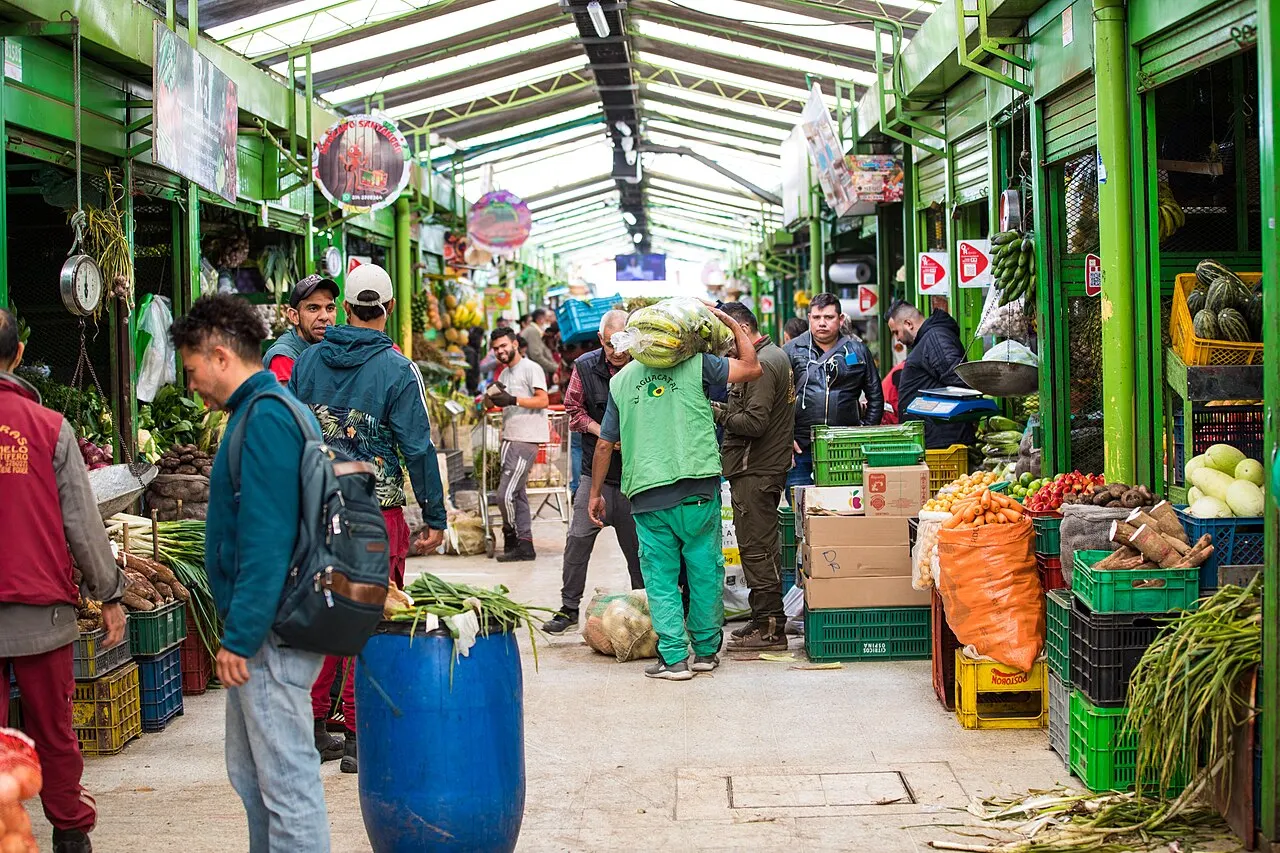
Plaza de Mercado de Paloquemao
Paloquemao supplies Bogotá’s households and businesses with fruit, vegetables, flowers, meat, dairy products and other food. Traders began working here in 1972, in a market whose design had started in 1962. I would choose a visit for that variety and for the connections between everyday shopping, cooking and agricultural production.
Entry is free. The operator lists Monday–Saturday opening from 4:30am to 4:30pm, and Sundays and public holidays from 5am to 4:30pm; confirm the closing time for your date, especially on Sunday. Each stall sets its own hours, and some close before the market does. Prefer the morning and check the businesses you want to visit: do not count on every fruit being available, tastings or sales by the piece. Ask the price, minimum quantity and how food is prepared before buying. Flowers and cafés are other possibilities, depending on which businesses are open.
I would choose Paloquemao for its food supply and the ingredients of local cooking. Prefer the morning, check stall hours and agree on price and quantity before buying.
Check access
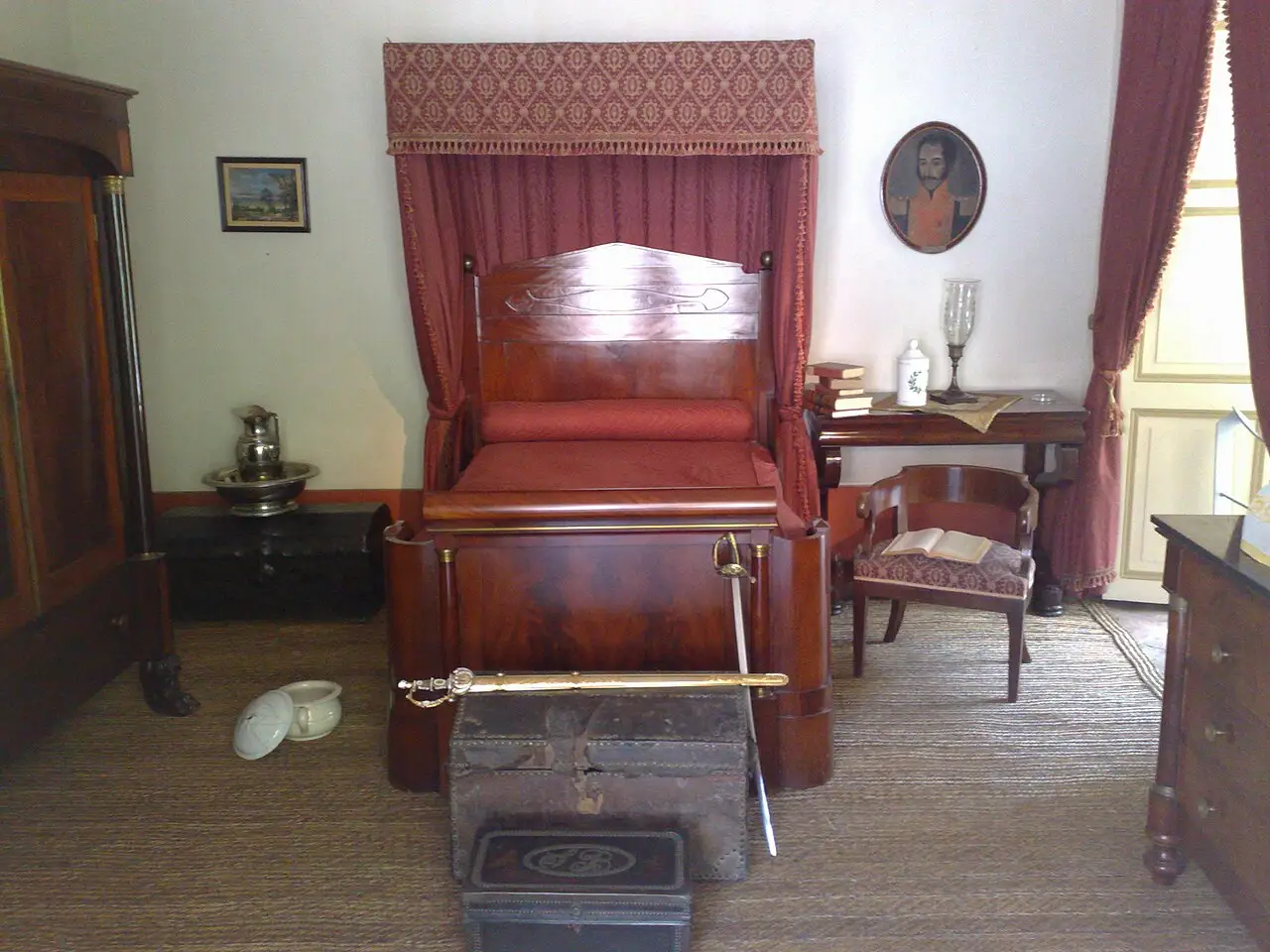
Quinta de Bolívar
Quinta de Bolívar is a country house at the foot of Monserrate. José Antonio Portocarrero bought the land in 1800, and the house was built after that purchase; in 1820, the government gave it to Simón Bolívar. Today, the visit combines a garden and restored rooms with a historical collection including documents, furniture and objects connected with Bolívar, alongside pieces that recreate the setting of his period.
The museum publishes opening hours Tuesday to Friday, 9am–5pm, and Saturday and Sunday, 10am–5pm. It closes on Mondays, including public holidays, and on January 1, May 1 and December 25; confirm hours and notices for your date, as well as admission and free-entry conditions. Educational visits have their own conditions.
I would choose it for an interest in the house and Bolívar, even without going up the hill. If combining the visits, first allow for the full descent from Monserrate, then the journey to the entrance at Calle 21 No. 4A–30 Este and time in the museum. Proximity at the base does not guarantee a five-minute connection from the map point.
For an interest in Bolívar and a restored country house, Quinta is worth choosing as a visit in its own right. Combine it with Monserrate only after checking opening, the descent and available time; the museum closes on Mondays, including public holidays.
Check access
Nilo’s itinerary
Start with the basic programme and choose extensions for the time you have.
Plan my days in the app ↗Day 1 · Central museums, with lunch and rest
Museo del Oro: choose rooms by your interests and check admission, the calendar and availability. It closes on Mondays; from October 6 to November 6, 2026, a notice announces intermittent closures of permanent rooms for renewal. Confirm what you will be able to visit. A general individual visit does not require advance booking, but check conditions for any particular activity and last admission, one hour before closing. Choose your visit length according to your interests and the breaks you need.
Museo Botero: it is an independent choice or a second visit if the calendar, transfer and your energy allow. Admission is free, and the museum closes on Tuesdays. If you choose both museums, arrange the connection after a break, checking the route and means of transport. Biblioteca Luis Ángel Arango has its own calendar and closes on public holidays; include it only if you want to visit and have confirmed access.
Allow for lunch and rest, with or without a museum. Choose a meal near where you are to avoid crossing the city just for lunch. On an arrival or departure day, adapt the program to check-in or check-out, luggage storage and the next transport’s departure. Rest and a meal can also be the entire program.
After the main choice, decide whether to continue or return to your accommodation. Check time, the route and return transport; a break does not need another stop. Save the second visit for another day if combining them reduces rest or interferes with an existing appointment.
Day 2 · Monserrate or museums, with a break
Monserrate is an option after adjusting to altitude and when feeling well; postpone the ascent if you have symptoms. The funicular and cable car reduce effort but do not remove exposure to altitude. Check the day’s operation and hours, including the return, and allow for queues and breaks. Walking requires more effort and depends on the IDRD trail being open; choose it only in suitable conditions and after checking notices. The trail does not admit children under one metre tall or pets. If visiting the basilica, check its hours: it opens at noon on Tuesdays.
Quinta de Bolívar: choose the museum on its own or, if you have time and energy, after Monserrate. In the combined option, first descend fully to the base, take a break and arrange the journey to the entrance at Calle 21 No. 4A–30 Este; the Monserrate map point is at the top. Check opening: normally Tuesday to Friday, 9am–5pm, and Saturday and Sunday, 10am–5pm; it closes on Mondays, including public holidays, January 1, May 1 and December 25. Confirm the calendar and admission before setting out.
Museo Nacional de Colombia: this is another choice for the day, instead of the hill ascent and Quinta. Choose rooms according to your interests and allow time for the visit and a meal; check the museum calendar, which publishes opening Tuesday to Sunday and closure on Mondays. Confirm hours and any changes for your date before arranging the journey to its address on Carrera 7, between calles 28 and 29.
Allow for lunch and rest, whether or not you visit a place. If this is an arrival or departure day, fit the plan around check-in or checkout, baggage storage and the next transport departure. You can also choose only rest and food, leaving the visits for another day; a break does not need another stop.
In the evening, choose a meal near your accommodation if you still want to go out, or end the day with rest. To continue in another area, decide how to get there and back and whether you have time and energy; that continuation is optional in this proposal.


If you stay longer
Day 3 · One market, Ciclovía or rest
If choosing Paloquemao, prefer the morning and check stall hours and access from your accommodation. Market entry is free, but products and meals are paid for; ask the price and quantity before buying. Allow time to look around, eat and rest, without automatically combining this market with Usaquén or Ciclovía.
If choosing recreational Ciclovía, check IDRD’s map and notices for your date. Normal operation is on Sundays and public holidays, 7am–2pm, on selected roads. Choose a section that fits your base and pace, confirm rental and return if using a bike, and include breaks. The route depends on that section; leave the markets as options for another day.
If choosing the Usaquén flea market, confirm opening for your date and arrange the journey to Carrera 6A between Calles 119 and 120A. The operator lists Saturdays, Sundays and public-holiday Mondays, 9am–5:30pm. Make this area the day’s visit rather than assuming a quick connection with Paloquemao or any Ciclovía section.
For any option, leave room for a meal and rest near where you are. Choose an open business according to its menu, ingredients and prices; a café or drink stop is optional. If you prefer rest, use the day to eat and settle into the city’s pace without needing to add a visit.
Before leaving, confirm check-in and check-out times, where to leave luggage and the time needed to return or continue your journey. Arrange transport around the option you choose and allow a margin for waits and delays. On an arrival or departure day, shorten or skip the visit if it will not fit.
Food
 AI illustration
Ajiaco santafereño
Chicken soup with sabanera, pastusa and criolla potatoes, corn and guascas, the herb that gives its distinctive flavour. In the traditional preparation, the potatoes help thicken the broth; cream, capers and avocado are frequent accompaniments. I would choose it for a meal break in the centre, checking the menu, kitchen hours and what comes with the portion.
 AI illustration
Tamal santafereño with chocolate
Corn dough steamed in a banana leaf, with a filling that varies between regions and family recipes. The santafereño version uses ingredients such as chicken or hen and tocino, pork belly. It is traditional on Sundays and at celebrations, but can also form part of other meals. I would choose it for a break in the day’s neighbourhood, asking about the filling, serving hours and whether hot chocolate and cheese come separately.
 AI illustration
Changua
Broth with milk, egg and coriander, often eaten for breakfast. It may come with pieces of bread; some versions use calao or almojábana and add cheese. Recipes and accompaniments vary. I would ask how the place prepares its changua and what comes with the portion, leaving time to eat before the first visit.
 AI illustration
Caldo de costilla
Beef rib broth with potato, scallion and coriander, often eaten for breakfast at markets and traditional eateries. I would choose it before the visits if the kitchen is serving, checking the portion size and accompaniments. Serving hours depend on the place.
 AI illustration
Fritanga
A picada to share, with a varying combination of meat, offal and sausages such as morcilla, chunchullo and longaniza, accompanied by potatoes, plantain or arepas. Chunchullo is beef intestine; ask about the ingredients before ordering. Portion size and accompaniments vary between places. I would agree with the group on what to share, ask the price and choose a drink separately, leaving a meal break along the day’s route.
 AI illustration
Obleas
Two thin wafer discs with arequipe, dulce de leche, and filling options such as grated cheese, blackberry or coconut. They are sold at stalls, squares and dessert shops. I would choose the fillings and ask the price of that combination before ordering, taking a break along the day’s route.
 AI illustration
Chicha and canelazo
Corn chicha carries a Muisca tradition that remains part of Bogotá’s popular life. Fermentation changes its flavor and alcohol content; in Callejón del Embudo it may be served in a totuma, a gourd cup. In 1948, sanitary rules required processes and packaging that restricted artisanal production. The drink persisted in places such as La Perseverancia, where its public revival also took the form of a festival begun in 1987.
Canelazo is another choice: a hot cinnamon drink, often with aguapanela, water sweetened with unrefined cane sugar, and aguardiente, an anise-flavored cane spirit. Recipes vary, including the spirit used. Ask about ingredients and alcohol when choosing; aguapanela without a spirit is an alternative if the business prepares it. The break can fit a visit to the center rather than require a separate return to the neighborhood just to drink at night.
 AI illustration
Tinto and specialty coffee
In Colombia, tinto means black coffee. Ask about cup size, preparation and price before ordering. Bogotá also has specialty cafés in neighbourhoods such as La Candelaria and Chapinero, offering origin coffees and different brewing methods. I would fit a break into the neighbourhood you are already visiting: check the address and opening hours of your chosen café and ask which beans and methods are available that day, rather than cross the city to complete a café checklist.
Day trips

Zipaquirá or Nemocón
These are two distinct visits outside Bogotá. The current Salt Cathedral of Zipaquirá opened in 1995; its operator describes the three naves as 180 m underground. The Nemocón Salt Mine is another option, with spaces such as the brine reflecting pools, chapel and Museo de Historia de la Sabana. I would choose one according to your interest in religious architecture or visiting the mine, rather than add the second simply because it is nearby.
For the Cathedral, the operator publishes daily visitor hours of 9 am to 4.40 pm, with final ticket sales at 4.40 pm. Confirm current hours, your chosen ticket and what it includes, and allow time to enter and complete the visit. For Nemocón, check hours, admission and tour conditions directly with the mine.
Plan the journey from your accommodation to the attraction’s entrance, the visit, a meal break and the return. For Zipaquirá, the operator mentions buses from Portal Norte or Estación Terminal; confirm the stop, service and return for your date, as well as the leg between arriving in town and the Cathedral. If you want to visit both, arrange transport between them and check opening hours before deciding; allow room for traffic, waiting and rest.
Laguna de Guatavita
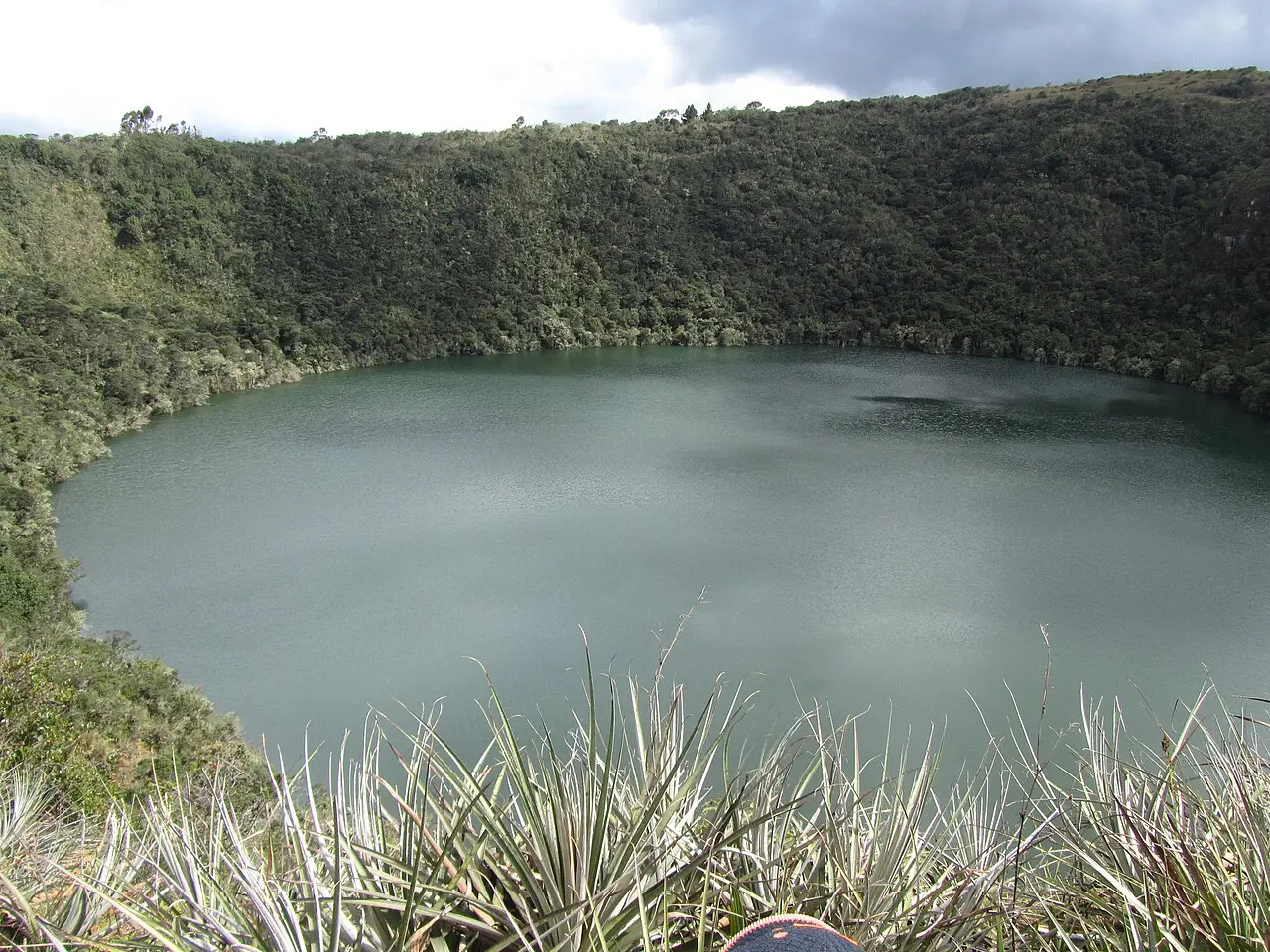
The lake is in Sesquilé, within the Laguna del Cacique Guatavita y Cuchilla de Peña Blanca reserve; it is separate from the Tominé reservoir and Guatavita town centre. It is a sacred Muisca place associated with offerings and the El Dorado tradition. The Gold Museum presents the account of a chief covered in gold as a description by Juan Rodríguez Freyle from 1636, after the conquest.
The CAR describes a group walk to the viewpoints accompanied by its guide. Check opening days, admission, walking conditions and group departure for your date, allowing time to wait and walk. The CAR visitor guidance states that food cannot be brought into the reserve, so plan your meal outside it.
For public transport, the CAR describes buses from Bogotá’s Terminal Norte to Sesquilé or Guatavita, followed by a municipal transport leg to the park. Confirm services, boarding point and return, including the journey from your accommodation to the terminal. I would allow the day for the lake, walk and a break, with clothing for cold and rain. I would only add Zipaquirá after arranging transport between the attractions and checking that admission times, a meal and the return leave enough room.

Villa de Leyva
Villa de Leyva is in Boyacá and was founded in 1572. The stone-paved Plaza Mayor and streets of the centre provide a starting point for the visit; the region also has museums devoted to fossils, including the National University’s Museo Paleontológico and Museo El Fósil. These are distinct visits, worth choosing according to your interests and available time.
For the Museo Paleontológico, the National University publishes closures on working Mondays and the working day following a public holiday, plus a midday break from Tuesday to Saturday. Check the current schedule, admission and journey to the museum before including it. For other museums and attractions outside the centre, check address, hours and access separately. Bring footwear for stone streets and clothing suited to the forecast; daytime sunshine does not remove the need for a layer at night.
I would stay one night if I wanted to combine the centre with a visit outside it. Confirm check-in, check-out and luggage storage with your accommodation, so visits do not depend on a room already being available. For a day trip from Bogotá, choose fewer stops and arrange departure and return before leaving: confirm the company, terminal, services and journey to Villa de Leyva’s centre. Include travel from your accommodation, waiting, a meal and rest, rather than treat a road journey estimate as a guaranteed length for the outing.
Where to begin
Central museums, with lunch and rest
Museo del Oro: choose rooms by your interests and check admission, the calendar and availability. It closes on Mondays; from October 6 to November 6, 2026, a notice announces intermittent closures of permanent rooms for renewal. Confirm what you will be able to visit. A general individual visit does not require advance booking, but check conditions for any particular activity and last admission, one hour before closing. Choose your visit length according to your interests and the breaks you need.
Monserrate or museums, with a break
Monserrate is an option after adjusting to altitude and when feeling well; postpone the ascent if you have symptoms. The funicular and cable car reduce effort but do not remove exposure to altitude. Check the day’s operation and hours, including the return, and allow for queues and breaks. Walking requires more effort and depends on the IDRD trail being open; choose it only in suitable conditions and after checking notices. The trail does not admit children under one metre tall or pets. If visiting the basilica, check its hours: it opens at noon on Tuesdays.
One market, Ciclovía or rest
If choosing Paloquemao, prefer the morning and check stall hours and access from your accommodation. Market entry is free, but products and meals are paid for; ask the price and quantity before buying. Allow time to look around, eat and rest, without automatically combining this market with Usaquén or Ciclovía.
Money
The currency is the Colombian peso (COP). Check a dated exchange rate for the currency you use and the fees charged by your bank, card or exchange service. The TRM published by the Superintendencia Financiera is a reference between the dollar and peso, not the final rate for every purchase or exchange. Cards are widely accepted in hotels, shops and restaurants, but confirm acceptance of your card before ordering. For small purchases, carry some cash and check available change, without carrying a large sum. Exchange money at a bank or authorised service; when withdrawing cash, prefer business hours so you can use an ATM inside a bank, supermarket or shopping centre, and stay aware of your surroundings.
To build a budget, compare accommodation on your dates per room or bed, the meals you plan to have, transport and tickets for your chosen visits. Check the stated total, taxes, cancellation and inclusions. A corrientazo, a set lunch, and an à la carte dinner are different meals; compare the menu contents and price before choosing. The average in the quick facts is a starting point: your spending depends on those choices and on prices for your dates.
In restaurants and bars, the propina is a voluntary tip: the business must ask before adding it, and the suggested tip on the bill cannot exceed 10%. You can accept, decline or change it; if you were not asked before the bill was issued, you can still request a change. For accommodation, confirm the final price before booking and whether the service meets the VAT exemption conditions for residents abroad. The rule requires an eligible provider registered in the Registro Nacional de Turismo (RNT), a qualifying service and proof of nonresident status. Nationality or a passport alone does not guarantee exemption; ask the hotel which documents your case requires. Do not automatically extend this benefit to a restaurant bill.
Getting there and around
El Dorado: check the terminal and arrange arrival
El Dorado International Airport (BOG) has Terminal 1 and Terminal 2, also called Puente Aéreo. Check your purchased flight’s terminal with the operating airline; the brand on the ticket alone does not settle every partner operation. If you need to change terminals, check the stops and operation of OPAIN’s free shuttle. Allow time for that transfer, baggage collection and rechecking where needed, check-in and controls.
To reach your accommodation, seek the identified staff and official taxi pickup point indicated by the airport; the authorized company is Taxi Imperial. Check the vehicle, estimated fare and conditions before accepting the ride. Price and journey time vary with destination, traffic and demand. An accommodation transfer is another possibility if the service, meeting point and price are confirmed.
The airport also lists routes K86 and 16-14 for the connection to Portal El Dorado and use of the tarjeta tullave, the system’s rechargeable card. Check the official route finder for your date, direction and connections to the desired address, as well as hours and where to buy and top up the card. Consider luggage, access to stops and the final leg to the hotel when choosing. Agree on check-in or luggage storage with your accommodation and allow for a meal and rest before the first outing; for departure, work backwards from the airline’s required arrival time, allowing a traffic buffer.
TransMilenio, connections and walking legs
Use TransMilenio, zonal buses and TransMiCable according to the places in your day. Check the official TransMiApp for direction, stops, hours and service changes; include waiting, connections and the final walk. Construction can change the route, so do not count on the same station access on every date.
In 2026, the published full fare is COP 3,550 and the tullave card costs COP 8,000, with credit added separately. Confirm prices before travelling. The 125-minute window for free transfers requires a personalized card and follows system rules; the same route, the same stop and some combinations fall outside the benefit. A non-personalized card does not provide that benefit; check the cost of each leg. Check purchase, top-up, personalization and balance before leaving.
Group visits by neighborhood and allow breaks; assess distance, slopes and your own pace before walking between neighborhoods. Recreational Ciclovía normally runs on Sundays and public holidays, 7am–2pm, on selected roads; check the weekly route and notices, including when planning a taxi or bus. For a taxi, request a licensed service by phone or app, or ask your accommodation. At El Dorado, follow the official taxi staff’s directions. Check vehicle and driver before boarding; a trip record does not guarantee safety.
Safety
Pickpocketing and armed robbery are distinct risks in Bogotá, including in visitor areas such as La Candelaria. Keep your phone and valuables out of sight on streets and in crowded stations; after dark, prefer transport arranged through your hotel or an app and avoid walking alone on empty streets. Do not resist a robbery or chase someone who has taken an item; find a safe place to seek help. Crimes involving scopolamine and other drugs in food and drinks have been reported: keep an eye on your drink and be cautious about invitations from strangers, including on dating apps. Avoid demonstrations and move away if there is unrest. Withdraw money from ATMs inside banks or malls and refuse help from strangers. Emergencies: 123.
Etiquette tips
Notice forms of address
“Usted” can occur between strangers and in close relationships; “tú” and “sumercé” are also used in Bogotá. Choices vary between people and situations. If unsure, I would start with “usted” and ask how the person prefers to be addressed. Knowing “sumercé” helps you follow a conversation; you can ask someone to explain its use without having to adopt the expression.
Greet on entering
I would start with “buenos días” in the morning or “buenas tardes” in the afternoon, wait for the person to finish serving someone and make my request with “por favor.” A simple greeting helps begin the exchange; someone’s silence alone does not explain their intent.
Understand “¿me regala…?”
“¿Me regala un tinto, por favor?” can be a request to buy black coffee: in this use, “regalar” means to serve or hand over what is requested. You can also say “¿Me da un tinto, por favor?”. Check the price before ordering; the expression does not make the product free.
Discuss violence respectfully
I would avoid jokes that trivialise violence or reduce Colombia to Escobar and cocaine. If someone wishes to discuss the subject, listen without asking for personal accounts of suffering or assuming their family history. Being close to someone does not oblige them to answer.
Agree on a time and plan your arrival
Confirm the time and meeting point with the person who invited you. For a visit or booking, check the operator’s entry window and allow time for travel, traffic, queues and a break. I would not rely on automatic tolerance of lateness; if something delays you, let them know and ask whether you can still arrive.
Understand “no dar papaya”
“Dar papaya” is an informal expression for giving someone an opportunity to take advantage of a situation. In a warning about belongings, it may suggest putting your phone away, closing your bag or avoiding displaying cash and valuables. Tone and intent depend on context. These precautions help reduce exposure but do not eliminate the risk of theft.
Mistakes to avoid
Pushing uphill before adjusting to altitude
If arriving from low altitude, leave the walk up Monserrate for another time and do only light activities for the first 48 hours; avoid alcohol during that period. Adjustment varies between people, and drinking water does not guarantee protection. Do not ascend with a headache, nausea or feeling unwell after arrival: rest and seek medical advice if symptoms persist or worsen. Shortness of breath at rest, confusion or difficulty balancing require immediate medical help; do not put these signs down to tiredness alone.
Dressing only for the sunshine
A sunny morning does not guarantee a dry afternoon or the night’s temperature. Bring clothing layers and rain protection, check the forecast and allow a break or indoor visit if the weather changes. There is no fixed downpour time around which to plan the whole day, and sun protection remains important even under clouds.
Boarding without checking the taxi
Avoid hailing a taxi on the street: request a licensed service by phone or app, or ask your accommodation. At El Dorado, seek identified official taxi staff. Before getting in, check plate, vehicle and driver; the municipal Mi Movilidad a un Clic platform lets you look up authorization by plate or tarjeta de control. A trip record helps identify the service but does not guarantee safety or prevent robbery or kidnapping.
Ignoring parts of the address
In “Carrera 13 # 63-39”, Carrera 13 is the main road and Calle 63 is the reference; 39 indicates an approximate distance in metres to the entrance. Check the road type, letters, “Sur”, “Este” and any additional address details before looking for the destination. Compare the current sign and the entrance given by the venue: replaced signs may remain installed, marked with a red line. I would save the complete address and meeting point rather than try to arrive by counting blocks.
50 and 100 thousand-peso notes
Carrying only 50,000 and 100,000 notes makes small purchases difficult. Food carts, markets and small bars may need change; carry smaller notes. On SITP zonal buses and TransMilenio, top up tullave before boarding; the driver does not accept cash.
Useful phrases
¿Me regala un tinto, por favor?
“Could you serve me a black coffee, please?” When buying something, “regalar” can mean to serve it; check the price.
A la orden
“At your service”: it can offer help or respond to thanks. To decline an offer, you can say “No, gracias”; “gracias” alone can also simply express thanks.
¿Qué más?
“What’s up?”: it can be an informal greeting between people who are familiar with each other. Consider the context; “Buenos días” or “Buenas tardes” are other ways to begin a conversation.
No dé papaya
“Don’t give anyone an opening”: an informal expression that, in a discussion about safety, may advise care with your phone, cash or other belongings. Its meaning depends on the situation.
Sumercé
Derived from “su merced” and used in Bogotá and the Cundinamarca–Boyacá region. It can convey respect or affection depending on the relationship and situation; ask how the person uses it.
¿Me hace el favor y me colabora con la cuenta?
“Could you help me with the bill, please?” One way to ask for the bill; “¿La cuenta, por favor?” is another option. Check its items before paying.
Districts
La Candelaria
The historic center brings together Plaza de Bolívar, museums, streets and buildings from the colonial and republican periods. La Candelaria is also a place to live, work and trade. I would choose visits according to museum calendars and the route between addresses, leaving a break to eat and rest.
For an evening outing, check opening at your chosen venue and arrange the journey to and from your accommodation according to the time and conditions along the route.
Chapinero
Chapinero is a large locality northeast of downtown, with residential and commercial areas beside the Cerros Orientales. Zona G has restaurants and specialty coffee shops; the LGBTQ+ community has an important presence in cultural life and nightlife, with venues such as Theatron.
I would choose the café, restaurant or club first, checking its address, hours, menu or entry conditions. Plan travel and the return journey around that venue, with time to eat and rest between activities.
Usaquén
The former municipality of Usaquén was incorporated into Bogotá in 1954. Its historic core around the square, with preserved houses and restaurants, is part of the present locality in the north of the city.
The flea market occupies Carrera 6A between Calles 119 and 120A. The operator lists opening on Saturdays, Sundays and public-holiday Mondays, 9am–5:30pm; confirm operation for your chosen date. I would set aside this area for a stroll and a meal break, working out the round trip from my accommodation before combining it with downtown visits.
Zona T, Chicó and Parque de la 93
These are distinct landmarks in northern Bogotá. Zona T is a pedestrian corridor with restaurants and bars, near shopping centers such as Andino and El Retiro. In the Chicó area, the surroundings of Parque de la 93 bring together restaurants and cafés around a tree-lined green space.
I would choose the area according to the day’s activities and the venue’s address, comparing menus, admission and prices for the date. When deciding where to stay, include journeys to the other places in your trip and the evening return in the available budget and time.
La Macarena
La Macarena occupies sloping streets near Centro Internacional, in the Santa Fe locality. Restaurants, cafés and cultural venues are part of neighborhood life. It can be an area for a lunch break if your chosen address fits the day’s visits.
To combine a meal with MAMBO or the National Museum, check opening at each place and the route between entrances. I would allow time for travel and rest, choosing the restaurant according to its menu and opening on the date.
Teusaquillo and Palermo
Palermo is one of the neighborhoods in the Teusaquillo locality. In the area’s heritage sectors, residential developments began in the 1930s, with varied architectural styles. Casa Vitrales in Palermo was built in 1944 and is an example of Neo-Tudor inspiration; other buildings show art deco, rationalism and modern brick architecture.
I would choose a few streets to observe façades, gardens and trees from public space, respecting residents and private entrances. To combine this with a park, library or another place in the locality, check the address and work out the journey, with a break to eat and rest.
Kennedy, Bosa and Suba
Kennedy and Bosa are in southwestern Bogotá; Suba is in the north. These are three extensive localities, each with its own neighborhoods and everyday life. El Tintal Library in Kennedy and Suba’s green spaces are examples of outings that call for a specific address and interest.
I would choose a visit according to the activity and its program on the date. Before combining it with another area, check the journey from your accommodation, connections and the final leg, allowing time to eat, rest and return.
Ciudad Bolívar
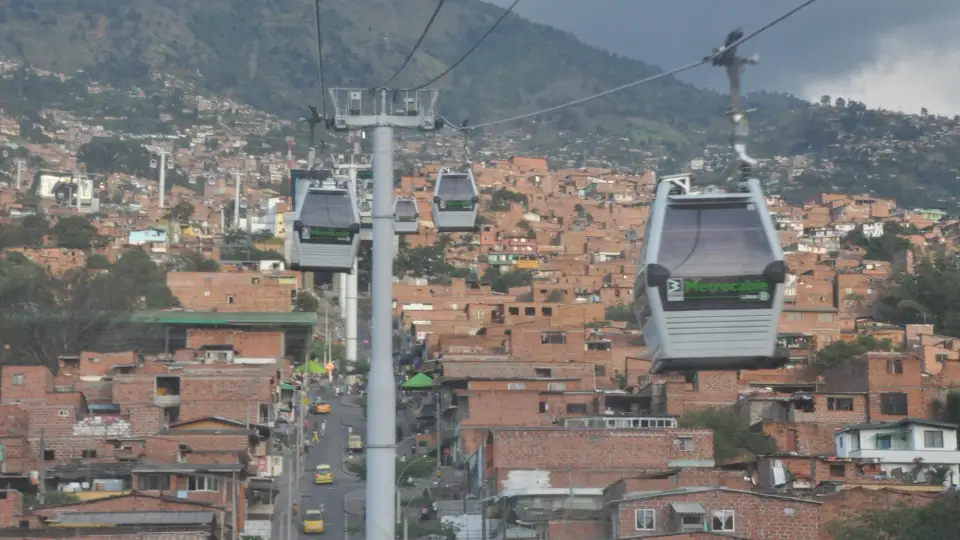
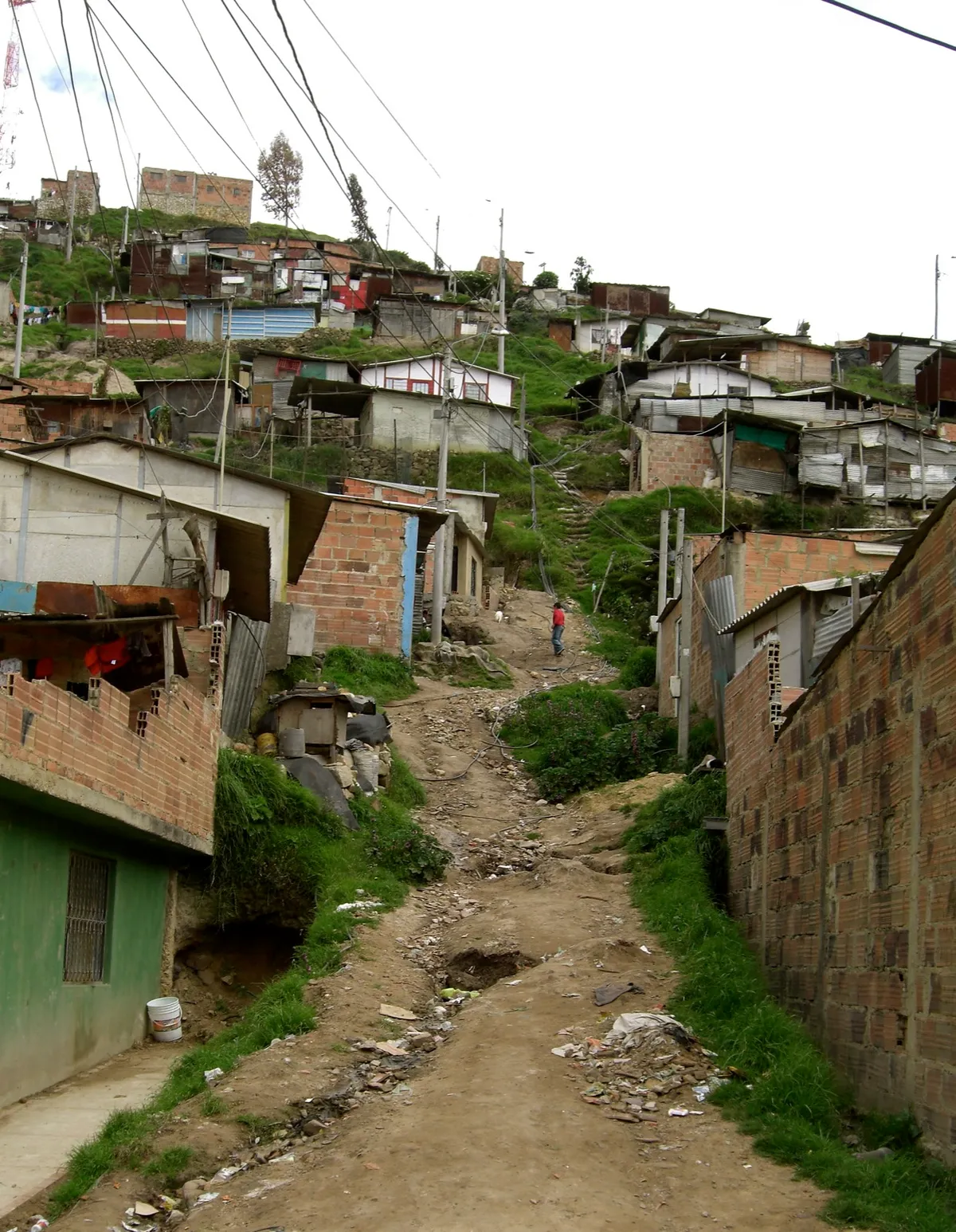
Ciudad Bolívar includes urban neighborhoods and rural areas in southwestern Bogotá. Neighborhoods were already taking shape from the 1950s, through residents’ construction and community organization. TransMiCable began operating in December 2018; its route along the hillsides is also residents’ everyday transport.
The Museo de la Ciudad Autoconstruida, beside Mirador del Paraíso station, presents the area’s memories and community initiatives. Admission is free. The usual calendar closes on Mondays; when Monday is a public holiday, it closes on Tuesday. Check the program and notices for your date. To reserve an accompanied tour, the museum asks for a request at least 15 days in advance; wait for confirmation.
I would start with this visit to learn about the local context. If you want to explore the neighborhood with a local guide, agree on the route, meeting point and duration. Plan the outward and return journeys by checking TransMiCable operation, allowing time for waiting, connections, a meal and rest.
History
Before 1537 · Muisca communities on the plateau
Before Quesada’s expedition arrived in 1537, Muisca communities occupied the plateau, with local differences and relationships between chiefs and settlements. Agriculture and markets for salt, textiles and other products also created social and political ties. Offerings and ceremonies described for Guatavita entered accounts of El Dorado; that one legend does not encompass the lives of all these groups.
1538 · The commemorated founding date
Bogotá commemorates its founding on August 6, 1538, linked with the presence of Gonzalo Jiménez de Quesada’s expedition on the Muisca savanna. Chorro de Quevedo preserves a tradition of an early settlement, but the ceremony’s precise location has not been established. The city’s formation included another moment: the creation of the Cabildo, the municipal governing institution, on April 27, 1539.
1539 · Federmán, Belalcázar, and Quesada claim the same plateau
In 1539, Nicolás de Federmán’s expedition from the east and Sebastián de Belalcázar’s from Quito met Quesada’s on the savanna. These groups also included Indigenous people, who participated in the occupation and construction of the city. The three leaders went to Spain to claim control of the territories before the Crown; arriving first did not settle the dispute by itself.
1550–1653 · A city of courts and cloisters
The Royal Audiencia began operating in 1550 and the ecclesiastical see became an archdiocese in 1564. Santo Tomás received authorization as a university in 1580; the Javeriana Academy was legally inaugurated in 1623; the Colegio Mayor del Rosario was founded in 1653. Government, religious institutions and higher education helped shape the colonial city.
1739 · Capital of the Viceroyalty
The royal decree of August 20, 1739 re-established the Viceroyalty of New Granada and placed the viceroy’s residence in Santa Fe, adding provinces with different responsibilities for government, justice and finance. The Royal Botanical Expedition (1783–1816) moved its headquarters from Mariquita to Santa Fe in 1791, bringing together scientific work and drawings of flora.
1810–1819 · Independence
On July 20, 1810, mobilization in Santa Fe led to a governing junta, still declaring allegiance to Ferdinand VII. The Florero de Llorente became a symbol of this process. The restoration of Spanish rule in 1816 brought persecution and executions; Policarpa Salavarrieta was executed by firing squad on Plaza Mayor on November 14, 1817. The republican victory at Boyacá on August 7, 1819 was decisive in the withdrawal of the Spanish authorities and the taking of Santa Fe on August 10.
1884–1910 · Streetcar, railway and new neighborhoods
The mule-drawn streetcar began in 1884; the first electric cars entered service in 1910. The Ferrocarril de la Sabana linked Bogotá with Facatativá in 1889. Expansion toward Chapinero, the south and the west accompanied a capital with around 100,000 inhabitants at the turn of the 20th century.

1948 · The Bogotazo
On April 9, 1948, the assassination of Jorge Eliécer Gaitán on Carrera 7 triggered the Bogotazo. The uprising, fires, looting and violence caused deaths and destruction in parts of downtown. The Ninth International Conference of American States was meeting in the city; the OAS Charter was adopted on April 30. Reconstruction changed streets and buildings within an urban transformation that had already begun.
1954–1993 · An expanded district and new neighborhoods
In 1954, Usaquén, Suba, Engativá, Fontibón, Bosa and Usme were incorporated. The decree organizing the Special District took effect on January 1, 1955. Migration driven by rural violence and the search for work, neighborhoods built by residents, and planning decisions contributed to expansion. DANE’s total enumerated population series records around 1.7 million in 1964 and 4.9 million in 1993.
1985 · The seizure and retaking of the Palace of Justice
On November 6, 1985, M-19 guerrillas seized the Palace of Justice on Plaza de Bolívar and took hostages. The military operation to retake it continued until November 7, with armored vehicles, gunfire and fires that destroyed the building. The Supreme Court memorial records 94 deaths, including 11 of its justices. People who left the Palace alive were also subjected to forced disappearance, as recognized in judicial decisions. The memory of these events includes the victims and their families’ search for answers.
 AI illustration
1995–2026 · Civic culture, TransMilenio and the metro under construction
Antanas Mockus’s 1995–1997 administration used mimes and cards in the Cultura Ciudadana program; education could end with a fine. Enrique Peñalosa’s 1998–2000 administration developed bus corridors and cycling infrastructure. TransMilenio began operating on December 18, 2000, and BibloRed, formed in 1998, opened its services in 2001. In September 2026, elevated Metro Line 1 remained under construction, with a municipal target of commercial service in March 2028 after construction and testing. This forecast is not an available service for building an itinerary.
 AI illustration
Complete history
Muisca communities and the formation of Santa Fe
Before Santa Fe, Muisca communities already inhabited the plateau. Relationships between chiefs, settlements and markets formed a diverse territory, with hierarchies and local differences. Salt, textiles and agricultural products circulated at gatherings that were also social and political. Archaeology in places such as Usme records practices changing over centuries rather than a uniform arrival of an entire population on one date.
Lagoons and offerings held ritual importance. For Guatavita, chroniclers described a chief’s investiture ceremony with offerings, later associated with El Dorado. The Balsa Muisca found in Pasca is interpreted in relation to this tradition; looking at the object and its interpretation in the Museo del Oro helps distinguish ritual practice from European accounts of wealth to be conquered.
Gonzalo Jiménez de Quesada’s expedition left Santa Marta in 1536 and reached the savanna in 1537. Bogotá commemorates its founding on August 6, 1538, but the Cabildo, Santa Fe’s municipal government, was created on April 27, 1539. Local tradition associates an early settlement with Chorro de Quevedo; the ceremony’s precise location has not been established. The city’s formation was a process of occupation, government organization and territorial transformation.
In 1539, Federmán’s and Belalcázar’s expeditions also reached the plateau. The three leaders went to Spain to claim territories before the Crown. Indigenous people participated in the expeditions and contributed food, labor and knowledge of materials to build the city. Colonial institutions transformed relationships of power and work.
Institutions, education and colonial trade
The Royal Audiencia began operating in Santa Fe in 1550, and the ecclesiastical see became an archdiocese in 1564. Education also developed through distinct institutions: Santo Tomás received authorization as a university in 1580; the Javeriana Academy was legally inaugurated in 1623; the Colegio Mayor del Rosario was founded in 1653. These dates refer to different acts, and Javeriana’s work would be interrupted by the expulsion of the Jesuits in 1767.
Courts, religious institutions and education shaped the colonial city, alongside trade. In the late eighteenth century, Santa Fe merchants dealt in goods and credit, participated in municipal government and contested interests with the Consulado de Cartagena. Distance from ports did not prevent trade from carrying economic and political weight.
The Viceroyalty of New Granada was created in 1717 and re-established by the royal decree of August 20, 1739, which placed the viceroy’s residence in Santa Fe. The document added provinces such as Quito, Guayaquil, Caracas, Panama and Veragua, with different responsibilities for government, justice and finance. In Caracas, for example, judicial appeals continued to go to the Audiencia of Santo Domingo. This colonial arrangement cannot simply be equated with the borders of present-day countries.
The Royal Botanical Expedition of the New Kingdom of Granada (1783–1816), associated with José Celestino Mutis, studied flora and produced a collection of scientific drawings. Its headquarters moved from Mariquita to Santa Fe in 1791. Some participants, such as Francisco José de Caldas and Jorge Tadeo Lozano, also worked in the press and in governments formed during the independence process.
On July 20, 1810, mobilization in Santa Fe led to the formation of a governing junta that claimed autonomy while still declaring allegiance to Ferdinand VII. The episode associated with the Florero de Llorente became a symbol of this process; accounts differ in their description of the object requested. The restoration of Spanish rule in 1816 brought persecution and executions, including those of Lozano and Caldas. Policarpa Salavarrieta was executed by firing squad on Plaza Mayor on November 14, 1817.
The republican victory at Boyacá on August 7, 1819 was decisive in the withdrawal of the Spanish authorities and the taking of Santa Fe on August 10. Building the new republic also involved political decisions: the Fundamental Law of Angostura proclaimed the Republic of Colombia in December 1819, and the Congress of Cúcuta gave it a constitutional framework in 1821. The union, known as Gran Colombia, incorporated other territories and broke apart between 1830 and 1831.
Rails, neighborhoods and the memory of the river
Bogotá entered the 20th century during the Thousand Days’ War (1899–1902), which pitted the Conservative government against Liberal forces. Panama separated from Colombia in 1903.
At the turn of the century, the capital had around 100,000 inhabitants and was growing toward Chapinero, the south and the west, with new neighborhoods and transport needs. The mule-drawn streetcar began in 1884; the first electric cars entered service in 1910. From 1889, the Ferrocarril de la Sabana linked Bogotá with Facatativá. The city was already spreading beyond the colonial core that people crossed on foot.
The stretch of the San Francisco River beneath Avenida Jiménez was channeled and covered, a transformation associated with proposals for urban hygiene and modernization. Around the turn of the 2000s, the Eje Ambiental, by Rogelio Salmona and Luis Kopec, evoked that watercourse with brick paving, trees and fountains. Its design brings the river’s memory into the street; the fountains do not reopen the natural riverbed, which remains channeled beneath the avenue.
Bogotazo, reconstruction and urban expansion
On April 9, 1948, the assassination of Liberal leader Jorge Eliécer Gaitán on Carrera 7 triggered the uprising known as the Bogotazo. Fires, looting and violence caused deaths and damaged downtown buildings and streets. The Ninth International Conference of American States was meeting in Bogotá; the Charter of the Organization of American States, OAS, was adopted later, on April 30.
Expansion into new neighborhoods and architectural changes had already begun. The destruction of 1948 accelerated reconstruction, the opening and widening of roads, and the replacement of buildings. In the following decades, the capital received people fleeing rural violence and others seeking work. Residents built and organized many neighborhoods, with unequal access to water, sewage and other services. Growth brought together these experiences, planning decisions and interests in urban land.
In 1954, Usaquén, Suba, Engativá, Fontibón, Bosa and Usme were incorporated. The decree organizing the Special District took effect on January 1, 1955. That reorganization expanded the territory administered by the capital. In the total enumerated population series published by DANE, Bogotá recorded around 1.7 million inhabitants in 1964, 2.6 million in 1973 and 4.9 million in 1993. Downtown remains a place to live, work and trade: its heritage protection plan recognizes residents and seeks to support their continued presence. That daily life is part of the history found among preserved buildings and those built later.
Civic culture and new urban networks
The 1991 Constitution established a special regime for the Capital District. The 1993 Organic Statute defined its political, administrative and fiscal organization, with powers for district authorities and mechanisms for residents to participate. The district’s government brings together the mayor’s office, District Council and local authorities, with citizen participation.
During Antanas Mockus’s 1995–1997 administration, Cultura Ciudadana sought to improve coexistence and respect for rules. Mimes taught people to respect pedestrian crossings; cards allowed citizens to approve or disapprove of behavior. Education could be followed by a fine imposed by an officer. The historically named Ley Zanahoria limited the opening of establishments selling alcohol to 1am. Enrique Peñalosa’s 1998–2000 administration developed bus corridors and cycling infrastructure. TransMilenio began operating on December 18, 2000. The BibloRed library network, formed in 1998, opened its services in 2001. These projects involved planning, implementation and continuation across different administrations, and libraries also became neighborhood meeting places.
Elevated Metro Line 1 adds another stage to this history of getting around. In September 2026 it was still under construction. The municipal announcement of September 24 targeted completion of the construction stage in September 2027, followed by testing, and commercial service in March 2028. These are project targets: when planning a trip, check which services actually run, diversions and access close to your travel dates. Do not rely on the line under construction to connect visits.
Avenida Jiménez runs over a channeled river.
Geography and shape of the city
The sabana and Cerros Orientales
Bogotá stands on the Bogotá sabana, in the Eastern Cordillera of the Andes. Sediments from rivers and ancient lakes are part of the history of this plain. The city government describes the urban area as roughly 2,600 m above sea level; terrain and altitude vary by location, particularly on slopes and hills.
To the east, the Cerros Orientales comprise the forest reserve and its adjoining transition zone between the city and the protected area. Monserrate and Guadalupe stand out in this landscape. I would use the map and complete address to plan the route and confirm the specific entrance for the visit. For walks in the hills, choose authorised paths and check opening conditions; proximity on a map does not determine the effort or journey time.
Calles, carreras and the address
An address combines the type and number of the main road, a reference road and the property’s access number. Roads include calles, carreras, diagonales, transversales and avenidas; also read letters, “Sur”, “Este” and details such as a block or unit. In “Calle 72 # 10-34”, Calle 72 is the main road, Carrera 10 is the reference and 34 indicates the approximate distance in metres to the entrance, not an exact measurement to follow on foot. A property can have entrances on different roads. I would confirm the complete address and the entrance published by the venue before planning travel; the sequence of numbers helps locate it but does not calculate the route or journey time.
Water, rural territory and climate
Water also tells the city’s history. Downtown, the San Francisco was channelled and covered; the fountains of the Eje Ambiental evoke its course but are not the reopened river. In wetlands such as Juan Amarillo or Tibabuyes, Córdoba y Niza and La Conejera, water, soil, vegetation and wildlife form conservation areas, with resident and migratory birds. For a visit, check the programme, entrance and rules of the particular reserve.
The Capital District has 20 localities and includes rural territory in Sumapaz and other localities. Sumapaz National Natural Park protects páramo and Andean forest and spans parts of Usme and Sumapaz, as well as municipalities in Cundinamarca and Meta. The park and the locality of Sumapaz have different boundaries. Parques Nacionales states that the park is closed and not designated for ecotourism; I would not include it as an available outing in the itinerary.
For the urban climate, IDEAM’s 1991–2020 normals record monthly mean temperatures close to 14 °C at El Dorado station. This is a historical airport reference, not the temperature of the entire city or the páramo. Bring clothing layers and rain protection, check the forecast near your visit and leave room to replace an outdoor activity with an indoor visit or rest.
Culture
Books and libraries
Bogotá was UNESCO World Book Capital in 2007. Its literary life includes institutions from different periods and networks: the Banco de la República’s Biblioteca Luis Ángel Arango opened on 20 February 1958 in La Candelaria; the district BibloRed network was formed in 1998 and began operating in 2001. FILBo has brought authors, publishers and readers together at Corferias since its first edition in 1988. Check the programme, venue and admission conditions for the edition that coincides with your trip.
Books offer different ways into the city too. “La vorágine,” by José Eustasio Rivera, published in 1924, denounces exploitation associated with the rubber industry. In “Vivir para contarla,” García Márquez revisits his youth and events in Bogotá; it is the author’s memoir. “El ruido de las cosas al caer,” by Juan Gabriel Vásquez, published in 2011, explores how drug trafficking shapes the characters’ private lives. These are distinct literary perspectives, not a single definition of today’s residents.
I would choose a library or activity according to my interests rather than combine every branch in one outing. Luis Ángel Arango has its own calendar and closes on public holidays; BibloRed libraries have specific services and hours. Confirm the branch and activity before setting out and leave time for travel and a break.
Music in the park and sport in the city
Bogotá has belonged to UNESCO’s Creative Cities Network in the Music category since 2012. Rock al Parque began in 1995; the al Parque calendar also includes salsa, jazz, hip hop and opera, each with its own dates. Aterciopelados, led by Andrea Echeverri and Héctor Buitrago, offers a way into 1990s Colombian rock and its blends with Latin American music. For a night out, Theatron in Chapinero is one possibility: check the programme and conditions for your chosen evening and plan your return.
El Campín, inaugurated in 1938, is associated with the history of Millonarios and Independiente Santa Fe. On 30 September 2026, IDRD announced the start of construction of the new stadium; that does not confirm a match, visit or access on a future date. Check with the event organiser before planning an outing. Ciclovía has a different history: it began with a citizens’ initiative in 1974 and became an official programme from 1976. Check the sections and programme conditions for your chosen day.
I would choose a festival, match or section of Ciclovía according to my interests and the programme, leaving time to arrive, eat, rest and return. An event can take up much of the day; I would not treat it as a short stop between museums. Free admission still requires checking minimum age, permitted objects, entrances and any changes to transport.
Museums, street art and theatre
The Museo Botero, established from Fernando Botero’s 2000 donation, and MAMBO, the Museo de Arte Moderno de Bogotá, offer collections and exhibitions with separate calendars. ARTBO, the fair organised by the Bogotá Chamber of Commerce, held its first edition in 2005; check the venue, programme and admission for the edition that coincides with your trip. I would choose a visit according to the works or exhibition, leaving time for a meal and a break.
Street art has artists, collectives and histories that cannot be reduced to a single starting date. The memory of Diego Felipe Becerra, killed by a police officer in 2011, forms part of that history and of initiatives recognising street art. There are works downtown, on Calle 26 and in Puente Aranda’s Distrito Grafiti, in different areas. Choose one area; for a guided outing, confirm the date, registration and meeting point with the organiser. An old route announcement does not guarantee a current departure from Parque de los Periodistas or a walk covering all these neighbourhoods.
In theatre, the Colón was inaugurated in 1892 and is now part of the Centro Nacional de las Artes Delia Zapata Olivella. The Festival Iberoamericano de Teatro held its first edition in 1988, created by Fanny Mikey and Ramiro Osorio. A play, a building visit and a festival programme have their own conditions: check which hall or activity is available, the time and admission. Plan travel and the return around your chosen activity.
Egan Bernal was born in Bogotá and has strong ties to Zipaquirá. In 2019, he became the first Colombian to win the Tour de France. An outing to Zipaquirá needs its own travel and visit planning; being near Bogotá does not guarantee a one-hour journey.
Calle 26’s murals have individual artists and contexts. Graffiti regulations distinguish places and authorisations; the presence of a work does not allow any wall to be painted. I would look at the signatures and their relationship with the neighbourhood, respecting the artwork and residents’ access.
Festivals and events

Rock al Parque
Rock al Parque began in 1995. For 2026, Idartes announced the 10–12 October edition at Parque Simón Bolívar, with free admission and no entry for children under 14. Check the programme and rules for the edition that coincides with your trip: there are restrictions on objects and bringing in alcoholic drinks, and designated areas for alcohol consumption by adults aged 18 or over. Leave time to enter, take a break and return; check the entrances and transport announced for those days without assuming extended service across the whole network.

Feria Internacional del Libro (FILBo)
FILBo brings readers, authors and book professionals together at Corferias. The 2026 edition took place from 21 April to 4 May, with India as guest of honour; those dates do not define the edition during your trip. Check the calendar, programme and admission on the fair’s website. I would choose a few talks and pavilions, with a break to eat and rest, rather than fit the venue in as a quick stop between museums.
 AI illustration
Theatre: Festival Iberoamericano and FIAV
The Festival Iberoamericano de Teatro began in 1988, created by Fanny Mikey and Ramiro Osorio. In the performing arts calendar, FIAV Bogotá has its own name and programme: its second edition was announced for 27 March–5 April 2026, with performances in venues and public spaces, including free activities and paid tickets. Check which festival has an edition during your trip and the conditions for each performance; a street performance does not make the whole programme free. Choose the production and venue before planning travel, a break and your return.

Festival Estéreo Picnic
Estéreo Picnic is a festival with paid admission. Check the dates, venue, daily programme and ticket category for your chosen edition before planning the trip. The 2027 publicity includes a zone for minors: the organiser requires an accompanying adult with a ticket for that same zone; check the other age and admission conditions too. I would leave time for entry, food, rest and the journey back, with protection suited to the weather forecast.
 AI illustration
December: velitas, lights and night Ciclovía
On the evening of 7 December, the eve of the Immaculate Conception, the velitas tradition brings candles and lanterns to homes and spaces around the city. Christmas lights and night Ciclovía have their own programmes: in 2025, IDRD announced the night event for 11 December on selected corridors. Check the calendar, sections and hours for the year of your trip before heading out. I would choose one area for an outing, with a break and the return planned; I would not count on the same road closures or extended transport every year.
Books and films
“The Sound of Things Falling,” Juan Gabriel Vásquez
Originally published in Spanish in 2011, the novel follows Antonio Yammara and his investigation into the past of Ricardo Laverde, whom he met in a Bogotá billiard hall. Drug trafficking shapes their relationships and memories. I would read it for the meeting of public history and private fear, before walking through the centre.
“The Strategy of the Snail,” Sergio Cabrera (1993)
A group of tenants facing eviction devises a collective way to defend their home in Bogotá. Humour and social conflict drive the story. I would choose it to consider the ties between housing, neighbourhood and dignity, leaving room for the film’s invention.
“Bogotá Change,” Andreas Møl Dalsgaard (2009)
A documentary in the Cities on Speed series about Antanas Mockus and Enrique Peñalosa. Archive material and interviews support the director’s view of changes between 1995 and 2005, linking civic behaviour and infrastructure. I would watch it to discuss how the city organises its collective life, then look for those questions along today’s route.
Frequently asked questions
Bogotá: can you climb Monserrate on foot on the first day?
Do not plan the walk immediately after arriving from low altitude. Favor light activity and avoid alcohol for the first 48 hours; that period does not guarantee adjustment. The funicular and cable car reduce the effort of climbing but take you to the same destination at altitude. If you have a headache, nausea or feel unwell, do not ascend until better; seek medical advice if symptoms persist or worsen. Shortness of breath at rest, confusion or difficulty balancing require immediate medical help.
Bogotá: how do you get from El Dorado airport to downtown?
Choose between the official taxi indicated by the airport, a confirmed accommodation transfer or public transport. For a taxi, seek identified staff and check the vehicle and estimated fare. Routes K86 and 16-14 link the airport to Portal El Dorado; check direction, hours, tullave payment and connections to your address in the official route finder. Journey time depends on the route and traffic: allow for luggage, check-in and rest.
Bogotá: what is the currency, and how can I check the exchange rate?
The currency is the Colombian peso (COP). Check a dated rate for the currency you use and bank, card or exchange service fees. The official TRM is a reference between the dollar and peso, not a guarantee of the final rate for your purchase or exchange.
Bogotá: what's the climate like through the year?
Bogotá has a cool high-altitude climate. In the 1991–2020 normals at El Dorado station, monthly mean temperatures are close to 14 °C; rain peaks in April–May and October–November. January, February, July and August generally have less rain across much of the urban area, with different patterns in the east and southeast. These are historical patterns, not a forecast for your visit: check weather and notices near your dates without counting on rain at a fixed hour or a clear mountain view.
Bogotá: should you address people as tú or usted?
With “usted”: in Bogotá it's used with strangers, with friends and even with children, and “tú” sounds too intimate coming from someone who just arrived. In the savanna you'll also hear “sumercé,” an affectionate form, not an ironic one.
Other cities in the country
Colombia ↗- Days
- 2–3
- When
- Jan–Apr · Dec
- Per person/day
- Average 80–130 USDMid-range · per person/day
Cost scope
Per person per day: accommodation, meals, urban transport, visits and a small allowance for extras. Flights excluded; larger purchases vary. Editorial estimate, not a quote.
- Days
- 3–4
- When
- Jan–Mar · Jul–Aug · Dec
- Per person/day
- Average 45–90 USDMid-range · per person/day
Cost scope
Per person per day: accommodation, meals, urban transport, visits and a small allowance for extras. Flights excluded; larger purchases vary. Editorial estimate, not a quote.
- Days
- 3–6
- When
- Feb–Apr
- Per person/day
- Explore costsGuide estimate
Cost scope
Per person per day: accommodation, meals, urban transport, visits and a small allowance for extras. Flights excluded; larger purchases vary. Editorial estimate, not a quote.
- Days
- 3–4
- When
- Jan–Apr · Dec
- Per person/day
- Average 151,000 COPMid-range · per person/day
Cost scope
Per person per day: accommodation, meals, urban transport, visits and a small allowance for extras. Flights excluded; larger purchases vary. Editorial estimate, not a quote.