Colombia
Medellín
Metrocable, Comuna 13, Botero and Parque Arví
Days Start with the basic programme and choose extensions for the time you have.
How the guide reaches this number
Come for what works, like the clean metro, the cable car that's transport for real people and the flat neighborhoods with a bakery on the corner. If you're after monuments you'll find little, because downtown comes down to brick, plazas and Botero, and Pueblito Paisa is a replica village from 1978. Don't come chasing Escobar either: many families lost someone between 1985 and 2005, and the place to understand that period is the Museo Casa de la Memoria, free, in Parque Bicentenario. With just one day, ride Metrocable line K up early from Acevedo and spend the late morning at Plaza Botero and the Museo de Antioquia. Have a menú del día for lunch downtown, continue to the Casa de la Memoria and, around 5:30pm, climb Cerro Nutibara to watch the valley light up from north to south. What disappoints is El Poblado, which charges nightly rates from another country, speaks English and barely feels like a Colombian neighborhood.
3–4
When December to March and July–August, the least rainy periods; October is the wettest month
How the guide reaches this number
The altitude of 1,495 m keeps the temperature nearly constant year-round. Highs of 26–29 °C in the afternoon and lows of 16–18 °C at dawn, with no thermal seasons. What changes through the year is the rain, in two cycles. April–May and September–November are the wet periods, with strong, short downpours almost every late afternoon; October tends to be the rainiest month of the year. That's what I'd avoid if the trip depends on walking outside. December to March and July–August are drier and sunnier. High season is defined by festivals and holidays, since the temperature barely changes through the year. Count the first half of August (Feria de las Flores), all of December because of the lights and the holidays, and Holy Week. In those periods, hotels double in price and the silleteros parade fills the city. Outside them, Medellín has low season all year round. Bring a thin windbreaker and a small umbrella. At Parque Arví and in Santa Elena, at 2,400–2,500 m, it's 10–14 °C and rains with mist: going up in a T-shirt means feeling the cold right away.
Per person/day US$45–90 (about COP 180,000–360,000) with a simple hotel, a set lunch, and the metro (2026)
How the guide reaches this number
Per person per day: accommodation, meals, urban transport, visits and a small allowance for extras. Flights excluded; larger purchases vary. Editorial estimate, not a quote.
 What Nilo thinks
Medellín calls for three days, and four if you want Guatapé and El Peñón: one for downtown, art and memory, one for the hillsides, the Metrocable and Comuna 13, and one for the Jardín Botánico, the Museum of Modern Art and the view over the valley. Come for what works, like the clean metro, the cable car that's transport for real people and the flat neighborhoods with a bakery on the corner. If you're after monuments you'll find little, because downtown comes down to brick, plazas and Botero, and Pueblito Paisa is a replica village from 1978. Don't come chasing Escobar either: many families lost someone between 1985 and 2005, and the place to understand that period is the Museo Casa de la Memoria, free, in Parque Bicentenario. With just one day, ride Metrocable line K up early from Acevedo and spend the late morning at Plaza Botero and the Museo de Antioquia. Have a menú del día for lunch downtown, continue to the Casa de la Memoria and, around 5:30pm, climb Cerro Nutibara to watch the valley light up from north to south. What disappoints is El Poblado, which charges nightly rates from another country, speaks English and barely feels like a Colombian neighborhood.In Medellín, public transport climbs the mountain: the metro runs along the valley floor, and the Metrocable cable cars carry residents up to the hillside neighborhoods. The city that was once the headquarters of Pablo Escobar's cartel rebuilt itself around this network starting with the 1995 metro, and the free Museo Casa de la Memoria tells the story of the conflict through the voices of its victims. Downtown, Plaza Botero holds 23 bronze sculptures made to be touched, and in Comuna 13 six flights of outdoor escalators climb the equivalent of 28 stories of hillside. At the top of Line L, Parque Arví keeps pre-Hispanic trails through the forest, at 2,400 m. To eat, split a bandeja paisa, drink the tinto from a street vendor's thermos and order at the counter with “me regala,” the polite way to ask. Come from December to March or in July and August, the driest stretches, and set aside three days, four with Guatapé.
Quick facts
- Population
- about 2.53 million in the city (DANE 2026 projection); about 4.1 million across the ten municipalities of the Aburrá Valley
- Founded
- Settlement of San Lorenzo de Aburrá in 1616; village named Medellín on November 2, 1675
- Country and region
- Colombia · department of Antioquia, whose capital it has been since 1826 · Central Cordillera of the Andes
- Language
- Spanish, paisa accent, addressed as “usted” even among friends; English only at hotels, agencies, and in Poblado
- Currency
- Colombian peso (COP); about US$1 = COP 3,900–4,200 and about R$1 = COP 730–800 in 2026 (fluctuates a lot)
- Time zone
- UTC−5 year-round, no daylight saving
- Best time to visit
- December to March and July–August, the least rainy periods; October is the wettest month
- Average daily cost
- US$45–90 (about COP 180,000–360,000) with a simple hotel, a set lunch, and the metro (2026)
When to go
December to March and July–August, the least rainy periods; October is the wettest month
April
18° to 28°C
181 mm of rain
May
18° to 28°C
219 mm of rain
June
18° to 28°C
145 mm of rain
September
18° to 28°C
171 mm of rain
October
17° to 27°C
212 mm of rain
November
18° to 27°C
171 mm of rain
How the year changes
The altitude of 1,495 m keeps the temperature nearly constant year-round. Highs of 26–29 °C in the afternoon and lows of 16–18 °C at dawn, with no thermal seasons. What changes through the year is the rain, in two cycles. April–May and September–November are the wet periods, with strong, short downpours almost every late afternoon; October tends to be the rainiest month of the year. That's what I'd avoid if the trip depends on walking outside. December to March and July–August are drier and sunnier. High season is defined by festivals and holidays, since the temperature barely changes through the year. Count the first half of August (Feria de las Flores), all of December because of the lights and the holidays, and Holy Week. In those periods, hotels double in price and the silleteros parade fills the city. Outside them, Medellín has low season all year round. Bring a thin windbreaker and a small umbrella. At Parque Arví and in Santa Elena, at 2,400–2,500 m, it's 10–14 °C and rains with mist: going up in a T-shirt means feeling the cold right away.
The same numbers as a table
| Month | Temperature °C | Rain mm |
|---|---|---|
| January · | 18 to 28 | 72 |
| February · | 18 to 28 | 81 |
| March · | 18 to 28 | 132 |
| April | 18 to 28 | 181 |
| May | 18 to 28 | 219 |
| June | 18 to 28 | 145 |
| July · | 18 to 29 | 134 |
| August · | 18 to 29 | 126 |
| September | 18 to 28 | 171 |
| October | 17 to 27 | 212 |
| November | 18 to 27 | 171 |
| December · | 18 to 27 | 115 |
Nilo's tips
Get the free Cívica day one: fare drops to COP 3,820
The personalized Cívica is free and drops the fare from COP 4,400 to COP 3,820. Ask for it on day one at the service point of a major station, with your ID. The fare covers the metro, five of the six Metrocable lines, the Ayacucho streetcar and the Metroplús; Line L, which climbs to Parque Arví, charges COP 12,000–15,000 separately.
Ride Metrocable K around 7am, before the clouds roll in
Until about 8am the valley is still clear, and after 10am you pay the same fare to look at cloud. Take Line A to Acevedo and ride up to Santo Domingo Savio on the 2004 cable car, the first in the world integrated into a mass-transit system, which at this hour carries residents to work. Don't go up just for the Parque Biblioteca España, by Giancarlo Mazzanti, which stayed closed for 11 years over facade failures. It reopened in part on June 18, 2026, as the Biblioteca Santo Domingo Savio, and the auditorium wing still has no date.
Comuna 13: check the escalator before leaving home
The six escalators went through staged maintenance between November 2025 and mid-2026, with stretches closed. Installed in December 2011, they cover about 384 m and the equivalent of 28 stories; the fixed stairs alongside stay open, but that's 28 stories on foot. Go in the morning, on Line B to San Javier, and hire a guide who lives in the neighborhood. Photograph the graffiti freely; not people or the inside of homes, because people live exactly where the tour happens.
Bandeja paisa: lunch for two
A bandeja feeds two people and is eaten at lunch, never at dinner. It's sized as farmhand food, which is where it comes from. If you're on your own, order the menú del día, with soup, main course and juice for COP 15,000–28,000, the city's real price.
Sleep in Laureles, go down to Poblado only when you want to
Laureles has the metro, a corner bakery, and is close to Calle 70. From there to Poblado it's ten minutes by metro and half the bill. Poblado climbs nonstop and charges another country's nightly rate. If you go out there, come back by app: in the early hours theft concentrates near Parque Lleras.
Alumbrados on a weeknight, Guatapé before 4pm
On weekends, the riverbank becomes impassable during the Alumbrados, so go on a Tuesday or Wednesday. The EPM lights stay lit from December 1 through mid-January along the river, a tradition since 1967. For Guatapé, leave early from Terminal del Norte (COP 20,000–28,000, about 2 hours) and catch the bus back before 4pm, because after that they fill up and you're stuck. There are 740 steps up the cleft of El Peñón, and nobody climbs them well at one in the afternoon.
Explore the map

© OpenStreetMap · OpenFreeMap · © OpenMapTiles
Explore the map, read about the other places and plan your travel days in the app.
Open the appWhat to see
Medellín: The valley, the altitude, and the temperature
Downtown Medellín sits at 1,495 m, at the bottom of a valley whose rims rise to 2,600–3,100 m (Cerro del Padre Amaya tops 3,000 m). It's that altitude that keeps the average temperature steady at about 22 °C and gave the city its nickname, the city of eternal spring.
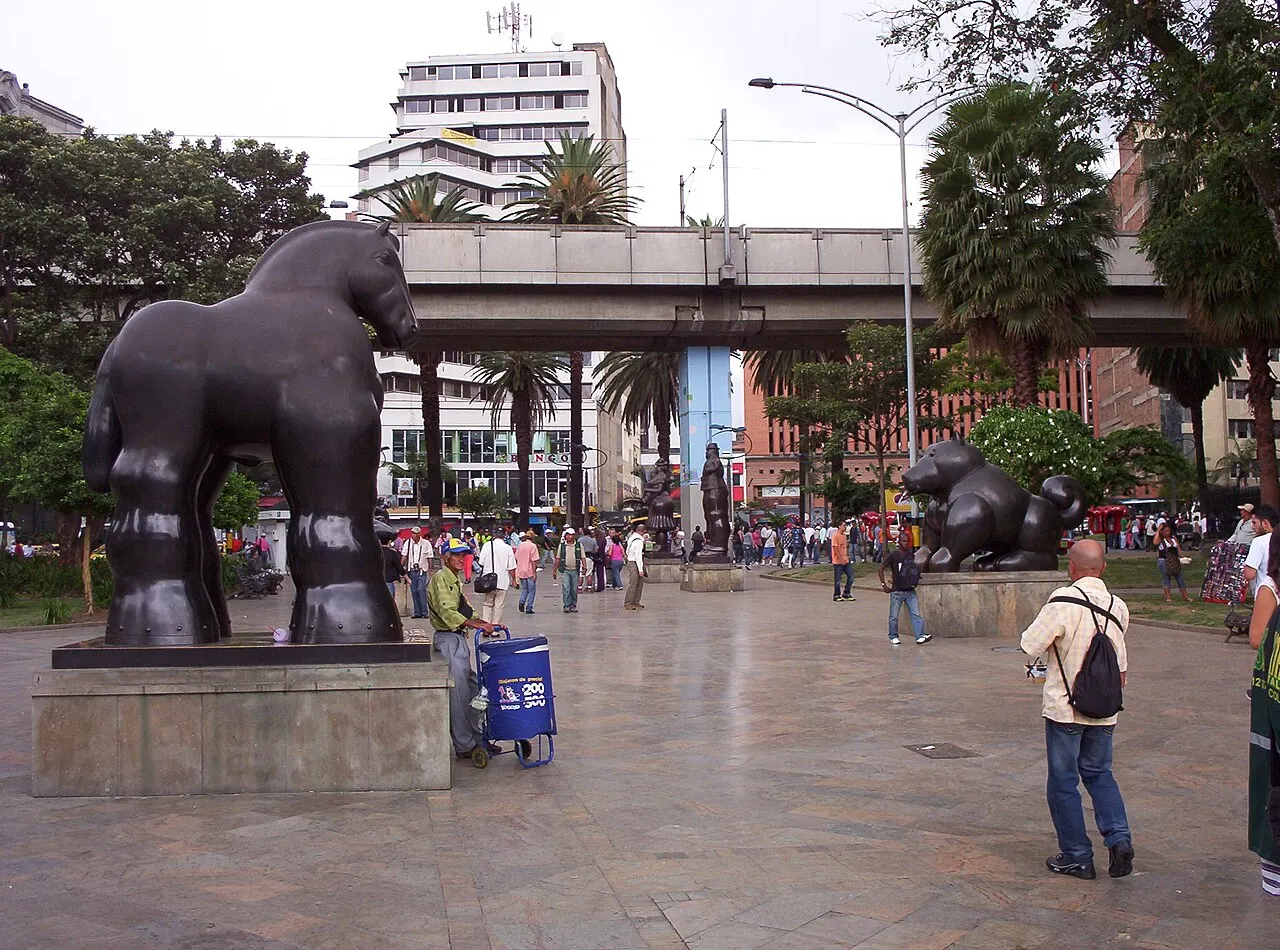
Plaza Botero and Museo de Antioquia
A square with 23 bronze sculptures donated by Fernando Botero (Medellín, 1932–2023), voluminous and made to be touched. The museum next door, in the art deco Palacio Municipal from 1937, holds the largest public collection of the artist; across the square stands the black-and-white striped Palacio de la Cultura Rafael Uribe Uribe, a project by Belgian architect Agustín Goovaerts begun in 1925 and never finished.
Botero donated 23 bulky bronze sculptures made to be touched, and the museum holds the largest public collection of his work, while across the square the striped palace by Agustín Goovaerts, begun in 1925, remains unfinished.
Check access
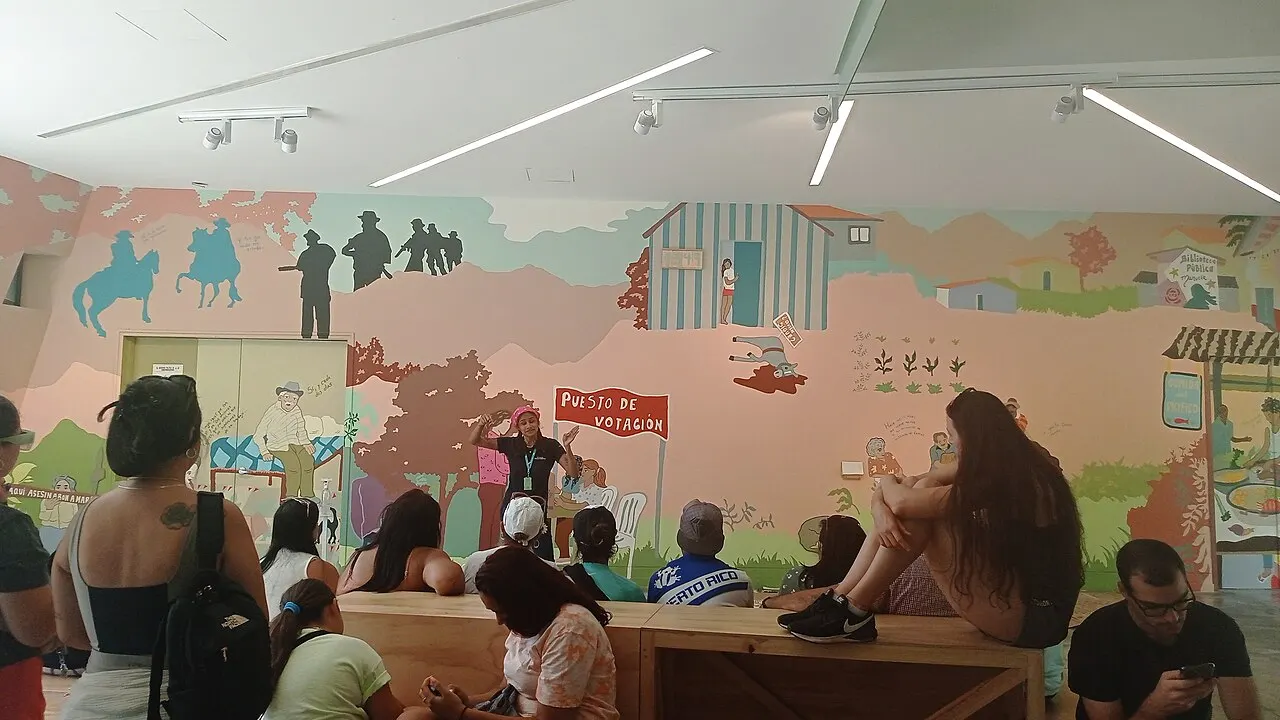
Museo Casa de la Memoria
Opened in 2012, in Parque Bicentenario, dedicated to Colombia's armed conflict as told by victims, with video testimonies and a wall of names. Free admission; it's the factual counterpoint to any tour that romanticizes drug trafficking.
The museum opened in 2012 in Parque Bicentenario, dedicated to the conflict as told by its victims, with a wall of names, and sets facts against any tour that romanticizes drug trafficking.
Check access

Comuna 13 – Las Independencias
Six sections of public escalator, about 384 m long, installed in December 2011 to cover a climb equivalent to 28 stories of hillside. Between November 2025 and mid-2026 the system went through staged maintenance, with partial closures, so check before you visit whether any stretch is still down. The fixed stairs alongside stayed open during the work.
Six public escalators climb the hillside instead of the walk on foot; about 384 m; December 2011, 28 stories.
Check access
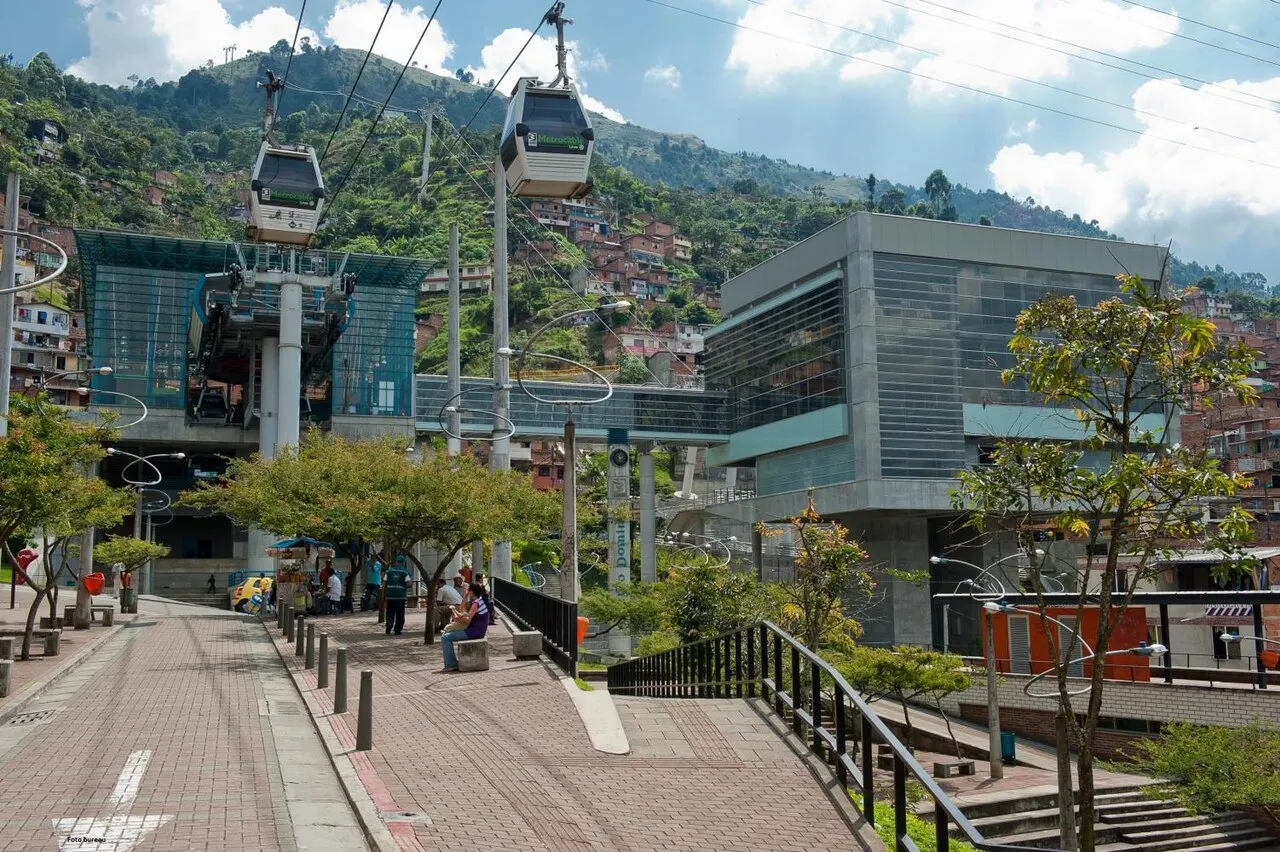
Metrocable K and Santo Domingo Savio
Opened in 2004, it was the first cable car in the world integrated into a public mass transit system, and it climbs 2 km of hillside from Acevedo station. At the top is the Parque Biblioteca España, by Giancarlo Mazzanti (2007), partly reopened in June 2026 after 11 years closed because of defects in its facade; the auditorium block still has no date, so check before going up just for that.
The 2004 cable car was the first in the world integrated into a mass-transit system and climbs 2 km from Acevedo, with the Parque Biblioteca España at the top, reopened in part in June 2026.
Check access

Plaza Cisneros (Parque de las Luces)
A former run-down market square, turned in 2005 into a field of 300 light masts up to 24 m tall, which light up at dusk. In the same complex stand the Biblioteca EPM and the two 1911 and 1930 railway buildings from the old station yard.
A field of light poles switches on at dusk where a derelict market once stood, beside two old train sheds; 300 poles, up to 24 m tall, transformed in 2005.
Check access
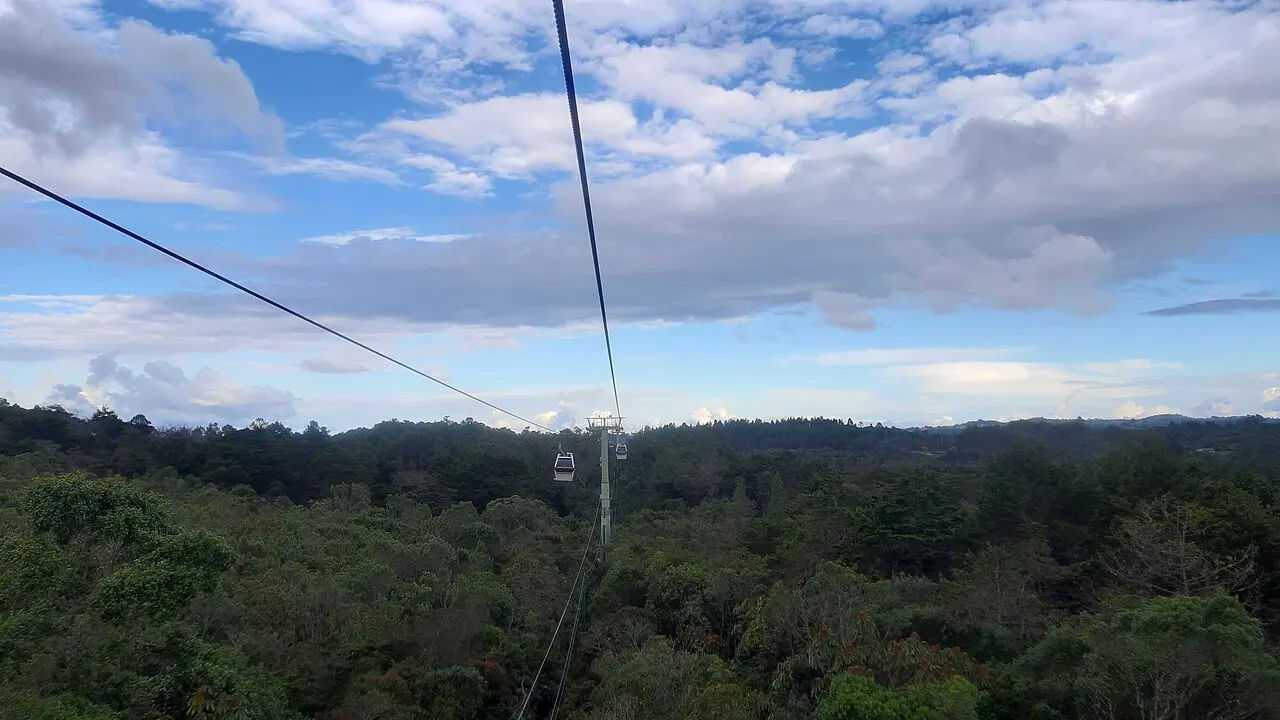
Parque Arví
A reserve of about 16,000 hectares at 2,400 m, reached by Metrocable Line L from Santo Domingo, with pre-Hispanic stone paths, guided trails, and a farmers' market. Line L charges a separate tourist fare on top of the regular ticket, in the range of COP 12,000–15,000.
The reserve at the top has stone paths that predate the conquest, guided trails and a market run by local producers; about 16,000 hectares; 2,400 m.
Check access
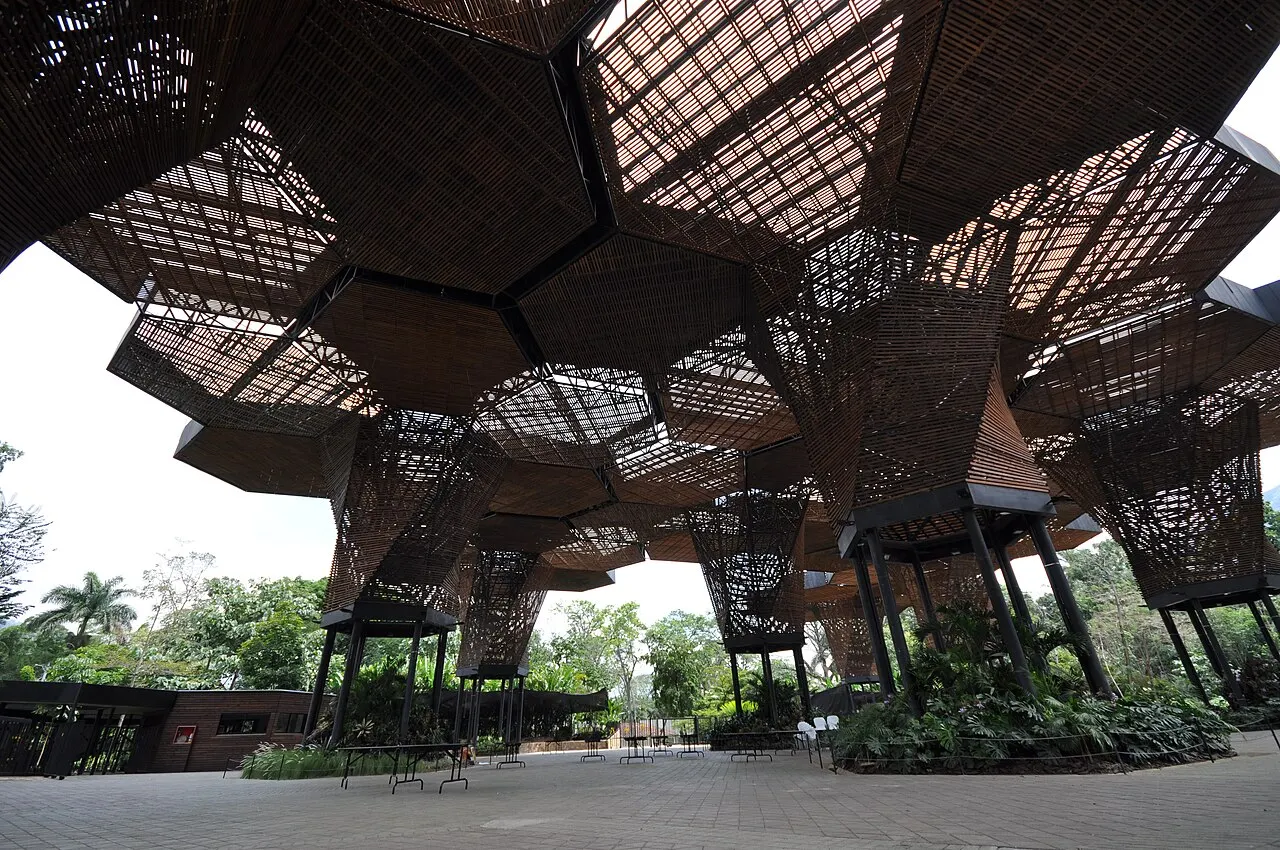
Jardín Botánico Joaquín Antonio Uribe
Fourteen hectares in the north of the city, free admission, next to Universidad station. The centerpiece is the Orquideorama (2006), a canopy of ten wooden “tree-flowers” that shades the wall-less orchid garden.
You can go in for free and see a canopy that shades the orchids without enclosing the space; fourteen hectares; Orquideorama, 2006.
Check access

Cerro Nutibara and Pueblito Paisa
An 80 m urban hill in the middle of the valley, with a replica Antioquian village built in 1978 on top (square, church, miniature town hall) and the best 360° view of the whole valley. The complex has undergone renovation work in recent years; check what's open before going up.
At the top there's a miniature village and the view sweeps the whole valley, but it's worth checking what the renovation left open; 80 m hill; 1978 replica.
Check access
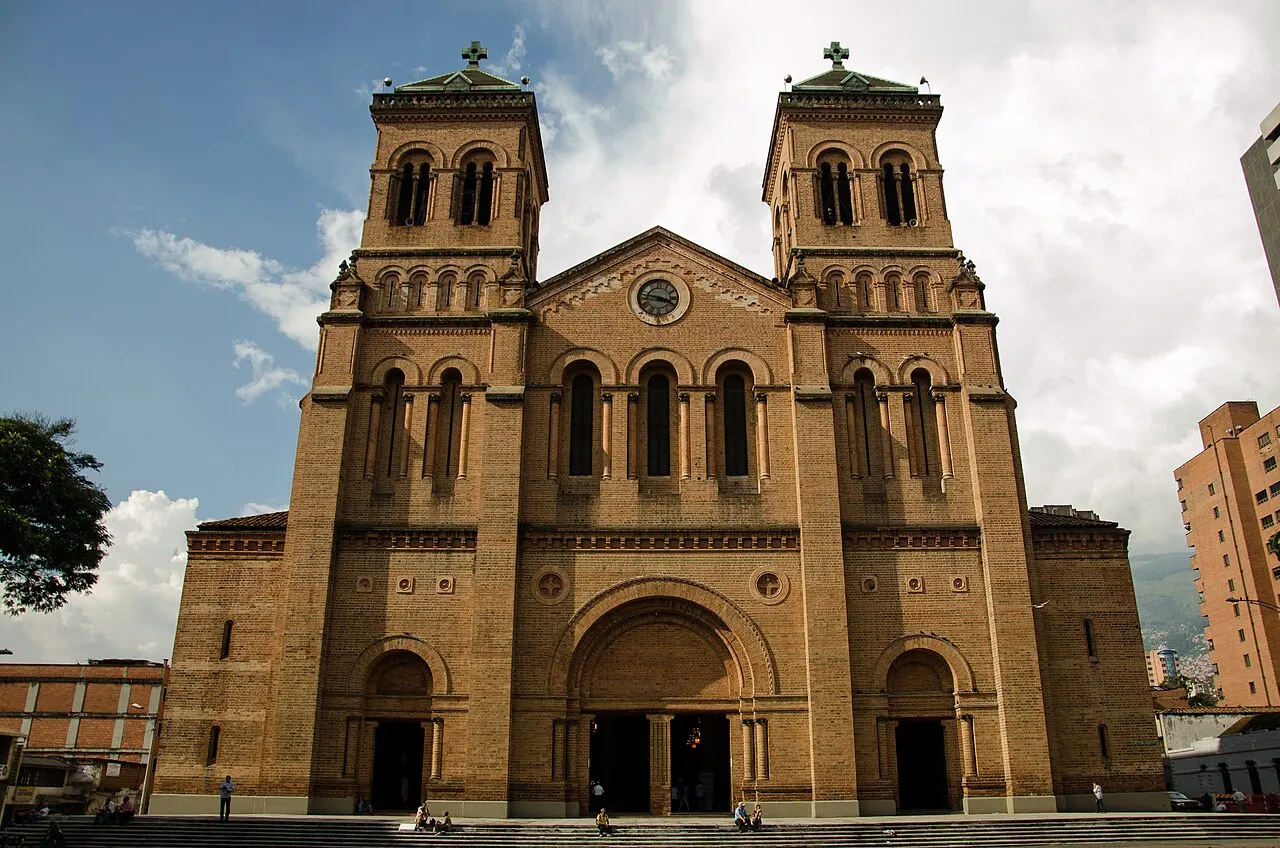
Metropolitan Cathedral Basilica
On Parque Bolívar, built between 1875 and 1931 to a design by Frenchman Charles Émile Carré; it uses about 1.2 million bricks and is cited as one of the largest solid-brick churches in the world. The surrounding park hosts a craft fair on the first Saturday of each month.
It took 1.2 million bricks laid between 1875 and 1931, making it one of the largest solid-brick churches in the world, but the visit is over in a few minutes. Pass through Parque Bolívar on the way to Plaza Botero, or come back on the first Saturday of the month, when there's a crafts fair.
Check access
Nilo’s itinerary
Start with the basic programme and choose extensions for the time you have.
Plan my days in the app ↗Day 1 · Downtown, art, and memory
Get off at Parque Berrío station around 9am and cross Plaza Botero to the Museo de Antioquia; set aside two hours and also see the Palacio de la Cultura, across the square.
Walk five blocks to Plaza Cisneros and step into the Biblioteca EPM to see the model and the old railway yard.
Have a menú del día for COP 15,000–28,000 at a downtown eatery and continue on foot or by tram to the Museo Casa de la Memoria, in Parque Bicentenario (free admission).
Ride the metro up to Prado station and walk among the republican-era houses from the 1920s before 5pm.
Have dinner in Laureles, on Calle 70 or at Primer Parque, and finish with a shot of red-cap aguardiente.
Day 2 · Hillsides, cable car, and Comuna 13
Take Line A to Acevedo and the Metrocable K to Santo Domingo Savio quite early, while the valley is still clear of cloud.
Continue on Line L to Parque Arví (separate tourist fare) and do a two-hour guided walk along the pre-Hispanic paths; bring a jacket, it's 12 °C.
Come back for lunch, then take the metro to San Javier, in Comuna 13, with a guide who lives in the neighborhood; walk the escalators from 2011 and check beforehand whether any stretch is closed for maintenance.
Stay for late afternoon hip hop and graffiti in Comuna 13 and head down before 7pm.
Finish in Provenza or on Calle 70, depending on how much you want to spend.
Day 3 · Botanical Garden, modern art and the view of the valley
Start at the Jardín Botánico (Universidad station, free admission) and see the Orquideorama before 11am, while there's still shade and few people.
If you're traveling with a child, cross the street to Parque Explora, home to the largest freshwater aquarium in South America, and set aside two to three hours; without a child, the Jardín Botánico already fills the morning and you can head straight to lunch.
Have a bandeja paisa for lunch, which feeds two people, and take the metro down to Industriales.
Spend the afternoon in Ciudad del Río, at the Museum of Modern Art, with the Débora Arango collection.
Go up Cerro Nutibara and Pueblito Paisa around 5:30pm to watch the valley light up from north to south.





If you stay longer
Day 4 · Guatapé and El Peñón
Day trip
80 km east, about a 2-hour bus ride from Terminal del Norte for COP 20,000–28,000. A 220 m granite monolith with 740 steps cut into its cleft, and a village of houses covered in zócalos, the raised, painted friezes at the base of the facades; go early, buses back fill up after 4pm.
Food
 AI illustration
Bandeja paisa
A single plate with cooked beans, white rice, ground beef, chicharrón, chorizo, blood sausage, fried egg, arepa, avocado, fried plantain, and hogao. It was codified as a regional dish in the 20th century out of farmhand fare; lunch, never dinner, and one plate feeds two people.
 AI illustration
Mondongo
A thick soup of finely diced tripe with potato, carrot, sausage, and cilantro, served with rice, avocado, and plantain on the side. It's Sunday family food and the specialty of old-school restaurants downtown and in Belén.
 AI illustration
Sancocho antioqueño
Chicken or rib broth with plantain, cassava, corn, and cilantro, cooked in a big pot. On weekends it's eaten by a riverside, in Santa Fe de Antioquia or at the resorts on the southern exit.
 AI illustration
Arepa antioqueña and arepa de chócolo
The paisa arepa is thin, white, unsalted, and unfilled: it serves as bread, with butter and quesito on top. The chócolo one is thick, sweet, made from fresh corn, and comes folded around a melting slice of quesito: street and roadside fare.
 AI illustration
Mazamorra with panela
Corn kernels cooked and served cold in milk, with a block of panela or a piece of bocadillo on the side to sweeten as much as you like. Sold from street carts and at bandeja restaurants, both as dessert and as a drink at once.
 AI illustration
Buñuelo, natilla, and quesito
The buñuelo is a fried ball of costeño cheese and cassava starch, crisp outside and chewy inside, eaten year-round at breakfast; in December it comes paired, by rule, with natilla, a firm corn-and-panela custard. Quesito antioqueño, a fresh, tangy cheese, shows up in almost everything, even dunked in hot chocolate.
 AI illustration
Fruit and juices
Order your juice “en agua” or “en leche” (with water or with milk), made from lulo, soursop, passion fruit, mora or tree tomato, with the fruit blended on the spot. On the street you can buy green mango in a little bag with salt and lime, mamoncillo and granadilla, and at the markets you'll find zapote, borojó and feijoa.
 AI illustration
Tinto and aguardiente Antioqueño
Tinto is the black coffee sold from a thermos by street vendors, in the COP 1,500–3,000 range; specialty coffee, the same selected bean, costs four to five times that. Aguardiente Antioqueño, an anise-flavored cane spirit, is the region's social drink: red cap the traditional one, green cap the sugar-free one, always in a small shot and always shared.
Day trips

Guatapé and El Peñón
80 km east, about a 2-hour bus ride from Terminal del Norte for COP 20,000–28,000. A 220 m granite monolith with 740 steps cut into its cleft, and a village of houses covered in zócalos, the raised, painted friezes at the base of the facades; go early, buses back fill up after 4pm.

Santa Fe de Antioquia
About 55 km northwest, 1 hour 30 minutes through the Túnel de Occidente. Capital of Antioquia until 1826, with white colonial streets, heat of 28–32 °C from sitting at 550 m, and the Puente de Occidente, a 291 m suspension bridge completed in 1895 by José María Villa, 5 km from downtown.
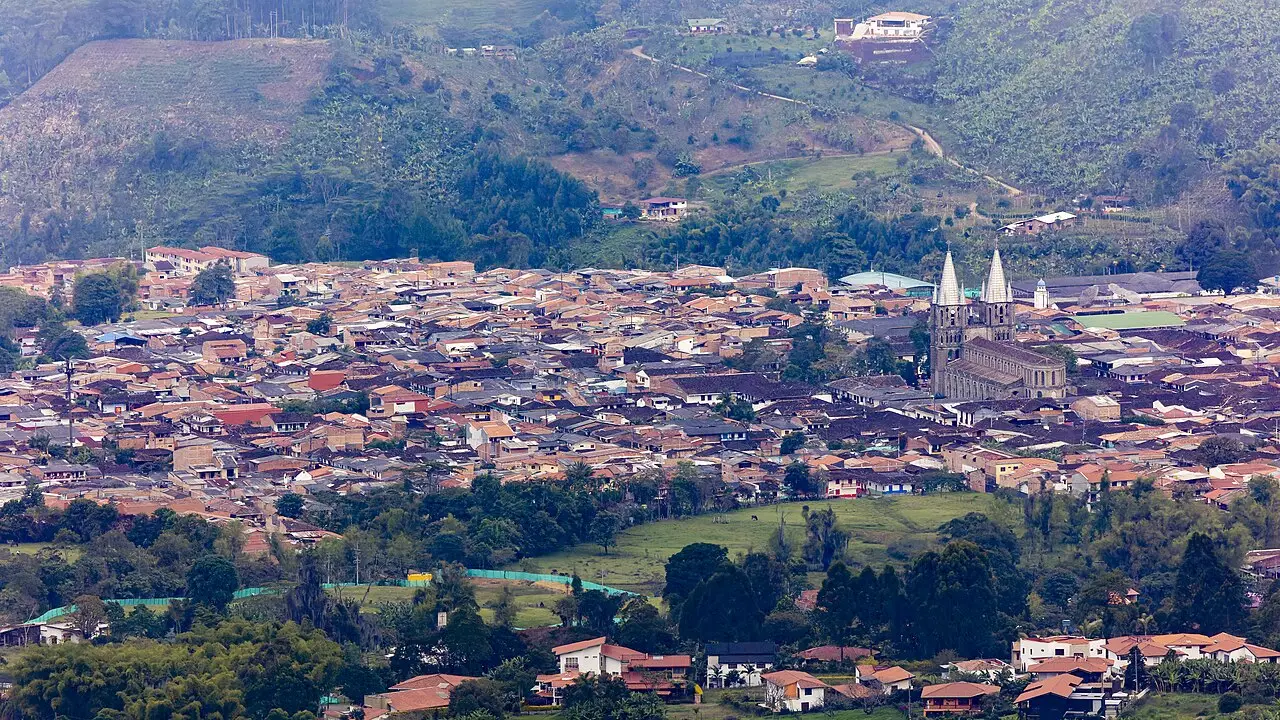
Jardín
135 km south, 3 hours 30 minutes to 4 hours by bus from Terminal del Sur. Coffee-growing village with a square of colorful tables facing the 1918–1942 basilica, handmade cable cars called garruchas that cross the valley, and the Cueva del Esplendor trail; worth staying a night.
Where to begin
Downtown, art, and memory
Get off at Parque Berrío station around 9am and cross Plaza Botero to the Museo de Antioquia; set aside two hours and also see the Palacio de la Cultura, across the square.
Hillsides, cable car, and Comuna 13
Take Line A to Acevedo and the Metrocable K to Santo Domingo Savio quite early, while the valley is still clear of cloud.
Botanical Garden, modern art and the view of the valley
Start at the Jardín Botánico (Universidad station, free admission) and see the Orquideorama before 11am, while there's still shade and few people.
Money
The currency is the Colombian peso (COP). In 2026 the dollar fluctuated in the COP 3,900–4,200 range, and the Brazilian real in the COP 730–800 range. The first few days tend to go into counting zeros. These are everyday orders of magnitude for food and drink: street tinto COP 1,500–3,000, specialty coffee COP 8,000–15,000, “menú del día” or corrientazo with soup, main course, and juice COP 15,000–28,000, dinner at a neighborhood restaurant COP 45,000–90,000 per person, a bottled beer from a corner store COP 4,000–8,000 and from a bar COP 12,000–20,000. For transit and lodging: metro fare COP 3,820, a short app ride COP 9,000–18,000, a hostel bed COP 45,000–90,000, and a mid-range hotel COP 220,000–450,000 a night. Cards are accepted almost anywhere with a door, but carry cash for corner stores, buses, markets, and tips. Withdraw cash inside banks or malls, in daylight. VAT is 19% and is built into prices. Lodging is VAT-exempt for non-resident foreigners: check whether the hotel deducted the 19% from the nightly rate. When it hasn't, asking is all it takes. Restaurants with table service ask out loud whether you want to include the 10% “propina voluntaria.” The law requires them to ask, and you can say no without any awkwardness. Taxis and app rides don't take tips.
Getting there and around
The airport is in Rionegro, 35 km away
José María Córdova International Airport (MDE) is outside the city, in Rionegro, about 35 km away and at 2,140 m altitude, 45 to 70 minutes over a mountain road, and several degrees colder than the valley. Your options are the official taxi (COP 90,000–120,000), shared vans that leave once they fill up (COP 25,000–35,000), and the airport bus to San Diego, in the south-central part of the city, for around COP 15,000–20,000. Apps like Uber, DiDi, Cabify, and InDrive work and are widely used, though they operate in a legal gray zone. Drivers usually ask you to sit in the front seat, and that's not friendliness. There's also Olaya Herrera Airport (EOH), inside the city, for short regional flights.
Two metro lines and six Metrocable lines
The integrated system has two metro lines, Line A, along the river, from Niquía to La Estrella, and Line B, from San Antonio to San Javier, plus six Metrocable lines, the Ayacucho streetcar, the Metroplús bus corridors and the feeder routes. Everything is paid with the same fare on the Cívica card, except Metrocable Line L, to Parque Arví, which charges a separate tourist fare of COP 12,000–15,000. Since January 10, 2026, the fare has been COP 3,820 with the frequent-user Cívica and COP 4,400 for occasional riders. The personalized Cívica is free with ID at the service points in the stations, and the bearer version costs a few thousand pesos. The metro runs Monday to Saturday from 4:30am to 11pm and on Sundays and holidays from 5am to 10pm. Laureles, Envigado and downtown are flat and walkable; El Poblado is one long slope with narrow sidewalks, and it's easy to climb the same block twice thinking it's a different one. The EnCicla public bike system is free once you register, and the “pico y placa” car rotation doesn't affect anyone riding the metro or using ride-hailing apps.
Safety
The drop in violence is real and measurable. From 6,349 homicides in 1991, about 380 per 100,000 people, the city has gone to a rate of around 14 to 16 per 100,000 in recent years, concentrated in local disputes that don't involve visitors. The practical risk for new arrivals is property crime: theft of phones and backpacks on busy streets, buses and terminals, peaking downtown after dark and around Parque Lleras in the small hours. Get around downtown between 8am and 6pm, keep your phone out of sight, call a ride-hailing app instead of hailing a taxi on the street at night and withdraw cash inside banks or malls. Two risks deserve specific attention. The first is being drugged with scopolamine for robbery, usually through drinks or dates arranged on apps. The second is nighttime tours of hillside neighborhoods without a local guide: several areas are still under the territorial control of armed groups, invisible to outsiders, and the rule there is to go in with someone and during the day. Child sexual exploitation in El Poblado led the city to inspect lodgings and restrict the entry of minors into some hotels since 2024, and reports go to the 123 hotline. By day, with public transport and these precautions, you can get around the city without fear.
Etiquette tips
How to use “regalar” when asking and paying
“¿Me regala un tinto?” or “regáleme la cuenta” is the normal, polite way of asking for something you're going to pay for. Refusing to use the verb sounds curt; using it obligates no one to give you anything.
Greet on the way in
Say “buenos días,” “buenas tardes,” or just “buenas” when you walk into a shop, bakery, elevator, taxi, or doctor's office, and “que esté bien” on the way out. The clerk answers “a la orden,” which works as hello, how can I help, and goodbye all at once.
Address people as “usted”
Paisas use “usted” with friends, children, and dogs; “tú” sounds more intimate or affected, and “vos” shows up among close friends. Start with “usted” and you won't be wrong with anyone.
Cultura Metro is taken seriously
On the metro, don't eat, don't drink, don't litter and don't sit on the floor; line up at the doors and let people off before you get on. If you break the rule, a local will call you out without hesitation, because the city takes pride in following it.
Escobar: a sensitive subject in Medellín
A good share of families lost someone between 1985 and 2005, and the city has an active policy of not celebrating drug trafficking; booking a “Pablo tour” or bringing up the topic enthusiastically bothers a lot of people. If you want to understand the period, go to the Casa de la Memoria and start the conversation from there.
Ask before photographing
In Comuna 13, in Moravia, and in hillside neighborhoods, people live exactly where the tour happens; photograph the graffiti freely, not people or inside their homes. Local guides organize this, and it's worth hiring one from the neighborhood itself.
Mistakes to avoid
Altitude of 1,495 m: 17 °C at six in the morning
Arriving in beach clothes is a common mistake. Medellín sits at 1,495 m and it's 17 °C at six in the morning. It rains hard in the late afternoon between September and November, and the valley is hot in the sun and cold in the shade, on the same day.
Staying only in Poblado
Booking everything in El Poblado and leaving only for excursions. You pay prices from another country, hear more English than Spanish and miss the city ten minutes away by metro, in Laureles, downtown and Envigado.
Underestimating the distance from Rionegro
Underestimating the distance from the airport. Rionegro sits 35 km away and over 600 m above the city. In rush hour or on a rainy day the ride up takes over an hour, and flying early morning means leaving in the middle of the night.
Phone in hand on the street and on the bus
Walking with your phone in hand on the street and on the bus. Grab-and-run theft is the most common crime against visitors. The local rule is called “no dar papaya,” meaning don't offer up the opportunity. It's safety advice, despite the fruit in the name.
Accepting a drink from a stranger
Accepting a drink or invitation from a stranger, especially from a dating app match. Scopolamine-drugging cases for robbery are real and documented in Poblado. Meet in a public place, and never leave your drink unattended.
Useful phrases
¿Qué más pues?
What's up, all good? The standard greeting between acquaintances
¿Me regala un tinto?
Get me a coffee, please (you'll be paying for it)
A la orden
At your service / you're welcome: said by the clerk on arrival and departure
Parcero, parce
Buddy, mate: informal address between friends
Hágale pues
Go for it / it's a deal / let's do it: seals an agreement
No dar papaya
Don't be careless, don't hand the opportunity to a thief
Districts
La Candelaria (Downtown)
Comuna 10, the historic and commercial center: Plaza Botero, Parque Berrío, Palacio de la Cultura, street vendors, wholesalers, and a huge flow of people from 7am to 6pm. It empties out and changes character after dark, when almost everyone rides the metro back up.
El Poblado
Comuna 14, on the eastern flank and constantly uphill: hotels, specialty coffee shops, offices, and the nightlife of Provenza, Manila, and Parque Lleras. It's the city's most expensive neighborhood and the epicenter of short-term rentals, with prices that often don't feel Colombian.
Laureles-Estadio
Comuna 11, flat, tree-lined, and laid out in circles and diagonals designed from the 1940s on by painter and urbanist Pedro Nel Gómez. Neighborhood life, bakeries, the bohemian strip of Calle 70, and Atanasio Girardot stadium; it's where a lot of people stay to escape Poblado's prices.
Envigado
An independent municipality attached to the city's south end, with a central square, a church from 1793, and a small-town pace. Metro on Line A, cheaper rent, and a neighborhood bar-and-restaurant scene.
Comuna 13 – San Javier
The western hillside, formed by rural displaced people from the 1970s on and the site of Operación Orión in 2002. Today it's visited via the public escalators from 2011, the graffiti, and the local hip hop scene, always with guides who live there.
Prado Centro
A heritage neighborhood a few blocks north of La Candelaria, with republican-era and art deco mansions from the 1920s to 1940s. It holds studios, dance schools, and hostels in old houses; walk it by day, not at night.
Ciudad del Río / Belén
A former industrial zone reconverted around the Medellín Museum of Modern Art, with new buildings, a public park, and restaurants; Belén, next door, is pure residential middle class. A good base for those wanting neighborhood prices with the metro nearby.
Santa Elena
A rural district on the eastern mountain, at 2,500 m and about 45 minutes from downtown, home to the silletera families who sustain the Feria de las Flores. Visitable flower farms, cold weather, and near-daily mist.
History
up to 1541 · The Aburrá valley
The valley floor was home to the Aburrá, corn farmers linked to the Nutabe and Tahamí peoples, who worked salt and alluvial gold. The Spanish recorded mass suicides in the face of the conquest, and the people's name became the valley's name, usually read as “valley of the blanket painters.”
1541 · Spanish arrival
Jerónimo Luis Tejelo, sent by Marshal Jorge Robledo, crosses the valley on August 24, 1541, and names it Valle de San Bartolomé. The indigenous population collapses within a few decades from war, forced labor, and disease.
1616 · San Lorenzo de Aburrá
Inspector Francisco Herrera Campuzano gathers about 80 surviving indigenous people into a settlement where El Poblado now stands. It's the founding milestone the city celebrates, though the urban core later moves to the bank of the Santa Elena creek.
1675 · Villa de la Candelaria
A royal charter of November 2, 1675, creates the Villa de Nuestra Señora de la Candelaria de Medellín, named in honor of the Count of Medellín, then on the Council of the Indies. The town lives off gold, cattle, and supplying Antioquia's mines.
1826 · Capital of Antioquia
Medellín takes Santa Fe de Antioquia's place as capital, for being more central and richer in trade. Mining trading houses accumulate the capital that would finance industry decades later.
1850–1920 · Antioquian settlement and coffee
Paisa families move south and found Manizales (1849), Pereira (1863), and Armenia (1889), creating the coffee axis. Coffee exported down the Magdalena river becomes the main source of foreign currency and turns Medellín into a financial hub.
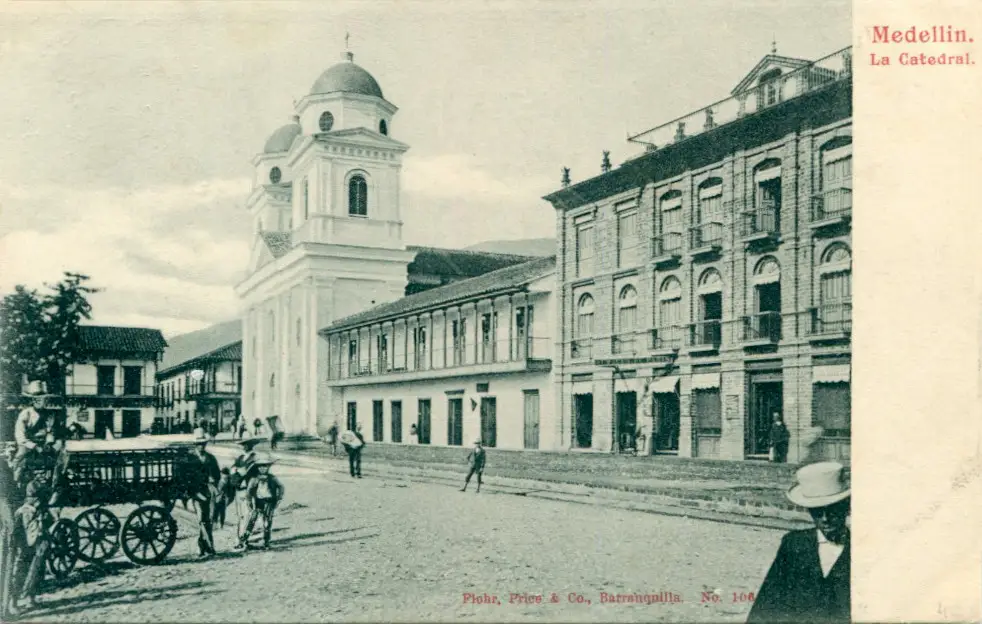
1907–1940 · Textile capital
Coltejer is born in 1907 and Fabricato in 1920, in Bello; the factories mostly employ young women. The Antioquia Railway, with the La Quiebra Tunnel completed in 1929, links the city to the Magdalena river and the world.
1948–1980 · Rural exodus and hillsides
La Violencia pushes peasants into the city: about 358,000 residents in 1951, 1.07 million in 1973, 1.5 million in 1985. The newcomers settle the hillsides with no water, sewage or transport, forming the comunas altas.
1980–1993 · Medellín Cartel
The textile crisis coincides with the cocaine trafficking boom; in 1991 the city logs 6,349 homicides, about 380 per 100,000 residents, a world record. Pablo Escobar is killed on December 2, 1993, on a rooftop in the Los Olivos neighborhood.
1995–2011 · Metro and social urbanism
The metro opens on November 30, 1995, Colombia's only one, and the Metrocable K in 2004 brings public transit to the hillsides. Between 2004 and 2011 come the library parks, Parque Explora (2008), and the Comuna 13 escalators (December 2011).

2016–2026 · Tourism and housing pressure
After the peace deal with the Farc (2016), tourism and digital nomads push up rents in Poblado and Laureles. City hall demolished Escobar's Edificio Mónaco in February 2019, and keeps an active policy of not celebrating drug trafficking.
 AI illustration
Complete history
The Aburrá, before the Spanish arrival
The valley that today holds Medellín was Aburrá land, corn farmers who traded salt and gold with neighboring peoples. On August 24, 1541, Jerónimo Luis Tejelo entered the valley on Jorge Robledo's orders and named it Valle de San Bartolomé. Within less than a century the original population had nearly vanished, and what remained of it was gathered by force: in 1616 inspector Francisco Herrera Campuzano brought about 80 indigenous people together into the settlement of San Lorenzo de Aburrá, on the spot where El Poblado now stands. The Spanish core, though, grew further north, by the Santa Elena creek, and it was that core which received, by royal charter of November 2, 1675, the title of Villa de Nuestra Señora de la Candelaria de Medellín.
Two centuries supplying the gold mines
For nearly two centuries the town lived off supplying Antioquia's gold mines. It was that trade, more than mining itself, that created a class of trading houses with liquid capital and a habit of lending, the base for everything that came after. In 1826 Medellín replaced Santa Fe de Antioquia as the department's capital. From the mid-19th century on, the so-called Antioquian settlement took paisa families down the mountain to the south: Manizales in 1849, Pereira in 1863, Armenia in 1889. That's where the Colombian coffee axis was born, and Medellín became the bank, the trading post, and the dry port for that coffee, exported down the Magdalena river and, from 1929 on, through the La Quiebra Tunnel of the Antioquia Railway.
Coffee money became factories
Coffee wealth financed the city's first factories. Coltejer was founded in 1907 and Fabricato in 1920, in Bello, and for half a dozen decades Medellín was Colombia's industrial capital, with a mostly female working class and a closed, intermarried Catholic elite. In 1955 Empresas Públicas de Medellín, EPM, was born, the municipal utility for power, water, and telecommunications whose annual transfers still fund a good part of city hall's budget, including the libraries and cable cars built in the 21st century. At the same time, the Violencia of the 1950s dumped hundreds of thousands of peasants into the valley. Since the flat floor was already taken up by factories and by those with money, the city grew upward, up the hillside, in self-built neighborhoods with no water, sewage, or buses.
The cartel recruited in jobless neighborhoods
When the textile industry fell into crisis in the 1970s and 1980s, those neighborhoods already held a whole generation of young people with no formal job. Pablo Escobar's cartel recruited there. The result was the most violent decade a Latin American city has logged in peacetime: 6,349 murders in 1991, about 380 per 100,000 residents. Escobar was killed on December 2, 1993, but the war went on among militias, urban guerrillas, and paramilitaries: Operación Orión, a military offensive in Comuna 13 in October 2002, left disappeared people whose families still search the La Escombrera landfill.
Metro and Metrocable: the rebuilding's start
The city's rebuilding began with the metro, opened on November 30, 1995, which created “Cultura Metro,” a code of behavior that residents still take seriously today. In 2004 Metrocable line K became the first cable car in the world integrated into a mass transit system, and the city administrations from 2004 on spread library parks, schools and the Parque Explora precisely through the poorest neighborhoods, in a policy that became known as social urbanism. The outdoor escalators of Comuna 13, from December 2011, are the most visited symbol of that approach. The side effect arrived after 2016, with booming tourism, digital nomads, short-term rentals and an open dispute over who can still afford to live in El Poblado and Laureles.
EPM, the municipal utility founded in 1955, funds the cable cars.
Geography and shape of the city
The valley, the altitude, and the temperature
Medellín occupies the floor and walls of the Aburrá Valley, a narrow gap in the Central Cordillera about 60 km long running north–south, drained by the Medellín River, which flows north. Downtown sits at 1,495 m; the valley's edges rise to 2,600–3,100 m (Cerro del Padre Amaya tops 3,000 m), which explains the stable average temperature of about 22 °C and the nickname city of eternal spring.
The river axis and the numbered grid
The whole layout of the city follows that axis: the river was channeled, the Autopista Norte-Sur and Avenida Regional run along both banks, and Metro Line A follows the river from Niquía (Bello) to La Estrella. The street grid is numbered: “calles” cross the valley and increase heading north, “carreras” run along it and increase heading west, and addresses come out as “Calle 10 # 43-25.”
Neighborhood by altitude and the rainy calendar
Height on the hillside indicates a neighborhood's social class. The higher up the slope, the more working-class and more recent the neighborhood; the flat floor holds industry, commerce, and the higher-income neighborhoods. The climate has two rainy periods, April–May and September–November, with strong late-afternoon downpours.
The cable cars were built for those who live up the hillside.
Culture
Tango in Manrique and reggaeton in El Poblado
Tango arrived to stay on June 24, 1935, when Carlos Gardel died in the crash at Olaya Herrera airport, and the Manrique neighborhood has tango bars that have been running for decades and the Casa Gardeliana, a museum opened in 1973. Reggaeton made the city the genre's main production center outside Puerto Rico: J Balvin, Maluma, Karol G (born here in 1991), Feid and Blessd record in studios in El Poblado and Laureles, and paisa slang has leaked into lyrics heard all over the world.
Botero and Arango, two artists from Medellín
In the visual arts, the city has two opposing names. Fernando Botero (1932–2023) left his inflated figures in the plaza and in the Museo de Antioquia, and Débora Arango (1907–2005), censored in the 1940s for her nudes and her acid portraits of power, has her work in the Museo de Arte Moderno de Medellín. The city's literature is almost entirely an attempt to explain its own violence: Tomás Carrasquilla in the 19th century, Manuel Mejía Vallejo, and later “Our Lady of the Assassins” (Fernando Vallejo, 1994) and “Oblivion: A Memoir” (Héctor Abad Faciolince, 2006). In film, Víctor Gaviria shot the 1980s and 1990s with nonprofessional actors from the hillsides in “Rodrigo D: No Futuro” (1990) and “The Rose Seller” (1998).
Soccer splits the city
Soccer splits the city in two: Atlético Nacional, green, founded in 1947, Copa Libertadores champion in 1989 and 2016; and Independiente Medellín, red, Colombia's oldest club still active, from 1913. Both play home games at the same Atanasio Girardot stadium, opened in 1953, and the paisa derby shifts the mood and the traffic of the whole city. Nightlife runs on three hubs with different crowds: Provenza and Lleras, in Poblado, pricier and more international; Calle 70 in Laureles, with salsa, live bands, and neighborhood prices; and downtown, which has the oldest bars and closes earlier.
Medellín has tango bars in Manrique and reggaeton studios in Poblado and Laureles: two kinds of music, in different neighborhoods.
Festivals and events

Feria de las Flores
Ten days in early August, since 1957. It ends with the Desfile de Silleteros, in which more than 500 families from Santa Elena carry flower panels weighing up to 70 kg on their backs; there's also a classic car parade and free shows. It's the busiest and priciest week of the year in the city.

Alumbrados navideños
From December 1 through mid-January, EPM installs millions of lights along several kilometers of the Medellín River and in city squares. The tradition dates to 1967. Go on a weeknight; on weekends the riverbank becomes impassable.

Medellín International Poetry Festival
A week in July, since 1991, with free readings in parks, libraries, and outlying neighborhoods. It was born at the height of the violence as a deliberate occupation of public space and received the Right Livelihood Award in 2006.
 AI illustration
International Tango Festival
In June, around June 24, the anniversary of Gardel's death in the city. Concerts, open milongas, and programming concentrated in Manrique and downtown.

Fiesta del Libro y la Cultura
About ten days in September, at the Botanical Garden and around Universidad station, with free admission. It's the country's largest book fair after Bogotá's, combining independent publishers, workshops, and shows.
Books and films
“Oblivion: A Memoir,” Héctor Abad Faciolince (2006)
A memoir of physician and activist Héctor Abad Gómez, murdered in Medellín in 1987, written by his son. It explains the city through the middle class it produced and the exact moment the violence stopped being peripheral; it became a Fernando Trueba film in 2020.
“Rodrigo D: No Futuro,” Víctor Gaviria (1990)
Shot in the northeastern hillsides with non-professional actors, several of whom died before the Cannes premiere. It shows the upper neighborhoods at the height of the cartel decade with no mediation and no travel-guide soundtrack.
“KG0516,” Karol G (2021)
The album that cemented the city as reggaeton's production capital outside Puerto Rico, with paisa vocabulary and accent built into the lyrics. It's a way into the Medellín exported today, the one younger residents recognize as theirs.
Frequently asked questions
Medellín: Where's the airport, and how do you get downtown?
José María Córdova Airport (MDE) is in Rionegro, about 35 km away and at 2,140 m altitude, 45 to 70 minutes over a mountain road. Your options are the official taxi (COP 90,000 to 120,000), shared vans that leave once full (COP 25,000 to 35,000) and the bus to San Diego (COP 15,000 to 20,000).
Medellín: How do you get to Guatapé and El Peñón?
By bus: Guatapé is 80 km east, about 2 hours from Terminal del Norte, for COP 20,000 to 28,000. Go early, because the buses back fill up after 4pm.
Medellín: What's the currency, and what's the exchange rate for the Brazilian real?
The currency is the Colombian peso (COP). In 2026 the Brazilian real fluctuated in the COP 730 to 800 range, and the dollar in the COP 3,900 to 4,200 range.
Medellín: How do you order something at a counter or restaurant?
“¿Me regala un tinto?” or “regáleme la cuenta” is the normal, polite way to ask for something you're going to pay for.
Medellín: What's the real risk for visitors?
The practical risk is property crime: phone and backpack theft on busy streets, buses and terminals. Violence has dropped from about 380 homicides per 100,000 residents in 1991 to 14 to 16 in recent years, in local disputes that don't involve visitors.
Other cities in the country
Colombia ↗- Days
- 2–3
- When
- Jan–Feb · Jul–Aug
- Per person/day
- Average 239,000 COPMid-range · per person/day
Cost scope
Per person per day: accommodation, meals, urban transport, visits and a small allowance for extras. Flights excluded; larger purchases vary. Editorial estimate, not a quote.
- Days
- 2–3
- When
- Jan–Apr · Dec
- Per person/day
- Average 80–130 USDMid-range · per person/day
Cost scope
Per person per day: accommodation, meals, urban transport, visits and a small allowance for extras. Flights excluded; larger purchases vary. Editorial estimate, not a quote.
- Days
- 3–6
- When
- Feb–Apr
- Per person/day
- Explore costsGuide estimate
Cost scope
Per person per day: accommodation, meals, urban transport, visits and a small allowance for extras. Flights excluded; larger purchases vary. Editorial estimate, not a quote.
- Days
- 3–4
- When
- Jan–Apr · Dec
- Per person/day
- Average 151,000 COPMid-range · per person/day
Cost scope
Per person per day: accommodation, meals, urban transport, visits and a small allowance for extras. Flights excluded; larger purchases vary. Editorial estimate, not a quote.