Belgium
Bruges
The Belfry, the canals and the Flemish Primitives in a medieval center you can cover on foot
Days Start with the basic programme and choose extensions for the time you have.
How the guide reaches this number
The center is small, but what makes the trip worthwhile is inside buildings with opening hours: the Flemish Primitives of the Groeningemuseum, Memling's works in the Sint-Janshospitaal and Michelangelo's Madonna close between 5 and 6 p.m., and the Belfry asks for a booked time, and anyone arriving from Brussels in mid-morning ends up choosing between the museums and the canals. On the first day I'd do the Belfry at 9 a.m., the Burg, the boat, the Groeningemuseum, the Church of Our Lady and the Begijnhof at the end of the afternoon. On the second, Memling, the De Halve Maan brewery and the north of the city, from the Jan van Eyckplein to the Kruisvest windmills. With only one day, Bruges is still worth the trip: do the first day of the itinerary, take the first train and don't schedule it for a Monday, when the painting museums are closed. Anyone who doesn't care about museums and only wants to see the city can do it in one unhurried day.
1–3
When April to June and September; in those months the canal boats run every day and the nightly rate is below August's, and April is the least rainy month
How the guide reaches this number
Bruges has an oceanic climate, with no dry season: it rains all year, from 41 mm in April to 89 mm in November, according to the 1991 to 2020 normals of the Ostend-Bruges airport station, about 25 km away. Summer is mild, with average highs of 21.3 °C in July and 21.7 °C in August, and winter is cold and damp, with an average high of 6.7 °C and low of 1.4 °C in January. The canal boats run every day from March to October; from November to February they operate on a rotation. From April to June and in September the weather is good for walking, the boats are running and the nightly rate is below August's, the most expensive month to sleep (average of about €222 on KAYAK). January is the cheapest (about €136), and from November 20, 2026 to January 31, 2027 the city has Christmas markets and a skating rink. Museum hours change on November 2: from November 3 to March 31, the Belfry opens at 10 a.m., except on Saturdays, and the Groeningemuseum closes at 5 p.m.
Per person/day Budget about 67 EUR; mid-range about 161 EUR; comfortable about 360 EUR per person, based on spending that travelers report to Budget Your Trip (consulted in October 2026).
How the guide reaches this number
Per person per day: accommodation, meals, urban transport, visits and a small allowance for extras. Flights excluded; larger purchases vary. Editorial estimate, not a quote.
 What Nilo thinks
I'd stay two days, with a night in Bruges, and use a third for Ghent, half an hour away by train. The center is small, but what makes the trip worthwhile is inside buildings with opening hours: the Flemish Primitives of the Groeningemuseum, Memling's works in the Sint-Janshospitaal and Michelangelo's Madonna close between 5 and 6 p.m., and the Belfry asks for a booked time, and anyone arriving from Brussels in mid-morning ends up choosing between the museums and the canals. On the first day I'd do the Belfry at 9 a.m., the Burg, the boat, the Groeningemuseum, the Church of Our Lady and the Begijnhof at the end of the afternoon. On the second, Memling, the De Halve Maan brewery and the north of the city, from the Jan van Eyckplein to the Kruisvest windmills. With only one day, Bruges is still worth the trip: do the first day of the itinerary, take the first train and don't schedule it for a Monday, when the painting museums are closed. Anyone who doesn't care about museums and only wants to see the city can do it in one unhurried day.Between the 13th and 15th centuries, Bruges was where the merchants of the Hanseatic League met those of Genoa, and the city they financed is still standing because, after 1500, there was no money to renovate it. The inlet that brought in the ships silted up, trade went to Antwerp, and what remained were the squares, the freight canals and the brick houses with stepped facades. The paintings remained too: Jan van Eyck and Hans Memling painted for clients here, and the works are still a few meters from where they were commissioned, in the Groeningemuseum, in the former Hospital of Saint John and in the church that holds a Michelangelo Madonna. The price of this state of preservation is crowding: about eight million tourists a year in a city of 120,000 residents. The axis between the Markt and the Begijnhof brings together almost everything that appears on postcards; the former inner port of the Jan van Eyckplein, 5 minutes on foot to the north, and the windmills of the Kruisvest, about 20 minutes to the east, open the way to quieter residential neighborhoods.
Quick facts
- Population
- 120,458 residents in the municipality of Bruges, which combines eight former communes, among them Sint-Kruis, Assebroek and Lissewege, and reaches the coast at the port of Zeebrugge (Statbel, January 1, 2026)
- Founded
- Mentioned as Brugis in an inventory written between 851 and 864; city charter on July 27, 1128
- Country and region
- Belgium, Flanders region; capital of the province of West Flanders; the municipality reaches the North Sea at Zeebrugge
- Language
- Dutch, spoken in the West Flemish variant
- Currency
- Euro (€); on the canal boats you pay in cash or with the Payconiq app
- Time zone
- UTC+1 (CET) in winter and UTC+2 (CEST) during daylight saving time, from the last Sunday of March to the last Sunday of October
- Best time to visit
- April to June and September; in those months the canal boats run every day and the nightly rate is below August's, and April is the least rainy month
- Average daily cost
- Budget about 67 EUR; mid-range about 161 EUR; comfortable about 360 EUR per person, based on spending that travelers report to Budget Your Trip (consulted in October 2026).
When to go
April to June and September; in those months the canal boats run every day and the nightly rate is below August's, and April is the least rainy month
How the year changes

Bruges has an oceanic climate, with no dry season: it rains all year, from 41 mm in April to 89 mm in November, according to the 1991 to 2020 normals of the Ostend-Bruges airport station, about 25 km away. Summer is mild, with average highs of 21.3 °C in July and 21.7 °C in August, and winter is cold and damp, with an average high of 6.7 °C and low of 1.4 °C in January. The canal boats run every day from March to October; from November to February they operate on a rotation. From April to June and in September the weather is good for walking, the boats are running and the nightly rate is below August's, the most expensive month to sleep (average of about €222 on KAYAK). January is the cheapest (about €136), and from November 20, 2026 to January 31, 2027 the city has Christmas markets and a skating rink. Museum hours change on November 2: from November 3 to March 31, the Belfry opens at 10 a.m., except on Saturdays, and the Groeningemuseum closes at 5 p.m.
Nilo's tips
Book the Belfry time slot and arrive early
The Belfry is the busiest site in the museum network, and the ticket is valid for the booked time. I'd book the first slot, at 9 a.m. from April to November 2, and climb before going anywhere else: there are 366 steps, and doing it rested is better than at the end of the day.
Compare your museum choices before buying the Musea Brugge Card
The card costs €49 and gives 72 hours of entry to the sites in the municipal network, Belfry included. At full admission prices, the Belfry (€16), the Groeningemuseum (€15) and the Sint-Janshospitaal (€15) add up to €46; with Michelangelo’s Madonna (€10), the total is €56. If you qualify for a discount or free admission, recalculate the cost. The card bought online only starts counting at the first visit.
Bring cash for the boat
The five boat-tour operators charge €15 per adult, in cash or with Payconiq, and anyone traveling alone can't book. The route is the same on all five, so I'd join the line at whichever dock is emptiest; anyone who has trouble with stairs should choose the one at Katelijnestraat 4.
Plan the day around the closures
On Monday the Groeningemuseum, the Sint-Janshospitaal, BRUSK and the windmill are closed; on Wednesday, the Gruuthusemuseum; and on Sunday the Madonna only opens at 1:30 p.m. If you only have one day and it falls on a Monday, I'd set the painting museums aside and do the Belfry, the Town Hall, the boat, the Church of Our Lady and the Begijnhof. On Ascension Day, which is also the day of the Procession of the Holy Blood, the Town Hall and the wing of the Church of Our Lady are closed, and the Belfry, the Groeningemuseum, the Sint-Janshospitaal, the Gruuthusemuseum and the windmill close at 12:30 p.m.
Set aside an afternoon for the north and the east
The classic itinerary sits on the axis between the Markt, the Burg, the Dijver and the Begijnhof. I'd set aside an afternoon for the north and the east: the Jan van Eyckplein is 5 minutes on foot from the Markt, and from there the Langerei canal leads to the Kruisvest windmills, along residential streets; from the Markt to the Sint-Janshuismolen windmill is about 19 minutes on foot by the direct route.
Explore the map
Explore the map, read about the other places and plan your travel days in the app.
Open the appWhat to see
Bruges: The oval inside the bulwarks
The historic center occupies an oval of about 430 hectares, surrounded by a ring of canals and former bulwarks (the vesten) that are now parkland. It is about 5 minutes on foot from the Markt and leads to quieter residential neighborhoods.
Belfry (Belfort)
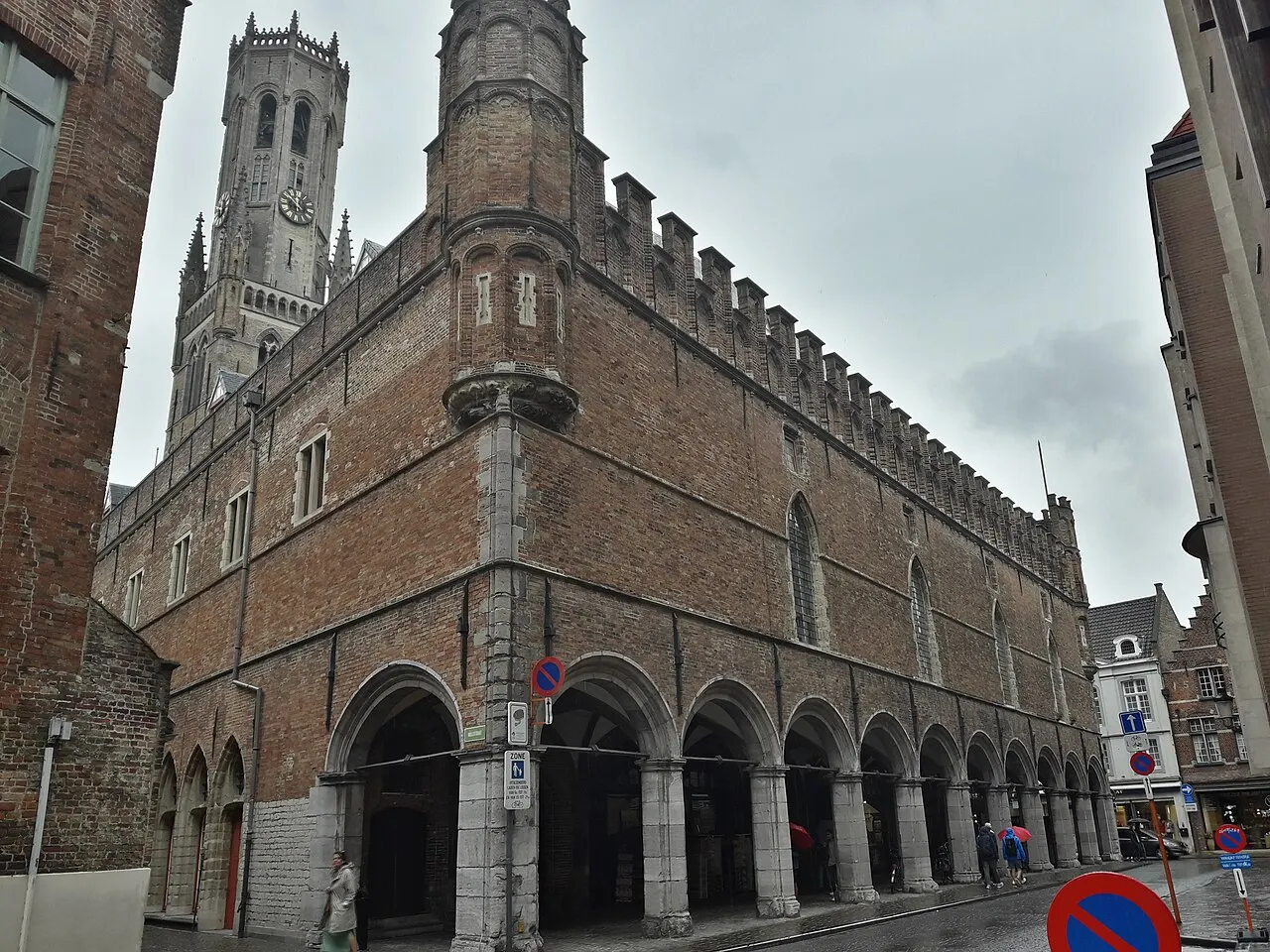
The 83 m tower on the Markt, built around 1240 next to the covered market, is the highest lookout open to the public in the city. The climb is 366 narrow steps and passes the treasury room, where the city's seal and money were kept, and the carillon floor with its 47 bells, with the keyboard the carillonneur uses for the performances on Wednesdays, Saturdays and Sundays, from 11 a.m. to noon. From April 1 to November 2 it is open every day from 9 a.m. to 8 p.m.; in winter, from 10 a.m. to 6 p.m., and on Saturdays from 9 a.m. to 8 p.m., with last entry one hour before closing. Admission is €16 from April to November 2 and €15 in winter, and a booked time slot is recommended. The visit is not suited to anyone who has trouble with steep stairs. It closes for maintenance from October 19 to 22, 2026.
The 83 m tower is the highest lookout open to the public and the symbol of the Markt. There are 366 steps and the ticket is for a booked time slot, so reserving the first slot avoids the queue and end-of-day fatigue: 9 a.m. from April to November 2 and on winter Saturdays; 10 a.m. on other winter days. Closed for maintenance from October 19 to 22, 2026.
Check access

Burg
The square where the castle of the counts of Flanders stood brings together buildings from several periods side by side. The Town Hall (Stadhuis), built from 1376 to 1421, is one of the oldest in the Low Countries; the Gothic hall on the first floor has murals from the early 20th century that tell the city's history. The Town Hall is open every day from 9:30 a.m. to 5 p.m., with a €8 ticket that on weekends also gives access to the neighboring Brugse Vrije. Weddings may close the building on Tuesday and Saturday mornings and Friday afternoons. The former Cathedral of Saint Donatian stood here and was demolished in 1799.
The former castle square brings together the Gothic Town Hall, built from 1376 to 1421 and one of the oldest in the Low Countries, and the Basilica of the Holy Blood. The Gothic hall costs €8 and fits into half an hour.
Check access
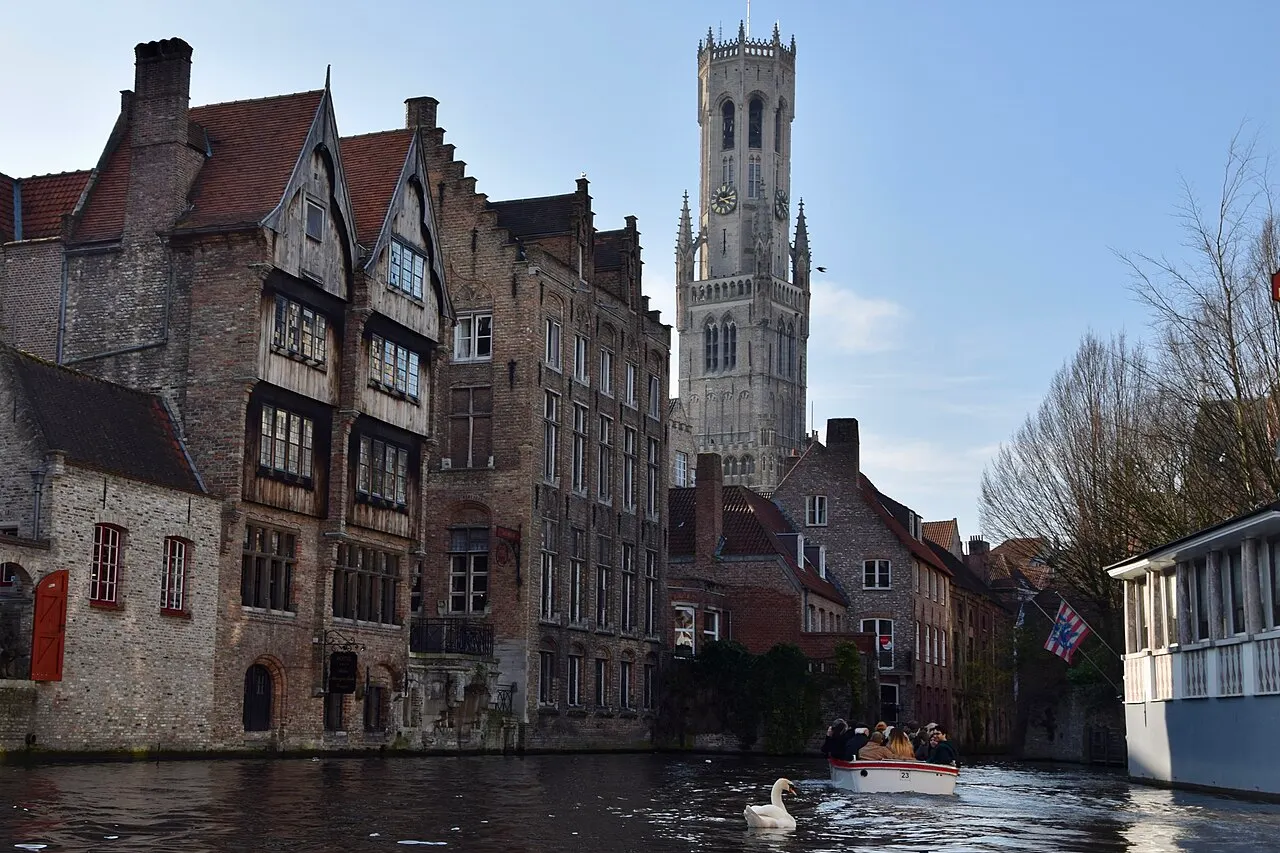
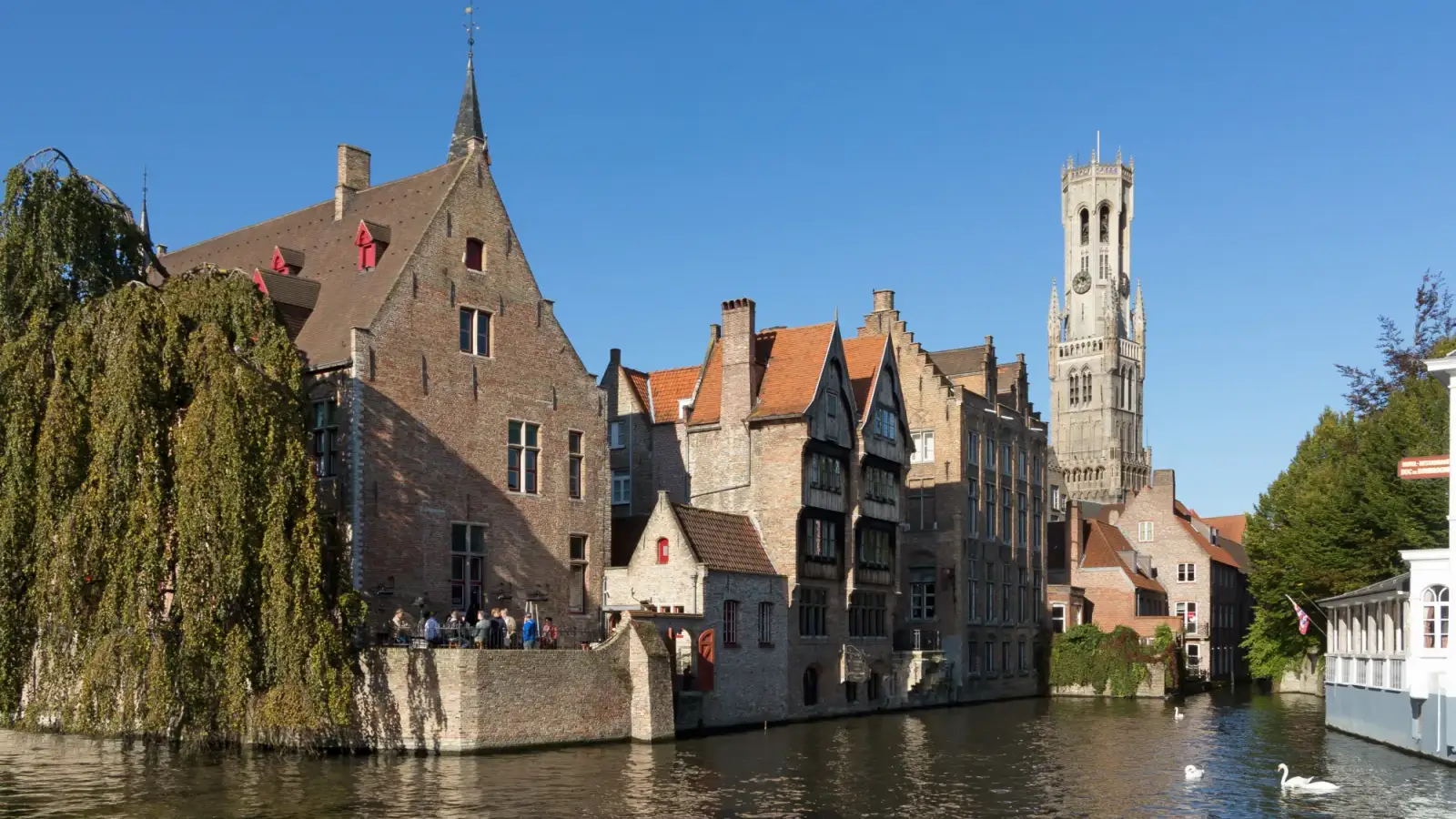
Rozenhoedkaai
The quay between the Dijver and the Huidenvettersplein, beside the canal, is the boarding point for one of the five boat-tour operators. All five run the same 30-minute route, without stops, and leave every day from 10 a.m. to 6 p.m. from March to October, with the last departure half an hour before closing; from November to February they operate on a rotation, with at least one dock open each day. The ticket costs €15 (€9 for ages 4 to 11) until December 31, 2026, and anyone traveling alone buys at the dock, paying in cash or with Payconiq. The dock at Katelijnestraat 4 has fewer steps.
The 30-minute boat tour is a way to see the canals that brought the city its wealth; it leaves here and from four other docks along the same route. Pay at the dock in cash or with Payconiq.
Check access
Groeningemuseum
The municipal fine arts museum, opened on the Dijver in 1930, holds the Flemish Primitives of Bruges: the Virgin with Canon Joris van der Paele (1436), by Jan van Eyck, the Moreel Triptych (1484), by Hans Memling, the Judgment of Cambyses (1498), by Gerard David, and the Last Judgment attributed to Bosch, as well as Belgian painters of the 19th and 20th centuries, such as Khnopff, Delvaux and Magritte. It is open from 10 a.m. to 6 p.m. from April to November 2 and from 9:30 a.m. to 5 p.m. in winter, closed on Mondays, and admission is €15. The museum closes on January 11, 2027 for a four-year renovation. During the renovation, the collection's highlights move to BRUSK, the exhibition space of the Bruges museums, also on the Dijver; the opening date for that display had not been announced in October 2026, and the museums' website gives it.
This is where you find Van Eyck, Memling and Gerard David, the reason Bruges matters in the history of painting. Closed on Mondays and, from January 11, 2027, for four years of renovation; during the work, the highlights move to BRUSK, with the display's opening date to be confirmed.
Check access
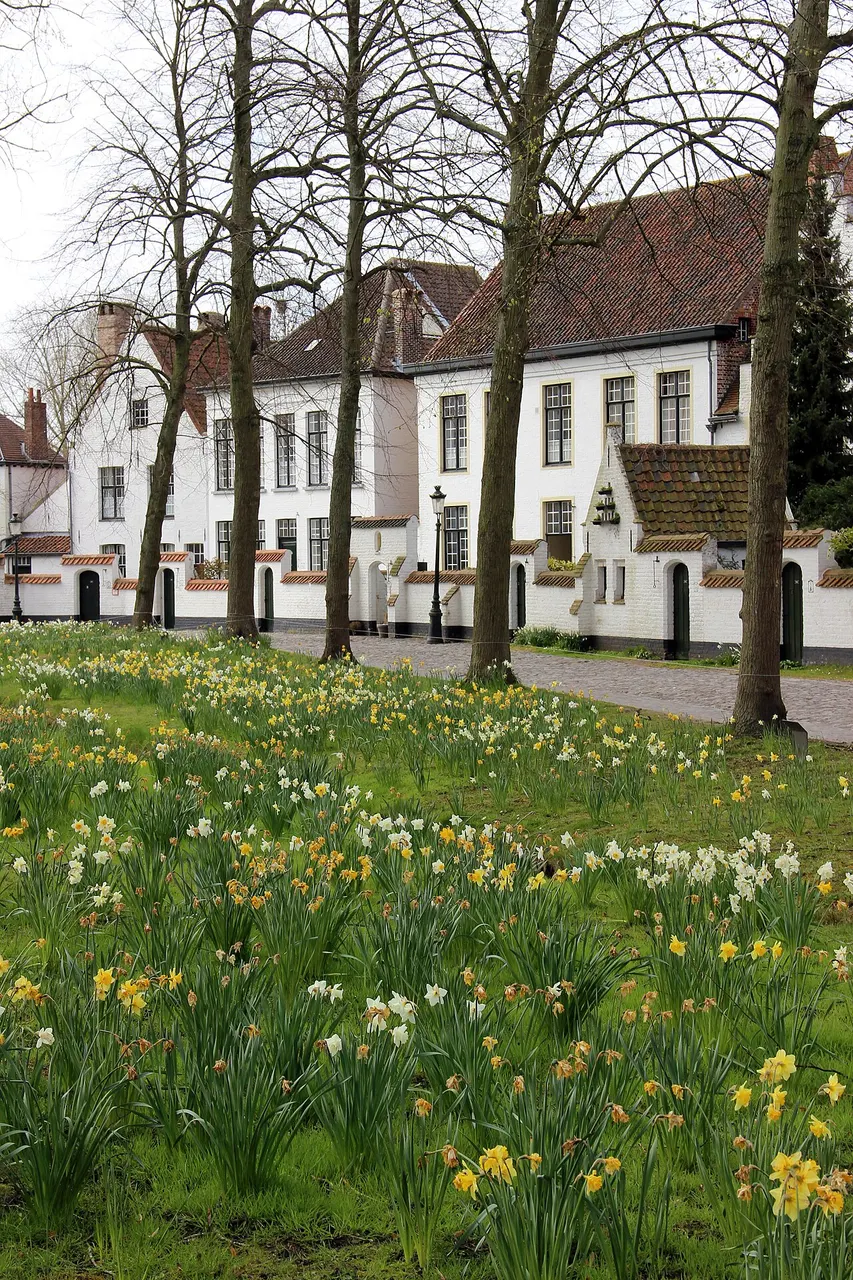
Begijnhof
The Begijnhof Ten Wijngaerde, founded around 1244 by Countess Margaret of Constantinople, is a courtyard of white houses around a garden, where the beguines lived, lay women who led a religious life without taking convent vows. Since 1927 some of the houses have held a Benedictine convent, and the courtyard is still inhabited by women. Admission is free, the city asks that the visit be made in silence, and the gate has opening and closing hours, which the tourist office publishes in the day's calendar. It has been a World Heritage Site since 1998, along with the other beguinages of Flanders.
The courtyard of white houses founded around 1244 is a World Heritage Site and still inhabited, with free admission, a silent visit and gate opening hours. A good end to the day, seven minutes on foot from the Church of Our Lady.
Check access

Markt
The market square, about 1 hectare in size, has been the center of Bruges since the 10th century. On one side stands the Belfry; on the other, the Provinciaal Hof, rebuilt in Neo-Gothic style after a fire in 1878, and at number 16 the house where Archduke Maximilian was held prisoner in 1488. The statue of Jan Breydel and Pieter de Coninck, from 1887, commemorates the revolt of 1302. The square has been almost entirely car-free since the 1996 renovation.
The market square is the natural starting point for the itinerary, and you cross it anyway on the way to the Belfry; stop for the statue commemorating 1302 and the Provinciaal Hof without setting aside extra time.
Check access

Heilig-Bloedbasiliek
The Basilica of the Holy Blood, in the corner of the Burg, is two chapels stacked on top of each other: below, the Romanesque Chapel of Saint Basil, from 1134 to 1149, one of the best preserved in West Flanders; above, the chapel rebuilt in Gothic style, where the relic that tradition says arrived in 1150 is kept. Admission is free, and the museum costs €5. It is open every day from 10 a.m. to 5:15 p.m., and the relic is displayed for veneration daily from 2 p.m. to 4 p.m. and on Fridays from 10:15 a.m. to 11 a.m. During Mass, the chapel admits only those who come to attend.
The lower Romanesque chapel, from 1134 to 1149, is one of the best preserved in West Flanders, and entry is free. During Mass, only those attending may enter.
Check access

Sint-Janshospitaal
The former Hospital of Saint John is now a museum with seven works by Hans Memling, four of them painted for the hospital itself and shown in a display case made for them; the reliquary of Saint Ursula is in the hospital church. The complex includes a 17th-century pharmacy with an herb garden. It is open from 9:30 a.m. to 5 p.m., closed on Mondays, and admission is €15.
Seven works by Memling, four painted for the hospital itself, and Saint Ursula's reliquary in the church beside it. A natural continuation if you enjoyed the Groeninge; closed on Mondays.
Check access
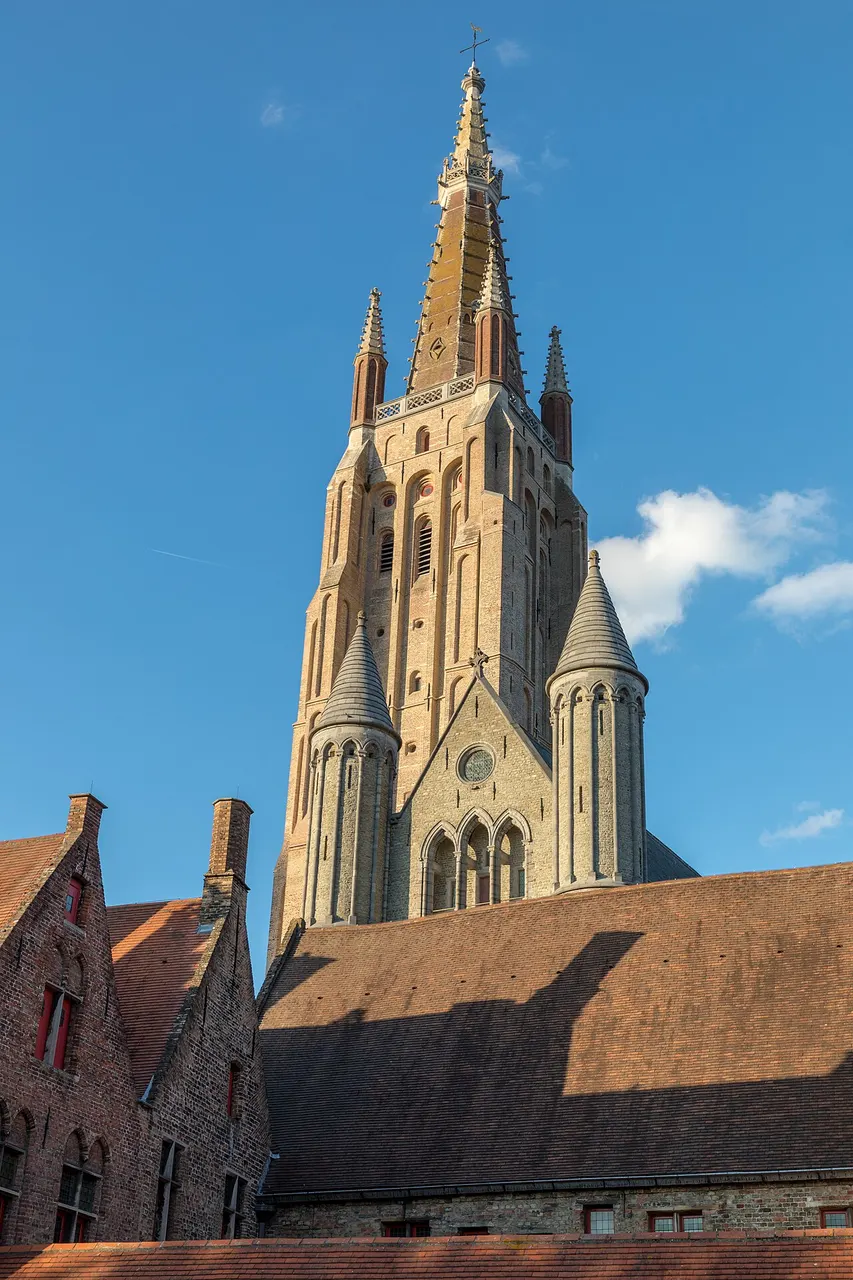
Onze-Lieve-Vrouwekerk
The Church of Our Lady has a 115.5 m tower, the second-tallest brick tower in the world, and holds Michelangelo's Madonna and Child, carved around 1503 to 1505 and bought in 1504 by Bruges merchants: it was the first sculpture by Michelangelo to leave Italy in the artist's lifetime. The museum wing, with the Madonna and the tombs of Charles the Bold and his daughter, Mary of Burgundy, costs €10; the nave of the church is free. It is open from 9:30 a.m. to 5 p.m. and, on Sundays, from 1:30 p.m. to 5 p.m.; it closes on Ascension Day, and weddings and funerals may close the visit.
Michelangelo's Madonna and Child, his first sculpture to leave Italy during his lifetime, and the Burgundian tombs justify the €10 museum-wing ticket. On Sundays it opens only at 1:30 p.m.
Check access
Nilo’s itinerary
Start with the basic programme and choose extensions for the time you have.
Plan my days in the app ↗Day 1 · Markt, Burg, canals and the museums of the Dijver
Start at 9 a.m. at the Belfry, with a booked time slot: the 366 steps, the treasury room and the 47-bell carillon are on the way. From November 3 to March 31 it opens at 10 a.m., except on Saturdays.
Go down to the Markt and walk on to the Burg, two minutes away. Stop first at the Romanesque Chapel of Saint Basil, below the Basilica of the Holy Blood, which opens at 10 a.m.: there is Mass every day at 11 a.m., except Monday, and during Mass only those who come to attend may enter. Then go into the Town Hall to see the Gothic hall.
Cross over to the Rozenhoedkaai and take the 30-minute boat tour, with cash or Payconiq in your pocket.
Have lunch near the Vismarkt or the Huidenvettersplein.
In the afternoon, go into the Groeningemuseum, on the Dijver, to see Van Eyck, Memling and Gerard David. The Groeninge closes on January 11, 2027; after that, check the museums' website for when the highlights open at BRUSK, also on the Dijver. Both are closed on Mondays.
Continue along the Dijver to the Church of Our Lady to see Michelangelo's Madonna, until 5 p.m. If you also want to see the Gruuthusemuseum, next door (closed on Wednesdays), the combined ticket for the two costs €19; otherwise, the church wing alone costs €10.
Finish at the Begijnhof, about 7 minutes on foot south of the church, and at the Minnewater, just beyond. From the Minnewater bridge, the station is about 9 minutes on foot.



If you stay longer
Day 2 · Memling, the brewery and the north of the canals
Start at 9:30 a.m. at the Sint-Janshospitaal, with the works of Memling and the 17th-century pharmacy. It is closed on Mondays.
If you like objects and history and didn't see the Gruuthusemuseum on day 1, cross over to it, next to the Church of Our Lady (closed on Wednesdays, €15).
Walk to the Walplein and take the 45-minute tour of the De Halve Maan brewery, with lunch at the brewery's restaurant.
In the afternoon, walk up through the center to the Jan van Eyckplein and follow the Langerei canal north and east, away from the busiest streets.
Reach the Kruisvest and visit the Sint-Janshuismolen windmill before 5 p.m. (from April to November 2, closed on Mondays). Return along the bulwarks to the Kruispoort.
The Belfry carillon plays live on Wednesdays, Saturdays and Sundays, from 11 a.m. to noon, and can be heard from much of the center; on one of those days, anyone who does the Sint-Janshospitaal early can stop by the Markt before heading to the brewery.
Day 3 · Ghent
Day trip
Direct trains from Bruges to Gent-Sint-Pieters take 22 to 27 minutes, with several departures an hour. Ghent is larger, with about 270,000 residents, and has the quays of the old port, the Graslei and the Korenlei. In Saint Bavo's Cathedral is the Ghent Altarpiece (the Adoration of the Mystic Lamb), by the Van Eyck brothers: the 25-minute visit costs €12.50 and the 60-minute one, with augmented reality, €16. The restoration of the last part of the altarpiece runs until spring 2027, and in the meantime seven panels are replaced by photographs in the cathedral, with the upper register shown at the MSK museum in Ghent. The cathedral is open Monday to Saturday from 8:30 a.m. to 5:30 p.m. (the altarpiece until 5 p.m.) and on Sunday from 1 p.m.


Food
Stoofvlees
The Flemish beef stew cooked in beer, instead of wine, served with fries and mustard. At the De Halve Maan brewery it is made with Brugse Zot Dubbel and cost €26 on the menu consulted in October 2026.
Frieten
Belgian fries are fried twice, which leaves them crisp on the outside, and are eaten from a paper cone with mayonnaise or another sauce, bought at a street kiosk, the frietkot. They also come with stoofvlees and mussels.
Mosselen met friet
Mussels steamed with onion and celery, served with fries. It is treated as the national dish in Belgium.
Garnaalkroketten
Croquettes of creamy béchamel with North Sea brown shrimp, served with lemon and fried parsley. At De Halve Maan, one croquette cost €14 in October 2026.
Bruges beer
Belgian beer culture has been on UNESCO's intangible heritage list since 2016. In Bruges, De Halve Maan makes Brugse Zot, in blond and dubbel versions, and Straffe Hendrik, tripel and quadrupel; the unfiltered Brugse Zot, drawn straight from the tank, is served only at the brewery itself, according to the brewery.
Chocolate
Pralines and bars of Belgian chocolate, made both by factories and by chocolatiers who work by hand; houses such as Neuhaus follow traditional recipes.
Waterzooi
A creamy stew of chicken or fish with vegetables, cream and eggs, tied to the city of Ghent, half an hour away by train.
Where to eat
- Den Gouden Karpel · Vismarkt · $$
Fish and seafood in a family fishmonger's opened in 1958, with the front door on the Vismarkt and the back door on the Huidenvettersplein; the sole Normandy-style follows the family recipe.
Source · 2026-10-15
- Bistro Rombaux · Sint-Kruis · $$
A couple's bistro in a listed building beside the Sint-Kruis church, about 1 km from the center, with a short menu of Flemish dishes and a dish of the day.
Source · 2026-10-15
- De Halve Maan · Walplein · $$
A restaurant inside the brewery, with stoofvlees made with Brugse Zot Dubbel (€26), shrimp croquettes and the unfiltered Brugse Zot; reservations only for groups of more than 16.
Source · 2026-10-15
- Markt and Burg · $
Fries in a paper cone, from a kiosk, to eat standing up.
$: up to €20 per person, a meal at a simple restaurant or frietkot · $$: €20 to €60 per person at a mid-range restaurant · $$$: above €60 per person · 2026-10-15
Day trips
Ghent
Direct trains from Bruges to Gent-Sint-Pieters take 22 to 27 minutes, with several departures an hour. Ghent is larger, with about 270,000 residents, and has the quays of the old port, the Graslei and the Korenlei. In Saint Bavo's Cathedral is the Ghent Altarpiece (the Adoration of the Mystic Lamb), by the Van Eyck brothers: the 25-minute visit costs €12.50 and the 60-minute one, with augmented reality, €16. The restoration of the last part of the altarpiece runs until spring 2027, and in the meantime seven panels are replaced by photographs in the cathedral, with the upper register shown at the MSK museum in Ghent. The cathedral is open Monday to Saturday from 8:30 a.m. to 5:30 p.m. (the altarpiece until 5 p.m.) and on Sunday from 1 p.m.
Damme
The little town that was the port of Bruges in the 13th century is about 6 km to the northeast, along the Damse Vaart canal, lined with rows of poplars. You can go by bicycle along the canal bank all year, by bus or, in season, on the Lamme Goedzak boat, which leaves from the Noorweegse Kaai in Bruges and makes four round trips a day; check times and prices on the boat's website. Damme is, according to the writer Charles De Coster, the homeland of Till Eulenspiegel, the character of folk tales.
Ypres (Ieper)
About 1 hour 30 minutes by train, with one change, from Bruges station. The city was razed in the First World War, and at the Menin Gate, which carries the names of 54,395 Commonwealth soldiers, the Last Post ceremony has been played every night at 8 p.m. since 1928. Anyone staying for the ceremony should check the last train back before going.
Brussels
Three trains an hour, with a journey of about an hour to Brussel-Zuid. The capital of Belgium has its own guide: see Brussels.
Where to begin
Markt, Burg, canals and the museums of the Dijver
Start at 9 a.m. at the Belfry, with a booked time slot: the 366 steps, the treasury room and the 47-bell carillon are on the way. From November 3 to March 31 it opens at 10 a.m., except on Saturdays.
Memling, the brewery and the north of the canals
Start at 9:30 a.m. at the Sint-Janshospitaal, with the works of Memling and the 17th-century pharmacy. It is closed on Mondays.
Money
The currency is the euro, and cards are accepted in most shops, with one exception that catches arrivals out: the canal boats charge cash or the Payconiq app. Admission tickets are the part that weighs most on a museum day. The Belfry costs €16 (€15 in winter), the Groeningemuseum and the Sint-Janshospitaal, €15 each, the Madonna wing in the Church of Our Lady, €10, and the boat, €15. Anyone going to three or more museums in the municipal network can buy the Musea Brugge Card, at €49, which gives 72 hours of entry to all open sites in the network, the Belfry included; the card bought online only starts counting at the first visit. For eating, Numbeo recorded on October 2, 2026 a meal at a simple restaurant for about €20 (from €10 to €40), a three-course dinner for two at a mid-range restaurant for about €70, a 0.5 l draft beer for €4.75 and a cappuccino for €3.88; the data come from 27 contributors, and the site itself warns that part of it is estimated. For sleeping, KAYAK showed in October 2026 an average nightly rate of €180 for a double room, from about €136 in January, the cheapest month, to about €222 in August, the most expensive. Tipping is not mandatory, because service is already included in the price; anyone who wants to leaves 5% to 10% at a restaurant and rounds up the bill at a café.
Getting there and around
Getting there by train
The nearest airport is Ostend-Bruges, about 25 km from the center, with little passenger traffic; the usual arrival is through Brussels Airport, the country's main one, and from there by train. From Brussels Airport one direct train leaves each hour, with a journey of about 1 hour 25 minutes; from Bruxelles-Midi/Brussel-Zuid, where the international trains stop, there are three trains an hour and a journey of about an hour. Ghent is 22 to 27 minutes away on the direct trains. Timetables and prices are on the Belgian railway's website (SNCB/NMBS).
From the station to the center
The station is outside the historic oval, to the south, about 20 minutes on foot from the Markt. De Lijn buses 1 and 2 leave the station about every 5 minutes and stop at 't Zand, at Saint Salvator's Cathedral, at the Church of Our Lady and at the Dijver; they run until about 11 p.m., and until about 2 a.m. on Friday and Saturday nights. The ticket costs €3.00 and is valid for 60 minutes with transfers; you buy it on the bus only by contactless card, at the machines or at the De Lijn shop.
On foot and by bicycle
Inside the oval everything is done on foot: from the Markt to the Begijnhof is about 16 minutes. The whole center has a 30 km/h limit and is a bicycle zone, where cars may not overtake cyclists. There are bicycle rentals near 't Zand and the Markt, and Blue-bike shared bicycles at the station.
By car
The city advises against driving into the center. Tour buses are banned inside the oval. The free peripheral parking lots and park-and-rides have buses to the center; the paid underground garages at 't Zand (about 10 minutes on foot from the Markt) and at the station (about 20 minutes, with the bus included in the ticket) are the closest alternatives.
Safety
The risks in Bruges are those of a crowded tourist center, and what weighs most is pickpocketing in crowded places, such as the Markt, the Burg and the boat docks. Anyone arriving by train passes through Brussels, where the British government urges care in the big stations and cites thefts on international trains between Paris and Brussels and between Amsterdam and Brussels and in the luggage racks of high-speed trains. Don't leave luggage alone on the train. The Belgian government keeps the terrorist threat level at 3, "serious." In the center, the most common danger for anyone on foot is the bicycle: the streets are narrow, and bicycles have priority. In an emergency, the number is 112, and the police answer at 101.
Etiquette tips
Silence at the Begijnhof
The Begijnhof is a World Heritage Site and is still inhabited. The city asks that the visit be made in silence: a group talking loudly and a portable speaker are out of place there.
Give way to bicycles
The center is a bicycle zone, where a car may not overtake a cyclist. Walk on the sidewalk, don't stop in the middle of the bike lane to take photos, and look both ways before crossing.
Mass is not a visit
At the Basilica of the Holy Blood, during Mass, the chapel admits only those who come to attend; wait until it ends to go in. The same applies to the Church of Our Lady during weddings and funerals, which close the visit.
Tipping is optional
Service is already included in the price at restaurants and hotels. A tip of 5% to 10% is for when the service deserves it, and at a café it is enough to round up.
Mistakes to avoid
Arriving at the Belfry without a time slot
The Belfry is the busiest site in the museum network, and the website recommends booking the time slot ahead. Anyone who arrives late loses the ticket, because it is valid for the booked time.
Leaving the museums for Monday
On Mondays the Groeningemuseum, the Sint-Janshospitaal, BRUSK and the Sint-Janshuismolen windmill are closed; on Wednesdays, the Gruuthusemuseum. On a one-day itinerary, Monday is the wrong day for Bruges.
Seeing the Madonna on Sunday morning
The museum wing of the Church of Our Lady, where Michelangelo's Madonna and the Burgundian tombs are, opens only at 1:30 p.m. on Sundays and closes on Ascension Day.
Counting on the Groeninge after January 2027
The Groeningemuseum closes on January 11, 2027 for four years. During the renovation, the highlights move to BRUSK, also on the Dijver, with its own ticket (€20); the date when that display opens had not been announced in October 2026, and BRUSK is hosting the "High Tide" exhibition until March 13, 2027.
Driving to the Markt
The center has a 30 km/h limit, streets with restricted access and priority for bicycles. Leave the car at a free park-and-ride or in the 't Zand garage, or arrive by train.
Trying to pay for the boat by card
At the boat docks you pay in cash or with the Payconiq app. Anyone traveling alone can't book ahead and buys at the dock itself, where there may be a wait.
Useful phrases
Goedemorgen
Good morning
Dank u wel
Thank you very much
Alstublieft
Please, and also "here you are," when handing something over
Spreekt u Engels?
Do you speak English?
Waar is het station?
Where is the station?
Een Brugse Zot, alstublieft
One Brugse Zot, please
De rekening, alstublieft
The check, please
Where to stay
- Markt and Burg · First trip, one or two nights, everything on foot · $$$: The Belfry, the museums and the docks are a few minutes away. In return, it is the busiest area by day.
- Begijnhof and Minnewater · Anyone arriving by train who wants quiet · $$: It sits between the station, about 12 minutes on foot away, and the Dijver, near the Begijnhof and the Minnewater park.
- Jan van Eyckplein and Langerei · Couples and second visits · $$: Residential streets along the northern canals, about 5 minutes on foot from the Markt, which the tourist office describes as quiet neighborhoods.
- 't Zand and the station · Small budgets and anyone arriving by car · $: It has the chain hotels and the underground garage at 't Zand, with frequent buses to the center. It is outside the canal landscape.
$: below €136 a night, hostel or simple hotel · $$: €136 to €222 a night, mid-range hotel · $$$: above €222 a night · 2026-10-15
Districts
Markt and Burg
The two neighboring squares at the center: the Markt, with the Belfry, the Provinciaal Hof and the 1302 statue, and the Burg, with the Gothic Town Hall and the Basilica of the Holy Blood. It is the heart of the itinerary for anyone visiting for a day.
Dijver and Onze-Lieve-Vrouwekerk
The strip along the canal south of the Burg, with the Rozenhoedkaai, the boat docks, the Groeningemuseum, the Gruuthusemuseum, the Church of Our Lady and the former Hospital of Saint John. It concentrates the museums and the Flemish Primitives.
Begijnhof and Minnewater
The southern end of the oval, between the center and the station: the white courtyard of the Begijnhof, the Minnewater lake and the park around it. It is about 16 minutes on foot from the Markt and 12 from the station.
Jan van Eyckplein and Langerei
The former inner port north of the Markt, with the customs house, the Poortersloge and the canals that run north. It is about 5 minutes on foot from the Markt and leads to quieter residential neighborhoods.
Kruisvest
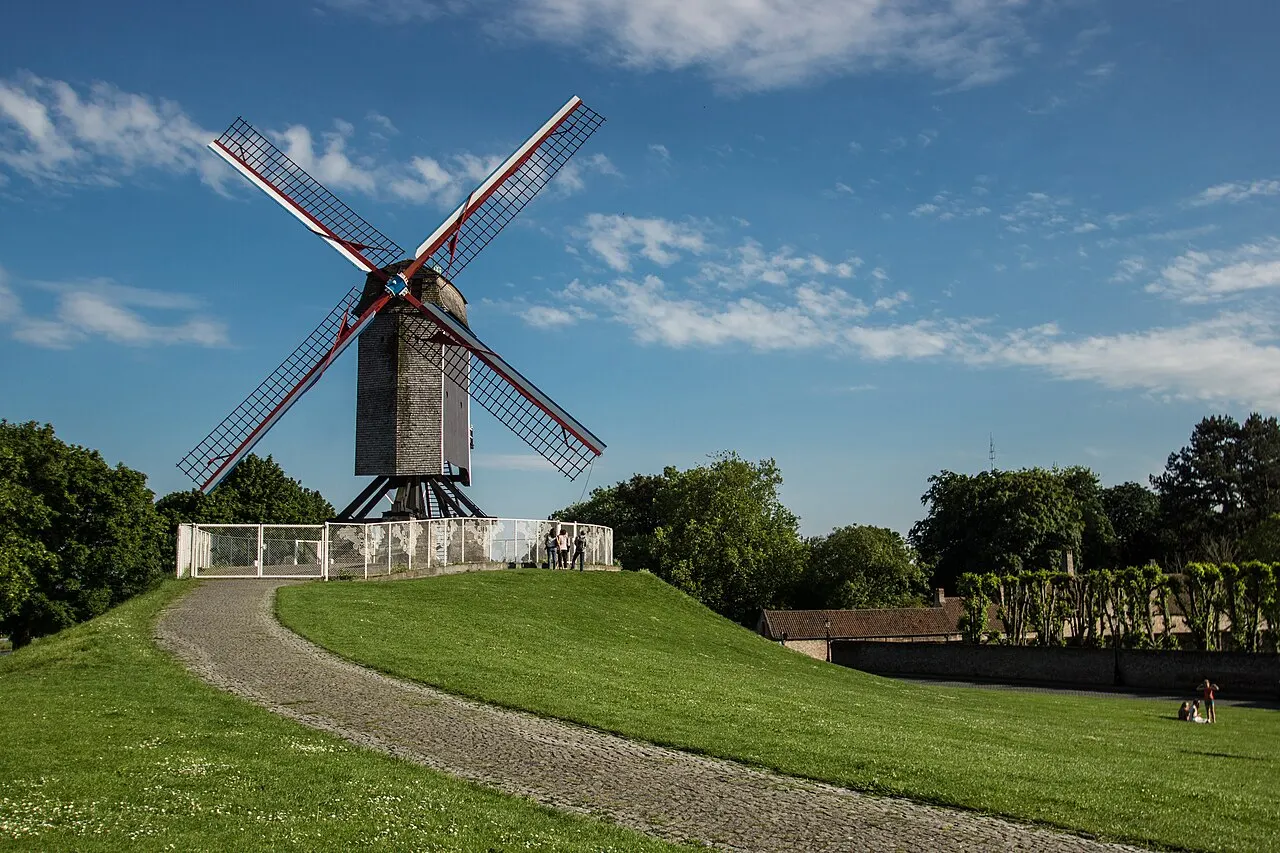
The eastern bulwark, where the windmills stand on the lawn of the old ramparts, near the Kruispoort. It is a walking and cycling area, about 19 minutes on foot from the Markt to the Sint-Janshuismolen windmill.
't Zand and the station
West and south of the center: the 't Zand square, with the underground parking garage, and the railway station, about 20 minutes on foot from the Markt. It has chain hotels and the simplest connection to the train.
Sint-Kruis
A residential neighborhood about 1 km east of the historic oval, outside the tourist circuit, with neighborhood restaurants.
History
9th c. · First mention and the defense against the Vikings
The name Brugis appears in an inventory of the Abbey of Saint Bavo, in Ghent, written between 851 and 864. In the same century Count Baldwin I of Flanders strengthened the fortifications of the place against Viking attacks, on the spot where the Burg square stands today.
1128 · City charter
On July 27, 1128, Bruges receives its city charter. Six years later, in 1134, a storm opens the Zwin inlet and gives the city a direct link to the North Sea again, the basis of three centuries of trade.
c. 1240 · The Belfry rises on the Markt
The Belfry tower is built on the Markt around 1240, next to the covered market where goods were stored. After a fire in 1280 the upper half is rebuilt, and the octagon at the top is added between 1483 and 1487.
1302 · The Bruges Matins
On the night of May 18, 1302, the Flemish militia kills the French garrison in the city, using the password "schild en vriend" to tell who was an outsider. The revolt leads to the Battle of the Golden Spurs on July 11, 1302, won by the Flemish. The statue of Jan Breydel and Pieter de Coninck on the Markt, from 1887, commemorates these leaders.
1309 · The trade exchange
In 1309 an exchange for trading goods and bills of exchange opens in Bruges, probably the first exchange in the world. The Hanseatic League kept a trading post in the city, and Genoese merchants settled there too.
1376–1421 · The Gothic Town Hall
The Town Hall (Stadhuis) on the Burg was built from 1376 to 1421. It served as a model for the town halls of Brussels, Ghent, Leuven and Oudenaarde, and the city council still meets in the Gothic hall.
1430 · The Burgundian court
On January 10, 1430, Philip the Good, Duke of Burgundy, founds the Order of the Golden Fleece in Bruges to celebrate his marriage to Isabella of Portugal. The Burgundian court attracts painters: Jan van Eyck paints the Virgin with Canon Joris van der Paele in 1436, and Hans Memling paints works for the Hospital of Saint John.
c. 1500 · The Zwin silts up
The inlet that linked Bruges to the North Sea silts up, ships begin to stop in Antwerp, and the city loses its trade. Without money to rebuild, Bruges keeps its layout and a good part of its medieval facades.
1892 · Bruges-la-Morte
Georges Rodenbach publishes the novel Bruges-la-Morte, which presents the city as a still, melancholy place. In the same period Bruges becomes one of the first tourist destinations in Europe, and in 1907 the port of Zeebrugge, on the municipality's coast, is inaugurated.
1940–1944 · Occupation and liberation
Germany occupies the city in 1940. During the retreat in 1944, German soldiers take Michelangelo's Madonna from the Church of Our Lady; it is found in 1945 in a salt mine in Altaussee, Austria, and returned. Bruges is liberated by Canadian troops on September 12, 1944.
2000 · World Heritage
The historic center joins UNESCO's World Heritage list in 2000, after the Begijnhof (1998, with the Flemish beguinages) and the Belfry (1999, with the belfries of Belgium and France). In 2002 Bruges is a European Capital of Culture.
Complete history
A port that depended on an inlet
Bruges began as a fortification on the coastal plain of Flanders, at a point where the small Reie river gave access to the sea. The name first appears between 851 and 864, and in the 9th century Count Baldwin I strengthened the place against the Vikings, where the Burg square stands today. Wealth came from the water: from 1134 the Zwin inlet, opened by a storm, carried ships to Damme, about 6 km away, and from there the goods went on to the city. The city's weavers were famous; Bruges had been the capital of the County of Flanders since 1089 and received its city charter in 1128.
The marketplace of northern Europe
Between the 13th and 15th centuries, Bruges was where the Baltic trade of the Hanseatic League met the Mediterranean trade brought by merchants from Genoa. In 1309 a goods exchange opened in the city, probably the first in the world. The Markt, with the Belfry and the covered market, was the center of commerce; the Burg, a few steps away, was the center of power, with the Gothic Town Hall (1376–1421) and the Chapel of the Holy Blood. The area around the Jan van Eyckplein, to the north, was the inner port, with the customs house and the Poortersloge, the burghers' lodge, built from 1395 to 1417.
The dukes of Burgundy and the painters
In the 15th century the city passed to the dukes of Burgundy. Philip the Good founded the Order of the Golden Fleece here in 1430, and the court, the bankers and the merchants commissioned paintings. The works now seen in the Groeningemuseum and the Sint-Janshospitaal come from that clientele: Jan van Eyck, Hans Memling, Gerard David. The city also saw the first book printed in English, produced here by William Caxton. Peace was never guaranteed: in 1302 the Flemish militia killed the French garrison in the Bruges Matins, and in 1488 Archduke Maximilian was held prisoner in a house on the Markt.
The decline that preserved the city
Around 1500 the Zwin silted up, ships began going to Antwerp, and Bruges lost its trade within a few decades. The city grew poor and, without money for major renovations, kept its medieval layout, its canals and its brick facades. In the 19th century this stalled city attracted writers and travelers: the novel Bruges-la-Morte, by Georges Rodenbach (1892), fixed the image of a melancholy city, and Bruges became one of the continent's first tourist destinations. The construction of the port of Zeebrugge, opened in 1907 on the municipality's coast, gave the city an outlet to the sea again.
The city today
The German occupation of 1940 ended with the arrival of Canadian troops on September 12, 1944. In 1971 the municipality absorbed the neighboring communes and now has 120,458 residents. The center was restored starting in 1965, joined the UNESCO list in 2000, and receives about eight million tourists a year, which explains both the crowding on the Markt and the traffic rules that ban tour buses and discourage cars in the center.
Geography and shape of the city
The oval inside the bulwarks
The historic center occupies an oval of about 430 hectares, surrounded by a ring of canals and former bulwarks (the vesten) that are now parkland. Four of the city gates remain: the Smedenpoort, the Ezelpoort, the Kruispoort and the Gentpoort. The inner canals, called reien after the Reie river, cut through the center and were the freight streets of the trading city. On the eastern bulwark, the Kruisvest, stand four windmills, one of them still grinding grain.
Plain, sea and port
The municipality covers 140.99 km² and runs from the old town to the coast, where Zeebrugge sits, and includes about 1,075 hectares of sea off the port. The terrain is flat and low. The climate is oceanic: the weather station at Ostend-Bruges airport, about 25 km west of the center, records average highs of 6.7 °C in January and 21.7 °C in August, and rain spread across the whole year, from 41 mm in April to 89 mm in November (1991 to 2020 normals).
The canals of the center are called reien after the Reie river, which the city channeled and which carried goods to the squares.
Culture
The Flemish Primitives
Bruges' great contribution to art is the 15th-century painting made for the Burgundian court and for the merchants: Jan van Eyck, Hans Memling, Hugo van der Goes and Gerard David painted portraits and altarpieces with a precision of detail that came from oil painting. A good part of these works remains in the city, in the Groeningemuseum, the Sint-Janshospitaal and the Church of Our Lady. During the four-year renovation of the Groeninge, which begins on January 11, 2027, the collection's highlights move to BRUSK, which also hosts temporary exhibitions, such as the one by the artist Refik Anadol until November 8, 2026 and "High Tide," on the sea in fashion and art, from October 30, 2026 to March 13, 2027.
Lace, beer and carillon
Lace is one of the traditions tied to Bruges; the Kantcentrum, a lace museum and study center, shows the technique. Beer is another: in 2026 Bruges celebrates ten years since Belgian beer culture was inscribed on UNESCO's intangible heritage list, and De Halve Maan has brewed in the center since 1856. The Belfry's 47-bell carillon plays live on Wednesdays, Saturdays and Sundays, from 11 a.m. to noon, and can be heard from much of the center.
Soccer, cycling and the College of Europe
The city has two clubs in the Belgian top division, Club Brugge and Cercle Brugge, and has hosted the start of the Tour of Flanders and the 2021 UCI Road World Championships. It is also home to the College of Europe, a school of European studies.
The Madonna in the Church of Our Lady was the first sculpture by Michelangelo to leave Italy in the artist's lifetime, bought by Bruges merchants in 1504.
Festivals and events
Procession of the Holy Blood, Ascension Day
The Heilig-Bloedprocessie carries the relic from the basilica through the streets of the center, with more than 1,600 residents taking part. It takes place every year on Ascension Day, 39 days after Easter; in 2027 it is on Thursday, May 6, starting at 2:30 p.m.
Cactusfestival, July
A three-day rock and world music festival in the Minnewaterpark, on the second weekend of July, organized since 1982.
Praalstoet van de Gouden Boom
A historical pageant inspired by the 1468 wedding of Charles the Bold and Margaret of York. The redesigned edition took place in August 2024, and Visit Bruges lists the next for summer 2028; check the programme before planning a trip around it.
Wintergloed, November to January
The city's winter program, with Christmas markets in the center, a skating rink and events in the neighborhoods, runs from November 20, 2026 to January 31, 2027.
Books and films
Bruges-la-Morte (1892), Georges Rodenbach
The novel fixed the image of Bruges as a still, melancholy city, and the protagonist lives on the Rozenhoedkaai. The opera Die tote Stadt (1920), by Korngold, is based on the book.
In Bruges (2008), Martin McDonagh
A film with Colin Farrell and Brendan Gleeson set almost entirely in the city, which uses the historic center as the backdrop for a crime story.
The Monuments Men (2014)
The film shows the recovery of Michelangelo's Madonna, taken from the Church of Our Lady in 1944 and found in a salt mine in Austria in 1945.
Frequently asked questions
Bruges: how do you get there from Brussels Airport?
The usual arrival is through Brussels Airport, with one direct train an hour to Bruges taking about 1 hour 25 minutes. From the station, about 20 minutes on foot from the Markt, De Lijn buses 1 and 2 leave about every 5 minutes, with a €3.00 ticket.
Bruges: how many days should I stay?
I'd stay two days, with a night in Bruges, and use a third for Ghent, half an hour away by train. With only one day, Bruges is still worth the trip: take the first train and don't schedule it for a Monday, when the painting museums are closed.
Bruges: do I need to book the Belfry?
The website recommends booking the time slot ahead, and anyone who arrives late loses the ticket, because it is valid for the booked time. I'd book the first slot, at 9 a.m. from April to November 2, and climb the 366 steps before going anywhere else.
Bruges: is the Musea Brugge Card worth it?
The card costs €49 and gives 72 hours of entry to the municipal network, Belfry included, and, bought online, only starts counting at the first visit. The Belfry, the Groeningemuseum and the Sint-Janshospitaal already add up to €46, and any fourth site takes you past the card's price.
Bruges: how do you do the day trip to Ghent?
Direct trains to Gent-Sint-Pieters take 22 to 27 minutes, with several departures an hour. In Saint Bavo's Cathedral, the Ghent Altarpiece has a 25-minute visit for €12.50, and until spring 2027 seven panels are replaced by photographs.
Other cities in the country
Belgium ↗- Days
- 1–2
- When
- May–Jun · Sep
- Per person/day
- Average 130–200 EURMid-range · per person/day
Cost scope
Per person per day: accommodation, meals, urban transport, visits and a small allowance for extras. Flights excluded; larger purchases vary. Editorial estimate, not a quote.