
Belgium
Brussels
Grand-Place, art nouveau, beer and street fries
Days Start with the basic programme and choose extensions for the time you have.
How the guide reaches this number
Anyone looking for a big postcard sight will be disappointed: the Manneken Pis is 55 cm tall, the Palais de Justice is permanently covered in scaffolding and the European Quarter is deserted on weekends. With just one day, start early at the Grand-Place, while it's still empty, continue through the Galeries Saint-Hubert and eat fish in Sainte-Catherine, the old filled-in port. In the afternoon, head up to the Mont des Arts for the Magritte Museum and the Royal Museums of Fine Arts, which close on Mondays. End the day with a gueuze in an old café and a cone of fries at a neighborhood fritkot.
1–2
When May, June and September bring the mildest, driest days of the year
How the guide reaches this number
Brussels has an oceanic climate without extremes, with light rain spread across about 200 days a year, a drizzle that starts and stops throughout the day and that a rain jacket handles better than an umbrella. May, June and September bring the best days, with highs of 17 to 23 °C, daylight until almost 10pm in June and fewer people than in high summer. July and August have highs near 23 °C and lows of 14 °C, with short heat waves above 30 °C that are increasingly frequent, and make up the high season along with December, because of the winter market. In August, though, residents leave the city, many neighborhood restaurants close for three weeks and the European Quarter grinds to a halt. January and February stay between 2 and 7 °C, gray, with darkness falling around 4:40pm. Avoid November, which is dark, rainy and short on events.
Per person/day €60-90 per person on a budget trip; €130-200 with a mid-range hotel and a sit-down dinner (2026)
How the guide reaches this number
Per person per day: accommodation, meals, urban transport, visits and a small allowance for extras. Flights excluded; larger purchases vary. Editorial estimate, not a quote.
 What Nilo thinks
One day covers central Brussels, from the Grand-Place to the Mont des Arts, and a second day takes you to the Marolles, the Sablon and the art nouveau of Saint-Gilles. Anyone looking for a big postcard sight will be disappointed: the Manneken Pis is 55 cm tall, the Palais de Justice is permanently covered in scaffolding and the European Quarter is deserted on weekends. With just one day, start early at the Grand-Place, while it's still empty, continue through the Galeries Saint-Hubert and eat fish in Sainte-Catherine, the old filled-in port. In the afternoon, head up to the Mont des Arts for the Magritte Museum and the Royal Museums of Fine Arts, which close on Mondays. End the day with a gueuze in an old café and a cone of fries at a neighborhood fritkot.Brussels' Grand-Place is ringed by guild houses rebuilt between 1696 and 1700, after the French bombardment of 1695, beneath the 96 m tower of the Gothic town hall. From there, you can cover the whole center on foot: the Galeries Saint-Hubert, from 1847, hold old chocolate shops, and at the Mont des Arts the Magritte Museum gathers about 200 works by the painter. The Belgian capital is also Victor Horta's city, and in Saint-Gilles the Maison Horta, his house and studio, shows the stained-glass staircase that defined art nouveau. In the Marolles, the secondhand fair at the Place du Jeu de Balle runs in the morning, for anyone who likes to hunt for bargains. Eat fries at a street fritkot, choosing from 20 to 30 sauces, and mussels in the black pot in Sainte-Catherine. To drink, order a gueuze, the sour, spontaneously fermented beer from the Senne valley. Come in May, June or September, the mildest months, and set aside one day for downtown, or two if you want the Marolles and Saint-Gilles.
Quick facts
- Population
- about 1.26 mi in the Brussels-Capital Region (19 municipalities); about 2.6 mi in the metropolitan area (2026)
- Founded
- First documented mention in 979, with a fortification on Saint-Géry island, in the middle of the Senne
- Country and region
- Belgium; Brussels-Capital Region, a bilingual enclave surrounded by Flemish territory
- Language
- French and Dutch, co-official; English circulates widely
- Currency
- Euro (€); the card works almost everywhere, except at some street stalls
- Time zone
- CET (UTC+1); daylight saving CEST (UTC+2) from late March to late October
- Best time to visit
- May, June and September bring the mildest, driest days of the year
- Average daily cost
- €60-90 per person on a budget trip; €130-200 with a mid-range hotel and a sit-down dinner (2026)
When to go
May, June and September bring the mildest, driest days of the year
January
1° to 6°C
76 mm of rain
February
2° to 7°C
65 mm of rain
March
4° to 11°C
59 mm of rain
April
6° to 15°C
47 mm of rain
July
14° to 23°C
77 mm of rain
August
14° to 23°C
87 mm of rain
October
8° to 15°C
68 mm of rain
November
5° to 10°C
76 mm of rain
December
2° to 7°C
87 mm of rain
How the year changes
Brussels has an oceanic climate without extremes, with light rain spread across about 200 days a year, a drizzle that starts and stops throughout the day and that a rain jacket handles better than an umbrella. May, June and September bring the best days, with highs of 17 to 23 °C, daylight until almost 10pm in June and fewer people than in high summer. July and August have highs near 23 °C and lows of 14 °C, with short heat waves above 30 °C that are increasingly frequent, and make up the high season along with December, because of the winter market. In August, though, residents leave the city, many neighborhood restaurants close for three weeks and the European Quarter grinds to a halt. January and February stay between 2 and 7 °C, gray, with darkness falling around 4:40pm. Avoid November, which is dark, rainy and short on events.
The same numbers as a table
| Month | Temperature °C | Rain mm |
|---|---|---|
| January | 1 to 6 | 76 |
| February | 2 to 7 | 65 |
| March | 4 to 11 | 59 |
| April | 6 to 15 | 47 |
| May · | 9 to 18 | 60 |
| June · | 12 to 21 | 71 |
| July | 14 to 23 | 77 |
| August | 14 to 23 | 87 |
| September · | 11 to 20 | 65 |
| October | 8 to 15 | 68 |
| November | 5 to 10 | 76 |
| December | 2 to 7 | 87 |
Nilo's tips
Go up to the Maison du Roi to see the 1619 Manneken Pis
The 55 cm bronze figure on the corner is a copy, and the original statue is in the Maison du Roi, across the Grand-Place. Few visitors go up to see the real one. Go in the morning, because the square stays empty until around 9am and gets crowded and expensive from midday on.
Museums close on Monday; shops, on Sunday
On a short weekend, that calls for museums on Sunday and shopping on Monday. The Fine Arts museums, Magritte, MIM and BELvue close on Monday, when shops are open as usual, and on Sunday shops close and museums open. Sunday is also the day of the Midi market, from 5am to 1:30pm, the city's largest.
From BRU, a 17-min train; check your flight isn't to CRL
The train leaves about 4 times an hour for Bruxelles-Central and costs €13–14, with the Diabolo surcharge already included. The taxi charges €50–60 and doesn't get there any faster, and anyone staying in the European Quarter has STIB bus 12/21 for the regular fare. Before booking the flight, check the code, because CRL is Charleroi, 46 km to the south, with another hour of transfer and about €20 each way.
Validate again when you change lines
Anyone who forgets to tap their card at every transfer, including inside the metro, pays a fine starting at about €100. The Brupass costs €2.70 and is valid for 60 minutes with transfers. At the gates you can validate directly with a contactless bank card, with no ticket-office line and no MOBIB. Only pay for the Brupass XL, at €3.60, if you're actually going to use SNCB trains or the De Lijn and TEC buses in the outskirts.
Go up the hill on the free Marolles elevator
It's free and skips the worst of the 60-meter climb to the Place Poelaert. Before that, pass through the flea market at the Place du Jeu de Balle, from 7am to 2pm, and bring cash, because cards won't get you far there. At the top, the viewpoint beside the Palais de Justice has the best view in the city and charges no admission. The building itself has been under scaffolding for decades.
Try the praline where it was born, in 1912
Jean Neuhaus II invented the filled praline at the Galeries Saint-Hubert, a few steps from the Grand-Place, and that's where the old chocolate shops are. At the better chocolatiers, a box costs €6 to €10 per 100 g. Buy there or at a neighborhood branch of Neuhaus (1857), Wittamer (1910), Mary (1919) or Marcolini (1995), where the chocolate and the price are the same. At the first shop on the Grand-Place or at the airport, the same product costs almost double.
Explore the map

© OpenStreetMap · OpenFreeMap · © OpenMapTiles
Explore the map, read about the other places and plan your travel days in the app.
Open the appWhat to see
Brussels: The valley, the Senne, and the canal
Central Brussels sits in the Senne valley, a river now channeled and covered, between the Brabant plateau and the Flemish plain, about 100 km from the North Sea. West of the historic center, the Charleroi Canal, completed in the 19th century, still marks the industrial side of Molenbeek and Anderlecht.
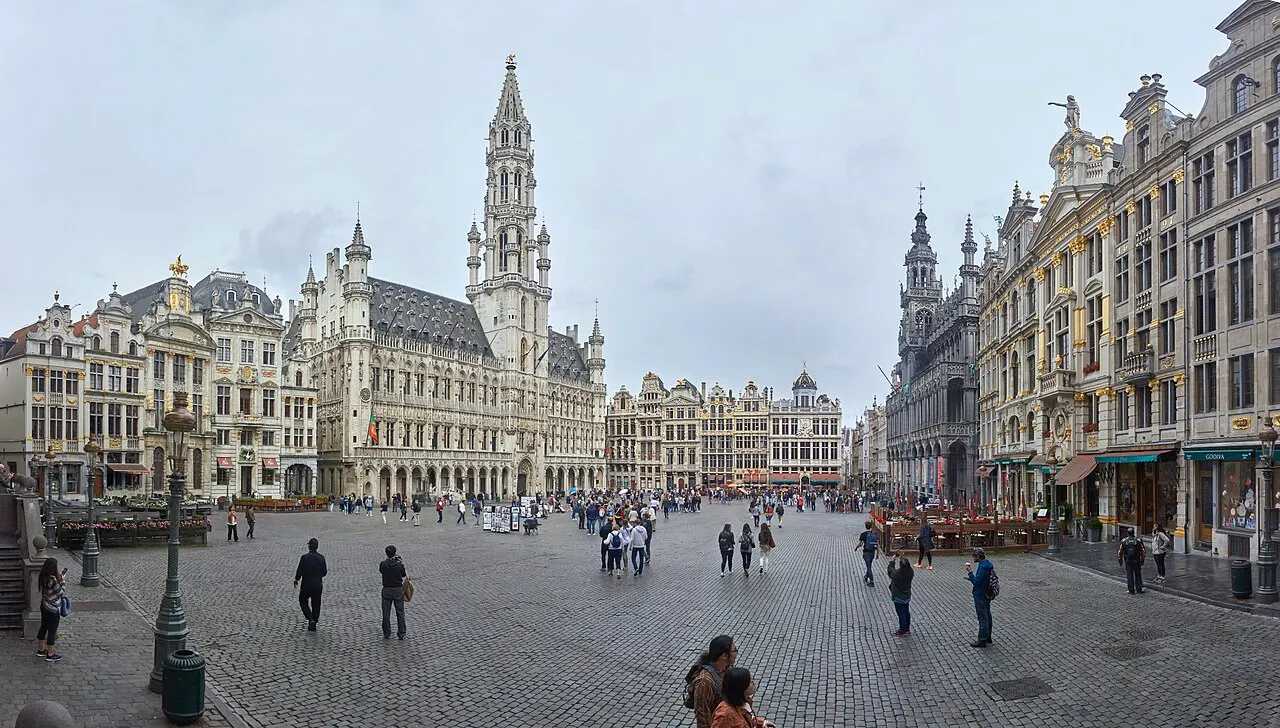
Grand-Place
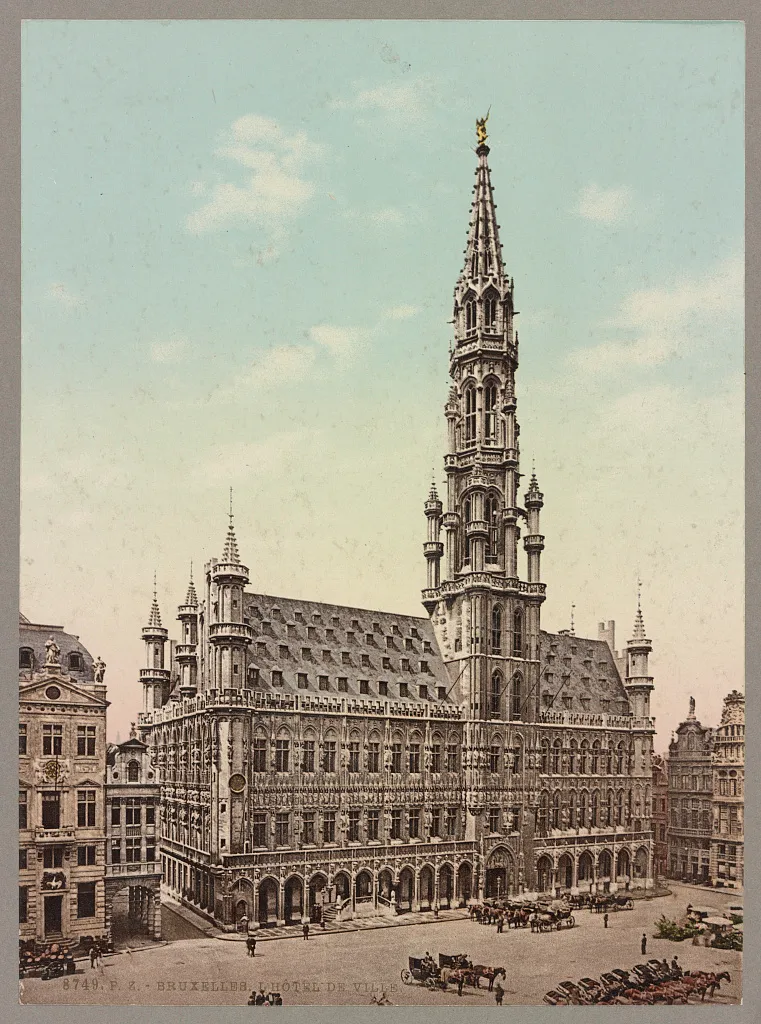
A square of about 68 by 110 m surrounded by guild houses rebuilt between 1696 and 1700, after the French bombardment. The Gothic town hall of 1402–1455 has a 96 m tower, and the Maison du Roi, across from it, houses the city museum and the original 1619 statue of the Manneken Pis. Unesco World Heritage since 1998.
The square measures about 68 by 110 m, the Gothic town hall stands on it, and the building across from it holds the original 1619 statue of the Manneken Pis.
Check access
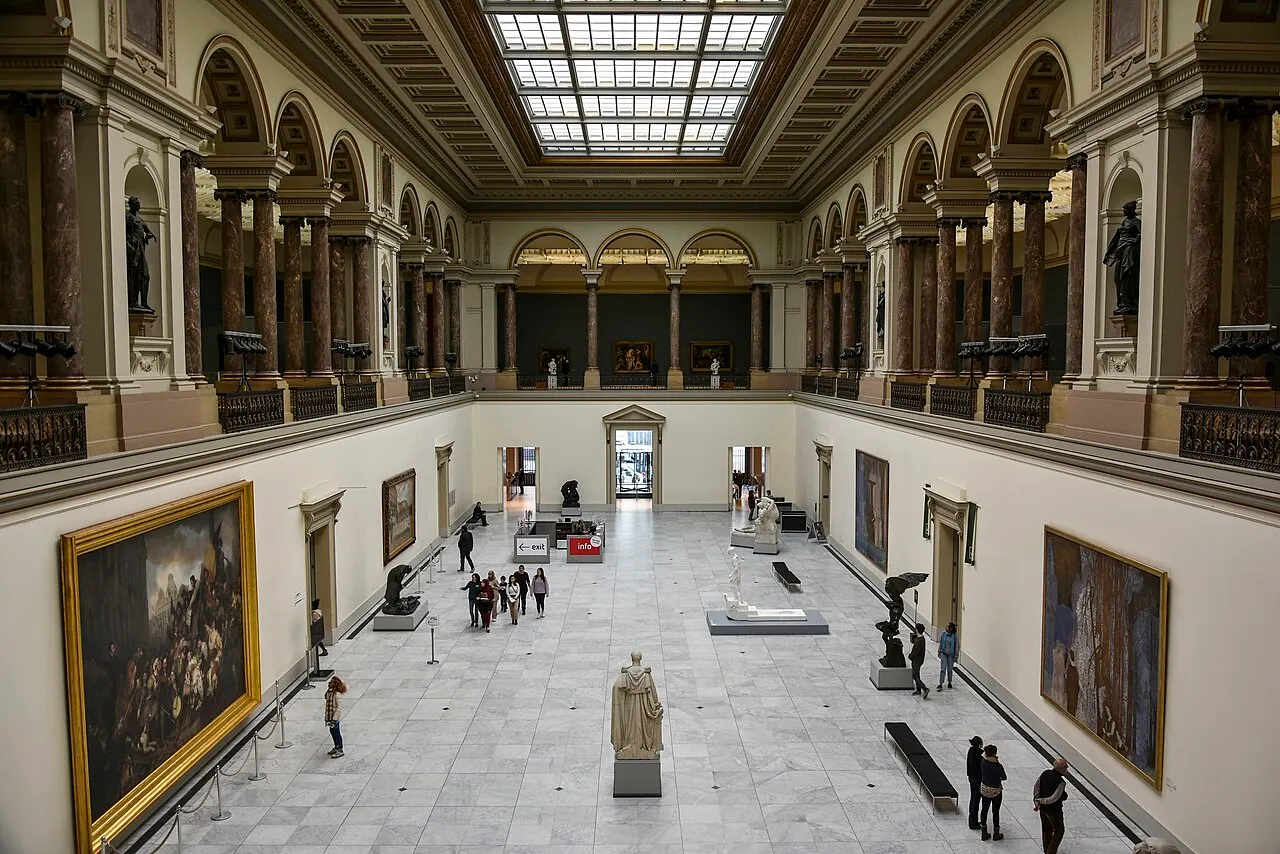
Royal Museums of Fine Arts and Magritte Museum
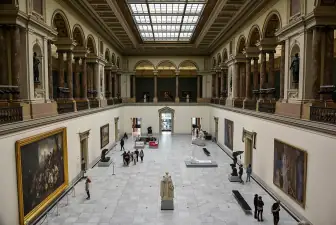
A complex on the Place Royale with Bruegel the Elder, Rubens, Jordaens, and David's “The Death of Marat.” The Magritte Museum, opened in 2009, holds about 200 works by the painter across five floors. Like almost every Belgian museum, it's closed on Mondays.
The complex on the square brings together the Flemish masters and the painting of Marat's death, plus a museum devoted to a single painter; Bruegel, Rubens and Jordaens; Magritte, about 200 works.
Check access
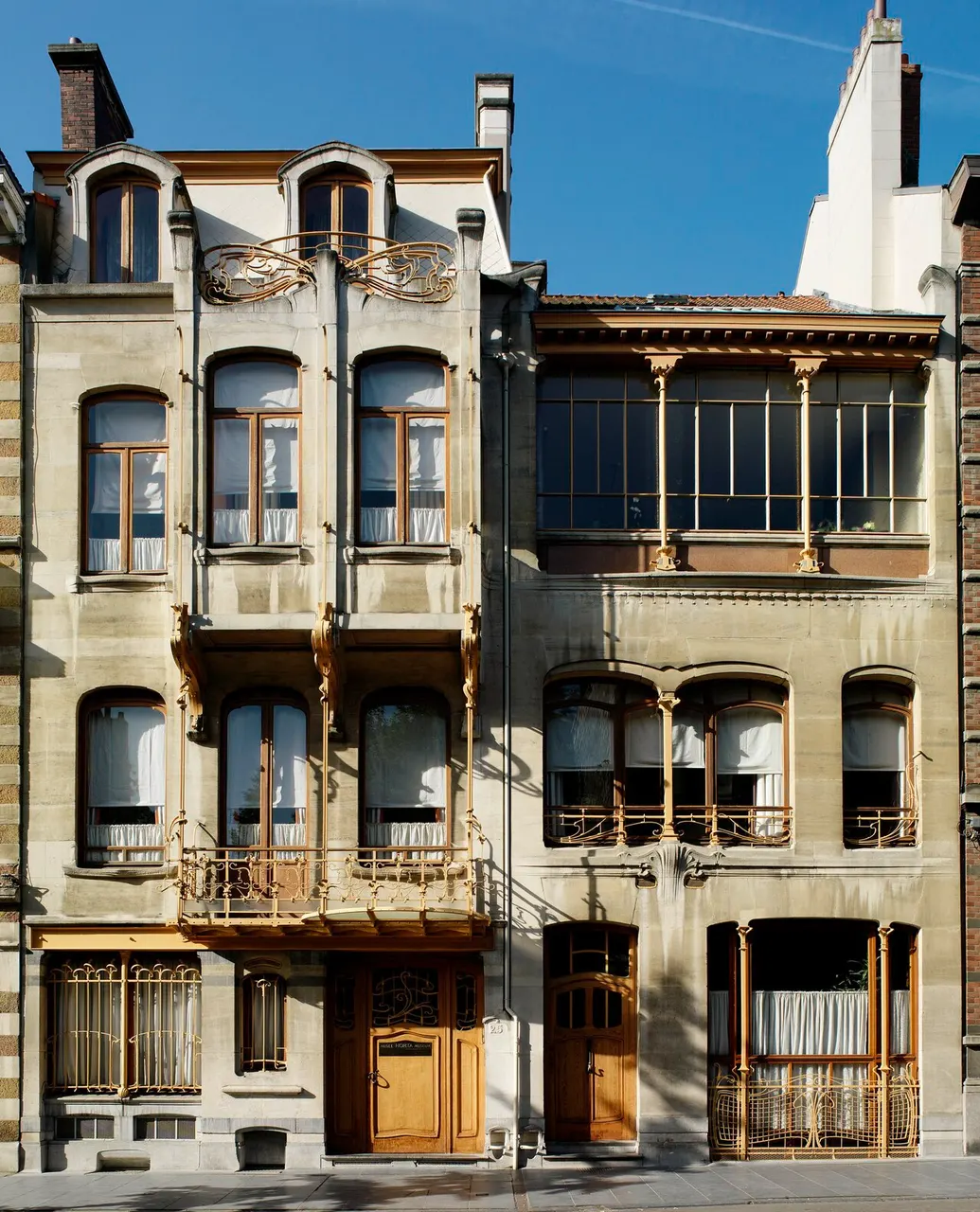
Maison Horta and the art nouveau houses
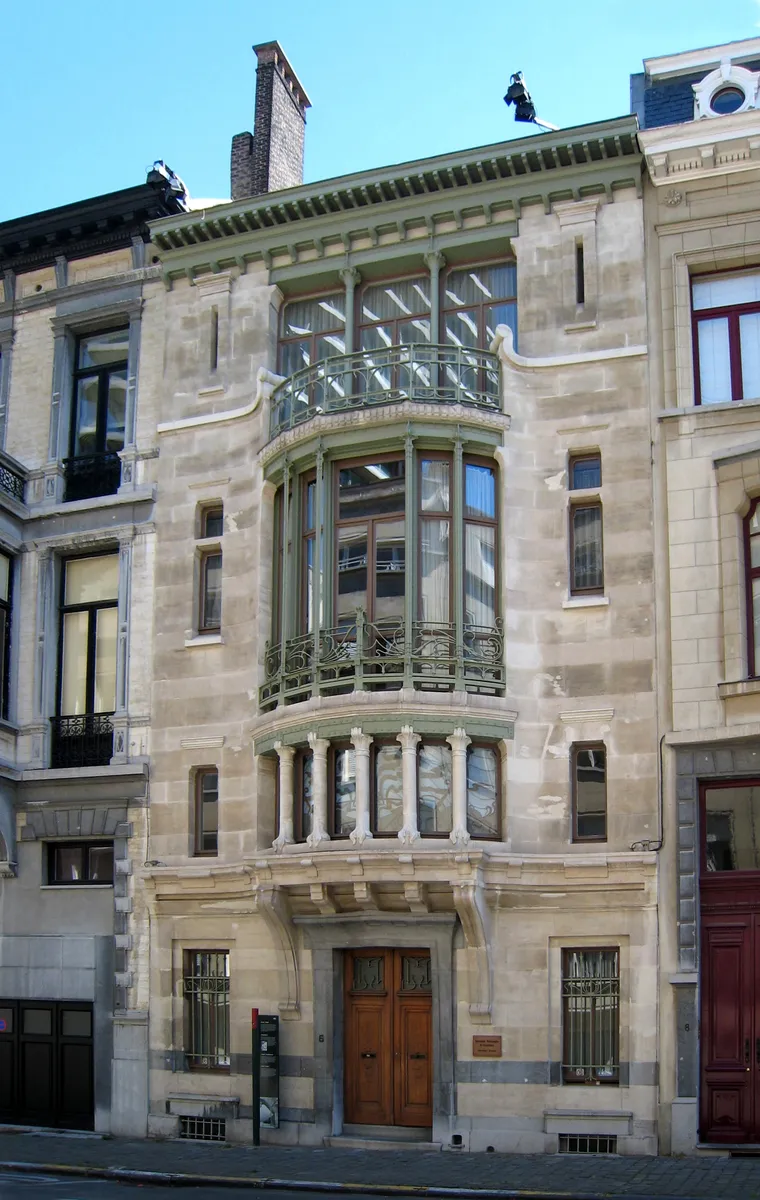
The house and studio of Victor Horta in Saint-Gilles, built between 1898 and 1901, with the stained-glass stairwell that defined the style. Four of Horta's houses have been Unesco World Heritage since 2000; the Hôtel Tassel, from 1893, is considered the first art nouveau building in Europe.
The house and studio are worth the trip for the stained-glass staircase that defined the style, and another residence by the same architect is considered the first of the movement in Europe; Hôtel Tassel, 1893; Unesco since 2000.
Check access

Atomium
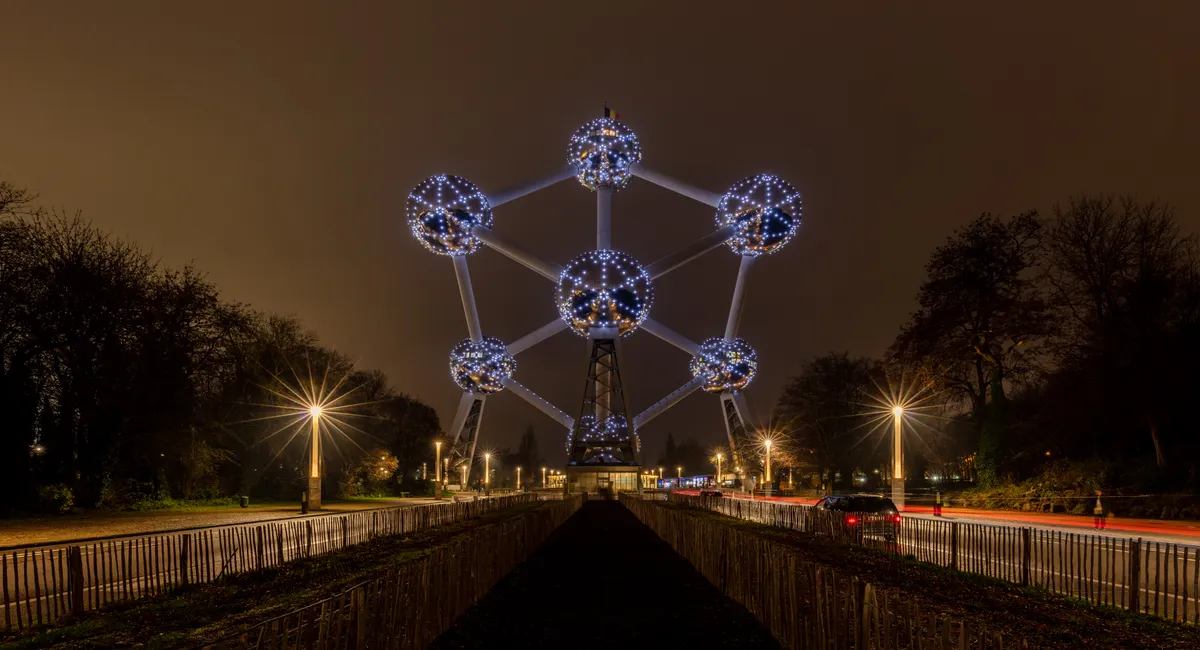
Nine 18 m steel spheres linked by tubes, 102 m tall, designed by André Waterkeyn for Expo 58: an iron crystal magnified about 165 billion times. Five spheres are open to visitors, the top one with a restaurant and a view. Open daily, 10am–6pm, last entry 5:30pm.
Nine steel spheres linked by tubes form an iron crystal magnified about 165 billion times, reach 102 m, and five are open to visitors, with a restaurant in the top one.
Check access

Parc du Cinquantenaire
A park and triple arch commissioned by Leopold II for the 50th anniversary of independence, in 1880; the arch was only finished in 1905. It holds the Army Museum, Autoworld, and the Art and History Museums.
The arch, commissioned in 1880, wasn't finished until 1905.
Check access
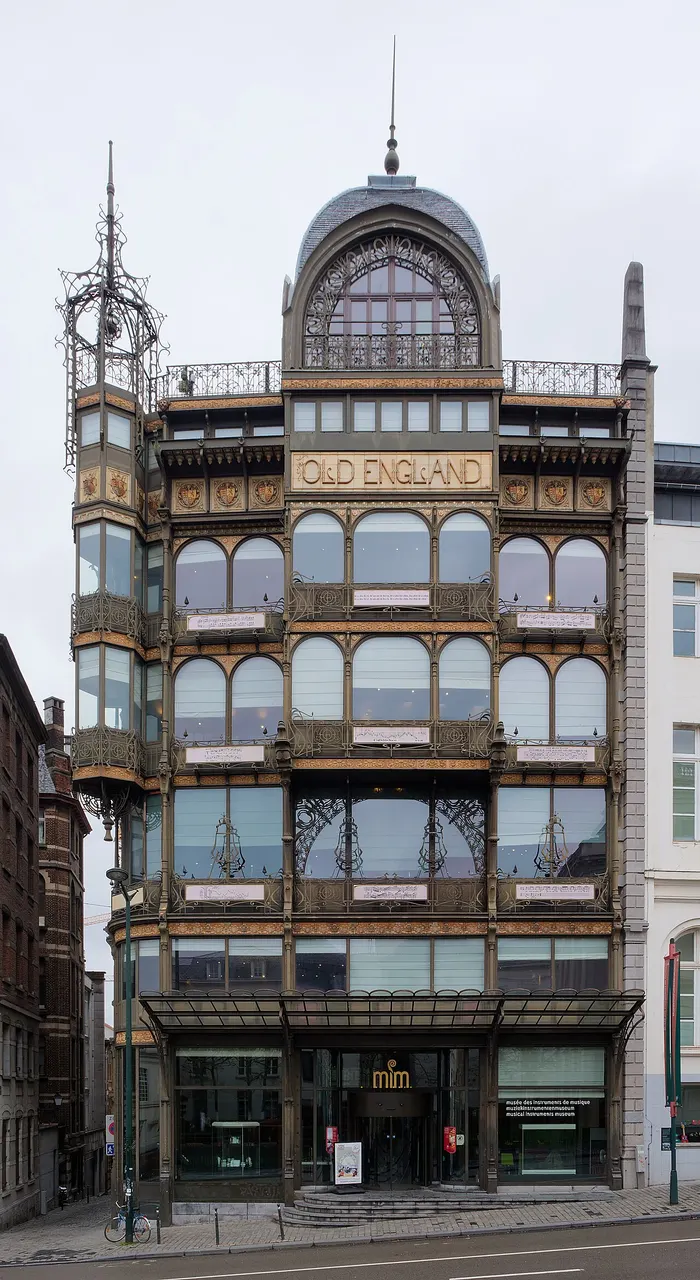
Musée des Instruments de Musique (MIM)
About 1,200 instruments on display, out of a collection of more than 8,000, inside the Old England building, an art nouveau department store by Paul Saintenoy (1899). Wireless headphones play the sound of each piece; the café on the top floor looks over the Ville Basse.
Check access
Galeries Royales Saint-Hubert
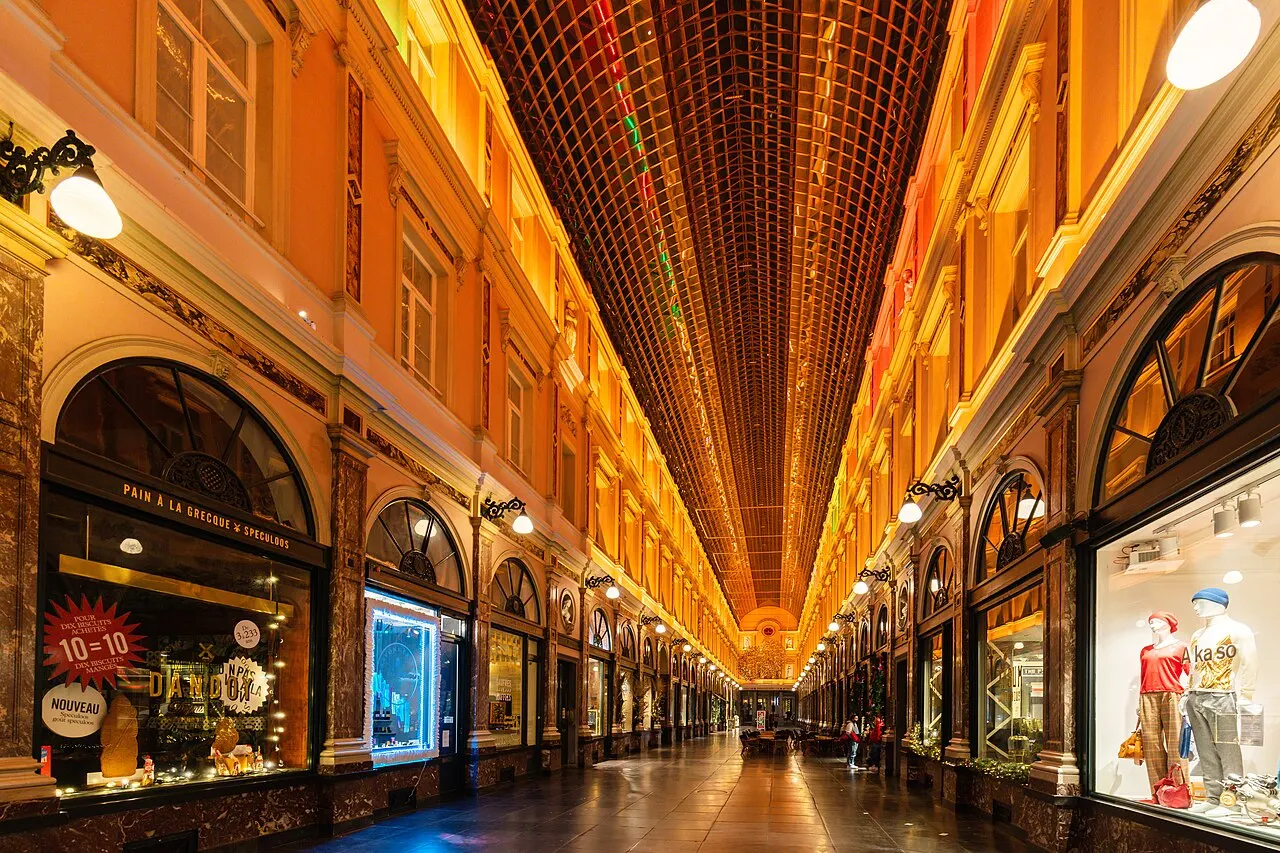
A 213 m covered gallery opened in 1847, earlier than those of Milan and Naples, with a glass vault and three sections: Roi, Reine, and Princes. It concentrates old chocolate shops, a cinema, and the Théâtre Royal des Galeries.
The glass-vaulted gallery, 213 m long since 1847, predates those of Milan and Naples and brings together old chocolate shops, a cinema and a theater.
Check access

Manneken Pis
A 55 cm bronze fountain, the version by Jérôme Duquesnoy the Elder from 1619; the piece on the corner is a copy and the original is in the city museum. The wardrobe holds over a thousand outfits, changed on fixed dates and displayed at the GardeRobe MannekenPis.
The original that Jérôme Duquesnoy carved in 1619 is in the Maison du Roi, and the more than a thousand outfits that have dressed the statue are at the GardeRobe MannekenPis, on the Rue du Chêne, a few steps from the fountain.
Check access

Palais de Justice
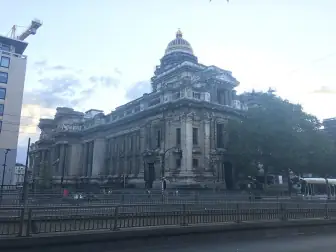
The largest building constructed in Europe in the 19th century: about 26,000 m² of floor plan and a dome at 104 m, designed by Joseph Poelaert, built from 1866 to 1883. It has been under restoration for decades, covered in scaffolding; the viewpoint next to it, on Place Poelaert, gives the best free view of the city.
It's 26,000 m² and a 104 m dome under restoration for decades: Nilo lists it among the city's disappointments because the scaffolding has become part of the view. What's really worth it on that hill is the free viewpoint at the Place Poelaert, right next door, which the free Marolles public elevator climbs up to.
Check access
Nilo’s itinerary
Start with the basic programme and choose extensions for the time you have.
Plan my days in the app ↗Day 1 · The center (the Pentagon), from the Grand-Place to the Mont des Arts
Arrive at the Grand-Place before 9am, while the square is still empty, and go into the Maison du Roi for the city museum and the original 1619 Manneken Pis.
Walk 300 m to the Manneken Pis and see his outfits at the GardeRobe MannekenPis, at Rue du Chêne 19, a few steps from the fountain; then head to the Galeries Royales Saint-Hubert (1847), home to the old chocolate shops.
Have lunch in Sainte-Catherine, fish or a bistro stoemp, and walk down the Rue Antoine Dansaert eyeing the Flemish design windows.
Climb to the Mont des Arts in the mid-afternoon and go into the Royal Museums of Fine Arts and the Magritte Museum; avoid doing this on a Monday.
Finish at an old downtown café: order a gueuze and accept whichever glass comes with it.


If you stay longer
Day 2 · Marolles, the hill, and art nouveau
Start at the flea market on the Place du Jeu de Balle, from 7am, and climb up the Rue Blaes and Rue Haute.
Take the public elevator in the Marolles up to the Place Poelaert and take in the city from the viewpoint next to the Palais de Justice.
Walk to the Sablon for the church of Notre-Dame du Sablon and a stop at a historic chocolate shop.
In the afternoon, take the tram to Saint-Gilles: Maison Horta and then a walk past the art nouveau façades of the Rue Defacqz.
Have dinner in Saint-Gilles or Ixelles and close the night at the Parvis de Saint-Gilles or the Place Flagey.
Food
 AI illustration
Fritkot fries
Thick-cut potato fried twice, traditionally in beef fat, served in a paper cone with the sauce on top. The fritkot is a street cabin; expect a line and a list of 20 to 30 sauces (andalouse, samouraï, brésil, pickles). €3.50-5, sauce €0.80-1 extra.
 AI illustration
Moules-frites
Mussels cooked in white wine, beer, or cream with celery and onion, served in the black pot with fries on the side. Traditional season is September to February; €25-35 at an honest restaurant.
 AI illustration
Carbonnade flamande (stoofvlees)
Beef stewed for hours in dark beer, with spice bread and mustard, lightly sweet. A winter dish, comes with fries, €18-24.
 AI illustration
Spontaneous fermentation beers
Lambic, gueuze, and kriek are born in the Senne valley, where wild yeasts from the air ferment the wort in open vats. They're sour, not sweet, except in the sweetened commercial versions; Cantillon, in Anderlecht, has been running since 1900 and is a working museum.
 AI illustration
Chocolate and pralines
The filled praline is a Brussels invention from the early 20th century, and the city keeps chocolate houses running for over a hundred years.
 AI illustration
Gaufre de Bruxelles
Rectangular, light, and airy, made from a yeasted batter, served hot with powdered sugar. Not to be confused with the Liège waffle, smaller, dense, and caramelized with pearl sugar; the two coexist at the same stand, €3-6.
 AI illustration
Stoemp
Mashed potato mixed with mashed vegetables (carrot, leek, cabbage) served with sausage, chop, or boudin. Popular bistro food, €14-18 at lunch.
 AI illustration
Américain préparé
Raw ground beef seasoned with mayonnaise, capers, onion, and Worcestershire sauce, served with fries or in a bread roll. It's in almost every deli and bakery; ask for “petit pain américain” for the counter version, €4-7.
Day trips

Bruges
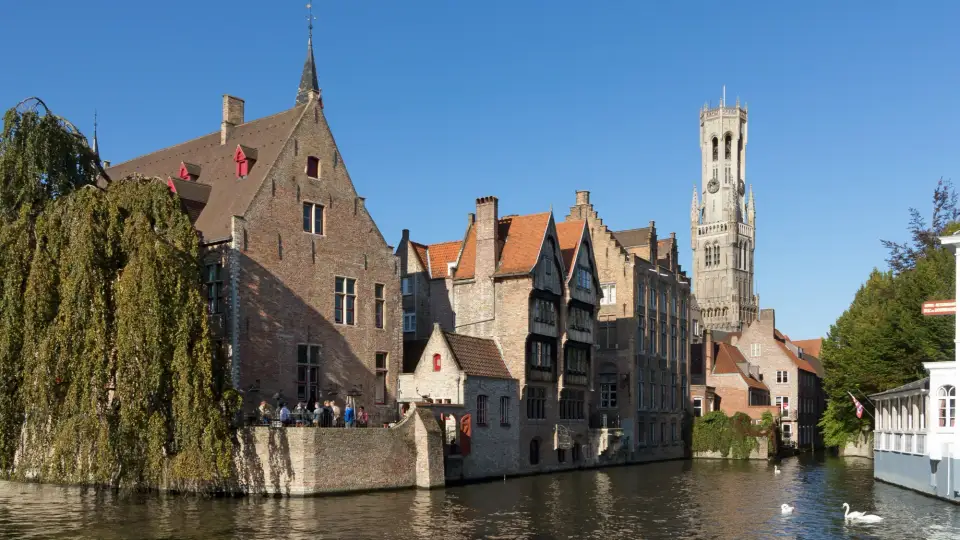
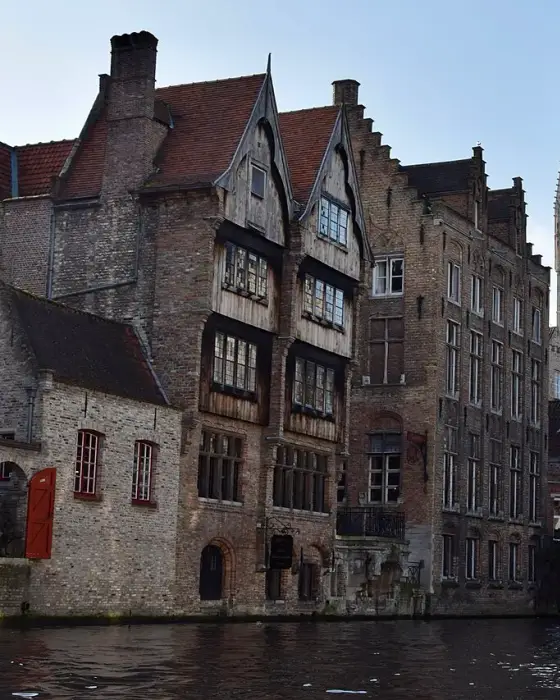
About 100 km northwest, with direct trains from Bruxelles-Midi or Central in about 1 hour. Expect a preserved medieval center, canals, an 83 m belfry and the Groeningemuseum with the Flemish Primitives. Arrive early, because the city gets crowded from 11am.

Ghent
About 55 km northwest, 30 to 35 minutes by train. A university city with the Castle of the Counts (1180), the “Adoration of the Mystic Lamb” altarpiece by the Van Eyck brothers (1432) in Saint Bavo's Cathedral, and the Graslei quay; livelier and less touristy than Bruges.
Waterloo and the Butte du Lion
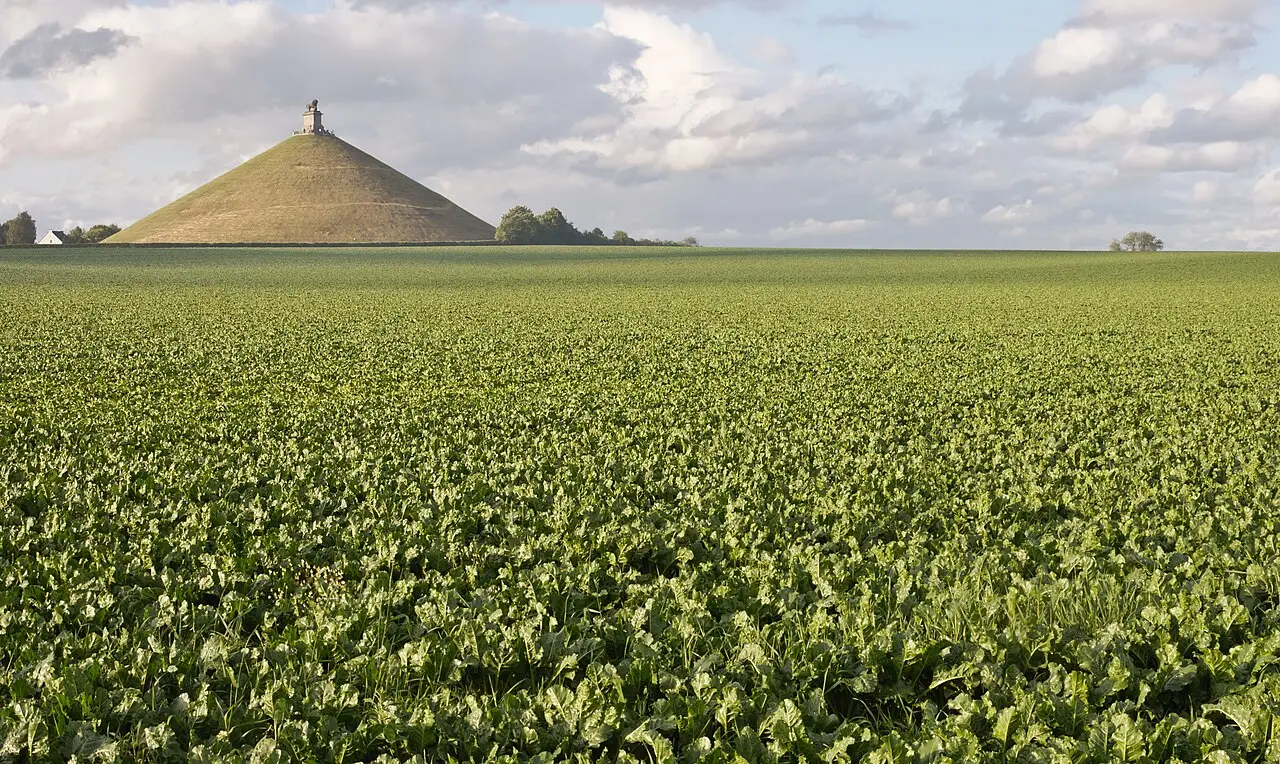
About 18 km south: 40 to 60 minutes by train to Braine-l'Alleud plus a bus, or 30 minutes by car. The battlefield of June 18, 1815 that ended Napoleon's empire, with the 43 m artificial mound topped by the cast-iron lion of 1826 and an underground memorial opened in 2015.
Where to begin
The center (the Pentagon), from the Grand-Place to the Mont des Arts
Arrive at the Grand-Place before 9am, while the square is still empty, and go into the Maison du Roi for the city museum and the original 1619 Manneken Pis.
Marolles, the hill, and art nouveau
Start at the flea market on the Place du Jeu de Balle, from 7am, and climb up the Rue Blaes and Rue Haute.
Europe, Atomium, and beer
Start in the European quarter, at the Place du Luxembourg: the Parlamentarium and the House of European History, both free entry.
Money
The currency is the euro. Approximate 2026 ranges: espresso €2.80–4; draft beer €3.50–5, Trappist or lambic €5–9; cone of fries €3.50–5; lunch special €15–22; sit-down dinner with a drink €35–55; midrange hotel €110–180 a night, with a city lodging tax charged separately, around €3–4.50 per room per night. Cards are accepted almost everywhere (the local debit system is called Bancontact), but some fritkots, neighborhood flea markets and old bars still take cash only, so carry €20–30 in cash. Service and taxes are included in the bill and tipping isn't required: round up, or leave 5% after a long dinner. Station and public restrooms usually charge €0.50–1, so keep some coins handy.
Getting there and around
Zaventem at 12 km, four trains an hour
Brussels Airport (BRU), in Zaventem, is 12 km northeast and connects to the center by train, with about 4 departures an hour and 17 minutes to Bruxelles-Central; the fare already includes the Diabolo surcharge for station access. A taxi to the center costs €50–60. Don't confuse it with Charleroi (CRL), a different airport 46 km south of the city. International trains leave from Bruxelles-Midi: London in about 2 hours, Paris in 1 hour 22 minutes, Amsterdam in 1 hour 50 minutes, Cologne in 1 hour 50 minutes.
Metro, tram, and the late-night Noctis
Within the city, STIB/MIVB runs 4 metro lines (1, 2, 5 and 6), about 18 tram lines and more than 50 bus lines, from 5am to 12:30am, with Noctis night buses on Friday and Saturday nights. Tapping your credit or debit card directly at the gate charges per single trip, with a daily cap: a good deal if you make several trips in one day. 24-, 48- and 72-hour passes and the MOBIB card are also available for longer stays. Validate again every time you change lines, even if your ticket is still valid, because fines start at about €100. The Pentagon is walkable but hilly; Villo! public bikes and shared e-bikes cover the rest, and the center has been a 30 km/h zone since 2021, with a long pedestrian stretch on Boulevard Anspach.
Safety
Brussels has low violent crime and high petty theft: the real concern is pickpockets. They're most active at Bruxelles-Midi station and around it, on metro lines 2 and 6, along the Bourse–De Brouckère axis and in the crowds on the Grand-Place on event nights. Wear your backpack on your front in the metro and don't leave your phone on a terrace table, where it can vanish in a moment of distraction. At night, the area around Midi, Place Fontainas and the Anneessens–Lemonnier area get unpleasant more because of pestering and verbal harassment than direct danger; a taxi or ride-hail takes care of that stretch. Bike theft is very common, so use a U-lock. There's no neighborhood you need to avoid during the day. Emergency: 112, answered in English too; police, 101. Protests and EU summits close streets in the European Quarter with little notice, which is a traffic problem, not a safety one.
Etiquette tips
Greet on the way in
Say “bonjour” or “goeiedag” when you cross the threshold of a bakery, pharmacy, or small shop, and “au revoir” on your way out.
Don't guess which language to use
The city is bilingual, but each person has their own language. Start in French or English; speaking Dutch to a French speaker, or the reverse, can come across as a political statement.
Don't confuse Belgium with its neighbors
Calling the beer German, the chocolate Swiss or the city “almost Paris” is the comment that annoys people most. Treating Brussels as part of Flanders also goes down badly, because the city is a region of its own, surrounded by Flemish territory.
Every beer has its glass
Establishments serve each brand in the glass designed for it and won't swap. Don't order a generic “beer”: pick one from the menu, which often runs from 20 to 200 options.
Fries are eaten standing up
At a fritkot, you eat next to the counter, with the little plastic fork, without looking for a table. Choose your sauce while you wait in line, so you can order in one go when you reach the register.
Sunday: shops closed; museums and markets open
On Sundays shops close, while street markets and museums open as usual.
Mistakes to avoid
Having dinner on Rue des Bouchers
Having dinner on Rue des Bouchers because the street is lit up and busy. It's the center's tourist trap, with waiters who grab passersby by the arm and seafood of uneven quality. Two streets over, in Sainte-Catherine, you eat better for the same money.
Planning on a flat map
Planning the day on a flat map. Between the Grand-Place and the Place Royale there's about 60 meters of elevation and several staircases; the route that looks like 15 minutes takes 30 with the slope.
Landing in Charleroi thinking it's Brussels
Landing in Charleroi thinking you've arrived in Brussels. CRL is 46 km away and requires another hour of bus for about €20, which usually cancels out the savings on the airfare.
Museums on a Monday
Saving museums for Monday, when most of the major collections are closed and you're left with outdoor sights or places open every day, like the Atomium, the squares and the breweries.
Chocolate at the Grand-Place or the airport
Buying chocolate at the first shop on the Grand-Place or at the airport and paying almost double for the same product sold 300 meters away, at the Galeries Saint-Hubert or a neighborhood branch.
Useful phrases
Bonjour / Goeiedag
Standard greeting when entering any small establishment, before ordering anything
Une pinte, s'il vous plaît
A beer, please: here “pinte” is the standard glass of about 25 cl, not the British pint
Un cornet de frites avec andalouse
A cone of fries with andalouse sauce
L'addition, s'il vous plaît
The check, please
Merci / Dank u wel
Thank you, in both official languages
Ça va?
You good? In Brussels it works as both the question and the answer
Districts
Grand-Place and Îlot Sacré
The medieval grid of streets around the Grand-Place, with the Galeries Saint-Hubert (1847) and the restaurant streets of the Rue des Bouchers, where waiters approach passersby. Empty and beautiful before 9am, dense and expensive from midday on.
Sainte-Catherine and Dansaert
A former inner harbor, now filled in, today the center of fish and quality dining. The Rue Antoine Dansaert concentrates Flemish fashion and design; it's the stretch of the center where you hear the most Dutch.
Marolles
A working-class neighborhood at the foot of the Palais de Justice, known for its secondhand trade, with the Jeu de Balle flea market in the morning. It suits bargain hunters and anyone who wants to see working-class Brussels; bring cash, because cards won't get you far at the market.
Sablon
Two sloped squares around the Gothic church of Notre-Dame du Sablon and the Petit Sablon garden. Antique dealers, historic chocolate shops, and an antiques fair on weekends.
European Quarter (Leopold)
Commission, Council, and European Parliament along the Rue de la Loi and the Place du Luxembourg. Rushed Tuesday to Thursday, nearly deserted on weekends; the Parc Léopold and the Cinquantenaire save the walk.
Ixelles, Flagey, and Matongé
A student and residential municipality to the southeast. Matongé has been the Congolese hub since the 1960s; Flagey revolves around the art deco radio building (1938) and a square of bars; the Étangs d'Ixelles round out the area.
Saint-Gilles
Slopes, art nouveau façades, and the Maison Horta. A neighborhood of Portuguese and Spanish immigration that also became one of artists and recent French arrivals; a high density of bars around the Parvis.
Schaerbeek and Laeken
North of the city: the Sainte-Marie church, the bourgeois houses of the Avenue Louis Bertrand, the Turkish community along the Chaussée de Haecht, the royal domain of Laeken with the Balat greenhouses (open to the public for only about three weeks a year, between April and May) and the Atomium on the Heysel plateau.
History
979 · The post on the Senne
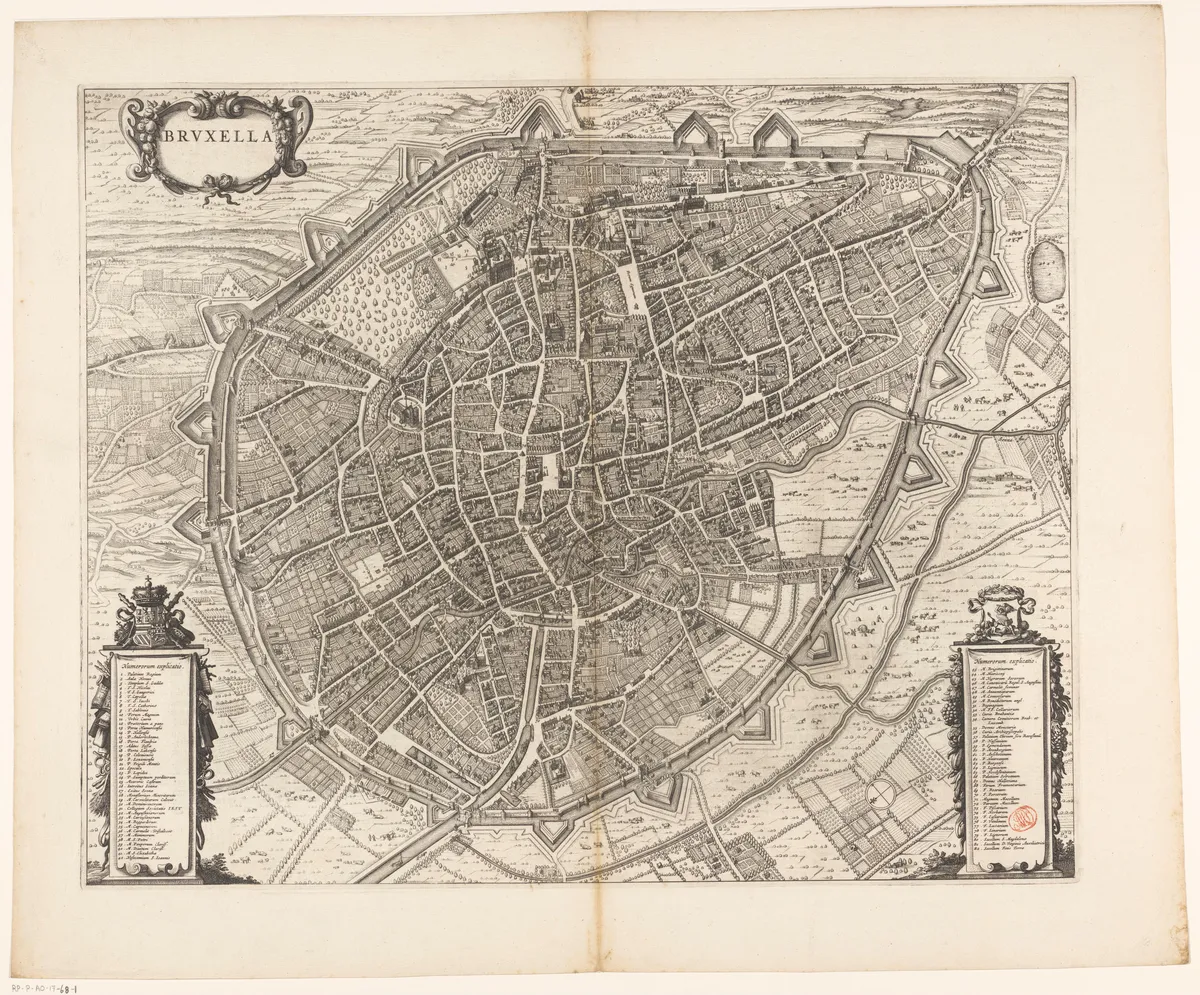
Charles, Duke of Lower Lorraine, erects a fortification on Saint-Géry island to guard the river crossing. The old name, Bruocsella, means roughly “settlement in the marsh.”
12th-13th c. · City of merchants
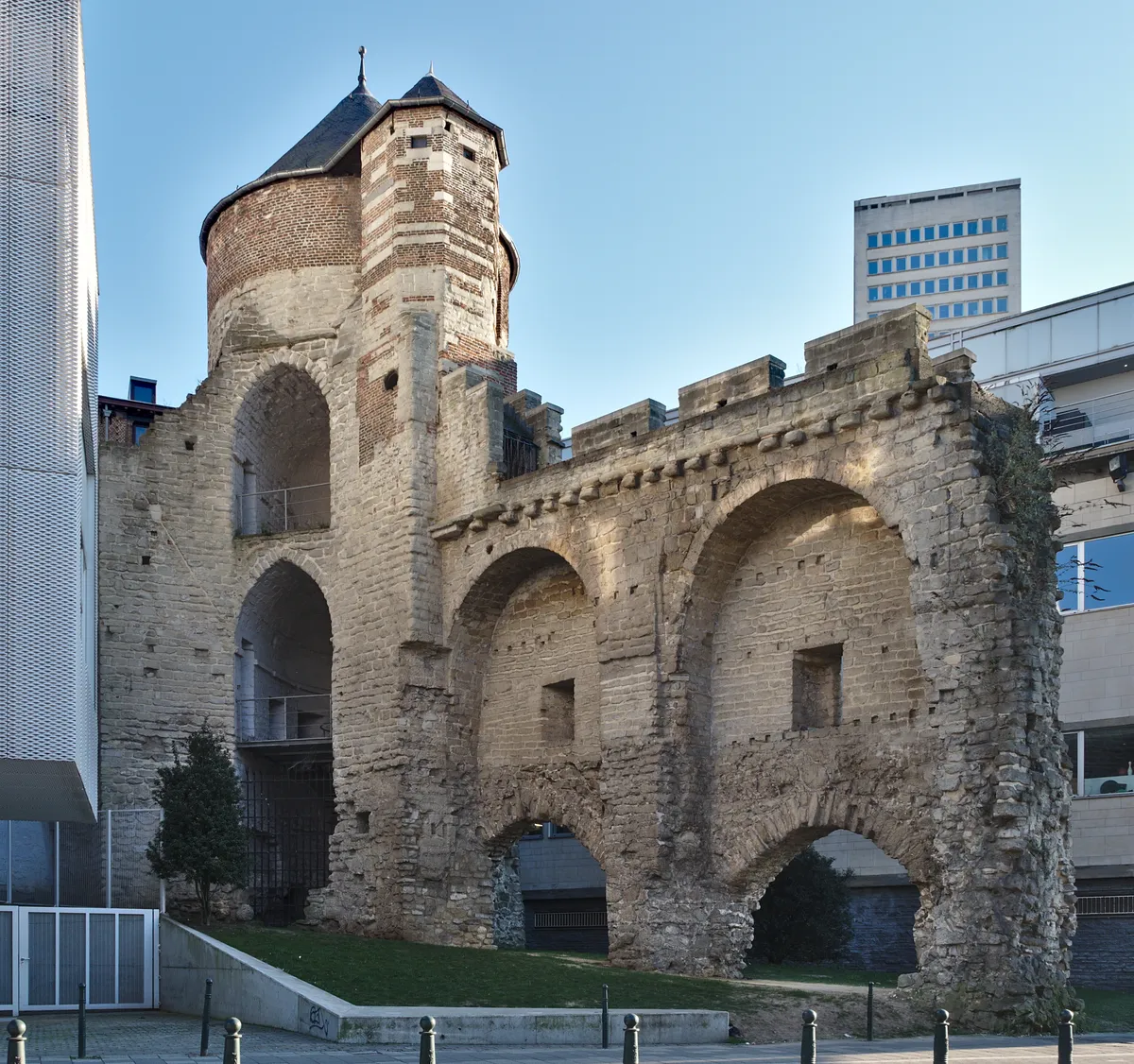
Brussels settles on the trade axis between Bruges and Cologne and charges a toll on the cloth that passes through. The first wall dates from around 1100; the second, from the end of the 14th century, traces the outline of today's Pentagon.
1402-1455 · The Gothic town hall
Construction of the Hôtel de Ville began in 1402, and its 96 m tower, attributed to Jan van Ruysbroeck, was finished in 1455. It's the oldest building still standing on the Grand-Place.
1430-1555 · Burgundy and Habsburg
The Dukes of Burgundy and later the Habsburgs install the court at the Coudenberg palace, atop the hill. Charles V, emperor from 1519, rules much of his empire from here.

1695 · The French bombardment
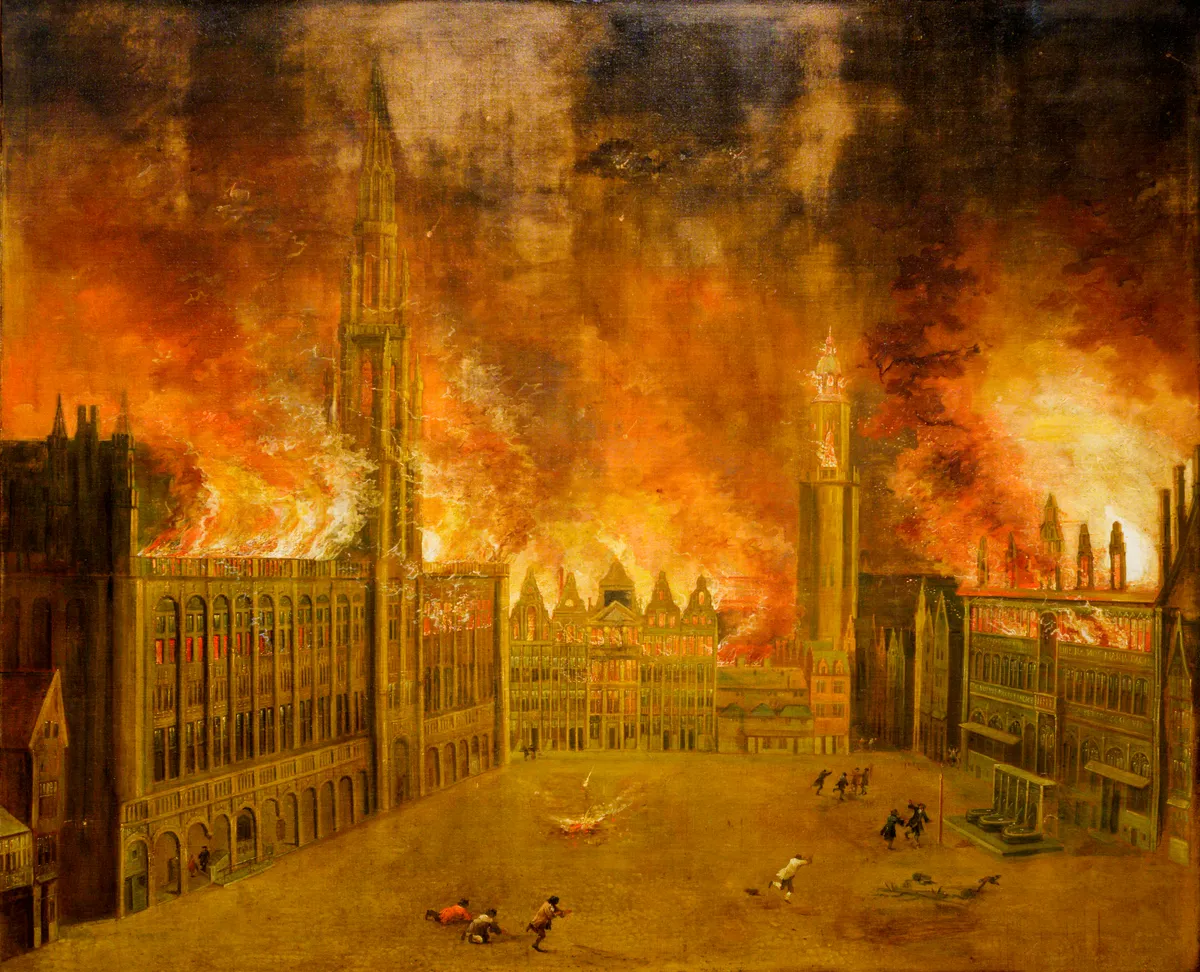
Between August 13 and 15, troops of Louis XIV under Marshal de Villeroy bombard the city for 36 hours and bring down about 4,000 houses. The guilds rebuild the Grand-Place in five years, which explains the baroque uniformity of the façades.
1830 · Revolution and independence
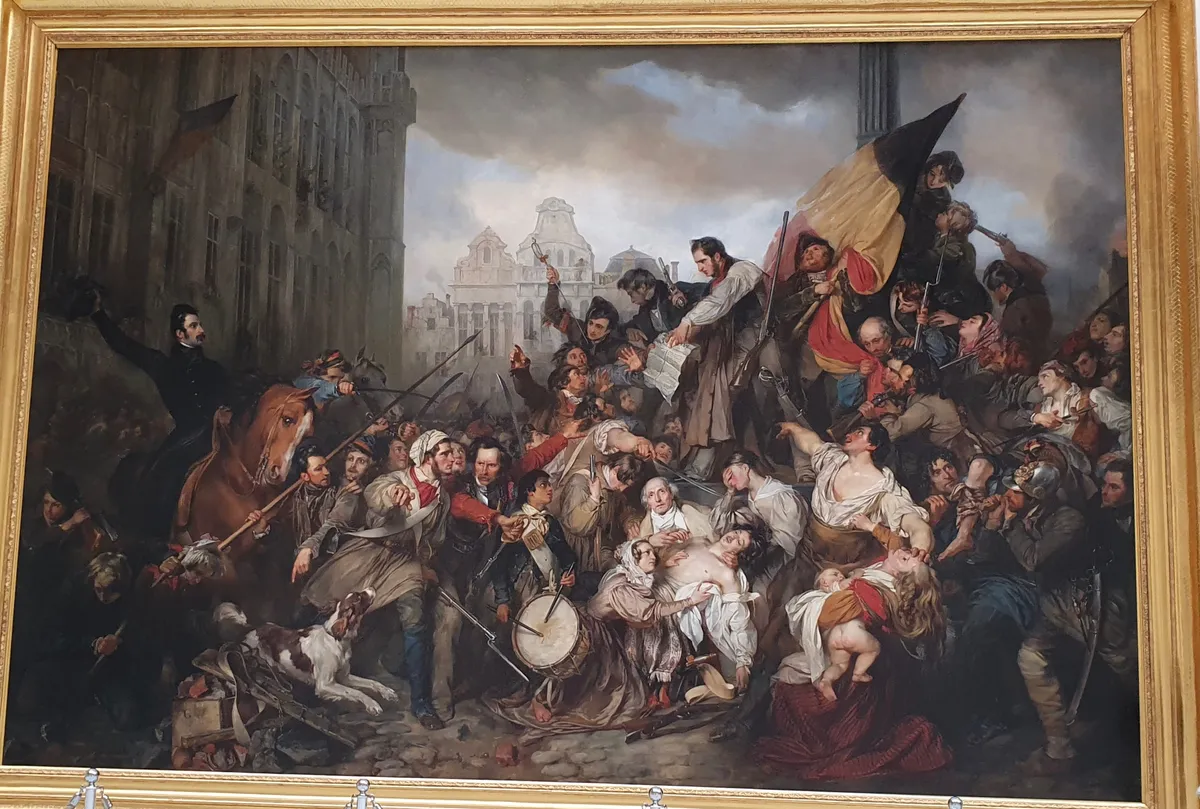
A performance of “La Muette de Portici” at the Théâtre de la Monnaie, on August 25, sets off the uprising against the Dutch king William I. Belgium becomes independent and Brussels its capital.
1867-1871 · The Senne buried
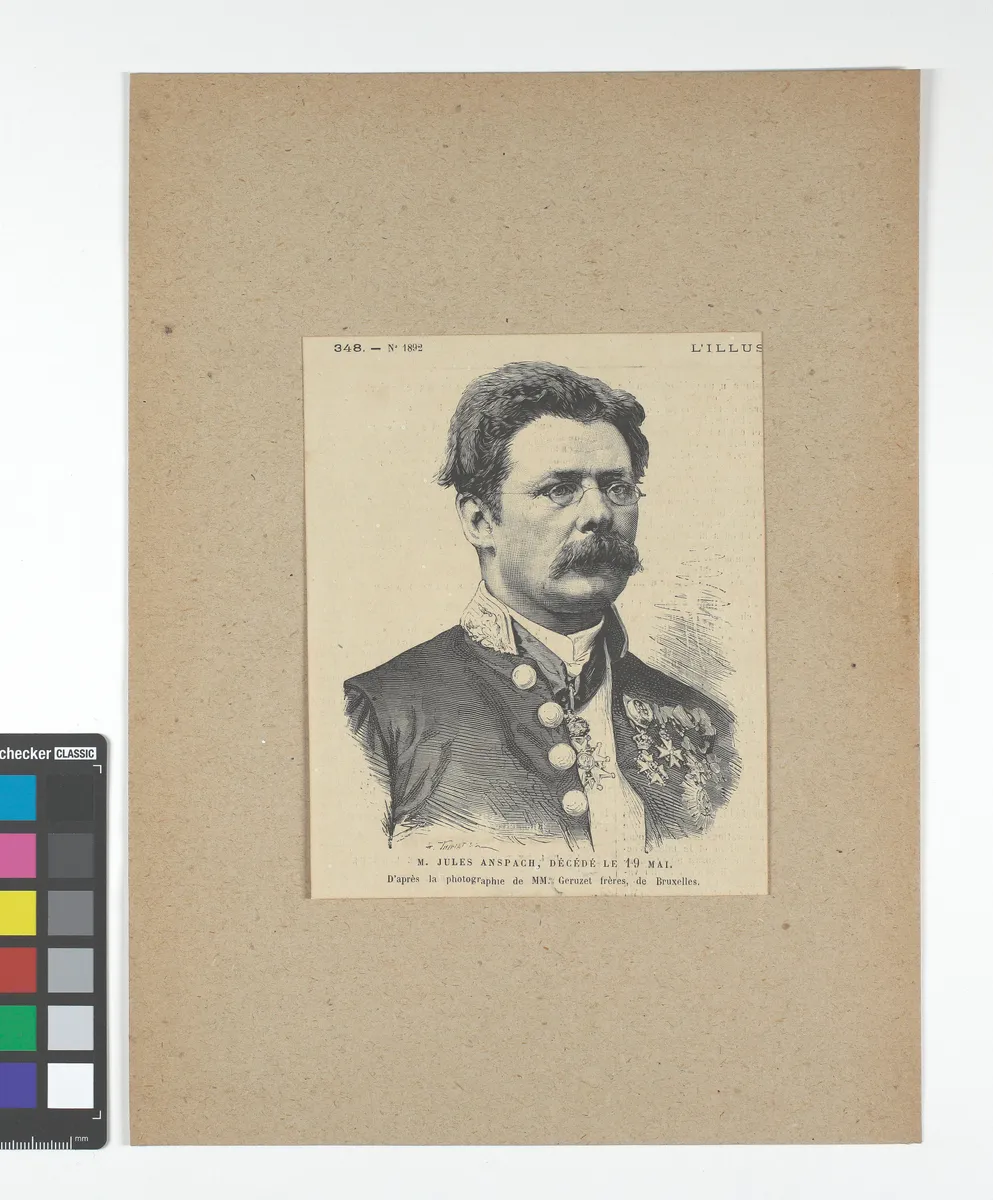
Under burgomaster Jules Anspach, the river, an open sewer and a vector for cholera, is vaulted over and covered. Over it open the central boulevards, in the Haussmannian mold of Paris.
1893-1905 · Art nouveau and Leopold II
Victor Horta builds the Hôtel Tassel in 1893 and launches the language of art nouveau in Europe. In the same period, Leopold II finances the Cinquantenaire and the Laeken greenhouses with revenue from the Congo, whose violence the city only began discussing publicly from the 2000s on.
1958 · The Expo and the Atomium
The Heysel World's Fair draws about 41 million visitors. The Atomium, by André Waterkeyn, was built as a temporary structure and ended up permanent.
1958-1967 · The European capital
The EEC settles in the city from 1958 on and NATO moves its headquarters from Paris here in 1967. The residential Leopold quarter is dismantled block by block to become offices.
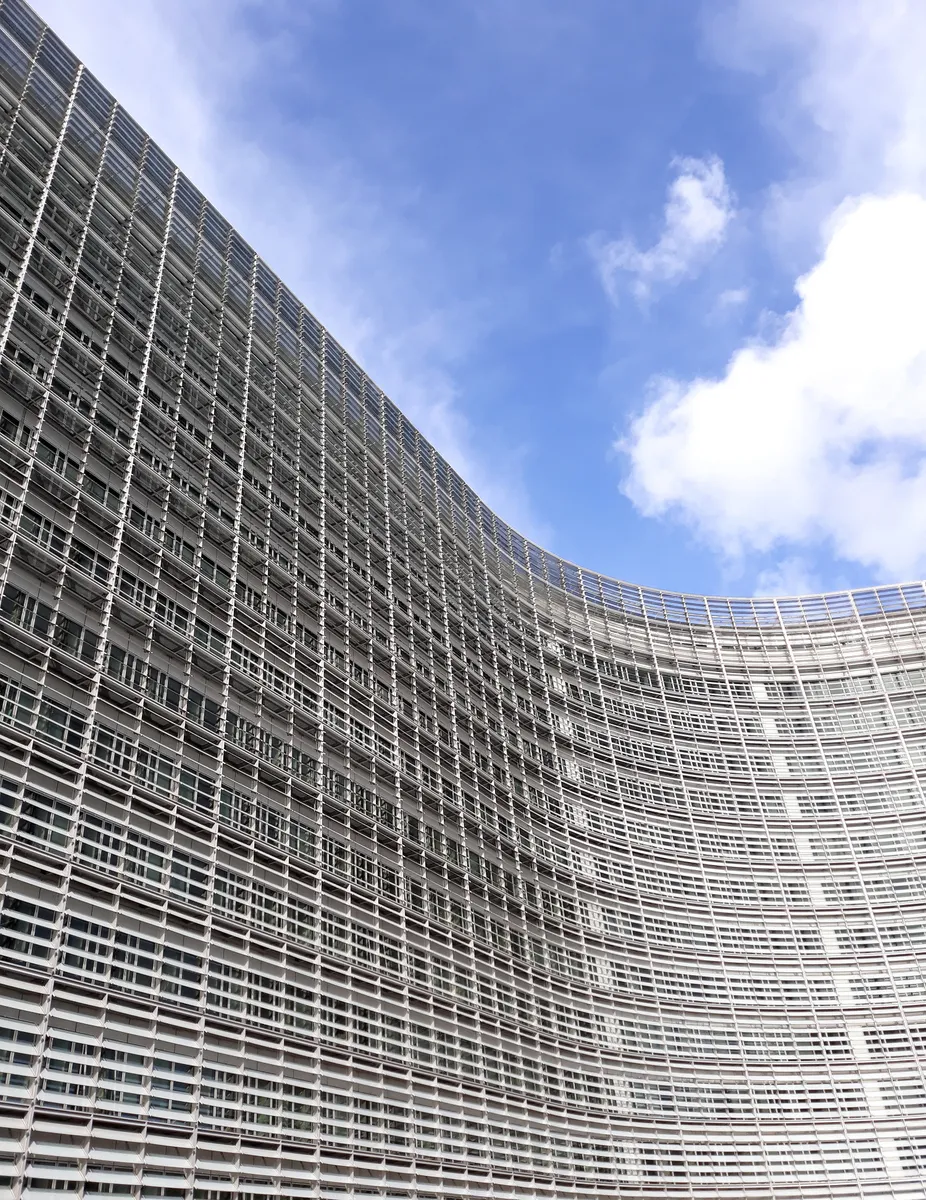
1989 · The autonomous region
The federal reform creates the Brussels-Capital Region, with 19 municipalities and its own parliament and government. The bilingual, fragmented model still defines who decides what in the city.
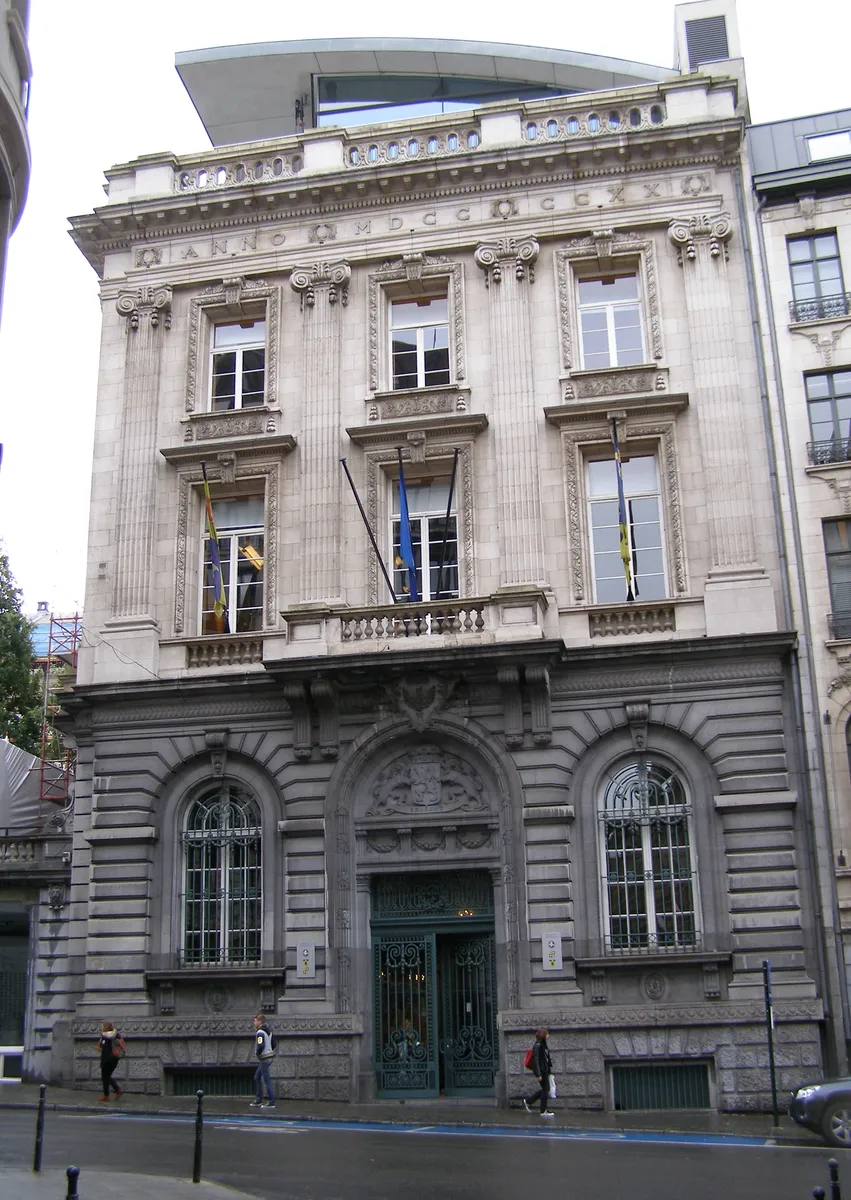
Complete history
The 979 fort at the Senne crossing
In 979, a fort on the island of Saint-Géry began guarding the crossing of the Senne, a shallow, winding river that ran between marshes; the old name, Bruocsella, “settlement in the marsh,” describes exactly that. In the 12th and 13th centuries the city slotted into the trade route between Bruges, on the North Sea, and Cologne, on the Rhine, and charged tolls on the cloth that passed through. The guilds that grew rich on that traffic are the same ones that, four centuries later, would pay to rebuild the Grand-Place.
Ville Basse and Ville Haute: the court on the Coudenberg (1430–1731)
The twin city (Ville Basse in the valley, Ville Haute on the hill) was born from the court. From 1430 the Dukes of Burgundy and later the Habsburgs settled at the Coudenberg, the palace atop the hill; Charles V, elected emperor in 1519, ruled from there. Below sat the market, the craftsmen, and the smell of the river. The divide outlived the palace itself, which burned in 1731: to this day power (royal palace, parliament, museums, courthouse) sits above and popular commerce sits below, with a drop of about 60 meters between the two.
The 1695 bombardment and the Senne buried in the nineteenth century
A bombardment and a sewer project shaped the city center. In August 1695 the army of Louis XIV bombarded the city for 36 hours, as a diversion in a war being decided elsewhere, and brought down about 4,000 houses; the Grand-Place was rebuilt in five years, which is why façades from different guilds form an almost uniform baroque set. In 1867 burgomaster Jules Anspach had the Senne, then an open sewer carrying cholera, vaulted over, and above the buried river he opened the central boulevards. The Senne still runs under the city and practically no one sees it.
Capital in 1830, European seat in 1958 and “bruxellisation”
Independence in 1830, sparked by an opera performance at the Théâtre de la Monnaie, made Brussels the capital of Belgium. The 20th century brought demolition: the 1958 World's Fair gave the city the Atomium and a first wave of construction, and the arrival of the EEC in 1958 and NATO in 1967 brought a second, much larger one. The old Leopold Quarter, bourgeois and residential, turned into glass towers along the Rue de la Loi. The process earned an international name: “bruxellisation” means the destruction of a historic urban fabric by real estate speculation with no overall plan.
Brussels-Capital Region, created 1989, has 19 communes
Today the city is administratively fragmented and demographically young. The Brussels-Capital Region, created in 1989, has 19 municipalities with their own mayors, police forces and regulations in a territory of 162 km²; it's bilingual by law and mostly French-speaking in practice. About a third of residents were born outside Belgium, with established Moroccan, Turkish, Congolese, Romanian, Italian and Polish communities, plus a few tens of thousands of people tied to the European institutions. That bilingual model, split into municipalities, still determines who decides what in each part of the city.
Brussels residents have an old nickname, zinneke, the mutt of the Senne, and it gives its name to the street parade that neighborhood groups put on in May of even-numbered years.
The Senne river was buried under the city, and today only its name is visible, on signs and labels.
Geography and shape of the city
The valley, the Senne, and the canal
Brussels sits in a shallow valley about 100 km from the North Sea, where the Brabant plateau to the south gives way to the Flemish plain to the north. The Senne, now channeled and covered, ran southwest to northeast; the Charleroi Canal, completed in the 19th century, still crosses the city and separates the industrial, working-class west (Molenbeek, Anderlecht) from the historic center.
The sixty meters between low and high
The elevation difference between the Ville Basse (about 15 m) and the Ville Haute (about 75 m) is about 60 meters and is covered by staircases, slopes, and public elevators; underestimating that drop is the classic mistake of anyone planning the day on a flat map.
An oceanic climate and fine rain
Brussels has an oceanic climate, moderated by the Atlantic, with fine rain spread across much of the year and little temperature variation between seasons.
Boulevard Anspach, now a long pedestrian stretch, runs exactly over the bed of the Senne, vaulted over in 1867.
Culture
Magritte and surrealism, Hergé and comics
Brussels produced two visual languages the world copied. Belgian surrealism took shape here in 1926 around René Magritte, who lived for 24 years in an ordinary house in Jette, now a museum, and painted the pipe that isn't a pipe; Paul Delvaux and Marcel Broodthaers followed. The second language is comics: Hergé created Tintin in 1929, Franquin created Gaston in 1957 and Peyo the Smurfs in 1958, all working in the city. The Belgian Comic Strip Center (Centre Belge de la Bande Dessinée) has occupied a 1906 warehouse designed by Victor Horta since 1989, and more than 60 comic murals are painted on gable walls around the center, along a free, signposted route.
Music scene: from La Monnaie to Ancienne Belgique
Musical life is split between institutions and basements. The Théâtre Royal de la Monnaie, an opera house since 1700, was the stage where the spark of the 1830 revolution was lit and still keeps top-tier programming. The Bozar, designed by Victor Horta and opened in 1928, houses the National Orchestra; the Ancienne Belgique, on the Boulevard Anspach, has been the reference rock venue since the 1970s. Jacques Brel, born in Schaerbeek in 1929, wrote “Bruxelles” and “Le Plat Pays” and has a foundation with a permanent exhibit near the Grand-Place. In the 1980s the city exported new beat and EBM, with Front 242 and Telex, and still sustains an electronic and African scene in the clubs of Ixelles and along the canal.
Akerman's cinema, soccer and cafés
In film, the most critically celebrated Belgian movie, “Jeanne Dielman,” by Akerman, was shot in an ordinary apartment in the city. Jaco Van Dormael and the Dardenne brothers carry on the Belgian tradition of low budgets and high precision. In soccer, RSC Anderlecht, with 34 national titles, shares the city with Union Saint-Gilloise, which returned to the top division in 2021 after 48 years away. Away from the screen and the stadium, social life revolves around the neighborhood café-bar, where each beer comes in the glass designed for it.
Festivals and events
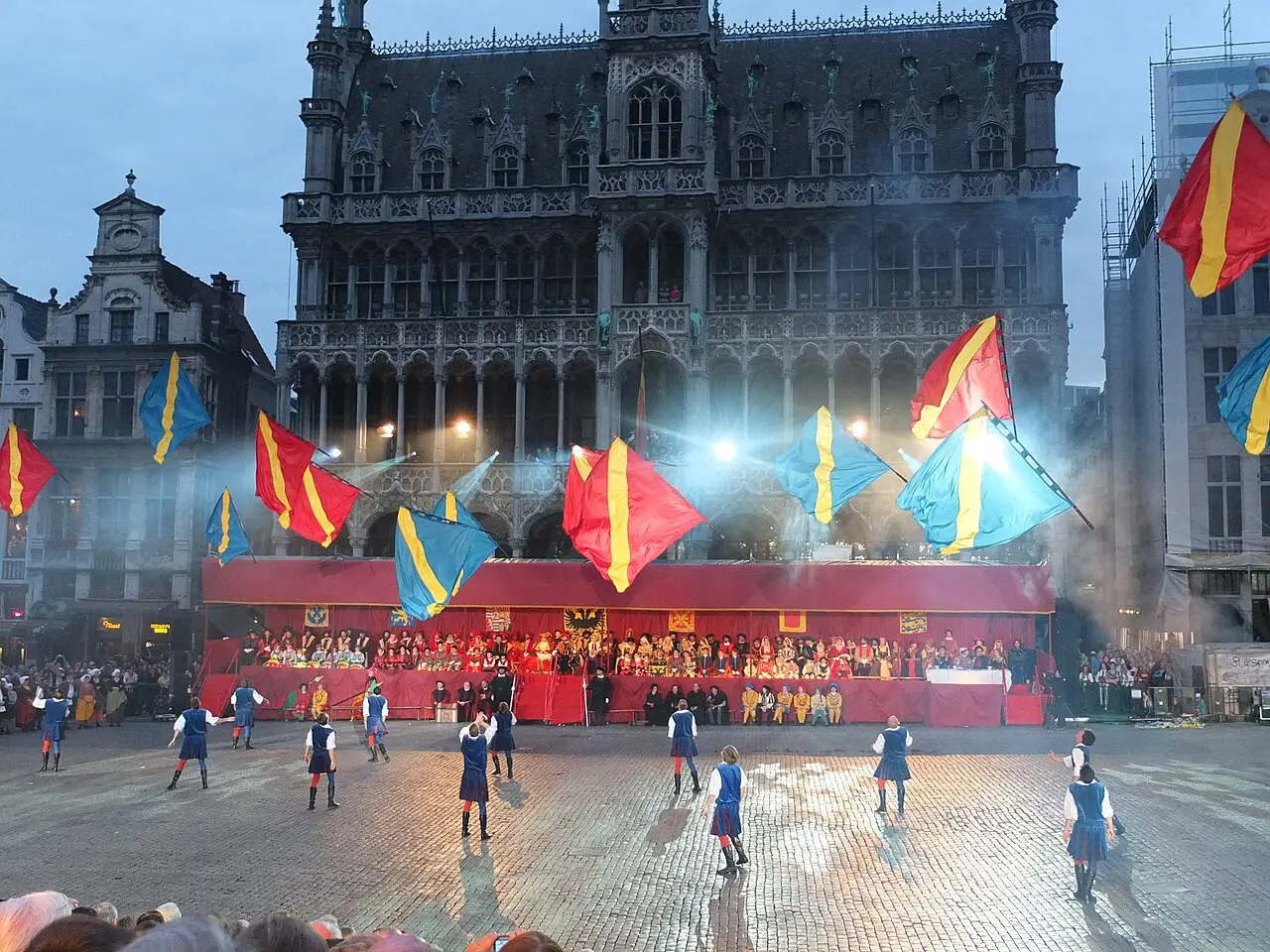
Ommegang
Two nights in early July, on the Grand-Place: a historic pageant with about 1,400 performers reenacting the reception of Charles V in 1549. Unesco Intangible Heritage since 2019; grandstand seats sell out months ahead.

Tapis de Fleurs
A carpet of about 1,800 m² laid with roughly 500,000 begonias over the paving of the Grand-Place, four days in mid-August, only in even years. Worth seeing from the town hall balcony, with a line.

Zinneke Parade
A biennial street parade created in 2000, made by neighborhood collectives with floats and marching bands, in May of even years. The name comes from “zinneke,” the Senne's stray dog, a historic nickname for Brussels residents.

Brussels Jazz Weekend
Three days in late May, with hundreds of free concerts in squares, bars, and on the Sablon. Heir to the Brussels Jazz Marathon, created in 1996.

Plaisirs d'Hiver / Winterpret
A winter market from late November to early January, with about 200 chalets between the Bourse, Sainte-Catherine, and the Marché aux Poissons, an ice rink, and a sound-and-light show on the Grand-Place.
Books and films
“The Adventures of Tintin,” by Hergé (from 1929)
Created and drawn in Brussels: the clear line, the restrained humor, and the documentary obsession are the aesthetic the city exported. Start with “The Secret of the Unicorn.”
“Jeanne Dielman, 23 Quai du Commerce, 1080 Bruxelles,” by Chantal Akerman (1975)
Three hours and twenty minutes in the routine of a widow in a Brussels apartment. Voted the greatest film of all time by Sight and Sound magazine in 2022; it shows the Belgian interior better than any guide.
“Bruxelles” and “Le Plat Pays,” by Jacques Brel (1962)
Two songs by the singer born in Schaerbeek: one rebuilds the city of trams and grandparents, the other describes the plain, the wind, and the low sky that define the climate here.
Frequently asked questions
Brussels: Is it worth having dinner on Rue des Bouchers?
No: the Rue des Bouchers is the center's tourist trap, with waiters who grab passersby by the arm and seafood of uneven quality. Two streets over, in Sainte-Catherine, you eat better for the same money.
Brussels: How do you do a day trip to Bruges?
Bruges is about 100 km northwest, about 1 hour by direct train from Bruxelles-Midi or Central. Arrive early, because the city fills up from 11am.
Brussels: How much does eating and drinking cost?
In 2026, espresso costs €2.80 to 4, draft beer €3.50 to 5, a cone of fries €3.50 to 5, a weekday lunch special €15 to 22, and a sit-down dinner with a drink €35 to 55.
Brussels: Does it rain a lot?
It rains often, but lightly: light rain falls on about 200 days a year, a drizzle that starts and stops throughout the day, and a rain jacket handles it better than an umbrella.
Brussels: Do you have to greet people on entering a shop?
Yes: say “bonjour” or “goeiedag” when stepping through the door of a bakery, pharmacy or small shop, and “au revoir” on the way out.
Other cities in the country
Belgium ↗- Days
- 1–3
- When
- Apr–Jun · Sep
- Per person/day
- Average 161 EURMid-range · per person/day
Cost scope
Per person per day: accommodation, meals, urban transport, visits and a small allowance for extras. Flights excluded; larger purchases vary. Editorial estimate, not a quote.


Itineraries through here
 The Netherlands, Belgium and Paris in 10 daysFrom the canals to the SeineAmsterdam · Brussels · Paris8–10 days3 cities
 The Netherlands and Belgium in 5 daysAmsterdam’s canals and the Grand-PlaceAmsterdam · Brussels4–5 days2 cities
 Amsterdam, Bruges and Paris in 10 daysA night in Bruges on the way to ParisAmsterdam · Brussels · Bruges · Paris9–13 days4 cities