Philippines
El Nido
El Nido: Bacuit Bay by boat, the lagoons by kayak and Nacpan by land
Days I'd stay at least three full days in El Nido, not counting the arrival day, which the road from Puerto Princesa usually eats up.
How the guide reaches this number
Two go to the sea: tour A, through the Miniloc lagoons, and C, through the Matinloc beaches, with B as the swap when the sea won't let C leave. The third is on land, with the Taraw Canopy Walk in the morning and the afternoon at Nacpan. With four days, I'd add tour D or B and gain some slack to reschedule whatever the weather cancels, which makes a difference from June to November. Anyone who wants the Puerto Princesa underground river or Coron should add separate days for them, with an overnight stay.
3–4
Start with the basic programme and choose extensions for the time you have.
When December to May; from June to November it rains more, and boat tours and ferries are canceled more often.
How the guide reaches this number
The dry season, December to May, is the best for boat tours: the sea is usually calmer and the roads dry. April and May are the hottest and driest months. From December to March the northeast wind blows, which can roughen some stretches and change stops, and December, Holy Week and Chinese New Year concentrate demand. From June to November it is the rainy season, with the peak around August; the southwest wind, from June to October, causes more frequent cancellations of the tours that head to the open side of the bay, such as C, and of the ferries to Coron. Those who travel in these months find fewer people, but need spare days in the plan.
Per person/day Budget around PHP1,160; mid-range around PHP2,700; comfortable around PHP5,430 per person per day, based on spending reported by travelers to Budget Your Trip (checked October 2026).
How the guide reaches this number
Indicative figures, excluding travel to the destination.
Budget around PHP1,160; mid-range around PHP2,700; comfortable around PHP5,430 per person per day, based on spending reported by travelers to Budget Your Trip (checked October 2026). Indicative figures, excluding travel to the destination.
Per person per day: accommodation, meals, urban transport, visits and a small allowance for extras. Flights excluded; larger purchases vary. Editorial estimate, not a quote.
Salta · among the cheapestZermatt · among the priciest
Cheaper than 98% of them. The tick marks the median. Compared by the middle of each city’s daily range, converted at the 24 Sept 2026 exchange rate.
 What Nilo thinks
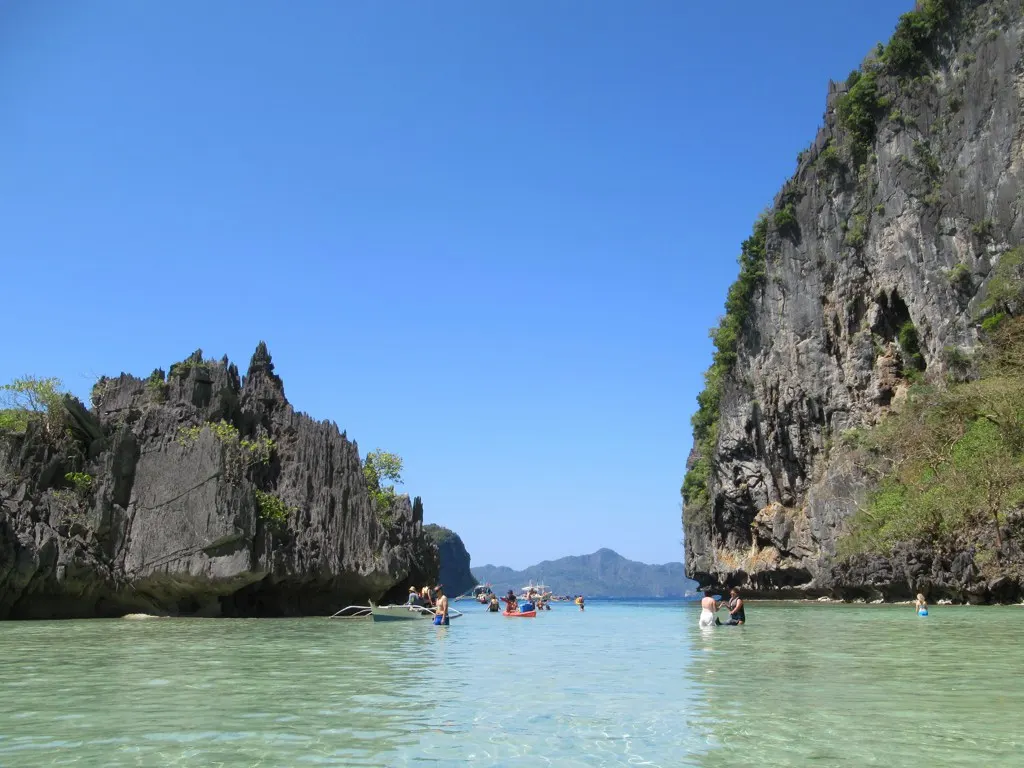
I'd recommend El Nido to those who like spending the day in the water, who like limestone scenery up close and who like eating fish without ceremony. The village is practical, made of guesthouses, agencies and bars facing the bay; anyone looking for architecture with history will find more in Sibaltan, where the preserved Cuyonon houses show the village life of the east coast. At the table, I'd bet on kinilaw, raw fish cured in vinegar with chili, and, for the curious, on the version with tamilok, the mollusk taken from mangrove wood. The region's cashew nuts are the right snack to bring on the boat. I'd leave swiftlet nest soup to those with a specific interest: it is the product that gave the town its name, but harvesting is seasonal, and a boat day beside the cliffs where the nests are harvested explains that story better.I'd go to El Nido for Bacuit Bay. Dozens of dark limestone islands rise from the green water in front of the village, and among them are lagoons closed in by walls, beaches that only appear when the boat rounds the rock, and caves open to the sea. The way to know them is the town's own: climb into a bangka in the morning, follow the chosen route and enter the lagoons by kayak or swimming, because motorboats stay outside. On land, the village is small and faces the sea, squeezed between the beach and the Taraw cliff, and the road north leads to long, open beaches, a contrast with the coves of the bay. The protection of the area, the fees and the visitor limits are part of the visit, and they explain why such a sought-after place still has clear-water lagoons.
Quick facts
- Population
- 51,367 inhabitants in the municipality of El Nido in the 2024 census of the Philippine Statistics Authority. The figure includes the 18 barangays (districts) and the islands; the village, called Poblacion, comprises only four of them.
- Founding
- An independent municipality since 1916, under the name Bacuit; it was renamed El Nido on June 17, 1954, by Republic Act No. 1140.
- Country and region
- Philippines; province of Palawan, Mimaropa region. It lies about 420 km southwest of Manila.
- Language
- Filipino (Tagalog) and English, the country's official languages; English is widely used in tourism. Part of the population speaks Cuyonon, the language of the Cuyo Islands.
- Currency
- Philippine peso (PHP, ₱).
- Time zone
- UTC+8 (Philippine standard time), with no daylight saving time.
- Best time to go
- December to May; from June to November it rains more, and boat tours and ferries are canceled more often.
- Average daily cost
- Budget around PHP1,160; mid-range around PHP2,700; comfortable around PHP5,430 per person per day, based on spending reported by travelers to Budget Your Trip (checked October 2026). Indicative figures, excluding travel to the destination.
What’s new
Recent changes that affect the plan, with date and source.
- Mar 2026
Turboprop flights to Lio airport that left from Manila moved to Clark (CRK) on March 29, 2026, and since July 1, 2026, Cebgo, of the Cebu Pacific group, has operated the former AirSWIFT flights with the code DG. Anyone departing from the Manila area who wants to fly directly to El Nido has to go by road to Clark; the route via Puerto Princesa remains the same. source
When to go
December to May; from June to November it rains more, and boat tours and ferries are canceled more often.
January
Best time11 h 32 min of daylight
National holidays
Jan 1 – 3, 2027 · long weekend · Bagong Taon
Dec 30, 2027 – Jan 2, 2028 · long weekend · Bagong Taon
Jan 26, 2028 · Chinese New Year
Source: Nager.Date. Holiday dates shift; check close to your trip.
February
Best time11 h 47 min of daylight
National holidays
Feb 6, 2027 · Chinese New Year
Source: Nager.Date. Holiday dates shift; check close to your trip.
March
Best time12 h 04 min of daylight
National holidays
Mar 25 – 28, 2027 · long weekend · Huwebes Santo, Biyernes Santo, Sabado de Gloria
Source: Nager.Date. Holiday dates shift; check close to your trip.
April
Best time12 h 23 min of daylight
National holidays
Apr 9 – 11, 2027 · long weekend · Araw ng Kagitingan
Apr 9, 2028 · Araw ng Kagitingan
Apr 13 – 16, 2028 · long weekend · Huwebes Santo, Biyernes Santo, Sabado de Gloria
Source: Nager.Date. Holiday dates shift; check close to your trip.
May
Best time12 h 38 min of daylight
National holidays
May 1, 2027 · Araw ng Paggawa
Source: Nager.Date. Holiday dates shift; check close to your trip.
June
12 h 47 min of daylight
National holidays
Jun 12, 2027 · Araw ng Kalayaan
Source: Nager.Date. Holiday dates shift; check close to your trip.
July
12 h 43 min of daylight
August
12 h 29 min of daylight
National holidays
Aug 21, 2027 · Araw ng Kamatayan ni Senador Benigno Simeon "Ninoy" Aquino Jr.
Aug 30, 2027 · Araw ng mga Bayani
Source: Nager.Date. Holiday dates shift; check close to your trip.
September
12 h 11 min of daylight
October
11 h 53 min of daylight
National holidays
Oct 31, 2026 · All Saints' Day Eve
Oct 31, 2027 · All Saints' Day Eve
Source: Nager.Date. Holiday dates shift; check close to your trip.
November
11 h 37 min of daylight
National holidays
Nov 1, 2026 · Araw ng mga Santo
Nov 30, 2026 · Araw ni Gat Andres Bonifacio
Nov 1, 2027 · Araw ng mga Santo
Nov 28 – 30, 2027 · long weekend · Araw ni Gat Andres Bonifacio
Source: Nager.Date. Holiday dates shift; check close to your trip.
December
Best time11 h 28 min of daylight
National holidays
Dec 6 – 8, 2026 · long weekend · Kapistahan ng Immaculada Concepcion
Dec 24 – 27, 2026 · long weekend · Christmas Eve, Araw ng Pasko
Dec 30, 2026 · Araw ng Kamatayan ni Dr. Jose Rizal
Dec 31, 2026 · Huling Araw ng Taon
Dec 8, 2027 · Kapistahan ng Immaculada Concepcion
Dec 24 – 26, 2027 · long weekend · Christmas Eve, Araw ng Pasko
Dec 30, 2027 – Jan 2, 2028 · long weekend · Araw ng Kamatayan ni Dr. Jose Rizal, Huling Araw ng Taon
Source: Nager.Date. Holiday dates shift; check close to your trip.
High, shoulder and low season
High · December to May
Dry season, with calmer seas and more predictable boat tours. December, Chinese New Year and Holy Week fill lodging and boats; book ahead. The northeast wind, from December to March, can still change stops.
Low · June to November
Rainy season, peaking around August. The southwest wind, from June to October, more often cancels tour C and the ferries to Coron, and dirt roads turn muddy. There are fewer people at the lagoons, but the plan needs spare days.
How the year changes
The dry season, December to May, is the best for boat tours: the sea is usually calmer and the roads dry. April and May are the hottest and driest months. From December to March the northeast wind blows, which can roughen some stretches and change stops, and December, Holy Week and Chinese New Year concentrate demand. From June to November it is the rainy season, with the peak around August; the southwest wind, from June to October, causes more frequent cancellations of the tours that head to the open side of the bay, such as C, and of the ferries to Coron. Those who travel in these months find fewer people, but need spare days in the plan.
Nilo's tips
How many people on the boat
I'd ask the agency how many passengers the boat carries, because shared tours use boats of different sizes, from six to twelve people. On a smaller boat, the stops at the lagoons and the landings on the beaches go faster.
Kayak at the Big Lagoon
I'd rent the kayak instead of going in only by swimming. It lets you reach the inner part of the lagoon at your own pace and return to the boat without tiring.
Dry bag and water shoes
I'd bring a dry bag for phone and cash and water shoes: there are swimming passages between rocks and landings on beaches with coral.
Spare day
I'd leave one day with nothing booked, preferably near the end, to reschedule a tour canceled by the weather.
Explore the map
Explore the map, read about the other places and plan your travel days in the app.
Open the appWhat to see
If time is short, I would skip: Lio Beach
Leave for last, if time allows: Seven Commandos Beach · Matinloc Shrine · Cudugnon Cave · Cadlao Lagoon · Nagkalit-kalit Falls
Big Lagoon
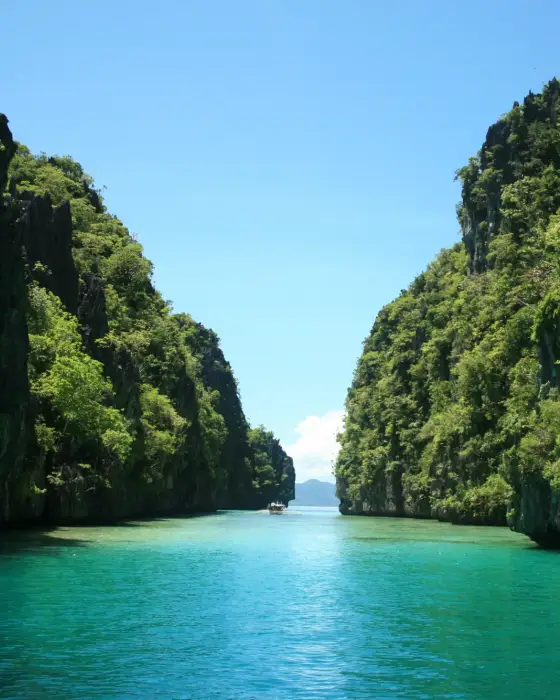
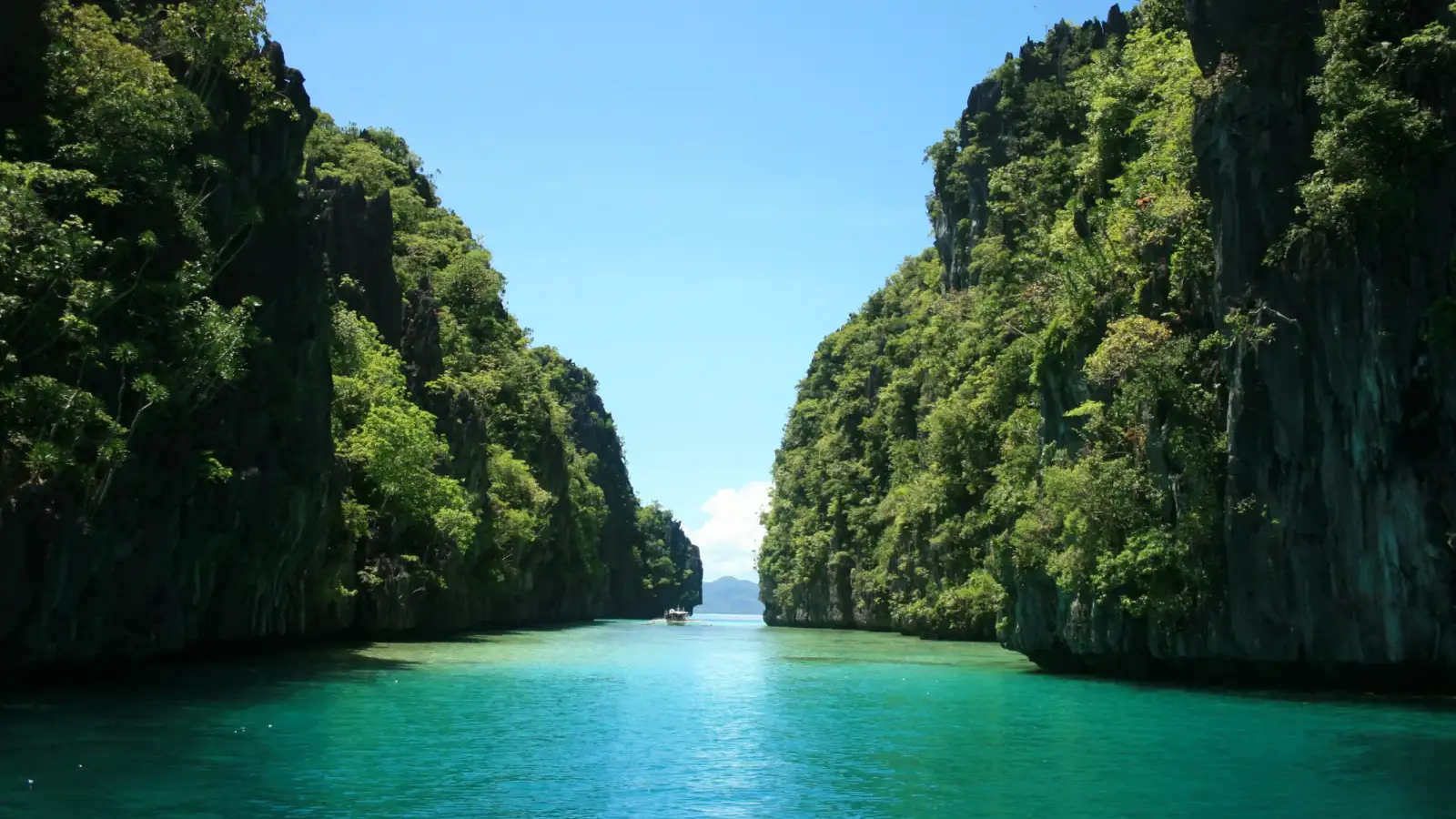
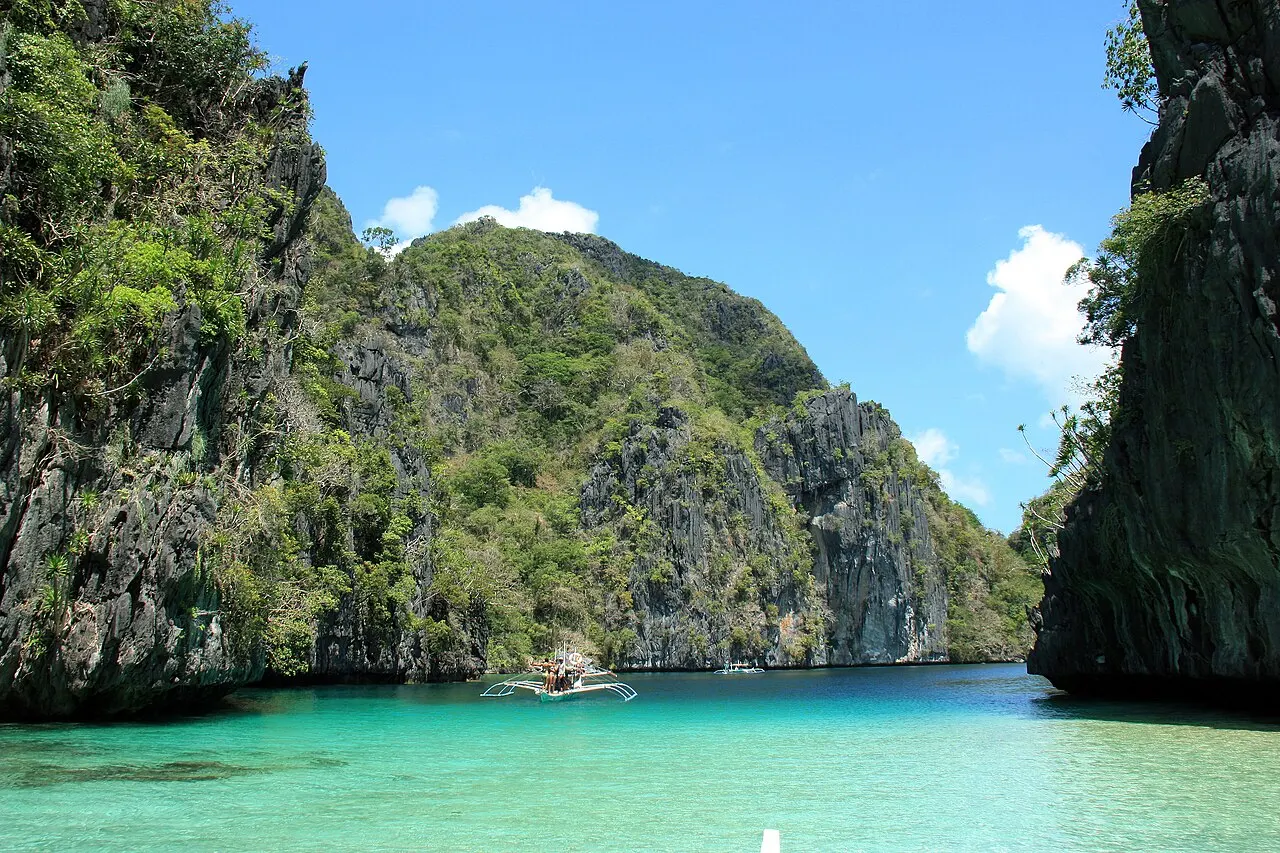
The larger lagoon in northern Miniloc is the best-known image of El Nido: shallow, light green water surrounded by limestone walls, with a narrow, low entrance. Motorboats stay anchored at the mouth; access is by swimming with a life vest or by kayak, rented on site (₱300–400 per two-person kayak, August 2026 price). There is a ₱200 use fee per person, in addition to the environmental fee. It is part of tour A and has a daily visitor limit, so the agency must secure the slot.
Check access
Secret Beach
A small beach on Matinloc surrounded by rocks, with access by water that depends on the sea. It has had limits on people at one time and per day since 2018. It is part of tour C, the first to be canceled when the weather turns.
Check access
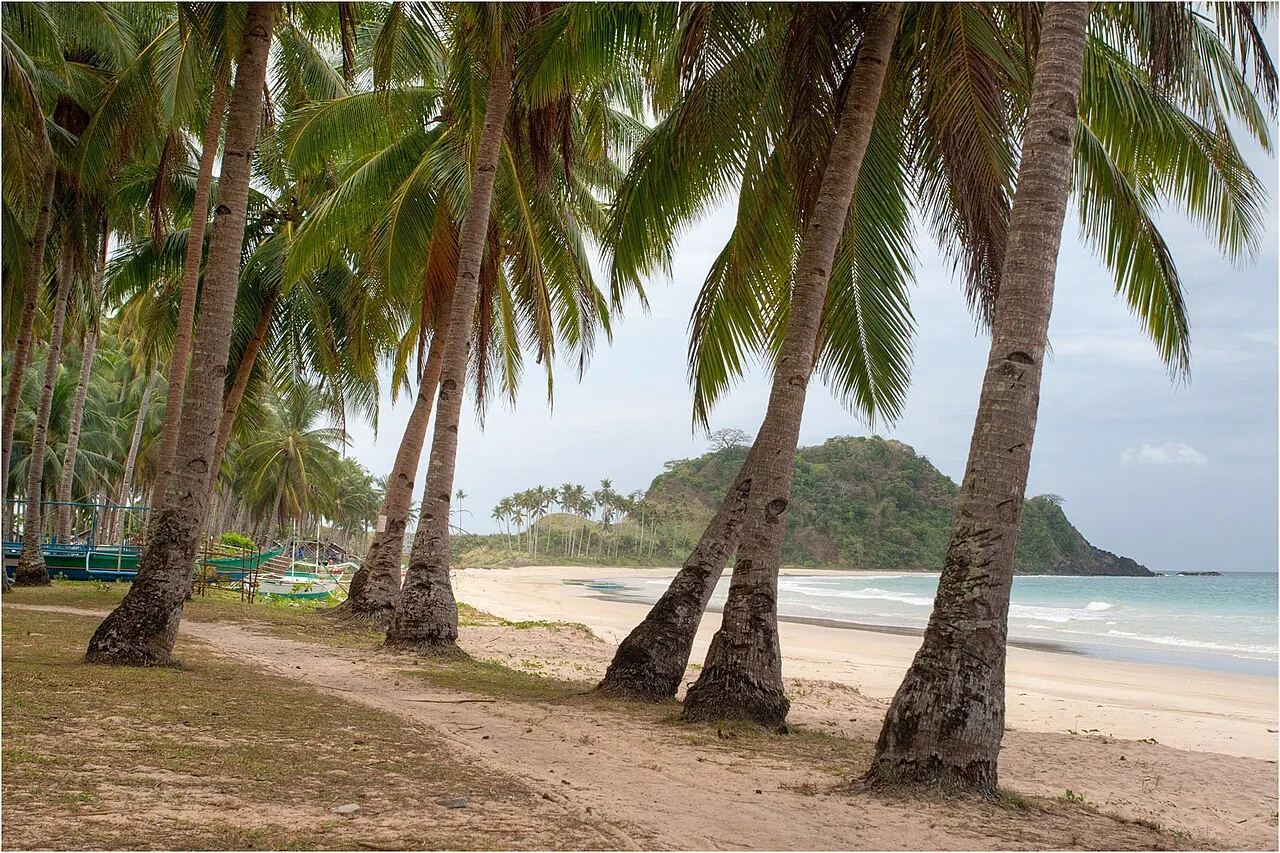
Nacpan Beach
A long beach of pale sand about 17 km north of the village, 45 minutes to an hour by road. No entrance fee. It is El Nido's best beach for walking, swimming without an itinerary and watching the sunset without a boat. You get there by chartered tricycle with waiting time, by rented motorbike or in shared vans; in the rainy season, unpaved stretches can turn muddy.
Check access
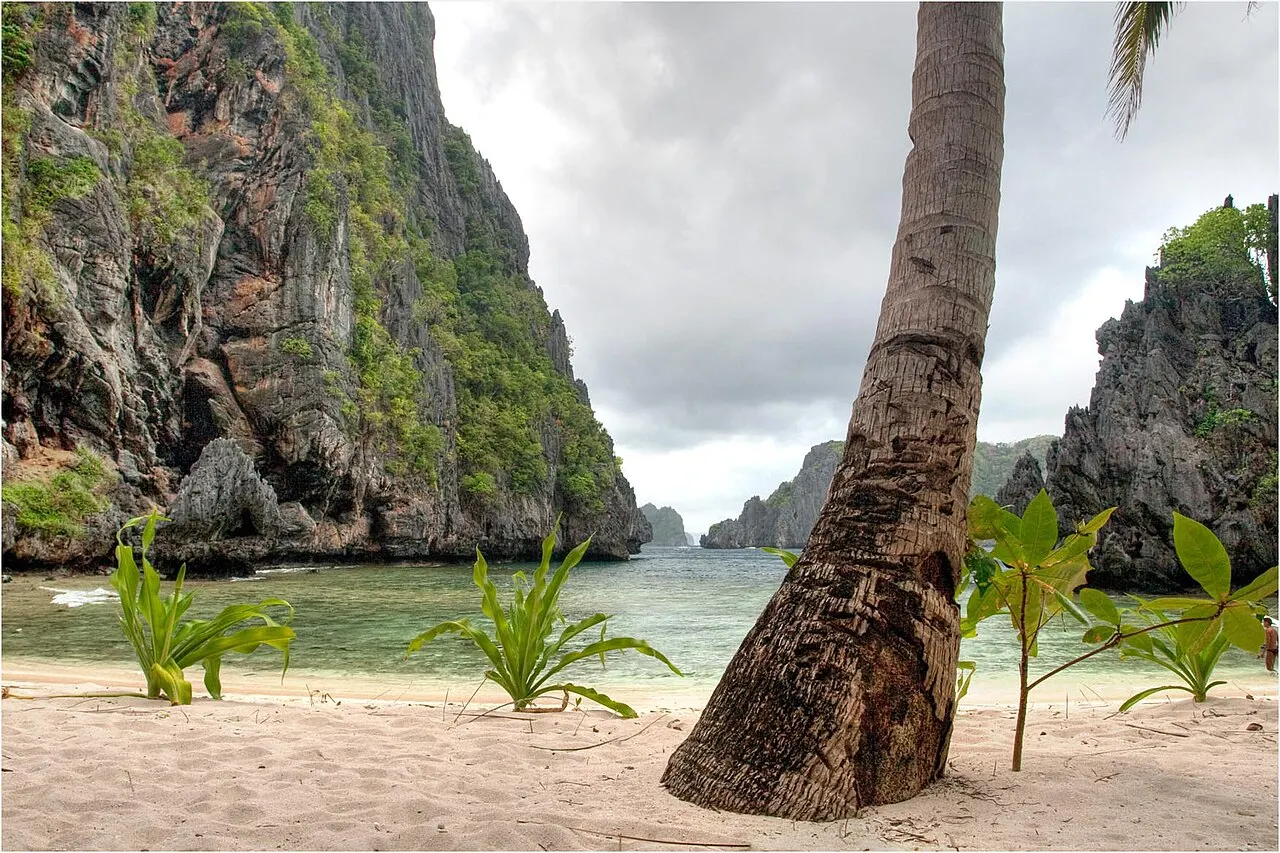
Secret Lagoon
A small lagoon in Miniloc, reached through a narrow opening in the rock. The passage can be difficult with a tide or swell, and the space inside is small, which makes the time of arrival important. A stop on tour A.
Check access
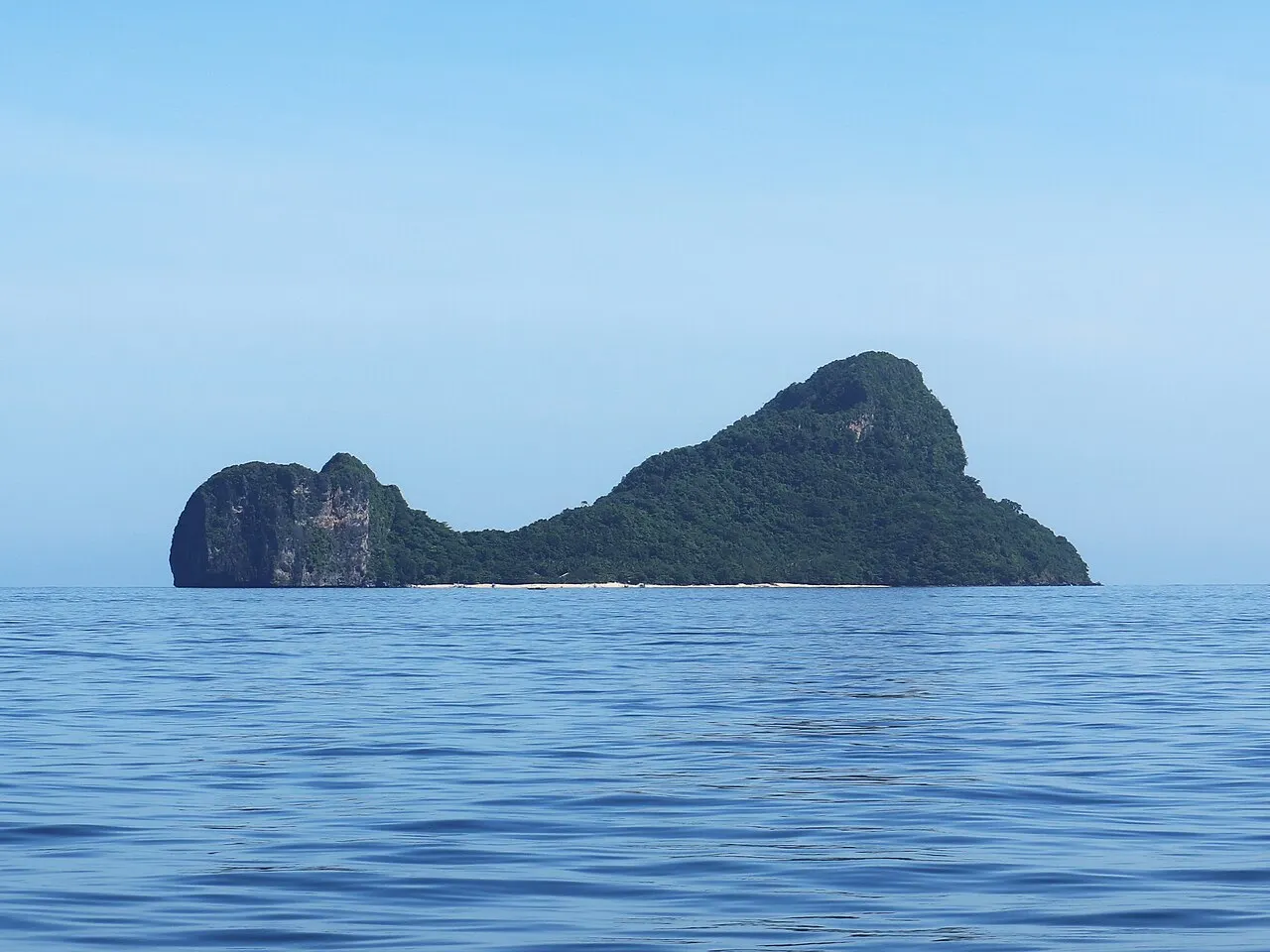
Helicopter Island
A limestone island with a beach, used as a swim and snorkel stop on tour C. Tour C heads to the open side of the bay, beyond Tapiutan and Matinloc, so it depends on calm seas.
Check access
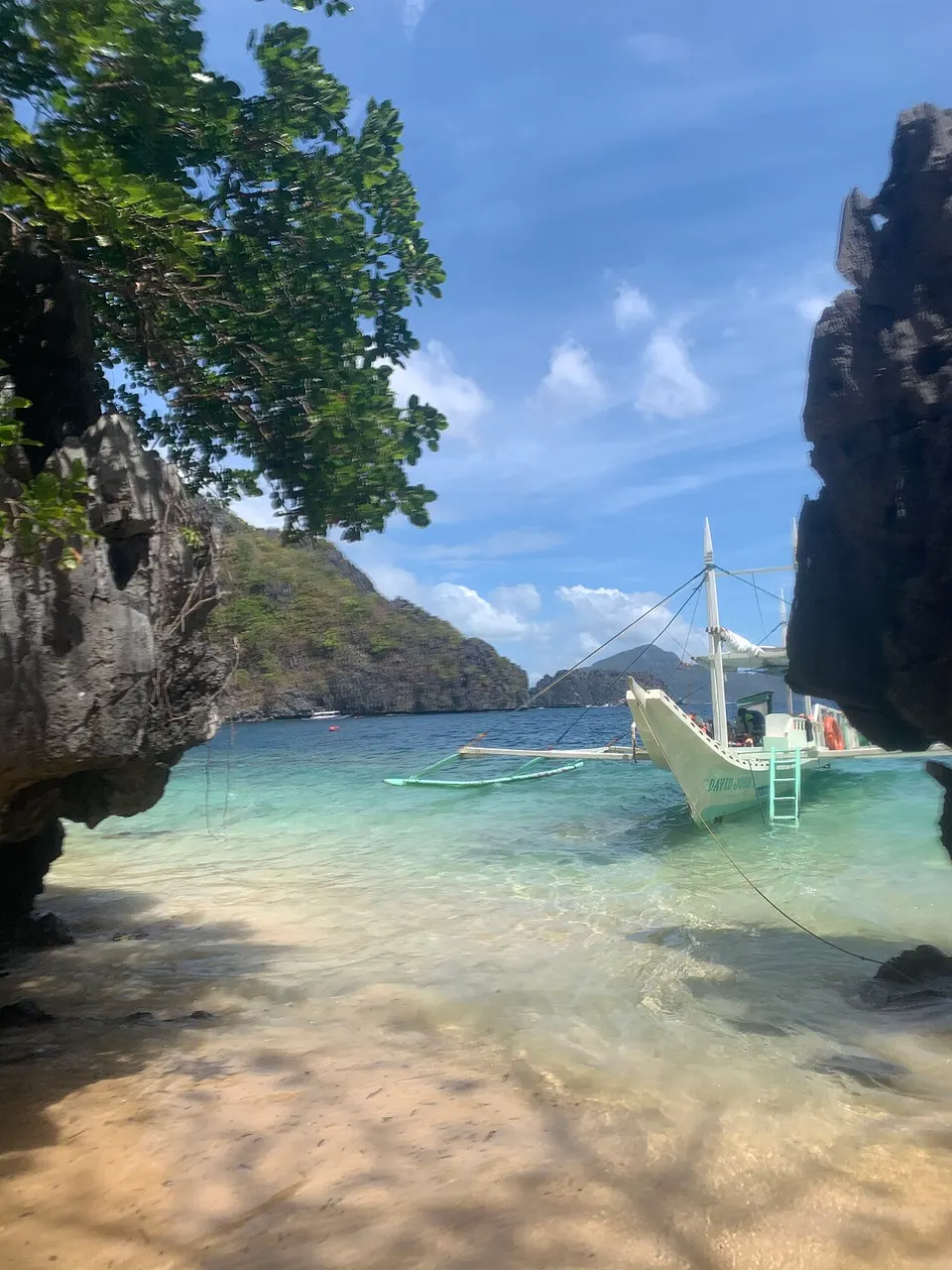
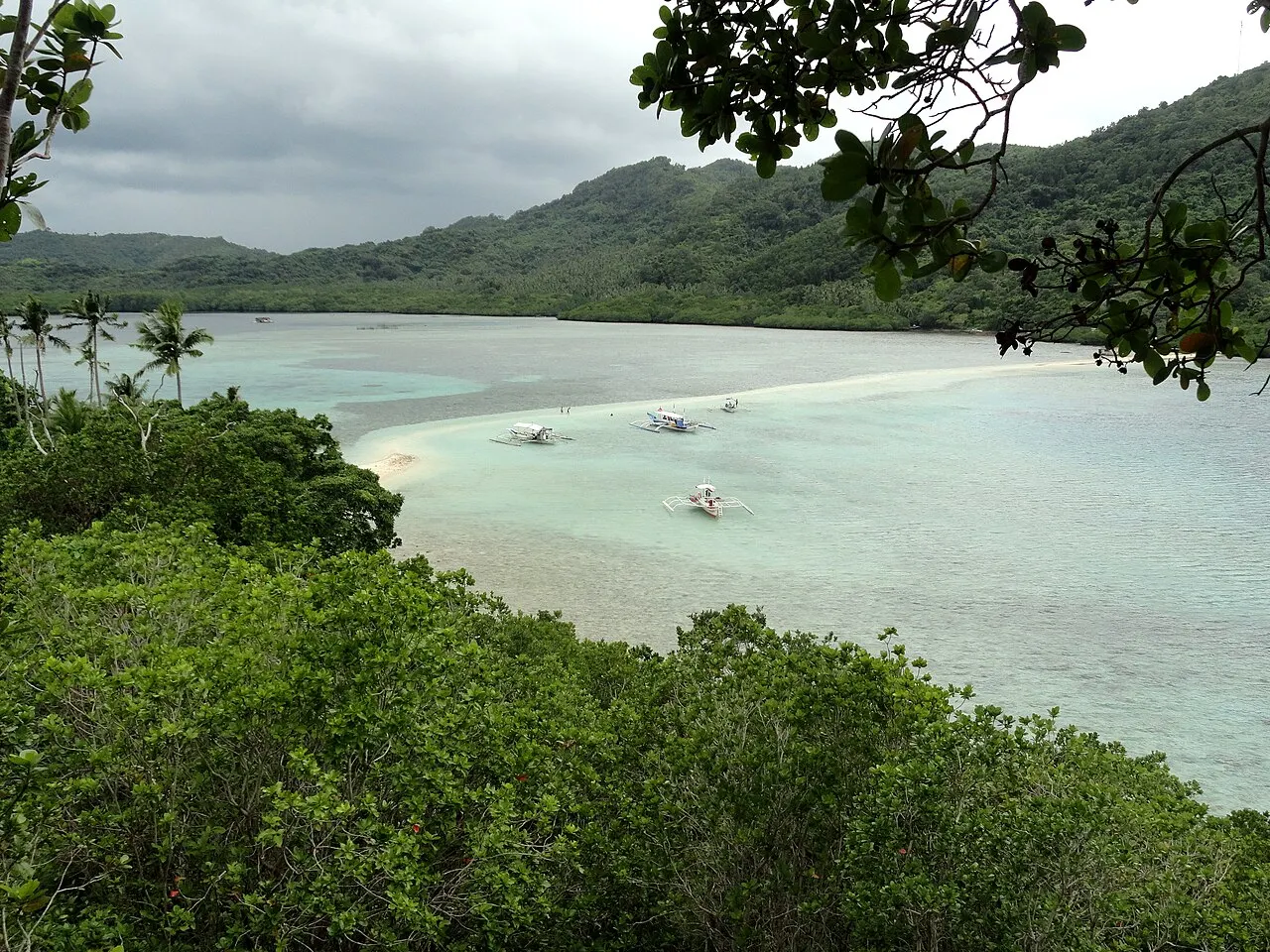
Snake Island
An island with a curving sandbar that runs out into shallow water, its shape changing with the tide. It is the best-known stop on tour B, which also passes Cathedral Cave, Entalula beach and the island of Pinagbuyutan.
Check access
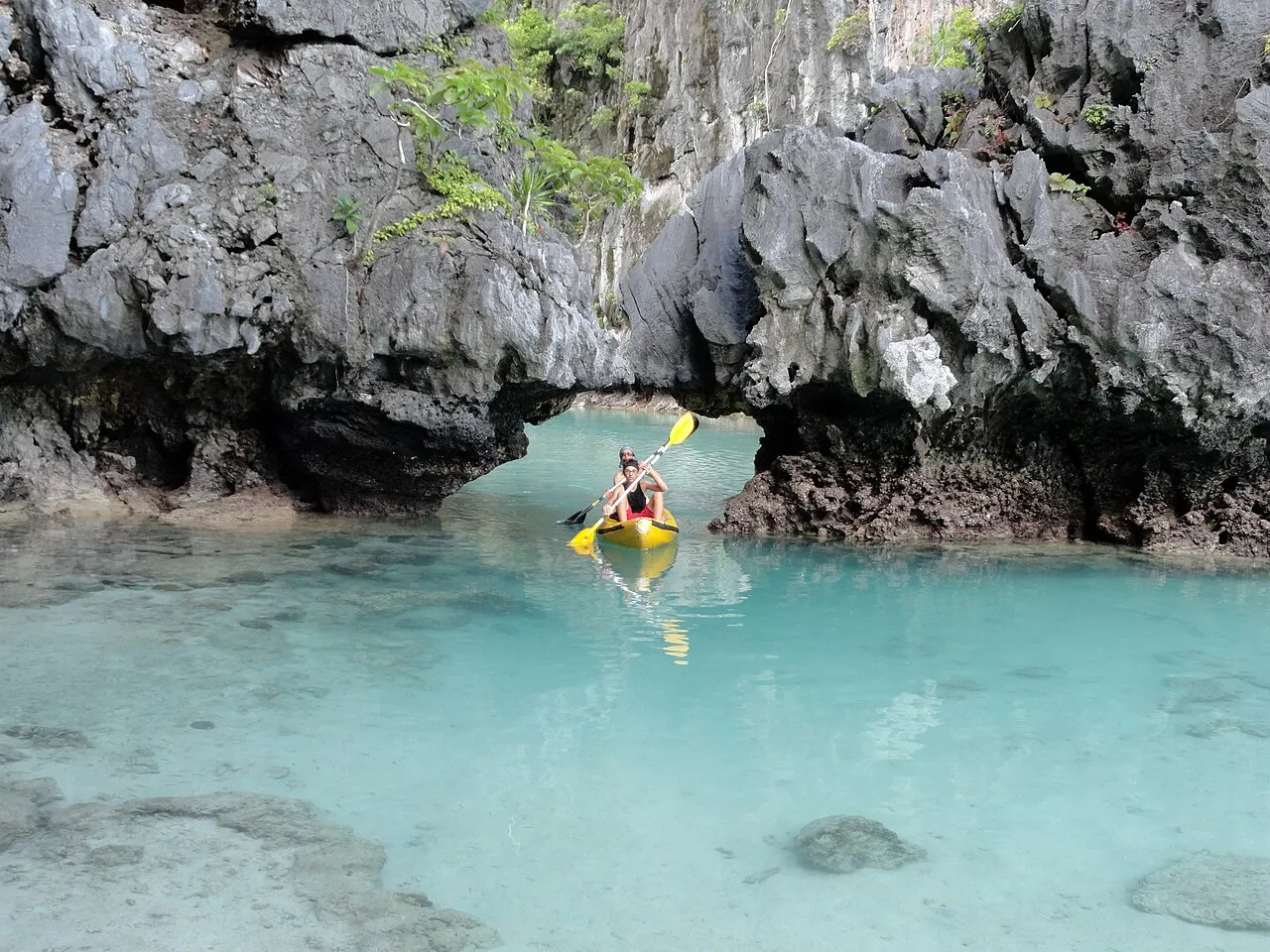
Small Lagoon
A narrow lagoon in Miniloc, explored by kayak between walls to a more enclosed inner stretch. It has a daily visitor limit and a ₱200 use fee. Since the routes were reorganized it appears on tour D; confirm with the agency, because the distribution of stops has changed before.
Check access
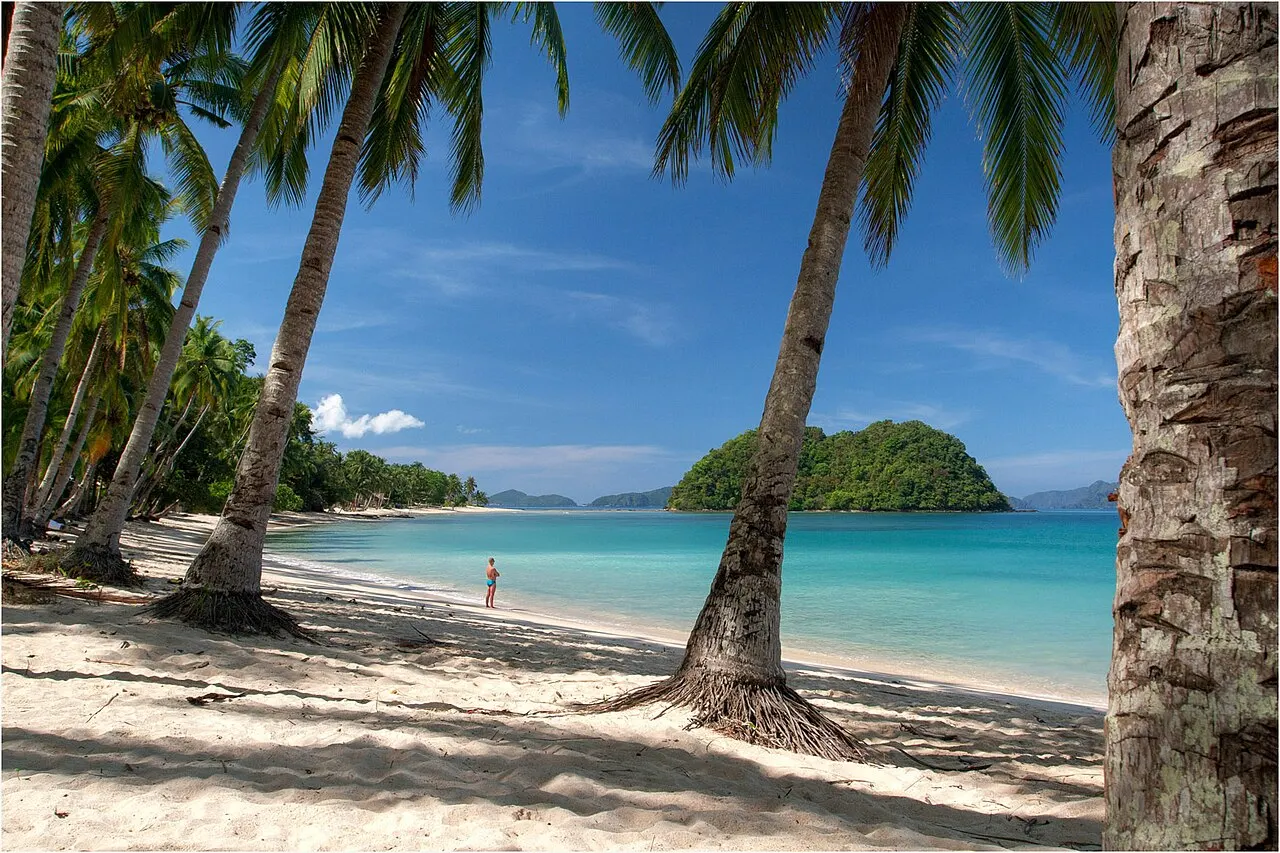
Las Cabañas Beach
A beach south of the village, free to enter, known for its sunset and for the zip line that links the beach to a neighboring island. By tricycle, the ride costs ₱100 to ₱250 (August 2026). It suits the end of a boat day or an afternoon without a tour.
Check access
More places in the guide
Taraw Cliff
The limestone wall that closes off the village from behind. The free climb to the peaks requires rock climbing; the organized alternative is the Canopy Walk, also called the via ferrata, with walkways, a short via ferrata stretch and a suspension bridge, always with a guide, helmet and harness. The visit takes an hour and a half to two hours. The view shows the village, the bay and Cadlao from above, which helps in understanding the geography before the boat tours.
Balay Cuyonon
A group of traditional Cuyonon houses preserved on the beach at Sibaltan, on the east coast, with a guided visit that explains village life. It hosts the Pamaragua festival in mid-May. It is about an hour by road from the village, which calls for half a day or more.
Seven Commandos Beach
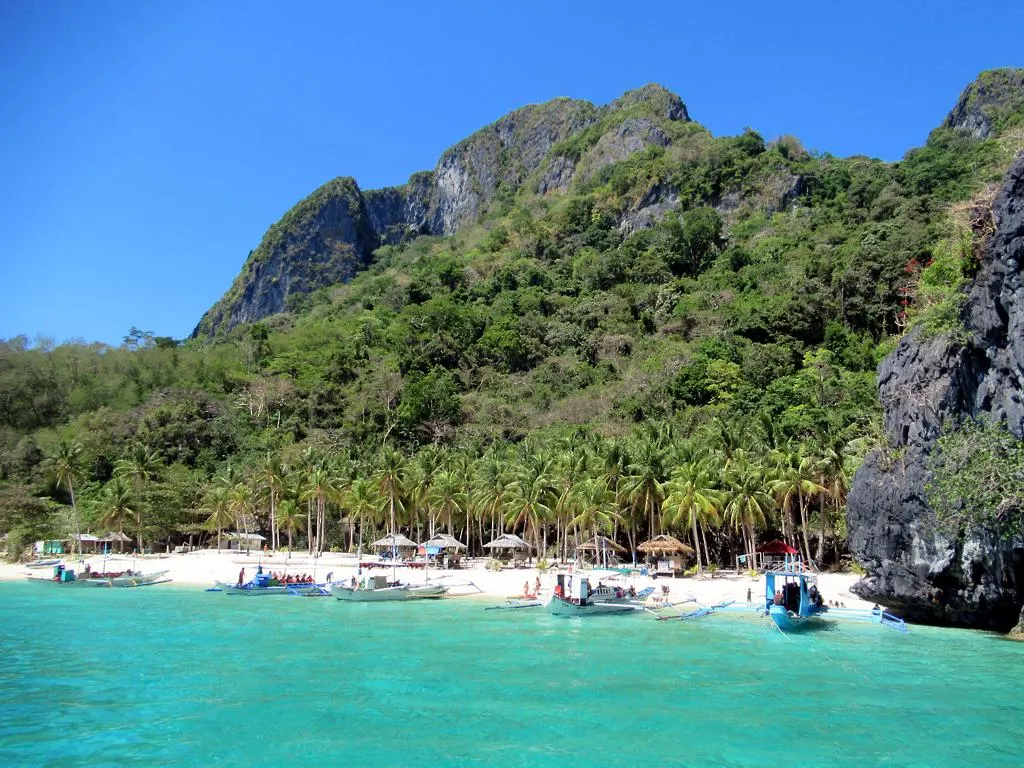
A fine-sand beach with coconut palms on the bay's coast, used as a swim and lunch stop on tour A. It is pleasant but similar to other beaches in the bay; it works as a break, not as the reason for the tour.
Matinloc Shrine
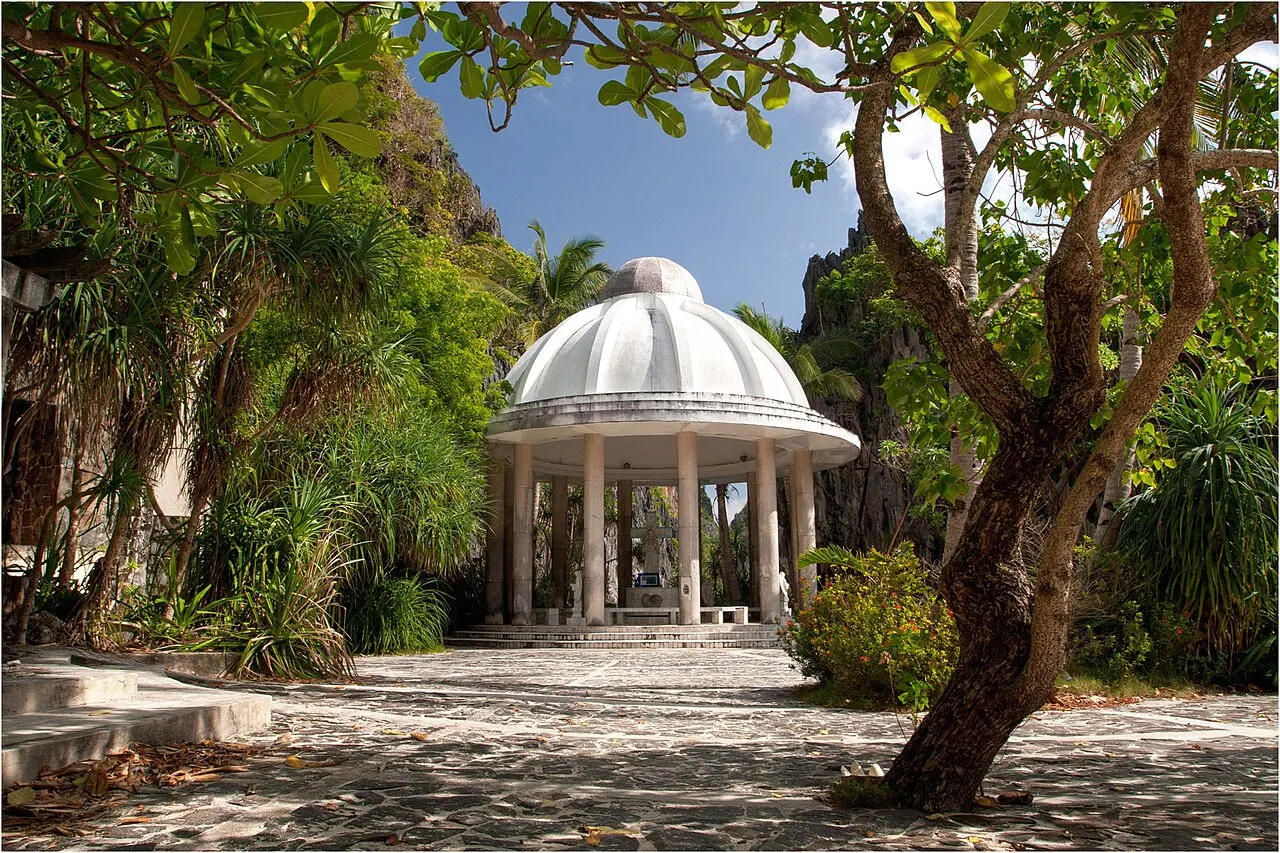
A shrine on the island of Matinloc, with a separate entrance fee (₱200, optional, according to prices checked in August 2026). From the top of the rocks beside it you can see the island's west coast. It suits anyone who wants a stop out of the water on tour C.
Cudugnon Cave
A limestone cave beside a beach in the bay, a stop on tour B. It combines with Snake Island and Cathedral Cave on the same boat day.
Cadlao Lagoon
A lagoon on the island of Cadlao, the closest to the village, a stop on tour D alongside beaches such as Paradise Beach. It is near the village, and tour D is an alternative when you want a boat day with short transfers.
Nagkalit-kalit Falls
Waterfalls inland in the municipality, reached by trail. They suit anyone who wants a day of hiking away from the sea; check the trail and access conditions beforehand, as they change with the rain, and go with a local guide.
Lio Beach
A beach north of the village, next to Lio airport, with its own lodging and restaurants. It is practical for those arriving by plane who want to stay near the runway, but it is about 4 km from the village, where the boats leave from.
Nilo’s itinerary
Start with the basic programme and choose extensions for the time you have.
Plan my days in the app ↗Day 1 · Tour A: the Miniloc lagoons
Pay the environmental fee at the tourism post in the village, if it isn't already paid, and bring cash for the Big Lagoon fee and the kayak.
Board between 8 and 9 a.m. at the village beach for tour A: Big Lagoon, Secret Lagoon, Shimizu Island and Seven Commandos Beach, in the order the crew decides according to the tide and open slots.
At the Big Lagoon, choose between a kayak and swimming with a life vest.
Return in mid-afternoon and continue by tricycle to Las Cabañas Beach for the end of the day.
Day 2 · Tour C: the Matinloc beaches
Confirm with the agency the day before whether the sea allows tour C; if not, swap in B (Snake Island, Cudugnon Cave, Cathedral Cave) and leave C for another day.
Leave between 8 and 9 a.m. for Helicopter Island, Hidden Beach, Secret Beach and Matinloc Shrine, which has a separate entrance fee and is optional.
Bring water shoes for the passages between rocks and keep your phone in a dry bag.
On the way back, have dinner in the village, near the beach the boats leave from.
Day 3 · Dry land: Taraw and Nacpan
Start early at the Taraw Cliff Canopy Walk, with a guide, before the heat; allow an hour and a half to two hours.
Arrange a chartered tricycle with waiting time in the village, or rent a motorbike if you have a license and experience, and head north to Nacpan Beach, about 17 km away.
Spend the afternoon at Nacpan; there are guesthouses and hostels on the beach, but bring water and a snack in case you can't find a place for lunch. Stay for the sunset if the driver is arranged for the return.
Return to the village before dark in the rainy season, when dirt stretches turn muddy.
If you stay longer
Day 4 · Tour D or B, or the spare day
If tour C was canceled, use this day to reschedule it.
If everything went well, choose tour D, with short transfers near the village (Small Lagoon, Cadlao Lagoon and Paradise Beach), or B, for Snake Island and the caves.
For another side of the municipality, swap the boat for half a day in Sibaltan, about an hour away by road, with a guided visit to Balay Cuyonon.
Food
Kinilaw
Raw fish or seafood cured in vinegar, with onion and chili. It is one of the Filipino ways of preparing fresh fish and appears on the village's seafood menus.
Tamilok
A long, shell-less mollusk, known as a woodworm, taken from mangrove trunks. In Palawan it is served raw, like kinilaw, with vinegar and chili, or fried. The flavor is compared to oysters. The known recommendations are for restaurants in Puerto Princesa; in El Nido, ask whether it is available that day.
Danggit lamayo
Rabbitfish split open, marinated in vinegar with garlic and chili and partly dried in the sun, then fried until crisp. It is breakfast food.
Boat tour lunch
Tours A to D include lunch, prepared by the crew and served on a beach or on board, usually with grilled food and rice. Quality varies by operator; it is a simple, filling meal, not a gastronomic experience.
Cashew nuts
Cashew is among the municipality's main agricultural products, alongside coconut, rice, banana and mango. The nuts are a handy snack for days on the water.
Halo-halo
A cold dessert of shaved ice with sweet beans, milk, fruit and, on top, ice cream or milk custard (leche flan). Common across the country, it goes down well after a day in the sun.
Where to eat
- Poblacion, on the beachfront
Grilled fish of the day and kinilaw at the restaurants facing the bay, where the variety of cuisines, Filipino and foreign, is greater. It is the natural choice for dinner after the tours, within walking distance of your lodging.
- Poblacion, inner streets
Carinderias, the popular counter-service restaurants with ready-made dishes, and skewer stalls serve cheaper Filipino meals: rice with stews, grilled chicken and fried fish. A good option for a quick lunch on the land days.
· 2026-10-19
Day trips
Puerto Princesa Underground River
Puerto Princesa Underground River National Park, a UNESCO World Heritage Site since 1999, protects a river that runs about 8.2 km inside a limestone mountain to the sea. It is near the village of Sabang, about 80 km north of Puerto Princesa city; from El Nido it is hours of road each way, so it works as a stop on the way in or out, with an overnight stay in Sabang or Puerto Princesa, not as a day trip. Entry requires a permit booked at the park's reservations office at the City Coliseum in Puerto Princesa; from the Sabang pier, boats take about 20 minutes to the entrance. Check prices and availability with the Puerto Princesa city government before planning the route.
Coron
The Coron islands, to the north, are about 3.5 hours away by fast ferry, or a short flight from Lio. It is a destination for a stay of its own of a few days, with lakes and wrecks for diving, not a round trip in a single day. Ferries are often canceled from June to October.
Where to begin
Tour A: the Miniloc lagoons
Pay the environmental fee at the tourism post in the village, if it isn't already paid, and bring cash for the Big Lagoon fee and the kayak.
Tour C: the Matinloc beaches
Confirm with the agency the day before whether the sea allows tour C; if not, swap in B (Snake Island, Cudugnon Cave, Cathedral Cave) and leave C for another day.
Dry land: Taraw and Nacpan
Start early at the Taraw Cliff Canopy Walk, with a guide, before the heat; allow an hour and a half to two hours.
Tour D or B, or the spare day
If tour C was canceled, use this day to reschedule it.
Money
The currency is the Philippine peso (₱). There are ATMs in the village, but they often run out of cash on weekends and holidays; the safest course is to withdraw enough in Puerto Princesa or in the city you depart from. Hotels, dive centers and some restaurants accept cards; the environmental fee, the lagoon fees and much of the commerce require cash. The environmental and tourism development fee (ETDF) is ₱400 per person, valid for ten days, according to 2026 travel guides; it is paid at the municipal tourism post or through an accredited operator, and it is not included in bookings made online. Shared tours A to D cost ₱1,200 to ₱1,800 per person in August 2026, depending on the letter and the agency, with boat, crew, lunch, snorkel mask and life vest. Not included are the environmental fee, the Big Lagoon and Small Lagoon fees (₱200 each), kayak rental and the crew's tip. Combining two tours on one boat is only possible with a private charter.
Getting there and around
The most-used gateway is Puerto Princesa international airport (PPS), with flights from Manila, Cebu and other cities. From there the trip to El Nido is by road: shared vans take 5 to 5.5 hours and leave from before dawn until mid-afternoon; Cherry Bus coaches, which depart from the Irawan terminal, about 10 km from the city, take 5.5 to 7.5 hours. Vans and buses end at the El Nido transport terminal, in Corong-Corong, not in the center; from there you continue by tricycle. The road is winding: anyone prone to motion sickness should bring medication and prefer the front seats.
Lio airport (ENI), about 4 km from the village and 15 to 20 minutes by tricycle, receives turboprop planes. Since July 1, 2026, the flights of the former AirSWIFT have been operated by Cebgo, of the Cebu Pacific group, with the code DG; schedules were kept. The routes link El Nido to Clark, Cebu, Caticlan (Boracay), Bohol and Coron. The baggage allowance is small (15 kg checked and 7 kg carry-on, according to an August 2026 guide) and is weighed strictly; since March 29, 2026, turboprop flights that left from Manila have moved to Clark airport (CRK), about 80 km from Manila by road, so check on your ticket which airport each leg departs from.
From Coron, fast ferries make the crossing in about 3.5 hours, with morning departures; during the southwest wind period, from June to October, cancellations are frequent. There are also multi-day boat expeditions between Coron and El Nido, with overnight stays at beach camps.
In the village, everything is done on foot or by tricycle, the motorbike with a side carriage that works as a taxi; agree on the price before getting in. For Nacpan and the north, the options are a chartered tricycle with waiting time, a rented motorbike or shared vans. Boat tours include hotel pickup in the village and leave between 8 and 9 a.m.
Safety
El Nido is a quiet tourist village, and the main risks come from the sea and the sun. The tours depend on the weather: when the crew or the local authority cancels a departure, the decision is about safety, not convenience. Wear a life vest on the swimming passages of the lagoons and beaches, especially if you don't swim well, and avoid the narrow passages when there is swell. The sun among the islands is strong; reef-safe sunscreen, a hat and water are part of the gear. Drink bottled or filtered water. Mosquitoes transmit dengue in the Philippines, mainly in the rainy season: use repellent. On the road from Puerto Princesa, the vans take curves fast; anyone prone to motion sickness should prepare. In Puerto Princesa, some drivers try to steer passengers to more expensive chartered vans instead of the bus terminal they asked for; insist on the agreed destination.
Before you go
- Plug
- types A, B and C
- Voltage
- 220 V
- Driving side
- on the right
- Emergency
- General 911
- Country code
- +63
- Official languages
- Filipino, English and Taglish
- Currency
- Philippine peso (PHP)
Source: Wikidata (CC0), checked September 2026.
Etiquette tips
Lagoon rules
At the Big Lagoon, the Small Lagoon and Secret Beach, fishing, cliff jumping, barbecues and loud music are banned. Do not step on or lean on the corals, and wear the life vest when the crew asks.
Fee receipt
Keep the environmental fee receipt for your entire stay: it may be requested on tours and at boarding within its validity period.
Crew tip
The tip is not included in the price of the tour. If the service was good, hand it directly to the crew at the end of the day.
Showing respect
In Tagalog, the particles po and opo make speech more respectful, especially with older people. Using them in a thank-you (salamat po) is well received.
Mistakes to avoid
Counting on the village ATM on a weekend or holiday. Bring cash from Puerto Princesa or from the city you depart from.
Assuming the online tour booking covers everything. The environmental fee, the lagoon fees, the kayak and the tip are paid separately, in cash.
Scheduling tour C on the last day of the trip. It is the first to be canceled in rough seas; put it early, with room to reschedule.
Getting off the van expecting to be in the center. Vans and buses stop at the Corong-Corong terminal, and the last stretch is by tricycle.
Packing for the Lio flight as if it were an ordinary flight. The allowance is smaller and baggage is weighed strictly.
Trying to fit the Puerto Princesa underground river in as a day trip from El Nido. It is hours of road each way and the tour requires a permit booked in the city; it works better on the way in or out, with an overnight stay.
Useful phrases
Salamat (po)
Thank you (with po, more respectful).
Magandang umaga
Good morning.
Magkano po?
How much is it?
Saan po ang terminal?
Where is the terminal?
Puwede po bang magbayad gamit ang card?
Can I pay by card?
Ingat
Take care (a common goodbye).
Where to stay
- Poblacion · Anyone doing several boat tours who wants to walk to the departure beach, restaurants and ATMs.: The boats leave from the village beach and tour pickup is simple. In return, it is the most crowded and noisiest part, the beach is short and the cheaper lodgings can have rooms without a view or quiet at night.
- Corong-Corong · Anyone who wants sunsets on the beach and a little more calm, without going far from the tours.: It is near the van and bus terminal and a few minutes by tricycle from the center. The downside is depending on a tricycle for dinner and for the boats' departure times.
- Las Cabañas and Marimegmeg · Anyone who prioritizes beach and quiet and does few boat tours.: The southern beaches are calmer and have the best sunset on land. Every trip to the village is a tricycle ride, which weighs on those who leave early every day.
- Nacpan · Anyone who wants days on a long, secluded beach, with little activity.: The seclusion is the draw. Boat tours leave from the village, about 17 km away, so each boat day starts with a road trip; in the rainy season, access can get bad.
- Lio · Anyone who arrives and departs through Lio airport and wants to avoid transfers with luggage.: It sits next to the runway and Lio beach. For the tours, you have to take a tricycle to the village, about 4 km away.
· 2026-10-19
Districts
Poblacion
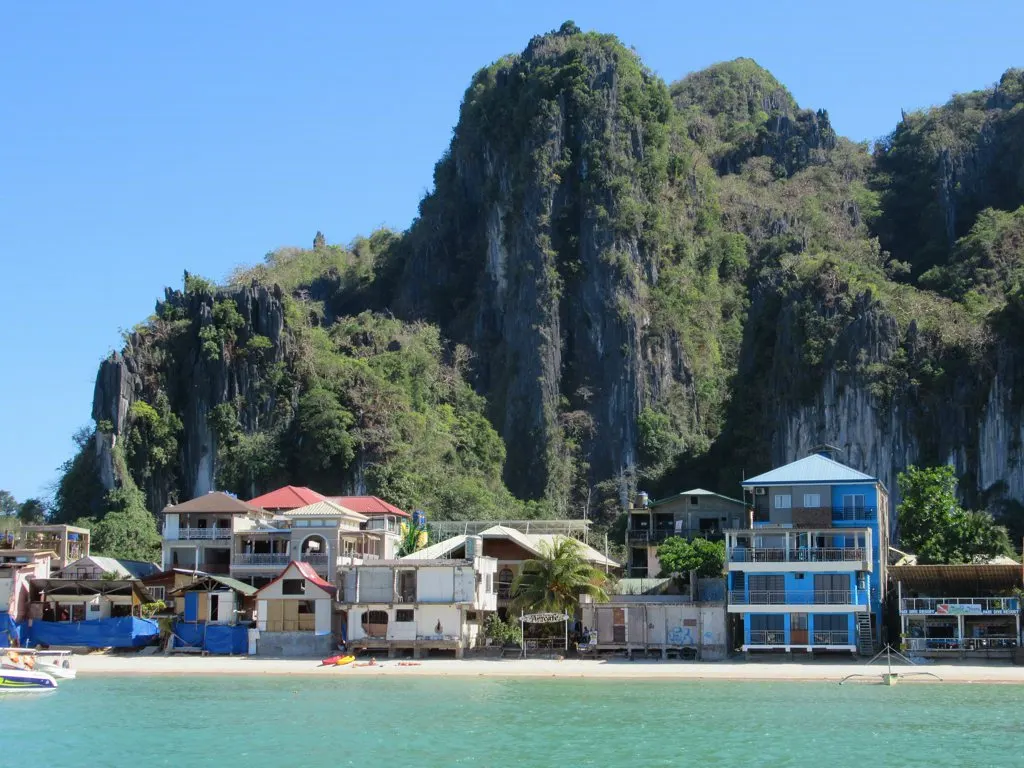
The village proper, where the barangays of Maligaya, Buena Suerte and Masagana are found; Corong-Corong, the fourth urban barangay, extends to the south. Real, Serena and Hama streets concentrate guesthouses, tour agencies, dive centers and restaurants, and the boats leave from the beach itself. It is the most practical area for anyone planning several boat tours, and also the most crowded and noisy at night.
Corong-Corong
A strip of beach south of the village, facing west, with sunsets over the bay and more spread-out lodging. This is where the van and bus terminal is. To the center, the ride is by tricycle.
Las Cabañas and Marimegmeg
Beaches farther south, known for their sunsets and for the zip line to a neighboring island. They suit a beach afternoon without a boat and anyone who prefers to sleep away from the bustle, accepting that they will depend on a tricycle.
Nacpan and the north
A long beach of pale sand about 17 km north of the village, with guesthouses and hostels. Secluded and good for resting, but far from the boats that leave from the village.
Sibaltan and the east coast
A village on the Sulu Sea, about an hour away by road, where traditional Cuyonon houses have been preserved. It is of interest to those who want to see another side of the municipality, outside the bay circuit.
History
Prehistory · Settlement in the limestone caves
Fossils and burials found in caves in the municipality, above all in Ille Cave, in the Dewil Valley (barangay New Ibajay), indicate human presence in the region for thousands of years, with dates that may reach about 14,000 years.
16th century onward · Tagbanwa and Cuyo migrants
The area was inhabited by Tagbanwa groups. Over the centuries migrants arrived from the Cuyo Islands, the Cuyonon, whose language and architecture still mark the east coast, along with Spanish and Chinese families in the 19th century.
1890 · Bacuit
Under Spanish administration, the settlement, then attached to Taytay, was named Bacuit, which still names the bay.
1916 · A municipality of its own
Bacuit stopped belonging to Taytay and became an independent municipality, during the American administration.
1954 · The name of the nests
Republic Act No. 1140 changed the name to El Nido, in reference to the edible swiftlet nests on the limestone walls, the ingredient of bird's nest soup.
1984–1998 · From turtle reserve to protected area
A marine area was declared a turtle sanctuary in 1984; in 1991 the rest of Bacuit Bay became a marine reserve; in 1998 protection was extended to the land portion, in the El Nido-Taytay protected area.
2018 · Visitor limits at the lagoons
The protected area's management board approved limits on people at one time and per day for the Big Lagoon, the Small Lagoon and Secret Beach, and banned fishing, cliff jumping, barbecues and loud music at those sites.
2023 · More than half a million visitors
The Philippine government's information agency recorded more than 500,000 visitors in El Nido for the year, a record for the municipality.
Complete history
Long before tourism, El Nido's limestone caves served as shelter and as burial grounds. Excavations at Ille Cave, in the Dewil Valley, uncovered fossils and burials from the late Neolithic, and signs of human presence in the valley that may reach about 14,000 years. The same walls that now appear in photos of the bay hold that layer of time, although the archaeological caves are not part of the usual boat tours.
The Tagbanwa lived in the region when the Spanish arrived. Then came migrants from the Cuyo Islands, to the south, and in the 19th century Spanish and Chinese families settled where the village now stands. The settlement belonged to Taytay, then the administrative center of northern Palawan, until 1916, when it became the municipality of Bacuit. The Cuyonon heritage is still visible in Sibaltan, on the east coast, where traditional houses have been preserved.
In 1954 the municipality adopted the name El Nido, Spanish for the nest, because of the swiftlet nests harvested from the cliffs. Harvesting remains a seasonal activity, alongside fishing, farming (coconut, rice, cashew, banana and mango) and, above all, tourism.
From the 1980s the bay came under protection in stages, first as a turtle sanctuary, then as a marine reserve and, in 1998, as a protected area that includes land and sea. The growth of tourism brought the need to control use: in 2018 the protected area's board set daily visitor limits at the most popular lagoons, and the environmental fee charged to each visitor funds management. In 2023 the municipality passed half a million visitors, and the pressure on the village, the water and the lagoons is part of the local debate.
Geography and shape of the city
El Nido occupies the northern tip of the main island of Palawan, between the Linapacan Strait to the north, the Sulu Sea to the east and the South China Sea to the west, which the Philippines calls the West Philippine Sea. The municipality includes 45 islands and islets. The limestone formations, of the same kind as those in Ha Long Bay in Vietnam and in Krabi in Thailand, form vertical walls along the coast and islands with inner lagoons, as in Miniloc. The highest point is the island of Cadlao, at 640 m, right in front of the village. The village, Poblacion, stretches along a short beach at the foot of the Taraw cliff; to the south lie Corong-Corong and Las Cabañas, and to the north the road leads to Lio airport and the open beaches of Nacpan. The climate has two seasons: dry from December to May and rainy from June to November, with the peak of the rains around August. The northeast wind blows from December to March and the southwest wind from June to October.
Culture
Life in El Nido revolves around the bay. The fleet of bangkas, wooden boats with side outriggers, leaves the village beach every morning, and captains, crew and guides make up a good part of the local economy. Fishing remains active, and the gathering of swiftlet nests on the cliffs is a seasonal activity, tied to the town's name.
The municipality is a mix of origins. The Tagbanwa and Cuyonon were the first inhabitants, and over the centuries Tagalogs, Ilonggos, Bicolanos, Ilocanos, and Chinese and Spanish families arrived. In Sibaltan, the traditional houses preserved at Balay Cuyonon show the architecture and village life of the east coast, and the Pamaragua festival, in mid-May, celebrates that heritage.
The village also has a scene aimed at visitors: dive centers that explore more than 30 sites in the bay, kayak operators, rock climbing on the cliffs and bars with live music at night. Tourism is the main source of income, and the management of the protected area, with its fees and limits, is a constant subject in daily life.
Festivals and events
Pamaragua Festival
In mid-May, in Sibaltan, with a program at Balay Cuyonon devoted to Cuyonon heritage. Confirm that year's dates before planning the trip.
Holy Week
A movable date, between March and April. It is one of the periods of highest demand among Filipino travelers; lodging and tours sell out beforehand.
Christmas and Chinese New Year
December and Chinese New Year, in January or February depending on the year, also fill lodging, especially beachfront. Book ahead.
Frequently asked questions
El Nido: how do you get there from Puerto Princesa airport?
The most-used gateway is Puerto Princesa international airport (PPS), with flights from Manila, Cebu and other cities. From there the trip to El Nido is by road: shared vans take 5 to 5.5 hours and leave from before dawn until mid-afternoon; Cherry Bus coaches, which depart from the Irawan terminal, about 10 km from the city, take 5.5 to 7.5 hours. Vans and buses end at the El Nido transport terminal, in Corong-Corong, not in the center; from there you continue by tricycle. The road is winding: anyone prone to motion sickness should bring medication and prefer the front seats.
El Nido: can you fly straight to Lio airport?
Lio airport (ENI), about 4 km from the village and 15 to 20 minutes by tricycle, receives turboprop planes. Since July 1, 2026, the flights of the former AirSWIFT have been operated by Cebgo, of the Cebu Pacific group, with the code DG; schedules were kept. The routes link El Nido to Clark, Cebu, Caticlan (Boracay), Bohol and Coron. The baggage allowance is small (15 kg checked and 7 kg carry-on, according to an August 2026 guide) and is weighed strictly; since March 29, 2026, turboprop flights that left from Manila have moved to Clark airport (CRK), about 80 km from Manila by road, so check on your ticket which airport each leg departs from.
El Nido: how much is the environmental fee, and what do you pay in cash?
There are ATMs in the village, but they often run out of cash on weekends and holidays; the safest course is to withdraw enough in Puerto Princesa or in the city you depart from. Hotels, dive centers and some restaurants accept cards; the environmental fee, the lagoon fees and much of the commerce require cash. The environmental and tourism development fee (ETDF) is ₱400 per person, valid for ten days, according to 2026 travel guides; it is paid at the municipal tourism post or through an accredited operator, and it is not included in bookings made online. Shared tours A to D cost ₱1,200 to ₱1,800 per person in August 2026, depending on the letter and the agency, with boat, crew, lunch, snorkel mask and life vest. Not included are the environmental fee, the Big Lagoon and Small Lagoon fees (₱200 each), kayak rental and the crew's tip.
El Nido: how many days should you stay?
I'd stay at least three full days in El Nido, not counting the arrival day, which the road from Puerto Princesa usually eats up. Two go to the sea: tour A, through the Miniloc lagoons, and C, through the Matinloc beaches, with B as the swap when the sea won't let C leave. The third is on land, with the Taraw Canopy Walk in the morning and the afternoon at Nacpan. With four days, I'd add tour D or B and gain some slack to reschedule whatever the weather cancels, which makes a difference from June to November. Anyone who wants the Puerto Princesa underground river or Coron should add separate days for them, with an overnight stay.
El Nido: when is the best time to go?
The dry season, December to May, is the best for boat tours: the sea is usually calmer and the roads dry. April and May are the hottest and driest months. From December to March the northeast wind blows, which can roughen some stretches and change stops, and December, Holy Week and Chinese New Year concentrate demand. From June to November it is the rainy season, with the peak around August; the southwest wind, from June to October, causes more frequent cancellations of the tours that head to the open side of the bay, such as C, and of the ferries to Coron. Those who travel in these months find fewer people, but need spare days in the plan.
El Nido: how do you get into the Big Lagoon?
The larger lagoon in northern Miniloc is the best-known image of El Nido: shallow, light green water surrounded by limestone walls, with a narrow, low entrance. Motorboats stay anchored at the mouth; access is by swimming with a life vest or by kayak, rented on site (₱300–400 per two-person kayak, August 2026 price). There is a ₱200 use fee per person, in addition to the environmental fee. It is part of tour A and has a daily visitor limit, so the agency must secure the slot.
El Nido: can you visit the Puerto Princesa Underground River as a day trip?
Puerto Princesa Underground River National Park, a UNESCO World Heritage Site since 1999, protects a river that runs about 8.2 km inside a limestone mountain to the sea. It is near the village of Sabang, about 80 km north of Puerto Princesa city; from El Nido it is hours of road each way, so it works as a stop on the way in or out, with an overnight stay in Sabang or Puerto Princesa, not as a day trip. Entry requires a permit booked at the park's reservations office at the City Coliseum in Puerto Princesa; from the Sabang pier, boats take about 20 minutes to the entrance. Check prices and availability with the Puerto Princesa city government before planning the route.
El Nido: can you go on to Coron?
The Coron islands, to the north, are about 3.5 hours away by fast ferry, or a short flight from Lio. It is a destination for a stay of its own of a few days, with lakes and wrecks for diving, not a round trip in a single day. Ferries are often canceled from June to October.
Other cities in the country
Philippines ↗- Days
- 1–2
- When
- Jan–Feb · Dec
- Per person/day
- Average 35–60 USDMid-range · per person/day
Cost scope
Per person per day: accommodation, meals, urban transport, visits and a small allowance for extras. Flights excluded; larger purchases vary. Editorial estimate, not a quote.
- Days
- 2–3
- When
- Feb–Apr
- Per person/day
- Explore costsGuide estimate
Cost scope
Per person per day: accommodation, meals, urban transport, visits and a small allowance for extras. Flights excluded; larger purchases vary. Editorial estimate, not a quote.