
Vietnam
Ho Chi Minh City
Sidewalk food, colonial center and war museums
Days Start with the basic programme and choose extensions for the time you have.
How the guide reaches this number
Anyone who can't handle humid heat, constant honking and sidewalks taken over by motorbikes will suffer here, and so will anyone looking for monuments in silence. With just one day, enter the museum at 7:30am and walk on to the Independence Palace and the 1891 Post Office. Have lunch in the former Quận 3 and finish after 7pm with ốc on a stool across the Khánh Hội bridge. What disappoints is Notre-Dame, under scaffolding until at least 2027, and Thủ Thiêm, which is still wide boulevards with empty buildings. The metro doesn't help much either, because it has a single line, on the eastern corridor.
2–3
When December to March: dry season, 22–35 °C, rain rare
How the guide reaches this number
The dry season runs from December to April, and the best window is December to March: December, January, and February sit between 22 and 33 °C, with lower humidity and almost no rain, and March stays dry, with highs already reaching 35 °C. April is the hottest month, with highs of 35 to 38 °C and a feel worse than the number thanks to the asphalt and the motorbikes, and it still brings the April 30 holiday, when everything fills up. The wet season runs from May to November, with about 1,900 mm concentrated in strong late-afternoon downpours that last 30 to 60 minutes and stop almost everything while they fall. It's easy to treat this as a lost month, but it's actually a lost hour a day, which is different. The months that take the most patience are September and October, when the rain coincides with high tides (triều cường) and whole streets in the south of the city flood up to your shins. If you want to see the city running, avoid Tết week, at the end of January or in February depending on the lunar calendar: half the restaurants close and hotel and transport prices rise.
Per person/day Budget about 500,000 VND (about US$20); comfortable 1.5–2.5 million VND (US$60–95)
How the guide reaches this number
Per person per day: accommodation, meals, urban transport, visits and a small allowance for extras. Flights excluded; larger purchases vary. Editorial estimate, not a quote.
 What Nilo thinks
Ho Chi Minh City calls for two days: one for the colonial center and the War Remnants Museum, another for Chợ Lớn and the river, and a third, if you have it, for the Củ Chi tunnels. Anyone who can't handle humid heat, constant honking and sidewalks taken over by motorbikes will suffer here, and so will anyone looking for monuments in silence. With just one day, enter the museum at 7:30am and walk on to the Independence Palace and the 1891 Post Office. Have lunch in the former Quận 3 and finish after 7pm with ốc on a stool across the Khánh Hội bridge. What disappoints is Notre-Dame, under scaffolding until at least 2027, and Thủ Thiêm, which is still wide boulevards with empty buildings. The metro doesn't help much either, because it has a single line, on the eastern corridor.In Saigon, as almost everyone still calls Ho Chi Minh City, people eat on the sidewalk. Cơm tấm, phở, and iced coffee come out on thirty-centimeter plastic stools, facing the traffic of about 8 million motorbikes. Recent history is in plain sight, because the War Remnants Museum is explicit about Agent Orange and the gate of the Independence Palace is the same one a tank crashed through on April 30, 1975. Around them sits the French colonial center, with the 1891 Post Office still working, and in Chợ Lớn, the 250-year-old Chinatown, Cantonese temples hold incense coils that burn for weeks. At night, dinner is grilled ốc on the stools of Vĩnh Khánh street. To cross the avenues, step out slowly and keep going without stopping, because the motorbikes steer around you counting on your pace. Come between December and March, in the dry season, and stay two days.
Quick facts
- Population
- about 9.5 million in the continuous urban area; about 14 million in the enlarged city after the 2025 merger
- Founding
- 1698 (Vietnamese administration, by Nguyễn Hữu Cảnh); Khmer port of Prey Nokor before that
- Country and region
- Vietnam, Southeast region (Đông Nam Bộ), on the edge of the Mekong Delta
- Language
- Vietnamese; functional English in tourism; Cantonese and Teochew still alive in Chợ Lớn
- Currency
- Vietnamese dong (VND); about 26,000 VND per US dollar in 2026, about 4,800 VND per Brazilian real
- Time zone
- UTC+7, no daylight saving
- Best time to visit
- December to March: dry season, 22–35 °C, rain rare
- Average daily cost
- Budget about 500,000 VND (about US$20); comfortable 1.5–2.5 million VND (US$60–95)
When to go
December to March: dry season, 22–35 °C, rain rare
How the year changes
The dry season runs from December to April, and the best window is December to March: December, January, and February sit between 22 and 33 °C, with lower humidity and almost no rain, and March stays dry, with highs already reaching 35 °C. April is the hottest month, with highs of 35 to 38 °C and a feel worse than the number thanks to the asphalt and the motorbikes, and it still brings the April 30 holiday, when everything fills up. The wet season runs from May to November, with about 1,900 mm concentrated in strong late-afternoon downpours that last 30 to 60 minutes and stop almost everything while they fall. It's easy to treat this as a lost month, but it's actually a lost hour a day, which is different. The months that take the most patience are September and October, when the rain coincides with high tides (triều cường) and whole streets in the south of the city flood up to your shins. If you want to see the city running, avoid Tết week, at the end of January or in February depending on the lunar calendar: half the restaurants close and hotel and transport prices rise.
Nilo's tips
Eat on the sidewalk before 7am, then hit the museum at 7:30am
Sidewalk stalls serve cơm tấm and phở before 7am, and the War Remnants Museum opens at 7:30am, before the tour buses. The stalls close before 10am, so do both back to back: breakfast for 45,000–90,000 VND and two hours at the museum for 40,000 VND. That way you leave the museum with the morning still cool enough to walk to the Independence Palace.
From the airport it's 7 km, but count on up to 60 minutes
It's only 7 km to the center, but allow 45 to 60 minutes at rush hour. Bus 109 costs 15,000–20,000 VND and takes about 45 minutes to Bến Thành. If you'd rather use an app, look for the official Grab, Be and Xanh SM pickup point on the upper level, away from the arrivals exit, where drivers approach new arrivals; the ride costs 150,000–250,000 VND.
In 2026, the bus is free
In 2026, through December 31, the city covers 100% of the fare on 134 city bus lines, but every trip must be validated. Without a Vietnamese ID, validate with a bank card or the MultiGo app, installed before you arrive; with neither, you pay a fare that would have been free. For the center–Thảo Điền–Thủ Đức corridor, the alternative is Metro Line 1, running 5am to 10pm, which doesn't serve the rest of the city.
Pay by QR and hit the ATM as rarely as you can
The whole street runs on VietQR, even the sugarcane-juice cart, and each ATM withdrawal costs 22,000–66,000 VND. Save your cash for markets, tips, and stalls without a code. Most machines dispense little at a time, so prefer TPBank and Citibank ATMs, which tend to release higher amounts. If you need more than the limit, make two withdrawals in a row at the same machine instead of coming back the next day.
In Củ Chi, go to the Bến Dược sector, leaving at 7am
Leave at 7am to avoid the midday heat inside the narrow tunnels. Choose the Bến Dược site, which is larger and less touristy than Bến Đình. Bring water, because even the section widened for tourists becomes stifling within minutes. If you're continuing the roughly 40 km to Tây Ninh, arrive in time for the noon Cao Đài service.
Street dinner starts at 7pm
The quán ốc on Vĩnh Khánh street open around 5pm but only fill up after 7pm, and anyone arriving at 5:30pm finds the street empty. Order two or three dishes at a time, because the ốc comes plate by plate, and only order the next round when the table wants more.
Explore the map
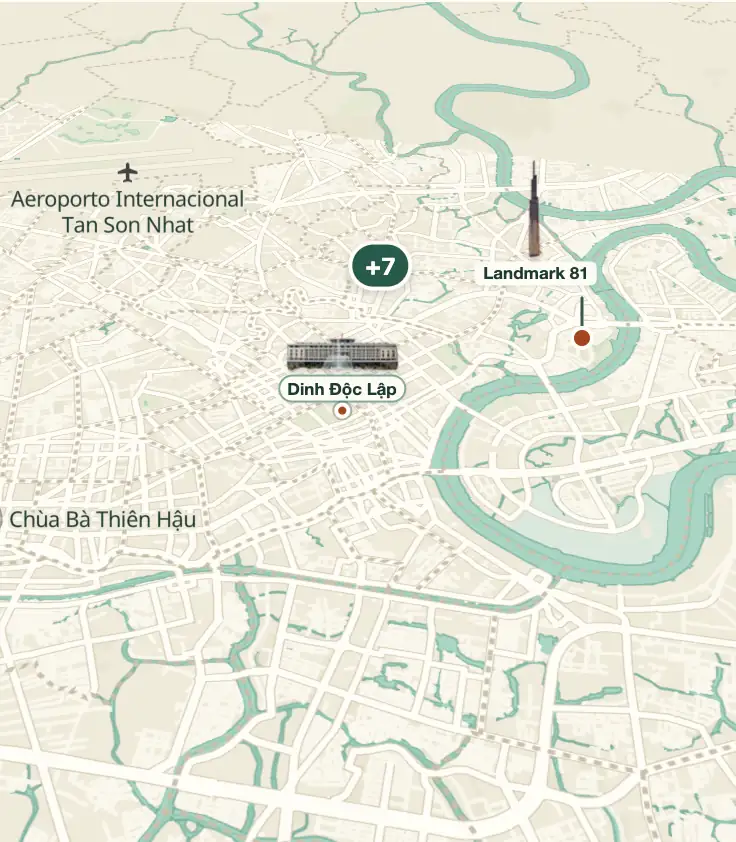
© OpenStreetMap · OpenFreeMap · © OpenMapTiles
- Dinh Độc Lập (Independence Palace)
- Bảo tàng Chứng tích Chiến tranh (War Remnants Museum)
- Chùa Bà Thiên Hậu (Chợ Lớn)
- Bưu điện Trung tâm Sài Gòn (Central Post Office)
- Bảo tàng Mỹ thuật (Fine Arts Museum)
- Nhà hát Thành phố (Municipal Theater)
- Bến Nhà Rồng (Dragon House Wharf)
- Chợ Bến Thành
- Landmark 81 and Bitexco
Explore the map, read about the other places and plan your travel days in the app.
Open the appWhat to see
Ho Chi Minh City: the site between two rivers and the tide
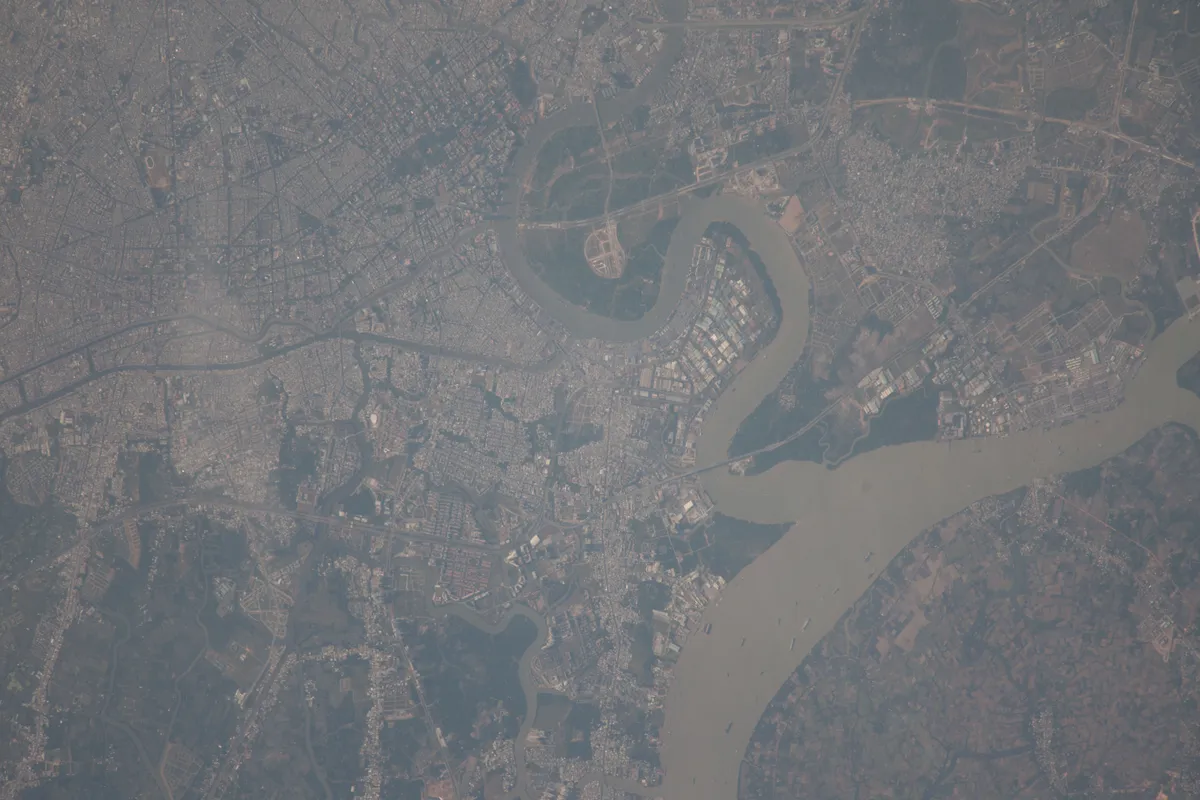
The city occupies a low platform between the Saigon River and the Đồng Nai River, at the transition between the red-earth hills of the Southeast and the alluvial plain of the Mekong Delta.

Dinh Độc Lập (Independence Palace)
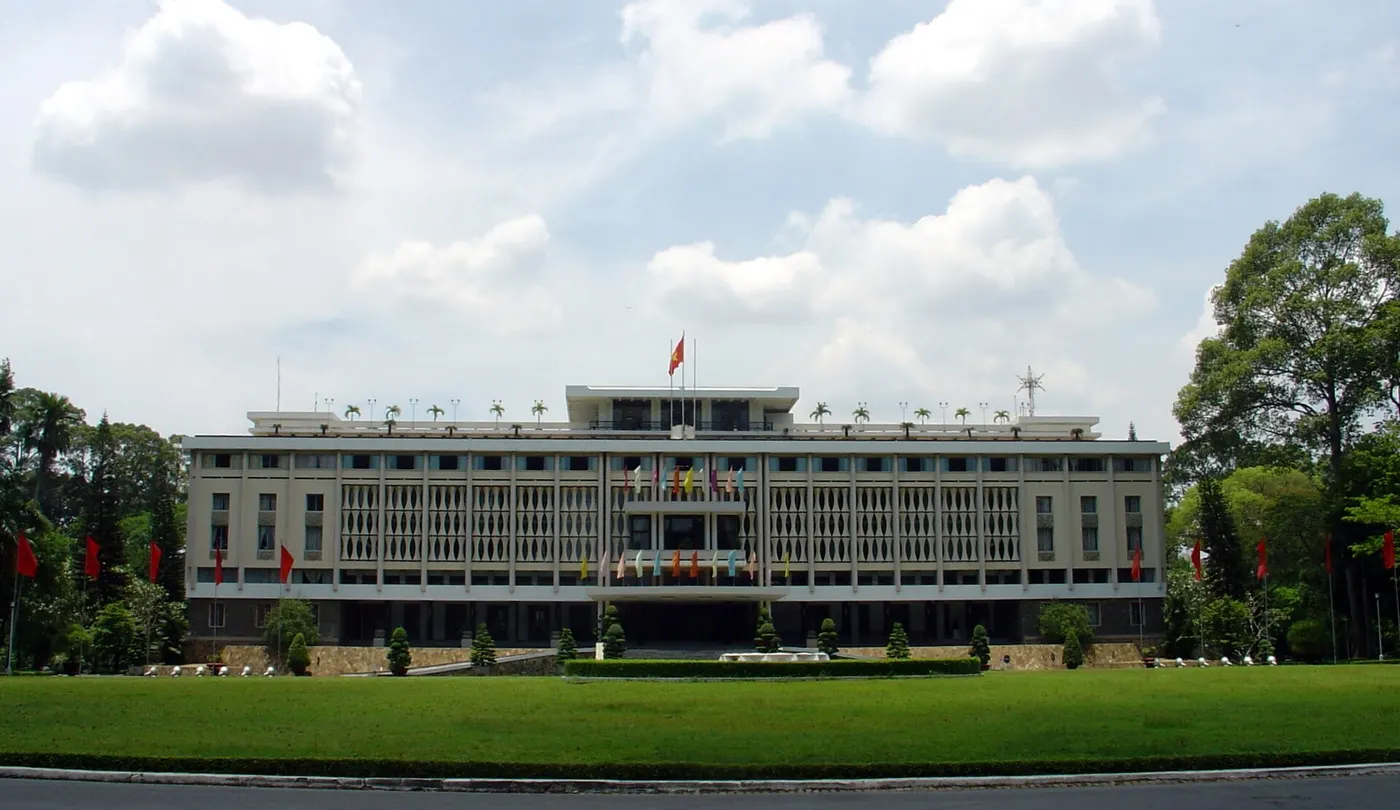
Seat of the South Vietnamese government, designed by architect Ngô Viết Thụ and completed in 1966 over the ruins of the Norodom Palace. The main gate that tank No. 390 crashed through on April 30, 1975, is still there, and the basement holds the war-era map room and radios. Admission around 65,000 VND.
Ngô Viết Thụ designed the seat of the South Vietnamese government; it was completed in 1966 on the ruins of the Norodom Palace.
Check access
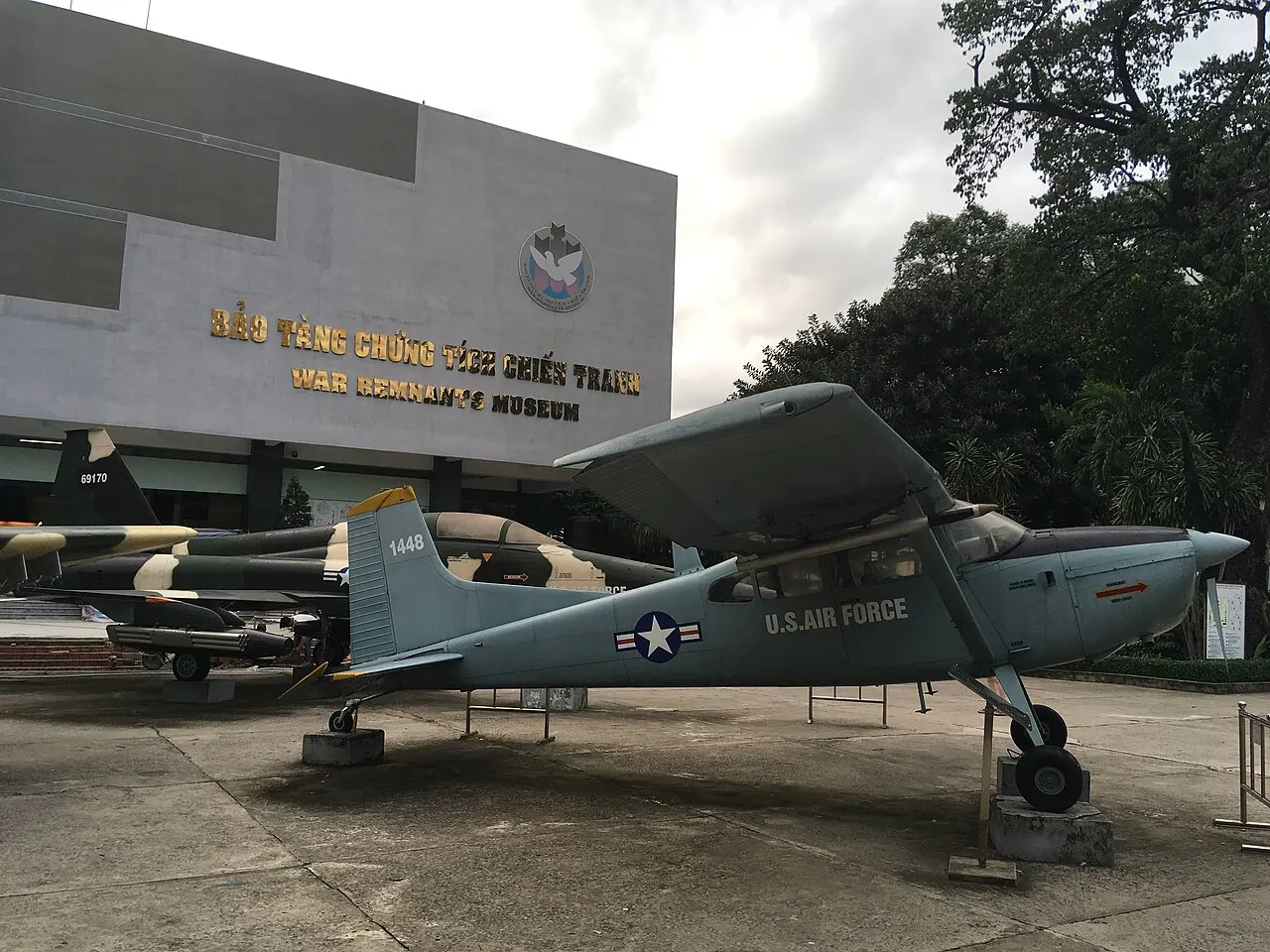
Bảo tàng Chứng tích Chiến tranh (War Remnants Museum)
Opened in September 1975, it displays American artillery in the courtyard and, upstairs, the “Requiem” photo collection with images by 134 photographers killed in the two wars. It's explicit about Agent Orange and the Côn Đảo prison; admission is 40,000 VND, open 7:30am to 5:30pm.
Since September 1975, American artillery has stood in the yard, and upstairs the Requiem collection shows photos by 134 reporters killed in the two conflicts; the exhibits are explicit about Agent Orange and the Côn Đảo prison.
Check access
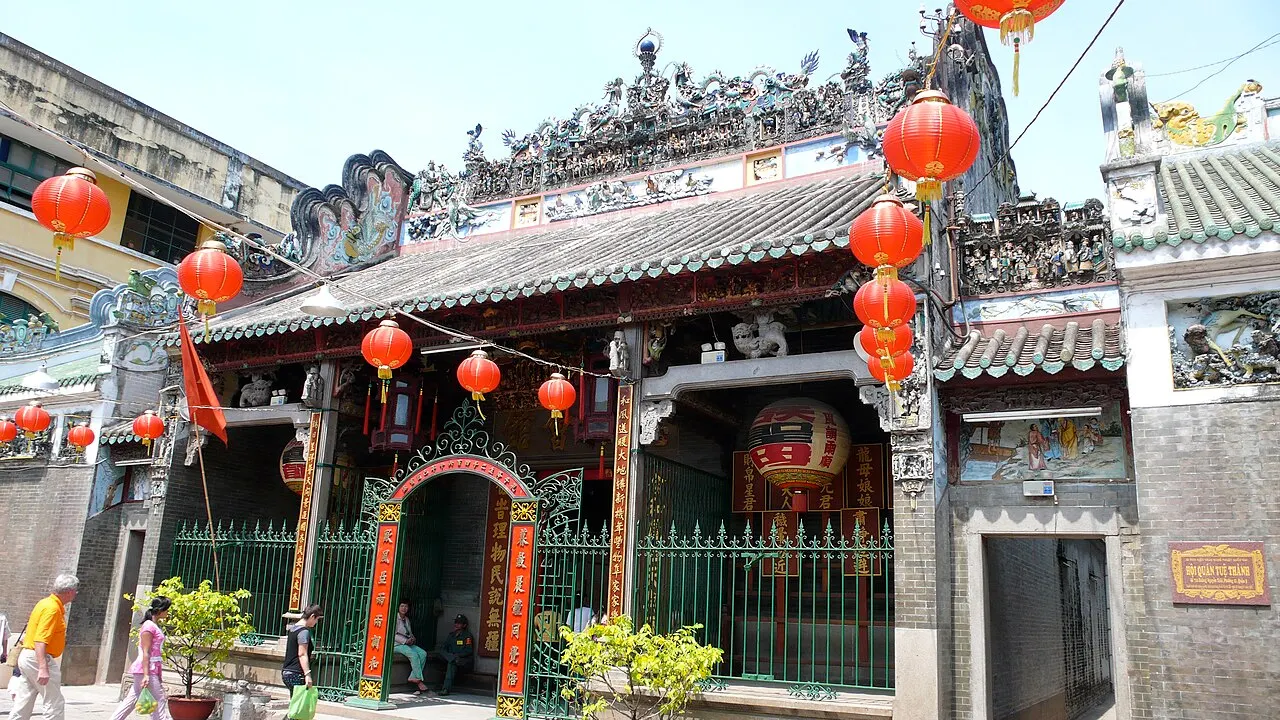
Chùa Bà Thiên Hậu (Chợ Lớn)
A mid-18th-century Cantonese temple dedicated to Mazu, protector of sailors. The roof has Thạch Loan ceramic friezes with hundreds of miniature figures, and spiral incense coils hang from the ceiling, burning for weeks, each with a wish tag attached.
In this Cantonese temple dedicated to Mazu, incense coils hang from the ceiling, each one carrying a slip with a wish.
Check access
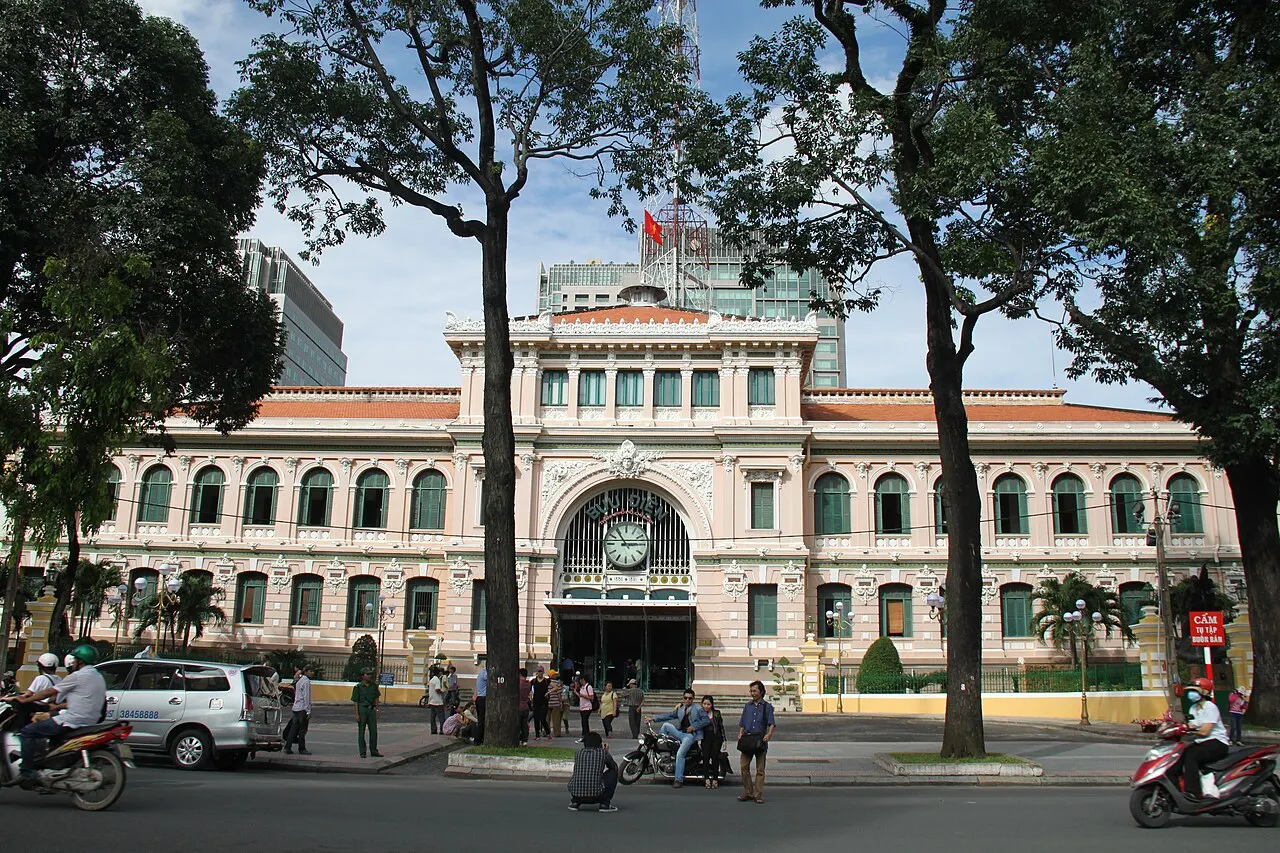
Bưu điện Trung tâm Sài Gòn (Central Post Office)
Built between 1886 and 1891, with a cast-iron nave, a checkerboard floor and two hand-painted maps from 1892 on the back walls. It's still a working post office, with wooden phone booths; for decades, the letter writer Dương Văn Ngộ wrote and translated letters for visitors at a counter in the hall, until his death in 2023. Free admission.
Built from 1886 to 1891, with a cast-iron nave, it still works as a post office, and for decades Dương Văn Ngộ wrote and translated letters for new arrivals at a counter in the hall, until he died in 2023.
Check access
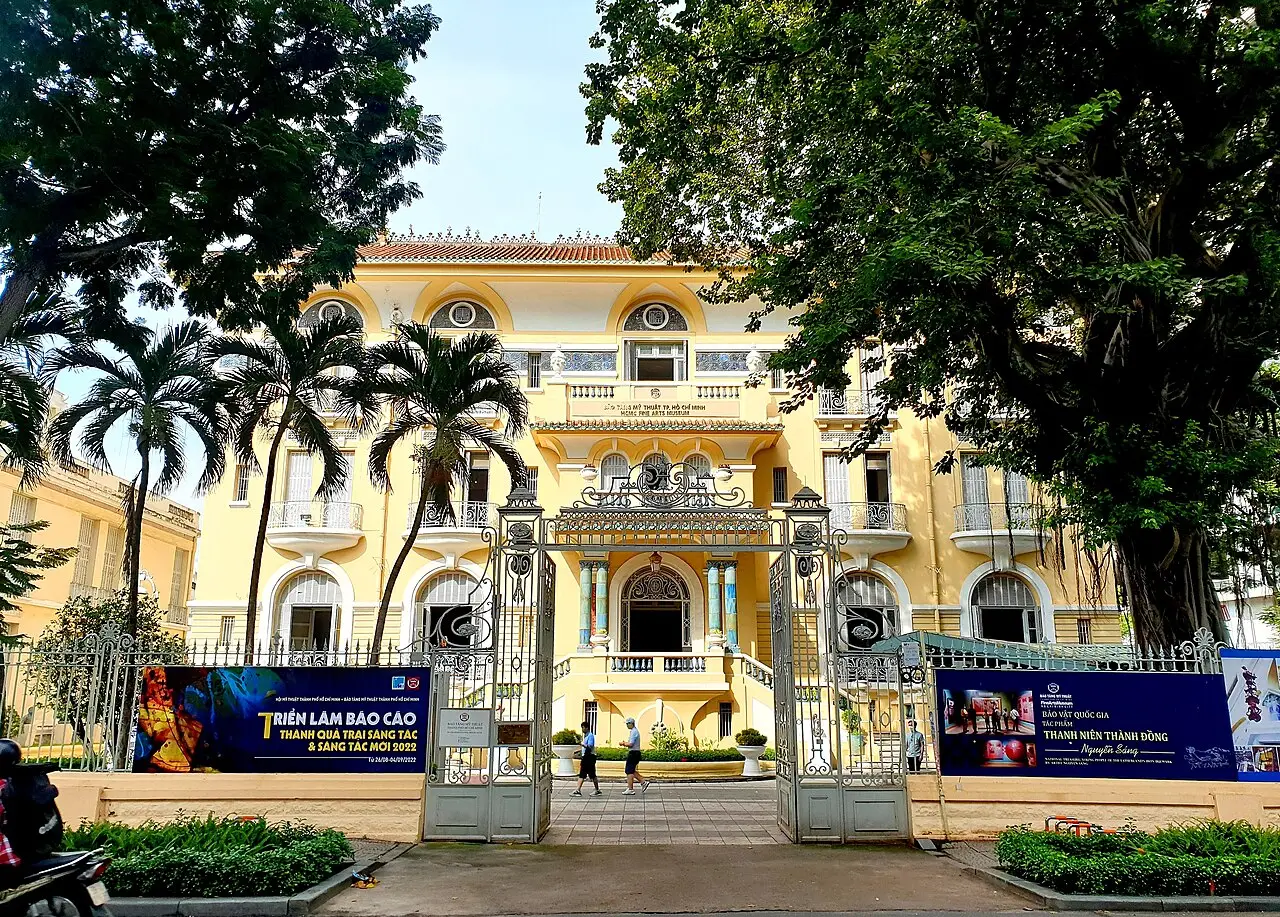
Bảo tàng Mỹ thuật (Fine Arts Museum)
Housed in the 1929 art deco mansion of tycoon Hui Bon Hoa, which had Saigon's first elevator. Three wings with Chăm and Óc Eo sculpture, Vietnamese lacquer, and a collection of wartime propaganda art rarely seen elsewhere.
There's a collection of wartime propaganda art.
Check access
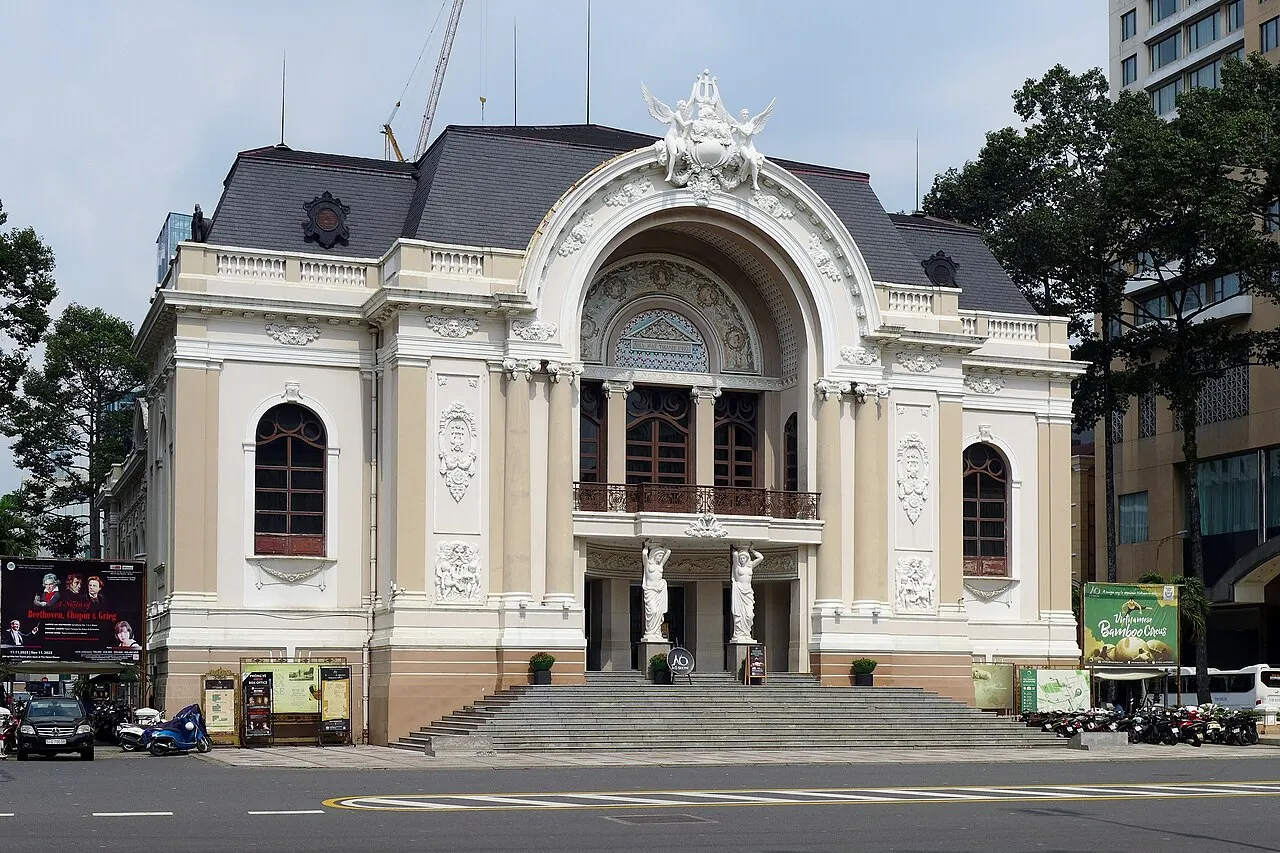
Nhà hát Thành phố (Municipal Theater)
A 1900 opera house in French Third Republic style, with a façade inspired by the Petit Palais in Paris. It housed the South Vietnamese National Assembly from 1956 to 1975 and became a theater again in 1975; today it hosts the bamboo circus A O Show and concerts by the city orchestra.
The 1900 opera house hosts the bamboo show; it was the seat of the National Assembly from 1956 to 1975.
Check access
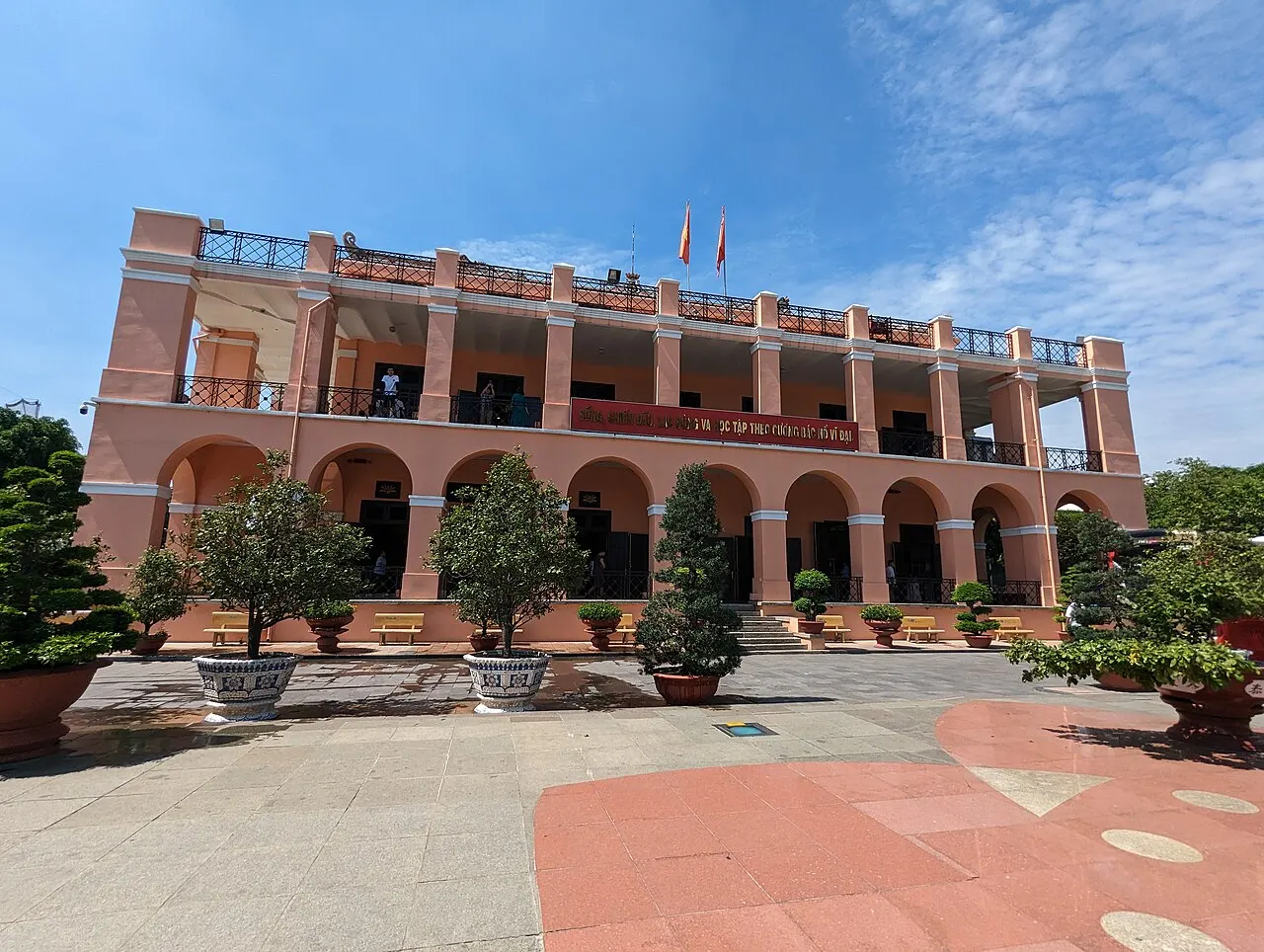
Bến Nhà Rồng (Dragon House Wharf)
The former 1863 headquarters of the Messageries Maritimes shipping company, with a roof topped by two dragons. It was from here that Nguyễn Tất Thành, later Hồ Chí Minh, shipped out as a kitchen hand on June 5, 1911; the building today is a museum dedicated to him.
The 1863 Messageries Maritimes building, with its two-dragon roof, is the wharf where Nguyễn Tất Thành, later Hồ Chí Minh, shipped out as a kitchen helper on June 5, 1911. Today it's the museum dedicated to him, open Tuesday to Sunday until 5:30pm, and the visit is short: go by day and come back to the Khánh Hội Bridge for ốc after 7pm.
Check access

Chợ Bến Thành
The market has occupied the building with the clock tower since 1914, and the tower has become the informal zero point of downtown. Clothes, coffee, spices, and a food court; prices are tourist prices and haggling is expected. Start at half the asking price.
The building with the clock tower dates from 1914 and became downtown's ground zero, but inside, prices are for tourists and bargaining starts at half the asking price: for a real market, go to Bình Tây, from 1928, in Chợ Lớn.
Check access
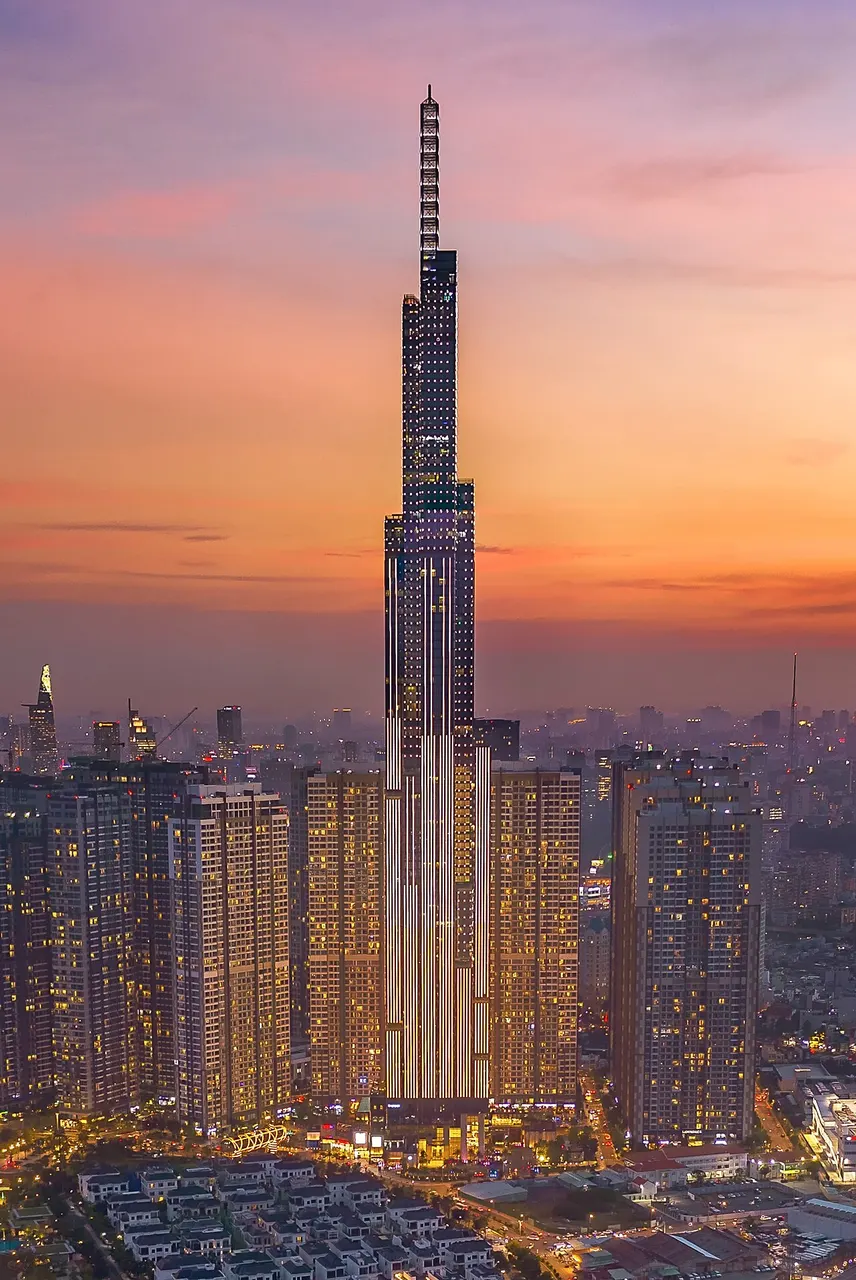
Landmark 81 and Bitexco
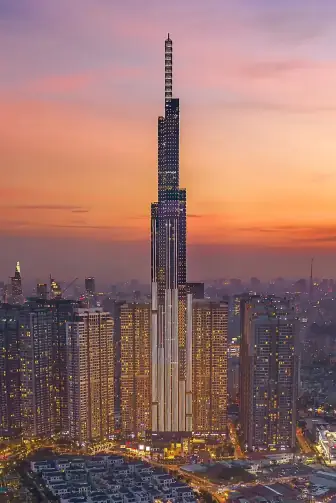
Landmark 81, in Bình Thạnh, stands 461 m and 81 stories since 2018, the tallest in Vietnam, with an observation deck on floors 79 to 81. The Bitexco Financial Tower (262 m, 2010), in District 1, has the Saigon Skydeck on the 49th floor and is cheaper; both charge somewhere between 200,000 and 300,000 VND.
Landmark 81 and Bitexco charge between 200,000 and 300,000 VND for the same skyline, one from the 81st floor at 461 m and the other from the 49th. On a short trip, it's the easiest expense to cut, because you get to know Saigon by walking its sidewalks, not by looking down on it.
Check access
Nilo’s itinerary
Start with the basic programme and choose extensions for the time you have.
Plan my days in the app ↗Day 1 · The colonial center and the war
Start at 7am with cơm tấm or phở at a sidewalk stall near your hotel; the city eats breakfast early, and the stalls close before 10am.
Enter the War Remnants Museum at 7:30am, at opening, before the tour buses. Allow two hours and work your way up from the ground floor.
Walk to the Independence Palace (admission about 65,000 VND), with its basement of maps and radios, then continue to the 1891 Central Post Office and the exterior of Notre-Dame, still under scaffolding.
Have lunch at a restaurant in the former Quận 3, drink phin-filtered coffee in the afternoon and spend an hour at the Fine Arts Museum, in its 1929 mansion.
Stroll along the Nguyễn Huệ pedestrian street in the late afternoon and, after 7pm, have ốc for dinner on Vĩnh Khánh street, across the Khánh Hội bridge.
Day 2 · Chợ Lớn and the river
Take a ride-hailing app to Chợ Lớn early to see the Bình Tây wholesale market (1928), the Hải Thượng Lãn Ông herb street and the Bà Thiên Hậu temple with its incense coils.
Have hủ tiếu Nam Vang or Teochew food for lunch on a block with no English menu; order “khô” if you prefer the noodles dry with the broth on the side.
Head back downtown and catch the Saigon Waterbus at Bạch Đằng (about 15,000 VND) to see the city from the river.
Go up to the Landmark 81 observation deck (79th–81st floors) or the Bitexco's Saigon Skydeck around 5pm, to catch both day and night in the same visit.
Have dinner in Thảo Điền or order bánh xèo downtown, and finish with a beer on a sidewalk stool, facing the bustle of the street.
If you stay longer
Day 3 · Tunnels, market, and farewell
Leave at 7am for the Củ Chi tunnels, via the Bến Dược section.
Head back in the early afternoon and set aside an hour for Bến Thành Market: coffee, spices, and clothes, always negotiating from half the asking price.
At a tailor in the former District 3, try on an áo dài; a custom one takes 3 to 7 days to sew, so only order one if your trip still has that much time left.
Walk across the Ba Son Bridge in the late afternoon to Thủ Thiêm to see the downtown skyline from across the river.
Eat a last bánh mì from a street cart before heading to the airport, and allow 45 to 60 minutes for the ride at rush hour, even though it's only 7 km.
Food
 AI illustration
Phở
Beef-bone broth with star anise and cinnamon, rice noodles, and sliced beef. The Southern version comes sweeter, with a side plate of bean sprouts, Thai basil, lime, and hoisin sauce: in the North that would be heresy. A typical breakfast; 45,000–90,000 VND.
 AI illustration
Bánh mì
A wheat-and-rice-flour baguette with a thin crust, filled with pâté, Vietnamese cold cuts (chả lụa), cucumber, cilantro, chili, and đồ chua (pickled carrot and daikon). It's the edible synthesis of colonization: 20,000–60,000 VND from a street cart.
 AI illustration
Cơm tấm
Broken rice, originally a milling byproduct, with marinated grilled pork chop, shredded pork skin (bì), an egg-and-pork cake (chả trứng), and sweet nước mắm poured over the top. Saigon's signature dish, eaten for breakfast and at night; 45,000–80,000 VND.
 AI illustration
Hủ tiếu Nam Vang
A Phnom Penh–style noodle soup, a legacy of the delta's Teochew Chinese, with pork, shrimp, liver, and quail eggs. Order it “nước” (with broth) or “khô” (dry, with the broth on the side). Best in Chợ Lớn and at the night carts.
 AI illustration
Cà phê sữa đá and cà phê muối
Vietnamese robusta dripped through a metal phin filter over condensed milk and ice. The salted-foam variation (cà phê muối) arrived from Huế and has been standard in cafés since the 2020s. On the sidewalk it costs 15,000–35,000 VND and sometimes comes in a plastic bag with a handle.
 AI illustration
Bánh xèo
A crispy rice-flour pancake with turmeric and coconut milk, filled with pork, shrimp and bean sprouts. Eat it with your hands: tear off a piece, wrap it in a mustard leaf with herbs and dip it in nước chấm. One large pancake serves two people.
 AI illustration
Ốc
Snails, clams and mussels, grilled or stir-fried with garlic or tamarind and ordered plate by plate at a quán ốc with stools on the sidewalk. Vĩnh Khánh street, in the old District 4, has dozens of them; they open around 5pm and fill up after 7pm.
 AI illustration
Bia and nước mía
Local beer, such as 333 and Bia Sài Gòn, is drunk with ice in the glass, and the toast is “một, hai, ba, dô.” On the sidewalks, sugarcane juice pressed to order with a slice of kumquat (nước mía) costs 10,000–20,000 VND and is what people drink to beat the 2pm heat.
Day trips
Củ Chi Tunnels
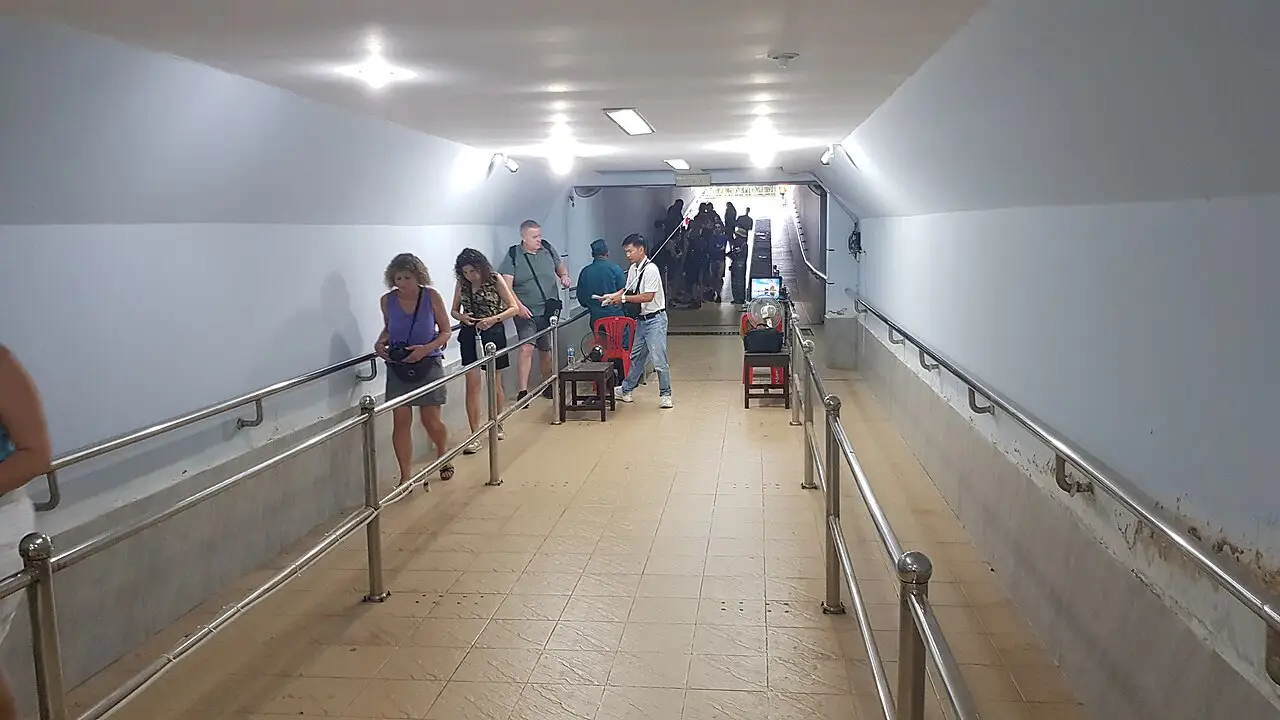
60–70 km to the northwest, 1 hour 30 minutes to 2 hours by car or 1 hour 15 minutes by boat along the Saigon River. About 250 km of tunnels dug between 1948 and 1968, with hospitals, kitchens, and booby traps; the Bến Dược section is larger and less touristy than Bến Đình. Combine it with the Cao Đài Temple in Tây Ninh, about 40 km further on and about 100 km from Ho Chi Minh City, for the midday service.
Mekong Delta (Mỹ Tho and Bến Tre)
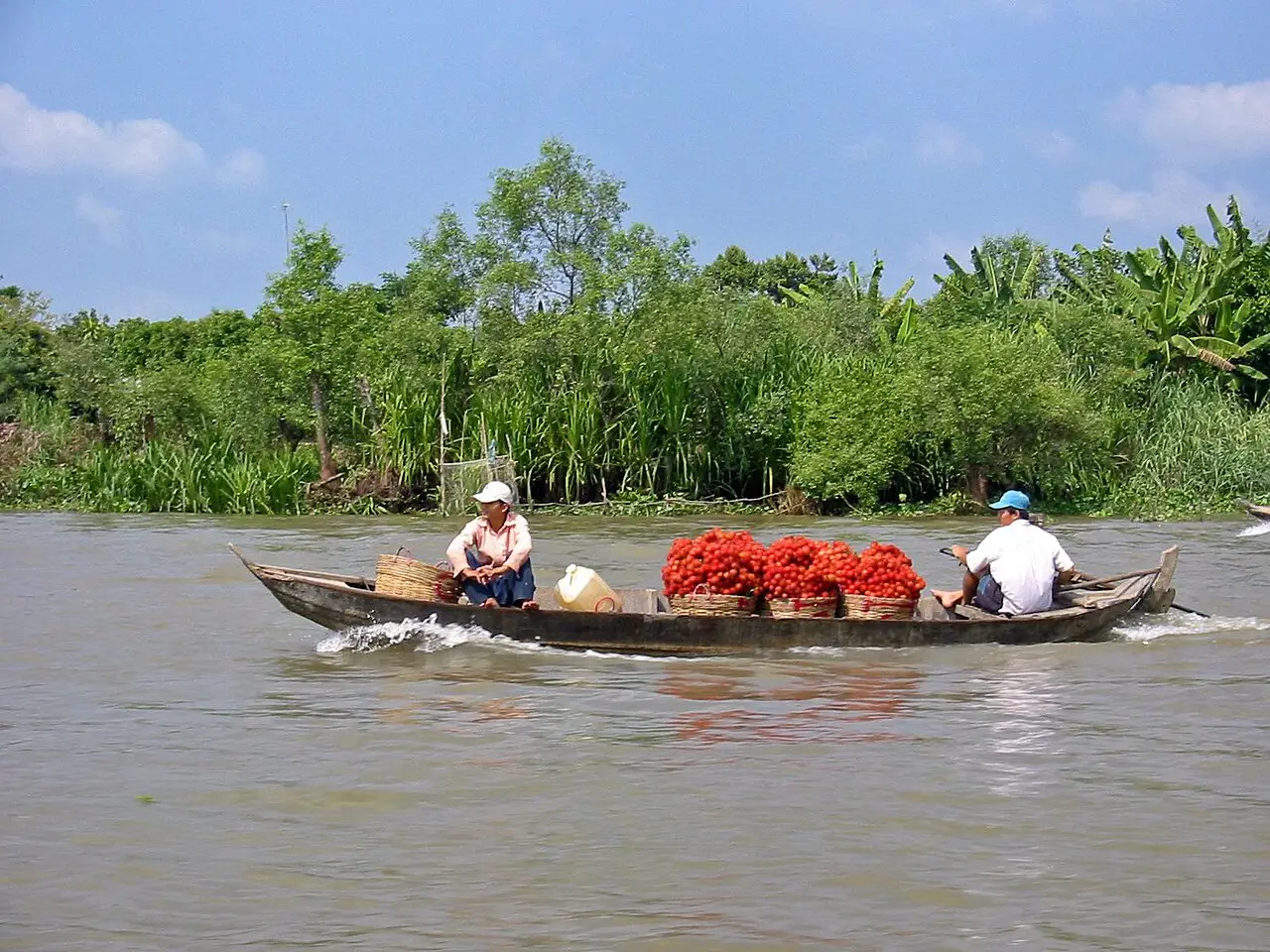
The Mekong Delta is 70–85 km southwest, 1 hour 30 minutes to 2 hours by highway. Expect boat rides along the branches of the Tiền River, coconut-candy workshops in Bến Tre, narrow sampan canals and orchards. For the Cái Răng floating market you have to go to Cần Thơ, 170 km and 3 to 4 hours away, which means staying overnight, because the market runs from 5am to 7am.

Vũng Tàu or Cần Giờ
Vũng Tàu is about 95 km away, 2 hours from downtown by highway or catamaran, and is now part of the city itself: beaches, a 1907 lighthouse and the 32 m Christ the King statue, with an inside staircase up to its shoulders. Cần Giờ is closer, about 50 km plus a ferry at Bình Khánh, and has been a UNESCO biosphere reserve since 2000, with mangroves replanted after wartime defoliation.
Where to begin
Chợ Lớn and the river
Take a ride-hailing app to Chợ Lớn early to see the Bình Tây wholesale market (1928), the Hải Thượng Lãn Ông herb street and the Bà Thiên Hậu temple with its incense coils.
Tunnels, market, and farewell
Leave at 7am for the Củ Chi tunnels, via the Bến Dược section.
Money
The currency is the dong (VND), with polymer notes from 10,000 to 500,000; in 2026 the dollar is worth about 26,000 VND and the Brazilian real about 4,800 VND. Since the zeros get confusing, memorize the everyday ranges: sidewalk coffee 15,000–35,000 VND, café coffee 45,000–70,000, phở or cơm tấm 45,000–90,000, a meal at an air-conditioned restaurant 150,000–350,000 and a beer at a bar 40,000–90,000. For transport, a motorbike-taxi ride costs 15,000–40,000 and an app car ride within the center 60,000–120,000; a hostel bed costs 150,000–350,000, and a three-star hotel 700,000–1,500,000 a night. Cards work at hotels, supermarkets and sit-down restaurants, but the street and markets run on cash or QR code (VietQR), now the most common payment method among locals, to the point that even sugarcane-juice vendors ride around with the code stuck to their handlebars. ATM withdrawals cost 22,000–66,000 VND per transaction, with low limits per withdrawal; TPBank and Citibank tend to release higher amounts than most local banks. Tipping isn't required or customary: rounding up the bill or leaving 10,000–20,000 VND for a delivery rider is enough, and larger restaurants already add a 5–10% service charge to the bill.
Getting there and around
From Tân Sơn Nhất airport to the center, 7 km away
Tân Sơn Nhất International Airport (SGN) is only 7 km from the center, which sounds lucky and is also the explanation for the chronic congestion around it. Terminal 3, opened in 2025, handles domestic flights and sits about a 10-minute walk from T1. From the airport to District 1 there are three options: bus 109 (about 15,000–20,000 VND, about 45 min, stops at Bến Thành), bus 152 (cheaper and slower), and ride-hailing (Grab, Be, or Xanh SM, the electric taxis) for 150,000–250,000 VND depending on the time. Avoid unmarked street taxis at arrivals; the trusted brands are Vinasun and Mai Linh, and the official ride-hailing pickup point is on the upper platform, away from the door where everyone waits. Long Thành Airport, about 40 km to the east, is set to open commercially on December 1, 2026, and is expected to take over long-haul international flights in phases through 2027.
Line 1 opened in December 2024
Metro Line 1 (Bến Thành–Suối Tiên) opened on December 22, 2024: 19.7 km, 14 stations, three underground, running 5am to 10pm, with fares of about 7,000 to 20,000 VND per ride and a day pass for about 40,000 VND. It serves the center–Thảo Điền–Thủ Đức axis well and almost nothing else, so don't build your trip around it; Line 2 broke ground on January 15, 2026, and won't open before 2030. Buses cover the rest, and in 2026, 134 lines have a 100%-subsidized fare through December 31, validated by ID card, VNeID, bank card, or the MultiGo app; the unified MultiPass card launched on July 1, 2026. In practice, almost everyone gets around by motorbike: an app-hailed motorbike taxi costs 15,000–40,000 VND for a short ride, and there's the Saigon Waterbus (Bạch Đằng–Linh Đông, about 15,000 VND) for crossing the river. Walking works within a neighborhood and not between them: sidewalks are motorbike parking, and you'll spend part of the time walking in the gutter, along with everyone else.
Safety
Compared with Brazilian cities, Ho Chi Minh City is safe when it comes to violent crime, and the real, everyday risk is something else: bag and phone snatching from motorbikes. A phone in your hand near the curb, a bag hanging from your street-side shoulder and an open backpack are the three classic targets. Wear your bag cross-body, on the sidewalk side, step back from the road before you check your phone, and never leave your phone on the table at a sidewalk bar. The more concrete danger is traffic: Vietnam records thousands of road deaths a year, helmets are mandatory, and most accidents involving foreigners involve a rented motorbike. The four most common scams are unmarked taxis with rigged meters (use Grab, Be, Xanh SM, Vinasun or Mai Linh), the xích lô rider who agrees on one price and then charges another “per person, per hour,” the shoeshiner who starts repairing your shoe without being asked, and padded bills at some Bùi Viện bars after midnight, where vendors can also be pushy. At night, Bùi Viện and the area around Bến Thành Market call for an eye on your pockets and your drink; the rest of downtown stays calm until late. In the rainy season dengue is a real concern, so put on repellent at dusk, which is when people eat dinner on the sidewalks.
Etiquette tips
Address people by their age pronoun
There's no neutral “you”: use “em ơi” for someone younger, “anh ơi” for a man older than you, “chị ơi” for an older woman, “cô/chú ơi” for someone your parents' age. That's how you call a waiter, and that's how a conversation starts politely.
Give and receive with both hands
Money, business cards, gifts, and change are passed with both hands, or with the right hand while the left touches the forearm. Receiving with one hand and without looking reads as dismissive haste.
Take your shoes off
Remove your shoes when entering homes, many temples, some small shops, and restaurants with a raised platform. If there are shoes at the door, the rule applies, and nobody will remind you.
In temples, cover shoulders and knees, and mind your feet
Step over the threshold, never on it, don't point your feet at the altar, and don't turn your back on the main image when leaving. Incense is lit in odd numbers, usually three sticks.
Haggle only where haggling is expected
Tourist markets like Bến Thành and street shops without posted prices expect negotiation. Start near half and settle around 60–70%. Cafés, restaurants with a menu, supermarkets, and food stalls have fixed prices, and haggling there is rude.
Drink with the group and never stick your chopsticks in the rice
Every sip of beer is collective, announced with “một, hai, ba, dô”; drinking alone the whole time looks odd. Chopsticks stuck upright in a bowl mimic funeral incense. Leave them lying on the rim or on the rest.
Mistakes to avoid
The motorbikes calculate your path
Waiting for traffic to clear before crossing. The local technique is to step into the lane at a slow, steady pace, without stopping and without running, watching the motorbikes coming toward you: they calculate your path and steer around you. Stopping suddenly in the middle is what causes accidents.
Thinking the end of the districts changed the address
Thinking the abolition of the districts, on July 1, 2025, changed how addresses work. Officially “District 1” became the wards of Sài Gòn, Bến Thành, Tân Định, and Cầu Ông Lãnh, but drivers, hotels, and apps still use the numbers. Carry both names written down and confirm the street number, which is what actually locates a place.
Mixing up the 500,000 note with the 20,000
Mixing up the 500,000 VND note with the 20,000. It's easy to pay with the wrong one: both are blue polymer and roughly the same size, and the difference is in the zeros. Keep the large notes in a separate pocket and check the number before paying, especially at night.
Eight kilometers turn into 40 minutes
Underestimating distances. Eight kilometers on the map become 40 minutes between 7am and 9am and between 4:30pm and 7pm, and downtown sidewalks are taken over by parked motorbikes. Plan one neighborhood per half day, not four points scattered across the city.
Without the IDP, insurance is void
Renting a motorbike without a license valid in Vietnam. A foreign license without an International Driving Permit or without conversion to category A1 voids your insurance and earns a fine. For most visitors, an app-hailed motorbike taxi is cheap and does the job.
Useful phrases
Xin chào (sin tcháo)
Hello
Cảm ơn (cám ơn)
Thank you
Bao nhiêu tiền? (bao nhiêu tiên)
How much does it cost?
Tính tiền (tính tiên)
The check, please
Không cay (khôm cai)
No chili
Em ơi / Anh ơi / Chị ơi (em ơi / anh ơi / tchi ơi)
Excuse me: calling someone younger, an older man, or an older woman
Districts
Bến Thành and Sài Gòn (former District 1)
The colonial and commercial center: Đồng Khởi, the Nguyễn Huệ pedestrian street, the Independence Palace and Bến Thành Market. It concentrates hotels, offices and the backpacker street Bùi Viện, the only part of the city that stays busy into the small hours.
Bàn Cờ, Xuân Hòa, and Nhiêu Lộc (former District 3)
Colonial villas, embassies, the War Remnants Museum, and the Hồ Con Rùa roundabout. This is the neighborhood of independent cafés and Vietnamese restaurants serving people who work nearby, with more honest prices than District 1.
Chợ Lớn (former Districts 5 and 6)
Vietnam's largest Chinese quarter, formed by refugees starting in 1778. Cantonese and Fujianese temples, the medicinal-herb street Hải Thượng Lãn Ông, the Bình Tây wholesale market (1928), and Teochew food you won't find downtown.
Vĩnh Khánh and Xóm Chiếu (former District 4)
A narrow peninsula between canals, five minutes from the center over the Khánh Hội bridge. It was a rough port district until the 2000s; today it's the street for ốc, grilled shellfish eaten on plastic stools, in places that open around 5pm and fill up after 7pm.
Bình Thạnh and Gia Định
A dense residential district right against the center, with Bà Chiểu Market, the mausoleum of Lê Văn Duyệt, and Landmark 81. The Thanh Đa peninsula, wrapped in a bend of the river, still has vegetable gardens and waterside restaurants.
Thảo Điền and An Khánh (Thủ Đức)
Former District 2, across the river: home to a good share of the city's foreigners, with international schools, bakeries, and riverside bars. It's 20 minutes from the center through the tunnel or via the Thảo Điền and An Phú stations on Line 1.
Thủ Thiêm
A new area on the opposite bend of the river, cleared in the 2000s and still under construction: wide boulevards, few occupied buildings, and the best view of the downtown skyline at dusk. The Ba Son Bridge, from 2022, connects it on foot or by scooter to District 1.
Phú Mỹ Hưng (former District 7)
A planned city built with Taiwanese capital over swampland starting in 1993, with wide sidewalks, a bike lane, and canals. A large Korean and Japanese community, restaurants from Seoul and Osaka, and a quiet Sunday you won't find anywhere else in the city.
History
1st–7th c. CE · Óc Eo and the delta
The region is part of the port network of the kingdom of Funan, with the site of Óc Eo trading with Rome, India, and China. The layers that follow are Khmer, in what is called Water Chenla.
1623 · Prey Nokor
Khmer king Chey Chettha II allows the Nguyễn lords to set up a customs post in the riverside settlement of Prey Nokor. Vietnamese migrants from the north begin to settle.
1698 · Founding of Gia Định
Nguyễn Hữu Cảnh is sent by the Nguyễn lords to organize Vietnamese administration of the region, a date taken as the city's official founding. This is the origin of the divide between Gia Định (Vietnamese) and Chợ Lớn (Chinese).
1790 · The Bát Quái citadel
Nguyễn Ánh has a Vauban-style citadel built, designed by French engineer Olivier de Puymanel. It is destroyed in 1835 after the Lê Văn Khôi revolt.
1859–1862 · French conquest
The Franco-Spanish fleet takes Saigon on February 17, 1859. The 1862 Treaty of Saigon cedes three eastern provinces and opens the colony of Cochinchina.
1877–1908 · The French city
Over three decades rise Notre-Dame Cathedral Basilica (1877–1880), the Central Post Office (1886–1891), the Municipal Theater (1900), and the Hôtel de Ville (1908). Saigon becomes Indochina's rice and rubber port.
1931 · Saigon–Chợ Lớn
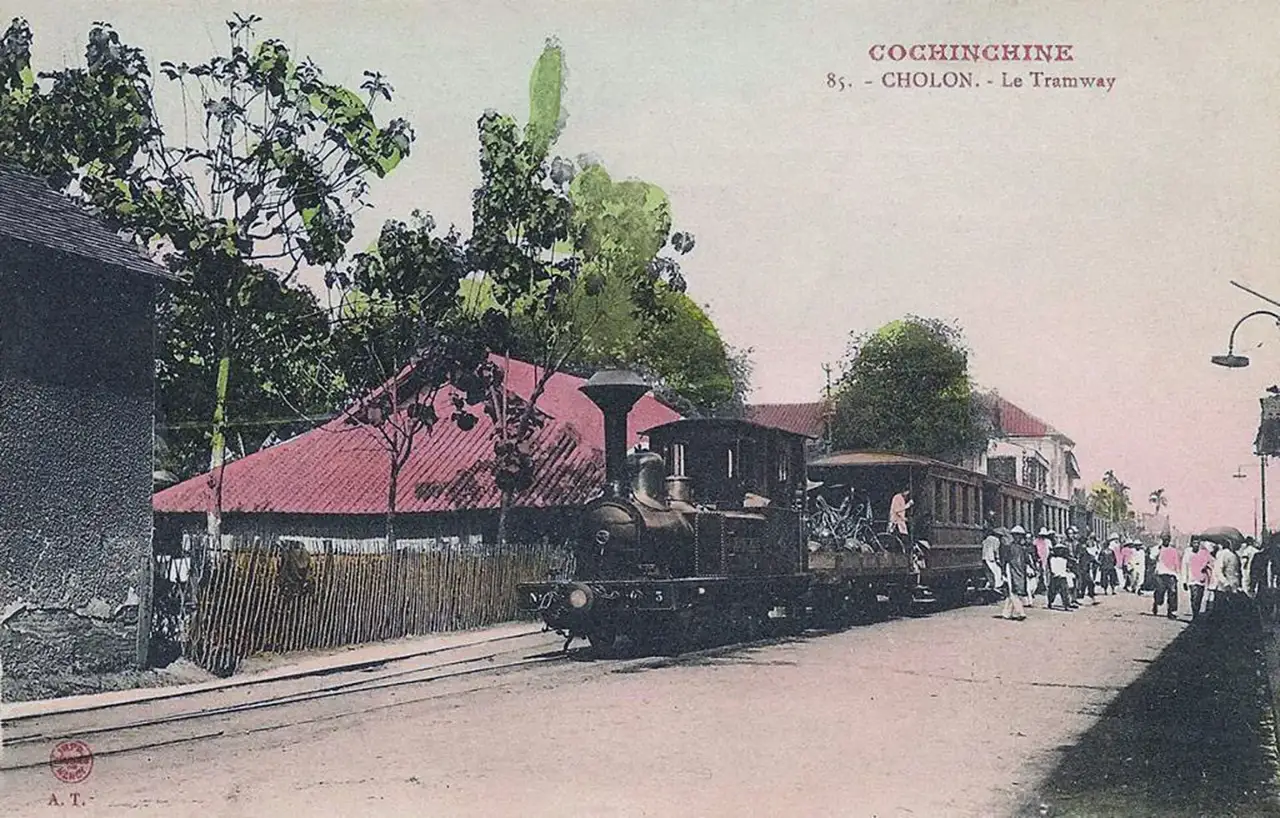
The two neighboring cities are merged into a single administrative region. Chợ Lớn keeps its Chinese economy of rice, medicine, and wholesale trade.
1955–1975 · Capital of the South
Saigon is the capital of the Republic of Vietnam. In 1968 the Tết Offensive brings fighting into the city itself, including onto the grounds of the American embassy.
April 30, 1975 · Fall of Saigon
Northern tanks crash through the gates of the Independence Palace and the war ends. About two million people leave the country in the following years, many by boat.
1976 / 1986 · New name and Đổi Mới
On July 2, 1976 the city is renamed Ho Chi Minh City. In 1986 the Đổi Mới reforms open up the economy and Saigon becomes the country's commercial engine again.
2024–2026 · Metro and merger
Metro Line 1 opens on December 22, 2024, 17 years after the project was approved, in 2007, and 12 years after construction began. On July 1, 2025, the districts are abolished and the city merges with Bình Dương and Bà Rịa–Vũng Tàu; construction of Line 2 begins on January 15, 2026.
 AI illustration
Complete history
From the Nguyễn lords to the founding of Gia Định, 1623–1698
The city exists because the Saigon River is navigable for ocean-going ships 60 km from the coast, yet sits high enough to escape the worst of the Mekong floods. Before it was Vietnamese, the site was the Khmer trading post of Prey Nokor, and before that the plain belonged to the Funan trade network, whose port of Óc Eo traded goods with Rome and India between the 1st and 7th centuries. From 1623, with the permission of the Khmer king Chey Chettha II, the Nguyễn lords set up a customs post there; in 1698 Nguyễn Hữu Cảnh formalized Vietnamese administration and created Gia Định. From the start the city has been double: a Vietnamese, administrative core to the east, and to the west Chợ Lớn, founded by Chinese refugees from Biên Hòa in 1778, which handled the rice trade.
The French conquest redraws the city
The French conquest in February 1859 redraws the city's layout within twenty years. Colonial engineers fill in canals, cut straight boulevards, and build the machine that exports the delta's rice and rubber. Notre-Dame is built between 1877 and 1880 with brick brought from Marseille, the Central Post Office between 1886 and 1891, the Municipal Theater in 1900, and City Hall in 1908. Rue Catinat, today Đồng Khởi, becomes the street of shops and hotels, and the nickname “Pearl of the Far East” describes colonial profit more than most people's lives. In 1931 Saigon and Chợ Lớn are merged administratively, but they remain two cities with two languages of business.
Capital of the Republic of Vietnam
Between 1955 and 1975 Saigon is the capital of the Republic of Vietnam and grows on American money and the war: the population jumps from under two million to about three and a half million, with refugee slums along the Nhiêu Lộc–Thị Nghè canal. The Tet Offensive, in January and February 1968, brings combat into the center itself. On April 30, 1975, North Vietnamese Army tanks crash through the gates of the Independence Palace; the city is renamed on July 2, 1976. Ten hard years follow: a planned economy, reeducation camps, rationing, and the departure of about two million people, among them much of Chợ Lớn's Chinese community.
The 1986 Đổi Mới and the return of trade
The Đổi Mới reforms of 1986 give the city back the role it always had. In the 1990s and 2000s come the export factories, the Taiwanese investors who build the planned district of Phú Mỹ Hưng, and the first skyscrapers: the Bitexco Financial Tower (262 m, 2010) and Landmark 81 (461 m, 2018, the tallest in Vietnam). The metro, approved in 2007, only opened its first line almost two decades later, linking Bến Thành to Suối Tiên. Meanwhile, the city is sinking 2 to 4 cm a year in some spots because of groundwater extraction, and the king tides (triều cường) flood entire streets at the end of the year.
The administrative change still confuses addresses
The most recent administrative change is large and still confuses addresses. On July 1, 2025, Vietnam cut 63 provinces down to 34 and abolished the district level: Ho Chi Minh City absorbed Bình Dương and Bà Rịa–Vũng Tàu, reaching about 6,772 km², roughly 14 million people, and its own deep-water port at Cái Mép–Thị Vải. The old “District 1”, “District 3”, and “District 5” became named wards (Sài Gòn, Bến Thành, Tân Định, Bàn Cờ, Chợ Lớn), but in speech, in apps, and in drivers' heads the numbers still hold. In 2026 the city subsidizes 100% of the fare on 134 bus lines through December 31 and broke ground on Metro Line 2 on January 15.
In 2025 the districts were abolished and the old Quận 1 became named wards, but drivers and apps still use the numbers, so write down both.
Geography and shape of the city
The site between two rivers and the tide
The city sits on a low platform between the Saigon River and the Đồng Nai River, in the transition between the red-earth hills of the Southeast and the alluvial plain of the Mekong Delta. Elevation runs from about 20–25 m in the north (Củ Chi) down to 0.5–2 m in the south (Nhà Bè, Cần Giờ), which explains why half the territory floods when high tide meets heavy rain.
Tropical climate: dry and wet seasons
The climate is tropical savanna (Aw): two seasons, dry from December to April and wet from May to November, with about 1,900 mm of rain a year concentrated in 30- to 60-minute late-afternoon downpours, and temperatures ranging from lows of 22 °C early in the year to highs of 38 °C in April.
Urban grid: three overlapping layers and a tunnel
The urban fabric has three overlapping logics: the French grid layout with boulevards in the historic center, the organic tangle of hẻm (numbered alleys behind the avenues, where most of the population lives), and the planned cities of the late 20th and 21st centuries, Phú Mỹ Hưng to the south, Thủ Thiêm on the opposite bend of the river, Thủ Đức to the east along the metro line. A tunnel under the Saigon River, opened in 2011 at 1.49 km, links the center to Thủ Thiêm.
Culture
Đờn ca tài tử came from the delta
The South's musical tradition is đờn ca tài tử, amateur chamber music born in the delta at the end of the 19th century and recognized by UNESCO in 2013, and its theatrical offshoot, cải lương: a reformed opera that emerged in the 1910s and peaked in the 1960s, when Saigon had dozens of companies. The Trần Hữu Trang Theater still runs seasons, and it helps to know that the audience responds to the scenes out loud. Alongside this, the city is the capital of Vietnamese entertainment: V-pop, film studios, TV and advertising are concentrated here, not in Hanoi.
The cinema that travels abroad is from here
The Vietnamese cinema that travels abroad is largely Saigon cinema: Trần Anh Hùng shot “Xích lô” (Cyclo), winner of the Golden Lion in Venice in 1995, on the city's streets. Contemporary art has a small, resilient scene: The Factory closed in 2023, but Galerie Quynh has been open since 2003. The region's literature revolves around the delta, with Nguyễn Ngọc Tư as a leading voice. In religion, most people follow Mahayana Buddhism blended with ancestor worship, with a large Catholic minority (a colonial legacy, about 10% in the South) and Caodaism about 100 km away, in Tây Ninh.
Eating, working, and fixing things on the sidewalk
Saigon's most visible culture is sidewalk culture: the sidewalk serves as dining room, office and workshop. Before 7am the city has already had coffee and breakfast, and after 9pm the plan is to eat again, seated on a 30 cm stool facing the traffic. Soccer is watched in groups: the national team empties the streets during a match and fills the avenues after a win, with motorbikes and flags, in a ritual called “đi bão.” The motorbike, in fact, is the central cultural object: there are about 8 million of them, serving as transport, shop window, table and storage, and their engine drone is the background to every conversation.
In cải lương theater, the South's reformed opera, the audience talks back to the scenes out loud: to anyone who doesn't know it, it looks like a fight.
Festivals and events

Tết Nguyên Đán (late January or February)
Lunar New Year, the one week the city empties out: half the population travels home and much of local business closes for 3 to 7 days. Nguyễn Huệ street turns into a flower avenue for a week, and the Bến Bình Đông flower market sells peach trees and kumquats straight off the boats.
 AI illustration
Tết Nguyên Tiêu (15th day of the 1st lunar month)
The lantern festival of Chợ Lớn's Chinese community, a national intangible heritage since 2020. A procession of dragons, lions, and opera characters through Hải Thượng Lãn Ông and Trần Hưng Đạo streets, with temples open into the small hours.
 AI illustration
April 30 and May 1
The anniversary of the war's end and Labor Day, a bridged holiday when the city sets off fireworks over the Saigon River and holds parades. In 2025 the fiftieth anniversary had a military parade on Lê Duẩn street and crowds camping out the night before; in other years the format is smaller, but hotels and roads still fill up.
 AI illustration
Tết Trung Thu (September or October)
Mid-Autumn Festival, the children's holiday. Lương Nhữ Học street, in Chợ Lớn, fills with paper lanterns for three weeks before the date, and mooncakes (bánh trung thu) become corporate gift currency across the city.
 AI illustration
Lễ hội Áo Dài (March)
A festival of the national dress, with parades on Nguyễn Huệ street and at Trần Hưng Đạo Statue Park, sewing workshops, and discounts from tailors. It works as an informal calendar cue for anyone who wants a custom-made áo dài, which takes 3 to 7 days.
Books and films
The Quiet American, Graham Greene (1955)
A novel written partly at the Hotel Continental, on what was then rue Catinat, which anticipates American involvement by almost ten years. It gives a street-by-street mental map of the colonial center that is still standing.
The Lover, Marguerite Duras (1984)
A fictionalized memoir of 1920s French Indochina, with Chợ Lớn and a ferry crossing on the Mekong at the heart of the story. It explains the colonial layer and the relationships among the Vietnamese, Chinese and French communities.
Cyclo (Xích lô), Trần Anh Hùng (1995)
Winner of the Golden Lion in Venice, shot on the city's streets in the 1990s, it follows a xích lô driver dragged into crime. It's the most direct portrait of Saigon right after the Đổi Mới economic opening.
Frequently asked questions
Ho Chi Minh City: how do you get from the airport to downtown?
Bus 109 reaches Bến Thành in about 45 minutes for 15,000 to 20,000 VND, and by app (Grab, Be, or Xanh SM) the ride runs 150,000 to 250,000 VND. It's only 7 km, but at rush hour count on 45 to 60 minutes either way.
Ho Chi Minh City: how much do everyday things cost?
Since the zeros get confusing, memorize the everyday ranges: sidewalk coffee 15,000 to 35,000 VND, café coffee 45,000 to 70,000, phở or cơm tấm 45,000 to 90,000, a meal in an air-conditioned restaurant 150,000 to 350,000, and a beer in a bar 40,000 to 90,000.
Ho Chi Minh City: when is the best time to go?
The dry season runs from December to April, and the best window is December to March: December, January, and February stay between 22 and 33 °C, with lower humidity and almost no rain, and March stays dry, with highs already reaching 35 °C.
Ho Chi Minh City: how do you call a waiter or someone on the street?
There's no neutral “you”: use “em ơi” for someone younger, “anh ơi” for a man older than you, “chị ơi” for an older woman, and “cô/chú ơi” for someone your parents' age. That's how you call the waiter, and that's how a polite conversation starts.
Ho Chi Minh City: is the city safe?
Ho Chi Minh City is safe from violent crime compared with Brazilian cities, and the real, frequent risk is something else: snatch theft from motorbikes. A phone in your hand near the curb, a bag on the shoulder facing the street, and an open backpack are the three classic targets.
Other cities in the country
Vietnam ↗- Days
- 2–3
- When
- Oct–Nov
- Per person/day
- Average 25–45 USDMid-range · per person/day
Cost scope
Per person per day: accommodation, meals, urban transport, visits and a small allowance for extras. Flights excluded; larger purchases vary. Editorial estimate, not a quote.


Itineraries through here
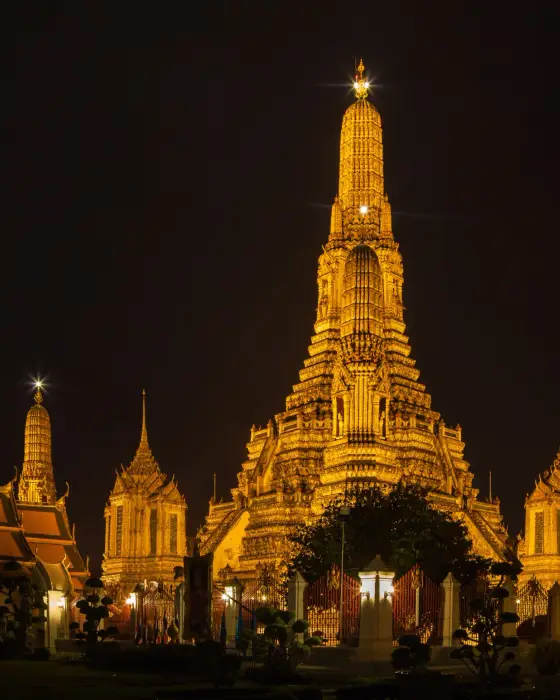 Thailand, Cambodia and Vietnam in 15 daysThe grand Indochina loopBangkok · Chiang Mai · Siem Reap · Ho Chi Minh City · Hanoi12–16 days5 cities
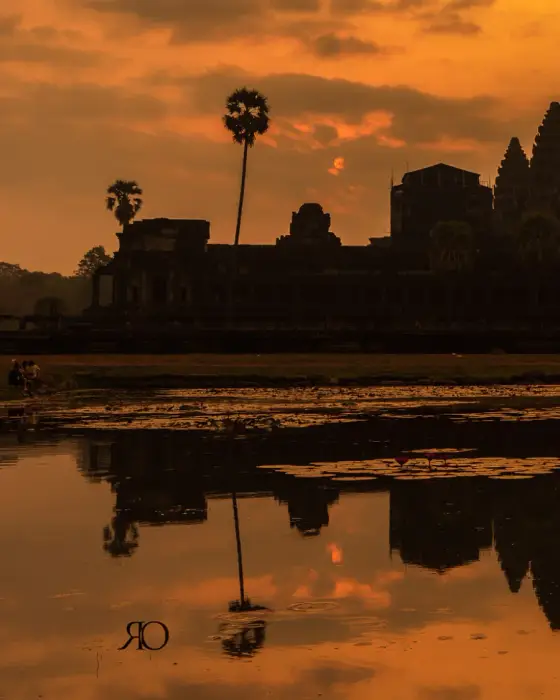 Vietnam and Cambodia in 7 daysFrom Hanoi to AngkorHanoi · Ho Chi Minh City · Siem Reap7–9 days3 cities
 Thailand and Vietnam in 10 daysMarkets and temples of Southeast AsiaBangkok · Chiang Mai · Hanoi · Ho Chi Minh City9–13 days4 cities