Singapore
Singapore
Hawker centers, Marina Bay, Chinatown, and Little India
Days Start with the basic programme and choose extensions for the time you have.
How the guide reaches this number
Spend one on the river, the colonial heritage and Chinatown; on the other, explore Little India and Kampong Glam before the gardens. Mandai, Pulau Ubin or Sentosa call for a third day. The city makes arriving in Southeast Asia easy, with subway fares paid by credit card, air-conditioning and S$5–8 meals, but it disappoints anyone seeking ruins or unplanned streets. If your stopover leaves only one day, have breakfast at a kopitiam at 8am and lunch at Maxwell Food Centre or Chinatown Complex. Walk through Telok Ayer's triangle of temples in the afternoon, then take the MRT to Marina Bay for the Supertrees at 8:45pm, the less crowded session. Much of what looks old was restored or built less than twenty years ago, which can disappoint. Outside Marina Bay, everyday neighborhoods reveal a much more ordinary city than the one on postcards.
2–3
When February to April and June to August; avoid November to January, the wettest months, and watch for haze drifting in from Indonesia between August and October
How the guide reaches this number
There are no seasons, and that's literal: the temperature stays between 25°C and 32°C every month, with humidity above 80% and about 2,100 mm of rain a year, almost always in 30-to-60-minute downpours in the late afternoon. November, December and January are the rainiest months, with a few fully gray days when the northeast monsoon arrives, from December to early March. April and May are the hottest, with a high heat index and strong thunderstorms. From June to September it rains less, but between August and October there's a risk of haze drifting in from fires in Indonesia, which in bad years suspends outdoor activities; watch the PSI index, updated hourly. High season falls in December and January, with the Orchard Road lights and Chinese New Year, and during the Formula 1 GP weekend (October 9–11): hotel prices rise 20% to 40%, and at Chinese New Year many stalls close for days. If you can choose, go February to April or June to August.
Per person/day Budget S$80–120; mid-range S$185–320; accommodation accounts for almost all of the difference
How the guide reaches this number
Per person per day: accommodation, meals, urban transport, visits and a small allowance for extras. Flights excluded; larger purchases vary. Editorial estimate, not a quote.
 What Nilo thinks
For a first visit to Singapore, two days allow time for the historic neighborhoods and the Botanic Gardens. Spend one on the river, the colonial heritage and Chinatown; on the other, explore Little India and Kampong Glam before the gardens. Mandai, Pulau Ubin or Sentosa call for a third day. The city makes arriving in Southeast Asia easy, with subway fares paid by credit card, air-conditioning and S$5–8 meals, but it disappoints anyone seeking ruins or unplanned streets. If your stopover leaves only one day, have breakfast at a kopitiam at 8am and lunch at Maxwell Food Centre or Chinatown Complex. Walk through Telok Ayer's triangle of temples in the afternoon, then take the MRT to Marina Bay for the Supertrees at 8:45pm, the less crowded session. Much of what looks old was restored or built less than twenty years ago, which can disappoint. Outside Marina Bay, everyday neighborhoods reveal a much more ordinary city than the one on postcards.Singapore fits on a 735 km² island 137 km from the equator, and the best way to understand it is through its food. At the hawker centers, Hainanese chicken rice runs S$5–8, and at the kopitiam, toast with coconut jam comes with coffee strained through a cloth sock, a legacy of a port that grew on Chinese, Indian, and Malay immigration. The neighborhoods that immigration built are still standing: the temples of Chinatown, the garlands of Little India, and the golden dome of the Sultan Mosque, in Kampong Glam. At Marina Bay, the Supertrees light up in a free sound-and-light show, over landfill that used to be sea. The city has written rules, like returning your tray and not drinking anything on the MRT, and one nobody wrote down: a pack of tissues on a chair saves the table. Come February to April or June to August, away from the rainiest months, November to January, and stay two days.
Quick facts
- Population
- about 6.1–6.2 million in the city-state (about 4.2 million residents); there's no metro area of its own, but the cross-border conurbation with Johor Bahru and Batam totals about 9 million
- Founding
- Malay port of Temasek in the 14th century; British trading post established by the treaty of February 6, 1819; independence on August 9, 1965
- Country and region
- Republic of Singapore, Southeast Asia, southern tip of the Malay Peninsula
- Languages
- English (administration and schools), Mandarin, Malay (national language), and Tamil. The four official languages; Singlish on the street
- Currency
- Singapore dollar (SGD, S$); about S$1 ≈ R$4 and ≈ US$0.78 as of September 2026 (approximate, check before you travel)
- Time zone
- UTC+8, no daylight saving: 11 hours ahead of Brasília; the sun rises around 7am and sets around 7pm year-round
- Best time to go
- February to April and June to August; avoid November to January, the wettest months, and watch for haze drifting in from Indonesia between August and October
- Average daily cost
- Budget S$80–120; mid-range S$185–320; accommodation accounts for almost all of the difference
When to go
February to April and June to August; avoid November to January, the wettest months, and watch for haze drifting in from Indonesia between August and October
January
24° to 31°C
222 mm of rain
AvoidMay
26° to 32°C
164 mm of rain
August
25° to 31°C
149 mm of rain
AvoidSeptember
25° to 32°C
125 mm of rain
October
25° to 32°C
166 mm of rain
AvoidNovember
25° to 31°C
254 mm of rain
AvoidDecember
24° to 31°C
332 mm of rain
AvoidHow the year changes
There are no seasons, and that's literal: the temperature stays between 25°C and 32°C every month, with humidity above 80% and about 2,100 mm of rain a year, almost always in 30-to-60-minute downpours in the late afternoon. November, December and January are the rainiest months, with a few fully gray days when the northeast monsoon arrives, from December to early March. April and May are the hottest, with a high heat index and strong thunderstorms. From June to September it rains less, but between August and October there's a risk of haze drifting in from fires in Indonesia, which in bad years suspends outdoor activities; watch the PSI index, updated hourly. High season falls in December and January, with the Orchard Road lights and Chinese New Year, and during the Formula 1 GP weekend (October 9–11): hotel prices rise 20% to 40%, and at Chinese New Year many stalls close for days. If you can choose, go February to April or June to August.
The same numbers as a table
| Month | Temperature °C | Rain mm |
|---|---|---|
| January | 24 to 31 | 222 |
| February · | 25 to 32 | 105 |
| March · | 25 to 32 | 151 |
| April · | 25 to 32 | 164 |
| May | 26 to 32 | 164 |
| June · | 26 to 32 | 137 |
| July · | 25 to 31 | 145 |
| August | 25 to 31 | 149 |
| September | 25 to 32 | 125 |
| October | 25 to 32 | 166 |
| November | 25 to 31 | 254 |
| December | 24 to 31 | 332 |
Nilo's tips
Pay the metro by card; the S$17 pass rarely pays off
Pay for the MRT with your own credit card at the turnstile, which, even with the small foreign card fee, comes out cheaper than the Singapore Tourist Pass. The pass costs S$17, S$24, or S$29 for 1, 2, or 3 days, and only pays off with more than five rides in the same day.
Hawker food before 11:30am, never on Monday
Hawker center stalls open at 6am, the best ones sell out by mid-afternoon, and many take Monday off. So have lunch before 11:30am and avoid that day. To choose among the more than 200 stalls of Chinatown Complex, follow the line: plastic tables, a two-line menu, and twenty people standing point to the right stall. The later you arrive, the fewer stalls still have their main dish.
See the city from a Marina Bay Sands rooftop bar
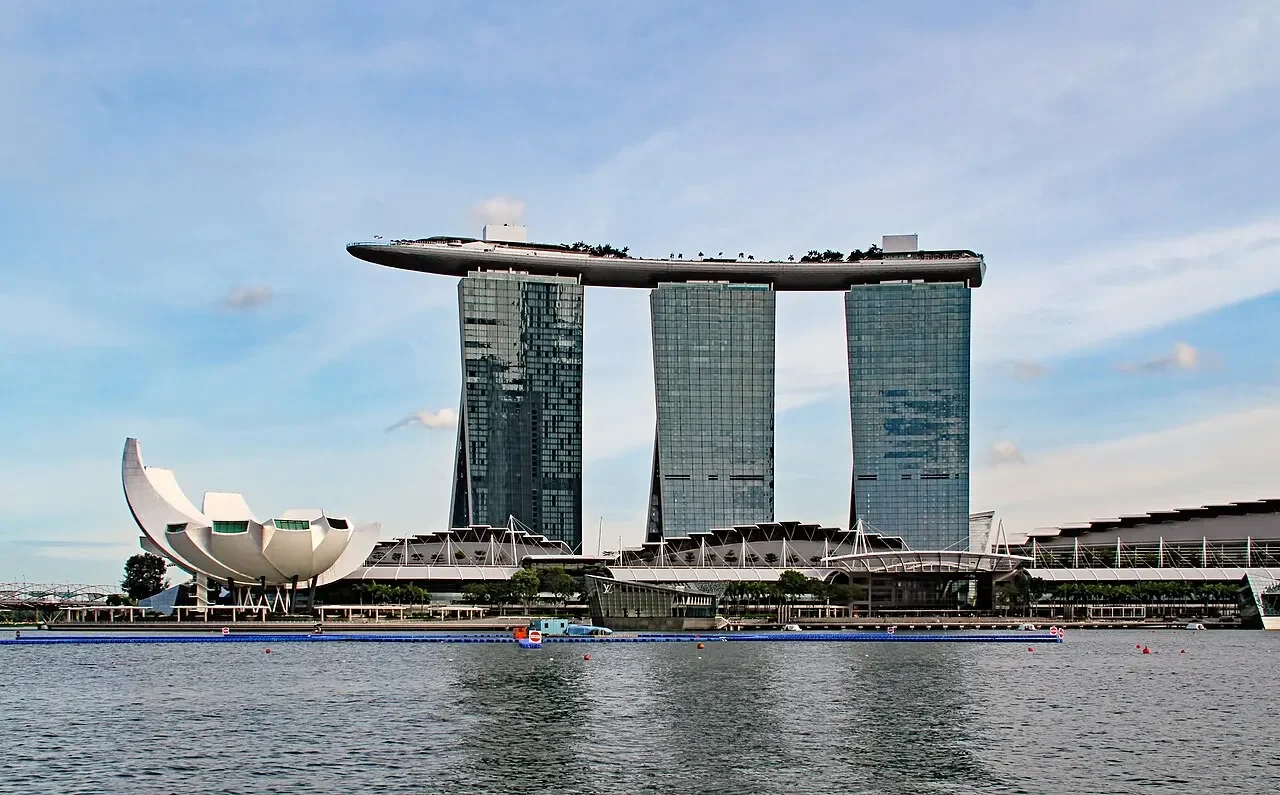
The rooftop bar gives you the same height, about 200 m, for the price of a drink, while the SkyPark observation deck charges admission. Book ahead and check the minimum spend or entry charge at your chosen bar. The infinity pool is exclusive to hotel guests, with no separate admission ticket.
See the Supertrees at 8:45pm and head into the conservatory when it rains
Of the two free Supertree shows at Gardens by the Bay, choose the 8:45pm one, which is much less crowded, and watch lying on the lawn under the 25 to 50 m trees rather than from the walkway. When the late-afternoon downpour hits, go into the paid conservatories, the Flower Dome and the Cloud Forest, which stay at about 23 °C. The Cloud Forest holds the 35 m indoor waterfall.
Pulau Ubin for S$4, with cash in your pocket
A boat for about S$4 takes you to the cheapest day in Singapore, among the country's last kampungs. The bumboat leaves from Changi Point Ferry Terminal and takes 10 minutes, but it only departs once it has twelve passengers, so arrive early or expect to wait on the pier. Bring cash, water, and repellent, because on the island contactless payment doesn't cover everything.
Order the kopi in one formula, all at once, for S$1.30-2
At a kopitiam, each term changes the coffee: C adds evaporated milk, O takes the milk out, kosong takes the sugar out, and peng adds ice. Say the whole formula at once, like “kopi C kosong peng,” and pay S$1.30 to 2 for the coffee. For the full breakfast, with kaya toast and two soft-boiled eggs, arrive before 9am and expect to pay S$4 to 6.
Explore the map
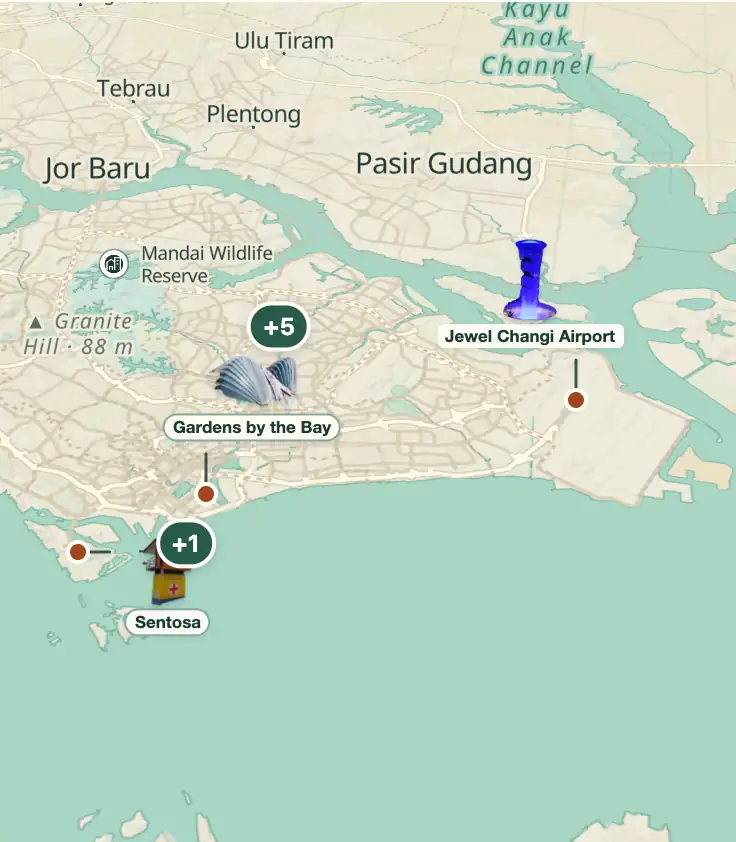
© OpenStreetMap · OpenFreeMap · © OpenMapTiles
Explore the map, read about the other places and plan your travel days in the app.
Open the appWhat to see
Singapore: the island and the land reclaimed from the sea
The territory grew from about 580 km² in the 1960s to roughly 735 km² through reclamation with imported sand, and the official target exceeds 760 km² by 2030: Marina Bay, Changi Airport, and much of Jurong sit on land reclaimed from the sea.
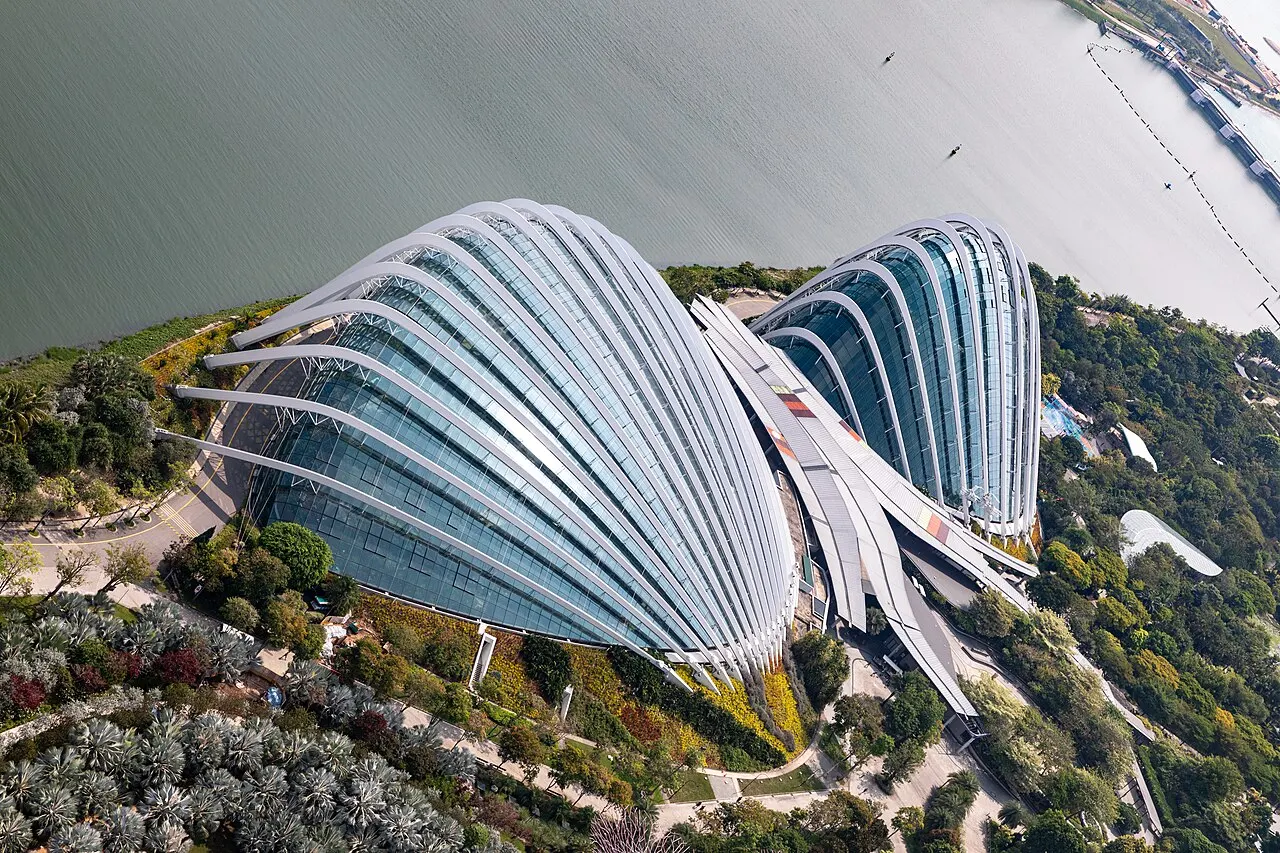
Gardens by the Bay
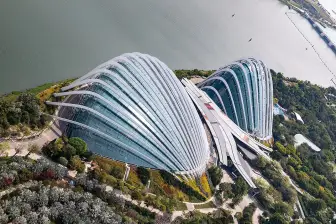
About 100 hectares of park on reclaimed land, opened in 2012. The Supertrees stand 25 to 50 m tall and put on a free light-and-sound show at 7:45pm and 8:45pm; the Flower Dome and Cloud Forest greenhouses, the latter with a 35 m covered waterfall, charge admission and are kept at about 23 °C.
The Supertrees, 25 to 50 m tall, put on two free light-and-sound shows, at 7:45pm and 8:45pm, and the paid conservatories, one with an indoor waterfall, stay at about 23 °C, in a park of about 100 hectares.
Check access

Singapore Botanic Gardens
Founded in 1859 and a UNESCO World Heritage Site since 2015, this is where the tapping technique that created the Malayan rubber industry was developed. Free entry from 5am to midnight; only the National Orchid Garden, with over a thousand species, charges admission.
This garden is where the rubber-tapping technique behind Malaya's rubber industry was born; admission is free from 5am to midnight, and only the orchids, more than a thousand species, require a ticket.
Check access

Telok Ayer and Chinatown temples
Within a few blocks stand Sri Mariamman, from 1827, the country's oldest Hindu temple, Thian Hock Keng, from 1839–42, built by Hokkien sailors in thanks for a safe crossing, and the Buddha Tooth Relic Temple, from 2007, in Tang style. The Al-Abrar Mosque and the Nagore Dargah shrine stand on the same street.
In this short stretch, a few blocks separate the country's oldest Hindu temple, Sri Mariamman, from Thian Hock Keng, which Hokkien sailors built in thanks for a safe crossing, and the Al-Abrar Mosque shares the street with the Nagore Dargah.
Check access
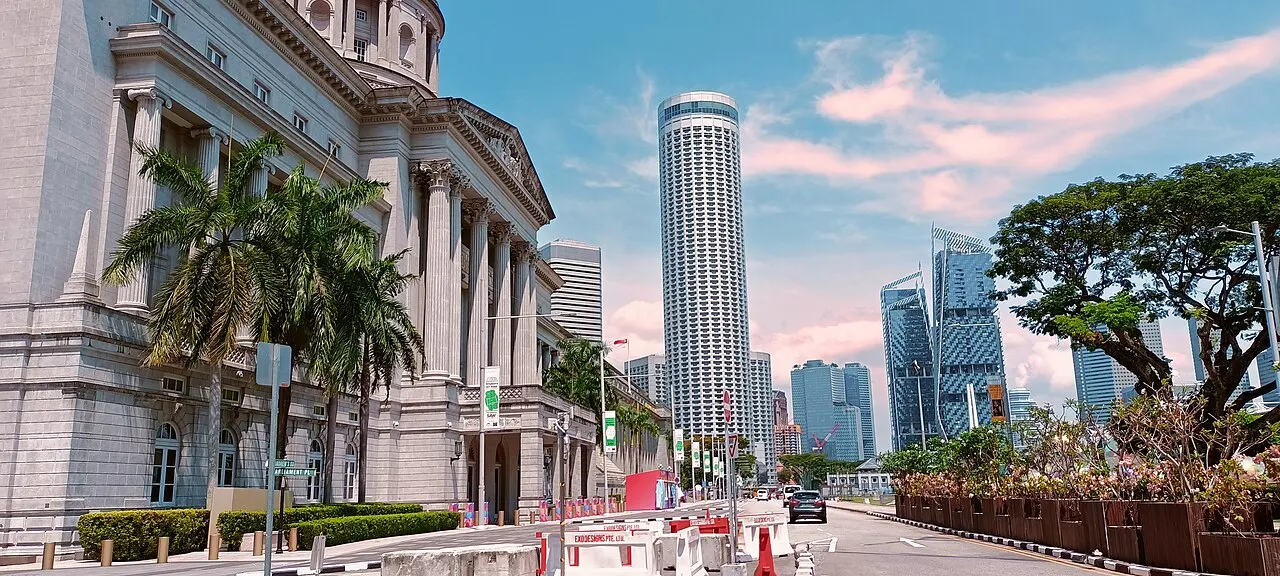
National Gallery Singapore
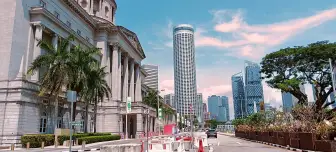
Opened in 2015 inside the former Supreme Court and City Hall buildings, joined by a glass canopy. It holds the largest public collection of modern Southeast Asian art; it was on the City Hall steps that both the entry into Malaysia and, later, the separation were announced.
The former Supreme Court and City Hall, joined by a glass roof, hold the largest public collection of modern art in Southeast Asia, and it was on the City Hall steps that merger with Malaysia, and later the split, were declared.
Check access
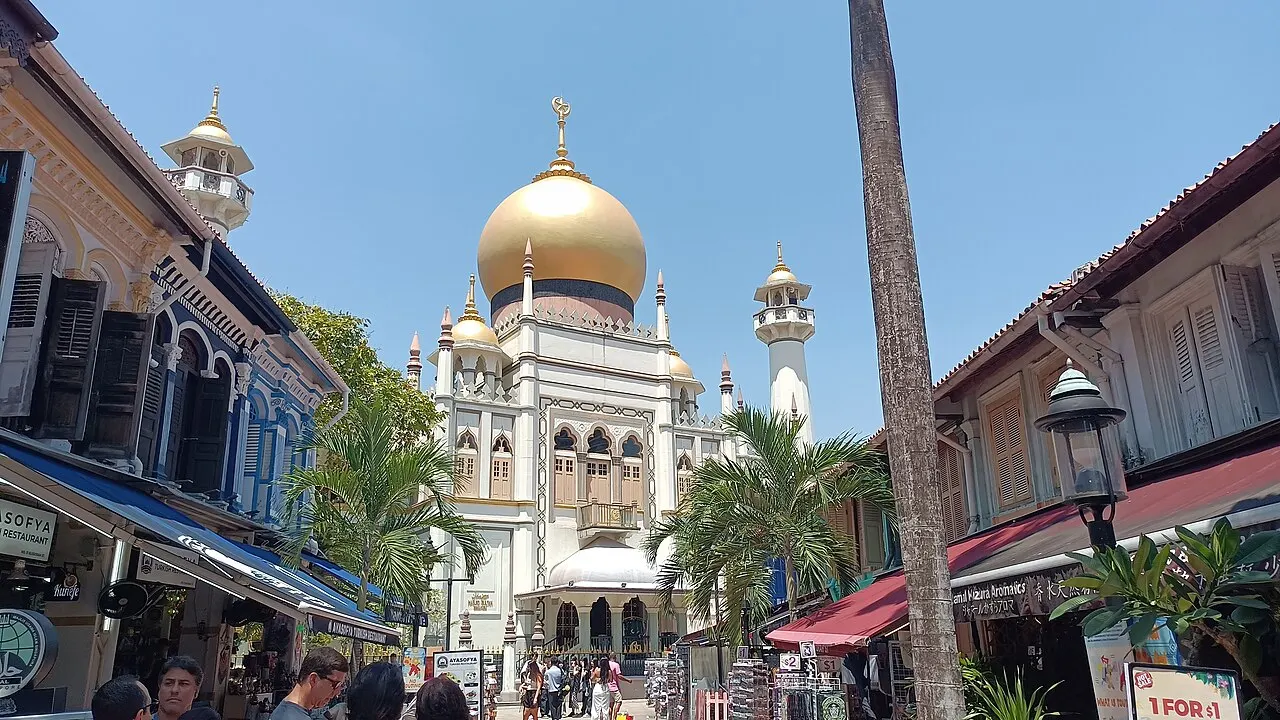
Sultan Mosque
The current building dates from 1924–28; the base of the golden dome was made with glass bottles donated by worshippers who had no money, and the bottles are still visible up close. Visitors enter outside prayer hours, barefoot and with shoulders and knees covered: robes are loaned at the door.
At the base of the golden dome are glass bottles donated by worshippers who had no money, still visible up close, and robes are lent at the door; go barefoot, with shoulders and knees covered, outside prayer times.
Check access
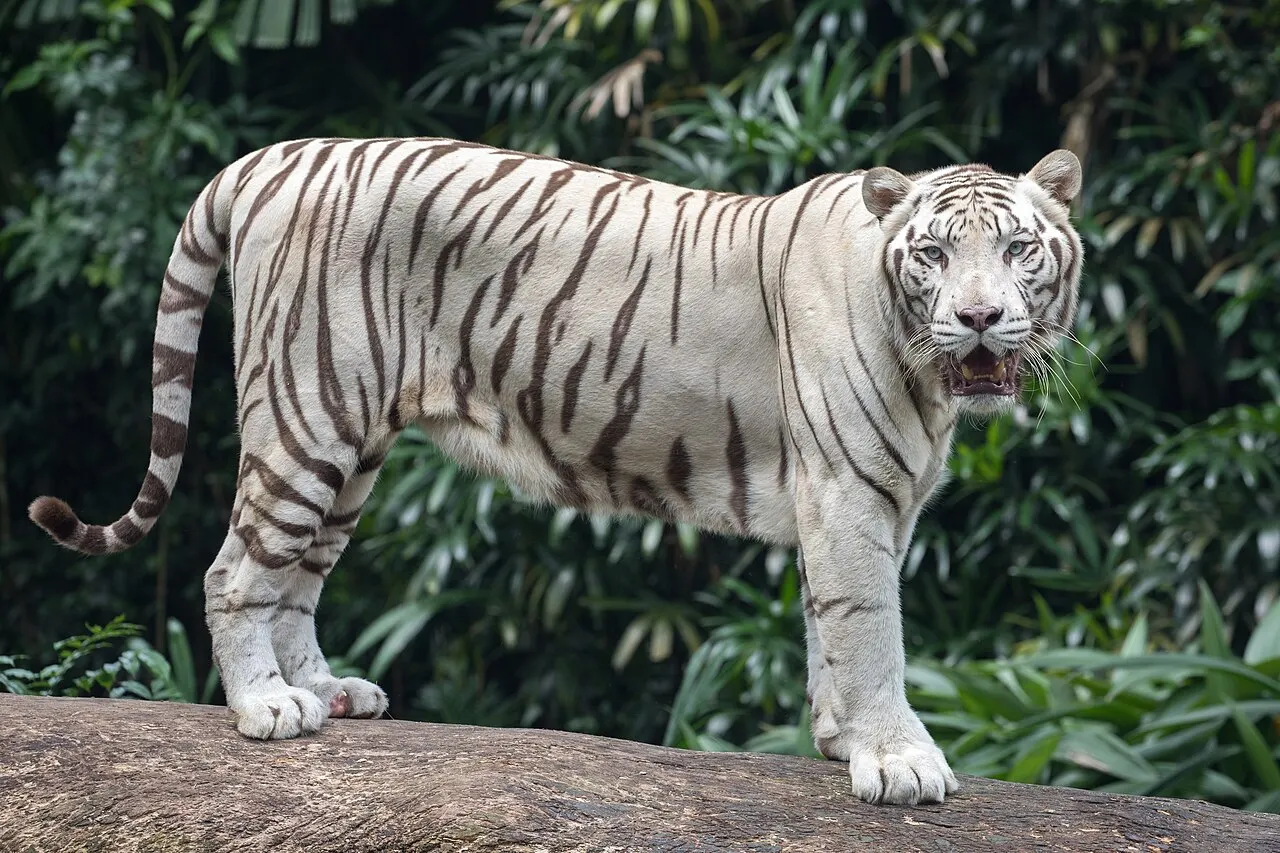
Mandai Wildlife Reserve
Brings together the Singapore Zoo, from 1973, one of the world's first with open, unbarred enclosures, the Night Safari, from 1994, River Wonders, Bird Paradise, opened in 2023, and Rainforest Wild Asia, from 2025. It's 45–60 minutes from downtown; plan on no more than two parks a day.
The 1973 zoo was one of the first without bars, the Night Safari dates from 1994, and the river park, the 2023 bird park, and the 2025 rainforest park complete the complex; the trip from downtown takes 45 to 60 minutes, and a day fits two parks at most.
Check access
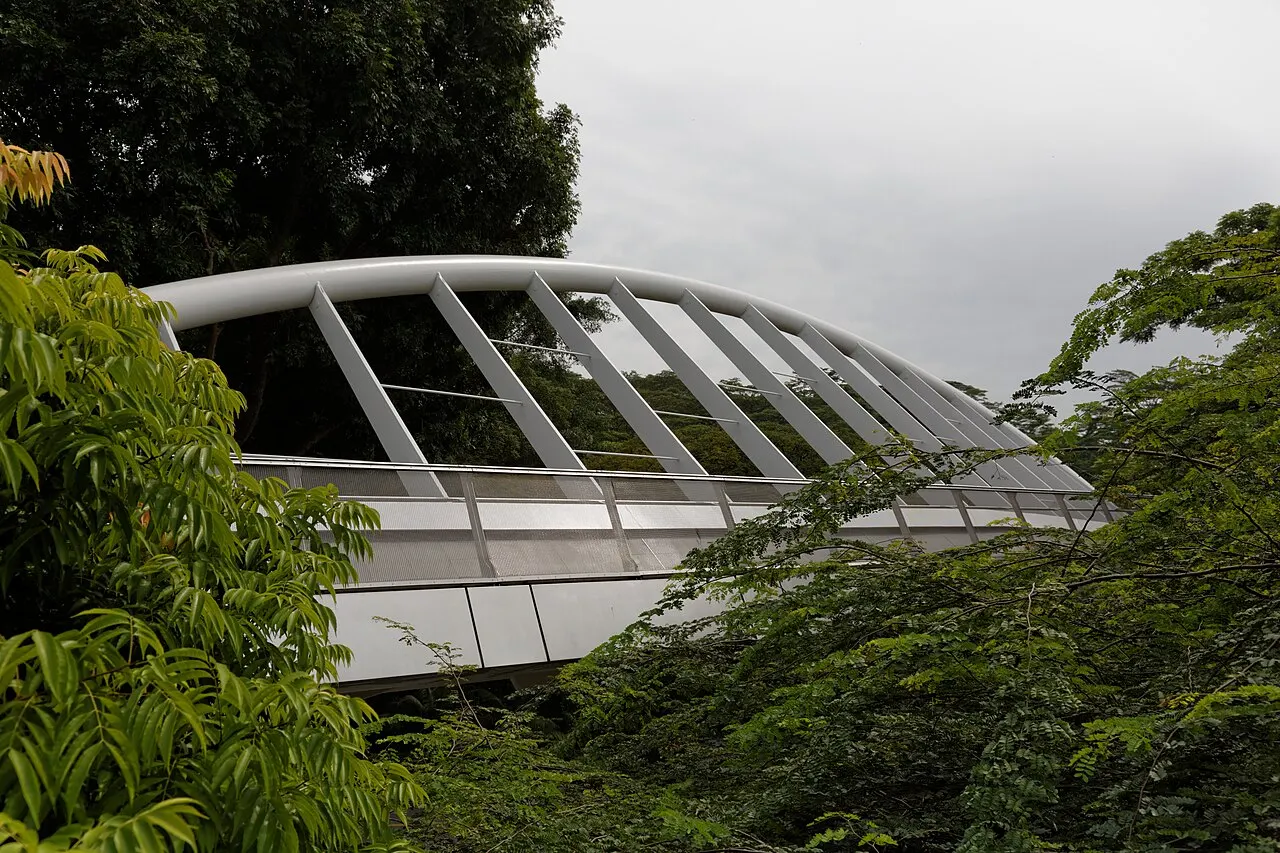
Southern Ridges, MacRitchie, and Bukit Timah
About 10 km of walkways link Mount Faber to Kent Ridge, with the Henderson Waves bridge standing 36 m high. In the island's core, MacRitchie's TreeTop Walk crosses 250 m of canopy, and Bukit Timah, at 163 m, is the country's highest point; start before 8am and bring water.
The walkway route totals about 10 km. It links Mount Faber to Kent Ridge, and along the way Henderson Waves rises to 36 m, while in the island's interior MacRitchie's TreeTop Walk crosses 250 m of canopy and Bukit Timah, at 163 m, is the territory's highest point, so start before 8am and bring water.
Check access
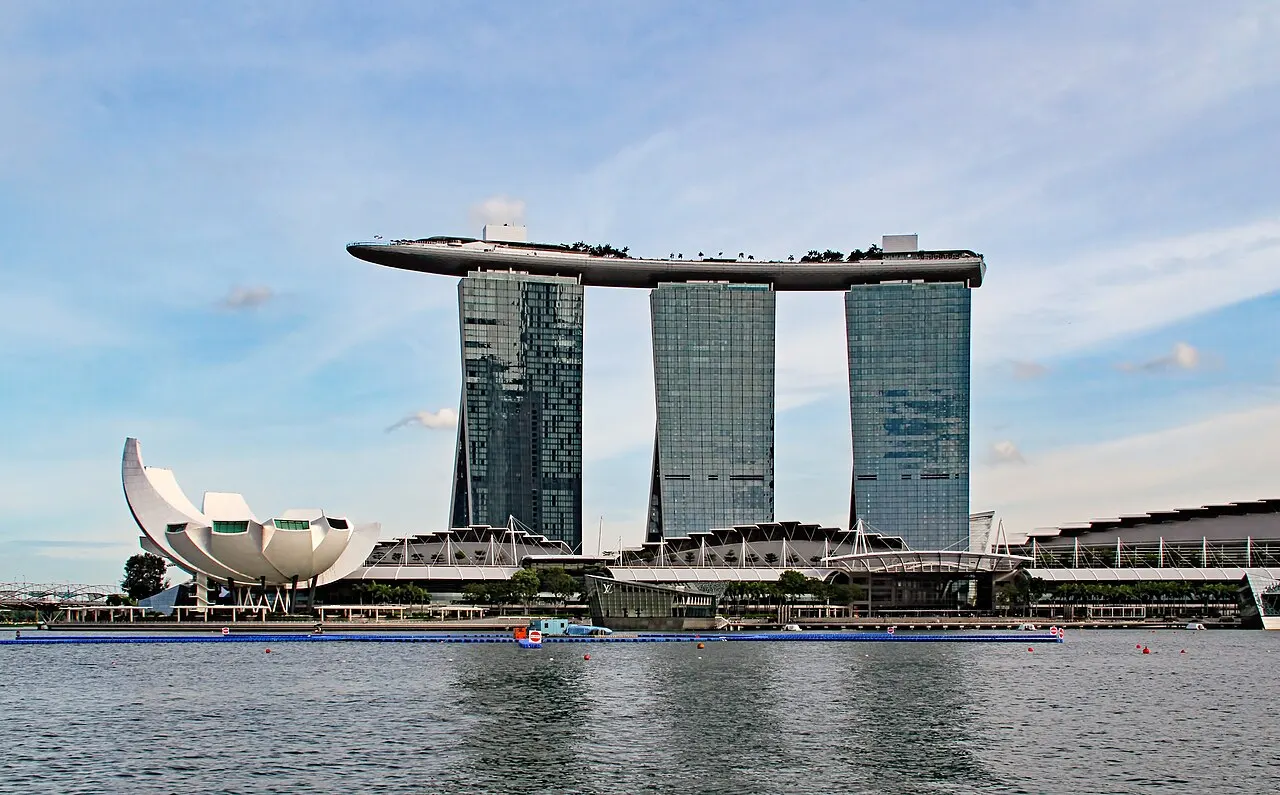
Marina Bay Sands and the SkyPark
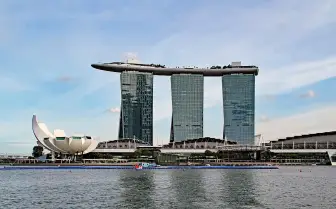
2010 complex with three 55-story towers joined by a ship-shaped platform about 200 m up, designed by Moshe Safdie. The infinity pool is for hotel guests only; the SkyPark observation deck charges admission, and you can get the same height for the price of a drink at the rooftop bars.
The pool is for hotel guests only and the paid observation deck has a line; the view is worth half an hour in the late afternoon, ideally with a drink at the rooftop bar.
Check access
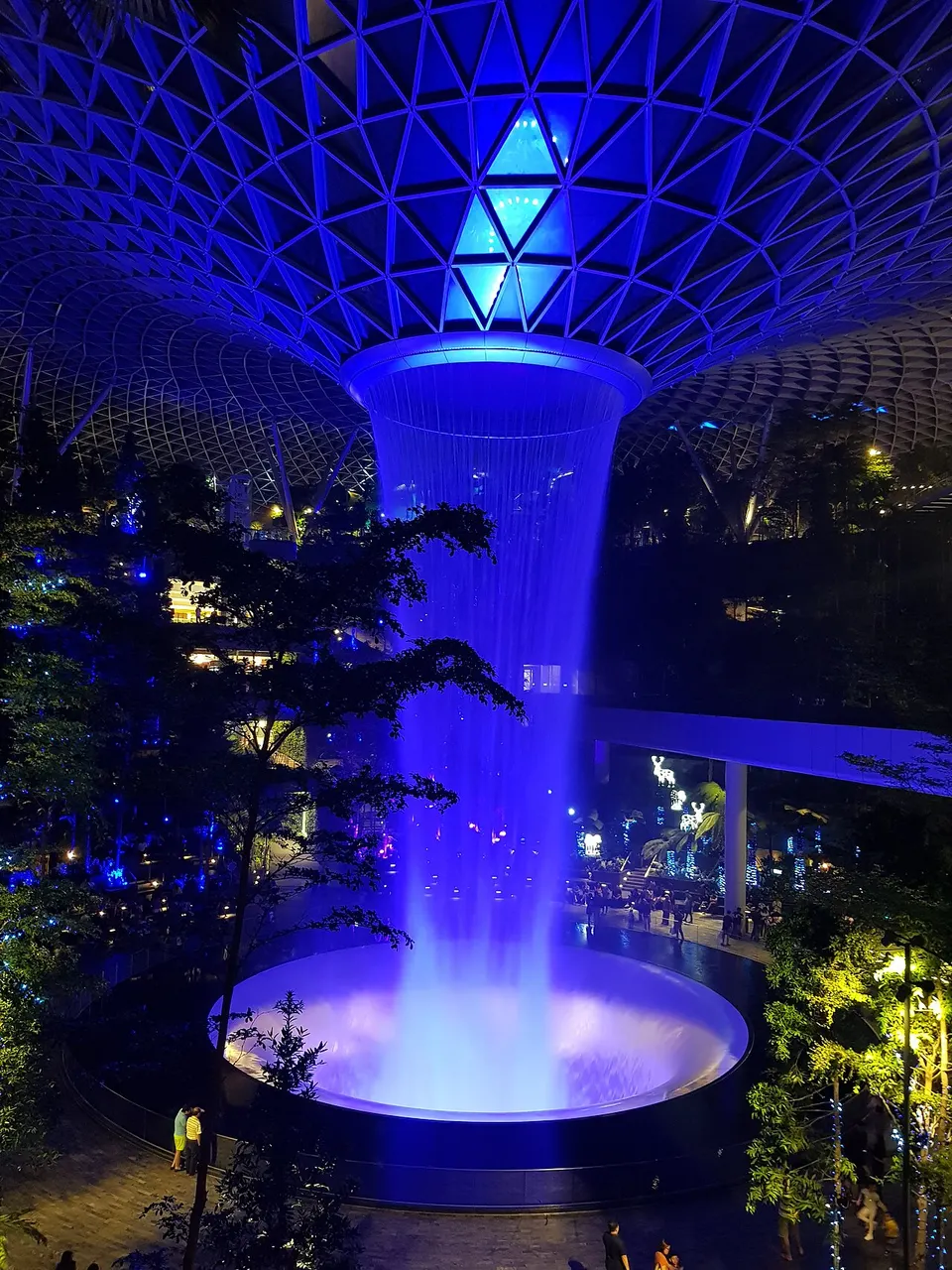
Jewel Changi Airport
Glass dome designed by Safdie, opened in 2019 between the terminals, with the 40 m indoor Rain Vortex waterfall and a garden of about 2,000 trees. You can enter without a plane ticket, which makes it useful on a long layover; the canopy walks and rooftop maze charge admission.
The dome with the 40-m Rain Vortex and its 2,000 trees sits between Changi's terminals: it was built for long layovers. Riding the MRT out of the city to see a mall with a waterfall eats up an afternoon that the Botanic Gardens, free from 5am to midnight, fill better.
Check access
Nilo’s itinerary
Start with the basic programme and choose extensions for the time you have.
Plan my days in the app ↗Day 1 · River, colonial heritage, and Chinatown
Start at 8am in Merlion Park, with its 8.6 m statue from 1972. Walk along the Singapore River and stop for coffee before entering the Asian Civilisations Museum at 10am to see the cargo of the 9th-century Belitung shipwreck.
Walk up Coleman Street to National Gallery Singapore, in the former Supreme Court and City Hall buildings; set aside two hours for the Southeast Asian collection.
Have lunch at Maxwell Food Centre or Chinatown Complex: Hainanese chicken rice, char siew, or laksa for S$5–8, tray returned on your way out.
In the afternoon, visit the Chinatown and Telok Ayer temple triangle: Sri Mariamman (1827), Thian Hock Keng (1839–42), and the Buddha Tooth Relic Temple (2007), all within a ten-minute walk.
End at the SkyPark at Marina Bay Sands or at Gardens by the Bay, with the free Supertrees show; the 8:45pm session is much emptier than the 7:45pm one.
Day 2 · The enclaves and the planted green
Have breakfast before 9am at a kopitiam: kaya toast, two soft-boiled eggs, and kopi, for about S$5.
Walk through Little India, past Tekka market, the Sri Veeramakaliamman temple (1881), the flower garlands on Serangoon Road, and the Mustafa Centre, open 24 hours.
Have lunch in Kampong Glam with murtabak or nasi padang near the Sultan Mosque, from 1924–28; then Arab Street, Haji Lane, and the Malay Heritage Centre.
Spend the afternoon at the Botanic Gardens, from 1859, free, with a ticket needed only for the National Orchid Garden; enter through Tanglin Gate and leave through Bukit Timah Gate.
Have chili crab for dinner at East Coast Park or satay at Lau Pa Sat, whose cast-iron pavilion dates from 1894 and whose satay street opens around 7pm.

If you stay longer
Day 3 · Mandai, Pulau Ubin, and Sentosa
Morning at Mandai: choose between the Zoo, Bird Paradise, and Rainforest Wild Asia, opened in 2025, and arrive at opening, 8:30am, before the heat sets in.
To spend less, swap Mandai for the bumboat from Changi Point to Pulau Ubin (about S$4, 10 minutes) and cycle along dirt paths to Chek Jawa.
In the afternoon, cross to Sentosa by cable car or the Sentosa Express: the Singapore Oceanarium, opened in 2025, Universal Studios, or Fort Siloso.
Head back through the Southern Ridges and cross the Henderson Waves bridge, 36 m above the road, in the late afternoon.
Spend your last evening in Tiong Bahru or Katong, among 1930s shophouses, with Katong laksa and a beer at a sidewalk table before 10:30pm.

Food
 AI illustration
Hainanese chicken rice
Poached chicken served warm with rice cooked in the bird's stock and fat, plus a chili sauce with garlic and grated ginger. It's the closest thing to a national dish: S$5–8 at a hawker stall, three to four times that at a hotel restaurant.
 AI illustration
Chilli crab and black pepper crab
Chilli crab dates to the 1950s, in a tomato, egg, and chili sauce; black pepper crab is dry and spicier. Sold by weight, the two run S$90 to S$140 for two, with fried mantou buns for dipping.
 AI illustration
Laksa
Thick noodles in a coconut milk and shrimp broth, with clams and laksa leaf. In the Katong style the noodles come cut short and are eaten with just a spoon, no chopsticks; it's breakfast food and costs around S$6.
 AI illustration
Char kway teow and Hokkien mee
Wok-fried noodles: the first with dark soy sauce, Chinese sausage, clams, and bean sprouts; the second with prawn, squid, broth, and a wedge of calamansi lime. Ask for the sambal on the side if you don't want it spicy.
 AI illustration
Bak kut teh
Pork ribs simmered in broth. The Teochew version, dominant in Singapore, is clear and heavy on pepper and garlic, served with you tiao and free-flowing tea refills; the Hokkien version is dark and herbal. It used to be dockworkers' breakfast.
 AI illustration
Roti prata and murtabak
Indian-Muslim flaky bread stretched and slapped on the griddle, served with curry sauce or with sugar; murtabak is the version stuffed with ground meat and onion. The roti prata shops on Jalan Kayu and in Little India are open 24 hours.
 AI illustration
Kaya toast, soft-boiled eggs, and kopi
Kopitiam breakfast: thin toast with coconut jam and a slice of cold butter, two barely-set eggs with soy sauce and white pepper, and coffee brewed through a cloth sock. It runs S$4–6.
 AI illustration
Durian
Spiky-skinned fruit with a strong smell, banned on the MRT and in many hotels. The main season runs June to August, and the Mao Shan Wang variety costs S$20 to S$40 a kilo at the Geylang and Chinatown stalls, cracked open in front of you on the spot.
Day trips

Pulau Ubin
An island of about 10 km² in the northeast of the city-state, with the country’s last kampungs. Chek Jawa exposes reef and mangrove at low tide, and bike trails cover almost the entire island. You cross by bumboat from the Changi Point terminal.

Johor Bahru, Malaysia
This Malaysian city across the strait is 1 to 3 hours away by bus over the Causeway, depending on the immigration line, and you need your passport. Food and shopping cost half as much; the RTS rail link, under construction, should cut the crossing to about 5 minutes once it opens.

Bintan or Batam, Indonesia
Indonesian islands 45–60 minutes by ferry from Tanah Merah Ferry Terminal (Bintan) or HarbourFront (Batam). Beaches, resorts, and much lower prices; bring your passport and confirm entry requirements before buying the ticket.
Where to begin
River, colonial heritage, and Chinatown
Start at 8am in Merlion Park, with its 8.6 m statue from 1972. Walk along the Singapore River and stop for coffee before entering the Asian Civilisations Museum at 10am to see the cargo of the 9th-century Belitung shipwreck.
The enclaves and the planted green
Have breakfast before 9am at a kopitiam: kaya toast, two soft-boiled eggs, and kopi, for about S$5.
Mandai, Pulau Ubin, and Sentosa
Morning at Mandai: choose between the Zoo, Bird Paradise, and Rainforest Wild Asia, opened in 2025, and arrive at opening, 8:30am, before the heat sets in.
Money
The currency is the Singapore dollar (S$), and it’s worth checking the day’s exchange rate before doing the math. A meal at a hawker center: S$4–8, with kopi or teh at S$1.30–2. A dish at an air-conditioned restaurant: S$15–25. Crab dinner for two: S$90–140. Beer at a bar: S$12–18, with the price pushed up by the alcohol tax. An MRT ride: S$1.28–2.57; a short Grab ride: S$10–18. Mid-range hotel: S$180–300 a night; hostel bed: S$35–60. Almost everything can be paid contactless, including at many hawker stalls via PayNow or QR code, but carry a few small bills for old-school stalls and for the islands. Restaurants add 10% service and 9% GST, and menus show “++” when those amounts aren’t yet included. Tipping isn’t expected anywhere. Purchases over S$100 can qualify for a GST refund through the eTRS system, with the receipts linked to your passport and processed at the airport before departure.
Getting there and around
Changi 20 km out, four terminals, and the Jewel
Changi sits 20 km east of downtown, with four terminals plus the Jewel, and getting out of it is simpler than the airport's size suggests. The MRT East-West line runs from Terminals 2 and 3 and reaches City Hall in 35 to 45 minutes for under S$2.50, with a transfer at Tanah Merah; the service runs from about 5:30am until around midnight. A taxi or Grab to Marina Bay costs between S$25 and S$40 depending on the time of day, already including the airport surcharge, and takes 20 to 30 minutes outside rush hour. Before boarding, fill out the SG Arrival Card, mandatory and free, within the three-day period before entry, including the arrival day itself, always on the official ICA site. Some intermediaries charge for the same form. Brazilians don't need a visa for tourism of up to 30 days; carry proof of an onward or return ticket.
MRT: six lines, fare by distance
The MRT has six lines and more than 140 stations, and distance-based fares range from about S$1.28 to S$2.57 per trip, also applying to buses. There's no need to buy any card: tap a contactless credit or debit card, or your phone, straight on the gate through the SimplyGo system, keeping in mind that foreign cards pay a small administrative fee per day of use. Those who prefer prepaid can buy the EZ-Link or the Singapore Tourist Pass, with unlimited rides for about S$17, S$24, and S$29 for 1, 2, and 3 days. Taxis are metered and reliable, and Grab, Gojek, and TADA all work well. Walking is only pleasant in the shade, and the city knows it: downtown is stitched together by underground passages and air-conditioned walkways, and much of the residential sidewalk network is covered against sun and rain. Bicycles and scooters are regulated, with riding banned on certain sidewalks and speed limits in parks.
Safety
Singapore has one of the lowest violent crime rates in the world, and walking alone at night is routine across almost the whole island, including for women. The real risks are different: heat and dehydration, heavy rain that floods sidewalks in minutes, localized dengue outbreaks (wear repellent at dusk), and left-hand traffic, which means looking right before you cross. Laws are enforced with unusual rigor: drug trafficking carries the death penalty, possessing a vape is illegal and has been punished more harshly since 2025, vandalism can bring caning, and there are fines for littering, smoking outside designated areas, and jaywalking. Drinking in public spaces is forbidden from 10:30pm to 7am, with stricter rules in the Geylang and Little India control zones on weekends. The most common scams are online (fake job offers, fake bank employees, payment demands by text message) rather than on the street; when shopping, confirm the final price before paying at electronics stores without posted prices and at durian stalls that sell by weight. Geylang concentrates legal prostitution and informal gambling dens: it’s safe to pass through, but avoid the back alleys and the betting.
Etiquette tips
A tissue pack on the table reserves the seat
A packet of tissues left on a hawker center table means the seat is taken, and everyone respects it. Use the same code before you get in line, and never move someone else's packet.
Return the tray
Since 2021 it's been mandatory to bus your tray, plate, and bowl to the return trolleys at hawker centers and food courts, with a fine on the books for those who don't. Sort dishes from trash at the marked openings.
No eating, drinking, or durian on the MRT
Eating and drinking on the MRT is forbidden, even water, with fines of up to S$500, and durian is banned because of its smell. Finish your drink before you pass the turnstile, because there are no trash cans inside the stations.
Queuing and escalators
People form two lines to the sides of the MRT doors, letting those inside step off first. On escalators, standers keep to the left and walkers pass on the right.
Shoes and dress at temples
Take off your shoes at mosques and Hindu temples and cover shoulders and knees; robes are available at the entrance. At Chinese temples, don't point at the images or use flash photography during worship.
Tipping isn't necessary
Restaurants already add 10% service and 9% GST, and taxis don't expect you to round up. Leaving cash on a hawker center table usually causes confusion, not gratitude.
Mistakes to avoid
Thinking the island is too small to plan for
Thinking the island is too small to need planning. That costs half a morning: Mandai, Sentosa, the center and the east are 40 to 60 minutes apart by MRT, and in the heat, improvising the day costs you.
Marina Bay to Chinatown on foot at noon
Walking from Marina Bay to Chinatown at noon. At 32 °C and 80% humidity, the same trip by subway costs a little over a dollar and gets you there dry; walk it early in the morning or after 6pm instead.
Looking for a restaurant instead of a hawker center
Looking for a restaurant when the best food is at hawker centers and kopitiams. The line at a stall rarely lies, and many stalls close in the afternoon or take Monday off.
Possessing a vape is illegal
Bringing an e-cigarette. Possessing a vape is illegal, and since May 1, 2026, the fine for possession, purchase, or use rose from S$2,000 to up to S$10,000. Etomidate stopped being treated as a drug on that same date and became a vaping offense, but a foreigner caught with it can still have their visa canceled and be banned from the country. Selling chewing gum is also prohibited, though a few packs for personal use usually aren't a problem.
Hawker stalls open at 6am; the MRT stops at midnight
Expecting European hours. Hawker centers start serving at 6am and empty out by afternoon, museums open around 10am, and the MRT closes near midnight: after that, only a taxi or an app, at nighttime rates.
Useful phrases
Terima kasih
Thank you, in Malay, the national language (te-rí-ma cá-si). Works at any counter on the island.
Xiè xie (谢谢)
Thank you in Mandarin (chié-chiê). Useful at most Chinese food stalls and neighborhood markets.
Kopi C kosong peng
Coffee with evaporated milk, no sugar, and ice. This is kopitiam order grammar: O is black, C takes evaporated milk, kosong means no sugar, peng means iced.
Can lah / cannot lah
Can do / can't do. The “lah” at the end signals friendly certainty and closes the sentence without sounding rude.
Chope
To reserve a seat by leaving an object on the table, almost always a packet of tissues. A verb used daily at any food court.
Shiok
Very good, said of well-seasoned food, a cold shower, or strong air-conditioning. Malay in origin, used by everyone.
Districts
Marina Bay and Downtown Core
The financial center and the postcard skyline, almost all built on landfill after 1970. It concentrates the banks of Raffles Place, Marina Bay Sands, Gardens by the Bay, and the Formula 1 circuit; outside the bay ring, it wilts at night and on weekends.
Chinatown (Kreta Ayer)
Restored shophouses, temples of three religions within a few blocks, and the Chinatown Complex, the country's largest hawker center, with over 200 stalls. Touristy on Pagoda Street, still residential and cheap on the back streets.
Kampong Glam
Former Malay-Arab enclave around Sultan Mosque, granted in 1822. Arab Street sells fabric and carpet, Haji Lane gathers independent shops and small bars, and Bussorah Street packs out at iftar time during Ramadan.
Little India
Tamil neighborhood around Serangoon Road, with the Tekka market, flower garlands, goldsmiths, and the 24-hour Mustafa Centre. It's the loudest and least orderly patch of the island, especially on Sundays, the migrant workers' day off.
Orchard Road
Two and a half kilometers of malls linked by underground passages and skybridges, laid over the old road through nutmeg plantations. Good for shopping, air-conditioning, and the Christmas lights, lit from November to January.
Tiong Bahru
Streamline art deco housing estate from the 1930s, the country's oldest, now with bakeries, bookshops, and cafés among flats still occupied by longtime residents. The neighborhood market serves chwee kueh and lor mee early in the morning.
Katong and Joo Chiat
East side of the island, the Peranakan heartland, with rows of colorful-tiled shophouses on Koon Seng Road. Katong laksa was born here, and East Coast Park is a 15-minute walk away, with a roughly 15 km bike path.

Sentosa and HarbourFront
Leisure island with parks, artificial beaches, and resorts, linked to the mainland by monorail, cable car, and covered walkway. On the mainland side sit VivoCity and the ferry terminal for the Indonesian islands.
History
14th century · Temasek, a Malay port
Excavations at Fort Canning and the mouth of the Singapore River uncovered a wall, Chinese ceramics, and coins from a trading post linked to China and Java, called Temasek and later Singapura. It was abandoned after attacks around 1400.
1613 · The port is burned
A Portuguese force torches the settlement at the river mouth. The island spends two centuries as a sparsely populated fringe of the Sultanate of Johor.
1819 · Raffles and the East India Company
Stamford Raffles arrives in January. On February 6, he signs a treaty with the temenggong Abdul Rahman and with Hussein Shah, recognized by the British as sultan, to set up a British East India Company post, and the port is declared duty-free.
1824–1867 · British colony
The Anglo-Dutch Treaty of 1824 confirms British rule; in 1826 the island joins the Straits Settlements with Penang and Malacca, and in 1867 it becomes a Crown colony. The opening of the Suez Canal in 1869 multiplies traffic.
1830–1930 · The immigrant city
Hundreds of thousands of Hokkien, Teochew, Cantonese, and Hainanese arrive from southern China, Tamils from southern India, and Bugis, Javanese, and Arabs from the archipelago. The 1822 town plan separated them into enclaves, giving rise to Chinatown, Little India, and Kampong Glam.


1942–1945 · Japanese occupation
On February 15, 1942, the British command surrenders; the fall ends any faith in imperial protection, and the island is renamed Syonan-to. The Sook Ching purge executes thousands of Chinese civilians, and the occupation lasts until the Japanese surrender, in September 1945.
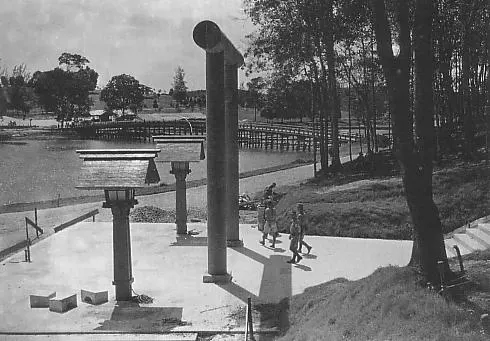

1959 · Self-government and the PAP
The island wins internal self-government and the People's Action Party wins the election; Lee Kuan Yew takes office as prime minister at age 35. The party has governed uninterrupted ever since.
1963–1965 · Merger and separation
Singapore joins the Federation of Malaysia on September 16, 1963, and is expelled on August 9, 1965, after racial riots in 1964 and a political clash over the sharing of power. Independence was announced as a defeat, not as a celebration.
1960–1990 · HDB, Jurong, and the port
The Housing and Development Board builds hundreds of thousands of apartments and rehouses people who lived in kampungs and shophouses; Jurong becomes an industrial park, and the port and Changi Airport, opened in 1981, turn the island into a logistics hub. Income per capita rises from poor-country to rich-country level in one generation.


2005–2012 · Marina Bay
The government authorizes casinos in 2005; Marina Bay Sands and Resorts World Sentosa open in 2010, and Gardens by the Bay in 2012, all on land reclaimed from the sea. The skyline in the photos is less than twenty years old.


2015–2026 · After Lee Kuan Yew
Lee Kuan Yew dies on March 23, 2015; Lawrence Wong becomes the fourth prime minister in May 2024, and the PAP renews its mandate in the May 2025 election. Changi's Terminal 5 and the RTS rail link to Johor Bahru are under construction.
 AI illustration
Complete history
The Strait of Malacca and the port of Temasek (14th century)
Singapore exists because of a strait. The channel between the Malay Peninsula and Sumatra concentrates traffic between the Indian Ocean and the South China Sea, and whoever controls a safe stop at this choke point collects a toll from the world. A Malay port called Temasek already occupied the river mouth in the 14th century, with a wall at Fort Canning and Chinese pottery in the landfill. It was destroyed around 1400 and again by the Portuguese in 1613, and the island spent two centuries as a periphery of the Sultanate of Johor, home to a few hundred orang laut and farmers.
Raffles landed looking for a port
Stamford Raffles arrived in January 1819 looking for a British base south of Malacca. On February 6, he signed a treaty with the local temenggong and with Hussein Shah, whom the British recognized as sultan in exchange for the concession. Raffles made it a free port, with no import duty, and that drew the trade that neighboring ports taxed. Within five years the population jumped from about a thousand to ten thousand people. The Anglo-Dutch Treaty of 1824 consolidated British rule, 1826 joined the island to Penang and Malacca, and 1867 made it a Crown colony; the opening of the Suez Canal in 1869 and European demand for tin and rubber did the rest.
Built by immigration
The city was built by immigration. Through the 19th century came Hokkien, Teochew, Cantonese, and Hainanese from southern China, Tamils and others from the Indian subcontinent, Bugis, Javanese, and Arabs from the archipelago, almost all men and almost all poor. The 1822 urban plan organized the population into ethnic enclaves: hence Chinatown, Kampong Glam, and Little India, which still concentrate the temples and mosques of origin. What remains of that city are the shophouses with their five-foot covered walkway, the clans and kongsi that managed jobs and funerals, and a memory of epidemics, opium, and secret societies that the modern state treated as the opposite of what it wanted to be.
The British surrender of February 15, 1942
The fall to Japan on February 15, 1942, the largest surrender in British military history, ended faith in imperial protection. Under the name Syonan-to, the occupation imposed the Sook Ching screening, which executed thousands of Chinese civilians. After 1945 came strikes, anti-colonial agitation, and the founding of the People's Action Party in 1954. Singapore gained self-government in 1959, joined the Federation of Malaysia in September 1963, and was expelled on August 9, 1965, with no army of its own, no water of its own, a third of the population in slum housing, and the 1961 Bukit Ho Swee fire still fresh in memory.
State planning: HDB, Jurong and official English
What came next was an explicit state project: the HDB building apartment blocks at an industrial pace, today home to about 80% of citizens and permanent residents and mostly bought by residents; Jurong converted into an industrial park; English adopted as the working language so as not to favor any one group; mandatory military service; and rules enforced with unusual rigor. Changi opened in 1981, the port became one of the largest in the world, and income per capita surpassed that of the former colonizer. The price was a narrow political space and a cost of living among the highest on the planet. Lee Kuan Yew died in 2015; Lawrence Wong took office in May 2024, the PAP won again in May 2025, and the map keeps changing with Changi's Terminal 5, the expansion of Marina Bay, and the RTS rail link to Johor Bahru. The island also keeps growing outward: the land reclamation program plans to pass 760 km² by 2030, and every new waterfront (Marina South, Tuas, east Changi) is born already designed with a metro line, an HDB block, and a park in the plan.
The Botanic Gardens, from 1859, is where the tapping technique that created the Malayan rubber industry was developed.
Geography and shape of the city
The island and the land reclaimed from the sea
The main island is about 50 km from east to west and 27 km from north to south, plus about 60 islets; the highest point is Bukit Timah, at 163 m. The territory grew from about 580 km² in the 1960s to roughly 735 km² through landfill built with imported sand, and the official target is to pass 760 km² by 2030: Marina Bay, Changi Airport, and much of Jurong sit on land reclaimed from the sea.
The reserves and the imported water
The core of the island is occupied by forest reserves and the MacRitchie, Peirce, and Seletar reservoirs, which hold part of the water; the rest comes by pipe from Malaysia across the Causeway, from rainwater catchment, from NEWater plants, and from desalination.
Satellite towns and climate: twelve hours of daylight year-round
The urban grid follows the 1960s satellite-town plan: HDB residential hubs (Toa Payoh, Ang Mo Kio, Tampines, Jurong East, Punggol) linked by MRT to the financial center of Raffles Place and Marina Bay, each with its own hawker center, mall, and polyclinic. At 1°21' north latitude, the day lasts twelve hours year-round and the temperature stays between 25 °C and 32 °C in any month.
The country's highest point is Bukit Timah, at 163 m: a slope in the forest, with monkeys.
Gardens by the Bay, with the Supertrees, covers about 100 hectares of reclaimed land in Marina Bay, where there used to be sea.
Culture
Diversity: four official languages and HDB block quotas
Singapore manages diversity through public policy: four official languages, holidays from the main religions, ethnic quotas per HDB block to prevent ghettos from forming, and a Presidential Council for Minority Rights that reviews bills. The result on the street is a functioning neighborhood (a mosque, a Hindu temple, and a Chinese temple on the same block of Telok Ayer) and a language of its own, Singlish, which grafts Hokkien and Malay grammar onto English vocabulary. Official campaigns have discouraged Singlish since 2000, and it remains the language of home and of the line at the stall.
A young, funded scene
The cultural scene is young and funded: the Esplanade opened in 2002, the National Gallery in 2015 in the former Supreme Court, the Singapore Art Museum moved to the Tanjong Pagar port warehouses, and Singapore Art Week takes over the city in January. Local cinema leans on directors like Eric Khoo, Anthony Chen, and Royston Tan; English-language literature has Amanda Lee Koe, Sonny Liew, and Alfian Sa'at. Censorship still exists, with age ratings and occasional bans, and much of the most interesting work deals with exactly that.
The living culture is in the hawker center
Outside the museums, living culture is found in the hawker centers (whose culture was added to UNESCO’s intangible heritage list in December 2020), in the kopitiams on the ground floor of residential blocks, in the Formula 1 Grand Prix raced on the streets of Marina Bay since 2008, in English soccer watched in the small hours at neighborhood bars, and in getai, the traveling music and comedy stage set up on the nights of the Hungry Ghost Month.
Festivals and events
Chinese New Year
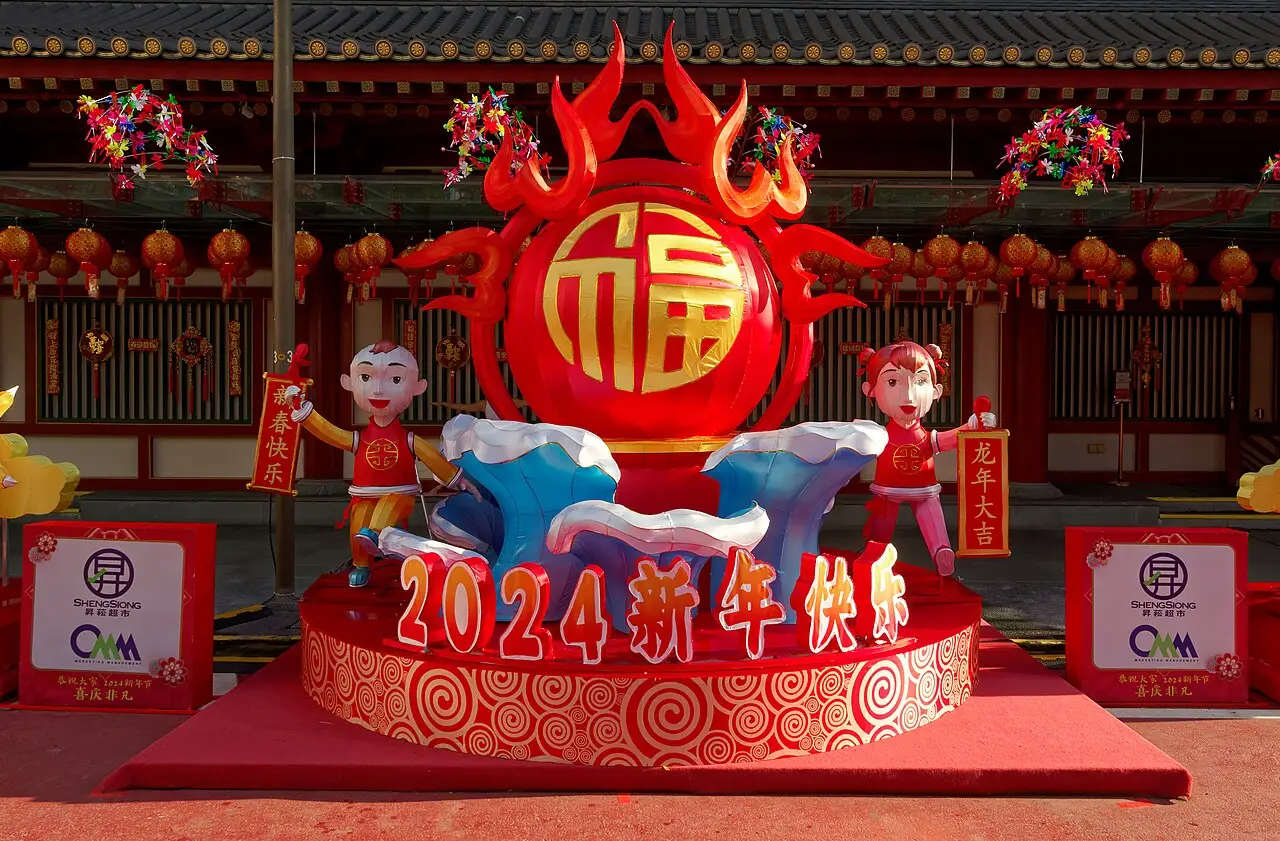
January or February, depending on the lunar calendar. Chinatown stays lit up for weeks, there's the River Hongbao at Marina Bay and the Chingay parade; many food stalls close for two to five days straight.

Thaipusam
January or February. A roughly 4 km procession from Sri Srinivasa Perumal Temple, in Little India, to Sri Thendayuthapani, on Tank Road, with devotees carrying kavadis. It starts before dawn and thins out over the course of the day.

Hari Raya Puasa and the Geylang Serai bazaar
The end of Ramadan, on a moving date. Throughout the preceding month, the Geylang Serai bazaar sets up hundreds of food and clothing stalls that run into the small hours.

National Day, August 9
Independence parade with a fighter-jet flypast and fireworks over Marina Bay. Tickets are raffled off among residents; the full-dress rehearsals on the preceding Saturdays are the chance for visitors passing through.

Singapore Grand Prix
A night race on the Marina Bay street circuit since 2008; in 2026 it runs October 9 to 11, and in other years it falls in late September or early October. The city closes streets for about a week, downtown hotels go up 20% to 40%, and the ticket includes concerts.
Books and films
The Art of Charlie Chan Hock Chye (Sonny Liew, 2015)
This graphic novel retells the country's political history through the eyes of a fictional cartoonist. It had public funding withdrawn before release and went on to win three Eisner Awards.
Ilo Ilo (Anthony Chen, 2013)
A film about a middle-class family and their Filipino domestic helper during the 1997 Asian financial crisis. It won the Caméra d'Or at Cannes and explains the city's domestic economy better than any statistic.
From Third World to First (Lee Kuan Yew, 2000)
Memoirs of the prime minister who governed from 1959 to 1990, written by himself. A one-sided but essential read for understanding the logic of the Singaporean state.
Frequently asked questions
Singapore: can you walk from Marina Bay to Chinatown at noon?
You can, but it's not worth it: at 32 °C and 80% humidity you arrive drenched, and by MRT the same trip costs just over a dollar. Walk early in the morning or after 6pm.
Singapore: how do you get from Changi Airport to downtown?
The East-West Line MRT leaves from Terminals 2 and 3 and reaches City Hall in 35 to 45 minutes for less than S$2.50, with one transfer at Tanah Merah; it runs from about 5:30am until around midnight.
Singapore: what is there on Pulau Ubin?
An island of about 10 km² in the northeast of the city-state, with the country's last kampungs. Chek Jawa reveals reef and mangrove at low tide, and bike trails cover almost its entire length.
Singapore: what's the currency?
The currency is the Singapore dollar (S$), and it's worth checking the day's exchange rate before doing the math.
Singapore: is there a better time to go?
Yes: February to April and June to August, away from the rainiest months, November to January. Between August and October, watch the PSI index, because haze from fires in Indonesia can drift in. Other than that, the year is nearly uniform: the temperature stays between 25 °C and 32 °C every month, with humidity above 80% and rain in 30- to 60-minute downpours in the late afternoon.
Itineraries through here
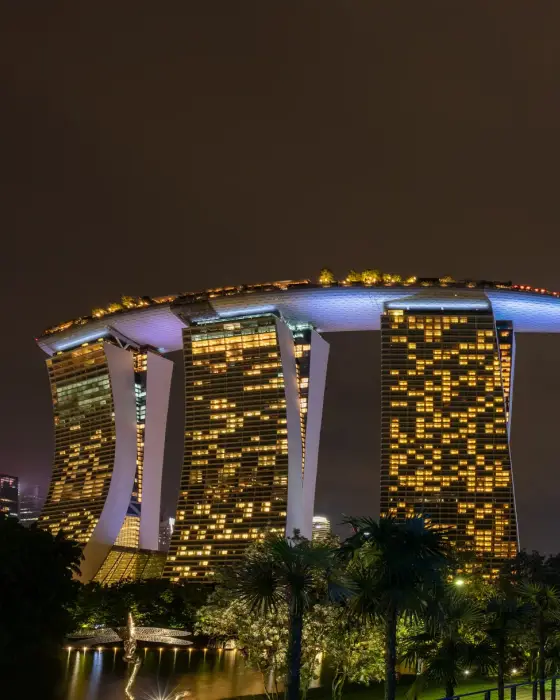 Singapore, Malaysia and Indonesia in 10 daysFrom the cities to UbudSingapore · Kuala Lumpur · Jakarta · Ubud (Bali)8–12 days4 cities
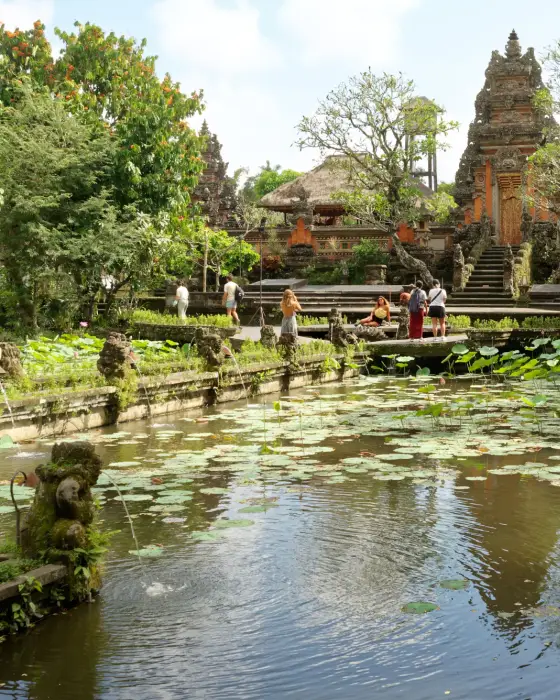 Singapore and Bali in 7 daysSingapore gardens, Bali templesSingapore · Ubud (Bali)5–7 days2 cities
 Singapore, Malaysia and Thailand in 10 daysFrom Singapore to BangkokSingapore · Kuala Lumpur · Bangkok7–10 days3 cities