
Malaysia
Kuala Lumpur
Petronas, Batu Caves and street food from three cuisines
Days Start with the basic programme and choose extensions for the time you have.
How the guide reaches this number
A third day goes to Batu Caves, the Tamil neighborhood of Brickfields and Merdeka 118. Come for the table: three cuisines at once, cheap food and stalls open into the small hours. If you like to wander aimlessly, you'll be frustrated, because the historic center is small and empties at night, and the rest calls for trains, apps or patience with the sidewalks. With only one day, see Masjid Jamek and Dataran Merdeka in the morning and have lunch in Chinatown. In the late afternoon, go up Menara KL to see the Petronas from outside and have dinner on Jalan Alor, with a teh tarik afterward. The Petronas Towers are the reason many people come and the least interesting part of the city: a line, a timed slot and a mall underneath. The best of Kuala Lumpur is at the food stalls, at a plastic table.
2–3
When June to August (less rain); December to February also works
How the guide reaches this number
The climate is equatorial and has almost no seasons: highs of 31 to 33 °C, lows of 23 to 24 °C year-round, humidity around 80% and rain possible any month, almost always in a short, heavy downpour between 4pm and 7pm. The rainiest periods are March-April and, especially, October-November, when the northeast monsoon arrives and flash floods show up; the driest and most reliable months for walking are June, July and August. That same quarter, though, is the window when smoke from regional burning can raise the pollution index for a few days: check the API before paying to go up a viewpoint. High season runs from December to early January and coincides with school holidays in July; in the weeks of Hari Raya and Chinese New Year hotels get cheaper, but half the family restaurants close. If you have to cut a month from the calendar, cut November.
Per person/day Budget RM 120–180 (about US$30–45); comfortable RM 350–600 (about US$85–145)
How the guide reaches this number
Per person per day: accommodation, meals, urban transport, visits and a small allowance for extras. Flights excluded; larger purchases vary. Editorial estimate, not a quote.
 What Nilo thinks
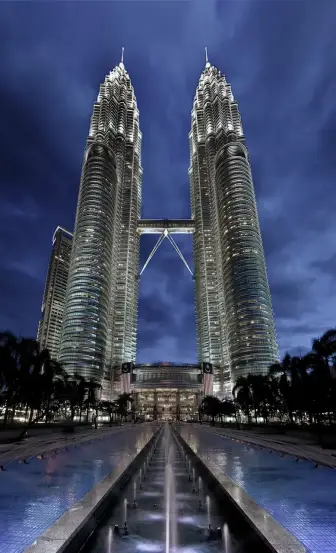
Stay two days in Kuala Lumpur: one for the historic center and Chinatown, another for the towers and a neighborhood. A third day goes to Batu Caves, the Tamil neighborhood of Brickfields and Merdeka 118. Come for the table: three cuisines at once, cheap food and stalls open into the small hours. If you like to wander aimlessly, you'll be frustrated, because the historic center is small and empties at night, and the rest calls for trains, apps or patience with the sidewalks. With only one day, see Masjid Jamek and Dataran Merdeka in the morning and have lunch in Chinatown. In the late afternoon, go up Menara KL to see the Petronas from outside and have dinner on Jalan Alor, with a teh tarik afterward. The Petronas Towers are the reason many people come and the least interesting part of the city: a line, a timed slot and a mall underneath. The best of Kuala Lumpur is at the food stalls, at a plastic table.In Kuala Lumpur, the Petronas Towers appear at the end of almost every avenue, but you get a better sense of the city on Jalan Alor at night, over Hokkien mee with cubes of crispy pork fat. The settlement founded by tin miners beside two rivers grew with three communities, Malay, Chinese and Tamil, each bringing its own food. That is why the same Chinatown block has both a Taoist temple and a Hindu one, and a meal might be nasi lemak, roti canai with teh tarik at a mamak stall or rice on a banana leaf in Brickfields. Nearby, the limestone Batu Caves hold a Hindu shrine above a staircase painted in bands of color. Rain falls hard and briefly almost every late afternoon, so get around by train and covered walkways. Come between June and August, when there is less rain, and allow two days, with a third for the caves.
Quick facts
- Population
- about 2.0 million in the Federal Territory (243 km²); about 8.8–9 million in Greater KL / Klang Valley
- Founded
- 1857, by tin miners at the confluence of the Klang and Gombak rivers
- Country and region
- Malaysia; Federal Territory of Kuala Lumpur, surrounded by the state of Selangor, in the Klang Valley
- Language
- Malay (Bahasa Malaysia) is official; English is widely spoken everywhere; Mandarin, Cantonese, Hokkien, and Tamil in everyday life
- Currency
- Ringgit (RM / MYR); about 4.1 RM per dollar in September 2026, 1 RM ≈ R$1.25
- Time zone
- UTC+8, no daylight saving
- Best time to visit
- June to August (less rain); December to February also works
- Average daily cost
- Budget RM 120–180 (about US$30–45); comfortable RM 350–600 (about US$85–145)
When to go
June to August (less rain); December to February also works
January
24° to 33°C
227 mm of rain
February
24° to 33°C
193 mm of rain
March
25° to 34°C
270 mm of rain
April
25° to 34°C
302 mm of rain
May
25° to 34°C
230 mm of rain
September
24° to 33°C
220 mm of rain
October
24° to 33°C
284 mm of rain
November
24° to 32°C
356 mm of rain
December
24° to 32°C
281 mm of rain
How the year changes
The climate is equatorial and has almost no seasons: highs of 31 to 33 °C, lows of 23 to 24 °C year-round, humidity around 80% and rain possible any month, almost always in a short, heavy downpour between 4pm and 7pm. The rainiest periods are March-April and, especially, October-November, when the northeast monsoon arrives and flash floods show up; the driest and most reliable months for walking are June, July and August. That same quarter, though, is the window when smoke from regional burning can raise the pollution index for a few days: check the API before paying to go up a viewpoint. High season runs from December to early January and coincides with school holidays in July; in the weeks of Hari Raya and Chinese New Year hotels get cheaper, but half the family restaurants close. If you have to cut a month from the calendar, cut November.
The same numbers as a table
| Month | Temperature °C | Rain mm |
|---|---|---|
| January | 24 to 33 | 227 |
| February | 24 to 33 | 193 |
| March | 25 to 34 | 270 |
| April | 25 to 34 | 302 |
| May | 25 to 34 | 230 |
| June · | 25 to 33 | 146 |
| July · | 24 to 33 | 165 |
| August · | 25 to 33 | 174 |
| September | 24 to 33 | 220 |
| October | 24 to 33 | 284 |
| November | 24 to 32 | 356 |
| December | 24 to 32 | 281 |
Nilo's tips
Buy the Petronas ticket (RM 127) on the official site
Admission has a daily quota, sells out on weekends, and costs more through a middleman. On the official website, it runs around RM127 on a weekday for foreigners, and weekday morning is the best time to go. If you can't get in, go up the Menara KL: same altitude as the 86th-floor deck, but with the Petronas towers in the frame.
Climb the 272 steps of Batu Caves before 9am
At 9am the heat and the tour groups arrive together. Take the KTM Komuter from KL Sentral at 7:30am to Batu Caves station and start the climb before then. Close your backpack tight, because the monkeys grab open bags and food in sight.
From the airport, a 28-minute train; avoid cars from 4pm to 8pm
KLIA is 50 km from downtown, and between 4pm and 8pm a car can take twice as long on the Federal Highway. KLIA Ekspres reaches KL Sentral in 28 minutes, for about RM55, while Grab in that window costs RM75–110. The KL TravelPass adds that trip to two consecutive days of unlimited RapidKL trains and buses; compare the pass price with the trips you plan to take, because the savings depend on how much you use it. Before leaving, check your flight's terminal, because T1 and T2 are 2 km apart, connected by a train with a RM2 adult fare.
Buy a Touch 'n Go card on day one
A single card works at the turnstiles of the MRT, LRT, monorail, and KTM Komuter, without you needing to know which operator runs each line. The TNG eWallet QR code on your phone doesn't open all of them. The physical card costs about RM10 plus whatever credit you load. On the central GOKL buses, visitors from other countries pay RM1 per boarding, with the same card or by tapping a contactless credit or debit card. For stalls and markets, keep cash.
Use the 1.17 km walkway between KLCC and Bukit Bintang
It's the only stretch between neighborhoods that works well on foot, because the corridor is covered and air-conditioned. Save it for late afternoon, between 4pm and 7pm, when the downpour usually hits. To get from one neighborhood to another outside that corridor, the metro and Grab save you an hour of broken sidewalk.
The night market changes neighborhood every day
The pasar malam rotates through a different neighborhood each day of the week, so ask at the hotel which one is today's before heading out. Kampung Baru's is on Saturday, and the nasi lemak stalls there serve until late, with the towers showing above the low rooftops. Between June and August the durian stalls take over Jalan Alor and SS2. Eat the fruit right there, on the sidewalk, because it's banned in hotels, the metro and taxis.
Explore the map

© OpenStreetMap · OpenFreeMap · © OpenMapTiles
Explore the map, read about the other places and plan your travel days in the app.
Open the appWhat to see
Kuala Lumpur: the valley, the river, and the limestone
Downtown sits just 22 m above sea level, where the Gombak River meets the Klang, and the city grew without a regular grid: streets follow old mining tracks, river bends, and hill ridges, which makes for a layout that's hard to walk and easy to get lost in.
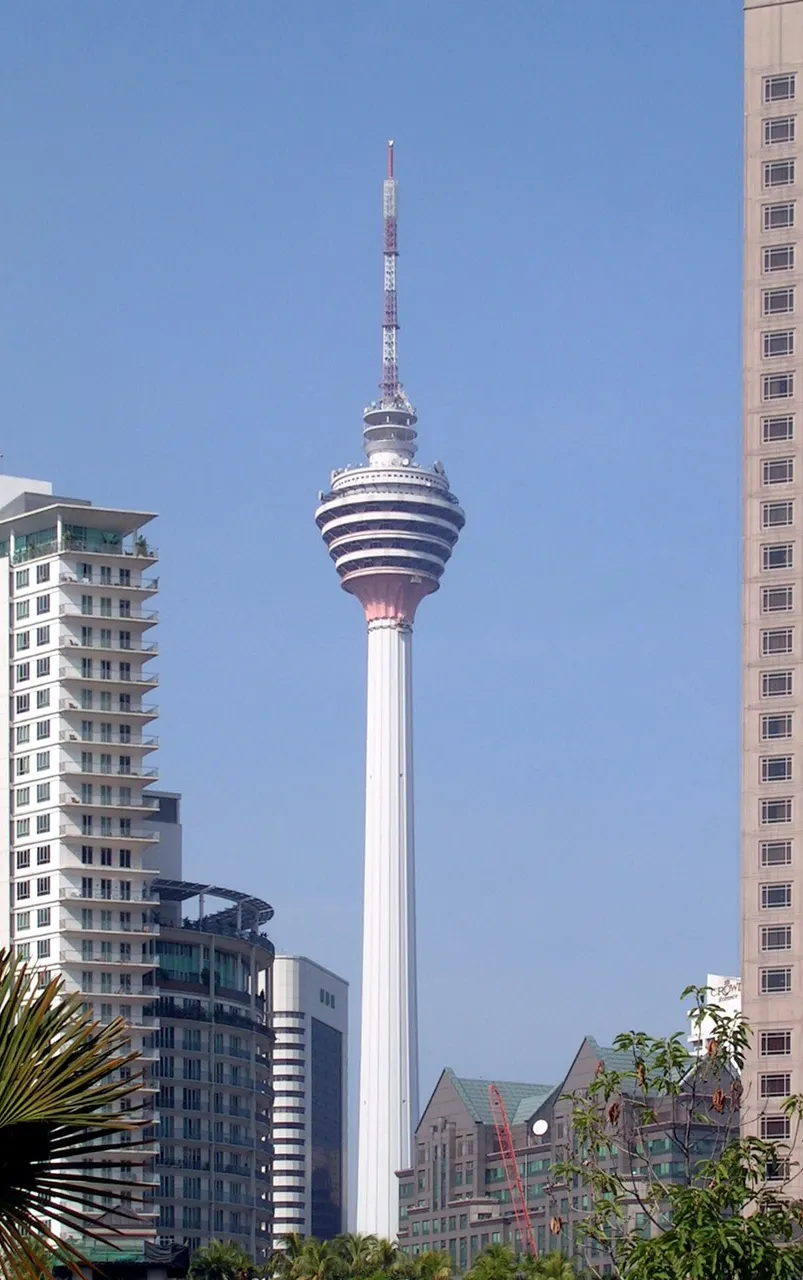
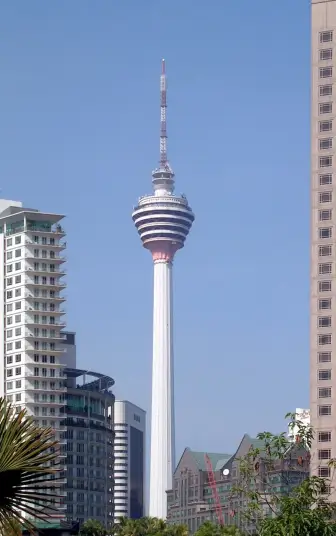
Menara KL
A 421 m telecommunications tower opened in 1996 on top of Bukit Nanas, whose base preserves the last patch of tropical forest reserve inside the city. Because it stands on a hill, its observation deck sits at a height similar to the Petronas skydeck, and from there you can see the Petronas Towers themselves, which their own deck can't offer.
The hilltop tower protects the city's last patch of tropical forest at its base, and the observation deck reaches what the neighboring towers' observatory doesn't show; 421 m; opened in 1996.
Check access

Batu Caves
A limestone cave complex 13 km to the north, turned into a temple to the god Murugan in 1891 and reached by 272 steps repainted in colorful stripes in 2018. The golden 42.7 m Murugan statue dates from 2006; entry to the main cave is free, the KTM Komuter train takes about 30 minutes from KL Sentral, and the monkeys will grab any open bag.
A temple in a limestone cave to the north is reached by a long staircase repainted in colored stripes, with a huge golden statue and monkeys that grab open bags; 272 steps; the statue is 42.7 m tall.
Check access
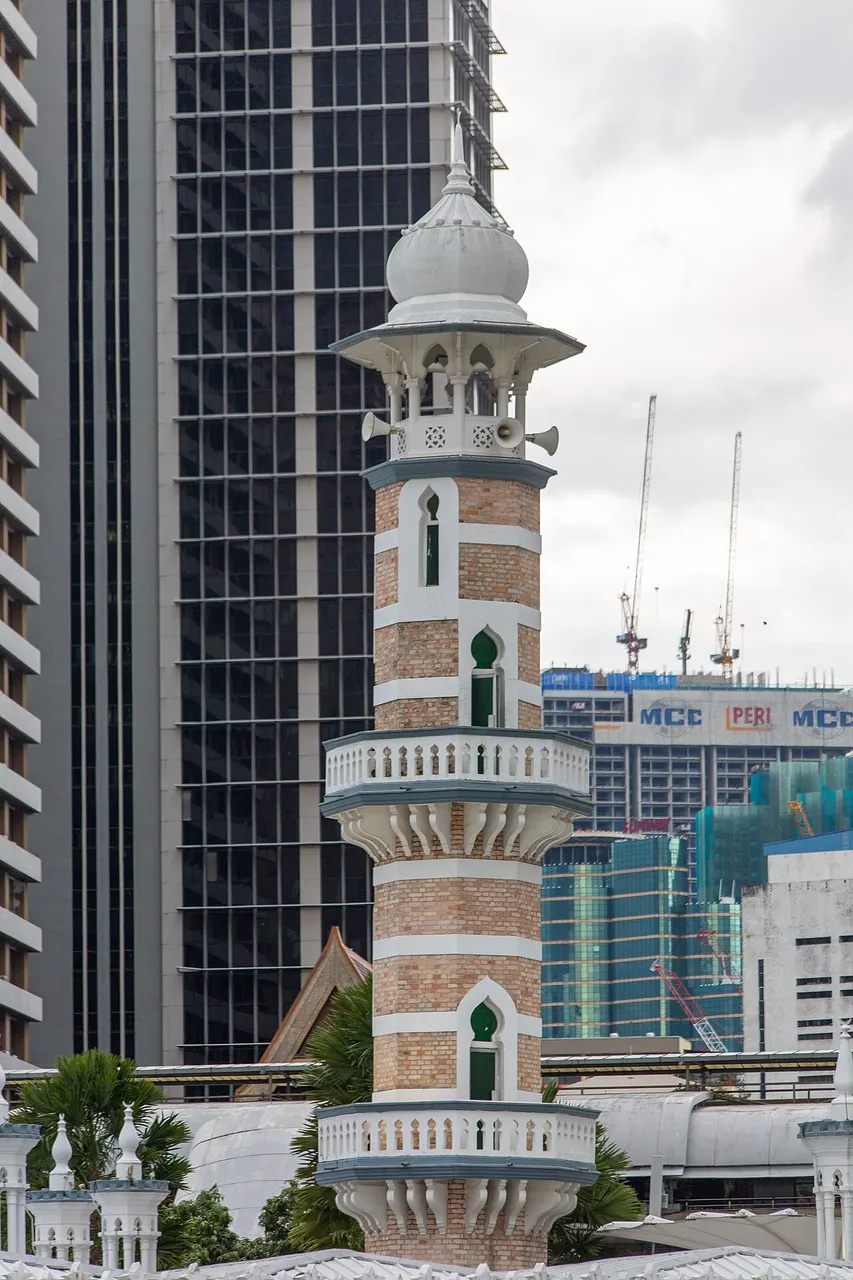
Masjid Jamek
A 1909 mosque designed by A. B. Hubback right on the spit of land where the Gombak meets the Klang, the muddy confluence that gave the city its name. Onion domes, red and white brick and palm trees; the mosque lends robes and headscarves at the entrance and closes to visitors during prayer times.
The mosque stands exactly on the spit of land where two rivers meet, the confluence that gave the city its name, and it lends robes and headscarves at the entrance; designed in 1909; closed during prayer times.
Check access
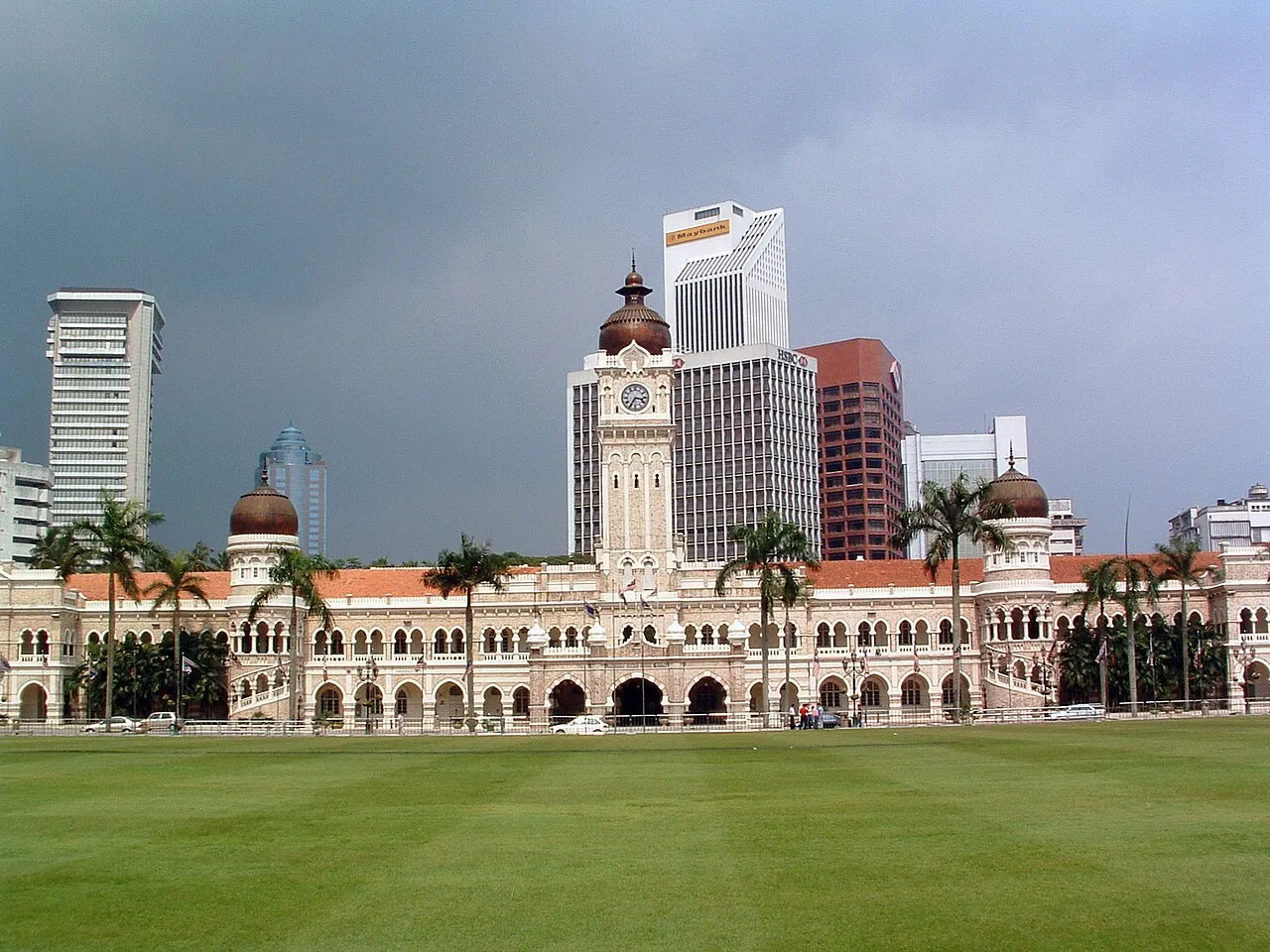
Sultan Abdul Samad Building and Dataran Merdeka
A colonial administrative building from 1897, with a 41 m clock tower and horseshoe arches, facing the lawn where the British flag came down on August 30, 1957. The flagpole out front stands 95 m tall, and the August 31 parade still happens right there.
The 1897 administrative building raises a 41-m clock tower, the British flag came down on August 30, 1957, on the lawn in front, and the August 31 parade still gathers there by the 95-m flagpole.
Check access
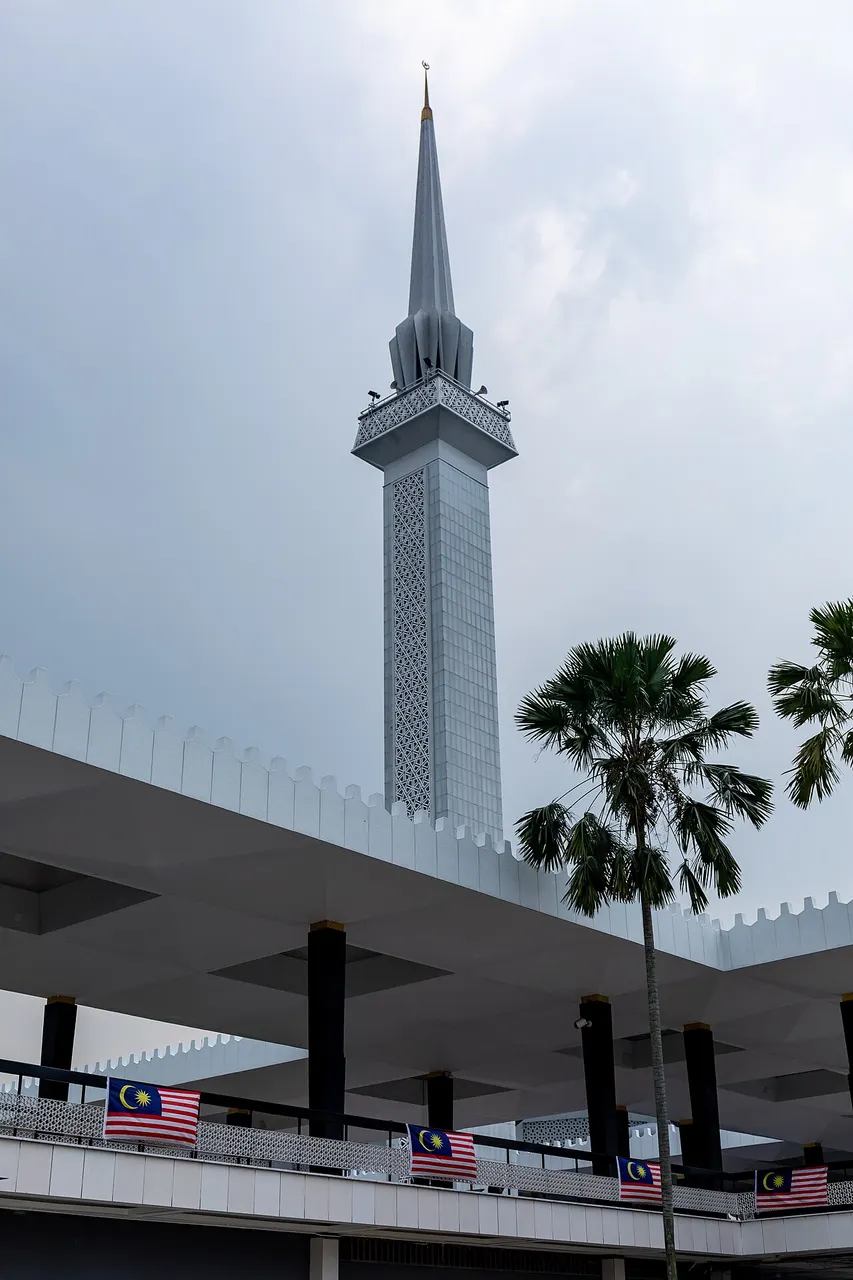
Masjid Negara
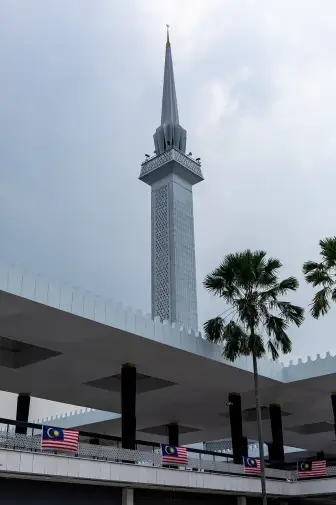
The 1965 National Mosque, with a concrete slab shaped like an open umbrella with 16 points and a 73 m minaret: a deliberate modernist answer to the British Mughal architecture. It holds 15,000 people, opens to visitors outside prayer times and lends purple robes at the door.
The national mosque answers the colonizers' Mughal architecture with a roof shaped like an open umbrella, holds a huge crowd, and lends purple robes outside prayer times; built in 1965; holds 15,000 people.
Check access
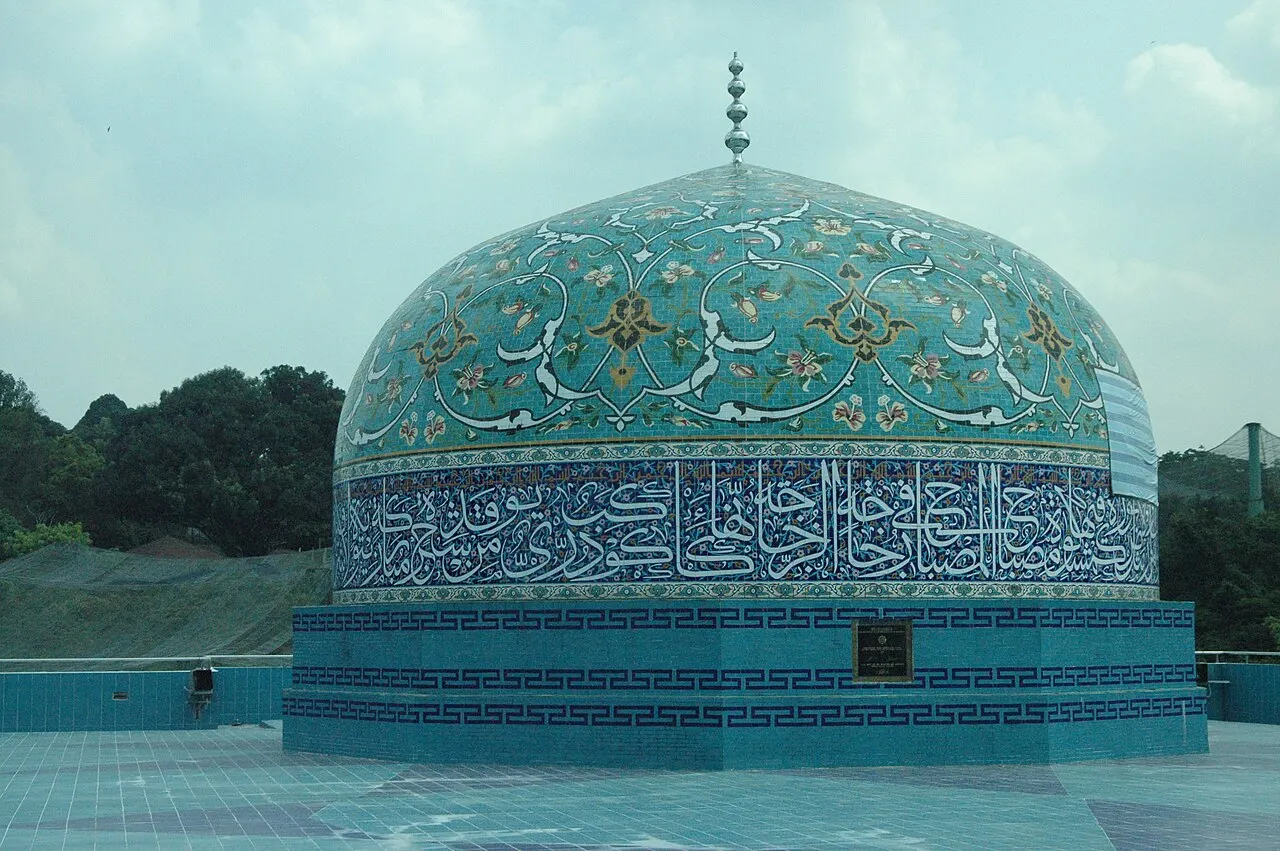
Islamic Arts Museum
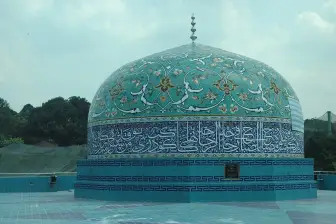
Opened in 1998 next to Masjid Negara, it's the largest Islamic art museum in Southeast Asia, with about 12,000 pieces, scale models of mosques from around the world, and domes finished by Iranian craftsmen. Admission runs around RM 20, and it's one of the few museums in the city with a first-rate collection.
It's the largest museum of Islamic art in Southeast Asia, with about 12,000 pieces and models of mosques from around the world, and one of the city's few first-rate collections, for a ticket of around RM 20.
Check access

Central Market and Kwai Chai Hong
Pasar Seni has been running since 1888, got its art deco facade in 1937 and was granted heritage status in the 1980s; today it sells batik, silver and crafts in an air-conditioned setting. Two blocks away, Kwai Chai Hong alley was restored in 2019 with murals re-enacting Chinatown life in the 1960s.
Pasar Seni has operated since 1888, and today it sells batik, silver, and crafts, while the restored Kwai Chai Hong shows murals that re-create daily life in 1960s Chinatown.
Check access
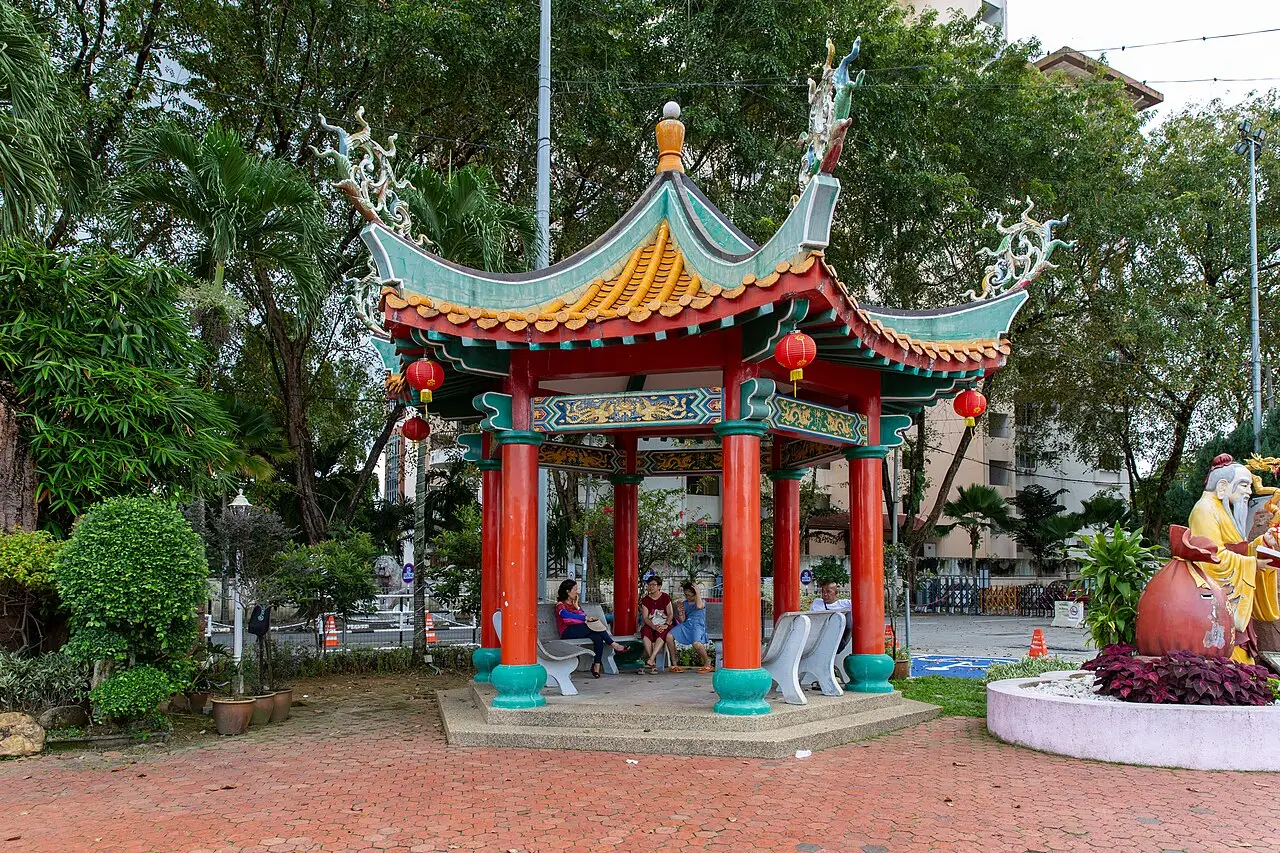
Thean Hou and Sri Mahamariamman
Thean Hou, from 1987, is a six-tiered Chinese temple in Robson Heights dedicated to Mazu, goddess of seafarers, with an open view over the city. Sri Mahamariamman, founded in 1873 in Chinatown, is KL's oldest Hindu temple, with a 22.9 m gopuram covered in 228 carved figures, finished in 1972; it's where the Thaipusam procession sets off.
Thean Hou, from 1987, rises six stories on Robson Heights in honor of Mazu, protector of seafarers, and opens up a view over the capital, while Sri Mahamariamman, from 1873, in Chinatown, remains KL's oldest Hindu temple and sends off the Thaipusam procession.
Check access

Merdeka 118
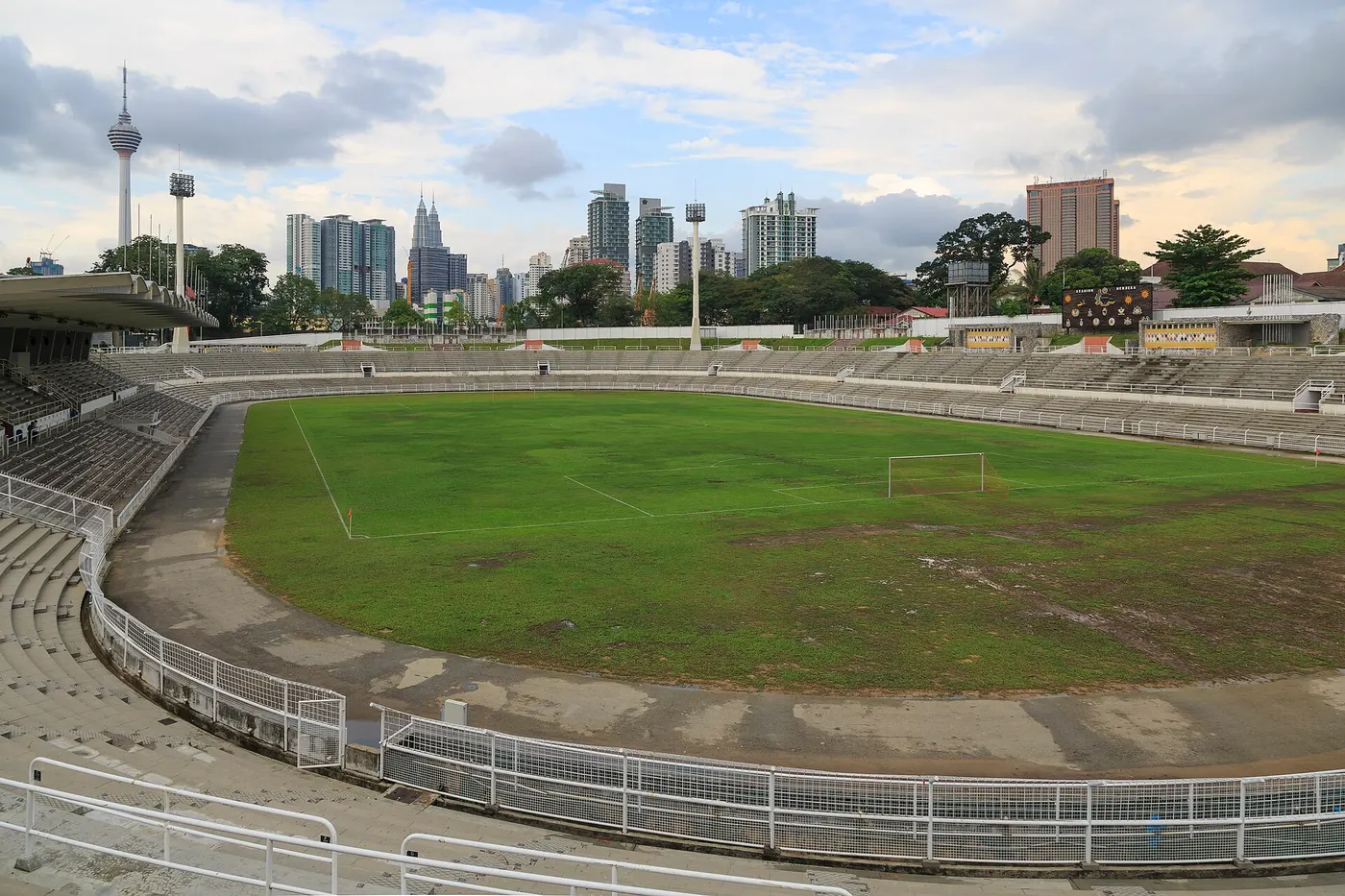
A 678.9 m, 118-story tower completed in 2023, the world’s second tallest, with a faceted glass facade evoking Tunku Abdul Rahman’s raised hand in 1957. When checked in September 2026, The View at 118 observation deck was still advertised to open in the second half of 2026; confirm on the official website before planning an ascent. Below is Stadium Merdeka, built in 1957, where independence was proclaimed.
I'd prioritize Stadium Merdeka, at the foot of the 678.9-m tower: independence was proclaimed there on August 31, 1957. For the climb to The View at 118, wait for confirmation of access and ticket sales on the official website; the announcement of a future opening doesn't yet guarantee a visit.
Check access
Nilo’s itinerary
Start with the basic programme and choose extensions for the time you have.
Plan my days in the app ↗Day 1 · The confluence and Chinatown
Start at 8am at Masjid Jamek, on the spit of land where the Gombak meets the Klang; borrow a robe at the entrance and leave before the midday prayer.
At 9:30am, cross over to Dataran Merdeka, see the 1897 Sultan Abdul Samad Building and the 95 m flagpole, and continue on foot along the River of Life promenade.
Have lunch at noon on Jalan Petaling or at an old shophouse café on Jalan Sultan, then stop by Central Market, for crafts, and Kwai Chai Hong alley, for the 2019 murals.
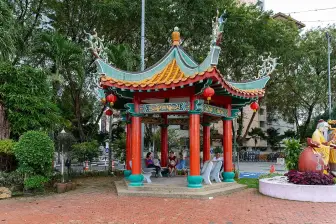
At 3pm, enter the Sri Mahamariamman temple (1873) and the Taoist Guan Di temple, on the same block, barefoot in both.
At 6pm, go up the Menara KL, in Bukit Nanas, to watch the sunset with the Petronas Towers in frame; have dinner afterward on Jalan Alor.
Day 2 · Towers, a museum, and wooden houses
Go up the Petronas Towers at 9am, with a ticket bought in advance, for the 41st-floor skybridge and the 86th-floor observation deck, and set aside 1 hour 30 minutes; if you have to choose, the towers look better from outside, from Menara KL.
At 11am, walk through KLCC Park, the 20 ha designed by Roberto Burle Marx, with the fountain lake and the As-Syakirin mosque in the background.
Have a quick lunch at 1pm and take a taxi to the Islamic Arts Museum, next to Masjid Negara, pairing the two in the same afternoon, with the Perdana Botanical Garden if there's time left.
At 5pm, walk through Kampung Baru, among wooden houses on stilts, and eat nasi lemak at a stall with the towers in the background.
At 9pm, have a teh tarik at a 24-hour mamak stall and, if it's Saturday, stop by the Kampung Baru night market.


If you stay longer
Day 3 · Batu Caves, banana-leaf rice, and the new tower
At 7:30am, take the KTM Komuter from KL Sentral to Batu Caves and do the climb before 9am.
At 11am, head back to Brickfields for banana-leaf rice, with free refills of rice and vegetables; fold the leaf inward at the end.
At 2pm, go up to the Thean Hou temple, from 1987, in Robson Heights, for the wide view over the city, or step into the National Museum, next to KL Sentral, if the rain comes early.
At 5pm, look at Merdeka 118’s facade and visit the area around Stadium Merdeka, where independence was declared in 1957. Check the stadium’s program. Add The View at 118 observation deck only if the official website confirms opening and tickets for your date.
Have dinner at 8pm in Bangsar or Bukit Bintang and finish with cendol or durian, depending on the season.


Food
 AI illustration
Nasi lemak
Rice cooked in coconut milk with pandan leaf, served with chili sambal, fried anchovies, peanuts, cucumber, and egg, wrapped in banana leaf and paper. It's street breakfast between 6 and 10am and costs RM 3–8; the version with fried chicken (nasi lemak ayam) turns it into lunch.
 AI illustration
Roti canai
Indian-Muslim dough stretched in the air, folded and slapped onto the griddle, served with dhal and curry for dipping. It costs RM1.50–3 at any mamak stall, open into the small hours; ask for telur for the egg version and kosong for the plain one.
 AI illustration
Teh tarik
Strong black tea with condensed milk, “pulled” from one mug to another at arm's length until it froths. It costs RM 2 to 3, it's the social engine of the 24-hour stalls and has an iced version (teh ais) and a milk-free one (teh o).
 AI illustration
KL Hokkien mee
Thick wheat noodles fried in dark soy sauce with cabbage, shrimp and crispy lard cubes: a local invention from the 1920s, different from the dish of the same name in Penang and Singapore. A dinner dish, RM 12 to 20, always at a charcoal-wok stall.
 AI illustration
Banana leaf rice
A Tamil tradition from Brickfields: rice served on a leaf, with three vegetables, papadum, rasam, and curry, with free refills of rice and vegetables. It's eaten with the right hand, and you fold the leaf inward at the end to signal you enjoyed the meal; RM 10–18.
 AI illustration
Bak kut teh
Pork rib soup simmered for hours in a broth of Chinese herbs, garlic, and dark soy, a Hokkien inheritance from the port of Klang, 30 km away. It's a breakfast food, served with rice and youtiao, and since it contains pork it only shows up at non-halal restaurants.
 AI illustration
Satay and nasi kandar
Satay are chicken or beef skewers marinated in turmeric, grilled over charcoal and served with peanut sauce, ketupat and raw onion. The reference is neighboring Kajang. Nasi kandar is rice with a choice of curries mixed on the plate, a Penang tradition from restaurants open 24 hours, RM 10 to 20.
 AI illustration
Cendol, ABC, and durian
Cendol is shaved ice, coconut milk, palm sugar and green rice-flour “worms”; ais kacang (ABC) piles beans, corn and jelly under syrup. Durian, in season from June to August, is banned from hotels, the metro and taxis for its strong smell.
Day trips

Putrajaya
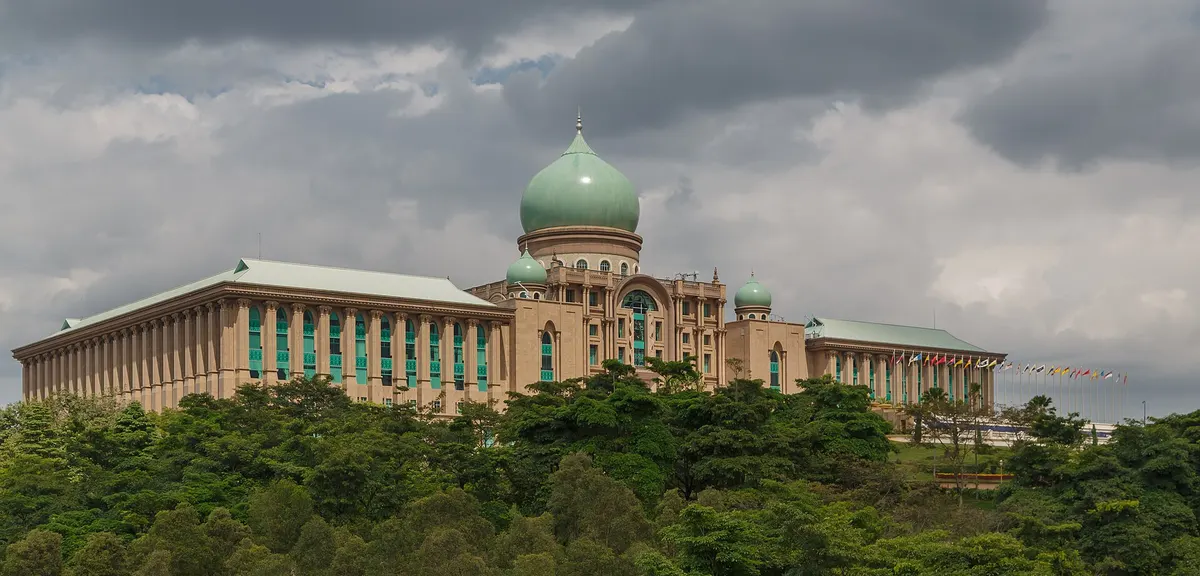
25 km to the south, 30 to 40 minutes on the KLIA Transit to Putrajaya Sentral. The administrative capital since 1999, built from scratch around an artificial lake, with the pink Masjid Putra mosque (1999), the Perdana Putra government palace, and eight architect-designed bridges; it works best early morning or late afternoon, because the scale is huge and shade is scarce.

Malacca
145 km to the south, about 2 hours by express bus from the TBS terminal, with departures every half hour. A port that was a sultanate in 1400, Portuguese from 1511, Dutch in 1641, and British in 1824; the center has been a UNESCO World Heritage Site since 2008, with the red Christ Church (1753), the ruins of St. Paul's, and the Peranakan cooking of the Jonker Street shophouses.

Genting Highlands
50 km north, about an hour by bus to Awana, then another 10 minutes on the Awana SkyWay cable car, about 2.6 km long. At an altitude of 1,800 m, temperatures stay between 18 and 22 °C, explaining the destination's popularity; at the top are Malaysia's only legal casino, indoor parks, giant hotels and almost daily fog after noon.
Where to begin
The confluence and Chinatown
Start at 8am at Masjid Jamek, on the spit of land where the Gombak meets the Klang; borrow a robe at the entrance and leave before the midday prayer.
Towers, a museum, and wooden houses
Go up the Petronas Towers at 9am, with a ticket bought in advance, for the 41st-floor skybridge and the 86th-floor observation deck, and set aside 1 hour 30 minutes; if you have to choose, the towers look better from outside, from Menara KL.
Batu Caves, banana-leaf rice, and the new tower
At 7:30am, take the KTM Komuter from KL Sentral to Batu Caves and do the climb before 9am.
Money
The currency is the ringgit (RM or MYR), at about 4.1 to the dollar in September 2026, putting RM1 near R$1.25. Reference prices: teh tarik RM2–3, coffee shop coffee RM12–18, a hawker-center meal RM8–15, a mid-range restaurant meal RM40–70 per person and a large beer RM18–30, since alcohol is heavily taxed. Sit-down restaurants usually add a 10% service charge; SST on taxable food services is 6%. The “++” on the menu indicates the additions, so check the bill before leaving a tip. At a street stall, the posted price is the final price. Hotels charge foreign guests a tourist tax of RM10 per room per night, on top of rates ranging from RM40–70 at a hostel to RM180–350 at a three- or four-star downtown hotel. Cards work at malls, chains and hotels; hawker centers, markets and taxis use cash or local QR payments (DuitNow and Touch 'n Go eWallet). Withdraw cash at a bank ATM inside a mall, where the exchange rate is better than at airport exchange counters.
Getting there and around
KLIA Airport: 50 km away, two terminals 2 km apart
KLIA is about 50 km south and has two terminals 2 km apart (Terminal 1 for traditional airlines and Terminal 2 for AirAsia), connected by a train costing RM2 per adult between terminals; confusing the two is the day’s costliest mistake. KLIA Ekspres runs nonstop to KL Sentral in 28 minutes for about RM55 each way, with a round-trip option. The KL TravelPass combines airport transportation with two consecutive days of unlimited RapidKL trains and buses; compare its price with the trips you plan to take. KLIA Transit uses the same tracks and stops at three intermediate stations. Skybus and Aerobus express buses cost RM12–15 and take 1–1½ hours, depending on traffic on the ELITE and Federal Highway, while Grab costs RM75–110. Do not rely on a car from 4 to 8pm: the same distance can take twice as long, which is when the train earns its higher price.
Kuala Lumpur's rail: 2 MRT lines, 4 LRT lines and the monorail
The city has two MRT lines (Kajang and Putrajaya), four LRT lines (Kelana Jaya, Ampang, Sri Petaling, and Shah Alam, opened in June 2026 with twenty stations), KL Monorail, Sunway BRT, and KTM Komuter suburban trains: around 200 km of rail, with transfers at KL Sentral, Masjid Jamek, Pasar Seni, and Hang Tuah. A physical Touch ’n Go card (around RM10 for the card plus credit) serves the urban network; single tickets follow each operator’s rules. A TNG eWallet QR code does not universally replace that card at the gates. The RM50 monthly My50 pass is exclusively for Malaysians; visitors should check passes available to foreigners. On central GOKL buses, foreign riders pay RM1 per trip using Touch ’n Go or a bank card, and Grab has replaced street taxis: refuse drivers offering a fixed price without a meter. Walking between neighborhoods is possible but unpleasant: broken sidewalks, overpasses without crossings, 33 °C heat, and rain. The exception is the 1.17 km covered walkway connecting KLCC and Bukit Bintang. Bicycles are virtually nonexistent as transportation.
Safety
Kuala Lumpur is a comparatively safe capital: violent crime against foreigners is rare and police are regularly present in tourist areas. The realistic risks are theft, with pickpockets on Petaling Street, the crowded monorail, and night markets, and bag snatching by pairs on motorcycles, a reason to wear a crossbody strap and keep your bag away from the curb. Recurring scams include taxis refusing to use the meter (call Grab), street exchange counters with hidden fees, invitations to play cards at the home of a ‘relative’ who has just recognized you, and massage offers outside bars late at night. At night, I’d avoid the edges of Chow Kit, Jalan Silang’s alleys, and the area around Bukit Bintang after 3am, and use ride-hailing rather than walk. Traffic is the most ordinary danger: motorcycles mount sidewalks, pedestrian right of way is not respected, and walking to a footbridge beats crossing the road. Dengue is endemic in the Klang Valley, and mosquitoes can bite during the day and at night. Use repellent throughout the day according to its label; Malaysia’s drug penalties remain among the world’s harshest, with life imprisonment and caning still possible after the 2023 revision of the mandatory death penalty.
Etiquette tips
Take off your shoes
Shoes off before entering a home, a mosque, a Hindu or Chinese temple, and many small shops. If there's a pile of shoes at the door, the pile is the instruction.
Use your right hand
Eat, hand over money, receive a card, and point with your right hand; the left is considered unclean. To indicate a direction, use your thumb folded over a closed fist, never your index finger.
Dress for the mosque
Shoulders and knees covered, and a headscarf for women; Masjid Negara and Masjid Jamek lend robes for free at the entrance. Don't enter the prayer hall during prayers, and never walk in front of someone who is praying.
Greet carefully
The salam is a light touch of the hands followed by bringing the right hand to the chest. Many Muslim women don't shake hands with men. Wait for her to initiate, and bring your hand to your chest if she doesn't extend hers.
Respect what isn't served
Most restaurants are halal and serve neither pork nor alcohol; don't bring outside food or drink into them, and don't offer either one to someone you're not sure drinks. During Ramadan, avoid eating, drinking and smoking in the street between dawn and sunset.
Share the table and mark your spot
At a hawker center or mamak stall, sitting at a partly occupied table is normal; ask permission and sit. To reserve your seat before ordering, leave a packet of tissues on the table. Everyone in Malaysia understands the gesture.
Mistakes to avoid
Crossing two neighborhoods on foot
Crossing two neighborhoods on foot because on the map it was 2 km. It can turn into an hour of broken sidewalk, overpasses with no crossing, and 33 °C with humidity; take the train or Grab and save the walking for inside a single neighborhood.
Showing up at the Petronas Towers without a ticket
Showing up at the Petronas Towers without a ticket. Entry is timed and has a daily quota, sells out on weekends, and costs more through a reseller; buy on the official site and go on a weekday morning.
Heading to KLIA in the late afternoon
Heading to KLIA by car in the late afternoon. It's 50 km on highways that jam up, and the KLIA Ekspres covers the same route in 28 minutes for RM 55. Also check whether your flight leaves from Terminal 1 or Terminal 2, which are 2 km apart.
Visits during Hari Raya or Chinese New Year
Booking a string of visits during Hari Raya or Chinese New Year. Family restaurants and neighborhood shops close for several days in a row and the city goes half-empty, which is great for traffic and bad for eating.
Long sleeves for the air conditioning
Thinking only about the heat outside and forgetting the cold indoors. Bring a small umbrella for the five o'clock downpour and a light long-sleeved layer for the air-conditioning in malls, trains and movie theaters, which is often set near 20 °C.
Useful phrases
Terima kasih
Thank you (te-ree-ma kah-see). The reply is “sama-sama”, you're welcome.
Selamat pagi / Selamat petang
Good morning / good afternoon (se-lá-mat pá-gui / se-lá-mat pe-tãng).
Berapa harga?
How much is it? (be-rá-pa hár-ga). At a market, it's the start of a conversation, not the end.
Bungkus
To go, wrapped up (búng-cus). It's the word that gets the stall to put your food in a bag.
Kurang manis, kurang pedas
Less sweet, less spicy (cú-rang má-nis / cú-rang pé-das). Works for a drink and for a curry.
Sedap!
It's delicious (se-dáp). Said to the cook, it works better than any tip.
Districts
KLCC
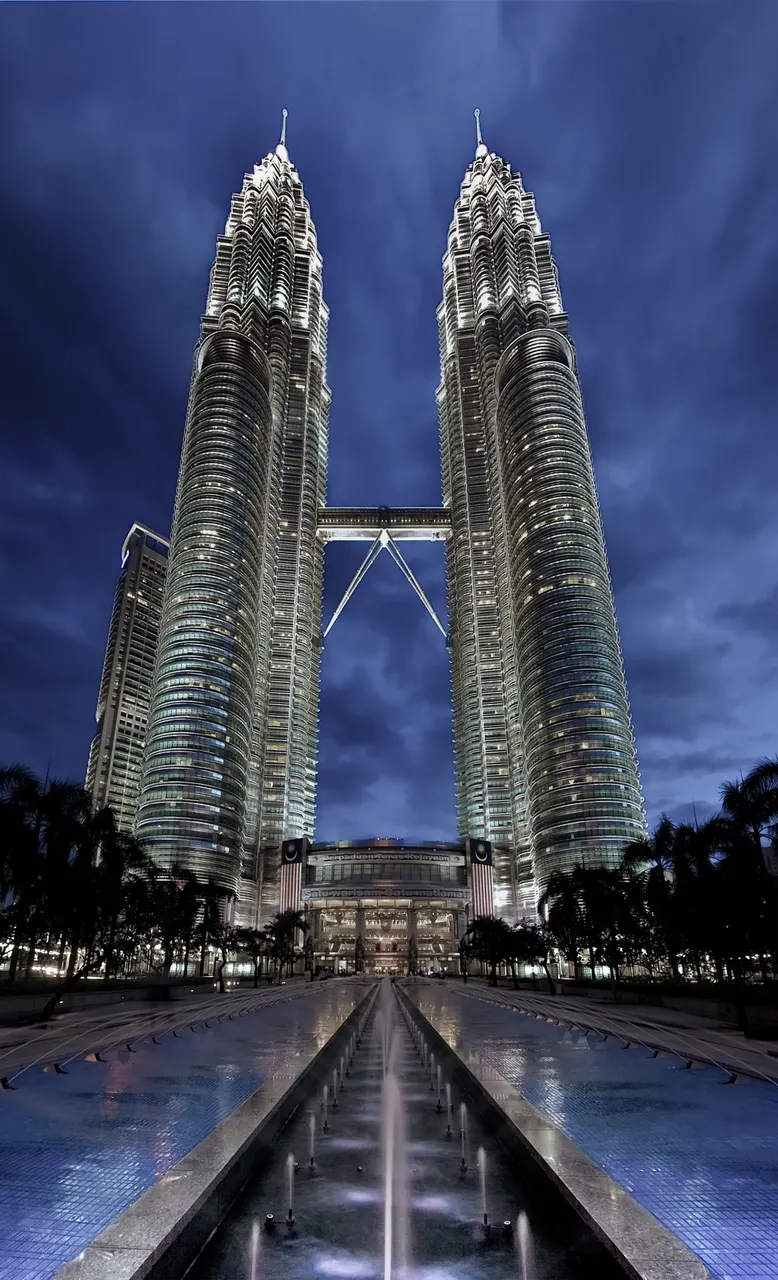
The corporate center built over the old Selangor Turf Club racecourse: the Petronas Towers, the Suria mall, the 20-hectare park designed by Roberto Burle Marx, and oil and banking offices. This is where the expensive hotels are, along with the city's best network of covered walkways.
Bukit Bintang
The shopping and food axis, with Pavilion, Lot 10, and Berjaya Times Square on one side and the food-stall street Jalan Alor on the other. At night life splits between Changkat Bukit Bintang, with its bars, and Alor's plastic tables, which serve until dawn.
Chinatown / Petaling Street
A 19th-century Chinese core around Jalan Petaling, with a covered market of knockoffs, teahouses, the Taoist Guan Di temple, and the Hindu Sri Mahamariamman temple on the same block. Kwai Chai Hong alley, restored in 2019, and a wave of cafés in old shophouses have changed the neighborhood over the last decade.
Dataran Merdeka and Masjid India
The colonial block: a grassy square from 1884, the Sultan Abdul Samad Building, the Jamek Mosque at the confluence, and, a few steps away, the Muslim-Indian textile trade of Masjid India and Jalan Tuanku Abdul Rahman. It runs by day and empties out at night.
Brickfields
A Tamil neighborhood officially named Little India in 2010, right next to KL Sentral station. It runs on banana-leaf rice, gold jewelers, sari shops, and temples; it's the cheapest place to eat near the train hub.
Kampung Baru
Malay agricultural reserve set up in 1900, 1.5 km from the Petronas Towers, with wooden houses on stilts and property rules that stalled decades of real-estate projects. On Saturdays a busy pasar malam sets up, with an early line for nasi lemak; from the street you can see the towers over the low rooftops.
Bangsar
A former rubber plantation turned upper-middle-class neighborhood to the southwest, with cafés, bookshops, bars, and the Lucky Garden morning market. It's the low-rise counterpoint to the downtown malls, and where a lot of people who work in KL actually live.
Chow Kit and Sentul
North of the center, Chow Kit has the city's largest street market (meat, fish and fruit from 6am) and a rough reputation at night. Sentul, next door, was a railway yard and today holds the KLPAC theater, renovated warehouses and new residential towers.
History
1857 · The 87 miners
Raja Abdullah bin Raja Jaafar sends 87 Chinese miners upriver, financed by Malacca merchants, to look for tin in Ampang. They land at the confluence of the Klang and the Gombak, and most die of malaria within a few weeks; the camp stays.
1868–1885 · Yap Ah Loy
The third Kapitan Cina lives through the Selangor Civil War (1867–1874) and rebuilds the settlement twice. Under him the town grows from a few hundred to thousands of people and becomes the valley's tin trading post.
1880–1881 · Capital, fire, and flood
In 1880 the capital of Selangor moves from Klang to Kuala Lumpur. The following year, a fire consumes the wooden town and a flood follows right behind it; British Resident Frank Swettenham forces reconstruction in brick and tile.
1896 · Capital of the Federated States
Kuala Lumpur becomes the capital of the Federated Malay States, bringing together Selangor, Perak, Negeri Sembilan, and Pahang. Colonial administration and the railway cement the city as the territory's center.
1897–1910 · The Indo-Saracenic city
The Sultan Abdul Samad Building (1897), the Jamek Mosque (1909), and the railway station (1910) go up, the work of A. C. Norman and A. B. Hubback in Mughal-British style. It is the architecture that still defines the historic center.

1942–1960 · Occupation and the Emergency
Japanese troops enter the city on January 11, 1942 and stay until 1945. The Malayan Emergency follows (1948 to 1960), with the forced resettlement of hundreds of thousands of Chinese peasants into “new villages”.
August 31, 1957 · Merdeka
Tunku Abdul Rahman proclaims independence at Stadium Merdeka, shouting “merdeka” seven times before around 20,000 people. The British flag had come down the day before on the Dataran Merdeka flagpole; Malaysia is formed in 1963.
May 13, 1969 · The riots
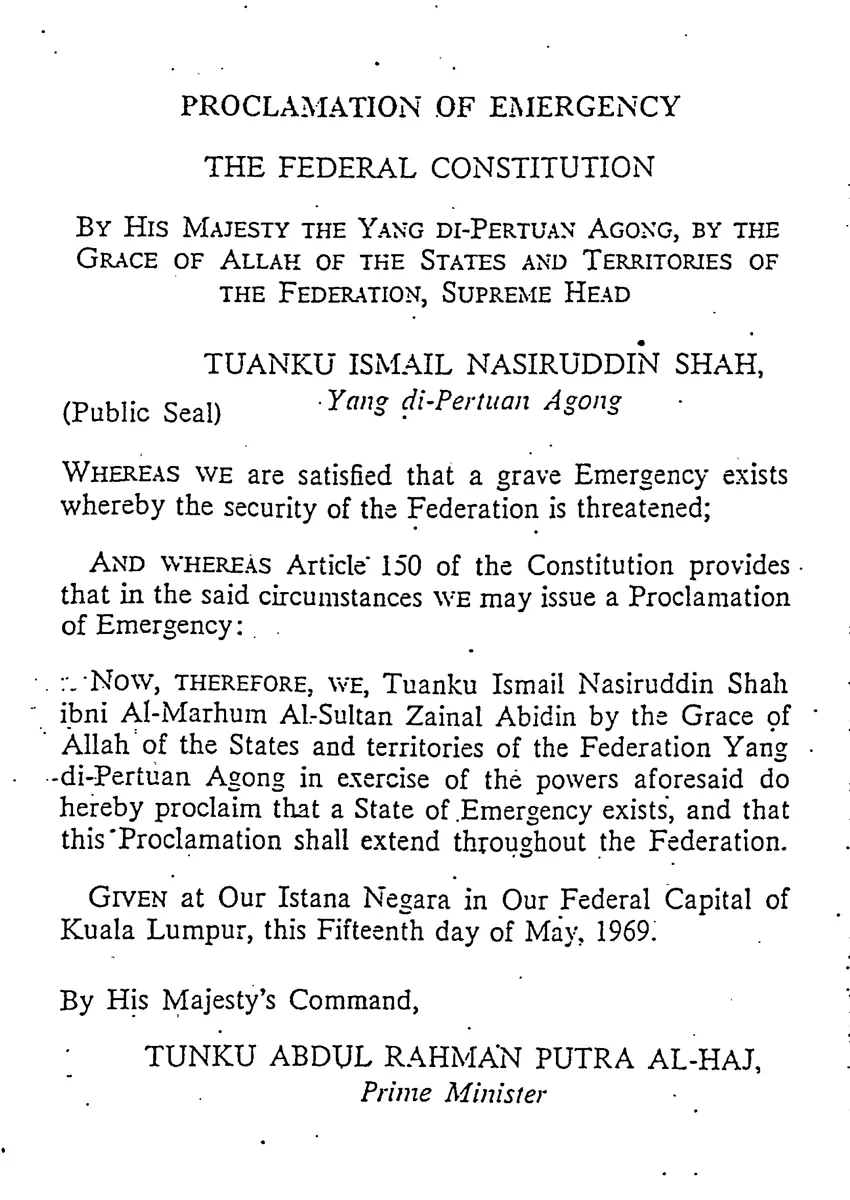
Clashes between communities after the general election leave hundreds dead and suspend parliament for two years. The response is the New Economic Policy (1971), the bumiputera affirmative-action program that redraws employment, university admissions, and urban property.
February 1, 1974 · Federal Territory
Selangor cedes 243 km², and Kuala Lumpur comes to be administered directly by the federal government. The city becomes an enclave inside the state that had surrounded it for a century.
1996–1999 · The Petronas Towers and the capital's move to Putrajaya
The Menara KL opens in 1996 and the Petronas Towers in 1998, at 452 m, the tallest in the world until 2004, the same year as the KLIA airport and the Commonwealth Games. Starting in 1999 the federal government moves to Putrajaya, 25 km to the south, and KL keeps the parliament, the royal palace and the money.
2017–2026 · New rail lines and the 118-story tower
The Kajang MRT enters service in 2017 and the Putrajaya MRT is completed in March 2023; that same year, the 678.9 m Merdeka 118 is finished, the world’s second-tallest tower. Its observation deck, The View at 118, is announced to open in the second half of 2026, still requiring confirmation before visiting. The Shah Alam LRT3 opens on June 29, 2026, with twenty stations, in the year of the Visit Malaysia campaign.

Complete history
Kuala Lumpur is born from tin, in 1857
Kuala Lumpur exists because of tin. In 1857 Raja Abdullah bin Raja Jaafar, Bugis chief of Klang, financed with money from Malacca traders an expedition of 87 Chinese miners upriver; they stopped where the Gombak stops being navigable, at the muddy confluence that gave the place its name, and walked from there to the Ampang veins. Most died of malaria within a few weeks, but the tin turned up and the camp became a trading post. It was a place created by a mineral the European canning industry bought, and that commodity logic (tin, then rubber, then palm oil, then oil) has organized the city's economy ever since.
Thirty years of violence and instability
The first thirty years were violent and provisional. The Selangor Civil War (1867–1874) pitted Malay factions and Chinese secret societies against each other over control of the tin fields, and the settlement changed hands several times. The man who rebuilt it was Yap Ah Loy, the third Kapitan Cina, who ran the town between 1868 and 1885. In 1880 Selangor's capital moved here from Klang; in 1881 a fire destroyed the wooden town and a flood followed, which led British resident Frank Swettenham to ban rebuilding in wood and atap. The brick and tile of that decree are why the center has 1890s buildings and not 1860s ones.
A single block holds the colonial town
The colonial city that survived that rebuilding has an address: the blocks around Dataran Merdeka. The Sultan Abdul Samad Building (1897), Masjid Jamek (1909) and the railway station (1910) are the work of British architects who used domes, horseshoe arches and minarets, in a Mughal style imported from India to a place that never had Mughal architecture. In 1896 Kuala Lumpur became the capital of the Federated Malay States; the railroad and the port of Klang poured the tin and rubber of four states through here. The Japanese occupation (1942–1945) and the Malayan Emergency (1948–1960) interrupted growth and hardened the divide between communities, and it was that divide that independence, on August 31, 1957, had to manage.
The founding trauma is May 13, 1969
The founding trauma of the modern city is May 13, 1969. After the general election, clashes between Malays and Chinese left hundreds dead, parliament was suspended for two years and the country came out of it with the New Economic Policy of 1971, an affirmative action program for the bumiputera that set quotas in universities, companies and housing. The NEP explains much of the Kuala Lumpur you see: Malay migration from the countryside to the capital in the 1970s and 1980s, the housing estates, the growth of the state machine and the government-linked companies that financed the towers. In 1974 Selangor ceded 243 km² and the city became a Federal Territory, administered directly by the federal government, which at the time still operated in Kuala Lumpur itself.
The vertical leap of the 1990s
The vertical leap came in the 1990s, with 8% annual growth and Mahathir Mohamad’s plan to make Malaysia a developed country by 2020. Menara KL opened in 1996; César Pelli’s Petronas Towers in 1998, at 452 m, holding the world’s tallest-building title until 2004. KLIA airport and the Commonwealth Games came the same year, after the start of the 1997 Asian crisis. From 1999, the federal government moved to Putrajaya, leaving KL with Parliament, the palace, banks, and congestion. Since 2017, the city has tried to correct three decades of road-oriented urbanism with rail: MRT Kajang (2017), MRT Putrajaya (2023), and Shah Alam LRT3, opened on June 29, 2026. The 678.9 m Merdeka 118, completed in 2023 beside the stadium where independence was declared, repeats the Petronas gesture: building high to be seen from afar.
Geography and shape of the city
The valley, the river and the limestone
Kuala Lumpur sits at the bottom of the Klang Valley, an alluvial basin between the Titiwangsa range, which rises above 2,000 m to the east and blocks the monsoons, and the Strait of Malacca, about 40 km to the west. The center is just 22 m above sea level, where the Gombak River meets the Klang, and the city grew without a regular grid: streets follow old mining tracks, river bends and hill ridges, which makes a layout that's hard to walk and easy to get lost in. The cassiterite-rich alluvium explains its origin; to the north, limestone outcrops hundreds of millions of years old form the karst of Batu Caves.
Equatorial rain and the SMART tunnel
The climate is equatorial: 23 to 33 °C year-round, humidity around 80% and about 2,400 to 2,600 mm of rain a year, almost always in late-afternoon downpours, with peaks in March-April and October-November. Because the valley is flat and paved over, flash floods are recurrent (the one in December 2021 was the worst in decades), which is why the city built the SMART Tunnel, a 9.7 km tunnel opened in 2007 that works as an expressway and, when it rains hard, is closed to traffic and becomes a flood-diversion channel, the only one of its kind in the world.
A road fabric with rails underneath
The urban layout is road-based: ring roads, overpasses, and the 1965 Federal Highway stitch together a low-density fabric. Since the 1990s, MRT, LRT, and monorail have added underground and elevated routes to this network.
Culture
Three communities in the same space
Kuala Lumpur is run as a city of three communities that share the space without fully mixing: Malays and other bumiputera, Chinese and Indians, plus a large foreign population, mostly from Indonesia, Bangladesh, Nepal and Myanmar. Islam is the official religion and there's a dual court system (civil for everyone, sharia for Muslims in family law), which in practice means different calendars and rules coexisting on the same block. The most visible sign for a newcomer is the number of holidays: Hari Raya, Chinese New Year, Deepavali, Wesak, Christmas, Thaipusam and sultans' birthdays add up, and Malaysia is one of the countries with the most national holidays in the world. The language of the street is Manglish, an English with Malay and Chinese syntax and end-of-sentence particles (“lah”, “meh”, “can ah”), and switching languages mid-conversation is normal.
Film, music and sport, from P. Ramlee to Yasmin Ahmad
Modern Malay popular culture has an acknowledged father: P. Ramlee (1929 to 1973), actor, singer and director of more than sixty films, whose house in Setapak is now a museum and whose songs play at every fair. In contemporary film, Yasmin Ahmad (1958 to 2009) is the voice the country uses to talk about itself, with films like “Sepet” (2004) and “Talentime” (2009) about romances across communities. The visual arts scene revolves around the Ilham Gallery, the National Art Gallery and converted warehouses in Sentul and the Zhongshan Building, in Kampung Attap; theater and dance revolve around the KLPAC. In sports, badminton is a national obsession (the Axiata Arena, in Bukit Jalil, sells out for the Malaysia Open), and the 1998 Bukit Jalil National Stadium, with 87,000 seats, hosts soccer and the big concerts.
The night splits by price and by law
Nightlife is divided by price and by law. Alcohol carries one of the highest taxes in Asia, so a large beer costs RM18–30 in a bar, and many Malay restaurants don't sell it at all; the formal night scene is concentrated on Changkat Bukit Bintang, in the TREC complex and on hotel rooftops. The real night, though, belongs to the mamak stalls open 24 hours, where people watch English Premier League soccer in the small hours over teh tarik, and to the night markets (pasar malam) that move to a different neighborhood each day of the week. The shopping mall works as a public square: at 33 °C with daily rain, that's where teenagers, families and older people spend Saturday afternoon.
With 33 degrees and rain every day, people meet at the mall, with air conditioning.
Festivals and events

Thaipusam
January or February, on the full moon of the Tamil month of Thai. A silver chariot leaves the Sri Mahamariamman temple before dawn and travels 13 km to Batu Caves; devotees climb the 272 steps carrying kavadi and milk pots, and the complex draws more than a million people over two days.

Hari Raya Aidilfitri
The end of Ramadan, with a date that moves with the lunar calendar: in 2026 it fell around March 20, and the date moves back about eleven days each year. The city empties out with balik kampung, the return to home villages, and many family businesses close for three to five days; in the weeks before, the Ramadan bazaars of Kampung Baru and Chow Kit serve food from late afternoon.

Chinese New Year
January or February, fifteen days of celebration. Lanterns in Chinatown, lion dances in malls and offices, the Thean Hou temple lit up, and the custom of ang pow, red envelopes with money; Chinese-owned shops close for two or three days.
Deepavali
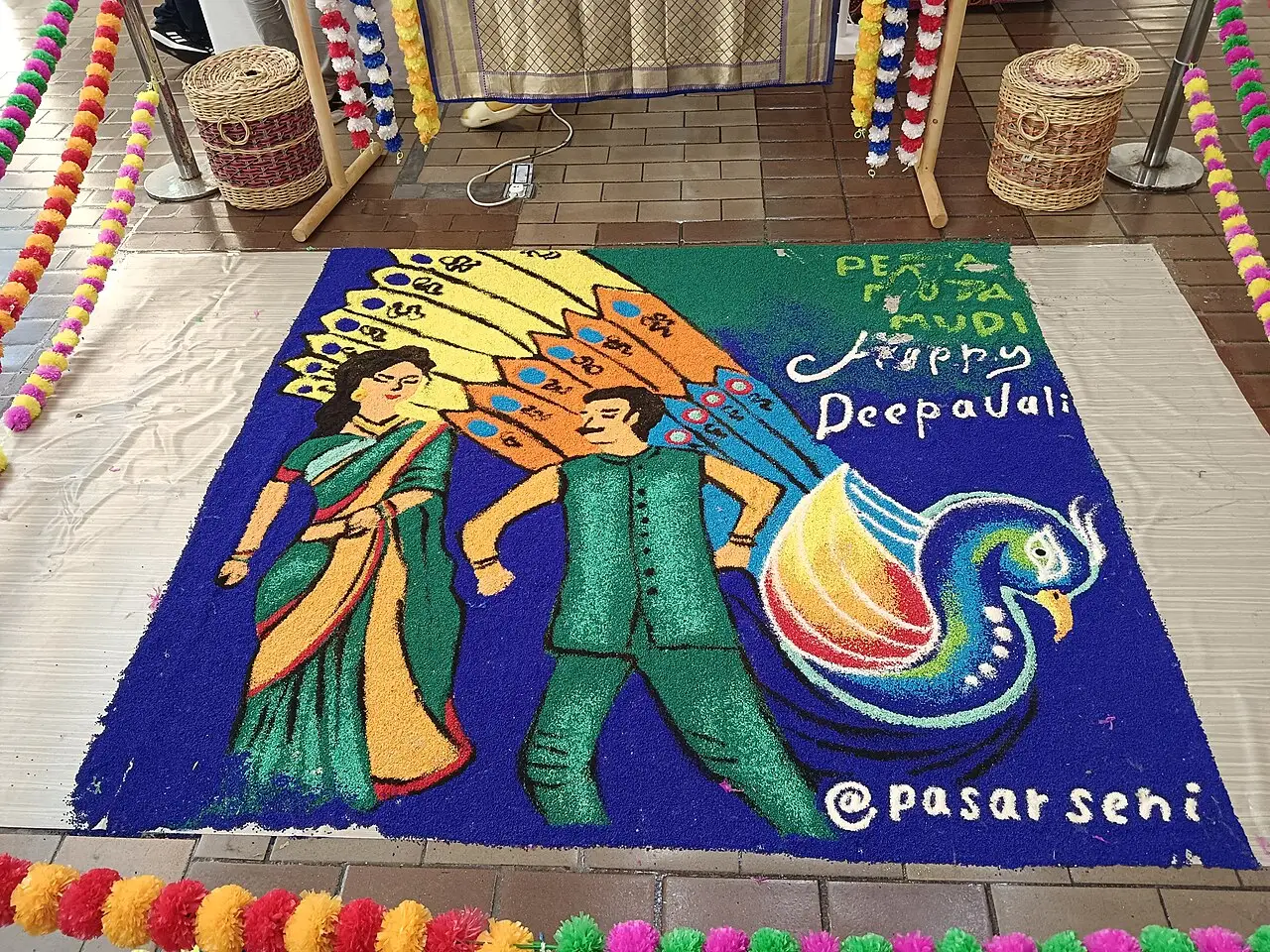
October or November. Brickfields turns into a street market for weeks, with colored-powder kolam on the sidewalks, oil lamps, and sweets; Tamil temples open before dawn and many families keep an open house for visitors.

Merdeka and Hari Malaysia
August 31 marks 1957 independence and September 16 marks the formation of Malaysia in 1963. There's a military and civilian parade, alternating years between Dataran Merdeka and Putrajaya, flags on every lamppost, and closed traffic in the historic center.
Books and films
“The Malayan Trilogy”, by Anthony Burgess (1956–1959)
Written while the author was a colonial teacher in Malaya during the Emergency, it follows a British civil servant in the run-up to independence. It explains the arrangement between Malays, Chinese, and Indians that the city inherited and still manages.
“Sepet”, by Yasmin Ahmad (2004)
A romance between a young Malay woman and a Chinese DVD seller, the first Malay film to tackle the subject head-on and still the most cited. Yasmin Ahmad is the director the country uses to talk about its own mix, and the film shows middle-class daily life away from the towers.
“The Malay Dilemma”, by Mahathir Mohamad (1970)
Banned in Malaysia until 1981, it's the argument behind the 1971 New Economic Policy and bumiputera affirmative action. Reading it explains why Kuala Lumpur grew the way it did after May 13, 1969, whose towers those are, and how the state machine that financed them works.
Frequently asked questions
Kuala Lumpur: can you walk from one neighborhood to another?
Crossing two neighborhoods on foot can turn into an hour of broken sidewalks, overpasses with no crossing, and 33 °C with humidity; take the train or a Grab and save walking for within a neighborhood.
Kuala Lumpur: how do you get from KLIA airport to downtown?
The KLIA Ekspres runs nonstop to KL Sentral in 28 minutes, for about RM 55 one way, with a round-trip option.
Kuala Lumpur: what's the currency and what's it worth?
The currency is the ringgit (RM or MYR), at about 4.1 to the dollar in September 2026, which puts RM 1 at around R$1.25.
Kuala Lumpur: is there a better time to go?
Yes: June, July, and August are the driest months, and December to February also works, although the equatorial climate has almost no seasons. Highs run 31 to 33 °C and lows 23 to 24 °C year-round, with humidity around 80% and rain possible in any month, almost always as a short, heavy downpour between 4pm and 7pm. October and November are the rainiest.
Kuala Lumpur: where do I need to take off my shoes?
Shoes come off before entering a home, a mosque, a Hindu or Chinese temple, and many small shops.


_145_of_1969).png)

