Indonesia
Jakarta
Street food, Kota Tua, Glodok and Betawi culture
Days Start with the basic programme and choose extensions for the time you have.
How the guide reaches this number
Come to eat and go out at night, with Glodok's bakmi, sidewalk kerak telor, martabak carts, and the bars of Senopati. One day is enough for the old city and Monas; a second, if you have it, goes to Istiqlal Mosque, Blok M, and Menteng. On the single-day plan, enter the National Museum at 8am, before the heat, and climb Monas's observation deck. Then take the KRL to Jakarta Kota station to see Fatahillah Square and the port of Sunda Kelapa. Walk back through Glodok, eat bakmi in Petak Sembilan, and have dinner right there, soto Betawi or kerak telor. Rush-hour traffic runs from 4pm to 8pm, and your Grab back to the hotel won't move until after that. What disappoints is the dry-season air, the sidewalk that vanishes outside Thamrin, Sudirman, Blok M, and Kota Tua, and a city laid out for people with cars.
1–2
When June to September, dry season: 24–33 °C, the easiest stretch for walking around
How the guide reaches this number
The climate is tropical monsoon, with 24–33 °C and 75–85% humidity all year; from one month to the next the amount of rain changes, while the temperature barely moves. The rainy season runs from November to April and is worst in January and February, when the Ciliwung overflows and whole neighborhoods flood, as in the major floods of 2002, 2007, 2013, 2020 and 2025. The dry season runs from June to September: it stays hot, but the rain turns into short late-afternoon downpours, and these are the best months for walking the city. Avoid January and February if you can choose; if you can't, stay near an MRT station and allow for delays. Lebaran week empties the city (great traffic, shops closed), and Ramadan shifts restaurant hours for a month. One less obvious trap is that air quality gets worse precisely in the dry season, between July and September. Check the index before planning a full day outdoors, and bring a mask if you're sensitive.
Per person/day Budget about 350,000 IDR (about US$20); comfortable 800,000–1.5 million IDR (US$46–86)
How the guide reaches this number
Per person per day: accommodation, meals, urban transport, visits and a small allowance for extras. Flights excluded; larger purchases vary. Editorial estimate, not a quote.
 What Nilo thinks
Monuments aren't what draws people to Jakarta: the collection is thin, Kota Tua is done in a morning, and Monas is an obelisk with a line. Come to eat and go out at night, with Glodok's bakmi, sidewalk kerak telor, martabak carts, and the bars of Senopati. One day is enough for the old city and Monas; a second, if you have it, goes to Istiqlal Mosque, Blok M, and Menteng. On the single-day plan, enter the National Museum at 8am, before the heat, and climb Monas's observation deck. Then take the KRL to Jakarta Kota station to see Fatahillah Square and the port of Sunda Kelapa. Walk back through Glodok, eat bakmi in Petak Sembilan, and have dinner right there, soto Betawi or kerak telor. Rush-hour traffic runs from 4pm to 8pm, and your Grab back to the hotel won't move until after that. What disappoints is the dry-season air, the sidewalk that vanishes outside Thamrin, Sudirman, Blok M, and Kota Tua, and a city laid out for people with cars.In Jakarta, the trip runs on street food. Sidewalk kerak telor cooks in a pan turned upside down over the coals, the bakmi houses of Glodok, the city's Chinatown, serve noodles from breakfast onward, and the martabak carts only show up once it gets dark. Between meals, it's worth seeing what's left of Dutch Batavia at Fatahillah Square, in Kota Tua. Nearby is the port of Sunda Kelapa, where pinisi, wooden schooners from Sulawesi, still load and unload cargo. At night, people head out to the bars and live-music restaurants of Blok M and Senopati. Since traffic can eat up hours, plan no more than two stops a day and move along the MRT line. Come in the dry season, June to September, and set aside one day, or two if you want to add Istiqlal Mosque and the Menteng neighborhood.
Quick facts
- Population
- about 11 million in the city (Daerah Khusus Jakarta); about 32 million in Jabodetabek, one of the two largest urban agglomerations in the world
- Founding
- June 22, 1527, the founding date of Jayakarta; Sunda Kelapa had already operated as a port since the 12th c.
- Country and region
- Indonesia, north coast of the island of Java, 662 km², facing Jakarta Bay
- Language
- Indonesian (bahasa Indonesia); Betawi dialect and Javanese on the street; English works in hotels, malls, and offices
- Currency
- Indonesian rupiah (IDR); about 17,500 IDR per dollar and about 3,400 IDR per real in 2026
- Time zone
- WIB, UTC+7, no daylight saving
- Best time to visit
- June to September, dry season: 24–33 °C, the easiest stretch for walking around
- Average daily cost
- Budget about 350,000 IDR (about US$20); comfortable 800,000–1.5 million IDR (US$46–86)
When to go
June to September, dry season: 24–33 °C, the easiest stretch for walking around
January
25° to 31°C
373 mm of rain
February
25° to 31°C
381 mm of rain
March
26° to 32°C
210 mm of rain
April
26° to 33°C
164 mm of rain
May
26° to 33°C
103 mm of rain
October
26° to 33°C
112 mm of rain
November
26° to 33°C
135 mm of rain
December
26° to 32°C
183 mm of rain
How the year changes
The climate is tropical monsoon, with 24–33 °C and 75–85% humidity all year; from one month to the next the amount of rain changes, while the temperature barely moves. The rainy season runs from November to April and is worst in January and February, when the Ciliwung overflows and whole neighborhoods flood, as in the major floods of 2002, 2007, 2013, 2020 and 2025. The dry season runs from June to September: it stays hot, but the rain turns into short late-afternoon downpours, and these are the best months for walking the city. Avoid January and February if you can choose; if you can't, stay near an MRT station and allow for delays. Lebaran week empties the city (great traffic, shops closed), and Ramadan shifts restaurant hours for a month. One less obvious trap is that air quality gets worse precisely in the dry season, between July and September. Check the index before planning a full day outdoors, and bring a mask if you're sensitive.
The same numbers as a table
| Month | Temperature °C | Rain mm |
|---|---|---|
| January | 25 to 31 | 373 |
| February | 25 to 31 | 381 |
| March | 26 to 32 | 210 |
| April | 26 to 33 | 164 |
| May | 26 to 33 | 103 |
| June · | 26 to 33 | 80 |
| July · | 25 to 33 | 78 |
| August · | 25 to 33 | 52 |
| September · | 26 to 33 | 61 |
| October | 26 to 33 | 112 |
| November | 26 to 33 | 135 |
| December | 26 to 32 | 183 |
Nilo's tips
Airport: take the train, car costs up to 400,000 IDR
The train is the only part of the arrival that doesn't depend on traffic, and a car over the same distance can take two hours. The train leaves every 30 minutes between 6:20am and 11:20pm and reaches BNI City in about 46 minutes, for around 70,000 IDR, against 250,000–400,000 by car with tolls. Only take a car if your flight lands outside train hours, and never plan to enter downtown between 4pm and 8pm.
Buy the JakLingko card before your first turnstile
Transit turnstiles don't sell fares for cash, so buy a JakLingko card, or a bank e-money card, before your first ride. Without one, you're stuck in line while the 3,500 IDR TransJakarta bus pulls away. The same card pays for the MRT, from 3,000 to 14,000 IDR, and the KRL, from 3,000.
On Sunday, walk Sudirman from 6 to 10am
During Sunday's Car Free Day, from 6 to 10am, you can walk Sudirman–Thamrin without worrying about motorbikes. In exchange, save Monas for a weekday: on weekends and holidays the line for the viewing deck is long.
Istiqlal just after 9am
Arriving shortly after 9am, you'll beat the heat. The guided tour of Istiqlal, the largest mosque in Southeast Asia, is free; avoid Friday at midday. On your way out, cross through Terowongan Silaturahmi, a tunnel opened in 2024 that links the mosque to the 1901 cathedral across the street.
Running late, call an ojek through Gojek or Grab
App-based ojek motorbikes thread through where cars get stuck and cover the trip in minutes. Always book through Gojek or Grab, instead of flagging down a street taxi.
Eat on the street after 6pm, when the carts set up
This is when the martabak cart shows up, selling both versions: telur, a savory pancake with egg and ground meat, and manis, a thick sweet pastry with condensed milk or chocolate, for 60,000–120,000 IDR for the large box. Bring cash, because not every stall accepts QRIS payment.
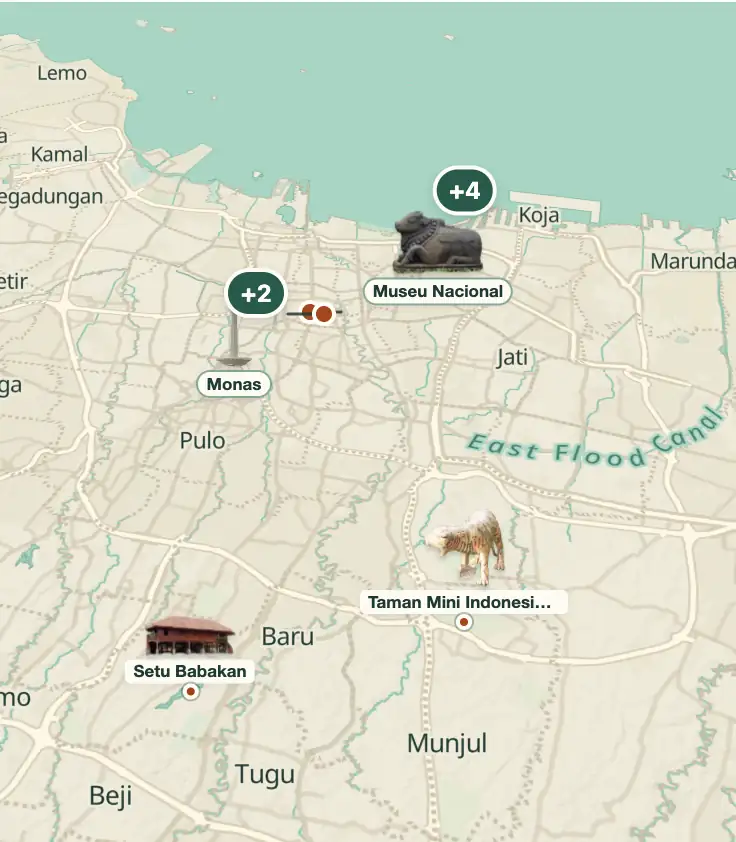
Explore the map
© OpenStreetMap · OpenFreeMap · © OpenMapTiles
Explore the map, read about the other places and plan your travel days in the app.
Open the appWhat to see
Jakarta: low ground, thirteen rivers, and sinking land
Thirteen rivers cut through the city from south to north, running down from the mountains of Bogor to the bay, and the main one is the Ciliwung. That's why rain falling 60 km away reaches Jakarta a few hours later.
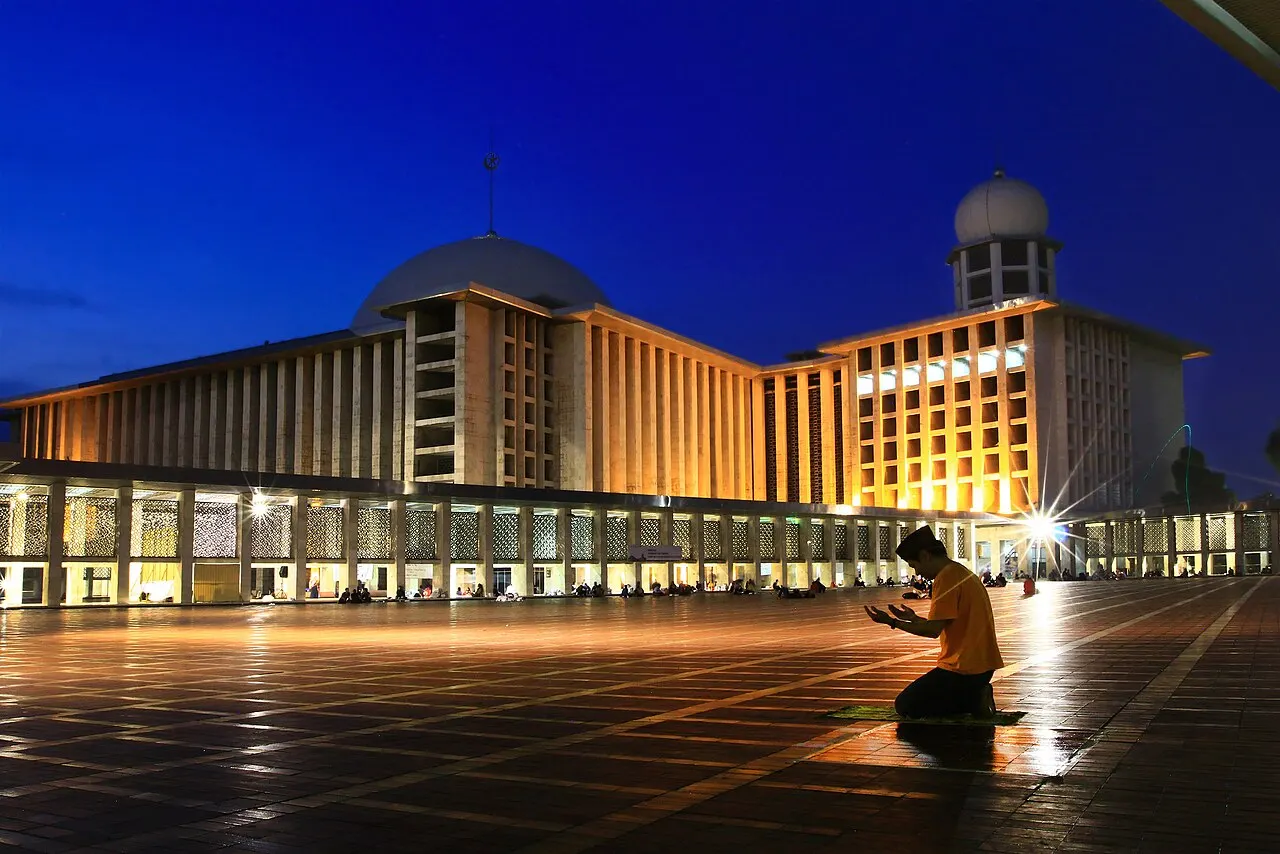
Istiqlal Mosque
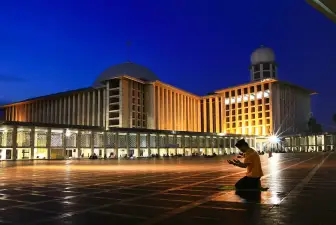
The largest mosque in Southeast Asia, with capacity for more than 200,000 people, built between 1961 and 1978. The design is by Friedrich Silaban, a Batak Christian architect who won the competition: a deliberate gesture by Sukarno. Free guided tours with a lent robe, outside prayer times.
The mosque holds more than 200,000 people and was built from 1961 to 1978; the design is by Silaban, a Christian architect, in a deliberate gesture by Sukarno, and there are free tours, with a robe to borrow, when there's no prayer underway.
Check access

National Museum (Museum Gajah)
Founded in 1778 by the Batavian Society of Arts and Sciences, it holds the country's largest archaeological and ethnographic collection, including the 1522 Portuguese stone marker. The nickname comes from the bronze elephant donated by the King of Siam in 1871. It closed after a fire in September 2023 and reopened in October 2024.
The museum, which earned its popular nickname from the bronze elephant the King of Siam gave it in 1871, holds the country's largest archaeological and ethnographic collection, one that includes the 1522 Portuguese padrão stone. The museum closed after a fire and reopened to the public in 2024.
Check access
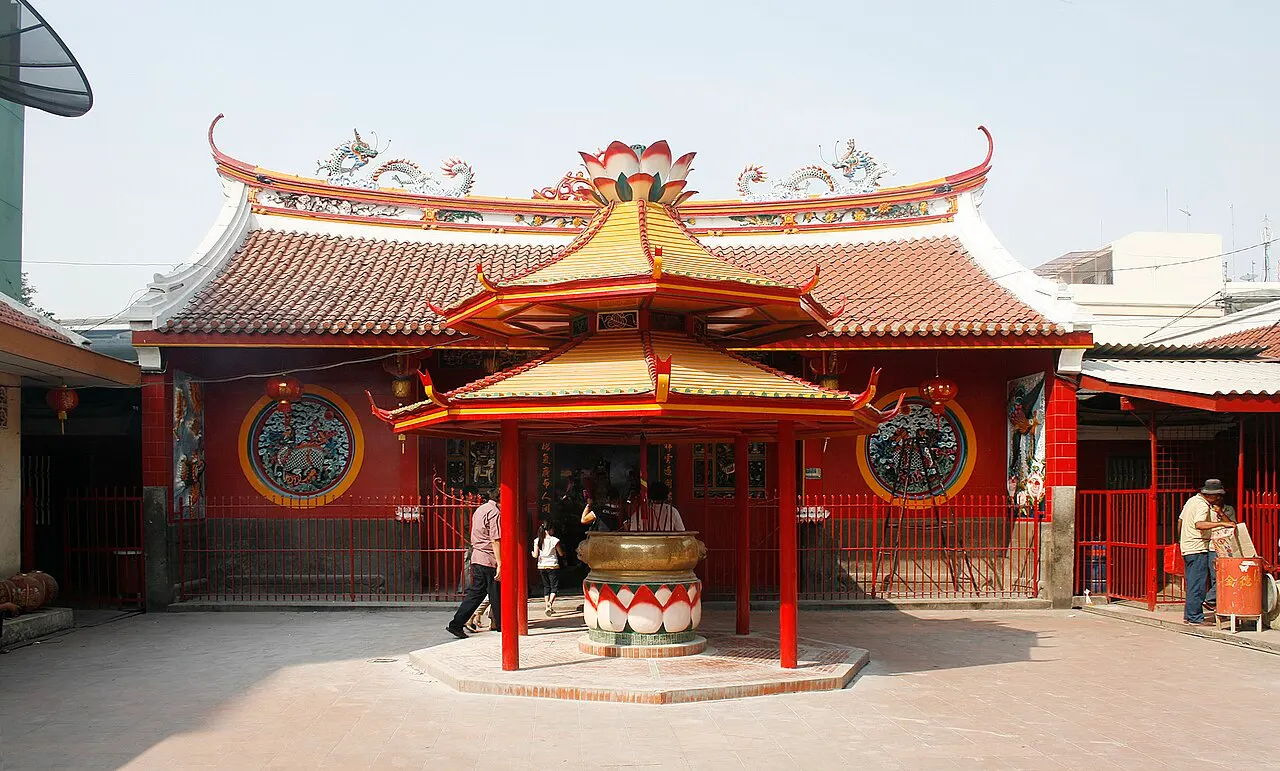
Vihara Dharma Bhakti (Jin De Yuan)
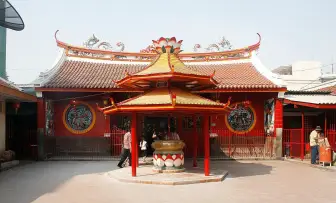
Jakarta's oldest Chinese temple, dating to 1650, in Petak Sembilan. It was rebuilt after a fire in March 2015; the courtyard fills with meter-tall candles at Lunar New Year, and vendors sell birds and turtles for release.
The city's oldest Chinese temple was rebuilt after a fire in March 2015, and at Lunar New Year there are meter-tall candles and vendors selling birds and turtles meant to be set free.
Check access

Setu Babakan
Betawi cultural village around a lake in the south of the city, created in 2000 to preserve the culture of Jakarta's original population. On weekends there are performances of ondel-ondel, silat, and gambang kromong, plus stalls selling kerak telor, soto Betawi, and bir pletok.
A village around a lake in the south, created in 2000, preserves the culture of the city's original inhabitants; on Saturdays and Sundays there's ondel-ondel, silat, and gambang kromong on stage, and you can eat kerak telor and soto.
Check access

Jakarta Cathedral
Neo-Gothic church completed in 1901, with three iron spires, across the street from Istiqlal. Since 2024 the two have been connected by a pedestrian tunnel, the Terowongan Silaturahmi, opened as a symbol of interfaith coexistence.
The cathedral was finished in 1901, with iron spires, across the street from Istiqlal, and in 2024 the Terowongan Silaturahmi tunnel, a symbol of religious coexistence, opened and linked the cathedral to Istiqlal.
Check access
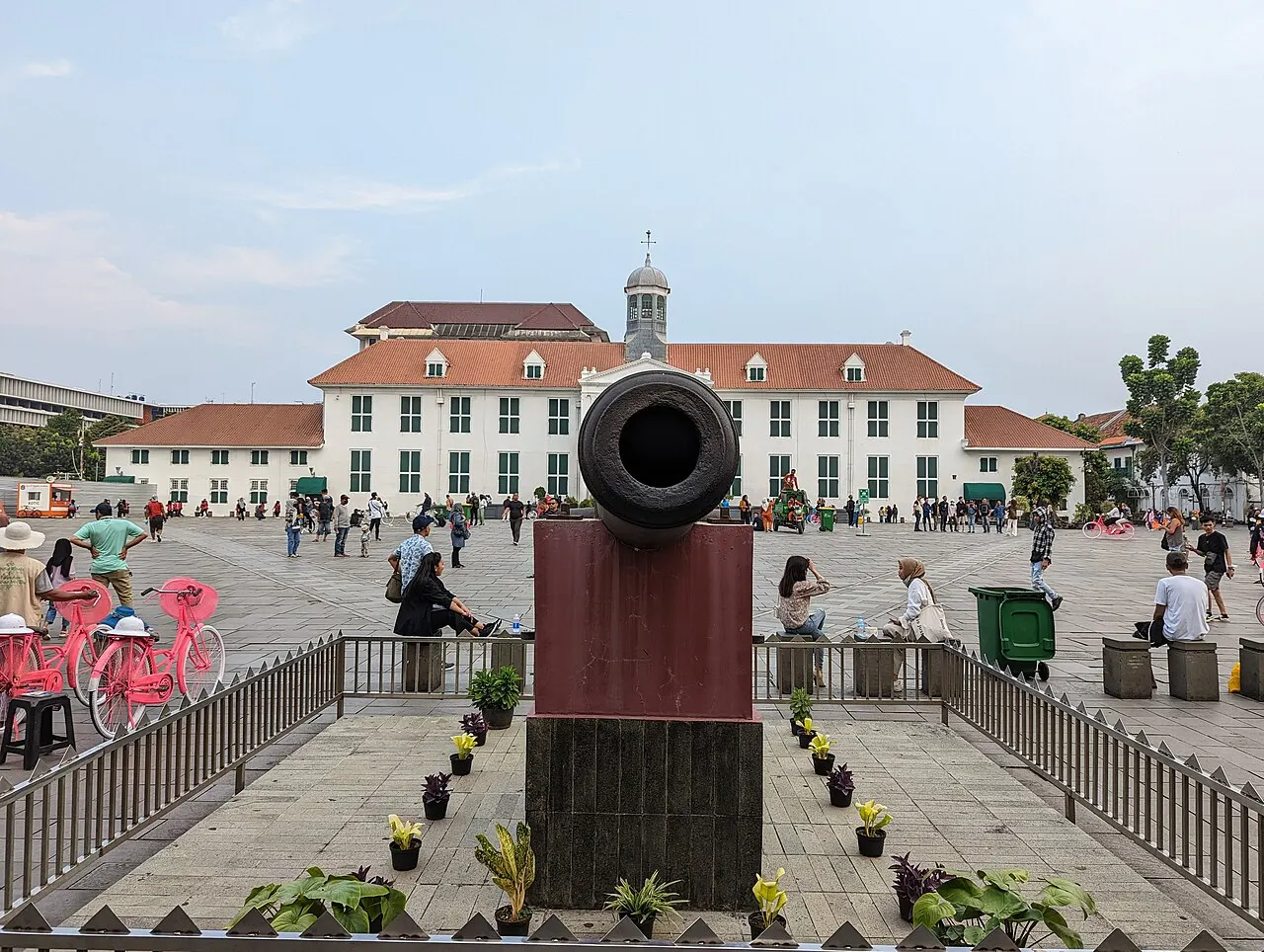
Taman Fatahillah and the History Museum
The central square of Batavia, with the former 1710 Stadhuis (VOC administration headquarters, court and prison), today the Museum Sejarah Jakarta, with the dungeons where Untung Surapati was held. On the same square, the Wayang Museum (puppets) and the Museum of Fine Arts and Ceramics.
Batavia's central square holds the 1710 Stadhuis, the VOC's seat, which served as courthouse and prison, with dungeons where Untung Surapati was held, and the same square has the Wayang puppet museum and the Fine Arts and Ceramics museum.
Check access
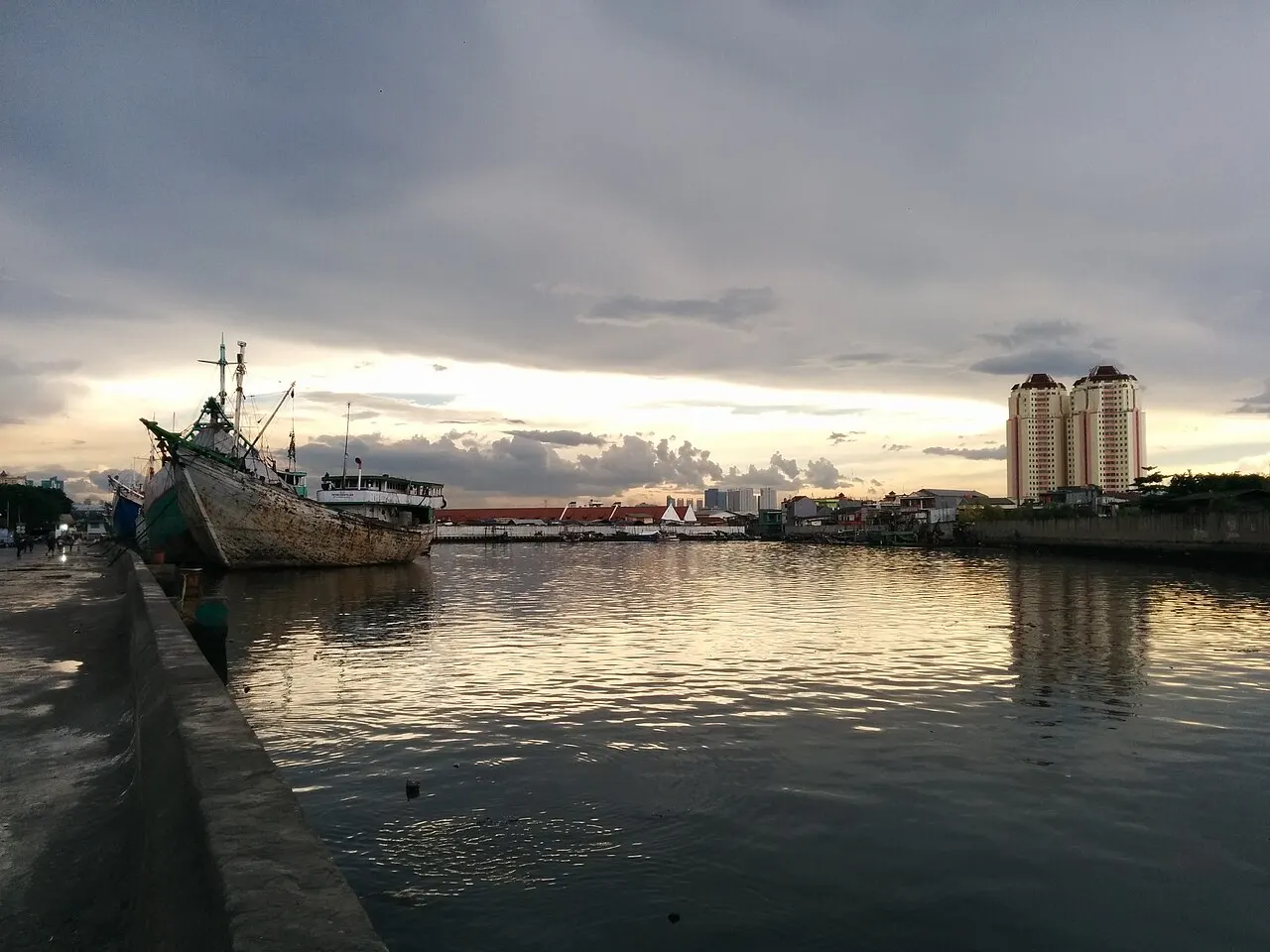
Sunda Kelapa Port
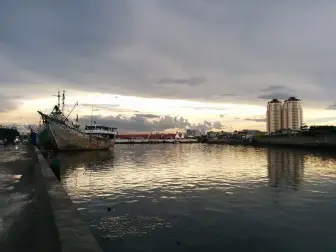
The city's original port, still in operation for the pinisi, wooden schooners built in Sulawesi that carry timber and cement between the islands. Symbolic entry fee; dockworkers cross planks with sacks on their backs, just as they did a century ago.
The city's original port still receives pinisi, wooden schooners from Sulawesi, loaded by hand by dockworkers who cross planks with sacks on their backs. The entrance fee is symbolic and the visit is short: fit it in on the way between Kota Tua and Glodok.
Check access

Taman Mini Indonesia Indah
Theme park opened in 1975, with pavilions of traditional provincial architecture around a lake shaped like a scale map of the archipelago. It underwent a complete renovation in 2021–2022 for the G20 summit. Too big to cover on foot: take the cable car or the little train.
A 1975 theme park so large that visitors get around by cable car or little train, and it sits far out in a city where six kilometers can take 50 minutes between 4pm and 8pm. It shows the provinces in exhibition pavilions, while Setu Babakan and Glodok show local culture as it's actually lived.
Check access

Museum MACAN
Opened in November 2017 in Kebon Jeruk, it was the country's first museum with a permanent collection pairing international modern and contemporary art alongside Indonesian work. It runs major exhibitions and a children's room commissioned from artists.
It opened in November 2017 in Kebon Jeruk, off the MRT line between Bundaran HI and Blok M, which is the only thing Jakarta has that resembles a center. In a city of small collections, where the best program is food and music, it earns its visit through whatever exhibition is showing, not through the permanent collection.
Check access
Nilo’s itinerary
Start with the basic programme and choose extensions for the time you have.
Plan my days in the app ↗Day 1 · Batavia, the port, and Chinatown
Start at 8am at the National Museum (Museum Gajah), on Merdeka Barat, before the heat; set aside 1 hour 30 minutes for the archaeology and the 1522 Portuguese padrão stone.
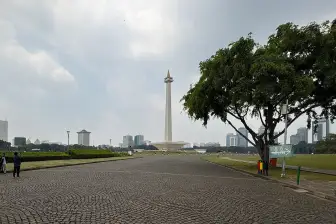
Cross over to Monas, go up to the 115 m observation deck, then down to the 51 basement dioramas; on a weekday the line is short.
Take the KRL from Juanda or Gondangdia to Jakarta Kota station (1888) and walk to Fatahillah Square: the Museum Sejarah Jakarta in the 1710 Stadhuis, and the Wayang Museum next door.
Head on foot or by bajaj to Sunda Kelapa port to watch the pinisi being loaded; come back through Glodok, step into Vihara Dharma Bhakti, and eat bakmi in Petak Sembilan.
Have soto Betawi or kerak telor for dinner nearby, and only call a Grab back after 8pm, when the rush hour that starts at 4pm is over.

If you stay longer
Day 2 · Twentieth-century Jakarta
Right after 9am, take the free guided tour of Istiqlal Mosque (long pants; a robe is lent at the entrance), then walk through the Terowongan Silaturahmi to the 1901 cathedral.
Have lunch in Cikini, at one of the old cafés next to Taman Ismail Marzuki, and check what's on at the arts complex.
Spend the afternoon in Menteng, between Taman Suropati and the antiques market on Jalan Surabaya, and leave before 4pm, when rush hour starts.
Take the MRT, which runs clear of traffic, from Bundaran HI to Blok M, and walk through the Little Tokyo of Jalan Melawai as evening begins.
Have dinner in Senopati, or stay in Blok M, where the night out is cheaper, and on the way back pick up martabak manis from the corner cart, which sets up after 6pm.
Food
 AI illustration
Kerak telor
A savory Betawi dish of glutinous rice with duck egg, fried in a pan flipped mouth-down over charcoal, topped with toasted grated coconut (serundeng) and dried shrimp. Sold on the street near Monas, in Setu Babakan and at the city's annual fair; about 25 to 40 thousand IDR.
 AI illustration
Soto Betawi
Beef and offal soup made with coconut milk or cow's milk, tomato, potato, fried shallots, and emping (melinjo crackers). Eaten with rice, at any hour; the oldest stalls are in Kebon Sirih and in the south.
 AI illustration
Nasi uduk
Rice cooked in coconut milk with pandan leaf, served with fried chicken, tempe orek, pepesan and peanut sambal. In much of the city it's breakfast, but on Jalan Kebon Kacang, behind Thamrin, the classic address, it's served at night, with stalls from 6pm.
 AI illustration
Ketoprak and gado-gado
Two peanut-sauce dishes: ketoprak is the Jakarta version, with lontong, tofu, rice vermicelli and bean sprouts; gado-gado has boiled vegetables, egg and potato. Both sold from street carts, ready in three minutes, 20 to 35 thousand IDR.
 AI illustration
Martabak
At the same cart, two different things: martabak telur, a savory pancake filled with egg, leek and ground meat, and martabak manis (terang bulan), a thick sweet dough with condensed milk, cheese, chocolate or peanuts. It only shows up after 6pm; the large box costs 60 to 120 thousand IDR.
 AI illustration
Nasi Padang
Minangkabau cuisine from Sumatra, omnipresent in Jakarta: dishes arrive stacked on the table and you only pay for what you touch. Order rendang, ayam pop, jackfruit gulai and sambal ijo; a hearty meal for 35 to 70 thousand IDR.
 AI illustration
Sate and bakmi
Skewers of chicken or goat with peanut or sweet soy sauce, grilled on the sidewalk with a hand fan; and bakmi, the Chinese-Indonesian noodle dish, served with chicken, wontons, and a separate bowl of broth, a specialty of Glodok and Kelapa Gading.
 AI illustration
Drinks: kopi susu gula aren, es cendol, and bir pletok
Iced coffee with milk and palm sugar costs 18 to 28 thousand IDR at local chains; es cendol and es selendang mayang are liquid desserts of coconut milk and shaved ice; bir pletok is a Betawi drink of ginger and spices, red and alcohol-free, invented as a substitute for colonial wine.
Day trips

Thousand Islands (Kepulauan Seribu)
Speedboats leave from Marina Ancol and the port of Kaliadem/Muara Angke and take 1 to 2 hours to Pulau Pramuka, Pari, Tidung or Macan. A same-day round trip is doable; 200 to 500 thousand IDR per leg, leaving early morning and returning mid-afternoon.

Bogor
60 km to the south, 1 hour to 1 hour 30 minutes by KRL Commuterline for about 5 thousand IDR, leaving from Manggarai or Juanda. It has the 1817 Botanical Garden, the presidential palace with its deer and a temperature 4 to 5 °C lower; it rains almost every afternoon, hence the nickname “rain city”.

Bandung
150 km to the southeast; the Whoosh high-speed train links Halim to Bandung in about 46 minutes, for 200 to 350 thousand IDR. It's worth it for the 1920s art deco architecture, the Sundanese food and the Tangkuban Perahu volcano, 30 km from the center.
Where to begin
Batavia, the port, and Chinatown

Start at 8am at the National Museum (Museum Gajah), on Merdeka Barat, before the heat; set aside 1 hour 30 minutes for the archaeology and the 1522 Portuguese padrão stone.
Twentieth-century Jakarta
Right after 9am, take the free guided tour of Istiqlal Mosque (long pants; a robe is lent at the entrance), then walk through the Terowongan Silaturahmi to the 1901 cathedral.
Betawi culture and the green south
If it's a Sunday, start at the Sudirman–Thamrin Car Free Day, from 6 to 10am, when the avenue belongs only to pedestrians, cyclists, and stalls.
Money
The currency is the Indonesian rupiah (IDR) and it comes with a lot of zeros: 100 thousand IDR is about US$6 or R$29 in 2026. For the first few days, count the zeros twice before you pay. Everyday prices: a meal at a warteg or street cart 15 to 30 thousand IDR; a plate at a mid-range restaurant 60 to 150 thousand IDR; chain coffee 25 to 45 thousand IDR; a Bintang beer 40 to 70 thousand IDR at a bar, because alcohol is heavily taxed; TransJakarta 3,500 IDR; a short Grab car ride 25 to 50 thousand IDR; a three-star hotel 500 thousand to 1 million IDR a night. The QRIS QR code is accepted almost everywhere, but it requires an Indonesian digital wallet. Carry cash in small bills for the stalls. International cards work at malls, hotels and chains. Withdraw from ATMs inside malls or bank branches, never from standalone machines on the street. To exchange money, use licensed money changers (Ayu Masagung, Dolarindo, downtown) rather than the airport or your hotel, and bring new, unmarked bills: a crumpled note gets refused with perfect politeness and zero flexibility. Tipping isn't mandatory: sit-down restaurants add “++”, meaning 10% regional tax plus 5 to 10% service; for drivers and porters, rounding up 10 to 20 thousand IDR is enough.
Getting there and around
Soekarno-Hatta Airport is 30 km away, but the distance is the easy part
Soekarno–Hatta International Airport (CGK) is 30 km west of the center, and the distance is the easy part. The train is the predictable option: the Soekarno–Hatta line links the terminal to BNI City/Sudirman Baru and Manggarai in about 46 minutes, with departures every 30 minutes between 6:20am and 11:20pm and a fare of around 70 thousand IDR. DAMRI buses go to Gambir, Blok M, Bekasi and Bogor for 40 to 75 thousand IDR. By Blue Bird taxi or through Grab/Gojek, count on 250 to 400 thousand IDR including tolls and anywhere from 45 minutes to two hours, depending on the hour. It's the same road either way; what changes is the time of day. Avoid arriving downtown between 4pm and 8pm. The second airport, Halim Perdanakusuma (HLP), handles domestic flights and is the terminal for the Whoosh bullet train, which has run Jakarta–Bandung in about 46 minutes since October 2023.
The largest BRT network in the world
Inside the city, TransJakarta is the backbone: the world's largest BRT network by length, with about 250 km of corridors plus feeder lines, a single fare of 3,500 IDR and some 24-hour corridors. The MRT runs on the north-south axis between Lebak Bulus and Bundaran HI (16 km, 13 stations, opened March 24, 2019), with a fare of 3,000 to 14,000 IDR; the extension to Monas is expected for 2027 and to Kota Tua for 2029. Completing the network are the LRT Jakarta (Pegangsaan Dua–Velodrome), the LRT Jabodebek to Bekasi and Cibubur (opened August 28, 2023) and the KRL Commuterline metropolitan trains, from 3,000 IDR. Everything is paid by card: the black JakLingko integrates the modes and caps a combined trip at 10,000 IDR, and bank e-money cards (Flazz, e-Money, TapCash, Brizzi) work at the turnstile; it's worth buying one before you need it. For everything else, use the Gojek and Grab apps: the motorbike (ojek) costs 15 to 35 thousand IDR for a short ride, comes with a helmet and gets through where a car can't. Street taxi: only Blue Bird or Silver Bird, and ask for “pakai argo” (with the meter). Walking works on Thamrin, Sudirman, Blok M and Kota Tua; outside that, the sidewalks disappear and the footbridges (JPO) are the only safe crossing.
Safety
Jakarta has little violent crime against visitors for a metropolis of 32 million people, counting the whole Jabodetabek sprawl. The real risks are traffic, air, dengue, and water. Motorbikes ride on the sidewalk and against traffic, so cross at a crosswalk, hand raised, watching the flow of traffic rather than the light. Theft happens through carelessness: a phone snatched from your hand on the sidewalk or through the window of a stopped car, pockets picked in the crowds of Tanah Abang, Pasar Senen, and the KRL cars at rush hour. Use the women-only car if that applies to you, and don't leave your phone visible on the car seat. Common scams: taxis without a meter, the “it's closed today, I'll take you somewhere else” line on the way out of Kota Tua and Monas, and card skimming at isolated ATMs. Prefer machines inside banks and malls. Protests concentrate around Merdeka Palace, the DPR/MPR building, and Patung Kuda, sometimes with roads blocked and tear gas; follow the news and steer clear of the area that day. During the January and February rains, avoid underpasses and don't wade into floodwater. Emergencies: 112.
Etiquette tips
The right hand handles everything
Eat, hand over money, take change and point at a menu with your right hand, because the left is reserved for hygiene. When handing something to an older person, use your right hand and support the elbow with your left.
Shoes stay at the door
Take your shoes off when entering homes, mosques, some shops, and restaurants with a raised platform (lesehan). If there's a row of shoes lined up at the entrance, that's your instruction.
Don't touch heads, point with your thumb
The head is the most respected part of the body, including a child's. To indicate a direction or a person, use the thumb of your right hand with the palm up; pointing with the index finger is rude.
Mosque rules
Cover shoulders and knees; women are given a mukena or lent robe at the entrance. Don't walk in front of someone praying and avoid visiting between 11:30am and 1pm on Friday, the time of collective prayer.
“Belum” is almost never “yes”
Direct conflict is avoided: “belum” (not yet) and a smile usually mean no. Raising your voice in an argument makes both sides lose face and speeds up nothing: insisting quietly works better.
Discretion in public and during Ramadan
Kissing and hugging on the street stand out, and short clothing is accepted in malls and bars in the south but not in residential or religious neighborhoods. During Ramadan, don't eat, drink, or smoke on the street during the day.
Mistakes to avoid
Six kilometers can take 50 minutes
Calculating distance from the map. In peak traffic, six kilometers can take as long as 50 minutes, whether between 7am and 10am or between 4pm and 8pm. Always build in extra time and take the app motorbike when the clock is tight.
Walking between two points at noon
Trying to walk between two points at noon. Away from the central quadrilateral, the sidewalk disappears, there's no shade, and the only crossing is a footbridge; a 20-minute route turns into a safety problem.
The MRT axis defines downtown: from HI to Blok M
Looking for a hotel “downtown”. Jakarta doesn't have one; what exists is the MRT axis, between Bundaran HI and Blok M. Staying in Kemang or Kelapa Gading without a car costs hours a day.
A street taxi that isn't Blue Bird
Getting into a street taxi that isn't Blue Bird or Silver Bird. Similar-looking cars use similar names and rigged meters; call one through the app or check the logo and the driver's badge.
Seeing Monas and Kota Tua and skipping the food
Doing Monas and Kota Tua and heading back to the hotel without eating on the street. The lively part of Jakarta is the food and the nightlife: Petak Sembilan's bakmi is a short walk from Fatahillah Square, and Blok M and Senopati deserve at least one night.
Useful phrases
Selamat pagi / selamat malam
Good morning / good evening (greetings change by time of day: pagi until 11am, siang until 3pm, sore until sunset, malam after)
Terima kasih: sama-sama
Thank you: you're welcome
Permisi
Excuse me; used to ask someone to make way, to call a waiter, and to enter just about anywhere
Berapa harganya?
How much does it cost?
Tidak pedas, ya
No chili, please (pedas = spicy; “sedikit pedas” is “a little spicy”)
Sebentar
One moment: in practice, an elastic amount of time; Indonesians call this “jam karet”, rubber time
Districts
Kota Tua
What's left of Batavia, around Fatahillah Square, with the old 1710 Stadhuis, three museums, and Café Batavia in an 1830 building. The square closes to cars on weekends, and the city government began a revitalization project in mid-2026 that includes Glodok and Pasar Baru.
Glodok
The Chinatown created in 1741, after the massacre, and still the largest Chinese hub in Indonesia. The Petak Sembilan alley is packed with stalls selling fruit, herbs, and incense, plus the Jin De Yuan temple; around it, electronics wholesalers and bakmi restaurants open from 6am.
Menteng and Cikini
Garden suburb designed starting in 1910 by P.A.J. Moojen, today home to embassies, architects' houses, and the antiques market on Jalan Surabaya. Cikini, next door, has the Taman Ismail Marzuki arts complex, reopened in 2022, and old cafés.
Thamrin and central Menteng
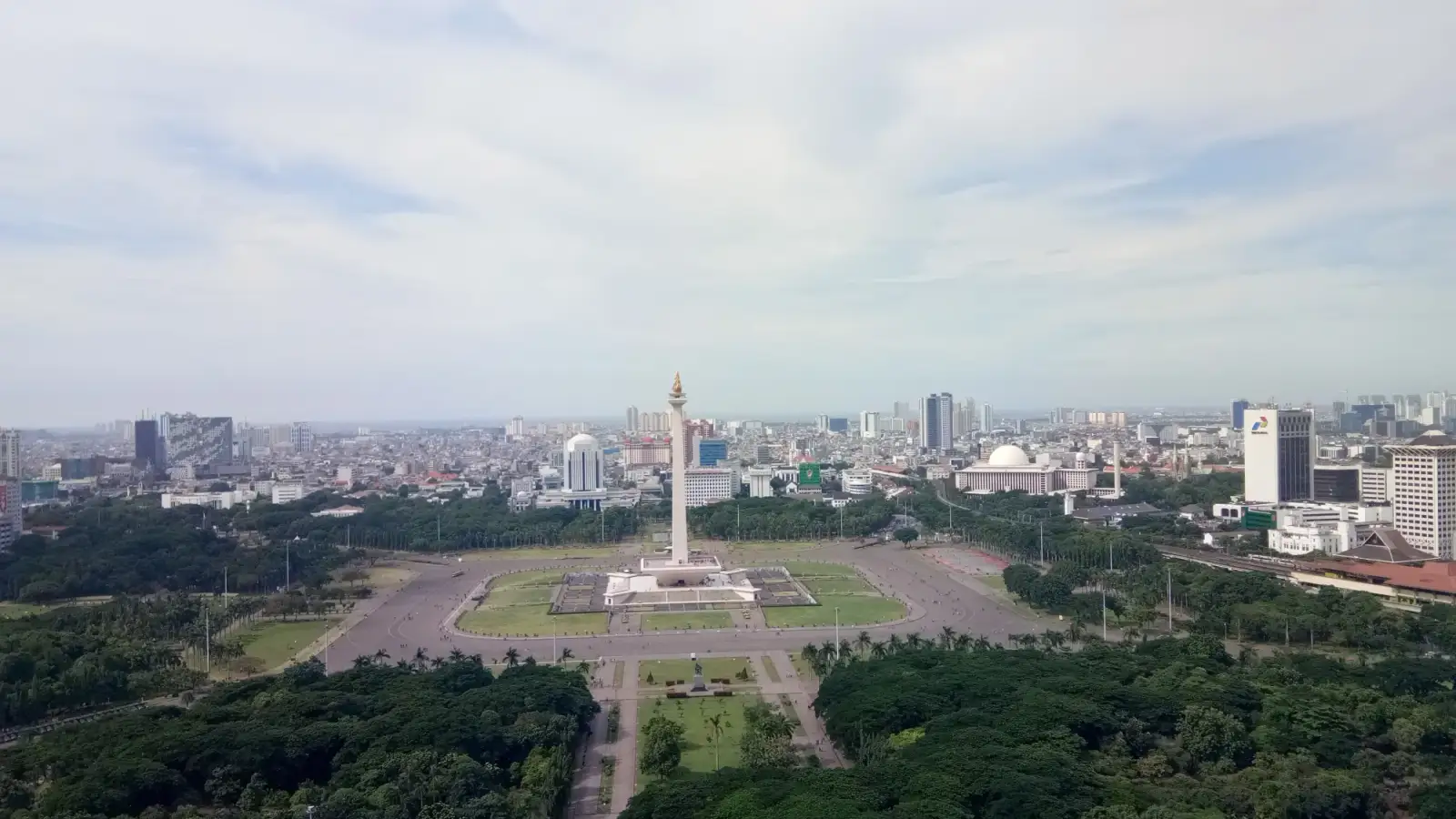
The institutional axis: Monas, the presidential palace, government ministries, hotels, and the Bundaran HI roundabout with the 1962 Selamat Datang monument. On Sundays, from 6 to 10am, the avenue becomes Car Free Day and fills with runners and street vendors.
SCBD and Senayan
Sudirman's financial district, with the country's tallest towers, the 1962 Gelora Bung Karno sports complex, and malls like Pacific Place and Plaza Senayan. Senopati and Gunawarman, next door, hold the city's priciest restaurants and bars.
Blok M and Kebayoran Baru
A satellite town planned between 1948 and 1955, now linked to the center by the MRT. Blok M has the bus terminal, the street market and the “Little Tokyo” of Jalan Melawai, with izakayas and karaoke bars, plus Jakarta's cheapest and most accessible nightlife.
Kemang and Cipete
A residential south side that became the expat neighborhood in the 1990s: houses converted into cafés, galleries, thrift shops and bars. It's where you eat food from other countries, and where Friday-night traffic gets worse than downtown.
Ancol, Sunda Kelapa, and Kelapa Gading
The waterfront: Ancol park with an urban beach, marina and the Dufan amusement park; next to it, the historic port of Sunda Kelapa, with the schooners that still link Jakarta to other islands. Kelapa Gading, further east, is the Chinese-Indonesian food neighborhood, open late.
History
12th century–1522 · Sunda Kelapa
The port of the Hindu kingdom of Sunda, at the mouth of the Ciliwung River, exports pepper to China and to Malabar. In 1522 it signs a treaty with the Portuguese authorizing a fort that was never built; the stone marker from that agreement is in the National Museum.
June 22, 1527 · Fatahillah and Jayakarta
Troops from Demak and Cirebon commanded by Fatahillah expel the Portuguese and rename the port Jayakarta, “complete victory”. The date is still the city's official anniversary today.
1619 · Batavia, VOC headquarters
Jan Pieterszoon Coen razes Jayakarta and builds Batavia as the Asian headquarters of the Dutch East India Company. The layout copies Amsterdam, with canals and walls, and in the tropical climate the stagnant canals become a breeding ground for malaria.
October 1740 · The Chinese massacre
The VOC's crackdown on Batavia's Chinese population kills around 10,000 people in two weeks. Survivors are relocated outside the walls, into the neighborhood that becomes Glodok.
1808–1811 · Daendels moves the city
Governor Herman Willem Daendels demolishes much of the walled city, considered unhealthy, and moves the administrative center south, to Weltevreden. This is the origin of the Lapangan Banteng–Merdeka axis.
1811–1816 · The British interregnum
Thomas Stamford Raffles governs Java for the British East India Company and writes The History of Java. The colony returns to the Dutch in 1816.

1942–1945 · Japanese occupation and the name Jakarta
Japan takes Java in March 1942, interns the Dutch, and restores the city's name to Jakarta. Three centuries of Batavia end with a single decree.
August 17, 1945 · The Proclamation
Sukarno and Mohammad Hatta read the proclamation of independence at Jalan Pegangsaan Timur 56, now Jalan Proklamasi. A four-year war follows; the Netherlands recognizes Indonesian sovereignty in December 1949, and Jakarta becomes the capital.
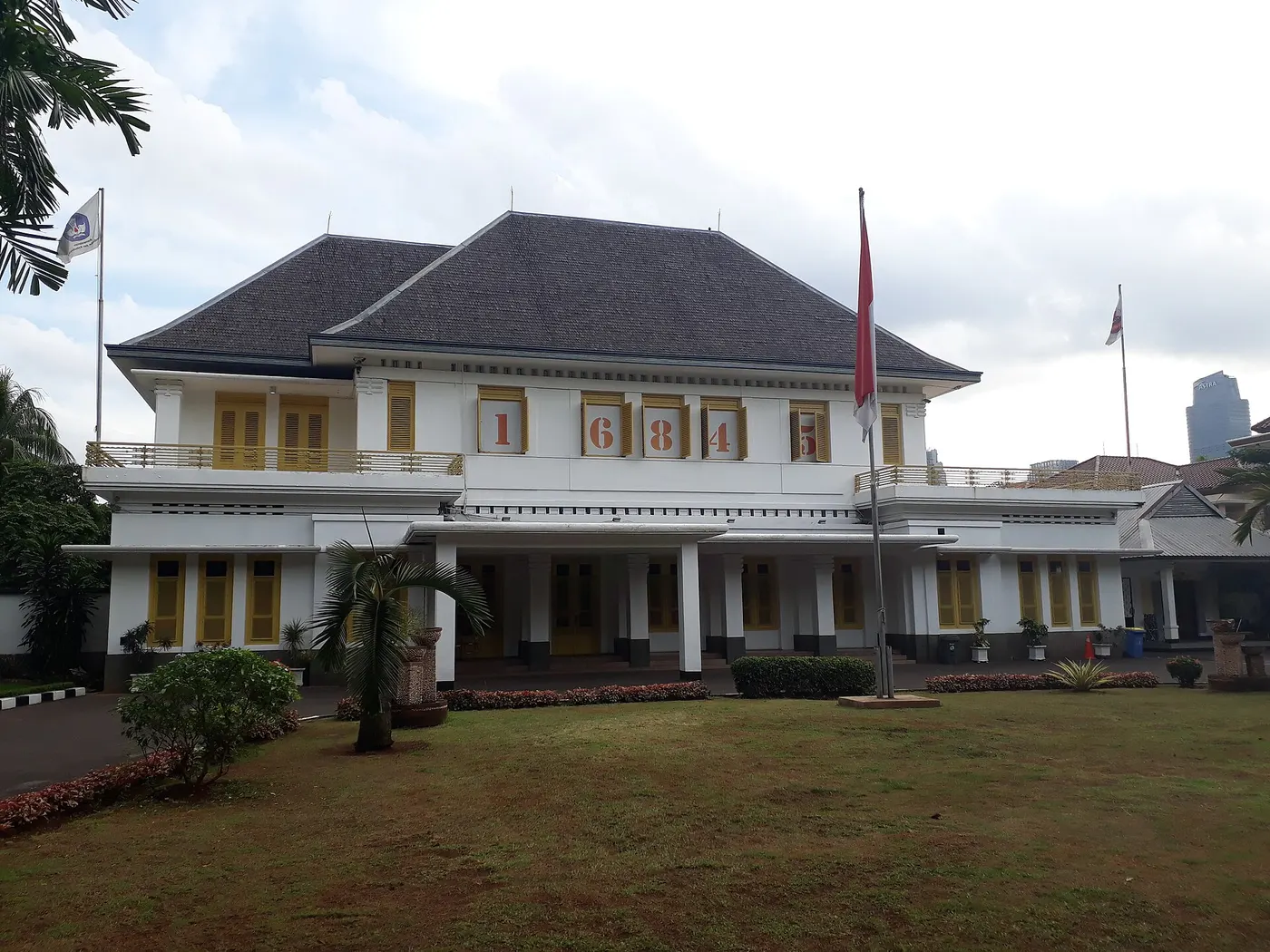
1961–1975 · Sukarno's monumental city
Monas is built between 1961 and 1975, alongside the Istiqlal Mosque, the Gelora Bung Karno stadium (1962), and the Selamat Datang monument. Ali Sadikin, governor from 1966 to 1977, brings order to the city, creates Taman Ismail Marzuki, and funds culture with a tax on casinos.
1998 · Krismon and the May riots
The Asian financial crisis crashes the rupiah; four students are killed at Trisakti University on May 12, followed by three days of looting and violence against the Chinese-Indonesian community. Suharto resigns on May 21, after 32 years in power.
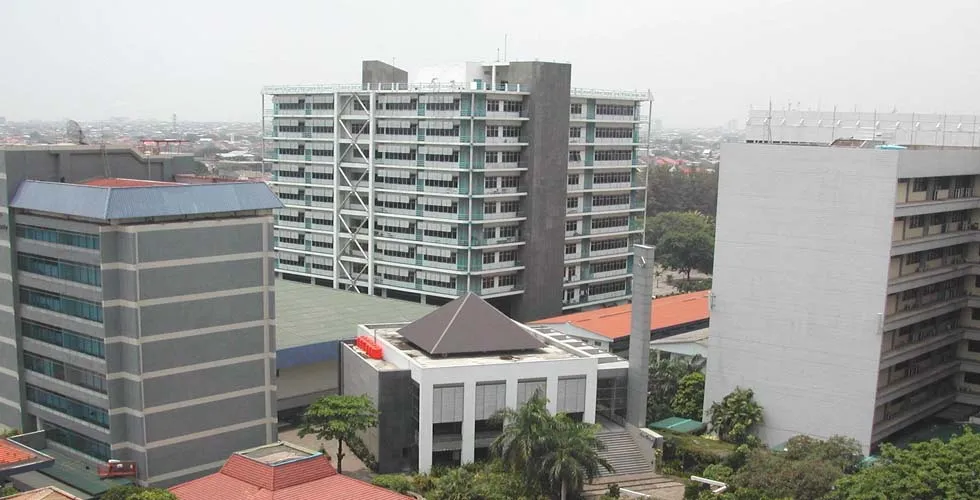
2019–2026 · Rails, Nusantara, and the sea
The MRT opened on March 24, 2019 and the LRT Jabodebek on August 28, 2023. The 2022 law moved the capital to Nusantara, but Jakarta is still the capital in 2026, and Nusantara is only due to become the “political capital” in 2028. In January 2026, the city government announced that construction of the Giant Sea Wall, a 19 km dike across the bay, would start in September; in August, the governor admitted the date depended on the national government, and the project still had no confirmed start.
 AI illustration
Complete history
Before the Dutch, a pepper port
Before any Dutchman arrived, this was a pepper port. Sunda Kelapa, at the mouth of the Ciliwung, served the Hindu kingdom of Sunda and had traded with China, India and the archipelago since at least the 12th century. In 1522 the king of Sunda signed a treaty with Henrique Leme allowing the Portuguese to build a fort in exchange for protection against the sultanate of Demak; the fort never got past the planning stage. On June 22, 1527, a force from Demak and Cirebon led by Fatahillah took the port and renamed it Jayakarta. The city passed to the sultanate of Banten and, in the early 17th century, became a trading post fought over by the English and the Dutch.
Coen razes Jayakarta in 1619
In 1619 Jan Pieterszoon Coen settled the dispute by razing Jayakarta and founding Batavia over the ruins. For 180 years the city was the command center of the Dutch East India Company (VOC) across all of Asia: straight canals, walls, brick houses, a population mostly enslaved and a trade in spices, coffee and sugar run on forced labor. The stagnant canals bred malaria epidemics that gave Batavia its reputation as the “cemetery of the East”. The Chinese community, essential to trade and the sugar plantations, was massacred in October 1740, about 10,000 dead, and relocated to Glodok, outside the walls, where Chinatown remains. The VOC went bankrupt in 1799, the Dutch state took over the colony and, between 1808 and 1811, Daendels demolished the old city and moved the government south, to Weltevreden. Raffles governed for the British from 1811 to 1816; the Netherlands took everything back afterward.
Batavia becomes an administrative capital
The 19th century and the early 20th turned Batavia into the administrative capital of a plantation empire. The train arrived in 1873, the electric streetcar in 1899 and, from 1910, the planner P.A.J. Moojen laid out Menteng, the first planned garden suburb in the East Indies, with pitched-roof houses and curving streets; today it is the embassy district. Meanwhile, the Javanese and Sundanese population settled in kampungs, urban villages without sanitation that still form the fabric between the skyscrapers. The Japanese occupation of 1942 ended Batavia and restored the name Jakarta. On August 17, 1945, two days after the Japanese surrender, Sukarno read the proclamation of independence in front of his house. After four years of war and Dutch recognition in December 1949, a city of fewer than a million people became the capital of a country of seventy million.
Sukarno wanted the capital to look like a capital
Sukarno wanted the capital to look like a capital: between 1961 and 1975 the city gained Monas, the Hotel Indonesia, the Gelora Bung Karno stadium for the 1962 Asian Games, and the broad avenues Thamrin and Sudirman, the axis that still organizes Jakarta today. Istiqlal Mosque broke ground in the same period and wasn't finished until 1978. The 1965 coup and the 1965–66 massacres opened Suharto's New Order, thirty-two years of industrialization, foreign investment, and explosive population growth: from 2.9 million in 1961 to more than 8 million in 1990. Governor Ali Sadikin (1966–1977) paved streets, created Taman Ismail Marzuki and Taman Mini, and legalized gambling to pay for it. In the 1990s malls and gated compounds replaced the street as public space. The 1997–98 Asian financial crisis crashed the rupiah, and in May 1998 student protests, the deaths at Trisakti, and three days of looting and anti-Chinese violence ended with Suharto's resignation on May 21.
Metro, water and the new capital, from 2019 to today
This century, the city is trying to catch up with its own size through rail. The MRT opened on March 24, 2019 and the LRT Jabodebek on August 28, 2023, the first alternatives to traffic that takes 50 minutes to cover six kilometers at rush hour. At the same time, groundwater extraction is making parts of the north sink up to 25 cm a year, and high tide floods the waterfront. In response, a 2022 law moved the seat of government to Nusantara, in eastern Borneo. Funding dwindled under President Prabowo, the Constitutional Court confirmed that Jakarta remains the capital and, in 2025–26, the project was redefined as a “political capital” from 2028.
Geography and shape of the city
Low ground, thirteen rivers and subsidence
Jakarta is flat and low: the average sits around 7 m above sea level and about 40% of the territory, almost all of it in the north, is already below it. Thirteen rivers cut through the city from south to north (the Ciliwung is the main one), coming down from the Bogor mountains to the bay, which means rain falling 60 km away reaches Jakarta a few hours later. Groundwater extraction, still the main supply source in many neighborhoods, causes subsidence of 5 to 25 cm a year in Muara Baru and Pluit, and the combination of sinking ground with high tide (banjir rob) floods the waterfront several times a year.
Monsoon and a grid with no center
The climate is tropical monsoon, hot and humid year-round. The urban grid has no single center: it grew from the port in the north southward, along the Gajah Mada–Thamrin–Sudirman axis, and then spread into office superblocks and gated compounds separated by dense kampungs.
Few connecting roads, rare sidewalks, mall as plaza
Between the major axes there are few connecting streets, which pushes all the traffic onto the same avenues; sidewalks were rebuilt on Thamrin and Sudirman but vanish almost everywhere else, and the air conditioning of the more than 80 malls ended up becoming the city's public space.
Rain that falls on the mountains of Bogor, 60 km away, runs down the Ciliwung and reaches Jakarta hours later, which is why the city can flood on a day when it barely rained there.
Culture
Jakarta's own culture: Betawi
Jakarta's own culture is Betawi, created in the 18th and 19th centuries by a mix of Malays, Javanese, Sundanese, Balinese, Chinese, Arabs, Indians and descendants of enslaved people and mardijkers of Portuguese origin. From it come the Betawi dialect that colors the Indonesian spoken on the street, the lenong popular theater, gambang kromong music (which uses the tehyan, a Chinese fiddle, alongside the xylophone), the tanjidor brass bands inherited from colonial orchestras and keroncong, a sound of Portuguese roots preserved in Kampung Tugu, in the north. The ondel-ondel, three-meter puppets that used to be village guardians, today show up at weddings, openings and, with a speaker and a collection box, at any traffic light.
The capital makes what the country listens to
As the capital, Jakarta produces almost everything Indonesia listens to and watches: the record labels, the film studios, the TV networks and the dangdut industry are here. Indonesian cinema resurged after 1998 with films shot in the city, from “Ada Apa dengan Cinta?” (2002) to “Gie” (2005), and today the country releases more than a hundred feature films a year. The independent scene came out of Jakarta (Efek Rumah Kaca, White Shoes & the Couples Company, Barasuara) and plays festivals like Joyland and Synchronize. In visual arts, Museum MACAN, the Galeri Nasional, the Taman Ismail Marzuki, reopened in 2022, and the Art Jakarta fair form a circuit that has grown alongside the regional market. Pramoedya Ananta Toer, the country's greatest novelist, lived and was imprisoned in the city.
Five calls punctuate the day
Jakarta is majority Muslim, and the day is marked by five calls to prayer broadcast over loudspeakers; on Fridays, between 11:30am and 1pm, the mosques overflow and traffic changes. Alongside them stand the 1901 cathedral, across the street from Istiqlal, the Chinese temples of Glodok and Hindu and Buddhist communities. Beyond religion, the city comes together in the stadium: Persija soccer and its fans, the Jakmania, fill Gelora Bung Karno (78,000 seats, renovated in 2018), and the Indonesia Open packs Istora Senayan for badminton. At night, life centers on SCBD, Senopati, Kemang and Blok M. Alcohol is legal but expensive and heavily taxed, and much of social life happens inside malls, which work as an air-conditioned public square until 10pm.
The day is marked by five calls to prayer over the mosque loudspeakers, and they work well enough to tell the time by.
Festivals and events
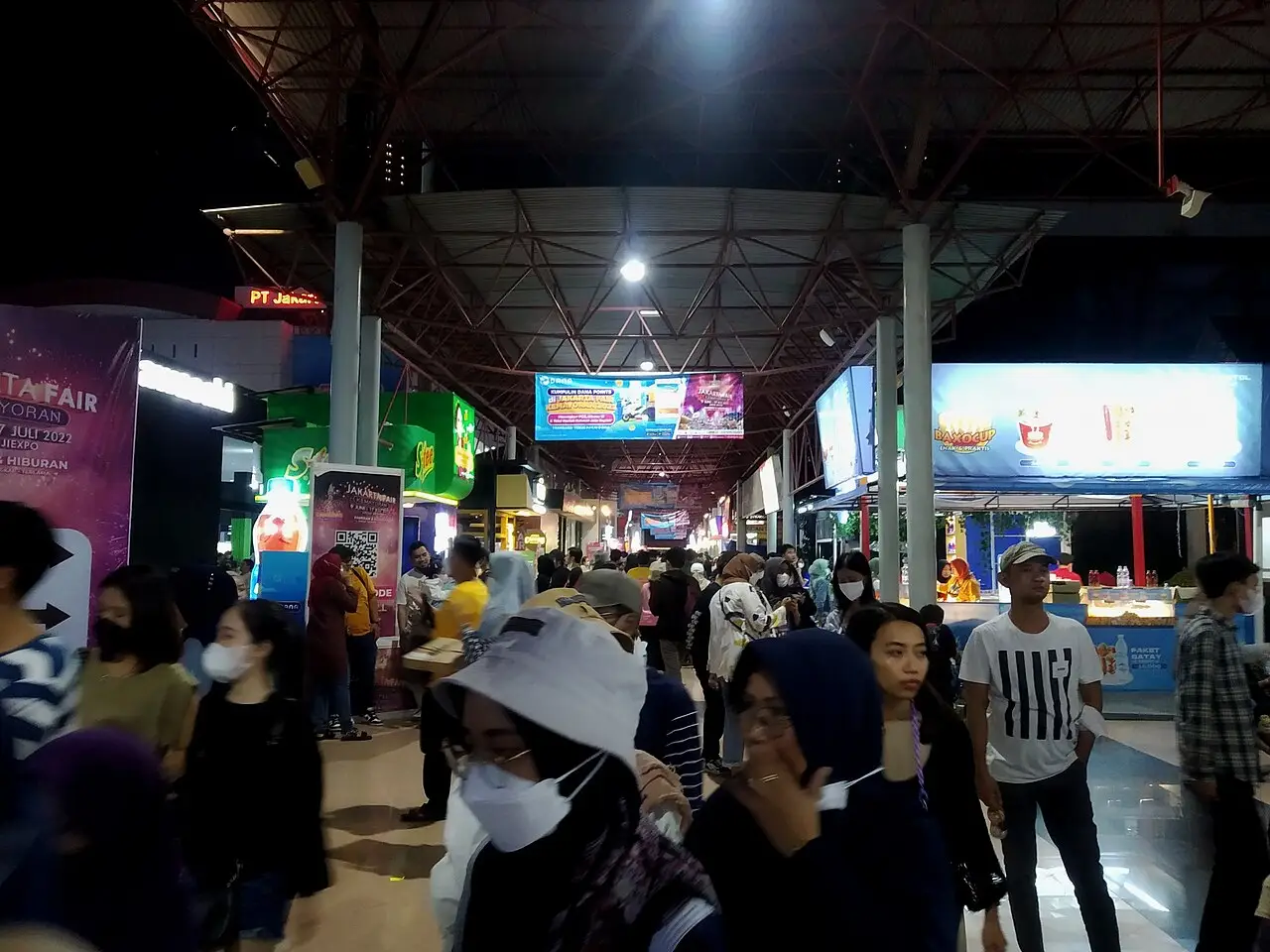
Pekan Raya Jakarta (Jakarta Fair)
From mid-June to mid-July, at the JIExpo complex in Kemayoran, marking the city's anniversary on June 22. It's a trade fair, amusement park, and concert festival all at once, with millions of visitors and the best kerak telor stalls of the year.
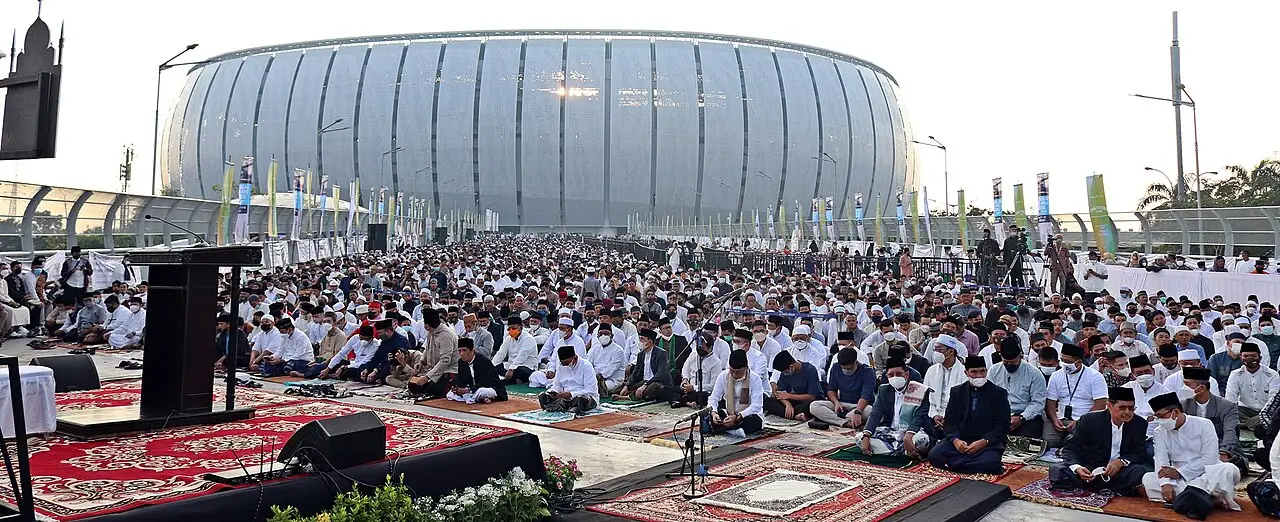
Idul Fitri (Lebaran)
The end of Ramadan, on a moving date of the lunar calendar: around March in 2027. Millions of people travel to their hometowns for mudik and Jakarta is nearly empty for a week: it's the only moment when the traffic disappears, but many restaurants and shops close.
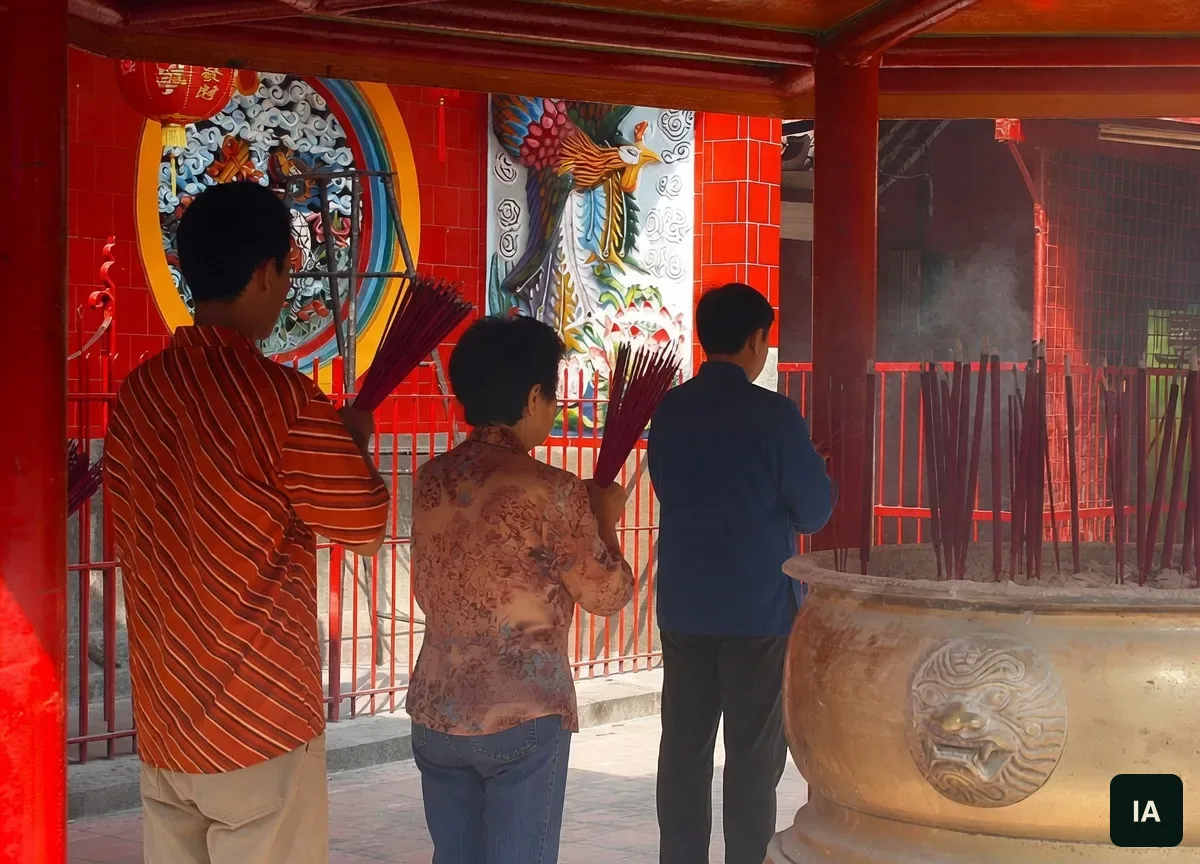
Imlek in Glodok
Chinese Lunar New Year, in January or February, publicly banned between 1967 and 2000 and a national holiday since 2003. The Jin De Yuan temple lights giant candles, there's barongsai (lion dance) in the alleys of Petak Sembilan, and angpao are handed out.

Hari Kemerdekaan, August 17
Independence Day, with a flag ceremony at Merdeka Palace and, on every street, sack races, panjat pinang (climbing a greased pole), and communal lunches. On August 17, 2026, fares for TransJakarta, the MRT, and the LRT cost 1 rupiah.
 AI illustration
Art Jakarta
Contemporary art fair held in the second half of the year, now at JIExpo Kemayoran, with galleries from Southeast and East Asia. It kicks off a week of parallel openings at galleries in Kemang, Menteng, and the south side.
Books and films
“This Earth of Mankind” (Bumi Manusia), Pramoedya Ananta Toer, 1980
The first volume of the Buru Quartet, written in prison and then banned for three decades. It lays out the racial and legal hierarchy of the Dutch East Indies that produced the city; adapted into a film by Hanung Bramantyo in 2019.
“Gie”, Riri Riza, 2005
Biopic of Soe Hok Gie, a Chinese-Indonesian student and activist, filmed in Jakarta and set between 1959 and 1969. It shows Sukarno's city, the marches, and the silence that followed 1965.
Benyamin Sueb, “Kompor Meleduk”, 1979
The Betawi actor and singer who turned Jakarta slang and gambang kromong into popular music. His songs still play on buses, at weddings, and at fairs, and they're the sonic portrait of the city before the skyscrapers.
Frequently asked questions
Jakarta: how much time do you lose in rush-hour traffic?
In rush-hour traffic, six kilometers can take as long as 50 minutes, both between 7am and 10am and between 4pm and 8pm. Always add a buffer to your plans, and go with an app motorbike when time gets tight.
Jakarta: how do you get from the airport to downtown?
The train is the predictable option: the Soekarno–Hatta line links the terminal to BNI City/Sudirman Baru and Manggarai in about 46 minutes, with departures every 30 minutes between 6:20am and 11:20pm and a fare around 70,000 IDR.
Jakarta: how do you get to the Thousand Islands?
Speedboats leave from Ancol Marina and the port of Kaliadem/Muara Angke and take 1 to 2 hours to reach Pulau Pramuka, Pari, Tidung, or Macan.
Jakarta: what's the currency, and what's it worth?
The currency is the Indonesian rupiah (IDR), and it comes with a lot of zeros: 100,000 IDR is about US$6 or R$29 in 2026.
Jakarta: what's the climate like through the year?
The climate is tropical monsoon, with 24 to 33°C and 75 to 85% humidity year-round; what changes from month to month is how much it rains, while the temperature barely shifts.
Other cities in the country
Indonesia ↗- Days
- 3–4
- When
- Apr–May · Sep–Oct
- Per person/day
- Average 600,000–1,800,000 RpMid-range · per person/day
Cost scope
Per person per day: accommodation, meals, urban transport, visits and a small allowance for extras. Flights excluded; larger purchases vary. Editorial estimate, not a quote.